GO Topeka’s Stephanie Moran shares with TK how Link Innovation Labs is giving Topeka startups access to lab space, mentorship and funding.
A Washburn University professor and a retired actuary break down the lesser-known economic concepts hiding in the fine print of every contract you’ve ever signed.
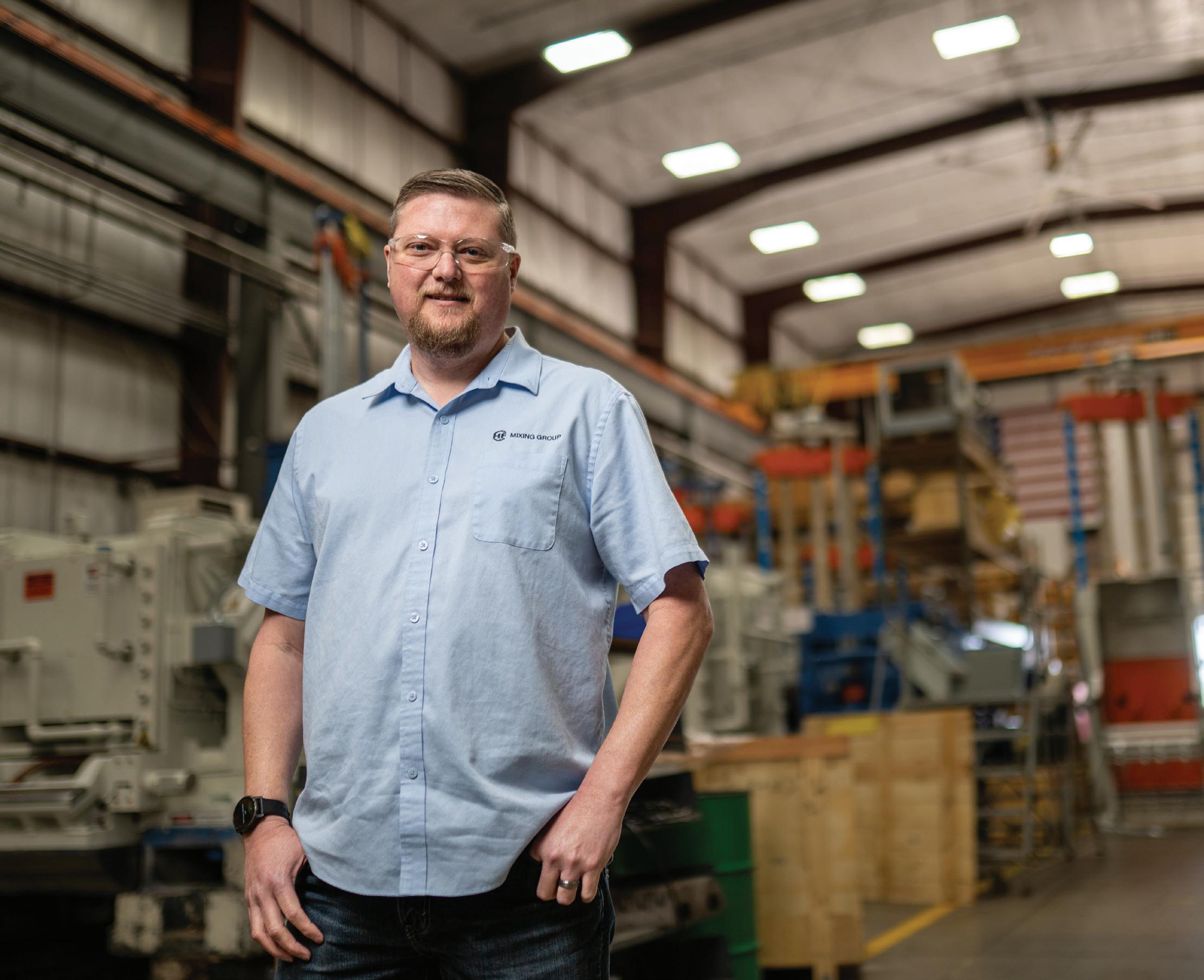
The Villages, Inc. and Topeka’s HF Rubber Machinery operate in different worlds, but both are investing in new capabilities.
Foulston Siefkin attorney Andrew Foreman explains why turning to AI for legal advice is riskier than it looks.
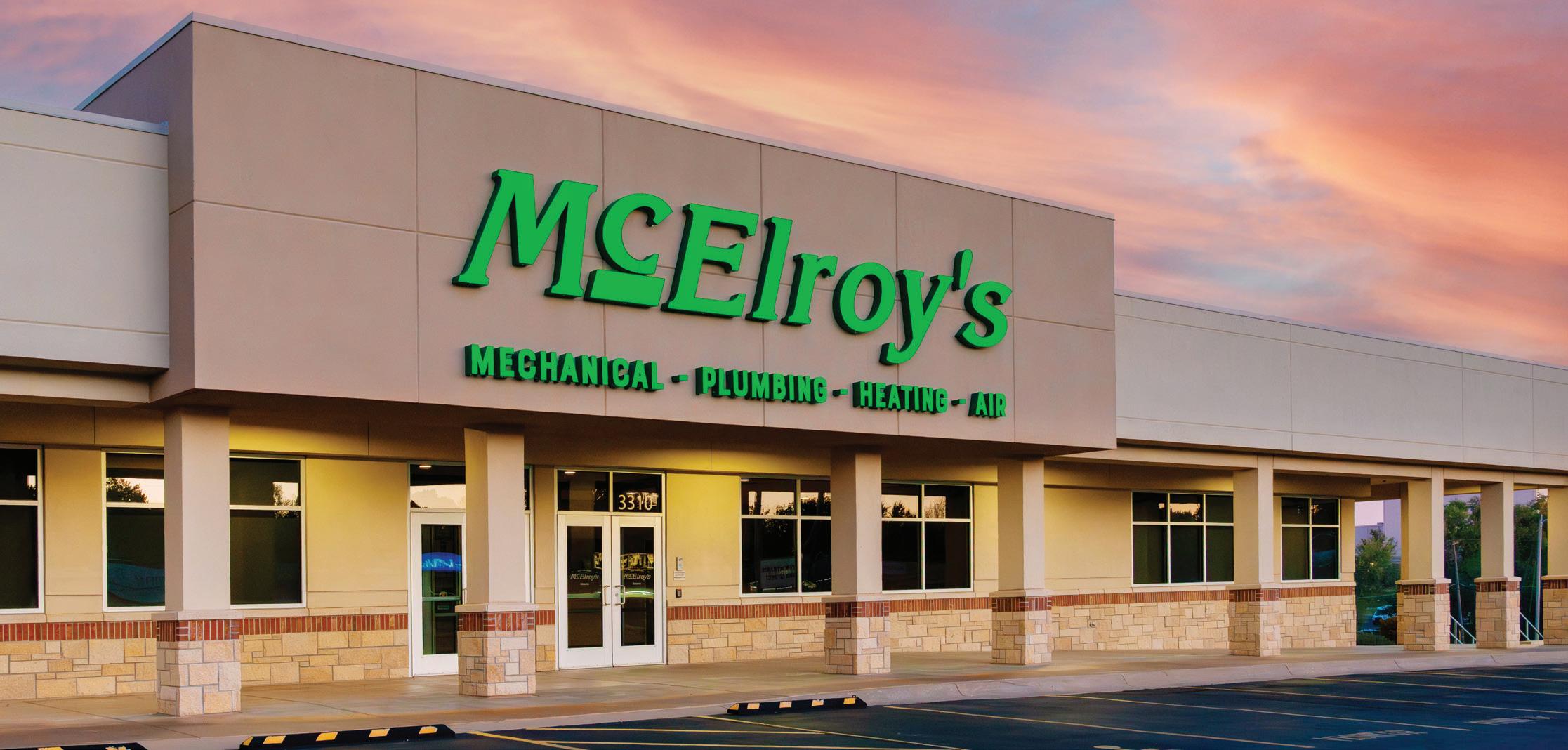
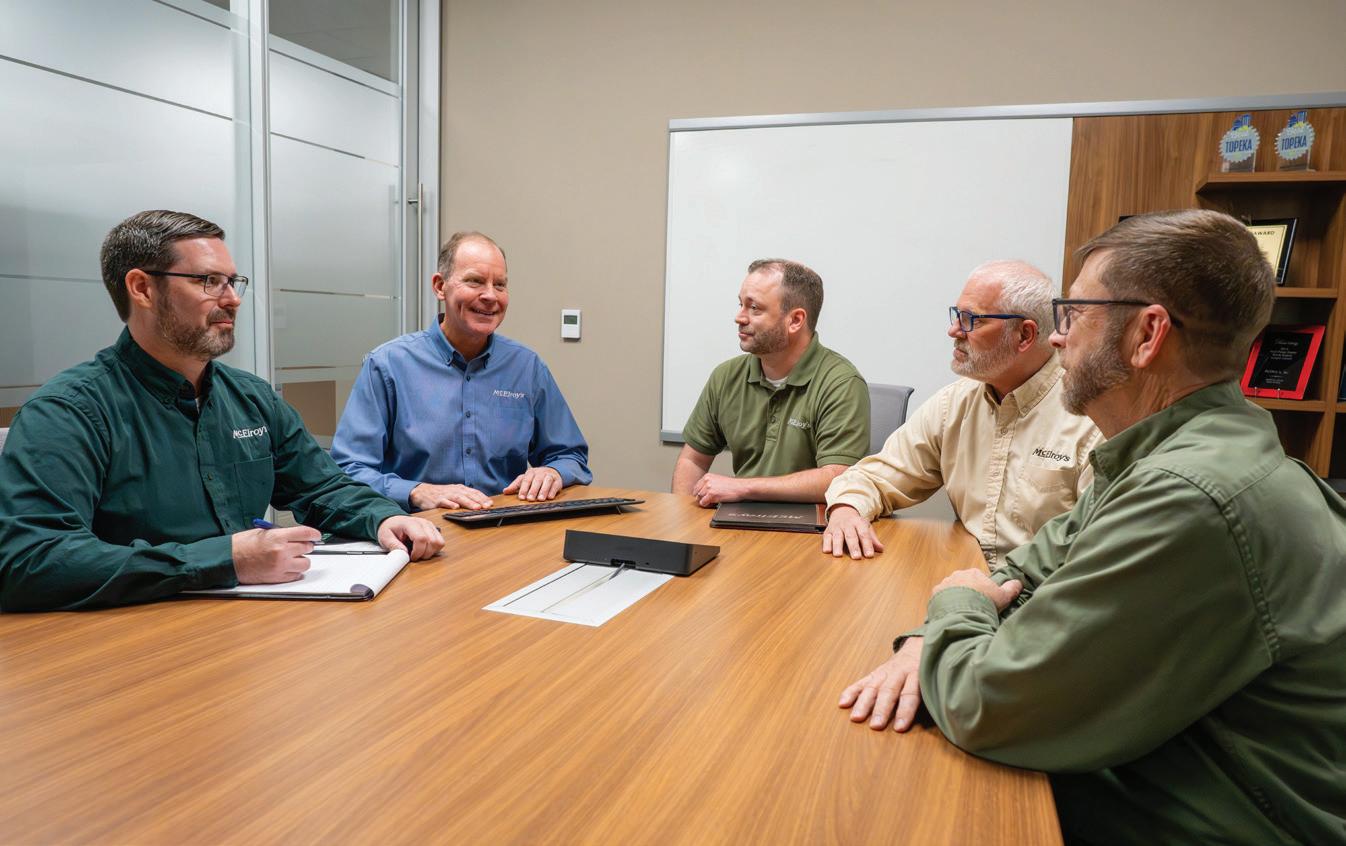
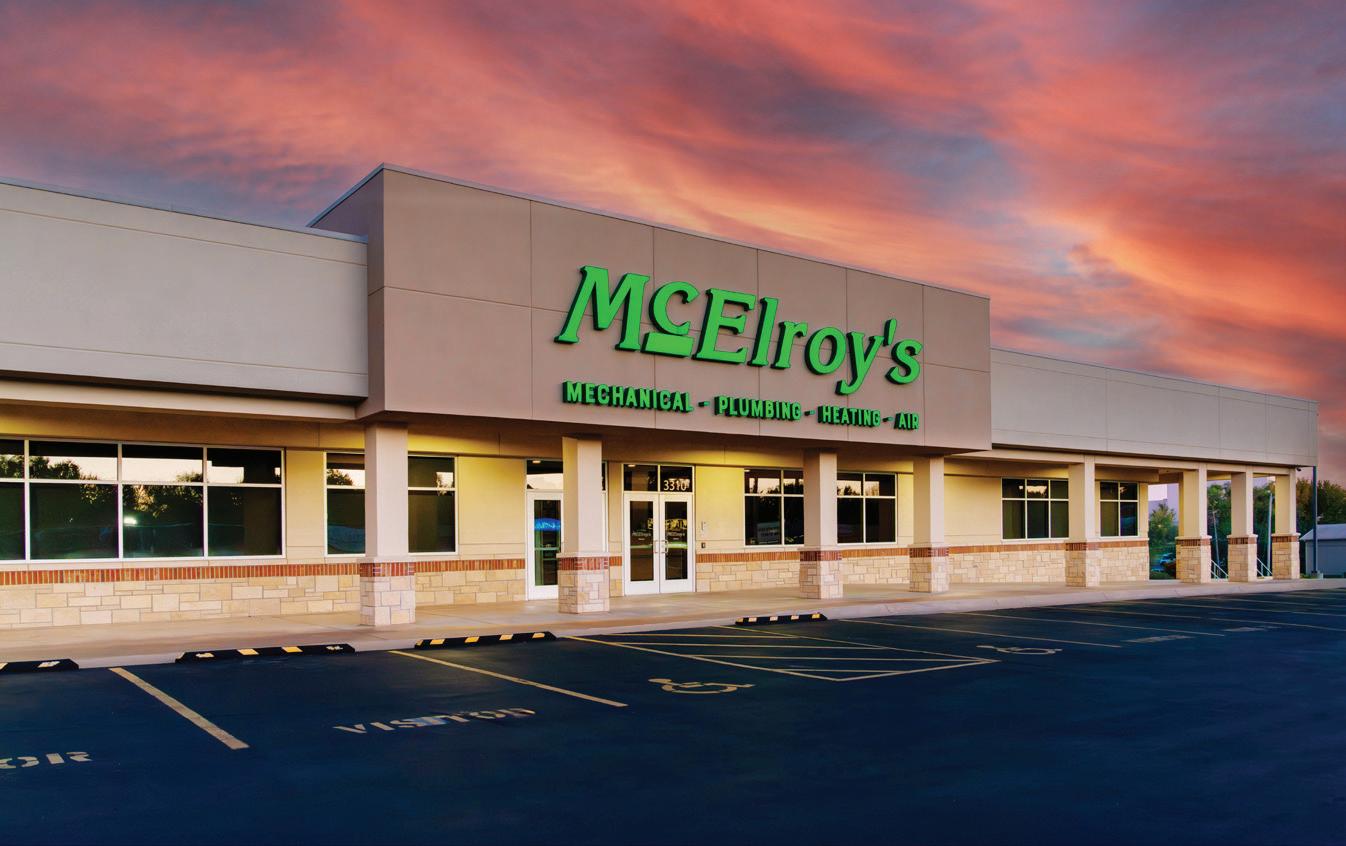
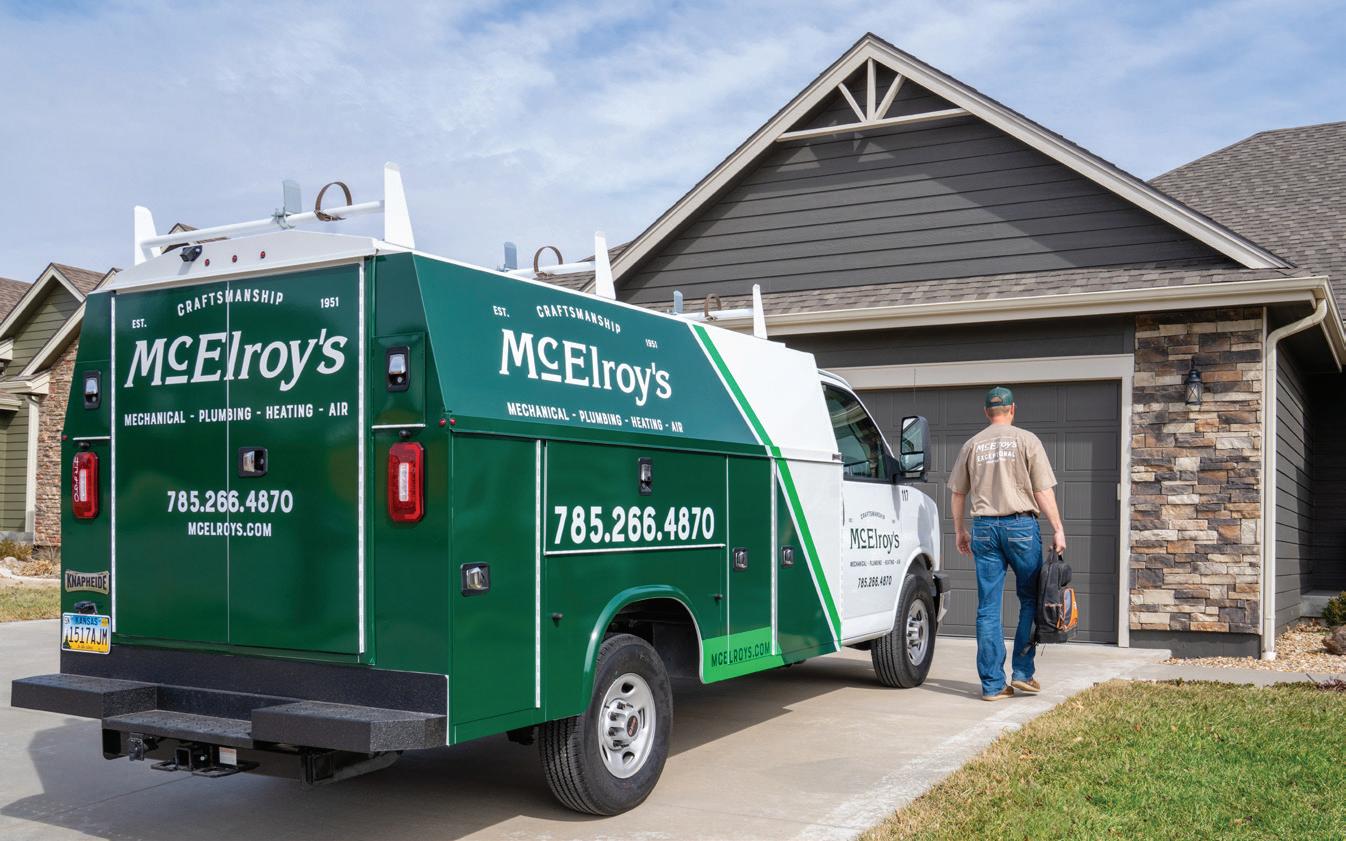
Three generations after Homer McElroy founded the mechanical contracting firm, McElroy’s is still at it. This is the story behind their success.
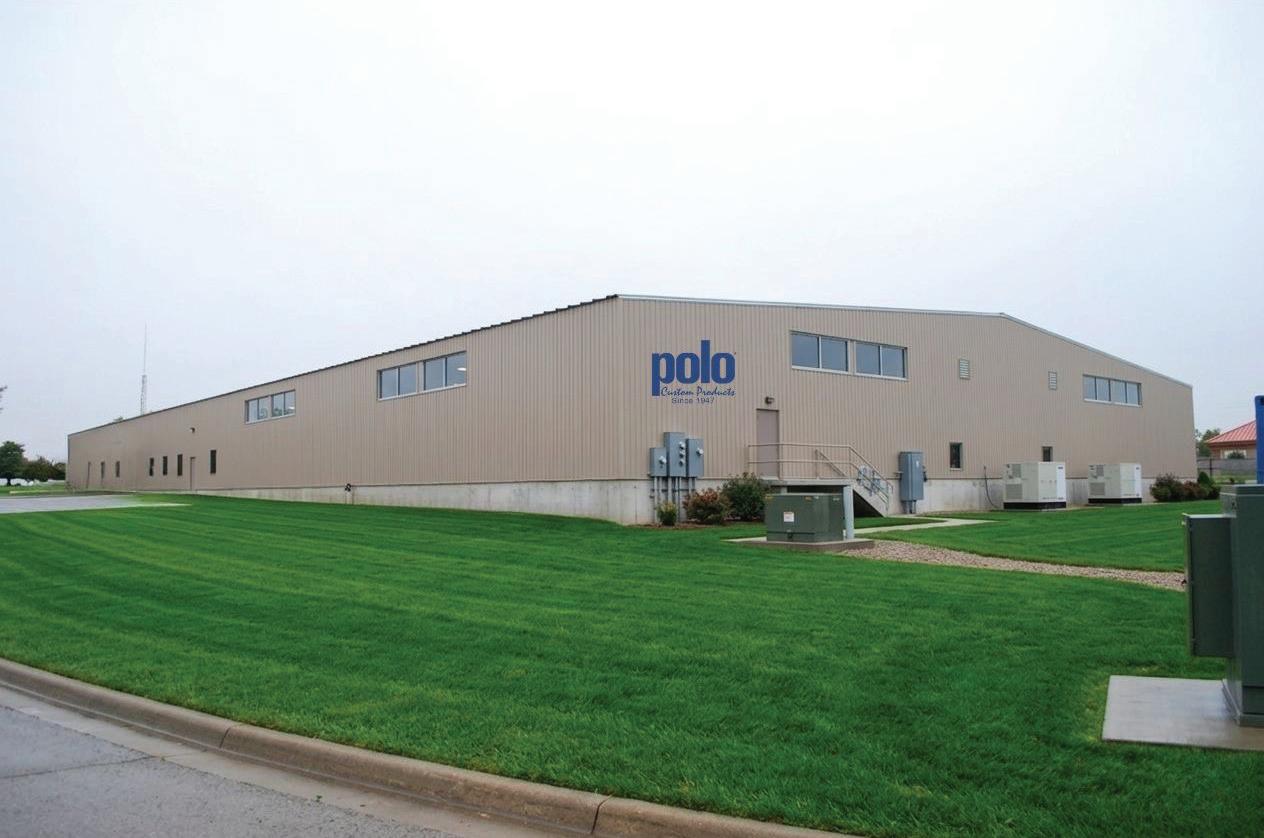
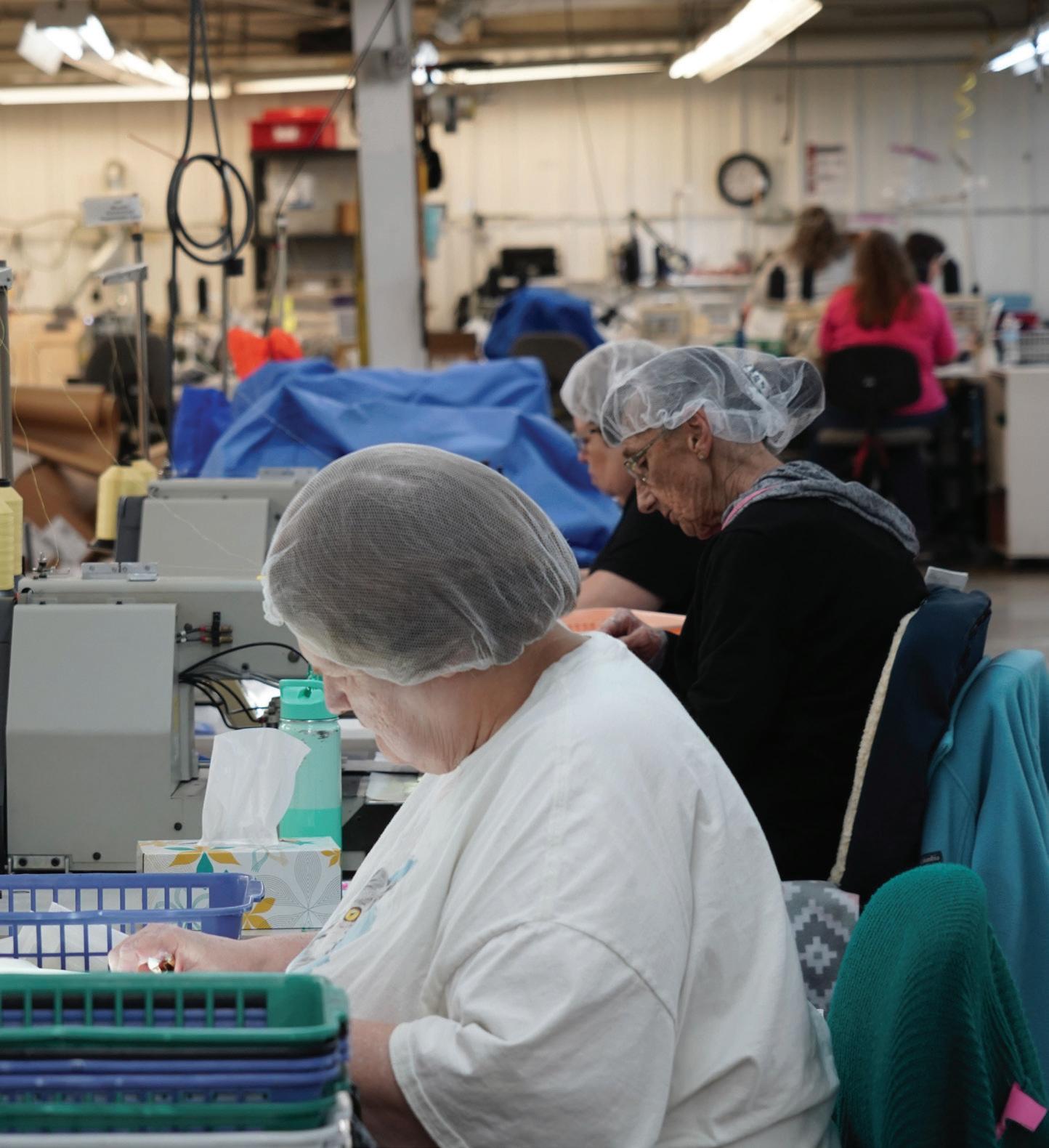
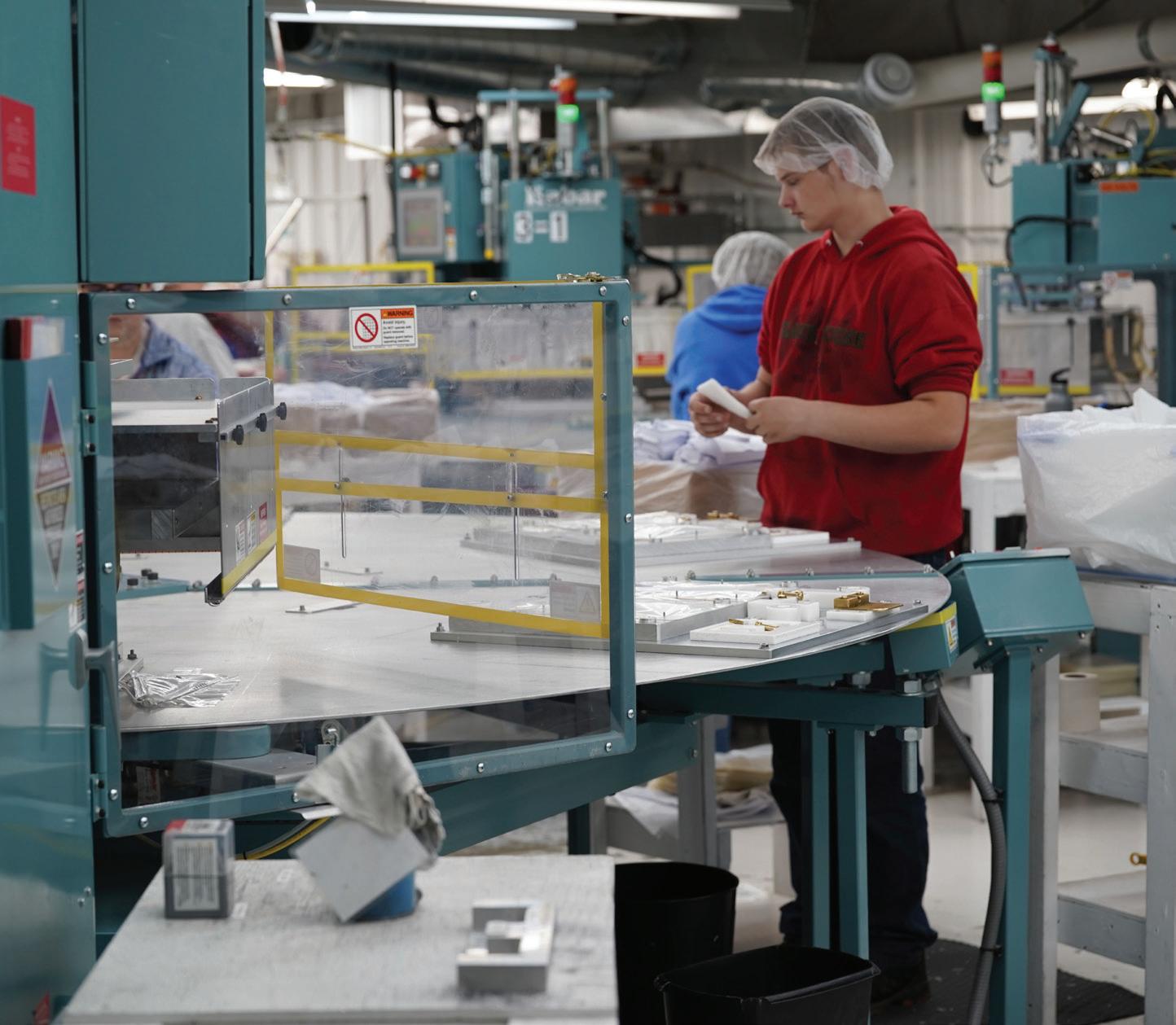
From military tactical gear to medical vests that monitor heart patients, Polo Custom Products makes products for some of the most demanding industries in the world.
As Bartlett & West turns 75 this year, the employee-owned engineering firm looks back on how clean water and shared ownership got them there.
Nex-Tech’s Paul Smart walks businesses through the latest cybersecurity threats and what to do when a scam looks legitimate.
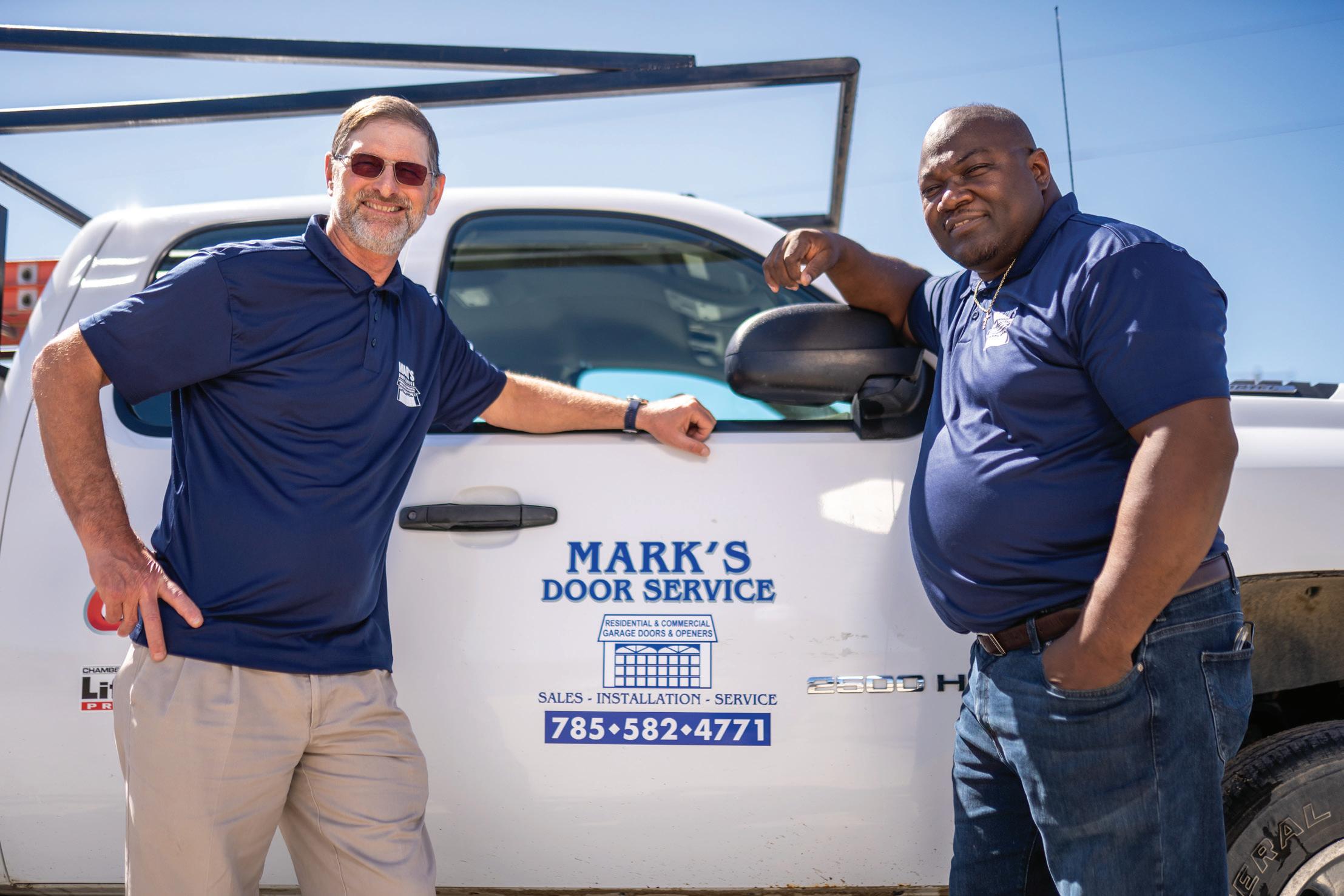
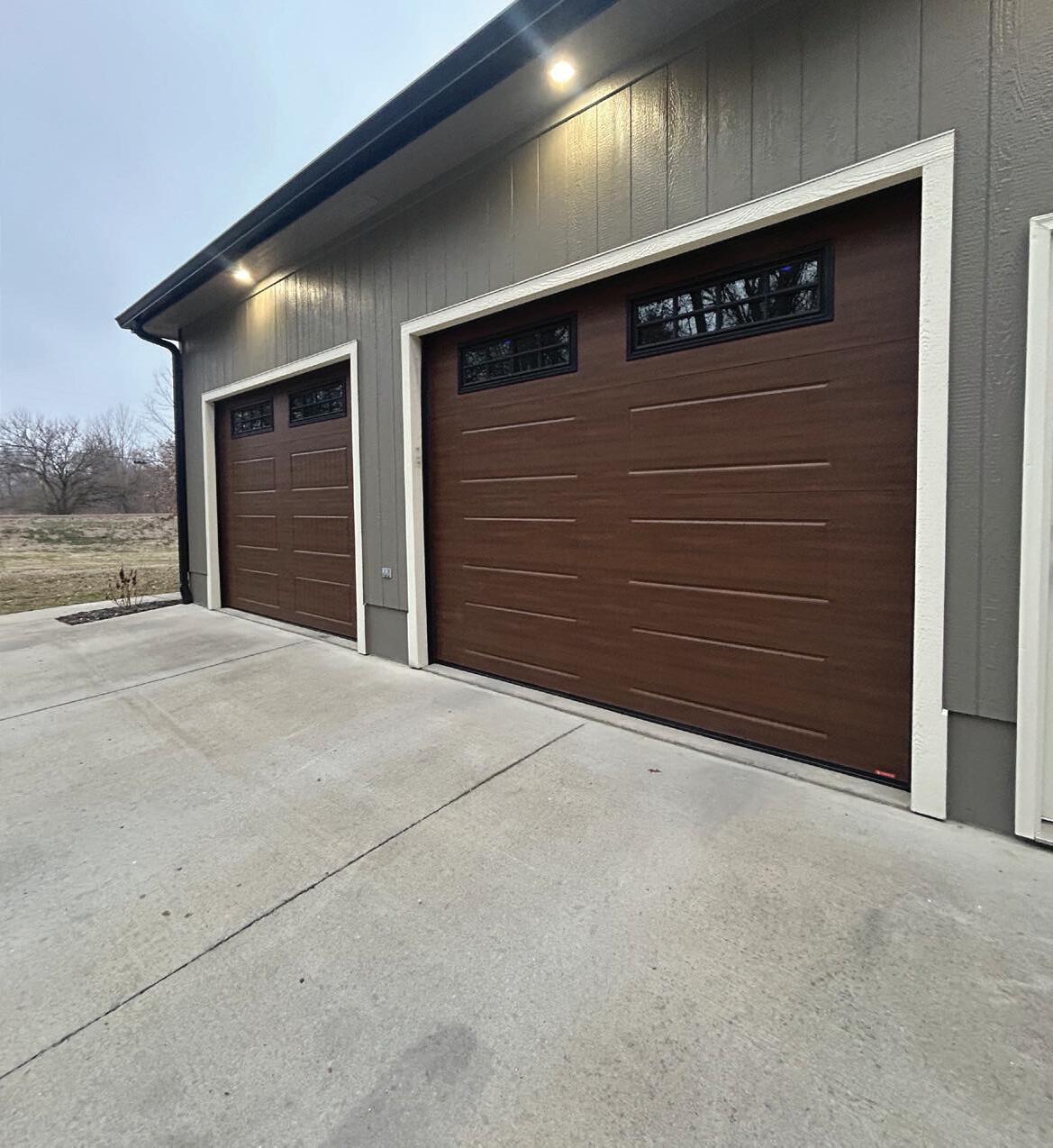
In 1992, Mark Burdiek bought a utility truck and went out on his own. Mark’s Door Service is now in its fourth decade.
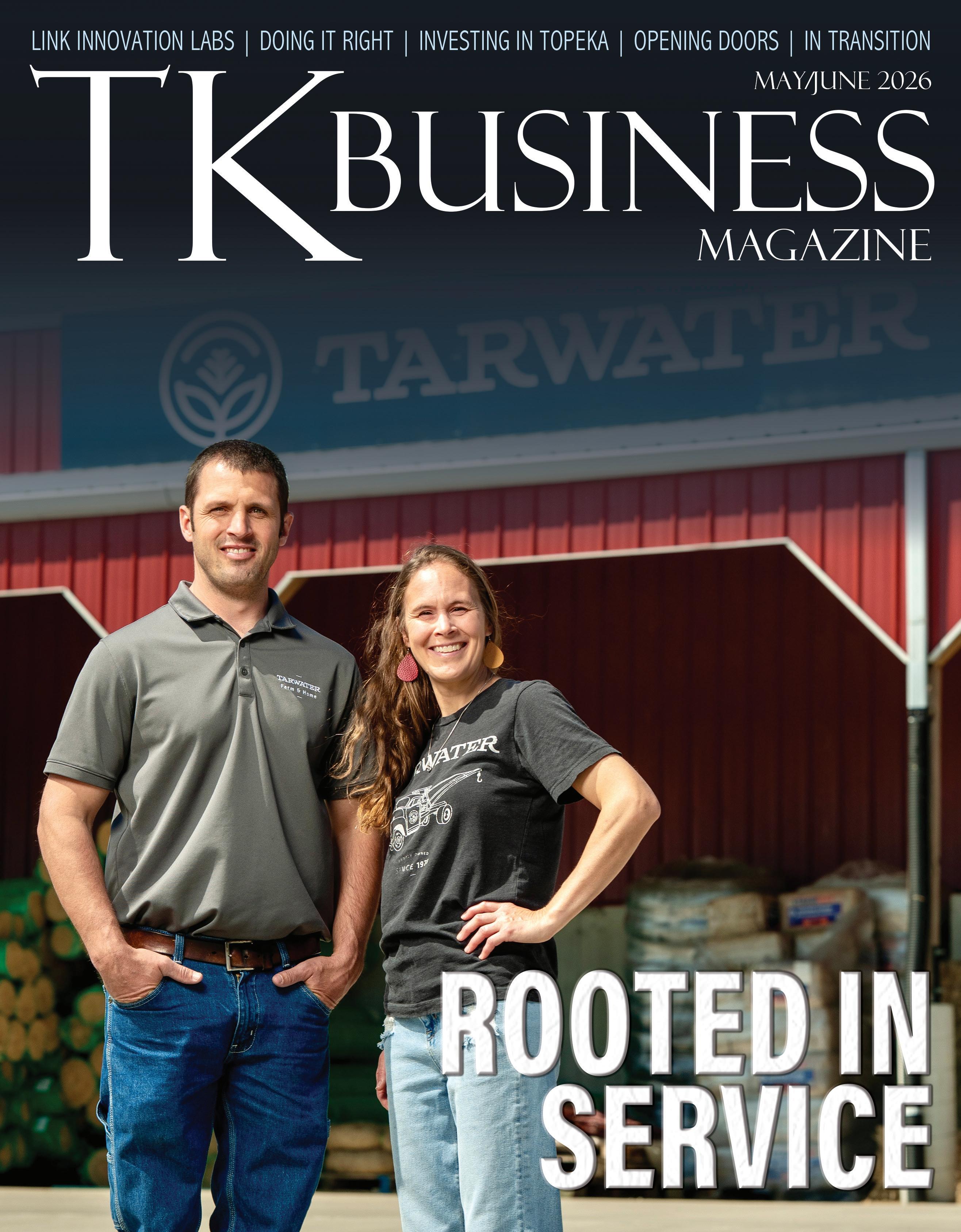
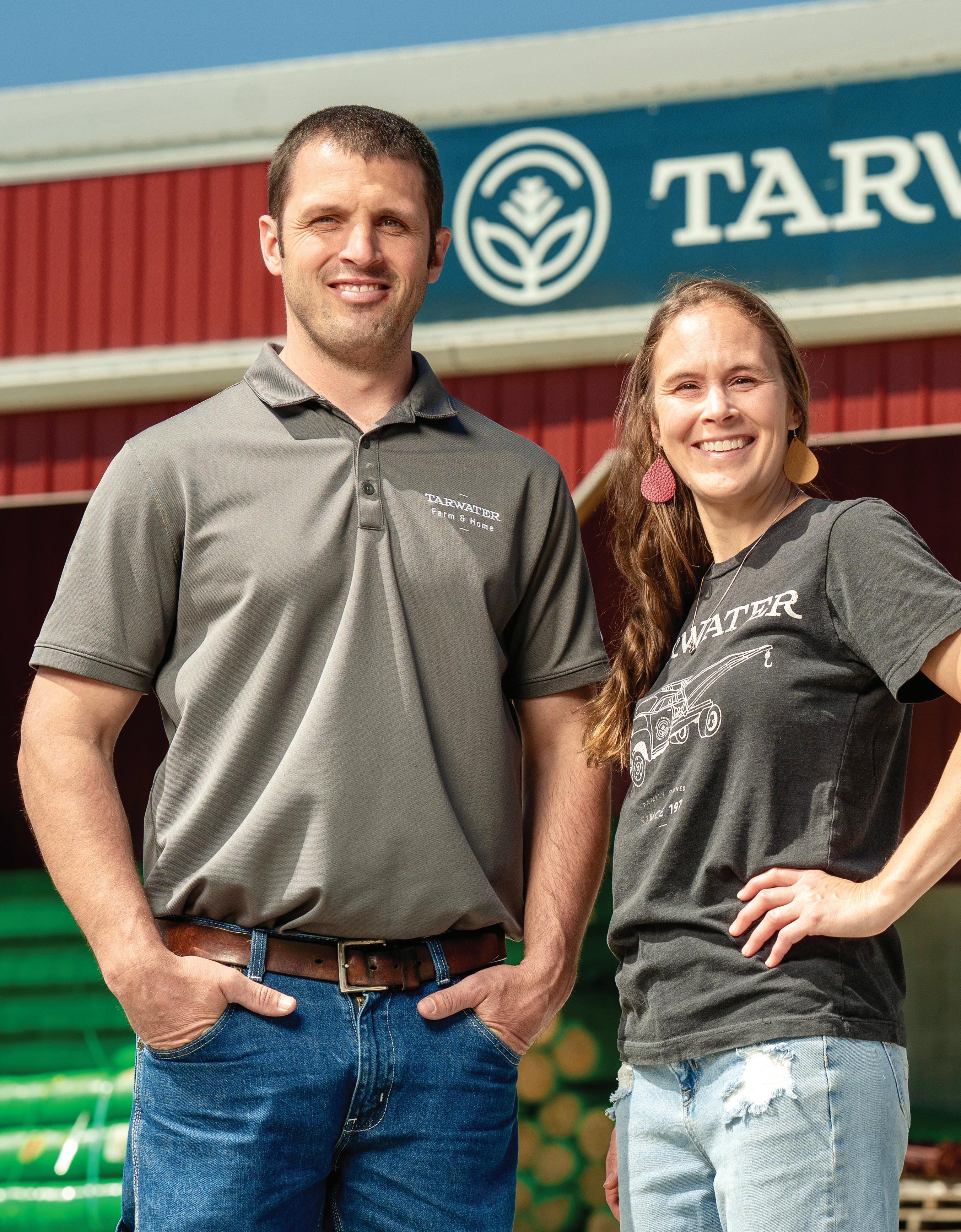
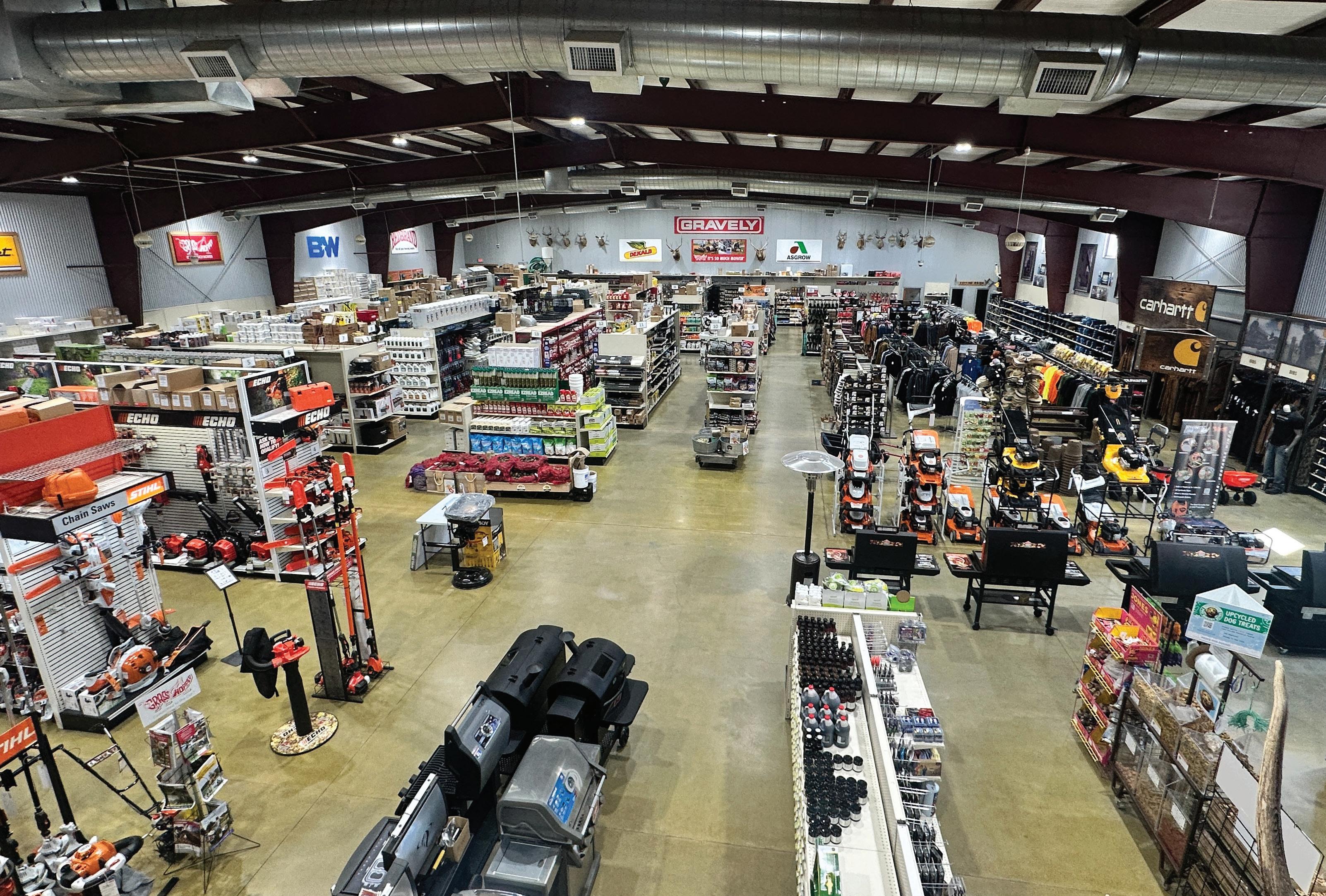
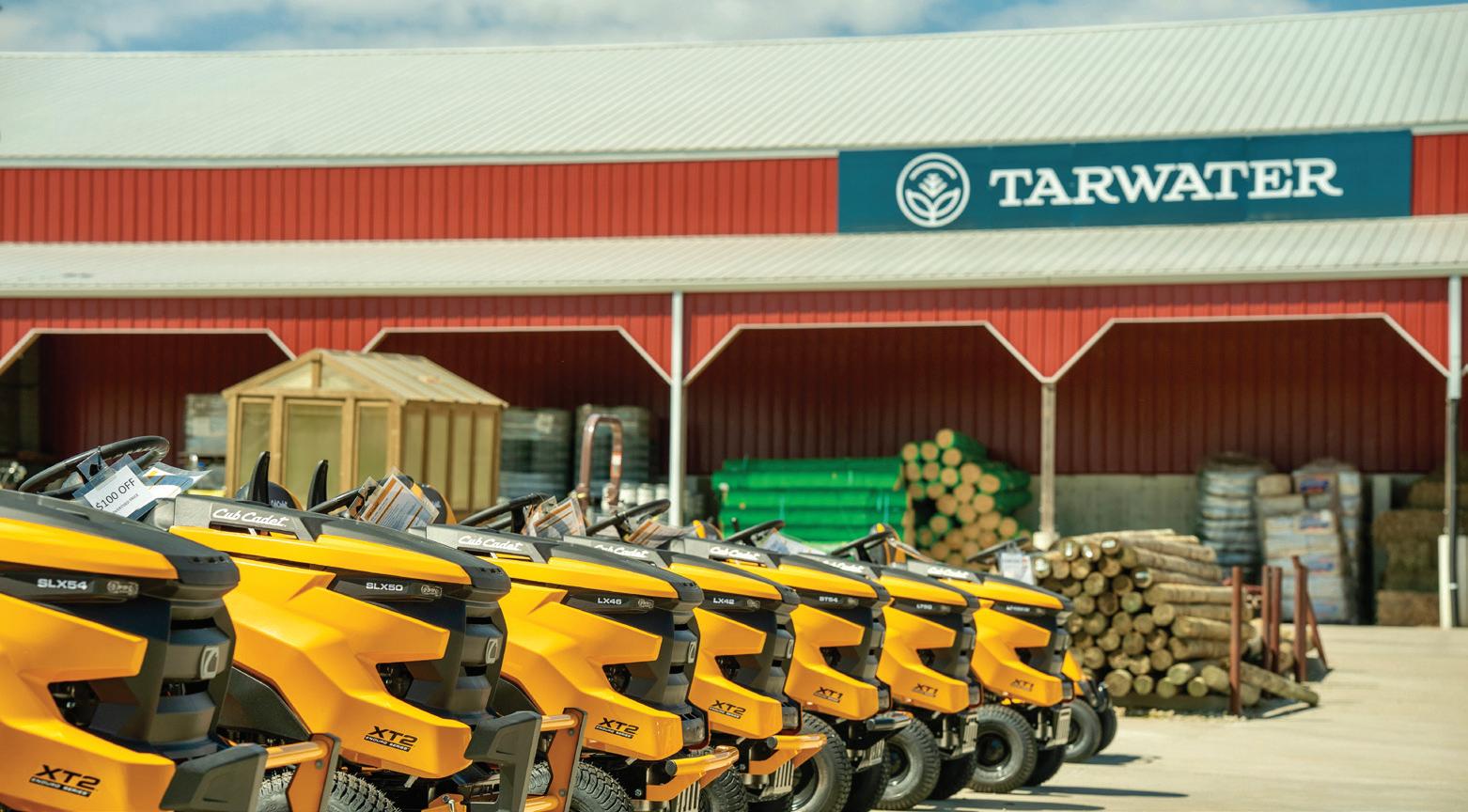
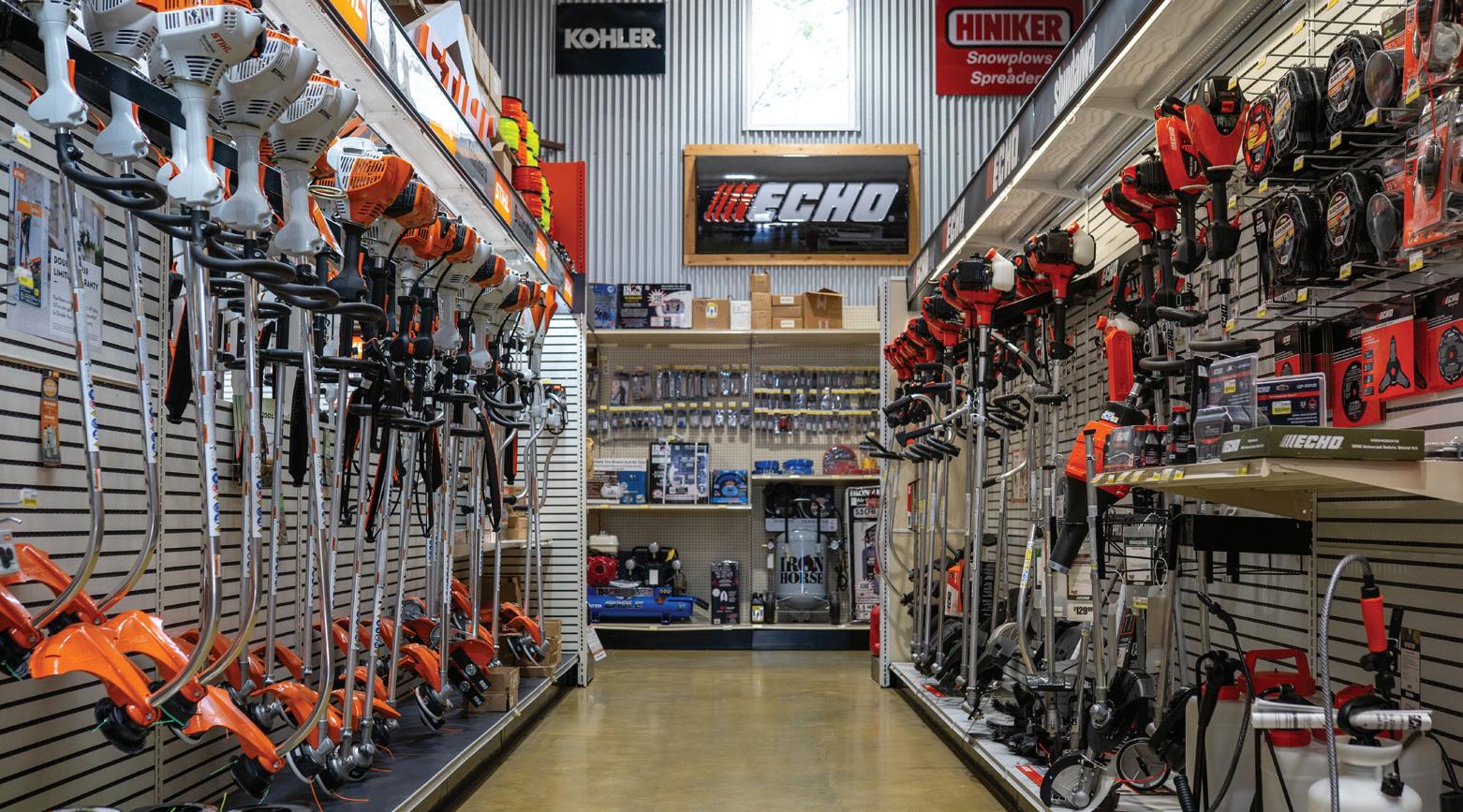
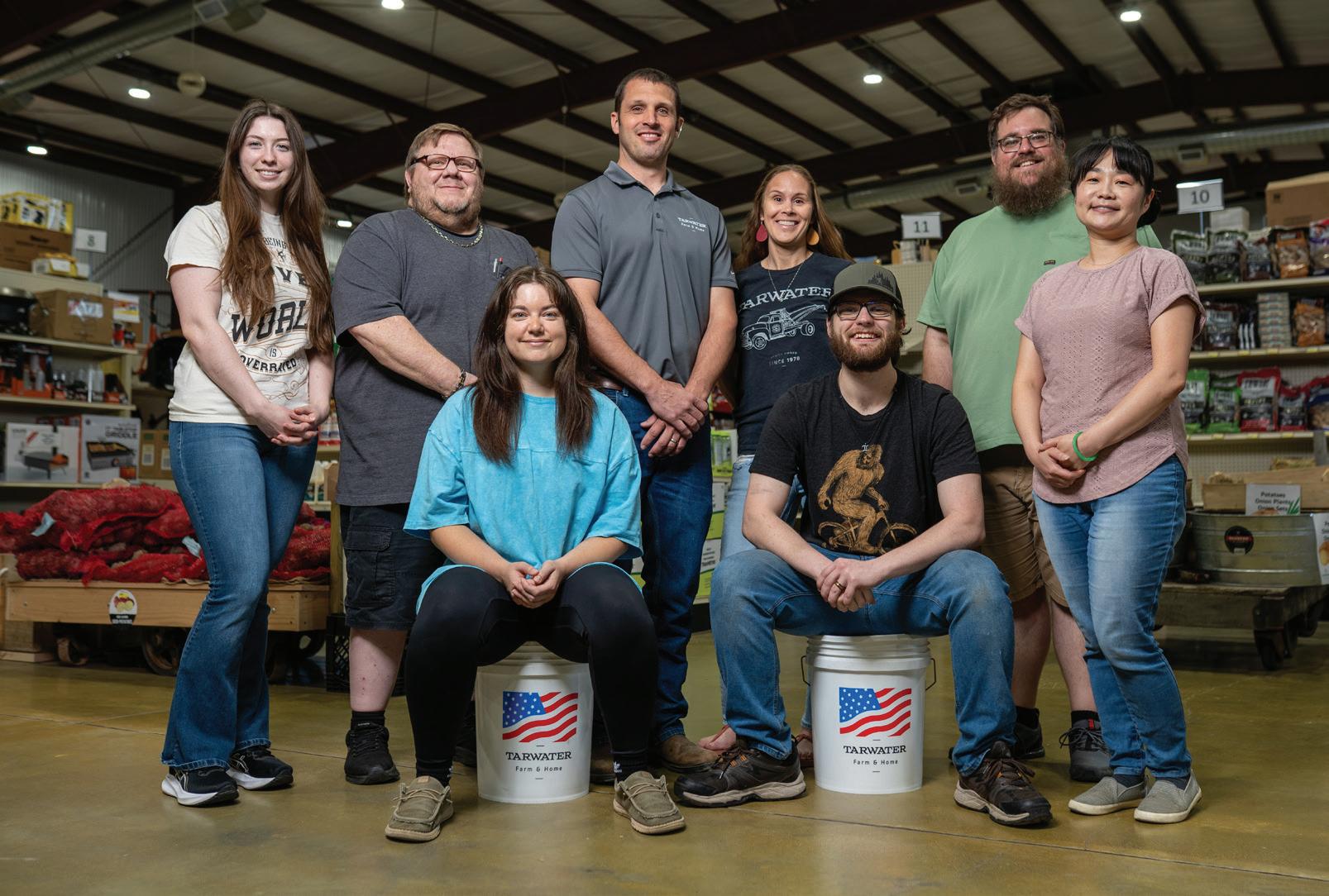
For Levi Tarwater and Megan Steinebach, Tarwater Farm & Home Supply has always been the family business. In 2024, they officially took it over and have no plans to slow down.
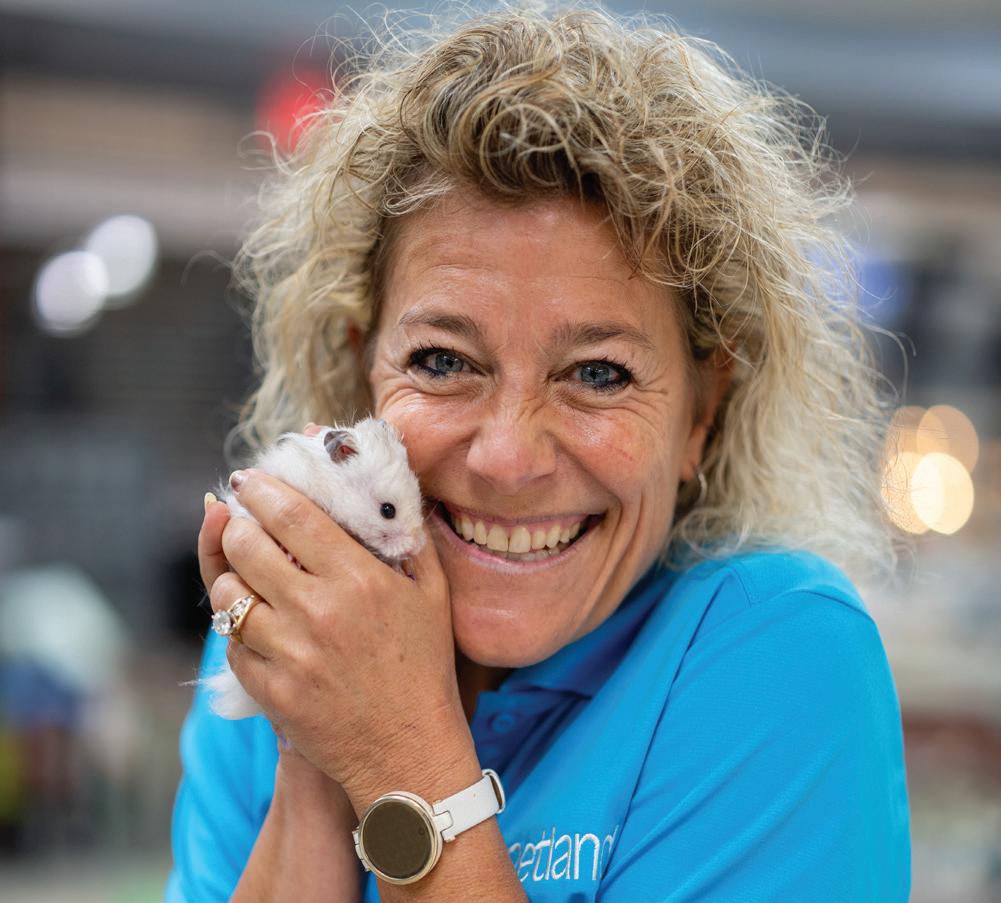
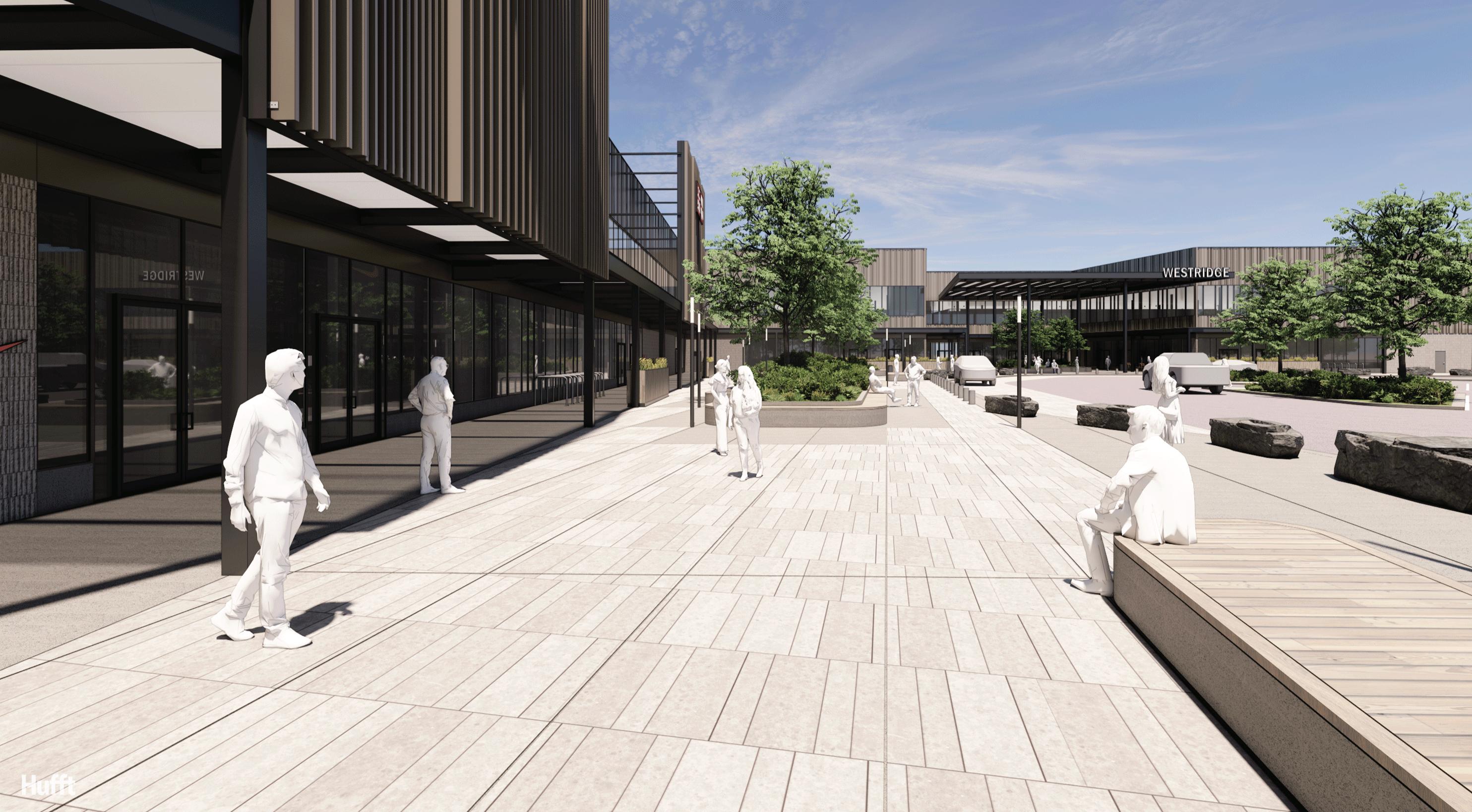
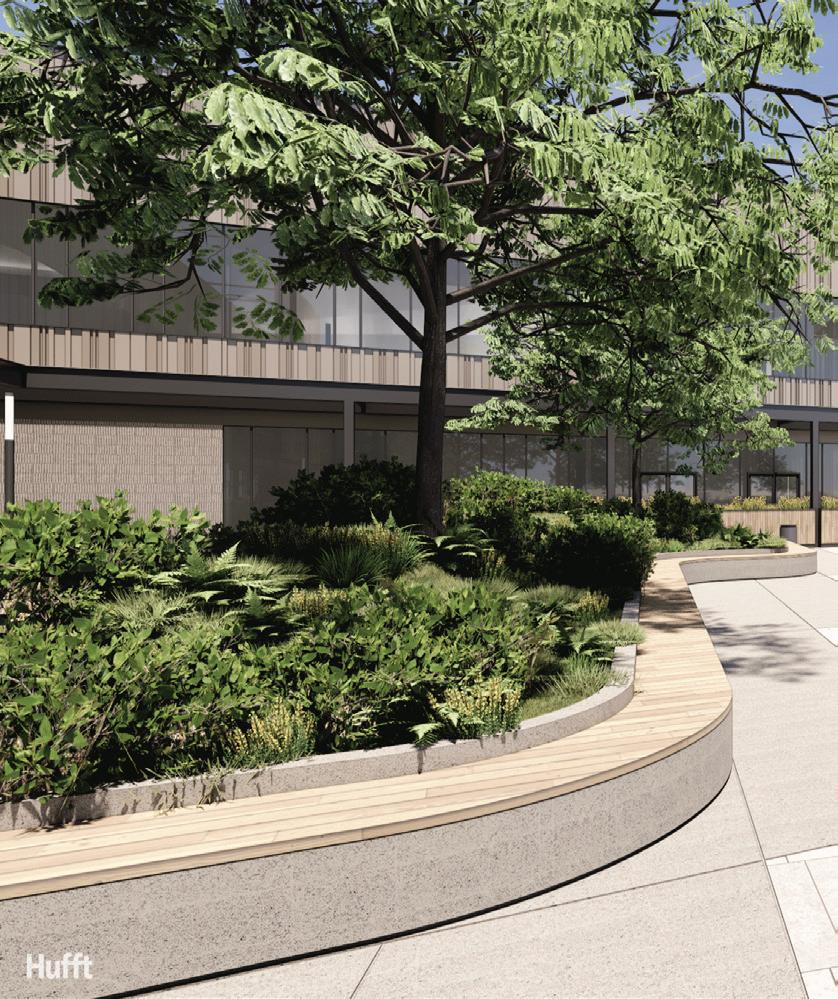
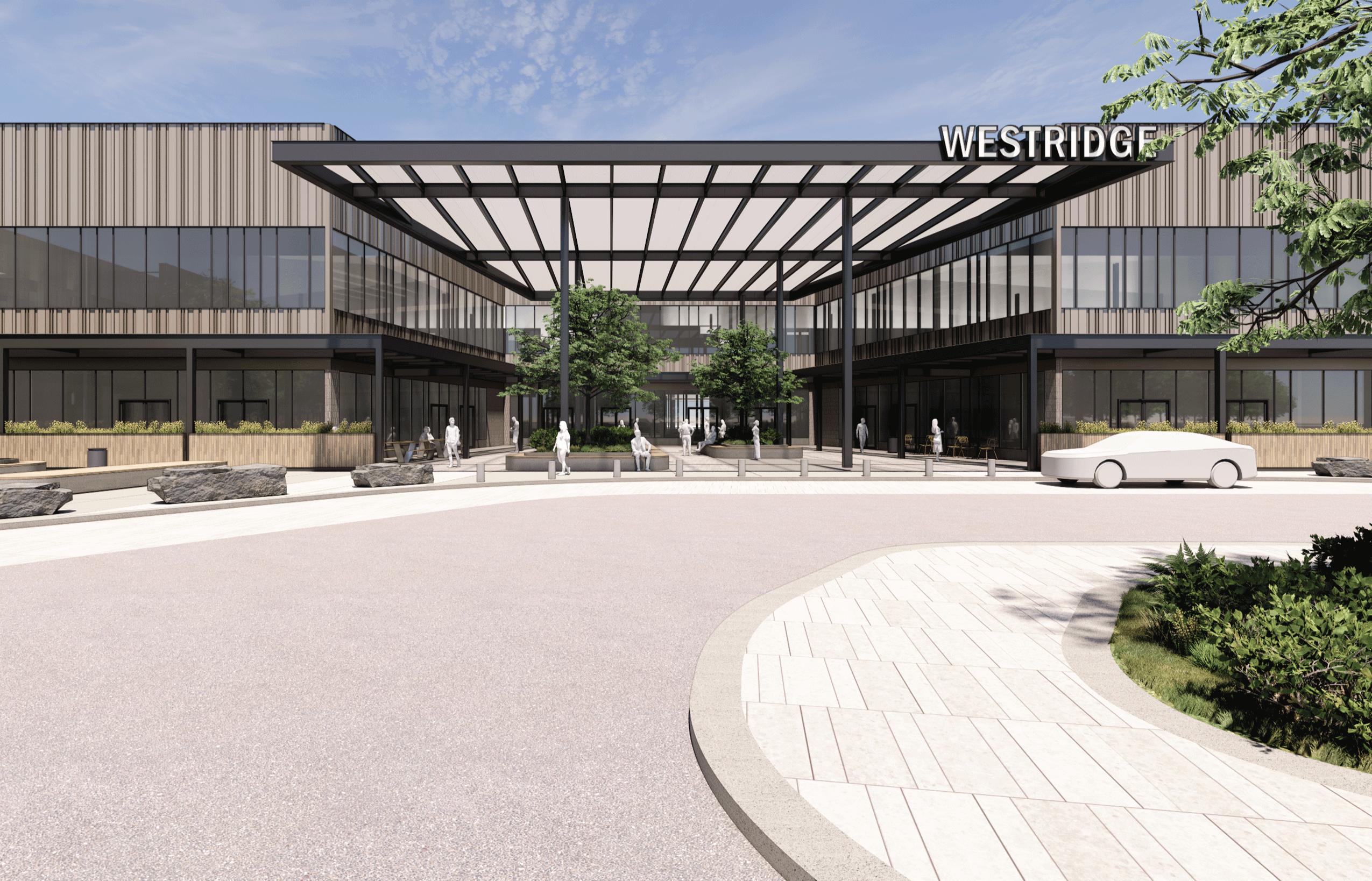
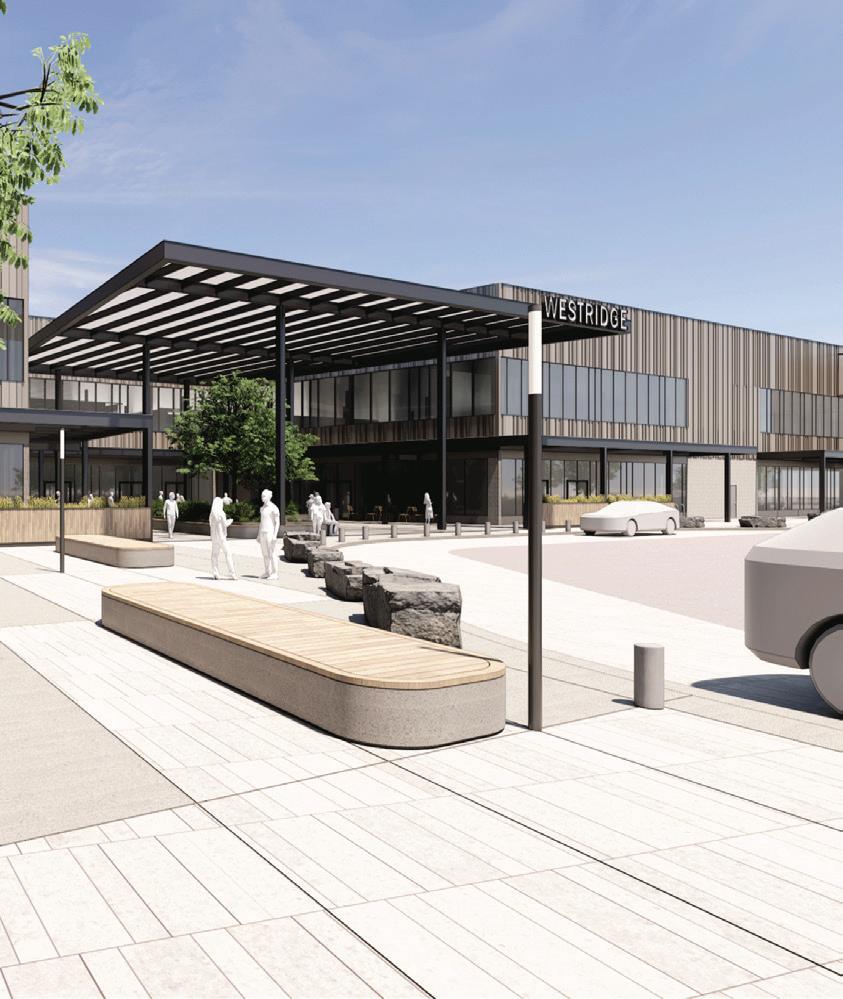
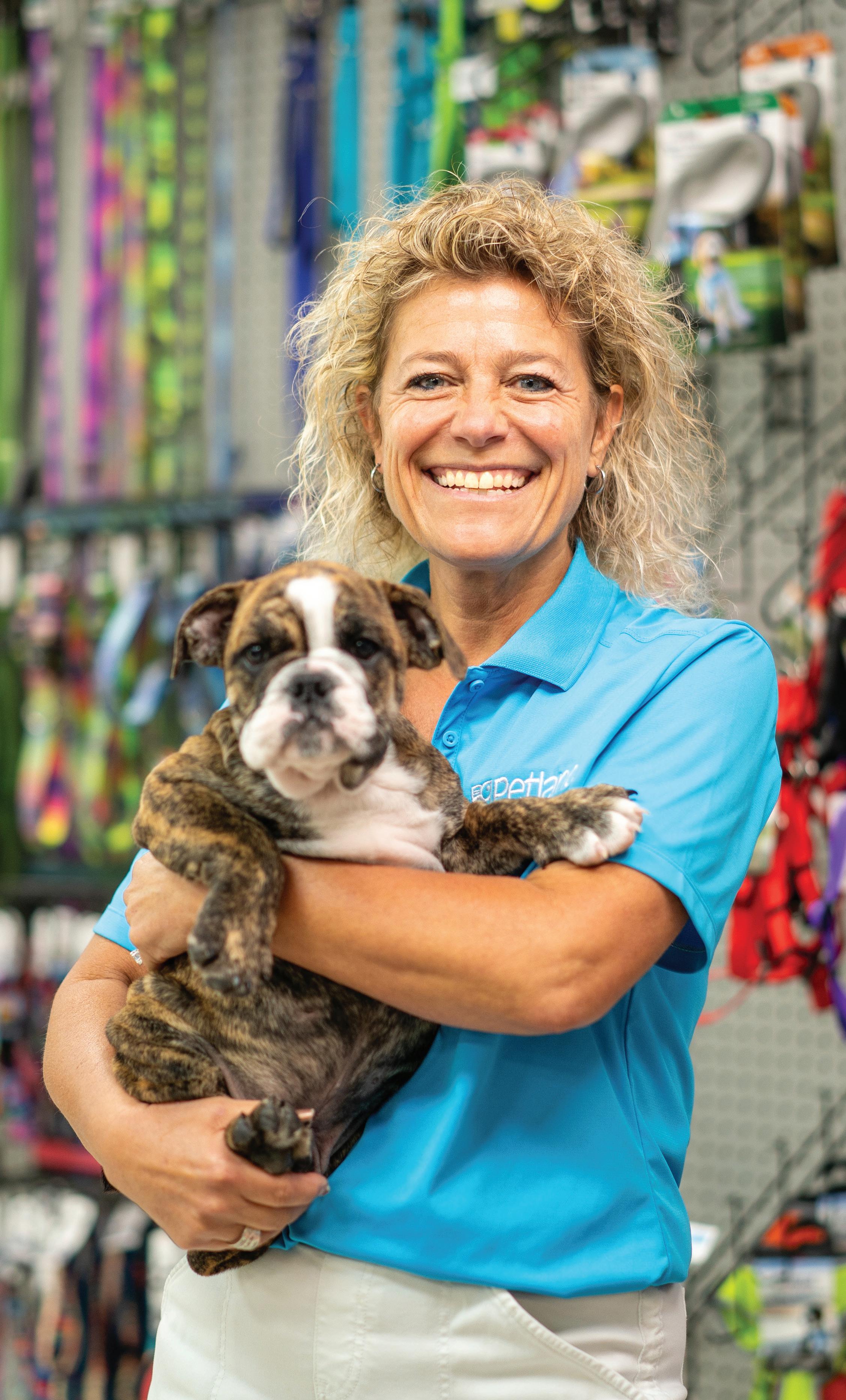
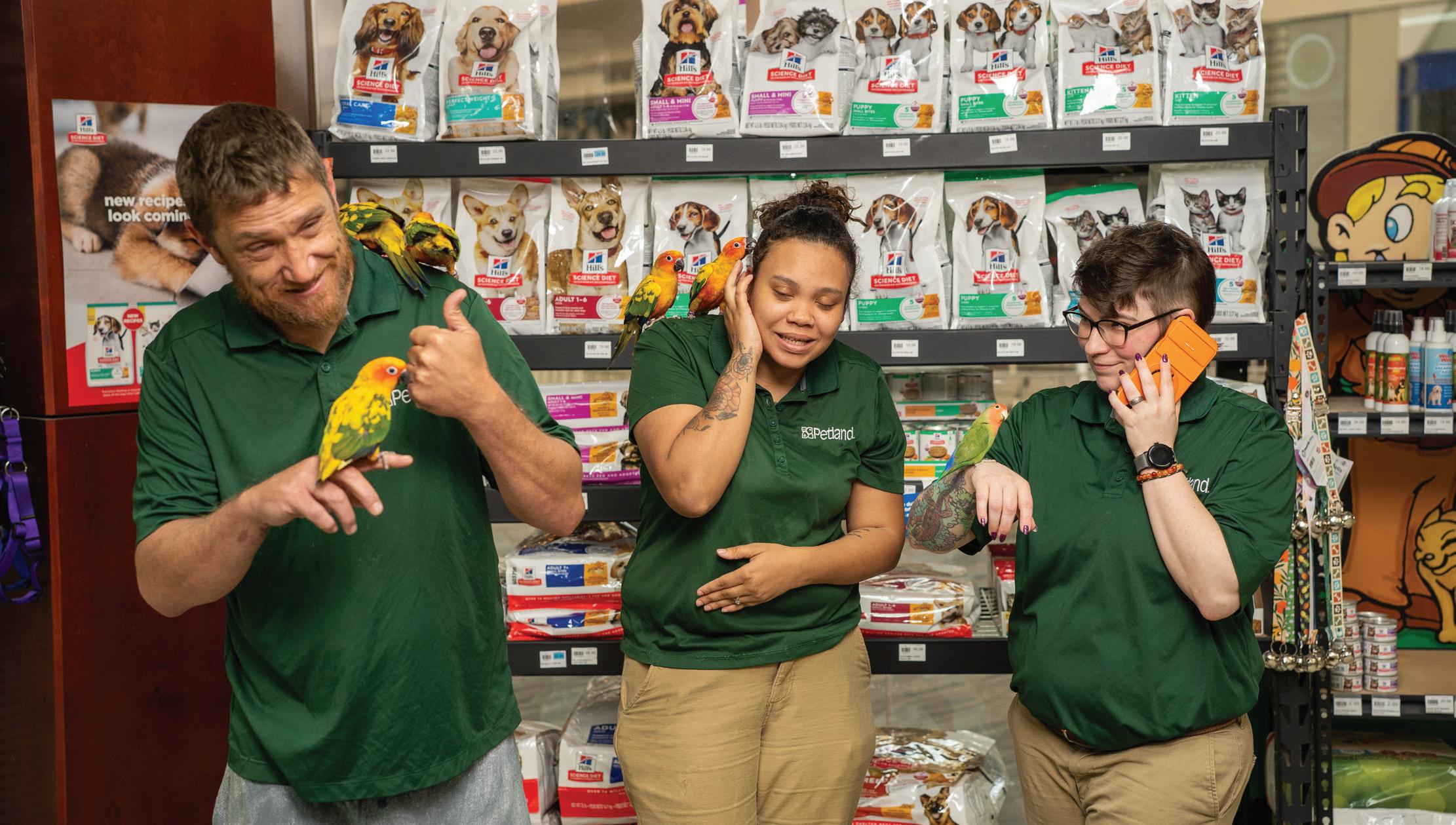
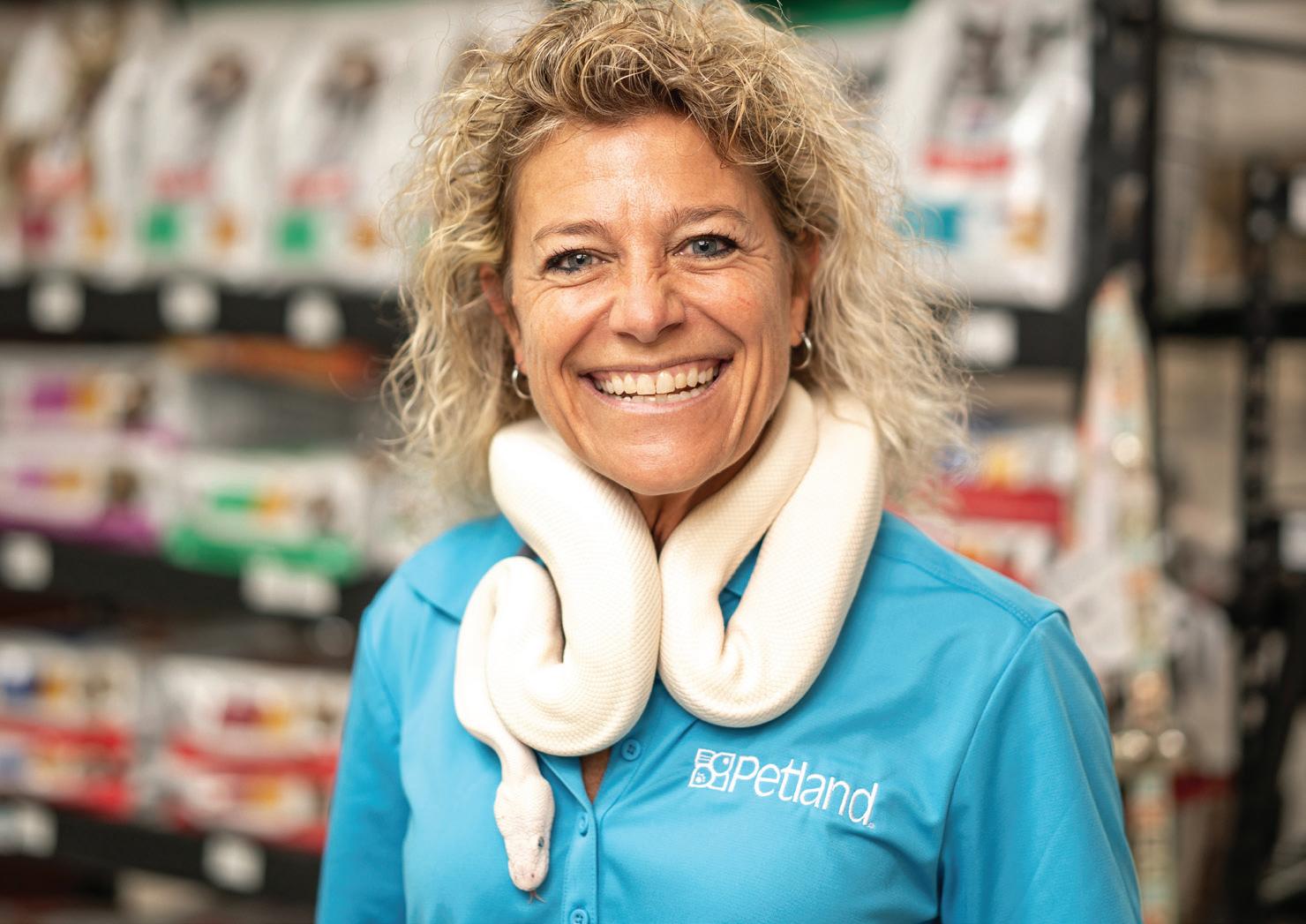
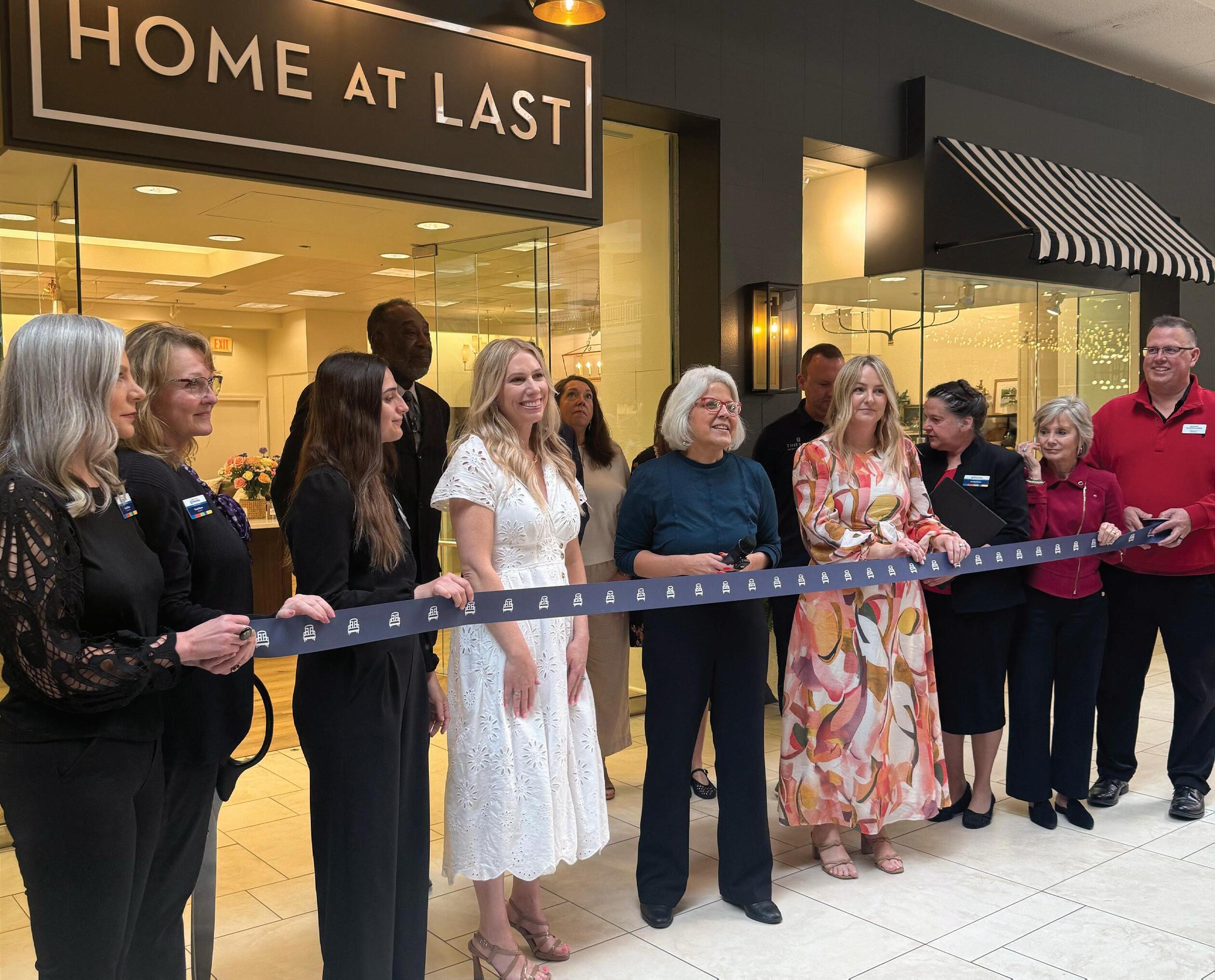
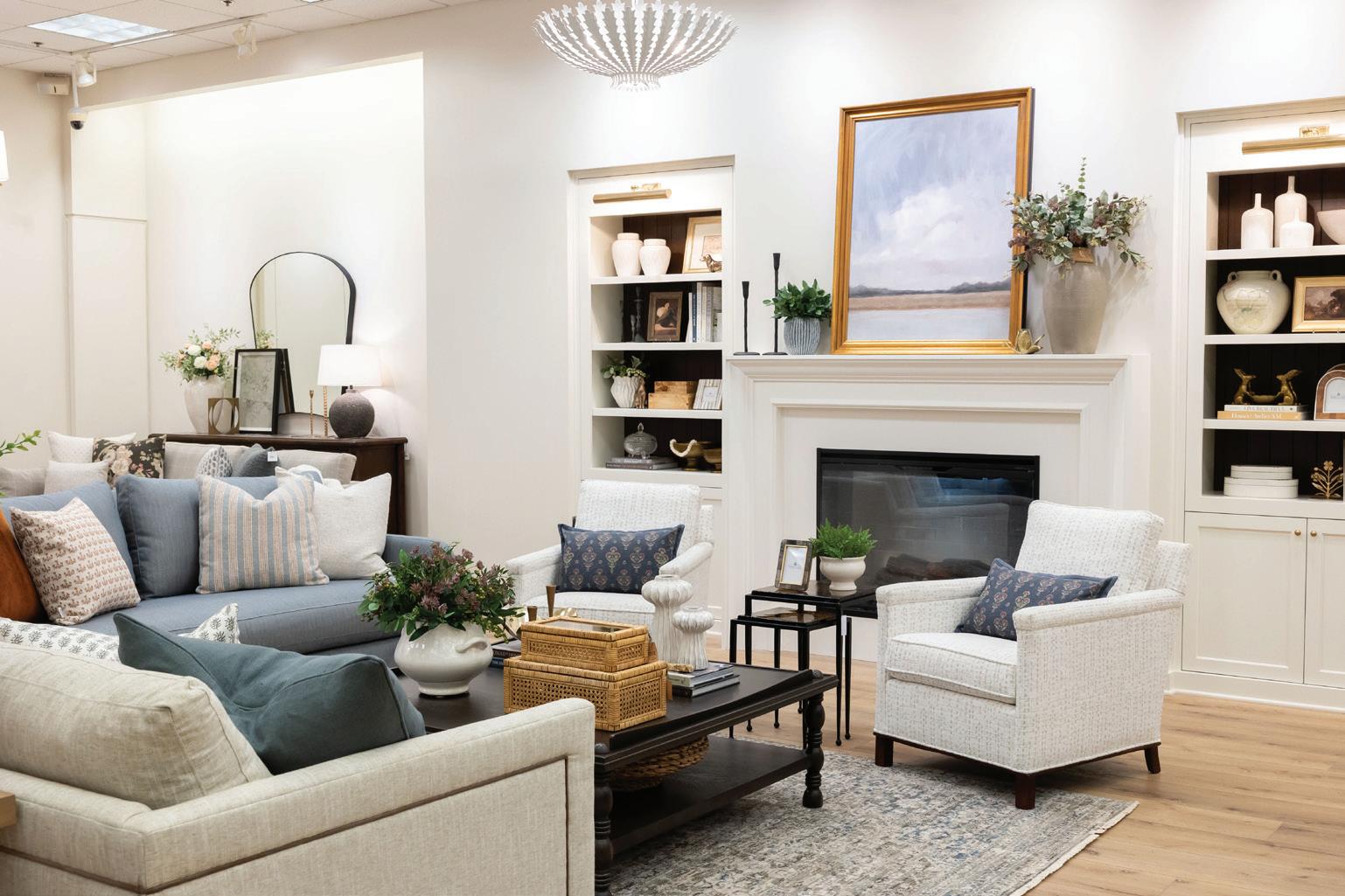
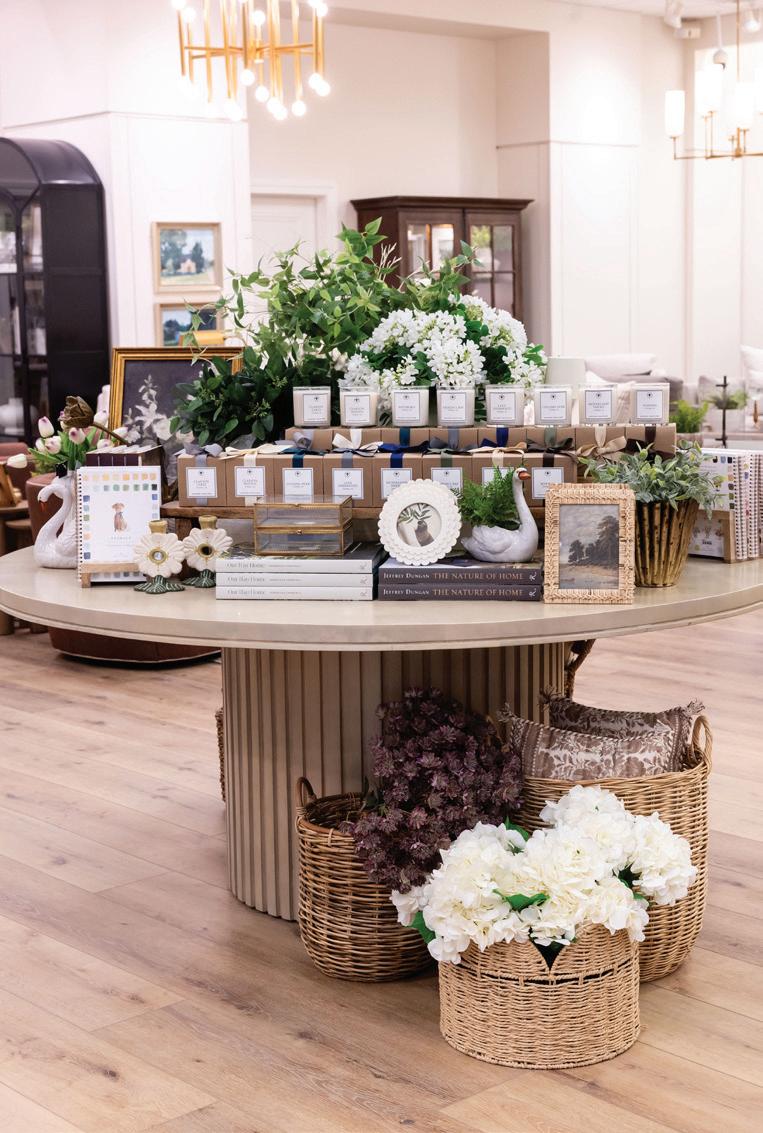
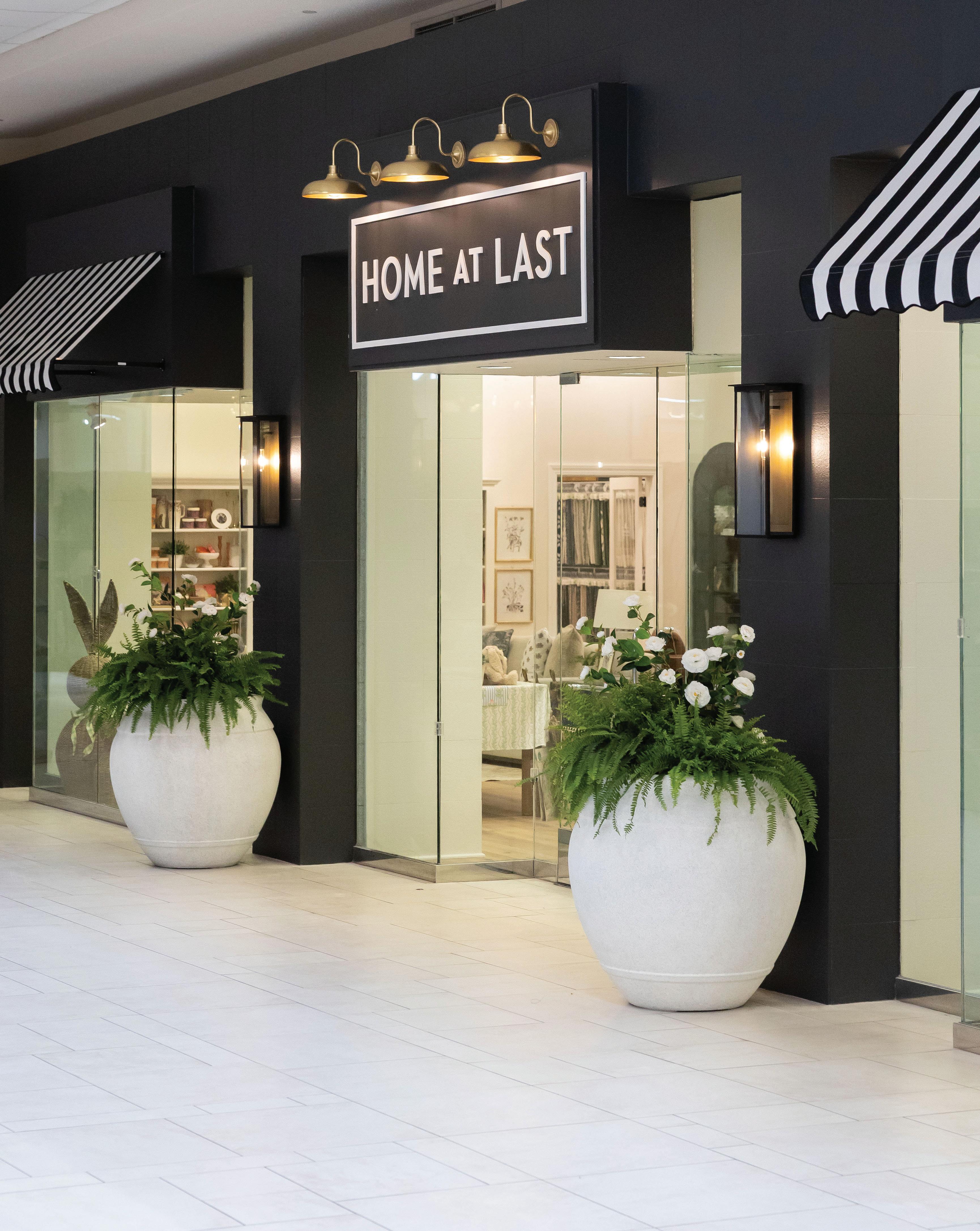
West Ridge Mall is in the middle of a major redevelopment, and two of its tenants — Petland and Home at Last — are growing with it.
CONTRIBUTORS
PUBLISHER Braden Dimick & SALES DIRECTOR braden@tkmagazine.com 785-438-7773
CREATIVE DIRECTOR & DESIGNER Janet Faust
EDITOR Lauren Jurgensen
COVER PHOTOGRAPHER Brian Peters
CONTRIBUTING WRITERS Kim Gronniger
Lauren Jurgensen
Jennifer LeClair
Lisa Loewen
PHOTOGRAPHER Brian Peters
CONTRIBUTING EXPERTS
Randy Edwards
Liviu Florea
Andrew Foreman
Paul Smart
DIGITAL CONTENT MANAGER Hope Dimick
2026 TK Business Magazine is published by E2 Communications, Inc., 7537 SW 26th St., Topeka, KS 66614. 785-438-7773. Reproduction or use of this publication in any manner without written permission of the publisher is prohibited.
Every effort was made to ensure accuracy of the information in this publication as of press time. The publisher assumes no responsibility of any part for the content of any advertisement in this publication, including any errors and omissions therein. E2 Communications, Inc. makes no endorsement, representation or warranty regarding any goods or services advertised or listed in this publication. Listings and advertisements are provided by the subject company. E2 Communications, Inc. shall not be responsible or liable for any inaccuracy, omission or infringement of any third party’s right therein, or for personal injury or any other damage or injury whatsoever. By placing an order for an advertisement, the advertiser agrees to indemnify the publisher against any claims relating to the advertisement.
Do you enjoy playing your cards right at the blackjack table? Or doubling down on massage tables at the Cedar & Sage Spa? Maybe you prefer to go all in – into the pool, that is. Prairie Band has it all. So you can have all the fun. Discover more ways to play your way
with STEPHANIE MORAN Senior Vice President of Innovation GO Topeka
Q&A LINK INNOVATION LABS
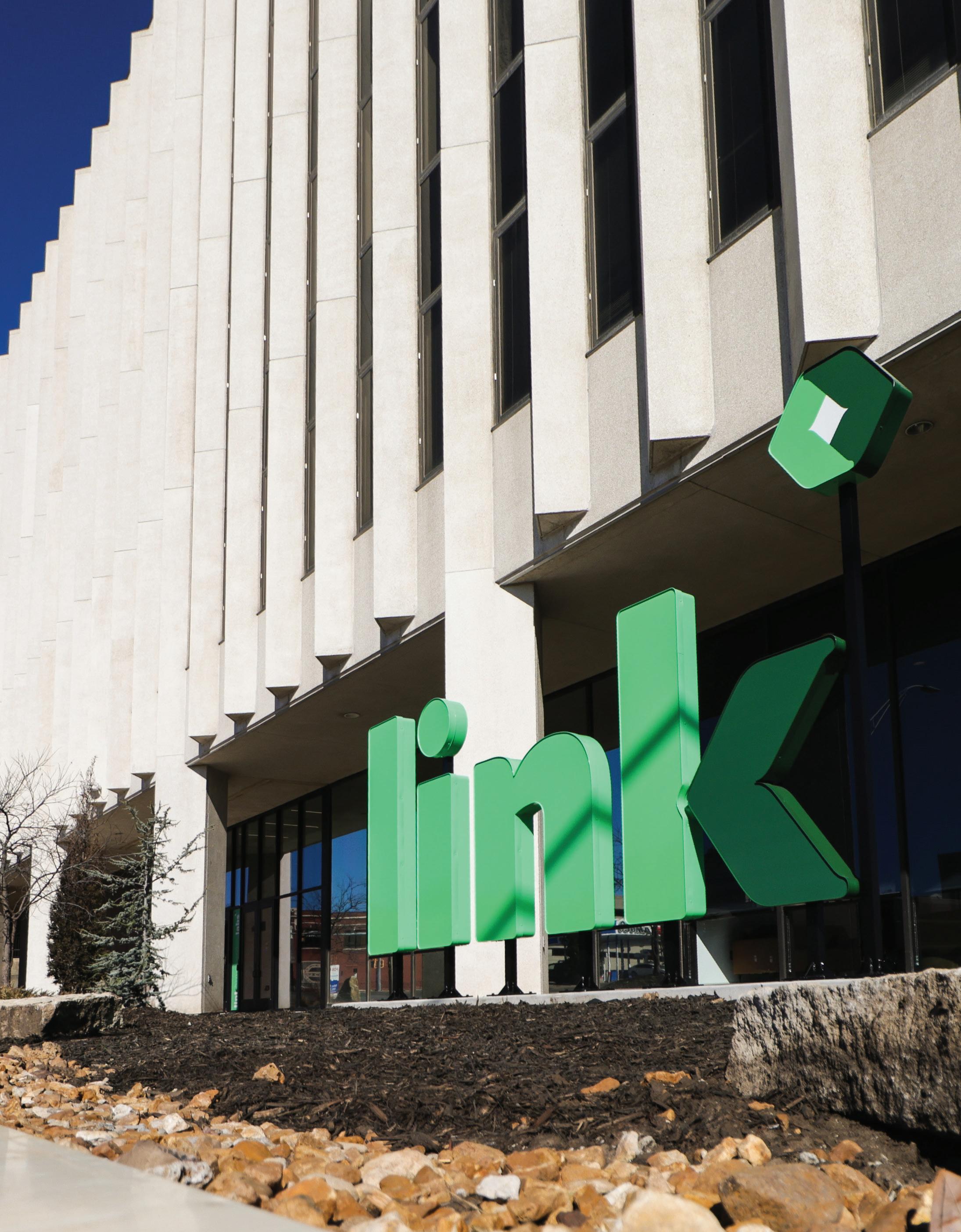
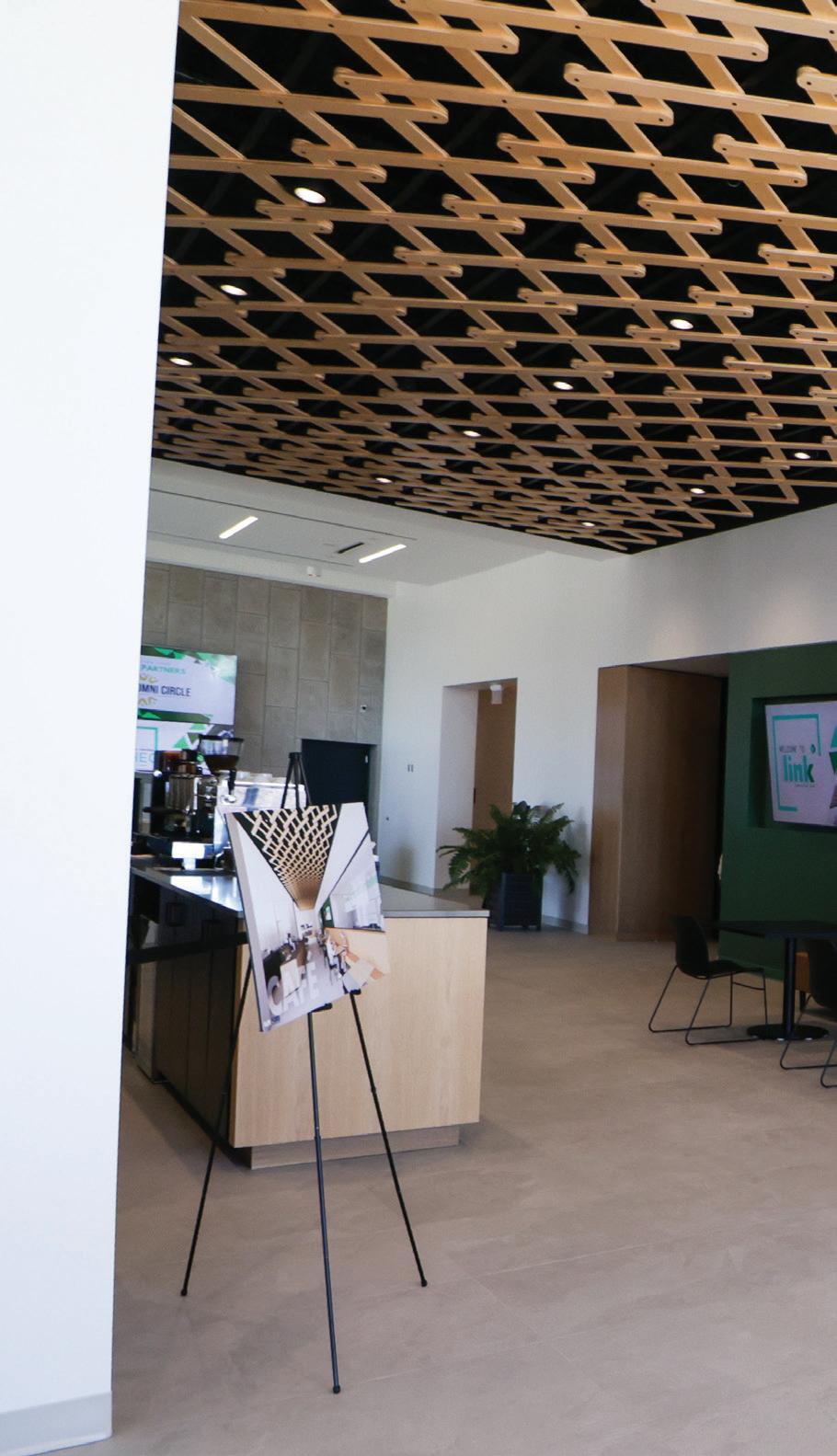
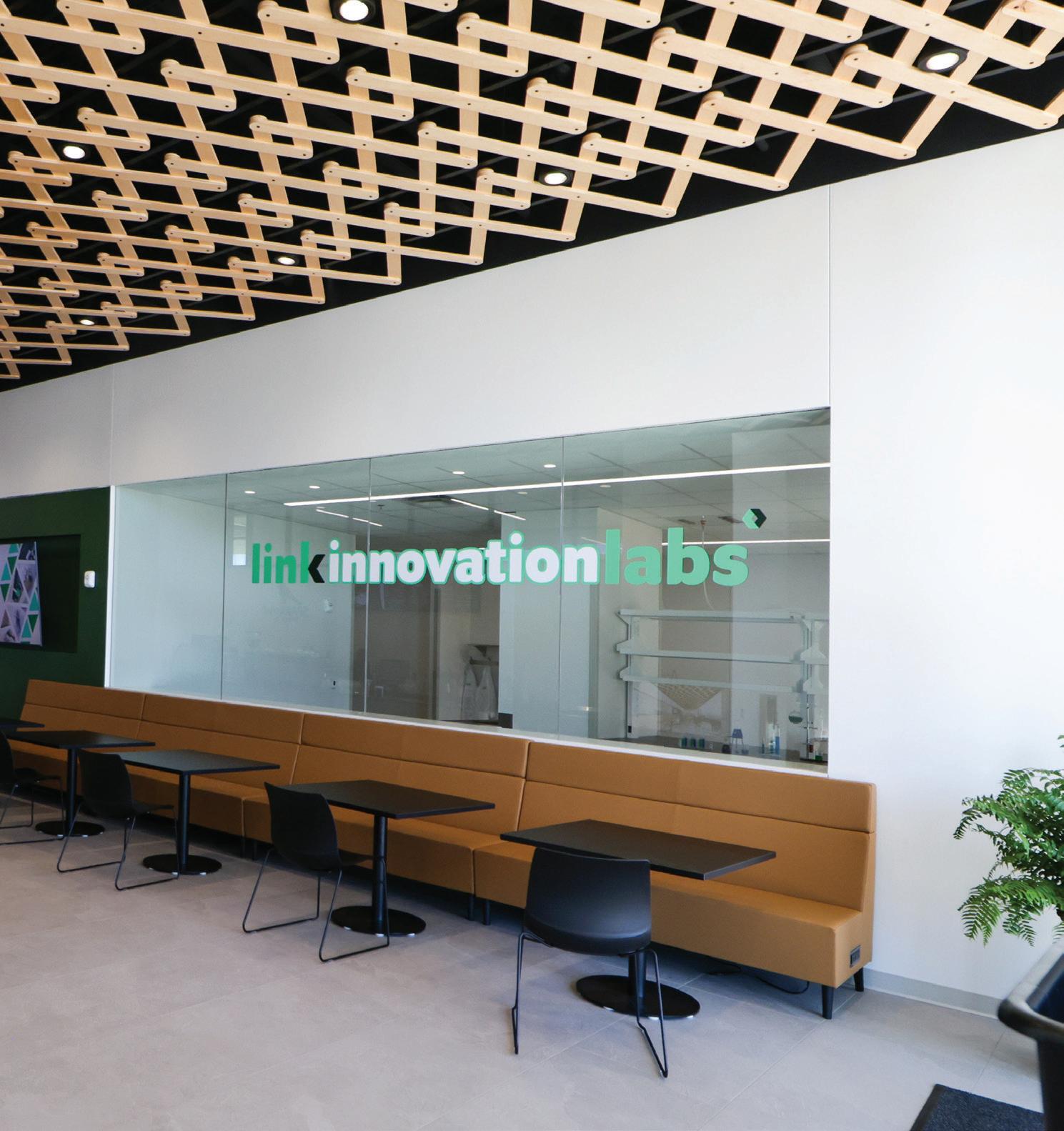
When Link Innovation Labs opened at 220 S.E. 6th St. in February, the case for becoming an entrepreneur in Topeka got considerably stronger. Situated near two research universities and the Animal Health Corridor, Link was conceived as a hub where startups, small businesses and innovators can access lab space, mentorship, funding connections and a network of community partners.
TK Magazine sat down with Stephanie Moran, senior vice president of innovation at GO Topeka, to learn how Link came to be and what it means for the region’s future.
Since 1922, the Ernest-Spencer companies have been combining traditional American craftsmanship with advanced manufacturing technology to support business, industry and agriculture. Our focus is on providing superior quality metal fabrication, precision machining services, custom coatings, and specialty manufacturing services.
As a fourth generation business, we are proud to carry on our family legacy of growth, leadership and performance. We are grateful for the support of our customers, partners and communiities.
ernestspencer.com
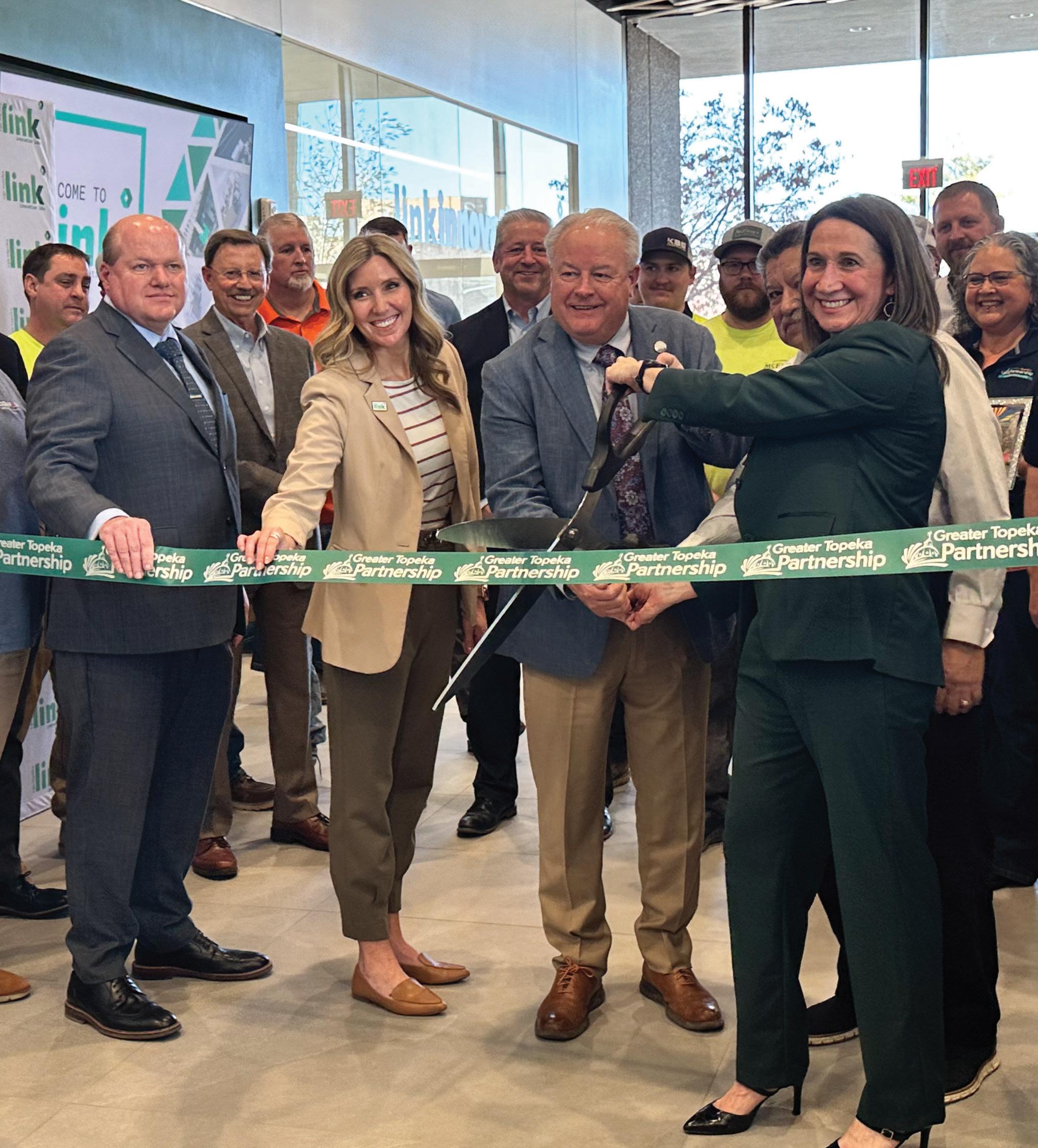
County Commissioner Kevin Cook, Greater Topeka Partnership CEO Molly Howey, County Commissioner Bill Riphahn, former Mayor Mike Padilla and GO Topeka Senior Vice President of Innovation Stephanie Moran cut the ribbon at the grand opening of Link Innovation Labs.
What inspired the creation of Link Innovation Labs?
When we looked at similarly sized communities that had seen significant growth, we found that innovation districts or campuses had contributed to that growth and diversified the industry economic base of those communities. With Topeka sitting within the Animal Health Corridor, it became apparent that there was an opportunity to host an Animal Health accelerator program that could attract those companies to Topeka and the surrounding region.
As a dedicated space, Link provides access to laboratory facilities, university connections for tech validation, government resources,
industry partners and investors, and its central location within the United States offers convenient interstate access. Quality of life and cost of living are key factors as we work to attract these startups to locate in the community. We are also able to support local startups across a variety of industry sectors with the facilities, programming and connections that Link has to offer, which keep those founders from leaving the area.
The project was initially discussed as the Astra Innovation Center before becoming Link Innovation Labs. How did that concept evolve? Coming out of the Momentum 2022 Strategy, the initial location we identified for the Astra Innovation Center was at 7th and Kansas in the Wolfe and Woolworths buildings. Due to a variety of circumstances, that project had difficulty moving forward and in the summer of 2024 the decision was made to look at alternate locations in downtown Topeka. The current building at 220 S.E. 6th St. quickly rose to the top of the list because its overall infrastructure is a good fit for laboratory space. As we discussed names for the facility, the conversations kept coming back
to “linking” startups and entrepreneurs to the resources they needed to link, build and launch their business, which is how we landed on the name.
Who is Link’s target audience?
We support entrepreneurs and innovators at every stage, from youth and first-time founders to existing businesses and tech startups. We partner with our other entrepreneurial support organizations (ESO) in the community such as Omni Circle, Washburn SBDC, Network Kansas, Plug and Play, K-State Extension, the Department of Commerce and university partners, among others, to provide connections to the appropriate pathways for programming, resources and support for building business and marketing plans. We also provide connections to business service providers such as legal, marketing and accounting, as well as insights into funding mechanisms through a variety of loan programs, matching incentives and grant programs.
Entry-level entrepreneurship programming often starts with Ignite and Ascend classes at Omni Circle and consulting on business plans
with Washburn SBDC. Existing business programming and support, collegiate programming with Washburn University and innovation/tech accelerator programming are now running at Link Innovation Labs.
What partnerships and collaborations played a role in bringing the project to life?
With this being a community-developed project, it’s really been a collaborative effort. First, the Joint Economic Development Organization (JEDO) board made a strategic investment in alignment with the Momentum 2022 and Momentum 2027 community strategies, to provide $9.5 million in buildout costs and leasing for the project. The building owner, AIM Strategies, has also put investment into infrastructure including HVAC, boilers and mechanical systems, as well as remediation on additional floors to prepare the building for future buildout. The contractor, architect, lab consultants and subcontractors on the project (KBS Constructors, Hufft Architect, PKMR and Clark & Enersen, among others) were all committed to completing the work in just 14 months, from funding approval to opening.
What types of resources can entrepreneurs expect to find at Link?
We want to ensure that each individual and business has a strong foundation and the tools they need for long-term success. Link serves the local entrepreneurial and small business community through a variety of programs and training opportunities.
We host training and other events based on input from the business community, such as our Small Business Council training series. Our business concierge desk helps people connect with resources, mentors, subject matter experts and ESO partners based on their needs. We also have incentive and grant programs, and appointments are available for anyone who wants to learn more. Our newsletter provides timely updates on upcoming training sessions and other important information.
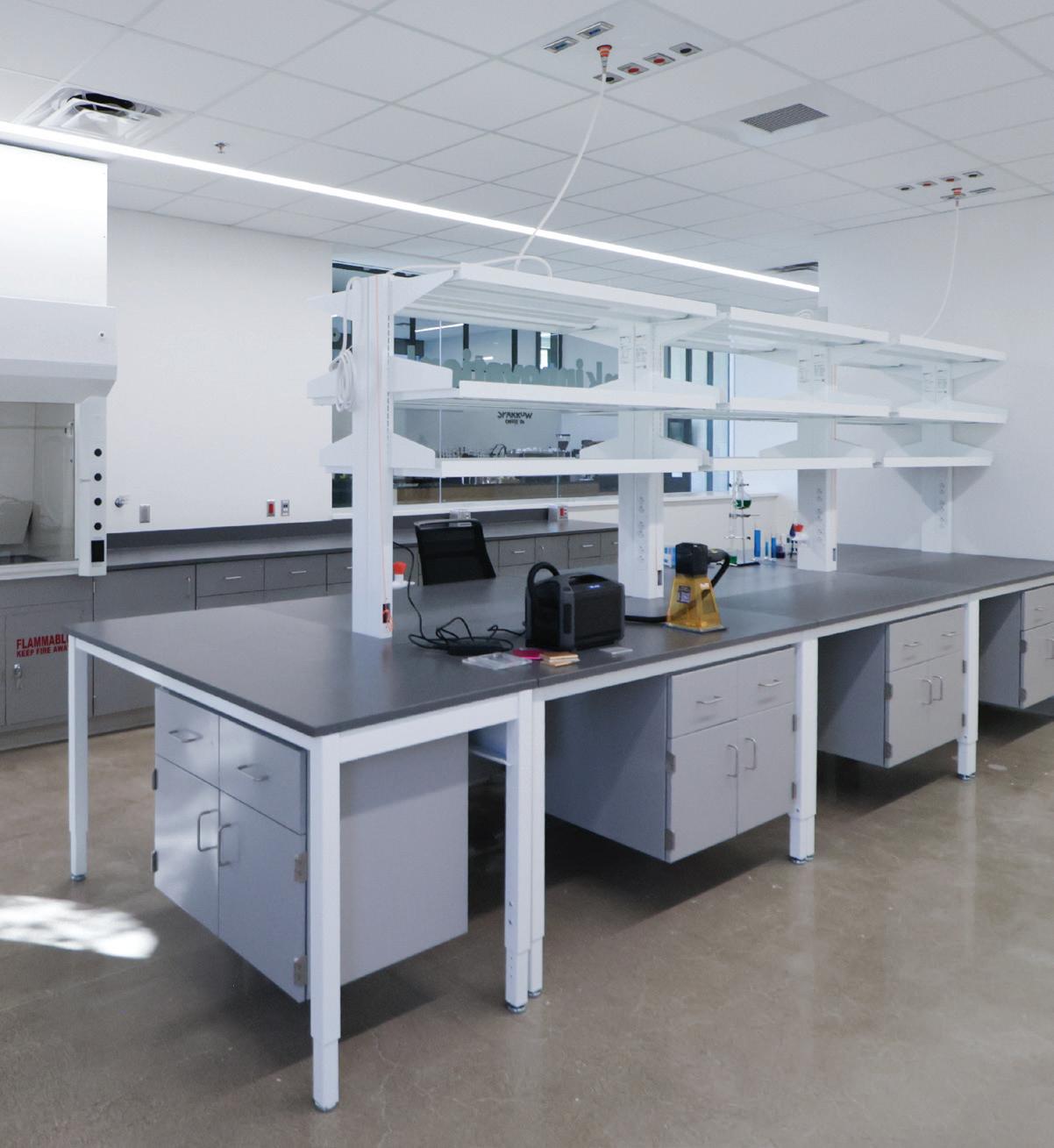
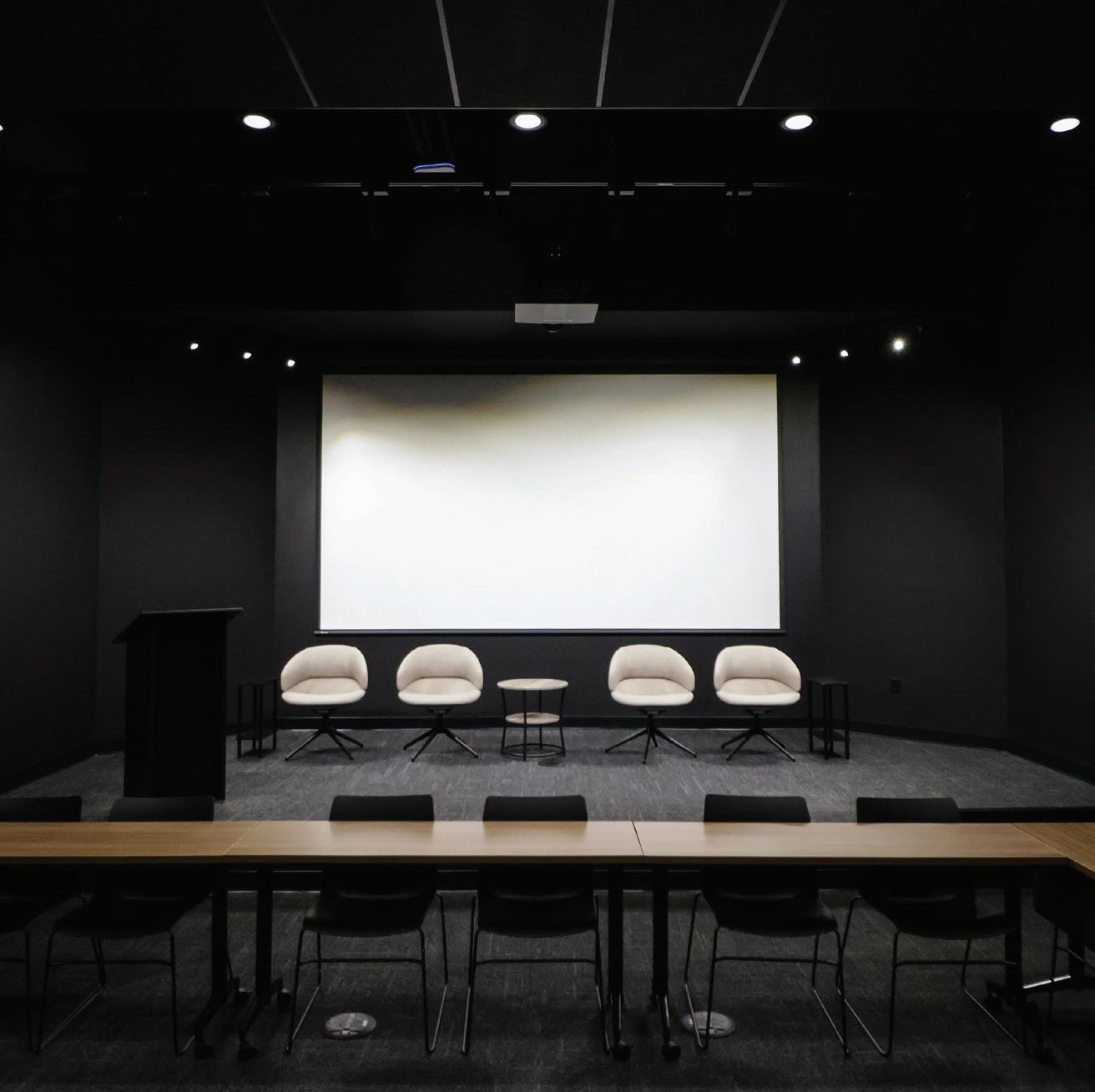
Link is open to the public and has an open public space with Sparrow Coffee Co., so stop in for coffee, a snack and great conversation. You will be able to take a look inside the showcase lab where tenants can lease space to use shared equipment to work on research and development (R&D) projects. We also have conference rooms, an executive boardroom and an events space that can be booked online for a variety of uses.
How does Plug and Play (a global innovation platform headquartered in Silicon Valley) fit in?
Plug and Play is a tenant at Link Innovation Labs and continues to operate the animal health and agtech accelerator programs we’ve run in partnership with them for the past five years. Twice a year, the program brings in 10 to 15 businesses — most are international — and has graduated more than 100 companies in the past five years. Many are looking for a place for a U.S. base of operations or satellite locations to expand their businesses.
The wet lab space at Link is crucial for the R&D many of these companies are working on. The lab space, combined with a dedicated facility that connects companies to universities, corporations, investors and government resources, gives startups what they need to advance their products to commercialization, and makes Topeka an attractive destination.
Although our initial programming with Plug and Play has been in the animal health and agtech industry sectors, Plug and Play has programming in more than 20 industry sectors that we can leverage to support local startups across other industry sectors including fintech, insurtech, advanced manufacturing, supply chain and many others.
What kinds of success stories are you hoping to emerge from Link?
We want to continue helping our local entrepreneurs and small businesses build foundations that will allow them to thrive for years to come, becoming legacy businesses within our community. We’re also excited to see tech startups use Link’s facilities to advance their ideas and products to commercialization, put down roots in the community, build out their own locations in Topeka and Shawnee County, and bring in new revenue, jobs and a more diversified industry base.
For someone in Topeka who has an idea but isn’t sure how to turn it into a business, what advice would you give them?
Please contact one of the ESO partners in Topeka — Link Innovation Labs, GO Topeka, Washburn SBDC or Omni Circle — before you get started. All of the organizations work together and meet monthly to ensure the entrepreneurs, innovators and small businesses in our community are getting the resources and support they need. Staff members within each organization will be able to meet with individuals, assess where they are on their entrepreneurial journey and connect with the appropriate organizations and resources for next steps. We’re all here to help, so don’t hesitate to reach out. TK
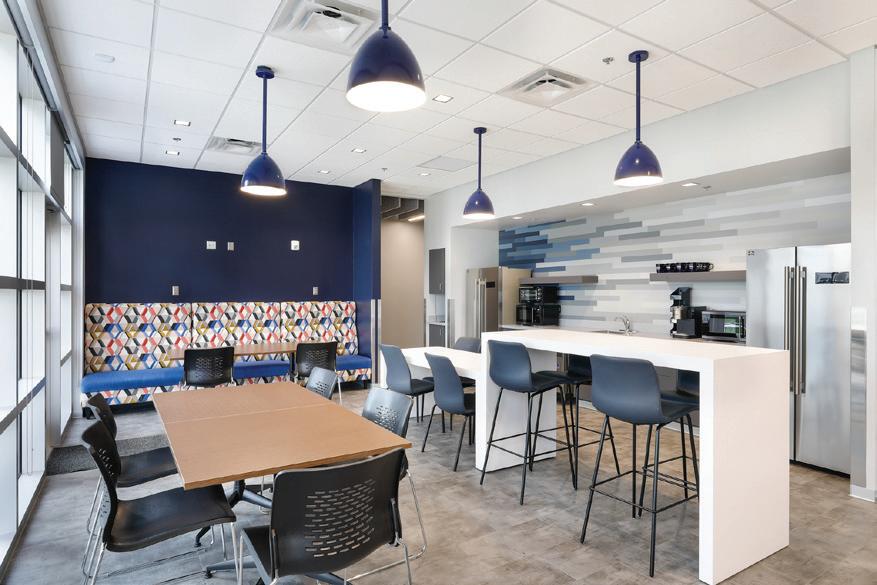
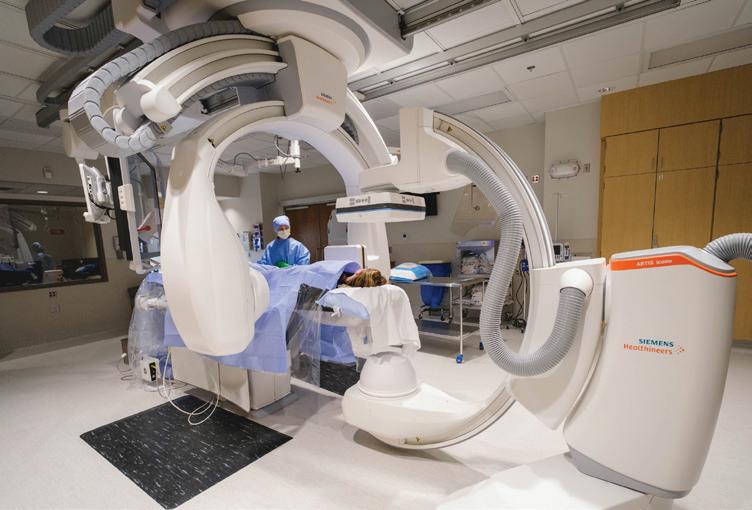
From wet lab space to meeting rooms, Link Innovation Labs gives Topeka entrepreneurs facilities where they can develop and launch ideas.
ANDREW FOREMAN Attorney Foulston Siefkin LLP PHOTO SUBMITTED
Think Before You Prompt Why ChatGPT Makes a Lousy Attorney
AI is rapidly reshaping the world around us, and businesses are using AI for advertising, sales, customer service, coding, accounting and more. It is difficult to think of anything AI cannot be used for. I’ve used AI for everything from designing my daughter’s birthday invitations to researching the best evergreen hedge for my backyard (Manhattan Euonymus is a top contender). It makes sense, then, that business owners would wonder: Why not use AI for legal advice and drafting contracts? Last year, Deloitte Australia, the Australian member firm of the well-known international accounting firm Deloitte, answered this question the hard way — through firsthand experience. The firm used AI to produce a report for the Australian government. Unfortunately, the report was filled with hallucinated legal citations and bogus conclusions. In the end, all the firm got for this embarrassing failure was lost revenue and a damaged reputation. Here are three reasons business owners should hesitate to rely on AI for legal advice or other legal services.
1
AI chatbots not only make mistakes; they make subtle mistakes.
When an AI chatbot cannot provide an answer to a user query, it will frequently hallucinate information in an effort to provide what it “thinks” the user wants to know. This is sometimes referred to as the AI sycophancy problem. Despite how frequently these basic mistakes go undetected, they are often easy to catch with a simple Google search.
But legal mistakes are not always so easy to spot. It is much harder to determine when an AI chatbot misreads a real case or fails to include an important term in a contract. Even when AI chatbots technically provide correct answers, they can still fail to identify important exceptions, provide complete answers, or ask essential follow-up questions — in other words, do the job attorneys are hired to do.
2These subtle mistakes necessitate expert review.
Precisely because AI chatbots often make mistakes, reliance on AI-generated legal content without expert verification carries significant risk for the user. I recently asked an AI chatbot to draft a simple will. The AI chatbot failed to include witness signature blocks in the draft or even explain that witness signatures are required for the will to be enforceable in Kansas. The AI draft also granted all powers under a fictitious law, the “Kansas Nebraska Uniform Powers of Trustees Act,” and it failed to provide for contingent trusts for the decedent’s children. Even without a background in estate planning, some of these errors may still be caught, but any that evade detection risk devastating consequences.
Of course, this issue is far from unique to the practice of law. For example, a company that uses AI to develop a software application cannot simply ask the AI to confirm the application securely stores customer data. Likewise, businesses should not simply hope that an AI-drafted contract does not impose or otherwise create liability for their company. The inherent need for professional verification means many of the best use cases for AI will be by professionals supplementing and enhancing their own services, rather than by others attempting to replicate those same services.
ChatGPT doesn’t care about your business.
As AI models continue to improve in nearly every way imaginable, one striking limitation persists. Despite billions of dollars and years of research, programming moral values such as empathy, honesty or integrity has proven to be an elusive goal. Instead of making ethical machines, we’ve built masters of mimicry.
In contrast, the legal profession is built on a code of professional ethics developed over centuries. We old-fashioned attorneys care about our clients’ success, and we want to help them make good choices as they navigate difficult situations. Until we imbue AI with a conscience, ChatGPT won’t lose any “sleep” if it gives you bad legal advice that costs your business. Though it may sound like your friend, it doesn’t care what happens after you exit the chat and take its advice into the real world.
Relying on AI to provide legal advice or draft contracts is not dangerous because its output is obviously wrong, but rather, because it can be deceptively good. There is no profession or industry immune to the effects of AI, and the practice of law is no exception. In fact, you should hope your attorneys are learning to use AI (wisely) to create value for their clients. In 2023, Foulston Siefkin formed an internal committee to identify promising new AI tools and technologies that our firm can leverage to create value for our clients.
To quote Spider-Man’s uncle: “With great power comes great responsibility.” AI is a powerful tool with tremendous potential. We are living in a world awash with AI-generated content, so remember: Think before you prompt. TK
This information is not a legal opinion, and it does not provide legal advice for any purpose. If you have questions or want more information, contact your legal counsel.
Andrew Foreman is an attorney in Foulston Siefkin LLP’s Topeka office and a member of the firm’s AI Steering Committee. He assists clients with estate planning, probate and trust litigation and business law matters.
McELROY’S FOUNDATION FOR SUCCESS:
doing it right
By KIM GRONNIGER
Celebrating 75 years of service is a remarkable feat for any business but reaching the milestone as a third-generation familyowned enterprise like McElroy’s is especially rare. Only about 13% of companies transition successfully through three generations.
Homer McElroy founded the mechanical, plumbing and HVAC contracting firm in 1951, and his son Jerry later led it. Today the company provides a variety of mechanical, heating, cooling and plumbing solutions under the joint direction of Dan Beal and Wade Jueneman.
Dan, who is the company’s chairman and Jerry’s son-in-law, oversees day-today management and finances while Wade, president, handles field operations. The two have worked together for 19 years. Some of their employees are now working at McElroy’s with their own family members.
“This business is evolving all the time.”
— Dan Beal Chairman McElroy’s
PASSING THE WRENCH
Growing up in Topeka, Dan had a passion for anything with wheels and raced motorcycles in high school and college. After obtaining his mechanical engineering degree and an MBA, he worked at a Texaco refinery as an intern before deciding to come back to Topeka to work for his father-in-law’s business in 1991.
Dan brought technical expertise and computer skills to the company during the early days of information technology. He began keeping track of job time sheets and change orders on a Macintosh computer and automated project estimating work previously done by hand.
He says he found a strong mentor in Jerry, who helped him develop the skills to take on successive management roles within the company. Dan was named president in 2005.
Wade, too, was mechanically inclined as a child. From sixth grade on, he put in full days in the summer doing chores and driving a tractor on his parents’ farm in Hanover, Kansas.
An architectural engineer, Wade joined the company as an estimator and project manager in 2007 after working for Brack & Associates for many years, often collaborating with McElroy’s on major projects, including work at St. Francis and Stormont Vail Health.
“Dan reached out a couple of times and finally I was ready to move,” Wade said.
Just as Homer and Jerry mentored Dan, he is now mentoring Wade and other employees.
“If Dan sees that you know what you’re doing, he lets you do it,” Wade said. “I’ve been able to grow here at the pace I wanted to grow at and that’s why I’ve stayed. Dan told me when he hired me that I should expect to retire from here and I remember thinking, ‘Geez, that’s not going to happen,’ and I’m still here 19 years later.”
TURNING UP THE HEAT
“This business is evolving all the time,” Dan said. “As soon as you go in one direction to accommodate a shift, something else changes with the labor force or technology. Homer and Jerry had a lot of knowledge and years of serving customers and solving problems that I benefited from then and now.”
Wade said new software applications, refrigeration standards, Environmental Protection Agency changes and supply chain issues continue to impact the business.
The company emphasizes communication, training and knowledge sharing to keep the team current on new developments. Of its 190 employees, about 140 are trade union members.
Wade compares managing people to steering a ship.
“We’re constantly trying to get the right people in the right seats,” he said. “It’s a lot of juggling and a little bit of chess. Sometimes I feel like I’m pulling ropes like the Wizard of Oz in teaching and passing along knowledge. I love
PHOTO SUBMITTED
it when they bring me questions and challenges.”
The extra effort has paid off. Many of McElroy’s employees have spent their whole careers with the company while a few others left and then came back.
Dan attributes the company’s tight-knit culture to three things: respect, transparency and an expansive definition of family that includes all employees, not just those with McElroy ties.
“We want the best for everyone, including our employees and our customers,” Dan said.
FULL STEAM AHEAD
Craftsmanship is a cornerstone of Dan and Wade’s business philosophy. They guide employees through apprenticeships and prepare those who are interested in journeyman and foreman positions.
“From the beginning, we teach them about our commitment to highquality craftsmanship and we show appreciation for their skills and service, because ultimately their performance determines our success,” Dan said. “We want to build things correctly that function properly, look good and last.”
Wade agrees. “This is a small enough area that you have to do what
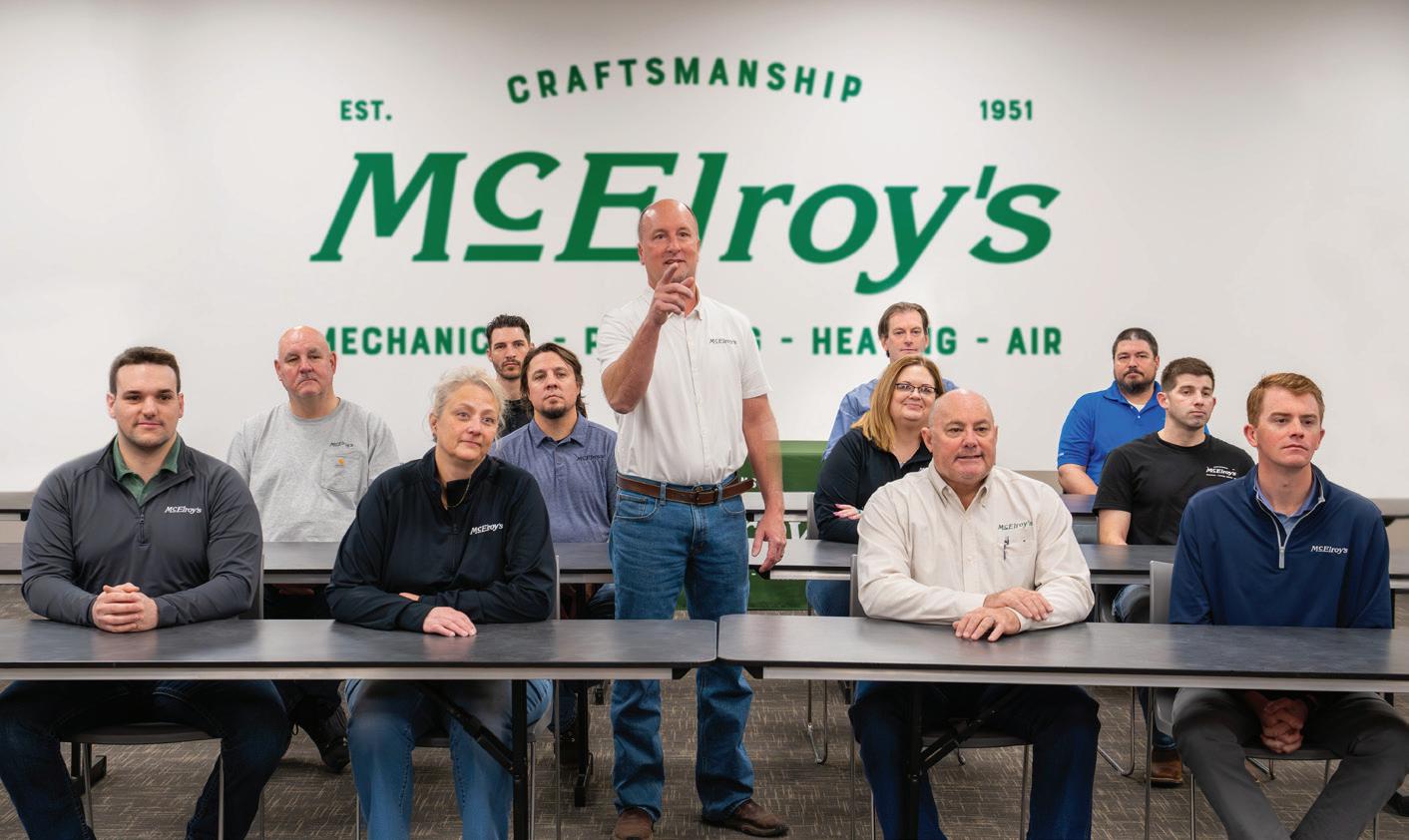
McElroy’s team members, from left: (front row) Ben Post, project engineer; Shawn Kelley, warehouse manager; Wade Jueneman, president; Greg Hunsicker, residential HVAC manager; Parker Beal, project manager/engineer; (second row) Martin Decker, sheet metal manager; Aaron Thompson, VDC & pre-fab supervisor; Kristen Colvin, assistant project manager; Jimmy Thomas, project manager; (back row) Chad Hunsicker, project manager; Richard Hammer, project manager; Luke Dumler, plumbing service manager.
you say you’re going to do because word travels fast,” he said. “My dad and grandpa always said to do it right or don’t do it, and that’s our approach. We get excited about the pipes and the duct work and all the things no one sees because it sets the foundation.”
Through the decades, McElroy’s has amassed a repeat client base across health care, food processing, education and other sectors, in addition to its residential customers. Dan estimates that 90% of the company’s work is nonresidential and almost every project undertaken is in Northeast Kansas.
“We’re responsive and do what we say we’ll do, and we follow up to ensure the customer experience is positive,” he said. “Our success comes from making our customers and employees feel seen, heard and appreciated.”
“Reputation is everything,” Wade said. “If we see something that doesn’t look right, we’ll rip it out and start over at our own expense.”
That work caught the attention of a national engineering and construction firm based in Tennessee that develops distribution fulfillment facilities across the country. The
Making sure everyone feels “seen, heard and appreciated,” as chairman Dan Beal puts it, starts at the top at McElroy’s.
From left: Eric Jennings, HR manager; Dan Beal, chairman; Nathan Stillings, chief financial officer; Kurt Eskilson, marketing manager; Steve Morgan, IT support specialist.
relationship began in 2017, when the firm hired them to add HVAC to an existing 1.355 million-square-foot distribution center in Topeka, and has since expanded to jobs in other states.
“They saw the high-quality work we did, so now they’re willing to pay extra to put up our employees in different locations because they know that in the end it will result in less downtime and expense for them,” Wade said.
The company is expanding its engineering capabilities, adding a fourth licensed engineer —with two more expected to be licensed later this year — and integrating more efficient computer modeling.
Dan wants to accelerate McElroy’s expansion in the region while also contributing toward activities that will help the capital city grow. He has served on multiple community boards, including GO Topeka. He has also represented McElroy’s on several union boards and workforce development committees.
Wade has served on the GO Topeka board and worked with underprivileged youth. He currently serves on the Mechanical Contractors Association of Kansas board, state apprenticeship board, local apprenticeship board and several other committees.
In 2020, McElroy’s formalized its community giving guidelines, focusing on nonprofits working to enhance Topeka’s quality of life. Areas of focus include community health and wellness, children’s education, workforce development and improving living environments.
“We want to grow in Topeka because this is our hometown and where we started,” Dan said. “It’s an affordable community and has enough amenities for what we need, as well as easy access to the cities we serve and the neighboring towns where our employees live.” TK
DESIGN + CREATE + ENJOY
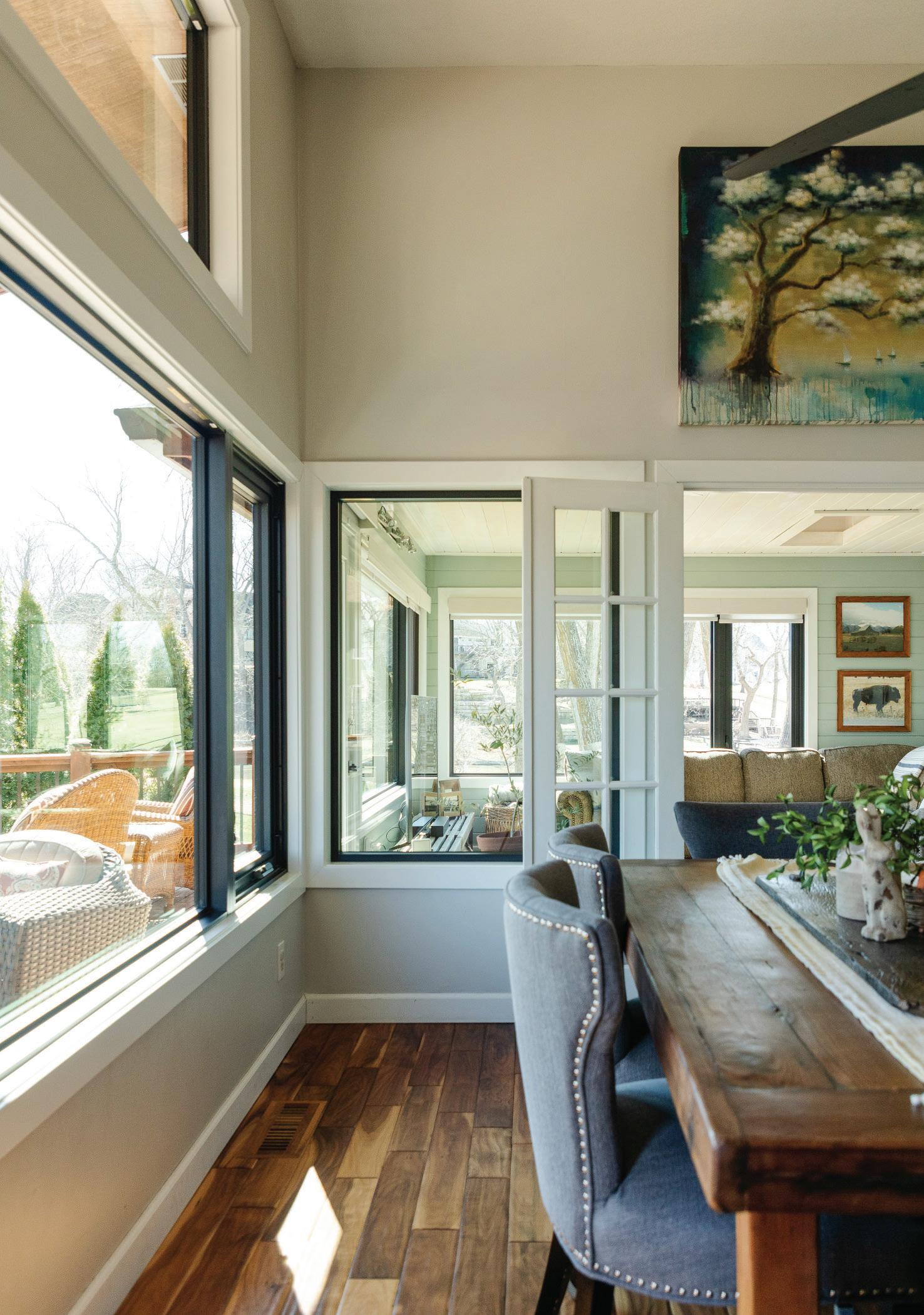
Complete window & door repair, design & renovation. Open up your home and let the light in. LET THE LIGHT IN
CUSTOM FIT POLO CUSTOM PRODUCTS
By KIM GRONNIGER
Kent Lammers, president and chief executive officer of Polo Custom Products, has a metal sign prominently displayed in his office that says, “Stay humble, work hard, be kind.”
The mantra reflects his approach to leading a company that custom designs, engineers and manufactures everything from United States Army tactical gear and Harley-Davidson saddlebags to heat-sealed medical collection equipment and personal watercraft accessories.
Photos by BRIAN PETERS
PHOTO SUBMITTED
The company, originally founded as Polo Plastics in Milwaukee, Wisconsin, in 1947, moved its headquarters to Topeka in 1971. Kent has led the 79-year-old Topeka company through many transitions and acquisitions during his 44-year career.
A graduate of Topeka High School and Washburn University, he began working at the company as an intern and joined the team full time in 1984 in an accounting role, eventually becoming controller and then chief financial officer. He became president and chief executive officer in 2018.
“Whatever position I was in, I wanted to be the best I could be and now I want to set others up for success by maximizing their abilities,” he said.
Today the company has a workforce that fluctuates between 350 and 500, with manufacturing plants in Monticello, Iowa, Topeka and Louisville, Mississippi, and plans to open another facility in San Pedro
de Macorís, Dominican Republic, this year. Polo Custom Products also has offshore partnerships with companies in Vietnam, China, Cambodia and Puerto Rico.
CREATING A NEW VENTURE CLOSE TO HOME
Looking to increase labor capacity during the pandemic, Polo Custom Products launched an unusual collaboration close to home.
Kent met with representatives from the Kansas Department of Corrections and the Topeka Correctional Facility (TCF) to explore a manufacturing partnership. Kent says the relationship, which began in August 2021, has benefited both organizations and the families of TCF residents.
He says a large percentage of TCF’s residents are mothers, so working at the onsite facility allows them to learn a vocation and earn a prevailing wage they can send back to their
In June, Polo Custom Products will host a Greater Topeka Partnership ribbon cutting for a new 35,000-square-foot space on the Topeka Correctional Facility property.
children’s caregivers. Employees for the competitive positions need to have good conduct reports, which also helps minimize disruptions for TCF staff, he says.
“The HR director and I meet with all new employees and we let them know that we don’t care what got them there, only what we can do to make things better moving forward,” Kent said. “Many of these women have rarely been told that they’ve done a good job or been given a compliment, so graduation upon completion of training is a really special, heartwarming celebration with certificates and congratulations from all of our executive team members.”
Kent says when TCF employees are released, the company helps them find jobs if they don’t want to relocate to one of its out-of-state manufacturing plants.
“They leave us trained and proud of their work and then they can hopefully avoid falling back into old
PHOTO SUBMITTED
“I want to set others up for success by maximizing their abilities.”
— Kent Lammers President & CEO Polo Custom Products
habits,” Kent said, noting that one of the program’s successful participants now works at the corporate office.
In June 2026, Polo Custom Products will host a Greater Topeka Partnership ribbon cutting for a new 35,000-squarefoot space on the TCF property.
“This venture has been a tremendous success, and I’m so glad we did it,” he said.
CUT FROM A DIFFERENT CLOTH
In 2008, Polo Custom Products rebranded with a focus on providing custom products for medical, fire and safety, industrial and government sectors.
One of the company’s most-made products is a chemical protective patient wrap to safeguard soldiers from the threat of chemical warfare or to safely transport them to a medical facility if they become exposed.
“We’ve been working with the U.S. Army since the 1980s and are coinventors of this product, which, frankly, we hope never has to be used,” Kent said. “Everything we do is custom. You won’t find our products at Walmart. If a customer has a concept, our designers and engineers can draw it up and make it.”
Another product is a vest with electrodes that can alert a patient awaiting heart surgery about a health issue and administer a shock to save the person’s life.
“Sometimes patients have to wait a couple of weeks for a surgery so this vest can ensure their safety in the meantime,” he said. “Our employees take pride in being the last touchpoint between a product and the lifesaving potential it has when it reaches a customer.”
BEYOND THE FACTORY FLOOR
Throughout its history, Polo Custom Products and its precursors, including its former MC Industries and Sunflower Marketing divisions, have supported nonprofits in Topeka and in other communities where it has manufacturing facilities. Employee committees are entrusted with the decisions to support causes they care about.
Kent also contributes personally to community initiatives and has served on numerous local boards focused on quality of life and economic development.
Kent, a former Washburn University tennis player, and his wife, Rhonda, recently gave $500,000 to renovate the athletic program’s complex. A self-described proud Ichabod, he is working with a group to add Washburn University banners on Topeka Boulevard light poles from 21st Street to 29th Street to promote campus pride.
Kent played a key role in the “Bring Back the Boulevard” public-private initiative launched in 2021 to address neglected areas in Southeast Topeka. Now he is working with others to build on the effort’s success through the Greater Topeka Partnership’s Momentum 2027 plan.
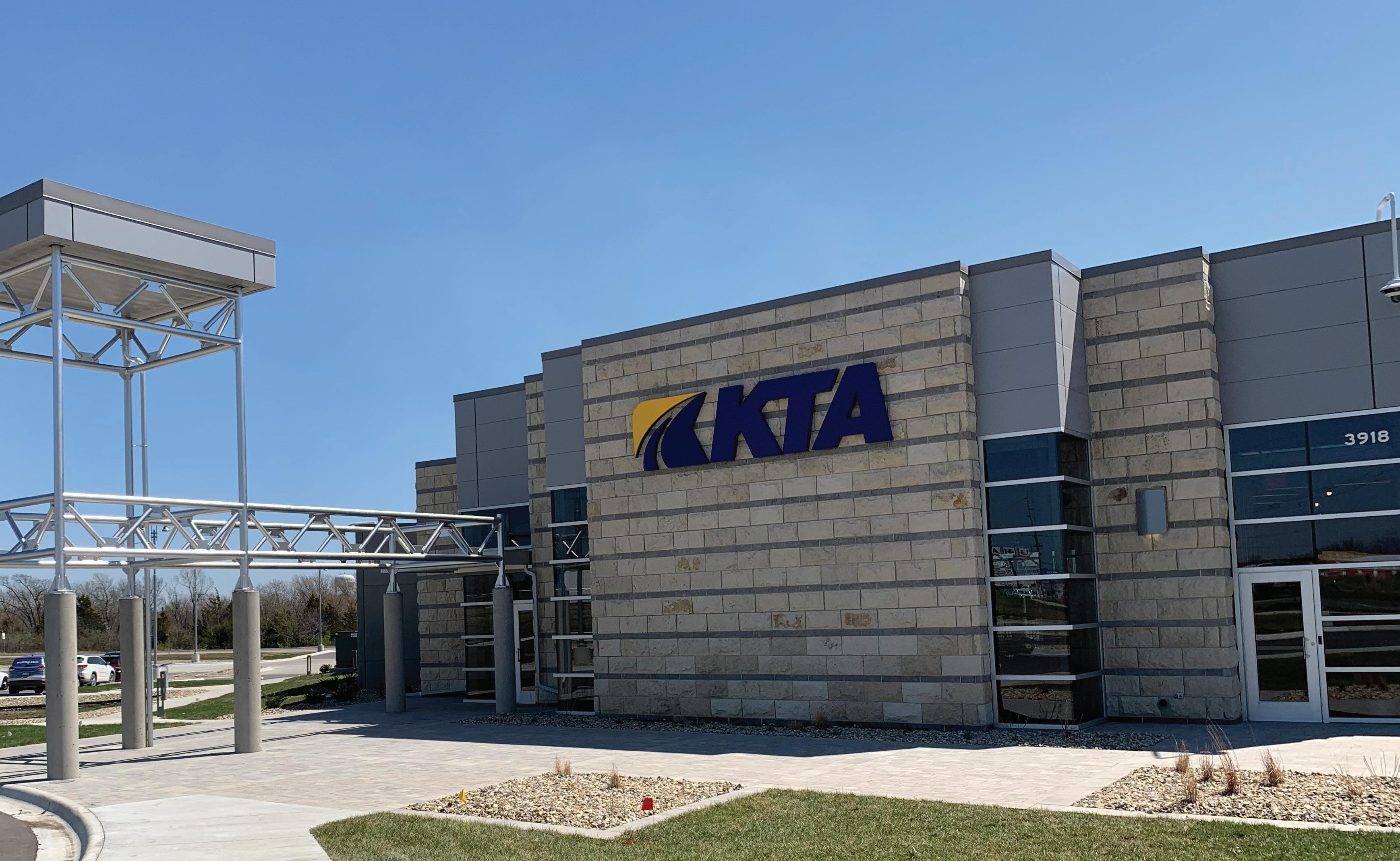
Some of the significant Topeka Boulevard enhancements that have been made in the last few years include construction of a new Kansas Turnpike Authority building; remodeled businesses like the Stormont Vail Events Center, McElroy’s, CoreFirst Bank &
Photo by BRIAN PETERS
Polo Custom Products employees sew and operate precision cutting machinery on the manufacturing floor.
Trust and McDonald’s; and the addition of Chick-fil-A and Whataburger franchises.
White Lakes’ transformation continues to evolve with AutoZone’s acquisition of a pad site and plans to construct a store that will encompass both retail and distribution capabilities.
Beyond Topeka Boulevard, Kent says he is encouraged by Advisors Excel’s renovations at West Ridge Mall and Gage Center.
“All of these infrastructure improvements have made a real difference in how our city looks and in how our residents, visitors and potential investors regard it,” he said. “We’re committed to extending the ‘Bring Back the Boulevard’ concept to other Topeka corridors and entryways because even little things add up, especially when you look back just five years and see what’s been accomplished.”
MEASURED FOR THE FUTURE
Kent says that his hometown’s positive economic climate, and his employees’ Midwestern work ethic, encourage him to keep moving forward.
“I want our employees to love coming to work and I want us to have fun working toward our goals,” he said.
His advice for other businesses circles back to people.
“There will always be challenges for any business, but a positive mindset can ensure that whatever needs to be done gets accomplished more efficiently,” he said. “Listen to the people you work with and consider their ideas. Be transparent about the decisions you make and don’t be a foot tapper. Give people the freedom to do their job within the appropriate guidelines and make time to celebrate success.” TK
Finishes, Furnishing + Functionality
Because it matters.
PLAYING THE LONG GAME BARTLETT & WEST
By KIM GRONNIGER
by BRIAN PETERS
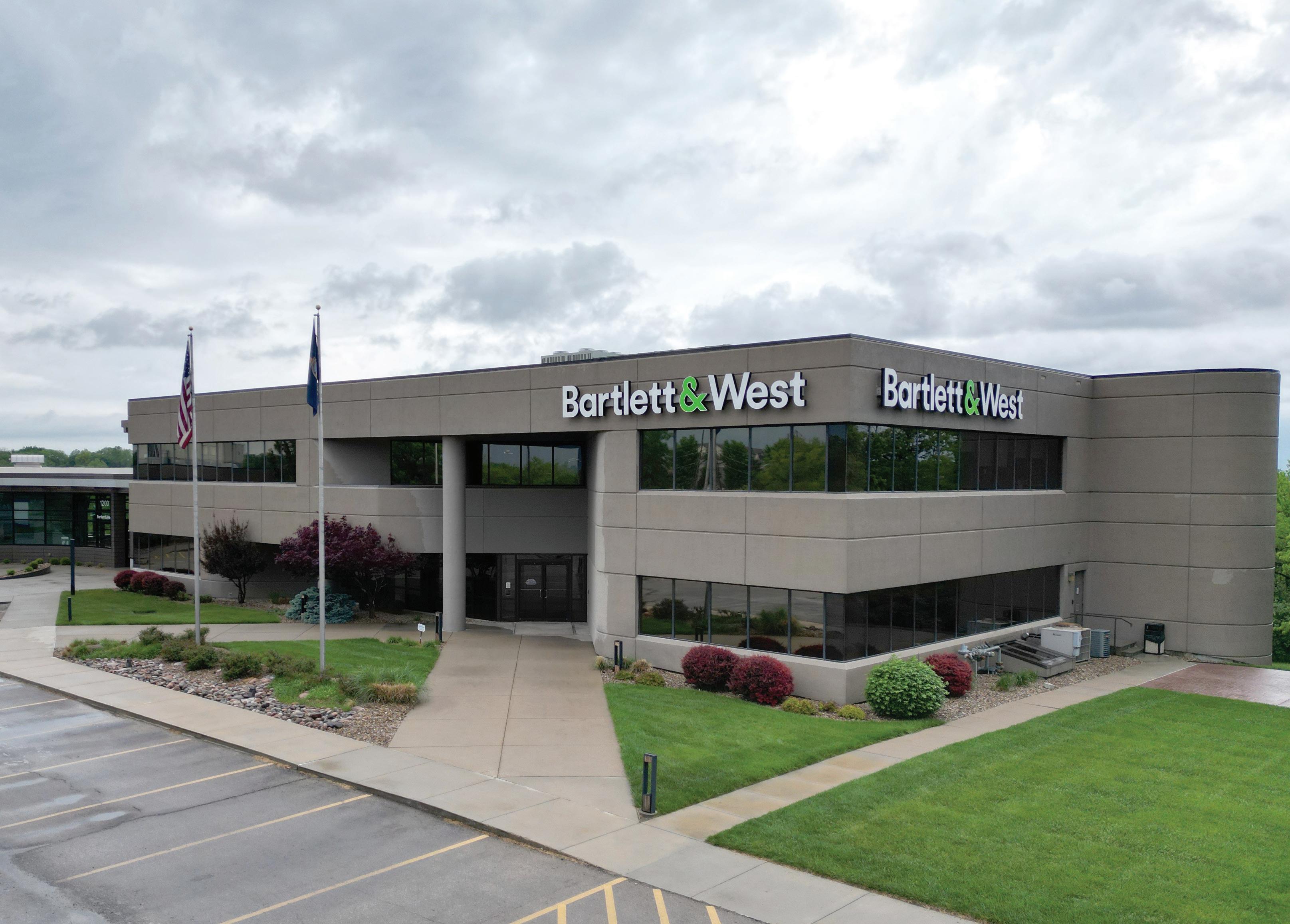
Bartlett & West is celebrating its 75th anniversary of “leading communities to a better tomorrow” by working on projects ranging from clean drinking water and safe roadways to rail planning and more.
Founded by Harry (“Bus”) Bartlett and Charlie West in 1951, the civil engineering firm began with land development projects, including working on a portion of the Kansas Turnpike. In 1956, Bartlett & West designed the state’s first rural water system and has
since expanded its services to include transportation, water, wastewater, surveying, construction inspection, architecture, mechanicalelectrical-plumbing, structural, site civil, technology, environmental planning, design-build and construction projects.
The firm has several offices throughout Kansas, Missouri, North Dakota, South Dakota and Texas, as well as locations in Jerseyville, Illinois, and Tampa, Florida.
Photos
Photo by BRADEN DIMICK
“Employee ownership drives our culture.”
— Joe Caldwell Chief Executive Officer Bartlett & West
EVERYONE’S GOT A STAKE
During its lengthy tenure, the firm has received several best-place-to-work accolades, including Forbes’ Best Small Employer recognition in 2023 and a spot on Prairie Business magazine’s 50 Best Places to Work list in 2025.
Locally, the company has worked on downtown Topeka revitalization efforts, the Oakland Wastewater Plant master plan and several projects for BNSF and its predecessor, the Atchison, Topeka and Santa Fe Railway.
Joe Caldwell, chief executive officer, said one of the company’s defining moments came in 1985 when the employees bought the firm from Charlie West and converted the profit-sharing plan into an Employee Stock Ownership Plan, or ESOP.
The ESOP was originally a C corp, which allowed some owners to hold different types of stock. In 2009 the company transitioned to an S corp, requiring all employee-owners to hold the same class of stock.
“Employee ownership drives our culture,” Joe said. “Establishing the
S corp created a level playing field and every one of our 475 employees has the same kind of influence. We expect our employee-owners to act like entrepreneurs, with freedom and flexibility, and that message resonates with them.”
STRATEGIC MOVES
Around 1990, the Atchison, Topeka and Santa Fe Railway reached out to Bartlett & West to help with an issue that was more technology than engineering in nature.
“Instead of saying that sort of thing was out of scope for us, Steve Briman [a former Bartlett & West executive] listened to learn what the client needed, and that launched us into a new area of work that has continued to grow,” Joe said.
The firm also hired Herb Bailey, a Missouri Department of Transportation (MoDOT) retiree, as a consultant.
Joe says Herb helped the firm position itself to enter new markets and now MoDOT is one of its biggest clients.
“We’re always playing the long game, looking out 15 to 25 years down the road and planting seeds while continuing to nurture the saplings and mature plants we already have,” Joe said.
Starting in 2015, the company began purchasing companies in Texas, Missouri and Kansas to expand its footprint. In addition, the company has strengthened its capabilities through investments in architecture, power delivery and renewable energy services.
“We’ve made strategic moves to create greater diversity in our offerings and locations to better serve our expanding markets,” Joe said. “When one market is up and another is down, we can maintain our business for sustainable long-term growth.”
Photo by BRIAN PETERS
WE BEFORE ME
Joe describes the Bartlett & West culture as “We Before Me,” a philosophy based on five core behaviors: proactive communication, accessibility and responsiveness, quality, integrity and understanding clients’ needs.
The company no longer breaks out profit and loss by division or location, instead tracking progress across the organization as a whole.
“We’re in the business to develop people, so we provide a lot of opportunities around leadership and soft skills through our Bartlett & West University program,” he said. “We want our employee-owners to be better at
interacting with clients but also outside of work engaging with their families, churches and organizations they belong to.”
The company hosts a quarterly Zoom conversation with employeeowners to discuss company culture, and administers a one-question pulse survey every other month to gauge perceptions. In March and September, the company sends a 10-question survey to employees to assess how they’re feeling.
“We love feedback, the more robust the better,” Joe said. “We ask our clients for feedback too.”
Joe says his mentors influenced his management style, which is focused
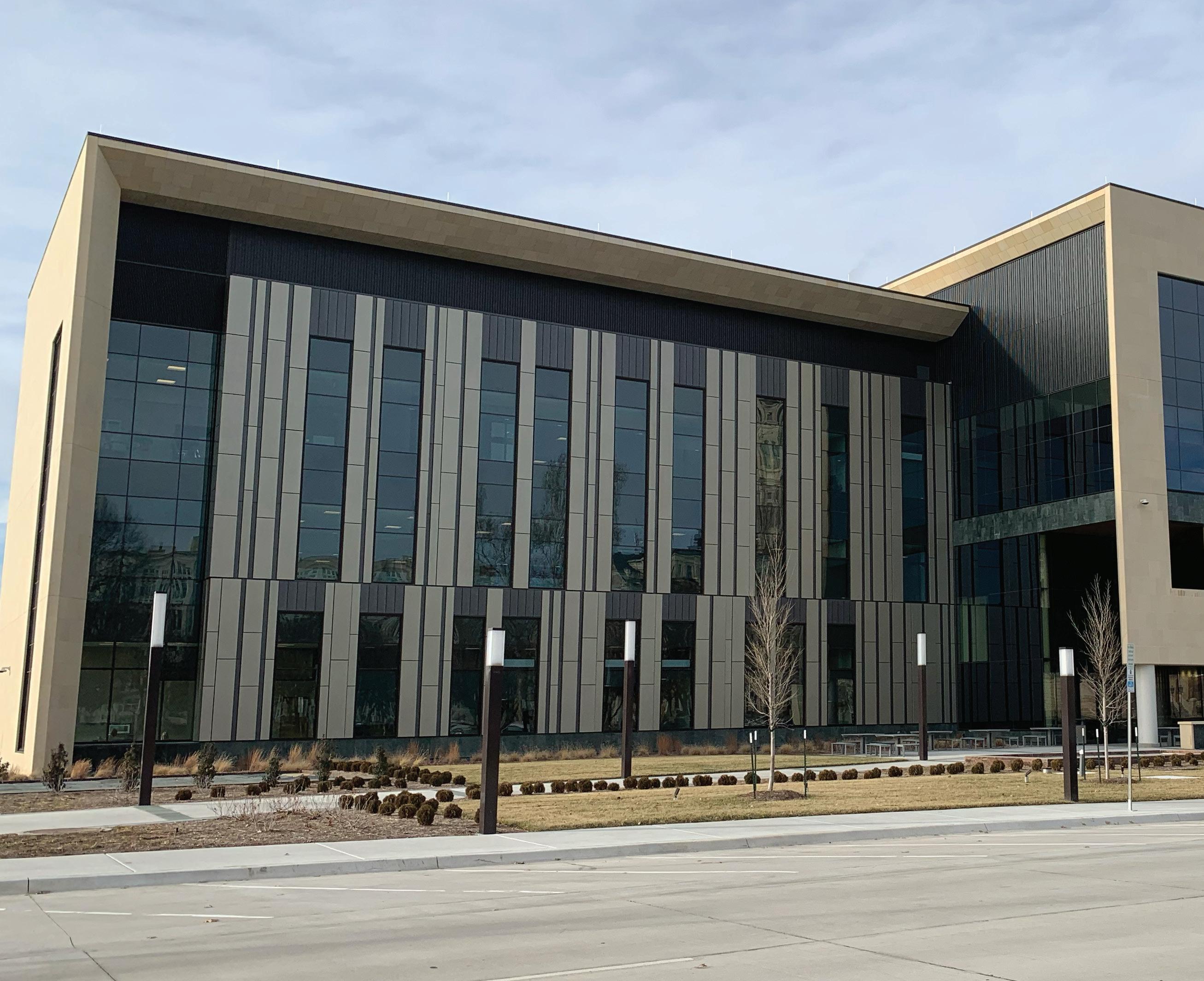
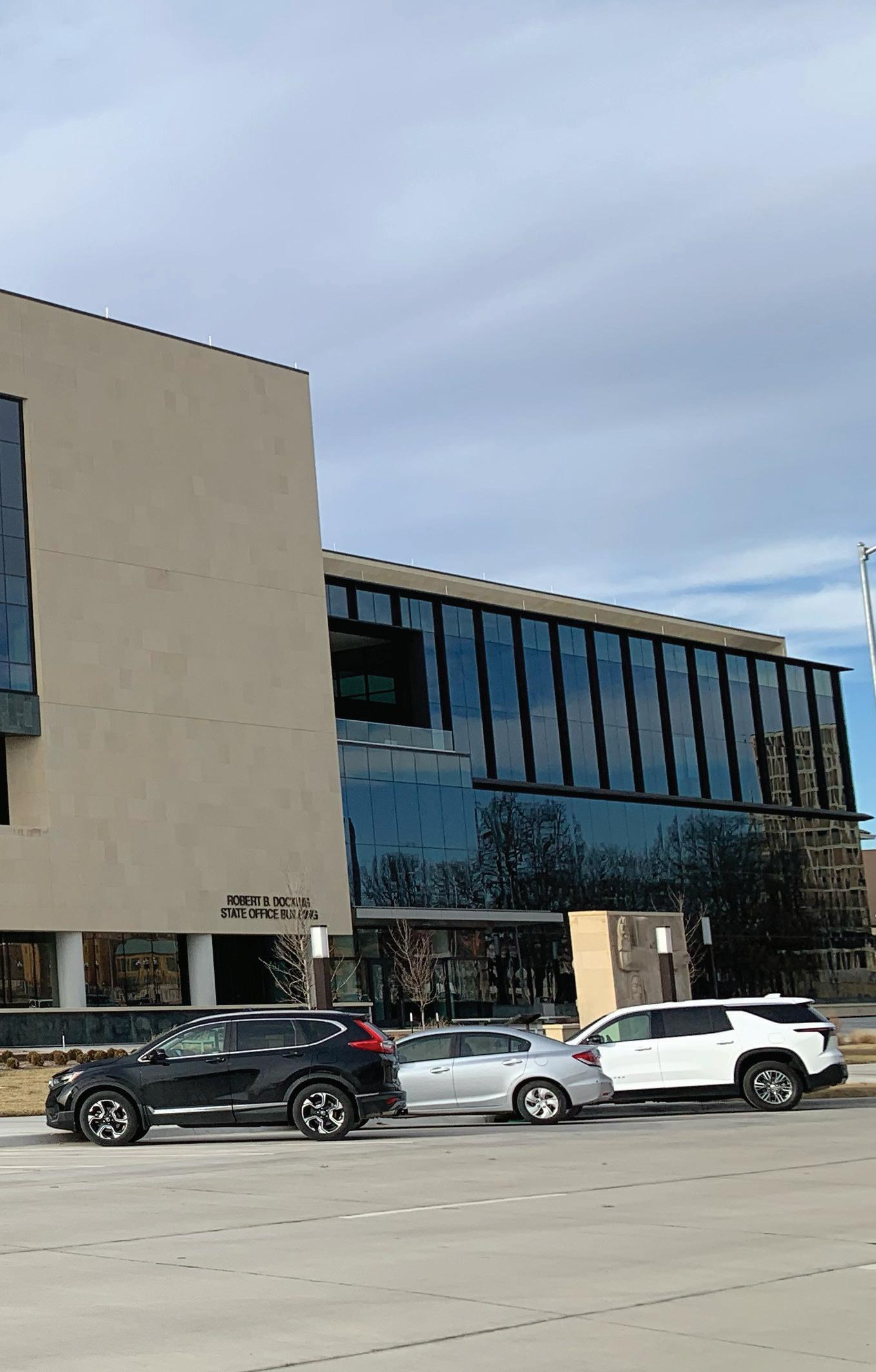
The Docking State Office Building in Topeka, one of Bartlett & West’s reconstruction projects. The firm is preserving the building’s historic character while using modern engineering to improve energy efficiency and comfort.
on helping others succeed, whether it’s a client or an employee-owner.
“I love collaborating with people and exploring ideas and having an open door for impromptu discussions,” he said. “We like to make sure everyone’s on board with decisions as much as they can be.”
ROOTED IN TOPEKA
Joe moved to Lawrence from St. Louis to pursue an engineering degree at the University of Kansas and joined Bartlett & West in 1983.
“I figured I’d stay two or three years and then get out of Dodge, but I fell in love with the area, the people and the company,” he said.
Joe says the Topeka community and the company are closely linked and share similar values: hard work, honesty, optimism and resilience.
“We’re gritty people,” he said. “I can’t fathom working anywhere else. This is where we started and where we want to be. We’ve invested a lot into the community and the community has also invested a lot in us.”
The company gives generously to several initiatives, including the Greater Topeka Partnership and Topeka Civic Theatre. Its giving guidelines encompass social services, quality of life and education, especially STEM initiatives.
“We want to be involved and engaged and support things our employee-owners are passionate about,” Joe said. “It’s core to who we are as a company.”
Joe points to the firm’s relationships with the City of Topeka and Shawnee County as central to its local accomplishments.
“Over time, we’ve worked with so many people and they’ve helped us because we’ve built trust with them,” Joe said. “When our employees, wherever they work, want to pitch new business ideas to us, the first thing we ask is whether they’ve taken time to develop a relationship with the other
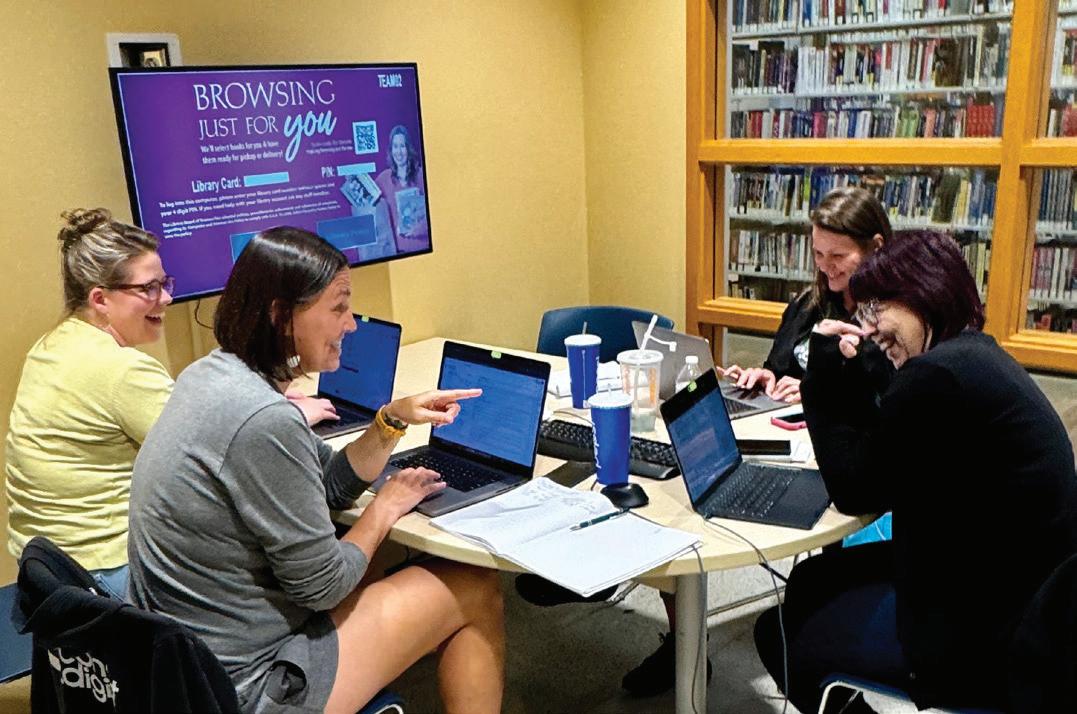
Give your guests the space they deserve! Enjoy cozy corners, fireside seating, or use spacious meeting rooms for a community workshop. The library offers the perfect change of scenery without the pile of laundry in the background. Wi-Fi is always free and so it the parking.
party, and if the answer is no, then it’s no-go for us.”
Joe says he is eager to see the results that will come from Topeka’s new Link Innovation Labs startup ecosystem.
“It will make our community more robust and attract entrepreneurs who will challenge us and make us think differently,” he said.
He says he’s also excited about the potential for the city’s financial
services sector to expand and efforts to further leverage Washburn University.
Joe, who has an MBA from Washburn University, called it “a hidden gem” and said the university’s progress over the past 20 years has been incredible.
His advice to other business leaders is consistent with how he has run Bartlett & West: invest in people, listen and learn, ask open-ended questions and follow up.
(Top) The reconstructed 12th Street corridor in Topeka, where Bartlett & West helped engineer new sidewalks, bike lanes, lighting and intersections. (Bottom) An aerial view of the Polk-Quincy Viaduct, where Bartlett & West partnered on the $239 million replacement project: a 2.5-mile reconstruction of I-70 that broke ground in March 2025 and is expected to be complete in late 2027.
“We don’t hand potential clients a brochure when we meet them,” he said. “We want to know about them and what’s important to them first. It sets a different tone.”
RUNNING CLEAR
Noting that employees don’t always get to benefit firsthand from their ideas and their labor, Joe shared a story about a long-time employee who could trace the company’s work back to his childhood in Linton, North Dakota. That employee, Joe Bichler, joined Bartlett & West in Bismarck, North Dakota, but finished his career in Topeka.
“He shared that the well water he grew up with looked like tea or even coffee, definitely not the quality you would want as a consumer,” Joe said. “His dad would have to get up in the middle of the night to get the well restarted so there was water in the morning to get ready for school.
Eventually our engineers and our rural water system work reached Linton and when Joe went back home from Topeka to visit family, he could drink clear water. Clean water you could count on was a cause he was passionate about.”
The firm’s early work making clean water available in rural communities still resonates with Joe.
“We’ll never leave that market,” Joe said. “One of our company’s operating principles is to make things better than how we found them and stories like Joe Bichler’s reinforce why the work we do matters.”
TK
Moral Hazard ADVERSE SELECTION
By RANDY EDWARDS and LIVIU FLOREA
Uncertainty is an inevitable part of our lives. Decisionmakers in companies, people at work, customers interacting with service providers, organizations negotiating contracts within their units or with each other, all experience uncertainty. Sometimes uncertainty is symmetric — for example, no one knows next Saturday’s winning lottery numbers.
The more interesting case, however, is that of asymmetric or incomplete information, when one party to a contract has more information than the other. This can breed information disadvantages for one party and advantages for the other party in a contract, making opportunistic behaviors more possible.
LIVIU
Professor of Management Business Brenneman School of Business Washburn University
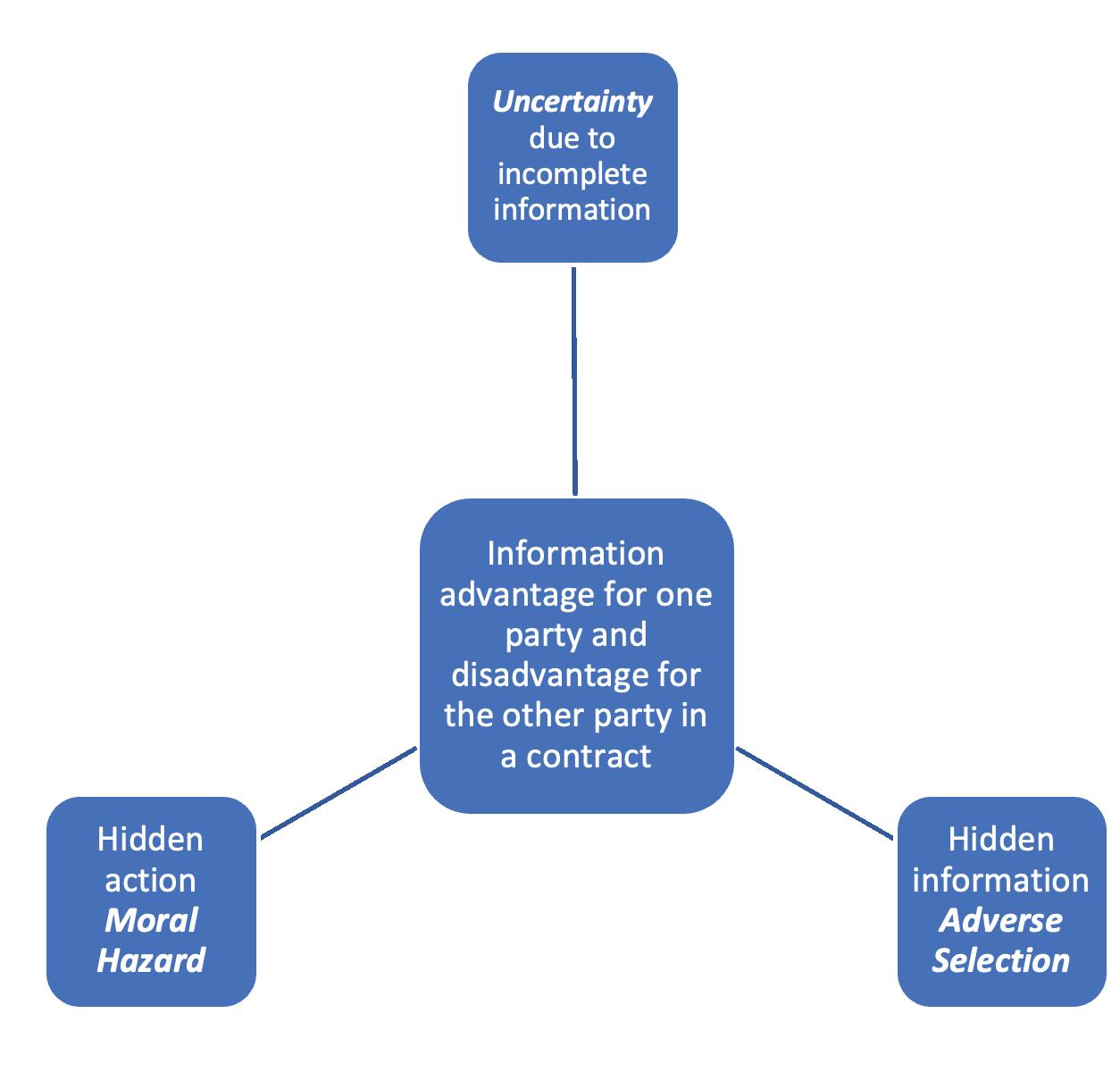
Much scholarly work has been done to make sense of these complex scenarios. Arrow (1985) refers to two information advantages: hidden actions, which are actions that cannot be accurately observed or inferred and consequently are not recognized in contracts, and hidden information, which involves developments about which party has incomplete information that may determine that party’s actions but are not fully observable by the other.
In an illustration of hidden action, some employees, seen as one party in the employment contract, who are paid a fixed wage, may have an incentive to misdirect effort and may not use their worktime for the benefit of their employers. To address this possibility, employers may monitor behaviors of their employees at work, spending time, money or other resources, to make sure that their employees really work.
Meanwhile, hidden information can occur during the selection process in organizations where applicants may hide information about themselves that is relevant for the selection decision to increase the likelihood that they will be selected.
Hidden action can lead to moral hazard problems, while hidden information can lead to adverse selection problems. In the employment context, adverse selection exists when parties (e.g., employees or job applicants) misrepresent their true abilities, while moral hazard exists when one party (e.g., managers) does not know with absolute certainty if an employee works hard or hardly works (i.e., avoids work as much as possible).
Principles of agency theory explain how using certain contractual organizational forms helps deter moral hazard and adverse selection.
RANDY EDWARDS Retired Actuary
FLOREA
Moral Hazard
Occurs after the transaction or contract is made, in the form of behavioral changes. Incentivizes engagement in risky activities.
Moral hazard is defined as the potential for bad-faith action, incomplete, even misleading information, or disingenuous and risky actions for the personal benefit of one party, at the expense of the other party in a contract. When one party has an incentive to take additional risks that a contract or the other party did not anticipate, moral hazard can occur.
If those risks yield benefit, risk-takers may profit; if those risks backfire, losses may be spread out. Moral hazard can also be reflected in suboptimal effort or misdirected effort when risk takers are not kept accountable.
Therefore, moral hazard is manifested in actions intended to maximize one party’s utility to the detriment of the other party. These actions can occur when agents do not bear the full consequences of their actions.
Initially developed in the insurance industry, the concept of moral hazard addresses potential situations wherein an insurance policy allows or induces undesirable behaviors. This concept was extended to other areas of inquiry, including corporate control, where moral hazard can occur when managers, acting as agents for shareholders, behave in ways that reduce shareholder value (i.e., act against principals’ interest).
One manifestation of moral hazard was offered by Arrow (1971), who likened equity ownership to a managerial insurance policy, because equity distribution allows managers to shift some of their firms’ risk to shareholders. This area of inquiry addresses categories of executive moral hazard, such as misstatements and nondisclosures that place outside stakeholders at a disadvantage; extraordinary efforts to remain in power by fighting takeover attempts that might benefit shareholders; and pursuit of personal objectives (e.g., compensation) through growth ventures or diversification, misusing free cash flow.
adverse selection
Occurs before a transaction or contract because of incomplete information. Incentivizes negative outcomes.
Similarly grounded in the uncertainty triggered by incomplete information, adverse selection refers to situations in which the parties in a contract do not have the same amount of information and one of them exploits exclusive or more comprehensive information.
In the case of insurance, a form of adverse selection is the tendency of less healthy individuals to be interested in more comprehensive health insurance coverage, given that they have more knowledge about themselves and how they use insurance than insurance providers have. To reduce exposure to insurance claims, underwriters evaluate risks before giving an insurance policy that outlines premiums, deductibles and copayments.
Both moral hazard and adverse selection address situations in which one party is at an advantage and exploit that advantage for their own benefit, under conditions of incomplete information or information asymmetry.
The main difference between them is the time of occurrence: in adverse selection, there is a lack of symmetric information before the contract is made or prior to the time when the transaction is agreed upon, while in moral hazard, one party changes behavior after the contract is made or the transaction occurred. In both cases, one party to the contract would have changed the terms of the contract or not offered it at all if they had had complete information.
Adverse selection and moral hazard are more common when moral standards are low. Examples of low moral standards are the lack of accountability, responsibility and selfcentered behaviors. When one party possesses more relevant information than the other party in a contract agreement and sees incentive to engage in riskier behavior than otherwise, that party can take risks, knowing that the others, who are less informed, will share those risks.
Soft measures, such as trust building, establishing code of ethics and moral engagement, as well as hard measures, such as specific contracts and targeted regulation, can mitigate risks. For example, designing selfselection contracts (health insurance) or including warranties, to separate good-quality products from poor-quality ones, since producers, but not buyers, know their quality.
THE MARKET FOR LEMONS
In a widely cited economics paper, “The Market for ‘Lemons’: Quality Uncertainty and the Market Mechanism” George Akerlof refers to an adverse selection problem where high-quality actors (“good apples”) are negatively affected by low-quality actors (“bad apples”), leading to mistrust, distrust and market dysfunction.
The quality of goods in a market can degrade in the presence of information asymmetry between buyers and sellers, which ultimately leaves only poor-quality goods, even goods found to be defective postpurchase, referred to as “lemons.” Information asymmetry within the market relates to the seller having more information about the quality of the product than the buyer, creating adverse
RISK MITIGATION
selection, where sellers are not willing to sell high-quality goods at the lower prices buyers are willing to pay, with the result that buyers get lower-quality goods. As enough sellers of high-quality goods leave the market, the average willingness to pay for buyers will decrease because the average quality of goods on the market decreased, leading to even more sellers of high-quality products leaving the market.
Thus, the uninformed buyer’s price creates an adverse selection problem that drives the high-quality goods from the market. This can lead to a market collapse due to lower equilibrium price and quantity of goods traded in the market than a market with perfect information.
MARKET CONTROLS
Alternatively, risks can be mitigated through regulation and control. In the corporate control literature, several forces can operate simultaneously to mitigate moral hazard and promote effective governance: (1) legal and regulatory system; (2) external control mechanisms, such as capital markets, product and factor markets and internal and external labor markets; and (3) internal control and governance (e.g., fiduciary duty, board of directors).
Participants in many markets can use public measures, such as insurance appraisal, universities’ rankings and analysts’ estimates to mitigate adverse selection and moral hazard risks.
Consistent with the agency theory, Jensen and Meckling (1976) support the idea of aligning managers’ interests with those of shareholders through stockbased payment methods or outcomebased incentive contracts that shift risk from shareholders to managers. These risks can also be mitigated through underwriting and contract provisions.
For example, most health insurance contracts judiciously consider optional services or if there could be unforeseeable influence, in nature (i.e., it is a cost-benefit process on the insurance design process weighing marketability with policy price). Specifically, cosmetic surgery may not be covered because it is considered outside of the intent of health insurance or, even specifically, excluded.
THE FINE PRINT
Mitigating moral hazard and adverse selection can explain the complexity of insurance contracts, which can be burdensome from the customers’ perspective, and often part of long contracts, written in small-sized letters, with the objective of removing liability for unforeseeable and undesirable developments.
Small-letter contract provisions can have big implications. They are there to reduce uncertainty and mitigate the risk of moral hazard and adverse selection. Still, there is hope. Insurance companies genuinely desire to offer their clients benefit plans that are useful and cost effective, while also using contractual and legal requirements to protect participants from those who unduly try to take advantage of the system. TK
INVESTING IN TOPEKA
By JEN LECLAIR
A new chapter of growth, inspiration, innovation and local impact is unfolding for two Topeka organizations. The Villages, Inc. and HF Rubber Machinery, while very different, are making strategic commitments that will shape their operations, strengthen workforce and contribute to Topeka’s ongoing momentum. }
• Annual safety inspection: smoke & CO detectors, fire extinguishers, radon detectors/ fan • Water softener cleaning & service • Water softener salt refill • Dishwasher deep cleaning & service • Disposer cleaning and sharpening
• Refrigerator coil & drip pan cleaning, water dispenser descaling • Ice maker cleaning & filter change • Washing machine deep clean • Clothes dryer deep clean • Clothes dryer vent cleaning • Range hood filter cleaning • Exhaust fan cleaning & service • Aerator & showerhead cleaning • Grout sealing • Shower silicone joint inspection & repair • Gutter cleaning • Door hardware, lockset lubrication, seal/threshold adjustment • Overhead door lube service • Battery check/replacement (smoke/CO/Smart)
• Ceiling fan cleaning & seasonal rotation • Trash bin cleaning • Natural stone sealing
• Stone countertop cleaning & sealing
• Shower door Hydrophobic coating • Concierge honey-dos
Handy Hank’s got this Brought
OUT OF THE WOODS
The Villages, Inc.
Tucked away on more than 400 acres of rolling hills, wooded trails and quiet creeks on the edge of Topeka, The Villages, Inc. has spent six decades providing services to children in need.
Founded in 1964 by psychiatrist Dr. Karl Menninger, the organization has often had to evolve to meet the changing needs of vulnerable populations.
Originally designed as a foster care model with “house parents” providing stable, home-like environments for children, The Villages later pivoted to serve children in need of care and juvenile offenders as state systems changed.
Photo by BRIAN PETERS
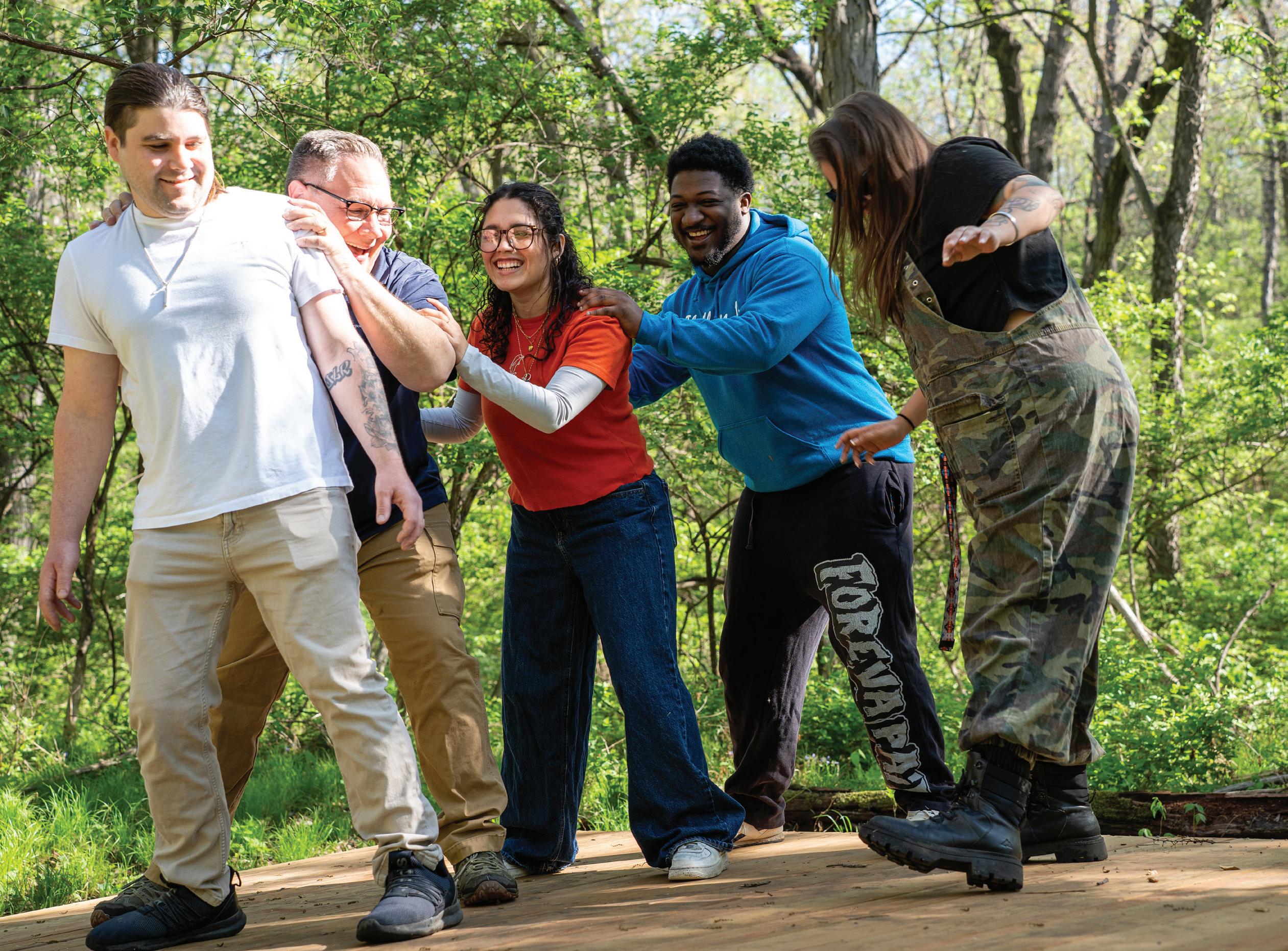
Mark Burenheide, chief executive officer at The Villages, Inc. (second from the left), leads a group on a balancing platform experience designed to develop teamwork and leadership skills.
In 2018, the organization entered a new chapter, partnering with the federal Office of Refugee Resettlement to provide short-term shelter for unaccompanied minors arriving in the United States. For nearly seven years, children from across the globe found temporary safety, education and compassion on the property. At full capacity, the program served 60 minors and supported a staff of nearly 95.
But in early 2025, the program was suspended, and by November of that year it had come to a close, taking with it their primary funding source.
“We had to rediscover ourselves,” said Mark Burenheide, who stepped into the role of chief executive officer after the program ended. “We were essentially starting from the ground up, asking what our next chapter should be.”
STARTING FROM THE GROUND UP
One answer was a need the organization’s leadership identified in the community: safe housing and support for expectant mothers.
In early 2026, The Villages opened a newly renovated maternity home, now one of only three such homes in Kansas. The home provides shelter for up to six pregnant women, all 18 or older.
Residents receive financial literacy training, parenting education and hands-on instruction in daily life skills from budgeting and cooking to newborn care. Through initiatives like the Village Pantry Program, mothers learn how to stretch resources, prepare meals and build sustainable habits.
“They’re not just here to live,” Mark said. “They’re here to learn the skills they need to succeed once they leave.”
Women can stay through their pregnancy and up to a year after giving birth, though many choose to transition to independent living sooner, with continued support from The Villages.
RETURNING TO NATURE
Dr. Menninger believed in the therapeutic value of nature. When he established The Villages, he chose expansive natural land with that in mind.
“We have this incredible property,” Mark said. “It only made sense to create something that allows people to experience it.”
Hidden beyond the crest of “the Hill” and nestled deep in the woods, the newly revitalized Sugar Works Adventure Challenge Course feels worlds away from the city, and yet it’s only minutes from downtown Topeka. What was once a ropes course built by staff and volunteers has been
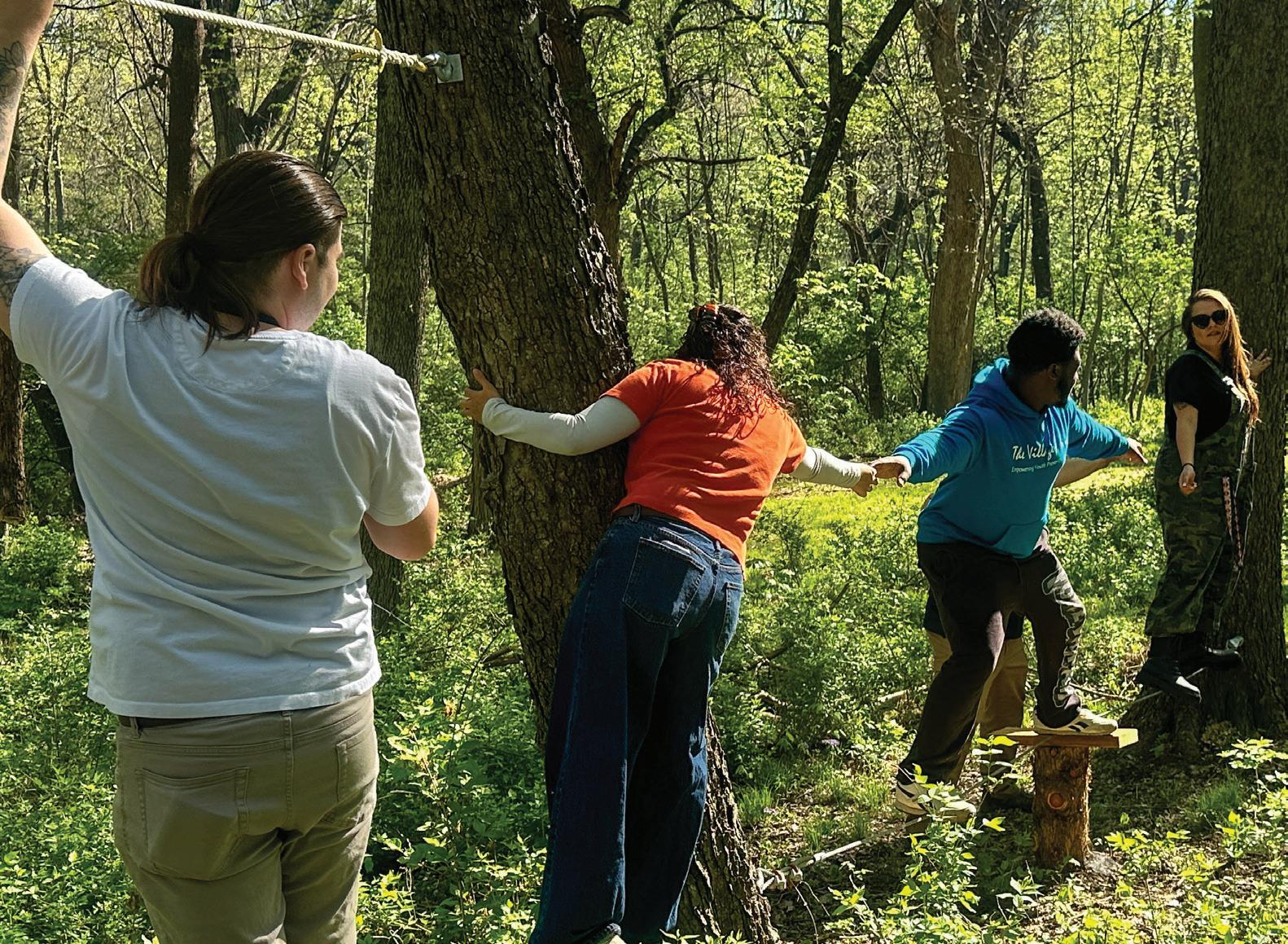
A group tackles a rope challenge at The Villages, Inc.’s adventure challenge course — where, as Chief Adventure Manager Zach Force puts it, “no two groups will have the same day.”
rebuilt as a professionally designed, safety-certified experience, guided by standards from the Association for Challenge Course Technology and industry experts.
“Participation in the experience isn’t about athleticism or physical exertion,” said Zach Force, chief adventure manager. “It’s about empowering people to grow.”
BLAZING A TRAIL
“We have this incredible property. It only made sense to create something that allows people to experience it.”
— Mark Burenheide Chief Executive Officer The Villages, Inc.
Unlike traditional adventure parks, The Villages’ course is entirely group-focused and fully customized, designed for businesses, nonprofits and other organizations looking to develop teamwork and leadership skills.
Before participants arrive, facilitators connect with group leaders to understand their goals, whether improving communication, strengthening trust or simply reconnecting after time apart, and design a program around them.
On site, participants move through a structured but flexible program that includes safety training, team-based challenges and reflective debriefs, with activities adjusted in real time based on group dynamics.
“No two groups will have the same day,” Zach said.
Central to the course philosophy is the concept of the “stretch zone”: that space just beyond comfort but short of fear.
Participants are encouraged, but never forced, to step into that zone. For one person, that might mean climbing 30 feet up the iconic Power Pole to ring a bell. For another, it might simply mean offering an idea or supporting a teammate.
“You don’t have to be the one on the rope to contribute,” Zach said. “Problemsolving, communication, encouragement and observation are all essential to the group’s success.”
Through these experiences, participants work on self-discovery, group problem-solving and interpersonal communication.
A FRONT PORCH
The course winds through dense forest and natural terrain, a setting that feels far removed from everyday life.
“There’s something about being out here,” Zach said. “It is amazing to watch a group flourish in ways they might have never thought of. The insights they walk away with are priceless.”
The Sugar Works Adventure Challenge Course has also made The Villages more accessible to the public.
For years, privacy requirements limited public interaction with the organization and its work. Now, the course serves as what leaders call a “front porch”: an invitation for the community to step onto the property and experience the organization’s work.
“This is how people can engage with us,” Mark said. “They can come here, experience the land and be part of what we’re doing.”
Plans are already underway to expand offerings, potentially including zip lines and aerial parks that would allow for more individual participation. Meanwhile, discussions with the state could soon bring social services back to the historic homes on the Hill, completing a full-circle return to the organization’s roots.
“We’re getting back to who we are,” Mark said. “But we’re also becoming something new.” TK
Photo by BRIAN PETERS
THE Fire of Determination
SMALL BUSINESS AWARDS
Congratulations to the 2026 Small Business Award winners! Your dedication, innovation, and determination continue to move Topeka and Shawnee County forward. You truly represent the Fire of Determination, and we’re proud to celebrate your success and impact.
Gold Spoon Winner Tee Box
Manufacturer Winner Kansas Door Company
Legacy in Business Winner
KBS Constructors
TopCity Business of the Year Tee Box
Micro Enterprise Winner Oleander Catering
Minority-Owned Winner Engroff Catering
Woman-Owned Winner ACA Event Rental
LEARN MORE ABOUT THE WINNERS AND THE FINALIST
by
PRESSING FORWARD
HF Rubber Machinery Inc.
When HF Rubber Machinery Inc., the Topekabased North American hub of global manufacturer HF Group, secured funding through Topeka’s Joint Economic Development Organization (JEDO) last year, it wasn’t to build a new facility or move operations. It was to bring back domestic production of tire curing presses, a category of industrial equipment that American manufacturers have long sourced from overseas.
Photo
BRIAN PETERS
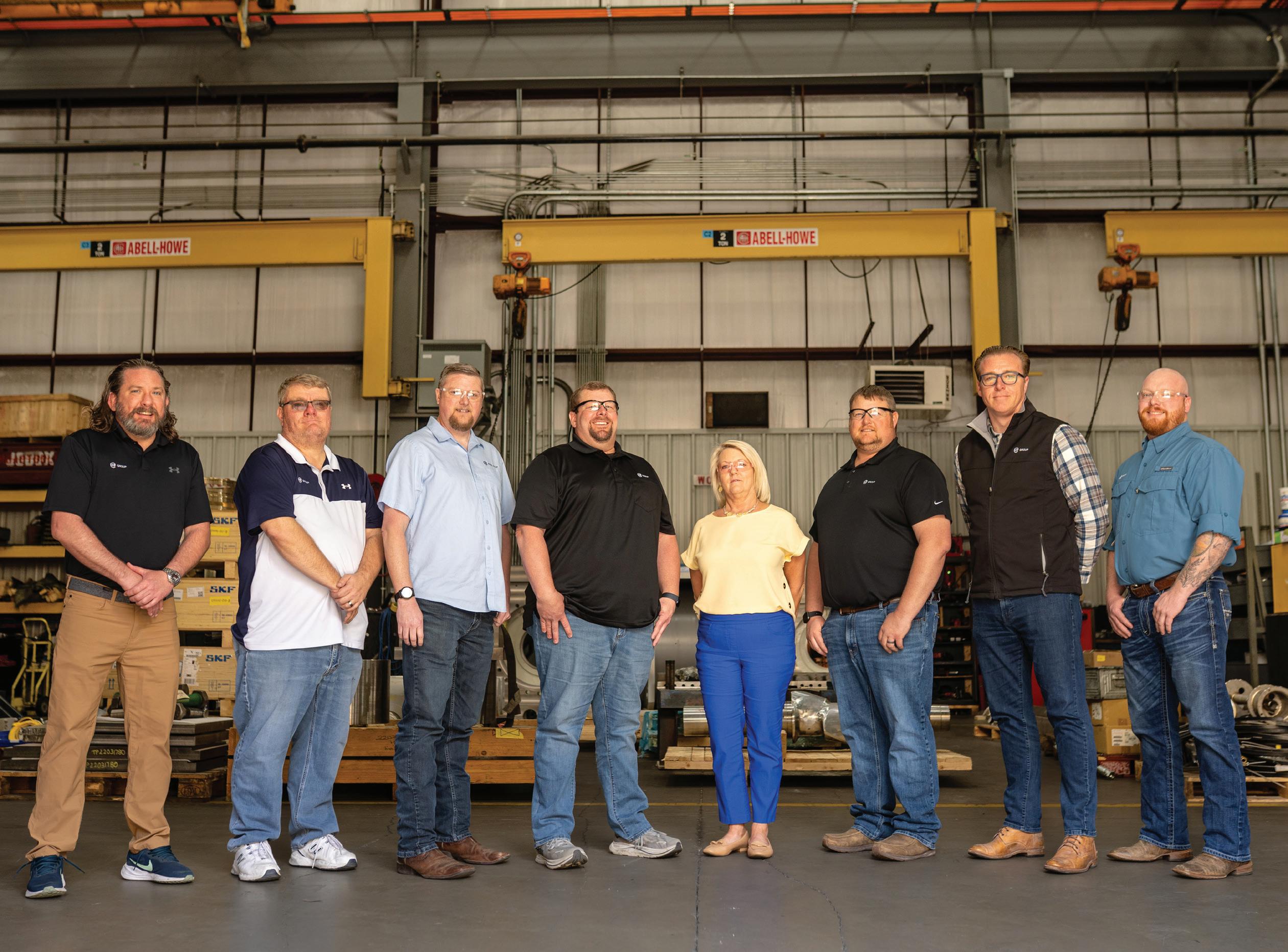
HF Rubber Machinery Inc. team members, from left: James Carlton, Stephen Roberts, John Adams, Austin Rash, Shawna Loh, Justin Powell, Jeff DeBruin and Dillon Fleming.
That effort led to a significant structural shift. In 2024, HF Mixing Group officially became HF Group following the merger of its mixing division with its tire curing division. While both sides of the business operate under the same broader ownership, bringing them together under one unified structure has created new efficiencies and opportunities, particularly for the Topeka facility.
“For us, last year was really the first year operating jointly,” said John Adams, executive vice president of HF Rubber Machinery. “That’s where a lot of the investment and future planning really started to take shape.”
A NEW IMPRESSION
JEDO voted to approve an incentive package totaling $147,000 for HF Rubber Machinery, supporting real property investment, equipment purchases, workforce training and job creation. The incentives complement the company’s own capital investment of $1 million in real property and $600,000 in equipment. The expansion is projected to generate $71 million in economic impact for the region, according to IMPLAN analysis, with an estimated return on investment of 415%.
Traditionally, tire curing presses have largely been sourced from overseas. But shifting global dynamics, including tariffs and supply chain disruptions, have created both challenges and opportunities for manufacturers.
“Customers are looking to replace aging equipment, and historically they’ve had to go overseas,” Adams said. “With tariffs and supply chain complexities, it made sense for us to evaluate how we could build those machines here.”
The result is a plan to begin assembling tire curing presses in Topeka, with production expected to ramp up in the coming years. Initial output may start modestly with five to 10 presses annually, but long-term projections aim for as many as 60 units per year.
The company intends to source at least 60% of each press domestically, working with suppliers in Topeka and across the region.
RESHAPING THE MOLD
The expansion may also have a broader economic impact. By increasing demand
for locally produced components, the initiative is expected to create a ripple effect across the region’s manufacturing sector.
“We’ll rely heavily on local vendors to produce components,” Adams said. “Our hope is that it will open the door for other businesses to grow alongside us.”
From fabrication shops to electrical suppliers, a wide range of local partners stands to gain from HF Rubber Machinery’s expansion.
Internally, the company is also preparing for growth. Plans call for the addition of up to 19 new full-time positions over the next five years, with annual wages ranging from $50,000 to $80,000, along with expanded roles in engineering, purchasing, logistics and warehousing. The assembly workforce alone is expected to double, with dedicated teams for both mixing equipment and tire press production.
Rather than expanding its physical footprint, HF Rubber Machinery is reimagining how it uses its existing campus in Topeka. This includes
renovating a previously damaged building on the south side of the property and converting it into a larger, more efficient warehouse.
This will allow the company to centralize inventory for both mixers and tire press components, while freeing up space in its northern facility for a new press assembly area.
“We’re essentially redesigning how material flows through our campus,” Adams said. “It’s about making everything more efficient as we prepare for this next phase of production.”
The investment also includes new equipment, cranes and specialized tooling necessary for assembling tire curing presses.
STEADY UNDER PRESSURE
Following a surge in demand during the post-pandemic recovery, the industry has begun to stabilize. Order volumes have leveled off, returning to more predictable patterns.
While this shift has reduced backlog pressures, it has also prompted
Photo by BRIAN PETERS
Photo by BRIAN PETERS
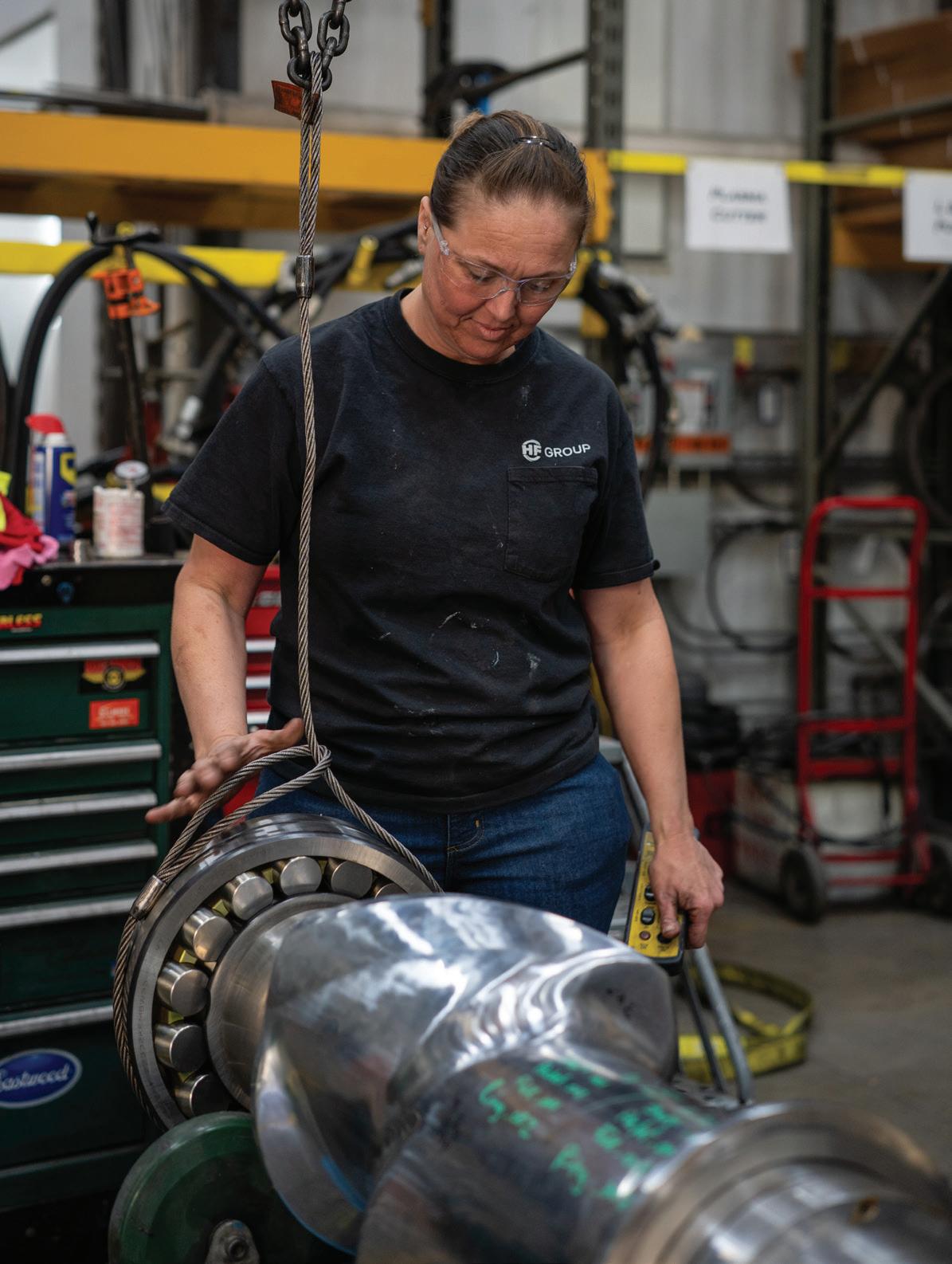
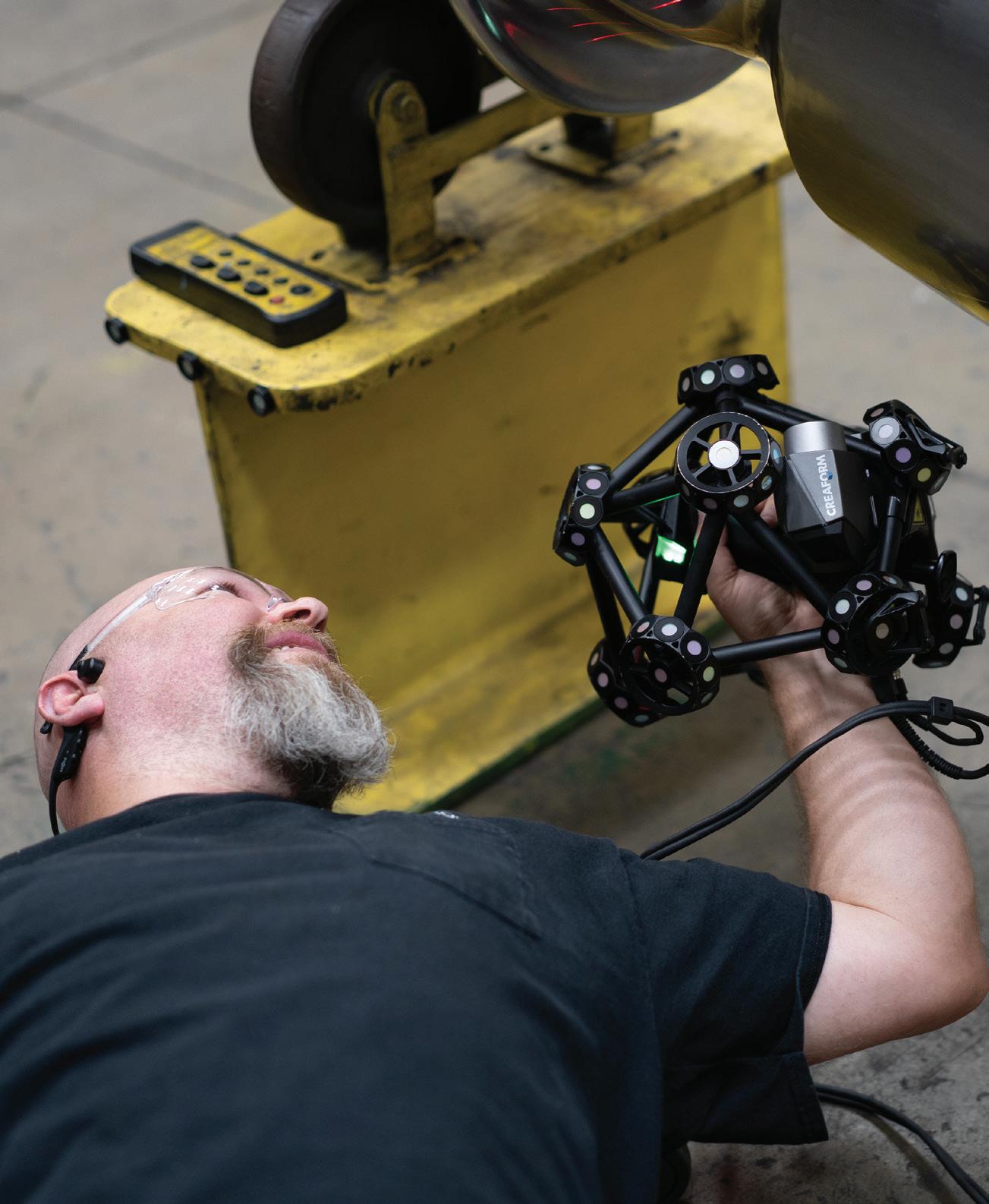
As HF Rubber Machinery expands its Topeka operations, employees work with specialized equipment on the manufacturing floor (left) and conduct dimensional inspections using a Creaform MetraSCAN 3D laser scanner (right).
Helping Topeka Thrive One Account at
a Time
Heritage Bank is helping Topekans succeed. When you bank with us, your money stays in our community and helps support Topeka’s families and local businesses. Visit any of our three Topeka locations to open an account or scan the QR code below to learn more.
“Customers are looking to replace aging equipment, and historically they’ve had to go overseas. With tariffs and supply chain complexities, it made sense for us to evaluate how we could build those machines here.”
customers to focus on maximizing the efficiency of existing equipment rather than investing in new capacity.
“There’s definitely more of a reset happening,” Adams said. “Customers are asking, ‘How can we get more out of what we already have?’”
In response, HF Rubber Machinery continues to emphasize not only new equipment but also service, maintenance and lifecycle support. Its teams provide inspections, performance analysis and preventative maintenance services across North America, helping customers extend the life of their machinery and plan for future upgrades.
Although much of HF Rubber Machinery’s work centers on largescale industrial equipment, the
company is continually seeking ways to improve efficiency and knowledge sharing.
While some industries may view artificial intelligence as a threat, HF Rubber Machinery sees it as a tool for augmenting expertise, particularly in helping customers troubleshoot mixing processes or optimize performance.
“It’s about using technology to make us better and faster,” Adams said. “If we can free up people from repetitive tasks, we can focus their talents where they matter most.”
The company is also exploring future opportunities, such as developing a technical mixing lab in Topeka. While that initiative has been temporarily deprioritized in favor of the press expansion, it remains part of HF Rubber Machinery’s long-term vision.
Over the past several years, the company has made a deliberate effort to strengthen its workplace culture by emphasizing collaboration, hiring and employee development. Adams says this approach has helped them maintain a “small company feel” even as the organization operates on a global scale.
“You can manage your culture, or your culture will manage you,” Adams said. “We’ve been very intentional about building a place where people want to work.”
For Adams, the expansion is about a commitment to Topeka.
“We’re proud to invest in Topeka, a community that has supported us for over 65 years,” he said. “We look forward to contributing to its continued economic vitality.” TK
Photo by BRIAN PETERS
— John Adams Executive Vice President HF Rubber Machinery
MAY
27-28, 2026
What better place than the Animal Health Corridor to gather for a showcase of Animal Health startups?
Join Plug and Play and GoTopeka, as we bring together corporate partners, VCs, industry leaders, and startups from across the world to showcase the newest technologies that are revolutionizing this industry.
Our Expo event—which will feature the startup companies who have completed our 17-week accelerator program—will include live pitches, demos of products/services, and conversations around industry innovation. Join us after for dinner at the Eats & Beats concert series at Evergy Plaza (just a couple of blocks away from Townsite Tower)!
*When registering, please turn off your VPN.
FRAUD WITH A BADGE:
HOW REAL PLATFORMS POWER REAL SCAMS
You know how some words get thrown around so much that they start to lose all meaning and become background noise? That’s how “cybersecurity” has felt for a while to a lot of people. We’ve started to become numb to it because attacks are so frequent and the media talks about it nonstop, but it’s just as real as it’s ever been, and the bad guys keep leveling up.
Account Representative
With the evolution of artificial intelligence (AI), Business Email Compromise (BEC) attacks have become more sophisticated and harder to spot. Think “professional con artist,” not “Nigerian prince with a typo budget.”
A Real BEC Example:
In late 2024, Mimecast researchers documented a targeted BEC campaign. They found that the attackers didn’t spoof DocuSign. They used the real DocuSign platform. In other words, the scam wasn’t wearing a fake mustache. It walked in with a badge and a clipboard. How, you ask?
They created real DocuSign and Adobe Sign envelopes using legitimate accounts. That meant the messages came from trusted DocuSign infrastructure, so they weren’t flagged by security tools because, technically, it really was
Now, I’m a pretty smart guy (pun intended by my name), but I’d be hard-pressed to catch something like this unless there were strong protocols we were actually required to follow. In this case, the only way I can see it being caught is to call the law firm using a verified number (for example, one you already have on file, or one you look up independently) and confirm
DocuSign. Then they impersonated a real law firm that the victim organization already worked with and followed up with fraudulent invoices and payment requests.
The initial email looked exactly like a normal DocuSign “please sign” request: correct branding, correct workflow language and correct sender infrastructure. Once the victims were engaged, they were asked to call a phone number where someone impersonated the law firm. After that, subsequent emails came from a look-alike domain and included fraudulent invoices.
they sent the request. Yes, it’s inconvenient. So is fraud. Remember, these weren’t the usual poorly worded, obviously suspicious scam emails you’ve learned to ignore.
They came from the real DocuSign, passed authentication and matched real business workflows. The failure point wasn’t technology, it was trust. And trust, unfortunately, doesn’t come with a spam filter.
PAUL SMART
Where Business and Technology Leaders Get Their Edge
Attend this one-day conference and walk away with:
Practical AI applications for today’s businesses
Expert guidance you can actually implement
Peer networking with business and IT leaders
Technology trends that impact operations, security, and growth June 10, 2026
One-Day Event | Limited Seating
8 AM - 4 PM | Salina, KS
WHAT TO DO WHEN SOMETHING FEELS OFF
CONFIRM BEFORE CLICKING. If you receive an unexpected DocuSign, Adobe Sign or other document request, confirm it’s legitimate before opening or clicking anything. Even if it looks real.
CALL A NUMBER YOU’VE VERIFIED OR USED BEFORE. Don’t use contact information provided in the suspicious message. Look up the company’s number online or use one already on file.
BE CAREFUL WITH PAYMENT REQUESTS.
If a vendor sends a new payment portal or says you have an outstanding balance, call to confirm before making a payment.
TRUST YOUR GUT.
If something feels even a little bit off — the wording, the request, the sender, the circumstance, the urgency — stop and ask a colleague or supervisor to review it before responding.
REAL PLATFORMS CAN STILL CONTAIN REAL SCAMS.
Scammers are now using legitimate tools, like DocuSign or even your vendor’s actual email account. That means a message passing your security filters is no longer proof that it’s safe.
So, what does this mean? Even though we’re all tired of hearing about cybersecurity and awareness training, the consequences of not paying attention are very real. Topeka has already seen serious cyber threats in government and health care over the last few years, and that doesn’t even count the massive number of small businesses that have had their email and social media accounts hacked. How many people do you know who’ve had to send the dreaded “Please disregard” email (or post “Do not reply to any messages from me”) because their account was taken over?
There are other ways companies get attacked, too. Imagine one of your smaller vendors doesn’t pay attention and their system gets compromised. Because the bad guys can see what’s happening in their inbox, they can figure out who the invoices go to and what the emails are supposed to look like. Then, using your vendor’s real email account, they send a message saying you haven’t paid your bill and you can use this “new payment portal” to get caught up so deliveries don’t get interrupted. It looks legitimate and comes from the right person. It also arrives at the exact moment your brain is thinking, “Please don’t make me deal with this today.”
This email is from a company you already work with, from the person
you normally work with, for products you normally buy. Again, the best way to stop something like this is to verify: call the company using contact information you already have (or look it up independently) and ask whether the new portal is legitimate. If nothing else, it’s a great excuse to make a quick phone call instead of starting your day with an unexpected disaster.
All the cybersecurity tools in the world can’t prevent attacks like this because these aren’t “fake emails.” They’re real messages sent through real platforms. These are situations where strong security awareness training helps, prompting people to pause, verify and ask questions when they aren’t 100% certain. Even basic scam emails can look good with AI, and it only takes seconds.
Bottom line: Employers, make sure your staff is getting the best training available. Consider rewarding people who take it seriously, because positive reinforcement works better than doom-scrolling and is cheaper than dealing with a breach.
As for employees, please don’t let all the videos and “gotcha” test emails numb you to what’s really going on. No matter how many software tools are used to keep your job safe, only humans can prevent “human error.” If it feels even a little off for any reason, stop and ask for someone to take a look.
TK
DOCTORS
Bruce Banks, DDS
Jeffrey Burkett, DDS
Kyle Gardner, DDS Michael Gardner, DDS
Hegemann-Berens, DDS
OPENING DOORS, BUILDING TRUST MARK’S DOOR SERVICE
In 1992, Mark Burdiek pulled into a car lot on Topeka Boulevard and bought a utility truck. He wasn’t entirely sure what he was going to do with it, but that unplanned purchase has since grown into a Topeka home service company now in its fourth decade.
By JEN LECLAIR
Photos by BRIAN PETERS
Mark’s Door Service has focused not just on installing and repairing garage doors, but on fostering customer relationships. And it all started with an unexpected push.
“I had just had my first son,” said Mark, the company’s founder and co-owner, recalling
the moment everything changed. “I was told by my employer on Friday that I didn’t have a job come Monday.”
After years working in the industry, Mark suddenly found himself unemployed and searching for a way forward. A brief stint with another company didn’t offer stability, and a missed opportunity in another field left him at a crossroads. He decided to go out on his own.
“I didn’t even really know what I was going to do yet,” he said. “I just knew I had to try something.”
From that truck, Mark’s Door Service was born.
Photo by BRIAN PETERS
Mark Burdiek and Jeremy Mays, co-owners of Mark’s Door Service.
HINGING ON HARD WORK
In those early years, the business was a one-man operation. Mark handled service calls, installations and customer relationships, often recruiting family members to help on larger jobs. A scissor lift, a trailer and eventually a repurposed semi-trailer in his yard served as his equipment and inventory system. Sales were modest, and profit margins even slimmer.
A turning point came when a supplier took a chance on him, offering better pricing that allowed Mark to compete in the market. From there, the business gradually began to grow.
As the business picked up, Mark added a secretarial role to the operation to manage the administrative side.
“That’s when things really changed,” he said. “I could focus on the work, and we started to grow.”
Mark completed jobs late into the night and scheduled service calls around his children’s afterschool activities.
“I wasn’t going to miss their games,” he said. “I thought I might lose some business, but most people understood.”
A BIGGER OPENING
Today, Mark’s Door Service looks very different from its humble beginnings. The company now operates out of a renovated 11,000-square-foot facility on nine acres, employs around 15 people and serves a wide region stretching from the Nebraska border to Manhattan and the Kansas City region. The
Sports lighting experts
facility includes a dedicated showroom where customers can see and compare garage door styles, materials and operator options in person. Meanwhile, he has also expanded its inventory to stock a wider range of doors and operators, allowing for same-day installations in many cases.
Sales have grown between 15% and 25% annually in recent years, according to the company. Business picked up even more when co-owner Jeremy Mays joined the company.
Jeremy, a business broker and real estate professional, was initially brought in to help sell the business. But during the process, he saw something worth investing in.
“I got to know Mark, and I realized this was something special,” Jeremy said. “A friend told me, ‘You
guys would be a match made in heaven if you bought that business.’”
Jeremy ultimately became a partner, bringing a complementary skill set to Mark’s technical expertise and customer-first mindset.
“I’m not really a businessman,” Mark said. “Jeremy is really good at that.”
Together, the two have expanded operations and pursued continuous growth while working to preserve the company’s personal touch.
That personal touch is evident in everything they do, starting with a simple but increasingly rare practice: answering the phone.
“When you call here, you’re going to get a voice,” Jeremy said. “We want people to feel like they’re talking to someone who knows them.”
The company’s slogan, “honest work done right,” guides how Mark and Jeremy approach every job: taking the time to build rapport, explain options and follow through when something isn’t right.
“If we mess up, we fix it,” Mark said. “We’re not going to stop until it’s right.”
Jeremy said one customer was troubled by a faint noise coming from her garage door system. The sound was something their technicians couldn’t initially hear.
“She thought we might think she was crazy,” he said. “But we were committed to figuring it out.”
The team invited her to their facility, tested different solutions and resolved the issue.
NEW DOORS, SAME VALUES
Many of their employees have been with the company for years. One team member, affectionately known as “Stretch,” has been part of the business for nearly three decades and was Mark’s first official employee.
“You start looking around and see that kind of longevity, and you can’t help but feel like family,” Jeremy said.
Family, in fact, is a recurring theme throughout the company. Both Mark and Jeremy have had family members,
from children and spouses to extended family, contribute over the years, helping on job sites or supporting marketing and staffing efforts.
“We know each other’s kids, we go to their games, we celebrate together,” Jeremy said. “It’s more than just work.”
He says their company culture has helped them attract and retain employees in an industry where skilled labor can be hard to find. It also creates a sense of trust for customers, who know the people coming into their homes have been carefully vetted.
The garage door industry has changed, according to Mark and Jeremy. The business used to be straightforward, usually involving the installation of one of a handful of wood or steel door options. Today, it’s far more complex: there are hundreds of styles, materials and smart technology features available.
“Now you can open your garage door from your phone, from anywhere,” Jeremy said. “People expect that.”
The company offers garage door operators with Wi-Fi connectivity,
PHOTOS SUBMITTED
Mark’s Door Service carries and installs a wide selection of garage door styles, including these two variations of the classic carriage-house design.
“When you call here, you’re going to get a voice. We want people to feel like they’re talking to someone who knows them.”
— Jeremy Mays Co-owner Mark’s Door Service
allowing customers to monitor and control their doors remotely. Comparing and choosing from those options can be overwhelming for customers, but Mark says that’s where the team’s expertise comes in. He meets clients in person, helping them narrow down choices based on their needs, preferences and budget.
“Most people want you to help them figure out what they want,” he said.
Behind the scenes, Jeremy focuses on scaling the business and exploring opportunities for expansion, including potential distribution capabilities and additional locations. The company is also preparing to launch a yearly tune-up program designed to extend the life of garage doors and operators.
“Our goal is to grow in a way that still maintains our standards,” he said. “That’s not always easy, but it’s what we’re working toward.”
For Mark, the measure of success is simple.
“That most people still like me,” he said. “And that we make people happy.”
For Jeremy, it comes down to this: “We’ve been opening doors for years, so let us open the door for you.” TK
Photo by BRIAN PETERS
Tarwater Farm & Home Supply co-owners Levi Tarwater and Megan Steinebach.
ROOTED IN SERVICE
How Tarwater Farm & Home Supply Continues to Grow While Staying Grounded
By JEN LECLAIR
Just inside the entrance of Tarwater Farm & Home Supply sits an old truck that once served as the store’s first makeshift forklift. It’s still there today, serving as a reminder of where the business started and, in some ways, how little the family’s approach has changed since 1978.
Now under the ownership of siblings Levi Tarwater and Megan Steinebach, the business continues to grow under the same principles their father, Rich Tarwater, and their grandparents established.
Photos by BRIAN PETERS
GROWING SEASON
Tarwater’s 20,000 square-foot showroom and shop.
“Yes, we have what you need. But more importantly, it’s who we are as people. You can trust us. You’ll be seen. You’ll be taken care of.”
— Megan Steinebach Co-owner
Tarwater Farm & Home Supply
Ask Levi and Megan what has sustained Tarwater Farm & Home Supply for nearly five decades, and their answers come quickly and in unison: “Customer service.”
Levi says word-of-mouth referrals are the company’s most effective form of advertising. The store answers its own phones without a recording, staffs a counter rather than self-checkouts and loads purchases into customers’ vehicles at a loading dock. The kind of service, Levi and Megan say, that is becoming harder and harder to find.
“We’ve always tried to keep the focus on the customer,” Levi said.
Even the store’s roadside marquee, positioned just above their greatgrandfather’s truck, reflects that personal touch.
Tarwater began in a converted filling station, where the founders saw an opportunity to meet a growing need for feed and agricultural supplies. It was an
unconventional pivot at the time, but one that led to decades of growth.
“That willingness to adapt is still part of who we are,” Levi said.
While roughly 80% of the store’s core offerings have remained consistent, including feed, seed and farm supplies, the remaining 20% is in constant motion. Levi and Megan are always asking: What are customers asking for? What are we missing?
A major turning point came in 2007, when the business needed to grow to support multiple family members entering the operation. Tarwater decided to expand into outdoor power equipment by partnering with Stihl.
That move helped shape the three pillars of the company: farm and home retail, agricultural services and outdoor power equipment. Agricultural services account for roughly half of their revenue.
Further growth came in 2011 with the construction of a new 20,000-square-foot showroom and shop, along with additional outdoor display areas and warehouses.
Photo by BRIAN PETERS
Photos by BRIAN PETERS
Tarwater’s outdoor tractor inventory (top), lawn care equipment (middle) and pet food (bottom) reflect the store’s broad range of products.
In 2020, the business added a second location in Holton, operating out of the former Holton Farm & Home building. It is smaller than the Topeka store, but carries much of the same products, including outdoor power equipment, with an emphasis on hardware items like paint and plumbing supplies.
The formerly small, family-run business now employs almost 50 team members across its two locations.
“It didn’t feel like a gradual climb,” Megan said. “It felt like we went from 15 employees to 40 overnight.”
RAISED ON THE JOB
For Levi and Megan, Tarwater Farm is where they grew up.
From sweeping floors and stocking shelves to weighing birdseed and working the counter, both siblings learned the business from the ground up. Levi spent much of his early years in the warehouse, while Megan gravitated toward the retail side.
Their father, Rich, held them to a high standard, often higher than other employees. He always emphasized the importance of doing the little things the right way.
As Levi remembers it, Rich had a guiding principle: “Take care of the little things and the big things will take care of themselves.”
That detail-oriented mindset still guides the business today, along with a commitment to maintaining a clean, organized environment, which is something Megan says other industries often overlook.
Although the transition of ownership from Rich to Levi and Megan only became official in early 2024, it was years in the making. Rich gradually stepped back, giving his children the opportunity to lead, calculate risks and make decisions.
“It was very gradual,” Levi said, adding there is more pressure now, not only from the financial responsibility, but from the realization that they are now the final decision-
makers for a business that supports dozens of families.
“There’s no ‘make Dad the bad guy’ anymore,” Megan said with a laugh.
Despite the added pressure, both owners say the company culture hasn’t changed. What has changed is their perspective, including their willingness to grow the team, allowing for greater flexibility and improved work-life balance.
“I went to every one of my son’s football games this fall,” Levi said. “That wouldn’t have been possible before.”
As the business has grown, the owners say they have become more intentional about maintaining its familyoriented culture.
“It’s about treating people like people, not numbers,” Levi said, adding that this philosophy applies to both customers and employees.
“It doesn’t take much right now to stand out,” he added. “Just acknowledging someone when they walk in the door puts you ahead.”
Megan agrees, noting that simple gestures like offering to carry a bag of
feed or taking time to listen can have a lasting impact.
“You never know what someone is going through,” she said. “You might be the best part of their day.”
Over the years, Tarwater Farm has supported organizations such as the Topeka Rescue Mission, local 4-H and FFA programs, churches and schools.
They’ve donated supplies for community events, contributed to fundraisers and encouraged customers and employees to support other local businesses.
PLANTING FOR TOMORROW
Tarwater’s website provides an overview of the brands and products it carries, but e-commerce is not yet available. Levi and Megan say they are exploring options, though they acknowledge it would be a significant undertaking.
“It’s a balance,” Levi said. “We want to maintain that hometown feel, but we also know how people shop today, and how they’ll shop 10 years from now.”
Even as they embrace new technologies, Levi and Megan say their customer service approach hasn’t changed.
“Yes, we have what you need,” Megan said. “But more importantly, it’s who we are as people. You can trust us. You’ll be seen. You’ll be taken care of.”
For those who have never stepped inside, Levi’s pitch is simple: “Come and find out.” TK
Photos by BRIAN PETERS
Tarwater Farm & Home Supply owners and employees, from left: (front row) Mackenzie FunnellCebulski and Mitchell Lewis; (back row) Megan Cadwell, Steve Chapman, Levi Tarwater, Megan Steinebach, Rick Huffman and Sarah Vang.
West Ridge Mall is in the middle of a multi-phase redevelopment that includes upgraded infrastructure and reimagined retail space.
On the construction side, the mall is installing new HVAC systems, including cooling towers and chillers, which will improve comfort and temperature reliability throughout the property.
The mall is also focused on attracting new tenants. “We are taking a targeted, data-driven approach to leasing, identifying brands that align with the market and complement our existing tenant mix. We’re actively working with regional and national retailers while continuing to support the success of our current tenants, which has contributed to positive momentum in both traffic and sales,” said Casey Richardson, general manager of West Ridge Mall.
The former JCPenney space is also being redeveloped. While the upper level will be converted into part of the new Advisors Excel headquarters, the
lower level and surrounding areas will be repositioned for new retail and experiential uses. This real estate, which directly faces Wanamaker Road, “has already drawn interest from several prospective tenants,” Casey said.
Recent progress includes demolition within the future retail space and Advisors Excel footprint, relocation and enhancement of several guest amenities including the children’s play area, and the addition of new tenants like Home at Last. To maintain foot traffic during construction, the mall has also expanded its programming, which includes the West Ridge LIVE! concert series and other community events.
Two businesses illustrate what that renewed energy looks like in practice: Petland, a longtime tenant now planning its most significant expansion yet, and Home at Last, which recently relocated to the mall.
OLD DOG, NEW TRICKS Petland
By LISA LOEWEN
“When God opens a door, you walk through it.”
For Staci Williams, owner of Petland in Topeka’s West Ridge Mall, that belief has guided both her personal and professional life. The revitalization of West Ridge Mall has given Staci a new door to walk through, and this one leads to something she has been working toward for decades.
As construction gets underway throughout much of the mall, Staci has architects hard at work designing a suite of businesses that will include Petland, a doggy day care that can house up to 60 dogs and a veterinary clinic.
“It has always been my dream to be able to provide pet owners with comprehensive pet care, from helping them find the perfect pet to offering quality medical care,” Staci said.
Photos by BRIAN PETERS
Photo by BRIAN PETERS
Petland owner Staci Williams.
DID YOU
KNOW?
Braces aren't just for straightening teeth, They can also fix bite problems & make it easier to chew & talk!
by
MORE ROOM TO ROAM
With the expansion, the new doggy day care will take over the space currently occupied by Petland. The day care, which will be open from 7 a.m. until 9 p.m., will offer both indoor and outdoor recreation spaces and individual dog suites with live cameras, so owners can check on their pets in real time. Several of the doggy day care spaces will be allocated as lower-cost care for nonprofits such as Street Dog Coalition and PANT.
“I can give back to those in need,” Staci said. “That means helping people with their animals as well.”
The veterinary clinic will fill the space next to the doggy day care, giving pet owners a convenient one-stop option for pet care. While the clinic will offer veterinary services at standard costs, it will also provide care through a potential collaboration with the Kansas State University College of Veterinary Medicine’s Shelter Medicine program, which would allow the clinic to offer low-cost wellness, preventive medicine and surgical services for those who qualify.
Petland will then move to the other side of the vet clinic, going from 5,800
to 8,500 square feet and incorporating the dog training area, which is currently in a separate location. The store will also add more puppy playrooms to better accommodate the volume of visitors who come through the doors on busy Saturdays.
“We can have as many as 1,800 people come through the store on a Saturday,” Staci said. “The larger space will give us a little breathing room.”
WALKING THROUGH THE OPEN DOOR
When former Petland owner Chris Hamilton offered to sell Staci the store in 2009, she had no money, no credit and no collateral. What she did have was drive, determination and a belief that if this was what she was meant to do, the right opportunity would come.
That first opening came through a banker Staci met at a Rotary meeting, who agreed to set up an SBA loan if she could come up with $150,000.
“I had no idea where I would come up with the money, but I said, ‘Lord, it’s your turn,’” Staci said.
She asked one of her consulting clients, who happened to be a preacher, to pray with her. Three weeks later, he
and his wife offered to lend her the money she needed.
Staci was elated when she purchased Petland, but found that along with the store came unexpected competition, staffing issues and bad publicity.
“It was a really rough start for me,” Staci said. “But God had put me there for a reason, so I had to trust it was all part of His plan.”
A year later, Simon Property Group approached Staci about moving Petland into West Ridge Mall. It seemed like a promising opportunity for increased foot traffic, so she started negotiations. The mall insisted that Staci pay for the buildout costs to renovate the space. She initially agreed, but the bank was uncomfortable with the reimbursement arrangement and declined, so Petland stayed in Fairlawn Plaza.
Two years later, West Ridge Mall approached Petland again. This time, Staci opened negotiations by insisting the mall pay for the buildout. They agreed, and Petland moved into its current location in 2014.
While the new location offered high visibility, foot traffic began to fall as the mall declined over the next decade.
Photo
BRIAN PETERS
Justin Rimel, Devina Mitchel and Liz Largent, employees at Petland's West Ridge Mall location, with Sun Conures.
“I considered moving out of the mall several times during that period,” Staci said. “But nothing seemed like a great alternative, so we stayed.”
When the mall went up for auction, Staci and a group of investors placed a bid to purchase it. When no one met the bid limit, its future was uncertain. Staci negotiated a selling price with the owner, then approached Advisors
Excel, which had also bid on the mall, to see if they still wanted to purchase the property.
Advisors Excel purchased West Ridge Mall in 2023 and brought Staci in as the leasing manager to help fill the available space.
“I love this city and wanted to make sure our mall was purchased by a local person who is invested in the
A dwarf rabbit available at the store (top) and owner Staci Williams with one of the store's snakes (bottom). In addition to a wide variety of animals, Petland will soon expand to include a doggy day care and veterinary clinic.
community,” Staci said, explaining that her first call was to Cody Foster, cofounder of Advisors Excel. “He was the first person who came to mind.”
“Who better to lease up the mall than a tenant who knows the history and sees the positives coming in the future?” Cody said.
With much of the mall under construction for the Advisors Excel headquarters, she says they are taking their time setting up new lease agreements because they are still determining what the remaining mall space will look like once those renovations are complete.
“All I will say is that we have some great companies interested in moving into the mall, which will become a destination for recreation, retail and restaurants,” Staci said.
GIVING SECOND CHANCES
Staci credits her faith for her success and says the best way to honor that is to pay it forward.
She has hired numerous convicted felons who struggled to find work after serving their time and needed someone to give them a chance. She has employed people recovering from substance use who may have had a hard time holding down a job in the past. She has also hired people with special needs who just need someone to believe in their abilities.
“I feel like God gave me a second chance when He gave me Petland,” Staci said. “So I make it a point to hire people who also need second chances.”
Photos by BRIAN PETERS
FINDING THEIR HOME Home at Last
By LISA LOEWEN
Before the doors opened at Home at Last’s new space inside West Ridge Mall, a question drove every decision: “What if designing your home didn’t feel overwhelming, but inspiring and fun?”
For owner Tammy Thiessen, that question has been years in the making. As the founder of Thiessen Design + Construction, which she launched in 2018, she has spent her career helping families redesign their homes: transforming kitchens, reworking layouts and building spaces based on how people live. The company pairs her interior design background with the construction expertise of her brother and general contractor Daniel Carlson,
Home at Last celebrates the store’s ribbon cutting at its new West Ridge Mall location.
THOSE WHO SERVE QUALITY CARE
offering clients a single point of contact from concept to completion.
But Tammy said that over time she noticed something was missing.
“We work to create amazing spaces, but I realized that the heart and personality of a room are found in the soft pieces: furniture, lighting, rugs and décor,” Tammy said. “So, to serve people well, deliver warmth and
make their space feel whole, we needed to offer all those things.”
THE MISSING PIECE
That realization led her to Home at Last, where she quickly became the store’s largest client. When the previous owner was offered a role with CR Laine, one of the furniture manufacturers represented
Customers can experience Home at Last’s fully styled living environments in person (top) while browsing the store’s collection of home goods and décor (bottom).
in the store, he needed to sell, and without a buyer, the store would have closed. Tammy bought it.
“It was the missing piece I was already building toward,” she said.
The purchase was a family effort. Tammy’s husband, Brett Thiessen, who had previously worked in corporate management, stepped in to handle the operations side of the business.
The store has since relocated to West Ridge Mall, with the help of a new addition to the team. Ash Schmidt, head of brand and experience, joined ahead of the move and played a key role in the new space’s grand opening. Ash has a background in marketing, creative direction and visual aesthetics.
“When I bought the store, I knew my dreams were bigger than my bandwidth,” Tammy said. “I have no doubt Ash will help me execute my vision.”
The storefront’s striped awnings, welcoming entry and stone planters are designed to make the space feel more like a home than a business.
Inside, the space is arranged in vignettes — complete living environments with fireplaces, built-ins, sofas and layered textures — so customers can see how pieces work together.
“That’s where most people get stuck,” Tammy said. “People aren’t just buying a sofa or a rug. They’re trying to figure out how everything works together, and that’s the overwhelming part.”
PHOTOS SUBMITTED
THE SIT TEST
The process typically starts with a conversation about how a space is used, such as for relaxing, hosting or everyday living. From there, clients visit the showroom for what Tammy calls a “sit test”: a guided session where they can compare styles and narrow down options for their space. All furniture in the store is customizable, with an extensive selection of upholstery fabrics available.
Next, the team presents a proposal. Once selections are finalized, the process moves from ordering to delivery and installation. On styling day, the Home at Last team arranges furniture and layers décor, then steps away.
Clients live in the space for a few days, deciding which finishing touches work best. Anything they don’t love is removed.
“We want people to feel confident in their home,” Tammy said. “Not pressured.”
Tammy and her team travel to market each year, personally testing furniture, evaluating materials and selecting pieces based on aesthetics and durability.
“We go to market to find the highest quality, on-trend, functional and stylish pieces for the store,” Tammy said. “We sit on every piece of furniture, look at wood finishes and feel fabrics to make sure we select items that are durable enough to work for families in real life. And if a customer wants something we don’t have in store, we will go on a hunt for that as well.”
The store also curates a collection of décor and gift items, from kitchen essentials and barware to greeting cards and seasonal finds. It also stocks Pura fragrances, Nora Fleming collectibles and Geometry towels, which now include bath towels, tablecloths and beach towels in addition to the kitchen line.
For many in Topeka, the mall holds years of memories. Now, it’s part of a broader revitalization effort.
“Being part of bringing life back into a space where so many people have special memories means so much,” Ash said. “We look forward to expanding our offerings and giving back to the community in a way that gives them a place to spend time together.” TK
PHOTO SUBMITTED
Home at Last team members, from left: (front row) Melissa Elliott, Tammy Thiessen and Ash Schmidt; (back row) Michelle Goeden and Lisa Herkenrath.
Get expert business advice and up-to-date information on business in Topeka at
TKmagazine.com
Send your news releases to news@tkmagazine.com.
BUSINESS NEWS
Compass Earns Topeka Awards
Compass Marketing & Advertising Partners received top honors at the Topeka Advertising Federation’s 2026 American Advertising Awards. The agency earned five gold awards for consumer campaigns, branded content, voiceover talent, photography and digital campaigns, and the Mosaic Award for Public Service Campaign. Team member Christina Noland received the Carolyn Terhune Volunteer of the Year Award.
Fiesta Topeka Returns, Celebrating 93 Years
Our Lady of Guadalupe Parish announced its 93rd annual Fiesta Topeka calendar. Events include food sales, a downtown parade July 11 and a five-day festival July 14-18. The celebration raises money for Holy Family School and shares Mexican culture with the community. A Coronation Ball on July 13 will celebrate the 2026 Fiesta Royalty.
Stormont Vail Health Expands Advanced Vascular Care
Stormont Vail Health has added a biplane angiography system in its Interventional Radiology suite, giving physicians the ability to view blood vessels from two angles at at the same time during minimally invasive procedures, a technology expected to improve patient outcomes.
Jennifer Sourk Joins American Health Law Association Leadership
Jennifer Sourk of Midwest Health, Inc. was appointed to the Long Term and Post-Acute Care Law and Compliance committee at the American Health Law Association, effective July 2026. Sourk has been in-house counsel for Midwest Health for more than a decade and has held volunteer leadership roles with Downtown Topeka, Topeka Community Foundation and Junior League of Topeka.
Envista Federal Credit Union Wins Four Diamond Awards
Envista Federal Credit Union received four Diamond Awards from America’s Credit Unions marketing council, with three campaigns earning top honors in their categories. Envista’s work was selected from 1,481 submissions from 181 credit unions nationwide that recognize credit union marketing campaigns that demonstrate creativity, strategy and results.
Washburn Tech Celebrates Recruits at 13th Annual National Technical Letter of Intent Signing Day
James Jeffries Joins Landmark National Bank Landmark National Bank added James Jeffries as vice president of its commercial banking division. Jeffries brings 15 years of banking experience in consumer, agricultural and commercial banking and will focus on building client relationships and supporting business financial needs in the Topeka area.
This national event, sponsored by the National Coalition of Certification Centers (NC3), is designed to honor students who are entering a technical field and to celebrate the dignity of work.