How to Check Tyre Tread in Singapore: A Complete Guide
A tyre can look fine at a glance and still have worn tread. For drivers in Singapore, this matters even more during heavy rain, when tyres need enough tread to move water away from the road. Knowing how to check tyre tread takes only a few minutes. You can inspect the tread at home, use a tread depth gauge, or ask a professional to check it during a routine visit. Regular checks can help you spot worn or uneven tyres before they become a bigger problem. The Land Transport Authority (LTA) also includes tyre condition in the wheel system checked during periodic vehicle inspections.
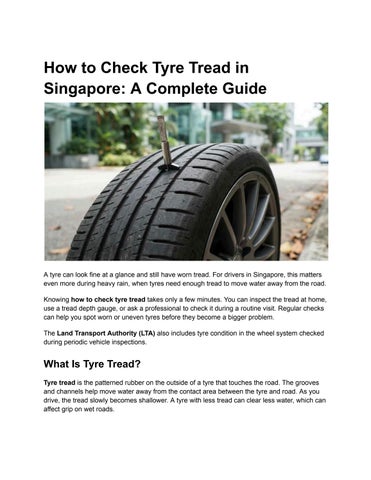
What Is Tyre Tread? Tyre tread is the patterned rubber on the outside of a tyre that touches the road. The grooves and channels help move water away from the contact area between the tyre and road. As you drive, the tread slowly becomes shallower. A tyre with less tread can clear less water, which can affect grip on wet roads.
This matters in Singapore because sudden rain and wet roads are common in daily driving. A proper tyre tread check helps you understand your tyres' condition before the tread becomes too worn.
Why Tyre Tread Matters in Singapore Singapore drivers deal with frequent rain, hot road surfaces and heavy traffic. These conditions make good tyre condition important for everyday driving. A worn tyre may have less grip on wet surfaces. The Automobile Association of Singapore recommends checking tyre tread regularly and replacing tyres with tread below 1.6 mm. The LTA vehicle inspection requirements also include the condition of the tyres as part of the vehicle's wheel system. For this reason, checking your car tyres in Singapore should be part of normal vehicle maintenance, not something you only do before a long journey.
How to Check Tyre Tread at Home You don't always need special equipment to get a basic idea of your tyre's condition. Park your car on a flat surface and turn the steering wheel as needed so you can see the tread clearly. Look across the full width of the tyre. Do not check only one small section. Look for: ● ● ● ● ● ●
Shallow or disappearing grooves Tread that has become level with the wear bars Uneven wear across the tyre Cracks or cuts Bulges or other visible damage Stones or objects stuck inside the grooves
A visual check can reveal obvious problems, but a proper measurement gives you a more accurate result.
Check the Tread Wear Indicators One of the easiest ways to check tyre wear is to find the tread wear indicators, also called wear bars. These small raised bars sit inside the tyre's main grooves. They show when the tread has worn down to a certain level. In Singapore, the commonly stated minimum tread depth is 1.6 mm. Bridgestone Singapore explains that its tread wear indicators are set at 1.6 mm. When the tread surface reaches these bars, the tyre has reached that level and should be replaced.
Check several areas around the tyre because wear may not be even.
Use a Tyre Tread Depth Gauge Place the gauge into one of the main tread grooves and measure the depth in millimetres. Take readings at different points across the tyre and around its circumference. This helps because one part of a tyre can wear more than another. Volkswagen Singapore recommends checking tread depth at several points around the tyre and notes that a calibrated tread depth gauge provides an accurate measurement. For regular tyre maintenance in Singapore, keeping a simple tread gauge in your car-care kit can make these checks easier.
Check for Uneven Tyre Tread Wear A tyre that is wearing more on one edge than the other may point to an underlying issue. Uneven wear can be linked to incorrect tyre pressure, wheel alignment or other vehicle problems. Common patterns include: Centre wear: The centre of the tread looks more worn than the outer edges. This can be associated with over-inflation. Edge wear: Both outer edges show more wear. Under-inflation can contribute to this pattern. One-sided wear: One side of the tread is noticeably more worn. Wheel alignment or suspension issues may be involved. Uneven wear is a good reason to have a qualified technician check the tyre and vehicle, rather than simply replacing the tyre without finding the cause.
What Is the Minimum Tyre Tread Depth in Singapore? The commonly stated minimum tyre tread depth for Singapore is 1.6 mm. Bridgestone Singapore and other tyre-care sources state that tyres should be replaced when they reach this level. However, 1.6 mm should not be the target for normal driving. Tyre performance can reduce as tread becomes shallow, particularly on wet roads. For Singapore drivers, checking tread before it reaches the legal minimum gives you more time to arrange a replacement. Always follow the tyre manufacturer's guidance and have damaged or badly worn tyres inspected.
When Should You Replace Your Tyres? Tread depth is an important factor, but not the only one. You should arrange a professional inspection when you notice: ● ● ● ● ● ● ●
Tread reaching the wear indicators Tread depth close to the minimum Deep cuts or cracks Bulges on the sidewall Severe uneven wear Repeated loss of tyre pressure Visible damage after hitting a kerb or road hazard
The Singapore tyre market has many tyre sizes and specifications, so replacement tyres should match your vehicle manufacturer's requirements. LTA states that replacement tyres should have the correct width, profile and diameter recommended by the vehicle manufacturer.
How Often Should You Check Your Tyre Tread? The Automobile Association of Singapore recommends checking your tread monthly. You should also inspect your tyres after hitting a kerb, pothole or other road hazard. A quick check can help you spot damage before your next journey. Checking your tread at the same time as your tyre pressure is an easy way to build tyre care into your normal routine.
Why Wet Weather Makes Tread Checks Important Tyre grooves help move water away from the contact area between the tyre and road. As tread becomes shallower, the tyre's ability to move water decreases. This becomes especially important during heavy rain in Singapore. A worn tyre may have less grip on wet roads and may be more vulnerable to aquaplaning. Bridgestone Singapore explains that deeper tread disperses water more effectively through the tyre's drainage channels. Good tread does not replace safe driving. During heavy rain, reducing speed and leaving more stopping distance are still important.
Should You Visit a Tyre Shop for a Tread Check? A home inspection helps, but a professional check can give a more complete view of your tyre's condition. A technician can measure tread depth, inspect the sidewalls, look for uneven wear and check whether the tyre pressure is correct.
A professional tyre shop in Singapore can also identify problems that may be causing uneven tread wear, such as wheel alignment or other wheel and suspension issues. This is especially useful if one tyre looks different from the others or the car starts to feel different while driving.
Tyre Tread Checks for EVs and Hybrid Cars Electric and hybrid vehicles also need regular tyre checks. EVs can be heavier because of their battery packs, while instant motor torque can place greater demands on the tyres during acceleration. This makes regular inspection useful for EV tyres in Singapore. The same basic checks apply: ● ● ● ● ●
Measure tread depth Look for uneven wear Check the tyre sidewalls Monitor tyre pressure Inspect for cuts, cracks and bulges
Always use the tyre size, load rating and specifications recommended for your vehicle.
Simple Tyre Tread Check: Quick Guide For a quick inspection, follow these steps: 1. Park the car safely on a flat surface. 2. Look across the complete tread width. 3. Find the tread wear indicators. 4. Check for uneven wear. 5. Inspect the sidewalls for damage. 6. Measure the tread with a gauge for a more accurate reading. 7. Arrange a professional inspection when the tread is near the minimum or the tyre shows damage. This simple routine can take only a few minutes.
Final Thought Knowing how to check tyre tread in Singapore is a simple but useful part of car care. Start with a visual inspection, check the tread wear indicators, and use a tread depth gauge for a more accurate measurement. Also watch for uneven wear, cuts, cracks, and sidewall damage.
The commonly stated minimum tread depth is 1.6 mm, but waiting until tyres reach the legal limit is not a good maintenance strategy. Regular checks give you more time to identify worn tyres and arrange replacement. With Singapore's frequent rain and busy roads, keeping your car tyres in good condition can support safer, more reliable daily driving.
FAQs 1. Does tyre tread affect fuel consumption? Yes. Tyre condition and rolling resistance can affect vehicle efficiency. Correct tyre pressure is also important because under-inflated tyres can increase rolling resistance.
2. Can tyre tread wear differently on the same car? Yes. Front and rear tyres can wear at different rates because they may experience different steering, braking and load conditions. Uneven wear across one tyre can also point to pressure or alignment issues.
3. Can I drive with a tyre that has good tread but visible cracks? Visible cracks should not be ignored. Cracks can indicate tyre deterioration, so a qualified professional should inspect the tyre before you continue using it.
4. Does tyre tread depth affect braking on wet roads? Yes. Tread helps move water away from the tyre's contact area. As tread becomes shallower, wet-road performance can be affected.
5. Where can I get my tyres checked in Singapore? You can visit a reputable car tyre service in Singapore for a professional tread, pressure and condition check. An inspection is particularly useful when you notice uneven wear, visible damage or changes in how the car handles.