Tipton
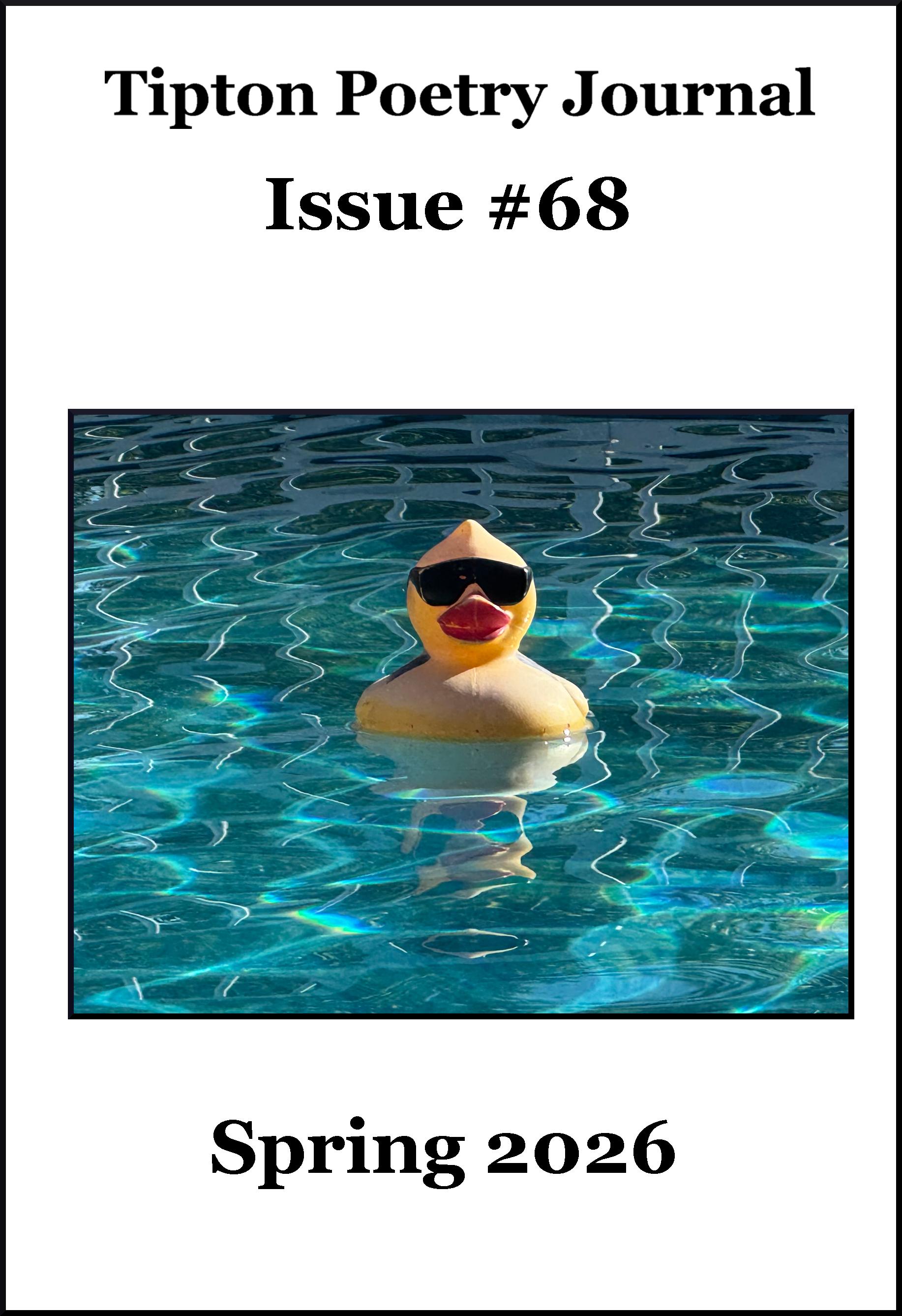
Tipton Poetry Journal, located in the heartland of the Midwest, publishes quality poetry from Indiana and around the world.
Statistics: This issue features 33 poets from the United States (19 unique states), and 5 poets from Canada, Iran, Switzerland, and Ukraine.
Our Featured Poem this issue is "The Geometry of the Uninvited” written by Gregory O'Neill. O'Neill's poem, which also receives an award of $25, can be found on page 1. The featured poem was chosen by the Board of Directors of Brick Street Poetry, Inc., the Indiana nonprofit organization who publishes Tipton Poetry Journal.
Cover Photo Pool's Open by Barry Harris
Barry Harris, Editor
Copyright 2026 by the Tipton Poetry Journal.
All rights remain the exclusive property of the individual contributors and may not be used without their permission.
Tipton Poetry Journal is published by Brick Street Poetry Inc., a taxexempt non-profit organization under IRS Code 501(c)(3). Brick Street Poetry Inc. publishes the Tipton Poetry Journal, hosts the monthly poetry series Poetry on Brick Street and sponsors other poetry-related events.
GregoryO'Neill
Before the mirrors and the great glass eyes, we lay in the itchy summer fescue, claiming the Big Dipper like it belonged to us, as though the sky were a map we’d drawn ourselves in the grass. It was a domestic kind of truth, naming a thing and calling it known, our eyes small, safe rooms where the light felt manageable.
Now these metal birds are out there, busy with the mathematics of the invisible, proving our eyes small and finite. For every spark we can see, a billion more are blooming, ghost light from nebulae already dead by the time it hits our skin. It’s a beautiful, terrifying math that breaks the clock.
We used to be satisfied with the brief, bright streak of a meteor, a small, exuberant burning that didn’t ask for a permit, the strange ebullient excess of it all. And yet, here we are, out on the grass, wondering what it is the dark intends to do with us.
Gregory O'Neill, from Seattle, writes reflective, conversational poetry about the canny, uncanny, the seemingly sublime, the obscure within the mundane, and the emotional physics of absence. Writing appears or is forthcoming in, The Laurel Review, The Mantis Literary Journal, Jackdaw Press, Route 7, Relief Quarterly, Eunoia, Cathexis, Larina’s Lit, Litbop, Bristol Noir, Last Leaves, Zoetic, Gabby & Min’s, Closed Eye Open, TrashLight and others.
There’s no such thing as blue skies and the Sun’s a floating cantaloupe any hungry soul may pluck if they have faith.
Light is in your heads. You control its radiance, frequency, and temperature. In fact, do the same for all life forms and decayed matter.
Death? Such a manageable coincidence. Speak to it, and it will leave. No intelligible or audible words necessary. You’re the force.
Now, go make a tyrant of every man. Turn their women into Jezebels. Reward them with plenty of jewelry, cosmetics, and perfumes.
Give the mansions to the minions and immature advocates so they feel like somebody. But as for us, we are gods.
Where's the silence that is heard without a single thought, and led without emotion or vision?
Can anyone live this way? Would they mourn chaos when such silence lingers far too long?
Is this a thing only the spirit can imagine outside of flesh?
Where's the silence that brings no memory or sight, though much still exists?
Is it a thing only God knows? Does it require an open mind with eyes closed?
Tia Paul-Louis is a fiction writer and poet from Florida. She began experimenting with songwriting at age 11 and later felt a deeper connection to poetry. Her themes portray family life, gender role controversies, mental health, and spiritual values. She admires the freedom of expression in most forms of art such as music, acting, and painting.
Sitting in the car at the station, waiting for a late commuter train to come in, listening to Pink’s Beautiful Trauma and thinking that’s exactly what the Commander-in-Chief has been thinking, he like Pink, that “everyone’s chasing that holy feeling,” Christianity once again on the march against the infidels. A lanky dude outside the Newport Market smokes a cigarette and jives in his hoodie and sagging pants to a song in his earbuds, a different one from mine, no doubt. Day-workers are lined up along the fence waiting for a nod from other than ICE, who’s now invaded the town. At the corner, a stone’s throw away from where I’m parked, our favorite haunt, The Turk, many lunches and dinners with neighborhood friends, but I’m not now savoring recent memories of the owner’s delicious cacik,
baba ghanoush, and lamb shish kebab, instead seeing NATO shoot down a missile fired from Iran on its way to
southern Turkey, shrapnel raining groundward, elsewhere pilots parachuting from felled aircraft fighters, the imminent deployment of troops, while a torpedoed ship sinks in the Indian Ocean, and all those casualties of innocent civilians,
not the least of which at least 150 schoolgirls busy learning something useful for life, or perhaps being indoctrinated
at the behest of a supreme leader who’s no longer living. And then the train arrives, and the day once again pretends to be normal.
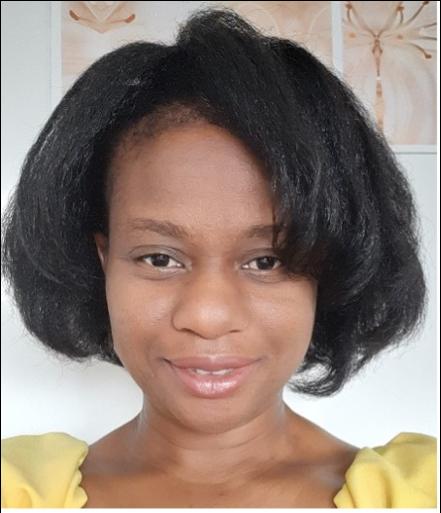
Jim Tilley lives in New York State and has published four full-length collections of poetry and a novel with Red Hen Press. His short memoir, The Elegant Solution, was published as a Ploughshares Solo. Five of his poems have been nominated for a Pushcart Prize. His most recent poetry collection, Ripples in the Fabric of the Universe: New & Selected Poems, was published in June 2024. His forthcoming collection, When Godot Arrived, will be published in 2026.
The road is a body & I have been inside it for years, learning its joints, how it bends without asking permission.
In Nigeria, the road began as dust, red earth breathing through my sandals, each step a small negotiation with distance. I learned early that movement is not freedom; it is an agreement with hunger, with time, with names that trail behind you like stubborn shadows.
Buses taught me anatomy. Metal ribs rattling. Seats warm with other people’s leaving. Every stop a pulse. Every delay a bruise. The road did not ask where I was going. It asked what I could carry without crying.
I carried my father’s name like a passport no embassy stamped. I carried cities folded into my mouth, Kaduna’s sky still ringing with sirens, Lagos sweating promise & threat in equal measure, Onitsha speaking commerce & ancestry in the same breath.The road swallowed us all & called it travel.
Crossing the Atlantic, the road shed its dust and grew wings. An airplane is still a body, pressurized lungs, tight aisles like narrow veins, strangers breathing each other’s future. Somewhere above the ocean, Nigeria loosened its grip on my ankles, not gently, but the way a wound releases blood.
America did not begin as a place. It began as weight. Forms. Fingerprints. The careful arrangement of my silence at borders that studied my face for evidence of intention. The road here speaks in asphalt and exits, numbers instead of proverbs, distance measured in hours, not stories.
In Alabama, history leaned against me. The road remembered feet that ran, feet that were stopped. I walked carefully, as if the ground might accuse me of forgetting. Each bus ride was a lesson in posture, how to sit without disappearing, how to look out the window
I learned that the road keeps records. It knows who arrived hungry, who stayed too long, who learned to pronounce their name like a compromise. It knows that migration is not a straight line but a scar that keeps reopening in new weather.
Sometimes the road aches. On nights when Nigeria calls my phone & my voice arrives before I do, the road tightens its muscles around my ribs. I remember that bodies do this, hold grief in places no doctor checks. Still, I move. Because the road, like the body, does not exist to be pure. It exists to continue. To absorb impact. To translate pain into direction.
I walk knowing I am not finished arriving. I walk knowing the road is learning my weight, adjusting its gait to mine. If I listen closely, I hear it breathing with me, not asking where I belong, only whether I am willing to keep going.
At every border
I am asked what I carry. I open my mouth and it is a house.
My mother’s name sleeps inside my laptop, eight letters that wake the screen, that teach the machine how to recognize me. When I forget who I am, I type her slowly, as if braiding her hair again in the dark.
My phone knows my sister by touch. The thumbprint is a small prayer, pressed and lifted. Each time it opens, I am returned to a room where we learned silence together, where even the walls listened.
My credit cards answer to my brother. His name moves money, buys groceries, pays rent, crosses invisible lines of approval. I swipe him through the world and the world nods back, believing him worthy of passage.
This is how I carry home, not in luggage, not in photographs that fade or voices that crack with distance, but in systems that demand truth: say the right name or remain locked out.
I have learned that language is a key only if spoken correctly. That exile begins the moment the tongue forgets its first alphabet. So I keep my people close, hidden in plain sight, like vowels in a prayer. When customs asks me where I’m from, I hand them my devices. Everything opens. Everything remembers me. Even when I am alone, my family is working, unlocking doors, authorizing my stay, translating me back into someone who belongs.
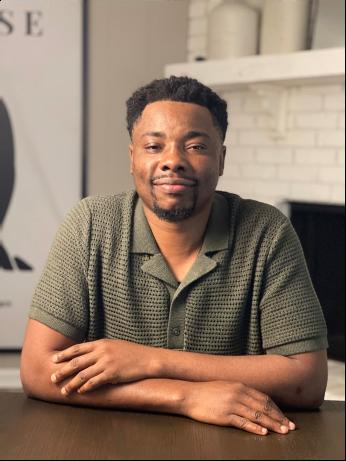
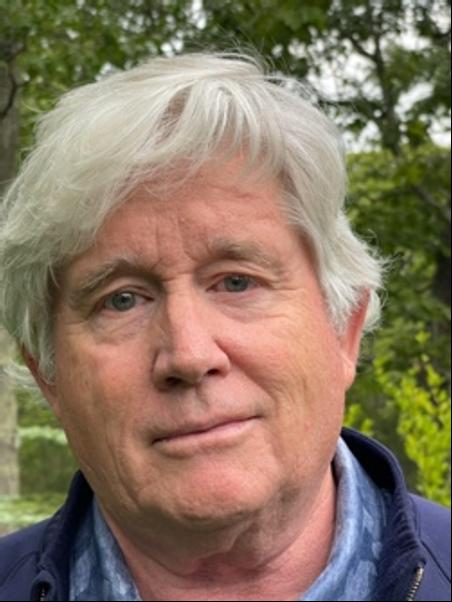
Okoli Stephen Nonso (he/him) is a Nigerian poet and graduate student at the University of Alabama at Birmingham. His works have appeared or are forthcoming in Indianapolis Review, Ellipsis Literature & Art, Good River Review, Hawaii Pacific Review, Feral Journal, Adelaide Literary Magazine, Brittle Paper, The Bookends Review, Olney Magazine, Progenitor Art and Literary Journal, Ofi Press, and elsewhere. A co-winner of the 2026 Collins Family Endowed Scholarship and a recipient of the 2025 UAB English Department Achievement Scholarship, he was namedThe Muse Journal’s Best Literary Artist of the Year in 2024. His poems have also earned recognition as first runner-up in the Fresh Voice Foundation Poetry Contest and third prize in the Akuko Magazine Inaugural Poetry Prize (2021). He is a Longleaf Scholar. His poetry collection, The Road Is a Body, is forthcoming this fall from Felis Catus Press. In 2021, he was featured in Who’s Who of Emerging Writers by Sweetycat Press. Find him on X @OkoliStephen7.
He shakes his tail like silver bangles to warn you he is armed. His white fangs are deadly angles; he shakes his tail like silver bangles. You should never dare to wrangle this venom-ladened beast. He shakes his tail like silver bangles to warn you he is armed.
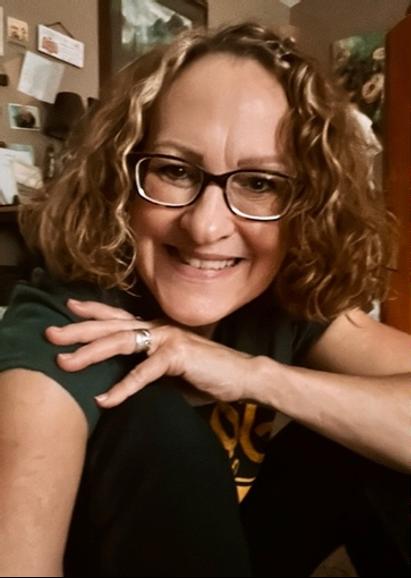
Arvilla Fee lives in Dayton, Ohio with her husband, three of her six children, and two dogs. She teaches for Clark State College, is the lead poetry editor for October Hill Magazine, and has been published in over 130 magazines. Her three poetry books, The Human Side, This is Life, and Mosaic: A Million Little Pieces are available on Amazon. Arvilla’s life advice: Never travel without snacks. Visit her website and her online magazine: https://soulpoetry7.com/
I remember Cary Grant running before the plane across a weedy, fall stubbled field with fright in his eyes.
I run the dirt road out of Niwot thinking of the early days, legs’ language changing, hot summer rising in the air. On a ridge along the road, high up, a flat bluff edge, a mountain lion watches, intently, movements below. Then there are two, one down the slope, sitting, contemplating the morning meal that might be worth a journey into town, down into the suburbs, onto streets, down where the lone barelegged man is moving. Open country, that is what we like. Run where no one sees you, no one cares. But the prairie is real hunger. Poetry cannot save me. Zoos are thoughts for after, sitting drinking coffee. Those lines that do not rhyme. Wild hunger hunting in the dawn, a line down my narrow road.
George Moore’s most recent collections are Children’s Drawings of the Universe with Salmon Poetry (2015) and Saint Agnes Outside the Walls with Future Cycle Press (2016). He has published with New York Quarterly, Orbis, and Queen's Quarterly, and has work in Best Canadian Poetry 2025 (Biblioasis). He lives on the south shore of Nova Scotia.
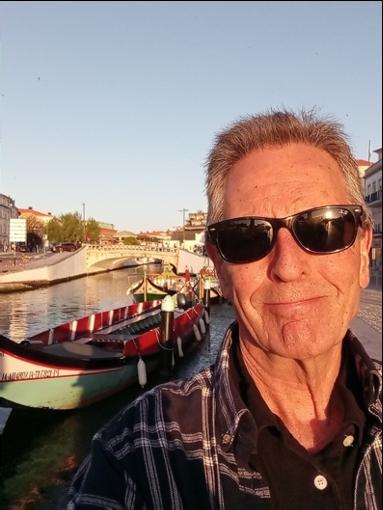
One in a cerulean sleeve, one sheathed in cranberry each morning when I open the gate and step into the day they lie next to each other like best friends I scoop them up, careful not to strain my creaky back, I see the neighbors’ houses emerging from the lifting dusk, the crooked mailbox knocked askew by Matt who just turned sixteen, the silver Toyota with vanity plates TRIPPIN, the pink bike with training wheels left out on the lawn, the flowering crabapple and the Meyer lemons like egg yolks on breakfast toast
For now no angst about future’s footsteps no snags in the newly woven day all that will come soon enough, soon enough caught threads tearing, sharp words slicing apologies swallowed before spoken soon enough a boy stumbles across the border into the cold arms of ICE soon enough I will read of a man who shot his entire family in Texas, soon enough famine and cholera in Yemen, trans children refused the treatment essential to feeling whole, soon enough a woman drugged and raped and blamed for wearing a skin-tight skirt
But this moment is suspended in time, before the clock ticks breakfast, ticks errands, ticks a call from Dr. Sanders with the results of an angiogram for now I hold the plastic wrappers to my chest washed in early dawn
ClaireScott
I dreamt my daughter asked for glue. I gave her some Elmer’s. I was trying to deal with a deadline. Too distracted to focus. Glad she had found something to keep her occupied. Hours later I look out the window and there she is trying to glue bright orange and red leaves on the Maple tree. She wants the summer back. She wants her brother back. I wish it were that easy. But entropy doesn’t decrease. Things become more disordered. Chaos ensues. That I know. I miss him too.
Claire Scott is an award winning poet in Oakland, California who has received multiple Pushcart Prize nominations. Her work has been accepted by the Atlanta Review, Bellevue Literary Review, New Ohio Review, Enizagam and Healing Muse among others. Claire is the author of Waiting to be Called and Until I Couldn’t. She is the co-author of Unfolding in Light: A Sisters’ Journey in Photography and Poetry.
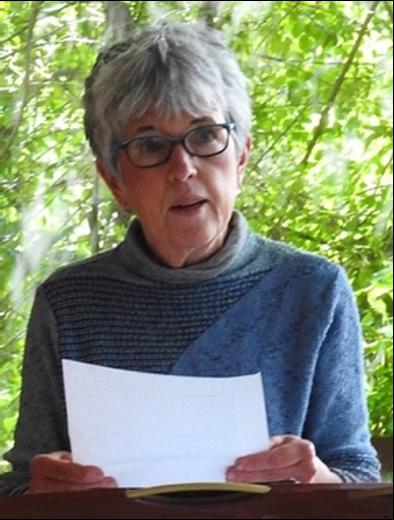
MohammadMansournejad
Far into the night
Right under the hooves
Of the insomniac moose
Whose red eyes are lurking
Behind the rain clouds
Of his exhausted breath
There is the soil of silence
Ready
For the seed of solitude
Time to time
I find myself there
Harvesting the melancholic fruits
Of evergreen trees
Rooted in truth
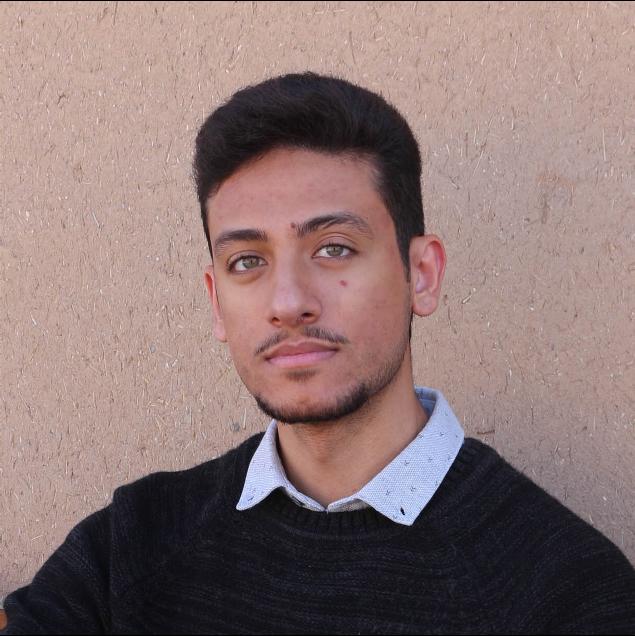
Mohammad Mansournejad is a poet and writer from Bushehr, Iran. He began writing poetry at the age of twenty-one. His work often explores the darker dimensions of human existence, delving into themes of isolation, mortality, and melancholy. His poems have been published in The Brussels Review, Haiku Canada Review, Lotus-eater Magazine, Password: The Journal of Very Short Poetry, and others.
The images are racing through the air that I may watch online a lit montage that’s almost but not quite like being there at the Taj Mahal or Angkor Wat or whereever might augment my mind’s collage; they’re sites I’ll never travel to by air.
Through the window I can look out and stare at a neighbor building a three-car white garage that’s almost but not quite already there; or in the mirror watch my loss of hair (I want my twenties back, a camouflage sent traveling through time into this air); or in the past still see my father’s flare for filling Home with unforeseen barrage I almost but not quite liked being there.
But with a screen to make me unaware, my own reality can be a mirage compared to screen-surf surging through the air, and I can be almost but not quite there.
Lorne Mook teaches at Taylor University in Upland, Indiana. Some of his poems are gathered in his book Travelers without Maps. His translations of Rainer Maria Rilke's poems have appeared in journals and in his book Dream-Crowned, the first English translation of a collection that Rilke published in 1897 when he was 21.
My mother was always leaving me behind somewhere. When I was six, she forgot me at the bakery for an entire month. The baker mistook me for one of those big decorative cookies and set me out under the glass display counter covered in frosting. The gingerbread family that adopted me was picked off by snaggle-toothed savages. Later, I sat on top of the oven and watched her prepare the dough. I admired the way her kneading knuckles worked, like the hooves of stampeding horses. I imagined her dusting bullies with those knuckles, pounding down heavyweight champions under her measured blows before sold-out crowds. The black and blue bruises rising above their eyes into an airy crust you couldn’t resist nibbling on maybe just once.
Justin Hollis has an MFA from Hofstra University and currently teaches language and literature at Palm Beach State College. His work has appeared previously in the Querencia Press Quarterly Anthology, Action, Spectacle, Cholla Needles, The Orchards Poetry Journal, Eunoia Review, GAS: Poetry, Art and Music, and The Chiron Review. His debut collection, Ferrying the Stars, is published by Half Inch Press.
After he left, I wrapped myself in my blanket and hid my head under the pillow. He would never be back and I would never be the same.
After he left, I made myself as small as I could beneath the blankets, a caterpillar disintegrating into ooze, I would be different when I finally crawled out of bed; I was not a caterpillar and I would not emerge a butterfly. I was a grub and I would become an ugly old beetle and he would never come back.
After he left, I curled up as tight as possible and hugged my legs to my chest and wondered what it would be like to be dead, I wondered what it would be like to close my eyes and find out it had all been a dream, I would open my eyes and everything would make sense, I would open my eyes and see a light at the end of the tunnel drawing nearer, I would open my eyes and discover that I wasn’t really dead but everyone thought I was and some lab technician was cutting my chest open with a rotary saw, trying to excavate my broken heart.
After he left, I stayed in bed all day, heard the phone ringing on and off: mom, telephone solicitor, telephone solicitor, telephone solicitor, mom. Everything was heavy and ridiculous and stupid and frightening. I pulled the covers up over my head and slept for days and days and days.
Holly Day’s writing has recently appeared in The NoSleep podcast, Talking River, and New Plains Review, and her published books include Music Theory for Dummies and Music Composition for Dummies. She lives in Minneapolis and currently teaches classes at The Loft Literary Center in Minnesota, Hugo House in Washington, and the Indiana Writers Center.
When I was sixteen I had an audience
Who was always watching
When I was turned away, their eyes scowling at my back
In my quietest moments before I went to sleep
And in dreams where they laughed me off stage
As if they thought I talked too much about myself.
So I stopped talking about my feelings
And my hopes
And my beliefs
Until they said so.
When I was sixteen I had a boyfriend
Who it felt like was never watching me
And always other people who weren’t me
While he faced away and talked about
Video games and what actresses he’d like to date
Because he was the kind of boy
Who likes you until you become yourself
And speak.
And he thought I talked too much in general
So I stopped talking at all
Until he said so.
When I was sixteen I had a teacher
Who told me I would one day die young because I was good
She said the more I spoke the more I suffocated my classmates
And that I talked too much about life and its meaning
And as I sat surrounded by cinder block walls
As fluorescents flickered overhead
I bit my tongue and blinked back tears
Because I would die young in her version of the world
Which hangs in the thick classroom air
Even now.
So I stopped talking about life and its meaning
Until she said so.
When I was sixteen I had a best friend
Who I felt like was always away
On some distant vacation to a far-off land
Where I didn’t exist and only she did
Where she could sleep away her pain
And my presence
Until one day, she told me
That I talked too much about boys
And that she was tired of it, and me.
So I stopped talking about boys
Until she said so.
When I was sixteen I had a reflection in my bathroom mirror
Who I somehow knew wasn’t there
Because she only watched the shell of her appearance
And nothing more
Than the face that she turned
Just like my audience
And my boyfriend
And my teacher
And my best friend
But I still had to look at her and face her
All the same
She knew I didn’t talk enough
Because I was always trying to please my audience and perform on an empty stage
So I got off stage
And shouted her name
Until she said so.
Addison Curran is an aspiring poet who lives in Georgia. She recently won an honorable mention for her poem for her annual literary competition. Addison has been inspired by loss, grief and perseverance, and writes mainly about themes of nature, philosophy and spirituality.
No one talks about it the mother who failed at mothering – or if they did, I wasn’t listening. I was too busy licking my wounds, failed marriages, broken promises, old wounds I never let close, bruises from my own childhood. That’s right— I was the victim here.
Not my mother, a woman on the road before sunrise, headlights cutting miles into something livable, six children spilling through a house that never quieted, a man at the table measuring the hour by what was missing and the laundry always rising, always waiting, like a tide that would not turn. Somewhere in it, a middle child learned to fold herself smaller than the noise, to need less, to ask nothing. and the rest not unloved, just unfound. Too many needs in one small house, attention divided until it thinned to almost nothing.
Love was there. It just didn’t reach where it was needed and I carried that forward without meaning to, without stopping it until my daughter who learned abandonment by three, when her parents moved her like a pawn across a board she never chose stood in the same place waiting for redemption.
The day before JFK died is an empty page, but after – memory burns in the body, scent, sight, sound, mostly sounds and Jackie climbing across the car, that torn breath I still can’t swallow.
The day before I was writing notes to Paula, walking home after school, cokes at the diner. watching my little sister at home while I peeled potatoes for dinner, before knowing how knowing takes shape.
Later that week after everything had shifted, I sat on the porch steps and caught a glimpse of some eternity I didn’t know existed, a light that was not morning, not anything I could name, waiting, as if it knew me. It only happened once. I have been looking for it ever since.
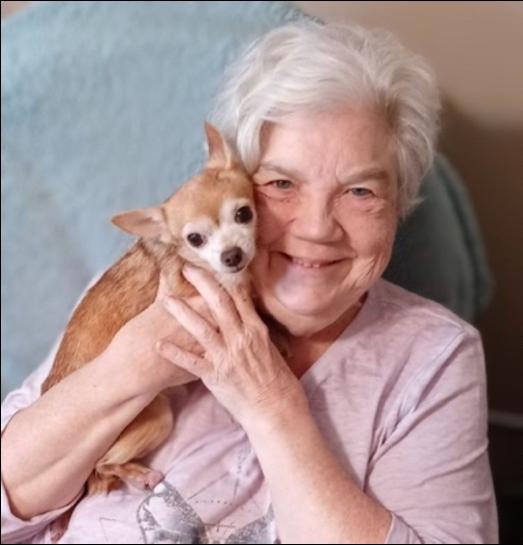
Linda Meg Frith is a retired Social Worker and longtime member of Green River Writers. She has published poetry in River and South, eMerge, Rainy Weather Days, Amethyst Review, Eclectica Magazine and other literary journals. Linda Meg currently lives with her Chihuahua, Jasmine, in Louisville, Kentucky.
As a frisky boy on a summer’s eve, he reclined in the crook of a sycamore and listened to the blare of radios through the open windows lining his Indiana Street. He could hear the broadcaster’s voice, the sound of motors revving up. Could almost smell burning rubber filling the air. Conjured the checkered black and white flag falling. Thrilled by the risk of driving 200 miles an hour, it was the danger that made his heart skip.. You don’t have to be there, he says. Just listen. Listen. You’ll never forget that blizzard of sound, the screaming fans, the tsunami of rolling thunder. The rumble.The roar.
A nine time Pushcart nominee in both prose and poetry, Liz Dolan has published two poetry collections. Her ten grandchildren pepper her life. Liz lives in Rehobeth Beach, Delaware.
My newly purchased used book of poems by Robert Hass opens to reveal a reminder card from a vet, dated 2019, that someone, perhaps a poetry lover, used as a bookmark. Lady Edith, it appears, was due for an exam and rabies vaccine. I can make a fair guess on the gender, but the species would be a coin flip at best; and no matter, for I have myself a poem. An imitation Robert Hass poem, if you will. And here it goes.
The Robert Hass book cost $4.99, in decent shape. On that same visit, I found Wuthering Heights, clean copy, probably assigned and never read, $3.99! I did not start out here intending to disparage Robert Hass; But even he’d have to admit he was not the better deal; I mean, Emily Bronté!
In fairness, every poem in his book is better than this one; but he is responsible for this one.
As we both are, given our ages, for so much that our countless decisions must have contributed to the sorry state of the world from which we flee to the sanctuary of Half Price Books.
Robert actually begins a poem in his book “Dear Dan –This is a letter of apology, unrhymed.”
De nada, I say, even though the poem has nada to do with me. 2019? I’m a glass-half-empty person; I fear Lady Edith is no longer with us. I think she is, or was, a cat.
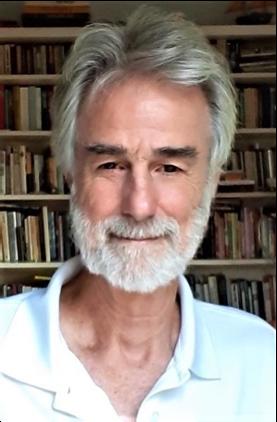
Dan Carpenter has published poetry and fiction in Illuminations, Pearl, Poetry East, Southern Indiana Review, Flying Island, The Laurel Review, Sycamore Review, Prism International, Fiction, Hopewell Review, Tipton Poetry Journal and other journals. Dan has published two books of poems, The Art He’d Sell for Love (Cherry Grove, 2015) and More Than I Could See (Restoration, 2009); and two books of non-fiction.
We’re gonna reprogram your mind with prayer: the only lies worth believing are the ones in the Bible, pre-packaged, tax-deductible, and on sale this Sunday.
At 1:14 p.m. the voicemail slithers in like cheap perfume: Sarah’s voice, sweet as Lubbock dust on a rented U-Haul fender. Hey, were you trying to get hold of me? I ended up talking to Mike. Dave can’t meet.
Calendar refuses the date again, another ghost email floating between spam and social, August 28th oatmeal special, September 3rd on eternal repeat. I search for you the way I once hunted my stamp collection: those pretty little empires, now worth a fortune probably trashed with my "cool rocks” and whatever else the family decided wasn’t worth keeping. The one I love, the one I love. Yeah, right.
We drone on about debit versus credit, how the banks devoured the rental companies, Southwest points buying fake freedom to New York while Wells Fargo forged our names for sport.
Turo is the new salvation: some stranger’s car, no paperwork, no soul, just keys and the quiet hope you won’t get murdered or charged extra. Meg is still the same. The paintings lean there like bored witnesses.
I still haven’t reserved the U-Haul. Never do business over the phone, how do you track a voice that’s already lying to you? Naive, you say, but I’ve been a mark since I was eight, hoarding stamps while the world learned to compound interest. The rocks feel cool and pointless in my palms, tiny dead planets that once meant something. Tomorrow after court I’ll pack the tables, the bench, the letters no one will read, the photos fading into irony. Clint says Tom is keynote in Cincinnati. Tom doesn’t even know. Memory’s just another unclicked invite, slipping away like everything else.
We’ll drink margaritas that night, salt rim sharp as regret, lime sour as the truth. One of us will pick you up Monday, if the truck doesn’t break down, if the calendar remembers, if we still feel like pretending this matters. The voicemail ends with its little mechanical click, two calendars finally touching in the dark, cold and useless as prayer.
We’re gonna reprogram your mind with prayer. The one I love, the one I love. Sure we do.
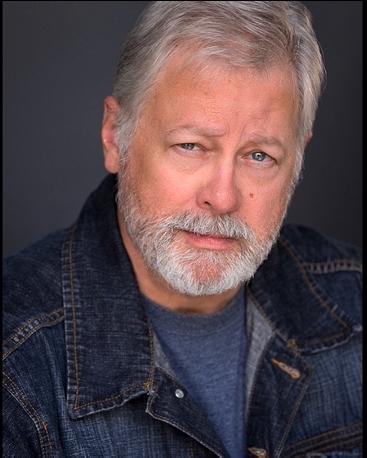
J. Alan Nelson, a writer, journalist, lawyer and actor, has been nominated for a Pushcart Prize, Best of Net and Best Microfiction. He played the lead in the viral video “Does This Cake Make Me Look Gay,” the verbose “Silent Al” in HBO’s Emmy-winning SXSWestworld,” and narrated New York Times videos on AIDS programs in Africa. He lives in Waco, Texas.
MichalRubin
I started something that couldn’t wait when I wanted to be with a girl blinded by a bullet, a wandering bullet like a wandering Jew that entered into someone’s house, had its own story, but I met this guy from Gaza, he carried the concreteremains of his home in his pockets/
I wanted to tell you about him so you inhale the story like a bullet that went through the boundary of a body, it settled inside the wall, evicting the living, expelling years of ownership sending the blinded girl onto the gravel road, and Basman from Gaza lives outside of the memories of his dead sister/
the words he scattered around the bodies of his nephews became sentences my friends don’t want to hear, too painful to know of our capabilities when we shoot bullets as if people are squirrels, attacking the bird feeders/
But he kept shooting his words into our eyes and we wanted to become blind, so the letters would disappear inside the black holes that were stamped onto our faces/
Michal Rubin is an Israeli residing in South Carolina. In writing she wrestles with moral dilemmas imbedded in the Israeli-Palestinian conflict. She is the author of a chapbook, two manuscripts There are days that I am dead, and And the bones stay dry, and is the co-author with Basman Derawi of a book of poetic dialogue, Your stories look me in the eyes.
There are nine ways to die
And each are irreparable
Says an old woman whose Shar Pei face Is underlit by a glowing glass ball
I am walking my children
Through the bent grass lanes
Of an autumn carnival that appeared Fully formed this morning in the park
I have so many questions for the woman
Why nine? How many deaths have you
Tried to repair? I am buzzing with want
But only ask why would you ask that around kids?
She sways and slowly shakes her head
Which is wrapped with a paisley bandana
Flaring with cinnabar swirls and gold
As disappointed as I am with my question
There are nine ways son
She says with the patience of a Gristled middle school math teacher
But you’ll only ride one – want to know which?
David Pitcher is an Indiana poet and shelter worker who has been featured on NPR’s The Poets Weave. His poetry has appeared in LETTERS, The Pedestal Magazine, Confluence and elsewhere.
Struck by a blast, the old poplar is thrown, The sun was closed by a bitter veil, With liquid black smoke, having swallowed enough, I dragged my legs through a half-dead spring.
Flashed with fires, clouds above the steppe, Touching the soul timidity and anger… Splashed into the sky, flame with black death, Snapped a dry… volley… a handful of shards.
Heavily smoked, all the steppe-land, And the sky grew dark on the front line, In the gray I saw black scum… Fearfully approaching… like a wall.
The defense started frequent, sharp and rapid, Melted, crumbled, the sun in the heights, I am black from the sun, two rounds in my fingers… A mortal minute has come for me.
I on the forehead of a wide hill, From loss of blood, drunk… grew dull… With my fingers, iron… I gripped… cruelly… Over hot armor… over rows of bodies.
Everything mixed up: roar, shots, and screams, Grenades sighed, shooting poured down, Everywhere were heard death rattles, Blindly and madly… it means not fate.
With a dog-like screech to shut my throat, A tank clanked with iron, huffed, poked with fire… Smacked with a gulp, a mine in the ditch… in the middle… An explosion threw up the sky, and me… on it. Cursed place! Dead world in the trenches! I am foul-mouthed! Cursed through and through! I’d strangle with truth… the gold in the bellies… On the uniforms of the fed, I’d throw a handful of ash.
On the rags of the body, mine and my friend’s, With a memorial cup, let the living man look, Where I was smashed by war that day… by the meadow… Where war stank of death and urine.
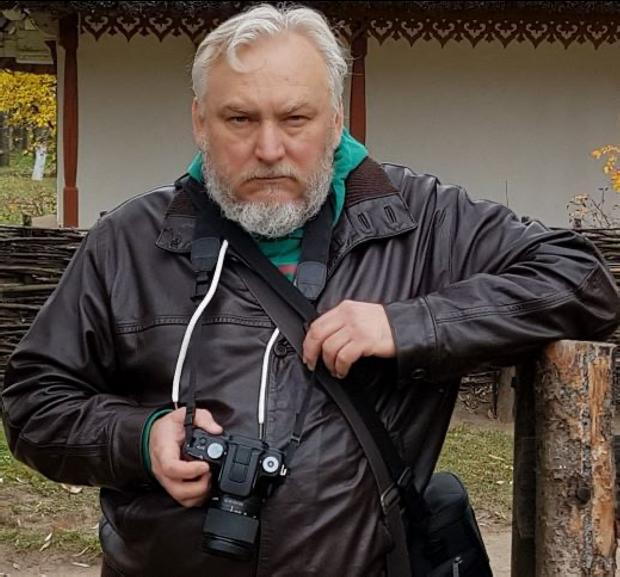
Vladimir Proskurov was born in 1962 in Vladivostok. He holds a higher military education degree and is a reserve officer. Following his discharge from military service, he worked as a professional journalist. Since 1992, he has lived and worked in Kyiv, Ukraine. His Russian-language literary works have been published since 2012 in numerous regional and international periodicals, including The Factory of Literature, Russian Life, Day of Literature, Moloko, Topos, Velikoross, Litkultprivet, Golden Fleece, Autograph, Camerton, Nevsky Almanac, Siberian Parnassus, Journal World, Masterskaya, Seven Arts, Independent Art, Seagull, Boston Review, and Slovo/Word. His poetry and prose have also been featured in the Periscope magazine anthologies (Hypnosis, Birch Aesthetics), as well as in the collections Revival of the Cossacks and The Sacred War. He has also been published in the Emigrant Lyre (EL) editions and the Tsaritsyn almanac. Vladimir is a finalist of the "Emigrant Lyre" International Poetry Festivals and Competitions (2020–2021). Currently, he is working on his new book of poetry, A Ticket to War(Билет на войну). Written as a daily journal, the work has been ongoing from 2022 to 2026 and continues to this day; the author plans to complete it after the war, if he survives.
Record snowfall the color of aging polar bears; berms huddle around cabins. This small village survived fires that tumbled embers from the summit, a devil’s waterfall. The forest, a war zone, trees now blackened sticks, an art piece rendered in charcoal.
If only planners had the foresight to save water, tremendous runoff. Obvious waste, sloppy agenda what would John Muir say? In my lifetime, green may appear, fluffy underbrush and tough fern. We do hope for a cleaner snow, pristine, penciled in by a fingertip.
Few cabins near the road survive, and there, just a set of steps, a homemade sign: Thank You Cal Fire.
“Do not leave bread behind on the table, or milk out; it will entice the dead.” Rilke
Death will dispatch of milk right away to remove red blotches from its eyes. You can tell by the empty vinegar bottle, vinegar to clabber. Bread is another story. Sitting cross legged on the kitchen table, death will relish even a crumb, start to nibble as the crumb grows into a whole loaf. In the morning, a grease stain on the linoleum. Crows disappear from the feeder; the coffee pot brews rum. Your pinking shears cut a straight line. Walls have been whitewashed with a sickly puce, your insurance policy Cancelled! Windows swell and won’t close. The choir master moves you to the alto section. Someone orders a Super Shuttle to the airport; your passport expires. A putrid odor permeates the house, acrid, rotten eggs, more spilled vinegar. Your nightgown is on backwards; croissants catch fire in the microwave. Licorice has been added to your grocery list. In winter, you take out the chessboard bite marks around the edge.
Jeanine Stevens’ latest publications are Left Handed Hummingbird (Clare Songbirds Publishing, 2025) and Tea in the Nuns’ Library (Eyewear Publishing, UK.) Work has appeared in Chiron Review, Evansville Review, Rosebud, So it Goes: Journal of the Kurt Vonnegut Memorial Library, and Two Thirds North (Sweden). Jeanine is Professor Emerita at American River College in Sacramento, California.
Tipton Poetry Journal
would I but turn against the burning sky to wrap my arms around her melting frame and make love to a pillar of salt
Rachel Kelly, at the time they wrote this piece, lived and toiled in Southern Indiana. Perhaps they still do.
Usually, he gets to work before ten. Unfolds his canvas stool beside the nested grocery carts then delicately sets himself down. From a wide bag by his side he takes out that paper cup: worn, small and white, empty and light, a whisper in his swollen fingers.
Faithful to this spot and plain, he’s not like the less honest of his kind. No tattered signs for him, no feet bared to cold, no switching off with women sporting babies no. His eyes always full of earthen green and warmth but today I find him downtrodden.
Often I offer him nice food but somehow now reach for coins. His thanks follows genuine as always hand to heart, exchange of smiles. Loading my groceries, I realise I don’t know his name, return to ask, am surprised to find we have no spoken tongue in common.
I manage though to make myself understood. Mei? he checks. I nod. Viorel, he says. A name, I will learn, that is the Romanian word for bluebell.
Born and raised in the United States, Barbara Geary Truan is a writer and editor who earned a graduate degree in international relations before moving to Switzerland where she married, raised a family, and worked for humanitarian and philanthropic initiatives. A longstanding member of the Geneva Writers’ Group, she recently received an MFA from Seattle Pacific University. Her work has appeared in Poets Reading the News, Ekstasis Magazine, The Persimmon Tree, The Closed Eye Open, Offshoots, and Spiritus.
I came home from the street on a black morning and didn't come back.
[This poem was first published in Ranger magazine]
Mykyta Ryzhykh lives in Ukraine, has been nominated for the Pushcart Prize and has been published any times in the journals Dzvin, Dnipro, Bukovinian magazine, Polutona, Rechport, Topos, Articulation, Formaslov, Literature Factory, Literary Chernihiv, Tipton Poetry Journal, Stone Poetry Journal, Divot journal, dyst journal, Superpresent Magazine, Allegro Poetry Magazine, Alternate Route, Better Than Starbucks Poetry & Fiction Journal, Littoral Press, Book of Matches, on the portals Litсenter, Ice Floe Press and Soloneba, in the Ukrainian literary newspaper.
I don’t get up so early nowadays. When the sun pokes through the blinds, I keep my eyes shut, rolling deeper in the blankets a warm glow there, behind the eyelids, even if there isn't much to see.
I fill the tub halfway, wash with my good arm, nestling the other in a towel the sutures dry.
Life's slowed to a yellow light. It takes me ten minutes to get dressed, and that's if the shirt doesn't have buttons. Forget about chopping vegetables.
When I go out, everyone asks what happened. The girl at the deli, in between mustard spurts. Hyenas, I joke. How easy it's become to laugh with a stranger.
Rest, the doctor says. But how do something that requires nothing? Yesterday, I found a silver dollar on a handrail, a small treasure for whoever bothered to notice.
Some afternoons, I watch movies to pass the time. I saw one, Hotel Monterey, where the camera drifts down a hallway again and again like a ghost. The first time it stops at the end of the corridor, you see something dark, maybe a wall. The seond, a faint square of light — you realize it's a window and morning's come. The third, you see through the window to outside: a vast and dazzling city there the whole time.
Paul Julian is a writer and attorney based in Colorado Springs, Colorado. His poems have appeared in Inverted Syntax, Pinyon, and other journals.
After the Psalm
In a swamp by the ocean I sat and wept when I remembered community, faith, and the anxiety-purge of joy.
If I forget that the Bible never mentions thee, America, may I also forget those Babylonian children, broken-skulled and bleeding.
May I forget the things I said in my faith and may they be forgotten. And may I forget the shifting iterations I’ve seen in the interim. How did my kingdom is not of this world devolve to make it great?
In the swamp by the ocean, anxious, I weep.
Dan Hawkins lives in Charleston, South Carolina. His poems have appeared or are forthcoming in 45th Parallel, Pictura Journal, The Yearbook of the Poetry Society of South Carolina and other places.
Once a month on Wednesday
When Mommy receives her paycheck
She takes me to a Japanese restaurant in the Crenshaw Mall Dark wood interior paneling, black pleather seated booths I sit in a red pleather booster seat to eat next to Mommy
Picking up the pair of wooden pillars
My middle finger a fulcrum
My thumb the lever
I don’t remember learning how to use chopsticks I feel like I have always known
Mommy whispers when she bows her head, then tells me Before your meal was cooked by the chef
Its ingredients were bought and prepared Before that, the fish swam and were caught
The rice and vegetables planted and harvested
Itadakimasu, I humbly receive Gifts of lives, labor
In each grain of rice, there is god Divine nourishment creates connections That become part of me
Itadakimasu, I humbly receive
The elemental bonds and food chains
The water, the sun, and the soil
The fish to the farmers to the chefs
My meal is beyond the plate in front of me
Christl Rikka Perkins is a bi-racial (Black/Japanese) writer living in Oakland, California. While living in China, she was an English teacher and freelance writer for English Language Publications. She was an inaugural fellow of the Writers Grotto-SF’s Rooted & Written and is a member of the Writers Grotto. Her short stories have been published in American Fiction 17, God’s Cruel Joke, and Half and One (online).
Christl has been a longtime member and active participant in WriteNow!-SF Writers Workshop and has poetry published in their anthology, Essential Truths: The Bay Area in Color.
RichardWeaver
blinks like an anorexic wormhole sending belated Mother’s Day cards backwards through what passes for time. As a smart appliance and one of the early adopters of the Internet of Things, it was an angel investor in quantum nonlocality, an idea whose time has come before and after. And since. With absolute undiluted certainty it embraced the Uncertainty Principle. No small feat you will admit. Uncle Werner H. would have or perhaps already was proud. He and E. Schrödinger, shared veterinarians, I seem to recall. But I regress. For reasons unknown the word (disambiguation) always is grafted to the UP phrase. In future I look backwards to knowing why, if not when or where or what or how or by whom. Photons will be photons. Once a wave always . . . as they say. Actually, the photons would have to be a pair of polarization-entangled photons to have any hope of communicating. Science mirroring life. And art garfunkeling the cosmos.
Richard Weaver volunteers with the Maryland Book Bank, CityLit, and is the writerin-residence at the James Joyce Pub. Other pubs include: Loch Raven R, Dead Mule, Shoreline of infinity, Little Patuxent R, Rat’s Ass Review, & Mad Swirl. He’s the author of The Stars Undone (Duende Press, 1992). Recently, his 240th prose poem was published under a checker-board cone of silence.
After the boy from my history class threw orange juice at me, he said, “You could learn a thing or two from my friendliness.”
His friendliness is expired hair dye. His friendliness is a laugh he cannot hold in. His friendliness means nothing, it puts a hand on my chest, pushes the swing over the bar, his friendliness watches me fall, watches my knees covered in blood, watches me cry, then waits and says come on. His friendliness hears I’m from Taiwan, his friendliness keeps saying it is Thailand, his friendliness asks if I love him, his friendliness exists to make a spectacle of me. His friendliness is a bedbug, a crawling insect, a gadfly. That is what he calls friendliness. So I tell you: get away. Your blunt flattery – red headphones, flight to Miami, sawdust mouth, the contempt in your eyes, perfume masking body odor, your “go back to your country,” your turn away – you repeat “sank you, sank you.” in my ear. Playing along with your friendliness does not free me. Free? Free from what? Free from you?
Rhea Xie is a writer based in Pennsylvania. Her work has received national Gold recognition from the Scholastic Art & Writing Awards and appears or is forthcoming in The Penn Review, Eunoia Review, and Gone Lawn Journal. Her work is also included in DePaul’s Blue Book.
and I’m starting to feel lightheaded but they tell me to knock it off and stop being a drama queen so I keep huffing as deep as I can just like a good little boy who doesn’t cry or laugh too loudly or ask too many questions that make my parents stop. Thenrestartevenfastersaying whatareyouevensayingstoptrying tobringusalldownwiththatstupid scienceandhistoryandlearning shouldyoubeinthatschoolatall?
Zebulon Huset is a public high school teacher, writer and photographer living in Texas. He won the Gulf Stream 2020 Summer Poetry Contest and his writing has appeared in Best New Poets, Meridian, Louisville Review, Smartish Pace, The Southern Review, Fence and others. He is an advocate of writing exercises and prompts and edits the prompt-based Sparked Literary Magazine.
I think often of the Neil Young song “Powderfinger” and how for years I thought he said when the first shot hit the dog. It was a song about a Civil War gun boat attacking a boy’s riverbank farm. Later, I found out he really said dock. Either way, the boy died, but what an intimate way to show invasion to have it first kill your dog as if invasion could care either way.
Born on a farm in southeastern Illinois, Daniel Bourne has worked in a tree nursery/peony farm, a rare book library (at Indiana University), and in the English and Environmental Studies programs at The College of Wooster in NE Ohio. His books of poetry include The Household Gods, Where No One Spoke the Language, and Talking Back to the Exterminator. His poems have also appeared In Tipton Poetry Journal, Ploughshares, American Poetry Review, Boulevard, Guernica, Conduit, Salmagundi, Indiana Review, Crab Orchard Review, Rhino, Shenandoah, Field, Michigan Quarterly Review, Plume, Yale Review, and others. Since 1980 Bourne has also lived in Poland several times, including in 1985-87 on a Fulbright for the translation of younger Polish poets, and most recently in 2024. A collection of his translations of Polish poet Bronisław Maj, The Extinction of the Holy City, appeared in 2024, and his translations of Maj and other Polish writers have appeared in Prairie Schooner, Field, Colorado Review, Partisan Review, Plume, Salmagundi, and Virginia Quarterly Review.
CarolLynnStevensonGrellas
I thanked the woman for her stethoscope, surviving the Hippocratic rigors of medical school. She traveled the world to save the wounded. Bless the holy grail of science for all it has given the mind, for all it has cured of the body, for the skill of aiding those who’ve suffered, who sleep now eternal
Our Father, who art in Heaven, hallowed be thy name
I thanked the wish buried in every flower with petals floating to the soft gale of hope. The same continuous thought carried through eternity. Once I held my breath long enough to know the calm of letting go I watched the world fade around me This is the way of dying, my dear a voice whispering from above and it was almost Intoxicating
Give us this day our daily bread
I thanked the daylight’s softening effect, the sweet blur of warmth, removing the loneness. There are days, I close my eyes and imagine the sun, its reflection of Heaven above water, a Rayleigh scattering of beauty. As long as there’s light inside the dimness courage for tomorrow is still promising and forgive us our trespasses
I thanked the sky for everything. Even your throat can feel full of stars if you open your mouth wide enough and inhale the wonder. One night, I dreamt a pair of wings spread across my lips over the curve of my smile like an accordion unfolding from a gasp of air into a ghostly aria of song
as we forgive those who trespass against us
I thanked time for saving memories, and for the ability to cope with mine, because the last I spoke to my oldest friend, she didn’t remember me. Her heart was a decanter filled with spirits. I’d been traded for a bottle of scotch. Sometimes life ends without a goodbye sometimes just a soundless cry a person gives up, and no one knows why
lead us not into temptation but deliver us from evil,
Forever and ever amen
Carol Lynn Stevenson Grellas lives in the Sierra Foothills of California and recently graduated from Vermont College of Fine Arts MFA in writing program, where she received a Merit Scholarship. She is a twelve-time Pushcart nominee and a seven-time Best of the Net nominee. She has served as Editor-in-Chief for The Orchards Poetry Journal, and according to family lore, she is a direct descendant of Robert Louis Stevenson. www.clgrellaspoetry.com
I’m dining out. The restaurant is crowded and everyone is talking. The din is horrendous. I think if I had the right remote I could mute the whole scene. And suddenly I can do that. Almost at the same time the restaurant disappears. There’s nothing around me but a white glare. My fingers find the slender stem of a wine glass. I raise the glass to my lips and taste the spice in the Chilean wine I had ordered. I would like to leave the restaurant, but how can I? I have no inkling where to find the door. I would also like to get my check and tell the waitress I would like my food to go. For a while I just sit still. It’s quiet and I’m content. Images float to my head. Couples eating together, a plate of salmon and broccoli, a green tinted bottle of water on every table. Gradually sound returns but not as loud or dense as before. I can see walls and the way to the door. Back in my apartment I step out of myself, as if existence was an ill-fitting dress I had unzipped and let fall to the floor.
Elaine Dillof is the author of Anna and Solomon, a book about her grandparents’ emigration to the US, published by Farrar, Straus and Giroux. Her poems have appeared in a number of literary journals. Elaine lives in Mystic, Connecticut.
The warm, torn body ceased to thrum Against my thin chest.
The red-ringed eyes glazed. My father leaned his shotgun against a post, Snapped its white-ringed neck. Pheasant. As much landloper as flier.
Its long tail feathers felt like silk when I drew them Under my nose and across my cheek. Chinese ring-necked pheasant.
Fifty-eight years between their forced migration And my own. Lakeless Dakota. Can the dispossessed ever, truly, return?
I don’t know; answers will vary.
Clouds scribbling across a prairie sky never replaced the green canopy laced across my memories. I twined my arms around my chest. To keep my heart In place. A burl of unshed tears and alternate lives grew where my heart had been.
Leaves followed the winds, Whirlers, too. Some sprouted In foreign soil. Carried there, no doubt, by birds of passage. And now,
The ancient call is heard once more; the dreadful zugunruhe. Gnarled roots heave up the earth, The trees begin to walk; like awkward, Odd, flightless birds Waving their crooked limbs like wings.
Alexandra Benedict taught junior high English and history. She has also conducted classes and workshops about local history for adults. She has published prose and poetry in Gypsy Cab, Victorian Geneseo, Time of Singing (Winter 2026) and one of her poems has been selected for the Wisconsin Fellowship of Poets 2027 calendar.
MarcJanssen
Sunlight streams through an enemy’s window. It can go wherever it wants to go, Cross over all the walls and borderlines It finds everyone eventually.
Slips its silky hand against everything Even hidden behind windows and doors It doesn’t matter if you are far or fast Even behind clos’d windows you design It fails to slow down, slow down, slow slow down And fall in love with light screaming through panes.
What is there left to say about Marc Janssen, other than he should eat more vegetables? Maybe his verse can be found scattered around the world in places like Pinyon, Orbis, Pure Slush, Cirque Journal, Two Thirds North and Poetry Salzburg also in his book November Reconsidered. Janssen coordinates the Salem Poetry Project- a weekly reading, the occasionally occurring Salem Poetry Festival and keeps getting nominated for Oregon Poet Laurate. For more information visit, marcjanssenpoet.com
“Stare. It's the way to educate your eyes. Pry, listen, eavesdrop. Die knowing something. You are not here long.”
~ Photographer Walker Evans, 1903-197
Our mothers told us not to, it’s not polite, but Evans was right, even to the point of prying and eavesdropping. After all, the human face is blessed with two cameras, stereo, a tongue to wag, and a memory bank to make it work. Children
know early the pleasures of staring, those long but silent time exposures.
A retired teacher of English and photography, Roger Pfingston is the recipient of a poetry fellowship from the National Endowment for the Arts and two PEN Syndicated Fiction Awards. He is the author of Something Iridescent, a collection of poetry and fiction, as well as five chapbooks, the most recent being What’s Given, published by Kattywompus Press. New poems have appeared in recent issues of I-70 Review, Innisfree Poetry Journal, Salt, The Flying Island, and Valparaiso Poetry Review. Roger lives in Bloomington, Indiana.
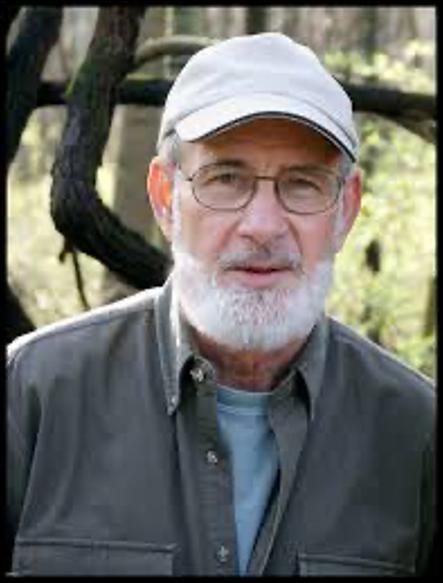
I must lay a stranger to rest and do it on very short notice. I will do my worst or my best to send him off on a lotus. As a man he was far from pure. The lotus may engender purity. His finances were never sure, his soul, on social insecurity. You imagine some sinister or doubtful motive at least. If I tell you I’m a minister, if I imply I’m a priest, will you overlook my clothes and take me at my word? Although I’m ‘one of those’ I’m much to be preferred to one whose garb is ‘right,’ to one who never falters, believing black and white are the only viable altars. Timothy Robbins is from Indiana. He has a B.A. in French, an M.A. in applied linguistics from Indiana University and has been teaching English as a second language since 1991. He has been publishing poetry since 1980 and has seven collections of poetry to his name, the most recent being Sticks. He and his husband have been together since 1998. They live in Wisconsin.
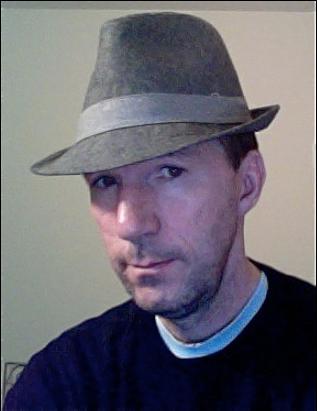
“Don’t tell your father.”
“I won’t.”
Hallowed be thy name. It was an incantation between my mother and I.
Sitting quietly against my mother’s thigh while she chatted with friends.
“He didn’t.”
“He did.”
“Have another cookie sweetie.”
“Don’t tell your father.”
“I won’t”
Give us this day our daily bread.
I grew fat, silently, nobody taking notice, like the cancer in my mother’s body.
“You didn’t.”
“I did.”
And forgive us our trespasses.
Be a good boy
Be a good boy
Be a good boy
“Don’t tell your father.”
“I won’t.”
But deliver us from evil.
Amen.
Born in Worcester, Massachusetts, Mark LaMonda is an artist and writer who currently lives in Santa Clarita California. His work has appeared in Tough Poets Review, SoFloPoJo, Autumn Sky, January House and is forthcoming in Shadow and Sax, Still Here and Blue Unicorn.
My poem takes my life along with it, full of all my plans for a new garden, with all the seeds I’ve collected in old glass jars, a garden full of flowers blooming in the winter desert in the middle of the night, blossoming in moonlight, and I move through time this way in spirit and in life, planting more gardens, walking under the moonlight, waiting on love to return because how else do we live without it or at least without the idea of it? And as I write and look for new life again I see what is happening in the world outside of here, how bombs and drones fall on Gaza and the Ukraine, fall on people living life as best as they can, bombs leaving nothing but trouble and rubble year after year. We all know living in a tech world changes us if we let it sink in, so many terrible images flashing on the TV, images coming back again as if nothing will stop them no matter what. I include this in all my poems so I won’t forget. I include them to say we know what is happening is wrong, and even so, we keep going forward with the best of what we know, life in the moonlight under a sky full of little stars, remembering the loveliness no matter what happens next.
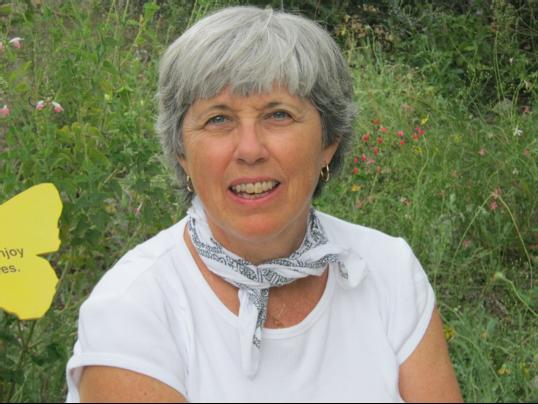
Charlene Langfur is an LGBTQ and green writer, an organic gardener living in the southern California desert, a Syracuse University Graduate Writing Fellowin poetry with many publications most recently including Poetry East (the Monet issue), The Hiram Poetry Review, Pensive, Vita Poetica, The Healing Muse.
Alexandra Benedict taught junior high English and history and has conducted classes and workshops about local history for adults. She has published prose and poetry in Gypsy Cab, Victorian Geneseo, Time of Singing (Winter 2026) and the website Lumine Verbi. She lives in Wisconsin.
Born on a farm in southeastern Illinois, Daniel Bourne has worked in a tree nursery/peony farm, a rare book library (at Indiana University), and in the English and Environmental Studies programs at The College of Wooster in NE Ohio. His books of poetry include The Household Gods, Where No One Spoke the Language, and Talking Back to the Exterminator. His poems have also appeared In Tipton Poetry Journal, Ploughshares, American Poetry Review, Boulevard, Guernica, Conduit, Salmagundi, Indiana Review, Crab Orchard Review, Rhino, Shenandoah, Field, Michigan Quarterly Review, Plume, Yale Review, and others. Since 1980 Bourne has also lived in Poland several times, including in 1985-87 on a Fulbright for the translation of younger Polish poets, and most recently in 2024. A collection of his translations of Polish poet Bronisław Maj, The Extinction of the Holy City, appeared in 2024, and his translations of Maj and other Polish writers have appeared in Prairie Schooner, Field, Colorado Review, Partisan Review, Plume, Salmagundi, and Virginia Quarterly Review.
Dan Carpenter has published poetry and fiction in Illuminations, Pearl, Poetry East, Southern Indiana Review, Flying Island, The Laurel Review, Sycamore Review, Prism International, Fiction, Hopewell Review, Tipton Poetry Journal and other journals. Dan has published two books of poems, The Art He’d Sell for Love (Cherry Grove, 2015) and More Than I Could See (Restoration, 2009); and two books of nonfiction.
Addison Curran is an aspiring poet who lives in Georgia. She recently won an honorable mention for her poem for her annual literary competition. Addison has been inspired by loss, grief and perseverance, and writes mainly about themes of nature, philosophy and spirituality.
Holly Day’s writing has recently appeared in The NoSleep podcast, Talking River, and New Plains Review, and her published books include Music Theory for Dummies and Music Composition for Dummies. She lives in Minneapolis and currently teaches classes at The Loft Literary Center in Minnesota, Hugo House in Washington, and the Indiana Writers Center.
Elaine Dillof is the author of Anna and Solomon, a book about her grandparents’ emigration to the US, published by Farrar, Straus and Giroux. Her poems have appeared in a number of literary journals. Elaine lives in Mystic, Connecticut.
A nine time Pushcart nominee in both prose and poetry, Liz Dolan has published two poetry collections. Her ten grandchildren pepper her life. Liz lives in Rehobeth Beach, Delaware.
Arvilla Fee, from Dayton, Ohio, has been published in numerous presses, and her poetry books, The Human Side, This is Life, and Mosaic: A Million Little Pieces are available on Amazon. Arvilla’s life advice: Never travel without snacks. To learn more, visit her website and her new magazine: https://soulpoetry7.com/
Linda Meg Frith is a retired Social Worker and long-time member of Green River Writers. She has published poetry in River and South, eMerge, Rainy Weather Days, Amethyst Review, Eclectica Magazine and other literary journals. Linda Meg currently lives with her Chihuahua, Jasmine, in Louisville, Kentucky.
Carol Lynn Stevenson Grellas lives in the Sierra Foothills of California and recently graduated from Vermont College of Fine Arts MFA in writing program, where she received a Merit Scholarship. She is a twelve-time Pushcart nominee and a seventime Best of the Net nominee. She has served as Editor-in-Chief for The Orchards Poetry Journal, and according to family lore, she is a direct descendant of Robert Louis Stevenson. www.clgrellaspoetry.com
Dan Hawkins lives in Charleston, South Carolina. His poems have appeared or are forthcoming in 45th Parallel, Pictura Journal, The Yearbook of the Poetry Society of South Carolina and other places.
Justin Hollis has an MFA from Hofstra University and currently teaches language and literature at Palm Beach State College. His work has appeared previously in the Querencia Press Quarterly Anthology, Action, Spectacle, Cholla Needles, The Orchards Poetry Journal, Eunoia Review, GAS: Poetry, Art and Music, and The Chiron Review. His debut collection, Ferrying the Stars, is published by Half Inch Press.
Zebulon Huset is a public high school teacher, writer and photographer living in Texas. He won the Gulf Stream 2020 Summer Poetry Contest and his writing has appeared in Best New Poets, Meridian, Louisville Review, Smartish Pace, The Southern Review, Fence and others. He is an advocate of writing exercises and prompts and edits the prompt-based Sparked Literary Magazine.
What s there left to say about Marc Janssen, other than he should eat more vegetables? Maybe his verse can be found scattered around the world in places like Pinyon, Orbis, Pure Slush, Cirque Journal, Two Thirds North and Poetry Salzburg also in his book November Reconsidered. Janssen coordinates the Salem Poetry Project- a weekly reading, the occasionally occurring Salem Poetry Festival and keeps getting nominated for Oregon Poet Laurate. For more information visit, marcjanssenpoet.com.
Paul Julian is a writer and attorney based in Colorado Springs, Colorado. His poems have appeared in Inverted Syntax, Pinyon, and other journals.
Rachel Kelly, at the time they wrote this piece, lived and toiled in Southern Indiana. Perhaps they still do.
Born in Worcester, Massachusetts, Mark LaMonda is an artist and writer who currently lives in Santa Clarita California. His work has appeared in Tough Poets Review, SoFloPoJo, Autumn Sky, January House and is forthcoming in Shadow and Sax, Still Here and Blue Unicorn.
Charlene Langfur is an LGBTQ and green writer, an organic gardener living in the southern California desert, a Syracuse University Graduate Writing Fellowin poetry with many publications most recently including Poetry East (the Monet issue), The Hiram Poetry Review, Pensive, Vita Poetica, The Healing Muse
Mohammad Mansournejad is a poet and writer from Bushehr, Iran. He began writing poetry at the age of twenty-one. His work often explores the darker dimensions of human existence, delving into themes of isolation, mortality, and melancholy. His poems have been published in The Brussels Review, Haiku Canada Review, Lotuseater Magazine, Password: The Journal of Very Short Poetry, and others.
Lorne Mook teaches at Taylor University in Upland, Indiana. Some of his poems are gathered in his book Travelers without Maps. His translations of Rainer Maria Rilke's poems have appeared in journals and in his book Dream-Crowned, the first English translation of a collection that Rilke published in 1897 when he was 21.
George Moore’s most recent collections are Children’s Drawings of the Universe with Salmon Poetry (2015) and Saint Agnes Outside the Walls with Future Cycle Press (2016). He has published with New York Quarterly, Orbis, and Queen's Quarterly, and has work in Best Canadian Poetry 2025 (Biblioasis). He lives on the south shore of Nova Scotia.
J. Alan Nelson, a writer, journalist, lawyer and actor, has been nominated for a Pushcart Prize, Best of Net and Best Microfiction. He played the lead in the viral video “Does This Cake Make Me Look Gay,” the verbose “Silent Al” in HBO’s Emmy-winning SXSWestworld,” and narrated New York Times videos on AIDS programs in Africa. He lives in Waco, Texas.
Okoli Stephen Nonso (he/him) is a Nigerian poet and graduate student at the University of Alabama at Birmingham. His works have appeared or are forthcoming in Indianapolis Review, Ellipsis Literature & Art, Good River Review, Hawaii Pacific Review, Feral Journal, Adelaide Literary Magazine, Brittle Paper, The Bookends Review, Olney Magazine, Progenitor Art and Literary Journal, Ofi Press, and elsewhere. A co-winner of the 2026 Collins Family Endowed Scholarship and a recipient of the 2025 UAB English Department Achievement Scholarship, he was namedThe Muse Journal’s Best Literary Artist of the Year in 2024. His poems have also earned recognition as first runner-up in the Fresh Voice Foundation Poetry Contest and third prize in the Akuko Magazine Inaugural Poetry Prize (2021). He is a Longleaf Scholar. His poetry collection, The Road Is a Body, is forthcoming this fall from Felis Catus Press. In 2021, he was featured in Who’s Who of Emerging Writers by Sweetycat Press. Find him on X @OkoliStephen7.
Gregory O'Neill, from Seattle, writes reflective, conversational poetry about the canny, uncanny, the seemingly sublime, the obscure within the mundane, and the emotional physics of absence. Writing appears or is forthcoming in, The Laurel Review, The Mantis Literary Journal, Jackdaw Press, Route 7, Relief Quarterly, Eunoia, Cathexis, Larina’s Lit, Litbop, Bristol Noir, Last Leaves, Zoetic, Gabby & Min’s, Closed Eye Open, TrashLight and others.
Tia Paul-Louis is a fiction writer and poet from Florida. She began experimenting with songwriting at age 11 and later felt a deeper connection to poetry. Her themes portray family life, gender role controversies, mental health, and spiritual values. She admires the freedom of expression in most forms of art such as music, acting, and painting.
Christl Rikka Perkins is a bi-racial (Black/Japanese) writer living in Oakland, California. While living in China, she was an English teacher and freelance writer for English Language Publications. She was an inaugural fellow of the Writers Grotto-SF’s Rooted & Written and is a member of the Writers Grotto. Her short stories have been published in American Fiction 17, God’s Cruel Joke, and Half and One (online). Christl has been a longtime member and active participant in WriteNow!-SF Writers Workshop and has poetry published in their anthology, Essential Truths: The Bay Area in Color.
A retired teacher of English and photography, Roger Pfingston is the recipient of a poetry fellowship from the National Endowment for the Arts and two PEN Syndicated Fiction Awards. He is the author of Something Iridescent, a collection of poetry and fiction, as well as five chapbooks, the most recent being What’s Given, published by Kattywompus Press. New poems have appeared in recent issues of I-70 Review, Innisfree Poetry Journal, Salt, The Flying Island, and Valparaiso Poetry Review. Roger lives in Bloomington, Indiana.
David Pitcher is an Indiana poet and shelter worker who has been featured on NPR’s The Poets Weave. His poetry has appeared in LETTERS, The Pedestal Magazine, Confluence and elsewhere.
Vladimir Proskurov was born in 1962 in Vladivostok. He holds a higher military education degree and is a reserve officer. Following his discharge from military service, he worked as a professional journalist. Since 1992, he has lived and worked in Kyiv, Ukraine. His Russian-language literary works have been published since 2012 in numerous regional and international periodicals, including The Factory of Literature, Russian Life, Day of Literature, Moloko, Topos, Velikoross, Litkultprivet, Golden Fleece, Autograph, Camerton, Nevsky Almanac, Siberian Parnassus, Journal World, Masterskaya, Seven Arts, Independent Art, Seagull, Boston Review, and Slovo/Word. His poetry and prose have also been featured in the Periscope magazine anthologies (Hypnosis, Birch Aesthetics), as well as in the collections Revival of the Cossacks and The Sacred War. He has also been published in the Emigrant Lyre (EL) editions and the Tsaritsyn almanac. Vladimir is a finalist of the "Emigrant Lyre" International Poetry Festivals and Competitions (2020–2021). Currently, he is working on his new book of poetry, A Ticket to War(Билет на войну). Written as a daily journal, the work has been ongoing from 2022 to 2026 and continues to this day; the author plans to complete it after the war, if he survives.
Timothy Robbins is from Indiana. He has a B.A. in French, an M.A. in applied linguistics from Indiana University and has been teaching English as a second language since 1991. He has been publishing poetry since 1980 and has seven collections of poetry to his name, the most recent being Sticks. He and his husband have been together since 1998. They live in Wisconsin.
Michal Rubin is an Israeli residing in South Carolina. In writing she wrestles with moral dilemmas imbedded in the Israeli-Palestinian conflict. She is the author of a chapbook, two manuscripts There are days that I am dead, and And the bones stay dry, and is the co-author with Basman Derawi of a book of poetic dialogue, Your stories look me in the eyes.
Mykyta Ryzhykh lives in Ukraine, has been nominated for the Pushcart Prize and has been published any times in the journals Dzvin, Dnipro, Bukovinian magazine, Polutona, Rechport, Topos, Articulation, Formaslov, Literature Factory, Literary Chernihiv, Tipton Poetry Journal, Stone Poetry Journal, Divot journal, dyst journal, Superpresent Magazine, Allegro Poetry Magazine, Alternate Route, Better Than Starbucks Poetry & Fiction Journal, Littoral Press, Book of Matches, on the portals Litсenter, Ice Floe Press and Soloneba, in the Ukrainian literary newspaper.
Claire Scott is an award winning poet in Oakland, California who has received multiple Pushcart Prize nominations. Her work has been accepted by the Atlanta Review, Bellevue Literary Review, New Ohio Review, Enizagam and Healing Muse among others. Claire is the author of Waiting to be Called and Until I Couldn’t. She is the co-author of Unfolding in Light: A Sisters’ Journey in Photography and Poetry.
Jeanine Stevens’ latest publications are Left Handed Hummingbird (Clare Songbirds Publishing, 2025) and Tea in the Nuns’ Library (Eyewear Publishing, UK.) Work has appeared in Chiron Review, Evansville Review, Rosebud, So it Goes: Journal of the Kurt Vonnegut Memorial Library, and Two Thirds North (Sweden). Jeanine is Professor Emerita at American River College in Sacramento, California.
Jim Tilley lives in New York State and has published four full-length collections of poetry and a novel with Red Hen Press. His short memoir, The Elegant Solution, was published as a Ploughshares Solo. Five of his poems have been nominated for a Pushcart Prize. His most recent poetry collection, Ripples in the Fabric of the Universe: New & Selected Poems, was published in June 2024. His forthcoming collection, When Godot Arrived, will be published in 2026.
Born and raised in the United States, Barbara Geary Truan is a writer and editor who earned a graduate degree in international relations before moving to Switzerland where she married, raised a family, and worked for humanitarian and philanthropic initiatives. A longstanding member of the Geneva Writers’ Group, she recently received an MFA from Seattle Pacific University. Her work has appeared in Poets Reading the News, Ekstasis Magazine, The Persimmon Tree, The Closed Eye Open, Offshoots, and Spiritus.
Richard Weaver volunteers with the Maryland Book Bank, CityLit, and is the writerin-residence at the James Joyce Pub. Other pubs include: Loch Raven R, Dead Mule, Shoreline of infinity, Little Patuxent R, Rat’s Ass Review, & Mad Swirl. He’s the author of The Stars Undone (Duende Press, 1992). Recently, his 240th prose poem was published under a checker-board cone of silence.
Rhea Xie is a writer based in Pennsylvania. Her work has received national Gold recognition from the Scholastic Art & Writing Awards and appears or is forthcoming in The Penn Review, Eunoia Review, and Gone Lawn Journal. Her work is also included in DePaul’s Blue Book.
Barry Harris is editor of the Tipton Poetry Journal and several anthologies by Brick Street Poetry. He has published one poetry collection, Something At The Center.
Married and father of two grown sons, Barry lives in Brownsburg, Indiana and is retired from Eli Lilly and Company.
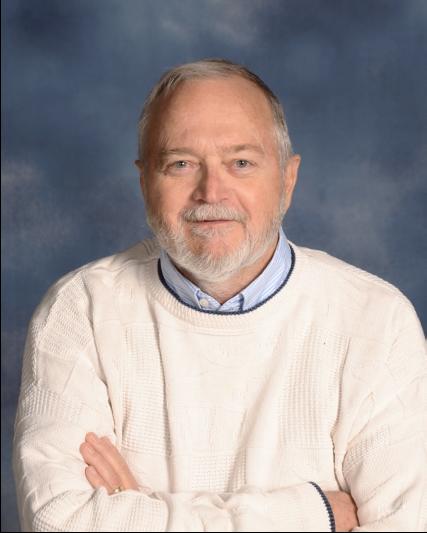
His poetry has appeared in Kentucky Review, Valparaiso Poetry Review, Grey Sparrow, Silk Road Review, Saint Ann‘s Review, North Dakota Quarterly, Eunoia Review, Amethyst Review, Polk Street Review, Boston Literary Magazine, Night Train, Silver Birch Press, Flying Island, Awaken Consciousness, Writers’ Bloc, Red-Headed Stepchild and Laureate: The Literary Journal of Arts for Lawrence. One of his poems was on display at the National Museum of Sport and another is painted on a barn in Boone County, Indiana as part of Brick Street Poetry‘s Word Hunger public art project. His poems are also included in these anthologies: From the Edge of the Prairie; Motif 3: All the Livelong Day; and Twin Muses: Art and Poetry.
He graduated a long time ago with a major in English from Ball State University.