Liszt Metanoia

IN COLLABORATION WITH TIPPET RISE ART CENTER
Yulianna Avdeeva



IN COLLABORATION WITH TIPPET RISE ART CENTER
Franz Liszt (1811-1886)
Piano Sonata in B Minor, S. 178
1 I. Lento assai - Allegro energico 2 II. Grandioso - Recitativo 3 III. Andante sostenuto
IV. Allegro energico - Andante sostenuto - Lento assai 5 La lugubre gondola II, S. 200/2
Bagatelle sans tonalité, S. 216a
Nuages gris, S. 199
Csárdás macabre, S. 224
R.W. - Venezia, S. 201
Hungarian Rhapsody No. 17, S. 244/17
Unstern! – Sinistre, S. 208 2 Légendes, S. 175
No. 2, St François de Paule: Marchant sur les flots
Total playing time: Yulianna Avdeeva, piano
This album is a profound exploration of Franz Liszt’s transformative journey from virtuoso to visionary. Liszt’s groundbreaking late works, a testament to his evolution into a musical philosopher, opened the door for the music of the 20th century. The late pieces are characterized by a radical departure from traditional musical language and form to a bold experimentation with atonality and progressive harmonies. Eschewing conventional melodies, Liszt employs various scales and dissonant chords — including diminished or augmented triads — which results in an innovative and daring musical language. The forms are rather simple, yet the musical ideas suggest profound complexity.
Liszt’s late compositions are brief expressions on what it means to be human, often including the darker side of the soul. His minimalistic approach can be considered a precursor to the revolutionary works of Bartók, Scriabin, Debussy, Ravel, and other composers. Liszt’s contemporaries were initially resistant to these audacious new works; ever the visionary, he faced criticism with unwavering confidence, knowing that appreciation could wait. Many of these pieces, published in 1927 — long after Liszt’s death — have taken their rightful place as an inspiration for innovation.
the meaning of life and death, light and darkness, God and the Devil. More than a musical genius, Liszt emerged as a beacon of generosity and humanity. Thanks to his advocacy for fellow composers — he included great masters like Bach, Schubert, Beethoven, Mendelssohn, Chopin and many others in his concerts — audiences learned about them.
Church in Rome. This marked a profound transformation from a star pianist to a humble Abbé. His later years were defined by a focus on teaching and composing, a stark departure from his flamboyant earlier life.
By delving into this music, I discovered a philosophical depth that mirrored the transformation of Liszt’s own life. This journey has allowed me to reevaluate his earlier works, recognizing that the introspection of his late pieces also existed in his earlier compositions, two of which — Légende No. 2 and the Sonata in B Minor — bookend the late works in this album.
For me, Liszt’s music has always been more than just virtuosic; his compositions present an existential inquiry — a poignant exploration of our deepest human feelings, posing questions that resonate with the very essence of our existence, such as
Liszt’s virtuosity wasn’t merely a display of technical prowess; it was a means to make music accessible to those who lacked the luxury of an orchestra or opera house nearby. Through his transcriptions, he approximated the experience of symphonies and operas, bringing the music of his time to the people. As a dedicated teacher, he nurtured remarkable pianists, creating a lineage that extends through generations and still endures.
I am excited to take you on a musical journey, sharing a unique perspective and unveiling the core of Liszt’s artistic evolution. This exploration offers an illuminating encounter with the essence of Liszt — a tribute to the enduring power of his music and the transformative journey of a maestro who dared to follow his inner voice.
Liszt’s life took a radical turn in 1865 when he embraced his Catholic faith and received the four Minor Orders of the Catholic
The extraordinary Sonata in B Minor transcends time and defies convention.
Composed between 1851 and 1853, it embodies the complex interplay of light and darkness, belief and despair. The piece symbolizes Liszt’s response to Schumann’s dedication to him of his own Fantasie. However, it took Liszt nearly 15 years to
summon the confidence to create a work he felt worthy of dedicating to Schumann. The initial reception of the sonata was not very enthusiastic, as its innovative structure, comprising a single movement, challenged the musical norms of the time.
Within an extended single movement, Liszt weaves a tapestry of contrasting themes that mirror the ambiguity of human experience. The descent of the scale into the low register sets a somber tone in the opening, leading to an impassioned outcry and the emergence of the main theme, a desperate recitative that speaks from the depths of the soul. Amid the darkness, a “Grandioso” second theme arises — a symbol of unwavering belief and a poignant reminder that resilience can triumph over adversity. The sublime third theme, with a pure and luminous character, unfolds as one of the most beautiful melodies ever composed.
The development revolves around these three contrasting themes, interwoven with a chorale in the middle section — the spiritual core of the composition. Through the evocative chorale, Liszt paints a profound portrayal of the soul’s journey, a goal that is pursued and ultimately achieved despite the challenges encountered throughout the sonata. As Liszt navigates a path fraught with dark forces, he ultimately arrives at a place of resolution.
The Sonata in B Minor stands as the pinnacle of Liszt’s artistic expression and philosophical depth, a harbinger of the works he would create in later years. It is one of the great masterpieces for piano — a timeless treasure that invites us and future generations to delve into its rich layers, discovering and admiring all its brilliance.
Yulianna Avdeeva

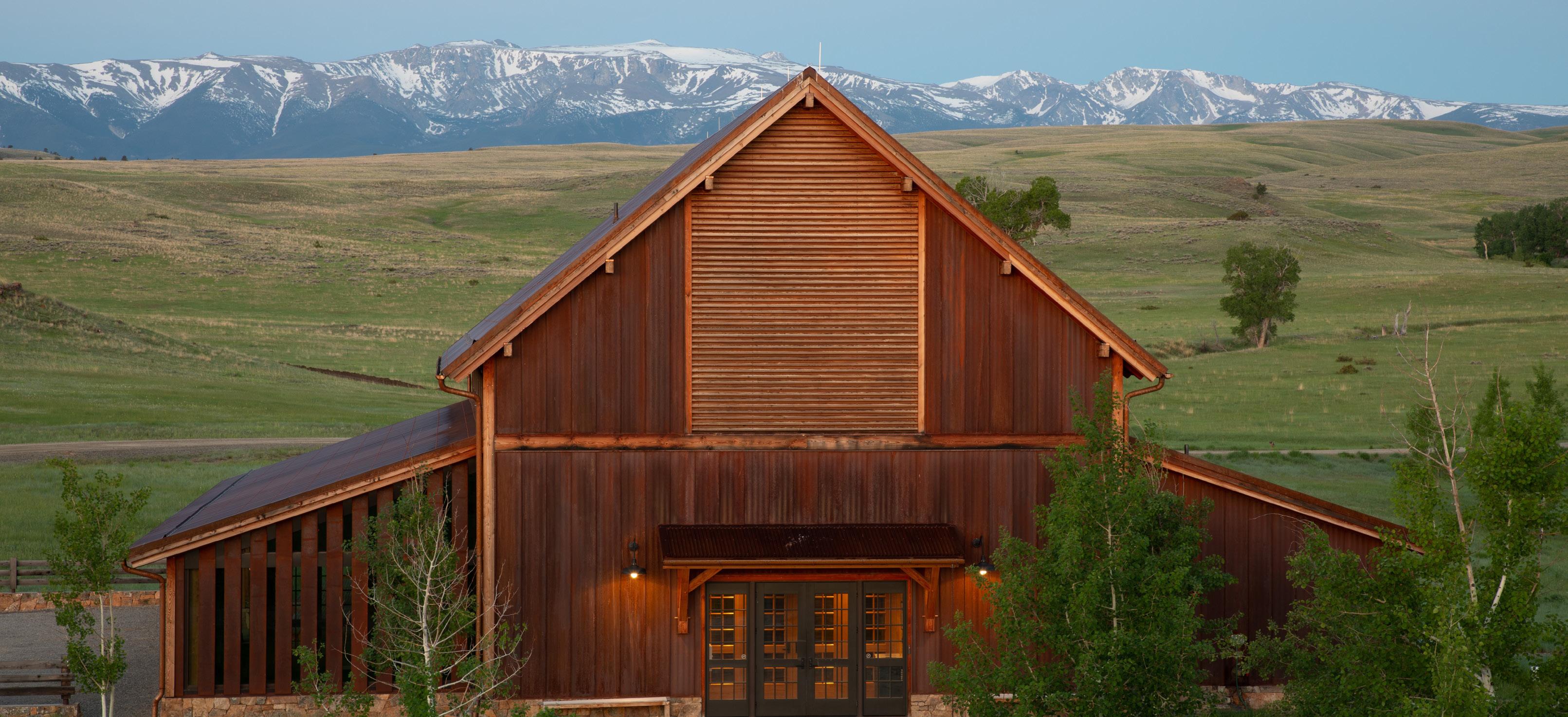
Tippet Rise Art Center is located in Fishtail, Montana, against the backdrop of the Beartooth Mountains, roughly midway between Billings and Bozeman and just north of Yellowstone National Park. Set on a 12,500-acre working sheep and cattle ranch, Tippet Rise presents performances by internationally acclaimed musicians during its annual summer concert season and through films and high-resolution recordings. From June to October, visitors can experience large-scale outdoor sculptures installed throughout the landscape by some of the world’s foremost artists and architects. Tippet Rise is anchored in the belief that art, music, architecture, and nature are intrinsic to the human experience, each making the others more powerful.

PRODUCTION TEAM
Executive producers Tippet Rise Art Center & Yulianna Avdeeva
Support Tippet Rise Art Center | Recording producer, Editing & Mixing Bernhard Güttler
Recording engineer Monte Nickles, assisted by Jim Ruberto
Piano Technician Mike Toia | Piano Steinway CD-18
ARTWORK
Liner notes Yulianna Avdeeva | Photography Lisa-Marie Mazzucco
Cover design Marjolein Coenrady (PENTATONE)
Booklet coordination & design Karolina Szymanik (PENTATONE)
This album was recorded at Tippet Rise Art Center, Fishtail, Montana, in February 2024.
The Steinway CD-18 (“CD” for “ConcertDepartment”) is an extraordinary instrument with a story to
match: This was Vladimir Horowitz’s personal piano and it is the piano Eugene Istomin played, with the Philadelphia Orchestra under Eugene Ormandy, for Columbia’s 1956 recording of Sergei Rachmaninoff’s
Piano Concerto No. 2 in C Minor, Op. 18.

PENTATONE TEAM
Managing Director Sean Hickey | Label Director Silvia Pietrosanti | A&R Alice Lombardo
Product Management Ana Milovanović | Press Allie Summers Distribution Camilla
Sit back and enjoy