Evolving Research Guides Quality Care Are Over-the-Counter Hearing Devices Useful for Tinnitus? ATA Unveils the Kent Taylor Texas Roadhouse Research Grant Are Research-Based Counseling Therapies the Same? TINNITUSTODAY To Promote Relief, Help Prevent, and Find Cures for Tinnitus Vol. 47, No. 3, Winter 2022 A publication of the
Join the Jack Vernon Legacy Society

Jack Vernon, PhD and leading tinnitus researcher, was a founding member of the American Tinnitus Association who dedicated his career to helping people with tinnitus. Jack’s goal was to provide meaningful relief from the condition while cultivating a research community that could advance treatments and eventually find cures.
Thanks to his leadership and vision, we have a far better understanding of tinnitus, its causes, and ways to reduce its negative impact on patients. Most importantly, today, we have an active community of researchers carrying on his mission to eliminate tinnitus.
The ATA invites you to continue Jack’s mission to fund innovative research to put an end to tinnitus. How can you contribute?
ATA in your trust or estate
ATA to create a Tribute Page in memory of a loved one
Convert stock and/or real estate into a unitrust
to ATA in lieu of flowers in memory of a loved one
For more information about adding the ATA as a beneficiary or ways to reduce your taxes through charitable contributions, please contact Torryn Brazell, ATA’s Chief Executive Officer, via email at tinnitus@ata.org.
The ATA thrives through the dedication of a vast number of people who make a difference every day.
Monthly or annual
contributions
Ask
Gifts
Gifts
financial
Name
of stock
of real estate
Deferred gift annuities
Donations
SCIENCE & RESEARCH NEWS 14 | Advancing ResearchBased Apps for Individualized Tinnitus Treatment 16 | ATA Awards Inaugural Kent Taylor Texas Roadhouse Research Grant 24 | What’s the Risk of Tinnitus as a Side Effect of Covid-19 Vaccinations? SPECIAL FEATURES 4| Are OTC Hearing Devices Suitable for Adults With Tinnitus? 26| Pawel Jastreboff Paved the Way to Rewiring the Brain to Disengage From Tinnitus 30| Cognitive Behavioral Therapy Versus Tinnitus Retraining Therapy: Similarities and Differences 43 | What Can Positive Psychology Contribute to Tinnitus and Hyperacusis? PERSONAL STORIES 10| Tinnitus May Be Toxic but It’s Possible to Make the Relationship Work 20| Life Beyond Loss Max Taylor Keeps a Promise 37| The Alarm That Sparked Tinnitus and a Marital Crisis Table of Contents Vol. 47, No. 3, Winter 2022 TINNITUS TOOLS & RESOURCES 8 | Wondering About Hearing Loss? There’s an App for That 12| Tinnitus Q&A Sound Therapy Is More Than One Method, One Device, and Select Sounds 40 | Practical Steps to Support Your Loved One With Tinnitus 46 | This Is Your Brain on Noise 48 | Tinnitus Support Groups 50 | Spotlight on Patient Providers ATA NEWS 17| Forging Ahead While Remembering Kent Taylor 36| Remembering Michael Haar (1965–2016) and Raising Tinnitus Awareness
MBA Chair, Board of Directors
Targeting the Best Research for Long-Term Gain
When I joined the ATA Board of Directors, my goal was to advocate for increased research for cures because I want an end to tinnitus in my lifetime. This seemed like a straightforward, attainable objective, particularly since the ATA has been involved in funding research since the 1980s. How much more needs to be done? Well, it turns out a lot.
Today, my perspective about cures and treatments is informed by the potential as well as the obstacles, which include lack of agreement on what tinnitus is, unanswered questions about underlying mechanisms, unclear subtypes, inadequate federal funding, and abysmal awareness among the public, including those heading agencies and institutions, that tinnitus can be a debilitating condition. “A little ringing? So what?” Isn’t that what many of us thought until we developed chronic tinnitus?
This year, the ATA Board of Directors opted to fund only one application based on the recommendation of our Scientific Advisory Committee. Why? Because it was the best application with the greatest potential to advance scientific understanding of tinnitus. The other applications, which all had merit, didn’t provide a potential pathway forward to cures and improved treatments.
Was I disappointed that we couldn’t fund more? Absolutely, but as someone with a business background, the decision made sense. We have limited resources, so it’s imperative that we back only scientifically sound applications that hold potential for good returns, that is, progress toward cures and silencing tinnitus. To incentivize researchers, we’re moving to year-round grant funding and identifying where our research money can best be invested. And though the obstacles to cures are clear in my mind, so is my hope and expectation that research for a cure will happen in my lifetime. What does that depend on? Researchers, increased funding, and you. If you, too, want a cure for tinnitus, please give to the ATA’s Innovative Grants Program because expectation is best met by action.
MANAGING
Joy Onozuka
EDITOR
American Tinnitus Association
PUBLISHER
Torryn P. Brazell, CAE, CFRE
American Tinnitus Association
PODCAST
PRODUCER AND WRITER
John A. Coverstone, AuD
Sentient Healthcare, Inc.
EDITOR-AT-LARGE
James A. Henry, PhD (retired)
National Center for Rehabilitative Auditory Research (NCRAR)
U.S. Department of Veterans Affairs
EDITORIAL ADVISORY PANEL
Marc Fagelson, PhD
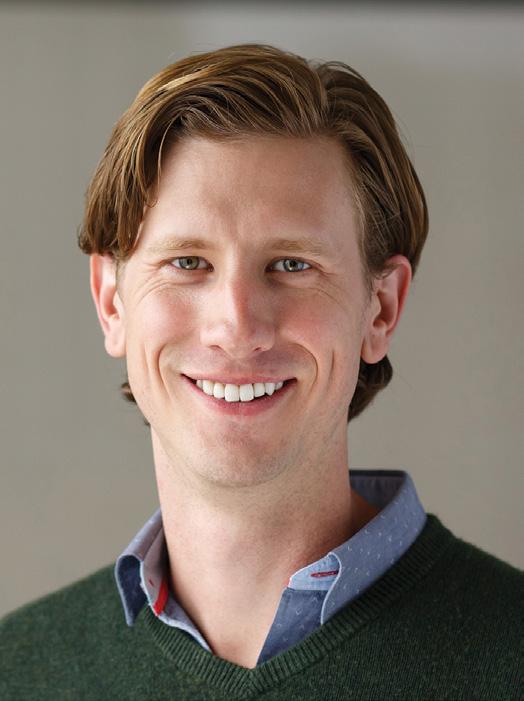
East Tennessee State University Johnson City, TN USA
Gail M. Whitelaw, PhD Department of Speech and Hearing Science The Ohio State University
DIGITAL DESIGN & PRODUCTION TEAM
JML Design, LLC
ADVERTISING
Tinnitus Today is the official publication of the American Tinnitus Association. It is published three times per year in April, August, and December and mailed to members and donors. The digital version is available online at www.ata.org. To grow your company’s brand reach, contact tinnitus@ata.org
ATA HEADQUARTERS
American Tinnitus Association 8300 Boone Blvd., Suite 500 Vienna, VA 22182 USA T: 800.634.8978 (Toll Free) www.ata.org
TO GIVE TO THE ATA™
American Tinnitus Association c/o Truist Bank PO Box 424049 Washington, D.C. 20042-4049
The American Tinnitus Association is a nonprofit corporation, tax exempt under 501(c)(3) of the Internal Revenue Code, engaged in educational, charitable, and scientific activities. Tinnitus Today magazine is © copyrighted by the American Tinnitus Association.
ATA™ is a registered trademark of the American Tinnitus Association.
FROM THE BOARD CHAIR
David Hadley,
2 TINNITUS TODAY SUMMER 2022 www.ATA.org
ATA BOARD OF DIRECTORS
David Hadley, MBA, San Francisco–Chair
Gordon Mountford, South Pasadena, CA–Vice Chair
Ron Zagel, Grand Rapids, MI–Treasurer

Robert Travis Scott, Abingdon, VA–
Assistant Treasurer
Stelios Dokianakis, AuD, CH−TM, Holland, MI–Secretary
Jeff Bingham, San Diego, CA
Shahrzad Cohen, AuD, CH−TM, Sherman Oaks, CA
Sara Downs, AuD, Duluth, MN
Phillip Gander, PhD, Iowa City, IA
Fatima Husain, PhD, Champaign, IL
Brian Lofman, PhD, Salinas, CA
John Minnebo, MBA, Philadelphia, PA
Julie Prutsman, AuD, Highlands Ranch, CO
Dan Torpey, CPA, Irving, TX
Robert M. Traynor, EdD, MBA, CH−TM, Fort Collins, CO
Melissa Wikoff, AuD, CH−TM, Atlanta, GA
Jinsheng Zhang, PhD, Detroit, MI
Torryn P. Brazell, Vienna, VA–CEO
HONORARY DIRECTOR
William Shatner, Los Angeles, CA
ATA SCIENTIFIC ADVISORY COMMITTEE
Fatima T. Husain, PhD–Chair University of Illinois, Urbana-Champaign Champaign, IL USA
Carey D. Balaban, PhD
University of Pittsburgh, Pittsburgh, PA USA
Christopher R. Cederroth, PhD Karolinska Institute, Geneva, Switzerland
Marc Fagelson, PhD
East Tennessee State University Johnson City, TN USA
Avril Holt, PhD
Wayne State University, Detroit, MI
Jay Piccirillo, MD
Washington University, St. Louis, MO
Tricia Scaglione, AuD
University of Miami, Plantation, FL USA
Roland Schaette, PhD
UCL Ear Institute, London, England
Grant D. Searchfield, PhD
University of Auckland, Auckland, New Zealand
LaGuinn Sherlock, AuD, CH–TM
Walter Reed National Medical Center Bethesda, MD
Sarah Theodoroff, PhD
VA Portland Health Care System Portland, OR
Richard Tyler, PhD
University of Iowa, Iowa City, IA USA
A Hearing Device Revolution Is Underway
Countless adults living with hearing loss and tinnitus in the U.S. have been shut out of the prescription hearing aid market because of cost. For some, that obstacle to access disappeared when over-the-counter hearing aids hit store shelves this fall. For those with more complex hearing needs, you may feel frustrated that OTC devices aren’t an option. Nonetheless, for adults with tinnitus—90 percent of whom have some degree of measurable hearing loss—this market expansion will eventually create options that should benefit us all because that is what market competition is designed to do.
Within weeks of the OTC hearing aid market opening, we saw the unveiling of alliances between consumer electronics companies and hearing aid manufacturers hoping to capitalize on this new opportunity to reach consumers. This dynamic market change will increase awareness of how hearing technology can improve the quality of life for anyone living with auditory issues, such as tinnitus and hearing loss. But will it result in more people wearing hearing aids to address hearing loss? That remains unclear.
It takes between seven and 10 years for a person with hearing loss to get hearing aids. Cost, denial of hearing loss, and the perceived stigma associated with aging and hearing loss are factors typically cited for this delay. In today’s world, however, we’re accustomed to seeing people wearing earbuds and other devices to communicate, so stigma or shame shouldn’t hold you back. But where do you begin to make sense of options so that you can make an informed decision? Right here—in this issue we delve into key points about OTC hearing aids, tinnitus, and hearing loss.
Do we have all the answers? Absolutely not, which is why we encourage you to work with an audiologist in your community to understand your hearing and tinnitus needs, which begins with an audiogram. An accurate hearing test and a discussion with a trained hearing healthcare professional will reveal whether an OTC device or a prescription hearing aid best meets your needs. The choice will be yours, and hopefully the options will be affordable.
Torryn P. Brazell, CAE, CFRE Publisher
The opinions expressed by contributors to Tinnitus Today are not necessarily those of the publisher or the American Tinnitus Association. This publication provides a variety of topics related to tinnitus for informational purposes only.
ATA’s publication of any advertisement in any kind of media does not, in any way or manner, constitute or imply ATA’s approval or endorsement of any advertised product or service. ATA does not favor or endorse any commercial product or service.
FROM THE PUBLISHER
www.ATA.org TINNITUS TODAY SUMMER 2022 3
Are Over-the-Counter Hearing Aids Suitable for Adults With Tinnitus?
By Gail
M. Whitelaw, PhD, Theodora Bowman, BS, Kelly Schroeder, BA, Kim Siegel, BA, Abigail Simon, BA, and Alison Reynolds, BA
Over-the-counter (OTC) hearing aids have been a hot topic in the news, on social media, and in consultations with audiologists and other healthcare providers since 2017 when Congress passed the Over-the-Counter Hearing Aid Act, which set the stage for the development of a new category of hearing aid devices that would be available directly to consumers without an audiological consultation. The legislation was partly informed by recent research that indicated hearing loss may contribute to cognitive decline, dementia risk, and social withdrawal.1 The Food and Drug Administration, which oversees hearing aids, was tasked with establishing rules to create this new category. It finished its work in 2021, paving the way for OTC devices,
which debuted on store shelves and online on October 17, 2022. It’s critical to clarify that OTC hearing aid options are aimed at adults 18 years or older with self-perceived mild to moderate hearing loss.
Today, consumers are exploring what is available and how exactly “self-fit” works. For individuals with tinnitus, there are considerations that haven’t been readily explained. This article
considers current information on OTC options, their benefits and limitations, and their potential role in the treatment and management of tinnitus. OTC devices were intended to create greater price competition, thereby providing options for adults shut out by higher-priced prescription hearing aids that are professionally fitted. A frequently cited statistic is that the average person with hearing loss waits between seven and 10 years before seeking help. That delay has been attributed to the insidious nature of hearing loss, which most often is gradual, the cost of prescription hearing aids, and the stigma associated with hearing loss and aging. It remains to be seen whether OTC devices will help break down hearing loss denial and stigma associated with hearing loss among consumers.
Prior to the release of OTC hearing aids, hearing aids were prescription devices available through licensed
4 TINNITUS TODAY WINTER 2022 www.ATA.org
SPECIAL FEATURE
audiologists, who are healthcare professionals trained to identify, assess, and manage disorders of hearing and balance, or through a licensed hearing aid dispenser trained in fitting hearing aids, which includes conducting audiograms (hearing tests).
Now that adults are no longer required to have an audiological evaluation or medical examination, it has been suggested that more people with hearing loss will purchase OTC hearing aids. These devices have been touted as being analogous to nonprescription reading glasses that are available in stores and are often thought of as a bridge to prescription glasses. And though it may be the case that OTC hearing aids will serve as a bridge for seeking more in-depth hearing care and/or prescription hearing aids, they are more complicated than nonprescription eyeglasses.
When a consumer purchases OTC hearing aids, the individual is responsible for fitting and adjusting the devices. These products generally have settings that can control volume (e.g., make the device louder or quieter) and pitch (e.g., the bass or treble sound). The consumer changes the settings using either an accessory that comes with the device or an app that can help guide the selffitting process. If a consumer needs help fitting it, the OTC hearing aid manufacturer may have a customer support line; however, manufacturers are not required to do so. For a fee, some audiologists may help fit OTC
devices in person or via telehealth services.2
For the adult with tinnitus who is experiencing distress, an OTC device has pros and cons. Many people who have sought medical help for their tinnitus have been told that “there is nothing that can be done” or “you’ll have to learn to live with it,” leaving an incorrect perception that there are no management tools or interventions to lessen tinnitus distress. Adults with tinnitus may welcome the opportunity to have a wider range of devices that may address their tinnitus distress and may see OTC hearing devices as part of a potential treatment plan. Indeed, prior to the release of OTC hearing aids, some people with tinnitus were using personal sound amplification products (PSAPs), or hearables, which are classified as consumer electronics and aren’t regulated by the FDA, to manage hearing loss and tinnitus.
Because tinnitus can be associated with an underlying medical condition, it is important to rule that out by seeing a physician and audiologist, depending on the evaluation. In some cases, tinnitus will clear up following an ear or sinus infection or removal of earwax. It may also be related to high blood pressure or hormonal changes. And there are countless other medical conditions that may be behind the onset of tinnitus.
If your tinnitus doesn’t have an underlying medical cause and is bothersome, you should see someone trained in tinnitus management to
explore ways to alleviate the distress. Approximately 90 percent of adults with tinnitus have some degree of hearing loss, which means a certain percentage will be eligible for OTC hearing aids. Why not skip the audiology office and go straight to a store to find cheaper self-fit devices?
It is generally difficult for individuals to estimate their degree of hearing loss, and hearing loss categories are generally arbitrary. We see this in audiology clinics every day. People with mild hearing loss may report significant communication issues and tinnitus distress, whereas people with severe hearing loss may perceive little functional communication deficit. Many people with tinnitus have noise-induced hearing loss, which should be addressed audiologically. There are also individuals with normal audiograms, that is, no apparent hearing loss, whose major complaint is tinnitus and/or sound tolerance issues. It is unclear how OTC devices can address these scenarios, which means the best advice is to have an audiologic evaluation prior to obtaining OTC hearing aids to ensure that they’re appropriate and to discuss the potential benefits and limitations. Additionally, evaluating loudness discomfort and a person’s ability to hear speech in noise should be done routinely when evaluating people with tinnitus because it can help direct management.
It is estimated that approximately 38 million adults have hearing loss and 10–15 percent of the population experiences tinnitus in the United States. There is a significant overlap between people who report hearing loss and those who report tinnitus.
www.ATA.org TINNITUS TODAY WINTER 2022 5
SPECIAL FEATURE
Decades of research and anecdotal evidence demonstrate that if people with hearing loss and tinnitus are properly fit with hearing aids, the amplification alone—a form of acoustic therapy—may reduce tinnitus perception among 70–90 percent of people.3,4 Hearing aids provide auditory stimulation that addresses the auditory deprivation inherent in hearing loss as described by the neurophysiologic model of tinnitus.5
To maximize hearing aid benefit and satisfaction, the definition of “well-fit” hearing aids should include verification measures, such as “real
ear” or “probe microphone” measures that match hearing aid performance to the hearing aid prescription that is based on a person’s hearing loss and personal ear acoustics.6 A primary advantage of a prescription hearing aid over OTC products is the ability to customize the fit to the listener’s need.
Another critical point for the adult with tinnitus is understanding that OTC hearing aids are currently not equipped with tinnitus masking or habituation features. Most prescription hearing aids have programs that can be
activated to address tinnitus perception that are based on research conducted by the manufacturer and/ or independently. These programs can provide a significant benefit in tinnitus relief and, again, can be adjusted by the audiologist to best meet the needs of the individual with tinnitus and hearing loss.
Although purchasing a self-fit device in a store or online may work for some people with tinnitus, for others, the limited ability to customize the OTC device may limit success.
Points to Consider About OTC Hearing Aids, Hearing Loss, and Tinnitus
3
Anyone with tinnitus should be evaluated by a physician to rule out underlying medical issues.
3
3
warranty for repairs. (Prescription hearing aids can be returned within a specified period.)
OTC hearing aids are intended to expand accessibility and affordability of hearing aids for adults 18 years or older with mild to moderate hearing loss. Prescription hearing aids have functions that may better meet a person’s needs than a cheaper product.
3
3
If you have asymmetrical hearing loss, an OTC hearing aid isn’t appropriate.
If you struggle with technology, OTC hearing devices may be challenging to use.
3
Adults with tinnitus should have their hearing evaluated by an audiologist to determine whether an OTC device is appropriate.
3
OTC devices are self-fit and lack tinnitus masking/habituation functions.
3 An audiologist may work with you to program an OTC device.
3 When considering an OTC hearing aid, confirm the return policy, the availability of customer support for fitting, and the
3
Audiograms (hearing tests) may be covered by Medicare and many insurance providers. If you’re unsure of the degree of your hearing loss, it’s a good idea to be evaluated by an audiologist.
Some insurance providers cover a portion of prescription hearing aids. They do not cover OTC hearing aids.
3
As a self-fit product, consumers should be careful in their evaluation of options and pricing because it is often the case that you get what you pay for; thus, it’s a buyerbeware marketplace.
6 TINNITUS TODAY WINTER 2022 www.ATA.org
SPECIAL FEATURE
Another key consideration is building a relationship with a healthcare provider who can support tinnitus care. One of the mantras in audiology is that it is not the product but the process that creates success in addressing patient concerns. Hearing loss is very individualized and complex, and when tinnitus is added to the equation, a partnership with an audiologist knowledgeable in tinnitus evaluation and treatment is likely to provide superior outcomes. Additionally, audiologists who work with people with tinnitus generally have a network of appropriate allied health partners to support patients in their tinnitus journey. For someone struggling with tinnitus, an OTC device may do little to decrease tinnitus distress and a sense of isolation. Skilled tinnitus-trained audiologists also can track patient progress through questionnaires, which guides treatment and modification of interventions.
All of this is to say that tinnitus is not simply a hearing loss issue for many people, and OTC hearing aids may not be the best option for someone bothered by tinnitus or someone unsure of their degree of hearing loss. Hearing and tinnitus needs are very individualized, and tinnitus is a complex condition that can be managed in a variety of ways, including the possible use of OTC hearing aid options, which will continue to expand in the months and years ahead. Because it’s a dynamic market and the needs of an individual with tinnitus can be varied, we hope you’ll partner with an audiologist who provides tinnitus services. Not all audiologists provide tinnitus assessment and management services therefore you may need to verify that the provider has knowledge, skill, and interest in working with
patients experiencing tinnitus and tinnitus distress. If in doubt, call or email the clinic to inquire about the experience of the audiologist. You are also encouraged to reach out to a local tinnitus support group, a counselor with training in CBT and tinnitus, or a local ENT/otologist for recommendations on audiologists in your area who work with tinnitus patients. Some audiologists have earned a voluntary credential in tinnitus, such as the Certificate in Tinnitus Management (CH-TM) from the American Board of Audiology, or the Advanced Study in Tinnitus and Hyperacusis Certificate Program from Salus University. Although these certificates cannot guarantee that an audiologist is competent in tinnitus management, they do indicate that the audiologist had sufficient interest in the topic to obtain a certificate. An audiologist who is proficient in providing tinnitus services can create a roadmap for treatment and management, as well as offer additional resources and valuable advice, including the suitability of using OTC hearing devices to address your hearing and tinnitus needs.
Gail M. Whitelaw, PhD, is a clinical associate professor and the Director of the Speech-LanguageHearing Clinic at The Ohio State University in Columbus, OH. Dr. Whitelaw is a clinical preceptor in the Doctor of Audiology (AuD) program and also provides direct clinical care. Her clinical interests are in tinnitus and related sound tolerance disorders, auditory processing disorders, traumatic brain injury, and professional leadership development. She is a Certificate Holder in Tinnitus Management (CH–TM) from the American Board of Audiology. Dr. Whitelaw is a frequently invited presenter on the topic of tinnitus management, particularly as it relates to children and teens.
The contributing student authors are all thirdyear Doctor of Audiology students at The Ohio State University in Columbus, OH.
Theodora Bowman’s clinical interests include pediatric and adult audiology, hearing aid and implantable device technology, tinnitus, and the impact of hearing loss on mental health.




Kelly Schroeder’s clinical interests include tinnitus, auditory rehabilitation, and vestibular audiology.
Kimberly Siegel’s interests include geriatrics and tinnitus.
Abigail Simon’s interests include tinnitus, counseling, and research.
Alison Reynolds’s clinical and research interests include tinnitus, hearing conservation, and musician hearing health.
1 M. E. Hughes, J. Nkyekyer, H. Innes-Brown, et al. (2018). Hearing aid use in older adults with postlingual sensorineural hearing loss: Protocol for a prospective cohort study. JMIR Research Protocols, 7(10), e174. http://doi.org/10.2196/resprot.9916
2 American Academy of Audiology. (2022). https:// www.audiology.org/advocacy/legislative-andregulatory-activities/federal-affairs/over-the-counterhearing-aids/
3 S. Kochkin, R. Tyler, & J. Born. (2011). MarketTrack VIII: The prevalence of tinnitus in the United States and the self-reported efficacy of various treatments. Hearing Review, 18(12), 10–27.
4 Y. Yokota, A. Yamashita, S. Koyama, K. Kitano, S. Otsuka, & T. Kitahara. (2020). Retrospective evaluation of secondary effects of hearing aids for tinnitus therapy in patients with hearing loss. Auris Narus Larynx, 47 (5), 763–768.
5 P. J. Jastreboff & M. M. Jastreboff. (2006). Tinnitus retraining therapy: A different view on tinnitus. ORL Journal for Oto-Rhino-Laryngology and Its Related Specialties, 68(1), 23–29. https://doi. org/10.1159/000090487
6 L. Del Bo & U. Amborsetti. (2007). Hearing aids for the treatment of tinnitus. Progress in Brain Research, 166, 341–345.
www.ATA.org TINNITUS TODAY WINTER 2022 7 SPECIAL FEATURE
Wondering About Hearing Loss?
There’s an App for That
By Karina C. De Sousa, PhD, and De Wet Swanepoel, PhD
Newer generation smartphones are often viewed as pocketsized personal computers, allowing extraordinary access to information and applications across a plethora of fields. With their ease of use and ready internet access, many people also use these devices to engage with healthcare information and services in the form of apps. Hearing loss prevalence in the United States is high, with estimates pointing to more than 25.4 million people over the age of 12 years.1 One problem is that people are often unaware of their hearing loss or delay seeking professional help for years. Nearly 85 percent of Americans own a smartphone, which means they can access several hearing self-test apps currently available to the public.2 This provides the opportunity to promote hearing care access that is right in the consumer’s hands. However, potential users need to consider a few things to weed out the good apps from the bad.
Two major mobile device platforms, Apple iOS and Google Android, provide several hearing self-test options that claim good accuracy. How does one choose from all available apps and which are the most accurate? Some tests offer a version of pure-tone audiometry typically performed in the clinic to establish hearing thresholds over a range of frequencies. However, the accuracy of this type of test relies on headphone calibration, which cannot be done
for consumer apps. There is also limited evidence of their accuracy.3 Generally, the hearing threshold tests with the best accuracy are on the iOS platform, where standardized Apple hardware and software provide more reliable results.4 Some examples of iOS-supported tone-based apps with evidence of their validation are uHear and Mimi 5–7 Both apps show high sensitivity (≥ 90 percent) for detecting hearing loss.6
Another type of test determines how well people can recognize speech in background noise, which is what persons with hearing loss typically struggle with. These tests do not require specific headphone calibration and are more accurate on a broader range of mobile devices. One test, in particular, is the digits-in-noise test that presents a series of random digits (e.g., 1-5-7) in background noise. This test has been validated extensively in the literature as an accurate self-driven test for hearing over different platforms, including landline telephones, web-based offerings, and smartphones.8 These tests also correlate well with pure tone tests conducted in the clinic and
have high overall accuracy (combined sensitivity and specificity up to 90 percent).9 Digits-in-noise tests are commercially available in the United States on Android and iOS platforms as hearScreenUSA. Furthermore, the World Health Organization released its version as hearWHO. These tests are also available on Web platforms.
Consumer hearing self-tests are a practical and affordable way for the public to access hearing screening. When the right apps are used, results can accurately inform users on the need to seek further help from an audiologist. For example, some apps allow tracking hearing status over time, provide integrated support resources, or can link interested users to their closest registered healthcare professionals. One limitation is that they are not typically intended for children, as self-tests for youngsters tend to provide more variable results. Another potential concern for health apps is privacy and data security. Personal data can end up in the hands of third and fourth parties when app makers share it with other organizations without your knowledge or agreement. As such, users should be cautious about which apps to use by inspecting the privacy policy and permissions, being aware of apps that contain extensive in-app advertising or in-app purchases, and avoiding apps with poor online reviews.
In conclusion, hearing self-test apps can be an excellent resource for early detection or confirmation of potential hearing loss. This can empower users to take appropriate next steps, which would include consulting an audiologist
8 TINNITUS TODAY WINTER 2022 www.ATA.org
TINNITUS TOOLS AND RESOURCES
and considering over-the-counter or prescription hearing aids if hearing loss is an issue. Not all available apps are appropriate, however, so users should be selective to ensure they obtain an accurate result.
Karina De Sousa, PhD, is a postdoctoral research fellow in audiology at the University of Pretoria, South Africa. Her work is focused on digital technology to improve access to audiological care. Part of this work was largely focused on investigating smartphone-based speech-innoise tests to screen for hearing loss.
De Wet Swanepoel, PhD, is a professor of audiology at the University of Pretoria, South Africa, and research fellow at the Ear Science Institute of Australia. His research capitalizes on
digital technologies to explore, develop, and evaluate innovative solutions and service-delivery models for access to ear and hearing care.
Dr. Swanepoel has published more than 250 peer-reviewed articles, books, and book chapters, and is funded by the NIH, UK Academy of Medical Sciences, and industry. He is editor-in-chief of the International Journal of Audiology, and founder of the digital health company called the hearX group, which includes Lexie Hearing.
1 A. M. Goman & F. R. Lin. (2016). Prevalence of hearing loss by severity in the United States. American Journal of Public Health, 106(10), 1820–1822.
2 Pew Research Center. (2021). Mobile fact sheet: Secondary mobile fact sheet. Retrieved from https:// www.pewresearch.org/internet/fact-sheet/mobile/
3 A. L. Irace, R. K. Sharma, N. S. Reed, & J. S. Golub. (2021). Smartphone‐based applications to detect hearing loss: A review of current technology. Journal of the American Geriatrics Society, 69(2), 307–316.
ADVERTISEMENT
4 D. W. Swanepoel, K. C. De Sousa, C. Smits, & D. R. Moore. (2019). Mobile applications to detect hearing impairment: Opportunities and challenges. Bulletin of the World Health Organization, 97(10), 717.
5 M. Lycke, T. Boterberg, E. Martens, et al. (2016). Implementation of uHear™—an iOS-based application to screen for hearing loss in older patients with cancer undergoing a comprehensive geriatric assessment. Journal of Geriatric Oncology, 7(2), 126–133.
6 L. V. Yesantharao, M. Donahue, A. Smith, H. Yan, & Y. Agrawal. (2022). Virtual audiometric testing using smartphone mobile applications to detect hearing loss. Laryngoscope Investigative Otolaryngology Advance online publication September 28, 2022. https://doi.org/10.1002/lio2.928
7 L. Davis, T. P. Hwa, S. J. Eliades, D. C. Bigelow, M. J. Ruckenstein, & J. A. Brant. (2022). Pure tone audiometry as assessed by a commercially-available mobile phone application compared to formal audiometry. American Journal of Otolaryngology, 43(5), 103552.
8 E. Van den Borre, S. Denys, A. van Wieringen, & J. Wouters. (2021). The digit triplet test: A scoping review. International Journal of Audiology, 60(12), 946–963. https://doi.org/10.1080/14992027.2021.190 2579
9 K. C. De Sousa, D. R. M. De Wet Swanepoel, H. C. Myburgh, & C. Smits. (2020). Improving sensitivity of the digits-in-noise test using antiphasic stimuli. Ear and Hearing, 41(2), 442.
www.ATA.org TINNITUS TODAY WINTER 2022 9 TINNITUS TOOLS AND RESOURCES
Tinnitus May Feel Toxic, but It’s Possible to Make the Relationship Work
By Sonia Frontera
I grew up believing that ringing in your ears was a good thing. Until I developed chronic daily migraines, that is.
What I used to associate with receiving good news or surprise greetings from a loved one turned into a disability that ended my 17-year career as a litigator and set in motion the healing journey of a lifetime. The lessons learned throughout this journey have filled me with resilience and the certainty that I can face any health challenge with courage and strength.
It started in October of 2012 with brain fog that prevented me from concentrating at work and made court appearances excruciating. Two months later, I was diagnosed with intractable daily migraines and placed on disability.
By summer, I had developed lupus, fatigue, temporomandibular joint (TMJ) disorder, and unbearable pressure in my ears accompanied by the unceasing sound of fighter jet planes.
Multiple surgeries failed to relieve the ear pressure and the tinnitus became my constant companion. With an exploding head and a broken spirit, I lacked the bandwidth to perform simple tasks like making myself breakfast or reading more than ten pages of a book. My body was collapsing, and I feared my life and my career were over.
After overcoming much hesitation about the side effects—and my fear of needles—I began migraine treatment with Botox. The headaches gradually became less frequent, bringing the average number of monthly migraines from 30 to three.
The tinnitus, thankfully, disappeared, and I enjoyed the silence for six years until I was hit with a three-month bout of daily migraines in the summer of 2019. This time, in addition to the tinnitus and the TMJ irritation, I experienced severe neck and wrist pain.
While receiving infusions for the migraines at the neurologist, I noticed that the injections were given at tight muscle knots (also known as trigger points) in my head, neck, and shoulders. These spots were so tense that the needles couldn’t go in and I’d feel the cool wetness of the Botox dripping on my scalp.
I had an aha moment and wondered if there was a connection between the tight knots I had all over my body and the chronic pain. My research suggested that I could be suffering from myofascial pain syndrome, a debilitating disease of the muscles and connective tissues that can be hard to detect and diagnose.
Having nothing to lose, I tried a treatment called myofascial release
(MFR) and felt lasting relief after only three sessions with a local therapist. She also taught me how to practice self-care and release the tight knots using inflatables and tennis balls. The TMJ, the headaches, the stiff back and neck, and the wrist pain were soon gone. The tinnitus was gone, too.
I felt lucky that, once again, I had found relief. But the return of the migraines and the tinnitus reminded me that coexisting with chronic conditions is a lifetime ordeal that I must face and conquer if and when they resurface or new ones appear.
Living with tinnitus and decades of chronic pain have taught me that health problems push us to embrace change in our lives. They teach us to confront illness and other obstacles with poise and grace. And, as crazy as it may sound, I am grateful for my health issues.
PERSONAL STORY 10 TINNITUS TODAY WINTER 2022 www.ATA.org
Myofascial pain syndrome (MPS) refers to pain and inflammation in the body’s connective tissues that cover muscles. It can present in a single muscle or in a muscle group. Trigger points are hyperirritable spots located in taut bands of skeletal muscle.

Injury to muscle fibers and repetitive motions can result in stress on a muscle that causes trigger points. Trigger points can also manifest as tension headaches, temporomandibular joint pain, tinnitus, decreased range of motion, and back pain. Treatment includes trigger-point injections, spray and stretch technique, physical therapy, and massage therapy.
My initial migraine disability forced me to make long overdue changes to my career. I left my government job as a litigator and opened my own law practice that handles collaborative divorces, which are less stressful and require no court appearances. I gave myself permission to pursue my first love, writing, to inspire others to overcome adversity and turn it into their superpower.
As a divorce lawyer, I am convinced that living with tinnitus and other chronic conditions is like co-parenting with a toxic ex-spouse. You may not like them, but you must learn to get along if you want to be happy. I am also certain that the strategies for dealing with chronic illness are similar to those for navigating toxic relationships. We can never be happy if we allow toxicity—in relationships and in our health—to ruin every area of our life.
We often relinquish our happiness to things out of our control, like
contentious visitation exchanges or the sound of jet engines roaring in our heads. But we can control our response to these unwanted circumstances. The sound of ringing in the ears can be maddening, but it only gets louder when we focus on it.
It is easy to become consumed by illness and entertain anxious and fearful thoughts to the point where we can’t feel pleasure anymore. However, the discomfort and the anxiety will never go away if we give them center stage.
The healing journey starts with loving the self—in sickness and in health. Instead of renouncing pleasure, I learned to shift my attention to the things I can control, like advocating for my health and pursuing joy.
Practicing self-compassion and letting go of the feelings of anger and self-pity supercharged my recovery, and self-care became my most powerful strategy. Rather than dreading the pain and fearing that life would never be the same, I chose to bask in those things I could still enjoy despite my illness.
I was strengthened by my support systems, buoyed by moments of laughter, car rides, and meals shared with friends. My spirituality soared as I traded physical activity for contemplation and experienced a peace that transcended despair. And when I felt well, I treasured stolen moments engaging in the hobbies I had given up because of my illness. In fact, every row of knitting perfectly executed served as a measure of my impending recovery.
Those feelings of joy and contentment empowered me to become my own medical detective and advocate. I tuned in to my body, listened to its messages, and identified the things that triggered relapses as well as those that provided relief.
Through research, trial and error, and deep faith in my body’s ability to heal, I discovered strategies that promoted feelings of well-being and brought many of my illnesses under control.
As a result, I am now living my best life in ways that did not seem possible at the onset of my illness and despite the occasional relapses. The self-knowledge acquired through this process primed me to make these relapses shorter and less overwhelming. And the roar of the tinnitus has receded into the background like the song of peepers in the spring.
I know aging may bring more health challenges. But I feel confident that I can handle them with courage—like I’ve been doing for decades now.
Sonia Frontera is a divorce lawyer, empowerment trainer, and author. Sonia happily coexists with multiple chronic health conditions while balancing an active law practice and a busy speaking career.

The author of Relationships Solutions: Effective Strategies to Heal Your Heart and Create the Happiness You Deserve, Sonia offers practical advice and hope to people whose lives have been upended by marital troubles, teaching them how to dissolve their obstacles to happiness and create fulfilling lives. The survivor of a toxic marriage, she has been a passionate advocate for victims of domestic violence for 28 years.
Sonia contributes regularly to Divorce Magazine and Divorced Moms and has been featured on NBC and in Woman’s World and the New York Times
She is a compulsive knitter who is happiest hanging out at her New Jersey country home with her husband, Peter, and their three streetdogs-turned-princesses.
Sonia enjoys hearing from readers. Learn more at www.soniafrontera.com
www.ATA.org TINNITUS TODAY WINTER 2022 11 PERSONAL STORY
Tinnitus Q&A Sound Therapy Is More Than One Method, One Device, and Select Sounds
Answered by Grant D. Searchfield, PhD
What Is Tinnitus Sound Therapy?
Researchers and clinicians define sound therapy in several ways, but put simply, it’s the use of sound to reduce tinnitus or its impact on quality of life. When used in combination with counseling, sound can be very effective, but benefits differ among people and how the sound is used. Sound therapy shouldn’t be thought of as a single method but rather as a range of methods, each of which may change tinnitus in different ways.
Is One Sound Better Than Another?
Currently, there is no one sound to “rule them all.” The goal of the sound
may be to provide relief from tinnitus through partial masking, or relaxation through the positive emotional response to the sound, or retraining to drive functional changes in the brain’s perceptual networks.
We also all have different reactions to sounds. Some sounds may be perceived as comforting by some people (e.g., rain), while in others sounds may induce fear as a result of strong negative memories (e.g., storm damage from flooding). Hissing noise sounds (“white noise”) were among the first used in tinnitus maskers. Although most people wouldn’t immediately think that this is a pleasant sound, it has been very effective in reducing tinnitus perception because it contains many frequencies of sound, is constant, and is easily ignored.
Sounds have been manipulated in many ways to try to increase their effectiveness, but most studies show similar effectiveness with unaltered sounds. We have recommended that to obtain control over tinnitus, constant noise-like sounds (including constant rain sounds) are effective in masking. For relaxation, sounds associated with positive, relaxing memories can be helpful (e.g., ocean waves).
To retrain the brain to focus on real-world sounds, dynamically changing, attention-engaging sounds with spatial localization cues are useful (e.g., natural environments with lots of different sounds to listen to), especially if these sounds are linked to training exercises in which the goal is to identify
12 TINNITUS TODAY WINTER 2022 www.ATA.org
TINNITUS TOOLS & RESOURCES
sounds being played, while not listening for the tinnitus.
Do I Need Hearing Aids, or Can I Use Headphones?
In our research, we often use headphones as low-cost tools in prototype therapies before using them in hearing aids. If you have good hearing, then using good quality headphones or earbuds is fine. These should be selected on the basis of sound quality and a design that does not block out hearing sounds around you.
Many people have difficulties comfortably hearing with headphones on and find them uncomfortable over long periods of use. Properly fitted hearing aids alone are often enough to quiet tinnitus. They also have the advantage of wirelessly receiving sounds from smartphone apps, and many feature inbuilt sounds for reducing the perception of tinnitus. Hearing aids are designed to be comfortably worn for long periods. The
primary disadvantage of hearing aids over headphones is their cost. Purpose-designed desktop sound generators, or “sound conditioners,” are an alternative to headphones. Because of their limited portability and wearability, these sound generators tend to be used at bedside as sleep aids.
Can I Manage Sound Therapy Myself or Do I Need to See an Audiologist?

Many people experiencing tinnitus will seek to reduce it in a self-help do-it-yourself “DIY” approach using headphones and music or apps downloaded to their smartphones. This approach can be helpful, and if it works, that is a great outcome. However, individuals who experience bothersome tinnitus often have underlying hearing and stress problems that need to be managed to get the most from using sounds. We recommend that audiologists be
involved in providing advice and support. The degree to which a clinician needs to be “hands-on” will vary, depending on the nature of the tinnitus and therapy approach taken. The best option may be an approach in which you take responsibility for sound therapy but work in conjunction with evidence-based support and guidance from an audiologist.
Grant D. Searchfield obtained his PhD from the University of Auckland, New Zealand, where he is an associate professor in audiology. He is director of the university’s Hearing and Tinnitus Clinic and deputy director of the Eisdell Moore Centre for Hearing and Balance Research. He began his association with the ATA in 1995 as an attendee of the Fifth International Tinnitus Seminar in Portland, Oregon, where he first met Jack Vernon and Mary Meikle. Searchfield is a current member of the Scientific Committee of the Tinnitus Research Initiative and ATA Scientific Advisory Committee, and he is a past recipient of ATA research funding. His research for the last 20 years has focused on how to improve tinnitus sound therapy.
Share Your Story With ATA Readers
Every day, people struggling with tinnitus turn to personal stories to understand what the future might hold. The stories are honest and don’t sugarcoat the challenges and time it often takes to learn how to manage and live with tinnitus.
If you have tinnitus and hyperacusis, we’d like to hear from you. Please send your story to editor@ata.org by January 30. Suggested word length is between 600 and 900 words.
www.ATA.org TINNITUS TODAY WINTER 2022 13 TINNITUS TOOLS & RESOURCES
Advancing Research-Based Apps for Individualized Tinnitus Treatment
 By John A. Coverstone, AuD
Isolation associated with the coronavirus pandemic created difficulty for many people with tinnitus, and the use of technology and tools to address that need took a big leap forward during this time. However, remote care has always been an issue and providing it remains a challenge in parts of the country and the world. In many cases, access to qualified tinnitus experts is difficult or impossible. The nearest provider may be hundreds of miles away or the
patients themselves may be restricted to home. The ATA has previously reported on providing tinnitus care remotely, including internet-based CBT and telehealth consultation.
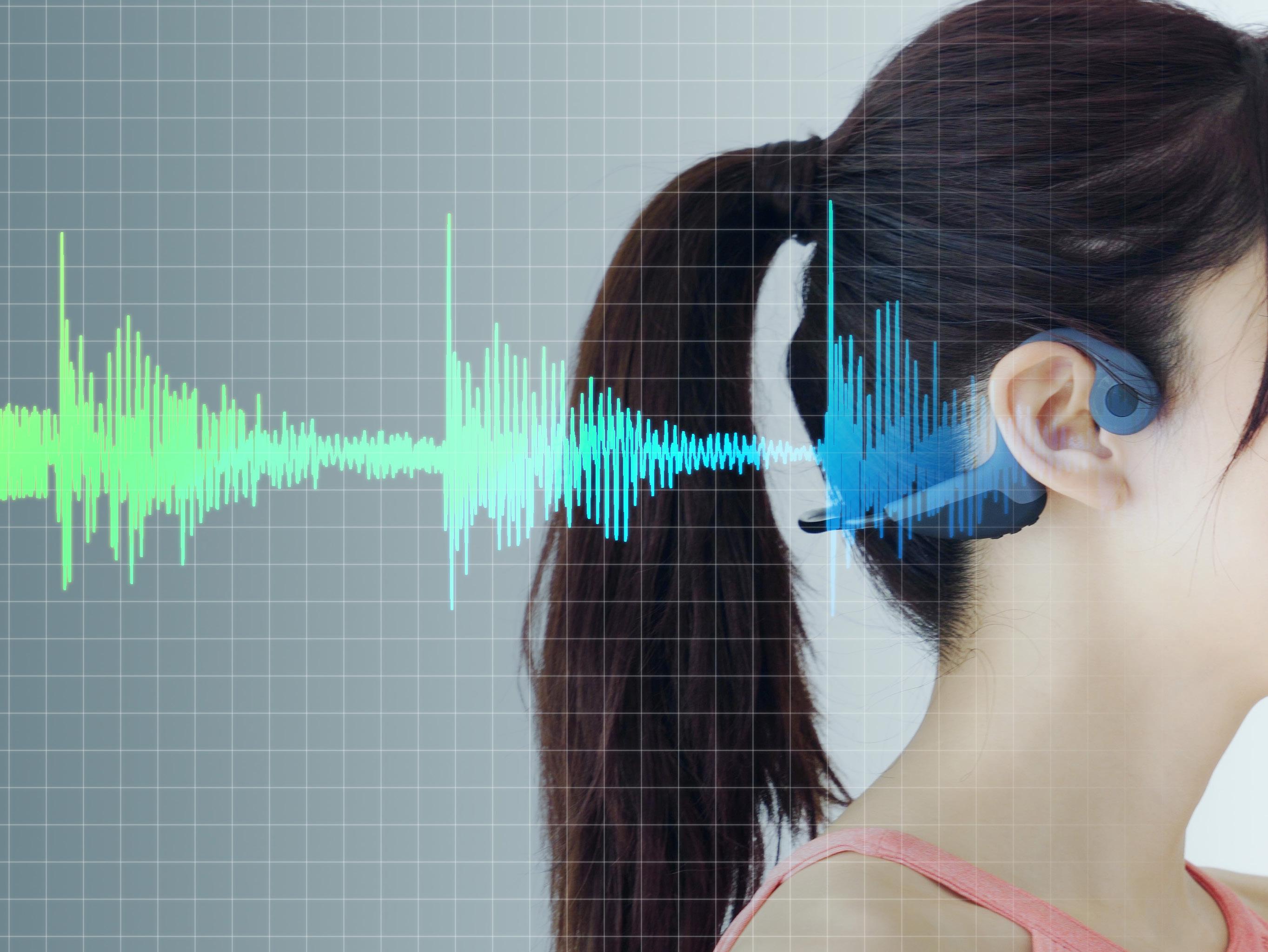
Tinnitus researchers Grant Searchfield, PhD, and Philip Sanders, PhD, at the University of Auckland in New Zealand have created what they term a “digital therapeutic” to help people with tinnitus. This consists of a phone app, Bluetooth bone conduction headphones that provide sound through vibrations in the bones surrounding the ear, a neck
pillow speaker, and a cloud-based clinician dashboard for messaging and personalization of the app. They recently completed a study to gauge the effectiveness of the treatment.
The program consists primarily of sound therapy with some education on attention control, communication strategies, relaxation, and breathing exercises. The app provides sound therapy that may be tailored by the patient, but with parameters set by the clinician, as well as clinician-controlled features that may be turned on or off as deemed necessary to create
14 TINNITUS TODAY WINTER 2022 www.ATA.org
SCIENCE & RESEARCH NEWS
a customized profile based on patient needs and tinnitus characteristics.

Sound therapy could include passive listening to sounds chosen by the subject and the subject’s goals, such as relaxation or retraining of attention away from tinnitus. It could also be active listening. One active listening task had patients listening to a sound similar to their tinnitus and using a slider to match the location of the sound to the location of their tinnitus. The other active listening task entailed answering questions to identify the location of various sounds that were presented. For the study, a control app was used called White Noise Lite. It contains various sound samples of white or broadband noise, including many nature sounds, and the ability to adjust volume, pitch, location, and other parameters. Sounds were presented through in-ear wired earphones or through the patient’s own earphones or headphones.
A total of 98 participants were recruited and began the study, with 50 assigned to the actual treatment and 48 assigned to hear white noise as the control group. Thirty-one participants in the treatment group completed the study and 30 from the control group completed it. Participants were
included if they had chronic tinnitus (typically defined as lasting six months or more) and a Tinnitus Functional Index (TFI) score of 40 or higher, which indicates tinnitus is significantly bothersome. They also needed to have stable scores by the time intervention began. The TFI was used as the primary metric for change in tinnitus severity, with assessments performed after six weeks and 12 weeks of intervention. Participants were not told which intervention they were given (the targeted therapy being studied vs. control) and therefore did not know what the therapy being studied was. Each participant thought they had received—or may have received—the new treatment.
The group using the targeted therapy approach experienced improvement of 17.83 points on the TFI after 12 weeks of therapy (the authors state that 13 points or greater is clinically meaningful). The control group using the white noise app experienced a 10-point improvement on average after 12 weeks. There were also a greater number of people in the targeted therapy group who experienced a meaningful change, meaning that the average was not lowered by a few people who didn’t have any change or had a worsening of symptoms for some reason.
The TFI includes a number of subscales, including how intrusive tinnitus is, how well someone can control it, cognitive effects, effect on sleep, effect on auditory skills, ability to relax, effect on quality of life, and emotional distress. Subscale scores were explored also to compare scores at screening, baseline (start of intervention), during the six-week
check, and after conclusion of the 12-week sessions. There were significant differences in tinnitus rating for sleep and relaxation subscales in those using the targeted therapy, but none for those using the white noise app. They also rated quality measurements of tinnitus and found improvements for those using the targeted therapy in strength, annoyance, ability to ignore, and unpleasantness. Those using the white noise app only experienced meaningful improvement in unpleasantness.
This small-scale study found greater improvement in people using a targeted therapy approach with a custom app compared to those using an existing broadband noise app in a conventional fashion. Because the population was small, further analysis by tinnitus type and severity was not possible but would be desired in future research with a greater number of people. The goal of this investigation was to study a new therapy during a 12-week session, but additional follow-up after longer periods of time would be useful to determine the permanence of improvement and/ or whether continued use of therapy is necessary to achieve long-term effects. These may be in process already, given length of time from study conclusion to publication. Overall, though, a more targeted and clinician-driven approach to tinnitus therapy appears to hold promise for greater improvement in tinnitus.
G. D. Searchfield, P. J. Sanders, Z. Doborjeh, et al. (2021). A state-of-art review of digital technologies for the next generation of tinnitus therapeutics. Frontiers in Digital Health, 3, 724370. https://doi.org/10.3389/ fdgth.2021.724370
www.ATA.org TINNITUS TODAY SUMMER 2022 15 SCIENCE & RESEARCH NEWS
ATA Awards Inaugural Kent Taylor Texas Roadhouse Tinnitus Research Grant
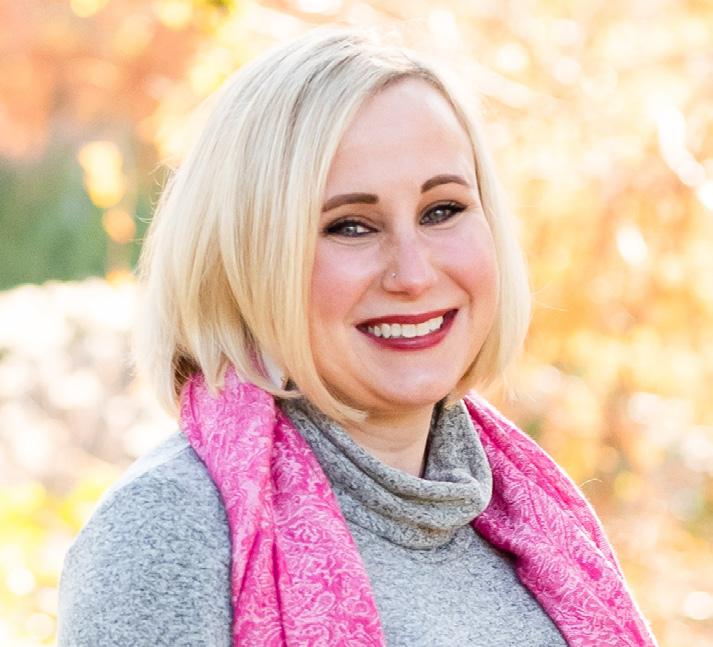
The ATA Board of Directors was pleased to announce that the first annual “Kent Taylor Texas Roadhouse Tinnitus Research Grant” was awarded to Julia Campbell, AuD, PhD, and assistant professor for the Department of Communication Sciences and Disorders at the University of Texas at Austin.
Dr. Campbell and her team will apply the $120,000 grant to investigate auditory gating and its role in the perception of tinnitus. “Gating is a type of automatic filter, suppressing repetitive or unimportant information from reaching conscious perception,” Dr. Campbell said. “This function has been tied to tinnitus severity in adults with normal hearing, but it is unclear how gating may operate in the presence of both hearing loss and tinnitus, which typically occur together.”
If decreased gating is highly related to tinnitus even in the presence of hearing loss, it may provide a clinical measure of tinnitus, as well as a potential site for targeted intervention, she added.
The two-year investigation could directly inform evidence-based practice for tinnitus assessment and intervention so that a clinical measure and targeted treatment could become standard care.
The “Kent Taylor Texas Roadhouse Tinnitus Research Grant” was made possible by participating Texas Roadhouse restaurants, which partnered with the ATA during Tinnitus Awareness Week in 2022 to honor their founder Kent Taylor, who struggled with tinnitus the last year of his life. Funds
raised by Texas Roadhouse, which has more than 600 locations in the U.S., were equally allocated between research and tinnitus awareness, which includes support of the ATA’s Tinnitus Advisors Program, which offers 15-minute free consultations to people struggling with tinnitus.
“As a nonprofit exclusively dedicated to supporting people with tinnitus and funding research for cures and better treatments, we are tremendously grateful to Texas Roadhouse, their employees, and their many patrons who believe tinnitus deserves more attention and far more research. We look forward to seeing how Dr. Campbell’s research unfolds, and working with Texas Roadhouse to advance positive change,” said David Hadley, chair of the ATA Board of Directors.
16 TINNITUS TODAY WINTER 2022 www.ATA.org
SCIENCE & RESEARCH NEWS
Julia Campbell, AuD, PhD, is awarded $120,000 grant.
“We are tremendously grateful to Texas Roadhouse, their employees, and their many patrons who believe tinnitus deserves more attention and far more research.”
Forging Ahead While Remembering Kent Taylor
The 2nd Annual Founder’s Day 2022, honoring the life of Kent Taylor, founder and former CEO of Texas Roadhouse, was a day of celebration because that is what Kent would have wanted, according to Shelly McGowen, Kent’s long-time executive assistant and organizer of the event. The gathering in the parking lot at the restaurant’s Louisville, Ky., headquarters on September 27 felt like a festival among friends, not a corporate engagement.
Roadies—Texas Roadhouse team members—onstage played Kent’s favorite Rolling Stones songs, which filled the warm afternoon air with exuberance and camaraderie. And though there is no timeline or expiration date on grief, the opportunity to gather and remember Kent, who made the most of empowering people around him, was a powerful tool for reframing their loss to focus on the positive, focus on the people.
The event brought together a range of people, including the three cardiologists who originally invested in Texas Roadhouse, which first opened in Clarksville, Ind., in 1993. In addition, a couple who made it their mission upon retirement to visit as many U.S.based Texas Roadhouses as possible (290 and counting) was spotlighted.
The Louisville police arrived by car with their K-9s and on horses to pay tribute to Kent, who had quietly cut a check for half a million dollars some
years prior, when he learned that they didn’t have sufficient funds to purchase bulletproof vests. Protecting the people who protect the public, which included Roadies closing restaurants late at night, mattered to Kent, but the publicity did not.
Held on Kent’s birthday, Founder’s Day included the unveiling of memory bricks inscribed with words and phrases capturing some of his impact and sensibilities—Rock On, Fun with Purpose, and Integrity. These bricks now frame the statue of Kent holding
a beer and wearing Willie Nelson braids with a cowboy hat, part of a vibe that reminds people that Kent didn’t take himself too seriously. It’s a path that speaks to the Texas Roadhouse culture that Kent described as “A people-first company that just happens to serve steak.”
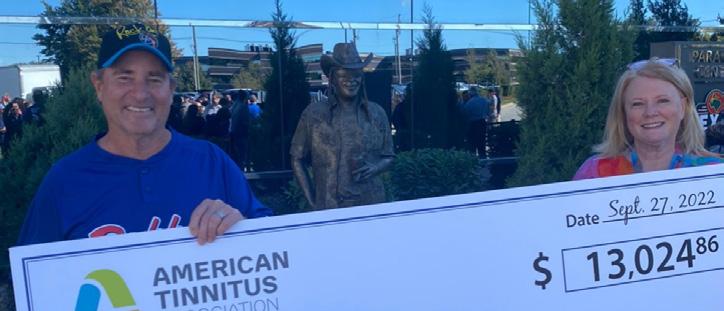
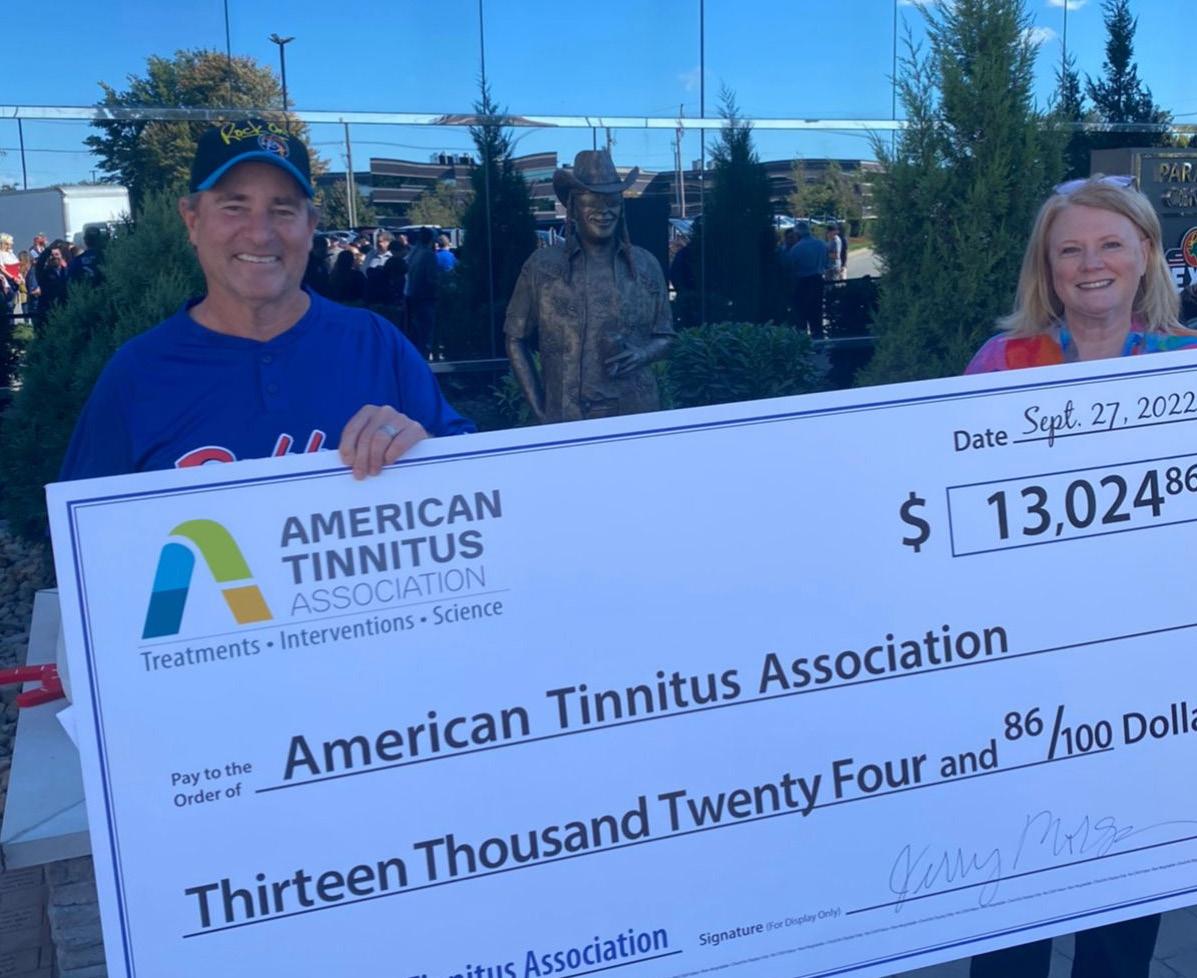
It was thus a solemn moment when Torryn Brazell, ATA CEO, took the stage to accept a check for $13,024.86, the sum collected from the memory bricks honoring Kent. Depending on one’s perspective, the check represents the
www.ATA.org TINNITUS TODAY SUMMER 2022 17 ATA NEWS
Jerry Morgan, Texas Roadhouse CEO, presents Torryn Brazell, ATA CEO, with a check for the sum collected from memory brick donations honoring Kent Taylor.
expectation that anyone with tinnitus can access unbiased, evidence-based guidance, which the ATA provides through its Tinnitus Advisors Program call line; the need for more research into a complicated condition that can rob a person of their will to live; and the spirit of Kent, who supported others when he saw a need.
Through the generosity and vision of Texas Roadhouse, the ATA has been able to create a more sustainable framework for funding its research grants and to ensure that its support line can operate 7 days week.

To make sense of loss—to give it purpose—can be extraordinarily hard. It is thus a powerful message and motivator for the ATA—its Board and staff—to advance its mission
to support people struggling with tinnitus and fund novel investigations to put an end to loss, be it the tragedy of suicide or the simple pleasure of quiet or the feeling of being understood by others.
If you are in danger of acting on suicidal thoughts, please call emergency services in your area (911 in the U.S.) or go to your nearest hospital emergency room.
The 988 Suicide and Crisis Lifeline is free and confidential. To access, call 988 or 800-273-TALK (8255).
The hotline is open 24 hours a day, every day, with services also available for veterans and Spanish speakers. For more comprehensive resources on suicide and mental health, see https://www.speakingofsuicide.com/ resources/
For free 15-minute guidance on managing tinnitus, call the ATA’s Tinnitus Advisors Program line at 800-634-8978, ext. 3.
Medical Disclaimer
The content in Tinnitus Today magazine is intended to provide helpful health information for the general public. It is made available with the understanding that the American Tinnitus Association (ATA) is not engaged in rendering medical, health, psychological, or any other kind of personal professional services. The magazine content should not be considered complete and, therefore, does not cover all physical conditions or their treatment as it relates to tinnitus and tinnitus management.
The ATA always recommends that you consult and work with a medical, health, or other competent professional when considering the best course of tinnitus management. This begins with a medical examination to rule out possible underlying medical causes for tinnitus. If you’re interested in adopting guidance/suggestions made in the magazine, you should discuss this first with your medical provider before doing so.
Any information about drugs and supplements contained in the magazine is general in nature, and does not
cover all possible uses, actions, precautions, side effects, or interactions of the medicines mentioned. The content of the magazine is not intended as medical advice for individual problems or for making an evaluation for pursuing a particular course of action.
The ATA and authors of articles in the magazine specifically disclaim all responsibility for any liability, loss, or risk, personal or otherwise, which is incurred as a consequence, directly or indirectly, of the use and application of any of the content in the magazine.

18 TINNITUS TODAY WINTER 2022 www.ATA.org ATA NEWS
Newly unveiled memory bricks honoring Kent Taylor.


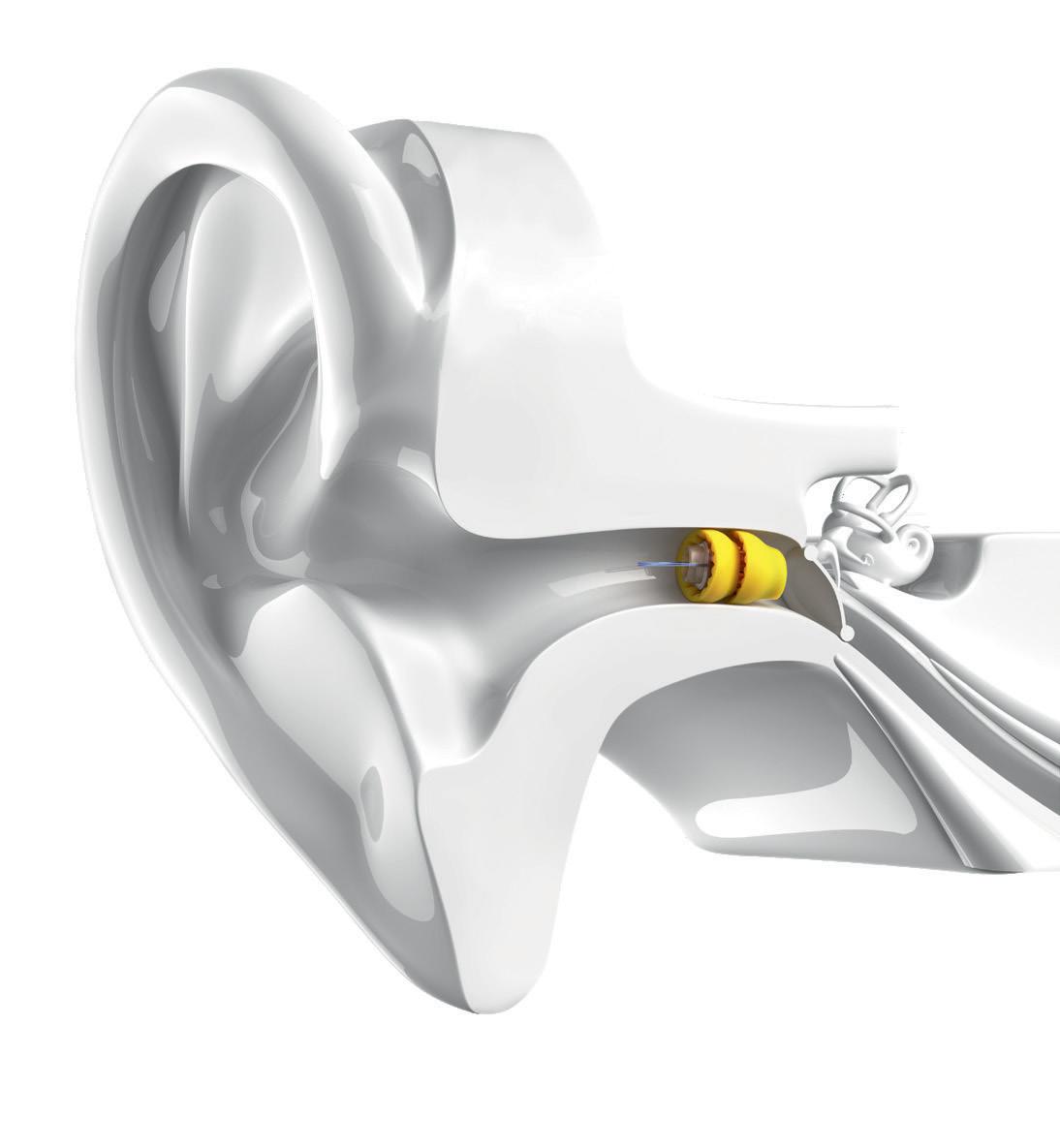
Phonak Lyric is the world’s only 100% invisible, extended-wear hearing device you can wear 24/7 for months at a time.1 • 100% invisible • Clear, natural sound • No daily hassles • No batteries to change • Tinnitus relief, night and day 1 Individual replacement needs may vary. Duration of device battery life varies by patient and is subject to individual ear conditions. 2022-09/hc © 2022 Sonova AG. All rights reserved. Read the latest research on Lyric and tinnitus Phonak LyricTM ADVERTISEMENT
Life Beyond Loss
Max Taylor Keeps a Promise to Begin a New Chapter
 By Joy Onozuka
At the beginning of the pandemic, Max made a promise. He agreed to work with his dad, Kent Taylor, founder and CEO of the Texas Roadhouse restaurant chain. Kent had decided he was ready to step down as CEO after the pandemic, so he wanted someone close to him and the company to help him during that transition.
Yes, Kent Taylor, who always devoted 110 percent of his energy to work, was ready to spend time with
his children and grandchildren instead. In return, Kent promised Max that he’d be free to walk away from Texas Roadhouse after that. It would survive without their daily involvement. At that moment, neither could have imagined the havoc the coronavirus would wreak on their lives within a year.
“I didn’t want to be associated with the big man, the big shot,” Max said. “That’s why I never wanted to work at Roadhouse. I basically told him I’d put my life on pause for three years…. He needed someone he could trust, and
he needed me to do a job.” Max’s first job was working for the Real Estate Team to negotiate lease deferments. His next job was procuring personal protective equipment to shield Roadies from infection.
“He liked the Taiwan model,” Max said, “where we’re keeping Covid out. We’re going to fight Covid.” Max felt that was unrealistic. Having spoken with friends in Sweden, where the government took a much more laissezfaire approach to containing the virus, Max wanted to figure out how to live
20 TINNITUS TODAY WINTER 2022 www.ATA.org PERSONAL STORY
Kent and Max skiing at Snowbird, Utah, in March 2019.
with the virus since he was convinced that they couldn’t beat Mother Nature. “We agreed on a lot but sometimes we had a different mentality,” he said.
When Kent saw an obstacle, he focused on how to overcome it, how to get around it. His attitude, according to Max, had always been that if you want something, you’re going to have to make it happen. That mindset—that determination—served Kent well throughout his life, paving the way from a restaurant idea sketched on a napkin to an empire of more than 600 American steakhouses in the U.S. and dozens more internationally. In this global crisis, Kent was unwavering about protecting his people from Covid-19. He was going to fight the coronavirus, and Max would help make that happen.
Near the end of 2020, like millions of others, Kent contracted the coronavirus, but he bounced back relatively quickly. His sense of smell and taste were off, but he otherwise felt okay. But, shortly after that, he developed tinnitus.
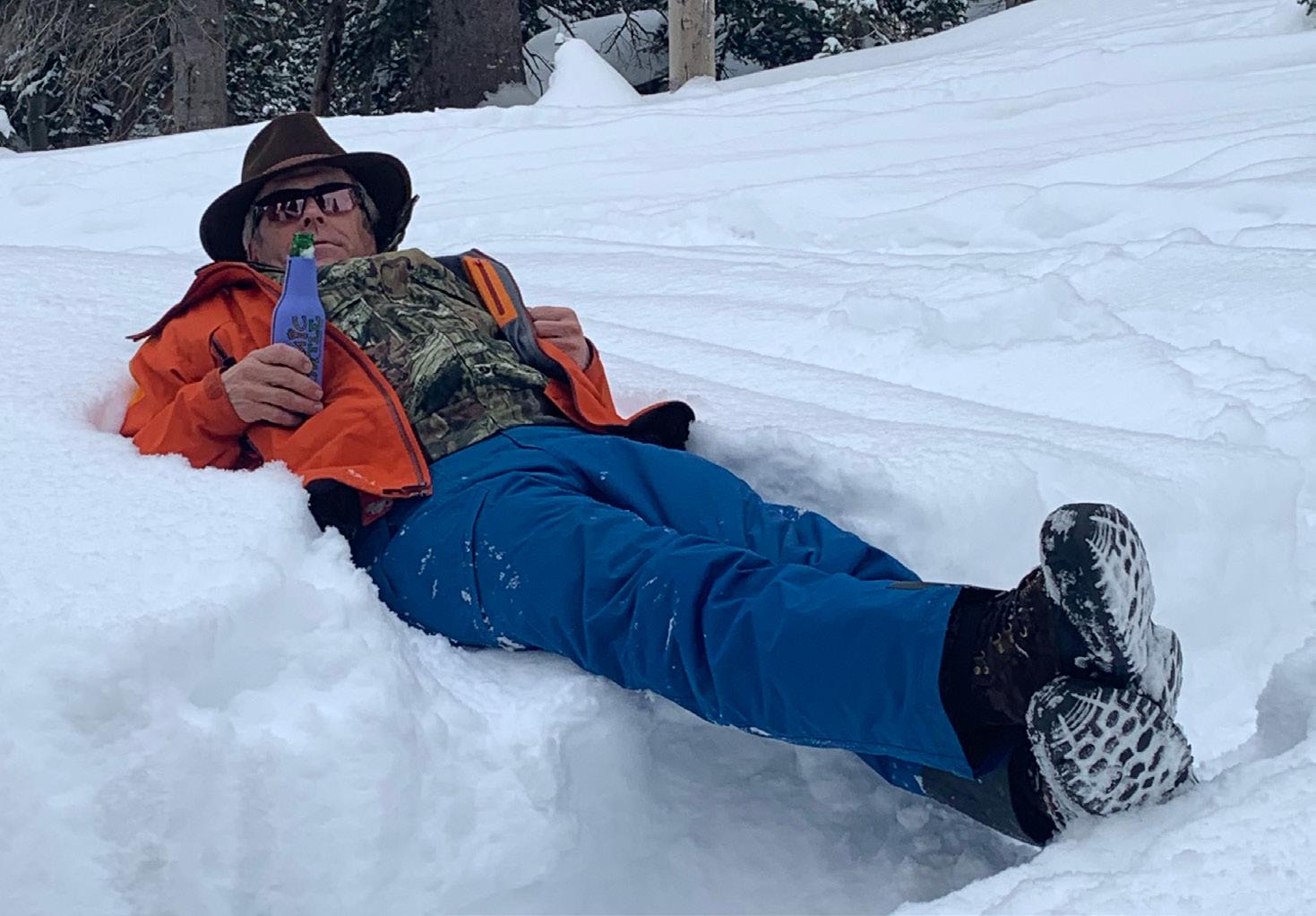
“I would say his lifestyle laid the groundwork for the possibility of developing tinnitus…. He grew up in the seventies with rock-n-roll, the disco era, running nightclubs, stuff like that,” said Max. “It was probably the Covid virus that initiated…. tinnitus symptoms…. And then it was likely his reaction to the vaccine that pushed it over the bearable line.”
Max recalled that, from the mid2000s, Kent had become more proactive in protecting his hearing because he didn’t want to end up like his own dad, who has severe hearing loss from years of military service in the U.S. Army. Kent’s hearing was good, and his health had always been good. “Dad was a private guy with his tinnitus and skin cancers [which he
had removed],” Max said. “He never really liked talking about [either], even though he was relatively open about his health.” But Max understood from the start that the tinnitus was bothering him. He also knew his dad was determined that it would not hinder him. Thus, it gave Max pause when his dad stopped traveling.
“It got to the point where he couldn’t fly anymore because [the tinnitus] would get so bad whenever he would get on a plane…. This man was flying—he was traveling probably 200 days a year. So, it was unlike him not to be on the road,” Max reflected.
Kent had decamped to Florida, where he thought he could find answers to ridding himself of tinnitus. “He’s one of those people who wants results, and he wants to get them now,” said Max, adding that that fixation was part of the problem because it made him impatient.
“He was one of those people who tries stuff until you figure it out; that worked for him professionally,” he said. With his health, however, that meant
too many cooks were in the kitchen. “He was determined that someone had cracked the code [for curing tinnitus]. He just needed to find out where they were.”
But Kent wasn’t always looping in his primary care physician as he consulted countless medical professionals and other people in the field of tinnitus. “He was sort of secretive about it,” said Max, who suspected he was trying multiple treatments at the same time without giving any one enough time to work.
“I think the one thing he maybe feared more than tinnitus was showing weakness,” Max said. Kent didn’t want people to pity him. “He was going to be old but strong—he wanted to be doing 110 percent.” And it was that level of intensity that Kent brought to “beating” tinnitus. “He was just stressing himself out all the time about it…. He couldn’t take any time to devote to enjoying life because he was so devoted to finding the solution,” Max said.
www.ATA.org TINNITUS TODAY WINTER 2022 21 PERSONAL STORY
Kent Taylor relaxing on the ski slope in 2020 before the pandemic.
Watching his father, Max felt like Kent was on a mad quest for the Holy Grail. “This was his obsession at the end of his life—to find peace, find this cure. And he could never find it.”
Kent had become hyper-obsessed and wasn’t sleeping. Max could hear the disappointment in his father’s voice as he described the unrelenting sound of a propeller plane in his head. Things went from bad to worse following Kent’s Covid-19 vaccination, when the sound amplified to that of a jet screeching across the sky.
“He [was] in tremendous pain…. It was then that I saw the first signs of him starting to dial back the 110 percent attitude that he’d always had,” Max said. “And I could see him putting less than 110 percent into finding a cure after that…. It was the first time I’d ever heard that in his voice—him kind of giving up on something,” Max reflected. Kent couldn’t do his usual 110 percent with tinnitus in his life.
This is a rough patch, Max thought to himself. His dad would be okay. Nonetheless, he had concerns, which he shared with Kent. “He wasn’t sleeping very much…. He exerted all his time looking externally for a

solution instead of being his own solution,” said Max, who pressed his dad to find some sort of internal balance. “I think that was probably his… missing link, in my opinion, for his treatment program. He didn’t focus much on acceptance or learning to mitigate it in his own mind…. He was always looking to quiet the noise rather than to see the noise as a new normal and learn to move on.” Max kept pushing him to take more time to work with the tinnitus internally. Being raised in a libertarian-style home by entrepreneurs, Max had long been encouraged to be responsible for himself, explore life, and to be accountable for his choices and the consequences. Outside of classes at university, he delved into Buddhism and learned about Stoic philosophy, both of which espoused values and morals that aligned with his upbringing. “I merged a couple of different
philosophies that guide my life,” he said. “I love the Eastern way of being present and taking stock of how small we are in the grand scheme of things…. [In] Stoic beliefs, we have a virtuous life to live. We have duty to perform…. It’s for our communities, our societies, to our families.”
Although “Buddhism teaches about living with suffering,” Max said, his dad’s “mentality was overcoming or defeating whatever came his way; he did not spend time to harness mental training [for] accepting,” explained Max. “You can’t always overcome it— suffering is a natural condition of life, so [you have to] come to peace with your suffering, rephrase your suffering and reframe it, then you can find some sort of peace within yourself that will make it easier to endure.”
Seeing his dad weakened by tinnitus, Max spoke to him about suicide following personal events he had experienced recently. He wanted to be sure that Kent was okay. “It was the first time I brought up the subject of suicide, and he shut me down pretty quickly,” Max said.
In fact, their last conversation was about Max “making sure he was not
22 TINNITUS TODAY WINTER 2022 www.ATA.org
PERSONAL STORY
“Even though he can’t fulfill his promise to me, I am fulfilling my promise to him, and that helps me sleep at night…”
in that type of place.” Kent made dinner plans with Max for the night that it happened. “So, I felt like he was pushing me off so I wouldn’t ring the alarm bell or do anything,” Max said, adding that, in hindsight, he felt like he’d been misled because his dad could sense he was catching on to what was swirling through his head.
Within hours of Kent taking his life, Max began his last job: being the public voice on the very public death of his father and planning the celebration, not a funeral, of a life well lived. “I just threw myself into it. All hands-on-deck crisis management— kind of what he would do…. I really dove into being there for my family, being there for his friends, being there for the company.”
And Max has continued in the role of supporting others. “When things like [suicide] happen, the last thing you want to do is talk to the world about it…. I couldn’t control his actions or the actions of other people reacting to what he had done, so [Stoic beliefs] helped me to center myself and react immediately to the tragedy,” Max said.
Reflecting on what went wrong, besides his dad’s inability to “accept”
tinnitus, Max thinks his dad should have relinquished control over his treatment. “My advice is don’t be your own quarterback…. [My dad] assembled a group of smart minds from all over the world… to help him with this problem. But in the heat of the game, he was distracted and impatient. I think he was making a lot of rash decisions because he was the one in pain versus the one looking down field for the bigger targets, the longer-term solutions. It’s a lot easier when a professional is helping guide the master plan [when it comes to your health].”
Now, well into year three at Texas Roadhouse, Max hears the promises he made to his dad echo in his mind. “Even though he can’t fulfill his promise to me, I am fulfilling my promise to him, and that helps me sleep at night,” he said. “It’s time for me to grow spiritually and personally. I need to open a new chapter… in my life—one that I had wanted to open but kept closed [because] of [the promise] with my dad.”
And it’s time to heal. Max’s dad instilled in him the drive to pursue goals, to be accountable, to make
things happen. “I want to have a wife and a family one day. And so, I feel it’s not fair for me to not deal with [losing my dad]. I need to take the time to deal with it now so that I don’t have to take other people through it with me in the future,” Max said, acknowledging the danger of compartmentalizing and not addressing tragedy.
In his last year, tinnitus kept Kent from skiing in Utah, a tradition he deeply loved and valued. Shortly after his death, Max went skiing with his dad’s friends in Utah, “We sprinkled some of his ashes [there].” It was a moment to honor and remember a man who loved life, lived boldly and bravely, and took pride in making things happen for himself and others. For Max, part of his process of healing is to continue visiting his father’s favorite ski resorts to spread his ashes. “That’s the first big quest that I plan to finish,” Max said, explaining that he’ll film this chapter of remembrance and reframing so he can share the journey and the stories with his future family to bid a final farewell to the man who touched so many people in such profound ways.

www.ATA.org TINNITUS TODAY WINTER 2022 23
PERSONAL STORY
What’s the Risk of Tinnitus as a Side Effect of Covid-19 Vaccinations?
Summary by Joy Onozuka
Reports of tinnitus spikes and newly onset tinnitus following mRNA Covid-19 vaccination raised trepidation, particularly among people who had habituated to tinnitus, causing some to delay being vaccinated or forgoing vaccination altogether. But is the risk of developing tinnitus as a side effect of mRNA vaccination higher than it is for other common vaccines also known to cause tinnitus as a side effect? Importantly, as the coronavirus continues to evolve, making exposure and infection hard to avoid, is the risk of contracting the coronavirus worth not being vaccinated?
Researchers at Case Western Reserve University at Cleveland, Ohio, sought to answer these questions by analyzing two years of data on tinnitus occurring as a side effect shortly after mRNA Covid-19 vaccination compared
to three other common vaccinations that are known to carry a low risk of tinnitus as a side effect: influenza, Tdap (prevents tetanus, diphtheria, and pertussis), and pneumococcal vaccine (pneumococcal infections can range from ear and sinus infections to pneumonia and bloodstream infections).1
They used a sample size of more than 2.5 million patients who received mRNA Covid-19 vaccinations to understand the frequency of newonset tinnitus within 21 days of vaccination. Twenty-one days was the cutoff because follow-up Covid-19 boosters were available after that period, which would have complicated findings. Data were obtained from the TriNetX Analytics Network, a federated health research network that aggregates deidentified electronic health records of more than 78 million patients within the United States.
Five patient groups were created:
1Received first mRNA Covid-19 vaccine between December 15, 2020, and March 1, 2022
2Received second mRNA Covid-19 vaccine between December 15, 2020, and March 1, 2022
3
Received influenza vaccines between January 1, 2019, and December 1, 2019 4
Received Tdap vaccine between January 1, 2019, and December 1, 2019
5
Received pneumococcal vaccine between January 1, 2019, and December 1, 2019
To ensure that patients in the last three groups hadn’t received Covid-19 vaccines, the researchers pulled 2019 vaccination data for the other three vaccines. Patients with a history of tinnitus were eliminated from all groups. Patients who experienced
24 TINNITUS TODAY WINTER 2022 www.ATA.org
SCIENCE & RESEARCH NEWS
Vaccination Received Vaccinated Patients Without Prior Tinnitus Diagnosis
Patients Diagnosed With Tinnitus Within 21 Days of Vaccination
Proportion With New Tinnitus Diagnosis (%) (95% CI)
1st Dose mRNA Covid-19 2,575,235 986 0.038 (0.036-0.041)
2nd Dose mRNA Covid-19 1,477,890 465 0.031 (0.029-0.034) Influenza 1,200,749 745 0.062 (0.058-0.067) Tetanus and Diphtheria 456,306 314 0.069 (0.061-0.077) Polysaccharide Pneumococcus 153,522 135 0.088 (0.074-0.100)
Table 1: Patients Newly Diagnosed With Tinnitus 21 Days Following Vaccination tinnitus following their first Covid-19 vaccination were eliminated from the second group of people who developed tinnitus following their second Covid-19 vaccination. Newly onset tinnitus was defined as a diagnosis of tinnitus in patients with no prior history of it. The analysis did not separate the specific formulations of the Covid-19 vaccines. When comparing the vaccine groups, patients were matched according to age at the time of vaccination, gender, race, and ethnicity.
Researchers noted that the likelihood of having a new diagnosis of tinnitus following the second Covid vaccine was lower than after the first dose. When comparing the incidence of tinnitus as a side effect of the other three vaccines, it was found that tinnitus occurred at a higher rate than after Covid-19 mRNA vaccination, as shown in the table. They speculated that tinnitus may have been caused
by different patterns of inflammation triggered by the vaccines, or it was attributable to uncontrolled variables. And though tinnitus as a side effect of vaccines is troubling for any patient, the researchers noted that the incidence was considered very low for all four vaccines. Nonetheless, with vaccination hesitation growing among the public, the investigators hope their findings can be used in a clinical setting so physicians can
address their patients’ concerns and the best way to protect their overall health.
1 I. Dorney, L. Bobak, T. Otteson, & D. C. Kaelber. (2022). Prevalence of new-onset tinnitus after COVID-19 vaccination with comparison to other vaccinations. Laryngoscope https://doi.org/10.1002/ lary.30395
www.ATA.org TINNITUS TODAY WINTER 2022 25 SCIENCE & RESEARCH NEWS
Research Pioneer Pawel Jastreboff Helped Pave the Way to Rewiring the Brain to Disengage From Tinnitus
By Joy Onozuka
Pawel
Jastreboff,
PhD, ScD, MBA, never planned on researching tinnitus, much less becoming the founder of Tinnitus Retraining Therapy (TRT), one of the most enduring and widely used interventions among audiologists for reducing tinnitus distress. It was a path guided by unexpected circumstances and informed by scientific curiosity, knowledge of neurophysiology, and conviction that rewiring the brain held the best chance to restore tinnitus patients’ quality of life.
Jastreboff came to the United States in 1982 with his two children, when his wife, Margaret, received a two-year fellowship as a research scientist at Yale School of Medicine in New Haven, Connecticut. On sabbatical from the Polish Academy of Sciences and with a background


in neurophysiology, he was open to pursuing auditory research, including tinnitus, at Yale. “The only thing I knew about tinnitus was that my grandmother had it,” he said. “She suffered from many medical problems, but tinnitus was the only thing she complained about.”
Jastreboff’s foray into tinnitus began when Clarence Sasaki, MD and Chief of Otolaryngology at Yale School of Medicine, invited him to develop an animal model for tinnitus that would allow researchers to investigate the biological basis of tinnitus, something considered impossible at the time. “I created the first animal model of tinnitus that was recognized by NIH [National Institutes of Health] … and is generally accepted as the first model out of the 20 or so current animal models of tinnitus that we have,” he said. Jastreboff’s approach was informed by his studies with Polish neurophysiologist Jerzy Konorski, who had been a student of Ivan Pavlov (1849–1936), who developed
the model of classical conditioning. Konorski further expanded Pavlov’s work, adding the theory of structural and functional neuronal synaptic plasticity — a term he introduced — which is widely accepted today in understanding how we learn.
After receiving a NIH grant, Jastreboff requested an extension of his stay in the U.S. but the Polish Academy of Sciences rejected it. After much consideration, he decided to remain in the U.S. — a decision that put him on track to becoming one of the leading experts on treatment of tinnitus, hyperacusis, and misophonia.
He set about learning what was understood about tinnitus within the scientific community and explored what could be done to help tinnitus patients. “Being a scientist, I couldn’t stop thinking about it.…and I had a totally different idea. Tinnitus was not [a problem of] the ear, which was the dominant thinking at the time.” The data, no matter how he looked at it, didn’t support the role of the auditory
26 TINNITUS TODAY WINTER 2022 www.ATA.org
SPECIAL FEATURE
“TRT is not about accepting tinnitus; it’s about blocking reactions deep inside the brain so that there’s nothing to cope with, nothing that has to be ‘accepted.’”
system in tinnitus because patient measures for loudness and pitch did not correlate with who was bothered by tinnitus and who wasn’t. It seemed counterintuitive, but the findings were clear: Someone with relatively quiet tinnitus could be highly distressed, while someone with much louder tinnitus might find it mildly annoying.
If acoustic differences between patients couldn’t predict tinnitus distress, then Jastreboff hypothesized that the problem had to be abnormal neural activity in the brain. He then began developing the neurophysiological model of tinnitus, which he published in 1990
No-Problem Tinnitus
and became the basis for Tinnitus Retraining Therapy (TRT).
The neurophysiological model posits that tinnitus distress stems from the tinnitus signal generating neuronal activity that travels from the auditory system to the limbic (emotions) and autonomic nervous systems. Noting that conditioned reflexes—both conscious and subconscious—could be learned and unlearned, Jastreboff argued that brain plasticity meant tinnitus distress could be eliminated, or at least decreased, through reconditioning neuronal activity so that the tinnitus signal no longer activated the limbic and autonomic nervous systems.
By reducing or eliminating negative reactions within these systems, the brain would be able to ignore the sound. He also recommended that tinnitus patients avoid silence, which is now standard advice for someone bothered by tinnitus. Device aided or not, an enriched sound environment helps everyone with tinnitus, regardless of the cause of tinnitus.
For about 80 percent of people who experience tinnitus, the tinnitus does not acquire any special meaning, and a natural process of “spontaneous habituation” takes place. The tinnitus is classified by the brain as an unimportant signal. The brain learns that the tinnitus signal is insignificant, like the sound of a new refrigerator, and the signal is blocked from activating the limbic and autonomic nervous systems and from reaching consciousness—the tinnitus signal is there, but the person is not normally aware of it.
Problem Tinnitus
For the other 20 percent of people with tinnitus, it’s a different story. For these people, their tinnitus does acquire special meaning because of its association with something negative (the signal is classified as important). This association normally takes place when the tinnitus is first experienced—because an unpleasant or traumatic event takes place at the same time. The anxiety and annoyance caused by the event become linked to the tinnitus. From the perspective of the neurophysiological model, an active connection is established between the auditory nervous system, where the tinnitus originates, and the limbic and autonomic systems. This connection increases the activity in the limbic and autonomic nervous systems, which is what causes tinnitus to be a clinically significant condition. When this occurs, the patient pays more attention to the tinnitus, which only worsens the condition.
Henry, J.A., Trune, D.R., Robb, M.J.A., Jastreboff, P.J. Tinnitus Retraining Therapy: Patient Counseling Guide, Plural Publishing, San Diego, pp. 192, 2007.
At the time, this model was significantly different from what was being offered to tinnitus patients. The dominant treatment approach was partial masking of tinnitus for relief, which was developed by Jack Vernon, PhD and a founding member of the ATA, with Bob Johnson, PhD. The problem with masking was it was only effective when patients wore the maskers; without them, the distress remained. Furthermore, if the masking was too loud it canceled out the tinnitus sound. “It’s like trying to teach a dog to jump while playing very loud music. The dog can’t hear you say ‘jump,’ so he will never learn,” Jastreboff said.
“TRT is not trying to do anything with the tinnitus signal, but rather modify the neural connections in the brain so that the signal doesn’t induce any reaction…. Leave the signal alone but block it from spreading to other parts of the brain.” The process is termed habituation, which means the brain, once accustomed to the sound, will no longer register it unless attention is turned to it, the same way we don’t consciously hear the sound of the refrigerator or air conditioning in the background unless we listen for it.
To test TRT, which combines directive counseling and sound therapy, he asked Jonathan Hazell and Jackie Sheldrake, who ran the Tinnitus
www.ATA.org TINNITUS TODAY WINTER 2022 27
SPECIAL FEATURE
& Hyperacusis Center in London, to use it with their patients. Their feedback was swift and positive, which prompted Jastreboff to leave Yale to find a clinic where he could work with patients. He found that opportunity in 1990 at the University of Maryland at Baltimore, where he established the Maryland Tinnitus & Hyperacusis Center. “With tremendous help from Jonathan Hazell, I was able to create the first center in the U.S. to provide TRT for patients,” he emphasized.
In the late 1990s, brain imaging, which was becoming more common in research, confirmed what Jastreboff had theorized about aberrant brain activity. “I got solid scientific confirmation of my model…. Nothing was seen in the auditory system, but the limbic system was lit up like a Christmas tree,” he said. Such findings were reassuring to him because he said many researchers and clinicians had doubted his model, particularly in the 1980s. “No one was even arguing [with me] because [they thought] the idea was stupid,” Jastreboff said.
The model remained somewhat controversial, even as positive reports from patients poured in and its use increased among clinics around the world, because it hadn’t been vetted properly by independent researchers. Acceptance gained ground among researchers when a study of U.S. military veterans in 2006 found that TRT was more effective over a period of 18 months of treatment than a protocol of masking and counseling, particularly for those with severe tinnitus.1 A multisite randomized placebo-controlled phase III trial was completed in 2019 and showed that TRT contributed to successful tinnitus habituation.2 It should be noted that
conducting such trials is challenging because of the expense, the difficulty of recruiting individuals sufficiently trained in TRT, and the dropout rate of research participants.
As a neuroscientist, Jastreboff took a holistic and detailed approach in his investigation of tinnitus. Throughout the 1990s, the ATA funded research by both Pawel and Margaret to investigate tinnitus and the auditory pathway, the development of objective measures, the mapping of tinnitus in the brain, and a model for noise-induced tinnitus. Such research was aimed at making tinnitus easier to study by creating objective tools to quantify and measure tinnitus, which remain a hurdle in treatment and research to this day.
Jastreboff designed TRT to also treat hyperacusis, and later added misophonia, when Margaret identified it as a separate and distinct auditory disorder. “She has a sharp eye for new things…. She noticed a group of patients who had a problem with sound tolerance who didn’t fit the classical description of hyperacusis,” he said. Finding no medical term to explain powerful negative emotional reactions to specific external sounds, such as slurping, sniffling, and throat clearing, they coined “misophonia,” combining the Greek word miso, meaning “visceral dislike,” with phonia for “sound.”
Jastreboff noted that the neurological components of misophonia and tinnitus are similar in that they both activate conscious and subconscious areas of the brain that cause strong emotional reactions. The difference is the misophonia signal is external, whereas tinnitus is internal.
Although tinnitus, hyperacusis, and misophonia are treated under the
Neurophysiology Definition
noun
Neurophysiology is a branch of neuroscience that studies the physiology of the nervous system. It makes use of the physiological techniques in its research, e.g., electrophysiological recordings, calcium imaging, optogenetics, and molecular biology. Some of the topics of interest are electroencephalography, neuroplasticity, chemical synapse, brainstem, electromyography, transcranial magnetic stimulation, nerve conduction study, and transcranial direct current stimulation. Neurophysiology is also concerned with studying disorders affecting the brain.
abbreviated definition from biologyonline.com
umbrella of TRT, they require different protocols to be effective. “You need to be able to properly diagnose, recognize, and treat those conditions concurrently [if more than one exists] … otherwise you might not be able to achieve success [in helping the patient improve], Jastreboff said. “The goal is tinnitus will stop being a problem and stop influencing a patient’s life,” he said, stressing that it’s important that patients acknowledge that the tinnitus itself will remain. Through treatment, the tinnitus is perceived as softer and therefore less noticeable.
In the last decade, thanks to continued advances in neuroscience and use of brain imaging, there

28 TINNITUS TODAY WINTER 2022 www.ATA.org
SPECIAL FEATURE
has been an explosion of interest in “rewiring” the brain to improve a myriad of conditions, particularly mental health. Like any trend that presents profit opportunities, “TRT” is sometimes used in name only for marketing purposes. Today, “tinnitus retraining therapy” can be found on many websites that feature tinnitus services. The question is what does that mean? “I didn’t anticipate people using the name ‘TRT’ or a twisted version of it for marketing to attract patients,” Jastreboff said. “I never patented TRT or restricted its usage. I know there are people doing things under the banner of ‘TRT’ that are absolutely not TRT.”
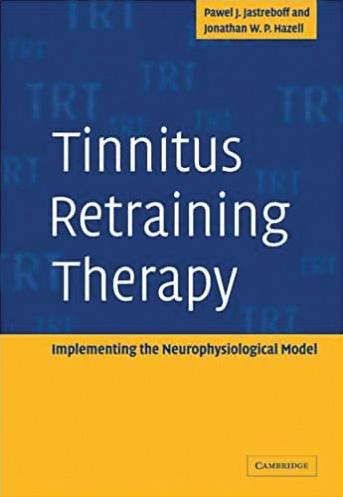
Julie Prutsman, AuD and ATA board member, agrees that misrepresentation of TRT is a significant problem. “If you say you offer TRT, you better be proficient at explaining the full neurophysiological model of tinnitus and providing the complete educational counseling piece… Otherwise, like the numbers show, you are more likely to set a patient up for failure with just one
counseling session and a plan of sound enrichment, which is not enough,” Prutsman said. She believes there are quite a few audiologists who think they can get by with a basic explanation of what tinnitus is and fitting patients with hearing aids since amplification alone can help tinnitus patients. “TRT is not specifically about amplification,” Prutsman said. “TRT is truly about habituating to the reactions of tinnitus evoked by the limbic and autonomic nervous systems before being able to habituate to the perception of it.”
Today, Jastreboff, who left the Maryland clinic in 1991 and worked until 2016 at the Emory Tinnitus & Hyperacusis Center at Emory University in Atlanta, Georgia, sees patients at the Clinic of Jastreboff Hearing Disorders Foundation, Inc., in Georgia. He has treated thousands of patients in the United States and abroad and continues to train healthcare providers on how to implement TRT.
Reflecting on how the practice of TRT has evolved, with its core principles intact, Jastreboff noted that the average patient experiences clear improvements in about three months, some within one month. “When I started in the 1990s, you needed about a year to see substantial improvement,” he said. Improvements in treatment outcomes stem from refinements in counseling and sound therapy protocols. “The principles of TRT remained the same but its implementation has been improved,” Jastreboff said.
TRT training, which moved online with the Covid-19 pandemic, consists of three days focused on applying the model to tinnitus and two days on decreased sound tolerance, which addresses hyperacusis and misophonia.

Since there is no certification for TRT, Jastreboff recommended that people visit his website (https://www.tinnituspjj.com/TRTA/members/) to confirm that a practitioner has completed the program, which includes a signed statement to abide by certain tools and guidelines of TRT. He also suggests that people ask when a practitioner received training and how many patients they’ve successfully treated with TRT.
For Jastreboff, creating the neurophysiological model of tinnitus was an outgrowth of trying to make sense of why tinnitus bothered some people, but not others. Today, with the many advances in our understanding of the brain and its plasticity, coupled with brain imaging to explain neuronal activity, Jastreboff’s work may seem straightforward, but it wasn’t 40 years ago. And though there are those with tinnitus who find little comfort in treatments aimed at relieving distress, as opposed to eliminating the sound itself, Jastreboff pursued what he felt he could address: relief.
“TRT is not about accepting tinnitus; it’s about blocking reactions deep inside the brain so that there’s nothing to cope with, nothing that has to be ‘accepted,’” he said. Eliminating the sound was something he left to other researchers, who continue to pursue that aim. The question for Jastreboff today is who he will pass the TRT mantle to so its principles and protocols are maintained and a future pipeline of practitioners are trained.
1 J. A. Henry, M. A. Schechter, T. L. Zaugg, et al. (2006). Outcomes of clinical trial: Tinnitus masking versus tinnitus retraining therapy. Journal of the American Academy of Audiology, 17(2), 104–132. https://www.doi.org/10.3766/jaaa.17.2.4
2 S. L. Gold, C. Formby, & R. W. Scherer. (2021). The tinnitus retraining therapy counseling protocol as implemented in the Tinnitus Retraining Therapy trial. American Journal of Audiology, 30(1), 1–15. https:// www.doi.org/10.1044/2020_AJA-20-00024

www.ATA.org TINNITUS TODAY WINTER 2022 29
SPECIAL FEATURE
Cognitive Behavioral Therapy Versus Tinnitus Retraining Therapy: Similarities and Differences
By James A. Henry, PhD
Cognitive behavioral therapy (CBT)
and Tinnitus Retraining Therapy (TRT) are perhaps the two best-known and studied methods of tinnitus management around the world. According to systematic reviews of the scientific literature, CBT is generally considered the method with the strongest research evidence, based mainly on randomized controlled trials.1,2 TRT is not ranked as highly, but several studies have demonstrated its efficacy.3–5 Both CBT and TRT have credibility for tinnitus management, but people often misunderstand and are confused about what they involve, how they should be conducted, and which practitioners are qualified to offer the methods. This article aims to bring some clarity to how the methods differ.
Brief Overview of CBT
The use of CBT for tinnitus was adapted from the prior use of CBT
for pain, anxiety, depression, and insomnia.6–8 As its name implies, there are “cognitive” and “behavioral” aspects of CBT. In a nutshell, the cognitive goal is to identify unhelpful thoughts and beliefs and to replace them with more constructive alternatives; the behavioral goal is to acquire certain coping skills for selfmanaging any effects of tinnitus on the person’s life.9 Accomplishing these goals involves numerous components of therapy.10 Components of CBT specific to tinnitus typically include relaxation techniques, activities for distraction, changing thoughts about tinnitus (“cognitive restructuring”), and education about health, sleep hygiene, and the auditory system.
Brief Overview of TRT
The goal of TRT is for patients to be aware of their tinnitus only occasionally and for it to have no impact on their lives.11 The intervention, which involves counseling and sound therapy, is designed to facilitate the learning process known as “habituation”—both to any reactions to tinnitus and to the awareness of tinnitus. The counseling, which is very structured
and detailed, is the most important component. For sound therapy, patients “enrich their sound environment” and they often use ear-level devices (sound generators) that produce broadband noise, which is adjusted according to a specific protocol. The entire program is based on the “neurophysiological model of tinnitus.”11
Who Provides These Therapies?
CBT
Most commonly, CBT is conducted by clinical psychologists but also by providers of behavioral or mental health services (advanced nurse practitioners, clinical social workers, professional counselors, psychiatrists).12 These providers often have expertise in CBT, but very few are trained in delivering CBT for the management of tinnitus.13 Hence, a conundrum: CBT is considered to have the strongest research evidence for tinnitus intervention, and yet very few behavioral health providers offer CBT specifically for tinnitus.14
This conundrum has been addressed by tinnitus researchers and clinicians.12,14 They point out that non-behavioral health providers have delivered CBT successfully for panic disorder, social anxiety disorder,
SPECIAL FEATURE 30 TINNITUS TODAY WINTER 2022 www.ATA.org
depression, and generalized anxiety disorder. It could therefore be argued that audiologists, who are typically the primary point of contact for individuals seeking clinical services for tinnitus, could administer CBT for tinnitus. It was stated, “It seems evident that audiologists can at least provide certain components of CBT without extensive training…. Audiologists can offer a viable pathway for expanding tinnitus management services in populations in which behavioral health providers are not readily available.”12
Although audiologists (or any nonbehavioral health provider) should not perform CBT without the necessary training and supervision, they could learn to teach the behavioral components of CBT, which require much less training than the cognitive components.12 The behavioral components mostly involve relaxation and distraction techniques. If nonbehavioral health providers, especially audiologists, were to learn these behavioral components, patients would have much greater access to research-based tinnitus intervention.
TRT
The clinical implementation of TRT is mostly within the scope of practice for audiologists. As described in a previous issue of Tinnitus Today, “Audiologists are hearing healthcare specialists who hold an Audiology Doctorate (AuD) degree, which is the current requirement, or a master’s degree in audiology, which was the previous requirement…. Audiologists are trained to conduct diagnostic evaluations of the entire auditory system (outer ear to brain).”15
Audiologists have extensive training in diagnosing disorders of the auditory system, and in providing hearing aids to address hearing loss.15 Roughly 75
AuD training programs in the U.S. are accredited by the American SpeechLanguage-Hearing Association (ASHA). An informal survey was completed by 32 (43 percent) of these programs, and all of the respondents reported that they provide training in tinnitus management.16 Most of these 32 programs (97 percent) reported that they provide training in methods of sound therapy, and 91 percent said they teach TRT.
It therefore appears some percentage of audiologists receive training in TRT during their AuD program. What is unknown is the extent of that training and the level of competency they achieve in administering TRT in the clinic. A website exists that lists practitioners who have met certain requirements to be included in the “TRT Association” (www.tinnitus-pjj.com). One of those requirements is that they have completed independent TRT training, which has been offered periodically by Drs. Pawel Jastreboff and Margaret Jastreboff. It should be noted that the website states, “The list is based on the statements of members and is not further verified. Consequently, it is not equivalent to certification and should not be treated as a referral list.” TRT practitioners are usually audiologists, but they can have doctorates other than the AuD (i.e., PhD or EdD). They may even be physicians (MD). Some examples of these nonaudiologist TRT practitioners can be seen on the TRT Association website. TRT providers may also be all types of behavioral health providers, which were listed earlier.
Clinical Assessment
Clinical management of tinnitus involves two phases: assessment and intervention. Assessment means
testing and obtaining measures to diagnose the condition and make recommendations concerning the potential need for further services. Intervention is the “treatment” phase, which involves the delivery of some therapy that is intended to improve the condition. Improvement would be documented by repeating some of the assessment following the intervention and comparing the before and after results (i.e., outcome assessment).
CBT
CBT is described as an intervention. That is, CBT is therapy only. Some type of assessment is essential, however, to determine whether a patient might benefit from CBT, and, if so, how to tailor the intervention to address the patient’s individual needs. The assessment should include baseline measures that can be repeated during and following the intervention to determine whether the program is beneficial.
Most publications about CBT for tinnitus include recommendations for conducting an assessment. For example, one group recommends assessing for auditory functioning (a hearing test), impact of tinnitus, functioning in daily life, cognitive ability, and emotional distress.10 A recent book titled Cognitive Behavioral Therapy for Tinnitus devotes a whole section (pp. 36–42) to describing an initial assessment and monitoring outcomes of the intervention.14
Another group recommends an examination by an otolaryngologist and audiology testing that includes tinnitus matching tests and tinnitus minimum masking level evaluation.17 This would be followed by an interview with a psychologist focusing on history and characteristics of the tinnitus, effects of tinnitus on the person’s life
www.ATA.org TINNITUS TODAY WINTER 2022 31
SPECIAL FEATURE
(sleep, concentration, etc.), things that make the tinnitus better or worse, related symptoms, and any previous treatments for tinnitus. This evaluation establishes the therapeutic relationship and determines whether the patient is a suitable candidate for CBT. It is clear there is no one “right” way to perform an assessment for CBT for tinnitus. Certain types of measures, however, are considered essential.10,14,17
In our lab, we conducted a study comparing outcomes between CBT and a specific method of sound therapy.18 Portions of the assessment applied to both methods and started with screening to identify eligible candidates for intervention using the Tinnitus Screener19 and the Tinnitus and Hearing Survey.20 Then we performed an audiologic assessment (hearing test) and questioned candidates to determine whether they were eligible to participate, including their ability to complete all study procedures. For example, candidates were excluded from participation if they were suspected of having secondary tinnitus (such as pulsatile/pulsing tinnitus) that would indicate a possible underlying medical condition1 or if they had recently used medications that are known to be associated with tinnitus. The Tinnitus Questionnaire (TQ) was selected as the main outcome measure for the trial because the TQ is capable of evaluating psychological interventions for tinnitus—such as CBT.21 The type of assessment used for this trial might be appropriate for any patient being considered for CBT. It is clear, however, that specific assessment methods would differ for different CBT practitioners.
TRT
Clinical assessment for TRT has been described in detail by the founders of TRT.22–25 It has also been reviewed in various other publications.26–28 The purpose of the assessment is to diagnose and distinguish among the conditions of hearing loss, tinnitus, and decreased sound tolerance.24 An audiologic evaluation is recommended to determine hearing ability, and includes threshold testing with pure tones up through 12,000 Hz to obtain an audiogram and speech discrimination testing.11 Loudness discomfort levels (LDLs) are obtained using pure tones at the same audiogram frequencies. Results of LDL testing are essential to assess for a loudness tolerance problem. Additional testing includes distortion product otoacoustic emissions (DPOAE), tinnitus loudness and pitch matching, and minimum masking levels. The parameters for the DPOAE testing are specified and results are important for counseling purposes.
The patient assessment provides the essential information to place patients into one of the five TRT treatment categories: 0, 1, 2, 3, or
4. Determining the category for an individual patient requires answering four questions: (1) How much does the tinnitus impact the person’s life?
(2) How does the person perceive the significance of any hearing loss?
(3) Does the person have decreased sound tolerance, and if so, how much of a problem is it? (4) Is there prolonged worsening of the person’s condition (tinnitus and/or hyperacusis) following exposure to moderate levels of sound?29
Category 0 patients are only minimally bothered by their tinnitus, or they have had their tinnitus for a
short period of time.11,29 They receive an abbreviated version of the TRT counseling, which focuses on learning to think about (reclassify) tinnitus as a benign/meaningless stimulus, along with advice to “enrich the sound environment” to optimize habituation to the tinnitus. Ear-level sound generators are not normally recommended.
Category 1 includes patients who have a significant problem with tinnitus.11 They receive the full TRT counseling and are recommended to wear ear-level sound generators.
Category 2 patients are the same as Category 1 except they also have significant hearing difficulties. In addition to the full TRT counseling, they wear hearing aids that have a built-in sound generator.
Category 3 patients have hyperacusis as their primary complaint. Prior to any intervention for tinnitus, the hyperacusis is treated, which involves a modified version of the TRT counseling along with wearing ear-level sound generators. If the patient also has hearing difficulties, then hearing aids with a built-in sound generator are used.
Category 4 patients have prolonged worsening (exacerbation) of their tinnitus and/or their hyperacusis that is caused by exposure to certain sounds. By definition, the worsening lasts until at least the next morning. If hyperacusis is the main problem, then the hyperacusis treatment is used as
32 TINNITUS TODAY WINTER 2022 www.ATA.org
SPECIAL FEATURE
for Category 3 patients. Otherwise, treatment focuses on tinnitus as for Category 2 patients. Category 4 patients may be the most difficult to treat successfully.30,31
Clinical Intervention
CBT
CBT takes a “whole health” perspective, meaning a person’s global well-being is the overall objective.13 An assumption is, “What is good for life in general is usually good for coping with tinnitus. This includes living a healthy life with respect to food, exercise, social contacts, and so on.”17 The basic premise underlying CBT is that thoughts, emotions, and behaviors are all interconnected, and changing any one of these tends to change the others.14 Most generally, intervention with CBT is designed to change thoughts and behaviors in such a way as to decrease emotional reactions to tinnitus and increase the ability to function normally in life (with respect to sleep, concentration, etc.).
The practice of CBT can involve a number of therapeutic components— each of which involves a different path to achieve the overall objectives. These components generally include learning relaxation techniques, making constructive behavioral changes, changing thoughts about tinnitus, and applying lifestyle recommendations to improve sleep, health, and the auditory system. There is no agreement on which components are the most beneficial for improving a person’s tinnitus condition.10
The cognitive part of CBT focuses on learning to avoid negative thoughts and to make them more constructive
and helpful in reducing effects of tinnitus.14 What people think affects how they feel 32 We react to people and events according to what we think about them. And our feelings affect our health 28 For these reasons, it is important to assess any thoughts about tinnitus and to determine whether they are contributing to the tinnitus problem. Such unhelpful thoughts have been referred to as “thought errors.”33 Twelve common thought errors have been described along with how they pertain to tinnitus.32
Common behavioral components of CBT for tinnitus include practicing relaxation exercises and increasing pleasant activities 32 Additional behavioral components include enriching the sound environment and addressing sleep problems. 14 All of the behavioral components of CBT are intended to promote participation in more positive and pleasant activities, to shift attention away from the tinnitus when it is bothersome, and to employ stress-reduction techniques. Patients are also educated about tinnitus (types, causes, effects, etc.) and hearing loss.
What different CBT providers teach varies considerably. Not only can multiple therapeutic components be used with CBT, but also some providers are integrating CBT with other forms of psychological treatment, namely, mindfulnessbased stress reduction (MBSR) and acceptance and commitment therapy (ACT).10
In addition, the format for the clinical delivery of CBT can vary.10,17 The number of treatment sessions can be as few as three or as many as 20, and the length of each session can differ. The CBT sessions can be conducted individually or in groups.
CBT has also been delivered as an online/internet program with beneficial results.34,35
CBT Self-Help Resources
Self-help resources are available for people to learn these different techniques:
• A step-by-step approach to self-management with CBT is available online (www.ncrar. research.va.gov/Documents/ HowToManageYourTinnitus.pdf),32 which includes changing thoughts (pp. 54–60), learning relaxation exercises (deep breathing and imagery; pp. 38–43), and planning pleasant activities to “help you enjoy life and pay less attention to your tinnitus” (pp. 44–47).
• Videos are available online that teach deep breathing, imagery, planning pleasant activities, and changing thoughts (https://www. ncrar.research.va.gov/Tinnitus/ TinnitusPatientResources.asp).
• The book Tinnitus Treatment: Clinical Protocols describes applied relaxation in detail “to guide the patient in practicing at home” (pp. 105–110).17
• The recent book Cognitive Behavioral Therapy for Tinnitus is written in such a manner that the entire book can be used as a selfhelp guide.14
• Another book, Tinnitus: A SelfManagement Guide for the Ringing in Your Ears, has been available for over 20 years and covers CBT in detail and how to self-manage tinnitus using the CBT techniques.36
• A number of online CBT training programs are available.37 Some even offer support from a tinnitus therapist.14
www.ATA.org TINNITUS TODAY WINTER 2022 33
SPECIAL FEATURE
TRT
This section draws from a previous article published in Tinnitus Today, 38 updated with information from more recent sources.11,22,28 Clinical intervention with TRT is based upon Dr. Pawel (pronounced PAH-vul) Jastreboff’s “neurophysiological model” of tinnitus. Counseling is essential for all patients, and involves “intensive teaching about mechanisms of the tinnitus origin and its benign nature (as perception), which nevertheless may evoke strong negative reactions affecting patients’ lives. Patients typically have many incorrect concepts about tinnitus and, at the same time, tinnitus remains a mystery for them. Therefore, demystification of tinnitus and providing patients with solid knowledge is important.”11 The counseling is minimal for Category 0 patients, and comprehensive for all other categories. Category 3 and Category 4 patients require specific modifications to the counseling.11,22,28
Neurophysiological Model
The neurophysiological model explains bothersome tinnitus as involving three interacting brain systems: (1) The auditory nervous system processes neural signals transmitted from the ear to the brain, which is how we hear and comprehend sounds. It is also the system that generates and perceives tinnitus. (If the tinnitus is not bothersome, then the tinnitus neural activity is generally confined to the auditory nervous system.) (2) Some sounds, including tinnitus, can cause emotional reactions, which results from activation of the limbic system (3) Activation of the limbic system by any stimulus that has negative associations causes activity in the sympathetic portions of the autonomic
nervous system. If the sympathetic activity is extreme, the body prepares for fight-or-flight mode. If the activity is less than extreme but sustained over time, then the same reactions will occur but to a lesser degree (stress!).
The subconscious (lower) part of the auditory nervous system works like a computer to sort, organize, and route the incoming signals from the cochlea. This filtering process gives awareness about information important for survival and well-being to the conscious (upper) part of the auditory nervous system. Unimportant information, such as the sound of an air conditioner or refrigerator, is filtered out and blocked from reaching awareness. Habituation means the brain and nervous system have learned to block sounds that are unimportant. For TRT, the main goal is habituation of reactions to tinnitus. When that goal is achieved, habituation of tinnitus perception follows automatically.
Plasticity refers to the brain’s ability to “rewire” itself based on changes (positive or negative) in how it functions. The brain is rewired or “retrained” as it learns to habituate the tinnitus signal—hence the name tinnitus retraining therapy. To promote habituation, TRT uses its unique counseling combined with sound therapy.
TRT Counseling
The counseling is designed to educate patients as to how the different brain systems are involved in tinnitus and to remove any fears or anxieties patients may have about their tinnitus. The counseling is repeated at each appointment, generally over a period of six to 18 months.
Sound Therapy
The purpose of sound therapy is to “enrich” the patient’s sound
environment to facilitate the process of tinnitus habituation. For more severe cases, sound therapy is accomplished with wearable earlevel sound generators or, in cases of significant hearing loss, hearing aids that have a built-in sound generator.
Rationale for Sound Therapy
Every nerve fiber in the body is active, even when not stimulated. Each fiber “fires” (or discharges) on its own many times per second. The “spontaneous firing rate” for nerve fibers in the auditory nervous system is typically 50 to 100 per second. Ear-level sound generators deliver a controlled and low level of sound directly to the ears. This causes nerve fibers in the auditory nervous system to fire at higher rates than they would in quiet conditions. The effect of this heightened neural activity is to reduce the contrast between the tinnitus and the background sound, which causes the tinnitus signal to be less “detectable” within the auditory nervous system.
To optimize success with TRT: 1. Meet with a competent, experienced provider.
2. Learn the neurophysiological model of tinnitus and apply its principles.
3. Enrich your sound environment 24/7 (and avoid silence). Maintain a constant background of sound, even when sleeping. The sound should be low-level, comfortable, and non-annoying.
4. If you are fit with ear-level sound generators:
a. Wear them during all waking hours.
b. Adjust them to just below the “mixing point.” Do this at the start of the day. Gradually turn up the volume of the noise, and note that the quality/spectrum of the tinnitus starts to change
34 TINNITUS TODAY WINTER 2022 www.ATA.org
SPECIAL FEATURE
at some point—that point is the mixing point. Then turn the volume down slightly. The intent is to hear (and habituate to) your “usual” tinnitus while also hearing the constant background sound.
c. Do not readjust them. Think “set and forget.” Adjust them at the start of the day, then leave them alone. Doing this minimizes paying attention to the tinnitus.
5. Attend all follow-up appointments. Learn and relearn the counseling information.
TRT Self-Help Resources
Resources are available to learn about TRT (note: the present author receives no book royalties):
• Any YouTube or other video from Pawel Jastreboff.
• Official websites for Pawel Jastreboff and Jonathan Hazell.
• The original book about TRT: Tinnitus Retraining Therapy: Implementing the Neurophysiological Model written for the professional but loaded with information.22
• A lay-language script that models the TRT counseling.28 The scripted counseling is based directly on the material contained in the original book about TRT.22 A companion flip-chart counseling book corresponds directly with the lay-language script.39
Similarities and Differences of CBT and TRT
Assessment
For any method of tinnitus management, patients must be evaluated to determine the extent of the problem and which, if any, clinical
services are warranted. Although both CBT and TRT patients require assessment, it is somewhat loosely defined for CBT and very specific for TRT.
Counseling
It has long been recognized that counseling is the single most important component for the clinical management of tinnitus.11,40 Although CBT and TRT utilize completely different forms of counseling, it is the essential component of intervention in each case.
Sound Therapy
For TRT, sound therapy is essential for all patients. For CBT, the use of sound in managing tinnitus is often/ usually recommended but may not be considered essential—depending on the practitioner.
Habituation
The intended outcome of intervention with CBT and TRT is essentially the same, despite the use of different terminology to describe it. TRT is known for its goal of habituation, which is usually not stated as the goal of CBT. Prior to TRT, however, a psychological model based on habituation was proposed to describe the impact of psychological factors on tinnitus.21,41 “The CBT strategies provided intend to promote habituation.”14 Habituation is therefore considered a goal of CBT.14,42
Conclusion
Methods of tinnitus management are intended to reduce or eliminate any adverse effects of tinnitus on a person’s life. Until a cure is discovered, these methods can be key to living a normal life in spite of experiencing chronic tinnitus. Both CBT and TRT
are well known to be beneficial for accomplishing these objectives. Although CBT has the stronger evidence base in the scientific literature, it cannot be assumed that CBT is generally more effective than TRT. There are just too many factors to consider when comparing methods to reach such a definitive conclusion.
It is important for readers struggling with tinnitus and seeking professional help to be educated about methods that have research evidence supporting them, which most certainly includes CBT and TRT. Provided the methodology is performed appropriately by a skilled provider, either of these methods should be helpful. A caveat is to always be vigilant not to invest in expensive therapies until or unless less expensive therapies have been attempted and ruled out. Other comprehensive evidence-based methods to consider are Progressive Tinnitus Management (PTM)43 and Tinnitus Activities Treatment (TAT).44
James A. Henry, PhD, is a certified and licensed audiologist with a doctorate in behavioral neuroscience. He recently retired from the Veterans Affairs (VA) Rehabilitation, Research & Development (RR&D) Senior Research Career Scientist at the VA RR&D National Center for Rehabilitative Auditory Research (NCRAR) located at the VA Portland Health Care System. For more than 25 years, he devoted his career to tinnitus research. His overall goals were to develop and validate clinical methodology for effectively helping individuals with bothersome tinnitus and to increase accessibility to evidence-based tinnitus care.
Complete references can be found here.
www.ATA.org TINNITUS TODAY WINTER 2022 35
SPECIAL FEATURE
Remembering Michael Haar (1965–2016)
Family and Friends Raise Awareness of Tinnitus to Help Others
For Michael Haar’s family and friends, raising awareness of the debilitating nature of severe tinnitus is behind their annual effort to educate the public about the condition and the need for more research. “We come together each year to spread awareness about tinnitus through guest speakers and informational pamphlets, and to raise money for the American Tinnitus Association’s research efforts,” said Jennifer Patten, Michael’s sister.
To a certain extent, Michael’s family and friends have taken on the mantle of “you don’t get it until you get it,” reflecting the complex nature of tinnitus as a sign of hearing injury and personal trauma, as well as the extraordinary challenge of explaining that severe tinnitus can sometimes lead to suicide, as happened to Michael in 2016. “We hope that by sharing Michael’s story, these events bring awareness to how debilitating the effects of tinnitus can truly be,” said Jennifer.
After a two-year postponement because of the pandemic, the 4th Annual Silence Was Stolen: Tinnitus Awareness Fundraiser was held on September 11 at Eisenhower Park in East Meadow, New York. “After
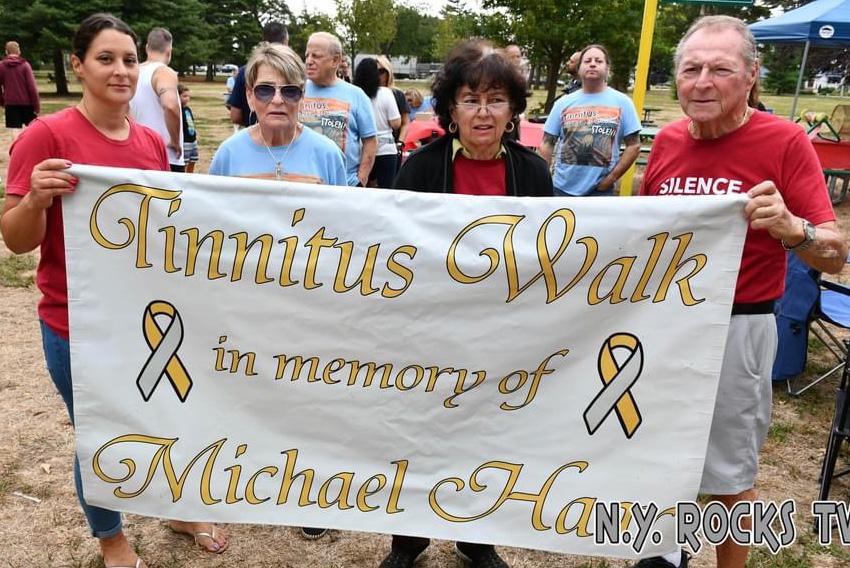
a 30-minute walk through beautiful Eisenhower Park, we concluded with a message of hope for all attendees,” said Steven Haar, Michael’s father, who recruits speakers, organizes raffle prizes, and gets the word out within the Long Island community. This year’s event raised $7,109, which was donated to the ATA.
“It takes tremendous courage to talk about suicide when it’s linked to severe tinnitus because most people who don’t have the condition or have only a mild form cannot fathom that
degree of distress,” said Torryn Brazell, ATA CEO. “It is a tremendous honor to work with the Haar family, and their work is a constant inspiration.” Brazell stressed that the event highlights that community matters, whether we’re talking about the individual with tinnitus and their loved ones, the researcher searching for cures and treatments to reduce distress, or the healthcare provider trying to offer meaningful guidance and interventions.
36 TINNITUS TODAY WINTER 2022 www.ATA.org
ATA NEWS
From left, Michael’s sister, Jennifer Patten, aunt, Andrea Zukerman, and parents, MaryAnne Haar and Steven Haar.
The Alarm That Sparked Tinnitus and a Marital Crisis
By Stuart Levine
It began with a loud shrieking beep. And then another. And then two more.
Who could’ve ever predicted that a 30-year marriage filled with love, trust, friendship, and too many wonderful moments to count would nearly be destroyed by a smoke alarm?
Over the course of several weeks back in the spring of 2020, my wife asked me to check the four smoke alarms in our house. It had been about seven years since we last tested them, so the request certainly wasn’t unreasonable. And, admittedly, I probably have more than a normal amount of fear of fire (don’t even think about lighting a candle around me), so it made perfect sense to ensure the smoke alarms were still working properly.
One would think that, after the first time you’ve placed your head near a smoke alarm when testing it, the incredibly loud noise might convince you to partake a different method. I consider myself fairly intelligent. I graduated from college. I can engage in political discussions. I have a high-pressure job in the entertainment industry that requires me to think on my feet.
Somehow, though, I didn’t have enough sekhel (Yiddish for “common sense”) to move my head away from the smoke alarm and use a stick or broom to press the button. Or to put on a pair of noise-reducing headphones. Nope. I stood next to four alarms and the ringing got louder with each one I tested. The decibel level for the fourth and final alarm was so loud that I winced when it beeped.
Fast-forward four days to when I woke in the morning with my ears ringing like fire engines. What was going on? Why was it not stopping? It immediately sent me into a mental, emotional, and physical tailspin that was pure torture. Like all those in the throes of tinnitus for those first few weeks and months, the dark thoughts that filled my head were unimaginable.
How did my wonderful life turn to hell in what felt like a nanosecond? How did this happen? Clearly, there must be someone to blame. And that someone was my wife.
It wasn’t like she wasn’t extremely sympathetic to my nightmare. She took me to doctor’s appointments, served as my nonstop listening board, and made all my meals and tried as best as possible to make me eat when
I was dropping weight. Feeding myself and any sort of self-maintenance were on the very bottom of my priority list.
Though her job in academia was stressful and had its fair share of challenges, especially in the midst of the pandemic when we were working from home and trying to figure out the work-life balance, she rescheduled meetings, left the virtual office for hours at a time, and did everything she could to help me get my life together again.
While all that was true, it didn’t prevent me from blaming her for what had happened to me. Why did she ask me to check something that wasn’t broken? Would you put your head in an oven to see if it was working? She has admittedly always been overly cautious—we often kid that “Be safe!” is her daily mantra—buying extra insurance, making sure two or three times that the house is locked before leaving. And now, it wholeheartedly felt like her unnecessary caution had cost me my sanity, job, future, and everything that I had worked so hard for up to this point in my life.
Mornings were the most difficult time for me. Getting up and hearing that ringing as soon as I opened my
www.ATA.org TINNITUS TODAY WINTER 2022 37 PERSONAL STORY
eyes was excruciating. My wife had put together a home gym adjacent to where I was sleeping, and I would hear her working out and could feel my anger build each morning.
Why was she allowed to get on with her life when her actions had permanently destroyed mine? Who was she to engage in something as frivolous as doing Pilates and lifting weights when I couldn’t even imagine how my life was going to continue past today … if I made it through the day. The unmitigated gall of her just
moving on while I was clearly suffering was too much to bear.
No marriage is perfect. Each one has its ups, downs, and unique challenges. But we had a good thing. Thirty years filled with love and respect, with hardly a fight. Sure, there were the occasional “I think you’re spending too much on Amazon” or “I can really use some help making dinner once in a while” discussions, but rarely anything that rose to the level of true anger. We have long been a perfect fit for one another, with similar introverted personalities and common ground.
not so gently to stop blaming my wife, I came to the realization that my life was undeniably better with her in it than without her. Because I was starting to realize there actually was a viable future for me living with tinnitus and I wanted her to be a part of that. As destructive as the tinnitus was, I was determined it wasn’t going to take my marriage from me. I simply wouldn’t let it.
Home alarms are by design loud enough to wake a sound sleeper. In a 16-segment fire alarm instruction manual, written in tiny type that begged not to be read, a warning symbol indicated that standing too close to a sounding alarm could damage hearing.
Alarm manufacturers assume that when an alarm sounds, people will exit quickly, optimally covering their ears as they rush outside. For home testing of alarms, recommended at least twice a year, the instructions say, “Step away.” However, to ensure one doesn’t cause hearing damage or tinnitus, it’s best to wear earplugs or earmuffs when testing alarms.
That’s all nice and good, but how was I supposed to continue a life with someone who literally tried to kill me by having me check the smoke alarms? On the day we tested the alarms, why was she cowering in the corner of the living room, trying to escape the loud beep, while I was on the front lines with my head next to the device? Why wasn’t she testing them if she felt so strongly about them possibly not working?
These are the thoughts you have when you feel distraught and when your life is falling apart. It’s not logical, of course, but when you’re in the middle of a storm, logic goes out the window.
We openly talked about how our marriage might not make it through this and how our separation would affect our 26-year-old daughter. It was truly awful, and we were having conversations that seemed unimaginable only a month before, when our biggest concern was which desserts we should order after dinner or which one of us would go shopping at Trader Joe’s that weekend.
And then, with the help of some supportive doctors, medication, a few days away from home for some treatment, and my mom telling me
That was a little over a year ago. Today, though I still have tinnitus, it is a minor part of my life, one that I hardly give any credence to. I hear the ringing occasionally, but it doesn’t set off the emotional hell storm that it did in the first two or three months. It’s just a part of my identity, and like others with health ailments, something that I’m able to compartmentalize and realize it isn’t who I am.
Now we’re back to our comfort zone of discussions about which restaurants to pick for date night, what movies to see, and how eating a Dodger Dog at Dodger Stadium is one of life’s true pleasures. I’m still trying to convince her of that last one.
Our marriage is probably actually stronger now than ever because after you’ve looked into the abyss, you relish the fact that you’ve made it back on top again.
If you’re on a similar journey, please know you’ll get there. Try not to blame one another. Do whatever it takes to get through the hard times. And take a nice vacation for the two of you when you get to the other side.
Stuart Levine is a 59-year-old television executive living in Los Angeles.
38 TINNITUS TODAY WINTER 2022 www.ATA.org PERSONAL STORY
Finding the Road to Neutral
By Stuart Levine
Clearly, shifting from complete despair after a tinnitus diagnosis to a neutral state of mind where tinnitus has no palpable effect in your life isn’t an easy journey. It’s a winding road filled with doubt, anger, and grieving, but with effort, reassurance, and the help of professionals, you will get to a place where tinnitus is just another part of your life— where it doesn’t control who you are and what you do.

Of course, we immediately want to gather as much information as we can on a new condition. But, based on past medical issues I’ve had, the one thing I knew, without a doubt, was that going into tinnitus chatrooms would only hinder my recovery. Generally speaking, these groups can often by inhabited by people who have not moved on with their lives and are defining themselves by their tinnitus. Though their intentions are to be helpful, that’s not a place where you want to go to learn about your new diagnosis.
Upon the onset of my tinnitus, I immediately reached out to a person on the support section of the ATA.org site who was willing to offer counsel and, most importantly at that early stage, lend a sympathetic ear. I also found very helpful YouTube videos posted by people who had recovered and wanted to share their thoughts on how they got to a neutral place with tinnitus.
In my experience, I found audiologists to be much more
helpful than ENTs and internists. Audiologists deal with tinnitus patients daily and can be much more up to speed and informative on new treatments, successful strategies, and ways to cope. Two or three audiologists were very helpful to me, and I’ll be forever grateful.
A big turning point for me was getting discreet hearing aids that functioned as a sound generator and that pumped soft-sounding, Zen-like wind chimes into my ears, diluting the harshness of the tinnitus. Soon, all I was hearing were the pleasantsounding chimes, a heavenly change from the hellish prior two months.
Then, I entered into the acceptance phase, which was key. Okay, I thought, if I have to hear light-sounding chimes in my ears going forward, I can live with that. I can have a life. I can go on.
And now, about 18 months since my tinnitus began, I’m in a very positive state. I wear my hearing aids only one or two days a week and have turned off the chimes. After my
audiologist told me I had very slight hearing loss, I’ve used the devices to amplify other sounds, which naturally drowns out the tinnitus.
Do I still hear the ringing? Yes, especially when it’s quiet. Does it bother me? Sure, sometimes, but the emotional distress is gone. Hearing the tinnitus doesn’t send me into a dark abyss as it did at the beginning.
Every patient is different, and my tinnitus story may not be yours, but one element feels like it can be true for everyone: You will get there. You will endure. You will be okay. I kept having to hear that and now I know it’s true.
When I was in a bad place, I often asked my audiologists if I would ever get better. They all told me everyone who tries will improve. Whether it’s through natural habituation, hearing devices, medication, working with psychologists and therapists, talking to others who can offer support, or other tools, the brain can and will adjust to this new normal.
As a TV nerd, it reminds me of a scene from one of my favorite shows of all time, NYPD Blue There’s a scene where hard-boiled Detective Andy Sipowicz (Dennis Franz) is asked if he’s concerned that he might suffer an injury on the job. His response still resonates with me.
“No. I get along fine with four toes.”
You will too.
www.ATA.org TINNITUS TODAY WINTER 2022 39 PERSONAL STORY
Practical Steps to Support Your Loved One With Tinnitus
By Bruce Hubbard, PhD
If you don’t have tinnitus yourself, it may be hard to understand what your loved one with tinnitus is going through. Take it from me—a board-certified cognitive behavioral psychologist who’s helped close to 1,500 people with tinnitus get their lives back, and like your friend, partner, or family member, one of hundreds of millions of people worldwide living with the persistent internal sound of tinnitus—tinnitus can be awful!
The first six months following my tinnitus onset were among the worst of my life. At that time, it seemed impossible that I would ever be well again. That was 2005. I am grateful to report that, although my tinnitus hasn’t changed, I rarely notice it, and when I do, it’s no more upsetting than the hum of a fridge. I’ve gone on to enjoy the same full life I had prior to my tinnitus journey.
Not everyone achieves full relief, but for the vast majority of people, having tinnitus does get easier over time, often a lot easier. It’s likely that if your loved one can hang on, be patient, and get the right help, then over the next few weeks and months, they too will see that having tinnitus
can get easier. To instill hope, let’s review some facts about tinnitus and propose an actionable plan for your loved one’s recovery.
Tinnitus Versus Tinnitus Distress
First, it’s important to distinguish between tinnitus and tinnitus distress Tinnitus is the sound we hear. A hard fact that can be both terrifying and maddening is that, at present, there is no cure for tinnitus.
In contrast, tinnitus distress is the emotional reaction to the tinnitus sound, and how it impacts our sleep, concentration, and ability to be at peace. Chances are it’s the distress, as much or more than the tinnitus sound itself, that is causing your loved one to suffer. It may be comforting, then, to know that, though there’s no cure for tinnitus, there are effective treatments for tinnitus distress.
Cognitive Behavioral Therapy (CBT)
The most proven treatment for tinnitus distress is cognitive behavioral therapy, better known as CBT. CBT is a common treatment for stress, trauma, anxiety, depression, and insomnia.
And more than a dozen carefully controlled studies have found CBT to significantly reduce tinnitus distress.
In CBT we learn practical skills to cope better with tinnitus, to reduce distress and improve functioning (sleep, concentration, leisure).
CBT skills involve changing our psychological response to tinnitus— how we think about, pay attention to, and act in relation to tinnitus. I think of CBT as physical therapy for the brain, a set of exercises that become automatic with practice. When done correctly, you can expect your emotional reaction and attention to tinnitus to gradually improve. A well-rounded CBT clinician will also be an expert in treating the anxiety, depression, and insomnia that are so typical of tinnitus distress.
Sound Therapies
Adding a soothing background sound at the times tinnitus is most distressing can help soften your loved one’s perception of tinnitus. This can make it easier to let go of tinnitus and redirect attention back to the important stuff of life.
Sound therapy can be self-guided or audiologist guided. Self-guided sound therapy is much less expensive and
40 TINNITUS TODAY WINTER 2022 www.ATA.org
TINNITUS TOOLS AND RESOURCES
can be very effective. The Progressive Tinnitus Management manual, accessible through the ATA’s website, has an excellent chapter on the topic. And the Spring 2022 Tinnitus Today article on open earbuds and bone conduction headphones highlights lowcost Bluetooth streaming devices that can be used to access ear-level sound therapy inexpensively.
Information about audiologistguided sound therapy can be found on the ATA website (ATA.org) and using the list of providers starting on page 50. The evidence supporting audiologist-guided sound therapies is mixed. Nevertheless, for many people, this is an important intervention for tinnitus distress.
Hearing aids may be helpful for those with hearing loss because they raise the level of natural background sound and improve the quality of hearing in a manner that sometimes reduces tinnitus perception and distress. Although there is limited research on hearing aids for tinnitus, many people report them to be beneficial.
Hope Through Habituation

If a medical doctor has told your loved one “For your tinnitus, there’s no treatment, but you’ll get used to it,” what they mean is “It may not go away, but you’ll habituate.”
Habituation is a natural process through which the brain gradually


reduces its automatic “alarm reaction” as it learns tinnitus is not important. Habituation is the most important form of tinnitus neuroplasticity. Through habituation, tinnitus doesn’t change, but the emotional reaction and attention to tinnitus gradually diminish, making it much easier to live with the sound. At full habituation (my state for the past 16 years), you rarely notice your tinnitus, and when you do, it’s not upsetting and you forget about it quickly.
Like many forms of healing, tinnitus habituation is a gradual process that occurs over months and years. Surveys indicate that, at any given time, roughly 95 percent of people with tinnitus have achieved some level of habituation, with 50 percent in full habituation. When done correctly, tinnitus distress treatments promote habituation. With the right guidance, your loved one can make significant improvement over the first few weeks and months. Make sure that any tinnitus professional helping your loved one understands tinnitus habituation and teaches them how to promote it. Learn more about tinnitus habituation in the Spring 2018 Tinnitus Today magazine, which focused on this topic.
Take Heart. It Can Get Easier!
For the vast majority of people, even when the tinnitus sound itself does not improve, living with the sound does get easier over time. And there are effective strategies
available to reduce distress, improve functioning, and promote habituation and recovery.
I encourage you and your loved one to be patient and to seek the right help. Take some time to research effective treatments for anxiety and insomnia. Learn about tinnitus habituation and how to promote it. Read habituation success stories, readily available through an internet search. And take heart. It can get easier to live with tinnitus!
After developing tinnitus distress in 2005, Bruce Hubbard, an experienced clinical psychologist, utilized cognitive behavioral therapy, which is globally recognized as the most effective, research-based treatment for tinnitus. Following his recovery, he founded CBT for Tinnitus, LLC, to provide online training and coaching for people bothered by tinnitus, and tinnitus education for professionals.
Dr. Hubbard has published numerous articles and podcasts on CBT, mindfulness, and tinnitus. His webinar, Cognitive-Behavior Therapy for Tinnitus, sponsored by the Anxiety & Depression Association of America (ADAA), has received close to 350,000 views.
Dr. Hubbard is a visiting scholar at Columbia University, Teachers College, a past president of the New York City Cognitive Behavior Therapy Association (2016–2018), and founder and director of CBT for Tinnitus, LLC. He is certified in Cognitive and Behavioral Psychology through the American Board of Professional Psychology (ABPP).

www.ATA.org TINNITUS TODAY WINTER 2022 41
TINNITUS TOOLS AND RESOURCES
Neuromod Devices Ltd. has developed a non-invasive medical device that uses bimodal neuromodulation to treat tinnitus symptoms. The second large-scale clinical trial of this device was recently published and showed a greater average reduction in tinnitus symptom severity than the first clinical trial.¹ ²
95% of treatment compliant participants experienced a reduction in their tinnitus symptoms after 12 weeks of treatment, as measured by THI.¹ ²
91% of treatment compliant participants achieved an improvement that sustained 12 months after treatment concluded.¹ ² 1As measured by THI , 2Conlon et al., Different bimodal neuromodulation settings reduce tinnitus symptoms in a large randomized trial,Sci Rep, https://www.nature.com/articles/s41598-022-13875-x (2022)
Breakthrough Evidence-Based Tinnitus Treatment
The device is CE-marked for use in Europe but is currently unavailable in the United States. Neuromod is working to secure approval from the U.S. Food and Drug Administration to make the device available as soon as possible.
View our research at: www.neuromoddevices.com/tenta2
ADVERTISEMENT
What Can Positive Psychology Contribute to Tinnitus and Hyperacusis?
By Deborah Hall, PhD
In the first of this mini-series in the Spring 2022 issue of Tinnitus Today, I introduced positive psychology as the scientific study of what makes people thrive. Dispelling some common misconceptions, I argued that positive psychology is much more than simply fostering positive emotions and thinking positive thoughts. Positive psychology recognizes that dealing with negative human experiences can be beneficial to personal growth and development and can even help one find a meaningful life.
In the second article, which ran in the Summer 2022 issue, I showed how there seems to be very little scholarly research on tinnitus and hyperacusis from the positive psychology perspective. Although a small number of clinicians and researchers have explored positive experiences reported by people with the lived experience of tinnitus, there’s been little focused effort on understanding how to help those people build the enabling conditions that make life most worth living.
In this third and final article, I therefore explore some of the potential applications of positive psychology and share practical tips that might help readers to live well with their tinnitus and/or hyperacusis.

Boosting Positive Emotions
Beukes and colleagues noted that the majority of their study respondents with tinnitus were unable to report any positive experiences about living with tinnitus.1 We know that positive emotions, such as enjoyment, optimism, gratitude, and hope, play an important role in opening our minds. For instance, hope lets us eagerly anticipate tomorrow, while gratitude ignites the drive to savor the little things that bring us contentment. But positive emotions do much more than make us feel good. For example, in her “broaden-and-build” theory of positive emotions, Frederikson argued that a broadened mindset helps to build longlasting personal resources that can be drawn on later to improve the chance of successful coping with adversity.2 In other words, experiencing positive
emotions can expand a person’s range of thoughts and actions and can lead to an upward spiral of well-being.
Self-help
Positive psychologists have proposed several strategies that anyone can practice at home. A certain amount of commitment and practice is needed, but by choosing to do one activity every day for a week, or a few days a week for a month, you can start to make a difference in the way you feel about yourself and toward others.
• Write down three good things is a classic gratitude exercise (Figure 3.1). Every day, at the end of the day, write down three things (whether big or small) describing what went well for you and why. Experiencing and savoring the moment is a powerful way of connecting with your inner self in a positive way. In an alternative version, you can jot down three things you have accomplished in the last week (whether big or small). Reflect on each success by thinking about what you did to make things work so well or what
www.ATA.org TINNITUS TODAY WINTER 2022 43
SPECIAL FEATURE
you can learn from the experience and improve next time.
• Take a gratitude walk aims to notice the things you see around you as you walk. Be aware of nature, the color of the flowers, the sounds of birdsong, the smell of the ground, and the feel of the weather on your face (Figure 3.2). The benefits are even more powerful when you can enjoy this with your partner or a friend. In this way, you can express how you appreciate being able to spend this time walking together.

• Create positive experiences to help you feel satisfied with life. Helping others, whether it’s a colleague, friend, or neighbor, volunteering your time, or even smiling at a stranger — small acts of kindness are an easy and fulfilling way to bring positive emotions into your life, and they also boost your sense of connection to others.
Expert support
A number of formalized therapeutic interventions actively engage positive emotions to create life-enhancing change.3 Examples include the following:
• Hope therapy uses the experience of positive emotions to create and enhance feelings of hope. Hope builds the person’s sense of being capable of change through goal-directed thought, supported by a hopeful therapeutic relationship.4
• Strengths-based counseling looks at the glass as half full rather than half empty, by emphasizing assets rather than deficits or problems. This form of counseling is about discovering how to recognize and help
people identify their strengths so that they can build on their existing competencies and find resiliencies within themselves. Encouraging and instilling hope is one of 10 stages.5
• Quality of life therapy teaches people strategies and skills to help them find, pursue, and fulfill their needs, goals, and wishes. Positive emotions are used for finding meaning, attaining goals, and recognizing strengths.6
Reframing Counterproductive Thoughts

Self-help
Positive psychologists have proposed several strategies that counteract negative thoughts that can lead to a downward spiral and leave you feeling trapped. Cognitive reframing, as it is called, shifts your mindset so you‘re able to look at a situation, person, or relationship from a different perspective. Again, a certain amount of commitment and practice is needed, especially if thinking styles have become habitual or automatic.
•
Say “stop” to worry-laden thoughts
When you notice yourself getting lost in a swirl of anxious thoughts, try saying “stop” out loud as a way to consciously interrupt your inner voice. This tactic shuts down counterproductive thought processes.
• Talk to yourself as you would a friend
Practice self-awareness to first notice when you are being self-critical. Try
to get a clear sense of how you talk to yourself whenever you’re feeling bad about something. Next make an active effort to soften the self-critical voice, but do this with compassion rather than being judgmental. Then try to reframe these observations in a friendly, positive way. When you start acting kindly, feelings of true warmth and caring will eventually follow.
• Refocus your energy
Think of a situation you’re struggling with or are frustrated with. Make a note of what aspects of the situation you can control or influence. Then note which aspects you can’t control and need to accept. Finally, list what purposeful action you can take to make the situation better. By creating a contingency plan, you can take a breath, relax a little, and go into the situation more focused on what you can control and feeling more prepared to make a change.
Expert support
Cognitive reframing is a technique that you can practice at home, but it can be helpful to have professional assistance, particularly if you are
SPECIAL FEATURE
Figure 3.1 At Heriot-Watt University Malaysia, staff and students are invited to contribute to a Gratitude Wall in the main foyer entrance. Last year, people posted messages expressing what they felt grateful for during the pandemic.
trapped in negative thought patterns. When this technique is used in a therapeutic practice, it’s known as cognitive restructuring. Cognitive restructuring can be an effective way to turn problems or negative thoughts into opportunities for change and growth.

• Cognitive behavioral therapy is one of the mainstays of psychotherapeutic intervention for different mental health conditions, and cognitive restructuring is one of its core components. Through a collaborative three-step process, the therapist will help you to identify your thought patterns, identify any inconsistencies between your perception and reality, and replace harmful thinking with supportive thinking.
• Resilience training
Positive psychologists have worked with the U.S. Army to develop a proactive approach to building personal resilience and readiness. Part of this training includes recognizing the five
thinking traps that often get in our way. These are: (1) mind reading (assuming you know what another person is thinking), (2) me (believing that you are the sole cause of every setback), (3) them (believing that every problem is caused by other people or circumstances), (4) catastrophizing (ruminating on worst-case outcomes of a situation), and (5) helplessness (believing that bad things are here to stay and you have no control).7 Where maladaptive thought processes exist, these can be challenged and replaced with more proactive and rational thinking patterns. Personal coaching sometimes uses the same techniques with civilians.
Concluding Remarks
Throughout this 2022 mini-series, I have tried to present the case that positive psychology is not just a ploy to push people to power through their suffering with tinnitus and/ or hyperacusis. Instead, positive psychology represents a new way to grow from the negative and to learn to be grateful for the positive. Understanding what leads people to live more meaningful lives can inform better intervention strategies for managing tinnitus and hyperacusis distress, by challenging negative automatic thoughts and behavior patterns, and increasing happiness,
life satisfaction, and well-being. Here I have introduced some of the positive psychology techniques that could be valuable in more traditional psychological therapy. I hope that this mini-series stimulates renewed efforts among clinicians and researchers to enable those who are living with tinnitus and hyperacusis to achieve optimal well-being and satisfaction with life.
Deborah Hall, PhD, is currently Professor of Positive Psychology and head of the Department of Psychology at Heriot-Watt University Malaysia. Over the past 25 years, her research has spanned a range of topics on individual and societal well-being. She is recognized as a world leading expert on tinnitus, but past research projects also include exploring the relevance of positive soundscapes, developing a manualized psychological treatment to increase the knowledge base of audiologists in the U.K.’s National Health Service, and advocating to bring the public voice into clinical research. She can be reached at deborah.hall@hw.ac.uk
1 E. W. Beukes, V. Manchaiah, T. E. Valien, D. M. Baguley, P. M. Allen, & G. Andersson. (2018). Positive experiences related to living with tinnitus: A crosssectional survey. Clinical Otolaryngology, 43(2), 489–495.
2 B. L. Fredrickson. (1998). What good are positive emotions? Review of General Psychology, 2(3), 300–319.

3 A. Stalikas, M. Fitzpatrick, P. Mistkidou, A. Boutri, & C. Seryianni. (2015). Positive emotions in psychotherapy: Conceptual propositions and research challenges. In O. Gelo, A. Pritz, & B. Rieken (Eds.), Psychotherapy research (pp. 331–349). Springer.
4 S. J. Lopez, R. K. Floyd, J. C. Ulven, & C. R. Snyder. (2000). Hopetherapy: Helping clients build a house of hope. In C. D. Snyder (Ed.), Handbook of hope: Theory, measures, and applications (pp. 123–150). Academic Press.
5 E. Smith. (2006). The strengths-based counseling model. Counseling Psychologist, 34, 13–79.
6 M. B. Frisch. (2006). Quality of life therapy: Applying a life satisfaction approach to positive psychology and cognitive therapy. Wiley.
7 K. J. Reivich, M. E. P. Seligman, & S. McBride. (2011). Master resilience training in the U.S. Army. American Psychologist, 66(1), 25–34.
Figure 3.2 Taking time to appreciate nature has therapeutic benefits, especially when enjoyed with your partner or a friend. Be Inspired to Kick-Start Your Upward Spiral Action for Happiness http://www.actionforhappiness.org The Habits of Happiness https://www.ted.com/talks/matthieu_ricard_the_habits_of_happiness SPECIAL FEATURE
This Is Your Brain on Noise
 By Jan L. Mayes, MSc
Dr. Jos J. Eggermont, auditory system researcher and emeritus professor at the University of Calgary, is highly qualified to write about unhealthy noise in our “modern world of excess sound.” Noise and the Brain is his in-depth, well-written book on the subject.1 While the book was published in 2013, it remains an excellent resource for understanding auditory brain health.
In it, he reviews a wide body of scientific research to prove that noise damage extends far beyond inner ear–related hearing loss. Noise causes auditory nerve degeneration and auditory brain changes, also called central auditory processing disorders, which are linked to tinnitus, hyperacusis or decreased sound tolerance, and difficulty understanding speech in noise. Auditory nerve degeneration can progress for up to one year after a noise exposure.
Each chapter has its own reference list, typically 80 to 100 key scientific studies, some dating back decades. The research includes human trials in children and adults and animal models using intentional noise exposure.
Eggermont considers noise a “life span” problem stemming from
environmental, music, recreational, and work exposures and urges better awareness of moderate to loud noise risk to the auditory brain, especially in newborns, children and teens. The human auditory system is not fully developed at birth and does not reach mature auditory processing performance until a person is 15 to 20 years old. He shows that into the teen years, children are at higher risk from noise exposure while their auditory systems are still developing. Hence, noise that may not affect adults can cause permanent auditory damage in developing ears and brains.
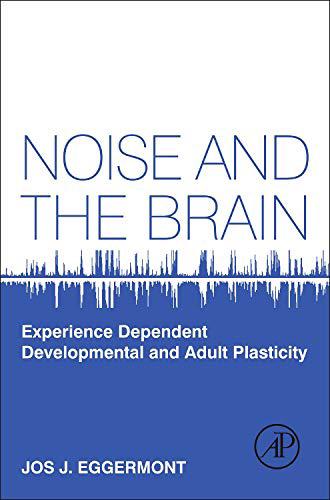
Loud noise examples in the book include personal listening devices, but Eggermont emphasizes that even moderate levels of “noise or hum” should be considered high risk for young people whose auditory systems are still developing. Noise causes permanent “maladaptive” brain changes even when the level is “non–hearing loss causing.”
Eggermont shares examples of humtype environmental noise, including in neonatal intensive care units, from road traffic, from aircraft and at airports, and the low-frequency noise from wind turbines.
46 TINNITUS TODAY WINTER 2022 www.ATA.org
TINNITUS TOOLS AND RESOURCES Book Review Noise and the Brain: Experience Dependent Developmental and Adult Plasticity Title: Noise and the Brain: Experience Dependent Developmental and Adult Plasticity Author: Jos J. Eggermont Publisher: Academic Press Date of Publication (first edition): September 12, 2013 Number of pages: 392 Hardcover ISBN: 9780124159945 eBook ISBN: 9780123914316
When sound is loud enough to cause hearing loss, noise causes “aberrant brain changes.” While hearing loss from noise-damaged inner ears is fairly well recognized, Noise and the Brain highlights the fact that individuals exposed to noise can develop noise-induced auditory processing disorders like tinnitus, hyperacusis, and problems understanding speech in noise even without any hearing loss. These dysfunctions typically develop before any measurable hearing loss can be seen on a standard audiogram. The chapter on tinnitus is aptly titled “Noise in the Brain.”
Noise and the Brain includes several chapters that focus on other negative consequences of noise exposure. Ambient noise causes speech communication breakdowns for children and older adults. Nonauditory noise effects, similar to those seen with tinnitus, include annoyance, stress, and impaired sleep. Additional noiseinduced problems include hypertension or high blood pressure, decreased school performance, and behavior and attention problems. Eggermont identifies that hyperacusis is most sensitive to environmental noise.
The author concludes that noise control is needed, but emphasizes that noise limits established to prevent hearing loss are not low enough to create “brain-safe” environments for the public. He includes several examples of noise level risk that clearly debunk the “85 dB is safe” myth. The auditory injury threshold is between 75 and 78 decibels (dB) average exposure, regardless of listening time. Exposure to 76 dB for eight hours is associated with noise-induced auditory brain changes, stress, and hypertension. Auditory processing disorders can develop from noise exposures between 65 and 80
dB, and the effective quiet level to rest the auditory system between noise exposures is at least 55 dB. Because auditory brain disorders can develop without any related hearing loss, standard threshold audiometry is not a good indicator of safe exposure levels.
I started out as an audiologist in the 1980s and specialized in noiseinduced auditory damage over most of my career. I’ve always had an interest in central auditory processing disorders, but in school I had only one course on brain anatomy and function. Some parts of Noise and the Brain were difficult for me to understand, mainly the sections describing typical versus disordered brain anatomy and function. Figures, graphs, tables, and brain scan images were helpful in explaining the text.
I think Noise and the Brain succeeds in proving noise-induced auditory damage is far worse than suspected in the past. A key takeaway is that a lifetime of loud noise exposure causes auditory processing problems in the brain in addition to permanent progressive hearing loss. A bigger takeaway is the high risk from noise exposure during infancy through the teen years. Even moderate-level noise exposure can cause brain changes linked to auditory processing disorders, without any hearing loss.
Eggermont recommends using auditory processing tests, such as speech-in-noise performance, because standard audiograms are not sensitive to auditory brain health. Based on my experience, I agree that a battery of tests is useful for identifying noise-induced auditory problems. I would add extended high-frequency audiometry above 8,000 Hertz and cochlear function testing (e.g., otoacoustic emissions), which are considered sensitive to early noiseinduced hearing damage.2 Consistent
age-appropriate definitions of tinnitus and hyperacusis are also essential to further research on noise and auditory system health.3
As Eggermont points out, we don’t know everything there is to know about how our auditory system works or what noise levels are completely safe for total auditory health. Nevertheless, I highly recommend Noise and the Brain as an excellent evidence-based reference volume or textbook.
This is an advanced science book that would likely interest anyone who already has some understanding of the brain or auditory system, including researchers, otologists or ear, nose, and throat physicians, audiologists, speechlanguage pathologists, psychologists, physicians, educators, and other specialists, as well as members of the public who are interested in the science. Public health authorities or noise control decision makers should also find this book useful.
Jan L. Mayes, MSc, has had tinnitus for more than 30 years. She is an award-winning author of nonfiction hearing health books. As a newly retired audiologist, Mayes continues to write about tinnitus, hyperacusis, and community noise impact on disability access, communication, and hearing wellness. In her spare time, Mayes enjoys writing dystopian fiction. To learn more, visit her website: www.janlmayes.com
1 J. J. Eggermont. (2013). Noise and the brain: Experience dependent developmental and adult plasticity. Academic Press.
2 M. Pienkowski. (2021). Loud music and leisure noise is a common cause of chronic hearing loss, tinnitus and hyperacusis. International Journal of Environmental Research and Public Health, 18(8), 4236. https://www.doi.org/10.3390/ijerph18084236
3 S. N. Rosing, J. H. Schmidt, N. Wedderkopp, & D. M. Baguley. (2016). Prevalence of tinnitus and hyperacusis in children and adolescents: a systematic review. BMJ Open, 6(6), e010596. https://www.doi.org/10.1136/bmjopen-2015-010596
www.ATA.org TINNITUS TODAY WINTER 2022 47 TINNITUS TOOLS AND RESOURCES
Tinnitus Support Groups
People with tinnitus at every stage in their journey, from the first few days to many years later, can benefit from membership in a support group. Every tinnitus support group operates differently; but they all share a passion for providing meaningful discussion and a caring
environment where one can be understood through shared experience. Below is a list of groups and meeting dates, current at time of print. Each support group referenced here is independently operated and led by volunteers who wish to provide education and support to the tinnitus community.
IN-PERSON MEETINGS
The American Tinnitus Association (ATA) does not sponsor or endorse these activities and expressly disclaims any responsibility for the conduct of any independent support group or the information they may provide. ATA is not a healthcare provider and you should consult with a primary care physician or hearing healthcare professional for qualified medical advice on tinnitus and related disorders.
*To allow for flexibility in planning, some groups do not schedule meetings far in advance. When we receive updates from support group leaders, we update meeting information on our online Events Calendar at www.ata.org . The information was provided to ATA staff at the time the magazine went to print; therefore, please confirm meeting details with the contact person prior to a meeting or reference our website at: https://www.ata.org/news/events
This is a partial listing of support groups and scheduled meetings. A complete list can be found at https://www.ata.org/ your-support-network/find-a-supportgroup/. New groups continue to be added, so please check the website for updates periodically.
If you’re interested in forming a group, please contact Joy Onozuka at tinnitus@ata.org
If there isn’t a group in your area, ATA has an extensive network of volunteers who provide email and telephone support and educational information. To connect with a volunteer in your time zone, see: https://www.ata.org/your-support-network/ telephone-support/
With continued concerns about Covid-19, it is critical to contact the support group leader directly to confirm meeting information and personal protection requirements. Information in the magazine and on the ATA website is provided by support group leaders and is subject to change.
Arkansas
NEW Mountain Home Tinnitus Support Group
Contact: Glenna Fisk
E: tinnitusgroupmh@gmail.com Meeting dates & time TBD
Colorado
Mesa County Tinnitus Support Group
Contact: Elaine Conlon T: 970–589–0305
E: conlonelaine@aol.com
3rd Wednesday of the month, 6:00 pm
North Denver Tinnitus Support Group
Contact: Melissa Golden T: 303–506–9389
E: mbaycon@hotmail.com
Florida
Clermont Tinnitus Support Group
Contact: Laura Pratesi, AuD T: 352–989–5123
E: office@citrushearing.com
2nd Monday of the month, 1:00 pm, RSVP Required
Sarasota Tinnitus Support Group
Contacts: Carmen Trotta, Tom Terrenzi
T: 941–993–7616, 941–462–1311
E: sarasota.ata@gmail.com
3rd Friday of the month, 2:00–4:00 pm
Illinois
Chicago Suburban Tinnitus Support Group
Contact: Margie B.
E: maggie318@yahoo.com
Michigan
Grand Rapids North
Contact: Robert Ellis T: 616–949–4911
E: robe7350@gmail.com
Holland Tinnitus Support Group
Contact: Stelios Dokianakis, AuD Website: https://holaud.com/contact/ T: 616–392–2222
E: info@holaud.com
Contact for meeting information
New York
Long Island Tinnitus Group
Contact: Anthony Mennella T: 516–379–2534
E: aem830@verizon.net
Currently not meeting. Contact group leader by email for support.
48 TINNITUS TODAY SUMMER 2022 www.ATA.org
TINNITUS RESOURCES
Arizona
Tucson Tinnitus Support Group
Contact: Trudy Jacobson
E: trudyj@cox.net
4th Saturday of the month, 1:00 pm
California
Hearing Loss & Tinnitus Support Group
Contact: Mimi Salamat, PhD
E: dr.mimi@yourhearingdoc.com
1st Thursday of the month, 7:00–8:30 pm
Los Angeles/Orange County Tinnitus Support Group
Contact: Barry Goldberg
E: bargold06@yahoo.com
3rd Saturday of month, 10:00 am PST
Musicians With Tinnitus Support Group
Contact: Michelle Neidleman Kennedy, AuD
E: Michelle@TrebleHealth.com
The Palo Alto Tinnitus Support Group at Avenidas
Contact: Ken Adler
E: karmtac@aol.com
3rd Thursday of the month, 5:30–7:30 pm
Sacramento Area Tinnitus Support Group
Contact: Pat Clark
E: sactinnitus@gmail.com
2nd Wednesday of the month, 6:30–8:00 pm
San Francisco Tinnitus Support/ Education Group
Contact: Tracy Peck Holcomb, AuD
T: 800–865–3142
E: tracy@treblehealth.com
3rd Thursday of the month, 4:00 pm
Colorado
Denver Tinnitus Support Group
Contact: Rich Marr
T: 303–875–5762
E: r.marr@comcast.net
2nd Monday of the month, 7:00–8:30 pm
Florida
Tampa Tinnitus Support
Contact: Joel DeAngelis
T: 813–420–0160
E: joel.deangelis70@gmail.com
3rd Monday of the month, 7:00 pm
VIRTUAL MEETINGS
Georgia
The ENT Institute Tinnitus Support Group
Contact: Sonia Hamidi, AuD, CH–TM
T: 678–347–2123
E: shamidi@nsainstitute.com
3rd Thursday of the month, 6:00 pm
Maryland
University of Maryland Tinnitus and Hyperacusis Support Group
Contact: Christina Shields, AuD
T: 301–405–5562
E: shields3@umd.edu
Meets quarterly, dates and times TBD
Missouri
St. Louis Tinnitus Support Group
Contact: Tim Busche
T: 636–734–4936
E: tbusche@stltinnitus.org
1st Wednesday of even months
New Jersey
South Jersey Tinnitus Support Group
Contacts: Beth Savitch, Erin Lustik
E: tsg@advancedent.com
1st Thursday of the month, 7:00–8:30 pm
New York
Bronx Tinnitus Support Group
Contact: S. Karie Nabinet T: 917–797–9065
E: kkwn12u@aol.com
1st Thursday of the month, 6:30 pm
Oregon
VA Portland Health Care System Tinnitus Education Group National Center for Rehabilitative Auditory Research
3710 SW US Veterans Hosp. Rd. Portland, OR 97239
Contact: Bryan Shaw
E: Bryan.Shaw2@va.gov
T: 503–220–8262, ext. 55568
Pennsylvania
Lehigh Valley Tinnitus Support Group
Contact: Luke Ciaccio, PhD
T: 610–776–3117
E: lciaccio@gsrh.org
2nd Tuesday of month, 5:30–6:30
Texas
Dallas/Ft. Worth Tinnitus Support Group
Contact: John Ogrizovich
E: dfwtsg@yahoo.com
Meets Saturdays every 4–6 weeks, 10:00 am (hybrid from February 2023)
Virginia
National Capital Region Tinnitus Support Group
Contacts: Elaine Wolfson, David Treworgy
E: erwolfson@comcast.net
E: david_treworgy@yahoo.com Meets monthly
Wisconsin Madison Tinnitus Support Group
Contact: Deb Holmen
T: 608–219–0277
E: dholmenihearu@gmail.com 4th Wednesday of the month, 6:30–7:30 pm
HYBRID MEETINGS
California
San Diego Tinnitus and Hyperacusis Support Group
Contacts: Michael J. Fischer, Loretta Marsh, David Phaneuf, Tom Sutton
E: michaeljohnfischer@hotmail.com E: lorettamarsh@hotmail.com E: djphaneuf@yahoo.com
E: tomsutton63@gmail.com 1st Tuesday of the month, 6–7:30 pm
Texas
Austin & San Antonio
Tinnitus Support Group
Contact: Matthew Randal
T: 512–660–7276
E: atasg.satx@gmail.com
1st & 2nd Saturday of the month, 11:00 am
www.ATA.org TINNITUS TODAY SUMMER 2022 49
Please email/call the point-of-contact person listed for information on upcoming meetings.
TINNITUS RESOURCES
Spotlight on Patient Providers

Professional Members
Listing current as October 26, 2022
When making an appointment, please mention that you learned of the provider from the ATA, thereby ensuring that providers understand the importance of being a part of the ATA’s tinnitus patient provider network.
COLOR KEY
Purple: Audiology
Green: Medical practitioner
Blue: Hearing aid dispenser
Orange: Therapist
Pink: Complementary/Alternative Medicine practitioner
Navy: Other UNITED
Alabama
Susan Sheehy, AuD
STATES
Alabama Hearing Associates Madison, AL
Alaska
Emily McMahan, AuD, CH–TM
Alaska Hearing & Tinnitus Center Anchorage, AK
Arizona
Lynn Callaway, BC–HIS
Affordable Hearing Solutions Green Valley, AZ
Emily Densmore, AuD, CH–TM Sound Relief Hearing Center Scottsdale, AZ
Judy Huch, AuD
Oro Valley Audiology, Inc. Oro Valley, AZ
Bomina Kang, AuD
Sound Relief Hearing Center Peoria, AZ
Stephanie Mullins, AuD, CH–TM
Southeast VA Health Care Clinic Chander, AZ
Sarah Pitrone, AuD, CH–TM
Sound Relief Hearing Center Mesa, AZ
Peter Vernezze, MSW, PhD
The Tinnitus Coach Tucson, AZ
Rachel Zovko, AuD, CH–TM Sound Relief Hearing Center Scottsdale, AZ
Arkansas
Kelley Linton, AuD, CH–TM
Center for Hearing, Ltd. Fort Smith, AR
Michael Osterbur, PT Natural State Health Center Little Rock, AR
California
Kasra Abolhosseini, AuD Tustin Hearing Center Tustin, CA
Melissa Alexander, AuD
Alexander Audiology, Inc. Santa Monica, CA
John Barrett, Lac
The Acupuncture Wellness Center, Inc. Los Angeles, CA
Joe Bartlett, BC–HIS Bartlett’s Hearing Aid Center Chico, CA
Randall Bartlett, MA
Tinnitus & Audiology Center of Southern California, Inc. Santa Clarita, CA
Maryellen Brisson, AuD Hermosa Beach, CA
Shahrzad Cohen, AuD, CH–TM Hearing Loss Solutions Sherman Oaks, CA
David DeKriek, AuD Fidelity Hearing Center Cerritos, CA
Gregory Frazer, AuD Pacific Hearing & Balance Center, Inc. Los Angeles, CA
Jennifer J. Gans, PsyD Mindful Tinnitus Relief San Francisco, CA
Amit Gosalia, AuD West Valley Hearing Center Woodland Hills, CA
Alyse Gulack, AuD
VA Palo Alto Healthcare System Menlo Park, CA
Tracy Peck Holcomb, AuD Treble Health San Francisco, CA
Beverly Lew, AuD Sound Advice Burbank, CA
Peter J. Marincovich, PhD Audiology Associates Santa Rosa, CA
Sara Mattson, AuD Rancho Santa Fe Audiology Rancho Santa Fe, CA
Suzanne May, AuD, CH–TM Treble Health Sacramento, CA
Kirsten McWilliams, AuD, CH–TM The Hearing Solution Sacramento, CA
Amy Nelson, AuD, CH–TM Kaiser Permanente Santa Clara, CA
Janine Newkirk, AuD, CH–TM Stanford Health Care Menlo Park, CA
Marni Novick, AuD, CH–TM Silicon Valley Hearing, Inc. Los Gatos, CA
Angela O’Boyle, AuD Hearing Associates Inc. Northridge, CA
Bruce Piner, AuD Hearing and Balance Center Encino, CA
Ramsay Poindexter, AuD, CH–TM
Treble Health San Jose, CA
Ashley Potter, AuD Humboldt Audiology Eureka, CA
Brook Raguskus, AuD, CH–TM Pacific Hearing Service Los Altos, CA
Jane Rosner, AuD West Valley Hearing Center Woodland Hills, CA
50 TINNITUS TODAY SUMMER 2022 www.ATA.org
TINNITUS RESOURCES
Mimi Salamat, PhD
Dr. Mimi’s Audiology Clinic Walnut Creek, CA
Christopher Sumer, NBC–HIS Coastal Hearing Aid Center Encinitas, CA
Ben Thompson, AuD Treble Health Berkeley, CA
Eleanor Wilson, AuD Hear Again 2 Bakersfield, CA
Brian Worden, MD Kaiser Permanente Woodland Hills, CA
Colorado
Morgan Ashby, AuD, CH–TM Sound Relief Hearing Center Westminster, CO
Lindsay Collins, AuD, CH–TM Sound Relief Hearing Center Centennial, CO
Terry Cummings, AuD, CH–TM Columbine Audiology and Hearing Aid Center Sterling, CO
Julie Eschenbrenner, AuD Flatirons Audiology, Inc. Lafayette, CO
Kaela Fasman, AuD, CH–TM Sound Relief Hearing Center Golden, CO
Megan Jacobs, AuD Visiting Ancillary Services Lafayette, CO
Krisztina Johnson, AuD, CH–TM Hearing Associates New Castle, CO
Tony Kovacs, AuD, CH–TM Sound Relief Hearing Center Fort Collins, CO
Sarah Mathews, AuD Treble Health Denver, CO
Abigail McMahon, AuD, CH–TM Sound Relief Hearing Center Fort Collins, CO
Leah Mitchell, AuD, CH–TM Sound Relief Hearing Center Westminster, CO
Drew Price, AuD, CH–TM Sound Relief Hearing Center Denver, CO
Julie Prutsman, AuD, CH–TM Sound Relief Hearing Center Highlands Ranch, CO
Jackie Smith, AuD, CH–TM Sound Relief Hearing Center Highlands Ranch, CO
Mandi Solat, AuD, CH–TM Audiology Services & Hearing Aid Center Lakewood, CO
Robert M. Traynor, EdD, CH–TM Fort Collins, CO
Delaware
Megan E. Boehler, AuD Bayside Audiology & Hearing Aids Lewes, DE
Florida
Indira Alvarez, AuD Palm Coast Hearing Center Palm Coast, FL
Lindsey Banks, AuD Treble Health Miami, FL
Kelly Breese, AuD, CH–TM Murphy Hearing Aids of Sarasota Sarasota, FL
Anne Carter, PhD, CH–TM Pasadena Hearing Care South Pasadena, FL
Maura Chippendale, AuD, CH–TM Chippendale Audiology Cape Coral, FL
Melissa Kipp Clark, AuD Suncoast Hearing Services Plus Bradenton, FL
Noel Crosby, AuD Advanced Hearing Solutions Englewood, FL
Ali Danesh, PhD Labyrinth Audiology Boca Raton, FL
Kelly J. Dyson, AuD Suncoast Audiology, LLC Largo, FL
Melodi Fehl, MS ENT and Allergy Associates of Florida Boca Raton, FL
Lisa Gascay, AuD, CH–TM Rainbow River Hearing & Balance Inc. Dunnellon, FL
Karah Gottschalk, AuD NOVA Southeastern University Ft. Lauderdale, FL
Megan Posey, AuD, CH–TM St. Luke’s Cataract and Laser Institute Tampa, FL
Karthikeyan Sai, MD
Palm Beach Kidney & Hypertension Wellington, FL
Cindy Ann Simon, AuD South Miami Audiology Consultants South Miami, FL
Mindy Stejskal, MCD The Hearing Center Pensacola, FL
Robert Taylor, MD Private Practice Vero Beach, FL
Susan E. Terry, AuD Broadwater Hearing Care St. Petersburg, FL
Liz White, AuD Harbor City Hearing Solutions Melbourne, FL
Kayla Wilkins, AuD
Aspire Hearing and Balance Lakeland, FL
Georgia
Laura Barber, AuD, CH–TM
Augusta University Health–Audiology Associates Augusta, GA
Christopher V. Campellone, HIS GoToHearing Gainesville, GA
Kerry Cohen, AuD
University of Georgia Speech and Hearing Clinic Athens, GA
Sonia Hamidi, AuD, CH–TM ENT Institute Buford, GA
Jan Henriquez, AuD At Home Hearing Woodstock, GA
Brian K. Jones, MEd Greater Atlanta Hearing Inc. Cumming, GA
Karla McKenzie, MCD My Hearing Aid Place Richmond Hill, GA
Liz Ramos, AuD, CH–TM
ENT of Georgia/Advanced Hearing Atlanta, GA
Georgeanne Thomas, AuD Hearing & Balance Clinic Watkinsville, GA
Nikki Weaver, AuD
Fayette Hearing Clinic and Coweta Hearing Clinic Peachtree City, GA
Melissa Wikoff, AuD, CH–TM Peachtree Hearing Marietta, GA
www.ATA.org TINNITUS TODAY SUMMER 2022 51
TINNITUS RESOURCES
Hawaii
Amanda Seeley, AuD
Advanced Pacific ENT Wailuku, HI
Idaho
Christine Pickup, AuD
Mt. Harrison Audiology & Hearing Aids, LLC Rupert, ID
Tosha Strickland, AuD Strickland Ear Clinic Meridian, ID
Illinois
Steve Bonzak, MS Health Traditions Chicago, IL
Mary C. Chisholm, AuD Northwest Speech and Hearing Ltd. Arlington Heights, IL
Nancy Congdon, AuD, CH–TM The Hearing Care Clinic Downers Grove, IL
Phillip Elbaum, LCSW Stritch School of Medicine Loyola University, Chicago Deerfield, IL
Dru A. Geraghty, MS Audiologic Services Glen Ellyn, IL
Lori A. Halvorson, AuD, CH–TM Lake Forest Hearing Professionals Lake Forest, IL
Dawn Heiman, AuD Advanced Audiology Consultants Woodridge, IL
Jaclyn Jansen, AuD Sarah Bush Lincoln Effingham, IL
Jill Meltzer, AuD, CH–TM Jill Meltzer, AuD Consulting PLLC Northbrook, IL
Maria Morrison, AuD, CH–TM Geneva Hearing Services Geneva, IL
Mark Partain, AuD, CH–TM Treble Health Chicago, IL
James H. Peck, HIS Life Hearing Health Centers Rockford, IL
Jeanne Perkins, AuD Audiologic Services Glen Ellyn, IL
Daria Popowych, AuD North Side Audiology Group, Inc. Chicago, IL
Susan Schiff, LCSW Oak Park, IL
Alyssa Seeman, AuD Illinois State University Normal, IL
Indiana
Curt Esterline, HIS Concierge Hearing Healthcare New Haven, IN
Sharon Hirstein, MA Elkhart Audiology Rehab Elkhart, IN
Erica Person, AuD, CH–TM Flex Audiology Lawrenceburg, IN
Iowa
Shane Gailushas, MD Mercy Ear, Nose, and Throat Marion, IA
Diana Kain, AuD Heartland Hearing Center Hiawatha, IA
Beki Kellogg, AuD Hope Hearing & Tinnitus Center Hiawatha, IA
Jill Nesham, AuD Professional Hearing Solutions by Dr. Jill Cedar Rapids, IA
Jonathan Stirn, AuD Hope Hearing & Tinnitus Center Hiawatha, IA
Heather Thatcher, HIS Hope Hearing & Tinnitus Center Hiawatha, IA
Kansas
Bryne Gonzales, AuD NuSound Hearing & Tinnitus Center Topeka, KS
James Mangimelli, AuD Mosaic Life Care Atchison, KS
Kentucky
Vanessa L. Ewert, AuD Bluegrass Hearing Clinic Lexington, KY
Ann Rhoten, AuD Kentucky Audiology & Tinnitus Services Lexington, KY
Kari A. Wickstrom, AuD Bluegrass Hearing Clinic Nicholasville, KY
Louisiana
Leanne Battler, AuD United States Army Fort Polk, LA
Catherine C. Lo, AuD
The Hearing Clinic Thibodaux, LA Mary Miller, PhD Premier Hearing and Balance Hammond, LA
Ram Nileshwar, AuD
The Hearing Center of Lake Charles Lake Charles, LA
Elena Treadway, AuD Noel ENT Hearing Center Abbeville, LA
Maine
Ashlee Vandiver, AuD
Red Maple Audiology, LLC Turner, ME
Maryland
L. Noelle Allemang, AuD 360care Laurel, MD
Toni A. Brightwell, AuD Hearing Associates Inc. Havre de Grace, MD
Chelsea Carter, AuD University of Maryland Medical Center Baltimore, MD
Chelsea Lambie, AuD Allegany Hearing and Balance Lavale, MD
Katelyn M. Leitner, AuD, CH–TM Hearing Assessment Center Nottingham, MD
Candice Ortiz–Hawkins, AuD
Capital Institute of Hearing & Balance Silver Spring, MD
Yael Schonfeld, AuD
Chesapeake Ear, Nose & Throat Owings Mills, MD
LaGuinn Sherlock, AuD, CH–TM Walter Reed National Military Medical Center Bethesda, MA
Christina Shields, AuD
University of Maryland College Park College Park, MD
52 TINNITUS TODAY WINTER 2022 www.ATA.org
TINNITUS RESOURCES
Massachusetts
Dierdre Anderson, AuD Audiology Network Services Salisbury, MA
Eugene Antonell, BC–HIS Hear Better Now Tinnitus & Hearing Center N. Dartmouth, MA
Nataliya Ayzenberg, PhD, AuD, CH–TM Moon Hearing Services, LLC Woburn, MA
Judith Bergeron, BC–HIS, CDP Beauport Hearing Care Gloucester, MA
Joni Skinner Bullough, AuD Hampshire Hearing & Speech Northampton, MA
Collin Campbell, Lac Campbell Acupuncture and Herbal Medicine Clinic South Dennis, MA
Theresa Cullen, AuD, CH–TM Cape Cod Hearing Center Hyannis, MA
Nancy Duncan, AuD, CH–TM Duncan Hearing Healthcare Fall River, MA
Kenneth Grundfast, MD Boston University School of Medicine/ Massachusetts Eye and Ear Boston, MA
Peter Harakas, PhD CBT Associates, LLC Lexington, MA
Dana Mario, AuD Mario Hearing & Tinnitus Clinics Mansfield, MA
Robert Mario, BC–HIS, PhD Mario Hearing & Tinnitus Clinics Cambridge, MA
Sapna Mehta–Gertz, AuD Tufts Medical Center Boston, MA
Shannon O’Rourke, AuD Cape Cod Hearing Center Hyannis, MA
Karen L. Wilber, AuD, CH–TM Boston Children’s Hospital Boston, MA
Michigan
Natalie Crossland, AuD, CH–TM
Holland Doctors of Audiology Holland, MI
Felix Cruz, BC–HIS Cruz Hearing Aid Service Farmington Hills, MI
Stelios Dokianakis, AuD, CH–TM Holland Doctors of Audiology Holland, MI
Allie Heckman, AuD, CH–TM Michigan Medicine–University of Michigan Ann Arbor, MI
MaryRose Hecksel, AuD Audiology & Hearing Aid Center Lansing, MI
Tiffany Inman, AuD Inman Audiology Troy, MI
Angela Lederman, MS Hear Now Audiology & Tinnitus Center Clinton Township, MI
Jacklyn Miller, AuD Advanced Audiology DeWitt, MI
Shannon Radgens, DO Red Cedar Ear Nose & Throat & Audiology Owosso, MI
Michelle Rankin, AuD Rankin Audiology and Hearing, LLC Chelsea, MI
Benjamin Wightman, AuD Sound Advice Audiology Livonia, MI
Minnesota
Jennifer Anfinson, AuD Treble Health Plymouth, MN
John Coverstone, AuD, CH–TM Audiology Ear Care New Brighton, MN
Sara Downs, AuD Hearing Wellness Center Duluth, MN
John Ehlen Hear Central Victoria, MN
Jason Leyendecker, AuD Audiology Concepts Edina, MN
Laura Morrison, AuD, CH–TM White Bear Lake, MN
Gayla Poling, PhD Mayo Clinic Rochester, MN
Jennifer Reynolds, AuD Reynolds Audiology & Tinnitus Center Woodbury, MN
Jerry Zhou, PhD Hearing of America, LLC Oakdale, MN
Missouri
Laura Flowers, AuD Hearing and Balance Specialists of Kansas City Lee’s Summit, MO
Jay Piccirillo, MD Washington University School of Medicine Saint Louis, MO
Nevada
Robyn Lofton, BC–HIS Hearing Associates of Las Vegas Las Vegas, NV
New Jersey
Granville Y. Brady Jr., AuD East Brunswick, NJ
Jade Igbokwe, AuD, CH–TM NTI Audiology Jersey City, NJ
Michelle Neidleman Kennedy, AuD Treble Health Newark, NJ
William J. McDonnell, VSO Dept. of Veterans Affairs Mount Laurel, NJ
Nicole Piasentini, AuD New Jersey Hearing Health Center Brick, NJ
Marion Rollings, PhD Holistic Health Counseling Center LLC Hillsborough, NJ
Beth Savitch, MA Advanced ENT/Hear MD Voorhees, NJ
New Mexico
Susan Allshouse, AuD Wendy Gallegos Audiology Corrales, NM
Catherine A. Worth, MS Capital Hearing Care Albuquerque, NM
New York
Nicole Ball, AuD Hearing Evaluation Services of Buffalo, Inc. Tonawanda, NY
Dawn L. Bowerman, MS dB Hearing Center Williamsville, NY
Lois Cohen, LCSW, ACSW, BCD Tinnitus Counseling Northport, NY
www.ATA.org TINNITUS TODAY WINTER 2022 53
TINNITUS RESOURCES
Nancy Datino, AuD
Audiology and Speech Solutions Rye, NY
Bruce Hubbard, PhD
CBT for Tinnitus, LLC New York, NY
Tracey Lynch, AuD Island Better Hearing Inc. Melville, NY
Amy Sapodin, AuD Advanced Hearing Center Albertson, NY
Leigh A. Sauerbier, AuD, CH–TM The Advanced Hearing Center Brooklyn, NY
Jeffrey M. Shannon, AuD Hudson Valley Audiology Pomona, NY
Alyssa Smyczynski, AuD Hearing Evaluation Services of Buffalo, Inc. Orchard Park, NY
Amanda Snell, AuD
Finger Lakes Audiology, PLLC Horseheads, NY
Randall Solomon, MD Long Island Mental Health Port Jeff Station, NY
Garrett Thompson, AuD Treble Health New York, NY
Lori Trentacoste, AuD Island Better Hearing Inc. Melville, NY
Erin M. Walborn–Sterantino, AuD Audiologic Solutions Rensselaer, NY
Carolyn Yates, AuD, CH–TM Hearing Evaluation Services of Buffalo, Inc. Amherst, NY
North Carolina
Jennifer Auer, AuD
Audiology Attention & Tinnitus Care, PLLC Concord, NC
Susan Bergquist, MS Heritage Audiology Wake Forest, NC
Alicia L. Cristobal, AuD
Hearing Health Care Services, PLLC Durham, NC
Lisa Fox–Thomas, PhD
UNCG Speech and Hearing Center Greensboro, NC
Goutham Gosu, AuD Hearing Solution Center Charlotte, NC
Hannah Heet, AuD, CH–TM
Duke Otolaryngology of Raleigh Raleigh, NC
Julia Hubbard–Rossi, AuD Carolina Hearing and Tinnitus, PC Mooresville, NC
Patricia Johnson, AuD, CH–TM
UNC School of Medicine Chapel Hill, NC
Nancy McKenna, AuD
University of North Carolina at Chapel Hill Chapel Hill, NC
Melissa Palmer, AuD
High Point Audiological–Clayton Clayton, NC
Stan Phillips, MD
South Lake Hearing and Tinnitus Center Huntersville, NC
Ivy Saul, AuD
Audiology & Hearing Services of Charlotte Charlotte, NC
Michael B. Slater, AuD South Lake Hearing and Tinnitus Center Huntersville, NC
Emilee V. Tucker, AuD, CH–TM
Carolina Ear, Nose & Throat—Sinus and Allergy Center, PA Hickory, NC
North Dakota
Mackensie Brandt, AuD
Altru Professional Center Grand Forks, ND
Erin O’Leary, AuD
Professional Hearing Services Minot, ND
Ohio
Samantha Bayless, AuD, CH–TM
The Hill Hear Better Clinic Cincinnati, OH
Sarah E. Curtis, AuD
Sounds of Life Hearing Center, LLC Concord Township, OH Ryan Hill, AuD
The Hill Hear Better Clinic Cincinnati, OH
Cathy Kooser, MSW, LISW Hillcrest Hearing & Balance Center Centerville, OH
Heather Malyuk, AuD Soundcheck Audiology Cuyahoga Falls, OH
Richard Reikowski, AuD
Family Hearing & Balance Center Akron, OH
Eryn Staats, AuD Memorial ENT Marysville, OH
Babette Verbsky, PhD, CH–TM Hearing Connections Audiology Lebanon, OH
Gail Whitelaw, PhD, CH–TM
The OSU Speech–Language–Hearing Clinic Columbus, OH
Kyle Woods, MA, CH–TM
Modern Hearing Solutions/Choice Hearing Center Canton, OH
Oregon
Anna Forsline, AuD VA Portland Healthcare System Portland, OR
Kristen Furseth, AuD, CH–TM Willamette ENT Salem, OR
Bryan J. Greenaway, AuD, CH–TM Pacific University Hillsboro, OR
Erika Shakespeare, MSc Audiology & Hearing Aid Services La Grande, OR
Sandi L.B. Ybarra, AuD Hearing Associates Eugene, OR
Pennsylvania
Lisa Blackman, MA A Hearing Healthcare Center Philadelphia, PA
Krista Blasetti, AuD York ENT Associates York, PA
Gail Brenner, AuD Tinnitus & Sound Sensitivity Treatment Center of Philadelphia, PC Bala Cynwyd, PA
Mindy Brudereck, AuD, CH–TM Berks Hearing Professionals Birdsboro, PA
Linda Dallas, MEd Allentown Ear, Nose and Throat Allentown, PA
Amy Greer, AuD, CH–TM Lemme Audiology Associates Ebensburg, PA
54 TINNITUS TODAY SUMMER 2022 www.ATA.org
TINNITUS RESOURCES
Jennifer Isayev, AuD
Audiometrics, Inc. Bryn Mawr, PA
Jeannie Karlovitz, AuD Advanced Hearing Solutions Exton, PA
Anthony Napoletano, HIS Lansdowne Hearing Lansdowne, PA
Rhode Island
Holly Puleo, AuD Gateway Hearing Solutions Warwick, RI
South Carolina
Alexandra Tarvin, AuD
Elevate Audiology Hearing and Tinnitus Center Easley, SC
Jennifer Waddell, HIS Sound Hearing Care Simpsonville, SC
South Dakota
Melissa E. Baker, MA Baker Audiology and Hearing Aids Sioux Falls, SD
Tennessee
Tiffany Ahlberg, AuD Ahlberg Audiology & Hearing Aid Services Cleveland, TN
Marc Fagelson, PhD East Tennessee State University Johnson City, TN
Courtney C. Guthrie, AuD 4 Bridges Audiology Chattanooga, TN
Andrea Plotkowski, AuD Ear, Nose and Throat Consultants of East Tennessee Knoxville, TN
Paul Shea, MD Shea Ear Clinic Memphis, TN
Texas
S. Diane Allen, PhD The Grove Counseling & Wellness Center Dallas, TX
Amanda Ammerman, PA–C Austin Regional Clinic Austin, TX
Theodore Benke, MD Benke Ear, Nose, & Throat Clinic Cleburne, TX
Arica Black, AuD The Hearing Doctor Lubbock, TX
Bethany Brum, AuD, CH–TM UT Southwestern Medical Center Dallas, TX
E. Suzanne Carter, LPC Private Practice San Antonio, TX
Heather Dean, AuD Burleson Audiology Clinic Burleson, TX
Shannon Frugia, AuD, CH–TM Southeast Texas Ear Nose & Throat Beaumont, TX
Mary Sue Harrison, AuD Today’s Hearing Katy, TX
Mark Hedrick, AuD Texas Tinnitus and Hearing Flint, TX
Rachel Higginbotham, AuD Estes Audiology Hearing Centers Boerne, TX
Carla S. Hoffman, HIS Hoffman Hearing Solutions Corpus Christi, TX
Margaret Hutchison, PhD, CH–TM Austin Hearing Services Austin, TX
Susan Hyman, AuD Hyman Hearing Beaumont, TX
Danielle Jenkins, AuD IlluminEar Tinnitus & Audiology Austin, TX
Candace Johnson, AuD Cook Hearing & Balance Cedar Park, TX
Kristen Keener, AuD IlluminEar Tinnitus & Audiology Center Austin, TX
Jenna Lemon, AuD Levo Medical Garland, TX
Christina Lobarinas, AuD UT Southwestern Medical Center Dallas, TX
Celia Miranda, AuD, CH–TM Hear In Texas New Braunfels, TX
Rene Pedroza, AuD, CH–TM United States Department of Defense El Paso, TX
Elly Pourasef, AuD Memorial Hearing Houston, TX
Lydia Ramanovich, AuD, CH–TM Dallas Ear Institute Frisco, TX
Christie Spencer, AuD Fort Bend Hearing Sugar Land, TX
Bradley Stewart, AuD ClearLife Hearing Care Allen, TX Utah
Layne Garrett, AuD Timpanogos Hearing American Fork, UT
Jessica Lui Nelson, BC–HIS Timpanogos Hearing Spanish Fork, UT
Lindsey Tubaugh, AuD Little Heroes Pediatric Hearing Clinic Layton, UT
Vermont
Stephanie Hollop, AuD, CH–TM Univ. of Vermont–E.M. Luse Center Burlington, VT
Virginia
Kimberly Abeyta, AuD Hearing Resource Center Fredericksburg, VA
Please note that the American Tinnitus Association does not verify providers’ certifications and expertise in tinnitus treatment. The list is meant expressly for informational purposes and should not be construed as the ATA’s endorsement of the providers listed. The ATA strongly advises anyone using the list to check practitioners’ websites and tinnitus services before scheduling appointments. Please note that the list includes hearing aid dispensers because hearing aids can be helpful to some people in the management of their tinnitus.
www.ATA.org TINNITUS TODAY SUMMER 2022 55
TINNITUS RESOURCES
Ana Anzola, AuD Hearing Doctors McLean, VA
Theresa H. Bartlett, AuD Virginia Hearing Consultants Virginia Beach, VA
Nicole Denney Evolution Hearing Richmond, VA
Ann DePaolo, AuD The Audiology Offices, LLC Kilmarnock, VA
Julie Farrar–Hersch, PhD Augusta Audiology Associates, PC Fishersville, VA
Kristin Koch, AuD Evolution Hearing Charlottesville, VA
Fred W. Lindsay, DO Hampton Roads ENT and Allergy Hampton, VA
Washington
Troy J. Bacon, CHt New Being Hypnosis Seattle, WA
Anne Harvey, AuD University of Washington Medical Center–Montlake Seattle, WA
Thomas A. Littman, PhD, CH–TM Factoria Hearing Center Bellevue, WA
Dustin Spillman, AuD, CH–TM Audiologists Northwest Bremerton, WA
Wisconsin
Jon Douglas, AuD, CH–TM University of Wisconsin Tinnitus and Hyperacusis Program Madison, WI
Hugo Guerrero, AuD, CH–TM Mayo Clinic Health System Onalaska, WI
Veronica Heide, AuD, CH–TM Audible Difference, LLC Madison, WI
Dan Malcore
The Hyperacusis Network Green Bay, WI
Christina Milos, AuD, CH–TM Audiologic Wellness, LLC Pleasant Prairie, WI
Erin O’Leary, AuD AuD Hearing Lake Geneva, WI
Mandy Rutta, AuD Gundersen Health System La Crosse, WI
Samantha Sikorski, HIS Sikorski Hearing Aid Center, Inc. Spooner, WI
Wyoming
Brendan Fitzsimmons, MD St. John’s–Lander Lander, WY
U.S. TERRITORIES
Puerto Rico
Isamar Gonzalez–Feliciano, AuD Centro Audiológico e Interdisciplinario, Isamar González, Inc. Arecibo, PR
Soami Santiago de Snyder, PhD Universidad de Puerto Rico Medical Sciences Campus Gurabo, PR
INTERNATIONAL
Argentina
Susana A. Dominguez Audiologist Buenos Aires
Australia
Lynne Blackford, BSc MQ Health Speech and Hearing Clinic North Epping, NSW
Paul B. Davis, PhD, MAuDSA Tinnitus TeleCare Suffolk Park, NSW
Minakshi Gupta, MA All Ears Hearing Mount Waverley, VIC
Canada
Ronald Choquette, AuD, CH–TM Montreal University Audiology Clinic Montreal, QC
Sabrina DeToma, AuD Salus Hearing Centre Vaughan, ON
Patrick DeWarle, AuD, CH–TM Winnipeg Hearing Centres Winnipeg, MB
Heidi Eaton, AuD Argus Audiology Moncton, NB
Kimberly Eskritt, AuD Lambton Audiology Associates Sarnia, ON
Sylvie Hébert, PhD Tinnitus and Hyperacusis Research Laboratory Montreal, QC
Deborah R. Lain, MSc Hope For Tinnitus Calgary, AB
Carol A. Lau, HIS Sound idEARS Inc. Vancouver, BC
Brittany Mott
Niagra Hearing & Health Fort Erie, ON
Lucy Xie, HIS Bow River Hearing Calgary, AB
Hong Kong
David Ho, MD Shangzhi Medical Group Hong Kong
Malaysia
Wan Syafira Ishak, PhD, CH–TM Universiti Kebangsaan Malaysia, Malaysia Kuala Lumpur
United Kingdom
Lisa Caldwell The Hearing Coach Glossop, UK
Alan Hopkirk
The Invisible Hearing Clinic Paisley, UK
Uraguay
Claudi Califra, MD Medical Services, Uruguayan Parliament Montevideo
56 TINNITUS TODAY WINTER 2022 www.ATA.org
TINNITUS RESOURCES
TINNITUSTODAY
Editorial Calendar
Tinnitus Today magazine is a print and electronic media magazine published in April, August, and December, and circulated to 25,000+ ATA contributors, donors, patients, supporters, researchers, and healthcare professionals.
The magazine editorial team empowers readers with information, including up-to-date medical and research news, feature articles on urgent tinnitus issues, questions and answers, self-help suggestions, and letters to the editor from others with tinnitus. Strong service journalism, compelling storytelling, first-person narrative, and profiles are presented in an inviting format to encourage readers to reflect, engage, and better understand a chronic condition that affects millions.
Editorial Calendar is subject to change.
To advertise, contact: tinnitus@ata.org
MISSION AND CORE PURPOSE
The mission and core purpose of the ATA are to promote relief, help prevent, and find cures for tinnitus evidenced by its core values of compassion, credibility, and responsibility.
CORE VALUES AND GUIDING PRINCIPLES
Compassion: Evidenced in a spirit of hope reflected in the commitment to finding a cure, preventing the condition, and supporting those affected by the condition.
Credibility: Evidenced in accurate information from reliable sources, transparency in decisionmaking, and an earned reputation for trustworthiness.
Responsibility: Evidenced in patient-centered advocacy by a collaborative community of forward thinking leaders accountable to its mission and members.
www.ATA.org
Issue Theme Editorial Copy Due Photos Due Ad Close Digital Launch Issue Mailed
Community Engagement 1/15 2/1 2/1 4/1 April
Spring–Apr 2023
Managing Your
and
4/15 5/1 5/1 8/1 August
Summer–Aug 2023
Health
Tinnitus
Tinnitus
9/15 10/1 10/1 12/1 December
Winter–Dec 2023
and the Brain
Open Access
Tune In to Stay Abreast of Tinnitus Research and News
The American Tinnitus Association’s podcasts are available 24/7 to help you stay abreast of tinnitus research and other tinnitus topics. Just like listening to music on your smartphone or computer, you can tune in to Conversations in Tinnitus podcasts, while you work out, take a walk, relax at home, or commute to work. To access and learn more about this unique series, visit our website at www.ata.org . To enhance listening comprehension and accommodate those with noise sensitivity, transcripts are available with each podcast.
These are only a few of the episodes from our podcast library.
Episode 16: Considering the Psychophysiological Elements of Tinnitus
SUBJECT MATTER EXPERT: Christopher Spankovich, PhD, MPH
TOPIC: Dr. Christopher Spankovich discusses how tinnitus interventions should address both the psychological and physiological impact of tinnitus on patients. He explores how nutrition, emotional health, and physical health all play a role in mitigating the negative impact of tinnitus. He
also discusses the importance of helping patients understand the power of sound to elicit positive or negative emotions, aside from the tinnitus sound, in order to facilitate habituation. Noting that not all patients believe or accept the psychological component of tinnitus, Dr. Spankovich encourages providers to assess what best fits the needs of individual patients, taking into consideration their specific challenges, what the patient believes, and what he/she is likely to respond to, rather than focusing on a one-size-fits-all approach.
Episode 13: Understanding Preferences for Loud Music
SUBJECT MATTER EXPERT: Elizabeth Beach, PhD
TOPIC: Dr. Elizabeth Beach discusses large-scale research that reveals why clubs, bar, and music venues are playing music at higher volumes than what most people prefer. And while it might seem easy to raise awareness that results in quieter recreational music venues, Beach says it’s complicated, so safe listening initiatives require support at various levels to achieve change. As head of the Behavioral Sciences Department at the National Acoustics Laboratory in Australia, she studies recreational noise in the music and entertainment industry, strategies for encouraging safe listening for staff and patrons, and how to motivate young adults to protect their hearing.
The ATA has earned the 2022 Platinum Seal of Transparency from Candid (formerly GuideStar and Foundation Center), illustrating the ATA’s commitment to sharing our strategy, metrics, and achievements with members and donors.

PO Box 424049 Washington, DC 20042-4049
ATA PODCASTS ARE FREE AND OPEN ACCESS
To subscribe to the print or digital issue of Tinnitus Today, which is published three times a year, visit www.ata.org or email memberservices@ata.org
ATA’s Conversations in Tinnitus, with John A. Coverstone, AuD, and Dean Flyger, AuD
1 D. E. Tunkel, C. A. Bauer, G. H. Sun, et al. (2014). Clinical practice guideline: Tinnitus. Otolaryngology— Head & Neck Surgery, 151(Suppl. 2), S1–S40.
2 T. E. Fuller, H. F. Haider, D. Kikidis, et al. (2017). Different teams, same conclusions? A systematic review of existing clinical guidelines for the assessment and treatment of tinnitus in adults. Frontiers in Psychology, 8, 206.
3 R. Grewal, P. M. Spielmann, S. E. Jones, & S. S. Hussain. (2014). Clinical efficacy of tinnitus retraining therapy and cognitive behavioural therapy in the treatment of subjective tinnitus: A systematic review. Journal of Laryngology & Otology, 128(12), 1028–1033.
4 J. A. Henry, C. Loovis, M. Montero, et al. (2007). Randomized clinical trial: Group counseling based on tinnitus retraining therapy. Journal of Rehabilitation Research and Development, 44(1), 21–32.
5 J. A. Henry, M. A. Schechter, T. L. Zaugg, et al. (2006). Outcomes of clinical trial: Tinnitus masking vs. tinnitus retraining therapy. Journal of the American Academy of Audiology, 17, 104–132.
6 P. Martinez-Devesa, R. Perera, M. Theodoulou, & A. Waddell. (2010). Cognitive behavioural therapy for tinnitus. Cochrane Database of Systematic Reviews (9), CD005233.
7 J. L. Henry & P. H. Wilson. (2001). The psychological management of chronic tinnitus. Allyn & Bacon.
8 A. Bandura. (2004). Health promotion by social cognitive means. Health Education & Behavior, 31(2), 143–164.
9 C. J. Schmidt, C. Kaelin, L. Henselman, & J. A. Henry. (2017). Need for mental health providers in Progressive Tinnitus Management: A gap in clinical care. Federal Practitioner, 34(5), 6–9.
10 R. F. Cima, G. Andersson, C. J. Schmidt, & J. A. Henry. (2014). Cognitive-behavioral treatments for tinnitus: A review of the literature. Journal of the American Academy of Audiology, 25(1), 29–61.
11 P. J. Jastreboff. (2011). Tinnitus retraining therapy. In A. R. Moller, B. Langguth, D. DeRidder, & T. Kleinjung (Eds.), Textbook of tinnitus (pp. 575–596). Springer.
12 J. A. Henry, M. C. Goodworth, E. Lima, T. Zaugg, & E. J. Thielman. (2021). Cognitive behavioral therapy for tinnitus: Addressing the controversy of its clinical delivery by audiologists. Ear and Hearing, 43(2), 283–289.
13 C. J. Schmidt, R. D. Kerns, S. Finkel, E. M. Michaelides, & J. A. Henry. (2018, August). Cognitive-behavioral therapy for veterans with tinnitus. Federal Practitioner, 35(8), 36–46.
14 E. W. Beukes, G. Andersson, V. Manchaiah, & V. Kaldo. (2021). Cognitive behavioral therapy for tinnitus (p. 16). Plural Publishing.
15 J. A. Henry. (2020). Distinguishing between hearing loss, tinnitus, and hyperacusis: A recommended tinnitus-evaluation protocol for audiologists. Tinnitus Today, 45(1), 22–27.
16 J. A. Henry, A. Sonstroem, B. Smith, & L. Grush. (2021). Survey of audiology graduate pograms: Training students in tinnitus management. American Journal of Audiology, 30(1), 22–27.
17 G. Andersson & V. Kaldo. (2006). Cognitivebehavioral therapy with applied relaxation. In R. S. Tyler (Ed.), Tinnitus treatment: Clinical protocols (pp. 96–115). Thieme Medical Publishers.
18 S. M. Theodoroff, G. P. McMillan, C. J. Schmidt, et al. (2021, December 1). Randomised controlled trial of interventions for bothersome tinnitus: Desyncra™ versus cognitive behavioural therapy. International Journal of Audiology. Advance online publication. https://doi.org/10.1080/14992027.2021.2004325
19 J. A. Henry, S. Griest, D. Austin, et al. (2016). Tinnitus Screener: Results from the first 100 participants in an epidemiology study. American Journal of Audiology, 25(2), 153–160.
20 J. A. Henry, S. Griest, T. L. Zaugg, et al. (2015). Tinnitus and Hearing Survey: A screening tool to differentiate bothersome tinnitus from hearing difficulties. American Journal of Audiology, 24(1), 66–77.
21 R. Hallam, S. Rachman, & R. Hinchcliffe. (1984). Psychological aspects of tinnitus. In S. Rachman (Ed.), Contributions to medical psychology (Vol 3, pp. 31–53). Pergamon Press.
22 P. J. Jastreboff & J. W. P. Hazell. (2004). Tinnitus retraining therapy: Implementing the neurophysiological model. Cambridge University Press.
23 P. J. Jastreboff. (2000). Tinnitus habituation therapy (THT) and tinnitus retraining therapy (TRT). In R. S. Tyler (Ed.), Tinnitus handbook (pp. 357–376). Singular Publishing.
24 P. J. Jastreboff & M. M. Jastreboff. (2000). Tinnitus retraining therapy (TRT) as a method for treatment of tinnitus and hyperacusis patients. Journal of the American Academy of Audiology, 11, 162–177.
25 P. J. Jastreboff & M. M. Jastreboff. (2001). Tinnitus retraining therapy. Seminars in Hearing, 22, 51–63.
26 J. A. Henry, M. M. Jastreboff, P. J. Jastreboff, M. A. Schechter, & S. A. Fausti. (2002). Assessment of patients for treatment with tinnitus retraining therapy. Journal of the American Academy of Audiology, 13, 523–544.
27 J. A. Henry, M. M. Jastreboff, P. J. Jastreboff, M. A. Schechter, & S. A. Fausti. (2003). Guide to conducting tinnitus retraining therapy (TRT): Initial and follow-up interviews. Journal of Rehabilitation Research and Development, 40, 157–178.
28 J. A. Henry, D. R. Trune, M. J. A. Robb, & P. J. Jastreboff. (2007). Tinnitus retraining therapy: Clinical guidelines. Plural Publishing.
29 J. A. Henry, M. A. Schechter, S. M. Nagler, & S. A. Fausti. (2002). Comparison of tinnitus masking and tinnitus retraining therapy. Journal of the American Academy of Audiology, 13, 559–581.
30 P. J. Jastreboff. (1998). Tinnitus. In G. A. Gates (Ed.), Current therapy in otolaryngology—head and neck surgery (6th ed., pp. 90–95). Mosby–Year Book.
31 P. J. Jastreboff. (1999). Categories of the patients in TRT and the treatment outcome. In J. W. P. Hazell (Ed.), Proceedings of the 6th International Tinnitus Seminar 1999 (pp. 394–398). Tinnitus and Hyperacusis Centre.
32 J. A. Henry, T. L. Zaugg, P. J. Myers, & C. J. Kendall (Schmidt). (2010). How to manage your tinnitus: A step-by-step workbook (3rd ed., pp. 50–53). Plural Publishing.
33 J. S. Beck. (1995). Cognitive therapy: Basics and beyond. Guilford.
34 E. W. Beukes, D. M. Baguley, P. M. Allen, V. Manchaiah, & G. Andersson. (2018). Audiologistguided internet-based cognitive behavior therapy for adults with tinnitus in the United Kingdom: A randomized controlled trial. Ear and Hearing, 39(3), 423–433.
35 C. Weise, M. Kleinstauber, & G. Andersson. (2016). Internet-delivered cognitive-behavior therapy for tinnitus: A randomized controlled trial. Psychosomatic Medicine, 78(4), 501–510.
36 J. L. Henry & P. H. Wilson. (2001). Tinnitus: A selfmanagement guide for the ringing in your ears. Allyn & Bacon.
37 E. W. Beukes, V. Manchaiah, P. M. Allen, D. M. Baguley, & G. Andersson. (2019, January–December). Internet-based interventions for adults with hearing loss, tinnitus, and vestibular disorders: A systematic review and meta-analysis. Trends in Hearing, 23, 2331216519851749.
38 J. A. Henry. (2002). Optimizing tinnitus retraining therapy success. Tinnitus Today, 27, 16–17.
39 J. A. Henry, D. R. Trune, M. J. A. Robb, & P. J. Jastreboff. (2007). Tinnitus retraining therapy: Patient counseling guide. Plural Publishing.
40 R. R. Coles & R. S. Hallam. (1987). Tinnitus and its management. British Medical Bulletin, 43(4), 983–998.
41 G. D. Searchfield, J. Magnusson, G. Shakes, E. Biesinger, & O. Kong. (2011). Counseling and psycho-education for tinnitus management. In A. R. Møller, B. Langguth, D. De Ridder, & T. Kleinjung (Eds.), Textbook of tinnitus. Springer.
42 R. S. Hallam & L. McKenna. (2006). Tinnitus habituation therapy. In R. S. Tyler (Ed.), Tinnitus treatment: Clinical protocols (pp. 65–80). Thieme Medical Publishers.
43 J. A. Henry. (2021). What are progressive tinnitus management (PTM) and tele-PTM? Tinnitus Today, 46(1), 26–28.
44 R. S. Tyler, S. A. Gogel, & A. K. Gehringer. (2007). Tinnitus activities treatment. Progressive Brain Research, 166, 425–434.
www.ATA.org TINNITUS TODAY WINTER 2022 59
continued from page 30 SPECIAL FEATURE
Cognitive Behavioral Therapy Versus Tinnitus Retraining Therapy footnotes