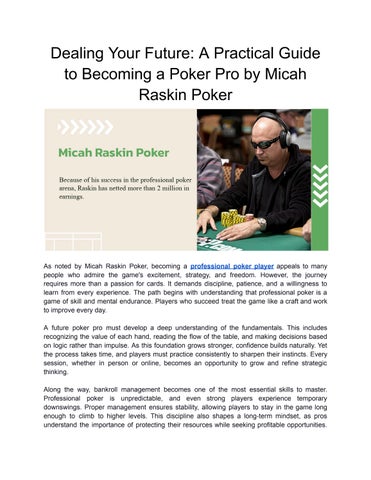
Dealing Your Future: A Practical Guide to Becoming a Poker Pro by Micah Raskin Poker
As noted by Micah Raskin Poker, becoming a professional poker player appeals to many people who admire the game's excitement, strategy, and freedom. However, the journey requires more than a passion for cards. It demands discipline, patience, and a willingness to learn from every experience. The path begins with understanding that professional poker is a game of skill and mental endurance. Players who succeed treat the game like a craft and work to improve every day. A future poker pro must develop a deep understanding of the fundamentals. This includes recognizing the value of each hand, reading the flow of the table, and making decisions based on logic rather than impulse. As this foundation grows stronger, confidence builds naturally. Yet the process takes time, and players must practice consistently to sharpen their instincts. Every session, whether in person or online, becomes an opportunity to grow and refine strategic thinking. Along the way, bankroll management becomes one of the most essential skills to master. Professional poker is unpredictable, and even strong players experience temporary downswings. Proper management ensures stability, allowing players to stay in the game long enough to climb to higher levels. This discipline also shapes a long-term mindset, as pros understand the importance of protecting their resources while seeking profitable opportunities.