Tomorrow’s Child (ISSN 10716246), published four times a year, is the official magazine of The Montessori Foundation, a non-profit organization. The opinions expressed in Tomorrow’s Child editorials, columns, and features are those of the authors and do not necessarily represent the position of the magazine or The Montessori Foundation. Acceptance of advertising does not represent the Foundation’s endorsement of any product or service.
It is policy of The Montessori Foundation, a non-profit organization, to encourage support for the organization by discounting the sale of bulk order shipments of Tomorrow’s Child in order that schools may make the magazine available to their families. The Montessori Foundation does NOT grant permission to reprint material from Tomorrow’s Child in any other form (book, newsletter, journals). Copies of this issue or back issues are available for purchase through our online bookstore: montessori.org. For School Group Memberships, call 800-6555843 (toll free), or place your order at montessori.org. The Montessori Foundation does not provide refunds for canceled School Group Memberships.
Send all correspondence to:
The Montessori Foundation | 19600 E State Road 64, Bradenton, FL 34212-8921 MONTESSORI.ORG
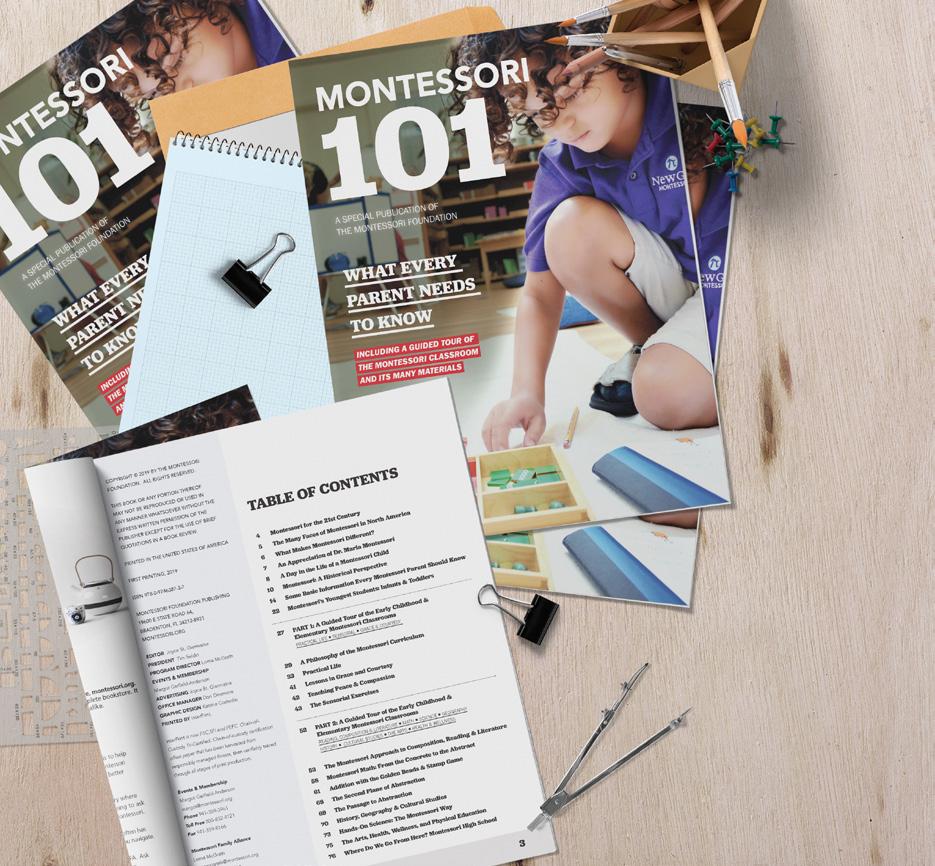
This 80-page full-color publication is a wonderful resource for anyone seeking to demystify Montessori. It addresses topics such as the history and philosophy of Montessori; offers a guided tour of the Montessori classroom; and serves as an illustrated guide to dozens of wonderful Montessori materials. This mini-encyclopedia of Montessori is newly redesigned and contains new sections on Infant/Toddler and Montessori Secondary programs. It is a must-have resource for anyone interested in Montessori, and one that parents will surely refer to throughout their child’s Montessori experience.
Don Dinsmore
Phone: 941-729-9565/800-655-5843
Fax: 941-745-3111
dondinsmore@montessori.org
Montessori Family Alliance
Tim Seldin
Phone: 941-729-9565/800-655-5843
timseldin@montessori.org
The Importance of the Kindergarten Year
What a Child Looks Like at Six: The Gift of the Full Three-Year Cycle
by Kristi Antczak
Imagine your child at seven years old, not in some idealized version, but in the real, everyday reality of who they have become. If your child has spent three full years, from age three to six, in a Montessori environment, there are certain things you are likely to notice.
They walk into a classroom and know what to do without being told. Not because they have been trained to follow directions, but because they understand, deeply and internally, that learning is something they do. They look around, notice what ‘calls’ to them, and they get to work. When they encounter something difficult (a puzzle that doesn’t quite fit, a concept they don’t yet understand, or even a social challenge with a peer) they don’t immediately turn to an adult. They pause. They try again. They think it through. When they do ask for help, it’s thoughtful and specific. Instead of, “I can’t do this,” it becomes, “Can you help me with this part?”
They have a sense of ownership over their learning. They can tell you what they have been working on, what inter-
ests them, and what they hope to try next. Learning is not something that happens in isolated blocks of time directed by someone else; it’s woven into their day, and they are actively shaping it. They read because they are curious. They write because they have something to say. They engage in mathematics because they are solving problems that feel meaningful to them.
You’ll also notice the way they relate to others. They are kind, especially to children who are new or still finding their way. They offer help without being asked and without seeking recognition. This doesn’t come from being told to share or cooperate; it comes from having spent years in an environment where they have been respected, where their needs have been met, and where they have seen that same respect modeled again and again.
There is a quiet resilience in them, too. They understand that struggle is part of learning. When something feels hard, they don’t interpret that as failure. They recognize it is a sign that they are stretching, growing, and working
at the edge of their understanding. That perspective isn’t taught in a single lesson—it develops over time, through repeated experience.
And perhaps most importantly, they genuinely love learning. Not every single day (they are still a child, after all) but in a deep and lasting way. They are curious. They are engaged. They look forward to what they might discover next. This kind of relationship with learning is something we see every day in Montessori classrooms.
“[Children] begin to learn that education is something directed by adults…”
At the same time, it’s important to acknowledge that children who leave Montessori at five to enter a conventional kindergarten usually do well. They are capable and adaptable. They learn to follow expectations, keep pace with the group, and succeed in more traditional measures of achievement; however, they are also being shaped by a different set of experiences. They begin to learn that education is something directed by adults, that arriving at the right answer is often more important than the thinking process, and that keeping up with the group matters more than following their own curiosity.
These messages are not inherently harmful; however, they are different from what Montessori is designed to cultivate. Once children begin to see themselves as receivers of learning, rather than directors, that shift can be difficult to undo.
The Kindergarten year in Montessori is not simply an “extra” year. It is a culmination of everything that has come before it. It is the year when confidence becomes more grounded, independence deepens, and academic skills begin to come together in a more integrated and meaningful way. Children who complete the full three-year cycle are building something that continues to grow over time. The benefits don’t fade; they become more visible. As they
move into later Elementary years and beyond, these children often continue to trust their thinking, take intellectual risks, and approach learning with a sense of ownership and curiosity.
Of course, every family has its own considerations—financial, logistical, and personal. Those are real, and they matter. But if there is any way to make it possible, staying through the Kindergarten year is something worth thoughtful consideration.
The child you imagine at seven—the one who is confident, curious, and genuinely engaged in learning—is not created overnight. That child is shaped during these early years.
Years from now, that child may look back on this time as the moment she began to understand who she was, what she was capable of, and that learning could be something joyful. That is a gift that lasts well beyond the classroom.
Kristi Antczak holds a Bachelor of Science in Early Childhood Education and is AMS-certified in Infant–Toddler Education.
Kristi is an experienced Early Childhood and adult educator and has served as a presenter for numerous professional webinars in collaboration with the Montessori Family Alliance. She joined the Montessori Foundation in 2020, where her work focuses on supporting Montessori schools and educators nationally and internationally.
The Hidden Power of Practical Life Skills
Why Scrubbing Tables Matters More Than Academics
by Tim Seldin
Walk into a Montessori classroom, and you may notice something that surprises you.
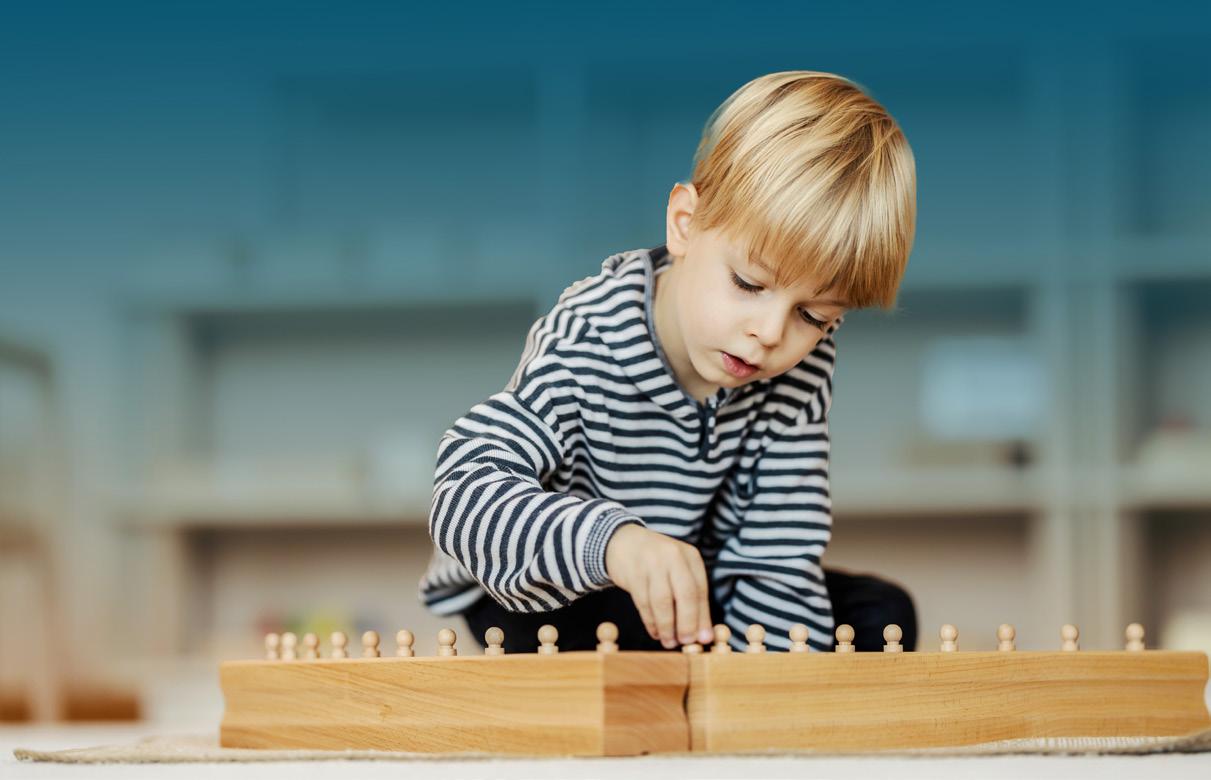
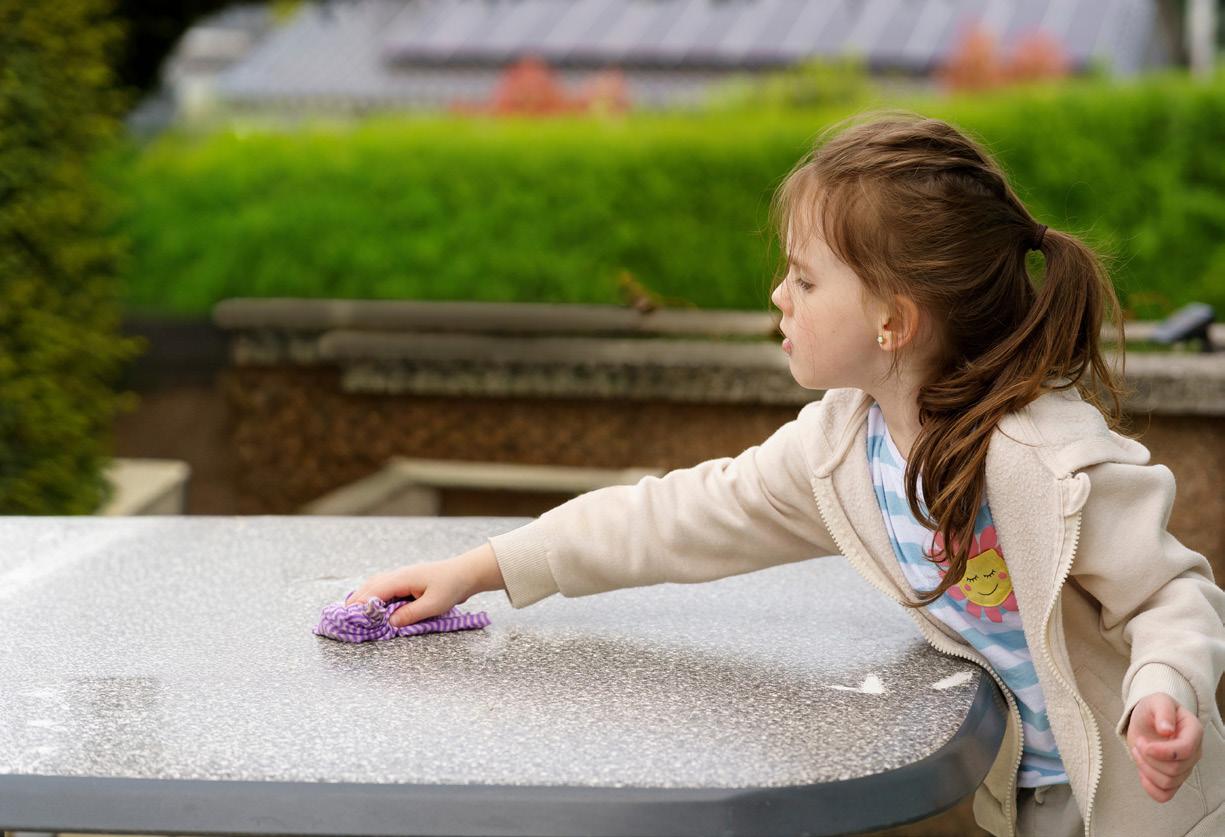
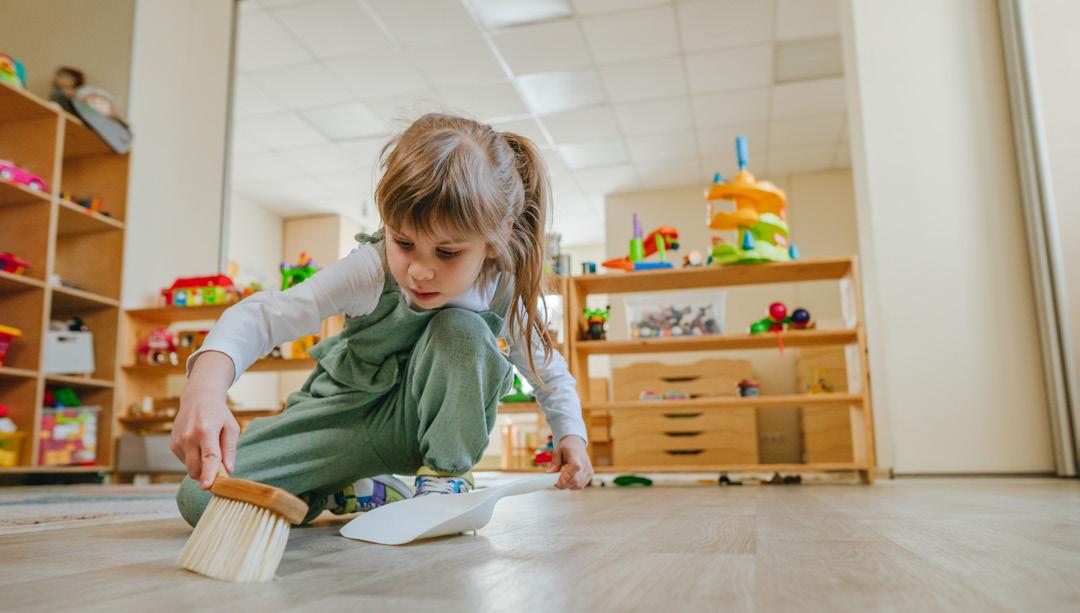
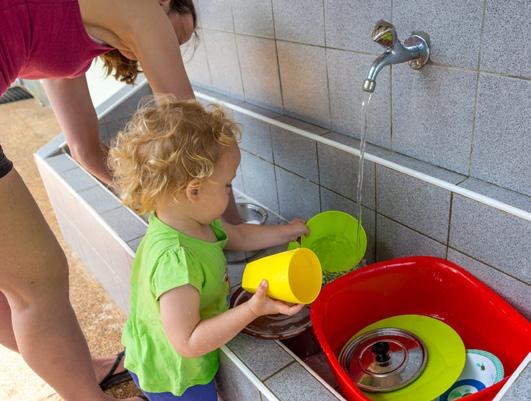
Instead of rows of desks, worksheets, or flashcards, young children are often busy with very ordinary activities. One child may be washing a table. Another is sweeping the floor. Someone else is carefully pouring water into a small pitcher or slicing a banana for a snack.
To many parents, this raises an understandable question: Why is my child spending time scrubbing tables instead of learning letters and numbers?
The answer is simple but powerful. In the early years of childhood, the work that builds the mind is not primarily academic. It is practical.
The simple activities we sometimes dismiss as “chores” are actually some of the most important work projects young children can do. Through these activities, children build
concentration, coordination, independence, responsibility, and the ability to finish what they start. These qualities form the foundation for everything that follows in school.
In fact, the quiet child carefully scrubbing a table in a Montessori classroom may be doing work that is far more important for long-term success than memorizing facts or completing worksheets.
Young children are naturally driven to become capable.
Anyone who has spent time with a toddler has seen this impulse. A two-year-old insists on pouring their own milk. A three-year-old wants to carry the groceries. A four-yearold eagerly grabs a broom and helps sweep the floor.
This desire to do things independently is not accidental. Children are building themselves. They are trying to become competent members of their world.
Dr. Maria Montessori recognized that this urge to do real work is one of the strongest forces in early childhood. Rather than discouraging it, Montessori classrooms embrace it.
The activities we call Practical Life give children opportunities to practice the kinds of everyday tasks they see adults doing. Washing, cleaning, preparing food, organizing materials, and caring for the environment are not distractions from learning. They are the very activities through which young children develop the skills they will later need for academic success.
When a child washes a table, an enormous amount of learning is taking place.
The child must carry the materials carefully, pour water without spilling, squeeze a sponge, scrub with controlled movements, rinse, dry, and finally return everything to its place. Each step requires attention, coordination, and patience.
Through repetition, the child refines both movement and thought. At the same time, the child experiences something even more important: the satisfaction of doing meaningful work.
Young children are not motivated primarily by praise or rewards. What they want most is the deep feeling that comes from mastering a real task. When a child finishes washing a table and steps back to admire the result, they are experiencing pride in their own competence. That feeling is the beginning of self-confidence.
Practical Life work also builds concentration. A three-yearold who carefully polishes a brass object or washes a table may remain focused for fifteen or twenty minutes. The child is not distracted because the work itself is absorbing.
Concentration is one of the most important abilities a child can develop. Without it, academic learning is diffi-
cult. With it, learning becomes joyful. In Montessori classrooms, we do not try to force concentration. Instead, we offer activities that naturally invite it. Practical Life activities are often where this process begins.
Executive Function Skills
These experiences also strengthen what psychologists call executive function skills. These include planning, remembering sequences, organizing materials, and completing tasks independently. When a child gathers the materials for washing a table, follows the sequence of steps, and restores everything to its place afterward, the child is practicing exactly the mental skills that will later support reading comprehension, mathematical reasoning, and problem solving.
Perhaps most importantly, Practical Life activities allow children to feel useful.
Children want to contribute. They want to be part of the real work of life. When adults do everything for them, children can begin to feel passive and dependent. But when they are invited to participate, they develop a sense of belonging and responsibility.
A child who helps care for their home or classroom begins to understand that their actions matter.
That understanding is one of the roots of empathy and social responsibility.
Parents can support this development very easily at home. The key is simply to invite children to participate in everyday life rather than entertaining them or doing everything for them.
Young children are far more capable than we sometimes realize. Here are some wonderful Practical Life activities that parents can introduce at home.
• Children can help wash vegetables or fruit at the sink before meals. A small brush and a bowl of water can make this a satisfying task.
• They can slice soft foods (such as bananas, strawberries, or cucumbers) using a child-safe knife.
• Children love setting the table. Even a two-year-old can carry napkins or spoons. A four-year-old can place plates and cups.
• After meals, children can help wipe the table with a sponge and a small towel.
• Young children can learn to pour drinks from a small pitcher into a cup.
• They can help fold laundry, beginning with simple items like washcloths or small towels.
• Children often enjoy watering plants using a small watering can.
• Sweeping the floor with a child-sized broom is another favorite activity.
• Children can help match socks, sort laundry by color, or place folded clothes in drawers.
• They can help pack their lunch or prepare simple snacks.
• Many children also enjoy washing dishes in a small basin of warm, soapy water.
• Outdoors, children can help plant flowers, water the garden, or pick vegetables.
The important thing is not perfection. In fact, young children will spill, splash, and make mistakes. That is part
of the learning process. What matters is that the child is doing real work.
These activities may take more time than doing things yourself, but the investment is well worth it. Each of these experiences strengthens coordination, concentration, independence, and confidence.
Over time, children who grow up participating in real work begin to see themselves as capable people. They approach challenges with greater persistence. They are more willing to try new things. They take pride in contributing to their family and community.
And perhaps most interesting of all, children who spend their early years engaged in meaningful practical activities usually move into academic learning with remarkable readiness.
Because they have learned how to concentrate, how to follow sequences, and how to take responsibility for their work, reading, writing, and mathematics tend to come much more naturally.
The next time you see a child scrubbing a table in a Montessori classroom, remember that something far deeper is happening than cleaning. The child is building the habits of mind and character that will support a lifetime of learning.
If you are curious about the Practical Life activities your child is doing in the classroom, your child’s Montessori teacher will be happy to explain how these simple tasks support development and how you can extend similar opportunities at home.
Tim Seldin is President of the Montessori Foundation. His more than 40 years of experience in Montessori education includes 22 years as Headmaster of the Barrie School in Silver Spring, Maryland, his alma mater from toddler through high school graduation. Tim was Co-Founder and Director of the Institute for Advanced Montessori Studies and the Center for Guided Montessori Studies. He earned a B.A. in History and Philosophy from Georgetown University, an M.Ed. in Educational Administration and Supervision from The American University, and his Montessori certification from the American Montessori Society.
Tim is the author of several books on Montessori Education, including How to Raise An Amazing Child, and The World in the Palm of Her Hand. Look for his newest book, Montessori for Every Family, co-authored with Lorna McGrath.
Play-Based vs Montessori Early Childhood Programs
by Montessori Foundation Staff
Two Very Different Visions of What Young Children Need
If you have been researching school options, you have probably encountered language suggesting that conventional Early Childhood programs are play-based, child-centered, and designed to meet children where they are. Those are good words. But it is worth looking carefully at what that means in practice and how they compare to what a Montessori environment actually offers.
The typical non-montessori Early Childhood classroom is organized around a schedule that the teacher manages and the children follow. There is circle time. There are learning centers. There are small-group lessons and largegroup activities. Children rotate from one station to the next at designated intervals. The goal is to introduce children to the rhythms and expectations of school to help them learn how to be students.
Again, this is not a criticism. It is a description. And for some children, in some circumstances, it works well.
But here is what it is not.
It is not a program built around the specific developmental needs of three-, four-, five-, and six-year-olds. It is not a program designed to follow a child’s curiosity wherever it leads. It is not a program where a child can spend forty minutes, or an hour, or an entire morning absorbed in work that she has chosen because it genuinely fascinates her. It is not a program in which the teacher’s primary role is to observe, guide, and step back when a child is in deep concentration that produces real learning.
Montessori is all of those things.
In a Montessori classroom, the environment itself is a teaching tool. Every material on every shelf has been designed and refined over more than a century to meet children exactly where they are developmentally—to offer just enough challenge to engage without overwhelming, and just enough success to build genuine confidence. The child chooses her work. She sets her own pace. She returns to the same material again and again until she has truly mastered
it, and then she moves on—not because a timer went off or a teacher signaled a transition, but because she is ready.
This is how human beings actually learn; not in fortyminute blocks divided by subject area; or by rotating through stations at someone else’s pace. They learn by pursuing a genuine interest with sustained attention until understanding arrives.
The difference between these approaches is not a matter of the quality of teachers, funding, or good intentions. It is a difference in foundational design philosophy.
In Montessori classrooms, we see the difference every day. We see it in the way children carry themselves; in the way they approach a problem they haven’t seen before; in the way they help a younger child without being asked; and
Montessori was designed to develop the whole child— her intellect, her will, her sense of herself as a capable and creative human being.
the way they talk about their work—not as something they have to do, but as something they want to do.
These are not small differences. They compound over time. And they begin right now, in these extraordinary years between three and six, when your child’s mind is more open, more receptive, and more powerfully shaped by experience than it will ever be again.
Introducing the Montessori Family Alliance 2.0
As a member of the Montessori Family Alliance, you already have access to a growing collection of resources designed to help you better understand your child, Montessori education, and your family’s journey.
Many parents choose Montessori because it simply feels right. You see your child concentrating, growing more independent, and learning to think for themselves. At the same time, questions naturally arise: Why does my child repeat activities? Why are different ages together? Why isn’t there much homework? How can I support this at home?
The Alliance exists to help answer these questions and offer a place to explore Montessori more deeply.
Your membership includes the digital version of Tomorrow’s Child, you also receive access to Montessori Family Life, a weekly newsletter with practical insights for everyday life.
Inside the Alliance, you’ll find curated articles, videos, and research that explain Montessori clearly and practically— so you can spend less time sorting through opinions and more time understanding your child’s experience. There’s also guidance for creating a Montessori-friendly home, along with recommendations for books, toys, and materials that genuinely support development.
For those who want to go further, parent classes and workshops explore topics such as independence, concentration, and respectful guidance, and this summer, we’re introducing an important new online feature: the Montessori Navigator.
The Navigator helps you better understand your child’s development and follow their Montessori journey. It offers a clear overview of the curriculum so you can see what your child is working on and how their skills are evolving.
Parents can also keep a simple journal—recording milestones, interests, friendships, and growth. Many families use this space to reflect on their child’s independence, curiosity, and social development.
The Navigator also includes tools for planning family activities, supporting learning at home, and designing environments in which children can participate more fully in daily life: organizing; preparing meals; and caring for their belongings.
Throughout, you’ll find curated resources and simple explanations of Montessori principles. At the center is “Abigail,” your Montessori guide. You can ask questions about your child’s learning or behavior and receive thoughtful, Montessori-based guidance.
These experiences help children feel part of a larger community and allow parents to connect with others who share similar values.
The Montessori Family Alliance is here to support you, answer your questions, and walk alongside your family on this journey.
Access and explore your membership, online, at: www.montessori.org/montessori-family-alliance
& Montessori Children
AHow to Choose the Right Experience for Your
by Montessori Foundation Staff
Child
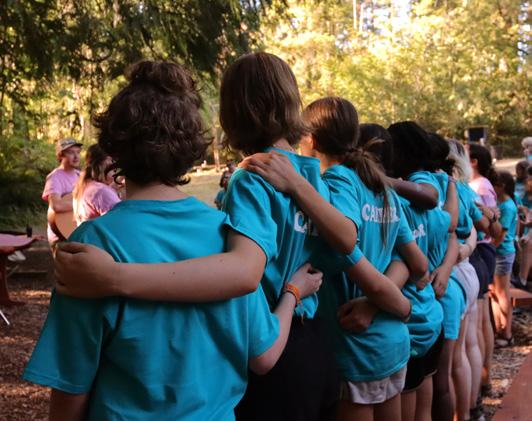
s the school year winds down, many parents begin thinking about summer plans. For families with children in Montessori schools, this often brings a familiar question: What should we do about summer camp?
Summer can be a wonderful opportunity for children. It offers time for exploration, friendships, outdoor adventure, and experiences that are different from the regular school routine. At the same time, parents often worry about how to choose the right program, especially when their child is used to the distinctive culture of a Montessori classroom.
With a little thought, summer camps can be one of the most enriching parts of childhood.
Many Montessori schools offer summer programs designed to maintain the spirit of the Montessori classroom, while giving children a relaxed and playful summer experience. These programs often include gardening, art, cooking, water play, nature exploration, music, and hands-on projects. Because the children already know the environment and the teachers, the transition is easy and comfortable.
For younger children, especially, a Montessori summer program can provide welcome continuity. Children ages two through six tend to thrive on familiarity. Returning to a place they know, with teachers they trust, helps them feel secure while still enjoying the freedom and excitement of summer; however, summer is also a time when it can be healthy for children to experience something new.
Day Camps
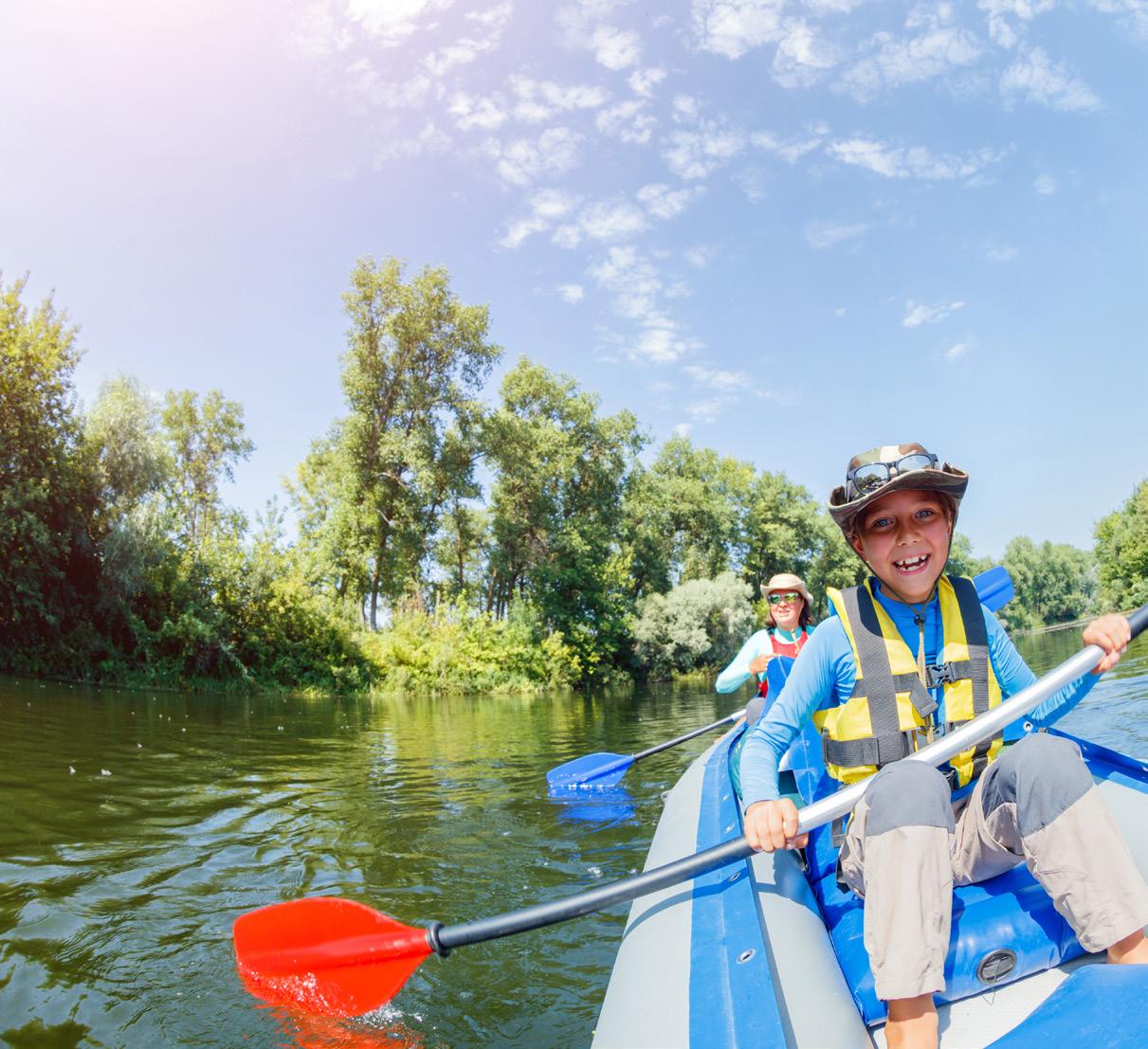
Traditional day camps (especially those that emphasize outdoor play) can be wonderful complements to the Montessori experience. Camps that offer swimming, hiking, canoeing, arts and crafts, nature study, sports, and outdoor games allow children to stretch themselves in new directions.
Many Montessori children flourish in these environments because they already have well-developed independence
and self-confidence. They are used to taking responsibility for themselves and solving problems with their peers. However, there are a few things parents should keep in mind.
One common mistake is trying too many different programs in a single summer. Parents sometimes move their children from one camp to another every week or two, thinking that variety will keep things interesting. In reality, children usually benefit much more from staying in one program for several weeks.
When children spend four or more weeks in the same camp, they have time to settle in, build friendships, learn routines, and feel truly part of the community. The first week at any camp is often an adjustment period. By the second week, children begin to feel comfortable. By the third or fourth week, they are fully engaged.
Jumping from one camp to another often means children spend the whole summer adjusting without ever feeling fully at home. Consistency allows deeper experiences and stronger friendships.
Parents should also be aware that some conventional camps can be a bit of a culture shock for Montessori children. Montessori classrooms tend to emphasize respect, independence, and thoughtful behavior. Children are used to choosing their work, concentrating deeply, and interacting with peers in a relatively calm and cooperative environment.
Some traditional camps, by contrast, can feel much louder, more chaotic, and more adult-directed. Activities may be scheduled in short blocks with constant transitions. Competitive games may dominate the day.
This doesn’t mean such camps are necessarily bad. In fact, they can be valuable opportunities for children to learn flexibility and social resilience. But it is also helpful for parents to anticipate the adjustment.
Outdoor-oriented camps are often particularly good choices. Programs centered around nature (hiking, gardening, environmental education, farming, sailing, or wilderness exploration) tend to offer the kind of hands-on learning and real-world engagement that Montessori children enjoy. These camps allow children to move, explore, and work with their hands rather than simply being entertained.
When evaluating a camp, parents might consider a few practical questions.
• How much time do children spend outdoors?
• What is the ratio of counselors to children?
• Are the staff members enthusiastic and attentive?
• Is there a healthy balance between structured activities and free play?
• Does the camp encourage cooperation rather than constant competition?
• How does the program handle conflicts between children?
If possible, a quick visit to observe the atmosphere can often tell you more than a brochure. You are looking for a place where children appear happy, engaged, and respected.
For younger children, especially those between two and six years old, day camps are usually the best option. At this age, children still benefit from returning home each evening to familiar routines and family time.
Residential Camps
Older elementary-age children, however, may be ready for sleep-away camps. A well-run residential camp can be a powerful experience for children between eight to eleven years old. Living away from home for a week or two allows children to develop independence, confidence, and resilience. They learn to care for themselves, navigate friendships, and participate in group activities without relying on parents.
For Montessori children in particular, sleep-away camps often feel like a natural extension of the independence they have been practicing in school.
“…remember that summer should feel different from the school year. Children need time to relax, explore, and simply enjoy being children.”
If you are considering a residential camp, start gradually. Many families begin with a one-week session before committing to longer stays in future summers. It is also wise to choose camps that emphasize community, cooperation, and outdoor living rather than highly competitive sports programs.
Above all, remember that summer should feel different from the school year. Children need time to relax, explore, and simply enjoy being children.
Whether your child spends the summer in a Montessori program, a traditional day camp, or a sleep-away adventure, the goal is the same: experiences that build independence, friendships, confidence, and a lifelong love of the outdoors.
If your child’s Montessori school offers a summer program, it is often a wonderful place to start. The teachers there understand your child and the values your family shares.
If you are unsure what might be the best fit this summer, Montessori educators know your child well and can suggest the kinds of experiences that will help them grow while still feeling supported and successful.
…so you have a middle school student in your home…
by Tim Seldin
Parents often tell me that the years just before adolescence feel like a turning point—and that when it arrives, it arrives all at once.
The child, who once seemed open and predictable, begins to change. You may notice new independence, stronger opinions, a heightened sensitivity to fairness, and sometimes an intensity of emotion that seems to come from nowhere. Many parents find themselves wondering what is happening inside their child—and how to respond.
From a Montessori perspective, these changes are not problems to fix. They are signs that your child is entering one of the most important and fascinating periods of human development.
Dr. Maria Montessori described development as unfolding in stages she called the planes of development. Early Childhood (birth to six) is the period of the absorbent mind, when children build the foundations of movement, language, and independence. The Elementary years (six to twelve) bring expanding reasoning, imagination, and curiosity about how the world works.
Adolescence marks the third plane, roughly from twelve to eighteen.
This stage brings profound physical, intellectual, emotional, and social transformation. The child once focused on mastering skills now begins asking deeper questions: Who
am I? Where do I belong? What do I believe? In many ways, adolescence is when young people begin constructing their adult identity.
Montessori saw this clearly. She described adolescence as a period of intense self-construction, much like Early Childhood. Just as toddlers build independence, adolescents work to develop a coherent sense of self, a moral framework, and an understanding of their place in society. The inner drive is just as strong, and the need for a supportive environment is just as real.
Because of this, Montessori believed adolescents need environments that respect their growing independence while still offering guidance, challenge, and trustworthy adult relationships.
THE THIRD PLANE IN PRACTICE
In traditional schooling, adolescence often coincides with more pressure, testing, and less personal connection. At the very moment young people need mentorship and meaningful work, they often feel reduced to grades and performance.
Montessori middle schools take a different approach.
The goal is not simply academic preparation—though that remains strong—but to help adolescents grow into capable, thoughtful, and responsible young people.
Central to this is what Montessori called the valorization of the adolescent: helping young people develop genuine confidence through real experience, not praise alone. Adolescents want responsibility. They want their work to matter. They want to be taken seriously.
That is why Montessori programs often include collaborative projects, entrepreneurial work, community service, and field studies. Students plan, create, and solve real problems together. When their work has genuine purpose, they gain a sense of confidence no test score can provide.
Academics remain rigorous, but subjects are integrated and connected to real-world applications. History connects to literature, math to design and economics, science to real questions about the world. This reflects how adolescents think—they are ready for complexity and want to engage with ideas that matter.
THE SOCIAL DIMENSION
Equally important is the development of social skills, emotional maturity, and character.
Adolescents are intensely social. Peer relationships move to the center of their lives, sometimes unsettling parents who were once their child’s primary reference point. Learning to collaborate, navigate conflict, and contribute to a group becomes central to development.
Montessori environments support this intentionally. Teachers act as guides—modeling respect, helping students give and receive feedback, and maintaining high expectations with genuine care. Students learn to disagree respectfully, take responsibility, and use their growing influence constructively.
This growth is not always smooth. Adolescence is a time of experimentation: trying on identities; testing boundaries; and sometimes making puzzling choices. The Montessori approach trusts this process while ensuring that adolescents have mentors to help them reflect and grow.
WHAT PARENTS CAN EXPECT AT HOME
Even when parents understand adolescence intellectually, it can feel disorienting at home.
This stage often brings emotional turbulence. Adolescents may feel deeply uncertain even when they appear confident. They are navigating friendships, social expectations, and increasing awareness of the wider world. This can make them passionate, idealistic—and sometimes dramatic.
This is not misbehavior. It is development.
Parenting during this stage requires a shift—not withdrawal, but recalibration. Younger children need direct guidance and structure. Adolescents need space to develop independence, along with the reassurance that caring adults remain present. They need parents who listen more
Adolescents who learn that their questions are unwelcome at home do not stop asking them—they simply stop asking you.
than they lecture, who guide without controlling, and who communicate trust in their growing judgment.
You may notice your child spending more time with peers and less with family. This is normal and healthy. The goal is not to compete with friendships, but to remain a steady, welcoming presence.
Family meals and shared routines still matter. Even when your child seems disengaged, these moments provide an essential sense of stability.
THE GROWING MORAL VOICE
Adolescents often begin questioning rules and values more openly. This is a vital part of development. They are forming their own moral reasoning—testing ideas, examining logic, and learning to articulate their views.
The goal is not to suppress this voice. Adolescents who feel unheard do not stop questioning—they simply stop including you in the conversation.
Listening carefully, explaining your reasoning, and allowing space for discussion strengthens your relationship. This does not mean abandoning boundaries, but holding them with clarity and respect. When adolescents understand the reasoning behind expectations, they are more likely to internalize them.
Montessori education shares this goal: not compliance, but authentic moral understanding.
MEANINGFUL RESPONSIBILITY AT HOME
Adolescents also seek meaningful responsibility—the chance to feel genuinely useful.
They want to contribute in real ways: preparing meals, managing commitments, helping with family needs. Responsibilities that matter build confidence and reinforce a sense of competence. Token tasks rarely satisfy this need.
This mirrors Montessori education, where real responsibility is central to development.
A TIME OF POSSIBILITY
Perhaps most important, adolescents need adults who believe in them.
This stage can make parents anxious about social pressures, academics, and growing independence. These concerns are natural. But when anxiety dominates, it can unintentionally signal doubt. Adolescents notice this, and it does not help them.
Montessori reminds us that development is a powerful, trustworthy process. Young people are driven to grow, learn, and contribute. Our role is not to control that process but to provide the environment, guidance, and trust that allow it to unfold.
Montessori middle schools are built on this understanding. Adolescents are not simply older children needing harder work. They are young people standing at the threshold of adulthood—working, often invisibly, to discover who they are becoming.
When school and family honor that process, adolescence becomes something extraordinary: a period of growth, depth, and emerging character.
It may be unpredictable, and it will test your patience. But it is also, in the deepest sense, a time of possibility.
Competition
in Montessori
A Different Way to Think About Athletics
by Dr. Robin Howe
When parents think about sports programs for their children, they often imagine something very familiar: teams; uniforms; drills; and a strong emphasis (perhaps the main emphasis) on winning. For many children, this can be exciting and motivating. For others, traditional youth sports programs can feel overly competitive, stressful, or narrowly focused on performance rather than growth.
Performance (or one’s lack of ability) might even contribute to a loss of self-confidence or self-perception.
In recent years, a new approach has begun to take shape that aligns much more closely with Montessori educational philosophy. While sports, teams, competition, and games are still fundamental components of sports, there is a new approach that reflects many values that guide Montessori classrooms: respect for the child; developmental awareness; learning through purposeful activity; progress versus product; and health benefit versus being the winner.
Rather than treating sports simply as a contest to win, this new approach with an adjusted set of goals views athletics as an important opportunity, a distinctly different prepared environment for the development of the whole child; physically, socially, emotionally, and intellectually.
A Prepared Environment for Movement
In Montessori education, we often talk about the idea of the “prepared environment.” Generally speaking, the prepared environment most often refers to the classroom, which is carefully designed so that children can explore, practice skills, and develop independence through meaningful activity. The Montessori approach to sports applies the same approach to physical education and whole child development. The ‘prepared environment’ is meant to support the sensitivities of the child at any particular age, including their physical needs. Regardless of whether referring to a classroom, a soccer field or any physical environment, the prepared environment is meant to be one
in which children (at different developmental and physical levels) can exist independently, providing an opportunity to experience autonomy while developing confidence and independence.
Montessori classrooms are deliberately prepared with materials and trained adults to address the physical needs, capabilities, and opportunities for children at each level.
Referencing the typical understanding of athletics, the playing field becomes another prepared environment, where children can explore movement, develop coordination, and build confidence. Instead of constant adult direction, children are encouraged to participate actively in shaping their experience. They practice skills, experiment with strategies, and learn through play and collaboration.
This child-centered approach encourages intrinsic motivation. Children participate because they enjoy the activity and want to improve, not simply because an adult is pushing them.
The ‘Hook’ (a story to establish relevance)
As we prepare to discuss competition, I want to start with a short personal story. The descriptors are subjective and relative, possibly a bit humble or exaggerated
I attended a Montessori school from when I was age two through the eighth grade. Ironic to this article, I left my Montessori school in part because I wanted to play more competitive soccer. But that is not the topic of this story.
I am (was) a good athlete, a better-than-average soccer player, and a decent runner.
I got it in my mind that running marathons was a good idea. The required 26.2 miles is a challenge regardless of
what your level of fitness is. At one point in my life, I decided I wanted to qualify for the Boston Marathon. Without going any longer than I need to, this journey took two years, approximately 50 miles a week, gallons of sweat, one stress fracture, and a lot of early mornings, alarm clocks, and decisions to get out of bed. I eventually qualified (multiple times) but got into the Boston Marathon. I ran a 2:56 marathon, coming in 7th overall and “beating” thousands of people.
Many people have said that being competitive is not consistent with Montessori. I correct them and say that Montessori, in some ways, is the most competitive. I set a goal for myself and worked hard to compete against my own ceiling, my own previous personal bests. So, as we think about fitness, sport, health, and competition, I am hoping we can reframe the concept of competition in the context of Montessori.
Redefining Competition
Competition has always been a complicated topic in education.
Traditional sports programs often emphasize winning above all else. Children may feel pressure to perform, while those who are less skilled sometimes feel discouraged, excluded, and can often feel less adequate, even developing a lesser sense of confidence due to “inability” or lack of skill. The Montessori approach to sports can take a different perspective.
Competition is not eliminated, but it is reframed. Instead of focusing primarily on defeating opponents, children are encouraged to see competition as an opportunity for self-improvement and teamwork (e.g., running a faster race, improving a skill, or even becoming a better teammate).
The goal becomes learning how to work together, challenge oneself, and develop skills over time. Children still celebrate success and enjoy the excitement of games, but the deeper emphasis remains on growth rather than victory.
Inclusive and Developmentally Appropriate
Another important distinction of the Montessori approach to sports is the emphasis on inclusivity. Traditional youth sports programs often separate children quickly based on skill level. Strong athletes may receive more attention, while others feel left behind.
This approach to athletics aims to create a more balanced playing field. Programs are designed so that children of varying abilities can participate meaningfully and develop at their own pace, while encouraging high-performing “athletes” to become the best they can, while also doing the same for the less inclined. Just as Montessori classrooms bring together mixed ages and encourage collaboration, Montessori Sports emphasize respect, cooperation, and shared learning. Children learn not only from adults but from one another.
Aligned with the Planes of Development
Montessori education recognizes that children grow through distinct planes of development, each with its own needs and interests. Montessori Sports programs take these developmental stages seriously.
For young children between the ages of three and six, the emphasis is on gross-motor development. Activities focus on running, balancing, throwing, catching, and coordination. Games are simple and playful, allowing children to build confidence in their bodies.
In the Elementary years, roughly ages six through twelve, children begin to show greater interest in teamwork, strategy, and organized games. At this stage, sports can become more structured, introducing cooperation, leadership, and friendly competition.
Because the activities are designed with developmental stages in mind, children experience success and enjoyment rather than frustration. A fundamental component, perhaps the most important, is the recognition that “success”, in this regard, supports confidence in all areas, which is consistent and fundamental to the Montessori approach to whole-child development.
Physical Development
As previously mentioned, there is an approach to athletics and physical development that can be done in a way consistent with the Montessori pedagogical approach. In addition to what has been mentioned, there are data-driven reasons why this “needs” to be incorporated into whole child education, which Montessori has done well for over one hundred years, but is now becoming more widely recognized.
In this case, when referencing ‘physical development,’ we are including brain, body, and psycho-social, which also have physical implications.
Neurological Development and Cognitive Function
There is an increasing amount of research suggesting a correlation between physical activity, cognitive function, brain health, and development. This correlation exists for all age levels in different ways, but with respect to younger children, recent research provides compelling evidence for
the neurological importance of physical activity. Exercise has been shown to increase levels of brain-derived neurotrophic factor (BDNF), a protein that supports synaptic growth, neural connectivity, and overall brain plasticity (Guzmán-Muñoz et al., 2025; Tao et al., 2025).
These biological changes translate into measurable cognitive benefits. Physical activity is strongly associated with improvements in executive functioning, including attention, working memory, and cognitive flexibility (Dong et al., 2025). These functions are foundational to academic success and lifelong learning.
Physical Development and Health Outcomes
Participation in regular physical activity supports cardiovascular health, musculoskeletal development, and motor skill acquisition. Children engaged in consistent movement demonstrate improved bone density, coordination, and reduced risk of chronic disease (Brooks, 2024).
In Montessori-informed environments, these outcomes are supported through intentional design. For younger children, activities emphasize foundational gross motor skills such as running, balancing, throwing, and catching. As children mature, opportunities expand to include more
structured activities that support strength, endurance, and coordination in increasingly complex ways.
Socio-Emotional Development and Mental Health
Physical activity also plays a vital role in emotional regulation and psychological well-being. Participation in sport has been linked to reduced anxiety and depression, increased self-esteem, and improved resilience (Cleveland Clinic, 2025).
Montessori environments can extend these benefits into their athletic of physical education programs by intentionally cultivating environments that emphasize collaboration, respect, and intrinsic motivation. Rather than centering performance alone, children are encouraged to experience joy in movement, develop perseverance, and build meaningful social connections.
Training and Support for Schools
This approach is not simply a set of ideas. It has developed into an international initiative that supports schools, teachers, and coaches. Educators can participate in the Montessori Sports Fundamentals Course, an AMI-accredited professional training program that helps teachers integrate sports into Montessori environments in a developmentally appropriate way.
Schools can also receive mentoring to help them build physical education programs that reflect Montessori values. These programs encourage daily movement, purposeful play, and collaborative activities. In addition, Montessori Sports organizations host international events and camps where children from different schools and countries come together to play, learn, and celebrate athletic participation.
For those schools that find this daunting or simply don’t have the numbers for teams, a team can be as small as one wants and can participate in public events like local 5ks, bikathons, or independent events like jiu-jitsu, fencing, weightlifting, etc.
A Global Movement
The “Montessori Sports” movement was founded by Ruben Jongkind and Patrick Oudejans. Their work gained attention through its early implementation at the Ajax Amsterdam Football Academy, one of the most respected youth development systems in European football.
The philosophy helped shape the training of some of Ajax’s youngest players, emphasizing creativity, awareness, collaboration, and personal responsibility.
Since then, the Montessori Sports approach has expanded internationally. Today it works in partnership with Montessori organizations and educators around the world to bring quality physical education programs to diverse communities, including schools serving under-resourced populations.
There are other Montessori aligned programs, such as Montessori Physical Education, developed by Montessori alumnus, educator, speaker, Nickolas Lepine, that incorporate components of Montessori with physical education.
Whether a school chooses to engage with a formal program or curriculum, it can contribute significantly to a school’s health, sports, or physical education program.
Why This Matters for Children
For Montessori families, the appeal of this approach is easy to understand:
• It respects the individuality of each child;
• It promotes physical health and coordination; and
• It encourages teamwork and social responsibility, and allows children to experience competition in a healthy, balanced way.
Sports become another avenue for the development of independence, resilience, and confidence, qualities that Montessori education has always valued.
Children still run, jump, compete, and celebrate victories. But they also learn something deeper: how to support teammates, improve through practice, and enjoy the process of growth.
Being a Loser
Perhaps one of the most underappreciated contributions of participating in sport (or anything where you don’t always win) is experiencing and learning how to lose. There are a few important considerations to the notion of losing:
• In life, we do not always “win” (get what we want, achieve what we set out to do, accomplish our goals on the first try);
• It is okay not to succeed;
• It is important to learn how to adjust; and
• Children need to learn how to “fail” and have the fortitude to try again.
In our world, there is a fear of failure. People are afraid to try “hard” things because they may fail. Student don’t take the hard class because they may not get the grade they want to maintain their GPA. When they do fail, they identify as failures, rather than having the skills to evaluate the cause of “failure” (any outcome other than the one desired), evaluate causes of said failure, make adjustments, and try again.
Sports should provide this skill to students, developing this fundamental outlook that failure is not that one is a failure, but the opportunity to do better. The Montessori approach to sport, athletics, and fitness incorporates this important developmental concept.
A Natural Extension of Montessori Education
In many ways, this approach to athletics and competition represents a natural extension of the Montessori philosophy beyond the classroom.
Just as Montessori classrooms encourage children to become capable, thoughtful learners, competitive Montessori environments help children become confident, cooperative athletes, confident, cooperative people, confident, cooperative community members, etc. These human characteristics transcend the sport and extend into all aspects of the child’s identity and persona.
Both environments, the classroom and the athletic court, field, pool, etc., share the same goal: helping children grow into balanced, capable human beings who enjoy learning, respect others, and believe in their own potential.
If your child’s school offers a Montessori-inspired sports program, it can be a wonderful opportunity for them to experience physical activity in a way that reflects the same values they encounter in the classroom.
And if you are curious about how sports can support your child’s development, your child’s Montessori teacher may be able to help you explore programs that align with Montessori principles while still offering all the joy and excitement that sports bring to childhood.
Dr. Robin Howe began his Montessori career at the age of two at the Barrie School in Silver Spring, MD, which he attended through the eighth grade. Graduating from Dickinson College with two majors (Spanish and Religion), he went on to earn a Master’s Degree in Bioethics from University of South Florida.
After successfully pursuing a career in the restaurant management industry, Robin decided to return to his Montessori roots. He earned his Primary certification from Palm Harbor Montessori School (AMS) and then attended St. Catherine’s University to earn his Lower and Upper Elementary Certification (AMS). He also attended NAMTA’s Orientation to Adolescent Studies (AMI). Robin holds a Doctorate in Educational Leadership from Argosy University and works with The Montessori Foundation as a Senior Montessori School Consultant.
Dear Cathie
Creative Opportunities
The Early Years
by Cathie Perolman
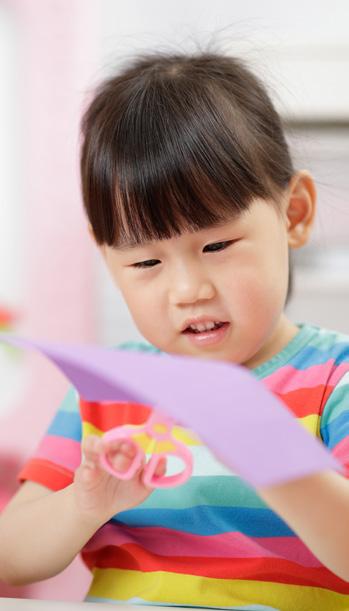
My four-year-old daughter loves to cut, color, and paste. She can spend hours and hours happily doing just these activities. I wonder if she gets enough opportunity for creative expression at her Montessori school. I know children are encouraged to repeat the exercises they have had lessons on, but do they ever get to create anything? How does the Art area work?
Dear Dad,
It sounds like your daughter takes after you and enjoys creative pursuits as well. There are many opportunities for creativity in the Montessori classroom. Many of these opportunities involve the use of the Sensorial materials. Once a child can use these materials for the basic purpose of grading them for size, they combine them
and do all types of creative projects with them. Often, children enjoy replicating these creations with colored paper, paint, or even in a sewing activity.
The Art area has materials that allow children to develop basic studio art skills such as cutting, gluing, painting, along with opportunities to use these skills in other ways. Some activities are “oneskill activities” that simply practice skills, working towards mastery. Many children in the 3-6 classrooms are very happy and focused on doing just this. Classrooms also have work that uses these skills in a creative way (for example, free painting at the easel, basic shapes to glue to make anything they would like, and collage work). Other classrooms have specific projects, following the seasons or the class’s unit of study available on the Art shelf.
Often these have an “open-ended” component to them. Other classrooms have a shelf of Art materials available. Children choose from these materials and create Art projects. Children are in constant dialogue with their Montessori guide, and sometimes projects are offered specifically for a single child at her request. Guides
seek to help children (especially highly creative children) plan and facilitate projects that enhance their learning, trying new things, and incorporating new skills. I am certain your daughter will continue to create at home, but rest assured that there are opportunities for her to expand and grow her creativity within the Montessori classroom as well.
Cathie Perolman has been involved in Montessori education for over 40 years. Cathie has worked in the classroom as a 3-6 assistant; a classroom teacher; a level leader; a teacher trainer; and a college professor. She currently spends her time mentoring teachers, conducting workshops for teachers and administrators; and writing for her blog and for magazines. She also serves as a consultant for schools and as a school validator for the Montessori Schools of Maryland. Cathie is the creator of the Color Coded Sound Games and the Rainbow Reading System as well as other reading and cosmic printable materials to enhance classrooms. Find them at cathieperolman.com.
Dear Cathie—
— A Creative Dad
“Our care of the child should be governed, not by the desire to make him learn things, but by the endeavor to always keep burning within him that light which is called intelligence.”
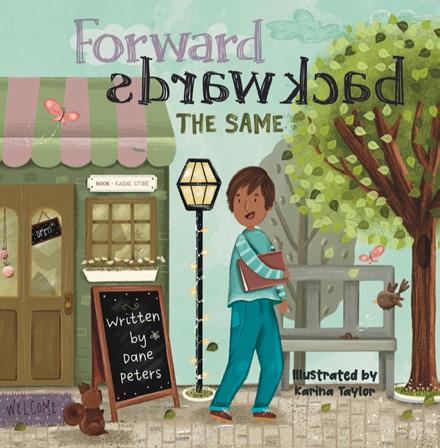
Forward Backward THE SAME by Dane
Peters Review by Launa Schweizer
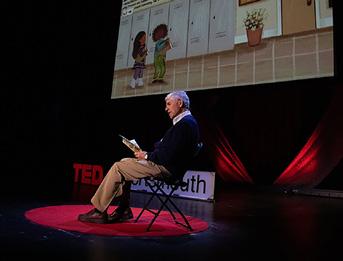
Any of us who have had the privilege of serving as a Montessori guide has a wealth of stories of the small moments that add up over time into the mosaic of a beautiful career. Author Dane Peters, former Head of School of Brooklyn Heights Montessori School, has dipped back into his treasure trove of memories as an educator to write Forward backwards THE SAME, a tale of a teacher and his students discovering the magic of palindromes. Beautifully illustrated by Karina Taylor, Dane’s book explores the joy that happens once students have had a lesson, practiced it together, and then soar on their own wings to greater heights of creativity. It relishes the happy surprises a classroom discovers together when individual students internalize a concept, and then the light of their intelligence takes it in new directions.
In the story, a teacher named Mr. Nolon begins by offering his students a lesson on palindromes, which are numbers and words that read the same forwards and backwards. The book starts with the teacher’s own confidence that the lesson is one worth teaching: “He was sure that they would love what he had to share with them.”
Almost immediately, his students grasp the idea and begin to play with their own creations, coming up with examples like “refer” and “eye” and then, quickly, short phrases and even sentences. The book reaches its most important emotional and pedagogical
insight when one student comes up with a sentence-long palindrome that causes the roles of teacher and student momentarily to reverse.
A wonderful book for children and teachers alike, it’s a powerful illustration of Maria Montessori’s reminder of the teacher’s role in inspiring students to think for themselves: “Imagination does not become great until human beings, given the courage and the strength, use it to create.” And, for any teachers who are themselves aspiring writers, this is your sign to write your own story and share it with the world! You can order Dane’s book from Amazon.
Scan the QR Code to order your copy of Forward Backward THE SAME.
Launa Schweizer is an educator and writer living in Brooklyn, NY. She has served as a Montessori middle school teacher and as a Head of School, and has written about education and parenting for The Atlantic, Parents magazine, and The New York Times
Books to Inspire
.......... 0–3 years
Books that build trust, rhythm, and the first foundations of language.
Guess How Much I Love You
Written
by Sam McBratney
Illustrated by Anita
Jeram
This is one of those rare books that becomes part of family life. The simple back-andforth between Little Nutbrown Hare and Big Nutbrown Hare gives children a language for love that they can understand.
What makes this book so powerful is not complexity—it’s repetition and emotional clarity. Toddlers thrive on predictability, and this story gently stretches their understanding of comparison (“I love you this much…”) while anchoring them in a feeling of safety and connection.
You’ll often find that children want to hear it again and again. That’s not redundancy—it’s construction. They are building emotional memory, vocabulary, and trust all at once.
Peek-a Who?
Written & Illustrated by Nina Laden
At first glance, this looks like a very simple book—and it is. But it is also brilliantly designed for how very young children learn.
Each page invites the child to anticipate what comes next. The cut-out windows create a sense of mystery and discovery, and the rhythmic text encourages participation. Before long, children begin to shout out the answers themselves.
This is the beginning of reading— not decoding words, but predicting meaning. It also supports object
permanence and visual tracking, both critical developmental milestones in the first years of life. ..........
3–6 years ..........
Books that nurture imagination, emotional intelligence, and social awareness.
The Rabbit Listened
Written & Illustrated by Cori Doerrfeld
This is one of the most emotionally intelligent picture books published in recent years. A child experiences something upsetting, and various animals try to help by talking, fixing, or distracting. None of it works. Then the rabbit comes. And simply listens.
That’s the entire lesson, and it’s profound. Children immediately recognize the truth of it. They know what it feels like to be misunderstood, and they
understand the relief of being heard. This is a book that quietly teaches empathy—not by instruction, but by example.
Last Stop on Market Street
Written by Matt de la Peña
Illustrated by Christian Robinson
This is a quiet, thoughtful story that invites children to see beauty in the ordinary. A young boy and his grandmother ride the bus across town, and along the way, he asks questions: Why don’t we have a car? Why do we have to go here?
What makes this book so valuable is the grandmother’s response. She doesn’t dismiss his questions; she reframes them. She helps him see the richness of the world around him.
For Montessori families, this is exactly the kind of story that supports gratitude, observation, and respect for diversity. It doesn’t lecture. It simply invites the child to look more closely.
.......... 6–9 years ..........
Books that help children explore friendship, fairness, and the beginnings of moral reasoning.
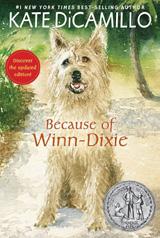
Because of Winn-Dixie
Written by Kate DiCamillo
This is a deeply human story told in a way children can fully absorb. A young girl, Opal, moves to a new town and feels alone. Through her unlikely friendship with a stray dog, she begins to build connections with others.
What makes this book so powerful is its honesty. It doesn’t shy away from loneliness, loss, or complexity—but it also doesn’t overwhelm. Instead, it shows how relationships form, slowly and imperfectly.
Children at this age are beginning to navigate friendships more meaningfully, and this story gives them a language to understand those experiences.
“Reading is the gateway for children that makes all other learning possible.”
—Barack Obama
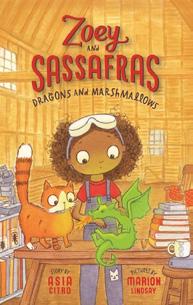
Zoey and Sassafras: Dragons and Marshmallows
Written
by Asia Citro
Illustrated by Marion Lindsay
This is a delightful blend of imagination and scientific thinking. Zoey encounters magical creatures, but instead of reacting with fantasy alone, she approaches them with observation, hypothesis, and experimentation.
It’s a wonderful example of how curiosity can be structured without being constrained. Children see that asking questions, testing ideas, and revising thinking is not just “schoolwork”—it’s a way of engaging with the world.
For Montessori classrooms, this aligns beautifully with the spirit of discovery.
9–12 years
Books that expand identity, empathy, and understanding of the wider world.
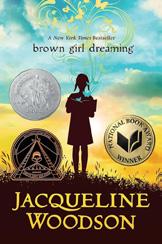
Brown Girl Dreaming
Written by Jacqueline Woodson
Written in verse, this memoir feels intimate and reflective. Jacqueline Woodson shares her childhood experiences growing up during the Civil Rights era, exploring questions of identity, belonging, and voice.
The format itself is part of the experience. The short, poetic entries invite pause and reflection—this is not a book to rush through.
Children at this age are beginning to form a sense of self, and this book gently supports that process.
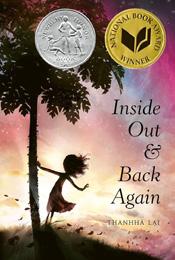
Inside Out and Back Again
Written by Thanhhà Lai
This story follows a young girl who flees Vietnam and resettles in the United States. It captures both the disorientation and resilience that come with such a transition.
What stands out is the emotional honesty. The frustration, confusion, and small victories all feel real.
For children, this book builds empathy in a very natural way. It helps them understand experiences that may be very different from their own, without turning them into abstractions.
12–18 years
Books that challenge thinking, shape identity, and invite moral reflection.
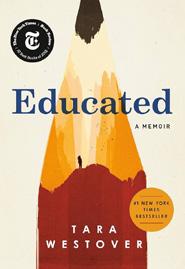
Educated
Written by Tara Westover
This memoir is compelling because it explores the transformative power of education— not in an abstract sense, but as a lived experience.
Tara Westover grew up in an isolated environment with limited access to formal schooling. Her journey into education becomes a journey into identity, independence, and self-understanding.
For adolescents, this raises powerful questions: What does it mean to think for yourself? What role does education play in shaping who you become?
Calling all teachers, parents, & children!
We would love to publish reviews of your favorite books. Send book reviews to Joyce at: joycestgiermaine@montessori.org
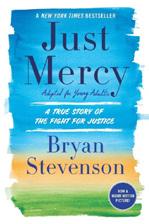
Just Mercy
Written by Bryan Stevenson
This is a book about justice but, more importantly, it is a book about humanity. Bryan Stevenson shares real cases that reveal deep flaws in the legal system, while also highlighting compassion and courage.
Adolescents are naturally drawn to questions of fairness. This book meets them there, with substance and depth. It doesn’t offer easy answers. Instead, it invites reflection—and that is exactly what this stage of development needs.
Reflection
What you’ll notice across all of these is that the best books don’t talk down to children.
They respect the child’s intelligence. They honor emotional complexity.
They invite participation, reflection, and connection.
That is what makes a book truly “stupendous”—not just awards or popularity, but the way it meets the child exactly where they are, and gently invites them forward.
Peacing
it all together.
This updated edition of the popular course, The Parenting Puzzle, led by Lorna McGrath, shares the secrets of Family Leadership— the Montessori way. Over the course of five weeks, Lorna provides strategies and practical examples that you can use right away to bring peace and ease into your home, creating a haven for the whole family, where power struggles fall away and give rise to joy. Discount for MFA members. Now offering a monthly payment plan.