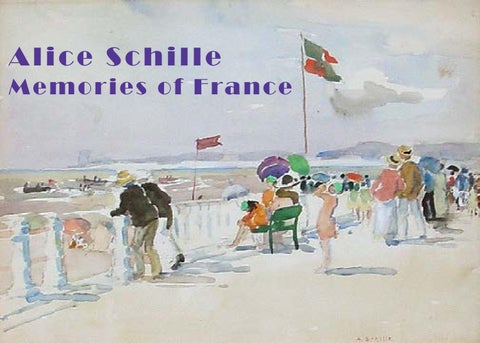
Alice Schille Memories of France
Alice Schille Memories of France

May 29 - June 30, 2026
FOREWORD
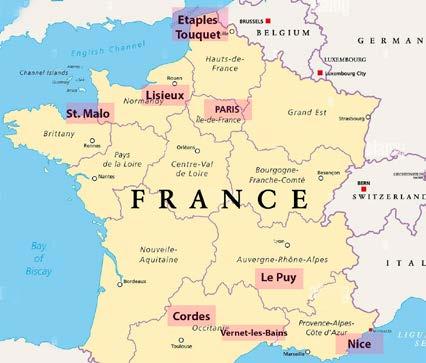
100 years ago, in the early summer of 1926, Alice Schille completed her lectures at the Columbus Art School, boarded a train to New York and caught a steamship for Le Havre, France. After a respite in Paris, she was soon traveling by train through the lush countryside of France to Le Midi. There she brilliantly captured the sun dappled tree lined roads, verdant valleys, rockbound villages, colorful coastal hilltowns, and bustling markets of Auvergne and the Pyrenees.
It was her fifteenth trip to France. Schille was enamored with this country where she first traveled to complete her studies in Paris in 1902 and where she first exhibited to acclaim at the Paris Salon in 1904. She soon mastered the language and converted to Catholicism.
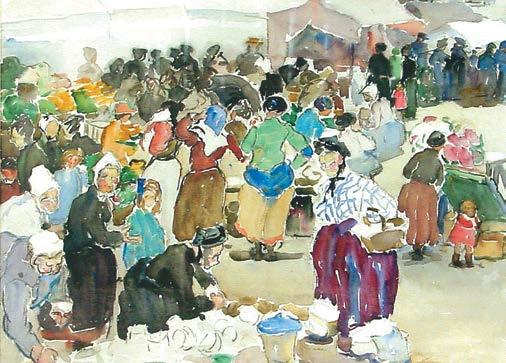
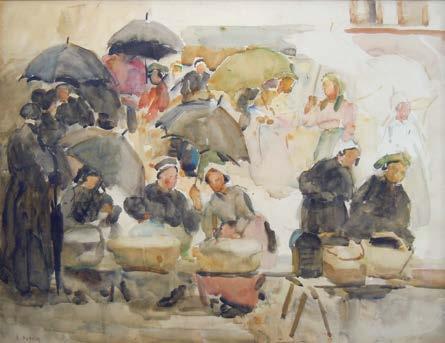
Over a 30 year period from 1902-1932 Schille fluently recorded in watercolor her experiences in Paris, Brittany, Normandy, Auvergne, Provence, the Pyrenees and Corsica. During this time Schille’s style evolved from a subdued, Barbizon-inspired form of realism as she depicted the rural folk of Brittany to an animated form of pointilism evident in her lively market scenes of Le Puy to boldly colored expressive Post-Impressionist landscapes of Southern France. Always keenly sensitive to place, she captured the light, color, cadence, and iconography distinct to each region.
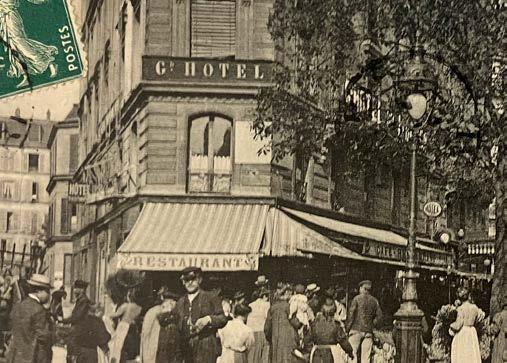
OPPOSITE PAGE: Detail, French Market, c.1912-1914; FRONT COVER: St. Malo, c. 1914
The watercolors she completed during these years earned her recognition as a leading American watercolorist. Her French work garnered top prizes in Philadelphia, San Francisco, and Chicago and a major article in the leading arts publication International Studio, featured her Le Puy watercolors. They were also exhibited extensively in dozens of juried shows from Chicago to Washington, D.C. And her first sale to the Columbus Museum of Art in 1912 was Market at Le Puy.
I hope you can join us to explore Alice Schille’s France. To cap off this event, Alice Schille’s work will be featured in a symposium in Paris this October at Columbia University’s Reid Hall (site of The American Girls’ Art Club, 1893-1914) addressing the contributions of several important artists that exhibited with the American Women’s Art Association in the early 20th century.
Jim Keny
PARIS: 1902 1911 .
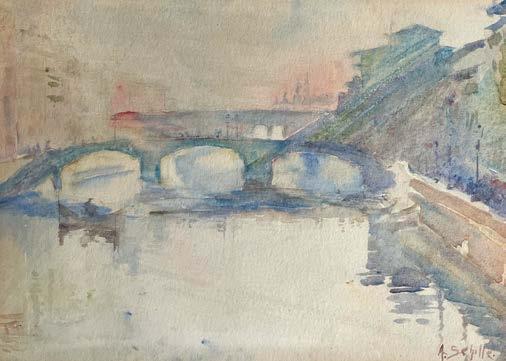
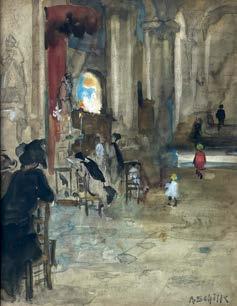
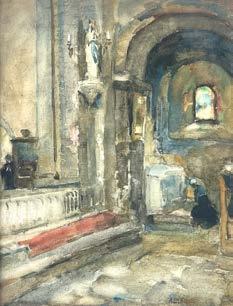
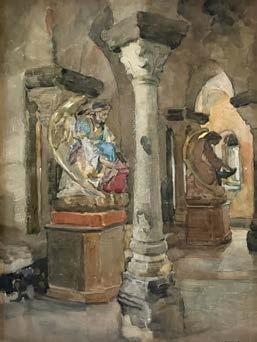
In the Cathedral, Notre Dame c. 1911-1912
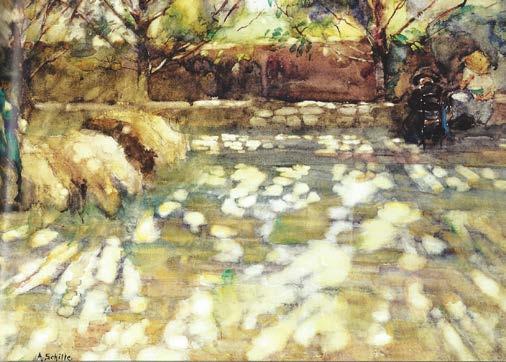
Dappled Light, Notre Dame, c. 1911-1912
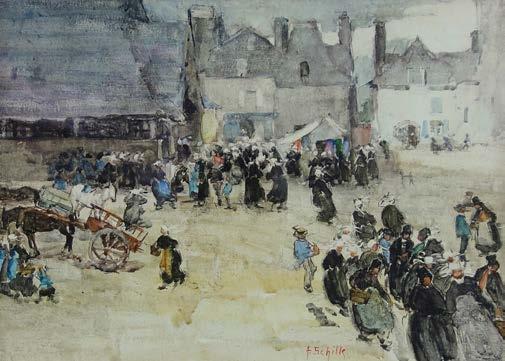
BRITTANY: 1907 - 1908
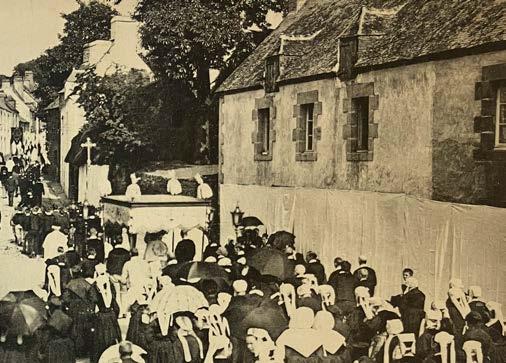
“The work of Alice Schille – a distinguished artist of Columbus, Ohio – is remarkable for its wonderful delicacy, taste and beauty. There is a refinement, an unusually fine color sense, and general excellence of selection and treatment in each of them that are rarely to be found.”
Baltimore Maryland New, Review of the 15th Annual Exhibition of the Baltimore Water Color Club February 17, 1909
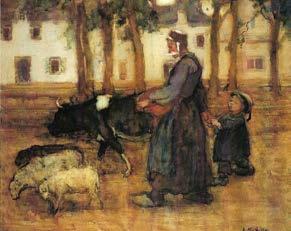
Brittany, 1907-1908
Mother and Child, c. 1907
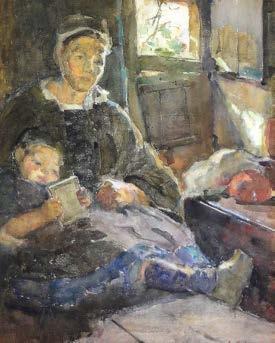
“Above all, Schille developed her own highly original, personal style that is at once lyrical and powerful, sophisticated in technique and formal design, sparse yet richly orchestrated.”
Dr. William Gerdts Alice Schille Watercolors
Keny Galleries and Coe Kerr, New York,1991
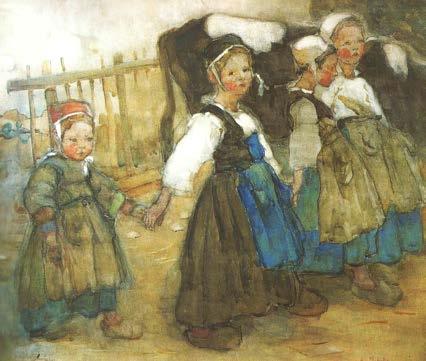
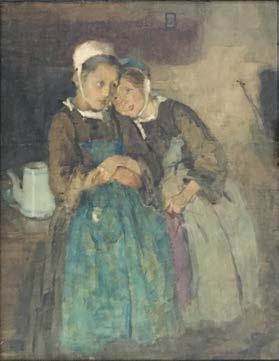
‘We can think of no American watercolorist who is more versatile than Alice Schille. She demands of herself that both wine and bottles be new; which is to say, she requires that both her theme and treatment of it shall be eternally fresh. She is interested in everything and to quote a certain German critic, ‘afraid of nothing – this dare-devil disciple of art.’”
Edna M. Owings
“The
Art of Alice
Schille”
International Studio, 1913
LE PUY: 1911-1913
“. . . The illustrations accompanying this article belong to the most recent group of water-colors, painted in Le Puy, in Southern France. They are sprightly and charming, treated with great delicacy and perfect self-confidence.
Edna M. Owings
The International Studio August 1913, Vol. 1
“The Art of Alice Schille”, p. 33
Wash Day, Le Puy, France, c. 1911-12
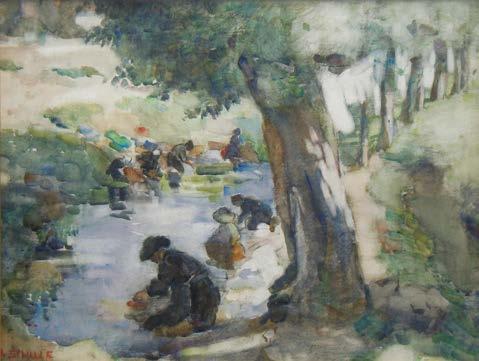
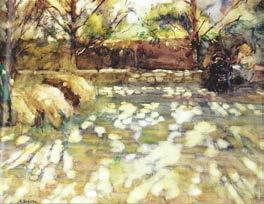
Sun Spots on the Road, c. 1911
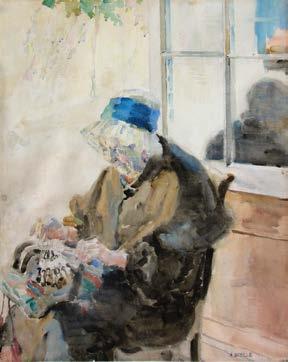
The Blue Bonnet (Lacemaker, Le Puy), c. 1911
“Her
(Schille’s) people are alive, intelligent, highly individual. Her composition is suitable and special. Her color is at all times extremely melodious, vibrant with emotion . . .”
Edna M. Owings
The International Studio August 1913, Vol. 1,
“The Art of Alice Schille”, p. 33
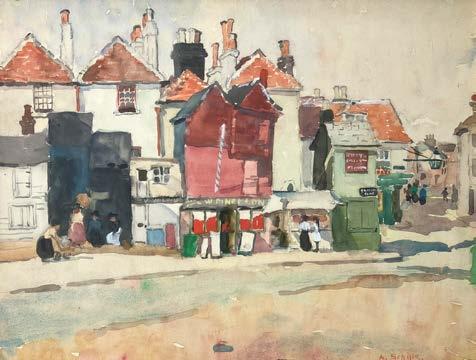
NORTHERN FRANCE: 1914
Chimney Tops (Northern France), c. 1914
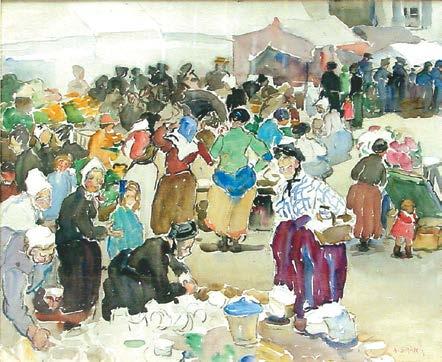
“The group by Alice Schille challenges attention by reason of the freedom with which she handles the transparent colors in juxtaposition in some of them as Mermaid Lane and the beautiful manner iin which she blends the washes as in After the Bath and Mother and Child With a Toy. There in the mystery of depth in the color values of the latter and the sparkle of outdoor sunshine in the former.”
Boston Daily Globe, April 14, 1915
“Its Annual Display: Boston Water Color Club Has 28th Exhibition”
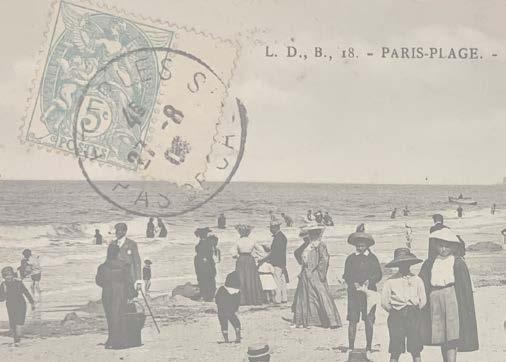
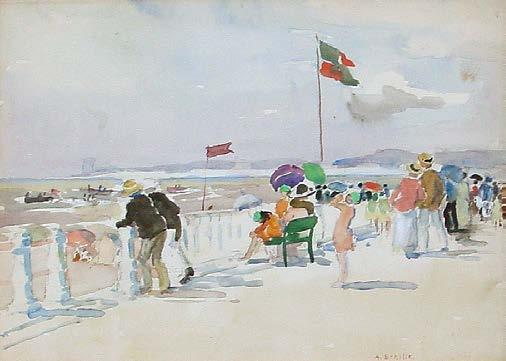
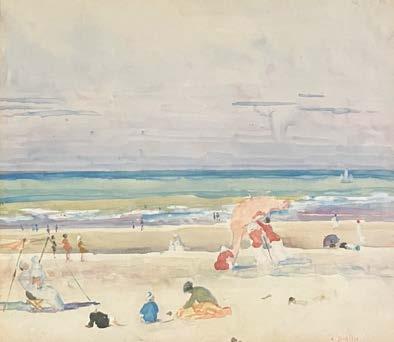
Paris Plage. 1914
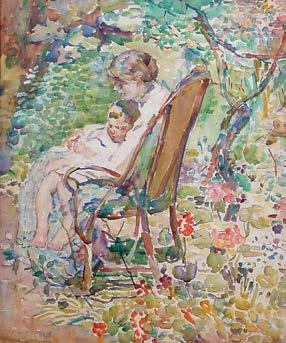
Mother and Child in a Garden, France, c. 1911-12
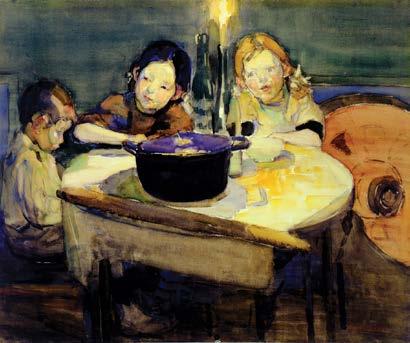
The Other Side of the Circus Wagon (Meal Time) (Saying Grace), c. 1912-13
“Particular attention is now being focused on Schille’s most significant contribution to the history of American Art- her watercolors. Scholars are favorably comparing these paintings to those of other American masters, a significant complement when one considers that the United States has produced some of the finest watercolor painters in the history of art.”
William H. Robinson
Associate Curator of Paintings, Cleveland Museum of Art
Alice Schille Watercolors: Ohio Artist Her Innovative Spirit Canton Museum of Art, Ohio, 2001
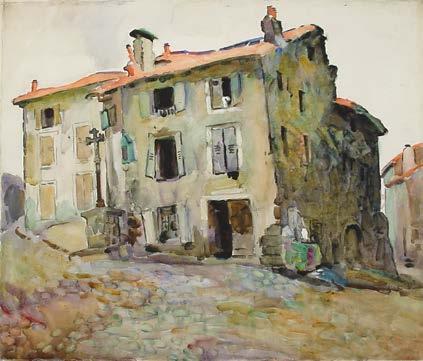
Two Old French Houses, c. 1914
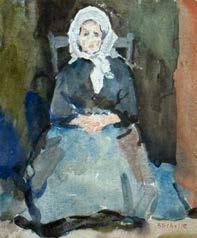
Old Lady (87th Birthday), c. 1914
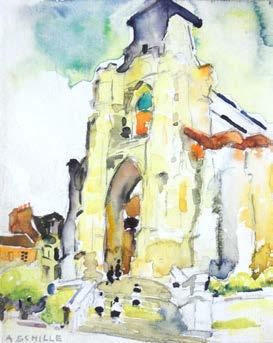
Lisieux, France
(Ancienne Église, Saint Jacques), c. 1914
“In her many adventures, Schille understood watercolor as a traveler’s medium, perfect for a spontaneous plein air work. She also found it welcomed her exploration of progressive visual strategies, as she moved from the wet, grayed Impressionism of the Dutch ‘Hague School’ and Whistler to the bright, dotted and broken color of Neo-Impressionism and Fauvism. In her hands, watercolor demonstrated its utility as a modern medium, and a medium for modernists. Her brave, distinctive, and inventive work won her critical praise, patronage, awards from many exhibition juries, and election to many artists’ societies. By 1920, at the age of fifty, Schille was easily the most versatile, accomplished, and progressive female watercolorist in the United States;; surely she was the one most honored by her peers.”
Kathleen Foster, Curator of American Art
Philadelphia Museum of Art
“Women and Watercolor: Alice Schille and the ‘American Medium’
In a New Light: Alice Schille and the American Watercolor Movement Columbus Museum of Art, Ohio, 2019
SOUTHERN FRANCE: 1922-1932
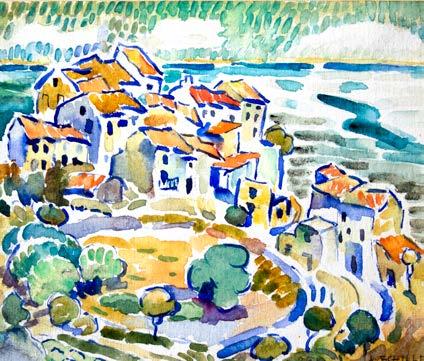
Coastal Village, c. 1922
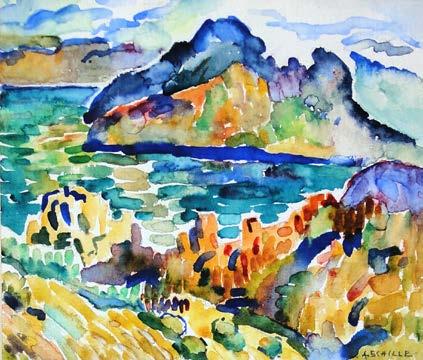
“. . .Schille brought a distinctly modernist sensibility to miniature painting. She once praised Matisse for “escaping all that was literary and photographic... [in order] to return to naked rhythmic expression—then to decorative organization, to wildly dynamic rhythms fixed in brilliantly harmonious color structures.” Her persistence in developing and refining modernist principles of design during the 1920s and 1930s, when many of her colleagues were abandoning avant-garde painting for American scene realism, is noteworthy. Her tenacity and success at achieving a modernist vision in the miniature format is even more remarkable.”
William H. Robinson
“Alice Schille Watercolor Miniatures”, Canton Museum of Art, Ohio, 2019 American Art Review, January, February, 2020
France’s sun drenched Cote d’Azur inspired some of the leading contemporary writers and avant-garde artists of the 1920s. The lush imagery of Hemingway and Fitzgerald novels and the paintings of Matisse, Cézanne, and Derain are alive in Schille’s paintings from this period.
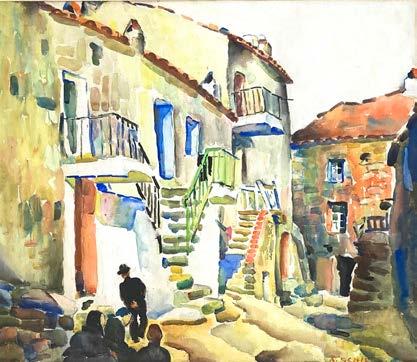
Pyrénées-Orientales, Cordes, Corsica, Carcassonne, Sicily, Biarritz, and Villefranche-sur-Mer are some of the locations where Schille painted her series of gleaming watercolors of coastal hill towns, tree-lined roads, and seaside vistas.
James M. Keny “Le Midi and Beyond”
In a New Light: Alice Schile and the American Watercolor Movement Columbus Museum of Art, Ohio, 2019
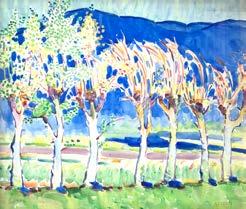
Row of Trees (Southern France) c. 1925
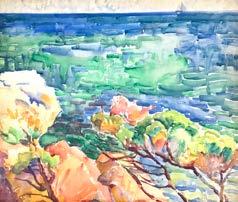
Mediterranean Vista, c.1922-1925
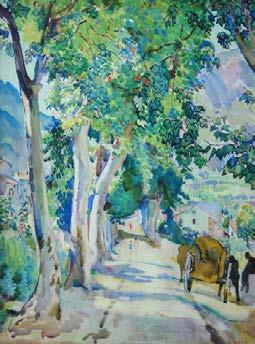
The Road, Vernet –les-Bains / Pyrenees-Orientales, France, c. 1925-1928
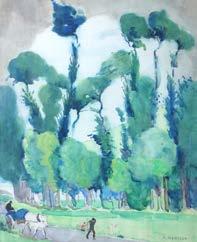
Oxcart Pyrenees, c. 1922
“Principally seeking the intense light of tropical and Mediterranean climates, she was also attracted to the simpler life of rural village communities, where people live closer to nature.”
William H. Robinson
Alice Schille Watercolors: Ohio Artist Her Innovative Spirit
Museum of Art, Ohio, 2001
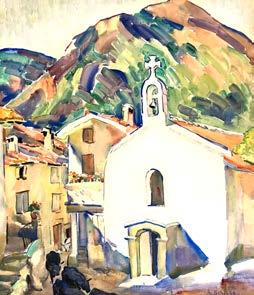
The Little Church (The Pyrenees), 1926 Morning in the Pyrenees, c. 1925;
Canton
OPPOSITE PAGE: Morning in the Pyrenees, c. 1925
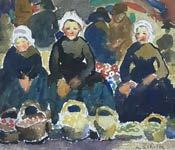
French Women, Clermont, c.1922-25
Chronology
1869
Alice Schille born August 21, Columbus, Ohio, the third of six children of Peter and Sophia Green Schille to reach adulthood.
1887
Graduated from Central High School, Columbus.
1891-93
Attended Columbus Art School.
1895-97
Briefly taught at the Columbus Art School and at the Deaf and Dumb Asylum in Columbus. Exhibited oils, watercolors and pastels annually at the Ohio State Fair, beginning in 1895 until 1902 and sporadically thereafter.
1897-99
Attended the Art Students League in New York City; studied figure drawing with Kenyon Cox. Studied at the Chase School of Art under William Merritt Chase (the school’s name changed in 1898 to the New York School of Art).
In New York began a lifelong friendship with Olive Rush, who was to become a well-known painter, eventually settling in the Southwest.
Attended Chase’s Shinnecock School of Art on Long Island, summer 1899. Shared lodgings with painter Martha Walter and met the young Rockwell Kent, both of whom remained her friends.
During a two-year stay abroad, traveled in England, Germany, Italy, Spain, Holland, and France. Painted at the artists’ colony in Volendam, Holland, during this time.
Attended the Académie Colarossi in Paris, 1903–04; studied with Raphael Collin, Gustave Courtois, and René Prinet. Studied privately with William Merritt Chase in Paris.
1904
Met Philadelphia collector Samuel Stockton White III in Paris, where White modeled for Auguste Rodin (had been a bodybuilder during his student years at Cambridge).
Exhibited five works (three watercolors and two oils) at the Société Nationale des Beaux-Arts, Paris (Paris Salon).
Returned to Columbus, to her family home at 1166 Bryden Street, where she lived throughout her life with her mother, who lived to be 101, and her sister Clara, who cared for the household. Her studio was over the carriage house behind the family’s house.
Began to teach at the Columbus Art School and established a routine of teaching during the academic year and traveling and painting during the summers.
1904-41
Participated in group exhibitions of watercolors and paintings at the Art Institute of Chicago (19041928) and Pennsylvania Academy of Fine Arts (1905-1941).
1905–14
Traveled to France and neighboring European countries in the summers to paint, to renew friendships, and to attend exhibitions. In Paris, met the expatriate American writer Gertrude Stein. The French province of Brittany was a favorite destination. Stays in London, Nice, Paris, and Siena are documented in paintings.
1906-14
Exhibited as a member of the Society of Western Artists at major museums in the Midwest: Cincinnati, Detroit, Chicago, Cleveland, Indianapolis, St. Louis, and Louisville.
1911-13
Made summer trip to France and painted in the hill city of Le Puy in southeast France, where she returned in following years.
1912
Watercolor entitled Market at Le Puy purchased by the Columbus Art Association (now the Columbus Museum of Art).
1913
Traveled to Belgium and France during the summer, accompanied by Olive Rush.
Awarded the Fine Arts Building Prize by the Society of Western Artists for St. Germain-des-Prés at Night and Lace Making.
Subject of a major article by Edna Owings in International Studio, August. Le Puy watercolor was featured in this story.
1914
Summer travels in France included trips to the beach town of Paris-Plage, Touquet and Etaples on the English Channel and probably to Provence in southern France. Visited Rye, England that summer.
In August, at the outbreak of World War I, left France for England before returning home to Columbus.
Awarded Gold Medal for watercolors at the Panama-Pacific International Exposition, San Francisco. The works awarded the prize were painted in France between 1911 and 1914.
Second one-person exhibition at the Cincinnati Art Museum including many works from her 194 trip to France and England.
Painted series of New York street scenes
1916–18
Painted and exhibited in the Gloucester, Massachusetts, area during the summers.
Painted first Pointillist watercolors with Fauve coloring and expressive daubing, seen especially in the Gloucester beach scenes.
1919–20
Spent summers in Santa Fe.
Renewed friendship with Olive Rush, who permanently moved from Indianapolis to Santa Fe in 1920.
1922-32
Visited France during numerous summers painitng in LePuy, Cordes, Vernet les Bains, Corsica, and the French Riviera.
1923 Summer, traveled to Mexico.
Returned to North Africa in the summer and painted her second series of North African watercolors, referred to by the artist as the Labor and Rhythm series.
1929
Traveled to Turkey and Egypt during the summer. Painted series of watercolor depicting Constantinople (Istanbul).
1930–35
Made summer trip to Guatemala in early or mid-1930s and painted series of Guatemalan oils and watercolors.
1948
Retired from teaching at the Columbus Art School.
1951
Received Award for Distinguished Service in the Arts from the Columbus Art League.
1955
Died November 6 in Columbus