The greater the potential impact of a production outage, the more effort is required to prevent it. This is particularly true when the company’s reputation and the health of its employees are at stake, as well as money. For this reason, changes to traditional Distributed Control Systems (DCS) are made very sparingly, only following thorough testing. The article on page 8 describes how the ‘separation of concerns’ approach can facilitate the implementation of digital innovations without compromising safety and (cyber)security.
In our special feature, 'Safe and Secure Automation', we explore the various challenges currently facing the industry. It's not just about selecting the right hardware; software is playing an increasingly important role in devices and machines. Secure data exchange requires communication across all levels. From page 18, you can read how these considerations – and more – can be implemented within the well-known long industrial life cycles.
I hope you enjoy reading this!
KayPetermann
Editor IEN Europe
Industry News
New Products
Separation of Concerns: Breaking Free of the Limitations of Traditional Architectures
Continuous Firmware Monitoring SoftwareMinimising cyber risks and ensuring firmware security throughout the entire product lifecycle.
Processing & Control News Europe Supplement:
Explosion Protection: Hazardous Locations in Modern Automation: Why Proportionate Specification Matters
New Products
Safe and Secure Automation
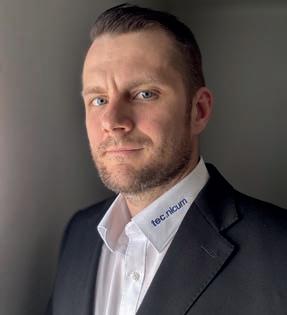
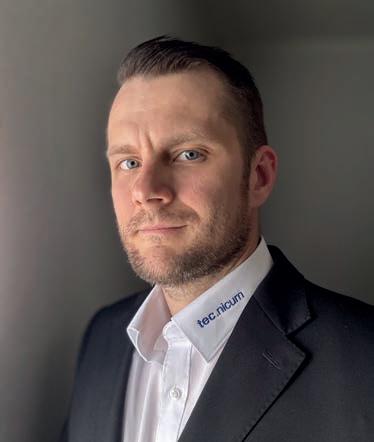
Safe Hardware Alone is not Enough Interview with Anton Ivanov, Head of Sales and Operations at tec.nicum – Solutions & Services GmbH
Automation Needs Secure Access: Using Agentless Software to Build an Industrial Gateway Solution
The Holistic Approach is Essential for Achieving Secure Production Environments
Interview with Laurent Liou, Product Marketing Manager, Moxa
of a 120-year-
Opening of New Delta R&D Center, in Soest, Germany
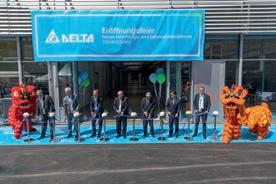
Delta, a global leader in power management and smart green solutions, has officially opened its new Research and Development (R&D) center in Soest, Germany, significantly expanding its innovation capabilities in high-efficiency power solutions for AI and HighPerformance Computing (HPC) data centers, as well as for electric mobility, including 800 VDC server power supplies and 4-in-1 EV power systems. With the rapid increase in power density in AI infrastructure, testing requirements are becoming significantly more complex, requiring expanded and highly specialized laboratory environments. Therefore, this green facility at Soest, designed to achieve LEED Gold certification, comprises 7,500 square meters of advanced R&D laboratory space and 2,500 square meters of office space to accommodate up to 250 talents. Dr. Peter Ide, Managing Director of Delta Energy Systems, said, “Soest has been a vital innovation engine for Delta in EMEA for decades, and this expansion reflects our commitment to strengthening localized R&D capabilities in Europe. It enables closer collaboration with customers and faster development of advanced and sustainable solutions for data center and automotive applications.”
Technology Partnership for the Power Distribution of the Future
Phoenix Contact Strengthens its Global Sales Organization
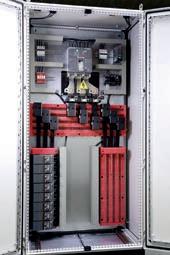
The partnership brings together two global technology leaders in their respective domains for joint developments: ABB as an innovative manufacturer of intelligent, networked and secure power supplies, and Rittal as a leading supplier of switchgear system technology and power distribution platforms. With 75% faster assembly and an innovative platform approach, Rittal’s RiLineX busbar system sets the new standard for power distribution – further driven by a growing ecosystem of tried-and-tested technology partners. "We are delighted to be transforming our long-standing collaboration with ABB in the field of uninterruptible power supply for data centres and switchgear and control technology for power distribution into a global technology partnership. We will be expanding our RiLineX and Ri4Power platforms with joint innovations in the future," says Uwe Scharf, Managing Director Sales Germany and Europe at Rittal. "This partnership combines advanced low-voltage technology and proven power distribution platforms to deliver superior results and reduced complexity for panel builders," said Piero-Giorgio Schiannini, Head of Smart Power & Smart Buildings Sales and Marketing, ABB Electrification.
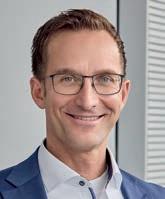
To further sharpen and holistically align its global sales activities with customers and markets, Phoenix Contact is expanding its Group Executive Board with the newly established role of Chief Sales Officer (CSO). Effective May 15, 2026, Stephan Volgmann will assume this position within the Group Executive Board. Since July 2020, Volgmann has led Phoenix Contact’s sales organization in Germany and brings extensive industry expertise to centrally steer the company’s market presence. “We are pleased to appoint Stephan Volgmann, an experienced sales expert, who will take on overarching responsibility for key management impulses and further strengthen the strategic alignment of our global sales organization,” says Christoph Klenk, Chairman of the Advisory Board of Phoenix Contact. By expanding the Group Executive Board to include a Chief Sales Officer, the company firmly anchors customer proximity and growth at the highest leadership level. This step underlines the importance of sales within the overall management of the company. The Group Executive Board continues to include CEO Dirk Görlitzer, COO Torsten Janwlecke, COO Ulrich Leidecker, CTO Frank Possel-Dölken, and CFO Axel Wachholz.
TE Connectivity Honours TTI IP&E Distributor of the Year Award
TTI IP&E is proud to announce that it has been honoured with the Global Broadline Distributor of the Year by TE Connectivity for its 2025 results. The award recognises TTI’s excellence across key criteria including sales performance, available-to-sell inventory strength, demand creation, operational execution and global customer support. TTI IP&E was recognised for its ability to consistently execute across regions while supporting TE Connectivity’s broad portfolio and global customer base. In Europe, this recognition is underpinned by continued standout performance, with the region consistently delivering best-in-class results despite challenging market conditions. “I want to congratulate TTI on being named the TE Connectivity Global Broadline Distributor of the Year - a truly well-deserved recognition,” says Kevin Beals, TE Connectivity. “I especially want to thank the TTI EMEA team for driving what can only be called an exceptional year. TTI and TE Connectivity share a longstanding partnership in EMEA, one that is visible across all countries and through every market cycle. That kind of consistency and commitment is rare, and it speaks volumes about the quality of the people and the strength of the relationship. Congratulations to the entire TTI team.”
Separation of Concerns: Breaking Free of the Limitations of Traditional Architectures
As digital transformation increases demand for data from automation systems – driven by new digital innovations such as advanced analytics, AI and expanded connectivity – maintaining system integrity has become a challenge. ABB’s Luis Duran explores how the concept of “separation of concerns” protect the core of the automation system in a cyber-secure way, while enabling new digital value without compromising operational performance.
One of the major challenges faced by industries today is how to bring digital innovations to traditional Distributed Control Systems (DCS) without disrupting the delicate production processes and in a cost effective and agile manner. In a traditional architecture, core control functions and digital capabilities such as asset management and optimization are often tightly woven together, a design that has long ensured deterministic behaviour, reliability and safe operations.
As digital innovation accelerates, introducing new innovations on the digital side requires careful consideration, as changes must be validated to ensure they do not risk disrupting operations on the control side.
For plant operators managing continuously running processes, making changes or experimenting with new innovations on what are essentially live systems is not taken lightly. If a change in one area has unintended effects elsewhere, then it can risk causing downtime, and affect resilience plant-wide, and so validating any adjustments can take up large amounts of time and cost. This is why attention is increasingly turning to the concept of “separation of concerns”. This is a term widely used in IT, telecommunications, and finance, but is less wellknown in industrial automation discourse. It involves dividing systems into distinct environments, with each optimized for a specific purpose or “concern”. Rather than
altering the trusted control environment, critical control tasks, digital applications and optimization tasks can operate in separate, yet connected, domains within the automation ecosystem.
A well-designed modern automation system with true separation of concerns allows for a digital environment where optimization and adjustment for each environment can be carried out more easily, without increasing risk to core operations. The benefits are faster innovation cycles, more robust safety and cybersecurity, and greater flexibility with more scope for optimization, while maintaining the robustness and reliability that traditional DCS architectures are designed to deliver.
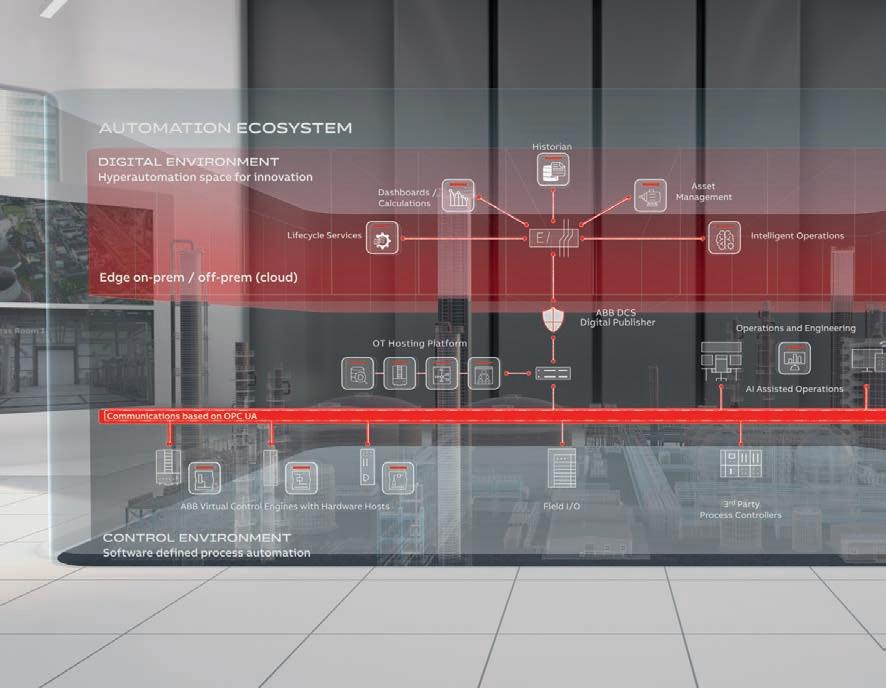
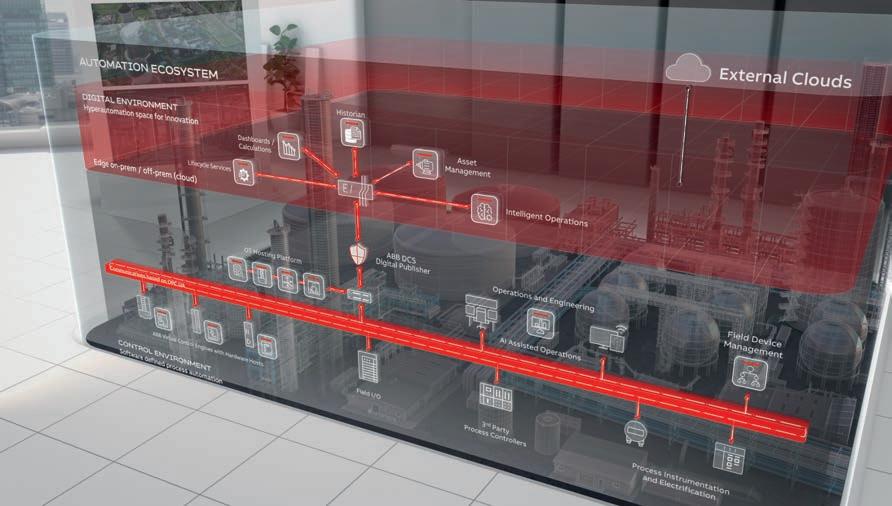
Dividing systems into distinct environments optimized for a specific purpose is known as “Seperatiom of Concerns”. Rather than altering the trusted control environment, critical control tasks, digital applications and optimization tasks can operate in separate, yet connected, domains within the automation ecosystem. Picture: ABB
Introducing new digital applications, applying software updates, or deploying a cybersecurity patches, may have knock-on effects on wider systems. This means extensive validation is often required to ensure that operational integrity is not compromised.
Making modern automation systems more manageable
Traditional automation architectures were typically designed to operate within a clearly defined operational environment, where core control functions, engineering tools, optimization applications, and digital services were closely integrated within a single system. This approach has proven highly effective in delivering robustness, reliability and deterministic performance in demanding industrial settings.
As plants evolve and additional digital capabilities are introduced, new requirements and dependencies naturally emerge within these already sophisticated systems. Introducing new digital applications, applying software updates, or deploying a cybersecurity patches, may have knock-on effects on wider systems. This means extensive validation is often required to ensure that operational integrity is not compromised.
Compounding this is the fact that many plant environments are in constant operation, 24 hours a day, 365 days a year. Interruptions
LUIS
outside of planned downtime are simply not realistic. Furthermore, digital applications are constantly evolving and require updates ever more frequently. Treating both the core control environment and the digital layer in the same way can slow down innovation, as operators look to reduce the risk of inadvertently disrupting wider systems.
Separation of concerns builds on the strengths of traditional automation architecture by preserving their robust, tightly integrated core while extending the architecture to better
DURAN, AUTHOR OF THIS ARTICLE
Industry Initiatives, Standards and Market Trends Manager for Industrial Automation at ABB Automation. He has a BSEE and an MBA from the Universidad Simón Bolívar in Caracas, Venezuela, and has over 36 years' experience in various Process Automation roles, including Process Control, Manufacturing Execution Systems, Safety Instrumented Systems, and Critical Controls. He has over 22 years' experience in product management, including product marketing and product line management. He is ABB representative in the Open Process Automation Forum and participating in other industry initiatives such as Modular Automation and margo. He creates awareness of the ongoing challenges and changes experienced in industrial automation and the transformation of operational technologies to address the industry's future needs.
accommodate faster-evolving digital capabilities. By creating a clearer delineation between the core control environment and the digital environment, it helps manage complexity and improves maintainability through the decoupling of monitoring and optimization from the core system. This allows for incremental modernization to accelerate digital transformation initiatives, leverage open systems, and future-proof their operations, while maintaining the operational continuity of critical core control.
Updates to digital applications, which typically require more frequent intervention, can be managed within their own secure environment, reducing the risk of negatively impacting core control systems. While functionally separate, the two environments remain fundamentally connected, ensuring that insights and innovations developed in the digital environment can still be easily migrated and implemented into the control environment.
Separate yet connected environments
This is a principle applied in ABB’s Automation Extended. Having two interconnected
software environments – core control and digital – establishes a true separation of concerns, while forming a single automation ecosystem. The control domain remains optimized for performance, resilience, and cybersecurity, while the digital domain provides a more flexible space to develop new innovations and concepts at speed. This simplifies complexity and creates an ecosystem in which operators can keep operations continuously optimized. In the ABB system architecture, an application is divided into small, independent services, each responsible for a specific function. By isolating different concerns, changes in one part of the system are less likely to impact others, making each function easier to maintain and update without affecting the integrity of the core control. Functions can also be tested independently, making it easier to identify and fix issues before they risk compromising wider systems. Furthermore, functions that address specific concerns can be more easily duplicated or re-used elsewhere in the application. By combining an OPC UA backbone with a cloud native, container based architecture, the system brings powerful new capabili -
Having two interconnected software environments –core control and digital – establishes a true separation of concerns, while forming a single automation ecosystem. Picture: ABB
ties to industrial operations. This facilitates a broad spectrum of enhancements, from proactively detecting and correcting process anomalies to optimizing maintenance strategies through continuous condition monitoring of critical assets, while streamlining engineering with modular solutions that run across diverse hardware. The result is a scalable, agile architecture that maintains strong, reliable performance.
The digital environment allows new tools and applications including AI/ML, edge intelligence, IoT integration and advanced analytics to be introduced smoothly and incrementally at a pace that is in harmony with operators’ own business priorities and strategic objectives.
The Automation Extended architecture provides several benefits for end users. By separating different elements of an application, developers can focus on optimizing each individual part, leading to smoother and faster development workflows. Optimizing component parts separately, and fine-tuning each element for efficiency, can also lead to better plant performance overall. Issues in one module are less likely to affect the operation of other modules,
meaning more stable operations generally, while security vulnerabilities can be more easily contained.
Innovation without disruption
Importantly, functional independence of this digital space from its neighbouring control environment preserves the integrity of core processes and proven control structures. Within this digital environment, new tools can be evaluated, deployed or updated at any time without putting the continuity of core control functions at risk.
For industrial operators this is a significant step forward. Modularity on its own is no longer enough. The next evolution in the DCS is intelligent separation. Automation Extended provides the framework for how future automation capabilities can be introduced progressively – preserving what already works while enabling the flexibility, scalability and efficiency needed for the next era of industrial operations. In essence, it helps automation systems to become smarter, faster, and more resilient –without disrupting what already works.
Minimising cyber risks and ensuring firmware security throughout the entire product lifecycle
The Düsseldorf-based cybersecurity company ONEKEY has developed digital twin technology that enables automated scans to monitor firmware around the clock. ONEKEY's monitoring system reanalyses the firmware daily to ensure continuous security throughout its entire lifecycle.
Firmware is the fundamental software layer of many technical systems, including industrial control systems, IoT devices, medical systems, and vehicle components. Security vulnerabilities at this level are particularly critical because they allow direct access to hardware functions and are often difficult to fix retroactively.
At the same time, modern devices contain a multitude of external software libraries, opensource components, and proprietary modules. Each of these components can introduce new security risks if new vulnerabilities are discovered after a product’s release.
Continuous Analysis Instead of One-Time Reviews
As part of a modern firmware monitoring approach, a product’s firmware is continuously monitored, not just analyzed once. The goal is to automatically detect emerging security vulnerabilities in software components and assess their impact on existing products.
First, a detailed analysis of the firmware is conducted to achieve this. This process identifies all the software components contained within the firmware and creates a structured software bill of materials (SBOM).
Next, the SBOM is continuously compared against global vulnerability databases. As soon as new security vulnerabilities are published, for example in an open-source library,
it can automatically be determined whether an affected product contains the vulnerable component.
ONEKEY’s “CRA Fast Start” program provides continuous monitoring throughout the entire product lifecycle. This program enables manufacturers of connected devices, machines, and systems to rapidly and structurally assess compliance with the Cyber Resilience Act.
Digital Twins for Scalable Security Testing
One method of implementing this approach is through the use of digital twins. This involves creating a virtual representation of the firmware, enabling security analyses to be conducted independently of the physical hardware.
These digital models can be continuously monitored to give manufacturers a central-
ized source of information for identifying and addressing security risks early on.
Automated Prioritization
Another key aspect of firmware monitoring is automated risk assessment. Not every vulnerability poses an immediate threat. What matters is whether the affected software component is in active use and which functions it impacts.
Therefore, ONEKEY’s platform analyses contextual information, such as affected components, exploitability of the vulnerability, and potential system impact with firmware monitoring as one of its features. The result is a prioritized list of security issues that can be addressed in a targeted manner.
66827 at www.ien.eu
Hazardous Locations in Modern Automation: Why Proportionate Specification Matters
Page 14
17 Screw
for the Lower Volume Flow Range
16
MEASUREMENT
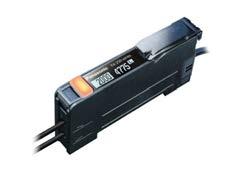
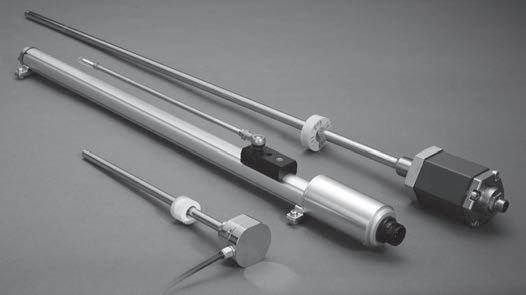
Air/Gas Velocity Sensor for Industrial Applications
17
PROCESSING MACHINERY
Energy-Efficient Agitator Platform
Blowers
explosion protection
Hazardous Locations in Modern Automation: Why Proportionate Specification Matters
It wasn’t too long ago that hazardous zones and production zones were reasonably well separated. The areas where explosive gases, vapors, or combustible dusts were present tended to stay in their own very specific environments, and the equipment operating in those areas was specified accordingly. Today, however, that distinction is less clear.
As automation spreads deeper into processing, handling and transport operations, motors are increasingly required to operate in spaces that sit on the edge of hazardous zones. In these environments, explosive gases or combustible dusts are not continuously present, but they may occur during abnormal conditions or for brief periods of time. The engineering challenge is no longer simply “hazardous or not”, but rather “how hazardous, and how often”?
Answering that question correctly can make the difference between a well-optimized design and an unnecessarily expensive, inefficient, and bulky one.
Understanding the zone
In the ATEX and IECEx frameworks, hazardous areas are divided into zones. Zone 0 and Zone 20 represent the highest level of risk, where explosive gas or dust is present continuously or for long periods, while Zone 1 and Zone 21 apply where it is likely to occur during normal operation. In contrast, Zone 2 (gas) and Zone 22 (dust) apply where explosive atmospheres are not likely during normal operation and, if they do occur, will only exist for a short time. The significance of this extends far beyond paperwork and has many practical ramifications. For example, the explosion-proof motors designed for Zone 0 or Zone 1 are typically engineered to withstand and contain an internal explosion. Their housings are thick and heavy. Flame paths are carefully designed to prevent ignition from propagating. Cable entry is typically via rigid conduit rather than standard connectors. These motors are robust, proven, and an essential part of making industrial operations possible in severe environments, but they are
In hazardous zones, explosive gases or combustible dusts are not continuously present, but they may occur during abnormal conditions or for brief periods of time.
also large, heavy and highly expensive.
As such, if a machine only needs to comply with Zone 2 or Zone 22, specifying a fully Zone 1-complient motor is excessive. It adds weight to moving axes, increases inertia, may complicate mechanical integration and drives up cost unnecessarily.
Automation expands into gray areas
One reason for historical over-specification is simple availability. Both supply and demand for purpose-designed servo motors for Zone 2 and Zone 22 applications have historically been limited, so when faced with regulatory scrutiny and liability concerns OEMs have
defaulted to the highest-rated solution available.
The need for motors tailored to these environments is growing as the nature of automation changes. Consider a robotic transport system moving unfinished assemblies from a welding cell to a paint spray booth. The booth environment may only occasionally present an explosive gas mixture, but any motor operating inside that space must comply with the appropriate hazardous location standard. Similarly, in pharmaceutical manufacturing, servo-controlled gate valves meter fine powders with high precision. Under normal conditions the environment is controlled, but
combustible dust may be present in abnormal situations. Grain handling systems, food processing lines, textile operations, and powder coating systems present similar challenges. These are not traditional heavy industries typically associated with hazardous zones, such as mining or petrochemicals. They are high-precision, high-value production environments that increasingly depend on servo technology.
As a result, more machines now operate in the transitional space between conventional automation and classified hazardous areas. The specification approach must evolve accordingly.
Designing for Zone 2 and Zone 22
For Zone 2 and Zone 22 environments, the objective is not to contain an explosion in the way that is required in more high-risk areas, but to reduce the likelihood of ignition under abnormal conditions. That distinction allows for a very different design philosophy.
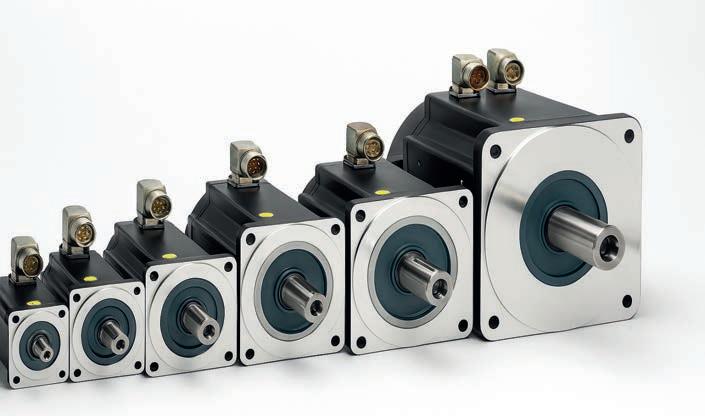
Kollmorgen’s AKME series of servo motors was developed specifically for these applications. Rather than redesigning the motor as a flameproof enclosure, the approach builds on the established AKM servo platform and
applies targeted enhancements to meet the requirements for Zone 2 and Zone 22. The design makes use of several key protection concepts. For gas environments in Zone 2, the motor employs increased safety and encapsulation. The windings are vacuum impregnated to isolate conductive components and reduce the risk of ignition sources, while the design meets the T4 temperature class requirement. In practice, gases may enter the motor, but the rotor surface temperature remains well below the ignition threshold. For dust environments in Zone 22, protection is achieved through a sealed enclosure. The motors incorporate IP67-rated shaft sealing and connector sealing, exceeding the IP64 level required by the certification standard. This ensures that dust cannot accumulate inside the motor and allows it to meet the T130 temperature classification for dust that may settle on the motor surface.
Because the motor is not required to withstand an internal explosion, it does not need thick-walled housings or flame paths. The result is a compact, lightweight solution that preserves the torque density, dynamic performance and mounting flexibility expected of a modern servo motor.
More machines now operate in the transitional space between conventional automation and classified hazardous areas. Kollmorgen’s AKME series of servo motors was developed specifically for these applications. Picture: Kollmorgen
A measured approach to safety
It is important to note that adopting a more measured response to motor specification does not diminish the importance of safety. On the contrary, increasing awareness of combustible dust and gas hazards have improved industry standards significantly. The goal is not to reduce protection, but to apply it intelligently.
Hazardous location classification exists precisely to enable proportionate design. When engineers understand the nature, frequency and duration of the hazard, they can select equipment that provides the required level of protection without introducing unnecessary compromise.
As automation continues to expand into food production, pharmaceutical processing, advanced coatings and other dust- and gassensitive environments, this middle ground between standard industrial servo motors and fully explosion-proof designs will become more important.
The challenge for designers is to resist the instinct to default to the highest rating and instead align specifications with real-world risk. By doing so, they can achieve compliant, efficient, and mechanically optimized systems that reflect both engineering rigor and practical judgment.
In modern factory automation, safety and performance are not opposing goals. Indeed, with the right approach to hazardous location specification, they instead reinforce each other.
An IEN Europe Interview with Anton Ivanov, Head of Sales and Operations at tec.nicum – Solutions & Services GmbH, a subsidiary of Schmersal.
IEN Europe: Schmersal is a well-known name in the field of machine safety. tec.nicum, on the other hand, is probably less familiar to our readers. Could you please explain the connection between the two to our readers?
Ivanov: Most people in machine safety are familiar with Schmersal, known for providing safety devices, systems, and solutions for over 80 years. Its headquarters in Wuppertal, Germany, reflect a long-standing tradition of innovation and quality. What many do not know is that tec.nicum is a subsidiary of the Schmersal Group, that focuses on safety services. We set up tec.nicum because customers needed more than hardware. They needed help with staff training, risk assessments, CE marking, safety concepts, and retrofits. A safety switch only does part of the job. The rest depends on how a machine is designed, used, and maintained. Our engineers and consultants cover all of that — independently, neutral, without a sales agenda. In practice, we work with both machine builders and end users, often on projects where the two need to come to an agreement about responsibilities.
IEN Europe: In recent years, there has been an increasing focus on personal liability issues for directors and management in relation to (cyber) security. How widespread is awareness of this issue already, and is there still a need for further education and awareness-raising?
Ivanov: Awareness still varies significantly. Large companies with dedicated compliance and risk management functions generally have a structured understanding of cybersecurity obligations. However, in many mid-sized manufacturing companies, management often does not yet fully connect cybersecurity risks with their own personal liability — and that gap is becoming increasingly critical.
Under German and increasingly EU law, management has a clear duty of care for risk management, and regulations such as NIS2 are making cybersecurity responsibilities more explicit at the executive level. As a result, after serious cyber incidents, investigations are increasingly examining what management knew, when they knew it, and what actions they took.
This is why further education and awareness-raising remain essential. Our management workshops aim to provide clarity on legal obligations and practical steps — not to create fear, but to enable informed and responsible decision-making.
Ivanov, Head of Sales and Operations at tec.nicum – Solutions & Services GmbH, a subsidiary of Schmersal
IEN Europe: How high is the general demand for advisory services on security issues in manufacturing? And how have EU regulations, such as the Cyber Resilience Act and the Machinery Directive, further altered or intensified this demand?
Ivanov: Demand has grown significantly in the past three years, driven by two factors: greater connectivity in production systems, and new regulations.
The new EU Machinery Regulation — applying from January 2027 — treats cybersecurity as part of machine safety for the first time. The Cyber Resilience Act goes further, requiring manufacturers to identify vulnerabilities, provide security updates across the product lifetime, and report serious incidents. For many manufacturers, this is unfamiliar territory. They are used to thinking about safety in terms of physical hazards — guards, interlocks, emergency stops. Now they must integrate cybersecurity into risk assessments and product development from the start. They know the general direction but need someone to translate regulation into concrete steps. That is where we come in.
IEN Europe: What other current trends do you see in the field of machine safety and safe production at the moment, such as IO-Link Safety?
Anton
Hardware is a key component of modern industrial safety systems. However, it requires additional elements such as ongoing training and employee coaching.
What solutions can you offer companies to help them stay up to date with the various requirements?
Ivanov: IO-Link Safety is one of the most practical developments in recent years. It transmits safety-relevant data over standard cables alongside process data, simplifying wiring, speeding up commissioning, and making fault diagnosis much faster. For a machine builder, that means fewer components and less downtime.
Alongside this, we see another important trend such is the growing use of collaborative robotics, which demands new safety strategies for human-machine interaction beyond traditional guarding. In parallel, digitalization and data-driven safety are enabling better diagnostics, predictive maintenance, and more transparent safety management throughout the machine lifecycle.
IEN Europe: What key trends and developments do you anticipate in industrial production over the next few years? What impact will the integration of humanoid robotics have, for example? How do you assess progress in the harmonisation and simplification of international standards?
Ivanov: Humanoid robots are the development we watch most closely. Collaborative robots have already challenged the traditional assumption of strict separation between human and machine. Humanoid robots take this further — moving through a factory, handling a wide range of tasks, working directly alongside people. Existing robot safety standards were not written with this in mind. Manufacturers who deploy them now must carry out detailed risk assessments that go beyond what current standards explicitly require.
On harmonisation: progress is real but slow. Within Europe, the shift from directives to regulations reduces variation between member states. Global harmonisation remains difficult. A manufacturer selling into both EU and North American markets still faces meaningfully different regulatory environments. Our practical advice: design to the most demanding applicable standard, document thoroughly, then identify which specific requirements apply per market.
Longer term, we expect safety to shift from something designed in once, to something monitored in real time. Operational data already makes it possible to detect early signs of wear or unsafe behaviour before an incident occurs. That is the direction. The fundamental goal, though, remains unchanged: helping people work safely with machines.
IEN Europe: Thank you for these insights!
66839 at www.ien.eu
COMPANY INFO:
tec.nicum – Solutions & Services GmbH, offers risk assessments, safety concepts, CE marking support, safety retrofits and specialist training. The company comprises a global consultancy network of TÜV Rheinland-certified Functional Safety Engineers and Machinery CE Experts. Services can be called upon around the world. tec. nicum’s core philosophy is to offer advice that is independent of manufacturers and as objective as possible.
20 safe and secure automation
Automation Needs Secure Access: Using Agentless Software to Build an Industrial Gateway Solution
Smart automation is reshaping industrial production. Machines, control systems and service processes are becoming more connected, data-driven and flexible. To fully leverage these capabilities, manufacturers need secure and reliable access to OT across sites – for maintenance, troubleshooting and optimization. Yet in many factories, legacy systems, segmented networks and stringent security requirements still stand in the way of what has been a commodity in IT environments for many years.
Smart automation initiatives increasingly extend beyond individual production lines. Machine builders support installed bases worldwide, manufacturers are centralizing service expertise, and maintenance teams are expected to resolve issues faster and more consistently. Use cases such as remote commissioning, condition-based maintenance or remote troubleshooting all depend on continuous, secure access to operational technology. Without controlled connectivity to machines and control systems, many automation concepts remain theoretical rather than operational.
Remote access is therefore not just an IT issue, but a core enabler of smart automation in OT. However, traditional access models struggle to meet industrial realities. Software agents cannot be installed on many machines and other factory equipment, while classic VPN solutions often grant overly broad network access, increasing cyber risk. To address this challenge and bridge the gap between remote access in IT and OT, TeamViewer has developed an agentless, zero-trust approach that has now been translated into a complete hardware–software–services gateway, together with its partners Kontron and Bechtle.
The software
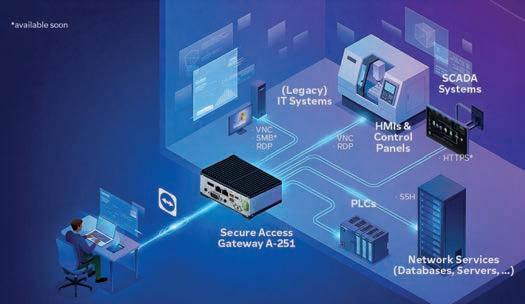
At the software level, TeamViewer’s Agentless Access is designed to enable secure remote access to industrial systems without installing software on the endpoint itself. Instead of modifying machines or control systems, access is brokered centrally. This way, practically any endpoint inside the network that owns an IP address can be accessed in a secure manner, from HMIs, PLCs, SCADA systems and control panels to peripheral devices such as shopfloor security cameras, sensors, or databases and servers.
This approach is particularly relevant in brownfield environments, where production landscapes have grown over decades and often include validated or proprietary systems that must not be changed. From an operational perspective, agentless access supports typical smart automation use cases such as remote diagnostics, PLC programming and system maintenance, while preserving system integrity.
Why VPN-based access falls short in industrial automation
Many industrial networks still rely on VPN technologies to enable remote access. While VPNs authenticate users, they typically grant access at the network level. Once connected, additional mechanisms such as access control lists must be configured to prevent users from
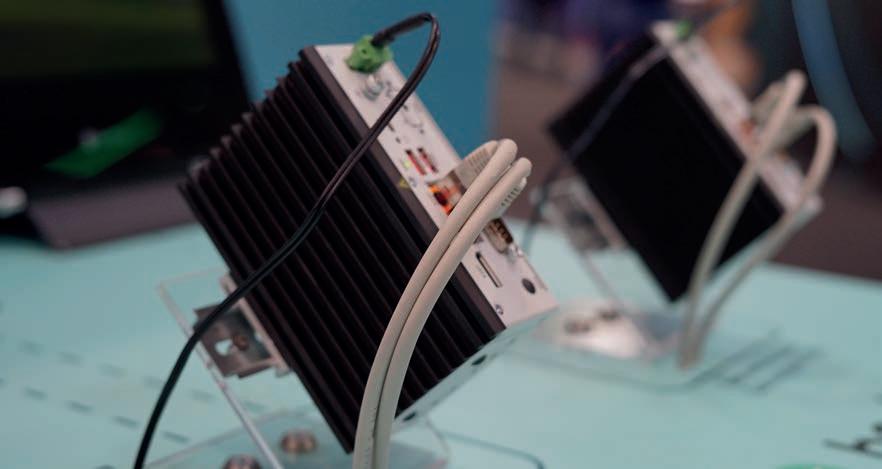
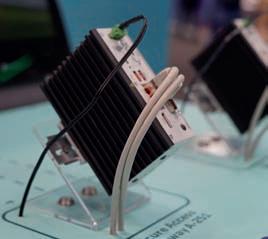
The Secure Access Gateway developed by Teamviewer, Bechtle and Kontron enables remote connections to various connected industrial endpoints.
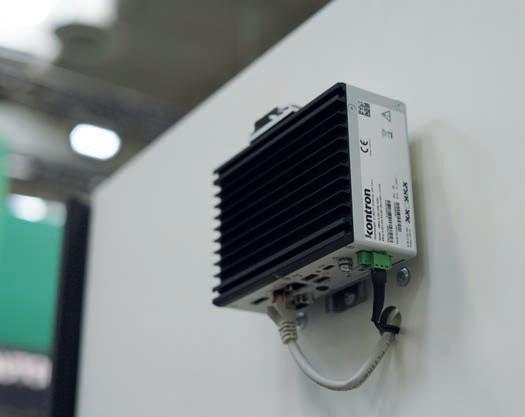
Kontron's robust KBox A-251 or KBox A-151 gateway is the hardware foundation of the gateway.
reaching entire subnets. In highly segmented OT environments, this model increases complexity and risk.
Agentless Access follows a fundamentally different principle. Built according to a restrictive-by-design, zero-trust architecture, each connection is authorized individually, limited in time and bound to a specific role, endpoint and purpose. Access is granted point-to-point rather than network-wide, using protocol isolation and controlled tunnelling. This significantly reduces attack surfaces and aligns with industrial security standards such as IEC 62443 and regulatory frameworks like NIS2 and the EU Cyber Resilience Act. Companies therefore benefit from a high level of governance, while machine builders, plant operators, and internal automation teams can directly access their global systems and in accordance with the requirements of a modern zero-trust architecture. Instead of using homegrown or disparate remote access solutions from different vendors, access is managed through a central platform that covers the needs of both IT and OT teams.
From software to a secure access gateway
TeamViewer has partnered with Kontron and Bechtle to deliver the Secure Access Gateway with Agentless Access pre-configured. Instead of deploying Agentless Access as a purely software-based feature, it is now available as a scalable, preconfigured industrial hardware gateway that can be easily deployed directly across complex production networks. The offer is complemented by comprehensive managed services by Bechtle, covering the whole product lifecycle. In this setup, the gateway acts as the on-premises access point between OT systems and the TeamViewer platform. It routes all connections securely, without exposing machines directly to the internet and without requiring changes to endpoints. For manufacturers, this transforms an abstract security concept into a tangible, plug-andplay automation component.
Industrial-grade hardware and operating system
The hardware foundation of the gateway is provided by Kontron. Their robust KBox A-251 or KBox A-151 gateway runs KontronOS, a hardened, Linux-based operating system developed specifically for industrial environments. It supports secure boot, role-based access control and controlled update mechanisms, ensuring system integrity even in long-running installations.
Kontron’s gateways are designed for continuous operation and support a wide range of industrial interfaces. This makes them suitable for legacy environments, including systems that still run older operating systems. By tightly integrating TeamViewer Agentless Access into this platform, the gateway delivers a secure and easily scalable access architecture to the shop floor.
Deployment, operation and lifecycle services
Security and automation do not end with hardware deployment. Bechtle complements the gateway solution with managed services. This includes pre-configuration of the gateway hardware, provisioning, delivery and remote commissioning. Optionally, the services also include the licensing for TeamViewer Agentless Access. Beyond
rollout, Bechtle manages monitoring, release and deployment processes as well as incident management. For industrial companies, this service-oriented approach reduces internal effort and ensures that gateways remain secure, compliant and operational over time. Especially in large-scale smart automation initiatives, professional lifecycle management is essential for maintaining consistent security standards across sites.
Enabling secure smart automation at scale
By combining Agentless Access, industrial-grade hardware and managed services, the Secure Access Gateway provides a scalable foundation for smart automation. Engineers and service teams gain controlled access to machines and control systems, while IT and security teams retain governance, auditability and compliance. As automation becomes more distributed and service-oriented, such integrated access solutions are key to connecting systems securely and efficiently. With its Europe-based and trusted partner ecosystem, TeamViewer turns secure remote access into a standardized industrial building block, enabling smart automation without compromising cybersecurity.
66870 at www.ien.eu
The Holistic Approach is Essential for Achieving Secure Production Environments
An IEN Europe interview with Laurent Liou, Product Marketing Manager, Moxa, specializing in OT network security and compliance with cybersecurity standards.
IEN Europe: What should a modern cybersecurity strategy for industry be able to achieve, in your view? What are the minimum requirements, both technically and from a regulatory perspective?
Liou: The priority in industry should be resilience and operational continuity, not just compliance. A modern cybersecurity strategy must keep operations running safely even under attack, and it must provide evidence of what has been put in place. NIS2 raises the bar on governance. Companies need to know what assets they operate, detect incidents early, and be able to demonstrate controls in an audit. For OT, IEC 62443 offers a clear structure, from secure development practices in 4-1 to technical component requirements in 4-2. The CRA complements this by reinforcing product lifecycle responsibility and supply chain diligence. Practically, the path is incremental. Build an accurate asset inventory, segment the network, restrict communications to what is necessary, and harden critical junctions such as zone boundaries. Then use network management and logging to spot unexpected devices, detect abnormal behaviour, and support troubleshooting and audits. Finally, make the organizational model work. OT must actively support IT with clearly defined roles, because OT networks mix modern and legacy equipment and security changes must not disrupt production.
IEN Europe: Which key components and considerations are necessary for future-proofing?
How can a company ensure that its protection remains up to date, particularly in the constantly evolving field of cybersecurity?
Liou: Future-proofing is as much about reconciling the past as preparing for the future. We see this firsthand. Equipment we deployed fifteen years ago still runs on production lines, which is a real test of long-term support and interoperability. Every new generation must remain compatible with what came before, while supporting what comes next, such as SPE, TSN, or NAMUR Open Architecture. Where we innovate, we still support open standards. Turbo Ring can achieve failover in under 20 ms, and RSTP and MRP are always available.
High availability architectures remove the false choice between patching and continuity. With redundant hardware, communications stay up while one unit updates. Equally important is choosing vendors committed to long term support, including software component transparency, vulnerability handling, and CRA reporting obligations.
IEN Europe: Which products and services does Moxa offer to potential customers in the fields of secure networks and secure industrial communication?
Liou: No single product can secure an industrial network on its own. That is why we take a holistic approach that combines security hardened devices, centralized management, and hands on expertise.
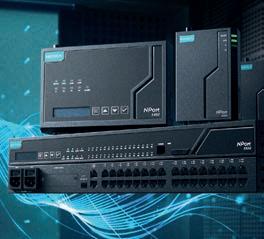
On the device side, we offer one of the broadest portfolios of IEC 62443-4-2 certified products, encompassing all the key OT network building blocks. Depending on the model, this includes features such as deny by default policies, secure boot, and protections against misuse or denial of service. For example, our NPort 6000-G2 secure device servers support
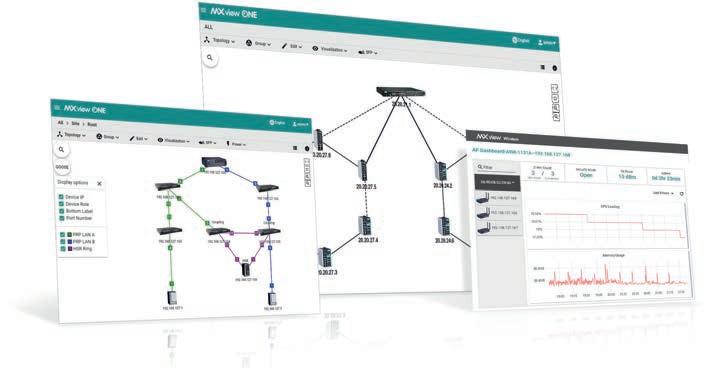
encrypted connectivity with TLS 1.2 and 1.3 and SSH, and they are IEC 62443-4-2 Security Level 2 certified. This helps bring legacy serial assets into a more secure network design. For visibility and operations, MXview One is designed to discover and visualize network devices and connections, centralize configuration and firmware management for Moxa devices, furthermore it provides event notifications and reporting. With the security add on, it can also support tasks such as deploying firewall policies and managing IPS pattern updates across supported devices. Beyond products, our field teams support architecture design with customers, and we provide OT cybersecurity training. We also operate a Product Security Incident Response
Team with a structured vulnerability management process, in addition Moxa is a CVE Numbering Authority for Moxa products.
IEN Europe: What specific challenges are involved in retrofitting or upgrading security solutions for production facilities, which have a wide range of components and machinery of various ages?
Liou: The fundamental constraint of OT retrofitting is one every plant manager understands: The line cannot stop. Visibility must come first. In a loosely segmented network, and the looser the segmentation the riskier any reconfiguration becomes, mapping communication flows is a prerequisite. Then place routers and firewalls at zone boundaries and restrict traffic to what is necessary. Add protections such as deep packet inspection, MAC allowlisting, and de-
One: discover and visualize network devices and connections, centralize configuration and manage firmware.
Picture: Moxa
nial of service resilience where appropriate. Legacy serial devices do not need to be replaced. A secure serial device server can provide authentication and encryption on the IP side, shielding older assets from the network. Under the CRA, responsibility does not disappear when an upstream component reaches end of life. The manufacturer of the finished product remains accountable for lifecycle vulnerability handling, even when components age out. Early vendor dialogue helps, and segmentation plus IDS and IPS from the outset can turn an inevitable end of life into a manageable situation.
IEN Europe: In what ways can a secure network and communications infrastructure help with the development and implementation of new concepts and business models?
Liou: A secure network and communications foundation makes new digital concepts practical in industrial environments. It allows operational data to be shared in a controlled
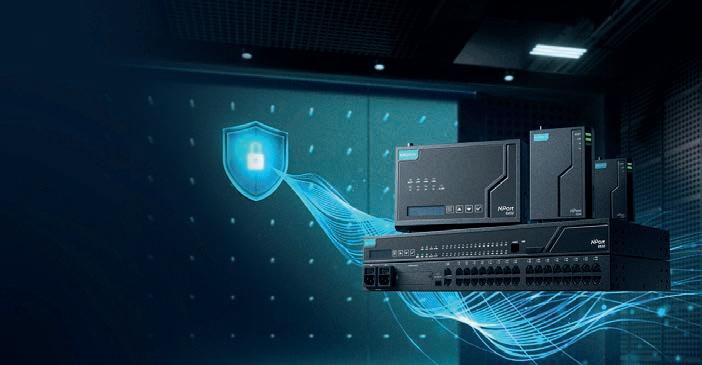
NPort 6000-G2 secure device servers support encrypted connectivity with TLS 1.2 and 1.3 and SSH, and are IEC 62443-4-2 Security Level 2 certified. Picture: Moxa
way, without weakening the integrity of the control system that must keep running. For example, NAMUR Open Architecture is designed to make production data usable for monitoring and optimization via a separate, secure channel, while leaving core process control unchanged. In practice, that works best when networks are segmented and data paths are clearly defined and monitored. Certified platforms can also accelerate new applications. When an edge computer such as the UC-8200 is already IEC 62443-4-2 Security Level 2 certified, it can reduce the effort needed to build a security case for the underlying platform. Teams can then focus their validation on the application and its interfaces.
Finally, secure connectivity enables scalable operational models such as remote monitoring, condition-based maintenance, and vendor support. Access can be controlled, logged, and audited, which makes service contracts easier to operate consistently across sites and easier to justify from a risk and compliance perspective.
IEN Europe: Could you share an example of a customer success story?
Liou: With pleasure. A process automation customer contacted us after IT introduced an IT grade router at the OT and DMZ boundary, which caused a network breakdown. Tanks with unfinished reactions had to be emptied and cleaned, which created major costs and downtime. The customer then wanted to push IT out entirely. We advised against that. When something goes wrong, both sides need each other. We brought OT and IT to the same table and rebuilt the boundary together. MXview One gave IT the visibility they needed, such as event logs and audit trails, while OT retained operational control.
IEN Europe: Thank you for these insights!
66853 at www.ien.eu
MXview
Transforming the Energy Management of a 120-year-old Ceramics Factory
PAUL RAUSCHERT STEINBACH GMBH has implemented Mitsubishi Electric's GENESIS energy management platform, transforming monthly compilation of 20-page Excel spreadsheets into real-time energy insights and reducing peak consumption analysis from hours to minutes.
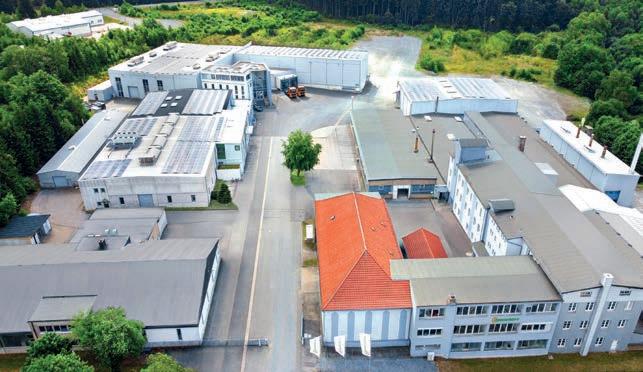
Paul Rauschert Steinbach GmbH has enjoyed 120 years of success as a manufacturer of technical ceramics for precision components, ignition systems, heating elements and plastic moulded parts, thanks to decades of experience and expertise. However, urgent action was required in energy management. The outdated systems provided isolated data from several buildings without clear visualisation and were no longer supported.
Winter energy consumption peaks occurred without explanation, while monthly energy reports required extensive manual compilation – a time-consuming process that delivered information too late for effective intervention. EU mandatory energy reporting requirements further intensified the administrative burden, demanding significant manual effort from dedicated personnel.
"We had data, but no understanding," explains Fabian Völk from Rauschert's Maintenance/Construction Plant Engineering team. "When energy peaks occurred, we couldn't trace their origin. Our monthly reports required extensive manual compilation – a time-consuming process that delivered information too late to be useful."
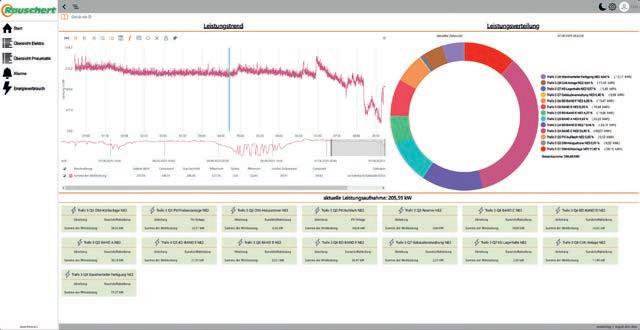
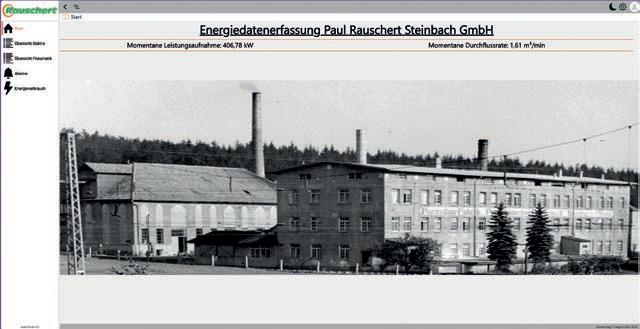
Implemented energy monitoring tool: The factory and specific buildings energy consumption overview.
Picture: Paul Rauschert Steinbach GmbH
When legacy meets data intelligence
Mitsubishi Electric's GENESIS platform was implemented to address these visibility gaps and transform Rauschert's approach to energy monitoring. The Energy Management tools within GENESIS connect with existing energy meters while storing historical energy data for analysis and reporting.
These tools deliver open universal data connectivity and enterprise integration with existing control systems. Built-in capabilities include calculations, KPIs, analytics, Data Historian, and reporting. Compatibility with multiple meter types enables quick deployment and faster return on investment through reduced engineering time.
The system enables real-time energy monitoring across all facility buildings with immediate identification of consumption peaks. When winter energy spikes occur, operators can trace their source through intuitive power distribution diagrams – from facility level down to specific equipment or building sections. Asset-based management allows users to drill down to specific sources of energy inefficiencies and locate suspected consumption offenders.
Automated report generation replaces manual compilation processes. EU compliance reporting now requires single-click data extraction. Stan-
Tradition meets Transformation: PAUL RAUSCHERT STEINBACH GMBH factory at Steinbach am Wald. Picture: Paul Rauschert Steinbach GmbH
dard reports include consumption, cost, and carbon data for electricity, gas, water, and other utilities alongside operational conditions. The expandable architecture accommodates future facility growth with custom visualization tailored to Rauschert's operational needs.
From hours to minutes
The implementation transformed Rauschert's energy management from monthly manual compilation to one complex view of consumption, delivering actionable insights immediately. Energy peak investigations that once required hours of manual data analysis now take minutes through visual consumption mapping and drill-down capabilities that pinpoint specific consumption offenders.
"The difference is clear," notes Fabian Völk from Rauschert's engineering team. "We've eliminated the time-consuming manual processes that once dominated our energy reporting. What used to require dedicated personnel compiling data across multiple systems now provides
ENERGY EFFICIENCY AS A GLOBAL LEVER
According to the latest report by the International Energy Agency (IEA), industry accounts for around 39% of global final energy consumption, so the challenge extends beyond individual plants. In energy-intensive industries, energy costs can account for up to 30% of operating expenses.
Systematic energy management typically leads to energy savings of more than 10% within the first three years. Many companies achieve even greater savings, especially when energy-efficient technologies are used alongside operational improvements. In individual cases, reductions of up to 60% are possible with longterm commitment.
The global savings potential is enormous: aligning with the most energy-efficient companies in IEA member countries alone could save up to £600 billion per year. According to the IEA, investments in energy management and efficiency measures usually pay for themselves within three years.
Sources: (Quelle: IEA, Energy Management for Industry, 2025) https://www.rinnovabili.it/wp-content/uploads/2025/09/IEAEnergy-Management-for-Industry.pdf
For over 120 years, PAUL RAUSCHERT STEINBACH GMBH has been perfecting the manufacture of precise technical ceramics. Now, its energy management has been transformed. Picture: Paul Rauschert Steinbach GmbH
instant analysis and useful insights for energy optimization. Our EU compliance reporting, once requiring extensive manual work, now requires a single click."
The implementation demonstrates how established facilities can successfully adopt modern energy monitoring solutions without disrupting proven production processes. Quick deployment capabilities enabled faster ROI through reduced engineering time and integration with existing infrastructure.
"What made the difference at Rauschert was giving facility personnel clear visibility into their energy data. This transparency enabled them to quickly identify optimization areas and find ways to maintain production efficiency while reducing consumption across their infrastructure," notes Christian Nomine, European Strategic Product Manager Visualisation & Analytics at Mitsubishi Electric Europe B.V.
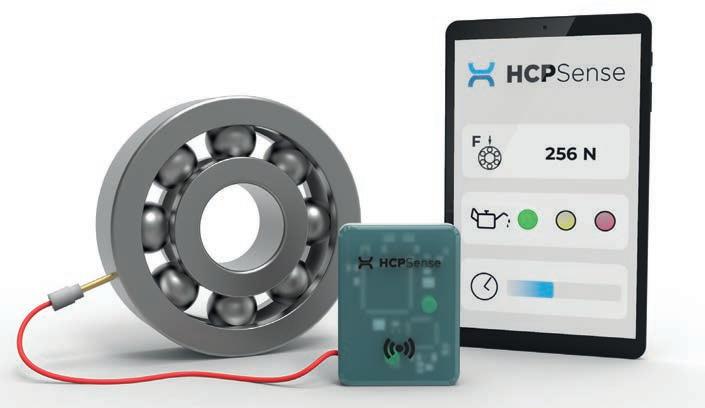
Conventional condition-monitoring systems detect bearing damage only after wear such as pitting or material loss has already occurred. HCP Sense takes a decisive step further: instead of monitoring the consequences of damage, the technology identifies its root causes at a very early stage. By directly detecting critical lubrication conditions before physical damage occurs, premature bearing failures can be actively prevented.
For equipment operators, the benefits are clear: instead of labor-intensive dismantling and replacement of damaged bearings, resolving the issue may be as simple as changing the lubricant or optimizing lubrication conditions.
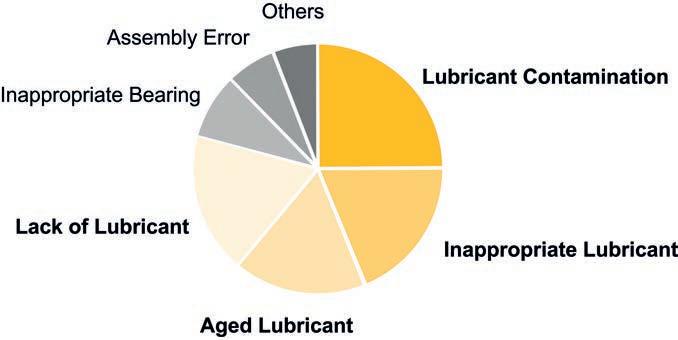
Lubrication Problems Cause 80% of Bearing Failures
Approximately 80% of all bearing failures are caused by lubrication-related issues. In addition to insufficient lubrication and lubricant degradation, incorrect lubricant selection and contamination are among the most common causes of damage. Real-time, sensor-based monitoring of lubrication conditions therefore offers enormous potential for preventing such failures.
The Bearing Becomes a Sensor
With its innovative sensor technology, HCP Sense enables direct monitoring of lubrication conditions during operation and con-
Electrical schematic of lubrication conditions
tinuously provides real-time data. The technology is based on highly precise impedance measurement.
The electrical behaviour of the bearing is analysed to reliably determine whether a stable lubricant film is present or whether metallic contact occurs between bearing surfaces – a clear indication of mixed or
Root causes for bearing failures Engel, L., Winter, H.: Wälzlagerschäden. Antriebstechnik 18 (1979) 3, S. 71 –74.
boundary lubrication. In this way, the bearing itself becomes a sensor.
Analysing the Lubricant Film Through Impedance Measurement
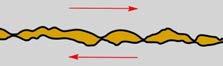
From an electrical engineering perspective, a bearing can be described surprisingly simply: as a combination of a resistor and a capacitor. Under boundary lubrication conditions, direct metallic contact occurs, which electrically corresponds to a short circuit or ohmic resistance. As the lubricant film develops, these direct contacts are increasingly interrupted. Instead, numerous small regions form in which the metallic surfaces are separated by lubricant. These regions behave like tiny capacitors.
In practical terms, this means that under mixed lubrication conditions, the electrical behaviour continuously alternates between conductive and insulating states. The bearing therefore behaves like a parallel circuit consisting of resistors and capacitors.
Only when the lubricant film is fully established and metallic contact no longer occurs does the bearing exhibit stable capacitive behaviour with high electrical resistance – a
Metallischer Kontakt
Dünner SchmierfilmIsolierender Schmierfilm
Metallic contact
Thinlubricantfilm Thick lubricantfilm
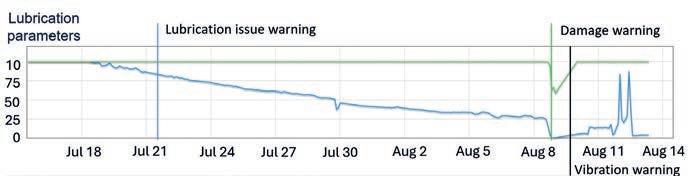
Benchmark testing of lubrication condition sensor (blue line) and vibration sensor. Developing lubrication issues indicated roughly 3 weeks before failure
clear indication of hydrodynamic lubrication. A key advantage of this measurement principle is its universal applicability to all bearing types made from metallic materials, rolling bearings and plain bearings.
Sensor Technology for Condition Monitoring and R&D
To better characterize changes in the lubricant film, HCP Sense has developed dedicated characteristic parameters. These parameters allow clear differentiation between boundary, mixed, and fluid lubrication conditions.
For users, this creates substantial added value: critical developments become visible at an early stage, long before actual damage occurs. At the same time, the collected data enables the definition of specific threshold values for safe operation – an essential basis for reliable machinery and optimized maintenance strategies.
The sensor technology proves its effective-
ness every day in applications at numerous well-known industrial companies. Its use cases range from test benches and subsystem carriers to complete machines; from rolling and plain bearings to motors, hydraulic systems, transmissions, vehicles, woodworking machinery, and wind turbines.
Early Warning System for Pump Failures in Critical Infrastructure
Critical cooling pumps used in power grid infrastructure must operate continuously and reliably to ensure stable grid performance. To minimize the risk of unexpected failures, Hitachi Energy conducted a benchmark study comparing different condition-monitoring technologies for the early detection of lubrication- and bearing-related damage.
As part of the research project, the sensor technology developed by HCP Sense was evaluated against a conventional vibration-based OEM monitoring system using a single-stage centrifu-
gal pump under realistic operating conditions. To compare the warning capabilities of both systems, a controlled endurance test was performed using reduced lubricant quantity and degraded lubricant quality in order to deliberately induce a lubrication-related bearing failure.
The results showed that the HCP Sense hydrodynamic lubrication parameter identified a developing lubrication problem approximately three weeks before the final bearing failure occurred. According to the study, simple corrective actions such as relubrication or minor operating adjustments would have been sufficient to prevent the damage entirely.
In the direct comparison, the HCP Sense mixed lubrication parameter detected the impending failure 24 hours earlier than the vibration-based monitoring solution. The test ultimately resulted in catastrophic bearing failure with cage fracture, as no intervention was intentionally carried out during the “runto-failure” experiment.
Early Detection of Critical Lubrication Conditions in Engines
Plain bearings are among the most critical components in large combustion engines, as sudden bearing failure can lead to severe crankshaft damage and extended downtime. Particularly in medium- and high-speed engines, operators often have less than 60 seconds to shut down the system safely once critical operating conditions occur.
The technology was validated by MIBA on their plain-bearing test rig under static and dynamic load conditions. During controlled seizure tests, the characteristic parameter for mixed lubrication indicated increasing mixed friction up to 30 minutes before actual bearing seizure occurred. Under dynamic loading, the system also successfully detected lubrication breakdown during peak load conditions several minutes before catastrophic failure. By detecting critical lubrication conditions at a very early stage, operators can intervene in time to prevent severe bearing and crankshaft damage, reduce downtime, and improve operational reliability.
66873 at www.ien.eu
new products
Hybrid Industrial Label Printer
Portable printer for labels with a maximum width of up to 101 mm
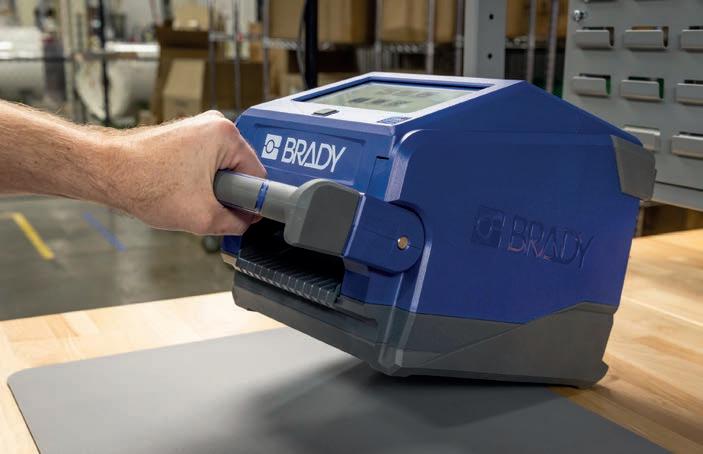
Brady’s new BradyPrinter i4311 is designed to bridge the gap between stationary benchtop label printer power and mobile flexibility. A well-known limitation for most mobile label printers is the maximum width of the label. The i4311 marks the new maximum label width at 101.60 mm for connected label printing systems that retain true portability. The larger print width brings a lot more applications into the mobile label printing range, including perforated work-in-progress tags, common size rating plates and larger cable tags, wraps, sleeves, asset labels, component labels and GHS-compliant chemical labels.
Cut the cord
The printer is powered by a battery that can handle 5000 large labels on a single charge. Swapping batteries has been made easy and they can be charged in 3.5 hours.
Easy to integrate
The new BradyPrinter i4311 can print labels from phones, tablets and laptops, and even from central company systems using Brady’s software development kit or ZPL support. In addition to Wi-Fi and Bluetooth connectivity, the i4311 also features Ethernet and USB-C connections.
The printer’s on-board 7’’ (17.78 cm) touch screen offers both on-device support as well as the capability to print labels directly from the printer. Users can store on average different 85 000 label templates in the printer that can be completed with an on-board ‘fill in’ option, fully responsive to your touch.
Industry feedback
Brady also revealed i4311 printer features that were developed with close involvement from the company’s long-standing custom-
ers. As a result, the printer’s footprint was limited to 23 x 23 x 33 cm and 5.9 kg and the device’s easy-to-grip handle was optimised.
A battery-saver was also added for when the printer is not in use and battery-swapping was made even easier.
Portable benchtop
Right in the middle of Brady’s mobile label printer and industrial benchtop label printer line ups now sits the BradyPrinter i4311: a portable printer with the company’s benchtop industrial printing capabilities. Compatible with more than 1300 Brady label parts, the i4311 can print on a majority of Brady’s reliable, laboratory-tested label materials. Just like other Brady printers the i4311 includes LabelSense technology to automatically set label material burn, size and pre-print settings as soon as a label roll is loaded.
The label printer also works with a host of free Brady Express Labels mobile apps. These enable users to select text in an image file for example, and import it for printing on a label. Or to read barcodes with a phone and send them to the printer. Labels can even be printed completely hands-free, using BradyVoice, a smartphone microphone and the BradyPrinter i4311. BradyVoice is the voice command within Express Labels and works with an iPhone, Android, or Tablet. To utilize BradyVoice, the device must be connected to either cellular or Wi-Fi networks. It understands text, numbers, and characters and works only in English, for now.
Cogent DataHub software offers the only broker that parses and manages MQTT data intelligently. Data coming from multiple devices can be filtered, aggregated and processed, monitored and secured while ensuring data consistency from the field to the dashboard. If you’re using MQTT for IoT, be smart! Get the DataHub Smart MQTT Broker.