

City Looks at Replacing Stockton Ave. Bridge
By JON CHOWN
Engineers have found widespread corrosion in the rebar of the Stockton Avenue Bridge, giving it 5-10 more years of service. As a result, the City Council recently directed city staff to return for a proposed contract to evaluate options for the future of the bridge.
The motion, approved by the council on April 9 on a 4-1 vote, calls for a contract that will deliver preliminary plans and analysis for multiple bridge replacement options, including variations in design and width. ... continues on page 4




Sweet Homes Project Developers Sue County
Developers behind the “Sweet Homes” project have sued Santa Cruz County, accusing local officials of stalling the proposed 105-unit apartment complex in violation of state housing laws.
An overflow crowd packed the La Selva Beach community clubhouse on April 16th, eager to hear about an ongoing climate resilience study by transportation planners at the Santa Cruz County Regional Transportation Commission.











City Looks at Replacing Stockton Ave. Bridge: Historic Structure Said to Have 5-10 Years Left of Service, By Jon Chown
Community News
5 Interim Trail Discussed, but Public Left Wondering: RTC’s Report to Community Doesn’t Satisfy Many, By Claudia Iseman
6 Local Heroes to be Honored by American Red Cross, By Claudia Iseman
7 Mental Health Episode Closes Cliff Drive • Supervisors Approve $19.6 Million for Mental Health Service Contracts
8 Sweet Homes Project Developers Sue County: Claim Approval Has Been Delayed Unnecessarily, By Jon Chown
9 Local Bands to Compete for Slot in Major Festival: High Sierra’s Battle of the Bands Scheduled May 24, By Jon Chown
12 Keepers of the Light: Community Sets Up Fund to Support West Cliff Lighthouse • Citizen Heroes Recognized for Recent Ocean Rescue, By Jon Chown
16 Welcome Dr. Welch!
17 Sheriff’s Office Files Status Report on Military Equipment: Annual Report Documents Equipment Type, Use, Quantity and Costs, By Tad Stearn
18 Author to Present New Santa Cruz County Bird Guide: Free Guided Bird Walk Offered During Book-Signing Event
19 Volunteers Prepare for UnScruz Festival: Regional Burning Man Event Celebrates All That is Weird
20 Bands’ Festival Sweep is Music Teacher’s Coda: Soquel High Instructor Retiring After 30 years, By Jon Chown • New Parking Lot Opens at Panther Beach: First Completed Milestone of North Coast Rail Trail Project
22 County Ranks in the Middle for Tax Refunds • Sex Offender Won’t Be Placed at Either Proposed Site, Says District Attorney, By Jon Chown
25 RTC Approves New Rail Freight Operator: Maintenance of Track, Cost of Repairs, are Key Issues, By Jon Chown
26 County to Establish Youth Commission to Advise Supervisors
California News
21 Proposal to Prevent Dating App Violence Called a ‘Scarlet Letter’, By Lynn La – Courtesy of Calmatters.org
Letter to the Editor
23 Nuclear War is a Horror We Must Stand Against
Monthly Horoscope • Page 26 – Creating the New Culture & Civilization, By Risa D’Angeles
Community Calendar • Arts & Entertainment – Pages 28, 29
Featured Columnists
13 The Genius of ‘Steno Pad Madness’, By Joe Ortiz
24 Our Civil Grand Jury: An Opportunity for Public Service that Supports Our Local Community, By Judge Katherine A. Hansen
24 Get Me Off This Wild Ride, By Marc Cuniberti
27 Celebrating Water, Service, and Sustainability: A Season of Awareness, From the Soquel Creek Water District
30 From Fear to Freedom: How Kids Break the OCD Cycle, By Dr. Lori Butterworth, Child & Adolescent Psychotherapist
31 Early Bulbs Go Into Garden Now, By Tony Tomeo


Times Publishing Group, Inc.
9601 Soquel Drive, Aptos, CA 95003
The Times Publishing Group, Inc., publishers of the Aptos Times, a bi-monthly publication, the Capitola Soquel Times and Scotts Valley Times, each printed monthly, Coastal Weddings Magazine, Coastal Home and Garden Magazine, Aptos’ Fourth of July Parade Official Program Guide and Capitola’s Summer Festivals Official Program Guide, is owned by Patrice Edwards. Entire contents ©2026. All rights reserved. Reproduction in any form is prohibited without the publisher’s written permission
PHONE: (831) 688-7549
FAX: (831) 688-7551
GENERAL E-MAIL: info@cyber-times.com
Patrice Edwards: patrice@cyber-times.com
Publisher’s Assistant: assistant@cyber-times.com
Editor: info@cyber-times.com
Calendar Listings: www.tpgonlinedaily.com
Graphics Department: graphics@cyber-times.com
Billing Inquiries: cathe@cyber-times.com
Classified Sales: sales@cyber-times.com
Production: production@cyber-times.com
CHECK OUT OUR WEB SITE AT: www.tpgonlinedaily.com mission statement
We at the Times Publishing Group, Inc. are dedicated to providing a voice for the individuals and organizations in our community while highlighting the outstanding accomplishments of our
The analysis is also expected to include cost estimates, potential grant opportunities, construction timelines, environmental constraints and permitting requirements.
The problems with the historic bridge, built in 1933, were discovered by engineers who were performing a scour study, looking at erosion issues at the base of the bridge.
Tom Swayze, structural engineer with Biggs Cardoza, told the council members that the bridge was scour critical, that the velocity and volume of the water coming through the creek was eroding the sand around the individual piers, creating an instability problem.
To know how to correct that, the engineers needed to know how much structural integrity the bridge had. The answer: Not much. They looked inside the underside of the bridge slab and found corroded rebar running all through the concrete. “Once the rebar starts to corrode, it expands and pops the concrete off,” Swayze said.
Fortunately, he said, the girder reinforcement is in good shape, so the bridge doesn’t merit immediate closure. He estimated it had 5-10 years left, though an


earthquake could shorten that timeline, as seismically, it wasn’t sound at all.
Repairing the rebar, Swayze said, is not very effective. “Caltrans already rates the bridge deck as Poor because of surface cracking, but once they see the amount of exposed reinforcement and the corrosion that’s going on inside, they’re going to lower the superstructure rating to Poor, which would be an impetus for them funding a replacement,” he said.
Swayze suggested Caltrans, with funding supplied from the federal government, might pay for as much as 90% of the overall costs of replacing the bridge, which Biggs Cardoza engineers estimated would be “significantly more” than the $15-$18 million they estimated it would cost just a few years ago. Caltrans would determine which route it would take, replace or repair, based on its own cost-benefit analysis.
Because rehabilitation would be so complex, and cost a lot, while failing to resolve the broader issues of the bridge’s age and design, it’s unlikely Caltrans would take that route unless the bridge were deemed so historically significant that it couldn’t be replaced, advised Swayze. Repairs would also not address the seismic deficiencies of the bridge, which Swayze said were significant.
“We normally expect a piece of infrastructure like this to last about 75 years,” he said.
“And this bridge is 93 years old.”
In addition to structural concerns, the

bridge carries multiple utilities — including sewer, water and electrical lines — some of which show signs of corrosion, cracking and aging.
The contract resolution passed by the City Council will require an evaluation of both replacing the bridge and repairing it. The motion also directs staff to look for grant funding and to provide a long-term plan for project development and implementation, including a traffic flow strategy as appropriate. Staff will also be required to present a plan to evaluate the Capitola Trestle for potential use as a temporary pedestrian and bicycle route during construction to help reduce impacts to Capitola Village.
“How do we no create, you know, Murry Street Bridge 2.0 is a good way of looking at it,” said Council Member Jerry Jensen. “What steps can be taken?”
City staff said they were looking at the feasibility of one-way traffic, along with pedestrian access, throughout the project. Swayze said that since there wasn’t really a viable detour, it would definitely have to be done that way.
Swayze advised the council to not delay long, as the process for replacing the bridge would take 2-3 years.
“I think this is a priority for our city. We need to get this moving to a point where if something happens, we have the plans and funding to replace it,” said Council Member Melinda Orbach. n



Interim Trail Discussed, but Public Left Wondering
RTC’s Report to Community Doesn’t Satisfy Many
By CLAUDIA ISEMAN
An overflow crowd packed the La Selva Beach community clubhouse on April 16, eager to hear about an ongoing climate resilience study by transportation planners at the Santa Cruz County Regional Transportation Commission.
“The purpose of this meeting is to provide information about climate hazards at the La Selva Beach and Manresa bluffs,” said Grace Blakeslee, Senior Transportation Planner for the SCCRTC. Blakeslee said she’s been working on the concept of bringing a passenger rail and or trail to the 32 -mile stretch of train tracks from Davenport to Watsonville for the past 20-years.
In December the board of the RTC directed transportation planners to focus their efforts on an interim trail, and for now anyway, keep the train off the tracks until the distant future.
According to Shannon Munz, Communications Specialist for the RTC, a final concept report on a passenger rail was completed late last year and indicated the rail project needs further environmental and preliminary engineering studies to move forward at a cost of 15-million dollars.
“The RTC doesn’t have the funding,” said Munz. She said staff is pursuing funding sources from the federal and state government, while at the same time, continuing to study the climate resiliency of an interim trail only.
For folks like Bill Spence, who serves as the La Selva Beach liaison between the RTC and the La Selva Beach Improvement
Association, an interim trail is paramount.
“So many in our community are study weary,” said Spence.
Public opinion during the meeting seemed strongly in favor of getting a plan in place to begin construction on an interim trail. Meanwhile, preliminary results from the climate resilience study show the La Selva Beach and Manresa bluffs as high-risk areas due to erosion from rainfall, coastal flooding, sea rise and mudslides.
Doug Green has been the president of the La Selva Beach Improvement Association for nine years and has made protecting the bluff a cornerstone of his tenure.
“When you look at the bluff below the tracks and see how close the erosion is to the tracks, we must realize it will only get worse with time,” said Green.
Munz is quick to caution that development of an interim trail plan has not even begun yet on the segment from Rio Del Mar Boulevard to Watsonville.






“There’s no timeline yet for La Selva Beach and Manresa,” said Munz. She adds the RTC is just launching the climate resilience study and the public is invited to participate in the feedback when they announce public meetings in May and June.
While many at the meeting were hopeful to hear an interim trail is in the foreseeable future, they left feeling somewhat ambivalent.
“There were a lot of questions that were unanswered but other than that, it was really informative,” said La Selva Beach resident Rich Morton. n







Local Heroes to be Honored by American Red Cross
By CLAUDIA ISEMAN
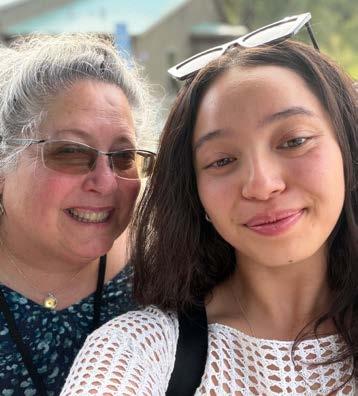
It was the perfect vacation day in Hawaii for the Acosta family when suddenly the wind picked up and the surf turned rough. 21-year-old Sarah Acosta was beach combing on shore while her mom and sister were floating near a reef when she noticed her mother starting to struggle in the rough water.
The Cabrillo student, who is certified as a pool lifeguard, wasted no time in swimming about 75-yards to her mom as her sister called out to her for help.
“I could see the current dragged my mom onto the reef and she was stuck there,” said Acosta. She used her lifeguard training and pulled her mom on top of her with a lifeguard maneuver she had practiced and was able to safely swim back to shore. She was trained and certified as a Water Safety Instructor by Seahorse Swim School in Santa Cruz just last year.
“I thank God for giving me the opportunity with the Red Cross. The lifesaving skills I learned in that course I will have for the rest of my life,” said Acosta.
In another heroic feat here in Santa Cruz, six surfers rescued a family of six whose boat capsized in rough surf at Steamer Lane in early February.
On June 15, Acosta and the group of six young surfers will be recognized by The American Red Cross with a Certificate of
Lifesaving Award during a
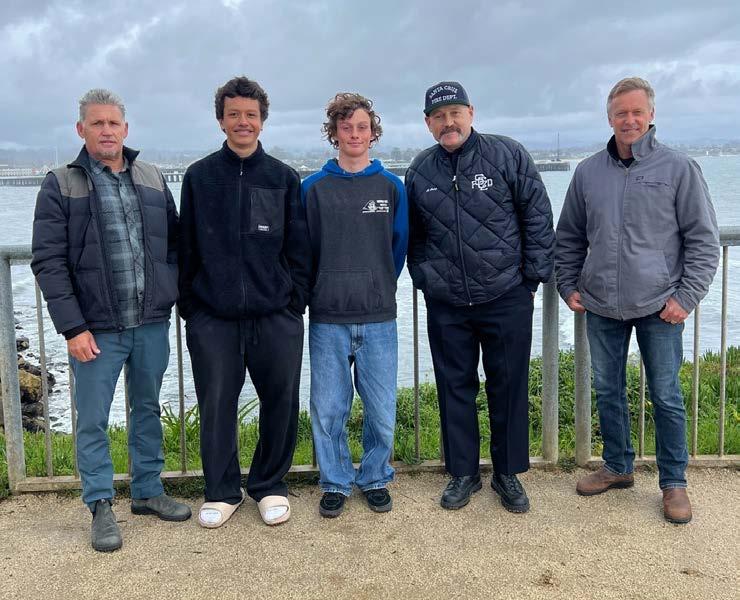
Five are minors and are not named. The adult, Darryl Virostko, who goes by the nickname “Flea,” has won numerous awards for big wave surfing, including Mavericks three times but this will be his first Red Cross Certificate of Merit award. A graduate of Santa Cruz High, Virostko was humble about the award. “it’s nice. Anyone would have done what I did,” said Virostko.
“Local Heroes” page 14
Merit
volunteer ceremony at the Seascape Golf Club.
Courtesy of the Santa Cruz Fire Department Four of the six surfers pose with Santa Cruz Fire Chief Rob Oatey (second from right).
Sarah Acosta (right) with her mom.
Mental Health Episode Closes Cliff Drive
Authorities safely detained a man believed to be in a mental health crisis after an hours long response at Capitola Beach earlier this month, police said.
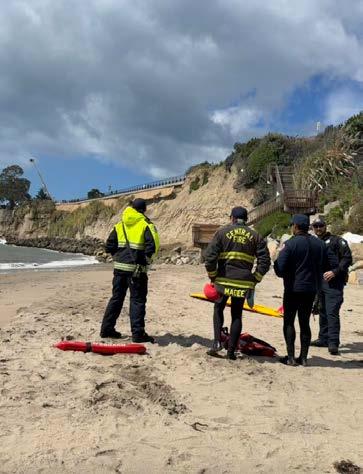
Members of the Capitola Police Department and Central Fire District were dispatched at about 7:53 a.m. on April 13 to the beach area just north of the Capitola Wharf following reports of a man causing a disturbance and behaving erratically.
The man was reported to be yelling and throwing debris into the water. Officers later located him on rocks south of Hooper’s Beach, where high tide and heavy surf created hazardous conditions and raised concerns about his safety.
Police and Central Fire District had assistance from multiple agencies, including American Medical Response, Santa Cruz Harbor Patrol, the Santa Cruz County Behavioral Health Mobile Crisis Response Team, the Watsonville Police Department mental health liaison, regional 911 dispatchers and the department’s drone team.
Over several hours, responders focused on de-escalation and ensuring the man’s safety. The drone team provided aerial monitoring and attempted communication using a public address system. Police said the man was initially uncooperative, delaying efforts to resolve the situation safely.
First responders eventually detained the
man without major incident. He appeared to be experiencing a mental health crisis and sustained minor injuries. He was evaluated at the scene and transported to a hospital for further care.
Cliff Drive was temporarily closed during the response.
Anyone seeking help for a behavioral health crisis in Santa Cruz County can contact the county’s mobile crisis response team at 1-800-952-2335. n
Supervisors Approve $19.6 Million for Mental
Health Service Contracts
SANTA CRUZ — The Santa Cruz County Board of Supervisors approved nearly $19.6 million in contracts to continue mental health and substance use services across the county.
The board, through the Consent Agenda, ratified eight agreements and one amendment totaling $19,563,248 for the county’s Health Services Agency Behavioral Health Division. The contracts had already been signed by the agency under authority granted by the board on June 4, 2024, and required formal approval.
County officials said the action was needed to keep services running during major changes tied to the state’s CalAIM program. The effort is reshaping how MediCal behavioral health services are billed, tracked and paid for, including updates to electronic health records and reimbursement systems.






“These contracts do ratify a tremendous amount of good work that’s happening in our behavioral health safety net today. There are really the bricks of the foundation of our overall safety net,” said District 5 Supervisor Monica Martinez.
The largest agreement is a $6,983,003 renewal with Encompass Community Services. It covers outpatient mental health care, residential treatment and housing services. Encompass also received a separate $40,500 contract for substance use disorder treatment.
The county renewed a $2,164,172 contract with the Volunteer Center of Santa Cruz for outpatient mental health services. In addition, the board ratified a new $459,431 contract with the same organization for outpatient and housing services.
“Mental Health” page 14
The board’s earlier action allowed the Health Services Agency to sign, renew or amend contracts affected by CalAIM and then return later for ratification. Officials said that flexibility helped avoid delays and disruptions in care for Medi-Cal patients.








Sweet Homes Project Developers Sue County Claim Approval Has Been Delayed Unnecessarily
By JON CHOWN
SANTA CRUZ — Developers behind the “Sweet Homes” project have sued Santa Cruz County, accusing local officials of stalling the proposed 105-unit apartment complex in violation of state housing laws. The lawsuit was filed in Santa Cruz County Superior Court on March 23.
The lawsuit, brought by Workbench and Sweet Developments LLC, claims that “Santa Cruz County has attempted to avoid the consequences of its actions by dragging its feet and refusing to issue an approval for a desperately needed housing project, keeping the application in limbo.”
The petition alleges the county failed to meet legal deadlines to approve or deny the project at 3500 Paul Sweet Road, as required by the state’s Permit Streamlining Act (PSA) and Housing Accountability Act (HAA). The developers’ attorneys at Patterson & O’Neill, P.C., say the inaction means the project is now “deemed approved by operation of law.”
“This case demonstrates why California continues to suffer from a housing crisis of epic proportions,” the lawsuit states, citing legislative findings that local delays drive up housing costs and worsen homelessness. “Permitting delays undeniably drive up the cost of constructing housing. Studies show that the uncertainty and delay caused by discretionary permitting procedures are responsible for


as much as a 30% increase in the cost of housing.”
According to the complaint, after the county found the project exempt from environmental review in December 2025, multiple statutory deadlines for a decision passed. At a Jan. 14 Planning Commission meeting, county officials “did not vote to approve or disapprove the project. Instead, the Planning Commission continued the hearing to a date uncertain and requested staff provide more information in response to the various concerns raised by project opponents.”
“There is simply no question that the Planning Commission failed to approve or disapprove the project at the Jan. 14, 2026, hearing, which the county has conceded was already beyond the PSA deadline for the county to act,” the lawsuit continues. “The applicants had tacitly agreed to extend the deadline to give the county more time to hold a hearing, [but] provided no other extensions.”
“Sweet Homes” page 11
The developers submitted a preliminary application in April 2024, at a time when the county lacked a state-certified housing plan called a Housing Element, making the project subject to California’s so-called “builder’s remedy” provision. That law strips local governments of some authority to block or delay housing projects with affordable components if they fail to comply with state housing rules. The project includes six units for extremely low-income households.

Lawsuit Challenges County Approval of 57-Unit Housing Project Dispute
Centers on Timing of State Housing Compliance and Use of “Builder’s Remedy”
By JON CHOWN
SANTA CRUZ — A neighborhood group has filed a lawsuit seeking to overturn Santa Cruz County’s approval of a 57-unit apartment project at 841 Capitola Road, arguing the county misapplied state housing law, bypassed
required environmental review and approved a development far exceeding local limits. The petition, filed March 17 in Santa Cruz County Superior Court, challenges the Board of Supervisors’ Feb. 10 decision to approve the five-story project in Live Oak. The case, No. 26CV00891, was brought by Supporters
of Reasonable Development for Live Oak, a group of nearby residents and property owners. Santa Cruz County; the Board of Supervisors; and the developer, Workbench, are all named as defendants.
“Builder’s Remedy” page 10
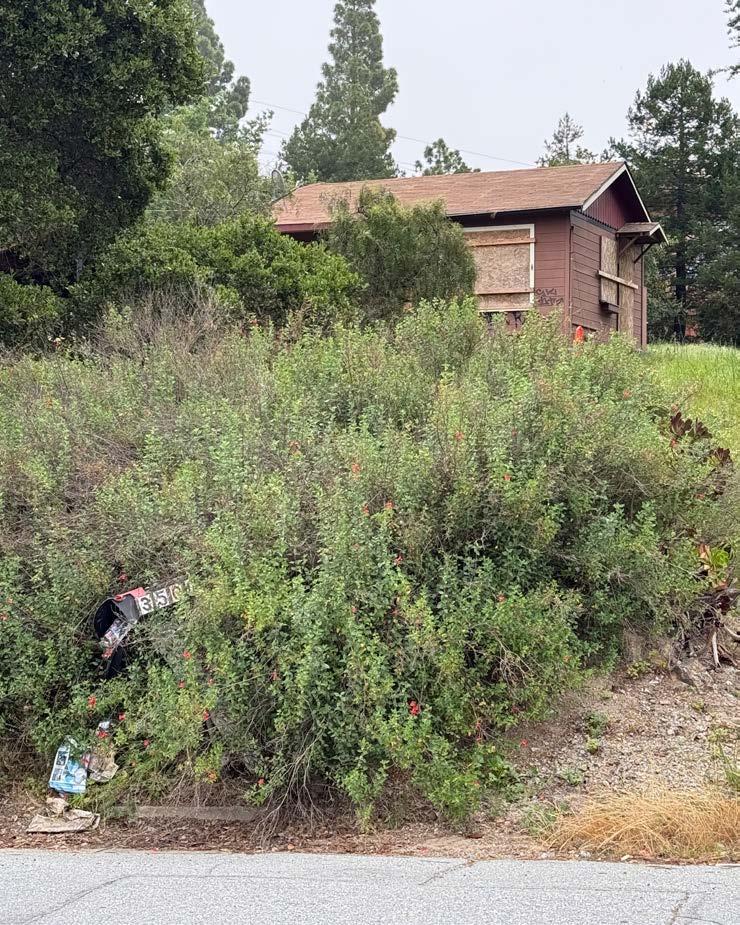
Workbench and Sweet Developments LLC’s lawsuit says the county waited too long to take action against their 3500 Paul Sweet Road project.
A look at the 841 Capitola Rd. plot from the Schooner Court cul-de-sac, giving a hint of how a 57-unit complex might feel out-of-place in the neighborhood.

Local Bands to Compete for Slot in Major Festival
High Sierra’s Battle of the Bands Scheduled May 24
By JON CHOWN
The road to one of Northern California’s most eclectic music festivals will run straight through Santa Cruz this month as four emerging bands take the stage at Moe’s Alley.
The High Sierra Band Contest returns May 24 with a live “battle of the bands” event, where performers will compete for a coveted slot at the 34th High Sierra Music Festival, set for July 2–5 in Grass Valley.
Doors open at 6 p.m., with music starting at 7 p.m. The 21-and-over show will feature Trianna Feruza & The Heavy Hitters, Grace & The Grit, Space Heater and The Akoustiks. Tickets are $10 in advance and $15 at the door.
The Santa Cruz stop is one of several semifinal showcases taking place across the West Coast this month, part of an expanded effort by festival organizers to tap into regional music scenes.
“Santa Cruz has always been an area where we’ve gotten a lot of folks from through the years,” said Dave Margulies, producer of the High Sierra Music Festival. “It’s part of the High Sierra community.”
In addition to Santa Cruz, showcases are being held in Nevada City, Ashland, Oregon, San Francisco, Marin, Portland, Tahoe and the East Bay. Bands were allowed to choose which location they wanted to compete in.
“We try and choose areas that have a vibrant live music scene,” Margulies said.
More than 250 bands submitted entries for the contest this year, which organizers narrowed down to a few dozen semifinalists performing at regional showcases throughout May. Roughly 35 acts will ultimately compete for a slot at the festival.
Unlike traditional judged competitions, this year’s format puts the outcome largely in the hands of fans.
“The semifinalists were chosen by the High Sierra team,” Margulies said. “They will be judged basically by the audience, based on


enthusiasm from the crowd. We are letting the audience decide this year.”
That means applause, energy and turnout at Moe’s Alley could make the difference for bands hoping to advance.
For Margulies, the contest reflects the same wide-ranging musical philosophy that has defined High Sierra for decades.
“There is no particular High Sierra sound,” he said. “It’s more of a state of mind. We have no limits on who we are or what you do. Excellence determines it. It could be any genre or style: improvisational jazz, psychedelic rock, funk, soul, indie rock.”
Margulies has been part of the festival since 1995, after first attending while working as a talent scout for Sony Music.
“I would always see Roy Carter handing out fliers, talking about the High Sierra Music Festival,” he said. “Eventually I joined the organization and now I’m kind of the last man standing.”
Carter, the festival’s founder, died before the 2023 event, and the festival has since relocated from its longtime home in Quincy to Grass Valley.
For up-and-coming artists, the band contest offers more than just bragging rights. Winners earn a spot on a professional festival stage, often performing alongside nationally touring acts — a potential launching pad for broader exposure.
And for local music fans, the May 24 showcase offers a chance to play a direct role in who gets there. n


Photo Credit: David Barkin
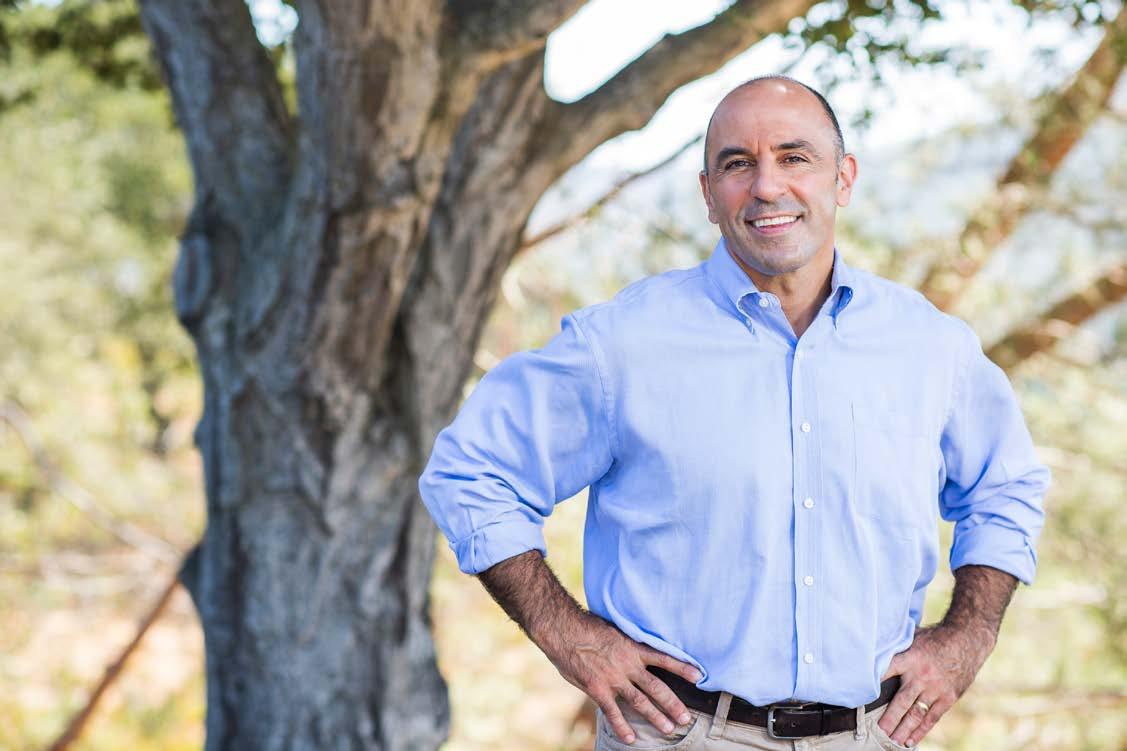
Dave Margulies of the High Sierra Music Festival.
Beneficial Plants for California’s Mediterranean Climate
• Gift Certifi cates
• Family Owned & Operated for 30 Years



Open Daily 10-5:00 • 2660 E. Lake Ave. Watsonville, CA 95076 831-728-2532 • sierraazul.com









“Builder’s Remedy” from page 8
At the heart of the dispute is the controversial “builder’s remedy” law and how it was applied to Santa Cruz County. The provision allows developers to sidestep local zoning rules when a jurisdiction lacks a statecertified Housing Element.
County officials determined the project could qualify for “Builder’s Remedy” because developer Workbench submitted an application on April 9, 2024, days before the state issued a formal certification letter for the county’s Housing Element. The lawsuit, however, argues the state had already completed its substantive review weeks earlier.
“The Project cannot invoke the Builder’s Remedy,” the petition states, asserting that the county’s Housing Element “was in substantial compliance as of March 15, 2024,” before the application was filed.
Whether or not the county was in compliance is critical. If the court agrees with the plaintiffs, the project would lose its ability to override local land-use rules.
Dispute Over Timing
The lawsuit runs alongside a situation now playing out between the county and the state over when compliance actually occurred.
On March 11, the Santa Cruz County Board of Supervisors voted to seek clarification from the California Dept. of Housing and Community Development (DHCC), asking the agency to confirm that the Housing Element was effectively compliant on March 15, 2024 — the date county officials say the state had finished its review.
Internal communications cited by both county officials and the lawsuit indicate DHCC staff had told the county the plan was complete and ready to be certified at that time, with no further substantive review afterward. However, due to clerical errors by DHCC, the formal certification letter was not issued until April 23 and later backdated to April 12.
At the March 11 board meeeting, Supervisor Manu Koenig said the delay could have significant consequences.
“There were no substantial changes after March 15, which means it was in compliance, and then HCD was just kind of sitting on it … which really is not in good faith,” Koenig said. “We should require the state to acknowledge that.”
The timing matters because several developers, including the applicant for 841 Capitola Road, filed projects during that gap, invoking builder’s remedy protections.
Claims of Legal Errors
In the lawsuit, the residents group alleges the county’s approval “rests on a series of fundamental legal errors,” including misinterpreting state housing law and improperly granting the project builder’s remedy status.
The filing also challenges the scale of the development, noting the site’s General Plan designation would typically allow about 14 units and its zoning about eight. Instead, the county approved a project with a base density of 40 units — 57 units with bonuses — “more than three times the General Plan maximum and over 500 percent of the zoning standard,” the petition states.
By doing so, the group argues, the county effectively approved a “de facto general plan amendment and rezoning” without following required legal procedures.
“A county may not amend its General Plan … through staff-level or quasi-judicial action,” the lawsuit states. “Any such change must be accomplished through” formal processes including hearings and public notice.
The lawsuit also alleges the county improperly exempted the project from environmental review under the California Environmental Quality Act, or CEQA. The exemption, according to the complaint, was tied to the false Builder’s Remedy claim. The county’s decision then “failed to proceed in the manner required by CEQA” and deprived residents of an analysis of the potential impacts.
“A project cannot bootstrap itself into a CEQA exemption … by asserting eligibility for a processing track that was never lawfully available to it,” the complaint states.
Beyond land-use and environmental claims, the lawsuit raises broader constitutional challenges to state housing law and targets a provision that allows projects to be “deemed consistent” with local zoning if officials fail to identify conflicts within a set timeframe.
The petition argues that mechanism improperly strips local governments of authority and denies neighbors a meaningful opportunity to be heard.
“841 Capitola Road” page 19
A storage contaner can be seen at the back of the 841 Capitola Rd. property.
The petitioners’ counsel sent a letter to the county after the “absolute latest possible deadline” for action, declaring the project legally approved and offering to meet with officials to discuss conditions of approval.
“The letter informed the county that the project had been deemed approved by operation of law, and that the county had lost the authority to exercise any discretionary jurisdiction over the project application,” the lawsuit says.
According to the lawsuit, the Board of Supervisors sought to persuade state officials to backdate the county’s compliance with housing law, “specifically to prevent this project from moving forward,” the lawsuit claims.
However, whether or not the county was actually in compliance is in question, and the county is currently seeking an answer from the state. On March 11, the Santa Cruz County Board of Supervisors voted to seek clarification from the California Department of Housing and Community Development (HCD), asking the agency to confirm that the Housing Element was effectively compliant on March 15, 2024 — the date county officials say the state had finished its review.

Internal communications cited by both county officials and the lawsuit indicate HCD staff had told the county the plan was complete and ready to be certified at that time, with no further substantive review afterward. However, due to clerical errors by HCD, the formal certification letter was not issued until April 23 and later backdated to April 12.
The developers are seeking a court order recognizing the project’s approval, prohibiting the county from imposing new conditions, and compelling local officials to process building permits. They also request the county record a Notice of Exemption under state environmental law to reduce the risk of lawsuits from project opponents. n
Credit: Michael Oppenheimer





“Sweet Homes” from page 8
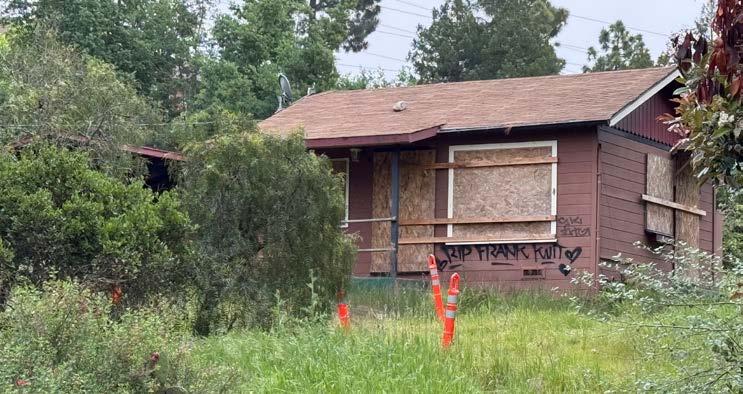
The public hearing notice is attached to the proposed development notification
3500 Paul Sweet Road
Keepers of the Light Community Sets Up Fund to Support West Cliff Lighthouse
Anew community-led effort is underway
to support one of Santa Cruz’s most recognizable coastal landmarks. Local resident and longtime lighthouse steward Bill Simpkins, in partnership with community members, has established the Keepers of the Light Fund through the Santa Cruz County Community Foundation to support ongoing maintenance and restoration of the beacon at Abbott Memorial Lighthouse.
Perched above Lighthouse Point, along West Cliff Drive, the Mark Abbott Memorial Lighthouse has long served as both a navigational beacon and a symbol of Santa Cruz’s coastal identity. However, as a historic structure exposed to harsh marine conditions, the lighthouse requires specialized care. Replacement parts are often difficult to source and come at a significant cost.
Most urgently, the lighthouse’s beacon light is nearing the end of its lifespan. The cost to replace the light is approximately $25,000, reflecting both the specialized equipment required and the complexity of installation.

“We invite the Santa Cruz community to join us in preserving the iconic beacon of the Abbott Lighthouse, Simpkins said. “As a ‘Keeper of the Light,’ you’ll be able to look up at that bright five-second flash and know you helped keep our coastline’s history alive. Together, we can keep the light shining for generations to come.”
The Keepers of the Light Fund has been established as a long-term resource to support ongoing repairs, preservation, and future needs of the lighthouse beacon. To help launch the fund and build early momentum, a special community recognition opportunity will be offered during the first month (April
6-30) of fundraising:
Donors who contribute $1,000 or more within the initial one-month campaign period will have their name included on a commemorative plaque, created by the Santa Cruz Museum of Art and History (MAH), to be installed at the Abbott Memorial Lighthouse this summer.
The community will be invited to celebrate the installation of the new light and unveiling of the donor recognition plaque at a public event this summer. Additional details will be announced in the coming months.
Community members interested in supporting the project can make a donation through the Santa Cruz County Community Foundation at: www.cfscc.org/funds/ abbott-lighthouse-temporary-fund
“We’re grateful for the community’s support in helping care for the Lighthouse, which is an important part of the West Cliff corridor and Santa Cruz’s coastline,” says Tony Elliot, Director, City of Santa Cruz, Parks & Recreation. “Maintaining a historic structure in a marine environment comes with unique challenges, and this kind of partnership helps ensure the lighthouse remains in good condition for all of us to enjoy.” n
Citizen Heroes Recognized for Recent Ocean Rescue
By JON CHOWN
Lifeguard Kyra Sheeper and local resident Jimmy Hope were recently recognized by the Central Fire District of Santa Cruz County for rescuing a teenage girl from drowning at Manresa Beach on Jan. 31. According to fire officials, there were 4- to 5-foot swells that day and heavy riptides. The girl, who was boogie boarding, got sucked out by one of the tides and was around 300 yards from shore being battered by outer reef waves.
Thankfully, both Sheeper and Hope spotted her. Hope was walking on the beach when he saw her, and Sheeper was at her lifeguard station. Both leapt into action. She called it in and Hope hit the surf.
“I just kind of saw her bobbing around and made my way over through the rip and then put her on my board,” he said.
He got her about halfway to shore and transferred her to Sheeper, who sped her to shore where CPR could be performed. The two were given “Citizen Hero” awards for their brave, life-saving effort.
“It’s just a testament that we need our community members to help out,” said Fire Chief Nigel Miller. “I just want to thank both of you personally for your service.” n

A photo of Abbot Lighthouse taken in the 1880s.
Chief Nigel Miller presents Kyra Sheeper (far left) and Jimmy Hope with Citizen Hero awards on April 9.
The Genius of ‘Steno Pad Madness’
By JOE ORTIZ
If you’re like me and you take a lot of notes, you must find scraps of paper, bar napkins, lists of ideas everywhere. How do we keep track of it all? And ultimately, how would we shape those notes into a cohesive article, essay, report, or paper?
In The Hand of A Poet, author Rodney Phillips describe Walt Whitman’s process for writing a poem: he would write the initial idea on a scrap of paper and place it in an envelope. On ensuing days, he would “lie in wait” for other ideas and phrases to enhance the poem’s theme and imagery. After writing these new inspirations on separate bits of paper and placing them in the same envelope, he would then fashion them into a finished piece.
Writer John Tullius uses a technique I call “Steno-pad Madness” to construct articles and books. Whether it’s a personal essay, a feature story, or a full book, the process can help writers organize their thoughts for shaping them into a finished work.
Tullius says that writing a book is “like wrestling a grizzly,” because the task is so overwhelming in volume and scope. Although Tullius’s method is demanding, it can make a large quantity of information


easier to handle and organize. And it can make the writing process nearly foolproof for constructing a first draft.
What We Can Do: Try the method yourself. You’ll see how it offers an elaboration of Whitman’s technique for writing a poem yet can be tailored to the demands non-fiction:
a) Use a steno pad to take your notes, one
idea per sheet, whether it’s one word, one sentence, or a full paragraph,
b) It’s fine to write your ideas in no particular order because, as many authors would point out, our ideas don’t often reveal themselves to us in chronological order,
c) After you’ve gathered enough pages to adequately cover your topic, lay the pages out one at a time on a table,

d) Once you see how they flow, re-arrange the notes in an order that makes sense; when you find a good beginning, place it first; do the same with a section that appears to be a good ending. Those notes that support your argument belong in the middle, and of course, in true, “story-building” structure, order them in logical nuggets of information that support your theme,
e) If after reading the material, you discover that you’re lacking in supporting insights, details, transitions (or more research), write new entries on separate pages and insert them in the proper place,
f) When you feel like you’ve exhausted your topic, copy the material into a computer, file, taking care to make whatever transitions and qualifying phrases the narrative might demand,
g) If you’re writing a book, the process is the same. But place the notes in individual chapters first. Then arrange the chapters in a logical order.
“Joe Ortiz” page 16
Life’s waiting.
Advanced orthopedics to help relieve joint pain.
You’ve got places to go, people to see, goals to achieve. Don’t let joint pain slow you down. Dignity Health’s orthopedic specialists are here to help, working with you to identify the source of your discomfort and to develop a personalized treatment plan. Get out there and live your best life. Learn more about our advanced orthopedic solutions and find an experienced specialist near you at dignityhealth.org/dominican/ortho

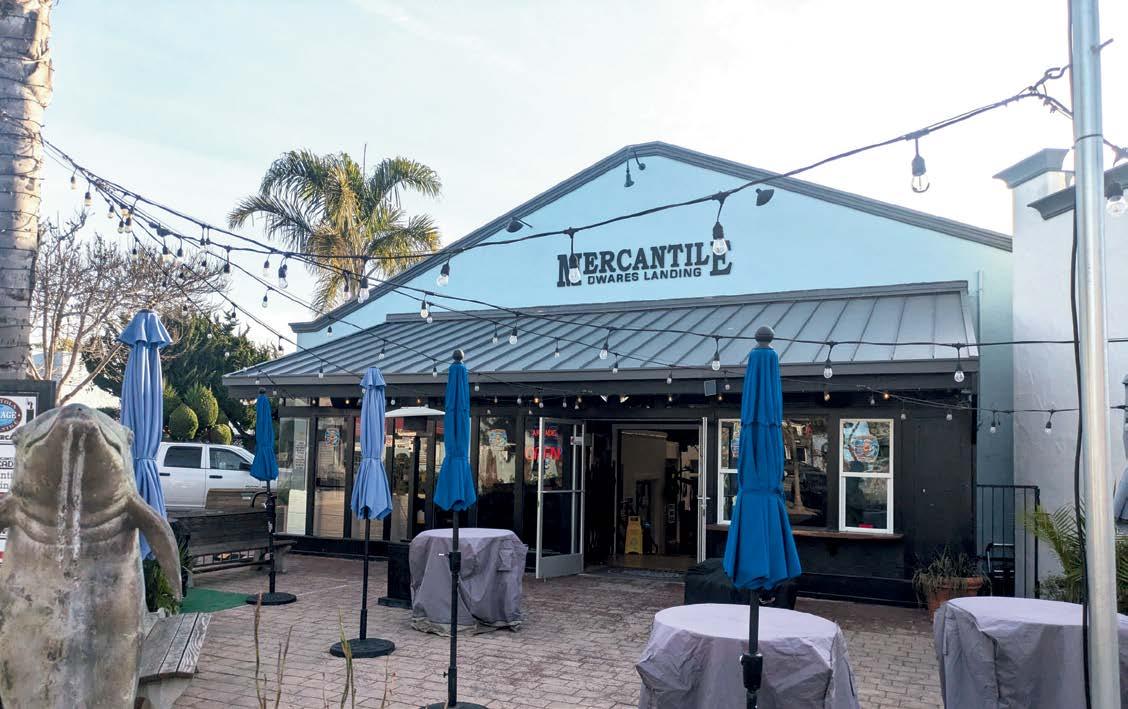
Eat. Drink. Shop. Play. Visit Capitola Mercantile and
Annex
CHARM MEETS CLASSIC ARCADE FUN
115 SAN JOSE AVE. CAPITOLA, CA PARKING

STOCKTON ANNEX
HOURS:
Caruso’s Tuscan Cuisine & Pizzeria (831) 465-9040 carusos-capitola.com
Capitola Wine Bar (831) 476-2282 capitolawinebar.com
Capitola Mercantile Arcade (831) 818-9593 Facebook.com/mercantilearcade
Brewtopia Craft Beer Garden (831) 854-2655 brewtopia831.com
Carousel Taffy & Treats (831) 465-1145 carouseltaffy.com
Left Coast Sausage Worx (831) 295-1194 leftcoastsausageworx.com
Arte Haus of Capitola

MONDAY-THURSDAY
7:30A.M. - 10P.M.
FRIDAY-SUNDAY 7:30A.M. - 11P.M.
Polar Bear Ice Cream (831) 479-8888 Facebook.com/polarbearsantacruz
Sandcastle Cafe (831) 515-7047 sandcastleatthepier.com
Sea Level T-Shirts & Gifts (831) 462-6974 Facebook.comsealevelcapitola
Homeless Garden Project (831) 426-3609 homelessgardenproject.org
CONTACT (831) 818-9593





“Local Heroes” from page 6
The big wave surfer explains how the chaotic event unfolded as a huge swell was rolling through Steamer Lane: “My first thought was what is this guy doing? Then I saw it happen and the boat was upside down and everybody just worked together. I had the father on my board and there was a language barrier because he didn’t speak English but everyone stepped in. Once we got all four kids, we all communicated with each other to make sure we had everyone. My friend swam under the boat to make sure nobody was trapped underneath.”
Santa Cruz Fire Chief Rob Oatey is quick

“Mental Health” from page 7
A $828,796 renewal with Psynergy Programs Inc. will support outpatient and residential mental health care.
The board also approved a new $504,493 contract with Janus of Santa Cruz for substance use disorder treatment services.
Several agreements involve Front Street Inc.. These include a $2,897,649 amendment for outpatient and residential services, a new $2,354,104 contract for outpatient and housing services, and a $3,331,100 renewal for outpatient and housing programs.

County staff said six of the agreements were restructured as part of the CalAIM transition. Some contracts were split into separate agreements for Medi-Cal fee-for-service and non-Medi-Cal programs, while others were set up as cost-reimbursement agreements due to changes in how providers are paid.
to heap praise on the courageous surfers. “We see it time and again in Santa Cruz. Our local surf community is an extension of our public safety network, often assisting our Fire Department and Marine Division by initiating rescues.”
Michele Averill is CEO of the Central Coast Chapter of the American Red Cross, Averill says giving out awards is her favorite part of the job. “It’s so inspiring. Youth these days get a bad rap for always looking at their phones or constantly watching Tic Tok.” The June 15 awards ceremony is part of the event that honors local Red Cross volunteers.
“Volunteers are inspired by our community and the community is inspired by our volunteers,” said Averill. n
The CalAIM initiative began in the 2023–24 fiscal year and continues through 2025–26. Officials said it includes complex changes to billing rules, coding and reimbursement, which required updates to existing contracts.
The total cost of the agreements was already included in the Behavioral Health Division’s 2025–26 budget. Funding sources include Medi-Cal federal matching funds, the Mental Health Services Act, state realignment funds from 1991 and 2011, Proposition 47 funds and other state and local sources. Officials said no new county general fund money is needed.
County leaders said the contracts are part of an effort to maintain a full range of behavioral health services, including outpatient care, residential treatment, housing support and substance use programs, while the state’s reforms are put in place. n
Sarah Acosta (second from left) stands with her family in a photo from the vacation where the rescue happened.














An Open House Celebration was recently held for Dr. Kendall Welch’s new aesthetic medicine practice at 2955 Park Avenue, Soquel, inside Luna Beauty Skincare & Waxing Studio.
Dr. Kendall Welch, Naturopathic Doctor PC, celebrated her ribbon cutting
“Joe Ortiz” from page 13
You might ask yourself, “If you use a very mechanical technique to build a framework, can it really be writing?”
But trust the process. I’ve discovered that through one’s effort in pouring over quotes, facts, and anecdotes and placing them in order, you’ll start to recognize a logical flow of narrative, bolstered by the various natural
with support from Think Local First and the Capitola-Soquel Chamber of Commerce.
As a Naturopathic Doctor and aesthetic medicine provider, her mission is to provide safe and approachable cosmetic treatments with compassion, expert care, and natural-looking results. n
transitions you’ve added along the way. Furthermore, new ideas will arise during the input stage that will help color the narrative with your personal style.
As Tullius once told me — only halfheartedly in jest — “The book or essay practically writes itself.” n
Reader response: I’d love to hear your comments and questions. Email me at joe@gocapitola.com
Sheriff’s Office Files Status Report on Military Equipment
Annual Report Documents Equipment Type, Use, Quantity and Costs
By TAD STEARN
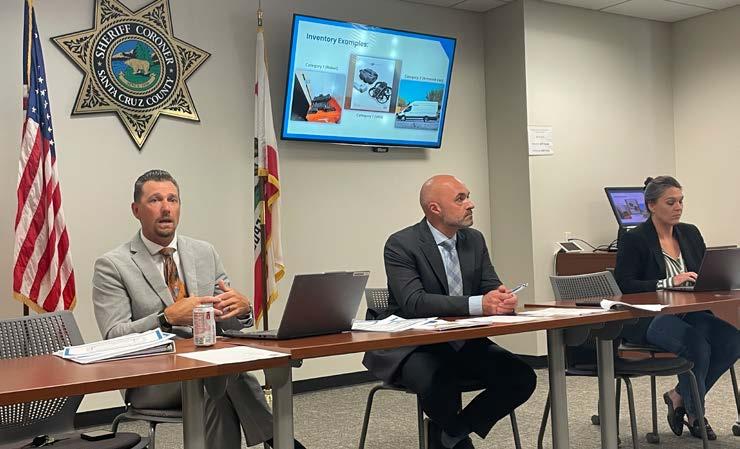
The Santa Cruz County Sheriff’s Office deployed its inventory of military equipment more than 100 times in 2025 while responding to a wide range of incident calls.
Situations that warranted the use of this equipment included missing persons and felony suspect searches, bomb threats, and confronting armed suspects, as well as more mundane uses such as accident scene investigations and event security.
The department also invested over $124,000 in staff training associated with the specialized equipment. Only one item, an Unmanned Aircraft System/Unmanned Aerial Vehicle (UAS/UAV system), is scheduled to be added to the inventory in 2026.
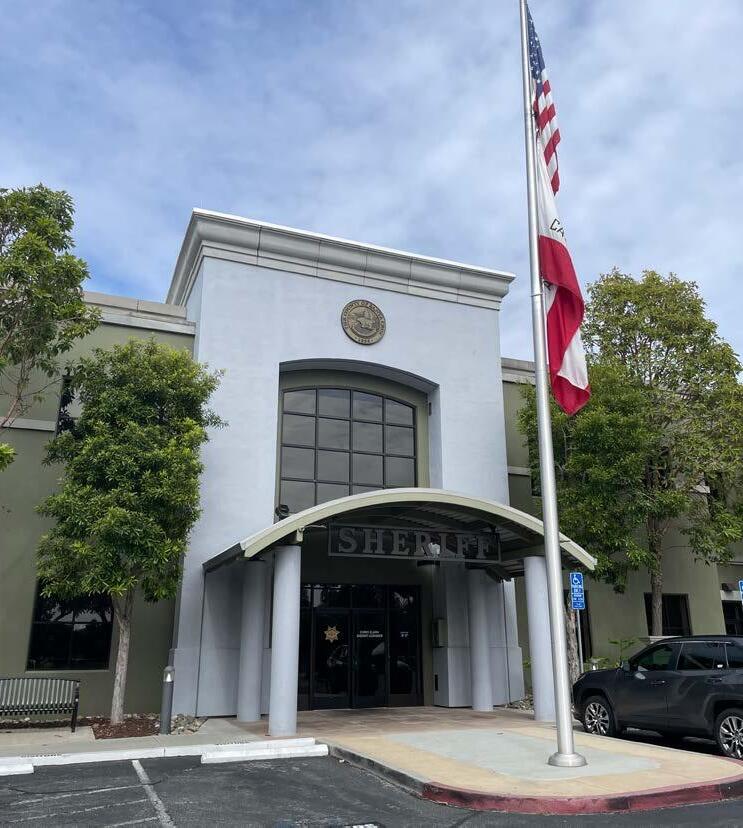
Those are some of the takeaways from the 2025 AB 481 Annual Report on Military Equipment Acquisition and Use recently released by the Sheriff’s Office. The report’s findings were also presented by Lieutenant Dee Baldwin and Chief Deputy Daniel Freitas at a required public meeting on the evening of April 22 in the Sheriff’s Office Community Room.
Reporting due to AB 481
California Assembly Bill 481 (AB 481), effective as of Jan. 1, 2022, requires local law enforcement agencies to obtain

approval from their governing body prior to the funding, acquisition or use of “designated military equipment.” The Santa Cruz County Board of Supervisors approved a local ordinance and Military Equipment Use Policy in April 2022 consistent with this statute.
AB 481 also requires the Sheriff’s Office to submit an annual report summarizing the quantity, use and deployment, costs, training commitments and other information related to each piece of military equipment, as well as the quantity and type of equipment the agency intends to acquire in the coming year.
“Military Equipment” page 23





Author to Present New Santa Cruz County Bird Guide Free
Guided Bird Walk Offered During Book-Signing Event
SANTA CRUZ — Friends of Santa Cruz State Parks will host a free book talk and guided bird walk next month at Natural Bridges State Beach, featuring author-illustrator Sophie Wood Brinker and her newly released field guide, Birds of Santa Cruz.
The event is scheduled for Saturday, May 9, from 4:30 to 7:30 p.m. at the park’s Visitor Center and ParkStore. Doors will open at 4 p.m., with the book talk beginning at 4:30 p.m. Organizers said the program will include a presentation by Wood Brinker, followed by a question-andanswer session, a guided birding stroll through the park and a book signing.
Admission to the event is free, though organizers encourage attendees to RSVP in advance through Eventbrite. Donations will be accepted, and parking at the park will cost $10, with proceeds supporting park programs and operations.
Wood Brinker’s Birds of Santa Cruz is a full-color guide featuring 25 bird species commonly found in the Santa Cruz area. The book combines handpainted illustrations with identification information and notes on bird calls, aiming to help readers better recognize and understand the birds they encounter locally.
ments and a chance for attendees to meet the author and have books signed.
Copies of Birds of Santa Cruz will be available for purchase at the event for $25.
Members of Friends of Santa Cruz State Parks will receive a $10 discount on the book and are eligible for 15% off purchases at the ParkStore. Those interested in membership will be able to sign up during the event.
Friends of Santa Cruz State Parks is a nonprofit organization that supports educational programs, visitor services and preservation efforts across several state parks in the region. Proceeds from parking fees, donations and store purchases help fund those initiatives, including events like the May 9 program.

Wood Brinker is a science illustrator who uses paint and pencil to depict natural systems and ecological subjects. Her work ranges from detailed illustrations of small organisms to large-scale projects such as banners. In addition to her art, she works in a small-town library, helping connect community members with resources and information.
According to event organizers, the guide also emphasizes what can be learned from bird behavior, highlighting themes such as cooperation, communication and community. Examples include the coordinated feeding behavior of brown pelicans and the protective group dynamics of California quail.
The May 9 event will give attendees an opportunity to hear directly from Wood Brinker about her work and creative process, as well as the observations that informed the book. Following the indoor presentation, participants will join the author for a bird walk through Natural Bridges, where they can apply what they have learned in a realworld setting.
The event will also include light refresh-
She grew up in Santa Cruz and now lives in Bolinas, California. Organizers said her local roots and focus on regional species help make the guide accessible to both new and experienced birders.
Natural Bridges State Beach, known for its coastal habitat and seasonal wildlife, provides an ideal setting for the event, offering opportunities to observe a variety of bird species in their natural environment.
Organizers said the combination of a book talk and guided walk is intended to help participants connect written and visual information with direct observation, encouraging a deeper understanding of local ecosystems.
The event is open to the public and designed for a wide range of participants, from those new to birdwatching to more experienced observers interested in learning more about the species found along the Santa Cruz coast. n
COMMUNITY NEWS

Volunteers Prepare for UnScruz Festival
Regional Burning Man Event Celebrates All That is Weird
TRES PINOS — Volunteers were busy the last week of April setting up for unSCruz, the Santa Cruz County regional Burning Man event, a four-day, three-night campout focused on art and community.
The festival, once held annually at the Santa Cruz County Fairgrounds, moved to the San Benito County Fairgrounds in 2023. The event is non-commercial and follows the Ten Principles of Burning Man, which focus on self expression, acceptance of others, and environmentalism.
It features interactive art, theme camps, live DJs, fire performances and what organizers describe as “spontaneous weirdness.” Everything at unSCruz is created by participants. Artists, theme camps and volunteers build the experience themselves, emphasizing what organizers call radical participation. The event kicked off on April 30.
Beyond a ticket, there are no sales of anything and no vending on site. Instead, attendees are encouraged to give freely through gifting. Participants are also expected to bring their own supplies, including food and water, following the principle of self-reliance. Tickets for the
“841 Capitola Road” from page 10
“By conclusively deeming a project consistent … solely based on the passage of time,” the law “purports to strip local agencies of their traditional authority,” the lawsuit states. It further claims the provision “violates procedural due process” and “effectively transfers” land-use decision-making power to private developers.
What Was and What Is To Be
The Board of Supervisors approved the project in February on a 4-1 vote, with Supervisor Justin Cummings dissenting. Ironically, the approval was to avoid a lawsuit by the developer.
At the time, several supervisors said they believed state law left them little choice other than to approve the project and warned the county would likely lose if it denied it.

event sold out within minutes of going on sale earlier this year.
Families are welcome, and children are allowed as long as guidelines are followed.
A key part of the event is the unSCruz Art Grants Program, which supports interactive and participatory projects. Organizers say the program helps artists bring theme camps, art installations and mutant vehicles to the event. About $225,000 in art grants are awarded. n
No county or city in California had yet prevailed in court against a ‘builder’s remedy’ suit, Supervisor Felipe Hernandez pointed out during the hearing.
The lawsuit asks the court to void the project’s approvals, require full environmental review and order the county to reconsider the development under standard planning rules.
It also seeks declarations that the project is not eligible for builder’s remedy protections and that portions of state housing law are unconstitutional.
If successful, the case could halt or significantly delay the project and potentially affect other developments filed during the same period, including proposals on Paul Sweet Road and Graham Hill Road.
County officials and the developer had not yet filed formal responses to the lawsuit. n
Photos Credit: Michael Oppenheimer














Deborah Cypert Owner Bobbie Frandeen
Bands’ Festival Sweep is Music Teacher’s Coda
Soquel High Instructor Retiring After 30 years
By JON CHOWN
SOQUEL — After decades in the classroom, longtime band director Jim Stewart is retiring from Soquel High School, closing a career that helped shape generations of musicians in Santa Cruz County.
Stewart, who graduated from Soquel High School himself in 1982, returned to teach at his alma mater in the 1996 to lead its instrumental music program. At the time, the band program was relatively small. As time went by, it not only grew in size, but in renown.
Every year the Soquel High bands travel to Anaheim and seem to win something at the The WorldStrides Heritage Music Festival in Anaheim, where school bands from all over the nation gather to compete.
This year was another great year for Soquel High, as the Concert Band, Varsity Band and Jazz Band all took first place. It’s a sweep that Stewart said seems to happen about every four years. “There’s definitely some musical stuff happening in Santa Cruz,” he said.
It was a great year for the bands, and the Soquel High Jazz Band in particular, which also got a command performance at the Santa Cruz Jazz Festival earlier this year in March.
“That was pretty special,” he said.

Before taking over at Soquel High, Stewart taught at other local campuses for about four years. He said teaching at his alma mater was his dream. His wife graduated two years behind him and his children also attended the school.
Even after retirement, Stewart said he will continue to teach music. Right now, though, he needs to have time to take care of his aging mother. “That’s really the impetus for me retiring,” he said.
But with only about 20 school days left
Tbefore retirement, Stewart said he is looking forward to the freedom.
“My golf handicap is going to go down and I’m going to surf when the wind is right. I’m really looking forward to not having a small window to surf,” he said. n
New Parking Lot Opens at Panther Beach
First Completed Milestone of North Coast Rail Trail Project
he Santa Cruz County Regional Transportation Commission announced the opening of a new paved parking lot on Santa Cruz County’s iconic North Coast located along Highway 1 near Panther (Yellowbank) Beach.
Construction of this new formal parking lot is part of the larger North Coast Rail Trail project, which will provide a new 7.5 multi-use trail between Wilder Ranch and Davenport with two new parking areas, amenities and wayfinding. The Panther (Yellowbank) parking lot is now open for public use in advance of completion of the full North Coast Rail Trail opening in Fall 2026.
“By opening the parking lot and restroom facilities ahead of the full trail completion, the RTC aims to enhance public access and convenience while progress continues on construction of the entire North Coast Rail Trail,” said RTC Executive Director Sarah Christensen
The new Panther (Yellowbank) Beach parking lot includes accessible and multimodal parking, new restroom facilities, and a plaza with bike racks and benches. Improvements to the restroom facilities and other

minor amenities are still underway and will be completed this month.
This project is being developed in cooperation with the Federal Highway Administration Central Federal Lands Highway Division (FHWA-CFLHD). The Federal Highway Administration team is leading implementation and has been an invaluable partner in delivering the parking lot and trail project and coordinating with all of the project stakeholders.
The project is primarily funded by a grant from the FHWA Federal Lands Access Program with matching funds provided by Measure D Active Transportation/Coastal Rail Trail category funds, and additional funding provided by the California Coastal Conservancy and Land Trust of Santa Cruz County. The trail will offer a car-free route between coastal attractions for cyclists and pedestrians while providing new access to coastal beaches and scenic vistas. Once
complete, it will form a critical link in the larger 32-mile Coastal Rail Trail planned throughout Santa Cruz County.
The next phase of the project is expected to begin in 2028 and will construct a pedestrian overcrossing of Highway 1 that will connect the Coastal Rail Trail on the coastal side of Highway 1 to Cotoni Coast Dairies National Monument on the inland side of Highway 1.
In addition to coordinating with FHWA to develop new multi-modal facilities on the north coast of Santa Cruz County, the RTC is developing a plan for managing demand for transportation facilities and services on the North Coast of Santa Cruz County as part of the North Coast Transportation Demand Management (TDM) Plan.
The North Coast TDM Plan is aimed at making alternatives to driving alone more appealing, safe, accessible, and affordable for all, which enhances the experience of residents and visitors alike. For individuals choosing to drive, this plan envisions managing parking in a way that reduces conflicts between users and improves functionality on Highway 1. n

Proposal to Prevent Dating App Violence Called a ‘Scarlet Letter’
By LYNN LA • Courtesy of Calmatters.org
Abill to protect people on online dating apps from violence has critics arguing that the measure would put a “scarlet letter” on certain users.
But that’s a feature, not a bug in the proposal.
The Senate’s public safety committee this week passed a bill that would require online dating services to run criminal background checks on California users. If the user is a registered sex offender or has been convicted of a violent felony, domestic violence, an assault or a hate crime, the dating service must “place a flag” on the user’s profile to let others know.
Bill author Sen. Caroline Menjivar said that “dating apps have not provided an adequate level of safety for their users.” At the hearing she cited a 2019 Columbia Journalism Investigations survey that found that more than a third of women polled said they were sexually assaulted or raped by someone they met on a dating app.
“If women, mostly women, continue to be raped or murdered — like another woman (who) was murdered and her body was set on fire last year after a man met her on a

dating app — those are the incidents we’re looking to prevent,” said Menjivar, a Van Nuys Democrat:
But besides labeling users with a “scarlet letter,” implementing the policy would require dating platforms to collect a significant amount of personal data to avoid misidentifying users, argued Jose Torres, a deputy executive director for the industry group TechNet.
In a rare break with his Democratic colleagues, Sen. Scott Wiener of San Francisco voted against the bill, saying it might have “significant unintended consequences in terms of people’s privacy.” But Wiener’s opposition, along with Republican Sen. Kelly Seyarto of Murrieta, was not enough to stop the bill from advancing out of the six-member committee, according to CalMatters Digital Democracy database.
With four Democratic lawmakers giving the green light, Menjivar said she plans to amend the measure in response to criticism related to the categories of crime and operational challenges — and that legislators are “going to see a dramatically different bill” when it’s presented to the privacy committee on April 20. n


County Ranks in the Middle for Tax Refunds
On average, tax refunds for residents of Santa Cruz County should be close to national averages this filing season, though fewer taxpayers are receiving refunds than in recent years, according to a new study released on tax refunds from the Internal Revenue Service.
A report from Upgraded Points found the average federal tax refund nationwide is about $3,571 for the 2026 filing season, with roughly 73% of filers receiving a refund. Santa Cruz County falls right in the middle for tax refund size among California’s counties, which is true across much of coastal California.
In Santa Barbara County, for example, the average refund is about $3,238, slightly below the national average, and only about 60% of taxpayers receive refunds. Analysts say that mix — moderate-to-high incomes paired with high living costs — tends to produce middling refund levels.
Nationally, both the size and frequency of refunds have shifted in recent years. Refund amounts surged during the COVID-19 pandemic, driven by expanded tax credits and stimulus-related policies, peaking at more than $3,200 on average in 2022. But as those programs expired, the share of taxpayers receiving refunds fell sharply — from more than 77% in 2021 to the mid-60% range in recent years — even as average refund amounts remained relatively stable.

Income remains one of the biggest factors determining refund size. Taxpayers earning under $50,000 receive average refunds of roughly $2,400 and are the most likely to get
money back. Those earning between $50,000 and $100,000 average closer to $2,700 to $2,800, while households making $100,000 to $200,000 often see refunds in the $4,000 range or higher. At the top end, filers earning more than $200,000 can receive refunds averaging well above $10,000, though fewer than half in that group typically receive one.
That range is reflected locally, where Santa Cruz County includes both lower-wage agricultural communities in the Pajaro Valley and higher-income households in areas like Aptos and Scotts Valley. The variation means refund experiences can differ widely across the county.
How refunds are delivered has also changed significantly. The report found about 97% of refunds are now issued via direct deposit, a sharp increase from just over half of filers little more than a decade ago. Paper checks account for a shrinking share, though they remain more common among lowerincome households.
Financial experts caution that a large refund is not necessarily a windfall. Instead, it often means taxpayers overpaid throughout the year by having too much withheld from their paychecks, effectively giving the federal government an interest-free loan. n
Sex Offender Won’t Be Placed at Either Proposed Site, Says District Attorney
By JON CHOWN

Santa Cruz County District Attorney Jeff Rosell announced April 10 that twice convicted sex offender Michael Thomas Cheek will not be placed at either of two previously proposed locations: 970 Main St., Watsonville, and 111 Ocean St., Santa Cruz. Cheek was convicted in 1980 in Santa Cruz County of kidnapping, rape and forcible oral copulation of a 21-year-old woman and sentenced to 20 years in prison. Shortly after sentencing, Cheek escaped from custody and committed a second rape in Lake County involving a 15-year-old girl. His criminal sentence ended in 1997, but the Santa Cruz County District Attorney’s Office successfully petitioned to have Cheek declared a sexually violent predator under state law and he was committed to the California Department of State Hospitals for treatment.
A sexually violent predator is defined as a person with a diagnosed mental disorder that makes them likely to engage in sexually violent criminal behavior and who poses a danger to the health and safety of others.
In 2019, the Department of State Hospitals determined Cheek was suitable for conditional release, and a judge ordered his release to Santa Cruz County. Since then, state officials and contractor Liberty Healthcare have been unable to find a placement and Cheek remains locked up. A hearing on the proposed placement had been set for May 22. However, in both cases, the property owner has withdrawn from consideration due to community opposition, according to a press release from the DA.
“Our office had significant public safety concerns with the proposed placement made by Liberty and we are pleased that these properties are no longer being considered,” said District Attorney Jeff Rosell.
According to the District Attorney, the Department of State Hospitals contracts with Liberty Healthcare of California to supervise, treat, and monitor all sexually violent predators engaging in outpatient treatment. Liberty publicly disclosed the proposed placement addresses on April 6.
Both the city of Watsonville and the city of Santa Cruz issued statements soon after strongly opposing the placement. In both Santa Cruz and Watsonville, he would have been placed at a hotel, near the center of town.
Watsonville city officials said in a statement that a hotel setting is “not appropriate” for such a placement and argued the proposed Watsonville site sits in a busy

commercial corridor near youth- and familyserving spaces. They also raised concerns that hotel guests would be unaware they could encounter a sexually violent predator on the premises.
“We do not believe this is in the best interests of our community,” the city said, urging residents to submit written comments to the court.
The city of Santa Cruz had a similar response about placing him in a hotel on Ocean Street, noting that the site is
“extremely close” to over a dozen youthserving facilities, including a preschool, youth center, beaches, and parks. The city contends that placing Cheek there would so fundamentally change the “intensity and character of land use” that placing him at the hotel would require a coastal development permit. In 2024 it was proposed that Cheek be housed in a one-bedroom home in Aptos, at the end of Forest Drive, but the public rejected that idea as well. n
Michael Thomas Cheek
Communities throughout Santa Cruz County have opposed the placement of Michael Thomas Cheek in their neighborhoods.
“Military Equipment” from page 17
Under AB 481, “military equipment” refers to 15 specific categories of high-tech, high-caliber, or tactical gear. In Santa Cruz County, the Sheriff’s Office has acquired an array of equipment in recent years meeting that definition including robots, UAS/ UAVs (specialized drone systems), armored vehicles, command and control vehicles, specialized firearms and ammunition, flash bang devices, tear gas, pepper ball launchers, and “less lethal” weapon platforms such as bean bag guns.
In addition to the direct costs of aquisition, the Sheriff’s Office also incurs the cost of maintenance and ongoing staff training on each class of equipment. In 2025, the two types of equipment requiring the most training were the inventory of 92 Patrol AR-15 rifles (requiring 861 staff hours at a cost of $53,000) and UAS/UAVs (resulting in 369 hours of training at a cost of just over $22,000).
The AR-15s were only recently added to the Sheriff’s military equipment list, in direct response to public concerns voiced during last year’s reporting process.
Military Equipment and Public Concerns
Military-style equipment in law enforcement agencies has become more commonplace in recent years, primarily through federal programs like the “1033 Program” which distributes surplus Department of Defense inventory. This equipment is intended to assist with anti-drug, counterterrorism, and gang enforcement efforts at the local level. Post-9/11 security policies and the perceived need for more firepower in high-risk situations (such as narcotics raids and active shooters) have also accelerated this trend nationwide in agencies large and small.
While this equipment can provide law enforcement with additional response options and can potentially save lives, this proliferation can also be met with pushback
at the community level. Concerns voiced locally at the April 22 public meeting included the tracking and control of weapons and their use, the fear of potential use of equipment against citizens and protesters, the potential for increased public surveillance and the general perception of increased law enforcement militarization.
When asked specifically about the
LETTER TO THE EDITOR
Nuclear War is a Horror
We Must Stand Against
My father, an Air Force fighter pilot, and our family, were stationed in Yokohama Japan in 1947 as part of the post-World War II occupation force. Fortunately, I was too young to understand the magnitude of the complete obliteration of the cities of Hiroshima and Nagasaki and the vaporization of their 170,000 residents.
Albert Einstein, Robert Oppenheimer, and other creators of these first atomic bombs, horrified at what they had created, and realizing the potential of nuclear weapons to end humanity, created The Doomsday Clock, which is maintained by The Bulletin of Atomic Scientists today and assesses how close civilization is to the apocalypse. In 1947 it was set at seven minutes to midnight, and it has risen to 17 minutes to midnight in 1991 (due to Strategic Arms Reduction Treaties — START — around the world) but the Clock
has been ticking down since then, and in 2017 it shifted the scale from minutes to seconds.
Two months ago, The Bulletin reset the clock to 85 SECONDS to midnight — the closest we have ever been to annihilation of life on Earth. Several of the reasons it was reset are: The expiration of the nuclear START treaties between the US and Russia, and aggressive geopolitics by Russia, China, and the USA.
About two weeks ago, our President and the Commander in Chief of our military, referring to Iran, said, “A whole civilization will die tonight, never to be brought back again. I don’t want that to happen, but it probably will.”
Those are the facts.
Please review the unspeakable horror of Nagasaki and Hiroshima and take whatever political action you can. https://www.icanw. org/hiroshima_and_nagasaki_bombings
— Don Eggleston, Aptos
program.” Baldwin explained that the new drone system currently in the purchasing process, made by San Mateo-based Skydio, will be more compliant with FAA regulations because it is made in the United States.
One of the attendees of the April 22 meeting was Lee Brokaw, a Vietnam-era veteran, member of the Police Accountability Committee of the local chapter of the American Civil Liberties Union, and no stranger to the Sheriff’s Office and the AB 481 reporting process. “Because of 481 we know things we’ve never known before. We had to fight to get the Sheriff to list the assault rifles. We’ve been trying to get them to do better,” he said.
As a law enforcement watchdog, his concerns revolve around transparency and the oversight of military weapons at the local level. “I don’t care about the cars or command vehicles” said Brokaw. “I’m concerned about how they use their weapons. Weapons scare the (expletive) out of people.”
In response to the issue of tracking the County’s military equipment, including the AR-15 rifles, Lt. Baldwin explained how they are now using technology for that task.
“We’re documenting every use of those rifles throughout the year. Early in January of 2025 we created a scannable barcode system with a sticker that goes on every piece of 481 equipment we have, to track the use, deployment and training associated with that equipment”.
Despite some of these specific concerns, several members of the public, including Brokaw, were also generally appreciative of efforts made by the Sheriff’s Office.
increased use of drones and drone technology, Chief Freitas and Lt. Baldwin explained that the Sheriff’s drone systems are not used for patrols or public surveillance, and that newer vehicles “have been found to be incredibly valuable in searching for missing people, hiding suspects and investigating major collisions. We will continue to improve that
“Your reporting is voluminous. But the fact that it’s there puts you in a unique category (compared to other law enforcement agencies). So thank you very much for that,” Brokaw said. n
The 2025 AB 481 Annual Report can be found on the Sheriff’s Office website at: 2025 AB481 Annual Report.pdf
When asked specifically about the increased use of drones and drone technology, Chief Freitas and Lt. Baldwin explained that the Sheriff’s drone systems are not used for patrols or public surveillance, and that newer vehicles “have been found to be incredibly valuable in searching for missing people, hiding suspects and investigating major collisions. We will continue to improve that program.”

Our Civil Grand Jury An Opportunity for Public Service that Supports Our Local Community
By Judge KATHERINE A. HANSEN
Throughout California, each county is served by a civil grand jury, an essential part of our judicial system that operates independently from the courts. Each civil grand jury functions as an investigative and reporting body, selecting areas of local government to review each year. After conducting confidential investigations, the grand jury issues public reports detailing its findings and recommendations.
The purpose of the civil grand jury is to strengthen local government through careful oversight, investigations, and thoughtful recommendations. Each county’s grand jury has broad discretion in choosing what to examine, allowing it to focus on issues most relevant to its community. In Santa Cruz County, the grand jury evaluates local agencies to promote transparency, accountability, effective use of resources, and alignment with public goals.
Each year, a new civil grand jury is selected. The Santa Cruz County Superior Court will soon begin reviewing applications, interviewing candidates, and appointing members for the 2026–2027 term. We encourage you to consider applying. Service on the civil grand jury

offers a unique opportunity to work alongside dedicated community members, investigate meaningful issues, and contribute to improving local government.
Past grand juries in Santa Cruz County have made a lasting impact. Their reports and recommendations have led to meaningful improvements, demonstrating how individual voices can drive positive change for the entire community.
In the 2024–2025 term, our civil grand jury investigated the following agencies or topics: climate action; commitments to
the public; handcuffing and transport in the county; the county’s building permit process; human trafficking in the county; and the county Health Services Agency.
In the 2023–2024 term, our civil grand jury investigated the following agencies or topics: county local roads; county jail healthcare and reentry support; county Behavioral Health Division; county Child Protective Services; CZU fire victims four years later; inclusionary housing in the city of Santa Cruz; county personnel department; and preventing rape and
Get Me Off This Wild Ride
Up, down, up. We are going to war. We are not going to war. Oil up, oil down. Gold up, gold down. We lost money today, Mertle. We made money today, Mertle. Inflation is killing us Bob.
Yikes and Holy Cow Batman. Yeah, I get it. Trust me. For us consumers, it’s definitely nutty. For financial advisors and analysts, it is even more maddening.
In times like these, it’s best not to watch the markets on a daily basis. This current economic roller coaster we’re on is like a ride on one of those old wooden coasters that give us thrills and then whiplash at the same time.
I have always said the market will reflect reality eventually, but their day-to-day movements is only the sum of the thoughts and feelings of the millions of investors at that particular moment in time.
This time around these wild economic gyrations are a result of many events. Some of those events happened months if not years back, and others are the gears of the global

domestic violence in the city of Santa Cruz.
We are deeply grateful to all who have served, including our current 2025–2026 grand jury, for their time, commitment, and public service.
The 2026–2027 grand jury term begins July 1, 2026. The jury is usually composed of 19 volunteer members and 11 alternates who serve for one year, contributing approximately 20 hours per week, depending on the scope of investigations.
Recent grand juries have successfully combined in-person and remote work, and this flexible approach is expected to continue.
We are seeking thoughtful, collaborative, and community-minded residents who are committed to making a difference.
As the supervising judge of the Santa Cruz County civil grand jury, I invite you to apply and to encourage others—friends, family, and neighbors—to do the same. Your perspective and experience are invaluable to the continued strength and effectiveness of our local government. n
For further info, please email hrinfo@santacruzcourt.org with questions, or visit our local civil grand jury website for additional information and to review past reports: www.santacruzcountyca.gov/Departments/GrandJury.aspx.
political machine grinding away on a daily basis.
No doubt some will blame Washington for the headaches and others will point to the folks that handle our money, the kids at the Federal Reserve as the cause.

Truth be told, both sides of the argument hold water as to why we are going through the crazy financial times that we are all pulling out our hair over.
A lot of the inflation we are witnessing is the result of the massive amounts of Covid bail out money hurled out of the windows of the Federal Reserve back in 2020 through 2023. Some of that is even continuing to this day. Like I have been saying, never before in history have we seen so much money tossed into an economy. Trillions literally.
And you can’t just print up that much free money and not expect it to cause problems. These problems being massive inflation.
Add to that a stock market that literally
has been on steroids from much of that money, and oil shock due to the middle east conflict, and you have the makings of an inflationary fire that rages on with no end in sight.
The inflation statistics just out last week confirm it isn’t getting any better. I won’t get into the details of those statistics, but prices continue to climb with little relief in sight.
Meanwhile, the consumer is getting brutalized by skyrocketing prices while with no clear resolution to the global tensions from the powers at be. The market is bouncing all over and we’re all left scratching our heads as to what comes next.
It’s exhausting, I know.
As an analyst for the last half century, I do take comfort in knowing I have seen similar moments in history that seem to shake us to the core and think, we’re doomed. But so far, at least in my experience, these things seem
By MARC CUNIBERTI

to always work themselves out, some sort of normalcy returns, and we look back and say:
“wow, I’m glad that’s over.”
I then close my stock screen, take a deep breath, and take a few hours, if not days off.
There is only so much a person can take on a daily basis. So, my advice is do the same. Turn off the TV, close your account statements, take a walk, go on a road trip, or spend some time off with family and friends. The world will always be there tomorrow.
At least it always has been. n
This article expresses the opinion of Marc Cuniberti and is not meant as investment advice, or a recommendation to buy or sell any securities, nor represents the opinion of any bank, investment firm or RIA, nor this media outlet, its staff, members or underwriters. Mr. Cuniberti holds a B.A. in Economics with honors, 1979, and California Insurance License #0L34249 His insurance agency is BAP INC. insurance services. Email: news@moneymanagementradio.com.
Watching The Markets So You Don’t Have To

RTC Approves New Rail Freight Operator Maintenance of Track,
Cost of Repairs, are Key Issues
By JON CHOWN
SANTA CRUZ — The Santa Cruz County Regional Transportation Commission on April 2 approved a pair of agreements to terminate its current rail operator and install a new freight carrier on part of the Santa Cruz Branch Rail Line.
Commissioners adopted resolutions authorizing a separation agreement with St. Paul & Pacific Railroad and a new 10-year operating agreement with Chicago Rock Island & Pacific Railroad for the Watsonville Branch Line.
The actions formally end the commission’s existing Administration, Coordination and License agreement with SPPR, which began in 2018.
Under the approved separation agreement, SPPR will transfer operations and related agreements, provide track and inspection records and file required documents with the federal Surface Transportation Board. The company will also initiate the discontinuance process for the portion of the rail line north of Watsonville, from milepost 3.0 to milepost 31.39.
Discontinuance is a regulatory status that relieves a rail carrier of its obligation to provide service on a line while keeping the corridor under federal jurisdiction for possible future reactivation.
The commission agreed to pay SPPR $450,000 in three installments tied to completion of transition milestones.
According to the staff report, the payment is intended to ensure an orderly transfer of operations and avoid potential litigation delays.
The approved agreement follows months of disputes between the agency and SPPR over maintenance responsibilities and freight service requirements. The commission voted in February to terminate the contract.
At the same time, the RTC approved a new Administration, Coordination and License agreement naming Chicago Rock Island & Pacific Railroad as the common carrier for the Watsonville Branch Line, a roughly 2.5-mile section between Pajaro/ Watsonville Junction and Lee Road.
The new operator will serve the line’s three existing freight customers and may expand service. The company is expected to bring locomotives, maintenance equipment and crews needed to operate and rehabilitate the line’s infrastructure.
Reid Dawe, general manager for the Chicago Rock Island and Pacific Railroad, said the company wanted to be a benefit to the community as a whole.
“We have a lot of partners that we can bring in to increase business rail opportunities for existing customers,” he said.
Most of the 32-mile Santa Cruz Branch Rail Line remains inoperable for freight due to its condition and the high cost of repairs, according to the report. Dawe said his company had a lot of experience who this sort of thing.
“We have a lot of experience with rehabbing less than adequate rail,” he said. “We bring a lot to the table as far as being able to do that.”



Open disrespect
Dewey Decimal System, e.g.
252-gallon cask
Cause anxiety (2 words)
Back talk
Extra point
Vanish without this DOWN
Take of a hat, e.g.
Traditional October birthstone

Creating the New Culture & Civilization
Esoteric Astrology • May 2026 •
By Risa D’Angeles
Under Taurus (comforting) Sun the first two weeks of May (month of flowers), 2026, we have the following events: Wesak Buddha Full Moon Taurus solar Festival (May 1); Mercury enters Taurus (May 2); Cinco de Mayo (May 5); Pluto retrograde in Aquarius (May 6); Mother’s Day (May 10); Taurus New Moon (May 16) and Uranus in Gemini for the next seven years (al things suddenly become new)! Humanity’s classroom is both the stars (heavens) and the Earth. The sky above us, with the Milky Way’s swirling, glittering, starry pathway, is a vast and infinite celestial astrological chart consisting of stars, constellations, planets, asteroids, Sun and Moon. It is a great clock in the sky, offering us information on changes, transitions and right timing of life events. The starry guide directs and influences both our daily lives and our spiritual direction – a continuous state of evolution (returning to Spirit). Behind these starry messengers stands the inner spiritual government called the Hierarchy (Teachers). Our solar system, residing at the edge of the Milky Way (making it easier for non-Earth beings to visit us), consists of planets spinning around a Sun (all at differing speeds). Through mathematical and
ARIES
Jupiter (planet of love/wisdom) calls you to participate in the leadership of the new culture and civilization. This great god provides you with courage, inimitable daring and mental acuity and audacity to see far into the future and adapt and reorient your professional talents for the progress of humanity. You will resist being overbearing and arrogant, opposing virtues of a good leader. You will travel and your gifts will be recognized.
TAURUS
Through travel and involvement with many different cultures, you will learn how different countries are meeting the needs of their people concerning the coming world changes. Previously held beliefs and prejudices cease as perspectives expand. These experiences lead you to clear knowledge turning to wisdom. You will then bring needed change to your community. Think greenhouses, seeds, soil, food, fish, and algae, medicinals and foraging.
GEMINI
We must always begin with ourselves before offering change to the world. In coming months, a deep psychological self-awareness unfolds bringing healing to your past. This liberates your energy and creates an inner regeneration. You then will understand more deeply the suffering of humanity and apply your love/wisdom to their needs. Others will benefit from your beneficence. You will receive and then share a spiritual inheritance. Seven pathways unfold for you to consider.
CANCER
An inner need to help others grows internally each day. You ask how to best serve. Partnerships will be formed around the common themes of nurturing and caring for those less fortunate. You are to cultivate gardens, tend to animals, build stores of food, medicines, seeds, water and books for many arriving at a later date. For those who are married, attending to these tasks together enhances your original vows, hopes, wishes, needs and promises.

energetic connections to our astrology charts, the planets advise and notify us of when to expect changes, when the shifts and changes begin and end. These are called transits – planets, Sun and Moon, in the sky, their light each day affecting the daily life of the kingdoms on Earth.

We (Earth and her kingdoms) presently stand at the doorway of that which is new and vital. But first the previous belief systems, rules, governments and ways of life must be released and thus liberated. This is the breakdown phase before the new building phase comes into view.
Opportunities, still small and embryonic, are slowly emerging; a new kingdom is forming (that of the Soul) to create a life more productive and abundant than we have ever known. Each of us and thus each sign is offered a unique opportunity to serve through all these phases. Together, using our gifts and tools from the heavens, we can navigate the changes with strength and courage. We are to create the new world order, culture and civilization together. It must come and it will. It’s foretold in the stars. Jupiter, the Great Benefic, in Cancer, is their messenger. n
For daily teachings, posting, events & festivals read Risa D’Angeles FB page and NLN — https://nightlightnews.org/daily-postings/
LEO
Realizing humanity is your marriage partner, you will openly and willingly offer creative and artistic skills as needs surface in the world. Especially for and among the young ones. As your true purpose surfaces you understand your own inner power, courage, strength and might. You will work hard to achieve balance and harmony for the kingdoms (earth, animals, plants, human) summoning you. Your health is vital. Lead with both power and love (power with).
VIRGO
More and more you become yourself, no longer dutiful and acting as expected but a new confident expression and creativity comes forth. You seek from the heart and thus will be useful to others. You are the sign of the mother who feeds the world. Your heart must be open to the world before you can attempt to nourish it. Think about gardens – biodynamic and hydroponic. And biologic architecture. Why are they useful for the coming times?
LIBRA
As the year unfolds, humanity will more fully seek peace and security, which will have to be found in different ways. Use your resources to seek land, create community and provide a stable purposeful world for those close to you. Your usual generosity toward friends expands to include many more. Something new is coming to light in our world. You have the ability to create and sustain, to offer love and solace - psychological gifts soon to be deeply needed.
SCORPIO
Although you are considered the hermit of the zodiac, it will surprise you (and others) that in times to come you offer your presence to the world along with vital information needed. Your research into the coming times makes you more knowledgeable than most about the reorientation about to occur. Study and train in survival skills. Extended travel may be necessary, forging newly formed relationships. Mental limitations cease. A whole new world opens along with your heart.
SAGITTARIUS
You have been in training on using resources carefully and wisely. In the coming times, resources we’ve placed great importance on will dwindle and new resources will gradually become available. You will be very aware and sensitive to these new resources – how to find and obtain them. Then, because your compassion is developed, you will share and disperse them judiciously, managing the new materialism with intelligence and prudence. You lead the sharing society.
CAPRICORN
You sense, feel, know and understand a new cycle is appearing in our world and your inherent leadership, governmental, and democratic skills come to light. No longer hiding talents under propriety or childhood wounds, you become a resource for others in how to survive difficult physical and emotional challenges. You’re ahead and at the top now, providing everyone with direction in constructing the new culture and civilization. There will be many ladders. You have fashioned lighted lanterns to be hung on each rung.
AQUARIUS
Deeply spiritual and religious dimensions will reveal themselves to you. Aquarians will become the new Aquarian ministers and the new scientists, eventually proving the Soul’s existence. Empathy and dispassion grow along with keen observational abilities. You may help build the new Noah’s Ark through writing and/or publishing, music, film and art. Humanity will seek comfort from the future you already know about and live in. Keywords: barter and creativity.
PISCES
You will gather the young ones into groups and teach many to have group goals, hope, ideals and wishes, all of which impact and grow the future. You will teach the new values needed on our planet that will create the new materialism (spiritually focused goals). You will not work alone. Many working beside you share your visions. Your communication and how you live will assist others in understanding the coming social reforms. You will build that community. It will appear from the sounding of the Ohms.

County to Establish Youth Commission to Advise Supervisors
SANTA CRUZ — The Santa Cruz County Board of Supervisors approved the creation of a Youth Commission at their April 14 meeting, giving young people a new way to share their views on local issues.
County officials said the Youth Commission is meant to give young residents a stronger voice in decisions that affect them. The group will serve as an advisory body to the Board of Supervisors.
The commission is expected to focus on issues facing youth in Santa Cruz County, including health, education and community well-being. Members will be able to share ideas, raise concerns and provide feedback directly to county leaders.
Leaders said the goal is to make sure youth perspectives are included in county policies and programs. They also said the commission will help build civic engagement by encouraging young people to take part in local government.
The ordinance makes the Youth Commission part of the county’s formal structure, similar to other advisory boards and commissions. While it does not have decision-making power, it can make recommendations to supervisors.
County staff said creating the commission will not have a financial impact. No new funding was requested as part of the action.
The approval comes as local governments across California look for more ways to involve youth in public decision-making. Supporters say programs like youth commissions can help develop future leaders while also improving policies by including voices that are often underrepresented.
County staff are expected to begin the process of setting up the commission, including recruiting members and outlining how it will operate. n
The ordinance makes the Youth Commission part of the county’s formal structure, similar to other advisory boards and commissions.
Celebrating Water, Service, and Sustainability: A Season of Awareness
From the Soquel Creek Water District
Each spring, a series of meaningful observances come together to highlight something we rely on every day but often take for granted—safe, reliable water—and the dedicated people who make it possible. California Water Awareness Month, Drinking Water Week, Public Service Recognition Week, and National Tap Water Day collectively offer an opportunity to reflect on the value of water, the importance of sustainable management, and the essential role of public service.
In California, water is more than a resource — it’s a lifeline. California Water Awareness Month shines a spotlight on the challenges and opportunities facing our state’s water supply. With a changing climate, periods of drought, and increasing demand, managing water wisely has never been more important. Water agencies across the state are investing in innovative solutions, from conservation programs to recycled water and groundwater replenishment projects, all aimed at ensuring a reliable supply for future generations.
Locally, you can learn more about how groundwater is managed in the Santa Cruz Mid-County area at website https://www.midcounty groundwater.org/

Drinking Water Week turns our attention to what happens beyond conservation — specifically, the journey water takes before it reaches your tap. Delivering safe drinking water is a complex process that involves sourcing, testing, treatment, and distribution.

At the same time, individuals play a vital role. Simple actions — like fixing leaks, using water-efficient appliances, and being mindful of outdoor irrigation — can collectively make a significant impact. For water-saving tips and rebate programs, visit: https://www.soquelcreekwater.org/189/ Water-Resources
“Rail Freight Operator” from page 25
RTC officials said the coordinated actions are intended to preserve existing freight service in Watsonville while allowing the agency to take greater control of the rail corridor and move forward with transportation projects.
Those include development of the Coastal Rail Trail in the near term and longterm plans for zero-emission passenger rail. Realistically, RTC Executive Director Sarah Christensen said passenger rail is far off, if it ever happens.
She said it’s an ambitious, long-term project that is struggling to even get the funds to study it, let alone run it. The RTC is short $15 million it needs to continue
Water professionals work around the clock to ensure that every drop meets strict state and federal standards. As part of our commitment to transparency and public health, the District publishes an annual Water Quality Report, also known as the Consumer Confidence Report (CCR), which is required by the State of California and the U.S. Environmental Protection Agency.
This report provides a comprehensive overview of your drinking water, including where it comes from, what it contains, and
environmental process and project development activities.
“We have a $15 million cost hole, basically, that we’re continuing to pursue funding to address so that we can continue with the environmental process,” she said. “But the reality is, if we had $15 million today and everything went perfectly, the project would not come to fruition for a few decades. So that’s the reality of passenger rail in our community.”
The RTC purchased the rail corridor from Union Pacific in 2012 with the goal of supporting multimodal transportation, including freight, passenger rail and a multiuse trail. The agency is required under grant conditions to maintain freight service where mandated by federal regulators. n
infrastructure, and customer service teams assisting the community. Their work ensures not only that water flows when you turn on the tap, but also that it is safe, reliable, and available when it matters most.
Rounding out this season of awareness is National Tap Water Day, a celebration of one of the most accessible and sustainable choices we can make. Tap water is among the most highly regulated drinking water sources in the world, undergoing rigorous testing to ensure quality and safety. Choosing tap water over bottled alternatives is not only cost-effective but also environmentally responsible, helping reduce plastic waste and the energy required for production and transportation.
how it compares to strict state and federal standards. It also includes information about the testing process, detected substances (if any), and how we work to ensure your water remains safe and reliable. Water systems like ours are required to prepare and deliver this report to customers each year, reinforcing accountability and keeping our community informed.
We encourage all customers to review the latest report to better understand the quality of their water and the work that goes into delivering it every day: https://www.soquelcreekwater.org/210/ Water-Quality-Report
That appreciation naturally extends into Public Service Recognition Week, which honors the people behind the scenes who keep essential services running. In the water industry, this includes operators monitoring treatment systems, field crews maintaining pipelines and responding to emergencies, engineers designing resilient
Together, these observances tell a larger story about connection — between natural resources, infrastructure, and the people who manage them. They highlight how water systems are carefully designed and maintained to protect public health and support vibrant communities. They also emphasize that water reliability is not guaranteed; it requires ongoing stewardship, innovation, and community engagement.
This season is a meaningful opportunity to learn more about where your water comes from, how it is treated, and what steps are being taken to ensure its future. It’s also a time to express appreciation for the individuals who dedicate their careers to public service and to consider how each of us can contribute to water sustainability.
Because when we value water, we also value the systems and people that make it possible — today and for generations to come. n

COMMUNITY CALENDAR
ANNOUNCEMENTS
DROP-IN EVENING FIGURE DRAWING
7–9:30 p.m., Santa Cruz Art League, 526 Broadway
“Wonderful opportunity to work on drawing with a model, facilitated by a friendly instructor who created a warm atmosphere for all.”
— Evening Figure Drawing participant
Beginner to professional artists are welcome for these drop-in figure drawing sessions. Instruction and/or critique will not be offered.

Monday Evening Long Pose (March 2, 9, 16, 23, & 30) — Drop-in session of drawing or painting from a live nude model including long and short poses.
Thursday Evening Long Pose (March 5) — An evening of long poses for painting and drawing with a live model holding either one 2-hour or two 1-hour poses during the evening. This session provides an opportunity for artists to create more detailed studies or focus their drawings or paintings.
Thursday Evening Gesture Study (March 19) — This session provides a great opportunity to practice capturing the essence and simplicity of the pose, rather than rendering the complexity and detail of the form. More like poetry than prose! The format for this evening will be a series of 1 minute poses, transitioning to 2, 3, and 5 minute poses.
Facilitated by Mark Sangster and Emily Cafaro. Cost: $20 per session.
Attendance is limited, so come early or register in advance to be sure of a space. Easels are available. Painters, please do not use strong-smelling solvents. Visit https://scal.org/dropin-workshops for more information.
ONGOING EVENTS
Mondays BRIDGE CLUB
10:30 a.m.-Noon, 7695 Soquel Dr, Aptos, CA 95003
The Aptos Branch Library hosts Bridge Club sessions on Mondays (except holidays).
Bridge Club is a partnership between Santa Cruz County Parks and Santa Cruz Public Libraries.

Register at scparks.com or in-person the day of the event.
OVEREATERS ANONYMOUS
7 p.m., Congregational Church Preschool Meeting Room, 4951 Soquel Ave., Soquel
Overeaters Anonymous welcomes any type of eating disorder or problems with food. No dues, fees or weigh-ins.
Meetings take place at Congregational Church in the preschool meeting room. All are welcome.
Overeaters Anonymous (OA) has meetings daily both in-person and on-line in Santa Cruz County at santacruzoa.org
Fourth Mondays (Third Monday in May due to Memorial Day)
THE SPOKEN EXPERIENCE
Noon – 1 p.m., Capitola Branch Library, 2005 Wharf Rd
Each month a community of readers gather to share selections from a featured poet.
Join local poets Paola Bruni, Elaine Fletcher Chapman and Jessica Cohn as they lead the discussion.
Upcoming poet focus:
May 18: Emily Dickinson (third Monday)
June 22: Gary Snyder
Tuesdays
TUESDAY NIGHT SALSA SOCIAL
7 – 10 p.m., Abbott Square Market, 725 Front St., Santa Cruz
Join a midweek salsa social at Abbott Square Market with salsa, cumbia, merengue, and bachata.
Free and open to all skill levels—just bring energy and dancing shoes.
More information: www.abbottsquaremarket.com
BINGO AT MCSC
1-3 p.m., Mid County Senior Center, 829 Bay Avenue, Capitola (behind the Party Store)
Hot Dogs, Chili and snacks available for purchase courtesy of our Snack Shack. A lot of fun for all and a possible big win!
Door opens at 12:15 p.m.

Thursdays
SCOTTISH COUNTRY DANCING
7:15-9:15 p.m., Peace United Church 900 High St, Santa Cruz. Beginners welcome, partners not required. $10 each. Come dance!
HAPPY HOUR
5-7 p.m., California Coffee, 9105 Soquel Drive, Aptos California Coffee in Redwood Village hosts an open mic happy hour every week.
Third Thursdays
SIP AND STROLL
6-9 p.m. (check-in 5 p.m.), Seacliff Inn, 7500 Old Dominion Court, Aptos
Come to the Seacliff Inn: Tapestry Collection by Hilton, for a Sip & Stroll event where local artists to show and sell their works. Wines are 30% off, and the featured winery will offer tastings of three varietals for $10 per person. Details of this and more Sevy’s events at www.sevysbarand kitchen.com/events
Fridays (except First Friday of the Month)
LA SELVA BEACH LIBRARY BRIDGE GROUP
10:30-Noon, La Selva Beach Public Library, 316 Estrella Ave. Come for bridge from 10:30 to noon at the La Selva Beach library. Call La Selva Beach Library to reserve your seat: 831-427-7710.
FRIENDS IN THE GARDEN!
Saturday May 9
First and Third Fridays
JIM GREINER’S HANDS-ON! DRUMMING
7-8:30 p.m., Congregational Church of Soquel, 4951 Soquel Dr. Percussionist/educator Jim Greiner continues his Community Rhythms Class on the first and third Fridays of every month at the Congregational Church of Soquel.
All levels of experience are very welcome to this familyfriendly community gathering. Jim provides percussion instruments and you are welcome to bring your own.
Come play, socialize and reinforce Jim’s fundamental themes of communicating, collaborating and celebrating through rhythm!
$10 donation is requested. Doors open at 6:30.
Last Friday of the Month thru October
FOOD TRUCK FRIDAY AT SKYPARK
5–8 p.m., Skypark, 361 Kings Village Road, Scotts Valley Food Trucks A Go Go presents an evening of local eats, live music and activities for all ages.

The monthly event supports Scotts Valley schools through beverage sales and offers a welcoming community gathering.
Featured Band May 29: The Swag Tones Admission is free.
For details, visit foodtrucksagogo.com.
First Saturdays
CAPITOLA BEACH CLEANUP
9-10 a.m., Esplanade Park
Help preserve and maintain the coastal beauty of Capitola. Join a beach cleanup every month at Esplanade Park.
Keep Capitola Salty is a grassroots movement dedicated to responsible efforts helping to maintain and preserve the environment, scenic beauty and coastal recreational activities of Capitola.
This movement is always looking for volunteers. Email KeepCapitolaSalty@gmail.com.
Second Saturdays
HISTORICAL AIRCRAFT DISPLAY
10 a.m.-4 p.m., Watsonville Municipal Airport, 100 Aviation Way Watsonville Municipal Airport hosts a Historical
11 a.m. – 2 p.m., Santa Cruz County Fairgrounds, 2601 East Lake Avenue, Watsonville
Bring your family, friends and neighbors to 2nd Saturday on the Farm at the Santa Cruz County Fairgrounds in the Agricultural History Project Center & Museum.
This month, kids of all ages will enjoy “Friends in the Garden” as we celebrate helpful creatures in our gardens and life on the farm.
There will be Nature-themed crafts and activities for the kids, puppet shows, Kid’s Drive-a-Tractor, Hay Wagon rides around the fairgrounds, live farm animals, and so much more! Check out our extensive vintage tractor and equipment collection, plus historical displays on local agriculture and technology in the Codiga Center & Museum building. Find something for everyone at our Codiga Museum and Country Corner Gift Shop. Proceeds support our mission at the Agricultural History Project. See you on the farm!
Aircraft Display every second Saturday. Admission is free.
Saturdays and Sundays
ELKHORN SLOUGH: FREE TOUR OF THE PRESERVE
10 a.m. | 11 a.m., Elkhorn Slough Reserve, 1700 Elkhorn Road, Watsonville
Docent-led tours offer visitors a guided introduction to Elkhorn Slough’s remarkable landscapes, wildlife, and tidal wetlands.
Each walk is tailored to participants’ interests and abilities, creating an engaging, educational experience.
Space is limited, and tours are first-come, firstserved.
Guests can sign up at the Visitor Center front desk or call ahead the same morning at (831) 728-2822 for availability.
DATED EVENTS
Saturday May 2
4TH ANNUAL KENTUCKY DERBY PARTY FUNDRAISER
1:30–4:30 p.m., Specialized Helicopter Hangar, Watsonville Airport, 100 Aviation Way
Dress in your Derby best for an afternoon of food, fun and philanthropy at the Capitola-Aptos Rotary’s fourth annual fundraiser.
Tickets include appetizers, sandwiches, dessert and a drink, with proceeds supporting local nonprofits and youth scholarships. For tickets and information, visit tinyurl.com/2026RotaryDerby.
FITZWERC: PLANT SALE
9:00 a.m.–1:00 p.m., Fitz Wetlands Educational Resource Center, 500 Harkins Slough Road, Watsonville
FitzWERC hosts a family-friendly native plant sale featuring species suited for local gardens and habitat restoration. Visitors can explore the wetlands center, greenhouse, and demonstration gardens while selecting plants to take home.
Proceeds support education and conservation programs. For details, call 831.728.1156, go to https://www. watsonvillewetlandswatch.org/other-events/annual-spring-nativeplant-sale-2026-05-02 or visit the center.
ROARING CAMP: BUBBLE BONANZA
10:30 a.m.–3:00 p.m., Roaring Camp Railroads, 5400 Graham Hill Road, Felton

The non-profit Agricultural History Project’s 2nd Saturday events are like taking a step back in time! In addition to this month’s Gardenthemed special activities, you’ll be able to milk a “cow,” drive a vintage tractor, and learn about the history of agriculture in the Pajaro Valley while visiting the many museum exhibits. Bring your lunch and enjoy a picnic on the lawn or under the trees. This is a fun event for the entire family. Admission is free and donations are gratefully accepted!
Roaring Camp Railroads Roaring Camp Railroads hosts Bubble Bonanza, an immersive family event featuring the Circus Bubble Train traveling through the redwoods. Guests enjoy millions of bubbles, circus performances, and interactive activities in Bret Harte Hall with jugglers, dancers, and bubble magician Tom Noddy. For details, call 831.335.4484 or visit roaringcamp.com.
Tuesday May 5
MASTER CLASS: GREGORIO URIBE — A JOURNEY THROUGH COLOMBIAN MUSIC
7:00 p.m.–12:00 a.m., Kuumbwa Jazz Center, 320-2 Cedar St, Santa Cruz
Latin GRAMMY-nominated Colombian musician Gregorio Uribe leads an interactive master class exploring the diverse regional rhythms of Colombia. Through live demonstration and storytelling, he teaches traditional styles while sharing their cultural, historical, and geographic context.
Open to musicians and non-musicians alike, this educational experience highlights Uribe’s global collaborations and acclaimed performance career. For details, visit kuumbwajazz.org.
Friday May 8
COMMUNITY HEALTH TRUST HEALTH FAIR 2:00 p.m.–5:00 p.m.,
COMMUNITY CALENDAR
a free, family-friendly afternoon focused on wellness, education, and community connection.
Attendees can meet local health organizations, explore resources, and participate in interactive activities and giveaways designed to support everyday well-being. For more information, visit communityhealthtrust.org or the event listing page.
MOE’S ALLEY PRESENTS: THE BROTHERS COMATOSE — LIVE AT THE RIO THEATRE — W/ MOSHE VILOZNY
7:00 p.m. doors / 8:00 p.m. show, Rio Theatre, 1205 Soquel Ave., Santa Cruz
West Coast roots band The Brothers Comatose perform live at the historic Rio Theatre with special guest Moshe Vilozny opening the show.
Presented by Moe’s Alley, the all-ages concert features old-school string band energy and rock influences. Tickets available at moesalley.com or ticketweb.com for full event details and updates.
Saturday May 9
MAR VISTA ELEMENTARY 60TH ANNIVERSARY CELEBRATION
11 a.m.–5 p.m., Mar Vista Elementary School, 6860 Soquel Dr., Aptos Mar Vista Elementary is 60 years old, and the school is inviting any and all alum, former employees and associates to attend a celebration of the school’s past and a fundraiser to help it into the future.

The event is being organized by a committee consisting of teachers representing each decade Mar Vista has existed. For more current and future information, search for Mar Vista Elementary’s 60th Anniversary Alumni Event on Facebook.
RAGS ROSENBERG AND GINNY MITCHELL LIVE
7 – 9 p.m., The Ugly Mug Coffee House, 4640 Soquel Dr, Soquel
An evening of mythic songwriting features Rags Rosenberg and Ginny Mitchell performing intimate sets of poetic, story-driven music at The Ugly Mug Coffee House. Seating is limited and expected to fill quickly, with performances from 7–9 p.m.
Arrive early or visit www.cafeugly.com for details and updates.
MOTHERS DAY
Sunday May 10
SHE.IS.BEAUTIFUL 5K RUN/WALK
7 –11 a.m., West Cliff Drive (start near Santa Cruz Beach Boardwalk), Santa Cruz
She.Is.Beautiful 5K is a women-focused run/walk event along West Cliff Drive with ocean views, music, and community celebration.
Participants of all ages are welcome and many run in support of personal or charitable causes. For registration and course information, visit sheisbeautiful5k. com today.
PINTO LAKE COUNTY PARK MOTHER’S DAY RUN & WALK
8 a.m.–12 p.m., Pinto Lake County Park, 451 Green Valley Rd, Watsonville
Pinto Lake County Park hosts a family-friendly Mother’s Day run and walk event with scenic lake views and community participation.
Distances typically include a 5K and kids’ fun run. Participants are encouraged to register early. For race details, schedules, and registration, visit santacruzcountyparks.com.
CAFÉ CRUZ MOTHER’S DAY BRUNCH
9 a.m.–2 p.m., Café Cruz, 2621 41st Ave, Soquel Café Cruz serves a special Mother’s Day brunch with fresh California cuisine, seafood, omelets, and house-made desserts in a lively dining room atmosphere.
It is a longtime local favorite for holiday gatherings. Reservations are recommended.
ARBOR DAY IN ACTION
Wednesday May 7
11 a.m. – 2 p.m., University Terrace Park, 369 Meder St., Santa Cruz
The City of Santa Cruz Parks and Recreation Department invites the community to celebrate Arbor Day at University Terrace Park.
Volunteers will help plant approximately 60 trees, supporting a greener, cooler, and more resilient Santa Cruz. The event also features family-friendly activities, educational booths, and opportunities to connect with neighbors.
This year, we’re planting resilient, medium-sized canopy trees including maple, Chinese pistache, and crape myrtle. These trees will enhance the park, provide much-needed shade, and help buffer nearby homes.
Volunteer Opportunity
Community members of all ages and experience levels are encouraged to participate—no prior experience is needed.
Arrive at 10:45 a.m. for check-in and instructions, followed by guided tree planting with City staff and arborists. You should wear closed toe shoes and other clothes suitable for outdoor work. Tools, water, and snacks will be provided.
Minors are allowed but must be accompanied by an adult.
Register at santacruzca.gov/scparksplanttrees. Advance registration helps us plan supplies and refreshments.
• Select “Volunteer – Tree Planting Participant” to join the planting effort.
• Select “Community Welcome – Arbor Day Activities” if you’d like to drop by, explore booths, or join in the kids’ activities. This Arbor Day event is part of the City’s ongoing commitment to expanding and caring for Santa Cruz’s urban forest while fostering community connection and environmental stewardship. For volunteer-related questions, please contact jblaschke@santacruzca.gov.
CROW’S NEST MOTHER’S DAY BRUNCH
9 a.m.–3 p.m., Crow’s Nest Restaurant, 2218 E Cliff Dr, Santa Cruz
The Crow’s Nest offers a popular Mother’s Day brunch overlooking the harbor with coastal views, seafood specialties, breakfast favorites, and champagne service. Live or seasonal music is often featured.
Reservations are strongly recommended due to high demand.
SEASCAPE BEACH RESORT MOTHER’S DAY BRUNCH
10 a.m.–2 p.m., Seascape Beach Resort, 1 Seascape Resort Dr, Aptos
Seascape Beach Resort hosts an upscale Mother’s Day brunch featuring ocean-view dining, carving stations, seafood, and desserts.
Guests enjoy a relaxed resort atmosphere with direct beach access nearby.
Reservations are required and typically fill early each year.
THE HOLLINS HOUSE MOTHER’S DAY BRUNCH
10 a.m.–2 p.m., Pasatiempo Golf Club, 20 Clubhouse Rd, Santa Cruz
The Hollins House at Pasatiempo Golf Club offers an elegant Mother’s Day brunch with panoramic golf course views, champagne service, and seasonal menu selections.
The historic venue provides a refined dining experience in a scenic setting.
Reservations are required.
CHAMINADE RESORT & SPA MOTHER’S DAY BRUNCH
10 a.m.–3 p.m., Chaminade Resort & Spa, 1 Chaminade Ln, Santa Cruz
Chaminade Resort & Spa hosts an elegant Mother’s Day brunch featuring local farm-to-table dishes and panoramic views of Monterey Bay. Guests can expect carving stations, desserts, and champagne service.
Advance reservations are required.

PARADISE BEACH GRILLE MOTHER’S DAY DINING
10 a.m.–8 p.m., Paradise Beach Grille, 215 Esplanade, Capitola Paradise Beach Grille offers all-day Mother’s Day dining along the Capitola waterfront with ocean views, seafood dishes, and California-inspired entrees.
Guests enjoy relaxed seating near the beach village atmosphere.
Reservations are strongly encouraged.
Tuesday May 12
CAPITOLA SOROPTIMIST CLUB MEETING
4:00 p.m., United Way of Santa Cruz County, 4450 Capitola Road, Suite 106, Capitola
Soroptimist International of Capitola-by-the-Sea holds its monthly meeting open to the public.
Members will elect FY 2026–27 officers and finalize plans for the Region Conference in Fresno, including support for a healing center.
The organization focuses on empowering women and girls through education and training. For information, visit best4women.org or email sicapitola.by.the. sea@gmail.com.
MEDICARE AND U
1:00 p.m.–2:30 p.m., London Nelson Community Center, 301 Center Street, Santa Cruz
A free in-person presentation by the Health Insurance Counseling and Advocacy Program (HICAP) through Senior Network Services explains how to compare Medicare plans and reviews what’s new for 2026.
The session offers unbiased guidance for beneficiaries and caregivers.
Preregistration is encouraged.
For more information, call 831-462-5510.
BOARD GAME PLAYTESTING
6:00 p.m.–10:00 p.m., Peoples Coffee, 1200 17th Ave #130, Santa Cruz Golden Gate Gamemakers’ Game Designers of Santa Cruz
hosts a board and card game playtesting night at Peoples Coffee.
Attendees can test prototypes, receive feedback, and connect with others interested in game development. A game library, raffle prizes, and food and drinks are available throughout the evening.
For details, visit https://goldengategamemakers.com/event_calendar/.
Saturday May 16
KICKOFF TO SUMMER DRONE SHOW
9 p.m., Santa Cruz Beach Boardwalk, 400 Beach St.
The Kickoff to Summer Drone Show lights up the sky over Main Beach following a full day of rides, games, and food at the Boardwalk.
Arrive early to enjoy attractions and secure a viewing spot for the nighttime show.
For details, visit beachboardwalk.com or call the Boardwalk at 831-423-5590.
Sunday May 17
MOE’S ALLEY PRESENTS: CIMAFUNK
7:00 p.m. doors / 8:00 p.m. show, Moe’s Alley, 1535 Commercial Way, Santa Cruz Moe’s Alley presents Cuban funk artist Cimafunk with his 9-piece band La Tribu in a high-energy live performance blending Afro-Cuban rhythms and modern funk.
Known for electrifying global stages and major festival appearances, Cimafunk delivers a dance-driven show celebrating cultural fusion and Black musical traditions. Tickets at moesalley.com or ticketweb.com.
PIANIST RACHEL BREEN BENEFIT CONCERT
4 p.m., Peace United Church of Christ, 900 High Street, Santa Cruz
Laureate of the 2025 Queen Elisabeth Competition, pianist Rachel Breen performs works by Bach, Beethoven and Chopin in a benefit concert for the Distinguished Artists Concert Foundation.
Tickets are $40 online, with pay-what-you-can admission available at the door.
For details, visit distinguishedartists.org.
STRAWBERRY FIELDS FOREVER ROAD BIKE EVENT
7:00 a.m.–5:00 p.m., 500 Harkins Slough Rd, Watsonville Watsonville’s 33rd annual Strawberry Fields Forever road ride offers scenic routes of 100 km and 100 miles through coastal countryside.
Riders receive lunch on long routes, rest-stop snacks, and SAG support. A post-ride party features food vendors and chocolate-dipped strawberries.
For details or registration, call 831.818.5656 or visit https:// www.santacruz.org/upcoming-event/watsonville-strawberryfields-forever-road-bike-event/.
Thursday May 21
APTOS CHAMBER LUNCHEON WITH SUSAN TRUE 11:30 a.m. – 1 p.m., Seacliff Inn, 7500 Old Dominion Ct., Aptos The Aptos Chamber hosts a networking luncheon featuring Susan True, CEO of the Community Foundation of Santa Cruz County.
Learn how local grants support nonprofits, hear community updates, and ask questions.
Friday May 30
Saturday May 31
ROARING CAMP: REDWOOD MOUNTAIN FAIRE
Time not listed, Roaring Camp Railroads, 5401 Graham Hill Rd, Felton
Roaring Camp Railroads hosts the Redwood Mountain Faire, a two-day outdoor music festival featuring live bands on multiple stages, along with local food vendors and beer, cider, and wine in a redwood forest meadow setting. Guests can picnic, dance, and enjoy a family-friendly festival atmosphere.
For details, visit roaringcamp.com. n
From Fear to Freedom How Kids Break the OCD Cycle
By DR. LORI BUTTERWORTH, Child & Adolescent Psychotherapist
The first time I met Nick, he walked into my office with his hoodie sleeves pulled down over his hands. He was sixteen.
His mom came in with him because he couldn’t touch the doorknob.
He had been washing his hands so viciously that his skin was cracked and painful. By the time he came to see me, OCD had taken over nearly every part of his day. When he stopped going to school, his mom insisted it was time for therapy.
Kids like Nick are often described as “germaphobes” or “clean freaks,” but that misses what is really happening. Nick wasn’t choosing this. He was suffering. OCD had trapped him in the belief that deadly germs were everywhere.
Emily was a young woman who seemed like the last person you would expect to struggle with OCD. She was kind, thoughtful, and hardworking. She was the kind of person who tried to be a good person, to do the right thing.
But Emily’s mind was flooded with intrusive thoughts that horrified her. Violent images. Disturbing ideas. Thoughts completely out of line with her values.
She was riddled with shame and guilt, spending hours analyzing the thoughts,
trying to push them away. She avoided any situation that might trigger a thought, constantly searching for reassurance that she wasn’t secretly a bad person.
The harder she tried to push the thoughts away, the stronger they became.
That’s the cruel paradox of OCD.
Thanks in part to the media, Obsessive Compulsive Disorder (OCD) is widely misunderstood. TV and movies portray people with OCD as quirky neat freaks, and people joke, “I’m so OCD,” when they mean they like things tidy.
But real OCD is very different.
OCD is not about neatness or organization. It is a painful, debilitating disorder where intrusive, unwanted thoughts (obsessions) pop into the mind and repetitive behaviors or mental rituals (compulsions) are repeated to reduce the distress. The relief is brief, and the cycle grows stronger.
By the time many kids and teens arrive in my office, they are exhausted. OCD has stolen time from school, friendships, hobbies, and family life.
But there is also something hopeful about these stories.
OCD is treatable.
The gold-standard treatment for OCD is Exposure and Response Prevention (ERP).




helps people gradually face the situations or thoughts that trigger anxiety while learning to resist the compulsions.
Instead of running from fear, we practice walking toward it.
Ryan started small. One of his first exposures was touching the arm of a chair in my office and waiting before washing his hands. His anxiety shot up immediately. His mind screamed that something terrible would happen.
But we stayed with it.
Time after time, minute by minute, as he tolerated the anxiety, it slowly started to fall.
Over time the exposures got harder, touching the doorknob, sitting at a desk, walking through school without washing repeatedly. Little by little, his world expanded.
Emily practiced something equally brave. Instead of arguing with the thoughts, she learned to let them be there without fighting them. At first it felt unbearable.
But eventually something remarkable happened: the thoughts began to lose their power.
She discovered that a thought is just a thought, not a prediction, not a command, and not a reflection of who she is.
The other day I called Ryan to see how he was doing.
He answered the phone and said, “Dr. B, I’m eating a burrito and putting gas in my car.”
A simple, ordinary teenage moment. One that used to feel impossible. Emily now lets intrusive thoughts drift by like background noise. They no longer control her life.
OCD still whispers sometimes. But it’s no longer in charge.
Freedom from OCD isn’t about eliminating fear. It’s about facing it head-on. Learning that you can tolerate discomfort, break free, and take your life back. n
Names and identifying details have been changed to protect privacy.
Lori Butterworth is a child and adolescent psychologist and the founder of the Center for Child and Adolescent Mental Health and Jacob’s Heart Children’s Cancer Support Services. For more information about mental health support for your child and family, contact Lori at 831-2220052 or visit CCAMH.org. The Center offers evidence-based youth mental health care and free resources for parents.

ERP
SCCAS Featured Pet

Georgina On My Mind
Georgina (#A329782) is a very cute and sweet-natured 6-year-old rabbit. She has cool splotchy grey markings on her white coat, and a couple of longer tufts of hair and a short, slightly-rounded body and head-shape that may indicate that she’s a “lionhead” mix.
She was surrendered to us along with 2 other rabbits when their landlord decided they couldn’t have the rabbits anymore. In her previous home she got along well with the other rabbits, and they were kept mostly in outdoor hutches, but Georgina is far too sociable a bun for that lifestyle! She’s really enjoyed living indoors while at the shelter and having plenty of snuggling and attention from our incredible rabbit volunteers.
Rabbits stay much healthier and safer when they are kept as indoor pets, and they form strong bonds with their people.
Rabbits can be litterbox trained and enjoy playing with a wide variety of toys, so they are very endearing, quiet pets.
At 6 years old, Georgina is well into middle age, but rabbits will generally live to be 8-10 years old with good, indoor care and a healthy diet.
Because of her age, her adoption fee is just $75!
The Santa Cruz County Animal Shelter is full of adoptable animals. Fostering animals is an awesome way to improve a Shelter animal’s life and fill your home with love and fun! If you are interested in fostering any kind of animal please email jillian.ganley@santacruzcounty.us. You can also Follow SCCAS on Instagram and/or Facebook to stay up-to-date on shelter news and where to find adoptable pets around town at breweries, stores and events. All adoptions are first come, first served.
Santa Cruz County Animal Shelter’s full-service, open-admission shelter 1001 Rodriguez St., Santa Cruz, 95062 • Hours: Daily 11 a.m. – 6 p.m. (Arrive before 4 p.m. for “meet and greet” — Please ring bell for stray animal drop-off from 7 a.m. – 11 a.m.) 580 Airport Blvd., Watsonville, 95076 • Hours: Tues.-Sat. 9:30 a.m.–noon; 1–5 p.m. (Closed Sun/Mon — Please ring bell for stray animal dropoff 9:30 a.m.-noon; 1-5 p.m.) Website: www.scanimalshelter.org
SCCAS Main line: 831-454-7200. Animal Control: 831-454-7227. After-Hours Emergency: 831-471-1182 • After Hours: jillian.ganley@santacruzcounty.us


FEATURED COLUMNIST
Early Bulbs Go Into Garden Now
By TONY TOMEO

Crocus, daffodil and narcissus are among the earliest of the popular early bulbs to bloom at the end of winter. Hyacinth, tulip, freesia, anemone, ranunculus and some types of iris bloom shortly afterward. That process should begin in February or so, about five months from now. Early bulbs are seasonable now, though. This is when they go into the garden.
Early bulbs, or spring bulbs, take commitment. While dormant, they are not much to look at. There is less to look at after their internment into shallow graves, where they disperse their roots secretly through winter. They will not make an appearance until they bloom in spring. Fortunately, their performance is more than adequate compensation for the effort.
Early bulbs go into the garden now because they take time to get ready for spring bloom. While dispersing roots, they also begin to develop foliage and floral stems. Such growth remains safe and invisible below the surface of the soil until the weather is warm enough for it to emerge. Until then, chilly and rainy weather helps bulbs adhere to their schedule.
Whether they are true ‘bulbs’, or they are corms, rhizomes, tubers or tuberous roots, early bulbs are specialized storage structures. They contain what the particular plants need to grow to maturity and bloom within their preferred season. They should resume dormancy afterward, to repeat the process as perennials. However, few modern cultivars will do so.
Realistically, extensive breeding for the development of the more extravagant of modern early bulbs has compromised their vigor. Consequently, some are not reliably perennial. Some simpler crocus, daffodils and narcissus can naturalize as perennial in comfortable situations.

Otherwise, more of the later bulbs, like canna, cala and dahlia, are perennial. Whether they naturalize or not, most early bulbs bloom just once annually. Planting them in phases prolongs bloom. Ideally, a subsequent phase begins to bloom as its preceding phase finishes. The length of bloom determines the frequency of phases. For example, if tulips bloom for a week, phases can be weekly. Winter annuals cover nicely when done.
•••
Canna
It grows from dormant rhizomes like a few of the popular early spring bulbs do. However, the many garden varieties of Canna are actually late or summer bulbs. They will become available after last frost, at about the time that early bulbs bloom. Also unlike early bulbs that mostly bloom prolifically once, Canna bloom sporadically from late spring until frost.
Canna foliage can be as appealing as the bloom. The big and lush leaves can be green, bronze, striped or irregularly variegated. ‘Australia’ has strikingly dark bronze foliage with red bloom. ‘Tropicana’ is striped green, yellow, bronze red and purplish pink, with orange bloom. ‘Stuttgart’ is irregularly variegated with white, with ribbony peachy orange bloom.
Of course, the bloom can be quite spectacular atop all that foliage too. Flowers might be pink, red, orange, yellow, creamy white, or a spotty combination of two such colors. Most popular cannas bloom with big and floppy flowers. Some have narrower and wispy floral parts. Bigger cannas can get taller than eight feet. All growth dies back after frost. New growth regenerates fast in spring.
Horticulturist Tony Tomeo can be contacted at tonytomeo.com.

Daffodils for next spring start now. Most cannas have more billowy bloom.