


By JON CHOWN
The Capitola City Council on March 16 approved major zoning and land-use changes for the Capitola Mall, adopting a slate of revisions designed to make the property easier to build housing on in order to advance the city’s state-mandated housing goals.
“I think this is one of the biggest decisions that I think maybe any City Council in Capitola might ever have made,” said Vice Mayor Gerry Jensen.
The action followed a public hearing on Feb. 23 when council members were ready to rezone the mall. ... continues on page 4




A structure fire during the night of March 9 in Capitola Village claimed the life Robert Edgren, 75, and forced the closure of two beloved business: Mijo’s Taqueria and Geisha Japanese Restaurant and Tea House.
Story page 11
SANTA CRUZ — Santa Cruz-based band Sound Tribe Sector Nine launch their national tour this month for their new album, Human Dream, a reflection of one of the most harrowing chapters in the band’s history. Full Story page 6









Council Approves Revised Zoning Plan at Capitola Mall: City, Developer Seek a Happy Medium for Future Success, By Jon Chown
Community News
5 County Expands Free Well Water Testing Program to Include Additional Contaminants
6 STS9 on Tour With New Album: Legendary Santa Cruz Band Has One Show in California, By Jon Chown
7 County Mum on Details of Fire Station Arson: County Records Show Surveillance Cameras Should Have Captured the Act, By Jon Chown
8 The Magic of Community in Capitola, By Teresa Green
9 County Seeks State Clarification on Housing Compliance Date: Issue is Central to Builder’s Remedy Disputes, By Jon Chown
10 A True Friend of Agriculture: CEO of Community Foundation Honored by Local Ag Leaders
11 March 9 Capitola Structure Fire Kills 1, By Jon Chown
16 New Batting Cages Unveiled at Anna Jean Cummings County Park in Soquel
17 Scientists Present Conflicting Views on Moss Landing Battery Fire Impacts: County to Ask Vistra to Fund Ongoing Independent Monitoring of Pollution, Story and Photos By Jon Chown
20 Renata Bratt Bridges Musical Worlds: Performances in Boulder Creek, Aptos Coming Up, By Jon Chown
22 Santa Cruz County Announces $810,000 in Opioid Settlement Grants • New Exhibit Tells the Stories Behind Capitola’s Structures
23 Water District Completes Moosehead Drive Improvements
24 South County Property Tax Error Confuses Homeowners, By Claudia Iseman • Watsonville Hospital Struggling Despite Tax Infusion
26 Leadership Santa Cruz County Accepting Applications • Scholarships Offered for Private Music Lessons
27 Civics Summit at Cabrillo College Teaches Teens About Elections, Democracy, By Claudia Iseman
18 MusicalMe Inc.: Every Child — and Parent — Benefits from Music Education
Monthly Horoscope • Page 26 – Aries, Passover, Holy Week, Easter (Resurrection) & Beyond, By Risa D’Angeles Community Calendar • Arts & Entertainment – Pages 28, 29 Featured Columnists
15 ‘The Copy’ at the Louvre, By Joe Ortiz
25 Soquel Creek Water District Launches New Water Bill Assistance Program, From the Soquel Creek Water District
30 What to Do When Your Child Lies, By Dr. Lori Butterworth, Child & Adolescent Psychotherapist 31 Citrus Trees: Dutifully Fruitful, By Tony Temeo


Bill
Erik Long
TPTimes Publishing Group, Inc.
9601 Soquel Drive, Aptos, CA 95003
The Times Publishing Group, Inc., publishers of the Aptos Times, a bi-monthly publication, the Capitola Soquel Times and Scotts Valley Times, each printed monthly, Coastal Weddings Magazine, Coastal Home and Garden Magazine, Aptos’ Fourth of July Parade Official Program Guide and Capitola’s Summer Festivals Official Program Guide, is owned by Patrice Edwards. Entire contents ©2026. All rights reserved. Reproduction in any form is prohibited without the publisher’s written permission
PHONE: (831) 688-7549
FAX: (831) 688-7551
GENERAL E-MAIL: info@cyber-times.com
Patrice Edwards: patrice@cyber-times.com
Publisher’s Assistant: assistant@cyber-times.com
Editor: info@cyber-times.com
Calendar Listings: www.tpgonlinedaily.com
Graphics Department: graphics@cyber-times.com
Billing Inquiries: cathe@cyber-times.com
Classified Sales: sales@cyber-times.com
Production: production@cyber-times.com
CHECK OUT OUR WEB SITE AT: www.tpgonlinedaily.com mission statement
We at the Times Publishing Group, Inc. are dedicated to providing a voice for the individuals and organizations in our community while highlighting the outstanding accomplishments of our local businesses. We seek to promote healthy family values through our coverage of youth activities, school news, senior events, community groups and entertainment
“Capitola Mall” from page 1
But a decision was then delayed after Merlone Geier Partners, which owns a majority of the property, submitted a late letter requesting 10 changes to the proposed rezoning.
After deliberation by the council, the plan was sent back to city staff, which met with the developer in the intervening weeks and returned with a modified plan that incorporated many of the developers suggestions.
The new zoning changes are meant to transform the mall property into a highdensity, mixed-use area with more than 1,700 housing units, accompanying commercial space and hopefully a large hotel. At the center of the new plan is a tiered redevelopment system intended to encourage a mix of housing, retail and hospitality uses. It also intends to reduce the visual impact of taller buildings that could be approved, such as an 85-room hotel.
Tier 1 allows residential-only development. Tier 2 and Tier 3 allow increased building heights and more residential density in exchange for including specified amounts of commercial space and, in some cases, hotel development.
As revised, Tier 2 projects now must include between 25,000 and 35,000 square feet of new commercial space, down from the 30,000 SF threshold of the previous plan. It’s one of the requests the developer made. Other requests were also granted. Minimum ground-floor height requirements for required commercial space were reduced from 18 feet to 16 feet. Staff said the adjustment would still support a range of tenants while reducing construction costs.
Requested changes were also made to the “perimeter zone,” where lower height limits apply along surrounding streets. The depth of the perimeter zone was reduced from 125 feet to 75 feet along 41st Avenue and Capitola Road, allowing taller buildings

to be located closer to those corridors. The deeper 125-foot buffer was retained along Clares Street.
Within the site, building heights can reach up to 75 feet in most areas, with certain commercial uses, such as hotels, permitted up to 85 feet under Tier 3.
The council also approved revisions to how residential density is calculated, allowing developers to include public rightsof-way, easements and publicly accessible open space in the overall site area. Staff said the change could encourage open space without reducing space for new housing.
The city mostly kept its previous standards requiring buildings designed to face the street with pedestrian-oriented entrances and varied façades, as well as limitations on surface parking between buildings and streets. And despite requests from the property owner, the council retained requirements for dedicated bicycle lanes on new internal streets, citing the need to accommodate more bicycles and pedestrians in the denser, mixed-use environment.

New phasing requirements were also adopted to ensure that commercial and hotel components are developed alongside housing. However, the City Council was cautious, recognizing that every demand might make the project less desirable to build.
“I worry that we won’t get a project if we make it so difficult,” said Council member Melinda Orbach.
The city coffers will take a hit during the development, according to city staff, who projected a temporary reduction in sales tax revenue of about $400,000 annually when businesses are closed.
Capitola resident Kevin Mcguire voiced some concern, not just about the short-term, but the long-term effects. “It seems like we have really good sales revenue from the mall right now. So to lose 300,000-plus square feet of retail, and lose those jobs, to go down to 30,000-40,000 square feet, that doesn’t seem to add up,” he said.
James Gwilliam, representing MGP, assured the city that the project would be an asset and not a drain on the community.
“We are fully committed to making this a project that the city is proud of,” he said. “We want a hotel to happen. … We’re happy with the work that gone into this. Hopefully the feedback we’ve provided has been helpful. We want to continue to be a part of this process as it moves forward.”
The zoning changes will help Capitola meet the requirements of the city’s Housing Element for 2023-2031. Under California law, every city must update its Housing Element every eight years to assess housing needs, identify adequate sites for development and adopt programs to meet current and future demand.
Capitola must plan for 1,336 housing units, including 497 units for low-income households, 169 for moderate-income households and 455 above moderate-income, or market-rate, units. Cities don’t have to build the housing but are required to properly zone



SANTA CRUZ — Santa Cruz County Environmental Health has expanded a free well water testing program to include 12 additional chemicals, offering more comprehensive information to residents who rely on private wells for drinking water.
The testing, conducted in partnership with the Central Coast Drinking Water Well Testing Program, is available at no cost to all county household well owners. Officials said the expansion is aimed at improving public health protections, particularly in areas where groundwater contamination risks are higher.
More than 21,000 people in Santa Cruz County depend on private wells, which are not subject to routine monitoring like public water systems.
“While most residents receive water from public systems that meet strict regulatory standards, more than 21,000 people in Santa Cruz County rely on private wells that are not routinely monitored,” said Sierra Ryan, the county’s Environmental Health Water

Resources Program manager. “Without regular testing, well owners may not know if their water is safe—especially in south county, where contamination risks can be higher.”
The program is funded through a $600,000 grant from the California State Water Resources Control Board. It currently tests for 22 common contaminants and will now include 12 additional inorganic chemicals with established health-based limits, including mercury and nickel.


County officials said households whose water does not meet safe drinking standards may qualify for additional assistance, such as bottled water or small treatment systems.
The expanded testing also fulfills state requirements for property sales involving private wells. Since September 2025, sellers of homes served by wells must complete water quality testing before a sale can be finalized. Officials said the program allows those requirements to be met at no cost.
Residents can schedule testing by calling (844) 613-5152 or visiting the Central Coast Drinking Water Well Testing Program website. Additional information is available on the county’s Environmental Health Household Well Assistance page. n

• Edibles and Fruit Trees
• Native and appropriate plant varieties
• 2 Acre Display & Sculpture Garden


• Gift Certifi cates
• Family Owned & Operated for 30 Years



By JON CHOWN
SANTA CRUZ — Santa Cruz-based band Sound Tribe Sector Nine launch their national tour this month for their new album, Human Dream, a reflection of one of the most harrowing chapters in the band’s history.
The tour will take the band to Philadelphia; New Orleans; Charleston, SC; and other stops mostly east of the Mississippi River. For local fans, there is just one California stop on the tour, at a festival in Placerville in May.
Human Dream, a 19-track release recorded in the group’s Westside Santa Cruz studio, was shaped by the upheaval of the CZU Lightning Complex fires — a disaster that forced band members from their homes, threatened their creative space and ultimately became embedded in the music itself.
“What we went through with the CZU fire — that time for us was really important,” said guitarist and keyboard player Hunter Brown, founding member of the band.
As flames swept through the Santa Cruz Mountains in August 2020, some band members had to evacuate their homes. At the same time, the band faced the possibility that their newly built studio in Westside Santa Cruz could be destroyed.
“The fire was crazy,” Brown said. “We were worried it would be in jeopardy, so we moved everything out and into my apartment.”
The sudden scramble to protect instruments and recording equipment disrupted not only their workflow, but their sense of stability. Adding more uncertainty and
consternation to the mix was the COVID-19 pandemic.
“It was a fascinating, terrible thing to go through,” Rocklin said. “But all of that went into the record.”
The recording represents a significant step for the band. It’s the first time they’ve recorded an album entirely within their Santa Cruz studio — a goal years in the making. Released in three parts over 2025, the album spans 19 tracks.
“It’s our first album we did solely in Santa Cruz in our new studio,” Rocklin said. “We’re super excited about that process and digging into our whole vibe there.”
For Brown, the project also signals a new creative phase.
“It’s opening up the floodgates on a lot of music we haven’t released,” he said.
Though Sound Tribe Sector Nine formed in Atlanta, the band has long identified with Santa Cruz, where it relocated in the 1990s and has remained ever since.
Brown said he first encountered the area on his first national tour and was immediately drawn in.
“The beach, the trees and the weather were magical,” he said.
He soon moved to Santa Cruz, joining a friend and eventually bringing the band with him. The group lived together in Watsonville in its early years and built its sound in the process.
“STS9” page 12
By JON CHOWN
SANTA CRUZ — The county isn’t sharing any information regarding the investigation into the arson attack on the Santa Cruz County Fire’s McDermott Station at 7276 Empire Grade Road.
At approximately 4:43 a.m. on Wednesday, March 18, sheriff’s deputies responded to reports of a water tender engulfed in flames at the station. The fire had been extinguished by firefighters at the scene, but the 2024 Kenworth T48 Fouts Fire tanker was a complete loss.
A search of the station was conducted and based on preliminary findings, the incident is believed to be arson.
No injuries were reported and due to the rapid response of firefighters, the station itself was saved. While the building sustained some water and smoke damage, mitigation efforts are underway, and the county said that resources have been relocated to ensure there is no disruption to emergency services in the community.
officer for the county, said the investigation was ongoing, but nothing else. Questions about what led investigators to believe it was arson, whether the station’s surveillance equipment was working and whether there was video were deliberately not answered.
McDermott Station is located at the intersection of Empire Grade, Ice Cream Grade and Felton-Empire Road. The station was constructed in 2004. According to the Santa Cruz County Department LongRange Master Plan created in 2023, it is equipped with sprinklers and there is a security camera in the apparatus bay. The ground floor is occupied by volunteer quarters. The second floor is primarily used for equipment storage.
At approximately 4:43 a.m. on Wednesday, March 18, sheriff’s deputies responded to reports of a water tender engulfed in flames at the station. The fire had been extinguished by firefighters at the scene, but the 2024 Kenworth T48 Fouts Fire tanker was a complete loss.
The station is designed to house three vehicles and act as a disaster center for the Bonny Doon area. There are 16 firefighters assigned between the Bonny Doon and McDermott fire stations, according to the Master Plan.
The Sheriff’s Office is working in coordination with the Santa Cruz County Fire Department and CAL FIRE investigators on the case. Ashley Keehn, public information
A water tanker of the type destroyed could cost up to $1 million to replace. Anyone with information is asked to contact Detective Jordan Malone at 831-454-7636. n





829 Bay Avenue
By TERESA GREEN
What makes one place just a place to live and another a place that has a special feeling of belonging? Capitola has that kind of feeling. Some call it community.
Community is defined as a group of people with shared interests, values, or location that form social ties which generate a feeling of belonging, mutual support, and collective action. Capitola offers a lot in that regard.
Part of Capitola’s sense of community stems from several local events such as the Capitola Rod & Classic Car show, the Art & Wine Festival, Capitola SIP & Strolls, the Wharf to Wharf (W2W) race, and more. Not run by the City of Capitola, these events depend upon community volunteers and local sponsors.
The Capitola Beach Festival, an independent non-profit, counts on a small team of volunteers that spend nine months organizing, with another 50 volunteers putting on, this festival.
The Capitola Beach Festival relies on community support and collective action to “Make It Happen.”
We would like to thank all our financial



sponsors and highlight three who have loyally supported this festival for decades.
Capitola Self Storage: Owner Craig French was a force behind the Sand Sculpture contest with the Capitola Begonia Festival beginning in the 1970s. The event has remained a popular event, and Capitola Self Storage has been right behind it since 2012. Josh Nathan, Manager, says “Sponsoring events like this is more about connecting with our community. We are a local business, and festivals / events allow us to give a little back and meet our neighbors (most of which are our customers!) “
Craft Gallery: Carin Hanna is another long-time sponsor, currently supporting our Rowboat Races. She says, “I grew up rowing on Soquel Creek, so sponsorship of the Rowboat Races was a natural for my business,” Seeing experienced and new rowers is one of the funniest and most fun events to watch.” You can watch this sometimes-hilarious event on Sept. 27 starting at 1 p.m.
Britannia Arms : Andy Hewitt and Sydney Nguyen are always willing to lend a hand to us, as well as serve a muchneeded coffee to volunteers during those early morning setups. They have sponsored the Saturday concerts for several years. Sydney says “As business owners and sponsors of the Capitola Beach Festival, we are proud to give back to the
community that has supported us over the years. The festival brings families, children, and neighbors together through a variety of wonderful events that create lasting memories and celebrate the spirit of our community. It’s always inspiring to see the smiles, laughter, and sense of connection that the Capitola Beach Festival brings to so many people. We are grateful to be part of an event that highlights what makes our community so special and look forward to continuing to support this cherished tradition.”
Times Publishing Group, Inc.: TPG has publicized the Capitola Begonia, now Beach Festival, for decades. They provide full festival coverage in their Summer Festivals Program and articles in the Capitola-Soquel Times newspaper.
So, there you have it. What makes the Capitola Beach Festival such a special event? It is the magic of community: a group of volunteers and sponsors with shared interests and values, which make Capitola a place which generates a feeling of belonging, mutual support, and collective action. We do this together.
Join the magic of this community: volunteer, sponsor, or participate. Support local businesses who sponsor all community events.
See you September 26th and 27th. n



By JON CHOWN
SANTA CRUZ — The Santa Cruz County Board of Supervisors on Tuesday, March 11 decided to seek clarification from the California Department of Housing and Community Development about when the county’s housing plan was considered in compliance with state law, a determination that could affect several controversial development proposals under review.
Supervisors voted to send a letter asking the state agency to confirm that the county’s 2023–2031 Housing Element was deemed in substantial compliance on March 15, 2024 — the date county officials say the state completed its substantive review of the plan.
The county formally adopted its Housing Element on Nov. 14, 2023, and submitted revisions to the state on Feb. 23, 2024 after a required public comment period. Unfortunately, the state did nothing with the paperwork for several weeks. It would later issue a certification letter on April 23, 2024 that was backdated to April 12 after acknowledging the administrative error.
The gap between when the Housing Element could have been certified and when it finally was has become a point of contention because several developers submitted projects invoking the Builder’s Remedy provision of California housing law, which allows housing developments to bypass local zoning and General Plan requirements if a jurisdiction does not have a state-compliant Housing Element at the time of application.
Among those projects was a 57-unit
apartment building proposed at 841 Capitola Road in Live Oak. Developers filed the application on April 9, 2024, shortly before the state’s certification letter was issued.
The Builder’s Remedy law has been used across California to advance housing developments in cities and counties that failed to adopt state-compliant housing plans on time. No county or city in the state has yet to successfully challenge it in court.
The Santa Cruz County Board of Supervisors ultimately approved the Capitola Road project earlier this year after a lengthy and contentious hearing, with neighbors arguing the development was too large for the surrounding neighborhood. County officials said state housing law left them with the choice to either approve the project or lose a costly court battle fighting it.
The neighbors wanted the county to fight and be the first to beat a developer using Builder’s Remedy. According to documents they obtained through Freedom of Information Act requests, state housing officials had verbally informed county staff by March 15, 2024 that the Housing Element was ready for certification. Internal communications also indicate that no additional substantive review occurred after that date.
County officials say confirming all this could clarify whether Builder’s Remedy should apply to projects submitted during the gap between the completion of the state’s review and the issuance of the formal certification letter.
“Builder’s Remedy” page 12












WATSONVILLE — Susan True, CEO of the Community Foundation of Santa Cruz County, was honored as the 2026 Al Smith Friend of Agriculture during the National Agriculture Day Spring Luncheon held March 18 at the Santa Cruz County Fairgrounds.
The annual event, held in Heritage Hall, is coordinated by the Santa Cruz County Farm Bureau and Agri-Culture.
The award was presented by Kiersten Clontz, daughter of Mark Sambrailo, the 2025 recipient, who was unable to attend.
Named for Al Smith, founder of Orchard Supply Hardware, the award honors individuals, businesses or organizations outside of production agriculture that have made significant contributions to the industry. Smith also donated 3,000 acres of Swanton Pacific Ranch to Cal Poly, a property that includes row crops, timberland and a one-third-scale railroad.
Student achievement was also recognized during the event. Julieta Vazquez Adan, a fifth grader at Moreland Notre Dame School, won the National Ag Day poster contest, while Isaiah Medina, a senior at Renaissance High School, won the poetry contest.
Organizers also announced eight scholarship recipients as part of a streamlined

program that allows students to apply for multiple awards if they meet qualifications. A new award, the Georgeann Cowles Eiskamp Memorial Scholarship, was introduced this year in honor of its namesake.
“Ag Day Awards” page 13

By JON CHOWN
Astructure fire during the night of March 9 in Capitola Village claimed the life Robert Edgren, 75, and forced the closure of two beloved business: Mijo’s Taqueria and Geisha Japanese Restaurant and Tea House.
According to Central Fire District of Santa Cruz County the fire was reported around 9:50 p.m. The first-arriving unit reported fire on the first and second stories of a large apartment complex at 204 Monterey Ave., with flames extending into the neighboring two-story commercial structure. Due to the complexity of the incident and the need for additional resources, the response was upgraded to a two-alarm fire.
That’s when Eli Strickler, who lives across street on the second floor, woke to see the building across the street on fire. “My whole place was lit up with lights and I was like ‘what’s going on?’ And I looked outside and oh! It’s a fire!”
Nina (last name withheld by request), who lives near the fire, said she was on the pier when she saw the flames. “I thought, ‘Oh s__t! Did I leave the stove on?’ I ran home. The whole town was full of smoke.”
“My whole place was full of smoke,” said Strickland. “Everything still smells like smoke.”
A total of 21 firefighting vehicles from five different agencies, along with three ambulances responded to the incident. Personnel from Santa Cruz City Fire, Watsonville City Fire, Scotts Valley Fire District, CAL FIRE, Felton Fire District, American Medical Response, Capitola Police Department, and PG&E all assisted Central Fire during the incident.
During the search, Edgren was found,
extricated from the structure, and transported to a local hospital where he was later pronounced dead. A second person was treated at the scene and did not require further care. One of the firefighters also sustained a minor injury and was treated on scene.
Strickler said he saw fire trucks lined up all the way up Monterey Avenue as far as he could see.
“They had the entire street closed down. I was watching out my window. They went at it. They pulled some guy out of there. I saw him being carted across the street right in front of my house badly burned. I think he was probably dead,” Strickler said.
In addition to the loss of life is the loss of the local businesses.
“It’s too bad,” said Nina. “Geisha will be closed, Mijo’s will be closed. What a bummer!”
Anthony Guajardo, owner of Mijo’s, was standing outside his restaurant the next morning, watching firefighters clean up.
“Capitola Fire” page 16



“Builder’s Remedy” from page 9
Other proposals submitted during the same period include developments on Paul Sweet Road and Graham Hill Road. County Supervisor Manu Koenig said that the FIOA requests may have revealed a way for the county to oppose these projects.
“There were no substantial changes after March 15, which means it was in compliance, and then HCD was just kind of sitting on it … which really is not in good faith,’” said Koenig. “We should require the state to acknowledge that.”
Koenig added that state legislators had requested the county issue a formal letter after supervisors discussed the subject with them.
Supervisors also directed county
staff to return March 24 with an analysis of how any clarification from the state could affect the pending projects. Unfortunately for the neighbors to the project at 841 Capitola Road, the supervisors’ action doesn’t change much for them. Supervisors already knew of this situation when they approved the project and encouraged neighbors to go to court, rather than spend county money. That still appears to be the case.
“Obviously this board has already had the hearing on 841 Capitola Road. We’ve already approved that project and we cannot go back in time and change that,” said Supervisor Justin Cummings. “So if HCD were to grant this request, all that does is provider greater clarity or strength of argument for anyone who chooses to challenge that approval. And, of course,

“STS9” from page 6
“The area really inspired us and influenced the music,” Brown said. “We’ve pretty much been in Santa Cruz ever since. I’ve now lived here longer than I did in Atlanta.”
Rocklin, who joined the band in 2014, said the connection to Santa Cruz is central to how the group sees itself.
“We consider ourselves a Santa Cruz band,” she said. “That’s kind of how we view ourselves.”
Today, Rocklin, when not on tour, splits her time between her home in Denver, where she relocated to after the CZU Fire, and Santa Cruz, where the band maintains its studio. She said the group keeps a deliberately low profile at home. They don’t dabble much on social media.
“We don’t think of ourselves as celebrities. We can go anywhere,” she said.
She said she’s more often recognized in Denver than in Santa Cruz. She recalled shopping for groceries at New Leaf Market when the checker noticed she was wearing an STS9 t-shirt.
“Oh my god, I love that band! They are so awesome!” The checker exclaimed.
Rocklin said she then had a short conversation about the band, never mentioning she was the bass player.
“I always feel just very free in Santa Cruz,” she said.
Musically, STS9 doesn’t really stick to a genre. Hunter describes the band’s sound as “sort of soul, funk and jazz-influenced dance music,” rooted in a deep appreciation for classic records.
“We kind of just worship the albums of the ’70s — Herbie Hancock, Miles Davis — and we love hip-hop,” he said. “I grew up on it.”
He cited A Tribe Called Quest as a formative influence. “They kind of introduced me to jazz. I learned about records they were sampling. Now we study jazz. It’s a cornerstone of what we do.”
Rocklin said that description fits — “but just throw in some Aphex Twin.”
“It’s always a challenge to describe our music,” she said. “It’s really a collective of everything we grew up on. We grew up in the mixtape era. We do a mixtape of our love of music.”
It’s the presentation of that mixed tape that fans love to see performed live. As the band tours nationally in support of Human Dream, their one stop in California will be at at the Golden Road Gathering held in Placerville in May. They will headline on Saturday, May 16. Leftover Salmon and Lettuce headline the other two nights.
“We are always trying to play in California, and it was a great opportunity,” Rocklin said. “We’re glad we got to do it this year. All the other bands on the bill are incredible.”
The organizers of GRG said fans have noticed STS9 is on the bill and have responded. The festival has set a record this year with advanced ticket sales.
“Their live performances transcend the typical concert experience,” said Bob Hollis of GRG. “STS9 takes the audience on an experiential journey. With this being their only California tour stop, we’re offering West Coast fans a chance to experience one of the most innovative and uncompromising bands on the road today, and in a beautiful setting.”
Rocklin said the band has been looking forward to the performance.
“We’ve got some special things in the works for California,” she said.
Brown said STS9 continues to evolve while remaining grounded in its original vision.
“Our first album is still kind of the core spirit of what we are trying to do,” Brown said. “We still play a lot of those songs live, but how we do it has evolved into something more refined and approachable.”
At the same time, their connection to Santa Cruz remains a defining element.
“Santa Cruz is a huge influence on our music and how we approach it,” Rocklin said.
Brown agreed. “It’s definitely become part of the secret magic of the band. We’re really proud of that.” n
“Obviously this board has already had the hearing on 841 Capitola Road. We’ve already approved that project and we cannot go back in time and change that.”
— Supervisor Justin Cummings


it could also potentially impact the other projects.”
Concerns about the action were raised by Jason Health, county counsel for the county, who advised the supervisors that there would likely be some sort of legal consequences for the county, but was vague on what they might be. “You are inviting or accepting some kind of risk to the county,” he told them.
“Ag Day Awards” from page 10
Among the recipients, Sebastian Perez of Hartnell College received the $12,000 Jimmie Cox Memorial Scholarship. Gabriella Garcia of Aptos High School received $4,000 from the Jeannie Witmer Memorial Scholarship, while Samuel Garcia of California Polytechnic State University, San Luis Obispo received $4,000 from the Laura Brown Memorial Scholarship.
Additional recipients included Nina Duke of University of California, Davis, who received $2,000 from the Frank Prevedelli Memorial Scholarship; Juliana Lopez-Solis of Hartnell College, who received $2,000 from the Georgeann Cowles Eiskamp Memorial Scholarship; and Francis Kent of San Lorenzo High School, who received $1,500 from the JJ Crosetti Jr. Memorial Scholarship.
Natasha Newcombe, also attending University of California, Davis, received $1,000 from the Lou and Carol Calcagno Memorial Scholarship, and Lizbeth Gomez-Abrica of Watsonville High School received $1,000 from the Matt Ryan Community Service Scholarship.
John Pisturino, president of the Farm Bureau and master of ceremonies, said the event highlights the connection between agriculture and the broader community. “This event brings agriculture and the broader community together to celebrate local farming,” Pisturino said. He added that the luncheon also provides an opportunity to recognize students through

Board Chair Monica Martinez wanted to vote for staff to come back with a report on the possible legal consequences, but Cummings and Koenig pushed it forward.
“There’s a lot of risk in everything we do, and I think in this instance, it’s pretty clear HCD made a mistake,” Cummings said.
The motion to send the letter passed 4-1 with Martinez voting against. n









scholarships and contests centered on the theme “Grown in Santa Cruz County and the Pajaro Valley.”
The featured speaker was Erica Padilla Chavez, CEO of Second Harvest Food Bank Santa Cruz County, who spoke on “Fields of Generosity: Planting Hope, Growing Community.”
More than 220 people attended the luncheon, including Felipe Hernandez and Kim DeSerpa of the Santa Cruz County Board of Supervisors, Maria Orozco and Casey Clark of the Watsonville City Council, Ted Burke of Shadowbrook Restaurant and John Kegebein. n





For more than 50 years, the Mid-County Senior Center has been a cornerstone for adults seeking community and connection in Santa Cruz County. Founded in 1970 and moving to its current location in 1974, the nonprofit has grown into a vibrant activity center offering a wide range of programs.
The center provides activities designed to engage the mind, body, and spirit. Members can participate in singing, dancing, and theatrical performances. Specialized classes, including Japanese flower arranging, memoir writing, and music appreciation, are offered throughout the year. There are games, and clubs like the Photo Club, Book Club, Ukulele Jam Club, and Nineties Club give participants even more opportunities to socialize and have fun.
“We are not sponsored by any government agency,” said Bella Hughes, vice president of the center’s board of directors. “We’re a really friendly group.”
Hughes said visitors feel welcome before they even walk in. It’s in a great location, near Nob Hill Grocery, and has plenty of parking.
Fitness and wellness programs are a central part of the center. Senior Physical Fitness sessions focus on maintaining strength and stability through both seated and standing exercises, while Senior Stretch classes target flexibility, balance, and fall prevention using weights, straps, and bands. Gentle yoga, Tai Chi, and other movement

classes provide options suitable for a variety of physical abilities.
“These things are really necessary for the people here, many who are over 80,” said Ana Alvarez, the center’s coordinator. “Every day you need to move. We have exercise programs at all levels. Whatever your ability, it’s important for seniors to keep moving.”
The center also hosts a variety of social events, from St. Patrick’s Day dinners and breakfast fundraisers to barbecues and live music nights. Beyond entertainment, MCSC serves as a community resource, acting as
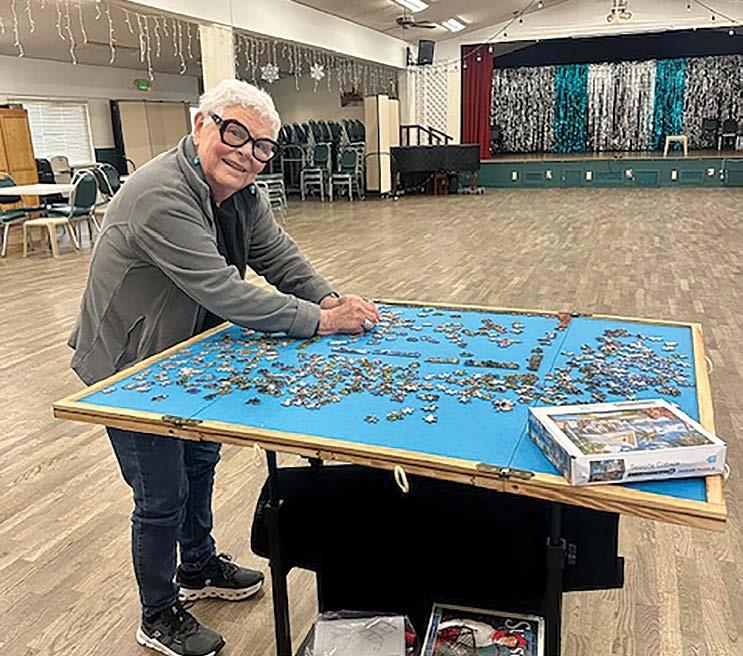
a pickup site for the weekly Grey Bears’ Brown Bag food program and hosting Project Scout, an annual tax preparation program for seniors. Hughes said people love to visit.
“We even have tourists stop by sometimes,” Hughes said. “It’s a great place to meet friends. It’s very social. In the springtime we have barbecues, and for 4th of July. Everybody is invited. You don’t have to be a member. We are very friendly here,” she said.
MCSC operates entirely through volunteer support. Members are encouraged to share ideas, lead activities, attend meetings, and help on committees that manage it. The board of directors, elected by members, oversees operations and meets monthly to guide the center’s direction.
The center is currently seeking volunteers to help in multiple areas. Current needs include instructors for conversational Spanish, music appreciation, and Tai Chi, as well as receptionists and cashiers for dances, Bingo, and other events.
“We love the receptionists who volunteer and we need more. They’re the core,” said Hughes. “The whole place runs on volunteers.”
MCSC depends on donations, fundraisers, membership fees, and hall rentals to sustain its programs. The nonprofit does not receive government funding and is not affiliated with any political, religious, or governmental organization. Tax-deductible donations help fund activities, maintain facilities, and support community programs. The center also offers commemorative bricks in the Tribute Patio garden for members wishing to leave a lasting legacy.
Hughes said the future of the center is bright, but it could use more members. Current membership is at 625.
“That’s good, but we’d still like more,” she said.

Hughes said she got involved with the senior center because she was just bored and wanted something to do. She went in and saw a group playing cards who invited her to join in. Now she’s hooked and is there most days doing something. She said nothing is more important for seniors than to keep active, not only physically, but socially.
“They are finding that isolation can actually kill you. Not having people to talk to or even to look at or see, it shortens your life span,” Hughes said. “So down at the senior center, we visit and do a lot of laughing. We really do.” n
For more information on membership, classes, or rentals, visit MCSC’s website or call 831-462-2433.
If you’ve been to the Louvre or, in fact, any European or American art museum perhaps you’ve seen students copying works of the great masters.
This practice has been common for art students throughout the history of art instruction. “The art of the copy” helps students to “get inside an artist’s process” by attempting to replicate a particular style or method.
In similar exercises, students are encouraged to make drawings from plaster casts of body parts, full statues, or old masters’ drawings in order to study form, anatomy, movement, and value.
Such processes certainly support Michelangelo’s dictum: “Stupidly copy everything” to challenge artists to capture a representation on paper of what one sees in nature. But copying at the Louvre goes beyond that.
Many instructors note that few beginning artists know how to finish a drawing and ask their students to spend multiple hours on a single copy of an old master’s drawing or painting.
My copy from a painting by Velasquez above was done from a photograph not from a painting, but it satisfied a creative need in me to see if I could attain a credible likeness and spend an extended amount of time getting the details right.

By JOE ORTIZ

What Artists in Other Genres Have Done: Paul Simon’s method for songwriting is to play along with an existing recording and re-harmonize (find new chords) for the original. He would then write his own melody over the new chord progression—proving that “sampling” or “copying” existing forms and frameworks has some honorable place in the creation of something new.
What We Can Do: I’ve always believed that it is easier to make a representational copy from a photo than from nature, because all the visual relationships have been established. Copying from a photo can teach us something about value, contrast, and synthesis. But remember that copying only gets us so far. Eventually the practice can often block an artist’s original vision—easily becoming too easy and leading to rote image production. So, most instructors would encourage students to go back to copying from nature.
In the end, when picking an exercise—or inventing one for oneself—it’s always safe to revisit what Michelangelo said: “Stupidly copy everything.” My translation: Copying is a valid technique in art; it’s not cheating. By attempting to accurately replicate a given subject, artists bring their own unique thumbprint to the original and therefore make a work of art their own. n
•••

My advice to myself? Don’t try to edit the drawing; instead, take another stab at it!
I used the techniques of eyeballing and measuring mentioned in a previous installment. What I learned: the practice of making spontaneous marks; a new understanding of planes and contours that comprise a face; how the combination of line, shadow, and intense value help to create depth and form; and the idea of not being too fussy. In other words, make a mark and leave it alone.
Reader Response : I’d love to hear your comments and questions. Email me at joe@gocapitola.com
At Dominican Hospital, we’ve grown alongside you and your family for generations with an unparalleled commitment to the health of our community. Serving Santa Cruz County with the most advanced, award-winning care, you can count on us—from our innovative Wellness Center programs, to our Level III Neonatal ICU, to our expert cardiac, oncology and orthopedic care. We’re proud to have served as your health partner for more than eight decades. And we’re honored to continue supporting you in the years to come. Learn more about us at DignityHealth.org/Dominican








SOQUEL — Santa Cruz County officials and the Cabrillo Gals youth softball program gathered earlier this month to celebrate the opening of new batting cages at Anna Jean Cummings County Park.
The ribbon-cutting ceremony, held March 7, marked the completion of the new training facility at the park, also known locally as Blue Ball Park. The cages were funded and constructed by the Cabrillo Gals youth softball program as a gift to the county.
County officials said the new facility is intended to expand access to training resources for young athletes and provide a dedicated space for practice and skill development.





“I’d like to thank Nick Thomas and everyone in the Cabrillo Gals community for their patience and hard work to bring this project to fruition,” said Manu Koenig, the Santa Cruz County supervisor representing District 1. “This would not be possible without the dreams and hard work of so many in our community, and it will serve young athletes for years to come.”
The project received formal approval from the Santa Cruz County Board of Supervisors in September 2025, when the board unanimously supported adding batting cages at the park.
Leaders of the Cabrillo Gals organization

said the new facility will provide players with a reliable place to practice and improve their skills.
“For our players, having a consistent place to practice really matters,” Cabrillo Gals President Emily Mason said. “These batting cages give our athletes the chance to put in the work, build confidence and support each other as a team. We’re thankful to the county for partnering with us and helping create something that will benefit kids and families for years to come.”
County parks officials said the project reflects a collaborative effort between local government and community organizations to invest in recreational infrastructure for youth sports in Santa Cruz County. n

“Capitola Fire” from page 11



“I’m waiting for the building department to give us some clearances and tell us what’s going on, and the planning department to let us know what needs to be fixed, and for our insurance company to come and assess the damage,” he said.
He said around 9:45 p.m. Monday he got a call that the building was partially on fire. “It started in the building next door and the
fire in the attic went into the sushi restaurant. We don’t know what kind of damage yet until we get inside. But we are assuming it’s water damage, smoke damage … just hopefully not too much.”
The cause of the fire remains under investigation. Damage estimates are not yet available. n
COVER PHOTO: A fire in Capitola Village took the life of one man and
Story and Photos By JON CHOWN
MOSS LANDING — Monterey County supervisors were presented with a conflicting picture of the environmental and public health impacts from the 2025 Vistra battery fire in Moss Landing during a public forum held March 17.
County officials, state regulators and independent scientists came to different conclusions on how much contamination the fire created, how that contamination should be measured, whether more testing should be done, and whether the contamination poses a lasting risk.
County environmental health officials emphasized that Monterey County did not conduct its own independent risk assessment, but instead acted as a coordinator in partnership with state agencies such as the U.S. Environmental Protection Agency and the California Department of Toxic Substances Control.
Following the fire, the county directed Vistra to carry out sampling for contaminants associated with battery debris. Sampling occurred in two phases — soil testing from May to June 2025 across 27 locations, followed by water and sediment sampling in September 2025, with results later compiled and shared with the public and regulators.
The timing of data collection and the method are key to the controversy.
Independent researchers with the EMBER project (Estuary Monitoring of Battery Emissions and Residues) began sampling within days of the January 2025 fire, capturing what they described as a thin but highly concentrated layer of battery-related metals deposited across marsh surfaces. DTSC scientists presented results of soil samples that went several inches down and were taken months after the fire.
State toxicologists presented a reassuring scenario based on the formal sampling data collected under county and state direction.
An ecological risk assessment conducted under the oversight of DTSC concluded that there was no “potentially unacceptable risk” to the environment and that no further ecological risk assessment is needed.
That conclusion was determined by comparing detected contaminant levels to established ecological thresholds. Only one measurement, nickel in sediment, exceeded

screening levels, and that was attributed to natural conditions.
A state-led human health risk assessment, presented by Jiang Weiyang of DTSC, reached a similar conclusion.
Evolutionary Biology at the University of California,
includes sampling soil surfaces immediately after the fire to detect the ash layer.”
Caruso’s Tuscan Cuisine & Pizzeria (831) 465-9040 carusos-capitola.com
Capitola Wine Bar (831) 476-2282 capitolawinebar.com
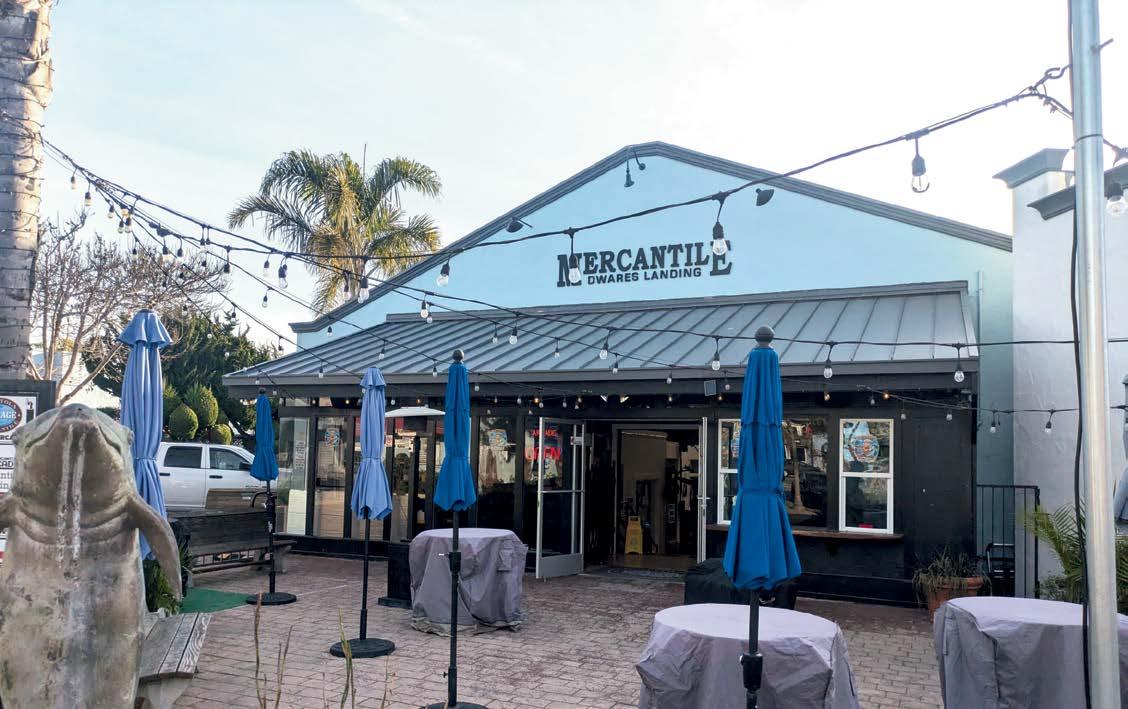
Capitola Mercantile Arcade (831) 818-9593 Facebook.com/mercantilearcade



layer of ash containing elevated levels of nickel, cobalt and manganese that appeared shortly after the fire and dissipated within weeks due to rain and tidal action.
“To detect the ecological impacts of this fire, appropriate sampling is and was essential,” said Kirsten Wasson, adjunct professor in the Department of Ecology and
Brewtopia Craft Beer Garden (831) 854-2655 brewtopia831.com
Carousel Taffy & Treats (831) 465-1145 carouseltaffy.com
Left Coast Sausage Worx (831) 295-1194 leftcoastsausageworx.com Arte Haus of Capitola
HOURS: MONDAY-THURSDAY 7:30A.M. - 10P.M. FRIDAY-SUNDAY 7:30A.M. - 11P.M.
Polar Bear Ice Cream (831) 479-8888 Facebook.com/polarbearsantacruz
Sandcastle Cafe (831) 515-7047 sandcastleatthepier.com
Sea Level T-Shirts & Gifts (831) 462-6974 Facebook.comsealevelcapitola
Homeless Garden Project (831) 426-3609 homelessgardenproject.org
CONTACT (831) 818-9593
AMusic Together class with MusicalMe might look like simple play: parents swaying with infants, toddlers shaking instruments, adults and children dancing in a circle. But behind the music is a carefully designed program rooted in decades of research.

“Music lights up all areas of the brain, and this program helps children, from the very beginning, to build their musical brain,” said owner Lizz Hodgin Weihrauch. “Musical learning supports all learning.”
Since 1996, MusicalMe Inc. has been offering the renowned Music Together early childhood music enrichment program for children newborn through age 5. To be musical is to be a person who can move to the rhythm accurately and sing in tune. That’s basic music competence, said Lizz.
What that does for a child can be transforming, but the parents get just as much out of it.
“The parents are also the students,” said Lizz. “A musical life begins at home. We teach you why and how.”
That focus sets MusicalMe apart. Rather than centering on performance or early technical mastery, the program trains caregivers to build what Lizz calls a “rich musical learning environment” in everyday life. Families leave each class with illustrated songbooks, weekly activities, and practical tools — simple ways to weave music into routines like car rides, playtime, and transitions.
“We’re constantly teaching them, ‘Here’s how you can do it at home,’” she said. “Take this idea, take that idea. Model music-making throughout your child’s day.”
The approach is grounded in research on early childhood development, particularly the role music plays in brain growth.
“It seems like magic, but it’s based on brilliant research,” Lizz said. “Music-making lights up the entire brain.”


Just as important is what MusicalMe works to undo: the widespread belief that musical ability is something only a few people possess.
“We really work at dispelling the idea that only some people are musically able,” she said. “Our children don’t care if you’re a good musician, but they know how they feel when you’re singing and dancing with them.”
Another defining feature of MusicalMe is its mixed-age, family format. Infants, toddlers, and preschoolers participate in the same class, each with their caregiver by their side.
“We want that because it mirrors natural learning,” Lizz said.
In that environment, younger children learn by observing older ones, while older children develop confidence and leadership.
“It gives the older ones pride when they see younger ones learning from them,” she said.
“And it shows parents they can do this with their 2- and 4-year-olds together.”
In a culture that often separates children strictly by age, Lizz sees this as a crucial shift.
“That segregation is a disservice,” she said. “Older ones learn responsibility, younger ones are inspired. It’s especially important for kids who don’t have siblings.”
The shared experience extends to adults as well. Each child participates with a parent, grandparent or caregiver, creating a comfortable environment in which families learn together.
“The adults find community in it,” Lizz said. “People end up being friends.”
After class, families often head to the playground. For many, especially new parents, that connection can be vital.
“We’re so isolated at home with our kids.
she went looking for that songbook Deanna had given her. She tried a song called “Wiggle” and followed the directions for parents.
“I sang the song as directed, including all the wiggling movement, and something lit up in his brain. I’m wiggling the craziest wiggles, and he’s responding,” said Lizz. “I thought, THIS is what I’ve been looking for!’”
Encouraged by her friend, Lizz traveled to Princeton, NJ, to train in the program and bring it to Santa Cruz County, launching her first classes with 35 students. Within a year, enrollment grew to 150.
“I had no idea I’d be doing this for 30 years,” she said. “Now we’ve served more than 60,000 students.”
We don’t have extended family around — we need each other,” she said.
That sense of belonging isn’t the primary goal, but it’s a natural outcome.
“That’s a beautiful byproduct,” she said.
Since launching in 1996, MusicalMe has grown to multiple locations across Santa Cruz and Santa Clara counties, serving more than 60,000 students. The program’s longevity, Lizz said, comes down to its depth and intentional design.
“There’s a lot of good stuff out there, but this is the best,” she said. “If you know of something better, I will switch.”
She points to the program’s ongoing research, teacher training, and curated music selection as key strengths.
“There’s nothing that has the depth of research, the integrity, the support for teachers, and the quality of the music,” she said. “There’s even a song advisory board.”
Songs are chosen carefully and reflect a wide range of cultures, exposing children to music beyond our nation’s borders.
Though MusicalMe today is a structured, far-reaching program, its origins were deeply personal.
Lizz first encountered the Music Together curriculum through a childhood friend, Deanna DeCampos, who had discovered it years earlier. At the time, Lizz didn’t immediately connect with it. Her son had just been born with Down Syndrome, and life was complicated. Then, after trying some music therapy with him and growing tired of singing the same few silly songs,
Over time, some MusicalMe students have gone on to musical careers, including Jesse McMilin, who was the musical director of Mountain Community Theater’s recent production of The Addams Family, and jazz vocalist June Cavlan, who earned a scholarship to the University of Miami and now tours with the Sunhouse Singers vocal trio, which will appear at the Jamboree Jazz festival in Spain in May.
But Lizz measures success differently.
“The goal is not award-winning musicians,” she said.
To her, basic musical competence — moving to rhythm and singing in tune — is as essential as any other early skill.
“Do you know anybody who is musical who wishes they weren’t?” she said.
MusicalMe’s next 12-week Spring Session begins the week of April 6, with classes offered across its multiple locations and limited scholarships available to help make the program accessible.
As with much of its growth over the past three decades, enrollment is driven largely by families sharing their experience with others. The business offers a referral incentive — $50 for each new family who signs up through an existing participant. n •••
For more information, go to musicalme.com.


“Battery Fire Impacts” from page 17
Because the layer unevenly distributed and was so shallow, sometimes just millimeters thick, Wasson pointed out that the much deeper soil samples taken by Vistra’s researchers diluted the true measure of the pollution. The delay in sampling also allowed the pollution to dilute even further.
And the pollution was not just a shallow layer. Wasson also showed photos of large chunks of debris she found, some 6 inches or more in width and length.
“We found hundreds of pieces of debris,” she said. “When we held our instrument over them, they are pure cathode battery metals.”
Wasson said they collected samples, placed them in plastic bags and froze them.
Her bigger concern, though, was with microscopic particles of battery materials appearing in marine organisms. She cautioned that bioaccumulation can take years to fully understand and warned against drawing conclusions from limited data collected only months after the event.
Several members of the public either showed up in person or called in to share their concerns. Cheryl Davidson, who lives in north Monterey County, said she and others are still suffering health effects from the fire.
“Nose bleeds, skin rashes, respiratory problems, metallic taste … we’re still having this, a lot of us. Some people gave up their homes and moved away,” she said. “I ask you guys to look at this data. Evaluate it.”
Leslie Austin, who lives in Aromas, said she supports the technology, but the fallout is real and the county and state should take some lessons on when to test and how to test after an event like this.
“That knowledge belongs in the rules. The county didn’t ask for this lesson, but it has it. And I’d ask this board to make sure it doesn’t stay here,” she said.
Monterey County supervisors appeared supportive of the community’s concerns.
“There’s a lot that everyone is learning from this process,*and I understand from DTSC that we have some of the top environmental scientists in the state here, and they want to move cautiously. I know we
also have some of the top marine scientists in the world over in Moss Landing, and the difference in presentations are rather stark,” said Supervisor Glenn Church of District 2, which includes Moss Landing.
Church questioned the DTSC, asking why the samples taken went so deep. He also asked why the results of soil sampling performed just weeks after the fire were never presented by the department, but only the results of tests done in May. Unfortunately, he could not get a clear answer from the department.
The draft Preliminary Environmental Assessment — which includes both ecological and human health analyses — is now under review by state agencies. While that is happening, the supervisors directed staff to draft a letter to Vistra asking it to fund independent biological monitoring with oversight by a local entity.
“I’d like to see Vistra fund this ongoing effort,” said Supervisor Kate Daniels. n




















By Jon Chown
Renata Bratt has spent her career moving between musical worlds.
From classical concert halls to jazz gigs and Celtic fiddle camps, she’s been there. It doesn’t matter if it’s a community orchestra or musical legends, she’ll give it her all.
That philosophy will be on display next month in Boulder Creek, where Bratt will perform with Concertino Strings in a pair of free concerts built around the theme “You Can’t Go Home Again.”
The performances, set for April 8 and April 11 at Boulder Creek United Methodist Church, bring together a 25-piece ensemble, local composers and a program focused around memories and longing.
“It’s about a remembrance of an idea,” Bratt said. “Maybe a place that’s gone, or something you can’t return to — but also imagining something better.”
Concertino Strings isn’t a typical orchestra. Founded and led by violinist Joanne Tanner, the group blends professional musicians with adult learners and enthusiasts in a collaborative setting.
“Joanne’s mission is to provide a place for adults, learners and aficionados, to play,” Bratt said. “It mirrors how people naturally learn.”
Bratt joined the group around 2020, after Tanner began hosting informal performances during the pandemic. What started in a carport eventually moved indoors, as the Boulder Creek church opened its doors to the ensemble.
The result is a community-driven orchestra where local creativity plays a
central role. That includes original works by Bratt and fellow composers Les Thaler and Martin Gaskell, all of whom will conduct their own pieces during the program.
Thaler’s “Azan for Mariupol” reflects on the destruction of the Ukrainian port city during the 2022 war, featuring a prominent cello line performed by Bratt. Gaskell’s selections range from a quiet meditation to a multimedia piece incorporating images of the cosmos.
“It turns out we have composers in the group,” Bratt said. “So now they’re conducting their own music, which is really special.”
Bratt’s own composition, “Janice at Pomona Island,” draws from a deeply personal experience: a trip to New Zealand that unexpectedly connected distant parts of her life.
While traveling with family near Lake Manapouri, she encountered a place name that felt oddly familiar — Pomona Island — echoing places far closer to home.
“It was shocking and hilarious and wonderful,” she said. “Some explorer had gone through and named everything after him.”
The piece captures both the humor and wonder of that moment.
From Classical Roots to Bluegrass
Bratt’s wide-ranging musical path wasn’t always intentional. Early in her career, while playing a wedding gig in San Diego, she was handed a chord chart — a format she had never learned to play from.
“Renata Bratt” page 23









Sunday, April 26, 2026
8:30 a.m. – NOON
OPTION#1 Omlette w/Cheese or Veggies, Hashbrowns, Bacon or Sausage, Fruit and ALL YOU CAN EAT PANCAKES!
OPTION#2 French Toast, Bacon or Sausage & Fruit
$15 / Adults – $5 / Kids Ages 10 & Under

Santa Cruz County’s Health Services Agency and Community Foundation
Santa Cruz County have awarded $810,000 to local nonprofits through the Santa Cruz County Opioid Settlement Funds Community Grant Program, marking the second round of funding. Since September 2024, the program has distributed a total of $1.62 million.
The grants support prevention, early intervention, harm reduction, treatment, and recovery programs for opioid-related disorders, expanding services for individuals and families affected by substance use in the county. Funded projects include a new residential treatment facility, increased access to housing and case management, enhanced care for newborns impacted by opioid exposure, and communitybased prevention initiatives.
“By investing in additional harm reduction services and a new treatment facility in Watsonville, we are increasing access to lifesaving care and giving more residents across Santa Cruz County a pathway to lasting recovery,” said Connie Moreno-Peraza, director of the Health Services Agency.
Santa Cruz County expects to receive $29

(831) 688-7549


million over 16 years from opioid manufacturers, pharmaceutical distributors, and pharmacies as part of litigation settlements. In 2023, the Board of Supervisors approved a spending plan that included grants to nonprofits providing prevention and treatment services.
The 2026 grantees and their programs are:
• New Life Community Services — $201,358 to open a new 14-bed bilingual residential treatment facility in Watsonville.
• Housing Matters — $170,000 to hire a Substance Use Specialist to secure permanent housing for people with a history of opioid use disorder.
• Santa Cruz Community Health — $135,642 to treat newborns with Neonatal Opioid Withdrawal Syndrome and support high-risk families transitioning from hospital to home.
• Siena House — $80,000 for a full-time case manager and expanded therapy services for women and children.
• Homeless Garden Project — $60,000 to provide transitional employment and staff training for individuals in recovery.
• Stepping Up Santa Cruz — $48,000 to hire a Harm Reduction Case Manager.

• Barrios Unidos Santa Cruz — $30,000 for opioid use prevention, early intervention, harm reduction, and youth leadership.
• Health Improvement Partnership of Santa Cruz County — $85,000 for SafeRx initiatives, including learning collaboratives, conferences, and advisory groups focused on treatment and community education.
“These grants are helping organizations find innovative and compassionate solutions through prevention and treatment to tackle the opioid epidemic in our community,” said Community Foundation CEO Susan True. Leaders of individual programs emphasized the impact of the funding. “Employment is more than a paycheck — it’s a powerful health intervention,” said Darrie Ganzhorn, executive director of Homeless Garden Project. Nadia Allami, pediatric medical director at Santa Cruz Community Health, said the grant strengthens collaboration with hospitals and ensures consistent care for families affected by neonatal abstinence syndrome. Stacey Palau, executive director of New Life Community Services, said the funding will expand bilingual, bicultural residential treatment and reentry services for individuals and families. n
•••
Residents seeking support for substance use disorders can visit the Santa Cruz County Opioid Prevention and Response webpage or call 2-1-1, available 24 hours a day, seven days a week.
he Capitola Historical Museum is pleased to announce its 2026 exhibition, “Multiple Personalities — The Stories Behind Capitola’s Historic Buildings.” The new exhibition opened March 13 and will run through Dec. 27.
Our built environment provides us with a sense of place ... it becomes the root of both our individual and societal identity. It also serves as a conduit for our memories and our dreams for
The museum’s 2026 exhibition, “Multiple Personalities — The Stories Behind Capitola’s Historic Buildings,” traces how Capitola evolved from a seaside campground into today’s thriving beach town by revealing stories of the people who built, worked and lived within the walls of Capitola’s iconic buildings, both those gone and those still with us. Special focus will be upon the Grand Hotel Capitola, Rispin Mansion and the Venetian Court. Sprinkled throughout this architectural history is the vital role that immigrants played in creating the Capitola we know today. Featured are the two immigrants who had the greatest impact upon the layout and look of Capitola: Frederick Augustus Hihn and Henry Allen Rispin. Each achieved their version of the American Dream — one passing his legacy

onto his descendants and the other losing everything.
Other topics covered in the museum’s displays this year include the history of the construction of the Capitola Theater, restoration of the Soquel Cemetery–Beit Olam Cemetery, the Noble family of Soquel and the nation’s 250th anniversary. n
The Capitola Historical Museum is located at 410 Capitola Ave., next to Capitola City Hall. The admission-free museum is open every Friday through Sunday from noon to 4 p.m. The exhibition, “Multiple Personalities — The Stories Behind Capitola’s Historic Buildings,” will run through Dec. 27, 2026. For further information, contact the museum at 831-464-0322 or capitolamuseum@gmail.com.
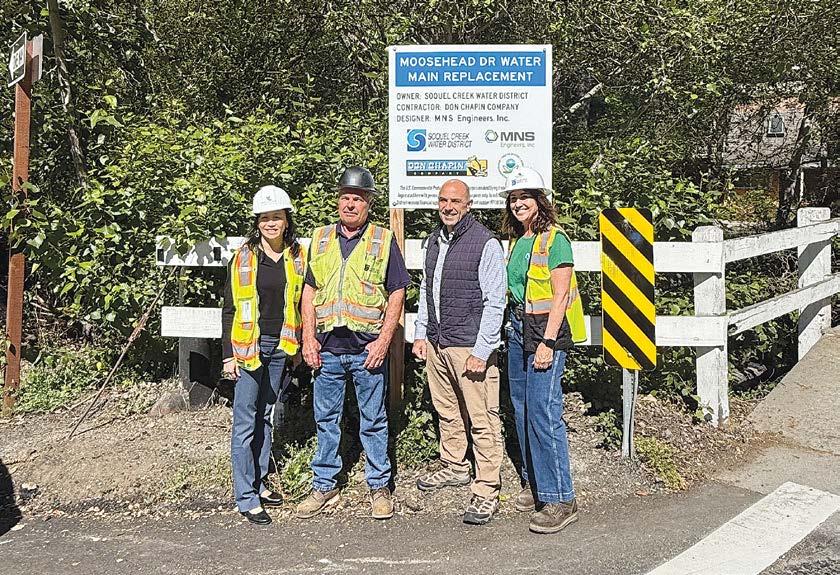
This month, Soquel Creek Water District wrapped up construction for its Moosehead Drive Water Reliability and Fire Improvement Main Replacement Project, a critical infrastructure upgrade made possible by a $1.4 million-dollar federal grant secured by Congressman Jimmy Panetta in the FY 2023 federal budget from the U.S. Environmental Protection Agency’s (EPA) Community Grants program.
The project replaced approximately 2,420 linear feet of aging and undersized steel and asbestos-cement water mains with a modern 6-inch polyvinyl chloride (PVC) pipeline. The upgraded system now provides improved water reliability, reduced leakage, and enhanced fire protection for residents along Moosehead Drive and Winfield Drive, as well as nearby connecting streets in the Rio Del Mar neighborhood of Aptos.
Serving approximately 65 homes, the previous pipelines had long
“Renata Bratt” from page 20
experienced frequent breaks, limited capacity, and ongoing maintenance challenges. The newly completed improvements, constructed by Don Chapin Company, resolve these issues and strengthen the area’s overall water infrastructure and reliability.
“The aging water main on Moosehead Drive has long suffered from frequent breaks and limited capacity, putting pressure on local residents and emergency services,” said Rep. Jimmy Panetta. “This federal funding is essential to enable the replacement of the outdated pipe with modern infrastructure that will improve water reliability, reduce leaks, and enhance fire protection. This is exactly how federal resources should be used, investing in critical local upgrades that strengthen public health and community resilience.”
The total cost of the project is approximately $1.9 million, with about $1.4 million funded through the federal EPA grant. n
“I was horrified,” she said. “I couldn’t do it at all.”
Determined to expand her skills, she attended a workshop at Stanford University in 1992 led by Turtle Island String Quartet.
“I was lucky to learn from them,” she said.
That experience led to studies at Berklee College of Music and time spent at fiddle camps, including programs led by Mark O’Connor.
“I saw fiddling for the first time,” she said. “I had not seen it before.”
Now based in Scotts Valley, Bratt has built a career that comfortably spans classical, jazz and folk traditions. She has also collaborated musically with her husband, Lee Ray Bratt, whose background is in computer music and recording.
Along the way, she has performed with an eclectic range of artists, including Béla Fleck, and even shared the stage with Jimmy Page and Robert Plant during a performance that required string players.
“He (Robert Plant) doesn’t act like he’s a big deal. Page is more like an amazing musician type for us musicians. But Plant is just a more down to earth type of guy,” she said of the two famous rockers. “They were very nice. They were just ‘let’s get er done.’”
The Rhythm Behind the Fiddles
Beyond Boulder Creek, Bratt will also appear in May with the San Francisco Scottish Fiddlers, a large ensemble dedicated to traditional Scottish music.
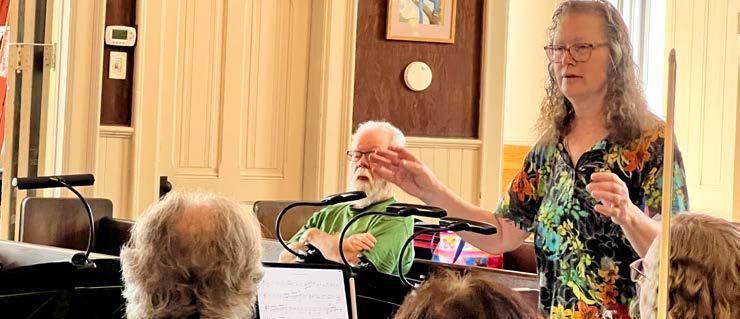
The group will perform May 10 at the Crocker Theater in Aptos as part of its spring concert series, “Stravaig.”
Founded in 1986 by renowned fiddler Alasdair Fraser, the ensemble now includes more than 200 members, with upwards of 65 musicians performing together onstage.
This year’s concerts are led by Caroline McCaskey, a national champion who is stepping into the leadership role for the first time.
“It’s like a big welcoming party with fiddles,” McCaskey said. “Everybody is invited.”
The performances blend traditional Scottish and Irish tunes with broader Celtic influences, featuring fiddles alongside cello, piano, guitar and percussion.
Bratt, who joined the group in the early 2000s, plays a key role as cello leader and arranger.
“They all have to play the same part or it sounds like a mess,” she said, explaining her work writing cello arrangements to unify the large ensemble.
Even though the performances in Boulder Creek and Aptos are vastly different, Bratt said she hopes audiences get very similar things out them.
“I hope people feel hope, joy, a love of rhythm,” she said. “And an appreciation for music they might not have heard before.”
The upcoming Concertino Strings performances are free to attend, with donations encouraged to support both the ensemble and improvements to the host church. n


Indoors or Outdoors! Join us for the best in early Childhood Music Enrichment, Family Bonding & Fun – for ages Birth to 5 years.
By CLAUDIA ISEMAN
Depending on how you look at it, South County property owners either received a rather pleasant surprise or a somewhat confusing explanation on the most recent Santa Cruz County property tax bill.
“About 19,000 parcels were charged too much because the total bond cost was spread over too few parcels,” said Laura Bowers, Santa Cruz County Auditor-ControllerTreasurer- Tax Collector. She went on to say: “About 5,000 parcels were not charged at all, even though they should have been.”
The individual amount to each property owner is approximately $24 per $100,000 of the assessed value of the property.
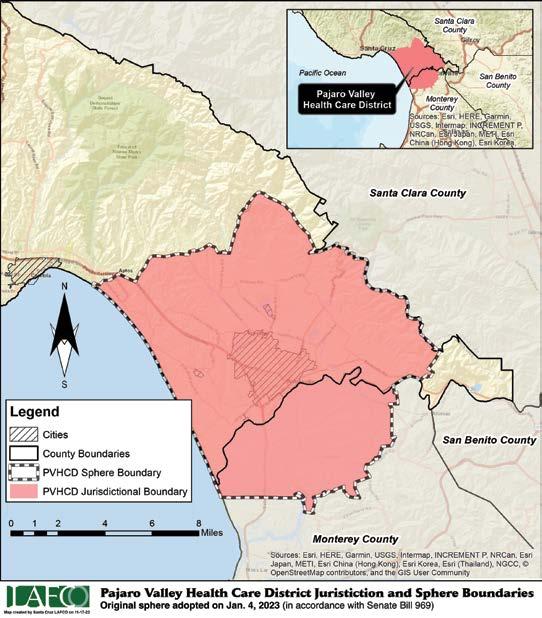
Bowers is referring to the charge to property owners for measure N to fund Watsonville Community Hospital, AKA The Pajaro Valley Health Care District. Taxpayers will be funding the hospital thru 2056. A total of 24,000 parcels are affected in Santa Cruz and Monterey Counties.

Bowers says it was a software error that caused the miscalculation leaving some property owners to scratch their heads in frustration. “I thought the letter arrived quite late,” said Mary MacLellan, a professional accountant from Aptos. She only received the letter from the county explaining the error on March 10. MacLellan was surprised that more checks and balances weren’t in place to catch the mistake.
The good news is all those affected by the tax collector’s error will have an extension to April 30 to pay their bill. Those dutiful taxpayers who pay for the entire year at once will get a refund if they were overcharged. The 19,000 taxpayers overcharged received a bill reflecting a lower amount. Those 5,000 property owners who were left out the first time around received an adjusted bill with the additional charge included.
Despite the explanatory letter, many remained confused. Lori Hood from La Selva Beach pays online

and found no clarification as to why the two amounts on her bill didn’t match up from December to April. “It wasn’t well organized. I’ll say that,” said Hood.
The 24,000 parcels cover a large area encompassing Aptos, Corralitos, La Selva Beach and Watsonville to Mount Madonna Road, or roughly the same boundaries as the Pajaro Valley Unified School District.
Bowers says her office caught the glitch in October and worked on a plan to readjust the property tax bills.
“We’ve definitely had a high number of calls to the office. Nobody wants a higher tax bill,” admits Bowers.
But the tax collector says there will be no exemptions for those who can’t come up with the extra money by April 30.
“There’s no legal way to waive or postpone,” said Bowers. n
For more information online, go to https://www.santacruzcountyca.gov/ Departments/TaxCollector/PVHD.aspx

Despite the property tax revenue from
Measure N, Watsonville Community Hospital is sorely in the red.
Since 2024, when voters approved Measure N, property owners in the affected region have been assessed about $24 per $100,000 of the value of their properties for the hospital. The bond can generate up to $116 million, but can only be used for capital costs, such as buying the hospital, upgrading facilities and purchasing equipment. It cannot be used to cover operating expenses, such as staff salaries or supplies.
Some of that money has been used by the Pajaro Valley Health Care District to purchase the hospital buildings and surrounding property. There is about $76 million left that is slated to be used on a variety of improvements and upgrades, including new MRI and CT scanners and retrofitting the entire hospital with new electrical and lighting systems.
Measure N needed a two-thirds majority to pass and got, with 68% of voters approving. Many local residents feel a hospital serving south county is a priority.
“It’s important to have the hospital in the area,” said La Selva Beach resident Dagmar David.
According to hospital CEO Stephen Gray, 85% of the patients served at Watsonville Community Hospital are government insured. “There’s 14 to 18 million dollars worth of government funding that’s been delayed,” said Gray. He attributes the hospital’s financial troubles directly to federal cuts
to health care. “There’s a trillion dollars worth of cuts to Medicaid,” said Gray.
The One Big Beautiful Bill has been anything but pretty for the future of Watsonville Hospital. Gray is reluctant to give an exact dollar amount of debt the healthcare facility has incurred, but he admits it’s in the millions.
Just like the hospital, many residents in Watsonville face persistent financial challenges, too. The city’s median household income is about $78,000, while per capita income is just over $28,000. Roughly 14–15% of residents live below the poverty line, with many more considered “working poor,” struggling to keep up with the high cost of housing and basic necessities in Santa Cruz County.
“Watsonville Hospital functions as a security net for people of all walks of life,” said Dr. John Walther. Now retired, Walther served as the Emergency Room Director for the hospital and was employed there for 40 years. “I want to see the hospital succeed. A lot of the existing departments are excellent,” he said.
According to Gray the road to success involves finding a partner. Gray mentions Sutter Health, Dignity Health and Kaiser as healthcare “systems” that could step in and give the financially ailing hospital a shot in the arm. On March 25 the Board of Directors for the Pajaro Valley Health Care District held a closed- door meeting to start mapping out a procurement plan to obtain a financially healthy partner. n
ccess to safe and reliable drinking water is something most of us don’t think about until the bill arrives. We turn on the tap to cook dinner, water the garden, or fill a glass, trusting that clean water will always be there. Behind the scenes, however, providing that water requires significant infrastructure, ongoing maintenance, and careful management of our local groundwater supplies.
As the cost of operating and maintaining water systems continues to rise across California, we also recognize that affordability can be a real challenge for some households in our community.
That’s why we are launching a new Customer Assistance Program (CAP) to help income-qualified households manage the cost of their water service.
Beginning this year, eligible residential customers can receive a $50 monthly credit on their water bill. The program was created to provide meaningful support to customers experiencing financial hardship while ensuring the District can continue maintaining the infrastructure and services that keep water safe and reliable for everyone.
Importantly, this program is not funded through water rates. The assistance comes from non-rate revenues, meaning it does not increase the cost of water for other customers. The goal is to provide targeted help to those who need it while maintaining the financial stability required to operate the water system for the entire community.
Water utilities across California are increasingly recognizing the importance of water affordability programs. Just as energy utilities offer assistance programs for electricity and gas bills, water agencies are beginning to implement similar programs to help customers who may be struggling.
The Customer Assistance Program operates on a fiscal year schedule from July 1 through June 30, and customers must apply
each year to participate. Applications will be accepted during the open enrollment period from May 1 through May 31 for the upcoming fiscal year.
Because funding for the program is limited, applications will be approved on a first-come, first-served basis until the annual program budget is fully allocated. Each year, the District’s Board of Directors will determine the amount of funding available for the program as part of the annual budget process.
To qualify for the program, applicants must meet several eligibility requirements:
• Be enrolled in either the PG&E CARE program (which provides reduced energy bills for income-qualified households) or CalFresh, California’s Supplemental Nutrition Assistance Program.
• The water service address must be the applicant’s primary residence. Second homes, vacation properties, and nonowner-occupied investment properties are not eligible.
• Have a residential water account in the name of the adult living at the service address.
• Have an account that is current or enrolled in a payment plan.
• Be enrolled in the District’s WaterSmart online customer portal and autopay program.
• For multi-family properties, live in a dwelling unit that is individually metered and billed directly to the resident applying for the program. Once approved, the $50 assistance credit will be applied directly to the customer’s monthly water bill beginning in July. The credit cannot exceed the amount owed for that billing period, and any unused portion will not carry over to future months.
Customers who move from one qualifying residence within the District to another may remain in the program as long as their

eligibility continues and there is no break in residency.
If you think you may qualify, applications will be available during the May enrollment period on the District’s WaterSmart website at https://soquelcreekwd.watersmart.com.
Log in or create a new account (you will need your account number for a new account), go to the “Services and Forms” tab and fill out the CAP form. Applicants will need to provide documentation showing enrollment in either the PG&E CARE or CalFresh programs.

Water is a basic necessity that supports the health and well-being of every household in our community. Programs like the Customer Assistance Program help ensure that when families face financial challenges, access to this essential service is not put at risk. n
If you or someone you know may qualify, we encourage you to apply during the open enrollment period (May 1-31) and take advantage of the support available.

Tipi, alt. sp. 69. Drugstore shampoo brand 70. Many, many moons
Witchy woman
____ Spumante
Ovine mom 74. Chinese green tea DOWN
Horse prod
Left, Latin prefix
____ lily

By Risa D’Angeles

As the Aquarian era/age unfolds, festivals and religions of past ages (Jewish Passover and Christian Mass) are combining with the new Aquarian festivals (Three Spring Festivals, new and full moons, astrology). It is a unifying of religions, laws and festivals, forming the foundation of the new spirituality (occult) and religion of Aquarius.
During the first week of April 2026, all three ages (Aries, Pisces and Aquarius) and religious festivals are occurring simultaneously forming the new Aquarian religion. It is all based on astrology, the language and tool of Aquarius. Below are the events for Holy Week (biblical). The events of Holy Week are both actual historical facts and also spiritual directions for humanity. Each biblical event in Christ’s life is both an Initiation and contains a message for humanity today. And so ...
teachings. Christ initiated the Christian priesthood, the Catholic Mass and communion — the new Pisces religion.

Friday, Crucifixion of the Christ — The “veil was rent” meaning the door to return to the Father (heaven) opened, a reality impossible before then.
Saturday — the Christ lay in the tomb, the churches are dark, there is no light. Christ is in the underworld “saving” the lost ones.
Sunday, the Resurrection Festival (Easter) — And the tomb was empty –the Christ informing humanity there is no death of the Soul and Spirit. Only the easing out of the physical body and one’s return to the Father’s house.
SANTA CRUZ — Leadership Santa Cruz County is accepting applications for the 40th class of its community leadership development program.
Wednesday (April 1) — full moon, Aries solar festival — the first of the Three Spring (Aries, Taurus, Gemini) Festivals, the esoteric Easter Resurrection festival. During Aries, the Forces of Restoration stream into the Earth. Wednesday is also the first night of Passover, the Jewish Festival of freedom from slavery and leaving Egypt (Taurus Age) for the Promised Land (Aries Age).
Thursday (Last Supper) — the Christ (Pisces World Teacher) gathered His disciples and celebrated Jewish Passover, but with a new and higher level of
The next three months see you working internally, spiritually, sliding behind veils and protecting yourself so you can once again at a later time reveal yourself to the world with new ideas, thoughts, processes, workings and above all a new identity. Be aware of these fluidic shifts both within and without. When summer comes you’re going to communicate a new way of life, new values, new money and new ways to create the foundation of the next civilization.
More and more you’re part of groups. In fact they call to you and although you may be tired, and at times a bit down, you challenge yourself to participate. Here/there you learn a lot, become active with forward thinkers like yourself, set yourself new goals for the future, change previous beliefs, and set about creating ways for people to live efficiently. You’ll be focused on alternative ways of living, biological architecture, new communities, the ways of water.
You are learning new things. And this will continue. Through discussions with people, perhaps great learned people, shamans, those who till the land, teachers and mentors, a new world opens up and this is both a surprise and a comfort. You realize others are interested in your life, thoughts, organization (it’s growing) and how you see yourself. Who you thought you were in the past is passing. A new self-identity is forming. Take extra care with health and well-being.
Will you travel or will you not? Will you expand your area of interests even though there may be a wound of self-identity involved or a state of unknowing? Are you seeking right livelihood in areas that reflect you or in areas others expect you to work? Are you asking what your role in the future is? If you ask yourself what you want it to be, then the answer begins to emerge slowly, in dreams, visions and in words on a page. What do you want to become?

After His Resurrection, the Christ lived for 50 years with His disciples in the Judean hills. He taught them to demonstrate and teach the Pisces law to “love one another.” Each age (2,500 years) has a new law for humanity. In Aries, the 10 Commandments. In Pisces, the Law of Love. In Aquarius, the Aquarian Laws and Principles. We are to follow all three now. And soon, the Reappearance. n
Read Risa’s daily writings on FB & at https://nightlightnews.org/ daily-postings/
Pluto is a transforming presence in your house of relationships. I wonder how this is for your sense of self? It seems it’s time for you to focus upon relationships of all types. They expand you, bring you fortune, they even wound sometimes. But that’s part of their purpose. From relationships the planet swings into your house of shared resources and money. Are you sharing with another? Are your insurance papers, health papers, finances in order? Tend to them now before your values and philosophies change.
You are behind a few veils, behind the scenes, being private and hidden so you can contemplate the future, which in many ways is still unformed. There is a new sensitivity and empathy felt. Your inner self wants to give to those in need without expectations of being noticed, known or even thanked. Giving regenerates us. Perhaps you are harboring a private and secretive love affair, or perhaps it’s only in your mind. Write love letters to this secret person. Faith and religion and spiritual things nourish. Do all these things with gratitude.
You may feel the need to study new things, new thoughts, new ideas, astrology even, and bring the future into your daily life. Study would heal sorrows and wounds, bring your ideals into closer focus, and set you upon the path you clearly chose before coming into this lifetime. New ideas appear into your mind like revelations. This is Venus, your ruler, nudging you into integrating work and serving others. Should you do this, a new confidence surges through you. You atomic structure changes. A new fire appears within.
You wish for fun and romance and having a good time. This brings forth your creative self-expression, it makes you happy and when you’re happy people notice a sort of golden light emanating from you. You seek love and humor and the warmth of companionship. These are available everywhere, but to see them you must provide them first. Your greatest joy will be how you express creatively through your talents and gifts. What are they? Something’s hidden. What is it? Think about preparing for a long warm vacation. Perhaps Italy.
You will seek comfort from what you consider to be home and family. You will create a home wherever you are; invite others to come into your inner sanctum (just a few, of course, you must be careful and trust them first). You seek to understand the foundations of your family, that which helped you grow, and will create a new foundation of new values, comforts and things that nourish. There may be a move, new dwellings may be constructed, a family reunion would be good, forgiveness, too, which would tend to your inner well-being. Study and ponder upon underground homes and gardens.
Your intelligence and skills increase exponentially as you enter into new studies. New knowledge is needed to build the new culture and civilization. You will, as you learn more, teach others, expanding their knowledge, thus inviting them to be part of the new era being built. You are a scholar. Walk through neighborhoods, becoming familiar with them and the people living there. Photograph, draw and paint aspects of these neighborhoods that are harmonious. Design a village, a community, an ashram. Creating an entire new neighborhood with biologic architecture and the ideas in Christopher Alexander’s books.
Your personal values, finances, resources and possessions that bring comfort are assessed and pondered upon. You are grateful and find yourself feeling more confident and productive. You seek more and greater ways to bring your abilities and gifts forth. Your talents are part of your value system. Consider how they will help bring forth the new era of livingness, one that must be entirely different than any past times we’ve lived in. Give abundantly to others in all ways. This assures that abundance is returned to you. Giving is the true value.
You have experienced great changes in your life the past year. A new faith in the world and in yourself has expanded your reality, and previous challenging problems are being overcome. Now they are replaced with new challenges. You are creating a definite image of yourself as successful. Make sure that as much as has been given that you give to others in return – even ten times more. Do not overindulge, tend to diet and exercise, allow your carefree self not to be care-less. Tend to all things lawful. And think about how you will help build the new world for humanity. You are one of its leaders.
The program brings together emerging and established leaders from across the county to learn about local issues, strengthen leadership skills and build connections within the community. Participants in the upcoming class will be expected to attend nine Friday sessions and a two-day retreat scheduled between August 2026 and June 2027.
Applications are due April 24. Partial scholarships are available, and organizers say they aim for each class to reflect the diversity of Santa Cruz County.
The program is led by executive director Ryan Coonerty. More information and application details are available through the Leadership Santa Cruz County website.
•••
The Santa Cruz County Music Teachers’ Association is accepting applications for its annual Opportunity Grant Scholarships, which help students from families who cannot afford private music lessons. Applications for the 2026–27 school year are due April 21.
The scholarships are open to students in grades 2 through 12 who attend school in Santa Cruz County or are homeschooled residents. Recipients may study piano, voice, string instruments such as violin or viola, and wind instruments including flute, oboe, clarinet, bassoon, saxophone and trumpet with participating teachers.
Students must have access to a practice instrument and transportation to weekly lessons. The application requires a brief financial statement.
Since 1995, the program has awarded more than $160,000 in scholarships. Participating teachers have also donated a similar amount through reduced tuition, according to the organization.
The program is funded through individual donors and the Arts Council Santa Cruz County.
The Santa Cruz County Music Teachers’ Association is a nonprofit group affiliated with the Music Teachers’ Association of California and promotes music education and performance opportunities for students in the region. Applications are available at https:// sccmtac.org/scholarships/#grants Please email questions to opportunitygrants@ sccmtac.org. n
By CLAUDIA ISEMAN
After a five-year hiatus, The Civics Summit returned to Cabrillo College, enlightening local high school students on elections, media literacy and democratic rights and the Youth Bill of Rights.
“I like hearing from elected officials and what direction they’re taking our County, said Naio Cervantes, a senior at Cypress High School in Santa Cruz.
Cervantes was among about 170 students, teachers and a few elected officials from across the county to participate in the February 27 event. “It was time to bring the summit back,” said Faris Sabbah, County Superintendent of Schools. “We’re always looking at ways to engage students,” Sabbah added.
Led by Tricia Webber, County Clerk and Registrar of Voters, and in partnership with the Santa Cruz County Office of Education, United Way of Santa Cruz County, and Cabrillo College, the Summit featured three rotating workshops. One was Media Literacy, which aimed to educate students on how to

recognize credible news sources about elections versus posts on social media that could potentially be “fake news.”
The United Way sponsored the Gallery Walk, which gave participants the opportunity to ask elected officials questions and learn to advocate for themselves with the Youth Bill of
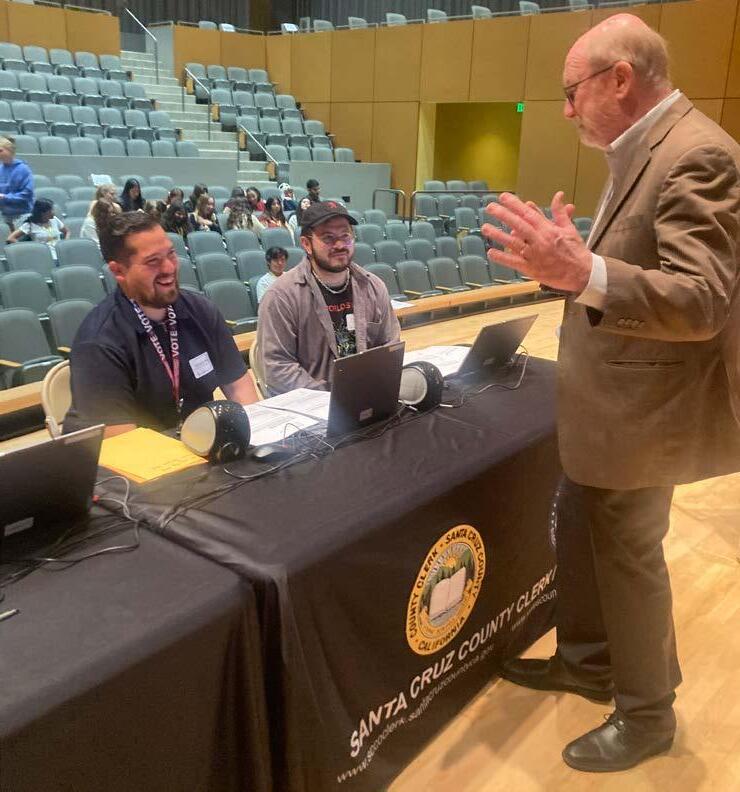
Rights. They also had the opportunity to break up in small groups and dialog. “My hope is for students to connect with local leaders and decision makers and to learn to see themselves as change makers in their community,” said Pamela Velazquez, Director of community impact for United Way.
State Senator John Laird was encouraged to see the Gallery Walk well attended. “This is the future. I want to know what they’re thinking,” said Laird. Local high school social studies and history teachers were asked to invite one of their classes to the summit. The kids were treated to breakfast, lunch and a swag bag, including a T-shirt.
At the elections workshop, county registrar of voters, Tricia Webber, was busy fielding questions. “Our office is really pushing civic education. People are more apt to participate if they understand the process,” said Webber.
Haider Durrani, a junior at Scotts Valley High School participated in the mock election, complete with voting booths, as Webber instructed on the correct way to mark a ballot. “It’s good. It’s informative. I’m glad we have this opportunity,” said Durrani.
“I voted on proposition 50, said Cervantes. “I love Santa Cruz, I’ve been here my whole life.” n





DROP-IN EVENING FIGURE DRAWING
7–9:30 p.m., Santa Cruz Art League, 526 Broadway
“Wonderful opportunity to work on drawing with a model, facilitated by a friendly instructor who created a warm atmosphere for all.”
— Evening Figure Drawing participant
Beginner to professional artists are welcome for these drop-in figure drawing sessions. Instruction and/or critique will not be offered.

Monday Evening Long Pose (March 2, 9, 16, 23, & 30) — Drop-in session of drawing or painting from a live nude model including long and short poses.
Thursday Evening Long Pose (March 5) — An evening of long poses for painting and drawing with a live model holding either one 2-hour or two 1-hour poses during the evening. This session provides an opportunity for artists to create more detailed studies or focus their drawings or paintings.
Thursday Evening Gesture Study (March 19) — This session provides a great opportunity to practice capturing the essence and simplicity of the pose, rather than rendering the complexity and detail of the form. More like poetry than prose! The format for this evening will be a series of 1 minute poses, transitioning to 2, 3, and 5 minute poses.
Facilitated by Mark Sangster and Emily Cafaro.
Cost: $20 per session.
Attendance is limited, so come early or register in advance to be sure of a space. Easels are available.
Painters, please do not use strong-smelling solvents. Visit https://scal.org/dropin-workshops for more information.
Mondays
BRIDGE CLUB
10:30 a.m.-Noon, 7695 Soquel Dr, Aptos, CA 95003
The Aptos Branch Library hosts Bridge Club sessions on Mondays (except holidays).
Bridge Club is a partnership between Santa Cruz County Parks and Santa Cruz Public Libraries.

Register at scparks.com or in-person the day of the event.
OVEREATERS ANONYMOUS
7 p.m., Congregational Church Preschool Meeting Room, 4951 Soquel Ave., Soquel
Overeaters Anonymous welcomes any type of eating disorder or problems with food.
No dues, fees or weigh-ins.
Meetings take place at Congregational Church in the preschool meeting room. All are welcome.
Overeaters Anonymous (OA) has meetings daily both in-person and on-line in Santa Cruz County at santacruzoa.org
Fourth Mondays
THE SPOKEN EXPERIENCE
Noon – 1 p.m., Capitola Branch Library, 2005 Wharf Rd
Each month a community of readers gather to share selections from a featured poet.
Join local poets Paola Bruni, Elaine Fletcher Chapman and Jessica Cohn as they lead the discussion.
Upcoming poet focus:
March 23: Eavan Boland
April 27: Arthur Sze, current U.S. Poet Laureate Tuesdays
TUESDAY NIGHT SALSA SOCIAL
7 – 10 p.m., Abbott Square Market, 725 Front St., Santa Cruz
Join a midweek salsa social at Abbott Square Market with salsa, cumbia, merengue, and bachata.
Free and open to all skill levels—just bring energy and dancing shoes.
More information: www.abbottsquaremarket.com
Have a virtual or live event you want to promote? E-mail info (no PDFs please) to info@cyber-times.com
BINGO AT MCSC
1-3 p.m., Mid County Senior Center, 829 Bay Avenue, Capitola (behind the Party Store)
Hot Dogs, Chili and snacks available for purchase courtesy of our Snack Shack. A lot of fun for all and a possible big win!
Door opens at 12:15 p.m.

Thursdays
SCOTTISH COUNTRY DANCING
7:15-9:15 p.m., Peace United Church 900 High St, Santa Cruz. Beginners welcome, partners not required. $10 each. Come dance!
HAPPY HOUR
5-7 p.m., California Coffee, 9105 Soquel Drive, Aptos California Coffee in Redwood Village hosts an open mic happy hour every week.
Third Thursdays
SIP AND STROLL
6-9 p.m. (check-in 5 p.m.), Seacliff Inn, 7500 Old Dominion Court, Aptos
Come to the Seacliff Inn: Tapestry Collection by Hilton, for a Sip & Stroll event where local artists to show and sell their works.
Wines are 30% off, and the featured winery will offer tastings of three varietals for $10 per person.
Details of this and more Sevy’s events at www.sevysbarand kitchen.com/events
WEDNESDAYS
Fridays (except First Friday of the Month)
LA SELVA BEACH LIBRARY BRIDGE GROUP
10:30-Noon, La Selva Beach Public Library, 316 Estrella Ave. Come for bridge from 10:30 to noon at the La Selva Beach library.
Call La Selva Beach Library to reserve your seat: 831-427-7710.
First and Third Fridays
JIM GREINER’S HANDS-ON! DRUMMING
7-8:30 p.m., Congregational Church of Soquel, 4951 Soquel Dr. Percussionist/educator Jim Greiner continues his Community Rhythms Class on the first and third Fridays of every month at the Congregational Church of Soquel. April’s sessions are on the Apr. 3 and 17.
All levels of experience are very welcome to this familyfriendly community gathering. Jim provides percussion instruments and you are welcome to bring your own.
Come play, socialize and reinforce Jim’s fundamental themes of communicating, collaborating and celebrating through rhythm!
$10 donation is requested. Doors open at 6:30.
First Saturdays
CAPITOLA BEACH CLEANUP
9-10 a.m., Esplanade Park
Help preserve and maintain the coastal beauty of Capitola. Join a beach cleanup every month at Esplanade Park.
Keep Capitola Salty is a grassroots movement dedicated to responsible efforts helping to maintain and preserve the environment, scenic beauty and coastal recreational activities of Capitola. This movement is always looking for volunteers. Email KeepCapitolaSalty@gmail.com.
Second Saturdays
HISTORICAL AIRCRAFT DISPLAY
10 a.m.-4 p.m., Watsonville Municipal Airport, 100 Aviation Way Watsonville Municipal Airport hosts a Historical Aircraft Display every second Saturday. Admission is free.
DOWNTOWN SANTA CRUZ — 1 – 5 PM, Cedar St. & Church St.
A bustling market featuring certified organic produce, artisanal foods, seafood, baked goods, flowers, and prepared foods. EBT/SNAP accepted, and Market Match doubles purchases (up to $10). Free entry; metered and garage parking available — free after 6 PM. Live local music and street closures add vibrant atmosphere. Full vendor list and updates at santacruzfarmersmarket.org.
FRIDAYS
WATSONVILLE (Certified) — 3 – 7 PM, Peck St & Main St.

Allyear market offering Watsonville-grown produce, seafood, dairy, flowers, hot foods, artisan goods. Free entry; metered parking available. EBT/SNAP + Market Match. Vendor news via local AARP events.
SATURDAYS
WESTSIDE SANTA CRUZ — 9 AM – 1 PM, Mission St Ext & Western Dr. Yearround market offering 100% certified-organic produce, seafood, meats, flowers, prepared meals, espresso bar, and artisan goods. Free parking on site. EBT/SNAP + Market Match. Often hosts pop-up breakfast events. Perfect for starting your weekend with fresh food and community energy. Full details at santacruzfarmersmarket.org.
APTOS (at Cabrillo College) — 8 AM – Noon, 6500 Soquel Drive
Celebrated coastal market with over 90 vendors selling produce, sustainable seafood, artisan breads, honey, meats, flowers, and hot food. EBT/WIC accepted. Free/year-round weekend oasis for local flavors and crafts. Hosted by MontereyBayFarmers.
SUNDAYS
LIVE OAK/EASTSIDE — 9 AM – 1 PM, 15th & East Cliff Dr, Santa Cruz Vibrant seaside Sunday market featuring organic produce, fresh seafood, hot food stands (Mexican, crepes, brunch), pastries, coffee, flowers. Free parking, EBT/SNAP, Market Match, and monthly family-oriented events.
WATSONVILLE FAIRGROUNDS — 9 AM – 4 PM, 2601 E Lake Ave, Santa Cruz County Fairgrounds Year-round market with wide selection of local produce, meats, seafood, crafts, and prepared foods. EBT/SNAP accepted. Parking onsite. Great for combining a market visit with other Fairgrounds activities.
Saturdays and Sundays
ELKHORN SLOUGH: FREE TOUR OF THE PRESERVE
10 a.m. | 11 a.m., Elkhorn Slough Reserve, 1700 Elkhorn Road, Watsonville
Docent-led tours offer visitors a guided introduction to Elkhorn Slough’s remarkable landscapes, wildlife, and tidal wetlands.
Each walk is tailored to participants’ interests and abilities, creating an engaging, educational experience.
Space is limited, and tours are first-come, firstserved.
Guests can sign up at the Visitor Center front desk or call ahead the same morning at (831) 728-2822 for availability.
Wednesday April 1
SPECIAL LUNCHEON WITH CONGRESSMAN JIMMY PANETTA 12–1:30 p.m., Seascape Golf Club, 610 Clubhouse Drive, Aptos The Aptos Chamber of Commerce will host a luncheon featuring Congressman Jimmy Panetta, who will discuss current national and global issues and their impact on the local community.

Attendees will have an opportunity to hear directly from the congressman and connect with local leaders and residents. Registration is required. For details, visit AptosChamber.com or call 831-688-1467.
Thursday April 2
MARTY O’REILLY AND ALEX LUCERO AT MOE’S ALLEY 8–11 p.m., Moe’s Alley, 1535 Commercial Way, Santa Cruz Catch local artist Marty O’Reilly, known from Season 28 of The Voice, live at Moe’s Alley, joined by soulful Americana vocalist Alex Lucero.
Experience heartfelt, authentic music that captivates and moves the audience.
Doors open at 7 p.m.
Tickets and more information are available at moesalley.com or ticketweb.com.
Friday April 3
THE GARDEN AT QUARRY AMPHITHEATER
7–10 p.m., Quarry Amphitheater, 1156 High St, Santa Cruz Catch The Garden, a fast, punk-influenced two-piece band, live at the Quarry Amphitheater.
Known for their energetic, off-the-wall performances worldwide, they embrace “vada vada,” a philosophy of total creative freedom without boundaries.
Enjoy a night of high-energy music and unique expression.
For tickets and details, visit quarryamp.com or theband’s official site.
Saturday April 4
EASTER ON THE FARM
11 a.m.–3 p.m., Santa Cruz County Fairgrounds, 2601 East Lake Avenue, Watsonville
Families are invited to celebrate Easter with egg hunts, crafts, puppet shows and tractor rides during this special Agricultural History Project event.
Visitors can meet farm animals, explore exhibits and enjoy hay wagon rides. Bring a picnic and browse the gift shop.
Admission is free.
For more information, visit aghistoryproject.org.
MUSIC IN NORTH AFRICA: FROM CULTURAL MIXITY TO POLITICAL EXPRESSION
3–4 p.m., Capitola Library, 2005 Wharf Road, Capitola Professor Muriam H. Davis of UC Santa Cruz presents an engaging talk on North African music, exploring its cultural diversity and political influence from the colonial era to today.
The presentation includes musical examples and context.
Registration is recommended.
For more information, visit santacruzpl.libnet.info.
Wednesday April 8
MEET THE AUTHOR: VERLIN DARROW
10:30 – 11:30 a.m., Porter Memorial Library, 305 Porter St., Aptos
Verlin Darrow shares a first glimpse of his upcoming legal thriller inspired by his work as a psychotherapist.
Programs are informal coffee hours, free, and open to all. Coffee provided by The Ugly Mug. More information: portermemoriallibrary.org.
Saturday April 11
THE RED BALL: 30TH ANNIVERSARY GALA
6–11:30 p.m., Santa Cruz Museum of Art & History at the McPherson Center, 705 Front St.
The Santa Cruz Museum of Art & History celebrates its 30th anniversary with The Red Ball gala, an evening of immersive art, dining and entertainment.
Guests will enjoy installations, live performances, magic, cocktails and a seated dinner, plus silent and live auctions. Music by DJ Spooky will close the night with dancing in the sculpture garden.
For tickets and details, visit santacruzmah.org.
Sunday April 12
SPRING FLING — OPEN TALENT MIC EVENT
2–4 p.m., Market Street Theater, 222 Market Street, Santa Cruz
The Market Street Theater and Senior Center hosts its Spring Fling — Open Talent Mic, welcoming performers of all ages to share music, dance, poetry, or comedy. A $5 donation supports MSSC programs.
Performers can submit an MP3 or bring a CD. For questions or participation, contact Henry at henry95062@ gmail.com.
JEFFREY HALFORD & THE HEALERS WITH SPECIAL GUEST
MICHAEL GAITHER
4 p.m., Moe’s Alley, 1535 Commercial Way, Santa Cruz Moe’s Alley presents a special Sunday matinee featuring Americana singer-songwriter Jeffrey Halford & The Healers, with special guest Michael Gaither.
Halford, with three decades of experience and multiple European tours, brings his chart-topping sound to Santa Cruz for an intimate afternoon show.
Doors open at 3 p.m. Tickets are $20 in advance, $25 at the door.
For tickets and details, visit moesalley.com or ticketweb. com.
AUTHOR VISIT WITH MOLLY SALANS: A BREAK IN THE FOG
2–3:30 p.m., Capitola Library, 2005 Wharf Road, Capitola Local author Molly Salans discusses her psychological thriller A Break in the Fog, inspired by her experience in a cult.
The event includes a reading, discussion, book signing and refreshments.
Registration is recommended, with walk-ins welcome. For more information, visit santacruzpl.libnet.info.
Tuesday April 14
CAPITOLA SOROPTIMIST CLUB MEETING
4–5 p.m., United Way of Santa Cruz County, 4450 Capitola Road, Suite 106, Capitola
Soroptimist International of Capitola-by-the-Sea hosts a free, public meeting to plan its Dream It, Be It Program, empowering girls with tools for education and career success.
The club is part of a global volunteer network supporting women and girls.
For more information, visit best4women.org or email sicapitola.by.the.sea@gmail.com.
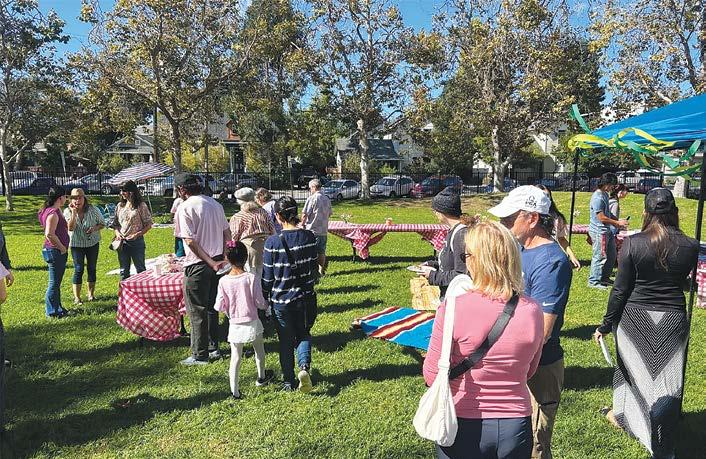
Saturday April 25
Noon – 3 p.m., Midtown Community Center, 115 South Morrissey Avenue, Santa Cruz Santa Cruz Bake & Gather is a friendly cake and pie potluck where everyone is welcome. All attendees are asked to register so we can maintain an accurate headcount, as space at this venue is limited. It is the intent of this event that at least one attendee from each group bring a cake or pie on the day of the event.
Whether you are an experienced baker or just giving it your best shot, this event is about sharing recipes, enjoying great desserts, and meeting your neighbors. No competition, no pressure, just good food and good company.
Santa Cruz Bake & Gather is a free event and open to all. Tickets are available at no cost. While donations are never required, they are deeply appreciated and help cover venue and event costs. Contributions can be made during ticket registration on Eventbrite or through our donation page.
Our goal is simple. To build community one slice at a time.
Registration: https://www.eventbrite.com/e/santa-cruz-bake-gather-tickets-1981603201519 or https://www. santacruzbakegather.com/
For more information, e-mail bake@fullcalendar.events or visit https://www.instagram.com/santacruz.bakeandgather/
Monday April 15
AN EVENING OF HOPE: A FILM & PANEL DISCUSSION
7–9:30 p.m., Grand Theater at the Del Mar Downtown, 1125 Pacific Ave., Santa Cruz
The Homeless Garden Project hosts a screening of National Geographic’s Emmy-nominated documentary
The Hope, followed by a panel with community leaders and a current trainee from HGP’s transitional employment program.
Proceeds support job training and housing programs for people experiencing homelessness. More information is available at www.homelessgardenproject.org.
Saturday April 18
EMMYLOU HARRIS AT SANTA CRUZ CIVIC AUDITORIUM
8–11:30 p.m., Santa Cruz Civic Auditorium, 307 Church Street, Santa Cruz
Emmylou Harris, acclaimed singer-songwriter and country music icon, brings her legendary voice to Santa Cruz. With over 15 million records sold, 14 Grammy Awards, 3 CMA Awards, and 4 Americana Awards, Harris is celebrated for her artistry and influence.
For tickets and more information, visit santacruzcivic.org or the artist’s official website.
Tuesday April 21
NEWCOMERS LUNCHEON & ENTERTAINMENT
11:15 a.m.–1:15 p.m., Back Nine Bar and Grill, 555 Highway 17
The Newcomers Luncheon features a presentation titled “The Santa Cruz Beach Boardwalk: A Century by the Sea,” led by archivist Jessie Durant. Guests can enjoy lunch options while learning local history.
discussion led by Library Director Christopher Platt. Light refreshments provided.
Registration is recommended. For details, visit santacruzpl.libnet.info.
Friday April 24
FOOD TRUCK FRIDAY AT SKYPARK
4:30–8 p.m., Skypark, 361 Kings Village Road, Scotts Valley Food Trucks A Go Go launches the 2026 Food Truck Friday season with an evening of local cuisine, live music by Shady Rest Band, and family-friendly activities. Held monthly through October, the series also supports local schools through beverage sales.
Admission is free.
For more information, visit foodtrucksagogo.com.
Saturday April 25
SIX IS FOR 6ENOCIDE: POETRY BY DANIEL REYES
1:30–3 p.m., Capitola Library, 2005 Wharf Road, Capitola Poet Daniel Reyes reads from SIX is for 6enocide, a powerful collection addressing violence, memory and resistance. The event includes a reading, discussion, book signing and refreshments.
Registration is recommended, with walk-ins welcome. For more information, visit santacruzpl.libnet.info.
SANTA CRUZ BAKE & GATHER
12–3 p.m., Midtown Community Center, 115 South Morrissey Ave., Santa Cruz
Santa Cruz Bake & Gather is a friendly cake and pie potluck open to everyone, whether you’re an experienced baker or just trying your hand.
Attendees are encouraged to bring at least one dessert per group, share recipes, and enjoy a relaxed afternoon of good food and conversation.
The event fosters community connection in a fun, no-pressure environment.
Tickets are free, though donations are appreciated to help cover venue and event costs.
For more information or to register, visit santacruzbakegather. com or Eventbrite.
SPRING ART AND CRAFT FAIR
RSVP by April 14.
For more information or reservations, email nmorelli@braeman. com or call 831-226-2350.
Thursday April 23
UNITED IN PURPOSE AWARDS
5 p.m., Roaring Camp Railroads, 5401 Graham Hill Road, Felton United Way of Santa Cruz County will honor community leaders, volunteers and advocates at its annual United in Purpose Awards.
The evening begins with a scenic train ride through the redwoods, followed by a dinner buffet and awards ceremony recognizing individuals who support opportunities for youth and families.
For tickets and details, visit givebutter.com/c/United_Way_SCC_ Awards_2026.
THE LIBRARIANS FILM SCREENING AND DISCUSSION
6:30–8 p.m., Capitola Library, 2005 Wharf Road, Capitola Celebrate National Library Week with a screening of The Librarians, exploring censorship and book policies across the U.S.
The event includes a virtual filmmaker appearance and discussion led by Library Director Christopher Platt. Light refreshments provided.
Registration is recommended. For details, visit santacruzpl.libnet.info.
THE LIBRARIANS FILM SCREENING AND DISCUSSION
6:30–8 p.m., Capitola Library, 2005 Wharf Road, Capitola Celebrate National Library Week with a screening of The Librarians, exploring censorship and book policies across the U.S.
The event includes a virtual filmmaker appearance and
10 a.m.–2 p.m., Spring Lakes Park Clubhouse, 225 Mount Hermon Road
Browse creations from 20 local artists and craftspeople featuring pottery, jewelry, textiles, photography, watercolor art and more.
A raffle with donated items will benefit the Second Harvest Food Bank.
Admission is free, making this a fun, family-friendly way to support local art and community.
Sunday April 26
DUO PIANISTS FITENKO AND ZAITSEVA
4 p.m., Peace United Church, 900 High Street, Santa Cruz Distinguished Artists Concerts celebrates its 40th season with duo pianists Nikita Fitenko and Katerina Zaitseva. The program features works by Rachmaninoff, Ravel and Gershwin, including Suite No. 1, La Valse and selections from Porgy and Bess.
Tickets are available online.
For more information, visit distinguishedartists.org.
Saturday May 9
MAR VISTA ELEMENTARY 60TH ANNIVERSARY CELEBRATION
11 a.m.–5 p.m., Mar Vista Elementary School, 6860 Soquel Dr., Aptos
Mar Vista Elementary is 60 years old, and the school is inviting any and all alum, former employees and associates to attend a celebration of the school’s past and a fundraiser to help it into the future. The event is being organized by a committee consisting of teachers representing each decade Mar Vista has existed.
For more current and future information, search for Mar Vista Elementary’s 60th Anniversary Alumni Event on Facebook. n
By DR. LORI BUTTERWORTH, Child & Adolescent Psychotherapist
Iwas working with a family whose teenage son had a long history of lying. Over time, therapy moved away from policing the behavior and toward something deeper: helping him clarify the kind of person he wanted to become. The values he kept returning to were honesty and trustworthiness.
After weeks of wrestling with fear and shame, he made a brave decision. He came clean about a lie he had been carrying for a long time. When he finally told his parents, their response was immediate…and angry. They focused on the lie, how long it had gone on, and how hurt and betrayed they felt because he had lied before coming clean. The courage it took for their son to tell the truth was pretty much invisible.
Before judging these parents too harshly, it’s important to understand the context. They had been lied to for years. They were exhausted, hurt, and understandably fed up.
But I asked them two simple questions: What behavior are you reinforcing? and What behavior do you want to see more of?
Those questions sit at the heart of how parents can effectively address lying in children and teens.
Parents tend to interpret lying as a moral failure. Research in developmental psychology tells a different story. Most children lie to avoid punishment, shame, or emotional fallout. In other words, lying is often a stress response.
When a child’s nervous system perceives a threat like disappointment, anger, or loss of approval, the brain shifts into survival mode. Honesty becomes dangerous. Escape becomes the brain’s natural priority.
This is especially true for children with ADHD, anxiety, or high emotional sensitivity. Studies on executive functioning show that impulsivity, poor future-oriented thinking, and emotional reactivity make it harder for these kids to pause and choose honesty under pressure. The lie often comes out before the thinking brain has time to catch up.
Highly intelligent kids add another layer. Strong verbal skills allow them to construct convincing explanations quickly. This


can look manipulative, but more often it’s a sign of cognitive strength combined with emotional immaturity.
Behavioral research is clear: behaviors that successfully reduce discomfort tend to repeat. If lying helps a child avoid consequences, even temporarily, it becomes a reliable strategy to avoid discomfort.
Many well-meaning parents respond to lying by escalating punishment. But this increases fear and secrecy, not honesty. When the cost of telling the truth feels too high, children learn to lie better, not less.
The most effective rule is surprisingly simple: The consequence should be the same whether the child tells the truth or not.
Parents can say calmly, “The rule doesn’t change. Telling the truth just helps us solve the problem faster.” This removes the payoff for lying while making honesty emotionally safer.
In the family I described earlier, the parents unintentionally reinforced silence

and secrecy. Their reaction taught their son that coming clean, even when aligned with his values, led to anger and emotional fallout.
Decades of research in behavioral parenting interventions show that specific, immediate reinforcement of the desired behavior is one of the most powerful tools parents have. That means acknowledging honesty even when the behavior itself was not okay.
This requires parents to hold two truths at once: “I’m not okay with what happened, and I really respect that you told the truth.”
This distinction matters. You are reinforcing honesty as a skill, not approving the mistake.
Interrogating kids when they lie often backfires. When children feel cornered, honesty becomes harder, not easier. If you already know what happened, say so calmly, “I know what happened; I’m looking for honesty.” Then pause. Silence gives them space to regulate and choose differently.
What builds honesty over time isn’t
harsher punishment; it’s repair. Shifting from “What’s the punishment?” to “How do we fix this?” strengthens accountability and empathy far more than shame. Children who feel safe telling the truth learn that honesty is survivable; that’s how trust grows. n
Lori Butterworth is a child and adolescent psychologist and the founder of the Center for Child and Adolescent Mental Health and Jacob’s Heart Children’s Cancer Support Services. For more information about mental health support for your child and family, contact Lori at 831-2220052 or visit CCAMH.org. The Center offers evidence-based youth mental health care and free resources for parents.
When children feel cornered, honesty becomes harder, not easier. ... Children who feel safe telling the truth learn that honesty is survivable; that’s how trust grows.


Wilbur (A287754) and Rosie (A287750) are white Vietnamese potbelly pigs who’d love to have a new rural home to call their own! As fully-grown adult pigs, they each weigh over 160 lbs, and they’re intelligent and fun pets to have around.
Rosie is 5 years old and is actually mother to Wilbur, who is 4, so their bond is strong and they enjoy one another’s company. They’ve also lived with pig-friendly dogs, cats, and goats. Wilbur has been neutered, so there won’t be any additions to their family if they’re the only pigs around.
Although sometimes kept as household pets in urban or suburban areas, pigs — even small-breed pigs like these two — are usually happiest when they live on rural properties where there’s space to explore and root around, where they have a safe indoor place to stay at night (like a barn or a shed), a muddy wallow to cool themselves in, and where they’ll get a healthy, varied diet.
A healthy pot belly pig diet usually consists of pig pellets, lots of fresh water, plenty of fresh vegetables like leafy greens, carrots, cucumbers and bell peppers, and fruit as an occasional treat. They’ll also happily help themselves to insects, worms, grubs and even eggs or small rodents if they can get their snouts on them. Although they’ll eat just about anything, they are highly susceptible to obesity and other serious diet-related health problems, so it’s important that owners be thoughtful. They should NOT be fed dog or cat food, nor processed human foods. With decent care pigs can be expected to live 14 to 18 years, so you’ve got to be ready to commit! You also need to check your local zoning codes and/or with your homeowners’ association before you bring a pig home — in unincorporated Santa Cruz County, for example, pigs are only allowed on properties zoned “Agricultural Residential.”
So, if you”ve gotten yourself to be pig-savvy and live on a “piggable” property, consider Rosie & Wilbur! They’re a bonded pair, so they can be adopted together for a single $100 adoption fee. n
The Santa Cruz County Animal Shelter is full of adoptable animals. Fostering animals is an awesome way to improve a Shelter animal’s life and fill your home with love and fun! If you are interested in fostering any kind of animal please email jillian.ganley@santacruzcounty.us. You can also Follow SCCAS on Instagram and/or Facebook to stay up-to-date on shelter news and where to find adoptable pets around town at breweries, stores and events. All adoptions are first come, first served.
Santa Cruz County Animal Shelter’s full-service, open-admission shelter 1001 Rodriguez St., Santa Cruz, 95062 • Hours: Daily 11 a.m. – 6 p.m. (Arrive before 4 p.m. for “meet and greet” — Please ring bell for stray animal drop-off from 7 a.m. – 11 a.m.) 580 Airport Blvd., Watsonville, 95076 • Hours: Tues.-Sat. 9:30 a.m.–noon; 1–5 p.m. (Closed Sun/Mon — Please ring bell for stray animal dropoff 9:30 a.m.-noon; 1-5 p.m.) Website: www.scanimalshelter.org
SCCAS Main line: 831-454-7200. Animal Control: 831-454-7227. After-Hours Emergency: 831-471-1182 • After Hours: jillian.ganley@santacruzcounty.us


By TONY TEMEO

Winter is the primary season for citrus fruits. Some ripen significantly earlier. Some ripen significantly later. Many citrus trees continue to produce a few fruits randomly throughout the year. Nonetheless, citrus fruits are collectively most abundant during winter. It seems odd that trees that are vulnerable to frost are so productive during the coolest of weather.
Citrus trees are fortunately only marginally susceptible to frost in only the cooler climates here. They mostly recover from minor damage where they get a bit too much chill. Those in coastal climates may never experience damaging frost. Some types of citrus are more resilient to frost than others. Vulnerable citrus trees may need frost protection when new.
Home garden citrus trees are different from orchard trees. Most orchard trees, particularly older trees, are ‘standard’ trees. They grow on standard rootstock that allows them to get larger, and therefore produce more fruit than ‘dwarf’ trees. Most home garden citrus trees are ‘dwarf’ trees. They grown on dwarfing rootstock that keeps them dense and compact.
Furthermore, the many cultivars of citrus that are available for home gardening are more diverse than those that commonly grow in orchards. ‘Lisbon’ lemon is very profuse within season, so is preferable for orchards. ‘Eureka’ lemon, although a bit less productive, may be a preferable option for home gardens because it produces a few random fruit all year.
Now that citrus are in season, some last longer than others. Grapefruit can hang on their trees for months. They actually develop richer flavor with mellowing tartness as they age. Conversely, Mandarin orange and tangerine are the most perishable citrus. Because

the rind is loose, their pulp within begins to oxidize after ripening. Lime eventually gets pithy.
Although this is the time of year to enjoy fresh citrus fruits, it is not the season to do much else with citrus trees. Pruning and application of fertilizer will be more timely after winter. Premature pruning or use of fertilizer is likely to stimulate premature growth. Such growth either languishes through cool weather, or succumbs to mild frost.
Of all the cultivars of citrus that are popular for home gardens, the ‘Meyer’ lemon is likely the most popular. However, it is not overly common in markets. That may be an incentive for growing it at home. Technically, it is not totally lemon. It is an odd hybrid of lemon and orange. Hence, its fruit has a distinctly rich flavor, but a bit less acidity than other lemons.
‘Meyer’ lemon is distinct among citrus trees. It grows more like rigid shrubbery, with a few irregular trunks. Because it naturally develops compact form, it does not require dwarfing understock. Most old trees therefore grew from cuttings, on their own roots. Modern trees commonly grow on understock though, so can develop suckers below their graft unions.
‘Meyer’ lemon fruit is abundant during autumn and winter. Minor quantities ripen through spring and summer also. All ‘Meyer’ lemon trees from nurseries nowadays are ‘Improved Meyer’ whether or not their labels say so. Their improvement was selection of stock that lacks a particular tristeza virus that was inherent to the original cultivar prior to the 1940s. n
Horticulturist Tony Tomeo can be contacted at tonytomeo.com.