

County Releases Measure Q Grant Recommendations
By JON CHOWN
SANTA CRUZ — Santa Cruz County officials have released preliminary funding recommendations for the inaugural Measure Q Grant Program, revealing the initial thought process in determining how roughly $2.7 million will eventually be spent on different projects in the county.
The recommendations, issued by the County’s Office of Response, Recovery & Resilience and the Department of Parks, Open Space, and Cultural Services, are for the first round of funding under Measure Q, a voter-approved measure that dedicates 40 percent of its annual revenue to a competitive grant program. ... continues on page 4




www.tpgonlinedaily.com



Educators and institutions serving south Santa Cruz County took center stage earlier this month as the Santa Cruz County Office of Education announced its 2026 Edu
cator of the Year award honorees, with Cabrillo College and multiple employees from Pajaro Valley Unified School
trict being honored.








County Releases Measure Q Grant Recommendations: Funding for Parks, Cultural Programs, Environmental Cleanup and More Up for Grabs, By Jon Chown
Community News
5 South County Programs Stand to Benefit from Measure Q: Watsonville Plaza Could See Major Funds for Renovation, By Jon Chown
6 Habitat for Humanity Celebrates Start of New Project • Applications for GO BIKE! Open Again Temporarily
7 South County Dominates Educator of the Year Awards: Cabrillo College and PVUSD Teachers Earn Top Honors
8 Hexavalent Chromium Found in Soquel Creek Water District Wells: Local Drinking Water Met State Standards Anyway, By Jon Chown
10 PVWMA Releases Pajaro River Watershed Resilience Plan: New Taxes Needed to Fund Projects to Prepare for Climate Change, By Jon Chown
11 Officials Hail Emergency Sidewalk Repair In Watsonville
13 Proposed County Budget Freezes Hiring, Cuts Vacant Positions: New CEO Nicole Coburn Releases First Spending Plan, By Jon Chown
14 She Threw A Huge Party on her Birthday, but Few Knew: UnSCruz Producer Celebrates Another Successful Event, By Jon Chown
16 Mar Vista Celebrates 60 Years of Education
18 New Leaf Energy Bypasses County to Apply for BESS Plant: Developer Sends Letter to County Regarding Change of Plan, By Jon Chown
20 PVUSD Establishes Committee to Review Surplus Properties: Parts of Aptos High Campus and Amesti School Might Be Sold, By Jon Chown
21 Interim Trail Discussed, but Public Left Wondering: RTC’s Report to Community Doesn’t Satisfy Many, By Claudia Iseman
22 Three Candidates Vie for District 4 Supervisor Seat: Nuñez Has Raised More Money Than Incumbent Hernandez, By Jon Chown
23 PVUSD Reviews Student Mental Health Services Approach, By Jon Chown
24 PVUSD Board Trustee Creates Chaos: Board Chair Forced to Recess Meeting, By Jon Chown • PVUSD Clears Way to Hire Interns, Teachers with Emergency Permits, By Jon Chown • Santa Cruz County Tourism Industry Grew 1.6% In 2025
25 Hexavalent Chromium Found in Soquel Creek Water District Wells: Local Drinking Water Met State Standards Anyway, By Jon Chown • Water District Approves $19.5 Million Contract to Chromium-6, By Jon Chown
27 Warriors Announce Donation from ‘Swishes for Dishes’ Initiative Letter to the Editor
11 Don’t Bother to Rename Cesar Chavez School Business Profile
12 Westmont of Santa Cruz: A Place Where Seniors Really Can Thrive
Monthly Horoscope • Page 26 – Pluto, the Transformer, Retrogrades in Aquarius, By Risa D’Angeles Community Calendar • Arts & Entertainment – Pages 28, 29
Columnists
30 From Fear to Freedom: How Kids Break the OCD Cycle, By Dr. Lori Butterworth, Child & Adolescent Psychotherapist
31 Trees Should Fit Their Gardens, By Tony Tomeo


COVER STORY
“Measure Q” from page 1
Michael Oppenheimer
Michael Oppenheimer, Ward Austin
Michael Oppenheimer photography
Michael Oppenheimer, Camisa Composti
Composti
Teri Huckobey, Brooke
Bill Pooley, Erik Long
TPTimes Publishing Group, Inc.
9601 Soquel Drive, Aptos, CA 95003
The Times Publishing Group, Inc., publishers of the Aptos Times, a bi-monthly publication, the Capitola Soquel Times and Scotts Valley Times, each printed monthly, Coastal Weddings Magazine, Coastal Home and Garden Magazine, Aptos’ Fourth of July Parade Official Program Guide and Capitola’s Summer Festivals Official Program Guide, is owned by Patrice Edwards. Entire contents ©2026. All rights reserved. Reproduction in any form is prohibited without the publisher’s written permission
PHONE: (831) 688-7549
FAX: (831) 688-7551
GENERAL E-MAIL: info@cyber-times.com
Patrice Edwards: patrice@cyber-times.com
Publisher’s Assistant: assistant@cyber-times.com
Editor: info@cyber-times.com
Calendar Listings: www.tpgonlinedaily.com
Graphics Department: graphics@cyber-times.com
Billing Inquiries: cathe@cyber-times.com
Classified Sales: sales@cyber-times.com
Production: production@cyber-times.com
CHECK OUT OUR WEB SITE AT: www.tpgonlinedaily.com mission statement
We at the Times Publishing Group, Inc. are dedicated to providing a voice for the individuals and organizations in our community while highlighting the outstanding accomplishments of our local businesses. We seek to promote healthy family values through our coverage of youth activities, school news, senior events, community groups and entertainment
The program has drawn strong interest in its first year. More than 50 applications were submitted requesting a combined $8.9 million, far exceeding the available funding and setting up difficult choices for county leaders. The preliminary recommendations, along with complete scoring results, have been made public on the county’s Measure Q Grants webpage, and officials are encouraging residents to provide feedback.
Final funding recommendations will be developed through two meetings of the Measure Q Citizens Oversight Advisory Board held May 6 and May 27, with final approval expected from the Santa Cruz County Board of Supervisors on June 9.
This first cycle of the grant program will being closely watched, not only for which projects are funded but also for how the process itself unfolds. County staff have emphasized that this is an “inaugural” cycle, and they plan to return later this year with a formal evaluation of how the program worked, including recommendations for improvement.
“With Measure Q funding, we as a County really need to show that we are doing urgent work to reduce risk for the community with the funds entrusted to us,” said District 1 County Supervisor Manu Koenig.
The Measure Q Grant Program was designed to focus on four major goals: improving water resources, reducing wildfire risk, protecting wildlife and habitat, and expanding access to parks and open space in an equitable way.
To carry out that vision, the county created a competitive grant process divided into two tiers. Tier 1, known as Community Catalyst grants, supports smaller projects ranging from $5,000 to $50,000. Tier 2, known as Community Impact grants, supports larger efforts with requests above $50,000.
The applications were scored between March 15 and April 14 by a team that included both county staff and external evaluators. Each project received one internal and one
external score. Following the scoring process, staff spent about a week analyzing results and developing funding scenarios. Preliminary recommendations were published in late April and formally presented to the advisory board in early May.
High Demand and Competing Pressures
The demand for Measure Q funding was strong across both tiers. Tier 1 included 29 applications requesting about $1.13 million, while Tier 2 included 24 applications requesting about $7.75 million. Together, applicants sought nearly $8.9 million, more than three times the available funding.
Officials noted that Tier 1 requests were heavily clustered at the maximum grant amount of $50,000. Tier 2 requests varied more widely but tended to cluster between $300,000 and $500,000.
Nonprofit organizations made up 76 percent of Tier 1 applicants and 58 percent of Tier 2 applicants, though Tier 2 also included a larger share of cities and public agencies. County staff said public agencies often have an advantage in grant competitions because they have more experience with technical requirements and project planning.
The program also includes two required funding set-asides written into county code. At least $600,000 must go to projects in the San Vicente Redwoods, and at least $600,000 must be allocated to projects benefiting residents in the Pajaro Valley.
The scoring system used for the Measure Q grants was approved in advance by the advisory board and the Board of Supervisors. However, the first round revealed challenges in how different evaluators interpreted the criteria. Several factors contributed to differences in scoring. In some cases, the criteria left room for subjective interpretation.
Tier 1 projects showed more variation in scores, likely because they covered a wider range of project types. Tier 2 scores were more consistent, with differences often tied to how ready projects were for implementation. The
county staff report emphasized that scores are only one tool in the decision-making process. Final funding decisions must also consider broader program goals.
Where the Money Might Go
From the full pool of applications, staff identified the top 10 projects in each tier based on average scores. These projects form the basis of all three funding scenarios.
In Tier 1, the highest-scoring project is River Stewards, proposed by the Coastal Watershed Council. The program would engage unhoused residents in weekly restoration work along the lower San Lorenzo River, combining environmental improvements with job training and increased access to public spaces. Erin Loury, spokesperson for the Coastal Watershed Council, said the group is waiting until final funding is awarded before making any comments on the ranking.
Another top project is Pinto Lake Water Quality Monitoring by Santa Cruz County Parks. This effort would study pollution sources in Pinto Lake in Watsonville, focusing on phosphorus levels that contribute to harmful algal blooms.
Several projects focus on wildfire preparedness. The Santa Cruz County Fire Department proposed three separate efforts: Truck Trail Emergency Response Navigation, which would install markers and signage along rural roads; Real-Time Digital Signage for Wildfire Preparedness, which would provide emergency alerts; and Strategic Water Supply Enhancements, which would improve water access in high-risk areas.
Other Tier 1 projects emphasize access and equity. Kids2Parks would fund transportation for students from low-income schools to visit state parks. The Vista Center for the Blind and Visually Impaired would provide guided park experiences and assess accessibility.
“Measure Q” page 8

South County Programs Stand to Benefit from Measure Q
Watsonville Plaza Could See Major Funds for Renovation
By Jon Chown
Anew round of Measure Q grant funding could close a critical funding gap for the Watsonville City Plaza Revitalization Project, while also supporting a wide range of environmental, recreation and flood management efforts across South Santa Cruz County.
Measure Q, a voter-approved funding measure, supports projects that improve disaster preparedness, climate resilience and recovery. The program is overseen by the county’s Office of Response, Recovery & Resilience, with proposals ranked based on readiness, community benefit and long-term impact. Preliminary rankings and detailed evaluation comments were recently released. ... continues on page 4
In South County several projects were ranked at the top of Tier 1 and Tier 2, making them highly likely for funding when the final decisions are made. Among them, is the Watsonville City Plaza Revitalization Project. The


project requested $600,000 and ranked No. 3 in Tier 2. City officials say the project is currently about $600,000 short of full funding — making Measure Q dollars a potential bridge that could allow the project to move forward.
“South County” page 9

SUCCESS FOR OUR KIDS!





Trees and other growth have spread below the Pajaro River Levee as seen on May 7. Flood management proposals are a big focus of Measure Q funding requests.

JoAnn Riniti, Ph.D.


•
• Depression
pre-teen challenges
• Unblocking Creative Potential






Habitat for Humanity Celebrates Start of New Project
Habitat for Humanity Monterey Bay broke ground in early May on a new affordable housing development in Freedom that will create 13 permanently affordable homes for local families.
“This groundbreaking represents more than the start of construction, it represents
opportunity, stability, and hope for the families who will one day call this place home,” said Catherine Stihler, CEO of Habitat for Humanity Monterey Bay. Organizers said the project is intended to expand homeownership opportunities for local families and provide long-term community benefits. n
COMMUNITY BRIEFS


Santa Cruz E-Bike Rebate Program have reopened for a limited time, offering financial assistance to eligible workers in the downtown area who want to purchase an electric bicycle for everyday transportation.

The program, sponsored by the City of Santa Cruz, is aimed at people who work within the Downtown Santa Cruz Parking District. Officials say the effort is part of a broader push to encourage biking and make it more accessible as the community heads into the summer season.

Eligible applicants may receive a $400 base rebate or up to $800 if they qualify through an income assistance program. The higher rebate is available to participants who are currently enrolled in qualifying assistance programs listed in the application. “Briefs” page 24
COMMUNITY NEWS
South County Dominates Educator of the Year Awards
Cabrillo College and PVUSD Teachers Earn Top Honors
Educators and institutions serving south Santa Cruz County took center stage earlier this month as the Santa Cruz County Office of Education announced its 2026 Educator of the Year award honorees, with Cabrillo College and multiple employees from Pajaro Valley Unified School District being honored.
The annual awards recognize teachers, classified staff, counselors, administrators and community partners whose work has had a significant impact on students and families throughout Santa Cruz County. This year’s honorees are mostly from the south end of the county. Three of the top countywide awards went to Pajaro Valley Unified School District employees, while Cabrillo College was named Community Partner of the Year.
Santa Cruz County Superintendent of Schools Faris Sabbah praised the recipients for their dedication to students and families.
“Congratulations to this incredible group of honorees, whose deep commitment to student success reflects the very best of public education,” Sabbah said in a statement. “Their service and leadership help us build a school community rooted in equity and belonging, making a lasting impact on students and families and setting an example for all of us to follow.”
The honorees will be formally recognized May 21 during a meeting of the Santa Cruz County Board of Education at the county office of education headquarters in Santa Cruz. Each recipient will receive a plaque, and their names will be added to the county’s perpetual Educators of the Year display.
Shireen Goudarzi, a third-grade teacher at H. A. Hyde Elementary School, was named Teacher of the Year. Goudarzi is a Watsonville native who attended PVUSD schools as a student before later earning a master’s degree in education from UC Santa Cruz and returning to teach in the same community where she grew up.

She has spent all 25 years of her teaching career at H.A. Hyde Elementary School, teaching grades one through four and participating in dual-language firstgrade instruction. County education officials described her as a teacher known for creativity, strong classroom management and a deep ability to connect with students.
Another South County honoree, Emily Tatro, was named Classified Employee of the Year for her work at Linscott Charter School. Tatro serves as student information and enrollment
manager at the Watsonville school. Before entering education, she worked as a paralegal, a background county officials said helped shape her skills in organization, advocacy and communication.

According to the county office, Tatro first became involved with the school as a volunteer before joining the staff full time three years ago. Since then, she has focused on helping students and families feel welcomed and supported, especially during enrollment and other transitions that can be stressful for families.
The county’s Administrator of the Year award went to Marina Maldonado, academic coordinator and assistant principal at Amesti Elementary School. Maldonado has worked in Pajaro Valley Unified School District since 2007 in a range of educational roles. County officials said she has consistently focused on helping both students and educators succeed.

As a classroom teacher, Maldonado emphasized student engagement through creativity, fun and student choice. Later, as a technology teacher on special assignment, she helped students build digital and 21st-century learning skills, work that earned her recognition as a Pajaro Valley Education Foundation Innovator of the Year.











Tired isn’t normal. Brain fog isn’t normal. Feel like yourself again with personalized functional medicine. Get real answers.
We practice integrative, patient-centered healthcare that treats the whole person — mind, body, and spirit.
Our care is rooted in compassion, collaboration, and respect — because feeling heard is essential to healing.

Cabrillo College was honored as Community Partner of the Year. The community college, which operates campuses in Aptos and Watsonville, serves approximately 15,000 students annually and plays a central role in higher education access for local residents.
Founded in 1959, Cabrillo has become one of the county’s primary educational and workforce training institutions, offering more than 100 academic and career technical education programs. Those programs include transfer degrees, vocational certificates, skills training and lifelong learning opportunities. Its Watsonville Center has become especially important for South County students. The center has expanded access to higher education in a region where transportation and economic barriers can often make commuting difficult.
“Educators of the Year” page 17


Schedule a complimentary 15-minute meet and greet to learn more!

Shireen Goudarzi
Emily Tatro
Marina Maldonado
Aptos
Real Estate Update

Ruth Bates
831.359.2212
ruthbates1@gmail.com
CalBRE#01799929
INTEREST RATES
6.44% – same as last month
ACTIVE LISTINGS
58 Active listings as of 5/06. AVG LIST PRICE - $2,109,069. MEDIAN LIST PRICE - $1,697,000. AVG Days on Market (DOM) – 48. New listings in May: 512 Bonita$800,000 – 2B/2BA/1830SF, 1200 Day Valley7 - $1,285,000 – 3B/2BA/1536SF, 731 Clubhouse - $1,350,000 – 3B/2BA/2805SF, 588 Calle Del Sol - $1,695,000 –3B/2.5BA/2700SF, 555 Vista Del Mar - $1,849,000 – 2B/3BA/1813SF, 264 Beach$1,995,000 – 1B/1BA/558SF, 302 Pine Forest - $2,695,000 – 5B/4.5BA/4181SF, 643 Beach - $5,495,000 – 3B/3.5BA/2550SF.
SOLD PAST 30 DAYS
AVG SALES PRICE - $1,661,329, MEDIAN SALES PRICE - $1,478,000, AVG DOM – 38 days. So, AVG LIST PRICE is $447K higher than SOLD PRICE, and MEDIAN LIST PRICE is $219K higher than SOLD PRICE, hum… lots of downward pricing pressure. High Sale: 625 Quail Run Road - $2,900,000 – 3B/3.5BA/3754SF on 4.4 acres. Low (and livable) Sale: 130 Hainline - $975,000 –2B/1BA/781SF. Homes near Median: 2111 Cox - $1,700,000 (bid up from $1,499,000 and sold in 7 days) – 3B/2.5BA/1650SF on 1.3 acres, 118 Sea Terrace - $1,667,250 (bid up from $1,499,000 and sold in 9 days) – 3B/2BA/1502SF, 261 Aptos Beach - $1,478,000 (on list price $1,488,000) – 3B/2BA/1880SF, 640 Saint Andrews$1,390,000 (bid up from $1,299,000and sold in 10 days) – 3b/2BA/1390, and 507 La Honda - $1,325,000 (on list price of $1,425,000) – 3B/2.5BA/1725SF. So, homes that are ‘worth it’ and/or ‘priced well’ are being bid up and selling quickly. The rest remain on the market for over 30 days.
MAY TO DO’s (courtesy of Bob Vila)
1) Clean your grill – scrub away old grease, and refill the propane tank
2) Clean your garden tools
3) Organize the garage – toss old paint, batteries, chemicals – correctly
4) Light up your yard – solar-powered products abound for security and nighttime entertaining
5) Clean and tune you’re A/C (if you have it)
6) Paint home exterior – check siding for damage and replace any rot, resand any flaking paint before fresh paint
FLOWERS TO PLANT IN MAY Marigolds, Zinnias, Sunflower, Gaillardia, Nasturium, Morning Glory, Petunia, Verbena, Calendula, Alyssum
Call, email, text anytime and Get Results With Ruth!



Hexavalent Chromium Found in Soquel Creek Water District Wells Local Drinking Water Met State Standards Anyway
By JON CHOWN
SOQUEL — A new water quality report from the Soquel Creek Water District says tests found elevated levels of hexavalent chromium, also known as chrome-6, in several wells. However, local drinking water did meet state and federal health standards in 2025.
The annual Consumer Confidence Report, released by the district, covers drinking water for customers in Soquel, Aptos, Capitola, Rio Del Mar, Seascape, La Selva Beach and Opal Cliffs. The district serves more than 40,000 residents through 15 active groundwater wells connected to the Santa Cruz Mid-County Groundwater Basin.
According to the report, chrome-6 levels exceeded California’s new maximum contaminant level in three of the district’s 15 active production wells. The report said water systems the size of Soquel Creek Water District are not considered out of compliance until after Oct. 1, 2026. District officials said they are already working on a solution.
“Soquel Creek Water District has been proactive in preparing for the new chrome-6 requirements. We’ve already received State approval of our compliance plan to meet the new standard. Our team has worked diligently to pilot treatment technologies, complete planning and design, and move
“Measure Q” from page 4
Black Surf Santa Cruz would expand surf instruction and ocean safety programs for underserved communities. The Boys & Girls Clubs would fund transportation for youth to visit parks, and the Las Cumbres Shaded Fuel Break Project would reduce wildfire risk in a mountain community.
In Tier 2, the highest-ranked project is Pajaro Valley Watershed Stewardship by Watsonville Wetlands Watch. This largescale effort combines habitat restoration, school greening and trail improvements across multiple sites in Watsonville.
Other major proposals include the Rural Lands Assistance Program by the Resource Conservation District, which would help landowners manage wildfire risk, and the Watsonville City Plaza Revitalization Project, which would restore a historic downtown space with new amenities and infrastructure.
The Pajaro Valley Unified School District has proposed improvements to Rolling Hills Middle School that would allow broader community use of its track
the project forward to the construction phase, which will begin this year,” said Brice Dahlmeier, associate engineer and project manager for Soquel Creek Water District.
According to the report, construction of the treatment facility will start in the fall.
Chrome-6 is a form of chromium that can occur naturally in rocks and soil but can also come from industrial pollution. The chemical became widely known after a legal case in Southern California involving groundwater contamination.
The report said testing found chrome-6 levels ranging from “not detected” to 17 micrograms per liter in 2025. California’s new limit is 10 micrograms per liter.
Despite the chrome-6 issue, the district said all other tested contaminants met drinking water standards.
The district tested for 106 different substances in 2025, including arsenic, nitrate, bacteria, pesticides and disinfection byproducts. The report said all samples complied with state and federal rules aside from the new chrome-6 regulation.
Water in the district comes entirely from groundwater pumped from two underground aquifers: the Purisima Formation and the Aromas Red Sands Aquifer. The report said water from the Purisima Formation
and field facilities. Mesa Village Park improvements would expand recreational space near Watsonville.
Two projects focus on water and flood management. The Pajaro River Bridge to Bay feasibility study would examine long-term flood protection strategies, while the San Lorenzo debris boom project would help protect water quality and marine habitat.
Other proposals include the Sol Y Tierra climate justice program, which combines education and workforce development, the Zone-0 workforce initiative focused on wildfire safety, and a prescribed burn program aimed at improving forest health.
Rather than presenting a single funding plan, county staff developed three scenarios to help guide discussion.
Scenario A follows the scoring results exactly. This approach is the most straightforward but results in a concentration of funding in the Pajaro Valley, where many high-scoring projects are located. About three-quarters of Tier 2 funding would go to south county under this option.
Scenario B adjusts the list to achieve a
naturally contains higher levels of iron and manganese and is treated before reaching customers.
The report also described possible pollution risks to the groundwater basin. According to the district, the Aromas Red Sands Aquifer is most vulnerable to septic systems, sewer leaks, fertilizer runoff and pesticides. The Purisima Formation faces risks from dry cleaners, gas stations, auto repair shops, sewer systems and underground storage tanks.
The district said lead testing at 15 local schools was completed as part of California’s school drinking water safety program. Officials also reported that all district-owned and customer-owned service lines have been classified as non-lead.
The report noted that small amounts of contaminants can still be found in drinking water and that their presence does not always mean the water is unsafe. Federal and state agencies set limits on contaminants to protect public health.
The district is also continuing work on its Pure Water Soquel project, which is designed to recharge groundwater supplies and stop seawater intrusion into the basin. The project uses highly treated recycled water that is purified and pumped back underground. n
more balanced geographic distribution. It funds more projects overall and includes a broader mix of program types, including those that serve residents across the county rather than focusing on one region.
Scenario C prioritizes projects with the largest measurable impact, such as the number of people served or the size of the area affected. This approach shifts funding toward projects that can demonstrate clear, quantifiable outcomes.
According to the report, no single option is being recommended at this stage. The Measure Q Citizens Oversight Advisory Board will review the preliminary recommendations and gather public input before developing final recommendations. Those recommendations will then go to the Board of Supervisors for final approval on June 9.
According to the county staff report, the process will not end there. They plan to return in August with a full evaluation of the program’s first cycle, including lessons learned and possible improvements to the scoring system, application process and funding structure.

“South County” from page 5
“While the process is still ongoing and no final funding decisions have been made yet, it’s encouraging to see the project recognized in this way,” said Watsonville Deputy City Manager Nick Calubaquib. “The Plaza has long been considered the heart of Watsonville and has served as a gathering place for community events, celebrations, and everyday life for generations.”
Calubaquib noted that the site is listed on the National Register of Historic Places. If awarded, the Measure Q funds would support Phase II of the project, including landscaping and lighting improvements, a permanent stage and seating areas for annual community events, upgraded infrastructure for performances and the weekly Farmers’ Market, public art, picnic areas, bicycle parking, and accessibility improvements.
“The City is currently about $600,000 short of fully funding the project. Measure Q funding would help close that gap and allow the city to move forward … without reducing the overall project scope,” Calubaquib said.
Evaluation comments underscored the plaza’s importance as a central gathering place in Watsonville. Reviewers said improvements could strengthen community cohesion while also providing a safer, more functional space during emergencies. While some comments noted the project’s high cost, they still recognized its value as a key community asset.
Beyond the plaza project, other South County projects regarding environmental health, recreational access and flood preparedness also scored high.
In Tier 1, the Pinto Lake Water Quality Monitoring project ranked No. 2 with a request of $48,000. The project would expand monitoring efforts at Pinto Lake, which has faced ongoing issues with pollution, algae blooms and poor water quality for decades. Increased monitoring would provide more consistent data to track conditions and guide future restoration work. Evaluation comments highlighted the project’s clear environmental benefit and relatively low cost, noting that the scope of the problem can’t even be fully understood without first gathering the data.
In Tier 2, the highest-ranked South
County proposal is the Pajaro Valley Watershed Stewardship, Habitat Restoration and Outdoor Access and Equity Project, which requested $350,000. The project focuses on improving watershed health while expanding public access to outdoor spaces through habitat restoration, stewardship programs and new opportunities for residents — particularly underserved communities — to connect with natural areas.
Reviewers praised the project’s broad scope and strong alignment with Measure Q goals, emphasizing its combination of environmental restoration and community access, as well as its focus on equity in a region where access to open space can be limited.
Also in Tier 2, the Pajaro Valley Unified School District’s Rolling Hills Middle School Track and Field Recreation Access Project requested $500,000. The proposal would upgrade and expand recreational facilities at the school, allowing greater community access outside school hours. Improvements are designed to create safe, accessible space for exercise, youth activities and community gatherings.
Evaluation comments highlighted the project’s community benefit, particularly in an area with limited recreational infrastructure, noting that school-based facilities can serve multiple roles including public health, youth engagement and emergency gathering space.
Flood management is another major focus in South County proposals. The Pajaro River Bridge to Bay Project Feasibility Study & College Lake Borrow Study, led by the Pajaro Regional Flood Management Agency, requested $390,000 and ranked No. 6 in Tier 2. The study would evaluate flood control improvements along the Pajaro River system, including sediment management and strategies to reduce flood risk from the river to the coast.
Reviewers emphasized the importance of long-term planning in a region that has experienced significant flooding, noting that while the project is a study rather than a construction effort, it lays the groundwork for future projects that could provide substantial protection for South County communities.
Final funding decisions are still pending and will be announced in June. n


The City of Watsonville requested $600,000 to renovate Watsonville Plaza.
PVWMA Releases Pajaro River Watershed Resilience Plan
New Taxes Needed to Fund Projects to Prepare for Climate Change
By JON CHOWN
Anew plan to prepare the Pajaro River watershed for intensifying droughts, floods and other environmental pressures has been released by the Pajaro Valley Water Management Agency, and it calls for additional tax revenue.
The Pajaro River Watershed Resilience Plan, developed through the Pajaro River Watershed Resilience Program, lays out a comprehensive strategy to strengthen climate resilience across the watershed, which stretches through Santa Cruz, Monterey, San Benito and Santa Clara counties.
The watershed was selected in 2024 by the California Department of Water Resources as one of five pilot regions for its Watershed Resilience Program, an initiative designed to test new approaches to managing water resources and climate risks at a broader geographic scale. Funding for the planning effort was provided through the state budget.
The plan reflects input from a wide array of stakeholders, including public agencies, tribal representatives, farmers, environmental organizations, nonprofits and local residents. More than 700 participants contributed to the effort through what organizers described as a “watershed network,” with 15 entities serving on an advisory group. The result is a detailed plan to address a range of challenges, including flooding, prolonged drought, groundwater depletion, habitat loss and declining water quality.
“The PRWRP reflects the shared commitment of watershed partners to work toward coordinated, multi-benefit solutions for climate resilience in the watershed,” said Brian Lockwood, general manager of the

Pajaro Valley Water Management Agency.
“By aligning priorities and working together, we strengthen the region’s ability to acquire funding, implement projects, and deliver meaningful benefits to communities, agriculture, and ecosystems.”
Climate Threats Intensifying
The plan arrives as the Pajaro River watershed faces mounting evidence of climate stress.
In recent years, the region has experienced a series of extreme weather events, including major droughts, intense wildfires, floods due to atmospheric rivers and coastal flooding driven by sea level rise. These events have exposed vulnerabilities in not just the infrastructure, but land use patterns as well.

While photos and video of the flood captured public attention, the plan identifies drought as the most significant long-term threat to the watershed. A comprehensive vulnerability assessment of 525 assets across the region found that 42% are highly vulnerable to drought conditions, far higher than for any other climate hazard. Wildfire and sea level rise each accounted for 19% of high vulnerabilities, followed by extreme heat at 13% and flooding at 7%.
The findings reflect the region’s heavy dependence on groundwater. Approximately 90% of the watershed’s water supply comes from underground sources, and about 84% is used for agriculture, which is the economic backbone of the area.
One of the most significant recent disasters occurred in March 2023, when a levee along the Pajaro River failed, sending floodwaters into the community of Pajaro. Approximately 3,500 residents, many of them farmworkers, were displaced, and 278 homes were inundated. The flooding caused millions of dollars in damage to infrastructure and agriculture and released an estimated 800,000 gallons of untreated sewage into the river system, which ultimately drains into Monterey Bay.
Officials say the event served as a stark reminder of the need for proactive investment in resilience.
“The levee failure alone underscored how urgently we need to reduce risk and invest in resilience before the next storm or extended drought,” the report states.
The plan also points out that past droughts in the region have lasted as long as 13 years, far longer than those observed in modern records. When combined with future climate projections, those extended drought scenarios could become even more intense, increasing long-term drought frequency by as much as 30% to 100%.
A System Under Strain
The Pajaro River watershed is shaped by a complex network of rivers and tributaries, including Pacheco, Llagas, Uvas, San Benito and Salsipuedes-Corralitos creeks. These waterways originate in surrounding mountain ranges and flow into the Pajaro River, which serves as the region’s primary drainage system.
“Pajaro River” page 19

COMMUNITY NEWS
Officials Hail Emergency Sidewalk Repair In Watsonville
WATSONVILLE — A key pedestrian corridor along Main Street in Watsonville has reopened following completion of an emergency sidewalk repair project, local and state officials announced.
The Santa Cruz County Regional Transportation Commission, Caltrans and City of Watsonville leaders marked the project’s completion, restoring access along State Route 152 after a section of sidewalk failed and partially collapsed into Struve Slough. The damage had forced a closure that disrupted a heavily used route in a neighborhood where many residents rely on walking and biking for daily travel.
Officials said the project underscores the importance of maintaining infrastructure that supports safe and equitable mobility.
“Sidewalk Repair” page 23

LETTER TO THE EDITOR


Don’t Bother to Rename Cesar Chavez School
I don’t know the state of the gym at Cesar Chavez Middle School. It may be the same as it was in 1974 when I played basketball for the first time on a team called Lamberts Market on Saturdays in the morning. I don’t want to know how it looks now, but then it was spectacular. A welllit gym with a shiny wood floor. Maybe a little cool in the morning because in an old photo of mine I was wearing a T-shirt under the tank top in the team photograph shot in the gym.
In 1974, that gym was not associated with Cesar Chavez, the late and recently disgraced labor union leader, who has been accused of raping and forcing abortions on Dolores Huerta, and sexually abusing two other under-age members. In 1974, the gym was known as Renaissance, which was for many years a high school for troubled youth. Some time after Cesar Chavez’s 1993 passing, Renaissance was renamed for Cesar Chavez, and I don’t remember if that was before it became a middle school.
Anyway I remember being elated when I heard the name of the school, and
more importantly the gym was renamed after Cesar Chavez, for Cesar Chavez was one of the truly great Americans of all Time. He advocated humane treatment and compensation for farm workers, whether they were United States citizens or not. For years he marched and went on fasts, speaking, marching, risking his life, often threatened with its taking.
Not far from the middle school of his name, Cesar Chavez spoke at E.A. Hall School twice, and right around the corner where I grew up. Chavez spoke at the Kennedy Youth Center, where I also played 8th grade basketball at. Chavez spoke at Ramsay Park where I played Little League baseball. Chavez spoke at the Watsonville Plaza, with its cannons and war memorials, speaking about humanity, dignity, decency rather than bombing people in wars.
Cesar Chavez was a giant, who really did something for humanity — for the worker. Now, suddenly, after a half century of their alleged happenings, come allegations from a 95-year-old woman, and two other women. Two weeks later, without any ability to put up a defense, the allegations are all accepted as true. Despite never
being convicted or formally charged with any crime, Cesar Chavez is guilty and a certified evil heathen. You’re outta here pal. It’s all very suspicious to me.
Please, board of deciders, don’t bother changing Cesar Chavez name off of the middle school. Leave it. It’s the name of maybe the finest American who ever lived.
— Charles Birimisa, Watsonville







HELPS CONTROL PESTS
EASY TO MAINTAIN
CREATES HEALTHIER SOIL WITH


Westmont of santa Cruz A Place Where Seniors Really Can Thrive
Senior living communities have become the preferred retirement option for many Californians. Topping the wish list are senior living companies that honor and respect a person’s life journey, whose staff are friendly and caring beyond the front door, and who offer family members peace of mind in knowing that their elders are safe and secure.
“Our team is focused on making sure that residents will be active, engaged, and live a healthy, balanced life, according to Corey Miller, Executive Director, Westmont of Santa Cruz. “It’s exactly the lifestyle I want when I retire. ”
The new Westmont of Santa Cruz community, which is due to open this summer, offers active senior living with support and is distinguishable by its idyllic location, well-trained staff, and a positive culture that makes you want to live here. For those who tour Westmont Santa Cruz, you are not just moving into an apartment, you are moving into an entire community as your new home. When walking through the building, it is common to see residents sitting by the fireplace discussing a book or attending an art class. There will be informal groups playing card games in the afternoon, and residents gardening in our beautiful grounds. There will be activities tailored to all residents, including those who are independent and those who need assistance.
Westmont Living provides residents

with an enrichment program called Live Your Way®. It’s a holistic approach to whole-body wellness based on the Six Dimensions of Wellness as defined by the National Wellness Institute. They are Health & Fitness; Lifelong Learning & Innovation; Connections & Experiences; Creative Expression & Art; Inspiration & Fellowship; and Intention & Purpose. This innovative and helpful framework helps us to include aspects of these dimensions into resident’s daily lives. These themes are evident in the full monthly

calendar of activities and outings available to residents.
Our apartments have scenic Soquel views, and at times, you can feel the ocean breezes as they flow onshore. Creating a beautiful setting is one thing, but what makes a place truly special are the people who work in the community and the social connections made between residents.
“One of the advantages of Westmont of Santa Cruz is that our staff really cares,” said Miller. “Every single employee is selected for their nurturing spirit. Their training emphasizes
caring for our residents through love, kindness, and customer service.” For those who are interested in moving now, you can save $500 off 3 months’ rent and will become a member of the Founder’s Club, which offers added perks and benefits. n
Westmont Living has 30 years of experience offering exceptional care to seniors. The company owns and operates 21 communities in California and Oregon. To take a tour of the newly opened Westmont of Santa Cruz, please call 831-226-8499 or email crdsantacruz@westmontliving.com. For more info, please visit www.westmontliving.com

Lisa and Corey
Proposed County Budget Freezes Hiring, Cuts Vacant Positions
New CEO Nicole Coburn Releases First Spending Plan
By JON CHOWN
SANTA CRUZ — County of Santa Cruz has released its proposed $1.29 billion budget for the 2026-27 fiscal year, the first budget presented by new County Executive Officer Nicole D. Coburn.
According to a letter Coburn released at the same time, the budget protects essential public services, avoids layoffs and maintains core operations despite a projected $23.2 million General Fund deficit and growing financial pressure from federal policy changes, labor costs and inflation.
The proposed budget includes an $844.1 million General Fund and supports 2,682.28 full-time equivalent positions. That is a reduction of 57.88 funded positions from the current fiscal year, though officials said no employees would lose their jobs because the eliminated positions are vacant.
“When we began developing the FY 2026-27 Proposed Budget, the County

faced a projected General Fund deficit of approximately $23 million — one that, absent corrective action, was forecast to exceed $67 million in subsequent years,” Coburn wrote.
According to her letter, federal policy changes under H.R. 1, also known as the “One Big Beautiful Bill Act,” are reducing funding and increasing costs for public health, behavioral health and social services programs.
“This budget arrives at a difficult moment,” Coburn’s budget overview states. “Unprecedented federal policy changes under H.R. 1 are reducing funding for programs that thousands of Santa Cruz County families depend on, and those reductions will deepen in the years ahead.”

To close the budget gap, the county
used a combination of spending cuts, hiring restrictions, increased revenues and one-time funding sources. The plan includes a countywide hiring freeze on vacant General Fund positions, targeted reductions in services and supplies, and the elimination of nearly 58 vacant jobs across county departments.
The largest staffing reductions are in the Health Services Agency, which would lose 23.1 vacant positions, and the Human Services Department, which would lose 25.5 vacant positions. Coburn wrote that those departments face the greatest financial pressure from reduced federal funding.
The budget also increases revenue through higher reimbursement rates at
County Health Centers and a new parking fee pilot program at County Parks.
According to Coburn, the county will use $43 million in one-time resources to balance the budget, including $30.8 million from General Fund reserves and $12.2 million from department trust funds and other nonrecurring sources.
As a result, county reserves are projected to fall from 12.5% to 10.4% of General Fund expenses.
“This approach has a cost,” the budget document states. “These resources will not be available in FY 2027-28.”
Coburn warned that the projected deficit could exceed $67 million in future years unless the county finds long-term solutions through new revenues, spending reductions or changes to county services.
“County Budget” page 17
Life’s waiting.
Advanced orthopedics to help relieve joint pain.
You’ve got places to go, people to see, goals to achieve. Don’t let joint pain slow you down. Dignity Health’s orthopedic specialists are here to help, working with you to identify the source of your discomfort and to develop a personalized treatment plan. Get out there and live your best life. Learn more about our advanced orthopedic solutions and find an experienced specialist near you at dignityhealth.org/dominican/ortho

She Threw A Huge Party on her Birthday, but Few Knew UnSCruz Producer Celebrates Another Successful Event
By JON CHOWN
Capitola resident Jen Dugan celebrated her birthday on May 4 and threw a party for more than 3,000 people the weekend before, but not for her birthday.
Dugan was one of the two producers who led more than 200 volunteers in creating the 14th annual UnSCruz, Santa Cruz
County’s regional sanctioned Burning Man event. Only, since Santa Cruz is weird, it’s held in Tres Pinos now, after leaving the Santa Cruz County Fairgrounds four years ago.
It was the first year Dugan, along with Santa Cruz resident Ronnie Boose, produced
the event. She said she’d never done anything like it before.
“We’ve thrown house parties. I’m an executive assistant, so I’ve organized some corporate events, but nothing like this,” she said.
during as the effigy is stuffed with them. This year’s effigy was a cat, an ode to the founder and longtime producer of the festival Leslie Berman of Santa Cruz.



There aren’t many things like UnScruz, which describes itself as a fourday, three-night campout celebrating art, fire, music and community. It’s built entirely by participants and there are no vendors. Instead, people come both self-prepared and ready to share. Camps are created around themes and often offer free food, drinks, a place to dance or something to experience. Artists are provided grants to bring their work to the event and share their work, which is often interactive.

“It’s not a festival, it’s an event,” Dugan said. For Dugan, the biggest draw is the friends she’s made and new friends she makes each year.
“I just think it’s an amazing community,” she said. “We had 220 staff members this year, a rock star staff. The artists were amazing. Every year it gets better and better.”
Most everybody seemed to agree on that.

The weekend culminates with the burning of an effigy on Saturday night, complete with a fire dancing show before and a fireworks show
Andy Smith, who came down from the Bay Area to attend, said the event offers people a chance to experience what Burning Man is all about who might not be able to spend a week in the desert.
“UnSCruz” page 22


Photo Credit: Andy Smith
A fire dancer performs on Saturday night before the effigy is burned.
Attendees gather around the famous art car El Pulpo Magnifico, created by Humboldt County artist Duane Flatmo.














Mar Vista Celebrates 60 Years of Education
From Elementary to TK-8, Former and Current Staff and Students Gather to Remember the School’s History

Photos Credit: Michael Oppenheimer, Cathe Race, Ryan Walton
“County Budget” from page 13
“The structural imbalance persists,” the budget states. “The most significant ongoing structural drivers are labor cost growth … and the escalating impacts of H.R. 1 on County health and human services programs.”
Coburn called the budget a temporary solution while the county works on broader financial reforms.
“I want to be clear that this budget is a stopgap,” Coburn wrote. “We have challenging work ahead of us, and the Board of Supervisors, County staff, community partners, and members of the public will need to work together on solutions.”
Despite the financial challenges, the budget continues funding for several county priorities.
The county plans to maintain a $2 million Measure K investment for road paving, culvert repair and striping. Another $1 million in Measure K funding will support parks and environmental projects, with $200,000 allocated to each supervisorial district.
The budget also includes $1 million from Measure K for housing projects and another $1 million for homelessness reduction programs. County officials said the homelessness investments have helped reduce the number of unhoused people through new facilities and services.
Funding will continue for the 701 Ocean Street Housing Viability Study, which officials described as one of the county’s most significant affordable housing sites.
The budget also funds the county’s AI Elevation and Standardization Workplan 2026, including enterprise software licensing, staff training, technical support and pilot projects aimed at modernizing county operations.
The budget also includes $1 million from Measure K for housing projects and another $1 million for homelessness reduction programs. County officials said the homelessness investments have helped reduce the number of unhoused people through new facilities and services.
The county is also moving forward with the formation of an Enhanced Infrastructure Financing District in unincorporated areas to help fund infrastructure and economic development projects.
County officials said additional risks remain, including uncertainty over future federal reimbursements for storm recovery costs and potential reductions in state funding tied to the governor’s May budget revision.
“The State of California must step up,” Coburn said. “Counties, including Santa Cruz County, cannot absorb the fiscal consequences of federal policy choices alone.”
Public budget hearings are scheduled for June 10 and June 24 at the South County Government Center in Watsonville and June 11 at board chambers in Santa Cruz. n
The proposed budget is available at sccbudget.us.
“These investments are not luxuries,” Coburn said. “They will allow us to make the best and highest use of our staff, focusing on solving problems and improving services.”
“Educators of the Year” from page 7
County officials also emphasized Cabrillo’s role as a federally designated Hispanic Serving Institution. Approximately half of Cabrillo’s students identify as Latino, reflecting the demographics of much of South Santa Cruz County and the Pajaro Valley.
The Educator of the Year awards also recognized two Counselors of the Year due to a tie in the selection process. Cynthia Fernandez, counselor at Costanoa Career Prep High School and Ark Independent Studies in Santa Cruz, was honored for her long work in alternative education. The second counseling honoree, Kayla Raymond, serves as a mental health specialist at San Lorenzo Valley Middle School. Raymond previously worked with alternative education programs operated by the county office of education and with foster and probation youth through Encompass Community Services.
County officials said nominees for the



awards were evaluated using statewide professional standards for teachers and educational leaders. Criteria included the ability to inspire learning, maintain high expectations for students, demonstrate strong communication and collaboration skills and show commitment to the communities they serve.
The awards ceremony is scheduled for May 21 at 5:30 p.m. at the Santa Cruz County Office of Education board room on Encinal Street in Santa Cruz.

Cynthia Fernandez Kayla Raymond
New Leaf Energy Bypasses County to Apply for BESS Plant Developer Sends Letter to County Regarding Change of Plan
By JON CHOWN
New Leaf Energy has given notice to Santa Cruz County that it has chosen to bypass the county and apply to the state for its proposed Battery Energy Storage System facility to be permitted just east of Watsonville.
The letter, dated May 1, arrived as the county continues to work on an ordinance of its own, which has slowly been tightened since it’s its original form appeared before the Board of Supervisors and the community.
New Leaf Energy had supported an early draft of the ordinance, which it called “one of the strongest battery storage ordinances in the country,” but Max Christian, senior developer for New Leaf Energy, wrote that amendments added after a Jan. 13 Board of Supervisors meeting would create “significant commercial risks, as well as critical delays” that would make the project unviable.

“In particular, the amendment requiring an additional discretionary approval by the Board of Supervisors for a transfer of

ownership of the project is unprecedented,” he wrote.
New Leaf Energy has never planned to operate the facility, but instead to develop it and sell it, most likely to Pacific Gas & Electric.
Battery energy storage systems allow solar and wind energy to be stored and used later — helping stabilize the electrical grid, lower energy costs and reduce greenhouse gas emissions. The county’s new ordinance will guide how and where these systems can be built in unincorporated Santa Cruz County. Named the Energy Storage Combining District Ordinance, it defines eligible sites, safety and environmental requirements, application procedures and oversight responsibilities. It includes environmental review to assess potential risks, public review and hearings for proposed projects and mandates regular updates on safety research and technology improvements.
Last year, Christian said New Leaf Energy would wait for the county to complete its ordinance and would not bypass county approval, but time was important. Christian has said that a lengthy delay would add burdensome costs to the project that could sink it. Huge sums of money are required to keep the project’s spot in line to get on the state’s electrical grid, which has to be guaranteed beforehand in order for the project to move forward.
“The county delaying the ordinance, that puts us in a bind,” Christian said in September. He said at that time that if an ordinance was not in place by August of 2026, his company might have to move forward without local input.
Local input has not been positive. “People are really upset about it here in South County,” said City Council Member Ari Parker, who led the council in voting
last August to send a letter to the county registering the city’s disapproval.
In January, county supervisors reviewed the ordinance for approval and made more changes before sending it back for another review. Among the other requirements added to the ordinance:
• A sensor network around the perimeter of the facility to constantly monitor air quality, along with a meteorological station for the same purpose.
• A catchment system to collect and retain all runoff liquids used to suppress a fire, or that might be emitted in any way.
• A 20-foot buffer of landscaping to screen the development from public view, including large trees. The landscaping also has to be 50 percent native or drought-tolerant species.
• Thorough site plans that show battery locations.
• If placed on agricultural land, a study that confirms that the project minimizes the loss of high-quality farmland.
• A fire risk assessment and study to determine where smoke and pollution might drift, and the potential impact to local communities in a worst-case scenario.
• A dedicated water supply to fight any fire.
• An emergency response plan that addresses all phases of the project, from construction to operation and even its eventual decommissioning.
• Financial assurances, including liability insurance, to cover any costs associated with a hazardous incident or pollution or environmental damages caused by its operation. An agreement indemnifying the county is also included.
• Noise limitations were put in place.
• Utility lines are now required to be underground. Those changes and others changed everything for New Leaf Energy.
“New Leaf Energy” page 20
[Max Christian, senior developer for New Leaf Energy] said at that time that if an ordinance was not in place by August of 2026, his company might have to move forward without local input.
Many of the items on the new ordinance that New Leaf Energy has issues with stem from the fire at Moss Landing’s BESS storage facility.
Most of the watershed’s precipitation comes from a small number of intense atmospheric river storms, creating a pattern of extreme variability. Wet years can bring significant flooding, while dry years can lead to severe water shortages.
This variability, combined with the effects of climate change, presents a growing challenge for water managers.
In the report, longtime grower Peter Van Dyke, whose family has farmed in the region for generations, described how the landscape has changed over time. He pointed to shifts toward more water-intensive crops, such as strawberries, and the impact of fastmoving stormwater on farmland, noting that upstream development has altered natural water flows and increased runoff.
“The watershed has taken a beating,” he said during the planning process, according to the report.
The watershed’s vulnerabilities extend beyond water supply. Decades of development in both flood-prone and waterstressed areas, along with the channelization of rivers and loss of natural floodplains, have increased exposure to flooding and reduced the landscape’s ability to absorb and store water.
Urban expansion into the wildlandurban interface has heightened wildfire risk, while agricultural practices and changing land use patterns have contributed to soil degradation and increased pressure on groundwater.
Water quality is also under threat, particularly in coastal areas where seawater intrusion is contaminating groundwater supplies. Rising sea levels are expected to exacerbate the problem, pushing saltwater further inland and raising groundwater tables, which could lead to additional flooding and infrastructure damage.
From Planning to Action
To address these challenges, planners identified 13 “Keystone Actions” as top priorities. These initiatives were selected based on their ability to address multiple vulnerabilities at once, deliver benefits across different systems and communities, and advance equity — particularly for historically underserved populations and tribal communities.
Among the proposed solutions are largescale floodplain restoration projects designed to reconnect rivers with their natural floodplains. Restoring wetlands and riparian corridors can provide multiple benefits including flood protection, groundwater recharge and habitat restoration. Other strategies include expanding managed aquifer recharge, increasing the use of recycled water, and implementing conservation measures to reduce demand.
In urban areas, the plan calls for “green streets” and low-impact development approaches that capture and infiltrate stormwater, helping to reduce runoff and improve water quality.
Agricultural land stewardship is another key focus, with recommendations aimed

at improving soil health, increasing water efficiency and exploring voluntary land repurposing in areas that are no longer sustainable for intensive farming.
A central theme of the plan is the importance of equity and inclusion, particularly in relation to tribal communities and underserved populations.
The plan calls for increased tribal access to culturally significant lands and the development of co-stewardship agreements that incorporate traditional ecological knowledge into land and water management practices. It also highlights the need to improve public access to outdoor spaces, which are increasingly threatened by climate impacts such as extreme heat, wildfire and coastal flooding.
However, the plan acknowledges that implementing all of these plans will be difficult as many agencies and community organizations face limited staffing, funding and technical ability.
Funding the Future
One of the most significant challenges identified in the plan is how to pay for the extensive work required. To address this, the plan proposes a mix of philanthropic fundraising and increased taxes.
In the first phase, covering roughly the first two years, funding would focus on building organizational capacity, including staffing, project development and early technical studies. This stage would rely on a combination of local agency contributions, nonprofit support and philanthropic funding.
The second phase, spanning years two through four, would focus on securing state and federal grants to support planning, design and construction of projects. The final phase, beginning around year four and continuing long term, would require what the agency terms as “stable, locally controlled funding sources” to support operations, maintenance and monitoring. Basically, this means new taxes or increased taxes. Potential options include increasing rates for water use, parcel-based fees, development impact fees, or other voter-approved measures.
The report says establishing “reliable funding streams” will be critical to ensuring that projects can be maintained and adapted over time.
The plan concludes with a call to action, emphasizing that the time to act is now. Without coordinated efforts, the report warns, climate impacts will continue to intensify, placing increasing strain on communities, ecosystems and the regional economy.
“Action now can protect people, places, and livelihoods across the watershed,” the report states. n








Pajaro River flooding in 1995
PVUSD Establishes Committee to Review Surplus Properties Parts of Aptos High Campus and Amesti School Might Be Sold
By JON CHOWN
The Pajaro Valley Unified School District
is looking at possibly selling part of the Aptos High School and Amesti School campuses, as well as other properties deemed surplus, after the Board of Trustees voted May 6 to create a 7-11 advisory committee to study the issue.
The committee will review district-owned properties that officials say are underused, vacant or potentially no longer needed for classroom instruction because of declining enrollment and long-term planning changes. The district has experienced continual declining enrollment and increasing deficits that are forcing difficult financial decisions.
“We must maximize the educational value of every asset the district owns,” said

Chief Business Officer Gerardo Castillo.
“This committee will identify properties that we don’t use to generate revenue and reduce unnecessary maintenance costs.”
Gerardo said he was shocked the district, being as large as it is, did not already have a 7-11 committee.
“When we have a vacant land, we still have to maintain it and our custodians still go there. We still have liability,” he said.
Under California law, school districts can form what is commonly called a “7-11 Committee” to advise boards on whether property should be sold, leased or repurposed.
State Education Code requires the committee to include between seven and 11 members representing areas such as land use planning, real estate, environmental impacts, construction and community interests.
District officials identified two specific properties for immediate review.
One is about three acres near Amesti Elementary School at 337 Green Valley Road in Watsonville. According to district documents, the land contains trees and has “low utilization” compared with its possible market value. Depending on water access and soil quality, three acres of agricultural land in Watsonville could be worth as much as $1 million.
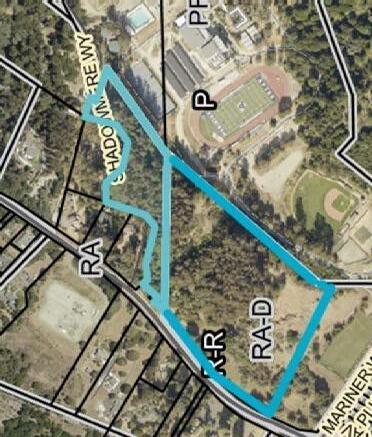
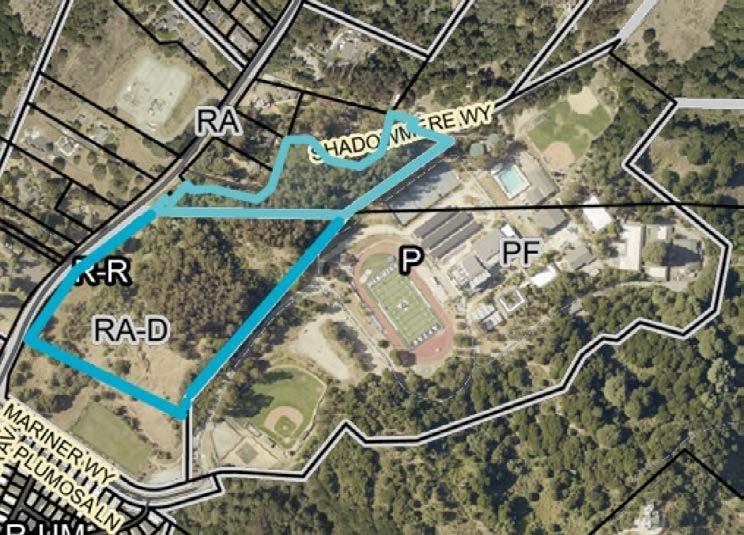
The second is a wooded section in the northwest area of the Aptos High School campus above the athletic fields. The committee will also have authority to examine any other district-owned property that could become surplus within the next three years. That includes facilities affected by enrollment declines or buildings no longer being used.
Gerardo said the committee’s role is advisory



only. Members will gather information, hold public meetings and conduct at least one formal public hearing before making recommendations to the board.
The process will follow California’s open meeting laws, including public notice requirements under the Brown Act.
According to the district report, the committee will evaluate each property based on district needs, possible alternative uses and community impact before issuing a written report to trustees.
The district said possible benefits could include generating revenue from underused land, reducing maintenance costs and making sure vacant properties are used effectively.
“Surplus Properties” page 27
“New Leaf Energy” from page 18
“The Board of Supervisors delayed votes on the draft ordinance several times, including a delay from April 2025 to August 2025, then to November 2025, and the eventual vote in January 2026 that resulted in the amendments that made the County process non-viable,” Christian wrote.
Despite bypassing the county and applying through the California Energy Commission, Christian wrote that the BESS plant will still be safe.
“New Leaf is confident that the CEC Opt-in process will yield a safe and thoroughly vetted project that will deliver grid reliability, lower energy costs and climate action benefits. In addition to the Community Benefits Agreement, the CEC process requires a full environmental review, a thorough vetting by battery safety experts, an emergency response plan that is developed in coordination with local fire agencies, and a robust community input process that will include local public meetings and CECmanaged transparency,” he wrote. n
The PVUSD is reviewing a possible sale of this section of Aptos High School deemed “surplus.”



Report to Community Doesn’t Satisfy Many
Interim Trail Discussed, but Public Left Wondering RTC’s
By CLAUDIA ISEMAN
An overflow crowd packed the La Selva Beach community clubhouse on April 16, eager to hear about an ongoing climate resilience study by transportation planners at the Santa Cruz County Regional Transportation Commission.
“The purpose of this meeting is to provide information about climate hazards at the La Selva Beach and Manresa bluffs,” said Grace Blakeslee, Senior Transportation Planner for the SCCRTC. Blakeslee said she’s been working on the concept of bringing a passenger rail and or trail to the 32 -mile stretch of train tracks from Davenport to Watsonville for the past 20-years.
In December the board of the RTC directed transportation planners to focus their efforts on an interim trail, and for now anyway, keep the train off the tracks until the distant future.
According to Shannon Munz, Communications Specialist for the RTC, a final concept report on a passenger rail was completed late last year and indicated the rail project needs further environmental and preliminary engineering studies to move forward at a cost of 15-million dollars.
“The RTC doesn’t have the funding,” said Munz. She said staff is pursuing funding sources from the federal and state government, while at the same time, continuing to study the climate resiliency of an interim trail only.
For folks like Bill Spence, who serves as the La Selva Beach liaison between the RTC and the La Selva Beach Improvement
Association, an interim trail is paramount.
“So many in our community are study weary,” said Spence.
Public opinion during the meeting seemed strongly in favor of getting a plan in place to begin construction on an interim trail. Meanwhile, preliminary results from the climate resilience study show the La Selva Beach and Manresa bluffs as high-risk areas due to erosion from rainfall, coastal flooding, sea rise and mudslides.
Doug Green has been the president of the La Selva Beach Improvement Association for nine years and has made protecting the bluff a cornerstone of his tenure.
“When you look at the bluff below the tracks and see how close the erosion is to the tracks, we must realize it will only get worse with time,” said Green.
Munz is quick to caution that development of an interim trail plan has not even begun yet on the segment from Rio Del Mar Boulevard to Watsonville.
“There’s no timeline yet for La Selva Beach and Manresa,” said Munz. She adds the RTC is just launching the climate resilience study and the public is invited to participate in the feedback when they announce public meetings in May and June.
While many at the meeting were hopeful to hear an interim trail is in the foreseeable future, they left feeling somewhat ambivalent.
“There were a lot of questions that were unanswered but other than that, it was really informative,” said La Selva Beach resident Rich Morton. n


Three Candidates Vie for District 4 Supervisor Seat Nuñez Has Raised More
By JON CHOWN
For South County voters, there is little to look at on the June 6 ballot, which makes the race for District 4 County Supervisor really stand out.
The June 6 primary will reduce the field of three to two, or possibly just one if a candidate gets more than 50% of the vote. Incumbent Felipe Hernandez is facing a challenge from Elias Gonzales and Tony Nuñez.
Based on fundraising efforts, Nuñez looks like Hernandez’s biggest threat to re-election. Nuñez is actually ahead of Hernandez in fundraising. He has raised $20,022.99 in cash donations, along with $1,475 in non-monetary contributions. He had spent just $8,134 of it as of April 18, according to his campaign filing. He currently has $11,888.32 in cash on hand. His contributions have all come from individuals living within the county, mostly from District 4.
Nuñez’s website lays out his priorities as keeping families in Watsonville by bringing down the cost of housing through a partnership between the county, city, school district, local employers and housing developers. He also promises to push for more home-buying programs in the county.
Childcare is another top issue for Nuñez, who wants more county investment in local programs. He also says he would like to see a coordinated eviction strategy by the county that would assist with more than just rent.
“When a family is facing eviction, the issue is rarely just rent,” his website says. “It may be childcare, transportation, job loss, a medical crisis or a language barrier. A smarter response has to connect those dots earlier.”
The other top issues he lists are attracting more businesses to Watsonville and increasing access to parks. As for business, he would like to look at creating a hospitality zone in Watsonville wherein a business owner could get

Money Than Incumbent Hernandez

an alcohol permit that would be restricted from being transferred outside the zone. He would also like to create a fund specifically to help entrepreneurs start South County businesses.
The question will be whether Nuñez’s slight fundraising advantage will be able to overcome the public visibility Hernandez gets from being the incumbent.
As for finances, it appears Hernandez has raised nearly as much money as Nuñez, but Hernandez’s campaign disclosure statement is confusing. According to records he submitted, as of April 18 he had raised $17,310 in cash, with $810 in donations of less than $100 and unitemized.
The donations come from a variety of sources far and wide, including residents from Scotts Valley, Boulder Creek, Castroville, Oakland and Sacramento. Some of the bigger contributions were made by Teamsters Local 853, which donated $550; American Promotional Events, which donated $500; SEIU Local 2015, which donated $1,000; and United Transportation Union, which donated $1,000.
Some notable local people have also donated to Hernandez’s campaign. Former
“UnSCruz” from page 14
County Supervisor Greg Caput donated $500. Other notable donations were $550 from Steven Dobler and another $550 from Dobler and Sons. Dobler owns 90 Minto Road, a proposed site for a future Battery Energy Storage System facility. Dobler would stand to benefit financially if the controversial project moves forward.
The donation numbers nearly align with what he submitted, which, if totaled correctly, add up to $17,410. However, under expenditures made, Hernandez reported that he has paid out $12,019.56 in cash but lists total expenditures as just $1,213.56. His current cash statement says he had a beginning balance of $10,444 on Jan. 1, 2026, received $22,310 in cash between then and April 18, then made cash payments of $20,735 and has an ending balance of $20,735. None of that adds up correctly. It also says he has outstanding debts of $6,600.
Hernandez’s website touts his lifelong residency in Watsonville and his continuing education at University of California, Santa Cruz. He has had a notable career in public service, serving on the Watsonville City
“It’s the big burn without the elements, stress and time commitment,” he said. “UnScruz gives me and my wife the chance to re-connect with good friends and every year we make new, wonderful connections. The weekend is filled with creativity, fun and dancing.”
“I know a lot of people that just can’t go to Burning Man and this is the next best thing,” said Dugan.
Last year, Dugan’s birthday was on the last day of the event and this year it was the day after it was over. Between the two dates, she spent countless hours working on this year’s UnSCruz. She said without Boose’s help and her husband Sean’s support, she’d never been able to do it.
“It was beautiful watching all these people just enjoying it. It made it all worthwhile,” she said. n
Council, including as mayor. He was also a Cabrillo College Board trustee.
“From serving our country, to organizing with workers, to serving our community in public office, my life has always been about fighting for the people of Watsonville and the Pajaro Valley — the community that raised me,” he says on his website.
Among the priorities he lists are protecting access to healthcare, food assistance and vital services for families, housing, finishing the Pajaro River Levee Project, building safer streets with expanded bike lanes, investing in youth programs, and strengthening emergency preparedness and climate resilience.
He is endorsed by Zoe Lofgren, Jimmy Panetta, Anna Caballero and fellow supervisors Kim De Serpa, Justin Cummings and Monica Martinez.
Gonzales, as of April 18, had raised just $5,878 in cash and has loaned himself an additional $2,000 for the campaign. His biggest contributions have come from family members. Some notable community members have also contributed. Celeste Gutierrez, program manager for Ecology Action, chipped in $550. Gabriel Barraza, a mental health clinician and advocate for ethnic studies at PVUSD, has given his campaign $275.
He has spent $4,567, with most of it being paid to the Santa Cruz County Clerk to file. He spent about $1,500 on signs and another $250 on Facebook and Instagram advertising.
According to his website, his campaign is focused on affordability.
“Affordability means our community doesn›t have to choose between rent and groceries. It means securing a future where our kids can afford to stay and build their lives in the town that raised them,” his website says. n

Campaign signs for District 4 Supervisor are spread out along Green Valley Boulevard in Watsonville.
UnSCruz co-producers Jen Dugan and Ronnie Boose
PVUSD Reviews Student Mental Health Services Approach
By JON CHOWN
WATSONVILLE — The Pajaro Valley Unified School District is moving toward a new way of organizing student wellness and support services aimed at prevention rather than reaction.
At the May 6 Board of Trustees meeting, Executive Director of Student Support Services Peggy Pughe presented a plan called “Optimizing Student Wellness: Aligning District Resources with the CA MTSS Framework.” The proposal is built around the California Multi-Tiered System of Support, which is designed to help schools better match academic, behavioral, and emotional support to student needs.
The main idea is to shift the district away from a system that mostly responds after problems happen, and instead build a stronger support system upfront so fewer students need help later. Pughe described this as moving from a “reactive” model to a “preventative” one.
“It’s a shift from kind of the reactive catch all model to more of a preventative pyramid,” Pughe explained. “The big objective here is to ensure that every student receives the right level of care without diluting district resources.”
The plan uses a three-level “tiered” system to organize support:
Tier 1 is universal support for all students, such as strong classroom instruction and social-emotional learning. District leaders said about 85% of students should have their needs met at this level alone. Tier 2 is targeted support for about 10% of students who need small-group help. Tier 3 is intensive,

individualized support for about 5% of students who need the most help.
A key point in the presentation was the “rule of 10%,” which says Tier 2 support should stay limited. District staff argued that if more than 10% of students are in Tier 2, it may signal that Tier 1 instruction or school-wide systems need to be improved.
Pughe said the goal is to make sure resources are balanced so that most students get strong support early, while still

ensuring intensive services are available for those who need them most. The district would enlist local agencies like Pajaro Valley Student Prevention Services to partner in the effort.
The discussion touched a sore spot as the recent layoffs of school counselors were still fresh in many people’s minds.
Trustee Gabriel Medina attacked Pughe, accusing her of misleading trustees and the public. He was a little unhinged, and blamed it on his attention-deficit/hyperactivity disorder.
“When an injustice is present, when we don’t follow rules correctly, that triggers me. So she’s purposefully egging me on,” he said.
“I wish you would be more respectful to staff who are trying their best to do this presentation,” Superintendent Heather Contreras responded.
“I just don’t trust you. I don’t trust the board president,” said Medina.
When Trustee Misty Navarro pointed out how disrespectful he was, Medina called her “girl!”
“So again, this is triggering my ADHD,” he said.
Trustee Misty Navarro brought some research to the discussion. She pointed out that the National Association of School Psychologists (NASP) recommends a ratio of 1 school psychologist for every 500 to 700 students, while the state average is 1 per 454 students, numbers that the district should be mindful of.
The report was only a discussion. The item will return to the board on May 20. n

“Sidewalk Repair” from page 11
“This project is a powerful reminder that infrastructure is not just about concrete and pavement—it’s about people,” Watsonville City Councilmember Casey Clark said in a statement. “When a critical sidewalk like this is lost, it disrupts daily life for residents who depend on safe, reliable walking routes.”
Clark added that restoring the corridor was essential to ensuring access to jobs, schools and services, and highlighted the need for continued investment in transportation systems that serve all residents.
Caltrans completed the repair by reconstructing the embankment with
lightweight fill, installing sub-drains, and replacing the sidewalk, curb and gutter to improve long-term stability and safety.
The reopened sidewalk provides a vital link for pedestrians along Main Street, a corridor considered critical for connecting residents to everyday destinations. Officials said the closure had placed a significant burden on the community, emphasizing the urgency of restoring the route as quickly as possible.
Transportation leaders said the project reflects a broader commitment to equitable infrastructure improvements, particularly in communities where safe pedestrian access is essential for daily life. n



PVUSD Board Trustee Creates Chaos Board Chair Forced to Recess Meeting
By JON CHOWN
Pajaro Valley Unified School District

Trustee Gabriel Medina took his contempt for his fellow board members to new levels at the May 6 Board of Trustees meeting, continually talking over them during their time to speak, berating both them and PVUSD staff, and openly challenging Board Chair Carol Turley. At the end of it all, he apparently admitted he might have been off his medication.
The interruptions and diatribes made a long meeting even longer. As the meeting neared its fifth hour, Trustee Misty Navarro, who is often a target of Medina’s, poked the bear when item 10.4 came up, Board Listening Sessions.
The sessions were created because the public’s time to comment is limited during
the regular meetings in order to save time. The meetings often last five hours or more. Medina has been extremely critical of any attempts to limit public comment in past meetings, but does not attend the Board Listening Sessions. Midway through Navarro’s three-minute period to comment on the agenda item, she pointed this out.
“Why would I want to work with you when you’re constantly contradicting me!?” Medina shouted into his microphone over Navarro’s comment. He then continued on criticizing her, even after Chair Turley cut his microphone.
“Trustee Medina, you do not have the floor,” Turley told him.
Medina mocked her. “What are you going to do about it, Carol?!” he shouted, while she kept reminding him he was speaking out of turn. “What are you going to do?!”
Turley tried to turn the floor back to Navarro, who still had time left for her comment.
“I’m going to wait until he’s done,” Navarro said. After a short wait for Medina to wind down, Navarro started to speak again, and again Medina began shouting over her, openly campaigning for her opponent in the next election.
“Trustee Medina, this is not a back and forth conversation. It’s currently Trustee Navarro’s turn,” Turley told him.
“Are you done?” Navarro asked him.
“I am done,” he said, but he wasn’t. Instead, he refused to allow his fellow trustee her time to speak, referring to her as “girl.” He told Turley he had no thoughts on her and she said she “loved” Medina anyway. He responded to that by calling Turley a liar and accusing her of being racist.
“What do you have against Brown people speaking and asking questions that you have?” he asked her.
“Trustee Medina, it’s currently Trustee Navarro’s turn,” she replied.
“If he wants to continue to spin out, he can go ahead,” Navarro offered. Navarro tried to finish her comments, but Medina would not let her, continually interrupting her. She finally gave up. Trustee Flores tried to speak, but Medina’s bullying put her in tears before she got more than a few words out and Turley called for a five-minute break.
A few minutes later, Medina re-entered the room and said he had to leave. “I don’t have my medication, y’all. So, I’m going to head out. I cannot deal with this. I am being triggered and these people are wild. So I’m going to excuse myself from this meeting cuz I can’t deal with this.”
About two minutes after that, the remainder of the board emerged and continued the meeting, which ended about 15 minutes later at 11:05 p.m. n
PVUSD Clears Way to Hire Interns, Teachers with Emergency Permits
By Jon Chown WATSONVILLE
— The Pajaro Valley Unified School District Board of Trustees approved a Declaration of Need for Fully Qualified Educators for the 2026-2027 school year on May 6, allowing the district to seek emergency teaching permits if it cannot find fully credentialed teachers.
The measure passed 5-0-2. Trustee Gabriel Medina did not vote, and Trustee Joy Flynn was absent.
Under California law, school districts must approve a Declaration of Need each year before they can hire teachers using emergency permits or limited assignment permits. District officials said the declaration does not automatically mean those teachers will be hired, but it gives the district permission to do so if vacancies cannot be filled by fully credentialed educators.
According to the district, the declaration
“Briefs” from page 6
Program organizers noted that rebates do not cover the full cost of an e-bike and recommend that applicants review pricing in advance. To help with the selection process, a bilingual purchase guidance document has been created highlighting some of the most affordable e-bike and cargo bike models previously purchased at participating local shops.
The application process requires participants to complete an eligibility verification. Those approved must also complete a brief safety training before receiving a rebate
“We are seeking authorization for five multiple subject credentials when we have people with a multiple subject credential set to receive a final layoff?”
— Brandon Diniz, president, Pajaro Valley Federation of Teachers union
could allow the hiring of four teachers with bilingual authorization, 10 resource specialists and four Emergency Transitional Kindergarten teachers. The district also said it may need 22 Single Subject Limited Assignment teachers, including 10 special education instructors.
During public comment, Brandon Diniz, president of the Pajaro Valley Federation of Teachers union, urged trustees to reject the declaration, arguing that it conflicted with recent layoff notices issued to teachers.
“We are seeking authorization for five multiple subject credentials when we have people with a multiple subject credential
voucher. Vouchers must be used at a participating local bike shop by June 1, 2026, and applicants must be able to complete their purchase by June 15, 2026.
Officials emphasized that the program is offered on a first-come, first-served basis and that applying does not guarantee approval or a voucher. Funding depends on remaining program capacity at the time applications are reviewed.
The rebate program is being promoted as part of efforts to support alternative transportation options and expand access to biking in Santa Cruz.
https://gosantacruzcounty.org/go-bike/
set to receive a final layoff?” he questioned.
“You’re about to say ‘We have a Declaration of Need for Qualified Teachers,’ as you’re laying them off. Make it make sense.”
Whitney Damiani, math department chair at Aptos High School, said the district has struggled to fill positions with qualified teachers.
“My friends that are math teachers take other jobs. I’ve been looking for other jobs because I’m so sick of this district,” she said.
Damiani also told trustees the district needs to improve its hiring process by including teachers on interview panels and focusing on recruiting trained instructors.
Santa Cruz County Tourism Industry Grew 1.6% In 2025
Visit Santa Cruz County recently announced that the local tourism industry grew by over 1.5% in 2025.
According to a Dean Runyan Associates report released by Visit California, visitor spending reached $1.401 billion in Santa Cruz County. This figures tracks with steady economic growth, with a 1.6% increase over 2025 figures and consistent growth of 4.2% over the past 10 years.
Last year was the fifth consecutive year of tourism growth since the 2020 pandemic.
Kitt Bragg said any employee facing layoffs would have priority for available jobs before the district turned to emergency credential holders.
“And it’s our legal obligation to do that,” he clarified. “We are bound by law to rescind those layoffs first before we would ever consider an intern or some sort of emergency credential for a position that we can fill with a layoff.”
Bragg said the declaration is meant for situations where the district has exhausted all other options to fully staff schools, including bringing back laid-off teachers.
He added that some jobs, especially in special education, are difficult to fill because of a shortage of qualified applicants.
The declaration is required by the California Commission on Teacher Credentialing and must be approved during a public board meeting each year. n
Statewide, direct travel spending grew from $156.2 billion in 2024 to $158.9 billion in 2025, a 1.7 percent increase. The state has maintained its position as the world’s fourth largest economy, representing roughly 14 percent of the United States’ GDP.
State and local tax revenue generated by tourism reached nearly $125 million in Santa Cruz County in 2025. The report further indicated that the tourism industry supported 11,400 jobs locally, a 4% increase over 2024 employment figures. Santa Cruz County was one of only 10 counties in California that showed a 4% increase or greater in employment year over year. n
Gabriel Medina
Hexavalent Chromium Found in Soquel Creek Water District Wells
Local Drinking Water Met State Standards Anyway
By JON CHOWN
SOQUEL — A new water quality report from the Soquel Creek Water District says tests found elevated levels of hexavalent chromium, also known as chrome-6, in several wells. However, local drinking water did meet state and federal health standards in 2025.
The annual Consumer Confidence Report, released by the district, covers drinking water for customers in Soquel, Aptos, Capitola, Rio Del Mar, Seascape, La Selva Beach and Opal Cliffs. The district serves more than 40,000 residents through 15 active groundwater wells connected to the Santa Cruz Mid-County Groundwater Basin.
compliance until after Oct. 1, 2026. District officials said they are already working on a solution.

“Soquel Creek Water District has been proactive in preparing for the new chrome-6 requirements. We’ve already received State approval of our compliance plan to meet the new standard. Our team has worked diligently to pilot treatment technologies, complete planning and design, and move the project forward to the construction phase, which will begin this year,” said Brice Dahlmeier, associate engineer and project manager for Soquel Creek Water District.
Southern California involving groundwater contamination.
The report said testing found chrome-6 levels ranging from “not detected” to 17 micrograms per liter in 2025. California’s new limit is 10 micrograms per liter.
Despite the chrome-6 issue, the district said all other tested contaminants met drinking water standards.
The district tested for 106 different substances in 2025, including arsenic, nitrate, bacteria, pesticides and disinfection byproducts. The report said all samples complied with state and federal rules aside from the new chrome-6 regulation.
“Contaminated Wells” page 27
Mountains
According to the report, chrome-6 levels exceeded California’s new maximum contaminant level in three of the district’s 15 active production wells. The report said water systems the size of Soquel Creek Water District are not considered out of
According to the report, construction of the treatment facility will start in the fall. Chrome-6 is a form of chromium that can occur naturally in rocks and soil but can also come from industrial pollution. The chemical became widely known after a legal case in
Water District Approves $19.5 Million Contract to Chromium-6
By JON CHOWN
The Board of Directors of the Soquel Creek Water District on May 5 approved a nearly $19.5 million construction contract and more than $1 million in consulting agreements to move forward with a major treatment project aimed at removing hexavalent chromium from drinking water drawn from South County wells.
The board unanimously approved awarding the construction contract for the Hexavalent Chromium Treatment and Well Infrastructure Improvements Project to Clark Bros. Inc. of Fresno, the apparent low bidder among eight companies that submitted proposals for the work.
“They’re eager and ready and qualified,” said Taj Dufour, engineering manager for the district. “They’ve been in business for 60 years; they’ve completed much larger projects than this, and they’re ready to begin next month.”
The project centers on construction of a centralized treatment facility at the Bonita Well site in Aptos that will remove hexavalent chromium, also known as chromium-6, from groundwater pumped from the Aromas Red Sands aquifer.
District officials said naturally occurring chromium-6 is present in the aquifer because of serpentinite rock formations common in the region.
Three district wells — San Andreas, Bonita and Seascape — currently produce water with chromium-6 levels above the state Division of Drinking Water’s maximum contaminant level of 10 micrograms per liter.
Those wells historically provide between 25% and 30% of the district’s total water production and are considered critical to maintaining operational flexibility for customers in Aptos and La Selva Beach.
The approved project includes construction of a ferrous-based reductioncoagulation-filtration treatment system capable of processing between 500 and 2,200 gallons of water per minute at the Bonita site. The work will also include replacing pumps at the San Andreas and Bonita wells, constructing a 100,000-gallon partially buried concrete tank for filter backwash water and building sewer infrastructure connecting to Santa Cruz County sanitation lift stations.
“Chromium-6” page 26


Pluto, the Transformer, Retrogrades in Aquarius

“Chromium-6” from page 25
Pluto, Lord of the Underworld, the deep inner volcanic force that transforms us, is now retrograde (time of review, assessment, discovery). It began May 6, 2026 at 5 degrees Aquarius and continues ‘til mid-October. As Pluto retrogrades, we move into deep layers of interior awareness.
Certain areas of our lives turn inward (based on what area of life is affected, information found in our astrology charts) for assessment, reorganization and transformation. The question becomes how are we being transformed? With Pluto retrograde certain areas of life fall away, some things linger in shadows, some things rise up into the light. Pluto gives us a rare window into ourselves.
The talk today assessing and the idea of halting AI (big tech’s shadow) is part of the Pluto in Aquarius (technology) turning retrograde (turn back). During the retrograde of Pluto, issues of birth, death and rebirth are considered. Persephone may be in the news, or we feel like Persephone eating our pomegranates. Aquarius is the sign of the new era.
2026
Risa D’Angeles
those times, we glimpse issues that may appear in our present world. It was a time of massive revolutionary shifts, including the American and French Revolutions, dismantling outworn power structures. It was the time of Enlightenment. The Enlightenment focused on liberty, human rights, and the publication of foundational democratic texts.

As Aquarius comes forth, the previous era of Pisces goes into a state of destruction and discord. Anything not useful from the previous era falls away, dropping into Pluto’s depths.
Pluto was last in Aquarius in the 13th to 18th centuries. Reviewing
ARIES (Mar 21 – Apr 9)
In your work in the world, in your profession, in what you are doing now and what you choose to do in the future. You will be called to be a focused and determined leader, holding the light for others who will climb the mountain of responsibility with you. Your ambition will shift from that of the self to serving and assisting others. You will then recognize your life purpose.
TAURUS (Apr 10 – May 20)
In your ideals, goals, and visions and how you use money. Your one-pointed focus on the world salvage began this past year and will accelerate. You will be like a rider on a horse with bow and arrow in hand symbolizing your goals. You will clear the way for others seeking the path of survival in order to create a sense of well-being despite the coming turmoil. Being a true visionary, you will be the Teacher.
GEMINI (May 21 – Jun 20)
In your interactions with others and use of resources. You will at times be an eagle then a phoenix shedding the past, assuming a scorpion demeanor. This is purposeful. From emotional desires you’ll progress to selfless desires, referred to as spiritual aspiration. From previous battles your immortality (Soul) emerges. You will no longer hide in darkness but stand in the light. You will sustain and revitalize others through your learned loving kindness.
CANCER (Jun 21 – Jul 22)
In your relationships and daily work. You will seek to move from feeling imbalanced to the urge for equilibrium, which then moves to perfect balance. Gradually, instead of seeing people as winners or losers, you see them perfected by sorrow and sacrifice. Interpersonal relationships become transpersonal (spiritual) and your focus will turn to all of humanity. Light will radiate from your Ajna center (3rd eye), which is the light of Goodwill for all.

The beginning of the Industrial Revolution accelerated. In 1776, the new continent of America with the Declaration of Independence was created. Other events under Pluto in Aquarius — destruction of the Temple of Jerusalem, the construction of the Colosseum, and the eruption of Mt. Vesuvius. Pluto circles the zodiac every 246 years. Pluto is not subtle!
In times of chaos and disorder there is always great opportunity. In times of conflict, embedded deep within is the promise of a new harmony. In times of lack there is sharing. In times of upheaval and revolution, there is hope. In times of necessity humanity (the world disciple, Hercules) steps forward and serves.
And in times of loss, rays of love/wisdom from Sirius and the heart of the Sun penetrate the heart of humanity offering new life to come. But first we turn inward, reflecting on technology, societal power structures, community, innovation and personal transformation. And so, Pluto retrograde in Aquarius for each sign ... n
LEO (Jul 23 – Aug 22)
As you serve others. From the decimating use of self to serving without question, which embraces inclusivity, one of the new laws of the Aquarian era. Your search for order actually creates order, harmonizing the chaos and conflict. Your fear of emptiness shifts into your being a person who is resourceful. And instead of hiding away and working on yourself, you realize yours is a comforting healing presence in the world. Then you easily create all things new for the new culture and civilization.
VIRGO (Aug 23 – Sep 22)
In your sense of self as one who creates. You will realize that within the heart of the Sun there is a love that reaches out to your heart. Instead of being a reflecting light, you will emanate a light that becomes a source of light for others. Instincts will no longer rule you nor simply your shiny intelligence. Intuition will be your guide as you begin to love more. The Right use of Will becomes purposeful because you will identify as divine.
LIBRA (Sep 23 – Oct 22)
In your deepest sense of self and how you nurture. From being totally subjective and under a shell, you will emerge out into nature, the most balanced of kingdoms. You will no longer be afraid. From nurturing only yourself, you will seek the waters of earth and then the waters of Life. Only these quench your thirst. As you have lived a self-preserving life, you begin to self-nurture and then nurture others. Then your true independence will come forth.
SCORPIO (Oct 23 – Nov 21)
Within your mind. From relationship to relationship you sought yourself. When acting with the intention of creating Right Relations with all kingdoms your higher mind is activated. Relation will be not only within the recesses of yourself but will ray out to others. Your mind transforms, becomes whole(istic) and instead of polarizing into the self, your focus becomes harmony with others. Instead of being tossed by the wind, you will direct the wind.
SAGITTARIUS (Nov 22 – Dec 21)
With form, resources and values. Gradually your mind becomes focused on the divine. You learn how to resolve conflicts within and without. Instead of a hidden sense of being limited, you learn all you can about desire until it becomes aspiration. Your struggle with desire becomes a horn of spiritual plenty. From dualism will emerge your extraordinary sense of truth and justice. Then the music begins.
CAPRICORN (Dec 22 – Jan 19)
Within your very sense of self, which has been focused so deeply on helping others. Your life has been directed and inspired so you see that you and others are One and that love underlies all happenings of our times. You begin to feel the pulse of life which is a power and you radiate power which becomes your purpose. Eventually you realize it is the Will of God within. These realities you will come to know and understand and wield with the fires of Love.
AQUARIUS (Jan 20 – Feb 18)
Within your spiritual self, yet hidden. From the opaque waters where you cannot see, you will enter into the springs and waters of life, becoming a server, a mentor, a mediator and then a savior. This will be because you will develop a directed sensitivity that is filled with compassion for thirsty humanity. Instead of feeling different, you realize that difference contains future information. And you will be liberated. You have been seeking this knowledge through friends.
PISCES (Feb 19 – Mar 20)
Within your group. Always service oriented, though always asking how to serve, soon there will be a directed sense that you can activate your visions, which will assist in the planetary shifts. Humanity, through your teachings, can birth new archetypes and rhythms needed on Earth. You will move from the stumbling revolutionary to the One who Understands the Plan, teaching cyclic movement and organizing structures that unify. Your visions gradually geometrize and come to Light.
Additional improvements include electrical and control system upgrades, chemical storage and feed systems, a backup generator, stormwater detention infrastructure, landscaping and extensive above- and below-ground piping work.
The board also declared the project “substantially complex,” allowing the district to retain 10% of contractor progress payments during construction rather than the lower standard retention rate.
District staff reported that bids received April 21 ranged from about $19.4 million to $24.5 million. After reviewing qualifications, references and financial records, staff determined Clark Bros. met all project requirements.
“Five million dollars difference between the bidders. I’m just curious, did you look into why there was such a wide spread?” Director Carla Christensen asked Taj Dufour, engineering manager for the district.
Dufour said the district didn’t concentrate on the top end of the bids, but looked much closer at the lower bidders. He pointed out that the second lowest bidder was just $5,000 more, “So it was a competitive bid,” he said. “In the end, we’re concerned about the total.”
Construction oversight and project management will largely be handled by district engineering staff, with specialized inspection and consulting support provided by outside firms. The board also approved separate professional services agreements with AECOM and Black & Veatch to assist during construction.
AECOM’s contract, approved for an amount not to exceed $125,107, covers environmental compliance monitoring and permit compliance support, including conditions tied to the project’s Coastal Development Permit.
Black & Veatch received approval for a contract worth up to $881,089 for engineering services during construction. The firm previously handled design work for the treatment project and serves as engineer of record.
Under the agreement, Black & Veatch will assist with design clarifications, responses to contractor requests for information, site visits, submittal reviews, startup and commissioning support and coordination with the state Division of Drinking Water to secure final operational permitting for the new treatment facility.
The project has undergone years of environmental review and permitting.
The district originally adopted an Initial Study and Mitigated Negative Declaration for the project in 2015, with amendments approved in March 2025. A Coastal Development Permit was approved in October 2025 without appeal, and an encroachment permit was secured in March.
Funding for the construction contract and associated consulting work has been budgeted across fiscal years 2025-26 through 2027-28, according to district staff. n
Warriors Announce Donation from ‘Swishes for Dishes’ Initiative
The Santa Cruz Warriors, in partnership with Kaiser Permanente and The Athletes’ Corner, donated 84,365 meals to Second Harvest Food Bank Santa Cruz County during the 2025-26 season through the Swishes for Dishes initiative, the team announced earlier this year.
The program donates meals based on the Warriors’ scoring output during the season. This year, 15 meals were donated for every point scored by the team in home and away games, a 50% increase from the previous five seasons, when 10 meals were donated per point.
The Warriors also introduced a new in-game promotion this season called the “Kaiser Permanente Swish Challenge,”
“Surplus Properties” from page 20
No fiscal impact is expected from creating the committee itself, according to the district. Any future financial decisions involving the sale, lease or reuse of district property would return to the board for additional review and approval. Any future proposal to sell or transfer district land would require additional public hearings and board action.
Still, Trustee Gabriel Medina said he was concerned and asked what guard rails the board would adopt to prevent a private development deal that cut the community out of the process. Castillo said the committee is the guard rail, so trustees should be mindful of who they appoint. There is also the process, in which the Board of Trustees ultimately makes the decision.
Medina said he wouldn’t feel comfortable with any requests until a new board that he presumably leads is in place, and was happy to hear it would take two to three years before any recommendations were in place.
Superintendent Heather Contreras explained that it was really the public that should be giving the board direction on this matter. The committee would be made from the public, but would have legal requirements by the state to include specific professional experience and backgrounds, such as Realtors, land-use planners, and attorneys.
“These are people in the community with the best knowledge to give the best recommendation to the board,” she said.
which gave fans at home games the opportunity to contribute additional meals to the total.
Since the program launched in 2020, the Warriors, Kaiser Permanente and The Athletes’ Corner have donated 367,980 meals to Second Harvest.
“This has been a historic year for the Swishes for Dishes program, and I’m incredibly proud that, with the help of Kaiser Permanente and The Athletes’ Corner, a franchiserecord 84,365 meals will be donated to Second Harvest,” Santa Cruz Warriors

team president Chris Murphy said in a statement. “Increasing our commitment to 15 meals per point has allowed us to make a greater impact than ever before in the fight to eliminate food insecurity across Santa Cruz County.”
Jack Redwine, assistant physician in chief for Kaiser Permanente’s Central Coast service area, said the partnership helps address access to nutritious food in the community.
“Kaiser Permanente is tackling one of the most basic of human needs by helping members and the communities we
serve get the nutritious food they need to live a full and healthy life,” Redwine said. “Through this long-standing partnership with the Santa Cruz Warriors, we are working together to care for the total health of our community.”
Second Harvest Food Bank Santa Cruz County was founded in 1972 and says it provides meals to 70,000 local residents each month through partnerships with community organizations throughout the county.
The Athletes’ Corner works with professional athletes and teams on programs focused on supporting families and addressing food insecurity through sportsrelated initiatives. n

Trustee Misty Navarro said fellow Trustees Oliva Flores and Carol Turley went to a seminar and discovered a lot of inventive ideas other districts have come up with, including renting space to art galleries, creating transitional housing, and one district actually leased land to a hospitality corporation that built a hotel and the district is collecting ongoing revenue from it.
“Contaminated Wells” from page 25
Water in the district comes entirely from groundwater pumped from two underground aquifers: the Purisima Formation and the Aromas Red Sands Aquifer. The report said water from the Purisima Formation naturally contains higher levels of iron and manganese and is treated before reaching customers.
The report also described possible pollution risks to the groundwater basin. According to the district, the Aromas Red Sands Aquifer is most vulnerable to septic systems, sewer leaks, fertilizer runoff and pesticides. The Purisima Formation faces risks from dry cleaners, gas stations, auto repair shops, sewer systems and underground storage tanks.
So there’s actually a multitude of things we can do with these properties to not only generate
The district said lead testing at 15 local schools was completed as part of California’s school drinking water safety program. Officials also reported that all district-owned and customer-owned service lines have been classified as non-lead.
The report noted that small amounts of contaminants can still be found in drinking water and that their presence does not always
extra spaces for our community, but also ongoing revenue,” she said.
The vote to establish the committee passed 6-0 with Medina abstaining. n
mean the water is unsafe. Federal and state agencies set limits on contaminants to protect public health.
The district is also continuing work on its Pure Water Soquel project, which is designed to recharge groundwater supplies and stop seawater intrusion into the basin. The project uses highly treated recycled water that is purified and pumped back underground. n
The PVUSD is reviewing a possible sale of this section of Amesti Elementary School deemed “surplus.”
COMMUNITY CALENDAR
ANNOUNCEMENTS
DROP-IN EVENING FIGURE DRAWING
7–9:30 p.m., Santa Cruz Art League, 526 Broadway
“Wonderful opportunity to work on drawing with a model, facilitated by a friendly instructor who created a warm atmosphere for all.”
— Evening Figure Drawing participant
Beginner to professional artists are welcome for these drop-in figure drawing sessions. Instruction and/or critique will not be offered.

Monday Evening Long Pose — Drop-in session of drawing or painting from a live nude model including long and short poses.
Thursday Evening Long Pose — An evening of long poses for painting and drawing with a live model holding either one 2-hour or two 1-hour poses during the evening. This session provides an opportunity for artists to create more detailed studies or focus their drawings or paintings.
Thursday Evening Gesture Study — This session provides a great opportunity to practice capturing the essence and simplicity of the pose, rather than rendering the complexity and detail of the form. More like poetry than prose! The format for this evening will be a series of 1 minute poses, transitioning to 2, 3, and 5 minute poses.
Facilitated by Mark Sangster and Emily Cafaro.
Cost: $20 per session.
Attendance is limited, so come early or register in advance to be sure of a space. Easels are available. Painters, please do not use strong-smelling solvents.
Visit https://scal.org/dropin-workshops for more information.
ONGOING EVENTS
Mondays
BRIDGE CLUB
10:30 a.m.-Noon, 7695 Soquel Dr, Aptos, CA 95003
The Aptos Branch Library hosts Bridge Club sessions on Mondays (except holidays).

Bridge Club is a partnership between Santa Cruz County Parks and Santa Cruz Public Libraries. Register at scparks.com or in-person the day of the event.
OVEREATERS ANONYMOUS
7 p.m., Congregational Church Preschool Meeting Room, 4951 Soquel Ave., Soquel
Overeaters Anonymous welcomes any type of eating disorder or problems with food.
No dues, fees or weigh-ins.
Meetings take place at Congregational Church in the preschool meeting room.
All are welcome.
Overeaters Anonymous (OA) has meetings daily both in-person and on-line in Santa Cruz County at santacruzoa. org
Fourth Mondays (Third Monday in May due to Memorial Day) THE SPOKEN EXPERIENCE
Noon – 1 p.m., Capitola Branch Library, 2005 Wharf Rd
Each month a community of readers gather to share selections from a featured poet.
Join local poets Paola Bruni, Elaine Fletcher Chapman and Jessica Cohn as they lead the discussion.
Upcoming poet focus:
May 18: Emily Dickinson
June 22: Gary Snyder
July 27: Dean Young
August 24: Lucile Clifton
September 28: Sharon Olds
October 26: Juan Felipe Herrera
November 23: Ada Limon
December 28: Jericho Brown
Have a virtual or live event you want to promote? E-mail info (no PDFs please) to info@cyber-times.com
Tuesdays
TUESDAY NIGHT SALSA SOCIAL
7 – 10 p.m., Abbott Square Market, 725 Front St., Santa Cruz
Join a midweek salsa social at Abbott Square Market with salsa, cumbia, merengue, and bachata. Free and open to all skill levels—just bring energy and dancing shoes. More information: www.abbottsquaremarket.com

BINGO AT MCSC
1-3 p.m., Mid County Senior Center, 829 Bay Avenue, Capitola (behind the Party Store)
Hot Dogs, Chili and snacks available for purchase courtesy of our Snack Shack. A lot of fun for all and a possible big win!
Door opens at 12:15 p.m.
Thursdays
SCOTTISH COUNTRY DANCING
7:15-9:15 p.m., Peace United Church 900 High St, Santa Cruz. Beginners welcome, partners not required. $10 each. Come dance!
HAPPY HOUR
5-7 p.m., California Coffee, 9105 Soquel Drive, Aptos California Coffee in Redwood Village hosts an open mic happy hour every week.
Third Thursdays
SIP AND STROLL
6-9 p.m. (check-in 5 p.m.), Seacliff Inn, 7500 Old Dominion Court, Aptos
Come to the Seacliff Inn: Tapestry Collection by Hilton, for a Sip & Stroll event where local artists to show and sell their works. Wines are 30% off, and the featured winery will offer tastings of three varietals for $10 per person. Details of this and more Sevy’s events at www.sevysbarand kitchen.com/events
Fridays (except First Friday of the Month)
LA SELVA BEACH LIBRARY BRIDGE GROUP
10:30-Noon, La Selva Beach Public Library, 316 Estrella Ave. Come for bridge from 10:30 to noon at the La Selva Beach library. Call La Selva Beach Library to reserve your seat: 831-427-7710.
THE PHENOMENON OF HEALING
Friday June 5
First and Third Fridays
JIM GREINER’S HANDS-ON! DRUMMING
7-8:30 p.m., Congregational Church of Soquel, 4951 Soquel Dr. Percussionist/educator Jim Greiner continues his Community Rhythms Class on the first and third Fridays of every month at the Congregational Church of Soquel.
All levels of experience are very welcome to this familyfriendly community gathering. Jim provides percussion instruments and you are welcome to bring your own.
Come play, socialize and reinforce Jim’s fundamental themes of communicating, collaborating and celebrating through rhythm!
$10 donation is requested. Doors open at 6:30.
Last Friday of the Month thru October FOOD TRUCK FRIDAY AT SKYPARK
5–8 p.m., Skypark, 361 Kings Village Road, Scotts Valley Food Trucks A Go Go presents an evening of local eats, live music and activities for all ages.
The monthly event supports Scotts Valley schools through beverage sales and offers a welcoming community gathering.
Featured Band May 29: The Swag Tones Admission is free. For details, visit foodtrucksagogo.com.
First Saturdays
CAPITOLA BEACH CLEANUP
9-10 a.m., Esplanade Park

Each walk is tailored to participants’ interests and abilities, creating an engaging, educational experience.
Space is limited, and tours are first-come, first-served. Guests can sign up at the Visitor Center front desk or call ahead the same morning at (831) 728-2822 for availability.
First Sundays
SANTA CRUZ DINNER CLUB
5 p.m. at various member homes throughout county Love to cook, entertain and socialize? Our monthly dinner club events will be held in several homes throughout Santa Cruz County where members enjoy delicious meals, fine wine and conversation.
Joining the club provides a great opportunity to cook, to entertain, and to meet locals that share your interests. Want to join us? Learn more about the SC Dinner Club and the fun we have by contacting Rhonda Mills at rhondaloves2paint@gmail.com.
DATED EVENTS
Saturday May 16
KICKOFF TO SUMMER DRONE SHOW
9 p.m., Santa Cruz Beach Boardwalk, 400 Beach St. The Kickoff to Summer Drone Show lights up the sky over Main Beach following a full day of rides, games, and food at the Boardwalk.
Arrive early to enjoy attractions and secure a viewing spot for the nighttime show.
For details, visit beachboardwalk.com or call the Boardwalk at 831-423-5590.
SATURDAYS IN THE SOIL
10 a.m.–12 p.m., Santa Cruz Museum of Natural History, 1305 East Cliff Drive
Join a community volunteer effort to care for Tyrrell Park and nearby habitats.
Help preserve and maintain the coastal beauty of Capitola. Join a beach cleanup every month at Esplanade Park.
Keep Capitola Salty is a grassroots movement dedicated to responsible efforts helping to maintain and preserve the environment, scenic beauty and coastal recreational activities of Capitola.
This movement is always looking for volunteers. Email KeepCapitolaSalty@gmail.com.
Second Saturdays
HISTORICAL AIRCRAFT DISPLAY
10 a.m.-4 p.m., Watsonville Municipal Airport, 100 Aviation Way Watsonville Municipal Airport hosts a Historical Aircraft Display every second Saturday. Admission is free.
Saturdays and Sundays
ELKHORN SLOUGH: FREE TOUR OF THE PRESERVE
10 a.m. | 11 a.m., Elkhorn Slough Reserve, 1700 Elkhorn Road, Watsonville
Docent-led tours offer visitors a guided introduction to Elkhorn Slough’s remarkable landscapes, wildlife, and tidal wetlands.
10 a.m. – 4:30 p.m., Community Foundation Santa Cruz County (in the Solari room), 7807 Soquel Drive, Aptos
“The Phenomenon of Healing” is a documentary about events that happened after the death of Bruno Groening in 1959.
Viewers learn how his work developed after his passing and the great extent of help and healing on the spiritual path that is still happening today — irrespective of religious affiliation, skin color and culture.
Fascinating interviews, professional comments by doctors and personal reports from Bruno Groening friends from many countries, give a broad overview of this big Circle of Friends.
Organized by Bruno Groening Circle of Friends: https://www.bruno-groening.org/en.

Participants help maintain native plants and learn about local ecology through hands-on work.
This recurring event supports environmental stewardship and outdoor education.
For more information, visit santacruzmuseum.org.
Sunday May 17
CIMAFUNK LIVE AT MOE’S ALLEY
7–11 p.m., Moe’s Alley, 1535 Commercial Way, Santa Cruz Moe’s Alley presents Cimafunk, the electrifying Cuban funk artist known for high-energy performances with his band La Tribu.
Blending Afro-Cuban rhythms with funk and soul, Cimafunk has gained global acclaim and multiple Grammy nominations.
Tickets are $30 in advance or $35 at the door. This is a 21+ event.
For more information or tickets, visit moesalley.com.
MOE’S ALLEY PRESENTS: CIMAFUNK
7:00 p.m. doors / 8:00 p.m. show, Moe’s Alley, 1535 Commercial Way, Santa Cruz
Moe’s Alley presents Cuban funk artist Cimafunk with his 9-piece band La Tribu in a high-energy live performance blending Afro-Cuban rhythms and modern funk.
Known for electrifying global stages and major festival appearances, Cimafunk delivers a dance-driven show celebrating cultural fusion and Black musical traditions. Tickets at moesalley.com or ticketweb.com.
PIANIST RACHEL BREEN BENEFIT CONCERT
4 p.m., Peace United Church of Christ, 900 High Street, Santa Cruz Laureate of the 2025 Queen Elisabeth Competition, pianist Rachel Breen performs works by Bach, Beethoven and Chopin in a benefit concert for the Distinguished Artists Concert Foundation.
Tickets are $40 online, with pay-what-you-can admission available at the door.
For details, visit distinguishedartists.org.
STRAWBERRY FIELDS FOREVER ROAD BIKE EVENT
7:00 a.m.–5:00 p.m., 500 Harkins Slough Rd, Watsonville Watsonville’s 33rd annual Strawberry Fields Forever road ride offers scenic routes of 100 km and 100 miles through coastal countryside.
Riders receive lunch on long routes, rest-stop snacks, and SAG support. A post-ride party features food vendors and chocolate-dipped strawberries.
For details or registration, call 831.818.5656 or visit https:// www.santacruz.org/upcoming-event/watsonville-strawberryfields-forever-road-bike-event/.
Tuesday May 19
MAY SOIRÉE CELEBRATING AFFORDABLE HOUSING MONTH
4–7 p.m., 7807 Soquel Drive, Aptos
This community gathering celebrates Affordable Housing Month with speakers, networking and discussion about housing solutions in Santa Cruz County.
Hosted by local housing advocates, the event brings together residents, professionals and leaders. Attendees can learn about ongoing efforts and ways to get involved. For details, visit housingsantacruzcounty.com.
Thursday May 21
APTOS CHAMBER LUNCHEON WITH SUSAN TRUE
11:30 a.m. – 1 p.m., Seacliff Inn, 7500 Old Dominion Ct., Aptos
The Aptos Chamber hosts a networking luncheon featuring Susan True, CEO of the Community Foundation of Santa Cruz County.
Learn how local grants support nonprofits, hear community updates, and ask questions.
Sunday May 24
HIGH SIERRA MUSIC FESTIVAL BAND CONTEST
6–10 p.m., Moe’s Alley, 1535 Commercial Way, Santa Cruz
The High Sierra Music Festival Band Contest returns with live performances by Trianna Feruza & The Heavy Hitters, Grace & The Grit, Space Heater and The Akoustiks. Audience members can cheer on semifinalists competing for a slot at the 34th High Sierra Music Festival. Tickets are $10 in advance or $15 at the door. This is a 21+ event.
For more information or tickets, visit moesalley.com.
Monday May 25
JOURNEY FOR CHANGE WALK
8:30–11 a.m., Veterans Memorial Building, 842 Front St., Santa Cruz
The Journey for Change Walk marks the organization’s 10-year anniversary while raising awareness about veteran suicide.
Participants will walk from the Veterans Memorial Building to Capitola Beach, ending at the Vets 4 Vets booth. Community members may join for any portion of the route or attend the finish gathering.
For more information, visit Journey for Change at https://www. journey-for-change.org.
Friday May 30
Saturday May 31
ROARING CAMP: REDWOOD MOUNTAIN FAIRE
Time not listed, Roaring Camp Railroads, 5401 Graham Hill Rd, Felton Roaring Camp Railroads hosts the Redwood Mountain Faire, a two-day outdoor music festival featuring live bands on multiple stages, along with local food vendors and beer, cider, and wine in a redwood forest meadow setting.
Guests can picnic, dance, and enjoy a family-friendly festival atmosphere.
For details, visit roaringcamp.com.
Monday June 1
MIRACLES SANTA CRUZ PERFORMANCE
7 p.m., Colligan Theater, 1010 River St., Santa Cruz Miracles Santa Cruz invites you and your friends to the performance of an original play, “Zap!”, at the Colligan Theater.
COMMUNITY CALENDAR

VETS 4 VETS BOWLING FUNDRAISER
Saturday May 16
1–4 p.m., Boardwalk Bowl, 115 Cliff Street, Santa Cruz
Join Vets 4 Vets Santa Cruz for a fun bowling fundraiser supporting local veterans.
Proceeds go toward programs that assist veterans in the community. Participants can also visit the pro shop for gear and advice.
Santa Cruz USBC has raised over $47,000 since partnering with Vets 4 Vets in 2015
Admission is $20 and includes three games and shoe rental.

For more information or tickets, visit the event online or arrive between 1 and 1:30 p.m. to sign in.
Miracles Santa Cruz is a theater troupe for people with special needs .
Tickets are offered on a “pay what you can” basis. Suggested price is $10. Ticket prices help cover the theater and production costs, so Miracles Santa Cruz appreciates any level of support.
To reserve tickets, visit www.zeffy.com/en-US/ticketing/miraclessanta-cruz-presents-zap.
Friday June 5
Saturday June 6
52ND ANNUAL UCSC PRINT SALE
10 a.m.–6 p.m., UC Santa Cruz Elena Baskin Visual Arts Center & Printmaking Studio Room G-101, 1156 High St.
The 52nd Annual UCSC Print Sale will feature hundreds of original prints created in a variety of media, including woodcuts, lithographs, etchings, screen prints and photobased works.
The two-day event is presented in conjunction with the Art Department’s Spring Open Studios and admission is free.
For more information, visit https://arts.ucsc.edu/news-events/.
Saturday June 6
SANTA CRUZ VEGFEST
11 a.m.–5 p.m., Santa Cruz County Fairgrounds, 2601 E. Lake Ave., Watsonville Santa Cruz VegFest brings together thousands of attendees to celebrate plant-based, cruelty-free and environmentally sustainable living.

The event features food vendors, educational booths, speakers and community resources focused on animal welfare and climate-friendly lifestyles at the Santa Cruz County Fairgrounds. For more information, visit https://vegfestsantacruz.org.
freedom and equality with a community event featuring music, poetry, dance, soul food, arts and crafts, basketball skills contests and a sack race.
Festive dress is encouraged, and the event is free and open to all ages.
Saturday June 13
FELT STREET FLEA MARKET
9 a.m.–2 p.m., CSL Santa Cruz, 1818 Felt St., Santa Cruz
The Felt St. Flea Market features 18 vendors offering antiques, collectibles, clothing, crafts, books, electronics, toys and tools all in one location.
Visitors can shop a wide variety of unique items and find special gifts in a community market setting. Admission is free and open to the public.
Saturday June 20
A TASTE OF THE FESTIVAL –
CABRILLO FESTIVAL 2026 PREVIEW AND BENEFIT
3–5 p.m., Bargetto Winery, 3535 N. Main St., Soquel
The Cabrillo Festival preview and benefit offers an afternoon of chamber music, wine and hors d’oeuvres in support of the 2026 festival season.
Friction Quartet will perform works by Vivian Fung, Clarice Assad and Philip Glass, with composer Vivian Fung joining for a Q&A.
The event also includes a silent auction benefiting upcoming festival programs.
For more information, visit https://cabrillomusic.org.
Sunday June 21
SOLSTICE VIEWING: JOSHUA MORENO
12–3 p.m., Santa Cruz Museum of Art & History, 705 Front St., Santa Cruz
Saturday June 6
Sunday June 7
POSTCARDS FROM PARADISE
2 p.m., Market Street Theater and Senior Center, 222 Market St, Santa Cruz
Feel the rhythm. Taste the tropics. Escape to paradise. Come to the Market Street Theater and Senior Center for two unforgettable performances of “Postcards From Paradise”— where the spirit of aloha comes alive! From the moment the show starts, you’ll be swept away by the vibrant sounds of live ukulele and island drums, breathtaking hula performances, and captivating songs of Aloha.
Talented performers bring the traditions of Hawaii and the Tropics to the stage with grace, power, and heart. Don your favorite floral shirt, grab a lei, and be transported to the islands — no passport required. Tickets and information at https://www.marketstreettheater.org.
Wednesday June 10
PORTER MEMORIAL LIBRARY ICE CREAM SOCIAL AND STORY TIME
1–2 p.m., Porter Memorial Library, 3050 Porter St., Soquel Porter Memorial Library hosts its annual Ice Cream Social and Story Time for preschool and primary-aged children. Ice cream will be served on the library’s back deck beginning at 1 p.m., followed by stories, songs and a craft with storyteller Jeanne Jorgensen at 1:30 inside the library.
For more information, call 831-475-3326.
Saturday June 13
DOWNTOWN SANTA CRUZ JUNETEENTH PARADE
12–5 p.m., Pacific Ave. between Water and Locust St., Santa Cruz
The Downtown Santa Cruz Juneteenth Parade celebrates
This final viewing presents the culmination of artist-inresidence Joshua Moreno’s year-long project tracing light and reflection at the decommissioned Davenport Jail. The installation features graphite wall tracings capturing shifting light patterns from the surrounding environment, highlighting Moreno’s experimental, site-specific artistic process developed over time.
Saturday June 27
WOODIES ON THE WHARF CAR SHOW
10 a.m.–3:30 p.m., Santa Cruz Wharf, Santa Cruz Woodies On The Wharf Car Show is the annual gathering of classic woodie vehicles on the Santa Cruz Wharf. Although the show runs 10 a.m. to 3:30 p.m., cars begin arriving as early as 6 a.m. to secure parking. Free event requires no registration or entry fee. More info available at https://www.santacruzwoodies.com.

Sunday June 28
SIP FOR SECOND HARVEST
1–4 p.m., Seascape Beach Resort, 1 Seascape Resort Dr., Aptos Sip for Second Harvest is a summer fundraising event supporting Second Harvest Food Bank of Santa Cruz County.
Guests can enjoy wine, beer, cider, live music by the Ripatti Rose Band, and light hors d’oeuvres in a coastal setting.
The event raises funds for food access and nutrition education programs serving local families in need. n
From Fear to Freedom How Kids Break the OCD Cycle
By DR. LORI BUTTERWORTH, Child & Adolescent Psychotherapist
The first time I met Nick, he walked into my office with his hoodie sleeves pulled down over his hands. He was sixteen.
His mom came in with him because he couldn’t touch the doorknob.
He had been washing his hands so viciously that his skin was cracked and painful. By the time he came to see me, OCD had taken over nearly every part of his day. When he stopped going to school, his mom insisted it was time for therapy.
Kids like Nick are often described as “germaphobes” or “clean freaks,” but that misses what is really happening. Nick wasn’t choosing this. He was suffering. OCD had trapped him in the belief that deadly germs were everywhere.
Emily was a young woman who seemed like the last person you would expect to struggle with OCD. She was kind, thoughtful, and hardworking. She was the kind of person who tried to be a good person, to do the right thing.
But Emily’s mind was flooded with intrusive thoughts that horrified her. Violent images. Disturbing ideas. Thoughts completely out of line with her values.
She was riddled with shame and guilt, spending hours analyzing the thoughts,
trying to push them away. She avoided any situation that might trigger a thought, constantly searching for reassurance that she wasn’t secretly a bad person.
The harder she tried to push the thoughts away, the stronger they became.
That’s the cruel paradox of OCD.
Thanks in part to the media, Obsessive Compulsive Disorder (OCD) is widely misunderstood. TV and movies portray people with OCD as quirky neat freaks, and people joke, “I’m so OCD,” when they mean they like things tidy.
But real OCD is very different.
OCD is not about neatness or organization. It is a painful, debilitating disorder where intrusive, unwanted thoughts (obsessions) pop into the mind and repetitive behaviors or mental rituals (compulsions) are repeated to reduce the distress. The relief is brief, and the cycle grows stronger.
By the time many kids and teens arrive in my office, they are exhausted. OCD has stolen time from school, friendships, hobbies, and family life.
But there is also something hopeful about these stories.
OCD is treatable.
The gold-standard treatment for OCD is Exposure and Response Prevention (ERP).




ERP helps people gradually face the situations or thoughts that trigger anxiety while learning to resist the compulsions.
Instead of running from fear, we practice walking toward it.
Ryan started small. One of his first exposures was touching the arm of a chair in my office and waiting before washing his hands. His anxiety shot up immediately. His mind screamed that something terrible would happen.
But we stayed with it.
Time after time, minute by minute, as he tolerated the anxiety, it slowly started to fall.
Over time the exposures got harder, touching the doorknob, sitting at a desk, walking through school without washing repeatedly. Little by little, his world expanded.
Emily practiced something equally brave. Instead of arguing with the thoughts, she learned to let them be there without fighting them. At first it felt unbearable.
But eventually something remarkable happened: the thoughts began to lose their power.
She discovered that a thought is just a thought, not a prediction, not a command, and not a reflection of who she is.
The other day I called Ryan to see how he was doing.
He answered the phone and said, “Dr. B, I’m eating a burrito and putting gas in my car.”
A simple, ordinary teenage moment. One that used to feel impossible.
Emily now lets intrusive thoughts drift by like background noise. They no longer control her life.
OCD still whispers sometimes. But it’s no longer in charge.
Freedom from OCD isn’t about eliminating fear. It’s about facing it head-on. Learning that you can tolerate discomfort, break free, and take your life back. n Names and identifying details have been changed to protect privacy.
•••
Lori Butterworth is a child and adolescent psychologist and the founder of the Center for Child and Adolescent Mental Health and Jacob’s Heart Children’s Cancer Support Services. For more information about mental health support for your child and family, contact Lori at 831-2220052 or visit CCAMH.org. The Center offers evidence-based youth mental health care and free resources for parents.

SCCAS Featured Pet FEATURED COLUMNIST

Meet The Mighty Thor!
Looking for a partner for your next outdoor adventure? Meet Thor (#A329872), a 1.5-year-old bundle of Big Dog Energy wrapped in a sleek black-and-white coat! This neutered Border Collie / German Shepherd mix isn’t just a looker with his fancy brown and white socks — he’s got the brains and the personality to match. Thor is an athlete whether it’s swimming, hiking, or an epic game of fetch. He’s doing well on leash and is easy in the car. Taking him to a brewery or on a run? No problem! He’s a socialite and strangers are just friends he hasn’t met yet. You can expect lots of wiggles and wags. He’s a scholar and already knows “sit,” “shake,” and “down.” Bonus Points: He’s already crate trained.
Thor is looking for an active partner who wants to keep his mind and body moving. He’s done well with other pups, but he’d need to do a “meet and greet” with any resident dogs first. (No word on cats yet—he hasn’t met any)
Ready to bring some thunder into your life? Come meet Thor at the shelter and see those happy feet in action! n
The Santa Cruz County Animal Shelter is full of adoptable animals. Fostering animals is an awesome way to improve a Shelter animal’s life and fill your home with love and fun! If you are interested in fostering any kind of animal please email jillian.ganley@santacruzcounty.us. You can also Follow SCCAS on Instagram and/or Facebook to stay up-to-date on shelter news and where to find adoptable pets around town at breweries, stores and events. All adoptions are first come, first served.
Santa Cruz County Animal Shelter’s full-service, open-admission shelter 1001 Rodriguez St., Santa Cruz, 95062 • Hours: Daily 11 a.m. – 6 p.m. (Arrive before 4 p.m. for “meet and greet” — Please ring bell for stray animal drop-off from 7 a.m. – 11 a.m.) 580 Airport Blvd., Watsonville, 95076 • Hours: Tues.-Sat. 9:30 a.m.–noon; 1–5 p.m. (Closed Sun/Mon — Please ring bell for stray animal dropoff 9:30 a.m.-noon; 1-5 p.m.) Website: www.scanimalshelter.org
SCCAS Main line: 831-454-7200. Animal Control: 831-454-7227. After-Hours Emergency: 831-471-1182 • After Hours: jillian.ganley@santacruzcounty.us

Trees Should Fit Their Gardens
By TONY TOMEO

Atree is a woody perennial plant with a single tall trunk and branches. However, several tree types can not conform with this overly simplistic definition. Palm trees and tree ferns are neither woody nor branched. Although branching, arboriform yuccas and dracaenas are no woodier than palms. Banana trees develop a few unbranched herbaceous trunks.
Actually, several types of trees do not conform with their own definition. Many Japanese maples, crape myrtles and olive trees develop multiple trunks. Many citrus are not as tall as big shrubbery. Papayas are merely large perennials that survive for only a few years. Banyans support their canopies with multiple aerial roots instead of conventional trunks.

the year instead of only in autumn. Utility cables and easements limit placement of trees. Many municipalities have adopted strict tree preservation ordinances. Such ordinances protect heritage trees or trees that exceed a particular size. They often make it difficult or impossible to remove unwanted and problematic trees. Preemptive selection of the most appropriate tree varieties helps avoid such situations. Prevention is better than the cure.
•••
Coast Live Oak
Coast live oak, Quercus agrifolia, is more adaptable in the wild than in home gardens. It can grow in groves or mix with other tree species, particularly at the coast. Alternatively, it can grow solitarily in open grassland, particularly inland. Solitary specimens can be a few centuries old. They can grow as tall and wide as seventy-five feet, with a few trunks.
© Statepoint Media

Generally, though, trees are the most significant living components within their gardens. Not much else within home gardens is as big or as permanent as its trees are. Some old oaks inhabited their gardens centuries before their gardens. Some old redwoods contain more lumber than their associated homes. Many trees influence adjacent home gardens.
This is why proper selection is so important. Trees must be appropriate to their particular applications. They should remain proportionate to their particular situations, even if they live for centuries. They should not generate more mess than those living with them want to contend with. Also, they should not require more maintenance than they will likely get.
Shade trees near houses should be deciduous to allow sunshine through during winter. Evergreens at a distance can obscure unwanted scenery throughout the year. Evergreen vegetation is generally a bit messier than deciduous vegetation, though. It sheds through
Within irrigated home gardens, though, coast live oak likely does not survive for as long. It is impossible to know because no home garden here is a few centuries old. With water, young specimens mature faster than they would in the wild. Once established though, no irrigation is needed. Mature wild specimens often succumb to root rot with new irrigation. Coast live oak is more appealing in the wild than within home gardens anyway. It sheds foliar debris continually, particularly as new foliage emerges during spring. Although it is technically evergreen, it replaces its foliage annually. Its foliar debris is mildly herbicidal to delicate plants below, and stains pavement. Every few years, acorns are very prolific. Seedlings can appear in the oddest of situations. n •••
Tony Tomeo can be contacted at tonytomeo. com.

Some trees eventually grow very large.
Coast live oak grows quite large.