












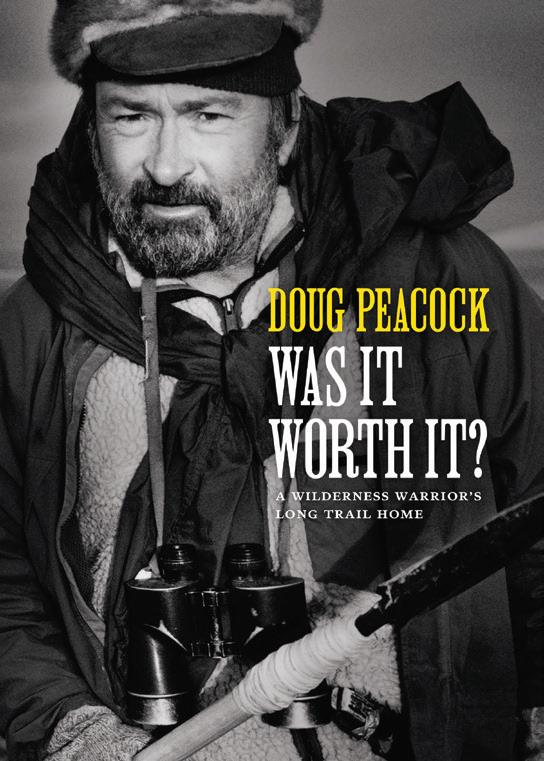



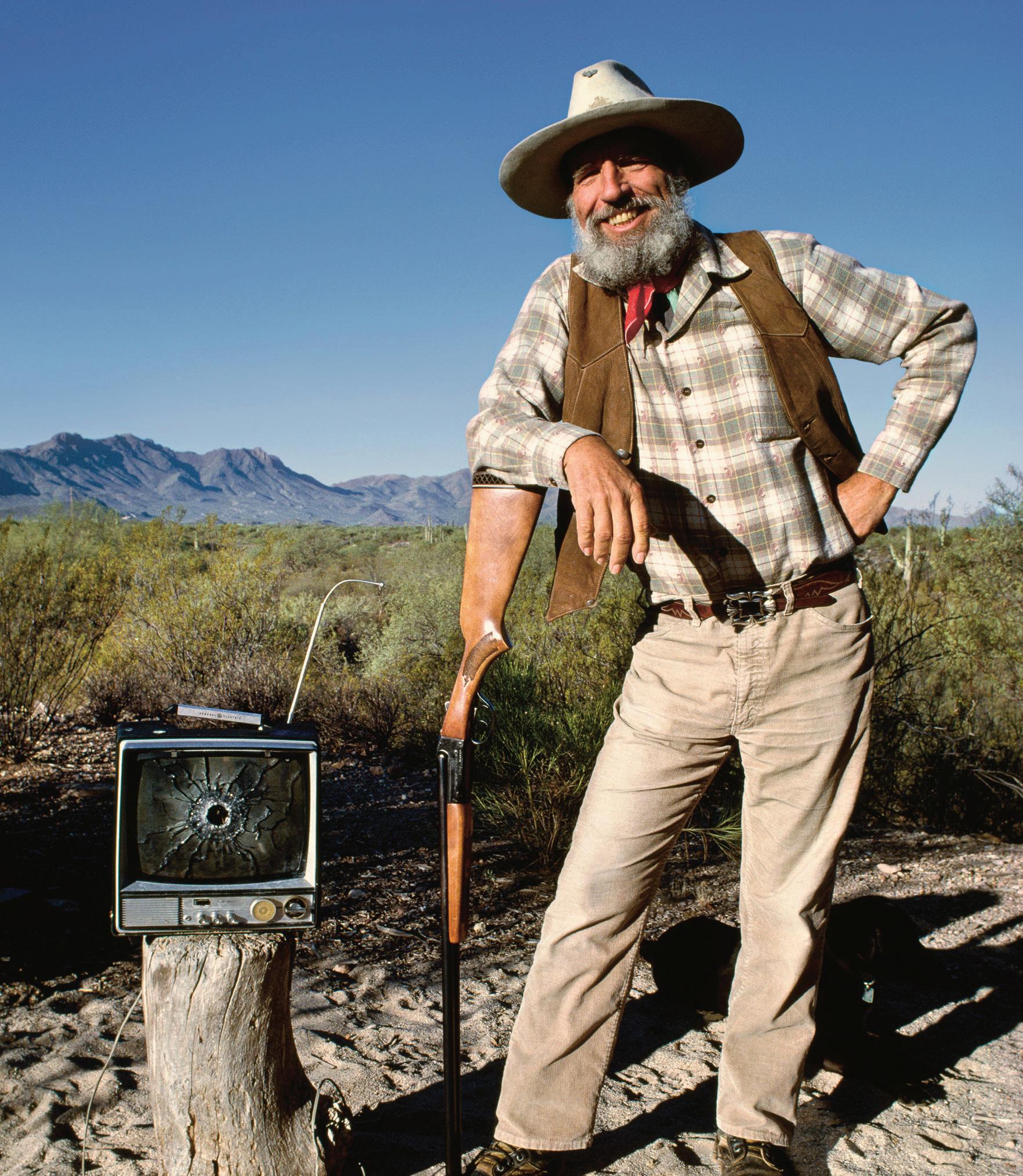









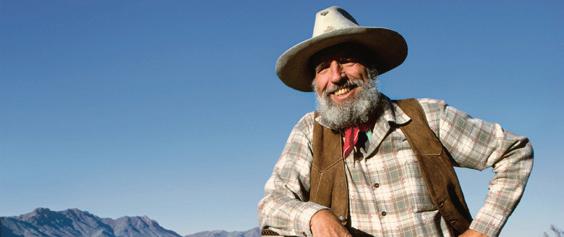

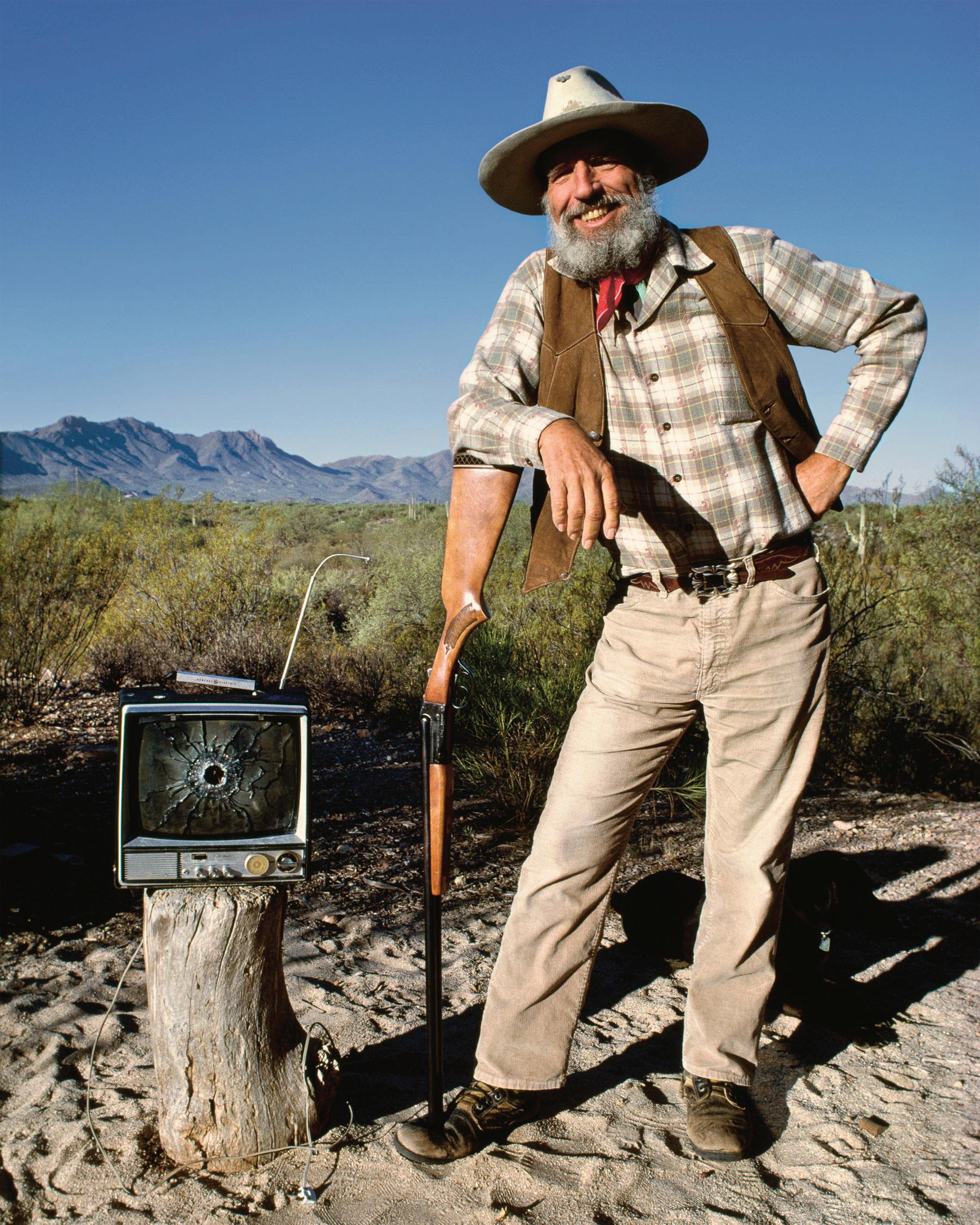
Tucson Weekly reader, you might recognize the image on this week’s cover: The photo of Ed Abbey graced our front page way back in 1989, for a tribute issue shortly after the legendary environmental writer’s death. As far as I know, it’s the first time we’ve used the same image twice on a Weekly cover, but given that author Doug Peacock is writing about how he went about acquiring a “slow elk” for Abbey’s wake, it seemed appropriate.
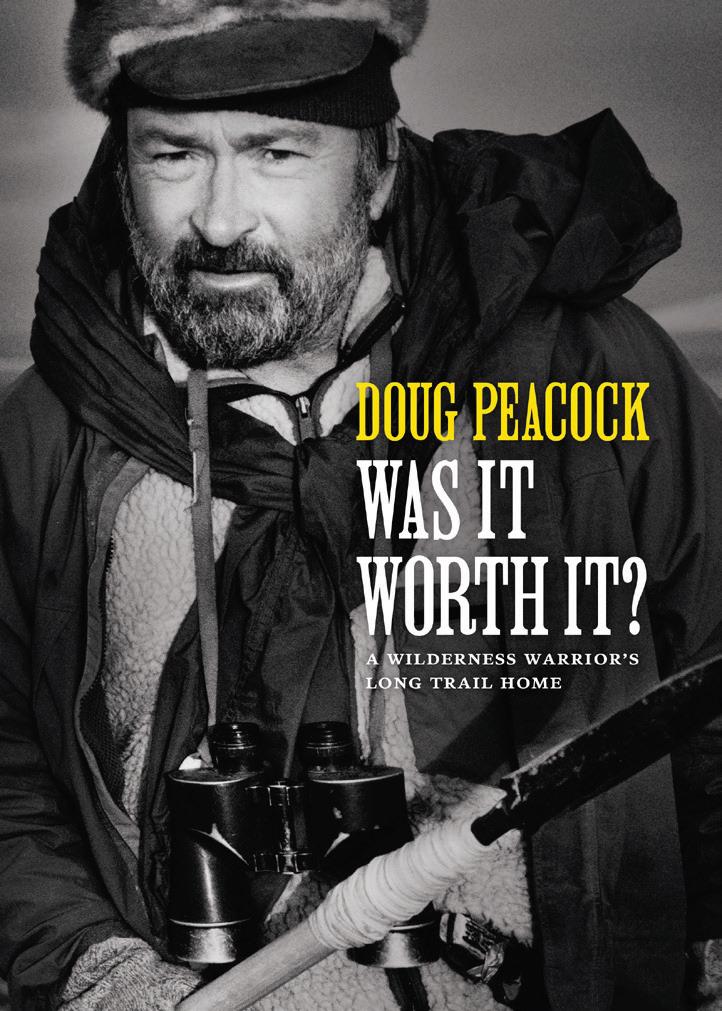
The story is an excerpt from Peacock’s new book, Was It Worth It? A Wilderness Warrior’s Long Trail Home. Peacock, a onetime Tucson resident (and the model for George Washington Hayduke in Abbey’s best-known novel, The Monkey Wrench Gang), recounts many episodes in his life, including travels from the high Arctic to Siberia in the service of conservation efforts. It’s a terrific read, so add it to your summer book list. And since we’re celebrating Earth Day this week, be aware that he closes the book with a dire warning about climate change and the peril it poses for humanity and so many other species on the planet.
Elsewhere in the book this week: Columnist Tom Danehy tackles a variety of topics, including the question of whether eSports are
actually sports; Camila Pedrosa of Cronkite News tallies up the raging waterfall of money in this year’s Arizona Senate race; managing editor Jeff Gardner previews this week’s Arizona International Film Festival; UA School of Journalism intern Allison Fagan looks at the celebration of the 100th birthday of Nogales native and jazz legend Charles Mingus; XOXO columnist Xavier Omar Otero tells you about all the great music you can hear this week (including a performance by Earth, Wind and Fire), Tucson Weedly columnist David Abbott counts up February’s cannabis sales; calendar editor Emily Dieckman lets you know where to have some fun this week; and there’s plenty more if you dig around our pages, so enjoy.
Finally, a correction: In last week’s Tucson Weedly, we spoke too soon when we said that Sublime was no longer making that delicious lemon tea cake. While it might be hard to order online, you can still find it on dispensary shelves.
Jim Nintzel Executive Editor
Hear Nintz tell you where to have fun this week at 9:30 a.m. Wednesday mornings on the world-famous Frank Show on KLPX, 96.1 FM.
of the Tucson Weekly, please visit TucsonWeekly.com
STAFF
ADMINISTRATION
Steve T. Strickbine, Publisher
Michael Hiatt, Vice President
Tyler Vondrak, Associate Publisher, tyler@tucsonlocalmedia.com
Claudine Sowards, Accounting, claudine@tucsonlocalmedia.com
EDITORIAL
Jim Nintzel, Executive Editor, jimn@tucsonlocalmedia.com
Jeff Gardner, Managing Editor, jeff@tucsonlocalmedia.com
Alexandra Pere, Staff Reporter, apere@timespublications.com
Nicole Feltman, Staff Reporter, nfeltman@timespublications.com
Contributors: David Abbott, Rob Brezsny, Max Cannon, Rand Carlson, Tom Danehy, Emily Dieckman, Bob Grimm, Andy Mosier, Linda Ray, Margaret Regan Will Shortz, Jen Sorensen, Clay Jones, Dan Savage
PRODUCTION
Courtney Oldham, Production Manager, tucsonproduction@timespublications.com
Ryan Dyson, Graphic Designer, ryand@tucsonlocalmedia.com
CIRCULATION
Aaron Kolodny, Circulation, aaron@timeslocalmedia.com
ADVERTISING
TLMSales@TucsonLocalMedia.com
Gary Tackett, Account Executive, gtackett@tucsonlocalmedia.com
Kristin Chester, Account Executive, kristin@tucsonlocalmedia.com
Candace Murray, Account Executive, candace@tucsonlocalmedia.com
NATIONAL ADVERTISING
Zac Reynolds Director of National Advertising Zac@TimesPublications.com

By Tom Danehy, tucsoneditor@tucsonlocalmedia.com
THE FIVE DUMBEST THINGS I read this past week:
• The University of Arizona now has a million-dollar venue called the Esports Arena. Yes, it’s dumb that anybody would spend a million dollars on a place to play video games. It’s even dumber to use the word “Arena” to describe what is basically an extended version of the basement that Kevin Smith occupied (calling it his “Command Center”) in the Die Hard movie featuring Timothy Olyphant as an angry computer geek.
But, by far, the dumbest part—the Dumb de Resistance—is the use of the term “Esports.” Video games are not sports; they’re games. Sports require you to get your fat butt off the couch and go outside or into the gym and do something physical. Throw a ball, catch a ball, kick a ball. Run or jump or lift something.
Now, just because they’re games doesn’t mean that they have no value. They can help people wind down after a tough day. They can help socially fragile people connect with others like themselves without having to actually meet and interact with another living human being. And, of course,
there is always the possibility that the game will suck the life out of the player, the money out of his wallet, and the air out of the room…or Arena. But it’s still not a sport.
To be fair, some of the players have mad skills. They can Tetris the crap out of things. The military probably has hidden cameras in the Arena perchance to identify the next person recruited to sit in a portable building outside of Las Vegas while operating a killer drone halfway around the world.
But it’s still not a sport.
College students are supposed to be really bad at time management and weight control while, at the same time, blowing their parents’ money. (That’s pretty much the basis of the fraternity system.) But now comes an announcement that the dumbass E-word is spreading to high schools. High school sports were literally created to help keep kids from becoming dumb, fat and lazy. Instead, some districts are going to take much-needed funds away from athletics and give it to kids to play video games.
Y’know, Dude, you might someday be able to say that you lettered in Legion of the Damned (or whatever that game is called), but you will never be able to escape

the immutable truth. It’s not now, nor will it ever be, a sport.
• Florida announced that it has rejected nearly 40% of the math books submitted for use in elementary schools, claiming that the books contained “prohibited subjects.” Probably like numbers and stuff.
There was even a suggestion that the elementary-school math books contained “critical race theory,” which, as we all know, has never been successfully defined by a white person. DeSantis and his butt-lickers are probably upset that the books might have used the terms African-American and/or Black instead of the prescribed term “Negro.”
• The fragile majority in the Israeli government fell apart last week over a dispute about bread. Former majority whip Idit Silman switched over to the Netanyahu coalition after Israel’s Health Ministry told hospitals that they should allow visitors to bring leavened bread into their buildings during Passover. Apparently, that’s not kosher (during Passover).
Lord knows I’m not going to criticize someone’s religion and/or their strict adherence thereto. But, apparently, there were some good, common-sense reasons behind the Health Ministry’s ruling. Add to that the fact that Israel’s High Court ruled in 2020 that hospitals do not have the right to be “bread police.”
Stilman says that she is so religiously strict that she could not, in good conscience, remain in the ruling coalition. So
she jumped ship and will now have to try to find different people to help her get her pet project passed through the Knesset. She wants to have all (male) Israeli soldiers to have their sperm frozen.
• Among the questions that the NFL asks prospective players at its meat-market Combine are “Do you find your mother attractive?” and “At what age did you lose your virginity?”
I’m not sure exactly what the correct answer to the first one would be, but for the second one, if a player wants to go high in the draft and make more money, the answer should be “I still haven’t lost it. I save all my energy for the field.”
• Finally, I don’t know if you saw this, but a Republican legislator in Tennessee, while voting on a bill that would make it a crime for homeless people to camp on public property, cited Adolf Hitler as a shining example for the homeless. State Sen. Frank Niceley said, “I wanna give you a little history on homelessness, In 1910, Hitler decided to live on the streets for a while. So for two years, Hitler lived on the streets and practiced his oratory and his body language and how to connect with the masses and then went on to lead a life that got him in the history books. So a lot of these people, it’s not a dead end. They can come out of this, these homeless camps, and have a productive life, or in Hitler’s case a very unproductive life. I support this bill.”
So, instead of Hoovervilles, in Tennessee, they’re now Hitlervilles. ■

By Camila Pedrosa Cronkite News
raised more than $61.5 million by March 31, led by Democratic Sen. Mark Kelly, D-Ariz., whose almost $39 million in campaign contributions was the second-highest in the nation among Senate candidates this cycle.
The latest reports from the Federal Election Commission show that Kelly had raised and spent more than his six challengers combined. But experts are still calling the Arizona race a toss-up,
with Kelly grappling with a Democratic president whose sinking poll numbers could hurt his campaign and attract millions from outside Republican groups that see Arizona as winnable.
“Kelly obviously will have no shortage of money, and he should have a huge edge on whoever his eventual opponent is,” said Kyle Kondik, the managing editor for Sabato’s Crystal Ball, at the University of Virginia Center for Politics.
“However, money is far from everything in modern elections, and Kelly should be facing a difficult political environment,” Kondik said in an email Monday.

Kondik pointed to groups like the Senate Leadership Fund, a Republican political action committee that said Monday it has reserved $14.4 million in advertising in Arizona to start running in September, after the primary election.
The Arizona buy is part of $141 million the PAC said it will spend this fall on Senate races in seven states.

That sort of spending will help offset what is currently a sizable fundraising lead for Kelly, who one analyst said is “showing no signs of slowing down.”
According to the FEC, Kelly’s campaign donations as of March 31 trailed only Sens. Raphael Warnock, D-Ga., who raised a stunning $67.6 million so far in the 2021-22 election cycle.
Kelly had spent just under $17 million and had about $23.2 million in the bank, according to his FEC filing. His challengers, by comparison, reported raising $22.6 million and spending $11.5 million as of March 31.
Republican Jim Lamon leads the challengers with $13.8 million raised— but $13 million of that amount was a loan that the candidate made to his own campaign.
Blake Masters was next among the GOP hopefuls, with $3.8 million raised and $2.3 million in the bank. But Masters has the support of his former boss,
billionaire entrepreneur Peter Thiel, who put up $10 million for the Saving Arizona PAC, which was created to support Masters’ candidacy.
Former Arizona National Guard
Adjutant Gen. Mick McGuire reported raising just over $2 million with half of that still in the bank. Attorney General Mark Brnovich was the only challenger who had spent the bulk of what he raised, spending more than $2 million of the $2.5 million raised so far.
Brnovich cannot expect to get a boost from former President Donald Trump, whose backing will likely separate a candidate from the crowded GOP pack and has been eagerly sought by most of the Republicans. Trump said Monday that he will be making an Arizona Senate endorsement “in the nottoo-distant future,” but he dedicated the majority of his statement to repeating complaints about Brnovich’s handling of the 2020 election investigations. The campaign offices of Lamon, Masters, Brnovich and McGuire did not immediately respond to requests for comment Monday.

Jacob Rubashkin, a political analyst with Inside Elections, said that outside funding, like the Senate Leadership Fund, will help Kelly’s eventual challenger. But that help will not come until after a party nominee is chosen, while Kelly’s campaign said in a statement Monday that it started advertising in February and has released two ads so far.
Rubashkin called Kelly a strong fundraiser in the Democratic Party who is “setting the pace for incumbent fundraising this particular cycle” and is “showing no signs of slowing down.” But he said the current political climate favors Republicans, with President Joe Biden’s struggles during his first year in office creating “a hole for Democratic senator incumbents that is too deep to get out of, even with tens of millions of dollars in donor money.”
Biden had a 41.8% approval rating nationally, according to the latest compilation of polls by FiveThirtyEight, and an even lower 40% approval rate in Arizona, where 55% disapproved, according to a March 30 poll by OH
Predictive Insights.
But Mike Noble, the managing partner at OH Predictive Insights, said that while the environment is bad for most Democrats, Kelly is an exception. He said the firm’s latest polling shows a generic Republican beating a generic Democrat in three races it is tracking, but that “Kelly is leading against a generic Republican.”
“Whether you agree with Mark Kelly or not politically, he has proven to be out-of-this-world in his fundraising prowess, and it’ll be key to his reelection,” Noble said in an email Monday.
But Rubashkin said Kelly will need to keep pressing if he hopes to win reelection.
“At the end of the day, if you ask most people in this business, ‘Would you rather have the money or the national environment?’” he said, “these days, most people would tell you they’d rather have the national environment.” ■
For more stories from Cronkite News, visit cronkitenews.azpbs.org.


By Jim Nintzel jimn@tucsonlocalmedia.com
CONSERVATIONIST DOUG PEACOCK
has covered a lot of miles in his efforts to save wild spaces and wild creatures.
Peacock recounts a lot of these journeys in his new book, Was It Worth It? A Wilderness Warrior’s Long Trail Home. Within its pages, he recalls his retreat to the Yellowstone wilderness to live with grizzlies while he was recovering from PTSD after his service in Vietnam. He talks about his time in Tucson, exploring the Cabeza Prieta and Mexico’s Sierra Madre range. He travels to the High Arctic, Siberia, the Galapagos Islands and elsewhere, bringing the reader along for a view many will never have a chance to experience.
He also dedicates a chapter to why, although he’s a gun owner and a hunter, he hates trophy hunting, the NRA and Safari Club International. “These are assholes, like Trump’s son holding the elephant’s tail,” he says. “Safari Club International has just slopped over into this hate for wild animals, especially predators.”
In this week’s excerpt from the book, Peacock remembers how he decided to carry out his friend Ed Abbey’s last wishes for a party following his death. Peacock decided to serve “slow elk,” but his method of acquiring that beef was a bit unorthodox, although Abbey would have surely approved.
These days, Peacock is living up in Montana, near Yellowstone National Park, and he’s still fighting to save the grizzlies.
Peacock concludes, at the end of the book, that his conservation efforts were indeed worth it. But he predicts a grim future for humanity if people don’t take steps to reduce greenhouse gases and climate change. Between the fires in the Amazon, the Arctic, ongoing droughts, the melting of the ice sheets, the thawing of the permafrost and so many other developing catastrophes, a reckoning is coming a lot sooner than people realize.
“The biggest, biggest lies in the media are when people say, ‘Well, at the end of the century, something might bad might happen.’ That’s bullshit,” he says. “I think by 2025, we’re going to be able to look in that grim darkening crystal ball and see our nightmare is on the walls of the cave, flickering in the fire. … If you love life and you love beauty and you value your children and their generations, it’s a great tragedy.”
An excerpt from conservationist Doug Peacock’s new book, Was It Worth It? A Wilderness Warrior’s Long Trail Home
ON MARCH 14, 1989, DESERT
anarchist and writer Edward Abbey died. I attended his death, administering medicine, injections, and other hopeless remedies that last night. Two days later, three friends and I buried him in a desert grave.
Ed’s passing was a significant landmark in my life, a winter count. Abbey’s death was no surprise, as the doctors had misdiagnosed his portal hypertension as cancer of the head, of the pancreas. Ed was repeatedly told he had only a year or less to live over a five-year period. He bore this misinformation with great dignity.
Since Abbey had some time to think about it, he scribbled down some notes about his death and burial. This is what we had to work with:
Ceremony? Gunfire and a little music please, maybe a few readings from Thoreau, Whitman, Twain, Jeffers, and/or Abbey, etc.; that should be sufficient. No speeches desired, though the deceased will not interfere if someone feels the urge. But keep it all simple and brief.
A wake! More music, lots of gay and lively music—bagpipes! Drums and flutes! Jigs, reels, country swing, and polkas. I want dancing! And a flood of beer and booze! A bonfire! And lots of food—meat! Jerky and sheepherder stew. Gifts for all my friends and all who come—books, record albums, curios, and keepsakes. No formal mourning, please—lots of singing, dancing, talking, hollering, laughing, and lovemaking instead. Some gunfire! Doug and his guns.
It wasn’t an easy task to bury Ed; it took a couple of days to find the precise wilderness gravesite and there was plenty of squabbling among the team along the way. Three close friends shared
the duties with me: Ed’s father-in-law, Clarke’s brother-in-law and my friend Jack Loeffler. Not all of us were comfortable with this forbidden labor; this was illegal transport of an unembalmed body, without permits, and internment in prohibited soil. Steve, Clarke’s brother-in-law, became my instant friend
and guided me through my own hard landing following our planting old Ed in his final home—a mixture of grief, flashbacks, and fatigue.
I was exhausted when I got back to Tucson. Clarke (Ed’s wife) had scheduled a wake for Ed in just three days. My job would be cooking the sheepherder
stew and smoking the jerky—plenty of work.
The event would be a public wake for his friends and fans. I owed this to Abbey’s family and followers. It was my notion of service. Food had to be prepared. I needed to get my hands on some meat. What came to mind was a cow.
An obscene picture had recently been published of 16 severed mountain lion heads stacked in a pyramid against a tree. Government animal control agents had slaughtered them at the request of a single cattle rancher on US Forest Service land, so I had a steer from that particular ranch in mind—a very minor gesture of payback.
I had always been aware that I needed physical risk in my life. I didn’t know why—it was something I’d never analyzed. Maybe I required just a little danger—a little hazard fix—to imagine myself a tiny bit brave and competent. Sometimes it helped if the risk was slightly illegal, like a modern-day equivalent of a Crow stealing a Cheyenne pony. I had a vague notion that these acts rea rmed me among my people, men and women who kept the faith alive by taking care of one another and fighting to protect the wild homeland— Abbey’s people.
Now with Ed in his grave, the hour had arrived for me to seriously reconsider my unsolicited part-time career as an environmental outlaw. After all, I had children of my own, a family to support. Even the most righteous monkey wrenching constituted illegal acts that could land me in the slammer. I not only knew right from wrong; I knew what was legal and what was not. But I still had Ed-related duties: one foray with the gang remained.
It now happened that these circumstances—Ed’s death, the mountain lion heads, the need to execute a little illegal act in rea rmation of Abbey’s honor, and getting the meat essential for Ed’s wake—came into alignment.
After atrocities as immoral as body counts, the corrupt yet legal act of killing large numbers of Arizona’s mountain lions and black bears on a single ranch running cattle on leases that were 98 percent on public land was
unacceptable in my world.
My plan was to go out to the lion- and bear-killer’s lease on the national forest and poach one of his slow elk for Ed’s wake. (Native Americans, especially the bison-hunting Plains Nations, called White Man’s cattle “slow elk.”) These Natives noted that the “spotted bu alo,” or range cow—in comparison with a wild animal—was markedly dim-witted and slow of foot. I had discussed lion payback with Abbey months before his death. Ed approved of the general plan. Of course, I didn’t anticipate Abbey being dead before the payback. Now, justice would be another spice for the stew.
Abbey deserved an honoring. The least I could do would be to execute his “Funeral Instructions” with a flourish.
Poaching slow elk is, simply put, cattle rustling, punishable everywhere in these parts and throughout the West by imprisonment, hanging, or something in-between.
The next morning, I went hunting with two pals. We pored over topographic, land-ownership, and national forest maps. Our approach to the grazing lease would be from the wilderness.
The pickup truck ground up steep primitive roads and then tracks. When the tracks petered out altogether we left







SHEEPHERDER STEW FOR ABBEY
CONTINUED FR0M PAGE 9
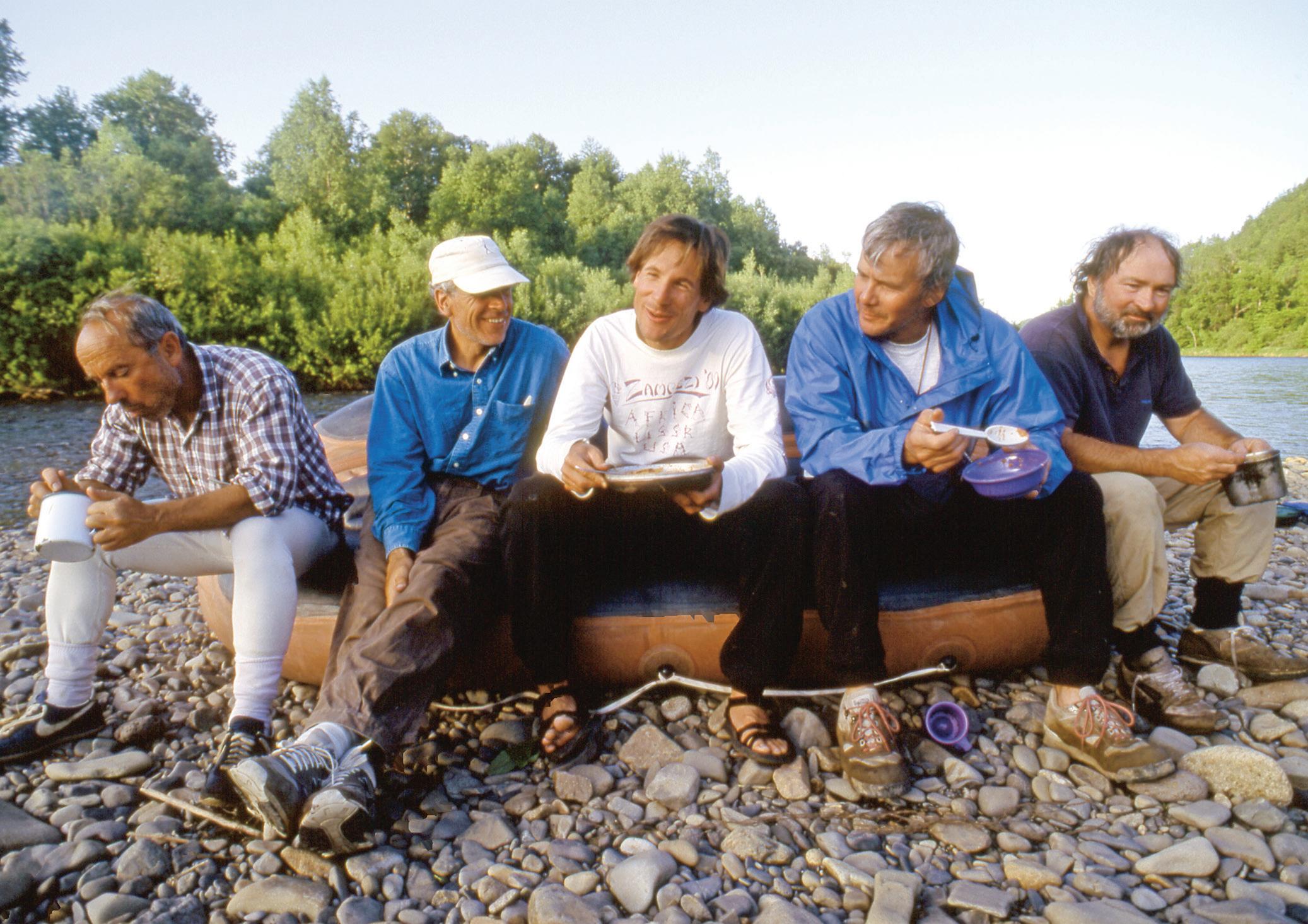
the truck, but before we left it, I replaced the license plates with ones registered to Ed, who had no more need of them. Dressed in camouflage, carrying binoculars and .22 rifles, and wearing sidearms, we picked our way through the agave and prickly pear. My two companions were known and dedicated Earth First! activists. One of them was an accomplished woodsman capable of talking to ravens and calling in mountain lions by clacking together two sets of deer antlers. The country seemed overgrazed. This cattle-grazing lease was, in fact, a perfect illustration of everything gone wrong with public land in the West—national forest land—where unbelievable numbers of coyotes, eagles, the last recorded Arizona wolf, skunks, badgers, coatimundis, ringtail cats, bobcats, mountain lions, and black bears have died unspeakable deaths in the jaws of the rancher’s steel traps and by poison at the hands of the tax-payer-supported Animal Damage Control agents of the federal Department of Agriculture. This trapping was legal and intended to protect the rancher’s cattle; our hunt was quite illegal and
intended to harm the rancher’s cattle. At dusk we startled an ocelot, a very rare cat this far north. We made a cold camp and turned in. During the night, curious and bold ringtails checked us out.
The next morning, we heard, spotted, and began stalking wild range cattle, man-shy animals that ran off. After two hours, we finally crept up on a thousand-pound cow and shot it cleanly between the eyes. This was a slow-elk hunt, and humane execution was mandatory. Ed Abbey had specified: “no gut shooting.”
In this rugged wild country, the beast was too big to move. We peeled the hide back with our knives on the spot and went to work. We cut out a hundred pounds of tenderloin and sirloin with our skinning knives, leaving nine hundred pounds for the bears, skunks, coatis, cats, coyotes, and ravens. The meat we took would go into beef jerky and sheepherder stew for Abbey’s wake. ■
Excerpted from Was It Worth It? A Wilderness Warrior’s Long Trail Home © 2022 by Doug Peacock. Reprinted with permission by Patagonia.

Pets of Pima Parade. If you think you have the cutest pet in town, I have good news and bad news. The bad news is you’re wrong, because the cutest pet in town is actually my dog. The good news is that both of us can showcase our cute pets at this parade down Fourth Avenue, sponsored by Tucson Subaru in partnership with Pima Animal Care Center. Sign up to participate in the parade online, or just come with your crowd-friendly pet to spectate and enjoy a day of food, festivities and an adoption fair. 8 a.m. Saturday, April 23. Fourth Avenue.
1000 Books for Ukraine. I think we’re all feeling a little bit powerless right now, with so much pain in the world that we can’t fix ourselves. So, any chance to help out is welcome in our book. Nordine Zouareg is the former Mr. Universe and bestselling author of “InnerFitness,” a book about developing healthy and long-lasting habits to contribute to peace of mind. This weekend, he and his team are hosting a meet and greet/book signing event at which 100% of profits will be donated to the International Rescue Committee to support Ukrainian refugees. 10:30 a.m. to 5 p.m. Saturday, April 23, and Sunday, April 24. La Quinta Inn & Suites at Wyndham, 102 N. Alvernon Way.
11th Children’s Festival/Día Del Niño. Arizona Bilingual presents this free day full of fun for the whole family over at our local children’s museum! Live music with dancing, food to keep you fueled, and plenty of activities for the kids will ensure that this is a Sunday well spent. A day full of fun with other kids might be just the push your kiddos need to push through to the end of the school year and enjoy summer vacation. 10 a.m. to 2 p.m. Sunday, April 24. Children’s Museum Tucson, 200 S. Sixth Ave. Free.
Sons of Orpheus 30th Annual Gala Spring Concert. Tucson’s longest established men’s concert is holding no bars for this milestone anniversary. The night features a mix of choral favorites, including works by Ketèlbey, Rimsky-Korsakov and Beethoven, plus a medley from Fiddler on the Roof. Guest soloists are Ivan Duran on clarinet, tenor Topher Esguerra, soprano Lindsey McHugh and Andrew Nix on violin. 6 p.m. Friday, April 22. St. Francis in the Foothills, Celebration Center, 4625 E. River Road. $15, or $10 for groups of five or more from retirement or care facilities. Free for students.
CURED, with Filmmaker Bennett Singer. It’s hard to believe it’s been less than 50 years since the American Psychiatric Association removed homosexuality from its list of mental

Pima County Fair. The fair is here, and there is so much to do. Watch a pig race! Eat a deep-fried oreo! See concerts and ride stomach-churning rides and watch culinary competitions! There’s nothing like the delightful sensory overload of the fair, and we can’t wait to experience it all. We’ll see you there. Let us know if you’d rather meet up for a caramel apple at Carmelot or grab some powdered sugar goodness at the Funnel Cake of Love. April 21-May 1. Gates open at 3 p.m. Monday through Friday and at 11 a.m. Saturdays and Sundays. Pima County Fairgrounds, 11300 S. Houghton Road. GA $10, $5 for kids 6 to 10, free for kids 5 and under. $5 parking.


by Emily Dieckman

illnesses. This movie is the story of how that happened. Southern Arizona Senior Pride presents the story of gay psychiatrist John Fryer and the forgotten story of a group of people who believed that they, not psychiatrists, were the experts on their own lives. Filmmaker Bennett Singer, who also co-produced “Brother outsider: The Life of Bayard Rustin” and “Electoral Dysfunction” will be present. 2 to 4 p.m. Sunday, April 24. Loft Cinema, 3233 E. Speedway Blvd. Free.
0.5K Ultimate Underachievers Color “Run.”
Do you ever see pictures of people finishing a mud run or a color run and think, “Wow, that looks fun! Would love to try something like that, but without the running part!”? This is the event for you. This. 0.3 mile “run” through downtown Tucson kicks o at O’Malley’s, where you can carb-load Michael Scott-style with a slice of pizza, and hydrate college student-style with a shot and a beer. You can stop at the water station along the way if you need to, but when you’re done, you can celebrate your accomplishment with champagne and donuts. You earned it! 12:30 p.m. Saturday, April 23. O’Malley’s on Fourth, 247 N. Fourth Ave. Get your tickets by April 21 for $56. 21+.

2022 Master of Fine Art Thesis Exhibition Reception. During the last year of their coursework, MFA students in the studio degree program work with faculty to develop a body of original artwork for public display. This is your chance to see brand new art in a variety of mediums and styles, and to catch a glimpse at the future of art and the up and coming careers of these 13 soonto-be graduates. Come to the reception for a beautiful evening of graphic design, photography, video, illustration and immersive pieces. Reception is 5 to 6:30 p.m. on Thursday, April 21, at the UAMA & Joseph Gross Gallery, 1031 N. Olive Road. Showing through Saturday, May 14.
Innes at The Surly Wench. Innes’ tagline is that she’s your “best friend’s little sister all grown up,” which is an amazing way to paint a portrait of her comedy—charmingly innocent, but a little bit dark and biting at the same time. She’s a nationally touring comedian, award-winning writer and a regular host and performer at Flapper’s Comedy Club in Burbank, California. You can check out her albums “Sex With Nerds,” “Smells Like Nerd Spirit” and “Unicorn Dance Party 2” on streaming platforms, but you can also see her live this week at the Wench! 7 to 9 p.m. Wednesday, April 27. Surly Wench Pub, 424 N. Fourth Ave. $5.

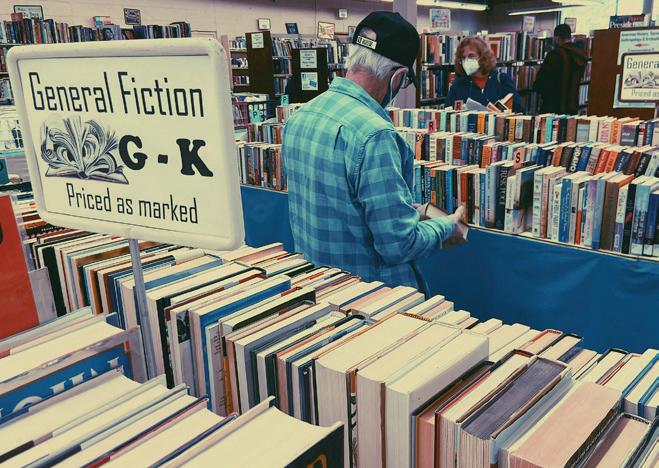
Friends of Pima Library Community Book Sale. Book it over to this sale featuring everything from vintage books to kids books to best sellers and Pulitzer Prize winners. Friday is regular prices, Saturday has 25% o for people 55+, Sunday everything is half price, and Monday is $10 fill-a-bag day (they provide the bags). Come explore the many sections, including the Storytime shelf, featuring copies of children’s books read on the Friends of Pima Library YouTube channel. 8 a.m. to 2 p.m. Friday, April 22, to Monday, April 25. 2230 N. Country Club Road. Free.
Troubadour Thursdays: Nico Barberan. Troubadour Thursdays helped us all get out of our pandemic hideaways last spring for a chance to enjoy live music safely on downtown patios. The Fox Tucson Theatre and the Downtown Tucson Partnership are excited to bring back this series, in which an artist plays short sets at a series of downtown patios. This week we have Nico Barberan, an eclectic guitarist, singer and composer originally from Santiago, Chile. He completed a master’s degree in classical guitar in Chicago and has since performed throughout the Americas. Thursday, April 21, with the following approximate schedule: 5 to 5:25 p.m. at the Monica, 5:30 to 5:55 p.m. at Batch/1055 Brewing, 6:05 to 6:30 at The Delta, 6:40 to 7:25 at Charro Steak and Del Rey, and 7:35 to 8 p.m. at Perche’ No.
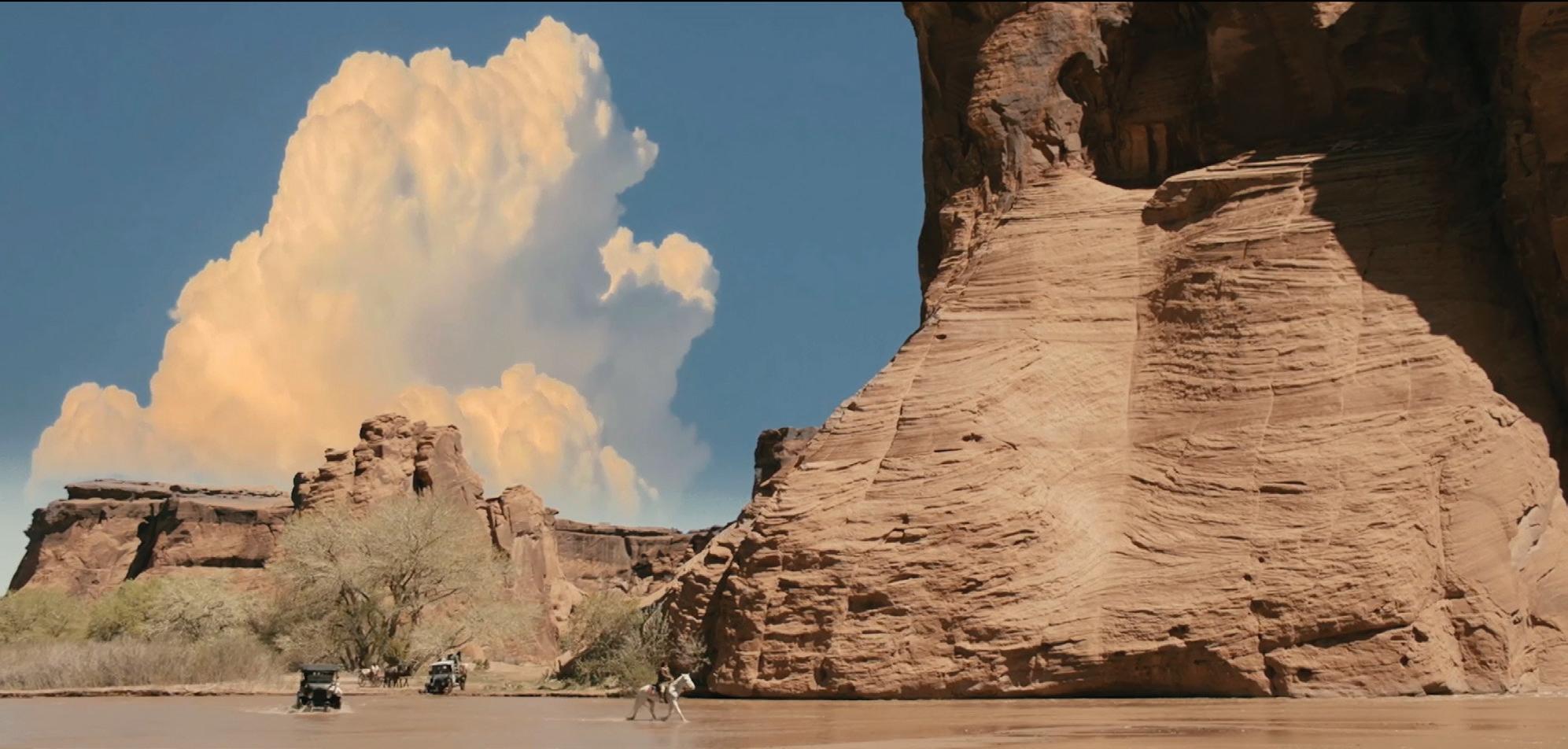
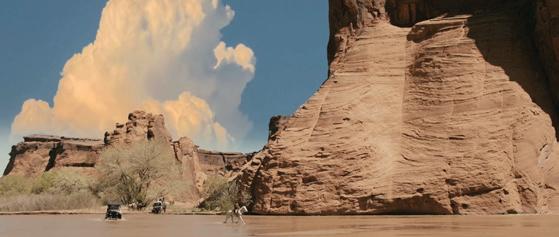
A still from the film Canyon del Muerto, about one of America’s first female archaeologists, which includes some never-before-filmed locations on the Navajo Nation.
Arizona International Film Festival celebrates 30 years with a larger focus on border collaboration
By Jeff Gardner jeff@tucsonlocalmedia.com
Tarkovsky once said, “The artist exists because the world is not perfect.” In turn, the Arizona International Film Festival returns this year with a renewed effort on connection and collaboration, perhaps making the world a bit better through art.
Over its three decades, the Arizona International Film Festival has balanced its focus on films both local and throughout the world. This effort has never been stronger, as it features movies filmed right here in Tucson, as well as from more than a dozen countries. Over the next week and a half, the film festival brings comedy, drama and documentary films to the Old Pueblo, as well as special highlights on cross-border creation.
Participating venues include downtown’s Screening Room and Fox Theatre, the festival grounds at the MSA Annex, The Loft Cinema, Etherton Gallery, the Cactus Carpool Drive-in Cinema, and Main Gate Plaza at University Blvd. New to the festival this year is “Cine Sonora,” a special showcase of independent films from the Mexican state of Sonora. In addition to film screenings, Cine Sonora will also examine similarities between filmmakers on both sides of the border with a special panel discussion with writers, directors and producers.
“It’s pointing us to a new direction that we’re going to
take next year as well, which has more work with Mexico. This is just the start to get people aware,” said festival director Giulio Scalinger.
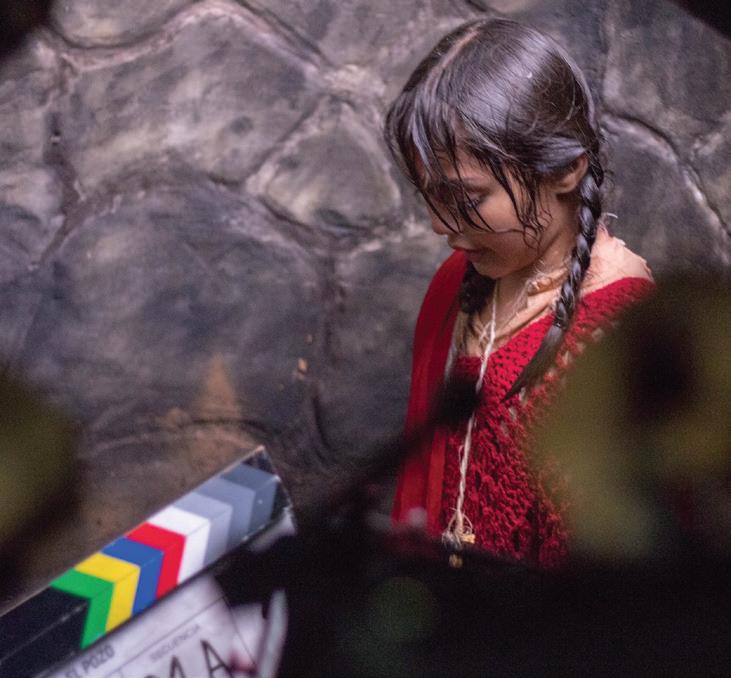
One film featured in Cine Sonora is El Pozo (The Well). The short film, which takes place in 1920s Mexico during a Civil War, follows a young girl who must recover a bucket from a well. It balances fantasy, drama, and suspense, while maintaining inspiration from classic Tucson films.
“It’s a melting pot of ideas. A lot of the background comes from the stories of my family and my wife’s family, and some of the historical research from the area,” said filmmaker Santiago Manriquez. “Tucson has been a hub for filmmaking, especially during the Western period, and that continues to have inspiration. For example, El Pozo was made with the intention of evoking a Western feel and look. It’s not a pure Western, but it does borrow from the look and the nature of those conflicts.”
Although the film is set nearly 100 years ago, Manriquez says many of its themes reflect the modern day, such as power dynamics — one of the reasons it is set during a Civil War.
“It’s a very interesting period, but also a very violent period. But it’s not often touched in many modern films,” Manriquez said. “I think there’s a lot of correlation to the modern time when it comes to violence, especially violence directed toward unprotected people. Violence tends to trickle down from positions of power and tends to affect unequally.”

The film is screened in Spanish with English subtitles, and the filmmaker will be in attendance.
“Culture doesn’t really have a border. Any kind of cultural connection that gets established acts as a bridge,” Manriquez said. “Because Arizona and Sonora are so closely intertwined, our cultures reflect and impact each other. And I’m not just talking about the economic connection, but also the culture and the people.”
The film festival opens with a special screening of Canyon Del Muerto at downtown’s Fox Theatre. The film tells the story of one of America’s first female archaeologists, Ann Axtell Morris, who worked with the Navajo in the 1920s to uncover information about one of North America’s earliest civilizations, the Anasazi.
Scalinger says this film was selected as the opener due to its focus on culture, and its involvement with Indigenous filmmakers. In fact, the film was produced in the Navajo Nation and even features never-before-filmed locations.
“We have an umbrella that we program under called ‘bridging cultures’ and we
feel that cinema can play a role in making people feel and understand each other in a unique way,” Scalinger said. “There’s a lot of education that can come out of it.”
Coerte Voorhees, who directed “Canyon del Muerto,” says he was captivated by an old photograph of Morris’ Model T Ford filled with archaeological equipment making its way through Arizona. From then on, he wanted to tell the story of Morris and her work with the Navajo Nation.
In total, more than 70 filmmakers are expected to attend the festival. While there are multiple Native American and Mexican filmmakers, other submissions come from Ireland, South Korea, Israel, Germany, Argentina and more. The Arizona International Film Festival accepts submissions from October through January before selecting finalists. More than 120 films will be shown this year, marking the largest festival since the pandemic.
“We receive submissions from all over the world, but of course we always try to have a focus on Arizona films. Usually we have at least 10% of the films shown to be from Arizona,” Scalinger said. “For styles, this year is especially a mixed bag. Everyone is doing everything: documentary, narratives, experimental, animation. So I wouldn’t say that Arizona filmmakers only

Wednesday, April 20 through Saturday, April 30
Multiple screenings and panel discussions across town and online filmfestivalarizona.com
do border films, even though we do have one of those this year.”
The festival includes multiple panel discussions from members of the industry. Topics include “The Trials and Tribulations of Filming in Arizona,” Indigenous voices in filmmaking, insights gained in the production of documentaries, and the process of shooting a film entirely on Mount Lemmon.
This year also includes multiple blocks of short films, from animated shorts to dramatic shorts to Indigenous shorts.
“This year, there’s really a strong contingency of international shorts,” Scalinger said. “And what’s interesting is that in the United States, when a filmmaker makes a short, it’s usually a stepping stone for a feature. But in Europe and other countries, the short film is an artform all its own.”
Other film highlights include:
One Road to Quartzsite. This feature-length documentary film follows the diverse groups who participate in the great Quartzsite, Arizona, RV gathering: snowbirds, retirees, punks, loners, campers and more. According to director Ryan Maxey, “They set up camps, intermingle, and an unlikely community is formed. Some of them bought into the dream and lost everything in the Great Recession. Others dropped out long ago. Now they’re all neighbors on the same piece of dirt.”
Heirloom is a short film about a mother and daughter who set out to discover “why Italian Americans still love to garden.” It’s a story about personal roots, the role of a mother and motherland, and crosses paths with notable Italians.
A Bird Flew In. A production from the United Kingdom, this film examines “what happens when we are freed from external distractions and forced to find a meaning in our loves and lives.” It follows the cast and crew of a fictional film who are sent home at the onset of the pandemic. With no script, audience or actors, they must find a way to restructure the meaning in their lives.
American Wall. Although this is an Austria-produced film, it takes viewers on a journey across America’s Southern border. The documentary captures the lives of people who live and work in the borderlands, as well as those looking to cross by any means necessary. At the same time, multiple groups, including gangs and government agencies, cross through the fray.
Musher. This U.S. production follows four women as they prepare for the Copperdog annual race. It examines the bond that racers have with their sled-dogs. According to directors Anuradha Rana and Laurie Little, “As each musher prepares for the race, we reveal their community, devotion to the lifestyle, and how women influence the sport.”
Inhabitants. This documentary examines five Native American tribes throughout the deserts, coastlines, forests, mountains and prairies. Not only does it examine their daily lives, but also their traditional land management practices that may become increasingly critical in the face of climate change.
“I think there’s a really good diversity of filmmakers and teams, and I hope people appreciate that diversity. I think it’s going to be interesting to see the diversity of Sonoran filmmakers compared to the greater diversity of filmmakers throughout the festival,” Manriquez said. “Because one of the beautiful things about film and filmmaking is that there’s a place in it for everybody, and for different ways of expressing viewpoints and storytelling.” ■
For more information, visit filmfestivalarizona.com
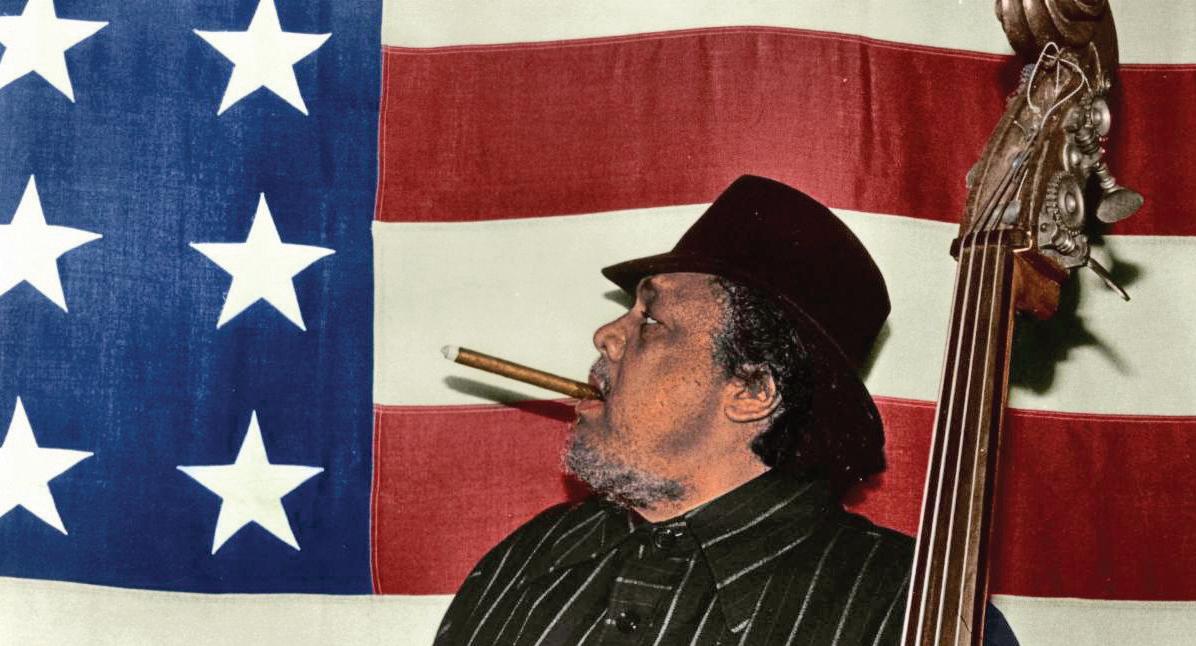
Tucson, Nogales and Tubac are all hosting special events for the Nogales-born jazz composer Charles Mingus. On Saturday, April 23, Nogales is even cutting the ribbon on a Charles Mingus Memorial.
Southern Arizona celebrates jazz legend Charles Mingus’ 100th birthday
By Allison Fagan tucsoneditor@tucsonlocalmedia.com
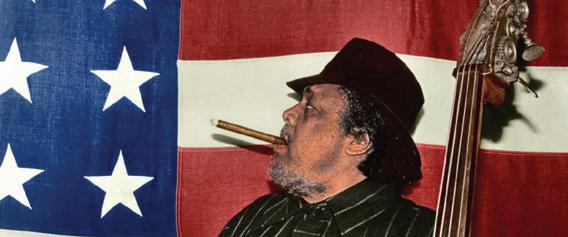
THE CENTURY ROOM, HOTEL Congress’ new jazz club, is making noise with its upcoming grand opening doubling as the 100th birthday celebration for Nogales native and famed jazz composer and bassist Charles Mingus.
“We always had this date on the calendar as a target date because Mingus, we treat him as the patron saint for the club, really,” said founder, programer and manager of Century Room Arthur Vint. “We have several pictures of him hanging on the walls looking down on everybody and we want the space to honor him.”
However, this is only one of multiple Southern Arizona locations celebrating the jazz icon. On April 23, an all-day Mingus Festival Celebration and Memorial Dedication will be held in Nogales. And on April 30, which also happens to be International Jazz Day, organizers are planning an all-day Mingus Centennial Fiesta in Tubac. Mingus is widely considered one of the most important and forward-think-
ing jazz composers of the 20th century, collaborating with figures like Louis Armstrong, Dizzy Gillespie, and Herbie Hancock. His complex and often experimental style led to major jazz records like Mingus Ah Um, Blues & Roots, and The Black Saint and the Sinner Lady.
The name of the Century Room comes from a mixture of a few items: one, the century plant is a nickname for the agave plant, as the venue is an agave-focused bar; two, Hotel Congress, the building that cradles the Century Room, is over one hundred years old; and three of course being Charles Mingus’ 100th birthday occurring the same year as its grand opening.
“Everything was kind of just coming into place with the grand opening at the same time as [Charles Mingus’] birthday celebration, so it all seems kind of fitting that we make it into one big party,” Vint said.
The celebration, beginning on April 22, will feature performances from the Mingus Dynasty band and the Tucson Jazz Institute.






























By Xavier Omar Otero tucsoneditor@tucsonlocalmedia.com
THURSDAY, APRIL 21
“Big Red Arthur,” the anchor track from Bitch, Don’t Let Me Die! (2015), “voids a rock-opera bombast that is reminiscent of Radiohead sodomizing David Bowie.” Be forewarned, Electric Six bring their unctuous, bravado-laden trickery in the form of Streets of Gold (2021), an album of cover songs. At Club Congress… Commemorating the 100th anniversary of Nogales-born composer/bassist Charles Mingus, Tucson Jazz Institute present Mingus Celebration. At The Century Room… From San Diego, SYNRG detonate their unique blend of soul/rock/reggae. With Green Buddha. At Chicago Bar… In their final appearance before going on hiatus. Weekend Lovers. With special guest Nelene. At Tap & Bottle (downtown)… With a guitar in hand, a harmonica around his neck and stomping box under foot, this Mexican gypsy troubadour serenades. Salvador Duran. At Hotel Congress Plaza…
FRIDAY, APRIL
Named after the elements found on his astrological chart, Maurice White (former session drummer for Chess Records) brought a lasting musical force into being in 1969. With timeless songs and a message of positivity, Earth, Wind & Fire have bridged the gap between generations

and nationalities. In 2019, their contributions to American society were recognized by receiving the Smithsonian Institution’s Portrait of a Nation Prize. At AVA Amphitheater… “What If I Was Nothing?” New wave of American heavy metalists commemorate The Fall of Ideals (2006), the band’s breakthrough release. All That Remains. At Encore… Putting her unique spin on pop classics, from Helen Reddy’s “I Am Woman” to Judy Garland’s “Over The Rainbow.” On For the Girls (2019) Kristin Chenoweth pays tribute to the female icons that helped shape her as a performer. At Fox Tucson Theatre… Despite having worked with the likes of Tina Turner, Peter Gabriel, and Phil Collins, saxophonist Tim Cappello may be best known for his shirtless, oily skinned performance of The Call’s “I Still Believe” in the (1987) vampire epic The Lost Boys. At Surly Wench Pub… A cornerstone of roots music for more than four decades. Rosie Flores and The Talisman. At Hotel Congress Plaza… Desert rockers the River Roses perform a slew of cavity causing sugary pop hits. At Crooked Tooth Brewing Co… The king of mirth pop: Value Select. Kills The Moon Tour. At Club Congress…The Charles Mingus Centennial Celebration pays homage to the Nogales composer’s significant contributions to jazz. With the Mingus Dynasty. Featuring saxophonist Charles McPherson. At The Century Room… Nico Barbaren is next to scatter bite sized musical morsels at downtown eatery patios. The Fox Tucson Theatre presents Troubadour Thursdays. See foxtucson.com for details… Mile high reggae, from Fort Collins. Luna Shade. At Chicago Bar… Fronted by sisters Dawn and Kee Kopps, Shooda Shook It promise an ass wiggling good time. At Sky Bar… Tucson’s premiere LGBTQA+ dance party, the Super Gay Party Machine returns. At 191 Toole…
It’s been just over a decade since this fresh-faced country singer won American Idol (2011), at age 17. In an interview with Songwriter Universe, Scotty McCreery talks about Same Truck (2021). “You know, we’re all in the same boat. Let’s build each other up instead of tearing each other down. We [just] countrified it. We put it in a truck, and took the song down some backroads.” At Pima County Fair… “Bikini Kill meets The Ronettes,” Exclaim! aptly describes The Regrettes. Speaking out on feminism, politics, and women’s empowerment, in an interview with NME, frontwoman Lydia Night explains how Further Joy (2022), di ers from previous output. “Sure, it’s the poppiest and danciest album we’ve ever made. But, it’s also the most experimental, the weirdest and most vulnerable.” According to Night, the album’s title “summarized what it meant to be on the hamster wheel of constantly chasing happiness.” At Rialto Theater… Led by Doug Martsch, indie rock mainstays Built To Spill have flown largely under the radar. “Gonna Lose”—o When The Wind Forgets Your Name (2022), the band’s first LP in seven years—is a heady reintroduction. Attempting to span the gap between perception and reality, the song is about tripping on LSD. Martsch tells Paste, “I thought I was done with that kind of fun.” At 191 Toole… Somewhere beyond the blue. Fusing together confessional lyrics with an emo-tinged sound, The Amity A iction’s latest e ort, Everyone Loves You...Once You Leave Them (2020) was
released to polarized reviews. Unbothered, bassist Ahren Stringer tells Upset, “I just want to write songs for kids to trash their rooms to.” Letting drop the fuel that continues to propel him nearly two decades after the Aussie band’s inception. At Encore… Originally from the Mesabi Iron Range of northern Minnesota, and a member of the Anishinabe Nation, this seven-time Native American Music Award winner has been dubbed the “Neil Young of the Native rock world.” Song catcher/recorder of life Keith Secola recites from the “Book of Life.” At Monterey Court… Lending her voice to issues of social justice, Afro-indigenous songwriter Martha Redbone’s music connects cultures by celebrating the human spirit. Her distinctive olio of folk, blues and foot-stomping mountain gospel broadens the boundaries of American Roots music. At Fox Tucson Theatre… On a rampage. Over the course of a 20-year career, this Mesa-based independent hip hop artist has worn many hats: Tour manager, promoter, director. He brings his latest, Air Stoner (2021). Stoner Jordan. At Thunder Canyon Brewery (downtown)… These NorCal post-punks don’t care about bios, profiles, social media status, or anything else. Vocalist Ross Farrar states, “We’re just some hardcore people making loud sounds.” Ceremony. At Club Congress… Performing note-for-note renditions of Pink Floyd classics. Shine On Floyd. At Berger Performing Arts Center… Chicago pianist Darwin Noguera’s Afro-Cuban Jazz Trio bring their take on Afro Cuban rhythms. At The Century Room… Stretching beyond her folk roots, Sophia Rankin & The Sound perform in the beer garden. At MotoSonora… In support of their forthcoming album, Boilermaker (2022), Barnaby and the Butcher are holding a pre-sale event. At Crooked Tooth Brewing Co…
“She’s Gangsta for My Love.” Latinx rappers MC Magic, Frankie J, Baby Bash work that old school style. With special guest OG Kid Frost. Fiesta Fuego. At Pima County Fair… From vibey R&B and soft rock to pop-tinged country, Rolling Stone said of these Brooklyn indie poppers, “You don’t know whether to applaud or cry.” Wet. At Hotel Congress… “Madonna is a woman who is a super important reference for me,” notes Ms Nina, Madrid via Argentina neoperreo superstar. “I consider myself a feminist, not because I consider myself more than a guy, but because I can say the same thing a man says.” At Club Congress… Continuing their weekly residency. Tucson Jazz Society. Jazz Sunday. At Brother John’s Beer Bourbon & BBQ…
Where the boys are. Known for their macho fantasy costumes, hard hats, handlebar mustaches, and suggestive lyrics, this disco vocal group—originally formed by French producers Jacques Morali, Henri Belolo and lead singer Victor Willis—initially targeted Greenwich Village’s sizeable gay dance scene. With the release of Village People (1977) the group quickly entered into the mainstream. In 2020, the Library of Congress described “Y.M.C.A.”—the group’s chart topping international hit—as an American phenom-
enon. At Pima County Fair… On April 18, 2022, Brooklyn Vegan reported, “The Brian Jonestown Massacre [while] in the midst of their tour with Mercury Rev, unfortunately, had some gear stolen while in Portland.” To which founding member Anton Newcombe tweeted, “And to the motherfuckers that stole my shit that I feed my family with: It will be my hand that greets you when you die.” At Rialto Theater… Performing his own brand of jazz inspired Americana. Howe Gelb Piano Trio. Just Piano Music. At The Century Room…
TUESDAY, APRIL 26
We live on Planeta Kumbia, or so A.B.Quintanilla III (older brother to the late Selena) would have us believe. Kumbia All Starz bring their latest, Elektro Kumbia (2017). At Pima County Fair… “If Jesus Saves, She’s My Type.” On his debut album, Rx (2022), 24-year-old songwriter/vocalist Tucker Pillsbury’s faded, feel-good sounding pop songs take on darker themes. Role Model. TouRX Tour. At 191 Toole… These SoCal alternative pop-rockers were Born To Rule. Transviolet. At Club Congress…
WEDNESDAY,
Their music is culture-defining. Following Bob Marley’s untimely passing in 1981, bassist/founder Aston “Familyman” Barrett vowed to hold the band together and to keep Marley’s spirit alive through music. One World (2020), their first album in 25 years, marks the reggae legend’s return. The Wailers. At Rialto Theater… Their technical wizardry seldom paralleled. Fingerstyle guitarists Andy McKee & Jasmin Williams. At 191 Toole… Bearing a message of positivity, Florida reggae quartet, Drifting Roots hope to “Change the World.” At Chicago Bar… Weighted by the gloom of disenchantment, Austin’s Grivo unleash their dire shoegaze. At Club Congress… Her voice is that of a precocious, cigarette smoking sylph, who was sent to whisper secrets into your ear. Little Cat. At Crooked Tooth Brewing Co…
On the horizon: Lila Downs. April 28. At Centennial Hall… Cody Jinks. April 28 & 29. At Encore… Igor And Red Elvises. April 28. At 191 Toole… Keb’ Mo’. April 29. At Fox Tucson Theatre… La Santa Cecilia. April 29. At Rialto Theater… Jon Spencer & The Hitmakers. April 29. At 191 Toole… Bikini Kill. May 2. At Rialto Theater…
Until next week, XOXO…
KEEPING TIME
CONTINUED FR0M PAGE 15
The Mingus Dynasty band is a New York City based act containing a mix of former Mingus bandmates and newcomers. The band is dedicated to honoring Mingus’ memory by performing the more than 300 compositions the composer left behind.
“What makes [the celebration] so special is it’s bringing people who were closely associated with Mingus, including two people who actually worked with him, and bringing them back to Arizona,” said Mingus Dynasty band’s tour manager Alan Hershowitz.
In addition to the band, the celebration will feature Tucson’s own talent with the Tucson Jazz Institute. According to its website, the school provides opportunities to Southern Arizona middle and high school students to develop skills in jazz performance.
“It’s about doing something where the aesthetic is formed and learned while you’re doing it,” said Scott Black, the small group instructor at the institute who will be guiding the students performing at the celebration. “The standard of doing something great, and how to do something that’s based on [a genre] that has no limits on it is just a really good thing for young minds to be thinking about and trying to do.”
In addition to the music, the Century Room will introduce its expanded drink and food menu, featuring the bar’s agave spirits, as well as the unveiling of its agave centerpiece sculptural bottle display.
The celebration and grand opening is a cumulation of jazz and Arizona history coming together and works to further cement the jazz industry’s place in the Tucson community.
“The good thing that’s happening in Tucson is there’s more and more space being created [for jazz],” said Black. “People are going out and want to go out and it’s a really good time to have venues and for people to experience jazz.” ■

Medical marijuana sales continue to decline while recreational sales bounce back
Medical cannabis sales in 2021 peaked in April, topping out at $73.8 million.
Adult-use recreational sales started 2021 slow, but picked up speed in the spring, as more dispensaries opened. Through the summer, sales hovered around $60 million per month, before climbing in the fall and winter.
By David Abbott tucsoneditor@tucsonlocalmedia.com
by about $4 million from January to February this year, while adult-use recreational gained a little more than $1 million, as sales statewide continue to lag behind a robust end-of-year surge in recreational sales in 2021.
Overall, sales for both programs totaled $121.2 million for the month of February.
While medical marijuana continues
its multi-month decline since last October, recreational sales continue to hover just shy of the record $70 million attained in December 2021.
Recreational sales weighed in at $68.7 million in February, a slight increase from the $67.6 million sold in January. Meanwhile, medical sales continued to fall, with a $52.5 million total in February. That was the lowest monthly total for medical marijuana since recreational sales began in January 2021, when medical dropped to just $42 million in sales.
Cannabis sales translated to $21.5 million in February taxes, with a little more than $11 million credited to the 16% excise tax on recreational marijuana. Medical marijuana patients pay just the sales tax. Local jurisdictions charge an additional 2% or so for all marijuana sales.
Sales taxes on all cannabis sales in the state totaled $10.3 million in February, with $4.6 million coming from medical and $5.6 million from recreational.
About $4.5 million of those taxes went into the state’s general fund, and $737,000 went to public schools.

Counties received about $995,000 of the excise tax and collected another $892,000 in sales taxes, while Arizona cities got $614,000 of the excise taxes and collected $2.5 million in sales taxes.
According to the State Treasurer’s o ce, which administers the state’s Smart and Safe Arizona Fund that voters created when they approved adult-use marijuana in 2020, community colleges across the state received $31 million in 2021.
Police, fire and sheri ’s departments received $30.2 million last year; the Arizona Highway User Revenue Fund received $24.4 million; the Justice Reinvestment Fund received $9.6 million and the Attorney General’s O ce received $191,959. ■

Bloom Tucson. 4695 N. Oracle Road, Ste. 117
293-3315; bloomdispensary.com
Open: Daily 9a.m. - 10p.m.
Botanica. 6205 N. Travel Center Drive 395-0230; botanica.us
Open: 10 a.m. to 7 p.m., daily
Desert Bloom Re-Leaf Center. 8060 E. 22nd St., Ste. 108
886-1760; dbloomtucson.com
Open: 7 a.m. to 10 p.m., daily O ering delivery
Downtown Dispensary. 221 E. 6th St., Ste. 105 838-0492; thedowntowndispensary.com
Open: 9 a.m. to 9 p.m., daily
D2 Dispensary. 7105 E 22nd St. 214-3232; d2dispensary.com/ Open: 9 a.m. to 9 p.m., daily
Earth’s Healing. Two locations: North: 78 W. River Road 253-7198 South: 2075 E. Benson Highway 373-5779 earthshealing.org
Open: Monday through Saturday from 9 a.m. to 9 p.m.; Sundays from 10 a.m. to 8 p.m. O ering delivery
The Green Halo. 7710 S. Wilmot Road 664-2251; thegreenhalo.org
Open: Sunday, Wednesday and Thursday from 10 a.m. to 7 p.m.; Monday, Tuesday and Friday from 9 a.m. to 8 p.m. and Saturday, 9 a.m. to 7 p.m.
Hana Green Valley. 1732 W. Duval Commerce Point Place
289-8030
Open: Monday through Saturday from 9 a.m. to 7 p.m.; Sunday from 11 a.m. to 4 p.m.
Harvest of Tucson . 2734 East Grant Road 314-9420; askme@harvestinc.com; Harvestofaz.com
Open: 7 a.m. to 10 p.m., daily
Nature Med. 5390 W. Ina Road 620-9123; naturemedaz.com
Open: 8 a.m. to 10 p.m., daily
The Prime Leaf
Two locations: 4220 E. Speedway Blvd. 1525 N. Park Ave. 44-PRIME; theprimeleaf.com
Open: Monday through Saturday from 9 a.m. to 8 p.m.; Sunday from 10 a.m. to 6 p.m.
Purple Med Healing Center. 1010 S. Freeway, Ste. 130 398-7338; www.facebook.com/PurpleMedHealingCenter
Open: Monday, Wednesday and Friday from 7 a.m. to 10 p.m.; Tuesday, Thursday and Saturday from 8 a.m. to 10 p.m.; Sunday from 10 a.m. to 8 p.m.
Southern Arizona Integrated Therapies. 112 S. Kolb Road
886-1003; medicalmarijuanaoftucson.com
Open: 10 a.m. to 7 p.m., daily



















By Dan Savage, mail@savagelove.net
I’m a married gay man. I’m nervous about sending this question and my husband is afraid you might answer it. I’m a fairly vanilla guy, while my husband is into bondage. We’ve been able to make it work because he’s into a kind of bondage he calls “storage.” On “storage nights,” I put him in bondage and play video games while he “suffers.” So far, so good. But I worry about accidentally killing him. Most often I put him in his sleepsack— picture a leather sleeping bag you can’t get out of—which is strapped to a bondage board on the floor by our couch. I play video games for a few hours with my feet up on him. Every half hour, I tighten the straps. Toward the end of the night, the straps are so tight he can’t move or even take a deep breath. If he doesn’t complain or ask to get out, he’s rewarded with a hand-job when I’m done. We do this about twice a week. (We also have a leather straitjacket, but we use it a lot less often.)
I’m worried that he’s going to have an embolism or something because of the straps. Some go over him and around the board, pressing him down to the board, others go around his body and cinch in. The straps aren’t tight at first. But for the last hour they’re fairly tight, and for the last 20 or 30 minutes they’re almost unbearably tight. I never leave him alone. If it matters, he’s in his 40s, in great shape, normal blood pressure, etc. He didn’t want me to write, because he doesn’t want to find out it’s dangerous and have to stop. For the same reason, he doesn’t want to ask his doctor. We’ve been doing this for 10 years and I haven’t killed him yet. Is there a chance I might? Can you ask a doc for me? —Seeking Advice Concerning Kinky Dangers P.S. It feels crazy to say this, but “storage nights” are special couple time for us and an important part of our intimacy. I don’t want to give them up any more than he does.
“Hours-long bondage and restraint raises a few concerns,” said Dr. Seth Trueger and Dr. Ryan Marino, both doctors who specialize
in emergency medical care. (They read your question and shared their thoughts in an email they composed together.) “First, however long you’re tying someone up, having some sort of safeword or action-equivalent alarm system of some kind seems prudent.”
If your husband is gagged when you store him, SACKD, a one-two-three pattern of grunts can be used in place of a safeword.
“For a mix of reasons, restraining people prone—on their belly—can be particularly dangerous,” said the docs. “We know this from both patient safety research and examples from law enforcement. That doesn’t mean tying people up on their backs is always safe but tying someone down on their belly is worse. There’s also a known link between unexpected deaths and compromising the airway and breathing.”
So, don’t strap your husband face-down on your bondage board, don’t put anything around his neck or otherwise restrict his air intake, and if you haven’t already agreed on a safeword and/or safegrunt and/or safegesture, settle on one and/or all now.
“Another potential risk from tight restraints would be muscle breakdown potentially causing kidney damage and electrolyte issues (‘rhabdomyolysis’),” said the docs, “so platitudes like ‘stay hydrated,’ i.e., drink plenty of water before and after, is reasonable advice. And physical restraint plus ‘chemical restraint,’ i.e., sedation or intoxication, is a much more dangerous combination, so it’s probably safer to avoid anything like alcohol [when you play].”
It doesn’t sound like you’re doing rope bondage, SACKD, since sleepsacks and straitjackets designed for BDSM play are usually secured with leather straps, not ropes. But Dr. Trueger and Dr. Marino urge rope bondage fans to use quick-release knots. “If things go south, it’s easy for anyone to get flustered or start to panic, which does not make untying tight knots any easier,” added the docs. Safe and sane bondage tops know to keep a sturdy pair of safety scissors nearby for the
same reasons.
As for your concerns about leather straps causing a potentially life-threatening pulmonary embolism…
“There is going to be some level of risk with immobility and restraint with things like blood clots,” said the docs, and blood clots can cause an embolism, and embolisms can kill. “But it’s doubtful that using straps instead of ropes would make a difference as far as clot/embolism risk, or that a short period of extra tightening—30 minutes— would be riskier for clots or an embolism or anything other than bruising or other soft tissue injury from direct pressure.”
Long airline flights famously present a risk for embolism—all that time spent sitting on your ass—but flights of less than three hours “don’t raise the risk substantially,” said the docs, “and using straps has the added benefit of being a bit more straightforward to release in a pinch.”
Be aware of the risks, mitigate them as best you can, and you don’t have to give up your storage nights.
“The way our brains work, we get lulled into feeling safe when we do risky things a lot,” said Dr. Trueger and Dr. Marino. “So, it’s important to not get comfortable and then get lax because nothing has gone wrong before. Figure out good safety rules and stick to them. And pay special attention during times of escalation.”
So, when you’ve pulled the straps so tight your husband can barely move—during that last half hour—you should put the game pad down, SACKD, turn off the TV, and focus all your attention on your poor, miserable, suffering-just-the-way-he-likes-to-suffer bondage freak of a husband.
Follow Dr. Seth Trueger on Twitter @ MDaware. Follow Dr. Ryan Marino on Twitter @RyanMarino.
I’m seeing a woman after nearly a decade of being mostly single. Everything is wonderful; she’s funny, intelligent, creative, ambitious, and challenges me constantly. The sex is phenomenal—I’m 50, but she makes me feel 20 years old. She’s also into a fair amount of kink, whereas my sex life up until now has
been fairly vanilla. Aside from a couple of drunken threesomes in my bartending days, I’ve had a plain (but satisfying!) sex life. This new situation is very exciting, but also somewhat daunting. We have talked about a number of things—role play, bondage, choking, among others—and I really want to be as good a partner to her as I can be, but I really have no idea how to start. Two other complications: I’m not by my nature an aggressive or dominant person and I abhor violence directed at women. I recognize in my logical brain the difference between violence and consenting kink, but my lizard brain echoes with the voice of my grandmother and father. Any advice? Books, podcasts, etc., where an old dog can learn some new tricks?
—Basic Dude Seeks Mentors
A few quick recommendations: Check out the “Ask a Sub” podcast, hosted by frequent Savage Lovecast guest Lina Dune, who is the woman behind @AskaSub on Instagram. Lina conducts online courses for people who are just beginning to explore BDSM and you and your girlfriend might want to sign up for one. “Love and Leashes” is a charming romcom about a woman with no previous interest in BDSM who is inspired to explore BDSM after meeting a cute kinky boy at work. This South Korean film—with two mainstream pop stars playing the leads—shows two people negotiating a new relationship while at the same time negotiating kink thoughtfully, carefully, and intentionally. And finally, BDSM, I would recommend reading whatever erotica your new girlfriend enjoys and/or watching porn that works for her. Then—like the newbie female dominant in “Love and Leashes,” talk about it together, plan a scene, and take it slow. (Also, choking is dangerous. So, no choking or only symbolic choking, e.g., an open hand placed on or near the neck, no squeezing, no pressure applied.)
questions@savagelove.net
Listen to Dan on the Savage Lovecast. Follow Dan on Twitter @FakeDanSavage. Columns, podcasts, books, merch and more at savage.love.
ARIES (March 21-April 19): Aries author Marge Piercy writes, “I love people who harness themselves, an ox to a heavy cart, who pull like water buffalo, with massive patience, who strain in the mud and the muck to move things forward, who do what has to be done, again and again.” According to my analysis of the astrological factors, you’ll be wise to be like a person Piercy describes. You’re entering a phase of your cycle when diligent work and impeccable self-discipline are most necessary and most likely to yield stellar rewards.
TAURUS (April 20-May 20): In 1879, Taurus-born Williamina Fleming was working as a maid for astronomer Edward Charles Pickering, director of the Harvard Observatory. Impressed with her intelligence, Pickering hired Fleming to do scientific work. By 1893, she had become a prominent, award-winning astronomer. Ultimately, she discovered the Horsehead Nebula, helped develop a system for identifying stars, and cataloged thousands of astronomical phenomena. I propose that we make her your role model for the duration of 2022. If there has ever been a year when you might achieve progress like Fleming’s, it’s this one.
GEMINI (May 21-June 20): For 2500 years, Egypt was a conquered territory ruled by non-Egyptians. Persians took control in 525 BCE. Greeks replaced them. In succeeding centuries, Egypt had to submit to the authority of the Roman Empire, the Persians again, the Byzantine Empire, the Arab Islamic Caliphate, the Mamluk Sultanate, the Ottomans, and the British. When British troops withdrew from their occupation in 1956, Egypt was finally an independent nation self-ruled by Egyptians. If there are any elements of your own life story that even partially resemble Egypt’s history, I have good news: 2022 is the year you can achieve a more complete version of sovereignty than you have ever enjoyed. And the next phase of your freedom work begins now.
CANCER (June 21-July 22): During the next four weeks, some of the best lessons you can study and learn will come to you while you’re socializing and communicating. Even more than is usually the case, your friends and allies will offer you crucial information that has the power to catalyze dynamic decisions. Lucky encounters with Very Interesting People may open up possibilities worth investigating. And here’s a fun X-factor: The sometimes surprising words that fly out of your mouth during lively conversations will provide clues about what your deep self has been half-consciously dreaming of.
LEO (July 23-Aug. 22): “Hold on tight, I would tell myself, but there was nothing for me to hold on to.” A character in one of Haruki Murakami’s novels says that. In contrast to that poor soul, Leo, I’m happy to tell you that there will indeed be a reliable and sturdy source for you to hold onto in the coming weeks—maybe more than one. I’m glad! In my astrological opinion, now is a time when you’ll be smart to get thoroughly anchored. It’s not that I think you will be in jeopardy. Rather, you’re in a phase when it’s more important than usual to identify what makes you feel stable and secure. It’s time to bolster your foundations and strengthen your roots.
VIRGO (Aug. 23-Sept. 22): In the latter half of the 19th century, the US government collaborated with professional hunters to kill millions of bison living in America’s Great Plains. Why? It was an effort to subjugate the indigenous people who lived there by eliminating the animals that were their source of food, clothing, shelter, bedding, ropes, shields and ornaments. The beloved and useful creatures might have gone extinct altogether if it had not been for the intervention of a Virgo rancher named Mary Ann “Molly” Goodnight. She single-handedly rebuilt the bison herds from a few remaining survivors. I propose that we make Goodnight your inspirational role model for the rest of 2022. What dwindling resources or at-risk assets could you restore to health?
LIBRA (Sept. 23-Oct. 22): British Admiral Horatio Nelson (1758–1805) was born under the sign of Libra. He was a brilliant and unconventional strategist whose leadership brought many naval victories for his country. Yet he was blind in one eye, was missing most of his right arm from a battle wound, and was in constant discomfort from chronic seasickness. I propose we make him one of your patron saints for the coming weeks. May he inspire you to do your best and surpass your previous accomplishments even if you’re not feeling perfect. (But also keep in mind: The problems you have to deal with will be far milder than Nelson’s.)
SCORPIO (Oct. 23-Nov. 21): Anti-apartheid activist Bantu Stephen Biko (1946–1977) was profoundly committed to authenticity. The repressive South African government hated that about him. Biko said, “I’m going to be me as I am, and you can beat me or jail me or even kill me, but I’m not going to be what you want me to be.” Fortunately for you, Scorpio, you’re in far less danger as you become more and more of your genuine self. That’s not to say the task of learning how to be true to your deep soul
is entirely risk-free. There are people out there, even allies, who may be afraid of or resistant to your efforts. Don’t let their pressure influence you to dilute your holy quest.
SAGITTARIUS (Nov. 22-Dec. 21): “The artist must train not only his eye but also his soul,” said Sagittarian painter Wassily Kandinsky. Inspired by his observation, I’m telling you, “The practical dreamer should train not only her reasoning abilities but also her primal intuition, creative imagination, non-rational perceptivity, animal instincts, and rowdy wisdom.” I especially urge you to embody my advice in the coming weeks, Sagittarius. Now is a favorable time to make abundant use of the other modes of intelligence that help you understand life as it really is—and not merely as the logical, analytical mind conceives it to be.
CAPRICORN (Dec. 22-Jan. 19): The language spoken by the indigenous Cherokee people is at least 3,000 years old. But it never had a written component until the 1820s. Then a Cherokee polymath named Sequoyah formulated a syllabary, making it possible for the first time to read and write the language. It was a herculean accomplishment with few precedents in history. I propose we name him your inspirational role model for the rest of 2022. In my astrological understanding, you are poised to make dramatic breakthroughs in self-expression and communication that will serve you and others for a long time.
ComicsAQUARIUS (Jan. 20-Feb. 18): A study by psychologists concludes there is a good way to enhance your willpower: For a given time, say one week, use your non-dominant hand to brush your teeth, wield your computer mouse, open your front door with your key, or perform other habitual activities. Doing so boosts your ability to overcome regular patterns that tend to keep you mired in inertia. You’re more likely to summon the resolution and drive necessary to initiate new approaches in all areas of your life—and stick with them. The coming weeks will be an especially favorable time to try this experiment. (For more info, read this: https://tinyurl.com/ BoostWillpower)
PISCES (Feb. 19-March 20): In his book Thus Spoke Zarathustra, philosopher Friedrich Nietzsche wrote, “You have your way. I have my way. As for the right way, the correct way, and the only way, it does not exist.” According to my reading of the astrological omens, you will be justified to say something like that in the near future. Now is a favorable time to honestly acknowledge differences between you and others—and accept those differences just as they are. The important point is to do what you need to do without decreeing that other people are wrong or misguided.
Homework: What’s your favorite ethical trick? Newsletter.FreeWillAstrology.com



ACROSS
1 Something to click
5 Pigeons on a platter
11 ___ trivia
14 Astronomical news
15 Term of address for many a respected elder
16 Strand in a cell
17 Serious schlep
18 *Secure
20 Monstrous sort
21 Nail polish brand with an “I’m Not Really a Waitress” shade
22 Give permission to
23 *Trick
26 Some frozen drinks
27 Global manufacturer of chemical products
28 What Graham Greene called a “failure of imagination”
30 Unflinching
32 Requested pickup time on many online orders
34 “How’s it goin’?”
37 What to do before the answers to the starred clues will make sense
41 Boom times
42 Voting bloc
43 Didn’t wax, say
44 Incense, in a sense
46 Senate majority leader from 1996 to 2001
47 Like men’s double-breasted suits, e.g.
50 *Speck
55 Destination of the first marathon (490 B.C.)
57 ___-roaring
58 Words that may scare off a buyer

Edited by Will Shortz
59 *Riot
61 Afflictions
62 Number of a certain rear bowling pin
63 The hair of one’s chinny chin chin, maybe
64 Get on board
65 Neighbor of Bolivia: Abbr.
66 ___ manual
67 Optometrist’s offering, casually DOWN
1 Being pulled along
2 Short-legged herding dog
3 Totally misses …or totally surveys
4 Uncouth untruth
5 Watering hole in many westerns
6 Wisecracks
7 Leave with no strings attached?
8 QB stat: Abbr.
9 Bitter feeling
10 Words repeated while scrolling through a Netflix list, perhaps
11 Voyager 1, for one
12 Cry to end a pin
13 Makes, as cakes
19 ___ to the bottom
24 Having mucho dinero
25 “___ of Sunset” (Bravo series)
29 Galoot
30 Disco-dancing enthusiast on “The Simpsons”
31 Select
32 Company whose name comes from a term in the game of Go
33 Farm outbuilding
34 Popular site for holiday gift orders 35 Application 36 Many a prof has one 38 ___ Attack (card game variant) 39 Uncommon bills
40 Some hairstyles in punk fashion 44 ___ O’s 45 “Wait!”
Expires
Certain Pan-Africanist, informally
Air up there
Flip-flop 51 Keynote, e.g.
52 Car part that moves rhythmically
53 What a jalapeño has that a habanero lacks
54 One of England’s so-called “home counties”
56 Boat that’s good in shallow water 60 Took off