To assist parents in choosing their children's schools for the next year, we provide this helpful guide to some of the area's A-rated learning facilities and offer profiles on a select few.

To assist parents in choosing their children's schools for the next year, we provide this helpful guide to some of the area's A-rated learning facilities and offer profiles on a select few.
BY CHANDLER-GILBERT COMMUNITY COLLEGE
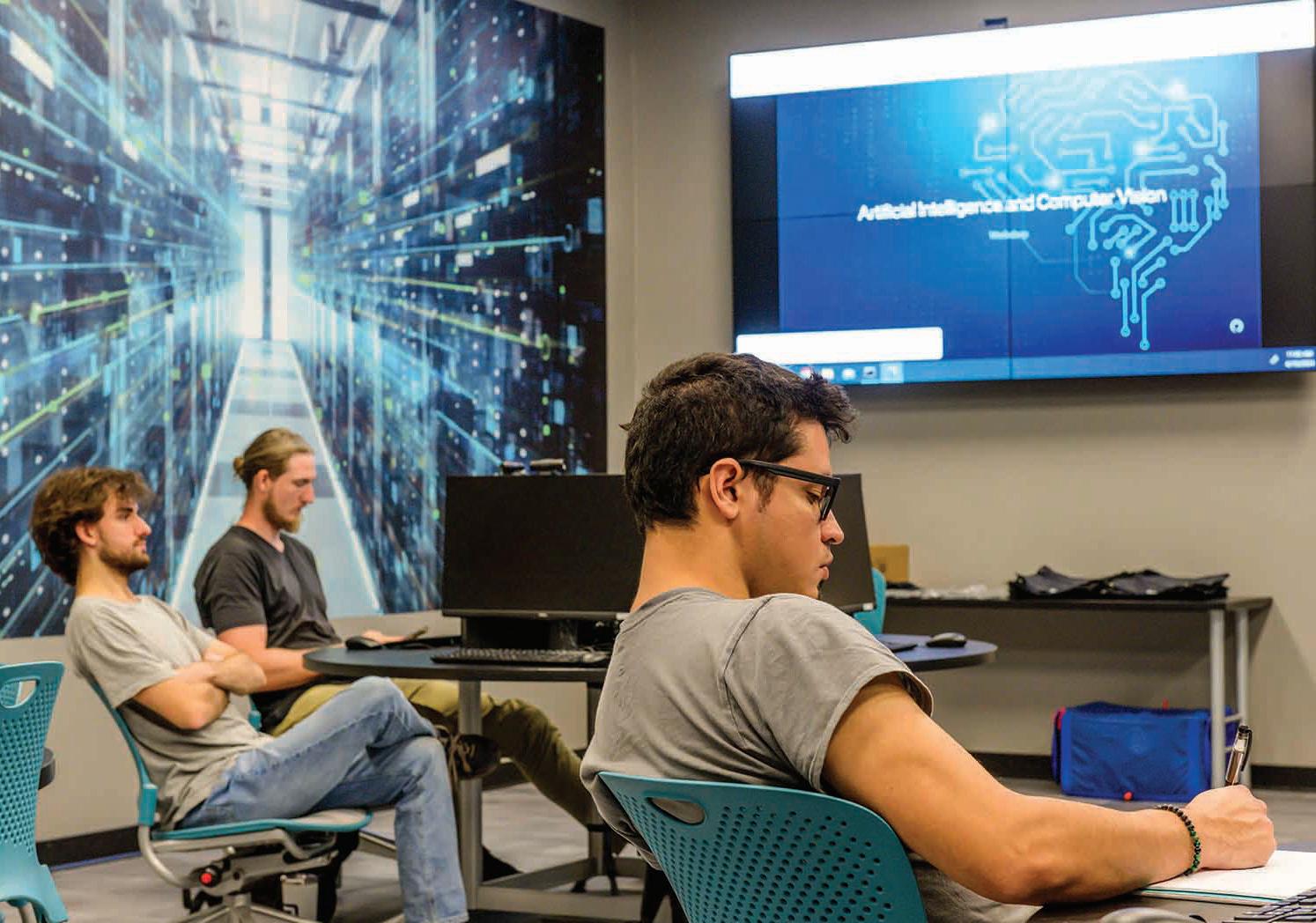
Chandler-Gilbert Community College (CGCC), one of the 10 Maricopa Community Colleges, has long been a leader in artificial intelligence (AI) education, working to expand AI educational opportunities that help address the growing skills gap in the workforce.
CGCC launched its first-ever baccalaureate program, the Bachelor of Science in artificial intelligence (AI) and machine learning (BS), in fall 2025, further solidifying the college’s leadership in AI education.
The fully accredited program gives students access to experienced faculty members and a robust curriculum
focused on emerging principles and methodologies in AI development. It equips students with the tools needed to design and build machine learning models for predictive analysis, automated decision-making and the augmentation of human capabilities.
This new bachelor’s degree is the latest product of CGCC’s leadership in AI-focused education, making CGCC only the third community college in the nation to offer a bachelor’s degree program specializing in AI.
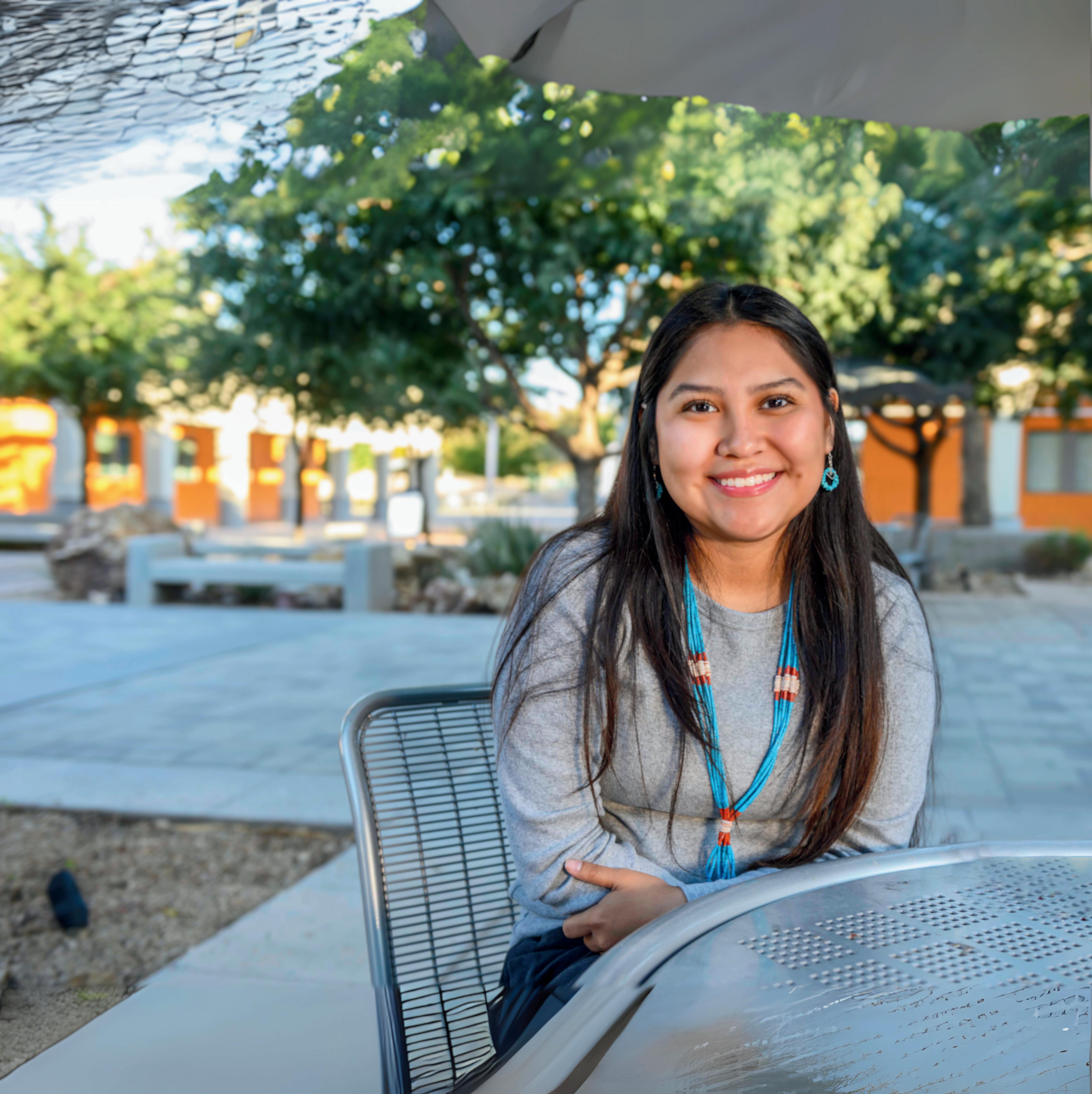
“The Bachelor of Science in artificial intelligence and machine learning at Chandler-Gilbert Community College prepares students with foundational knowledge and practical skills in AI, machine learning and data analytics,” according to Gabriela Rosu, CGCC’s

senior associate vice president of academic affairs and dean of instruction. “Graduates are positioned to pursue careers in software development, AI engineering and related technical roles across a variety of industries, such as information technology, health care, finance, manufacturing and other sectors leveraging intelligent systems.”
As AI becomes increasingly prevalent in the workplace, employers recognize a growing skills gap, with more than half of organizations indicating their employees lack the necessary skills to execute AI and machine learning strategies.
In addressing this gap, Maricopa Community Colleges and Intel announced in 2020 the launch of Arizona’s first AI bachelor’s degree program housed at CGCC, spurring a series of innovative initiatives at the college aimed at equipping the next generation of professionals with the skills needed to drive innovation, including a first-ofits-kind AI incubator lab, an AI-focused teaching and learning summit, and participation in the National Applied Artifi-
cial Intelligence Consortium.
“Chandler-Gilbert Community College is proud of the work we have done on a local and national scale in the exciting field of artificial intelligence and machine learning,” said Dr. CJ Wurster, CGCC president. “Our first bachelor’s degree in this field allows us to continue to be at the forefront of AI and provide access to outstanding educational opportunities for our community.”
Offering more than 150 degrees and certificates in over 75 academic programs at three locations, and partnering with several high schools across the Southeast Valley on dual-enrollment initiatives, CGCC propels students forward — into the workforce, into four-year universities, into civic engagement and into life. CGCC is dedicated to continuing to offer valuable certifications and courses designed to provide students pursuing higher education the knowledge and skills they need to be competitive in the workforce and meet the demands of the future.
Learn more about CGCC’s AI bachelor’s program at cgc.edu/ai.






Engaging all students in world-class, future-focused learning.




BY KYRENE SCHOOL DISTRICT
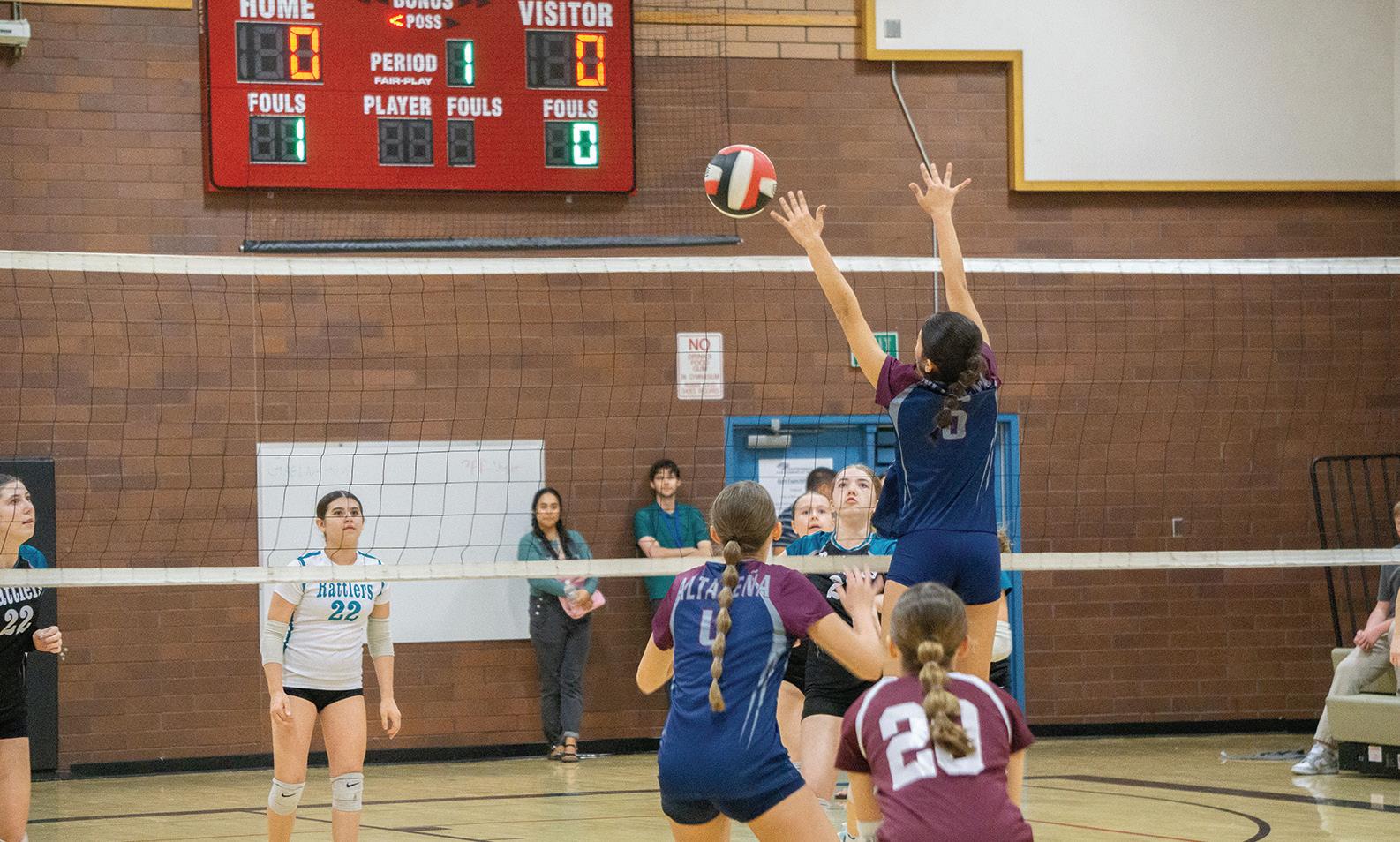
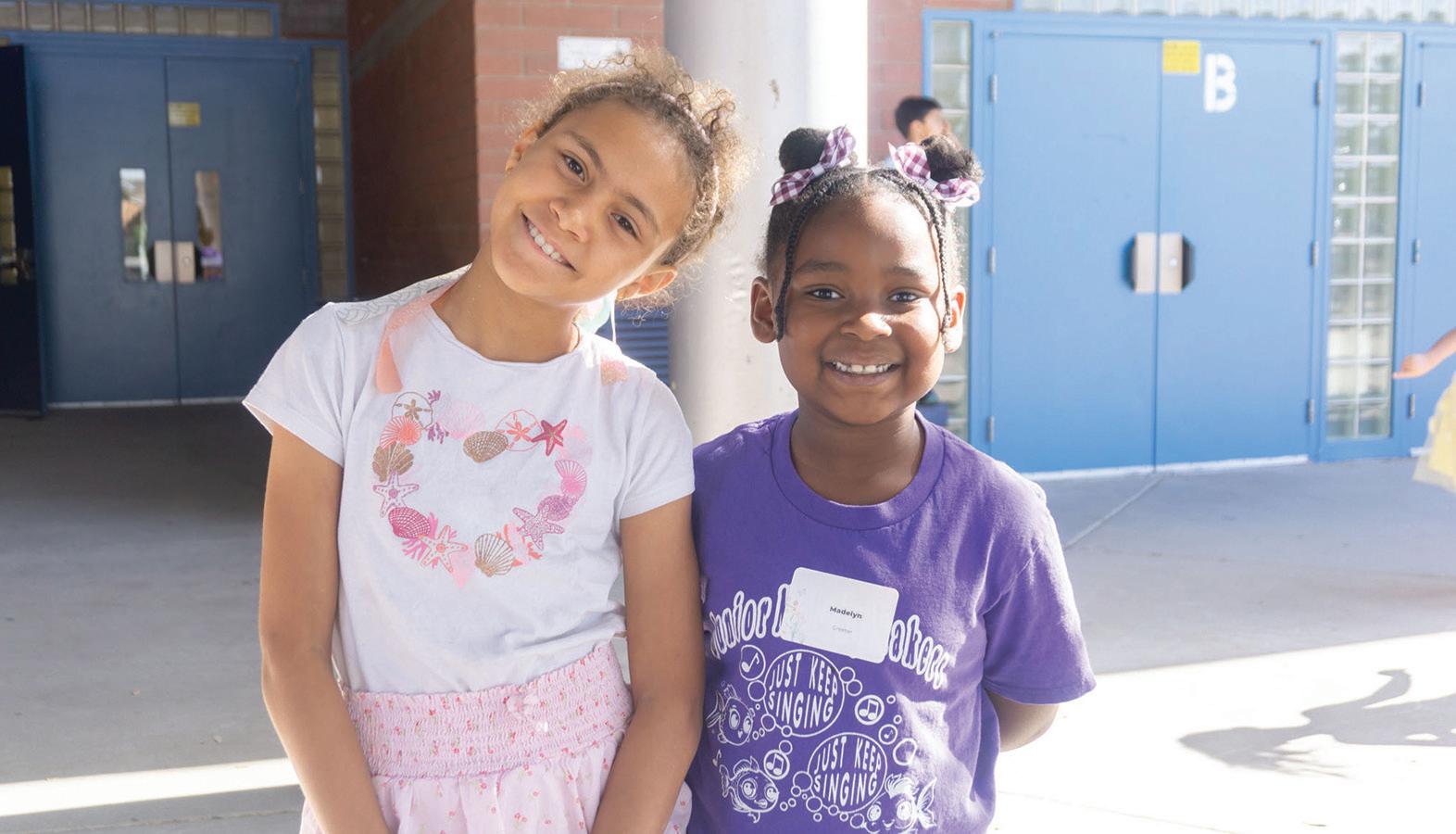
Kyrene School District is Arizona’s leading elementary school district, providing excellence in education for more than 135 years. Kyrene is deeply rooted in tradition while consistently leading with innovation. The district serves approximately 12,000 students across 25 schools — 17 elementary, six middle and two K–8 campuses — spanning the vibrant communities of Ahwatukee, Chandler, Guadalupe, Tempe and the Gila River Indian Community. One of Arizona’s most sought-after districts, Kyrene also welcomes thousands of students from outside district boundaries. Kyrene is defined by its commitment to student success, academic rigor, inclusive opportunities and a deeply collaborative spirit. This commitment is visible in every classroom, hallway and community event. From the first day of preschool to the last day of eighth grade, students are surrounded by supportive adults, futurefocused learning, and a culture of belonging.
Kyrene is known for high academic achievement, with schools that consistently outperform peer districts, charter schools and state averages on Arizona assessments and other academic benchmarks. This reputation for excellence is backed by results: All Kyrene schools have earned A or B ratings from the Arizona Department of Education, and 15 have been designated A-plus Schools of Excellence by the Arizona Educational Foundation. These accolades reflect more than test scores — they represent the dedication of a district deeply committed to student growth and teacher excellence. Kyrene’s 86% teacher retention rate speaks to the supportive, collaborative culture that empowers educators to stay and succeed. Students benefit from experienced, passionate professionals who create classroom environments where curiosity is encouraged, challenges are embraced and individual needs are met.
From preschool through eighth grade, every Kyrene student receives a strong academic foundation enriched by social-emo-
tional learning, technology integration, and a focus on preparing for high school and beyond. The district’s student-centered approach ensures that learners are not only meeting standards, but exceeding them with confidence and purpose.
Kyrene offers a wide array of innovative and inclusive programs designed to meet the unique needs, interests, and aspirations of every student. These programs are essential parts of a wholechild education. Whether it’s performing in a school musical, experimenting with robotics, leading a service project, or learning a second language, Kyrene students are encouraged to explore their potential in all its forms.
School-based options:
• Arts integration
• AVID college readiness
• Computer science immersion
• Dual-language immersion (Spanish)
• International Baccalaureate (IB)
• Leadership-focused schools
• Self-contained gifted classrooms
• Traditional Academy
Districtwide options:
• World Languages: Spanish and Mandarin
• STEM
• Tuition-free, full-day kindergarten
• Gifted education
• Fine and performing arts
• Early-learning programs serving ages 3-5
• After-school enrichment
• Thrive in Kyrene
If you are a parent seeking a premiere education for your child, an educator looking to leave a lasting impact on students, or a community member making a connection with our schools, Kyrene School District invites you to be part of something exceptional.
Learn what it means to be a Kyrene Kid at kyrene.org/kyrenekids.
Explore career opportunities with Team Kyrene at kyrene.org/careers Come see how Kyrene is ensuring students are ready for the future.






•
•







BY JOE MCHUGH
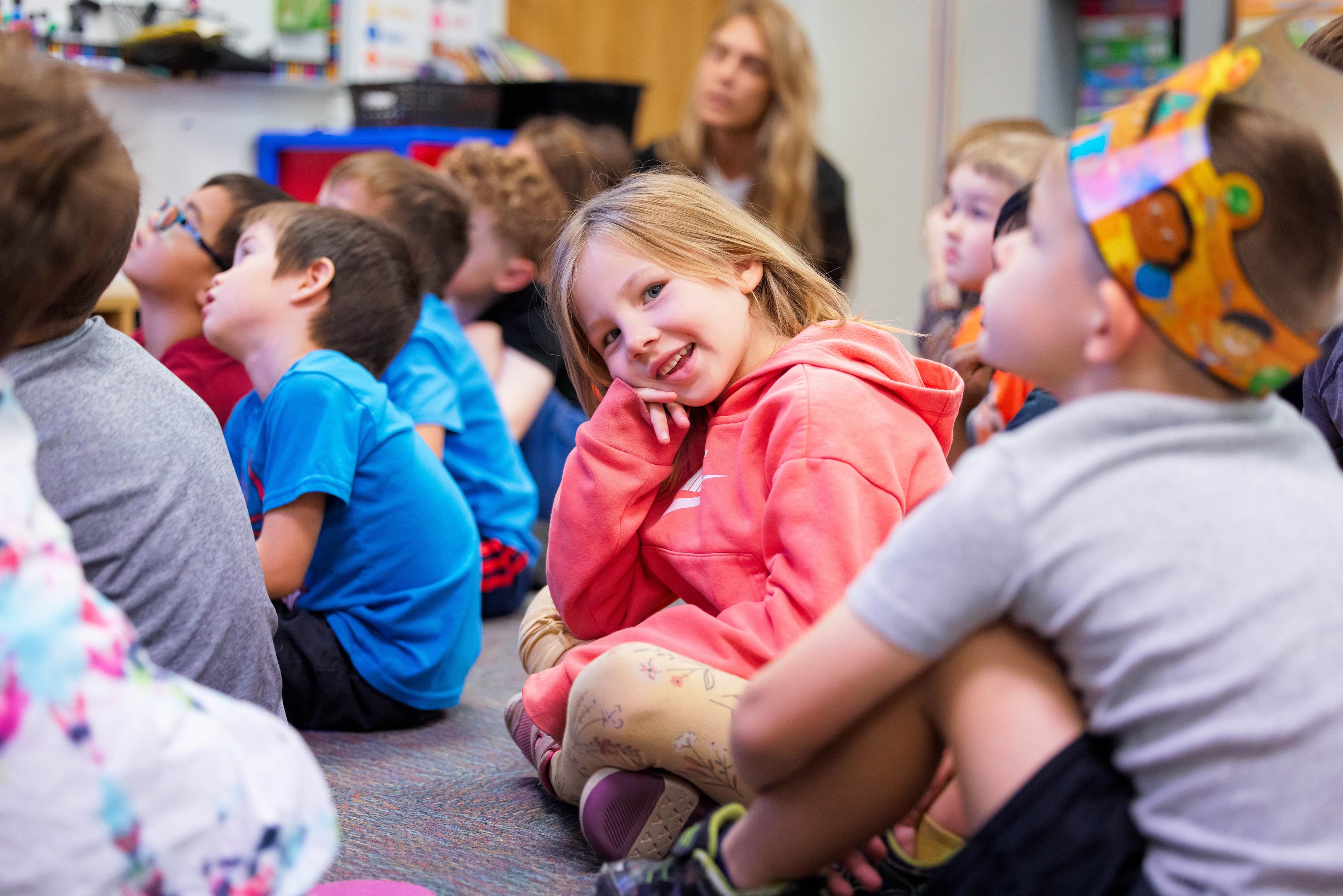
When Horizon Honors Schools opened its doors in 1996, it was a small new school with a big dream.
Thirty years later, it has grown into one of the most recognized K-12 public charter school districts in Arizona — and it still feels like a tight-knit community.
“We hope to be here for 30 more (years),” said Melissa Hartley, director of communications and marketing.
Horizon Honors operates two A-rated schools — Horizon Honors Elementary School, serving grades K-6, and Horizon Honors Secondary School, serving grades 7-12. Together, they enroll more than 1,500 students and employ more than 200 staff members.
At the center of that reputation is a commitment to individualized learning. Every student at Horizon Honors has a personalized learning plan, revisited four times a year in meetings with parents and teachers. The goal is simple: meet students exactly where they are.
“We want to meet the students where they’re at,” Hartley said. “If they need to work ahead, we’re going to let them work ahead.”
At the elementary level, that philosophy plays out in a unique classroom structure. Grades are mixed — firstand second-grade students share classrooms, as do third and fourth, and fifth and sixth — allowing students to move between ability-level groups within the same room. With two teachers and a teacher’s assistant in every K-6 classroom, the student-to-teacher ratio stays low and the attention stays high.
At the secondary level, a seventh grader who is ready for high school math simply takes high school math. Beyond academics, Horizon Honors

Secondary School offers an unusually full slate of extracurricular options for a school of its size. Students can participate in an award-winning performing arts program that includes band, choir, art and a popular theater program that stages multiple productions each year. The athletic program has produced multiple Arizona Interscholastic Association state championships at the high school level and competes successfully in the Cactus Christian Schools League — a competitive, values-based sports league for fifth- through eighth-graders — at
the middle school level.
“We have students here who do it all,” Hartley said. “They’re in the theater production, but they’re also on the basketball team.”
That well-rounded experience has earned Horizon Honors recognition as one of the highest-rated high schools in the state and country by U.S. News & World Report. It has also earned something harder to measure: loyalty. Families who attended in the 1990s and 2000s are now enrolling their own children.
“We have multigenerational fami -
lies here because they believed in it when they were students, and now they want it for their own families,” Hartley said.
With a private pre-K program also on campus, Horizon Honors can serve families from the very beginning — and keep them for the long haul.
For families in the Phoenix area looking for a personalized, honorslevel education with a 30-year track record, Horizon Honors Schools is now accepting applications. Learn more at horizonhonors.org.


BY JIMMY VAN WICKLER
As Arizona families prepare for the upcoming school year, Legacy Traditional Schools continues to expand its footprint across the state while maintaining a focus on traditional academics, character development and community engagement.
Founded in 2007, Legacy Traditional Schools now operates 22 campuses across Arizona — including an online academy — serving more than 22,000 students in grades K-8 with more than 915 teachers statewide. The tuition-free public charter school network spans communities throughout Maricopa, Pinal and Pima counties.
According to Superintendent Mia Vega, Legacy’s educational philosophy centers on a back-to-basics approach rooted in reading, writing and mathematics while also helping students become well-rounded individuals.
“We are a traditional school, so our themes through that are direct instruction,” Vega said. “We believe the teacher is the expert in the classroom and guides that instruction.”
Vega said Legacy schools currently hold A and B ratings from the Arizona Department of Education based on academic achievement data.
In addition to core academics, Legacy
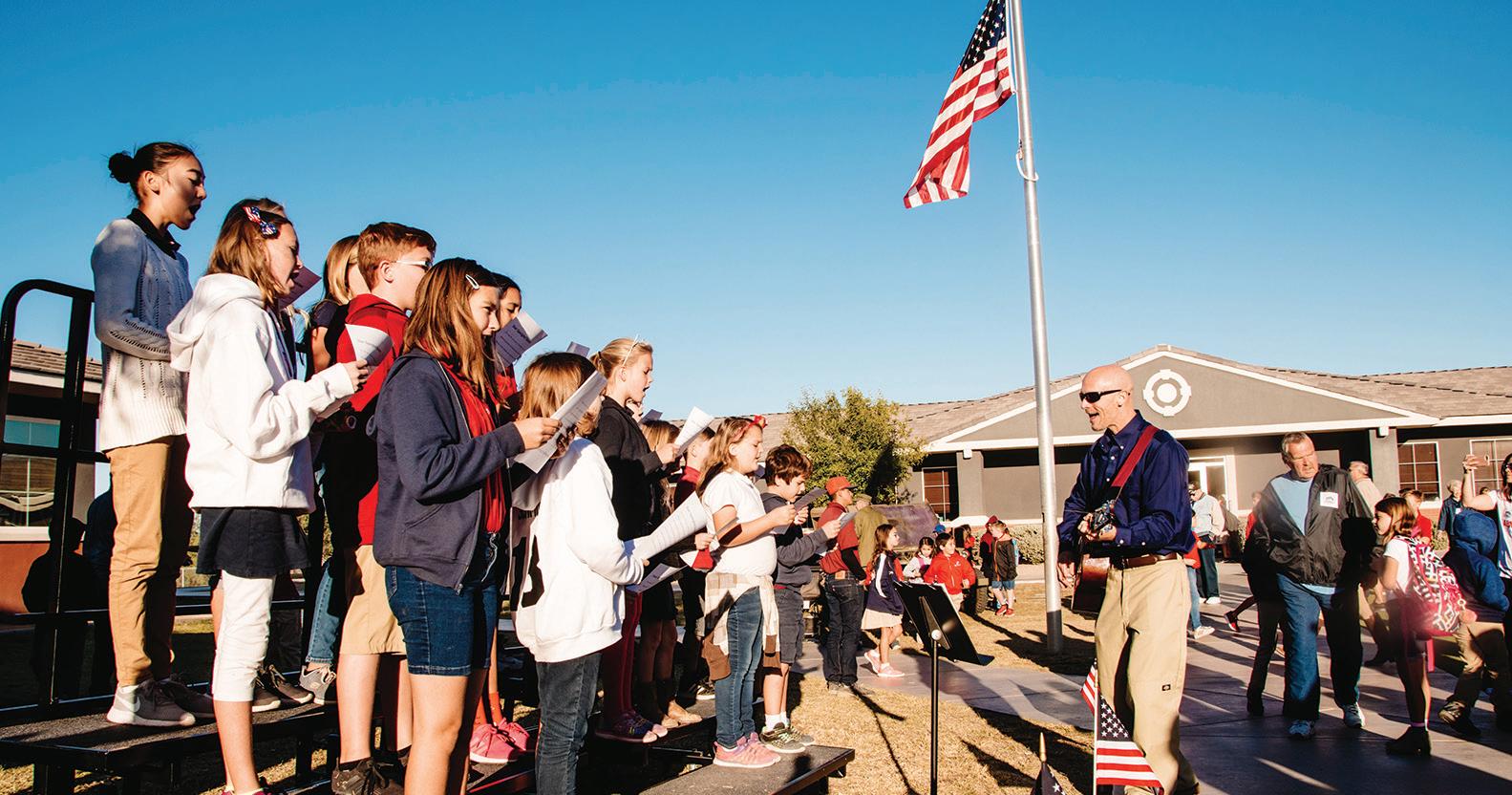
incorporates civics education and patriotism into daily campus life, helping students understand government, citizenship and community responsibility.
“We think it’s important for students to understand who they are and how they can contribute to their community around them,” Vega said. “They don’t have to be an adult to give back and be contributing members.”
Schools regularly invite veterans, law enforcement officers, first responders and community leaders onto campuses to interact with students. Vega said those relationships help students build connections with community members while learning about service and leadership.
Legacy also emphasizes what school leaders refer to as a three-legged stool approach to education: motivated students, highly effective teachers and cooperative parents.
“You can’t really teach a well-rounded child without all three of those components being equal contributors,” Vega said.
The network offers a variety of enrichment opportunities designed to complement academics and help students explore their interests and talents. Beginning in third grade, students can participate in specialized tracks, including:
• Momentum Fitness, focused on athletics, health and physical education

• Mozart Performing Arts, which includes music theory, piano, choir and instrumental instruction
• Masterpiece Visual Arts, featuring ceramics, painting and other visual arts
• Masterminds STEM, emphasizing science, technology, engineering and mathematics
Students also have access to clubs, competitive athletics, school musicals and extracurricular activities ranging from esports to track and field.
“We understand that academics are vital to a student’s success, but we also understand the needs of students evolve,” Vega said. “We want them well prepared when they enter high school and beyond.”
Legacy campuses also integrate technology into the classroom through a one-to-one student device program while continuing to teach traditional skills such as cursive handwriting.
Vega said creating a positive school culture remains a major priority.
“We want students to feel welcome, and we want them to feel safe,” Vega said. “We want families to feel that it was the right decision to bring them to our school.”
Communication between schools and families is maintained through
newsletters, social media, parent surveys and the ParentSquare platform, which allows teachers and administrators to share updates and communicate directly with parents.
Legacy also partners with Vertex Education, which provides operational and administrative support for the charter network.
“Vertex is an amazing partner for Legacy,” Vega said. “They handle a lot of the back-of-house operations so our principals and teachers can focus on students and instruction.”
As the school year ends, Legacy campuses are preparing for summer community events, including Splash Into Legacy, a June series featuring water slides, games and activities open to families and community members.
Vega encouraged families interested in Legacy to visit campuses, attend tours and explore school social media pages to learn more about the culture and programs offered.
“We hope families feel welcomed and safe when they walk through our doors,” Vega said. “We hope they feel an energy that excites them for learning.”
Visit LegacyTraditional.org to learn more or begin the enrollment process.

Legacy builds a strong foundation starting in kindergarten, focusing on early literacy and math skills, which are proven to help your child succeed across all subjects throughout their education.
• Accelerated academics focused on fundamental skills in reading and math.
• Art, music, and P.E. to give students a well-rounded education.
• Frequent events and strong parent involvement make your family feel right at home from the first day of school.
• Full-day kindergarten with affordable before- and after-school care options for active parents.
With civics and patriotism ingrained in daily learning, our students learn to be good citizens and upstanding members of the community.
Start your child’s education journey with a foundation for success. Visit legacytraditional.org TUITION-FREE GRADES K – 8























BY TIMES LOCAL MEDIA STAFF
Summer is here, and the Valley has no shortage of ways to keep kids busy, active, and engaged until school bells ring again. Whether your child is into sports, performing arts, STEM, or just needs a safe, fun place to spend their days, East Valley families have plenty of options to choose from. From city-run day camps in Tempe and Mesa to specialty programs in Queen Creek and Scottsdale, here’s a look at some of the summer camps available in your area. As always, contact camps directly to confirm availability, as spots fill quickly.
• Gilbert Public Schools Summer Camp Cost: $50.60/day or $230/week
Registration opened Feb. 2 online through Eleyo.
A $50 non-refundable registration fee per child is required at sign-up and includes two camp shirts, a backpack, and a water bottle. GPS Summer Camp runs May 28 through July 17, Monday-Friday, 6:30 a.m.-6 p.m. Programs are available for ages 3-14, including Kindercamp, VIK Camp A and B, and The Zone for tweens. Activities include STEM projects, arts and crafts, cooking, and field trips. Some sites are already at capacity. Visit gilbertschools. arux.app for more information.
• Boys & Girls Clubs of Greater Scottsdale — Barker Branch
2311 N. Miller Road
Starting rate: $224/week (grades K–6); teens in grades 7–12 attend free A $25 annual membership is required. Registration opened Feb. 2 through the My Club Hub portal at bgcs.org. The Barker Branch is one of several East Valley locations, with additional sites in Mesa (Lehi Branch) and north Phoenix (Ridgeline Academy at 33625 N. Valley Parkway). Camp runs Monday–Friday, 7 a.m.6:30 p.m. Financial assistance is available. Email billing@bgcs.org with questions.
• Boys & Girls Clubs of Greater Scottsdale — Vestar Branch North Phoenix/Desert Ridge
3975 E. Lockwood Drive
Starting rate: $224/week (grades K–6); teens grades 7–12 attend free Same registration and program structure as the Barker Branch above.
The Vestar Branch serves families in the north Phoenix and Desert Ridge area. Register online at bgcs.org through My Club Hub, or call 480-585-0170. Membership, field trips, arts and crafts, sports, and leadership activities are all part of the weekly program.
• Scottsdale Parks & Recreation Summer Camp (multiple locations)
Starting rate: $160/week or $1,216 for the full summer
The city’s summer camps serve youth in grades 1-8, with Teen Camp for those entering grades 6-8 in fall 2026. This year’s theme takes campers on a decade-by-decade journey from the 1950s to an imagined 2050, with themed crafts, sports, music, STEM challenges and weekly excursions. Some locations are already full. Register at Recreation.ScottsdaleAZ.gov. Limited financial assistance is available to Scottsdale residents.
• Scottsdale Unified School District
Kids Club Summer Camp (multiple elementary school sites)
Starting rate: $250/week ($200 for holiday weeks)
Kids Club Summer Camp runs June 1–July 24, Monday to Friday, 7 a.m.-5:30 p.m. Sites include Pueblo Elementary (6320 N. 82nd St.) and Redfield Elementary (9181 E. Redfield Rd.), among others. Registration is handled through the district. Email kidsclub@susd.org or call 480-484-7900 for enrollment details. Monthly rates are available for families who commit to a full month before the deadline.
• YMCA Summer Day Camp — Ahwatukee Foothills
1030 E. Liberty Lane, Phoenix 85048
Starting rate: Contact branch for current weekly rates
The Valley of the Sun YMCA operates summer day camps at multiple East Valley and south Phoenix locations, including the Ahwatukee Foothills Family YMCA. Weekly themes keep programming fresh, with pool time, field trips, new
skills and activities that build leadership, respect, and teamwork. Financial assistance is available. Register at phoenix.recliquecore.com or call 480-759-6762.
• YMCA Summer Day Camp — Tempe 7070 S. Rural Road
Starting rate: Contact branch for current weekly rates
The Tempe Family YMCA offers weeklythemed summer day camps with swimming, field trips, and group activities. YMCA membership is not required to participate and financial assistance is available for qualifying families. Register at phoenix. recliquecore.com or call 480-730-0240.
• City of Tempe Kid Zone Summer Program (multiple elementary school sites)
Starting rate: $140/week
Kid Zone runs June 2–July 15, Tuesday–Wednesday, 7 a.m.–5:30 p.m. at locations including Broadmor Elementary, Rover Elementary, and Ward Traditional Academy. The program is a full-day enrichment camp for grades K-8 with STEM, cooking, foreign language, sports, field trips, and special events. A Sports Camp option is available for grades 3–5. Register through the Kid Zone parent portal or email KidZone@tempe.gov. Call 480350-5405 for questions.
• SPF Parkour Academy Summer Camp 1830 E. Baseline Road, Suite 108 Starting rate: $175/week (half-day); full-day rates available
One of Arizona’s longest-running action sports camps, SPF Parkour Academy has served East Valley families for more than 20 years. Campers ages 4–15 rotate through parkour, ninja warrior training, trampoline, tumbling and boxing in an age-grouped, structured format. Half-day a.m., half-day p.m., full-day and full-week options are available. ESA/ClassWallet payments accepted. Register through the SPF customer portal at spfparkouracademy.com or call 480-248-9987.
• Queen Creek Performing Arts Center — Sizzlin’ Summer Musical Theater Youth Drama Camp
Starting rate: $172 (6-day session, June 1–3 and June 8–10)
QCPAC’s summer drama camps are a favorite for young performers across the San Tan Valley area. The Sizzlin’ Summer session spans two weeks of Monday–Wednesday sessions and covers acting, singing, dancing, show tunes, and ensemble performance. A second Sizzlin’ Summer session runs June 15–19 ($172), and an Advanced Youth Drama Camp (June 8–19, $210) is available by application only. Register at qcpac.com or through Etix. No refunds or date transfers.
• City of Mesa Parks & Recreation — Olympic Sports Camp (East Valley Academy gym)
Starting rate: Contact Mesa Parks for current session pricing Mesa Parks and Recreation offers the Olympic Sports Camp for youth in grades 1–6, covering two different Olympic sports each day alongside cultural crafts and dance. Light snacks are provided. Registration is open through the ActiveNet system at mesaaz.gov or by calling (480) 644-7529. Mesa residents may qualify for a 50% MRS Discount on youth programs. In-person registration is available at the Mesa Parks and Recreation office, 708 W. Baseline Rd., Monday–Thursday 7 a.m.–6 p.m.
• Boys & Girls Clubs of Greater Scottsdale — Thunderbirds Branch North Scottsdale 20199 N. 78th Place
Starting rate: $224/week (grades K–6); teens grades 7–12 attend free The Thunderbirds Branch brings the BGCS summer camp experience to north Scottsdale. Programs run Monday–Friday, 7 a.m.–6:30 p.m. and include arts, academics, sports, and leadership development. A $25 annual membership is required. Register at bgcs.org through My Club Hub, or call 480-538-9547. Financial assistance is available.
Note: Always confirm current availability, rates, and registration status directly with each camp, as sessions fill quickly and details may have changed.


BY SAMANTHA REA
The majority of educators across the country receive little or no formal guidance about using artificial intelligence tools, according to a recent study from the Walton Family Foundation and Gallup.
While a 2025 study by the same organizations showed nearly a third, or 32%, of surveyed K-12 educators using AI weekly, their most recent study — “Teaching for Tomorrow: Closing the Expectations Gap” — found nearly half (48%) of educators reported receiving only informal guidance on AI use, while 34% said they had received no guidance at all.
The findings are based on a national web survey conducted Feb. 9 to March 2 of 2,069 public K-12 teachers recruited through the RAND American Teacher Panel, a nationally representative group of educators.
The survey found that only 18% of teachers report receiving any type of formal guidance — including written policies or official guidance — from school administrators on how AI tools should be used.
Educators were surveyed on 10 tasks that they might use AI for, including:
• getting feedback or coaching on teaching;
• providing one-on-one instruction or tutoring students;
• analyzing patterns in student learning or achievement data;
• administrative work such as paperwork, emails and reports;
• grading and providing feedback on assignments or assessments;
• supplementing instruction, such as student use during instruction;
• modifying materials to meet student needs;
• making assessments, quizzes or exit tickets;
• making worksheets, assignments, projects or activities; and
• preparing to teach, such as planning lessons or reviewing instructional materials.
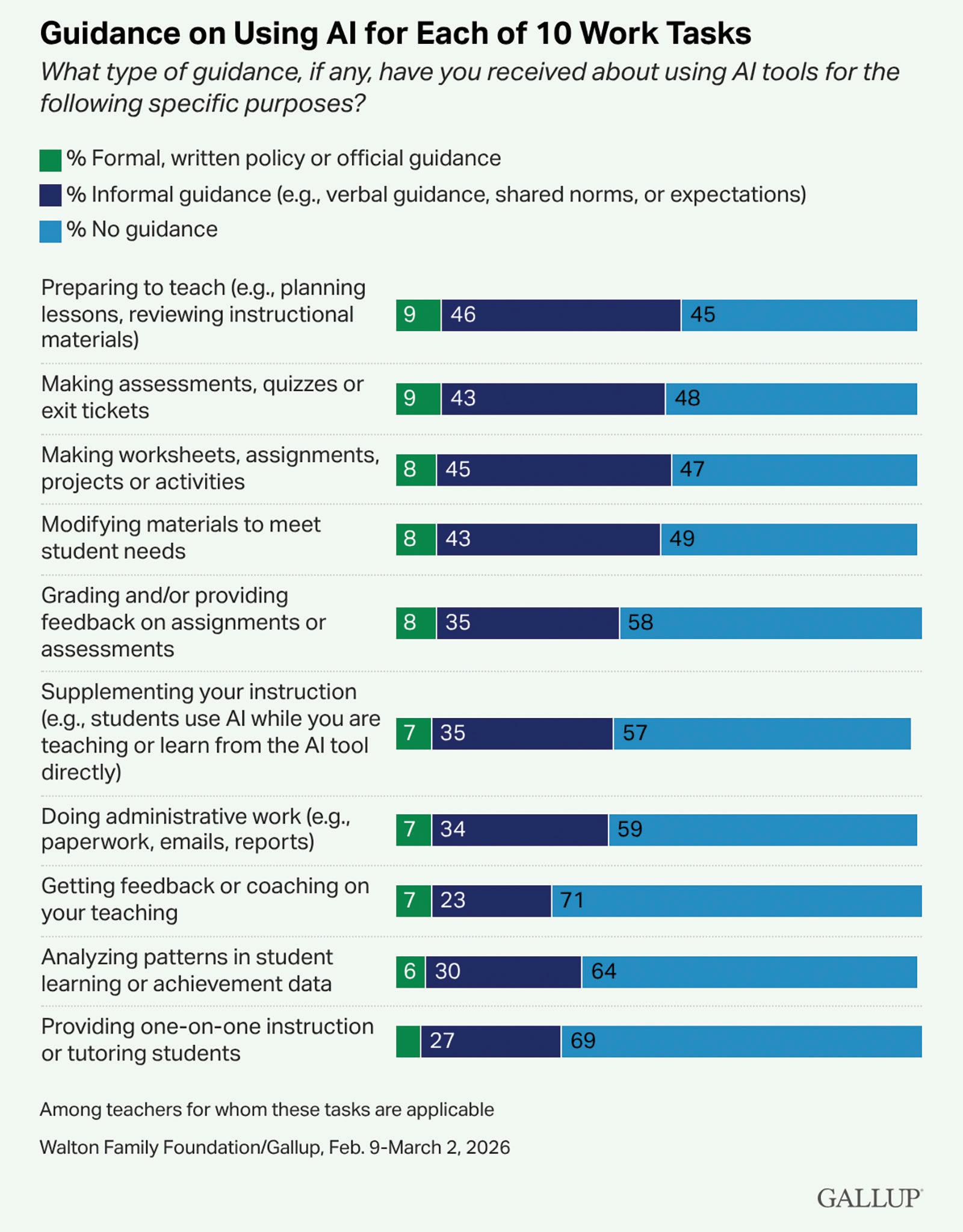
The four areas in which educators reported receiving the most guidance — whether formal or informal — were using AI to prepare lessons, create assignments and activities, create assessments or exit tickets, and modify materials for student needs.
While 37% of teachers surveyed in 2025 reported using AI at least monthly to prepare to teach, 45% of teachers surveyed in 2026 reported receiving no guidance on
using AI for the task. Only 9% reported receiving some formal guidance.
Creating worksheets, assignments, projects and classroom activities was another common use for AI tools, with 33% of educators in the 2025 survey reporting they used AI for the task at least monthly. But in the 2026 survey, just 8% said they had received formal guidance from administrators on how AI should be used for that purpose. Forty-five percent reported receiving informal guidance, while 47% said they had received none.
Only 9% of educators surveyed in the recent study reported receiving formal guidance on using AI to make assessments, quizzes or exit tickets, despite one-fourth (25%) of educators surveyed in 2025 reporting they use AI for the task at least monthly. Forty-three percent reported receiving some informal guidance, while 48% reported receiving no guidance.
When it comes to modifying materials to meet student needs, 28% of teachers surveyed in 2025 reported using AI for the task. However, in 2026, 49% of educators reported receiving no guidance on doing so, while 43% report receiving some informal guidance.
Educators received even less guidance on more sensitive or individualized uses of AI tools, according to the study.
Fifty-eight percent of teachers reported receiving no guidance on using AI for grading and providing feedback on assignments or assessments, while 69% said they had received no guidance on using AI in one-onone instruction or tutoring students.
Among teachers who did report receiving some guidance, researchers found most of it was informal rather than through official district policies or written expectations. “For many teachers, decisions about if, when and how to use AI are being made individually, in the absence of clear institutional expectations,” the study report said.
The study also found that teachers in higher-needs schools were less likely to receive guidance than those in wealthier schools, especially when it comes to how they should apply AI tools to the creation of student materials.
Fifty-nine percent of teachers in the wealthiest schools received some type of guidance on how to use AI tools in making worksheets and assignments — 10 percentage points
more than the highest-need schools. Even when educators reported receiving guidance on AI use in the classroom, many said it stopped short of giving clear direction. According to the report, most teachers who received some form of guidance said it neither encouraged nor discouraged AI use.
However, among the less ambiguous guidance teachers reported, the study found that schools were most likely to encourage AI use for instructional preparation tasks, including modifying student materials, creating worksheets and assignments, and preparing lessons. However, schools were less likely to encourage AI use for tasks involving direct student interaction, such as one-on-one instruction or tutoring.
Discouragement was relatively uncommon overall, though 1 in 10 teachers who received guidance on AI-assisted grading said they had been discouraged from using the technology for that purpose.
Arizona lawmakers introduced multiple bills this legislative session related
to AI in schools, including legislation focused on AI instruction, school policies and statewide education programs — though none made it to the governor’s desk this session.
One proposal, House Bill 4005, would require Arizona public school districts to provide instruction on the ethical, moral and educational uses of AI beginning in the 2027-28 school year. However, none of the proposals appear to focus specifically on providing formal AI guidance or training for K-12 educators.
As AI tools become more common in classrooms, the findings from the Walton Family Foundation and Gallup study suggest many educators continue to navigate the technology largely on their own, often without formal policies or consistent guidance from schools and administrators.
This story is made possible through grant funding from the Arizona Local News Foundation’s Arizona Community Collaborative Fund.
BY JIMMY VAN WICKLER
As Arizona’s second-largest school district, Chandler Unified School District is looking toward the future with a focus on innovation, career readiness and maintaining what district leaders call a “tradition of excellence.”
Serving approximately 40,000 students across 49 schools and programs, Chandler Unified continues to rank among the top-performing districts in Arizona while adapting to changing educational trends and enrollment challenges, according to district spokesperson Stephanie Ingersoll.
“We like to say we’re the premier district of choice,” Ingersoll said. “We have something for everyone.”
The district has earned recognition from ranking organizations such as Niche and AZ Big Media, which recently named Chandler Unified the top unified school district in Arizona.
Ingersoll said Chandler Unified’s identity centers on preparing students academically while also helping them become well-rounded individuals through athletics, fine arts, leadership opportunities and community involvement.
“We’re really committed to helping kids find where they belong and embracing achievement, academics, athletics, fine arts, and we really strive to help all kids succeed,” Ingersoll said. “That’s us in a nutshell.”
A major focus for the district moving into the 2026-27 school year is addressing enrollment declines affecting school districts across Arizona. Ingersoll said factors such as rising home prices, lower birth rates, aging populations and increasing school choice options have contributed to the statewide trend.
Despite those challenges, Chandler Unified maintains a strong enrollment base and continues attracting students through open-enrollment programs. According to Ingersoll, many families return to the district
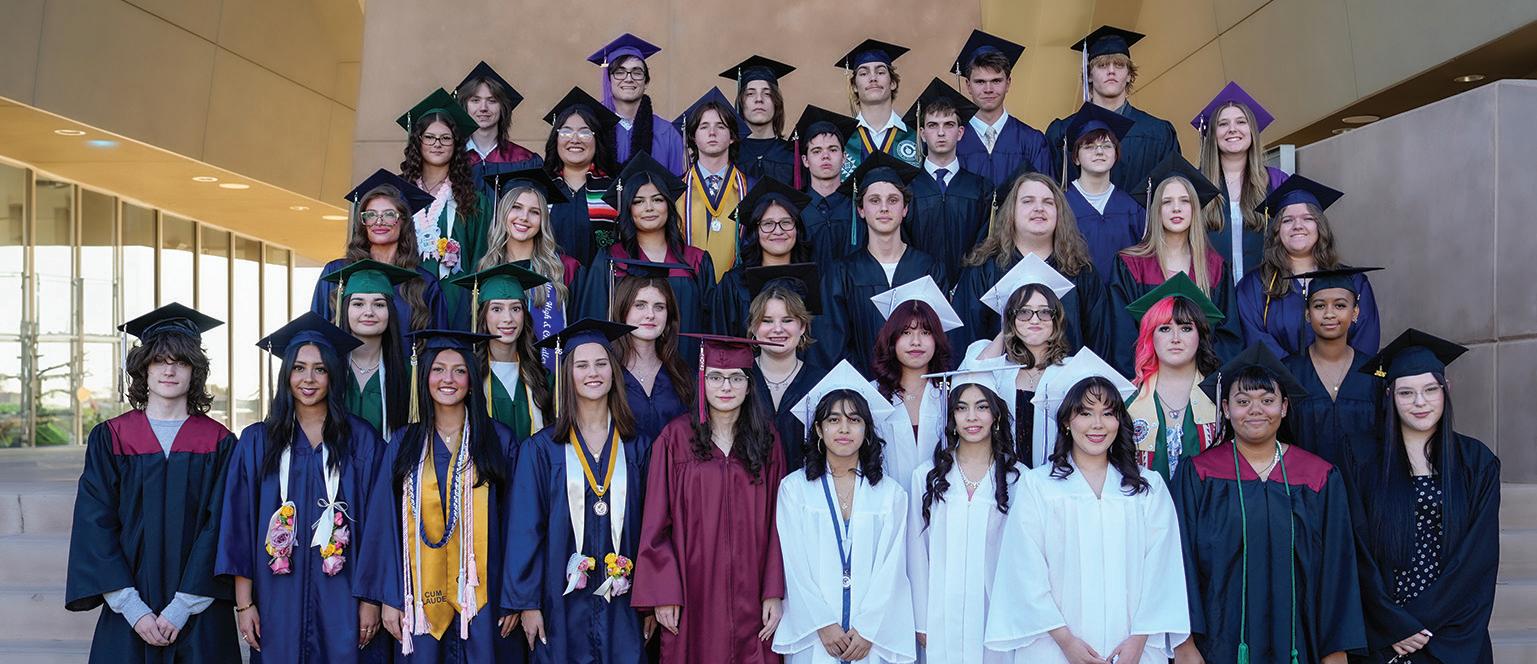
at the high school level because of its comprehensive academic and extracurricular offerings.
“We really want to identify the why,” Ingersoll said. “How can we identify gaps where people might be leaving us, and how can we get them back?”
One initiative district leaders are especially excited about is expanding career awareness and career readiness programs beginning in kindergarten. Chandler Unified has spent the past several years developing a districtwide career awareness model aligned with state standards.
Students in elementary school are introduced to career exploration concepts, while middle schools learn practical skills such as resume writing and interview preparation. High school students can then pursue more advanced career and technical education pathways.
The district currently offers more than 20 career and technical education programs across its six high schools, including automotive technology, culinary arts, cybersecurity, sports medicine, drone technology, semiconductor studies, film and television production and software and app design.
Some students graduate with certifications and industry credentials al-
ready applicable to the workforce, with the district covering certification costs.
“We are giving these pathways to our kids and doing our best to help them find where they’re headed,” Ingersoll said.
The district also recently launched MIC 500 — Mentorships, Internships and Careers — which connects students who complete career and technical education programs with real-world internship opportunities. Students currently intern with organizations ranging from Phoenix Rising to local cybersecurity firms and district departments.
Ingersoll said community partnerships remain essential to the district’s success, helping provide mentorships, internships and hands-on experiences for students.
“Student success begins with the ‘us’ in CUSD,” Ingersoll said.
The district is also introducing new tools and technology aimed at improving student support and campus safety. One upcoming initiative, called Grad Tracker, will allow students and families to monitor graduation progress and academic pathways more easily.
Additionally, Chandler Unified plans to implement Raptor Technolo -
gies visitor management systems on campuses and continue improving GPS tracking for school buses.
"When visitors come, they have to provide identification, and they receive a printed badge with their picture identifying them as visitors,” Ingersoll said. “We’ll always know who is on and off our campuses.”
The district is currently preparing for a leadership transition as Superintendent Frank Narducci retires after more than 40 years in public education, including 30 years with Chandler Unified. Incoming Superintendent Dr. Anna Battle will assume leadership ahead of the 2026-27 school year.
“We are welcoming our incoming superintendent, Dr. Anna Battle, and I think it’s a great opportunity to answer that question even deeper than we have ever been before,” Ingersoll said. “Our culture really is a tradition of excellence, and we want to keep that tradition going strong.”
Families interested in enrolling or learning more about CUSD can visit the district website at cusd80.com/ choice. There will also be enrollment assistance available for new families joining the district over the summer. The next school year officially begins July 15.