
By Kamala Kirk
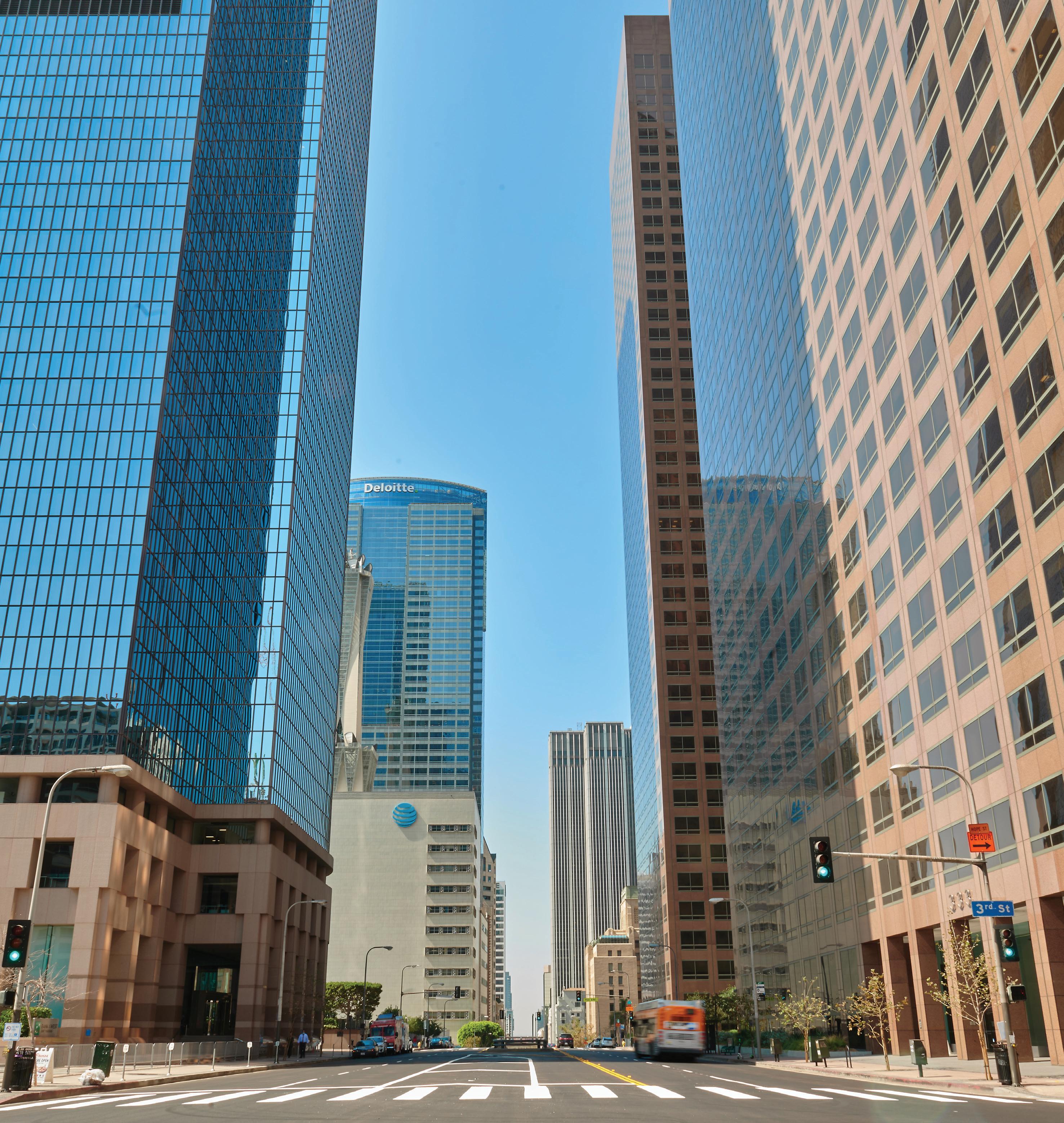
Downtown Los Angeles is the commercial, cultural and civic heart of the city, and home to a diverse range of industries and neighborhoods at the center of an expanding regional transportation network. By 2040, DTLA is expected to accommodate 125,000 new residents and 55,000 new jobs, representing 20% of the city’s housing growth in only 1% of its land area.
On August 7, the Los Angeles Department of City Planning released its new draft of “DTLA 2040” (also known as the Downtown Community Plan), which is a combined update to two existing community plans. DTLA 2040 proposes new development to support more affordable housing and jobs, promotes a dynamic and sustainable Downtown core, and honors the diverse communities that work and live there. While the plan doesn’t propose specific projects, it establishes certain expectations and sets the range of uses and the scale of future development allowed.
“This is a forward-looking set of goals, policies and implementation tools that look primarily at how the Downtown area will grow and change over the next 20 years,” said Craig Weber, principal city planner.
“We will likely hold an official public hearing in the fall. It’s an opportunity to receive public input on the plan. After the hearing, we will bring forward a recommended community plan to the city planning commission sometime in early 2021, followed by the council adoption process.”
DTLA 2040 is the first community plan that will apply new zoning developed as part of the comprehensive update of the city’s zoning code.
“The plan is going to be the first in the city to use the city’s new proposed zoning code,” Weber said. “It’s a sophisticated mix of new



zoning tools that we haven’t been able to utilize until now. We also have a more sophisticated way to approach what the built environment will look like and what the mixed uses will be.”
DTLA 2040 is looking to replace the city’s Transfer of Floor Area Rights (TFAR) program with a more predictable Community Benefits Program. TFAR allows developers to sell their floor area rights to other parcels, and in some cases, housing units or parking units. The new Community Benefits Program will incentivize the development of new affordable housing, while simplifying the approval process for new development. It will nearly double the area where housing is permitted, which will expand from 33% to 60% of Downtown’s total area.
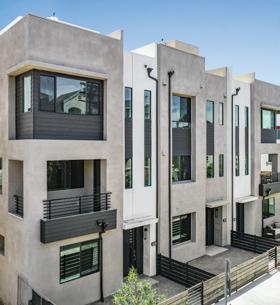
The Downtown Community Plan will also expand the area where adaptive reuse is permitted to include the Fashion and Arts Districts, and creates options for the construction of live-work housing. So that Downtown remains a place for everyone, the plan expands the type of housing allowed to a wider variety of living situations, income levels and age groups, and intensifies residential zoning in different areas, especially those near public transit stations. DTLA 2040 also features provisions that will preserve existing affordable housing and limit market-rate housing in and around Skid Row.
“We’re looking to accommodate 100,000 new housing units in Downtown, which is significantly more than our regional demographic agencies are forecasting,” Weber said.
“We think it’s consistent with the vision for Downtown and growing sustainably. This will also allow us to bolster employment uses Downtown. Creating a much more streamlined and transparent process to facilitate new affordable housing is part of the Down-
Los Angeles Downtown News 161 Pasadena Ave., Suite B South Pasadena, CA 91030 213-481-1448

The proposal includes a new base and bonus system for Downtown that is intended to establish a clearer set of objective standards for projects that want to build beyond their base zoning. It will require developers to set aside a specific number of units as affordable to exceed a project’s base floor area. The program also includes a new category for affordable housing that will tie the proposed policies of the Downtown Community Plan to the stated goals of the Community Benefits System, which will include a Deeply Low Income category for people who earn less than 15% of the area median income. By including the minimum prescribed affordable housing, projects are eligible for a 35% increase in floor area. Additional incentives will be available for various projects that offer amenities that serve the neighborhood, such as child care facilities and open space.
“We do a great deal of outreach with existing stakeholder organizations and community-based organizations to help refine and strengthen the goal,” he said. “We’ve heard there is a strong need for publicly accessible open space, so we’re looking at adding things like a community facility and space for other social services in Downtown, such as communal kitchens and small-business incubation
EXECUTIVE EDITOR: Christina Fuoco-Karasinski
STAFF WRITERS: William Bergholz, Sarah Donahue
CONTRIBUTING WRITER: Kamala Kirk
ART DIRECTORS: Arman Olivares, Stephanie Torres
STAFF PHOTOGRAPHER: Luis Chavez
ACCOUNT EXECUTIVES: Catherine Holloway, Michael Lamb
FOUNDER EMERITUS: Sue Laris

spaces.”
DTLA 2040 also aims to enhance mobility in Downtown by promoting an environment that is more friendly and accessible to pedestrians, bicyclists and transit. The Downtown Community Plan encourages high-intensity development in proximity to transit, eliminates minimum parking requirements and discourages parking above ground. It includes strategies to expand the pedestrian network by requiring buildings on large blocks to have paseos and plazas. DTLA 2040 also facilitates the provision of new public open space through the Community Benefits System by supporting a network of green pedestrian alleys and encouraging city efforts to revitalize the Los Angeles River.
According to Weber, the process to adopt the Downtown Community Plan depends a lot on public participation. “There is a significant list of benefits in the program, and its stakeholder input and ensuing economics allow us to orchestrate what those benefits should be,” he said. “DTLA 2040 is really setting the stage for what future development can take place, so the development activities that then take place are largely at the hands of the city.”
For more information, visit planning4la.org.

Dear Friends,
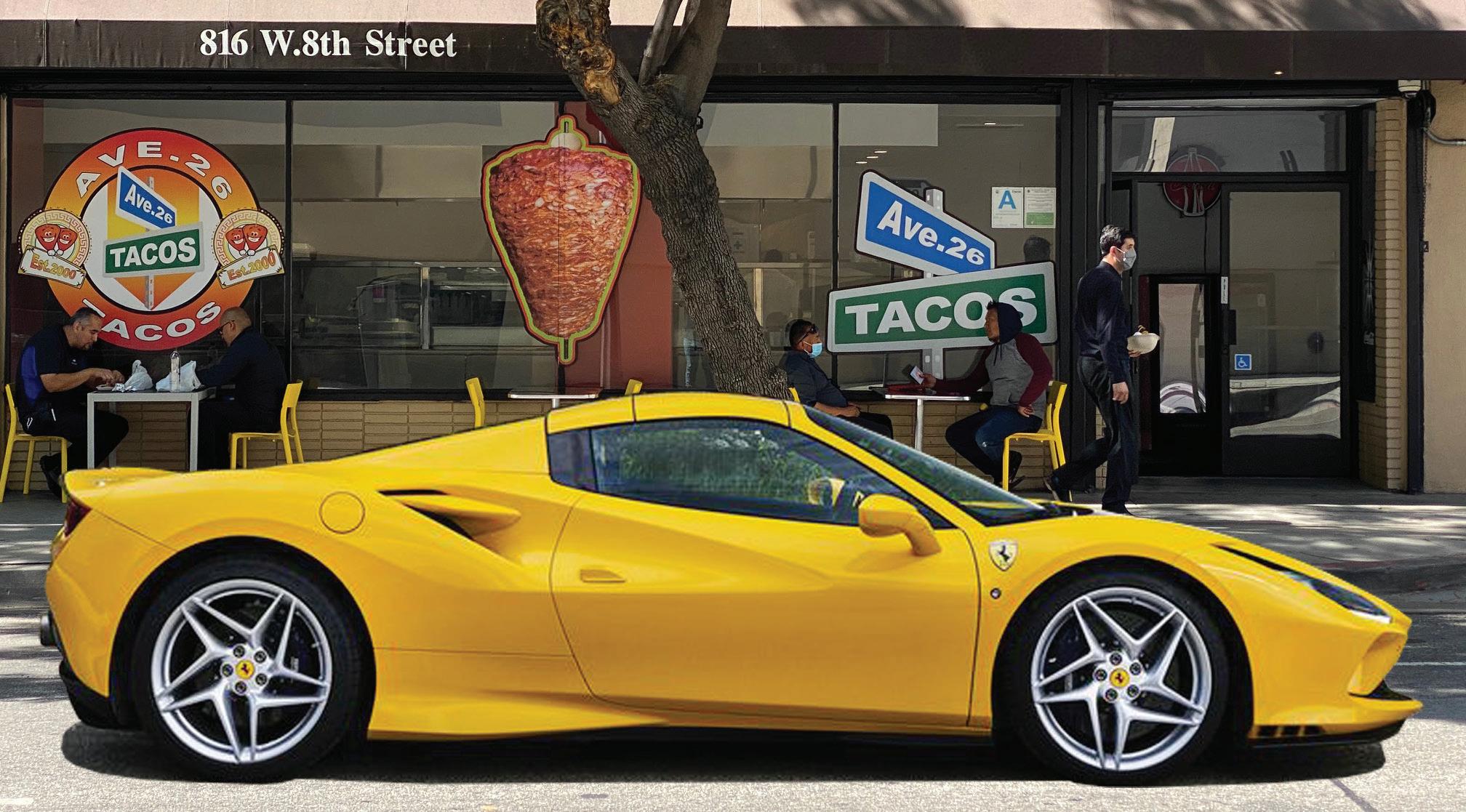
Ave. 26 Tacos welcomes all of you to the Grand Opening of our newest DTLA location on Monday, August 31, 2020 @ 816 West 8th Street, 90017. T-shirt giveaways to all customers until supplies last. We look forward to serving you!



By LA Downtown News Staff
The Los Angeles County Department of Public Health has confirmed 51 new deaths and 989 new cases of COVID-19. This is the first time the number of reported new cases has been under 1,000 since the beginning of June. In mid-to-late July, the daily reported number of new cases was around 3,200 cases per day.
To date, Public Health identified 233,777 positive cases of COVID-19 across all areas of LA County, and a total of 5,605 deaths.
The state is monitoring all counties on six indicators to determine their progress in slowing the spread of COVID-19. These indicators include testing capacity, how much transmission of the virus is happening in the community, how many people are hospitalized for COVID-19, and the capacity of hospitals to care for people with COVID-19 with adequate numbers of available intensive care unit beds and ventilators. LA County is meeting five of the state’s six indicators, only missing the mark on the threshold of having less than 100 cases per 100,000 residents.
As of August 25, the case rate per 100,000 people is 196 cases per 100,000 residents.
The governor allowed local health officers the discretion to grant waivers to school districts and private schools that would permit schools to reopen for in-classroom instruction for students in grades TK through grade 6 once case rates were under 200
By Los Angeles Community Hospitals
per 100,000 people.
It is too early to tell if the county’s 14-day case rate will remain below 200, especially given cases reported on Monday and Tuesday are typically lower than other days of the week. Public Health will continue to monitor the case rate reported by the state.
Public Health is working to assess the new guidance issued today by the state to determine what additional adjustments may be needed before opening up the waiver process.
“I send my heartfelt condolences to the families who have lost loved ones to COVID-19,” said Dr. Barbara Ferrer, director of Public Health.
“Last week, we mentioned that we were showing progress on meeting the state’s benchmarks for getting off the watch list, and we are grateful for everyone’s sacrifices that have resulted in slowing the spread. Because of the lessons we learned from our explosion of cases in July, I need to ask that we continue to significantly modify our actions if we want to keep community transmission rates low.”
Of the 51 new deaths reported today, 19 people who died (excluding Long Beach and Pasadena) were over the age of 80 years old, 13 people who died were between the ages of 65 and 79 years old, nine people who died were between the ages of 50 and 64 years old, two people who died were between the ages of 30 and 49 years old, Continued on page 6
Los Angeles Community Hospitals are dedicated to the communities they serve and strive to make safety and patient well-being a top priority.
The Los Angeles Community Hospitals include Los Angeles Community Hospital in east Los Angeles, Norwalk Community Hospital and Bellflower Behavioral Health Hospital. The two acute hospitals have been providing community care to generations of residents and Bellflower Behavioral Health provides much-needed mental health services, as PTSD and depression has seen a 30% rise during the coronavirus pandemic.
The full-service acute care hospitals offer a variety of primary and specialty services, such as cardiology, internal medicine, general and orthopedic surgery. The hospitals are proud to be named among the top 5% in the nation in Pulmonary Care Excellence by Healthgrades in 2020 and for the past seven years. With the coronavirus pandemic, there are risks as the coronavirus or pneumonia develops it may attach to the lungs, disrupting healthy oxygen cell transfer.
As a respiratory care leader, patients and community members can find comfort knowing they are receiving the best quality care at each of the Los Angeles Community Hospitals. To learn more, visit LACHLA.com, LACH-Norwalk.com and LACH-Bellflower.com.


and one person who died was between the ages of 18 and 29 years old. Thirty-seven people had underlying health conditions, including 13 people over the age of 80 years old, 14 people between the ages of 65 and 79 years old, eight people between the ages of 50 and 64 years old, and two people between the ages of 30 and 49 years old.
About 92% of the people who died from COVID-19 had underlying health conditions. Of those who died, information about race and ethnicity is available for 5,277 people (99% of the cases reported by Public Health); 50% of deaths occurred among Latino residents, 24% among white residents, 15% among Asian residents, 10% among African American/Black residents, less than 1% among Native Hawaiian/Pacific Islander residents and 1% among residents identifying with other races. Upon further investigation, 105 cases and four deaths reported earlier were not LA County residents.
There are 1,200 confirmed cases hospitalized, and 32% of these people are confirmed cases in the ICU.
Testing results are available for nearly 2,207,000 individuals, with 10% of all people testing positive.
Public Health has a dedicated call line for any person with a positive lab result. If you are positive for COVID-19 and have not yet connected with a Public Health specialist, the department urges you to call 1-833-540-0473 to connect with a Public Health specialist who can provide information about services and support. Residents who do not have COVID-19 should continue to call 211 for resources or more information.

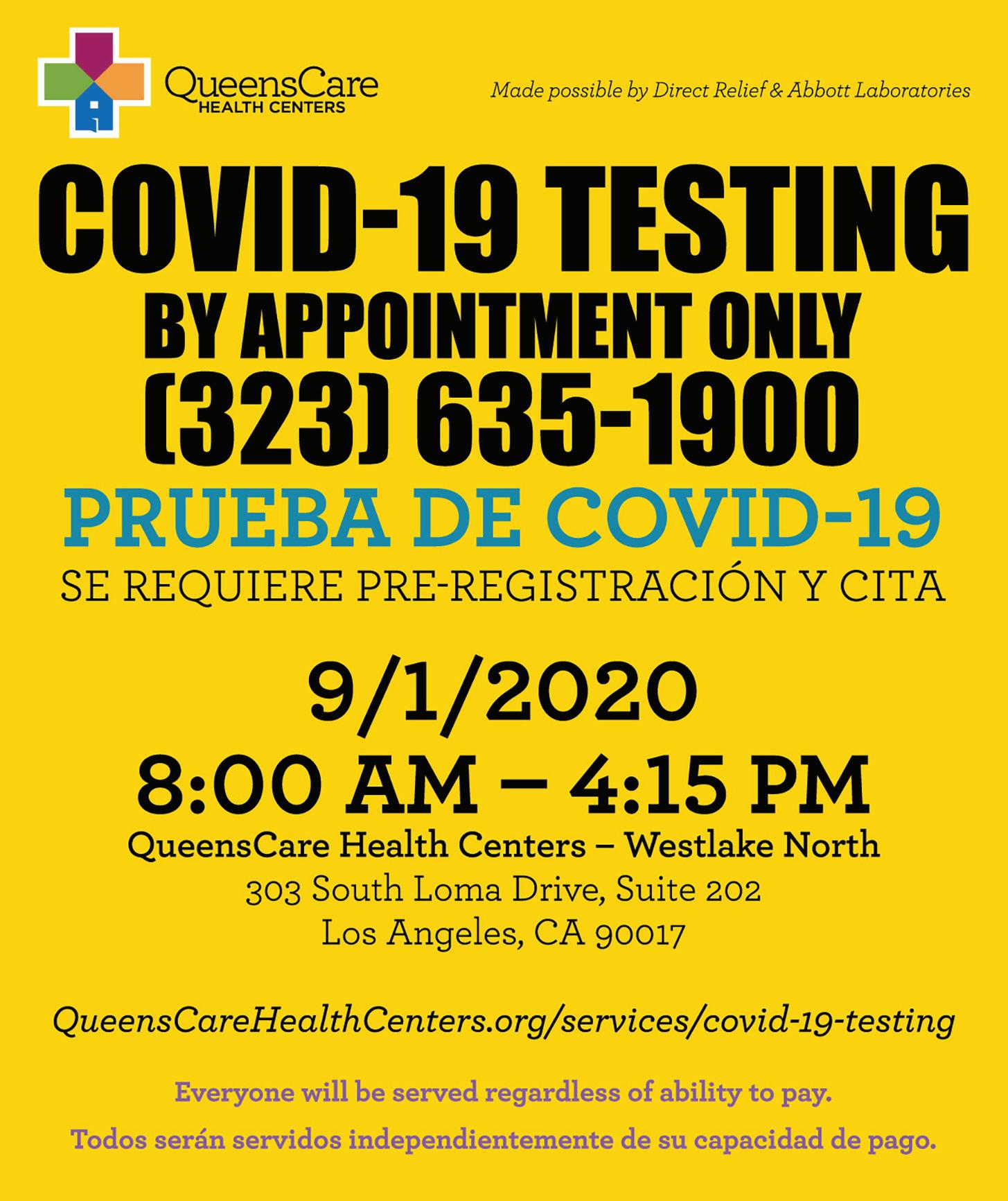
Located in the heart of Los Angeles, QueensCare Health Centers (QHC) provide healthcare with respect, compassion, and excellence – all in your community.
As part of the efforts to identify and isolate new COVID-19 cases, QHC is happy to announce they were the recipient of a $187,500 grant from Direct Relief and Abbot Laboratories to perform COVID-19 testing.
“The impact of COVID-19 has been unimaginable, and it requires us to re-imagine our future, our new normal, and then the next normal, as we navigate out of this crisis together. We’re fortunate to have received this grant for the important testing that needs to happen for all Angelenos,” said Eloisa Perard, President and Chief Administrative Officer of QueensCare Health Centers. The grant will allow QHC to provide significant community access for testing at their health center locations, identifying positive coronavirus cases, and providing proper care.
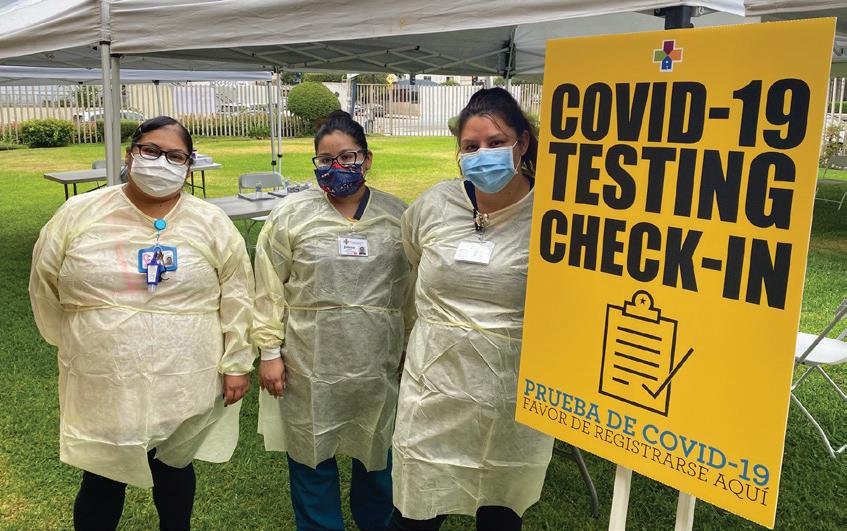
The goal of the Direct Relief and Abbott Laboratories grant is designed to provide additional testing locations and opportunities for the Los Angeles community, removing some of the burden from local hospitals.
For more information, visit QueensCareHealthCenters.org/services/ covid-19-testing/ or call (323) 635-1900. Advertorial

Across our Southern California hospitals and care sites, our approach to health care is the same as it has always been: to treat the person, not just the patient.
That’s why we’ve not only put extra safety guidelines in place—from redesigning our waiting areas for physical distancing, to making our sanitization practices even more rigorous—but we continue to do everything we can to keep you comfortable while you’re in our care. When you’re ready to see us, we’re always more than ready to welcome you back.


By William Bergholz
The 10-year-old Dine L.A. Restaurant Week runs through September 18, proving the city is a premier dining destination.
Restaurants participating include 10e Restaurant, Amante Restaurant, Bacari West Adams, barcito, BRERA Ristorante, Cafe Now, Colori Kitchen, Delicious at the Dunbar, District Bar + Kitchen, Drago Centro, Engine Co. No. 28, Faith & Flower, Fleming Prime Steakhouse & Wine Bar at L.A. Live, Fogo de Chao Brazilian Steakhouse Los Angeles, H&H Brazilian Steakhouse, HATCH Yakitori + Bar, KazuNori Downtown LA, Morton’s Steakhouse DTLA, Paratta, Pez Cantina, Pikunico Fried Chicken, Pizza Sociale, Redbird, Rossoblu, Sugarfish by Sushi Nozawa Downtown LA, The Rooftop at the Wayfarer DTLA, Veranda Al Fresco and Zinque DTLA.
The restaurants offer specials during the event. Prices, which vary by restaurant, for lunch are $15, $20, $25, $30 and $35, and for dinner $25, $35, $45, $55 and $65. The prices
exclude beverages, taxes and gratuity.
Along with on-site dining, there are menu options for takeout and delivery.
Tickets nor passes are required, and advance reservations and orders are strongly recommended. To make reservations, visit discoverlosangeles.com/dinela or call the restaurant directly. Walk-ins will be welcome, but there is no guarantee that they can be accommodated.
Amante Italian Restaurant is preparing for and looking forward to restaurant week, according to manager Constantine Banov. The lunch menu features antipasti fiori di zucca with zucchini flower with ricotta, basil and cherry tomato; and secondi panino carne amante with Canadian bacon, spicy salami, prosciutto, tomatoes and fontina cheese.
On its dinner menu is antipasti involtini di melanzane, which is eggplant filled with mozzarella and basil, and secondi eesce spada alla griglia, grilled swordfish, artichoke, tomato, black olives and basil.
At Amante, due to COVID-19, only out-

Generous rebates and instant savings on smart thermostats, advanced power strips, window A/C’s and more!
Set thermostat at 78°. Close blinds or curtains. Run major appliances at night.
As the weather heats up, and you’re staying safe at home, we have lots of ways to help you stay cool and save on your electricity and water costs. ladwp.com/save Free


door dining is available. Tables have been separated, face masks are required until the food arrives and hand sanitizer is found on each table.
Banov hopes restaurant week will encourage customers to return.
“We would love to see more people coming and dining with us for a second or third time,” Banov said.
Amante’s lunch and dinner menus are available on its website, amantela.com.
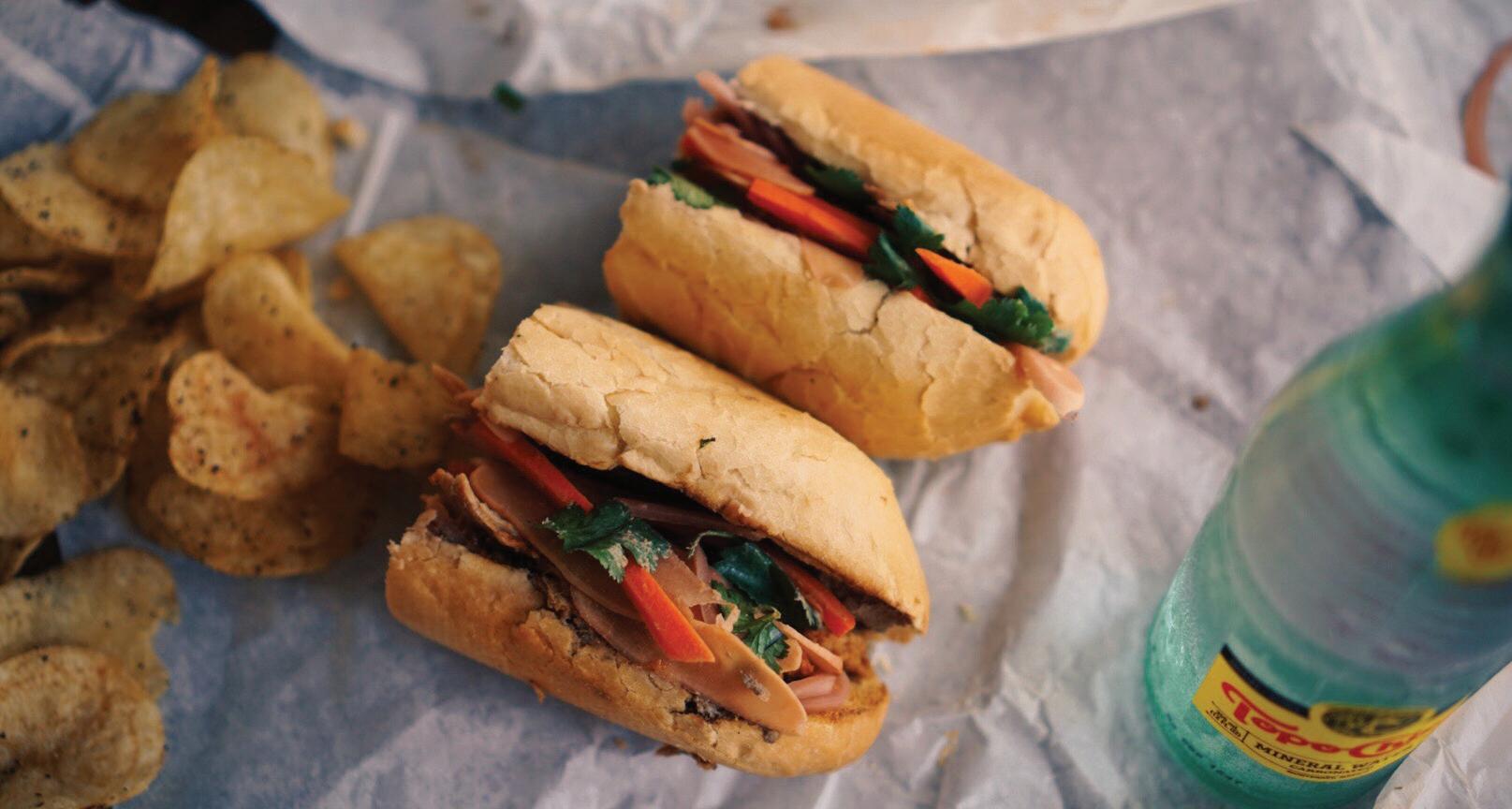
Barcito is also participating with cold deli sandwiches, like its popular Italian sub sandwich, for lunch. For dinner, it will offer hot sandwiches, sold as a combo with a side of broccoli or chips and a drink. Included in it is the asada and fried chicken sandwiches. Din-





With the pandemic, Barcito is offering delivery only. Guests can order via a kiosk near the front door or via its website, barcitola. com.
Barcito’s manager, Andrea Borgen Abdallah, has high hopes for restaurant week.
“I think Dine L.A. generally has proven to be a really great marketing and promotional tool,” he said. “Obviously, things are a little crazy these days, so it will be interesting to see kind of within the context of it all just being to go whether it will kind of still be the same sort of push. I’m happy they are continuing with it. I think every little bit helps these days.”






By Sarah Donahue
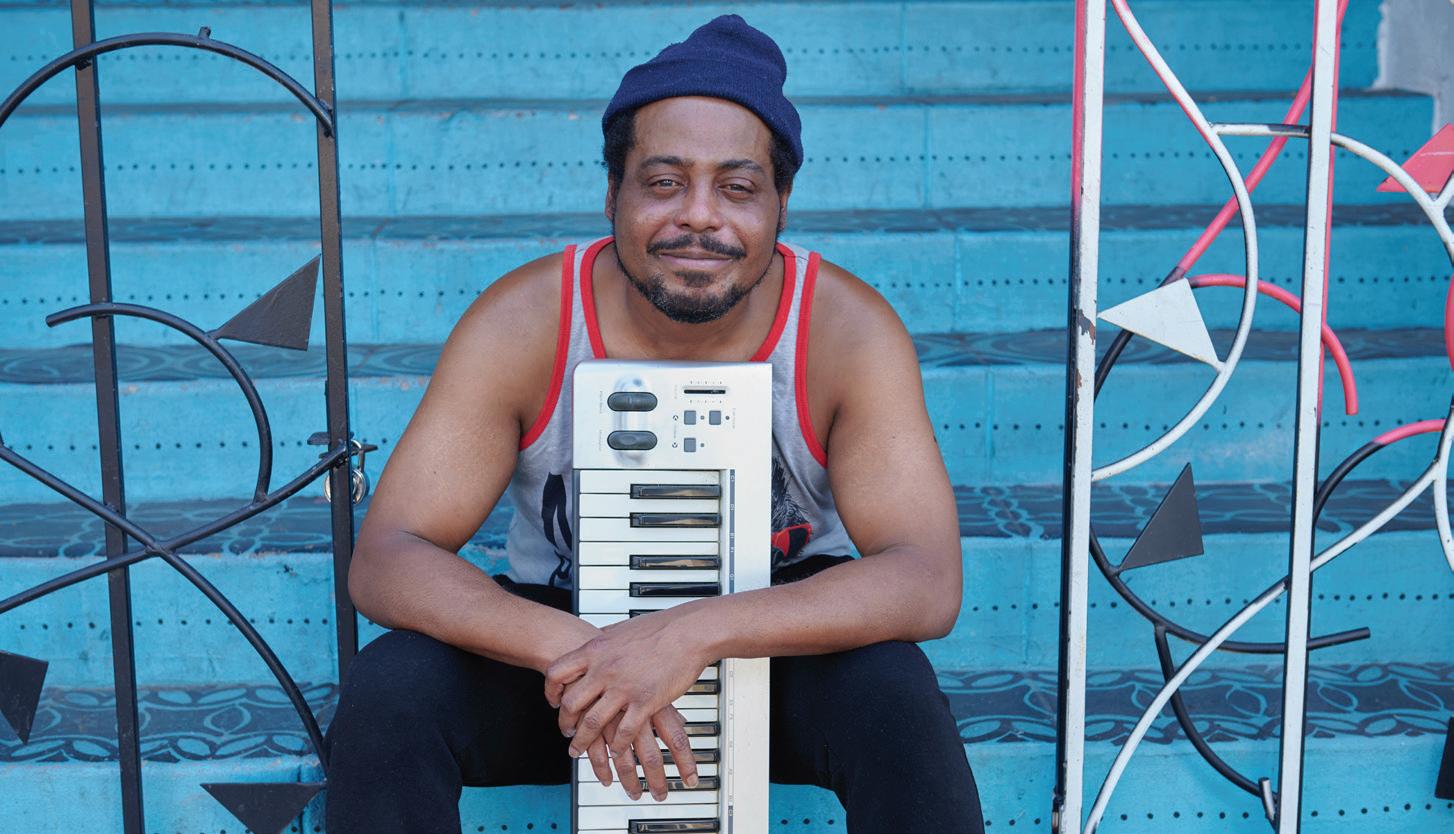
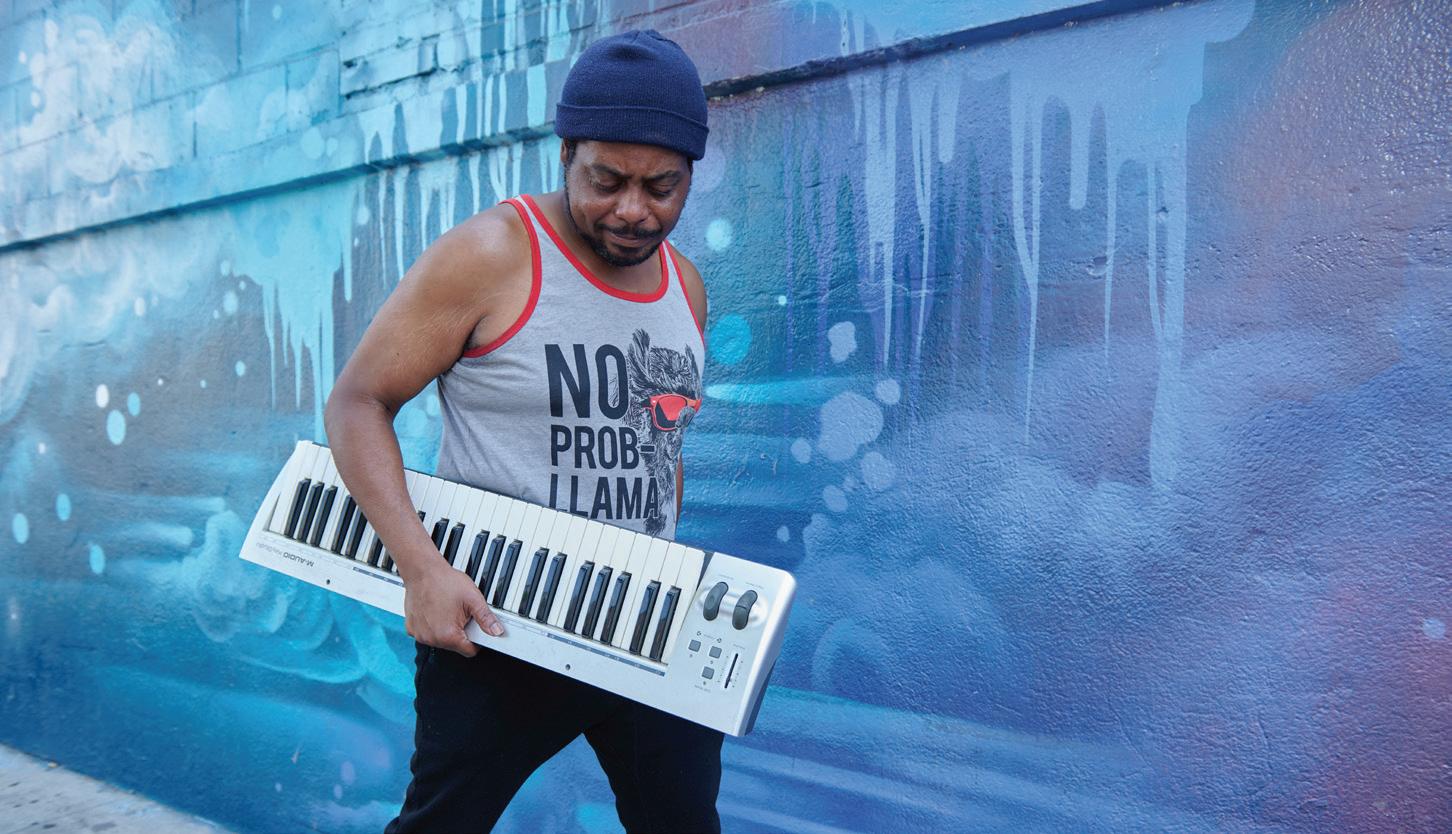
To change the narrative on the stories told from Skid Row and the story of his life, Christopher N. bought a $25 computer from a thrift store and started making music.
“I live on low income, and I’m using a 30day trial to make the music,” said Christopher, who wouldn’t reveal his last name. “I’m essentially doing everything to the cheapest way I possibly can to make this happen.”
Once homeless, 40-year-old Christopher now lives in the housing on Skid Row and uses his time to write and produce music under the name Skid Row Productions. He hopes his music will help him afford to join The American Federation of Musicians Local 47, an LA-based union that provides health care and other benefits. He taught himself how to advertise his music by paying for ads on Facebook and spreading his music to as many ears as possible. Christopher’s ultimate goal isn’t to sim-
ply make his own music career but to create an artistic space and a foundation for Skid Row’s artists. He wants to teach them the ins and outs of how to create music and advertise one’s self to help put them on the path to getting housing, health care and artistic expression.
“I want to show people how you can try to change your life, right from here, just as you are,” Christopher said.
His idea to make money from music came from an experience where he and his friend were both homeless at the same time. Both were struggling, but his friend was part of the LA musicians’ union, where he received health insurance and other benefits from his membership.
From there, Christopher said he was inspired to find a way to raise money to pay the dues required to be part of that union and help others raise money to join as well. That’s where the name Skid Row Productions comes in.
“I know pain makes beautiful art, and so there’s so much pain here,” he said about Skid Row.
He doesn’t want recognition, he said; rather, he wants to encourage those on Skid Row to use art and music to create a path of success.
“A common thing that you see (on Skid Row) is people rolling by with digital cameras, and no one ever gets paid that’s on the camera,” he said. “The only people who ever get recognition are the people with the cameras. My idea is rather to tell the story of Skid Row from people that live here in Skid Row.” Christopher’s lyrics are molded by his re -





al-life experiences as a homeless person. Originally from the Dallas area, he moved to LA and it took him a while to go to Skid Row to seek help.
“It’s very frightening if you roll past and you’re not familiar with the situation,” he said.
He talks about roaming the streets of Hollywood in his song “City of Angels,” which starts with a sample of dialogue from newscasters talking about LA’s homelessness.
The sample he used in the beginning of the song shows how many people in society are aloof toward the problems that the unhoused community faces, as the sample ends with “Blah, blah, blah, in other news…”




and begins the kick to the dreamy, low-tempo song.
His high-energy dance song called “Go Outside” was made “out of frustration,” he said.
“I was using a piece of software that was on a trial, and before I could finish doing what I needed to do with the five-day trial, it expired,” Christopher said.
He used his frustration as a tool and carefully noted how the software adjusted the reverb and audio, teaching himself how to do the same with the software he does have, he explained.

As of now, Christopher said he unfortunately hasn’t made much money from his efforts. “I’m in the hole,” he said, laughing.
On his self-designed website, he describes the movement behind his music as “The Sound of Poverty.” His home page includes a 2019 article from Visual Capitalist detailing how many streams it takes to make a significant amount of money. On Spotify, it takes 229 streams to make just $1, the article states.
He’s invested in himself and his music, paying money to get his music on popular streaming services like Apple, Spotify,
Soundcloud and more. All his mixing, copyrighting and personal advertising is done from his computer in his apartment, where he has microphones and studio monitors set up.
“It’s been a lot of work, a lot more work than I would have thought, but just as much as I thought at the same time,” he said.
Christopher spent his childhood years in the foster care system. Since he turned 18, he’s struggled with homelessness, having to stay at hotels, friends’ houses or on the streets, he said.
When he was younger, his foster parents took him to piano lessons, “because I was too much to deal with,” he said. The piano lessons worked, he said, adding that his piano teacher was a significant figure in his childhood.
“She was a lady who took me from a boy’s home to her family’s house on the holidays because my family wasn’t around,” he said, getting teary eyed. “She had no ulterior motive other than she saw a child who needed help and she gave it to me.”
While much of Christopher’s music is inspired by EDM, hip-hop and trap music, he has plans to release classical compositions
inspired by Mozart and other composers.
He said he empathizes with those who have grown up in the foster care system, also saying that it shaped him to be the independent person he is.
“As a kid, I always did feel like I was on my own,” he said. “I’ve always felt like you have to make your own way. That’s what I want to teach other people: You have to do it yourself; nobody is going to do it for you.”
Even though Christopher is no longer unhoused, he still goes to committee meetings to speak about issues relating to poverty and homelessness in LA.
“If I don’t go down there and tell them how I feel, then I wouldn’t be doing my part,” he said. “I don’t want to talk about these issues, but they’re close to my heart.
Christopher hopes that someday if his foundation takes off and other artists work with him under Skid Row Productions, it can bring light to the issues that hinder the unhoused communities and eventually change the stigma that surrounds it.
“Too often what comes out of Skid Row is negative,” he said. “I want to make sure that I determine what my environment is.”
NOTICE IS HEREBY GIVEN that the undersigned intends to sell the personal property described below to enforce a lien imposed on said property pursuant to Sections 21700-21716 o f the Business & Professions Code, Section 2328 of the UCC, Section 535 of the Penal Code and provisions of the Civil Code
The undersigned will sell on the 8th day of September 2020 at 11: 00 A M on the premise s where said property has been stored and which are located at Thriftee Storage Company LLC, 1717 N Glendale Blvd in the city of Los Angeles, County of Los Angeles, State of California, the following:
Name of owner: Space number
Aaron Ray C20,U47
Fritzi Villanueva S3
Michael Colston U92
Gerardo Aguinaga U93
Davit Abrahamyan L29
Derek Callahan T7
Mirna Luisa Acuna H10
Timothy Middlebrook E26,E27
Description of goods Amount
Personal effects
Personal effects
$1328 00
$874 00
Personal effects $160 00
Personal effects $140 00
Personal effects $379 90
effects
00
effects $375 00
effects $1988 00
Purchases must be paid for at the time of purchase in cash only All purchased storage units with the items contained herein are sold on an “as-is” basis and must be removed at the time of sale
Sale subject to cancellation in the event of settlement between Thriftee Storage Co and obligated party
Thriftee Storage Company LLC
Dated at Los Angeles, CA by Felipe F Islas / Manager August 26, 2020