




BY CHRISTINA FUOCO-KARASINSKI
Foothills Focus Executive Editor
Construction of one of the first major diverging diamond traffic interchanges at I-17 and Happy Valley has been completed.
Drivers are using a modernized interchange with more lanes—three in each direction—on the new bridge crossing over the freeway. Prior to the Arizona Department of Transportation’s $50 million project, traffic was limited to one lane in each direction over the old Happy Valley Road bridge.
The old bridge was demolished as part of the reconstruction work and replaced with a wider span that allows an improved flow

BY TARA ALATORRE Foothills Focus Contributing Writer
For more than 65 years the community has gathered for the Foothills Christmas Pageant, a nondenominational live Christmas reenactment that takes place under the stars in the Sonoran Desert.
But like so many other events in 2020, the organizers recently canceled it due to the COVID-19 pandemic.

This would have marked the 68th year that residents of Cave Creek and the surrounding communities would have gathered for the traditional free event. Spectators come from all around the Valley and the country to watch the production that includes the Four Kings on horseback and a choir performance.
“It was quite obvious that we would not be able to do social distancing, and we did not see a way to pull it off this year,” said Toby

Payne, the pageant’s organizer. “It was a group consensus.”
Normally, there are 250 to 400 spectators for each night of the performance to see the homespun pageant that started in 1952 by the local 4-H Club. It originally took place at the base of Black Mountain, then eventually moved to the Spur Cross
see TRADITION page 4

reveals 7 costly mistakes that most homeowners make when selling their home, and a 9 Step System that can help you sell your home fast and for the most amount of money. This industry report shows clearly how the traditional ways of selling homes have become increasingly less and less effective in today’s market. The fact of the matter is that fully three quarters of homesellers don’t get what they want for their homes and become disillusioned and - worsefinancially disadvantaged when they put their homes on the market.

$2,650,000


As this report uncovers, most homesellers make 7 deadly mistakes that cost them literally thousands of dollars. The good news is that each and every one of these mistakes is entirely preventable. In answer to this issue, industry insiders have prepared a free special report entitled “The 9 Step System to Get Your Home Sold Fast and For Top Dollar”. To order a FREE Special Report, visit www.topsalehomesellerkit.com. Get your free special report NOW to find out how you can get the most money for your home.





An edition of the East Valley Tribune
The Foothills Focus is published every Wednesday and distributed free of charge to homes and in single-copy locations throughout the North Valley. To find out where you can pick up a copy of The Foothills Focus, please visit www.thefoothillsfocus.com
CONTACT INFORMATION
Main number: 623-465-5808 | Fax: 623-465-1363
Circulation: 480-898-5641
Publisher: Steve T. Strickbine
Vice President: Michael Hiatt
Associate Publisher: Eric Twohey | 480-898-5634 | erict@thefoothillsfocus.com
ADVERTISING DEPARTMENT
Display Advertising: 623-465-5808
Classifieds/Inside Sales:
Elaine Cota | 480-898-7926 | ecota@timespublications.com
TJ Higgins | 480-898-5902 | tjhiggins@timespublications.com
Steve Insalaco | 480-898-5635 | sinsalaco@timespublications.com
Advertising Office Manager: Lori Dionisio | 480-898-6309 | ldionisio@timespublications.com
Director of National Advertising Zac Reynolds | 480-898-5603 | zac@thefoothillsfocus.com
NEWS DEPARTMENT
Executive Editor: Christina Fuoco-Karasinski | 480-898-5631 christina@timespublications.com
Photographer: Pablo Robles | probles@timespublications.com
Design: Nathalie Proulx | nproulx@timespublications.com
Production Coordinator: Courtney Oldham | 480-898-5617 production@timespublications.com
Circulation Director: Aaron Kolodny | 480-898-5641 | customercare@evtrib.com


Ranch Conservation Area.
“I’ve had people tell me that they don’t have a Christmas until they go to the pageant,” Payne said about how disappointing canceling it was for the community and performers.
Payne, who has volunteered as an organizer for the event since 1992, said the pageant has second- and third-generation performers, and some have been involved with the production for decades. All involved were disappointed to cancel the pageant but knew it was





the right thing to do.
“It is hard to even talk about it. I’m just sorry we could not do it,” he said.
The event is usually held for two evenings in the beginning of December and takes about a week and lots of willing volunteers to set it up. Although the Foot-
hills Christmas Pageant had a brief hiatus from 2004 to 2006 while trying to find a new location, it has only been canceled on one other occasion. In 2007 an unusual rain and snowstorm washed the pageant grounds out, according to the pageant’s website.



Layouts for All Print Products Logo Creation & Conversion

Editing & Retouching Free Initial Design Consultation Business Cards, Brochures, Flyers, Duplicate Forms, Banners, Signs, Architectural Copies & Prints




Binding, Laminating, Folding, Cutting, Booklet/Program Printing


UPS, FedEx, DHL, Usps Private Mailboxes

Rental, Faxing, Scanning, Notary




BY STACI HAUK Foothills Focus Contributing Writer
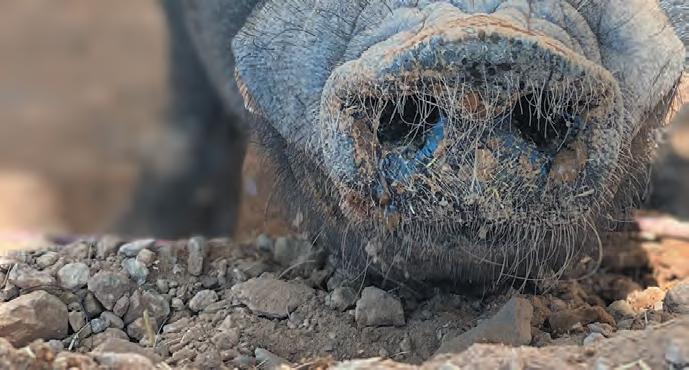
Better Piggies Rescue was started by Danielle Betterman after years of fostering and assisting at other pig rescues in the Phoenix area. The sheer amount of unwanted and dumped potbellied pigs made Betterman anxious to start her own rescue and create a safe sanctuary for these intelligent and lovable animals.
“Better Piggies Rescue’s (nonprofit) mission is to rescue, rehabilitate and educate the public on potbellied pigs. With over 100 pigs at the rescue, including farm hogs and two rescue cows, BPR continues to provide rescue resources to pigs by working with different government organizations and local sanctuaries,” Betterman explained.
On a visit to the rescue, it is evident that Betterman has gained notoriety for the work she does. Pigs of all shapes and sizes greet volunteers with a snort and a nudge, waiting to soak up the love and attention they deserve after having a difficult start to life.
“The sanctuary houses pigs ranging in age from four months to 15 years and 10 pounds all the way up to 900 pounds,” Betterman said.
“BPR is home to potbellied and many different breeds of farm hogs.”
The organization caters to special rescue cases, such as Hope, who was being used as Easter dinner for her family but was attacked by a dog, ripping off her ear. Hank ran down a street in Downtown Phoenix with a 5-pound tumor on his back end. The 900-pound A-Train was in a 4-by-4 pen for the first year of his life. Iggy was starved at another sanctuary that no longer runs in Arizona, and the most recent case is Spot, who was rescued by Ironwood Pig Sanctuary but brought to the rescue due to an extreme skin condition.
“We also take in owner surrenders,” she said.
BPR receives 10 to 15 surrender requests every two weeks. Some are owners who no longer want a pig after
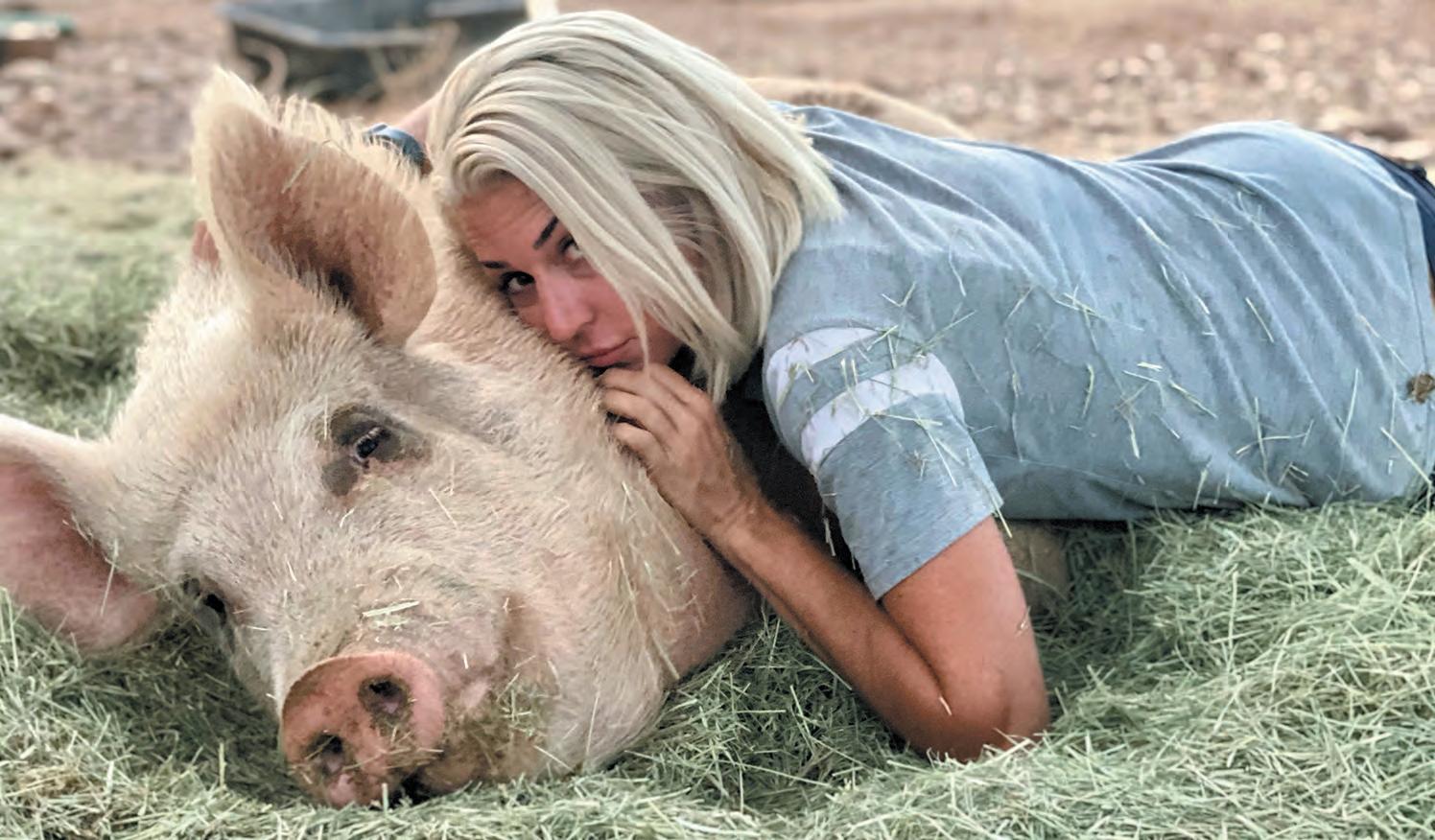
it outgrows its “mini” pig status, while others are stories of neglect.
“None of these pigs chose the life they were given,” Betterman said. “These are smart, caring, beautiful living beings, and just because people want bacon for their breakfast, they aren’t treated the same as dogs and cats.”
Such is the case for Ruby, a recent escaped pig in the area who has become a passion project at the rescue, and they hope to get the word out about her story.
Recently, Ruby was found by police after a neighborhood located her and rallied to get her home safely. The pig was returned to the owner. A few days later police contacted BPR, as a pig in the same area was found in distress. This time the owner was not located immediately.
The owner did finally claim the (same) pig after a post on NextDoor, see RUBY page 6

RUBY from page 5
and BPR went out to ensure the situation was resolved. As per the rescue mission, they hoped the pig had made its way back to its loving home. It was at this point that Betterman was told the pig was for consumption and not a pet.
Betterman said Fox News was there covering the story, and once BPR spoke to them, it was clear this was not a “cute, feel-good story,” so they chose to focus on the fact that the pig was lost and now made it home. That was what the public saw. Betterman wants to make sure the truth is out there.
“We offered to buy or adopt the pig and bring her to the rescue, and while the owner originally agreed, she later reneged,” Betterman said.
“No one ever contacted me for any information. Fox News just posted this as a happy ending. After getting some blowback on the story not having the full facts, the story was simply deleted instead of providing the correct information. This is not sitting well with
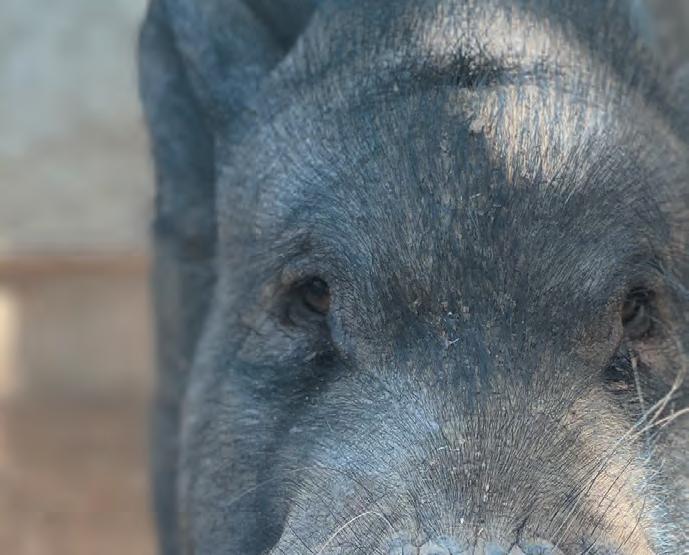

the rescue community and people that care about animals. So, I decided to ‘make noise’ and get the owner to see how important it is to save this pig’s life.”
At this time, the organization has more than 100 likes on Instagram and around 3,700 people who have seen the story on Facebook.
“People are sharing, asking Fox News to run the complete story, and reaching out to other possible venues,” Betterman added. “The goal is not to shame the owners but to reiterate how important this pig has become and to not slaughter it for a holiday meal.”
The #saveruby has been created for animal lovers and volunteers at BPR to have their voices heard and hopefully ensure a better future for this beloved pig.
“All of our pigs at the sanctuary live their best piggy lives, hoping to be adopted to an amazing forever home—if not, they can live out their lives among their piggy friends, and that is our hope for Ruby as well.”














Healing and comfort in a state-of-the-art medical center:
• 70 inpatient beds
• Labor and delivery, including a newborn nursery
• Physicians specializing in joint replacement and minimally invasive orthopedic, spine, gynecologic and general surgery procedures
• Outpatient specialty care
• 24-hour emergency services for patients of all ages
BY CHRISTINA FUOCO-KARASINSKI Foothills Focus Executive Editor
The Institute for Healing of Memories, in partnership with Spirit in the Desert Retreat Center, will host Healing of Memories Zoom Workshop for Women Veterans.
The workshop will be conducted online from noon to 4 p.m. Saturday, December 12. The workshop is free for any woman service member or veteran. Those interested in the workshop may find out more about it or register free for the workshop by contacting Mike Wold, U.S. Navy veteran and workshop coordinator, at 651-687-9767. Space is limited to the first 12 women veterans who register.
To continue to serve veterans in need of psychological and spiritual healing during the COVID-19 pandemic, the organization has created

a four-hour online Zoom Healing of Memories Workshop based on its weekend workshop.

The Zoom workshop does not provide the full experience of the weekend workshop, but it has been shown to provide a significant level of healing and connection for the participants, Wold said.
The Institute for Healing of Memories is an international organization that seeks to contribute to lasting individual and collective healing. Spirit in the Desert Retreat Center hosts programs and retreats for participants of all faiths and traditions to experience reconciliation, renewal, healing and transformation.

Air conditioning system replacement (Systems include)













from page 1
of traffic. Construction started in November 2018.
The diverging diamond interchange design, which has grown in popularity across the country, includes intersections and traffic signals that allow drivers to cross to the left side of the Happy Valley Road bridge over I-17. That switch means motorists can make direct turns onto the freeway entrance ramps rather than waiting to turn in front of traffic traveling in the opposite direction.
Traffic began flowing through all lanes of the interchange at Pinnacle Peak Road on November 20 and at the Happy Valley interchange two weeks ago.
A reduction in such conflict points and fewer traffic-signal sequences are safety enhancements that allow the improved traffic movement through the diverging diamond interchange.
The contractor had overnight restrictions at Happy Valley Road from November 30 to December 4 to perform remaining work within the roadway.
Crews maintained traffic along Happy Valley Road during most of the interchange reconstruction. The diverging diamond interchange project also allowed crews to remove the two roundabouts that had been in use at the Happy Valley Road interchange for the past two decades.
“The roundabouts had been in place at either end of the old bridge over the freeway,” said Doug Nintzel, ADOT spokesman.
“What this project allowed was the removal of the roundabouts, which had, in an interim way, allowed us to get to this
much larger project. I know the roundabouts received criticism from some drivers in the area, but they were designed to get us to the point where funding was available to do this much more modernized interchange.”
Nintzel said there are a number of roundabouts still in the state, especially along State Route 260 in the Cottonwood area and Highway 179 between I-17 and Sedona. It was time to retire the roundabouts at Happy Valley Road, he added.
“We’re glad that regional funding was available to do this project,” Nintzel said.
In addition to the improved Happy Valley Road interchange, crews reconstructed the I-17 interchange 1 mile south at Pinnacle Peak Road. It has been expanded as a traditional diamond interchange featuring more lanes and turn bays on the bridge over I-17. Con-
struction at I-17 and Pinnacle Peak Road wrapped up in late November.
ADOT’s project was funded as part of the Regional Transportation Plan approved by Maricopa County voters in 2004. It was finished on schedule, Nintzel said.
“Traffic will grow over time there, and Happy Valley Road is a very important thoroughfare, especially with the businesses, including the mall, near the freeway,” he added.
The COVID-19 pandemic did not negatively affect construction. If anything, the decreased traffic helped as contractors worked through the construction.
“One thing we’re always concerned about is the impact on traffic, and because traffic was lighter—especially earlier in the pandemic—we weren’t disrupting drivers as much as it might
have been the case under normal circumstances.”
The diverging diamond is a relatively new design for interchanges in the Valley. There are two smaller intersections along the new South Mountain Freeway that are half-diverging diamonds, Nintzel said.
“Those are not as detailed as the one that has been constructed at Happy Valley Road,” he said.
“We do have plans to build additional diverging diamonds in the future. However, there won’t be a sudden growth in the number of diverging diamonds. We’ll need to pick our spots in an interchange reconstruction project, where a diverging diamond would be a good fit. We have started work on installing a diverging diamond at the I-10 at Houghton in the Tucson area.”
BY CHRISTINA FUOCO-KARASINSKI Foothills Focus Executive Editor
RaiseMe, a college readiness and scholarship tool that helps high school students earn micro-scholarships for achievements as early as ninth grade, launched its educator challenge this month in Arizona.
“The Amazing Raise” will award $2,500 in school supplies to the top two high schools in the state who invite and sign up the most students to RaiseMe through December 11. The prize money can be used for classroom supplies, technology upgrades and cleaning necessities.
$2,500 for supplies
This is the first time the contest has been done in Arizona.
To participate:
• Teachers can sign up for a RaiseMe educator at raise.me.
• Once logged in, educators will click the blue “invite” button at the top left of the profile page to invite students to join RaiseMe. Invitations can also be sent via email, social media and Google Classroom.
Teachers can visit the competition page to check rankings each week to see how they fare against other schools in the state.
“We know being an educator is a challenging job, especially with all the hurdles of 2020,” said Amanda Schwabe, di-
rector of student partnerships for CampusLogic, a Phoenix-based tech company that acquired RaiseMe.
“As an Arizona company, we are proud to help our local high schools in this way. Plus, we are making college more attainable for Arizona students by putting scholarship dollars in their hands and ultimately helping these learners reach their full potential.”
To win, schools need to sign up the most ninth- to 12th-grade students over the next month. The two schools with the highest percentage of students signed up, based on total enrollment, will receive $2,500 to spend on classroom and facility needs.





BY JUDY BLUHM
Foothills Focus Columnist
Here today. Gone tomorrow. Oh, monolith, shining object from an alien world sitting in the Utah desert, how we miss you.
Yes, it has been quite the drama and captured the imagination of people all over the world. When two Bureau of Land Management workers were flying a helicopter over Bears Ears Park in Utah to count bighorn sheep (sort of a cool job that I might like), they were shocked
to see a 10-foot-high glimmering object standing erect in a remote part of the canyon.
Landing and running to see what the strange metal structure might be, they were stunned to see what appeared to be aluminum sheets riveted together in the shape of a triangular prism. Standing in a sandstone slot canyon, it became an attraction that sent thousands of “alien seekers” to go look and touch the thing. We humans long for evidence of visitors from outer space. Maybe to take away the pandemic blues or add some


excitement into our lives. If anything, 2020 has been an unbelievable year. Let’s make it weirder and find some structure left by aliens. Might it be a time machine? This mystery object was set in an obscure place that was completely unnoticed for approximately four years (that is when Google Earth photos seem to show that it was erected). Or was it an artist that simply was “adding beauty” to an already naturally gorgeous place? We might never know.
The “object of our imagination,” as one astronomer likes to call it, was removed. It seemed like magic. Yet, four men with a wheelbarrow and a pickup truck went out at night and knocked the thing over and busted it up into little pieces, carting it off into the darkness. Hey, there goes our forensic evidence to figure out exactly where the monolith came from!
But wait, there is more mischief. A similar metal monolith has been spotted in Romania, buried into the ground on a tall hill called Boatca Doamnei. Hmm, looking almost exactly like the Utah structure, it just “appeared” out of nowhere. Until it vanished.
cookies. We cannot let a few monoliths get in the way of holiday cheer, shopping or fun. Yet, the world does seem a bit off kilter these days, and what better example of it than vanishing alien structures?



Yes, that’s right. Another missing monolith. Perhaps we are going around in concentric circles and we have started a new chapter called “2020: A Space Odyssey.”
What are we mere mortals to do when these strange objects appear and disappear? Nothing. We think, see, wonder, chuckle and then decorate the tree, hang the mistletoe and bake a few batches of
We humans like weird stuff. And hamburgers. If folks can sit in their cars for over 12 hours for the opening of an In-NOut Burger in Colorado, then why should we be surprised that cars were lined up for miles in the middle of nowhere in Utah to “touch something wonderful.”
Hey, I would rather eat something wonderful, like a hamburger, than go out to the desert to witness a hoax—oops, I mean alien object. Just like a delicious hamburger, it disappears quickly.
Judy Bluhm is a writer and a local Realtor. Have a story or a comment? Email Judy at judy@judybluhm.com.








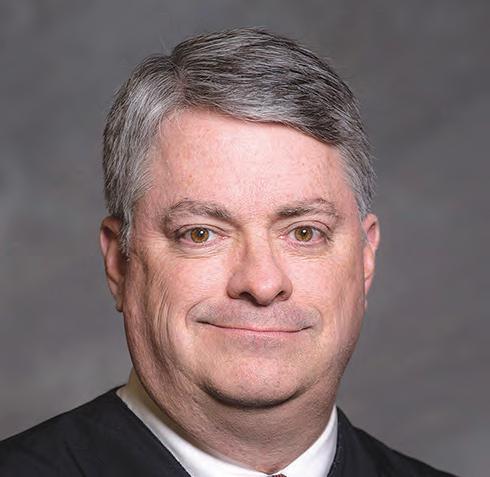
BY JUDGE GERALD A. WILLIAMS North Valley Justice of the Peace
During the COVID-19 pandemic, there have been a variety of moratoriums on residential evictions. But unless something changes, after December 31, ordinary landlord-tenant law will begin again. In short, tenants who have not paid their rent will once again face being evicted.
On March 24, Gov. Doug Ducey issued an executive order directing that constables postpone enforcing writs of restitution (physical eviction orders) after an eviction judgment if the tenant had been impacted by COVID-19. It was extended with more specific and different criteria, but it expired on October 31.
President Donald Trump on March 27 signed the Coronavirus Aid, Relief and Economic Security (CARES) Act. It included a 120-day moratorium on evictions for residential tenants who received federal housing assistance or who lived in a property with a federally backed mortgage. It expired on July 25.
In response to Congress doing nothing after the CARES Act expired, on September 4, the Centers for Disease Control and Prevention issued a ban blocking residential evictions for nonpayment of rent until after December 31. To seek protection under it, qualifying residential tenants need only to sign a declaration form.
Tenants who either owe rent or will have trouble paying this month’s rent need to contact their landlord immediately and see whether some type of partial payment agreement can be made. Any agreement that is made should be in writing. Most landlords have forms for this purpose.
City of Phoenix residents should also contact the Tenants Eviction Assistance Project (TEAP) at 602-385-8880. People there can provide no-cost legal assistance to help tenants with eviction issues.
Tenants are not the only people who have been hurting during the pandemic.
While landlords are often perceived as unsympathetic villains, they have a right to expect that a tenant will honor their lease agreement. Some landlords have not received a full month’s rent since February.
There is one other major issue. According to one report, many tenants in Arizona may have been evicted in violation of the CARES Act. This could happen if either a landlord or their attorney did not realize that the rental property in question had a federally backed mortgage. While something like that should be easy to determine, it is more difficult than it should be, and attorneys often must rely on information obtained from their clients.
If you think you may have been illegally evicted when the CARES Act was in place (March 27 to July 25), you should contact Community Legal Services at 602258-3434. The legal process involves a motion requesting that the eviction judgment be set aside and/or a lawsuit for an unlawful ouster. Forms for both are available by contacting the North Valley Justice Court at 602-372-2000.
Contrary to popular belief, landlords don’t want to evict tenants. Doing so almost always causes landlords to lose money. If you are having trouble paying your rent, contact your landlord sooner rather than later. Nobody wants to start the new year with a knock on their door from a constable.
Judge Gerald Williams is the justice of the peace for the North Valley Justice Court. His column appears monthly in The Foothills Focus.
David Leibowitz’s article on the COVID-19 vaccine
Editor:
The article on the vaccine for COVID-19 should state people can protect themselves by having the yearly flu shot instead of waiting for a miracle cure. If more people would have the flu shot, they might be protecting themselves and others and this virus could be slowed quicker.
The use of masks and social distancing appears to be helpful; however, we are not certain if any vaccine will be a good deterrent for the virus.
Just an observation, and it might help people realize the flu vaccine is necessary. I have had the flu vaccine every year and am 65, not even a cough this year! Yes, I had been wearing the mask; however, it is a safety barrier, and the flu vaccine should be the next option.
I will be holding off on the COVID-19 vaccine until it is proven to be effective with limited side effects.
Editor:
This letter, or “Canticle for Leibowitz,” is written to express my dismay at his published take on the United States government’s disposition of Donald J. Trump after January 20, 2021. I couldn’t disagree more with his position, as follows, and I hope it’s published.
Ah, yes! David Leibowitz’s old saw (November 18 article “How America can move on from President Trump”) let bygones be bygones, regarding the scourge that Donald Trump embodied surrounding the horrible effects of COVID-19 upon the United States. Unfortunately, many of the bygones— more than 260,000 at last count—were former U.S. citizens. Leibowitz suggests President-elect Joseph Biden should commit “an act of mercy for Trump, a man who has shown little compassion
for anyone save himself.” It’s an odd idea considering what Leibowitz apparently believes.
The COVID-19 fatalities since January 2020 don’t even mention the millions who will live with and suffer permanent organ damage, long haulers who will suffer months or years with lingering symptoms, etc. Meanwhile, all Donald Trump can focus upon is his personal affront at losing the election. So, thankfully, he’s a one-termer, although he continues the need to hold the news lines in the United States, while wasting time and resources in his countless ill-fated lawsuits in multiple states.
Now the country can focus its energies upon a national plan to conquer this international tragedy. Donald Trump never got serious about PPEs and wearing them, even right up to his predominantly maskless rallies just prior to the election itself. It took him months to even enact the National Emergency Preparedness Plan to put our resources into the manufacture of ventilators and PPEs. Instead, he left the states negotiating against each other, at warp speed, to buy these materials, while hospital staffs scrambled to obtain and reuse the PPEs they had. In fact, more than 1,700 medical workers have died from COVID-19.
Meanwhile, Donald Trump engaged and continues to engage in his addiction—riding around in a golf cart—to occasionally get out and hit a ball. Simultaneously, he fixates on his ridiculous allegations of the injustices of his lost election instead of using the energies of the government to solve COVID-19. So, I just don’t understand how one can use the examples of pardoning Nixon, Ford and the losses of Vietnam to compare to our current plight. After all, between 1965 and 1974, 282,000 Americans died there. So, our current COVID-19 rate far outpaces those losses.
Art Veves
get a letter published
The Foothills Focus welcomes letters that express readers’ opinion on current topics. Letters must include the writer’s full name, address (including city) and telephone number. The Foothills Focus will print the writer’s name and city of residence only. Letters without the requisite identifying information will not be published. Letters are published in the order received, and they are subject to editing. The Foothills Focus will not publish consumer complaints, form letters, clippings from other publications or poetry. Letters’ authors, not the Foothills Focus, are responsible for the “facts” presented in letters.




BY CHRISTINA FUOCO-KARASINSKI Foothills Focus Executive Editor
Cybersecurity expert and former FBI agent Michael McAndrews has three loves in his life—malware, motorcycles and music.
Malware is key to PacketWatch, a 3-yearold Scottsdale-based company for which he serves as vice president, network security services.
PacketWatch is the name of the business and the proprietary network monitoring, analysis and investigation platform designed to help cybersecurity threat hunters quickly and efficiently accomplish their daily tasks. He calls PacketWatch one of the
“coolest tools out there.”
“Our company provides cybersecurity for corporations and individuals,” he said. “We meet our customers in a couple ways. Obviously, we love referrals. That’s great.
“Sometimes we perform what’s called ‘managed detection response,’ which is, essentially, watching your network for you, making sure nothing bad gets in. If something does happen, we identify it very quickly and reduce ‘dwell time’—how long the bad folks are in there—and then we keep your network safe.”
The COVID-19 pandemic has caused an uptick in incident responses, McAndrews said. The opportunities are greater for hackers to access remote gateways to net-
works because folks are rushing to set up workstations at home.
“They’ve expedited getting laptops and things into people’s hands,” he said. “Companies are creating more remote access accounts—and they don’t always put security first.
“Now there are more opportunities for these folks who have been out there scanning for these things to find them. We’re seeing a lot more breaches.”
Many times, affected companies become long-term, managed detection clients.
McAndrews has been in the field for 25 years and has spoken many events.





“Sometimes in my talks, I tell people I have found that a large percentage of the population in America has at least three passwords,” he said.
“You have one password that you think is just for small sites that you don’t care about, you have one that you think is a little bit more secure, and you have one you might use for your banking. Most people seem to fall into that category.”
For example, if the “medium” password is on a website that is breached, the hackers will download the database of usernames and passwords. They then put it into a password spray.
“They can blast your email address with that password across the top 1 million websites in a matter of minutes,” he said.
“So, just imagine that if I get that one password you’ve used on a few dozen sites and I blast it to the top 1 million sites in the world, how many am I going to get into? What if I do get into that website? Am I going to have your credit card information, your home address, your shipping information, etc.?”
McAndrews doesn’t use the same password twice, and he suggests others do the same. Password managers like LastPass come in handy for this.
“I couldn’t even tell you my passwords because my password manager changes them,” McAndrews said. “They’re very complex, and they’re long. If I need to do a password reset because I don’t have my password manager, I can still do that. But for right now, my passwords are secure.”
On the commercial side, McAndrews recommended using multifactor authentication, an electronic authentication method in which a computer user is granted access to a website or application only after successfully presenting two or more pieces of evidence to an authentication mechanism.
PACKETWATCH from page 14
“When you sign in, they send you a text or they need to type in a code that protects it,” McAndrews said. “Even if your company’s passwords or emails fall into the wrong hands, if they don’t have the second factor. If they don’t have the text message or the code, they can’t get in, right?”
Patch management is important as well. McAndrews and his colleagues see an increase in unauthorized access coming through network devices.
Virtual private network gateways and firewalls are vulnerable. If companies haven’t fixed that vulnerability, hackers exploit them. Once hackers sneak into a company network, they start looking around. That’s when McAndrews and his clients see an increase in ransomware.
One of McAndrews’ intelligence analysts said that in Q3 2019, the average ransom was $42,000. The same time in 2020, it’s over $233,000.
“On average, some companies estimate the actual cost is over a million for the average ransomware incident,” he said.
“As for the ransoms, they are reaching al-

most a quarter million dollars on average, and companies are being asked to pay to get their data back.”
McAndrews said ransomware is a huge moneymaker for organized crime based in Eastern Bloc countries. Recently, he added, U.S. Department of the Treasury officials said those who make payments to sanctioned
groups can face sanctions.
He suggests establishing segregated backup routines so they’re not in the same domain.
Many ransomware groups immediately look for backups and delete them, which adds more pressure to pay the ransom.
Hackers also threaten to publish data on the dark web and, eventually, the internet.
“I have numerous clients right now where I found their information on the dark web,” he said.
“Unfortunately, it’s already out there. So, they’re having to deal with that as we move forward and clean up the network to keep them out.”
McAndrews has always been interested in cybercrimes and knew, one day, he’d work for the FBI.
After working in sales, McAndrews became an agent and taught at the FBI Training Academy at Quantico and the Interna-

tional Law Enforcement Academy in Budapest.
As an agent, he worked in cyber matters and was on a special team called the Cyber Action Team that was deployed for the highest-profile intrusions.
He also fought crimes against children, which he calls some of his best work as he knew he was saving kids.
“I never had a case that I didn’t feel completely 100% about,” he said.
“I got confessions out of pretty much all my subjects. Unfortunately, it’s an illness, I believe. We need to protect people, especially children. You get one chance at childhood, and for someone to mess that up for their own benefit is unforgiveable to me.”
The FBI was primarily forensic work. Now that he’s returned to the private sector, he feels he can do more to help people.
“In the private sector, I can help businesses and individuals prepare,” he said.
“It’s a good feeling to say I put a lot of people in jail who needed to be there, but now I can help companies really secure their networks.”
see PACKETWATCH page 17


BY LAURA LATZKO Foothills Focus Contributing Writer
The COVID-19 pandemic has been hard on the restaurant industry, especially local mom-and-pop restaurants in Cave Creek and Carefree. These local restaurants have needed to adapt to change to be able to survive. Two local restaurants, Giordano’s Trattoria Romana and Harold’s Cave Creek Corral, have done just that.
For Giordano’s Trattoria Romana, surviving during COVID-19 has meant serving customers in different ways, depending on COVID-19 regulations and guidelines.
When restaurants were closed for inhouse dining from March to May, Giordano’s offered curbside pickup for its customers. It is known for its veal dishes like ossobuco Milanese and house specialties such as eggplant parmigiana and pollo fricassee.
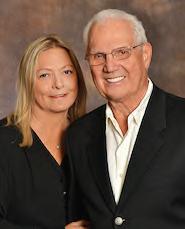
Owner Adele Giordano said that throughout this year, local customers have helped her restaurant survive.
“I have to say the people in Carefree, my regular customers, were so completely supportive. They were determined that they didn’t want to lose us. We were pretty busy with takeout, and I was able to get the bills paid and pay my staff,” Giordano said.
The restaurant reopened for in-house dining in May. Giordano said customers were hesitant to come back at first but soon started to show.
Her restaurant has closely followed CDC guidelines related to social distancing, including positioning tables 6 feet apart, changing to paper menus, requiring masks for staff, ensuring diners wear masks when first entering the facility, offering patio and indoor seating and not allowing groups of more than 10 to sit together.
“That’s a little new, when you have friends and family wanting to sit together and they really can’t. I go out of my way to
follow the guidelines because I don’t want to have any repercussions,” Giordano said.
“I strictly follow social distancing in seating of the tables.”
Before reopening in May, the staff rearranged tables and removed bar seating. Giordano said the safety measures have helped diners to feel secure to dine at the restaurant.
“As time went on, people started to really trust us and know they could come and feel safe,” Giordano said.
Giordano said that while most customers have been understanding, some have had trouble adjusting to the new protocols.
“Sometimes people will come in and they will see an empty table and they wouldn’t get that I can’t seat them there because there is someone else that is too close. Sometimes they are not very happy with that, or they don’t like having to wait. Unfortunately, it’s not my law. I’m just following the guidelines,” Giordano said.
Along with her duties as owner, Giordano also acts as a server in her restau-

rant. Her full-time staff has been with her for a number of years. Her chefs are known for their sauces and ability to cook food in a consistent manner.
“You can order something now and come back next year and it would taste the same,” Giordano said.
She has avoided laying off employees during the pandemic.
“I’ve been able to maintain my staff, which is really important to me,” Giordano said.
Giordano said some days can be more difficult than others, but she has just been pressing on, day by day.
“As frustrating as it is having to wear a mask for five hours, six hours and be really uncomfortable, you have to do it. You just have to be persistent and pray that it passes us and we’ll be done with it relatively soon,” Giordano said.
Giordano said it hasn’t been easy running a business during COVID-19, but she
RESTAURANTS page 17




from page 16
and her staff are doing everything they can to make sure the restaurant continues on for years to come.
“We are just getting the job done and surviving as best as we can,” Giordano said.
Giordano’s Trattoria Romana
7275 E. Easy Street, Carefree 480-595-0233, giordanostrattoriaromana.com
Harold’s Cave Creek Corral
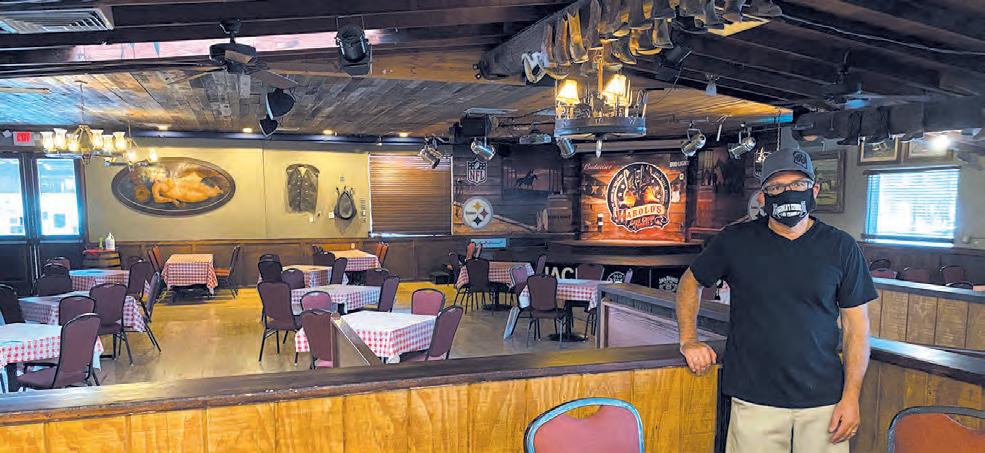
Harold’s Cave Creek Corral has a long history in the Cave Creek area that dates back to the 1930s. The jubilant hotspot has been able to endure this year, despite pandemic challenges.
The restaurant has had to shut down and offer only to-go orders twice this year. It just reopened for in-house dining in August.
Harold’s offers a wide array of different comfort foods, including spaghetti, fried chicken, tacos, chicken Parmesan, burgers and sandwiches.
Co-owner Danny Piacquadio said a small bit of his business comes from takeout orders. Carry-out, however, did increase during the shutdown. Many locals ordered family meals, which come with multiple servings and sides.
“That was generated to help feed the families in the school district but also to give people an option who wanted to enjoy Harold’s food as a family, to give them a discounted version. It actually worked out really well for us, and we continue to sell those to go,” Piacquadio said.
Although Harold’s menu didn’t change, it was limited for a time to prevent wasting food. The restaurant has been able to go back to its full menu since reopening.
Piacquadio’s father purchased Harold’s in 1987. He started working at the restaurant after college and now co-owns it with his wife and Bill and Marie Vale. He has always found Cave Creek to be supportive—especially during COVID-19.
“I think Cave Creek is a great community. Harold’s is known for being one of the hallmarks of Cave Creek. We had great community representation from our regulars, from the families in the school district appreciating the stuff we have done in years past. They wanted to try to recip-
rocate and help us back, especially when we were closed,” Piacquadio said.
Over a four-month period, the restaurant had to downsize, laying off over 90 people. Most of the staff were able to return when it reopened.
“We were blessed to get 80% to 90% of our staff back. We are very appreciative of that. We are keeping up all of the protocols and safety checks so that we can stay open and keep our employees and customers safe,” Piacquadio said.
Piacquadio said it was challenging to have to lay off so many staff members.
“The majority of them didn’t have anywhere to go, and they lost that income. Granted, we did have unemployment benefits provided, but it’s still not enough to live off. That was the toughest part,” Piacquadio said.
Harold’s received relief in the form of small-business PPP funding through the stimulus package.
Even during times when it was closed for dine-in, the restaurant tried to give back by donating food to local school districts and food banks.
Known for its live music offerings, Harold’s pivoted its entertainment lineup. Instead of raucous, plugged-in sets, musicians perform acoustically and as duos from Thursdays to Sundays.
“During the pandemic, musicians were hit as hard as anybody. To have full bands at 50% (capacity) doesn’t really make sense for us,” he said.
“Our philosophy is you have to coexist with the virus because it’s not going anywhere. As long as you do it safely and responsibly, it makes sense to try to get back to as normal as we can as a society. So, if
we have one acoustic guy or a duo play, it helps those musicians that have been part of Harold’s success to keep working.”
Although business has been steady since reopening, he expects to see fewer customers than normal during the fall and spring, which are generally busier times of the year for Harold’s. COVID-19 numbers have been rising.
“We are blessed because we have a great support system with the community and our regulars but have no doubt that this is a challenging time for all restaurants,” Piacquadio said.
From the beginning, Harold’s made sure to abide by CDC safety protocols, includ-
from page 15
McAndrews puts his motivation simply. Most of his friends are musicians, and he admires their creativity.
To many of them, their career comes easily. Music isn’t so easy to McAndrews.
“I work in networking, and that’s my music. That’s what I do,” he said.
“It comes easy to me, and I know that I can help. I inspire others—so I hear—when I’m helping teach.”
Longtime friends
McAndrews helped found PacketWatch with CEO Chuck Matthews.
“I met Chuck through the FBI Citizens Academy,” McAndrews said. “He was formerly one of the folks who helped manage that for the country.
“Chuck and I became acquainted, and we spoke quite a bit. We were at an FBI charity golf tournament when we first talked, and
ing spacing tables 6 feet apart, adopting additional sanitation measures, requiring masks upon entry and when not seated, operating at 50% capacity and making sure employees are tested for COVID-19.
“We’ve always done everything by the guidelines, for our customers and our employees, and we haven’t had any outbreaks at our restaurant,” Piacquadio said.
The restaurant already had an outdoor patio and tall ceilings, but the staff did need to rearrange the space. For excess chairs and tables, the owners rented a trailer.
Piacquadio said restaurants like Harold’s were already used to following food safety guidelines, so they were able to adapt quickly to COVID-19 guidelines early on in the process.
“I know people are fearful of going out, but we feel we are just as safe, if not safer, than going to the grocery store,” Piacquadio said. “We are going above and beyond the recommendations of the CDC to provide a safe experience, to get people out of the house and get back to some sort of normal lifestyle.”
Harold’s Cave Creek Corral 6895 E. Cave Creek Road, Cave Creek 480-488-1906, haroldscorral.com
we kept in touch. Eventually, he convinced me that I could make a difference, so when I joined them, we fulfilled our vision.”
The two have worked with the government, the media, manufacturing and individuals. The biggest compliment he receives is clients love working with him because he has “a personality.”
“One of our customers even wrote a review for us one day,” McAndrews said. “She said watching us work was like being in a Jason Bourne movie. She said when she sees us on the phone and computer, it just came to life. We’re not a large shop that just runs you through the mill. We’re honest with you. We want to do what’s right. We’re not going to run up the clock on you.”
Back to the three M’s, quite a few of McAndrews’ colleagues are musicians.
“We have a rock ’n’ roll flair, and we love it,” he said. “If you get to know me, I’m all about malware, music and motorcycles. Let’s just do it and have fun.”
BY CHRISTINA FUOCO-KARASINSKI Foothills Focus Executive Editor
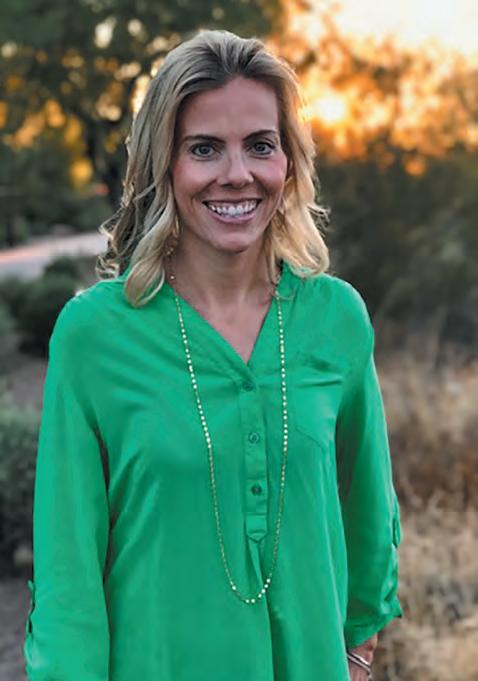
Amie Miksta relaxes in the shade. The task comes easier to her these days, after a whirlwind, arduous bout with brain cancer.
Her Instagram is @aminspirational, a play on her first name and her friends’ description of her.
“I’ve been through a lot,” said Miksta, a former teacher who lives near Desert Ridge Marketplace. “A lot of people get very saddened, but I try to inspire.
“I’m always very calm. Some people don’t want to do their MRIs. It’s too much for them. The machines are very
loud. I just say my prayers to the people who are in heaven. Before this, I wasn’t exactly like this. This has totally changed me.”
Eleven weeks pregnant with her second child, Miksta had a seizure—a word she will not and cannot say to this day— on Thanksgiving 2017.
“I went to the bathroom, came back to my husband and hopped in bed,” she said. “I started going nonsensical. I don’t say that word.”
After she was rushed to the hospital, she was transferred to Barrow Neurological Institute, where, five days later, she was diagnosed with a brain tumor.


institute.
“At Barrow, we believe doing good has its rewards,” said Katie Cobb, president of Barrow Neurological Foundation.
“Every single ticket is its own microcosm of good—from our patients, to our employees, to our players. Not only can you win up to $1 million cash, but every ticket you buy makes a difference for those affected by the most challenging brain and spine disorders at the Barrow Neurological Institute. If you ask us, that’s a win-win.”
To purchase tickets, visit barrowraffle. org.
Miksta feels “absolutely, truly saved” by Barrow.
“I went in there and I didn’t know what was going on with my body,” she said. “When I got to Barrow, the computers showed my brain, but I didn’t know it was my brain.







“I went through a lot of pain, but I didn’t worry about it. I knew that’s what I had to go through,” she said. “I stayed at my 500% person of happiness. I knew I would see my family. I was just so calm. I’d see my family crying, and I didn’t understand it.”
Miksta attributes her successful treatment and her calm nature to Barrow Neurological Institute’s staff. She supports the Barrow Million Dollar Raffle, formerly known as the Barrow Health & Wealth Raffle, which runs through December 31.
This year’s raffle offers $50 tickets, which support the institute’s patient care, research and education.
This year’s prizing has 100 $500 winners, five $100,000 winners, and the grand prize of $1 million.
Since the raffle began in 2003, it has raised more than $60 million for the
“I figured out that it was my brain and it was going through something. I immediately gave myself strength and kept being brave and being strong. (The staff) held my hands and gave me the strength I needed by just holding my hands. I went into MRIs, and that was no big deal for me.”
Miksta’s father has purchased tickets for the last three years.
“My dad is wonderful and donates and, when they’re having their raffle and doing anything, he makes sure he participates,” said Miksta, who’s now in remission. “They done such great for my body, brain and tumor.”
Miksta is now willing to help anyone in any situation that troubles them—especially in the time of COVID-19.
“So many people are just going through issues in their lives,” Miksta said. “I know that some are small, some are big. Some are losing family members, whether it be to sickness or anything. I’m ready to help.”
BY TARA ALATORRE
Foothills Focus Contributing Writer
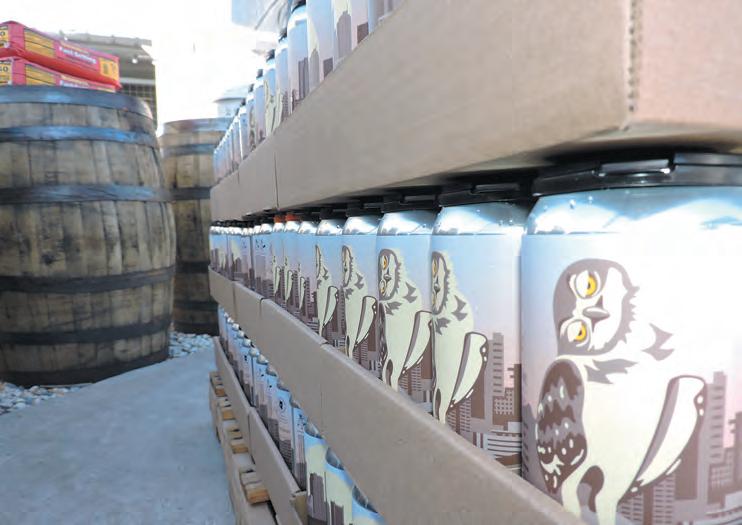
Beers and burrowing owls may seem like an odd match, but not when it comes to Wren House Brewing Company’s recently released U-9 lager made in collaboration with Audubon Southwest, Wild at Heart Raptor Rescue and Sinagua Malt.
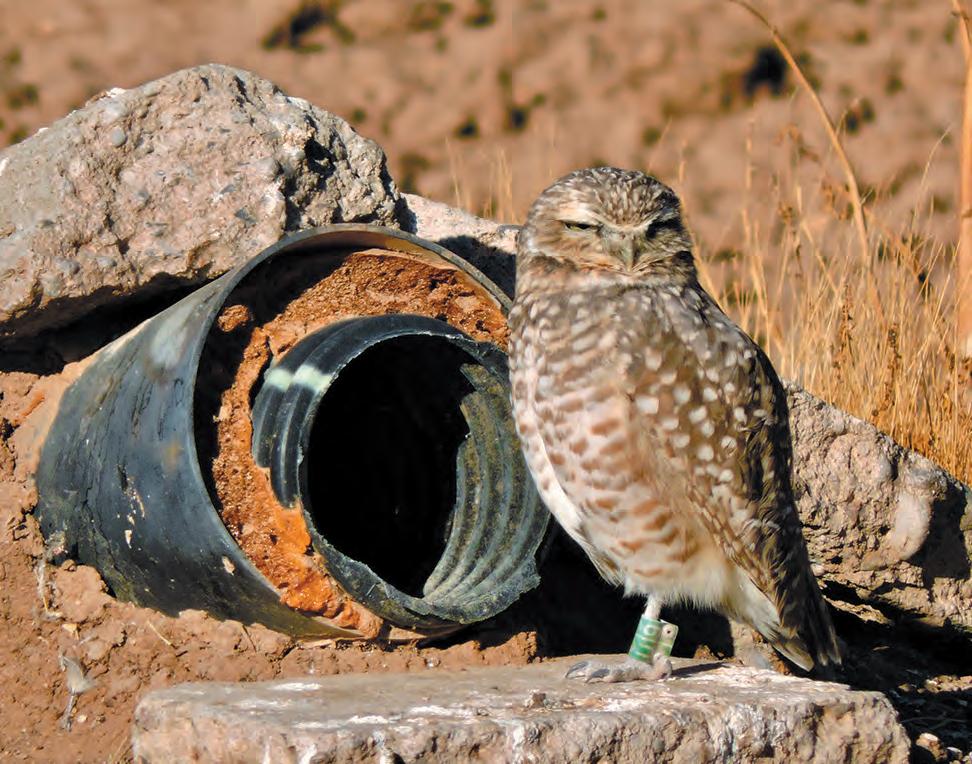
This crisp lager is named after U-9, a local burrowing owl who is well known for exhibiting a profound amount of bravado. Not only was U-9 captured and released successfully on three occasions, but his attitude and burrow-decorating skills were particularly impressive. He stands out as a hallmark to researchers who have been observing the species for decades.
Besides the U-9 lager recognizing one of Arizona’s notorious wildlife characters, beer intends to bring awareness to the burrowing owl’s habitat loss and the need for volunteers at Audubon and Wild at Heart’s urban owl relocation program called Downtown Owls.
The Audubon was already connected to the brewing industry through the Western Rivers Brewers’ Council, which is a coalition of conservation-minded breweries that support protecting rivers across the Colorado River Basin through advocacy and outreach. Having already successfully released collaborative brews, Audubon knew this would be the perfect way to bring awareness to the plight of the burrowing owl.
Steven Prager is an outreach biologist with Audubon Southwest who helped
bring the U-9 lager to fruition.
“We started thinking about how we could stand on that concept of using beer to connect with conservation topics,” Prager said.
“Breweries have a lot to offer. It is a different voice for the same goals.”
He explains Audubon wanted to share action opportunities for Downtown Owls with the diverse craft beer community.
Besides the obvious connection of birds, Audubon reached out to Phoenix’s Wren House because it is tied to the community and its can art “really tells a great story.” The beer is available through the brewery’s website.
“People who are getting locally crafted beer are doing it for a reason, and they are the right target for wanting to take action,” he said, explaining how craft beer is a way for the Audubon to reach a new, diverse community.
Prager said you can’t talk about conservation topics without discussing water, and it’s also why the U-9 lager is made with 100% Arizona-grown grain from Sinagua malt in Verde Valley. They conserve water by working with farmers to switch to less water-intensive agriculture like malting barley that is used for beer.
“Beer is a great way to tell a compelling story,” he said.
Greg Clark immediately thought of U-9 when he caught wind of the collaborative brew. Clark has been the burrowing owl habitat coordinator for Wild at Heart Raptors in Cave Creek since 2001 and is an integral part of Arizona’s success in relocating burrowing owls.
He invited the brewers at Wren House
to come see U-9 while they were brainstorming about the collaboration in March. They were smitten with the charismatic, small owl and that is when U-9 lager was officially born.
“Talk about punching above your weight,” Clark said when explaining why U-9 is so special. “This bird really has attitude.”
Clark explains that male burrowing owls demonstrate dominance by decorating their burrows, which is usually with natural things found in the desert. The owls try to claim the same burrow each mating season. Despite having to be rescued and released on multiple occasions due to injury, U-9 always returned to lavishly decorate the same burrow.
“He decorates the burrows with colorful manmade objects, like ornamental colored corn cobs, and no one knows where he got it. I’ve never seen an owl do that, ever,” Clark said.
Although the owls live in underground dens, they are not capable of digging their
own. They take over deserted burrows of other animals, like coyotes, skunks and squirrels, which is why they are disproportionately affected by development and construction. It not only displaces them, but it also diminishes the desert habitat, pushing out other species it depends on for burrows.
Downtown Owls’ artificial habitats are made in safe areas, typically near agricultural land or designated open space to provide hunting grounds for the owls.
When the climate is right and the habitats are built, the rescued owls are banded then taken to the manmade burrows. Tents are placed over the habitats containing the owls, and volunteers feed them daily for four weeks.
“This bridges the gap until they are self-sufficient,” he said.
The tents let the owls see outside to acclimate and create a new territory. Volunteers observe the owls for about five
see OWLS page 20

BY SHEA STANFIELD Foothills Focus Contributing Writer
New River wildlife painter
Kelly Mattes would tell you, “I don’t paint what an animal looks like. I paint what it feels like.”
His goal is “to get the viewer to wonder what the animal is thinking. Is the glance over the left shoulder another animal, perhaps a chance for dinner, or a signal it’s time to respond to an intruder?” Mattes’ animal portraits are all about the subject, in its own world, gazing at you, in your world.
Growing up in the wilds of Marion, Wisconsin, Mattes credits





much of his creativity to his father, who instilled in his son a love of the great outdoors and the creatures who live there.
That enthusiasm for the mystery and magic in natural settings has never left Mattes’ “top of the list of things to do.” His interest in solar energy brought him to Arizona in pursuit of starting a solar company.
His natural talent, in all aspects of problem solving, was a good fit for growing his career in a fledging industry, as well as his ability to develop into a nationally recognized wildlife painter.
From his perspective, “Painting presents a number of particular issues and requires concentration and analysis.”
Mattes strives to explore color, expand value and push the edges in combining color for its visual effects. The result is a stunning likeness of his subjects, within his impressionistic style in applying the paints. His artwork has fascinating textures, shadows, shades and color combinations that pop off the canvas with noticeably exuberant energy.
Mattes works from his home studio in New River and is a member of the Sonoran Arts League, sonoranartsleague.org. Contact Mattes at kellyrmattes@gmail.com. Contact arts columnist Shea Stanfield on flowingquill@yahoo.com.
OWLS ���� page 19
weeks after the tents are removed.
“We almost never have anyone that signs up to volunteer and cancels. People love to do the feeding and enjoy the entire experience,” Clark said. “It is very hard to find a volunteer, but once we do, they are in it for life.”
Wild at Heart has about 300 burrowing owls waiting to be relocated. Although there is a real need for Downtown Owls volunteers, Clark said they also desperately need more land because they are running out of places to build artificial habitats.
“I need farmers or people with land that we can relocate owls to or that have
land next to agriculture or parks,” he said, emphasizing how costly it is to feed the owls in captivity.
To date, the Downtown Owls project has saved over 500 owls and engaged over 3,000 volunteers, according to Cathy Wise, the community science manager for Downtown Owls.
She said it is much harder to recruit volunteers to the newest habitat location, Powers Butte, which is near Gila Bend, compared to their other urban locations. She
considers the U-9 lager a success, because it’s already recruited a new volunteer.
“In the summer Audubon Southwest plans on releasing another collaboration brew that will highlight U-9’s mate, and it will have a brighter label that tells the story of hope and perseverance,” Wise said.
To volunteer or help burrowing owl visit, bit.ly/36AaRtW.
Those with land that can be used for habitat, contact Greg Clark at 480-6880118.




BY TARA ALATORRE Foothills Focus Contributing Writer
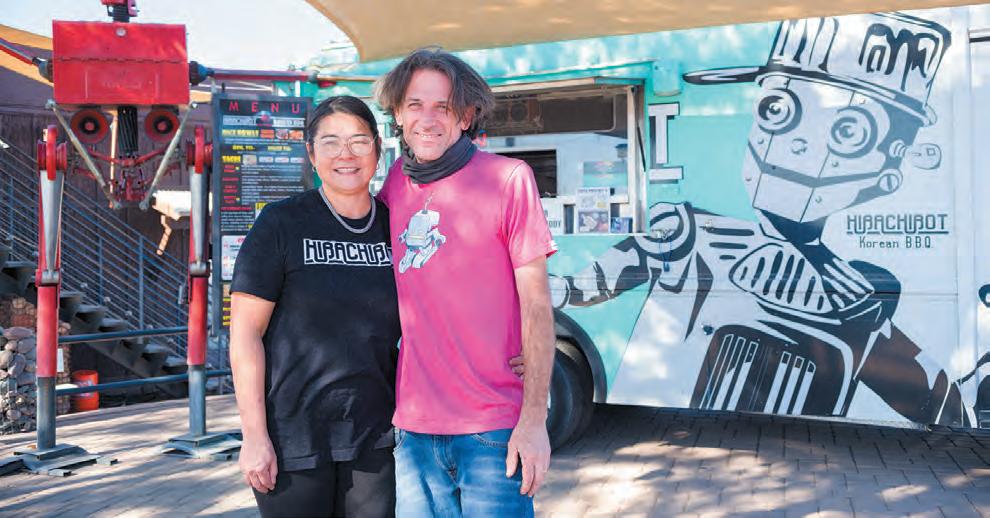
The Hibachibot food truck has been serving Korean barbecue fusion food around the Valley for more than six years. But when the COVID-19 pandemic hit Arizona, the owners of Hibachibot—like other businesses—were forced to reevaluate their business model.
Enter The Eddy, Hibachibot’s new fulltime brick-and-mortar home that sits on a sprawling 1-acre property in Downtown Cave Creek, featuring an indoor art gallery space, boutique gift shop, arcade games and a rooftop patio. The space also hosts live music and a variety of local food trucks and vendors every Saturday evening.
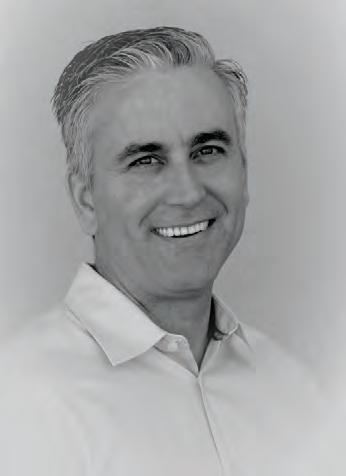
Virginia and Edwin Schenck IV are the husband-and-wife duo who own and operate the Hibachibot and The Eddy. Their food truck was booked out for a year and a half at the beginning 2020, but as the coronavirus spread, events were quickly canceled.
“We could operate the truck, but there were no gigs to go to,” Edwin said. “We needed other avenues for revenue, and it made us re-think our business.”
Edwin explained Hibachibot was never restricted by Gov. Doug Ducey’s shutdown because it was an essential business that served food outdoors, but without events it had no way to reach its customer base.
Soon the couple found themselves looking for places to rent so they could continue operating their food truck and survive the pandemic. They looked throughout the Valley, including Downtown Phoenix.
“It was a little bit of serendipity,” Edwin said about how they decided on Cave Creek. “We had talked about renting this space for about five years, but it was never available. Then the owner called us and asked us if we were interested.”
The Schencks knew they found the perfect location not only for the Hibachibot but for a concept that could support other local businesses, too. The Eddy officially




opened in September with the perfect fusion of indoor and outdoor space, with Arizona history mixed in.
The building, located at 6006 E. Cave Creek Road, used to be stagecoach stop on the Overland Trail during Arizona’s territorial days. The big stoplight that adorns the building is also a historic memento from Route 66, which now sits beside the Hibachibot’s signature metal robots that Edwin makes (he is also a mixed-media artist who had a gallery in Carefree).
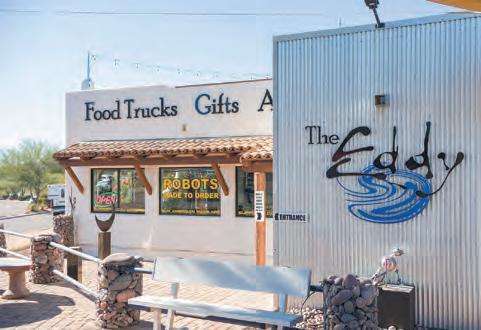


The Eddy’s fresh new concept has brought life back to a historic transportation hub of the Old West. But now, instead of just being a stop along the way for weary stagecoach travelers chasing their American dream, it has become a true destination. The Eddy is an ideal spot for hikers, bicyclists, motorcyclists, golfers, tourists, horseback riders and residents to take reprieve, grab lunch or watch the

sunset while eating Mexorean fries and Bulgogi bowls.
“The thing that draws almost everyone to Cave Creek is they are coming up here to get away and just hang out,” Edwin said. “People from Phoenix will want to come up here and make the drive because we are a destination.”
The Hibachibot serves food from 11 a.m. to 1:30 p.m. and 5 to 8 p.m. Tuesday to Saturday. The Eddy hosts its “Food Truck Park” from 5 to 8 p.m. Saturdays, featuring several rotating food trucks. Guests order their food inside and receive a pager that lets them know when their food is ready so they can look at art, shop, play games or relax on one of the patios.
BY ANDREW MORGAN
Focus Contributing Writer
Ahistoric Boulder Creek football season has come to an end after a heartbreaking semifinal loss to Highland. The ended its season with a 9-1 record, the best in school history.
As head coach Tony Casarella said, Boulder Creek is “the neighborhood team”—and for good reason.
Anthem, with just 22,570 residents, isn’t the largest, nor a football powerhouse. The team instead must make do with the students who come through their program, with little to no help from transfers.
The program relies heavily on its youth feeder team, led by assistant coach Justin Simons. Many of the student-athletes in the football program played youth sports together.
“We grew up together,” said senior quarterback Bear Milacek. “We went to the same middle schools, played youth sports together, and watched each other grow up through the years.”
“We are the only team in town,” said senior running back Jacob Cisneros. “Anthem looks forward to watching the games each and every Friday night, and we love to play for them. We played every game for our community.”
On December 4, No. 1 Boulder Creek took on No. 5 Highland in the 6A semifinals. The Jaguars, who defeated No. 8 Shadow Ridge, 38-22, in the previous week, hosted the school’s first semifinal playoff game.
Headed into the semifinal vs. Highland, Casarella added, “It’s the first time we’ve ever gotten this far in the playoffs, so it meant a lot to the program.”
After a back-and-forth game, the score was tied 21-21 at the end of the third quarter. Shortly thereafter, Cisneros re-
turned a kickoff for a touchdown, giving the Jaguars their first lead of the night.
The Hawks fired back a few minutes later with a 69-yard touchdown from Gage Dayley to even the score for the fourth time.
With 3 minutes to go in the fourth quarter, the Highland Hawks took yet another lead after a 9-yard touchdown pass to running back Max Davis. The Hawks led 35-28 as Boulder Creek got one final chance to tie the game.
“It was go, go, go. I knew it was going to come down to the last play,” Cisneros said.
After a fast-moving drive, the game came down to a 4th-and-4 on the goal line. The Jaguars opted to give the ball to Milacek on a quarterback run as he was stopped short at the 2-yard line.
The Jaguars came up just 2 yards short of their first championship appearance.
Boulder Creek’s season ended on a goal line stand against Highland, raising a final score of 35-28. The Jaguars ended the season with a school best 9-1 record.
The Highland Hawks will play No. 7 Chaparral in the 6A championship game

on December 12 at Desert Vista High School.
“I left that field for the last time, knowing I did everything I could,” Milacek said. “It was 100% the toughest loss of my career.”
Postgame, the team was filled with emotions. For many seniors, that would be the final time they stepped on the field.
“It was tough,” Cisneros said.
The senior running back finished the game with 92 yards and three touchdowns on 18 touches, including a kickoff return touchdown.
On the year, he would finish with 1,552 rushing yards and 21 touchdowns
on 184 carries. Additionally, Cisneros had 666 yards receiving for 10 touchdowns, 634 return yards with three return touchdowns and one 25-yard passing touchdown vs. Sandra Day O’Connor.
In total, he had 2,243 yards and 35 TDs on the season. It was good enough for ninth in the state in total yards and first in the state in touchdowns. Cisneros accounted for 49.3% of Boulder Creek’s yards and 65.6% of the team’s points.
“Leave your mark,” Cisneros said. “Live the way you want to be remembered.”
On the season, Milacek was 89-133 for 1,285 passing yards and 10 touchdowns,





BY CHRISTINA FUOCO-KARASINSKI Foothills Focus Executive Editor
Nathan Eubank from Anthem was accepted into Culver-Stockton College’s incoming class for the fall 2021 semester.
Eubank, a senior at Northwest Com-
FOOTBALL ���� page 23
additionally rushing for 569 yards and 10 touchdowns on 108 carries. The senior quarterback finished the season 28th in the state for total yards.
Milacek will attend the University of New Mexico in the fall on a full-ride football scholarship.
“I’m excited for college,” he said. “I’m ready to work hard and chase my dreams. I’ve never had anything handed to me, and I’m ready to compete.”
“I’ll be back,” he added about Anthem. “Anthem is my home. Yes, I’m leaving to continue my football career at the University of New Mexico, but I’ll be back to support my community and my school.”
With the 2020 football season over, Boulder Creek is already looking ahead to 2021.
“Our recent success isn’t something that was built overnight,” Simons said. “We have very supportive alumni that root for us every year, and we have incredible support from our parents, booster club and administration. I am truly blessed to be part of this program. I will never forget this team for the rest of my life.”
munity Christian School, also was awarded the President Scholarship, a $13,000-per-year scholarship for four years. This scholarship is awarded based upon academic credentials and is renewable provided the student remains in good academic standing.
Culver-Stockton College, located in Canton, Missouri, is a four-year residential institution in affiliation with the
Christian Church (Disciples of Christ). C-SC is the premier experiential learning college in the Midwest and is one of only two colleges in the nation to offer the 12+3 semester calendar, where the typical 15-week semester is divided into a 12-week term and a three-week term.
C-SC is a member of the Heart of America Athletic Conference and the National Association of Intercollegiate Athletics.


visit https://www.facebook.com/StarlightCommunityTheater.




























































5
5



















































• Whole home and building purification
• Kills up to 99% of bacteria, mold and viruses

• Reduces sneeze germs by 99% in the time a sneeze can reach 3 ft
• Reduces airborne particulates (dust, dander, pollen, mold spores)