

Pukekohe Showgrounds hosted the Young Farmer of the Year Northern Regionals recently. Not only





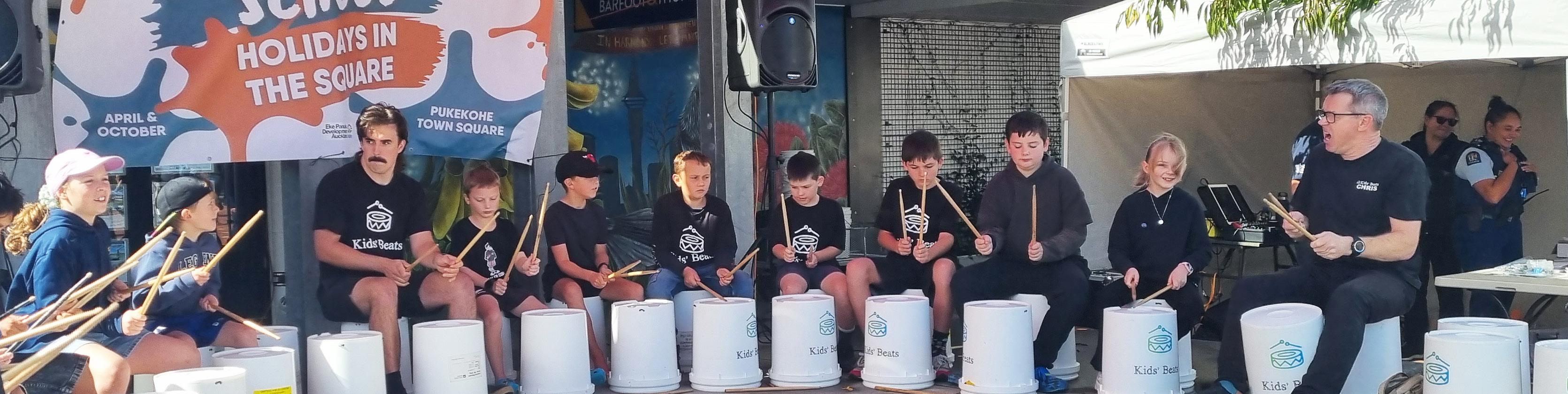
Families flocked to Pukekohe for School Holidays in the Square last week, an event that set a beat everyone could dance to.
Performances by drumming group, Kids’ Beats, set the tune but there was much more on the set list.
The rain stayed away but the people didn’t, Pukekohe Business Association (PBA) GM, Shawna Coleman, confirms. “We were thrilled with how the School Holidays in the Square event went. Despite some rough weather earlier in the morning, the clouds cleared and the crowds still came out in force, creating a fantastic atmosphere.” Activities kept
children busy at the Town Square as well as the Roulston Street car park and in Roulston Hall, incidentally a former home of the Franklin Times. In addition to rides and games, other high lights included visits by Blitz, the Franklin Bulls mascot, and Harold the giraffe from Life Educa tion, as well as the Circability circus troupe offering jug gling lessons.
“It was great to see so many families enjoying the activities and there was a real sense that everyone had a good time,” Cole man adds. “We’re always pleasantly surprised by how far people travel
to be part of it too, which speaks volumes about the event’s growing reputation.”
PBA managed to keep so many plates (and more) in the air and on the ball while ensuring a good time was had by all.





Editor Jon Rawlinson
Ph 021 02469998
editor@franklintimes.co.nz ADVERTISING 09 271 8000 advertising@times.co.nz
www.facebook.com/ franklintimesnz

Local news, sports, events competitions & classifieds to your inbox
On April 25, we will remember them. Anzac Day has become a time to applaud all who have served in our military. Some counties celebrate victories confirmed at the end of wars, but we commemorate a defeat, and for very good reasons.
Part of ‘remembering them’ should include how the Gallipoli tragedy occurred. If so, we won’t forget that the whole shooting match began due to a blocked passage.
In brief, Churchill gambled that Allied ships could race up the Dardanelles, knock Turkey out of the war, open a better supply route to Russia, keeping the Russian bear in the war.
That accomplished, the good guys could be eating sausages in Berlin by Christmas. It was a high risk, high reward plan.
There was a slight problem with this – the Allies
needed to win, the Turks just needed to avoid losing.
More than a century later, maybe some general or other pointed out that such ‘dire straits’ would result from an attack on Iran, seeing the Strait of Hormuz as blocked as the Dardanelles.
If that example was all Greek to Donald Trump, perhaps the general could’ve mentioned the battles of Salamis or Thermopylae or even the 1956 Suez Crisis. All of these (and many more) show how smaller, weaker forces can hold giants at bay. Whether in narrow stretches of water or mountain passes, Davids slay Goliaths.
Maybe experts dared not educate Trump that, if Iran’s hand was forced, they’d hold another damn strait and hold the world to ransom.
However, The Donald is a fan of the Big Book of War (aka Sun Tzu’s The Art of War
In fact, he played on this title for his own book, Art of the Deal
It speaks volumes if he sees war as no weightier than a business negotiation.
Unfortunately, Trump is no donkey leading lions – he is a businessman, a gameplayer, putting everything secondary to profit.
While we remember those on the front lines on Anzac Day, we would do well to also remember that those who often lead us into wars are not fools – they know exactly what they’re doing and precisely why.
As a different type of Dire Straits sang: ‘Someday, you’ll return to your valleys and your farms and no longer burn to be brothers in arms.’
Here’s hoping it hasn’t happened yet.
Jon Rawlinson

Discover coastal living on the shores of the Hingaia Peninsula. Park Green o ers green spaces, walkways, and a vibrant, connected community.
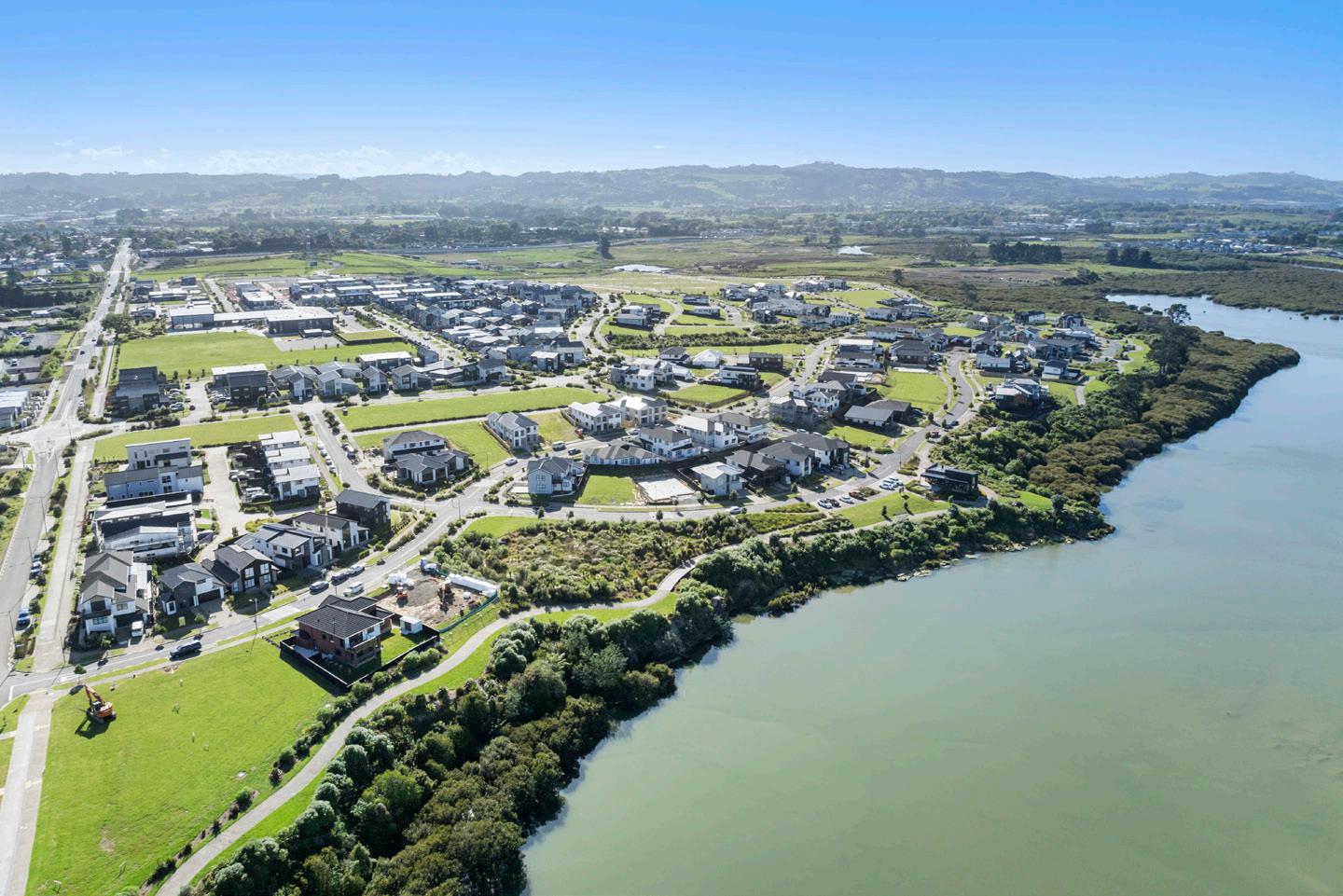
Spanning 97 hectares with retained wetlands and stunning coastal views, Park Green brings together nature, convenience, and modern living on your doorstep.
Choose from quality new homes, design-and-build options, or secure a section today.

While the government seeks reform dog control legislation, Franklin Times reader Lois Hudson believes they must take dog owners into account. She writes:
The government’s recent announcement of a comprehensive review of the Dog Control Act is a start, but this review is looking at the wrong end of the leash.
The emphasis continues to be on dangerous dogs, with only a slight mention of the owners. The reality is that the real danger lies with the human perpetrators who inflict evil on their dog victims and the wider community. While tougher penalties after a tragedy may satisfy a public desire for justice, they do nothing to address the lack of human accountability or the ongoing enabling of the owner before an attack occurs.
The public deserves to see the data from our three pri-
mary authorities: Auckland Council, the SPCA and the NZ Police. Under the Dog Control Act 1996 (Sections 15 and 42), councils already possess the clear legal authority to seize and impound any dog that is not registered. This power is immediate; no warning is required. We deserve to know how often this existing power is actually exercised and how many times aggressive dogs have been reported – registered or not – with no proactive action taken.
Dogs are used for police work, customs, and therapy, yet many are abandoned in our communities and abused. In many animal
of many animals is etched within recorded court proceedings and news media reports.
Dogs become reactive not because they are born bad, but because they are the broken results of human violence. We talk about ‘dangerous dogs’ and ‘victim dogs’ as if they are different animals, but the dangerous dog is often a victim [in] that the system failed to protect [it].
Also, so often authorities’ failures or delays in responding to community reports of an abused, suffering animal result in the heartbreak of the animal rescuer who has to hold that animal while it struggles and dies because the system waited too long or just did not act.
The Dog Control Act is primarily used by councils to manage roaming or aggres
SPCA and Police to deal with cruelty, treating the dog as a victim. Because these two acts do not work in cohesion, a person can be investigated for a dangerous dog without any mandatory check into the human treatment or torture that caused the behavior. The review has to address the urgent need for human accountability. It must bridge the gap between these two laws to directly target the abusers who are the reason for this suffering. The


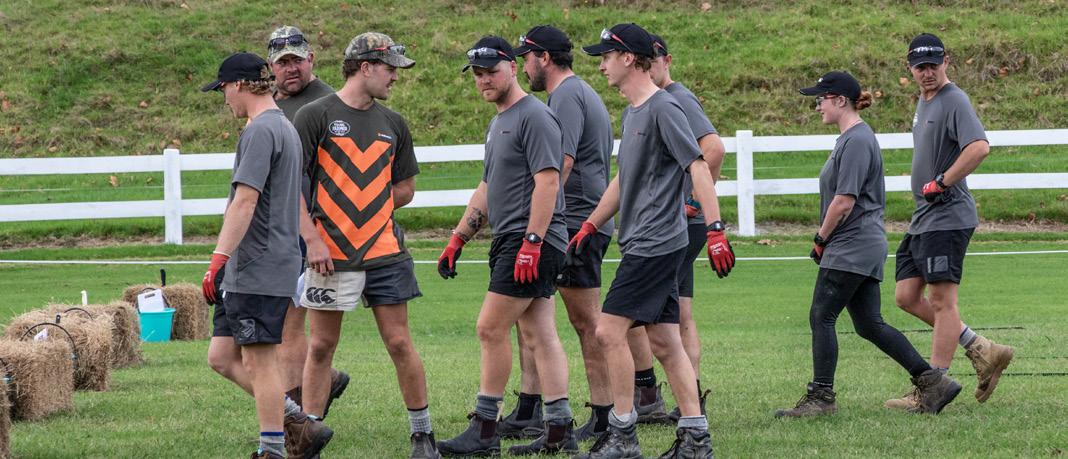
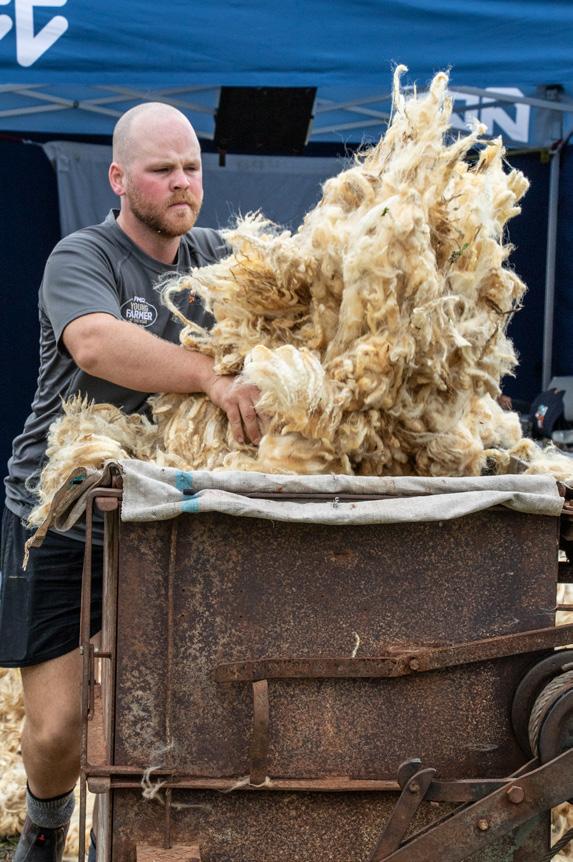
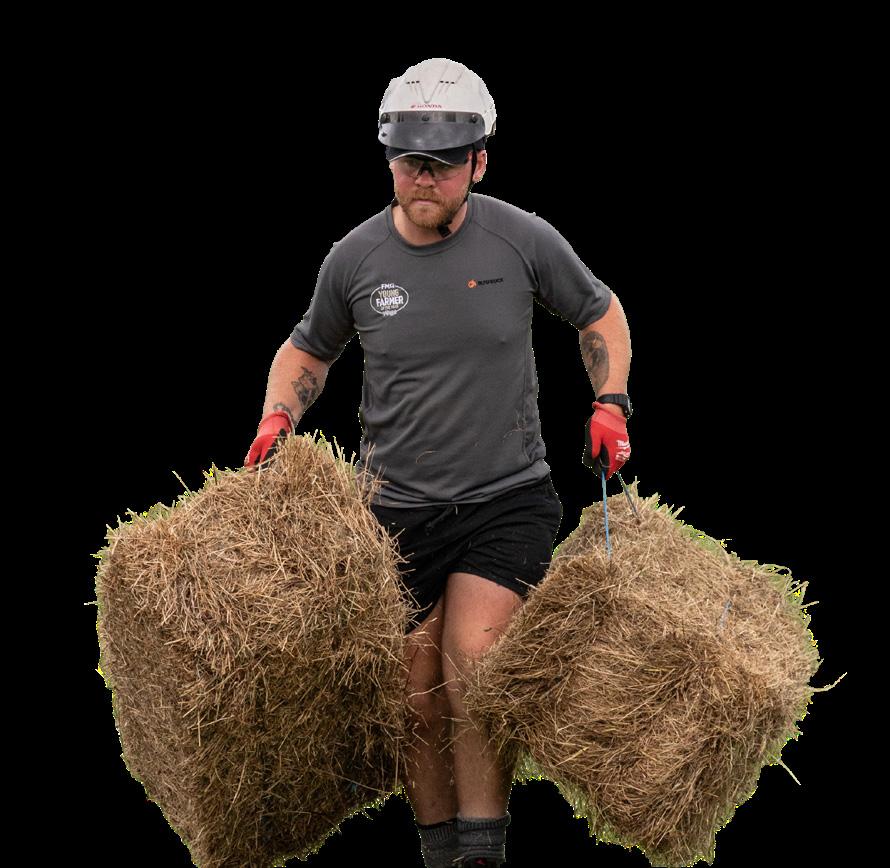
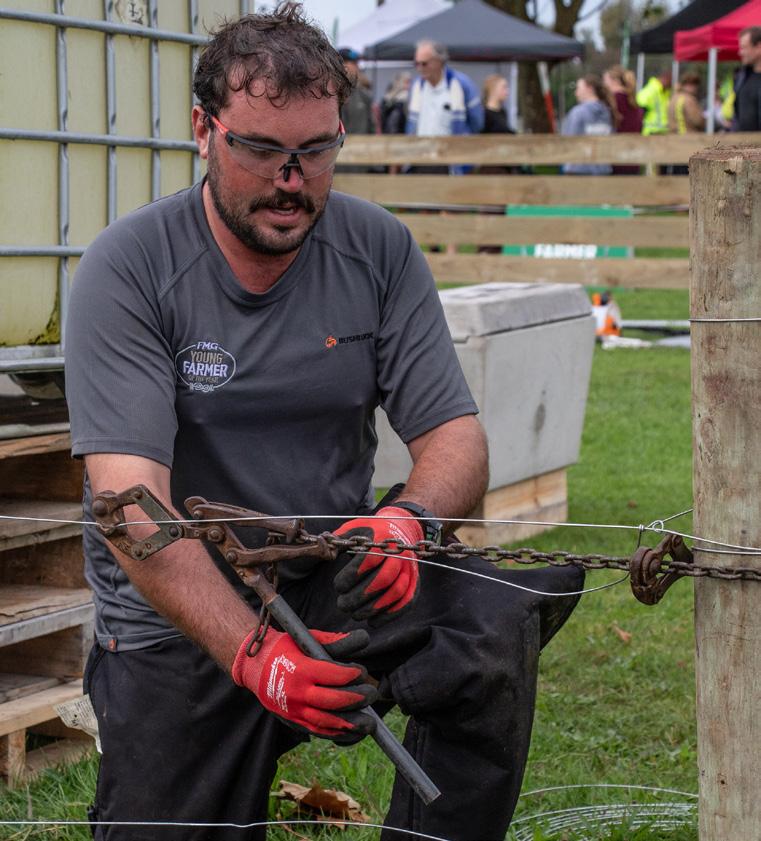
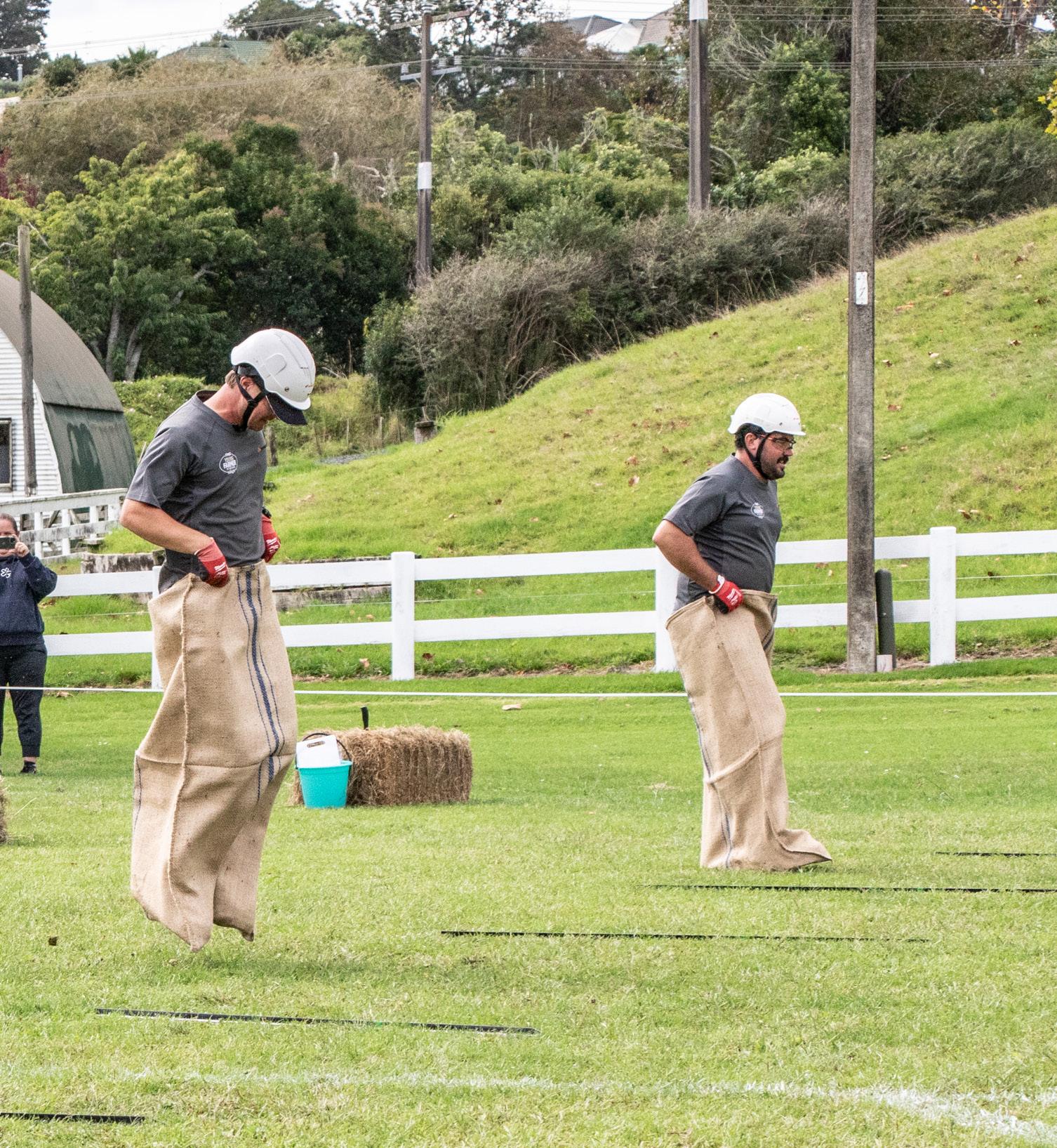
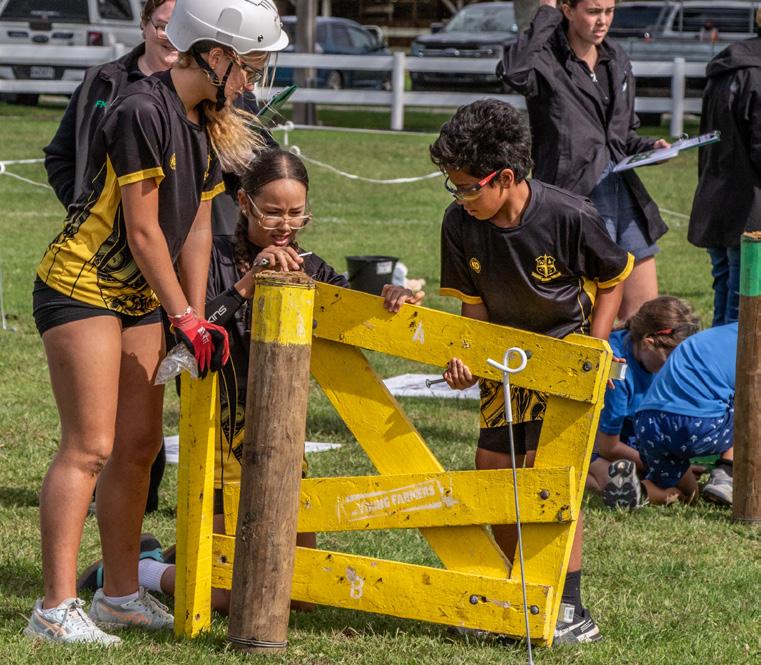
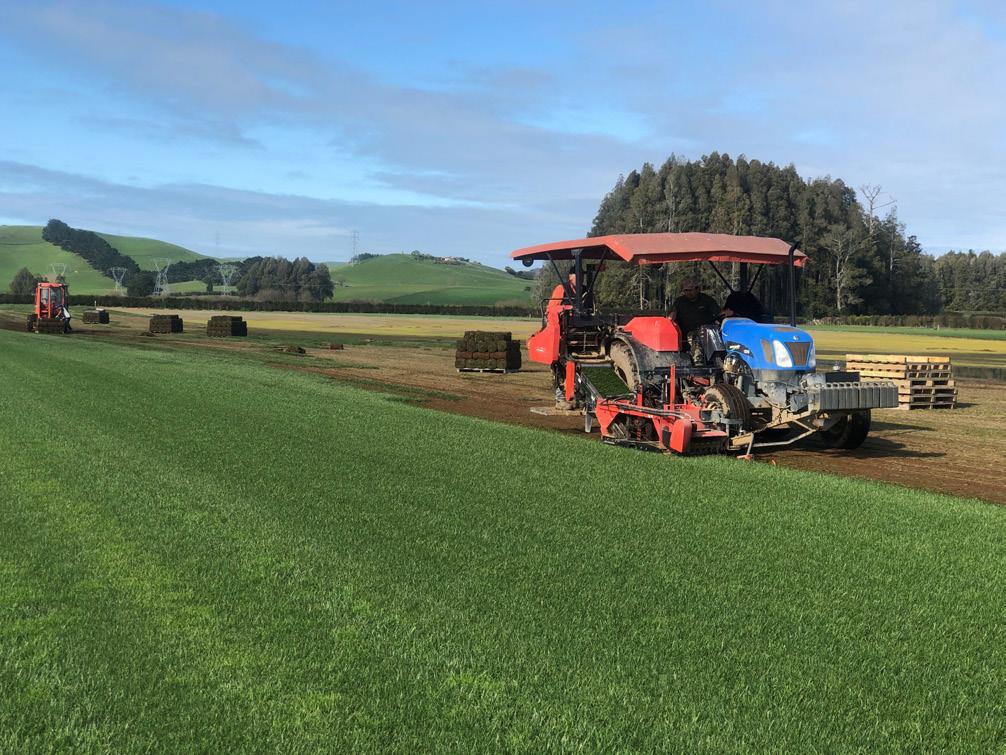
This year it was Pukekohe’s turn to host the Young Farmer of the Year regionals and Pukekohe Franklin Camera Club’s Susie Hare was there to capture the action. As covered previously in Franklin Times, hometown favourite, Justin Ruygrok, defended his Northern Regional title in the main event, but plenty of other contestants put their best feet forward – and pedals to the metal – as well.









Are you after clever design ideas for your build? Or simply a chat about what’s possible for your next home?
Visit our award-winning Karaka show home this week.
38 Emerald Avenue, Karaka.
Open Wed - Sun 12-4pm


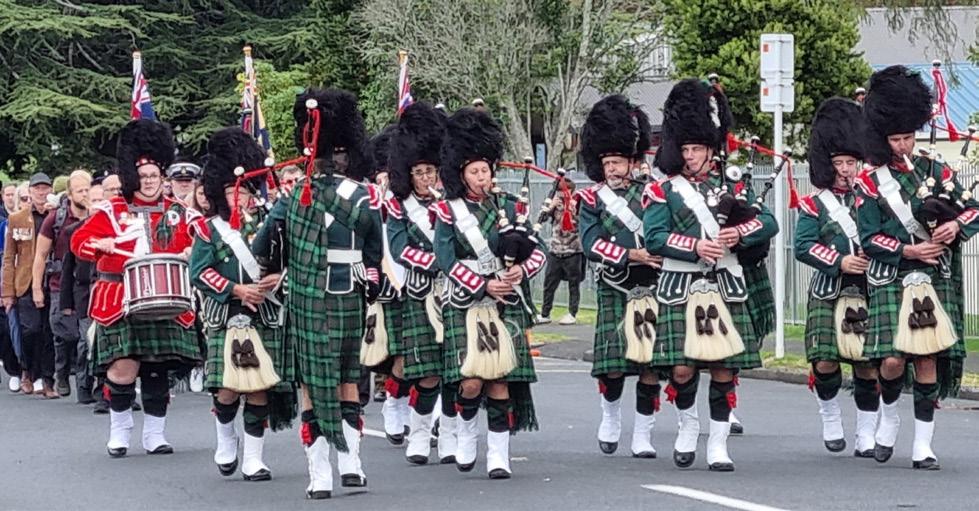
More than 80 parades and services will be held throughout Auckland on April 25 while Ardmore-based NZ Warbirds dip their wings above in honour of those few who gave so much.
The theme for this year’s commemoration is Pasifika, Auckland councillor Alf Filipaina confirms.
“I look forward to standing proudly alongside Aucklanders, especially those who have served from our Pasifika community, as we remember those who never returned and honour those who served and continue to serve,” he says.
“I encourage everyone who can to join a service or parade this year as we reflect
together on the legacy of our servicemen and women and pay our respects.” First established to honour soldiers who fought as part of the Australian and New Zealand Army Corps (ANZAC) during the First World War, Anzac Day has become a day of remembrance for all New Zealanders who have served in conflicts, peacekeeping missions and military operations. It is also a time to remember others who have risked their lives in service of our country, including police officers and firefighters.
More information regarding this year’s Anzac Day events is accessible via ourauckland.aucklandcouncil.govt.nz.
By JON RAWLINSON
As-salamu alaykum simply means ‘peace be upon you,’ and that’s exactly the message a group from the Ahmadiyya Muslim community sought to deliver during a recent visit to Pukekohe.
Ahead of their visit, the group’s imam (or leader) Asif Munir was a little concerned that his group would not be welcome here.
“I put a notice on Facebook to say we were coming but we received so much hostility and a lot of nasty comments. I think some people spread a lot of Islamophobia because there are a lot of misconceptions when it comes to the teachings of Islam,” he says.
“But when we arrived, it was very different – we received so much love from people who genuinely wanted to know what Islam really means because so

many wrongly associate it with violence and extremism.” From their table on King Street, Munir and his fellow envoys found passers by were welcoming and interested to learn.
“In Pukekohe, we spent time speaking with locals, answering questions and
working to build greater understanding about Islam,” Munir says. “We shared our chai (tea) with people who talked with us and there were so many good people that we ran out.”
Pukekohe was one of the most recent stops for the group as they seek to spread
understanding in towns and cities across the North Island.
Fittingly, given the tour concludes on Anzac Day, core to their message is fostering unity due to the growing risks of global conflict and the dangers of nuclear weapons.
“This campaign is inspired by the guidance of Hazrat Mirza Masroor Ahmad, the worldwide head of the Ahmadiyya Muslim community. He has consistently spoken about the need for peace, justice and global stability in the world,” Munir says.
“Given the current global climate, grassroots efforts promoting dialogue are important. During the tour, we’ve had meaningful conversations about his message with a wide range of people.”
These issues and more will also be discussed during the Baitul Muqeet Mosque open day in nearby Wiri on Anzac Day. Everyone, regardless of their faith is welcome.




Āwhitu: Starts at 8.30am at Awhitu Cenotaph, Āwhitu Central Church.
Bombay: Parade assembly at 8.35am at Paparata Road, starting at 8.45am to the service at the Bombay Memorial Arch.
Papakura Police Station, starting 8.45am with the 9am service at the cenotaph.
Pokeno: The parade will begin at 9am, with assembly at the Z station carpark, march along to Market Road to the cenotaph for the service.

Buckland: Begins at 9.45am at the cenotaph on Buckland Road.
Clevedon: Begin at 9.30am for wreath laying at Clevedon Monument then walk to the Clevedon Community Hall for the service starting at 10.15am.
Drury: Begins at 11am at Drury Cenotaph, Tui Street. We have chairs but if you want to be sure, bring your own chair along.
Kariaotahi: Following the creation of a WWII Honours Roll Board, a special dedication ceremony will be held at 2pm at Kariaotahi Hall at 19 Binns Road, Waiuku.
Ōrere/Kawakawa Bay: Parade assembly 9.55am at Ōrere Primary School, parade commences at 10am. Service directly after the parade at Ōrere War Memorial Hall.
Papakura: Dawn parade assembly at 5.30am at Papakura Police Station, 64 Wood Street, beginning at 5.45am with the service at 6am at Cenotaph, on the corner of Great South Road and Ōpaheke Road. Civic service parade assembly 8.30am at

Port Waikato: Begins at 9am at the fire station, 83 Maunsell Road.
Pukekohe: Dawn parade assembly at 5.40am at Pukekohe Scout and Guide Hall; parade leaves at 5.50am, outside Liquorland/ BNZ corner Massey Ave and Roulston Street; service at 6am at the carpark of Pukekohe War Memorial Hall. As a wet weather option, commemorations will be held at Pukekohe Intermediate School Hall. Civic parade assembly at 10.40am at Pukekohe Scout and Guide Hall; parade leaves at 10.50am, service at 11am at Pukekohe Intermediate School Hall.
Tuakau: Gather for the parade from 10.30am at the Tuakau Cosmopolitan Club for 11am start.
Waiuku: Parade assembly 10.30am outside St Andrews Church commencing at 10.45am to the cenotaph. Service begins at 11am.
Waiau Pa/Clarks Beach/Patumahoe: Parade assembly is 10am at Waiau Pa Hall, parade begins at 10.30am into Waiau Pa school grounds, immediately followed by the service.
• An updated list is available at www.franklintimes.co.nz

25 April is a day of remembrance and commemoration, and RSA Franklin will be hosting both Pukekohe ANZAC Day services as follows:
DAWN SERVICE: 6.00 am
PUKEKOHE WAR MEMORIAL TOWNHALL
5.50 am approx: Parade will leave from outside Liquorland / BNZ corner Massey Ave and Roulston St Pukekohe and march to Pukekohe War Memorial Townhall and RSA Franklin** for the Service.
Breakfast will be available at RSA Franklin** after this event. All Welcome.
CIVIC SERVICE: 11.00 am
PUKEKOHE INTERMEDIATE SCHOOL
10.50 am approx: Form up outside the Scout Hall, cnr Harris and Edinburgh Sts.
Parade will go from the school entrance on Edinburgh St to the Pukekohe Intermediate School Hall.
Lunch available at the RSA Franklin**.
Thanks to the Franklin Board, Auckland Council
** RSA Franklin has temporarily relocated to the Pukekohe War Memorial Townhall Concert Chamber. **


By KERRY LEE
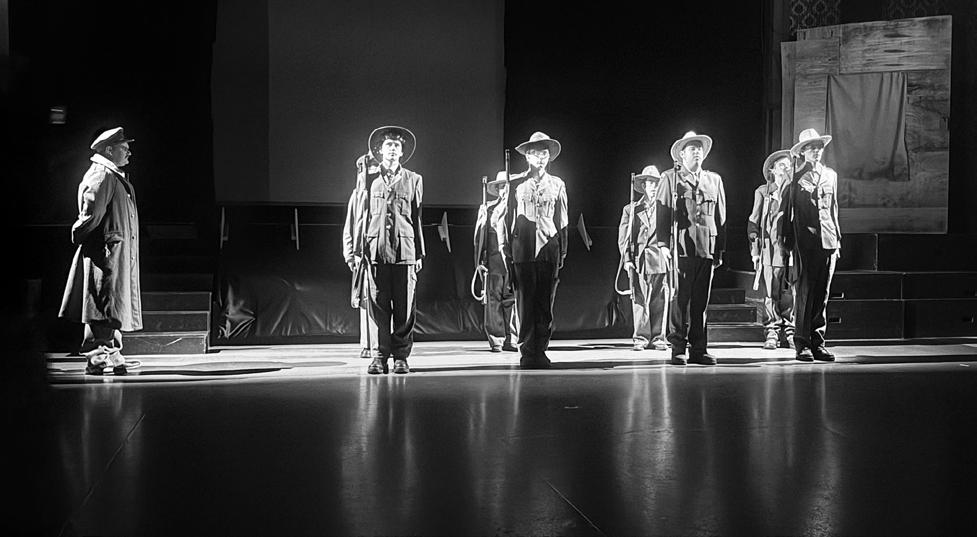
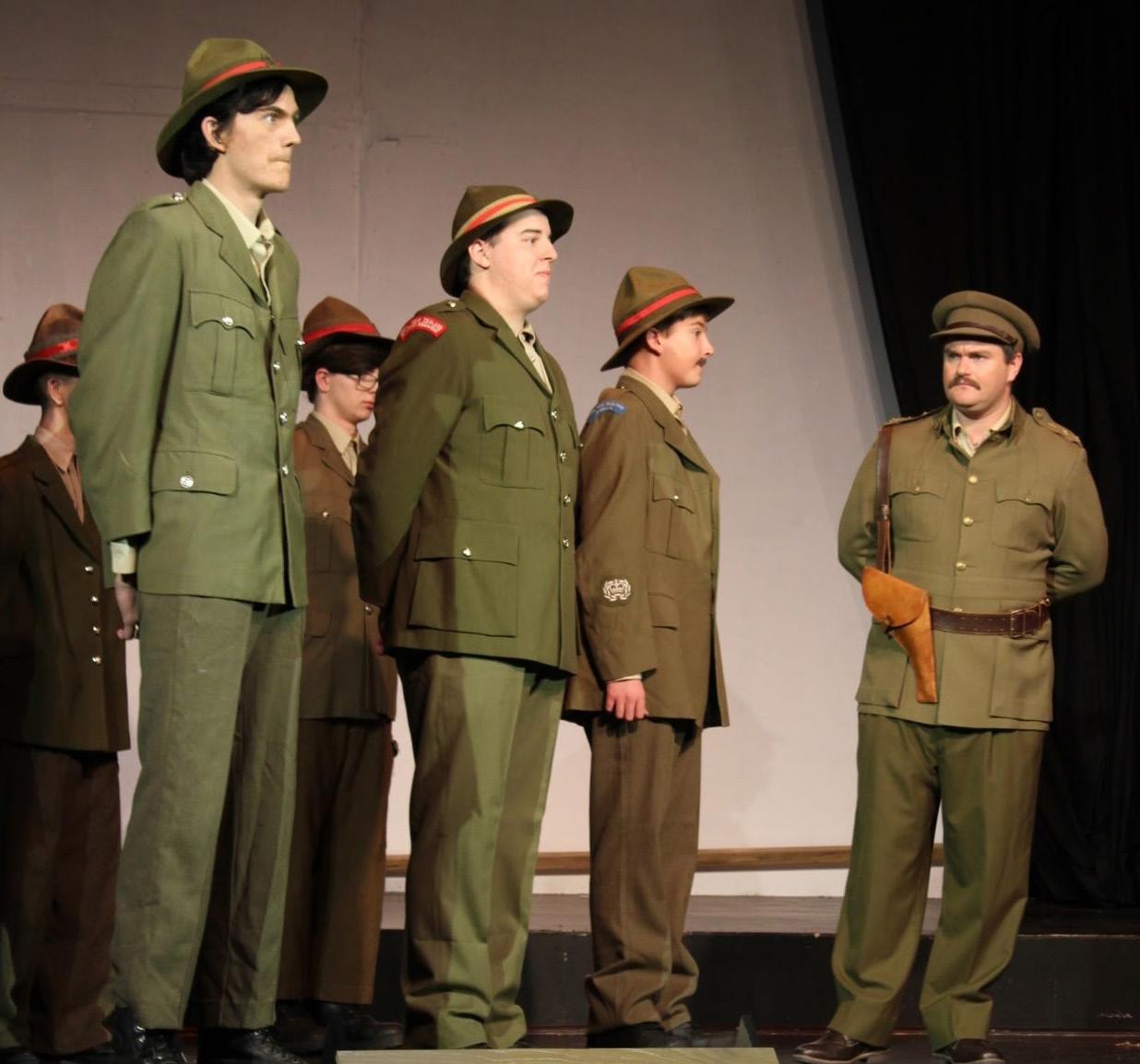
Waiuku Theatre Group is commemorating Anzac Day with a special performance. Titled A Soldier’s Story, their play is based on historical accounts by soldiers from the Waiuku area.
The play is on stage at Waiuku War Memorial Hall
April 23 – May 3. “This story brings history, heart and humanity to the stage powerfully and emotionally,” the local troupe’s Amber Turner confirms. “People will feel
every emotion from a story that promises to resonate long after the curtain falls.
Written by Glenda and Liam Hagenson, Alan Thomson and Shane Hartly, the play is a First World War variety style show. It follows its characters from life before the war, through military training to the horrors of the trenches as well as the impact on family on the home front.
Special guests at the opening include veterans and representatives of Waiuku’s emergency services.
The play is presented in


association with the Waiuku Lions Club. The club worked with the theatre to bring the production to life 11 years ago, Turner says.
“The Waiuku Lions played a pivotal role in the first production of A Soldier’s Story. When the idea came to put the show onto the stage again, it was only fitting that Lions would be a part of this journey and cater the dinner shows.”
The club and the theatre group are proud to help keep the Anzac legend alive.
“We hope everyone comes


away with a deeper understanding and respect for what our fellow Kiwis did to protect our country and what they went through,” Turner adds.
“We believe Anzac Day is an important time when we pause not to celebrate war but to remember it. We remember their courage, resilience and also the fact that most of those who served were civilians just like us.”
For more information about A Soldier’s Story visit www.waiukutheatre.com.


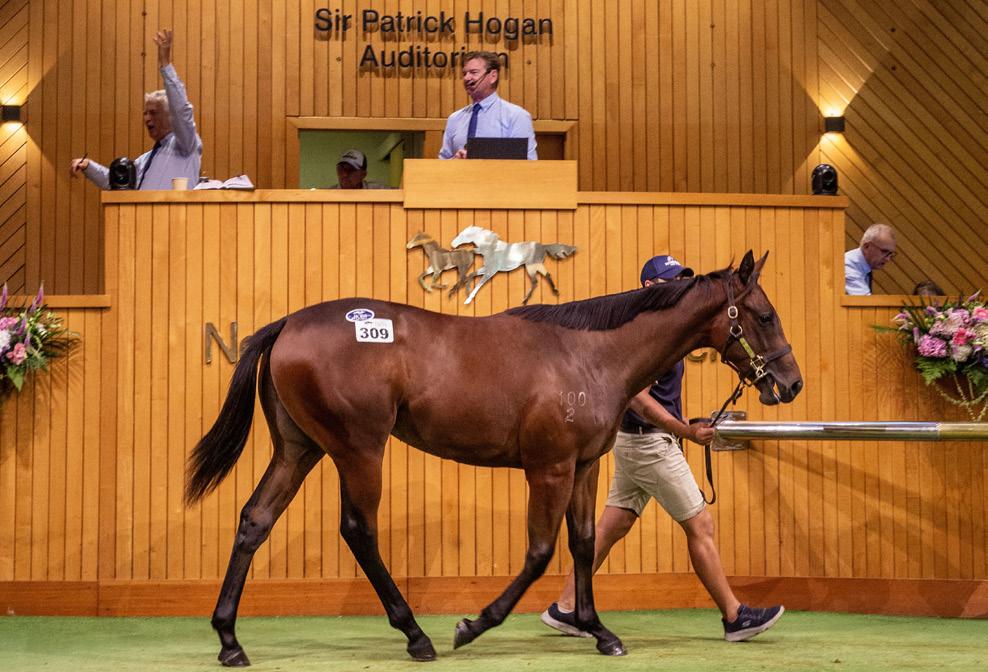
Arecent cyber attack on New Zealand Bloodstock’s (NZB) Gavelhouse platform appears to have failed. While it did see the recent Online Yearling Sale postponed, the horses weren’t held for long.
As reported previously, the sale was delayed by a day before NZB regained the reins.
“We would like to thank our vendors and our buyers for their patience and understanding after a frustrating experience,” NZB sales manager Kane Jones says. “I’d really like to acknowledge and congratulate those who got involved and purchased some lovely horses.”
The sale saw 104 lots catalogued and more than $800,000 in receipts in a quick-fire digital session.
The highlight of the sale came early, with Lot 18 sold to a Japanese buyer for $70,000. Second-top was
Lot 34, snapped up by Hong Kong Bloodstock for $63,000. This added to a diverse buying bench including Malaysian, Singaporean and New Zealand buyers prevalent throughout the sale, Jones says.
The online affair followed this year’s 100th National Yearling Sale held in January at NZB’s base, the Karaka Sales Centre.
“It was very pleasing to see the momentum from Karaka roll into this session with significant increases across the aggregate, average and median,” Jones says. “This speaks to the quality that was on offer and the flow on effect of a strong Karaka Summer Sale.”
All yearlings purchased are eligible to be nominated for NZB’s lucrative Karaka Millions Series.
“The Karaka Millions eligibility continues to be a fantastic drawcard for this
sale, and we look forward to following these graduates on the racetrack.”
NZB is already gearing up for another sale. Set for June 25, the National Weanling Sale offers an attractive platform to sell young stock to an inter-
national and domestic audience.
As an added bonus, all weanlings offered are eligible to be nominated for the lucrative Karaka Millions Series.
A proven source of success on the track, star NZB weanling graduates have gone on to win big.
Acacia Cove, a country-style village situated on the beautiful Wattle Downs Peninsula has 31 weekly activities.
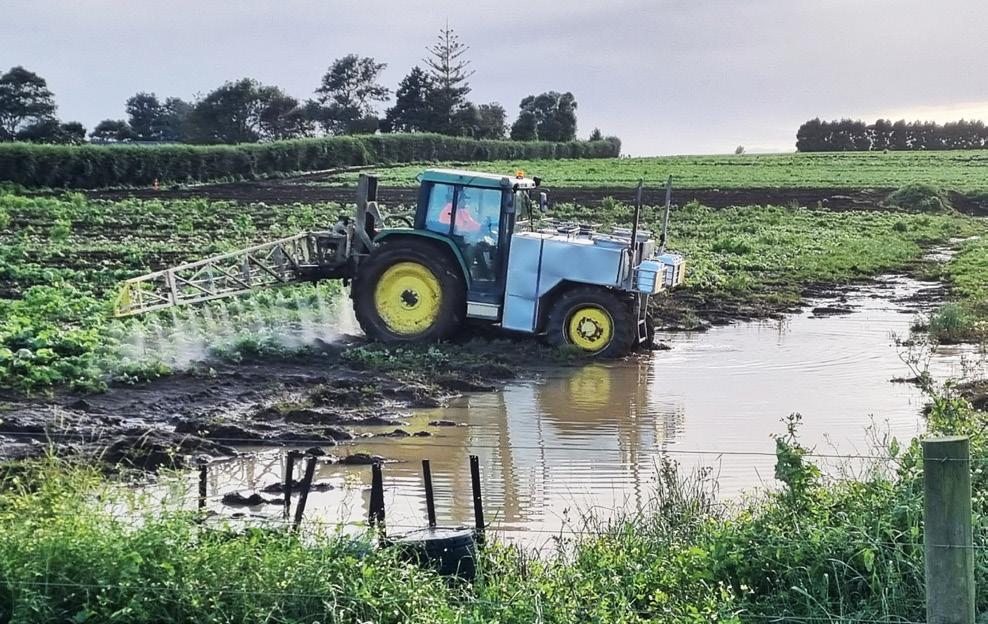
Coal may no longer be king, but fossil fuels are still vital to our primary industries. As for Alan Cole – Franklin Local Board chair and president of Auckland Federated Farmers – he appreciates just how vital they are.
“It’s been really hard for farmers,” he says. “All of a sudden, their fuel costs doubled, something they couldn’t really have prepared for. Whatever the price of fuel, the same amount of work still needs to be done, so it’s been one more extra cost of doing business that they don’t need.”
Shots exchanged over in the Middle East have been hitting too close to home for all New Zealanders, but farmers have been particularly vulnerable. Despite a tentative ceasefire, pain at the pump sees prices rise at the checkout if growers can’t afford to carry the can.
A shortage of diesel, the


most common farm fuel, has caused its price to rocket even higher than petrol, adding to the problem.
While proximity to the Super City has been favourable, Franklin’s strong horticultural focus and the timing of the conflict have not.
“We’re probably a little bit lucky by being so close to Auckland because some in







remote areas are definitely having more serious issues,” Cole says.
“It’s also significant for dairy farms, milking and feeding out during winter, but it’s growers who have been worst affected. Busy with harvests and then getting fields ready for winter, that’s when they need to burn through the most fuel.”
Acts of ‘kings’ aside, a recent act of God almost appeared set to add injury to injury. Fortunately, Cyclone Vaianu was more merciful to Franklin growers than Cyclone Gabrielle and other severe weather events, for which Cole says farmers likely issued a deep sigh of relief.
“There was a little bit of flooding, just the usual stuff, nothing out of the ordinary. There was a lot of rainfall, but I haven’t heard of anyone badly affected. We got away lightly this time, I think.”
While cyclones are harder to avoid, a speedy end to the war in the Middle East can’t come soon enough for farmers.
“The sooner it ends, the sooner we can get back to some normal pricing, the better,” Cole adds. “Because if it doesn’t end, if it escalates again, it’s going to push prices up again even more so.”





























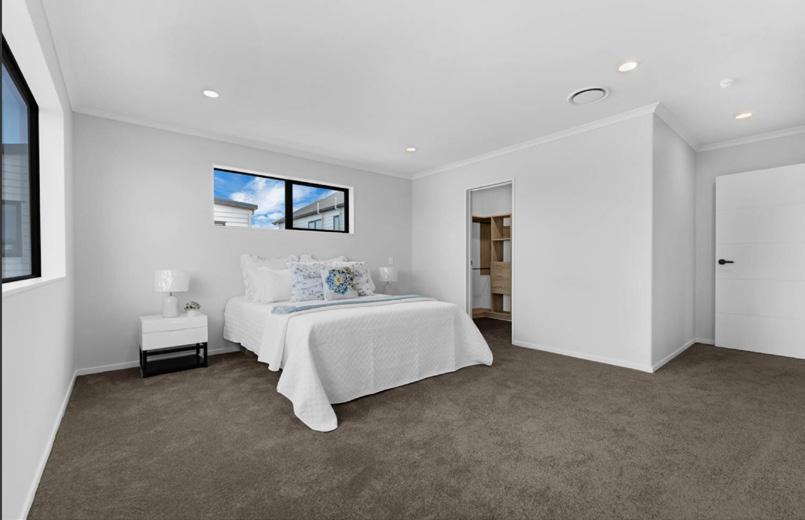
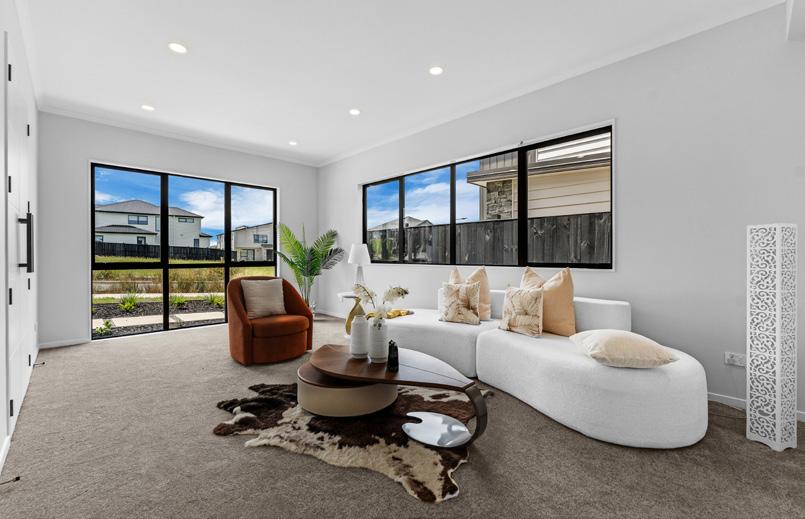
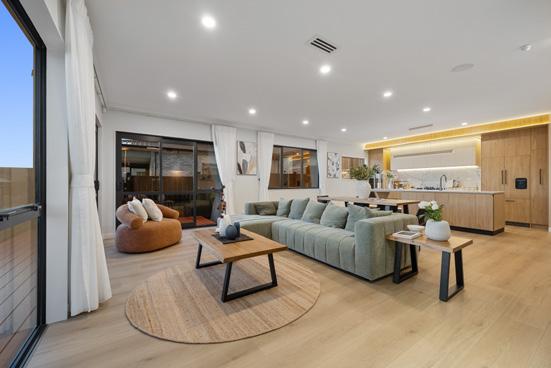
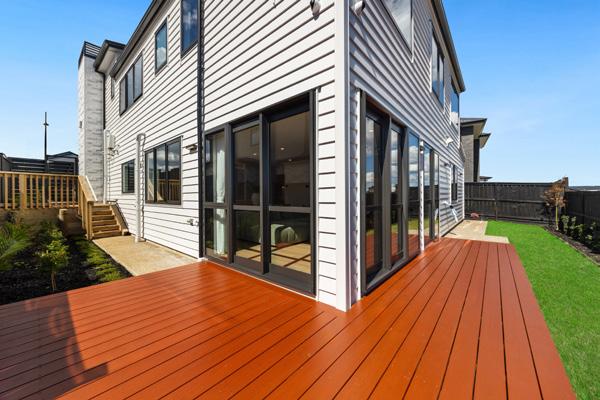
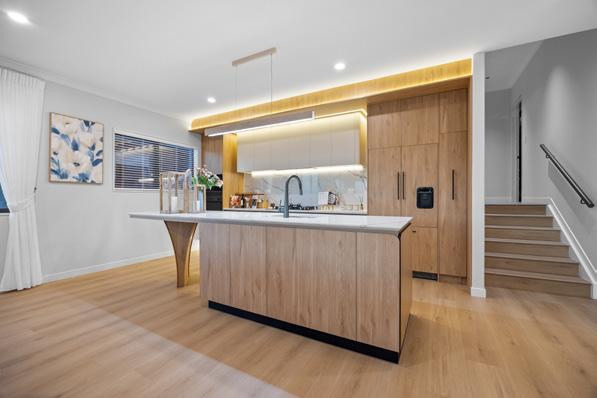
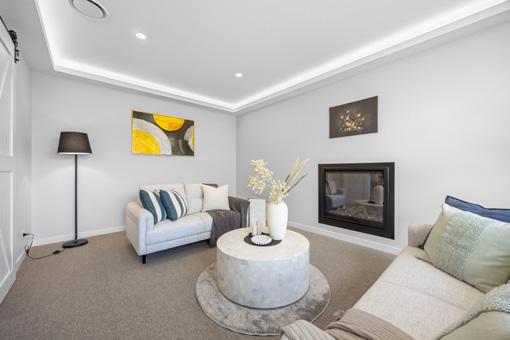
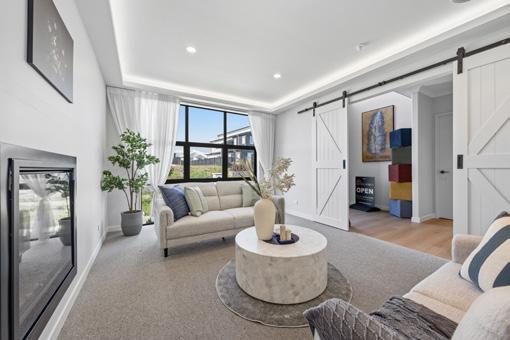
Luxurious Brand-New Home in Park Green Karaka
· Brand-new double-storey home in sought-after Karaka, Auckland
· Includes a two bedrooms with its own living area, full bathroom
· Open-plan kitchen + legal kitchenette for flexible family living
· Premium appliances and modern, high-quality finishes throughout
· Four master suites with private ensuites upstairs + family lounge
· Set on a generous 415m² (approx.) section
· Large sun-filled deck perfect for outdoor entertaining
· Internal-access double garage with ample storage
· Close to cafés, dining options, and local amenities
· Zoned for premium schools
Open homes: For Sale: Property ID: Saturday 1:15pm-2pm & Sunday 2:15pm-3pm

By negotiation

924459 Eric Xue 022 587 3340

Cassie Su 021 217 9229
The Salvation Army is launching its 2026 Red Shield Appeal, calling on an army of everyday Kiwis to stand up for their communities by donating to support people facing hardship across Aotearoa New Zealand.
This year’s appeal theme, It Takes an Army, recognises the collective effort behind The Salvation Army’s frontline services – an army of volunteers who give their time, an army of collectors on the streets, and an army of everyday New Zealanders willing to give what they can when they see a red shield.
From May 4-10, volunteers will be out in their communities, and people can help them collect vital donations. “As the cost-of-living crisis continues to stretch household budgets, demand for our services remains high,” says Captain Andrew Wilson, Salvation Army corps officer, Wellington South.
“Many people are struggling with rising costs, rent and debt, and are turning to The Salvation Army for practical, frontline support.”
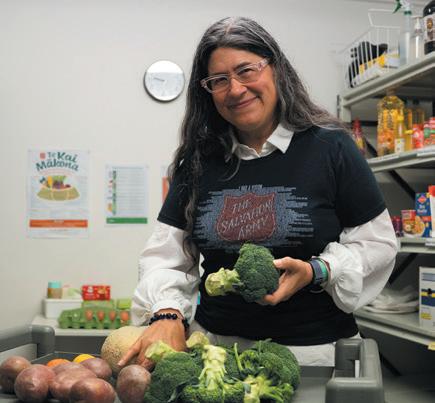
The Red Shield Appeal helps fund essential community-based services including food support and kai plans, budgeting and financial mentoring, hardship grants, addiction services, supported accommodation, and ongo-
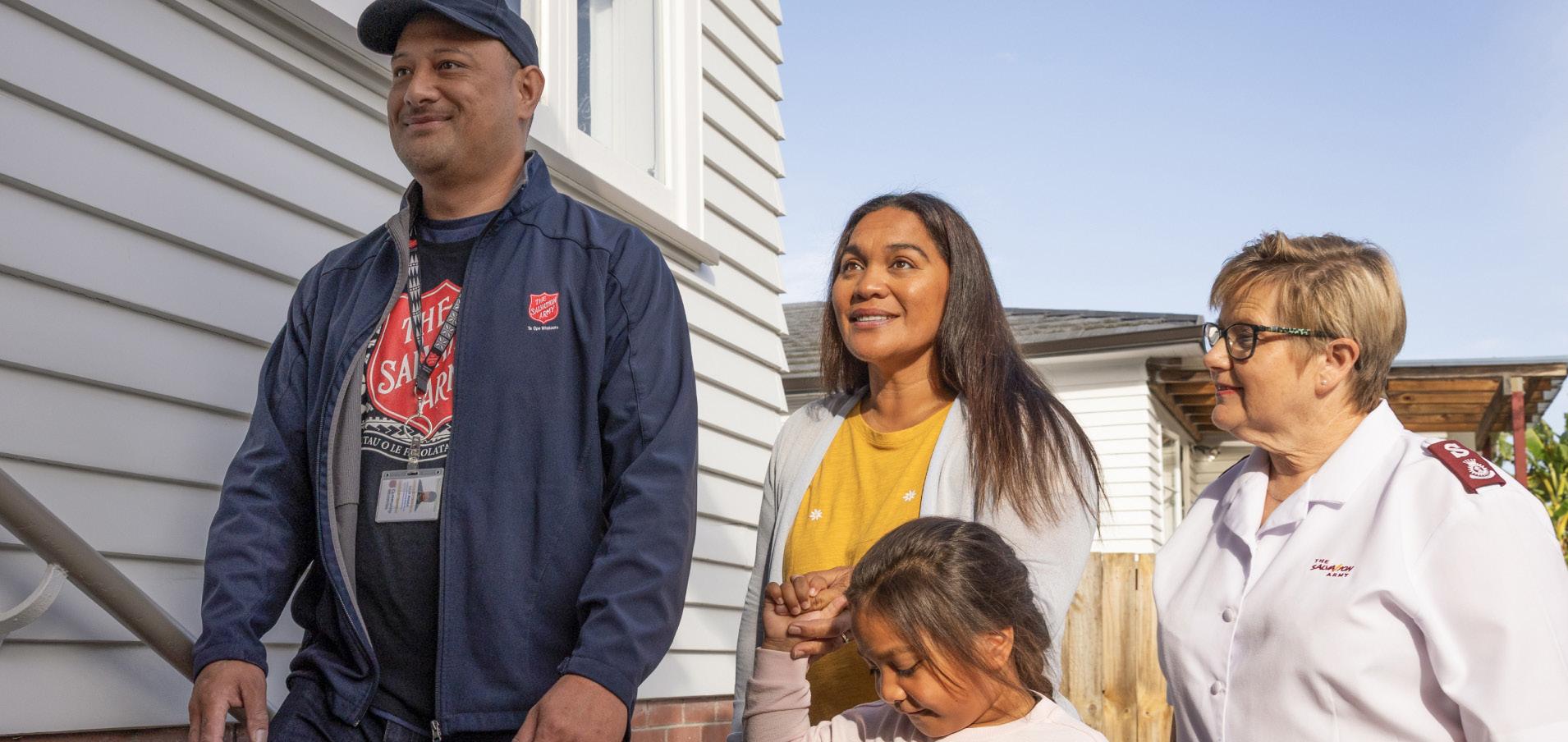

ing support for people facing financial stress.
Wilson says the appeal is not just about raising funds, but about people stepping up together. “We’re seeing the impact of the high cost of living every day – people skipping meals, falling behind on bills, and feeling overwhelmed by financial pressure. “It takes an army to respond to that level of need. When people give a small amount of time, or drop a few coins into a bucket, the collective impact can be life-changing.”
Rising food insecurity, financial hardship and inequality on the frontline mirror what The Salvation Army continues to report through its research and
analysis, which paints a sobering picture of life for many New Zealanders struggling to make ends meet.
“Our work is about showing up every day for people when life becomes overwhelming,” says Wilson.
“We’re helping people find their feet again – and we walk alongside them to provide the support they need to keep moving forward.”
Throughout the Red Shield Appeal, Salvation Army volunteer collectors will be out across the country with their iconic collection buckets.
The public is encouraged to donate when they see a collector, and to join the appeal themselves by volunteering. “Giving your time is just as valuable as giving
money,” says Wilson.
“Without volunteers, we simply wouldn’t be able to support as many people as we do.
“Every volunteer helps to encourage donations that support people to stay above the poverty line and access the wraparound services they need to rebuild their lives.”
Last year, The Salvation Army supported more than 150,000 people and their whānau across New Zealand, support made possible by volunteers and donors standing together.
• To sign up to volunteer and collect during the Red Shield Appeal, visit www. salvationarmy.org.nz/collect.


























Saturday 2 May, 10am–2pm
Different villages for different lifestyles. Every Metlifecare retirement village feels a little different. Take a tour and see which one feels right. For more information contact your local village or visit metlifecare.co.nz
By PJ TAYLOR
If you’re planning to wed or just starting out in a life together, Stan and Alma O’Brien have wise words to heed.
Now living in east Auckland, Stan, 92, and Alma, 91, grew up in Onewhero.
“Communication is number one in a marriage,” they told the Times when visiting them at their home soon after their 70th wedding anniversary on April 7.
Seven decades of marriage equates to a platinum anniversary, and special cards from King Charles III and Queen Camilla, Prime Minister Christopher Luxon and Minister for Seniors Casey Costello, to mention a few. Last Saturday they were surrounded by family and friends to celebrate the magnificent matrimonial milestone at Howick Bowling Club. Stan and Alma became engaged in 1954. Those were
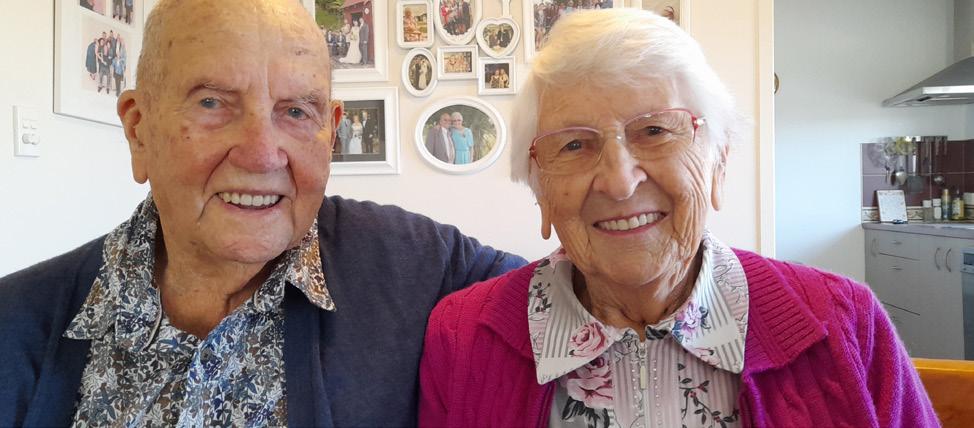

the days when country communities congregated at the popular Saturday night dances of the post Second World War years.
“We met through one of Stan’s sisters,” Alma says, and they were married at St Andrew’s Catholic Church at Tuakau in 1956.
“Everyone in Onewhero knew everybody there,” says Stan. Fast-forward 70 years, the couple has a large family they’re very proud of consisting six children – three boys and three girls; 12 grandchildren – six boys and six girls;
and seven great-grandchildren – four girls and three boys.
“We have a big and very close family,” says Alma. “We’re very appreciative that they all get on well and they’re working together.
“We try to follow our wedding vows and have always discussed decisions together.” One of their daughters is Maree Peary, of east Auckland home specialists Style + Soul and contributor to the Times. Stan and Alma lived in Papatoetoe for 40 years until a decade ago
when they moved eastwards “to be closer to family here”.
With both coming from large families and having their own, they still contributed to the safe welfare of other young ones by being foster parents to many, “because we loved children and there was a need to provide a safe house”.
Earlier in their marriage, they say they enjoyed stints sharemilking at Kaiaua on the Firth of Thames, and then back over the hills at Hunua for five years, before moving into Papakura, where Stan set about working as a farm machinery serviceman.
They both had various jobs, and Stan finished up working for Manukau City Council before retirement.
He’s had his health issues throughout his long life and says of the care and medical treatment he’s received: “We’re very fortunate in this country to get assistance. I’ve got no complaints.”


Do you know a community champion? A volunteer who goes above and beyond? Well, we’re on the lookout for that person. We want to recognise them for the energy they bring to your organisation. It’s important to acknowledge our community’s efforts and show how much we appreciate their dedication and hard work.
As a volunteer myself in parks, communities and sports clubs, I see this as my favourite part of the job. I look forward to seeing the nominations and presenting our proudest with recognition awards.
Nominations for the Papakura Volunteer Awards 2026 close on May 1. The community is encouraged to put forward the people who inspire them. Volunteers can be recognised across a wide range of categories including long service (20 or more years),
arts, community service, young person, culture, environment and sports.
Email nominations to papakuralocalboard@aucklandcouncil.govt.nz or visit aucklandcouncil.govt.nz/ papakuralocalboard to nominate.
At this time of year, we commemorate those who gave their lives in the service of their country and honour our returned servicemen and women. This Anzac Day marks 110 years of remembrance commemorating the landing of Australian and New Zealand Army Corps troops at Gallipoli on April 25, 1915.
In 1990, as a young Kiwi traveller, I had the fortune to visit the Gallipoli Peninsula in Turkey during the 75th commemorations of the landings at Anzac Cove. Awakening predawn on the beach with others from New
Zealand and Australia, we watched as our modern-day troops came ashore in their landing craft. It was a beautiful, calm spring morning. The dawn service was held in the presence of Australian Prime Minister Bob Hawke, representatives of Turkey and our Governor General, Sir Paul Reeves.
Following the dawn service, we walked up through Shrapnel Valley, along the ridgeline to Lone Pine, then up the hill to a place where our New Zealand troops fought so hard to secure. The high point we know as Chunuk Bair. From here you could see the prize – the Dardanelles Strait. What a sight. A uniquely New Zealand service was held around the cenotaph under the trees with our Governor General, dignitaries from New Zealand and Turkey, and most importantly, one of the last

Papakura Local Board chair
Kelvin Hieatt
remaining veterans from the landings in 1915. A true hero. Today, you can see a photo of this moment in our War Memorial Museum in the Auckland Domain. A day and a time I will always remember.
On April 25, we will remember them. Join us at Papakura Cenotaph for the dawn parade and service at 5.45am, then again at 8.45am for the civic service. Following that, we have the Drury service at the war memorial in Tui Street at 11am. Lest we forget.
By DESLEY SIMPSON, Auckland Deputy Mayor
April 15 marked a significant moment for Auckland – a moment where months of hard work, negotiation, and collaboration came together to set our city on a better path.
The Foundation Agreement signed between Auckland Council, the Crown, Eden Park, Auckland Cricket, and Auckland Rugby is more than a document. It’s a commitment to Aucklanders that we can do better with the assets we already have, and that we will. For too long our stadium network has been held back by legacy arrangements that simply don’t reflect the needs of a modern, growing, globally connected city. Eden Park has carried the weight of being our national stadium while also trying to accommodate the needs of domestic cricket and rugby.
The result has been inefficiency, frustration, and missed opportunities. This agreement changes that. It reinforces Eden Park’s role as New Zealand’s national stadium while creating a clear pathway for cricket and rugby to secure permanent, fit for purpose homes.
Domestic cricket will move to Colin Maiden Park, supported by matched funding from Auckland Council and the Crown. Big international cricket matches stay exactly where they belong – at Eden Park. Rugby, too, is progressing plans for a longterm base that reflects the scale and professionalism of the sport today.
What this means for Aucklanders is simple – more. More concerts. More culture. More major events. More opportunities for our city to shine on the world stage. And importantly, better value

for ratepayers through a stadium network that works together rather than competing with itself.
I’m particularly proud of what this means for Colin Maiden Park. Years ago, it was proposed for terraced housing – something I fought hard to prevent. Today it’s a thriving sporting hub, home to tennis, netball, hockey and more. Now, it will also become the home of domestic cricket.
This is exactly what good stewardship looks like – protecting community assets and ensuring they serve Aucklanders for generations, an outcome made possible with the support and leadership
of the Ōrākei Local Board. What stands out most about this agreement is the spirit in which it was reached. Negotiations of this scale are rarely easy, and they certainly aren’t often unanimous.
Yet every partner came to the table with a genuine commitment to Auckland’s future. We worked through the challenges respectfully, constructively, and with a shared understanding that the status quo was no longer good enough. This agreement is not the final step, but it is a decisive one. It sets the foundation for a smarter, more integrated stadium network – one that reflects the ambition of our city.
For many rural New Zealanders, firearms are essential everyday tools. Farmers use them for pest control and animal welfare, hunters rely on them for food gathering and conservation, and rural communities value safe, responsible use. That’s why the Arms Bill currently before Parliament has attracted strong interest.
The Bill would repeal and replace the Arms Act 1983. Its purpose is to modernise firearms law, strengthen public safety, and make the system simpler for responsible users to understand and comply with. Earlier this year, the Justice Select Committee, which I chair, called for public submissions, and thousands of New Zealanders took the opportunity to have their say.
A clear theme from sub-
missions is broad support for safety, coupled with a strong call for fair treatment of lawful firearms owners, particularly those in rural areas.
Many submitters agreed that firearms licensing should remain the main safeguard and that firearms must stay out of the hands of criminals.
At the same time, rural submitters were clear that licensed owners are not the source of criminal gun activity. Farming and hunting organisations stressed the importance of recognising firearms as legitimate tools for pest control, farm safety and conservation work.
One of the most widely supported aspects of the Bill is its move towards simpler and clearer rules. Submissions welcomed proposals such as clearer definitions,

more practical licence settings, and reduced red tape for low risk activities. In rural areas, where travel to services can take hours, straightforward rules were seen as vital for real world compliance.
Cost was another major issue raised. Many submitters warned that higher fees or unnecessary compliance requirements could place unreasonable pressure on farmers and hunters who already meet high standards of responsibility.
Legal groups also cautioned against penalties that could punish technical mistakes rather than genuinely unsafe behaviour.
Submissions also highlighted the role firearms play in biosecurity and conservation, and the need for continued access to commonly used firearms and shotguns. Support was expressed for practical visitor licence arrangements that allow repeat visits by overseas hunters, which benefit rural economies.
The Justice Select Committee is now considering submissions and possible changes to the Bill.
For rural New Zealanders, the key question remains whether the final law will strike the right balance: keeping communities safe while recognising the practical realities of life and work in rural areas.
For electorate issues, contact me at andrew@ baylymp.co.nz
Getting a GP appointment can be difficult – especially for busy parents needing timely care for their children.
While wait times can be frustrating, there’s good news on the horizon. Our Government’s changes to expand the role of community pharmacists is a practical and welcome step towards making healthcare more accessible. From June, parents will be able to get faster, more affordable treatment for common childhood conditions at their local pharmacy.
Participating pharmacists will be able to assess symptoms, provide consultations, and supply publicly-funded medicines for issues like pain and fever, oral rehydration, head lice, scabies, and conjunctivitis, helping more families get access to quality and timely healthcare, when and where they need it.
At the moment, families often face a frustrating choice – pay full over the counter

prices or try to secure a GP appointment just to access subsidised treatment.
These changes offer a third option, one that recognises pharmacists as the highly trained health professionals they are and makes better use of healthcare services that already exist in our communities.
Pharmacies are among the most accessible health services in many neighbourhoods.
By expanding their role,
we can improve local availability of funded treatment, reduce pressure on GP clinics, and make it easier for families to get timely care when appointments aren’t immediately available.
To support the delivery of these services nationwide, Health New Zealand has established a $5 million per year Extended Pharmacy Services Fund, and Pharmac will update the Pharmaceuti-
cal Schedule to support direct provision of funded medicines under existing pharmacy agreements.
This is a practical approach focused on access, affordability, and convenience. Our Government’s approach is to ensure Kiwis can get the right care, at the right time, close to home, making the health system work better for families who rely on it every day.


F O R S A L E
F O R S A L E
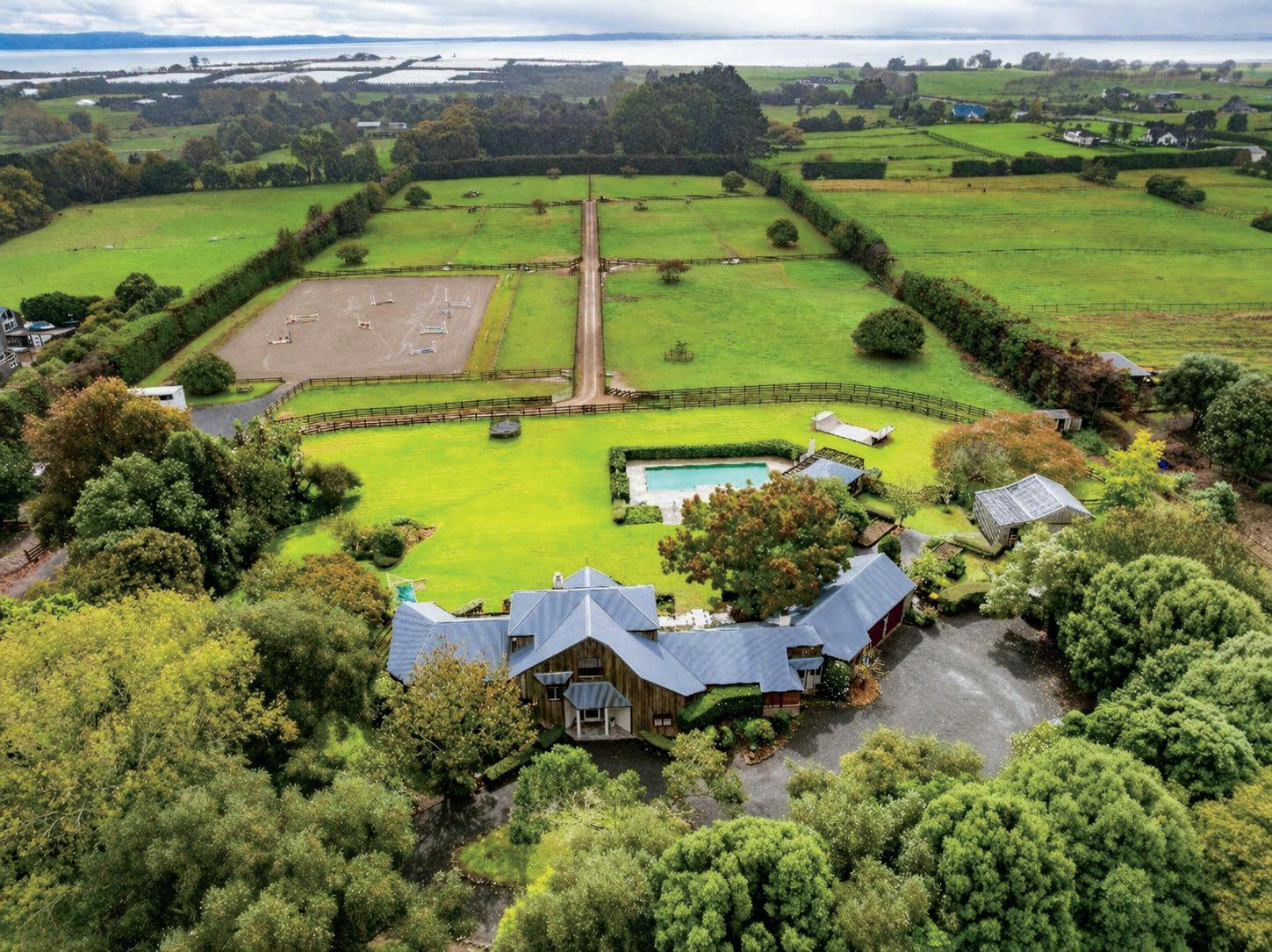
6 Ellett Road, Karaka
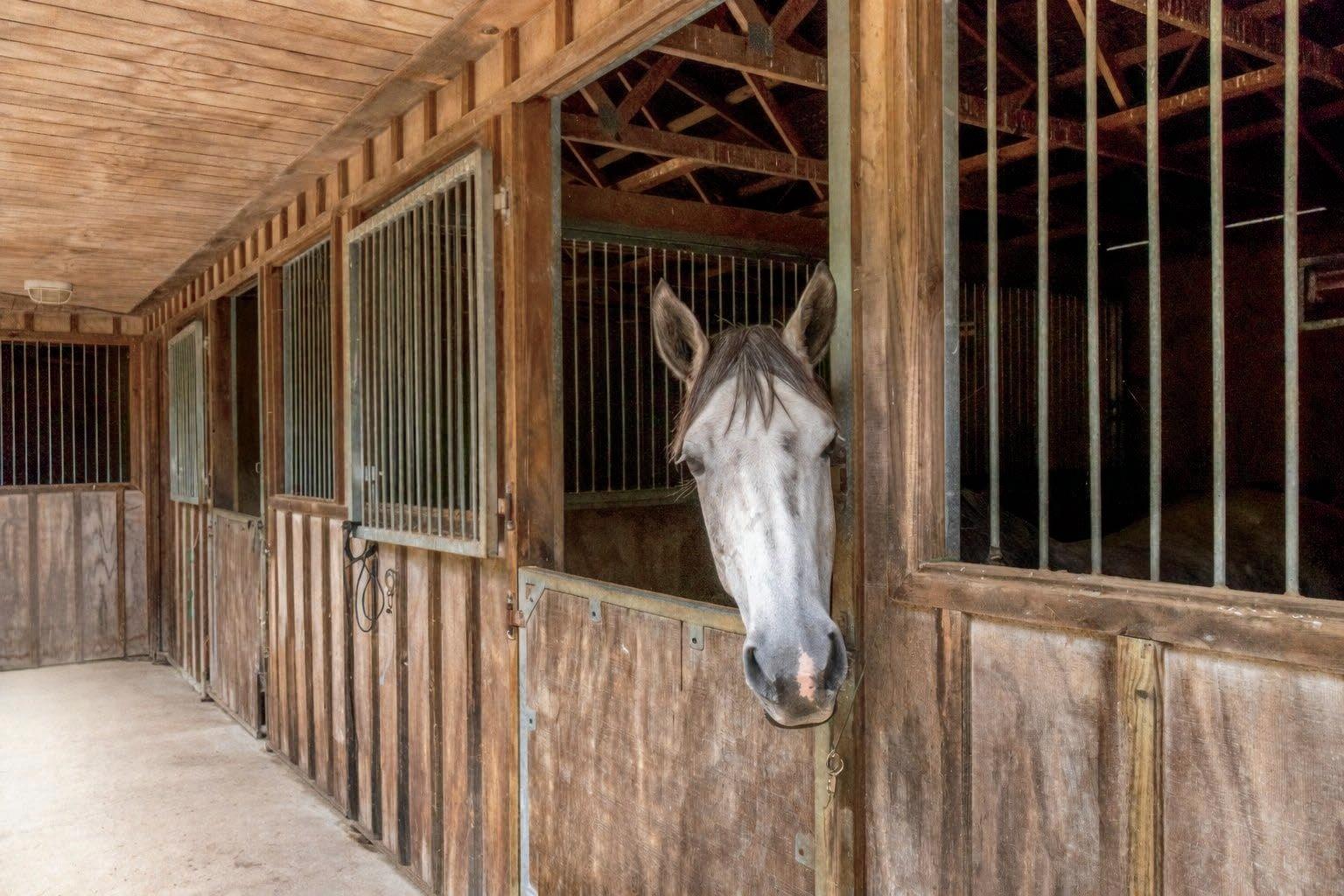
Architectural lifestyle with complete equestrian appeal

326sqm Doug Mills designed residence
Architectural lifestyle with complete equestrian appeal
4 1ha | 10 13 acres of usable land
326sqm Doug Mills designed residence
Auction Saturday, 16 May 12:30 pm onsite
Auction Saturday, 16 May 12:30 pm onsite
View as advertised or by private appointment
View as advertised or by private appointment
5 bedrooms, office and 3 5 bathrooms
4 1ha | 10 13 acres of usable land
5 bedrooms, office and 3 5 bathrooms
Expansive family living and formal lounge
Expansive family living and formal lounge
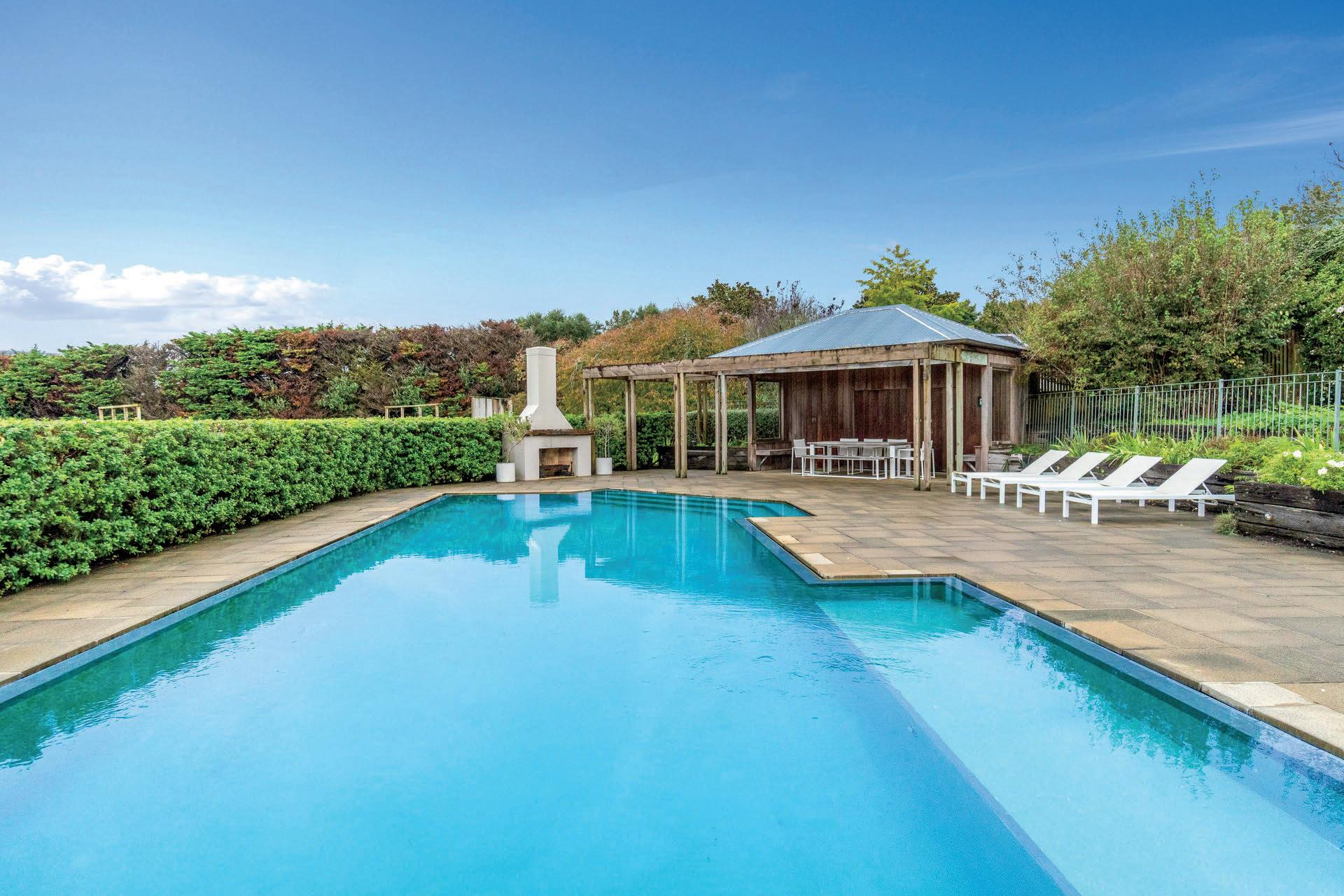
In-ground pool with outdoor fireplace and pavilion
Landscaped, established orchard and productive gardens
In-ground pool with outdoor fireplace and pavilion
Landscaped, established orchard and productive gardens
60 x 40 all-weather sand and rubber arena, 3 large stables, 2 generous sand yards, a wash bay, mare crush, loading races, and 7 securely fenced, irrigated paddocks
60 x 40 all-weather sand and rubber arena, 3 large stables, 2 generous sand yards, a wash bay, mare crush, loading races, and 7 securely fenced, irrigated paddocks
2 car garage, ample parking, and space for horse truck/float, trailers, and machinery
2 car garage, ample parking, and space for horse truck/float, trailers, and machinery



Katie Scott 021 552 649
katie scott@raywhite com
Katie Scott 021 552 649
katie.scott@raywhite.com
Lynn Lockhart 027 535 4024
lynn.lockhart@raywhite.com
Lynn Lockhart 027 535 4024
lynn lockhart@raywhite com

Every month, a quiet, nondescript room above the Pukekohe Library is transformed into a space filled with experts who can fix almost any small household item you havefor free, although a koha is appreciated.
So if you have a toaster that no longer pops, or a necklace with a broken clasp, there’s a good chance you can have them repaired. You can even have your trousers hemmed. The Pukekohe Repair Cafe is a volunteer organisation dedicated to fixing things to keep items out of landfill and to save people money. It runs on the first Saturday of the month and has been going for more than three years. I went along on Saturday with some blunt knives from my kitchen. On arrival, I spoke
most popular in the room.
“I love doing this because I just love helping people and keeping things out of the landfill” Sander said. “That’s our main objective. I feel a lot of things can be easily fixed and go on for a bit longer or even a lot longer.” Sander has seen a lot of strange items and stories come through the doors, such as the gym bicycle seat she was working on.
“The seat itself is fine. That’s what is so infuriating - there’ll be one small part which is broken, and all the rest is good. That’s when people tend to just chuck it.”
“I think this is a great service for people who can’t afford the places in town. And most often, the job is just a small patch up.” Next, I made my way to Max McRae, the knife sharpener on the Repair Cafe team. He said his station is also very
ROSE FULLER FRANKLIN
popular.
“Everyone’s got knives, but very few people know how to properly sharpen them,” McRae says.
which was used during World War 2 for slitting the enemy’s throats. The tip had been broken off, and I had to re-establish it.”
After a few minutes, McRae handed me back my newly razor-sharp knives, which now slice through a tomato like butter, and I can’t help but wonder (and hope) that this is the new purpose of the commando knife.
Before leaving the Repair Cafe, I spoke to the manager, Jim Ball. He’s the general fix-it guy. “We’ve got leather workers, electricians, seamstresses, clock repairs, general repairs, bike repairs and knife sharpening,” Ball said.
As well as the challenge of the repair, he enjoys the good stories too.

“There must be millions upon millions of knives in New Zealand, and if you think of it as maybe 20 per household, that’s a lot of knives.” He says he volunteers his time because every knife is a new challenge for him. “And, it’s enormously satisfying to give someone an implement they didn’t realise was incredibly blunt, and not up to par, then fix. “A few months ago, I had to sharpen a combat knife called a Fairburn Sykes commando knife,

“A person once brought in a clock to be fixed, and the outside was broken. We fixed that, but before he left, he asked me not to restart it. I wondered why, but didn’t touch it. When he came back, I asked him, ‘Why didn’t you want us to restart the clock?’ and he said, ‘Because the clock was my grandfather’s and when he died, the clock stopped’.” Every month, the Repair Cafe sees an average of 40 people through the door, and Ball says that’s the best fix of all. “Over a day, we stop roughly $2000 worth of stuff from going to the landfill, and it’s just such a rewarding job to do. To see a customer smile when you hand over the finished product makes our time and effort worthwhile.”

While Kieran Read relaxed, the bed read him. It’s not unusual to test a bed before we buy, but the new AI Smart Bed called “smart Tek Ai” bed tests us too.
Former All Black captain Kieran Read knows a thing or two about tests. So, after he tested the bed at New Zealand Bed Company Pukekohe, these remarkable beds passed muster in his mind and not just to professional sportspeople.
“It was really impressive – I think it could put me to sleep very quickly! Actually testing it was amazing, you can definitely feel it massage and support you,” the former Papakura local says.
“Sleep was such an important part of being a rugby player. As an All Black, every little thing I could do to improve my rest and recovery was vital. These days, being a dad is so rewarding but it’s also exhausting, so it’ll be awesome to get a better night’s sleep and have more energy when spending time with my kids.”
The secret to the Smart Bed is that they monitor heart rate, breathing, body movement, sleep stages, pressure points and more, before adjusting mattress firmness, bed position and temperature in real time throughout the night.
But the main aim isn’t just to make us more comfy – good sleep sup-

ports overall health by improving mental wellbeing, strengthening the immune system and allowing the body to recover properly.
The bed even gently rises come morning to ensure we rise gently without the need for an alarm. Whether we dream about winning world cups or simply need to wake feeling rested, refreshed, match fit and ready to tackle another day, the AI Smart Bed could be just what the doctor ordered.
Read’s no doctor, but Moses Satralkar is. Also present at the recent Pukekohe launch of the beds, the good doctor provided his prognosis. Research published in medical journals confirms that the right
viate sleep disorders.
“The right sleep surfaces help with alleviation of sleep disorders and they have the potential for musculoskeletal rehabilitation,” Satralkar says.
“A study from the University of Auckland shows that 25 per cent of New Zealand adults suffer from some sort of sleep problem and around 17 per cent of people aged above 65 have arthroplasty surgeries [to replace joints or restore movement and relieve pain], so this bed could be a game changer.”
Pukekohe store manager Harsh Doshi says he feels privileged to be part of such a major milestone for great sleep and good health.
stoked that something so amazing is being launched at my store first.”
The new beds are available at NZ Bed Company stores throughout Auckland and soon, across the country. Long single and queen sizes are already on the shop floor with more sizes expected to follow.
“The bed also boasts a six-minute sleep aid mode that cradles you to sleep with a gentle music, audible to only your ears,” Doshi says.
“Coupled with zero gravity positioning, this bed flatters with decompression mode that relaxes you and optimises blood circulation for the ultimate reset.”

“It’s the first time something like this has been available in ity to actually suit each person individually, adapting to their bodies and sleep patterns. I’m
To follow in Read’s bootsteps and test these new AI Smart beds or simply learn more about how the cutting edge technology behind them can help, contact Doshi and team online via www. nzbeds.co.nz.
“There’s plenty of information about how they work, but as Kieran has discovered, the best way to know is to try for yourself,” Doshi adds.
“Just call us or drop by – we’re at The Zone on Subway Road –because the future of sleep really does start right here!”

Growing your own citrus is a simple way to bring fresh flavour, nutrition, and long-term savings into your household. In Franklin’s favourable climate, citrus trees thrive with minimal care, making them a valuable addition to any garden. Lemons are a staple in many New Zealand homes, used in baking, drinks, and condiments. Limes follow closely behind, prized for their zest, juice, and aromatic leaves. Mandarins are a lunchbox favourite — healthy, sweet, and easy to peel — while oranges remain the top choice for juicing, with Valencia varieties known for their high juice content and Navels for their natural sweetness.
With citrus prices often high, planting your own trees is a smart investment. A single healthy tree can produce dozens — even hundreds — of fruit each season. Planted today, a citrus tree can pay for itself within just a few years and continue producing for many more. Having fresh fruit right outside your door is not only convenient, but it also ensures peak flavour and freshness, without the waxes or chemicals sometimes found on commercially grown produce. Citrus fruit is rich in vitamin C, antioxidants, and essential nutrients that support immunity, skin health, and overall wellbeing.
Citrus also grows exceptionally well in pots, making it ideal for patios, decks, and smaller gardens. Compact varieties such as Kumquat ‘Meiwa’, Lemon ‘Meyer’, Lime ‘Sub-

lime’, Lime ‘Kaffir’, Mandarin ‘Miho’, and Finger Lime are particularly well suited to container growing. While some cutting - grown citrus performs well, grafted trees offer several advantages. The rootstock provides improved disease resistance, better cold tolerance, and a strong, vigorous root system. ‘Flying Dragon’ dwarfing rootstock helps control tree size while maintaining full - sized fruit, making it perfect for pots or smaller spaces.
When planting in containers, choose a large pot with good drainage and use a high-quality potting mix. Position the tree at the same depth as it was in the nursery pot, and water and feed regularly to keep it thriving.
Whether you have a spacious backyard or a sunny patio, there’s a citrus variety to suit your space. At Greenrose Garden Centre, our team can help you select the right tree and offer expert advice. Popular varieties include Lemon ‘Yen Ben’, an improved ‘Lisbon’ lemon with fewer seeds and smooth skin; Lime ‘Bearss’, a vigorous, seedless Tahitian lime; Mandarin ‘Silver Hill’, an early-ripening, easypeel variety; Mandarin ‘Encore’, valued for its long fruiting season; Orange ‘Best’s Seedless’, a juicy New Zealand favourite; and Orange ‘Harwood Late’, known for its rich, sweet flavour and extended harvest.
Start your citrus journey today and enjoy the satisfaction of homegrown fruit for years to come.

• Choose a warm spot, sheltered from cold winds, with maximum sunlight.
• Good drainage is essential, so avoid areas where water tends to pool. If your soil is heavy, consider planting in a raised bed or container.
• Dig a hole twice as wide as the root ball and only just as deep.
• Remove tree from the pot and loosen any roots that wind around the root ball
• Position the tree so that the top of the root ball sits just at or slightly higher than ground level - too low and it could rot. Pack loosened soil under the root ball if needed.
• Backfill with 50/50 mix of soil and compost and gently firm it in around the root ball.
• Water thoroughly after planting and apply a layer of extra compost or mulch to help retain moisture and suppress weeds — just keep it clear of the trunk.
• Water regularly, during dry spells.
• Feed your citrus tree with a specialised citrus fertiliser every 3 - 4 months for healthy growth and fruiting.
• Prune lightly to maintain shape and remove any dead or crossing branches.
• Keep an eye out for pests, and treat early if needed.
• If you live in an area with severe frosts, your trees will need protecting while young.


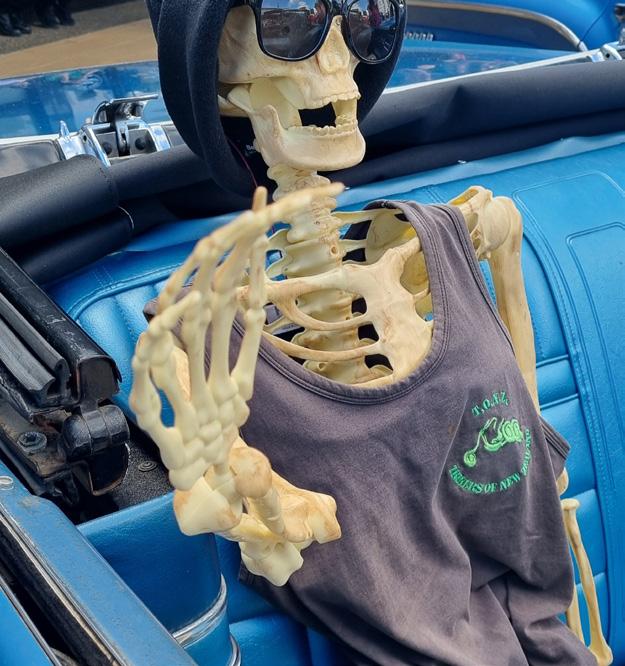
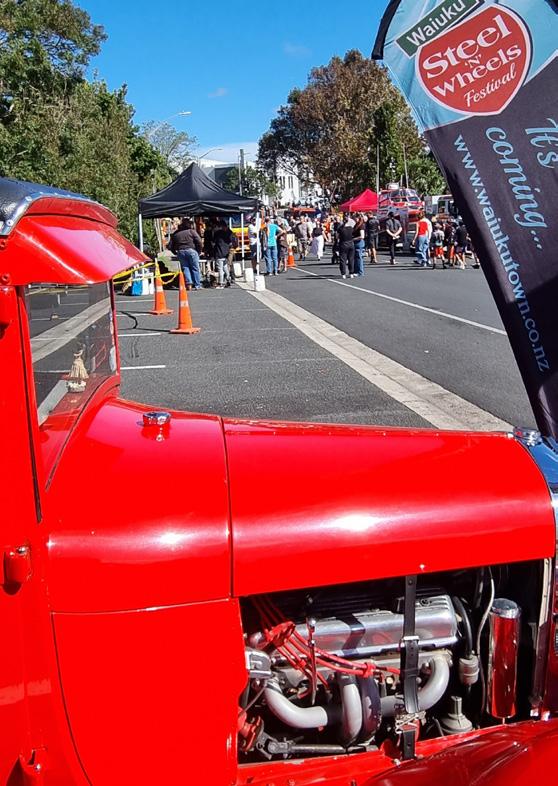
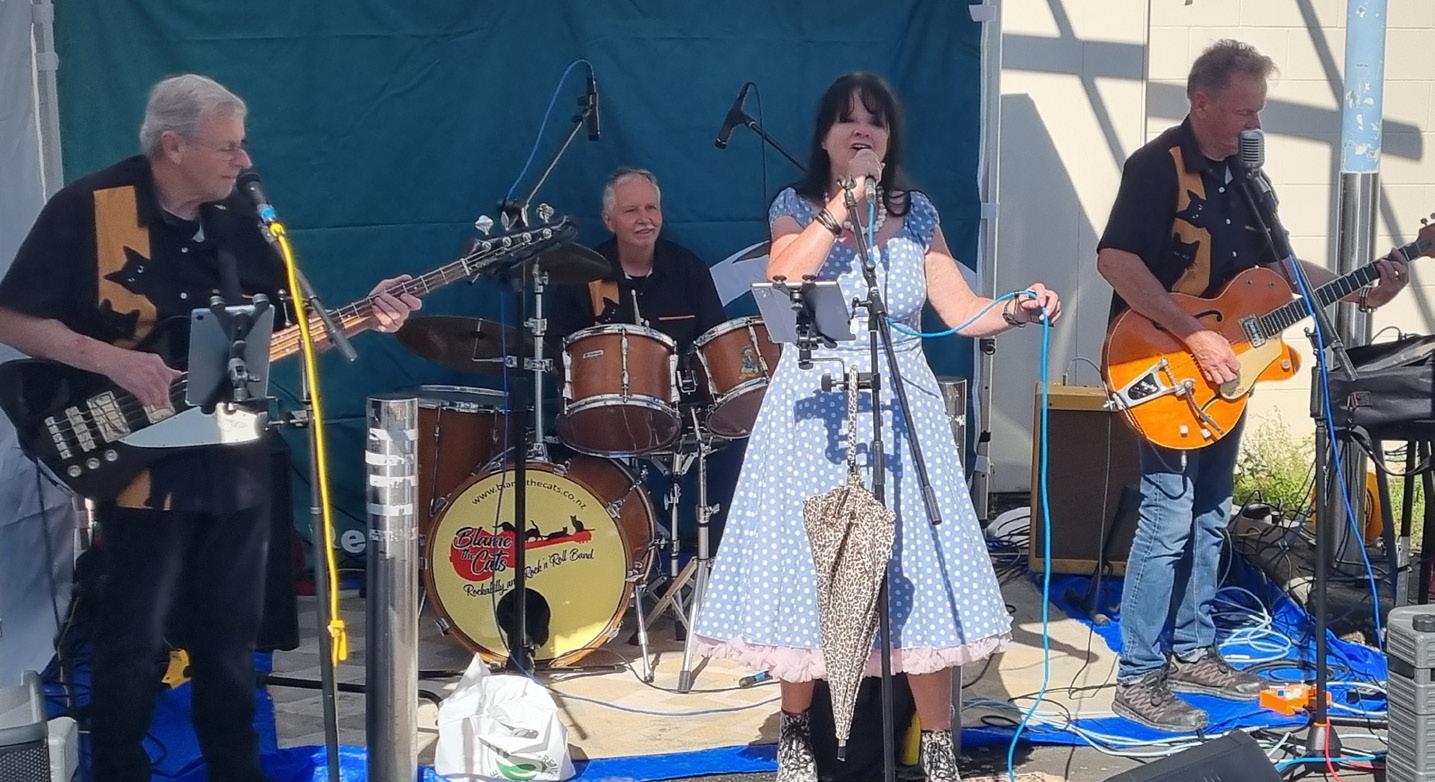
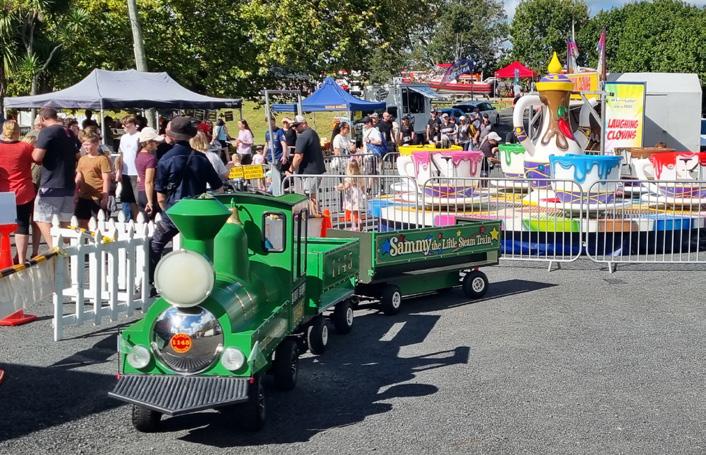
Steel ‘n’ Wheels continues to spin many people’s wheels and turn plenty of heads. The 2026 edition lived up to expectations with cars, cars, trucks and more cars (of course!) but also much more. Live music, carnival rides and stalls provided all the fun of the fair. As these photos (including a few by Pukekohe Franklin Camera Club’s Robin Short) show, petrolheads and pedestrians alike enjoyed another successful event. See franklintimes.co.nz for more.

















APapakura early childhood education centre (ECE) rolled out the red carpet – presented a blue ribbon at least – for Deputy Prime Minister David Seymour recently.
The latest addition to the nationwide Kids’ World Education Group, the new ECE centre increases opportunities for working parents locally, Seymour says.
“I’m grateful to have been invited to the inauguration of Adventureland Early Learning Centre. It’s an amazing centre run by amazing people.
“This ECE centre is a great example of what can be achieved by the private sector. They invested their own money and took on the associated risk. The result [is] a state-of-the-art building built by an architect to make the most from the space so children can enjoy it.”

The government recognises the role ECE providers play in our communities, he says.
the role that providers play in delivering these outcomes on the ground. The government is committed to ensuring that the sector is supported to meet growing demand while maintaining high standards of care and education. The teachers and staff’s work is vital and it makes a lasting difference in the lives of children and their whanau every single day.”
Since Kids’ World Education Group’s first centre was established by Surjit Juneja in 2014, the network has grown to include centres across Auckland, New Plymouth, Wellington and Manawatu.
“I didn’t know so many people would join me in this vision,” Juneja says.
“The early years of education matter. The experiences children have in their first five years shape their future learning, development and wellbeing. That’s why quality, accessibility and affordability in early childhood education remain so important.
“The government recognises
“I started a centre because watching children thrive gave me a sense of achievement that no other work ever had. I never knew it wasn’t just the start of a centre but the beginning of something much bigger.”





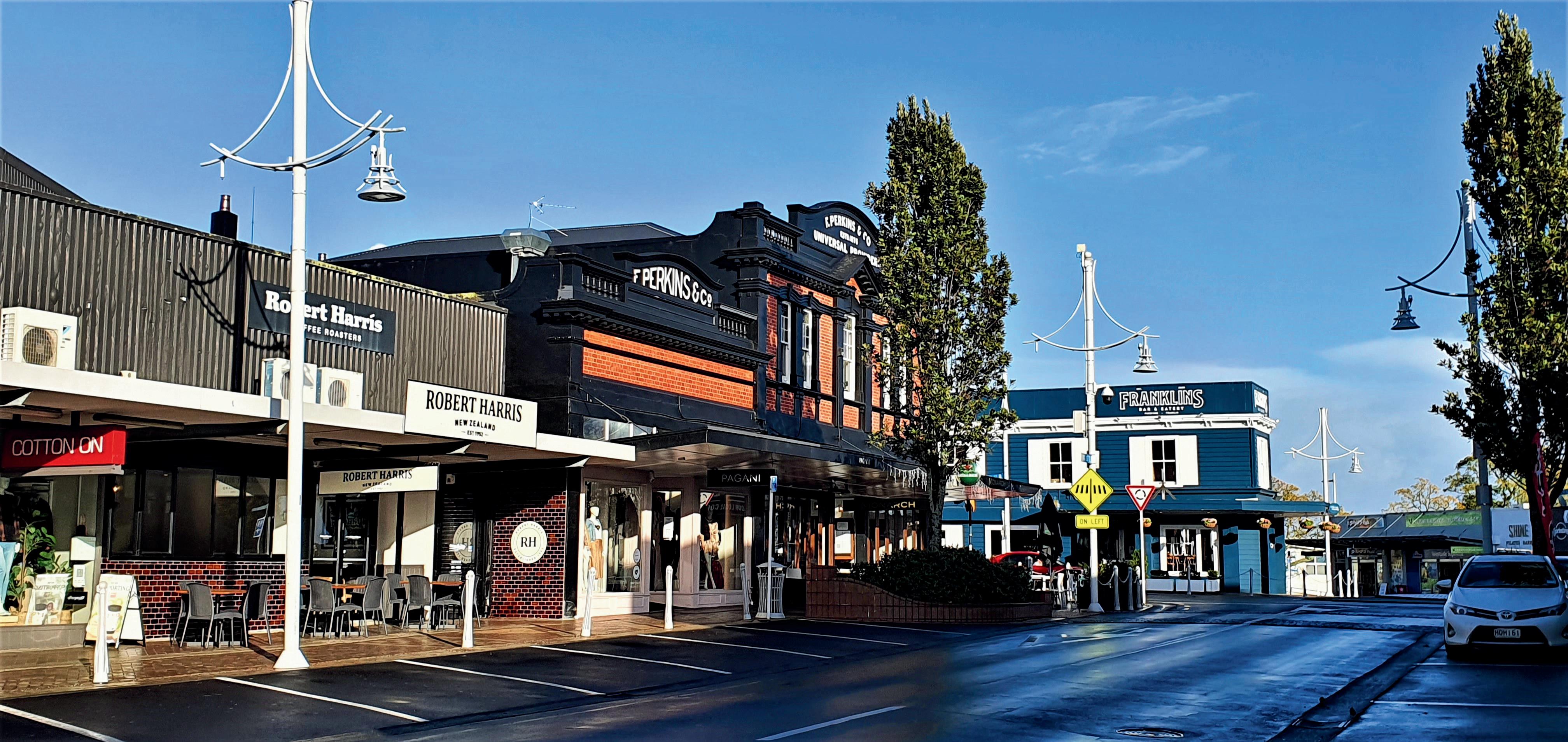
Ongoing development in Drury continues to provide more places to live, but Franklin shouldn’t become a sprawling suburb with little local infrastructure or workplaces.
The simply titled Auckland Deal, between Auckland Council and central government, should ensure Drury has what it needs to ease its growing pains, Minister for Infrastructure Chris Bishop expects.
“In Drury, government and council will work with private developers on coordinated infrastructure planning to support major housing growth, including new schools and a hospital alongside local infrastructure investment.”
Auckland mayor, and Franklin property owner,
Wayne Brown agrees that integrated planning is vital.
“We must build where we have already invested significantly in infrastructure, and not in flood plains. We must provide housing near where people work,” he says.
“We can’t just build anywhere a developer wants to build. Council has been clear greenfields developments are costly and don’t pay for growth, so I’m pleased we will be able to work with the government to determine where growth makes the most sense.”
In addition to Drury, and Franklin in general, the deal covers the entire city, focusing on boosting economic growth and improving living standards.
“This is a new way of working that establishes


shared accountability, recognising the size and significance of Auckland,” Brown says. “The deal better reflects Auckland’s contribution to the national economy. It’s clear [that] when Auckland does well, New Zealand does well.” Some projects covered in the deal are already well underway, Bishop says.
“The new, world-class convention centre is now up and running, we are liberalising Eden Park’s planning rules so it can host more concerts and events, and we are launching an investigation into planning rules holding Auckland’s CBD back.”
A revitalization plan will encourage more housing and business growth, including further residential upzoning and the potential for a new primary school.

Auckland Airport will also benefit through a plan to improve transport access to this major trade, freight and employment hub, says Bishop.
“When it comes to infrastructure, the Central Interceptor Project [a large scale wastewater pipeline] will be finished this year, the third main line separating freight from passenger rail is now open, funding has been confirmed to complete the Eastern Busway, the line to Pukekohe has been electrified and the City Rail Link will open later this year.”


Further projects representing thousands of jobs and billions in investment have been granted FastTrack consent legislation, Bishop says.
Various organisations –
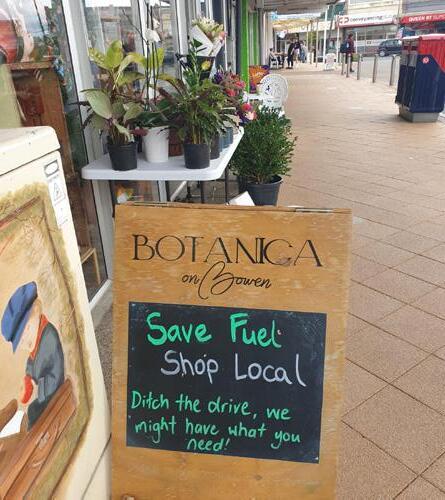
SHOP LOCAL, LOVE LOCAL AND SAVE ON FUEL

Waiuku - A unique and vibrant village shopping experience you can’t beat!
There are so many reasons to shop local and love local and while you’re doing that…save on fuel! From specialty and ethnic food choices to quality fashion and shoes, beautiful things for your home, local arts and crafts and eateries galore. Extra parking is usually available in the Kitchener Rd or Kentish hotel car parks. Stuck for gift ideas? Pick up some Waiuku Town Gift Vouchers, accepted at most Waiuku retailers. Vouchers are available from the business association, Ph 09 235 6231 or visit Waiuku Information Centre at 2 Queen St, Wed to Friday 10am - 3pm.

For the latest on What to Do, Where to Shop, Eat, Stay and Play, visit WAIUKUTOWN.CO.NZ

including the NZ Transport Authority (NZTA), Urban Growth Partnerships – and Crown funding for significant projects all enable a
more efficient working relationship, he asserts.
“This deal isn’t about reinventing the wheel and creating another layer of bureau-
cracy, it’s about coordinating across government into one place so that it’s easier to work together and invest together to get stuff done.”
The deal also has the seal of approval from Auckland Minister Simon Watts and Prime Minister Christopher Luxon.
Auckland has huge potential for growth from which the whole country can benefit from, Luxon adds.
“Auckland is New Zealand’s economic engine room. This deal is about getting that engine room firing on all cylinders so that we can lift incomes, create more jobs and make Auckland, and therefore New Zealand, more prosperous.”
• Reviewing Eden Park’s ownership and operating model
• Redevelopment and roofing of the Auckland Tennis Centre
• Developing a strategy for innovation precincts in
areas such as the Fisher and Paykel precinct and the University of Auckland’s innovation centre in Newmarket
• Developing a destination and major events strategy to grow tourism, events, and hospitality
• Establishing a coordinated 30-year transport strategy with priority projects including the North-West Rapid Transit project, Botany to Airport public transport, Mill Road, and City Rail Link (CRL) level crossings
• An additional Waitemata Harbour crossing project, time-of-use charging and more efficient transport network management
• A new funding tool for high-priority projects. The Crown will consider contributing funding to projects where council has already raised new funding significantly Predator Free 2050, PestFree Auckland, the Auckland Indigenous Biodiversity Strategy, and restoring the biodiversity of the Hauraki Gulf.

Are you approaching retirement or already navigating this exciting new chapter? Join us for a complimentary, informative and relaxed evening designed to help you feel confident and well-prepared for what’s ahead.
At this event, you’ll hear from industry experts from Forsyth Barr, BDO, Wynyard Wood and Bayleys. They’ll cover valuable topics including investment options to help you navigate retirement financially, business exit strategies, and key legal considerations you shouldn’t overlook.
Whether you’re just beginning to think about retirement, already making plans, or enjoying retirement, this is a perfect opportunity to gain insights and have your questions answered.
Date: Wednesday, 29 April 2026
Time: 5:30pm - 7:00pm
Venue: Forsyth Barr Auckland East, Wynyard Wood House, 60 Highbrook Drive
RSVP: By Friday 24 April to jim.thorogood@forsythbarr.co.nz or call Jim on 09 919 9273.
Please advise any dietary requirements upon RSVP. For any questions, please email jim.thorogood@forsythbarr.co.nz or call Jim on 09 919 9273.













By SHAWNA COLEMAN, General Manager, PBA
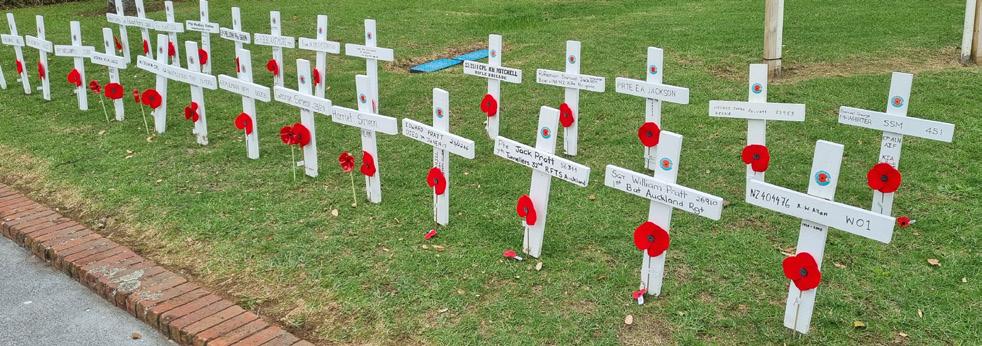
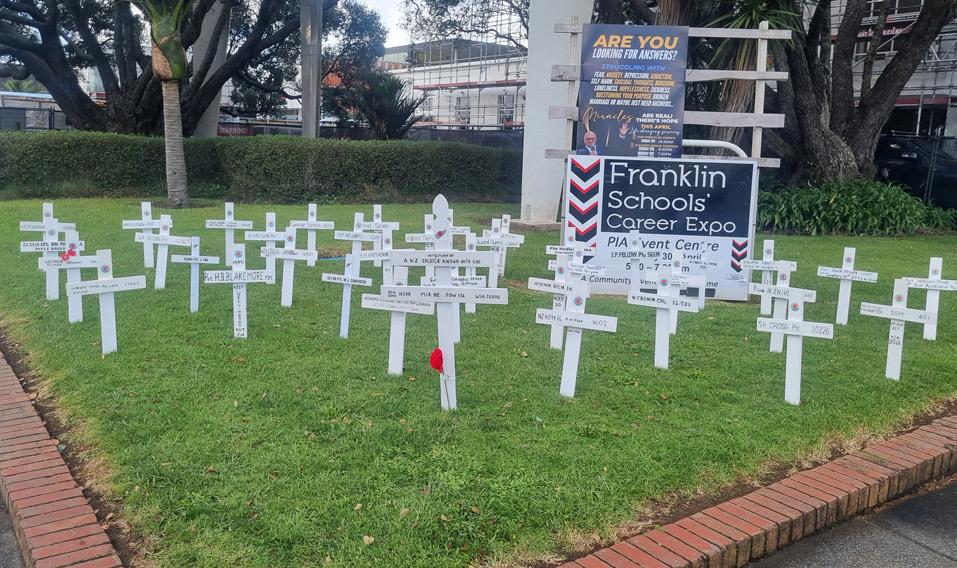
This year, Anzac Day marks 110 years of remembrance - a significant milestone for communities right across Aotearoa, including here in Pukekohe. In the lead-up, you may have already noticed the crosses placed on the corner by the Pukekohe War Memorial Town Hall.
They stand as a quiet but powerful tribute, each one representing a life given in service. Around town, local businesses are also showing their support, including a thoughtful window display by the Salvation Army Family Store - a reminder of the role we have as a community to continue keeping their legacy alive. Anzac Day is always a special time in Pukekohe, with locals coming together to reflect, remember, and pay their respects. This year’s services will follow a familiar format, giving everyone the opportunity to take part in a way that suits them.
According to the Franklin Local Board, the dawn service will begin with parade assembly at 5.45am at the Liquorland/BNZ corner on Massey Ave, before stepping off at 5.55am. The service itself will be held at 6am in front of the War Memorial Town Hall, weather permitting. For those unable to stand, limited seating will be available in the foyer. In the case of extreme weather, the service will move to Pukekohe Intermediate School Hall. Later in the morning, the civic service provides another opportunity for the community to gather.
Parade assembly will take place at 10.40am at the Pukekohe Scout Hall, moving off at 10.45am, with the service beginning at 11am at Pukekohe Intermediate School Hall.

As a business community, this is also a time when we see strong support across our town. Many of our local shops will once again be stocking poppies in the days leading up to Anzac Day, helping raise vital funds and awareness for the RSA. We encourage you to keep an eye out when you’re in town and support these businesses where you can.
Lest we forget.

Mai Lighthouse is the leading social services agency across the Franklin District and North Waikato region.
By MAI LIGHTHOUSE
There is a particular kind of worry that comes with being unwell and having no way to get to your appointment. The specialist visit you’ve waited months for. The chemotherapy run. The check-up your doctor said not to miss. For many whānau in Franklin and North Waikato — those without a car, those living alone, or those too sick to drive — that worry is a real and daily barrier to getting the care they need.
At Mai Lighthouse, we’ve been quietly solving this problem for years through our Medical Transport service. And we think more people in our community deserve to know it exists.
Here’s how it works. If you live within the Franklin area and have a hospital or clinic appointment in Auckland — including Auckland Hospital, Middlemore, Greenlane Clinical Centre, Manukau Superclinic, or an approved private specialist — we can arrange a volunteer driver to take you there, wait up to four hours while you attend, and bring you safely home. If your appointment runs longer, we’ll organise a drop-off and pick-up. No full price taxi fares. No asking a family member to take another day off work.
Behind this service is a team of 26 dedicated volunteer drivers who use their own vehicles and give their own time to make it happen. Last year, their contribution was valued at $250,000. That is not a small thing. That is a community showing up for itself in one of the most practical and profound ways possible. And we are always looking for more. If you have a vehicle, some spare time, and a heart for your community, we would love to hear from you. Drivers are reimbursed for mileage.
If you or someone you know needs a ride to a medical appointment, please get in touch with at least 48 hours notice. The cost of trips works on a series of subsidies — and for some whānau, the service is completely free. Call us to find out what applies to you. 09 238 6233 | transport@mailighthouse.org.nz



How long have you been an educator, and where did you train?
I have been an educator for 22 years. I grew up in Wellington and attended school in Tawa. Teaching was always the path I intended to follow, so I trained at the Wellington College of Education in the early 2000s.
When did you become the principal of Hunua School?
I became principal in 2023. Before this, I was principal of Rapaura School in Blenheim. Most of my teaching and leadership experience has been in East Auckland, where I worked at Ellerslie School, Bucklands Beach Intermediate, Cockle Bay School, and Sunnyhills School.
invested people are in the school doing well. It’s also valuable to reconnect with past students and families at events. Their perspective and experience help keep the school grounded and focused on improving.
What’s special about Hunua School?

tegically for the needs of our local community.
That flexibility is something many leaders in other countries do not have, and it is often commented on positively.
What’s the best thing about being an educator and principal?
As an educator, the best part is seeing that moment when a student grasps a new concept. You can see the shift straight away, and it’s rewarding knowing you’ve helped make that happen. As a principal, it’s the relationships. You work closely with students, staff, whānau, and the wider community, and you see how
We have a motivated and dedicated staff who see every child as their own, not just the students in their classroom. Our kids are amazing. They are so positive, and they come to school ready to learn. There is strong alignment across the school. The board and leadership team work closely together, which makes decision-making clear and focused. That support allows us to keep improving what we do.
We also place a high value on our local environment. As a Green-Gold EnviroSchool, we work alongside local groups to give students real, hands-on learning experiences connected to the land and community.
Is there anything you’d like improved in the education sector?
First, more consistent learn-
ing support for students with additional needs. Schools spend too much time on applications for teacher aide hours and assistive support when that time would be better spent working directly with students. Increased and more reliable resourcing would improve outcomes for those learners and ease pressure on teachers.
How is the relationship between Hunua School and its immediate local community?
Second, a more stable, bipartisan approach to the long-term direction of education. Constant shifts in priorities make it difficult to plan and implement well. Schools need clarity and continuity so leaders can focus on doing fewer things well, rather than responding to frequent changes.
We are fortunate in New Zealand to have a high level of school autonomy. Each school has its own board, which allows us to plan stra-

Last month we celebrated our 150th anniversary. It was a privilege to be a part of this as the lead learner, and it was incredible to see so many current and past stakeholders join us throughout the weekend. We have an active partnership with the community, consistently coming together to support the school and respond to local challenges, showing a strong sense of collective responsibility and pride.
Whether you are a local family who has been in the area for generations or a family that lives in Papakura or Takanini and you’re looking for your children to be a part of a semi-rural school learning environment, everyone is welcome.
» Read the full article at www.franklintimes.co.nz

Cats and dogs commonly present to our veterinary clinics with eye issues such as excessive eye discharge, squinting, or inflammation. While these signs are easy to spot, they are often nonspecific and can stem from a range of underlying causes.
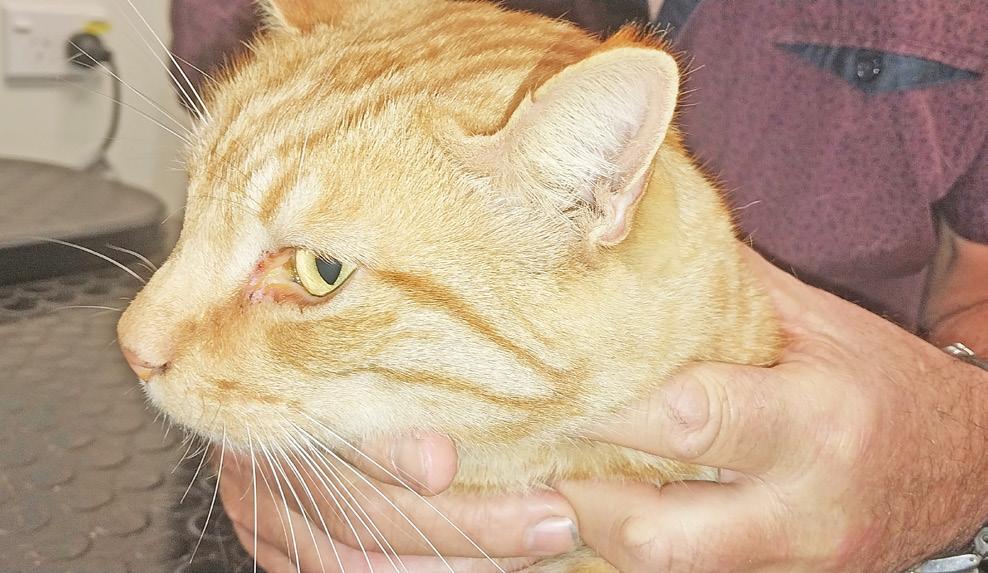
A cat named Boy was seen by us recently after his family noticed that his left eye had been very watery for several days without improvement.
The first step in assessing eye problems is a thorough examination. We evaluate the surrounding skin and eyelids, checking for symmetry, whether one or both eyes are affected, and the type of discharge. We then examine the eye itself, assessing the cornea (the transparent outer layer) and deeper structures
such as the iris and pupil. An ophthalmoscope is used to provide light and magnification, allowing us to assess these structures and their light reflexes. Additional tests may be used to confirm or rule out potential causes.
In Boy’s case, we identified excessive tearing (epiphora), conjunctivitis (inflammation of the conjunctiva), and squinting (blepharospasm). These signs can be caused by infection (such as cat flu), trauma, or foreign material lodged in or around the eye, making a thorough examination essential in determining the appropriate treatment.
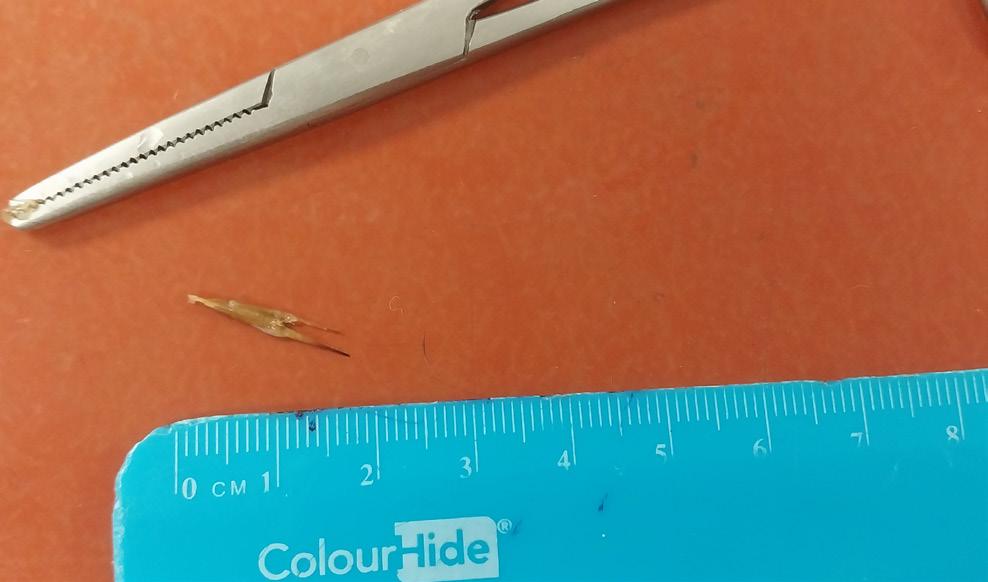
On closer inspection, we discovered a thin grass stem protruding from beneath Boy’s upper eyelid. After applying a numbing agent,

Dr
Connor Hughes-Love BVSc (Dist.)
we carefully removed the material using forceps. With a slight tug, out popped a surprisingly large grass seed, nearly 2cm long, embedded within the conjunctiva of Boy’s upper eyelid, which he likely picked up while running through long grass.
We applied a special
green-yellow fluorescein dye to check for corneal damage. This dye adheres to damaged areas of the cornea and glows under blue light, revealing ulcers. Boy had a small corneal ulcer caused by the seed rubbing against the eye. He was treated with a course of antibiotic eye drops and anti-inflammatories. Without the prompt care Boy received, the ulcer would have worsened and become more difficult to manage. Fortunately, thanks to his family’s quick action, it healed quickly.
Eye problems in pets should always be taken seriously, especially when symptoms appear suddenly and include squinting, swelling, or significant discharge. Early veterinary care can make all the difference.

Open Mon-Fri 7A Paerata Road
By JON RAWLINSON
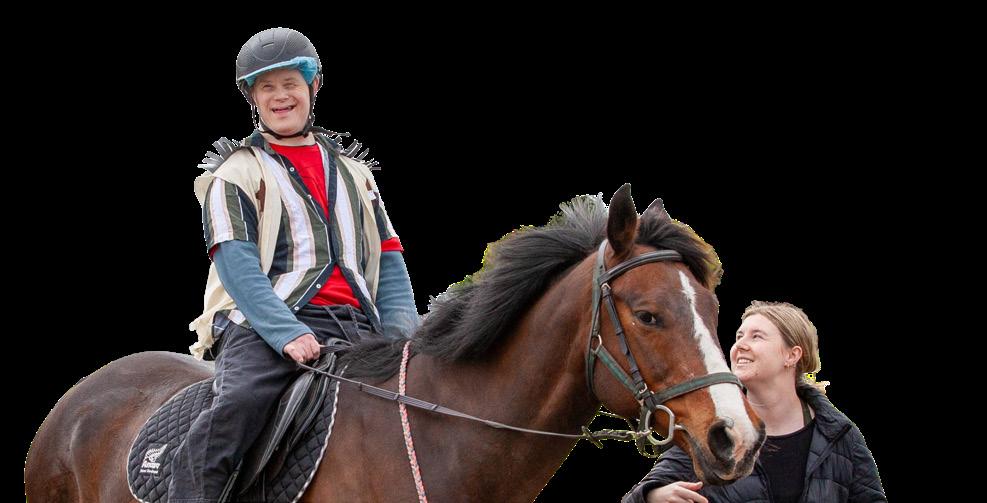
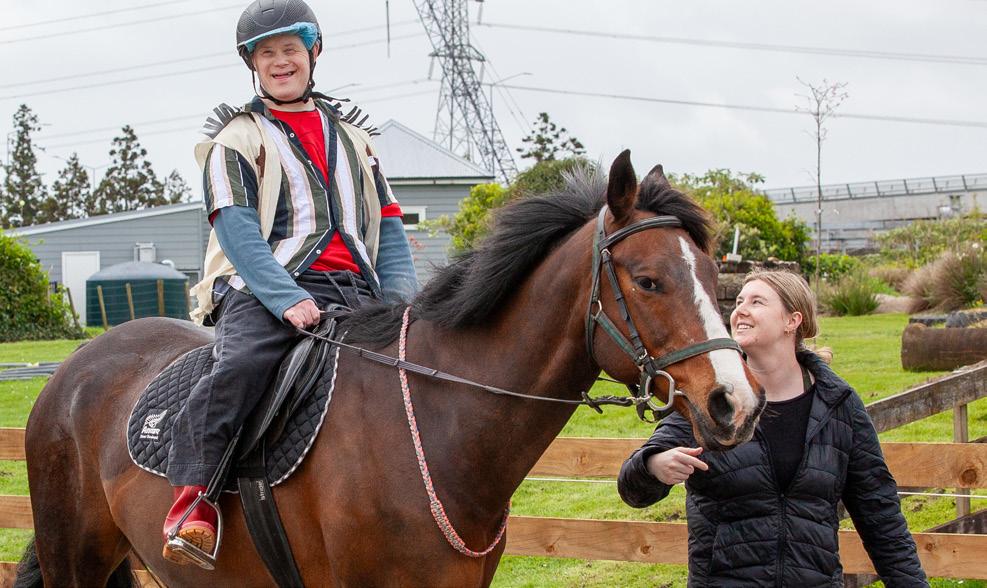
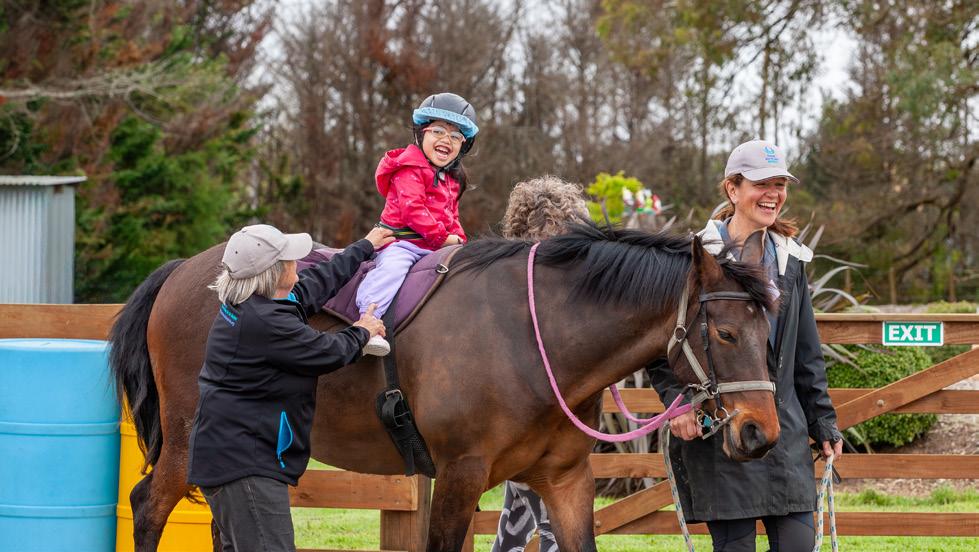
As one veteran equestrian rides off into the sunset, another is saddling up as the new Monday coach at the South Auckland Riding for the Disabled Association (SARDA).
Despite replacing a wellknown coach with an iconic Pukekohe name, Dotty Keven, Renee Faulkner is no greenhorn herself; the group’s equine team leader since February 2025, she brings a wealth of equine and coaching experience to her new role.
In fact, the Drury local has been riding (practically) since before she could walk.
“It definitely feels like that!” Faulkner exclaims. “I have been riding from a very young age and horses have always been a central part of my life. Over the years that’s grown into both a career and a real passion.”
Riding for the Disabled provides horse-based activities and ther apy intended to help improve the physi cal, emotional and social wellbeing of people with dis abilities. Sessions are adapted to suit each rider. Based in Drury, SARDA helps dis abled peo ple of all ages from throughout south -
ern Auckland. “The work is incredibly rewarding. Seeing the progress riders make is really special. Even the small wins can be huge, and being part of journeys alongside the riders, their families and the team make the work very meaningful.”
Faulkner first joined SARDA following a recommendation from a family friend. “I was drawn to [SARDA] because it combines two things that I’m really passionate about – horses and helping people. It offers a unique opportunity to make a meaningful difference through riding, and I really value being part of that.” However, she realises that she has some big stirrups to fill. “Dotty has clearly made a huge impact,” Faulkner says. “Rather than trying to replace her, I see it as an opportunity to build on the strong foundation she’s created, while bringing my own skills and energy to the role. I have a lot of respect for what she’s achieved; she is an amazing lady.” Keven stood down from managerial duties at the end of 2024 to return to a more hands-on role, coaching one day per week.

However, she is now stepping away from the organisation
altogether to spend more time at home. “It’s been difficult saying goodbye, but it’s time for me to move on,” she says.
“I’m doing a casual driving job, which I’m loving, and I have been building a pottery studio at home to further explore my newfound hobby and my creativity.”
Keven says SARDA has taken her on an incredible journey.
“I’ve been humbled by so many people – the volunteers who give their time, people who donate funds or product, the whanau of our riders
and, most importantly, the riders themselves,” she says.
“I have also learnt a lot about myself and how I want to be in the world – most of all humility, kindness and that there are other ways to communicate than just words.”
While Keven is confident the SARDA is in good hands, she adds that it has not been easy to set down the reins.
“I’ll miss it all! I’ll miss the laughter, the love, the successes and the challenges that have been such a big part of my world for the past eight years.”

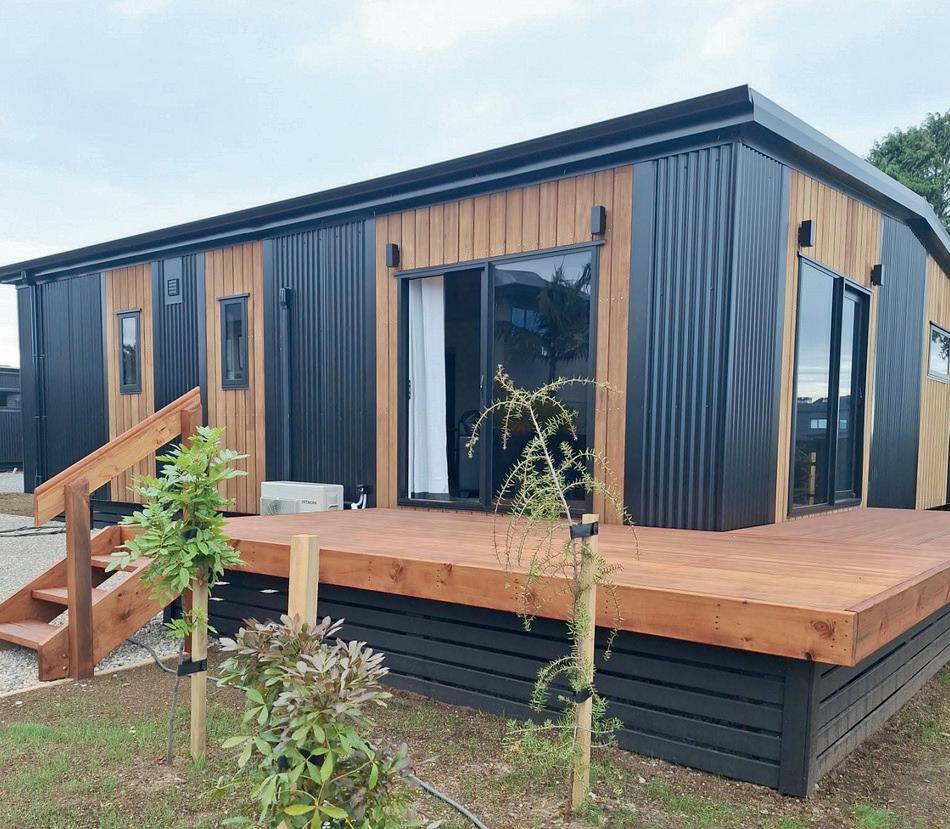
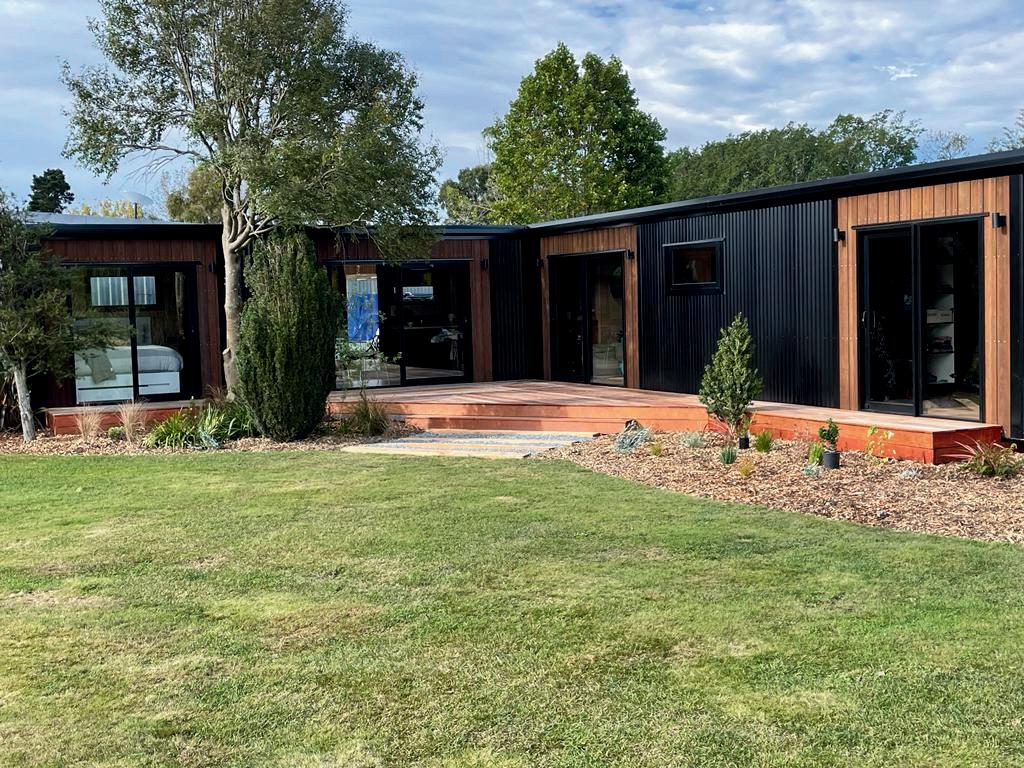
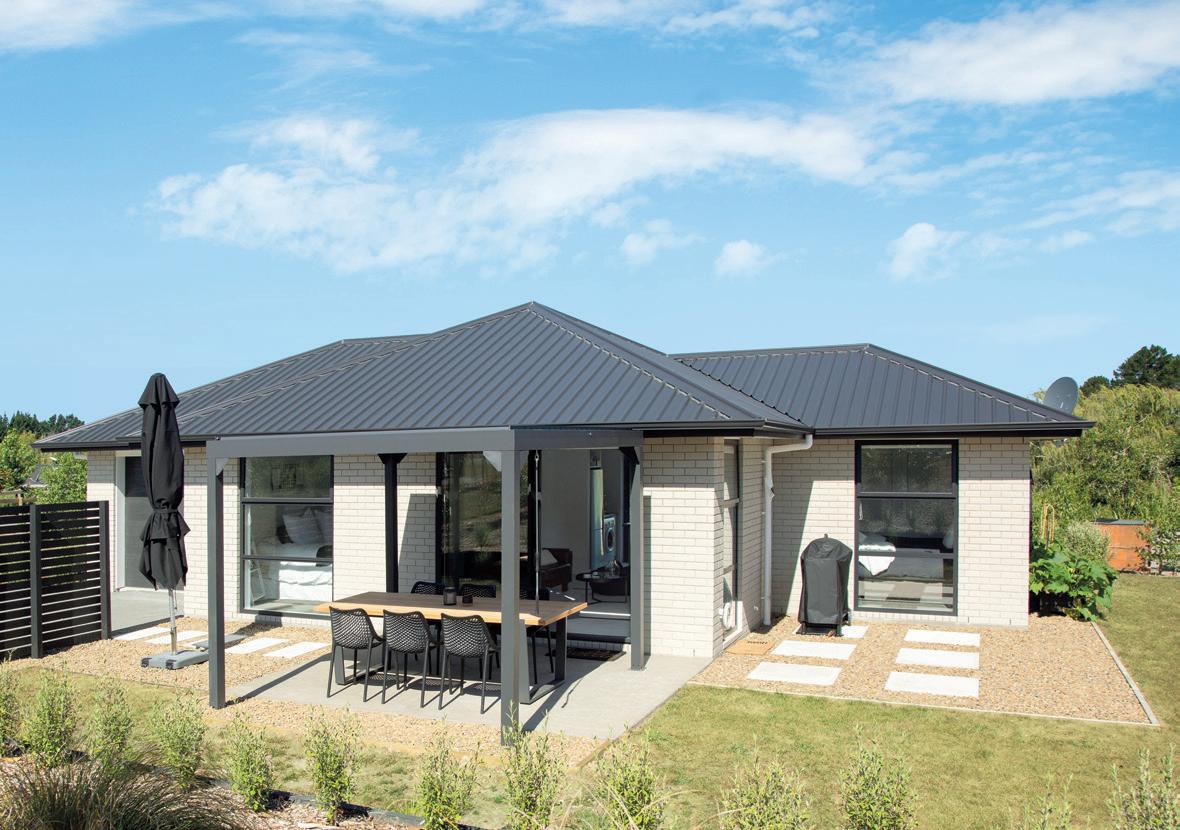
Create your perfect living or working space with Superior Cabins!
Based in Pukekohe and operating since 2011, we specialise in building highquality, durable cabins with a superb finish. Each of our cabins is built by a Licensed Building Practitioner with 30 years of experience, ensuring top-tier craftsmanship.
Our cabins and houses are designed for New Zealand’s climate, featuring full insulation and double-glazed windows to keep you warm and healthy. We offer 11
standard models from 10sm to 120sm, as well as a custom design service to bring your unique vision to life.
Key features you’ll love:
• Bespoke kitchens with stone
• All our cabins are built to code - Auckland Council CCC (Code Compliance Certificate). bench-tops.
• Custom decks and steel canopies available to complete your perfect space.
• Nationwide delivery. Contact us today to start your project!




By KERRY LEE
From severe weather events to the Covid Pandemic, fuel shortages and wars, the 2020s have been a turbulent time.
As the cost of living rises as a result, Kiwis should have an emergency fund, John van Winden (NZHL Home Loans and Insurance) advises.
Being prepared for unexpected or ‘black swan’ events is just as important as saving for our future. This is especially so for people who have recently taken on a mortgage.
“Many New Zealanders would struggle to support themselves financially beyond a few months if their income stopped,” the Pukekohe-based broker says. “That’s why emergency savings should be part of a broader plan. Setting a plan helps keep partners aligned, builds practical habits, and provides clarity around priorities.”
As a rule of thumb, at least three to six months of living expenses should be calculated and set aside, van Winden suggests.

While it may be tough for many, tucking money away for emergencies is important for many other less dramatic situations too.
Although renters can rely on landlords to step up when issues occur, to some extent, homeowners must be aware of how many problems can arise and be prepared to cover the cost.
“Unexpected costs are a reality for most
families. Cars need repairs, household items such as hot water cylinders fail, or income can change suddenly. Without savings, people are often forced to rely on short-term or high-interest debt, which only adds to financial stress.”
Such tools as DebtNav (NZHL’s online debt monitoring tool) can help us see how small steps towards building an emergency fund can help in the long run.













Even locals more accustomed to driving Remuera tractors than the farming variety will have some experience sharing our roads with these machines.
However, with autumn harvests ripe for the picking and preparations for winter underway, there are more of these workhorses on the roll than usual.
Tractors sharing public roads create a unique safety challenge.
A few core safety principles can make a big difference for both operators and other road users.
Patience is key. Keep a safe following distance and avoid tailgating as tractors may stop or slow suddenly.
Only overtake when you have a clear, long stretch of road and can see that the tractor isn’t turning. Watch for indicators and the movement of the tractor’s wheels as these often signal a turn before the vehicle is in position.
Poor weather increases risks for everyone. Rain, fog, flooding or mud on the road can reduce traction and visibility. Both tractor operators and motorists should slow down and stay alert.

Sharing the road safely always comes down to awareness, clear communication and allowing others plenty of time and space to react.

Tractor drivers should be licensed and, ideally, experienced before they drive any machinery on open roads. However, a few reminders can go a long way.
Remember that some motorists won’t be used to driving alongside tractors. So, when and where possible, try to pull over when the road ahead is clear to allow space for them to overtake. It’s not a race even if they think it is!
69 - 77 Manukau Road, Pukekohe winger co nz | 09 239 2389

Go further in New Zealand's all-new Super Hybrid SUV. Functional elegance meets sophisticated performance. Drive smarter, explore further, maximise efficiency, and reduce your carbon footprint with innovative Super Hybrid technology
During winter, there are extra considerations to take on board when on board a motor vehicle, especially when driving on Franklin’s more remote country roads. A little extra preparation and care can ensure we’re not in the dark or left out in the cold.
Before setting out, we should make sure vehicles are in good condition. Check tyre tread and pressure as wet roads reduce traction – coupled with worn tyres and it can be a recipe for disaster.
Make sure brakes, lights and windscreen wipers are functioning properly and keep windscreen washer liquid topped up. A fully charged battery is also important as cold weather can reduce its performance.
Don’t forget the gear and spares! Spare tyres should be up to spec and jacks working correctly as waiting for a tow truck on a freezing evening is not the best option. Carrying jumper cables and other emergency gear can get us out of a jam without needing to wait for help, providing it’s in full working order, of course.
Go above and beyond WOF standard with regards to vehicle condition during winter as, even if your car received this seal of approval six months ago (for example), potentially life-saving parts may no longer

be fit for the worst weather.
Particularly as the days become shorter, it’s essential that drivers aren’t worn out too. Even if we leave the office on time, darker evenings can make people feel tired. Stay alert, even if the commute is short, pull over where practical for a rest – no matter the reason, no matter the conditions, driving while fatigued can be fatal.
Similarly, if rainfall becomes heavy, pulling over and waiting it out isn’t a bad idea.
Fog, condensation and frost on windows reduce visibility more so during win-


ter. Allow a little extra time in the mornings wipe down condensation and defrost windows and wing mirrors with a little warm water. There’s no harm in carrying a thermos with extra warm water too, just in case.
Leave headlights on – they’re not just about helping you see other vehicles but also so that they will see you.
While ice isn’t often too much of a problem in Franklin, frosty, wet, muddy or flooded roads are. So, increase following distances and allow a little more time to stop while being prepared to brake deliberately (but not sharply) and, if the vehicle slides, to steer into the skid.
Severe weather events, such as Cyclone Vaianu, gain much media attention, but flooding can be regularly problematic on certain stretches of our roads. Take warnings seriously and avoid travelling when advised to stay home.
As even the best preparation can leave us stranded on the roadside, carry an emergency kit. Warm clothes, blankets, drinking water, torches and power banks won’t keep the motor running, but they can ensure we’re warm and comfortable until help can arrive.



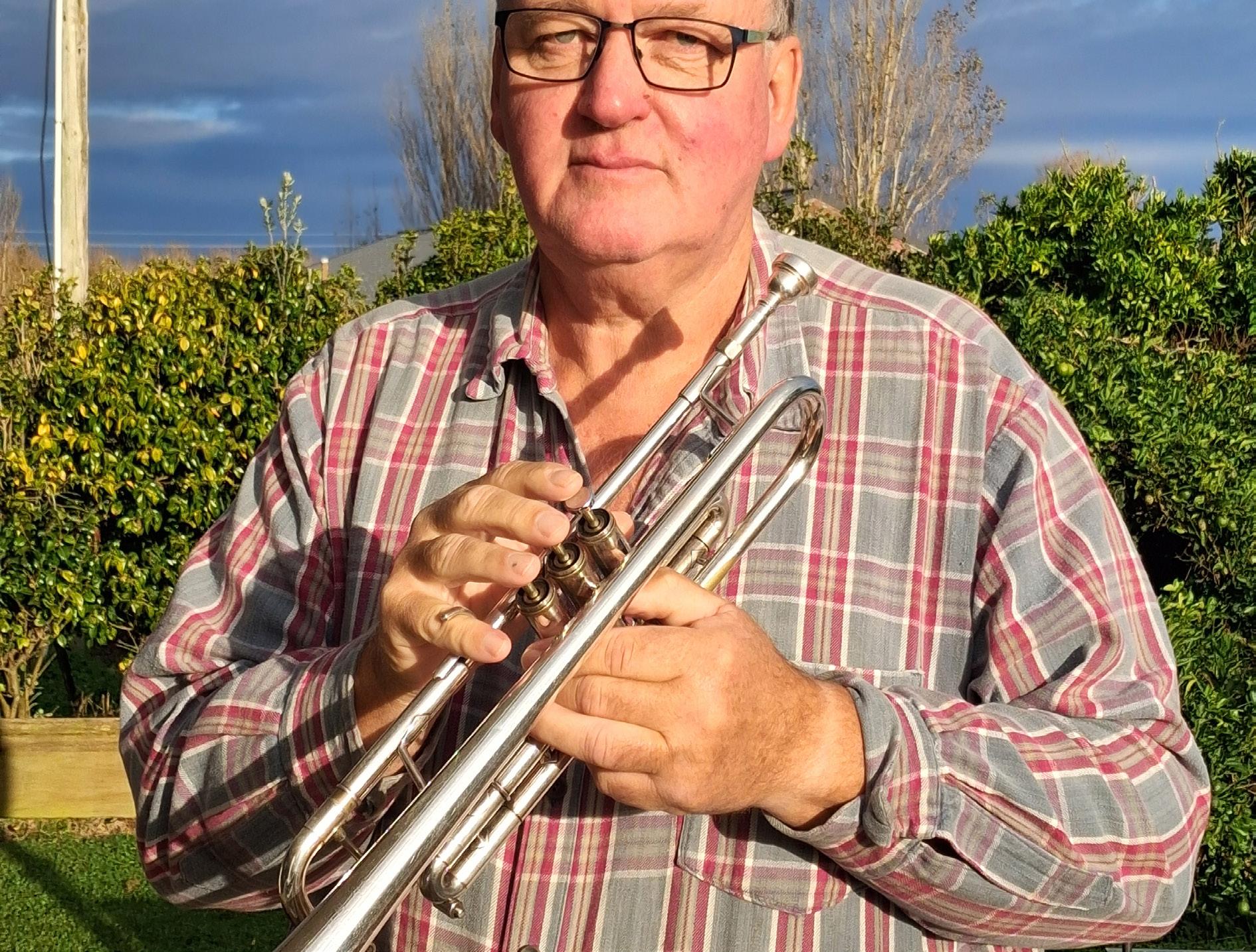

This Anzac Day, a new memorial board will be dedicated at the former Kariaotahi School near Waiuku.Helena O’Neill speaks with bugler Noel Binns about his Anzac connection to the area.
How long have you been a bugler?
I’ve been playing the trumpet for over 50 years. In the late 1970s, for the civic service in the Waiuku Town Hall [Waiuku War Memorial Hall], I was a member of the Waiuku Stage Band and we played there. A schoolteacher at Waiuku College, Phillip Lloyd, was
Post until he moved away. I think it was about the late 1990s when I started being a bugler in Waiuku.
What other services have you been a bugler at?

I think I started out at Awhitu in the 1990s as well. I think the service there was 9am when I first started, and now it’s 8.30am. They get quite a good crowd out there, between 100 and 120. It’s well-supported by the locals. I’ve also played at the dawn service in Pukekohe.
Do you have any relatives who served?
My grandfather, Edwin Joseph Binns (Joe), was in the First World War. I never knew him, but he was discharged in 1918 before the end of the war as he was “no longer fit for war service on account of illness contracted on active service.”
He left New Zealand on November 13, 1915, reaching Suez on December 20,
1915. He was in the field at Armentieres and the Somme battlefields. In 1917, he contracted pleurisy and spent time in a hospital in England. He served 116 days in New Zealand and 2 years and 123 days overseas, a total of 2 years and 239 days. He received the 1914-15 Star, the British Medal, and the Victory Medal.
He had ill health for the rest of his life, and he died in 1945, aged 51.
Was he one of the names on the Kariaotahi** School Roll of Honour?
Yes, he was. As a relative, I was invited to be the bugler for the rededication service there last year after they restored the honours board. I will be there again this Anzac Day for the dedication of the new Second World War roll of honour.
How many services are you playing this year?
Three – Awhitu, Waiuku, and Kariaotahi Hall.
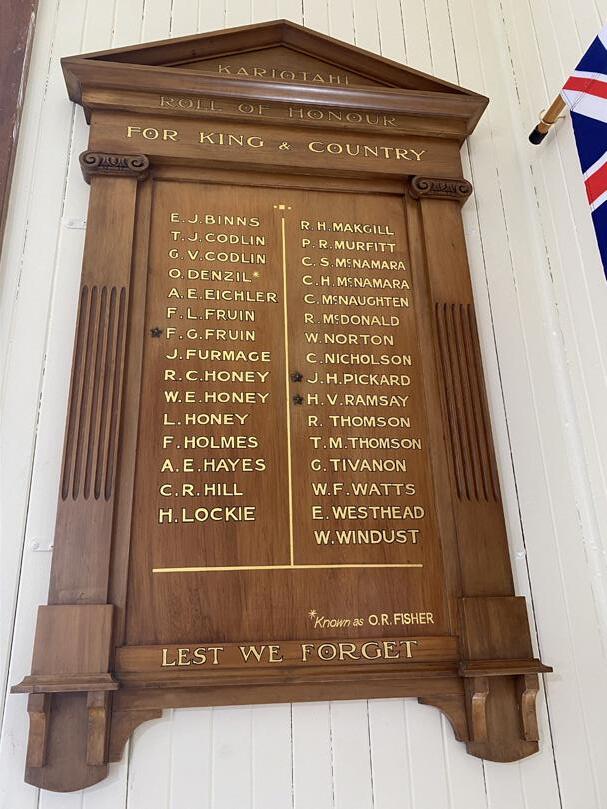
Last year, the Kariaotahi Hall Committee organised the repair and complete restoration of the beautiful but faded and worn First World War Roll of Honour, which has been on the wall in the former Kariaotahi School for over 100 years.
The hall committee has now organised a Second World War Roll of Honour memorial board to match the First World War Roll of Honour that was restored in time for Anzac Day last year.
The board recognises those who served in the Second World War – either in New Zealand or overseas. The school closed in 1968 and is now known as Kariaotahi Hall. A special ceremony will be held at the hall at 2pm this Anzac Day. The hall committee has been busy tracking down relatives of these men to invite
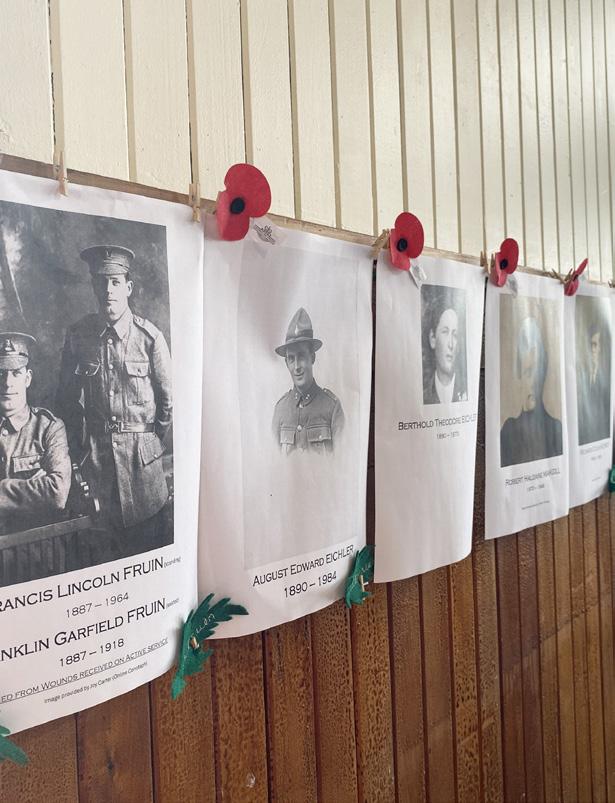
them to the ceremony and to gather information and photos to include in a biography on each serviceman.
Hall committee member Kay Vincent said some have family who still live locally, and others have been long forgotten after they moved elsewhere decades ago. Some are remembered on other local boards.
“There could well be names we have inadvertently omitted.”
Of these 31 men who passed through a mostly sole-charge school, four died on active service, which is a huge toll from a small school.
The 31 past pupils who served in the Second World War are:
Alexander BLYTH, Kenneth John BLYTH, Thomas McCall BLYTH, George Herbert BREGMEN, James William BREGMEN,
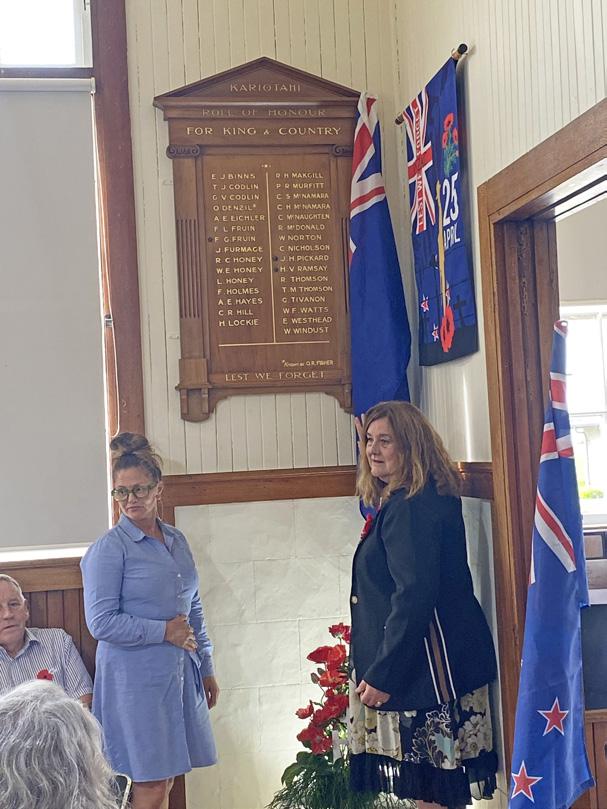
David
BULTE, Albert Delville (Del) CHAPMAN, Harold John CHAPMAN, Erik Sven ERIKSON, Oscar Ole ERIKSON, Franklin Thomas EVANS, Walter GILLATT, Hugh Scott HARKNESS, Anthony Charles John HERROLD, Peter HOLMES, Dennis Henry HONEY, Gordon Desmond HONEY, Leslie Allenby HONEY, Nelson Maxwell HONEY, Frank KNIGHT, Jack Muir KNIGHT*, Robert Baines KNIGHT*, David Churchill MAKGILL, Charles Malcolm McCULLY, Ross Elliot McNAUGHTEN, Clarence Stanley McNAMARA, Frederick George REDFERN*, Ralph Stuart SYKES*, Raymond THOMSON, Thomas Kennedy THOMSON, Sidney John TURNER.
*Denotes died in service.
**Karioitahi is the spelling for the area and the beach, while the spelling Kariaotahi was used for the school which is now a community hall. There have been many variations of these spellings over the years.



Full & Partial Dentures (Acrylic/Flexible/ Metal) Implant-Overdentures
Same-day Denture Relines/ Repairs/Tooth additions
Free WINZ or Insurance quotes, Free after-care
Bite splints and Night guards
Teeth-Whitening trays and Sports Mouth guards
Flexible payment options - Credit card / Q Card / Instalment payment
5% discount for Gold Card holders
Mobile services (Home visits/ Residential care visits)
By MIKE KING, executive director, I Am Hope Foundation
After a previous column about the young boy diagnosed with scurvy, I received a message from his father. And I’ll be honest with you, it stopped me in my tracks. Because behind the headline, behind the shock factor, behind the easy judgement, was a family who’d been doing exactly what everyone tells parents to do.
They asked for help. They pushed for support. They raised concerns early. And they were met with nothing. It wasn’t neglect that led to that boy becoming unwell. It was a system that didn’t respond when a family put their hand up and said, “We’re struggling here”.
That’s the part that didn’t make the headlines. The father told me they’d been actively trying to expand their son’s diet before things reached crisis point. They’d gone to their GP. They’d engaged with a child development specialist through the Ministry of Health. They’d asked for help.
Nothing meaningful came of it. By the time their son was seriously unwell, they were not only dealing with the medical reality of that situation, they were also fighting to be heard. And then months later, after they’d already lived through that crisis, the story was picked up and published publicly. No contact. No warning. No context.


Their child was identified. At school. In the community. Think about that for a second. A family already under pressure, already navigating a complex condition, already dealing with the guilt and fear that comes with a child being unwell, suddenly finds themselves exposed to public scrutiny. Not because they did something wrong. But because their situation made a good headline. It was retraumatising. That’s the word the father used. And I believe him.
What makes this even harder to swallow is the original intent was good. The case was shared in a medical journal so professionals could recognise the signs earlier in other children. That’s how the system is supposed to work. But somewhere between that journal and the front page, the purpose shifted. It stopped being about helping clinicians and started being about grabbing attention.

And in that shift, a family paid the price. Here’s the part I want people to sit with. Since that hospital stay, that boy has had a feeding tube inserted so his nutritional needs can be properly managed.
He’s now thriving. Not because someone pointed a finger. Not because a headline shamed his parents. But because, eventually, the right support was put in place. That’s the story. Not the scurvy. Not the diet. The support. Or more accurately, the lack of it when it mattered most.

MICHELLE KEENAN empowers people and organisations to achieve optimal wellbeing by providing customised wellness coaching programmes tailored to their unique goals.

For many of us, being busy is our default state. When someone asks how we are, “Busy!” is often the first thing we say. There’s always something that needs doing, responding to, or organising. An always-full schedule might be your normal and at times it can feel productive and even satisfying.
But being busy is not the same as being fulfilled. While busyness is often measured by how much you’ve done, fulfilment is shaped by how that time actually feels.
It’s possible to move through a long list of tasks and still end the day with a sense that something is lacking. Busyness can leave you feeling depleted, with little energy left for yourself, whereas fulfilment brings more of a sense of personal achievement and contentment. It may come from fewer activities, but those activities feel meaningful, aligned, or supportive of your overall goals and wellbeing.
The challenge is that busyness is often reinforced by external expectations. It’s often associated with productivity, usefulness, and self-worth. Fulfilment is less visible and sometimes requires making different choices about how time is spent, and getting better at expressing, and upholding, our boundaries.
This doesn’t mean doing less just for the sake of it, but instead, being more intentional. It may mean prioritising activities that bring a sense of purpose, connection or enjoyment, even if they do not appear as productive on the surface.
Constantly defaulting to busyness can create a sense of disconnection from ourselves, our loved ones, and the things that bring us joy. Ask yourself whether you have a full schedule or a full life – are you filling time, or using it in a way that feels worthwhile to you? Recognising that distinction can be a meaningful step towards better wellbeing. www.michellekeenan.com






Exceptional value. Limited villas remain.
This is your final opportunity to secure a brandnew villa in the first stage at Franklin Village.
These thoughtfully designed two-bedroom villas are priced from $1,120,000, offering an increasingly rare chance to join this boutique Pukekohe community at an exceptional entry point.
Set within a peaceful country setting, Franklin Village combines relaxed living with refined amenities including a welcoming café and bar, spa, pool, and private cinema.
Enjoy the peace of mind of care on site and with easy access to local shops and transport, everything you need is close at hand*.
With limited villas left, now is the time to act. Enquire today and experience the lifestyle for yourself.
44 McNally Road, Pukekohe, Auckland franklinvillage.co.nz 09 269 0760
*Access to Aged Care not guaranteed and subject to availability. Villas are sold under a license to occupy.
The Times is partnering with University of Auckland Media, Screen Studies and Communications student Kaitlyn Norton to publish a series of news stories examining New Zealand’s mental health sector. This is part one.
By KAITLYN NORTON
There’s a range of opinions among the people working within New Zealand’s mental health sector about what exactly mental health is and how it’s defined.
Mental Health Minister Matt Doocey says it’s the “ability or inability to manage stress in our life”.
“Everyone is different, some people can manage stress, others less so, but everyone can learn the tools for better mental health. Mental health is not just the elimination of mental distress but also the promotion of mental well-being.” Shaun Robinson, the chief executive of the Mental Health Foundation of New Zealand, says mental health is something we all have.
“Just like we have physical health, we also have mental health. Sometimes our health is strong and sometimes it’s challenged. It’s not just about illness, it’s about our overall well-
being and how we cope with everyday life.
“I don’t think it means being happy all the time. Life throws challenges at all of us. It’s more about having the tools and support to get through those tougher moments, to stay connected to people, and to keep functioning in a way that feels meaningful.”
Robinson says he often thinks about mental health in terms of the ‘Five Ways to Wellbeing’.
“Implementing simple things like connecting with others, being active, taking notice of little things that give me joy, giving, and continuing to learn. Those aren’t big, dramatic changes – they’re small, everyday actions that help ‘top up’ your mental health over time.
“I have my own mental health challenges, and I use the Five Ways to Wellbeing every day to help me stay healthy. That’s also what campaigns like ‘Top Up Together’ are about. It’s the idea we need
to look after our well-being regularly, not just when things go wrong, and that we’re better when we support each other along the way.”
East Auckland local Richie Barnett, the partnerships manager for the mental health charity I Am Hope Foundation, says mental health is our emotional, psychological, and social well-being.
“It influences how we think, how we feel, how we cope with life’s challenges, and how we connect with others. Just like physical health, everyone has mental health, and it can move along a spectrum depending on life experiences, stress, support systems, and resilience.

“Having challenges with mental health is not about weakness – it’s about being human. “Feeling broken at times doesn’t mean something is wrong with you, it means you’re carrying something that needs support, connection, and understanding.”

HUNDREDS OF OPTIONS FOR $10 EACH !!



• Storage Furniture & Shelving
• Dining Chairs
• Kids Clothes
• Ladies Activewear, Gym & Yoga Wear
• Perfumes & Fragrances
• Cutlery Sets, Shoes & More!
Saturday 25 April (Anzac day) 1pm - 9pm
Sunday 26 April &
Monday 27 April 9AM - 9PM
By KERRY LEE

He was born with spina bifida, but Pukekohe’s Mike Brown has never let it stop him from achieving his dreams in music, fashion and life in general. Instead, the condition has taught him patience, mental toughness and
“Growing up wasn’t easy,” he says. “The world isn’t built for someone like me. There were physical challenges and times I felt different, frustrated or
“But when everyday things are harder, you develop a type of strength you don’t get any other way. I don’t know if I’d be this determined if life was easier because a lot of my drive comes from proving
that circumstances don’t decide my future.”
Writing his own music since his teens, Brown attended the Australian Institute of Music, 2014–18. He gravitated towards rap because he felt it was the most honest musical style, one that helped him explain what he was going through and how he was feeling.
In 2020, he produced a single titled Ambition “Rap pulled me in and I started writing my own stuff. [The single] meant my voice, my story, my message was finally out there,” he says. “Living with spina bifida shaped a lot of how I see the world, so that naturally comes through in my music too. I try to make honest music. If it helps people feel like they can keep going, that’s all I need.”
Mike also launched his own clothing line known as MIKE. An acronym for ‘Most Inspiring Kind Ever,’ the message behind his brand, he hopes, inspires others to push past their own limits. “I want people wearing my clothing to feel inspired, to be confident enough to back themselves and know they’re stronger than whatever it is they’re facing. Clothes can be more than fashion – they can carry meaning, energy and a message that reminds people of their own power.” Brown



uses social media to share his story, showing people that his disability does not define him. He advocates a positive, can-do attitude and aims to raise awareness of spina bifida.
“Most of my inspiration comes from my own life – struggles, staying strong, faith, purpose, and trying to grow as a person. If you dream big, keep pushing, and don’t let anyone else set your limits, anything really is possible.”
Spina bifida is a condition in which the spine and spinal cord do not form properly during early pregnancy. It occurs when the neural tube fails to close completely, leaving part of the spinal cord exposed or damaged.
Severity varies, from mild cases with few symptoms to more serious forms causing paralysis, mobility issues and bladder or bowel problems. It can also be linked to hydrocephalus. Treatment may include surgery, physiotherapy and ongoing medical care. Adequate folic acid intake before and during pregnancy can significantly reduce the risk of developing the condition.
More information is accessible by searching ‘spina bifida’ at healthify.nz.


On October 4, 1958, Governor-General Viscount Cobham formally opened the Pukekohe War Memorial Town Hall. This imposing building on the corner of Edinburgh Street and Massey Avenue incorporated a lobby, a large auditorium and a concert chamber. RSA clubrooms at the rear of the building and a detached building housing Plunket rooms also formed part of the complex.
According to NZ History, Viscount Cobham placed a wreath on the stone of remembrance at the main entrance. This polished marble memorial stone bears the words, “1939 –1945: We Will Remember Them”, along with a bronze wreath and bronze crusader’s sword.
Unlike other such public halls in the vicinity, the hall was built solely as a World War 2 memorial. However, in 1980, the central pillar of the Pukekohe World War 1 memorial gates was relocated from Roulston Park to a new site beside the town hall’s main entrance so that Pukekohe’s civic Anzac Day service could be held on the one site. On October 11, 1992, a memorial stone commemorating the


presence of New Zealand and American forces at military camps in Franklin during the Second World War was unveiled outside the hall. The inscription on the bronze plaque attached to the stone read: “50th Anniversary: Recognising the Presence of New Zealand and United States Forces in the Pukekohe Military Camps and the Contribution of Citizens of the District During World War II. Franklin Remembers. October 11 1992”.

The hall has been closed since October 2024 to allow for major revamp and strengthening works. The $7.2 million project includes new foundations, a roof upgrade, and a full interior refurbishment. The hall is expected to open this winter, with the exception of the annex, which houses RSA Franklin.

The seismic upgrade includes extensive roof
support works, subfloor bracing, replacing sections of brick walls with reinforced concrete, piling work to seven metres, steel reinforcement to the front façade, additional steel frame support in the RSA storage area, relining RSA bathrooms, office and lobby spaces, and gutters, rainwater heads and downpipes.
Renewal work includes new roofing, converting the external west porch to internal lobby space, refurbishing existing wooden, steel and aluminium window and door joinery, asbestos removal, lighting upgrades and fire protection.
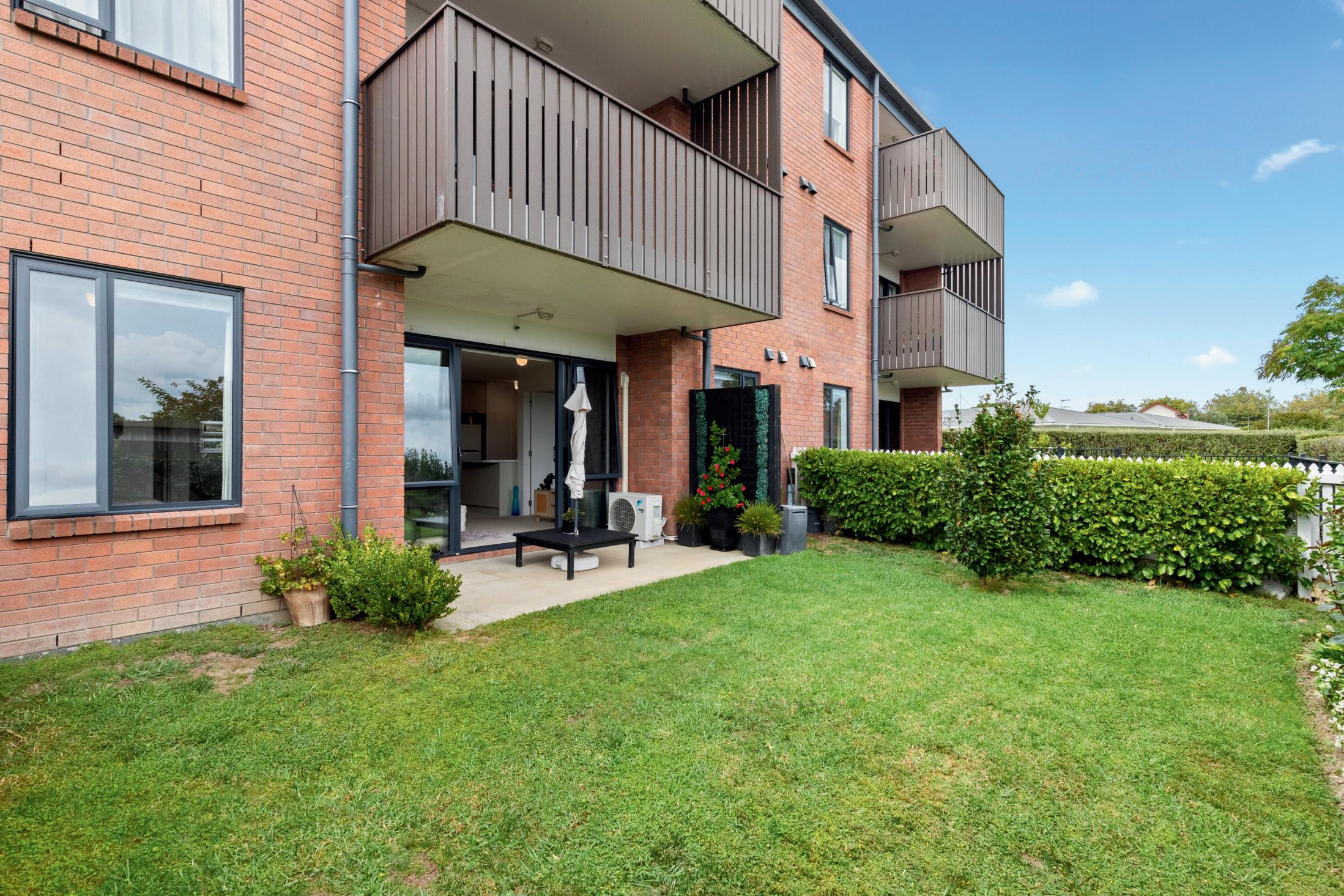






This





and supportive, making the time and effort to help the kids and their families, especially noting the differences in the kids’ personalities, learning styles, and learning abilities and knows just how to guide them.
This week’s recipient is Charmaine McNeil, nominated by Angely Cullerne, who writes:
“Charmaine/Mrs McNeil has taught both my children at Pukekohe East Primary School (my 8-year-old and my now 5-year-old). She’s really helped them, and all the kids she teaches, thrive at our school. “Charmaine teaches the youngest students at the school, and she has always been caring

“Charmaine also reaches out to hubby and me - the open communication is so important, especially when it’s your first time at a school and when you both want what is best for the children’s learning and wellbeing. I love how she uses our school app to explain in more detail about why they are learning a particular activity to parents and families. “You can see the kids thriving in their first year at school! We are so grateful to have caring and dedicated teachers at the school.”
The Franklin Times is recognising the many wonderful people in our community who go out of their way to help others with our regular Community Hero award.
If you know someone who’s doing amazing things in our community, please email 80 to 100 words describing why they deserve this recognition, highlighting specific actions they’ve taken to benefit our community, with your and their contact details and a high-resolution photo of them, if possible, to editor@franklintimes.co.nz.
Be sure to include details about what they’ve been doing, the impact they’ve made, and how long they’ve been involved in these efforts.
The award is sponsored by Little Ed Pukekohe. Recipients will receive a $50 Little Ed voucher and will be featured in our newspaper and on our website. As we are moving to publishing fortnightly, we will have a Community Hero in each edition of the newspaper.









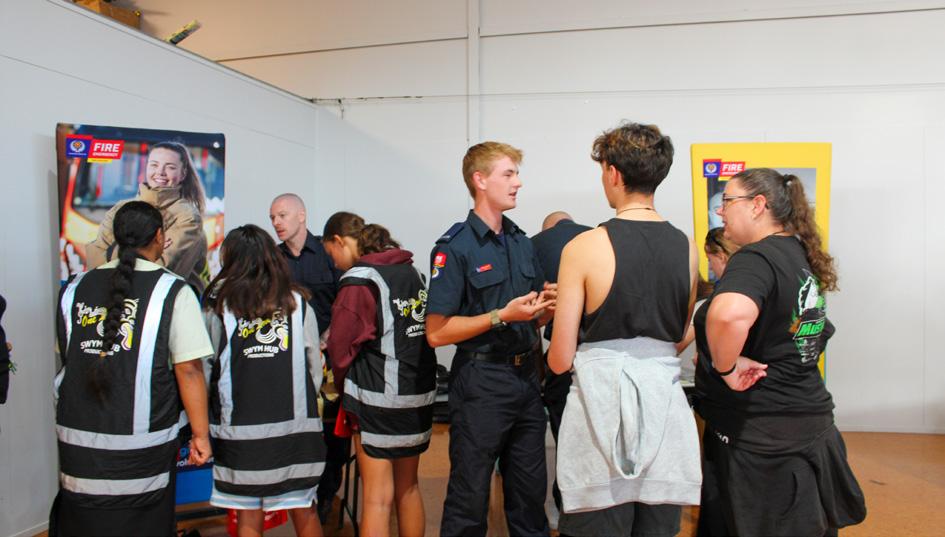
Thursday, April 30, 5.30pm to 7.30pm, PIA Event Centre, 55 Ward Street Pukekohe.
This free community event brings together students, whanau, jobseekers, and members of the wider Franklin community who are interested in discovering new pathways. With something for everyone, the expo offers a welcoming environment to ask questions, gather information, and make valuable connections. No need to register - just turn up on the night!

Saturday, May 2 from 7am & Sunday, May 3, 8am to 3pm, Dragway Road, Meremere
The popular Pukekohe Swap Meet returns for its 46th year, bringing together car enthusiasts, collectors, and bargain hunters for a full weekend of buying, selling, and swapping. Held at the Meremere Drag Strip, this long-running event features a wide range of automotive parts, vehicles, memorabilia, and more. A great outing for motoring fans or anyone keen to pick up a unique find.





Friday, May 1 and Saturday, May 2, 9.30am to 4pm, St Andrew’s Centre, 85 Queens Street, Waiuku
Come and enjoy some of the fabulous work of the Waiuku Village Quilters! There will be a trading table, stalls, raffles, and a pop-up from Pollock Art Gallery, with food and drink available. Entry is $5 with children under 12 free.
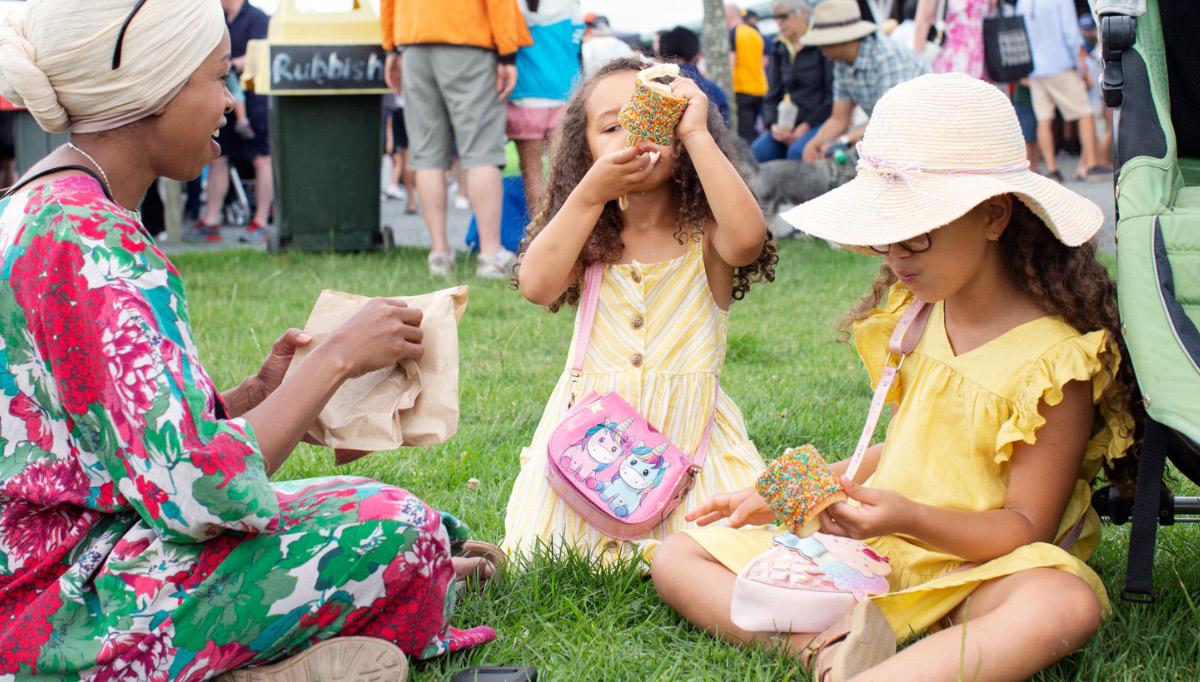
Sundays, 8am to 1pm, Clevedon A&P Showgrounds, 107 Monument Rd, Clevedon
There is nowhere better in Auckland to enjoy farm fresh produce, gourmet provisions, great coffee, delicious eats and good vibes than the Clevedon Village Farmers Market. Open every Sunday, the market boasts some of our best local produce and is the perfect opportunity to meet the growers while stocking up for the week.







PLEASE NOTE: information regarding times & dates of these events was correct at the time this issue went to print. However, readers are advised to check events online for updates.

Karaoke: The Show
May 1-9, OSPA Theatre, 14 Hall Road, Onewhero
Singing, dancing, drama, teenage sass, marital hiccups, trauma…. It’s all part of Karaoke: The Show, following the stories of four couples who get together to try their luck in a Karaoke competition. All shows at 7.30pm, except for the 2pm matinee on Sunday, May 3. Tickets on sale at www.ospa.org.nz or (cash) from The Urban Market, 216 King Street, Pukekohe.

Sunday, May 3, 9am to 12.30pm, Pukekohe Town Square, King Street, Pukekohe
Support local growers and creators at the Farmers & Artisans Market. Browse a vibrant range of fresh produce, handmade goods, and artisan products while enjoying the lively community atmosphere. There’ll also be free face painting for the kids and live music from Mitch French, adding to the relaxed Sunday vibe. It’s the perfect way to spend your Sunday morning, discover local talent, and shop fresh and unique.




Scan me for more local events


Friday, May 1, from 12pm, Pukekohe Park
Kick off the weekend early with an afternoon at the races at Pukekohe Park. Gates open from 12pm, with the first race starting at 1pm. This relaxed raceday offers a laid-back atmosphere where you can watch live horse racing up close. While it’s more of a working raceday without major entertainment, it’s a great option for racing enthusiasts or anyone keen to try something a bit different. General admission and parking are free.

Sunday, May 17, from 10am, Purina Pro Plan Exhibition Centre, 743 Papakura-Clevedon Road, Ardmore
The long-awaited Day of Boston Terriers is here! Help gather as many Boston Terriers and their owners as possible. Held indoors at the Dogs NZ Exhibition Centre, categories include glossiest coat, fastest eater, best groveller, sexiest walk, and plenty more. Entries from 10am, with judging beginning at 11am. More info email devinenicole64@gmail. com.






The Big Bike Film Night is about to roll into Pukekohe, screening at Cinema 3 Pukekohe on May 3. Billed as ‘a feast of short films devised to delight the two-wheel devotee,’ the event is expected to appeal to cycling and film enthusiasts. Since its inception in 2015, the festival has presented an array of New Zealand and international movies, curator Brett Cotter says.
“Stories are at the heart of everything, and our dazzling 2026 collection features nine mesmerizing films, each as dynamic and diverse as you could hope for, and all ready to spin your wheels!”
“Audiences will be transported from backyard adventures in New Zealand to the breathtaking landscapes of Norway, to the lush forests of the Canadian West Coast, and we’ll crown things off on the slopes of the
punishing Mont Ventoux, in Southern France.”
Cotter says highlight of this year’s programme is the world premiere of an intriguing film Queen of the Mountain, set in stunning Queenstown. The documentary follows Annie Ford, an adventure activist, as she attempts to break the 24-hour Guinness World Record in downhill mountain biking while raising funds for reforesting the foothills in the Queenstown basin.
Annie’s relentless pursuit not only pushes the limits of endurance but also becomes a powerful symbol of resilience and environmental commitment, Cotter says.
“Annie is known for combining extreme endurance challenges with environmental advocacy. This film not only showcases Annie’s grit and determination but also shows
how using adventure as a tool can inspire others!” In addition, viewers can expect a treasure chest of other films showcasing the breathtaking landscapes of Norway, ski-fields in New Zealand and the punishing Mont Ventoux in Southern France, for example.
Stunning settings and remarkable people are par for the course, Cotter confirms. “The power of storytelling is at the forefront of what we offer and the belief that the humble bicycle can help improve our health and inspire people with where it can take them,” he adds. “Nothing begins without a story, so it’s a real privilege connecting communities with stories that captivate, uplift and most importantly of all inspire us to get out and ride.”
In addition to Pukekohe, The Big Bike Film Night’s tour covers 54 locations nationwide. Visit www.bigbikefilmnight.nz for full listings.
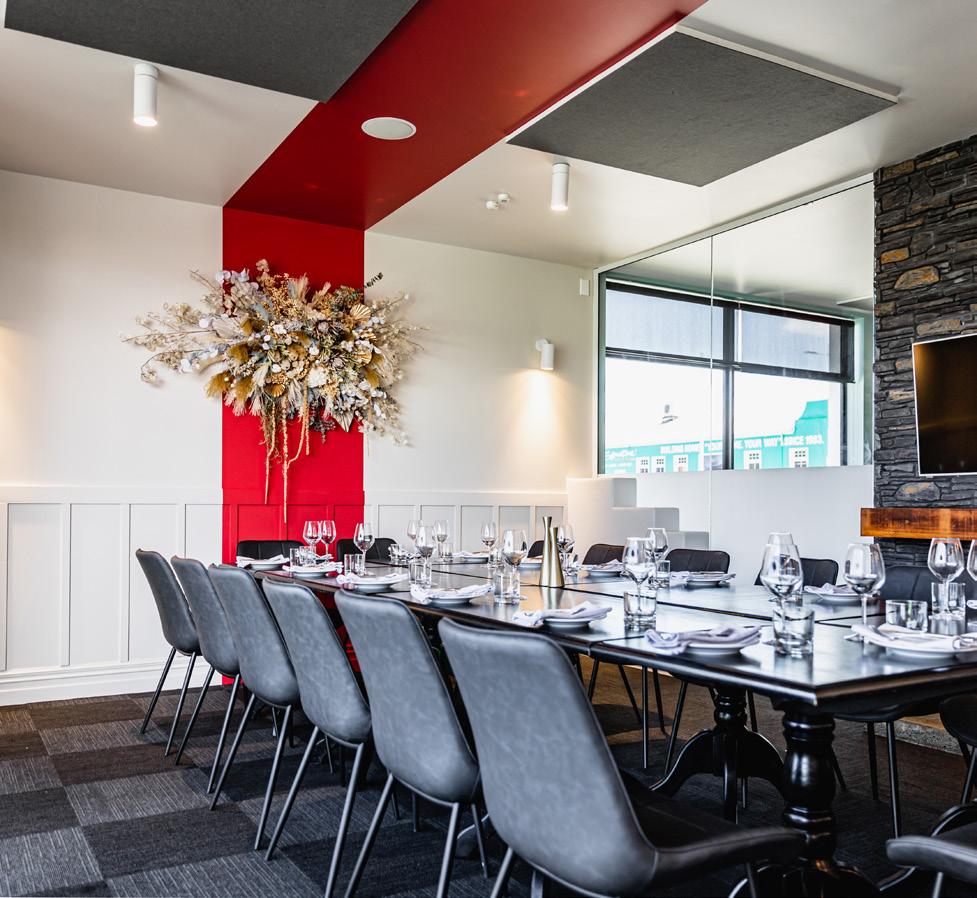

By KERRY LEE
Kawakawa Bay author Lisa Jolly has been nominated for the International Impact Book Award. Her book, titled The Diary of Mrs Jolly Good, Because Therapy Was Too Expensive, is a humorous memoir about tough times and how to cope.
Jolly began writing in a hospital in Shanghai while recovering from a brain bleed.
“I had two choices, I could be angry about the situation, or I could be positive about it,” she says.
“It was a good time to start reflecting on things that had happened to me. It was more for myself originally, so it’s very honest and it’s roughly written.”
Released in July last year, the book has received solid reviews and reached number one on Amazon in the USA and Australia. In part, it is intended to show that life is not always easy, but we don’t have to be perfect.
“I’m not a professional writer, I just decided

to tell my story and hoped others could relate to it,” she says. “Most people have their ups and downs and that’s okay. Building great things is not only about the success we experience but also our failures.”
Since publishing her ‘diary’, Jolly has been writing and planning more books, including a new series based on an Uber-driving serial killer. Titled Ride Share, her next work is a
gripping psychological thriller about a middleaged woman who – feeling overlooked, overshadowed and ignored – begins killing. Part one was published in December with a sequel on its way.
The International Impact Book Awards are intended to recognise stories from around the world, honouring literary voices with impact. To vote for Jolly’s book, visit internationalimpactbookawards.com.
By KERRY LEE
Locals will be getting into the spirit of things while raising a glass for the diggers on Anzac Day at Pokeno Whisky’s distillery.
New Zealand’s largest single malt distillery has invited guests to join a free tour sampling a tipple (or several) and enjoying a sausage sizzle along the way.
While the company’s founder Matt Johns says the tour was not intended to be a commemoration, the timing is ideal.
“Obviously, Anzac Day is the day we remember the incredible effort made by our servicepeople,” he says. “But we’re just putting this tour on for the people in our local community to come along and enjoy what we have to offer.”
While the tour itself is free, whisky lovers can opt to indulge in the hour-long, $50 Tutored Tasting Experience, which gives visitors a chance to sample whiskies that aren’t widely available.

Pokeno Whisky was founded in 2017 by a group of whisky enthusiasts. Part of a growing movement interested in craft spirits, the team set out to create premium single malt using locally sourced ingredients. The result is internationally competitive whisky blended only with New Zealand character.
While the company sources its barley from the South Island, Pokeno was the ideal spot for the distillery for a number of reasons.
“Water is extremely important. Due to its

volcanic past, in Pokeno we have access to natural spring water from an aquifer below us. It’s rich in iron and manganese which is great for distilling. Also, because we’re in a valley, the high levels of humidity are fantastic for rapid maturation of our whisky.”
Proximity to transport routes between the ports at Tauranga and Auckland is also proving beneficial to this local business.
For more information, or to enquire about the distillery’s tours, visit pokenowhisky.com.

Serves 6
INGREDIENTS
• 2 Tbs olive oil
• 1 large onion, coarsely diced
• 6 medium cloves garlic, minced
• 1 tsp hot smoked paprika
• 1 tsp sweet smoked paprika
• 1 tsp ground cumin
• ¼ tsp cayenne pepper
• 3 Tbs dry sherry
• 1 Tbs white wine vinegar
• 1 x 400g can whole peeled tomatoes, crushed
• 1 cup mayonnaise
• 1kg baby Désirée potatoes, peeled and quartered lengthwise
In a large saucepan, heat oil over medium heat. Add onion and garlic and cook, stirring regularly, until onion is soft and transparent. Add paprika, cumin and cayenne and cook for 1 minute. Stir in sherry, vinegar and tomatoes. Bring to a simmer and cook until reduced by a third. Remove pan from heat and allow to cool slightly. Process sauce with a stick blender until smooth. Transfer to a bowl, season with salt to taste and set aside to cool. When cold, add mayonnaise and stir to combine. Season potatoes with salt then steam, fry or bake until tender. Transfer to a bowl and fold in the desired amount of sauce (you may not need it all). Garnish with a sprinkling of paprika and herbs and serve.

SIMON SAYS... As well as being delicious on potatoes, this sauce is fabulous with steak.
Scan to discover Simon’s Secret Pantry Weapons
TASTE WITH GAULT gaultsdeli.co.nz


Sustainability is becoming a major influence on what Aucklanders are eating right now. More people are starting to think not just about taste, but where their food comes from and the impact it has on the environment. From restaurants to home kitchens, there’s a growing shift toward more responsible choices.
One of the biggest changes is the focus on local and seasonal ingredients. Buying produce grown in New Zealand reduces the need for long-distance transport, which helps lower carbon emissions. It also means fresher food and support for local farmers.
Markets and small producers are becoming more popular as people look for alternatives to large-scale, imported goods. Reducing food waste is another key trend. Many cafes and restaurants are finding creative ways to use ingredients that would normally be thrown away, such as turning vegetable scraps into stocks or using “ugly” produce that doesn’t meet supermarket standards.
At home, people are becoming more aware of portion sizes and leftovers, trying to waste less overall. Plant-based eating is also on the rise. Even those who aren’t fully vegetarian are choosing to eat less meat, as it generally has a higher environmental impact.
This has led to more plant-based options appearing on menus across Auckland, making it easier for people to make sustainable choices. Overall, sustainability is reshaping Auckland’s food scene. It’s no longer just a niche idea, it’s becoming part of everyday eating, showing small changes in what we choose to eat can make a big difference over time.

We operate a modern processing plant in South Auckland, handling Prime Steer & Heifer, Cull Cows, and Lamb year round.
Contact one of our local Livestock Representatives below to discuss the options and benefits of processing with us.

People We Meet on Vacation is a classic rom com if I’ve ever seen one. Poppy goes wherever the wind takes her while Alex sticks with a plan, yet somehow still seems lost. The two personalities create tension and charm as their differences slowly begin to complement one another. During a trip to Canada, they form a deep bond that continues to grow over time, blurring the line between friendship and something more.
The coming-of-age TV series is an Aussie-based show which explores diversity between modern themes and complex characters, highlighting issues such as high school life, identity, relationships, friendships, disabilities and the LGBTQ+ community. It shows many true aspects of teenage years and how the characters cope with them. Amerie and Harper’s friendship reflects strong ‘found family’ bond.
Netflix
Something Very Bad is About to Happen is a 2026 horror series built on a story of a bride, Rachel, who feels something horrible will happen at her wedding. As the wedding approaches closer, so does the tension. This TV horror directed by the Duffer Brothers – creator of the TV series Stranger Things, displays the right amount of sitting on the edge of your seat and building up anticipation.

The Bryce Crawford Podcast is a faithbased show focused on Christianity and everyday life. Bryce shares personal experiences, Bible teachings, and advice on building a stronger relationship with God. The podcast covers identity, purpose, temptation, and hearing God’s voice. It includes interviews with guests who share their testimonies or perspectives on faith. It aims to encourage young people to grow closer to Jesus and live out their beliefs.
This podcast focuses on improving how young and developing athletes train, perform, and grow in sport. It explores long-term athlete development, coaching methods, injury prevention, and the balance between training and recovery. The show features experts such as coaches, sports scientists, and high-performance professionals who share practical advice. It aims to help athletes reach their potential in a healthy and sustainable way.
The Next Generation Politics Podcast is a politics-focused show created by Gen Z for Gen Z, aiming to help young people better understand current events and become more politically aware and engaged. It features discussions on elections, social justice, and global news explained in a simple and relatable way for younger audiences. It includes guest speakers such as activists, journalists, and content creators who share different perspectives on political topics.


This new novel from writer M.L. Stedman is set against the vast and timeless landscape of Western Australia. It’s described as a mesmeric tale of lives blighted by innocent guilt, from the author of the award-winning global bestseller The Light Between Oceans Western Australia, 1958. Here, for generations, the MacBrides have lived on a remote sheep station. A million acres, it’s an ocean of arid land. On an ordinary day, on a lonely road, under the unending blue sky, patriarch Phil MacBride swerves to avoid a kangaroo. In seconds, the lives of the entire MacBride family are shattered.
RRP $27
The works of Shakespeare have become staples of literature. They’re everywhere, from our early schooling to the lecture rooms of academia, from classic theatre to modern adaptations on stage and screen. But how well do we really know his plays? In this witty, iconoclastic book, bestselling author Fintan O’Toole examines four of The Bard’s most enduring tragedies: Hamlet, Macbeth, Othello and King Lear. He shows how their tragic heroes have been oversimplified and moulded to fit restrictive, conservative values, and restores the true heart and spirit of the classics.




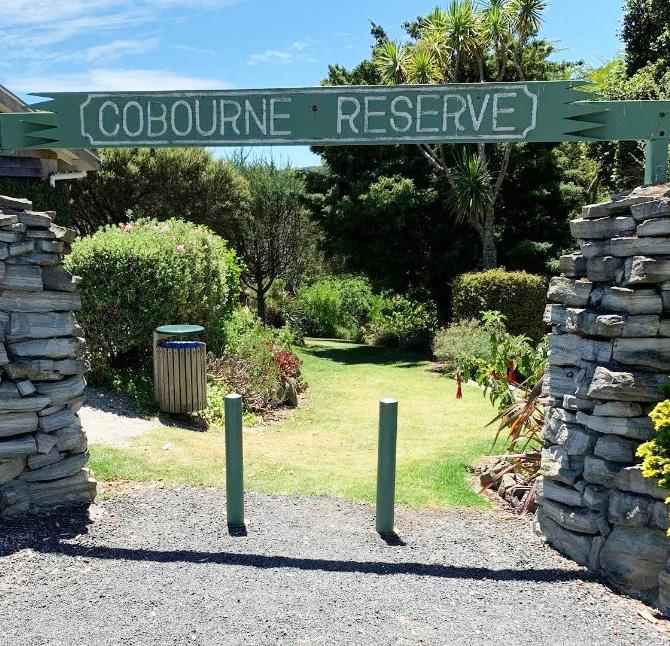
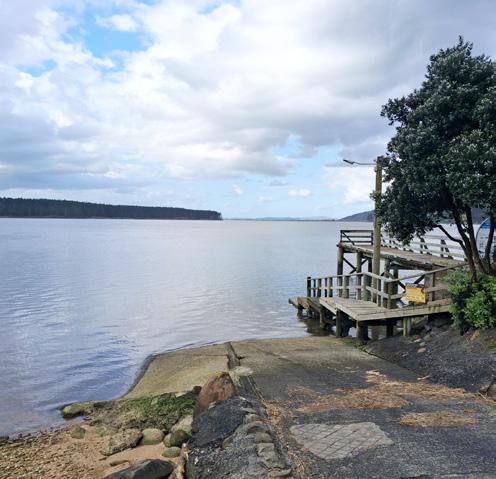
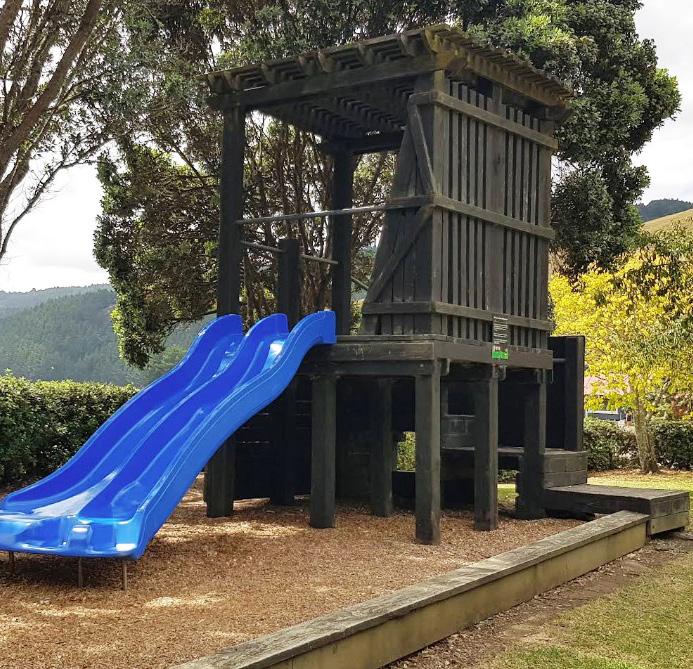
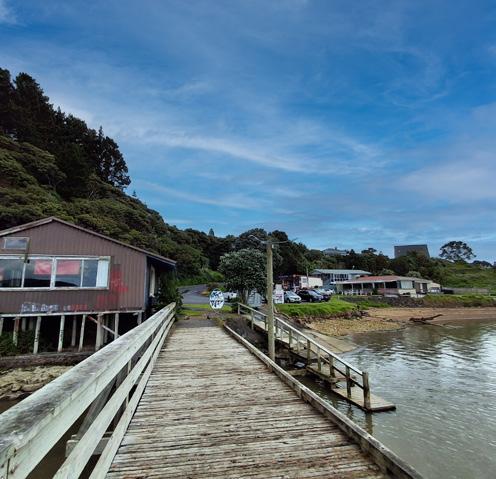
By HELENA O’NEILL
This short track takes you on a walk through Cobourne Reserve in Port Waikato. It may be a short walk, but it’s part of the dramatic landscape where the mighty Waikato River meets the Tasman Sea.
Port Waikato is a seaside town 28 kilometres west of Tuakau and 88km south of Auckland. It lies on the southern side of the Waikato River where the river meets the Tasman Sea. This area is steeped in history. It was a key port during the New Zealand Land Wars of the 1860s and, for
One of its lesser-known gems is the Cobourne Reserve. The walk itself takes you through the Cobourne Reserve down to the boat ramp, following much the same route to head back to the parking area. It’s a short walk, just over half a kilometre, but well worth stopping in if you’re heading to the Port Waikato area.
The reserve is a lovely spot to wander in, especially if you have young children, with picnic tables, a small playground and
toilets on site, with the beach a short walk away. It also has a heartwarming history.
In 1983, sisters Florence and Daphene Cobourne gifted the land to the then-Raglan County Council. Their father, Alfred Cobourne, represented Port Waikato Riding for 40 years (from 1901 to 1941) on the Raglan County Council.
A team of dedicated locals and volunteers worked hard to transform the bare hillside into the beautiful reserve it is today. The reserve continues to be landscaped and maintained by volunteers, and is a popular spot for garden weddings.
So the next time you’re out near the port, have a relaxing walk through this wonderful reserve.
• 17 Lifestyle Lots ranging from 3200m2 to 3ha
• Town supply water and wastewater connections
• Fully post and rail fencing
• Extensively landscaped with native planting
• Flat land with specified building areas
• Works have commenced with Titles due early 2027
By NATALIE PITFIELD
I’d planted nut trees as a way to offer shade to our pig and chook paddocks.
They were side by side, and I put in a macadamia and an almond tree. It took some time for them to mature, but once they did, I found I’d inadvertently done something really stupid.
I had no idea that rats absolutely love macadamia nuts. Or that it’s common knowledge amongst nut growers that if you have macadamia trees, it’s basically Club Med for the local rat population. Once my tree started to fruit, I did my research as to when the nuts would be ripe. I’d check the tree sporadically and was a bit confused as to why there didn’t seem to be many ripe nuts. Then I saw the nutshell by one of the holes underneath our chicken coop. I did more research, and suddenly it all became clear.
It was bad enough that chicken coops attract rodents, but adding macadamia made me look like a madwoman. I accepted that it was unlikely I was going to be quick enough to get
INGREDIENTS:
• 100g self-raising flour
• 1 tsp salt
• ¼ tsp pepper
• 1 egg
• 100ml milk
• 1 tin sweet corn (drained)
• Oil

to the ripe nuts before the rats did. I certainly managed to harvest some. But it felt like a losing battle thanks to the established rat population under my concrete coop floor.
The almond tree was on a slight slope, and over time it leaned a little. But the roots held strong, and it bore a huge amount of almonds. I did check when to harvest them. I felt like Goldilocks. At first, I harvested too early. It was a struggle to get the fuzzy outer casing off.
METHOD:
Sift together dry ingredients.
In another bowl, beat egg until light in colour. Then beat in milk.

Make a well in the flour mixture and stir in egg mixture gradually along with the sweet corn.
Heat just enough oil to cover the
The next year, I waited too long for the outer casing to crack. The amount of rain we had meant that the outer casing started to rot from being waterlogged. I knew there was a middle ground that I’d hopefully find next season.
This year, the almond tree is laden. I’ve watched carefully. The outer casings are cracking open, so shortly I’ll be harvesting a ton of nuts. And hoping this year they will be just right.
bottom of the pan. Drop batter in by the spoonful and fry until crisp and golden, turning with a spatula. Drain on paper towel.
These are so versatile. Serve for breakfast with bacon, sour cream and chives.
Serve for lunch with avocado, sweet chilli and sour cream. Add a savoury mince on top.
For slightly fluffier pancakes, substitute buttermilk for half the milk quantity.
For creamier fritters, use creamed corn rather than kernels.


Who likes sports shorts? For those who like their sports brief – to the point, that is, not unnecessarily revealing! – we have a few short shots to share. If you think we’re not playing fair, and other teams deserve a mention, email editor@ franklintimes.co.nz and he’ll look into them… the teams that is, not their shorts.

By HEAD-KNOCKED NICK
A former Counties Manukau Steeler and ex All Black captain stopped by his former home region recently. See page 22 to ‘Read’ all about it.
CUP COMP HOTS UP
Rugby’s McNamara Cup is already heating up since kicking off in late March. As it stands, Ardmore Marist is flying high, topping the table but the tables could turn as the season progresses. In particular, defending champs Karaka and 2025 runners-up Pukekohe are expected to impress.
The Franklin Bulls have been roaring in the opening rounds of the Sal’s NBA (National Basketball League. Unfortunately, they started off on the wrong hoof. After going down 95–115 to their cross-town rivals, the Tuatara, in round one, they felt the bite from the Southland Sharks (94–86) in their first home game. This weekend, the Bulls will local horns with the Rams in Pukekohe – we’re hoping for a rebound in more ways than one. Best of luck, lads!
Red Bull might not give him wins, at least not yet, but Pukekohe speedster Liam Lawson is swiftly turning heads in Formula One. Currently in tenth place in the drivers’ standings just three rounds in, he’s certainly not sitting still. All the best for a podium spot in Miami (May 1–3), Liam!
Who scored all the meat pies?
When Damian McKenzie dotted down twice against Moana Pasifika recently, he became the Chiefs top try scorer with a total of 44, surpassing the former record holder, wild winger Sitiveni Sivivatu. What’s more (or Morne), D-Mac is in a fasttrack race with Beauden Barret to become Super Rugby’s top, all-time points scorer. With more than 1,500, he’s in fourth behind Barrett Morne Steyn and Dan Carter.
A Honda rider became the 2026 New Zealand Junior Motocross Champion recently. Unfortunately, it was Jack Ellingham from Herne Bay who claimed the crown, but Onewhero’s Ryan Foster

Book via the website physiodepot.co.nz or email us at admin@physiodepot.co.nz

this year. Your players don’t look a day over three score and ten minus one!
Since Super Rugby began in the mid-1990s, Jaguars, Rebels, Sunwolves and Kings have all come and gone. Throughout this time, many have been calling for expansion teams from the Pacific Islands to join. They did and then (so far) they have performed rather well. Perhaps Moana Pasifika would’ve found more favour from fans if they were based in Pukekohe, south Auckland, than on the North Shore. Note for next time?
Great to see festivities already underway for Pukekohe Rugby Club’s 70th birthday
All is well at Auckland’s premier rugby ground, Navigation Homes Stadium, but change is in on the horizon at Eden Park. A new agreement will see cricket out without scoring further, moving to Colin Maiden Park, while Auckland Rugby has ‘the ball in motion’ seeking a new home. However, it’s not quite the end of play – the agreement will serve as a pathway to ‘modern, permanent, fit-for-purpose facilities for cricket and rugby in Auckland, while reinforcing Eden Park’s role as New Zealand’s national stadium. Exactly what that means remains to be seen.
We offer a comprehensive range of services designed to support your recovery, performance, and long-term health. This includes treatment for sporting injuries, pre- and post-operative rehabilitation, and management of general aches and pains. We also provide expert care for vertigo and dizziness, as well as a range of women’s health conditions.


By JON RAWLINSON
If fortune favours the Brave, the Blackcaps won’t mind having the Tigers by the tail.
Big hitting Northern Brave batsman Katene Clarke is set to join the national side in Bangladesh soon.
The only Pukekohe prodigy to play for the Blackcaps since Simon Doull (we think!), Clarke was earmarked by the legendary bowler in an interview with Rural Living magazine in 2018 as one to watch.
“Doully mentioning that definitely does encourage me,” Clarke says.
“Obviously, he saw something in me from a young age. I have a lot of people behind me, but it’s definitely nice having someone with Doully’s experience backing me.” Although he’s missing the opening salvos of the tour – the ODI matches – Clarke will likely feature from April 27. All going well, he will cement his place in the side.
“I’m very pleased to be part of the Bangladesh tour. It’ll be exciting to play in new conditions and adapt to them,” he says.
“A lasting spot in the Blackcaps would be nice, but I’ll have to put together good performances and showcase what I can do first. I’ll be taking it game by game.”

Clarke’s international career didn’t start well, out for single figures in two games against the Proteas last month.
“Yeah, my first couple of games didn’t go right. I guess it had something to do with a new environment, new surroundings and added pressure. But it was cool to get a couple of games under my belt,” he says.
“Hopefully, I can put good performances on the board and put that tough(ish) start in internationals to rest.”
The Pukekohe Metro
blaster had a mixed bag during the 2025–26 domestic season with the Northern Brave. Handy in the four-day Plunket Shield, he wasn’t as impressive in the one-day Ford Trophy.
However, as one half of the ‘smashingest’ Super Smash opening pair, alongside Brett Hampton, Clarke was a brute at the wicket.
With one of the best strike rates (171) and averages (61), he was the leading run scorer (431), playing a key role for the tournament winning Brave.
“The Super Smash was quite good,” he says modestly. “Batting with Brett, we got off to some quick starts. I took extra confidence from that, focusing on seeing and hitting the ball, which is what I feel I do best.”
Clarke credits his club with helping him reach the pinnacle of his sport.
“I played for Pukekohe Metro since I was old enough to play,” he says. “It’s a great club, great culture and a great vibe.” In addition, his family also fostered his sporting skills. He has quite the pedigree. His grandfather, father and an uncle all played rugby for the Māori All Blacks; a brother, Tamati, played cricket for New Zealand at domestic and under-19 level and his aunt, Te Aroha Keenan, was a Silver Fern. “Growing up, we all wanted to play sport. To play at the highest level in any sport is a huge achievement, so maybe there’s some good genes, talent-wise, that’s made us naturals.”
Content to stick to T20s for now, Clarke’s not ruling out competing in ODIs and tests.
“I need to figure out a bit more about how to go about the longer format, but test match cricket was always the goal when I was growing up,” he adds. “So, I’ll see how I get on.”


We’re keen to hear from coaches and managers across all codes. Send your results, short match reports, and photos to Franklin Times and help us celebrate local sport this winter.























By JON RAWLINSON
While the Chiefs Manawa roster includes a pair of Heat players, back-to-back Super Rugby Aupiki champions, the Blues, will be relying more strongly on a Counties contingent to pull off a three-peat later this year.
Canadian international Shoshanah Seumanutafa and rising star Levonah Motuliki are the only Heat representatives currently listed in the Chiefs Manawa lineup. However, the Blues recently confirmed roster includes seven Counties Manukau contenders.
In addition to Tara Turner and Jaymie Kolose who, as reported previously, have inked long-term deals, Harono Te Iringa, Grace Leaso Gago Tiatia, Ffion Penney, Sariyah Paitai and Mererangi Paul will all be ready to bring on the Heat.
Heat assistant coach Hazel Tubic says it’s awesome to see these players recognised at Super Rugby level.
“We want young female athletes to know there is a genuine pathway here in Counties Manukau. Moments like this reinforce our goal to develop better players, provide the right tools and support, and help them take the next step in their rugby journey,” she told the Times.
“While results didn’t quite go our way for the Heat last season, the depth of talent in this group is undeniable. These opportunities allow our players to gain valuable experience and learn alongside Black Ferns in a professional environment, which they can bring back into our Heat culture.”
In preparation for the 2026 season, the Blues have covered much of the hard yards off the field as well as on – player development and retention appear set to pay off, coach Willie Walker expects.
“A few seasons ago we had a big focus on growing our base and talent from our region and it’s been great to see those players now go on to higher honours and still be a part of our group.
“We’ve worked hard to retain the core of what’s made this group successful over the past few seasons, while also identifying areas where we can evolve with more young talent from our region.”
Headlined by a strong core of Black Ferns, the squad reflects continuity, depth and high performance, Walker says, but the team cannot afford to rest on its laurels.
“This group is excited, connected and ready to earn everything again this season.


Success doesn’t guarantee anything in this competition. With a short competition you can’t afford to be complacent, and you have to bring your best every week as it can come down to one game or point differences to determine whether you’re in the final or not,” he says.
“We’re not shying away
from what’s in front of us. There’s an opportunity to create something, but we know it’s going to take [the full squad] to get us there.”
Super Rugby Aupiki 2026 kicks off on June 13. A full schedule of this year’s fixtures will be accessible via See www.superrugby.co.nz/ aupiki.

• Use only the numbers 1-5, with each number appearing exactly five times.
• Fill each outlined rectangle with a palindrome (the same number forwards and backwards i.e. 52425 or 1441).
• The numbers in each rectangle must add up to the total shown on the edge of the grid.
• No palindrome may be used more than once.
• Each main diagonal must contain all five numbers (1-5) once. The centre square is shared by both diagonals and must be the same number.
• Solution on page 70
The puzzles (a webapp) are available online by scanning the QR code and the books are available at Poppies in Howick. PUZUP is suitable for all ages, comes in three sizes, and three difficulty levels.






ACROSS
6. The distance Len won by? (4,1,6).
7. As is proper, having a soft edge (4).
8. Realised the murderer was outside the building (6,2).
9. Write “No” and point to the flag (6).
10. The vegetable is hard to digest (6).
12. With silver snow falling round the vehicles (6).
15. Storm - sheltered in gulf (6).
17. Because being back in the money’s great (8).
19. Flimsy can, hard to fill (4).
20. Seem likely to allow one to see the guarantee (4,7).
1. The bird is a wild duck (8).
2. Getting cooler and cooler, dance (6).
3. A problem? He’s only kidding! (6).
4. It’s frightening, so turn back (4).
5. Secures from the mountains (6).
6. Mount, holding the rain pipe (5).
11. What a well-made cote should do? (8).
13. Stop to take to the station (6).
14. Remains, or walks heavily off (6).
15. Very keen to squeeze the other day in 3-3).
16. When the wrong one’s imprisoned, one makes a hue and cry (5).
18. Measure the fellow up, too (4).
Face (11)
Soon (4)
Height (8)
Canal (6)
Cigar (6) 12. Entreaty (6) 15. Entrance (6) 17. Glue (8) 19. Metal (4) 20. Thoughtful (11)
1. Dilemma (8)
2. Layers (6)
3. Grab (6)
4. Unite (4)
5. Numb (6)
6. Dance (5)
11. Perpendicular (8)
13. Lessen (6)
14. Fruit (6)
15. Favour (6)
16. Higher (5)
18. Bird (4)

Puzzle answers on page 70









Web: www.warrenarnet.co.nz Facebook: @warrenarnetltd
















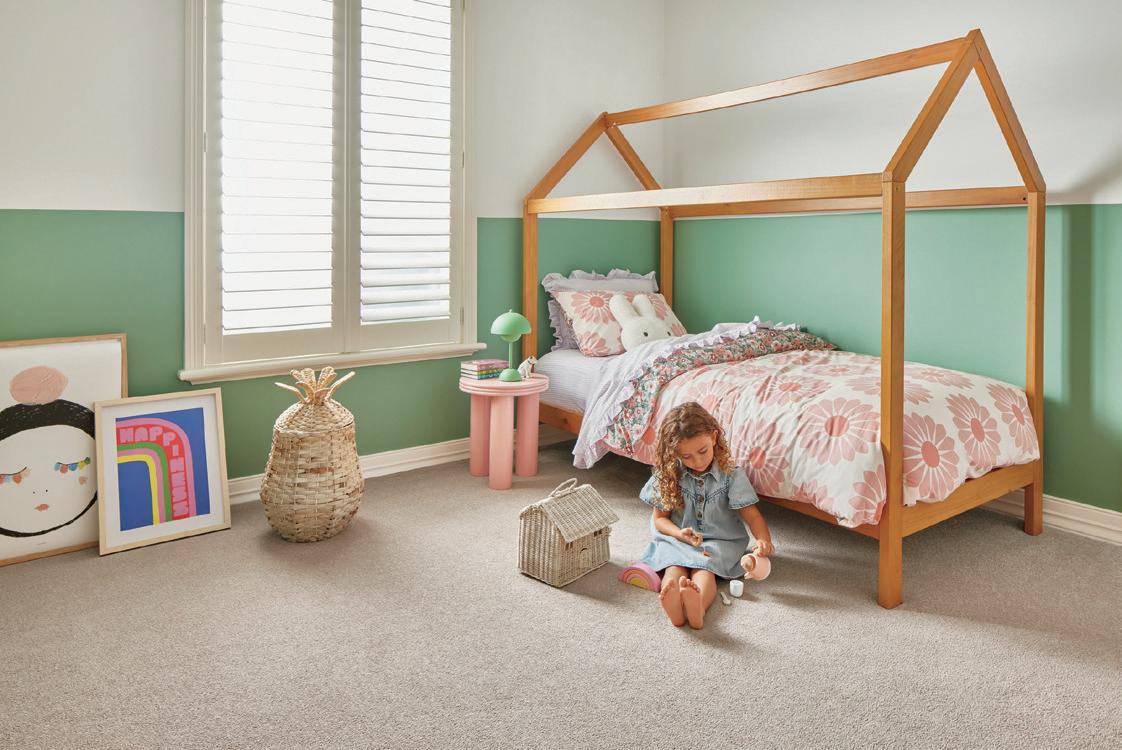





























































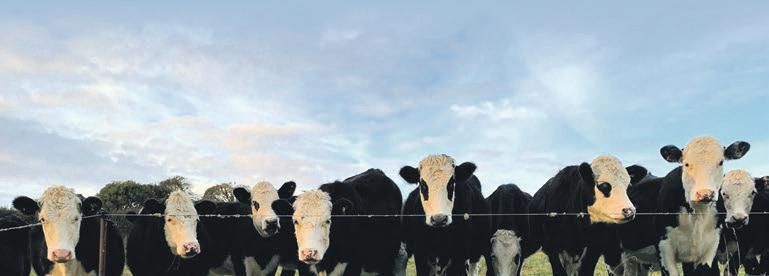
Paul Voorburg | 021 029 05733
paul voorburg@bayleys co.nz

Land Subdivision
• Property&TitleInvestigation
• FarmPlans & Drone Surveys Resource Consent Applications

Ph (09)238 6369 www.madsen-lawrie.co.nz





Anything related to or from the old Grand Hotel, Princes Street, Auckland (1889–1966). contact tktk79201@ gmail.com.
A great day out for collectors, families, and anyone curious about stamps. Browse sales tables, explore displays, and have your collections appraised. There’ll also be children’s activities, making it a fun and relaxed community event for all ages. Plus, don’t miss the door prize and raffles on the day. Held at Reid Anderson Hall, 43 Queen Street, Pukekohe on Saturday, May 2, 10am to 2.30pm.
Waiuku. An open art session, no tuition, just bring your art tools to sketch, or paint. Tables and chairs are provided. Feel welcome to “drop in”. Gold coin donation.
Wanting to buy any number of old postcards. Will travel to view. Cash paid. Contact John 021966674
We are an accapela group meeting weekly on Mondays at Reremoana School Wattle Downs at 7pm. We are a small group of women who love singing with others and would love other like-minded women to join us. Contact: southcitysoundz@gmail.com Text Sheryl 027 271 9041 www.southcitysoundz.nz


345 9 2786 1
1 6 2548 7 39
897 3615 4 2
43 62 8 9 175
2 79 6 1 5 4 83
51 84 73 296
651 8 9 4 3 2 7
7 24136958
98 3 7 526 14
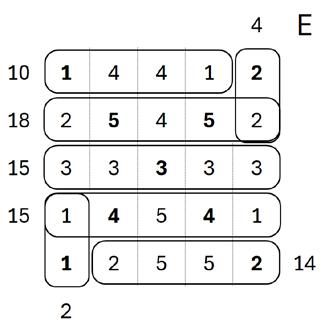
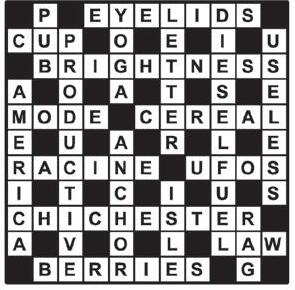
QUICK NO. 8202 Across - 6, Countenance. 7, Anon. 8, Altitude. 9, Panama. 10, Havana. 12, Prayer. 15, Portal. 17, Adhesive. 19, Iron. 20, Considerate. Down - 1, Quandary. 2, Strata. 3, Snatch. 4, Knit. 5, Deaden. 6, Conga. 11, Vertical. 13, Reduce. 14, Raisin. 15, Prefer. 16, Above. 18, Erne.
CRYPTIC NO. 8202 Across - 6, Half a length. 7, P-rim. 8, Ca-shed. 9, Pen-no-N. 10, Radish (anag.). 12, W-Ag-ons. 15, Rav-in-e. 17, P-rof-ound. 19, T-H-in. 20, Show promise. Down - 1, Flaming-O. 2, Can-can. 3, Teaser. 4, Ogre (rev.). 5, Chains. 6, Ho-r-se. 11, Dovetail. 13, Arrest. 14, Stumps. 15, Re-d-hot. 16, No-I-se. 18, F-oot.
Looking for a space to create and connect? The Pukekohe Art Group meets every Wednesday from 1pm to 3pm at the Pukekohe Croquet Club (79 Harris Street). We are a friendly, non-tutored group where artists of all levels can work on their own projects in a supportive, relaxed environment. Whether you enjoy sketching, painting, or mixed media, come along and share the joy of art with fellow locals. Your first visit is free; the following sessions are $5. Contact: For more information, please call Dellis at 027 773 4415
This convivial and informal art group meets each Thursday from 9.30am to 1pm at the Revive Church, James Bright Lane,
BPW Franklin
BPW Franklin (www. bpwfranklin.org.nz) is a vibrant group of women who meet monthly for dinner, engaging speakers, and empowering conversations. As part of BPW NZ, we advocate for gender equality and support women’s growth through networking, leadership, and education. Join us to connect, be inspired, and make a meaningful impact together.
Feeling lonely, finding it difficult to get out? Our small, friendly groups could be the answer. We enjoy gentle exercise, fun activities, scones, chatter, and plenty of laughter. Tuesday or Friday morning 9-12, at Crossroads Methodist Church lounge, 25 Broadway, Papakura. Nikki 0224779575.
Send your free community events to info@times.co.nz. Due to limited space, we can’t guarantee every listing will run. This section is reserved for not-for-profit community groups.
• Andy Baker 021 283 2222
- Franklin Ward Councillor
• Daniel Newman 021 518 796
- Manurewa-Papakura Ward Councillor
• Matt Winiata 027 261 6354
- Manurewa-Papakura Ward Councillor
FRANKLIN LOCAL BOARD:
• Alan Cole 021 923 719
– Chairperson
• Amanda Hopkins 027 216 2452
– Deputy Chairperson
• Malcolm Bell 021 0228 2267
– JP - Deputy Chairperson
• Gary Holmes 027 256 2849
– Board Member
• Andrew Kay 027 216 1819
– Board Member
• Alix Bonnington 027 216 4698
– Board Member
• Hunter Hawker 027 238 1942
– Board Member
• Lesieli Oliver 027 237 8646
– Board Member
• Merritt Watson 027 243 7277
– Board Member
MPs:
• Judith Collins Papakura MP judith.collinspapakura@parliament.govt.nz
• Andrew Bayly Port Waikato MP Andrew.Bayly@parliament.govt.nz
JUSTICE OF THE PEACE
• Terry Stanbridge 027 320 0013
• Stuart Britnell 027 475 6251
• Jean (Jofejean) Kiely JP 021 180 6743
• Anthony Searle 027 474 7593
• Roger Goulstone 021 180 1472
• Kamaldeep Singh 022 045 0077
• Jane (Hilary) Hancock 021 963 603
• Paul Brown 09 238 6827
• Heather Maloney MNZM 027 723 5328
• Trinity Jourdain 021 269 6138
• Joanna Blomfield 09 238 8188
• Jim (James) Carpenter 022 074 7017
• Dianne Glenn ONZM 027 428 4779
• Dr Siham El-Kafafi 021 323 662
• Sheryl Hazelwood 027 411 0584
• Alex Robinson 09 238 7653
• Kevin Birch 09 237 0780
• Helen Pulman 027 632 0924
• Peter Amies 027 298 6437
• Marie Appleton MNZM 09 238 5545
BUSINESS ASSOCIATIONS
• Pukekohe Business Association 09 910 0137
• Waiuku Business & Development Association 09 235 6231
• Clevedon Community & Business
Association 09 292 8046
• Manurewa Business Association 09 2695252
• Papakura Business Association 022 099 7331
CHARITY SHOPS
PUKEKOHE:
• Franklin Hospice Shop, 29 King St, Pukekohe 09 238 5082
• Habitat for Humanity Op Shop, 134 King St, Pukekohe 09 222 5060
• SPCA Op Shop, 5 Seddon Lane, Pukekohe 09 239 3201
• Pukekohe Anglican Op Shop, cnr Queen St & Wesley St 09 238 7228
• Salvation Army Family Store, 7 King St, Pukekohe 09 238 6800
• St John Op Shop, 4b Harris St, Pukekohe 09 238 7000
WAIUKU:
• St Andrew’s Op Shop, 79 Queen St, Waiuku 09 235 2238
• St John Waiuku Store, 4 Court St, Waiuku 09 235 8954
TUAKAU:
• Mai Light House Op Shop, 5 George St, Tuakau 09 2386233
• Tuakau Union Parish Op Shop, 5 Madill St, Tuakau 09 237 8098
PAPAKURA:
• SPCA Op Shop, 178 Greet South Rd, Papakura 09 299 6671
• Salvation Army Family Store, 69 O’Shannessey St, Papakura 09 298 9485
• St John Op Shop, 138 Great South Road, Papakura 09 296 2333
• St Vincent de Paul, 275 Great South Road, Papakura 09 296 5052
• Papakura Anglican Op Shop, 40 Coles Cres, Papakura 09 299 8086
EMERGENCY SERVICES
• Ambulance 111
• Fire 111
• Police 111 Non emergency: 105
• Franklin Local Board 09 237 1317
• Civil Defense 0800 22 22 00
TRANSPORT:
• Auckland Transport 0800 10 30 80
• AT – HOP 09
•
•
COUNCIL COMPLAINTS:
•
•
•

•
•
LIBRARIES & SUPPORT
•
•
•
•
•
•
• Pukekohe Netball Centre –pukekohenetball@xtra.co.nz
• Tuakau Netball Club 09 238 9321
• Tuakau Rugby Football & Sports Club 09 236 8296
• Counties Manukau Rugby Football Union 09 237 0033
• Counties Manukau Hockey Association 09 238 4333
• Pukekohe East Indoor Bowling Club 021 1179632




APARTMENTS & TOWNHOUSES AVAILABLE NOW
Set in peaceful surroundings just minutes from Pukekohe town centre, Possum Bourne Village offers the perfect balance of relaxation and convenience.
We have a range of two bedroom apartments and townhouses available now.
These homes all offer spacious open plan living, with contemporary kitchens and bathrooms and your own private patio or balcony.
Apartments priced from $845,000*.
Townhouses priced from $865,000*.
Discover the Ryman lifestyle.
To find out more call Jo on 09 238 0808 or visit rymanhealthcare.co.nz
POSSUM BOURNE VILLAGE
5 Lisle Farm Drive, Pukekohe
*Reflects the lowest available price at time of publication. Availability and pricing subject to change.