




By TIM ROWDEN Editor-in-Chief
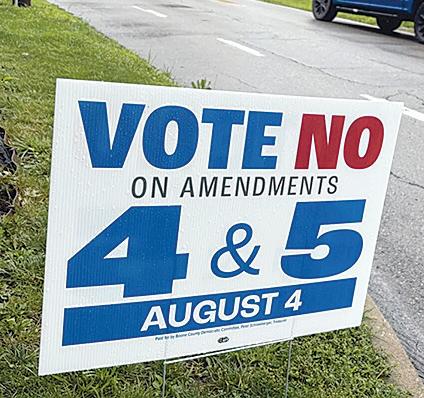
The Aug. 4 election is less than a month away and the Missouri AFLCIO is calling on all union members and retirees to canvass and phone bank to defeat Missouri Amendments 4 and 5.
• Amendment 5 would give lawmakers new power to expand sales and use taxes to replace the state’s 4.7 percent income tax, shifting the tax burden from the wealthy to those who can least afford it. The Missouri AFL-CIO has called it an “everything tax,” because it would allow people to be taxed on everything from real estate to healthcare.
• Amendment 4 would create a higher bar for passage of citizenled constitutional amendments, stripping citizens of their right to shape public policy through the initiative petition process. It would
require any constitutional amendment placed on the ballot through the citizen-led initiative petition process to pass in all eight of Missouri’s congressional districts. Currently, those amendments need only a statewide majority pass.
“Amendment 4 means just five percent of the state could deny what
95 percent of Missouri voters want, making it nearly impossible for the people to pass future issues,” said Michael Thomas, AFL-CIO Eastern Missouri Region lead and a member IBEW Local 1. “Amendment 5 allows politicians to aggressively tax sales and services, including healthcare, housing, and home goods. This especially hurts our seniors and active-duty military members.
“Put together, they sneak money from our pockets while taking away our power to stop them,” Thomas said.
“Jefferson City politicians are sending us two harmful constitutional changes and hoping we don’t ask why. But when people hear about these issues, they realize just how bad both are. We have to spread the word. Talk to neighbors. Post on Facebook. Everything. Because
See AMENDMENTS page 8
By ELIZABETH DONALD Illinois Correspondent
Cahokia teachers have rejected a tentative bargaining agreement with the school district.
The tentative agreement reached between the Cahokia Federation of Teachers and the district with the help of a federal mediator in early June was rejected by two-thirds of the union last week. Ray Roskos, of the Illinois Federation of Teachers, said 137 members voted against the proposed agreement, while 70 voted in favor.
The contentious negotiations between the union and the district have gone on for months and have focused heavily on attracting more qualified teachers to the district, which currently has 80 open teaching positions.
The union also has levied accusations of corruption and cronyism at the district’s administrators, calling for the resignations of the superintendent and others they allege are being paid without ac-

tually doing work –– and in some cases paid far beyond the contracted salaries.
The union has been out-ofcontract since before the 2025-26 school year.
The rejected agreement would have increased the baseline salary on the union pay scale by five percent but would not necessarily have meant a full five percent for
everyone, according to St. Louis Public Radio. It would also require teachers to turn in lesson plans to principals on a weekly basis and eliminate language preventing administrators from raising their salaries at a higher rate than that offered to teachers.
One area that seems to have been agreed upon, according to St. Louis Public Radio: the administration dropping a policy that required doctors’ notes when a teacher calls in sick.
Union leaders offered their thanks to all members who took the time to review the agreement and participate in the vote.
“Your vote reflects the collective voice of our union and our commitment to securing a contract that meets the needs of our members and the students we serve,” read a statement posted on their social media. “We remain united as we prepare to return to the bargaining table. We will continue working
See CAHOKIA page 8
Missouri Labor Movement loses a true champion with the passing of Bill McKenna

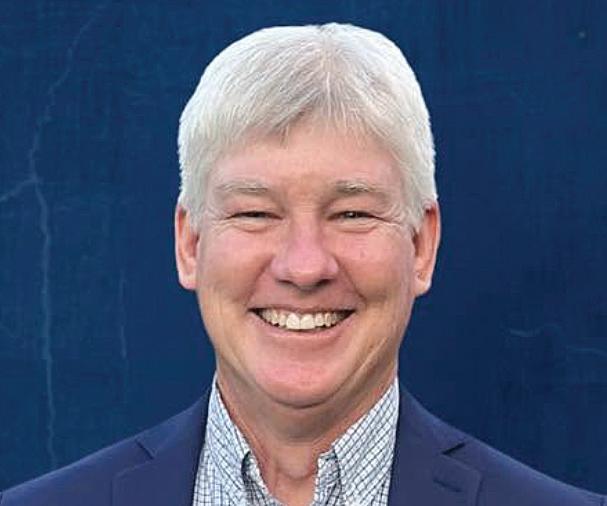
The Missouri Labor Movement has lost a true champion and dear friend with the passing of former Sen. William P. “Bill” McKenna, the Missouri AFL-CIO says. Mr. McKenna, 79, the father of Ryan McKenna, secretary-treasurer of the Missouri AFL-CIO, died June 27 in Festus, after a yearslong battle with pancreatic cancer. A longtime Democratic force in Jefferson County politics in the 1980s and 1990s McKenna, served a combined 16 years in the state House and Senate in the 1980s and ’90s. McKenna represented the 102nd District in the Missouri House for six terms, from 1983 to 1993, before serving in the Missouri Senate, from 1993 to 1999. He represented the Senate’s 22nd District and served as Senate president pro tem in 1997 during the 89th General Assembly.
‘IMPORTANCE OF ADVOCATING FOR UNIONS’
“My father instilled in me early on the importance of belonging to and advocating for unions,” Ryan McKenna shared on social media.
“He is by far the main reason I care so deeply for the working men and women of the AFL-CIO and Organized Labor. Rest in Peace, Dad.”
IDEAL LEGISLATOR
Patrick Martin, founder of Leader Publications who for years covered Jefferson County news as an editor and publisher, told the St.
See MCKENNA page 8
By NABIL AHMED Oxfam America
America First should be called out for being part of the oligarch-friendly agenda that it is.
We need a rethink on U.S. foreign economic power and policy.
The truth is we needed one long before the unlawful war against Iran. Before this new and unfathomable human toll, before the energy and humanitarian crises it’s creating.
But it does mean the stakes are now more urgent and more honest. We must double down on what remains at the heart of this rethink. The kind of reimagination that will be central to the U.S.’ role in addressing inequality–at home and internationally–in the 21st century.
AMERICA FIRST IS NOT FOR THE WORKING CLASS
• First, on America First.
The international economic policies of this Trump administration are unmistakably inequality-exacerbating. The list is long — from reckless tariffs to harmful aid cuts, from lethal sanctions to coercive tax breaks for Big Tech abroad.
Gas prices are up at the pump. Oil companies’ profits are soaring. America First drives inequality in the world, but so too it drives inequality here in the U.S.
The frames widely used to assess America First discourse here fail to get it. America First is often taken at face value, instead of being called out for being part of the oligarch-friendly agenda that it is — one that punishes the working class, even as it acts in their name.
We should be asking: Why is that? And what frames are needed instead?
AMERICA FIRST IS NOT AN ENTIRELY NEW PHENOMENON
• Second, on America — and what’s often seen as a coercive, even as some would say, imperial-like power.
What does this moment reveal not about the last 16 months of a second Trump administration, but about many years prior, across administrations and across parties?
And let’s try hard to answer this not so much from the perspective of elite
discourse, but actual ordinary folks around the world and here in the U.S. What’s new and what’s not? Often the answer we hear is that it’s not simply new — it’s worse, but not without precedent.
WHERE DO WE GO AFTER AMERICA FIRST?
• And third, in a world that is more unequal within countries, but also more multipolar—in which power has risen and asserts itself in the East and the South—what will the U.S.’ offer be to that world and as part of that world? How can we create a true economic policy for the global working class?
We have to ask ourselves the harder questions now, even if they do not feel easy to achieve tomorrow. What, practically, are the priority policies needed for the future, from tax and intellectual property to trade and the climate transition? How can we advance taxes on billionaires globally—and assert the rights of workers internationally across borders?
At Oxfam we don’t come to this because we stay up at night thinking about ‘great power conflict’, as important as that may be to some. We do so because we stay up at night thinking about ending poverty and injustice.
We work in over 75 countries the world over, up close with what ordinary folks are going through. We work here in the United States as well, up close with what folks are going through.
And what’s become ever clearer to us is that the story for someone in the working class—be they in Jackson, Miss. or in Johannesburg, South Africa—it can sound surprisingly familiar.
We think there’s a solidarity that’s daring to be unearthed. And we hope you join us in this rethink.
(This article was derived from a special event entitled, “Beyond America First: U.S. International Economic Policy in a Multipolar World” hosted by Oxfam and Partners in Health during the IMF–World Bank Spring Meetings. Note: The full event (57 minutes) is also available on YouTube at youtube.com/ watch?v=sXXMimNKG_8. Reprinted from Inequality.org .)

By LAURIE WOODWARD GARCIA People Power United
America’s 250th must be more than fireworks.
It must be more than parades, flags, speeches, and patriotic slogans from politicians who praise freedom while stripping it away. It must be more than a celebration staged by billionaires, corporations, and extremists who want the symbols of America without the promise of America.
The People’s 250 must be a recommitment: America belongs to all of us.
For nearly 250 years, people before us sacrificed, organized, marched, prayed, taught, built, cared, voted, resisted, and rose to move this country closer to its highest promise. They demanded that liberty not be reserved for the wealthy, the white, the privileged, the powerful, or the well-connected. They demanded that justice not be selective. They demanded a democracy where the people — not kings, not corporations, not corrupt politicians — had the power to shape the future. They carried forward the promise of liberty and justice for all.
Now it is our turn.
We owe it to those who came before us to tell the truth: America has never fully lived up to that promise. Too many people have been denied dignity, safety, opportunity, freedom, and power. Too many communities have been pushed aside by institutional racism, billionaire buyouts, corrupt policies, voter suppression, poverty wages, housing injustice, attacks on education, and systems designed to keep opportunity out of reach.
That is why “equality” cannot be the end of the sentence.
The real promise must include equity. Because when generations of people have been locked out, left behind, underpaid, over-policed, ignored, erased, displaced, and denied access, simply saying “everyone is equal now” does not repair the harm. Equity means removing barriers. Equity means telling the truth. Equity means making sure every person has a real chance to live, work, learn, vote, heal, love, worship, speak, and thrive with dignity. That is the America we deserve.
‘WE DESERVE….’
We deserve a nation where everyone who calls America home is treated with respect. We deserve rights that extremists cannot erase.
We deserve a government with leaders that serves the public good, not billionaire greed. We deserve courts that protect the Constitution, not corruption.
We deserve leaders who honor the rule of law, not authoritarians who believe power belongs only to them.
We deserve schools that teach truth, communities where families can afford to live, health care people can access, clean air and water, reproductive freedom, voting rights, worker power, and equal protection under the law. This is what freedom over fascism means.
It means refusing to let cruelty become policy.
It means refusing to let propaganda replace truth.
It means refusing to let fear divide us from our neighbors.
It means refusing to let anyone tell us that democracy is too broken, too messy, or too far gone to save.
At People Power United, we believe freedom is not a slogan. Freedom is a daily act of activism.
Freedom is calling Congress. Freedom is showing up at the town hall. Freedom is helping a neighbor register to vote. Freedom is speaking out when rights are under attack. Freedom is sharing the truth when lies are spreading. Freedom is protecting the vulnerable. Freedom is demanding accountability. Freedom is organizing in our communities, building people power, and refusing to hand our future over to extremists, billionaires, and corrupt politicians.
So as America turns 250, let us celebrate with purpose.
Let us honor those who came before us by continuing the work they carried forward. Let us reclaim patriotism from those who use it as a weapon. Let us build a democracy rooted in dignity, respect, equity, justice, and freedom for all.
The People’s 250 is our reminder and our rallying cry: America belongs to all of us. And together, we will keep building power for the people.
(People Power United is independent, people-powered news and grassroot movement actions dedicated to defending our rights, freedoms, the rule of law, and democracy.)
By LIZ SHULER President AFL-CIO
It’s been one year since President Trump signed the worst job-killing bill in American history. It was made possible by every senator and representative who voted to sell out working people and pick their pockets to hand another payday to corporations and billionaires. Since the passing of the Big Ugly Bill, the U.S. economy has had one of the worst years of job growth in decades. Black workers have been hit the hardest, with an unemployment rate now more than double the rate for White workers. Millions of Americans have lost their health care and access to the food programs they rely on, all while dealing with higher costs on everything from gas and groceries to
electricity. With even bigger cuts going into effect after the midterm elections, states’ budgets are getting blown up and local lawmakers are planning devastating cuts to even more essential programs to cover their residents’ SNAP and Medicaid costs. Meanwhile, the people at the top are doing better than ever. This bill handed billionaires, one trillionaire and the country’s wealthiest corporations massive tax giveaways paid for by the social programs working families depend on to survive.
In 1776, Americans stood up against a powerful king who thought he could steal from us, trample on our rights and get away with it. We refused to be silenced. Two hundred and fifty years later, that same spirit is alive in American workers who organize their jobsites, fight for policies that actually help workers and show up at the ballot box to hold their elected representatives accountable.
This Independence Day and every day, America’s unions continue to fight the damage this bill has caused and build an economy that actually works for working people.”
One year later, the “Big Ugly Bill”:
• Contributed to one of the worst years for the job market in decades, with the U.S. economy experiencing almost zero job growth in 2025, and the gap between Black and white unemployment doubling.
• Stripped food assistance from more than four million Americans through SNAP cuts, with participation dropping in every state and the steepest losses in Arizona, Florida, Louisiana and Oklahoma.
• Forced about three million people off their health insurance and drove up costs for people who get their coverage through the Affordable Care Act marketplace; premiums rose by 58 percent and deductibles reached a record high of nearly $3,800 a year.
• Cut state Medicaid budgets by nearly $679 billion, with new bureaucratic red tape projected to strip coverage from up to 10 million more people by 2028 and put hundreds of hospitals at risk of closing.
• Raised electricity bills by more than $110 a year after repealing clean energy investment incentives that created good union energy jobs, all while Americans get slammed by inflation at a three-year high.
• Gifted $1 trillion in tax breaks to the top one percent and raised taxes on Americans earning under $15,000 a year, while adding $3.4 trillion to the deficit.
• Is still on track to throw 600,000 health care workers out of a job, along with threatening 1.75 million construction jobs and 840,000 energy jobs in the years to come.
By SHERI GASSAWAY
Missouri Correspondent
St. Francois County, MO –
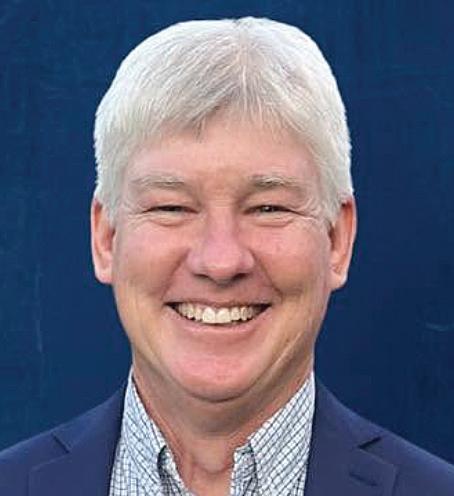
Bill Young, a 29-year member of Ironworkers Local 396, is running for St. Francois County presiding commissioner.
Young, who joined Local 396 in 1997, has been endorsed by the Mineral Area Labor Club and other unions. St. Francois County, which is about an hour southwest of St. Louis, is considered the Lead Belt region in southeastern Missouri.
“We’re proud of Bill for stepping up to run for the position,” said Travis Barnes, Local 396 business manager. “He’s worked as foreman and general foreman on a lot of major projects in St. Louis. We’ve worked hand-in-hand on several projects, and he is an outstanding ironworker and union member.”
Young, who lives in unincorporated St. Francis County just north of Bonne Terre, is a general foreman on the McCarthy project at Cardinal Glennon Hospital. He is a 30-year member of the St. Francois Democrat Club, previ -
ously served as an alderman in Desloge and regularly volunteers in the community.
‘DRAWN TO RUN’
“I was drawn to run,” Young said. “I believe the county is going in the wrong direction. There are some issues that I’ve heard of in the county that I think I can help with, and I believe I’m the candidate for the job.”
One of those issues is that over 70 percent of the Sheriff’s Department recently voted to unionize, and the county is pushing back, Young said. Additionally, all county employees received raises this year, except for those who work in the county’s Road and Bridge Department and are represented by Teamsters Local 600.
UNION SUPPORT
“The county has fought tooth and nail against recognizing the police union and remains hellbent on signing that contract,” Young said. “I feel it’s my duty to stand up for these employees because these are my union brothers and sisters, and I’m going to do everything I can to support them.”
Young explained what a presiding commissioner does and out-
Francois County, which is about an hour southwest of St. Louis, is the Lead Belt region in southeastern Missouri.
lined why he is the best candidate for the position:
• Oversee county budgets and protect taxpayer dollars. “As a superintendent on major construction projects, I have supervised multimillion-dollar infrastructure jobs and have managed project budgets with the same care and responsibility that I’ve applied throughout my

career,” he said.
• Work with elected officials, businesses and community organizations. “My career has required collaboration with contractors, business leaders, local stakeholders and diverse teams,” Young said.
“Through years of volunteerism and community involvement, I’ve built strong relationships and earned the trust of people across St. Francois County.”
• Help guide infrastructure and county improvement projects.
“After beginning my ironworking career in 1997, I helped build many of the region’s most recognizable projects, including schools, churches, hospitals, the Stan Musial Bridge, Washington University expansions, Mercy Jefferson Hospital and major downtown developments,” he said. “I have also served as supervisor on many of these projects, giving me firsthand experience in planning, coordination and execution.”
• Listen to county residents and respond to community needs.
“I’ve built my career by listening, communicating and earning the respect of those around me,” he said. “I will remain approachable and committed to serving the people of the community.”
• Provide steady leadership and solve problems. “As a superintendent overseeing complex construction projects, I have experience leading teams, challenges and keeping projects on track,” Young said.
• Represent the county with integrity and accountability. “ As a proud Farmington High School graduate and lifelong family man, I’ve built my reputation on hard work, honesty and responsibility,” he said. “After decades of professional success, I’m seeking public office to give back to the people in his community.”
For more information, visit Young’s Facebook page at Bill Young for SFC presiding commissioner. To donate to his campaign, visit https://secure.actblue.com/ donate/bill-young-4

By SHERI GASSAWAY Missouri Correspondent
Jimmy Lappe, program coordinator for the Missouri AFL-CIO Dislocated Worker Program, is running as a Democrat for state representative in 81st District.
Lappe has 25 years of experience working in grassroots movements for economic justice and workers’ rights, and has been endorsed by the Missouri AFL-CIO, the St. Louis City Labor Legislative Club and several unions. The 81st District seat is currently held by Rep. Steve Butz, who is term-limited and running for Missouri State Senate.
The district takes in portions of south St. Louis neighborhoods, including areas near the Mississippi riverfront, Dutchtown, Marine Villa, and Gravois Park.

Lappe started his career in the Labor Movement at age 16, bagging groceries as a member of UFCW Local 655. Later, he became a shop steward, leading the picket line at his store during the successful strike and lockout of 2003. He later served Local 655 in a variety of capacities over the years, including organizer and communications director.
Lappe then went to work for Missouri Jobs with Justice where he managed the organization’s data infrastructure and designed and implemented its voter engagement plans. He also served as an alderman in St. Louis’ 11th Ward. He is currently a member of IBEW Local 1, joining the union in 2023.
“The two main reasons I’m running are because of the threats to our democracy here in Missouri and the cost-of-living or affordability crises, and those are clearly illustrated with Missouri Amendments 4 and 5,” said Lappe. “If we don’t do something about those two issues, they’re going to keep coming back. Additionally, I


think it’s important to have more working-class voices in the state legislature.”
Amendments 4 and 5 will appear
on the Aug. 4 primary ballot.
Amendment 4 would end majority rule on the state’s initiative petition process, instead requiring
approval from all of the state’s eight congressional districts.
Amendment 5 would give legislators broad control to phase out the state’s income tax, replacing that income with higher and expanded sales and use taxes.
The Missouri AFL-CIO is recommending a NO vote on both of the propositions.
Lappe lives in St. Louis’ Carondelet Neighborhood with his wife, Mary and daughter, Grace.
The St. Louis City Labor Legislative Club is holding two memberto-member morning canvases for Lappe from 9:30 - noon on July 25 and Aug. 1 at Peppers Bar & Grill at 5452 Gravois Ave. in St. Louis. Appetizers and drinks will be served after the walks.
Additionally, a meet-and-greet is scheduled for July 30 from 6:30 to 8:30 p.m. at Arkadin Cinema & Bar at 5228 Gravois Ave. in St. Louis.
For more information on Lappe’s campaign or to donate, visit https://www.jimmylappe.com
Tim Rowden Editor-in-Chief (314) 256-4138 tim@labortribune.com

Gassaway
sheri@labortribune.com
Robert Kelly Correspondent Linda Jarrett Correspondent Dan Braun Marketing Director

Elizabeth Donald Illinois Correspondent
Lynn Alpert Production Manager/ Graphic Designer
Kathy Crowe Graphic Designer


JULY 6
1894 – Rail union leader Eugene V. Debs is arrested during the Pullman strike, described by the New York Times as “a struggle between the greatest and most important Labor organization and the entire railroad capital” that involved some 250,000 workers in 27 states at its peak.
1926 – Transit workers in New York begin what is to be an unsuccessful three-week strike against the then-privately owned IRT subway.
1988 – Explosions and fires destroy the Piper Alpha drilling platform in the North Sea, killing 167 oil workers — the worst loss of life ever in an offshore oil disaster.
JULY 7
1910 – Cloak makers begin what is to be a two-month strike against New York City sweatshops.
1931 – Workers begin construction on the Boulder Dam (now known as Hoover Dam) on the Colorado River, during the Great Depression. Wages and conditions were horrible — 16 workers and work camp residents died of the heat over just a single 30-day period — and two strikes over the four years of construction led to only nominal improvements in pay and conditions.
1998 – Some 500,000 people participate when a two-day general
strike is called in Puerto Rico by more than 60 trade unions and many other organizations. They are protesting privatization of the island’s telephone company.
JULY 8
1842 – First anthracite coal strike in U.S.
1905 – Founding convention of the Industrial Workers of the World (I.W.W., or Wobblies) concludes in Chicago. Charles O. Sherman, a former American Federation of Labor organizer, is elected president.
1966 – Some 35,000 members of the Machinists union begin what is to become a 43-day strike that shuts down five major U.S. airlines, about three-fifths of domestic air traffic. The airlines were thriving, and wages were a key issue in the fight.
JULY 9
1953 – Fourteen volunteer firefighters and one Forest Service employee die fighting the Rattlesnake wildfire in California’s Mendocino National Forest. The blaze was set by an arsonist.
1968 – United Packinghouse, Food & Allied Workers merge with Amalgamated Meat Cutters & Butcher Workmen.
2001 – Five thousand demonstrators rally at the state capitol in Columbia, S.C., in support of the “Charleston Five,” Labor activists charged with felony rioting during a police attack on a 2000 longshore-
men’s picket of a non-union crew unloading a ship.
JULY 10
1902 – A powerful explosion rips through the Rolling Mill coal mine in Johnstown, Pa., killing 112 miners, 83 of whom were immigrants from Poland and Slovakia.
1916 – The San Francisco Chamber of Commerce holds a mass meeting of more than 2,000 merchants to organize what was to become a frontal assault on union strength and the closed shop. The failure of wages to keep up with inflation after the 1906 earthquake had spurred multiple strikes in the city.
1946 – Sidney Hillman dies at age 59. He led the Amalgamated Clothing Workers, was a key figure in the founding of the Congress of Industrial Organizations and was a close advisor to President Franklin D. Roosevelt.
JULY 11
1892 – Striking coal miners in Coeur d’Alene, Idaho, dynamite barracks housing Pinkerton management thugs.
1936 – After seven years of labor by as many as 2,800 construction workers, the Triborough Bridge opens in New York. Actually, a complex of three bridges, it connects the boroughs of Manhattan, the Bronx and Queens. Construction began on Black Friday in 1929, and New Deal money turned it into one of the largest public works projects of the Great Depression.
1983 – A nine-year strike begins at the Ohio Crankshaft Division of Park-Ohio Industries in Cleveland.
JULY 12
1917 – Bisbee, Ariz., deports Wob-
at the IUOE Local 520 Hall, 520 Engineer Rd., Granite City, IL 62040.
Operators Local 399 Third Tuesday of each month at 6:30 p.m. at 24 East Ferguson, Wood River, Ill.
Painters District Council 58
Plumbers & Gasfitters Local 360 Union meetings are held at 7 p.m. on the 2nd Wednesday of each month at the Knights of Columbus Council 1712, One Columbus Plaza, Collinsville, IL 62234.
Plumbers and Pipefitters Local 101 Union Meetings will be held on the 4th Wednesday of the month except December, which will be held on the 3rd Wednesday. The meetings will be held at the Local 101 Hall located at 8 Premier Drive in Belleville, IL 62220 at 7:30 p.m.
Plumbers and Pipefitters Local 160 Union meetings are on the second Friday of the month at 8 p.m. at the hall, 901 Mulberry Street, Murphysboro, Ill. 62966.
Plumbers and Pipefitters Local 553 First Tuesday of each month September through May, 7 p.m., 967 East Airline Dr., East Alton, IL 62024.

Trump boasts about crowd size at his medical appointments

Washington (Satire from The Borowitz Report) — Claiming that it “has to be some kind of record,” on Monday Donald J. Trump boasted about the “enormous” crowd size at his medical appointments.
“There were so many doctors at my last physical, there wasn’t room for them all,” he bragged. “They never turned out like that for Obama.”
He said that he was considering demolishing Walter Reed National Military Medical Center because “I’m going to need a bigger hospital.”
Basking in his ability to draw such a huge crowd, Trump noted, “I haven’t had so many people touching me since Epstein’s island.” According to estimates, the turnout at Trump’s most recent physical was far bigger than at his Great American State Fair.
blies; 1,186 miners sent into desert in manure-laden boxcars. They had been fighting for improved safety and working conditions.
1933 – The Screen Actors Guild holds its first meeting. Among those attending: future horror
movie star (
(Compiled by David Prosten, founder Union Communication Services)

Missouri Women in Trades (MOWIT) is seeking nominations and sponsorships for its 8th Annual Blue Collar/Black Tie Tradeswomen Awards Gala on Friday, Oct. 2. The event will be held from 5:30 to 9 p.m. at the LIUNA Event Center at 4532 S. Lindbergh Blvd. in Sunset Hills. It will include dinner, an open bar, the award ceremony, a silent auction and cash raffles. The gala is black-tie optional.
MOWIT is seeking nominations for the following award categories. If you are interested in nominating a tradeswoman, union or contractor, submit your nomination by Friday, Sept. 4. The award categories include:
• Tradeswoman of the Year – This is a currently working tradesperson with at least four years of experi-
ence. She has achieved a skill level respected by her peers, supervisors and the community, shows passion for her work and mutual respect for co-workers.
• Breaking Barriers – Union/Apprentice Program of the Year – MOWIT’s goal is to honor unions who support, advocate and sustain women in the workplace. How has this union made innovations, broken barriers and improved the status of women in the skilled trades?
• Breaking Barriers – Contractor of the Year – The group’s goal is to honor contractors who support, advocate and sustain women in the workplace. How has this company made innovations, broken barriers and improved the status of women in the skilled trades?
two groups for recognition: tradeswomen who have entered into an apprenticeship in the last year and tradeswomen who have journeyed out in the last year.
The evening will also include a brief roll call of tradeswomen recognized by their years of service for five, 10, 15, 20, 25 and over 25 years.
MOWIT is seeking sponsorships for the gala fundraiser. Sponsorship levels include:
ad and four seats.
• Apprentice Level ($750) – Listing in program booklet and in MOWIT video.
Tickets for the event are $90 per person or $700 for a table of eight. Tickets for apprentices are $45. Advertising in the program book is available on a first-come, first-serve basis at the following prices:
• Full-page, black-and-white – $600.
• Half-page, black-and-white – $350.
• Legacy Builder Level ($3,500) –Listing in program booklet and in MOWIT video, a full-page color ad and table of eight.
To nominate a sister, visit mowit. org/gala-nominations
In addition to the individual awards, MOWIT will be calling up
• Gina Walsh Legacy Award – This award will be given to a tradesperson or inclusive ally who has made significant and lasting contributions to the community or the industry over a period of time.


• Master Builder ($2,500) – Listing in program booklet and in MOWIT video, a half-page color ad and table of eight.
• Journey Level ($1,500) – Listing in program booklet and in MOWIT video and a one-quarter-page color

• Quarter-page, black-and-white –$225.
Email ads in a .pdf or .jpg format to mowitstl@gmail.com
The deadline for tickets, ad submissions and sponsorships is Sept. 18. For more information or to register, visit mowit.org/registration or call 636-926-6948.
Please BuckUp what you














if Amendments 4 and 5 pass, we won’t have another real chance to win. Then, who knows what’s next? Right-to-work? More and more taxes? We’ve got to beat 4 and 5 now.”
HOW YOU CAN HELP
Weekly canvasses are planned on Wednesdays and Saturdays starting July 8 and continuing until Election Day.
WEEKLY CANVASSES
You can volunteer at the following locations on Wednesdays at 4 p.m. and Saturdays starting at 8:30 a.m.
• St. Louis – IBEW 1 Hall. 5850 Elizabeth Ave., St. Louis.
• South St. Louis County / Jefferson County – Richardson Road Commuter Lot. Vogel Road and 1998 Richardson Road, Arnold, Mo.
• North St. Louis County – St. Ferdinand Park, 25 St. Ferdinand Park
Drive, Florissant, Mo.
• West St. Louis County – Manchester Meadows Parking Lot, 13929 Manchester Road, Ballwin, Mo.
• Tri-County – Mid Rivers Commuter Lot, across from 399 Mainstreet, St. Peters, Mo.
RETIREE-TO-RETIREE
Weekly retiree-to-retiree phone banks will be held each Wednesday from 10a.m. to noon starting July 8 at the following locations.
• July 8 and July 15 – IBEW Service Center, 5735 Elizabeth Avenue, St. Louis, Mo.
• July 22 and July 29 – IBEW 1 Union Hall, 5850 Elizabeth Avenue, St. Louis, Mo.
Worksite flyers and yard signs are available by contacting Thomas at MThomasJR@moaflcio.org Amendments From page 1
McKenna From page 1
Louis Post-Dispatch that McKenna was close to an ideal legislator.
“No posturing or credit-grabbing, ever,” Martin told the newspaper. “He just wanted to get things done and help people, and he would work with anyone to do that.”
Following his time in the Senate, McKenna worked as Jefferson College’s president in the early 2000s, also serving on the board for the Jefferson Memorial Hospital in Crystal City and later sitting on the board for Mercy, after the hospital transitioned to Mercy Jefferson in 2013.

He formed a citizen action group called the Coalition for Highway Safety, established to improve safety on Jefferson County roads. He was also a founder of the Jefferson County Growth and Development Association. He was proud of his job delivering Meals on Wheels for nearly two decades in the FestusCrystal City area with his wife.
STRONG IN FAITH
McKenna was strong in his faith and dedicated himself to helping

those around him. He was known for his integrity, kindness, generosity, humility and compassion. He loved sharing stories, making memories and spending time with his friends and family, especially his grandchildren who called him “Shoosh.”
He is survived by his wife Debbie McKenna; five children: Lisa (Glen) Hausler, Ryan (Nikki) McKenna, Jen (Ryan) Wieser, Janine (Chris) Hueter and Joe Bell; 10 grandchildren: Glennon, Kellan, Sophie, Will, Jonas, Ana, Brody, Valerie, Madi and Olivia; a greatgrandchild: Marshall; and many siblings, in-laws, nieces, nephews, cousins and friends.
He was preceded in death by two brothers: Timothy McKenna and


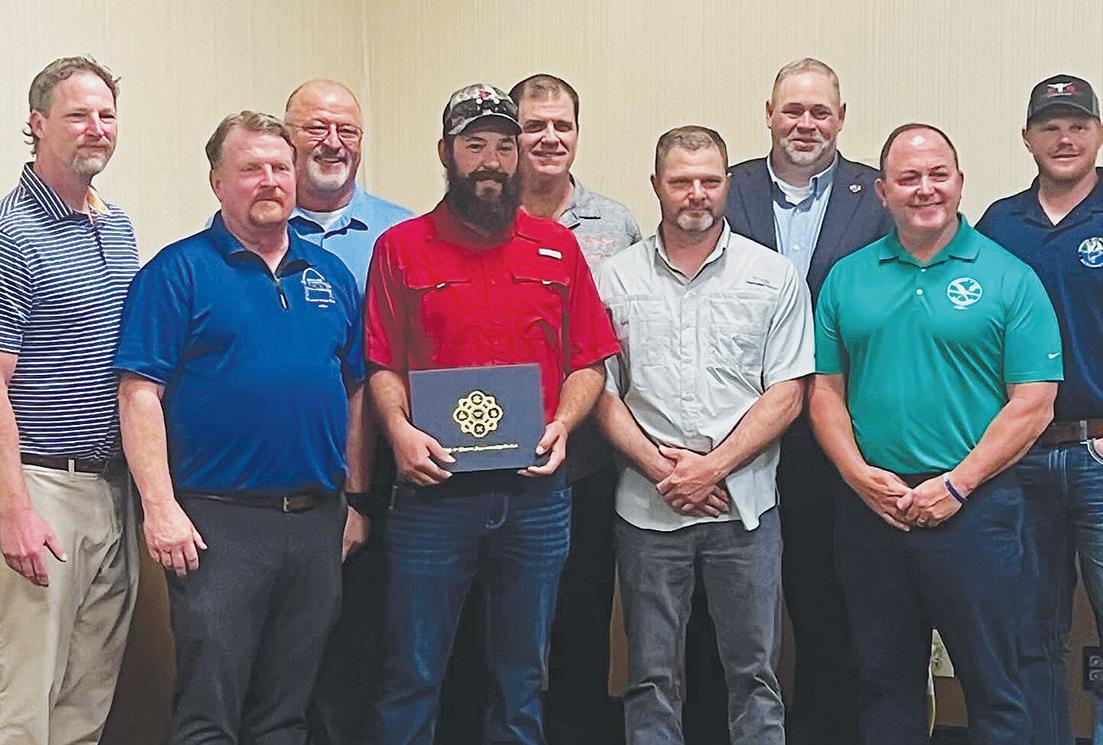
CHICAGO – Plumbers & Pipefitters Local 562 apprentice Montana Blackburn (fourth from left) competed in the District 4 United Association (U.A.) Apprentice Competition held here to advance to the international competition. “For the first time we can officially say we have a winner who is going into the U.A. competition this August,” Local 562 Business Manager and SecretaryTreasurer John O’Mara posted on social media.“Congratulations, Montana! It wasn’t an easy competition, but you stayed focused and came out on top. Awesome job!” Local 562 apprentice Mark Vangennip (not pictured) also competed in the competition. “We are so proud of the two of you for representing Local 562 in such a professional manor,” O’Mara added. “You both have bright futures.”
– Plumbers & Pipefitters Local 562 photo
Brian McKenna, a popular radio personality.
A funeral Mass is scheduled for 10 a.m. Friday, July 10 at Sacred Heart Catholic Church, 555 Bailey Road in Crystal City. A reception will follow at The Marquee on Main, 516 Bailey Road in Crystal City.
Memorials may be made to the Caritas House of Festus at Catholic Charities Housing, P.O. Box 952393, St. Louis, 63195-2393, or at give.ccstl.org
(This story includes information from the Jefferson County Leader and the St. Louis Post-Dispatch.)
From page 1
toward a fair agreement and will keep our membership informed as negotiations move forward.”
The union and Cahokia School District can either return to the table with a federal mediator or declare an impasse, which could lead to a strike.
Notices From page 5
Cahokia Federation of Teachers Local 1272 represents nearly 400 members, including the Service Workers Council and Secretarial Council in addition to teachers. They are affiliated with the Illinois Federation of Teachers, AFL-CIO, and the Southwestern Illinois Central Labor Council.
To be submitted to the qualified voters of the State of Missouri at the Special Election to be held on Tuesday, the 4th day of August, 2026.
[Proposed by Article IV, Section 47(c), Missouri Constitution (SJR 1, 2005)]
Shall Missouri continue for 10 years the one-tenth of one percent sales/ use tax that is used for soil and water conservation and for state parks and historic sites, and resubmit this tax to the voters for approval in 10 years? The measure allows continued collection of the existing sales and use tax, which generates revenue of approximately $140 million annually.
Article IV, Section 47(c) of the Missouri Constitution:
Section 47(c). Provisions self-enforcing, exception—not part of general revenue or expense of state—effective and expiration dates.—[The effective date of this amendment shall be November 8, 1998.] All laws inconsistent with this amendment shall no longer remain in full force and effect after the effective date of this section. All of the provisions of Sections 47(a), 47(b) and 47(c) shall be self-enforcing except that the General Assembly shall adjust brackets for the collection of the sales and use taxes. The additional revenue provided by Sections 47(a), 47(b) and 47(c) shall not be part of the “total state revenue” within the meaning of Sections 17 and 18 of Article X of this Constitution. The expenditure of this additional revenue shall not be an “expense of state government” under Section 20 of Article X of this Constitution. [This Section 47(a), 47(b) and 47(c) shall terminate after ten years following the effective date of this amendment.] Upon voter approval of this measure in a general election held in 2006, or at a special election to be called by the governor for that purpose, the provisions of this section, 47(b), and 47(a) shall be reauthorized and continue until a general election is held in 2016 or at a special election to be called by the governor for that purpose. Every ten years thereafter, the issue of whether to continue to impose the sales and use tax described in this section shall be resubmitted to the voters for approval. If a majority of the voters fail to approve the continuance of such sales and use tax, Section 47(a), 47(b), and 47(c) shall terminate at the end of the second fiscal year after the last election was held.
Secretary of State
I, Denny Hoskins, Secretary of State of the State of Missouri, hereby certify that the foregoing is a full, true and complete copy of Constitutional Amendment No. 1, to be submitted to the qualified voters of the State of Missouri at the Special Election to be held the fourth day of August, 2026.
In TESTIMONY WHEREOF, I hereunto set my hand and affix the Great Seal of the State of Missouri, done at the City of Jefferson, this 26th day of May, 2026.

[Proposed by 103rd General Assembly (First Regular Session) HCS HJR 23 & 3]
Shall the Missouri Constitution be amended to:
• require all charter counties, including Jackson County, to provide for the election of a county assessor; and
• require assessors in all charter counties to comply with any training requirements established by general law?
State and local governmental entities estimate no costs or savings.
Submitting to the qualified voters of Missouri an amendment repealing Section 18(b) of Article VI of the Constitution of Missouri, and adopting one new section in lieu thereof relating to assessors.
Be it resolved by the House of Representatives, the Senate concurring therein:
That at the next general election to be held in the state of Missouri, on Tuesday next following the first Monday in November, 2026, or at a special election to be called by the governor for that purpose, there is hereby submitted to the qualified voters of this state, for adoption or rejection, the following amendment to Article VI of the Constitution of the state of Missouri:
Section A. Section 18(b), Article VI, Constitution of Missouri, is repealed and one new section adopted in lieu thereof, to be known as Section 18(b), to read as follows:
Section 18(b). The charter shall provide for its amendment[,]; for the form of the county government[,]; for the number, kinds, manner of selection, terms of office, and salaries of the county officers[,]; and for the exercise of all powers and duties of counties and county officers prescribed by the constitution and laws of the state[;]. However, such charter shall[, except for the charter of any county with a charter form of government and with more than six hundred thousand but fewer than seven hundred thousand inhabitants,] require the assessor of the county to be an elected officer and to comply with all training provisions required by general law.
EXPLANATION—Matter enclosed in bold-faced brackets [thus] in the above bill is not enacted and is intended to be omitted from the law. Matter in bold-face type in the above bill is proposed language.
Secretary of State
I, Denny Hoskins, Secretary of State of the State of Missouri, hereby certify that the foregoing is a full, true and complete copy of Constitutional Amendment No. 2, to be submitted to the qualified voters of the State of Missouri at the Special Election to be held the fourth day of August, 2026.
In TESTIMONY WHEREOF, I hereunto set my hand and affix the Great Seal of the State of Missouri, done at the City of Jefferson, this 26th day of May, 2026.
[Proposed by 103rd General Assembly (Second Extraordinary Session) HCS HJR 3]
OFFICIAL BALLOT TITLE:
Shall the Missouri Constitution be amended to:
• Modify current requirements that a statewide majority of voters may approve initiative petitions to amend the constitution;
• Require a majority of voters in each congressional district to approve initiative petitions to amend the constitution; and
• Make available to each voter the full text of initiative petitions with their ballot?
The Department of Corrections estimates increased annual costs of up to $21,817. The Office of State Public Defender estimates an unknown fiscal impact. Other state governmental entities estimate no costs or savings. Local governmental entities estimate no costs or savings.
Submitting to the qualified voters of Missouri an amendment to Article III of the Constitution of Missouri, by adopting one new section relating to ballot measures, with penalty provisions.
Be it resolved by the House of Representatives, the Senate concurring therein:
That at the next general election to be held in the state of Missouri, on Tuesday next following the first Monday in November, 2026, or at a special election to be called by the governor for that purpose, there is hereby submitted to the qualified voters of this state, for adoption or rejection, the following amendment to Article III of the Constitution of the state of Missouri:
Section A. Article III, Constitution of Missouri, is amended by adopting one new section, to be known as Section 54, to read as follows:
Section 54. 1. This section shall be known as the “Protect Missouri Voters” amendment.
2. For purposes of this section, a statewide ballot measure shall mean any measure submitted or proposed to be submitted to the voters of the state under articles III or XII of this constitution.
3. (1) No political committee that makes expenditures or contributions in support of or in opposition to a statewide ballot measure shall knowingly or willfully receive, solicit, or accept, whether directly or indirectly, contributions from a foreign adversary of the United States or a foreign national. No foreign adversary of the United States or a foreign national shall make any contribution or expenditure in support of or in opposition to a statewide ballot measure.
(2) For purposes of this section:
(a) A foreign adversary of the United States shall be defined as:
a. Any national, provincial, or local government or any entity that is directly or indirectly controlled or owned by a government or that directly or indirectly controls a government or a political party of a foreign country designated as a foreign adversary by the United States Secretary of State from the time such designation is published in the Federal Register until revoked; or
b. Any individual who is a citizen of a foreign country meeting the requirements of subparagraph a of paragraph (a) subdivision (2) of subsection 3 of this section and who is not a United States citizen or lawful permanent resident;
(b) A foreign national shall be defined as any individual who is not a citizen or lawful permanent resident of the United States of America.
(3) Any violation of this subsection shall be punishable by imprisonment for up to one year or a fine of up to one thousand dollars or both, plus an amount equal to three times the illegal contributions. The attorney general shall have exclusive criminal jurisdiction.
(4) The general assembly may by law:
(a) Enact laws to implement the restrictions of this subsection, or enact further restrictions to implement this subsection;
(b) Enact restrictions on foreign support for or opposition to Missouri ballot measures;
(c) Enact reporting requirements regarding foreign support for persons or committees that oppose or support ballot measures; and
(d) Provide for the investigation and enforcement of the provisions of any such enactments, or of this subsection including, but not limited to, criminal penalties or civil remedies.
4. (1) Any person who commits any of the following acts with respect to a petition on a statewide ballot measure is guilty of the crime of petition signature fraud:
(a) Signs any name other than his or her own to any petition, or who knowingly signs his or her name more than once for the same measure for the same election, or who knows he or she is not at the time of signing or circulating the same a Missouri registered voter and a resident of this state;
(b) Intentionally submits petition signature sheets with the knowledge that the person whose name appears on the signature sheet did not actually sign the petition;
(c) Causes a voter to sign a petition other than the one the voter intended to sign;
(d) Forges or falsifies signatures; or
(e) Knowingly accepts or offers money or anything of value to another person in exchange for a signature on a petition.
(2) Any person who knowingly causes a petition circulator’s signatures to be submitted for counting, and who either knows that such circulator has violated subsection 1 of this section or, after receiving notice of facts indicating that such person may have violated subsection 1 of this section, causes the signatures to be submitted with reckless indifference as to whether such circulator has complied with subsection 1 of this section, shall also be deemed to have committed the crime of petition signature fraud.
(3) The crime of petition signature fraud shall be punishable by imprisonment for up to one year or a fine of up to one thousand dollars or both. The attorney general shall have exclusive criminal jurisdiction to prosecute under this section.
5. At a reasonable time and place after an initiative petition is submitted with signatures and before a petition is placed on a ballot, the secretary of state or the secretary’s designee shall conduct one or more in-person or webbased hearings to receive additional public comment regarding the purpose and effect of the proposed measure. Transcripts or summaries of the hearings shall be made available to the public no later than seven days after the hearing is conducted and before the petition is placed on the ballot.
6. Notwithstanding Sections 51 and 52(b) of this article and Article XII, Section 2 (b) of this constitution, statewide ballot measures to amend the constitution that are proposed by initiative petition are approved only if affirmative votes are cast by a majority of voters in each congressional district in effect at the time of the vote.
7. The full text of any statewide ballot measure proposed by the initiative shall be made available to each voter, either legibly printed on paper or in digital format, at the time a ballot is made available to the voter for voting. This requirement is in addition to, and does not replace, all other printings and displays of the full text and the ballot title required under this constitution or by law. The secretary of state is expressly authorized to promulgate rules consistent with rule making authority under Missouri law to implement and administer the provisions of this subsection.
8. The provisions of this section are self-executing. All of the provisions of this section are severable. If any provision of this section is found by a court of competent jurisdiction to be unconstitutional or unconstitutionally enacted, the remaining provisions of this section shall be and remain valid.
Section B. Pursuant to chapter 116, and other applicable constitutional provisions and laws of this state allowing the general assembly to adopt ballot language for the submission of this joint resolution to the voters of this state, the official summary statement of this resolution shall be as follows:
“Shall the Missouri Constitution be amended to:
• Stop foreign nationals and foreign adversaries of the United States from providing funding to influence ballot measure elections, and allow criminal prosecution of violators;
• Punish initiative petition signature fraud as a crime;
• Require public hearings be held to get public comment before initiative petitions are placed on the ballot;
• Require a majority of voters in each congressional district to approve initiative petitions to amend the constitution; and
• Make available to each voter the full text of initiative petitions with their ballot?”
EXPLANATION—Matter enclosed in bold-faced brackets [thus] in the above bill is not enacted and is intended to be omitted from the law. Matter in bold-face type in the above bill is proposed language.
Secretary of State
I, Denny Hoskins, Secretary of State of the State of Missouri, hereby certify that the foregoing is a full, true and complete copy of Constitutional Amendment No. 4, to be submitted to the qualified voters of the State of Missouri at the Special Election to be held the fourth day of August, 2026.
In TESTIMONY WHEREOF, I hereunto set my hand and affix the Great Seal of the State of Missouri, done at the City of Jefferson, this 26th day of May, 2026.
[Proposed by 103rd General Assembly (Second Regular Session) SS SCS HCS HJR 173 & 174]
OFFICIAL BALLOT TITLE:
Shall the Missouri Constitution be amended to:
• Require legislative phase-out of the individual state income tax based on revenue growth, and authorize the expansion of sales and use taxes;
• Curtail constitutional limits on taxing goods and services; and
• Require local tax rate cuts without reducing school funding if local sales tax revenue increases?
The proposal has no direct impact on state or local tax revenue. If passed, implementing legislation will have an unknown impact to state and local tax revenue. If implemented, state government entities expect a reduction of $57,000 annually in income tax check-off donations and implementation costs of at least $100,000.
Submitting to the qualified voters of Missouri an amendment repealing Sections 4(d) and 26 of Article X of the Constitution of Missouri, and adopting two new sections in lieu thereof relating to taxation.
Be it resolved by the House of Representatives, the Senate concurring therein:
That at the next general election to be held in the state of Missouri, on Tuesday next following the first Monday in November, 2026, or at a special election to be called by the governor for that purpose, there is hereby submitted to the qualified voters of this state, for adoption or rejection, the following amendment to Article X of the Constitution of the state of Missouri:
Section A. Sections 4(d) and 26, Article X, Constitution of Missouri, are repealed and two new sections adopted in lieu thereof, to be known as Sections 4(d) and 26, to read as follows:
Section 4(d). 1. In enacting any law imposing a tax on or measured by income, the general assembly may define income by reference to provisions of the laws of the United States as they may be or become effective at any time or from time to time, whether retrospective or prospective in their operation. The general assembly shall in any such law set the rate or rates of such tax. The general assembly may in so defining income make exceptions, additions, or modifications to any provisions of the laws of the United States so referred to and for retrospective exceptions or modifications to those provisions which are retrospective.
2. Notwithstanding any provision of this constitution to the contrary, the general assembly shall enact legislation to reduce and eliminate the state individual income tax by requiring reductions to the top rate of the individual income tax based on revenue growth until such tax is eliminated. Upon the elimination of the individual income tax, the general assembly shall be prohibited from enacting or imposing any state individual income tax.
Section 26. 1. In order to prohibit an increase in the tax burden on the citizens of Missouri, state and local sales and use taxes (or any similar transaction-based tax) shall not be expanded to impose taxes on any service or transaction that was not subject to sales, use or similar transaction-based tax on January 1, 2015.
2. (1) Notwithstanding any provision of this constitution to the contrary, including subsection 1 of this section, for the purpose of reducing and eliminating the state individual income tax and reducing local tax rates, state and local sales and use taxes (or any similar transaction-based tax) may be expanded by legislation to impose taxes on transactions involving any goods and services. For the purposes of this section, the phrase “for the purpose of reducing and eliminating the state individual income tax and reducing local tax rates”, with respect to legislation enacted by the general assembly,
means that the legislation expressly states the general assembly’s finding that such legislation will directly lead to the reduction and elimination of the state individual income tax as provided in subdivision (2) of this subsection, and will directly or indirectly lead to the reduction of local tax rates as provided in subsection 3 of this section.
(2) Any expansion of the sales and use tax base or increase in the state sales and use tax rate enacted for the purpose of reducing and eliminating the state individual income tax and reducing local tax rates shall be offset in the same legislation by a reduction in the top rate of individual income tax that reduces such tax revenues, less refunds, by an amount that is at least substantially equal to revenues generated by such expansion of the sales and use tax base or increase in the state sales and use tax rate, and, if such legislation is enacted within five years of the effective date of this amendment, shall not be considered new annual revenue for the purposes of Section 18 (e) of this Article and shall be exempt from the provisions of Article IV, Sections 30(b), 30(c), and 30(d) of this Constitution.
3. (1) Notwithstanding any provision of this constitution to the contrary, beginning twelve months from the effective date for legislation in which the general assembly expands the sales and use tax base pursuant to subsection 2 of this section, any political subdivision that imposes a sales or use tax shall, in the manner provided by law enacted by the general assembly, make a onetime adjustment to one or more of the following rates of tax imposed by the political subdivision to reduce the amount of revenue generated thereby in an amount that is substantially equal to ninety-seven percent of the additional revenue produced by any expansion of the sales and use tax base authorized by this section:
(a) The sales and use tax rate;
(b) The levy imposed on property in class 2;
(c) The levy imposed on property in subclass (1) of class 1;
(d) The levy imposed on all class 1 property if such political subdivision imposes a single rate of levy on all such property; or
(e) The rate of any tax imposed on earnings.
(2) Notwithstanding the provisions of subdivision (1) of this subsection to the contrary, no political subdivision shall adjust its local tax rates in a manner that results in any reduction in funding to any public schools within, or serving, such political subdivision.
4. Notwithstanding any provision of this constitution to the contrary, beginning twelve months from the effective date for legislation in which the general assembly expands the sales and use tax base pursuant to subsection 2 of this section, each sales and use tax rate imposed directly by this constitution, with the exception of the rate imposed under Article XIV of this Constitution, shall, in the manner provided by law enacted by the general assembly, be adjusted in order to reduce the amount of tax in an amount substantially equal to the amount of tax produced by any sales and use tax base expansion authorized by this section. The state auditor shall be responsible for calculating the reduced rates that will go into effect as provided in this subsection.
Section B. Pursuant to chapter 116, and other applicable constitutional provisions and laws of this state allowing the general assembly to adopt ballot language for the submission of this joint resolution to the voters of this state, the official summary statement of this resolution shall be as follows:
“Shall the Missouri Constitution be amended to:
• Phase-out the individual income tax based on revenue growth;
• Reduce personal property and other local taxes when local revenues increase;
• Modify the sales and use tax to eliminate income tax and reduce local taxes; and
• Protect local funding for public schools and other purposes?”.
EXPLANATION—Matter enclosed in bold-faced brackets [thus] in the above bill is not enacted and is intended to be omitted from the law. Matter in bold-face type in the above bill is proposed language.
STATE OF MISSOURI
Secretary of State
I, Denny Hoskins, Secretary of State of the State of Missouri, hereby certify that the foregoing is a full, true and complete copy of Constitutional Amendment No. 5, to be submitted to the qualified voters of the State of Missouri at the Special Election to be held the fourth day of August, 2026.
In TESTIMONY WHEREOF, I hereunto set my hand and affix the Great Seal of the State of Missouri, done at the City of Jefferson, this 26th day of May, 2026.
By DAN ZARLENGA Missouri Department of Conservation
Some things are not what they appear. Some are more than they seem.
You’re walking along on a balmy July day and you spy a magnificent hickory tree. Entwined around the end of a branch is a mysterious, silken web. At first you might assume that a spider was busy at work spinning its web to catch an unsuspecting insect.
What you’re really seeing is a tiny, climate-controlled society built by a moth — the fall webworm moth.
The webworm is a white moth, but often shows grayish-brown or black spots, usually wedge or rectangularly shaped. Like so many other moths, fall webworms are nocturnal and are commonly found around lights at night.
They begin construction of their tent-shaped web structures in July, so you’re likely to start seeing them



now. By August and September, after more construction time, the webs grow to be even more conspicuous on trees such as pecan, walnut, persimmon, hickory, and sycamore. Their name comes from the fact that these tents become especially noticeable as summer turns toward fall.
So, is this web a trap for prey insects, as it might seem at first glance? Not at all. The structure is actually a summer home built with a view high in the branches. The architects are the webworm caterpillars, not the adults, which explains the “worm” part of the name.
Wrapped around the leaves of the tree, the tent acts as a protective refuge. It enables the fall webworm caterpillars to dine on the leaves while safely shielded from the outside world. These larvae are surprisingly social — a trait extremely rare among caterpillars. Most species are solitary and individualistic. Not these; hundreds of siblings live, eat, and grow together in a home they all work in harmony to maintain.
It’s a whole family colony of hungry caterpillars under one silken roof.
The web not only protects the growing webworm caterpillars from voracious predators. The silken walls are amazingly capable of creating and maintaining a climate-controlled environment for the inhabitants too. No thermostats, no air compressors — just a naturally engineered system that helps moderate Missouri’s summertime heat and humidity.
But it’s not always an easy summer for these caterpillars. Some predatory wasps can still tear into
the tents to get at the larvae, and spiders are occasionally seen building their webs within the webworm tents. Even nature’s best engineering has limits.
While the webs might be a remarkable achievement, the caterpillars often get a negative reputation for defoliating and destroying the trees they feed on. However, this is not the case. It’s true a colony can denude the tree’s branches, but nature synchronizes it all with impeccable timing. This defoliation occurs late in the season, when many trees are preparing to drop their leaves for autumn anyway. Therefore, the webworms rarely cause any severe damage to healthy trees.
A structure that appears like a simple spider web is more than it seems; it’s an elaborate nursery, dining room, and climate-controlled shelter all in one. Nature often rewards those willing to take a closer look.

By MIKE ROUX
A wildlife specialist in Jefferson City got a call recently from a concerned citizen who had a newborn white-tailed deer fawn. He gets them every year, just as every office of the Missouri Department of Conservation does.
The fawn had been near a highway with its mother when traffic spooked the doe. Instinct took over. The doe bounded into nearby woods, a move that normally would draw a predator’s attention. The fawn dropped to the ground, where it lay stock still.
So far, so good. However, the fawn was in plain sight of the highway. Traffic stopped, and a wellintentioned motorist decided the fawn was abandoned and scooped it up and took it home. Then they called the Missouri Department of Conservation.
The fawn was fine where it was. Left alone, the doe would have come back and led its young to a safer place. But now you have a wild animal out of its element, a nice person who has unwittingly broken the law and decreasing chances of the fawn’s survival with every passing hour.
HAPPENS EVERY YEAR
This situation plays out dozens of times each year, involving wildlife ranging from deer and opossums to robin chicks and tiny cottontail rabbits. People do not see the animals’ mothers nearby and decide the young are orphans. Thinking they are doing a good deed, they bring the animal home. But these wellintentioned adoptions are not in the animals’ best interest.
Most young birds found on the ground have simply grown too big for their nests and are still being fed by their parents. Young birds or mammals brought inside cannot survive on bread soaked in milk. Human food is no substitute for the natural foods they receive in the wild. These often are partially digested or otherwise prepared by parents.
If a child brings home a young

visit their fawns only long enough to nurse them. By staying away the rest of the time, they avoid drawing predators’ attention.
First, it is illegal to possess wild animals without a permit. More important, there are no approved vaccines to protect wild animals against rabies and other diseases, many of which can strike humans as well. Wild adoptions put people as well as animals at risk.

animal, it is not too late to fix the situation. Explain to the youngster that the baby’s parents miss it, and you need to take it home. Have them show you where they found the baby animal and put it back. Then leave the area so the adults feel safe returning to their young.
Retrievers sometimes find cottontail rabbit nests and come to their owners to deliver saliva-covered but otherwise unharmed baby rabbits. Again, the solution is to return them to the nest. Finding the nest usually is as easy as accepting the dog’s gift, then telling it to “Fetch!” and following it back to the nest. Put the dog indoors, then replace the bunny and cover the nest with material your dog may have nosed aside. Do not be surprised if the nest is empty the next time you check it. After such a traumatic experience, a mother rabbit usually will move her young to a different location.
Similar solutions are advisable for deer fawns and other young wild animals found without obvious parental supervision. Many wild parents do not act like humans, hovering around their young. A human mother would not leave a baby alone in clumps of grass, but this is normal behavior for white-tailed deer. Does


Parasites present another risk.
One example is Baylisascaris procyonis, a common parasite of raccoons. Eight of 10 raccoons have this parasitic round worm, but they have a natural resistance. Humans do not. Baylisascaris can cause serious illness in people, particularly children.
Even under the best of circumstances most animals born in the wild don’t survive to adulthood. Most fall victim to disease, predators, inclement weather, or just
bad luck. That is why they produce many more young each year than are needed to perpetuate their species. Death is a necessary part of life in the wild.
This knowledge, along with an understanding of the dangers and problems involved, provide ample reason not to adopt wildlife.
(For regular and constant outdoor content Like and Follow Mike Roux Outdoor Enterprises on Facebook or visit www.mikeroux.com.)









Hunting, Fishing, Camping, Boating, Outdoor Travel
By BRANDON BUTLER Driftwood Outdoors
There is a persistent myth in fly fishing circles that the sport belongs to trout, and the anglers who pursue them in cold, clear rivers of the Rockies. Gentlemen and ski bums share the water while trying to match the hatch. It is a fine tradition, in a beautiful place. But if you’ve never stood on the shore of Midwestern farm pond at dusk with a six-weight rod in your hand, you’re missing some of the most explosive, heart-pounding action fly fishing has to offer. Farm pond largemouth bass on surface flies will change an angler.
The Midwest is loaded with farm ponds. In Missouri alone, the Department of Conservation estimates there are over 350,000 of them scattered
across the state. Many hold healthy populations of largemouth bass, bluegill, and other warm-water species perfectly suited to fly fishing. Access is often as simple as asking a neighbor or landowner for permission. Especially if you offer to practice catch and release. Unlike hunting anymore, fishing access is often still attainable with a handshake and a little goodwill.
Warm water fly fishing for largemouth bass is arguably more accessible and, in many ways, more exciting than any other sportfish with a fly rod. Even of you dream of mountain trout streams, bass will hone your skills. Largemouth are aggressive
predators. They eat baitfish, frogs, mice, snakes, and crawdads. They’re not selective the way a spring creek brown trout is. Show a largemouth something that moves and looks alive, and it will usually crush it without hesitation. Their aggression makes them such a perfect species for topwater fly fishing.
The fly selection for farm pond bass is basic and practical. Bass aren’t counting the legs on an insect. They’re after bigger meals. For surface flies, mice patterns, frogs, poppers, and sliders are among the most productive and exciting options. A popper thrown tight to a weedline at dusk, chugged back with short strips and deliberate pauses, is likely to produce one of the great moments in freshwater fishing – an aggressive largemouth surface strike. The pause

before the strike is excruciating in the best possible way. You watch the rings settle, resist the urge to move the fly, and then the water simply explodes. You hear it, see, then feel it as your fly line goes taught.
Mice patterns work especially well

at night or in low-light conditions. Sliders, which cut and dive just below the surface film, are a great middleground option when bass are rising to surface prey but seem to be missing or refusing traditional poppers. Do not overlook the gurgler, either. It is a soft-hackle surface fly that pushes water and creates a wake that bass find irresistible along a grass edge. You just want to make commotion on the surface.
Below the surface, the Clouser Minnow is the workhorse. Tied with weighted dumbbell eyes, it sinks fast and rides hook-up, making it nearly weedless. Strip it through the deeper water near a dock or fallen tree, and it looks exactly like a wounded baitfish. Bass cannot stand it. Other productive streamers include Woolly Buggers in black or olive, crawdad patterns, and leech imitations. When topwater action dies mid-morning, switching to a sinking or intermediate line with a streamer will often keep fish in the net.
The best fly fishing on farm ponds for largemouth bass happens at dawn and dusk. This is when bass move into the shallows to feed. Early morning is magical. The pond is glassy, the air is cool, mist may be rising from the surface, and bass are actively hunting. Cast your frog or mouse pattern parallel to weed edges, fallen timber, lily pad fields, and dock pilings. These are the ambush points. Bass position themselves near structure and wait for prey to come past.
Dusk produces the same feeding behavior and often even bigger fish. The dying light seems to make bass bolder. I have had evenings on farm ponds where it seems like every single cast into the shadows along a weedline produced a strike. Those evenings ruin you, as you’ll spend the rest of the season chasing that level of action.
Gear does not need to be complicated or expensive. A six- or seven-weight rod is ideal for throwing larger bass flies and handling the occasional bruiser largemouth. A weight-forward floating line covers most topwater situations. Add a short, heavy leader. Bass are not leader shy. A small boat, canoe, or kayak is helpful for covering water and positioning in front of structure, but bank fishing works fine on most farm ponds. Some anglers use float tubes, which offer the additional bonus of keeping your lower half cool on a warm summer evening.
Farm ponds are also forgiving venues for those new to fly casting. The wide-open banks and lack of overhanging canopy make presenting a fly much easier than a tight, tree-lined trout stream. If you have been wanting to get into fly fishing but found the trout stream intimidating, a farm pond and a box of bass bugs is the perfect on ramp. The fish are willing, the setting is relaxed, and the reward of a largemouth bass destroying a surface popper is as good as it gets.
See you down the trail… ( For more Driftwood Outdoors, check out the podcast on www.driftwoodoutdoors.com or anywhere podcasts are streamed.)
By LARRY DABLEMONT
My teachers didn’t really approve of me working after school at Dad and Grandpa’s pool hall. One of the older lady teachers said I was spending too much of my time in that pool hall with a bunch of aging prevaricators.
I told Ol’ Bill what she said and he and Ol’ Jim both really got upset by that. I was surprised they took it so hard. Doc Dykes, the chiropractor, told them it just meant they were a bunch of old liars, and that was something of a relief to Ol’ Bill.
‘Prevaricator’ sounded bad, like maybe he was some kind of weirdo. He’d own up to an occasional lie, or at least an exaggeration.
But all the Front Bench Regulars there in the pool hall would have preferred not to be called liars. It is not exactly a lie if you say you remember catching a 50-pound catfish years back if it only weighed 42 pounds. That, claimed Ol’ Jim, was simply a product of not remembering clearly, and as acceptable as saying you had $5 even if you actually only had four and a pocket full of change. Because who ever knows how much change you have in your pocket? However, he said, if you actual said you had caught a 50-pound catfish and it was only 10 or 20 pounds, that was an outright lie and you ought to be ashamed of yourself.
Virgil Halstead came right out and admitted he lied almost every day… to his wife!
KEEPING THE PEACE
But then, amongst the married men, who didn’t? My dad, the most honest and upright man I ever met, told my mom he had borrowed a trolling motor to run

our johnboat when he had actually paid $30 for it. Dad said the Bible stated “Blessed are the peacemakers” so he maintained that he had to lie about that trolling motor to maintain the peace. If Mom found out he paid that much for it there would have been no peace in our home for a while!
Sometimes if you say things that are downright absolutely the truth, NO ONE will believe you. For example, I saw a flying saucer when I was 13 years old! It sounds like a bald-faced lie, because you are thinking of a spacecraft filled with little green men. But what actually happened was, Mom threw one at Dad! It sailed across the room and narrowly missed him when he ducked, tearing a chunk out of the wallpaper.
BEARING FALSE WITNESS
I think I have written about all of this before, and I have given a great deal of thought about whether or not we will all be hanging our heads in front of St. Peter someday recalling some of the lies we told in our lives. But Preacher Lampkin put it all in perspective for me one summer evening in the pool hall when it was just the two of us and all the Front Bench Regulars had gone home.
He said the commandment in the Bible stated, “Thou shalt not bear false witness.” He said what that meant was no man should be a witness against another in a false manner. For instance, if you really didn’t like some kid in school and you told the teacher you saw him stick his chewed gum under the desktop when he actually didn’t do anything of the sort, that was ‘bearing false witness’.
Years later it dawned upon me that in court when you have to hold up your hand and “swear to tell the truth so help you God,” that the really bad people, the no-gooders and the worthless, had no reason to ever tell the truth. The truth might render them guilty! Only the good people who actually believe in those Ten Commandments are bound by such an oath. What a disadvantage that gives honest people. If the judge is a no-account himself, as more and more of them are getting to be, a truthful man seeking fair-
ness is really up the creek. Knowing that, it is understandable why so often good people are run over and bullied by the bad.
THE TRUER SEX
I think maybe God treasures women above men for several reasons and truthfulness must be amongst them. In general I think the ladies are a little more inclined to be truthful, especially when they get older. In the Bible it says that a good woman’s value is far above rubies. There is not one statement
anywhere about a good man having any value at all! I wish I knew where to go with all this.
Sometimes when I start writing I have a point to make and then in short order I forget what it is. And that’s the honest-to-goodness truth.
It is also the truth that you might enjoy reading one of my books or magazines. You can see them on my website, larrydablemont.com There are 11 books there and more than 100 magazines we call the Lightnin’ Ridge Outdoor Journal


By MIKE ROUX
Those who have read my material in the past know that I am affiliated with the outdoor YouTube channel, Mid-Mo Reapers. That having been said, I film almost everything I do in the field.
Over 90 percent of my deer and turkey hunts are “self-filmed.” The vast majority of my deer hunts are filmed from elevated positions or stands. Conversely, all of my turkey

hunts are filmed from the ground. Because of the importance of producing quality video from the ground and from tree stands, I have done extensive research to help me achieve my filming goals. As a true bonus, I have discovered that the same devices that perfectly support and stabilize my camera, also perfectly support and stabilize my gun while shooting.
Let’s first look at elevated hunting and shooting. For these activities my research led me to an American company called XtraArm. I have personally spoken, many times, with Nick Matic. Nick and his family manufacture all of the XtraArm products and accessories in Ohio.
The versatility and flexibility of the XtraArm camera and gun rests are unparalleled. By that I mean that for absolutely any elevated stand from which you hunt, XtraArm has an adapter designed to work on it. They have a base bracket that attaches directly to the tree. This is perfect for the saddle hunters out there. It also works great for climbing stands and lock-ons, as well.
For me, I love their system that locks on to the bases or shooting rails of virtually any portable or ladder stand. This is done with a padded C-clamp. The rest comes with a variety of extension pole lengths and an attachment to accommodate any camera you may use. XtraArm also has attachments and accessories for box blinds, as well.
The rest arm itself is doublehinged, adding a massive degree of versatility. You can literally film or shoot 360 degrees from your stand. The gun rest fits right on the XtraArm, just like the camera platform. You can adjust the height of the gun rest to the perfect spot for shooting.
Contact Nick Matic at 440-856-9272 or check them out at huntxtraarm.
com
Turkey hunters know full-well how important it is to be silent in the timber. My old tripod was metal…and loud. It was heavy and cumbersome. Again, with some research, I found Final Rest Shooting Systems.
Final Rest produces the latest generation of innovative shooting and filming platforms for use at ground level. They manufacture several different styles of tripods. They are versatile, lightweight and extremely durable.

These tripods have more height adjustment possibilities than any other I have ever used. They are a composite material and are totally silent to set-up and adjust. And, like the XtraArm products, Final Rest tripods are all made in America.
I know some of you right now are saying “A tripod is tripod.” Please allow me to correct you. Many tripods can stabilize your camera while filming. Many others can stabilize your gun while shooting.
However, the Fila Rest system allows you to do both, at the same time. There is a single function base on this tripod for either your camera or your gun. But Final Rest has developed a bracket base for their tripod that
holds your camera and your gun at the same time!
As a self-filming turkey hunter I flipped out when I saw this. As I set up this system for the first time, I realized that I could film exactly where I was shooting, without having to touch the camera. Wherever my gun is pointing is where my camera is filming. Amazing!
That forward thinking is what has set Final Rest apart from all others in the field. And everything that I have just described to you easily fits into a handy carrying case with handles and a shoulder strap.
Contact Final Rest at 616-863-8520 or check out their entire line of shooting and filming systems at final-rest. com. And be sure to subscribe to Mid-Mo Reapers on YouTube.
THE DISTINCTIVE CONSUMER EMBLEMS of Organized Labor have played leading roles in our economic society. Every success story has its supporters . . . the millions of union members and the general public have recognized the importance of these emblems by looking for them when purchasing products and services.
LOCAL UNION #309, AFL-CIO Collinsville, Illinois and Vicinity Office: 2000 Mall Street (Route 157) Collinsville, Ill. 62234
John Garrett, President Tyler Mueth, Vice President David Rhymer, Recording Secretary
Jason McIntyre, Treasurer Chris Hankins, Business Manager Dustin Grice, Organizer
Executive Board Members
Jacob Albers, Adam Biagi, Stephen Erspamer, Brian Hutson, Steve Lodes, Michael Meinhardt, Andrew Reibold, Ron Scott

Asst. Business Managers Steve Duft, Mark Link, Carlos Perez
Examining Board Members
Jeremy Carron
Josh Jenkins
Josh Stewart Joe Varvera
Downstate Illinois
Laborers' District Council
Dustin Ramage, Business Manager
Greg Stimac, Secretary-Treasurer
618/234-2704 FAX: 618/234-2721 19 Gateway Drive, Collinsville, Ill. 62234 www.downstatelaborers.org
Local #649, AFL-CIO
RYAN MOUSER Business Manager
COREY DODSON, President (618) 462-1627
3945 Humbert Road, Alton, Ill. 62002




STEAMFITTERS
Local 439,
Charles