



By TIM ROWDEN Editor-in-Chief
St. Louis —Teamsters locals 688 and 600 have been on strike against Breakthru Beverage for more than two months, standing united in their fight for a fair contract that respects the workers who have helped build the company’s success.
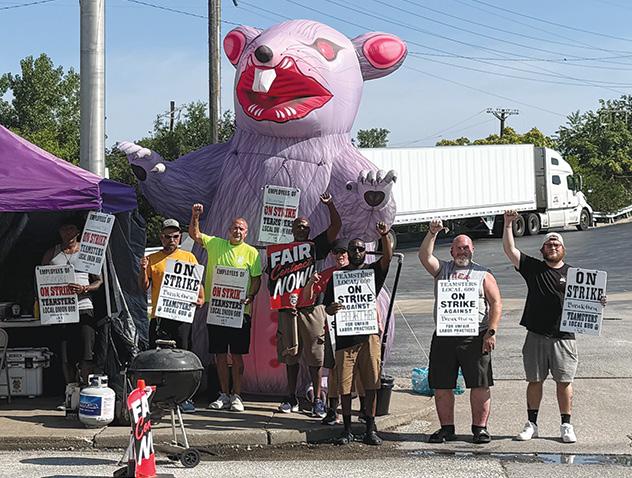
Teamsters have maintained a constant presence on the picket line at 6701 Southwest Ave. in St. Louis since May 6, demonstrating their resolve to secure a contract that includes fair wages, strong workplace protections, and the union standards that have long defined Teamster contracts.
“Our members have shown incredible strength and determination,” said Chris Tongay, secretary-treasurer of Teamsters Local 688. “No one wants to be on strike, but our members know what they’re fighting for. They deserve
a contract that values their hard work and protects their rights on the job. We remain ready to return to the bargaining table at any time and negotiate a fair agreement.”
Over 215 drivers and warehouse workers, members of Locals 600, 688 in St. Louis, and Local 710 in Cicero (Chicago), took to the picket line on May 6 citing Unfair Labor Practices and stalled contract negotiations and Breakthru’s insistence that the Teamsters give up their contractual right to refuse to cross a picket line. Teamsters have since extended
HOLDING THE LINE : Members of Teamsters Locals 600 and 688 have been on strike at Breakthru Beverage for more than two months, walking the picket line at 6701 Southwest Ave. in St. Louis since May 6 as they fight for a fair contract that includes wages, strong workplace protections, and union standards that have defined Teamster contracts.
the strike to company operations in Kansas City, Mo., and Champaign, Ill.
For members of Local 600, which represents newly organized drivers at Breakthru’s St. Louis and Cape Girardeau locations, the strike also represents a major test of their union commitment as they fight to negotiate a first contract.
“For them not having a contract or even being in a union before, I think it’s great the way these guys are handling it,” said John Kelting, president/business representative of Local 600. “They’re holding up strong! It’s hard but their spirits
are high. They’re in it for the long haul. Community support helps out a whole lot.”
The St. Louis Board of Alderman last week passed a resolution affirming the Board’s support for Teamsters Local 600 and 688 in their pursuit of “a fair contract with Breakthru Beverage Distribution that respects workers’ rights, protects established Labor standards, and reflects the value of their contributions.” (See related story on page 11.)
Throughout the strike, elected officials, Labor leaders, clergy, and community advocates have joined Teamsters on the picket line nearly every day, demonstrating broad support for the workers’ fight for fairness. Their presence has underscored the growing community recognition that good jobs, fair wages, and strong unions benefit the entire St. Louis region.
By TIM ROWDEN Editor-in-Chief
St. Louis – It took 128 years to make it happen, but Elevators Constructors Local 3 finally has its own building for its union hall and new state of the art training center.
Local 3 formerly used space in the Glaziers Local 513 building for its offices and space at the Associated General Contractors (AGC) of Missouri for training. The new

Local 3 headquarters is located at 1525 S. Broadway in St. Louis in the former Sitex building and includes 10,000-square-feet of training space for apprentice and continuing education classes.
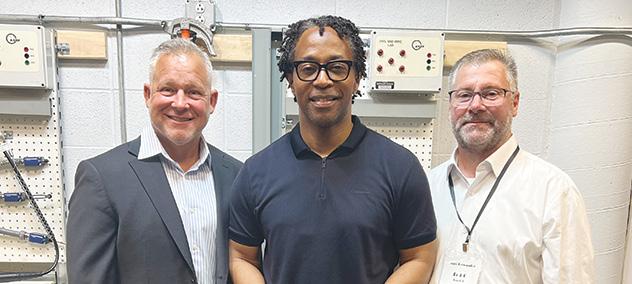
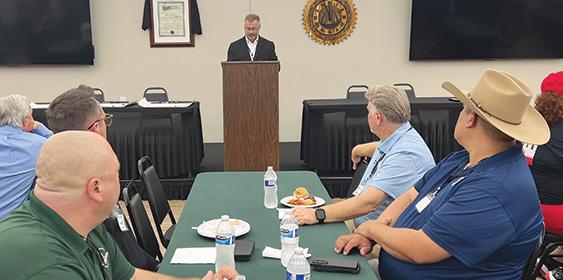
Local 3 hosted an open house July 9 to celebrate the grand opening. Officers of the International Union of Elevator Constructors, elected officials, contractors, fellow building trades leaders and community leaders attended the event.
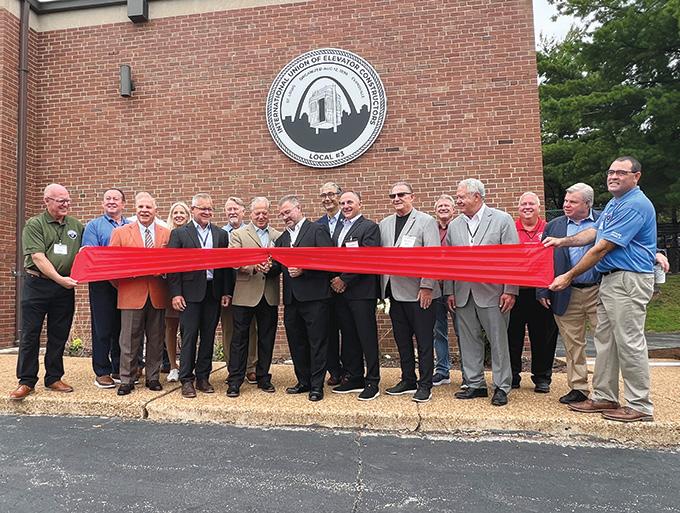
“Today is an exciting milestone in the history of Local 3,” said
By ELIZABETH DONALD Illinois Correspondent
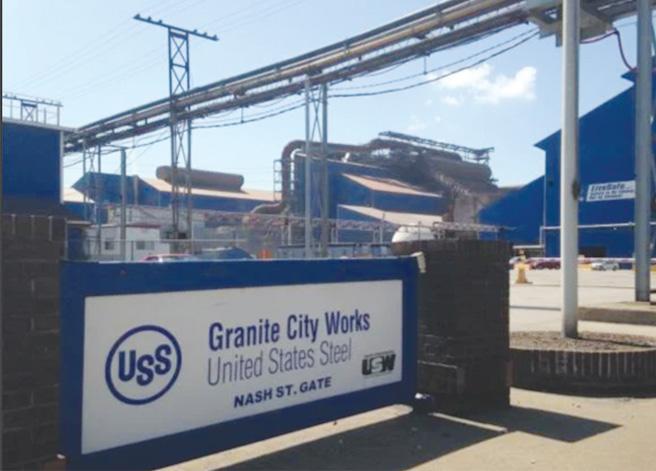
Granite City, IL – A worker was killed on the job at the Granite City cold mill last weekend, though details are still unknown.
United Steelworkers’ (USW) national leaders announced Saturday morning, July 11, that they had been informed a USW member was fatally injured at the mill. The union safety coordinator for U.S. Steel, local union safety represen-
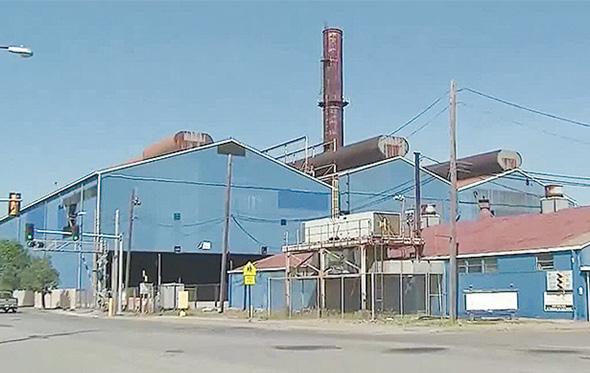
tatives and staff from the health and safety department, emergency response team and union leadership were mobilized to go to the
site and provide support to the family, members and USW Local 1899, which represents workers at the mill.
“Our union will do everything we can to support the family and members impacted and stand up for the safety and health of all workers,” the union statement read.
‘THERE ARE NO WORDS’
U.S. Steel issued a statement midday Saturday confirming the fatality. “Early this morning, there
was a fatality at our Granite City Works facility. There are no words that can capture the grief we feel for our colleague, their family, friends and coworkers. Our focus right now is supporting those affected by this loss. Safety is our top priority, and we are working to understand the circumstances surrounding this tragedy and will cooperate fully with all investigations.”
Craig McKey, president of Lo-
(314) 535-9660

By DAVID FALLICK
As recently as 2022, the Postal Service issued the following statement: “The role of USPS in American elections is clear and well defined: to process, transport and deliver the nation’s Election Mail, including ballots. We have no role in determining the extent to which mail is used for participating in elections, the design of ballots or return envelopes, or whether or how ballots are counted.”
However, carrying out Trump’s dirty work (Executive Order 14399), the postmaster general has proposed a rule to change the mailing standards of the United States Postal Service regarding mail-in and absentee ballots, all under the worn-out guise of trying to prevent voter fraud but having the real purpose of denying people their right to vote.
First of all, it is not, nor has it ever been, the authority of the Postal Service or the president to administer or set the conditions of voting. Article 1, Section 4, of the U.S. Constitution states that it is the state legislatures who are in charge of this. It does NOT state that it is the president, and it does NOT state that it is the postmaster general.
Additionally, these proposed changes do not address any problem since voter fraud is practically non-existent. What the proposed changes would do is hinder or eliminate access to voting for millions of U.S. citizens.
The proposals are political in nature. They are meant to favor those who are proposing them and certainly do not uphold the American value and necessity of unhindered access to the ballot for U.S. citizens. The changes will block people from voting. We need to do all we can to avoid this and to keep the United States Postal Service operating solely to carry out its mission of delivering mail, not to give it the function of determining who may or may not receive mail and who may or may not vote by mail.
‘AN UNCONSTITUTIONAL BURDEN’
The deadline for public comments on
the proposed changes has passed, but we can still work to keep the Postal Service and our country as they are meant to be by registering our protest and disapproval of the proposed rule. By doing so, we will not only be defending our postal service and our democracy, but we will also be supporting the front-line efforts of the American Postal Workers Union (APWU) and the National Association of Letter Carriers (NALC) to, as the APWU itself puts it on its website, protect universal mail service and voting by mail and to protect the postal workers from having to shoulder “an unconstitutional burden.”
The APWU makes it clear: “The fundamental purpose of the Postal Service is to provide universal service to all, not to decide who gets a mail ballot or to disenfranchise American voters.”
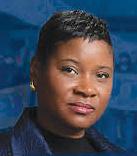
By ROXANNE D. BROWN President
United Steelworkers Union
Marcelo Assis recalled how his family arrived in the United States about 35 years ago, “poor as hell”—yet certain that America offered the path forward that they’d never find in their native Brazil or anywhere else.
The following years brought ups and downs, with Marcelo serving as a combat medic in the Army and then falling disillusioned with low-paying nonunion work that held him back instead of helping him move ahead.
Likewise, the NALC “opposes the proposed rule for several reasons. First, it exceeds USPS’s legal authority and risks dragging USPS and its employees, who are nonpartisan public servants, into the highly charged political climate of elections.
Additionally, USPS lacks the legal authority to establish a voter registry, verify ballot mail or refuse ballot mail, as proposed in the rule.
“Furthermore, there is no evidence that the proposed rule would improve the already secure vote-by-mail process. The proposed rule could potentially deny certain eligible voters the right to vote by mail while causing unnecessary financial burdens on both states and the Postal Service.”
If there ever was a time for solidarity between unions and their members, now is that time.
How can we help out? Contact your state legislators and governors and tell them to do all they can in their power to oppose the proposed changes. Contact your U.S. representatives and senators and tell them to do the same. Write letters-to-the-editor and otherwise spread the word about what the changes would do. Finally, but certainly not least, join and become active in voting rights groups. It is our obligation as union members and U.S. citizens to do so.
(David Fallick is a member of the American Federation of Teachers in Rockville, Md.)
But Marcelo ultimately landed back-to-back union jobs that catapulted him into the middle class and firmly anchored him there. Just as he clearly recalls his arrival in this country, Marcelo vividly remembers the moment years later when he looked around his newly purchased home, thought about the good life he provided to his family, and realized for the first time that he’d made it.
“This is the American dream,” he said to himself.
Marcelo’s experience shows how unions pave the way to a brighter future. That’s true even now — a time when the majority of working people feel as though the American dream has slipped out of reach because of rampant economic inequality, skyrocketing costs, and the callous indifference of the greedy rich.
In all, nearly 70 percent of Americans no longer see the country promising mobility or financial security to those who work hard and strive to get ahead, according to a January 2024 ABC News/Ipsos poll.
A separate survey, conducted in conjunction with the nation’s 250th birthday by APNORC Center for Public Affairs Research, found that half of respondents lost faith in the American dream. Many see America working for the wealthy, not people like them.
But Marcelo, president of United Steelworkers (USW) Local 12000 and a mechanic at Southern Connecticut Gas, will be the first to say it doesn’t have to be this way. After helping him fulfill the American dream, the union now enables him to hold on to it.
A USW contract provides Marcelo with the good wages he needs to ride out Donald
Trump’s inflationary economy, including the runaway costs of groceries, utilities, and house insurance. It affords him retirement security even as Republicans threaten to cut lifelines for the elderly.
The contract delivers quality, employersponsored health care, while more and more Americans today have no choice but to put off doctor’s visits or treatments because of the spiraling costs.
“There’s the stability of knowing you have benefits,” Marcelo said of the contract, which he and his coworkers negotiated. “You don’t have to worry.”
This is all fabulous. But it isn’t unique.
Union members across the country make significantly more money than their non-union peers. They’re also more likely to have family leave, paid time off, and work-life balance. This all adds up to cars in the garage, summer vacations, and sports leagues for the kids, along with all of the other pluses that make life worth living.
This is what independence looks like. Marcelo simply calls it the “union life.”
There’s more.
Because unions provide a voice on wages, safety, and other issues, they empower workers at a moment when a depressing sense of helplessness haunts many other Americans.
Union members also forge a bond that transcends the shop floor. Everyone looks out for everybody else, and that’s a formidable counterweight to the epidemic of loneliness and isolation also plaguing the country right now.
Even better, this shared identity galvanizes union members to fight together for the greater good and to assert an ownership stake in their communities, often through the kind of volunteer work and political advocacy that Local 12000 members do.
“Doing it together makes it a much easier climb than doing it by myself,” Marcelo said of the solidarity uniting hundreds of his coworkers.
It’s a message that’s resonating with the growing number of workers weary of working their tails off, only to fall further behind while the rich get richer.
Polls show record levels of support for unions, and workers in every part of the country are joining them to take the future into their own hands.
The American dream endures. We just have to stand together to claim it.
(This article was produced by the Independent Media Institute.)

Canvassing, phone bank opportunities run through Election Day
By SHERI GASSAWAY Missouri Correspondent
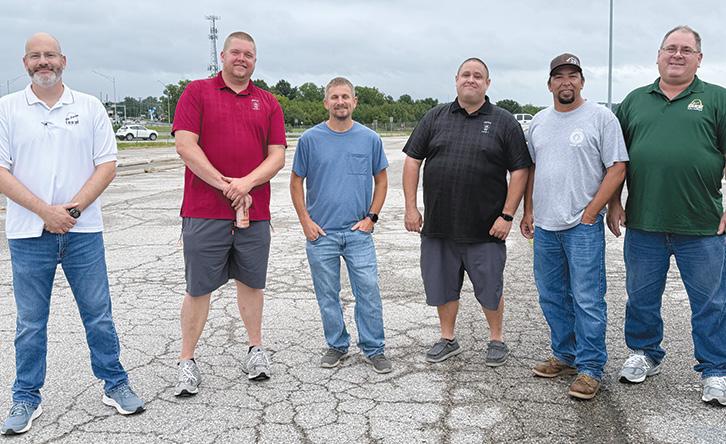
Dozens of volunteers turned out for the first weekend of Missouri AFL-CIO canvasing to defeat Amendments 4 and 5.
On July 11, a group of about 10 volunteers assisted in the process and met at the commuter lot in Arnold at 1998 Richardson Road. Volunteers fanned out across the area, hitting homes in the City of St. Louis, St. Louis County, St. Charles County and Jefferson County.
“We’re going to be knocking on doors talking with union households on the dangers of Amendments 4 and 5 and making sure they have the information available and handy to make an informed decision,” said IBEW Local 1 Business Representative Paul Reinheimer, who led the Arnold canvas.
AMENDMENT 4
Amendment 4 would create a higher bar for passage of citizen-led constitutional amendments, strip-
ping citizens of their right to shape public policy through the initiative petition process. It would require any constitutional amendment placed on the ballot through initiative petition process to pass in all eight of Missouri’s congressional districts. Currently, those amendments need only a statewide majority pass.
Reinheimer noted that union
Read the Labor Tribune at work, at home or on the go

members spent two full summers gathering signatures and canvassing against the so-called “Right-toWork” mandate, which was defeated by 67 percent of the vote in 2018.
“We were able to get that legislation turned around due to a similar initiative petition process,” Reinheimer said. “That process was 100 percent vital in stopping
‘Right-to-Work’ and getting rid of the citizen-led process puts us in danger of ‘Right-to-Work’ creeping back up and taking hold of our union families and our paychecks.”
5
• Amendment 5 would give lawmakers new power to expand sales and use taxes to replace the state’s 4.7 percent income tax, shifting the tax burden from the wealthy to those who can least afford it. The Missouri AFLCIO has called it an “everything tax,” because it would allow people to be taxed on everything from real estate to healthcare. Republican legislators have not revealed what can be taxed or by how much.
“They’re going to be raising all the sales taxes, and they’re not answering the questions on what will else be raised,” Reinheimer said. “All we’re hearing from our elected representatives is ‘We don’t know, and we’re not going to tell you.’ I don’t think Missourians are willing to take that chance.”
Weekly canvasses are planned on Wednesdays and Saturdays and will and continue through Aug. 1.
The Labor Tribune is your source for news important to working people at work everywhere.
In addition to the print edition, which is mailed to subscribing unions and union members’ homes every Thursday, highlights from the previous week’s edition are available at labortribune.com
You can volunteer at the following locations on Wednesdays at 4 p.m. and Saturdays starting at 8:30 a.m.
• St. Louis – IBEW 1 Hall. 5850 Elizabeth Ave., St. Louis.
• South St. Louis County/Jefferson County – Richardson Road Commuter Lot. Vogel Road and 1998 Richardson Road, Arnold, Mo.
• North St. Louis County – St. Ferdinand Park, 25 St. Ferdinand Park Drive, Florissant, Mo.
• West St. Louis County – Manchester Meadows Parking Lot, 13929 Manchester Road, Ballwin, Mo.
• Tri-County – Mid Rivers Commuter Lot, across from 399 Mainstreet, St. Peters, Mo.
Weekly retiree-to-retiree phone banks will be on Wednesdays from 10 a.m. to noon. Here are the dates and location:
• July 22 and July 29 – IBEW 1 Union Hall, 5850 Elizabeth Ave., St. Louis, Mo.
Worksite flyers and yard signs are available by contacting Michael Thomas at MThomasJR@ moaflcio.org
For breaking news, recommended articles and important connections, like us on Facebook and follow us on LinkedIn. To subscribe, visit us at labortribune.com and click the “Subscribe” link in the menu at the top of the homepage or email circulation@labortribune.com for prefered union pricing.

By ELIZABETH DONALD Illinois Correspondent
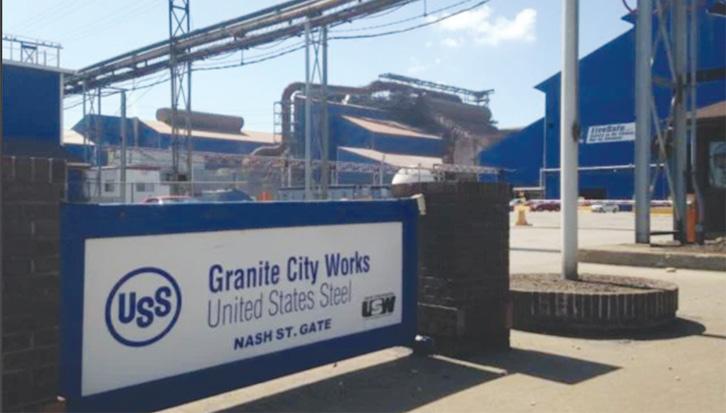
Granite City, IL – Local bargaining has begun or will begin soon at all U.S. Steel locations, including the Granite City steel mill that has recently reopened.
According to the national United Steelworkers (USW), the goal is to tackle all local issues before master agreement negotiations begin in the week of July 20.
“We’ve been preparing for master bargaining by compiling feedback, drafting proposals and requesting information,” read a release from USW last week. “We have not given the company any master bargaining proposals; the company has not given us any master bargaining proposals. That exchange won’t happen until bargaining begins in Pittsburgh.”
USW negotiators do not expect to get to every issue in the first week, which will be the first negotiation since Nippon Steel purchased U.S. Steel. “Bargaining typically starts
slowly,” the national statement read. “Both sides will need time to analyze and assess the other’s initial proposals and then determine our strategy from there.”
Meanwhile, U.S. Steel informed USW that it will provide its secondquarter profit-sharing information on Aug. 4, which is when Nippon releases its quarterly earnings. USW stated that they expect profitsharing announcements to follow this pattern going forward. “As we always have, technical experts from
our union will review the numbers for accuracy,” it read.
The Granite City plant resumed production in March, two years after U.S. Steel shut down the blast furnaces at the plant. Many feared the plant would be permanently shut down after the Nippon purchase, but at least 450 positions were opened by returning one of the two blast furnaces to operation.
Roxanne D. Brown is the inter-
national president of United Steelworkers, and this week she wrote an opinion piece for the Independent Media Institute on how unions pave the way to a brighter future. (See Opinion column on page 2.)
“That’s true even now, a time when the majority of working people feel as though the American dream has slipped out of reach because of rampant economic inequality, skyrocketing costs, and the callous indifference of the greedy rich,” Brown said.
She pointed out that in addition to higher wages and wealth, better benefits and a higher quality of life, union members get a voice on wages, safety and other issues. “They empower workers at a moment when a depressing sense of helplessness haunts many other Americans,” Brown said. “Union members also forge a bond that transcends the shop floor. Everyone looks out for everybody else, and that’s a formidable counterweight to the epidemic of loneliness and isolation also plaguing the country right now… The American dream endures. We just have to stand together to claim it.”



JULY 13
1934 – Southern Tenant Farmers’ Union organized in Tyronza, Ark.
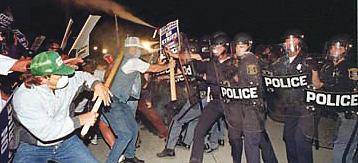
1995 – Detroit newspaper workers begin 19-month strike against Gannett, Knight-Ridder. The strike was to become a lockout, which lasted four years more.
JULY 14
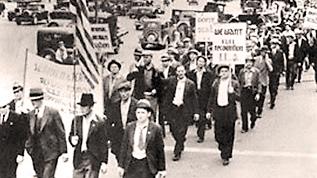
1877 – The first national strike started at Baltimore’s Camden Yards Station when workers on the B&O Railroad refused to work after a 10 percent wage cut. Eventually involving hundreds of thousands of workers and allies across the U.S., the strike was crushed by federal troops called to action by President Hayes. 1921 – Italian immigrants and anarchists Nicola Sacco and Bartolomeo Vanzetti are convicted in Massachusetts of murder and payroll robbery — unfairly, most historians agree — after a twomonth trial, and are eventually executed. Fifty years after their deaths, the state’s governor issued a proclamation saying they had been treated unfairly and that “any disgrace should be forever removed
from their names.”
JULY 15
1917 – Some 50,000 lumberjacks strike for eight-hour day.
1931 – Ralph Gray, an AfricanAmerican sharecropper and leader of the Share Croppers Union, is murdered in Camp Hill, Ala.
1959 – A half-million steelworkers begin what is to become a 116-day strike that shutters nearly every steel mill in the country. Management wanted to dump contract language limiting its ability to change the number of workers assigned to a task or to introduce new work rules or machinery that would result in reduced hours or fewer employees.
JULY 16
1919 – Ten thousand workers strike Chicago’s Int’l Harvester operations.
1920 – Martial law declared in strike by longshoremen in Galveston, Texas.
Important Information From Your Union
JULY 17
1944 – Two ammunition ships explode at Port Chicago, Calif., killing 322, including 202 AfricanAmericans assigned by the Navy to handle explosives. It was the worst home-front disaster of World War II. The resulting refusal of 258 AfricanAmericans to return to the dangerous work underpinned the trial and conviction of 50 of the men in what is called the Port Chicago Mutiny.
JULY 18
1883 – The Brotherhood of Telegraphers begins an unsuccessful three-week strike against the Western Union Telegraph Co.
1919 – Some 35,000 Chicago stockyard workers strike.
1969 – Hospital workers win 113day union recognition strike in Charleston, S.C.
JULY 19
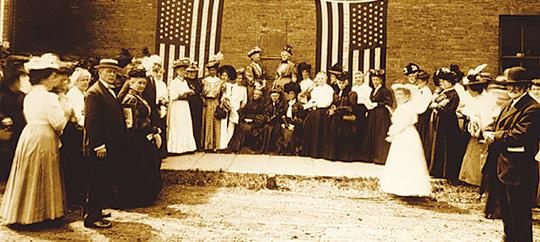
1848 – Women’s Rights Convention opens in Seneca Falls, N.Y.
Delegates adopt a Declaration of Women’s Rights and call for women’s suffrage.
1940 – An amendment to the 1939 Hatch Act, a federal law whose main provision prohibits federal employees from engaging in partisan political activity, is amended to also cover state and local employees whose salaries include any federal funds.
(Compiled by David Prosten, founder Union Communication Services)

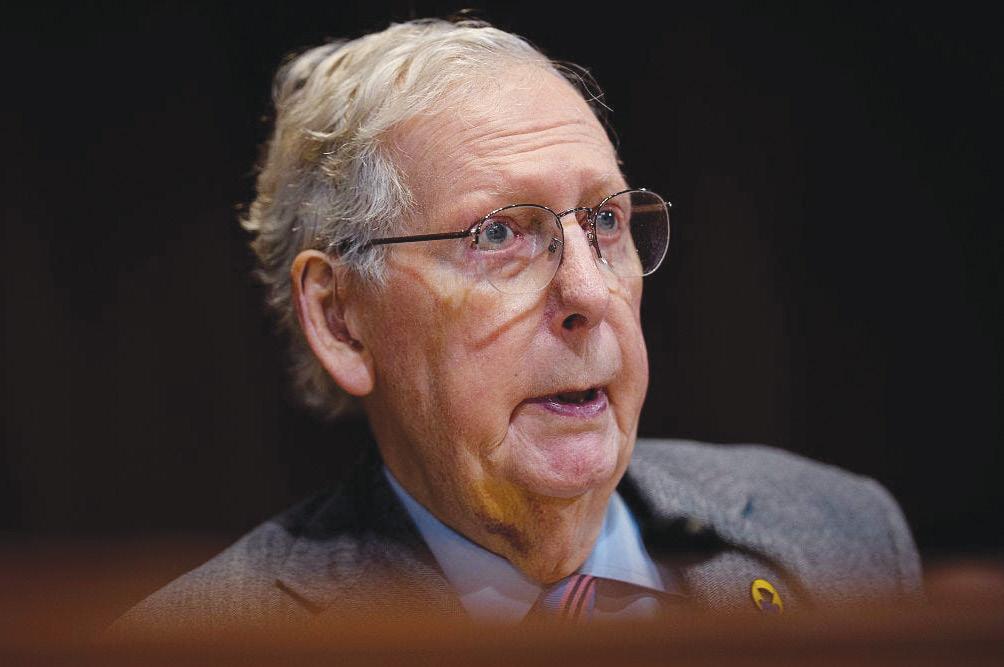
Washington (Satire from The Borowitz Report) — In an incident that astonished his medical staff, on Wednesday Senator Mitch McConnell bolted upright in terror after JD Vance entered his hospital room.
McConnell, who had been motionless and unresponsive prior to the vice president’s arrival, suddenly sprang to attention, his eyes bulging with alarm.
“Get that bastard away from me!” the Kentucky lawmaker shrieked.
In Tehran, a government spokesman said that any attempt by Vance to pay a hospital visit to the Supreme Leader would be seen as an act of war.
shall be without discrimination because of race, religion, national origin, age or sex. Every applicant must supply a copy of their BIRTH CERTIFICATE and High School DIPLOMA/G.E.D. that the Committee can keep at the time of filing application for apprenticeship.
WELDING QUALIFICATION: Applicants that have a welding certification or welding training qualifications will have priority selection over applicants with no welding qualifications. Applicants must provide a copy and proof of welding certification or welding training qualifications at the time of application.
Bricklayers Local 1 Meets at 5:30 p.m. the first Thursday at Bricklayers’ Local No. 1 Union Hall, 1670 Fenpark, Fenton, MO 63026. To register for a course, contact Dale Jennewein at the Bricklayers Local 1 MO JATC at 314-770-1066.
Cement Masons Local 527 3341 Hollenberg Dr, Bridgeton, MO 63044
Elevator Constructors Local 3 1525 South Broadway, St. Louis, MO 63104
Glaziers Local 513 5916 Wilson Ave, St. Louis, MO 63110
IBEW Local 1 Union meetings are held the First Wednesday and the Third Friday of each Month at the IBEW, Local 1 Union Hall located at 5850 Elizabeth Avenue, Saint Louis, MO 63110. Meetings begin promptly at 5 p.m. Please make every effort to attend.
IBEW Local 1 Apprentices Meeting on the first and third Friday of each month, 7 p.m. at the Training Center, 2300 Hampton.
IBEW Local 4 5850 Elizabeth Ave, St. Louis, MO 63110



Can weight-loss drugs help reduce
By KEVIN WEAKS Correspondent
From celebrity weight-loss stories to concerns about side effects, glucagon-like peptide-1 receptor agonists (GLP-1s) have been all over the news. GLP-1 medicines are FDAapproved to treat type 2 diabetes and obesity. Researchers are also studying whether they may lower the risk of certain serious illnesses, including some cancers.
A retrospective analysis of more than 110,000 women between the ages of 45 and 80 found that those who took GLP-1 medications were about 30 percent less likely to develop breast cancer than those who did not take GLP-1 medications, according to research presented recently at the 2026 American Society of Clinical Oncology (ASCO) Annual Meeting by Elizabeth McDonald, M.D., Ph.D., a professor of Radiology in the University of Pennsylvania Perelman School of Medicine and a practicing breast radiologist at Penn’s Abramson Cancer Center.
“While our study was observational and does not definitively confirm an association between GLP-1 medications and reduced breast cancer incidence, it does add to the growing body of evidence

suggesting that it’s worth investigating these weight-loss drugs as potential cancer prevention tools,” McDonald said.
GLP-1 medications are a class of drugs that mimic a natural hormone in the body called glucagonlike peptide-1, which helps regulate blood sugar and appetite. Originally used to treat type 2 diabetes, GLP-1 medications are now also widely used for weight management. A handful of recent observational studies have linked GLP-1s to lower cancer risks and/or improved outcomes in cancer survivors, but prospective data — the gold standard in clinical research — is lacking.
development, so we’re eager to study them in this context,” McDonald said.
BENEFITS FAR BEYOND THE WAISTLINE
“GLP-1s may have benefits far beyond the waistline,” said Joel Saltzman, M.D., a member of the American Society of Clinical Oncology and a gastrointestinal cancer specialist at the Cleveland Clinic. Early study findings suggest possible benefits for reducing cancer risk in some obesity-related cancers. These include cancers of the liver, pancreas, gallbladder, esophagus, ovaries and uterus (endometrium). New research presented at the 2026 ASCO Gastrointestinal Cancers Symposium shows a reduced risk of colorectal cancer among GLP-1 users. While the evidence is strongest for colorectal cancer, “It’ll be interesting to see if this is a ‘pan-cancer’ effect, meaning these drugs could reduce the risk of other obesity-related cancers,” said Dr. Saltzman.
However, GLP-1 drugs are not approved for cancer prevention. They are not meant to be used only for the purpose of helping reduce cancer risk.
The body releases a natural hormone called GLP-1 when you eat. GLP-1 drugs are medicines that work by acting like this natural hormone that slows digestion, controls blood sugar, and tells the brain you’re full. By mimicking the hormone, GLP-1s can help manage insulin levels and slow the emptying
“GLP-1 medications are intriguing from a cancer research perspective because they weren’t designed for cancer therapy, but they do affect many different targets and pathways associated with cancer See WEIGHT-LOSS DRUGS page 10

By DR. GRAHAM A. COLDITZ Siteman Cancer Center
Most of us have been touched by cancer in some way. Maybe we have friends or family who’ve been diagnosed, or maybe you’re one of the 18 million people in the U.S. living as a cancer survivor.
Given cancer’s seriousness, its extent can certainly feel concerning, especially as the number of cancer survivors is expected to grow to over 22 million within the next 10 years.
But there is actually some good news to go along with these large numbers.
“Yes, part of this growth we’re seeing in the number of survivors is because we have an aging population and more people are being diagnosed,” said Dr. Lindsay Peterson, director of the survivorship program and the START Strong Survivorship Clinic at Siteman Cancer Center, based at Barnes-Jewish Hospital and WashU Medicine. “But part is also because people are living longer after a cancer diagnosis.”
And for this growing number of survivors, there are steps that can help improve health and well-being

◆ The right shoe for the job – Hy-Test safety footwear in over 240 styles.

over the years. It’s almost never too early in the cancer journey to get started with them.
“Talking with patients about healthy behaviors — like nutrition and physical activity and weight management — at the very beginning of a cancer diagnosis not only can help them get through their treatments easier, improving their quality of life and minimizing side effects, it can also instill those healthy habits and behaviors from the very beginning,” Peterson said. “And some of those behaviors have
been shown to actually improve cancer prognosis and outcomes down the road.”
Many of these steps can also lower the risk of other conditions that remain important in people’s lives beyond cancer, including stroke, diabetes, heart disease and reduced mobility.
• Don’t smoke. Quit if you do. This has huge benefits for many diseases. And it’s never too late to quit. Studies show that even people with advanced cancer benefit from quitting. Visit smokefree.gov for help.
• Be physically active and eat a healthy diet. Focus on fruits, vegetables and whole grains — and limit red meat, processed meat and alcohol. Also, try to get some physical activity every day — even if it’s a small amount. When ready, try to build up to around 30 minutes a day.
• Maintain a healthy weight. Weight can be a complex issue for survivors, for many reasons. Staying at a healthy weight, though, can have important benefits. Your doctor or clinic can help with resources.
• Get screening tests and go to regular checkups. It’s important to keep up with post-treatment care with your primary care doctor and oncology team. These visits are not
only key to your health as a survivor but also great places to check in about your overall health.
Looking after mental well-being is also key. Almost every survivor has some type of emotional concern, Peterson added. It could be anxiety, fears of cancer returning or questions about how cancer may impact relationships. Financial issues, like bills, and practical issues, like transportation, can add to this. “I try to understand what a patient’s specific concerns are and get the person connected with resources that can help, whether that’s a counselor or social worker or support group.”
Cancer can also be isolating for many survivors. So, it can be valuable for both survivors and their family and friends to make efforts to stay connected.
“Once someone finishes treatment, everyone may now think they’re fine. So, all of the support they were getting — emotional or otherwise — goes away,” Peterson said. “And the reality is, once people are done with their cancer treatment, that’s actually when I think they need the most emotional support.”
So, friends and family can help uplift survivors by staying engaged and asking them what types of help they may need. Survivors, for their
part, can help by more actively letting people know the types of help and support they may be looking for. Programs for survivors that support healthy behaviors and other key parts of follow-up care can be central to helping survivors live longer, healthier lives. And all survivors should be given the focus they deserve.
“It’s important that we start to recognize survivorship as an integral part of cancer care — not just something we’ll try to offer, but something we need to offer,” Peterson said. “That’s when it will get the attention it needs, and we’ll be able to move the field — and the benefits it offers — forward.”
Resources for cancer survivors:
• Siteman Survivorship Program, siteman.washu.edu/survivors
• 8IGHT WAYS® to Stay Healthy Beyond Cancer, 8ways.washu.edu
• Cancer Support Community, cancersupportcommunity.org
• American Cancer Society, cancer. org/survivors
(Dr. Graham A. Colditz, associate director of prevention and control at Siteman Cancer Center at Barnes-Jewish Hospital and WashU Medicine in St. Louis, is an internationally recognized leader in cancer prevention and the creator of the 8ightWays® to Prevent Cancer series.)


Italian styling with American muscle
By KEVIN WEAKS
Back in the early days of my newspaper career, I was a reporter at the Paris Post-Intelligencer in my hometown of Paris, Tenn. On
Feb. 17, 1973, I was assigned to travel to Scott Air Force Base to cover the arrival of U.S. Air Force
Major Robert Peel, also from Paris, who had spent over seven years as a prisoner of war in North Vietnam.
On March 7, 1973, Peel was honored with a parade on the streets of Paris and, in addition to the keys to the city, he was handed the keys to a yellow 1973 Ford De Tomaso
Pantera, a two-seat, mid-engine, exotic sports coupe that combined Italian styling with a 330-horsepower Ford V-8 engine. Early in the day on March 28, 1973, just weeks after his return home, Major Peel






THE LAST FORD PANTERAS
apparently fell asleep at the wheel and crashed his new Pantera into a utility pole. The Tennessee Highway Patrol said that Major Peel was not seriously injured.
The Pantera was the result of a collaboration between Ford Motor Co. and Italian sports car builder and former auto racer Alejandro De Tomaso. In late 1969, rumors abounded in Detroit that General Motors was working on a mid-engine Corvette. While its Mustang continued to be a huge success, Ford needed a splashy mid-engine sports car of its own to attract shoppers to its Lincoln-Mercury showrooms. Ford initially made an offer to buy Ferrari, but was turned down. Ford president and father of the Mustang Lee Iacocca then worked out a deal to purchase an 84 percent stake in De Tomaso Automobili and in 1971 Ford began importing Panteras for the American market.
The $10,000 Pantera — Italian for panther — was available at nearly 200 select Ford and Lincoln-Mercury dealerships. The low-slung, wedge-shaped body with pop-up headlights and push-button doors was modeled by American-born designer Tom Tjaarda at the Italian design house Ghia and built in Italy. It bore a resemblance to the Lamborghini Countach which listed for around $52,000. The aver-
age price for a new car in 1971 was about $3,700.
Ford specified that the midengine, rear-wheel-drive, two-door Pantera would be powered by the new 5.8L (351 cu. in.) Ford Cleveland V-8 engine, transplanted from the Mustang Boss 351 and coupled with a ZF five-speed manual transmission and transaxle. The midmounted V-8 allowed for perfect weight distribution and an aggressive, forward-cabin stance. The use of Ford V-8 had another advantage: it was cheap and easy to be serviced. The high torque provided by the Ford engine reduced the need for excessive gear changing at low speeds and made the Pantera much less demanding to drive in urban conditions.
With 330 hp and 380 lb/ft of torque, the 3,200-lb. Pantera could accelerate from 0-60 mph in under six seconds and reach a top speed of 160 mph. Produced from 1970-1974, the small V-8s from Ohio could claim a higher ratio of horsepower per cubic inch (on gas) than any other American-made engine. To meet U.S. emission standards, the four-bolt high-performance engine had a lower compression ratio but used Ford’s more aggressive “Cobra Jet” camshaft. A dual-point distributor and performance exhaust headers helped boost output.




THE LAST FORD PANTERAS constructed for the U.S. market were built in late 1974, and included approximately 150 of the more powerful GTS models which featured fender flares and additional black out paint trim.
The Pantera’s steel monocoque design was ahead of its time back in 1971. The body itself was the frame instead of an internal one, making the Pantera considerably lighter and more agile. Fifteen inches shorter and two inches narrower than a Corvette, all of the hot-button, race-inspired components were there: fully independent suspension with upper and lower A-Arms, coil-over shock absorbers, front and rear sway bars, four-wheel power disc brakes, cast magnesium wheels by Campagnolo and rack-and-pinion steering. The front compartment housed the brake booster, master cylinder, battery and tool kit; the rear trunk unit, easily removable for engine access, held a considerable amount of luggage. The visual effect of the body shape immediately said performance. The sleek low profile and wide track stance
contained all of the elements of elegant Italian styling artistry.
The end product was a successful fusion of the best of both worlds.
The 1971-72 Panteras for the U.S. market featured power windows, body-contoured leather sport seats, AM-FM stereo, center console, air-conditioning and a cigarette lighter. The driver-oriented cockpit originally suffered from offset foot pedals and limited room, especially for tall drivers.
More than 1,000 Panteras were sold the first year. In 1971 Car and Driver magazine penned this enthusiastic review: “Right at the top: It has both the excitement and the goodness ratings that, up to now, you had to pay $25,000 for, and they are folded into a $10,000 package. Which is one hell of a bargain if that happens to be what you’re looking for.”
The 1973 Pantera switched to a black impact-absorbing single front bumper, incorporating a built-in airfoil to reduce front end lift at
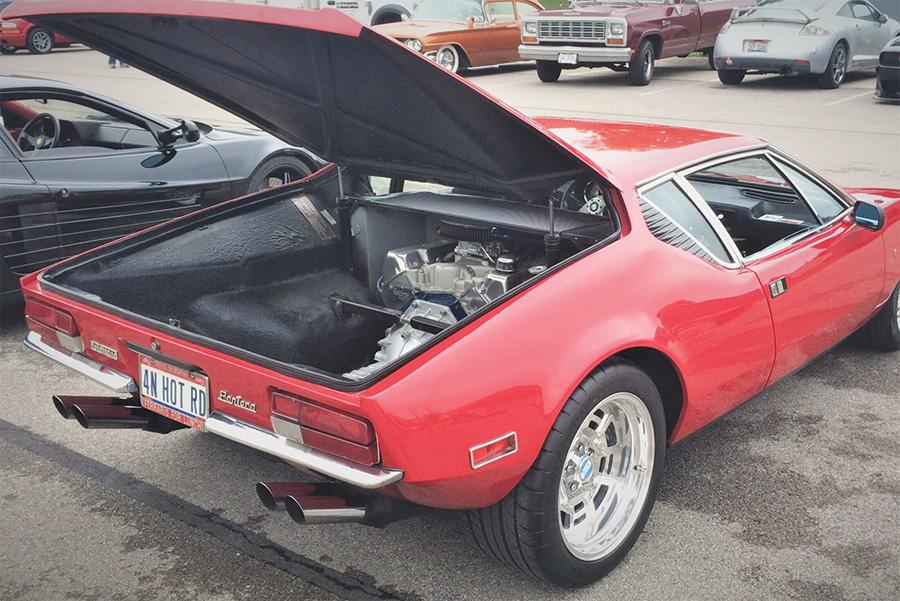

high speeds. This replaced the small chrome and largely ornamental bumperettes mounted below the pop-up headlights. A full-width “federal” rear bumper was also added. Engine output was reduced to 266 hp to meet U.S. pollution regs, and many of the early quality issues like poor finish and minimal rustproofing were remedied. Road Test magazine named it the 1973 “Import Car of the Year,” beating out many of the higher priced exotics.
In the end, sagging sales, the oil crisis and federal safety and emission restrictions in 1974 threatened to force an entire re-engineering of the Pantera and Ford threw in the towel. The last Ford Panteras constructed for the U.S. market were built in late 1974 and included approximately 150 of the more powerful GTS models which featured fender flares and additional blackout paint trim. A mere 5,500 Panteras had been sold in the U.S. After Ford discontinued the Pantera, the coupe continued to





survive in Europe. A total of over 7,000 were built in its 20-year production run.
Years later, when Lee Iacocca left Ford and became the head of Chrysler, he and racing icon Carroll Shelby secretly used a Pantera as the development base for the original Dodge Viper.
Today, the Pantera is a highly sought-after collector car with a strong enthusiast community. Because the engine is a standard Ford
V-8 block, parts are still accessible. Compared with Lamborghini, Ford’s Pantera was neither an engineering masterpiece nor a trend setter, but it was a relative bargain. It was the first affordable supercar at just $10,000 — cheaper even than Ferrari’s entry-level mid-engine V-6 Dino 246GT. Industry wags at the time called the Pantera “the poor man’s Lamborghini.”
(Contact Kevin Weaks at kweaks@ labortribune.com.)

cal 1899, said all they know at the moment is that it was an electrical incident. He confirmed that the international has deployed its response team. “Part of what they do is to get in touch with the family and loved ones,” he said.
‘HIGH-VOLTAGE FLASH’
USW District 7 director Mike
killed From page 1
Millsap told the Northwest Indiana Times that the worker was a 62-year-old electrician working in the cold mill and had put in 14 years of service at the Granite City mill.
Millsap said he was killed from a high-voltage flash. His name had not been released at Labor Tribune press time.
The Madison County Coroner’s
Office had not released findings on the worker’s death as of Monday morning.
USW vowed there would be a comprehensive investigation into the worker death.
“Our union will do everything we can to support the family and members impacted and stand up for the safety and health of all
workers,” a USW spokesperson said.
‘OUR
U.S. Steel’s statement said that “safety is our top priority,” and that they will be working to understanding the circumstances surrounding the tragedy and will cooperate fully with all investigations. They clari-

fied that no other employees were injured and there is no threat to the community.
The last reported death at the U.S. Steel facility in Granite City was in March 2017. Timothy Dagon, 42, of Granite City died after he was injured in the rail yard area of the plant. There was another death in the rail yard in 2005.
From page 6
of the stomach. This helps control appetite and cravings and makes you feel full for longer.
Excess body weight is a known risk factor for at least 13 types of cancer, including colorectal cancer. So, it may seem like these drugs should help lower cancer risk simply through weight loss. But the science suggests something more complicated is happening.
Researchers have also learned that GLP-1s might make it harder for cancer to grow in the body. They think these drugs may help prevent cancer in a few different ways:
• Starving cancer cells: All cells, including cancer cells, use sugar and insulin to grow. High levels of these substances in the blood can make it easier for cancer cells to multiply. GLP-1s help lower these levels and may prevent cancer cell growth.
• Reducing inflammation: Inflammation is a type of long-term swelling in the body. “We know chronic inflammation is a risk factor for the development of cancer, and GLP-1s have anti-inflammatory effects,” said Dr. Saltzman.
• Improving cancer detection: These drugs may help the body’s immune cells become better at finding and destroying cancer cells before a tumor or cancer can develop.

By SHERI GASSAWAY Missouri Correspondent
The St. Louis City Board of Aldermen unanimously has adopted two resolutions supporting local unions: the graduate workers at St. Louis University (SLU) and the Teamsters who are on strike at Breakthru Beverage.
ST.
Resolution 67 affirms the board’s support for the graduate workers of St. Louis University Union - UAW Region 4 (GWSLUU-UAW) as they fight for a living wage, affordable health insurance, safe working conditions and adequate support for international graduate student workers.
In November 2024, the graduate workers voted overwhelmingly to form a union and bargain for a fair contract, the resolution reads. They organized because many cannot afford basic necessities, they lack
access to good and affordable health insurance and the graduate workers who are international workers face additional vulnerabilities that require greater support and protection.
The workers have put forward proposals that would directly address these problems; and more than a year into bargaining, SLU has yet to agree to contract provisions that would resolve these problems, leaving workers without the security they need, the resolution states.
Resolution 76 also affirms the board’s support for Teamsters Local 600 and Teamsters Local 688 in their pursuit of a fair contract with Breakthru Beverage that respects worker’s rights, protects established
Labor standards and reflects the value of their contributions.
Teamsters at Breakthru Beverage in St. Louis and Cicero, Ill. have been on an Unfair Labor Practices (ULP) strike for more than two months over Breakthru’s failure to negotiate a fair contract and insistence that the Teamsters give up their contractual right to refuse to cross a picket line.
“I urge Breakthru to negotiate in good faith and work toward a fair agreement,” Green said. “These employees, like all workers, deserve adequate compensation, respectful treatment in the workplace, and the ability to stand together without being forced to cross a picket line.”

“St. Louis University is one of our city’s most prized institutions, and its success relies on the hard work of its research and teaching assistants,” said Board of Alderman President Megan Green. “As a SLU graduate, I think it’s important that they’re compensated fairly and receive the same treatment as any other essential worker.”
From page 1
“Community support helps out a whole lot,” Kelting said. “Everybody coming around dropping off water and supplies, driving by and honking or dropping by to show their support, that helps.”
With negotiations with Breakthru set to resume this week, Teamsters officials said the union remains committed to bargaining in good faith and continues to call on Breakthru Beverage to return to meaningful negotiations that result in a contract both parties can agree upon.
“Our door remains open,” said Lamark Thompson, business representative for Local 688. “The fastest way to end this strike is for Breakthru Beverage to negotiate a fair contract that respects the
men and women who make this company successful. Our members are united, and they remain committed to achieving an agreement that reflects the standards Teamsters have fought for over generations.”
Despite the challenges of an extended strike, Tongay said, Local 688 members remain steadfast and appreciative of the overwhelming support they have received from fellow union members, elected leaders, community organizations, and residents throughout the region.
“Every day our members have stood together with pride, and every day they’ve been joined by supporters who understand what’s at stake,” he said. “We are grateful for that solidarity, and we will continue standing together until a fair agreement is reached.”


• Live owl presentation
• Face Painting
• Explore an inflatable cave
• Be a bat biologist
• Meet live reptiles and amphibians
• Dissect an owl pellet
• Guided interactive night hikes
• View wild moths on a light sheet
• Visit with DarkSky Missouri
• Telescope viewing
To be submitted to the qualified voters of the State of Missouri at the Special Election to be held on Tuesday, the 4th day of August, 2026.
[Proposed by Article IV, Section 47(c), Missouri Constitution (SJR 1, 2005)]
Shall Missouri continue for 10 years the one-tenth of one percent sales/ use tax that is used for soil and water conservation and for state parks and historic sites, and resubmit this tax to the voters for approval in 10 years?
The measure allows continued collection of the existing sales and use tax, which generates revenue of approximately $140 million annually.
Article IV, Section 47(c) of the Missouri Constitution:
Section 47(c). Provisions self-enforcing, exception—not part of general revenue or expense of state—effective and expiration dates.—[The effective date of this amendment shall be November 8, 1998.] All laws inconsistent with this amendment shall no longer remain in full force and effect after the effective date of this section. All of the provisions of Sections 47(a), 47(b) and 47(c) shall be self-enforcing except that the General Assembly shall adjust brackets for the collection of the sales and use taxes. The additional revenue provided by Sections 47(a), 47(b) and 47(c) shall not be part of the “total state revenue” within the meaning of Sections 17 and 18 of Article X of this Constitution. The expenditure of this additional revenue shall not be an “expense of state government” under Section 20 of Article X of this Constitution. [This Section 47(a), 47(b) and 47(c) shall terminate after ten years following the effective date of this amendment.] Upon voter approval of this measure in a general election held in 2006, or at a special election to be called by the governor for that purpose, the provisions of this section, 47(b), and 47(a) shall be reauthorized and continue until a general election is held in 2016 or at a special election to be called by the governor for that purpose. Every ten years thereafter, the issue of whether to continue to impose the sales and use tax described in this section shall be resubmitted to the voters for approval. If a majority of the voters fail to approve the continuance of such sales and use tax, Section 47(a), 47(b), and 47(c) shall terminate at the end of the second fiscal year after the last election was held.
Secretary of State
I, Denny Hoskins, Secretary of State of the State of Missouri, hereby certify that the foregoing is a full, true and complete copy of Constitutional Amendment No. 1, to be submitted to the qualified voters of the State of Missouri at the Special Election to be held the fourth day of August, 2026.
In TESTIMONY WHEREOF, I hereunto set my hand and affix the Great Seal of the State of Missouri, done at the City of Jefferson, this 26th day of May, 2026.

[Proposed by 103rd General Assembly (First Regular Session) HCS HJR 23 & 3]
Shall the Missouri Constitution be amended to:
• require all charter counties, including Jackson County, to provide for the election of a county assessor; and
• require assessors in all charter counties to comply with any training requirements established by general law?
State and local governmental entities estimate no costs or savings.
Submitting to the qualified voters of Missouri an amendment repealing Section 18(b) of Article VI of the Constitution of Missouri, and adopting one new section in lieu thereof relating to assessors.
Be it resolved by the House of Representatives, the Senate concurring therein:
That at the next general election to be held in the state of Missouri, on Tuesday next following the first Monday in November, 2026, or at a special election to be called by the governor for that purpose, there is hereby submitted to the qualified voters of this state, for adoption or rejection, the following amendment to Article VI of the Constitution of the state of Missouri:
Section A. Section 18(b), Article VI, Constitution of Missouri, is repealed and one new section adopted in lieu thereof, to be known as Section 18(b), to read as follows:
Section 18(b). The charter shall provide for its amendment[,]; for the form of the county government[,]; for the number, kinds, manner of selection, terms of office, and salaries of the county officers[,]; and for the exercise of all powers and duties of counties and county officers prescribed by the constitution and laws of the state[;]. However, such charter shall[, except for the charter of any county with a charter form of government and with more than six hundred thousand but fewer than seven hundred thousand inhabitants,] require the assessor of the county to be an elected officer and to comply with all training provisions required by general law.
EXPLANATION—Matter enclosed in bold-faced brackets [thus] in the above bill is not enacted and is intended to be omitted from the law. Matter in bold-face type in the above bill is proposed language.
STATE OF MISSOURI
Secretary of State
I, Denny Hoskins, Secretary of State of the State of Missouri, hereby certify that the foregoing is a full, true and complete copy of Constitutional Amendment No. 2, to be submitted to the qualified voters of the State of Missouri at the Special Election to be held the fourth day of August, 2026.
In TESTIMONY WHEREOF, I hereunto set my hand and affix the Great Seal of the State of Missouri, done at the City of Jefferson, this 26th day of May, 2026.
[Proposed by 103rd General Assembly (Second Extraordinary Session) HCS HJR 3]
OFFICIAL BALLOT TITLE:
Shall the Missouri Constitution be amended to:
• Modify current requirements that a statewide majority of voters may approve initiative petitions to amend the constitution;
• Require a majority of voters in each congressional district to approve initiative petitions to amend the constitution; and
• Make available to each voter the full text of initiative petitions with their ballot?
The Department of Corrections estimates increased annual costs of up to $21,817. The Office of State Public Defender estimates an unknown fiscal impact. Other state governmental entities estimate no costs or savings. Local governmental entities estimate no costs or savings.
Submitting to the qualified voters of Missouri an amendment to Article III of the Constitution of Missouri, by adopting one new section relating to ballot measures, with penalty provisions.
Be it resolved by the House of Representatives, the Senate concurring therein:
That at the next general election to be held in the state of Missouri, on Tuesday next following the first Monday in November, 2026, or at a special election to be called by the governor for that purpose, there is hereby submitted to the qualified voters of this state, for adoption or rejection, the following amendment to Article III of the Constitution of the state of Missouri:
Section A. Article III, Constitution of Missouri, is amended by adopting one new section, to be known as Section 54, to read as follows:
Section 54. 1. This section shall be known as the “Protect Missouri Voters” amendment.
2. For purposes of this section, a statewide ballot measure shall mean any measure submitted or proposed to be submitted to the voters of the state under articles III or XII of this constitution.
3. (1) No political committee that makes expenditures or contributions in support of or in opposition to a statewide ballot measure shall knowingly or willfully receive, solicit, or accept, whether directly or indirectly, contributions from a foreign adversary of the United States or a foreign national. No foreign adversary of the United States or a foreign national shall make any contribution or expenditure in support of or in opposition to a statewide ballot measure.
(2) For purposes of this section:
(a) A foreign adversary of the United States shall be defined as:
a. Any national, provincial, or local government or any entity that is directly or indirectly controlled or owned by a government or that directly or indirectly controls a government or a political party of a foreign country designated as a foreign adversary by the United States Secretary of State from the time such designation is published in the Federal Register until revoked; or
b. Any individual who is a citizen of a foreign country meeting the requirements of subparagraph a of paragraph (a) subdivision (2) of subsection 3 of this section and who is not a United States citizen or lawful permanent resident;
(b) A foreign national shall be defined as any individual who is not a citizen or lawful permanent resident of the United States of America.
(3) Any violation of this subsection shall be punishable by imprisonment for up to one year or a fine of up to one thousand dollars or both, plus an amount equal to three times the illegal contributions. The attorney general shall have exclusive criminal jurisdiction.
(4) The general assembly may by law:
(a) Enact laws to implement the restrictions of this subsection, or enact further restrictions to implement this subsection;
(b) Enact restrictions on foreign support for or opposition to Missouri ballot measures;
(c) Enact reporting requirements regarding foreign support for persons or committees that oppose or support ballot measures; and
(d) Provide for the investigation and enforcement of the provisions of any such enactments, or of this subsection including, but not limited to, criminal penalties or civil remedies.
4. (1) Any person who commits any of the following acts with respect to a petition on a statewide ballot measure is guilty of the crime of petition signature fraud:
(a) Signs any name other than his or her own to any petition, or who knowingly signs his or her name more than once for the same measure for the same election, or who knows he or she is not at the time of signing or circulating the same a Missouri registered voter and a resident of this state;
(b) Intentionally submits petition signature sheets with the knowledge that the person whose name appears on the signature sheet did not actually sign the petition;
(c) Causes a voter to sign a petition other than the one the voter intended to sign;
(d) Forges or falsifies signatures; or
(e) Knowingly accepts or offers money or anything of value to another person in exchange for a signature on a petition.
(2) Any person who knowingly causes a petition circulator’s signatures to be submitted for counting, and who either knows that such circulator has violated subsection 1 of this section or, after receiving notice of facts indicating that such person may have violated subsection 1 of this section, causes the signatures to be submitted with reckless indifference as to whether such circulator has complied with subsection 1 of this section, shall also be deemed to have committed the crime of petition signature fraud.
(3) The crime of petition signature fraud shall be punishable by imprisonment for up to one year or a fine of up to one thousand dollars or both. The attorney general shall have exclusive criminal jurisdiction to prosecute under this section.
5. At a reasonable time and place after an initiative petition is submitted with signatures and before a petition is placed on a ballot, the secretary of state or the secretary’s designee shall conduct one or more in-person or webbased hearings to receive additional public comment regarding the purpose and effect of the proposed measure. Transcripts or summaries of the hearings shall be made available to the public no later than seven days after the hearing is conducted and before the petition is placed on the ballot.
6. Notwithstanding Sections 51 and 52(b) of this article and Article XII, Section 2 (b) of this constitution, statewide ballot measures to amend the constitution that are proposed by initiative petition are approved only if affirmative votes are cast by a majority of voters in each congressional district in effect at the time of the vote.
7. The full text of any statewide ballot measure proposed by the initiative shall be made available to each voter, either legibly printed on paper or in digital format, at the time a ballot is made available to the voter for voting. This requirement is in addition to, and does not replace, all other printings and displays of the full text and the ballot title required under this constitution or by law. The secretary of state is expressly authorized to promulgate rules consistent with rule making authority under Missouri law to implement and administer the provisions of this subsection.
8. The provisions of this section are self-executing. All of the provisions of this section are severable. If any provision of this section is found by a court of competent jurisdiction to be unconstitutional or unconstitutionally enacted, the remaining provisions of this section shall be and remain valid.
Section B. Pursuant to chapter 116, and other applicable constitutional provisions and laws of this state allowing the general assembly to adopt ballot language for the submission of this joint resolution to the voters of this state, the official summary statement of this resolution shall be as follows:
“Shall the Missouri Constitution be amended to:
• Stop foreign nationals and foreign adversaries of the United States from providing funding to influence ballot measure elections, and allow criminal prosecution of violators;
• Punish initiative petition signature fraud as a crime;
• Require public hearings be held to get public comment before initiative petitions are placed on the ballot;
• Require a majority of voters in each congressional district to approve initiative petitions to amend the constitution; and
• Make available to each voter the full text of initiative petitions with their ballot?”
EXPLANATION—Matter enclosed in bold-faced brackets [thus] in the above bill is not enacted and is intended to be omitted from the law. Matter in bold-face type in the above bill is proposed language.
Secretary of State
I, Denny Hoskins, Secretary of State of the State of Missouri, hereby certify that the foregoing is a full, true and complete copy of Constitutional Amendment No. 4, to be submitted to the qualified voters of the State of Missouri at the Special Election to be held the fourth day of August, 2026.
In TESTIMONY WHEREOF, I hereunto set my hand and affix the Great Seal of the State of Missouri, done at the City of Jefferson, this 26th day of May, 2026.
[Proposed by 103rd General Assembly (Second Regular Session) SS SCS HCS HJR 173 & 174]
OFFICIAL BALLOT TITLE:
Shall the Missouri Constitution be amended to:
• Require legislative phase-out of the individual state income tax based on revenue growth, and authorize the expansion of sales and use taxes;
• Curtail constitutional limits on taxing goods and services; and
• Require local tax rate cuts without reducing school funding if local sales tax revenue increases?
The proposal has no direct impact on state or local tax revenue. If passed, implementing legislation will have an unknown impact to state and local tax revenue. If implemented, state government entities expect a reduction of $57,000 annually in income tax check-off donations and implementation costs of at least $100,000.
Submitting to the qualified voters of Missouri an amendment repealing Sections 4(d) and 26 of Article X of the Constitution of Missouri, and adopting two new sections in lieu thereof relating to taxation.
Be it resolved by the House of Representatives, the Senate concurring therein:
That at the next general election to be held in the state of Missouri, on Tuesday next following the first Monday in November, 2026, or at a special election to be called by the governor for that purpose, there is hereby submitted to the qualified voters of this state, for adoption or rejection, the following amendment to Article X of the Constitution of the state of Missouri:
Section A. Sections 4(d) and 26, Article X, Constitution of Missouri, are repealed and two new sections adopted in lieu thereof, to be known as Sections 4(d) and 26, to read as follows:
Section 4(d). 1. In enacting any law imposing a tax on or measured by income, the general assembly may define income by reference to provisions of the laws of the United States as they may be or become effective at any time or from time to time, whether retrospective or prospective in their operation. The general assembly shall in any such law set the rate or rates of such tax. The general assembly may in so defining income make exceptions, additions, or modifications to any provisions of the laws of the United States so referred to and for retrospective exceptions or modifications to those provisions which are retrospective.
2. Notwithstanding any provision of this constitution to the contrary, the general assembly shall enact legislation to reduce and eliminate the state individual income tax by requiring reductions to the top rate of the individual income tax based on revenue growth until such tax is eliminated. Upon the elimination of the individual income tax, the general assembly shall be prohibited from enacting or imposing any state individual income tax.
Section 26. 1. In order to prohibit an increase in the tax burden on the citizens of Missouri, state and local sales and use taxes (or any similar transaction-based tax) shall not be expanded to impose taxes on any service or transaction that was not subject to sales, use or similar transaction-based tax on January 1, 2015.
2. (1) Notwithstanding any provision of this constitution to the contrary, including subsection 1 of this section, for the purpose of reducing and eliminating the state individual income tax and reducing local tax rates, state and local sales and use taxes (or any similar transaction-based tax) may be expanded by legislation to impose taxes on transactions involving any goods and services. For the purposes of this section, the phrase “for the purpose of reducing and eliminating the state individual income tax and reducing local tax rates”, with respect to legislation enacted by the general assembly,
means that the legislation expressly states the general assembly’s finding that such legislation will directly lead to the reduction and elimination of the state individual income tax as provided in subdivision (2) of this subsection, and will directly or indirectly lead to the reduction of local tax rates as provided in subsection 3 of this section.
(2) Any expansion of the sales and use tax base or increase in the state sales and use tax rate enacted for the purpose of reducing and eliminating the state individual income tax and reducing local tax rates shall be offset in the same legislation by a reduction in the top rate of individual income tax that reduces such tax revenues, less refunds, by an amount that is at least substantially equal to revenues generated by such expansion of the sales and use tax base or increase in the state sales and use tax rate, and, if such legislation is enacted within five years of the effective date of this amendment, shall not be considered new annual revenue for the purposes of Section 18 (e) of this Article and shall be exempt from the provisions of Article IV, Sections 30(b), 30(c), and 30(d) of this Constitution.
3. (1) Notwithstanding any provision of this constitution to the contrary, beginning twelve months from the effective date for legislation in which the general assembly expands the sales and use tax base pursuant to subsection 2 of this section, any political subdivision that imposes a sales or use tax shall, in the manner provided by law enacted by the general assembly, make a onetime adjustment to one or more of the following rates of tax imposed by the political subdivision to reduce the amount of revenue generated thereby in an amount that is substantially equal to ninety-seven percent of the additional revenue produced by any expansion of the sales and use tax base authorized by this section:
(a) The sales and use tax rate;
(b) The levy imposed on property in class 2;
(c) The levy imposed on property in subclass (1) of class 1;
(d) The levy imposed on all class 1 property if such political subdivision imposes a single rate of levy on all such property; or
(e) The rate of any tax imposed on earnings.
(2) Notwithstanding the provisions of subdivision (1) of this subsection to the contrary, no political subdivision shall adjust its local tax rates in a manner that results in any reduction in funding to any public schools within, or serving, such political subdivision.
4. Notwithstanding any provision of this constitution to the contrary, beginning twelve months from the effective date for legislation in which the general assembly expands the sales and use tax base pursuant to subsection 2 of this section, each sales and use tax rate imposed directly by this constitution, with the exception of the rate imposed under Article XIV of this Constitution, shall, in the manner provided by law enacted by the general assembly, be adjusted in order to reduce the amount of tax in an amount substantially equal to the amount of tax produced by any sales and use tax base expansion authorized by this section. The state auditor shall be responsible for calculating the reduced rates that will go into effect as provided in this subsection.
Section B. Pursuant to chapter 116, and other applicable constitutional provisions and laws of this state allowing the general assembly to adopt ballot language for the submission of this joint resolution to the voters of this state, the official summary statement of this resolution shall be as follows:
“Shall the Missouri Constitution be amended to:
• Phase-out the individual income tax based on revenue growth;
• Reduce personal property and other local taxes when local revenues increase;
• Modify the sales and use tax to eliminate income tax and reduce local taxes; and
• Protect local funding for public schools and other purposes?”.
EXPLANATION—Matter enclosed in bold-faced brackets [thus] in the above bill is not enacted and is intended to be omitted from the law. Matter in bold-face type in the above bill is proposed language.
Secretary of State
I, Denny Hoskins, Secretary of State of the State of Missouri, hereby certify that the foregoing is a full, true and complete copy of Constitutional Amendment No. 5, to be submitted to the qualified voters of the State of Missouri at the Special Election to be held the fourth day of August, 2026.
In TESTIMONY WHEREOF, I hereunto set my hand and affix the Great Seal of the State of Missouri, done at the City of Jefferson, this 26th day of May, 2026.
From page 1
“While this is the opening of a new building, it is really about what this building will allow us to accomplish. It has taken 128 years of hard work, sacrifice, and dedication by generations of Local 3 members to reach this moment, and we are honored to carry that legacy forward.
“While we are proud of this building, we are even more proud of the men and women who made it possible,” Fernandez said. “This facility was designed to better serve our members and, in turn, better serve our community. It gives us the space to train the next generation of Elevator Constructors, expand continuing education, hold union meetings, strengthen our Brother and Sisterhood, and continue raising the standards of our trade.
“It’s nice to finally have a place to call home,” he said. “We’ve built it out to suit our needs.”
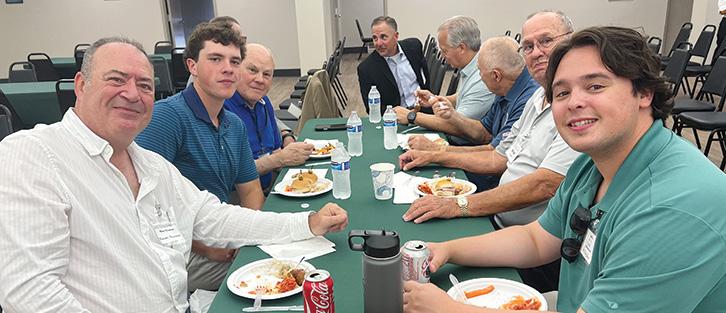
Fernandez thanked Local 3’s membership, staff, contractors and others on the Building Committee for making the new hall and training center possible. The open house included lunch and tours of the new training center.
“A project like this doesn’t happen because of one individual. It takes vision, teamwork, and countless hours from people who believe in something bigger than themselves,” he said. “This building reflects their dedication. I also want to recognize the generations of Local 3 members who came before us. Their hard work, sacrifices, and commitment to our union made today possible. We are simply the current stewards of something they built, and it is our responsibility to leave it even stronger for those who

will follow us.”
Local 3 Business Representative
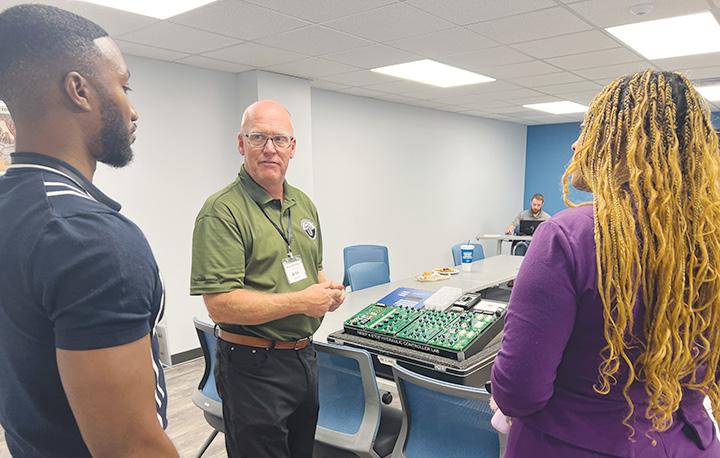
David Scott said the new training facility is fitted with the latest state-of-the-art equipment to provide the newly revamped National Elevator Industry Educational Program (NEIEP) to not only train apprentices but keep journeymen up-to-date on continuing education training that keeps pace with the rapidly advancing technology in the industry.
“How it was five years ago is antiquated,” Scott said. “The new elevators, the new systems all the new technology that’s coming – this allows us to respond to it.
“You get in an elevator, you press he button, you really don’t think about it, but there’s a lot of stuff that has to go on in nanoseconds to make it work.”






Area unions and union-friendly organizations are hosting the following fundraising and charity golf tournaments. To have your tournament listed, contact Editor-in-Chief Tim Rowden at tim@labortribune.com , or mail your information to Labor Tribune, 301 S. Ewing Ave., St. Louis, Mo. 63103.

July 18 – Machinists Local 1745’s Ron Hartman 30th Annual Golf Tournament will begin with a 7:30 a.m. fourperson scramble shotgun start at Incline Village Golf Course, 10220 Fairway Drive, Foristell, Mo. Proceeds will benefit Local 1745’s Disaster/Scholarship Fund. Entry fee is $400 per team and includes 18 holes of golf with cart, refreshments and a steak dinner catered by Ron’s Catering. The tournament will include a 50-50 drawing, mulligans, optional skins game and hole-in-one prizes on all par threes –including a $10,000 prize on Hole 11. For more information, call Adam Conley at 573-953-9206, text Keith Dixon at 314-283-96777 or email machinistll1745@yahoo.com.
Aug. 22 – Glaziers Local 513’s Charity Fund’s Annual Golf Classic to benefit the St. Louis Crisis Nursery will be held at Florissant Golf Club, with a four-person scramble shotgun start at 8 a.m. The St. Louis Crisis Nursery provides a short-term, safe haven for 5,000 children a year, ages birth through 12 years old, whose families face an emergency caused by illness, homelessness, domestic violence of overwhelming parental stress. Entry fee is $450 per foursome, with lunch included. Other sponsorships are available and range from $150 to $700. The event will include raffle items, and a 50/50 drawing. Following the tournament, prizes will be awarded for First Place in A, B and C flights, as well as Long Drive and Closestto-the-Pin. Grand Raffle tickets are $20 each or three for $50. Call 314644-3922 to purchase tickets. Make checks payable to Glaziers Charity Golf Classic and mail to 5916 Wilson Ave., St. Louis, Mo. 63110.
Aug. 22 – SMART Sheet Metal Workers Local 36 Members Golf Tournament will begin with a four-person scramble shotgun start 7 a.m. at Country Lake Golf Club, 21309 Country Lake Drive in Warrenton, Mo. Entry fee is $100 per golfer or $400 per foursome. Limited to 36 teams. At least one SMART Union member per team. Prizes awarded for first, second and third place in three flights, along with Longest Drive and Closest-to-the-Pin. Beverages and snacks provided. Dinner served after golf. Prize money checks will be mailed to team captains following the tournament. For more information, call Tournament Chairman Dan Sutter at 314-285-2625. Deadline to register is Aug. 5.
Sept. 12 – IAM Progressive Local 41 Fourth Annual Charity Golf Tournament benefiting the IAM Veterans Service Program will begin with a four-person scramble shotgun start at Lockhaven Golf Club, 10872 Lawrence Keler Drive, Godfrey, Ill. 62035. The event will include a $10,000 Hole-in-One contest. Entry fee for the tournament is $500 per team. Hole sponsorships at $100 and $150. Registration deadline is Sept. 4 Make checks payable to IAMAW Veterans L 42 and mail to Mark Grzechowiak, Local 41 ST, 12365 St. Charles Rock Road, Bridgeton, Mo. 63044. For more information, call Mark Grzechowiak at 636-293-8213 or email iamprogressivelocge41@ gmail.com
Sept. 19 – 34th Annual Greg Booth/Jack Van Horn Golf Tournament, sponsored by the Tri-County Labor Club, will begin with a 7:30 a.m. shotgun start at Warrenton Golf Course at 24805 State Hwy. 47 in Warrenton. The cost is $400 per team and includes greens fees, cart, beer, soda and barbecue. Prizes awarded for three flights, Closest-to-the-Hole and Longest drives. Hole sponsorships are $125 per and food and beverage sponsorships are $500. To register, make checks payable to the Tri-County Labor Legislative Club and mail to 10 Droste Square, St. Charles, Mo. 63301. For more information, call Joe Mueller at 636-698-5424.
Sept. 27 – UAW Local 2250
Tee off for Tots Golf Tournament will begin with an 8 a.m. shotgun start four-person scramble at Bear Creek Golf Club at 158 Bear Creek Drive in Wentzville. The cost is $125 per person and includes green fees, cart, prizes and a meal. Skins and team mulligans are $20. Proceeds from the tournament will benefit the Local 2250 Community Services Adopt-a-Child program and the United Way. Make checks payable to UAW Local 2250 and mail to UAW Local 2250, 1395 E. Pearce Blvd., Wentzville, Mo. 63385. For more information, call 636-327-5796 or email uawtee4tots@gmail.com
Oct. 9 – Plumbers & Pipefitters Local 101 Annual Golf Tournament will be held at The Orchard’s Golf Club at 1499 Golf Course Drive in Belleville, Ill. Registration for the four-man scramble begins at 7 a.m., followed by an 8 a.m. shotgun start. The $120 per golfer fee includes 18 holes of golf with cart, lunch provided on the course, a catered dinner after the tournament and skins and mulligans. Cash prizes will be awarded for Closet-to-the-Hole, and a 50/50 raffle will be held. Tee sponsorships are available for $200. To register, mail payment to Plumbers & Pipefitters Local 101 at 8 Premier Drive, Belleville, Ill. 62220. For more information, call 618-234-5504.