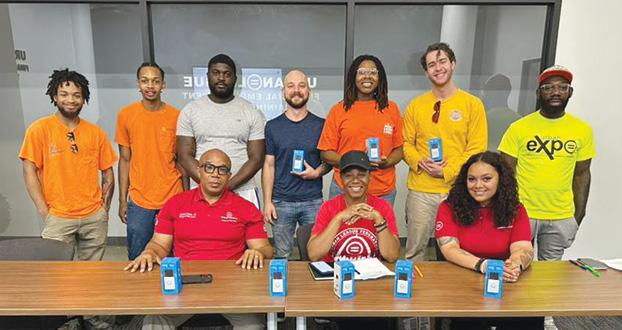
IBEW Local 1 teams up with Urban League to install security cameras for low-income residents Page 3
endorsements for Aug. 4
election Page 4
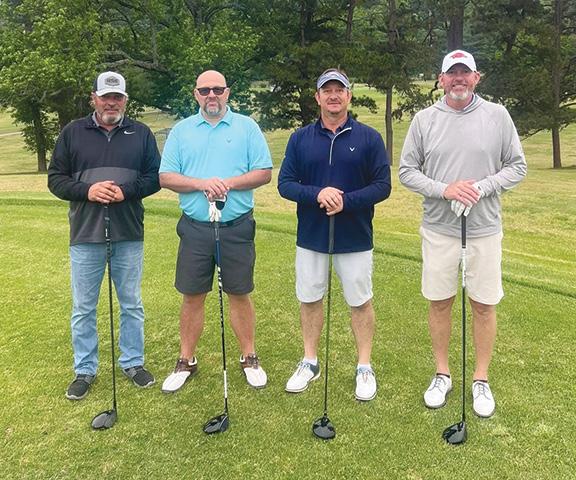
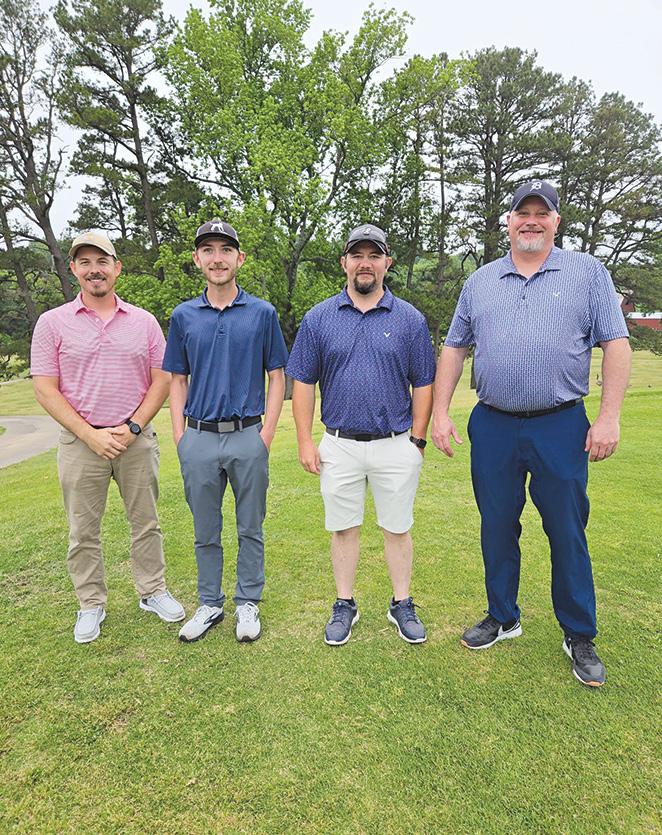
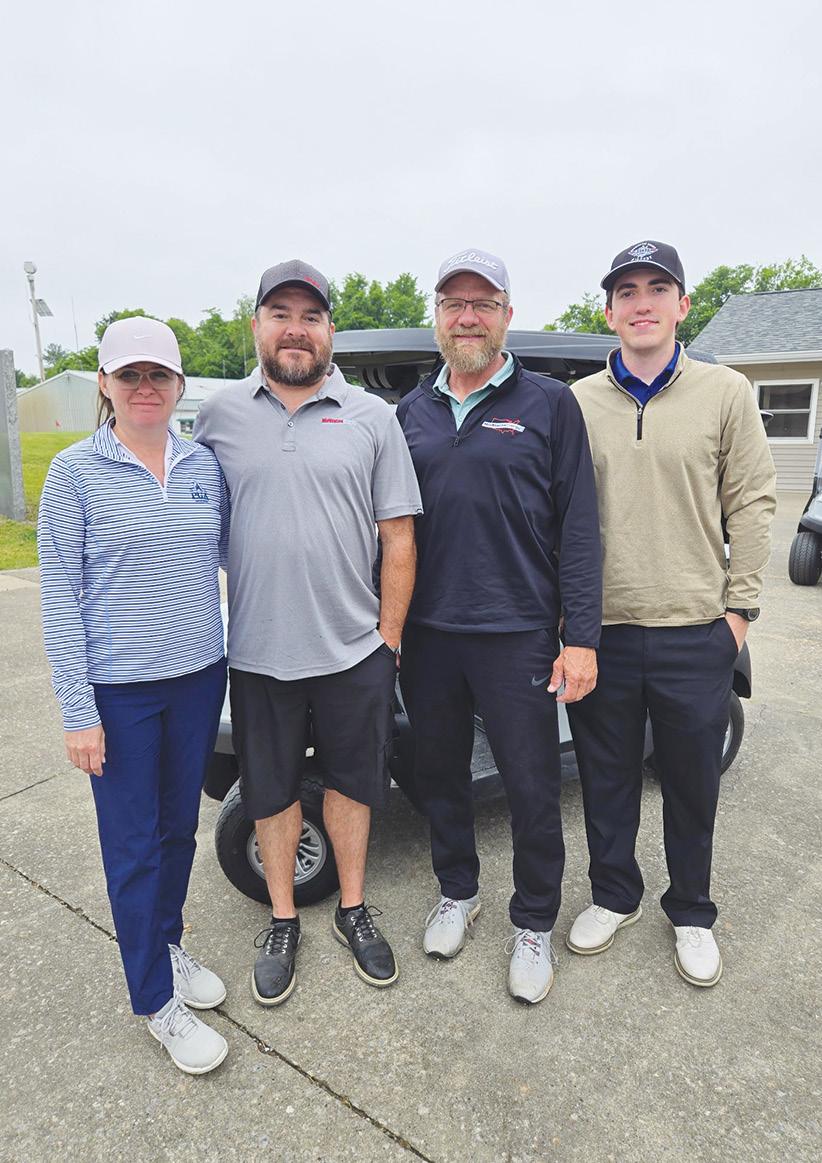
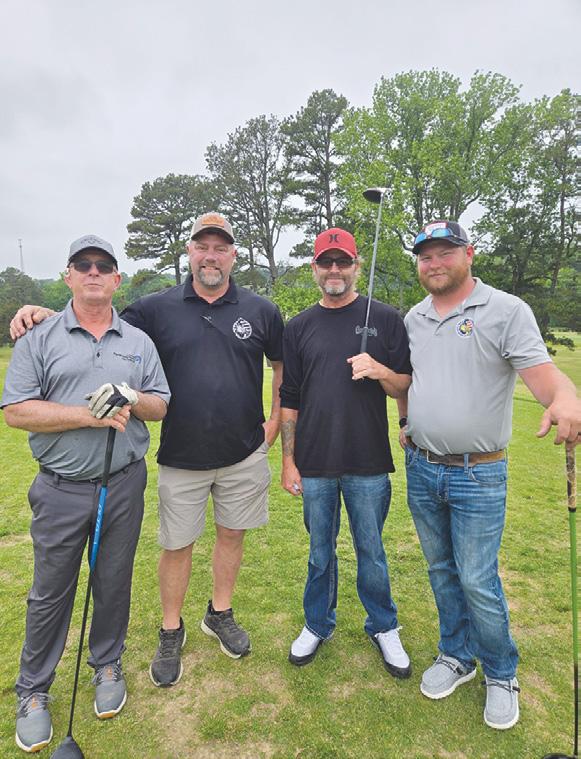
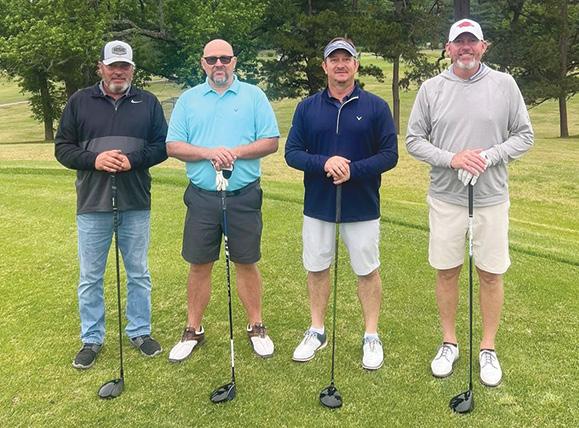
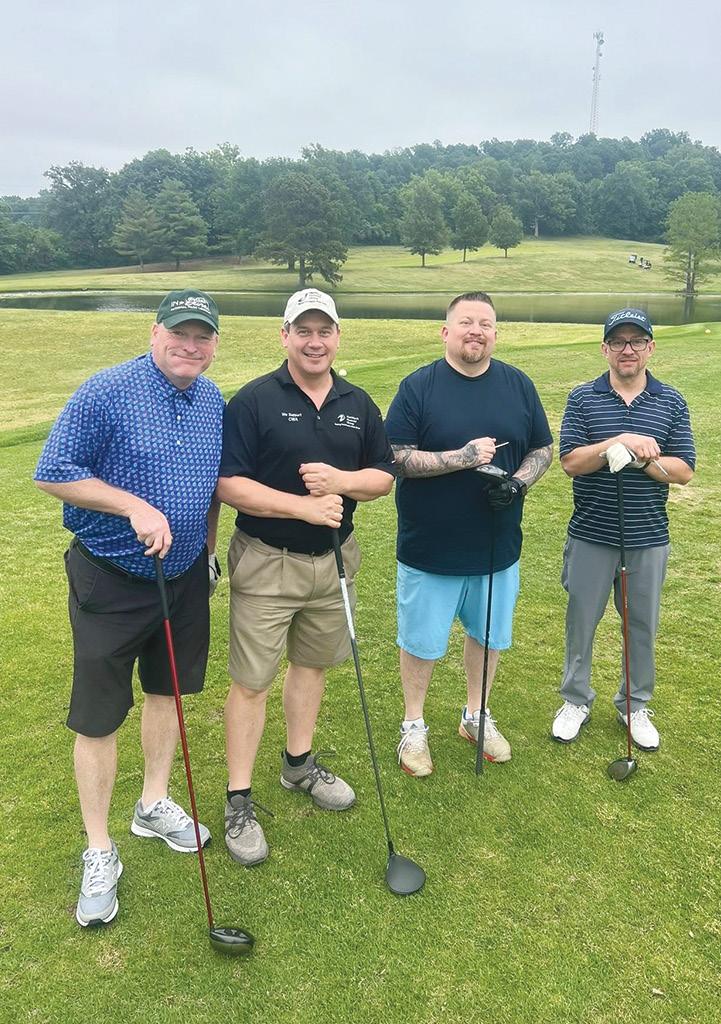
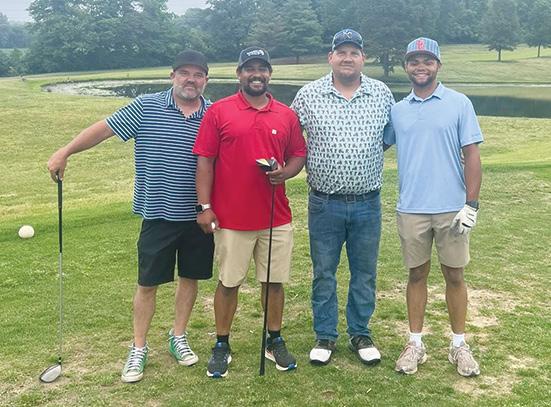
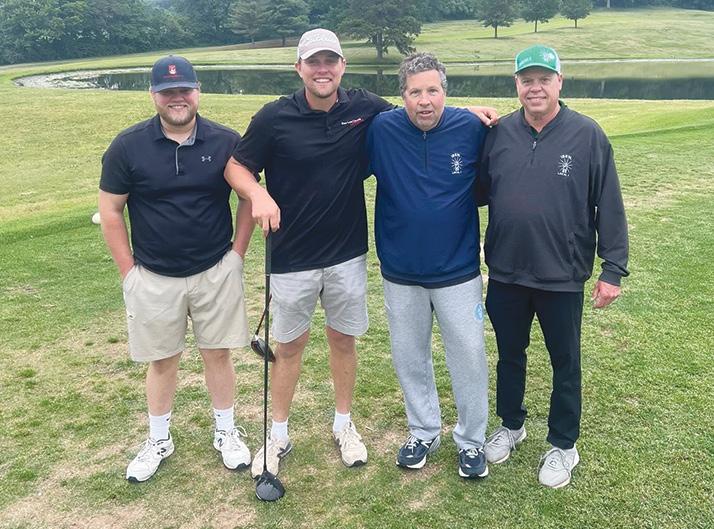
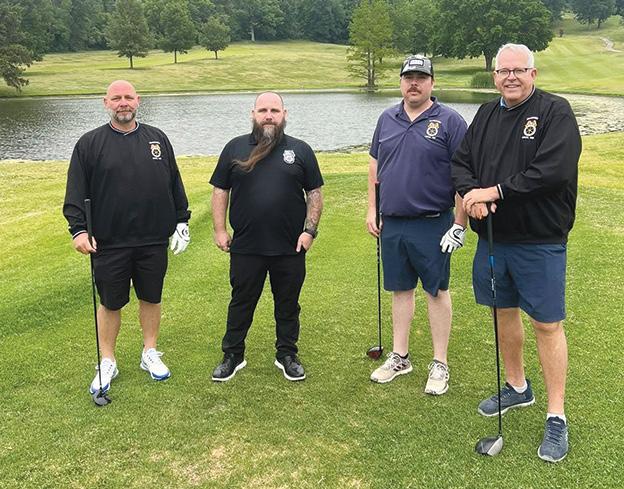
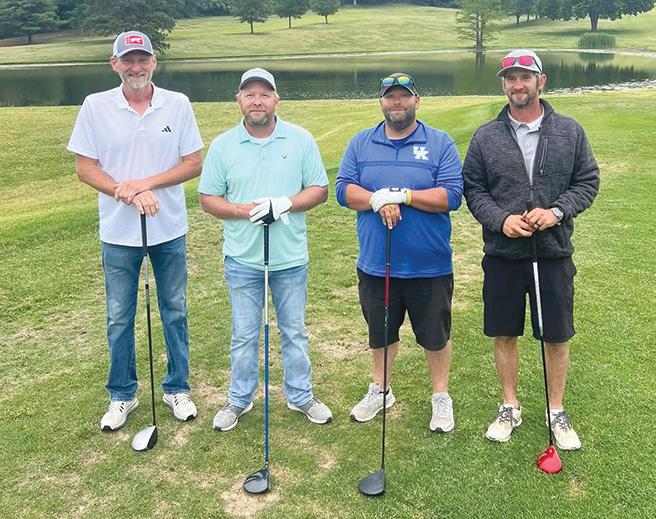
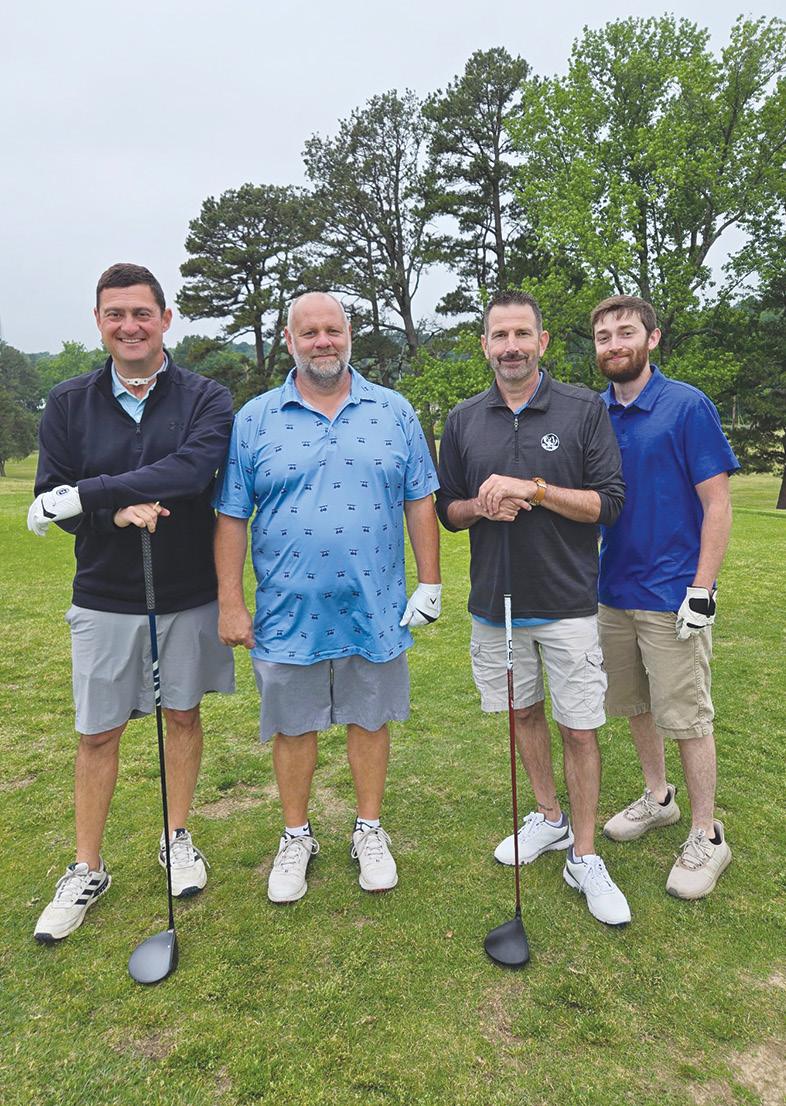
Missouri Central Labor Council Annual Golf Tournament a huge success Page 9
Locals 42 and 660 honor veterans by placing flags at St. Charles Memorial Gardens Page 16
Labor, community leaders honored at Jefferson County Democratic Central Committee dinner
By SHERI GASSAWAY Missouri Correspondent
Arnold, MO – Labor and community leaders recently were honored for their leadership at the Jefferson County Democratic Central Committee dinner.
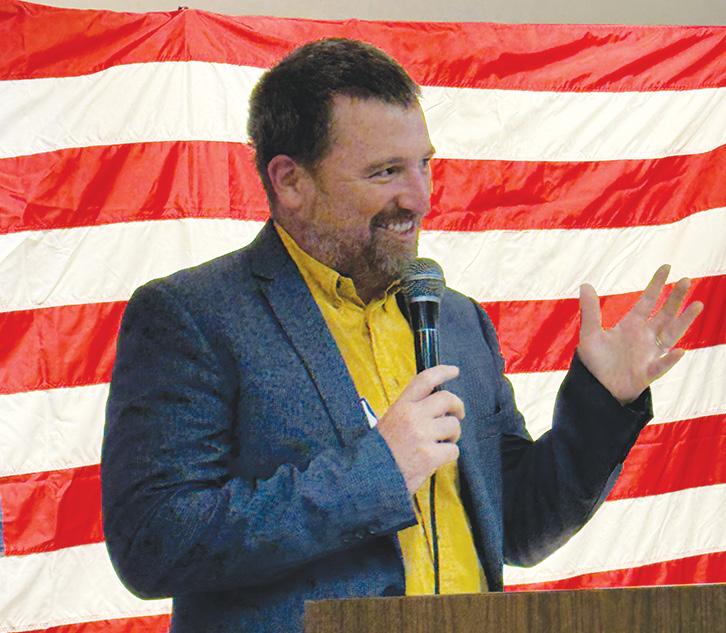
The event, which took place at the Arnold VFW Hall at 2301 Church Road, drew a packed house June 4. Sen. Tracy McCreery (D-Dist. 24) emceed the dinner, and Tim Rowden, Labor Tribune editor-in-chief, served as guest speaker.
Receiving awards were Richard von Glahn, Missouri Jobs with Justice policy director; Chuck DeMoulin, retired IBEW Local 1 business representative and past president of the Jefferson County Labor Club; Merri Berry, former Missouri AFL-CIO secretary-treasurer; and Maranda Leigh Akers, founder of Dignity Drawers.
RICHARD VON GLAHN
Von Glahn, who won the Missouri Democracy Defender award, most
RICHARD VON GLAHN , policy director for Missouri Jobs with Justice and executive director of People, Not Politicians, received the Jefferson County Democratic Central Commmittee’s Missouri Democracy Defender award at the organization’s June 4 awards banquet in Arnold, Mo. – Labor Tribune photo
recently served as the executive director of People, Not Politicians, a Missouri-based citizen advocacy organization focused on protecting democratic participation, fair representation and government accountability by challenging
Missouri’s recent gerrymandered maps.
He is a longtime organizer and strategist in Missouri’s civic and Labor Movement, and has spent years working to expand voter engagement, defend ballot initiative rights and advocate for policies that strengthen the voice of citizens in ordinary government. His work reflects a deep belief that democracy is strongest when ordinary people engage in protecting and improving it for future generations.
Von Glahn said there’s a lot of enemies of democracy in this country hard at work, and it’s easy to name them. He mentioned President Donald Trump, Gov. Mike Kehoe and many senators and representatives. But rather than focus on them, von Glahn asked the attendees in the room to focus on themselves.
“The biggest obstacle and the thing that can be the death nail of democracy is apathy and cynicism,” he said. “Everything our opponents do is designed to feed that, whether
that’s repealing our wins, threatening our safety, manipulating our elections and defunding our schools and communities. Everything is designed to make it feel too heavy to carry on. That’s why we need to focus on ourselves.”
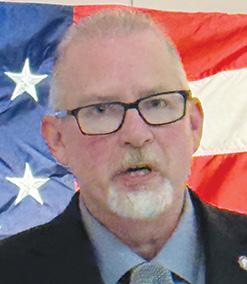
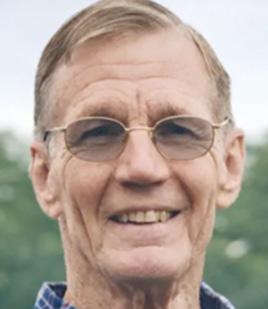
CHUCK DEMOULIN DeMoulin, who received the Community Advocate of Jefferson County Award, has dedicated his life to supporting working people and strengthening the Labor Movement in Jefferson County and beyond. As a business representative for IBEW Local 1, DeMoulin worked to protect fair wages, safe working conditions, strong apprenticeship programs and the dignity of union labor. He also served as president of the Jefferson County Labor Club from 2017 to 2025 and helped bring See DEM DINNER page 7
United Steelworkers set to begin master contract talks with Nippon-owned U.S. Steel
By ELIZABETH DONALD Illinois Correspondent
United Steelworkers (USW) have set the day for master contract talks with U.S. Steel (USS), the first negotiations since the steel monolith was purchased by Nippon Steel.
The union leadership announced that local negotiations will begin in late June and early July, and master bargaining will begin in Pittsburgh on July 20. According to the announcement, once they start master bargaining, they typically bargain straight through until expiration. But this time, they’ll come together for one week in July, take a twoweek recess, and resume Aug. 10.
“This was a result of negotiations with USS leadership,” the announcement read. “They wanted to start later; we wanted to start earlier and go all the way through. We pushed to get the July week because we believe it will help with setting the stage, exchanging initial proposals and gathering info.”
In preparation for the negotiations, USW toured many U.S. Steel
facilities and talked with members on the shop floor about the issues, as well as conducting a member survey to analyze members’ issues. Among the issues listed on the survey are wages, health insurance, profit sharing, retirement security, paid time off, investment to modernize mills and equipment, contracting out, safety and training.
HOPING TO WORK
TOGETHER
In a joint presentation in May following two days of partnership meetings, leaders from both sides expressed a desire to work together to ensure the long-term success of U.S. Steel and the security of the jobs, mines and mills, according to USW leaders.
At that presentation, USW International President Roxanne Brown and USW-USS Bargaining Chair Director Bernie Hall made priorities clear for the upcoming negotiations: “Healthcare is part of our compensation, and we expect to maintain our benefits,” they announced. “We want real commitments to invest-
ments in our facilities, fair wages, and safety.”
U.S. Steel’s facility in Granite City has relighted a blast furnace that has been idle since November 2023, with 400 workers hired or rehired. In total approximately
1,300 steelworkers are employed in Granite City, producing rolled sheet steel coils and other products. The Granite City steel mill dates back to 1895 but has been on a rollercoaster of closures and reopenings over the past several years.
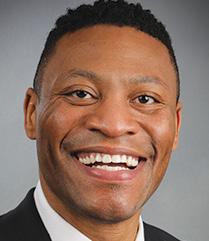
DEMOULIN
What would America look like without Citizens United?
Imagine an America where elections cost less, voters mattered more, and public policy followed an honest path
By THOM HARTMANN
The Hartmann Report
It’s beyond time for some good-old-fashioned truth telling. There’s a singular cancer at the core of our democracy and it shows up in dozens of ways that don’t seem related to most Americans. It’s tearing our country apart, paralyzed our government, and has gutted our middle class. That cancer is big and dark money in politics.
The story of how we got here is fascinating and I’ll get into it in a minute, but suffice it to say that fraud, lies, and corruption are at the core of every aspect of it. Its main cause in the present moment is one of the most corrupt Supreme Court decisions in history, where five on-the-take Republicans on the Court ruled in 2010 (Citizens United) that corporations are persons and money is the same thing as free speech. The wreckage of this decision is all around us.
HEALTHCARE
Without Citizens United we’d have a national healthcare system like literally every other developed country in the world. We don’t because the for-profit health insurance industry (which doesn’t even exist at this scale anywhere else on Earth) extracts hundreds of billions in profits from us every year and uses Citizens United’s legalization of bribery to pay off legislators to maintain the status quo. Big Pharma and Big Hospital are also in on the game, and massive New York hedge funds are buying up physician practices as fast as they can nationwide, knowing that people will pay almost anything to regain their health or postpone their death.
PUBLIC SCHOOLS
Without Citizens United we’d have highquality public schools in every community in America.
Instead, children who live in poorer parts of America regularly score up to four full years behind children from wealthy districts. Teacher pay has been functionally frozen for decades when you consider inflation; they make on average 26 percent less than people with comparable degrees. Charter Schools drain money from public schools, making the situation far worse for those families who can’t get their kids into private education. National reading and math scores have fallen to their lowest levels in decades, with only about 28 percent of 8th graders proficient in math. All approved by politicians “incentivized” by “campaign contributions” to shovel more money into the coffers of a for-profit education industry that wants to take over all of America’s schools after first bankrupting them.
HIGHER EDUCATION
Without Citizens United we’d have free or affordable college nationwide. We’re the only developed country in the world with widespread student debt; about half of the OECD nations even pay a stipend to college students to help with books and rent (like we did with the G.I. Bill) and college is free or affordable in every other country. But rightwing ideologue billionaires object to public education, particularly if paid for with their tax dollars, so we have almost $2 trillion in student debt. When Joe Biden tried to do something about the situation, the big banks who profit from this bizarre situation funded Republicans who took the case
before the six corrupt Republicans on the Supreme Court, who shot down his efforts.
VOTING
Without Citizens United we’d have universal suffrage, making it easy for everybody to vote.
The billionaires who control the GOP know that if everybody in America could easily vote like in every other developed democracy in the world their Republican toadies would lose control of both the federal government and many states, so they make it hard to vote. In Norway, Sweden, Denmark, Finland, Iceland, Germany, the Netherlands, Spain, Austria, and Italy, there’s no need even to register to vote, because the country knows you’re a citizen because of your enrollment in the national healthcare system or via similar systems. We could easily do the same here via Social Security numbers, which are now typically assigned at birth.
TAXES
Without Citizens United we wouldn’t have to pay somebody or buy software to do our taxes.
In Denmark, Sweden, Norway, the Netherlands, New Zealand, Spain, Chile, and Japan (with pilot programs in a dozen other countries) the government does the tax calculation and sends you a report on what you owe or what refund you’re getting. If you think it’s wrong, there’s an easy dispute process. They even break down where your tax dollars went by categories like health, military, roads, education, etc. in the United Kingdom, France, Italy, Spain, Finland, Denmark, Sweden, Germany, the Netherlands, and Norway. Here, the multi-billion-dollar tax preparation industry gives millions every year to politicians to prevent anything like this, and Trump even killed off Biden’s “free tax preparation” program that was a start in that direction.
UTILITIES
Without Citizens United your electric bill would be substantially lower.
Politicians who receive millions every year from for-profit utilities work to keep prices (and thus profits) high, and Republicans who’re heavily funded by the fossil fuel industry and its billionaires actively work to kill off solar and wind projects which are now the cheapest forms of electricity generation. Citizens United allowed Trump to take hundreds of millions from them and recently paid a French company a billion dollars to cancel a wind farm off the east coast.
WAGES
Without Citizens United you’d have a decent, living wage.
The federal minimum wage is $7.25 and has been frozen there for a generation because Citizens United lets big business pay off politicians to not change it. If the 1968 minimum wage were simply indexed to inflation it would be $15 today. If it were indexed to worker productivity it would be $25, moving large portions of America into the middle class.
UNIONIZATION
Without Citizens United you’d be able to easily join a union.
Unionization is what built America’s middle class between 1933 and 1981, and Reagan’s GOP destruction of our unions has taken the rate of membership from around a third of us in 1981 to around six percent of the private workforce today (and Trump is stripping union rights from federal workers, as some Red states are also doing). Big companies that fight unions, and the billion-dollar unionbusting industry make sure Republicans are well paid to fight things like Card Check, and Republicans on the Supreme Court have amplified a 45-year war against unions.
CLIMATE LEGISLATION
Without Citizens United, we’d have serious
federal climate legislation.
Corporate and fossil-fuel money has been a central roadblock to decarbonization, and Citizens United made it easier to deploy that money at scale. Fossil fuel–aligned actors now spend on the order of 500 million dollars per year on climate-related “lobbying.” Without that, we’d have had a federal clean-energy standard and stronger methane and carbon rules years ago — and fewer deliberate rollbacks — if fossil fuel interests couldn’t so easily flood elections and politicians with money.
GUN REGULATION
Without Citizens United, we’d have more aggressive gun regulation, and our children wouldn’t be traumatized by regular active shooter drills.
The NRA and gun-industry money had clout before 2010, but post-Citizens United super PACs and dark-money vehicles exploded their ability to threaten and reward federal and state lawmakers. Post - 2010, pro-gun outside groups have consistently outspent gun-safety groups in key federal races, with much of that spending routed through 501(c)(4) and super PAC structures enabled or normalized by Citizens United
CONSUMER PRICES
Without Citizens United, you’d pay less for virtually everything.
The “monopoly tax” we pay because Reagan stopped enforcing our antitrust laws in 1983 is estimated to be around $5,000 per family per year. Downtowns and suburban malls that were filled with local, family-owned businesses before the Reagan Revolution are now nothing but chains and franchises. Cell phone service that costs $15 a month in France or $12 a month in Australia bills out at an average of $61.85 per month in the United States. High-speed broadband that’s a bit over $31 a month in France or $36 in Germany (with higher speeds and better reliability than almost anywhere in the United States) averages nearly $70 per month in the US. Similar metrics are found with pharmaceuticals, airfares, and medical costs, among dozens of other product and service categories, all because monopolies destroy competition and thus raise prices (and profits).
VOTER SUPPRESSION AND GERRYMANDERING
Without Citizens United, we’d have fewer voter- suppression and gerrymandering schemes.
Election-law groups document massive post - 2010 flows from billionaire - aligned networks into state-level races (secretary of state, legislatures, courts) explicitly aimed at shaping election rules, redistricting, and administration to prevent “the wrong people” from voting. These funds move through dark-money nonprofits and super PACs authorized by Citizens United, which then blanket state media markets with ads framing restrictive laws as “election integrity” while punishing legislators who oppose them.
HOUSING
Without Citizens United, we’d have more responsive housing and tenant policy.
Real - estate and landlord groups have become major players in local and state elections, especially after 2010, often outspending tenant and housing-justice groups by large margins. Developers, real-estate PACs, and landlord associations frequently use independent-expenditure committees to back candidates who oppose rent control or strong tenant protections. Where major tenants’ rights or rent-stabilization measures have been on the ballot, landlord-backed outside spending has routinely swamped pro-tenant budgets.
COURTS
Without Citizens United, we’d have fewer captured state courts and prosecutors. Corporate, ideological, and billionaire-funded groups have leveraged Citizens United–style spending not only in legislative races but in judicial and prosecutor elections. Post-2010, outside spending in state supreme court races has soared, often funded by business lobbies and ideological networks creating courts that will side with corporate defendants, weaken regulation, or uphold gerrymanders. Similar patterns show up in district attorney and attorney-general races. Without this, state judiciaries and key law-enforcement posts would be less skewed toward protecting the rich and trashing the poor and dissidents.
FOREIGN INFLUCED IN ELECTIONS
Without Citizens United, we’d have elections that are not being bought and influenced by proxies for foreign governments. Here in Portland, Israel-aligned AIPAC blew Susheela Jayapal out of the water in the 2024 primaries, using a phony front name to avoid identification. They’ve done the same against progressive candidates from coast-to-coast and are preparing to play a big role in this fall’s elections. Money is almost certainly also being channeled from other governments (think Russia, Saudi Arabia, and China) through opaque corporate chains. When Supreme Court Justice John Paul Stevens wrote in his Citizens United dissent that the decision “would have accorded the propaganda broadcasts to our troops by ‘Tokyo Rose’ during World War II the same protection as speech by Allied commanders” he wasn’t blowing smoke. It’s here.
THE WHITE HOUSE
Without Citizens United, we’d have somebody other than Donald Trump in the White House.
This one doesn’t take a lot of explanation. A hundred rightwing billionaire families publicly raised a half-billion for Trump’s reelection, and corporations have tossed in at least another half-billion. Nobody knows how much they funneled through dark money operations, but it’s probably even greater amounts. Elon Musk functionally bought Pennsylvania for Trump and bragged about it. While there are a small handful of billionaires (Reed Hoffman, Tom Steyer, George Soros) who support Democratic candidates, they’re not as rich and not nearly as numerous as those supporting Trump and the GOP.
WHAT WE CAN DO
Citizens United came about, in part, because of a corrupt conspiracy between a Supreme Court justice (Stephen J. Field) and the Court’s clerk (John Chandler Bancroft Davis) back in 1886. I tell the story in shocking and fascinating detail in my new book Who Killed the American Dream? The Greatest Political Crime Ever Told From there it migrated through a series of corrupt 20th century SCOTUS opinions (Buckley, Bellotti, Citizens United).
As we move toward this fall’s election and the 2028 presidential campaign, we all need to share this sort of information as widely as we can.
It is possible to excise this rightwing cancer from our body politic, but it’s going to take a serious effort as all these industries and governments want to maintain things as they are.
(Thom Hartmann is an American radio personality, author, businessman, and progressive political commentator. Excerpted from his book “The Hidden History of the American Dream: The Demise of the Middle Class – And How to Rescue Our Future.” Reprinted from The Hartmann Report.)
Laborers to host several ‘opportunity’ fairs at High Hill training center
The first event is today, June 11
The Missouri Laborers union is inviting you and your family to visit its state-of-the-art training center in High Hill, Mo., to learn more about the career paths available within the trade.
Guests will be able to tour the training facility and explore apprenticeships and learn about strong wages, top benefits and major projects hiring now. Total compensation for Missouri Laborers averages between $49 and $61 an hour, depending on experience and location.
‘GET
YOUR FOOT IN THE DOOR’
“With blockbuster projects ramping up, our contractors are in need of manpower to meet industry needs,” said Brandon Flinn, Missouri-Kansas Laborers District Council business manager. “This is
the perfect opportunity to get your foot in the door with our union and to learn how our trade can help you secure a great career in the construction industry.”
There are three opportunities to visit:
• Thursday, June 11 – 10 a.m. to 7 p.m.
• Thursday, June 18 – 10 a.m. to 7 p.m.
• Saturday, June 20 – 8 a.m. to noon.
OPPORTUNITY FAIRS – The Missouri Laborers union is holding several opportunity fairs where participants can tour its state-of-theart training center and learn more about the career paths available within the trade. Total compensation for Missouri Laborers averages between $49 and $61 an hour, depending on experience and location.
– Missouri-Kansas Laborers District Council photo
The events are being held an open house format, so feel free to visit any time during the scheduled timeframe.
TO RSVP
To RSVP, visit https://shorturl. at/9fQj7. If you can’t attend in person, go to https://liunabuildsmo. com/join-us/, fill out the form, and someone will reach out to you about opportunities as a union laborer.
Caregivers, health workers lobby at Illinois Capital
Springfield, IL – Caregivers and health workers joined in a lobby day at the Illinois State Capital in Springfield to share their concerns with lawmakers.
Hundreds of advocates, workers, caregivers and other leaders rode busses to the Illinois State Capitol a few days before the end of the legislative session, which will determine the decision for next year’s state budget. The Illinois Revenue Alliance organized a press conference and noon rally with other partner organizations throughout the complex.
SEIU Healthcare union members rallied the week before, calling on
Springfield to close tax loopholes on large corporations, big tech, and billionaires to raise funding for a $2 hourly increase for home health workers, bringing them up to $20 an hour.
“The day of action comes as Illinois families continue facing the fallout of Trump’s federal budget agenda, which handed billions in tax giveaways to corporations and wealthy individuals while state budget cuts compound the threats to critical programs that families across the state rely on to survive and thrive,” read a release from SEIU Healthcare.
According to SEIU, Illinois’ tax
system is currently the eighth most unequal in the U.S., with households in the lowest 20 percent of family income paying twice the percentage of their income in state and local taxes than those in the top one percent. Illinois Revenue Alliance proposes taxes on corporate profits, digital advertising, a billionaire wealth tax and others to raise $4 billion in new revenue.
Other groups that participated in the lobby day included Illinois Coalition for Immigrant and Refugee Rights, Citizen Action, Illinois Access Living, Workers Center for Racial Justice, and others.
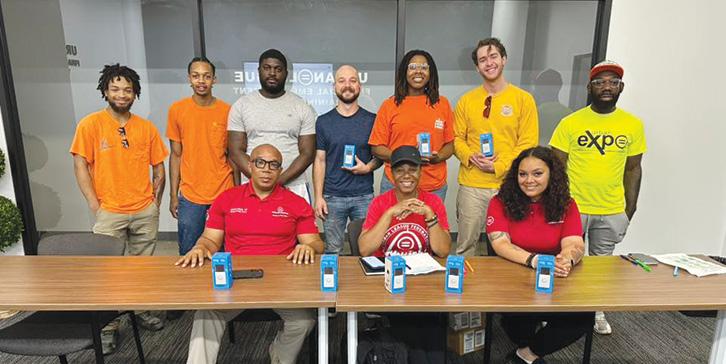
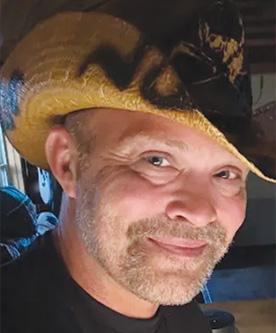
IBEW Local 1 teams up with Urban League to install security cameras for low-income residents
NORTH ST. LOUIS – A group of IBEW Local 1
St. Louis Building & Construction Trades Council leaves endorsement for St. Louis County executive open
St. Louis County – With three Labor friendly candidates seeking the Democratic nomination for St. Louis County executive in the Aug. 4 primary, the St. Louis Building and Construction Trades Council has decided to leave the endorsement for the race open.
“The St. Louis Building and Construction Trades Council is proud to represent thousands of hardworking men and women who build and maintain our region every single day,” the Council said in a statement. “After careful consideration, our organization has decided to leave the endorsement for St. Louis County executive open in the Aug. 4 Democratic primary.
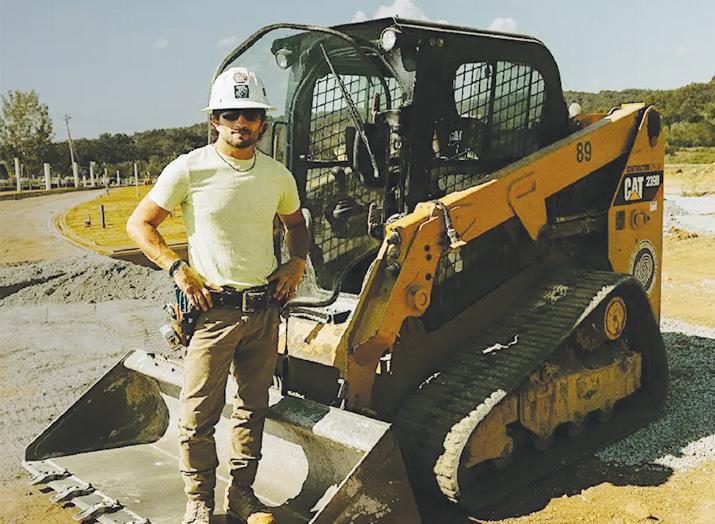
“State Senator Brian Williams, St. Louis County Assessor Jake Zimmerman and State Senator Angela Mosley have each demonstrated a commitment to working families through their pub-
lic service and leadership. All three candidates have records of supporting workers, investing in communities and standing up for the value that matter to union families across St. Louis County,” the Council’s statement continued.
“We believe the voters of St. Louis County deserve a thoughtful and competitive conversation about the future of our community, and we encourage working families to carefully consider all three candidates as they make their decision in the Democratic primary.
“No matter the outcome, the St. Louis Building and Construction Trades Council looks forward to continuing to work with leaders who understand the importance of family-sustaining union jobs, strong infrastructure investment, and protecting the rights and opportunities of working people,” the statement concludes.
COPE endorsements for Aug. 4 primary election
WILLIAMS
This Week In Labor History
JUNE 8
1904 – A battle between the Militia and striking miners at Dunnville, Colo., ended with six union members dead and 15 taken prisoner. Seventy-nine of the strikers were deported to Kansas two days later.
1966 – Some 35,000 members of the Machinists union begin what is to become a 43-day strike—the largest in airline history—against five carriers. The mechanics and other ground service workers wanted to share in the airlines’ substantial profits.
1852 – The earliest recorded strike by Chinese immigrants to the U.S. occurred when stonemasons, who were brought to San Francisco to build the three-story Parrott granite building — made from Chinese prefabricated blocks — struck for higher pay.
1971 – New York City drawbridge tenders, in a dispute with the state over pension issues, leave a dozen bridges open, snarling traffic in what the Daily News described as “the biggest traffic snafu in the city’s history.”
JUNE 9
1865 – Helen Marot is born in Philadelphia to a wealthy family. She went on to organize the Bookkeepers, Stenographers and Accountants Union in New York, and to organize and lead the city’s 1909-1910 Shirtwaist Strike. In 1912, she was a member of a commission investigating the Triangle Shirtwaist Factory fire.
JUNE 10
1937 – The mayor of Monroe, Mich.
organizes a vigilante mob of 1,400 armed with baseball bats and teargas to break the organizing picket line of 200 striking workers at Newton Steel. The line is broken; eight are injured and hospitalized. Sixteen workers’ cars were vandalized, five cars overturned, and eight more were dumped into the River Raisin.
1946 – U.S. Supreme Court rules in Anderson v. Mt. Clemens Pottery Co. that preliminary work activities, where controlled by the employer and performed entirely for the employer’s benefit, are properly included as working time. The decision is known as the “portal-to-portal case.”
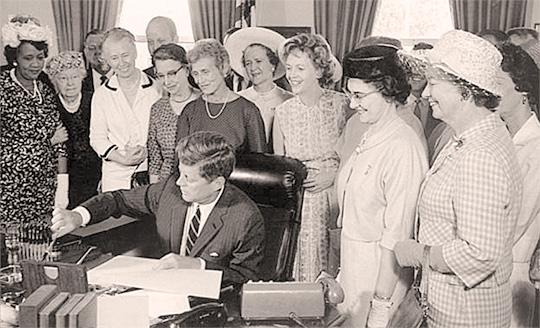
1963 – President Kennedy signs a law mandating equal pay to women who are performing the same jobs as men (Equal Pay Act).
JUNE
11
1894 – Representatives from the AFL, Knights of Labor, populists, railroad brotherhoods and other trade unions hold a unity conference in St. Louis but fail to overcome their differences.
1913 – Police shoot at maritime workers striking United Fruit Co. in New Orleans; one killed, two wounded.
1969 – John L. Lewis dies. A legendary figure, he was president of
the United Mine Workers from 1920 to 1960 and a driving force behind the formation of the Congress of Industrial Organizations.
JUNE 12
1904 – Fifty thousand members of the Amalgamated Meat Cutters and Butcher Workmen employed in meatpacking plants walk off their jobs; demands include equalization of wages and conditions throughout U.S. plants.
1945 – The U.S. Supreme Court invalidates two sections of a Florida law: one required state licensing of paid union business agents, the other required registration with the state of all unions and their officers.
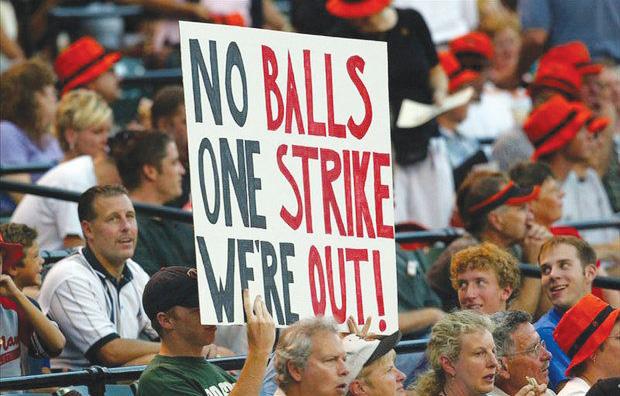
1981 – Major League Baseball strike begins, forces cancellation of 713 games. Most observers blamed team owners for the strike: they were trying to recover from a court decision favoring the players on free agency.
JUNE 13
1884 – Congress creates a Bureau of Labor, under the Interior Department. It later became independent as a Department of Labor without executive status in the Department of Commerce and Labor; in 1913 it became the Department of Labor we know today.
1926 – Tony Mazzocchi born in Brooklyn, N.Y. An activist and officer in the Oil, Chemical and Atomic Workers union, he was a mentor to Karen Silkwood, a founder of the Labor Party, and a prime mover behind the 1970 passage of the Occupational Safety and Health Act.
MISSOURI
CENTRAL BODIES
Hampton. St. Louis Union Label & Service Trades Council Meetings third Monday at 5 p.m., IBEW Local 1, 5850 Elizabeth Ave., 63110. John Schepers, president. Information: fritz@ unionlabel.info 314-779-9959
LOCAL UNIONS
In setback for Trump, Iran says it will only negotiate with Bad Bunny
Tehran (Satire from The Borowitz Report) — In a major setback for Donald J. Trump, the Islamic Republic of Iran announced on Tuesday that henceforth it would only negotiate with the Puerto Rican superstar Bad Buddy.
“Throughout his career, Bad Bunny has shown an ability to break down barriers and bring people together,” Tehran’s official statement read. “Our position is clear: no Bunny, no peace.”
In a sign of their eagerness to deal with Mr. Bunny, the Iranians said they were willing to conduct all future negotiations in Spanish, stating, “It will be easier for us to learn Spanish than whatever it is that Donald Trump speaks.”
In a further rebuke to the president, the Iranians ruled out any further dealings with Trump, calling him “muy loco.”
JUNE 14
1872 – Unions legalized in Canada.
1951 – The first commercial computer, UNIVAC I, is installed at the
& Gasfitters Local 360 Union meetings are held at 7 p.m. on the 2nd Wednesday of each month at the Knights of Columbus Council 1712, One Columbus Plaza, Collinsville, IL 62234.
Plumbers and Pipefitters Local 101 Union Meetings will be held on the 4th
LOCAL UNIONS
Bricklayers Local 1 Meets at 5:30 p.m. the first Thursday at Bricklayers’ Local No. 1 Union Hall, 1670 Fenpark, Fenton, MO 63026. To register for a course, contact Dale Jennewein at the Bricklayers Local 1 MO JATC at 314-770-1066.
Cement Masons Local 527 3341 Hollenberg Dr, Bridgeton, MO 63044
Elevator Constructors Local 3 1525 South Broadway, St. Louis, MO 63104
Glaziers Local 513 5916 Wilson Ave, St.
U.S. Census Bureau. (Compiled by David Prosten, founder Union Communication Services)
President Kennedy signs a law for equal pay to women, 1963
Fan sign voicing displeasure about the MLB strike, 1981
Sheet Metal Workers Local 268’s Carl Richard Runkwitz
Carl Richard Runkwitz, 84, of Lebanon, Ill., born on March 25, 1941, in St. Louis, MO, passed away peacefully on Feb. 26, 2026 at his home.
Brother Runkwitz graduated from O’Fallon Township High School in 1959, where he met his sweetheart Jeanne. They married on May 25, 1963.
In December of that year, he enlisted in the Army Reserve’s 307th Civil Affairs Group, where he served six years.
In October 1966, he was presented an award by the St. Louis PostDispatch for Outstanding Military Achievement.
Brother Runkwitz was a member of Sheet Metal Workers Local 268. September would have marked 60 years of service with the union, during which he also served on the executive board.
Brother Runkwitz also was a member of O’Fallon Kiwanis Club for 18 years, filling the office of vice president for a part of that time. He also served on the St Clair County zoning board.
Brother Runkwitz lived most of his life on the family farm. He took great pride in the family history and lovingly cared for the property that was acquired in 1839 by the first Carl Runkwitz.
He could be seen every spring and summer meticulously mowing the grass, which was a favorite pastime of his.
He also enjoyed restoring antique tractors and hotrods, and possessed many talents and skills, which he shared generously with family and friends.
Brother Runkwitz was often called upon to fix something that was broken and would drop whatever he was doing to help someone in need.
He was a wonderful husband, father, grandfather and friend.
IBEW Local 309, 649’s Brandon Triplett
Brandon Michael Triplett, of Prairietown Ill., passed away on May 28, 2026 at age 50.
Brother Triplett was born in San Antonio, Texas, on Dec. 4, 1975, to Paul and Susan (Cook) Triplett. He married Whitney Moss on Aug. 6, 2010.
After graduating from Edwardsville High School in 1994, he was
accepted into the electrician apprenticeship’s four-year program. Brandon’s career was spent working in both Local 649 and Local 309 as a lifelong electrician.
Brandon enjoyed being with his family and playing baseball with his boys. He loved hunting and playing guitar. Brandon had the heart of a warrior. He was the best “fighter” to help those he loved. He will be forever missed, but will live forever in our hearts.
Brother Triplett leaves behind
his loving wife, Whitney; four sons, Dylan and his wife Brenna, Ryan, Ozzie and Bodhi; his parents, Paul and Susan Triplett; brother Chris Triplett; and five nephews, Luke and Jacob Triplett, Cale and Nolan Weber and Preston Green.
The family held a celebration of life June 2, 2026 at the Prairie Inn. Memorials are suggested to Ozzie and Bodhi’s education fund and may be accepted via Venmo at @ skweber25
Plumbers & Pipefitters Local 562’s Dale Merkel
Fortified with the sacraments of the Holy Mother Church, Dale Jerome Merkel passed away peacefully at home on May 23, 2026. He was born in Perryville on March 27, 1936 to Albert and Dorothy Phillips Merkle.
Brother Merkel was a 51-year member of Plumbers & Pipefitters Local 562, and for most of his working life, he repaired and maintained commercial HVAC equipment. He was steadfast in his Catholic faith and attended
mass daily. He enjoyed creating art, thinking up quirky inventions and telling stories. During his service in the Army, he was stationed in Fort Hood, Texas, at the same time as Elvis which fueled many of his stories. He is the beloved husband of Mary Lou Merkel; loving father of Jane (Mark Reifsteck), Tom (Alfredo Lopez Chaparro), and Karen Sandt (Geoff); adoring grandfather of Samantha Sandt and Jacob Sandt; dear brother of Doris Moll and Cathy Cole; dear brother-inlaw, uncle, cousin, and friend. The family is grateful for the wonderful
caregivers at Caring Christians and Crown Hospice.
Services will be held at St. Monica Church on June 12 beginning with visitation at 10 a.m., followed by a mass at 11 a.m. A celebration of life will follow in St. Monica Church Hall.
In lieu of flowers, memorial contributions can be made to an orphanage in India that captured Dale’s heart. Make checks payable to St. Monica Church with India Missions in the memo field and mail to St. Monica Church, 12136 Olive Blvd., St. Louis, Mo. 63141; or donate to a charity close to your heart.
LOOK FOR THEM — THEY’RE EVERYWHERE
THE DISTINCTIVE CONSUMER EMBLEMS of Organized Labor have played leading roles in our economic society. Every success story has its supporters . . . the millions of union members and the general public have recognized the importance of these emblems by looking for them when
ELECTRICAL WORKERS
LOCAL UNION #309, AFL-CIO Collinsville, Illinois and Vicinity Office: 2000 Mall Street (Route 157) Collinsville, Ill. 62234
John Garrett, President
Tyler Mueth, Vice President
David Rhymer, Recording Secretary
Jason McIntyre, Treasurer
Chris Hankins, Business Manager
Dustin Grice, Organizer
Executive Board Members
Jacob Albers, Adam Biagi, Stephen Erspamer, Brian Hutson, Steve Lodes, Michael Meinhardt, Andrew Reibold, Ron Scott
Asst. Business Managers
Steve Duft, Mark Link, Carlos Perez
Examining Board Members
Jeremy Carron
Josh Jenkins
Josh Stewart Joe Varvera
Downstate Illinois
Laborers' District Council
Dustin Ramage, Business Manager Greg Stimac, Secretary-Treasurer
618/234-2704 FAX: 618/234-2721 19 Gateway Drive, Collinsville, Ill. 62234 www.downstatelaborers.org
ELECTRICAL WORKERS
Local #649, AFL-CIO
RYAN MOUSER Business Manager
COREY DODSON, President (618) 462-1627
3945 Humbert Road, Alton, Ill. 62002
Steve Kohlberg, Recording Secretary Steve Marshall, Inside Guard
TRIPLETT
MERKEL
RUNKWITZ
Dem
dinner From page 1
together union members, retirees, community leaders and political advocates in support of working families and economic justice. Under his leadership, the labor club became a strong voice for Labor rights, proworker legislation and civic engagement throughout the county.
DeMoulin said he was humbled and honored to receive the award and encouraged everyone in the room to get involved in their community.
“You don’t have to run for office or be a senator,” he said. “All you have to do is get out and help. Do your little part. You don’t have stand up and give speeches. You just have to believe in what you want to do and never give up.”
MERRI BERRY
Labor advocacy and worker mobilization. She helped organize Labor opposition to Missouri’s so-called, phony “right-to-work” for less legislation and helped lead the historic campaign that successfully overturned the law at the ballot box in 2018.
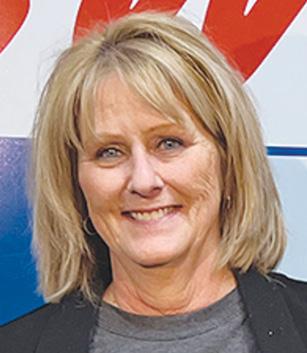
In 2020, Berry was elected secretary-treasurer of the Missouri AFL-CIO, becoming the first woman elected to a state-level position in the history of the state federation. Throughout her tenure, she earned a reputation for integrity, determination and quiet but effective leadership. Berry, who retired in 2025,
was unable to attend the awards dinner, but delivered remarks in a prepared statement.
“I’m truly honored to be recognized tonight as a Labor leader,” she said. “I accept this award on behalf of every hardworking individual who believes in fairness, dignity and the power collective action. The Labor Movement is dedicated to giving working families a voice and creating opportunities for a better life – values that are deeply shared by the Democratic Party in this community.”
MARANDA LEIGH AKERS
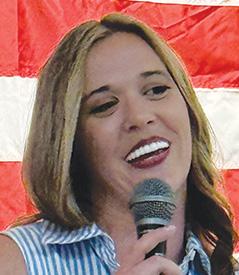
Maranda Leigh Akers, who re-
ceived the Rising Star of Jefferson County award, is a community organizer, advocate and founder of Dignity Drawers, a grassroots initiative that provides feminine hygiene products and essential personal care items to individuals and families in need in Jefferson County.
Known for her hands-on approach to service, Akers has become an active voice for community involvement and civic engagement.
In addition to her non-profit efforts, she is a dedicated organizer
in the 50501 movement, helping to coordinate protests, rallies and community actions to protect democratic values and encourage greater participation in the political process.
“This award means a lot to me,” she said. “I never expected it. I got involved in organizing because I was frustrated by watching people struggle while feeling ignored and seeing human rights and healthcare treated like political debates instead of real issues affecting real people every day. I started organizing protests and community actions because I believe people have the right to have their voices heard.”
Berry, who received the Labor Champion of Missouri award, is the retired secretarytreasurer of the Missouri AFL-CIO, a highly influential Labor leader and longtime advocate for working families across Missouri. She was a member of UFCW Local 655 for more than four decades, building her career through handson organizing, political advocacy and grassroots leadership with the Missouri Labor Movement.
In 2015, she became political director of the Missouri AFL-CIO, where she played a central role in statewide
Alton Steel suing former customer months after sudden closure
Alton, IL – Alton Steel is suing one of its former customers months after closing operations in the Metro-East.
Alton Steel Inc. announced on Jan. 26 that it would cease operations immediately after 25 years of producing steel in Alton. It cited a number of challenges, including market competition and industry consolidation. The closure laid off 253 workers, not including contractors and vendors.
Immediately the company faced significant legal backlash. At least one class-action law firm began investigating whether the immediate closure violated the federal WARN Act, which requires that employees must be notified in writing at least 60 days before a plant closing or mass layoff. They were also under investigation by the Illinois Department of Labor regarding the short notice.
Now Alton Steel is suing a Chicago-area customer for allegedly refusing to pay for eight orders of hot rolled steel. Kreher Steel Co. LLC allegedly ordered $145,346 in steel from October to December of 2025, which were delivered and never paid for, according to the St. Louis Business Journal. They have now sued in Madison County Circuit Court for the amount of the purchase plus attorneys’ fees and costs.
As late as 10 days before the closure announcement, Alton Steel was still posting new jobs at the company. In April, they held a threeday online auction to sell more than 3,000 pieces of equipment and other assets, and plans were underway to sell the property. Proceeds were to go to their creditors, according to the St. Louis Business Journal
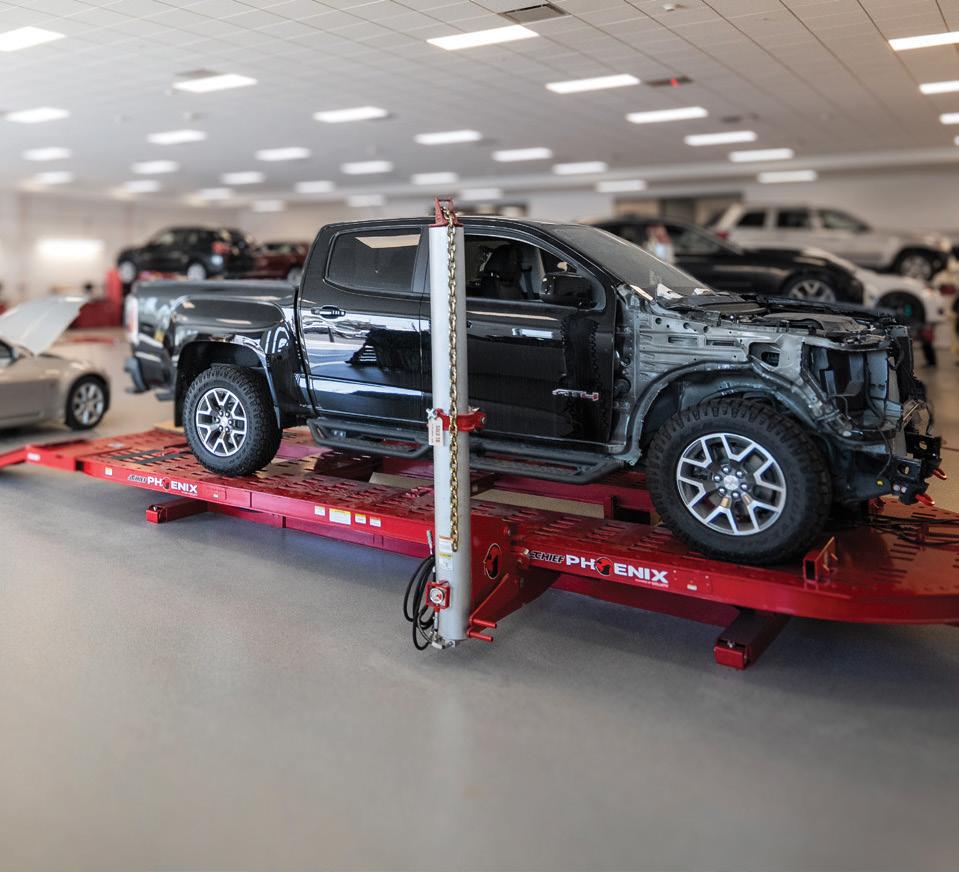
CARS, TRUCKS AND YOUR FUTURE
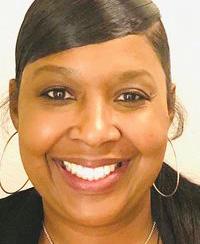
BERRY
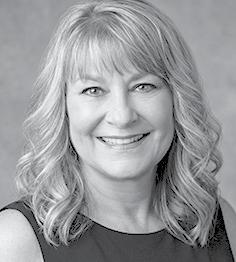
AKERS
Legislation paves the way for rideshare drivers to unionize
Springfield, IL – Rideshare drivers may soon be joining the ranks of unionized workers, at least in Illinois.
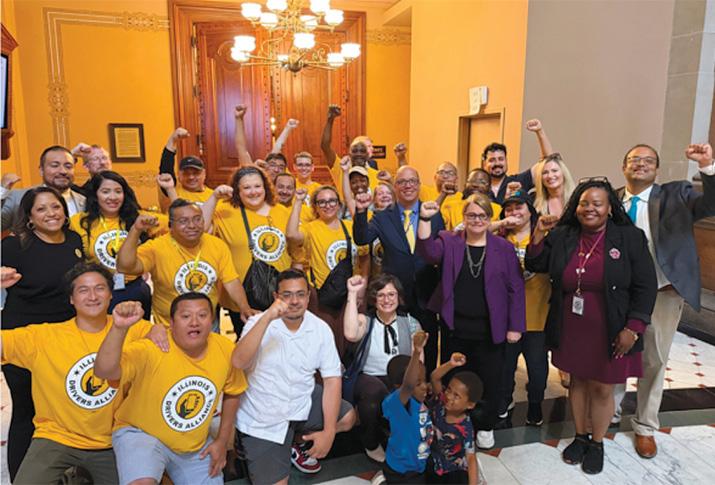
A bill allowing more than 100,000 rideshare drivers for companies like Uber and Lyft to form a union has passed both sides of the state legislature and now goes to Gov. JB Pritzker for his signature. The final passage took place at 2 a.m. Monday, according to the Chicago Sun-Times, and advocates from Illinois Drivers Alliance (IDA) — a coalition formed by the Machinists (IAM) union and SEIU Local 1 — were waiting in the balconies to see it pass.
Illinois is the third state in the U.S. to pass this legislation, following California and Massachusetts. It was supported by Democrats with split votes from Republicans, with a vote of 83-28 in the House and 4212-1 in the Senate.
SPLIT SUPPORT
The Illinois Transportation Network Driver Labor Relations Act marks a change in that the union includes workers who actually aren’t employees and was actually supported by Uber and opposed by
AFSCME Council 31 – the latter because they were afraid it would keep the drivers from qualifying for benefits. SEIU Local 1, however, supported it.
The bill will also include a fourcent-per-ride charge to the companies for implementation costs and a grant program titled Rideshare Workers Support Fund, which they are prohibited from passing on to the consumers, according to Capitol News Illinois
YEARS-LONG CAMPAIGN
Illinois Drivers Alliance states the victory follows a years-long organizing campaign including rallies and lobby days at the Illinois State Capitol.
“This legislative session focused on affordability for working people, and this history bill helps restore balance and lift up working families,” read a statement from the alliance. It stated that 60 percent of all rideshare drivers live in ZIP codes with incomes below the Illinois median even though rideshares generate $7.7 billion in economic output a year and contribute more than $518 million in state and local tax revenue.
This victory will reach far beyond drivers alone. When drivers earn more, that money is spent back in local communities at grocery stores, gas stations, restaurants, childcare centers and small businesses across Illinois, helping strengthen local economies and support working families in every corner of our state.”
PRIORITIES
Top priorities for a new union will include compensation and benefits, insurance coverage for occupational injuries, compensation or insurance for job loss, paid leave, an appeals process and representation when a driver is deactivated, arbitration procedures, safety mandates and more, according to IDA.
“Unions lift up our working class to make sure families can afford to put food on the table, pay their bills, and plan for a future without fear,” said Illinois Drivers Alliance Leader Genie Kastrup.
Because of outdated state law, rideshare drivers who keep our state moving were being left behind; they are parents, immigrants, retirees, students – working people doing everything they can to scrape by. The passage of the Rideshare Driver’s Union Bill sets drivers up to take matters into their own hands by forming a union and fighting for a better future! I am so proud of our drivers who fought tooth and nail to get this bill passed. It was their courage and selflessness that will forever change the landscape for gig work and set the standard for ride-
share drivers across the country.”
‘A
VOICE ON THE JOB’
The bill was cosponsored by state Rep. Yolonda Morris, a former certified nursing assistant (CNA) and union organizer. “I’ve seen firsthand what it means when workers have a voice on the job and what happens when they don’t,” she said. “Rideshare drivers are our neighbors, constituents, and family members, and today, they finally have the same right to organize and collectively bargain as every other worker in our state.”
Just a few days before the bill passage, Massachusetts officially formed its rideshare union: 70,000
rideshare drivers are now represented by the App Drivers Union, now in negotiations.
Meanwhile, Uber and Lyft have seen 17-18 percent increases in revenue while driver pay dropped by 3.9 percent for Uber drivers and 5.5 percent for Lyft drivers, according to IDA. Median net earnings of rideshare drivers show approximately $8 an hour statewide and $13.93 an hour in Chicago, well below minimum wage. The bill authorizes sectoral bargaining, which ensures that all drivers will benefit from negotiated standards on pay, safety and working conditions, whether or not they join the union and pay dues.
THE ILLINOIS DRIVERS ALLIANCE — a coalition formed by the Machinists (IAM) union and SEIU Local 1 ––is celebrating passage of legislation to allow them to form a union. Illinois is the third state in the U.S. to pass the legislation. – IAM photo
Fishing Lake Erie West Basin walleye on a boat full of friends
By BRANDON BUTLER
Driftwood Outdoors
Lake Erie is known for walleye. More than any other body of water, it’s the destination anglers think of when they hear someone mention these delicious, highly sought after sport fish. Taking a trip to Lake Erie should be a requirement in the lifetime of any serious walleye angler. But what makes going to Erie so special extends beyond just the fishing. There’s much more to experience.
In 2009, I took my first walleye fishing trip on Lake Erie with Sea Breeze Charters. I met the owner, Captain Bob Witt, at the Indianapolis Boat, Sport & Travel Show. His booth was adorned with giant walleye mounts, and I wanted one for my wall. Captain Bob invited me on a trip, and to this day, it was one of the best fishing trips I’ve ever taken. The fishing was fantastic, and the nine-pound walleye I caught has been on my wall for over 15 years now.
Since that first trip, Lake Erie has become a favorite fishing destination of mine. I’ve been back to chase smallmouth bass with fly rods around Buffalo, N.Y.; walleye out of Erie, Pa.; and mixed-bag trips below the falls on the Niagara River. But I had not been back to fish with
Captain Bob in over 15 years when I received an email from him asking if I’d like to come out for a trip this spring. I took him up on it and put a crew of five more guys together to fill the boat.
THE CREW
Barry Hart is a retired energy industry executive who serves on the Board of Directors of Retrieving Freedom, the service dog organization I work for. Kevin Orthman is a longtime friend and former executive director of the Professional Outdoor Media Association. Pete Medved is my father’s friend from the Army who is like an uncle to
me. Ranger Bob Sawtelle is a retired Indiana DNR park ranger. Eric Hoskins is a lifelong family friend and fireman in Martinsville, Ind. Lake Erie is home to a fleet of charter boats. It’s not hard to find someone to take you out for walleye on Erie. Just search Lake Erie charter boats and you’ll find plenty of outfitters offering guided trips. I have only fished with Sea Breeze, but there’s a reason why Captain Bob’s outfit has grown to be the largest in the Western Basin with over 30 charter boats in operation.
The six of us met up at our rental unit in Oak Harbor, Ohio on Wednesday evening. Sea Breeze, and a number of other outfitters, have multiple trailers in a park right next to the harbor. It’s part of Wild Wings Marina, where you’ll find a restaurant, gas station, convenience store, and fish cleaning services all on site.
When visiting Lake Erie, I’m going to eat lake perch. They are my favorite fried fish to eat, and Erie is known for them. We went to the Brick House in Port Clinton and had perch the first night. The food, service, and atmosphere were all great, so we went back the next night and ordered a few pizzas to share. The crab rangoon pizza was a surprise favorite.
The weather wasn’t great, so those two trips into Port Clinton were the extent of our tourism experience, but the region has more to offer. Both Port Clinton and Sandusky have excellent lodging and dining opportunities. Cedar Point is a top-tier amusement park, with an equally impressive waterpark. The Bass Islands are the Keys of the Great Lakes, with Put-In-Bay being the Key West of the north.
THE FISHING
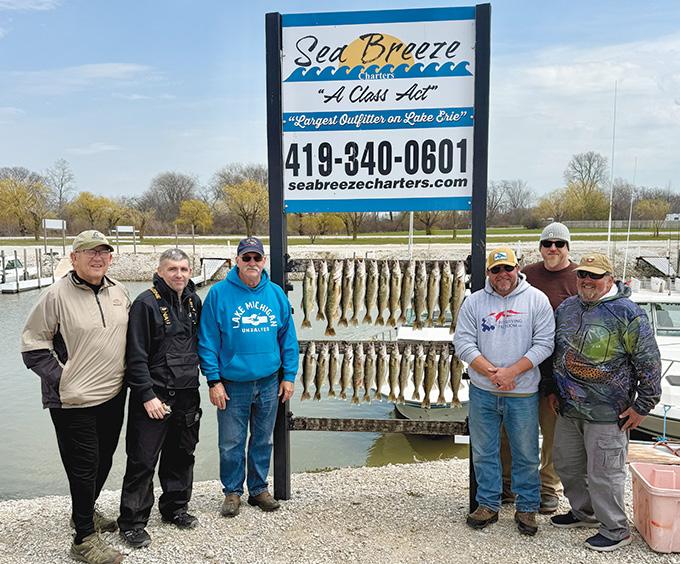
Our two days of fishing were challenging, but we all caught fish and brought home a few dinners worth of fillets. For both days, we fished with Captain Bryce Smith. He’s a seasoned captain among those working for Sea Breeze. Captain Bob mostly oversees the operation these days. The Sea Breeze boats are large and comfortable. They look sort of like pickup trucks with long beds. Everyone fishes in the back.
On day one, we worked for fish through high winds and muddy water. Waves were large enough to swallow smaller boats as they rolled into the troughs. We went one man down with Ranger Bob falling victim to seasickness. With a limit of six walleye per man, we could keep 36. After fishing all day, we kept 28. We lost more than enough to have
pushed us to our limit, and we had to throw back some smaller ones. By all measurements, an average day at Lake Erie is still a phenomenal day anywhere else. The lake calmed the next morning, and with a perfect chop came great fishing. Ranger Bob sat it out, but the five of us collected 18 walleyes before the rain started around 10 a.m. With travel ahead and more than satisfied with the fish we caught, we called it a trip. The group got along great, and new friendships were forged. Lake Erie is big water, so even though some of the closer spots were blown out, our captain knew where to go to make sure we caught fish
Fishing the Western Basin of Lake Erie for walleye in the Port Clinton and Sandusky area is one of the premier fishing trips in America. I really haven’t found many comparable destinations for an all-around experience of excellent fishing, food, and entertainment in the Midwest. The service and accommodations at Sea Breeze were excellent. I hope to make it to Lake Erie more often.
See you down the trail… (For more Driftwood Outdoors, check out the podcast on www.driftwoodoutdoors.com or anywhere podcasts are streamed.)
THE CREW with 28 Lake Erie walleye caught on a very windy day. Proudly displaying their catch are (from left) Barry Hart, Eric Hoskins, Pete Medved, Brandon Butler Kevin Orthman, Ranger Bob Sawtelle.
Fishing road trips around the Midwest Region for summer angling experiences
By BRANDON BUTLER Driftwood Outdoors
Summer means fireworks and fishing. Not necessarily separate, because at times the fishing can be explosive. Largemouth and smallmouth bass are drawing anglers out of bed every weekend for bass tournaments. Those looking for a more leisurely experience and few fish for the dinner table, are targeting catfish and panfish around the region. Catch and release anglers are targeting musky, carp, and small stream smallmouth across the Midwest Region. This is the time of the year when many families load up and head out on road trip. If your idea of a fun family vacation includes time spent fishing, then these destinations should be considered as destinations to explore.
ILLINOIS: CEDAR LAKE LARGEMOUTH
Cedar Lake, located just a few miles south of Carbondale, is one of the best largemouth bass lakes in Illinois. The DNR collected a six-pound bass in their spring 2023 survey, and an angler boated a certified 10-pounder in 2022. There’s proof the lake holds lunkers. At 1,750 acres, this lake is made for fishing. There is a 10-hp limit on motors. Cedar Lake reaches depths of 60 feet, but most of the bass are caught along shoreline. The lake has a lot of natural cover. Target the stumps, fallen trees, brush piles. Working a rubber worm or a jig along the cover is a proven tactic in the summer when largemouth can be lethargic. The Cedar Creek boat ramp on the north end of the lake is closest to Carbondale.
IOWA: WINNEBAGO RIVER SMALLMOUTH
Smallmouth regularly eat minnows, crayfish, and large insects. Baits imitating these food choices are usually fished subsurface. Smallmouth will also gorge on a timely meal of a mouse, small snake, or frog. Imitating any of these larger meals on the surface with a topwater bait is an explosive way to tangle with Winnebago River bronzebacks. Caybanks Forest south of Nora Springs has public access to the river. Many choose to begin a float trip at East Park in Mason City and take out downstream at Averydale Access. The Cedar is a beautiful river to float and fish in a canoe or kayak. CrawDaddy Outdoors in Waverly offers gear and information for floating the river.
KANSAS: KANSAS CITY CARP
There are numerous waters around Kansas City where one can catch common carp, but the Missouri River is main place anglers go to carp fish. The river runs through the north side of the city. The Kansas and Missouri River Confluence at Kaw Park is a good place to target carp from the shore. If you plan to use a boat, the park has a public boat ramp. Most carp anglers look for areas of slow current to anchor in and use bait on the bottom. Garlic flavored dough balls work well, so do commercially
produced carp baits. Fly fisherman in the region also target carp. Using a boat to seek out tailing fish, puts one in the action. Throwing crayfish patterns or other carp patterns like the Carp Crawler or Widgeon Carp Fly, and result in hookups.
MISSOURI: SINKING CREEK SMALLMOUTH
One of Missouri’s newest state parks, Echo Bluff, offers over a mile of access to Sinking Creek. This small water is an absolute Ozark gem. A tributary of the Current
River, Sinking Creek is primarily a wade fishing creek. At times, you can navigate a kayak down the last few miles. It’s crystal-clear waters are tough to fish during the peak of the day, but early and late, when the light is low, anglers can pull smallmouth bass over 20 inches long from the shadows. Spinners and topwater plugs work well. So do soft plastics and nightcrawlers. The fish in this creek grow very slow. To maintain a productive fishery, catch-and-release of smallmouth bass should be practiced at all times. Echo Bluff State Park is located 20
miles south of Salem, Missouri and offers campsites, cabins, and a lodge with rooms. There is an excellent restaurant onsite.
OHIO: CUYAHOGA RIVER PIKE
If you like to hunt for rare fish is obscure places, trying to catch a northern pike from the Cuyahoga River is a challenge for you. The river runs through Cleveland and feeds into Lake Erie. There are not a lot of pike in the river, but they are in there. Accessing the river anywhere in the
Cleveland area will give you a shot at a pike. Throw big spinnerbaits and large stickbaits. Pike are predatory and will strike an easy meal. Look for them in ambush locations, like next to logs, rocky points, and manmade structure. Northern pike will hunt in shallow water bays and slack water. Trying buzzbaits on the surface early and late in the day to target aggressive fish.
See you down the trail… (For more Driftwood Outdoors, check out the podcast on www. driftwoodoutdoors.com or anywhere podcasts are streamed.)
Outdoor Guide
By LARRY DABLEMONT
I found an old pocket knife the other day, fairly rusty, and with part of the handle gone. It had three
The knife
blades, but one was broken. If you soaked it in oil and sanded away the rust and loosened it up again, the old knife would have a few years left
in it. I wondered just where it had come from, and when it had been new. What era had it seen and what stories could it tell if knives could
You’re invited to the 3rd Annual
Family Fun Day
August A. Busch Shooting Range and Outdoor Education Center Monday, June 29 • 3 – 7 p.m. Come any time!
• Archery
• Atlatl (age 9 and up)
• Disc Golf
• Nature Exhibits
• Backyard Bows Archery
• Fishing Game
• Multiple Learning Stations
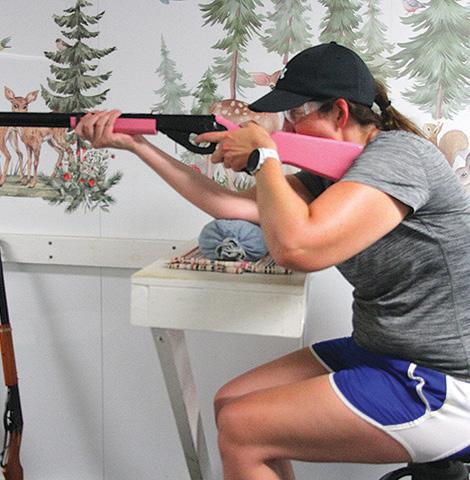
• BB guns
• .22 Rifles (age 9 and up)
• Shotgun (age 11 and up)
• Free Snow Cones!
A FREE open house style event!
talk? What kind of man had carried the old knife... was it perhaps a gift he had cherished in a day and time when little things meant a great deal more than they do today? Looking at the old knife, I could almost picture him in my mind.
I grew up around Ozark rivermen, farmers, trappers, hunters and fishermen who owned such knives. At a young age, I learned the importance of a good knife. Most of my schoolmates had some kind of pocket knife, many handed down from fathers or grandfathers, and each one a prized possession. I had several, a lot like that one I found recently, usually with blades worn down from constant sharpening... some with a point or handle partially broken. I got most of them from my grandfathers.
JUDGING BY THE KNIFE
Folks said you could judge a man somewhat by his knife. Anyone wearing a large, sheathed knife was thought to be something of a showoff. A man who had a dull blade was considered a bit lazy, and if a man had broken blades, he was perhaps careless. Anyone who asked to borrow a knife wasn’t looked upon highly. A fellow who lost his knife regularly wasn’t dependable, and one who cut himself was a real greener. If you swapped knives where I grew up, you were gullible. Kids at the old country school did that on occasion, one would hold his knife in a closed fist and offer to trade for whatever pocket knife you had in your pocket. If you ever yielded to temptation, you would likely find out that anyone wanting to trade knives sight unseen had one in such poor shape he didn’t figure you could come out ahead.
Old-timers kept favored knives for years, until the blades were sharpened to near nothing. Then they gave them to youngsters they thought highly of as my grandfathers did with me. Or perhaps on occasion they gave them to kids who made a nuisance of themselves asking for one, as I often did.
I never knew any Ozark woodsman to carry a large, sheathed knife, though there may have been some during the deer season. A good outdoorsman carried a small axe to do heavy work, and a large pocketknife with two blades or maybe three. One blade was always duller than the others, used for emergency prying or scraping or anything you wouldn’t want to use a fine-honed
edge on. But you could bet there would be one blade he kept so sharp he could darn near shave with it.
AGING WITH THE KNIFE
Knives weren’t so expensive then, but there was less money to waste, so they were taken care of. As they grew old, Ozark outdoorsmen often became whittlers. You could see them in the summer sitting on a bench in front of the courthouse telling tall stories about legendary bucks and catfish too big to fit in a johnboat, all the while whittling away on a cedar plug. They’d move inside during the winter, and tell the same stories before the pot bellied stove at the general store, whittling away and chewing tobacco. If you had some ability, you whittled something like a toy or a figure. If you weren’t that good at it, you just whittled. You didn’t have to whittle anything in particular, just whittling was enough. It showed that your knife had an edge so keen you could whittle a toothpick out of a railroad tie, and that said something about you.
Grandpa Dablemont used his knife to fashion rabbit-trap triggers or deadfall sets, to skin a mink, cut bait, or shave a rough edge off his sassafras paddle. Grandpa McNew had different uses for his knife. He cut green hickory whistles for his grandkids, and cut off plugs of tobacco for himself. He used it to trim his toenails regularly before bedtime, and then used the same knife to peel an apple on occasion. The old timers I grew up around seemed to never eat an apple off the core. They sliced off pieces, chunk by chunk, and balanced each slice on the knife blade with a leathery thumb while guiding it to their mouths.
GOOD METAL
Grandpa’s knife was an old Shrade-Walden, and he was proud of it. It had “good metal in it,” he claimed. And he referred to the men he liked and respected the same way. They “had good metal in ‘em.” I think the original term was ‘mettle,’ but he didn’t know that.
I still have a couple of old knives owned by my grandfathers. I sometimes carry one around for awhile for good luck, but I am ever fearful of losing it. Still there is something about sitting at a deer crossing, whittling on a stick with a knife that is 100 years older than I, and once fit in the weathered hand of one of my grandfathers.
June Conservation Corner: Grounded geese
By DAN ZARLENGA Missouri Department of Conservation
Certain first-class fliers in the bird world must settle for coach accommodations during the month of June! And there’s no shortage of irritated, complaining customers either.
Even the best aircraft must be grounded every so often to receive a repair or refit. That is exactly what’s happening with Canada geese this month.
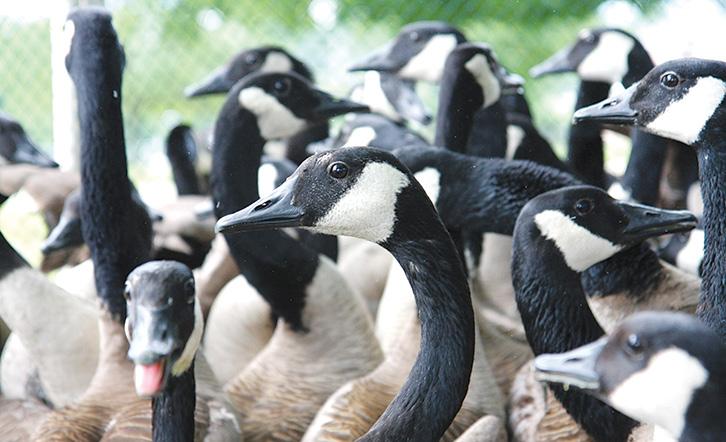
You’ve seen them in wetlands, by ponds, and even in park and subdivision lakes—distinguished by their brownish bodies, long, black necks and heads. They have a distinctive broad white patch that runs from ear-to-ear. The insistent honking of Canada geese is as unmistakable as the whine of a jet turbine.
GETTING GROUNDED
Normally Canada geese stand out in flight by forming graceful “v”-shaped formations in the air as they honk their way across the sky. For a time in June, however, nature pulls their boarding passes.
After a year of migration, nesting, territorial disputes, and daily
flight, their feathers become frayed and worn. Continuing to fly on faulty wings does not pass nature’s safety checklist.
Songbirds maintain their flight feathers by shedding and replacing them gradually throughout the year. Canada geese do it differently. Once a year they shed their primary flight feathers all at once and are literally grounded for several weeks. It’s called molting, and for a four-to-six-week period these geese are birds that can’t fly.
FINDING SUSTENANCE
During the annual “layover,” Canada geese find accommodations in areas with open water and ample food. Manicured turf around suburban ponds and lakes is essentially a five-star hotel for them.
Sustenance remains within easy reach, and the water provides an escape path from potential predators when the sky is off limits to the geese.
As any frequent flyer can attest, sitting on the runway unable to take off can make one pretty irritable. The same is true for Canada geese. Already known for their cantankerous behavior, geese can become even more aggressive dur-
ing molt. And they often hiss out their displeasure to any passer-by. It’s best to avoid them while they’re in such a bad humor.
AN OPPORTUNITY
For Missouri Department of Conservation biologists though, the geese’s temporary flightlessness creates an opportunity. Late June is banding time. MDC biologists and volunteers conduct “goose roundups” by herding the flightless birds into netted areas and placing leg bands on them. This yields important data for management and tracking their population and movements.
Meanwhile, nature is hard at work refitting the stranded birds with refurbished wings. Evolution has made this repair job a high priority, and the geese sprout a full set of completely new flight feathers in remarkably short order. By mid-July, the flock will have taken to the sky again, carried aloft on a set of freshly refitted wings. They’re now ready for another 11 months of uninterrupted flying. For a species that must surrender the sky each June, Canada geese prove remarkably successful at reclaiming it.
As the bobber began to dance with the unmistakable tug of a fish, my little nephew shrieked with excitement. I hoisted a plump bull bluegill into the boat, and little Hank, as I like to call him, paid me one of the finest compliments I’ve ever received when he turned to his father and said, “He caught another one already.” Bluegill action this time of year can be fast and furious, making it a perfect fishing opportunity for kids.
I challenge anyone to come up with a more enjoyable way to spend time outdoors with a child than sitting in a boat over a bed of bluegills, plucking them out one after another. The excitement is
non-stop, and the smile of a child sticking a finger out to touch the slick scales of beautiful black, purple and orange bluegill is a trophy fishing experience.
The bluegill pre-spawn kicked off when water temperatures climbed into the upper 60s. Now it’s nudging past the magic mark of 70 degrees, and bluegills are moving onto their beds to begin laying eggs on shallow spawning flats found mostly along the shoreline and in the backs of coves. In most Missouri, Illinois and Indiana waters, this is happening right now, and the bluegills are easy pickings.
WHERE TO FIND THEM
Farm ponds are among my favorite places to chase bluegills. If you have access to any private
ponds or small lakes, there’s a good chance you could do very well there. My favorite public water destinations for bluegills are strip pits. In Indiana the Greene-Sullivan State Forest strip pits range in size from less than an acre to several hundred acres, and some are considerably better than others. In Missouri, Finger Lakes give one a similar destination. The chance of finding a honey hole is real if you’re willing to move around and search.
WHAT THEY EAT
During the spawn, bluegills are aggressive defenders of their nests. They’ll hit just about anything you drop on them. Worms, crickets, wax worms, minnows, leeches, and basically anything else small enough to fit in their mouths will work.
Crickets are my favorite, because they catch bigger fish. A bluegill simply cannot stand an intruder drifting down toward its bed. That instinct to protect is exactly what makes them so fun to catch right now.
Bluegills spawn in groups, so once you locate a spawning area, we call these beds, you likely won’t need to move for quite a while. Look for beds in the shallows near the backs of bays, around stump fields, along weed lines, and beside brush piles.
Boat docks tucked into bays are premier spawning locations, especially protected by shade from overhanging trees. If you find a shaded dock with deep water nearby, especially one with brush piles underneath, pay close attention. There could easily be a dozen beds right beneath your feet. A bluegill hammering your bait before it even settles is all the confirmation you’ll need.
Bluegills hold in the shallows until water temperatures push into the high 70s. By the time the water reaches 80 degrees, you can count on bluegills having moved off the shore and into deeper, cooler water. Until then, keep your presentation shallow and your expectations high.
TACKLE
As for tackle, you don’t need much. A light weight spinning rod or cane pole, a small hook, a split shot sinker, and a bobber set about two feet deep is about as sophisticated as it needs to get. Kids and bluegills are a perfect match for exactly that reason. There’s no complicated rigging, no trolling pattern to dial in, and no long gaps between action. The bobber goes down, you set the hook, and little Hank loses his mind all over again.
Bluegills are a favorite for my cast iron skillet with peanut oil. In most Midwest lakes, their populations are healthy, they multiply rapidly, and they grow fast. Pulling a few from their beds for a fish fry is not only acceptable, it’s good for the water you’re fishing. Never overharvest, but don’t carry an ounce of guilt about filling a cooler once or twice a year either.
Get out there while the spawn is on. Bring a kid if you can find one. The memories are cheap to make and impossible to forget.
See you down the trail…
(For more Driftwood Outdoors, check out the podcast on www.driftwoodoutdoors.com or anywhere podcasts are streamed.)
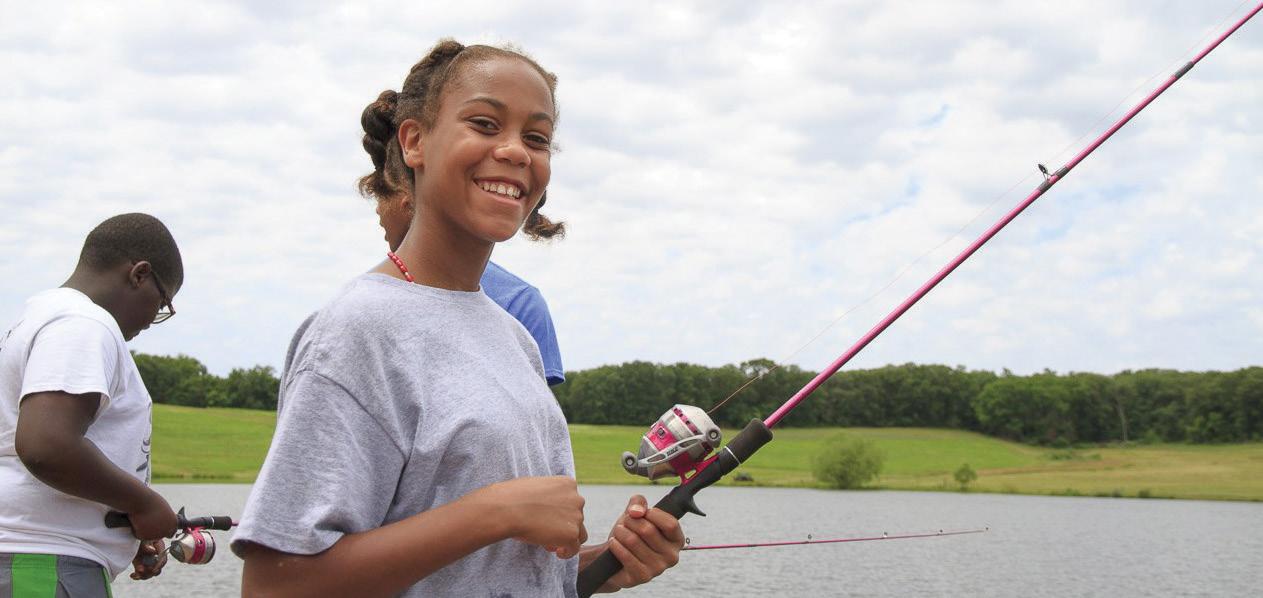
FISHING FOR BLUEGILLS during their spawning season provides fast action for kids.
Outdoor Guide
Illinois wildlife in June
Nesting activity peaks during June with more babies arriving. On the water, look for the young of black-necked stilts and blue-winged teal while red-winged blackbird chicks call from the cattails. Along the shore, egret chicks forage and herons search for food for their chicks while male bullfrogs, calling to attract a female, provide back-
Southern Fried Catfish
Ingredients
• 10 oz. Andy’s Red or Yellow breading
• 3 lbs. fresh fish fillets (catfish) or fish of your choice
• Vegetable oil for frying –Use caution when cooking with hot oil!
Directions
1. Wash fish with cold water and lightly pat dry, leaving fish moist.
2. In heavy sauce pan, heat ½ inch oil to 375° F.
3. Pour Andy Yellow Fish Breading into plastic bag or bowl.
4. Add a few pieces of fish to breading and coat thoroughly.
5. Let the fish sit in breading for 5 minutes.
6. Gently place fish in hot oil, a few pieces at a time.
7. Fry 3-5 minutes on each side.
8. Remove from oil and drain on paper towels to absorb excess oil.
*Serve with your favorite cole slaw, french fries, spaghetti, hush puppies or soft rolls. Garnish with pickles, onion and hot sauce.
ground music from the shallows.
In the water, catfish are spawning in submerged logs and vacant beaver dens along the bank while bluegill have finished their first spawn of the year. They will build their energy reserves before making another attempt to pass on their genes in the fish community.
In the avian world, eastern bluebirds lay their second clutch of eggs and bald eagle chicks fledge. At dusk, watch for the courtship rituals of the male common nighthawk. He climbs high into the sky, turns and then dives. The “booming” sounds he makes are the result of air rushing through his feathers and are meant to attract females – an impressive display!
Among the insects, dragonflies
and damselflies congregate by ponds and streams while pollinators flourish on the continuous blooms of summer. And though they’re not true insects, chiggers are also present. If you happen to visit an area that’s wet, overgrown or dense with vegetation, be prepared for chigger bites.
Elsewhere in the wild, young woodchucks, coyotes and red foxes are emerging from their dens; belted kingfishers fiercely defend their nests in the dirt banks along the shore; snakes mate and, with their offspring, provide excellent rodent and insect control.
(Excerpted from “Nature’s Seasonal Events: May-July” by Carla Rich Montez. Reprinted from Outdoor Illinois Journal.)
A RED FOX mother and one of her cubs.
Laborers’ Locals 42 and 660 honor veterans by placing flags at St. Charles Memorial Gardens
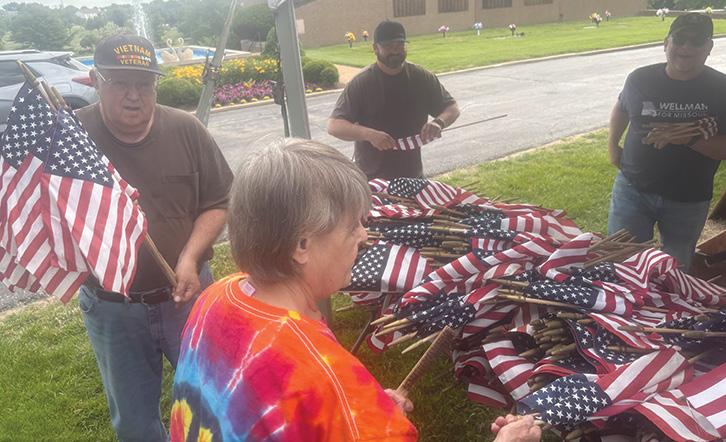
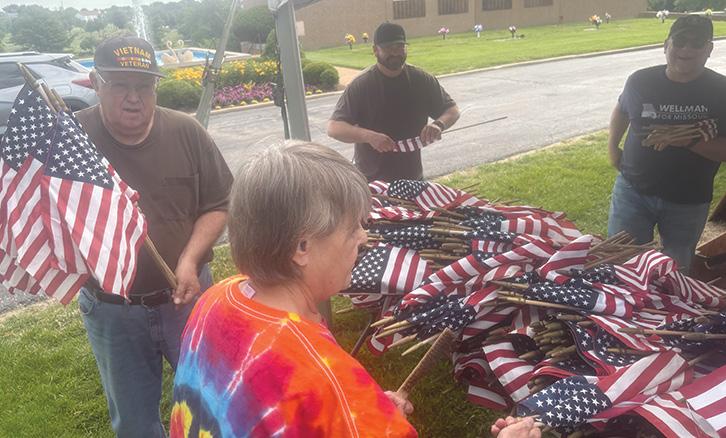
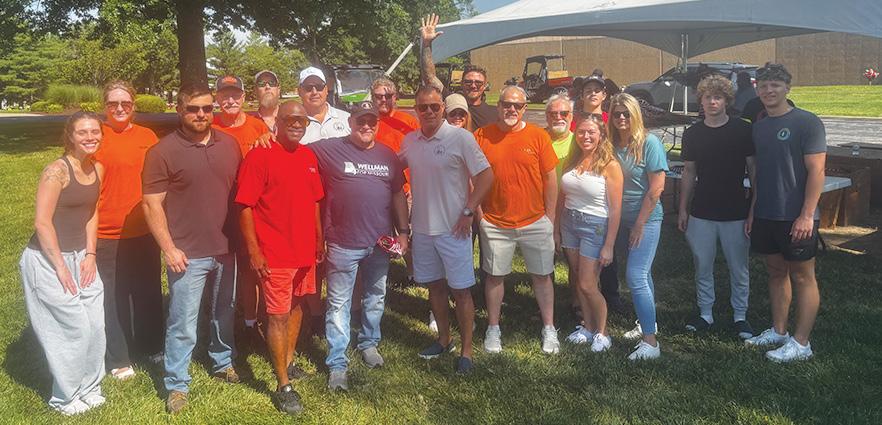
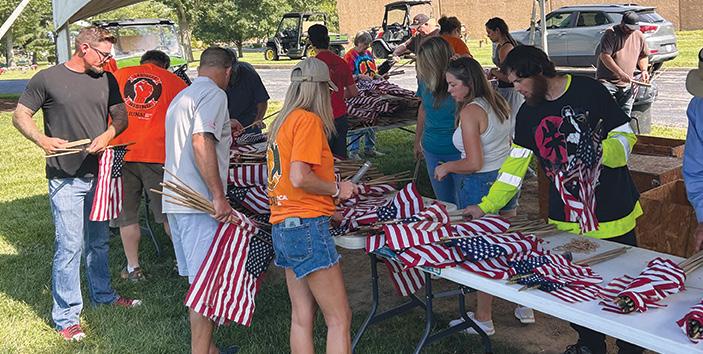
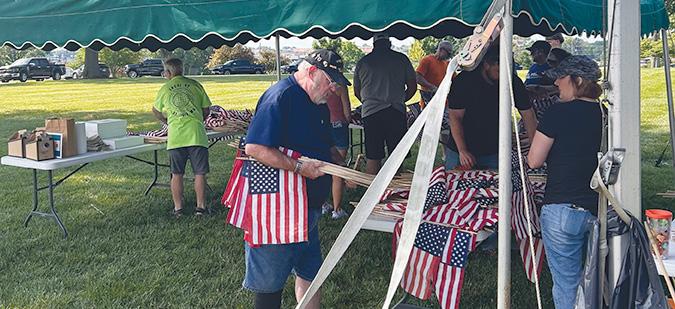
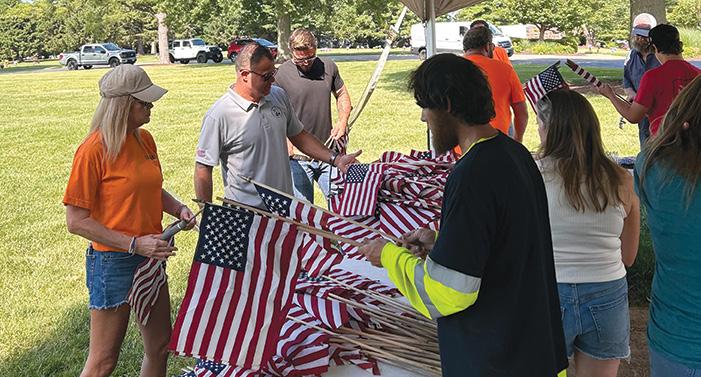
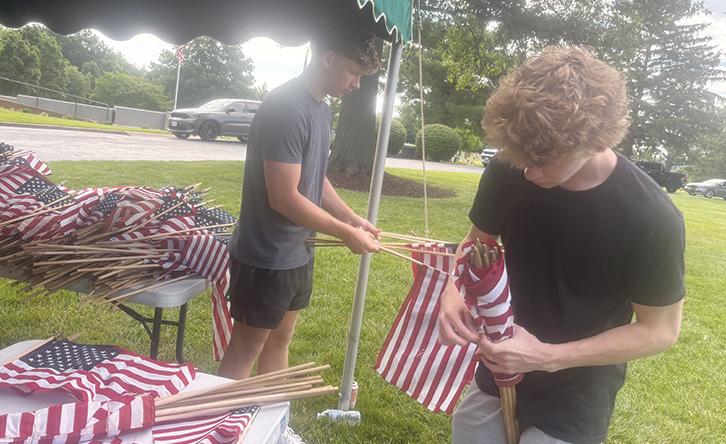
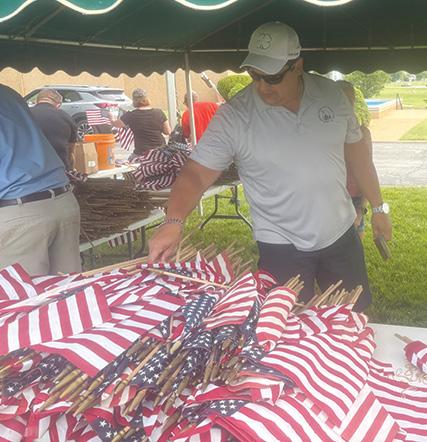
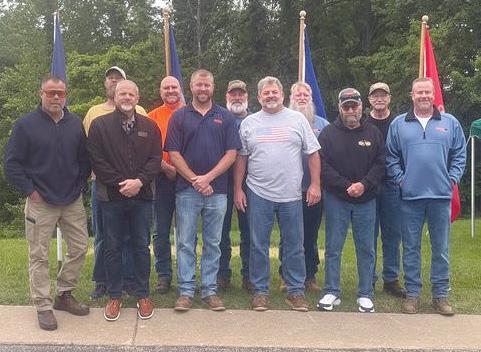
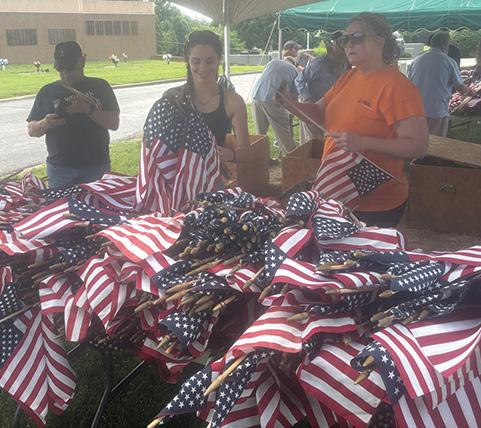
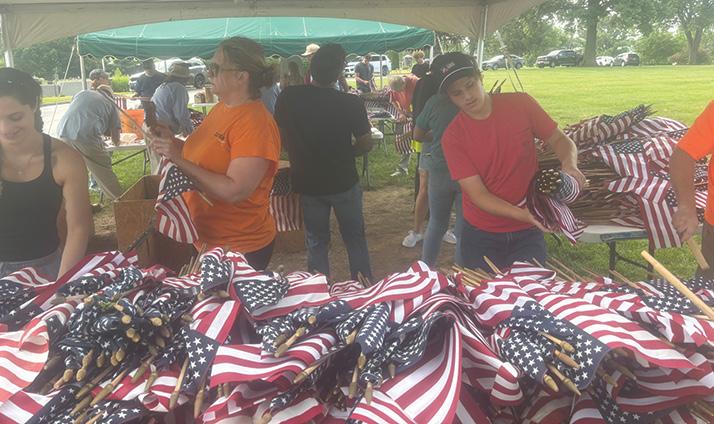
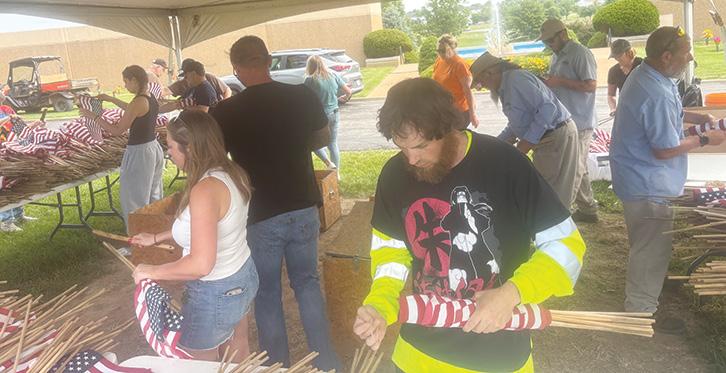
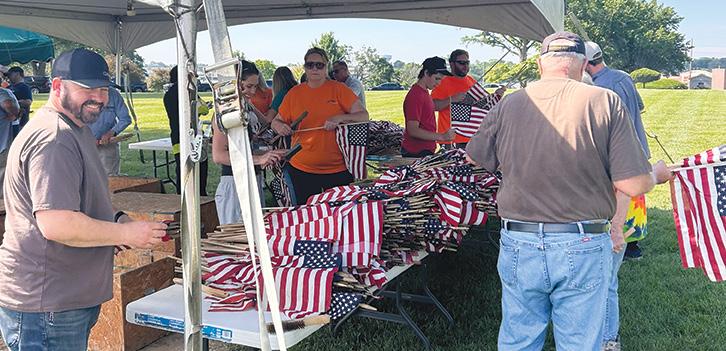
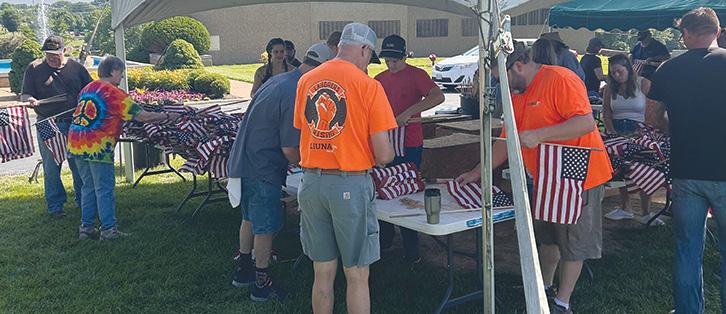
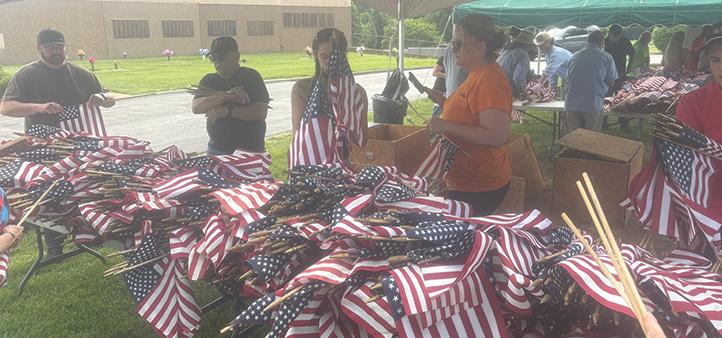
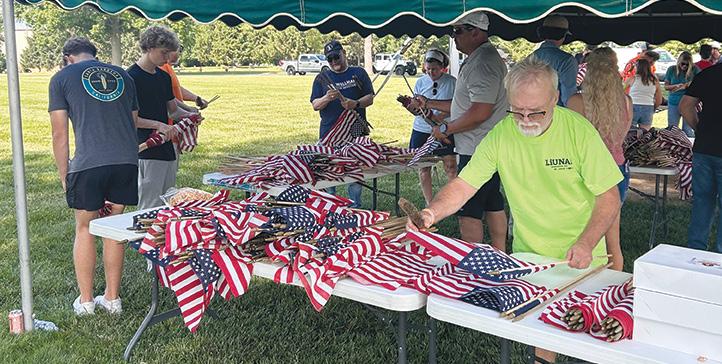
St. Charles, MO – Laborers Local 42 and 660’s Veterans and Volunteer Organizing committees proudly teamed up to honor veterans by placing flags at headstones at St. Charles Memorial Gardens at 3950 W. Clay Street May 20 in honor of Memorial Day, then returned a week later to gather clean and box up the flags for storage.
“We put them out and, after Memorial Day we pull them out, stack them clean them and box them up,” said Local 42 President
Matt Andrews, a U.S. Marine Corps veteran. “There are thousands of them, so it takes a while,”
Andrews and Local 660 Field Representative Brad Ostman organized the event.
“It’s the second year we’ve done this,” Andrews said. “We’re going to continue to do it every year to pay our respects to people who sacrificed for us to give them some recognition on Memorial Day.”