www.SurfacesInternational.com
ISSN2039-8301
cersaie
2026
Profiles in line with the latest architecture and interior design trends.
Discover Naturabilia at Cersaie 2026. Hall 25 | A42-B45
Seguici sui nostri social
Installation
Tools Excellence Since 1974 Since day one, our mission has been to fully satisfy the needs of the professional tiles installer by providing him with effective and reliable tools that increase productivity while reducing fatigue. More than 50 Years later our mission hasn’t changed. Find out latest innovations at CERSAIE 26; 21-25 September 2026
HALL 19 BOOTH #B58 - B68 - C67
ABOUT US Media Group srl. Spedizione in abbonamento postale presso la Filiale di Modena. L’IVA sugli abbonamenti, nonché sulla vendita dei fascicoli separati, è assolta dall’Editore ai sensi dell’art 74 primo comma lettera C del DPR 26.10.72 N. 633 e successive modificazioni.
PUBLISHER: Kairos Media Group S.r.l. Capitale Sociale: Euro 51.400,00 R.E.A. 329775 Periodico bimestrale registrato presso il Tribunale di Modena al n. 22/17 in data 10/08/2017 Iscrizione al ROC n. 9673
CO-EDITOR: Sabrina Tassini
SECRETARIAT: info@kairosmediagroup.it
Kairos Media Group Tel. +39 059 512 103 Fax +39 059 512 157
OFFICE: Kairos Media Group S.r.l. Via Fossa Buracchione 84 41126 Baggiovara (Modena) - Italy Tel. +39 059 512 103 - Fax +39 059 512 157 info@kairosmediagroup.it www.surfacesinternational.com
GRAPHIC LAYOUT: Sara Falsetti
• Paola Giacomini p.giacomini@kairosmediagroup.it +39 335 186 4257
EDITOR: DAVIDE MISERENDINO d.miserendino@kairosmediagroup.it © 1989 Tile Italia
CONTRIBUTING EDITORS: Sara Falsetti Paola Giacomini Chiara Poggi Sabrina Tassini
EACH COPY: Euro 4 SUBSCRIPTION: https://kairosmediagroup.it/en/shop/ subscription-tile-international • 1 year: Euro 20 • 2 years: Euro 35 L’abbonamento decorre dal mese di distribuzione. Tariffe speciali per gli abbonamenti collettivi sono disponibili su richiesta Conto Corrente Postale 20026415 intestato a Kairos
ADVERTISING:
• Teresa Contissa t.contissa@kairosmediagroup.it +39 342 092 8002 • Elisa Verzelloni e.verzelloni@kairosmediagroup.it +39 338 536 1966 PRINT: Faenza Printing Industries SpA Via Vittime Civili di Guerra, 35 48018 Faenza (RA) - Italy
Entire contents Copyright Kairos Media Group srl - All right reserved. Opinions expressed by writers are not necessarily those held by the publisher who is not held responsible. Tutti i diritti di riproduzione e traduzione degli articoli pubblicati sono riservati. E’ vietata la riproduzione anche parziale senza l’autorizzazione dell’Editore. Manoscritti, disegni, fotografie e altro materiale inviato in redazione, anche se non pubblicato, non verrà restituito. L’Editore non accetta alcuna pubblicità in sede redazionale. I nomi, le aziende e i prezzi eventualmente pubblicati sono citati senza responsabilità a puro titolo informativo per rendere un servizio ai lettori. La Direzione non assume responsabilità per opinioni espresse dagli autori dei testi redazionali e pubblicitari. PANIKER_ANUNCIO TECNA.pdf
1
28/8/26
16:52
ADVERTISING
Elevate your point of view
PEDESTAL LINE: GRAVITYSYSTEM CERSAIE (21 - 25/09/2026) BOLOGNA - HALL 19 | B46 impertek.com
CONTENTS 7
EDITORIAL - The human touch
8
NEWS
Davide Miserendino
ECONOMICS
18 22 28
Italian ceramic industry: energy and ETS charges squeeze margins World production and consumption of Ceramic Tile The future of construction in Europe between recovery and uncertainty
Davide Miserendino Paola Giacomini Markku Riihimäki, Forecon, Finland
PROJECTS
30 38 42 44 46 48 50
Plantea Estudio
Sara Foschi
A view of the hills new lease of life for a five-star resort 62 Hoza Street, Warsawt Nesting Room @ Enterprise Hotel, Milan Fior di Grano Headquarters, Osimo (Italy) Innovation meets know-how: Montolit and Clanea Outdoor redevelopment in Jesolo Lido, Italy
CERSAIE 2026
52
Sustainability, training and design culture: Cersaie expands the horizons
Davide Miserendino
IN THE SPOTLIGHT
64
Kajaria: “We are building a stronger company”
Paola Giacomni
FOTONEWS
56 58 60 62 68
RAK Ceramics boosts its luxury-brand positioning with Roberto Cavalli QUA Granite at Palazzo Re Enzo during Cersaie When the Invisible Changes the Perception of Space Anatolia’s pioneering production facility
WHAT ’S NEW - Ceramic tiles & laying technologies
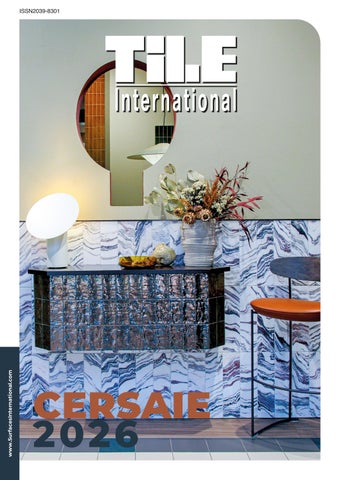
COVER PICTURE: QUINTESSENZA CERAMICHE PHOTO BY GIANCARLO PRADELLI @ CERSAIE 2025
5 T I L E I N T E R N AT I O N A L 2 / 2 0 2 6
THE HUMAN TOUCH Davide Miserendino d.miserendino@kairosmediagroup.it
Another Cersaie, another turn of the wheel. Once again, it is the time of year when technical expertise, aesthetics, future trends and face-to-face relationships come together in a mix that the worlds of architecture and interior design have come to value. It is a welcome opportunity to meet again, but also a moment when, almost inevitably, we take stock. And the year just behind us can hardly be described as reassuring: geopolitical tensions remain high, and uncertainty is still the defining factor.
gue know-how stands out all the more by con-
At times like these, however, it is important to lo-
we might call craftsmanship, and to the creative
ok ahead.
gesture behind it.
And there are reasons to do so.
Third: in the great race towards AI, contact with
First: in many parts of the world where urbani-
matter appears to be one of the few things that
sation is advancing, there is a growing need to
cannot easily be replaced.
rethink how we build and how we live.
At the fair, we will be able to touch surfaces, ad-
More sustainable solutions, capable of combi-
mire textures, and be struck by the precision of
ning aesthetic quality, comfort and respect for
the finishes and the beauty of through-body vei-
local traditions, suggest a possible route towards
ning. In an age that increasingly defines itself as
more balanced development.
artificial, we will be able to rediscover the beauty
Second: in an increasingly digital world, analo-
of human contact.
✕
Discover the E-MAGAZINE about NEW MATERIALS for DESIGN & ARCHITECTURE
EDITORIAL
trast: a chance to bring renewed value to what
NEWS
Profilpas: 50 years of excellence and innovation This year, Profilpas is celebrating its 50th anniversary, which marks a major milestone in the story of a business venture that began in 1976, in the province of Padua, driven by the vision of Franco Pasquali. Founded with the aim of transforming technical details into aesthetic and functional solutions, the company is now an international benchmark in the world of construction and interior design, specialising in the production of trim profiles for floor and wall coverings, linear shower drains and installation accessories. A member of the Mapei Group since 2022, the company is continuing to expand by anticipating the needs of professionals, with an ever-wider and more cross-cutting range of products and services. Drawing upon its extensive experience of working with materials such as aluminium, stainless steel, brass and PVC, Profilpas provides ideal solutions
Ceramica Sant’Agostino presents its 2025 Sustainability Report Industrial innovation, production efficiency and a focus on people are the cornerstones of Ceramica Sant’Agostino’s ESG strategy, as outlined in the fourth edition of its Sustainability Report. Drawn up in accordance with GRI standards, the report sets out the results achieved in 2025 and the priorities enshrined in the new ESG Action Plan, thus confirming the Ferrara-based company’s commitment to integrating sustainability and industrial development into a single strategy. On the environmental front, the report highlights a series of major investments in energy efficiency and techno-
not only for residential buildings, but also for the hospitality, retail, marine and wellness sectors. With over 100 employees in Italy, one production facility in Cadoneghe, in the province of Padua, a second in Poland, and a sales network covering over 70 countries, Profilpas is a solid, dynamic company, which has built its success day after day on
the foundations of continuous research, quality and constant attention to detail. Benefiting from deep roots and proven expertise, Profilpas is cultivating an international vision of the future, with a focus on technology and sustainability, to inject value into the projects of tomorrow.
logical innovation, including a new combined heat and power plant and advanced energy consumption monitoring systems. On top of this, the com-
pany still makes all its porcelain tile collections with over 30% recycled material, and is continuing its drive towards circular economy by means of process
8 T I L E I N T E R N AT I O N A L 2 / 2 0 2 6
WPC A MECS STUDY
CENTER PLATFORM
TRY THE DEMO
water recovery and the reuse of production waste. Sustainability is also playing a growing role in decision-making processes: the company strengthened its ESG Action Plan and governance frameworks in 2025, while stepping up its dialogue with stakeholders and the local community. People play a central role: more than 3,100 hours of training were provided to 255 staff members over the course of the year, with courses on digitalisation, artificial intelligence and managerial development. 97% of employees are also on permanent contracts. Alongside its industrial investments, Ceramica Sant’Agostino continues to support cultural, educational and social initiatives and to make effective use of its showrooms as venues for interaction with designers and professionals. This forms part of an approach in which sustainability is not seen as a goal to be achieved, but as a means of building long-term competitiveness, innovation and value.
ability to translate growth into profitability. On these foundations, the company is drawing up a new business plan, for the period to 2029, which is targeting overall growth of 25% to 30%. Priorities include strengthening performance in the interior acoustics sector, bringing the production of insulated plasterboard in-house, and expanding further on international markets. The Group’s products are currently available in over 50 countries, with a well-established presence in France, Switzerland, Spain and Taiwan, and new opportunities in high-potential regions. To support this growth, plans are in place for industrial investments, including the acquisition of the new Isolspace site and the installation of a production line for bonding insulation material to plasterboard. The Group also involved over 30,000 professionals in training and technical updating courses in 2025, confirming the importance of the culture of acoustic comfort as a strategic driver. At the same time, the Group remains committed to publishing its first Sustainability Report by 2028.
Tecnasfalti marks 50 anniversary with strong growth and clear pathway to 2029 th
Against the backdrop of a difficult year for the construction industry – marked by a 7.7% downturn in the market, according to ANCE, the Italian construction contractors’ association – the Tecnasfalti Group closed 2025 with improved results, while marking its 50th anniversary by refocusing on the principles that have always underpinned its development, namely innovation, diversification and internationalisation. The Lombardy-based company, which incorporates the Isolmant and Isolspace brands, closed the year with revenues up 11.5% on 2024 and pre-tax profit up 79%, thereby confirming its
future&past
SEE THE WHOLE MARKET DRILL DOWN TO COUNTRY LEVEL • PRODUCTION • CONSUMPTION • TRADE 100+ COUNTRIES FORECAST TO 2029
Eugenio Canni Ferrari, CEO
NEWS
ABK Group secures €18 million funding to accelerate investment With the backing of a syndicate of banks and the support of its shareholders, ABK Group has secured €18 million in new funding to continue its growth strategy in Italy and international markets, launched in April 2025 with the appointment of CEO Stefano Socci. The new resources will also accelerate the professionalisation of the Group’s organisational structure, with the aim of expanding its expertise and reinforcing its presence in international markets. In recent months, José Luis Ramón has joined the Group’s Board of Directors, while Marco Mininni has been appointed Head of Sales and Stefano Giordani Head of Marketing, Innovation and Product Development. The Group’s new showroom in Fiorano Modenese is also due to open in time for Cersaie, bringing all its brands together in a single 5,000 sqm exhibition hub. “These new financial resources, together with the recent expansion of our sales and marketing team and the forthcom-
Stefano Socci, CEO
ing opening of the Group’s new showroom, demonstrate that we are moving steadily forward with the strategy drawn up together with our shareholders. We are ideally placed to further strengthen ABK Group’s market position and continue its international expansion, with a particular focus on the large-format slab segment. Our aim is to put ABK Group in the best possible position to seize the opportunities offered by a constantly evolving market, where responsiveness and the strength of the management team will become increasingly important competitive differentiators,” said Stefano Socci.
Mohawk reports growth in the first half of 2026 Mohawk Industries closed the second quarter of 2026 with better-than-expected results, reporting net sales of $3 billion, up 6.8% compared to the same period in 2025 (up 5.0% adjusted for constant exchange rates), and net earnings of $196 million, compared to $147 million a year earlier.
Jeff Lorberbaum, CEO
10 T I L E I N T E R N AT I O N A L 2 / 2 0 2 6
For the first half as a whole, the US group reported net sales of $5.7 billion (up 7.4% on the same period in 2025), while net earnings rose to $313 million. The Global Ceramic Segment saw a particularly positive performance, with second quarter net sales up 7.9% and an operating margin of 7.8%, with higher input costs offset by productivity gains and an improved product mix. The Calhoun, Georgia-based multinational’s ceramic division closed the half-year with net sales of $2.3 billion, up 9.1% on the same period in 2025. Commenting on the results, Chairman and CEO Jeff Lorberbaum noted that the group had outperformed its markets thanks to volume growth, pricing and the introduction of new collections. According to Lorberbaum, Mohawk gained market share in most regions despite continued weakness in the residential sector, while the commercial segment continued to perform more strongly. The company has also initiated new efficiency programmes focused on operational simplification, warehouse consolidation and capacity optimisation, all of
Paul De Cock, COO
Decortech Conference: Two Days Dedicated to the Future of Surfaces at TECNA 2026 Among the flagship events in TECNA 2026’s conference programme, the Decortech Conference is set to be an “event within the event”: two full days of talks and presentations featuring companies, architectural firms, universities and training institutions, all coming together to explore the latest aesthetic trends and the most innovative solutions for the customization and design of tomorrow’s surfaces. The 29th edition of TECNA – The Global Expo for Ceramics and More is fast approaching. The leading international exhibition dedicated to suppliers of the ceramic and surface industries will take place in Rimini, Italy, from 22 to 25 September 2026. Organised by IEG – Italian Exhibition Group in collaboration with ACIMAC, TECNA 2026 will offer a brand new programme of conferences, talks and events devoted to technologies, materials, digitalisation, design and market scenarios, exploring the future development of the global surfaces industry.
The highlight of the 2026 edition will be the Decortech Conference – Surfaces made to matter, a series of talks and meetings devoted to digital decoration and surface finishes to be held on 23 and 24 September in a dedicated arena and exhibition area. Promoted by IEG and ACIMAC with the support of GIMAV, Ceramicolor-Federchimica, FESPA Italia and DIPA, the conference will bring together leading technology companies, international buyers, opinion leaders, architecture firms, universities and training institutes to explore aesthetic trends and the most innovative solutions for surface customisation and design. The focus sectors for 2026 will be housing and interior components and the space industry. The first day of the conference, Materials and Aesthetics (23 September), will be curated by journalist and Technical Committee member Patrizia Catalano and will explore three different themes: surface design as a defining element of architecture and furniture; the relationship between research, innovation and sustainability; and interior and outdoor spaces. Speakers will include Francesco Zurlo, Dean of the School of Design at Politecnico di Milano, architect Duccio Grassi (Duccio Grassi Architects), Giacomo Geroldi of Park Associati, Armando Bruno, CEO of Studio Marco Piva, and Mario Bisson of POLI.design. The day’s events will conclude with the workshop “Advanced ceramics: the materials platform for next-generation aerospace and future applications”, curated by CNR – ISSMC (Institute of Science, Technology and Sustainability for the Development of Ceramic Materials at the National Research Council of Italy), in collaboration with BEX – Beyond Exploration Expo. The second day, enti-
11 T I L E I N T E R N AT I O N A L 2 / 2 0 2 6
tled Materials and Technology (24 September), will be curated by Ascanio Zocchi of Ascanio Zocchi Design, also a member of the Technical Committee. The programme will take an indepth look at materials and their evolution, exploring wood from both technical and aesthetic perspectives, glass in relation to transparency and sustainability, and the relationship between the material and the immaterial through digital transformation, 3D and artificial intelligence. Speakers will include Diego Epifanio (TABU), Evgeny Borovin (X-LAM Dolomiti), Prof. Vincenzo Maria Sglavo (University of Trento), industrial designer Alex Terzariol and Manwen Li, Director of Material Bank, Miami. For the first time, the content the Decortech Conference’s two-day programme has been chosen by a Technical Committee made up of professionals, associations and leading sector companies, including Ceramicolor-Federchimica, GIMAV, FESPA Italia, ACIMAC and firms such as Torrecid, Cefla Finishing and Biesse. This team of experts has selected the themes and speakers, ensuring that each contribution is grounded in genuine innovation. With this two-day focus on materials, aesthetics, technology, trends and design, TECNA 2026 establishes itself as a strategic platform for knowledge and vision for the entire surfaces supply chain.
NEWS
which should reduce costs by approximately $60 million by the end of 2027. As announced in June, current President and COO Paul De Cock will take over the role of CEO as of 30 September 2026, while Lorberbaum will remain Chairman of the company’s Board of Directors. For the third quarter, De Cock expects market conditions to remain challenging: “Across the world, the home resale market remains near multi-decade lows, and new home construction remains soft.” Nonetheless, the group expects the commercial segment to continue outperforming residential and that its higher-end product portfolio will continue to enhance the sales mix.
NEWS
Bruno Bettelli elected President of ACIMAC At its Annual General Meeting held on 9 July, the Assembly of Acimac elected Bruno Bettelli as the new President of the Italian Ceramic Machinery and Equipment Manufacturers’ Association. The presidential team will include Vice Presidents Simone Sorrentino (Surfaces Group), Paolo Mongardi (Sacmi), and Luca Bazzani (System Ceramics). Bruno Bettelli is Chairman and Chief Executive Officer of I-TECH S.r.l. and brings to the role extensive experience within Acimac, having first served on the Board of Directors and subsequently as Vice President. For the past three years, he has also served as President of Federmacchine, the Italian federation of associations representing manufacturers of capital goods for the manufacturing industry. In his inaugural address, the new President stressed the need to strengthen the competitiveness of Italy’s ceramic technology industry by enhancing the wealth of expertise, innovation and know-how that the district has built over
Bruno Bettelli
decades of global leadership. His message was fully aligned with the theme chosen for the 2026 General Meeting, “Evolution”, which served as the guiding concept for discussions on the future of the sector. At a time when market models are changing rapidly and technological innovation is accelerating industrial transformation, evolving is no longer an option but a responsibility for companies seeking continued growth while preserving their identity. The event brought together representatives from the business, institutional and trade association communities to discuss the challenges reshaping international competitive dynamics: from the emergence of new global competitors to the reconfiguration of value chains, as well as the need to identify new growth opportunities in international markets. Particular attention was devoted to China’s evolution and its implications for European manufacturing. Giuliano Noci, Vice Rector of the China Campus of the Politecnico di Milano, provided an in-depth analysis of the profound changes taking place in the Chinese economy and their consequences for companies operating in global markets. Alongside this, a panel discussion featuring entrepreneurs and representatives from different sectors of the Italian mechanical engineering industry highlighted the need to continue investing in innovation, skills and internationalization as key strategic drivers of competitiveness. Participants included Graziano Verdi, President of CET – European Ceramic Tile Manufacturers Federation and Chief Executive Officer of Gruppo Italcer; Nancy Mammaro, President of GIMAV and Chief Executive Officer of Mappi International; and Pierluigi Ghirelli, President of Ceramicolor and Chief Executive Officer of Zschimmer & Schwarz Ceramco. The event concluded with a speech by Barbara Cimmino, Vice President of Confindustria for Export and Foreign In-
12 T I L E I N T E R N AT I O N A L 2 / 2 0 2 6
vestment Attraction, who explored the topic of internationalization in a period marked by increasing economic and geopolitical complexity. The General Meeting also featured the exhibition “Business Visions: Art, Industry and the Future through Salvador Dalí”, showcasing works by the artist and organized by Dalí Universe and Lart Universe. The project fostered a dialogue between creativity, innovation and entrepreneurial culture, offering an original perspective on the relationship between industry and the future.
Florim invests more than €300 million in five years This year Florim published the 18th edition of its Sustainability Statement, continuing a reporting practice that dates back to 2008 and is now aligned with the European Sustainability Reporting Standards (ESRS) in preparation for the requirements of the Corporate Sustainability Reporting Directive (CSRD). Against a backdrop of high volatility and uncertainty, the Fiorano Modenese-based ceramic group has continued to pursue its growth strategy with a focus on innovation, efficiency and sustainability. As Chairman Claudio Lucchese notes in his letter to stakeholders: “We approached 2025 with clear objectives, determination, streamlined processes and a high degree of flexibility in adapting to change.” Florim invested €37 million in 2025, taking total investments over the past five years to more than €300 million. Around €32 million was allocated to the company’s Italian production plants, where major upgrade projects were carried out. The raw materials department at the Mordano plant was completely upgraded, while in Fiorano work was completed on the refurbishment of
Florim has taken a further step forward in the circular economy with the CeramiCycle project, developed since 2025 in collaboration with the ceramic sanitaryware district of Civita Castellana, Viterbo. The initiative involves recovering fired sanitaryware waste and converting it into secondary raw material for the production of new high-quality porcelain stoneware surfaces. During 2025, around 14,600 tonnes of fired sanitaryware waste were reused, reducing both the consumption of virgin raw materials and the amount of waste sent to landfill. The process is certified to ISO 14021. Significant progress has also been made in water management. Thanks to the rainwater collection systems installed at the Fiorano and Mordano plants, 39.8 million litres of water were recovered and reused in production in 2025, an increase of 82% over the previous year. Employee wellbeing has long been a priority for Florim, which was the first Italian ceramic company to obtain BS OHSAS 18001 certification for occupational health and safety. Both Italian plants have confirmed their compliance by achieving UNI EN ISO 45001 certification. The Ing. Giovanni Lucchese
Foundation is also continuing its activities, alongside programmes focused on employee welfare, preventive healthcare and initiatives for employees, their families and the local community. Florim has strengthened its international presence in major design capitals with new flagship stores in Los Angeles and Seoul and an expanded showroom in Rome, bringing its worldwide network to 11 single-brand spaces. Florim closed 2025 with revenues of €418 million, broadly in line with the previous year’s figure. However, competitive pressure in international markets, higher energy costs, European ETS charges and the euro-dollar exchange rate weighed on the Group’s profitability, reducing EBITDA and net income for both Florim and Florim USA. The net financial position, excluding the effects of IFRS 16, was negative by approximately €101 million, mainly due to lower margins and the substantial industrial investments made in recent years. The Group nevertheless remains committed to its long-term development plan.
Claudio Lucchese
13 T I L E I N T E R N AT I O N A L 2 / 2 0 2 6
NEWS
the Florim Gallery and Plant 1. An energy project worth more than €3.7 million was also launched at the Fiorano site, including the expansion of the photovoltaic systems serving Plants 1 and 3 (the new installations cover 48,000 m2 and have a total capacity of around 3 MWp). The project also includes a latest-generation 5 MWh battery energy storage system (BESS) to store electricity that is generated but not immediately used. The system will optimise energy flows, increase the plant’s energy autonomy and improve overall site efficiency. In 2025, self-generated electricity covered 78.4% of the total requirements of Florim’s Italian plants. Since 2011, Florim has invested around €78 million in environmental projects, including approximately €4 million in 2025 alone. All unfired tile and slab scrap, dust collected by filtration systems and sludge from water treatment are recovered and returned to the production cycle, together with recycled materials sourced from external companies. In 2025, 99% of the materials handled by the Italian company (62,790 tonnes) were sent for recovery. Including Florim USA in Tennessee, the overall average was 94%.
NEWS
“STAY AHEAD” by EsmalglassItaca at Cersaie The solutions presented under the STAY AHEAD tagline illustrate how applied technology can translate into greater differentiation, competitiveness and tangible benefits for customers in an increasingly demanding market. Building on its more than fifty years of experience, Esmalglass-Itaca reaffirms its status as a global technology leader within the Altadia Group, combining extensive technical expertise with a proven ability to drive innovation in the ceramic industry and deliver advanced, high-impact solutions. Throughout its history, the company has consistently delivered solutions that combine technology, design and know-how, helping customers improve their competitiveness and sustainability and remain at the forefront of the market. These solutions will be presented at Cersaie in a striking exhibition space featuring six elevated, aligned cubes, each dedicated to one of the six innovations on display. Diamond Pro is a material designed to create ultra-matt surfaces with outstanding aesthetic appeal, characterised by extremely low gloss levels
(GU<6), high transparency and an exceptionally soft tactile feel. Silk Diamond is an advanced finish that reinterprets the look of traditional matthoned surfaces, creating a sophisticated visual effect without the need for mechanical honing. DigitalGlass is a range of water-based digital glazes applied using inkjet technology and formulated without organic solvents. Compared with conventional glazes, they can lower water consumption up to tenfold, reduce odours and organic emissions from kiln flues and cut waste by up to 40%. PrismaTech creates three-dimensional crystalline effects that bring a new level of sophistication to ceramic surfaces. Crystal encapsulation ensures high technical performance and excellent durability in both selective and full-surface applications. Glow transforms ceramic tile surfaces through a gently undulating finish that recreates the appearance of resin. Lustrato is an aesthetic and technical solution developed for brick-format wall tiles that uses advanced digital technologies to recreate the appeal of classic ceramic finishes. It uses contemporary technology to reproduce the brilliance and lustre of historic glazes,
14 T I L E I N T E R N AT I O N A L 2 / 2 0 2 6
thereby capturing the essence of traditional ceramics. As a leading player in an increasingly demanding and sustainability-focused industry, Esmalglass-Itaca has a highly qualified, multicultural team with a deep understanding of market needs. It delivers solutions focused on performance, efficiency and profitability, supported by a global technical service capable of adapting to specific local requirements.
Villeroy & Boch reports decline in first-half results Villeroy & Boch closed the first half of 2026 with consolidated revenue at €635.8 million, down 12.4% on the previous year’s figure of €725.8 million. Adjusted for exchange rate effects and for the sale of the Northern European brands Gustavsberg and Vatette on 1 October 2025, the decline amounts to 7.4%. By contrast, the order book showed a positive trend: it rose by €49.5 million compared with the end of 2025 to €199.9 million. Operating EBIT amounted to €34.5 million, compared with €47.8 million in the previous year. This decline is primarily attributable to the divestment carried out in the previous year, as well as the effects of the conflict in the Persian Gulf. Group result stood at –€6.8 million (previous year: +€13.8 million); this was largely due to non-cash exceptional tax effects. The Bathroom & Wellness Division generated revenue of €504.4 million (-15.1% on previous year €594.1 million); adjusted for portfolio and currency effects, the decline amounted to 9.4%. Whilst revenue in EMEA fell by 14.5%, primarily due to divestments and the conflict in the Middle East, some markets — such as Italy, Bulgaria and Hungary — recorded encouraging growth. APAC and the Americas saw a decline of
ronment. The contribution from our successful new product launches, as well as the strong growth in e-commerce, shows that we are attuned to the needs of our consumers.” As the global market environment will continue to be affected by geopolitical and economic uncertainty, a further deterioration in the second half of the year cannot be ruled out. Against this backdrop, the Management Board of Villeroy & Boch AG confirms its forecast for the full year 2026, with an expected operating EBIT of €75 million. The Mettlach-based group’s management also noted that the this subdued momentum is being temporarily amplified by the structural effect of the disposal of the Gustavsberg and Vatette brands, which will result in significantly lower net sales and operating EBIT in the third quarter of 2026 compared with the previous year. “The economic environment remains exceptionally volatile”, said Chief Financial Officer Dr Markus Warncke. “We expect geopolitical tensions to continue to impact our business for the rest of the year, and we are addressing this uncertainty through appropriately cautious planning. That said, our solid orders on hand and the stable performance in the Dining & Lifestyle Division highlight the fundamental strength of our business”
TECNA 2026: more than 250 buyers from all over the world TECNA – The Global Expo for Ceramics and more will open in the Rimini Expo Centre from 22 to 25 September 2026. Early figures point to an edition with a particularly strong international visitor presence. The 29th edition of the show, organised by IEG – Italian Exhibition Group in partnership with ACIMAC, reaffirms TECNA’s position as a global reference point for technologies, plant, aesthetics and design for the ceramic and heavy clay industries. The clearest sign of TECNA’s growing international reach comes from its buyer programme, a free service that enables exhibitors to meet international purchasing decision-makers at the event. While the previous edition brought 110 selected international professionals to Rimini, the ambitious goal for 2026 was to double that figure. Thanks to close collaboration with the Italian Trade Agency (ITA), this target has been exceeded and more than 250 international buyers representing 44 countries are expected to attend. The buyer programme is accompanied by a dedicated digital platform for exhibitors, which allows them to view buyer profiles and request B2B meetings. More than 900 meeting requests were submitted within the first few hours of its launch on 26 August, a clear sign of strong mutual interest between buyers and suppliers. In addition, 32 ceramic producer associations from around the world have confirmed their participation at the event. The significance of these figures goes »»
Villeroy&Boch headquarters
15 T I L E I N T E R N AT I O N A L 2 / 2 0 2 6
NEWS
21.3% against a backdrop of a downturn in the construction sector. The division’s operating EBIT stood at €29.5 million (it was €43.0 million in 2025). “The current global economic environment poses significant challenges for the entire industry - explained Georg Lörz, Management Board Member for Bathroom & Wellness - and the Villeroy & Boch Group is not being spared either. Still, we are confident that the broader market position resulting from the acquisition of Ideal Standard will strengthen our business in the medium and long term, particularly in challenging times”. The Dining & Lifestyle Division remained virtually on a par with the previous year’s figure (€130.4 million), posting revenue of €130.0 million; on a currency-adjusted basis, this represents a slight increase of 0.8%. Performance in e-commerce was particularly noteworthy, with a 16.1% increase in revenue. Slight declines in EMEA (-1.0%) were partially offset by growth in APAC and the Americas. Operating EBIT rose slightly to €5 million from €4.8 million in 2025). According to Dr Peter Domma, Management Board Member for Dining & Lifestyle and Chief Digital Officer, “the results in the Dining & Lifestyle Division are particularly encouraging given the challenging market envi-
NEWS
beyond sheer numbers. Buyers come from a remarkably broad range of markets, with particularly strong participation from several key regions. North Africa, Central and South Asia – especially India – and Latin America together account for more than half of the selected buyers. Latin America is one of the most dynamic and best represented regions, prompting a specific focus on Mercosur at this year’s show. The region is currently one of the markets attracting the greatest interest from the surfaces industry and Italian technology suppliers. This attention is also reflected in the event programme. The first day of the TECNAwards on 22 September will be dedicated to the Americas, with an indepth look at the Mercosur Agreement and the geopolitical developments reshaping the sector. On 23 September, the focus will broaden to Europe, Asia and Africa. “The presence of twice as many international buyers as at previous editions and the wide range of regions represented send a clear message: interest in technological innovation is extremely high worldwide, and Italy continues to be seen as a key reference point,” comments Gian Paolo Crasta, Director of ACIMAC. “This interest spans Asia, Africa, the Middle East and Latin America, with Mercosur receiving particular attention at this edition. TECNA is once again fulfilling its role as the place where the global surfaces supply chain comes together to exchange ideas and gain an early sense of where the industry is heading.” Visitor pre-registration figures are equally encouraging. As of 28 August 2026, visitor pre-registrations were 10% higher than at the same stage before the previous edition, with around half coming from overseas. These international pre-registrations span 85 countries across Europe, the Mediterranean region, North Africa, the Middle East, South and Southeast Asia and the Americas.
Fritta leads the development of advanced ceramic surfaces at Cersaie With a portfolio built on advanced technology, efficiency and design for high-quality ceramic surfaces, Fritta strengthens the positioning of a brand firmly committed to customization and accessibility for all its customers. Under the motto “Find Your Way”, this commitment evolves into a more direct and descriptive approach. At Cersaie 2026, the Spanish company introduces a much more dynamic product organization concept: “We provide each customer with the right solutions to achieve the desired surface finish.” Through a flexible and intuitive system, innovations will be presented according to each customer’s specific needs, highlighting key concepts designed to guide visitors in their selection based on technical or aesthetic priorities. The company’s proposals differ in terms of technical features, functionality, materials used and visual effects achieved. Visitors to the Fritta stand will find clearly identified areas organized according to the features and benefits of the products and solutions on display: • Find your Polish: the area dedicated to polished finishes, available in both matte and glossy versions. • Find your Shine: an exploration of light, dynamic reflections, and lapped, brushed and natural finishes.
16 T I L E I N T E R N AT I O N A L 2 / 2 0 2 6
• Find your Matt: the understated functionality of Pure Matt surfaces. • Find your Relief: the power of pronounced volumes and textured surfaces sculpted with grits. • Find your Texture: the subtlety of soft structures and micro-reliefs. Visiting the Fritta stand means discovering the company’s outstanding potential to deliver high-quality technological solutions that are perfectly tailored to each customer’s needs and can be seamlessly integrated into any industrial process. These products and solutions further reinforce the brand’s position as a benchmark for quality, accessibility and reliability in the development of advanced ceramic surfaces. Fritta’s presence at Cersaie reaffirms the company’s brand philosophy: “Quality Everyday”. Its value proposition is founded on a unique ability to democratize technical excellence by consistently providing accessible solutions that respond quickly to the daily challenges faced by manufacturers worldwide. Through close customer relationships, tailor-made developments and continuous process optimization, Fritta demonstrates that high ceramic quality is fully compatible with efficiency and everyday functionality. In doing so, it strengthens its position as the ideal strategic partner and a trusted reference point for companies seeking flawless, versatile results adapted to any type of surface finish in the global market.
SPANISH CERAMICS:
ADVERTORIAL
the perfect alliance of technical precision, aesthetics, and commitment In an increasingly demanding construction and decorative landscape, ceramics made in Spain are establishing themselves as a benchmark option for professionals seeking to combine technical reliability, versatility, design, and responsiveness. Choosing Spanish ceramics means opting for the solidity of a European industry based on technical excellence, cutting-edge design, and an unwavering production ethic. Behind Tile of Spain, there is also an industrial model based on qualified, safe, and quality employment, along with a clear dedication to customer service, supporting architects, interior designers, distributors, and other professionals with specialized advice in selecting the most suitable solutions for each project. In short, Spanish ceramics enjoy solid international recognition for their quality and reliability, backed by a deep European heritage, a firm commitment to social and environmental responsibility, and exceptional customer service. All of this is underpinned by respect as an essential value in its way of understanding the industry and competing in the global market.
Advanced solutions for diverse needs
One of the main differentiating values of the Spanish ceramic industry is the extraordinary breadth of its offering. The diversity of product types, formats, and construction solutions allows it to respond to projects of very different natures, scales, and complexities. Added to this variety is a constant track record of innovation, which has expanded the performance of ceramics and their application possibilities far beyond their traditional uses. As a result, the Spanish industry excels in designing ceramic construction solutions to meet the most demanding technical requirements, such as ventilated facade systems, raised technical floors, ceramics for urban use, specific solutions for swimming pools or wellness spaces, and an exhaustive range of special technical finishing pieces. This is a broad and flexible offering that allows professionals to find answers for different uses and demands within the same ceramic ecosystem.
Industrial sustainability and commitment to people
The sustainability of ceramics begins with some of the material's inherent characteristics, such as its composition, high durability, and long lifespan.
To this is added the continuous effort of the Spanish industry to reduce the environmental impact of its production processes and advance its decarbonization. In recent years, the sector has intensified investment in energy efficiency, the circular economy, and new production technologies. 93% of the waste generated in the production process is reused, reincorporating materials into the process itself and reducing both the consumption of raw materials and the generation of waste. The use of water resources is another area of action for the industry, with systems that allow for the recovery and reuse of 100% of the water in manufacturing processes. At the same time, the implementation of photovoltaic installations in Spanish factories increases every year, raising the share of renewable energy in industrial processes. The sector is also advancing in the electrification of production with initiatives for electric kilns already in operation. This process is part of the Spanish industry's commitment to decarbonization and the European goal of climate neutrality, supported by intense R&D&I activity aimed at developing increasingly efficient processes and solutions capable of responding to new construction demands.
Davide Miserendino
I TA L I A N C E R A M I C I N D U ST RY: E N E R G Y AND ETS CHARGES SQUEEZE MARGINS
At the annual general meeting, where Augusto Ciarrocchi was re-elected chairman and Vittorio Borelli, Luigi di Carlantonio, Giorgio Romani, Alberto Selmi and Graziano Verdi
were confirmed as vice-chairmen for a second two-year term, Confindustria Ceramica presented the 2025 results for all segments of the Italian ceramic industry: tiles and
slabs, sanitaryware, porcelain and tableware, refractories and heavy clay. The sector comprises 242 companies employing 25,550 people directly and generated turnover of €7.49
ECONOMICS
TILES AND SLABS: VOLUMES RECOVER BUT REVENUES STAGNATE As the driving force of the Italian ceramic industry (accounting for over 80% of total turnover), the ceramic tile and slab sector continued its long-term consolidation trend. At the end of 2025, there were 117 tile manufacturers operating in Italy (five fewer than in 2024) across approximately 200 plants, while the direct workforce fell to 17,676 (down 333 on the previous year). The sector closed 2025 with growth in both production volumes – reaching 390.9 million sqm (up 5.7% on 2024) – and sales volumes, which rose to 386.9 million sqm (+2.3%). Sales volumes increased modestly in both the domestic Italian market (85.2 million sqm; +0.6%) and export markets (301.7 million sqm; +2.8%). However, as
Augusto Ciarrocchi
TAB. 1 - THE ITALIAN CERAMIC TILE INDUSTRY
2020
2021
2022
2023
2024
2025
% Var. 2025/24
Companies
133
131
128
125
122
117
-4.1%
Employees
131
18,528
18,639
18,432
18,009
17,676
-1.8%
Production
Million m2
128
435.3
431.2
373.7
369.8
390.9
+5.7%
Total sales
Million m2
125
455.3
448.9
369.2
378.3
386.9
+2.3%
Domestic sales
Million m2
122
91.2
92.7
84.4
84.8
85.2
+0.6%
Exports
Million m2
117
364.1
356.2
284.8
293.5
301.7
+2.8%
Total turnover
Million €
-4.1%
6,166
7,186
6,175
6,062
6,041
-0.4%
Domestic sales
Million €
18,747
967
1,215
1,126
1,084
1,064
-1.8%
Exports
Million €
18,528
5,199
5,971
5,049
4,979
4,976
-0.1%
Investments
Million €
18,639
350.6
441.3
473.8
382.0
320.6
-16.1%
18 T I L E I N T E R N AT I O N A L 2 / 2 0 2 6
billion (-1% on 2024), of which €5.34 billion came from exports. Overall, the results highlight the resilience of a sector that remains one of the flagships of Italian
manufacturing, despite operating in an extremely challenging production and market environment. High energy costs and ETS charges continue to weigh heavily on
in the previous year, “volumes were maintained only at the expense of average prices, which fell by 2.5% compared with 2024”, noted Ciarrocchi. The average price in Italy dropped from €12.80 to €12.50 per sqm, while export prices fell from €16.96 to €16.49 per sqm – albeit remaining the highest among all major exporting countries. This price decline affected all key markets, from the United States to the European Union, which absorbed over half of all export volumes. Ciarrocchi cited Germany, where sales grew by 3.6% in volume and 2.6% in value, and France, where volumes fell by 1.2% and sales value declined by 4%. Consequently, total sector revenues remained virtually unchanged at €6.04 billion (-0.4%), with €1 billion generated on the domestic market (-1.8%) and €5 billion from exports (-0.1%), representing 82% of total sales value. A further €906 million (+0.2%) was gen-
performance, compounded by weaker demand in several markets and increasingly intense international competition. This mixed picture has continued into 2026.
erated by 17 overseas companies controlled by Italian ceramic groups and operating production facilities in Europe and the United States, which produced a combined volume of 75 million sqm last year. The first few months of 2026 have shown no sign of a turnaround. On the contrary, the first quarter recorded a 0.5% drop in sales volume and a 2% decline in value. MARGINS AND INVESTMENTS IN DECLINE The most concerning issue for manufacturers remains the severe pressure on margins, caused not only by falling selling prices but primarily by soaring energy costs and direct ETS charges, which have wiped out an estimated €70 million a year. This has inevitably weighed on investment, which fell to €321 million last year (-16%) following an already significant decline in 2024 (-19%). “In two years,
marazzi
19 T I L E I N T E R N AT I O N A L 2 / 2 0 2 6
Sectors
Companies
Production
Total sales
Exports
Total Turnover (Mil. €)
Domestic turnover (Mil. €)
Exports (Mil. €)
Domestic sales
TAB. 2 - THE ITALIAN CERAMIC INDUSTRY IN 2025
Ceramic Tiles
117
Million sq.m
390.9
386.9
85.2
301.7
6,040.9
1,064.4
4,976.4
Sanitaryware
31
Million pieces
3.1
3.3
2.0*
1.3*
415.1
249.0*
166.0*
Tableware
8
tonnes x 000
9.6
9.6
7.4
2.2
60.0
37.4
22.6
Refractories
29
tonnes x 000
270.2
268.9
136.6
132.4
325.8
152.8
173.0
Bricks & roof tiles
57
-
3,983.5
3,983.5
3,983.5
-
650,0
650,0
-
TOTAL
242
-
-
-
7,491.8
2,153.6
-
5,338.0
ECONOMICS
Source: Confindustria Ceramica - (*) Estimates / Stime
we have lost €150 million in investments,” Ciarrocchi warned, adding that if the European Commission refuses to revise the benchmarks for free allowance allocations for the 2026-2030 period, direct ETS costs for the Italian tile industry will soar from €70 million to €120 million per year. “Unless the situation changes, it poses a serious threat to the future of the Italian ceramic industry and thousands of jobs,” he said. Unsurprisingly, in this high-stakes negotiation in Brussels, Confindustria Ceramica has the full backing of the regional political and industrial network – the Emilia-Romagna regional government, local municipalities, sectoral trade unions and Acimac. “This extraordinary display of solidarity gives us confidence”, Ciarrocchi continued, “especially since the European Commission will present a comprehensive review of the ETS Directive in July, reopening the entire framework of the system. As demonstrated by a study conducted by the Bicocca University of Milan, this system has been transformed al value, forcing production to relocate outside the region. As a result, emissions are removed from our environmental balance sheets but remain completely unchanged globally, leaving industrial communities like ours to bear the real-world economic cost.”
The ceramic sanitaryware industry, consisting of 31 companies mainly concentrated in the Civita Castellana district (Viterbo) and employing 2,659 people, produced 3.1 million pieces last year (-2.6%). Sales volumes were slightly higher at 3.3 million pieces (-1.2%), generating revenues of €415 million (+0.2%), with 40% going to international markets. The refractories industry, comprising 29 companies and 1,539 employees, produced 270,200 tonnes, generating a turnover of €325.8 million (-6.4%), with exports accounting for 53% of the total. Finally, the ceramic tableware sector, consisting of eight companies and 676 employees, produced 9,570 tonnes of tableware last year (-0.7%), generating turnover of €60 million (+3.9%). The domestic market generated 77% of sales volumes and 62% of revenues. ✕
OTHER CERAMIC INDUSTRY SUB-SECTORS Around 20% of the total revenues generated by the Italian ceramic industry last year came from its other four sub-sectors. The heavy clay sector – consisting of 57 companies and 3,000 employees – produced and sold 4 million tonnes of clay bricks and roof tiles in 2025 (-2%), generating a turnover of €650 million (-7%), primarily on the domestic market.
ceramica sant’agostino
20 T I L E I N T E R N AT I O N A L 2 / 2 0 2 6
Era Collection, abk.it
WORLD PRODUCTION AND CONSUMPTION OF CERAMIC TILES Luca Baraldi, MECS / Acimac Research Centre (l.baraldi@mecs.org)
The interactive version of the 14th edition of “World Production and Consumption of Ceramic Tiles”, produced by MECS (www.mecs.
org), is available online on the Power BI platform, alongside a 374-page PDF report. WPC Online – the main findings of which are previewed here
ECONOMICS
1) In 2025, the global ceramic tile industry and market continued the downturn that began in 2022. By contrast, import-export flows reversed direction and returned to 2023 levels.
in Tile International – provides a detailed analysis of ten-year trends to 2025 in production, markets, per capita consumption and import-
America’s output rose from 328 to 338 million sqm (+3%), while that of Central and South America increased to 1,122 million sqm (+2%). Amid declining production in Asia and only modest recoveries elsewhere, Africa emerged as the most dynamic region in 2025. Output grew by 272 million sqm in the space of a year, from 1,047 to 1,319 million sqm (+26%), equivalent to 9.2% of global production. All 23 tile producing countries on the continent recorded growth, with the largest contribution coming from Egypt (356 million sqm; +42.4%), followed by Algeria (168 million sqm), Nigeria (150 million sqm) and Ghana (138 million sqm; +20%). Sub-Saharan Africa and Libya continue to show strong growth, driven by Chinese investment. One of the leading Chinese players in Africa is Twyford (Keda Group), which by 2025 had become the world’s second-largest tile producer with an output of 205 million sqm.
2) World tile production dropped to 14,401 million sqm from 14,993 million sqm in 2024 (-3.9%). The contraction was entirely attributable to a further decline in Asia, where production fell from 10.9 to 10 billion sqm (-8.4%), equivalent to 69.3% of global output. China alone accounted for a loss of more than one billion sqm, only marginally offset by a combined recovery of 115 million sqm in Vietnam and Indonesia. Europe produced a total of 1,631 million sqm, equivalent to 11.3% of world production and up slightly (+1%) on 2024. Thanks to the recovery in Italy and Spain, the European Union’s output rose from 1,054 to 1,084 million sqm (+2.8%), despite remaining well below 2021-2022 levels. By contrast, production in non-EU Europe dropped to 547 million sqm (-2.5%), largely due to lower output in Russia. Production in the Americas recovered to reach 1,460 million sqm, 10.1% of the global total. North
3) Looking ahead, MECS’s five-year forecasts point to a gradual recovery in world production, potentially reaching 14.8 billion sqm by 2030 (2025-2030 CAGR: +0.5%). The increase is modest due to the con-
WORLD MANUFACTURING AREAS
WORLD CONSUMPTION AREAS
2025 (Sq.mt Mill.)
% on world production
% var. 25/24
AREAS
2025 (Sq.mt Mill.)
% on world consumption
% var. 25/24
1,084
7.5%
2.8%
EUROPEAN UNION (27)
899
6.3%
7.2%
OTHER EUROPE (Turkiye included)
547
3.8%
-2.5%
OTHER EUROPE (Turkiye included)
634
4.4%
1.8%
NORTH AMERICA (Mexico included)
338
2.3%
3.0%
NORTH AMERICA (Mexico included)
536
3.8%
0.4%
CENTRAL-SOUTH AMERICA
1,122
7.8%
2.0%
CENTRAL-SOUTH AMERICA
1,272
8.9%
5.6%
ASIA
9,986
69.3%
-8.4%
ASIA
9,320
65.4%
-7.5%
AFRICA
1,319
9.2%
26.0%
AFRICA
1,543
10.8%
23.6%
AREAS EUROPEAN UNION (27)
OCEANIA TOTAL
5
0.0%
0.0%
OCEANIA
14,401
100.0%
-3.9%
TOTAL
22 T I L E I N T E R N AT I O N A L 2 / 2 0 2 6
51
0.4%
-1.9%
14,255
100.0%
-2.2%
Entire contents Copyright MECS - Machinery Economics Studies by ACIMAC - ALL RIGHTS RESERVED
export flows, broken down both by geographical macro-region and by the leading tile producing countries (97) and consuming,
exporting and importing countries (195). This year, it also includes an in-depth analysis of porcelain tile imports and
tinuing negative trend in Asia, where production is expected to decline by 0.6% annually to 9.7 billion sqm by 2030 as China’s contraction continues. All other regions are projected to record growth in production, with a 2025-2030 CAGR of +4.4% in Africa (1,637 million sqm in 2030), +2.3% in South America (1,255 million sqm), +1.1% in the European Union (1,145 million sqm), +3.6% in non-EU Europe (652 million sqm) and +1.9% in North America (371 million sqm).
exports. The online platform also includes the 2026-2030 Forecast, with continuously updated fiveyear projections.
5) In 2025, world exports resumed growth after three consecutive years of decline, returning to 2023 levels at 2,748 million sqm (+2.5%), 66 million sqm more than in 2024. The recovery extended across most regions of the world. Asia exported 1,484 million sqm (+0.7%), accounting for 54% of global exports. The European Union’s exports increased from 768 to 792 million sqm (+3.1%). Exports from Central and South America rose from 133 to 154 million sqm (+16.6%) and Africa saw an increase from 118 to 149 million sqm (+26%). The main exception was non-EU Europe, where exports fell from 151 to 133 million sqm (-12.3%) due to declines in Turkiye and Russia. Exports from North America also fell by 4 million sqm to 35 million sqm (-8.9%).
4) In 2025, world tile consumption fell from 14,582 to 14,255 million sqm (-2.2%). Asia was the only region to see a contraction, with demand falling from 10 to 9.3 billion sqm (-7.5%), equivalent to 65.4% of the global total. In Africa, consumption rose sharply to 1,543 million sqm (+23.6%). Demand also increased in the European Union, up from 839 to 899 million sqm (+7.2%), driven mainly by growth in Poland (75 million sqm). Consumption also increased in Central and South America to 1,272 million sqm (+5.6%) and, to a lesser extent, in non-EU Europe to 634 million sqm (+1.8%). Demand remained stable in North America at 536 million sqm (+0.4%).
6) The European Union remains by far the region with the highest export propensity, exporting 73.1% of its production in 2025. All other regions trailed well behind: non-EU Europe 24.3%, Asia 14.9%, South America 13.7%, Africa 11.3% and North America 10.3%. In other words, import-export flows confirm the growing tendency for tiles to be produced close to
INTERNATIONAL TRADE 2025
WORLD EXPORTING AREAS
(ON TOTAL WORLD CONSUMPTION) 2025 (Sq.mt Mill.)
% on world exports
% var. 25/24
EUROPEAN UNION (27)
792
28.8%
3.1%
OTHER EUROPE (Turkiye included)
133
4.8%
-12.3%
NORTH AMERICA (Mexico included)
35
1.3%
-8.9%
CENTRAL-SOUTH AMERICA
154
5.6%
16.6%
ASIA
1,484
54.0%
0.7%
AFRICA
149
5.4%
26.0%
AREAS
OCEANIA TOTAL
EXPORTS 19.3% DOMESTIC SALES
1
0.0%
0.0%
2,748
100.0%
2.5%
80.7%
23 T I L E I N T E R N AT I O N A L 2 / 2 0 2 6
Entire contents Copyright MECS - Machinery Economics Studies by ACIMAC - ALL RIGHTS RESERVED
ECONOMICS
where they are consumed, with global exports accounting for just 19.1% of the world’s total production and 19.3% of consumption. Moreover, 60.7% of total exports (1,668 million sqm) are sold within the same geographical region in which they are produced. South America maintains 80.2% of its exports within the region, while 74.8% of North American exports remain within the NAFTA area, 61.2% of Asian exports are shipped to other Asian countries and 93.1% of African exports stay within Africa. The European Union is to some extent an exception, with 54.4% of its exports sold on EU markets and 45.6% on non-EU markets. This pattern is confirmed by the broad correlation between each continent’s share of global tile production and of total consumption: Asia accounts for 69.3% of production and 65.4% of consumption; Europe (EU + non-EU) 11.3% and 10.8% respectively; the Americas 10.1% and 12.7%; and Africa 9.2% and 10.8%.
million sqm (-5.5%), equivalent to 20.6% of world exports. Sales are increasingly concentrated in Asia, which absorbs 70% of the total, or 396 million sqm (-10%). Eleven of the Chinese ceramic industry’s top 15 export markets are now in Asia, led by the Philippines, South Korea, Malaysia and Thailand. China’s fifth-largest export market is Australia, where sales remained stable at 33 million sqm and Chinese products hold a market share of around 75%. Chinese exports recovered in Latin America (73.5 million sqm; +11.6%), Africa (37.4 million sqm; +10%) and Europe (10 million sqm, including 5 million sqm in Russia). In the first half of 2026, tile production again fell by more than 10% compared to the previous year, impacted by sharply rising production costs (energy and materials) and by stronger competition putting pressure on selling prices. Export value fell by a further 5.5% to $1.43 billion, while the average price dropped to $4.75/sqm. Domestic demand, which had held up during the first six months of the year, weakened again from July onwards.
7) China, the world’s largest producer, consumer and exporter of ceramic tiles, recorded a further decline in production and sales in 2025, marking the fourth consecutive year of contraction. According to the China Building and Sanitary Ceramics Association, weaker domestic demand (4.3 billion sqm; -19.1% compared to 2024) forced the country’s 938 active manufacturers to reduce production to 4.9 billion sqm from 5.9 billion sqm in 2024 (-17.7%). This means that Chinese production has more than halved over the past decade and fallen by 43% in the last five years, despite an installed capacity of more than 10 billion sqm. Exports also saw a further decline, falling to 567
8) In 2025, India confirmed its position as the world’s second-largest producer, consumer and exporter of tiles. Domestic production remained stable at 2.4 billion sqm, while consumption recovered from the decline recorded over the previous two years to reach 1,750 million sqm (+8%). Exports likewise recovered to 565 million sqm (+7.6%), generating around €2 billion at an average price of approximately €3.6/sqm. In 2025, Asian markets continued to absorb the largest share of Indian exports: 219 million sqm (+1.3%), equivalent to 38.8% of total volumes. Indian
TOP MANUFACTURING COUNTRIES
COUNTRY
2021 (Sq.m Mill.)
2022 (Sq.m Mill.)
2023 (Sq.m Mill.)
2024 (Sq.m Mill.)
2025 (Sq.m Mill.)
% on 2025 world production
% var. 25/24
1.
CHINA
8,863
7,312
6,730
5,910
4,862
33.8%
-17.7%
2.
INDIA
2,550
2,300
2,450
2,400
2,400
16.7%
0.0%
3.
BRAZIL
1,049
927
793
825
817
5.7%
-1.0%
4.
VIETNAM
554
579
397
504
550
3.8%
9.1%
5.
INDONESIA
410
430
413
407
476
3.3%
17.0%
6.
IRAN
458
480
450
450
460
3.2%
2.2%
7.
SPAIN
587
500
394
416
423
2.9%
1.7%
8.
ITALY
435
431
374
370
391
2.7%
5.7%
9.
EGYPT
340
380
400
250
356
2.5%
42.4%
10.
TURKIYE
438
385
372
318
343
2.4%
7.9%
TOTAL
15,684
13,724
12,773
11,850
11,078
76.9%
-6.5%
TOTAL WORLD
18,602
16,862
15,937
14,993
14,401
100.0%
-3.9%
Source: Mecs / Acimac Research dept. “World production and consumption of ceramic tiles”, 14th edition 2026
24 T I L E I N T E R N AT I O N A L 2 / 2 0 2 6
tile exports grew in almost all other regions: Africa +17% (115 million sqm), Central and South America +43.7% (59.3 million sqm), non-EU Europe +21.8% (61.3 million sqm) and the European Union +11.5% (60.5 million sqm, more than half of which was exported to Poland, Romania and Greece). The sole exception was North America at 47 million sqm (-24.4%), where lower sales in the USA (31 million sqm; -9.8%) were compounded by a severe 50% decline in Mexico (from 25 to 12.5 million sqm). Country-by-country analysis likewise reveals a generally positive picture, with sales increasing in 70 of India’s top 100 export markets. The largest was the United Arab Emirates (44.8 million sqm; +21.8%), followed by Iraq (31.5 million sqm; +3.6%), the USA and Russia (30 million sqm; +7.5%). By contrast, sales declined in Kuwait, Oman, Qatar and Saudi Arabia. The 2026 results are expected to be very different. The almost two-month production shutdown in Morbi following the closure of the Strait of Hormuz is expected to reduce output this year to around 2.1 billion sqm, followed by a recovery from 2027 onwards. The impact on exports, which have been disrupted since March, will be even more severe. In the first five months of 2026, export volumes were down 31% year on year, while export value fell by 70% in the April-June quarter alone.
and were shipped almost entirely to Central and South American markets, with the notable exception of the USA, the second-largest destination at 18.2 million sqm (+15%). The value of Brazilian exports remained at around €327 million, with an average price of €3.4/sqm. 10) Spain, Europe’s largest producer and the world’s third-largest exporter, recorded a modest recovery in production in 2025 to reach 423 million sqm (+1.7%), although output remained well below 20212022 levels. Consumption, almost entirely covered by domestic production, rose from 142 to 152 million sqm (+7%). Exports also grew from 329 to 338 million sqm (+2.5%), equivalent to 79.8% of national production. The Spanish tile industry’s total revenue remained broadly stable at €4.8 billion (+1%), comprising €1,350 million from domestic sales (+3.1%) and €3,484 million from exports (+0.2%), at an average export price of €10.3/sqm. France remained Spain’s largest export market (38.9 million sqm; -3.5%), followed by the United States (37.6 million sqm; +9.3%), Morocco (18.2 million sqm; +14.8%), Italy (16.7 million sqm; +1.4%), the United Kingdom (16.7 million sqm; +9.2%) and Israel (stable at 13.8 million sqm). As for macro-regions, Europe accounted for 49.4% of Spanish export volumes, followed by Africa at 15.2%, Asia at 14.8%, North America at 13% and South America at 7%.
9) Brazil, the world’s third-largest producer and consumer, ended 2025 broadly stable at 2024 levels. Production by the country’s 81 manufacturers fell to 817 million sqm (-1%), while domestic consumption rose to 732 million sqm (+0.7%). Exports saw a recovery to reach 96 million sqm (+11.8%)
11) In 2025, Italy saw a strong recovery in production volumes, its 117 manufacturers increasing their output from 369.8 to 391 million sqm (+5.7%). Total sales also recovered, reaching 387 million sqm (+2.3%) and generating revenue of €6.04 bil-
TOP CONSUMPTION COUNTRIES
COUNTRY
2021 (Sq.m Mill.)
2022 (Sq.m Mill.)
2023 (Sq.m Mill.)
2024 (Sq.m Mill.)
2025 (Sq.m Mill.)
% on 2025 world consumption
% var. 25/24
1.
CHINA
8,268
6,737
6,118
5,314
4,299
30.2%
-19.1%
2.
INDIA
2,069
1,750
1,700
1,620
1,750
12.3%
8.0%
3.
BRAZIL
902
736
694
727
732
5.1%
0.7%
4.
VIETNAM
420
505
375
401
500
3.5%
24.7%
5.
INDONESIA
478
489
495
470
485
3.4%
3.2%
6.
EGYPT
308
368
390
246
353
2.5%
43.5%
7.
TURKIYE
291
260
264
232
276
1.9%
19.0%
8.
SAUDI ARABIA
252
262
282
269
265
1.9%
-1.5%
9.
USA
289
285
264
259
251
1.8%
-3.1%
10.
MEXICO
276
257
254
243
248
1.7%
2.1%
TOTAL
13,553
11,649
10,836
9,781
9,159
64.3%
-6.4%
TOTAL WORLD
18,399
16,444
15,621
14,582
14,255
100.0%
-2.2%
Source: Mecs / Acimac Research dept. “World production and consumption of ceramic tiles”, 14th edition 2026
25 T I L E I N T E R N AT I O N A L 2 / 2 0 2 6
Entire contents Copyright MECS - Machinery Economics Studies by ACIMAC - ALL RIGHTS RESERVED
brings the total to 84.3%. Spain and Italy maintain the highest export shares at 80% and 77% of production respectively, compared with Poland’s 59%, Peru’s 50%, Iran and Ghana’s 45%, Turkey’s 26%, India’s 23.5% and Brazil and China’s 12%. Italy also confirms its leadership in terms of average selling price: €16.5/sqm compared with €10.3/sqm for Spain, €9/sqm for Poland, €6.8/sqm for Turkey, €5/sqm for China, €3.6/sqm for India and €3.4/ sqm for Brazil and Peru. 13) Vietnam and Indonesia maintain their position among the leading tile producing countries in the Far East, while Iran remains a leading producer in the Middle East. In 2025, Vietnam increased its output to 550 million sqm (+9%) in response to domestic demand of 500 million sqm (+24.7%). Exports fell to 33 million sqm (-5%), including 8.6 million sqm shipped to the USA (-12%), while imports rose to 38.8 million sqm (+37%). Indonesia increased its production to 476 million sqm (+17%) in response to 3.2% growth in consumption to 485 million sqm, replacing historically high imports from China with domestic production. As a result, imports dropped from 70 to 21 million sqm (originating from China and India), while exports amounted to just 6 million sqm (-30%). As the world’s sixth-largest producer, Iran manufactured 460 million sqm of tiles (+2.2%), of which 210 million sqm were sold on the domestic market and 208 million sqm exported. A total of 74% of exports were shipped to Iraq.
12) The two Asian giants China and India, together with the two largest European exporters Spain and Italy, accounted for 64.5% of world exports in 2025. Including the other six major exporting countries
14) Following the sharp decline in 2024, Egypt returned to the world’s top ten tile producing and
average export price (€/sq.m)
TOP EXPORTING COUNTRIES value 2025 (million €)
ECONOMICS
lion (-0.4%). Domestic sales remained stable at 85.2 million sqm, generating revenue of €1 billion (-1.8%) at an average price of €12.5/sqm. Including imports (32 million sqm), domestic consumption reached 117 million sqm (+1.7%). Italy remains the world’s fourth-largest exporter by volume and the largest by value. In 2025, exports grew by 2.8% to 301.7 million sqm, accounting for 77.2% of total production and generating revenue of €4,976 million (-0.1%). The average export price fell from €17/sqm to €16.5/sqm. The three largest export markets for Italian tiles were once again Germany (45.5 million sqm; +3.6%), France (40.2 million sqm; -1.1%) and the United States (33 million sqm; -0.2%). These were followed by Greece (10 million sqm; +6.5%), Austria (9.3 million sqm; +2.9%), Switzerland (8.7 million sqm; +8.2%), Belgium (stable at 8.6 million sqm), the United Kingdom (7.4 million sqm; +0.5%), the Netherlands (7.3 million sqm; +4.9%) and Israel (6.1 million sqm; +22.5%). By macro-region, sales to the European Union rose to 170 million sqm, equivalent to 56.4% of total exports. Italy also recorded increases in exports to non-EU Europe (32 million sqm; +6.9%), Asia (36.7 million sqm), Africa (13.9 million sqm) and South America (5 million sqm), but slight declines in North America (40 million sqm) and Oceania (3.6 million sqm).
1.
CHINA
601
579
615
600
567
11.7%
20.6%
-5.5%
2,836
5,0
2.
INDIA
483
422
589
525
565
23.5%
20.6%
7.6%
2,009
3,6
3.
SPAIN
496
431
344
329
338
79.8%
12.3%
2.5%
3,484
10,3
4.
ITALY
364
356
285
293
302
77.2%
11.0%
2.8%
4,976
16,5
5.
IRAN
182
194
203
202
208
45.2%
7.6%
2.9%
420
2,0
6.
BRAZIL
128
113
89
86
96
11.7%
3.5%
11.8%
327
3,4
7.
TURKIYE
154
127
79
101
90
26.4%
3.3%
-10.1%
612
6,8
8.
GHANA
30
52
53
42
62
44.6%
2.2%
45.8%
111
1,8
9.
POLAND
62
50
43
45
50
59.2%
1.8%
12.8%
449
8,9
10.
PERU
26
25
25
25
38
50.4%
1.4%
56.3%
129
3,4
TOTAL
2,526
2,350
2,324
2,248
2,316
23.2%
84.3%
3.0%
TOTAL WORLD
3,035
2,812
2,745
2,682
2,748
19.1%
100.0%
2.5%
COUNTRY
2021 (Sq.m Mill.)
2022 (Sq.m Mill.)
2023 (Sq.m Mill.)
2024 (Sq.m Mill.)
2025 (Sq.m Mill.)
% on 2025 national production
% on 2025 world exports
% var 25/24
Source: Mecs / Acimac Research dept. “World production and consumption of ceramic tiles”, 14th edition 2026
26 T I L E I N T E R N AT I O N A L 2 / 2 0 2 6
consuming countries in 2025. Production volumes rebounded strongly to 356 million sqm (+42.4%) and almost entirely covered domestic demand, which likewise saw a strong recovery to reach 353 million sqm (+43.5%).
nese group Wang Kang joined the longstanding local producers in 2022, output rose to 76 million sqm (+22.6%). Some 38 million sqm (+56%) of this was exported, mainly to Ecuador, Chile, the USA and Colombia. 17) In 2025, the ten largest tile importing countries imported a combined 985 million sqm, equivalent to 36% of global import-export flows. Iraq remained the world’s largest tile importer at 195 million sqm, including 154 million sqm from Iran and 31 million sqm from India, covering 96% of domestic consumption. In Germany and France, imports likewise covered 96% and 94% of domestic consumption, respectively. Germany’s imports rose to 103 million sqm (+9.2%), including 45.5 million sqm from Italy. Imports to France dropped to 102 million sqm (-2.6%), including 40 million sqm from Italy and 39 million sqm from Spain. Among the major importing countries, the United States recorded a further decline to 186 million sqm (-1.4%) according to MECS data (the historically lower U.S. Department of Commerce figure points to a 3.7% decline in volumes to 173 million sqm). Finally, imports grew by double digits in both the United Arab Emirates (up 18.5% to 67 million sqm), mostly from India, and in Israel (up 34.2% to 63 million sqm), mainly from China, India and Spain. �).
15) Turkiye, the world’s tenth-largest producer and seventh-largest exporter, increased production to 343 million sqm (+7.9%) in 2025 in response to a buoyant domestic market of 276 million sqm (+19%), while exports fell to 90 million sqm (-10%). The European Union was Turkey’s largest export region at 36 million sqm (-8%), followed by Asia at 17.5 million sqm (-6.7%), non-EU Europe at 16 million sqm (-15.7%) and North America at 13 million sqm (-21.3%). Germany regained its position as Turkey’s largest export market with 12 million sqm (-2.5%), followed by the USA (10.3 million sqm; -20.9%) and the United Kingdom (6.9 million sqm; -9.9%). 16) Among the world’s top ten exporting countries, Ghana and Peru stand out for their rapid growth. In Ghana, production reached 138 million sqm (+20%), entirely driven by Chinese investment. Of this, 76 million sqm was sold on the domestic market and 62 million sqm exported to neighbouring African countries (+45.8%). In Peru, where the Chi-
✕
2022 (Sq.m Mill.)
2023 (Sq.m Mill.)
2024 (Sq.m Mill.)
2025 (Sq.m Mill.)
% var. 25/24
2021 (Sq.m Mill.)
% on 2025 world imports
COUNTRY
% on 2025 national consumption
TOP IMPORTING COUNTRIES
1.
IRAQ
168
173
188
194
195
96.1%
7.1%
0.5%
2.
USA
214
205
195
189
186
74.1%
6.8%
-1.4%
3.
GERMANY
126
126
90
95
103
96.3%
3.8%
9.2%
4.
FRANCE
134
129
111
105
102
94.4%
3.7%
-2.6%
5.
PHILIPPINES
115
107
97
93
83
64.3%
3.0%
-10.7%
6.
RUSSIA
57
42
60
65
67
33.5%
2.4%
3.0%
7.
UAE
45
46
51
56
67
50.4%
2.4%
18.5%
8.
ISRAEL
64
58
58
47
63
95.5%
2.3%
34.2%
9.
THAILAND
63
63
62
65
60
35.5%
2.2%
-7.4%
10.
SOUTH KOREA
76
68
66
69
59
80.8%
2.2%
-14.3%
TOTAL
1,061
1,015
978
977
985
68.5%
35.9%
0.8%
TOTAL WORLD
3,035
2,812
2,745
2,682
2,748
19.3%
100.0%
2.5%
Source: Mecs / Acimac Research dept. “World production and consumption of ceramic tiles”, 14th edition 2026
27 T I L E I N T E R N AT I O N A L 2 / 2 0 2 6
THE FUTURE OF CONSTRUCTION IN EUROPE B E TWE E N R ECOVE RY A N D U N C E RTA I N TY Markku Riihimäki, Forecon, Finland
Since the EUROCONSTRUCT forecast in November 2025, the operating environment for construction has changed in many
ways. Based on the latest data released at the 101st EUROCONSTRUCT Conference (held in Helsinki on 4 and 5 June 2026), the outlook for
Consumer and business confidence in the future has fallen, and economic forecasts have been revised downwards in several countries over the spring. It is likely that this uncertainty will continue. In the EUROCONSTRUCT countries (EC-19), gross domestic product grew by 1.5% in 2025. Between 2026 and 2028, GDP is forecast to grow by an average of 1.2% per year. Growth in 2026 will remain weaker than previously estimated at 1.1%; in 2027, it is set to be 1.3%. However, none of the EC-19 countries is forecasting negative economic growth.
ECONOMICS
Construction growth in 2026 is lower than previously forecast Total construction output in the EC-19 countries grew by just 0.2% in 2025. Growth was slightly weaker than the November 2025 forecast, which had estimated growth at 0.3%. In 2026, construction is forecast to grow by 2.0%, whereas six months ago the expectation was 2.4%. The growth forecasts for 2027 and 2028 remain unchanged at 2.2% and 1.9% respectively. Overall, construction output in the EC-19 area has developed fairly steadily in recent years, although 2023 and 2024 were years of decline. During these two years, output fell by just over 3% in total. The growth forecast for 2026–2028 is just over 2% in total, indicating that the recovery will continue but at a moderate pace. Civil engineering remains the strongest sector The various sectors of construction developed very differently between 2023 and 2025: residential output reduced sharply, non-residential construction remained unchanged overall, while civil engineering grew. During the forecast period of 2026–2028, all sectors are expected to grow. In recent years, fluctuations in new construction have been significantly greater than those in renovation. Between 2023 and 2025, the output of new building construction fell, while building renovation only slightly reduced. During the period of 2026–2028, the output of new building construction is expected to grow higher than building renovation. The
the European construction sector remains cautiously positive, but growth is forecast to be slower than previously expected.
slow growth in renovation is primarily due to weaker consumer confidence due to uncertainty and the limited willingness of households to invest in home improvements. In civil engineering, both new construction and renovation grew strongly between 2023 and 2025. During the period of 2026–2028, both new construction and renovation are expected to grow on the back of transport investments, energy infrastructure, security and contingency planning needs, adaptation to climate change, and projects supported by EU programmes. One of the key findings in the new forecast is that the structure of construction growth has changed. New construction and civil engineering are more clearly the drivers of growth than previously, while renovation remains stable but in a phase of slower growth. The counter-cyclical role of building renovation has weakened compared to the years of the energy crisis and the energy efficiency boom, when subsidy schemes and regulation boosted the market more strongly. Economic and consumer uncertainty is now weighing on renovation, while investment is benefiting new construction. Developments remain highly varied by country Construction trends across different parts of Europe continue to diverge significantly. In the Nordic countries and Austria, total construction output fell sharply in 2023 and 2024 and will not return to 2022 levels during the period. In these countries, the primary underlying factor is a sharp collapse in new residential construction. The strongest growth in construction between 2025 and 2028 is forecast for Ireland, Poland, the UK and Portugal. Growth is weakest in Slovakia, Italy and Belgium. Ireland continues to stand out as the fastest-growing market, thanks to strong public investment and steady demand. Poland is also benefiting from strong medium-term growth, although forecasts have been revised slightly downward. Spain and Portugal, in turn, are benefiting from broad-based growth in both building construction and civil engineering. Germany, France, Austria and Italy continue to suffer from weak housing demand, high costs and limited financing. ✕
28 T I L E I N T E R N AT I O N A L 2 / 2 0 2 5
The conflict in the Middle East and the situation in the Strait of Hormuz is having significant impact on the
global economy, energy prices, inflation and interest rate trends – all factors that weigh heavily on demand in the
construction sector.
TAB. 1 - TOTAL CONSTRUCTION OUTPUT IN THE EUROCONSTRUCT AREA ESTIMATE COUNTRY
2022
2023
2024
2025
FORECAST 2026
OUTLOOK
2027
2028
AUSTRIA
2.1
-4.5
-5.2
-1.3
0.0
0.8
1.0
BELGIUM
0.6
-1.2
0.0
-0.3
1.3
-0.2
0.2
DENMARK
1.4
-12.0
-4.3
1.2
2.0
2.9
2.3
FINLAND
-0.4
-12.4
-6.2
1.0
4.7
5.5
-1.0
FRANCE
1.9
0.0
-1.8
-3.0
1.1
2.2
1.4
GERMANY
-5.1
-3.2
-2.9
-1.0
1.0
1.3
1.0
IRELAND
3.7
7.6
-4.8
11.7
5.3
5.8
6.2
ITALY
12.2
3.3
-1.7
-2.6
1.6
-0.1
-0.8
NETHERLANDS
4.0
0.8
-2.7
1.3
2.2
3.4
3.1
NORWAY
1.0
-5.3
-5.7
1.1
2.3
0.0
2.8
PORTUGAL
1.9
5.3
4.1
6.1
4.4
3.6
3.3
SPAIN
3.3
2.4
2.8
4.3
3.2
2.4
1.8
SWEDEN
-2.1
-10.7
-3.0
3.2
4.0
2.4
3.8
SWITZERLAND
-6.6
-0.7
-1.4
-0.3
1.9
1.5
1.3
UK
6.9
0.4
-0.2
1.8
2.4
4.3
5.1
WESTERN EUROPE (EC-15)
1.6
-1.0
-1.7
0.1
1.9
2.1
1.9
CZECH REP.
1.0
1.8
-1.7
4.6
2.5
2.5
2.8
HUNGARY
1.3
-7.6
-2.7
0.5
-1.5
2.4
5.0
POLAND
5.5
6.4
-0.9
2.2
6.4
4.9
3.1
SLOVAK REP.
0.5
5.4
-5.8
1.9
-2.9
-1.9
-0.5
EASTERN EUROPE (EC-4)
3.3
2.8
-1.7
2.5
3.6
3.5
3.1
TOTAL EC-19
1.7
-0.8
-1.7
0.2
2.0
2.2
1.9
Source: Euroconstruct June 2026
29 T I L E I N T E R N AT I O N A L 2 / 2 0 2 5
Sara Foschi
PLANTEA ESTUDIO
PROJECTS
For Plantea, the architecture firm founded in Madrid by Luis Gil, Lorenzo Gil, and Carla Morán, architecture is a process of craftsmanship-composed of materiality, memory, and a relationship with the context. Every project takes shape through the search for a specific character. This is not an image to be pursued, but a quality of space to be constructed slowly, through references, memories, and suggestions belonging to both individual and collective experience. Recollections, places, and images sedimented over time resurface during the design process and are reinterpreted, finding new expressive possibilities.
©SALVA LÓPEZ
Tile International: You speak of architecture as a
In this conversation, Luis Gil explains the vision that guides the studio’s work. Every project is born from the idea of creating a space where one feels at home, regardless of its function or scale-a place capable of hosting people’s lives and transforming over time through daily use, relationships, and the gestures that animate it.
craft. How does this idea translate into the design of restaurants, cafés, and hospitality spaces?
Luis Gil: Our projects are part of an evolutionary process that does not end upon completion; sometimes they continue even further, when certain aspects can
30 T I L E I N T E R N AT I O N A L 2 / 2 0 2 6
Chiara Bruzzichelli c.bruzzichelli@tiledizioni.it
©SALVA LÓPEZ . ONEO RESTAURANT
31 T I L E I N T E R N AT I O N A L 2 / 2 0 2 6
PROJECTS
©DANIEL FARÒ . ACID P BERG
still be refined. There is always the possibility, until the very last moment, of modifying a finish, a colour, or a design choice, regardless of what was previously planned. We always consider the possibility of changeeven radical change-towards a different solution that can only be fully understood on-site as the project takes shape. Erich Mendelsohn wrote something we often recall: “When you see the building near completion, you learn what you will have to do in the next project.” We try to remain open to the process of doing, to the act of building, which is very different from merely producing drawings and then ensuring they are executed exactly as they were imagined at a studio desk. The latter approach does not interest us.
Tile International: On your website, you write ©ABIAN MARTINEZ . HOTEL HUMANO
that personal memories and experiences are transferred into projects and find new forms of expression through architecture. In what way
32 T I L E I N T E R N AT I O N A L 2 / 2 0 2 6
Tile International: You state that “all architecture, regardless of its function, is a house.” How does this principle influence the design of public spaces intended for hospitality?
Luis Gil: Generally, with a few exceptional cases, archi-
does memory become a design tool?
tecture must provide places where people feel at ease, welcomed, and understood in their needs, regardless of the function. If an office welcomes you, offers comfortable relationships with others and the external environment, you feel good. The same applies to a gym, a library, or a shop. When people feel mentally comfortable in a place, whatever it may be, they often say: “It feels like home.” This has little to do with architectural style, the city, or even the function of the space. It depends on a place’s ability to welcome you in the deepest sense of the word. Human beings constantly live between different, sometimes opposing, needs and emotions. We need company but also privacy; intimate spaces and, at the same time, openings to the outside; warmth without losing contact with fresh air. We alternate between moments of concentration and work and moments of pause and rest-the desire to read carefully with the need to look up at something that allows the mind to wander and recover energy. Architecture must accommodate these various needs and create a balance between seemingly contrasting elements. When it succeeds, we truly feel “at home.”
Luis Gil: Based on our personal experience and the
Tile International: What is the role of materials in
©SALVA LÓPEZ . ACID CAFÈ
study of philosophers and architects we admire, we believe that imagination is fundamentally a form of memory, combined with the ability to connect and transform recollections in unexpected ways. For example, the Veja shop in Madrid was born from a childhood memory related to trainers. Sports footwear was associated with trips, holidays, and moments of freedom; it wasn’t as commonly used as it is today. The sense of security we felt walking on earth and rocks, climbing and jumping, remains an intense and vivid memory. For this reason, the central elements of the shop-where part of the collection is displayed and where customers sit to try on shoes-are conceived as large, solid, cast-in-situ concrete rocks. No one could guess this origin, but a trainer resting on a rock conveys a sense of comfort and reliability, reinforcing trust in the product.
your projects? Are they a consequence of the concept, or do they represent a tool that generates the architectural idea? What characteristics do you look for when choosing a material? Are there materials you find particularly interesting for the hospitality world today?
Luis Gil: Materiality represents a fundamental component in constructing the identity and character of every project. A place like the Acid Café in Berlin, designed for a community of artists and intellectuals with flexible and informal lifestyles, requires a choice of materials, furniture, and atmospheres profoundly different from a Members’ Club within a London hotel, designed for an international clientele of investors and professionals seeking a more exclusive and representative environment. That said, we look for the same qualities in all materials: minimal processing, maximum naturalness, and, above all, authenticity. We are rarely inter-
33 T I L E I N T E R N AT I O N A L 2 / 2 0 2 6
ested in materials that attempt to appear as something they are not. More generally, we tend to avoid materials whose origin or production methods are unclear or distant from our sensibility. Plastic falls into this category, although there are always exceptions related to specific elements or products where its use may be appropriate.
Tile International: How much does the tactile component of surfaces matter compared to the visual one?
PROJECTS
Luis Gil: Both are very important. Wood that does not feel like wood to the touch immediately loses its interest, regardless of how beautiful it may seem at first glance. The sensory experience of a material cannot be reduced to its visual appearance alone; its physical presence, texture, temperature, and weight are equally essential elements in how we perceive and value it.
Tile International: When you design a space, how important is the link with the territory? Do local materials and construction traditions influence your design choices?
Luis Gil: The link with the territory represents the most important aspect of our projects and is always taken into consideration from the start. Hotel Humano, for example, is built entirely with materials and furniture handcrafted in Mexico, using local timber, ceramics, and textiles. Any project is a continuation of a context: whether it integrates naturally within it or creates an intentional contrast capable of activating the surrounding environment and establishing an engaging dialogue with it. Connect-
ing to a context does not necessarily mean “blending in.” However, a building should never appear as an alien stage set, detached from what is happening around it, as if it had just landed from another planet. Projects conceived in this way may attract attention initially, but their charm tends to fade quickly.
Tile International: In the HoReCa sector, durability is a fundamental requirement. How do you manage to reconcile resistance, maintenance, and aesthetic quality?
Luis Gil: For us, the quality of a material is measured by its ability to stand the test of time. Authentic, natural, and well-crafted materials do not lose value with age: they acquire character, depth, and a beauty linked to experience. All too often, efficiency, ease of production, and minimal maintenance requirements have taken precedence over expressive quality and the material’s ability to evolve. A material that ages well does not try to remain unchanged: it embraces time, the traces of use, and the transformations that make it unique. It is the same quality we recognise in objects destined to last, in architecture that spans generations, and in people who carry the marks of their experience on their faces. This is why we choose materials capable of improving with the years. We don’t just look at how they will appear at the completion of a project, but at how they will transform over time. Time is not something to be avoided, but a quality that architecture must know how to embrace.
Tile International: Today, many venues strive to be “Instagramma-
34 T I L E I N T E R N AT I O N A L 2 / 2 0 2 6
ble”. You seem to follow a different path, more linked to atmosphere and physical experience. How do you view this evolution in the sector?
Luis Gil: Photographs are very important to us. In many cases, they become the record of a project, or the means through which others can perceive the qualities of what we have created. What matters even more to us, however, is the real atmosphere of a place: that shifting, personal, and continuously evolving character that emerges over time. It is deeply gratifying to discover that a project can improve with age. We enjoy returning to restaurants and bars we designed years ago and observing their maturation and transformation in relation to the people who have lived in them and made them their own. The aspect that interests us most is seeing people as they live in them, inhabit them, and turn them into part of their daily habits. This is the true goal of architecture: not the photograph, but the life that unfolds beyond it.
Tile International: In your
©SALVA LÓPEZ . GOFIO RESTAURANT
projects, the sensory experience seems very important. How do you build an environment capable of
35 T I L E I N T E R N AT I O N A L 2 / 2 0 2 6
generating emotions and making a place memorable without resorting to spectacular effects? Luis Gil: We seek a balance between what appears immediate and understandable at first glance and what reveals itself gradually when more time is dedicated to observation. A project should be able to communicate something essential from the start, but at the same time offer new discoveries to those who observe it more closely. Paul McCartney’s song Blackbird has simple, universal, and yet moving lyrics. Its melody is memorable and apparently elementary, yet behind this apparent simplicity lies a classical structure inspired by the music of Johann Sebastian Bach. In this sense, it is anchored in what endures: the principles of classical composition, the fundamental harmonies of music. We aspire to something similar in architecture: creating spaces that are natural, accessible, and easy to understand, but supported by a deeper structure capable of giving them permanence and richness over time.
Tile International: Today, sustainability is often addressed through certifications and technology. What
PROJECTS
is your interpretation of a truly sustainable project? Luis Gil: We believe that the choice of durable materials destined to age well can be a form of sustainability. We also believe in doing what is necessary, using the right means. If something can be achieved with fewer resources and fewer elements, then that is how it should be done. For us, this is the true meaning of sustainability.
Tile International: How much does collaboration with artisans, companies, and manufacturers matter in defining the details and material solutions of a project?
Luis Gil: It is absolutely fundamental. We are defined by what we are able to create together with our carpenters, blacksmiths, stonemasons, upholsterers… Every one of them has a name and an identity within our studio; in most cases, they are family-run businesses, just like our own. We consult with them every day.
Tile International: What trends do you see emerging in the design of HoReCa spaces in the coming years?
Luis Gil: We observe with interest what is published and what is happening in the contemporary landscape, but we often look more closely at projects from the past. Many of the ideas we perceive as new today have their roots in experiences already explored decades ago: what changes is the way they are reinterpreted and the processes through which they take shape, while the underlying principles often remain the same. We believe that the most authentic ideas rarely come from chasing what is happening around us. They often emerge from a return to origins, from the rediscovery of the deep intentions that gave life to a project. For us, the contemporary represents a precious tool for understanding the time in which we live, but not necessarily a model to be replicated.
Tile International: Can you tell us three materials that best represent your idea of architecture and hospitality today?
Luis Gil: We choose stone, wood, and clay, as much as possible in their natural state. They all come directly from the earth and are transformed into something useful. ✕
©SALVA LÓPEZ . HER RESTAURANT
Gravel Collection
ceramicasantagostino.it
Materials for a Living Architecture
A VIEW OF THE HILLS NEW LEASE OF LIFE F O R A F I V E - S TA R R E S O R T
PROJECTS
Overlooking the valleys of Thessaly and the iconic rocks of Meteora, the Ananti Resort & Spa is a five-star hotel nestling in the surrounding landscape. When the major refurbishment project got under way in 2021, its aim was clear: to preserve the resort’s elegant identity, while at the same time enhancing its performance, functionality and comfort by means of targeted technical upgrades. The refurbishment began with the redesign of the outdoor swimming pool, the wellness areas, the catering areas (café, bar, restaurant) and the conference room. The second phase focused on the guest rooms and the reception area, with a view to further enhancing the guest experience. With its modern design, based on clean, simple lines that blend seamlessly into the natural surroundings, the hotel offers a unique view, amidst lush greenery, just a few kilometres from the city.
ming pools with Mapeband Easy rubber tape, before installing the ceramic tiles using Keraflex Maxi S1 cement-based adhesive (now available as Keraflex Maxi S1 Zero*) and grouted them with Kerapoxy CQ bacteriostatic epoxy grout, which is easy to apply and clean. Lastly, they sealed the joints with Mapesil AC solvent-free, mould-resistant sealant (now available as Mapesil AC Zero*).
The swimming pools: the showpiece of the resort
In both the outdoor pool and the indoor pool in the wellness area, the contractors used Planitop Fast 330 quick-setting, fibre-reinforced levelling compound (now available as Planitop Fast 330 Zero*) – which is suitable for both walls and floors – to level out the uneven surfaces. They then waterproofed the surfaces with two coats of Mapelastic Smart high-elasticity cement-based mortar, reinforced with Mapenet 150 fi- The north wall: protection and a new look breglass mesh applied whilst the mortar was still wet. LEONARDO DUGGENTO Next, they waterproofed all the corners of the swim-PH.One of the most significant works involved the restora-
38 T I L E I N T E R N AT I O N A L 2 / 2 0 2 6
tion of the hotel’s large north-facing wall, which is particularly exposed to the elements. Its surface was initially treated with Mapetherm Flex RP, a strong, flexible skimming paste, on top of which a coat of Quarzolite Pittura acrylic paint was applied. The works also involved the newly built areas, using a system comprising Quarzolite Base Coat, a pigment-
ed acrylic base coat, and Quarzolite Tonachino, a highbuild acrylic coating. The selected products – all coordinated in the new dark grey colour specified by the client – delivered the desired aesthetic result, by harmonising the new and the restored parts, while also meeting the need to protect the areas with the greatest exposure to the elements. Chiara Bruzzichelli c.bruzzichelli@tiledizioni.it Credits: • Ananti Resort & Spa, Trikala (Greece) • Year of construction: 2010 • Duration of works: 2021–2024 • Client: Sarantis Group of Companies • Director of Works: Kleishenis Petrou • Designer: Archigraph • Contractor: Coni Applications • Mapei distributor: Porcel • Mapei Coordination: Evangelos Chouliaras, Christos Teas • Photos: Leventis Photography
39 T I L E I N T E R N AT I O N A L 2 / 2 0 2 6
PROJECTS
Guest rooms and bathrooms: comfort, durability and quick installation The hotel’s 19 guest rooms, including the bathrooms, underwent a major refurbishment. Once the old floor coverings had been removed, the screeds were rebuilt with Topcem Pronto readyto-use pre-mixed mortar, which is ideal for reducing construction time thanks to the speed with which the floor coverings can be laid. In the bathrooms, the waterproofing was carried out using two coats of Mapelastic AquaDefense (now available as Mapelastic AquaDefense Zero*), a ready-to-use elastic liquid membrane, combined with Mapeband Easy rubber tape, which was used on all the corners. The ceramic tiles were then laid using Keraflex Maxi S1 adhesive in white, while the joints were grouted with Ultracolor Plus* water-repellent, mould-resistant, cement-based grout. For maximum durability in these areas too, expansion joints were created every 20 m2 and sealed with Mapesil AC sealant. The panoramic terraces The two large outdoor terraces, with a total surface area of approximately 1,350 m2, form the link between the architecture and the landscape. Here, the surfaces were initially covered with Mapeguard UM 35, a decoupling, crack-resistant, waterproofing membrane, which was laid over the substrate using Keraflex Maxi S1 cement-based adhesive. The joints in the Mapeguard UM35 were waterproofed with Mapeband Easy rubber tape, to provide a comprehensive
40 T I L E I N T E R N AT I O N A L 2 / 2 0 2 6
waterproofing system. Large-format ceramic tiles (60 x 1,200 cm) were then laid on top of the membrane, using Keraflex Maxi S1 adhesive, and grouted with Ultracolor Plus* high-performance cement-based mortar. For maximum long-term stability, expansion joints were created every 20 m² and then sealed with Mapesil AC mould-resistant acetic crosslinking silicone sealant. The entire system thus protects the surfaces against water ingress and delivers an aesthetic finish set to remain flawless over time. Guests at the Ananti Resort & Spa can therefore enjoy a unique, relaxing experience amidst the hills and rocks, in perfect harmony with the natural surroundings. ✕
Mapei products: • Waterproofing: Mapelastic AquaDefense (now available as Mapelastic AquaDefense Zero*), Mapeband Easy, Mapeguard UM 35, • Mapelastic Smart, Mapenet 150 • Ceramic tile installation: Keraflex Maxi S1 (now available as Keraflex Maxi S1 Zero*), Ultracolor Plus*, Kerapoxy CQ • Work on the façade: Mapetherm Flex RP, Quarzolite Base Coat, Quarzolite Pittura, Quarzolite Tonachino • Screed preparation: Topcem Pronto • Concrete restoration: Planitop Fast 330 (now available as Planitop Fast 330 Zero*) • Sealants: Mapesil AC (now available as Mapesil AC Zero*)
41 T I L E I N T E R N AT I O N A L 2 / 2 0 2 6
T O P C E R I N WA R S AW, 62 HOZA STREET A CONTEMPORARY RETURN TO HISTORIC DESIGN TopCer’s iconic octagonal tiles bring historic rhythm and enduring performance to a restored 19th-century tenement
PROJECTS
The octagon and dot floor pattern continues across landings and stair approaches, reinforcing the historic character of the building.
HISTORIC CHARACTER, MADE FOR EVERYDAY LIFE
DESIGN, LAYOUT AND PERFORMANCE
At 62 Hoza Street, the stairwells and corridors already carried a strong material identity: terrazzo steps, black-painted balustrades and curved timber handrails. The new flooring needed to feel rooted in that character rather than added to it. TopCer’s octagonal tiles with contrasting square dots offered a solution closely aligned with the language of historic European interiors. The pale octagons brighten the circulation spaces, while the darker inserts introduce a measured graphic rhythm that complements the building’s original details. Set against the terrazzo steps, black-painted balustrades and warm timber handrail, the pattern feels both familiar and precise. Its restrained palette allows the craftsmanship of the existing stairwell to remain the focus. Rather than competing with the building, the floor becomes part of its material story - a quiet link between historic detail and contemporary use.
Herbec provided consultancy on the design and layout, advising how the pattern should be carried across landings, corridors, corners and irregular wall lines to achieve a balanced result. This guidance was particularly important in the stairwell, where curved railings, projecting walls and transitions between terrazzo and tile create a series of demanding junctions. Beyond their visual appeal, the porcelain tiles provide durability, abrasion resistance and straightforward maintenance - qualities essential for a shared residential building. The result is a floor that supports contemporary use while preserving the atmosphere of the 19th-century tenement house. The completed floor does not try to dominate. Instead, it demonstrates why enduring patterns remain relevant: when material, proportion and context are carefully considered, traditional design can support contemporary use without losing its identity. ✕
42 T I L E I N T E R N AT I O N A L 2 / 2 0 2 6
THE FLOOR ACTS AS A VISUAL THREAD, CONNECTING EACH LANDING WHILE ALLOWING THE BUILDING’S ORIGINAL DETAILS TO REMAIN THE FOCUS.
Chiara Bruzzichelli c.bruzzichelli@tiledizioni.it
Credits: • LOCATION 62 Hoza Street, Warsaw, Poland • BUILDING 19th-century tenement house • APPLICATION Communal stairwells and corridors • PRODUCT White octagonal tiles with black dots (product reference: 4416OCT14) • SUPPLIER TopCer, Portugal • CONSULTANCY Herbec, Poland
43 T I L E I N T E R N AT I O N A L 2 / 2 0 2 6
NESTING ROOMS ENTERPRISE HOTEL, MILAN
PROJECTS
Suites that redefine the rules of hospitality, featuring a distinct chromatic identity and contemporary terrazzoeffect ceramic surfaces. With the recent restyling of its eight Nesting Rooms, the Enterprise Hotel in Milan-a 4-star superior establishment part of the Planetaria Hotels Group-reaffirms its vision of hospitality as an immersive experience, where design, technology, and well-being merge into a contemporary and recognizable language.
The Nesting Rooms represent a new concept of hotel room: an enveloping and personalized space designed to welcome guests into an atmosphere that is simultaneously relaxing, stimulating, and visually engaging. The project, developed in collaboration with a selection of excellence in design and furnishing, offers a concept of hospitality attentive to material quality, meticulous detail, sensory experience, and a wellthought-out color palette. Each Nesting Room is defined by its own chromatic identity, carefully selected to evoke emotions, stimulate the senses, and create ever-new settings. Full, fresh, and intense tones-aqua green, ochre yellow, reddish orange, dusty blue-form a lively yet elegant scheme that modulates the perception of space and influences its brightness.
ca Sant’Agostino integrates coherently and with character. It was chosen as the ceramic material for the floors and wall coverings within the suites. This product combines aesthetics and technical performance, making a decisive contribution to the visual identity of the spaces. An expression of sophisticated aesthetic research, Deconcrete by Ceramica Sant’Agostino reinterprets the timeless charm of Venetian terrazzo in a contemporary key. It presents itself as a composition of mosaic flakes immersed in a base with a strong concrete-effect material impact. The result is a studied balance between solids and voids, neutral colors and graphic details, allowing the material to adapt to even very diverse projects without ever being mundane. Available in four color variations and three different flake formats, the stoneware collection offers great CONTEMPORARY TERRAZZO EFFECT design freedom, opening up original and personalized solutions. Beyond its aesthetic value, the choice PH. LEONARDO DUGGENTO In this context, the Deconcrete collection by Cerami- of Deconcrete meets precise needs in terms of techni-
44 T I L E I N T E R N AT I O N A L 2 / 2 0 2 6
cal performance, which are fundamental in a hotel context: durability, wear resistance, ease of cleaning and maintenance, color stability, and safety. The intensive use of spaces requires reliable materials capable of preserving beauChiara Bruzzichelli ty and functionality over c.bruzzichelli@tiledizioni.it time. In this journey, the Deconcrete collection stands out as a choice that is both coherent and distinctive: a material capable of adapting and, at the same time, adding character, supporting the practical needs of hospitality without sacrificing refined and contemporary style. ✕
45 T I L E I N T E R N AT I O N A L 2 / 2 0 2 6
FIOR DI GRANO HEADQUARTERS, O S I M O ( I TA LY )
PROJECTS
With numerous retail locations spread across Ancona, Macerata and Fermo, Marche-based company Fior di Grano is a true point of reference for excellence in the art of baking. For the construction of its headquarters in Osimo, in the province of Ancona, the company decided to use high-quality products that would guarantee impeccable results and an exceptional welcome. To meet specific technical requirements and accelerate the construction process, Progress Profiles’ cuttingedge PRODESO and PRODESO DRAIN 4 membranes were employed.
The PRODESO uncoupling membrane was applied across an indoor area of 1,000 sq. m. on the ground floor. It consists of a polyethylene sheet featuring a non-woven polypropylene fabric thermally welded to both its top and bottom surfaces. This solution can be applied directly to uncured substrates (including concrete), as it neutralises substrate movements during shrinkage, thereby preventing them from transferring to the tiles. It also ensures the release of vapor tensions caused by residual moisture in the substrate. This choice was successful in reducing curing wait times and allowing control joints to be positioned directly within the tile grout lines, eliminating the need for cutting. This was made possible by the membrane’s uncoupling properties, which eliminate the need to align with existing substrate joints. Finally, PRODESO is suitable for tiles of any size and enables uninterrupted flooring installation, from laying the membrane directly to laying the tiles. Across an additional 1,000 sq. m. area on the first floor, the PRODESO DRAIN 4 draining and soundproofing membrane was installed. Designed specifically for indoor environments, it is ideal for laying large-format tiles - in this specific case, 120 x 120 cm slabs. The membrane consists of a high-density polyethylene
46 T I L E I N T E R N AT I O N A L 2 / 2 0 2 6
Chiara Bruzzichelli c.bruzzichelli@tiledizioni.it
(HDPE) cyan sheet with square relief studs and a draining, white, non-woven polypropylene fabric thermally welded to the top. A polypropylene spunbond is glued to the bottom to secure the membrane’s bond to the substrate. Thanks to its uncoupling characteristics, the membrane prevents floor cracking caused by hygrometric shrinkage of the substrate. Furthermore, owing to the special “air chamber” created beneath the floor, it promotes micro-ventilation and the drainage of water contained in the adhesive, thus minimising the risk of triacetates present in the adhesives rising to the surface and the appearance of efflorescence in the joints. The success of this major construction project was also granted by the exceptional professionalism and synergy of the local partners involved. F.lli Simonetti supplied Progress Profiles materials through their Loreto branch, and the membrane installation was expertly carried out by Progress Profiles’ specialised installation team, F.lli Papa (Matteo and Filippo Papa, Filottrano - Ancona). This project demonstrates how Progress Profiles’ solutions, combined with the expertise of qualified professionals, can prevent complex structural issues while ensuring rapid on-site execution, top-tier quality standards and long-lasting durability for the flooring. ✕
47 T I L E I N T E R N AT I O N A L 2 / 2 0 2 6
INNOVATION MEETS KNOW-HOW: MONTOLIT AND CLANEA
PROJECTS
The design of interiors finished with tiles or other ceramic coverings has evolved considerably in recent years. Architects and designers are increasingly seeking out seamless, uncluttered surfaces, free from intrusive elements, where every detail plays its part in creating a sober, harmonious environment. Against this backdrop, even seemingly minor features, such as toilet flush plates, coat hooks or power sockets, become an integral part of the architectural design.
This need has given rise to precision ceramic coating, fer a solution designed to meet the needs of modern a ground-breaking new domain in which aesthetics, architecture. functionality and technical expertise live side by side This product, combined with the needs of designers, in perfect equilibrium. has spawned a collaboration between Brevetti MonOne of the leading exponents of this evolution is tolit and Clanea. The two companies share the same Clanea, a Swiss firm that has made innovation, preci- design philosophy, but have complementary areas of sion and uncompromising quality its core values. Us- expertise: one specialises in innovation in the develing “PurePlate” technology, Clanea has developed a opment of integrated, patented systems for new arsystem of toilet flush plates that can be fully integrated chitectural applications, while the other has 80 years’ into ceramic coverings, thereby eliminating any visible experience in the design of professional tools for masigns of their presence and creating a totally seamless chining ceramic. The aim of this technical partnership surface. Compatible with the main flush systems avail- is to create value across the entire supply chain, offerable on the market, “PurePlate” combines contempo- ing professionals not just a product, but a complete PH. LEONARDO DUGGENTO rary design, reliability and ease of installation, to of- system for precision installation.
48 T I L E I N T E R N AT I O N A L 2 / 2 0 2 6
Drawing on its knowhow, Montolit has selected a range of diamond tools specifically designed to help professionals achieve precise machining, high-quality finishes and enhanced operational efficiency. Their experience in the Chiara Bruzzichelli development of diac.bruzzichelli@tiledizioni.it mond tools thus combines with a new approach to machining ceramic, giving rise to a system that blends innovation, reliability and ease of use. And Cersaie 2026 is the perfect showcase for the official launch of this collaboration on the international market. ✕
49 T I L E I N T E R N AT I O N A L 2 / 2 0 2 6
OUTD O OR REDEVELOPMENT I N J E S O L O L I D O , I TA LY
PROJECTS
In Jesolo Lido, a renovation project involved the outdoor area of a private residence, with the aim of transforming an area of approximately 70 sqm into a more functional, tidy and easier-to-manage surface over time. The project concerned an area consisting of approximately 60 sqm of garden and 10 sqm of walkway paved in palladiana, characterised by issues related both to maintenance and to everyday usability.
The client had in fact complained about the difficulty of managing the existing garden, with grass and hedges requiring frequent and impractical maintenance. Maintenance operations involved passing through the house, with the resulting inconvenience in terms of cleanliness. Added to this was the presence of mosquitoes, encouraged by the vegetation and the dampness of the area. The need was therefore to create a cleaner, drier and more liveable outdoor space, while at the same time improving both its aesthetics and its practicality of use. To meet these needs, Impertek Pedestal Line products were chosen, capable of adapting to the different conditions of the sub-base without resorting to permanent or invasive works. The first phase of the project involved the removal of the hedge and the excavation of the ground by approximately 15-20 cm. Subsequently, non-woven fabric, a drainage pipe for collecting and directing rainwater towards the drains, and a layer of draining gravel were installed, in order to limit water stagnation and keep the surface dry even in the event of heavy rainfall. In the areas on natural ground, the supporting system was created using 80 DeckoLight supports with tile head and 4 mm joint, installed at approximately 1
metre apart. DeckoLight, Impertek’s new product for the installation of outdoor raised flooring on natural ground, made it possible to create a stable structure directly on the soil, without the need to build concrete bases or foundations. The pilot hole was made using a motorized auger, while the supports were fixed using a manual auger, a solution that proved particularly suitable for the type of ground involved. The use of DeckoLight made it possible to reduce installation times and eliminate the waiting times typical of traditional concrete pours, while at the same time maintaining high levels of precision, stability and reversibility. To complete the structure, 80 Lunar Support 100-180 mm, 20 Lunar Support 60-100 mm and 120 PrimeUp units were also used, selected according to the different levels present within the intervention area. The Lunar Support supports were used to support the second layer of the understructure, with the function of stiffening the structure and reducing the flexing of the joists. This configuration made it possible to optimise the number of DeckoLight supports required, with an economic advantage, without compromising the safety of the system. In the area of the existing walkway, where the available height in relation to the threshold was approximately 3 cm, PrimeUp units were used in-
50 T I L E I N T E R N AT I O N A L 2 / 2 0 2 6
Chiara Bruzzichelli c.bruzzichelli@tiledizioni.it
bility of the sub-base also proves fundamental for future inspection and maintenance operations on manholes and tanks dedicated to the collection of stormwater and wastewater, which, although covered by the flooring to ensure a tidier aesthetic result, remain accessible whenever necessary. A further distinctive feature of the project is the presence of a tree at the centre of the flooring, which was deliberately preserved with the aim of maintaining an already existing natural element, while at the same time giving the garden a new look, more in line with the client’s tastes and needs. The works, carried out by G. EMME MULTISERVICE di Andrea Uliana, were completed in a very short time, despite the different phases of the intervention, namely: hedge removal, initial excavation, installation of the raised flooring and installation of the fence. Excavation in particular represents one of the aspects that most often orient the choice towards a raised solution in the redevelopment of private gardens. In many cases, in fact, this phase can be complex, both because of the need to use bulky machinery and because the intervention areas are not always easily accessible. For this reason as well, raised flooring proves to be a particularly effective solution for simplifying the site and optimising installation times. This project shows how a well-designed raised solution can effectively meet drainage, practicality, reversibility and aesthetic quality requirements. The result is an outdoor space that is tidier, drier and easier to enjoy, capable of combining technical performance and living comfort in a contemporary residential setting. ✕
stead, confirming the system’s ability to adapt effectively even at the most critical points. From a technical point of view, the flooring was created with a double-layer framework of joists. The first layer was made with 60x20 joists; afterwards, the clips for double-layer framework were inserted and the T-Rail joists and the related crosses for the formation of the 4 mm joints between the tiles were installed. The chosen finish is a sand-coloured ceramic tile, size 40x120, thickness 2 cm, which helps define a final result that is clean, bright and contemporary. To complete the project, a vertical WPC cladding was also created, used as fencing and fixed to the Impertek joists. This element helps make the area more private and protected from the view of neighbouring properties, improving the overall comfort of the space. The project has several distinctive features. One of the most interesting aspects is the ability of the raised system to integrate present and future needs. In fact, the lighting system was prepared beneath the new flooring and will be completed by the client at a later stage. The possibility of postponing certain works, while maintaining access to the sub-base simply by removing the finish, represents one of the most concrete advantages of this type of solution. The same inspecta-
51 T I L E I N T E R N AT I O N A L 2 / 2 0 2 6
CERSAIE 2026 Sustainability, training and design culture: Cersaie expands the horizons Not just an international showcase for ceramic tiles and bathroom furnishings, but increasingly a cultural and educational platform capable of engaging the entire construction supply chain, the world of design and new generations. This is the picture of Cersaie 2026, an event in constant evolution and one that is playing an increasingly central role on CERSAIE 2026
the international architecture and interior design scene. Scheduled to take place in Bologna from 21 to 25 September, the 43rd edition of Cersaie aims to strengthen its role as a hub for relationships, innovation and knowledge. The “building, dwelling, thinking” programme will host two leading figures in contemporary architecture. Chilean architect Alejandro Aravena, winner of the Pritzker Prize and known for his approach to social and sustainable architecture, will deliver a keynote lecture dedicated to his design philosophy. Another major appointment will be the conference by German architect Annabelle Selldorf, founder of the New York-based studio Selldorf Architects, known for major international museum projects and recently selected for the Louvre Nouvelle Renaissance project, the first major renovation of the Musée du Louvre in more than forty years. Her presence confirms Cersaie’s intention to foster dialogue between industry, architecture and design culture.
A space for architectural design www.cersaie.it
21-25 / 09 / 2026 Salone Internazionale della Ceramica per l’Architettura e dell’Arredobagno
TILE ITALIA_235x333_IT.indd 1
Promosso da
In collaborazione con
One of the most significant aspects of Cersaie is its commitment to sustainability. The exhibition has presented its Sustainability Report, drawn up as part of the international ISO 20121 certification for sustainable event management. The data relating to the 2025 edition show a 3% reduc-
Organizzato da
Con il supporto di
10/06/26 16:02
52 T I L E I N T E R N AT I O N A L 2 / 2 0 2 6
Parque Los Encinos Integrated Housing Project Peñalolén, Santiago, Chile - ©Cristóbal Palma
Alejandro Aravena ©Rita Aravena
Teatro Municipal - Constitución (Chile) ©Cristóbal Palma
53 T I L E I N T E R N AT I O N A L 2 / 2 0 2 6
CERSAIE 2026
tion in energy consumption, a 12% decrease in waste produced and savings of around 76.5 tonnes of CO₂ thanks to the sustainable mobility initiatives promoted during the event. The gradual digitalisation of services and the reduction of single-use plastic are also part of the path towards a more responsible trade fair model. Training is another key pillar of the 2026 edition. An innovative series of meetings will be offered for showroom sales staff, with the aim of providing advanced skills in selling and enhancing the value of premium products. Developed together with L’Accademia dello Showroom and supported by the main trade associations, the initiative seeks to strengthen the professionalism of operators who are often the first point of contact between companies and end customers. Training will also involve the tile laying sector, which is increasingly strategic for the entire supply chain. Hall 19 will host the fourteenth edition of “Tiling Town”, organised by Assoposa, with daily technical demonstrations on large ceramic slabs and activities dedicated to technological innovation. Virtual reality, augmented reality, robotic systems and automation applied to installation will be at the centre of a programme oriented towards the future of the sector. The schedule will also include the fourth edition of the “Cersaie World Tiling Lab”, an international workshop in which teams of professionals from different countries will compete in the creation of complex environments using ceramic surfaces.
Annabelle Selldorf ©Katharina Poblotzki
Confirming the growing importance of design within the exhibition, the awards organised with ADI, the Italian Association for Industrial Design, are also being renewed. The ADI Cersaie Design Award and the ADI Exhibit Design Award have been created to recognise product innovation and the design quality of exhibition stands respectively. The two initiatives strengthen the connection between Cersaie and contemporary design culture. Cersaie 2026 is therefore preparing to welcome architects, designers, contractors, trade professionals, students and visitors
54 T I L E I N T E R N AT I O N A L 2 / 2 0 2 6
into an ecosystem where industry, architecture, design, sustainability, training and international business converge. In this way, the exhibition aims to tell the story not only of the evolution of ceramic tiles and bathroom furnishings, but also of the transformations currently shaping contemporary living.
55 T I L E I N T E R N AT I O N A L 2 / 2 0 2 6
✕
RAK CERAMICS BOOSTS ITS LUXURY-BRAND POSITIONING WITH ROBERTO CAVALLI
PHOTONEWS
The fashion house’s distinctive identity and RAK’s innovative approach to ceramic come together to generate a multi-year partnership for the development and global distribution of an exclusive range of surfaces and wellness solutions RAK Ceramics, a leading global ceramic manufacturer offering lifestyle solutions for kitchens and bathrooms has announced an exclusive, multi-year partnership with the Roberto Cavalli fashion house, to develop a new range of surfaces and Bathroom & Wellness solutions. The collaboration will make its European début at Cersaie, in Bologna, from 21 to 25 September 2026. The partnership writes a new chapter in the company’s journey towards luxury status, which began in 2021 with its collaboration with Elie Saab. It also reinforces RAK’s commitment to engaging with creative worlds that redefine the contemporary concept of lifestyle. This new creative partnership stems from a union between two strong, distinctive identities, represented by the bold, sensual, magnetic aesthetic of Roberto Cavalli, and the industrial excellence and technological innovation of RAK Ceramics. The result is a range that gives full expression to the creative potential of ceramic and transforms it into a hallmark feature in the form of surfaces, coverings and wellness solutions characterised by bold, instantly recognisable aesthetics. The Roberto Cavalli col-
lection will join House of Brands, a platform specifically dedicated to collaborations with international fashion brands. The project embraces the inspirations of deep, luminescent materials, crisscrossed by fluid vein patterns and sophisticated textures that evoke the primordial force of nature without ever being literal. The brand’s iconic motifs emerge with balance and restraint, like precious details floating to the surface of the material, to create a calibrated dialogue between decorative intensity and formal purity, designed for prestige homes, contract premises and highend hospitality spaces. The most emblematic expressions of the collection’s aesthetic include ONICE and MOONLIGHT.
ONICE The timeless beauty of onyx meets the daring spirit of Roberto Cavalli in the new Onice collection. Inspired by the gemstone of the same name, the collection captures its rich colour palette, depth and natural lustre. Delicate vein patterns run through the surfaces, giving rise to refined, sophisticated aesthetics, designed to maximise the appeal of elegant, contemporary interiors. Completing the range is Onice Zebra Decor, a decorative variant that combines the fluid effect of onyx with the graphic rhythm of patterns inspired zebra hide. Striking contrasts and strong visual dynamism inject character into the surfaces, transforming them in-
56 T I L E I N T E R N AT I O N A L 2 / 2 0 2 6
Moonlight Onice
MOONLIGHT
of light, movement and enduring luxury, offering a decorative solution that imbues contemporary interiors with character and charm. Size: 120x280 cm (9mm). “Our collaboration with Roberto Cavalli forms part of the company’s broader strategic pathway, aimed at fostering dialogue with some of the most influential designers on the international fashion scene”, explains Abdallah Massaad, CEO of RAK Ceramics Group. “This journey began in 2021, with our agreement with Elie Saab, which marked the entry of haute couture into our creative world. We are now taking another major step forward, by strengthening our position in the luxury segment and consolidating our identity as a brand that combines manufacturing excellence, technological innovation and design culture,” continues Leonardo De Muro, Corporate Vice President of International Business Development, Marketing and Communication.
The Moonlight collection evokes a dreamlike landscape suspended between light and imagination. The cool, lustrous tones, enriched with delicate hues, evoke the tranquil atmosphere of a Mediterranean night bathed in moonlight. The soft, painterly and almost ethereal composition gently blurs the outlines and generates a fluid sense of depth, like a garden reflecting the shimmering glow of the moon. The result is a poetic and sophisticated decorative surface, in which light, colour and nature melt into an atmosphere of timeless elegance. Moonlight is a celebration
With this latest partnership, RAK Ceramics is stepping up its presence in the top-end segment on a global scale, with offerings that combine technical performance, aesthetic innovation and a distinctive identity. This marks a milestone along the pathway that we have travelled over time, enabling us to position ourselves as a partner of choice for high-profile projects that weave fashion, architecture and lifestyle into a coherent, contemporary, international vision. ✕
to signature interior design features. Onice and Onice Zebra Decor thus strike a harmonious balance between natural elegance and bold luxury, embodying the unmistakable stylistic identity of Roberto Cavalli. Onice collection dimensions: 120x120 cm (9mm); 120x280 cm (9mm); 60x120 cm (9mm). Onice Zebra Decor dimensions: 120x280 cm (9mm).
57 T I L E I N T E R N AT I O N A L 2 / 2 0 2 6
PHOTONEWS
58 T I L E I N T E R N AT I O N A L 2 / 2 0 2 6
QUA GRANITE AT PALAZZO RE ENZO DURING CERSAIE
On 22 September, Palazzo Re Enzo in Bologna will host the Showcase and Gala Night organized by the Turkish brand. REBLOOM is the title of the event organized by QUA Granite on 22 September at Palazzo Re Enzo in Bologna, marking a new stage in the Turkish brand’s journey to strengthen its presence on the international design scene. For an entire day, architectural heritage, design culture and industri-
al innovation will come together within the halls of the historic palace, welcoming architects, interior designers, creatives and industry professionals. From 9 a.m. to 6 p.m., visitors will have the opportunity to explore the QUA Granite Showcase, an exhibition featuring the company’s latest technical porcelain slab collections, while gaining insight into its approach to materials, finishes and design solutions. The event will continue in the evening
59 T I L E I N T E R N AT I O N A L 2 / 2 0 2 6
with the REBLOOM Gala Night, now in its sixth edition, bringing together international distributors, customers and business partners invited from around the world. Inspired by the concepts of renewal, transformation and harmony with nature, the theme “REBLOOM” reflects the company’s manufacturing philosophy, which is based on sustainability, technological innovation and design. With an annual production capacity of 50 million square metres, QUA Granite ranks among the world’s leading producers of porcelain tile surfaces. Environmental responsibility is a key pillar of its growth strategy and is translated into concrete actions. In addition to recovering and reusing 100% of the water employed in its manufacturing processes, the company’s production facility in Söke, (Türkiye), is equipped with a 20.4 MWp photovoltaic power plant, supplying around 20% of the factories’ energy requirements and preventing more than 14,000 tonnes of CO₂ emissions each year. ✕
WHEN THE INVISIBLE CHANGES THE PERCEPTION OF SPACE
ly to enhance aesthetics, functionality, and design potential. Today, that vision is evolving into a new dimension. Italprofili’s research brings to light an original concept for outdoor spaces, born from the meeting of technology, design, and atmosphere. A solution designed to transform the perception of outdoor environments, enhance surfaces, and highlight architectural details. Because even what remains hidden can reveal new possibilities and transform the way a space is experienced. A new perspective for outdoor living will be unveiled at Cersaie 2026. Hall 19, Stand B16. ✕
PHOTONEWS
For fifty years, Italprofili has been developing solutions for the construction industry, driven by a commitment to research, innovation, and the ability to anticipate the evolving needs of architecture and design. It is from the hidden elements - those designed to work beneath the surface that the company has built its vision: systems created to support and enhance projects over time, while allowing the space itself to take center stage. This philosophy gave rise to the concept of Invisible Architecture: designing solutions that blend seamlessly into their surroundings, working discreet-
advertorial
60 T I L E I N T E R N AT I O N A L 2 / 2 0 2 6
LEAF-PLAT
DUAL SYSTEM EVOLUTION
SPECIAL EVOLVE
ITALPROFILI ADJUSTABLE PAVING SUPPORTS A COMPLETE RANGE FOR ALL INSTALLATION NEEDS
BOLOGNA FIERE 21/25 - 09 - 2026
STAND B16 HALL 19
SPECIAL LIGHT
RAISE-UP
FIXED
Modular, easy to install and adjustable in height, our paving support systems for outdoor raised flooring are an eco-sustainable choice compared to traditional paving systems, they allow to correct slopes, insulate at thermal and acoustic levels and facilitate the access to building services for inspection, making the system particularly suitable in building renovation and redevelopment projects.
Paris - France
PARIS EXPO 28/09 - 01/10 - 2026
STAND E066H HALL 1
PHOTONEWS
62 T I L E I N T E R N AT I O N A L 2 / 2 0 2 6
ANATOLIA’S PIONEERING PRODUCTION FACILITY
After over 30 years in the tile industry, Anatolia embarked on a groundbreaking journey to revolutionize manufacturing. Spanning over 2 million square feet in the heart of Izmir Turkiye, the plant encapsulates an innovative design vision and is built on the principle of sustainability. Every feature, every process throughout the facility has been strategically harnessed to minimize Anatolia’s environmental footprint, enhance operational efficiency, and produce industry-leading products for the global design community. Anatolia’s facility prioritizes sustainability, with solar panels covering the entire 2 million + square-foot roof, generating 21.5 MW and significantly powering the plant. This eco-friendly effort prevents 19,000 tons of carbon emissions annually. The 100% closed-loop water recycling system, housed within the facility, reduces contamination risk and ensures product quality, reflecting Anatolia’s environmental commitment. Anatolia has implemented a rainwater harvesting system, storing 2,200 tons for irrigation. Its automated dust collection system recycles dust particles back into production, reducing pollution and enhancing resource efficiency. Raw materials begin their journey along a fully automated raw material receiving system, guided by barcodes and kiosks. Built on Industry leading 4.0 principles and ERP integration, this system automates raw material collection, quality control, and shipping. As raw materials travel along a 2km conveyor belt, they are then stored in the industry’s first fully enclosed and automated storage system, designed specifically for raw materials like clay, feldspar, and kaolin. With 84 storage units and towering 17-meter automated reclaimers, this system ensures that materials are stored safely, free from contamination, and preserved in optimal condition for the next phase of production. It is just the beginning. The advanced
dry colouring system breathes life into every piece, blending pigments, grains, and flakes to create a spectrum of colours and textures inspired by natural stone. The Continua+ press line transforms production with a mold-free horizontal system that extrudes raw materials, allowing for flexible designs in various sizes and thicknesses. With precise pressure control, the process ensures each tile is dense, strong, and accurate. The final X-ray inspection guarantees uniform density. This innovative method boosts output and cuts waste to 3%, with 100% recyclability of all byproducts. Digital Printing with inkjet technology allows for incredible design flexibility and customization, further elevating Anatolia’s creations. This technology replicates the beauty of natural stone and contemporary designs with high accuracy, capturing veins and textures. In-house designs, developed through a patented photography method, showcase true-to-nature bookmatching, highlighting the stone’s inherent beauty and ensuring consistency across production batches. The next step in the process highlights the kilns, some up to 258 meters long. Each kiln is capable of reaching temperatures up to 1,230 degrees Celsius. This controlled, multi-step heating and cooling process minimizes stress on the products, enhancing their strength and durability during fabrication. High thermal insulation and efficient filtration methods contribute to significant energy savings, aligning with Anatolia’s sustainability goals. The product then enters Leviga+, where achieving premium finishes becomes an art form. Special machinery creates surfaces that are honed to perfection, mimicking the natural elegance of stone. For those seeking a glossy, reflective finish, Supershine technology delivers just that, while additional scraping processes add texture, enhancing the natural look and feel. Precise adjustments are made to
63 T I L E I N T E R N AT I O N A L 2 / 2 0 2 6
product measurements, setting new industry standards, while the surface finishes are perfected to create smooth honed finishes or polished, stain-resistant surfaces. The digital process ensures that each piece not only looks extraordinary but feels as real and refined as it appears. In this facility, every step of the process tells a story of innovation, sustainability, and excellence, turning raw materials into works of art that embody the perfect blend of technology and nature. Anatolia envisions a future where innovation and sustainability converge in perfect harmony. Its stateof-the-art facility, aiming for LEED certification, is powered by cutting-edge technology and eco-friendly practices, setting a new standard in the industry. ✕
K AJARIA: “ WE ARE BUILDING A STRONGER COMPANY ” Paola Giacomini
Kajaria Ceramics, India’s largest ceramic manufacturer and a long-established brand in the organised sector, has been posting
very positive results since January 2026. The strong performance reflects the far-reaching reorganisation carried out last year
tured to generate permanent savings rather than oneoff fixes. In April 2025, we merged our vitrified and ceramic sales teams into one national force: one team, one catalogue and one point of contact for the dealer, simplifying the sales process. Volumes started improving from January 2026, a sign that the unification strategy was beginning to pay off. And when volumes returned to a leaner cost structure, the operating leverage was immediate. Revenue grew without a corresponding increase in costs. That is exactly what Kajaria 2.0 was designed to deliver. The Q4 numbers were early proof, but the full benefits of this transformation are still to come.
Tile International: Could you comment on your group’s total results for FY26, which ended on 31 March 2026?
Chetan Kajaria: The first nine months were subdued
IN THE SPOTLIGHT - FOCUS U. S. A .
in sales and management control, which has resulted in higher sales and improved operating leverage. We discussed these developments
and we focused on rebuilding the business from within. The fourth quarter showed what that rebuild looks like when it starts to work: a 19.19% EBITDA margin, 216% PAT growth and 11% volume growth. Several factors contributed to this. Under Operation Manthan, we went through every cost line in the business. Procurement, logistics, energy, overheads: everything was reviewed, questioned and restruc-
Rishi and Chetan Kajaria
64 T I L E I N T E R N AT I O N A L 2 / 2 0 2 6
with Chetan and Rishi Kajaria, the group’s Vice Chairman and Managing Director, respectively.
print is a deliberate strategic choice, and this was exChiara Bruzzichelli actly the scenario it was designed for. c.bruzzichelli@tiledizioni.it With the exception of weaker competitors that have exited the market, Morbi’s producers are now operating at healthy capacity utilisation levels, albeit at necessarily higher selling prices.
Tile International: How did you manage the energy crisis in Morbi?
Rishi Kajaria: When the gas supply was cut off following the disruption in the Strait of Hormuz, over 400 of roughly 670 units in the Morbi cluster – including our two plants – halted production. There was no alternative: the entire cluster runs on the same fuel infrastructure. Our other six facilities across Rajasthan, Uttar Pradesh, Andhra Pradesh and Telangana operate on a diversified fuel mix, including significant use of biofuels at our northern plants, and continued to operate normally. That multi-location, multi-fuel production foot-
Tile International: What do the first quarter results for FY27 show?
Chetan Kajaria: They confirm that Q4 was not a oneoff. Consolidated revenue for Q1 FY27 came in at 13.3 billion rupees (approx. €120 million), up 20% year-onyear. EBITDA reached 2.6 billion rupees (approx. €23.5 million) with a margin of 19.6%, while net profit rose
65 T I L E I N T E R N AT I O N A L 2 / 2 0 2 6
IN THE SPOTLIGHT - FOCUS U. S. A .
55% to 1.69 billion rupees (€15.3 million). The quality of earnings improved alongside the headline numbers. Return on equity rose to 21.5% from 15.6% a year ago, return on capital employed (ROCE) reached 28.1% and working capital days fell from 51 to 46.
ed and unbranded products has shrunk sharply, brand strength is translating directly into market share.
Tile International: In your view, what impact will the crisis have on the Morbi cluster?
Chetan Kajaria: The crisis is not entirely cyclical. Re-
Tile International: In addition to your energy resil-
start costs range between 1 and 2 million rupees per unit and many may never reopen. The deeper problem is that Morbi’s core business model has broken. For years, unbranded manufacturers competed on price alone. That worked when gas was cheap and the price gap between unbranded and branded products was wide. Today, Morbi’s prices have already risen 35-40% to offset elevated gas costs, which are unlikely to fall back to previous levels. When a consumer can buy a Kajaria tile for only a modest premium over an unbranded alternative, the choice becomes obvious. The companies that survive will need to invest in branding, quality consistency, design and distribution. Competing on price alone is no longer a viable option. Some stronger players will make that transition. Many may not. The shift in market share from the unorganised to the organised sector is already under way. The crisis has effectively accelerated that process by several years.
ience, what enabled you to emerge almost unscathed from the crisis?
Rishi Kajaria: Energy costs affect everyone, but their impact on us is very different, and energy resilience is only part of the story. The real difference is that while Morbi is managing a crisis, we are building a stronger company. Our product strategy is one example: every capacity expansion under way is focused on higher-margin, value-added products. The direction is clear: better margins and stronger positioning in showrooms. In terms of operational efficiency, the cost base has been permanently restructured through Operation Manthan and the results have been visible for two quarters. At Kerovit, we have strengthened the senior management team and are expanding the range of premium sanitaryware, advanced concealed systems and matt-finish faucets. The focus is on increasing utilisation at existing facilities before adding new capacity. Kerovit is being positioned to replicate in bathware what Kajaria has built in tiles. On the brand side, we have launched a large-scale television, digital and outdoor media campaign featuring Bollywood superstar Ranveer Singh and well-known Indian actress Rashmika Mandanna as brand ambassadors. In an environment where the price gap between brand-
Tile International: What are your forecasts for the Indian ceramic tile industry and market this year?
Rishi Kajaria: The industry is at an inflection point. Volumes will remain under pressure, but value growth should be strong, driven by price increases and the shift towards branded products. Three exter-
66 T I L E I N T E R N AT I O N A L 2 / 2 0 2 6
ry out in the last year and what are your upcoming projects?
Tier 2 and Tier 3 cities. The unified sales team is still in its early stages and there is considerable room for further growth. We are also rolling out KajariaOne, our digital ecosystem connecting dealers, distributors and internal teams on a single platform. Kerovit is also continuing to grow steadily, with an expanding product range and strengthened leadership. The medium-term targets are clear: we are aiming for 80 billion rupees (€720 million) in revenue and 10 billion rupees (€90 million) in net profit by March 2029.
Chetan Kajaria: In FY26, we converted a key unit at
Tile International: Does the domestic market re-
Gailpur to glazed vitrified tile production, dedicating an annual capacity of 9.1 million sqm to premium products. Also at Gailpur, we commissioned a tile adhesives facility with a capacity of 9,000 tonnes per month in May 2025, while a new greenfield adhesives plant began operations in Erode, Tamil Nadu, in May 2026, strengthening our South India footprint. Looking ahead, two brownfield expansions focused on premium formats are under way: a new 10 million sqm/year line will come online at Srikalahasti by March/April 2027, followed shortly after by an 11 million sqm/year line at Gailpur. We are also expanding installed solar capacity at our manufacturing sites to reduce energy costs and emissions.
main a priority?
nal forces are contributing to this: China’s withdrawal of its 9% VAT export rebate has raised Chinese tile prices globally by 8-10%; India’s free trade agreements with the UK and the EU are reducing tariff barriers; and domestically, demand is also growing in the higher-end home renovation segment, particularly in smaller cities. For the larger, more structured companies, there is substantial long-term growth potential.
Tile International: What investments did you car-
Chetan Kajaria: Kajaria has always been and will remain a domestic-first company, as the Indian market is large enough to sustain decades of growth for organised players. That said, we see exports as a valuable complementary channel. Where we see opportunities to serve international markets with premium Indian-made products at competitive prices, we are ready to pursue them. But the primary growth engine remains the Indian consumer.
Tile International: What are your expectations for the current year?
Rishi Kajaria: Q1 has set the tone for the year and we
Tile International: What other initiatives are you
expect to sustain this level of performance throughout FY27, with consistent, broad-based growth across tiles, bathware and adhesives. The focus remains on volume growth, margin protection and expanding distribution in emerging markets. ✕
working on?
Rishi Kajaria: Alongside the expansions at Srikalahasti and Gailpur, we are strengthening distribution in
67 T I L E I N T E R N AT I O N A L 2 / 2 0 2 6
ENERGIEKER
W H AT ’ S N E W ?
Silver Root offers a fresh take on marble, based on a balance between natural beauty, graphic design and textural depth. The surface is characterised a soft background, criss-crossed by subtle, branching vein patterns that flow seamlessly, to create a restrained, elegant and contemporary effect, far removed from more emphatic decorative styles. The collection is available in two colourways. White enhances the material’s luminosity thanks to a light, almost pearlescent background that brings out the delicate pattern of the grain. Grey, meanwhile, offers a more intense interpretation, in which the more marked contrast between the background and the graphics creates a warm, deep surface with a strong architectural presence. Silver Root is a porcelain tile, making its début in large-format panels for wall installation, which showcase the continuity of the pattern and the monolithic appearance of the surface. Subsequent editions of the collection will include edge-ground floor tiles, designed to broaden the potential range of applications and enable designers to coordinate their interior designs. Silver Root will be previewed at Cersaie 2026, as part of an exhibition programme dedicated to Energieker’s research into materials, where an interplay between surfaces, light and architecture forms the common thread of the design experience.
68 T I L E I N T E R N AT I O N A L 2 / 2 0 2 6
LEVELLING SYSTEMS FOR CERAMIC FLOOR AND WALL TILES. Market leaders. Product designed and manufactured in Spain with international recognition.
ARTTROS Pol. Ind. La Alberguería · C/ Jaime Velasco, 25. 31230 Viana (Navarra), Spain Tel: 948 44 69 41 | email: info@arttros.com | web: arttros.com
arttros.com
KERADOM
W H AT ’ S N E W ?
Incanto expands its design language with the new 12.5×25 cm Square format, offering a contemporary interpretation of small-format ceramics. Eight glossy colours inspired by nature create refined, light-filled surfaces enhanced by seamless 0 mm joint installation. Designed to complement the 6×25 format, Kit-Kat and Grani decors, Square provides outstanding design flexibility for residential and hospitality projects with timeless elegance.
70 T I L E I N T E R N AT I O N A L 2 / 2 0 2 6
Official
tion at:
presenta
26 · Hall
9/20 21-25/0
nd B45
19 - Sta
PROFESSIONAL TILE CUTTERS ·
Play
AUTHENTIC ITALIAN TILING TECHNOLOGY
montolit.com
MAROCCHI
W H AT ’ S N E W ?
In the new materials gallery opened last year at the showroom of one of Italy’s leading ceramic manufacturers, surfaces encapsulate endless stories thanks to their perfect, harmonious interaction within an impeccably judged display system. By designing and creating these exhibition spaces, Marocchi has given rise to a three-dimensional moodboard that transforms choosing into an experience, in which a first glance inspires visitors at gut level before their rational thought processes kick in. Located within the showroom, this gallery provides a focal point where architects and designers can find all the answers they’re looking for, by mixing and matching products and drawing inspiration from the atmosphere.
72 T I L E I N T E R N AT I O N A L 2 / 2 0 2 6
Natural The Poetry of Matter and Hue
Cersaie 2026 - Hall 25 - Stand A80 - B81
italgranitigroup.com
W H AT ’ S N E W ?
RAIMONDI EASY-MOVE BATTERY is a new battery-powered tile handler specifically designed for large-format ceramics: the frame is now fitted with six battery-powered suction cups with automatic vacuum restoration (four of which can be easily removed for use separately from the frame). EASY-MOVE BATTERY retains the same features (light weight, versatility, reliability) that have made it a benchmark for the handling and installation of large-format panels, including textured panels, while adding the benefits of battery technology. The vacuum is activated immediately, and is restored automatically if and when necessary, making work safer, faster and more continuous. Furthermore, the two vacuum gauges fitted to each suction cup (one analogue and one digital) enable visual monitoring of vacuum level. Battery life is extremely long: each suction cup can perform 1,500 on-off cycles on a single full charge. The suction cups have a diameter of 175 mm and are fitted with interchangeable, non-staining rubber pads, which can be replaced when worn. The analogue vacuum gauge and the battery-powered vacuum pump can also be replaced. EASY-MOVE BATTERY comes with two manual pistons, which can be used in place of the battery-powered piston whenever necessary. All this makes EASY-MOVE BATTERY the most comprehensive, reliable and versatile solution for handling large-format ceramics.
74 T I L E I N T E R N AT I O N A L 2 / 2 0 2 6
Orosei Collection, gardenia.it
W H AT ’ S N E W ?
PROGRESS PROFILES At Cersaie 2026, Progress Profiles will reveal how contemporary living is evolving with Kaleidos, an innovative colour concept that transforms technical profiles into elegant design elements by combining aesthetics, functionality and quality. In the bathroom, the shower remains the focal point, enhanced by the integrated PROSHOWER SYSTEM. One of the latest innovations is the PRONICHE FLEX recessed aluminium niche, which is available in three sizes and finished in trendy textured shades. It is waterproof and flexible, and can be installed quickly to adapt to any thickness, optimising space with a stylish touch. Progress Profiles’ solutions are not limited to the bathroom; they can also be used to customise other indoor spaces. The Proshadow Gap baseboard series, for example, is designed to create a perimeter shadow gap along the floor, visually lightening the transition between the wall and tiles. It is available in various sizes to adapt to different application needs. All versions allow for the integration of LED lighting within the channel to help create the floating wall effect above the floor surface. The harmonious balance of functionality, aesthetic appeal and durability is also essential for outdoor spaces. Kaleidos products are finished using the QUALICOAT-certified system to ensure high levels of resistance and colour stability, even in
challenging conditions such as seafront environments or exposure to chlorine. The flagship solution for terraces is Proterrace Double Drip: a perimeter profile with a double drip edge that guarantees proper water drainage and prevents seepage and efflorescence. This range is completed by Proside Walk, which is ideal for protecting tile edges on walkways, and Double Terminal, featuring a reversible design that can accommodate coverings that are either 1 or 2 cm thick. It is perfect for joining risers and treads on ceramic and natural stone stairs.
Proshadow Gap
Proniche Flex
Double Terminal
76 T I L E I N T E R N AT I O N A L 2 / 2 0 2 6
W H AT ’ S N E W ?
ABK ABK is broadening its research into natural stone, with a focus on the appeal of agglomerates, through the ERA collection of surfaces generated by complex geological processes, in which fragments, inclusions and layering combine to create unique balances. The collection draws inspiration from natural stones such as the Ceppi from Lombardy and slabs of Ambrosia from northern Greece, both of which incorporate pebbles and inclusions that become the stand-out features of the surface. These inspirations have given rise to a collection offering two different interpretations of the same material, by imagining a single block of stone cut both with the grain and against the grain. Such is the origin story of Blooming and Delicate: two complementary expressions of the same material-focused concept. Blooming is the richer, more dynamic version, characterised by larger, more prominent inclusions that stand out clearly on the surface. Delicate, by contrast, offers a more uniform and understated texture, reflecting a more balanced and refined interpretation of the material. The fragments and inclusions tell a story spanning millennia, and are showcased by means of carefully balanced colour contrasts that capture the authenticity of natural stone in four shades. Beige, Ivory, Ash and Taupe underpin a colour palette that combines the rustic character of agglomerates with
a contemporary elegance that is a good fit for a variety of architectural settings. To complement the collection, there is a wide range of finishes designed to broaden the scope of possible applications. Delicate is available in a slightly textured natural finish, and is enhanced by Groove elements, designed to recreate the sculptural effect of a chiselled line on the wall. The Blooming variant, meanwhile, is available with both a natural micro-bush-hammered finish and a lapped finish. The latter interprets the satin-finish concept through deliberately uneven polishing, to accentuate the depth of the material. Made from through-body porcelain, ERA is available in thicknesses of 6, 8.5 and 20 mm, with Natural, Lapped and Grip R11 surface finishes. An extensive range of sizes is available for all surface finishes, spanning from 120×280 cm down to 30×60 cm. The Groove decorative range is available in sizes 60x120 and 5x120 cm, while the Out.20 R11 version, designed for outdoor spaces, comes in sizes 60x120 and 80x80 cm. ERA is a fusion of natural inspiration and industrial design, which translates the visual richness of stone agglomerates into the language of porcelain tile through a collection that combines textural depth, versatility of application and aesthetic coherence.
78 T I L E I N T E R N AT I O N A L 2 / 2 0 2 6
Display systems Showrooms Architectural design Exhibition stands Shops Exhibition space
Since 1821 by your side Customer satisfaction is our top priority. Through innovative solutions of our designers, skilled hands of our craftsmen, the use of high quality materials, cutting-edge equipment and sophisticated technologies, we turn ideas into reality.
We wait for you at Cersaie Booth B2-C1 - Pav. 28
RUBI placement of large parts. Among the main novelties that RUBI will present is the new TC-125 G2 ENERGY CAS, a cordless cutting tool that allows you to work with formats and dimensions that are impossible to tackle with a standard manual cutter. It is the first battery-powered circular cutter developed for the cutting and installation of large-format ceramics. Also within the range of solutions for large formats, RUBI presents the SLAB CUTTER G5 ENERGY, a modular cutter with battery-powered vacuum suction cups that guarantees fast, stable and precise fixing of the guide on the tile. For large-format handling, RUBI completes its range of suction cups with the new OCTO GRIP, a premium category product that offers an ultra-secure grip even on the roughest surfaces. With these new developments, RUBI celebrates its 75th anniversary by looking to the future and reaffirming its commitment to innovation, developing solutions that add value to the daily work of professionals and contribute to creating better spaces.
W H AT ’ S N E W ?
This year, RUBI celebrates 75 years of history under the slogan of “75 years transforming the future together”. Its origin dates back to 1951, with the invention of the first manual cutter in the world, baptized as RUBI. The tool was created by the Boada brothers to respond to a real need of the masons of the time, who cut the hydraulic mosaic by scratching it with an awl and giving a sharp blow. That solution marked the beginning of a trajectory based on quality, proximity to the user and the constant development of solutions capable of transforming work on site. 75 years later, RUBI has established itself as an international benchmark in tools for cutting and installing ceramics, maintaining the same spirit that drove its birth: listening to the professional and anticipating the challenges of the sector. At Cersaie 2026, the company reinforces this vision with a clear commitment to large formats, a trend in full evolution that requires not only precise and efficient cutting tools, but also specific solutions for the handling, transport and safe
80 T I L E I N T E R N AT I O N A L 2 / 2 0 2 6
serie
dale
r
a
k
o
.
e
u
I TA L G R A N I T I
W H AT ’ S N E W ?
Natural collection is inspired by the authentic charm of limestone from the mountains of Montenegro, and turned its visual and tactile richness into a ceramic surface offering high technical performance. Layer upon layer of deposits, tracks and imprints left by nature over the course of time form the starting point for a project that combines materials, colour and technology in a strikingly contemporary balance. Characterised by warm, delicate colours and a vibrant textural depth, the surfaces are designed to create continuity between architecture and landscape, while blending naturally into both residential and commercial settings. The colour palette comprises eight shades: White, Ivory, Beige, Flax, Greige, Argil, Moka and Dark, complemented by the Stripe accent, which introduces subtle vertical incisions that emphasise the play of light and dynamism of the surface. A key feature of the collection is the combination of the proprietary technologies RealUp® and StrideUp®. RealUp® offers a perfect blend of graphics and three-dimensional effects, to create a surface of outstanding depth and detail. StrideUp®, by contrast, enhances the functional properties of porcelain tile with a highly slip-resistant surface that is soft to the touch and easy to clean, thanks to the use of nanotechnology. Natural is a porcelain tile available in thicknesses of 6, 9 and 20 mm, with a comprehensive range of sizes including large formats measuring 120x280 cm, as well as 80x160, 120x120, 80x80, 60x120, 60x60 and 30x60 cm. The collection also includes mosaics, brick-shaped muretto tiles, decorative listels and a new 120x120 cm anti-slip version, designed to coordinate with outdoor spaces.
82 T I L E I N T E R N AT I O N A L 2 / 2 0 2 6
WPC A MECS STUDY
CENTER PLATFORM
TRY THE DEMO
CERAMIC TILES
future&past
SEE THE WHOLE MARKET DRILL DOWN TO COUNTRY LEVEL • PRODUCTION • CONSUMPTION • TRADE 100+ COUNTRIES FORECAST TO 2029
IMPERTEK designed to work together seamlessly and ensure maximum flexibility during installation. The 450 mm screws are designed to be fully inserted into the natural ground, whereas the 20 or 80 mm Lunar extensions – which can be used to increase the height and can be stacked up to a maximum of three units – allow a total travel range of between 60 and 330 mm, making it possible to compensate for height differences and slopes with a high degree of precision. DeckoLight is compatible with Lunar Decking and Tile/Rail heads equipped with the QuickOn system, which enables a wide range of coverings to be installed, including ceramic tiles, natural stone slabs, decking boards and aluminium joists for Rail systems. The pedestal can be converted from fixed to self-levelling by simply adding a swivel ring between the ring nut and the head, for automatic slope correction of up to 5%. In addition, the high-strength polypropylene structure delivers high performance even in adverse weather conditions, ensuring stability and long service-life.
W H AT ’ S N E W ?
DeckoLight is a new high-strength polypropylene pedestal system designed to revolutionise the installation of raised outdoor flooring on natural ground. Innovative, robust and sustainable, it is designed to provide stability, precision and ease of installation in gardens, walkways and outdoor areas, without any need for concrete bases or foundations. DeckoLight is designed to be screwed directly into the ground – a distinctive feature that reduces installation time and environmental impact, while offering a safe, reliable system. The system is installed using the screwing adapter developed by Impertek for use with manual or motorised augers, to ensure fast, secure anchoring. After fixing the screw into the ground, simply fit the ring nut for lateral height-adjustment of the support. If necessary, add 20 mm or 80 mm Lunar extension pieces before finishing the job by slotting in the Lunar Decking or Lunar Tile/Rail heads. The system’s modular design delivers both a wide range of height adjustments and maximum adaptability to any design context. The support system comprises several components,
84 T I L E I N T E R N AT I O N A L 2 / 2 0 2 6
GARDENIA& ARIANA
W H AT ’ S N E W ?
OROSEI is a contemporary reinterpretation of one of the most iconic stones in the Sardinian landscape. The collection originates from the observation of a natural material that is prized for the warm tones and rich detail of its surface, and translates its identity into a porcelain tile that combines authenticity, elegance and design versatility. The collection is designed to interact with contemporary architecture and maximise the appeal of residential and commercial spaces, through the balanced and timeless expressiveness of materials. The comprehensive range of pieces is one of the distinctive features of the collection, which is designed to support the design concept across every room in the house, as well as in hospitality and social spaces, from large open-plan areas to more intimate settings. The design options extend from large-format panels measuring 120x280 cm down to 40x60 cm, available for both indoor use and in a non-slip finish for use in gardens and terraces, in sizes 60x120, 80x80 and 60x60 cm. The Natural Textured finish emphasises the authentic appearance of the stone, while Antique3D creates a surface with a polished, aged effect, evoking timeworn charm and traditional craftsmanship. These are complemented by a selection of R11 nonslip items. The Tessera range, available in the Antique3D finish, is of particular interest.These surfaces offer a contemporary, understated take on the theme of decorative flooring, evoking the charm of traditional, hand-crafted, multi-coloured marble inlays. Such detail enhances the design without being intrusive, and opens up new compositional possibilities for wall and floor coverings of strong character. The colour palette is warm, bright and natural. The five variants – Bone, Vanilla, Cream, Rope and Ecru – have been developed to encourage cross-cutting combinations and pairings with the brand’s other collections. In particular, OROSEI can be combined with the ceramic wood effect of Tabulae or with the coloured resin-effect surfaces from the I Pigmenti range, thus increasing the scope for customising spaces by means of striking textural contrasts.
86 T I L E I N T E R N AT I O N A L 2 / 2 0 2 6
UNIQUE TILE DESIGN SINCE 1991
Visit us at
21 - 25 September 2026
Hall 36 • Stand C64
Pub, London – UK
Hotel, London – UK
UNGLAZED PORCELAIN CERAMIC TILES MADE IN PORTUGAL
W H AT ’ S N E W ?
MONTOLIT Developed to mark the company’s 80th anniversary Masterpiuma P5 “Italica”, is the latest technical and stylistic iteration of Montolit’s long-established manual tile cutter. With the Italica version, Montolit has substantially redesigned the machine, making changes to its structure, ergonomics and functionality, to bring professionals an even higher-performance tool for on-site work. The distinctive identity of the new version is underscored by its Metallic Blue & Racing Red colour scheme, inspired by the company’s historic logo. One of the most significant updates is the new single-mould base, an engineering solution that increases structural rigidity and stability during cutting, while reducing the machine’s weight by approximately 2 kg. The resulting structure is not only more robust, but also easier to transport and handle during day-to-day site work. The whole range is being updated too, to enhance its compatibility with contemporary ceramic designs. The previous 75P5 and 93P5 versions are being replaced by the new 81 cm and 101 cm models, while the 101 cm version is now fitted with rear wheels like the larger models, further improving practicality and manoeuvrability. The focus on precision is reflected in a series of targeted measures developed on the basis of the first-hand 81P5 experience of installers. The new 17 cm mitre/square provides a larger support surface to improve the precision of repetitive cuts, while the integrated baseboard available on the 131 and 161 models, 101P5 offers dual control of cutting lengths, at both front and rear. On the 131 and 161 models, furthermore, the standard ATLAS
131P5
units are integrated directly into the structure of the machine. When in position, they act as spring-loaded plates to facilitate splitting, and when extracted they turn into external supports to help improve stability and safety while working with large slabs. Another major development relates to the wheel holder, which has always been a central feature of the Masterpiuma. The new configuration features bearings that are adjustable along three axes – top, bottom and side – enabling them to adapt dynamically to the scoring and splitting stages. The movable bearings ensure smooth operation on all thicknesses, while the new ergonomic shape provides better support during splitting. The system is also equipped with force indicators for monitoring scoring and splitting operations, along with increased scoring power and operational flexibility. The result is superior smoothness and a feeling of immediate control during use. The traditional titanium rollerhas also been updated, by increasing its size from Ø14 mm to Ø18 mm and fitting it with an internal bearing. This reduces friction, makes cutting operations smoother and scoring operations even more precise, even on the most challenging materials. For large formats, Montolit is also introducing a brand-new feature, in the form of an integrated mobile laser which is supplied as standard on the 131 and 161 models. Easy to fit and remove without tools, and compatible with 7 mm and 12 mm crossbars, the system slides along the entire length of the machine, thereby improving visibility and precision during scoring. Powered by a USB-C rechargeable battery, it has an autoswitch-off function that cuts in after three minutes to optimise battery life, and a mechanical reference system that enables you to carry on working even if the battery runs out. Designed to keep pace with the evolution of ceramic coverings – which are becoming both higher-performing and more complex to work with – the Masterpiuma P5 “Italica” is a rugged, precise, ergonomic, user-friendly and intelligent machine.
161P5
131P5
88 T I L E I N T E R N AT I O N A L 2 / 2 0 2 6
R AKO At this year’s Cersaie in Bologna, Czech tile specialist RAKO-part of the Lasselsberger Group-is presenting its most significant product update in recent years. The centerpiece of the trade show presentation is the completely revised and newly designed Colora commercial tile collection. The presentation is complemented by six new series for wall and floor applications. With Colora, RAKO conceptually unifies its existing Color series and delivers a comprehensive range for professional use. The collection is divided into three colour palettes: the vibrant “Sun” colours, the earthy, iridescent “Earth” tones, and the monochromatic “Moon” colour schemes. The wall tiles, available in glossy and matte finishes, come in sizes up to 40 x 120 centimetres, while the matte, slip-resistant floor tiles (R10B) are available in sizes up to 120 x 60 centimetres. A key advantage for designers is Colora’s extensive compatibility with other RAKO collections, such as the successful Taurus series. The Aura series captures the look of limestone in a colour spectrum ranging from cool greys to warm browns. The soft, satin-matte surface (R9) is complemented by relief patterns in a micro-mosaic design and is available in
sizes up to 120 x 120 centimetres for flooring. The Roma collection, on the other hand, is dedicated to the classic travertine look, known for its distinctive linear cut. RAKO offers both the “Veincut” and the “Crosscut” here. Generous sizes up to 120 x 120 centimetres are also available, complemented by a 2-centimeter-thick outdoor variant. The Oakly series features an oak wood look and a roughsawn, hand-crafted texture. Its high slip resistance rating up to R11/C makes this wood-look tile, available in a 20 x 120-centimetre plank format, highly appealing even for demanding commercial projects. The new Unique blends the striking texture of granite with the minimalist look of concrete. The matte surface with a gentle wave pattern (R10B), available in sizes up to 60 x 120 centimetres, invites a fluid play of colours. Gaia, in turn, draws on a classic Portland stone look and skilfully combines it with rust and oxidation effects. Since these are unglazed tiles (R10/B), Gaia is ideally suited for high-traffic areas. The versatile trade show update is rounded out by Fusion Outdoor. This specially designed, 2-centimeter-thick outdoor series (R11B) blends granite and concrete looks into a harmonious whole.
Gaia. Copyright Rako 2026
Roma. Copyright Rako 2026
89 T I L E I N T E R N AT I O N A L 2 / 2 0 2 6
W H AT ’ S N E W ?
ARTROSS Arttros is a young Spanish company, based in Viana (Navarra), formed by professionals with extensive experience in the ceramic tile sector. The company manufactures levelling systems for floor and wall tiles, offering the highest quality and ease of use, in order to allow the most demanding tiling professionals to achieve perfect results and finishes. To ensure the utmost efficiency of its systems, Arttros focuses on constant innovation, exclusive designs and the use of virgin raw materials of the highest quality. Thanks to this formula, Arttros has built a 10-year track record in which its levelling systems have earned the trust of professionals and national and international recognition. Moreover, thanks to this commitment to the highest quality standards, Arttros has managed to become the only levelling systems manufacturer to be certified by Applus, holding the A+ CPF-0358 certificate. Arttos Levelling System range includes: • The new Mustang Tetra, designed to work with wide and narrow wedges, and capable of working with ceramic tiles of thickness between 3 mm and 16 mm, with joints of 1 mm,
2 mm and 3 mm. • Mustang Pro, which levels the ceramic tiles simply and effectively, preventing them from moving during the setting of the adhesive; Mustang Pro can be used with tiles from 3 mm to 20 mm thick, it cuts the laying times and allows to achieve a perfect lip-free finish. • Mustang Lite, which grants faster laying times of small tiles, with thicknesses from 3 to 16 mm, at a very competitive price. • Mustang Plus, which allows tilers to lay tiles with thickness above 18 mm. • Twist, a revolutionary levelling system based on a totally new concept for laying pavers and tiles, that can be used for laying tiles with thicknesses from 3 to 30 mm in a quick and simple way. Arttros also offers the Babel range of plots pedestal systems, specially designed to create raised floors for outdoor spaces such as terraces, balconies, and gardens. These adjustable pedestals provide a stable, durable, and efficient solution for installing ceramic, stone, or composite decking tiles without the need for adhesives or grouting.
90 T I L E I N T E R N AT I O N A L 2 / 2 0 2 6
C E R A M I C A S A N T ’A G O S T I N O With IKI and IKI Wood, Ceramica Sant’Agostino has developed two porcelain tile collections that share an aesthetic approach revolving around contemporary textures and the visual continuity of spaces. Both collections draw inspiration from Japanese natural language and aesthetic sensibility, which they express through resin-effect and wood-effect surfaces, reinterpreted in an architectural style. IKI draws inspiration from ukiyo-e and from the observation of light and the changing face of nature. The collection features resin-effect surfaces characterised by subtle shades and tonal transitions that avoid visual uniformity, while generating depth and luminescent vibrancy. The colour palette comprises eight natural shades, ranging from sandy beiges to the softest greys and greens, designed to create relaxing, sophisticated spaces. The range includes various sizes, up to large-format pan-
els measuring 120x278cm, as well as the three-dimensional ‘Onda’ accent, developed for wall-covering applications. IKI Wood, meanwhile, shifts the focus to reinterpreting reclaimed wood. The collection combines the marked, authentic look of natural materials with a visually compact, contemporary surface, influenced by the aesthetics of resin. The single 5x30cm size opens up the possibility of a variety of installation patterns, from linear layouts to the Italian herringbone pattern, thereby broadening the scope for distinctive compositions. Designed for both residential and contract settings, the two collections share a design approach based on chromatic balance, tactile textures and versatility of application, with a view to creating seamless, atmospheric spaces with a contemporary feel.
IKI
IKI Wood
91 T I L E I N T E R N AT I O N A L 2 / 2 0 2 6
W H AT ’ S N E W ?
MAPEI Kerbless showers are one of the most distinctive features of contemporary bathrooms: they remove visual barriers, generate an enhanced sense of space and help create elegant, functional environments. To ensure long-lasting results in these settings, Mapei has developed Mapeguard WP System, a comprehensive system for waterproofing bathrooms and wet rooms. The key component of the system is Mapeguard WP 200, a crack-resistant waterproofing membrane that provides the ideal substrate for laying ceramic tiles, stone and LVT. Surfaces waterproofed with Mapeguard WP 200 are ready for tiling immediately, so areas where it is used can be brought into service quickly. The simplicity of the system also minimises the scope for installation errors. The package is complemented by accessories from Profilpas, a Mapei Group company specialising in trim profiles and installation accessories. More specifically, PP Drain Aqua drainage channels make it possible to dispense with the traditional shower tray and create a seamless surface, perfectly integrated with the bathroom flooring. Featuring a pre-bonded waterproofing membrane and available with a wide variety of coverings and finishes, they combine technical reliability with design flexibility. For a curated finish right down to the last detail, the Glass Profile range offers a precise way to deal with slopes, edges and glass walls, thus helping create kerbless showers with a minimalist, contemporary aesthetic. For long-term surface care, Mapei also offers the UltraCare
range, featuring products for post-installation cleaning, routine and reactive maintenance, cleaning and protecting grouted joints, and preventing mould.
92 T I L E I N T E R N AT I O N A L 2 / 2 0 2 6
A N AT O L I A Anatolia and Aeterna are returning to Cersaie 2026, bringing an expanded portfolio of porcelain and sintered surfaces to the international design and architectural community. Anatolia, the flagship brand, continues to expand its porcelain portfolio with collections designed to offer greater choice across residential, commercial and architectural applications. Inspired by the growing influence of microcement in architecture and interior design, Architeq was created to capture the soul of artisan concrete in a surface that is more durable, precise, and versatile. The collection began with an extensive study of hundreds of cement compositions and custom-poured concrete samples, developed alongside skilled artisans to achieve the authentic movement, texture, and tonal variation of hand-finished concrete. These original surfaces were then carefully scanned and transformed into exclusive porcelain designs that preserve the richness and character of the source material. Architeq interprets the character of microcement through a carefully composed palette of ten muted tones that
move gently from light to deep, grounded hues. Soft neutrals sit beside subtle, desaturated colors, creating a spectrum that feels balanced, calm, and deeply architectural. Each surface carries the delicate movement of mineral material, where tonal variation brings dimension and authenticity. Light shades brighten spaces with a soft, airy presence, while deeper tones introduce depth and grounding. Between them, muted colors add quiet moments of warmth and individuality. Designed to shape atmosphere as much as space, Architeq allows surfaces to feel cohesive and intentional, where texture, tone, and material presence work together to create environments that feel calm, thoughtful, and enduring. Colorsync™ is Anatolia’s exclusive porcelain body technology, engineered to create visual harmony between the surface design and the body of the material. By creating a more cohesive expression from face to core, Colorsync™ enhances exposed edges, fabricated details, and cut profiles while providing greater flexibility for trims and finishing applications. The result is a more refined and versatile material experience.
93 T I L E I N T E R N AT I O N A L 2 / 2 0 2 6
K ALE Kale set to showcase “Made for More” vision at Cersaie 2026 driven by the philosophy “Made for More” and the architectural concept “Soulful Minimalism”. In a booth designed by Paolo Cesaretti (Hall 36, Stand A44-B49), where spatial balance, light, and multi-sensorial qualities converge, Kale demonstrates how ceramics evolve into an integral part of modern architecture and living spaces. Built for bigger ideas and ready for every challenge, the collection empowers architects and designers with unmatched flexibility, advanced technology, and complete creative freedom. This year, Kale highlights its production capabilities and technical expertise by showcasing a diverse range of product thicknesses from 2 mm to 20 mm. This expanding portfolio offers architects and designers ultimate flexibility in aesthet-
ics and execution across projects of any scale. Intonaco Collection Kalebodur’s expanded 2 mm porcelain slab portfolio meets the architectural world this year through the Intonaco Collection. Renowned for its captivating texture, the Intonaco Collection is now available in an ultra-thin 2 mm profile across Light Grey, Anthracite, Beige, White, Grey, and Fresco. Combining lightness, flexibility, and flawless surface quality, these 2 mm slabs expand design possibilities with their flexible structure, which visitors can experience live in its bended form at the stand.
W H AT ’ S N E W ?
Magma Collection At Cersaie 2026, the new Magma Collection takes center
Intonaco Fresco
Etna Bianco
94 T I L E I N T E R N AT I O N A L 2 / 2 0 2 6
stage, bringing together the serene character of natural stone with a subtle three-dimensional relief texture. The balanced basalt tones of Etna and the fluid surface details of Lavos lend a refined identity to urban architecture. Featured directly on the booth’s main facade, Magma aligns seamlessly with innovative facade solutions presented to the design world. FS25 Facade System Featured at the stand, the new FS25 Facade System brings together a flexible porcelain slab with an integrated structural sub-frame. Effortlessly adapting to curved, angled, and parametric facade geometries, this innovative system offers rapid installation through its modular design while setting new standards in exterior architecture with fire safety and high structural endurance.
Translucent In a dedicated space where light becomes an active design component, Kalebodur presents Translucent Surface Technology featuring Patagonia Flower and Cristalio patterns. Produced in a 3 mm thickness and a 100×300 cm format, these translucent porcelain slabs allow light to diffuse softly, creating a calm and seamless atmosphere within spaces. V-Intech Featured throughout the booth, V-Intech technology carries the veining pattern uninterrupted from the surface through the entire body of the product. Expressed across a wide range of applications, from table designs to vertical surface installations, this technology delivers complete design integrity in 12 mm and 20 mm thicknesses
Rosso Lepanto
95 T I L E I N T E R N AT I O N A L 2 / 2 0 2 6
INDIA'S NO.1 TILE COMPANY 38 YEARS OF EXCELLENCE 119 MSM ANNUAL SALES VOLUME 14 STATE-OF-THE-ART MANUFACTURING PLANTS DIVERSE PORTFOLIO, BATHWARE & ADHESIVES
Scan to explore
Follow us on:
www.kajariaceramics.com
info@kajariaceramics.com
IMAGINE YOUR SPACE
HALL: 36 STAND: A22-B25 Imagine a space where your inspiration can run free. A world that tells your own story, every single day.
At RAK Ceramics we help create the perfect living space, for you and your loved ones.
RAKCERAMICS.COM