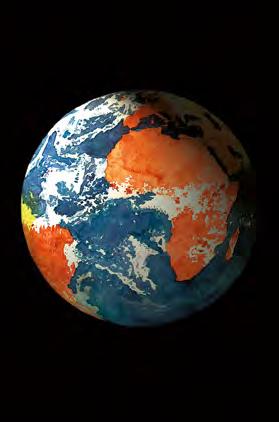
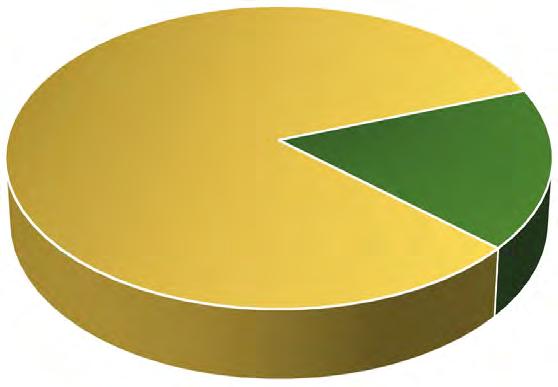
◗ World production and consumption of ceramic tiles
◗ Produzione e consumo mondiale di piastrelle di ceramica CERSAIE & TECNA 2022
September 27-30, 2022
Rimini Expo Centre Hall B5, Stand 040
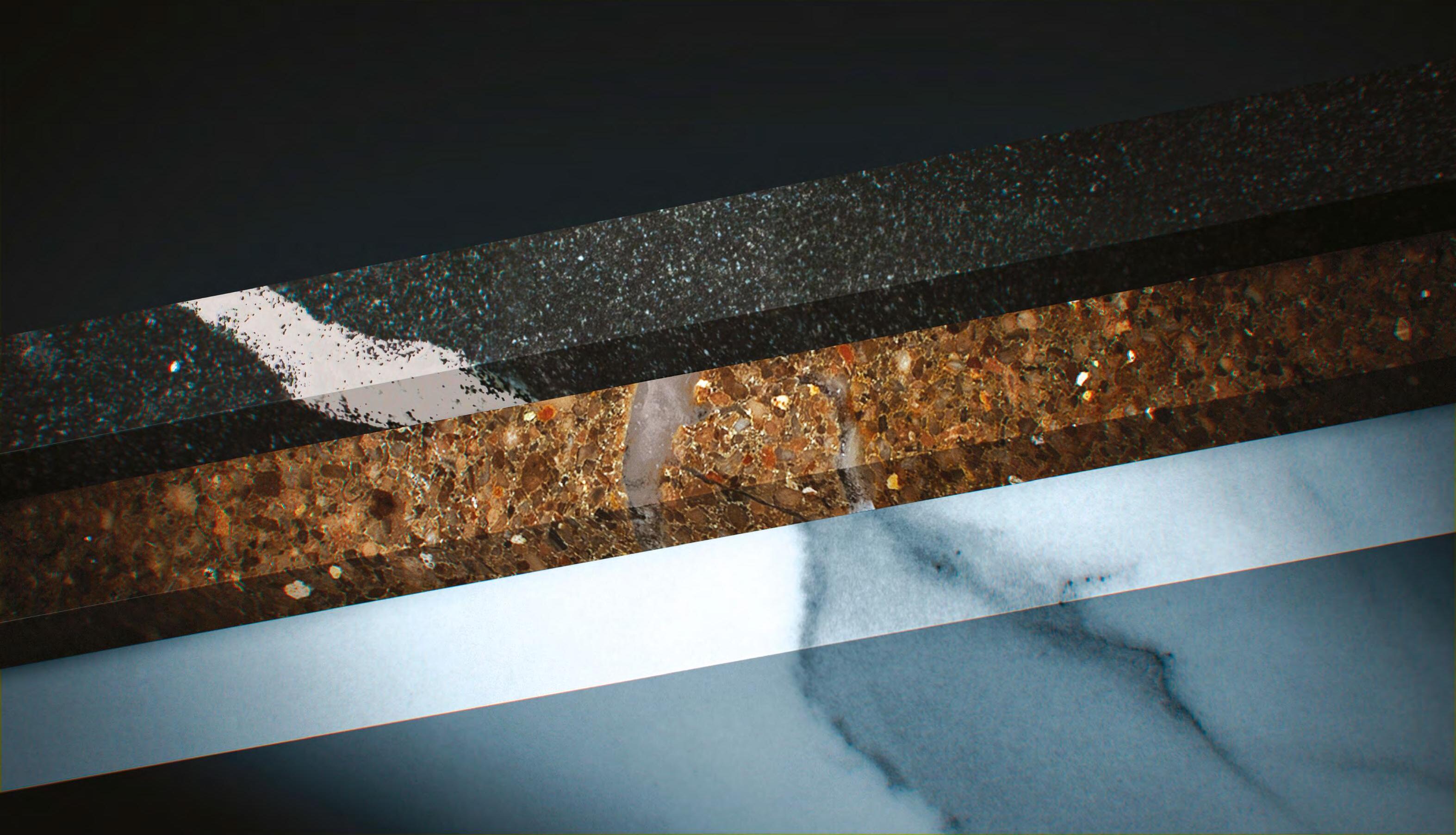
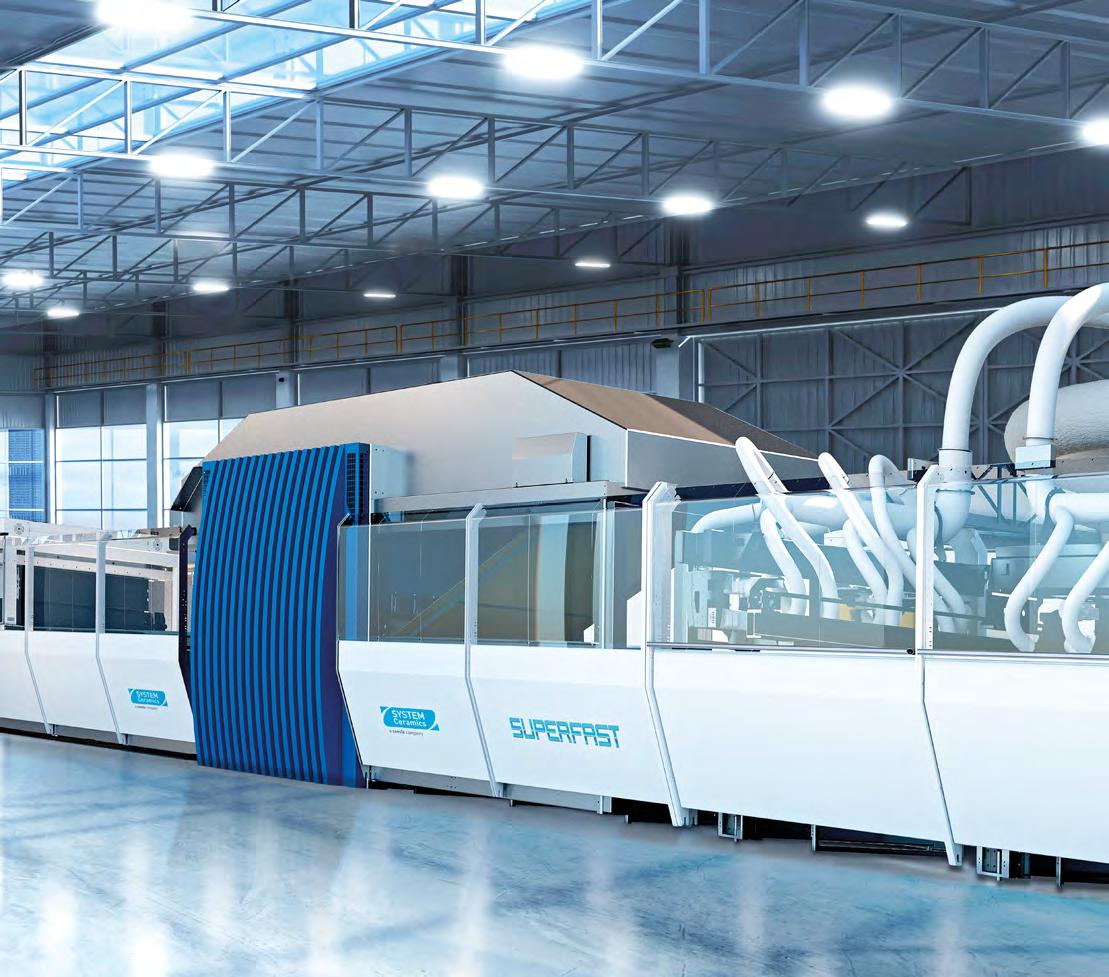
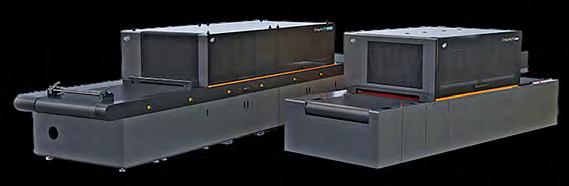
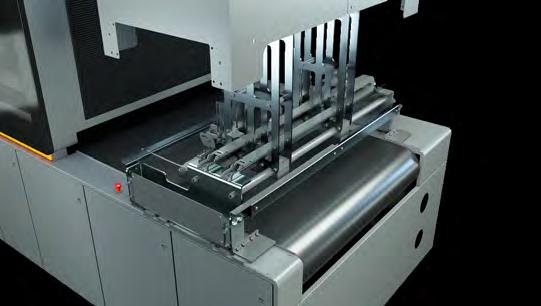
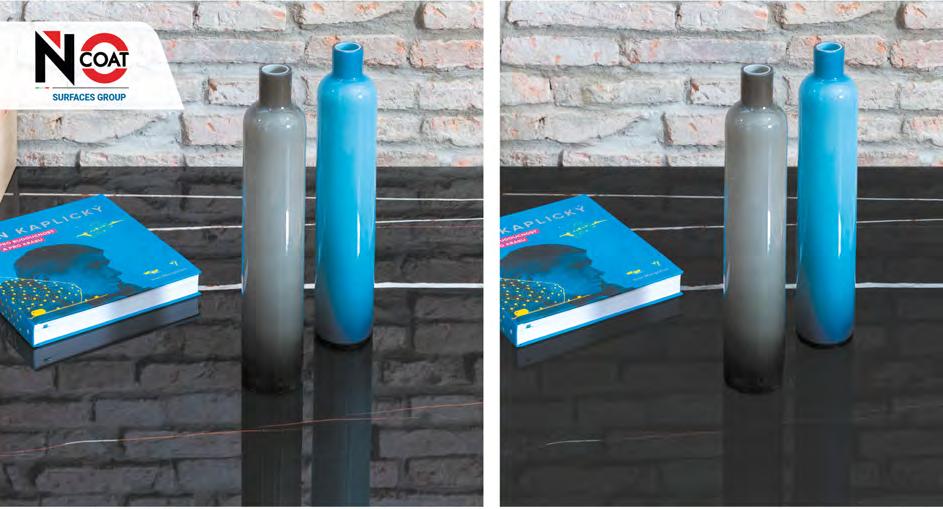
A new technology is already changing the way of digital decoration. The reproduction of natural aesthetic effects will be essential for writing the future. A future reserved for the most forward thinking minds. Amazing? No, incredible.
systemceramics.com.
September 27-30, 2022
Rimini Expo Centre Hall B5, Stand
Year 32, N° 148
Settembre/October 2022
Bimonthly review
Anno 32, n° 149
Settembre/Ottobre 2022
Periodico bimestrale
Cover picture by: Giancarlo
Pradelli
78
World production and consumption of ceramic tiles
Produzione e consumo mondiale di piastrelle di ceramica
The world’s top ceramic tile manufacturers
I maggiori produttori mondiali di piastrelle
RAK Ceramics focuses on growth strategies
RAK Ceramics, strategie per crescere
Kajaria Ceramics accelerates its growth
Kajaria Ceramics accelera la crescita
Somany Ceramics set for strong growth
Somany Ceramics pone le basi per la crescita
VitrA Tiles focuses on large sizes
VitrA Tiles spinge sui grandi formati
Cerrad Group makes major new investments
Nuovi investimenti per il Gruppo Cerrad
The European construction market to 2024 Il mercato europeo delle costruzioni al 2024
Ceramic trends 2022-2023
Tendenze ceramiche 2022-2023 88
Tecna 2022: Sustainability and digitalisation take centre stage Tecna 2022: Sostenibilità e digitalizzazione al centro
“The advanced ceramic plant” takes centre stage at Tecna 2022 “L’impianto ceramico evoluto” protagonista a Tecna 2022 Sacmi Group 98
At Tecna ‘22, product and process innovation goes hand in hand with sustainability
A Tecna ’22, l’innovazione di prodotto e processo fa rima con sostenibilità System Ceramics
The sustainable future of ceramic body preparation
Abatement of harmful substances in flue gases
delle sostanze nocive dei fumi
Successful partnerships: the Gold Art experience
Collaborazioni virtuose: l’esperienza Gold Art
A spectral scanner with a long history
Uno scanner spettrale con un importante passato Antonio
Turning waste heat into clean energy
Trasformare il calore di scarto in energia pulita Eco-Tech
Media for digital glazing with water-based glazes and engobes
Veicoli per smaltatura digitale di smalti ed engobbi a base acqua Lamberti
Material and structured effects
Effetti materici e strutturati
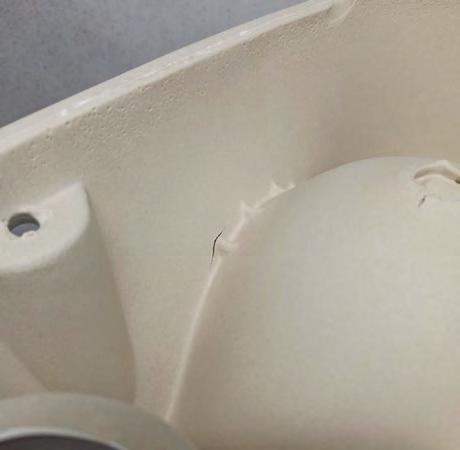
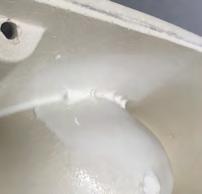
New ventilating cone for sanitaryware drying
Nuovo cono di ventilazione per l’essiccazione dei sanitari
Luca Baraldi
Luca Baraldi
Paola Giacomini
Milena Bernardi
Milena Bernardi
Milena Bernardi
Del Rosso
Maccari
Dario Dalla Chiara
From MINE to PRODUCT
Publisher / Editore:
Administration and Editorial Office Amministrazione e Redazione
• Annual subscription (5 issues) Abbonamento annuale (5 numeri) Italy: € 50; International: €70; Special tariffs for group subscriptions are available on request. Tariffe speciali per abbonamenti collettivi sono disponibili su richiesta.
L’IVA sugli abbonamenti, nonché sulla vendita dei fascicoli separati, è assolta dall’Editore ai sensi dell’art. 74 primo comma lettera C del DPR 26.10.72 N. 633 e successive modificazioni e integrazioni.
• Graphic Layout / Progetto Grafico Sara Falsetti - s.falsetti@tiledizioni.it
• Printer / Stampa Faenza Printing Industries SpA Via Vittime Civili di Guerra 35 48018 Faenza (RA)
• Paola Giacomini mobile +39 335 1864257 p.giacomini@tiledizioni.it
• Silvia Lepore mobile +39 345 7218245 s.lepore@tiledizioni.it
• Elisa Verzelloni mobile +39 338 5361966 e.verzelloni@tiledizioni.it
• Translation / Traduzioni: John Freeman
Vaccari Zincografica S.r.l. Via Salgari, 61 41123 Modena
Entire contents copyright Tile Edizioni. All rights reserved. Opinions expressed by writers are not necessarly those held by the publisher who is not held responsible. Editorial material, manuscripts, photographs, transparencies and artwork will not be returned. Tutti i diritti di riproduzione e traduzione degli articoli pubblicati sono riservati. È vietata la riproduzione anche parziale senza l’autorizzazione dell’Editore. Manoscritti, disegni, fotografie e altro materiale inviato in redazione, anche se non pubblicati, non verranno restituiti. La Direzione non assume responsabilità per le opinioni espresse dagli autori dei testi redazionali e pubblicitari.
daTe of going To press / chiuso in redazione il: 15/09/2022
TILE EDIZIONI S.r.l., in conformità al “Testo unico sulla privacy”, garantisce la riservatezza dei dati usati per gli abbonamenti e per gli scopi tipici della stampa specializzata e la possibilità di modificarli o cancellarli (art. 7 del D.L. 196/2003) a mezzo richiesta scritta.
promoTed by
Tile edizioni also publishes:
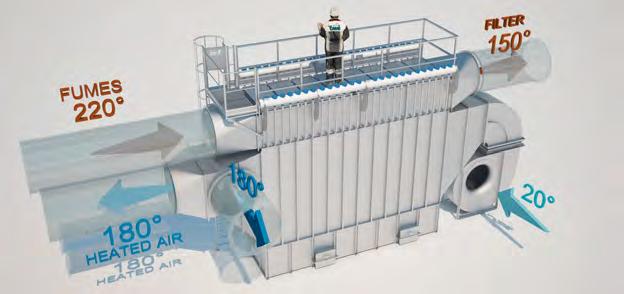
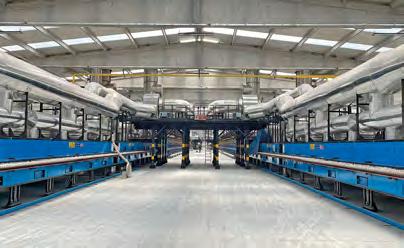
Energy Recovery Systems and Filtration
THINKING ABOUT ECOLOGICAL SOLUTIONS
Thermal Energy Recovery System “Intelligente”
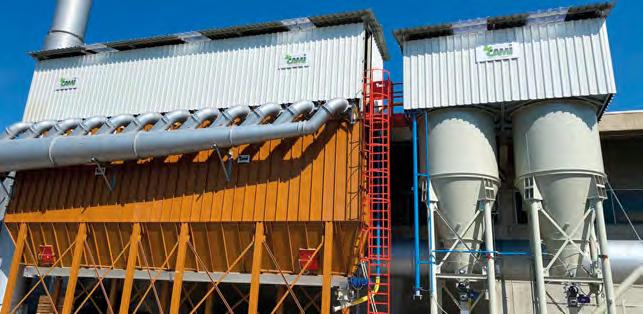
Sleeve and Box Filters for Dust and Fumes
Heat Exchangers
Control and Supervision Instruments
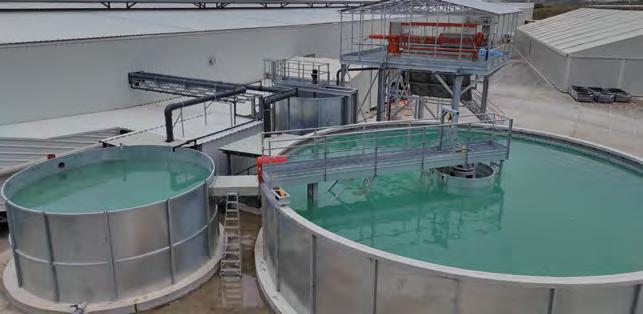
Water Purification Systems
Washing Towers and Scrubbers
by Paola Giacomini, Editor -
See you at the shows!
The wait is over: for one week starting on Monday 26 September, the entire global ceramic industry and market will meet in the Italian cities of Bologna and Rimini. Almost 600 companies and brands will be showcasing their finest products at Cersaie in Bologna, the most important international exhibition of ceramic tile and bathroom furnishings, while a further 300 companies will be exhibiting at Tecna in Rimini, the world’s foremost exhibition of technology and supplies for the ceramic industry, after a long four-year wait.
The Rimini show will consist of four days of meetings, training events, in-depth analysis and discussion focusing on how to plan for the sector’s future in the light of the dramatic changes that have occurred in recent years and the further developments that are expected in the future. On the one hand, ceramic companies have to cater for new market demands and consumer sensibilities, while inside the factories they face completely unprecedented operating conditions caused by supply chain bottlenecks and soaring costs of all production factors, especially energy. On the other hand, the upstream process technology suppliers must help manufacturers address all of these challenges. This is what they will attempt to do at Tecna by showcasing the most advanced solutions designed to ensure maximum production efficiency and the highest levels of environmental sustainability of processes and products.
At a global level, the year 2021 brought a sharp recovery in tile production and consumption volumes along with a significant increase in import-export flows following the previous year’s decline. World tile production rose to 18.3 billion sqm (up 7.2% on 2020), with the largest increases reported in the European Union (+18%) and Central and South America (+24.5%). Consumption rose at a similar rate (+6.8%) to 18.2 billion sqm, while global exports increased by 8.7% to 3 billion sqm, around 244 million sqm more than in 2020. This recovery involved all geographical areas. The generalised recovery in global production is also reflected in the figures for the individual major ceramic groups included in the “World Top 25” ranking (published on page 52), driven by the return to pre-pandemic levels, numerous plant investments and several major acquisitions concluded last year.
We wish you happy reading and every success at the shows! 5
Arrivederci in fiera
Attesa terminata. Da lunedì 26 settembre, per una settimana, l’intera filiera dell’industria e del mercato mondiali della ceramica si dà appuntamento in Italia, tra Bologna e Rimini. Sono quasi 600 le aziende e i brand impegnati a mostrare il meglio di sé tra i padiglioni del Cersaie, la più importante fiera internazionale delle piastrelle e arredobagno, mentre altre 300 imprese si presenteranno al Tecna di Rimini – il principale Salone mondiale delle tecnologie e forniture per l’industria ceramica - dopo un’attesa di ben quattro anni.
A Rimini si preannunciano quattro giorni densi di incontri, formazione, approfondimento e confronto su come progettare il futuro del settore alla luce dei profondi cambiamenti degli ultimi anni, cercando di anticipare la loro ulteriore evoluzione nei prossimi. Da un lato, le aziende ceramiche sono chiamate a rispondere a nuove istanze del mercato e nuove sensibilità dei consumatori, mentre dentro gli stabilimenti affrontano condizioni operative del tutto inedite a causa di supply chain inceppate e costi alle stelle di tutti i fattori produttivi, energie in primis. Dall’altro, a monte, i fornitori di tecnologie di processo devono contribuire a dare risposte al mondo produttivo su tutti questi fronti. Ed è quello che cercheranno di fare a Tecna mettendo in mostra le più avanzate solu-
zioni progettate per la massima efficienza produttiva e la massima sostenibilità ambientale di processi e prodotti.
A livello globale, il 2021 si è chiuso confermando il netto recupero dei volumi di produzione e consumo di piastrelle e riportando in sensibile rialzo i flussi di import-export che si erano ridotti l’anno precedente per la pandemia. La produzione mondiale di piastrelle è salita a 18,3 miliardi mq (+7,2% sul ’20) con gli incrementi maggiori in Unione Europea (+18%) e in Centro-Sud America (+24,5%). In linea, l’aumento dei consumi (+6,8%) a 18,2 miliardi mq, mentre le esportazioni mondiali hanno segnato un progresso dell’8,7% salendo a 3 miliardi mq, circa 244 milioni in più rispetto al 2020. Un recupero che ha riguardato tutte le aree geografiche.
La ripresa generalizzata della produzione globale trova riscontro anche nei dati dei singoli grandi gruppi ceramici inseriti nella graduatoria dei “World Top 25” (pubblicata a pagina 52), effetto sia del generale recupero dei livelli pre-pandemia, sia dei numerosi investimenti impiantistici condotti, nonché di alcune rilevanti operazioni di shopping concluse l’anno scorso.
Buona lettura e buone fiere! 5
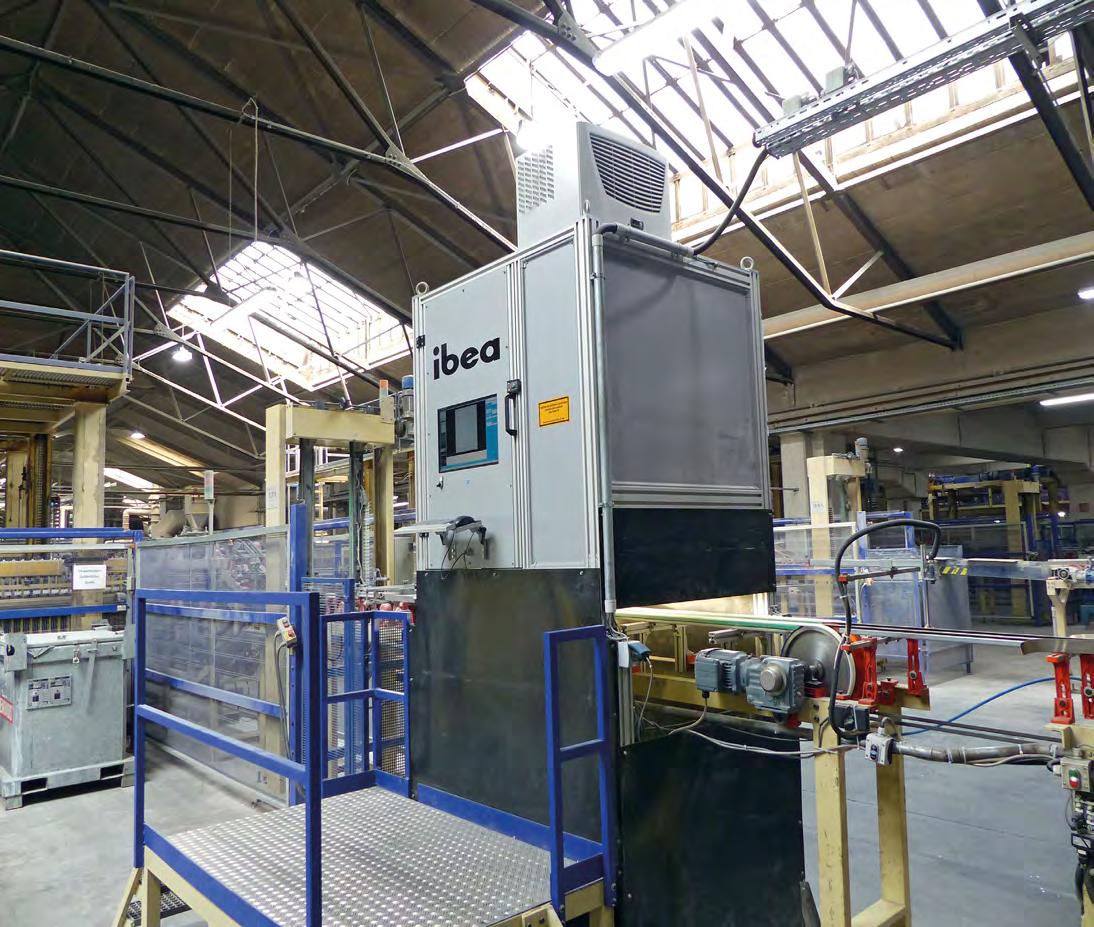
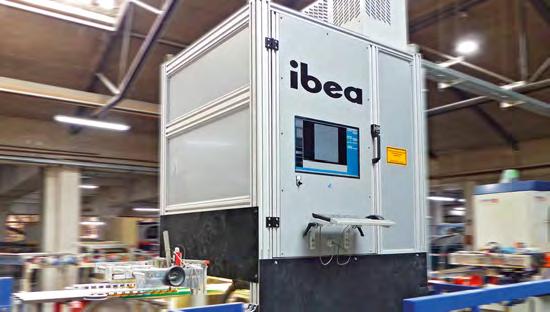
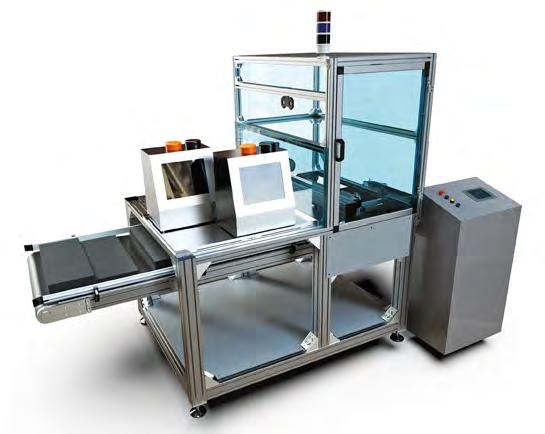
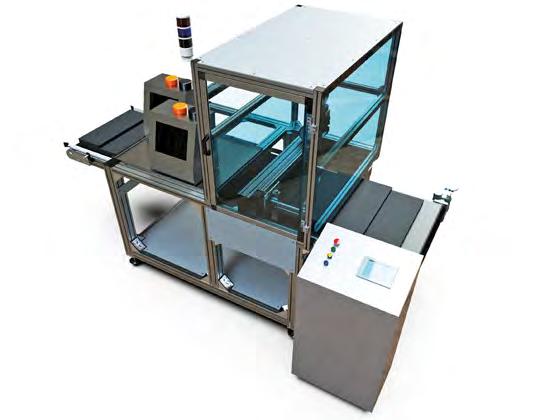
ibea Tile Master
Inspection system with 3-camera online inspection for line outputs of up
Sophisticated camera concept captures and documents any type of error (e.g. even very fine cavities or
Modular and expandable system with simple components
Clear and immediate display of all error types with sorting ejector
Teach in automatic for the simplest
Designed for continous operation in dusty environments
Remote operation possible from anywhere in the world
Detailed statistics and errors image memory can be recalled over 3 years
• Continous operation guarantee
Further inspection systems available for bricks, roof tiles, concrete stones etc.
Please send your inquiry to -> sales@ibea.de
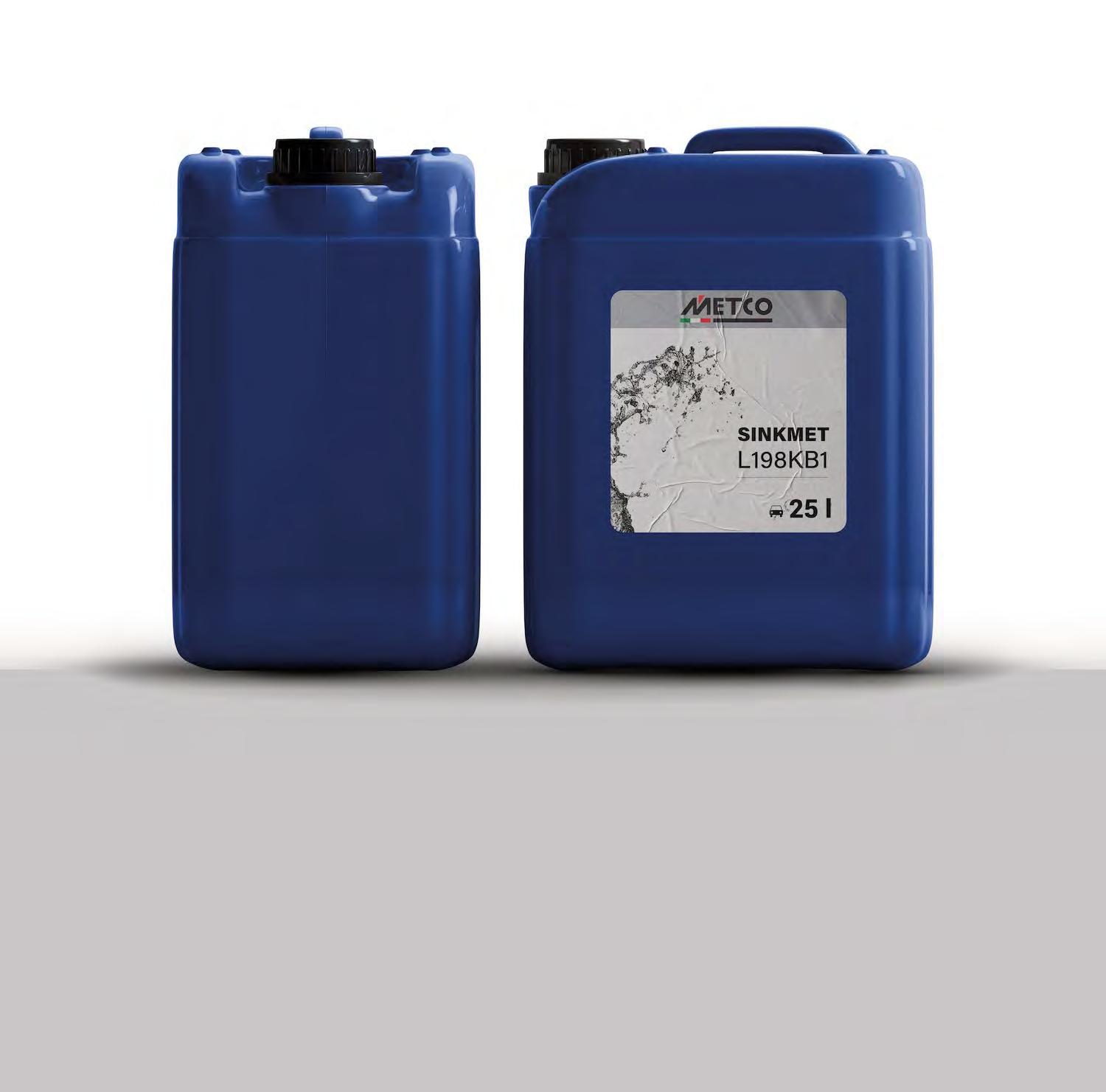
SINKMET(SSI)
CERAMIC COLOURS WITH LIVING CHEMISTRY
INTERACTION BETWEEN CHEMICAL ELEMENTS AND METALS
TIPS
- 4 Basic colours CMYK
- 1 precious metal dark black colour [Ru]
- 1 precision metal intense magenta colour [Au]
- Boiling point higher than 250ºC
- Solvent of aliphatic nature (kind of naphtha)
- NO solid content
- Colour replacement time in the inkjet circuit 60-90 min
- PENETRATION in the ceramic body up to 0,5 mm
AtLAs concorde
Announces forthcoming construction of LArge sLAB pLAnt
Atlas Concorde, one of the leading global players in the ceramic tile industry, has announced an investment of more than €60 million for the construction of a new porcelain slab production plant at its site in Finale Emilia (Modena).
The new plant, which will expand the existing factory by an additional 35,000 square metres, will be equipped with the most advanced production technology and will achieve the highest standards of environmental sustainability in the industry, demonstrating Atlas Concorde’s commitment to a zero-carbon future. The facility will be equipped with a photovoltaic system capable of generating up to 3,850 MWh per year, effectively reducing CO2 production by 2,000 tonnes . It will also have a very low level of pollutant emissions and will be hydrogen ready in preparation for the future introduction of hydrogen into the production process.
The plant is already under construction and is expected to be-
gin production in June 2023, increasing the number of jobs at the Finale Emilia site by approximately 60%.
This latest investment aims to strengthen the company’s position in the large ceramic slab segment and follows the €160 million already allocated by Atlas Concorde for industrial and logistical development over the last five years. As CEO Maurizio Mazzotti notes, the company is expanding slab production “alongside the large-format porcelain tile and ceramic wall tile segments where Atlas Concorde continues to consolidate its presence”.
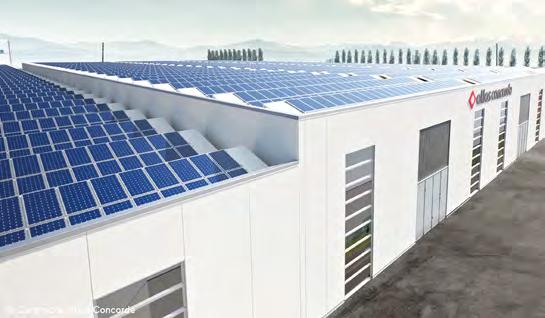
The image shows a view of the extended area of the Finale site and a detail of the photovoltaic system.
aTlas concorde annuncia il suo prossimo sTaBilimenTo per grandi lasTre
Atlas Concorde, tra i principali player nel panorama ceramico mondiale, ha annunciato un investimento di oltre 60 milioni di euro per realizzare, presso il sito produttivo di Finale Emilia (Modena), un nuovo stabilimento per la produzione di grandi lastre in gres porcellanato. Il nuovo impianto,
che prevede l’ampliamento della fabbrica esistente per una superficie aggiuntiva di 35.000 mq, verrà realizzato con le più avanzate tecnologie produttive e raggiungerà i più elevati standard di sostenibilità ambientale del settore, dimostrando l’impegno di Atlas Concorde nel voler contribuire a un futuro a zero emissioni di carbonio. La struttura sarà ricoperta da un impianto fotovoltaico in grado di generare fino a 3.850 MWh all’anno con una conseguente riduzione di 2.000 tonnellate di CO2. Inoltre, opererà garantendo ridottissime concentrazioni di emissioni inquinanti e sarà “Hydrogen Ready”, pronto per la futura introduzione dell’idrogeno nel processo produttivo.
Lo stabilimento, la cui costruzione è già in corso, è previsto entrare in
produzione nel giugno 2023 e genererà un aumento di circa il 60% degli attuali posti di lavoro presso il sito di Finale Emilia.
Quest’ultimo investimento si aggiunge ai 160 milioni di euro stanziati da Atlas Concorde negli ultimi 5 anni per lo sviluppo industriale e logistico e punta a rafforzare il posizionamento dell’azienda nel segmento delle grandi lastre ceramiche che, come sottolinea il CEO Maurizio Mazzotti, “si affiancano in maniera sempre più importante ai segmenti dei grandi formati in gres porcellanato e ai rivestimenti in ceramica in cui Atlas Concorde continua a consolidare la sua presenza”.
Nell’immagine la vista aerea dell’ampliamento del sito di Finale e un particolare dell’impianto fotovoltaico.
LB suppLies technoLogy to ABK for sLAB production
ABK Group, one of Italy’s leading producers of ceramic tiles and slabs, has signed an agreement with LB Technology for the installation of a new body colouring line equipped with Easy Color Boost technology at its factory in Solignano (Modena). The new installation will complement ABK’s two existing body colouring lines and is part of the Finale Emilia-based ceramic group’s new investment programme aimed at expanding production of largesize technical porcelain tiles. The tried and tested technology
supplied by LB improves production efficiency thanks to its high levels of flexibility, allowing for multiple product combinations according to configurations that optimise the use of space and resources.
Tecnologia lB per le lasTre aBK
Una nuova linea di colorazione impasti con tecnologia Easy Color Boost, realizzata da LB Technology, sarà installata nello stabilimento di Solignano (Modena) del Gruppo ABK, tra i maggiori produttori italiani di piastrelle e lastre ceramiche. La linea, che si affiancherà alle due
esistenti, rientra nel nuovo programma di investimenti del gruppo ceramico di Finale Emilia, finalizzato a potenziare la produzione di grandi lastre in gres porcellanato tecnico.
La tecnologia fornita da LB, un sistema ormai ben consolidato, è in grado di migliorare l’efficienza produttiva grazie alla sua elevata flessibilità, consentendo molteplici combinazioni di produzione secondo schemi che sfruttano al meglio spazi e risorse.
frAnco stefAni wins cerAmics in
europe AwArd 2022
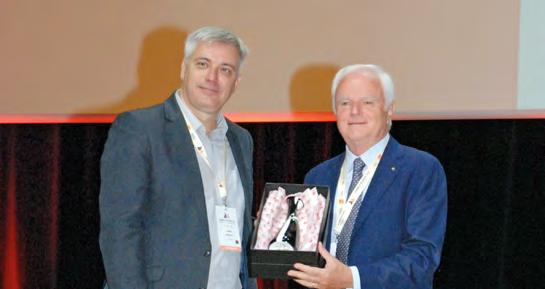
The Ceramics in Europe 2022 congress held in Krakow, Poland on 10-14 July simultaneously hosted the XVII ECerS Conference, ICC9 and Electroceramics XVIII and also featured the presentation of the ECerS awards. One of these was the Gian Nicola Babini (Industrial) Award, which was presented to Franco Stefani, Chairman of System Ceramics (Coesia Group) in recognition of his pioneering role in developing Lamina technology patented by System Ceramics. The award recognises the essential contribution that this unique industrial process and innovative technology has made to the European ceramic industry by developing an entirely new product with enormous technical and aesthetic potential and opening up new areas of application and market segments.
With the Lamina industrial pro-
Vesco resumes shipping to spAin, itALy And turKey
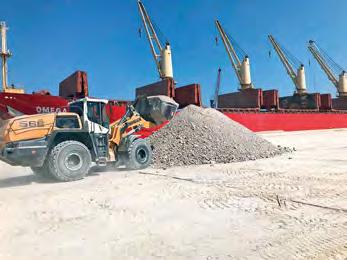
Vesco, Ukraine’s largest clay producer and exporter, is back in operation after suspending operations for several months due to the outbreak of the war and the subsequent evacuation of personnel and equipment.
As sales director Dmitrii Kostornichenko explains, “The shock caused by the first few weeks of the war was quickly replaced by an understanding of the need to find and build new logistics channels as an alternative to the blockaded Ukrainian ports. The aim was to rapidly resume shipping of the stocks of material already available prior to temporary suspension of the company’s operations. We have succeeded, and shipping to major foreign markets has resumed.”
The first shipment of 17,000 tonnes of Ukrainian clay arrived at
cess, Franco Stefani and System Ceramics have transformed the traditional floor and wall tile concept into a 1800x4800 mm surface with a thickness from 3 to 30 mm suitable for use as a furnishing element.
This is the result of a revolutionary technology based on a powerful mouldless press (from the original Lamgea through to today’s Superfast model), which combines innovation, technology and architecture to give free rein to creativity and open up new markets for the ceramic industry.
a Franco sTeFani il premio ceramics in europe 2022
In occasione del congresso Ceramics in Europe 2022 (Cracovia, 10-14 luglio) – evento che ha riunito quest’anno la XVII ECerS Conference, l’ICC9 ed Electroceramics XVIII -, ha avuto luogo la consegna dei premi ECerS. Tra questi, il Gian Nicola Babini Award (per la categoria Industrial),
the port of Castellón, Spain on 15 August. “We have now reached a shipping volume of 100,000 tonnes per month and are planning to expand the channels that we have managed to build,” confirms Kostornichenko
The company has also resumed production activities, with sufficient volumes for the current shipping capacity. Vesco is a strongly export-oriented company which sells more than 80% of its clay production in major ceramic districts globally. It is owned by UMG Investments, which in turn is part of SCM, the largest investment group in Ukraine.
Vesco riprende le spedizioni in spagna, iTalia e Turchia
Vesco, il maggiore produttore ed esportatore ucraino di argille, torna nuovamente operativo dopo alcuni mesi di sospensione delle attività a causa dello scoppio del confitto
assegnato all’Ing. Franco Stefani, presidente di System Ceramics (Gruppo Coesia), per la tecnologia Lamina da lui creata e brevettata da System Ceramics. Il premio riconosce il contributo essenziale fornito all’industria ceramica europea attraverso un processo industriale e una tecnologia innovativa unici al mondo: un’evoluzione che ha dato vita ad un prodotto inedito, dalle ricche potenzialità tecniche ed estetiche e che ha aperto nuovi segmenti di utilizzo e di mercato. Con il processo industriale Lamina, Franco Stefani e System Ceramics han-
no infatti trasformato il concetto di ceramica: dalla singola piastrella tradizionalmente destinata a pavimenti e rivestimenti ad una superficie di 1800x4800 mm con spessori che possono variare da 3 a 30 mm che diventa un vero e proprio elemento d’arredo. Merito di una tecnologia rivoluzionaria basata fondamentalmente sulla potentissima pressa senza stampo – da Lamgea all’attuale Superfast – che ha conciliato innovazione, tecnologia e architettura per dare un impulso fortissimo alla creatività e aprire nuovi mercati al settore ceramico.
bellico in Ucraina e la conseguente evacuazione di personale e attrezzature, messi in sicurezza. Come spiega il direttore commerciale Dmitrii Kostor nichenko, “al comprensibile shock causato dalle prime settimane di guerra è seguita la presa di coscienza della necessità di trovare e costruire rapidamente nuovi canali logistici in alternativa ai porti ucraini, bloccati. L’obiettivo era rendere possibile al più presto la spedizione degli stock di materiale già disponibili prima della sospensione temporanea delle operazioni. Ci siamo riusciti e le spedizioni verso i principali mercati esteri sono riprese”. La prima nave con 17mila tonnellate di argilla ucraina è infatti arrivata al porto di Castellon, in Spagna, il 15 agosto. “Al momento abbiamo raggiunto un volume di spedizioni di 100mila tonnellate al
mese – conferma Kostornichenko - ma stiamo già pianificando di espandere i nuovi canali sviluppati in questi mesi”.
Anche sul fronte produttivo l’azienda è già operativa, per ora con volumi di produzione sufficienti per l’attuale capacità di spedizione. Fortemente votata all’esportazione, con oltre l’80% delle argille prodotte commercializzata nei principali distretti ceramici a livello globale, Vesco è una società di proprietà di UMG Investments, a sua volta parte di SCM, il più grande gruppo di investimento in Ucraina.
A breakthrough in the glazing line
Medium for digital water based engobes and glazes. Our chemical knowledge permits to transform a traditional glaze in a new one ready to be applied by digital .
What parameters we control to perform a perfect surface ?
rheology of the engobe/glaze
surface tension
binding properties
interaction between glaze drops and support
fernAndo fABrA eLected new chAirmAn of Anffecc
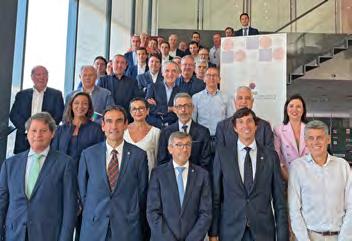
The general meeting of ANFFECC, the association of Spanish ceramic frit and glaze manufacturers, elected its new chairman on 15 July. Fernando Fabra Florit, owner of the frit and glaze producer Esmaltes, takes over from Joaquín Font de Mora and will lead the association for the next four years.
After graduating in Industrial Engineering from the Polytechnic University of Valencia and earning an Executive MBA, Fabra has gone on to acquire more than 20 years’ experience in the ceramics industry, including 13 years at the head of Esmaltes. He has served as Vice Chairman of ANFFECC for the last two years.
In his speech at the conclusion of his four-year term in office, outgoing chairman Font de Mora outlined the work done by the association in a period marked by a se-
gmm group contriButes to energy efficiency At cerAmiche mAriner
As part of its longstanding commitment to the research and development of innovative technologies to help companies improve their production and energy efficiency, the Gmm Group boasts strong synergies between its subsidiaries and major partnerships with companies that share its mission. One of these is Festo, a leading company in the industrial automation and pneumatics sector and a client of Gmm Group for more than 20 years with which it has launched a leakage search and mitigation project for various production processes.
One of the Italian ceramic companies that have decided to undertake a process of leakage mitigation based on the service offered by the Gmm Group
ries of unpredictable and momentous events, including the Covid pandemic, the war in Ukraine, the soaring prices of energy and raw materials, and the recent tensions between Spain and Algeria. These challenges will now be faced by the newly-elected chairman Fernando Fabra, who stated that he is taking office with a sense of responsibility and confidence in the ability of the association’s member companies to overcome difficulties through a focus on innovation and R&D. The other board members were also elected during the meeting, including Ángel Navarro (Coloronda) as vice chairman, Joaquín Font de Mora as treasurer and Gonzalo Trilles (Colorobbia).
ceramica ha eletto lo scorso 15 luglio il suo nuovo presidente. A raccogliere il testimone da Joaquín Font de Mora è Fernando Fabra Florit, titolare del colorificio Esmaltes, che guiderà l’associazione per i prossimi quattro anni. Laurea in Ingegneria Industriale alla Università Politecnica di Valencia e MBA Executive, Fabra opera nel settore ceramico da oltre 20 anni, di cui 13 alla guida di Esmaltes e negli ultimi due è stato vicepresidente di ANFFECC. Nel suo discorso di chiusura del quadriennato, il presidente uscente Font de Mora ha ricordato il lavoro svolto dall’associazione in un periodo caratterizzato da even-
ti tanto imprevedibili quanto impattanti: dal Covid, alla guerra in Ucraina, alla scalata dei prezzi energetici e di materie prime, ai più recenti problemi con l’Algeria. Sfide che ora ricadono nell’agenda del neoeletto Fabra che ha confermato di assumere l’incarico con reponsabilità e fiducia nella capacità delle aziende associate di affrontare momenti critici scommettendo sull’innovazione e la R&S. In occasione dell’assemblea sono state rinnovate anche altre cariche della giunta, con l’elezione di Ángel Navarro (Coloronda) alla vicepresidenza, Joaquín Font de Mora come tesoriere e Gonzalo Trilles (Colorobbia).
L’assemblea generale di ANFFECC, l’associazione dei produttori spagnoli di fritte e smalti per
is Ceramiche Mariner of Castellarano (Reggio Emilia), a leading industry player which is particularly attentive to issues of production innovation and sustainability. Specifically, Mariner has implemented a maintenance service for its Roteglia facilities aimed at identifying and remedying compressed air leaks, well known to be one of the main causes of rising costs and consequent energy wastage on production lines. On completion of the service activities, an energy audit based on ROI schemes will be carried out to determine the investment’s impact and payback time.
gmm group per l’eFFicienTamenTo energeTico di ceramiche mariner
Da sempre impegnato nella ricerca e sviluppo di tecnologie inno-
vative che supportino le aziende nel percorso volto all’efficientamento produttivo ed energetico, Gmm Group, Global Industrial Partner, può contare, in questo ambito, sia sulla sinergia tra le sue consociate che su importanti partnership con primarie realtà che condividono la stessa missione.
Tra queste, Festo, azienda leader nel settore dell’automazione industriale e della pneumatica, con la quale Gmm Group collabora da oltre vent’anni e con cui ha dato vita ad un progetto di ricerca e qualificazione perdite su diversi processi produttivi.
Tra le aziende ceramiche italiane che hanno deciso di intraprendere un processo di efficientamento delle perdite avvalendosi del service offerto da Gmm Group, c’è la Ceramiche Mariner di Castellarano (Reggio Emilia), uno dei principali player del settore, particolarmente at-
tento ai temi dell’innovazione produttiva e della sostenibilità. Nello specifico, Mariner ha definito un service manutentivo per i propri impianti di Roteglia al fine di individuare e sanare le eventuali perdite di aria compressa, note per essere tra le principali cause di innalzamento dei costi e conseguente spreco di energia su linee produttive. Al termine delle attività di service seguirà un audit energetico basato su schemi ROI per determinare l’impatto dell’investimento e il suo rientro.
energy efficiency solutions
Fernando FaBra, nuoVo presidenTe di anFFecc
DRY LUX evo
inter ser grows together with its pArtners
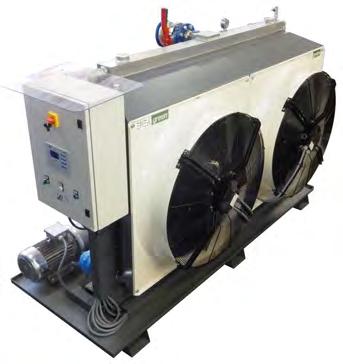
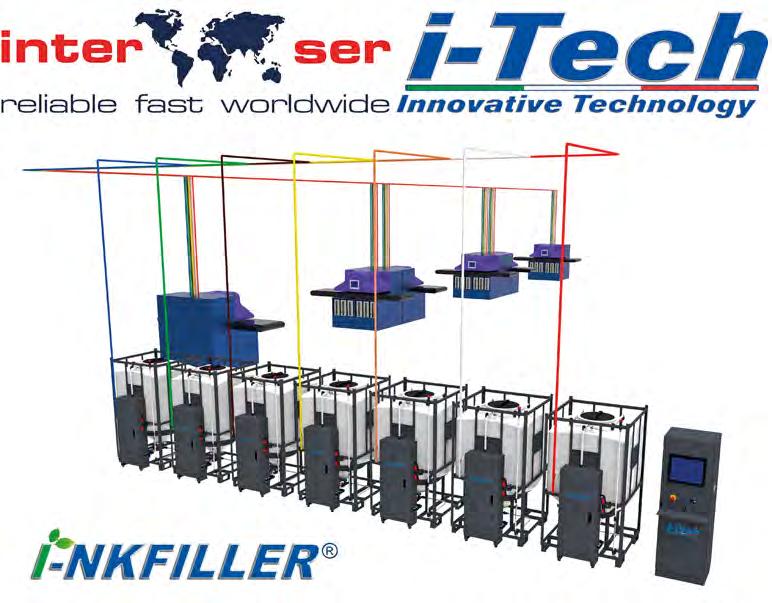
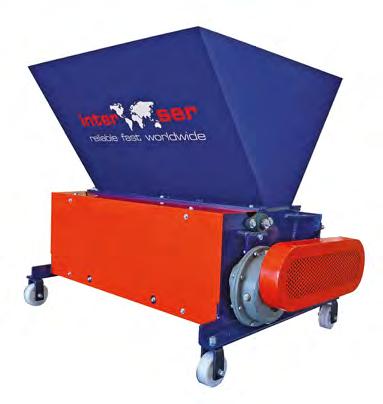
Inter Ser, a Vercelli-based company with a logistics centre in Sassuolo specialising in the international distribution of original spare parts and ceramic machinery since 1996, will be taking part in Tecna 2022 in Rimini on the back of excellent market results achieved together with its partners, including its longstanding collaborators I-Tech and Fimo The best-selling product in the I-Tech catalogue, marketed by Inter Ser in various non-European countries, is I-nkfiller®, the innovative and most widely used automatic filling system for digital inks, materials and glues which has already surpassed 100 installations worldwide. The latest version of I-nkfiller® will be on display at Tecna, alongside the latest 4.0 version of Eneagreen, the press oil cooling system which uses variable ventilation technology designed and produced by Fimo. Distributed by Inter Ser in many non-European countries, more
than 300 Eneagreen units are currently installed worldwide. In recent years, Inter Ser has focused on ink management for digital printers, process efficiency improvement and energy saving. The market response has been extremely positive, almost overwhelming. “We have a strong belief in these lean, green manufacturing technologies, which reduce the risk of human error in the field of process control,” explain CEOs Gian Luca and Paolo Zanoni “The large tile producing groups were the first to introduce these innovations in their factories, demonstrating the very real and practical benefits they bring and paving the way for the successful adoption of our products by smaller manufacturers and companies located in less industrialised countries.”
inTer ser cresce insieme ai suoi parTner
Inter Ser, azienda di Vercelli con sede logistica a Sassuolo, dal 1996 specializzata nella commercializza-
zione internazionale di ricambi originali e macchine per la ceramica, si presenta al Tecna 2022 di Rimini forte degli ottimi risultati di mercato ottenuti insieme ai propri partner, tra cui I-Tech e Fimo che rappresentano collaborazioni ormai consolidate.
Best seller del catalogo I-Tech, commercializzato da Inter Ser in vari paesi extra-europei, si conferma I-nkfiller®, l’innovativo e più diffuso sistema di riempimento automatico per inchiostri, materie e colle digitali, che ha già superato le 100 installazioni in tutto il mondo. In mostra a Tecna l’ultima versione di I-nkfiller®. Accanto, anche l’ultima versione 4.0 di Eneagreen, il sistema di raffreddamento dell’olio delle presse che utilizza la tecnologia della ventilazione variabile, progettato e realizzato da Fimo. Distribuito da Inter Ser in molti pae-
si extra-europei, attualmente vi sono oltre 300 Eneagreen installati nel mondo.
Negli ultimi anni Inter Ser ha lavorato soprattutto sulla gestione degli inchiostri per le stampanti digitali, sull’efficientamento dei processi e sul risparmio energetico. La risposta del mercato è stata estremamente positiva, quasi esplosiva. “Crediamo molto in queste tecnologie green e di lean manufacturing, che permettono di ridurre il rischio dell’errore umano sul controllo di processo”, commentano i CEO Gian Luca e Paolo Zanoni “I grandi gruppi sono stati i primi ad implementare queste innovazioni nei loro stabilimenti, aprendo così la strada al successo delle nostre proposte, poi accolte anche dai produttori più piccoli e in paesi meno industrializzati, a riprova che i benefici sono reali e pratici”.
cimes suppLies technoLogies for comet’s new grAnicer sLAB production Lines
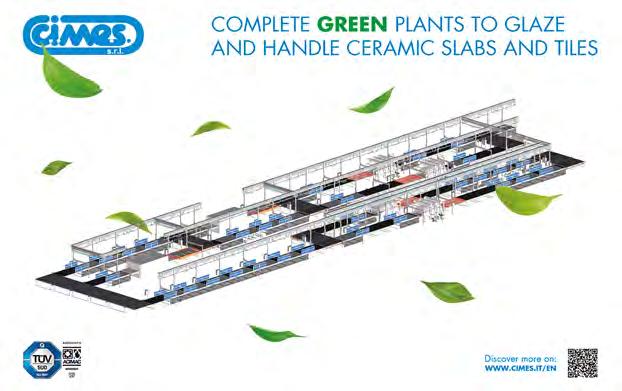
In the new large-size slab production plant started up by Comet Granito PVT. LTD (Granicer Ceramica) in Morbi (Gujarat) over the summer, Italian technologies take centre stage in the glazing department. The Maranello, Modena-based company Cimes supplied two complete glazing lines equipped with the latest dry grit application systems. The belt conveyor with a width of up to 2000 mm guarantees maximum flexibility in terms of production management compared to traditional conveyors, while the supe-
rior slab support provided during transport avoids the risk of bending. Both the lines are designed to ensure optimal management and problem-free belt operation even in the event of high slab temperatures at the dryer exit. The equipment supplied by Cimes also included handling systems for feeding the kilns directly from both glazing lines. Comet Granito’s new plant has a production capacity of 8 million square metres/year of large size surfaces (up to “King size” 1200x3600 & 1600x3200 mm) and submultiples, with thicknesses of up to 20 mm. The Indian ceramic group is one of the largest local players and following the start-
up of the new plant will have a total installed capacity of around 20 million sqm.
Tecnologie cimes per
le nuoVe lasTre granicer di comeT
Nel nuovo impianto per la produzione di grandi lastre che Comet Granito (Granicer Ceramica) ha avviato in estate a Morbi (Gujarat), le tecnologie made in Italy sono protagoniste anche nel reparto smaltatura. Qui la Cimes di Maranello (Modena) ha fornito due linee di smaltatura complete, dotate anche dei più recenti sistemi di applicazione di graniglia a secco. Il trasporto a nastro, con larghezza fino a 2000 mm, garantisce la massima flessibilità nella gestione della produzione rispetto ai trasporti tradizionali, oltre ad un migliore
sostegno della lastra durante il trasporto evitando così eventuali flessioni. Entrambe le linee sono state realizzate per assicurare una gestione ottimale e l’assenza di problematiche sui nastri anche in presenza di elevate temperature delle lastre in uscita essiccatoio. La fornitura Cimes ha compreso anche i sistemi di movimentazione per l’alimentazione dei forni direttamente da entrambe le linee di smaltatura. Il nuovo stabilimento Comet Granito ha una capacità produttiva di 8 milioni mq/anno di superfici di grande formato, fino alle “King size” 1200x3600 & 1600x3200 mm, e sottoformati, con spessori variabili fino a 20 mm. Con l’avviamento del nuovo impianto, il gruppo ceramico indiano, tra i maggiori player locali, raggiungerà, a regime, una capacità installata totale intorno ai 20 milioni mq.
MINERALS FOR LIFE
MCS® is a Portuguese-based multi-mineral, ceramic raw material mining and processing company.
However it o ers more than ceramic raw materials and ceramic bodies, it is commi ed to sustainable mining principles and providing “Minerals For Life”. Our success is built on innovation, R&D and collaborative partnerships to overcome industry challenges.
WHERE GROWING YOUR BUSINESS IS OUR PURPOSE.
Joe Lundgren is a globally recognized product and marketing expert in the ceramic and stone worldwide markets. His specialty is Business Development, Product Management, and Marketing.
Joe has developed his expertise in strategic planning, new product development, and marketing strategy for North America during his 27 year career at Dal-Tile, a subsidiary of Mohawk Industries.
Joe has extensive experience in multiple sales channels including distribution and Home Centers.
Additionally, Joe represents the Tile Council of North America (TCNA) for its testing laboratories, which has Joe at the epicenter of the industry for all new initiatives.
Please contact Joe Lundgren for a free consultation proposal!
tephAn schmidt group LeBrAtes 75th nniVersAry
Stephan Schmidt, one of the world’s leading producers of special clay and industrial minerals, celebrates its 75th anniversary this year. Founded in 1947, the group has always been a family business and is now run by the third generation represented by Stephan Schmidt, the founder’s grandson.
With 20 company-owned clay pits (mainly in the Westerwald region) with guaranteed resources for generations to come, state-of-the art extraction and processing facilities and a dedicated team of 200 employees, the Dornburg-Langendernbach-based group produces more than 1.5 million tonnes of raw materials every year, which are delivered to customers in more than 40 countries worldwide with an export share of over 60%. The extensive product catalogue combined with a constant commitment to R&D and innovation enables the company to supply its raw materials to all segments of the ceramic industry (ceramic tiles, sanitaryware, tableware, refractories, bricks and roof tiles), as well as the technical ceramics sector served under the ACM® - Advanced Clay Minerals brand.
One of the German group’s most important foreign markets is Italy, where its two subsidiaries Ceramat and Progind International, both located in Castelnuovo Rangone (province of Modena), have for decades been supplying raw materials to tile producers based in the Emilia region and sanitaryware manufacturers in other areas of the country
only by its enormous experience, but also by the reliability and continuity it has demonstrated towards its customers, business partners and employees. Well aware of the environmental impact of its mining activities, the group has long been committed to the conservation of natural resources and to the sustainable management of raw materials and the environment. To mark its 75th anniversary, it has published its first sustainability report and launched a programme to plant 75,000 native trees in its local region.
The Stephan Schmidt Group will be present at Tecna 2022 (Rimini, 27-30 September), Hall B7, Booth 154.
The company’s growth throughout its 75 years of history has been sustained not
Il gruppo tedesco Stephan Schmidt, tra i principali produttori mondiali di argilla speciale e minerali industriali, festeggia i suoi primi 75 anni di attività. Fondata nel 1947 e rimasta sempre un’impresa familiare, oggi il gruppo è guidato dalla terza generazione rappresentata da Stephan Schmidt, nipote del fondatore.
Con 20 giacimenti di proprietà (per lo più nel Westerwald) che garantiscono risorse per un futuro a lungo termine, impianti di estrazione e lavorazione all’avanguardia, laboratori tecnologici tra i più moderni e un team di 200 dipendenti, il gruppo di Dornburg-Langendernbach produce ogni anno oltre 1,5 milioni di tonnel-
late di materie prime, commercializzate in più di 40 paesi in tutto il mondo con una quota export di oltre il 60%. L’ampio catalogo prodotti, unito ad un impegno costante in R&S e innovazione, consente di fornire tutti i settori dell’industria ceramica (piastrelle, sanitari, stoviglieria, refrattari, laterizi), oltre al comparto della ceramica tecnica servita con il brand ACM® - Advanced Clay Minerals. Tra i mercati esteri più importanti del gruppo tedesco vi è l’Italia, dove le due filiali Ceramat e Progind International, entrambe a Castelnuovo Rangone (Modena), supportano ormai da decenni sia il distretto emiliano delle piastrelle, che diversi produttori di sanitari in altre aree del territorio. A supportare la crescita dell’azienda nei suoi 75 anni di vita, oltre alla grande esperienza hanno contribuito anche l’affidabilità, la serietà e la continuità dimostrate nei confronti di clienti, partner e dipendenti. Consapevole dell’impatto ambientale delle sue attività minerarie, il gruppo è impegnato da anni nella conservazione delle risorse naturali per garantire una gestione attenta e sostenibile delle materie prime e dell’ambiente, impegno sottolineato anche in occasione del 75° anniversario sia con la pubblicazione del primo rapporto di sostenibilità che con il programma di piantumazione di ben 75.000 alberi nella propria regione.
Il Gruppo Stephan Schmidt sarà presente a Tecna 2022 (Rimini, 27-30 settembre), Padiglione B7, stand 154.
75° anniVersario per sTephan schmidT group
SHAPING FUTURE WITH CLAY
We have always thought ahead. Because that has been our business for 75 years.
Our family business, Stephan Schmidt Group, is one of the most important European producers of special clays and mineral raw materials. Now in our third generation, we operate 20
opencast mining sites in our home region Westerwald and in the Kamenz area and employ 200 people worldwide to whom we essentially owe our success. Since the foundation of our company in 1947, we have always been thinking and acting sustainably.
Stephan Schmidt Gruppe Bahnhofstraße 92 D-65599 Dornburg/Langendernbach
Fon +49 6436 609-0
Fax +49 6436 609-49
Preserving and restoring natural resources has always been an integral part of our corporate policy.
This year, we celebrate our 75th anniversary. On this solemn occasion, we will plant 75,000 trees for the future together with our customers and partners, but also with our neighbours from the surrounding communities.
info@schmidt-tone.de www.schmidt-tone.de
Z&s cerAmco
unVeiLs its new App
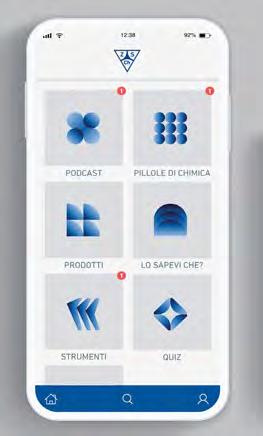
Two years after the launch of its communication project focused on education, training and skills sharing, Zschimmer & Schwarz Ceramco - a leading chemical company and specialist in the formulation of solutions for the ceramic industry - is bringing together the various initiatives it has implemented to date in a single virtual space. The app entitled “Seemingly invisible. Chemistry in ceramics”, which will be available in Italian from September and also in English by the end of the year, explores aspects of chemistry applied to ceramic tile production from the perspective of manufacturers and focuses on the issues of greatest interest to the people who work on production lines on a daily basis. It offers a step-by-step journey through products, applications and processes following a “problem-cause-solution” approach and adopting a simple language that is also accessible to non-specialists.
Available for free download from
new Agreement Between essepienne And fm
FM, a longstanding company from Correggio (Reggio Emilia) specialising in the design and injection moulding of technical articles in thermoplastic materials, has signed a new distribution agreement with Sassuolo-based company Essepienne.
After several years of successful collaboration as the official distributor of FM products in Belarus, Russia, Ukraine and Uzbekistan, Essepienne has now also been appointed as the exclusive distributor of the FM brand in the Iranian market, where the Sassuolo-based company has expanded rapidly in recent years to become a leading distributor of spare parts for the ceramic in-
the Apple Store or Google Play Store as from 26 September (the inaugural day of Cersaie, where Ceramco will be present in Hall 33 Booth B10/C11), the APP provides glossaries, knowledge pills, quizzes and calculation tools that enable users to expand or refresh their knowledge. Process problems or technical and aesthetic issues can in many cases be resolved or mitigated through the use of chemistry or actions that require an in-depth knowledge of day-to-day operation of the production lines. With this in mind, the app is divided into various sections (Podcast, Chemistry Pills, Did you know that?, Tools, Quizzes and Products) which offer a range of learning experiences from traditional lessons to games.
z&s ceramco presenTa la nuoVa app
A due anni dall’avvio del progetto di comunicazione focalizzato su didattica, formazione e condivisione delle competenze, Zschimmer & Schwarz Ceramco - azienda leader nel campo della chimica e spe-
dustry.
This new agreement reflects Essepienne’s extremely positive performance with 48% revenue growth in the first half of the year.
Both companies will be present at Tecna 2022 in Rimini: Essepienne in Hall B3, Booth 028 and FM in Hall D1, Booth 025.
nuoVo accordo Tra essepienne e Fm
Nuovo accordo commerciale tra la Essepienne di Sassuolo (Modena) e la FM, storica azienda di Correggio (Reggio Emilia) specializzata nella progettazione e stampaggio di articoli tecnici in materiali termoplastici per iniezione. Dopo alcuni anni di fruttuosa collaborazione come distributore uf-
cialista nella formulazione di soluzioni per l’industria ceramica -, riprende le fila delle diverse azioni messe in campo finora per radunarle in un unico spazio virtuale. L’App “Apparentemente invisibili. La chimica in ceramica” – da settembre in italiano ed entro fine anno anche in inglese – affronta temi legati alla chimica applicata alla produzione di piastrelle ceramiche ponendosi dalla prospettiva dei produttori e provando a sviscerare i temi di maggiore interesse per chi opera quotidianamente sulle linee di produzione. Un viaggio a tappe con focus su prodotti, applicazioni e processi, proposto secondo una logica “problema-cause-soluzioni” e con un linguaggio semplice e accessibile anche ai non addetti ai lavori.
Scaricabile gratuitamente su Apple Store o Google Play Store a partire dal 26 settembre - in contemporanea con Cersaie, dove Ceramco ne darà risalto nel proprio stand (Pad 33 stand B10/C11) -, l’APP offre glossari, pillole di conoscenza, quiz e strumenti di calcolo attraverso i quali ampliare le proprie conoscenze o avere conferma di quanto già si conosce.
ficiale dei prodotti FM in Bielorussia, Russia, Ucraina e Uzbekistan, Essepienne ha ricevuto ora l’incarico di commercializzare in esclusiva il brand FM anche sul mercato iraniano, dove l’azienda sassolese è cresciuta molto negli ultimi tempi, divenendo un punto di riferimento nella ricambistica per l’industria ceramica.
Problemi di processo o criticità di natura tecnica ed estetica possono essere in molti casi risolti, o almeno arginati, grazie all’intervento della chimica o per mezzo di azioni trasversali che coinvolgono e implicano una profonda conoscenza di quanto avviene quotidianamente lungo le linee di produzione. Per questa ragione la APP si struttura in varie sezioni - Podcast, Pillole di chimica, Lo sapevi che?, Strumenti, Quiz, Prodotti - che, con diversi livelli di approfondimento, spaziano dalla lezione frontale al gioco.
Questo nuovo accordo sottolinea e conferma il momento estremamente positivo di Essepienne, reduce da un primo semestre dell’anno a +48% di ricavi.
Entrambe le aziende saranno presenti al Tecna 2022 di Rimini: Essepienne nel padiglione B3, stand 028, e FM nel padiglione D1, stand 025.
certech group continues its growth trend
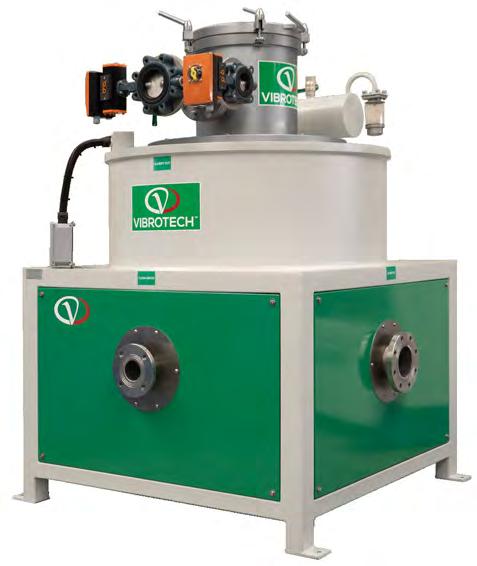
Certech Group (Casalgrande, Reggio Emilia) is preparing for the appointment with Tecna 2022 in Rimini (Hall D1, Booth 015) following a record 2021 performance (including 40% year-onyear growth in consolidated turnover to €52.6 million) and continued excellent growth in 2022. The group’s Italian companies (Certech SpA, Eurorubber Industries, Mistral Italia, Rubbertech and Vibrotech) report-
ed consolidated H1 revenues of €40 million. The three foreign subsidiaries (Certech USA in Lebanon, Tennessee; Certech Spain in Onda, Castellón de la Plana; and Certech Mexico in Monterrey, Nuevo León) also reported better-than-expected results.
The Certech Group is a leader in the various fields in which its companies operate: the production of rubber compounds for various sectors; wear-resistant rubber coatings for the ceramic industry; vibrating screens and iron removers; chemical additives for the ceramic industry; and machinery and spare parts for
the wet grinding and glazing departments.
cerTech group conFerma il Trend di cresciTa
Dopo aver chiuso un 2021 da record, con un incremento del 40% del fatturato consolidato sul 2020, a 52,6 milioni di euro, Certech Group (Casalgrande, Reggio Emilia) si prepara all’appuntamento con Tecna 2022 a Rimini (Pad. D1, stand 015) confermando il suo ottimo trend di crescita anche nel 2022. I ricavi consolidati del primo semestre hanno raggiunto i 40 milioni di euro, riferiti solo alle aziende italiane del gruppo, ossia Certech SpA, Eurorubber
Industries, Mistral Italia, Rubbertech e Vibrotech. A questi si aggiungono i risultati, anch’essi oltre le aspettative, ottenuti dalle tre filiali estere (Certech USA, con sede a Lebanon, Tennessee, Certech Spain a Onda di Castellòn de la Plana e Certech Mexico a Monterrey, nel Nuevo Leon).
Certech Group è oggi leader nei vari comparti in cui operano le sue aziende: dalla produzione di mescole in gomma per svariati settori, ai rivestimenti in gomma anti usura per l’industria ceramica, ai vibrovagli e deferrizzatori, agli additivi chimici per l’industria ceramica, ai macchinari e ricambi per i reparti di macinazione ad umido e smalteria.
i.c.f & weLKo AnticipAtes strong two-yeAr resuLts
Following a strong performance in 2021, ICF & Welko of Maranello (MO) is looking ahead to another two-year period of rapid expansion thanks to the company restructure carried out by the new management and a new sales strategy based on a more extensive presence across a number of markets, particularly Italy, Spain and Germany. CEO Roberto Magnani expects the company to meet its revenue targets in 2022 with around 30% year-on-year growth and to maintain double-digit growth rates in 2023, despite the growing difficulties experienced by the ceramic sector. Gradual but steady growth is forecast in global markets over the next few years, in part due to the synergy between the companies belonging to the Keda Group, of which ICF & Welko is a member while maintaining its own management, commercial and technical independence. While ICF & Welko also supplies technologies to other manufacturing sectors, its sales and orders have recently been boost-
ed by the surge in demand from the ceramic industry for more energy-efficient plants, especially in the drying and firing departments. A large portion of the company’s research efforts are focused on combustion technology and on the development of new burners for thermal machines running on both natural gas and hydrogen. The first test installations carried out on customers’ kilns and dryers have shown important results in terms of energy savings. ICF & Welko will be presenting these latest innovations at Tecna 2022 in Rimini from 27 to 30 September.
Biennio posiTiVo per i c.F & WelKo
Dopo un buon 2021, per la ICF & Welko di Maranello (MO) si prospetta un altro biennio in forte espansione, grazie alla riorganizzazione aziendale operata dal nuovo management ad una rinnovata azione commerciale, consistente in una maggiore e puntuale presenza in diversi mercati, in particolare, al momento, in Ita-
lia, Spagna e Germania. Secondo l’amministratore delegato Roberto Magnani, il 2022 si chiuderà con ricavi in linea con gli obiettivi prefissati, in crescita di circa il 30% sul 2021, mentre, nonostante le crescenti difficoltà del settore ceramico, anche il 2023 dovrebbe mantenersi su tassi di crescita a doppia cifra. Nei prossimi anni è prevista infatti una graduale ma costante crescita nei mercati di tutto il mondo, anche grazie alla sinergia tra le aziende del Gruppo Keda, di cui ICF & Welko fa parte pur mantenendo una propria indipendenza sul piano gestionale, commerciale e tecnico. Presente con le proprie tecnologie anche in altri settori manifatturieri, a spingere le vendite e gli
ordini di ICF & Welko in questo periodo è il grande recupero degli investimenti dell’industria ceramica, orientati alla maggiore efficienza energetica degli impianti soprattutto nei reparti essiccazione e cottura. È infatti sulla combustione che si sta concentrando gran parte della ricerca dell’azienda, con lo sviluppo di nuovi bruciatori per tutte le macchine termiche, alimentate sia con gas metano che a idrogeno. Le prime installazioni per completare i test sono già state effettuate sui forni ed essiccatoi di alcuni clienti, confermando importanti risultati in termini di risparmio energetico. ICF & Welko presenterà queste ultime novità al Tecna 2022 di Rimini, dal 27 al 30 settembre.
gmm group suppLies green technoLogies to fLorim cerAmiche
With the worsening of the energy crisis and the consequent rise in costs, the ceramic industry is doing everything possible to reduce its levels of energy consumption while maintaining productivity and product competitiveness. In this complex scenario, Gmm Group acts as a global industrial partner and supplies innovative technologies to support its customers in the process of optimising resources. One example is that of Florim Ceramiche,
SOLUZIONI DI
GREEN ECONOMY PER FLORIM CERAMICHE
tecno diAmAnt showcAses its new surfAce finishing technoLogies At tecnA 2022
Tecno Diamant, a market leader in the field of diamond tools for machining ceramic and stone, will be showcasing its range of 100% Italian-made resinoid and abrasive Fickert tools at Tecna 2022 in Rimini from 27 to 30 September. These state-of-the-art solutions were developed following the expansion of the abrasive materials R&D and production laboratory
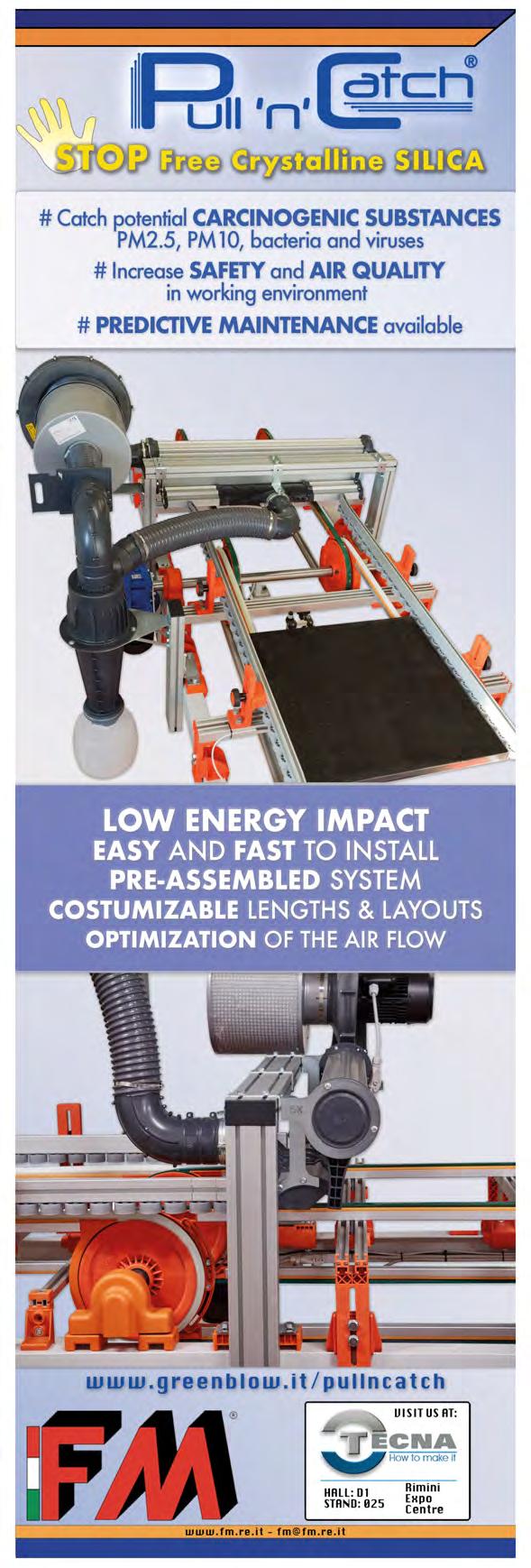
a world-leading company in the sector with whom Gmm Group recently completed an ambitious sustainable efficiency project. Specifically, the Gmm Group’s engineers designed and installed the innovative “PULL’n’CATCH” dust extraction system patented by the Group’s strategic partner FM for several Florim production lines.
The most innovative feature of the product is the special closed-circuit system which blows and at the same time extracts any dust present on the tiles prior to firing, thereby eliminating potential production waste or processing damage. A further innovative element of the system is the dust collection device which prevents dust from being released into the workplace, thereby preserving cleanliness and protecting the health of operators.
The system brings countless benefits in terms of both cost and energy. By using this system equipped with two 2.2 kW mo-
at the Tecno Diamant Lab in Spezzano (MO) and the opening of the new 1,800 square metre site in Formigine (MO), which includes the headquarters, offices and logistics warehouse.
At Tecna 2022, Tecno Diamant will also be showcasing its latest new products in the field of Industry 4.0, interconnection and eco-sustainability deriving from its intense R&D efforts focused on energy and material savings. These achievements reward the hard work of the company, which has continued to grow and expand since 1995 and has become a key partner for the global ceramic industry. As part of its farsighted internationalisation policy, the company has also opened branches in Brazil, Spain, Poland, Russia and China to guarantee a rapid and efficient service, spare parts supply and customer care. In addition to the five long-established foreign branches, it also recently opened
tors, for example, it is possible to repurpose the old filters driven by large motors with high energy and maintenance costs.
Tecnologie
green di gmm group per Florim ceramiche
Con l’inasprimento della crisi energetica e la conseguente crescita dei costi, l’industria ceramica affronta ogni giorno rilevanti problematiche per coniugare la necessità di contenere i consumi e la volontà di mantenere la produttività e la competitività del prodotto. In questo complesso scenario, Gmm Group, Global Industrial Partner, assiste la clientela nel processo di ottimizzazione delle risorse offrendo tecnologie innovative. Un esempio è il caso di Florim Ceramiche, azienda di riferimento nel settore a livello mondiale, con la quale si è concluso di recente un ambizioso progetto di efficientamento in ottica sostenibile.
In particolare, i tecnici specializzati del Gruppo Gmm, previa specifica
progettazione, hanno realizzato e installato per diverse linee produttive di Florim, l’innovativo sistema di aspirazione “PULL’n’CATCH” brevettato da FM, partner strategico del Gruppo.
L’innovazione del prodotto risiede nello speciale sistema a circuito chiuso che soffia e al contempo aspira l’eventuale polvere presente sulle piastrelle pre-cottura, andando così ad eliminare potenziali scarti di produzione o danni alle lavorazioni. Un ulteriore elemento innovativo del sistema è rappresentato dal dispositivo di raccolta polvere che ne evita la dispersione nell’ambiente di lavoro, a tutela della pulizia e soprattutto della salute degli operatori.
Il sistema presenta innumerevoli vantaggi, non solo di natura economica ma anche energetica. Infatti, servendosi di questo sistema dotato di due motori da 2,2 kW, è possibile destinare ad altro uso i vecchi filtri azionati da grandi motori che generavano alti costi energetici e di manutenzione.
a new sales subsidiary in Turkey, a market that has been growing rapidly in recent years. Tecno Diamant Turkey, located in the province of Izmir, will provide rapid deliveries and expert technical support to Turkish tile producers and companies based in neighbouring countries.
Tecno diamanT porTa a Tecna 2022 l’innoVazione nella FiniTura di superFici
Tecno Diamant, leader nel campo degli utensili diamantati per la lavorazione di ceramica e pietra, sarà tra i protagonisti di Tecna 2022 (a Rimini dal 27 al 30 settembre), dove presenterà la sua gamma di utensili, resinoidi e Fickert abrasivi 100% made in Italy. Sono soluzioni all’avanguardia ottenute grazie al potenziamento del laboratorio R&S e di produzione di materiali abrasivi presso il “Tecno Diamant Lab” di Spezzano (MO), e del
nuovo stabilimento di 1800 mq di Formigine (MO) che comprende la sede centrale, gli uffici e il magazzino logistico.
Tecna 2022 sarà anche la vetrina per sottolineare i traguardi di Tecno Diamant in ambito Industry 4.0, interconnessione ed ecosostenibilità, ottenuti con un’intensa attività di R&S focalizzata sul risparmio energetico e delle materie. I risultati raggiunti premiano l’azienda che, dal 1995 ad oggi, ha continuato a crescere e ad espandersi diventando un partner di riferimento per l’industria ceramica in tutto il mondo. Merito anche di un’attenta politica di internazionalizzazione, con l’apertura di filiali in Brasile, Spagna, Polonia, Russia e Cina che garantiscono rapidità ed efficienza nei servizi di assistenza, ricambistica e customer care. Alle cinque sedi estere attive da tempo si è aggiunta recentemente anche la nuova filiale commerciale in Turchia, un mercato cresciuto in
maniera esponenziale negli ultimi anni e nel quale Tecno Diamant Turkey, situata nella provincia di Izmir, assicurerà forniture in pron-
sAcmi suppLies new tiLe pLAnt to gurAL serAmiK
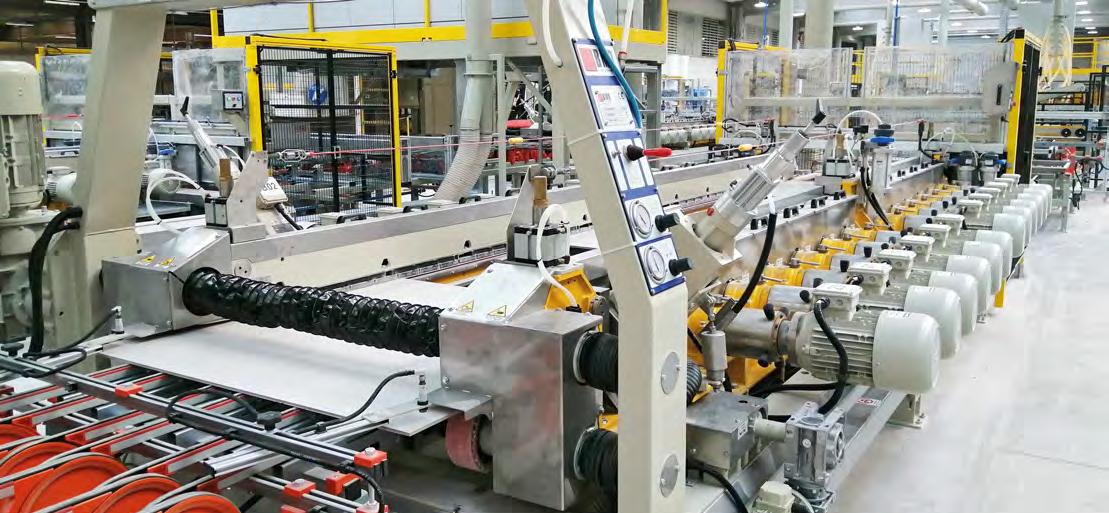
Gural Seramik, a leading Turkish sanitaryware and tableware manufacturer with decades of experience in the industry, has recently started up a plant for the production of glazed porcelain and monoporosa tiles. The line, installed at the Kutahya production site in the eponymous region of Anatolian Turkey, has a capacity of more than 6 million sqm/year of glazed porcelain and monoporosa tiles, and stands out for its high level of automation and the use of cutting-edge technologies. As the technological partner for the project, Sacmi supplied equipment for all the departments from body preparation (with the modular MMC138 and two ATM 90 mills) to the high-capacity Ekosort-Ekowrap sorting lines.
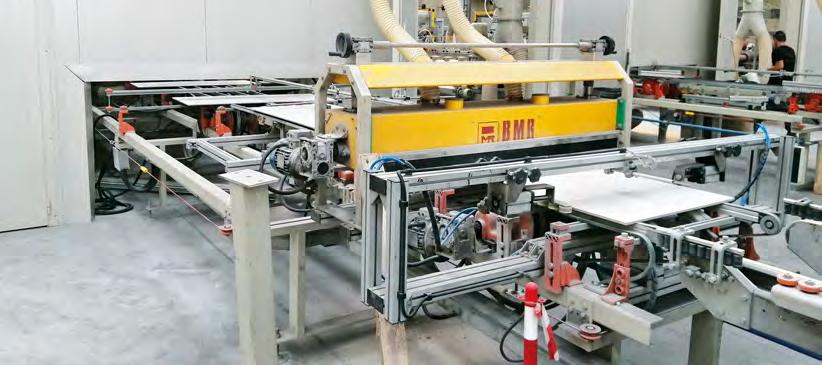
For the shaping department, Sacmi supplied two PH8200 presses for the production of 60x60 cm, 60x120 cm and 120x120 cm size floor tiles, and two PH 5000XXL presses for wall tile production. The plant is also equipped with two new 150-metre FMA295 kilns, which guarantee quality, efficiency and low levels of consumption, along with a BMR finishing line. This is another important result for Sacmi in the strategic Turkish market, which has seen steady
ta consegna e assistenza tecnica qualificata sia ai produttori locali che a quelli dei paesi limitrofi.
growth and significant investment on the part of leading local producers in recent years.
sacmi Firma la nuoVa
FaBBrica per piasTrelle di gural seramiK
Gural Seramik, da decenni protagonista in Turchia nella produzione di sanitari e stoviglieria, ha recentemente avviato il suo impianto per la produzione di piastrelle in grès porcellanato smaltato e monoporosa. La linea, realizzata nel sito produttivo di Kutahya, nell’omonima regione della Turchia anatolica, ha una capacità di oltre 6 milioni di mq/anno tra gres porcellanato smaltato e monoporosa e si distingue per la completa automatizzazione e la dotazione delle più avanzate tecnologie. Partner tecnologico del progetto, Sacmi ha fornito gli impianti per tutti i reparti, dalla preparazione impasti (con i mulini modulari MMC138 e due ATM 90) alle linee di scelta ad alta capacità Ekosort-Ekowrap.
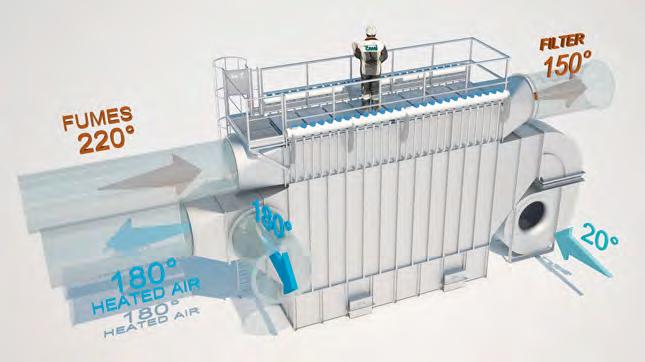
Systems and Green Technology For 50 years alongside ceramic industries, with cutting edge Technologies:
Heat recovery with new generation HEX exchangers
Fumes depuration
Dedusting Plants
Dedusting Plants for dry squaring lines
Slurry treatment and recovery
Per la formatura sono state fornite due presse PH8200, ideali per la produzione dei formati 60x60, 60x120 e 120x120 cm, e due PH 5000XXL per la produzione di rivestimento. Accanto, due nuovi forni FMA295 da 150 metri, che garantiscono qualità, efficienza e bassi consumi. Completa il progetto la linea di finitura BMR. Per Sacmi questo è un altro importante risultato in un mercato strategico come quello turco, caratterizzato da una crescita progressiva e investimenti importanti negli ultimi anni da parte dei principali produttori locali.
g.p. serVice
ceLeBrAtes
25 yeArs
Founded by Mario Gottardi and Michele Paulicelli in 1997, this year the Sassuolo-based company G.P. Service is celebrating 25 years supplying machinery, accessories, spare parts and services for the ceramic and brick industries. The extensive technical experience the company has gained over a quarter of a century allows it to offer a wide range of solutions for various stages of the production process (body preparation, glazing, drying, firing, finishing, etc.) and to provide specialist technical assistance and engineering consultancy for customised layouts and special machines. Over this 25-year period, the company has worked with over 200 ceramic companies in more than 30 countries worldwide and has succeeded in strengthening the majority of its partnerships thanks to its expertise and its dedication to constantly improving products and service. During the anniversary celebrations, Gottardi and Paulicelli thanked everyone who has sup-
unicerA 2022 to Be heLd in istAnBuL from 7 to 9 noVemBer
The 2022 edition of Unicera, Turkey’s largest exhibition of ceramic tiles, sanitaryware, bathroom and kitchen furniture, will be held from 7 to 11 November in the Istanbul Expo Center.
Organised by TG Expo International Fairs in collaboration with the Turkish Ceramics Federation (TSF) and the Plumbing and Building Materials Suppliers Association (TIMDER), the exhibition will occupy a total area of 100,000 sqm and will host more than 300 exhibitors and some 1,200 brands. Alongside the Turkish exhibitors, there will be companies from Germany, Spain, Italy, Portugal, Romania, Serbia, Chi-
ported the company over the years, including its customers, employees, more than 700 suppliers and agents operating in markets all over the world.
G.P. Service will be present at Tecna 2022 (Hall D3, Booth 01), where it will showcase its latest technological innovations which are already being well received by the market. These include the D-Finder roller kiln video inspection system and the Roll-Bar wireless alarm system for monitoring roller breakage which was patented in 2019 and was recently installed at a major Spanish ceramic company.
g.p. serVice compie 25 anni
Creata da Mario Gottardi e Michele Paulicelli nel 1997, la G.P. Service di Sassuolo celebra quest’an-
no 25 anni di attività nella fornitura di macchine, accessori, ricambi e servizi per il settore ceramico e del laterizio.
La lunga esperienza tecnica maturata in un quarto di secolo le consente oggi di offrire una vasta gamma di soluzioni per varie fasi del processo produttivo (preparazione impasti, smaltatura, essiccazione, cottura, finitura…), oltre ad un’assistenza tecnica specializzata e alla consulenza progettuale per la realizzazione di layout personalizzati e macchine speciali.
In questi 25 anni l’azienda ha collaborato con oltre 200 aziende ceramiche in più di trenta Paesi, riuscendo a consolidare la maggior parte delle partnership grazie alla competenza e alla spinta a migliorare sempre prodotti e servizio. In occasione dei festeggiamenti
na, Hong Kong, Korea, India, Iran, Lebanon, Egypt and Jordan. The exhibition will also host suppliers of machinery, raw materials, glazes and colours for the ceramic industry. The organisers aim to continue to expand the exhibition, especially in terms of its international scope, and to set new records in terms of both exhibitors and visitors, with more than 100,000 industry professionals from 130 countries expected to attend.
unicera 2022, appunTamenTo a isTanBul dal 7 noVemBre
È in programma dal 7 all’11 novembre prossimi presso l’Expo Center di Istanbul l’edizione 2022 di Unicera, la maggiore fiera turca dedicata a piastrelle di ceramica,
dell’anniversario, Gottardi e Paulicelli hanno ringraziato tutti coloro che hanno supportato l’azienda in questi anni, dai clienti, ai collaboratori, agli oltre 700 fornitori, agli agenti che operano nei mercati più lontani.
G.P. Service sarà presente a Tecna 2022 (pad. D3, stand 01) con le ultime novità tecnologiche che stanno già riscuotendo un buon successo di mercato. Tra queste, il sistema di videoispezione per forni a rulli D-Finder e il sistema di allarme wireless Roll-Bar (brevettato nel 2019) per controllare la rottura dei rulli, recentemente installato presso un’importante azienda ceramica spagnola.
sanitari, arredobagno e cucina. Organizzata da TG Expo International Fairs in collaborazione con Turkish Ceramics Federation (TSF) e TIMDER (Plumbing and Building Materials Suppliers Association), la manifestazione potrà contare su un’area complessiva di 100.000 mq dove accoglierà oltre 300 aziende espositrici (e circa 1.200 brand). A fianco degli espositori turchi, padroni di casa, saranno presenti aziende provenienti da Germania, Spagna, Italia, Portogallo, Romania, Serbia,
Cina, Hong Kong, Corea, India, Iran, Libano, Egitto e Giordania. Presenti in fiera anche aziende attive nella fornitura di macchinari, materie prime, smalti e colori per l’industria ceramica.
Obiettivo degli organizzatori è proseguire nello sviluppo della fiera, soprattutto a livello di internazionalità, stabilendo nuovi record sia sul fronte espositivo che di affluenza dei visitatori: sono infatti attesi più di 100mila professionisti del settore in arrivo da 130 paesi.
mAcer instALLs its first quicK chAnge mouLd in spAin
Although it has long been supplying its quick change moulds to international markets, this year the Almassora, Castellón-based company Macer supplied its most innovative product to a Spanish company for the first time. The new quick change mould suitable for use with Sacmi high-tonnage presses (PH10000) was installed at the Marazzi Iberia plant in Castellón.
The mould, designed using advanced technologies and calculation methods to maximise product quality, is equipped with the latest heating and extraction systems that facilitate automatic mounting on the press. Changeover times are reduced to one hour, greatly increasing the flexibility of the entire production line. Thanks to the permanent magnet fixing method and a handling and alignment device, the mould can be installed by a single operator without the need for additional equipment. Moreover, the mould change operation is much simpler and safer than the procedure using a forklift truck adopted on conventional presses.
The work carried out at Marazzi Iberia confirms Macer’s outstanding technical capabilities in the production of this type of mould, which is ideal for large, high-tonnage hydraulic presses (with a distance between columns of 2450 mm) such as the PH 10000.
Macer is presenting all its new technologies at Tecna 2022 (Hall D3 – Booth 003)
macer insTalla il primo sTampo a camBio rapido in spagna
Pur presente da tempo sui mercati internazionali con i suoi stampi a cambio rapido, la Macer di Almassora (Castellon)
ha fornito quest’anno, per la prima volta, il suo più innovativo prodotto ad un’azienda spagnola. A dotarsene, lo stabilimento Marazzi Iberia di Castellón, che ha installato il nuovo stampo a cambio rapido adattato alle presse Sacmi ad alto tonnellaggio (PH10000) in funzione nella fabbrica.
Lo stampo, ottenuto utilizzando tecnologie e metodi di calcolo avanzati per massimizzare la qualità del prodotto, è dotato dei più recenti sistemi di riscaldamento e aspirazione che facilitano il montaggio automatico sulla pressa, e riduce a un’ora i tempi di cambio formato, aumentando notevolmente la flessibilità dell’intera linea di produzione. Grazie al metodo di fissaggio a magnete permanente e a un dispositivo di movimentazione e allineamento, l’inserimento può essere effettuato da un solo addetto senza l’ausilio di attrezzature aggiuntive. Inoltre, l’operazione di cambio stampo è molto più semplice e sicura rispetto alla procedura con carrello elevatore in uso sulle presse convenzionali. L’intervento effettuato in Marazzi Iberia conferma le eccellenti capacità tecniche di Macer nel realizzare questo tipo di stampo, ideale per presse idrauliche ad alto tonnellaggio e di grandi dimensioni (con luce colonne di 2450 mm) come le PH 10000.
Macer è presente a Tecna 2022 (Pad D3 – Stand 003) con tutte le sue novità tecnologiche.
sAcmi whitewAre supports itALiAn sAnitArywAre mAnufActurers in the trAnsition towArds industry 4.0
The latest investments made by leading Italian sanitaryware manufacturers have focused on Industry 4.0 and total automation. In particular, Hatria, Ceramica Flaminia and GSI (Gruppo Sanitari Italia) have chosen Sacmi technology to improve the efficiency of their plants while focusing on digitalisation, quality, productivity and safety
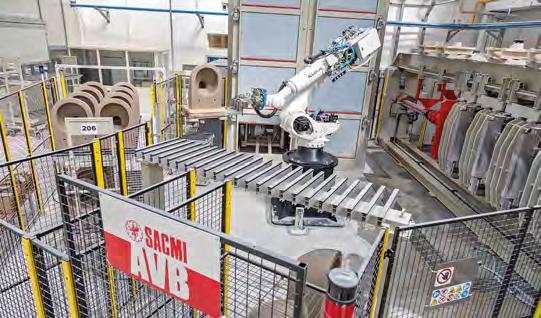
Hatria (Teramo), a Sacmi customer for more than twenty years, has doubled the output of its shower tray casting line by starting up a second ADS machine with RobotCasting technology devoted to the production of thin shower trays of various sizes (up to 140x90 cm, the most popular size in the market) with either a traditional glossy glazed finish or a natural stone effect. Along with the increase in productivity (almost 350 more pieces/day when fully operational), it has also raised the level of automation in all casting and handling operations thanks to the integration of robots and LGVs. A further step towards creating a complete Industry 4.0 factory is the adoption of the RobotClean system for robotic sanitaryware finishing, a solution designed to replicate the most complex piece finishing tasks traditionally carried out by hand and make them fully repeatable. The cleaning station is totally isolated from its surroundings and is also equipped with water curtain filters to facilitate the removal of any residual dust, thereby ensuring that the robot work area is kept perfectly clean at all times.
Another highly ambitious project is the technological upgrade carried out by Ceramica Flaminia (Civita Castellana), a company that has been working with Sacmi for several years as part of the Industry 4.0 transition of all its production phases. The company has
once again opted for a Sacmi robotic casting solution in the form of a new AVB machine for rimless WC production, equipped with a demoulding robot and capable of mounting up to 4 moulds. One of the key features of the new solution is the innovative method for handling pieces with undercuts consisting of an insert that allows these special geometries to be produced directly in the machine without the need to glue on additional parts. Thanks to the new AVB (and a second machine which is already planned), Flaminia will be able to manage a large number of product codes on complex pieces in an efficient and repeatable way and achieve a productivity at full capacity of approximately 200 pieces/day. Finally, GSI has installed two new Sacmi AVM casting solutions for the production of complex WCs at its factory in Gallese (VT), bringing the number of pressure casting solutions adopted in recent years to 14, including ADM and ADS machines for washbasins and shower trays. The new investment is part of the company’s plan to fully automate its factory by reducing manual processing (e.g. by automating green piece finishing) and implementing advanced tracking, monitoring and control functions for the casting, glazing and handling lines. All information can be processed by the factory supervisor, allowing for real-time monitoring of KPIs including order management, times/quantities for items that have transited through the various stages and automatic alarm management.
stabilimenti, puntando su digitalizzazione, qualità, resa produttiva e sicurezza.
Hatria (Teramo), cliente Sacmi da oltre vent’anni, ha raddoppiato la produttività sulla linea di colaggio piatti doccia avviando la seconda macchina ADS (tecnologia RobotCasting) dedicata alla produzione di materiali a spessore sottile e multiformato (fino a 140x90 cm), i più richiesti dal mercato, sia con finitura tradizionale smaltata lucida che con effetto pietra naturale. All’aumento produttivo (a regime quasi 350 pezzi/giorno in più) si affianca il notevole innalzamento del livello di automazione in tutte le operazioni di colaggio e handling, grazie all’integrazione dei robot e degli LGV. Ulteriore passo per completare la fabbrica in logica 4.0, l’adozione del sistema RobotClean per la finitura robotizzata dei sanitari, soluzione pensata per replicare e rendere ripetibili le più complesse operazioni tradizionalmente svolte a mano dagli operatori. Totalmente isolata dall’ambiente circostante, la cella è equipaggiata con opportuni filtri a velo d’acqua per agevolare l’abbattimento del pulviscolo residuo, mantenendo sempre pulita l’area di lavoro del robot. Molto ambizioso anche l’upgrade tecnologico di Ceramica Flaminia (Civita Castellana), da anni impegnata con Sacmi nella transizione 4.0 di tutte le fasi produttive. L’azienda ha premiato nuovamente il colaggio robotizzato Sacmi installando una nuova macchina AVB per la produzione di vasi rimless, equipaggiata con robot di sformatura e in grado montare sino a 4 stampi. Tra le peculia-
rità della fornitura, l’innovativo metodo per la gestione di articoli con sottosquadri, ovvero un tassello che consente di realizzare queste particolari geometrie direttamente in macchina senza la necessità di incollare parti aggiuntive. Grazie alla nuova AVB (di cui è già previsto il raddoppio), Flaminia potrà gestire in modo efficiente e ripetibile una quantità importante di codici prodotto su articoli complessi, per una produttività a regime di circa 200 pezzi/giorno.
Infine GSI, che nello stabilimento di Gallese (VT) ha installato due nuove soluzioni di colaggio Sacmi AVM per la produzione di vasi complessi (salgono così a 14 le soluzioni a pressione fornite in questi anni, comprese le ADM e le ADS per lavabi e piatti doccia). Il nuovo investimento si inserisce nel piano aziendale orientato all’automazione completa della fabbrica, riducendo le lavorazioni manuali (ad es. la finitura a verde del pezzo è automatizzata) e implementando funzioni avanzate di tracking, monitoraggio e controllo delle linee di colaggio, smaltatura e movimentazione. Tutte le informazioni possono infatti essere trattate dal supervisore di fabbrica per monitorare in tempo reale tutti gli indici di performance rilevanti, dalla gestione ordini al tempo/quantità di articoli transitati nelle varie fasi, sino alla gestione automatica degli allarmi.
Logiche 4.0 e automazione totale hanno caratterizzato i più recenti investimenti di primari produttori italiani di sanitari. Tra questi, Hatria, Ceramica Flaminia e GSI (Gruppo Sanitari Italia) hanno scelto tecnologia Sacmi per efficientare i propri
sacmi WhiTeWare supporTa la Transizione 4.0 dei produTTori iTaliani
durAVit inVests
in frAnce And chinA
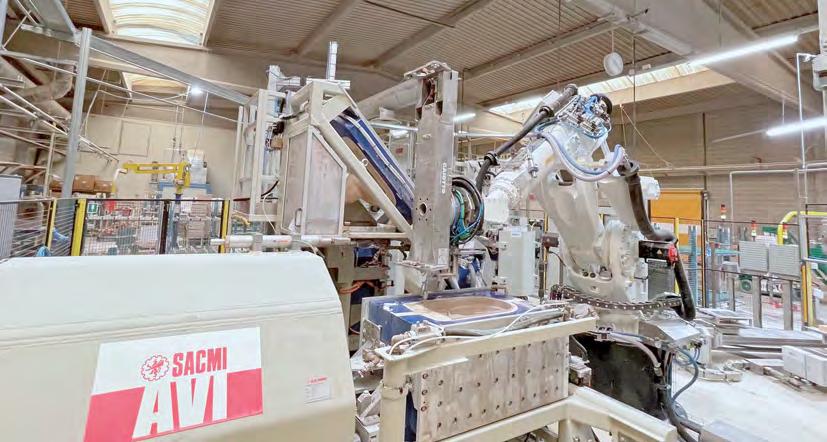
Duravit and Sacmi are further strengthening their longstanding partnership. As part of its latest investments aimed at expanding its production facilities in Europe, the German sanitaryware multinational has adopted Sacmi RobotCasting pressure casting technology at its French plant in Bischwiller, Alsace. After successfully adopting the solution at its facility in Hornberg, Germany in
recent years, Duravit has installed and started up two AVI Concept machines as the core casting cell technology. These machines stand out for their exceptional versatility and rapid changeover facilitated by the automatic, robot-controlled handling of all mould parts. The system is able to handle complex WC bowls with the maximum efficiency, eliminating time wastage and the need for manual operations. The robot performs the post-casting demoulding operations and depos-
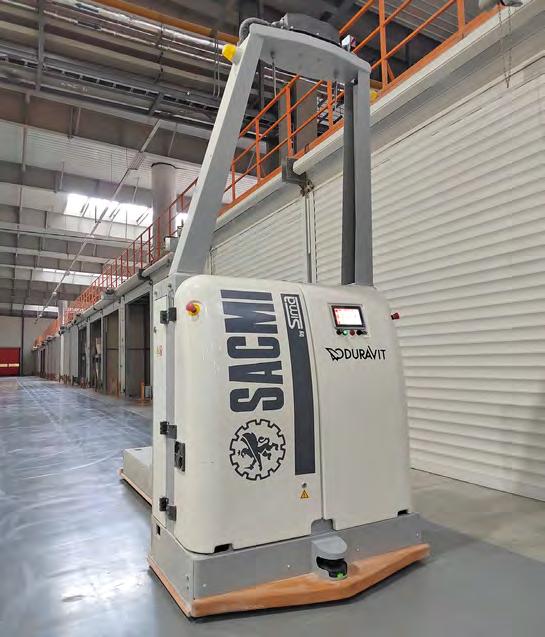
its the pieces in the pre-dryer for ageing prior to subsequent handling. AVI Concept also guarantees maximum compatibility with previously installed equipment, including the moulds supplied for AVM and AVE machines, the last of which was installed at Duravit France back in 2009. Duravit’s highly efficient cutting-edge plant in Chongqing, China has also been improved in terms of automation with the supply of a new LaserMove LGV vehicle from Sacmi, the 17th since the facility was opened in 2017. LaserMove is the game-changing technology for fully automatic control of sanitaryware production flows, streamlining everything from handling to tracking. In particular, the LGVs eliminate manual handling while guaranteeing the quality of products, which are handled and stored automatically during all stages from casting to glazing, transport and storage on kiln cars. Along with these advantages, LaserMove also enables manufacturers to adopt a policy of total production traceability, allowing for constant monitoring of performance indicators and optimised order and logistics management.
duraViT inVesTe in Francia e in cina
Si consolida ulteriormente la partnership di lunga data tra Duravit e Sacmi. Nell’ambito dei nuovi in-
vestimenti per potenziare la propria struttura produttiva in Europa, la multinazionale tedesca del sanitario ha adottato la tecnologia di colaggio a pressione Sacmi RobotCasting anche nello stabilimento francese di Bischwiller, in Alsazia. Dopo averle impiegate con successo negli ultimi anni anche nello stabilimento di Hornberg, in Germania, Duravit ha scelto e avviato due macchine AVI Concept (cuore della cella di colaggio), una soluzione che si distingue per l’eccezionale versatilità produttiva, grazie al cambio rapido facilitato dalla movimentazione automatica (gestita da robot) di tutte le parti stampo. Il sistema consente di gestire con la massima efficienza vasi complessi, azzerando il “waste time” e le relative movimentazioni manuali. Dopo il colaggio, lo stesso robot gestisce le operazioni di sformatura e deposito nel pre-essiccatoio per la maturazione del pezzo prima delle successive movimentazioni. AVI Concept garantisce peraltro la massima compatibilità con l’installato, quindi con gli stampi per AVM e AVE, quest’ultima installata in Duravit Francia già dal lontano 2009.
Passi avanti nel segno dell’automazione anche nello stabilimento Duravit di Chongqing in Cina, modello di efficienza e avanguardia, a cui Sacmi ha fornito un nuovo veicolo LGV LaserMove, il 17° dall’inaugurazione della fabbrica nel 2017. LaserMove è la tecnologia di riferimento per una gestione totalmente automatica dei flussi produttivi nel sanitario, dalle movimentazioni al tracking. In particolare, gli LGV forniti, da una parte azzerano le movimentazioni manuali, dall’altra salvaguardano la qualità del prodotto che viene movimentato e stoccato automaticamente, dal colaggio alla smaltatura sino al trasporto e deposito sui carri-forno. A questi vantaggi si affianca la possibilità di implementare una logica di tracciabilità totale della produzione, per un monitoraggio costante degli indici di performance e una gestione ottimizzata degli ordini e della logistica.
noVAtech is Born, the new compAny of certech group
Certech Group, a leading manufacturer of machinery and components for the ceramic industry, expands its already wide technological offer by creating Novatech, a new company that will supply plants and machines for raw material treatment and processing.
Novatech can count on experienced staff with high technological know-how, capable to provide “turnkey” solutions, including: transport, grinding and classification of raw materials; storage, dosing and mixing; porcelain tile body preparation; mill and press feeding; raw material dosing for colour and glass manufacturers; production of powder adhesives and premixed products; micronizing
plants for hard materials. All Novatech machines are designed according to the most advanced technologies and built with high quality standards.
nasce noVaTech, la nuoVa azienda di cerTech group
Certech Group, leader nel settore degli impianti e componenti per l’industria ceramica, amplia la già ampia proposta tecnologica dando vita a Novatech, una nuova società che propone impianti e macchine per il trattamento delle materie prime. Novatech può
worLd Jet Announces pArtnership with citronix
World Jet, a Sassuolo-based company specialising in the production and distribution of industrial marking and labelling systems, recently finalised an important sales agreement with Citronix, one of the world’s leading suppliers of continuous ink jet (CIJ) printers. Starting in July 2022, World Jet became the official Italian and international distributor of the US company’s wide range of products designed to meet coding and marking needs in the most demanding industrial applications while guaranteeing maximum reliability and precision. The partnership with Citronix confirms World Jet’s intention to continue its development and to provide its customers with increasingly professional, comprehensive and expert support. World Jet was founded in Sassuolo in 2002 and since then has successfully established itself in the domestic and international markets. It has reported steady growth over the years, including a 20% increase in sales in the first half of 2022 compared to the same period in 2021. To keep pace with
this growth, the company has expanded its workforce by recruiting new key management, technical and commercial figures and has strengthened its production, sales and customer service departments, which are now better positioned than ever to meet needs on a just-intime basis.
It has also devoted a lot of effort to developing communication channels by creating new multimedia content that can be viewed on the company’s website (https://worldjet.it/) and through the main social networks, allowing users to observe the functionality of machines and interact easily with the technical and sales staff.
World JeT annuncia la parTnership con
ciTronix
World Jet, società sassolese specializzata nella produzione e distribuzione di sistemi di marcatura ed etichettatura industriale, ha finalizzato di recente un importante accordo commerciale con Citronix, tra i leader mondiali nella fornitura di stampanti a getto di inchiostro continuo (CIJ). Da luglio 2022 World Jet è diventata fornitore ufficiale per l’Italia e per l’estero della vasta gamma pro-
contare su personale con decennale esperienza ad alti livelli tecnologici, in grado di fornire soluzioni “chiavi in mano”, tra cui: trasporto, macinazione e classificazione materie prime; stoccaggio, dosaggio e miscelazione; preparazione impasti per gres porcellanato; alimentazione mulini e presse; dosaggio materie prime per colorifici e vetrerie; produzione di collanti in polvere e premiscelati; impianti di micronizzazione materiali duri.
Tutte le macchine Novatech sono progettate secondo le tecnologie più avanzate e costruite con alti standard qualitativi.
duttiva dell’azienda statunitense, progettata per soddisfare le esigenze di codifica e marcatura negli ambienti industriali più esigenti, garantendo la massima affidabilità e precisione.
La partnership con Citronix conferma la volontà di World Jet di proseguire nella direzione dello sviluppo garantendo alla clientela un supporto sempre più professionale, completo e competente. Fondata a Sassuolo nel 2002 la società è riuscita ad affermarsi sul mercato domestico e internazionale mettendo a segno negli anni trend di crescita costante chiudendo il primo semestre 2022 a +20% rispetto all’analogo periodo 2021. Per far fronte all’importan-
te sviluppo, l’azienda ha provveduto a espandere l’organico attraverso l’inserimento di nuove figure chiave in ambito manageriale, tecnico e commerciale, rafforzando produzione, vendite e il servizio di assistenza clienti, ora più che mai strutturato per rispondere just in time alle varie esigenze. Particolare impegno è stato inoltre riservato allo sviluppo dei canali di comunicazione, mediante la realizzazione di nuovi contenuti multimediali visionabili sul sito aziendale (https://worldjet.it/) e sui principali social network, attraverso i quali gli utenti possono osservare le funzionalità delle macchine e interagire facilmente con lo staff tecnico/commerciale.
The Italian excellence in an international leading group
Energy saving and green green oriented solutions
Smart interface with advanced remote control
Excellent R&D R&D always focused on new technologies
Future gas and hydrogen fuel ready
Tailor-made solutions studied by our experienced staff
Complete and highly professional technological assistance
World production and consumption of ceramic tiles economics
Produzione e consumo mondiale di piastrelle di ceramica
The tenth edition of the study entitled “World production and consumption of ceramic tiles” produced by MECS / Acimac Research Centre is due to be published in October. Consisting of almost 300 pages of charts, tables and commentary, the study provides detailed analysis of the trends occurring over the tenyear period to 2021 in terms of industry, markets, per capita consumption and export flows in geographical macro-regions and in the 76 largest tile producer, consumer, exporter and importer countries.
The major new feature of this year’s study is the in-depth review of the 10-year historical series for tile production and consumption in India based on extensive market analysis conducted by MECS and involving more than 800 companies operating solely in the Morbi district in Gujarat, whose contribution to national production had until now been underestimated. The review of the Indian data resulted in a corresponding update of the overall time series.
1) The year 2021 saw a sharp acceleration in the pace of recovery of global tile production and consumption volumes which had begun in 2020, and above all brought a significant increase in import-export flows (+8.7%) following the previous year’s decline.
2) In 2021, world tile production reached 18,339 million sqm, up 7.2% from the 17,101 million sqm recorded in 2020. Production in Asia grew by 4.9% to 13.6 billion sqm,
WORLD MANUFACTURING AREAS
Nel mese di ottobre sarà pubblicata la 10a edizione del volume “Produzione e consumo mondiale di piastrelle ceramiche” realizzato da MECS / Centro Studi Acimac. Lo studio, quasi 300 pagine di grafici, tabelle e commenti, analizza nel dettaglio l’andamento decennale al 2021 di industria, mercato, consumi pro-capite e flussi esportativi sia per macro-aree geografiche che per i 76 maggiori Paesi produttori, consumatori, esportatori o importatori di piastrelle.
Lo studio, quest’anno, presenta un’importante novità, ossia la profonda revisione delle serie storiche decennali relative a produzione e consumo di piastrelle in India, resa possibile grazie alla capillare analisi condotta da MECS su oltre 800 aziende attive nel solo distretto di Morbi, in Gujarat, il cui contributo alla produzione nazionale era stato finora sottostimato. La revisione dei dati India ha comportato il parallelo aggiornamento delle serie storiche complessive.
1) Il 2021 ha decisamente rafforzato il recupero dei volumi globali di produzione e consumo di piastrelle avviato nel 2020, e soprattutto ha riportato in sensibile rialzo (+8,7%) i flussi di import-export che si erano ridotti l’anno precedente.
2) Nel 2021 la produzione mondiale di piastrelle è salita a 18.339 milioni mq, +7,2% sui 17.101 milioni del 2020. La produzione in Asia è cresciuta del 4,9% a 13,6 miliardi mq, pari al 74% della produzione globale; il risultato positivo è
BOLOGNA, ITALY 26 - 30 SEPTEMBER 2022
HALL 36, STANDS A20-B23 & A22-B25
Wall: DARK INK, DARK INK BRICK
Floor: DARK INK
Wash basin: RAK-CLOUD
Mirror: RAK-JOY UNO
equivalent to 74% of global production. this positive result was mainly due to the increase in volumes produced in China, India and Indonesia, which offset the sharp contraction experienced in Vietnam. The European continent produced a total of 2,124 million sqm (11.6% of world production). Production saw double-digit growth both in the European Union (+18% to 1,393 million sqm) and in non-EU Europe (+14.6% to 731 million sqm) driven by the sharp increase in Turkey. Production in the American continent grew strongly to 1,737 million sqm. The growth rate in North America was 17.4% (377 million sqm), while Central and South America saw the biggest increase, +24.5% to 1,360 million sqm. The only area to experience a contraction in 2021 was Africa, where production dropped to 888 million sqm (-3.3%) due to steep declines in Algeria and to a lesser extent Nigeria which outweighed the increases in all other countries on the continent.
3) In 2021, world tile consumption grew from 17,050 to 18,209 million sqm (+6.8%). All global regions saw a recovery. In Asia, consumption rose to 13.2 billion sqm (+5.2%), equivalent to 72.3% of the world total. In Europe, consumption increased both in European Union countries (1,141 million sqm; +14.2%) and in non-EU Europe (649 million sqm; +15.3%). The Americas saw growth both in Central and South America (1,448 million sqm; +16.4%) and in North America (603 million sqm; +11.5%). Demand in Africa also increased, reaching 1,148 million sqm (+1.5%).
4) In 2021, global exports rose by 8.7% to 3 billion sqm, approximately 244 million sqm more than in 2020. Here too, the recovery involved all geographical areas. Asia’s exports grew to 1,414 million sqm (+2%), equivalent to 47% of the world total. The European Union’s exports rose sharply (1,055 million sqm; +14.3%) and amounted to 35% of the global total. Non-EU European countries also performed well (231 million sqm; +12.3%), largely due to growth in Turkish exports. Exports also grew in Central and South America (183 million sqm; +36.3%), North America (45 million sqm; +10.7%) and Africa (85 million sqm; +4.6%).
WORLD EXPORTING AREAS
dovuto all’incremento dei volumi prodotti in Cina, India e Indonesia che ha compensato la forte flessione in Vietnam. Il continente europeo ha prodotto complessivamente 2.124 milioni mq (l’11,6% della produzione mondiale): crescita a doppia cifra per la produzione sia in Unione Europea (+18%, a 1.393 milioni mq) che nell’area dell’Europa extra-UE (731 milioni mq; +14,6%), grazie al forte incremento in Turchia. In deciso rialzo, a 1.737 milioni mq, la produzione nel continente americano: in Nord America la crescita è stata del 17,4% (377 milioni mq), mentre il Centro-Sud America ha segnato l’incremento più elevato, +24,5%, a 1.360 milioni mq. Unica area in flessione nel 2021, l’Africa, dove la produzione è scesa a 888 milioni mq (-3,3%), penalizzata dalla forte contrazione in Algeria e, in misura minore, in Nigeria, non compensate dagli incrementi in tutti gli altri Paesi del continente.
3) Nel 2021, il consumo mondiale di piastrelle è salito da 17.050 a 18.209 milioni mq (+6,8%). In recupero tutte le aree. In Asia la domanda è salita
a 13,2 miliardi mq (+5,2%), pari al 72,3% del consumo globale. In Europa il consumo è aumentato sia nei Paesi dell’Unione Europea (1.141 milioni mq; +14,2%) che nei mercati dell’Europa extra-UE (649 milioni mq; +15,3%). Nelle Americhe sono cresciuti sia il Centro-Sud America (1.448 milioni mq; +16,4%) che il Nord America (603 milioni mq; +11,5%). In rialzo anche la domanda in Africa, salita a 1.148 milioni mq (+1,5%).
4) Nel 2021 le esportazioni mondiali hanno segnato un progresso dell’8,7% salendo a 3 miliardi mq, circa 244 milioni in più rispetto al 2020. Anche in questo caso, il recupero ha riguardato tutte le aree geografiche. L’Asia ha portato il suo export a 1.414 milioni mq (+2%), pari al 47% dell’export mondiale. In netto rialzo l’export dell’Unione Europea (1.055 milioni mq: +14,3%) e pari al 35% dell’export globale; bene anche quello dei Paesi dell’Europa extra-UE (231 milioni mq; +12,3%), grazie soprattutto alla crescita della Turchia. In crescita anche l’export del Centro-Sud America (183 milioni mq; +36,3%), del
5) As for the export propensity of the various continents or macro-regions, the European Union remained the area with the highest export share in 2021 at 75.7% of its production. All the other areas lagged well behind: nonEU Europe exported 31.6% of its output volumes, North America 11.9%, South America 13.4%, Asia 10.4% and Africa 9.6%.
The trend in import/export flows confirms the tendency for tiles to be produced close to markets. Although world exports represented 16.4% of production and 16.5% of global consumption in 2021, 62.1% of this volume consisted of exports shipped within the same geographical region as that of production (for example, 81.4% of South America’s exports remained in South America, 82.2% of North America’s exports were sold within the NAFTA region, and 70.5% of Asian exports were shipped to other Asian countries). The European Union continued to be a partial exception with 45.4% of its exports sold in non-EU markets.
This analysis is confirmed by the fact that the shares of world production and consumption tend to be similar in each continent. Asia accounted for 74% of production and 72.3% of world consumption, Europe (EU + non-EU) 11.6% and 10% respectively, the Americas 9.5% and 11.3%, and Africa 4.8% and 6.3%.
6) As the world’s largest producer, consumer and exporter of ceramic tiles, China saw a 4.6% increase in production in 2021 to 8,863 million sqm (640 million sqm more than in 2019 prior to the pandemic), accounting for 48.3% of global production. As reported in the MECS study entitled “China: Ceramic tiles and slabs”, in 2020 the country’s installed capacity reached 12.4 billion sqm across 2,275 lines operated by 1,161 companies or groups. China continued to record particularly strong growth in the large slab segment, which according to CTW estimates comprises some 100 dedicated production lines but is showing signs of overcapacity. In 2021, Chinese tile consumption grew by 5.2% from
Nord America (45 milioni mq; +10,7%) e dell’Africa (85 milioni mq; +4,6%).
5) Per quanto riguarda la propensione esportativa dei vari continenti o macroregioni, l’Unione Europea si conferma l’area più votata ai mercati internazionali, con una quota export che nel 2021 si è confermata al 75,7% della propria produzione. Fortemente distanziate tutte le altre aree: l’Europa extra-UE esporta il 31,6% dei volumi prodotti, il Nord America l’11,9%, il Sud America il 13,4%, l’Asia il 10,4% e l’Africa il 9,6%. La dinamica dei flussi di import/export conferma la tendenza a produrre piastrelle laddove si consumano: l’export mondiale rappresenta il 16,4% della produzione e il 16,5% del consumo globali, e il 62,1% viene esportato all’interno della stessa area geografica di produzione (l’81,4% dell’export sudamericano resta in Sud America, l’82,2% di quello nordamericano resta in area NAFTA, il 70,5% di quello asiatico si indirizza in paesi asiatici); parzia-
TOP MANUFACTURING COUNTRIES
le eccezione è ancora l’Unione Europea che destina il 45,4% del proprio export ai mercati extra UE. Questa tesi trova conferma nel confronto del contributo di ogni continente alla produzione e al consumo mondiali di piastrelle che mostra valori sostanzialmente omogenei: l’Asia rappresenta il 74% della produzione e il 72,3% del consumo mondiali, l’Europa (UE + Extra-UE) rispettivamente l’11,6% e il 10%, le Americhe il 9,5% e l’11,3%, l’Africa il 4,8% e il 6,3%.
6) Maggiore produttore, consumatore ed esportatore mondiale di piastrelle ceramiche, nel 2021 la Cina ha incrementato la produzione del 4,6% a 8.863 milioni mq (640 milioni mq in più rispetto al 2019, pre-pandemia), pari al 48,3% della produzione globale. Questo a fronte di una capacità produttiva che, come riportato nello studio MECS “China: Ceramic tiles and slabs”, ha raggiunto nel 2020 i 12,4 miliardi mq, installata su 2.275 linee in 1.161 aziende o gruppi.
Source / Fonte: Mecs / Acimac Research dept. “World production and consumption of ceramic tiles”, 10th edition 2022
7,859 to 8,268 million sqm, accounting for 45.4% of the world total.
After peaking at 1.15 billion sqm in 2013, Chinese exports continued to decline for the eighth consecutive year, falling from 622 to 601 million sqm (-3.5%) and amounting to 20% of world exports. China’s exports grew in Asia (427 million sqm; +3.8%) and Oceania (36.5 million sqm; +5.2%), remained stable in Latin America (56.8 million sqm), and continued to contract in other areas: -32% in Africa (61 million sqm); -11% in North America (10.7 million sqm); -59.3% in the European Union (3.3 million sqm) and -38% in the rest of Europe (5 million sqm). The average selling price of exported Chinese tiles remained stable at around 5.7 €/sqm.
7) In 2021, India maintained its position as the world’s second largest tile producer and consumer country. As mentioned above, a survey of the more than 800 companies operating in the Morbi district in Gujarat alone was able to determine their real contribution to national output, which was found to be far greater than reported in the official sources used until now for this study. This prompted a major revision of the ten-year time series for the Indian industry and market. In 2021, total production in India grew by 10% from 2,318 to 2,550 million sqm. Domestic consumption saw a similar increase (around 2 billion sqm), driven by a surge in construction work following the slowdown in activity caused by the pandemic. Despite a 10.6% increase in exports to 483 million sqm, India has dropped to third place in the ranking of the world’s largest exporters after being once again overtaken by Spain. India’s exports now account for 16% of the world total and 19% of domestic production. In value terms, exports reached €1,486 million, equivalent to an average selling price of 3.1 €/sqm, which remains one of the lowest values of any major exporter country. Saudi Arabia retained its position as the Indian tile industry’s largest export market, despite the fact that import duties on Indian tiles introduced in the GCC countries
Prosegue la forte espansione soprattutto nel segmento delle grandi lastre, che - secondo le stime di CTW – conta un centinaio di linee produttive dedicate, ma che sconta segni di sovracapacità.
Nel 2021 il consumo cinese di piastrelle è cresciuto del 5,2%, da 7.859 a 8.268 milioni mq, pari al 45,4% del consumo mondiale di piastrelle. Toccato il picco di export nel 2013 con 1,15 miliardi mq, le esportazioni cinesi hanno continuato a calare per l’ottavo anno consecutivo scendendo da 622 a 601 milioni mq (-3,5%), pari al 20% dell’export mondiale. L’export cinese è cresciuto in Asia (427 milioni mq; +3,8%) e in Oceania (36,5 milioni mq; +5,2%), è rimasto stabile in America Latina (56,8 milioni mq), mentre ha continuato a contrarsi nelle altre aree di destinazione: -32% in Africa (61 milioni mq); -11% in Nord America (10,7 milioni mq); -59,3% in Unione Europea (3,3 milioni mq) e -38% nel resto dell’Europa (5 milioni mq). Il prezzo medio di vendita delle piastrelle ci-
TOP CONSUMPTION COUNTRIES
/ Fonte: Mecs
Acimac
nesi esportate è rimasto intorno ai 5,7 €/mq.
7) Nel 2021, l’India ha confermato la sua posizione di secondo maggiore produttore e consumatore di piastrelle. Come accennato in apertura, una ricerca sulle oltre 800 aziende attive nel solo distretto di Morbi, in Gujarat, ha permesso di misurare il loro reale contributo alla produzione nazionale, decisamente maggiore rispetto a quanto riportato nelle fonti ufficiali finora utilizzate per questo studio. Da qui, la profonda revisione delle serie storiche decennali relative all’industria e al mercato indiano. Nel 2021 la produzione totale in India è cresciuta del 10%, da 2.318 a 2.550 milioni mq; analogo l’incremento del consumo interno, intorno ai 2 miliardi mq, spinto da una forte ripresa dell’attività edilizia dopo il rallentamento causato dalla pandemia. Nonostante l’incremento del 10,6% del suo export, salito a 483 milioni mq, l’India riscende al terzo posto tra i maggiori esportatori mondiali, nuovamente superata dalla Spagna.
caused sales to plummet by 50.5% from 91 to 45 million sqm.
This contrasted with a growth in sales in all the other main export markets: Kuwait (35 million sqm; +96%), Iraq (26 million sqm; +13.5%), United Arab Emirates (23 million sqm; +12.5%), Nepal (20 million sqm; +46%), the United States (20 million sqm; +8.6%) and Mexico (18 million sqm; +7.5%). Amongst the biggest increases were the twofold growth in exports to Russia (11.2 million sqm), a 1000% surge in exports to the Philippines (from less than one million sqm to 10.7 million sqm), and a 427% rise in exports to Jordan (9.7 million sqm).
Overall, the Asian continent absorbed 57% of India’s exports (274 million sqm; +1.6%), Africa 16% (77.4 million sqm; +29%), North America (NAFTA) 8.7% (42 million sqm; +8.2%), Europe (EU + non-EU) 13% (63 million sqm; +26%) and South America 5% (24.4 million sqm; +60.7%).
8) The world’s third largest producer and consumer country in 2021 was Brazil, which more than made up for the losses of 2020 with an increase in production from 840 to 1,049 million sqm (+25%), while domestic demand continued to grow (902 million sqm; +8.8%), driven by the expansion in construction activity. Exports rose sharply to 128 million sqm (+33.8%) thanks to growth in all the main Latin American markets, while sales in the United States (the largest export market for Brazilian tiles) fell by 11% to 22 million sqm.
9) Spain, Europe’s top tile producer and the fourth largest producer country in the world, produced 587 million sqm in 2021, up 20.3% on 2020. The country’s consumption increased to 182 million sqm (+26.4%) and was almost entirely met by domestic production. In 2021, Spain also regained second place in the rankings of world exporters thanks to 17.4% growth in foreign sales to almost 500 million sqm (496 million sqm, to be precise), equivalent to 84.4% of its production. Export revenues increased by 24% to € 3,668 million, thanks to an increase in average
Le esportazioni indiane oggi rappresentano il 16% dell’export mondiale e il 19% della produzione nazionale. Le vendite estere in valore hanno raggiunto i 1.486 milioni di euro, pari a un prezzo medio di vendita di 3,1 €/mq che resta tra i più bassi fra i grandi Paesi esportatori. Primo mercato di esportazione si è confermata l’Arabia Saudita, nonostante i dazi sull’import di piastrelle indiane introdotto nei Paesi GCC abbia fatto crollare le vendite del 50,5%, da 91 a 45 milioni mq.
In crescita invece le vendite negli altri principali mercati di esportazione: Kuwait (35 milioni mq; +96%), Iraq (26 milioni mq; +13,5%), Emirati Arabi (23 milioni mq; +12,5%), Nepal (20 milioni mq; +46%), Stati Uniti (20 milioni mq; +8,6%) e Messico (18 milioni mq; +7,5%). Tra gli incrementi maggiori, spiccano il raddoppio dell’export in Russia (11,2 milioni mq), il +1000% nelle Filippine (da meno di un milione di mq a 10,7 milioni mq), e il +427% in Giordania (9,7
TOP EXPORTING COUNTRIES
Source / Fonte: Mecs / Acimac Research dept. “World
milioni mq).
Complessivamente, il continente asiatico ha assorbito il 57% dell’export indiano (274 milioni mq; +1,6%), l’Africa il 16% (77,4 milioni mq; +29%), il Nord America (NAFTA) l’8,7% (42 milioni mq; +8,2%), l’Europa (UE +Extra-UE) il 13% (63 milioni mq; +26%) e il Sud America il 5% (24,4 milioni mq; +60,7%).
8) Terzo maggiore produttore e consumatore mondiale, nel 2021 il Brasile ha abbondantemente recuperato quanto perso nel 2020, portando la produzione da 840 a 1.049 milioni mq (+25%), a fronte di una domanda interna che ha continuato a crescere (902 milioni mq; +8,8%), trainata dall’espansione dell’attività edilizia. In deciso progresso l’export, salito a 128 milioni mq (+33,8%) grazie alla crescita in tutti i principali mercati latinoamericani, mentre le vendite verso gli Stati Uniti, primo mercato estero della piastrella brasiliana, hanno subito una flessione dell’11%, scendendo a 22 milioni mq.
price to € 7.4/sqm.
Overall, Spain’s domestic sales and exports amounted to 667 million sqm in 2021, generating total revenues of €4,855 million.
France maintained its position as the largest export market in terms of volume (51 million sqm; +16.7%) and the second largest in value (€400 million; +17.9%); followed by the United States with 49 million sqm (+13.6%) and a value of €447 million (+23%); Morocco (24 million sqm; +17%), Israel (23.5 million sqm; +45.7%) and the United Kingdom (22.7 million sqm, -2.7%). Exports to Saudi Arabia experienced a sharper decline, falling by 23% to 16.6 million sqm.
In 2021, Spanish exports in volume terms were divided up as follows: 42.6% in Europe (211 million sqm), 22.2% in the Americas (110 million sqm; +38.9%), 18.5% in Asia (91.4 million sqm; -4.6%) and 16.2% in Africa (80.2 million sqm; +15.6%).
10) In 2021, Italy posted record performances across all indicators. Production surged to 435 million sqm (+26.5%) and total sales rose to 455 million sqm (+16.4%), generating revenue of €6.2 billion (+20.1%). The domestic market regained 15 million sqm as sales rose to 91.2 million sqm (+24.4%), corresponding to a value of €967 million and an average price of 10.6 €/sqm. Adding in imports (32 million sqm), domestic consumption reached 123 million sqm.
Italy remained the world’s fourth largest exporter, closing 2021 with exports of 364 million sqm (+14.6%) and revenues of €5.2 billion (+18%), largely due to an increase in average price to 14.3 €/sqm.
The Italian tile industry further strengthened its position in European markets, where it sold 258 million sqm (equivalent to 71% of exports in volume), including 234 million sqm in EU countries (+14.5%). Sales also grew in the other geographical regions declined: +16% in the Americas (52.8 million sqm), +16.5% in Asia (34 million sqm) and +4.2% in Africa (13.7 million sqm).
9) Maggiore produttore europeo e quarto a livello mondiale, nel 2021 la Spagna ha prodotto 587 milioni mq, segnando un rialzo del 20,3% sul 2020. Il consumo nazionale, quasi interamente coperto dalla produzione interna, è salito a 182 milioni mq (+26,4%). Nel 2021 la Spagna ha anche riconquistato il secondo posto tra i maggiori esportatori mondiali, grazie ad un incremento del 17,4% delle vendite estere che hanno sfiorato i 500 milioni mq (496, per la precisione), pari all’84,4% della produzione nazionale. I ricavi da esportazioni sono aumentati del 24% a 3.668 milioni di euro, grazie ad un prezzo medio cresciuto a 7,4 €/mq.
Complessivamente, tra vendite interne ed esportazioni, la Spagna ha venduto nel 2021 667 milioni mq generando un fatturato totale di 4.855 milioni di euro.
Sui mercati esteri, la Francia si è confermata primo mercato di esportazione in volume (51 milioni mq; +16,7%) e secondo in valore (400 milioni di euro;
TOP IMPORTING COUNTRIES
+17,9%); seguono gli Stati Uniti con 49 milioni mq (+13,6%) per un valore di 447 milioni di euro (+23%); quindi il Marocco (24 milioni mq; +17%), Israele (23,5 milioni mq; +45,7%) e il Regno Unito (22,7 milioni mq, -2,7%). Maggiore la flessione in Arabia Saudita, dove le vendite sono scese a 16,6 milioni mq (-23%). Nel 2021 l’export spagnolo in volume si è suddiviso per il 42,6% in Europa (211 milioni mq), per il 22,2% nelle Americhe (110 milioni mq; +38,9%), per il 18,5% in Asia (91,4 milioni mq; +4,6%) e per il 16,2% in Africa (80,2 milioni mq; +15,6%).
10) Nel 2021 l’Italia ha segnato performance da record per tutti gli indicatori. La produzione è balzata a 435 milioni mq (+26,5%) e le vendite totali sono salite a 455 milioni mq (+16,4%) generando ricavi per 6,2 miliardi di euro (+20,1%). Sul mercato interno si sono recuperati 15 milioni mq: le vendite sono salite a 91,2 milioni mq (+24,4%) per un valore di 967 milioni di euro e un prezzo medio di 10,6 €/mq. Considerate
Source / Fonte: Mecs / Acimac Research dept. “World production and consumption of ceramic tiles”, 10th edition 2022
The rankings of Italy’s largest export markets remained unchanged. Germany was again the largest market with 64 million sqm (+6.2%), followed by France (53.8 million sqm; +18.4%), the United States (38.4 million sqm; +17.6%), Austria, Belgium, the UK and Switzerland, all with positive growth figures.
11) The two Asian giants China and India and the two largest European producers Spain and Italy together accounted for 64.5% of global exports last year. When the other 6 major exporting countries are included, the figure rises to 84.9%. Spain and Italy confirmed their leadership position in terms of export share, respectively 84.4% and 83.6% of production, compared to 57% for the UAE, 56% for Poland, 40% for Iran, 35% for Turkey, 19% for India and just 7% for China. In addition, Italy maintained its leadership in terms of average selling price at 14.3 €/sqm compared to the 7.4 €/sqm of Spain, the 6.4 €/sqm of Poland and the 5.7 €/sqm of China.
12) Indonesia and Vietnam remained the largest producer and consumer countries in the Far East, while Iran retained its dominant position in the Middle East. In 2021, Indonesia recorded a 35% increase in production (410 million sqm), driven by a similar increase in domestic consumption (478 million sqm; +34%); imports also increased by 17% to 85 million sqm. By contrast, Vietnam saw a further sharp decline in production from 534 to 370 million sqm (-31%) and in domestic consumption (300 million sqm; -25%) due to the continuation of the pandemic lockdowns. Iran saw a 2% increase both in production (458 million sqm) and in exports (182 million sqm).
13) After reversing the downward trend in 2020, Turkey continued its growth trajectory in 2021 with a big increase in both production (up 18.4% from 370 million sqm to 438 million sqm) and domestic consumption (up 21% to 291 million sqm). Its exports also continued to grow, climbing by 17% to 154 million sqm, corresponding to a value of €829 million. Turkey’s exports were mainly shipped to three macro-regions: 44% to the EU (68.4 million sqm, +12%), 23% to the Middle East and Asia (35.6 million sqm; +17.8%) and 21.7% to the NAFTA region (33.4 million sqm; +14%). The USA maintained its position as the largest single export market for Turkish tiles with a further 16% increase over 2020 to 27.2 million sqm. Next came Germany (18.8 million sqm; +5%), Israel (18 million sqm; +27.2%) and the UK (14.7 million sqm; +12.6%).
14) In 2021, the 10 largest importer countries imported a total of 1,155 million sqm (up 4.6% on
anche le importazioni (32 milioni mq), il consumo nazionale ha raggiunto i 123 milioni mq. Quarto maggiore esportatore mondiale, l’Italia ha chiuso il 2021 con 364 milioni mq esportati (+14,6%) realizzando ricavi per 5,2 miliardi di euro (+18%), grazie anche ad un prezzo medio salito a 14,3 €/mq. L’industria italiana si è ulteriormente rafforzata sui mercati europei, dove sono stati venduti 258 milioni mq, pari al 71% dell’export in volume, di cui 234 milioni in Paesi UE (+14,5%). In aumento le vendite anche nelle altre aree geografiche: +16% nelle Americhe (52,8 milioni mq), +16,5% in Asia (34 milioni mq), +4,2% in Africa (13,7 milioni mq). Invariate le posizioni dei maggiori mercati esteri italiani. La Germania si è confermata al vertice con 64 milioni mq (+6,2%), seguita da Francia (53,8 milioni mq; +18,4%), Stati Uniti (38,4 milioni mq; +17,6%), seguiti da Austria, Belgio, Regno Unito e Svizzera, tutti col segno più.
11) I due colossi asiatici, Cina e India, e i due big europei, Spagna e Italia, hanno rappresentato l’anno scorso il 64,5% dell’export mondiale. Se a loro si aggiungono gli altri 6 grandi paesi esportatori, si arriva all’84,9%. Tra tutti, Spagna e Italia confermano il primato della più elevata quota esportativa, rispettivamente l’84,4% e l’83,6% sulla produzione nazionale, contro il 57% degli Emirati Arabi, il 56% della Polonia, il 40% dell’Iran, il 35% della Turchia, il 19% dell’India e appena il 7% della Cina. A questo, l’Italia somma anche il segno della sua leadership, ossia il prezzo medio: 14,3 €/ mq contro i 7,4 €/mq della Spagna, i 6,4 €/mq della Polonia, i 5,7 €/mq della Cina.
12) Tra i maggiori Paesi produttori e consumatori si confermano, in Far East, Indonesia e Vie-
tnam e, in Medio Oriente, l’Iran. Nel 2021 l’Indonesia ha registrato un rialzo del 35% della produzione (410 milioni mq), spinta da un analogo incremento dei consumi interni (478 milioni mq; +34%); in aumento del 17% anche le importazioni a 85 milioni mq. Al contrario, il Vietnam ha subito un nuovo forte calo di produzione (da 534 a 370 milioni mq; -31%) e consumo nazionale (300 milioni mq; -25%), penalizzati dal protrarsi dei lockdown per la pandemia. L’Iran ha segnato un incremento del 2% sia della produzione (458 milioni mq) che delle esportazioni (182 milioni mq).
13) Già in controtendenza nel 2020, la Turchia ha confermato nel 2021 un nuovo robusto incremento sia della produzione, salita da 370 a 438 milioni mq (+18,4%), che dei consumi interni, cresciuti del 21% a 291 milioni mq. È inoltre proseguita l’espansione sui mercati internazionali, con l’export in aumento del 17% a 154 milioni mq, per un valore di 829 milioni di euro. L’export turco si è ripartito prevalentemente su tre macroaree: il 44% in UE (68,4 milioni mq; +12%), il 23% in Medio Oriente e Asia (35,6 milioni mq; +17,8%) e il 21,7% nell’area NAFTA (33,4 milioni mq; +14%). Con un nuovo incremento del 16% sul 2020, gli USA si sono confermati il primo mercato estero della piastrella made in Turkey (27,2 milioni mq). Seguono la Germania (18,8 milioni mq; +5%), Israele (18 milioni mq; +27,2%), e Regno Unito (14,7 milioni mq; +12,6%).
14) Nel 2021 i 10 maggiori Paesi importatori hanno importato un totale di 1.155 milioni mq (+4,6% sul 2020), pari al 38,3% dei flussi globali di import/export. Per la maggior parte di essi, l’import ha
economics
2020) and accounted for 38.3% of global import/export flows. For most of these countries, imports met more than 72% of domestic demand, with peaks of 98% in Iraq and between 90% and 95% in France, Germany, Israel and the UK. Notable exceptions included Indonesia, which imported just 18% of its consumption, and Saudi Arabia, where imports contracted significantly in 2021 from 167 to 105 million sqm (-37.3%) and accounted for 41.5% of national consumption. The fall in Saudi Arabia’s imports was due not so much to the contraction in domestic demand (252 million sqm; -11%) as to the sharp growth of the domestic ceramic tile industry, which increased its production from 99 to 150 million sqm in the space of two years (corresponding to annual growth of 26%). The biggest exporters to Saudi Arabia remained India (which, as mentioned above, saw its sales halved to 45 million sqm), the United Arab Emirates (28 million sqm; -5.4%) and Spain (16.6 million sqm; -23%), followed by Oman, China and Egypt, which each saw declines of between 40% and 50%.
15) The United States remained firmly at the top of the global tile importer rankings with a 9.5% increase in imports to 215 million sqm, in line with a corresponding increase in domestic demand (289 million sqm) and stable at 74.5% of domestic consumption. 88.7% of US imports originated from the 6 largest supplier countries: Spain (49.3 million sqm; +13.6%), Italy (38.4 million sqm; +17.6%), Mexico (33.4 million sqm; +5.7%), Turkey (27.2 million sqm; +15.8%), Brazil (22 million sqm; -11.5%) and India (20.2 million sqm; +8.6%). 5
soddisfatto oltre il 72% dei consumi domestici, con punte del 98% in Iraq e tra il 90 e il 95% in Francia, Germania, Israele e Gran Bretagna. Fanno eccezione l’Indonesia, che importa appena il 18% del proprio consumo nazionale, e l’Arabia Saudita: qui, le importazioni si sono contratte significativamente nel 2021, scendendo da 167 a 105 milioni mq (-37,3%) e pari al 41,5% del consumo nazionale; il calo dell’import si deve, non tanto alla minore domanda interna registrata l’anno scorso (252 milioni mq; -11%), quanto piuttosto al forte sviluppo dell’industria saudita, la cui produzione è cresciuta in due anni da 99 a 150 milioni mq, con un incremento annuo del 26%. I maggiori esportatori verso il Regno saudita si confermano l’India (che come si diceva, ha
dimezzato le sue vendite a 45 milioni mq), gli Emirati Arabi Uniti (28 milioni mq; -5,4%) e la Spagna (16,6 milioni mq; -23%), seguiti da Oman, Cina ed Egitto che hanno segnato cali tra il 40 e il 50%.
15) Saldo al vertice dei maggiori importatori mondiali di piastrelle, gli Stati Uniti hanno aumentato le loro importazioni del 9,5% a 215 milioni mq, in linea con l’analogo incremento della domanda interna (289 milioni mq) e stabile al 74,5% dei consumi nazionali. L’88,7% delle importazioni statunitensi è giunto dai 6 maggiori Paesi for nitori, nell’ordine: Spagna (49,3 milioni mq; +13,6%), Italia (38,4 milioni mq; +17,6%), Messico (33,4 milioni mq; +5,7%), Turchia (27,2 milioni mq; +15,8%), Brasile (22 milioni mq; -11,5%), e India (20,2 milioni mq; +8,6%).
5
Productive, Steady, Smart
Where speed meets automation. Designed for perfect squaring thanks to excellent removal capacity. High reliability, new architecture, extreme automation: Breton Ghibli is the advanced dry squaring line for ceramic tiles and slabs.
Ready, steady, go!
The world’s top ceramic tile manufacturers economics
I maggiori produttori mondiali di piastrelle
In addition to global tile production and consumption figures, Ceramic World Review in collaboration with MECS is publishing key data on the sector’s leading groups and companies, ranked by last year’s output volumes and updated to 31/12/2021.
To correctly understand the rankings, please bear in mind the following:
• The figures were mostly provided directly by the companies themselves, apart from a small number of cases in which they were obtained from public sources or estimated.
• Along with data for installed capacity and real production, we are also reporting revenue where available. And because these are large groups whose operations in many cases extend over multiple industrial sectors, we indicate both revenues generated solely in the ceramic tile segment and consolidated group revenues. The revenue figures were provided by the companies either directly in euros or in local currency and converted at the exchange rate as of 31/12/2021.
• The ranking is not exhaustive, given the lack of available data on the volumes produced by several large groups that would certainly be included in the ranking, including the Concorde Group (Italy) and Cleopatra (Egypt). Another African group, Twyford (Keda Africa Group), produces around 90 million sq.m in its 5 manufacturing units located in Kenya, Ghana, Tanzania, Senegal and Zambia. Several Chinese groups are also missing as only figures for installed capacity are available, although it should be noted that the top Chinese producers (New Pearl, Wonderful, Huashuo, Hongyu, Dongpeng, Quanye, Monalisa, Haosheng and Shuncheng, in that order) all have annual production capacities of over 100 million sq.m.
The recovery in global t ile production that occurred in 2021 is also reflected in the figures for the individual groups in the Top 25 ranking. As forecast in our previous report in CWR 143/2021, this trend was widely anticipated amid a generalised return to pre-pandemic output volumes, numerous investments in capacity expansion and a series of major acquisitions conducted by several large groups.
Mohawk Industries remains firmly at the top of the rankings and appears set to maintain its leadership position in 2022 following the acquisition of the Mexican company Vitromex finalised on 3 June 2022. The Lamosa Group has consolidated its position in second place with a production of almost 200 million sqm in 2021, a 33% increase on 2020 thanks to both the post-pandemic recovery in production and the acquisition in August 2021 of Roca’s tile division, consisting of the two Brazilian plants (Incepa) and the Spanish facility (Belcaire).
A completamento dei dati di produzione e consumo mondiale di piastrelle, Ceramic World Review, in collaborazione con MECS, presenta l’aggiornamento al 31/12/2021 dei grandi player del settore, ordinati per volumi prodotti l’anno scorso.
Per una corretta lettura della classifica, come sempre ricordiamo che:
• I dati sono stati forniti direttamente dalle aziende o, in pochi casi, recuperati da fonti pubbliche o stimati.
• Oltre ai dati relativi a capacità installata e produzione effettiva, laddove disponibili si riportano anche i dati di fatturato, indicando sia i ricavi generati nel solo segmento delle piastrelle ceramiche, che quelli consolidati, trattandosi di grandi gruppi, spesso operanti in più settori industriali. I dati di fatturato sono stati forniti dalle aziende o direttamente in Euro o in valuta locale e convertiti al cambio del 31/12/2021.
• La graduatoria non è esaustiva, data l’indisponibilità di dati sui volumi prodotti da diversi gruppi, come il Gruppo Concorde (Italia) e Cleopatra (Egitto), che sicuramente rientrerebbero in classifica. In Africa, inoltre, è attiva Twyford (Keda Africa Group), che produce circa 90 milioni mq su 5 stabilimenti in Kenya, Ghana, Tanzania, Senegal e Zambia. La graduatoria omette infine diversi gruppi cinesi di cui si dispone solo della capacità installata; segnaliamo infatti che i
maggiori produttori cinesi –nell’ordine, New Pearl, Wonderful, Huashuo, Hongyu, Dongpeng, Quanye, Monalisa, Haosheng, Shuncheng - vantano una capacità produttiva superiore ai 100 milioni mq/anno.
Il recupero della produzione di piastrelle che ha caratterizzato il 2021 a livello globale trova riscontro anche nei dati dei singoli grandi gruppi inseriti nella graduatoria dei Top 25. Una dinamica già ampiamente prevista (la anticipavamo nel precedente report su CWR 143/2021) come conseguenza sia del generale rialzo dei volumi prodotti per recuperare i livelli pre-pandemia, ma anche dei numerosi investimenti per ampliare la capacità installata, oltre che delle rilevanti operazioni di acquisizione condotte da alcuni grandi gruppi. Così, se Mohawk Industries resta saldamente al comando (mettendo un’ipoteca anche sul suo primato nel 2022 per effetto dell’acquisizione della messicana Vitromex siglata il 3 giugno 2022), il Gruppo Lamosa consolida la sua seconda posizione con una produzione che a fine 2021 sfiorava i 200 milioni mq (+33% sul 2020), merito sia del recupero produttivo post-pandemia, che dell’acquisizione (in agosto 2021) della divisione piastrelle di Roca, ossia i due stabilimenti brasiliani (Incepa) e quello spagnolo (Belcaire). Si conferma sul podio anche la multinazionale tailandese SCG Ceramics, sebbene con volumi produttivi stabili sul 2020
In third place is the Thai multinational SCG Ceramics, albeit with production volumes that have remained stable at 2020 levels of 139 million sqm. Pamesa climbed the rankings to fourth place with an output and production capacity of 101 million sqm (+23%) in 2021 following a series of major plant investments carried out during the year and the acquisition of Azuliber in September 2021. The Spanish group’s total sales of 125 million sqm also pushed up its tile segment revenues to €881.7 million (up 43% on 2020).
Looking through the rankings, we find numerous companies that increased their production capacities and outputs by the same amount last year: Ceramica Carmelo Fior saw an increase of more than 11 million sqm (+15%), while Kajaria Ceramics added 12.5 million sqm to both its capacity and output and posted 18% revenue growth; STN Group reported 11 million sqm growth in capacity and output and a 26% increase in revenues, while Arwana and Saudi Ceramics saw an increase of 6-7 million sqm. Elizabeth on the other hand increased its capacity by 5 million sqm and its output volumes by 11 million sqm (+33%). In general, all the other top-25 companies returned to their pre-Covid production volumes while maintaining the same levels of capacity.
In the lower half of the rankings, Victoria Plc increased its output following the acquisitions made between April and November 2021 (Colli, Santa Maria and Graniser) and also reported strong revenue growth (+31.6% in the ceramic segment alone).
Finally, Grupo Halcon has entered the top 25 after expanding its production capacity from 32 to 50 million sqm in 2021 due to the acquisition of Cicogres and the expansion of its production lines. 5
a 139 milioni mq. Chi invece scala la classifica portandosi al quarto posto è Pamesa, la cui produzione e capacità produttiva sono salite a fine 2021 a 101 milioni mq (+23%), grazie ai forti investimenti impiantistici condotti nel corso dell’anno e, da settembre 2021, all’acquisizione di Azuliber; le vendite totali del gruppo spagnolo, pari a 125 milioni mq, hanno fatto volare anche il fatturato realizzato nel segmento piastrelle, salito a 881,7 milioni di Euro (+43% sul 2020).
Scorrendo la classifica, sono numerose le aziende che l’anno scorso hanno ampliato la capacità produttiva e, in egual misura, anche la produzione: Ceramica Carmelo Fior è cresciuta di oltre 11 milioni mq (+15%); Kajaria Ceramics ne ha aggiunti 12,5 milioni mq, segnando un +18% anche sul fatturato; 11 milioni mq in più anche per
INTEGRATED SLIP RESISTANCE
GripTile is a patented production technology that combines the unique features of high slip resistance with a soft surface touch.
STN Group che spicca anche per il +26% dei ricavi; Arwana e Saudi Ceramics hanno aumentato installato e produzione di 6-7 milioni mq; Elizabeth ha aggiunto 5 milioni mq di capacità ma è cresciuta di 11 sui volumi prodotti (+33%). Tutti gli altri, in generale, hanno recuperato i volumi produttivi pre-Covid pur mantenendo stabile la capacità.
Nella seconda parte della graduatoria, da segnalare il rafforzamento di Victoria Plc, sia in termini produttivi grazie anche alle acquisizioni condotte tra aprile e novembre 2021 (Colli, Santa Maria e Graniser), che di ricavi (+31,6% il fatturato realizzato nel solo segmento ceramico).
Infine, fa il suo ingresso in classifica anche Grupo Halcon, la cui capacità produttiva è salita nel 2021 da 32 a 50 milioni mq, per effetto dell’acquisizione di Cicogres e dell’espansione delle proprie linee produttive. 5
RAK Ceramics focuses on growth strategies
RAK Ceramics, strategie per crescere
Paola
Giacomini - p.giacomini@tiledizioni.it
Following a remarkable first half 2022 performance, RAK Ceramics is now embarking on an ambitious business strategy. Already one of the world’s largest manufacturers of tiles, sanitaryware and tableware, the Ras-Al-Khaimah-based multinational aims to establish itself as the leading global provider of ceramics lifestyle solutions by pursuing new initiatives and investments and by leveraging its existing assets: a globally recognised brand, a wide product range and an ability to produce premium quality products at a value price point.
W ith its 24 facilities located in the United Arab Emirates, India, Bangladesh and Europe, the group led by CEO Abdallah Massaad has an annual production capacity of 118 million sqm of ceramic floor and wall tiles, porcelain tiles and super-sized slabs, 5 million pieces of sanitaryware and 24 million pieces of porcelain tableware. RAK Ceramics serves clients in more than 150 countries through its network of operational hubs in Europe, Middle East and North Africa, Asia, North and South America and Australia. The company’s bathroom furnishings range is complemented by taps and fittings and accessories aimed at delivering complete, integrated solutions. This was
Sono obiettivi ambiziosi quelli contenuti nella business strategy impostata da RAK Ceramics all’indomani della chiusura di un primo semestre 2022 da incorniciare. La multinazionale di RasAl-Khaimah, già tra i maggiori produttori mondiali di piastrelle, sanitari e stoviglieria, punta a conquistare la leadership come fornitore di lifestyle solution in ceramica facendo leva sia su nuove iniziative e investimenti, che sui suoi asset consolidati: un brand riconosciuto a livello globale, la dimostrata capacità di innovare
in termini di sviluppo prodotti e la qualità elevata - ma accessibile - che si ritrova in una gamma tra le più ampie. Con i 24 suoi stabilimenti sparsi tra Emirati Arabi, India, Bangladesh ed Europa il gruppo guidato dal CEO Abdallah Massaad può contare su una capacità produttiva annua di 118 milioni mq tra piastrelle di ceramica e gres porcellanato e grandi lastre, 5 milioni di pezzi di sanitari e 24 milioni di pezzi di stoviglie in porcellana. I suoi clienti, in oltre 150 paesi, sono serviti grazie agli operational hub in Europa, Medio Oriente, Nord Africa, Asia, Nord e Sud America e Australia. L’offerta per l’arredobagno si completa poi con la rubinetteria e gli accessori per for-
Abdallah Massaad
also the aim of the 100% acquisition completed on 31 May of the German KLUDI Group, a manufacturer of high-end taps and fittings that will help RAK Ceramics strengthen its image and presence in Europe.
❱ The greenfield expansion projects
Alongside the investment in Germany and the recent increase in RAK Ceramics’ stake in RAK Porcelain (now 91%), the group is planning new expansion projects in Bangladesh and Saudi Arabia in the coming years. RAK Ceramics Bangladesh is building a new 4.8 million sqm/year tile plant which is scheduled to begin operation by March 2025, as well as a 400,000 sqm/year tap plant that will become operational in June 2024. The total investment is expected to exceed €100 million. In Saudi Arabia , after signing an agreement with the Royal Commission of Jubail & Yanbu for the allocation of land in the city of Yanbu, RAK Ceramics is already working on the building project for the new tile factory.
nire soluzioni complete e integrate, obiettivo alla base anche dell’acquisizione (conclusa il 31 maggio) del 100% del gruppo tedesco KLUDI, produttore di rubinetterie di alta gamma, con cui RAK Ceramics rafforza l’immagine e la presenza in Europa.
❱ I progetti di espansione
All’investimento in Germania e al recente aumento delle quote di RAK Ceramics in RAK Porcelain (ora al 91%), si affiancano i nuovi progetti di espansione che impegneranno il gruppo nei prossimi anni in Bangladesh e in Arabia Saudita. RAK Ceramics Bangladesh realizzerà un nuovo stabilimento da 4,8 milioni mq/anno di piastrelle, previsto in funzione entro marzo 2025, oltre ad un impianto da 400mila pezzi/anno di rubinetti che sarà operativo a giugno 2024. L’investimento totale previsto supera i 100 milioni di euro. In Arabia Saudita, siglato l’accordo con la Royal Commission of Jubail & Yanbu per l’allocazione dei terreni nella città di Yanbu, si sta già lavorando al progetto edilizio per la nuova fabbrica di piastrelle.
❱ Risultati brillanti nel 2022
L’annuncio dei nuovi progetti avviene in un contesto di generale soddisfazione nel quar-
❱ Strong performance despite current market dynamics
The announcement of the new projects comes amid general satisfaction at the Ras-AlKhaimah headquarters for the outstanding results achieved in the first half of this year, which demonstrate the group’s solidity. After posting 20.8% growth in total revenues to AED 2.9 billion (about €700 million) in 2020, RAK Ceramics maintained the positive trend in H1 2022 with a further 20.1% increase over H1 2021. Turnover exceeded €443 million (AED 1.71 billion) in H1 2022, driven by strong sales growth in all core segments. For the same period, total gross profit margin increased to 37.8% and EBITDA grew by 14.8% to €76.3 million (AED 294 million), equivalent to 17.2% of revenues. Midst challenging environment, RAK Ceramics was capable to withstand current market dynamics, as well as record growth in top-line and increase in profitability. Surge in inflation, energy price hikes and freight costs increase are namely the key challenges the business faced in H1 2022, not to mention the impact of the Custom Duty in Saudi Arabia. All three main business areas contributed to the sales growth. Tiles segment revenue increased by 11.9% year on year to AED 1.1 billion in H1 2022 (approx. €285.4 million), driven by an increase in volumes and in selling price across all markets. Sanitaryware revenue grew by 10.3% in H1 2022 to AED
tier generale di Ras-Al-Khaimah per i brillanti risultati dei primi sei mesi di quest’anno che evidenziano la solidità del gruppo. Infatti, se il 2020 si era chiuso con ricavi totali in crescita del 20,8% a 2,9 miliardi AED (circa €700 milioni), il primo semestre 2022 di RAK Ceramics ha confermato il trend positivo segnando un ulteriore incremento del 20,1% sul primo semestre 2021. Il fatturato ha supe-
rato i €443 milioni (1,71 miliardi AED), spinto dal forte aumento delle vendite in tutti i segmenti core. Il margine lordo è salito al 37,8% e l’EBITDA è cresciuto del 14,8% a €76,3 milioni (294 milioni AED), pari al 17,2% dei ricavi. RAK Ceramics è riuscito a superare le attuali impegnative dinamiche del mercato, un contesto reso difficile soprattutto a causa della maggiore inflazione, dei picchi dei prezzi energetici e dei costi di trasporto, oltre all’impatto dei dazi imposti in Arabia Saudita. All’incremento dei ricavi hanno contribuito tutte le tre principali divisioni.
Nel primo semestre le vendite del segmento “Tiles” sono cresciute dell’11,9% a 1,1 miliardi AED (ca. €285,4 milioni) grazie a maggiori volumi e prezzi medi di vendita. In crescita del 10,3% anche i ricavi nel segmento “Sanitaryware” (301,2 milioni AED, pari a ca. €78,2 milioni), spinti dal buon andamento su tutti i mercati ad eccezione di quello saudita. Il progresso nel segmento “Tableware” (+70,3% a 164,9 milioni AED, ca. €42,8 milioni) si deve alla decisa ripresa del mercato do-
industriebitossi.com
301.2 million (approx. €78.2 million), driven by growth in all markets except for Saudi Arabia. Revenue in the Tableware segment increased by 70.3% year-on-year to AED 164.9 million (around €42.8 million) in H1 2022 following the post-pandemic market rebound.
The tile and sanitaryware segments in particular saw double-digit growth across the various markets in the second quarter of 2022. In the UAE , revenue grew by 24.5% compared to the same period in 2021, driven by growing construction demand and favourable real estate market conditions, higher selling prices and an uplift in the brand’s retail presence. RAK Ceramics’ position in Saudi Arabia (+25.6%) was boosted by the company’s focus on securing highly profitable projects and expanding its retail footprint. In other Middle East countries (+27%), RAK Ceramics benefited from increased brand exposure and an expanded distribution network. Operations in India (+55.4%) and Bangladesh (+11.3%) also performed well, despite higher energy costs weighing on the bottom line of local manufacturing operations. Sales in Europe were maintained (+1.8%) driven by a strengthened brand positioning across the region, despite higher shipping costs and challenging economic situation.
“Despite the unprecedented economic environment and increased global volatility, RAK Ceramics achieved a remarkably strong performance in Q2 2022, supported by key strategic and operational initiatives,” commented CEO Abdallah Massaad “We reinforced brand perception and customer experience, strengthened retail footprint and visibility, further increased production efficiencies and enhanced capacity utilization. We remained diligent on optimizing logistics operations with better supply chain management and inventory control, to mitigate rising challenges. We remain concentrated on our goals to achieve a sustainable and continued growth in scale and profitability. We are focused above all on market share preservation, brand positioning, product differentiation, sustainable investments and digital transformation.”
RAK Ceramics’ current year’s business strategy prioritizes seamless consolidation of core businesses, advancements on expansionary front, increase in digital adoption and brand positioning initiatives. The company continues to invest its effort to lay the ground for future organic and inorganic growth while still building business resilience and operating in a more sustainable manner. Innovation and design remains at the heart of the Company’s philosophy and have continuously led the way in terms of product development, including most recently new collections such as Dark Ink and Tibur. The inauguration of the brand’s design Hub in London and collaborations in the world of fashion with Elie Saab elevates the company’s positioning as a lifestyle brand. ✕
po la parentesi particolarmente negativa causata dalla pandemia.
In particolare, nei comparti piastrelle e sanitari, il secondo trimestre 2022 ha registrato crescite a doppia cifra sui vari mercati geografici. Negli Emirati Arabi (+24,5% sullo stesso periodo 2021) hanno contribuito una più sostenuta attività edilizia e migliori condizioni nel settore immobiliare, unite ad una migliore presenza del brand nel canale retail.
In Arabia Saudita (+25,6%) hanno premiato il posizionamento nel segmento progetti e l’espansione nella distribuzione specializzata. Negli altri paesi del Medio Oriente (+27%) si è beneficiato di una maggiore visibilità del marchio e dell’ampliamento della rete distributiva. Bene anche le operation in India (+55,4%) e Bangladesh (+11,3%), dove però il forte incremento dei costi energetici ha pesato sui risultati delle attività produttive locali.
Le vendite in Europa hanno tenuto (+1,8%) grazie ad un migliore posizionamento del brand e nonostante i maggiori costi di spedizione e il raffred-
damento del clima economico.
“Nonostante la maggiore volatilità globale e l’ambiente economico più complesso, RAK Ceramics è riuscita a ottenere ottime prestazioni, supportata dalle iniziative condotte in questi ultimi mesi”, ha commentato il CEO Abdallah Massaad “Abbiamo continuato a rafforzare la percezione del marchio e migliorato la customer experience, rafforzato l’impronta e la visibilità nel segmento retail, aumentato ulteriormente l’efficienza produttiva e innalzato il livello di utilizzo della capacità installata. Inoltre, abbiamo prestato la massima attenzione ad ottimizzare le operazioni logistiche con una migliore gestione della supply chain e un migliore controllo dell’inventario per mitigare gli effetti delle nuove sfide. Rimaniamo concentrati sui nostri obiettivi per raggiungere una crescita sostenibile e continua in termini di scala e redditività. Obiettivi che vedono, al primo posto, il mantenimento della nostra quota di mercato, il posizionamento del brand, la differenziazione del prodotto, gli investimenti in sostenibilità e la transizione digitale”.
Tra le priorità in agenda quest’anno: il consolidamento dei core business, l’implementazione dei progetti di espansione, la digitalizzazione e le iniziative per innalzare il posizionamento del brand. Prosegue l’impegno del gruppo per creare le condizioni per una futura crescita organica e inorganica, oltre che resiliente e più sostenibile. Innovazione e design si confermano il cuore della filosofia aziendale, capaci di dar vita a nuovi prodotti come le più recenti collezioni Dark Ink e Tibur. L’inaugurazione del Design Hub di Londra e le collaborazioni nel mondo del fashion con Elie Saab elevano ulteriormente il posizionamento dell’azienda come lifestyle brand.
SETEC GROUP II
THE NEXT-GENERATION DRYER FOR SANITARYWARE AND TABLEWARE WHICH REDUCES ENERGY CONSUMPTION AND CO2 EMISSIONS, WHILE PRESERVING PRODUCT QUALITY.
Kajaria Ceramics accelerates its growth
Kajaria Ceramics, India’s largest tile manufacturer and one of the top ten groups in the world, reported exceptional results in the fiscal year to 31 March 2022. Total sales in volume grew 21% year-on-year to 92 million sqm, while revenues were up 33% to Rs. 37.05 billion (approximately US $490 million). The excellent performance continued in the first quarter of the new fiscal year (ended 30 June) with 80% year-on-year revenue growth to Rs. 10.08 billion (around $133 million), representing the seventh straight quarter delivering double-digit revenue growth. EBITDA margin for the quarter remained stable at 15% despite escalating inflation across all inputs and rising gas costs.
Moreover, the group continues to maintain its focus on the domestic market (exports account for just 2% of volumes).
We met chairman Ashok Kajaria to discuss the group’s performance and future projects. “We are highly satisfied with
Kajaria Ceramics accelera la crescita
Kajaria Ceramics, maggiore produttore indiano di piastrelle e tra i primi dieci nel mondo, ha chiuso l’esercizio fiscale al 31 marzo 2022 con risultati decisamente brillanti. Le vendite totali in volume hanno sfiorato i 92 milioni di mq, in aumento del 21% sull’anno precedente, e i ricavi sono cresciuti del 33% a circa 490 milioni di dollari. L’ottimo momento è proseguito nel primo trimestre del nuovo anno fiscale (chiuso al 30 giugno), che ha segnato un incremento di fatturato dell’80% anno su anno (circa 133 milioni di dol-
lari), portando a sette i trimestri consecutivi di crescita a doppia cifra. Il margine EBITDA per il trimestre è rimasto stabile al 15% nonostante l’aumento dell’inflazione e di tutte le voci di costo, incluso, in primo luogo, il gas. Il gruppo indiano continua peraltro a mantenere il suo focus sul mercato interno (l’export rappresenta appena il 2% dei volumi).
Abbiamo incontrato il presidente Ashok Kajaria per approfondire i fattori alla base di questi risultati e i progetti futuri. “Siamo molto soddisfatti delle presta-
Milena Bernardi - m.bernardi@tiledizioni.it
The new plant in Andhra Pradesh (Srikalahasti) South India ~ Il nuovo stabilimento in Andra Pradesh (Srikalahasti), in India meridionale
the performance we have delivered in FY22 and in Q1 FY23, which again demonstrated the power of sustainable business,” he said. “Against a backdrop of geopolitical volatility and high commodity prices, the company has posted its highest ever sales volume of 91.67 million sqm (growth of 22% YoY) and 33% growth in revenues to more than Rs. 37 billion (around $490 million) in the financial year ended 2022. We continue to believe that the business momentum is going to be very strong on the back of increased traction in real estate sector, rapid urbanisation, consumer preference shifts and increased application of tiles in replacement and renovation projects.”
CWR: As you announced a year ago, you have completed a US $33 million investment plan, increasing your capacity to 82.8 million sqm. Could you tell us more about it?
ASHOK KAJARIA: As we plan to grow at a rate of 15% plus volume growth for the next 3 years, we need to increase our capacity either organically or inorganically. To meet these growth targets, last year we completed three brownfield expansions with a total of 12.4 million sqm/year. At our Rajasthan (Gailpur) Plant, North India, we started up a line with a capacity of 4.2 million sqm of floor tiles; at the Andhra Pradesh (Sri Kalahasti) Plant, South India, we have commissioned a capacity of 3.8 million sqm of value-added glazed vitrified tiles; a further 4.4 million square metre capacity of polished porcelain stoneware was added at the Kajaria vitrified tiles plant in Gujarat (Morbi), West India. This year, we have acquired a 51% stake in South Asian Ceramics Pvt. Ltd. Telangana, South India, which has an annual production capacity of 4.79 million sqm of ceramic floor tiles, to further strengthen our base in South India. This will take our total capacity to 87.59 million sq.m.
CWR: What are your forecasts for the development of the ceramic industry in India?
A. KAJARIA: Today India is one of the fastest-growing ceramic tiles markets, especially for branded players. This momentum is likely to continue given the ongoing recovery of the real estate sector and increased spending on home and workspace beautification and appearance. We see accelerated traction not just from new projects but also from increased application of tiles in replacement and renovation projects. We remain optimistic about the future and expect the next financial year to be another strong year for our company.
CWR: Where do you see the biggest challenges?
zioni conseguite l’anno scorso e nel primo trimestre di quest’anno, un’ulteriore conferma di quanto conti una gestione aziendale impostata sul criterio della sostenibilità”, afferma il presidente. “Pur in un contesto di tensioni geopolitiche e prezzi elevati delle materie prime, abbiamo raggiunto il nostro record storico sia come volumi di vendita (91,67 milioni mq, quasi il 22% in più in un anno) che come fatturato, cresciuto del 33% a oltre 37 miliardi di rupie (circa $490 milioni). Questo slancio, che continuo a ritenere proseguirà anche nel prossimo futuro, si deve ad una serie di ragioni, tra cui una maggiore spinta del settore immobiliare, la rapida urbanizzazione, i cambiamenti nelle scelte di acquisto dei consumatori e il maggiore impiego di ceramica nei progetti di ristrutturazione edilizia in sostituzione di altri materiali”.
CWR: Come avevate annunciato, avete completato un piano di investimenti da 33 milioni di dollari, portando la vostra capacità produttiva a 82,8 milioni di mq. Può dirci di più al riguardo?
ASHOK KAJARIA: Avendo previsto un incremento delle vendite del 15% per i prossimi tre anni, abbiamo bisogno di aumentare la nostra capacità produttiva sia per via organica che per linee esterne. Nel primo caso, l’anno scorso abbiamo completato tre
diverse espansioni produttive per un totale di 12,4 milioni mq/anno: nell’impianto di Gailpur (Rajasthan) abbiamo avviato una linea da 4,2 milioni mq di ceramica da pavimento; nel sito di Srikalahasti (Andhra Pradesh) la capacità di gres porcellanato smaltato di gamma alta è cresciuta di 3,8 milioni mq; altri 4,4 milioni mq di porcellanato levigato sono stati aggiunti nello stabilimento Kajaria Vitrified a Morbi (Gujarat). Quest’anno, invece, abbiamo acquisito il 51% della South Asian Ceramics Pvt. Ltd. Telangana, un’azienda che produce ceramica da pavimento con una capacità annua di 4,79 milioni mq, rafforzando ulteriormente la nostra base produttiva nel sud dell’India. Questo porterà la nostra capacità totale a 87,6 milioni mq.
CWR: Quali sono le sue previsioni relativamente allo sviluppo del settore in India?
A. KAJARIA: Oggi l’India è tra i mercati a più rapida crescita per quanto concerne le piastrelle ceramiche, uno sviluppo della domanda che avvantaggia in particolare i player con i marchi più forti e consolidati. È molto probabile che questo slancio continui, come dicevo, data la forte ripresa del settore immobiliare e l’aumento della spesa per rinnovare abitazioni e luoghi di lavoro. Osserviamo infatti un’accelerazione dell’attività edilizia non solo nel segmento delle nuove costruzioni, ma anche in quello delle ristrutturazioni. Per quanto riguarda il nostro
Talking to... Ashok Kajaria here with his sons Chetan (right) and Rishi (left)
A. KAJARIA: The biggest challenge that the ceramic industry is facing at the moment is the increase in gas prices and the fact that the sector is unable to pass the higher cost on to end users. Back in July and August 2021, the energy crisis began which caused supply shortages and huge spikes in fuel costs. This was followed by a surge in paper prices and freight costs and then the disruption due to current inflationary challenges resulting from the geopolitical tensions in the Russia-Ukraine region.
However, despite these headwinds we have managed to keep our business on track and continued to build confidence with our customers. Though the rising gas prices and commodity cost inflation pose a near term pressure on operating margins, our price hikes will partially mitigate these cost pressures.
gruppo, siamo ottimisti e prevediamo un altro anno di forte sviluppo.
nostri clienti. Sebbene l’aumento dei prezzi del gas e delle materie prime esercitino una pressione a breve termine sui margini operativi, il rialzo dei listini potrà mitigare in parte i maggiori costi. CWR: Sebbene non siate un’azienda orientata all’export, come valuta lo sviluppo dell’industria indiana sui mercati esteri?
CWR: Although you are not an export-oriented company, what is your assessment of Indian industry’s growth in foreign markets?
A. KAJARIA: In the current scenario, Indian tile exports look very promising. We expect total exports to grow by between 33% and 40% this year to almost Rs. 170 billion (more than $2 billion). The export market has really opened up as India manufactures high-grade tiles using the latest technology and has the lowest cost of production amongst all the exporting countries. The pandemic and the resultant global supply chain disruption opened up new markets for Indian tile manufacturers, particularly the USA and the EU. This also helped to compensate for losses caused by the imposition of anti-dumping duty by the Gulf Corporation Council (GCC).
CWR: You said you are optimistic. What are your expectations for the current year?
A. KAJARIA: Kajaria Ceramics is capable, scalable and sustainable and is well positioned to face challenges and leverage opportunities. We will continue to explore ways to further improve our top line growth and profitability by capitalising on the favourable situations we have in our growing market. 5
Kajaria Ceramics in figures
Kajaria Ceramics has a tile production capacity of 82.8 million sqm/year, consisting of 32.3 million sqm of ceramic tiles produced in2factoriesinRajasthan, NorthIndiaandAndhraPradesh, South India 24.2 million sqm of polished vitrified tiles produced in 2 factories in Gujarat , West India and Rajasthan, North India and 26.3 million sqm of glazed vitrified tiles produced in 3 facilities in in Rajasthan & Uttar Pradesh, North India, and Andhra Pradesh (South India). Kajaria Ceramics distributes its products throughout India via a network of more than 1,700 dealers.
CWR: Dove vede le maggiori sfide?
A. KAJARIA: In questo momento il principale problema è certamente rappresentato dall’aumento dei prezzi del gas e all’incapacità del settore di trasferirlo sul mercato. Tra luglio e agosto 2021 la crisi energetica ha iniziato a provocare carenze di approvvigionamento e rialzi enormi nei costi del combustibile. A cascata sono aumentati tutti gli altri prezzi, dalla carta ai trasporti, fino alle più recenti tensioni geopolitiche tra Russia e Ucraina che hanno spinto in alto l’inflazione. Tuttavia, nonostante questi venti contrari, siamo riusciti a mantenere in salute la nostra attività continuando a investire sui rapporti di fiducia con i
Kajaria Ceramics in cifre
A. KAJARIA: Nello scenario attuale, l’evoluzione delle esportazioni indiane di piastrelle appare decisamente promettente. Secondo le nostre stime, il fatturato totale generato dall’export potrebbe crescere quest’anno tra il 33 e il 40%, superando i 2 miliardi di dollari. Il vantaggio competitivo è alto, dato che l’India produce materiali di alta qualità utilizzando le più recenti tecnologie e ha il più basso costo di produzione tra tutti i paesi esportatori. Inoltre, la pandemia e la conseguente interruzione della supply chain globale hanno aperto nuovi mercati per i produttori indiani, in particolare gli Stati Uniti e l’Unione Europea. Questo ha anche contribuito a compensare qualche perdita sui mercati del Gulf Corporation Council (GCC) provocata dall’introduzione dei dazi antidumping.
CWR: Diceva che è ottimista. Cosa si aspetta per quest’anno?
A. KAJARIA: Kajaria Ceramics è una società capace, flessibile, solida e sostenibile e, per questo, ben posizionata sia per affrontare le sfide che per sfruttare le opportunità. Continueremo a esplorare modi per garantire crescita e redditività capitalizzando la situazione favorevole di un mercato in pieno sviluppo. 5
Kajaria Ceramics ha una capacità produttiva di 82,8 milioni mq/anno, di cui: 32,3 milioni di piastrelle di ceramica nei 2 stabilimenti in Rajasthan e Andhra Pradesh; 24,2 milioni di porcellanato levigato in 2 siti in Gujarat e Rajasthan, e 26,3 milioni di porcellanato smaltato nei 3 impianti in Rajasthan, Andhra Pradesh e Uttar Pradesh.
L’azienda commercializza i suoi materiali su tutto il territorio indiano attraverso una rete di oltre 1.700 distributori.
Somany Ceramics set for strong growth
Somany Ceramics pone le basi per la crescita
Milena Bernardi - m.bernardi@tiledizioni.it
Somany Ceramics is currently in a capacity expansion mode. In May this year, the Indian Group completed the most important capacity expansion project in its recent history. The three new lines increased the group’s access to annual production capacity from 63 to 74 million sqm, strengthening its position as India’s second largest manufacturer and a top global player. As Managing Director & CEO Abhishek Somany explains, “This expansion was essential to maintain the leadership position in the market and enhance the overall brand saliency”. In the fiscal year ended in March 2022, the company’s total revenues (including 10% generated in the bathroom segment) grew by 27% on the previous year to Rs. 20.6 billion (approx. US $272 million), with EBIDTA margins of 9.9%.
The positive results were mainly due to the good trend in sales spread over the financial year. The construction market in India is buoyant and the company is targeting a growth of 3035% in this financial year
We spoke to CEO Abhishek Somany and to Amit Bhatnagar , Head of International Business & Strategy.
A maggio di quest’anno Somany Ceramics ha completato il più importante progetto di espansione della sua storia recente. Le tre nuove linee entrate in funzione hanno portato la capacità produttiva annuale del gruppo da 63 a 74 milioni mq di piastrelle, rafforzandone il posizionamento di secondo maggiore produttore indiano e fra i grandi player mondiali. Un’espansione che, come spiega il CEO Abhishek Somany, “era essenziale per mantenere la leadership nel mercato e innalzare il valore del brand”.
Nell’ultimo esercizio fiscale (chiuso al 31 marzo 2022), i ricavi totali (incluso un 10% ge-
nerato nel settore arredobagno) sono aumentati del 27% rispetto all’anno precedente a circa 272 milioni di dollari (20,6 miliardi di Rupie), con un margine EBITDA del 9,9%.
Al risultato positivo ha contribuito soprattutto il buon andamento delle vendite durante l’anno. Il mercato delle costruzioni in India è molto dinamico, tanto che il gruppo punta ad una crescita del 30-35% in questo esercizio.
Ne abbiamo parlato con il CEO Abhishek Somany e con Amit Bhatnagar (Head of International Business & Strategy).
CWR: A sei mesi di distanza, qual è la situazione oggi?
CWR: Six months on, what is the situation today?
ABHISHEK SOMANY: The Indian economy has fully returned to pre-pandemic levels. Inflationary pressures are present, but India is perfectly positioned to lead the industry into the next decade. The government has also played an important role through schemes aimed at making the overall business environment more investment friendly. One of these is the PLI Production Linked Incentive scheme, a five-year multi-billion dollar programme to boost the growth of the country’s industry in both domestic and export-oriented sectors. In the light of this, I am convinced that India has the potential to become the world’s largest ceramic tile exporter over the next decade.
CWR: And how is Somany Ceramics performing?
A. SOMANY: Somany Ceramics’ growth has been robust despite starting out from a low base. Going forward, India and the rest of the world will see a slowdown caused by geopolitical conflicts, although we are still confident of achieving a strong double-digit growth in the coming year. An important contribution will come from the capacity expansions we have completed in recent months, with approximately 20% capacity added to our existing three plants located in the north, south and west of the country (about 4 million sqm/ year each). This expansion is for the production of various product types, from ceramic tiles to glazed vitrified tiles and technical porcelain tiles. In total, we now have an installed capacity of approximately 74 million sqm/year
CWR: What do you see as the biggest challenge?
A. SOMANY: The extreme volatility of natural gas prices – which in India have doubled in a year – and the consequent increase in all in-
ABHISHEK SOMANY: L’economia indiana ha recuperato completamente i livelli pre-pandemia. Le pressioni inflazionistiche ci sono, ma l’India è assolutamente pronta e in grado di guidare l’industria nel prossimo decennio. Molto hanno contribuito le misure varate dal Governo che hanno reso l’ambiente imprenditoriale più favorevole agli investimenti. Tra queste, il PLI Production Linked Incentive scheme, un programma quinquennale da parecchi miliardi di dollari per dare slancio allo sviluppo dell’industria nazionale in moltissimi settori, sia orientati al mercato interno che all’export. Anche alla luce di questo, per quanto
riguarda il nostro comparto sono convinto che l’India abbia il potenziale per diventare il più grande esportatore mondiale di ceramica nel prossimo decennio.
CWR: Parliamo di Somany Ceramics.
A. SOMANY: La nostra crescita è stata robusta, sebbene raggiunta da una base di partenza ancora bassa. Nei prossimi mesi è prevedibile un rallentamento, sia in India che nel resto del mondo, dovuto ai conflitti geopolitici, ma siamo fiduciosi di poter chiudere l’anno con un altro incremento a doppia cifra. A questo obiettivo contribuirà certamente l’aumento di capacità produttiva completato nei mesi scorsi: un 20% in più installato nei tre impianti situati rispettivamente nel nord, nel sud e nell’ovest del Paese, circa 4 milioni mq/anno in più per ciascuno di essi, dedicati a varie tipologie di prodotto, dalla ceramica, al porcellanato smaltato al porcellanato tecnico. Complessivamente, ora possiamo contare su una capacità installata di circa 74 milioni mq/anno.
CWR: La sfida che la preoccupa di più?
A. SOMANY: L’estrema volatilità dei prezzi del gas naturale – che in India è raddoppiato in un anno –e, a cascata, l’aumento di tutte le voci di costo a partire dalle materie prime, un problema che accomuna tutto il settore ceramico.
Talking to, from left... Abhishek Somany and Amit Bhatnagar
put costs, particularly raw materials, a problem common to the entire ceramic industry.
CWR: What are the forecasts for the construction industry in India?
A. SOMANY: The residential and commercial construction sector has finally emerged from a decade of recession, and the sector is now seeing enormous growth across the country and is likely to continue at these levels for the foreseeable future. This is mainly due to government initiatives such as Housing for All and Clean India (Swachh Bharat) and the huge investments in highway construction which facilitates the development of new urban centres.
CWR: Let’s talk about the astonishing growth of Indian tile exports.
AMIT BHATNAGAR: Things are quite positive this year compared to last year’s difficulties caused by the availability and cost of sea freight. As a result, we expect India’s tile exports to grow by 45% in fiscal year 2022-2023 to approximately €2.2 billion. Freight costs to some destinations in Latin America and Europe are still quite high, but may decrease due to weaker global demand, which would make it easier to achieve the above-mentioned targets.
CWR: Where are Somany Ceramics’ main export markets?
A. BHATNAGAR: We currently have a presence in 70 countries, mostly in Europe, Africa and the Middle East, with an export share of 4-5% of total turnover. We are growing steadily in foreign markets by leveraging product quality and global brand strength and have a very different strategy and vision compared to the unorganized Morbi segment. We aim to continue this growth by leveraging the same values that have guided our evolution in the Indian market over more than 50 years: quality, product innovation, reliability and the strength of one of the “Best Brands of India”, values that we pass on to our international clientele and which have enabled us to build rock-solid partnerships with our customers. ✕
CWR: Quali sono le previsioni relative all’industria delle costruzioni in India?
A. SOMANY: L’edilizia residenziale e commerciale si è finalmente lasciata alle spalle un decennio di recessione e ora il settore è protagonista di un enorme sviluppo in tutto il Paese, che molto probabilmente si confermerà su questi livelli anche nel prossimo futuro. Ciò è dovuto principalmente ad alcune iniziative chiave del Governo, come “Housing for All” e “Clean India” (Swatchh Baharat), ma anche ai grandi investimenti nella rete autostradale che favorisce lo sviluppo di nuovi centri urbani.
CWR: Parliamo dell’incredibile ascesa dell’export indiano di piastrelle.
AMIT BHATNAGAR: Rispetto alle difficoltà dell’anno scorso, legate alla disponibilità e ai costi dei noli marittimi, quest’anno la situazione è in miglioramento, tanto che per l’anno fiscale ‘22-‘23 le previsioni indicano un possibile aumento dell’export indiano di piastrelle intorno al 45%, a circa 2,2 miliardi di euro. I costi di trasporto verso alcune
destinazioni in America Latina e in Europa sono ancora piuttosto elevati, ma potrebbero ridursi come conseguenza di una domanda globale più debole, e questo faciliterebbe il raggiungimento dell’obiettivo previsionale.
CWR: Quali sono i maggiori mercati esteri di Somany Ceramics?
A. BHATNAGAR: Attualmente siamo presenti in 70 Paesi, per lo più in Europa, Africa e Medio Oriente, con una quota export del 4-5% del fatturato totale. Avendo un posizionamento molto alto sul mercato interno, la nostra strategia sui mercati internazionali è del tutto diversa da quella delle imprese puramente esportatrici del distretto di Morbi. Il nostro obiettivo punta ad una crescita graduale e costante che faccia leva sugli stessi valori che hanno guidato la nostra evoluzione sul mercato indiano in oltre 50 anni di attività: qualità, innovazione di prodotto, affidabilità e forza di uno dei “Best Brand of India”, valori che trasferiamo ai nostri clienti internazionali e che ci hanno permesso di costruire relazioni solide e stabili. ✕
VitrA Tiles focuses on large sizes
VitrA Tiles spinge sui grandi formati
Milena Bernardi - m.bernardi@tiledizioni.it
On 13 May, VitrA Tiles officially opened its new plant for the production of large-format porcelain tiles in Bozüyük, Turkey. While accelerating its growth in the European market, the investment will also make a major contribution to the Eczacıba ş ı Group’s sustainability efforts by reducing energy consumption and wastage. The opening ceremony was attended by prominent figures including the Minister of Industry and Technology Mustafa Varank, the Minister of Energy and Natural Resources Fatih Dönmez, Eczacıba ş ı Holding’s Chairperson Bülent Eczacıba ş ı and Vice Chairperson Faruk Eczacıba ş ı, Eczacıba ş ı Group’s CEO Atalay Gümrah, and VitrA Tiles CEO Hasan Pehlivan.
The new line features advanced Industry 4.0 applications and increases production capacity to 3.5 million sqm/year of large-format tiles, mostly for export. The project, completed in the year in which Eczacıba ş ı Holding celebrates its 80th anniversary, is a source of pride for Chairperson Bülent Eczacıbası , who stressed that this will not be the only investment in 2022. “We are allocating an additional € 25.5 million investment to modernise and improve the efficiency of the VitrA Tiles lines, and we will soon finalise an investment in a fifth operation in Bozüyük focused on ceramic sanitaryware production,” he said. These operations are part of a broader investment programme covering all the Turkish group’s business lines, which will exceed a total of €250 million this year. “The Eczacıba ş ı Group has been a flag-bearer of modern, high-quality and healthy living for the last 80 years and has played a major role in Turkey’s process of industrialization,” added Bülent Eczacıbası “We have expanded the reach of our brands beyond Turkey’s borders to become an international player with 12,000 employees and production operations on three continents. Today, our 46 companies and 39 production plants are active in
Lo scorso 13 maggio, a Bozüyük, VitrA Tiles ha inaugurato il suo nuovo impianto dedicato alla produzione di gres porcellanato di grande formato, un investimento che, oltre a spingere la crescita dell’azienda in Europa, è stato progettato per contribuire in modo deciso agli obiettivi di sostenibilità di Eczacıbaşı Group, riducendo sprechi e consumo di energia. Un parterre importante ha preso parte alla cerimonia, tra cui il Ministro turco dell’Industria e Tecnologia, Mustafa Varank, il Ministro dell’Energia e delle Risorse Naturali, Fatih Dönmez, oltre ai padroni di casa, Bülent e Faruk Eczacıbaşı (presiden-
te e vicepresidente di Eczacıbaşı Holding), il CEO del gruppo, Atalay Gümrah, e Hasan Pehlivan, CEO di VitrA Tiles CEO.
La nuova linea vanta avanzate applicazioni Industry 4.0 e porta la capacità produttiva dei grandi formati a 3,5 milioni di mq/anno, la maggior parte destinati all’export.
Il progetto, concluso proprio nell’anno in cui Eczacıbaşı Holding celebra il suo 80° anniversario, è motivo di orgoglio per il Presidente Bülent Eczacıbası, che ha sottolineato come questo non sarà l’unico investimento del 2022: “Stiamo destinando altri 25,5 milioni di euro per ammodernare e migliorare l’effficienza delle linee di VitrA Tiles, mentre nel segmento sanitari sarà messa a punto a breve la quinta linea produttiva, sempre a Bozüyük”, ha affermato. Operazioni, queste, che rientrano nel più ampio programma di investimenti che riguarderà tutte le linee di business del gruppo turco e che supererà quest’anno i 250 milioni di Euro in totale. “In questi 80 anni - ha aggiunto il Presidenteil Gruppo Eczacıbaş ı è stato un portabandiera nel mondo dell’alta qualità e ha svolto un ruolo fondamentale nell’industrializzazione della Turchia. Con lo sviluppo sui mercati internazionali è diventato un player di riferimento in oltre 120 Paesi, con 12mila dipendenti, 46 aziende e 39 stabilimenti produttivi in tre continenti. Oggi realizziamo oltre il 50% dell’export turco di sanita-
over 120 international markets. We account for more than 50% of our country’s total ceramic sanitaryware exports and are the leading exporter of ceramic tiles to the EU. The launch of our new VitrA Tiles plant will expand our capacity even further.” Exports account for more than 80% of VitrA Tiles’s total sales. The company sells its products in 75 countries around the world, with Germany being its top export market.
❱ Greater capacity, quality and sustainability
The new plant increases the production capacity at the Bozüyük site from 22 to 25.5 million sqm and VitrA Tiles’ total capacity, including operations in Germany and Russia, to 30 million sqm. The new plant has created 83 new jobs, increasing the total number of employees at the Bozüyük site to 1080.
The new line also enhances the design potential of the company, which is already well positioned in the premium and luxury segments with its VitrA and Villeroy & Boch brands. VitrA Tiles CEO Hasan Pehlivan commented: “ With this new plant, we are expanding in large-format porcelain tile pro-
ri in ceramica e siamo il principale esportatore di piastrelle nell’UE, ruolo che sarà potenziato proprio grazie al lancio del nuovo stabilimento di VitrA Tiles”.
L’export incide oltre l’80% sulle
vendite totali di VitrA Tiles, presente con i suoi prodotti in 75 Paesi, con la Germania al primo posto tra i mercati esteri.
❱ Più capacità, qualità e sostenibilità
Il nuovo impianto porta la capacità dello stabilimento di Bozüyük da 22 a 25,5 milioni mq e la produzione totale di VitrA Tiles (comprese le attività all’estero, in Germania e Russia) a 30 milioni mq. Positive anche le ricadute sull’occupazione con 83 nuovi addetti per un totale, ora, di 1080 occupati nel sito di Bozüyük.
La nuova linea consente anche di migliorare il potenziale in termini di design, focus dell’azienda che è peraltro già ampiamente posizionata nei segmenti premium e luxury coi marchi VitrA e Villeroy & Boch. Come ha dichiarato il CEO di VitrA Tiles, Hasan Pehlivan: “Il nuovo impianto, ci consentirà non solo di espanderci nei segmento dei grandi fromati, quello a più rapida crescita nei nostri mercati tar-
duction, a fast-growing category of our target markets in Europe. We will also use digital technologies to create visually striking products with highly realistic marble and stone effects.”
The new line also offers outstanding potential in terms of artificial intelligence and energy efficiency. Its energy consumption is 15% lower than existing VitrA Tiles production lines, while modern AI technologies (digital sensors, algorithms, etc.) allow the data flow to be used to minimise the number of products with manufacturing defects. “This has enabled us to lower the average level of production waste from 8% to 3.5% and we are continuing to work towards an even lower ratio,” commented Pehlivan “Our plan is to extend the use of Industry 4.0 type applications to all our production lines.”
As well as starting up the new production plant, VitrA Tiles has also invested in further improving the efficiency of the Bozüyük site. In line with its sustainability goals, the company has improved the energy efficiency of its existing kilns by 4% and is ready to replace the first two kilns installed at the site with more efficient technology.
With the aim of reducing its carbon footprint, VitrA Tiles will install solar panels on the roof of the new plant by the autumn, enabling it to convert 7% of its energy consumption to green energy. The company has the Turkish Standards Institute’s Double Star certification and was the first Turkish tile producer to receive the EU Ecolabel environmental label. 5
get in Europa, ma anche, grazie alle tecnologie digitali, di realizzare prodotti di grande impatto estetico con effetti marmo e pietra molto realistici”.
Decisamente avanzato anche il potenziale della nuova linea in termini di intelligenza artificiale ed efficienza energetica. Rispetto agli altri impianti di VitrA
Tiles il consumo di energia è inferiore del 15%, mentre moderne tecnologie AI (sensori digitali, algoritmi ecc...) consento-
no di utilizzare il flusso dei dati per ridurre al minimo il numero dei difetti di fabbricazione. “In questo modo - ha commentato Pehlivan – siamo riusciti a diminuire il livello medio degli scarti di produzione dall’8% al 3,5% e stiamo lavorando per ottenere percentuali ancora più basse. I nostri piani industriali, tra l’altro, prevedono l’estensione delle applicazioni Industry 4.0 a tutte le linee di produzione”.
Oltre ad avviare la nuova linea, VitrA Tiles ha condotto ulteriori investimenti nello stabilimento di Bozüyük finalizzati ad una maggiore efficienza. In linea con i propri obiettivi di sostenibilità, l’azienda ha migliorato del 4% l’efficienza energetica degli impianti di cottura ed è pronta a sostituire i primi due forni storici con forni di ultima generazione, più efficienti.
Nell’ottica di ridurre l’impronta di carbonio, in autunno saranno installati pannelli solari sui tetti dello stabilimento grazie ai quali VitrA Tiles convertirà il 7% del proprio consumo energetico in energia verde.
L’azienda detiene la certificazione Double Star del Turkish Standards Institute ed è stata il primo produttore ceramico turco a ricevere il marchio europeo di qualità ecologica Ecolabel EU. 5
Cerrad Group makes major new investments
Nuovi investimenti per il Gruppo Cerrad
Cerrad is one of the most dynamic and fastest-growing ceramic tile producers in Europe with a well-established presence in both the Polish domestic market and the largest international markets.
The group’s growth in competitiveness is down to a range of factors, including a comprehensive product portfolio (from clinker to porcelain stoneware for use on floors, façades and terraces as well as special stair tread pieces) and a wide range of finishes (matt, polished, lapped and satin) and sizes (including 162x324 cm and 120x280 cm slabs). Full-body coloured porcelain tiles for the discerning investment sales sector are amongst its premium products manufactured using cutting-edge technology.
FilipCegłowski, Cerrad Group Chief Commercial Officer
The latest investments made in 2022 have made a vital contribution to the company’s growth.
“At the beginning of February we launched a pilot production line with a capacity of approximately 5 million sqm of tiles per year, which allowed us to develop and bring to market unique products with very deep structures,” explains Cerrad Group’s CCO Filip Cegłowski “This technology also allows us to recycle and reuse soft scraps, reducing our demand for raw materials, water and energy and in turn lowering our impact on the natural environment. In June this year we started up a second production line, which was modified to increase our production capacity by approximately 3 million sqm of tiles per year. This added 8 million sqm of tiles is the largest increase in production capacity our Group has ever made in a year,” notes Cegłowski
Con una presenza ormai consolidata sia sul mercato interno polacco che sui principali mercati internazionali, Cerrad figura oggi tra le imprese ceramiche europee più dinamiche e a più rapido ritmo di sviluppo. La sua crescita in termini di competitività si deve ad una serie di fattori, tra cui un portafoglio prodotti completo (dal clinker al gres porcellanato per applicazioni a pavimento, facciate, terrazze, oltre a pezzi speciali per il rivestimento di scale e gradoni), realizzati in un’ampia gamma di finiture (mat, levigato, lappato e satinato) e
formati, incluse le grandi lastre da 162x324 cm e 120x280 cm. Tra i materiali di più alta gamma, prodotti utilizzando le più avanzate tecnologie, anche le superfici in gres porcellanato colorato in massa, destinate ai progetti di maggior pregio. Fondamentali nel percorso di crescita dell’azienda si sono rivelati gli ultimi importanti investimenti condotti nel 2022.
“All’inizio di febbraio abbiamo avviato una nuova linea produttiva con una capacità di circa 5 milioni di m² di piastrelle all’anno, che ci ha permesso di introdurre sul mercato prodotti unici caratterizzati da strutture molto profonde”, ci spiega Filip Cegłowski, CCO del Gruppo Cerrad, che aggiunge: “Si tratta, fra l’altro, di un impianto che consente una maggiore sostenibilità ambientale, progettato per il riciclo e riutilizzo degli scarti crudi, così da ridurre i consumi di materie prime, acqua ed energia. A distanza di quattro mesi, nel giugno di quest’anno, è entrata in produzione anche una seconda linea, ristrutturata per aumentare la capacità di 3 milioni mq/anno. Per il nostro gruppo – sottolinea Cegłowski -, una produzione aggiuntiva di 8 milioni di mq in un solo anno rappresenta l’incre-
Brazilian Quarzite Black
TheCerrad’splant ~ Stabilimento Cerrad
With these latest investments, the Cerrad Group’s total production capacity (including that of the subsidiaries Ceramika Nowa Gala and Ceramika Gres) has reached approximately 28 million sqm/year of tiles, which it exports to more than 50 countries worldwide.
These volumes are set to increase further in 2023. “We’re planning to begin construction work later this year on an additional 5 million sqm/year line, which is expected to commence operation in the fourth quarter of 2023,” adds Cegłowski
Cerrad’s increase in production is driven by the group’s strong sales performance in the strategic Western European and US markets.
“ In 2021 we reported revenues of almost PLN 645 million (approx. €140 million, Ed.), up around 35% on 2020, and a net profit of PLN 77 million (approx. €16.7 million, Ed.),” Cegłowski adds.
Cerrad group currently employs more than 1300 people. Following a well thought-out long-term development strategy, the group has succeeded in entering new market segments both in Poland and abroad.
It participates regularly in the leading international trade fairs, including Coverings, Cevisama, Bau and, of course, Cersaie, where it will be exhibiting its new products once again next September. 5
Cerrad x La Mania Home
Developed in partnership with Joanna Przetakiewicz, creative director and founder of the La Mania fashion house, the Cerrad x La Mania Home brand has already launched four porcelain tile collections onto the market: Brazilian Quartzite, Ceppo Nuovo, Modern Concrete and Marmo Thassos/Morocco, all available in various sizes, colours and surface finishes. These include 6 mm thick 120x280 cm slabs with original designs and a lapped silky crystal finish. The Ceppo Nuovo collection, inspired by a type of Italian bedrock from Milan, won the international Red Dot Award 2022 in the Product Design category.
maggiore mai realizzato finora”.
Con questi ultimi investimenti, la capacità produttiva totale del Gruppo Cerrad, a cui fanno capo anche le partecipate Ceramika Nowa Gala e Ceramika Gres, ha raggiunto approssimativamente i 28 milioni mq/anno di piastrelle, esportate in oltre 50 paesi in tutto il mondo. Volumi destinati ad aumentare ancora nel 2023. “Stiamo pianificando entro quest’anno l’inizio dei lavori di costruzione di un’ulteriore linea da 5 milioni mq/anno che, secondo i programmi, dovrebbe entrare in funzione nel quarto trimestre del 2023”, annuncia Cegłowski
L’espansione produttiva di Cerrad risponde all’ottima dinamica delle vendite registra-
Cerrad x La Mania Home
ta dal gruppo su mercati strategici sia in Europa occidentale che negli Stati Uniti.
“Abbiamo chiuso il 2021 con ricavi a quasi 645 milioni PNL (ndr. circa €140 milioni), in crescita di circa il 35% rispetto al 2020, e con un utile netto di 77 milioni PLN (ndr. Circa €16,7 milioni)”, aggiunge Cegłowski
Oggi il gruppo Cerrad occupa oltre 1.300 dipendenti. Seguendo una strategia di sviluppo a lungo termine ben calibrata, l’azienda polacca è riuscita negli anni ad individuare ed entrare in nuovi segmenti di mercato, sia in Polonia che all’estero. Costante la sua presenza alle maggiori fiere internazionali, tra cui Coverings, Cevisama, Bau e, ovviamente, Cersaie, dove anche il prossimo settembre l’azienda esporrà le sue novità. 5
Dalla collaborazione con Joanna Przetakiewicz, direttore creativo e fondatrice della casa di moda La Mania, è nato il brand Cerrad x La ManiaHomechehagiàlanciatosulmercatolesuequattrocollezioniin gresporcellanato:BrazilianQuartzite,CeppoNuovo,ModernConcrete e Marmo Thassos/Morocco, tutte disponibili in diversi formati, colori e finiture superficiali. Tra questi anche le lastre 120x280 cm con spessore6mm,condesignoriginalieunafiniturasuperficialelappata, particolarmentesetosaaltattoeuneffettocristallo.LacollezioneCeppo Nuovo, ispirata a un tipo di roccia individuata nella città di Milano, si èaggiudicatail Red Dot Award 2022 nellacategoriaProductDesign.
mento
The European construction market to 2024
Il mercato europeo delle costruzioni al 2024
Following a decline in output in 2020 (-4.4%), the construction industry in the 19 Euroconstruct countries staged a recovery in 2021 with a 5.6% increase in construction output to €1.856 billion , largely closing the gap with respect to 2019. Out of the 15 Western countries (EC-15), ten reported a higher total construction volume in 2021 than in the pre-pandemic year 2019. Of the BIG-5 countries, only Italy significantly surpassed its pre-crisis level in 2021 (+13.0%, after a decline of 4.5% in 2020). In Germany, construction output in 2021 was close to the level of 2019 (+0.1%), while production was 5.7% lower in France, 3.2% lower in Spain and 2.9% lower in the United Kingdom. All Nordic countries achieved a higher total construction volume in 2021 compared to the pre-pandemic year 2019, with Denmark showing the highest growth (+17.8%).
Out of the four Central and Eastern European countries (EC-4), only Poland achieved a higher total construction volume in 2021 compared to 2019 (+1.5%), while the construction industry in Slovakia experienced a deep recession with a decline of 16.8%. According to forecasts, total construction growth in the 19 Euroconstruct countries will slow to 2.3% in 2022, with a similar rate forecast for 2023. This is due to market instability exacerbated by the war in Ukraine and the high levels of inflation, which are dampening economies’ propensity to invest in new construction projects. The data were released during the 93rd Euroconstruct Conference held in Warsaw on 9 and 10 June 2022, which also provided forecasts for the European construction market to 2024.
Dopo il calo registrato nel 2020 (-4,4%), il settore delle costruzioni nei 19 paesi dell’area Euroconstruct ha ripreso vigore chiudendo il 2021 con la produzione a +5,6%, pari a 1.856 miliardi di euro, colmando in buona parte il gap con il 2019. Tra i 15 paesi occidentali (EC-15), dieci hanno superato i livelli pre-covid, mentre dei cinque mercati più importanti (Big-5) solo l’Italia è riuscita a oltrepassare in modo significativo i risultati 2019 (+13% dopo il -4,5% del 2020). Sempre rispetto al 2019, la Germania chiude in pareggio (+0,1%), mentre Francia, Spagna e Regno Unito rimangono indietro rispettivamente a -5,7; -3,2 e -2,9 punti percentuali. Tutti i paesi nordici hanno ottenuto performance migliori rispetto all’anno pre-pandemia con la Danimarca
in pole position a +17,8%. Tra i quattro paesi dell’Europa centrale e orientale (EC-4), solo la Polonia ha generato un volume superiore al 2019 (+1,5%) mentre in Slovacchia il settore delle costruzioni ha subito una profonda recessione con un calo del 16,8%. Secondo le stime previsionali, nei 19 Paesi Euroconstruct il tasso di crescita è destinato a rallentare nel 2022 posizionandosi su un +2,3% per poi proseguire con lo stesso ritmo nel 2023. Le motivazioni sono da ricondurre all’instabilità del mercato esacerbata dal conflitto in Ucraina e dalle tensioni inflazionistiche che hanno smorzato la propensione delle economie a investire in nuovi progetti di costruzione.
I dati provengono dalla 93a Conferenza Euroconstruct tenutasi a Varsavia il 9 e 10 giugno 2022 che per il mercato europeo delle costruzioni ha fornito anche uno scenario previsionale al 2024.
FIG. 1 - CONSTRUCTION OUTPUT BY SECTOR (EC-19) Produzione edile suddivisa per settore (EC19)
FIG. 2 - GDP VS CONSTRUCTION OUTPUT PIL vs. produzione edile
❱ Outlook 2022-2024: countries and market segments
A cumulative increase in construction output is predicted in the Euroconstruct area over the forecast period 2022-2024. In the EC-15 countries, cumulative growth will amount to 6.1%, which is slightly lower than for the EC-4 countries where a rate of 6.4% is forecast. The strongest cumulative growth is expected in Ireland (+15.1%), followed by Spain (+14.3%) and Slovakia (+13.5%). Stagnant tendencies are forecast in the largest European construction markets. Germany’s output declined in 2021
❱ Outlook 2022-2024: paesi e segmenti di mercato
Prendendo in esame il triennio 2022-2024, l’area Euroconstruct è prevista mantenersi su un terreno sostanzialmente positivo. Nei paesi EC-15 la crescita raggiungerà il +6,1%, leggermente inferiore a quella dei paesi EC-
4 che toccheranno il +6,4%. Gli incrementi più rilevanti saranno registrati in Irlanda (+15,1%), seguita da Spagna (+14,3%) e Slovacchia (+13,5%). Tendenze stagnanti sono previste nei maggiori mercati edilizi europei. La produzione della Germania, diminuita nel 2021 (-1,2%) dopo il lieve incremento del 2020
Source / Fonte: Euroconstruct, June 2022
(-1.2%) after minor expansion in 2020 (+1.3%) and an increase of less than 1.5% is expected for the whole period 2022-2024. The expectations for the Scandinavian countries vary. The outlook for Finland and Sweden is considerably more negative, while Norway and Denmark are expected to see a total increase of 3-4% over the forecasting period.
All three main market segments (building construction, civil engineering and renovation) will see rather moderate growth with expected annual growth rates of between 2% and 3% due to the continued high level of economic uncertainty. The continuation of the war in Ukraine and the possible resurgence of the pandemic in autumn increase the uncertainty about the future and may lead to a recession in the construction industry in some countries. In this scenario, the current projections made by Euroconstruct forecast a significant slowdown in the growth rate of residential construction to 1.3% in 2024. This is the combined result of stagnation trends in both new residential construction and renovation (1.5% and 1.2%, respectively).
Following the sharp decline in total non-residential construction in 2020, production is forecast to recover in 2022-2024. However, non-residential construction is not expected to return to pre-pandemic levels in several EC-15 countries (France, Germany, the UK, Finland and Ireland) or in two EC-4 countries (Slovakia and the Czech Republic).
Civil engineering, the segment that was least affected by the pandemic (output decreased by just 0.4% in 2020) due to the implementation of numerous large infrastructure projects, is expected to grow by 2.7% per annum on average between 2022 and 2024. After accelerating to 3.9% in 2023, the annual growth rate will drop significantly to 1.7% in 2024. 5
(+1,3%), si prevede aumenterà dell’1,5% tra il 2022 e il 2024. Per quanto riguarda i paesi scandinavi le aspettative variano a seconda dell’area geografica: Finlandia e Svezia nei prossimi tre anni subiranno cali nella produzione, mentre al contrario Norvegia e Danimarca sono stimate in crescita con un tasso che va dal 3 al 4%.
Nel periodo in esame tutti e tre i principali segmenti del mercato (edilizia, ingegneria civile e ristrutturazioni) sono previsti in crescita piuttosto contenuta con tassi annui variabili tra il 2% e il 3% a causa della perdurante incertezza macroeconomica. Il prolungarsi del conflitto in Ucraina e la possibile recrudescenza della pandemia nel periodo autunnale, aumentano le incognite sul futuro e potrebbero causare la recessione di alcuni Paesi nel settore edile. Di fronte a tale scenario le proiezioni formulate da Euroconstruct prevedono un significativo rallentamento dell’edilizia residenziale: +1,3% nel 2024. Ciò deriva da tendenze di stagnazione sia nelle nuove costruzioni residenziali, sia nelle ristrutturazioni (+1,5% e +1,2% rispettivamente).
Dopo il forte calo 2020 subito dall’edilizia non residenziale, la produzione è stimata in ripresa tra il 2022 e 2024 senza però rientrare nei livelli pre-pandemia in diversi paesi della CE-15 (Francia, Germania, Regno Unito, Finlandia e Irlanda), nonché in due paesi della CE-4 (Slovacchia e Repubblica Ceca).
L’ingegneria civile, la meno colpita dagli effetti negativi della pandemia (la produzione nel 2020 è diminuita dello 0,4% appena) grazie all’implementazione di numerosi progetti infrastrutturali, tra il 2022 e il 2024 crescerà in media del 2,7% annuo. Più nello specifico il settore vedrà un’accelerazione nel 2023 (+3,9%) per poi scendere a +1,7% nel 2024. 5
Ceramic trends 2022-2023
Tendenze ceramiche 2022-2023
Stylgraph has adopted a two-pronged approach in its pursuit of the simple goal of creating beauty : on the one hand a constant search for new trends; on the other, experimentation in its own manual workshops, using a combination of different techniques and materials to create new ideas and original, unique collections.
Research undoubtedly plays a vital role in the study of trends and products requested by the market. Stylgraph’s trendwatchers can transform anything into an idea for creative inspiration, then reinterpret it to create a design-conscious ceramic surface or decoration. The world of interior design is unquestionably one of the most important sources of visual stimuli and serves as a focal point for many different areas of design, including fashion and textiles, product design, exhibition design and art exhibitions, multi-sensory experiences, photography, graphics and much more.
Stylgraph’s latest design proposals are based on detailed observations and are inspired by three main themes or trends which will be much in evidence at Cersaie 2022.
❱ Biophilia
The biggest trend in 2022 is Biophilia, reflecting the widespread desire for a return to nature and the sense of security that vanished during the pandemic.
Contact with the natural world is now more essential than ever and is reflected in interior design projects by the use of
Da un lato la ricerca costante dei nuovi trend. Dall’altro, la sperimentazione all’interno dei propri laboratori manuali, coniugando tecniche e materiali differenti per dar vita a nuove idee e collezioni originali, uniche e fuori dall’ordinario. È questa la duplice anima di Stylgraph che concorre ad un obiettivo finale semplice: creare bellezza Senza dubbio, la ricerca riveste un ruolo fondamentale per lo studio delle tendenze e dei prodotti che il mercato richiede. In questo senso, per i nostri trendwatcher tutto può trasformarsi in uno spunto da cui trarre ispirazione in modo creativo, per poi riproporre e reinterpretare in chiave ceramica e decorativa, strizzando sempre l’occhio al design. Fonte privilegiata di stimoli visivi è certamente il mondo dell’interior, punto cardine at-
torno al quale attingono tante diverse sfaccettature della progettazione: dal fashion al textil, al product design, all’exhibition design fino a mostre d’arte, esperienze multisensoriali, fotografia, grafica e quant’altro. Dalla sua osservazione ravvicinata sono nate le ultime proposte progettuali di Stylgraph, ispirate a tre tematiche o tendenze principali, e che potremo toccare con mano in diversi stand a Cersaie 2022.
❱ Biofilia
Il principale trend del 2022 è la Biofilia che interpreta e risponde al desiderio diffuso di un ritorno alla natura e a quella sicurezza che è venuta meno con la pandemia. Il contatto con il mondo naturale – quanto mai necessario e funzionale oggi – viene tramutato nella progettazione di in-
Vanessa Del Rosso, Stylgraph (Sassuolo, Italy)
plants, gardening design and decorative finishes made from surface coverings that blur the distinction between indoors and outdoors.
The result is in an explosion of tropical foliage, floral, jungle and animal designs, tree compositions of all types and sizes, from the most realistic to the most graphic, essential forms and colours ranging from pale pastel tones through to strong, saturated hues capable of defining the character of a space and meeting the need for customisation. The idea is to create a tailor-made space, a kind of bespoke suit that reflects the newly emerging role of the home as a venue for all kinds of personal and non-personal activities.
❱ Middle Century Moder n
Middle Century Modern remains the predominant style in interior design and features colour choices that are functional, sustainable and in line with current sociocultural needs. It is a classic style that originated in the United States between the 1930s and 1960s and is rooted in the Bauhaus movement with its clean, curved, delicate lines. This style favours natural materials such as wood, marble, travertine and metal and the use of contrasting tones like white, brown and black, but also green, orange and blue. The artistic expression of the post-war period, it also represents a synthesis, almost a simplified mixture of different styles.
Functional, simple and elegant, free from excess, it is considered the “timeless” style. It is hardly a coincidence that it should be a trend of choice in 2022, the year in which mankind has become truly aware of the volatility and transience of his existence, a forced hiatus in a consumerist system assailed by a form of nostalgia that manifests itself in everyday gestures and forces us to confront the spaces in which we live. Hence the need to return to the certainties and points of reference of the past, even in terms of design. We are rediscovering natural materials, abandoning both the minimalism and the subsequent maximalism of the last two years to create customised, on-trend and eco-friendly environments with a vintage yet contemporary style. In short, our aim is to feel safe and at ease.
❱ The 1960s and 1970s
Finally, we are seeing a revival of fashions from the 1960s
terni dall’uso di piante, gardening design e finiture decorative realizzate con rivestimenti che propongono la continuità tra indoor e outdoor. Da qui un’esplosione di foliage tropicali, elementi floreali, jungle e animalier, composizioni arboree di ogni tipologia e dimensione, dalle forme più realistiche a quelle più grafiche ed essenziali, e dove i toni vanno dai più leggeri e pastello a quelli più saturi e decisi, in grado di scandire il carattere di un ambiente e conciliare le esigenze di personalizzazione: l’idea è creare il più possibile uno spazio “su misura” come fosse un abito sartoriale, che rispecchi e renda la casa il luogo nel quale ormai svolgere ogni tipo di attività personale e non.
❱ Middle Century Moder n
Il Middle Century Modern si conferma lo stile predominante nell’interior design, ben definibile attraverso un’analisi di scelte cromatiche, funzionali, sostenibili e in linea con le necessità socio-culturali attuali. È uno stile classico, nato negli Stati Uniti tra gli anni ‘30 e ‘60, che affonda le sue radici nel movimento del Bauhaus, caratterizzato da linee pulite, curve, delicate. Questo stile predilige materiali naturali come il legno, il marmo, il travertino, il metallo ed utilizza toni a contrasto: bianco, marrone e nero, ma anche
verde, arancio e blu. Espressione artistica di un periodo post bellico, rappresenta anche una sintesi di diverse tipologie di stili mixati tra loro, quasi come una semplificazione degli stessi. Funzionale, semplice ed elegante, senza eccessi, è considerato lo stile “senza tempo”. Una scelta non casuale nel 2022, anno in cui l’umanità prende coscienza delle variabili e della caducità della propria esistenza: uno stand-by forzato in un sistema consumista e assalito da una forma nostalgica che si palesa nei gesti quotidiani e rimette in discussione gli spazi in cui viviamo. Da qui l’esigenza di tornare alle certezze e ai punti fermi del passato anche in termini progettuali: si riscoprono i materiali naturali, si abbandonano sia il minimalismo che il successivo massimalismo degli ultimi due anni per creare ambienti personalizzati, di tendenza ed ecosostenibili, dallo stile vintage ma contemporaneo. L’obiettivo, sintetizzando, è sentirsi bene e al sicuro.
❱ Gli Anni ’60-‘70
Infine il ritorno Anni ’60-’70, un filo conduttore che tocca ancora una volta le corde di un passato spensierato, uno stile pop dai colori decisi, che porti brio e carattere nelle nostre case. Motivi geometrici e pattern che si rincorrono, che giocano sulle pareti e sui pavi-
and 1970s, a trend that once again touches on the theme of a carefree past, a pop style in bold colours that brings verve and character into our homes. Geometrical motifs and patterns alternate on floors and walls, creating movement as a backdrop to be combined with simpler wood and leather furnishings. A fresh, rejuvenated touch, non-minimalist but refined, in which each form has a precise function.
❱ Colour palettes and compositions
After exploring trends, Stylgraph’s research proceeds to the main focus of the project, namely the study of colour palettes and compositional themes, before finally concentrating on the different application techniques used to make each surface truly unique.
The reference colours are divided into two broad categories: evergreen neutral shades and warm and cool dusty tones
The first category is no longer limited to beige and ivory, but is increasingly being replaced by greens such as sage, aquamarine and olive green; the second group is connected to the styles we have described and includes cadet blue, air force blue, burgundy, mahogany, Siena earth, as well as ochre, Pompeian red and terracotta.
These colours are used to create floral line compositions, clear-cut graphic designs alongside watercolours, chalks and pastels, small-size minimalist decorations and glazed bricks or even large slabs with 3D patterns and much more. 5
A 40-year passion for design
Details, colours, patterns, textures and material effects reflect the experience and design approach adopted by Stylgraph, which for almost 40 years has been proposing sophisticated design solutions for original, handcrafted and contemporary products.
“What fascinates us most in our research work is the ever new and unexplored reinterpretations that can be given to themes, elements, ideas, thoughts and the conditions in which we live,” explains Vanessa Dal Rosso, an interior designer at Stylgraph.
“The cyclical nature of topics and trends, an aspect that is very close to the world of fashion design, is actually an opportunity for us to demonstrate how our creativity is the fruit of our own experiences and knowledge, a challenge to come up with new and sometimes even experimental ideas.”
menti creando movimento come un sottofondo da abbinare ad arredi più semplici, in legno e pelle. Un tocco fresco, svecchiato, non minimalista ma ricercato, in cui ogni forma segue una funzione precisa.
❱ Palette colore e composizioni
Dallo studio delle tendenze, la nostra ricerca approda ai punti salienti del progetto, ossia lo studio delle palette colore e delle tematiche di composizione, per poi concentrarsi, in ultima battuta, sulle diverse tecniche applicative per rendere ogni superficie inimitabile.
I colori di riferimento si divido-
no in due macro tipologie: i toni neutri, un evergreen, e i toni polverosi caldi e freddi. I primi non prevedono più solo beige e avorio, bensì sono sempre più spesso sostituiti dai verdi e includono quindi anche salvia, acquamarina, verde oliva; nel secondo gruppo, legati agli stili descritti, troviamo il blu cadetto, il blu avio, il Borgogna, il mogano, la terra di siena, ma anche ocra, rosso pompeiano e terracotta.
Da qui prendono forma composizioni floreali al tratto, linee nette grafiche accanto ad acquerelli, gessetti e pastelli; decori minimali a piccolo formato e brick smaltati o ancora grandi lastre di pattern 3D, ma non solo. 5
40annidipassioneperildesign
Dettagli,colori,suggestioni,texturesedeffettimatericiraccontano dell’esperienza e del modo sapiente di fare design di Stylgraph che, da quasi 40 anni, propone soluzioni di design ricercate per realizzareprodotti originali, artigianali econtemporanei.
“Quello che ci affascina nel nostro lavoro di ricerca – spiega l’autrice Vanessa Dal Rosso, interior designer di Stylgraphsono le continue nuove ed inesplorate reinterpretazioni che si possono dare a tematiche, elementi, idee, pensieri e condizioni in cui viviamo. La ciclicità degli argomenti e delle tendenze, aspetto molto affine al mondo del fashion design, rappresenta per noi, in realtà, l’opportunità per dimostrare quanto la nostra creatività sia figlia dei nostri percorsi e delle nostre conoscenze, una sfida a proporre idee sempre nuove, a volte anche sperimentali”.
Tecna 2022: Sustainability and digitalisation take centre stage
Tecna 2022: Sostenibilità e digitalizzazione al centro
Milena Bernardi - m.bernardi@tiledizioni.it
The wait is over: Tecna 2022, the most important international exhibition of technology and supplies for the ceramic industry, will begin in the Rimini Expo Centre on Tuesday 27 September. The show will run until Friday 30 September, offering four packed days of meetings, talks, networking, training, in-depth analysis and discussion of the future of the industry. Above all, the events will look at ways of planning for the future in the wake of the dramatic changes that have occurred in recent years and appear likely to continue over the months and years to come. Downstream of the factories, it will be necessary to focus on new market demands and new consumer sensitivities; in the factories themselves, on the all-too-familiar problems of supply chain bottlenecks and the soaring costs of all production factors, especially energy; and upstream of the factories, on the process technologies that can and must help provide solutions to all of these problems facing the world of industry. These solutions will take centre stage at Tecna. While the new processes of automation and digitalisation help to maximise production efficiency (i.e. greater speed, flexibility, quality, safety and lower costs), the development of more advanced technologies with a low environmental footprint and advances in the energy transition represent a further step towards maximum sustainability of processes and products (again, significantly reducing industrial costs).
The ecological and digital transition will therefore take centre stage at the 27th Tecna, not just in terms of the offerings showcased by the 300 exhibiting companies but also in the exhibition’s programme of events
❱ “How to make the future: Visions and Challenges”, the inaugural conference at Tecna
The challenges of the future will be the main focus of the Tecna 2022 inaugural event entitled “How to make the future: Visions and Challenges” to be held in the afternoon of Tuesday 27 September. In addition to speeches by institutional representatives, the conference will feature the presentation of world scenario data on the ceramic industry and market (by MECS/Acimac Research Centre), to be followed by talks and panel discussions with managers from leading Italian and international ceramic companies. The event will also host the TecnAwards 2022 award ceremony for the winning ceramic companies in the following categories: Best New Tile Plant, Smart Factory, Sustainability, New Player, Best Sanitaryware
Attesa terminata. Martedì 27 settembre, nel quartiere fieristico di Rimini si riaprono i cancelli di Tecna 2022, la più importante fiera internazionale dedicata alle tecnologie e forniture per l’industria ceramica. Si preannunciano quattro giorni (fino a venerdì 30 settembre) densi di incontri, scambi, networking, formazione, approfondimento e confronto sul futuro del settore. Soprattutto, su come progettarlo alla luce dei profondi e rapidi cambiamenti degli ultimi anni e di come questi evolveranno ulteriormente: a valle delle fabbriche, nuove istanze del mercato e nuove sensibilità dei consumatori; negli stabilimenti, i ben noti problemi derivanti da supply chain inceppate e costi alle stelle di tutti i fattori produttivi, energie in primis; a monte, le tecnologie di processo che possono e devono contribuire a dare risposte al mondo produttivo su tutti questi fronti.
Risposte che si toccheranno con mano a Tecna. Infatti, se le nuove automazioni e la digitalizzazione portano alla massima efficienza produttiva (quindi più velocità, flessibilità, qualità, sicurezza e minori costi), lo sviluppo di più avanzate tecnologie a basso impatto ambientale e i progressi in tema di transizione energetica rappresentano un ulteriore passo avanti verso la massima sostenibilità di processi e prodotti (anche in questo caso riducendo sensibilmente i costi industriali).
Transizione ecologica e digitale al centro, quindi, della 27a edizione di Tecna, non solo per le proposte presentate dalle 300 aziende espositrici, ma anche per gli eventi in programma che fanno da corollario e arricchiscono la fiera.
❱ “How to make the future: Visions and Challenges”, il convegno inaugurale di Tecna
Sulle sfide del futuro è incentrato l’evento inaugurale di Tecna 2022, “How to make the future: Visions and Challenges”, in programma nel pomeriggio di martedì 27 settembre
Oltre agli interventi dei rappresentanti istituzionali, il convegno prevede la presentazione dei dati di scenario mondiale dell’industria e del mercato ceramico (a cura di MECS/Ufficio Studi Acimac), a cui seguiranno interventi e tavole rotonde insieme a manager di importanti aziende ceramiche italiane e straniere.
Nell’ambito dell’evento, anche la cerimonia di premiazione dei TecnAwards 2022 alle aziende ceramiche che si sono aggiudicate i premi nelle categorie: “Best New Tile Plant”, “Smart Factory”, “Sustainability”, “New Player”, “Best Sanitaryware Producer”, “Best Brick&tTile Producer”, “Biggest investments”, “Best Product of the Year”, “Best Jury Prize” e “Premio alla carriera”.
LAYOUT 2022
Producer, Best Brick&Tile Producer, Biggest Investments, Best Product of the Year, Best Jury Prize and Lifetime Achievement Award.
❱ “Sustainability in ceramics”, the challenges of hydrogen power and energy efficiency
Organised in collaboration with Ceramic World Review, the Tecna 2022 technology conference entitled “Sustainability in Ceramics” will be held on the morning of Wednesday 28 September in the Future Arena in Hall D5
Sponsored by Enel Green Power, the event will explore various aspects of the ecological transition in the ceramic industry. Moderated by Francesco Bottino (editor of Hydronews), the first session will focus on the new frontiers and challenges of hydrogen power. Claudia Bassano from ENEA will introduce the
❱ “Sostenibilità in ceramica”, le sfide dell’idrogeno e l’efficientamento energetico
Organizzato in collaborazione con Ceramic World Review, il convegno tecnologico di Tecna 2022 – “Sostenibilità in Ceramica” – si svolgerà nella mattina di mercoledì 28 settembre presso la Future Arena nel padiglione D5 Sponsorizzato da Enel Green Power, l’evento approfondirà vari aspetti legati ai temi del-
la transizione ecologica nell’industria ceramica.
Moderata da Francesco Bottino (direttore di Hydronews), la prima sessione si concentra sulle nuove frontiere e le sfide dell’idrogeno. Claudia Bassano di ENEA introdurrà il tema illustrando le potenzialità e lo sviluppo dell’idrogeno nei settori “hard to abate”.
Seguirà l’intervento di Lorenzo Ducci (Hydrogen Business Unit di Enel Green Power) che descriverà il ruolo di Enel Green Power nel percorso verso la de-
RIMINI NORD
TECNA FUTURE LAB
theme by illustrating the potential and development of hydrogen power in hard-to-abate sectors.
Next to speak will be Lorenzo Ducci (Hydrogen Business Unit, Enel Green Power), who will describe the role of Enel Green Power in the path towards the decarbonisation of the ceramic industry through the adoption of green hydrogen.
Talks on plant engineering aspects will be given by two companies that have long been engaged in R&D work in this field. Claudio Ricci will present Sacmi’s plant engineering vision for reducing emissions and saving energy in the ceramic tile and slab production process, then Giovanni Santilli will describe the state of progress of the innovative solutions developed by SITI B&T for the use of hydrogen in the ceramic industry.
The second session, moderated by Paola Giacomini (editor of Ceramic World Review), will be devoted to the most interesting technological innovations for the ceramic industry in the fields of energy saving, recovery and recycling. First, Andrea Torlai (System Ceramics) will discuss the work carried out by the Fiorano-based group aimed at improving the environmental sustainability of its latest technological offerings.
Next, an example of the circular economy will be presented by Marcello Fontanini (Sermat, LB Group), who will discuss various solutions for recovering waste and sludge from ceramic processing and reusing it in the production process.
This will be followed by two technical reports on energy efficiency and heat recovery. The first, by Roberto Secchi (Poppi), will also explore the topics of cogeneration and purification; the second, given by Evangelos Schoinàs (Cami Depurazioni), will present a virtual heat recovery process based on a high-efficiency heat exchanger.
The final talk will be given by Marco Bertuzzi (head of the Renewable Energy Management department at Protesa-Sacmi Group), who will explain how new models can be used to combine energy efficiency improvement with the production of energy from photovoltaic sources, enabling the ceramic world to accelerate its zero-carbon pledge towards customers and consumers.
❱ Tecna Future Lab, innovations and start-ups in the field of Industry 4.0
One of the new features of Tecna 2022 is the special project entitled Tecna Future Lab, which will offer a unique insight into the
carbonizzazione dell’industria ceramica con l’idrogeno verde. Sul fronte impiantistico interverranno poi le due aziende già attive da tempo nella R&S in questo campo: Claudio Ricci presenterà la visione impiantistica di Sacmi per la riduzione delle emissioni e il risparmio energetico nel processo produttivo di piastrelle e lastre ceramiche; Giovanni Santilli descriverà lo stato dell’arte delle soluzioni innovative sviluppate da SITI B&T per l’impiego di idrogeno in ceramica.
La seconda sessione, moderata da Paola Giacomini (direttore di Ceramic World Review) è dedicata alla descrizione delle più interessanti novità tecnologiche per l’industria ceramica in ambito energy saving, recupero e riciclo. Andrea Torlai (System Ceramics) sottolineerà gli aspetti finalizzati ad una maggiore sostenibilità ambientale contenuti in tutte le ultime proposte tecnologiche del gruppo di Fiorano. Un esempio di economia circolare sarà invece descritto da Marcello Fontanini (Sermat, LB Group), che presenterà diverse soluzioni per il recupero di scarti e fanghi da lavorazioni ceramiche e riutilizzo nel processo produttivo. Due le relazioni tecniche in tema di efficientamento energetico e recupero calore: il primo intervento è di Roberto
Secchi (Poppi) che affronterà anche i capitoli cogenerazione e depurazione; il secondo, di Evangelos Schoinàs (Cami Depurazioni), che illustrerà un processo virtuale di recupero calore con uno scambiatore ad alta efficienza.
Chiuderà il convegno Marco Bertuzzi (responsabile del reparto Renewable Energy Management di Protesa-Sacmi Group) che spiegherà come, attraverso l’implementazione di nuovi modelli, l’integrazione dell’efficientamento energetico con la produzione di energia da fonte fotovoltaica rappresenti una soluzione per il mondo ceramico per accelerare la promessa carbon free ai propri clienti e ai consumatori.
❱ Tecna Future Lab, innovazioni e start up in ambito Industry 4.0
Tra le novità di Tecna 2022, c’è il progetto speciale Tecna Future Lab che offre un punto di vista privilegiato sul mondo Industry 4.0.
Organizzato in partnership con BI-REX - uno degli 8 Competence Center italiani istituiti dal Ministero dello Sviluppo Economico nel quadro del piano governativo Industria 4.0 – Tecna Future Lab si concentra nel Padiglione D5 dove è presente un’area espositiva per aziende e start-up innovative attive in ambito IoT, Edge
Data flows, technology remains INTO
world of Industry 4.0.
Organised in partnership with BI-REX (one of the 8 Italian Competence Centres set up by the Ministry of Economic Development within the framework of the government’s Industry 4.0 plan), Tecna Future Lab is hosted in Hall D5 and features an exhibition area for innovative companies and start-ups operating in the fields of IoT, Edge computing, Cloud, AI, Industrial software, Robots & Cobots, Motion Control, Additive Manufacturing, Industrial Networking, Cyber Security, Circular Industry & ESG, and Servitization. Meanwhile, the adjacent Future Arena conference area will host technical workshops on Industry 4.0 topics starting on the morning of 27 September.
The aim of Future Lab is to create a meeting point for discussion of issues relating to digital transformation and technological innovation, with a specific focus on the theme of Big Data, as well as promoting meetings and discussions between startups and large companies.
❱ Tecna 2022 will also focus on Africa
As a unique meeting point for the world ceramic industry, Tecna has once again demonstrated its ability to attract manufacturers from all five continents, all the more so given the four-year hiatus. These include African buyers, not only from countries bordering the Mediterranean but also from the sub-Saharan region which has been seeing rapid development in recent years. Africa will take the spotlight in a Forum organised by Acimac and Tecna on the morning of Thursday 29 September to discuss the economic, financial, social and regulatory aspects of the African market as well as the state of the art of the local ceramic industry and market. Workshops and business meetings will be held with representatives of several ceramic companies operating in West Africa.
❱ Other events
Among the numerous events to be held at Tecna 2022, one of the highlights will be the Decortech Conference on 28 September organised in cooperation with the Vienna-based company TCM and dedicated to technologies for the design of non-ceramic surfaces. Presentations will be given by Unilin Technologies, Metis, Efi, Ricoh and Cefla Finishing. The 18th International Aldo Villa Award, organised by ICERS (Italian Ceramic Society), will also be held on 28 September. A technical conference organised by Acimac entitled “A preview of the new machinery regulation: conformity and market control” will be held on Thursday 29 September. The conference will look at the most important changes regarding the Essential Safety Requirements and the regulatory aspects of the conformity of machines, lines and plants placed on the market. Representatives from the Italian Ministry of Economic Development and INAIL (National Institute for Occupational Accident Insurance) will also be taking part. 5
computing, Cloud, AI, Industrial software, Robot & Cobot, Motion Control, Additive Manufacturing, Industrial Networking, Cyber Security, Industria Circolare & ESG, Servitization. A fianco, la Future Arena, l’area convegni in cui, già dalla mattina del 27 settembre, si alterneranno workshop tecnici sui temi dell’Industry 4.0
L’obiettivo del Future Lab è creare un punto di aggregazione per le tematiche legate a trasformazione digitale e innovazione tecnologica, con focus sul tema Big Data, oltre a favorire l’incontro e il dialogo tra start-up e grandi aziende.
❱ A Tecna 2022 riflettori puntati anche sull’Africa
Da sempre punto di incontro privilegiato dell’industria ceramica mondiale, Tecna conferma anche quest’anno (a maggior ragione data l’attesa di 4 anni) la sua capacità di attrazione nei confronti dei produttori sparsi nei cinque continenti. Tra questi, i buyer africani, provenienti non più solo dai paesi che affacciano sul Mediterraneo, ma anche dall’area sub-sahariana in forte sviluppo negli ultimi anni. All’Africa è dedicato un Forum (organizzato da Acimac e Tecna) che avrà luogo nella mattina di giovedì 29 settembre e che illustrerà sia aspetti economici, finanziari, sociali e norma-
tivi del mercato africano, sia lo stato dell’arte dell’industria e del mercato ceramico locale. Interverranno i rappresentanti di alcune aziende ceramiche attive in Africa Occidentale con i quali sono previsti workshop e business meeting.
Gli altri eventi
Tra i numerosi appuntamenti in programma a Tecna 2022, segnaliamo anche la Decortech Conference, il 28 settembre, convegno organizzato in collaborazione con la società viennese TCM e dedicato alle tecnologie per il design delle superfici non ceramiche. Saranno presentate le relazioni di Unilin Technologies, Metis, Efi, Ricoh e Cefla Finishing. Sempre il 28 settembre avrà luogo anche il XVIII Premio Internazionale Aldo Villa, a cura di ICERS (Società Ceramica Italiana).
È fissato invece per giovedì 29 settembre il convegno tecnico organizzato da Acimac dal titolo “Anticipazioni sul nuovo regolamento macchine: conformità e controllo del mercato”. Saranno illustrate le principali novità in merito ai Requisiti Essenziali di Sicurezza e agli aspetti normativi che regolamenteranno la conformità di macchine, linee e impianti immessi sul mercato. All’incontro interverranno anche rappresentanti del Ministero dello Sviluppo Economico e dell’INAIL. 5
“The
advanced ceramic plant” takes centre stage at Tecna 2022
“L’impianto ceramico evoluto” protagonista a Tecna 2022
Sacmi Group (Imola, Italy)
“Tecna 2022 is the place to meet customers face-to-face again and to discuss new and more ambitious projects,” said Sacmi’s chairman Paolo Mongardi when commenting on his company’s participation in the 27th edition of the international exhibition in Rimini.
This edition of the show will focus on the opportunities offered by the ecological and digital transition, two ambitious goals for which Sacmi aims to develop unprecedented solutions even compared to current market best practices as part of its technological and plant-engineering vision. Maximum productivity and versatility continue to be the main objectives, but with a new approach to the factory that focuses on the environmental and social sustainability of production without compromising on quality or aesthetics.
❱ Growth in global demand for ceramic products
Last year’s surge in investments in the tile industry led to an all-time sales record for Sacmi (99% growth in machinery sales alone). “The market continues to display strong demand for ceramic products, a trend we are seeing on a global scale despite new challenges relating to raw material availability and energy costs,” explains Matteo Federici, General Manager of the Tiles Business Unit at Sacmi.
This is why it is necessary to focus more strongly than ever on the two drivers that are capable of restoring competitiveness to the sector while fuelling new product development: sustainability and digitalisation, which in reality are two sides of the same coin
“The aspect of digitalisation that we are presenting at Tecna 2022 is primarily related to process control and plant integration, two areas in which Sacmi offers a wide range of innovations, particularly in terms of new product development and market launches,” explains Federici
Alternative fuels, energy recovery, waste reduction, and optimised process management as part of the circular economy are further aspects of a ceramic plant which, according to Federici, “is designed to work organically, synergistically, according to a single digital process governance architecture” and with complete solutions aimed at “improving the energy balance of the factory, starting with the integrated heat, flue gas and emissions recovery systems in which we are the world leaders”.
“Tecna 2022 è il luogo dove tornare a incontrare i clienti in presenza e confrontarsi, insieme, su nuovi e più ambiziosi progetti”. Così il presidente di Sacmi, Paolo Mongardi, inquadra la partecipazione dell’azienda alla 27a edizione della fiera internazionale di Rimini.
Un’edizione nel segno delle opportunità offerte dalla transizione ecologica e digitale, due driver tanto ambiziosi quanto capaci, nella visione tecnologica ed impiantistica di Sacmi, di tradursi in proposte concrete, inedite anche rispetto alle attuali best practice del mercato. Massima produttività e versatilità restano gli obiettivi cui puntare, ma con un nuovo approccio alla “fabbrica” che mette al centro la sostenibilità ambientale e sociale della produzione, senza compromessi su qualità ed estetica.
❱ Cresce la domanda globale di ceramica
Nel settore delle piastrelle, la fortissima ripresa degli investi-
menti l’anno scorso si è tradotta, per Sacmi, nel record storico di vendite (+99% nella sola vendita di macchine). “Il mercato –spiega Matteo Federici, General Manager Business Unit Tiles di Sacmi – continua a registrare una forte richiesta di prodotto ceramico, un trend che vediamo su scala globale, nonostante le nuove sfide legate alla disponibilità delle materie prime e ai costi dell’energia”.
Da qui la necessità di scommettere con ancora maggiore determinazione sui due driver capaci di restituire competitività al settore anche in ottica di sviluppo nuovi prodotti: sostenibilità e digitalizzazione, due facce della stessa medaglia “L’aspetto della digitalizzazione che presentiamo a Tecna 2022 –spiega Federici – ha a che fare soprattutto con il controllo di processo e con l’integrazione impiantistica, due aspetti nei quali l’offerta Sacmi è particolarmente forte e ricca di novità, anche funzionali allo sviluppo e al lancio sul mercato di prodotti inediti”.
Combustibili alternativi, recuperi energetici, riduzione degli scarti e gestione ottimizzata del processo in ottica economia circolare fanno il resto, all’interno di un impianto ceramico che - continua Federici – “è pensato per lavorare in maniera organica, sinergica, secondo un’unica architettura digi-
❱ Technology at the service of humans in the new “lights-out factory”
While environmental sustainability is important, so too is social sustainability in terms of the safety of the people who work on a daily basis in the factory, in contact with products. Is it possible to relaunch an idea of quality and competitiveness – craftsmanship even – in a “lights-out” factory?
“As a producer of ceramic sanitaryware technology, we have for years been working alongside both industry multinationals and high-end manufacturers who choose to enhance their product quality and production efficiency,” notes Daniele Coralli, General Manager of Sacmi’s Whiteware BU. So alongside advanced automation in terms of casting, glazing and robotic handling, Sacmi’s offering now also includes a new solution that has been well received by leading market players and is being showcased at Tecna 2022. Called Sacmi Robot Clean, it is the final step in the sanitaryware white finishing automation process and brings advantages in terms of both the aesthetic quality of the product and the health of operators, who are no longer exposed to potentially hazardous crystalline silica dust.
“We are seeing a market that is particularly reactive to external pressures,” explains Coralli. These include increases in transport and energy costs, which “in advanced markets are driving investments in new projects focused on the concepts of sustainability and automation, all of which are factors that reward our technology proposition”.
❱ “Uncompromising quality” and profitable sustainability
Returning to the field of tiles and surfaces, at Tecna 2022, in Hall B1, Sacmi will be previewing a number of solutions developed with “uncompromising quality” and profitable sustainability for its partners in mind. As Davide Trombettini , Sales Director at SACMI’s Tiles BU, explains, “here, the technologies needed to create new products, especially those inspired by natural stone , are complemented by specific proposals designed to ensure repeatability, sustainability and cost-effectiveness in versatile batch management”.
tale di governo del processo” e con soluzioni complete volte a “migliorare il bilancio energetico della fabbrica, a partire da sistemi integrati di recupero calore, fumi ed emissioni sui quali siamo leader mondiali”.
❱ La tecnologia al servizio dell’uomo nella nuova “fabbrica a luci spente”
Se la sostenibilità ambientale è importante lo è altrettanto la sostenibilità sociale, intesa anzitutto come sicurezza di chi in fabbrica ci lavora ogni giorno, a contatto con il prodotto. Possibile rilanciare un’idea di qualità e competitività - finanche di artigianalità - all’interno di una fabbrica “a luci spente”? “Come produttori di tecnologia per ceramica sanitaria siamo da anni al fianco sia delle multinazionali del settore sia di produttori eccellenti che scelgono di evolvere la qualità del loro prodotto e l’efficienza produttiva”, rileva Daniele Coralli, General Manager BU Whiteware di Sacmi.
Così, oltre all’automazione spinta nel colaggio, alla smaltatura e all’handling robotizzati, la proposta Sacmi si completa con una nuova soluzione – in mostra a Tecna 2022 -, già premiata dai principali player del mercato: Sacmi Robot Clean, in pratica l’ultimo anello
della catena che automatizza la finitura a bianco del sanitario con vantaggi sia per la qualità estetica del prodotto sia per la salute degli operatori, che non vengono più a contatto con polveri di silice cristallina potenzialmente pericolose per la salute.
“Osserviamo un mercato particolarmente reattivo alle sollecitazioni esterne”, spiega Coralli. Tra queste, le perturbazioni nei costi dei trasporti e dell’energia “favoriscono gli investimenti sui mercati evoluti per nuovi progetti centrati sui concetti di sostenibilità e automazione, tutti fattori che premiano la nostra proposta tecnologica”.
❱ “Qualità senza compromessi” e sostenibilità profittevole
Tornando in ambito piastrelle e superfici, a Tecna 2022, nel padiglione B1, sono diverse le anticipazioni proposte da Sacmi e sviluppate pensando ad una “qualità senza compromessi” e ad una sostenibilità profittevole per i partner. Qui, come spiega Davide Trombettini, Direttore Commerciale BU Tiles di SACMI, “le tecnologie necessarie a ideare prodotti inediti, in particolare nel filone delle pietre naturali, si affiancano a proposte specifiche, ognuna delle quali funzionale a garantire ri-
One of the most important of these is the PCR2120 version of Continua+ , the smartest machine in its category. Designed for very high speeds (up to 10 metres per minute), it also has reduced dimensions, unsurpassed flexibility in handling both slabs and standard tile sizes, and the lowest levels of specific consumption on the market.
Alongside this is a complete range of solutions for the alternative management of thermal processes based on the use of “clean” fuels , such as the new hydrogen burners for kilns and dryers, while at the same time exploiting all the advantages of integrated recovery , which enables entire machines or departments (especially dryers) to be operated entirely without the need for fuel. Another issue concerns process waste , with full recovery of the already small volumes of scrap and the reduction of reprocessing costs.
Added to this are high-speed sorting systems , again designed for efficient management of small batches and optimised production flows in a “pull” logic with order feedback onto the process.
“At the same time, service is an increasingly important aspect of our offering,” concludes Trombettini . “ Tecna 2022 will be an opportunity to propose new high added-value service packages supporting customers in all stages of the production process, from design to product, from predictive maintenance to spare parts.”
The innovative booth layout will offer visitors an immersive journey through the ceramic plant and the opportunity to discuss every single aspect of the process. As well as getting a close look at the technologies on display, they will be able to physically move around the advanced plant, selecting points of interest and discussing individual value propositions with the team of specialists on hand.
❱ RobotClean, quality and safety for the production of Sanitaryware
RobotClean is an exclusive technology that makes all sanitaryware white finishing tasks safe permanently - tasks that, even today, are still mostly performed manually - by preventing exposure to dangerous substances such as crystalline silica dust. The solution features special abrasive tools that faithfully reproduce the tasks workers usually perform by hand. Moreover, dedicated software lets you program finishing recipes offline by simulating the work and movements performed by the robot, thus optimizing performance. This also means more accurate, perfectly repeatable finishing quality, thus completing the 4.0 approach to factory management.
On the plant side, the Sacmi Whiteware B.U. is presenting at Tecna 2022 its latest developments to accelerate the ‘zero waste’ approach . This aims to convert waste from cost to opportunity by recycling and re-using scrap, raw materials, water and energy. 5
petibilità, sostenibilità ed economicità nella gestione versatile del lotti”.
Per citare le principali, Continua+, con la versione PCR2120, la più smart della categoria: una soluzione pensata per altissime velocità –anche fino a 10 metri lineari al minuto – ma con ingombri ridotti, flessibilità insuperata nella gestione non solo delle lastre ma anche dei formati standard, e i consumi specifici più bassi del mercato. Accanto, una proposta completa per una gestione alternativa dei processi termici, attraverso l’utilizzo di combustibili “puliti”, come i nuovi bruciatori a idrogeno per forni ed essiccatoi, ma anche sfruttando tutti i vantaggi dei recuperi integrati che possono far funzionare intere macchine o reparti (essiccatoi in primis) totalmente in assenza di combustibile. A questi, si aggiunge il tema degli scarti di processo, con recupero integrale degli sfridi (già di per sé limitati) e riduzione dei costi di rilavorazione.
Completano il quadro le scelte ad alta velocità, anche in questo caso pensate per una gestione efficiente di lotti limitati e flussi produttivi ottimizzati in una logica “pull”, dall’ordine in retroazione sul processo. “Questo, senza dimenticare l’aspetto del servizio – conclude Trombettini –, sempre più centrale all’interno della nostra offerta. Tecna 2022 sarà infatti l’occasione per proporre i nuovi pacchetti di servizi ad alto valore aggiunto che accompagnano il cliente in tutte le fasi, dal progetto al prodotto, dalla predictive maintenance all’assistenza ricambi”.
Innovativo anche il layout dello stand. Un percorso immersivo all’interno dell’impianto ceramico con l’opportunità di confrontarsi su ogni singolo aspetto del processo. Oltre a conoscere da vicino le tecnologie esposte, i visitatori potranno muoversi fisicamente all’interno dell’impianto evoluto, selezionando punti di interesse ed approfondendo con il team di specialisti le singole proposte di valore.
❱ RobotClean, qualità e sicurezza per il Sanitaryware
RobotClean è l’esclusiva tecnologia che mette in sicurezza in modo definitivo tutte le operazioni di finitura a bianco dei sanitari, ancora oggi svolte prevalentemente in modo manuale, evitando all’operatore il rischio di esposizione a sostanze pericolose come le polveri di silice cristallina.
La soluzione è equipaggiata con speciali elementi abrasivi sviluppati per riprodurre fedelmente le operazioni svolte a mano dall’operatore, mentre il software dedicato consente di programmare off line le ricette di finitura, simulando i movimenti e le operazioni del robot e ottimizzando le performance. Questo significa anche rendere la qualità della finitura più accurata e perfettamente ripetibile, completando l’approccio 4.0 alla gestione della fabbrica.
Sul versante impiantistico, la B.U. Whiteware di Sacmi porta a Tecna 2022 anche le sue novità in logica zero waste, ossia trasformare gli scarti da costo a opportunità attraverso la circolarità dei recuperi (sfridi, materie prime, acqua, energia). 5
Rock and Roll!
At Tecna ‘22, product
and process
innovation goes hand in hand with sustainability
A Tecna ’22, l’innovazione di prodotto e processo fa rima con sostenibilità
Energy efficiency, environmental sustainability and supply chain optimisation are a few of the innovative features presented by System Ceramics (Coesia Group) at Tecna 2022 (Hall B5, Booth 040).
It is no longer possible to imagine an industrial activity that is not sustainable , in other words a manufacturing process that focuses on conserving energy resources and cutting costs; that recycles raw materials to reduce waste and unnecessary consumption; that develops increasingly eco-friendly technologies; and that encourages the entire production chain, including employees and suppliers, to introduce and comply with sustainable measures.
At the same time, it is becoming increasingly important to monitor the supply chain closely in terms of its efficiency, effectiveness and sustainability.
System Ceramics is embracing this concept of a sustainable supply chain across all of its production sectors and in all of the technologies on display at Tecna ‘22.
❱ Digital glazing and decoration
In the field of digital decoration, the Creadigit Infinity printer delivers unprecedented computing power based on the latest generation of electronics developed by the System Electronics business unit. It is also extremely environment friendly. The use of water-based inks reduces emissions by between 40% and 50%, improves the quality of the air and the working environment, and ensures a longer machine lifetime with less need for maintenance.
High levels of performance are also guaranteed by the possibility of integrating Creadigit with the Creavision e-view advanced vision system and Eyetron , a new solution that communicates in real time with Creadigit to allow for perfect synchronisation between the surface design and the fullbody effects.
The success of digital printing has also revolutionised the glazing line . One of the most signifi-
Efficienza energetica, sostenibilità ambientale e valorizzazione della supply chain sono alcuni degli elementi innovativi che caratterizzano la partecipazione di System Ceramics (Gruppo Coesia) a Tecna 2022 (Hall B5, Stand 040).
Non è più possibile, infatti, parlare di un “agire industriale” senza concepirlo come un “agire sostenibile”: un approccio alla produzione che presti attenzione alle risorse energetiche, preservandole e contenendo i costi; che ricicli le materie prime per limitare gli scarti e i consumi superflui, e per dar vita a nuovi cicli continui; che crei tecnologie sempre più eco-friendly e che inviti l’intera catena produttiva, compresi i dipendenti e i fornitori, all’utilizzo e al rispetto di misure sostenibili.
Allo stesso tempo, si va sempre di più verso la valorizzazione del concetto di supply chain che, mettendo in stretta correlazione il prodotto tra fornitore e cliente finale, insiste e
investe su un attento monitoraggio della catena di approvvigionamento in termini di efficienza, efficacia e sostenibilità.
Dalla supply chain alla sostenibilità, il passo è dunque quasi nullo e System Ceramics lo propone in ogni suo ambito produttivo e in ognuna delle tecnologie in mostra a Tecna.
❱ Smaltatura e decorazione digitale
Nel campo della decorazione digitale, la stampante Creadigit Infinity si distingue per la potenza di calcolo mai vista prima, grazie all'elettronica di ultima generazione sviluppata dalla business unit System Electronics. Un’evoluzione così esclusiva non poteva prescindere da una forte attenzione all’ambiente. Grazie all’utilizzo di inchiostri a base acqua si ottiene un calo delle emissioni tra il 40 e il 50%, si migliora contemporaneamente la qualità dell’aria e dell’ambiente di lavoro, oltre a ridurre la necessità di manutenzione a favore di una più lunga vita della macchina. Questo, sempre garantendo performance di altissimo livello, che vengono alimentate dalle possibilità di integrazione del mondo Creadigit con il sistema di visione evoluto Creavision e-view, e con il nuovo Eye-tron. Quest’ultimo, dialogando in tempo reale con Creadigit, consente proprio la perfetta sincronizzazione della grafica di superficie con gli effetti full-body.
L’affermazione della stampa digitale ha imposto anche una rivo-
System Ceramics (Fiorano, Italy)
cant new solutions showcased at Tecna 2022 is DigiGlaze , the digital machine for glazing ceramic surfaces designed and patented by Tecno Italia, a company founded in 1994 and now part of System Ceramics as Tecno Italia Digital. DigiGlaze allows for highly detailed glazing by ensuring maximum control of the glaze flow rate and application process. It is also highly sustainable and brings a significant reduction in emissions and waste, glaze savings of up to 35% per year, and a very low environmental footprint due to the elimination of the spraying process and the need for an extraction system.
Added to these innovations are the benefits provided by Genya, the piece tracking system based on proprietary software and hardware. Genya is able to coordinate the printing process between machines located at different points on the production line, helping to optimise production and overall process times while avoiding raw material wastage.
luzione della linea di smaltatura. Tra le novità di spicco a Tecna 2022 c’è infatti Digiglaze, la macchina con tecnologia digitale per la smaltatura di supporti ceramici studiata e brevettata da Tecno Italia, azienda nata nel 1994 e oggi parte di System Ceramics come Tecno Italia Digital. Nel caso di Digiglaze si può facilmente parlare di una “smaltatura al dettaglio”, che permette il massimo controllo della portata di scarico e della stesura. Anche qui la sostenibilità è in primo piano, con un’importante riduzione di emissioni e scarti, un risparmio di smalto fino al 35% all’anno,
e un bassissimo impatto ambientale dovuto dall’eliminazione del processo di nebulizzazione e dall’assenza dell’impianto di aspirazione.
A queste innovazioni si aggiungono i vantaggi apportati da Genya, il sistema adibito al tracking dei pezzi composto da software proprietario e hardware. Genya permette di coordinare la stampa tra macchine che si trovano in punti diversi della linea produttiva: un importante contributo che consente di ottimizzare al massimo i tempi di produzione e di processo complessivo, ma al contempo evitare sprechi di materia prima.
From Genya’s functions as a synchroniser, sequencer and instantaneous collector, the next step is the ultimate expression of digitalisation with Hypermate powered by Prime This software service platform was specially developed to enable the information flows of entire plants to be organised with a high degree of integration and connectivity, while bringing considerable benefits in terms of lower energy and raw material wastage.
❱ Pressing and drying
Superfast is the most highly regarded pressing technology thanks to the flexibility of its zero-waste mouldless process (the raw material is 100% recovered in the press) and one of the lowest levels of energy consumption in its class (0.1 kWh/sqm). This flexibility is enhanced by Fastcut technology with the unfired cutting module, which adapts to the shrinkage behaviour of spray-dried material. This not only improves production quality but also leads to significant savings in raw materials, energy and gas.
Tecna ‘22 will also see the official presentation of Fastdry, the first horizontal multi-channel dryer . Designed to use hot air originating from the kiln cooling zone to keep the modules at the correct temperature, Fastdry minimises emissions and the use of thermal energy from natural gas combustion.
❱ End-of-line automations
System Ceramics has also developed a number of green solutions for the end-of-line stage. The first, called Falconslab , is a compact new automatic palletising system for handling large ceramic slabs from 800x1200 mm up to 1800x3600 mm. It is a smaller, lighter machine that consumes less energy and requires less maintenance. Next, the Multistore solution for automatic fired material
Dalle funzioni di sincronizzatore, sequenziatore e collettore istantaneo di Genya, si passa alla espressione massima della digitalizzazione con Hypermate powered by Prime, la piattaforma di servizi software sviluppata per consentire di organizzare i flussi informativi di interi stabilimenti in modo altamente integrato e connesso, generando al contempo considerevoli vantaggi in termini di riduzione degli sprechi energetici e delle materie prime.
❱ Pressatura ed essiccazione
Nel contesto della pressatura, Superfast rappresenta la tecnologia consolidata di maggior rilievo, grazie alla flessibilità produttiva dovuta al processo senza stampo a sfrido zero – la materia prima viene recuperata al 100% nella pressa – e dove i consumi energetici sono tra i più bassi della categoria, con uno 0,1kwh/mq. Una flessibilità implementata dalla tecnologia di Fastcut con modulo per il taglio a crudo, che si adatta alle caratteristiche di ritiro
dell’atomizzato: il risultato, oltre alla qualità produttiva, si traduce anche in un notevole risparmio della materia prima, di energia e di gas.
La fiera sarà anche l’occasione per la presentazione ufficiale di Fastdry, il primo essiccatoio multicanale orizzontale. Progettato per utilizzare l’aria calda proveniente dal raffreddamento del forno che tiene in temperatura i moduli, Fastdry riduce al minimo le emissioni e l’utilizzo di energia termica proveniente dalla combustione di gas naturale.
❱ Le automazioni per il fine linea
Una nuova incursione green System Ceramics l’ha riservata anche al fine linea. Si parte da Falconslab, il nuovo sistema automatico di palettizzazione compatto per la movimentazione di grandi lastre ceramiche da 800x1200 mm fino a 1800x3600 mm; si tratta di una macchina dalle dimensioni ridotte, più leggera, che richiede meno energia e meno manutenzione.
Si prosegue con Multistore per la movimentazione automatica su panconi di materiale cotto. Qui spicca la nuova con-
handling on pallets features a new loading and unloading gripper concept based on the patented arm handling system, which moves more material while consuming less energy. Moreover, it has an almost entirely steel and aluminium construction that makes it 30% lighter than conventional machines.
Cartonstrap replaces the plastic strapping machine with the exclusive use of cardboard, resulting in savings of around 2 million metres of plastic strap per year per production line. In a further addition to its environment-friendly product range, System Ceramics is also presenting the brand-new Sidewrap , an independent and compact advanced wrapping system complete with portioner which minimises the quantity of cardboard used and consequently reduces costs by around 30%. The double corner protection option also avoids the need for plastic corner supports, bringing significant ecological benefits.
In short, the development of sustainable innovation is benefiting numerous sectors in terms of industrial processes and the environment as well as improving finished product quality.
Last but not least, System is presenting a revolutionary new technology for the ceramic sector aimed at the pressing and digital decoration processes. Called Genesis , it is a three-dimensional full-body decoration system with digital control of the coloured spray-dried powder discharge process installed on the press loading system. Genesis takes ceramic slab manufacture beyond the frontiers of current technology, embracing natural stone production using fullbody digital technology. ✕
cezione di presa per carico e scarico basata sui brevetti del sistema di manipolazione dei bracci, che muove più materiale consumando meno energia; inoltre, la sua conformazione – quasi totalmente acciaio e alluminio - la rende più leggera del 30% rispetto alle macchine tradizionali.
Vi è poi Cartonstrap, che sostituisce la reggiatrice di plastica utilizzando solo cartone, comportando un risparmio di circa 2 milioni di metri di reggetta plastica all’anno per linea di produzione.
Ampliando ulteriormente gli orizzonti nel rispetto dell’ambiente, System Ceramics presenta anche la nuovissima Sidewrap, un evoluto sistema di confezionamento wrap a cornice, completo di porzionatore, indipendente e dalle dimensioni ridotte, che permette di abbassare al minimo il quantitativo di cartone utilizzato, con una conseguente riduzione dei costi di circa il 30%; inoltre, la possibilità di
scegliere la protezione angoli doppi rende superfluo l’utilizzo degli angolari in plastica, con il correlato beneficio ecologico.
Molti, dunque, i settori permeati di una innovazione che parla sostenibilmente, in modo compiuto e concreto, portando beneficio ai processi industriali e all’ambiente, oltre all’aumento della qualità del prodotto finito. In maniera trasversale, tra il ciclo di pressatura e quello digitale, tra le lastre più evolute e il design più ricercato, si colloca quella che si propone come una nuova rivoluzione per il settore ceramico: è Genesis, tecnicamente un sistema di decorazione tridimensionale a tutta massa, con controllo digitale dello scarico delle polveri atomizzate colorate, installato sul caricamento della pressa. Genesis porta la produzione di lastre ceramiche oltre le frontiere della tecnologia attuale, nella direzione delle pietre naturali, utilizzando la tecnologa digitale a tutta massa. ✕
The sustainable future of ceramic body preparation
Il futuro sostenibile nella preparazione degli impasti ceramici
LB HYBRID is a brand new ceramic body preparation solution designed to optimise production costs through energy savings while ensuring the highest levels of environmental sustainability. This patented technology combines dry and wet milling and guarantees maximum plant flexibility by adapting to any manufacturer’s needs. In this new process, the powder obtained from dry milling is homogenised together with the wet milled slip to create a microgranulate suitable for pressing. The microgranulation process occurs by means of nucleation and accretion of dry ground powder when slip is injected into the granulator using dedicated nozzles. Specific powder/slip proportions are maintained and care is taken to ensure that the parts have the same composition. Granulation takes place inside the new HGT (Hybrid Granulation Technology) continuous microgranulator. The microgranulate is subsequently returned to a moisture content suitable for pressing.
❱ Characteristics and advantages
LB Hybrid technology allows production area usage to be optimised as it occupies less space than traditional systems. Industrial tests have shown that microgranulate obtained with LB Hybrid technology has the following characteristics:
LB HYBRID è la nuovissima soluzione per la preparazione degli impasti ceramici pensata per ottimizzare i costi di produzione grazie al risparmio energetico e nell’ottica della più totale sostenibilità ambientale. Questa tecnologia, nella quale coesistono la macinazione a secco e la macinazione ad umido, garantisce inoltre massima flessibilità impiantistica, adattandosi ad ogni esigenza del produttore, ed è coperta da brevetto. In questo nuovo processo, la polvere ottenuta dalla macinazione a secco viene omogenizzata con la barbottina ottenuta dalla macinazione ad umido per ottenere un microgranulato adatto alla fase di pressatura. La microgranulazione avviene per nucleazione e accrescimento di
polvere macinata a secco quando, con opportuni ugelli, si inietta barbottina all’interno del granulatore, in determinate proporzioni polvere-barbottina e assicurandosi che le parti abbiano la medesima composizione. La granulazione avviene all’interno del nuovo microgranulatore continuo HGT (Hybrid Granulation Technology). Successivamente, il microgranulato viene riportato a valori di umidità idonei alla pressatura.
❱ Caratteristiche e vantaggi
La tecnologia LB Hybrid permette l’ottimizzazione degli spazi produttivi, riducendo gli ingombri rispetto agli impianti tradizionali. A livello industriale, i test hanno evidenziato che il comportamento del microgranulato ottenuto con la tecnologia LB Hybrid LB Group (Fiorano, Italy)
• particles with equivalent levels of flowability to the powder from standard technology;
• possibility of producing tiles of any size and thickness using any shaping technology currently available on the market;
• finished porcelain stoneware products that comply with standards;
• controlled particle size curve;
• ceramic tiles with excellent surface quality
The tile surface obtained with microgranulate produced using LB HYBRID technology showed excellent characteristics and is compatible with all decoration systems. The LB HYBRID microgranulate has similar technological characteristics to powder from standard technology (Table 1).
Compared to a traditional body preparation process, LB HYBRID technology saves up to 65% thermal energy and up to 70% water and reduces atmospheric emissions by up to 65% . Taking as an example an annual production of 5,000,000 m2 of 10 mm thick tiles, LB HYBRID reduces CO2 emissions by 6,000,000 kg/year and allows for water savings of 30,000,000 litres/year, assuming an average tile moisture content of 10.5% and a slip moisture content of 32%. ✕
FIG. 1 - MORPHOLOGICAL COMPARISON BETWEEN MICROGRANULES PRODUCED WITH LB HYBRID TECHNOLOGY AND GRANULES
PRODUCED WITH STANDARD TECHNOLOGY
Confronto morfologico tra microgranuli prodotti con tecnologia
LB Hybrid e granuli prodotti con tecnologia tradizionale
presenta le seguenti caratteristiche:
• grano con scorrevolezza equivalente a quello da tecnologia tradizionale;
• possibilità di realizzare formati di qualsiasi dimensione e spessore con tutte le tecnologie di formatura attualmente presenti sul mercato;
• prodotti finiti in gres porcellanato idonei alle normative;
• curva granulometrica controllata;
• superficie dei manufatti ceramici di ottima qualità.
La superficie delle piastrelle ottenuta con microgranulato prodotto con la tecnologia LB HYBRID ha evidenziato ottime caratteristiche compatibili con tutti i sistemi di decorazione.
Dal punto di vista tecnologico,
le caratteristiche del microgranulato LB HYBRID hanno caratteristiche simili a quelle del granulo da tecnologia tradizionale (tab. 1).
Rispetto ad un processo di preparazione impasto con metodo tradizionale, la tecnologia LB HYBRID consente di risparmiare fino al 65% di energia termica e fino al 70% di acqua, riducendo fino al 65% le emissioni in atmosfera. Ipotizzando una produzione annua di 5.000.000 m2 di piastrelle di spessore 10 mm, con LB HYBRID si hanno minori emissioni di CO2 pari a 6.000.000 kg/anno e un risparmio idrico di 30.000.000 litri/anno, considerando un’umidità media impasto pari a 10,5% ed un’umidità della barbottina pari a 32%. ✕
FIG. 2 - COMPARISON BETWEEN SURFACES OBTAINED BY COMPACTING (AT INCREASING SPECIFIC PRESSURES) POWDERS MICROGRANULATED WITH HYBRID TECHNOLOGY AND POWDERS GRANULATED WITH STANDARD TECHNOLOGY
Confronto tra superfici ottenute compattando (a pressioni specifiche crescenti) polveri microgranulate con tecnologia Hybrid e polveri granulate con tecnologia tradizionale
Abatement of harmful substances in flue gases
Abbattimento delle sostanze nocive dei fumi
As part of its efforts to investigate new aspects of energy recovery, Poppi Clementino has expanded its R&D division, which now comprises a team of young professionals and an R&D Director working on the development and testing of new technologies.
One of the most interesting and innovative projects undertaken by the R&D department recently involves the development of a system for the abatement of harmful substances present in the flue gases emitted during the ceramic production process.
This patented solution involves reusing kiln flue gases in the production cycle, thereby eliminating pollutants while at the same time achieving significant energy savings. The first applications in the ceramic industry may be adopted over the next few months.
The flue gases produced in the firing process typically contain various pollutants deriving from the combustion of organic substances, such as ash, CO and VOCs, including aldehydes.
The aldehydes produced by the thermal degradation of organic substances include unpleasant odorous compounds and formaldehyde, which poses a health hazard. Other pollutants typical of this specific production process include chlorides, fluorides and sulphur oxides (SOx). Clearly, the release of these substances into the environment affects air quality and may be unpleasant or harmful to humans, and should therefore be avoided.
Although a number of flue gas abatement techniques exist, some of them are inefficient or extremely expensive due to their high energy consumption. Examples include thermal post-combustion and cryogenic abatement of volatile organic compounds, although both solutions are excessively costly and do not allow for proper abatement of all harmful substances present in the flue gases.
The advantage of the technology developed by Poppi is that it is capable of reducing VOCs in flue gases while using the heat from the fluid downstream of the afterburner in the spray dryer, a solution that brings significant energy savings. The VOC concentration after the thermal oxidation process carried out by the afterburner can be reduced considerably to a value of approximately 5.0 mg/Nm3
As the afterburner operates at a temperature close to 850°C, it completely oxidises almost all the organic substances present in the flue gases, including aldehydes, with levels of abatement of up to about 75% of the concentration
La volontà di approcciare nuovi temi che ruotano intorno a quello tradizionale del recupero energetico, ha spinto la Poppi Clementino a rafforzare la divisione R&D che oggi può contare su un team di giovani professionisti e un R&D Director, impegnati a sviluppare e testare nuove soluzioni tecnologiche. Uno dei progetti più interessanti e innovativi che ha impegnato la divisione R&D negli ultimi tempi riguarda lo sviluppo di un impianto di abbattimento delle sostanze nocive dei fumi emessi dal processo produttivo ceramico.
In dettaglio, la soluzione proposta, già brevettata, prevede di utilizzare nel ciclo produttivo i fumi provenienti dall’impianto di depurazione del forno, ottenendo in questo modo sia l’abbattimento degli inquinanti che un significativo risparmio energetico. Le prime applicazioni in ceramica potrebbero essere condotte già nei prossimi mesi.
I fumi prodotti dal processo di cottura presentano diversi inquinanti tipici della combustione di sostanze organiche, quali ceneri, CO, SOV, tra cui aldeidi.
Tra le aldeidi prodotte dalla degradazione termica delle sostanze organiche vi sono sia sostanze odorigene particolarmente fastidiose, che formaldeidi, pericolose per la salute. Altre sostanze inquinanti, tipiche dello speci-
fico ciclo produttivo, includono cloruri, fluoruri e ossidi di zolfo (SOx). È evidente che il rilascio di tali sostanze in ambiente impatti sulla qualità dell’aria e possa risultare dannoso (o anche solo fastidioso) per l’uomo, e vada quindi evitato. Oggigior no esistono diverse tecniche per l’abbattimento dei fumi ma alcune di queste risultano poco efficaci o estremamente costose a causa dell’elevato consumo energetico. Ad esempio, è possibile sfruttare la post combustione termica o l’abbattimento criogenico per le sostanze organiche volatili, due soluzioni che però, oltre ai costi eccessivi, non permettono un abbattimento consono di tutte le sostanze nocive presenti negli effluenti.
Il vantaggio della tecnologia sviluppata da Poppi è che permette di ridurre i SOV nei fumi e al contempo di utilizzare il calore del fluido a valle del post-combustore nell’atomizzatore, ottenendo un notevole risparmio energetico.
La concentrazione di SOV dopo il processo di ossidazione termica attuato dal post-combustore può essere notevolmente abbattuta ad un valore di circa 5,0 mg/Nm3 Il post combustore infatti, lavorando ad una temperatura prossima a 850°C ossida completamente la quasi totalità delle sostanze organiche presenti negli effluenti gassosi, inclusa la famiglia delle aldeidi con abbattimenti fino a circa il 75% rispetto alla concentrazione di
Poppi Clementino (Reggio Emilia, Italy)
of aldehydes normally present in the emissions of a ceramic kiln downstream of the filter.
❱ Operation of the plant
As shown in Figure 1, the system designed by Poppi involves drawing in flue gases from the ceramic plant through an intake duct (1), followed by filtration by means of a bag filter (2) using sodium bicarbonate as the reagent. This is followed by thermal oxidation by means of the afterburner (3) and subsequent reuse of the filtered and heated flue gases in the spray dryer (5). The latter process allows for additional abatement of harmful substances in the flue gases by means of additional downstream filtration (10).
This treatment sequence ensures significant abatement of polluting by-products (inorganic and organic compounds) without increasing the operating or energy costs and actually achieving savings and greater thermal efficiency compared to traditional methods. ✕
aldeidi normalmente presente nelle emissioni di un forno ceramico a valle del filtro.
❱ Funzionamento dell’impianto
Come schematizzato in figura 1, il sistema progettato da Poppi prevede di aspirare i fumi provenienti dall’impianto ceramico mediante un condotto di aspirazione (1), successiva filtrazione mediante filtro a maniche (2) utilizzando bicarbonato di sodio come reagente.
Segue la fase di ossidazione termica mediante l’utilizzo del
post-combustore (3) e conseguente riutilizzo dei fumi filtrati e riscaldati nell’atomizzatore (5).
Quest’ultimo procedimento consente un abbattimento aggiuntivo delle sostanze nocive nei fumi attraverso l’ulteriore filtrazione a valle (10).
Grazie a questa sequenza di trattamenti, si ottiene un significativo abbattimento progressivo dei sotto-prodotti inquinanti (composti inorganici e organici) senza aggravi sui costi di gestione o dell’energia, anzi, con un risparmio e un rendimento termico maggiore rispetto ai metodi tradizionali. ✕
Layout of the pollutant abatement plant ~ Layout dell’impianto di abbattimento degli inquinanti
Successful partnerships: the Gold Art experience
Collaborazioni virtuose: l’esperienza Gold Art
The collaboration between Gold Art and BMR began in 2015 when the Pavullo, Modena-based ceramic tile manufacturer initiated a restructuring programme aimed at producing medium-large and large sizes with rectification and submultiple cutting. The partnership has continued over the years and has seen BMR closely involved in the design and construction of all Gold Art’s finishing systems. In 2018, for the new plant devoted to the production of slabs and submultiples, BMR supplied three squaring and dry cutting lines and a slab lapping line consisting of two Leviga1600/12A Maxi machines, an acid treatment with two satellite applicators and two brushing machines (model Brush 3T SAT 1600 Brandeg.), all suitable for working with slabs up to 1600x3200 mm in size. A 12-head Supershine polishing machine, again for a maximum size of 1600x3200 mm, was installed and started up the following year.
“The partnership with BMR has proved instrumental in enabling us to implement a radical change based on a new corporate mentality aimed at enhancing the value of finished products through an improved production process,” said Gold Art CEO Riccardo Monti “Our trust in BMR has grown over the years in step with the constant investments and technological upgrades it proposes. It is always attentive to customers and combines a high-quality product and service with consulting on the complete process. BMR have understood our need for innovation and in turn we have appreciated the more advanced aspects of their systems and taken full advantage of their technology. This has enabled us to achieve an optimised and efficient production process in which the high level of flexibili-
La collaborazione tra Gold Art e BMR inizia nel 2015, quando l’azienda ceramica di Pavullo (Modena) avvia il programma di ristrutturazione per realizzare formati medio-grandi e grandi con rettifica e taglio in sottomultipli.
La partnership è poi proseguita negli anni e ha visto BMR coinvolta nella progettazione e realizzazione di tutti gli impianti di finitura di Gold Art. Nel 2018, per il nuovo impianto dedicato alla produzione di lastre e sottomultipli, BMR ha fornito tre linee di squadratura e taglio a secco e una linea per la lappatura delle lastre, composta da due Leviga1600/12A Maxi, un trattamento acido con due applicatori satellitari e due spazzolatrici (modello Brush 3T SAT 1600 Brandeg.), tutte adatte alla lavorazione di lastre fino a 1600x3200 mm. L’anno successivo è stata installata e avviata anche una Supershine
a 12 teste, sempre per formato massimo 1600x3200mm.
“La partnership con BMR è stata effettivamente determinante per accompagnarci in un cambiamento a 360 gradi, che parte da un nuovo approccio di mentalità aziendale finalizzato a valorizzare il prodotto finito attraverso un miglioramento del processo produttivo”, afferma l’Amministratore Delegato di Gold Art Riccardo Monti “Una fiducia cresciuta nel tempo – prosegue Monti -, strettamente connessa ai costanti investimenti e upgrade tecnologici proposti da BMR, sempre attenta al cliente nell'offerta di una qualità di prodotto e di servizio, ma anche di consulenza sul processo completo. BMR ha saputo comprendere la nostra esigenza di innovazione, e noi, dal nostro canto, abbiamo colto gli aspetti più evoluti dei loro impianti sfruttando al meglio la loro tecnologia: in questo modo
ty allows us to meet the needs of modular sizes and thicknesses. Added to this is the advantage of using a green-oriented technology that protects the environment while saving energy and money.”
❱ Lapping and finishing in the large slab production facility
The finishing plant built between 2018 and 2019 for the large slab facility in Pavullo delivers a 20% increase in productivity, divided between around 12,000 sqm/day of porcelain tiles in a 120x120 cm size and 6,000 sqm/day of large slabs.
The first machine to be installed there was a squaring line for sizes up to 1200x1800 mm with transversal and longitudinal cutting and splitting, followed by a second line.
“A pioneer in the lapping and squaring process, BMR has brought a clear improvement in ceramic tile quality with its technologies, making what was considered a finished product even better in terms of uniformity and calibre, while at the same time also improving warehouse organisation,” says Antonio Bellei , Industrial Technical Director at Gold Art. “In addition, its recognition of the need for large ceramic surfaces has allowed it to upgrade its lines so as to be able to handle slab sizes of up to 1600x3200 mm. This has culminated in the development of SuperShine, a polishing machine that improves the line’s speed and the quality of the finish while cutting production costs and increasing product quality.”
The partnership between Gold Art and BMR is an example of a virtuous collaboration that continues today with a focus on innovation and the future and an increasingly customised approach.
Gold Art’s most recent investment consists of three squaring lines installed alongside the two existing lines. All three feature transversal and horizontal cutting for maximum flexibility and efficiency without wasting time or money. At the same time, a lapping and treatment line for the largest 1200x2800 mm size
siamo riusciti ad ottenere una produzione ottimizzata ed efficiente, dove l'elevata flessibilità consente di rispondere alle necessità di formati e spessori modulari. A questo si aggiunge il vantaggio di utilizzare una tecnologia green oriented che garantisce la salvaguardia ambientale e un risparmio energetico ed economico”.
❱ Lappatura e finitura nell’impianto grandi lastre
L'impianto di finitura realizzato tra il 2018 e il 2019 per lo stabilimento grandi lastre nella sede di Pavullo può raggiungere un +20% sulla produttività suddivisa tra circa 12mila mq/giorno di gres porcellanato nel formato 120x120 cm e di 6mila mq/ gior no di grandi lastre.
La prima macchina ad esservi installata fu una linea di squadratura per formati fino a 1200x1800 mm con relativo taglio trasversale e longitudinale e spacco, seguita poi da una seconda linea.
“Abbiamo potuto toccare con mano come BMR, già pioniera nel processo di lappatura e squadratura, abbia apportato un miglioramento impensabile alle piastrelle ceramiche, ren-
dendo quello che veniva considerato un prodotto già finito ancora più performante in termini di uniformità e certezza di calibro unico, migliorando contemporaneamente anche l’organizzazione del magazzino”, afferma Antonio Bellei, Direttore Tecnico Industriale di Gold Art. “Inoltre, la sua capacità di individuare l'esigenza di superfici ceramiche di grandi dimensioni le ha permesso di evolvere le proprie linee in modo da supportare lavorazioni di lastre con formati fino a 1600x3200 mm. Fino ad arrivare alla SuperShine, un macchinario che, in fase di lucidatura, permette un potenziamento della linea sia in velocità che in qualità della finitura, abbattendo i costi di produzione ed incrementando la resa qualitativa della lastra”.
Quella tra Gold Art e l’azienda di Scandiano (Reggio Emilia) è un ottimo esempio di collaborazione virtuosa che sta proseguendo ancora oggi in un'ottica di innovazione e futuro e con un approccio sempre più personalizzato.
L’investimento più recente affrontato da Gold Art consiste in tre linee di squadratu-
technology
has been installed and started up, comprising two pre-grinding modules with 6 motors per side, two 16-head Leviga 1200 units, one 16-head Supershine machine and one 3-head Brush 1200 unit.
Antonio Bellei confirms the benefits of using SuperShine technology: “Along with the advantages in terms of productivity and efficiency I mentioned earlier, SuperShine has evolved over the years with the introduction of new finishing solutions capable of ensuring an effective, consistent and high-performance workflow. As well as enhancing productivity by removing imperfections, the machine is also equipped with dry polishing technology that distributes the dry treatment and forces it into the surface pores, thereby acting as a super polishing machine. Its operating process is based on the mechanical, physical and thermal interaction between the tool, the surface and the applied chemical product and is designed to enhance the digital graphics of the tile and give the surface a high gloss finish and high degree of protection.”
Gold Art now ranks as one of the leading international players in the segment of large ceramic slabs, which it produces in a range of modular sizes and thicknesses. W ith more than 30 years of experience, it is strongly focused on research and innovation, environmental sustainability and reduced energy consumption. Thanks to collaboration with leading suppliers such as BMR, it now has a highly optimised production process and a high degree of flexibility that enables it to respond to the demands of its market with the utmost attention to detail.
As Riccardo Monti explains, the market is changing very rapidly with a strong focus on logistics efficiency, which is now essential in the ceramic industry. This is particularly true for companies like Gold Art that have chosen to focus on make-to-order manufacturing with the production of a semi-finished product that is subsequently cut into sub-sizes.
“Partnerships with serious and professional suppliers who are capable of developing ideas while resolving the problems that arise during these very delicate processing phases have always been central to Gold Art’s business philosophy,” concludes Monti “The quality and value of Italian-made products are reinforced by the search for suppliers and partners who share our values and objectives, creating a virtuous circle that prioritises the constant need to innovate and improve our product offerings. From this perspective, customisation becomes an essential part of the product development process and of the growth of the company as a whole.” ✕
ra che sono state affiancate alle due esistenti. Tutte e tre sono dotate di taglio trasversale ed orizzontale per ottenere la massima flessibilità ed efficienza senza disperdere importanti risorse di tempo e di costo. Contestualmente, è stata installata e avviata una linea di lappatura e trattamento per la lavorazione del formato massimo 1200x2800mm, composta da due moduli di pre-rettifica da 6 motori per lato a secco, due Leviga 1200 16 teste, una Supershine 16 teste ed una spazzolatrice Brush 3 teste 1200.
I benefici derivanti dall’essersi dotata di tecnologia SuperShine vengono confermati da Antonio Bellei che spiega: “Oltre ai vantaggi in termini di produttività ed efficienza di cui parlavo prima, la SuperShine si è evoluta negli anni trovando nuove soluzioni di finitura in grado di garantire un flusso di lavoro adeguato, costante e capace di elevatissime performance. Nello specifico, oltre ad aumentare la produttività togliendo le imperfezioni, la macchina è dotata di tecnologia a secco che distribuisce e fa entrare nelle porosità della superficie del vetro il trattamento a secco, diventando una super lucidatrice. Il suo processo di lavorazione si basa su una dinamica meccanica, fisica e termica tra l'utensile, la superficie e il prodotto chimico applicato,
e mira ad esaltare la grafica digitale della piastrella garantendo elevata lucentezza e protezione alla superficie”.
Gold Art si colloca oggi tra i player internazionali nel segmento delle grandi lastre ceramiche realizzate in una pluralità di formati e spessori modulari. Con una storia ultratrentennale alle spalle, è fortemente orientata alla ricerca e all’innovazione, alla massima sostenibilità ambientale possibile e alla riduzione dei consumi energetici. Grazie anche alla collaborazione con fornitori leader nei propri comparti, come appunto BMR, oggi può contare su un altissimo livello di ottimizzazione della produzione, caratterizzata da un'elevata flessibilità che le permette di rispondere alle richieste del suo mercato pur con una forte attenzione al dettaglio. Un mercato che cambia molto rapidamente - come sottolinea Riccardo Monti, e che impone un deciso spostamento verso l’efficientamento della logistica, ormai imprescindibile nel settore ceramico. Questo è tanto più vero per chi, come Gold Art, ha scelto di orientare la produzione in logica make to order, realizzando un semilavorato che viene successivamente tagliato in sotto formati.
“Le partnership con fornitori seri e professionali, capaci di seguire le idee, ma anche le problematiche che si presentano in queste fasi di lavorazioni molto delicate, sono sempre state aspetti chiave nella filosofia aziendale di Gold Art”, conclude Monti “La qualità e il valore del made in Italy vengono rafforzate dalla ricerca di fornitori e partner che condividono con noi valori e obiettivi, in un circolo virtuoso che mette al primo posto la continua necessità di innovare e migliorare la propria offerta di prodotti. La personalizzazione, in questo senso, diventa un elemento imprescindibile nella crescita di prodotti e dell’intera azienda”.
A spectral scanner with a long history
Uno scanner spettrale con un importante passato
“The 2D Spectrometer: a new system for spectral analysis of objects of various kinds” is how the innovative project financed by the Tuscany regional government to solve quality control problems in textile production was described back in 2002. Twenty years later, the system has been updated with the latest technologies and the improvements acquired through twenty years of experience. The result is the new version of the Kerascan® spectral scanning system, the latest addition to the suite of Keracromia® products developed and patented entirely by MacsTech for industrial use, particularly in the ceramic industry.
❱ The eter nal question: Lab or RGB?
One of the first questions that is always asked is: “Why a spectral rather than an RGB scanner? What are the characteristics that can help choose between the two technologies?”
The fundamental difference between the two technologies lies in the way they measure colour. Whereas RGB scanners produce images with colours that have relative values typical of the scanner, a spectral scanner generates images whose colours have absolute values. Put very simply, we can say that a spectral scanner measures colours whereas an RGB scanner interprets them in an approximate manner. So if the user needs to obtain a colour measurement and a true-to-life image, it is clear that an RGB scanner is not the ideal solution. In this case a spectral scanner should be chosen as it is capable of processing 10 times as many colour bands as an RGB scanner, as shown in figure 1.
“Lo Spettrometro 2D: un nuovo sistema per l’analisi spettrale di oggetti di varia natura”.
Così veniva descritto, nel 2002, il risultato dell’innovativo progetto finanziato dalla Regione Toscana per risolvere problemi di controllo qualità nella produzione tessile.
A distanza di 20 anni tale sistema è stato aggiornato, sia adottando nuove tecnologie oggi disponibili, sia apportando quelle migliorie che la ventennale esperienza ci ha permesso di acquisire.
Ne è nata la nuova versione del sistema di scansione spettrale Kerascan®, ultimo arrivato nella suite dei prodotti Keracromia® interamente sviluppati e brevettati da MacsTech, concepito per un utilizzo industriale, in particolare nell’industria ceramica.
❱ Sempre il solito dubbio: Lab o RGB?
Una delle prime domande che viene sempre posta è: “Perché uno scanner spettrale e non RGB? Quali sono le caratteristiche che possono contribuire alla scelta di una delle due tecnologie?”
La fondamentale differenza tra le due diverse tipologie consiste nella diversa misura del colore. Infatti, mentre gli scanner RGB producono immagini con colori che hanno un valore relativo, perché tipici dello scanner che li ha prodotti, uno scanner spettrale genera immagini i cui colori hanno valori assoluti. Semplificando molto, potremmo dire che lo scanner spettrale misura i colori, mentre uno scanner RGB li interpreta, approssimandoli.
Quindi, se l’esigenza dell’utilizzatore è ottenere una misura del colore e una verosimiglianza dell’immagine alla realtà, è evidente che uno scanner RGB non è la soluzione ottimale. La scelta dovrà quindi ricadere sullo scanner spettrale, in grado di elaborare un numero di bande colorimetriche 10 volte superiore a quelle usate da uno scanner RGB, come illustrato in figura 1.
A riprova di quanto sostenuto, del resto, tutte le immagini prodotte dagli scanner RGB hanno associato un profilo Icc, necessario per compensare le peculiarità dello scanner che le ha prodotte. Al contrario, le immagini prodotte dallo scanner spettrale non
Antonio Maccari, MacsTech (Pisa, Italy)
Fig. 1: RGB and Spectral colour bands ~ Bande colorimetriche RGB e Spettrale
This is further supported by the fact that all images produced by RGB scanners have an associated ICC profile, which is needed to compensate for the specific characteristics of the scanner. Conversely, images produced by a spectral scanner do not require an ICC profile as they have absolute values.
NIKON explains this very clearly when it states that every device produces or represents colours with RGB or CMYK values, which are “relative to its own way of interpreting and representing colour”, determined by its specific hardware and software characteristics.
In order for the values generated by one device to be usable by another, it is necessary to convert the respective values using an independent colour space called PCS (Profile Connection Space), which encodes colour with absolute values. For this reason, a colour profile must be applied to each file to enable the colour management software to manage the colours, thereby reducing approximations. As mentioned, the images produced by the spectral scanner do not require an ICC profile because they are already composed of numerical values in the PCS colour space.
Although an RGB scanner has advantages in terms of image acquisition speed (due to fact that images are generated from a single photo) and high resolution, both aspects have been superseded with the advent of the second-generation Kerascan® scanner.
❱ The characteristics of Kerascan®
The development of new technologies has made it possible to increase the scanning speed, thereby reducing scanning times by a factor of more than four for the same spatial resolution compared to current ISI-class spectral scanners.
hanno necessità di un profilo Icc, essendo i loro valori assoluti.
NIKON ci spiega bene il motivo, quando afferma che ogni periferica produce o rappresenta i colori con valori RGB o CMYK, che sono “relativi al proprio modo di interpretare e rappresentare il colore”, determinato dalle peculiari caratteristiche fisiche di hardware e software.
Per fare in modo che i valori generati da una periferica siano utilizzabili da un’altra è necessario eseguire delle conversioni numeriche fra i rispettivi valori, passando per uno spazio colore indipendente, detto PCS (Profile Connection Space), ovvero lo spazio colore di connessione fra i profili, che codifica il colore con valori assoluti.
Per tale motivo, ad ogni file deve essere applicato un profilo colore, in modo che il software di gestione del colore possa gestire i colori, riducendo le approssimazioni. Come dicevamo, naturalmen-
te, le immagini prodotte dallo scanner spettrale non richiedono alcun profilo Icc perché sono già composte da valori numerici dello spazio colore PCS.
Va detto, tuttavia, che il vantaggio di uno scanner RGB risiede nella velocità di acquisizione immagini, dovuta all’unico scatto fotografico che serve per generarle, unita all’alta risoluzione. Entrambi gli aspetti sono però superati con lo scanner di seconda generazione Kerascan®
❱ Le caratteristiche di Kerascan®
Grazie a nuove tecnologie è stato possibile aumentare la velocità di scansione, permettendo quindi di ridurre i tempi di oltre 4 volte, a parità di risoluzione spaziale, rispetto agli attuali scanner spettrali di classe ISI.
Il migliorato controllo del movimento, unito ad una maggiore precisione dei componenti meccanici, ha permes-
Fig. 2: Optical unit with enhanced speed and resolution ~ Gruppo ottico ad aumentata velocità e risoluzione
technology
Improved motion control together with greater precision of the mechanical components has also led to an increase in spatial resolution, allowing images of up to 1600 dpi to be obtained. With its superior image quality based on telecentric optics together with improvements in lighting and colour calibration, Kerascan® delivers unique and unprecedented characteristics and is an essential tool for every ceramic laboratory. Much attention has been devoted to calibration of the international colour standard (mean DE < 1 on BCRA sets). Two dedicated acquisition modes have been introduced for glossy and matt media, while a degree of colour reading reproducibility below DE 0.5 is guaranteed.
❱ The partnership with Sacmi
Thanks to these undeniable technical characteristics, which were verified in an initial test run, a partnership was established between MacsTech and the Sacmi Group, which “judged the quality and reliability of MacsTech’s scanner acquisitions to be of the highest level”, explains Davide Medici, Product Manager at the Glazing & Decoration Product Unit at Sacmi Tech. “Thanks to the expertise and professionalism of the joint working team, it was possible to integrate the image/colour acquisition devices into the Sacmi colour management system, thereby significantly boosting performance.” ✕
so anche di aumentare la risoluzione spaziale, permettendo di ottenere immagini fino a 1.600 dpi.
L’aumentata qualità dell’immagine, grazie anche all’ottica telecentrica, nonché i miglioramenti apportati nell’illuminazione e nella calibrazione cromatica, hanno conferito a Kerascan® caratteristiche distintive e finora inedite, rendendolo uno strumento indispensabile per ogni laboratorio ceramico.
Grande attenzione è stata posta proprio alla calibrazione cromatica del colore standard internazionale (De medio < 1 su set BCRA): da un lato, sono state introdotte due modalità di acquisizione dedicate per supporti lucidi e opachi, dall’altro è stata garantita una riproducibilità di lettura del colore nel tempo sotto DE 0,5.
❱ La partnership con Sacmi
Grazie a queste indiscutibili caratteristiche tecniche, verificabili già ad una prima prova, è nata una collaborazione tra MacsTech e il Gruppo Sacmi, che, come conferma Davide Medici, Product Manager Glazing & Decoration Product Unit di Sacmi Tech, ha “reputato la qualità e l’affidabilità delle acquisizioni degli scanner MacsTech di altissimo livello.
La competenza e professionalità del team di lavoro congiunto ha permesso di integrare i dispositivi di acquisizione immagine/colore nel sistema di gestione del colore Sacmi, aumentandone decisamente le prestazioni”.
Turning waste heat into clean energy
Trasformare il calore di scarto in energia pulita
Today, more than a third of the energy consumed in industry is lost in the form of heat, which is equivalent to 2450 Mt of CO2 emitted each year worldwide. In the current geopolitical context of soaring fossil fuel prices and climate change, the recovery of waste heat is becoming an absolute priority. To meet this key environmental challenge, the French company Eco-Tech Ceram has developed an innovative, sustainable and cost-effective solution that supports the energy transition by reducing industry’s energy consumption and carbon footprint while improving its competitiveness. Called Eco-Stock®, it is a patented system that intelligently transforms waste heat into carbon-free energy.
❱ Eco-Stock® for the decarbonisation of industry
Eco-Stock® is a revolutionary high-temperature (up to 1,000°C) heat storage system that can be used to compensate for the intermittency and variability of deposits, sources and energy consumption. It consists of an eco-designed containerised rechargeable heat storage system capable of capturing, storing and releasing decarbonised energy more cost-effectively than by burning fossil fuels (natural gas, oil, etc.) while controlling the duration, power, temperature and speed of the energy flow. This innovative solution delivers energy with very high added value (high internal rate of return), enabling companies to grow sustainably and profitably.
❱ Real, measurable and fundable benefits
Eco-Stock® is a mobile modular solution that can be adapted to any industrial site. It is suitable for a wide range of applications, including heat electrification and mass electricity storage. A multi-award-winning product (three times winner of the Concours Mondial de l’Innovation and winner of the ArcelorMittal Innovation Trophy), Eco-Stock® captures, stores and recov-
Oggi più di un terzo dell’energia consumata nell’industria viene dispersa sotto forma di calore, l’equivalente di 2450 Mt di CO2 emessa ogni anno nel mondo. Nell’attuale contesto geopolitico caratterizzato dall’impennata dei prezzi dei combustibili fossili e dai cambiamenti climatici, il recupero del calore di scarto sta diventando una priorità assoluta. Per affrontare questa sfida ambientale, l’azienda francese Eco-Tech Ceram ha sviluppato una soluzione innovativa, sostenibile e conveniente che supporta la transizione ecologica dell’industria, riducendo consumi energetici e carbon footprint, migliorando la competitività aziendale.
È Eco-Stock®, un sistema intelligente, brevettato, che trasforma il calore di scarto in energia carbon free.
❱ Eco-Stock® per la decarbonizzazione dell’industria
Eco-Stock® è un rivoluzionario sistema di accumulo termico ad alta temperatura (fino a 1.000°C) utilizzabile per gestire l’intermittenza e la variabilità dei depositi, delle fonti e dei consumi energetici. Si tratta di una batteria termica ricaricabile eco-progettata in container in grado di catturare, immagazzinare e restituire Mega Watt senza emissioni di carbonio, meno costosi di quelli derivanti dalla combustione di materiali fossili (gas naturale, petrolio, ecc.) controllando
la durata, la potenza, la temperatura e la velocità del flusso di energia. L’innovativa soluzione fornisce energia ad altissimo valore aggiunto (alto tasso di rendimento interno) consentendo alle imprese una crescita sostenibile e redditizia.
❱ Vantaggi reali, misurabili e finanziati
Eco-Stock® è una soluzione mobile (trasportabile), modulare, quindi adattabile a qualsiasi sito industriale, e si presta a svariate applicazioni, tra cui elettrificazione del calore e accumulo massiccio di elettricità. Prodotto pluripremiato (vincitore del Concours Mondial de l’Innovation per ben tre volte, oltre che dell’ArcelorMittal Innovation Trophy) cattura, immagazzina e recupera il calore di scarto ad alta temperatura (oltre 300°C) dai fumi dei forni utilizzati nel settore ceramico, del laterizio, del vetro, o nell’industria chimica o metallurgica, ridistribuendolo quando e dove serve. I vantaggi reali sono facilmente quantificabili: fino al 20% di risparmio energetico; aumento del 10% della produttività; 1000 ton di CO2 evitate ogni anno
Avvalendosi di uno staff multidisciplinare di tecnici e ingegneri, Eco-Tech Ceram fornisce alla clientela una soluzione tecnica e finanziaria chiavi in mano, un servizio completo che va dagli studi tecnici alla progettazione, produzione, installazione, monitoraggio e assistenza post-vendita. Non solo. Il siste-
ers high-temperature waste heat (higher than 300°C) from fumes generated by industrial furnaces in the ceramic, heavy clay, glass, chemical or metallurgical industries, redistributing it when and where required.
The real benefits are easy to quantify: up to 20% energy savings; a 10% increase in productivity; 1,000 tonnes of CO2 emissions avoided every year
Eco-Tech Ceram’s multidisciplinary team of technicians and engineers provides customers with a turnkey technical and financial solution, a complete service ranging from technical and financial studies through to design, manufacturing, installation, monitoring and after-sales service. Moreover, the Eco-Stock® system can be adopted at zero cost, avoiding an investment payback time that was initially considered too long. To overcome this problem, Eco-Tech Ceram set up the company ETC Invest, which invests on behalf of the customer by purchasing the infrastructure from EcoTech Ceram then leasing the plant and/or selling decarbonised heat to the entire industrial system.
❱ The collaboration with Wienerberger France
One of the first companies in the ceramic and brick industries to enter into a partnership with Eco-Tech Ceram was Wienerberger, which chose to install Eco-Stock® at its roof tile production plant in Pontigny, France. Here the system will be used to recover and store the waste heat generated by the six intermittent kilns. This heat will then be redirected to the intermittent dryers, which will no longer require gas to operate. This will reduce the plant’s CO2 emissions by more than 450 tonnes per year.
The project fits in perfectly with Wienerberger’s environmental strategy, which involves reducing CO2 emissions by 15% by 2023, 40% by 2030, and reaching carbon neutrality by 2050.
“We are very proud to launch the Eco-Stock® project at our Pontigny site in collaboration with Eco-TechCeram,” said Frédéric Didier, Managing Director of Wienerberger France. “Installation of this innovative solution marks a further step towards the total decarbonisation of our facility, in line with our group’s ESG goals.”
“At a time when the climate and energy crises are intensifying, we are delighted to have been chosen by W ienerberger to accompany it in its transition towards net zero carbon,” said Antoine Meffre, chairman and founder of Eco-Tech Ceram. “Thanks to the solutions financed entirely by our company ETC Invest, the Pontigny site will benefit from clean energy without the need for any upfront investment.” 5
ma Eco-Stock® può essere adottato a costo zero, evitando un ROI considerato all’inizio troppo lungo. Per superare il problema, infatti, Eco-Tech Ceram ha creato la società ETC Invest che investe per conto del cliente acquistando l’infrastruttura da Eco-Tech Ceram, noleggiando poi l’impianto e/o vendendo calore carbon free a tutto il sistema industriale.
❱ La collaborazione con Wienerberger France
Tra le prime aziende dell’industria ceramica e del laterizio ad avviare una collaborazione con Eco-Tech Ceram c’è Wienerberger, che ha scelto di installare EcoStock® nello stabilimento di Pontigny, in Francia, dedicato alla produzione di tegole. Qui il sistema sarà impiegato per recuperare e immagaz-
zinare il calore di scarto generato dai sei forni intermittenti per poi reindirizzarlo agli essiccatoi che per funzionare non avranno più bisogno del gas. In questo modo si ridurranno le emissioni di CO2 di oltre 450 tonnellate all’anno. L’intervento si inserisce perfettamente all’interno della strategia ambientale del colosso austriaco che mira ridurre le emissioni di CO2 del 15% entro il 2023 e del 40% entro il 2030, per poi raggiungere la carbon neutrality nel 2050.
“Siamo molto orgogliosi di lanciare il progetto Eco-Stock® nel nostro sito di Pontigny, collaborando con Eco-Tech Ceram”, ha dichiarato il Direttore Generale di Wienerberger France, Frédéric Didier “L’installazione di questa soluzione innovativa è un nuovo passo verso la totale decarbonizzazione del nostro stabilimento, in linea con gli obiettivi ESG del nostro gruppo”.
“In un momento in cui le crisi climatiche ed energetiche si intensificano, siamo molto felici di essere stati scelti da Wienerberger per accompagnarlo nella sua transizione verso il Net-Zero Carbon”, ha affermato Antoine Meffre, presidente e fondatore di Eco-Tech Ceram. “Grazie alle soluzioni completamente finanziate dalla nostra società ETC Invest, il sito di Pontigny potrà usufruire di energia pulita senza alcun investimento iniziale”. 5
Media for digital glazing with water-based glazes and engobes
Veicoli per smaltatura digitale di smalti ed engobbi a base acqua
Following a lengthy period of experimentation, the digital application of water-based glazes and engobes is now becoming a widely established technique in the ceramic industry. In this process, on-demand technology is used to apply glaze droplets to the tile surface while controlling the machine’s jetting pressure.
Machine pressure and glaze and engobe viscosity play a key role in the successful adoption of this technology at an industrial level. The role of stabilising the droplets and controlling the surface tension is performed by the medium, which directly influences the interaction between the liquid phase of the glaze and the tile surface.
There is a direct relationship between the spreadability of a glaze and the interaction between the glaze droplets and the substrate. Achieving the correct working parameters is essential for ensuring the compactness and spreadability of the glaze layer. The choice of the right additive/medium is essential for achieving the desired surface quality and requires a knowledge of both production needs and chemical additives.
The Printojet S series ensures optimal surface tension and rheology, as well as good binding power and lubricating
Dopo una lunga fase sperimentale, l’applicazione digitale di smalti ed engobbi a base acqua si sta facendo strada nell’industria ceramica. Grazie alla tecnologia “On Demand” le gocce di smalto sono applicate sulla superficie della piastrella regolando la pressione macchina.
La pressione macchina e la viscosità di smalti ed engobbi sono un parametro chiave dato il loro ruolo fondamentale nell’industrializzazione di questa tecnologia.
La loro stabilizzazione, insieme agli aggiustamenti della tensione superficiale, è demandata al veicolo che influenza direttamente l’interazione tra la fase liquida dello
smalto e la superficie della piastrella.
C’è infatti una relazione diretta tra stesura dello smalto e l’interazione delle gocce dello stesso smalto col supporto. L’ottenimento dei giusti parametri di lavoro influenza e garantisce compattezza e stesura dello strato di smalto.
Quindi, la scelta del giusto additivo/veicolo determina la qualità della superficie e di conseguenza permette di ottenere la produzione desiderata. Questa scelta è il risultato dell’integrazione di informazioni sulle necessità produttive e conoscenze sugli additivi chimici.
La serie Printojet S assicura tensione superficiale e reologia ottimali, oltre a poteri legante e
RHEOLOGICAL DIAGRAM OF VISCOSITY AGAINST SHEAR RATE
Orange Curve:
Standard engobe (density1450 g/l, viscosity FC 4 mm 12 sec.)
Blue Curve:
Engobe with 3% Printojet S (density 1450 g/l, viscosity FC 4 mm 12 sec.)
Curva Arancio:
Engobbio standard (densità 1450 g/l, viscosità FC 4mm 12’’)
Curva Blu:
Engobbio con 3% Printojet S (densità 1450 g/l, viscosità FC 4mm 12’’)
Lamberti (Gallarate, Italy)
properties. Surface tension is closely related to the wettability of a given surface by a liquid. In this case, it describes the tendency of glaze droplets to spread out over the substrate. The correct values of glaze surface tension (determined by the Printojet S surfactants) therefore guarantee a high-quality surface in terms of spreadability and homogeneity.
❱ The important role of viscosity
Low-viscosity glazes and engobes (applied using airless techniques) have always been popular because they can be used over a wide range of densities and viscosities. In digital glazing, these working parameters and the dosage of medium must be maintained within a narrower range. In particular, the viscosity values must be kept strictly constant to ensure stable production. Once this has been achieved, the technology brings numerous advantages including glaze optimisation, reduced waste, no need for inline extraction systems and a significant reduction in washing water usage and operator intervention.
The glazes and engobes are milled with water and Printojet S at dosages of between 3% and 5%. Alternatively, Printojet S can be added after mill discharge. Working densities are normally between 1350 and 1500 g/l with a viscosity range of 11-15 sec. with a 4 mm Ford cup.
The rheogram shows the flow curves for two engobes with the same viscosity (12 sec. with 4 mm Ford cup). The graph shows how viscosity changes (y-axis) with shear rate (x-axis). The engobe represented by the blue curve can be successfully applied using the digital glazing machine, whereas the engobe corresponding to the orange curve cannot guarantee correct application. ✕
lubrificante. La tensione superficiale è intimamente connessa alla bagnabilità di un liquido su una data superficie. Nel nostro caso descrive la tendenza delle gocce di smalto a stendere sul supporto.
I giusti valori di tensione superficiale dello smalto (regolata dai tensioattivi di Printojet S) garantiscono quindi una superficie di qualità in termini di stesura e omogeneità.
❱ Viscosità, un ruolo chiave
Tradizionalmente, l’uso di smalti ed engobbi a basse viscosità (applicati ad airless) è sempre stato molto diffuso per la possibilità di utilizzare tali materiali con ampi intervalli di densità e viscosità.
Nella smaltatura digitale questi parametri di lavoro, oltre al dosaggio del veicolo, devono necessariamente avere intervalli più stretti.
In particolare, i valori di viscosità devono essere rigorosamente mantenuti costanti per garantire una produzione stabile. Una volta assicurato ta-
le aspetto, questa tecnologia apporta numerosi vantaggi, tra cui l’ottimizzazione degli smalti grazie alla riduzione degli scarti, l’assenza di sistemi di aspirazione in linea, una notevole riduzione di consumo di acqua di lavaggio e dell’intervento degli operatori.
Gli smalti ed engobbi sono macinati con acqua e Printojet S con dosaggi tra il 3 e il 5%. In alternativa si può aggiungere Printojet S dopo lo scarico mulino. Le densità di lavoro sono normalmente comprese tra 1350 e 1500 g/l con intervallo di viscosità di 11–15’’ Coppa Ford 4mm.
Nel reogramma si osserva la curva di flusso di due engobbi con pari viscosità (12’’ di CF 4mm). Il grafico mostra la variazione di viscosità (asse y) al variare dei gradienti di velocità (asse x).
L’engobbio della curva blu può essere applicato con successo con la macchina per la smaltatura digitale, mentre l’engobbio della curva arancio non garantisce la giusta stesura. ✕
Material and structured effects
Effetti materici e strutturati
Inco is presenting a wide range of digital materials called IDM (Inco Digital Materials) which are capable of creating light and surface effects or even full-scale structures synchronised with the digital printing process. This results in extremely natural-looking products with unique technical and aesthetic characteristics.
The precision and versatility of the low- and high-discharge digital printing process allows the various material effects and colours to be synchronised, enabling ceramic surface manufacturers to expand their range of products and collections by means of rapid and precise digital applications.
❱ Carving ink
One of the most sophisticated digital materials developed by Inco is its carving ink, a solution that gives the ceramic surface a distinctive torn or textured effect
This creates an exclusive contrast effect with the applied glaze and gives a genuine structure to ceramic surfaces. Carving ink can produce various effects, it can be transparent or white , and it can be applied at the beginning of the
Inco presenta una vasta gamma di materie digitali denominate IDM, Inco Digital Materials, che permettono di realizzare effetti di luce e di superficie o vere e proprie strutture sincronizzate alla stampa digitale, per ottenere prodotti estremamente naturali con caratteristiche tecniche ed estetiche uniche. La precisione e la versatilità della stampa digitale a bassi e ad alti scarichi consentono di sincronizzare tra loro i diversi effetti materici e i colori, offrendo ai produttori di superfici ceramiche il vantaggio di poter ampliare la propria gamma di prodotti e progetti con veloci e precise applicazioni digitali.
❱ Inchiostro riservante
Tra le materie digitali più ricercate, Inco ha sviluppato l’inchiostro riservante che conferisce alla superficie ceramica un particolare effetto strappato/strutturato. Si tratta di un esclusivo effetto di contrasto con lo smalto applicato, in grado di dare una vera e propria struttura al pezzo ceramico. Può avere diversi effetti, trasparente o bianco, e può essere applicato ad inizio linea o a fine linea prima della protezione finale. In particolare, descriviamo alcuni possibili utilizzi, simulando una linea ceramica.
In Figura 1, ad esempio, si illustra la modalità di utilizzo del Riservante materico bianco Inco. Applicato ad inizio linea, subito dopo la pressatura del supporto e prima dell’engobbio, permette di creare una struttura. L’applicazione del riservante materico bianco e successivamente dell’engobbio evidenzia un contrasto sia colorimetrico che materico tra i due. L’engobbio applicato successivamente al riservante non andrà ad aderire sulla superficie della piastrella dove in precedenza è stato applicato il riservante digitalmente, formando così una vera e propria struttura sulla superficie della piastrella.
La Figura 2 mostra invece l’utilizzo del Riservante non materico, impiegato sempre ad inizio linea, ossia prima dello smalto e dell’applicazione digitale, dopo l’engobbio. In questo modo lo smalto, applicato subito dopo l’applicazione digi-
Inco (Pavullo, Italy)
line or at the end of the line before the final protection
Below we describe a few possible uses, simulating a ceramic tile production line.
Figure 1 shows the method of use of Inco whitening carving ink . When applied to the pressed body at the beginning of the line prior to engobe application, it allows a structure to be created. Applying whitening carving ink followed by engobe enhances the contrast between the two in terms of both colour and material.
Any engobe applied subsequently to the carving ink will not bond to the area of the tile surface where the ink was applied, thereby creating a real structure on the surface of the tile.
Figure 2 shows the use of carving ink, again used at the beginning of the line , before the application of glaze and digital decorations but in this case after application of engobe. This way the glaze applied immediately after the carving ink will be unable to bond to the ceramic surface in the areas where the carving ink was applied. The glaze will therefore open up to the previously applied engobe (potentially with different colours), creating a three-dimensional effect.
The carving ink can also be applied at the end of the line before the final protection, as shown in Figure 3. This way, the carving ink will resist the glaze of one of the final protections, creating a textured effect caused by the lack of bonding of the glaze to the previously applied digital design of the carving ink.
❱ Digital glue
One of the inks that can be used to create textured and material effects on the tile surface is Inco’s digital glue (Figure 4), which is used to promote bonding of vitreous grit and uniform application over the tile surface.
tale del riservante, non riuscirà ad aderire sulla superficie ceramica nei punti nei quali è stato applicato il riservante. Lo smalto si aprirà quindi sull’engobbio (anche di colorazioni differenti) applicato in precedenza generando un effetto tridimensionale.
Il riservante non materico può essere applicato anche a fine linea, prima della protezione finale, come schematizzato in Figura 3. In questo modo il riservante “aprirà” lo smalto di una delle ultime protezioni finali, generando un effetto strutturato dato dalla non adesione dello smalto sul disegno digitale del riservante applicato in precedenza.
❱ Inchiostro incollante
Tra gli inchiostri utilizzabili per creare effetti materici e strutturati sulla superficie della piastrella, Inco propone l’inchiostro incollante (Figura 4), impiegato per consentire l’adesione e la perfetta stesura di graniglie vetrose sulla superficie della piastrella. Può essere applicato a campo pieno oppure su disegno digitale per creare strutture in tre dimensioni molto precise. Con l’utilizzo di più barre stand alone sul fine linea (Figura 5) è inoltre possibile programmare l’applicazione di più graniglie con colorazioni o effetti differenti (colorata, matt, lucida, bianca), creando appunto effet-
It can be applied full-field or to a digital design to create precise three-dimensional structures. By using several stand-alone bars at the end of the line (Figure 5), it is also possible to programme the application of multiple grits with different colours or effects (coloured, matt, glossy, white), thereby creating relief effects that interact with each other according to the digital design.
❱ Other digital materials
Along with carving inks and digital glues, Inco’s wide range of digital materials includes products for surface effects such as gloss, matt, white, etc., which are suitable for any ceramic production process. These can be used individually or in combination depending on each manufacturer’s needs and graphic designs (Figure 6).
The digital materials can be positioned on the final bar of the digital printer (after the coloured inks) or on stand-alone bars at the end of the line before the final protection. In greater detail, these are:
• white inks , with high coverage and either a soft or hard final effect after application;
• glossy ink , which creates a special light effect on the surface; glossy ink can have different gloss levels according to requirements and is suitable for different ceramic firing cycles;
• sinking ink , which allows precise, colourless cuts to be made on the glaze, creating a drawing-like, textured effect on the surface of the tile;
• matt inks , which produce tiles with a rough surface; these vary in opacity level from white through to completely transparent and perceptible only to the touch.
The availability of such a wide range of digital materials makes it easy for ceramic tile producers to enhance their products with unique and distinctive material, volume or light effects. By coordinating materials and applications, they can harness unlimited new technical and aesthetic potential. Ceramic products once again have the distinctive material look and feel for which they were renowned prior to the advent of digital printing, including increasingly realistic reproductions of wood and natural stone. 5
ti in rilievo che si intrecciano tra loro secondo il disegno digitale.
❱ Altre materie digitali
Oltre ai riservanti e agli inchiostri incollanti, la vasta gamma di materie digitali Inco comprende anche quelle per effetti superficiali come lucidi, matt, bianco, ecc., adatti ad ogni ciclo ceramico. Queste possono essere utilizzate da sole o in sinergia le une con le altre a seconda delle esigenze e dei progetti grafici di ogni produttore (Figura 6).
Le materie digitali possono essere posizionate sull’ultima barra della stampante digitale (dopo gli inchiostri colorati), o anche su barre stand alone sul fine linea prima della protezione finale.
Più in dettaglio, parliamo di:
• inchiostri bianchi ad elevata coprenza, con effetto finale dopo applicazione che può essere sia morbido che duro; • inchiostro Glossy, o effetto lucido, che permette di ottenere un particolare effetto di luce sulla superficie; l’inchio-
stro glossy può essere più o meno brillante a seconda delle esigenze ed è adatto a differenti cicli di cottura;
• inchiostro affondante, che permette di realizzare dei veri e propri tagli incolore molto precisi sullo smalto creando quindi un effetto strutturato, “disegnato”, sulla superficie della piastrella;
• inchiostri matt, che rendono la superficie della piastrella ruvida; possono essere estremamente coprenti fino al bianco, oppure trasparenti e percettibili solamente al tatto.
Grazie ad una gamma così ampia di materie digitali, risulta agevole arricchire la produzione ceramica creando effetti materici, di volume o luce unici e distintivi. Coordinando materie e applicazioni si apre la strada ad infinite nuove possibilità, sia tecniche che estetiche: i manufatti ceramici tornano a caratterizzarsi per quegli effetti materici ben noti in ceramica prima dell’avvento della stampa digitale e la riproduzione di legni o pietre naturali risulta sempre più realistica. 5
New ventilating cone for sanitaryware drying
Nuovo cono di ventilazione per l’essiccazione dei sanitari
Dario Dalla Chiara - Marcheluzzo S.p.A. (Caldogno-Italy)
Marcheluzzo has long been promoting perforated plate technology for sanitaryware drying as it allows for a low but uniform air velocity, thereby guaranteeing a correct cycle with all product types even after demoulding.
However, the production of increasingly complex articles has prompted many companies to adopt dedicated pre-drying plants, which means that the pieces undergo further operations (removal of polyurethane supports or manual operations) before arriving at the dryer.
In these cases, the fact that shrinkage has been completed means that the perforated plate solution is not the most advantageous as the air velocity is the crucial factor in the second part of the drying process. Based on these considerations, Marcheluzzo has developed a new high-efficiency, low-consumption ventilating cone , a high-performance solution that applies the same principles and technology as those adopted in the heavy clay sector, the Vicenza-based company’s core business.
❱ All-in-one flexibility, efficiency and energy savings
The new model is called the Standalone Ventilating cone due to the fact that it is detached from the dryer structure and can therefore be placed anywhere within the cells and repositioned at any time.
The cone is fitted with a high-capacity fan directly connected to an internal airflow motor with Premium IE3 energy efficiency suitable for high-temperature operation (insulation class H). The cone is capable of continuous 360° rotation and has two rectangular tilting air outlets that distribute air uniformly over the cars and the surrounding pieces. The installed power is just 2.2 kW, much lower for the same volume of moved air than a normal axial or centrifugal fan positioned above the dryers, which consumes on average between 5.5 and 7.5 kW.
Nel campo dell’essiccazione dei sanitari, Marcheluzzo ha sempre promosso la tecnologia a lamiera forata che consente una velocità dell’aria bassa ma uniforme, garantendo un ciclo corretto con qualsiasi tipologia di pezzi anche dopo la sformatura. La produzione di manufatti sempre più complessi ha tuttavia spinto numerose aziende ad avvalersi di impianti di pre-essiccazione dedicati, così da arrivare all’essiccatoio solo dopo ulteriori interventi sul pezzo (rimozione di supporti in poliuretano o operazioni manuali). In questi casi, essendo terminata la contrazione, la soluzione a lamiera forata non è la più vantaggiosa in quanto è proprio la velocità dell’aria la componente determinate nella seconda parte del processo di essiccazione. Su queste premesse Marcheluzzo ha svilup-
pato il nuovo cono di ventilazione, ad alta efficienza e consumi ridotti, una soluzione performante che applica gli stessi principi e la stessa tecnologia adottati nel settore heavy clay, core business dell’azienda vicentina.
❱ Flessibilità, efficienza e risparmio energetico all in one
Il nuovo modello è denominato Stand-alone Ventilating cone proprio per la sua prerogativa di essere svincolato dalla struttura dell’essiccatoio e di poter dunque essere posizionato in qualsiasi punto e in qualsiasi momento all’interno delle celle. Il cono installa una ventola con portata d’aria elevata, direttamente collegata a un motore interno al flusso d’aria con un’efficienza energetica Premium IE3, idoneo al funzionamento ad alta temperatura (classe di isolamento H). Il cono presenta un movimento rotatorio continuo di 360° e dispone di due bocche rettangolari e inclinabili di uscita aria omogeneamente distribuita sui carri e sui pezzi posizionati intorno.
La potenza installata è di soli 2,2 kW, a parità di aria movimentata molto più bassa rispetto a un normale ventilatore assiale o centrifugo, posizionato normalmente sopra gli essiccatoi, che assorbe in media dai 5,5 ai 7,5 kW
I bassi assorbimenti elettrici sono dovuti sia al design del cono,
sanitaryware
Repair Solutions for Sanitary Ceramics
The low power consumption is a result of the cone’s aerodynamic design and the direct air path free from external ducting and the consequent bends and cross-sectional changes that typically cause power losses. The speed of the air coming out of the slits is normally regulated by a frequency inverter, which guarantees more delicate ventilation in the first part of the cycle.
The cones rest on a self-supporting structure and are placed on the ground. All that is needed is to connect them to an electrical power cable and they are ready to use. The system allows for maximum flexibility Units can be added, cones can easily be moved around inside the dryer for different car positioning (they have provision for handling with pallet trucks), they can be inserted into already installed dryers requiring better ventilation, or they can replace existing high-consumption ventilation systems (revamping).
Another important advantage concerns maintenance . The cones can be removed from the cell and all parts are readily accessible, ensuring ease of maintenance. They also simplify the configuration of the dryer as only the heat generation and moist air management equipment is positioned on the roof without the inconvenience of ducting, insulation and various access points.
The new Stand-alone Ventilating Cone has already been fully tested and optimised and will be on display in the Marcheluzzo booth ( Hall D5Booth 032 ) at Tecna in Rimini from 27 to 30 September 2022. 5
curato nella sua aerodinamica, sia al percorso diretto dell’aria, senza canalizzazioni esterne con curve e cambi di sezione che in genere causano perdite. La velocità dell’aria in uscita dalle fessure è normalmente regolata da un variatore di frequenza che garantisce una ventilazione più delicata nella prima parte di ciclo.
I coni poggiano su una struttura autoportante e vengono appoggiati a terra. A questo punto è sufficiente portare l’alimentazione elettrica attraverso un cavo e sono pronti all’uso. La flessibilità che il sistema consente è massima: è possibile aggiungere unità, spostare agevolmente i coni all’interno dell’essiccatoio per un diverso posizionamento dei carri (hanno una predisposizione per una movimentazione con transpallet), inserirli in essiccatoi già installati dove è richiesta una migliore ventilazione o sostituirli a sistemi di ventilazione esistenti ad alto consumo (revamping).
Kerasys® LC Ceramic Repair
Kerasys® LC is a light curing repair system for sanitary ceramics and porcelain, developed by Kulzer, one of the leading global providers of high-performance, light curing composites.
Un altro importante vantaggio riguarda la manutenzione. I coni sono infatti trasportabili all’esterno della cella e, avendo tutte le parti facilmente accessibili, consentono di effettuare agevolmente tutte le operazioni manutentive. Semplificano inoltre la configurazione dell’essiccatoio stesso in quanto sul tetto viene posizionata solamente la parte di produzione di energia termica e gestione dell’aria umida senza l’ingombro di tutte le canalizzazioni, isolamenti e punti di accesso vari.
Il nuovo Stand-alone Ventilating Cone, già perfettamente collaudato e ottimizzato in tutte le sue funzioni, sarà in mostra dal 27 al 30 settembre 2022 al Tecna di Rimini presso lo stand Marcheluzzo (Pad D5 - Stand 032). 5
Meet us at:
September 27–30, Rimini, Italy
Pavilion D5, Stand no. 037
www.kerasys.de info@kulzer-technik.com
Your partner for high
quality solutions
We are LIPPERT, a member of SCHUG GROUP!
Founded in 1990 by CEO Hubert Schug, the Schug Group has developed into a group of companies with operations spanning a range of sectors from industry to healthcare and consulting and more than 1,000 employees.
In 2017, it began diversifying its business into the field of mechanical engineering for ceramics with the acquisition of two well-known historic German companies. It acquired Lippert (a specialist in machinery for the production of ceramic sanitaryware and fine ceramics founded in 1950) in 2017, followed in 2020 by Lingl (a manufacturer of heavy clay machinery with more than 80 years of history).
According to Mr. Hubert Schug, both acquisitions have proved to be very positive choices. We have definitely adopted the right strategy. Despite the well-known external challenges, we have a very positive order situation. We are attempting to solve the current difficulties regarding supply chains, energy prices and gas supplies by improving the efficiency of our operational procedures. Our hardworking employees are managing the situation very well indeed.
Synergies and innovations within the group, combined with know-how across the Schug Group’s entire value chain, are also creating a number of important competitive advantages and allowing each individual company to achieve peak levels of performance. For example, the areas of automation technology and robotics have been expanded significantly thanks to the contribution of specialised know-how from each individual company. Moreover, larger projects can be pursued by exploiting the higher capacity levels within the group.
Which strategies have been implemented to ensure further development and growth within both companies?
A secure financial foundation within the Schug Group and each individual company is essential for future
development and growth. This is a vital pre-requisite for securing new orders from our customers and for all business operations.
Initiatives for further company development include strengthening our market position through market analyses, promoting internationalisation and a presence in new geographical areas, and entering new market segments such as technical ceramics.
Another important aspect is the fact that the manufacturing procedures at Lingl have now become more efficient and modern, which in turn has secured the future of the Krumbach facilities.
What about Lippert?
Lippert has also invested in manufacturing and is currently working on a modern facility in Eschenbach in der Oberpfalz in Germany, where a factory building of 11,000 m² has already been constructed and put into operation on a 120,000 m² industrial site. The site includes manufacturing and installation facilities, offices and the Lippert Innovation Center where customers can observe machines and equipment in action and where machinery tests are carried out.
This year, the company began construction of an additional identical factory building and one more office building. The plan is to add another two factory buildings and two office buildings, a training workshop and a multi-purpose building, including a canteen.
Lippert aims to invest a total of €60-70 million in its Eschenbach facility by 2025 to create a modern manufacturing site with the capability for large-scale order fulfilment.
But an even more important factor is human capital. The high level of staff dedication is the most important factor behind our success. We look forward to welcoming competent and enthusiastic new employees, who will find Schug Group to be a secure and modern place of employment.
How are you reacting to the current international crisis?
International crises – especially issues relating to energy supply – require a lot of resources. However, our motto is “Every crisis is an opportunity”. We will learn and grow from the crisis and use it to become even more innovative and customer-oriented. Through our technologies we are promoting CO2 neutrality and sustainability and increasing the energy awareness of our companies.
LIPPERT’s dynamic expansion confirmed by the figures
Lippert’s CSO Winfried Hein confirms the dynamic growth of the company in the recent years.
Revenues grew from €24 million in 2015 when Hubert Schug took on an active management role to €42 million in 2017 when Lippert was acquired. Last year the company reported a turnover of approximately €85 million. The number of employees has grown by approximately 50% since 2017.
On the basis of these strong results, we are expecting to see further positive developments in the future. We are currently experiencing a high level of demand for technologies relating to energy and CO2 savings within the manufacturing area. The issues of resource efficiency, climate neutrality and energy savings are more important to our customers than ever. For this reason, it is of the utmost importance not only to talk about decarbonisation but to offer our customers assistance and solutions regarding energy saving. For this purpose, we are constantly working on technological innovations as well as on new, marketspecific manufacturing concepts in order to create vital competitive advantages for our partners and to ensure our long-term success and sustainability. We are seeing some very good opportunities for successful participation in the current processes of change.
In which geographical markets has Lippert established itself the most? Lippert is represented in 40 countries, a clear sign of its international scope. The company also has several branches. In addition to its headquarters in Pressath and the German branches in Eschenbach, Roding and Kelkheim (Taunus), Lippert also has offices in
Hubert Schug
Hochdorf (Switzerland) and in Tver (Russia).
Could you describe the most important projects carried out recently by Lippert?
The largest project in Lippert’s history was completed in the tableware sector in Brazil towards the end of last year. On a 660,000 m² site, Lippert was involved in the construction of a modern, fully-automatic manufacturing plant for hard-paste porcelain using a double-firing process. The plant allows for the daily production of approximately 46,000 plates, platters, cups and saucers. Lippert GmbH & Co. KG supplied almost all the machines, from high-pressure cup casting machines to glazing lines and kiln loading and unloading equipment.
What are your current projects?
We are currently working on some interesting projects in Malaysia and Thailand and are receiving a large number of requests from Portugal and Turkey. Of course, Lippert also benefits from a continuous presence in the German-speaking markets.
Could you tell us about Lippert’s latest technological innovations?
Lippert has been the leading manufacturer of highpressure slip casting system for cups for many years now. The high-pressure slip casting system allows for the automated production of cups with a high level of performance, and features our innovative reshaping method for casting seams. We have also extended our well-known linear article foot polishing machine with the patented pivot roller system, which ensures effective polishing not only of standard products but also of articles with non-circular and square feet. These machines have a rotary table design and are very easy to integrate into our automated kiln car loading and unloading systems.
What can we expect from Lippert in the near future?
Ongoing research and development activities are resulting in the continuous development of new methods and machines such as our new cost-saving solutions for washbasin glazing. With its cutting-edge technologies, continuous innovations, high levels of quality and many years of industry know-how, Lippert is an experienced partner in the field of production automation for tailor-made projects.
Gruppo B&T (Hall D7, BooTH200)
At Tecna, B&T Group is presenting its flagship technology for on-belt production of ceramic tiles. Called SUPERA HP, it is capable of producing 20,000 sqm of ceramic tiles per day. Supera HP guarantees the maximum flexibility and versatility in terms of size and thickness, it completely eliminates the reliance on moulds, it eliminates unfired waste and it solves the problems typically associated with conventional tile production while significantly reducing warehouse stock. The line also increases productivity in a compact layout while saving time and production space. But most importantly of all, it allows for the use of partial or full-body decorations, through vein effects and surface textures, thereby creating original surfaces with a strong identity.
Perfect for both traditional sizes and extra-large slabs, the SUPERA line brings together the industry’s most advanced technologies in an innovative design with the addition of intelligent systems developed within the B&T Group.
Thanks to its extremely flexible design, SUPERA is capable of producing a wide range of sizes (from 120x240 cm in the 18 tonne version to 160x320 cm in the 36 tonne version) in thicknesses from 3 to 30 mm.
The extremely rapid thickness changeover was one of the most important steps in the development of these new forming systems, and is accompanied by high productivity, unique aesthetic potential and significant energy savings due to low power consumption.
This technology meets demand for presses for high-productivity lines with a view to creating products free from internal stresses. It is part of the B&T Group’s ongoing R&D investments, which have enabled SUPERA HP to stand out on the market thanks to several patented technologies. One of these is the STC® Smart Thickness Control, which maintains maximum control of surface uniformity while reducing the risk of internal stresses. The Movable Liners® forming system is capable of containing raw materials and minimising waste, while the very high flexibility of the bodies allows for the use of locally sourced raw materials, thereby reducing costs and environmental emissions. Finally, the Start&Stop® power-on-demand technology allows for significant energy savings by minimising the use of oil cooling systems.
Another key feature of the innovative technology is the total automation of the green cutting process, which takes place in-
line before the dryer entrance with automated netting for size change, Diatex discs and nonstop longitudinal cutting for flexible on-demand production. The line also benefits from integration with the bt-TUTOR management system, which performs monitoring, data collection and preventive maintenance in keeping with an Industry 4.0 plant supervision philosophy.
The tutor allows full line data collection and ERP interfacing, diagnostics, preventive and predictive maintenance and a compatible cloud supported by mobile devices.
SUPERA HP is available in four models: SUPERA HP 18ton for sizes 120x240 cm (16,500 sqm/day), SUPERA HP 20ton for sizes 120x270 (17,000 sqm/day), SUPERA HP 25ton for sizes 120x360 (18,600 sqm/day) and SUPERA HP 36ton for sizes 160x320 (20,500 sqm/day).
■■■
Gruppo B&T presenta a Tecna la sua tecnologia di punta per la produzione di ceramica su nastro. È SUPERA HP, in grado di produrre 20.000 mq/giorno di superfici ceramiche. Supera HP garantisce la massima flessibilità e versatilità in termini di formato e spessore, elimina completamente la dipendenza da stampi, azzera gli scarti in crudo, risolvendo
contemporaneamente i problemi tipici della produzione tradizionale di piastrelle e riducendo notevolmente il magazzino. Si tratta di una linea che incrementa la produttività in un layout compatto, salvaguardando tempo e spazi di produzione. Il valore aggiunto è la possibilità di usare decorazioni parziali o tutta massa, vena passante e strutture superficiali, garantendo così la creazione di superfici originali e di forte identità. Perfetta per formati tradizionali e grandi lastre, la linea SUPERA accorpa le tecnologie più avanzate del settore in un design innovativo con l’aggiunta di sistemi intelligenti studiati all’interno di Gruppo B&T.
Grazie alla sua estrema flessibilità, SUPERA permette una vasta gamma di formati - dal 120x240 cm con la versione da 18t fino al 160x320 cm con la versione da 36t - con spessori da 3 a 30 mm. Il cambio di spessore estremamente rapido rappresenta uno dei risultati più importanti nello sviluppo di questi nuovi sistemi di formatura, e si affianca all’alta produttività e alla possibilità di realizzare estetiche uniche, oltre che al significativo risparmio energetico dato dai bassi consumi.
La tecnologia risponde alla richiesta di presse per linee ad alta produttività, in un’ottica di creazione di prodotti privi di tensioni interne, e si inserisce nel costante
lavoro di investimento di Gruppo B&T in ricerca e sviluppo che ha permesso a SUPERA HP di distinguersi sul mercato grazie a diverse tecnologie brevettate. Tra queste, la STC® Smart Thickness Control permette di mantenere il massimo controllo dell’uniformità della superficie assicurando la diminuzione del rischio di tensioni interne. Il sistema di formatura Lastrine mobili® rende invece possibile il contenimento delle materie prime e la riduzione al
minimo degli scarti, mentre l’altissima flessibilità degli impasti permette l’utilizzo di materie prime a km zero, riducendo costi ed emissioni ambientali. Infine, la tecnologia “power on demand” Start&Stop® consente un significativo risparmio energetico minimizzando l’utilizzo dei sistemi di raffreddamento dell’olio.
Altra caratteristica fondamentale dell’innovativa tecnologia è la totale automatizzazione del taglio in crudo, che avviene in li-
InnovaTIons @
nea prima dell’ingresso in essiccatoio con il netting automatizzato per cambio formato, dischi Diatex e taglio longitudinale non-stop per produrre in modo flessibile su richiesta.
La linea beneficia anche dell’integrazione del sistema di gestione bt-TUTOR, che garantisce monitoraggio, raccolta dati e manutenzione preventiva in ottica di supervisione impianti 4.0. Il tutor consente la raccolta dati della linea completa e interfaccia ERP,
IBea (Hall D7, BooTH 030)
The Hamburg, Germany-based company ibea has developed the “Tile Master” tile inspection system in cooperation with several leading tile manufacturers. Positioned on the production line’s existing conveyor belts, the system consists of five cameras, including a 3D camera for shape inspection (4,000 px), a colour inspection line scan camera (4,000 px) and a b/w line scan camera for inspecting defects such as deviations, cracks and chips (8,000 px).
The system is designed to detect extremely small defects that are difficult to see with the human eye (0.1 mm or less) and can inspect up to 500 tiles per minute.
A plug-and-play device with compact dimensions (1.5 m length x 2.5 m height x 1.5 m width), it can be equipped with up to 3 reject stations for sorting inspected materials into classes A, B or C. Defective tiles are displayed via a 22” colour monitor. The maximum inspectable tile size is 600x600 mm, but in case of different heights, Tile Master can be equipped with a motor-
ised lift to move the cameras into the correct position.
T ile Master is easy to use and allows for the inspection of decorations on textured surfaces as well as print quality. Inspection is performed using a mouse and keyboard and/or a touchscreen display.
Ibea can supply all accessories including the reject station, air conditioning, lift and conveyor belt (if not already present).
Tile Master can be combined with the ibea Acuspec acoustic inspection system for detecting invisible defects such as cracks.
Grazie alla collaborazione con alcune importanti aziende produttrici di piastrelle, l’azienda tedesca ibea, con sede ad Amburgo, ha sviluppato il sistema di ispezione delle piastrelle “Tile Master”.
Posizionato sui nastri trasportatori esistenti sulla linea di produzione, il sistema contiene 5 telecamere, tra cui una 3D per l’ispezione della forma del pezzo (4.000 Pix), una telecamera di scansione della linea dedicata all’ispezione del colore (4.000
Pix) e una telecamera di scansione della linea b/n per l’ispezione di difetti quali deviazioni, fessure e scheggiature (8.000 Pix).
Il sistema è sviluppato per rilevare difetti estremamente piccoli (0,1 mm o meno), difficilmente visibili ad occhio umano e può ispezionare fino a 500 piastrelle al minuto. Si tratta di un’attrezzatura plug and play con dimensioni compatte (1,5 m. di lunghezza x 2,5 m. di altezza x 1,5 m. di larghezza) che può essere dotata di un massimo di 3 stazioni di scarto per lo smistamento dei materiali ispezionati in classe A, B o C. Le piastrelle difettose sono visualizzate tramite un monitor a colori da 22”.
La dimensione massima delle
diagnostica, manutenzione preventiva e predittiva e un cloud compatibile e supportato da device mobili.
SUPERA HP è disponibile in quattro modelli: SUPERA HP 18ton per formati 120x240 cm (16.500 mq/giorno), SUPERA HP 20ton per formati 120x270 (17.000 mq/giorno), SUPERA HP 25ton per formati 120x360 (18.600 mq/giorno) e SUPERA HP 36ton per formati 160x320 (20.500 mq/giorno).
piastrelle ispezionabili è 600x600 mm., ma, in caso di altezze diverse, Tile Master può essere dotato di un sollevatore motorizzato per impostare le telecamere nella giusta posizione.
Tile Master è di semplice utilizzo e consente di ispezionare anche decori realizzati su superfici con strutture e qualità della stampa. L’operazione viene eseguita tramite mouse e tastiera e/o display touch.
Ibea può fornire tutti gli accessori (stazione di scarto, aria condizionata, sollevatore e, se assente, anche il nastro trasportatore).
Tile Master può essere abbinato al sistema ibea Acuspec per l’ispezione acustica di difetti invisibili quali le crepe.
InnovaTIons @
CamI DepurazIonI (Hall D7, BooTH 002)
CAMI Depurazioni Green Technology is expanding its field of operations. Along with its comprehensive range of air, water and flue gas extraction, filtration and treatment systems, which have always been backed by a complete turnkey service from feasibility study through to design, construction, installation and testing, the company has also developed systems for recovering resources that would otherwise be wasted and which in certain cases may represent an additional cost. These include dust residues and waste heat
CAMI Depurazioni Green Technology has always devoted special attention to the management and reuse of dust residues from its treatment plants. Dust filtration plants, for example, can be used to recycle dust originating from unfired material, thereby transforming a waste product into a raw material while also reducing the cost of personnel engaged in dust handling. This is possible thanks to the use of:
• Pneumatic conveying systems with fans or blowers, storage and subsequent dry dosing systems using volumetric or (when higher accuracies are required) gravimetric systems;
• Dissolving plants to transform powders into fluids of known
and variable density according to production requirements. With the advent of processing systems that generate fired dust, the requirements for processing such materials produced in high quantities have changed in recent years. The recycling systems operate according to a variety of methods, and when these are not feasible, disposal solutions can be adopted. CAMI proposes the following solutions:
• Dissolvers that can be used to obtain a mixture of adequate density suitable for introduction in parallel with existing filter press systems, without altering their equilibria and ensuring compatibility of the various waste streams;
• Pneumatic transport systems with blowers connected to storage systems, equipped with wetting machines capable of rendering the waste non-powdery and therefore treatable and transportable;
• Pneumatic transport systems with blowers connected to storage systems and equipped with suitable unloading solutions for bays and chamotte storage areas.
As for the recovery of the thermal potential of waste heat, CAMI has already designed and built several plants which have been installed on the sites of in-
ternational companies operating in the ceramic industry and other energy-intensive manufacturing sectors.
Using “combined” heat recovery systems, thermal energy is recovered from the following sources:
• hot air flows from the cooling flues of ceramic firing kilns;
• flue gases, from which thermal energy is extracted through the installation of high-efficiency heat exchangers; these exchangers allow heat potential to be transferred to a flow of clean air, heating it to high temperatures and enabling the receivers (spray dryers, horizontal or vertical dryers) to overcome the constraint of processable volumes. Given the problematical nature of the flue gases involved in the heat exchange process (they create deposits and obstructions that would lead to the need for frequent maintenance of the exchange surfaces), CAMI has developed an efficient automatic cleaning system.
The heat recovery plants designed by CAMI are equipped with automatic regulation systems that guarantee the original positive and negative pressure balance conditions of both kiln sources and receivers. The plants are equipped with instruments that allow for the monitoring and recording of the energy recovered excluding the electrical consumption of the electric fans, and are equipped with devices to reduce head losses.
CAMI also offers a remote assistance service capable of supporting customers and optimising the after-sales service.
CAMI Depurazioni Green Technology espande la propria attività. Oltre alla gamma completa di impianti di aspirazione, filtrazione e depurazione aria, acqua e fumi - per i quali offre da sempre un servizio completo “chiavi in mano”, dallo studio di fattibilità, alla progettazione, esecuzione, installazione e collaudo -, l’azienda ha sviluppato sistemi di recupero delle risorse diversamente sprecate che, in certi casi, possono rappresentare ulteriori costi. Tra queste, le polveri di risulta e i cascami termici. Nel primo caso, CAMI Depurazioni Green Technology, ha sempre prestato particolare attenzione alla gestione e riutilizzo dei materiali di risulta dei propri impianti di depurazione. Negli impianti di filtrazione polveri, ad esempio, quando si ha a che fare con polveri provenienti da “materiale crudo” si offre l’opportunità di riciclarlo, trasformando un eventuale rifiuto da smaltire in materia prima; con l’ulteriore e non trascurabile vantaggio di limitare i costi del personale addetto alla gestione delle stesse polveri. Tutto ciò è possibile grazie all’applicazione di:
• Impianti di trasporto pneumatico con propulsori o soffianti, relativo stoccaggio e successivo dosaggio in secco, utilizzando sistemi volumetrici o, quando sono richieste precisioni superiori, sistemi gravimetrici;
• Impianti di dissoluzione per trasformare le polveri in fluidi a densità nota e variabile, tutto ciò in funzione delle esigenze della produzione.
Negli ultimi anni, con l’avvento di sistemi di lavorazione che generano polveri “cotte” di risulta, sono cambiate le esigenze di trattamento di tali materiali prodotti in elevate quantità. Infatti, i sistemi di riciclo prevedono modalità diverse e quando, non applicabili, si prevedono soluzioni di smaltimento da abbinare a sistemi esistenti. CAMI
WHI FILTER
propone:
• Dissolutori con i quali ottenere una miscela di adeguata densità, idonea ad essere inserita in parallelo a sistemi di filtro pressatura esistenti, senza alterarne gli equilibri, uniformando lo scarto da smaltire a quelli preesistenti;
• Impianti di trasporto pneumatico con propulsori facenti capo a sistemi di stoccaggio, dotati di bagnatrici in grado di rendere gli scarti non polverulenti, quindi trattabili e conferibili;
• Impianti di trasporto pneumatico con propulsori facenti capo a sistemi di accumulo dotati di soluzioni di scarico idonee per box e
zone stoccaggio chamotte.
Per quanto riguarda il recupero del potenziale termico contenuto nei cascami, CAMI ha già progettato e realizzato diversi impianti, installati in varie aziende a livello internazionale, sia nel settore ceramico che in altri comparti produttivi caratterizzati da processi termici molto energivori. Tramite sistemi “combinati” di recupero termico, l’energia termica viene recuperata dalle seguenti fonti:
• flussi d’aria calda dai camini di raffreddamento dei forni di cottura ceramica;
• flussi dei fumi da depurare, dai
InnovaTIons @
quali viene “estratta” l’energia termica grazie all’istallazione di scambiatori di calore ad alta efficienza; tali scambiatori permettono di trasferire il potenziale termico ad un flusso di aria pulita, portandolo ad elevate temperature e consentendo ai ricettori (atomizzatori, essiccatoi orizzontali o verticali) di vincere il vincolo dei volumi processabili. Vista la particolarità dei fumi oggetto dello scambio (creano incrostazioni e ostruzioni che obbligherebbero a frequenti manutenzioni delle superfici di scambio), CAMI ha messo a punto un efficiente sistema automatico di pulizia.
CenTrax (Hall D7, BooTH 013)
At Tecna 2022, the UKbased company Centrax will be presenting its range of gas turbine generator sets and associated maintenance services.
To date more than 350 units have been sold, primarily for combined heat and power (CHP) applications with 90% of business being outside the UK.
Centrax turbines are already in operation on 27 ceramic sites globally. In Italy these include the Florim facility in Mordano (Bologna), where the 8.5 MW CX3002S turbine has been installed.
Centrax uses the latest low-emission technology, which is backed by a strong partnership with Siemens Energy. Using core engines from Siemens Energy, Centrax builds generator set packages with electrical power between 3-15 MW.
Centrax specialises in integrated electrical and heat systems that optimise the production of ceramics. Its solutions convert waste heat from gas turbines into processes such as drying, producing hot water and generat-
ing process steam. This enables energy efficiencies of up to 85%.
The company operates 10 service centres across Europe and North Africa to enable rapid responses and provide technical support in a local language.
■■■
La società inglese Centrax partecipa a Tecna 2022 per presentare la sua gamma di turbine a gas e i servizi connessi alla loro fornitura. Ad oggi l’azienda ha installato oltre 350 impianti, principalmente per applicazioni di cogenerazio-
ne (CHP), di cui oltre il 90% fuori dal Regno Unito.
Nel settore ceramico, le turbine Centrax sono già in funzione in 27 stabilimenti situati in varie parti del mondo, tra cui, in Italia, quello di Florim, a Mordano (Bologna), dove è stata installata la turbina CX3002S da 8,5 MW. Centrax utilizza la più recente tecnologia a basse emissioni, supportata da una stretta partnership con Siemens Energy. Utilizzando i principali motori Siemens Energy, Centrax realizza gruppi elettrogeni con potenze di energia elettrica tra i 3 e
Gli impianti di recupero termico progettati da CAMI sono dotati di sistemi automatici di regolazione che garantiscono l’equilibrio originale delle condizioni di pressioni e depressioni sia delle fonti del forno che dei ricettori. Gli impianti sono forniti di strumentazioni che permettono il monitoraggio e la registrazione dell’energia recuperata al netto dei consumi elettrici degli elettroventilatori impiegati e corredati di accorgimenti che contengano le perdite di carico. CAMI offre inoltre un servizio di teleassistenza che permette di seguire il cliente ottimizzando il servizio di post vendita.
i 15 MW. Specializzata nella fornitura di sistemi elettrici e termici integrati che ottimizzano la produzione di ceramica, Centrax propone soluzioni che convertono il calore di scarto delle turbine a gas per utilizzarlo, ad esempio, nel processo di essiccazione, per la produzione di acqua calda o la generazione di vapore di processo. Ciò consente efficienze energetiche fino all’85%. L’azienda dispone di 10 centri di assistenza in Europa e in Nord Africa che assicurano risposte rapide e un supporto tecnico qualificato in lingua locale.
InnovaTIons @
Carfer fornI (Hall D3, BooTH 026)
In continuous tank melting kilns for the production of special ceramic frit, the choice of using oxy-fuel combustion technology with pure gas-oxygen burners in place of conventional pre-heated air burners brings a series of notable advantages:
• up to 50-60% reduction in fuel gas consumption compared to conventional kilns;
• increase in hourly production capacity;
• melting temperature increased to 1550°-1600°C;
• reduced volume of flue gases and pollutants emitted into the atmosphere;
• the absence of nitrogen minimises the production of nitrogen oxides;
• more flexible operation of the melting system.
Carfer Forni has designed and built a new series of continuous tank melting kilns with a fixed structure called CARFER FFO-10 and FFO-15. They have a production capacity of 20-30 tonnes/day of special ceramic frits (at 1550°C) and are equipped with a new oxy-fuel system with the latest CAR-HTF multilayer and flat flame type pure gas-oxygen burners. These special burners are suitably positioned on the kiln walls and ensure rapid melting of the loaded material and refinement of the molten mass while maintaining it at the correct temperature and viscosity.
The kilns are equipped with stateof-the-art control and regulation systems that guarantee maximum operating and management flexibility of the melting system. In particular, they feature:
• continuous control of the temperature of the molten mass by means of an optical pyrometer;
• regulation and control of oxygen and fuel gas (methane-LPG) flow rates to each in-
dividual burner;
• a computerised system for the automatic regulation and control of melting temperatures and gas/oxygen ratio, managed by a PLC with Ethernet and Profinet connection;
• a system for automatic control and regulation of the kiln’s internal pressure consisting of P-sensors and an air curtain with an inverter located at the end of the masonry flue gas stack;
• a radiometric infrared borescope camera for measuring and displaying temperature profiles inside the kiln and monitoring combustion by means of continuous high-definition thermal images.
The kiln’s special design also allows the runner-casting block to be changed quickly and easily without having to switch off the kiln and completely halt production.
The kilns comply with all relevant provisions of the Machinery Directive 2006/42/EC and UNI EN 746-2:2011.
■■■
Nei forni fusori continui per la produzione di fritte ceramiche speciali la scelta tecnologica di utilizzare la ossicombustione con bruciatori gas-ossigeno puro, in sostituzione dei tradizionali bruciatori ad aria preriscaldata, presenta indubbi vantaggi:
• riduzione del consumo di gas combustibile fino a 50%-60% rispetto ai forni tradizionali;
• incremento della capacità produttiva oraria;
• aumento della temperatura di fusione fino a 1550°-1600°C;
• riduzione del volume
dei fumi di combustione e degli inquinanti emessi in atmosfera;
• l’assenza di azoto consente di minimizzare la produzione degli ossidi di azoto;
• maggiore flessibilità d’esercizio dell’impianto fusorio.
La Carfer Forni ha progettato e realizzato una nuova serie di forni fusori continui a struttura fissa denominati CARFER FFO-10 e FFO-15, con capacità produttiva di 20-30 ton/giorno di fritte ceramiche speciali (a 1550°C) e dotati di un nuovo impianto di ossicombustione con bruciatori gas-ossigeno puro di ultima generazione CAR-HTF tipo “multilayer” e tipo “flat flame”. Questi speciali bruciatori, opportunamente posizionati nelle pareti del forno, garantiscono la rapida fusione del materiale caricato e l’affinamento della massa fusa, mantenendola alla corretta temperatura e viscosità.
I forni sono dotati di sistemi di controllo e regolazione di ultima generazione che garantiscono la massima flessibilità di esercizio e di gestione dell’impianto fusorio.
In particolare, prevedono:
• il controllo continuo della temperatura della massa fusa con pirometro ottico;
• la regolazione e controllo del-
le portate di ossigeno e di gas combustibile (metano-GPL) in ogni singolo bruciatore;
• un sistema computerizzato per la regolazione e il controllo in automatico delle temperature di fusione e del rapporto gas/ossigeno, gestito da un PLC con connessione Ethernet e Profinet;
• un sistema di controllo e di regolazione automatica della pressione interna del forno costituito da P-sensor e barriera d’aria con inverter, posta all’estremità del camino fumi in muratura;
• una termocamera con boroscopio a infrarosso per la misura e la visualizzazione dei profili di temperatura all’interno del forno e per il monitoraggio della combustione, con immagini termiche continue e ad alta definizione.
La particolare struttura del forno consente inoltre di cambiare rapidamente e agevolmente il blocco di colata senza dover spegnere il forno e interrompere completamente la produzione.
I forni sono conformi a tutte le disposizioni pertinenti contenute nella Direttiva Macchine 2006/42/CE e nella direttiva UNI EN 746-2:2011.
CeramIC InsTrumenTs (Hall B4, BooTH 001)
Ceramic Instruments is presenting its new model MOR/6 Fleximeter, a load and flexural modulus testing machine with a 5000 kg capacity for testing extra-thick tiles with high breaking loads. It is suitable for testing both unfired and dried materials without the use of any additional accessories and complies with EN ISO 10545-4. The fleximeter comes in two versions:
• Model Mor/6 650 for sizes ranging from a minimum of 12x12 cm to a maximum of 65x65 cm.
• Model Mor/6 1250 for sizes ranging from a minimum of 30x30 cm to a maximum of 125x125 cm.
The maximum thickness for samples on both instruments is 40 mm. To facilitate the positioning of large sizes, it is equipped with a support system with omnidirectional movement.
At Tecna, Ceramic Instruments is also displaying the DDA/2, an automatic system for determining the bulk density (porosity) of unfired ceramic tiles, which continues its market success. It is also the first instrument of its kind that does not use mercury. Since the porosity of unfired pressed pieces depends on the
chemical and physical characteristics of the granulate as well as its distribution, moisture content and pressing force, it is a crucial parameter for predicting the other variables that contribute to finished product formation (mechanical strength before and after firing, shrinkage, etc.). The instrument DDA/2 determines the bulk density of the analysed sample by means of double weighing (in air and hydrostatic). A special slow-absorption liquid is used to enable the sample to be weighed before the measurement is affected by the absorption process.
■■■
Ceramic Instruments presenta il nuovo Flessimetro, macchina per prove di carico e modulo di rottura a flessione, modello MOR/6, con portata 5000 kg, per prove su piastrelle ad alto spessore e con carichi di rottura elevati.
È adatto sia per materiali crudi o essiccati, senza l’utilizzo di nessun accessorio aggiuntivo, ed è conforme alla normativa UNI EN ISO 10545-4. Il flessimetro è proposto in due versioni:
• Modello Mor/6 650 per formati minimo 12x12 cm e massimo 65x65 cm.
• Modello Mor/61250 per formati minimo 30x30 cm e massimo 125x125 cm.
Lo spessore massimo per i campioni su entrambi i prodotti è 40 mm.
Per facilitare il posizionamento di grandi formati è previsto un sistema di appoggio con translazione omnidirezionale.
In mostra a Tecna, anche il DDA/2, sistema automatico per la determinazione della densità apparente (porosità) di piastrelle in ceramica crude che conferma il suo successo di mercato.
Fra l’altro, si tratta del primo strumento di questo tipo che non prevede l’utilizzo di mercurio.
Come noto, la porosità a crudo
CImes (Hall B3, BooTH 030)
Cimes is presenting its latest innovation in the field of high energy-efficiency 4.0 lines
The Cimes glazing line management system has two main characteristics: first, the availability of a large quantity of data; secondly, a distributed and coordinated intelligence capable not only of supplying but also of processing, using and addressing data correctly so as to avoid overwhelming the operator. The qualitative-
ly most important steps in data management are left to the operator.
All electrical system design activities are based on an analysis of the loads for which power supply continuity and quality must be guaranteed, but this must be preceded by an assessment of the level of electrical performance to ensure it is adequate in terms of continuity, quality and environmental sustainability. The system must also have the neces-
dei pezzi pressati dipende dalle caratteristiche chimico-fisiche del granulato, dalla sua distribuzione, dalla sua umidità e dalla forza di pressatura; la sua conoscenza è quindi determinante per la previsione delle altre variabili che concorrono alla formazione del prodotto finito (resistenza meccanica in crudo e cotto, ritiro ecc.).
Lo strumento DDA/2 determina la densità apparente del campione analizzato tramite la doppia pesata in aria e idrostatica. Viene utilizzato un liquido speciale a lento assorbimento che permette di pesare il campione prima che la misura possa essere influenzata dall’assorbimento del liquido stesso.
sary flexibility to adapt rapidly to customer requirements, product quality, production speed and increased productivity, which is also based on service continuity and efficient use of energy.
Thanks to the Vision kit and remote monitoring via an app, it is possible to perform real-time supervision of the status of the system, the different accessories and all production data directly from a smartphone or tablet, with access to all production statistics
(working times, number of pieces, product quality, consumption, recipes, etc.).
The Cimes belt line offers several advantages in terms of construction. The most important is the fact that 100% of the material is supported regardless of size, which is particularly important in the case of slabs to avoid any degree of bending which might cause cracks or breakage during firing. In addition, polyurethane belts avoid problems relating to
high dryer exit temperatures and provide good resistance to cuts and wear. Finally, the uniform distribution of the material load on the surface results in a longer conveyor lifetime and consequently reduced maintenance work.
The iMotor synchronous motors feature market-standard AC drive control with integrated PM algorithm and IE4+ high energy efficiency. Energy consumption is reduced by 10% to 40% in just six months compared to conventional electric motors thanks to a more modern design that ensures superior performance, e.g. in the cooling system, and the very high torque output at every speed variation. This reduces CO2 emissions and improves environmental sustainability.
Cimes presenta la sua ultima novità in ambito linee 4.0 ad alta efficienza energetica L’impianto elettrico di gestione delle linee di smaltatura Cimes ha due caratteristiche principali: da un lato, la disponibilità di un gran numero di dati e, dall’altro, una intelligenza distribuita e coordinata, in grado di mettere a disposizione dati, ma anche di trattarli, utilizzarli e indirizzarli correttamente, evitando che l’operatore ne sia sommerso. All’operatore restano le fasi più qualificate e qualificanti della gestione dei dati.
Ogni attività di progettazione degli impianti elettrici nasce dall’analisi dei carichi di cui si deve garantire la continuità e la qualità dell’alimentazione, ma, ancor prima, dalla verifica del livello di prestazioni “elettriche” che deve essere adeguato a continuità, qualità e sostenibilità ambientale. Tutto questo deve essere caratterizzato da una flessibilità tale da ade-
guare velocemente il sistema alle esigenze del cliente, alla qualità del prodotto, alla velocità di produzione, ad una maggiore produttività che si basa anche sulla continuità del servizio e sull’efficiente utilizzo dell’energia.
Grazie al controllo remoto da APP e al kit Vision, è possibile supervisionare in tempo reale lo stato dell’impianto, dei diversi accessori e tutti i dati di produzione direttamente da smartphone o tablet, avendo accesso a tutte le statistiche di produzione (tempi di lavori, numero di pezzi, qualità del prodotto, consumi, ricette ecc.).
Da un punto di vista costruttivo, la linea a nastro di Cimes offre diversi vantaggi. Innanzitutto, l’appoggio del 100% del materiale per ogni dimensione di formato, fondamentale specialmente con le lastre per evitare qualsiasi flessione che potrebbe generare rotture o crepe in fase di cottura. Inoltre, con nastri in poliuretano si evitano problemi legati alle alte temperature in uscita essiccatoio e si ottiene una buona tenuta a taglio ed usura. Infine, grazie alla distribuzione omogenea del carico materiale sulla superficie, si ha una maggiore durata del trasporto, quindi si riducono gli interventi di manutenzione.
Per quanto riguarda i motori sincroni iMotor, questi si distinguono per il comando con drives ac standard di mercato con algoritmo PM integrato e l’alta efficienza energetica IE4+. I consumi energetici si riducono in soli 6 mesi dal 10% al 40% rispetto ai motori elettrici tradizionali, questo grazie ad un design più moderno che offre migliori prestazioni, ad esempio nel sistema di raffreddamento, e all’altissimo rendimento di coppia in ogni variazione di velocità. Conseguentemente, si riducono le emissioni di CO2, a vantaggio dell’ambiente.
ADVERTISING
DIamorpH HoB CerTeC (Hall B3, BooTH 001)
Despite the extremely difficult market situation determined by raw materials shortages and continuous increases in energy prices, Hob Certec expects to close 2022 with 15% higher revenues than in 2021 thanks to its strategic decision to focus on new investments and R&D.
One of the company’s top priorities is to introduce new measures to optimise the production process and compensate for the price increases applied by suppliers. R&D activities are focused on upgrading bodies so as to extend product life and improve the dimensional tolerances of rollers.
This guarantees the customer a high quality product that will help improve the percentage of firstchoice tile production.
An optimal choice of rollers with minimum conicity facilitates their distribution in each kiln module, simplifying roller changes in the kiln and improving tile flow. This advantage is particularly evident in the case of the latest Hob Certec roller, the Hyperroll IQ, whose excellent technical parameters ensure a long roller life and make it suitable for firing all types of ceramic tiles and slabs, even those of high thickness. Hyperroll IQ guarantees a high degree of flatness and reduction of defects and deformations. Its uniqueness derives from
the fact that it was the first model to combine all the most important technical parameters for ceramic rollers, particularly thermal shock resistance and flexural strength, which is especially important when firing large sizes.
Hyperroll IQ’s extremely high modulus of elasticity (120 GPa) enables it to withstand high loads, while its excellent thermal shock resistance allows rollers to be installed and removed even at high temperatures.
Further advantages of Hyperroll IQ include its low porosity, which reduces the absorption of chemical vapours, and lower surface roughness which ensures that it stays clean for a long period of time and minimises the accumulation of dirt.
One of the latest super technical rollers developed by Hob Certec is the Hyperroll Extreme
(XT) with a modulus of elasticity (MOE) of 200 Gigapascals (GPa), the highest currently available on the world market. Hyperroll Extreme (XT) is a corundum-mullite roller designed for the most severe loading conditions in all sections of ceramic kilns. Hyperroll Extreme (XT) is one of the best ceramic rollers for ceramic tile production and ensures the highest levels of production and maximum efficiency in very wide kilns equipped with fully bending-resistant rollers of all diameters (especially large).
Hyperroll Extreme XT is the ideal solution for the production of extra-thick tiles (30 mm) and large slabs with thicknesses from 3 mm to 30 mm, combining high mechanical strength with an ability to improve the flatness of the slabs by eliminating or at least reducing undulations and corner deforma-
tions. It also allows for increased kiln productivity by adding a row of material to be fired when necessary. In this case it may be necessary to equip the entire kiln with Hyperroll Extreme (XT) rollers. Another of its advantages is low porosity, which makes the roller extremely resistant to chemical attack.
It was recently adopted in the production of 1600x3200 mm slabs with a thickness of 30 mm, where it displayed perfect feed and zero deflection. The very strict dimensional tolerances (rotational tolerance and diameter tolerance) ensure a very high level of flatness and consequently the highest possible output of first-class slabs.
■■■
Nonostante la situazione di mercato estremamente difficile, caratterizzata da scarsità di materie prime e continui aumenti dei prezzi delle energie, Hob Certec prevede di chiudere il 2022 con ricavi in crescita del 15% rispetto al 2021, grazie alla scelta strategica di puntare su nuovi investimenti e R&S.
Al primo posto nelle priorità dell’azienda ci sono infatti nuovi interventi volti a ottimizzare il processo produttivo e compensare così gli aumenti di prezzo richiesti dai fornitori. L’attività di ricerca e sviluppo è invece concentrata sulla revisione degli impasti finalizza-
InnovaTIons @
DursT (Hall D1, BooTH 009)
Durst will be back at Tecna 2022 where it will be presenting the latest technological innovations developed for the digital decoration of ceramic tiles. The Durst booth will be showcasing technologies for a full-digital glazing line featuring the revolutionary Gamma DG system for digital glazing/structure printing alongside the Durst Gamma XD printer for decoration. This combination ensures that the structures are perfectly synchronised with the high-definition graphics, giving tiles a natural look and a sense of depth that is unmatched in products currently on the market. Visitors will be able to appreciate their uniqueness by visiting the gallery of applications made with these technologies at the Durst booth. “Tecna has always been a benchmark for technologies dedicated to the ceramic industry,” says Norbert von Aufschnaiter, Segment Manager Ceramics at Durst Group. “This is why we are pleased to take part in the event to showcase the innovation of our Durst Gamma DG and Gamma XD systems, which represent the best answer to the new needs of the industry.”
The result of more than 10 years of intensive R&D work, Durst Gamma DG is to date the only technology that truly allows natural materials such as stone, marble and wood to be recreated on ceramic tiles. This is achieved thanks to Durst’s proprietary RockJETTM printheads, specially designed to handle ceramic glazes with the
large (up to 45µm), high-viscosity particles that are needed for printing high-definition structures to create visually striking and tactile effects. This is done using water-based glazes with a very low organic content that minimise emissions during the firing process. In addition, the combination with Durst Gamma XD digital printers creates prints with vivid colours and sharp, strongly contrasting details that enhance the three-dimensional effect of the Gamma DG structures. The proprietary Dimatix printheads used on Durst Gamma XD guarantee excellent quality, maximum uniformity across the entire width and complete absence of banding.
This results in products with an extremely realistic natural look that are no longer distinguishable from natural products thanks to strong and high-definition material effects while maintaining all the advantages of ceramic tiles, including that of sustainability. The use of Durst technologies makes it possible to reduce the use of natural raw materials in interior design applications while ensuring a truly green production process in terms of energy efficiency and reduced consumption, even in the case of nonstop 24/7 production. In addition, the ability to produce small and on-demand batches makes it possible to optimise resources, cut glaze waste and reduce the quantities of printed material held in stock and the related handling and storage costs.
■■■
Durst riconferma la partecipazione a Tecna 2022 dove presenterà le più recenti novità tecnologiche destinate alla decorazione digitale di piastrelle ceramiche. In mostra una vera e propria linea di smalteria full digital che vede il rivoluzionario sistema Gamma DG per la smaltatura digitale affiancato dalla stampante Durst Gamma XD per la decorazione Un binomio che assicura la realizzazione di strutture a incastro in perfetta sincronizzazione con le grafiche ad alta definizione, in grado di conferire alle piastrelle una percezione di naturalezza e profondità mai vista nei prodotti attualmente sul mercato. I visitatori ne potranno apprezzare l’unicità visitando la gallery di applicazioni realizzate con queste tecnologie presente nell’area espositiva. “Da sempre Tecna è punto di riferimento per le tecnologie dedicate all’industria ceramica e per questo siamo lieti di prendervi parte per mostrare l’innovazione dei nostri sistemi Durst Gamma DG e Gamma XD, che rappresentano la migliore risposta alle nuove esigenze del settore”, afferma Norbert von Aufschnaiter, Segment Manager Ceramics di Durst Group. Frutto di un intenso lavoro di R&D durato oltre 10 anni, Durst Gamma DG è ad oggi l’unica tecnologia che permette di ricreare sul supporto ceramico materiali naturali come pietra, marmo e legno. Un risultato ad alto valore aggiunto reso possibile grazie alle speciali testine proprietarie Durst RockJETTM, appositamente sviluppate da Durst
per gestire smalti ceramici con particelle di grandi dimensioni (fino a 45µm) e ad elevata viscosità per la stampa di strutture ad alta definizione che assicurano effetti estremamente visivi e tattili. Il tutto utilizzando smalti a base acqua con un contenuto organico molto basso che minimizzano le emissioni durante il processo di cottura. Inoltre, l’abbinamento con le stampanti digitali Durst Gamma XD dà vita a stampe caratterizzate da colori vivi, dettagli nitidi e ad alto contrasto, che esaltano la tridimensionalità delle strutture realizzate con Gamma DG. Le speciali testine proprietarie Dimatix di Durst Gamma XD garantiscono infatti qualità eccellente, massima uniformità su tutta la larghezza e totale assenza di banding. Il risultato sono prodotti estremamente realistici, non più differenziabili dai prodotti naturali grazie agli importanti effetti materici in alta definizione, che mantengono però tutti i vantaggi della ceramica, anche in termini di sostenibilità. L’utilizzo delle tecnologie Durst consente, da un lato, di ridurre l’impiego di materie prime naturali in ambito di interior design; dall’altro, assicura un processo produttivo realmente green in termini di efficienza energetica e riduzione dei consumi anche per produzioni non stop 24/7. Inoltre, la possibilità di realizzare piccoli lotti e produzioni on demand permette di ottimizzare le risorse riducendo gli scarti di smalto, limitando i quantitativi di materiale stampato a magazzino e i relativi costi di gestione e stoccaggio.
NATURALMENTE UNICA
La tecnologia Durst Gamma DG per la stampa digitale delle strutture ad incastro riscrive i tradizionali processi di decorazione ceramica portando innovazione in termine di:
> Unicità
> Irripetibilità
> Sostenibilità
> Naturalezza delle texture
> Matericità
> Tridemensionalità
> Fedeltà
> Flessibilità
> Produttività 24/7
durst-group.com/ceramics
ed by the development of the MDF software suite and the Ceramics Genome platformceramics-genome.ai
Building on its three decades of experience in consultancy services, body formulation, industrial problem-solving in the ce-
Dilatometer
InnovaTIons @
ervICe (Hall D3, BooTH 004)
ramic industry and the development of laboratory instruments, ELS now passes on its knowledge through an advanced training programme that enables company personnel to learn theoretical principles and acquire know-how.
The modular training courses offered by ELS include theoretical training, from the principles of ceramic technology through to their relationship with laboratory analyses, especially those relating to the ELS-MDF instrument (Microscope, Dilatometer, Fleximeter). Once these basic foundations have been laid, knowledge is transformed into skills and expertise through an analysis of case studies and a detailed econstruction of the chemical and physical processes involved. For a better understanding of the topics covered, problem-solving activities are carried out in small groups with the aid of the ELS-MDF software suite and the ceramics-genome.ai modelling platform.
Fleximeter
■■■
Expert Lab Service Srls (ELS) nasce con la convinzione che non sia possibile comprendere a fondo il funzionamento della tecnologia ceramica senza osservarne e misurar ne nel dettaglio il comportamento nel corso dell’intero ciclo industriale. Il preistorico sviluppo per “tentativi ed errori” deve essere superato in laboratorio grazie a strumenti di misura e sofisticati modelli previsionali, che consentano di arrivare alla produzione industriale con la certezza del comportamento degli impasti. Parafrasando Peter Drucker: “If you can’t measure it, you can’t improve it!”.
Fin dal 1989, Il dott. Mariano Paganelli, presidente di ELS Srls, sviluppa e commercializza strumenti da laboratorio di ultima generazione, caratterizzati da nuove e sempre più potenti capacità di analisi termomeccaniche senza contatto, che consentono di vedere e osservare il comportamento dei materiali mentre vengono sottoposti ai ci-
cli termici industriali più esasperati. A questa attività si affianca quella dello sviluppo della suite software MDF e della piattaforma Ceramics Genomeceramics-genome.ai L’esperienza trentennale declinata in servizi di consulenza, per la formulazione di impasti e la risoluzione di problemi industriali in campo ceramico, e nello sviluppo di strumenti da laboratorio viene oggi condensata da ELS e trasferita attraverso un programma di training avanzato che consente al personale interno all’azienda di appropriarsi di principi teorici e know-how.
I training modulari offerti da ELS includono la formazione teorica, dai principi di tecnologia ceramica alla loro relazione con le analisi di laboratorio, in particolare quelle relative allo strumento ELS-MDF (Microscopio, Dilatometro, Flessimetro). Una volta poste queste basi fondamentali, la conoscenza diventa abilità e competenza, attraverso l’analisi di casi di studio e la ricostruzione dettagliata dei processi chimico-fisici coinvolti. Per una miglior comprensione dei temi trattati, le attività di problem solving sono svolte in piccoli gruppi, con l’ausilio della suite software ELS-MDF e della piattaforma di modellazione ceramics-genome.ai
HITO TECHNICAL INDUSTRIES HIGH DENSITY ALUMINA BALLS AND LINING BRICKS ALUMINA NANOBEADS ZH
• ul. Tadeusza Kosciuszki 34 · 81-702 Sopot · Poland · Phon. +48 58 355 10 08 · E-mail: hitopolska@hitopolska.pl
efI CreTaprInT (Hall B7, BooTH 118)
At Tecna 2022 in Rimini, EFI is presenting its EFI Cretaprint P5 and P5+ ceramic tile decoration solutions from its extensive range of hybrid printers for large-size tiles and slabs.
The award-winning EFI Cretaprint Hybrid digital inkjet printer technology can now be used with eco-solvent inks as well as with the new, greener EFI water-based inks
The EFI Cretaprint P5 is a compact and flexible solution capable of decorating tiles with widths of up to 1440 mm on regular production lines. Double tile printing (DTP) technology allows tiles to be decorated simultaneously on two parallel lines with two different designs. The EFI Cretaprint P5+ showcased at Tecna has up to 12 printing bars and effects, making it a perfect fit for superior-quality, high value-added tiles.
The new Cretafit artificial vision system available for the Cretaprint P5+ allows users to automatically adapt designs to the position of the tile without interrupting the flow or having to perform rendering. Cretafit ensures that the image is centred on the tile and is ideal for designs that require perfect matching and tiles that are difficult to decorate due to special handling requirements. The artificial vision system also saves ink
and eliminates ink deposits on the printer’s belt system. The use of Cretafit combined with potential offered by the EFI™ Cretaprint® electronics and software enables tile producers to achieve maximum automation precision in their decoration operations.
At Tecna, EFI is also presenting the EFI Fiery proServer for Ceramics, a dedicated colour management solution featuring innovative ColorWise® separation technology for sharper and more detailed output. Combined with EFI Cretacolor inks, ColorW ise separation technology reduces ink usage by up to 30% compared to ICC colour management systems without affecting accuracy, gamut or definition. By using Fiery proServer on all their digital printers, leading tile manufacturers benefit from powerful colour management that delivers accurate, consistent, repeatable colour across multiple manufacturing lines.
■■■
Al Tecna 2022 di Rimini EFI presenta le soluzioni per la deco-
razione di superfici ceramiche EFI Cretaprint P5 e P5+, parte dell’ampia gamma di stampanti ibride per lastre e grandi formati. La pluripremiata tecnologia di stampa digitale a getto d’inchiostro EFI Cretaprint Hybrid può essere utilizzata oggi con inchiostri eco-solventi e con i nuovi e più ecologici inchiostri EFI a base acqua
EFI Cretaprint P5 è una soluzione compatta e flessibile in grado di decorare piastrelle fino a 1.440 mm di larghezza sulle normali linee di produzione. Grazie alla tecnologia DTP (Double Tile Printing), è possible decorare contemporaneamente piastrelle poste su due linee parallele con due design diversi.
La EFI Cretaprint P5+ in mostra a Tecna può montare fino a 12 barre di stampa ed effetti, che la rendono ideale per la decorazione di piastrelle di qualità superiore e ad alto valore aggiunto.
Il nuovo sistema di visione artificiale Cretafit disponibile per Cretaprint P5+ consente agli utilizzatori di adattare automaticamente i design alla posizione della piastrella, senza interrompere il flusso di lavoro o effettuare rende-
ring. Cretafit garantisce la centratura dell’immagine sulla piastrella ed è ideale per design che richiedono un matching perfetto o per piastrelle difficili da decorare a causa di particolari necessità di movimentazione. Il sistema di visione artificiale consente inoltre di risparmiare inchiostro, eliminando i depositi di materiale sul sistema di cinghie della stampante.
Grazie a Cretafit e alle potenzialità dell’elettronica e del software di EFI™ Cretaprint®, i produttori di superfici ceramiche possono massimizzare la precisione dell’automazione nelle operazioni di decorazione.
A Tecna EFI presenta anche il suo sistema EFI Fiery proServer for Ceramics, una soluzione dedicata alla gestione del colore con l’innovativa tecnologia di separazione ColorWise® per un output più nitido e dettagliato. In combinazione con gli inchiostri EFI Cretacolor, la tecnologia di separazione ColorWise riduce l’utilizzo dell’inchiostro fino al 30% rispetto ai sistemi di colour management ICC, senza penalizzare l’accuratezza, il gamut o la definizione. I principali produttori di piastrelle che hanno già adottato Fiery proServer su tutte le loro stampanti digitali confermano i vantaggi di una efficiente gestione del colore che assicura accuratezza, costanza e ripetibilità dei colori anche su più linee di produzione diverse.
InnovaTIons @
fCrI (Hall D5, BooTH 028)
The FCRI Group, a producer of special hi-tech ceramic products, will be presenting its latest innovations at Tecna 2022. As one of the world’s leading manufacturers of high-performance ceramic rollers, it will be presenting a complete series of products specially designed for use in kilns firing large-size slabs. To meet manufacturers’ latest requirements, FCRI Group has focused its R&D efforts on the development of rollers suitable for the different temperatures in the various kiln zones. For slab sintering, FCRI proposes its FCRI GF99 roller produced with cold isostatic pressing technology which has a higher modulus of elasticity than conventional rollers (50 GPa higher) and a 10% greater length-to-diameter ratio. This roller is able to improve the wave pattern and roller marks on the slabs to ensure a higher degree of flatness. For the kiln cooling zone, FCRI recommends use of the SCJ98 roller, which has excellent thermal shock resistance, a low coefficient of thermal expansion and high creep resistance, which is useful in the event of accidental overlapping of the slabs. With its special toothed structure, the SCJ98 roller guarantees high resistance to bending and deformation even in the presence of severe thermal shocks caused by cold air in the rapid cooling zone. All these characteristics make it highly suitable for slab production.
Amongst the products on display in its booth at Tecna, FCRI is showcasing alumina balls sintered at high temperature and suitable for use in all kinds of mills for grinding raw materials. One of the latest innovations in this segment is the JGHAS Super High Alumina Ball, launched onto the market in 2022. According to the latest tests, JG-HAS balls have 50% less wear loss than conventional balls with the same water absorption and hardness (Mohs) (see table and chart). Further advantages for users include stable production, a lower price and less electricity consumption. Some ceramic manufacturers are already conducting tests with the new JG-HAS balls on their mills. FCRI sees good opportunities for expanding the market for these products in the future and for the company to improve its position among the leading suppliers of high-quality alumina balls.
The FCRI group has five modern production facilities occupying an area of over 300,000 m2 ■■■
Il gruppo FCRI, produttore di ceramici speciali Hi-Tech, sarà presente a Tecna 2022 per presentare le sue più recenti novità. Tra queste, una serie completa di rulli ceramici ad alte prestazioni – segmento in cui è tra i maggiori produttori – sviluppati soprattutto per i forni di cottura delle grandi lastre, sempre più diffuse a livello globale. Per rispondere alle nuo-
ve esigenze dei produttori, FCRI Group ha focalizzato l’attività di R&S proponendo rulli idonei alle differenti temperature delle varie zone del forno. Per la sinterizzazione delle lastre, viene proposto il rullo FCRI GF99 realizzato con tecnologia di pressatura isostatica a freddo, che offre un modulo di elasticità superiore rispetto ai rulli convenzionali (> 50 GPa) e un rapporto lunghezza-diametro superiore del 10%. Questo rullo è in grado di migliorare la struttura dell’onda e i segni dei rulli sulla lastra, garantendo maggiore planarità. Per la zona di raffreddamento del forno, FCRI consiglia di utilizzare il rullo SCJ98, che ha un’eccellente resistenza agli shock termici, un basso coefficiente di dilatazione termica e un’elevata resistenza allo scorrimento, utile per evitare sovrapposizioni di lastre. Con una speciale struttura dentata, il rullo SCJ98 garantisce un’elevata resistenza alla flessione e alla deformazione anche in presenza di gravi shock termici causati dall’aria fredda nella zona di raffreddamento rapido. Tutte queste caratteristiche lo rendono altamente adatto alla produzione di lastre.
Tra i prodotti in mostra nello stand di FCRI a Tecna, anche le sfere di allumina, sinterizzate ad alta temperatura e utilizzabili in tutti i tipi di mulini per la macinazione delle materie prime. Tra le più recenti innovazioni in questo segmento, vi è la JG-HAS Super High Alumina Ball, lanciata sul mercato nel 2022. Sulla base degli ultimi test condotti, a parità di assorbimento d’acqua e durezza (mohs) le sfere JG-HAS presentano una perdita da usura inferiore del 50% rispetto alle sfere tradizionali (vedi tabella e grafico). A questo si aggiunge il vantaggio per gli utilizzatori di una produzione stabile, un prezzo conveniente e un minore consumo di energia elettrica.
Alcuni produttori di ceramica stanno già conducendo test con le nuove sfere JG-HAS sui propri mulini e, secondo FCRI, vi sono ottime possibilità per estendere il mercato di questi prodotti in futuro, innalzando il posizionamento dell’azienda tra i migliori fornitori di sfere d’allumina di alta qualità. Il gruppo FCRI dispone di 5 moderni stabilimenti produttivi che coprono un’area di oltre 300 mila m2
Gmm Group (Hall B3, BooTH 007)
As part of its ongoing efforts to develop innovative products and services for improving its customers’ production and energy efficiency, Gmm Group is launching the BBM High Performance NDE
Insulated Motor, the first electric motor specifically designed for industrial ventilation systems used in ceramic kilns, developed in partnership with Siemens and the Group’s subsidiary BBM. Easily recognisable thanks to the Gmm Group’s signature green colour, the motors stand out in particular for their total electrical insulation, which significantly improves their energy efficiency (IE3 in the standard version) while maintaining their durability and resistance to mechanical failure.
This feature is essential for solving a critical issue that is often present when an electrically driven system is started up and modulated by variable speed drives. Due to the rapidly rising voltage pulses and high switching frequencies, eddy currents are frequently induced in the motor shaft and discharged onto the internal bearing raceways, resulting in premature deterioration.
The special insulation adopted on BBM High Performance NDE Insulated Motors breaks the current arc generated between the rotor and stator, thereby protecting the bearing and ensuring better operation of the entire motor.
Other essential technical characteristics that help improve motor performance include lubricators and PTC thermistors fitted as standard for all sizes. If used with automatic devices such as BBM Performa Lube systems, lubricators can significantly extend the motor’s service life as they ensure correct and regular lubrication of the bearings and
maintain their optimal service condition.
In conclusion, the new motors supplied by Gmm Group are high-quality products that stand out for their reliability and efficiency. Their technical characteristics ensure a high level of economic and environmental sustainability and help reduce wastage of production resources.
■■■
Impegnato nella costante ricerca e sviluppo di prodotti e servizi innovativi per migliorare l’efficienza produttiva ed energetica dei propri clienti, il Gruppo Gmm lancia BBM High Performance NDE Insulated Motor, il primo motore elettrico nato specificatamente per i sistemi di ventilazione industriale impiegati nei forni ceramici, realizzato in partnership con Siemens e attraverso la consociata BBM.
Facilmente riconoscibili grazie al colore verde identificativo del
Gruppo Gmm, i motori presentano tra le principali caratteristiche tecniche un isolamento elettrico totale che ne innalza notevolmente il livello di efficienza energetica (IE3 in versione standard), preservandone soprattutto la durabilità e la resistenza ai guasti meccanici. Tale caratteristica risulta fondamentale per risolvere una criticità spesso presente quando un sistema a trasmissione elettrica viene avviato e modulato tramite azionamenti a velocità variabile propri degli inverter: infatti, a causa dei rapidi impulsi di tensione di salita e delle elevate frequenze di commutazione questi possono generare correnti parassite che vengono indotte nell’albero del motore e scaricate sulle piste interne dei cuscinetti, provocandone un precoce deterioramento.
Lo speciale isolamento adottato dai motori BBM High Performance NDE Insulated Motor interrompe l’arco di corrente che si genera tra rotore e statore, proteggendo
HIGH PERFORMANCE
il cuscinetto e assicurando un miglior funzionamento di tutto il motore.
Tra le altre fondamentali caratteristiche tecniche che concorrono al miglioramento delle prestazioni del motore, si evidenziano gli ingrassatori e i termistori (PTC) di serie per tutte le taglie. Gli ingrassatori, infatti, se utilizzati con dispositivi di lubrificazione automatici quali i sistemi BBM Performa Lube, sono in grado di allungare sensibilmente la durabilità del motore in quanto favoriscono la corretta e regolare lubrificazione dei cuscinetti, preservandone l’ottimale condizione di servizio.
In conclusione, i nuovi motori proposti dal Gruppo Gmm si configurano come un prodotto di qualità, sinonimo di affidabilità e di efficienza. Le caratteristiche tecniche ne assicurano un alto livello di sostenibilità sia economica che ambientale, contribuendo di fatto a un minor spreco di risorse produttive.
InnovaTIons @
Gp servICe (Hall D3, BooTH 001)
GP Service is introducing Roll-Bar, the new wireless roller breakage detection and alarm system for kilns, dryers and roller conveyors in general. The patented RollBar system consists of a horizontal bar positioned a few millimetres from the rollers and sustained by supports mounted in clearly-defined positions along the side of the kiln from where the rollers are extracted.
When a roller breaks, in 99% of cases the outermost section lifts, sometimes by as little as a few millimetres. This is sufficient to touch the detection bar which raises the supports, thereby activating the radio alarm by means of a micro electrical contact. No electric cables or control units need to be added because the Roll-Bar alarm system is completely wireless and does not require a power supply in the individual kiln zones, just annual replacement of the batteries inside the transmitters positioned in each zone.
The alarm indicates on a display the precise zone of the kiln where one or more broken rollers have been detected, allowing the operator to easily identify and resolve the problem. The system can be divided into alarm
zones of different and discontinuous lengths, and if necessary can be supplemented at a later date.
If the rollers need to be removed for maintenance or kiln refurbishment, the bars can be removed and then repositioned very easily to avoid obstructing the work of maintenance personnel.
The extreme simplicity of the detection system means that it can even be mounted while the kiln is in operation without stopping production. Roll-Bar can also be mounted on all models of kilns, dryers and roller conveyors and can be reused on new machines.
The control panel and the installed acoustic and visual alarm systems are independent of the kiln’s main electrical panel. Multiple displays can be installed to enable the same alarm to be visualised in areas that are far apart (e.g. on the kiln control panel and in the offices).
Optional accessories allow the alarm signal to be sent to a PC, stored and/or communicated to a pager system to alert the operator regardless of his location. It is also possible to send the alarm alert automatically by phone to the department manager.
■■■
GP Service presenta Roll-Bar, il sistema wireless di rilevazione e allarme di rottura rulli in forni, essiccatoi e rulliere in genere. Già brevettato, Roll-Bar è costituito da una barra orizzontale posizionata a pochi millimetri dai rulli, sostenuta da supporti montati in posizioni ben definite lungo il lato del forno dove vengono estratti i rulli stessi.
Quando un rullo si rompe, nel 99% dei casi si solleva nella parte più esterna anche di pochi millimetri. Questo è sufficiente per toccare la barra di rilevazione che solleva i supporti, i quali, attraverso un micro contatto elettrico, attivano l’allarme via radio. Sul forno non viene aggiunto nessun cavo elettrico o centralina poiché il sistema di allarme Roll-Bar è completamente wireless e non richiede alimentazione elettrica delle singole zone, ma solo la sostituzione annuale delle batterie all’interno dei trasmettitori posizionati in ciascuna zona.
Attraverso un display l’allarme segnala la zona esatta del forno dove viene rilevata la rottura di uno o più rulli, così che l’operatore possa facilmente individuare e risolvere l’anomalia. Il sistema può essere suddiviso in zone di allarme anche di lunghezza diversa e di-
scontinua, opzione che può essere integrata anche successivamente.
Qualora sia necessario estrarre i rulli per operazioni di manutenzione (o ricostruzione del forno), le barre possono essere rimosse e poi riposizionate molto facilmente, così da non intralciare il lavoro dei manutentori.
L’estrema semplicità del sistema di rilevazione ne permette il montaggio anche con il forno in funzione, quindi senza arrestare la produzione; inoltre, RollBar si può adattare a tutti i modelli di forni, essiccatoi e rulliere e può essere reimpiegato su macchine nuove.
Il quadro di controllo e i sistemi di allarme acustici e visivi montati sul sistema sono indipendenti dal quadro elettrico principale del forno; inoltre, è possibile avere più display di visualizzazione dello stesso allarme in zone anche lontane tra loro (es. quadro elettrico e ufficio).
Alcuni accessori opzionali permettono di inviare il segnale di allarme ad un PC, tenerne memoria e/o comunicare con sistema pager per avvisare dell’allarme l’operatore ovunque si trovi; è anche possibile inoltrare l’avviso di allarme automaticamente via telefono al responsabile del reparto.
ICf & Welko (Hall D1, BooTH 020)
The ICF & WELKO machinery design philosophy has always focused on developing truly eco-friendly solutions with the lowest possible levels of energy consumption and environmental impact. This philosophy underpins the design and construction of the latest tile firing systems, which are designed to guarantee low levels of consumption, reduced volumes of CO2 emissions and maximum productivity.
The range of WFR E-series kilns has been expanded with the introduction of 3250 mm and 3600 mm widths for increased productivity.
Further improvements have been made to the entire range, from adoption of the new IWB model 50,000 kcal/h burner to the possibility of equipping the kiln with a combustion air modulation device and a heat exchanger in the rapid cooling section to further increase the temperature of the combustion air. ICF & Welko kilns are ready to be fed with an H2/ CH4 blend with an H2 content of up to 30% by volume These kilns can also be equipped with the ZERO R.I.S.K. system, which allows broken rollers to be detected and replaced without removing mechanical or electrical parts. The new installations combine low energy consumption with high efficiency, productivity, quality and flexibility, all of which are essential factors in view of the growing market demand for new products and sizes. For these products, consumption stands at 360 kcal/kg
Special attention has been devoted to thermal insulation of the kiln walls and to the design of the hot air recovery and combustion air distribution circuits, which are suitably insulated to minimise heat losses. The combustion air is supplemented by warm air coming from the cooling zone and from the heat exchanger located in the rapid cooling section, making air available for combustion at a temperature of over 250°C.
While maintaining volume control, hot air is recovered at high temperatures for reuse in the production cycle without interfering with process control requirements.
The hot air recovery system is also able to send further hot cooling air to the dryers present on the line. The use of new high-performance burners (developed on the basis of fluid dynamic studies of the turbulence generated in the burner head and combustion chamber) combined with the use of hot recovery air for combustion reduces consumption levels as well as volumes and consequently emissions. The use of frequency
inverters for motor control optimises electricity consumption and enables the machine to use only the energy actually required for the process.
As for quality and flexibility, digital pressure control in the channel in both the firing and cooling zones allows the multiple firing curves for the various sizes and thicknesses to be managed with complete repeatability. In addition, it means that the ICF & Welko kiln is unaffected by production gaps
Particularly innovative solutions have been adopted to control the curve at the end of the firing stage, where different heating and cooling needs have to be balanced according to the cycles and sizes.
Overall, the system satisfies technical and production requirements while meeting the need for quality, flexibility and reduced levels of consumption and pollution.
■■■
Nella progettazione delle proprie macchine, ICF & WELKO ha da sempre avuto come obiettivo quello di ridurre al minimo i con-
sumi energetici e l’impatto ambientale, producendo quindi macchine “environmentally friendly”. Con questa filosofia sono state pensate, progettate e costruite le ultime novità per la cottura di piastrelle, progettate per garantire bassi consumi, ridotte emissioni grazie all’abbattimento dei volumi di CO2 e massima produttività. La gamma di forni WFR serie E si è ampliata con le larghezze 3250 mm e 3600 mm che permettono di incrementare le produttività.
Per tutta la serie sono state realizzate ulteriori migliorie: dal nuovo bruciatore da 50.000 kcal/h modello IWB, alla possibilità di equipaggiare il forno con il dispositivo per la modulazione dell’aria di combustione e lo scambiatore di calore nel raffreddamento rapido per innalzare ulteriormente la temperatura dell’aria di combustione. I forni ICF & Welko sono già predisposti per essere alimentati con un blend H2CH4 con contenuto di H2 fino al 30% in volume
Inoltre, possono essere equipaggiati con il sistema ZERO R.I.S.K., che permette la rilevazione della rottura di rulli e la loro
sostituzione senza rimuovere parti meccaniche o elettriche.
Le nuove installazioni garantiscono non solo consumi ridotti, ma anche alto rendimento, produttività, qualità e flessibilità, elementi indispensabili soprattutto alla luce della crescente richiesta del mercato verso nuovi prodotti e formati. Su questi prodotti il consumo si attesta sui 360 kcal/kg
Particolare cura è stata posta nell’isolamento termico delle pareti del forno, nello studio dei circuiti di recupero aria calda e distribuzione dell’aria di combustione, opportunamente coibentati, in modo da ridurre al minimo le dispersioni termiche. L’aria di combustione viene integrata con aria calda proveniente dalla zona di raffreddamento e tramite lo scambiatore di calore posto
nel raffreddamento rapido, consentendo di utilizzare per la combustione aria con temperature fino a 250°C.
Inoltre, mantenendo il controllo dei volumi, l’aria calda ad alta temperatura viene recuperata là dove il ciclo produttivo ne permette il suo riutilizzo, senza interferire con le esigenze del controllo di processo.
Il sistema di recupero aria calda prevede inoltre la possibilità di inviare ulteriore aria calda proveniente dal raffreddamento agli essiccatoi presenti sulla linea. L’uso di nuovi e performanti bruciatori (mediante lo studio fluidodinamico della turbolenza generata nella testa del bruciatore e della camera di combustione), associato all’utilizzo di aria calda di recupero per la combustione, per-
mette non solo di ridurre i consumi, ma anche di ridurre i volumi in gioco e di conseguenza le emissioni. L’utilizzo dei variatori di frequenza per il controllo dei motori ottimizza anche il consumo elettrico, permettendo alla macchina di usare solo l’energia elettrica che serve al processo.
In tema di qualità e flessibilità, il controllo digitale delle pressioni nel canale, sia in zona cottura sia in raffreddamento, permette di gestire le molteplici curve di cottura dei diversi formati e spessori con assoluta ripetitività tanto che il forno ICF & Welko è insensibile ai vuoti Particolarmente in-
novative sono le soluzioni adottate per il controllo della curva a fine cottura in cui devono convivere, a seconda dei cicli e dei formati, esigenze di riscaldamento e raffreddamento diverse. Nel suo complesso, un sistema in grado di rispettare le esigenze tecnico-produttive, di qualità, flessibilità e riduzione dei consumi e dell’inquinamento.
SOLUZIONI DI POMPE PER IL
TRASFERIMENTO CONTINUO DI INCHIOSTRO
Singola pompa o produzione in serie?
Piccoli o grandi numeri di produzione?
Per noi non fa differenza...
Grazie al sistema modulare ogni modello della nostra serie di pompe può essere adattato in modo rapido ed economico per soddisfare le vostre esigenze specifiche
InTer ser – I-TeCH (Hall D3, BooTH 027-028)
I-NKFILLER® is the original, innovative and most widely used automatic filling system for digital inks, materials and glues. Entirely designed and built by I-Tech® and distributed by Inter Ser in several non-European countries, I-NKFILLER® is already used by leading ceramic companies (more than 100 installations) to automatically, continuously and rapidly refill digital printer tanks on glazing lines.
The global growth in the adoption of large sizes has led to new production process requirements, especially with regard to quality. Printing defects caused by ink-related problems (sedimentation or rheological variations) can significantly reduce the value of finished products. For this reason it is essential that inks and digital materials are properly stored, checked, filtered and fed continuously without the need for operator intervention.
I-NKFILLER® complies with Industry 4.0 criteria and operates in accordance with lean manufacturing procedures.
The automatic transfer solution integrates perfectly with any digital printer brand and solves all the most significant and costly problems associated with ink and digital material handling in the ceramic industry It offers numerous advantages compared to manual filling from small cans containing just a few litres of product:
• it avoids potential sedimentation of the product inside the container and consequently the wastage of a significant quantity of product;
• ink transport costs are reduced as almost twice the volume can fit inside a container when shipped in IBCs instead of jerry cans;
• it improves the quality of the
finished product by properly storing and filtering the ink before it is transferred to the printer;
• maintenance costs of digital printers are reduced because the ink arriving at the machine from I-NKFILLER is filtered and sediment-free;
• it avoids potential human error when refilling the printing machine (e.g. transferring the wrong colour or dropping small objects into the tank that might damage the printer’s filters and pumps);
• it simplifies the disposal of ceramic ink containers;
• it monitors material consumption and costs in real time and automatically assigns them to the specific finished product.
I-NKFILLER® can be supplied in the three versions BASE, PRO and ULTRA, which should be selected according to the number of printers that need to be supplied and the distance between them. All versions can
be equipped with SMARTY IBC tanks in 4 sizes (500 l, 700 l, 1000 l and 1300 l). In these tanks, the digital ink is kept moving thanks to a highly efficient recirculation system and ease of product transfer is guaranteed by the conical base which prevents sedimentation.
The I-NKFILLER® system can also be equipped with PIM software capable of real-time management of key information including product registry, stored product inventory, batch traceability, consumption of individual inks by each printer and for each production batch, interfaceability and interconnection with factory MES/SCADA/ERP systems. By analysing this information it is possible to schedule ink reorders precisely and on time in accordance with real production needs, resulting in better control over stock volumes.
■■■
I-NKFILLER® è l’originale, innovativo e più diffuso sistema di ri-
empimento automatico per inchiostri, materie e colle digitali. Interamente ideato e realizzato da I-Tech® e commercializzato da Inter Ser in diversi paesi extra-europei, I-NKFILLER® è già utilizzato dalle migliori aziende ceramiche (oltre 100 installazioni) per rifornire in maniera automatica, costante e veloce i serbatoi delle stampanti digitali sulle linee di smalteria.
La crescita a livello mondiale di grandi formati ha introdotto nuove esigenze nei processi produttivi, soprattutto per quanto riguarda gli aspetti qualitativi. Difetti di stampa dovuti a problemi sugli inchiostri (sedimentazioni o variazioni reologiche) possono causare enormi perdite di valore aggiunto sul prodotto finito. Per questo motivo occorre garantire che inchiostri e materie digitali vengano stoccati in modo adeguato, controllato e alimentati costantemente previa filtrazione, senza che ciò richieda l’intervento dell’operatore.
I-NKFILLER® risponde ai requi-
siti necessari per essere inserito nei beni strumentali dell’industria 4.0 ed opera secondo le procedure dettate nei processi di lean manufacturing.
La soluzione di trasferimento automatico, totalmente integrata alle stampanti digitali di qualsiasi marca, è ideale per risolvere tutti i più significativi e costosi problemi della gestione degli inchiostri e materie digitali nel settore ceramico.
I vantaggi rispetto ad un riempimento manuale con piccole taniche da pochi litri sono numerosi:
• si evita la potenziale sedimentazione del prodotto all’interno del suo contenitore e quindi lo spreco di una quantità significativa di prodotto;
• si riducono i costi di trasporto
dell’inchiostro dato che in un container si può spedire quasi il doppio della quantità contenuta in IBC al posto delle tanichette;
• la qualità del prodotto finito migliora, grazie ad un adeguato stoccaggio e filtrazione dell’inchiostro prima del suo trasferimento alla stampante;
• si riducono i costi di manutenzione delle stampanti digitali perché l’inchiostro che arriva alla macchina da I.Nkfiller è filtrato e senza sedimentazione;
• si migliora la gestione operativa aziendale prevenendo il potenziale errore umano durante il rabbocco di un prodotto sulla macchina da stampa (ad esempio travasando un colore diverso o lasciando cadere piccoli oggetti all’interno del deposi-
to che possono danneggiare filtri e pompe della stampante);
• si semplifica lo smaltimento dei contenitori di inchiostri ceramici;
• si monitorano in tempo reale i consumi e i costi di materiale destinandoli automaticamente allo specifico prodotto finito.
I-NKFILLER® può essere fornito in tre versioni: BASE, PRO e ULTRA, selezionate in base al numero di stampanti da alimentare e alla relativa distanza da esse. Tutte le versioni possono essere dotate di cisterne IBC, gli SMARTY, di 4 dimensioni - 500lt, 700lt, 1000lt e 1300lt -, nei quali l’inchiostro digitale viene tenuto movimentato grazie ad un sistema di ricircolo ad altissima efficienza e nei quali viene garantito un agevole prelie-
vo di prodotto grazie al fondo conico che ne previene la sedimentazione.
Il sistema I-NKFILLER® può anche essere accessoriato del software PIM che permette la gestione in tempo reale di importanti informazioni, quali l’anagrafica prodotto, l’inventario prodotti in stoccaggio, la tracciabilità dei lotti, i consumi di ogni singolo inchiostro per stampante/lotto produttivo; è inoltre garantita l’interfacciabilità e l’interconnessione ai sistemi gestionali MES/SCADA/ ERP di fabbrica. Analizzando tali informazioni è dunque possibile programmare in maniera precisa e puntuale il riordino degli inchiostri, in linea con le reali necessità della produzione e con un miglior controllo economico dei volumi a stock.
InnovaTIons @
ITalvIsIon (Hall B1, BooTH 149)
Quality inspection of large size tiles and slabs is essential throughout the production cycle, and kiln exit inspections have been shown to be very effective. This is the function performed by Break Vision, the system developed by Italvision that detects structural defects such as broken corners, cracks and side curvature. If a slab with dimensional or physical defects is detected as early as the kiln exit, it can be removed from the cycle to avoid non-conformity costs or directed to a partial recovery cycle.
Break Vision can inspect and detect defects on slabs with widths of up to 1900 mm or large size tiles in double rows. By making measurements with a sensitivity of ± 1 mm, slabs can be categorised into groups and the most suitable grinding process programmed.
The layout shown here provides an example of a Break Vision quality inspection system at the kiln exit. Based on the indicated direction of flow, it can be seen that defective slabs will continue along the line before being placed on pallets, while compliant slabs will continue the cycle towards the lapping/rectification and end-of-line classification stages. Alternatively, if the slab proceeds directly to the automatic sorting line, the Tile Vision system can also detect tone,
screen and lux and the product can then be classified and stored as a semi-finished or finished product ready for sale.
Both Break and Tile Vision include a high-definition photo of the slab surface among the main inspection parameters, which is useful when selling via e-commerce.
The main technical characteristics of Break Vision include: simplicity of use, as the recipes are stored with the self-learning function available to the operator; the availability of defect and measurement statistics; and the possibility of managing the system online.
Dimensional measurements and inspections are performed and images captured during slab transit. Size changeover can be performed manually or from a recipe. The main screen provides the operator with a snapshot of current production at all times via charts.
■■■
L’ispezione della qualità di lastre e grandi formati è preziosa in tutto il ciclo produttivo e le verifiche in uscita forno si rivelano molto efficaci. È questo il compito svolto da Break Vision, il sistema sviluppato da Italvision che rileva difetti strutturali come angoli rotti, sfilato passante, lunetta. Se la misura del formato o eventuali difetti fisici della lastra vengono rilevati in via preventiva in uscita forno, è possibile estrarla dal ciclo evitando i costi di prodotti non conformi o indirizzarla verso un ciclo di parziale recupero.
Break Vision consente di ispezionare e rilevare lastre sino al formato di fronte linea 1.900 mm, oppure grandi formati in doppia fila. Rilevando misure con sensibilità +/1 mm, si possono catalogare le lastre in gruppi di appartenenza e programmare la rettifica più idonea.
Il layout presentato qui mostra un esempio di ispezione qualità di
Break Vision in uscita forno: seguendo il flusso indicato, si vede come la lastra difettosa proseguirà in linea per essere stoccata su pallet, mentre la lastra idonea proseguirà il ciclo verso le fasi di lappatura-rettifica e classificazione di fine linea. In alternativa, se la lastra procede direttamente verso la linea di scelta automatica, tramite il sistema Tile Vision è possibile rilevare anche tono, serigrafia e lux e il materiale potrebbe così essere qualificato e stoccato come semilavorato o prodotto finito pronto per la vendita.
Sia Break che Tile Vision comprendono nei principali parametri di ispezione la foto della superficie lastra in alta definizione, utile nel caso di vendita tramite e-commerce.
Tra le principali caratteristiche tecniche di Break Vision: la semplicità d’uso, poiché le ricette sono memorizzate con la funzione di autoapprendimento a disposizione dell’operatore; la disponibilità di statistiche dei difetti e delle misure rilevate; e la possibilità di gestire il sistema in rete. Le misure dimensionali, i controlli e le immagini sono rilevati al passaggio della lastra. Il cambio formato può essere inserito manualmente o da ricetta. Dalla schermata principale, tramite grafici, l’operatore ha sempre visibile un’istantanea della produzione in corso.
Structural defects
Difetti strutturali
Work-size
Color defects
Difetti cromatici
Structural defects
Difetti strutturali
Work-size
Calibro Tone Tono
kulzer (Hall D5, BooTH 037)
Repair instead of refire! Under this motto, Kulzer Technik offers ceramic sanitaryware manufacturers its Kerasys LC products, sustainable solutions to lower production costs, reduce CO2 output, save energy and natural resources.
Since many years now, Kulzer has been providing a solution for manufacturer of sanitaryware and ceramic objects, to repair small glaze defects that occur during the firing process. The Kerasys LC system is used by many companies and integrated in their production process. It significantly helps to reduce the rejection rate of the production; it reduces the production costs in avoiding a second firing cycle and by this point it also helps to reduce the CO2 output of the factory.
Especially in times like thesewhen the costs for natural gas and other raw materials are rapidly increasing without any limits, supply chains are not 100% reliable anymore and material shortage or very long delivery times are daily business for purchasing departments -, Kera-
sys LC makes the difference and contributes to turn the wheel into another direction.
Since last December Kulzer Technik has extended its product portfolio and successfully entered the consumer market with the launch of the new Kerasys Ceramic Repair Kit. Everybody has already made the experience in their private life, that a sharp-edged or solid object has dropped into a sink or bathtub and leaves behind a small hole or chip. W ith the Kerasys Ceramic Repair Kit it is now possible to repair those damages with small effort and a long-lasting high-quality result.
The Kerasys Ceramic Repair Kit is available in the Kulzer Technik web shop under: https://www. kulzer-technik-shop.de/ Kulzer will once again be present at Tecna 2022 in Rimini to showcase Kerasys® LC applications and discuss repair options with customers.
Riparare invece di ricuocere!
Con questo motto, Kulzer Technik offre ai produttori di sanitari il suo sistema Kerasys LC con cui
è possibile riparare i piccoli difetti, riducendo sia i costi di produzione che il consumo di energia e risorse naturali. La gamma Kerasys LC è quindi una soluzione sostenibile per riparare piccoli difetti di smalto che si verificano durante il processo di cottura dei sanitari in ceramica. Impiegato a livello industriale già da diversi anni, il sistema contribuisce in modo significativo a ridurre gli scarti di produzione, diminuendo i costi ed evitando un secondo ciclo di cottura con conseguente abbattimento delle emissioni di CO2.
Con l’impennata dei prezzi del gas naturale e delle materie prime, le interruzioni nelle catene di fornitura e la carenza di materiali, i prodotti di Kerasys LC fanno la differenza anche in termini di evasioni degli ordini, per consegne decisamente più veloci.
Di recente Kulzer Technik ha ampliato la propria gamma di prodotti ed è entrata con successo anche nel mercato con-
sumer con il lancio del nuovo Kerasys Ceramic Repair Kit, una soluzione in grado di riparare facilmente i piccoli danni (scheggiature, fori o buchi) sui sanitari in ceramica con risultati eccellenti e duraturi evitando così la sostituzione del pezzo. Il Kerasys Ceramic Repair Kit è disponibile nel webshop Kulzer Technik all’indirizzo: https:// www.kulzer-technik-shop.de/ Kulzer sarà presente al Tecna 2022 di Rimini per mostrare le applicazioni di Kerasys® LC e illustrare ai clienti le possibili opzioni di riparazione.
nanneTTI - sassuolo laB (Hall D5, BooTH 023a)
Nannetti srl, in partnership with Sassuololab, is presenting its new range of Industry 4.0 instruments at Tecna 2022, in particular, the MIGNON-LP40/EA line of automatic table presses and the floor-standing STP series. Both types of device are capable of programming up to three powder thicknesses, working pressure and maximum pressure dwell time, as well as memorising mould dimensions. The company is also displaying its new ER and ERVD se-
ries electric roller kilns, which are ideal for laboratory tests and small production runs.
Equipped with silicon carbide heating elements, these kilns are capable of operating at up to 1330°C with electronically controlled temperature uniformity and are fully manageable via a dedicated PC.
Another innovation in the field of Industry 4.0 is the FLS series of laboratory flexometers with 1000 kg and 3000 kg load cells. These flexometers feature an easily interchangeable load cell, double-speed electromechanical drive of the upper knife, storage of test sample parameters, programming and test results
managed and displayed on an LCD screen, and a USB port for exporting test data. ■■■
Nannetti srl, in collaborazione con Sassuololab, presenta a Tecna 2022 la nuova gamma di strumenti 4.0, in particolare, la linea di presse da tavolo automatiche
InnovaTIons @
MIGNON-LP40/EA e la serie da pavimento STP. Entrambe le tipologie sono in grado di programmare fino a tre spessori di soffice, la pressione di lavoro, il tempo di permanenza della pressione massima, e di memorizzare le dimensioni dello stampo.
In mostra anche i nuovi modelli di forni elettrici a rulli serie ER ed ERVD, ideali per prove di laboratorio e piccole produzioni. Muniti di resistenze in carburo di Silicio, questi forni sono in grado di raggiungere ed operare fino a 1330°C con uniformità di temperatura controllata elettronicamente e completamente gestibili tramite PC dedicato. Altra novità, sempre in ambito 4.0, è la serie di flessimetri da laboratorio modello FLS con cella di carico da 1000 kg e 3000 kg. Questi flessimetri hanno cella di carico facilmente intercambiabile, azionamento
elettromeccanico a doppia velocità del coltello superiore, possibilità di memorizzazione dei parametri dei campioni da testare, programmazione e risultati delle prove gestiti e visualizzati su schermo LCD, e porta USB per l’esportazione dei dati di prova.
InnovaTIons @
novaref (Hall D3, BooTH 033)
Refractory rollers are a key component of ceramic kilns, and the correct choice of the type of roller to be installed has a significant impact on quality and production yield. The variables to be considered when deciding on the most suitable roller may be specific to each manufacturer and include maximum firing temperature, tile dimensions, the type of body and the method of operation of the kiln. Novaref offers a full range of products and a technical support service that aims to advise customers and meet their needs.
The optimal roller configuration is determined when starting up a new kiln or modifying product changeover operations according to the firing cycle and the type of product. This involves specific consultancy aimed at optimising roller quality and production yield.
Over the years, Novaref’s R&D department has developed a range of silicon-alumina rollers, rollers with a high percentage of silicon carbide to eliminate defects in the fast cooling zone, correction rollers, grooved rollers, helical rollers and blower rollers.
One of its high-end products is the NOVA HD High-Durability roller, which is suitable for firing extra-thick slabs and thin largesize tiles.
High-temperature operation, high loads and attack by alkaline vapour have always caused premature roller breakage and consequent problems in kiln operation. By using raw materials with an extremely fine particle size and high purity, it has been possible to reduce the values of physical and chemical characteristics of porosity and absorbed water. This improves the roller’s chemical resistance and durability, resulting in less
need for maintenance while at the same time optimising energy performance.
NOVA HD also has higher bending strength, which ensures that tiles are kept aligned in every kiln zone, resulting in less waste and improved productivity.
Novaref will be presenting the new NOVA HD roller at Tecna 2022.
■■■
Il rullo refrattario è un componente fondamentale nei forni per l’industria della ceramica e la scelta corretta della tipologia di rullo da installare determina significativamente la qualità e la resa produttiva.
Le variabili da considerare per decidere il rullo più idoneo variano a seconda della temperatura massima di cottura, delle caratteristiche dimensionali della piastrella, della tipologia di impasto e della modalità di conduzio-
ne del forno; possono quindi essere diverse e specifiche per ogni singolo produttore. Novaref offre una gamma completa di prodotti e un servizio di supporto tecnico che mira a soddisfare e consigliare la clientela.
In funzione del ciclo di cottura e della tipologia di prodotto viene studiata la configurazione ottimale dei rulli per lo start-up di un nuovo for no o per la modifica dei cambi produttivi, passando attraverso una consulenza specifica che punta ad ottimizzare la qualità del rullo e la resa produttiva. Negli anni, l’area R&D di Novaref ha sviluppato diversi rulli silico-alluminosi, rulli con un’elevata percentuale di carburo di silicio per eliminare i difetti nella zona di raffreddamento rapido, rulli correttori, rulli rigati, rulli elicoidali e rulli soffiatori.
Tra i rulli di alta gamma è stato sviluppato il rullo NOVA HD High-Durability, adatto alla cottu-
ra sia di prodotti ceramici ad elevato spessore che di lastre sottili. Esercizi con alte temperature, carichi notevoli e attacchi da vapori alcalini sono da sempre causa di precoci rotture dei rulli e conseguenti problemi nella gestione del forno. Grazie all’utilizzo di materie prime con granulometria estremamente fine e con elevata purezza è stato possibile ridurre i valori chimico-fisici di porosità e acqua assorbita, migliorando la resistenza all’aggressione chimica e la durabilità del rullo, quindi minore necessità di manutenzioni, e con ottime prestazioni energetiche.
NOVA HD presenta inoltre una maggiore resistenza alla flessione, garantendo di mantenere allineate le piastrelle in ogni zona del for no, con conseguente riduzione degli scarti e miglioramento della produttività.
Novaref presenterà il nuovo rullo NOVA HD a Tecna 22.
MIE - Minerali Industriali Engineering, the technology BU of Minerali Industriali, is taking part in the trade fair Tecna 2022 in Rimini for the first time.
One of the most interesting innovations showcased by MIE is the RHP 16, the high-pressure dry-technology roller crusher. Unlike traditional machining, with RHP the material is compressed by two rollers that allow for true fine intergranular grinding. The system offers numerous advantages, from reduced energy consumption due to the self-comminution principle and the machine’s light weight through to the minimal retention volumes (1%) allowing for very short start-up, stop and production changeover times. The particle size curve is kept constantly under control thanks to the automatic adjustment of multiple parameters and can be set to the desired value. One of the technologies showcased under the M&S brand is the Madirex granulation system. Depending on the particle size of the incoming body, the Madirex system agglomerates the powder with the ideal moisture content to achieve the same degree of flowability in the mould cavity as that of spray-dried powder, producing
a ceramic product with no limitations in terms of size or thickness.
The combined action of the circulatory movement of the powder created by special paddles and the electronically controlled nebulisation humidification phase ensures perfect granulation, minimising the use of water and eliminating the need for the subsequent drying phase. Madirex’s self-cleaning function makes it ideal for bodies of different types and colours, while its maintenance-free design allows for a more than 80% reduction in electricity consumption.
These two technologies fit in with the concept of the circular economy underpinning MIE’s philosophy. The acquisition of Manfredini&Schianchi in February 2022 and the integration of its know-how and patented Fusion technology for dry ceramic body preparation were operations aimed at ensuring maximum technological competitiveness but with great attention to the environment and sustainability. As with all of MI’s processes, MIE has based its development on an analysis of recovery and recirculation in keeping with its firm belief in a dry technology capable of optimising processes and saving on energy,
water and plant costs. Rounding off the product range showcased by MIE at Tecna 2022 is the Thor jaw crusher produced by the company Inter Ser, a longstanding business partner of M&S and now of MIE. Thanks to its mechanisms, Thor is able to crush tile scraps in thicknesses of up to 15 mm, especially large pieces, reducing them in size so that they can be fed into the subsequent granulation stages. With its compact size and ease of maintenance, it contributes to space, time and cost savings.
The plants for grinding ceramic waste are also part of the company’s circular economy policy. The technologies used throughout the process allow scrap storage to be reduced, avoiding the need for transport to landfill. At the same time, they produce a material that has the same quality as the finished product but requires less energy for both firing and processing.
■■■
MIE - Minerali Industriali Engineering, BU tecnologica di Minerali Industriali, partecipa per la prima volta alla fiera riminese Tecna 2022.
Tra le più interessanti innovazioni, MIE espone la RHP 16, la cilindraia ad alta pressione che la-
vora con tecnologia a secco. A differenza delle lavorazioni tradizionali, con RHP il materiale viene compresso da due rulli che consentono una vera e propria macinazione intergranulare fine. Numerosi i vantaggi: dai consumi energetici ridotti, dovuti al principio di auto-comminuzione e dalla leggerezza della macchina; ai volumi di ritenzioni minimi (1%) che permettono tempi brevissimi per l’avviamento, l’arresto e i cambi di produzione.
La curva granulometrica è sempre sotto controllo, grazie alla regolazione automatica dei molteplici parametri, e può essere fissata al valore desiderato.
Tra le tecnologie in mostra a marchio M&S, invece, il sistema di granulazione Madirex
A seconda della granulometria dell’impasto in ingresso, Madirex agglomera la polvere nella granulometria con l’umidità ideale per raggiungere un grado di scorrevolezza nell’alveolo stampo pari a quello della polvere atomizzata, producendo un materiale ceramico senza limite di formato e spessore.
Merito dell’azione combinata del movimento circolatorio della polvere – generato da speciali “aspi” – con la fase di umidificazione a nebulizzazione controllata elettronicamente, che consente di granulare in maniera perfetta, ridu-
cendo al massimo l’utilizzo d’acqua e rendendo quindi superflua la fase di essiccazione successiva. La funzione autopulente di Madirex la rende ideale per impasti diversi e di vari colori; inoltre, la sua conformazione non richiede manutenzione, portando a una riduzione nei consumi elettrici di oltre l’80%.
Queste due tecnologie guardano con grande lungimiranza al concetto di economia circolare che sottende la filosofia di MIE. L’acquisizione di Manfredini&Schianchi a febbraio 2022 e l’implementazione del suo know how e della tecnologia brevettata Fusion per la preparazione a secco dell’impasto ceramico sono operazioni che mirano proprio a creare competitività tecno-
logica, ma con grande attenzione per l’ambiente e per la sostenibilità. Così come per tutti i processi di MI, anche MIE ha impostato il suo sviluppo sull’analisi dei recuperi e del ricircolo, credendo fortemente in una tecnologia a secco che consente di ottimizzare i processi e di risparmiare in termini energetici, di acqua e di costi impiantistici.
Completa l’esposizione di MIE a Tecna 2022 il frantoietto a mascelle Thor, della società Inter Ser, storico partner commerciale di M&S e oggi di MIE.
Grazie alla sua meccanica, Thor è in grado di frantumare gli sfridi delle piastrelle soprattutto di grandi dimensioni, fino a uno spessore di 15 mm, riducendoli di granulometria per poter es-
sere alimentati alle fasi successive di granulazione. Le sue dimensioni ridotte e la sua facilità di manutenzione sono preziosi alleati e contribuiscono a un risparmio di spazio, di tempo e di costi.
Rientrano sempre nella politica aziendale di economia circolare anche gli impianti per la macinazione degli scarti ceramici: le tecnologie applicate all’intero processo consentono di ridurre lo stoccaggio del rottame, evitando il trasporto in discarica; al contempo,
producono un materiale che presenta la stessa qualità del prodotto finito ma che richiede un minore dispendio energetico sia per la cottura che per la lavorazione.
FORNI E STRUMENTI PER INDUSTRIE CERAMICHE E LABORATORI KILNS AND INSTRUMENTS FOR CERAMICS INDUSTRY AND LABORATORIES
AND 1994-2022 RESEARCH ACCURACY HISTORY
molDe azul (Hall B5, BooTH 052)
■■■
Molde Azul is presenting its entire range of services at Tecna, the world’s premier exhibition of technologies and supplies for the ceramic industry. One section of the booth is devoted to the trend gallery featuring projects and prototypes of new products that stand out for their innovative style. Under the slogan Texture and Relief Thinking, the Molde Azul creative team proposes cutting-edge trends in terms of texture and relief.
In a more technical section, the company is exhibiting an isostatic plate with IMC (Improved
Mechanical Compensation) system developed by Molde Azul, an important innovation that improves isostatic plate compensation by incorporating a mechanical solution into the hydraulic system.
Molde Azul is also showcasing examples of carbide liners, a type of product it has been producing since 2018 which can improve and extend the working life of the mould. As well as providing greater punch stability, this type of liner reduces costs by avoiding the need for replacement due to repair/wear of conventional liners.
Molde Azul è presente a Tecna, la più importante fiera internazionale di tecnologie e forniture per l’industria ceramica, per presentare la sua intera gamma di servizi. Una sezione dello stand ospita la galleria delle tendenze, dove vengono presentati progetti e prototipi di prodotti innovativi in stile. Con lo slogan Texture and Relief Thinking, il team creativo di Molde Azul propone tendenze all’avanguardia in materia di texture e rilievo.
In una sezione più tecnica, l’azienda espone una piastra isostatica con sistema IMC (Improved Me-
chanical Compensation System), sviluppato da Molde Azul, un’importante innovazione nel sistema di compensazione delle piastre isostatiche che migliora la compensazione delle piastre incorporando un sistema meccanico nel sistema idraulico.
In mostra anche esempi delle lame in carburo, una tipologia che Molde Azul produce dal 2018, in grado di migliorare e allungare la durata di lavoro dello stampo; oltre a garantire una maggiore stabilità ai punzoni, questo tipo di lame riduce i costi evitando le sostituzioni per riparazione/usura delle lame tradizionali.
offICIne smaC (Hall B5-D5, BooTH 004)
Officine Smac offers three different technological solutions for glazing ceramic slabs.
• Versatile / Plus Airless System
Tiles glazed using a single-motor movable airless system are susceptible to small defects such as M or W type shadows in the case of very large sizes or highspeed production. To solve this problem, Smac proposes its latest generation of movable airless system with independent movements. Ideal for application on ceramic slabs and for high-speed production lines, Versatile / Plus is equipped with independent movement of each upper spray
gun complete with high-speed motors, linear axes and independent support frame, allowing for speeds of up to 150 strokes per minute. It is available for systems of 4, 6 and 8 spray guns fed by a high-pressure airless pump.
The systems are equipped with a control panel with a large touchscreen HMI for production recipe setting and a stainless steel spraying booth with standard or deep bottom collecting tank complete with side doors, overspray nets and belt supports. Available for tile sizes up to 2200 mm. The Versatile system can be equipped with an automatic booth washing device and automatic spray nozzle wear control
device to make the glazing station completely autonomous and integrated with the production plant thanks to the latest-generation Industry 4.0 technology.
• DSR powder grit application machine
Final application of powders and grits reduces water consumption, protects the slab body and ensures a more uniform final application. The DSR machine stands out for its simplicity of use, innovative feeding system and reduced overall dimensions. With a width of just 650 mm, DSR is easy to install without the need to make mechanical alterations to existing glazing lines. It allows for full-field applications ranging
from just a few grams of material up to high-quantity coverages suitable for subsequent lapping operations, while maintaining constant and uniform coverage on tiles and slabs with widths of up to 2200 mm. The machine is managed entirely automatically by means of an electrical panel with a PLC and programming keyboard. DSR can be equipped with a separate CF feeding container to increase production runtime. In the event of production with digital glue printing, the system can be completed with the CGA suction device equipped with an automatic sieving and pneumatic recirculation device.
• Reverso engobe application machine
Application of engobe onto the back of the tile avoids contamination caused by direct contact between tiles and the ceramic rollers in the kiln during firing. Incorrect or non-uniform application may cause serious damage, including rapid deterioration of the ceramic rollers, deformation of tile flatness and undesirable accumulation of tiles inside the kiln.
Standard machines with movable smooth sleeves are not recommended for large size ceramic slabs because the weight of the slabs may prevent the sleeves from rotating and result in non-uniform application.
Thanks to the laser-engraved silicone roller application system, Reverso ensures perfect and uniform engobe application on the rear face of the tiles with the possibility of controlled weights. It also avoids product wastage, does not contaminate the tile edges and allows logos and other designs to be printed. Available for widths of up to 2200 mm.
Per la smaltatura di lastre ceramiche Officine Smac propone tre diverse soluzioni tecnologiche.
• Versatile / Plus Airless System
Durante la smaltatura con sistema airless mobile a movimento singolo, in caso di formati molto grandi o produzione ad alta velocità, le piastrelle possono presentare alcuni piccoli difetti, come ombre tipo “M” o “W”. Per risolvere questo problema Smac propone il suo sistema airless mobile di ultima generazione con movimenti indipendenti. Ideale per l’applicazione su lastre ceramiche e per linee di produzione ad alta velocità, Versatile / Plus è dotato di movimento indipendente per ogni pistola di spruzzatura superiore, completo di motori brushless, assi lineari e telaio di supporto indipendente, che permettono velocità fino a 150 battute/min. Disponibile per sistemi a 4, 6 e 8 aerografi con alimentazione tramite pompa airless ad alta pressione. I sistemi sono dotati di pannello di controllo con ampio touch-screen HMI per l’impostazione delle ricette di produzione e cabina di spruzzatura in acciaio inossidabile con serbatoio di raccolta inferiore standard o profondo, completo di porte laterali, reti di nebulizzazione e supporti per cinghie. Disponibile per piastrelle di dimensioni fino a 2200 mm.
Il sistema Versatile può essere completato da dispositivo automatico di lavaggio della cabina e di-
InnovaTIons @
spositivo automatico di controllo usura ugelli di spruzzatura, per rendere la stazione di smaltatura completamente autonoma ed integrata all’impianto di produzione grazie alla tecnologia Industry 4.0 di ultima generazione.
• Macchina DSR per applicazione graniglie in polvere L’applicazione finale di polveri e graniglie consente di ridurre il consumo di acqua, preservare il corpo delle lastre e avere un’applicazione finale più uniforme. La macchina DSR si caratterizza per la semplicità d’uso, un sistema di alimentazione innovativo e ingombri ridotti. Grazie alla larghezza di soli 650 mm, la DSR può essere installata facilmente e senza alcuna modifica meccanica su qualsiasi linea di smaltatura esistente. Consente un’applicazione a campo pieno con pochi grammi di materiale fino a coperture con elevate quantità adatte al successivo trattamento di lappatura, mantenendo una stesura costante e uniforme su piastrelle e lastre con larghezze fino a 2200 mm. La gestione è completamente automatica, attraverso un quadro elettrico con PLC e tastiera di programmazione. DSR può essere dotata di un contenitore di alimentazione separato (modello CF) per aumentare l’autonomia di produzione. In caso di pro-
duzione con stampe digitali a colla, il sistema può essere completato con il dispositivo di aspirazione CGA, dotato di ricircolo automatico pneumatico e setacciatura del materiale aspirato.
• Reverso, la macchina per applicazione ingobbio
L’applicazione di ingobbi sul retro della piastrella evita la contaminazione causata dal contatto diretto tra piastrelle e rulli ceramici del forno durante il processo di cottura. Un’applicazione non corretta e non uniforme può causare gravi danni, quali il rapido deterioramento dei rulli ceramici, la deformazione della planarità delle piastrelle e accumuli indesiderati di pezzi all’interno del forno. Le macchine standard con manicotti lisci mobili non sono adatte e non sono consigliate per lastre ceramiche perché il loro peso può impedire la corretta rotazione delle maniche causando un’applicazione disomogenea.
Reverso, grazie al sistema di applicazione con cilindro in silicone inciso al laser, consente un’applicazione perfetta e regolare sulla superficie inferiore dei pezzi, con possibilità di pesi controllati. Evita lo spreco di prodotti, non contamina i bordi delle piastrelle e consente di stampare loghi o altri disegni. Disponibile per dimensioni fino a 2200 mm di larghezza.
If you are seeking built-in antimicrobial performance for your tiles or stone, Bio-Free is the safest and most e ective. It has none of the legacy concerns like Silver or other heavy metals, toxins or poisons.
Independently tested to kill MRSA at 99.9996% along with Staph and E.coli at the same levels.
Post Covid many manufactures are seeking built-in solutions to o er cleaner surfaces that are engineered in at time of manufacturing. The answer is Bio-Free a technology that has won a multitude of awards and has decades of independently reviewed scienti c studies published as to the safety and e ectiveness. Originally made by DOW now available to tile and stone manufacturers under a patented Application and Formulation and process.
Winner of the Internationally recognized Edison Award for innovation in 2011
Come See Us At Cersaie Litokol Booth Hall 31, Stand A35
Please ask for Tile Doctor
InnovaTIons @
premIer (Hall B3, BooTH 076)
At Tecna 2022, Premier is presenting its new Spider Dry grinding wheel, a unique solution that combines the productivity and abrasion typical of metal wheels with the finishing precision of resin wheels. Spider Dry consists of a diamond resin base combined with sintered metal inserts that greatly increase durability and productivity. These physical characteristics together with the grinding wheel’s special geometry allow it to operate by both abrasion (the diamond resin part) and milling (the sintered metal inserts), while discontinuous operation ensures that the grinding wheel never overheats.
Spider Dry has many advantages that make it a real innovation for the industry, including.
• Ease of use: it does not require running-in because the surface layer is made of diamond resin so the grinding wheel adapts easily to the geometry of the squaring machine.
• Reliability: the combination of resin and metal and the carefully calibrated grinding wheel geometry eliminate the risk of accidental breakage of edges and corners.
• Less heating of the grinding wheel even during roughing, eliminating the problem of thermal expansion.
• Energy saving: the grinding wheel absorbs less energy for the same removal rate as the metal inserts work discontinuously
• High productivity and durability: the presence of the metal inserts means that the productivity of the grinding wheel is equal to or better than that of an average metal model.
• Versatility: the same grinding wheel (choosing the Giga or Mega grit versions) can be used in all roughing and semi-finishing positions on the squaring line. ■■■
A Tecna 2022 Premier presenta la sua ultima novità, la mola a secco Spider Dry, che si differenzia dalle altre perché somma le caratteristiche
di produttività e abrasione delle mole metalliche a quelle di precisione nella finitura delle mole in resina.
Spider Dry è costituita da una base in resina diamantata, accoppiata con degli inserti in metallo sinterizzato che ne aumentano fortemente la durata e la produttività. Queste caratteristiche fisiche, unite alla speciale geometria della mola, le permettono di lavorare sia per abrasione (la parte in resina diamantata) che per fresatura (gli inserti in metallo sinterizzato) in maniera discontinua; questo fa sì che la mola non si surriscaldi mai in fase di lavoro.
Tra i numerosi vantaggi di Spider Dry, che la rendono una vera e propria innovazione per il settore, si elencano di seguito i più importanti.
• Facilità d’uso: non necessita rodaggio perché lo strato superficiale è di resina diamantata, perciò la mola si adatta facilmente alla geometria della macchina squadratrice.
• Affidabilità: la combinazione resina-metallo e la calibrata geometria della mola azzerano la possibilità di rotture accidentali dei bordi e degli angoli.
• Ridotto riscaldamento della mola anche in fase di sgrossatura e quindi nessun problema di dilatazione termica.
• Risparmio Energetico: Assorbe meno energia a parità di asportazione, in quanto gli inserti metallici lavorano in maniera discontinua.
• Elevata produttività e durata: la presenza degli inserti metallici fa sì che la produttività della mola sia allo stesso livello o superiore di una metallica media.
• Versatilità: la stessa mola (variando la grana: Giga o Mega) può essere utilizzata in tutte le posizioni di sgrossatura e semi-finitura della linea di squadratura.
InnovaTIons @
projeCTa (Hall D7, BooTH 200)
Quality, adaptability and unrivalled printing process control are the main advantages of the new version of Dryfix, the series of single-pass industrial printers developed by Projecta (B&T Group) combining digital technology with traditional application techniques.
optimised to reduce harmful atmospheric emissions, a crucial aspect in the production of large slabs or in the event of high ink consumption. Another special feature of Dryfix digital printers is that they can be fully integrated into new industrial automation systems.
gibile con altre tecnologie applicative rappresentano i principali vantaggi della nuova versione di Dryfix, la serie di stampanti industriali single pass sviluppata da Projecta (Gruppo B&T), nelle quali tecnologia digitale e tecnica applicativa tradizionale si fondono tra loro.
DRYFIX by Projecta
Specifically, it is a digital/traditional hybrid technology capable of applying vitreous grit and other materials onto the ceramic substrate to achieve material effects such as veins, contrasts, textures and structures, or alternatively complete and perfectly uniform coverage of the substrate for the production of full lappato products.
The DRY FIX series is the most extended digital solution for grits & powder application in single pass. Available in 4 different sizes (700 mm, 1200 mm, 1400 mm & 2100 mm), it allows reaching new finsihes as well as smooth strcutures when application is done just after the dryer.
Specifications
Handles substrates (media) up to 2065 mm (81,3 inches) wide and 160 mm (6,3 inches) high Printing speed up to 60 lm/min (DF 70 & DF 112)
This system allows for precise and accurate control over grit application, making it more uniform while maintaining potential for shade variation effects. Further advantages include reduced waste and greater reproducibility of the finished product.
Features & Benefits
A leader in this field of application, Projecta now offers a machine set-up that is compatible with water-based adhesive inks
More specifically, the upgraded version of this unique printer stands out for its high degree of adaptability, its ability to print large slabs at three times the speed of the previous range, and its ability to apply up to 140 g/sqm of glue and up to 1.3 kg/ sqm of fully recovered grit to totally eliminate waste. As well as its ability to achieve a full lappato effect, Dryfix stands out for its ease of maintenance, its complete accessibility and its ability to create different graphics with contrasting matt/glossy effects and both positive and negative three-dimensional textures.
Qualità, adattabilità e controllo del processo di stampa non raggiun-
Optional
Si tratta, nello specifico, di una tecnologia ibrida digitale-tradizionale in grado di applicare graniglia vetrosa, e non solo, sul supporto ceramico da decorare, arrivando a realizzare effetti materici come vene, contrasti, texture e strutture fino ad una copertura totale e perfettamente uniforme del supporto da decorare, in modo da poter realizzare prodotti full lappato. Grazie a questo sistema è possibile avere un controllo preciso e accurato nella stesura della graniglia, che diventa così più uniforme mantenendo la possibilità di realizzare sfumature. A questo si aggiungono i vantaggi legati alla riduzione degli sprechi e alla maggior riproducibilità del prodotto finito.
sizione l’allestimento macchina compatibile con gli inchiostri adesivi base acqua, ottimizzati per ridurre le emissioni nocive in atmosfera, aspetto fondamentale nella produzione di grandi lastre o nei casi di elevati consumi di inchiostro. Altra peculiarità delle stampanti digitali Dryfix è il fatto di essere completamente integrabili nei nuovi sistemi di automazione industriale.
G Synchro: it allows associtating each one of the patterns of a model to different media based on some shape differences, to sync up the color design with the grit application
High discharge Kit: allows very high discharge up to 3,7kg/m2 (DF 70)
Table IN & OUT: in case of very large media, a table-in & table-out options are provided on demand Jumbo bag/silos: different silos are available to adapt the DRY FIX unit to customers’ production requirement
Fluid deposits: for the very demanding production processes, a large fluid deposit (1.300 L) is also available
Projecta, leader in questo tipo di applicazione, mette ora a dispo-
Entrando più nello specifico, la versione rinnovata di questa speciale stampante si presenta come una macchina estremamente adattabile, in grado di stampare anche su grandi lastre con una velocità tre volte superiore rispetto alla gamma precedente, una capacità di applicare colla fino a 140 g/mq, e con graniglia totalmente recuperata per ridurre a zero gli sprechi, fino a 1,3 Kg/m2. Oltre alla possibilità di raggiungere un effetto full lappato, Dryfix si caratterizza per la facile manutenzione, la completa accessibilità e la capacità di realizzare diverse grafiche con effetti di contrasto matt/glossy e texture tridimensionali sia in positivo che in negativo.
noCoaT - surfaCes Group (Hall B3, BooTH 057)
NoCoat is the Surfaces Group brand specialising in the development of treatments and application technologies for the protection of ceramic slabs, enabling them to maintain their beauty, ease of cleaning and resistance to mechanical and chemical action such as foot traffic and acid attack.
Supergloss technology will be one of the solutions showcased at Tecna 2022, while customers and visitors will be able to get a first-hand view of the application results at the LAB in Sassuolo. A test facility is available to enable customers to view the results on their own products before adopting the process at an industrial level.
Following the traditional lapping process, slabs tend to display a degree of microporosity that makes the surface less compact and smooth but above all more susceptible to dirt and acid attack. If inferior chemical treatment products are used, these issues may gradually compromise the aesthetic and technical quality of the slab, causing it to turn grey or yellow and reducing its wear resistance and ease of use.
Supergloss works because it is not a coating that merely covers the surface and is inevitably worn away by use over time. Instead, it is a true surface finishing system, a treatment that repairs all surface defects, eliminates micro-scratches and fills porosity in a stable and per-
manent manner.
The tile retains its aesthetic qualities, including a perfectly smooth, polished and shiny mirror finish and a wealth of decorative effects. Along with the high-gloss finish, Supergloss also protects the surface from chemical and mechanical attack and maintains its beauty over time.
Leading ceramic companies that have tested its performance have chosen Supergloss from NoCoat mainly for dark-coloured slabs in all thicknesses and sizes.
The group’s experience and pre- and after-sales service enables it to support manufacturers by customising application processes and verifying results in advance.
Supergloss adapts to the line’s existing systems and is applied dry to the surface in multiple passes with the chemical treatment.
Supergloss is applied in two steps. The first is a dry polishing/honing process with 7-9 special heads which repeatedly rub the protective treatment. The process takes place
at a controlled temperature and removes rings and streaks, smooths out irregularities and saturates all porosity. In the second step, 2-3 heads are used to remove treatment residues by washing with water.
The treated surface is highly reflective with a >90 gloss level. This is largely due to the fact that the composition is based on special formulated components which do not degrade over time.
After treatment, an analysis of the roughness level reveals the absence of micro-scratches and a 25-30% reduction in roughness. This ensures perfectly smooth, seamless surfaces and gives the tile designs an incomparable level of sharpness.
Producers who adopt Supergloss will therefore obtain high-quality tiles with a higher percentage of first-choice products.
Over the years, NoCoat has collaborated with the leading companies in the market and has gained popularity for its customised solutions and product innovation, particularly Supergloss, paving the way
for the most advanced and efficient chemical surface treatment systems.
NoCoat è il brand di Surfaces Group specializzato nell’elaborare trattamenti e tecnologie applicative per proteggere le lastre ceramiche, conferendo loro bellezza, semplice pulibilità e resistenza all’azione meccanica e chimica, come il calpestio o l’attacco di agenti acidi.
La tecnologia Supergloss sarà tra i protagonisti di Tecna 2022, mentre clienti e visitatori potranno toccare con mano gli esiti applicativi presso il LAB di Sassuolo. Un vero e proprio impianto di testing a disposizione, per testare la resa anche suoi propri prodotti, prima di industrializzare il pro cesso.
A seguito dei tradizionali pr si di lappatura, le lastre presen tano microporosità che rendono la superficie meno compatta e li scia, ma soprattutto più vulnera bile e attaccabile dallo sporco e soprattutto dagli acidi. Caratteristiche che, se trattate con prodotti chimici di categoria inferiore, nel tempo possono compro-
mettere la resa estetica della lastra, che progressivamente si ingrigisce e ingiallisce, ma anche la resa tecnica, in termini di minore resistenza e più difficile usabilità. Supergloss funziona perché non è un coating che si limita a coprire la superficie e inevitabilmente viene eroso nel tempo dall’uso. Al contrario, è un vero e proprio sistema di finitura superficiale, un trattamento che risana tutti i difetti della superficie, eliminando micrograffi e riempiendo le porosità, in modo stabile e definitivo. La bellezza della piastrella rimarrà inalterata nel tempo con il finish specchiato, perfettamente liscio, levigato, brillante e ricco di effetti. Oltre al finishing lucido, Supergloss protegge la superficie da attacchi chimici e meccanici as-
sicurando la bellezza nel tempo. Le principali aziende ceramiche che ne hanno testato la resa hanno scelto Supergloss di NoCoat per realizzare lastre soprattutto in colore scuro, in ogni spessore e formato.
L’esperienza del gruppo e il suo servizio di assistenza pre e post vendita consentono di affiancare i produttori customizzando su misura i processi applicativi e verificando in anticipo i risultati. Supergloss si adatta agli impianti esistenti della linea e viene applicato a secco sulla superficie, attraverso più passaggi, con il trattamento chimico.
L’applicazione di Supergloss avviene attraverso due fasi. Un primo processo di lucidatura-levigatura “a secco”, con 7-9 speciali
teste che frizionano ripetutamente il trattamento protettivo; il processo che avviene a temperatura controllata, rimuove alonature levigando ogni irregolarità e saturando ogni porosità. Nello step successivo, 2-3 teste procedono alla rimozione di eventuali eccessi di trattamento con il lavaggio ad acqua.
La superficie trattata risulta riflettente grazie all’effetto gloss con una brillantezza >90 punti.
Tra le ragioni di tale risultato c’è indubbiamente la composizione a base di speciali formulati componenti, che non si degradano e rimangono inalterati nel tempo.
Dopo il trattamento, esaminando il livello di rugosità, si rileva l’assenza di micrograffi con l’abbattimento della rugosità del 25/30%.
Una garanzia sia per superfici perfettamente lisce e uniformi senza soluzione di continuità, sia per esaltare la grafica delle piastrelle con un livello di nitidezza che non teme confronti.
Applicando Supergloss, i produttori otterranno così piastrelle di qualità elevata, aumentando le loro rese produttive di prima scelta.
In questi anni, anche attraverso Supergloss, NoCoat ha saputo costruirsi preziosissime referenze collaborando con le migliori aziende sul mercato, grazie alla propensione alla customizzazione delle sue soluzioni e all’innovazione di prodotto che ha aperto la strada ai più evoluti ed efficienti sistemi chimici per il trattamento superficiale.
syneCo (Hall B3, BooTH 043)
Modern hydraulic systems have the following requirements:
• a long oil change interval;
• the need to reduce downtime through rapid plant start-up, including when starting at low or high ambient temperatures; this allows for energy saving and cost reduction;
• longer lifespan of all components (pumps, filters, proportional valves, gaskets, bearings and pump and hydraulic engine pistons);
• high filterability
Syneco Press 1400 S is a high-performance 3μ micro-filterable hydraulic fluid
It is a fully synthetic lubricant formulated with non-toxic bases (polyalphaolefins or PAOs), zinc-free low-ash additives (compliant with ISO-L-HIV DIN 51524 part 3), a long lifespan and good filterability and compatibility with mineral oils. PAOs are non-toxic bases with paraffinic properties that comply with the USA-NSF (formerly FDA) standard.
Syneco Press 1400 S is designed to maintain stable viscosimetric properties over a wide range of temperatures. In particular it guarantees instant cold pumpability with a consequent reduction in production waste and limited use of auxiliary heaters even in extreme ambient conditions.
It has a high-quality additive
package that guarantees successful completion of even the most demanding tests: (STRONG FAG FE – 8; FZG 14; Brugger (heat 38 according to DIN 51347) and 4 ball Timken). The product also guarantees an extremely high level of wear and corrosion protection as well as excellent filterability. It successfully completed the Flender and Hydac foaming and demulsivity tests, guaranteeing hydraulic system efficiency.
The high thermal and oxidation resistance deriving from the selected bases and the additives aimed at extending fluid life ensure wide fluid change intervals. A further source of energy saving is the improved volumetric efficiency associated with the pump’s capacity, which in turn derives from the constant viscosity of the hydraulic fluid over a wide temperature range.
Syneco Press 1400 S is the only hydraulic fluid in the world covered by Denison and NAS filterability tests for each production batch and a 50,000 working hours international warranty
Le esigenze dei moderni impianti idraulici possono sintetizzarsi in:
• esteso intervallo di cambio olio;
• limitazione dello scarto attraverso una rapida messa in opera dell’impianto, anche con avviamenti a basse o alte temperature ambientali; questo consente il risparmio energetico e
la conseguente riduzione dei costi;
• maggiore durata della componentistica (pompe, filtri, valvole proporzionali, guarnizioni, cuscinetti, pistoni delle pompe e dei motori idraulici);
• elevata filtrabilità.
Syneco Press 1400 S è un fluido idraulico ad alte prestazioni, microfiltrabile a 3μ.
Si tratta di un lubrificante completamente sintetico, formulato con basi (PAO) atossiche, additivazione “low ashes” (a basso tenore di ceneri), privo di Zinco (ISO-LHIV DIN 51524 parte 3) e con elevato intervallo d’impiego, caratterizzato da particolare filtrabilità e compatibilità con oli minerali.
Le PAO (polialfaolefine) sono basi atossiche, con caratteristiche paraffiniche secondo la normativa USA-NSF (ex FDA).
Il Syneco Press 1400 S è stato progettato per mantenere stabili le proprie caratteristiche viscosimetriche in un ampio intervallo di temperatura. In particolare, garantisce un’istantanea pompabilità a freddo, con conseguente riduzione degli scarti produttivi e un utilizzo di riscaldatori ausiliari anche in condizioni ambientali estreme.
Il prodotto è dotato di un pacchetto di additivazione di eccellente qualità che garantisce il superamento dei test più severi: STRONG FAG FE – 8; FZG 14; Brugger (calore 38 secondo la DIN 51347); e 4 ball Timken. Inoltre, garantisce un elevatissimo livello di protezione da usura e corrosione, assicurando un’ottima filtrabilità. Il prodotto supera i test di schiumeggiamento e demulsività Flender e Hydac, garantendo una perfetta efficienza al circuito oleodinamico.
L’elevata resistenza termica ed ossidativa, derivate dalle basi scelte e dall’additivazione mirata ad aumentare la durata in servizio, assicura ampi intervalli di sostituzione del fluido. Il risparmio energetico deriva inoltre dal miglioramento del rendimento volumetrico collegato alla portata della pompa, a sua volta funzione della viscosità del fluido idraulico che rimane costante in un ampio range di temperatura. Syneco Press 1400 S è l’unico fluido idraulico al mondo fornito con test di filtrabilità Denison e NAS per ogni lotto di produzione e con “garanzia internazionale” di 50.000 ore/lavoro.
unIlIn TeCHnoloGIes (Hall D1, BooTH 026)
At Tecna 2022, Unilin Technologies is launching its GripTile integrated slip resistance technology for ceramic tile production. The GripTile technology is not just a surface treament technique or non-
slip coating, but the technology is infused into the ceramic tiles to increase its coefficient of friction. Instead, its slip resistance is integrated into the production process, resulting in greater safety without sacrificing surface design
or a smooth-touch surface.
Tiles treated with GripTile technology have high and, most importantly, long-lasting slip resistance. The technology is wear-resistant even in high-traffic commercial spaces and specific resi-
dential areas such as bathrooms, kitchens and pool areas.
“GripTile creates safer surfaces because of its intrinsic slip resistance, but it is also naturally safe and made from non-toxic chemicals”, explains Jasmine Geer-
inckx, Business Development Director at Unilin Technologies. “This improves safety and comfort, especially for children and the elderly in places where the floor could get slippery”.
As the high slip resistance is an intrinsic characteristic of the products, it does not affect the design of the tiles. The surface remains soft to the touch and easy to clean.
Unlike other standard techniques, GripTile technology involves the addition of specific particles to the glaze making it very slip resistant and soft to touch.
As it is integrated into the process, it increases the dynamic coefficient of friction (DCOF) and also guarantees above-average performance in other tests such as DIN 51130, DIN 51097, the pendulum test and BCR and DCOF tests.
Like other technologies presented in the past, GripTile is licensed by Unilin Technology to ceramic tile manufacturers. “GripTile is such a versatile technology with so many advantages that it really takes ceramic products to the next level, not only in terms of safety but also durability,” says Jasmine Geerinckx.
A Tecna 2022 Unilin Technologies presenta in anteprima la tecnologia antiscivolo integrata GripTile per la produzione di piastrelle ceramiche. La tecnologia GripTile non è un nuovo trattamento superficiale o un rivestimento antiscivolo, ma la tecnologia è incorporata nella piastrella stessa per migliorarne il coefficiente di attrito. Al contrario, la sua resistenza allo scivolamento è integrata nel processo produttivo stesso, col risultato di garantire maggiore sicurezza senza influire sul design della superficie o sull’effetto liscio al tatto.
Le piastrelle trattate con la tecnologia GripTile presentano una resistenza allo scivolamento elevata e, soprattutto, duratura. La tecnologia è resistente all’usura anche in spazi commerciali ad alto traffico o in specifici spazi residenziali come bagni, cucine e aree piscina.
Come spiega Jasmine Geerinckx, Business Development Director di Unilin Technologies, GripTile crea superfici più sicure grazie alla sua intrinseca resistenza allo scivolamento, ma è anche naturalmente sicuro perché realizzato con sostanze chimiche non tossiche; il risultato è che rende la vita più confortevole, soprattutto per i bambini e gli anziani in luoghi in cui il pavimento potrebbe diventare scivoloso.
Poiché la caratteristica antiscivolo è intrinseca al prodotto, l’elevata resistenza allo scivolamento non influenza il design delle piastrelle; la superficie rimane morbida al tatto e facile da pulire.
A differenza di altre tecniche standard, la tecnologia GripTile prevede l’aggiunta di specifiche particelle nello smalto rendendo la piastrella estremamente resistente allo scivolamente e morbida al tatto.
La tecnologia GripTile, trattandosi di una tecnologia integrata al processo, aumenta il coefficiente dinamico di attrito (DCOF); garantisce prestazioni superiori alla media anche in altri test, quali DIN 51130, DIN 51097, test del pendolo e BCR.
Anche la tecnologia GripTile, come altre già presentate in passato, viene concessa in licenza da Unilin Technology ai produttori di ceramica. “Una tecnologia così versatile e con così tanti vantaggi che può realmente portare la ceramica ad un nuovo livello, non solo in termini di sicurezza ma anche di durata”, afferma Jasmine Geerinckx.
ADVERTISING
WorlD jeT (Hall B3, BooTH 075)
As part of its ongoing focus on innovation, World Jet offers the market cutting-edge solutions that meet the need for customisation along with new applications with extensive scope for standardisation and automation. At Tecna 2022, World Jet is presenting its latest automated deflection printing system, the WJ-C7-DT-NTR3000 WJ-C7-DT-NTR3000 is designed to meet the market’s growing need for the marking of individual parts that have already been inserted in their containers. One example of an application is the marking of grinding wheels that are dried inside plastic containers and which thanks to the World Jet system can all be marked without the need to extract them individually.
The completeness of the system is ensured by the automation and software management of the process.
The hardware section consists of a stand-alone system that at the same time can be integrated into a production line. It consists of: a conveyor belt for product handling; a photocell system for defining the steps between one product and the next; a trans-
versal electrical drive on which two mutually adjustable deflection printheads are mounted; a console box containing all the system’s electronics; and a protective cabinet with an inspection door that allows the system to operate in complete safety
The software not only manages all the various automations but also provides the operator with the tools for creating all the recipes needed to associate a graphic with a given product. This means that when a recipe is called up, the system will automatically manage printing and product handling without the need for further manual adjustments. Moreover, within the operator panel workspace it is possible to access a wealth of other information, such as the list of alarms complete with history, the various manual commands and the print count. It is also possible to activate or deactivate one or two printers and create, modify or display recipes. Last but not least, the solution can be integrated within an Industry 4.0 data collection and processing system.
Nell’ottica dell’innovazione continua, World Jet offre al mercato
soluzioni avanzate che rispondono ad esigenze specifiche, orientate alla massima customizzazione e frutto del connubio tra ricercatezza nello sviluppo di applicazioni nuove e abilità nello standardizzare macro sezioni di automazione. A Tecna 2022, World Jet presenta il suo ultimo sistema automatizzato di stampa con macchina a deflessione, la WJ-C7-DT-NTR3000 WJ-C7-DT-NTR3000 nasce per soddisfare un’esigenza sempre più sentita dal mercato, ossia la marcatura di ogni singolo pezzo già inserito nel suo contenitore. Un esempio di applicazione è la marcatura delle mole abrasive che vengono fatte essiccare all’inter no di contenitori di plastica e, grazie al sistema World Jet, possono essere tutte marcate senza la necessità di estrarle singolarmente.
La completezza del sistema è data sia dall’automazione che dalla gestione a livello software del processo.
La parte hardware consiste in un sistema stand alone, ma allo stesso tempo integrabile all’interno di una linea di produzione. È composto da: un trasporto per la movimentazione del prodotto; un sistema di fotocellule per la definizione dei passi tra un prodot-
to e il successivo; una movimentazione elettrica trasversale sulla quale sono fissate due testine di stampa a deflessione tra di loro regolabili; una cassa porta console che contiene tutta l’elettronica dell’impianto; una cabina di protezione con portella di ispezione che permette al sistema di lavorare in completa sicurezza. La parte software, oltre a gestire tutte le varie automazioni, è in grado di dare all’operatore gli strumenti per creare tutte le ricette per l’associazione di una grafica ad un determinato prodotto. Questo permette all’utilizzatore di richiamare una ricetta e l’impianto in automatico gestirà stampa e movimentazione del prodotto senza l’ausilio di ulteriori regolazioni manuali.
Non solo. All’inter no dell’ambiente di lavoro presente sul pannello operatore, è possibile accedere a tantissime altre informazioni, come la lista degli allarmi completa di storico, i vari comandi manuali e il conteggio del numero di stampe; è anche possibile attivare o meno una o due stampanti e realizzare, modificare o visualizzare le ricette. Infine, non meno importante, vi è l’integrazione all’inter no di un sistema di raccolta ed elaborazione dati per Industria 4.0.
Mectiles launches the new green mat application line for ceramic and large size slabs
The ceramics market is continually evolving and currently requires increasingly large, thin and strong slabs. The answer to this conundrum is the application of mats which reinforce the structure of large slabs to prevent them from col lapsing and to avoid the hazardous separation of pieces. Mat application involves using polyurethane resin to glue mats onto the ceramic slabs, but this process usually has a significant environmental impact and brings with it various product quality and management issues. Most equipment dedicated to mat application processes currently available on the market not only occupies a great deal of space, but also presents various problems during the application of the
liquid polyurethane: the spray booths require huge quantities of paper and protective plastic film every day as well as a sizeable extraction system. Plus, operating with systems in which the polished ceramic slab is placed on conveyor belts or rollers, the risks of marks and tarnish the product with polyurethane residues, are very high.
Taking this very problem as its starting point, MecTiles, in partnership with the suppliers of chemical products, has developed an innovative production system designed for the creation of increasingly large slabs. First of all, the equipment is smaller in volume: a carousel layout means the system used to apply mats to ceramic slabs requires a production line of just 30 metres, just half of the usual 65-70 metres.
Special attention is also given to preserving the quality of the slab surface and to reducing the use of protective materials: in the various stages of the process the slabs rest on supportive trays covered in material which cannot be tainted by the polyurethane and which features low heat absorption, resistance to prolonged usage and a patented closed-loop continuous conveyor system. These features help to prevent the polished ceramic slabs from being damaged or soiled, so that protective plastic film or paper are no longer needed, resulting in a huge financial saving and a significant reduction in the environmental impact of the process.
But the MecTiles design goes even further. The dryers used until now rely on a one-way air recircu- lation system, with uneven temperature zones and pumps mixing indirectly at low pressure over the comb, resulting in obvious problems in consistency during the mixing process.
The new MecTiles plant, however, boasts a new drying system with two-way air recirculation, which ensures the flow is even and constant. The polyurethane application system has also been revolutionised: polyurethane distribution and production consistency have been significantly improved thanks to a medium-pressure pump and a high-efficiency end mixer fitted in front of the spreading comb.
Revisiting the theme of pollution, the mat application line designed by MecTiles does not include a single spray booth. This means that overspray is no longer a problem, extraction systems and filters are no longer needed and the operators’ working area is cleaner and healthier.
The improved protection system for polished slabs allows proper cleaning of the application areas, conveyor lines and application machines, thereby avoiding the use of solvent products so as to reduce maintenance costs and naturally lengthen the life cycle of the system.
The line is entirely digitalised and, through the use of touchscreen-operated PLCs, makes it possible to customize the polyurethane application programmes and use a press-roller to secure the mat. The digitalisation of the machines and the main electric panel adheres to Industry 4.0 standards.
MecTiles lancia la nuova linea di stuoiatura green per lastre ceramiche e grandi formati
Il mercato della ceramica in continua evoluzione richiede lastre sempre più di grande formato, spessore sottile ed estrema robustezza. La risposta a questa esigenza è la stuoiatura, ovvero l’incollaggio con resina poliuretanica di stuoie sulle lastre di ceramica per rinforzarne la struttura, evitando il collasso e il distacco di pezzi. Questo processo, tuttavia, può presentare varie criticità di gestione e di qualità del prodotto, oltre all’elevato impatto ambientale. Le attuali linee di stuoiatura, infatti, richiedono molto spazio e nella fase di applicazione del poliuretano liquido vengono impiegati ingenti quantitativi di carta e plastiche oltre all’installazione di un importante sistema di aspirazione per le cabine di spruzzatura. Inoltre, lavorando con sistemi di appoggio della lastra su cinghie o rulli di trasporto, il rischio di rigature o macchie sul prodotto è molto elevato.
Per risolvere tutte queste problematiche MecTiles, in sinergia con fornitori di prodotti chimici, ha sviluppato un sistema assolutamente innovativo, pensato proprio per la realizzazione di lastre di grande formato, che prevede anzitutto dimensioni più contenute: grazie al layout a giostra, l’impianto di applicazione stuoia passa dai tradizionali 65-70 metri a soli 30 metri.
Preservare la qualità delle superfici delle lastre e ridurre i consumi dei materiali protettivi sono altri obiettivi raggiunti dal nuovo sistema: nelle varie fasi del processo le lastre poggiano su barelle di supporto rivestite con materiale non intaccabile dal poliuretano, a basso assorbimento di calore, resistente all’utilizzo prolungato e con un sistema brevettato di ricircolo continuo in piano. Grazie
a tali accorgimenti vengono evitati danni alle lastre ed eliminato completamente l’utilizzo di carta o plastiche protettive, con un ingente risparmio economico e benefici per l’ambiente.
Ma i vantaggi del progetto MecTiles vanno oltre. Gli attuali essiccatoi utilizzano un sistema a ricircolo d’aria unidirezionale, con zone a temperature non uniformi e pompe che miscelano a bassa pressione indiretta sul pettine, causando problemi di costanza nel processo di miscelazione. Il nuovo impianto MecTiles vanta invece un nuovo sistema di essiccazione con ricircolo d’aria bidirezionale che rende il flusso uniforme e costante. Rivoluzionato anche il sistema di applicazione del poliuretano. Grazie a una pompa a media pressione e a un miscelatore finale ad alta efficienza, prima del pettine di stesura, la miscelazione e la distribuzione del poliuretano risultano nettamente migliori, col conseguente mantenimento di una maggior costanza produttiva.
In tema di sostenibilità ambientale, la linea di stuoiatura progettata da MecTiles vanta la totale assenza del sistema di spruzzatura ad aria con cabine, risolvendo così, in modo definitivo, il problema dell’over spray, eliminando le aspirazioni con i relativi filtri e rendendo l’area di lavoro degli operatori più pulita anche dal punto di vista sanitario.
Il migliorato sistema di protezione della lastra già
levigata consente una pulizia reale delle aree applicative, delle linee di trasporto e delle macchine di applicazione, evitando quindi l’uso di prodotti solventi, tanto da ridurre i costi di manutenzione, oltre ad allungare il ciclo di vita dello stesso impianto.
La linea è interamente digitalizzata e consente la personalizzazione dei programmi di applicazione del poliuretano e l’uso di un rullo pressore per il fissaggio della stuoia, il tutto attraverso l’utilizzo di “PLC Azionamenti Tastiere” a touch screen digitali. La digitalizzazione delle macchine e del quadro elettrico principale rientrano nel rispetto dalle normative Industria 4.0.
Colorobbia
The technologies now available on the market make it possible to create digital reliefs and micro-reliefs that are perfectly synchronised with the design and other applications for any tile size. These technologies for both wet and dry applications allow the management of the various steps in the process to be optimised. It is in the large-size tile and slab segment that these solutions are attracting the greatest interest.
With this in mind, Gruppo Colorobbia has developed the Air Evolution and Forma Plus series of products which help meet new production challenges while minimising environmental impact.
FORMA Plus consists of three families of products: Extra-Glazes 3D (high-discharge water-based digital glazes), Graffiti series (a set of inks with water-repellent properties) and Neogrits Collection (grits and micro-grits).
The AIR Evolution series is an innovative set of solvent-based digital inks with low emissions to minimise environmental impact while maintaining all their characteristics during the decoration and firing processes. This ink series has already been successfully adopted at an industrial level by several manufacturers and is also fully compatible with the FORMA Plus range. In addition, Colorobbia’s R&D department recently developed a new series of digital glues (with gloss and matt finishes) formulated with latest-generation solvents, which optimise the ratio between the amount of glue deposited and the quantity of solid that bonds to the surface of the tile, thereby minimising certain types of emissions.
Well aware that these proposals represent one of the best solutions available on the market, Colorobbia Group has al-
ready presented a number of projects carried out using Forma Plus products and the AIR Evolution set of inks at the “New Breathe Air” open house event held in May.
In addition to these two families of products, the Italian multinational will be presenting a number of new offerings at Cersaie 2022. These include various types of 7x7 series pigments designed for the dry colouring of bodies for panels and slabs of various thicknesses. This new set of pigments will be featured in various projects carried out in close cooperation with leading OEMs and machine manufacturers.
The digital area will showcase a series of Premium Black anti-boiling inks designed to achieve very intense and neutral tones within the black colour space while minimising the issues of outgassing and boiling observed in mirror finishes.
An SPS HT Shiny high-temperature gloss ink for high discharge applications will also be on display together with a series of FD (Fast Drying) digital inks specially designed for decorating double-fired tiles. For tableware decoration, Colorobbia will also be launching a new series of digital inks and precious metals (gold, platinum and lustre).
As for surface finishes, the com-
pany will propose a set of glazes and protective coatings capable of producing different types of finishes (natural, lapped and polished) starting out from a single product. To solve one of the most common defects in kitchen countertop surfaces, the company has developed a protective coating with excellent anti-metal marking properties, which can be seen in many of the featured projects.
In response to the current supply problems regarding certain clays and raw materials, Colorobbia Group will also present a series of engobes and single glazes with a high coefficient and whiteness index
Within the floor tile and technical porcelain tile segment, the company will be displaying a family of “Micro-tech” microgrits which can be added to the final coating to obtain surfaces with pleasant textures along with R9-R11 anti-slip values and excellent performance in terms of the Mazaud abrasion test. This series of microgrits can also be used in combination with a dedicated set of Anti-slip digital inks.
Finally, Colorobbia will be presenting a new series of coloured grits for dry application and new particle size ranges for both wet and dry processes as part of its Neogrits collection
Le tecnologie oggi disponibili sul mercato consentono di ottenere rilievi e microrilievi digitali in perfetta sincronia con il disegno e altre applicazioni, indipendentemente dal formato del pezzo. Queste tecnologie per applicazioni sia a umido che a secco consentono di ottimizzare la gestione completa delle diverse fasi del processo. È soprattutto nel segmento dei grandi formati e delle lastre che l’implementazione di queste soluzioni sta suscitando maggiore interesse. Con queste premesse, il Gruppo Colorobbia ha sviluppato le serie Air Evolution e Forma Plus, due famiglie di prodotti che contribuiscono ad affrontare le nuove sfide produttive, minimizzando l’impatto sull’ambiente. FORMA Plus integra tre gamme di prodotti: Extra-Glazes 3D (smalti digitali a base d’acqua per alto scarico), serie Graffiti (set di inchiostri con effetti idrorepellenti) e Neogrits Collection (graniglie e micro graniglie).
La serie AIR Evolution è un innovativo set di inchiostri digitali a base solvente, le cui basse emissioni riducono al minimo l’impatto ambientale mantenendo tutte le sue caratteristiche durante i processi di decorazione e cottura. Questa serie di inchiostri è già stata industrializzata con successo da alcuni produttori ed è inoltre pienamente compatibile con la gamma FORMA Plus. Inol-
tre, il reparto R&D di Colorobbia ha recentemente progettato una nuova serie di colle digitali (finiture lucide e matt) formulate con solventi di ultima generazione, che consentono di ottimizzare il rapporto tra la quantità di colla depositata e il solido aderito alla superficie del pezzo, riducendo al minimo alcune tipologie di emissioni.Partendo dal fatto che queste proposte rappresentano una delle migliori alternative disponibili sul mercato, il Gruppo Colorobbia ha già presentato alcuni progetti realizzati con i prodotti Forma Plus e il set di inchiostri AIR Evolution in occasione della Open House di maggio “New Breathe Air”. Oltre a queste due famiglie di prodotti, a Cersaie 2022 la multinazionale italiana presenterà diverse novità. Tra queste, in mostra diver-
se tipologie di pigmenti della serie 7x7, pensati per la colorazione a secco di supporti per pannelli e lastre di diversi spessori; questo nuovo set di pigmenti sarà presente in vari progetti realizzati in stretta collaborazione con i principali OEM e costruttori di macchine.
All’interno dell’area digitale sarà presentata una serie di inchiostri Premium Black anti-boiling, progettati per ottenere toni molto intensi e neutri all’interno dello spazio colore nero, riducendo al minimo i problemi di degasaggio ed ebollizione rilevati nelle finiture a specchio; a fianco, anche un inchiostro lucido SPS HT Shiny per alte temperature che permette di lavorare ad alti scarichi e una serie di inchiostri digitali FD (Fast drying) specificata-
mente studiati per la decorazione di piastrelle in bicottura. Per la decorazione delle stoviglie, Colorobbia lancerà anche una nuova serie di inchiostri digitali e metalli preziosi (oro, platino e lustro).
A livello di finiture superficiali, sarà proposto un set di smalti e coperture che, a partire da un unico riferimento, permetteranno di sviluppare diversi tipi di finiture (naturale, lappato e levigato). Per risolvere uno dei difetti più comuni nelle superfici dei piani cucina, l’azienda ha sviluppato una copertura con eccellenti proprietà anti-metal marking, visibile in molti dei progetti presenti. Per rispondere all’attuale problema dell’approvvigionamento di determinate argille e materie prime, il Gruppo Colorobbia presenterà anche una serie di engobbi e
monosmalti ad alto coefficiente e con un alto indice di bianchezza
All’interno del segmento del pavimento e del gres porcellanato tecnico, sarà esposta una famiglia di micrograniglie “Micro-tech” che, aggiunte alla copertura finale, consentono di ottenere valori di antiscivolo R9-R11 e presentano texture piacevoli e ottime prestazioni in relazione alla prova di abrasione Mazaud: questa serie di micrograniglie può essere inoltre utilizzata in combinazione con il suo set di inchiostri digitali Anti-slip.
Infine, nella gamma Neogrits collection, Colorobbia presenterà una nuova serie di graniglie colorate per applicazione a secco e nuove gamme granulometriche per processi sia a umido che a secco.
ADVERTISING
Microscope
Dilatometer
Fleximeter
ZsChimmer & sChwarZ CeramCo
While the transition from traditional decoration methods to the latest non-contact digital techniques has reduced the pressures and forces applied to unfired ceramic materials, at the same time the steady increase in tile sizes and range of available thicknesses has made the green and dried product more susceptible to deformations and stresses that occur along production lines.
This means that flexural strength may be an overly simplistic parameter and it is preferable to consider the maximum angle of deformation of a ceramic material before it reaches the point of breakage. The new range of temporary binders developed by Zschimmer & Schwarz Ceramco responds to the need to prepare ceramic bodies with high levels of performance in terms of unfired plasticity/toughness. These binders are able to significantly increase the mechanical strength of green and dried tiles , particularly in the case of lean ceramic mixtures with a low content of plastic clays which by their nature are more susceptible to breakage.
The TENACER G series of products, which can be adapted to the different production scenarios according to customers’ needs, contain active ingredients of organic origin with strong plasticising properties on green material and toughening properties on dried material. Unlike the plastic clays in the body, these active ingredients form a far more effective bond between inorganic particles (including clay particles) than any other in-
organic plasticiser.
This means that the TENACER G range products exert a strong bonding action towards the plastic clays in the body. This allows ceramic tile producers to choose and test various inorganic components for use within the slip (clays with varying degrees of plasticity and other formulation ingredients).
■■■
Se l’evoluzione delle tecnologie produttive ha consentito ormai da tempo il passaggio dalla così detta decorazione a contatto alle più moderne tecniche digitali alleggerendo la ceramica cruda da pressioni e spinte, è anche vero che l’aumento progressivo dei formati, unitamente alla eterogeneità degli spessori, ha reso il materiale in verde e in essiccato maggiormente sensibile alle deformazioni e, più in generale, alle sollecitazioni che si sviluppano lungo le linee produttive. Parlare esclusivamente di resistenza alla flessione potrebbe essere oggi del tutto riduttivo: più opportuno sarebbe, infatti, ragionare in termini di massimo angolo di deformazione prima del punto di rottura. La nuova gamma di tenaciz-
zanti temporanei promossa da Zschimmer & Schwarz Ceramco nasce dall’esigenza di predisporre impasti ceramici con caratteristiche di plasticità/tenacità in crudo alto performanti. Tenacizzanti in grado di produrre incrementi significativi di resistenza meccanica in verde ed essiccato, con un particolare riferimento agli impasti magri, a basso contenuto di argille plastiche che per loro natura presentano maggiori possibilità di rottura.
I prodotti della serie TENACER G, declinabili in base ai diversi scenari produttivi e in accordo con le esigenze del cliente, sono contraddistinti dalla presenza di principi attivi di origine organica con spiccata capacità plastificante sul materiale in verde e proprietà tenacizzante su materiale in essiccato. Diversamente dalle argille plastiche dell’impasto, detti prin-
cipi attivi sviluppano una sorta di legame tra le particelle inorganiche (ivi comprese quelle argillose) estremamente più efficace di qualsiasi altro plastificante inorganico.
I prodotti della gamma TENACER G svolgono in questo senso una forte azione coadiuvante nei confronti delle argille plastiche dell’impasto.
Ciò significa che i produttori ceramici possono contare sulla possibilità di individuare e testare diverse componenti inorganiche da usare all’interno della barbottina (siano esse argille più o meno plastiche piuttosto che altri elementi formulativi).
geomix
Geomix is an Italian company which processes and distributes raw materials for the glass, ceramic, sanitaryware and refractory materials industries. Based in the heart of the Sassuolo ceramic district, in just a few years it has established itself as a market leader thanks to the characteristics of its raw materials and its continuous efforts to develop new products and blends capable of meeting customers’ needs in step with the technological advances of the market.
The company represents historical German clay companies such as Goerg & Schneider, Maroton and Weiss and sells their products in the Italian market.
Added to these are a series of emerging European companies for which Geomix holds exclusive distribution rights for the Italian market, such as the Portuguese company Corbario with its wide range of clays and kaolins and the Turkish companies Erven and Errenk, which also produce a variety of plastic clay products that are essential for the production of ceramic bodies.
The Geomix product portfolio also includes high-quality French kaolins from SOKA, as well as a variety of other raw materials such as bentonites, Turkish feldspars and hydrated and calcined aluminas.
Along with this wide range of individual raw materials, Geomix can also blend different components to meet specific technical requirements of the ceramic industry and deliver the ideal solution in terms of technical characteristics and cost.
Geomix has a technological laboratory called GeomixLAB equipped with the latest instrumentation for technological analysis of raw materials and ceramic bodies and cutting-edge instruments and technologies for chemical analysis of any product.
Along with the search for new raw materials, GeomixLab performs constant checks on all marketed products, with regular inspections of materials arriving at port terminals, intermodal terminals or directly at the ceramic factories. At the same time the company guarantees a punctual, competent and personalised service for its customers.
The table shows the technical characteristics of some of the clay products marketed by Geomix, which have been on the market for several years and are sourced in the most important European mining areas.
Geomix è un’azienda italiana che opera nel settore della lavorazione e distribuzione di materie prime per l’industria della ceramica, dei sanitari e materiali refrattari. Con sede nel cuore del distretto ceramico sassolese, si è affermata in pochi anni come azienda leader per la peculiarità delle proprie materie prime e per l’orientamento continuo verso lo sviluppo di nuovi prodotti e miscele che possano soddisfare le continue esigenze dei clienti, sempre volte alla ricerca di nuove soluzioni per seguire le continue evoluzioni tecnologiche ed impiantistiche.
La società rappresenta e commercializza direttamente per il mercato italiano storiche aziende di argille tedesche come Goerg & Schneider, Maroton e Weiss
A queste si aggiungono nuove realtà emergenti europee, di cui Geomix detiene l’esclusiva per il mercato italiano, come la portoghese Corbario con la sua ampia gamma di ar-
gille e caolini, e le società turche Erven e Errenk, anch’esse con vari prodotti plastici argillosi assolutamente necessari alla produzione di impasti ceramici. Completano il pacchetto prodotti offerto da Geomix i pregiati caolini francesi SOKA, oltre a varie altre materie prime, come bentoniti, feldspati turchi e allumine idrate e calcinate.
Questa ampia varietà di materie prime per l’industria offre altresì la possibilità di miscelare tra loro diversi componenti, andando incontro alle diverse esigenze tecniche dell’industria ceramica, con l’obiettivo di fornire la soluzione tecnico-economica più ottimale. Geomix è dotata di un laboratorio tecnologico, il GeomixLAB, equipaggiato con i più moderni strumenti per la caratterizzazione tec-
nologica di materie prime e impasti ceramici, oltre a strumentazione e tecnologie all’avanguardia per analisi chimiche su qualsiasi prodotto. All’attività di ricerca di nuove materie prime, GeomixLab affianca il controllo costante su tutti i prodotti commercializzati, con verifiche regolari sui materiali in arrivo ai terminal portuali o agli scali intermodali e direttamente presso le aziende ceramiche. Tutto questo, garantendo un servizio puntuale, competente e personalizzato a supporto della clientela.
In tabella si riportano le caratteristiche tecniche di alcuni prodotti argillosi commercializzati da Geomix, già presenti sul mercato da diversi anni e provenienti dai più importanti bacini minerari europei.
robateCh
Robatech is presenting Performa, a durable and reliable heated hose capable of reducing machine stoppages during adhesive and scratch-resistant wax application
Provided the packaging or scratch-resistant wax application line components are reliable and durable, they minimise maintenance-related downtime in continuous cycle production processes. Robatech, an industry leader in gluing solutions and technologies, has developed a new heated hose that is ideal for these production environments. Performa helps to significantly increase productivity and energy efficiency in endof-line wax application and pack gluing operations.
The Performa hose features modern hi-tech insulation and a sophisticated heating conductor coil, ensuring that the temperature of the adhesive or wax remains constant over its entire length. This greatly reduces the risk of the material inside the heated hose overheating and stopping production. Another benefit is the fact that the external temperature of the Performa hose remains low (around 54°C). This is a particularly important factor when several heated hoses need to be installed side by side. The greater the amount of heat radiation, the greater the likelihood that the hoses will heat each other up, thereby impairing their functionality. In addition to the hi-tech insulation, the fully insulated couplings help Performa reduce energy consumption by up to 45% compared to conventional hoses.
The PrimeConnect plug coupling is a new-concept solution that enables the hose to be installed rapidly and precisely without the use of tools. The coupling is fully insulated
to protect personnel against burns. With a heat-up time of about 8 minutes, the Performa hose is quickly ready for use. Its abrasion-resistant and easy-toclean surface helps make Performa extremely durable and hard-wearing.
Performa can easily replace any kind of heated hose currently in operation. It is compatible with all Robatech adhesive melters and applicators built in 2000 or later. The retrofit involves installing a new mechanical coupling for each heated hose. Adopting Performa hoses on existing ceramic production lines significantly improves the reliability and efficiency of both end-ofline packaging and anti-scratch wax application.
Robatech presenta Performa, un tubo elettroriscaldato durevole e affidabile, in grado di ridurre i fermi macchina nell’applicazione di adesivo nel processo di incollaggio e di cera antigraffio.
I componenti della linea di confezionamento o di applicazione cera antigraffio, se affidabili e durevoli, riducono al minimo i fermi macchina legati alla manutenzione nella produzione a ciclo continuo. Robatech, leader nel settore per soluzioni e tecnologie di incollaggio, ha sviluppato un nuovo tubo elettroriscaldato ideale per questi ambienti produttivi. Performa contribuisce ad innalzare significativamente la produttività e l’efficienza energetica nell’applicazione della cera e nell’incollaggio delle confe-
zioni in cartone nel fine linea. Robatech ha dotato il tubo Performa di un moderno isolamento high-tech e di un sofisticato avvolgimento del conduttore di riscaldamento con un immediato ed importante vantaggio: la temperatura dell’adesivo o della cera rimane costante per tutta la sua lunghezza. Il rischio di surriscaldamento del materiale all’interno del tubo riscaldato, e quindi di un conseguente arresto della produzione, è molto ridotto. Inoltre, la temperatura esterna di Performa rimane bassa, intorno ai 54 °C. Questo è un fattore rilevante soprattutto dove più tubi elettroriscaldati vanno installati uno accanto all’altro. Infatti, più è elevata la radiazione di calore, maggiore è la probabilità che i tubi si riscaldino a vicenda, compromettendo così la loro funzionalità. Oltre all’isolamento high-tech, i punti di raccordo completamente coibentati contribuiscono a far sì che Performa riduca il consumo di energia fino al 45% rispetto ai tubi tradizionali.
Il raccordo ad innesto rapido PrimeConnect è di nuova concezione, perché il tubo viene installato in modo rapido e preciso, senza l’utilizzo di attrezzi ma con plug-and-play. Il raccordo, essendo completamente coibentato, rappresenta una protezione importante per il personale addetto. Con un tempo di riscaldamento di circa 8 minuti, il tubo Performa è rapidamente pronto all’uso. La sua superficie, resistente all’abrasione e facile da pulire, contribuisce a rendere Performa estremamente durevole e resistente. I tubi elettroriscaldati attualmente in uso possono essere facilmente sostituiti con Performa. I fusori e le pistole applicatrici Robatech sono compatibili fino all’anno di fabbricazione 2000. Il retrofit avviene tramite il nuovo giunto meccanico per ogni tubo riscaldato. Introdurre i tubi Performa nelle linee migliora tangibilmente l’affidabilità e l’efficienza energetica sia nel packaging fine linea dell’industria della ceramica, sia nell’applicazione della cera antigraffio.
MASSIMA AFFIDABILITA’
Tempi di inattività ridotti con i fusori Robatech ad alta efficienza energetica e di lunga durata. Antigraffio e stabilizzazione delle confezioni per salvaguardare i prodotti dell’industria della ceramica con la tecnologia comprovata dei nostri applicatori.
www.robatech.com
gh induCtion
Mould and punch manufacturers in Spain and Mexico are drastically reducing their energy consumption thanks to induction heating. In fact, in ceramic mould presses, punches made of steel plates with a rubber or resin coating are used to shape both side of the tiles. After several manufacturing processes the rubber coating is worn away and must be replaced. Until now this process of elastomer replacement was only possible using flame furnaces or electric resistances. This process could take hours, leading to increased energy consumption, additional costs not the mention the impact on the environment.
The EcoMould system from GH Induction radically transforms this process through the introduction of induction heating technology in place of inefficient legacy heating technologies. Induction heating is the method of heating electrically conductive materials (like metals) through electromagnetic induction.
The heat transfer passes through an induction coil which creates an electromagnetic field within the coil. In this case, the
coils are pancake type and the field is created over the table, the punches being the only conductive material to be heated. Therefore, induction is one of the most energy efficient technologies for heating conductive materials. This is because almost all the used energy is directly applied to the heating process in a very short space of time compared to other technologies, eliminating waste.
Induction EcoMould offers several advantages:
• It reduces the energy consumption by up to 30% per kg of steel, since induction only consumes energy during direct heating and in a highly efficient way.
• On/Off only. No need for pre-heating.
• Versatile heating. The table is only used in the areas where the punches are.
• Heating for any punch size, including large formats.
• Increased production: punch heating is made quicker and easier and in a completely homogenous way. This simplifies and improves the coating removal in a pass. According to users, their process has been
reduced from 3 hours in a resistance furnace to 30 minutes with EcoMould for the same amount of steel.
• Reduction in cost per piece, thanks to the large energy saving.
• Labour health & safety improvement: lower risks without flames, hot surfaces or fumes.
• Environmental sustainability, thanks to energy efficiency and absence of toxic fumes.
EcoMould and induction technologies are leading the way in improving a tedious and expensive process.
This is especially important at a time where gas and electricity prices are rising rapidly whilst needing to reduce our carbon footprint and dependence on fossil fuels.
GH Induction is an international leader in Induction heating with more than 60 years experience designing and manufacturing solutions for all kind of industries. It operates from different sites around the world, in Spain, France, Germany, India, China, USA, Mexico and Brazil.
■■■
I produttori di stampi e punzo-
ni in Spagna e in Messico stanno già riducendo significativamente il consumo di energia grazie al riscaldamento ad induzione. Come? Nelle presse per la produzione di stampi per ceramica, i punzoni realizzati con piastre di acciaio rivestite in gomma o resina vengono utilizzati per modellare entrambi i lati delle piastrelle. Dopo diversi processi di produzione, il rivestimento in gomma si usura e deve essere sostituito. Finora la sostituzione dell’elastomero è stata possibile solo utilizzando forni a fiamma o resistenza elettrica, un processo che può richiedere ore e che quindi aumenta il consumo di energia, i costi aggiuntivi, oltre ad avere un forte impatto sull’ambiente.
Il sistema EcoMould del gruppo GH Induction rivoluziona radicalmente questo processo introducendo il riscaldamento a induzione al posto delle tecnologie di riscaldamento tradizionali, ormai piuttosto obsolete e spesso inefficienti.
Il riscaldamento a induzione è il metodo di riscaldamento di materiali elettricamente conduttivi (come i metalli) attraverso l’induzione elettromagnetica. Il trasferimento di calore passa attraverso una bobina a induzione che crea
un campo elettromagnetico al suo interno. In questo caso, le bobine sono di tipo pancake e il campo viene creato sopra il tavolo, essendo i punzoni l’unico materiale conduttivo da riscaldare. Pertanto, l’induzione è una delle tecnologie più efficienti dal punto di vista energetico per il riscaldamento di materiali conduttivi. Questo perché quasi tutta l’energia utilizzata viene applicata direttamente al processo di riscaldamento in un brevissimo lasso di tempo rispetto ad altre tecnologie, eliminando gli sprechi.
Il sistema a induzione EcoMould offre agli utilizzatori una serie di vantaggi:
• Riduzione del consumo ener-
getico fino al 30% per kg di acciaio, poiché l’induzione consuma energia solo durante il riscaldamento diretto e in modo altamente efficiente;
• Riscaldamento istantaneo (solo On/Off) senza bisogno di preriscaldamento;
• Riscaldamento adattativo, ossia il tavolo viene utilizzato solo nelle aree in cui sono presenti i punzoni;
• Riscaldamento per qualsiasi dimensione di punzonatura, inclusi i grandi formati;
• Aumento della produzione: il riscaldamento dei punzoni è più rapido e semplice e avviene in modo completamente omogeneo, semplificando e miglio-
rando la rimozione del rivestimento in un passaggio; secondo le testimonianze degli utenti, il processo è stato ridotto da 3 ore in un forno a resistenza a 30 minuti con EcoMould per la stessa quantità di acciaio;
• Riduzione del costo per pezzo, grazie al significativo risparmio energetico;
• Miglioramento della salute e della sicurezza sul lavoro, dati i minori rischi per i lavoratori che operano in assenza di fiamme, superfici calde o fumi;
• Maggiore sostenibilità ambientale, grazie all’efficienza energetica e all’eliminazione di fumi tossici.
EcoMould e le tecnologie a induzione stanno aprendo la strada al miglioramento di un processo obsoleto e costoso.
Ciò è particolarmente importante in un periodo di forti aumenti dei costi del gas e dell’elettricità, al contempo sollecitati a ridurre la nostra impronta di carbonio e la dipendenza dai combustibili fossili.
GH Induction è un leader internazionale nel riscaldamento a induzione con oltre 60 anni di esperienza nella progettazione e produzione di soluzioni per tutti i tipi di industrie. Dispone di sedi in Spagna, Francia, Germania, India, Cina, Stati Uniti, Messico e Brasile.
donatoni
D-MES (Donatoni Manufacturing Execution System) is an innovative Industry 4.0 production management platform created by Donatoni’s Research and Development departments.
D-MES is more than just a software package, it is a complete system that grows in step with the company that uses it. It was developed to meet production planning, monitoring and control needs in both the stone and ceramic industries. The entire platform is configurable and can adapt to the complexity and variety of processes.
D-MES integrates perfectly with any management software, allowing businesses to improve their daily workflow and enjoy the advantage of Industry 4.0 to the full.
Companies – both now and in the future – will become increasingly digital and interconnected, capable of analysing information and data, improving performance and quality and reducing time-to-market in order to improve their competitiveness.
Thanks to the interconnection with machines, manual workstations, warehouse and other company areas, D-MES offers real-time control of everything that is going on within the company and the production status of each workstation. The
platform can also be easily accessed from a smartphone or tablet thanks to the browser-based connection, making it even simpler to control the processing stages.
Monitoring production means being able to react quickly to any critical issues and knowing when there is waste and downtime in the various production stages.
D-MES produces dashboards and graphic reports for quick and simple data analysis to help guide and optimise all production stages.
Final reports are a strategic tool for entrepreneurs as they provide information on working costs and times and consequently offer a clear picture of the value and profitability of each order. D-MES brings all of this together in a simple, complete and integrated tool.
■■■
Dai reparti di Ricerca e Sviluppo di Donatoni nasce il D-MES (Donatoni Manufacturing Execution System), l’innovativa piattaforma per gestire la produzione in ottica 4.0
D-MES non è solo un software, ma un sistema completo che cresce con l’azienda che lo utilizza. È stato sviluppato per soddisfare le necessità relative alla pianificazione della produzione, al monitoraggio e al controllo dei ci-
cli produttivi sia nel settore lapideo che in quello ceramico. Tutta la piattaforma è configurabile ed è in grado di adattarsi alla complessità e alla varietà dei processi.
D-MES si integra con qualsiasi gestionale, permettendo di migliorare il flusso di lavoro quotidiano e di approfittare dei benefici dell’Industria 4.0. L’azienda del futuro, anzi del presente, è digitale e interconnessa, in grado di analizzare le informazioni e i dati, migliorare le performance, la qualità, e ridurre il time to market per essere sempre più competitiva.
Grazie all’interconnessione con macchine, postazioni manuali, magazzino ed altre aree aziendali, D-MES offre il controllo in tempo reale di ciò che sta accadendo all’interno dell’azienda e lo stato produttivo di ogni singola postazione.
È possibile inoltre accedere alla
piattaforma anche da smartphone o da tablet in modo semplice grazie al collegamento da browser, rendendo così ancora più agevole il controllo delle fasi di lavorazione.
Monitorare la produzione significa poter agire in tempi brevi su eventuali criticità, significa sapere quando ci sono sprechi e tempi morti nelle varie fasi produttive.
D-MES produce dashboard e report grafici per un’analisi semplice e veloce dei dati, utili per guidare e ottimizzare tutti gli step della produzione.
La consuntivazione diventa così un’arma strategica per l’imprenditore: conoscere i costi e i tempi di lavoro consente di avere una chiara idea del valore e della marginalità di ogni singola commessa.
E con D-MES tutto questo è possibile con un unico strumento completo, integrato e semplice.
Simple. Compact. Complete.
The DONATONI JET 625 machine is a numerical control bridge milling machine with 5 interpolated axes, which is compact and simple to use. Suitable for processing kitchen and bathroom countertops, shower trays, and different kinds of claddings for the construction sector, made of marble, granite, and artificial stone. Total automation of the production process
siCer
As part of its ongoing search for new materials capable of further enhancing the tactile sensation of ceramic surfaces, Sicer has developed a new suite of products that can perfectly reproduce the natural surface of stone, wood or marble on ceramic and create a finished product with a vibrant, natural and material look. By digitally applying the upgraded GHR and GRA series technical grits onto the exclusive SCD3000H water-based digital glue and using the new lapping technology, it is possible to create extremely natural and well-defined thicknesses. This results in real textures coordinated with the graphic designs.
The combination of Sicer’s materials and high-definition digital technology creates high-thickness details that integrate perfectly with the underlying design. This revolutionary production process combines the technical properties of grits with the product’s unique aesthetics to create surfaces of exceptional sensorial appeal that are identical to those found in nature.
The GHR and GRA grits, applied in relief onto SCD3000H water-based digital glue, reproduce the natural look of timeworn and well-trodden surfaces together with the porosity and cavities typical of natural stone and marble.
The properties of all materials from Sicer Technology Lab and Digital Lab have always been synonymous with the highest levels of technical and aesthetic quali-
ty, as well as the utmost care for the environment. One example is the new SCD3000H water-based digital glue, which is completely odourless and stands out its technical characteristics including low levels of emissions and high bonding power. Thanks to its formula based on water and water-compatible materials, SCD3000H reduces emissions of TOC, VOCs, aldehydes and odorous substances from ceramic kiln flues to very low levels. The use of SCD3000H allows for production on several lines in the same facility without exceeding the TOC and aldehyde limits at the flue. In addition, the SCD3000H glue contains a flux that increases bonding strength, improves grit application, helps to waterproof the substrate prior to glaze application, and further reduces VOC flue emissions. Finally, it guarantees much longer drying times than common solvent-based glues. With the aim of continuing its research into water-based materials and offering the market a complete range of products, Digital R&D Lab has developed a full range of water-based digital materials, including gloss, a new highly opaque white, vitrified engobe and special glazes or finishes.
■■■
Per Sicer, l’innovazione e la ricerca di nuove materie per esaltare e perfezionare la percezione tattile delle superfici ceramiche è costante e i risultati ottenuti sono sempre più sbalorditivi. Sicer è riuscita a creare un nuovo pacchetto di prodotti che riproducono perfettamente su ceramica la naturale superficie irregolare di una pietra, così come di un legno o di un marmo. Il tutto su vari livelli rendendo vivo, naturale e materico il prodotto finito. Applicando digitalmente le rinnovate graniglie tecniche delle serie GHR e GRA sull’esclusiva colla digitale a base acqua SCD3000H, e utilizzando la innovativa tecnologia per lappatura si riescono a creare spessori di vario livello estremamente naturali e ben definiti. Strutture reali che seguono la grafica. Quindi, la combinazione tra le materie Sicer e la tecnologia digitale ad alta definizione crea dettagli di spessore perfettamente integrati con la grafica sottostante. Un processo produttivo rivoluzionario, che unisce le proprietà tecniche delle graniglie con l’estetica del prodotto, ottenendo superfici di eccezionale valore sensoriale e identici a quelli che si trovano in natura.
Le graniglie GHR e GRA, applicate a rilievo su colla digitale a base
acqua SCD3000H, riproducono gli effetti naturali e autentici delle superfici usurate dal tempo o dal calpestio, con depressioni ed irregolarità di superficie tipiche di pietre o marmi naturali.
Le proprietà di tutte le materie firmate Sicer Technology Lab e Digital Lab sono da sempre sinonimo di altissima qualità tecnica ed estetica, ma anche massima attenzione all’ambiente. La nuova colla digitale a base acqua SCD3000H ne è un esempio: totalmente inodore e a bassa emissione, dall’alto potere collante, racchiude in sé caratteristiche tecniche estremamente performanti. Grazie alla formula a base di acqua e di materiali idrocompatibili, SCD3000H abbassa enormemente le emissioni di COT, SOV, aldeidi e sostanze odorigene dai camini dei forni ceramici, rendendole minime. L’utilizzo di SCD3000H consente di poter produrre su diverse linee in uno stesso stabilimento senza superare i valori limite di COT e aldeidi al camino. Inoltre, la colla SCD3000H contiene un fondente che incrementa il potere collante, migliora la stesura della graniglia, aiuta ad impermeabilizzare il supporto prima dell’applicazione del vetro ed abbatte ulteriormente l’emissione di SOV al camino. Infine, garantisce tempi di asciugatura molto superiori rispetto alle comuni colle a base solvente. Con l’obiettivo di proseguire la ricerca su base acqua ed offrire al mercato una gamma completa, oltre alla colla digitale, il Digital R&D Lab ha sviluppato una serie completa di materie digitali water-based, il glossy, un nuovo bianco molto coprente, smaltobbi e speciali smalti o finiture.
Discover shrinksan®
Eco-friendly kiln furniture for Sanitaryware
Product description
• Patented kiln furniture with a long lifespan: can be used more than 800 times
Key technical benefits
• Absorbs more than 75% of firing shrinkage vs 55–65% for single-use solutions, generating fewer defected pieces
• Maintains the planarity of the pieces – < 0.5mm gauge on wall face
• Easy to set, install and maintain
Key sustainability benefits
• Waste reduction: avoiding about 3 tons of waste for 1,000 toilets pieces fired
• Full LCA conducted in June 2021 by PwC:
• All indicators examined give ShrinkSan ® impacts at least 4 times lower compared to the disposable plates
• Using ShrinkSan ® reduces the Carbon footprint of toilet production by -6%
1 Life Cycle Assessment.
2 Product Environmental Footprint
Highest sustainability rating
Watch the video
Imerys launched the SustainAgilityTM Solutions initiative to measure the sustainability profile of its products, combining:
• LCA1 based on PEF2 criteria
• Market signals assessment
Aligned with WBCSD3 framework for PSA4 Validated by a third party (Arthur D Little)
3 World Business Council for Sustainable Development
4 Portfolio Sustainability Assessment
bavelloni
Bavelloni is presenting its tried and tested combination of equipment for cutting ceramic materials: REV ST cutting tables and VE ST straight-line edgers Speed, precision and ease of maintenance are the advantages that set the REV ST Series apart from conventional cutting solutions and enable it to excel in terms of technological content, performance and reliability. By applying its longstanding experience in the glass industry to the ceramic sector, Bavelloni has developed a dedicated solution capable of performing clean, precise cuts (both straight and shaped) on ceramic and sintered materials in general with thicknesses of up to 12 mm (9 mm for shaped cuts).
The work table of the REV 372 ST cutting table, with its air cushion and anti-friction cloth cover, simplifies handling and facilitates cutting even of large slabs
The bridge, moved by an electric gantry, ensures cutting precision and maximum acceleration (200 m/s). The cutting head is equipped with a potentiometer that controls the axis and allows for automatic measurement of the material thickness. In addition, it is equipped with
a laser device that enables it to measure templates made of any material and perform electronic squaring of the slab with a very high level of accuracy Automatic lubrication with an exclusive anti-drip system is very precise and allows a film of oil to be distributed evenly over the entire length of the cut, avoiding waste.
Thanks to the SC-PRO integrated software package, it is possible to optimise slab cutting and minimise waste. All of this, together with the absence of hydraulic components, minimises the need for maintenance and makes the REV 372 ST a durable and eco-friendly solution.
The Bavelloni REV 372 ST cutting table prepares the slabs for subsequent machining with the desired profiles, a process for which Bavelloni has designed a series of dedicated straight-line edgers.
In view of the growing popularity of applications involving the coupling of ceramic and sintered materials, especially in the furnishing sector, for several years now Bavelloni has been developing a number of small straight-line edging machines specifically to perform 46° chamfering on thicknesses of up to 20 mm (others upon re-
quest).
The VE ST series of 4- and 5-spindle straight-line edgers equipped with diamond wheels are designed to perform 46° raw chamfering for subsequent coupling. A version with peripheral wheels is also available for processing half-bull nose skirtings, for example. These machines are designed to operate vertically and are capable of processing strips and small pieces (minimum height: 30 mm) as well as large slabs up to 3 metres in height. All models can be equipped with extended racks and arms for processing large slabs in complete safety.
The motorised inlet and outlet arms and the patented conveyor feature self-lubricated chains with easily replaceable clear rubber pads. The absence of bearings also ensures exceptional durability.
The VE ST Series also includes a variety of solutions capable of satisfying any grinding requirement (from raw to polished finishing and with different types of profiles).
Bavelloni has always focused on research and development of new machinery and is also happy to work with customers to develop tailor-made solutions for specific requirements.
Bavelloni presenta la sua combinazione vincente per il taglio di materiali ceramici: i tavoli da taglio REV ST e le jollatrici rettilinee VE ST
Velocità, precisione e facile manutenzione sono i vantaggi grazie ai quali la Serie REV ST esce dagli schemi tradizionali per occupare un posto di assoluto rilievo tra le soluzioni per il taglio, distinguendosi per contenuto tecnologico, prestazioni e affidabilità. La proverbiale esperienza Bavelloni nell’industria vetraria, applicata al settore ceramico, ha permesso di sviluppare un prodotto ad hoc per realizzare tagli netti e precisi, sia rettilinei che sagomati, di materiali ceramici e, più in generale, di materiali sinterizzati con spessori fino a 12 mm (9 mm per taglio sagomato).
Il piano di lavoro del tavolo da taglio REV 372 ST, grazie al cuscino d’aria e alla copertura con panno anti-attrito, semplifica la movimentazione rendendo agevole anche il taglio di grandi lastre. Il ponte, mosso da un asse elettrico (gantry), assicura precisione di taglio e massima accelerazione (200 m/s). La testa da taglio è munita di potenziometro che ne controlla l’asse e permette la lettura automatica dello spessore del materiale; inoltre, il dispositivo la-
ser di cui è dotata, consente la rilevazione di dime di qualsiasi materiale e la squadratura elettronica della lastra con estrema accuratezza.
La lubrificazione automatica, con esclusivo sistema anti-goccia, è assai precisa e consente di distribuire uniformemente un film d’olio su tutta la lunghezza del taglio evitando sprechi.
Grazie all’opzione SC-PRO, un pacchetto composto da diversi software integrati tra loro, è possibile ottimizzare le lastre e ridurre al minimo gli scarti. Tutto ciò, unito all’assenza di componenti idrauliche, minimizzano la necessità di manutenzione e fanno di
sigmadiamant
In recent years, surface finishing processes have become just as important, if not more so, than many other steps in the ceramic production process. Spanish company Sigmadiamant is recognised as a global benchmark in this field due to its ongoing R&D efforts and its ability to supply customised solutions for any surface. In particular, the Almazora, Castellón-based company develops innovative solutions for every type of product application and finish (polishing, treatment, cut-
REV 372 ST una soluzione durevole ed “eco-friendly”.
Il tavolo da taglio Bavelloni REV 372 ST prepara perfettamente le lastre per essere successivamente finite con la profilatura desiderata, lavorazione per la quale Bavelloni ha progettato una serie di molatrici rettilinee adatte allo scopo.
Con il diffondersi, specie nel settore dell’arredo, di applicazioni che prevedono l’accoppiamento di materiali ceramici e sinterizzati, Bavelloni ha sviluppato, ormai da qualche anno, alcuni modelli di molatrici rettilinee di piccola gamma, comunemente denominate “jollatrici”, per realizzare esclusi-
vamente il profilo a 46° su spessori fino a 20 mm (modificabile, a richiesta, in base alle esigenze). Le molatrici rettilinee a 4 o 5 mandrini della Serie VE ST, dotate di mole diamantate, sono pensate proprio per realizzare finitura grezza a 46° per successivo accoppiamento. Esiste inoltre una versione con mole periferiche per produrre battiscopa con profilo, ad esempio, a becco di civetta. Questi macchinari, concepiti per lavorare in verticale, permettono di profilare non solo strisce o pezzi di piccole dimensioni (altezza minima: 30 mm) ma anche lastre fino a 3 metri di altezza. Tutti i modelli possono essere dota-
ti di rastrelliere e bracci estesi per lavorare grandi formati in tutta sicurezza. I bracci motorizzati di ingresso e uscita e il trasportatore (brevettato) montano catene auto lubrificate con tasselli in gomma chiara, facilmente sostituibili; l’assenza di cuscinetti, inoltre, assicura eccezionale durata nel tempo. Completano la Serie VE ST un ventaglio di soluzioni in grado di soddisfare qualsiasi esigenza di molatura (da finitura grezza a lucida e con varie tipologie di profili). Bavelloni, inoltre, da sempre focalizzata nella ricerca e sviluppo di nuovi macchinari, è disponibile anche per individuare soluzioni su misura per specifiche esigenze.
ting, squaring and profiling) and delivers technologies and materials for the production of a wide variety of special ceramic pieces (worktops, steps, skirting, etc.).
To keep up with the latest trends in ceramic finishes, SigmaLab technicians work constantly to develop new ideas and proposals and to offer ceramic companies a high quality product finish and the added value necessary to stand out in the market.
Da diversi anni le lavorazioni di fi-
nitura di superfici ceramiche sono diventate addirittura più importanti di molte altre fasi del processo produttivo. In questo comparto, Sigmadiamant è considerato un punto di riferimento a livello mondiale, in grado di fornire soluzioni personalizzate e adatte a qualunque superficie. L’azienda spagnola, che ha sede ad Almazora (Castellón), continua infatti a distinguersi per l’impegno verso la ricerca e sviluppo di soluzioni innovative per ogni tipo di applicazione e finitura del prodotto - lucidatura, trattamento, taglio,
squadratura e profilatura -, fornendo tecnologie e materiali per la produzione di una grande varietà di pezzi ceramici e lavorazioni speciali (piani di lavoro, gradini, zoccoli, ecc.).
Le tendenze nelle finiture ceramiche sono in continua evoluzione e i tecnici del laboratorio SigmaLab lavorano costantemente per sviluppare nuove idee e proposte, offrendo alle aziende ceramiche una finitura del prodotto di alta qualità e un valore aggiunto essenziale per distinguersi sul mercato.
Knf
A smooth and reliable ink flow is essential to deliver the high quality printing results required by the inkjet industry. Liquid diaphragm pumps are used to move ink within the dispensing system, but pulsations can cause unwanted pressure fluctuations at the printhead and changes in ink flow throughout the system. Like the negative results of stop-and-go traffic, pulsations cause irregular flow, increased energy consumption and greater wear and tear on system components. Pulsations are a physical phenomenon and KNF’s experts are constantly working to reduce them through innovative combinations of motors, materials, diaphragms and drives.
Inkjet equipment manufacturers rely on state-of-the-art components for systems designed to meet the industry’s quality, reliability and durability requirements. Within the complicated network of pipes, filters, degassers, heaters, valves, printheads and controllers, a low-pulsation pump is required to reduce system vibration and damage to sensitive components.
KNF engineers collaborated with inkjet specialists to develop low-pulsation pump technology for use in ink dispensing systems
One of these pumps, the FP 400, uses five diaphragms working sequentially in a continuous cycle. As can be seen in the chart, this combination of movements equalises the pressure and makes the pumping process much smoother.
Linear flow control is another key feature of the FP 400, offering exceptional linearity between 10% and 100% of nominal flow rate.
Finally, the FP 400 pump can deliver up to 5 l/min. (depending on the version) to meet the
higher recirculation volumes required by modern printers using a larger number of printheads per colour bar (up to 36). The main advantages of the FP 400 pump include its ability to operate dry, its exceptional reliability, its low noise, its contamination-free transfer, its high resistance to aggressive fluids, its low pulsation, its adjustable performance, and its digitally adjustable motor. The FP 400 pump is also self-priming and maintenance free. The low pulsation characteristic, combined with the available material options for chemical and abrasion resistance, make the FP 400 pump a popular solution for a wide range of printing applications.
■■■
Un flusso d’inchiostro fluido e affidabile è essenziale per fornire la stampa di alta qualità richiesta dalle tecnologie di decorazione ink-jet. Le pompe a membrana per liquidi vengono utilizzate per spostare l’inchiostro all’interno del sistema di erogazione, ma le pulsazioni possono provocare fluttuazioni indesiderate della pressione sulla testina di stampa e cambiamenti nel flusso dell’inchiostro in tutto il sistema. Come i risultati negativi del traffico stop-and-go, le pulsazioni causano un flusso irregolare, un maggiore consumo energetico e una maggiore usura dei componenti del sistema. Le pulsazioni sono un fenomeno fisico e gli esperti KNF sono
costantemente impegnati a ridurle grazie a combinazioni innovative di motori, materiali, membrane e azionamenti.
I produttori di apparecchiature a getto d’inchiostro si affidano a componenti all’avanguardia per i sistemi progettati per soddisfare i requisiti di qualità, affidabilità e durata. All’interno della complicata rete di tubi, filtri, degassatori, riscaldatori, valvole, testine di stampa e controller, è necessaria una pompa a basse pulsazioni per ridurre le vibrazioni del sistema e i danni ai componenti sensibili.
Gli ingegneri di KNF hanno collaborato con specialisti del settore del getto d’inchiostro per sviluppare una tecnologia di pompe a basse pulsazioni da utilizzare nei sistemi di erogazione dell’inchiostro
Tra queste, la FP 400 utilizza cinque membrane che lavorano in sequenza in un ciclo continuo. Come si evince dal grafico, questa combinazione di movimenti uniforma la pressione e rende il processo di pompaggio molto più fluido.
La regolazione lineare del flusso è un’altra caratteristica fondamentale della FP 400: offre un’eccezionale linearità tra il 10% e il 100% della portata nominale.
Infine, la pompa FP 400 può erogare fino a 5 l/min (a seconda della versione) per soddisfare i volumi di ricircolo più elevati richiesti dalle moderne stampanti che utilizzano un numero maggiore (fino a 36) di testine di stampa per barra colore. Tra i principali vantaggi della pompa FP 400: la possibilità di funzionare a secco, l’eccezionale affidabilità, la bassa rumorosità, il trasferimento senza contaminazione, l’alta resistenza ai fluidi aggressivi, le basse pulsazioni, le prestazioni regolabili, e il motore regolabile digitalmente. Inoltre, la pompa FP 400 è autoadescante ed esente da manutenzione.
La caratteristica di bassa pulsazione, unita alle opzioni di materiale disponibili per la resistenza agli agenti chimici e all’abrasione, rendono la pompa FP 400 una soluzione apprezzata per un’ampia varietà di applicazioni di stampa.
TECHNICAL DATA OF THE FP 400 PUMP
Dati tecnici della pompa FP 400
Flow rate / Portata (max.) 4.6 l/min
Operating pressure / Pressione di esercizio (max.) 1 bar (rel.)
Suction height / Altezza di aspirazione (max.) 3 mH2O
Valve material options / Materiale della valvola opzioni EPDM, FFKM
Diaphragm material options / Materiale della membrana opzioni PTFE
Pump head material / Materiale della testa della pompa PP
Motor type options / Tipi di motore opzioni Brushless CC
esmalglass-itaCa group
Esmalglass-Itaca is driving change in the industry by focusing strongly on sustainability and promoting innovations that deliver added value and environmental benefits. Years of R&D efforts combined with the experience acquired working alongside customers who perform industrial-level digital glazing demonstrate the dedication and commitment of a company that places all its research results and technology at the service of the ceramic industry.
Esmalglass-Itaca’s sustainability commitment focuses on water, an essential building block of life that we cannot afford to waste. This led to the innovative new solution which the company is presenting at Cersaie 2022 called DigitalGlass. This new water-based glazing solution is the result of a fully digital process capable of reducing water consumption as much as tenfold compared to traditional applications, as well as cutting emissions and consequently lowering the environmental impact of the ceramic production process. As the culmination of Esmalglass-Itaca’s longstanding commitment to water saving, DigitalGlass is more than just a new technology, it is a transformative process for the entire ceramic industry. Research has demonstrated that the use of water-based glazes not only
reduces the environmental impact of the production process, but also leads to lower operating and logistics costs, a substantial improvement in product quality and aesthetics, and a significant reduction in product industrialisation time.
DigitalGlass eliminates waste in the glazing process, eliminates odours, improves surface quality, allows for digital reliefs, and ensures greater flexibility in terms of the finishes that can be achieved. This innovative solution also brings significant economic benefits for the ceramic industry as it allows for the reuse of excess material, it optimises material storage and it reduces personnel costs through more efficient control of the production process. These competitive advantages are also guaranteed by the certifications obtained from all the leading printhead manufacturers attesting to the quality of Esmalglass-Itaca’s water-based digital materials.
■■■
Esmalglass-Itaca guida i cambiamenti del settore puntando decisamente sulla sostenibilità, promuovendo innovazioni che forniscono valore aggiunto e ambientale. Anni di lavoro in ricerca e sviluppo, uniti all’esperienza acquisita presso diversi clienti per i quali la smaltatura digitale è una realtà industriale, sottolineano la tenacia e l’impegno di un’azienda che mette tutta
la ricerca e la tecnologia al servizio dell’industria ceramica. Per Esmalglass-Itaca la difesa di un mondo più sostenibile passa dall’acqua, elemento essenziale per la vita che non ci si può permettere di sprecare. Da qui nasce la nuova soluzione “DigitalGlass”, che l’azienda presenta a Cersaie 2022 e con la quale si pone all’avanguardia nell’innovazione. Questa nuova soluzione di smaltatura a base d’acqua è il risultato di un processo completamente digitale, che riesce a ridurre il consumo di acqua fino a dieci volte rispetto alle applicazioni tradizionali, diminuendo le emissioni e, quindi, l’impatto ambientale, a favore di una ceramica più ecosostenibile. Il risparmio idrico è uno dei pilastri della filosofia e della responsabilità di Esmalglass-Itaca che, dopo anni di ricerca, ha realizzato con DigitalGlass non solo un cambiamento tecnologico, ma un progetto di trasformazione per il settore ceramico. Conoscenza e ricerca dimostrano che l’utilizzo di smalti a base acqua si-
gnifica non solo un minor impatto ambientale del processo produttivo, ma anche una riduzione dei costi operativi e logistici, un sostanziale miglioramento della qualità e dell’estetica del prodotto e una significativa riduzione dei tempi di industrializzazione dei prodotti. DigitalGlass assicura l’eliminazione di sprechi nel processo di smaltatura, l’azzeramento degli odori, il miglioramento della qualità delle superfici, la possibilità di realizzare rilievi in digitale, oltre a una maggiore flessibilità in termini di finiture ottenibili. Per l’industria ceramica questa soluzione innovativa presenta anche importanti vantaggi economici, poiché consente il riutilizzo del materiale in eccesso, ottimizza lo stoccaggio di materiali e riduce il costo del personale grazie ad un controllo più efficiente del processo produttivo. Tali vantaggi competitivi sono garantiti anche dalle certificazioni ottenute da tutti i maggiori produttori di testine che attestano la qualità dei materiali digitali a base acqua di Esmalglass-Itaca.
smaltoChimiCa
The dramatic changes that have occurred in the ceramic industry in recent years have affected the entire production chain and revolutionized the concept of ceramic tile itself. Increasingly sophisticated technologies have transformed ceramic products into an extremely high-value material with outstanding aesthetic and technical qualities. This revolution has largely been driven by inkjet decoration, which is able to create refined and complex material surfaces thanks to the ever-wider use of digital effects and glues.
However, the resultant increase in organic load is creating growing difficulties for producers in terms of flue gas emissions.
Smaltochimica, a leader in the field of digital glues, has long been committed to environmental issues and works tirelessly with its R&D team to explore innovative solutions that combine excellent levels of performance with the concept of sustainability
This has led to NEXT, the new line of water-based digital glues that combine excellent application performance with formulations that respect human health and the environment.
Even when applied in large quantities (up to 90-100 g/m2), the NEXT series products allow for a significant reduction in volatile organic substances, total organic carbon, aldehydes and odorous emissions measured at the flues compared to conventional products and low-impact solvent-based (ECO) formulations.
Available in a range of different textures to meet all aesthetic requirements (from glossy to anti-light matt), the NEXT series glues display excellent definition, a good levelling action on
the final texture and long drying times, allowing substantial quantities of grit to be bonded even in 3D mode.
NEXT01 and NEXT02 are type-approved Seiko RC1536LWB.
Negli ultimi anni il settore ceramico ha affrontato enormi cambiamenti che hanno radicalmente modificato l’intera filiera produttiva trasformando profondamente il concetto di piastrella. Grazie a tecnologie sempre più sofisticate, il prodotto ceramico si è convertito in un materiale ad altissimo valore aggiunto di grande impatto estetico ed ottime prestazioni tecniche. Protagonista di questa rivoluzione è certamente la decorazione inkjet che, con l’impiego sempre più consi-
stente di effetti e colle digitali, è in grado di dar vita a superfici materiche raffinate e complesse. Il conseguente aumentato carico organico ha costretto negli ultimi anni i produttori a fronteggiare crescenti difficoltà nella gestione delle emissioni ai camini. Smaltochimica, già leader nella proposta di colle digitali, è da sempre sensibile alle tematiche ambientali impegnandosi quotidianamente, con il proprio team di R&S, ad esplorare soluzioni innovative che garantiscano ottime performance sposando il concetto di sostenibilità.
Con questo obbiettivo nasce NEXT, la nuova linea di colle digitali a base acqua che unisce eccellenti prestazioni applicative a formulazioni rispettose per la salute e l’ambiente.
I prodotti della serie NEXT, pur applicati in notevoli quantitativi (fino a 90-100g/m2), consentono, rispetto ai prodotti tradizionali e alle formulazioni a base solvente a basso impatto (“ECO”), una notevole riduzione di sostanze organiche volatili, carbonio organico totale, aldeidi ed emissioni odorigene rilevate ai camini
Declinate in textures differentidal glossy al matt anti-luce - per soddisfare ogni esigenza estetica, le colle della serie NEXT sono caratterizzate da ottima definizione, buona azione livellante sulla texture finale, tempi di asciugamento elevati, che consentono l’aggrappo di consistenti quantitativi di graniglia anche in modalità “3D”. NEXT01 e NEXT02 sono omologate Seiko RC1536LWB.
tile doCtor
Companies wishing to supply cleaner and more hygienic surfaces, particularly in the wake of the Covid-19 pandemic, should always look for solutions that combine high performance with the safest possible method of action. Tile Doctor caters for producers of tile and stone surfaces in search of effective, safe and clean antimicrobial technologies, as well as manufacturers looking for more sustainable alternatives to those already adopted, mostly based on the use of metals such as silver. Many companies are beginning to question the feasibility, sustainability and potential implications of using heavy metals as antimicrobials in consumer products, especially in the light of recent research into their toxicity to aquatic and plant life.
With the newly registered Bio-Free brand, Tile Doctor offers a patented, metal-free antimicrobial (MFA) solution that has already received worldwide recognition and confirmation regarding its efficacy and safety. Bio-Free is a liquid glass suitable for all applications on ceramic and stone that can be applied easily and inexpensively during production. Bio-Free technology modifies the sur-
smaltiCeram
Smalticeram is celebrating its 50 years of history, achievements, challenges and success, and above all the work of a team of people with a firm belief in what they do, using advanced technology to create exceptional materials. Xgo, an innovative concept for the preparation of materials for protective applications, is a series of ready-mixed ceramic compounds capable
face at the Angstrom level, making it inhospitable to microbial attack. It is invisible, it does not require light to be activated, and it does not release gases or other hazardous substances such as heavy metals or toxins. In 2011, still under its original name Shield by Tile Doctor, this innovative solution won the internationally recognised Edison Award for Innovation; in the same year, awards were also presented to Apple for its iPad, Ford for an innovative Airbag and Coca Cola for its freestyle vending machines.
Tested to eliminate 99.9996% of bacteria such as Staphylococcus MRSA and E.coli, Bio-Free is ready to be applied to tiles and can also be used in installation products (mortars, grouts) as part of a systemic approach. The Tile Doctor team is present in the Litokol booth at Cersaie (hall 31, booth A35) and will be pleased to provide detailed information on Bio-Free.
■■■
Le aziende che vogliono fornire superfici più igieniche e pulite, soprattutto dopo la pandemia di Coronavirus, dovrebbero sempre cercare soluzioni capaci di garantire prestazioni di alto livello abbinate alla modalità d’azione più sicu-
ra disponibile. Tile Doctor è in grado di offrire la risposta adeguata ai produttori di superfici di ceramica e pietra naturale alla ricerca di tecnologie antimicrobiche efficaci ma più sicure e pulite, così come a quei produttori che vogliono conoscere soluzioni alternative più sostenibili a quelle già utilizzate, basate per lo più sull’impiego di metalli come l’argento. Molte aziende, infatti, stanno iniziando a mettere in discussione la fattibilità, la sostenibilità e le possibili implicazioni legate all’uso di metalli pesanti come antimicrobici nei prodotti di consumo, soprattutto alla luce di recenti ricerche sulla loro tossicità per la vista acquatica e le piante.
of creating new surfaces while meeting the strictest slip-resistance standards and maintaining the soft feel typical of premium products.
These non-slip surfaces stand out for their wealth of finishes and decorative effects while being easy to clean and extremely delicate to the touch. Xgo is specially designed to be used in combination with SJ Smaltink inks for unprecedent-
Con Bio-Free, nuovo brand registrato, Tile Doctor offre una soluzione antimicrobica brevettata, priva di metalli (MFA), più efficace e sicura, che ha già ottenuto riscontri e conferme a livello mondiale per la sua efficacia e sicurezza. Bio-Free è un vetro liquido adatto a tutte le applicazioni su ceramica e pietra, applicato facilmente e in maniera economica in fase di produzione. La tecnologia BioFree modifica la superficie a ed colour rendering. This combination creates unique and exquisite textural effects, from rustic outdoor solutions to the soft sophistication of elegant interiors.
livello di Angstrom rendendola inospitale all’attacco microbico. È invisibile, non richiede luce per attivarsi, non rilascia gas o altre sostanze pericolose, come nel caso di metalli pesanti o tossine tradizionali. Nel 2011, ancora col nome originario Shield by Tile Doctor, questa soluzione innovativa ha vinto l’Edison Award per l’Innovazione (premio riconosciuto a livello internazionale); nello stesso anno furono premiate anche la Apple per l’iPad, la Ford per un innovative Airbag e la Coca Cola per i distributori automatici freestyle. Testato per eliminare al 99,9996% batteri come lo Stafilococco MRSA e l’E.coli, Bio-Free è pronto per essere applicato alle piastrelle e può essere utilizzato anche nei prodotti per la posa (malte, fughe, stucchi) per un approccio sistemico.
Il team Tile Doctor è presente a Cersaie, nello stand Litokol (pad. 31, stand A35) per illustrare in dettaglio le caratteristiche di Bio-Free.
It enhances the technical levels of the collections to meet the needs of an increasingly discerning and constantly evolving market.
Thanks to the continuous research efforts of its laborato-
ries, Smalticeram achieves surface finishes with high aesthetic and technical quality, simplicity of use and speed of preparation, an infinite variety of potential surfaces and just-in-time micronised mixtures. In keeping with the company’s longstanding commitment to people and the environment, Xgo and SJ Smaltink combine outstanding performance with very low levels of emissions.
■■■
50 anni di storia, di ambizioni, sfide e successi: Smalticeram scolpisce il suo primato anno dopo anno. Un team di persone che crede in quello che fa, utilizzando tecnologie avanzate per creare materiali eccezionali.
Nasce Xgo, un concetto innovativo per la preparazione di materiali per applicazioni protetti-
ve, composti ceramici premiscelati pronti all’uso per creare nuove superfici rispettando le più severe normative sulla resistenza allo scivolamento e mantenendo la morbidezza al tatto tipica dei materiali pregiati. Superfici anti slip, ricche di finiture e arricchimenti, facili da pulire ma al contempo caratterizzate da un’estrema delicatezza. Xgo è studiata specificatamente in abbinamen-
to agli inchiostri SJ Smaltink per una resa cromatica senza precedenti. Questa combinazione sviluppa effetti materici unici e pregiati: dalle soluzioni rustiche per esterno alla morbidezza degli interni più eleganti. Il livello tecnico delle collezioni si innalza così per soddisfare le esigenze di un mercato sempre più raffinato e in continua evoluzione. Grazie alla continua ricer-
ca dei laboratori, Smalticeram raggiunge la superficie totale: finiture superficiali ad alto valore estetico e tecnico, semplicità di utilizzo e velocità di preparazione, varietà infinita di superfici ottenibili, miscele micronizzate just in time, il tutto nel rispetto dell’ambiente e delle persone. Xgo e SJ Smaltink uniscono performance eccezionali a bassissime emissioni.
ngy Colour
NGY Colour, a manufacturer of ceramic inclusion colours founded in Foshan in 1996, is presenting its range of inclusion red ink for digital ceramic printing
An inclusion ink is a ceramic ink based on inclusion pigment, a term that refers to cadmium selenide ceramic pigment included in a highly stable material such as zirconium silicate. With qualities such as high stability, high temperature resistance and intense pigmentation, inclusion pigments are widely used in tableware, building ceramic, artistic ceramic and other ceramic products.
The engineering of inclusion ink is similar to that of inclusion pigment but is much more complicated and requires higher standards.
NGY Colour introduced its first inclusion ink to the market in 2016 following many years of investment in research and development. One of its biggest achievements was the launch of the first true red ink, something that for years was considered almost impossible and which NGY Colour accomplished thanks to its longstanding experience with inclusion pigments. Before then, there were no proper red or high-temperature-resistant yellow inks for ceramics, especially for porcelain tiles. The launch of NGY Colour’s red inclusion ink represented a real innovation in ceramic decoration. It widens the printing gamut, improves the efficiency of colour matching, suffers less ignition loss than brown, pink and praseodymium yellow ink, and allows for more vivid and intense colour designs in high temperature ceramic products such as porcelain tiles.
NGY manages and controls the entire inclusion ink production
chain in-house, from R&D to manufacturing, marketing and technical support, including production of the inclusion pigment necessary for the ink. This, combined with continuous technological upgrades, is the key to continuing to provide superior colours and more stable products.
NGY Colour currently has more than 500 customers worldwide and its inks are used by more than 1,200 inkjet printers. It holds a more than 80% share of the inclusion ink market in China (its customers include Monalisa, Marco Polo, Nabel, Gani, New Pearl, Oceano, Hongyu and Kito) and it is also present in major overseas markets.
■■■
Fondata nel 1996 a Foshan, la NGY Colour, produttore di coloranti ceramici a inclusione, presenta la sua gamma di inchiostri a inclusione per la stampa digitale di ceramica
Un inchiostro a inclusione è un inchiostro ceramico composto da pigmento a inclusione, mentre quest’ultimo si riferisce al pigmento ceramico di Seleniuro di Cadmio incluso in un materiale molto stabile come il silicato di zirconio. Grazie alla loro elevata stabilità, resistenza alle alte tem-
perature e intensa pigmentazione, i pigmenti a inclusione sono ampiamente utilizzati nelle stoviglie, nella ceramica per edilizia, nella ceramica artistica e in altri prodotti ceramici.
La produzione di un inchiostro a inclusione è simile a quella di un pigmento a inclusione, anche se più complessa e soggetta al rispetto di standard più elevati. Il primo inchiostro a inclusione introdotto sul mercato da NGY Colour risale al 2016, frutto di molti anni di investimenti dedicati alla ricerca e allo sviluppo. Tra questi, spicca l’inchiostro rosso, un traguardo considerato per anni estremamente difficile, se non impossibile, che NGY Colour ha raggiunto grazie all’esperienza maturata negli anni con i pigmenti a inclusione.
Prima di allora, era difficile trovare inchiostri rossi e gialli adeguati, resistenti alle alte temperature, per applicazioni su piastrelle in gres porcellanato. Per NGY Colour, il lancio dell’inchiostro rosso a inclusione ha rappresentato un’innovazione capace di rivoluzionare la decorazione ceramica. L’innovativo materiale, infatti, am-
plia il gamut, migliora l’efficienza del color matching, ha una minore perdita al fuoco rispetto all’inchiostro marrone, rosa e giallo praseodimio, consente design dai colori più vividi e intensi nei prodotti ceramici cotti ad alta temperatura, come le piastrelle in gres porcellanato.
NGY gestisce e controlla internamente tutta la catena di produzione dell’inchiostro a inclusione, dalla R&S alla fabbricazione, al marketing e all’assistenza tecnica, inclusa la produzione del pigmento a inclusione necessario per l’inchiostro. Questo, unito ad un aggiornamento tecnologico continuo, è la chiave per continuare a fornire colori di qualità superiore e prodotti più stabili.
Attualmente, NGY Colour vanta più di 500 clienti in tutto il mondo, con oltre 1.200 stampanti a getto d’inchiostro che impiegano i suoi inchiostri. Nel segmento degli inchiostri a inclusione, in Cina detiene oltre l’80% della quota di mercato (suoi clienti sono Monalisa, Marco Polo, Nabel, Gani, New Pearl, Oceano, Hongyu, Kito, ecc.) ed è presente anche nei principali mercati esteri.
YOUR FINISHES DESIGNER WORLD OF FINISHES
CERSAIE | HALL 33 BOOTH D22-E33
TECNA | HALL B3 BOOTH 057
IDEAS OVER TOOLS
a revolutionary system, an unexplored path where technology and leading design take concrete form in tailor-made finishing solutions.
THE NEW MAESTRO KILN RANGE
That’s why the SACMI Maestro kiln range guarantees minimum consumption and optimizes heat exchange by using high-speed-flame combustion. Maestro kilns let manufacturers save up to 1,108 tons/year of CO2, the equivalent of one person taking 554 Milan-New York flights. Reduce CO2 and NOx emissions while lowering energy consumption. Milan - New York flights’ worth of CO2 saved 554 IN A YEAR