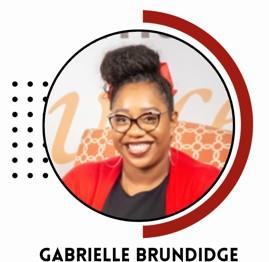
Welcome to the Spring edition of the Georgia School Counselor Association Beacon, the official voice of the Georgia School Counselor Association. As we enter a season of growth, reflection, and renewal, this issue invites you to celebrate the powerful impact school counselors continue to make across our schools, districts, and communities.
Spring is a time when the work of school counselors is especially visible supporting students through testing seasons, transitions, graduation milestones, and planning for what comes next. It is also a time when leadership matters most. This edition centers on the theme “Lead the Board: We Are the Game Changers,” highlighting how school counselors lead through advocacy, innovation, collaboration, and an unwavering commitment to student success.
Inside this issue, you will find stories and strategies that reflect the heart of our profession elevating student voice, strengthening parent and community engagement, promoting attendance and academic achievement, prioritizing adult and student wellness, and grounding our work in evidence-based and best practices. Each article is a reminder that school counselors are not only supporting systems but shaping them.
The Beacon exists because of you, your expertise, your leadership, and your willingness to share your work so others may grow. Thank you for continuing to lead with purpose, passion, and professionalism. Together, we are advancing the school counseling profession and changing the game for students across Georgia.
We hope this Spring edition inspires you, affirms your impact, and encourages you to continue leading boldly.
With gratitude and pride, Gabrielle
Brundidge President, Georgia School Counselor Association

The GSCA's mission is to be essential in improving student development, assist counselors in delivering more effective services, and speak for school counselors at the state and national levels.
The Georgia School Counselor Association (GSCA) vision statement is to promote student success, improve student development, and continue the development of the school counseling profession.

As we approach the end of the school year, we want to take a moment to say, thank you.
Thank you for the dedication, care, and leadership you show every day. The impact you make in the lives of students and families across Georgia is meaningful and lasting.
This Spring issue of The Beacon is a reflection of that work, and we are especially grateful to those who shared their voices through article submissions. Your contributions help highlight, inspire, and strengthen our profession.
As you close out the year, we encourage you to reflect on your growth and the stories that define your work those stories matter. We invite you to continue sharing them with us in the Fall. Your voice helps keep The Beacon strong, connected, and representative of the incredible work happening across our state.
Wishing you a strong finish and a well-deserved time of rest and renewal.
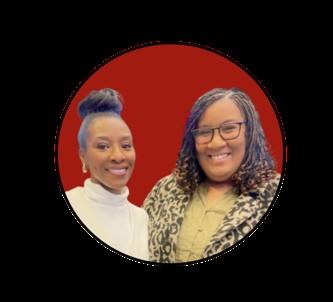
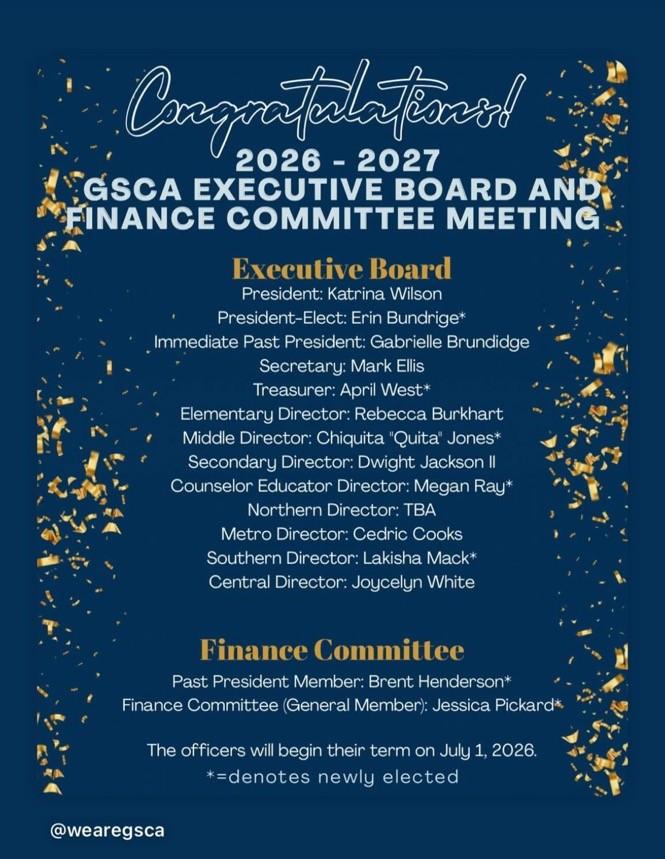
With appreciation, April West & Jessica Pickard Editors, The Beacon
Letter From The President

Mission and Vision of GSCA
Letter From The Editors
Leading the Board: School Counselors as Game-Changing Leaders in Transforming School Communities
Gabrielle Brundidge, Professional School Counselor, Savannah-Chatham
Lead the Board: Mentorship, Equity, and The Power of Student Engagement
Dr. Lamar C. Edmonds, Assistant Principal
Advocating To Reduce School Shootings
James Todd McGahey, Jackson State University
Bridging the Gap: School Counselors Leading Successful Transitions from Middle to High School
Logan Odom, Ed.S.
Reducing Chronic Absenteeism Through MTSS: A School Counselor's Framework for Attendance & Mental Health
Dr. Keyoshia Liverman, Balanced Brain LLC
Lead the Board in Attendance: Belonging Is the Game Changer
Dr. Juanita Hosch-Martin, Newton County School District
Maintaining Competency Through Professional Development Planning
Dr. Chauntice Corbin, Ph.D., NCC, Gwinnett County School District
Burnout and Boredom
Alisha Jordan, Ed.S., Gwinnett County School District
Strengthening the School Counselor-Principal Relationship: Five Strategies for Effective Collaboration
Alexcia Massey, Fulton County School District
Advancing School Counseling Through Advocacy, RAMP Recognition, and Counselor of the Year Celebrations
Dr. Terry Jones, Atlanta Public Schools District
Understanding Latino/Hispanic Youth in Our Schools: What School Counselors Can Do
Reagan Washington, M. Ed., LPC, NCC
Advocacy for Hispanic/Latino Newcomer Students
Stefanie L. McDougald, M. Ed., NCC, APC
Inside My Head Through the Eyes of My Office: Building Rapport with Students Through Intentional Office Space Decor
Amari BenLevi, Ed. S
Mindfulness in Rural Schools: Supporting School Counselor Wellness and Effectiveness
Dr. Keyoshia Liverman, Balanced Brain LLC
Balance Innovation and Responsibility in Al Usage
Kimberly D. Brown
Dr. Christy Conley, Ed. D
Closing the Counseling School Year with Student Focus
Dr. Katrina D. Wilson Ph. D., LPC, CPCS
Gabrielle Brundidge

School counselors are uniquely positioned to serve as transformational leaders within educational systems. As advocates, collaborators, and data-driven practitioners, counselors influence academic success, social-emotional development, and equitable access to opportunities for all students. The theme “Lead the Board: We Are the Game Changers” challenges school counselors to move beyond traditional support roles and embrace leadership that shapes school culture, policy, and student outcomes. This article explores the leadership role of school counselors, examines how counselors influence systemic change, and highlights strategies that empower counselors to lead initiatives that impact students, families, and school communities.
Educational systems are increasingly recognizing the importance of leadership that extends beyond administrative roles. School counselors, through their training in advocacy, collaboration, and systemic change, are well positioned to serve as leaders within schools and districts. Leadership in school counseling involves guiding initiatives that support student success while addressing barriers to equity and access.
The theme “Lead the Board: We Are the Game Changers” emphasizes the critical role counselors play in shaping the future of education. Counselors not only support individual students but also influence policies, programs, and practices that affect entire school communities. By leveraging data, implementing comprehensive counseling programs, and collaborating with stakeholders, school counselors become catalysts for meaningful change.
Research consistently demonstrates that comprehensive counseling programs area associated with improved student outcomes, including increased academic achievement, improved attendance, and enhanced social-emotional development(Carey & Dimmitt, 2012; Sink & Stroh, 2003).
Leadership in school counseling is grounded in the framework of comprehensive school counselingprograms. According to the model established by the American School Counselor Association(ASCA), counselors are expected to design and implement programs that promote academic, career,and social-emotional development for all students (ASCA, 2019).
Effective counselor leadership includes:
• Advocating for equitable opportunities for marginalized and underrepresented student populations.
• Collaborating with educators and administrators to improve school climate and student engagement.
• Using data-driven decision-making to evaluate program effectiveness and student outcomes.
• Promoting student voice and leadership opportunities.
School counselors lead by ensuring that student needs remain at the center of educational decisionmaking. When counselors participate in leadership teams, school improvement planning, and districtlevel initiatives, they bring a student-centered perspective that strengthens policy and practice (House & Hayes, 2002).
Leadership in school counseling also reflects principles of transformational leadership, which emphasize inspiring change, empowering stakeholders, and promoting shared vision within organizations (Leithwood & Jantzi, 2005). Counselors who adopt transformational leadership approaches encourage collaboration among staff while promoting initiatives that support student success.
One of the most powerful aspects of counselor leadership is the ability to influence systemic change. School counselors regularly identify barriers that affect student achievement, such as attendance challenges, lack of access to advanced coursework, or social-emotional concerns.

Through data analysis and program evaluation, counselors can develop targeted interventions that address these issues. For example, a counselor-led attendance initiative may involve collaborating with families, creating mentorship programs, and implementing incentive systems that encourage student engagement.
Similarly, counselors can advocate for increased access to rigorous academic opportunities by working with school leadership teams to review enrollment data in advanced courses. These efforts ensure that all students regardless of background, have equitable access to opportunities that prepare them for postsecondary success(Bryan, Moore-Thomas, Day-Vines, & Holcomb-McCoy, 2011).
Systemic leadership requires counselors to move beyond individual counseling sessions to address policies and practices that affect entire student population. Research suggests that counselors who actively engage in school leadership roles are more likely to implement comprehensive programs and positively influence student outcomes(Carey & Dimmitt, 2012).
Leadership in school counseling also involves cultivating strong partnerships with stakeholders. Counselors collaborate with teachers, administrators, families, and community organizations to create a network of support for students.
Equally important is the role of student voice. When students are empowered to share their perspectives and participate in decision-making processes, schools become more responsive and inclusive. Counselors often lead student leadership groups, advisory councils, and peer mentoring programs that amplify student voices.
Research highlights that when students feel heard and connected to their school environment, they demonstrate higher levels of engagement and academic motivation(Mitra, 2004). School counselors who facilitate student leadership opportunities contribute to stronger school communities and more responsive educational environments.
Data-driven practice is a hallmark of effective counselor leadership. By collecting and analyzing data related to attendance, academic performance, discipline referrals, and program participation, counselors can identify trends and measure the impact of their interventions.
Leadership through data allows counselors to:
• Demonstrate the effectiveness of counseling programs
• Advocate for additional resources or staffing
• Align counseling initiatives with school improvement goals
• Communicate program outcomes to stakeholders
Data use is also central to the accountability movement within school counseling. According to the American School Counselor Association National Model, counselors should regularly analyze program results and share outcomes with administrators and school communities (ASCA, 2019).
When counselors share data with administrators and school boards, they strengthen the visibility and credibility of the school counseling profession while highlighting the direct impact counselors have on student success.
Developing strong leadership within the profession requires intentional mentorship and professional engagement. State and national professional organizations provide opportunities for counselors to build leadership capacity, contribute to research, and advocate for policies that support students and the counseling profession.
Participation in professional organizations such as the Georgia School Counselor Association enables counselors to connect with colleagues, share best practices, and influence the direction of school counseling across the state. Leadership development opportunities, conferences, and collaborative networks empower counselors to grow as professionals and leaders. Mentorship also plays a critical role in preparing emerging counselors to take on leadership roles. Experienced counselors who model advocacy, collaboration, and innovation inspire others to expand their impact within schools and districts(Dollarhide& Saginak, 2017).
School counselors are essential leaders in today’s educational landscape. Through advocacy, collaboration, and data-driven decision-making, counselors shape policies, programs, and practices that support student success.
The theme “Lead the Board: We Are the Game Changers” reminds us that leadership is not defined by title but by impact. When school counselors’ step into leadership roles, they transform schools into environments where every student has the opportunity to thrive.
As the profession continues to evolve, counselors must embrace their role as gamechangers, leaders who influence systems, empower students, and create equitable pathways for success. By leading with purpose, collaboration, and vision, school counselors truly take their place at the board and change the game for generations of students to come.

American School Counselor Association. (2019). The ASCA National Model: A framework for school counseling programs (4th ed.). Alexandria, VA: Author.
Bryan, J., Moore-Thomas, C., Day-Vines, N., & Holcomb-McCoy, C. (2011). School counselors as social capital: The effects of high school college counseling on college application rates. Journal of Counseling & Development, 89(2), 190–199.
Carey, J., & Dimmitt, C. (2012). School counseling and student outcomes: Summary of six statewide studies. Professional School Counseling, 16(2), 146–153.
Dollarhide, C. T., & Saginak, K. A. (2017). Comprehensive school counseling programs: K–12 delivery systems in action (3rd ed.). Boston, MA: Pearson.
House, R. M., & Hayes, R. L. (2002). School counselors: Becoming key players in school reform. Professional School Counseling, 5(4), 249–256.
Leithwood, K., & Jantzi, D. (2005). Transformational leadership. In B. Davies (Ed.), The essentials of school leadership. London: Sage.
Mitra, D. (2004). The significance of students: Can increasing “student voice” in schools lead to gains in youth development? Teachers College Record, 106(4), 651–688.
Sink, C. A., & Stroh, H. R. (2003). Raising achievement test scores of early elementary school students through comprehensive school counseling programs. Professional School Counseling, 6(5), 350–364.

Dr. Lamar C. Edmonds, Assistant Principal Lmredmonds@yahoo.com
Abstract
Student engagement remains a critical component of academic success, particularly for students identified as at risk for academic and behavioral challenges. Educational leaders must cultivate equitable mindsets and culturally competent practices that promote meaningful connections between students and school communities. This article examines the role of culturally responsive mentorship in increasing student engagement within elementary schools. Drawing on the principles explored in my research on equitable mindsets and cultural competence among elementary educators, this article highlights the mentorship initiative Chat and Chew with Dr. E at Frank Long Elementary School. The program demonstrates how relationship-centered leadership and culturally responsive practices can support at-risk students, strengthen school climate, and empower educators to serve as transformational leaders.
Introduction
Educational leadership extends far beyond policy implementation and school management. Effective leadership requires a commitment to equity, cultural responsiveness, and the development of systems that support the success of all students. As schools continue to serve increasingly diverse student populations, educators must adopt practices that acknowledge students’ lived experiences while creating opportunities for meaningful engagement.
My research has focused on the development of equitable mindsets among educators and the role of cultural competence in promoting positive educational outcomes. Educators who possess an equitable mindset recognize the systemic barriers that affect students’ opportunities and intentionally implement strategies that promote access, inclusion, and support. Cultural competence, in turn, allows educators to better understand the cultural and social contexts that shape students’ experiences within the classroom and school community.
The theme “Lead the Board: We Are the Game Changers” speaks directly to the responsibilityeducators have to challenge traditional approaches and implement innovative practices that supportstudent engagement. One such approach is mentorship, which creates opportunities for students todevelop relationships with caring adults who guide and support their academic and personal growth.
An equitable mindset requires educators to critically examine how school structures, policies, and practices influence student outcomes. In my research, I explored how educators’ perceptions of equity and cultural competence shape their interactions with students and influence classroom environments. Educators who develop equitable mindsets are more likely to recognize disparities in student achievement, discipline, and engagement and to seek solutions that address these inequities.
Equity-focused educators understand that student behavior and academic performance are often influenced by external factors such as community context, family dynamics, and prior educational experiences. Rather than viewing these factors as deficits, culturally competent educators approach them as opportunities to build stronger relationships with students and families.
The American School Counselor Association National Model emphasizes the importance of addressing barriers that prevent students from achieving academic, career, and social-emotional success. School leaders and counselors who adopt equitable mindsets can design programs that address these barriers while promoting inclusive and supportive learning environments.
Cultural competence is a critical component of equitable education. It involves the ability of educators to understand, respect, and respond to the diverse cultural backgrounds of their students. When educators develop cultural competence, they are better equipped to create learning environments where students feel valued and understood.
Research indicates that students who feel connected to their school environment demonstrate higher levels of engagement, improved academic performance, and stronger social-emotional development (Fredricks, Blumenfeld, & Paris, 2004). Engagement is particularly important for students who may feel marginalized or disconnected from traditional educational structures.
Culturally responsive educators actively seek to build relationships with students by acknowledging their identities, experiences, and perspectives. These relationships serve as a foundation for mentorship and support systems that encourage students to remain engaged in their educational journeys.
Mentorship programs provide a powerful opportunity to connect culturally responsive leadership with student engagement initiatives. When educators serve as mentors, they offer students guidance, encouragement, and support while reinforcing positive behaviors and academic goals.
Mentorship initiatives are particularly effective for students identified as at risk. Research suggests that mentoring relationships with trusted adults can promote resilience, increase motivation, and improve academic outcomes (Rhodes, 2002).These relationships provide students with safe spaces to discuss challenges, explore aspirations, and develop strategies for success.
In elementary school settings, mentorship programs also support the development of social-emotional skills such as communication, decision-making, and leadership. These skills are essential for students as they navigate both academic expectations and personal challenges.

At Frank Long Elementary School, the mentorship program Chat and Chew with Dr. Ewas developed to support male students who were identified as at risk within the school community. The program was intentionally designed to create a supportive and culturally responsive environment where students could engage in open dialogue, build relationships, and develop leadership skills.
The structure of the program is simple yet impactful. Students gather regularly to share a meal while participating in guided conversations centered on topics such as responsibility, leadership, respect, and goal setting. The informal environment encourages authentic dialogue and helps students feel comfortable expressing their thoughts and experiences.
The program reflects the principles of equitable leadership and cultural competence explored in my research. By creating a space where students feel heard and supported, the mentorship initiative strengthens relationships between students and educators while reinforcing a sense of belonging within the school community.
Programs such as Chat and Chew with Dr. E illustrate how mentorship initiatives can positively influence both student engagement and school climate. When students develop meaningful relationships with educators, they are more likely to feel connected to their school and motivated to succeed academically.
Mentorship programs can contribute to several positive outcomes, including:
• Increased student participation in school activities
• Improved attendance and classroom engagement
• Reduced behavioral challenges
• Enhanced leadership and self-confidence among students
These outcomes align with broader research on student engagement, which emphasizes the importance of supportive relationships and inclusive environments in promoting academic success.
Educational leaders must be intentional in their efforts to create equitable and engaging school environments. Developing culturally competent educators and implementing mentorship initiatives are two strategies that can significantly enhance student engagement. School leaders should consider the following practices:
• Provide professional learning opportunities focused on equity and cultural competence.
• Encourage mentorship programs that connect students with supportive adults.
• Use data to identify students who may benefit from additional support.
• Foster environments that prioritize relationship-building and student voice.
These practices reflect the principles of equitable leadership and align with the mission of organizations such as the Georgia School Counselor Association, which supports educators in promoting student success and equity within schools.
Student engagement is essential for creating educational environments where all students have the opportunity to succeed. Educators who adopt equitable mindsets and culturally competent practices are better equipped to address the needs of diverse student populations.
The mentorship initiative Chat and Chew with Dr. E at Frank Long Elementary School demonstrates how culturally responsive leadership can transform student experiences. By fostering relationships, encouraging dialogue, and supporting student development, mentorship programs create pathways for students to remain engaged and motivated in- their educational journeys.
As educators and leaders continue to address the challenges facing today’s schools, the commitment to equity, cultural competence, and student engagement will remain central to transforming educational outcomes. In doing so, educators truly embody the spirit of the theme “Lead the Board: We Are the Game Changers.”

American School Counselor Association. (2019). The ASCA National Model: A framework for school counseling programs (4th ed.). Alexandria, VA: Author.
Edmonds, L. (2024). An equitable mindset for elementary school educators and the impact of cultural competence. Doctoral dissertation.
Fredricks, J. A., Blumenfeld, P. C., & Paris, A. H. (2004). School engagement:Potentialof the concept, state of the evidence. Review of Educational Research, 74(1),59–109.
Rhodes, J. E. (2002). Stand by me: The risks and rewards of mentoring today’s youth. Cambridge, MA: Harvard University Press.


James Todd McGahey, Ed. D., LPC, NCSC, NCC jmcgahey@jsu.edu
Nothing is more devastating and disturbing than a breaking news alert of another school shooting. A cruel tragedy that has increased (data) over the last decades. Hearing about the carnage of innocent children being slaughtered by bullets is a horrific trauma to a parent, students, a community and even a nation. There is a powerful solution and tool presently embedded in our schools and ready for deployment in the battle for our children’s lives. This highly trained individual is the Professional School Counselor.
I have been one of them. I have spent twenty years as a school counselor and currently the last fifteen as a university professor, training clinical mental health and school counselors. I have written several articles about the ineffective and effective uses of school counselors in our school systems. Unfortunately, most of these tasks and duties assigned to school counselors by your administrators fall into the ineffective and inappropriate category. They effectively neutralize a highly skilled and trained professional in a battle to stop the killing of children.
I have advocated vociferously throughout my career for the appropriate deployment of school counselors. I and many counseling organizations have lobbied administrators, principals, viceprincipals, board of education members, school superintendents, state directors; the majority who are guilty of saddling mental health professionals with glorified administrative duties. I have concluded that the most effective instrument of change lies in accountability demanded by the public and the parents/guardians of students. My personal advocacy on this issue has waned over the last several years, numbed by the lack of change and the repetitive carnage and frequency of school shootings. A recent killing has rekindled my motivation, one that seems to follow the same script of troubled boys executing classmates and teachers. It occurred at Apalachee High School on September 4, 2024, where I served as a professional school counselor for nine years in the early 2000s.
All school counselors, certified or licensed by their respective states, have achieved a minimum of a Master’s degree. Professional clinical mental health and school counseling students matriculate primarily through the same core curriculum. The majority of colleges and universities are accredited to ensure high standards and specific requirements. Core classes include a comprehensive and varied scope to ensure mastery of the counseling knowledge, skills and practice. The courses include Professional Counseling Orientation, Counseling Skills and Techniques, Ethics and Legal Issues, Theory and Process, Group Processes and Procedures, Assessments, Lifespan Development, Crisis Counseling, Psychological First Aid/Disaster Mental Health, Psychopharmacology, Substance and Addictions, Diagnosis and Treatment. These courses are usually followed by a year of clinical experiences on-site through a Practicum and Internship. This results in a highly educated and skilled professional ready for employment and deployment in a K-12school. Also, over half of the graduates already have been employed as classroom teachers, thus having additional expertise and knowledge of the school environment.
Government data reflect a horrific trend. The 2021–2022 school year recorded the highest number of school shootings on record, with 327 incidents resulting in 81 deaths and 269 injuries at elementary and secondary schools. From 1999 to 2024, the average yearly rate of student exposure to a school shooting nearly tripled, jumping from 19 to 51 per 100,000 students. The most significant increase occurred during the 2020–2school shootings on record, with 327 incidents resulting in 81 deaths and 269 injuries at elementary and secondary schools. From 1999 to 2024, the average yearly rate of student exposure to a school shooting nearly tripled, jumping from 19 to 51 per 100,000 students. The most significant increase occurred during the 2020–2school shootings on record, with 327 incidents resulting in 81 deaths and 269 injuries at elementary and secondary schools. From 1999 to 2024, the average yearly rate of student exposure to a school shooting nearly tripled, jumping from 19 to 51 per 100,000 students. The most significant increase occurred during the 2020–2024 period. More school shootings occurred in the five-year span from 2017–2018 to 2021–2022 (794 incidents) than in the preceding 15 years combined (659 incidents). The majority of incidents (approximately 61%) occurred at high schools, followed by elementary schools (23.6%). These hard physical numbers do not account for the preponderance and perplexity of resulting negative mental health issues. Issues that primarily affect students but also ripple and saturate families and communities. The psychological harm across all domains becomes immeasurable.
The new political climate, regarding public education, has become quite tumultuous as the present administration dissolves the Department of Education. Although this is causing consternation throughout the nation in parents, students, communities and citizens, it may provide opportunity to address the issues, ones that result in the harming of children, teachers and others. The federal administration has proposed providing more financial resources and control to the local schools and state education departments. This is where the real power for change and accountability resides, in the parent and taxpayer demanding that their children receive the benefits through the intended functions and roles of the professional school counselor.
Many local systems have excused and explained their inappropriate use of school counselors as adhering to federal and state funding formulas, that these formulas allow for discretion. This sometimes leads to arbitrary personnel decisions where additional administrators, ancillary personnel or coaches may be hired instead of additional school counselors to reach recommended caseload ratios. State, local and city school systems have made some notable efforts to address student mental health. They have funded the hiring of “mental health coordinators” or partnered with local mental health agencies for personnel to be hired and provided with on-campus offices.
Although these efforts undoubtedly contribute to improving student mental health, they are ancillary to the primary mission and purpose of the professional school counselor and often neglect the in-house expertise of the full-time school counselor. Many of the new positions only require bachelor-level degrees or employ clinical mental health counselors/ therapists who have not been exposed to the specific education or clinical training unique to the school setting. There are also challenges with access to the contracted therapist, such as their salaries or usually funded fully or partially by generated insurance reimbursements. This leaves some students restricted by insurance status.
Government data reflect a horrific trend. The 2021–2022 school year recorded the highest number of school shootings on record, with 327 incidents resulting in 81 deaths and 269 injuries at elementary and secondary schools. From 1999 to 2024, the average yearly rate of student exposure to a school shooting nearly tripled, jumping from 19 to 51 per 100,000 students.
Although these efforts undoubtedly contribute to improving student mental health, they are ancillary to the primary mission and purpose of the professional school counselor and often neglect the in-house expertise of the full-time school counselor. Many of the new positions only require bachelor-level degrees or employ clinical mental health counselors/ therapists who have not been exposed to the specific education or clinical training unique to the school setting. There are also challenges with access to the contracted therapist, such as their salaries or usually funded fully or partially by generated insurance reimbursements. This leaves some students restricted by insurance status.
A debate about guns rages on, and usually quickly divides into political party lines. Mental health issues, especially teenagers, we seem to all agree need our attention. Some of the following statistics corroborate this need for action:
• 20.3% of adolescents (ages 12-17) had a diagnosed mental health condition in 2023.
• 40% of high school students reported persistent feelings of sadness or hopelessness.
• 20% of high school students seriously considered attempting suicide.
• 9% of high school students attempted suicide.
School systems must allow their school counselors to be proactive, not reactive to problems and crisis. This is achieved by not saddling them with inappropriate activities or duties that may include, non-counseling tasks like lunch, recess, and bus duties, coordinating testing programs, planning ceremonies, acting as the registrar, building the master schedule. Appropriate job duties and descriptions should include implementing an American School Counselors Association (ASCA) model that is focused on academic, career, and social/emotional development for all students. Professional school counselors have the expertise and skills to identify troubled children and youth, but they must have the opportunity to relate to the students on their caseloads, building relationships, building presence and trust, engaging students through individual and group counseling and classroom guidance sessions. Sessions that educate, inform and build awareness in students to be recognized troubled signs, speech and behaviors in their classmates and then not be afraid to report or confide in their counselor, administrator or teachers.
There are numerous measures and strategies for school safety, and your school and system most likely have them implemented, but creating opportunities and boundaries for the appropriate use of the professional school counselor is a major resource. The school counselor resource most likely has already been funded and is deployed to some degree. Utilizing and deploying this professional is key to mitigating and preventing the dangerous and deleterious effects of child and adolescent negative mental health. The following questions, asked of your local school principal , will quickly assess the level of commitment and consciousness your school has to addressing student’s mental health needs and possibly preventing another tragedy from occurring in our schools.
1. What is the student to counselor ratio?
ASCA recommends a student-to-school-counselor ratio of 250:1. This ratio is considered optimal for supporting student success and increasing positive outcomes in many areas. The national average as of the 2023-2024 school year was 376:1.
2. Who oversees, organizes and coordinates local, state and national testing?
This task is one of the most prevalent inappropriate tasks assigned to school counselors. It consumes inordinate amount of time with an abundance of administrative tasks from creating lists, coordinating and formulating “testing day schedules for teachers and students, finding appropriate proctors and administrators, counting and confirming tests, answer sheets and even counting pencils. These usually consume several weeks of planning and administering tests for students, while any counseling activities are suspended. Although technology has eliminated or assisted with many of these tasks, it has not eliminated all and has created different, additional challenges. Solutions include having an administrator assigned to test coordination in more than name only. Providing and funding a teacher an extra planning period to oversee the testing program.
3. Does the school employ a full-time Registrar and Counseling Department administrative assistant?
These positions are vital and important to the effective functioning of a Guidance and Counseling department within a school. Their job description consists of a wide range of tasks. Primarily they include registration of new students, collecting appropriate materials and forms for new and existing students, maintaining records like schedules and transcripts, responding to requests for records and information, scheduling parent and various other meetings involving counselors. If a school does not employ these positions than these duties are expected of the school counselor, obviously dramatically reducing their attention to appropriate counseling tasks.
4. Is our school a certified RAMP (Recognized ASCA model Program) school?
The American School Counselors Association describes the Recognized ASCA Model Program® (RAMP®). It recognizes schools committed to delivering school counseling programs aligned with the ASCA National Model® framework. The RAMP® designation demonstrates to administrators, school boards, families and the community at large that the schools are committed to supporting the mission of the school and district. The RAMP® designation lasts for five years. Schools are encouraged to maintain their RAMP® status by submitting a successful application at the end of their fourth year. The ASCA National Model® guides school counselors in the development of school counseling programs that:
• are based on data-informed decision making
• are delivered to all students systematically
• include a developmentally appropriate curriculum focused on the mindsets and behaviors all students need for post-secondary readiness and success
• close achievement and opportunity gaps
• result in improved student achievement
5. Are the school counselors performing appropriate activities instead of inappropriate activities?
As appropriate activities are aligned with the ASCA model they promote a proactive, instead of reactive approach, they ensure an efficient and effective counseling program, that can monitor the psychological well-being of students and then mitigate any serious issues before a student acts out in a destructive or lethal manner.
https://www.schoolcounselor.org/getmedia/1d2214b0-6061-4153-bff7-e8b1034208e8/Appropriate-Ina ppropriate.pdf
6. Are the staff, faculty and administrators trained in Psychological/Mental Health First Aid?
With counselor to student ratios usually exceeding 300:1, teachers, with an average 30:1 ratio per class, have enhanced access and presence in a student’s life. They can establish a connection or rapport with students and become counseling interventionalist. Training all school personnel in the concepts and techniques of Mental Health First Aid educates them to recognize and identify physical and mental signs and symptoms of distress, trauma, suicide ideation, substance abuse and other issues. They then have the education and experience to observe, evaluate and refer to if additional assistance is warranted. There are numerous certified training courses available that usually can train all school personnel in a day.
Dr. McGahey is a professor of counseling at Jacksonville State University. He is also a licensed professional counselor and a nationally certified counselor and school counselor.

Logan Odom Ed.S. Lodom@tcjacket.net

While all school transitions present challenges that school counselors are uniquely positioned to address, the transition from middle to high school represents a critical period of academic, social/emotional, and college and career development. As the ASCA National Model suggests, school counselors play an essential role in designing and implementing systemic supports that promote student achievement, access, and equity during this pivotal time (ASCA, 2025).
The transition to high school introduces greater academic rigor and expanded extracurricular and career pathway opportunities. Research emphasizes that intentional, relationship-centered support during the middle school years can positively influence students’ academic readiness and overall well-being as they prepare for high school transition (López & Benner, 2025). School counselors play a critical role in providing support for students prior to entering high school by helping students and parents understand high school expectations, course selection options, graduation requirements, and available academic and career pathways. By implementing proactive transition programming in middle school, counselors can help strengthen students’ confidence, reduce transition anxiety, and establish a strong foundation for future ninth-grade academic success and long-term achievement.
Student-focused transition programming is key in helping rising 9th grade students build confidence and familiarity with the high school environment prior to entry (Brewington, 2020).
Providing structured high school tours during the eighth-grade year can help students become familiar with the high school environment and expectations. Exposure to the campus can reduce transition-related anxiety, strengthen students’ sense of belonging, and build excitement and positive anticipation about the upcoming high school experience.
Hosting an elective and CTAE fair for transitioning students can allow students to explore course options, career pathways, and extracurricular opportunities before entering high school. This interactive experience supports informed decision-making by helping students connect their interests and strengths with academic and career planning. Involving current high school students in program demonstrations and discussions also helps rising ninth graders build connections and gain a clearer understanding of available opportunities.
Counselor-led presentations prior to transition can provide developmentally appropriate information about high school expectations, graduation requirements, GPA considerations, and academic planning. These sessions give students opportunities to ask questions and better understand the high school experience.
School counselors can support students during the transition to high school by playing an active rolein the registration process, helping students to select courses that align with their academic interests, abilities, and long-term goals. Intentional and informed registration practices can increase student access to accurate course information, while helping to establish a strong foundation for high school success.
Engaging parents as active partners in the transition process strengthens support networks that help students successfully navigate the move from middle to high school (ASCA, 2025).
Hosting a rising ninth-grade parent night can be an engaging way to provide families with important information about high school expectations, graduation requirements, academic pathways, and available student supports. Such events help parents better understand the transition process and prepares them to assist students in planning for academic and postsecondary success.
Providing printed transition materials that are sent home with students helps ensure that all families have access to important high school planning information. These resources may include graduation requirements, course pathway options, and key timelines to help families remain informed throughout the transition process.
Utilizing communication platforms such as school-based Remind accounts and Facebook pages to share transition updates, information, and important dates is essential to parent engagement. Digital communication strategies help increase parent awareness, engagement, and understanding of high school expectations while supporting ongoing family-school partnership efforts.
With all transition related supports, collaboration between middle and high school counselors is essential for maintaining continuity of services during the transition process. Transition programming should include joint planning meetings, shared data review, and vertical alignment of activities to ensure consistent messaging about academic expectations, opportunities, and graduation requirements. This partnership strengthens program effectiveness, promotes early identification of student needs, and supports a seamless transition experience for students entering high school(McNeiley, 2025).
In conclusion, supporting students during the anxiety-producing transition from middle to high school is a fundamental responsibility of school counselors that can be strengthened through the implementation of intentional programming and structured outreach efforts that connect students and their families to important information and available supports. By creating opportunities for student and parent engagement, school counselors can help make the transition process more equitable, transparent, and supportive. Guided by ASCA (2025) standards, school counselors should prioritize student-centered experiences, family communication, and vertical collaboration between middle and high school counseling teams.
These collaborative efforts not only help reduce transition-related anxiety but also enhance students’ academic and social readiness for high school. Ultimately, proactive transition planning supports student confidence by helping students understand academic and career pathways, recognize available opportunities, and access resources that promote long-term success beyond high school.

Dr. Keyoshia Liverman, keyoshia@thebalancedbrainpllc.com

Chronic absenteeism continues to be one of the most pressing challenges impacting student success in schools today. Students are missing critical instructional time, falling behind academically, and becoming increasingly disconnected from their school communities. While attendance has traditionally been addressed as a compliance issue, school counselors recognize that the root causes are often far more complex.
Behind every absence is a story—anxiety, family instability, lack of engagement, unmet socialemotional needs, or barriers that are not immediately visible in attendance data. As mental health concerns continue to rise among students, absenteeism is no longer simply about showing up; it is about whether students feel safe, supported, and connected enough to attend.
School counselors are uniquely positioned to lead efforts that address both attendance and mental health through a comprehensive, system-level approach. The Multi-Tiered System of Supports (MTSS) provides an effective framework to guide this work.
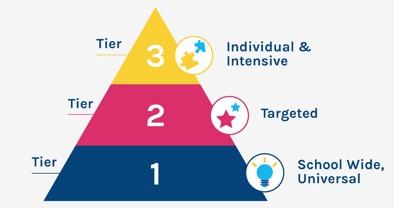
MTSS offers a structured, data-driven approach that allows schools to proactively support students across academic, behavioral, and social-emotional domains. Rather than reacting after attendance concerns become chronic, MTSS encourages early identification and intervention.
Within this framework, school counselors serve as key leaders. By analyzing attendance data, identifying trends, and implementing tiered supports, counselors can shift school responses from punitive measures to proactive, student-centered interventions that address root causes.
When attendance is approached through an MTSS lens, it becomes a shared responsibility that integrates school climate, student engagement, and mental health support.
Tier 1 focuses on prevention by creating a school environment where students feel welcomed, valued, and motivated to attend. A positive school climate is foundational to improving attendance outcomes.
For example, implementing grade-level attendance competitions or school-wide incentives can foster a sense of community and accountability. Additionally, SEL lessons focused on goal setting, resilience, and emotional awareness equip students with the skills needed to navigate challenges that might otherwise contribute to absenteeism.
Equally important is relationship-building. Students who feel connected to at least one adult in the school are more likely to attend consistently. School counselors can support staff in prioritizing meaningful student connections across all settings.
Tier 2 interventions are designed for students who are beginning to demonstrate patterns of absenteeism or who are identified as at risk. These supports are more targeted and often involve small group or individualized strategies.
School counselors may implement small groups focused on anxiety, peer relationships, or motivation. Additional support such as check-in/check-out systems, mentoring programs, and attendance goal setting can provide structure and accountability.
Family engagement is a critical component at this level. Partnering with caregivers to identify barriers and collaboratively solve problems increases the likelihood of sustained improvement.
In one middle school setting, a group of students began accumulating frequent absences linked to school-related anxiety and disengagement. A small group intervention was implemented focusing on coping strategies, goal setting, and peer support. Students also participated in daily check-ins with a trusted adult. Over the course of several weeks, attendance improved, and students reported feeling more connected and supported within the school environment. This example highlights how targeted, relationship-based interventions can positively impact attendance outcomes.
Tier 3 provides intensive, individualized support for students experiencing chronic absenteeism. These students often face significant and ongoing barriers such as mental health challenges, family instability, or complex environmental factors.
At this level, school counselors coordinate with multidisciplinary teams to conduct deeper assessments and develop individualized intervention plans. Collaboration may include administrators, social workers, community agencies, and outside mental health providers.
Interventions may include individual counseling, wraparound services, and referrals for external support. In some cases, home visits or increased family outreach may be necessary to re-engage the student.
The focus at Tier 3 extends beyond attendance improvement alone—it centers on addressing the underlying needs that impact a student’s ability to attend school consistently.
School counselors can strengthen attendance outcomes by implementing the following strategies:
• Regularly analyze attendance data to identify trends and at-risk students early
• Develop and promote positive attendance campaigns
• Facilitate small group counseling focused on anxiety, motivation, and peer connection
• Implement check-in/check-out systems for targeted students
• Strengthening family partnerships through consistent communication
• Collaborate with staff to enhance school climate and student engagement
• Integrate SEL into attendance-focused initiatives
Consistency and intentionality in these efforts are key to long-term success.
Chronic absenteeism is not solely an attendance issue it reflects unmet needs within students’ lives and school systems. By utilizing the MTSS framework, school counselors can lead to a meaningful, sustainable change that addresses both attendance and mental health. When schools shift from asking, “Why isn’t this student attending?” to “What does this student need to be successful?” the approach becomes more empathetic and effective. School counselors are not only responders to challenges they are leaders of change. Through datainformed practices, strong relationships, and intentional systems, counselors can transform attendance outcomes and support students in re-engaging with their education.
American School Counselor Association. (2016). ASCA ethical standards for school counselors.
American School Counselor Association. (2019). The ASCA national model: A framework for school counseling programs (4th ed.).
Balfanz, R., & Byrnes, V. (2012). The importance of being in school: A report on absenteeism in the nation’s public schools. Johns Hopkins University Center for Social Organization of Schools.
Gottfried, M. A. (2014). Chronic absenteeism and its effects on students’ academic and socioemotional outcomes. Journal of Education for Students Placed at Risk, 19(2), 53–75.
Kearney, C. A. (2008). School absenteeism and school refusal behavior in youth: A contemporary review. Clinical Psychology Review, 28(3), 451–471.
Lemberger-Truelove, M. E., Selig, J. P., Bowers, H., & Rogers, J. E. (2021). Effects of comprehensive school counseling programs on student outcomes: A meta-analysis. Journal of Counseling & Development, 99(2), 176–190.
Sugai, G., & Horner, R. (2002). The evolution of discipline practices: School-wide positive behavior supports. Child & Family Behavior Therapy, 24(1–2), 23–50.
Dr. Juanita Hosch-Martin martin.juanita@newton.k12.ga.us
As we close out another school year and prepare for the next, attendance is still one of the top priorities in our schools. Some schools have been able to make progress, while others are still working to put the pieces together. The single most important strategy we can implement may surprise you. It is not a new program, a new policy, or a new initiative. And as school counselors, we are uniquely positioned to offer expertise and support in that work.
Schools often focus on attendance numbers, but attendance is usually a reflection of something deeper, a combination of factors that influence whether students feel connected to their school community. One of those important factors is belonging.
Maslow identified belonging as a fundamental human need. When individuals do not experience a sense of connection or acceptance within a group, their motivation and participation can decline (Maslow, 1943). In schools, this need is reflected in the relationships students experience with both peers and adults.
School connectedness refers to students feeling that the people in their school community care about them and support their success. This sense of connection has been linked to stronger engagement and more positive outcomes for students (Centers for Disease Control and Prevention [CDC], 2009). Research also shows that when students feel valued and supported by adults at school, they are more likely to stay engaged in learning and attend consistently (Blum, 2005).
In other words, attendance is often not simply about policies or consequences. It is frequently connected to whether students feel that they belong. And chronic absenteeism, defined as missing 10% or more of school days for any reason (U.S. Department of Education, 2024), has reached crisis levels nationally, making this connection more urgent than ever.
School counselors are not simply one of many support staff in the school building. They bring the most valuable expertise and insight to the conversation on belonging. Rather than focusing solely on behaviors or numbers, school counselors are uniquely trained to see and respond to the needs of the whole child.
Because school counselors work across grade levels, collaborate with teachers and administrators, and engage with families, they often hold many of the pieces that connect to a student's sense of belonging. The signs may be subtle at first, a student who stops participating, withdraws from peers, or loses interest in school activities. These early indicators of disconnection often appear long before they show up in attendance data.
School counselors also have something most people in the building do not. The ability to have confidential conversations with students allows counselors to uncover the real story behind an absence and connect students to the resources and support they truly need. Whether the disconnect involves relationships with peers, challenges in the classroom, or a growing sense of not being connected to the school community, those conversations are often where the path back to belonging begins.
Research examining school climate shows that environments where students feel respected, supported, and safe are associated with stronger engagement and improved student outcomes (Thapa, Cohen, Guffey, & Higgins-D'Alessandro, 2013). When schools strengthen these conditions, students are more likely to remain connected to their learning environment.
When school counselors bring their expertise in belonging to the attendance conversation, they offer relational insight and knowledge of the whole child that strengthens the school's overall approach. When that knowledge is brought to the table, the whole school benefits.
Schools are often filled with initiatives intended to improve student outcomes. While many of these efforts are well intended, not every strategy meaningfully improves student experiences. School counselors can help schools focus their efforts on strategies that genuinely strengthen connection and engagement. By identifying practices that make a meaningful difference for students, counselors can help schools prioritize approaches that support belonging rather than spending time on initiatives that have limited impact.


Research on belonging in schools suggests that when students feel accepted and valued within their school environment, they demonstrate stronger motivation, increased participation, and greater persistence in learning activities (Osterman, 2000). When belonging becomes a priority, schools begin to shift from simply responding to attendance concerns to strengthening the relational conditions that influence whether students want to be present in the first place.
One of the strongest predictors of student engagement is whether students feel recognized and supported by a trusted adult in their school environment. When students believe that someone in the building notices them and cares about their progress, their sense of connection increases (Blum, 2005). School counselors can help support initiatives such as relationship mapping, mentoring programs, and intentional check-in systems that ensure each student has a meaningful connection with at least one adult in the building. These relationships help create the foundation for stronger engagement and consistent attendance.
Students are more likely to feel connected to their school when they believe their perspectives are heard and valued. Providing opportunities for student voice allows schools to better understand how students experience the school environment. School counselors can facilitate this work through student listening groups, advisory councils, reviewing the data from student school climate surveys, and other opportunities for students to share feedback. Research on student voice shows that when students participate in shaping aspects of their school environment, they often demonstrate stronger engagement and a greater sense of belonging (Mitra, 2004).
Peer relationships also play an important role in students' sense of belonging. Feeling accepted by classmates can influence how comfortable students feel participating in school activities and engaging in learning. School counselors can support peer connections through mentoring programs, peer leadership opportunities, transition supports for new students, and small groups that help students build social skills and relationships. These opportunities help students develop connections that make school feel like a place where they belong.
Attendance challenges rarely appear suddenly. In many cases, they develop gradually as students begin to feel less connected to their school environment. School counselors can help teachers and staff recognize early indicators of disconnection, including reduced participation, social withdrawal, behavioral changes, or increased tardiness. Recognizing these signals early allows schools to intervene before attendance challenges become long-term patterns.
Belonging cannot exist only within counseling offices. It must be reflected in the daily experiences students have throughout classrooms and school spaces. School counselors can support this work by facilitating conversations with staff about how classroom practices and school climate influence students' sense of connection. Through professional learning communities and collaborative discussions, counselors can help teachers identify strategies that strengthen belonging across the school environment. Research consistently shows that supportive school climates contribute to stronger engagement and positive student outcomes (Thapa et al., 2013).
When school counselors intentionally prioritize connection, making sure students are known, heard, supported, and included, they help shape the conditions that allow belonging to grow throughout the school. When schools focus on belonging, attendance often follows. School counselors are uniquely positioned to support this work, helping schools prioritize practices that ensure every student feels recognized, supported, and connected to their school community.
When school counselors bring their expertise in belonging to the larger school community, they contribute something that no program or policy can replace. They offer the relational insight, the trusted relationships, and the knowledge of the whole child that helps schools understand what students truly need in order to show up. When belonging grows, attendance follows, because students who feel seen, valued, and connected choose to be present.

Blum, R. W. (2005). School connectedness: Improving the lives of students. Johns Hopkins Bloomberg School of Public Health.
Centers for Disease Control and Prevention. (2009). School connectedness: Strategies for increasing protective factors among youth. U.S. Department of Health and Human Services.
Maslow, A. H. (1943). A theory of human motivation. Psychological Review, 50(4), 370-396. Mitra, D. L. (2004). The significance of students: Can increasing student voice in schools lead to gains in youth development? Teachers College Record, 106(4), 651-688.
Osterman, K. F. (2000). Students' need for belonging in the school community. Review of Educational Research, 70(3), 323-367.
Thapa, A., Cohen, J., Guffey, S., & Higgins-D'Alessandro, A. (2013). A review of school climate research. Review of Educational Research, 83(3), 357-385.
U.S. Department of Education. (2024). Chronic absenteeism. Retrieved from https://www.ed.gov/teaching-and-administration/supporting-students/chronic-absenteeism

Chauntice Corbin, Ph.D., NCC chauntice.buck@gmail.com

School counselors are expected to engage in ongoing, relevant professional development to stay current with student needs and evolving ethical and legal responsibilities (ASCA Ethical Standards, 2022). This includes developing an annual professional development plan that supports intentional growth and guides our work throughout the year (ASCA School Counselor Professional Standards and Competencies, 2025). Research by Antwi (2023) indicates that continuous professional development enhances counselors' skills, confidence, and ability to effectively support diverse student populations while navigating increasingly complex educational environments. Yet with increased student needs, growing burnout, and limited funding for professional opportunities, fulfilling this ethical responsibility can be challenging.
ASCA provides a clear framework and assessment tools to help school counselors create a wellaligned professional development plan. The process is grounded in the ASCA School Counselor Professional Standards and Competencies Assessment and the principles of the ASCA National Model. Below is a guide to support the development of an ASCA-aligned Professional Development Plan:
Step 1: Conduct
Begin with a comprehensive self-evaluation using the ASCA School Counselor Professional Standards and Competencies Assessment. This helps identify strengths and growth areas across domains such as Professional Foundation, Direct and Indirect Student Services, and Planning and Assessment. A data-informed self-assessment lays the groundwork for purposeful goal setting.
Step
Use your self-assessment results and schoolwide data (achievement, attendance, behavior trends) to develop SMART goals that are specific, measurable, achievable, results-focused, and time-bound. These goals should align with the ASCA National Model and support your school's mission and student outcome goals. Example: “By the end of the year, I will complete an ASCA U Specialist course on college admissions to strengthen my career readiness advising, as evidenced by a postcourse certificate and increased FAFSA completion rates.”
Step
Choose the training, resources, or learning experiences that will help you meet your goals.
Options include:
● ASCA U Specialist courses ($)
● ASCA/GSCA conferences or workshops ($)
● Peer consultation or supervision
● Reading and applying research from ASCA/GSCA publications, including The ASCA National Model and the Beacon
● GSCA Professional Development Webinars (FREE for all members)
Step 4: Implement and Document
Engage in your selected activities and maintain clear documentation of what you complete, including CEUs or contact hours. Reflect on how newly gained knowledge or skills are applied to your school counseling program, often through ASCA Action Plans such as Core Curriculum, Small Group, or Closing the Gap plans.
Step 5: Reflect and Evaluate
Assess the effectiveness of your professional development, including whether goals were met and how your learning improved your practice. Evaluate the impact on student outcomes and on your comprehensive school counseling program. This reflection directly informs your annual plan for the following year.

American School Counselor Association (2022). ASCA Ethical Standards for School Counselors. Alexandria, VA: Author.
American School Counselor Association (2025). ASCA School Counselor Professional Standards & Competencies. Alexandria, VA: Author.
Antwi, T. (2023). Assessing the effectiveness of continuous professional development programs organized for counselors in Ghanaian public senior high schools. Open Journal of Social Sciences, 11(06), 91-107. https://doi.org/10.4236/jss.2023.116008

Alisha Jordan, Ed. S
Gwinnett County School District

After years in the profession, many school counselors find themselves pausing, sometimes quietly, and asking a difficult question: What is this I’m feeling? The work that once felt energizing can begin to feel different. The routines are familiar, the systems are in place, and the demands remain, but something has shifted. For many, this feeling is quickly labeled as burnout. However, not every sense of disconnection is exhaustion. Sometimes, it is boredom.
Burnout is commonly understood as emotional exhaustion resulting from prolonged workplace stress (World Health Organization, 2019).
In school counseling, it is often associated with large caseloads, role demands, and the emotional burden of supporting students (Mullen & Crowe, 2018). Burnout can leave us feeling depleted, making it difficult to give to others. In contrast, boredom is marked by disengagement and a lack of challenge. It can occur when the work becomes routine and no longer feels meaningful or stimulating (De Zwart et al., 1997).
The current administration is also attempting to change the ICE policy of prohibiting arrests at sensitive locations: places of worship, hospitals and schools. Despite legal challenges to President Trump’s immigration policies, entire communities, including schools are being adversely impacted. School counselors may begin to experience increased requests for assistance from students and their families to navigate this uncharted territory. As part of a comprehensive school counseling program, school counselors embrace social justice and leadership skills and must advocate for students.
The challenge is that burnout and boredom can look similar. Both can show up as low motivation, fatigue, and disconnection. However, the difference lies in the cause and the response. Burnout requires rest, boundaries, and support. Boredom calls for re-engagement, creativity, and renewed purpose. For seasoned school counselors, boredom can quietly develop when we begin operating on autopilot rather than intentional practice.

This distinction matters because of how we experience our work shapes how we show up for students. School counseling is not just about completing tasks; it is about presence. Research shows that strong counselor-student relationships are linked to improved academic engagement and wellbeing (Carey & Dimmitt, 2017). When we are engaged, students feel seen and supported. When we are disconnected, we can miss those opportunities.
As school counselors, we are uniquely positioned to lead the board. Every interaction, every decision, and every moment of connection has the potential to shift outcomes for students. We advocate, we support, and we create opportunities. In many ways, we are game changers, often working behind the scenes yet making moves that shape the future of our students.
However, when we feel disconnected, whether from burnout or boredom, it can limit our impact. We may still do the work, but without the same level of presence or intention. In a role where connection is essential, even small shifts in engagement matter.
For many experienced counselors, this feeling can be linked to career stagnation, in which growth slows, and the work becomes repetitive. This is not a sign of failure; it is a signal. It is an opportunity to reconnect with purpose and re-engage with the work in new ways. Reigniting our impact does not require leaving the profession. It may involve trying new approaches, finding creative ways to connect with students, or simply returning to the “why” that brought us into this work. Small, intentional shifts can restore meaning and connection.
It is also important to pause and reflect. Ask yourself: Am I leading the board, or just responding to the game? Reflection allows us to move from routine to intentional practice, strengthening our connection to both the work and the students we serve.
If you are experiencing burnout, the response requires care and support (Mullen et al. 2017). If you are experiencing boredom, the response calls for curiosity and change. Both are valid, but they require different next moves.
As school counselors, the way we show up matters. When we reconnect with intention, we strengthen our impact and continue the important work of shaping future generations, one meaningful move at a time.

Bianchi, R., & Schonfeld, I. S. (2023). Examining the evidence base for burnout. Bulletin of the World Health Organization, 101(11), 743–745. https://doi.org/10.2471/BLT.23.289996
Carey, J., & Dimmitt, C. (2012). School counseling and student outcomes: Summary of six statewide studies. Professional School Counseling, 16(2), https://doi.org/10.1177/2156759X0001600204
De Zwart, B. C., Broersen, J. P., Van der Beek, A. J., Frings-Dresen, M. H., & Van Dijk, F. J. (1997). Occupational classification according to work demands: An evaluation study. International Journal of Occupational Medicine and Environmental Health, 10(3), 283–295.
Mullen, P. R., Blount, A. J., Lambie, G. W., & Chae, N. (2017). School counselors perceived stress, burnout, and job satisfaction. Professional School Counseling, 21(1), Article 2156759X18782468. https://doi.org/10.1177/2156759X18782468

Alexcia Massey
Fulton County School District
Engineering plays a vital role in shaping the world around us from transportation systems and technology to environmental sustainability and public health. However, many students, particularly those from underrepresented or economically disadvantaged backgrounds, lack early exposure to engineering careers. Recognizing this gap, three middle school counselors—Alexcia Massey, Fredric Johnson, and Tiffany Hudson—collaborated to create a counselorled initiative designed to expand students’ awareness of engineering pathways while supporting academic, career, and social/emotional development in alignment with the American School Counselor Association (ASCA) Student Standards.
The Sparking Interest in Engineering Pathways Club (S.I.E.P) was developed after the counselors participated in Georgia Tech Promoting Relationships, Identity, and Mentoring through Engineering (GT PRIME), a summer outreach program for middle school students at Georgia Tech within the Woodruff School of Mechanical Engineering, led under the guidance of Dr. Jonathan Gaines. Through this experience, the counselors gained insight into engineering disciplines, roboticsbased design projects within a family environment, and the importance of early, intentional STEM exposure.
Motivated by ASCA’s emphasis on college and career readiness, the counselors designed the S.I.E.P club as a career development intervention that would help students understand the connection between school, post-secondary options, and the world of work which are core components of the ASCA Career Development domain.
The S.I.E.P club operates across three middle schools, with intentional student selection practices grounded in equity and access. Counselors identified students with an interest in STEM-related activities while prioritizing those from diverse backgrounds and/or economically disadvantaged . This approach supports ASCA Mindset standards related to belonging, selfconfidence, and belief in one’s ‑ ability to succeed by ensuring students who may face systemic barriers are provided meaningful opportunities for career exploration.
Throughout the school year, students met monthly via Zoom to engage with local community guest speakers who were either current or retired engineers. Speakers represented a wide range of fields, including aviation engineering, computer science, mechanical and electrical engineering, and a host of other STEM careers. These sessions allowed students to hear authentic career stories, learn about multiple pathways into engineering, and ask questions in a supportive environment.
Students reflected positively on these experiences, noting the value of learning directly from professionals, and gaining insight into future opportunities. One student shared, “I liked hearing about college admissions,” highlighting how the program helped make postsecondary planning more concrete and relevant.
These interactions align strongly with ASCA Behavior Standards in the Learning Strategies and Social Skills categories by fostering critical thinking, effective communication, and positive relationships with supportive adults.
The program culminated in student participation in S.I.E.P (Sparking Interest in Engineering Pathways) Conference, concluding with an oncampus experience at Georgia Tech. This event provided students with firsthand exposure to a university environment and reinforced the belief that postsecondary education and engineering careers are attainable goals. For many students, this was their first time visiting a college campus. One student expressed their excitement by saying, “I have never been to GA Tech before — this is cool.”
The impact of this experience was also evident through parent feedback. One parent shared, “My son appreciated the opportunity to participate in the S.I.E.P club. He came home and told me about it after the field trip.”
Another parent noted the enthusiasm sparked by the visit: “(Student) had a blast on the S.I.E.P field trip today! He sent us a few videos, texts, and pictures of the cool things he got to do and see! Just wanted to let you know it was a hit, and right up his alley!! Thanks for arranging it!”
These reflections support how postsecondary exposure can increase student engagement, strengthen familyschool connections, and reinforce ASCA standards related to postsecondary readiness, perseverance, and goal setting.
The S.I.E.P Club reflects the ASCA framework’s holistic approach to student development by addressing academic, career, and social/emotional growth. Through consistent participation, students built confidence, developed problemsolving and collaboration skills, and began to envision themselves in future engineering or STEMrelated roles.

Rather than directing students toward a single outcome, the program emphasized exploration, curiosity, and informed decisionmaking which are central goals of a comprehensive school counseling program. By aligning intentional career exploration with ASCA Mindsets & Behaviors, the S.I.E.P Club demonstrates how counselorled initiatives can ‑ expand opportunity, elevate student voice, and help students imagine multiple futures grounded in their strengths and interests.
By Dr. Terry Jones Atlanta Public Schools District

Across the nation, school counselors are increasingly expected to demonstrate measurable impact, advocate for equitable student outcomes, and lead to systemic change within schools. In Atlanta Public Schools (APS), a powerful and innovative model has emerged, one that centers counselors' voice and advocacy through a strategic partnership with the Federation of Public Service Employees (FPSE). This partnership has created a unified approach that integrates advocacy, RAMP (Recognized ASCA Model Program) recognition, and the Counselor of the Year (COY) Celebration into a single, cohesive framework. This model reflects a best practice approach that positions school counseling as a data-driven, outcome-focused, and advocacy-centered profession.
Best practice in school counseling is defined as methods and strategies that consistently produce effective outcomes and can be replicated across settings (Wikipedia, 2010). In this model, one of the most critical best practices is the intentional elevation of counselor voice.
Through collaboration with the Federation of Public Service Employees, counselors are no longer operating solely within traditional school structures. Instead, they are actively shaping conversations, influencing decisions, and advocating for the resources and recognition necessary to support student success.
This shift represents a move from implementation to influence, where counselors are not only delivering services but also helping define the systems in which they work.
The Counselor of the Year Celebration as an Advocacy Platform
The Counselor of the Year (COY) Celebration has been reimagined as more than a recognition event. It now serves as a strategic advocacy platform that highlights:
Excellence in individual school counseling practice
The impact of comprehensive, data-driven programs
The importance of counselor leadership and voice
The visibility of school counseling at a broader community and policy level
The upcoming Counselor of the Year Celebration will take place on May 9 at Atlanta City Hall, further elevating the visibility and significance of this work. Hosting the event in such a prominent civic space reinforces the importance of school counseling and positions counselors as key contributors to educational and community outcomes.
By aligning the celebration with advocacy efforts and public recognition, this initiative strengthens both professional identity and systemic influence.
A central component of this model is the inclusion of RAMP recognition, developed by the American School Counselor Association, as part of the COY celebration.
RAMP represents the highest national standard for school counseling programs and requires:
Comprehensive program implementation
Strategic use of data
Measurable student outcomes
Continuous program evaluation
Atlanta Public Schools has established a growing legacy of RAMP excellence:
Crawford Long Middle School (2018) – First APS school to earn RAMP designation
Sutton Middle School (APS school) (2021) – Expansion of comprehensive counseling excellence
Humphries Elementary School (2026) – First APS elementary school to achieve RAMP
Sutton Middle School (2026 Re-RAMP) – Demonstrating sustained excellence
Notably, Crawford Long Middle School and Humphries Elementary School, both within the South Atlanta cluster, exemplify the strength and alignment of counseling programs within the community.
By incorporating RAMP recognition into the COY celebration, this model ensures that programmatic excellence is elevated alongside individual achievement, reinforcing the importance of comprehensive school counseling systems.
A defining strength of this work is the partnership with the Federation of Public Service Employees (FPSE), an independent advocacy organization committed to supporting and elevating school counselors.
Advocacy is defined as efforts to influence decision-making within institutions and systems (Wikipedia, 2011). Through FPSE, this advocacy becomes structured, intentional, and impactful.
A pivotal moment in this initiative was the engagement of Alan Lee, National President of FPSE, who took time out of his national schedule to meet directly with school counselors. His message was both affirming and challenging: counselors’ voices matter, their work holds power, and their presence at decision-making tables is essential.
This message reinforced a critical shift—from being included in conversations to leading them.
Through FPSE, advocacy is no longer abstract—it is actionable and measurable. Key strategies include:
Elevating Counselor Voice
Creating structured opportunities for counselors to identify priorities and advocate collectively.
Ensuring Counselor Ownership
Designing recognition systems, such as the COY celebration, that are counselor-led and reflective of professional standards.
Expanding Visibility
Leveraging public platforms, including events at Atlanta City Hall, highlighting the role and impact of school counselors.
Aligning Advocacy with Data
Using RAMP and other data-driven measures to support advocacy efforts with evidence of effectiveness.
Why This Model Works This integrated approach is effective because it brings together key elements of best practice:
Comprehensive Recognition – Honoring both individuals and programs
Alignment with National Standards – Grounding work in the ASCA Model
Independent Advocacy – Leveraging FPSE to amplify counselor voice
Data-Driven Accountability – Ensuring measurable outcomes
Sustainability and Replicability – Creating a model that can be adapted across districts
Implications for the Field
This model offers a clear framework for advancing school counseling:
Integrate advocacy into recognition systems
Elevate counselor voice through strategic partnerships
Align practices with national standards
Use data to drive both practice and advocacy
Create high-visibility platforms that amplify impact
Conclusion
The partnership with the Federation of Public Service Employees demonstrates what is possible when a counselor's voice is centered; advocacy is intentional, and excellence is recognized.
By integrating RAMP recognition, the Counselor of the Year Celebration, and independent advocacy through FPSE, this model redefines how school counseling is practiced, perceived, and advanced.
This is more than recognition.
This is more than advocacy.
This is our voice. This is our power.

American School Counselor Association. (2019). The ASCA national model: A framework for school counseling programs (4th ed.). Author.
American School Counselor Association. (2023). Recognized ASCA Model Program (RAMP). https://www.schoolcounselor.org
Wikipedia contributors. (2010). Best practice. In Wikipedia, The Free Encyclopedia. https://en.wikipedia.org/wiki/Best_practice
Wikipedia contributors. (2011). Advocacy. In Wikipedia, The Free Encyclopedia. https://en.wikipedia.org/wiki/Advocacy
By Reagan Washington, M.Ed, LPC, NCC reagan.washington@uga.edu
U.S. schools have become increasingly more diverse over the past decade. The immigrant population is approaching 40 million, with one in five people in the United States having immigrant parents or grandparents (Diaz & Fenning, 2021). Notably, about 44% of the immigrant population, or roughly 21 million people identifies as Latino or Hispanic, and the population of Latino children in schools has grown from 44% to 48% in recent years (National Center for Education Statistics, 2023). As our schools become more diverse, we must evolve our practices to meet the specialized needs of Latino/Hispanic students through culturally responsive and evidence-based interventions. Unfortunately, many counselors report a lack of self-efficacy and appropriate training to support this student population effectively. This leads to a disconnect between these students and their school counselors and contributes to a widening of the inequities this population experiences in and out of their communities. Let’s explore how we can better support these students in the school environment. What can we do as school counselors to enhance our own awareness, competency, and intentionality to ensure we are making a positive, meaningful difference in the lives of these students?
For those of us who are not members of this population, it is imperative that we make the effort and do the work to inform our perspective and truly understand these students. School counselors who work with Latino/Hispanic students should educate themselves about potential stressors.
Many immigrant students suffer from acculturative stress (Diaz & Fenning, 2021), which is the tension of navigating a new culture while trying to hold onto their own. Stressors in schools can include not knowing English, trying to fit in with peers, lack of academic or social support, racial discrimination, and exclusion (Diaz & Fenning, 2021; Parker & Ray, 2017). This is compounded when students acculturate at a different rate than their caregivers, which often increases anxiety and depression (Huq et al., 2016). It can be difficult for these students to balance maneuvering between two worlds. Like students from all backgrounds, they are on the journey to discover who they are and who they want to become. When school counselors guide students in self-exploration through individual and small-group counseling and take into account the role of acculturative stress for Latino/Hispanic students, these interventions are potentially more effective.
Most school counselors receive training or professional development in recognizing adverse childhood experiences (ACEs) and their impact on students’ mental and emotional health (Dominguez & Brown, 2022). Being aware of the prevalence of ACEs in Latino/Hispanic students’ background is an important consideration in guiding our work. Studies show that 29% of adolescents who migrated to the United States experienced trauma (Diaz & Fenning, 2021, p. 7). Women and girls are more likely to experience sexual trauma (Diaz & Fenning, 2021), and other research shows that Central American Hispanic immigrants have higher rates of ACEs than other immigrant groups that have come previously (Venta & Alfano, 2021). The migration experience is unique for every student. They may travel with their whole family, one parent, or be sent alone to meet a caregiver in the United States (Dogra et al., 2010, p. 199). While not every child has experienced physical or sexual trauma, leaving their native country (or the reasons they had to leave) is a type of trauma. Children tend to be the most affected by the immigration process because, more often than not, they have no choice in the decision to leave or stay. Do not always assume trauma, but hold it as a real possibility. Understanding the context of a student’s migration story shapes the support you can provide.
The literature reveals various stressors that Latino/Hispanic students face within the educational system, including racial discrimination and exclusion (Parker & Ray, 2017). Recent studies show that Latino/Hispanic students are facing hostile rhetoric and xenophobia, which negatively impacts their feelings about school (Bennett et al., 2020; Diaz & Fenning, 2021). There are also the effects of school discrimination. School discrimination refers specifically to discrimination by school employees. Discrimination can manifest as microaggressions, inequitable disciplinary action, and low academic expectations. When school discrimination is present, there are worse academic outcomes and greater mental health challenges (Bennett et al., 2020). School should be a place where students feel encouraged and supported, especially by school personnel. If our students are experiencing school discrimination, the mental toll will manifest in anxiety, depression, hopelessness, low self-esteem, and disengaged behavior. School counselors noticing these symptoms should consider whether discrimination and racism are the root cause.
Familismo is an important cultural aspect in Latino/Hispanic identity. It refers to “strong family loyalty, closeness, and getting along with and contributing to the well-being of the nuclear family, extended family, and kinship networks (Ayón et al., 2010). Because of familismo, it is common for the children to feel strongly tied to their family and to their family members' emotions. Students who are first or second generation can still experience vicarious immigration-related trauma and racism through family members, even if the student was born in the U.S. (Henriquez et al., 2024; Matlow & Romero, n.d). When family members experience cultural stressors, the child’s emotional distress increases. Another aspect of familismo to consider is family conflict. Researchers cite that within this cultural paradigm, any parent-child conflict can negatively impact the child (Tuttle et al., 2022). If each family member is dealing with their own cultural stressors, tension intensifies and can negatively affect the family’s overall well-being and functioning (Henriquez et al., 2024). Understanding the interconnectedness between your student’s mental health and their families is integral for any counseling work with this population.
While the cultural context for Latino/Hispanic students is important for school counselors to know, it is equally important for school counselors to address our own attitudes towards the culture. It is worth taking a moment to ask yourself a few questions:
• What unexamined beliefs, thoughts, or feelings do I have in relation to Latino/Hispanic and/or immigrant populations?
• What points of connection do I have with people in these communities?
• In what ways might my current practice inadvertently reflect cultural blind spots?
These are not comfortable questions, but they are necessary ones. A key to being effective with this student population is the requirement to examine and address our own biases. Intentional self-reflection breeds awareness. Being aware of biases and prejudices is the first step toward meaningful work with diverse students, so that we do not reinforce systemic inequities (Ballysingh et al., 2021). Culturally responsive counseling begins with the counselor, not the client.
The following strategies are drawn from literature and practice on supporting Latino/Hispanic immigrant youth. They range from environmental adjustments to specific modalities, interventions, and strategies. Many counselors feel they must be bilingual to support their Latino/Hispanic students, and while it can be helpful, it is not required. The pillars of success with this population are multicultural competency, intentionality, and awareness.
Your office environment, your nonverbals, and how you present yourself send messages to your students before you even say a word. Consider:
• Displaying posters of Latino authors, singers, scientists, and other successful people in your office.
• Creating a trigger-free and trauma-informed environment: no loud noises, adequate privacy, and different seating options for students who may carry trauma.
• Learning common words or phrases. Students appreciate your effort. Even a few words of Spanish or an acknowledgment of a student's home language builds rapport. “Que tenga un buen día” means “have a good day.”
• How race and class influence your student-counselor relationship. Body language and tone matter. Traditional therapeutic techniques can feel cold or distant. Start by building rapport.
There are interventions that are particularly helpful for Latino/Hispanic students because they are culturally specific and prioritize values within the culture.
• Cuento Therapy: Uses the Spanish-language to tell stories and recount folktales. Counselors can role-play cultural folktales from the student's culture. The therapist can ask the client questions about the story, using the narrative to explore real concerns in the student’s life in a culturally resonant way (Costantino et al., 1986; Ramirez et al., 2009).
• Dichos Therapy: The use of common proverbs, metaphors, and sayings in therapy. This is a common therapeutic intervention because it encourages exploration and addresses a client's life issues through a cultural lens (Aviera, 1996). For example: discussing with a student the dicho: "No hay mal que por bien no venga" (There is nothing bad from which good does not come). Using dichos can build rapport and help students gain insight into their problems.
• Bibliotherapy: Books can open conversations that feel too vulnerable to start directly. Consider titles like Solito by Javier Zamora, or I Am Not Your Perfect Mexican Daughter by Erika Sánchez. These stories center on the Latino/Hispanic immigrant experience and can give students language for their own struggles.
• Expressive Arts Therapy: These interventions are useful, even for students still acquiring the language. You can guide students in drawing self-portraits or family portraits and creating music playlists. Have students write their own cuento, novela, or poema (folktale, story, or poem) that encourages self-discovery or resilience. For grief, consider culturally grounded practices like creating an ofrenda or a grief pocket to honor their deceased or absent loved ones.
Interventions may also include creating a group for newcomers (Diaz & Fenning, 2021). Group counseling is an especially effective practice for Latino children and adolescents because of the cultural importance of community. A small group of 5–6 students, with semi-structured activities, can build community and foster a sense of belonging. Students can be more comfortable in a group counseling setting than in an individual setting. Activities might include:
• Expressive arts activities (imagery, music, dancing, genograms, tree of hope, just to name a few)
• Narrative expression
• Coping strategy development
• Cultural celebrations or potlucks
• Nature walks
If possible, recruit a bilingual community mentor or community liaison to co-facilitate or support the group. Their presence can bridge the language gap and be another source of connection for students.
In our initial sessions, it is best practice to gather background information on the student and cocreate goals. Similar to an intake, but less formal, we want to make sure to allow space to gather our students’ histories. It can be tempting in our role to dive in and try to fix the problem, but here, you and your student will benefit from taking things slowly. Gather more information about your student, get to know them, and show interest. See if you can find out more about acculturative stress, ethnic identity, their feelings about their home country and culture, and their previous experiences. Research says that a school counselor is often the only mental health professional Latino/Hispanic youth interact with in their lifetimes because of barriers to access and cultural stigmas (Diaz & Fenning, 2021; Kataoka et al., 2023). This information suggests that students need more context to understand counseling and its purpose. Explain to your students your role as a school counselor and how students can benefit from working with one. Some of your Latino/Hispanic students may be unfamiliar or hesitant to engage in counseling. There are also stigmas about mental health and therapy in this community, so a conversation regarding expectations, confidentiality, and goals will go a long way in making them feel comfortable in your office.
If your student is an English Language Learner (ELL), consider how you will communicate with them. It is not as hard as you think, but it will require creativity, patience, and intentionality in scheduling time for sessions. Create your own system or code for checking in. Use, incorporate, and ask about metaphors, symbols, concepts, and idioms shared within their community. This will help build rapport and enable meaningful communication. Set goals that make sense from their cultural perspective, and always encourage autonomy.
Remember, Latino/Hispanic students have indicated that they want to feel connected to their school counselors, so any system you create is a step in the right direction.
You don’t have to have it all figured out to show up in meaningful ways for Latino/Hispanic students. What matters more is a willingness to keep learning, to notice where your approach may fall short, and to stay curious about what your students actually need. The growing population in our schools demands our best efforts. The research is clear that when support is culturally responsive and grounded in students’ lived experiences, it makes a difference. School counselors are in a position to make those shifts every day in small, intentional ways. That work isn’t always easy, but school counselors are in one of the best positions to have a real impact on the students sitting in our schools.
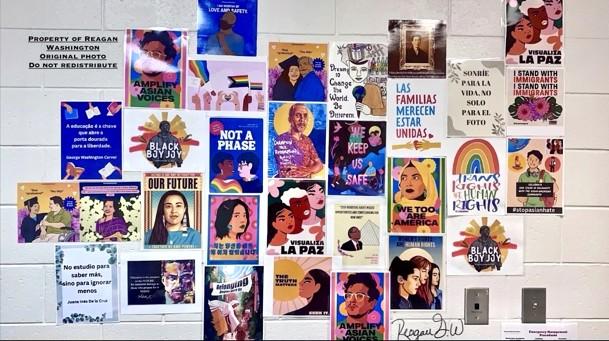
Wall collage in my office featuring posters in several languages that advocate for the rights of diverse groups, including Latinos/Hispanics, Asians, African Americans, Native Americans, LGBTQIA+ populations, and people with disabilities. Do not reuse without permission.
Aviera, A. (1996). "Dichos" therapy group: A therapeutic use of Spanish language proverbs with hospitalized Spanish-speaking psychiatric patients. Cultural Diversity and Mental Health, 2(2), 73–87. https://doi.org/10.1037/1099-9809.2.2.73
Ayón, C., Marsiglia, F. F., & Bermudez-Parsai, M. (2010). Latino family mental health: Exploring the role of discrimination and familismo. Journal of Community Psychology, 38(6), 742–756. https://doi.org/10.1002/jcop.20392
Ballysingh, T. A., Rangel, V. S., Gonell, E. A., & Sáenz, V. B. (2021). Mechanisms of matriculation: School counseling resources and college going for Latino men. Professional School Counseling, 25(1). https://doi.org/10.1177/2156759X2110400
Bennett, M., Roche, K. M., Huebner, D. M., & Lambert, S. F. (2020). School discrimination and changes in Latino adolescents' internalizing and externalizing symptoms. Journal of Youth and Adolescence, 49(10), 2020–2033. https://doi.org/10.1007/s10964-020-01256-4
Costantino, G., Malgady, R. G., & Rogler, L. H. (1986). Cuento therapy: A culturally sensitive modality for Puerto Rican children. Journal of Consulting and Clinical Psychology, 54(5), 639–645.
https://doi.org/10.1037/0022-006X.54.5.639
Diaz, Y., & Fenning, P. (2021). Toward understanding mental health concerns for the Latino immigrant student: A review of the literature. Urban Education, 56(6), 959–981. https://doi.org/10.1177/0042085917721953
Dogra, N., Karim, K., & Ronzoni, P. (2010). Migration and its effects on child mental health. In D. Bhugra & S. Gupta (Eds.), Migration and mental health (pp. 196–208). Cambridge University Press. https://doi.org/10.1017/CBO9780511760990.017
Dominguez, M. G., & Brown, L. D. (2022). Association between adverse childhood experiences, resilience and mental health in a Hispanic community. Journal of Child & Adolescent Trauma, 15(3), 595–604. https://doi.org/10.1007/s40653-022-00437-6
Henriquez, K. L., Lorenzo-Blanco, E. I., Martin Romero, M. Y., & Stein, G. L. (2024). Latino/Hispanic youths' experiences of cultural stressors, emotional reactions, and coping within the family context. Cultural Diversity & Ethnic Minority Psychology, 30(4), 637–646. https://doi.org/10.1037/cdp0000664
Huq, N., Stein, G. L., & Gonzalez, L. M. (2016). Acculturation conflict among Latino youth: Discrimination, ethnic identity, and depressive symptoms. Cultural Diversity & Ethnic Minority Psychology, 22(3), 377–385. https://doi.org/10.1037/cdp0000070
Kataoka, S. H., Stein, B. D., Jaycox, L. H., Wong, M., Escudero, P., Tu, W.,Zaragoza, C., & Fink, A. (2003). A school-based mental health program for traumatized Latino immigrant children.
Journal of the American Academy of Child & Adolescent Psychiatry, 42(3), 311–318. https://doi.org/10.1097/00004583-200303000-00011
Matlow, R., & Romero, M. (n.d.). Trauma and diversity: Addressing trauma and attachment in Latino immigrant youth and their families. International Society for Traumatic Stress Studies. https://istss.org/trauma-and-diversity-addressing-trauma-and-attachment-in-latino-immigrant-youth -and-their-families-ryan-matlow-phd-and marisol-romero-psyd/
National Center for Education Statistics. (2023). Racial/ethnic enrollment in public schools. Condition of Education. U.S. Department of Education, Institute of Education Sciences. https://nces.ed.gov/programs/coe/indicator/cge
Parker, M. M., & Ray, D. C. (2017). School counseling needs of Latino students. Journal of School Counseling, 15(16), 1–30.
Ramirez, S. Z., Jain, S., Flores-Torres, L. L., Perez, R., & Carlson, R. (2009). The effects of cuento therapy on reading achievement and psychological outcomes of Mexican-American students. Professional School Counseling, 12(3), 253–262.
Tuttle, M., Haskins, N. H., Mecadon-Mann, M., & Windham, H. D. (2022). Relational cultural theory: School counselors building partnerships with Latino parents and caregivers. Journal of Child & Adolescent Counseling, 8(3), 115–127. https://doi.org/10.1080/23727810.2022.2102395

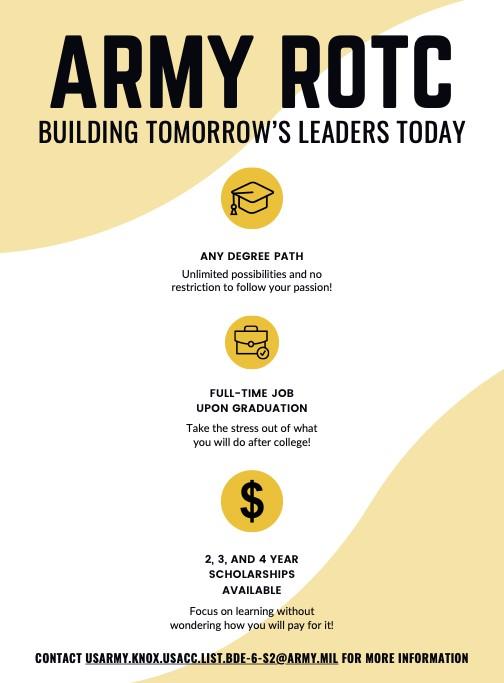
Stefanie L. McDougald, M. Ed., NCC, APC Gwinnett County Public Schools

The American School Counselor Association (ASCA) calls for all school counselors to practice multicultural and social justice advocacy competencies and utilize the knowledge and skills of culturally informed counselors (ASCA, 2021). Specifically, school counselors work to provide a safe, equitable, culturally affirming school environment in which all students feel included and accepted (ASCA, 2022). According to Kramer and Passel (2026), between 2020 and 2025, over 11 million immigrants arrived in the United States, with most being from South America. Given this, communities are encountering greater racial/ethnic diversity, thereby creating a supportive environment, and inclusive schools are important (Cho et al., 2024). As a result, the increase in the immigrant population impacts U.S. schools and Hispanic/Latino newcomer students (Rodriguez et al., 2020), underscoring the need for academic, social/emotional, and career support for schools’ newcomer communities.
ASCA Ethical Standards (2022) charges school counselors to work as systemic change agents, advocates, leaders, and collaborators to provide equitable education opportunities and access for students. According to Bickham Mendez and Barko-Alva (2023), Hispanic/Latino newcomer students face numerous challenges when enrolling in U.S. school systems, as schools provide varying levels of support. These challenges include poverty, questionable immigration statuses, and unstable family relationships, as well as feelings of “unbelonginess” in schools.
Indeed, Hispanic/Latino newcomer students consistently encounter exclusionary practices (e.g., marginalization, racial microaggressions) grounded in and sustained by privileged frameworks and pedagogies (Bickham-Mendez & Barko-Alva, 2022). As such, current immigration policies and practices keep the Hispanic/Latino immigrant population a prevailing topic in the U.S. Therefore, it is essential to identify culturally appropriate services to support newcomers’ needs in the community and in schools (Selene Szlyk et al., 2020).

According to Rodriguez et al. (2020), schools must be adequately prepared to provide an equitable approach to address the needs of newcomer students. Thus, school counselors need to advocate for and support the academic, social/emotional, and career development needs of Hispanic/Latino newcomer students.
Hispanic/Latino newcomer students encounter numerous academic barriers (e.g., incorrect gradelevel placement, lack of academic records), and many arrive with gaps in their formal education (Selene Szlyk et al., 2020). These students also face language barriers and difficulties navigating unfamiliar communities and school systems (Greenberg Motamedi et al., 2021). Newcomer’s (2018) qualitative study examined student-teacher relationships at a junior high school in Phoenix, Arizona. This article's findings detailed the significance of caring faculty/student relationships, equitable academic support, and the importance of understanding newcomer students’ experiences. Specifically, Newcomer (2018) highlighted that close, trusting relationships are associated with significant increases in school engagement and academic success for Hispanic/Latino newcomer students. However, cultivating caring and supportive learning environments is a responsibility for all faculty and staff at the school, including school counselors.
The desired outcome for school counselors is to provide culturally responsive academic support that increases Hispanic/Latino newcomer students' academic skills and supports their academic success. In particular, school counselors' culturally informed advocacy competence is essential when supporting teachers in incorporating trauma-informed and culturally responsive pedagogical practices in schools. Specifically, this support includes maintaining consistent classroom schedules, using positive reinforcement, and highlighting newcomer academic strengths (Greenberg Motemedi et al., 2021). School counselors may directly impact academic success by facilitating small-group counseling to improve skills such as time management, study skills, goalsetting, and self-motivation. Additionally, school counselors may support newcomer students by collaborating with administration, faculty, and support staff to ensure equitable access to academic support resources (e.g., technology, multi-tiered academic interventions, special education/gifted evaluations).
Additional examples of advocating for culturally responsive academic support may include academic tutoring programs available during school hours or providing students with bus transportation for after-school activities (e.g., clubs/organizations, sports). School counselors may also collaborate with school social workers to identify community after-school programs and assist families with navigating enrollment processes.

In schools, school administration plays an instrumental role in implementing culturally informed hiring practices to ensure that school staff reflects the diversity of the school’s population. School counselors as leaders may work collaboratively and advocate for diverse representation in schools. Specifically, due to the importance of multilingual faculty, staff, and translators in schools fostering social/emotional connections, serving as role models, and building relationships with newcomer students (Greenberg Motemedi et al., 2021; Selene Szlyk et al., 2020). In addition to academic supports, Hispanic/Latino students may also need culturally affirming social/emotional supports.
Indeed, some Hispanic/Latino newcomer students may have experienced trauma in their home country, during their travels to the U.S., or while currently living in the U.S. According to Greenberg Motemedi et al. (2021), newcomer students are more vulnerable to the stress and anxiety of adjusting to a new community, school, and peers. Specifically, many Hispanic/Latino newcomer students experience isolation and loneliness at school and home (Bickham Mendez & Barko-Alva, 2022). In fact, Bickham Mendez et al. (2022) highlighted the lived experiences of a Latina student’s cycles of depression due to all the adults in her life rarely being home due to work.
According to Selene Szlyk et al. (2020), social capital is needed to support newcomer students. Social capital is the accessibility to social networks, relationship building, and social support within a system, which is vital to supporting newcomer students in schools (Selene Szlyk et al., 2020). Therefore, increasing social/emotional support is essential when advocating for Hispanic/Latino newcomer students in schools. The use of culturally informed frameworks, such as the Multicultural and Social Justice Counseling Competencies (MSJCC), may provide the support for counselors working with diverse students’ social/emotional needs and the multifaceted challenges they face (Ratts et al., 2015). The MSJCC framework serves as a culturally informed approach for counselors to engage in culturally affirming individual counseling and support when engaging in social justice advocacy work (Ratts et al., 2015).
Indeed, school counselors practice cultural humility, are aware of, and acknowledge how systemic factors (e.g., racism, discrimination, socioeconomic inequities) impact newcomers’ social/emotional needs. A culturally affirming counseling approach recognizes and respects newcomer students' cultural identities (e.g., race, ethnicity, language, religion, familial background, lived experiences).An example may be a school counselor facilitating a small group specifically for Hispanic/Latino newcomer students, creating a safe space where students can engage and share their experiences and cultures.
Culturally responsive advocacy practices may include providing community resources and referrals, which are essential for accessing more intensive mental health and healthcare services and for finding basic necessities (e.g., food, affordable housing). Additionally, school counselors may collaborate with school social workers to connect Hispanic/Latino newcomer students to additional community resources and provide an additional layer of social/emotional support in schools and the community. School counselors' advocacy support also extends to career development for newcomer students.
Today, schools and school counselors begin career exploration in elementary school through developmentally appropriate lessons and activities that connect to the world of work (ASCA, 2024). ASCA (2023) directly calls for school counselors to provide career development opportunities in schools. According to Hopkins et al. (2013), knowledge of high school, college, career-technical programs, and postsecondary options is key to achieving success in secondary and postsecondary education. Career development support begins during registration, ensuring newcomer students receive the credits they have earned in previous schools, as this will be critical to keeping students on the correct academic track in high school. Also, awarding competencybased credits for language and core courses allows students to earn credits toward graduation (Greenberg Motemedi et al., 2021) and remain on their academic track and progress toward graduation.
Career development support extends to connecting newcomer students to early college and career development programs, advising students on multiple postsecondary pathways, and working with teachers to integrate career education into classroom curriculum (ASCA, 2024). Specifically, collaborating with newcomer students, families, and support staff (e.g., school social worker, school psychologist) will support students’ post-graduation success (e.g., two-year/fouryear degree, military, skilled trade) that is ideal for the student (ASCA, 2024).
Examples of career development interventions include offering career lessons, assessments, and elective classes where newcomer students can learn more about future careers, as well as providing information about post-secondary opportunities. School counselors may collaborate with teachers, parents, and community partners to provide career education to help newcomers achieve postsecondary goals.
Most importantly, advocacy support begins with working collaboratively with Hispanic/Latino newcomer students and families and with including their voices to impact their success in today’s schools positively. Thus, this article explains the essential need to advocate for and support the social-emotional, academic, and career development needs of Hispanic/Latino newcomer students. Culturally affirming examples of advocacy and support are highlighted in an effort to cultivate an inclusive and supportive school community for these students. First, academic support for trauma-informed practices and culturally responsive pedagogy in schools’ curricula provides a “softer” landing and increases Hispanic/Latino newcomer students’ sense of belonging and acceptance in schools. Secondly, providing social/emotional support will help with the mental health concerns of immigration stress, anxiety, depression, and isolation that newcomer students may experience. Lastly, career support begins with academic interventions and ensuring newcomer students progress through elementary and secondary schools while removing academic barriers to increase their post-secondary opportunities. School counselors working collaboratively with faculty, administration, school social workers, and other support staff may provide a culturally strength-based approach that fosters a safe and caring learning environment, thereby improving Hispanic/Latino overall success in schools.
American School Counselor Association (2021). The school counselor and cultural diversity. American School Counselor Association.
https://www.schoolcounselor.org/Standards-Positions/Position-Statements/ASCA-Position-Statem ents/The-School-Counselor-and-Cultural-Diversity
American School Counselor Association (2022). ASCA ethical standards for school counselors. American School Counselor Association.
https://www.schoolcounselor.org/getmedia/44f30280-ffe8-4b41-9ad8-f15909c3d164/EthicalStanda rds.pdf
American School Counselor Association (2024). The school counselor and career development. American School Counselor Association.
https://www.schoolcounselor.org/Standards-Positions/Position-Statements/ASCA-Position-Statem ents/The-School-Counselor-and-Career-Development
Bickham Mendez, J., & Barko-Alva, K. (2022). “Yo era la unica rara:” School belonging and English-learner students at a southeastern Virginia high school. Journal of Latinos and Education, 22(5), 1969-1983. https://doi.org/10.1080/15348431.2022.2077335
Cho, E., Lee, S., & Suh, C. S. (2024). Between ethnic diversity and immigration: Perceptions toward immigrants in a globalizing world. Social Science Research, 117, 1–10. https://doi.org/10.1016/j.ssresearch.2023.102945
Greenberg Motamedi, J., Porter, L., Taylor, S., Leong, M., Martinez-Wenzl, M., & Serrano, D. (2021). Welcoming, registering, and supporting newcomer students: A toolkit for educators of immigrant and refugee students in secondary schools. National Center for Education Evaluation and Regional Assistance at IES. U.S. Department of Education.
Hopkins, M., Martinez-Wenzl, M., Aldana, U. S., & Gandara, P. (2013). Cultivating capital: Latino newcomer young men in a U.S. urban high school. Anthropology & Education Quarterly, 44(3), 286–303.
Newcomer, S. (2018). Investigating the power of authentically caring student-teacher relationships for Latinx students. Journal of Latinos and Education, 17(2), 179–193. https://doi.org/10.1080/15348431.2017.1310104
Kramer, S. & Passel, J. S. (2026). How have immigrants’ origins changed in recent years? Pew Research. https://www.pewresearch.org/short-reads/2025/08/21/key-findings-about-us-immigrants
Ratts, M. J., Singh, A.A., Nassar-McMillian, S., Kent Butler, S., & Rafferty McCullough, J. (2015). Multicultural and social justice counseling competencies: Guidelines for the counseling profession. Journal of Multicultural Counseling and Development, 44, 28–48. https://doi.org/10.1002/jmcd.12035
Selene Szlyk, H., Berger Cardoso, J., Barros Lane, L., & Evans, K. (2020). “Me Perdia en la Escuela”: Latino newcomer youths in the U.S. school system. National Association of Social Workers, 131–136. https://doi.org/10.1093/sw/swaa001

Amari BenLevi, abenlevi21@gmail.com
I recently had three separate conversations with a student about three different items in my office. Prior to these interactions, the student and I were complete strangers. She had only been invited to spend lunch in my office because I needed the counseling conference space for another group of students. What began as a quiet place for her to eat quickly evolved into a meaningful “get-to-knowyou” exchange, one that revealed not only parts of my story, but also important aspects of hers.
The first conversation began with a question about a piece of splatter art displayed on my wall. She asked politely, “Did you make this picture? It is really nice!” I shared that I had created it at a splatter art studio in Atlanta, inspired by my growing appreciation for the color orange. As we discussed the piece, she offered another compliment and shared that she, too, loved the arts, particularly dance. This opened the door for connection. I told her about my decision to take ballet as a bucket-list goal at age 25, and we laughed about both the intensity and the beauty of the art form. What started as a simple compliment became a shared moment of joy and identity.

After a brief pause, her curiosity continued as she scanned the room. “Have you attended all these colleges on this wall?” she asked, pointing to the pennants displayed on the wall. I explained that while I had not attended every institution represented, each item told a story about my postsecondary journey and lived experiences across Georgia. I shared connections to Savannah State University (hometown), Albany State University (undergrad experience), and Valdosta State University (life after undergrad), as well as my educational journey through Clark Atlanta University and the University of Georgia.
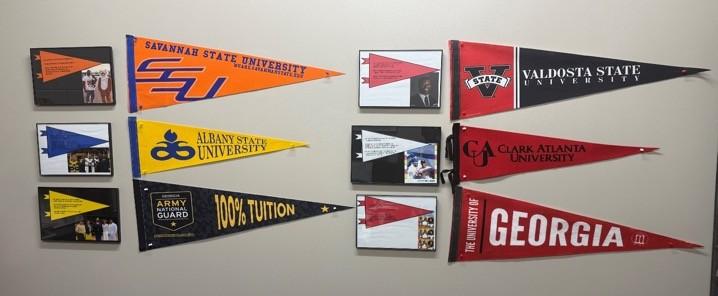
This exchange allowed me to learn more about her aspirations as well. She shared her interest in attending Spelman College. I quickly realized that she had previously emailed me about this interest, which deepened our connection even further. When she apologized for asking so many questions, I reassured her that every item in my office was intentionally placed to invite curiosity, storytelling, and relationship-building.
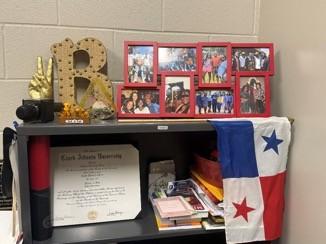
At this point, the distance between “stranger counselor” and “stranger student” had noticeably decreased. We discovered that after ninth grade, she would be assigned to my caseload for the remainder of her high school career, almost as if our meeting had been divinely timed. I continued sharing pieces of my story: my love for karaoke (explaining the microphone in my office), the importance of family (reflected in the photos on my wall), and my cultural heritage symbolized by the Panamanian flag honoring my grandfather. She listened with genuine curiosity and engagement. I also shared that she was one of the few students who had ever asked about these items, giving me an opportunity to reflect on how space can invite, or limit, connection.
As lunch came to an end, I said, “I hope my office provided you with a pleasant alternative to the cafeteria.” She smiled and responded, “Yes, it did. I always have pleasant experiences inside my counselors’ offices, it’s almost like I’m inside each of your heads.”
Her statement stayed with me. What stories do our offices tell about us? What messages do students receive when they enter our spaces? How do we want them to feel when they are there?
As school counselors, we are intentional about our words, interventions, and data-driven practices, but we must also be intentional about our environments. Counseling spaces can serve as extensions of our identities and values, offering students a sense of safety, belonging, and connection. A thoughtfully curated office can function as a nonverbal counseling tool, one that communicates warmth, cultural responsiveness, and authenticity before a single word is spoken.
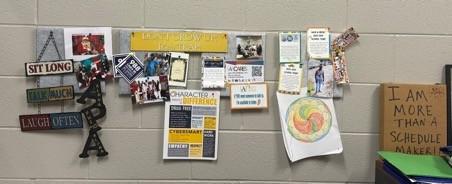
I encourage you to reflect on your own space. Consider how the items in your office, your books, artwork, cultural symbols, and personal artifacts can serve as relational entry points for students. In doing so, you may find that students are not only stepping into your office, but also into a deeper understanding of who you are and, ultimately, who they are becoming.
Dr. Keyoshia Liverman, keyoshia@thebalancedbrainpllc.com

School counselors play a critical role in supporting the academic, social-emotional, and mental health needs of students. However, the emotional demands of the profession particularly in rural school settings are often overlooked. High caseloads, limited resources, role ambiguity, and exposure to student trauma contribute to increased stress and burnout among school counselors.
In many rural schools, counselors serve as one of the only mental health professionals available, often working in isolation while managing complex student needs. These challenges highlight the importance of prioritizing counselor wellness not only for the well-being of counselors themselves, but also for the students they serve.
One emerging approach to supporting counselor wellness is the integration of mindfulness practices. Grounded in Cognitive Behavioral Theory (CBT), mindfulness offers school counselors practical tools to regulate emotions, reframe negative thoughts, and sustain professional effectiveness. This article is informed by qualitative research exploring the experiences of school counselors in rural K–12 settings.
Mindfulness is commonly defined as maintaining present-moment awareness with openness and without judgment. In the context of school counseling, mindfulness extends beyond personal wellness it becomes a professional tool that supports emotional regulation, cognitive awareness, and intentional decision-making.
This study explored how school counselors in rural K–12 settings experience and apply mindfulness in their daily work. Guided by Cognitive Behavioral Theory, mindfulness practices align with core CBT principles such as cognitive restructuring, emotional regulation, and awareness of automatic thoughts.
Rather than reacting automatically to stress, counselors who engage in mindfulness are better equipped to pause, reflect, and respond intentionally. This shift is critical in high-stress environments where quick emotional reactions can impact both counselor well-being and student outcomes.
This is supported by research that provides empirical evidence for music's profound impact on relationships and emotions:
• Music engagement and mental health: A study involving over 8,000 Swedish twins found a correlation between engaging with music, musical achievement, and higher emotional competence. Additional research shows that music-based interventions can improve selfesteem, self-efficacy, and academic performance by positively affecting students' psychological well-being.
• Music and emotional regulation: A randomized controlled trial of the Music eScape mobile app with young people (aged 16–25) showed significant improvements in emotion regulation skills and mental well-being over a six-month period for those who used the app.
• Music and social connection: Studies exploring music's role in relationships indicate that it fosters connection, intimacy, and passion, particularly in the early stages. Research on music education programs also demonstrates that participatory music-making helps build strong social connections, teamwork skills, and a sense of belonging, which is especially beneficial for students who struggle with social interactions.
The impact of music on the brain is a well-researched phenomenon. When we listen to or engage with music, it stimulates the brain's prefrontal cortex, which helps manage emotional responses. Furthermore, pleasant music can trigger the release of mood-regulating neurotransmitters such as dopamine, serotonin, and oxytocin, which promote feelings of joy and relaxation. This neurochemical effect provides a scientific basis for music's ability to alleviate stress and improve mood. For students, this neurological response can create a more receptive state for learning and social engagement.
Beyond the classroom and counseling office, music plays a pervasive and profound role in mental health. It is a tool for personal growth, a source of comfort, and a catalyst for connection. The benefits of music extend to emotional regulation, identity formation, and global citizenship, demonstrating its integral role in fostering well-rounded and resilient students. By purposefully weaving music into the educational experience, educators can leverage this powerful, universal resource to promote mental well-being and academic success.
Music serves as a vital coping mechanism for students navigating the complexities of adolescence. It offers a way to process overwhelming emotions and find solace. As noted by the Jed Foundation, music can provide a temporary distraction from stressful situations, offering a mental escape akin to reading a good book. It allows individuals to project their own feelings and struggles onto wordless music or to find comfort in lyrics that validate their experiences. This can be particularly helpful for students who feel isolated or unable to articulate their struggles, as it provides a sense of connection and understanding through a shared human experience.
Findings from the study revealed that mindfulness plays a significant role in supporting school counselor wellness and professional identity. Several key themes emerged from participants’ experiences.
1. Mindfulness as a Tool for Emotional Regulation
School counselors reported using mindfulness to manage stress, regulate emotional responses, and remain grounded during challenging situations. Practices such as deep breathing, presentmoment awareness, and intentional pauses allowed counselors to respond thoughtfully rather than react impulsively.
This is especially important in crisis situations, where counselors are expected to provide immediate support while managing their own emotional responses.
2. Reframing Negative Thought Patterns
Aligned with CBT principles, mindfulness helped counselors recognize and reframe negative or unhelpful thinking patterns. Instead of internalizing stress or engaging in self-critical thoughts, counselors were able to shift their perspectives and approach challenges with greater clarity. This cognitive shift supports resilience and reduces the likelihood of burnout, particularly in environments where stressors are ongoing.
3. Strengthening Professional Identity and Resilience
Participants described mindfulness as a key factor in maintaining their professional identity and sense of purpose. In rural settings, where counselors may feel isolated or undervalued, mindfulness provides a way to reconnect with their role and remain grounded in their purpose. By engaging in regular mindfulness practices, counselors reported increased confidence, improved self-awareness, and a stronger commitment to their work.
4. Mindfulness as a Coping Strategy for Burnout
Burnout remains a significant concern in school counseling, particularly in high-demand and under-resourced environments. Mindfulness served as an effective coping strategy, helping counselors manage emotional exhaustion and maintain balance. Rather than eliminating stress, mindfulness allowed counselors to navigate it more effectively reducing its impact on their overall well-being.
Real-World
In practice, mindfulness does not require extensive time or formal training. Many counselors in the study described using simple, intentional strategies throughout the day. For example, a counselor may take a brief pause between student sessions to engage in deep breathing or grounding techniques. During stressful interactions, counselors may focus on present-moment awareness to prevent emotional escalation. Others incorporate reflective practices, such as journaling or intentional thought reframing, to process their experiences. These small, consistent practices create meaningful shifts in how counselors manage stress and engage with their work.
While mindfulness offers clear benefits, the study also identified barriers to implementation. Limited time, lack of training, and insufficient administrative support were common challenges. Additionally, school culture plays a significant role in whether mindfulness is prioritized. In environments where counselor wellness is not recognized as essential, implementing self-care practices may be difficult. Addressing these barriers requires systemic change, including increased support for counselor wellness, access to professional development, and a shift in how schools view the role of school counselors.
School counselors can begin integrating mindfulness into their practice through simple, actionable strategies:
• Incorporate brief mindfulness moments between student sessions
• Practice deep breathing or grounding techniques during high-stress situations
• Engage in reflective journaling to process thoughts and emotions
• Identify and reframe negative thought patterns
• Set intentional boundaries to support work-life balance
• Advocate for wellness practices within the school environment These strategies are practical, sustainable, and adaptable to a variety of school settings.
The well-being of school counselors is directly connected to their ability to support students effectively. In rural schools, where challenges are often intensified, mindfulness offers a valuable and accessible tool for maintaining emotional balance, resilience, and professional effectiveness.
This study highlights the importance of integrating mindfulness into both counselor practice and school systems. When counselors are supported in prioritizing their own well-being, they are better equipped to create meaningful, lasting impacts on the students and communities they serve.
School counselors are essential to the success of students and supporting their wellness must be a priority, not an afterthought.

American School Counselor Association. (2016). ASCA ethical standards for school counselors.
American School Counselor Association. (2019). The ASCA national model: A framework for school counseling programs (4th ed.).
Beck, J. S. (2011). Cognitive behavior therapy: Basics and beyond (2nd ed.). Guilford Press.
Kabat-Zinn, J. (1994). Wherever you go, there you are: Mindfulness meditation in everyday life. Hyperion.
Kim, N., & Lambie, G. W. (2018). Burnout and implications for professional school counselors. Journal of Counseling & Development, 96(3), 276–287.
Segal, Z. V., Williams, J. M. G., & Teasdale, J. D. (2013). Mindfulness-based cognitive therapy for depression (2nd ed.). Guilford Press.

Kimberly D. Brown and Christy Conley, Ed.D


You’re a high school counselor whose district recently adopted an artificial intelligence (Al) dashboard designed to help school staff identify students showing signs of being at risk of academic trouble or emotional distress. The platform uses trends in the students’ attendance and assignment submission rates, as well as judging the tone of the students’ journal entries on a wellness portal. At the beginning of each workday, you review any notifications sent to you by the AI system.
One morning, you notice Jeremiah, one of your students, is on the report. Jeremiah has never been flagged on this platform as a student of concern. The program is suggesting you send an auto-generated message to Jeremiah through the system, suggesting he seek school counseling services.
Throughout the morning, you consider how you truly feel about this platform and its suggestion. You have several questions: How can you be confident this platform’s concern is accurate for this student? What indicators is the platform using to make its recommendation? Could biases toward certain writing styles and language elevate certain groups of students to an inappropriate status? You find yourself struggling to determine your next steps. Should you reach out to Jeremiah using the platform’s auto-generated message? Should you speak with him today, or should you wait and see if Jeremiah seeks you out on his own? You also wonder if the district has shared with the students and families that it’s using an Al platform and that it has access to students’ academic, attendance and discipline data, as well as student writing responses.
What would you do in this situation? How would you weigh your responsibility to follow your school/district directives against your professional responsibilities and the ASCA Ethical Standards for School Counselors? AI is becoming more and more a part of our everyday lives, including in our work as school counselors. School districts are incorporating new AI technologies intended to help staff streamline their work and increase their ability to provide support services. School counselors must commit to learning and understanding more than just how these new tools work. We must carefully examine how they align or conflict with our ethical standards.
School counselors are legally and ethically obligated to protect student information under the Family Educational Rights and Privacy Act (FERPA). ASCA has created position statements surrounding student safety with digital technology and protecting student information (schoolcounselor. org/positionstatements). Al systems, particularly platforms using cloud-based or third-party tools, such as ChatGPT and Al note-takers, can have an impact on these responsibilities. There are several questions you should consider before implementing AI programs.
Data storage and duration: Is data hosted on secure, FERPA-compliant servers? How long is the data stored, and what happens to it after the allotted time frame?
Access: What is the platform’s privacy policy? Does it allow a third-party to collect or access information? Does third party access violate your school or district policies?
Data collection: Students’ personal information must be protected. Keep in mind that it’s not just student names and grades we’re talking about; timestamps, IP addresses, etc., could be considered personally identifiable information under FERPA as well.
Many Al platforms weren’t created for educational settings, and developers may not have given much thought to school-specific privacy requirements. Seek direction from your IT department and the district legal department before implementing any Al system to ensure it complies with national, state and district privacy regulations.
Informed consent is an important component of school counseling ethics and must be considered when introducing Al to a school counseling program. If an Al tool is being used to document sessions/ meetings, analyze student interactions (email, meetings, etc.) or assist with mental health screenings, both students and their parents/guardians have the right to know and consent to the AI usage. When informing students and parents/guardians about Al usage, disclose the following.
» The Al tool being used and the service the tool will provide
» The information collected and provided to the tool
» Details about data storage and usage by the school and what information the AI tool can access.
» Any potential risks associated with the Al tool
Consent forms should be clear for students and parents/guardians to understand the details of what they are signing. Many Al systems retain or use data to improve their algorithms to market their product. If that is the case, the use of these tools may violate ethical and legal guidelines and potentially school or district policies, putting school counselors at risk.
You should also be aware that bias exists in AI platforms. Career guidance Al platforms can have a predisposition to display certain careers. Chatbots or mental health platforms can also have biases and often don’t fully understand certain aspects of culture, such as language, values or traditions. Before committing to a platform that might have biases programmed into the process, research if the platform has undergone fairness audits. Relying solely on Al without continuously reviewing its responses could lead to serious consequences, e.g., reinforcing systemic biases.
School counselors incorporating Al into their programs should keep the following key points in mind:
Maintain foundational Al knowledge: School counselors have a responsibility to understand the pros and cons of AI to use it effectively and ethically.
Support don’t replace: Although Al can assist in identifying students who are struggling, it should never replace the human connection essential particularly in areas such as crisis intervention and mental health support.
Uphold ethical and professional standards: School counselors can integrate Al in ways that align with professional ethics, including the ASCA Ethical Standards, which emphasize:
» Responsibilities to students, parents/ guardians, school and self
» Staying current through professional development on trends, including AI
Participate in policy development and advocacy: School counselors can actively participate in shaping, reviewing and enforcing the district’s Al-related policies to ensure policies are grounded in ethical considerations and truly serve students’ best interests. It is vitally important for school counselors to sit on school/district leadership teams and to have a voice on district committees considering, selecting or vetting new Al platforms. School counselors can offer a unique perspective to these discussions. School counselors should:
» Advocate for student rights, including privacy, informed consent and equitable access to Al tools.
» Push for clear policies regarding how student data is collected, used and protected.
» Ensure Al implementation does not violate ethical guidelines or harm vulnerable student populations.
Practicing professional responsibility in a digital world does not mean having all of the answers. It means being willing to ask the right questions, staying informed, and using tools available to protect students and their information. Lean on resources such as FERPA guidelines, state and district policies, the ASCA Ethical Standards and the ASCA position statements on digital technology to navigate tricky situations in this area. Regular professional development, collaboration with district-level school counselor/student relationship, technology staff and connections with other school counselors can also help. With the right mindset and resources, school counselors can lead with confidence and care.
The scenario at the beginning of this article is just one of many school counselors will continue to face as education’s digital landscape continues to evolve. As the AI world continues to advance, so too must our understanding of how Al can help us work efficiently – and ethically.

Seek direction from your IT department and district legal department before implementing any AI system to ensure it complies with national, state, and district privacy regulations.
Dr. Katrina D. Wilson Ph.D., LPC, CPCS Rockdale County School District

The concluding weeks of the academic year can consist of many activities occurring on a school campus. Field days, move-on celebrations, end-of-the-year parties, spirit days, and graduation. During these ceremonies, students can have a wide range of emotions, and behaviors can sometimes escalate as their time at school concludes. On the one hand, many classroom doors and bulletin boards may display celebration and countdown clocks, symbolizing the anticipation of the last day of what seems like an exhausting school year. While on the other hand, students may be experiencing anxiety, fear, and sadness about the upcoming distance from the one place they find stability, structure, and safety. Overall, both students and faculty are anticipating a much needed and deserved break. However, a bittersweet emotional roller coaster may emerge for students during this time. As a result, it is essential for faculty and staff to have an awareness and sensitivity of this dichotomous emotional state present in students, when relating to them during this time of both excitement and anxiety respectively.
As school counselors, it is important to remember the structure that schools provide for our students and that while some staff are celebrating the completion of the school year, some students may be dreading the approach. Here are some tips to remember from my personal experience as a school counselor, in emotionally supporting students at the end of the year:
Post-Assessment: Make sure to close out with students that you have worked with during the school year. Providing a concluding group or individual time to process the counseling work that has been done during the school year can help students to have closure to the end of the year. In addition, providing a post-assessment of the counseling topics with reflection of the past year and feedback for the next year can help build anticipation for the upcoming school year. Concluding with a special treat or celebration for students on your caseload can be a healthy form of closure.
Food Resources: Schools provide consistent nutrition to students during the school year. Partnering with community programs and resources to help students have access to nutrition over the summer can be an asset and help reduce food insecurity. Summer Reading: Help students maintain an academic focus during summer months. Partner with the media specialist to provide students with summer reading programs and materials. Providing information for educational camps can also be a benefit to students, helping them to continue maintaining academic skills during the break.
Be Present: Make sure that you take the time to say “goodbye” to students at the end of the year. Be present as the days conclude and provide a space for them to process their feelings about the summer. If students are emotional during move-on celebrations or graduations, please make sure that you provide support to them during their transition to the next phase of learning, or for other the next chapter in life.