SUSTAINABILITY REPORT 2022

Tideway’s commitment to sustainability is two-fold. Firstly, we are building infrastructure that will support London in becoming a more environmentally sustainable and resilient city by preventing the sewage pollution of the River Thames. Secondly, we are doing as much as we can to deliver the project and operate our company in a way that is sustainable and have aligned our financing with this dual purpose.
Our approach to sustainability is set out in our Legacy Plan, first published in 2015, which details our 54 measurable commitments. Our legacy commitments are a wide-ranging set, but all of them are intended to ensure we leave a positive and lasting legacy – which is how we define sustainability. This report provides an update on how we are working to achieve our commitments, together with our assessment against the Task Force on Climate-related Financial Disclosures (TCFD) framework. The latter includes a compliance statement which highlights how
our disclosures align with TCFD as well as areas in which we do not align due to the nature and advanced stage of the project.
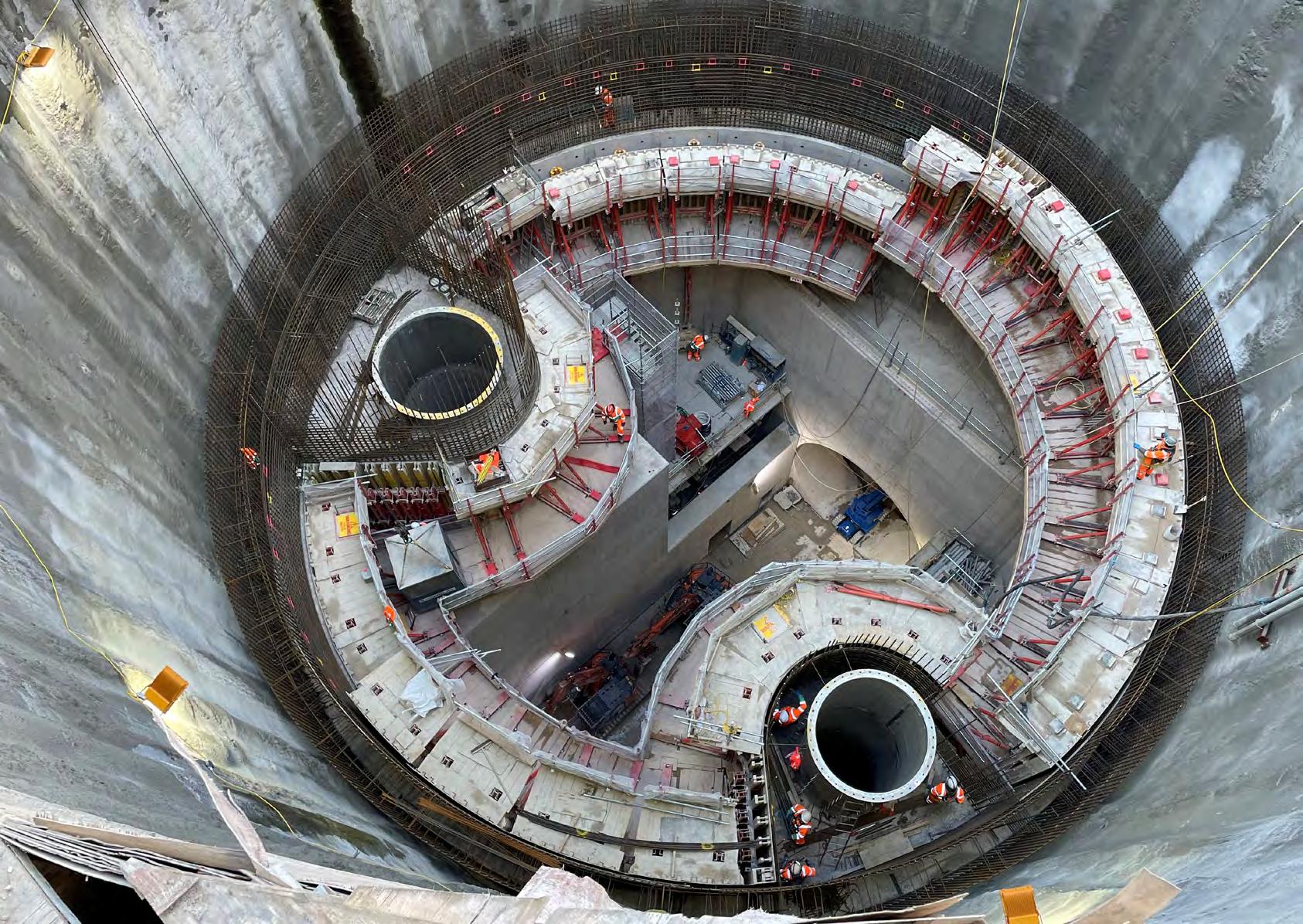
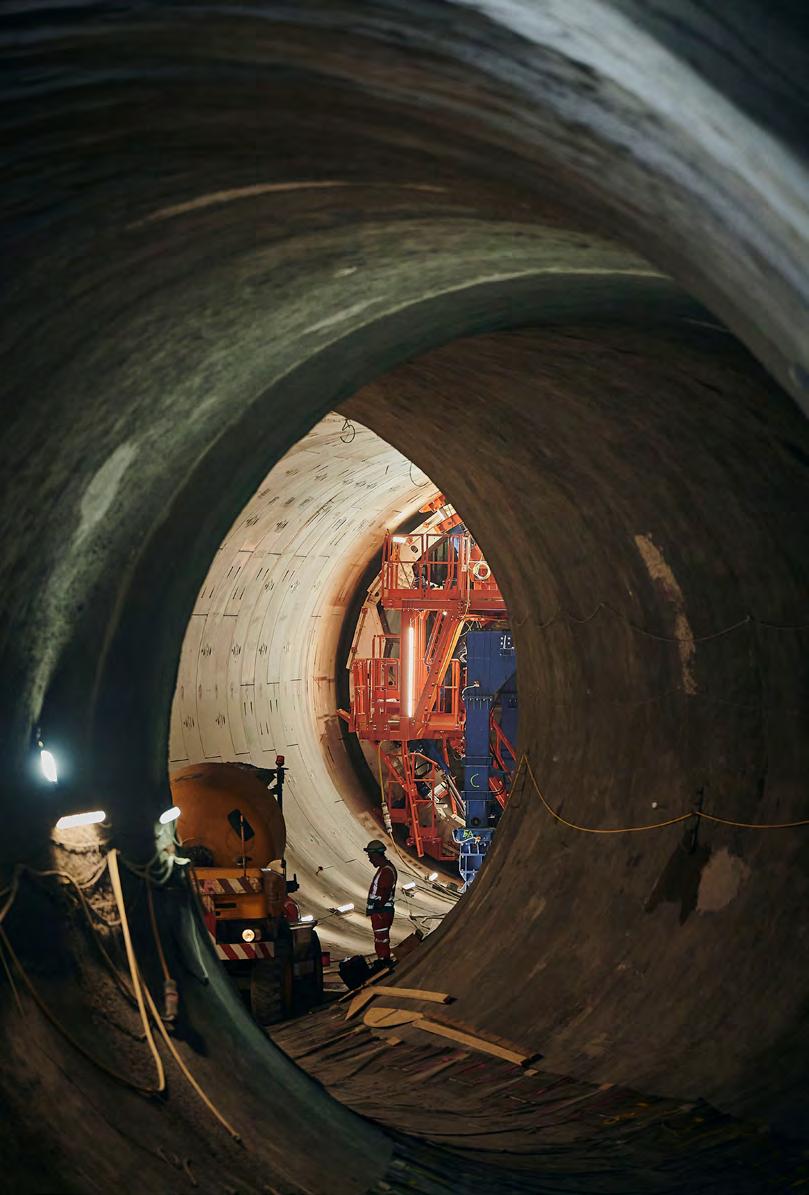
The issue of sewage pollution of UK water courses has never been as high on the agenda as it is today. This awareness and impetus for action is welcome and it shines a greater spotlight on our responsibility for tackling this problem. When we mapped our 54 legacy commitments to the UN Sustainable Development Goals (SDGs) we identified SDG 6 Clean Water and Sanitation and SDG 11 Sustainable Cities and Communities as our core goals that we will make a long-term direct contribution to. We took many steps forward this year towards these SDGs and our goal of a cleaner, healthier river Thames as the construction of the new super sewer reached the end of the underground excavation phase. The sewer tunnel infrastructure is now in place.
As we reach the latter phases of the project we have completed some of our legacy commitments – such as the creation of 4,000 sustainable jobs and the introduction of new river training and safety standards – while others, including the creation of new riverside public spaces, will only be achieved once the project is fully complete. This year we issued a further £300m of green bonds (taking the total to £1.8bn). Our bond programme was 5x over-subscribed which demonstrates confidence in our credentials which were also rated highly this year by S&P Global.
We are reporting on how these proceeds are allocated in line with international guidelines.
Our legacy commitments are embedded within our business and we hope that by highlighting both the successes and the challenges we can influence others to go even further in delivering projects with a sustainable legacy.
We hope you will find the report useful and informative; and we look forward to continuing to evolve the way we report on our sustainability programme as we near completion.
Andy Mitchell CBE

The Thames Tideway Tunnel (TTT) project being delivered by Bazalgette Tunnel Limited, trading as Tideway, is a Nationally Significant Infrastructure Project (NSIP) aiming to improve the condition of the water in the tidal Thames and ensuring it complies with relevant wastewater legislation by reducing the overflow of untreated sewage discharge. As well as the key benefit of increased water quality, the tunnel also provides protection of users of the tidal Thames and infrastructure which will improve the resilience of the sewer network to climate change and population growth.
The Thames Tideway Tunnel is part of the London Tideway Improvements (LTI), which also include improvements at five sewage treatment works and the Lee Tunnel, both now in operation. Without this whole system there would be an increased risk of more frequent sewage
overflows, more frequent fish kills, continued increased health risks to recreational users, worse litter blight, and adverse impacts on the attractiveness of the water frontage.
The project is in the construction phase and is 77 per cent complete. Handover to Thames Water is planned for 2025. Thames Water will operate the tunnel as part of the sewage collection and treatment system under a long-term lease. Tideway will remain responsible for maintenance of the tunnel and shafts. The tunnel is designed to be in operation for at least 120 years.
Our Annual Report and Accounts has further information on the company and delivery progress.
This Sustainability Report is different to previous years, when the report was known as our Sustainable Finance Report. This year we have taken the opportunity to reframe how we report on our Sustainability and Legacy programmes and their linkages with our approach to and reporting commitments on our £2bn sustainable finance. This report also includes our climate-related financial disclosures, which were reported separately last year, and a data section with the most relevant metrics for Tideway. Legacy is what will be left behind after the construction of the tunnel. The primary purpose of the project is to reduce sewage overflows into the River Thames, delivering the core benefit of improved water quality. Tideway and Thames Water agreed with Defra and the Environment Agency what and how to report against the economic, environmental and social benefits stated by Defra at the outset of the project. This includes pre and post operational phase benefits.
However, if the project simply focussed on constructing the tunnel, our vision could never be achieved. Since construction commenced in 2016, we have undertaken a range of activities intended to maximise the benefits of the project for years to come. These are measured and monitored and are essential to the success of the project.
As the project progresses, we are entering a phase of closing out more of our Legacy commitments and reflecting on our Legacy programme and the benefits it has delivered. Tideway is now at an advanced stage of construction and we continue to be active in many areas to deliver our legacy.
Our 54 legacy commitments are organised under five themes –Environment, Health Safety & Wellbeing, Economy, People, Place and this year, on average, 90 per cent of active commitments were on track, against a target of 85 per cent. We continue to align our commitments to the UN Sustainable Development Goals (SDG), identifying the
ten SDG Goals and 27 targets to which Tideway makes a direct contribution. We have identified SDG 6 Clean Water and Sanitation and SDG 11 Sustainable Cities and Communities as our core, long term goals alongside 8 further SDGs that we are positively contributing to during construction. However, construction by its very nature will have negative environmental impacts, even when working towards a positive end result. We acknowledged this last year by reporting that we will have a negative impact on some SDGs.
Four more of the commitments were fully achieved this year, taking the total complete to 15. Figure 1 illustrates the progress of our commitments while Figure 2 illustrates how we have mapped our commitments to the SDGs.
In 2020, we appointed a social value consultant to undertake a robust and comprehensive, evaluation of the social impact of the changes brought about by our Legacy programme. The outcomes from this evaluation, which will include case studies on specific areas of legacy delivery, will be shared during FY 22-23. We hope that future infrastructure projects will be able to draw on our experience to develop robust frameworks designed with evaluation and measurement of social impact in mind. We have already written a technical paper for an Institution of Civil Engineers journal on how we developed our legacy programme and how we are assessing its social value. The paper outlines best practice methodology in creating a framework to achieve social value and the specific approach and lessons learnt from Tideway.
In the year we joined Groundwork London’s 2021-22 Our Space Fund as a way to positively invest in grassroots community organisations within our 14 boroughs that are undertaking projects to reduce climate impacts and green their community (further details can be found in the Place section). Our approach to Sustainable Finance starts on page 30.
Figure 1: progress in delivering our Legacy commitments






1 Improve River Thames water quality 3.9, 6.3, 6.6
2 Reduce litter 3.9, 6.3, 6.6, 11.6
3 Infrastructure supports biodiversity 3.9, 6.3, 6.6, 11.6
4 Support understanding of River Thames habitats and ecology 4.1, 4.3, 4.4, 13.3
5 Minimise carbon footprint 8.4, 9.4, 13.3
6 Reduction in lorry movements 3.9, 11.6
7 Aspire to have no major incidents 3, 11.2
8 Raise standard of health, safety and wellbeing inductions 3, 3.6, 11.2, 11.6
9 Supervisors trained in health and safety above industry norms 3, 11.2
10 Promote new occupational health standards and practices 3
11 Lorry and vulnerable road users’ initiatives 3, 3.6, 11.6
12 Introduce a health & safety communication standard 3, 11.2,


14 Provide sewerage system that supports growth 3.9, 6.3, 6.6
15 Remove the risk of EU imposed infraction fines 3.9, 6.3, 6.6
16 Create more than 4,000 direct, sustainable jobs 8.5
17 Create an engaged and competitive supply chain 3, 8.1, 8.2, 8.3, 8.5, 8.6
18 Demonstrate support for London and UK economy 3, 3.6, 3.9, 5.1, 5.5, 6.3, 6.6, 8.1, 8.2, 8.3
19 90% of excavated material removed by river 3.6, 11.6
20 Support skills through Thames Skills Academy 11.6
21 Encourage modernisation of marine equipment 11.6
22 Support river infrastructure such as enhanced river walls 13.1
13 Improve health & safety for river transport workers 3, 11.2 Economy
23 Support SME’s with their procurement process
24 Offer sustainable employment 8.5
25 Support tunnelling and Underground Construction Academy 8.5
26 Share our innovations to benefit future projects 12.7, 12.8, 13.3
27 Encourage innovation through procurement 12.7, 12.8
28 Encourage commercial innovation and shared risk
29 Support 30 days of invoice—support fair payment charter
30 Support ethical sourcing in the supply chain 8.7, 8.8 People
31 MWC employees live in the borough at each drive site 8.5
32 MWC employees live in local boroughs within each contract area 8.5
33 Employees to live in 14 boroughs directly affected by the works 8.5
34 Employees to live in London, Kent or Essex for river workers 8.5
35 Support the London Living Wage 8.5
36 Appoint skills & employment managers 8.5
37 Promote job security through supply chain employment 8.5
38 Create employment opportunities for the workless 8.5
39 Create an inclusive environment that will enhance diversity 5.1, 5.5, 8.5
40 Create apprenticeship opportunities 4.3, 4.4, 8.6, 12.8, 13.3
41 Support the STEM programme 4.1, 4.3, 4.4, 8.6, 12.8, 13.3
42 Provide teaching & learning resources 4.1, 4.3, 4.4, 8.6, 12.8, 13.3
43 Work with charities to employ one ex-offender per 100 staff 8.5,
44 Significant reduction in health risks from water borne pathogens 3.9, 6.3, 6.6, 11.6
45 Inspire people to engage and reconnect with the river 11.6, 17.7
46 Design principles to increase number of trees 11.6, 17.7
47 Additional and enhanced public space available to the public 11.6, 17.7
48 Enhance the Thames path 11.6, 17.7
49 Connect people of reduced mobility with the river 11.6, 17.7
50 Heritage interpretation strategy and public art strategy 11.6, 17.7
51 Collaborate with other developers to enhance local space 11.6, 17.7
52 Develop sustainable maintenance strategies for new public realm 11.6, 17.7
53 Contractors local community investment activities 11.6, 17.7
54 Tideway community investment activities 11.6, 17.7


With the Tideway project 77 per cent complete we have taken the opportunity to align our reporting with our original Legacy Plan. Within this section we report on the progress made against the 54 commitments and the value our legacy programme has delivered to date.
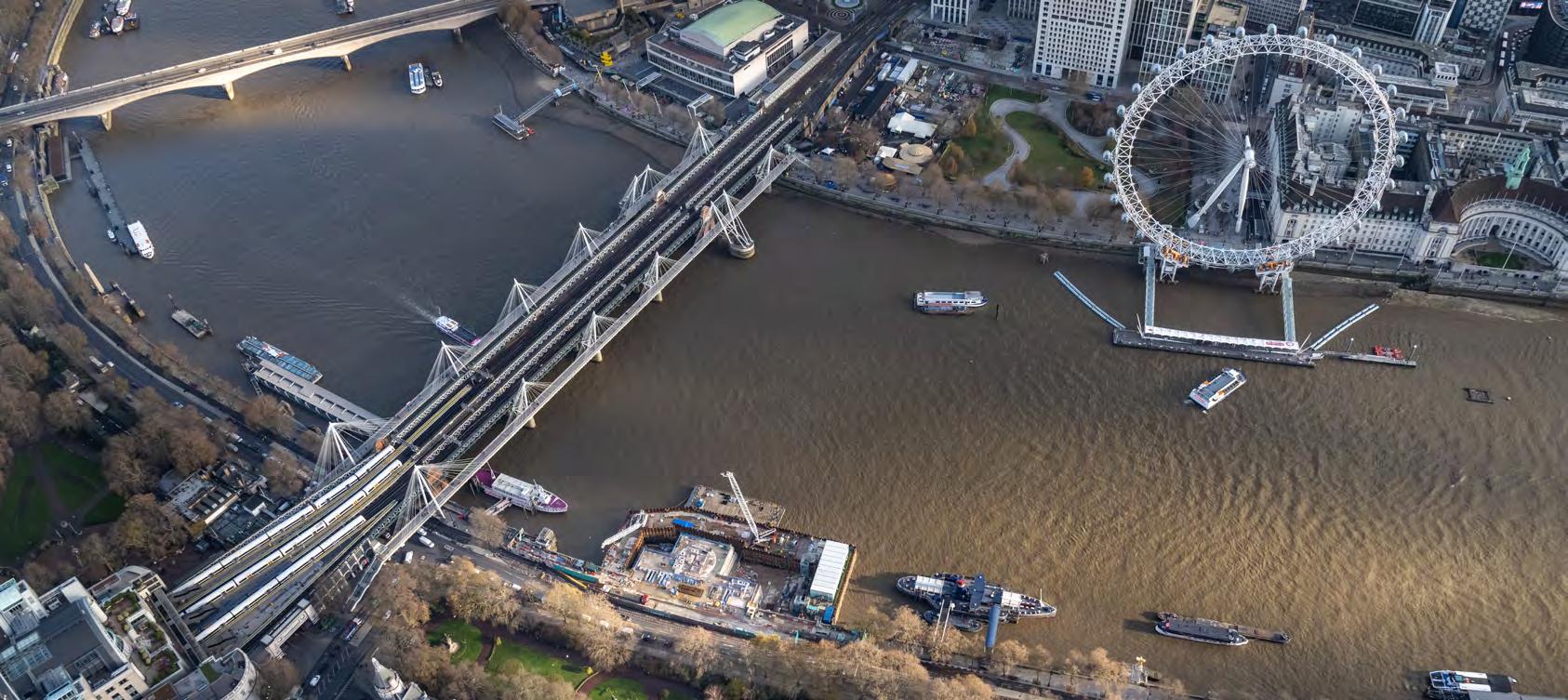
The Thames Tideway Tunnel will collect sewage before it enters the river and ensure it is properly treated, cleaning up the river for future generations of Londoners. This will also help to prevent fish kills and allow the river to sustain a rich, diverse array of wildlife.
1. Improve water quality and reduce bio-chemical oxygen demands in the tidal Thames by dramatically reducing CSO discharges into the river To commence 4. Undertake and support research to
2.
3.
Commitments 1 & 2 are considered core benefits, as set out in the Cost and Benefits of the Thames Tideway Tunnel 2015 update, and will not start to be measured until the tunnel is operational. After system commissioning, Tideway will handover these commitments to Thames Water and/or the Environment Agency to monitor and report performance.
Last year we completed our Thames ecology research programme associated with commitment 4. This year we reported against commitment 3 for the first time when the first nest boxes were installed in Frank Bamfield Park in Hammersmith and installation commenced on a biodiverse roof on the operations kiosk in King George’s Park, Wandsworth. We’re also on track to achieve our commitment to plant two trees for every one we had to remove; further details can be found in the Place section.
The Energy and Carbon Footprint Report that was produced for the Development Consent Order (DCO) in 2013 estimated a total carbon footprint in the decarbonised scenario of approximately 838,000 tCO2e with the principal impact being the greenhouse gas (GHG) emissions arising from the construction of the infrastructure, in particular embodied carbon of materials we are using.
Through the tender process our Main Works Contractors (MWCs) identified design and materials choices that reduced our anticipated CAPEX (embedded) (Scope 3) carbon footprint down to 769,000tCO2e. Our MWCs report carbon performance on a quarterly basis against a range of emission sources. At the end of the financial year we have consumed 64 per cent of the predicted CAPEX (embedded) (Scope 3) carbon (refer to Table 1). We have recently appointed a carbon consultant to provide third party verification of our carbon data. The assurance process will commence in Q1 FY 22-23, with findings available at the end of that financial year.
[1] Greenhouse gas emissions are categorised into three groups or ‘scopes’ by the most widely-used international accounting tool, the Greenhouse Gas (GHG) Protocol. Scope 1 covers direct emissions from owned or controlled sources. Scope 2 covers indirect emissions from the generation of purchased electricity, steam, heating and cooling consumed by the reporting company. Scope 3 includes all other indirect emissions that occur in a company’s value chain.
In line with Ofwat’s expectations set out in ‘Consultation on regulatory reporting for 2021-22 – Responses document’ (October 2021), our reporting this year includes a SWOT analysis – Strengths, Weaknesses, Opportunities, Threats. Our SWOT analysis of our data and methodology focuses on our Scope 3 embedded emissions because
our predicted carbon footprint of 768,756tCO2e is predominately from the materials we are using to construct the tunnel. We have some Scope 2 emissions from grid electricity used within our offices. We will not have Scope 1 emissions until the tunnel is operational.
• Clear carbon target set and embedded into contracts and reporting processes of our MWCs
• Quarterly data monitoring and reporting process in place
• Our MWCs use carbon datasets from the EA Carbon Calculator, ICE Database and their product and material suppliers.
• Regular engagement with Tideway Executives and Board on carbon activities and opportunities
• Collaborative approach with infrastructure and water sectors to share best practice
• Development of carbon learning legacy project which should inform future infrastructure projects
• Majority of our MWCs parent companies have set a Net Zero commitment and developed Science Based Targets, which results in a trickle-down benefit for Tideway
• Our 3rd party social impact assessment will monetise the benefit from reducing our carbon footprint by 8%. The carbon footprint is down from 838,000tCO2e (as reported within our Energy and Carbon Footprint Report produced for our Development Consent Order in 2013) to 768,756tCO2e.
• Although options are limited, our MWCs continue to explore opportunities to reduce carbon emissions during construction. One area has been the use of sustainably sourced HVO as a fuel source on our sites and in our river barges, rather than diesel. Another has been the use of telematics to train vehicle operators to reduce idling thereby saving fuel.
• The mature nature of Tideway means that we cannot set a Net Zero commitment or develop Science Based Targets
• The adoption of specific standards, like PAS2080 Carbon Management in Infrastructure, has come too late for Tideway and would not add value at this stage in the programme
• Tideway has a carbon footprint of 768,756tCO2e from constructing the tunnel. Options to compensate for this impact have been explored but it is unlikely that we will offset our carbon as we do not believe it to be the right approach for Tideway.
Opportunities
• 3rd party verification of our carbon data will commence in 2022-23
• To work closer with our MWCs and supply chain to better understand how to measure and account for carbon on major infrastructure projects.
• As a mature project we are in the position to provide lessons learnt to ongoing and future projects and influence the drive to more rapid decarbonisation of key building materials, like concrete Threats
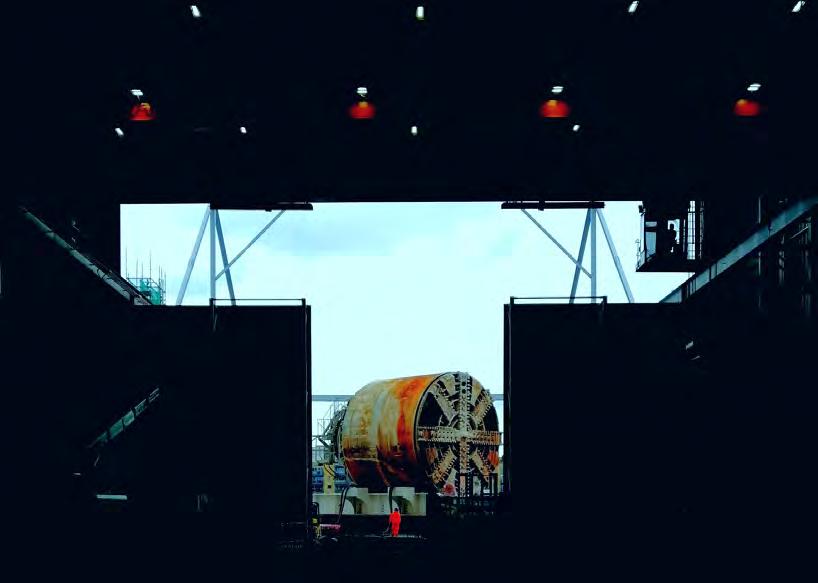
Reducing our carbon footprint continues to be a key element of the environment theme of our legacy programme, albeit with more limited opportunities to do so as we near completion. During 2021-22 we commenced a project with our supply chain – main works contractors and programme manager – to better understand the carbon implications of how we procured, designed and constructed the tunnel. This project will complete in 2022 – 23 and should provide key lessons learnt for Tideway and future infrastructure projects about how to design, build and measure the carbon impacts associated with major infrastructure assets.
We have previously reported on the use of hydrotreated vegetable oil (HVO) as a diesel replacement fuel in our barges and the carbon and air quality benefits from using HVO. HVO remains in use by GPS Marine, marine contractor transporting materials and waste in the central section and tunnel lining segments in the east. It is also being used in plant and equipment on many of our sites in place of diesel. We are committed to responsible sourcing, which includes ensuring that all HVO used on the project is not derived from palm oil. We request that HVO is 100% waste derived from European cooking oil and is accompanied by a Renewable Fuel Assurance certification.
Legacy commitment 6 relates to reducing lorry movements and is closely linked with our More by River Strategy which maximises the use of the river to import materials and export waste (refer to Economy section). Using the river for import and export, reduces congestion, improves air quality on the road network and increases safety for other road users by limiting HGV movements. Under our development consent order (DCO) there is a requirement to achieve a 53% reduction in the number of vehicle movements under the All by Road scenario i.e. road only, no river use. That 53% reduction has set a target of 478,240 two-way HGV movements, and legacy commitment 6 aims to come under this target.
• Could be some uncertainty over how we have measured and accounted for our carbon. Any reporting weaknesses will be explored through the carbon verification process and addressed where possible.
• Opportunities to influence materials specification in favour of lower carbon alternatives that could lead to carbon reductions are diminishing.
To recognise the activities that our MWCs are implementing to reduce their construction phase carbon footprint, we developed a new Carbon Initiative of the Year category in our annual RightWay Awards. We had 20 submissions under the Carbon Initiative of the Year category, with the winning submission coming from our Central contractor FLO, which is a joint venture between Ferrovial and Laing O’Rourke. Their submission demonstrated the value of carbon literacy training and how upskilling the project team and increasing their knowledge led to many carbon saving initiatives being explored and implemented.
At the end of the financial year we were at 375, 362 two-way HGV movements and we expect to come in under 478,240 two-way HGV movements. However, this commitment is not just about reducing HGV movements, it is also about improving HGV standards and driver awareness in the industry, which has been achieved with the completion of Legacy commitment 11: Introduce industry-leading initiatives to reduce the risk to vulnerable road-users arising from vehicle movements.
Keeping everyone working on the project safe, healthy and happy is a fundamental philosophy at Tideway. We do things safely, or not at all. Our aim is to think differently, and in so doing, create and live by standards that transform health, safety and wellbeing for major construction projects.
We are pleased to report that there were no major injuries or significant incidents as a result of our marine activities. The first half of the year saw the three-day Accident Frequency Rate (AFR-3) plateau in the region of 0.2, coinciding with the second wave of Covid-19, before steadily decreasing month on month from September, testament to the efforts made at every level to eliminate/reduce accident and injury occurrences. This included regular joint venture board level reviews of Health, Safety and Wellbeing (HSW) improvement plans and strategies and increased focus on site leadership.
Despite the continued additional challenges particularly early in the year, the programme’s three-day Accident Frequency Rate (AFR-3), has remained below the highs experienced during other large infrastructure projects.
There were 19 lost time incidents in the year, of which 5 resulted in RIDDOR reportable injuries. We remain committed to doing things better, having investigated these incidents and implemented the resultant lessons learned, we continue to strive to improve as we progress further into the project.
RightWay is our approach to establish a working environment that allows individuals to:
• plan ahead,
• challenge,
• continually strive to do things better, and
• reinforce a positive HSW culture through effective leadership.
The ‘RightWay in Delivery’ initiative, a collaborative development by the Project Managers and the MWC teams, continues to provide an opportunity for site teams to showcase innovations and good practices
against Tideway’s HSW strategy. On a monthly basis, site teams submit best practice examples for each of the six pillar categories, which underpin the Tideway behavioural HSW programme; leadership, competence, health & wellbeing, safe workplace, communication & engagement and performance & improvement. Quarterly the overall winning site team is presented with an award and in this way, we celebrate and promote enthusiastic ownership of good practice by the site teams and encourage adoption of best practices across sites.
Our aim this year was to maintain a focus on Health and Wellbeing to achieve relative parity with Safety and to minimise and mitigate any health risks arising from our work, whilst supporting the wider health and wellbeing of our workforce. Further details on our approach to Health and Wellbeing, including Occupational Health can be found in our Annual Report

Supporting positive mental health continues to be a major driver for the project. Tideway has taken forward several initiatives, including supporting the Mates in Mind construction charity; training more than 160 mental health first aiders; establishing mental health first aider networks; and delivering mental health-focused briefings. . Tideway’s Transforming Health and Safety Group (THSG) set up the Mental Health Working Group (MHWG) with the sole purpose of gaining insights from the business to help inform what actions we needed to take, both now and in the future, to improve mental health at Tideway and wider industry.
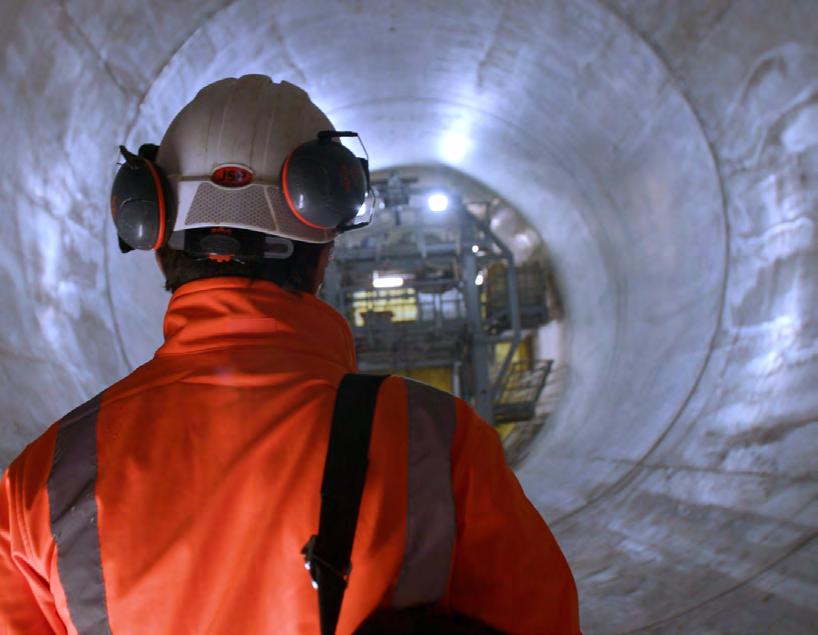
EPIC, our immersive induction programme, set out to make Tideway the safest and healthiest project yet. To date, over 21,000 people have attended the programme, which includes those working on Tideway, but also other interested parties, supporting our aim to be transformational and to help improve health and safety across the construction sector. Now well established the EPIC centre has been used by many of our partners and is available for external industry days to promote the experience to the wider industry.
Our EPIC immersive induction programme is being qualitatively analysed by our social value consultant. A number of in-depth interviews, group discussions and surveys have been undertaken to grasp the value of EPIC, getting ‘under the skin’ to provide a detailed understanding of the social impact created. The results from the analysis will be known during 2022-23.
Tideway is committed to ensure the safety of those outside our site hoardings in the same way as we do for those working inside, which is reflected in Legacy commitment 11: Introduce industry-leading initiatives to reduce the risk to vulnerable road-users arising from vehicle movements, which was completed this year. Four initiatives were developed to support this commitment, including the introduction of industry-leading initiatives relating to road safety standards, driver induction and training and lorry design to make things safer for those travelling on London’s roads.
On standards, we worked with Transport for London (TfL) and the logistics industry to develop the Direct Vision Standard (DVS). This requires HGV operators to apply for a free TfL permit that assigns vehicles a star rating based on how much the driver can see directly through their cab windows. The standard is now in full use and all Tideway’s supply chain comply with the DVS terms.
On driver induction and training, we introduced EPIC Logistics, a version of our EPIC for anyone in a traffic or logistics role. This immersive induction provides a visceral experience of a fatal incident, highlighting the impact that a chain of poor decisions can have. More than 1,700 drivers have been through the induction and it has been accredited by the Driver & Vehicle Standards Agency and the Fleet Operator Recognition Scheme. We have also enhanced online driver training and compliance, including a Vehicle and Driver Safety information pack to set out in detail our vehicle and driver standards and why they are important to us. This proved vital during the pandemic when face-toface training was disrupted and more than 300 people were inducted this way.
Tideway invested in a fleet of 27 new ‘Low Entry Cab’ (LEC) vehicles for use on specific sensitive (high risk) sites and with certain material types. These vehicles have redesigned cabs that increase the amount of direct driver vision, providing a much better chance of drivers seeing vulnerable road users, especially cyclists.
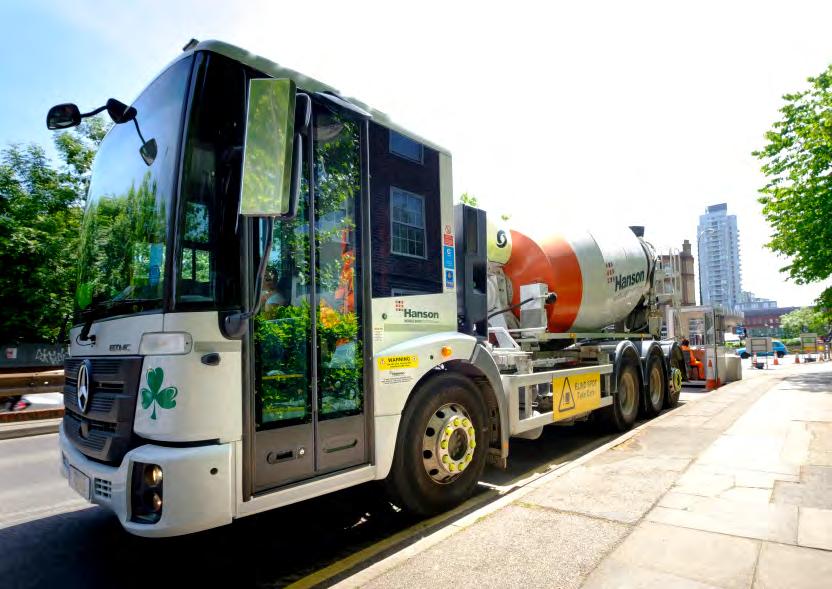
Supporting the UK economy through employment, training and procurement remains key, even as employment and procurement opportunities begin to decrease. This year we closed out Legacy commitment 23: Engage with local businesses, small and medium sized companies and social enterprises, helping them to grow their skills and opportunities. Engagement opportunities were held each quarter to communicate with SMEs about future opportunities and to provide them with support. As our construction programme reaches the latter stages and there are fewer procurement opportunities this commitment has been closed. However, we still post procurement opportunities on our website and our Main Works Contractors continue to use CompeteFor to advertise any appropriate opportunities (Legacy commitment 17).
We continue to track where the Tideway pound is spent. This year we invested in 12 UK Regions, 19 London boroughs and over 2000 companies.
Tideway’s support for the Thames Skills Academy (TSA) has been central to delivering on our legacy commitments to improve safety for river workers and support river transport-related skills. We were one of the founding members of the TSA in 2016 along with the Port of London Authority, Transport for London and the Company of Watermen and Lightermen. It is now delivering high-quality training, developed to meet the bespoke needs of Thames and other inland waterways, to a new generation of river workers, providing transferable skills to subsequent projects and roles. We have provided funding to support the training of 50 river apprentices through the TSA developing the national Boatmaster apprenticeship and establishing a maritime engineering apprenticeship on the Thames, the only one in the South East. We have also played a leading role in establishing key elements of its training programme:
• A riverside personal safety course,which provides an overview of the potential dangers of working on or near water and offers experiential
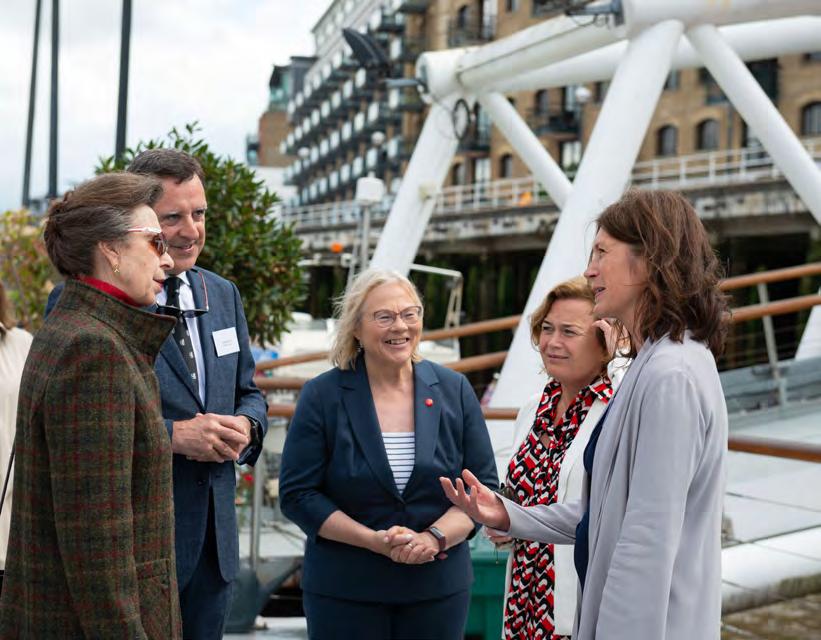
training on how to stay safe. The programme led to the TSA receiving a 2021 Princess Royal Training Award from The City & Guilds Group. The award citation said: “By creating the Riverside Personal Safety Course, the organisation has addressed a huge gap in a largely unregulated sector and met its ambitious targets of reducing incidents on the river by 10% per annum.”
• A new Thames Continuing Professional Development (CPD) programme, launched in 2021. This offers CPD for all Thames Boat Masters and crew, whether newly qualified or with years of experience. It tests skills across a range of areas, requiring a minimum set of points to be achieved in a five-year period. It includes marine simulator training courses based at HR Wallingford. On a visit to mark the programme launch, Transport Minister Robert Courts MP said: “The Thames CPD programme is a really significant step forward in ensuring that the nation’s premier waterway is a global beacon of best practice.”
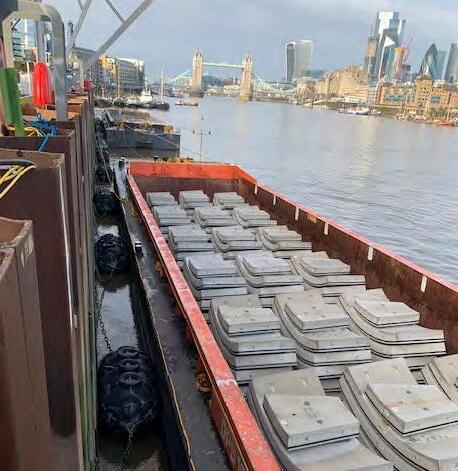
More by River, Tideway’s Sustainable Transport Strategy, achieved a key milestone in April 2022 with the completion of tunnelling bringing an end to large volumes of materials transported by river. Over the year 1,011,427t was transported by river. This brings the total quantities transported by river on Tideway to 5.5million tonnes. The impact of this was to remove more than 650,000 HGV journeys from London’s roads and avoiding in the region of 23,400tCO2e.
To Tideway, ethical supply chain practices include making sure that: everyone on the project is paid the London Living Wage (LLW) as a minimum; our SMEs are paid within 30 days of invoice under the Fair Payment Charter; staff have job security by working under contracts; and our materials are responsibly sourced. To demonstrate our commitment to ethical sourcing practices, Tideway has a Modern Slavery and Human Trafficking Statement. During the year Tideway hosted the third Modern Slavery and Ethical Procurement Working Group with the Main Works Contractors and their supply chain. We remain signatories to the Gangmasters and Labour Abuse Authorities (GLAA) Construction Protocol, the purpose of which is to eradicate the risk of slavery and labour exploitation from the construction industry.
We concluded our final year of being verified to the Building Research Establishment (BRE) Ethical Labour Sourcing Standard (ELS) (BES 6002). For three years the standard has provided us with 3rd party assurance that our processes minimise the risk of unethical practices in our supply chain and these processes remain in place with the same high level of internal assurance.
In terms of responsible sourcing of materials, we have included a requirement within our Works Information that 100% of our key building materials (cement, aggregates, steel) must be certified to either BES6001 Responsible sourcing of construction products, CARES Sustainable Constructional Steel (SCS), or Eco-Reinforcement as applicable. All timber being used on site has to be certified to sustainable standards like FSC and/or PEFC. In FY 2021-22, procured materials that came from certified responsible sources (or otherwise agreed with the Project Manager) ranged from 99% to 100%, which is as the previous year.
The project has created significant opportunities to boost local employment and prosperity within London.
32. 20 percent of the workforce across each main works contract area (West, Central, East) to
38. Employ local workless people—those who are unemployed, economically inactive, claiming particular benefits such as Employment Support Allowance, and those under-employed (working fewer than 16 hours per week)
39. Create an inclusive environment that will enhance diversity across Tideway specifically for Disability, Black, Asian and Minority Ethnic (BAME), Lesbian, Gay, Bisexual, Transgender, Questioning (LGBTQ), Gender (women)
A PERSON WITH CONVICTIONS
Apprentices
Year Average = 1 in 32, Project to date = 1 in 31 People with Convictions Year average = 1 in 255 Project total to date = 1 in 145 Residents across 14 London boroughs End of Year = 26 per cent
Our People theme is arguably the most extensive legacy theme. We have made considerable efforts to provide local employment opportunities and create a culture where you can bring your whole self to work within an inclusive, diverse environment. In parallel we aim to inspire the next generation through our STEM engagement programme and provide apprentice opportunities. We know that everyone needs a second chance, or some are seeking a new career path, so we have reached out to people who are previously workless, people returning to work after a career break and to people with convictions, to provide work experience and job opportunities. As we are nearing completion, new apprentice and job opportunities are becoming limited, but we remain committed to supporting our staff through their career development and onto future roles.
14,006 STEM HOURS STEM = 14006hrs to date
Our partnerships with charities to support people with convictions into the workplace has been a worthwhile activity. Government research has found that ‘many former offenders find it almost impossible to get a job with just 17% in P45 employment a year after release and more than half of employers saying they would not consider hiring someone with a criminal record’. This has not been the case on Tideway, where we are a ‘Ban the Box’ employer and have employed a total of 23 people with convictions for a minimum of 26 weeks across Tideway and our Main Works Contractors. On reflection, our target could have been improved by setting an absolute number to be employed rather than a ratio of 1 in 100 FTE. At the start of 2021-22 we used money from our Apprenticeship Levy fund to help A Fairer Chance, a Londonbased Community Interest Company. This paid for two apprentices, both of whom have experience of the criminal justice system, to train as Employability Practitioners so they can develop their own careers while supporting other people with convictions, plus care leavers and the long term unemployed, into employment.
Legacy commitments 31: at each drive site, 20 percent of employees will live in the local Borough and commitment 43: work with charity partners to employ one person with convictions per 100 workers on the project, are unlikely to be achieved. Both have proven to be challenging, stretch targets, which we strive to achieve.
Offering and supporting individuals through an apprenticeship has been a key aspect of our People theme. At the end of the year there were 65 apprentices working on Tideway, with the total number of sustained apprentice opportunities either with Tideway, our Programme Manager Jacobs or our Main Works Contractors, totalling 185.
A particular area of success has been our tunnelling operatives apprenticeship. In early 2019 our Main Works Contractors coordinated the recruitment of the first cohort of Tunnelling Operative apprentices in the industry, with a view to addressing a skills gap in the tunnelling sector. 13 tunnelling apprenticeships commenced on Tideway through our specialist labour-only supply chain, who would be the apprentices’ employers. Sharon Vitalis was one of the tunnelling apprentices. She encountered Tideway and our partner, Women into Construction (WiC), at a jobs fair and is now based at our Chambers Wharf site. Sharon
“I would like to urge more women to have the courage to join this industry as found it very accommodating and not impossible at all. I think we can tackle gender divides as long as we are all hardworking, disciplined, reliable, respectful, dependable and willing to take constructive criticism, adjusting if needs be. This way everyone takes care of each other to ensure we all return to our loved ones at the end of the day.”
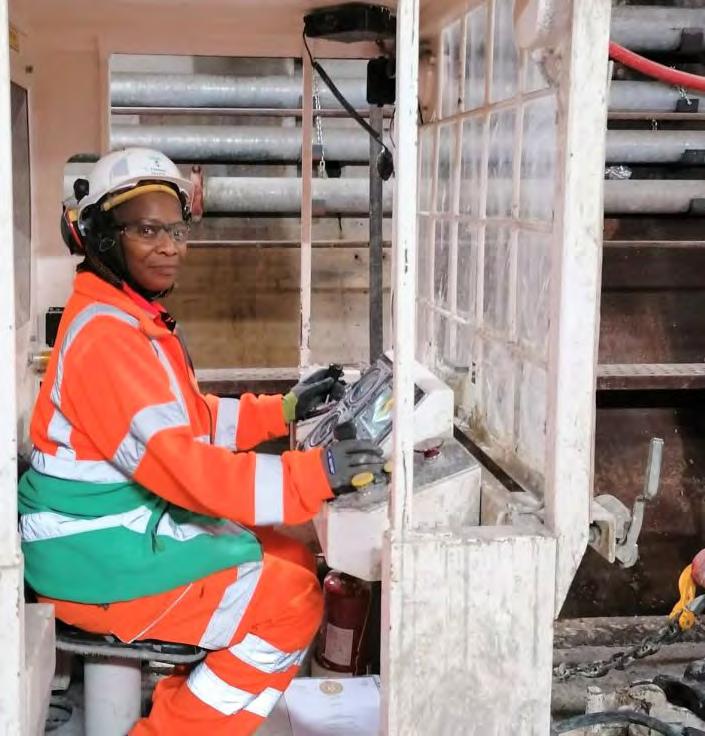
recently achieved a Distinction in the Level 2 Tunnelling Operative Apprenticeship and is also now one of the first female-qualified locomotive drivers with a full-time position as a loco driver through her employer, Joseph Gallagher Limited.
Russell Mason of J3M Construction Training, who supported Sharon in her learning, said: “This excellent result is testament to Sharon’s hard work. Sharon is an asset to the tunnelling and underground sector, and a fantastic role model for new entrants.”
Our commitment to gender equality and encouraging women into our industry remains important to us and that is reflected in our continued partnership with Women into Construction (WiC), who we continue to support through a range of programmes and employment opportunities. A case study can be found on page 24 of the Annual Report.
Tideway’s science, technology, engineering, mathematics (STEM) engagement programme aims to widen the skills and employment legacy we leave through our jobs, apprenticeships and training by inspiring the next generation of engineers and construction workers to come into the industry.
In 21/22 we engaged 6,317 young people, ranging from primary schools close to our sites to masters students at UCL’s Bartlett School of Sustainable Construction. Project staff volunteered 1,257 STEM hours in the year, or 1.8 hours per 3 FTE per year, above the target of 1 hour per 3 FTE.
Through a partnership with education specialist Uptree, we engaged almost 3,000 young people about the project through workshops and assemblies in London schools, as well as offering work experience days. Schools with high numbers from low-income backgrounds were targeted to ensure we reached a diverse pool of potential future workers. Of those who came to work experience days or Uptree’s Futures Up events, 50% identified as female; 32% received free school meals; 82% were from ethnically diverse backgrounds; and almost three quarters of their parents did not attend university.
Before the events, 10% of students considered Tideway to be a very or extremely attractive employer – afterwards this had increased to 90%. A total of 68% said the experience improved their confidence in speaking to industry professionals. One attendee said: “I learnt that apprenticeships are just as attractive as university and civil engineering is an interesting career choice.”
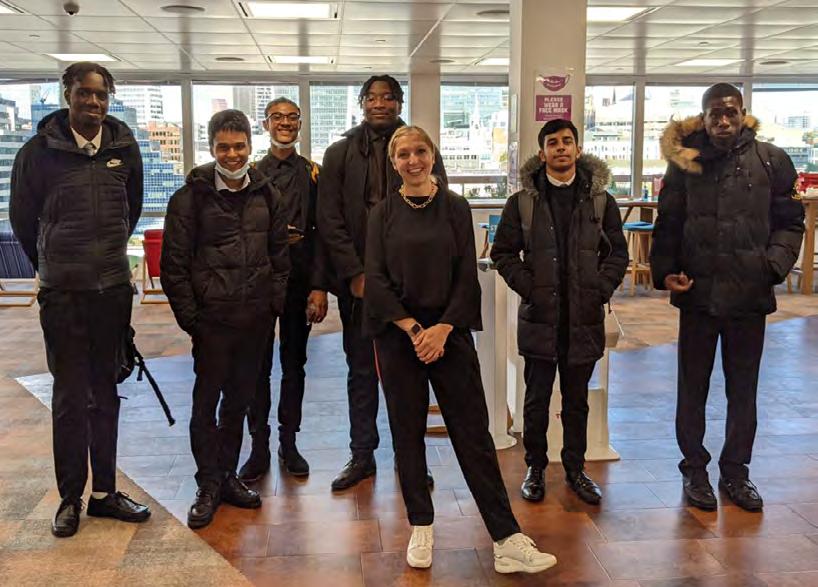
Other highlights from our STEM engagement year included:
• During British Science Week we hosted more than 30 five and sixyear-olds from Boutcher Primary School in Bermondsey at our London Bridge offices. We told them about the project’s work to clean up the River Thames before taking them on a ‘Sense explorers’ riverside walk, helping the youngsters use their senses to discover the environment around them.
• More than 20 students aged 13 and 14 from UCL Academy came to Tideway as part of a ‘Constructing the Future’ work experience day supported by the Worshipful Company of Constructors. A total of 90% of the students said the day helped them to understand the different careers in the construction industry.
• Tideway’s Annie He, a Mechanical Engineer who works for our east contractor CVB, was invited to be part of a panel discussion to inspire 260 young females into the industry as part of International Women’s Day. The day was organised by Urban Synergy, a Lewisham-based charity who Tideway is supporting at STEM events and by offering mentors.
Our Place theme aims to create new areas of public realm and connect the capital’s residents and visitors with the river more closely than is currently possible. It also aims to bring community cohesion by being a responsible business, a good neighbour and to support the communities in which we work.
46. For every tree displaced by the project, plant two new ones On track
47. Create three acres of new foreshore in the public realm On track
48. Enhance the Thames Path, reopening sections currently closed to the public On track
49. Give people of reduced mobility the opportunity to connect with the River Thames in a way that has not previously been possible On track
10: More cohesive communities
53. Deliver and fund community investment that will support local communities and where possible encourage members of that community to come together On
50. Use a Heritage Interpretation Strategy and Public Art Strategy to create memorable, integrated site-specific artworks responding to, and referencing, the history of the site and wider narrative of the Tidal Thames and enrich Tideway’s public realm legacy On track
51. Collaborate with other developers to enhance local space, where our activities overlap with other local developments To commence
52. Develop sustainable strategies for the long-term management and maintenance of new public realm To commence
Deliver and fund pan-London community investment activities which bring communities together from across the capital Complete –achieved
*This table illustrates the commitments under Place, their status and the SDG and associated target that the commitments contribute to.
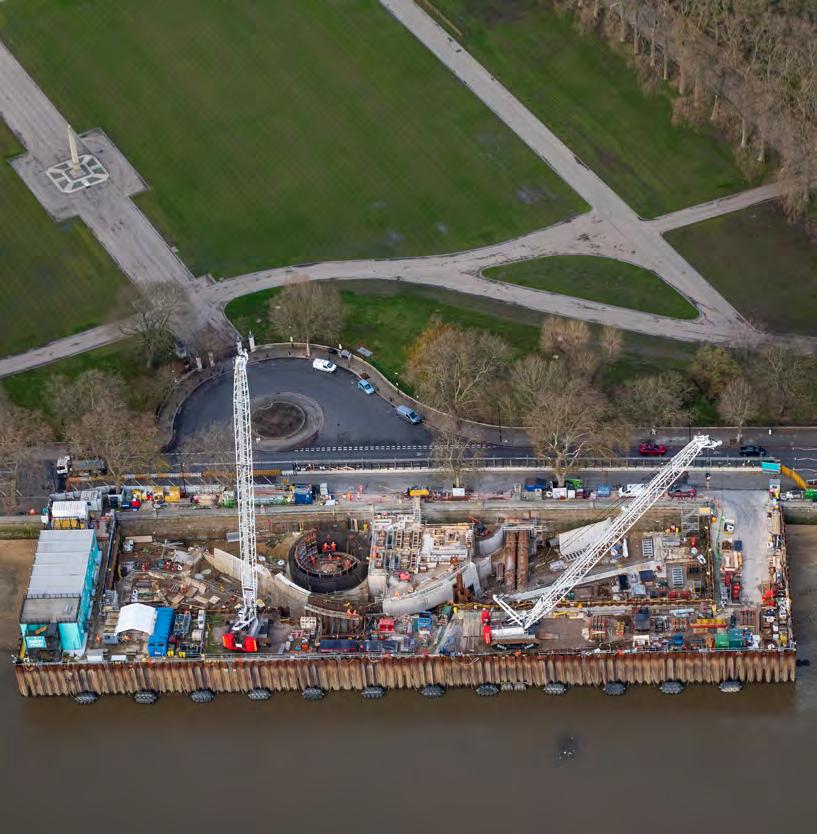
2021-22 has been the year where our commitment to creating new public realm has become more visible, particularly in relation to the expanses of new river walls across the project’s riverside sites.
In the west section of the project, Putney Embankment Foreshore was the first site to remove the protective cofferdam exposing a high-quality granite and timber clad river wall complete with an engraved site name and tunnel level. Also in the west, hard and soft landscaping installation work started at Barn Elms and King George’s Park, which saw the first signature ventilation column and its site-specific poem installed.
In the central section, granite river wall cladding has been installed at Blackfriars and Victoria Embankment Foreshores with careful detailing around marine safety equipment. The complex brickwork of the curved geometry at Chelsea Embankment Foreshore began, incorporating the coloured brickwork of Florian Roithmayr (see milestones below).
Precast concrete cladding to the river walls and intertidal terraces were installed at Albert Embankment Foreshore where the surface finish has been acid etched at the lower levels to enable limited colonisation by algae and micro-organisms.
In the east, encouraging biodiversity in the river has been taken a step further by our Main Works Contractor who is undertaking trials on the use of an innovative concrete mix and cast surface texture to encourage the colonisation of microorganisms on the new river walls at King Edward Memorial Park and Chambers Wharf.
The new foreshore public realm sites received new names which are based on the lost rivers. In addition to the previously named Bazalgette Embankment, the names have been confirmed as Putney Embankment; Carnwath Riverside; Chelsea Quay; Heathwall Quay; Effra Quay & Isle of Effra (Albert Embankment Foreshore); Tyburn Quay (Victoria Embankment Foreshore)
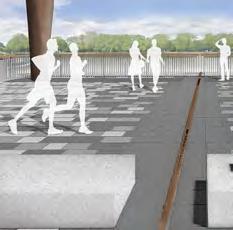
For the new public realm the site names will feature on some of the new river walls, threshold strips on the sites, gates and railings and on the signage and wayfinding micrototems. The micrototems will have, in addition to maps and directions, information about the project, the tunnel route map, the engineering, the ecology, the heritage and the artworks.
June 2021 Finished patinated sample of Yemi Awosile’s artwork for
George’s Park was produced.
Finished sample of Boat Race start line bronze strip and artwork text by Claire Barclay produced; and a sample panel of Adam Chodzko’s artwork façade for Barn Elms.

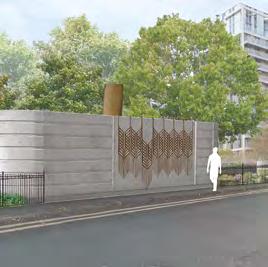
August 2021
Signature Ventilation Column installed at King George’s Park –the poem by Dorothea Smartt references the Lost River Wandle.
September 2021
As part of the Totally Thames Festival, Tideway screened a documentary filmArt on the Tideway – which offers an insight into some of the works and the artists behind them.
December 2021
Artwork by Richard Wentworth CBE, consented at Effra Quay & Isle of Effra. The artwork is based on the historic location of the Royal Doulton factory near to the site. At Putney Embankment, the granite cladding artwork by Claire Barclay for the kiosk, was fabricated.
January 2022
The river wall sample panel with the glazed bricks and the full final colour sample range were produced for the artist, Florian Roithmayr to review.
February 2022
The first structural element of the first sculpture was installed into the river wall at Bazalgette Embankment. This is the first part of the two park sculpture by Nathan Coley that forms one of the series of five sculptural ‘stages’ on the site.
March 2022
First six bronze elements of the King George’s Park artwork by Yemi Awosile have been cast, prior to being patinated. The first layers of the glazed brick artwork by Florian Roithmayr were laid in the river at Chelsea Quay.

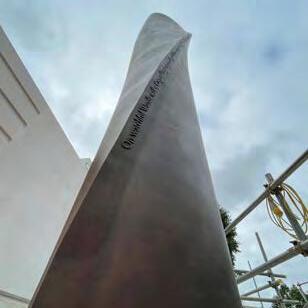

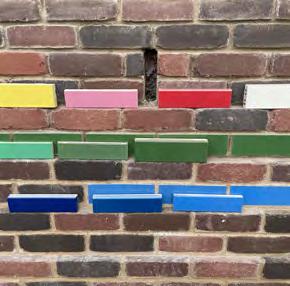
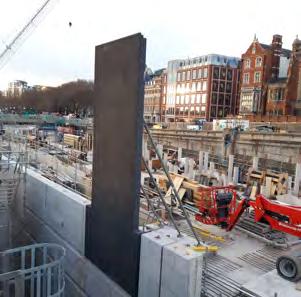
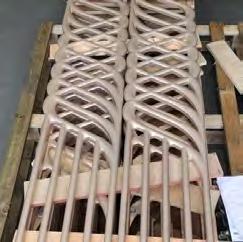
Legacy commitment 54 completed this year with the conclusion of two of the pan-London partnerships designed to support our vision to reconnect Londoners with the Thames. Active Row, with London Youth Rowing (LYR), engaged almost 7,000 young people in indoor and onwater rowing, 68 per cent of them from a minority ethnic background and 42 per cent female. The Thames Discovery Programme, with the Museum of London Archaeology, engaged 2,000 young people in river history on the foreshore and in the classroom and 30 budding archaeologists gained heritage skills certificates.
A third ‘river reconnection’ partnership, Thames River Watch with Thames21, entered a new three-year phase with joint funding from Thames Water and with a focus on recruiting volunteers from diverse backgrounds and groups who are poorly represented in the environment sector.
Our biggest single investment, the new Sands End Arts and Community Centre in Fulham opened in March 2021. A case study can be found on page 22 of the Annual Report.
We also launched two programmes to bring communities closer to nature and preserve their local environment - funding for the Creekside Discovery Centre in Deptford Creek to run land and low-tide walks, wildlife mapping projects, family fun days and certificated courses in creek know-how; and for Groundwork London’s 2022 Our Space Award.
The Our Space Award, which encourages communities to work together to green their local spaces, has a strong alignment to the Tideway project.
The impact of the 2022 Our Space Award has been doubled by Tideway’s funding. It has allowed Groundwork London, the charity which runs it, to give grants ranging from £500 to £20,000 to 27 different community organisations, including many in the 14 boroughs along the tunnel’s route.
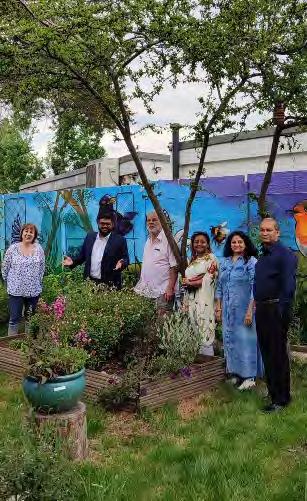
Tideway’s donation includes reinvested savings from its sustainable financing framework, which links reduced interest on its debt to delivering the project’s legacy commitments. It activated because we have exceeded the target in our sustainable financing agreement to have at least 85% of our live legacy commitments on track.
Tideway is supporting Our Space projects through volunteering and we will be tracking and celebrating their success in future reports.
We committed to making investments close to our sites in partnership with residents and community groups. We pledged to work with them to deliver projects that bring people together within those communities and to support the investments with a significant volunteering programme.
Since then we have assessed all investment proposals against their ability to deliver our legacy commitments through a robust governance process. Our investments have covered a wide range of issues, such as community services; social isolation and homelessness; rehabilitation and employment; schools and education; environmental improvements and engagement; and leisure and wellbeing.
At the start of the project we did not specify the impact areas we would seek to address, other than a pledge to support projects that inspired people to engage in river activities. This has meant that the programme did not focus on delivering the deepest impact possible on a specific social issue. Although this reduced the potential for a ‘headline’ social legacy, it did give us the flexibility to adapt our programme as the project progressed - for example, issuing emergency grants in the 2020 pandemic.
In 2021 we reviewed our approach to community investment to ensure we were delivering investments that represented a fair geographical spread across the communities close to our sites and that our ongoing and planned investments supported areas of high deprivation and those with the greatest need. As a result of the review we decided to allocate some of our remaining community investment funds to projects in the borough of Wandsworth, where we have six of our 24 sites but where our level of proactive investment had been comparatively low, relative to some other boroughs and relative to our presence there.
We worked with the local council to launch the Wandsworth Community Fund to award five grants to charities and social enterprises supporting young people, families in food poverty and vulnerable groups.
One grant was given to the Katherine Low Settlement (KLS) in Battersea to fund its ‘Love to Learn’ youth and homework clubs, which help young people from refugee backgrounds to learn and explore their local environment. Overall 87% of attendees displayed high levels of wellbeing, based on scoring themselves across five areas of daily life and 87% said they had developed an understanding of the role they can play in combatting climate change.
Another grant was given to youth charity World Heart Beat Music Academy who developed the ‘Ebb and Flow’ project, providing opportunities for 35 young people aged eight to 23 to develop communication, song writing and performance skills through a range of activities inspired by the river. The group produced a film of the project, which includes one of four original river-inspired songs produced by participants.
A third grant was given to the Bags of Taste charity to support 72 vulnerable people in food poverty through a mentored home cooking course. An average of 86% of students were on benefits, 67% has children living with them and 71% had mental health issues. At the end of the course 80% said they would cook more and the group as an average said they could save £22.56 per week.
As we enter the final year of our community investment programme, we will be telling more of its story through impact reports via our website.
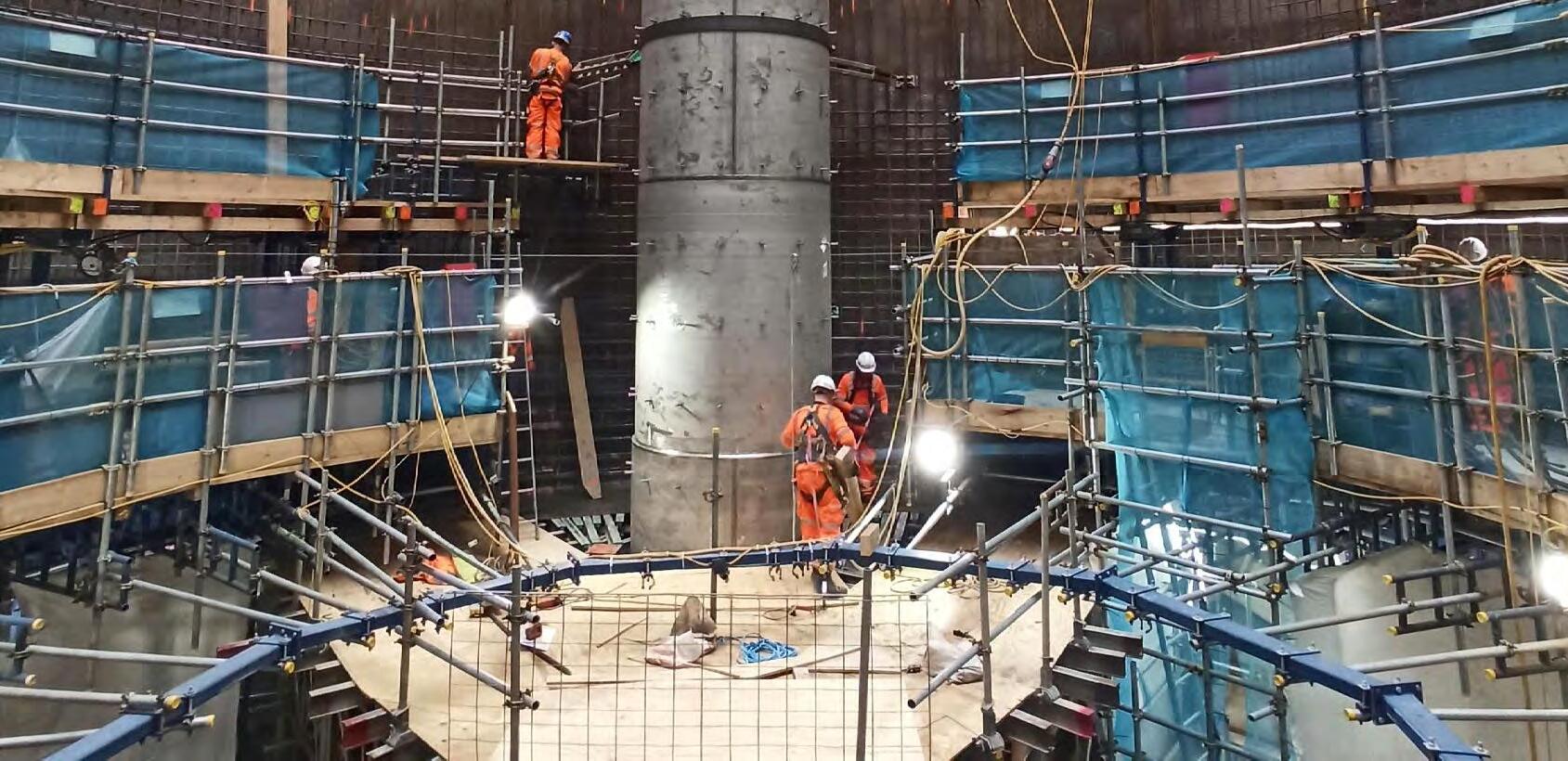
In November 2017 we published a framework for the issuance of Green Bonds. In 2020 this framework was updated to a Sustainable Finance Framework (Framework) under which Tideway and Bazalgette Finance Plc (BFP) can raise debt to support the financing and/or refinancing of assets and expenditures of a sustainable nature across its activities. The Framework was subsequently updated in February 2022.

The Framework follows the International Capital Markets Association (ICMA) Green Bond Principles (GBP) and the Loan Market Association Green Loan Principles (GLP). The Framework is also aligned with the Loan Market Association (LMA) Sustainability Linked Loan Principles (SLLP).
A common principle to the various standards is the requirement to provide an annual update to investors of the:
- Allocation of proceeds in the case of green bonds and green loans
- Compliance with the agreed KPI in the case of sustainability-linked loans
- Impact of the project
This Sustainability Report provides an update on these points.
BFP issued its inaugural Green Bond, series 11, which was also its debut public bond, on 30 November 2017 and a further seven Green Bonds between December 2017 and March 2022 for a total amount of £1,150 million. In October 2019 the London Stock Exchange (LSEG
moved bond series 1 to 10 for a total amount of £658m (issued before our inaugural green bond in November 2017) to the LSEG Green segment, which is part of LSEG’s Sustainable Bond Market. S&P Global Ratings updated their green evaluation, confirming that it applies to all bonds issued under the bond programme since June 2016.
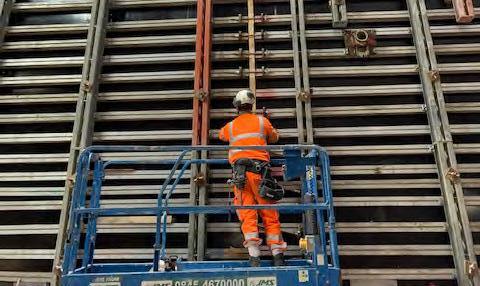
In addition to the 18 green bonds issued by BFP to date, BTL has also issued a green USPP and the tables below provide details of each green bond series and the green USPP.
Please refer to the tables below with details of each bond series and green USPP.
Our bond programme and the bond series issued under it continue to be covered by a Green Transaction Evaluation from S&P Global ratings which was last updated in February 2022 giving us an Environmental benefit score of 95/100 and a governance and reporting opinion rated as advanced.
The proceeds from the fourteen Green Bonds that have funded (see Table 1) were on-loaned by BFP to BTL and deposited in BTL’s sole operating bank account. BTL has also received the funds from the deferred green USPP.
The funds were subsequently drawn to fund the design and construction of the tunnel. While in the operating account, the funds were managed by Tideway’s Treasury team in accordance with the company’s investment management policy that aims to preserve capital and liquidity. Funds were invested in deposits with Tideway’s banks and in liquid money market funds.
Further to the Framework, funds were disbursed to pay for Allowable Project Spend, as defined in the Licence, which is the cumulative expenditure incurred for the Thames Tideway Tunnel, constituting the regulatory capital value.
The Allowable Project Spend is calculated by Tideway and verified on a monthly basis by Mott McDonald, the Independent Technical Assessor (ITA), appointed in connection with the Liaison Agreement, establishing a Liaison Committee with Tideway, Department for Environment, Food and Rural Affairs (Defra) and Thames Water Utilities Limited (Thames Water) as members and the Water Services Regulation Authority (Ofwat) and the Environment Agency (EA) as observers.
The ITA has certified £2,650 million of Allowable Project Spend during the period between August 2017 and March 2022, since the funding of our first green bond, as follows:
The £2,650 million of certified Allowable Project Spend is in excess of the £1,558 million allocated to green issuance, which funded between 25 August 2017 and 10 March 2022, confirming that the use of proceeds of the drawn bonds is in line with the requirements of the Green Bond Principles. The other green bonds issued on a deferred basis will fund between April 2022 and May 2023 and, in time, will be matched against our Allowable Project Spend. Please refer to the tables on the previous pages.
The expected environmental and economic benefits of the project remain as per the original Development Consent Order, which provided the overall permissions to the project, until the TTT is built and starts operations:
• In a typical year, the tunnel will reduce polluting discharges to river by circa 16 million cubic metres (diverted and captured for treatment)
• The three components of the London Tideway Improvements work conjunctively to reduce discharges in a typical year by about 37 million cubic metres, as described in the Framework
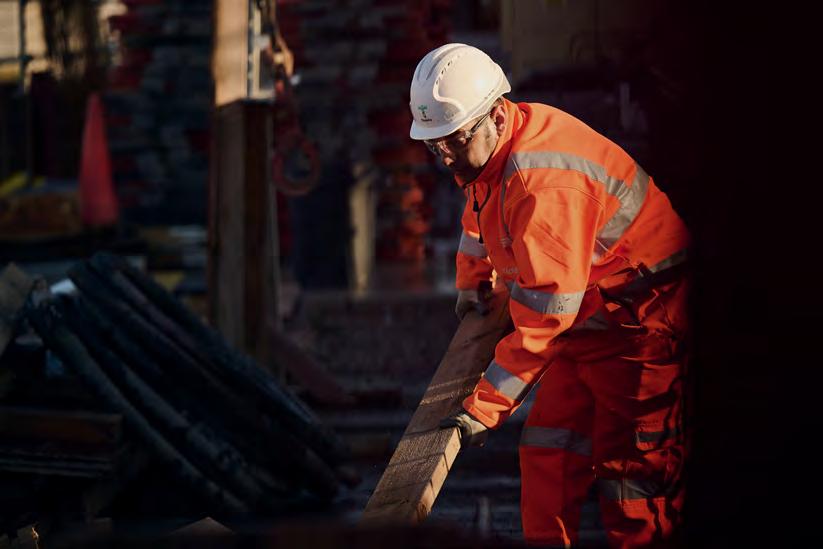
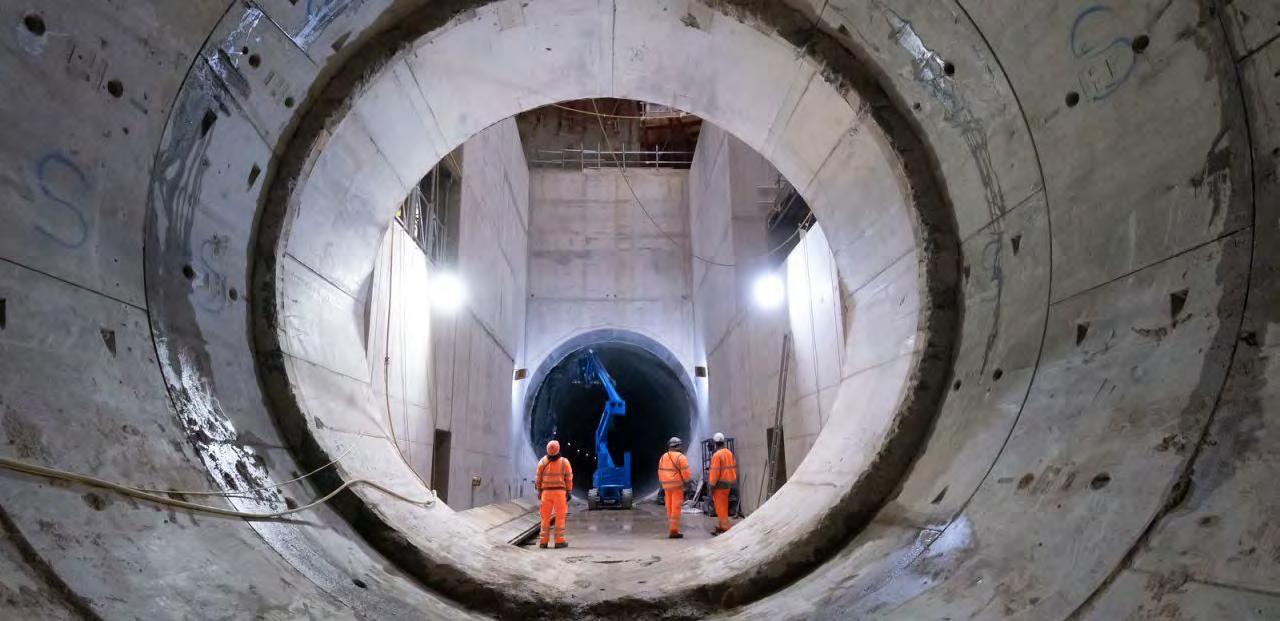
We are now over 77% through the project and getting closer to the end of the construction phase with handover planned for 2025. The excavation of the main tunnel has been completed in all three areas –West, Central and East with the final two tunnel boring machines (TBMs) on the project completing their underground journeys in April 2022. This was a significant milestone for the project. The completion of the secondary lining is underway.
Covid-19 had an inevitable impact on the project with an initial reduction of activities and decreased productivity arising from the range of safety measures implemented, leading to an increase in our cost estimates of circa £188.6m and a five-month delay in the schedule. Ofwat, following consultation, agreed an amendment to our licence to reflect the financial impacts of the pandemic and the effect of the extraordinary macroeconomic interventions on revenue calculations.
Once the tunnel is operational, we will report the impact in accordance with the Handbook on Harmonized Framework for Impact Reporting published by the Green Bond Principles, in particular ‘Core Indicator B. Wastewater Treatment Projects, #2) Annual amount of raw/untreated wastewater discharges avoided’.
Tideway continues to make good progress towards its ambition to safely deliver the TTT at the right quality and to best value. We continue to develop our approach to health, safety and wellbeing and are pleased to report that no life-changing injuries have occurred to date.
Our £160 million Revolving Credit Facility (RCF) is structured as a sustainability-linked loan, in accordance with SLLP with a KPI linked to our Legacy commitments.
This loan further aligns Tideway’s financing, not only with the longterm target of cleaning the river, but also with the significant efforts during construction, which have been captured in Tideway’s Legacy commitments.
Our legacy programme previously targeted at least 75 per cent of the Legacy Commitments which are live at the time of calculation being on track. This target was revised to 85 per cent in 2021 to set a more ambitious KPI in our legacy programme reflecting the KPI in the Company’s sustainable financing. This new target acts as a strong stimulus for the company to continue to focus on the long-lasting benefits from the project and keep creating a healthier and more sustainable future for London.
Tideway’s RCF includes the agreed sustainable KPI which is the meeting of at least 85 per cent of the live Legacy commitments. The credit margin on the facility is reduced if the performance target is met.
As at the end of the fiscal year 90 per cent of the 31 live legacy commitments were on track so the 85 per cent KPI was met. See the Data section for performance data against each commitment.
The May 2021 update to the Sustainability Linked Loan Principles (further updated in March 2022) requires borrowers to obtain independent and external verification of the borrower’s performance level against each KPI at least once a year. This update included an exception to transactions completed prior to June 3, 2021 from following the revised SLLP, and
instead should be reviewed in conjunction with the SLLP published in May 2020. This is the case of Tideway’s RCF. As discussed at the outset of this transaction and in our Framework, Tideway has developed a robust internal process to validate the calculation of its performance against the KPI. Furthermore, and as discussed below, the social value study underway provides a level of external scrutiny of our performance against the Legacy commitments.
Legacy information from across the three contract areas of the project is compiled into a standardised reporting workbook by assigned Legacy Managers within each Main Works Contractors Joint Venture (MWC JV) and submitted to Tideway on a quarterly basis for assurance in line with our Financial Reporting calendar. 191 data points are collated and submitted by the MWC JVs, covering all areas of our Legacy Programme. Tideway Subject Matter Experts (SMEs) formally review the data and raise any comments with the MWC JVs for them to respond to and address as required. Tideway SMEs include our Legacy & Sustainability Manager and Corporate Social Responsibility Manager. Once Tideway has reviewed and accepted the data as accurate, the data is collated into Tideway’s Data Warehouse and automated reports are generated using predetermined calculations. The reports are subject to internal review and verification by Tideway’s Regulation and Finance departments and are shared with Defra and Environment Agency quarterly and with Tideway’s Board semi-annually.
In 2020, we appointed a social value consultant to undertake a robust and comprehensive, third party evaluation of the social impact of the changes brought about by our Legacy programme. The outcomes from this evaluation will be released during FY 22-23 including five case studies on specific areas of legacy delivery.
The Thames Tideway Tunnel has a significant carbon footprint due to the embedded carbon within the built asset. The Energy and Carbon Footprint Report that was produced for the Development Consent Order in 2013 estimated a total carbon footprint in the decarbonised scenario of approximately 838,000 tCO2e with the principal impact being the greenhouse gas (GHG) emissions arising from the construction of the infrastructure, in particular embodied carbon in manufacturing of materials.
This carbon in materials equates to approximately 84% of the total emissions, with emissions from construction plant and machinery (construction worksite activities e.g. tunnel boring and emissions from plant and machinery) being around 10% of the total emissions. The transport of excavated material and construction materials represents approximately 3.5%. Emissions during the 120-year operational life of the tunnel represent approximately 2.5% of the total GHG emissions, which we refer to as operational carbon.
The assumption made for the baseline, is that the UK electricity emission factor would reduce as the grid is decarbonised until the zero carbon target in 2035. This is consistent with Government plans unveiled in October 2021 confirming UK commitment to decarbonise the electricity system by 2035. Operation of the tunnel, expected to start in 2025, will be the responsibility of Thames Water with most emissions representing Tideway’s scope 3.
Through the procurement process, the forecast carbon footprint was reduced to circa 769,000tCO2e, an expected reduction of 8%. Our Main Works Contractors are required to minimise, as far as practicable, the carbon footprint of the project under the Works Information 1000 Environmental Management. This objective was also captured by Tideway in the Legacy Plan developed in 2014 and updated in 2017 which sets out targets for delivering a sustainable legacy. The Main Works Contractors are required to report their actual carbon on a quarterly basis and are held to a baseline figure.
We have recently appointed a carbon consultant to provide third party verification of our carbon data. The assurance process will commence in Q1 FY 22-23, with findings available at the end of that financial year.
The ability to change the carbon footprint of an infrastructure project of this nature in a significant manner is during the conceptual and design stages with reduced scope to effect further reductions during the construction period, such opportunities being discussed in this report.
Once the tunnel is constructed and commissioned, the operational carbon will be minimal as the tunnel is a passive asset, although see above with regard to operational scope 3. Therefore, certain parts of the TCFD recommendations cannot be applied easily to a single infrastructure project. In particular, it has not been possible to set carbon reduction targets that meet the criteria of the Science Based Targets Initiative for example as the carbon footprint is concentrated during the construction and commissioning period, with a natural tailing off towards the end of construction.
Compliance statement
Tideway recognises the importance and supports the Task Force on Climate-related Financial Disclosures (TCFD). We are committed to ensuring that our climate change disclosures align with TCFD recommendations. In this report, we have made disclosures consistent with TCFD recommendations for ten of the eleven recommendations. Given the nature (with most of carbon footprint during material production) and the advanced stage (77% complete as of March 2022) of the project, Tideway is not able to fully comply with recommendation 2. c) namely the inclusion of a 2°C or lower scenario although we include a description of the resilience of the organisation’s strategy, taking into consideration different climate-related scenarios.
These scenarios were based on the UK Climate Projections 2009 (UKCP09), the best available climate projections for the UK at the time of the original route selection and design decisions. UKCP09 is based upon the Met Office Hadley Centre climate models and provide probabilistic projections of future climate for each decade up to 2100 in overlapping 30 year time periods, along with high, medium and low emissions scenarios. Tideway have used the 10, 50 and 90 percentiles to explore the implications of these uncertainties for the 2050s (2040 to 2069) and 2080s (2070 to 2099) time horizons. Climate change coupled with population growth tested the resilience of this major infrastructure project to the wide variability of projected climate conditions.
There is an opportunity to update these projections with the UK Climate Projections 2018 (UKCP18) published in 2018 and updated in 2021. UKCP18 includes for the first time Representative Concentration Pathways (RCPs), a method for capturing assumptions about the economic, social and physical changes to our environment that will influence climate change within a set of scenarios. The conditions of each scenario are used in the process of modelling possible future climate evolution. It provides datasets that represent UK climate in scenarios of 2 °C and 4 °C of global warming and includes the new UKCP Local (2.2km) providing for the first time national climate change
information on a similar resolution to that of current operational weather forecast models. Such an update is likely to be undertaken once the tunnel has been operating for a few years.
The governance around climate related risks and opportunities
a) Describe the Board’s oversight of climate-related risks and opportunities
The Board is responsible for setting the strategy and risk appetite for the Company and its approach to risk management. Important aspects of Tideway’s business are subject to scrutiny by the Board’s committees, which report their findings to the Board.
The Health, Safety, Security and Environment (HSSE) Committee of the Board meets twice a year. The Committee has a key role in reviewing, developing and overseeing consistent policy, standards and procedures for managing HSSE risk, and helping to ensure that Board members are sufficiently informed to discharge their individual and collective responsibilities for HSSE. Among other things, the Committee reviews environmental and sustainability matters on the corporate risk register, including risks relating to the carbon footprint of the project.
The Board Risk Committee is required to meet at least three times a year. The Committee reviews our principal, corporate and delivery risks and risk management processes. All risks, including identified climate-related risks are included within this top-tier risk register. There is good overlap in attendance between the HSSE Committee and the Risk Committee which helps ensure consistency in approach.
The chair of the HSSE and Risk Committees have experience in managing environmental risk, including climate related.
The Audit and Finance Committee of the Board receives updates on developments of ESG and climate-related reporting and regulation as part of its discussion of the Company’s Sustainable Financing Strategy
b) Describe the management’s role in assessing and managing climate-related risks and opportunities
Our business planning process provides the framework to assessing and managing risks. Performance against our sustainability KPIs is tracked and discussed by the Vision, Legacy and Reputation (VLR) committee, which manages the strategic approach to sustainability and identifies issues for discussion at the monthly management review chaired by the CEO.
Carbon performance is reported quarterly to the Executive and to the Board and other stakeholders, including investors and regulators, through our quarterly management reports and the six-monthly HSSE Sustainability report.
The Client Sustainability lead provides technical advice on the implementation and compliance of the various environmental commitments such as the code of construction practice and technical input to the HSSE Committee and they register corporate risks in their area. They work closely with Treasury on the Sustainable Finance Strategy, which has raised £2bn of green financing.
The Legacy & Environment Committee is chaired by Tideway Executive and attended by Tideway, Project Manager, Main Work Contractors Programme Directors, Environment and Legacy leads.
To ensure that any lessons are being shared with the wider industry, Tideway were one of the founding members of the knowledge sharing platform i3P and members of our Executive team and subject matter experts are also active members in industry working groups on carbon such as the Infrastructure Client Group, the Major Projects Association and the Corporate Forum on Sustainable Finance.
The actual and potential impacts of climate-related risks and opportunities on our businesses, strategy, and financial planning
Recommended Disclosure Response References
a) Describe the climaterelated risks and opportunities the organisation has identified over the short, medium and long-term
Conceptual stage
During the conceptual stage of the project, climate change was considered as having two principal impacts on the tideway:
• On the operation of the sewer system with drier summers potentially causing an increase in pollutant build up which could increase the adverse impacts of the ‘first flush’ in any overflow from the tunnel and wetter winters that could lead to more overflows.
• On water quality processes in the tideway with increases in river water temperatures leading to dissolved oxygen depletion to lower dissolved oxygen saturation and faster reaction rates, particularly if residual discharges occur when the tunnel is full.
Construction phase
The most significant climate-related risks during the construction period are:
• changes in design or the construction methodology to reduce a particular risk which results in increases in carbon
• compliance with the Development Consent Order, in particular maintenance of flood defences of London during the construction work on 11 of our river-based construction sites. This protection requires consenting from the Environment Agency (EA) and monitoring of weather data that is used to alert sites of potential adverse weather conditions or unusually high tides, that have the potential to breach any temporary protection measures. Throughout the duration of the project there have been several noteworthy interventions which have resulted in reductions in construction carbon. Some were made during the conceptual and design phases before BTL was awarded the licence to build the tunnel. These are detailed in Appendix A and include changes to
the route of the tunnel, use of low carbon cement in non-critical assets, thinner secondary lining, and a reduction in the transport emissions due to the increased use of the river to transport materials.
Operational phase
During the operational phase, the main risk will be how well the tunnel design withstands changes in climate, with the risk of drier summers, wetter winters and an increase in the population of London resulting in exceeding the capacity of the tunnel or the treatment centre. This tunnel is designed to accommodate climate and population scenarios until at least 2080 as per the DCO Energy and Carbon Footprint report (please refer to 1.c).
Opportunities to reduce carbon footprint during the operational phase are limited. In any case, Tideway is only responsible for maintenance of the tunnel while Thames Water will be the operator, which further reduces the opportunity to reduce scope 3 carbon as it may be reliant on decarbonisation of the grid.
The tunnel will be a high-quality asset built to achieve 120 years design life expected to require minimal maintenance of deep level assets contributing to the low carbon footprint during the long operational stage.
Once the tunnel is operational, the EA and Thames Water will discuss phasing out current mitigation measures that include the use of two vessels for oxygenation and two skimmers, with consequent reduction in carbon consumed in operating and maintaining these diesel-fuelled vessels.
Annual Report
Energy and Carbon Footprint Report
– DCO document
S&P Global Ratings
ESG Evaluation
Sustainability Report
Operating Techniques
Recommended Disclosure Response
b) Describe the impacts of climate-related risks and opportunities on the organisation’s businesses, strategy and financial planning
Construction phase
Impact is limited given scope, advanced stage of construction and because breaching DCO requirements is subject to reasonable endeavours. There are however reputational and regulatory risks.
Notwithstanding the advance stage of construction, the business remains alert, and possible changes in law could pose minor near term financial impact.
Operational phase
Should the parameters used in the DCO scenarios be exceeded, there would be potentially more frequent discharges in the Thames with limited implications on water quality, biodiversity and public health as annual CSO discharges would see a modest increase (see 2.c) below). Thames Water is responsible for the operation of the tunnel under the London Tideway Tunnels operating techniques agreed with the Environment Agency.
References
c) Describe the resilience of the organisation’s strategy, taking into consideration different climate-related scenarios, including a 2°C or lower scenario
At the time of the original route selection and design decisions, the best available climate projections for the UK were the UKCP09 projections, based upon the Met Office Hadley Centre climate models. UKCP09 provides an estimate of the range of modelrelated uncertainties in the future projections, along with high, medium and low emissions scenarios. Tideway have used the 10, 50 and 90 percentiles to explore the implications of these uncertainties for the 2050s (2040 to 2069) and 2080s (2070 to 2099) time horizons.
Modelling of the future scenario suggests that in a typical year climate change and population growth will mean that by the 2080s the number of CSO discharge events into the tidal Thames will increase from the four that are predicted for present day conditions to five for the median projection, with a range from four (10 percentile) to eight (90 percentile) events for the medium emissions scenario.
The main tunnel would therefore continue to provide a good level of service (compared to the current frequency of more than 50 events in a typical year) in a plausible range of future conditions.
If the projected small increase in frequency of CSO discharge events does begin to occur over the coming decades, then there are feasible adaptations to the London Tideway Improvements that could be implemented in a timely and incremental way. These include further incremental Sewerage Treatment Works improvements which could be undertaken to treat projected additional sewage flow; integration with possible flood alleviation tunnels; and catchment scale implementation of Sustainable Drainage Systems (SuDS) or green infrastructure. SuDS is not a feasible response to deal with current or future CSO discharges. SuDS could, however, augment the CSO control achieved by the project and partially mitigate against climate change.
Resilience to Change
- DCO document
Major Infrastructure
Resilience to Projected Changes to Population and Climate
Authors: D. Crawford, A. Hon, A.P. Hagger, paper presented in 2016 at WefTec2016 conference
How we identify, assesses and manage climate-related risks
Recommended Disclosure Response
a) Describe the organisation’s processes for identifying and assessing climate-related risks
The Tideway Risk Management process aligns with the process the Association of Project Management (APM) has stipulated as to be considered good practice. See flow chart below.
The Tideway Risk Management process identifies and assesses risks, including climate-related risks pertaining to the delivery phase, within an ongoing monthly and quarterly review and reporting cycle. Our works planning and sequencing takes into consideration potential higher frequency of tidal surges and closures of the Thames barrier.
On a monthly basis risk reviews are held, and risks identified and assessed at (1.) site level with project delivery teams (Project Manager and Main Works Contractor), Asset Management/Design Authority and Engineering, (2.) Area wide and Programme wide level (3.) Corporate and Executive risk reviews (Operations, Regulatory, Legal, Finance, External Affairs, IS).
Risks are assessed quantitatively against project and corporate scoring schemes for probability and impact (Health and Safety, Direct Cost, Time, Reputation, Environment, Non-Project/Whole Life Costs etc.) Assessments are made by suitably skilled/experienced professionals, consulting subject matter experts (Project Managers, Quantity Surveyors, Engineering Leads etc.) as required.
References
risk management process (Source: APM (2004) Project Risk Analysis and Management Guide, 2nd edition)
Recommended Disclosure Response
b) Describe the organisation’s processes for managing climate-related risks
Within Tideway, Risk Management is an active and iterative process that involves identifying and implementing response strategies for either threats or opportunities. The intent is to reduce or eliminate threats or enhance opportunities.
Each risk has an overarching management strategy and detailed response actions including the assigned response owners and timescales for review/closeout. These response actions are specific, ‘time bound’, appropriately allocated and monitored.
In order to enable consistent programme and business wide risk management, all identified risks are held on an enterprise risk management platform (ARM).
With Tideway reaching the end of tunnelling in April 2022 approximately half of the high impact low probability (HILP) risks associated with the construction of the project have now been retired.
Supply Chain and stakeholders
Our Main Works Contractors are required to report their actual carbon on a quarterly basis – our scope 3 – and are held to a baseline figure.
Ofwat, the water regulator, published in October 2021 guidelines on reporting green-house gas emissions, which included the recommendation to undertake a SWOT analysis - Strengths, Weaknesses, Opportunities, Threats. Our SWOT analysis of our data and methodology focuses on our scope 3 embedded emissions and can be found under the Environment theme in section I of this Sustainability Report.
The Environment Agency, another of our regulators, has placed climate risk at the centre of its operation and regulation.
Our equity and debt investors have an increased focus on integrating ESG factors into the investment processes and expect reporting on climate and other matters following recognisable international standards. Our four shareholders are members of the Principles for Responsible Investment with two having committed to Net Zero by 2050.
c) Describe how the processes for identifying, assessing, and managing climate-related risks are integrated into the organisation’s overall risk management
Within the Tideway Risk Management process all risks, including climate-related risks, are managed and reviewed in a hierarchy with risks escalated for management review and response as required.
The Board Risk committee is supported by a Corporate Risk Committee and an Executive Risk Committee that considers on a rolling basis the programme risks across the West, Central and East areas.
The Executive Risk Committee holds monthly reviews with the Delivery Areas (West, Central, East, System Integration, Operational Integration, System Commissioning and Land & Property) with risks of concern escalated to Corporate Risk Committee and Board Risk Committee.
The Compliance and Assurance Review Group (CARG) is a CEO-led group focused on reviewing the Company’s activities, both as the client or through the PM and MWCs. It applies the three lines of defence model, to review the appropriateness and compliance with our controls and assurance activities.
The metrics and targets used to assess and manage relevant climate-
Recommended Disclosure Response References
a) Disclose the metrics used by the organisation to assess climate-related risks and opportunities in line with its strategy and risk management processes
The origins of our legacy were set out in the Sustainability Statement, which was submitted as part of our Development Consent Order (DCO) application. The Statement contains 15 objectives under 11 thematic areas used to appraise the sustainability performance of the project. Some of these objectives have been addressed through the planning stage, such as land use, while others will be realised as outcomes of the project during operation, e.g. enhanced river water quality.
Our commitments have evolved into 54 metrics within our Legacy Plan under five themes that capture the range of opportunities created by the project—Environment; Health, Safety and Wellbeing; Economy; People; and Place. We are maintaining a high standard of overall performance against the Legacy commitments, with 31 commitments live across the programme.
Of the 31 live legacy commitments, 28 are on track equating to 90 per cent against a target of 85 per cent at the end of FY 2021/22, and this year, on average, 90 per cent were on track.
Out of the legacy commitments, four are climate related.
Our Legacy dashboard (in the Data section of this report) details the Measure, Target and our Performance against these commitments.
Appendix B includes the metrics and performance against our environmental and climate commitments, including emissions, water, construction waste and beneficial reuse of excavated material. It also discusses our assurance process.
We have aligned ourselves to the World Resources Institute and the World Business Council for Sustainable Development definitions of Scope 2 and 3 emissions.
We have recently appointed a carbon consultant to provide third party verification of our carbon data, which we expect to publish next year. This process may review the current reach of scope 3 reporting (e.g. consider servers) and review operational carbon from 2025.
Plan
Finance
Report
Recommended Disclosure Response
c) Describe the targets used by the organisation to manage climate-related risks and opportunities and performance against targets
The forecast carbon footprint of the project is ≤768,756 tCO2e of which 97.5% is construction carbon as explained in the introduction.
Construction phase targets
The carbon related Key Performance Indicators (KPIs) are included in the Works Information that are part of the contracts between Tideway and the Main Works Contractors. Appendix B details the KPIs that our MWCs provide and our carbon related legacy commitments targets.
Operation phase targets
In a typical year, for mid-2020s conditions, the Thames Tideway tunnel will further reduce polluting discharges by circa 16 million cubic metres (avoided and captured for treatment). The tunnel is expected to capture approximately 96 per cent of the overflow volume that currently enters the river in a typical year and reduces the number of individual overflow events at any controlled CSO from over 50 down to four or less. The residual CSO discharge would be approximately 2.4 million m3 per year.
Resilience to Change - DCO document
Sustainable Finance Framework
Sustainability Report
Works Information
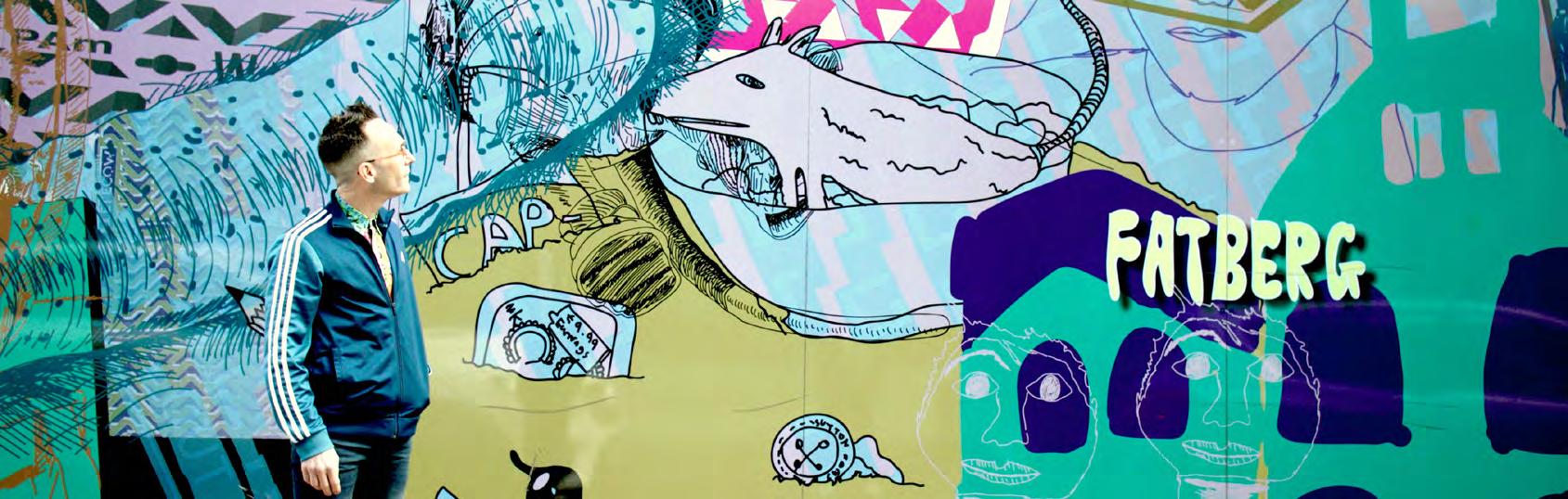
Our approach to reducing the carbon impact of construction has come through realising the opportunities and innovations to make intelligent design decisions based on the principles of lean design along with the use of low carbon materials and efficient processes and technology. Some decisions, such as route selection, were made during the conceptual and design phases before BTL was awarded the licence to build the tunnel.
The initial route selection led to 19% reduction in material use through the selection of a shorter route 199,000
The implementation of the ‘More By River’ initiative to increase the amount of material being transported by river in addition to those agreed under the Development Consent Order continues to deliver the intended results, with over 23 million HGV kms avoided to date.
To date, over 4.5 million tonnes of material has been moved by river, avoiding 275,000 HGV loads (550,000 two-way HGV movements). 14,500 And also an estimated 240 tonnes of NOx (Nitrogen Oxides)
The reduction of the thickness in the secondary lining within the central area which resulted in 16,000m less concrete, saved 7,300 tCO2e and had significant cost savings. 7,300
The introduction of biodiesel into the marine fleet operating in the central area which saved over 400 tCO2e through the use of over 140,000 litres by the end of March 2021
Key decisions made to reduce our construction phase carbon footprint include:
The reduction in the embodied carbon of the concrete in both the tunnel segments and the baseplugs of the shafts. Within the Environmental Statement it was originally predicted that the concrete mix would contain a maximum of 25% cement replacement – such as Pulverised Fuel Ash (PFA) or Ground Granulated Blast furnace Slag (GGBS), however through consultation with the designers it has been possible to achieve up to 75% PFA in the baseplugs and between 25% and 45% GGBS in the tunnel segments whilst still meeting the performance specification. The design of the baseplugs was also amended to adopt a concave design which further reduced the amount of concrete and steel required.
The carbon savings of this design change is currently being calculated with the Main Works Contractors
Other initiatives focused on resource efficiency by monitoring water consumption and office consumables and recycling; energy sources with the use of Renewable Energy Guarantee of Origin REGO) tariff for Tideway’s main office and also our Central and East contractors, FLO and CVB; use of hydrotreated vegetable oil (HVO) instead of diesel and use of telematics; and raising over 63% of our long term financing as green and sustainable debt, tied to the long term benefits of the tunnel.
As part of the process of mapping our Legacy commitments against the UN SDGs, we have mapped our commitment to reduce our carbon footprint against 3 targets that fall under SDG 8 Decent Work and Economic Growth, SDG 9 Industry, Innovation and Infrastructure and SDG 13 Climate Care.
Increases in carbon
Due to the nature of large construction projects, there are occasions when either the design or the construction methodology has to be amended to reduce a particular risk. On Tideway we experienced at least two situations where we needed to use more materials than expected, which led to an increase in carbon consumption. These include:
• Additional stabilisation or grouting being required due to unforeseen ground conditions. This was experienced at both King Edwards Memorial Park Foreshore where additional grout was required and at Blackfriars Foreshore; and
• The increased use of concrete for hardstanding at drive sites such as Kirtling Street which was used to reduce the amount of dust and/ or silt being produced by plant operating on an unmade surface. In this instance, it was determined that additional concrete should be used to reduce a more localised environmental impact affecting the neighbouring properties and personnel working on site.
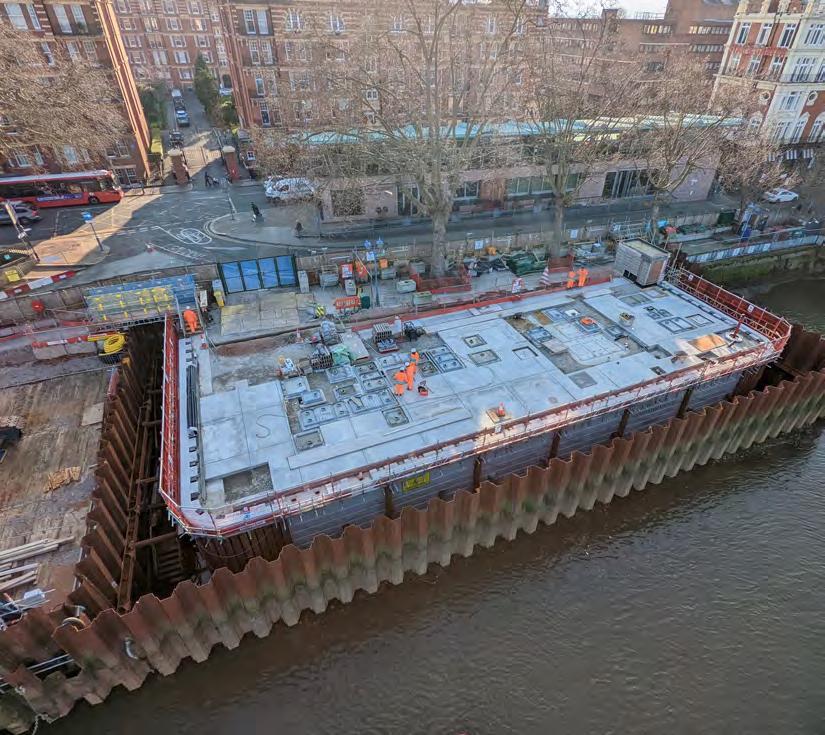
To uncover the impact of our decisions on carbon, during 2021-22 we commenced a project with our supply chain – main works contractors and programme manager – to better understand the carbon implications of how we procured, designed and constructed the tunnel. This project will complete in 2022 – 23 and should provide key lessons learnt for Tideway and future infrastructure projects about how to design, build and measure the carbon impacts associated with major infrastructure assets.
Tideway has developed a robust internal process to validate the calculation of its performance against the KPI as discussed on page 36.
In 2020, we appointed a social value consultant to undertake a robust and comprehensive, evaluation of the social impact of the changes brought about by our Legacy programme. The outcomes from this evaluation will be released during FY 22-23 including five case studies on specific areas of legacy delivery. We will share the findings and lessons learnt with stakeholders and industry, with the hope that future infrastructure projects develop robust frameworks that are designed with evaluation and measurement of social impact in mind.
We have already written a technical paper for an Institution of Civil Engineers journal on how we developed our legacy programme and how we are assessing its social value. The paper outlines best practice methodology in creating a framework to achieve social value and the specific approach and lessons learnt from Tideway.
We have recently appointed a carbon consultant to provide third party verification of our carbon data. The assurance process will commence in Q1 FY 22-23, with findings available at the end of that financial year.
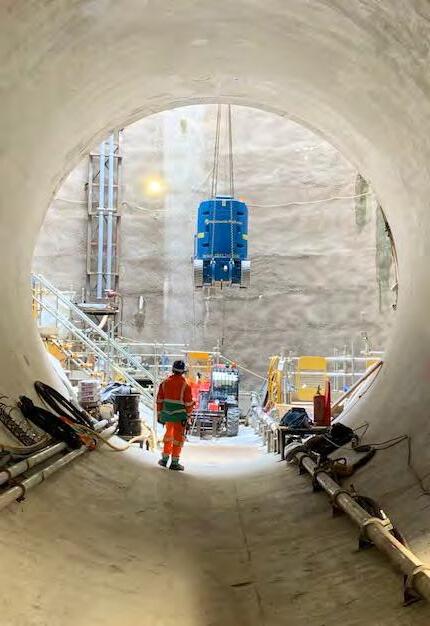
Legacy performance data FY 21-22
5
1
BMB BAM Nuttall, Balfour Beatty and Morgan Sindall Joint Venture (Tideway West)
Carbon Footprint is a measure of the impact activities of a particular individual, organization, or community have on the amount of carbon dioxide (CO2) produced through the burning of fossil fuels and is expressed as a weight of CO2 emissions produced in tonnes.
Construction carbon is the total carbon from the construction phase, including embodied carbon of the materials and those associated with the operation of the plant and equipment.
CVB Costain, Vinci, Bachy Soletanche Joint Venture (Tideway East)
CSO combined sewer overflow
Decarbonisation
the process by which countries, individuals or other entities aim to achieve zero fossil carbon existence. Typically refers to a reduction of the carbon emissions associated with electricity, industry and transport.
EA Environment Agency
Embodied carbon greenhouse gas emissions associated with materials and construction processes throughout the whole lifecycle of a building or infrastructure. Put simply, embodied carbon is the carbon footprint of a building or infrastructure project before it becomes operational.
Emissions the release of GHGs into the atmosphere
ESG Environmental, Social, and Governance. Investors are increasingly applying these non-financial factors as part of their analysis process to identify material risks and growth opportunities.
FLO Ferrovial Laing O’Rourke Joint Venture (Tideway Central)
Greenhouse Gas (GHG)
naturally occurring and manmade gases that trap infrared radiation as it is reflected from the earth’s surface, trapping heat and keeping the earth warm. The Kyoto Protocol covers a basket of six greenhouse gases produced by human activities: carbon dioxide, methane, nitrous oxide, hydrofluorocarbons, perfluorocarbons and sulphur hexafluoride, all measured as carbon dioxide equivalents on the basis of the gases’ global warming potential.
i3P
Established in 2016, the Infrastructure Industry Innovation Partnership (i3P) is a community of client and supply chain organisations that have made a commitment to delivering collaborative innovation through projects supported by a large network of experts and innovators and world leading industry knowledge that will drive the future transformation of the infrastructure and construction industry.
The Thames Tideway Strategic Study was set up in 2000 to investigate the environmental impact of combined sewer discharges into the tidal River Thames and to propose potential solutions to dealing with the pollution and ensure compliance with European Union directive on Urban Waste Water Treatment. The main report published in 2005 led to the tripartite London Tideway Improvements Scheme:
• Improvements to five sewage treatment works (Beckton, Crossness, Long Reach, Riverside and Mogden), which were completed by Thames Water in 2014. These improvements increased the treatment works capacity and enabled the generation of renewable energy from the sludge that results from the treatment process;
• The Lee Tunnel, which became operational in January 2016, collects excess storm flows to prevent discharges at Abbey Mills CSO and stores the captured flow until it can be treated at the upgraded Beckton STW; and
• The Thames Tideway Tunnel. The study considered a number of alternatives, including rebuilding and separating the combined sewerage system and sustainable drainage systems. These are discussed in a report published by the Department for Environment Food & Rural Affairs (Defra) in October 2015: ‘Creating a River Thames fit for our future: an updated strategic and economic case for the Thames Tideway Tunnel’, which also describes the economic benefits of the project.
Net Zero a target of completely negating the amount of greenhouse gases produced by human activity, to be achieved by reducing emissions and implementing methods of absorbing carbon dioxide from the atmosphere.
Ofwat
The Water Services Regulation Authority, or Ofwat, is the body responsible for economic regulation of the privatised water and sewerage industry in England and Wales.
Operational carbon is the total operational carbon of the asset.
Scope defines the operational boundaries in relation to direct (scope 1) and indirect (scope 2 and 3) GHG emissions.
Scope 1 emissions
the reporting company’s direct emissions. Direct (scope 1) emissions are emissions within a company’s organizational boundary from sources that the company owns or controls, like business travel in a company car or the combustion of fuel in the company’s boilers and furnaces.
Scope 2 and 3 emissions indirect emissions result from a company’s activities but from sources owned or controlled by another company. Scope 2 emissions is the reporting company’s indirect emissions from purchased electricity, heat, and steam. Scope 3 emissions is the reporting company’s indirect emissions other than those covered in scope 2.
SuDS Sustainable drainage systems are drainage solutions that provide an alternative to the direct channelling of surface water through networks of pipes and sewers to nearby watercourses.
tCO2e tonnes (t) of carbon dioxide (CO2) equivalent
UKCP09
UK climate projections 2009 produced by the Met Office Hadley Centre. Provides an estimate of the range of model-related uncertainties in the future projections, along with high, medium and low emissions scenarios. The UKCP09 scenarios include probabilistic projections of future climate for each decade up to 2100 in overlapping 30-year time periods. The climate change at the 50% probability level is that which is as likely as not to be exceeded. The 90% probability indicates that there is a 90% chance that the change will be less than this figure.
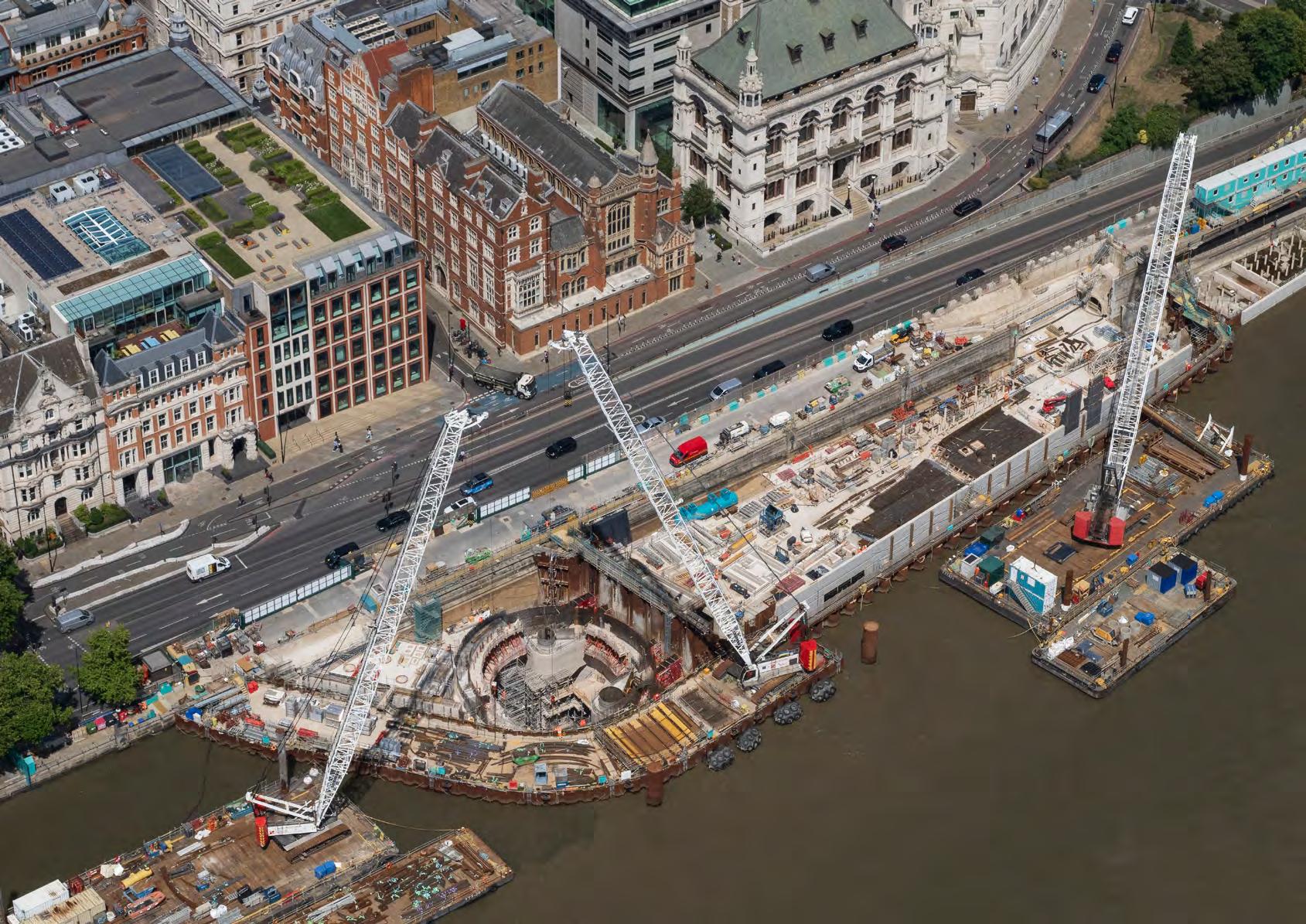
This sustainable finance report has been prepared for information purposes only. The information and opinions contained in this sustainable finance report are provided as at the date of this document and are subject to change without notice.
None of Bazalgette Tunnel Limited, Bazalgette Holdings Limited or Bazalgette Finance plc (together the ‘Tideway Group’) make any warranties or representations as to the completeness or reliability of the information, opinions, or conclusions expressed herein. The Tideway Group is under no obligation to update or revise these materials or to correct any inaccuracies in them which may become apparent, regardless of whether the materials are affected by new information, future events or otherwise. This report is not intended to provide the basis for the evaluation of any debt or other securities issued by any member of the Tideway Group.
This report should not be construed and does not constitute an invitation, recommendation, or offer to subscribe for or purchase or dispose of any debt or other securities of Bazalgette Finance plc or the Tideway Group. Under no circumstances shall the Tideway Group or its affiliates be liable for any loss, damage, liability, or expense incurred or suffered, which is claimed to have resulted from use of this report, including without limitation any direct, indirect, special, or consequential damages, even if the Tideway Group or any member of it has been advised of the possibility of such damages. For additional information concerning the Tideway Group, please refer to the Tideway Group’s current financial statements, and other relevant disclaimers and information available at https:// www.tideway.london/investors/#sub-nav.