TEXAS COACH - (ISSN 0040-4241) - Copyright 2025 Texas High School Coaches’ Association, Inc.
PUBLISHER
TEXAS HIGH SCHOOL COACHES ASSOCIATION, INC.
PUBLISHING/EDITORIAL OFFICES:
2553 N INTERSTATE 35 FRONTAGE RD SAN MARCOS, TX 78666-5924
web: www.thsca.com
Subscriptions: Annual subscription to TEXAS COACH for members of the Texas High School Coaches Association is $20.00, which is included in the THSCA membership dues. For non-members, digital versions of the magazine may be accessed for free at www.thsca.com. Single copies are $5.00 per current volume. TEXAS COACH is published monthly except in June, July, and August and is dated the first of the publication month, although it is mailed around the 10th of the publication month.
Change of address: Request for change of address must reach us 30 days before the date of issue with which it is to take effect. Duplicate copies cannot be sent to replace those undelivered through failure to send advance notice. Email change of address to info@thsca.com or members can go online and make the change in your member portal profile at www.thsca.com.
Periodicals Postage Paid at San Marcos, TX & additional entries. “All rights reserved”. (USPS 540-600).
POSTMASTER Send address change to:
TEXAS HIGH SCHOOL COACHES ASSOCIATION P.O. DRAWER 1138
SAN MARCOS, TX 78667-1138
Printed by Integ in Austin, Texas.
EXECUTIVE DIRECTOR
JOE MARTIN joemartin@thsca.com
ASSISTANT EXECUTIVE DIRECTOR
GLEN WEST glenwest@thsca.com
Chief Operating Officer of THSCA BRIAN POLK brianpolk@thsca.com
Chief Operating Officer of THSCEF
LIBBY PACHECO libbypacheco@thsca.com
Director of Publications & Technology
BECKY ADAMS beckyadams@thsca.com
Director of Administration
MARGARET BEYER margaretbeyer@thsca.com
Director of Media & Marketing
ANNA BUCKALEW annabuckalew@thsca.com
Director of Exhibits & Sponsorships MOLLY FLY mollyfly@thsca.com
Director of Membership
ALLIE HERRMANN allieherrmann@thsca.com
Director of Finance & Accounting
KEVIN SMITH kevinsmith@thsca.com
Director of Hotels & Hospitality CHELSEA MILLER chelseamiller@thsca.com
Jason Richards (interim) region 1 - frenship memorial
chip darden region 1 - lub. cooper
john snelson past-Pres - dickinson
brent davis Pres-elect - Gregory portland
drew sanders President - vandegrift
marcus shavers (interim) region 3 - north forney
Casey Pearce region 2 - Breckenridge
sterling doty region 2 - stephenville
aaron roan region 2 - abl. cooper
andy cavalier region 1 - canadian
jeff ellison region 4 - permian
clint hartman region 4 - midlAND leE
heather woodman region 3 - arl. lamar
ANTONIO WILEY (interim) region 3 - COPPELL marvin sedberry jr. region
terrell
brian randle
b.j. gotte
laqueisha dickerson region 5 - timberview shaun mcdowell region 5 - grand oaks Michael Pry
chris cochran
clint fuller (interim)
rachel torvik
joe hubbard
juan morales region 8
sotomayor
Ben Bitner reg 7 - cc veterans memorial
2025-2026 THSCA ADVISORY COMMITTEES
ATHLETIC DIRECTORS
R-1 Mike Meeks, Lubbock
R-2 Jake Escobar, Comanche
R-3 Jeff Smith, Prosper
R-4 Jaime Boswell, Andrews
R-5 Lance Carter, Katy
R-6 Don Drake, Ennis
R-7 Mike Troutman, Sinton
R-8 Becky Craig, Leander
ATHLETIC TRAINERS
R-1 Isaac Wimberley, Lubbock Cooper
R-2 Billy Abbe, Abilene
R-3 *Mike Harrison, Allen
R-4 Steven Ortiz, Midland Lee
R-5 Aimee Williams, Fort Bend
R-6 Greg Goerig, Midlothian
R-7 Benjamin Garcia, Harlingen
R-8 Chad Hennessey, Georgetown
At-Large Ally Furey, Dell Children's
AQUATICS
R-1 Dakota Tefertiller, Lubbock
R-2 Casey Pacheco, Abl. Wylie
R-3 Tony Arbogast, Flower Mound
R-4 Jessica Minjarez, Pecos
R-5 Ty Halford, Clear Creek
R-6 Dan Marlin, Waco Midway
R-7 Yvonne Moran, Harlingen CISD
R-8 Kari Brothers, Northside
At-Large *Michael Waldmann, Andrews
BASEBALL
R-1 Jed Anderson, Canyon
R-2 Allen McGee, Graham
R-3 Mike Smith, Lake Ridge
R-4 *Juan Orozco, EP Coronado
R-5 Jacob Hooker, El Campo
R-6 Matthew Anderson, Franklin
R-7 Adrian Alaniz, Sinton
R-8 Tom Alfieri, SA Churchill
BOYS BASKETBALL
R-1 Tony Wagner, Estacado
R-2 Justin Reese, Abilene
R-3 Matt Wester, Plano East
R-4 Jason Archibald, Wink
R-5 David Montano, Stafford
R-6 Colten Gober, Venus
R-7 Brandon Bourg, Flour Bluff
R-8 Andrew Brewer, Alamo Heights
At-Large *C.J. Villegas, Frenship Memorial
GIRLS BASKETBALL
R-1 Tate Lombard, Canyon
R-2 *Kenni Patton, Electra
R-3 Monesha Allen, Denton Ryan
R-4 Cynthia Hernandez, Burges
R-5 Christy Westbrooks, Atascocita
R-6 Marcus Willis, La Vega
R-7 Ashley McHugh, Sinton
R-8 Christina Camacho, Antonian
At-Large Brooke Brittain, Mansfield
BOYS CROSS COUNTRY
R-1 Jarrod Thomas, Littlefield
R-2 Glenn Griffin, Holliday
R-3 Landon Wren, Coppell
R-4 Alonzo Samaniego, Presidio
R-6 John Capron, Midway
R-7 *John (Eric) Miller, CC Veterans Mem.
R-8 Kelly Thompson, Leander Rouse
GIRLS CROSS COUNTRY
R-1 Luke Buckner, Shallowater
R-2 Loy Triana, Burkburnet
R-3 Zach Morgan, Rock Hill
R-4 Corina Marrufo, Del Valle
R-5 Josh Hill, Cy-Fair
R-6 Edward DeLaCruz, Waxahachie
R-7 Daniel De La Rosa, McAllen
R-8 *Rachel Freeman, SA Reagan
FOOTBALL
6-Man Josh Stanaland, Jayton
R-1 Jason Richards, Muleshoe
R-2 Kyle Atwood, Holliday
R-3 *Joe Castillo, Frisco Centennial
R-4 Thad Fortune, Midland
R-5 Rick LaFavers, Ridge Point
R-6 Sam Wells, Troup
R-7 Travis Chrisman, Ingleside
R-8 Brad Molder, New Braunfels
BOYS GOLF
R-1 Justin Wilborn, Lubbock Cooper
R-2 Mitch Aston, Abilene Cooper
R-3 Owen Clifton, Glen Rose
R-4 Mark Burgen, Andrews
R-5 Jason Jezek, FB Clements
R-7 Celso Gonzalez, McAllen Mem.
R-8 Michael Rome, Westlake
At-Large Paige Martin, Southlake
GIRLS GOLF
R-3 Kerry Gabel, FM Marcus
R-4 Shelbye Hill, Odessa
R-5 *Angela Chancellor, Kingwood Park
R-6 Liz Gray, Springhill
R-7 Jennifer Rangel, McAllen
R-8 Russell Aki, SA Reagan
At-Large Brent McCuiston, Alamo Heights
BOYS SOCCER
R-2 Tony Vu, San Angleo Central
R-3 Alexi Upton, Royse City
R-5 *Ben Powell, Bellville
R-6 Hector Peralez, Kilgore
R-7 Julian Robles, Harl. South
R-8 Juan Romero, SA Southwest
At-Large Jason Meekins, Katy Jordan
GIRLS SOCCER
R-2 Alexis Mosqueda-Walker, Brownwood
R-3 Kelly Thompson, Allen
R-4 Stephanie Sazo, EP Del Valle
R-5 *Evelyn Torres, Ridge Point
R-6 Andrew Procell, Corsicana
R-7 Matthew Kaiser, McAllen Memorial
R-8 Corey Elrod, Leander Rouse
*DENOTES CHAIR
SOFTBALL
R-1 Styler Haddock, Canyon
R-2 Jenna Aguirre, Abilene
R-3 *Kathy Schoettle, Allen
R-4 Carol Vaughn, Andrews
R-5 Katie Roberts, Brenham
R-6 Jordan Williams, Midway
R-7 Audra Troutman, Sinton
R-8 Maggi Welham, East Central
At-Large Jason Keller, Shiner
TENNIS
R-1 Darby Norman, Canyon Randall
R-2 *Carrie Castleberry, Vernon
R-3 Sylvia Sims, Frisco Heritage
R-4 Ray Perez, Midland Lee
R-5 Daniel Marshall, A&M Consol.
R-7 Eddie Marquez, Roma
R-8 Adnrew Duong, Comal Canyon
At-Large David DeLeon, Canyon
BOYS TRACK & FIELD
R-1 Jon Murphy, Stratford
R-2 Levi Keith, Abilene Cooper
R-3 *Janson Head, Denton Ryan
R-4 Brien Burchett, Greenwood
R-5 Jason Haddock, Wharton
R-6 Josh Rankin, Longview
R-7 Bob Bechtold, McAllen
R-8 Daryl Jones, Taylor
GIRLS TRACK & FIELD
R-1 Crista Jones, Lub. Monterey
R-2 *Jeremiah Butchee, Stephenville
R-3 Ashley Broom, Sunnyvale
R-4 Robert Ontiveroz, Monahans
R-5 Shelton Ervin, Summer Creek
R-6 Jordan Johnson, Midway
R-7 Stacy Zamzow, Goliad
R-8 Jen McHugh, SA Reagan
VOLLEYBALL
R-1 Kelly Lozada, Lubbock Monterey
R-2 Shay Douglas, Stephenville
R-3 Jennifer Chandler, Northwest
R-4 Heather Archibald, Wink
R-5 *Jenny Adcock, Stratford
R-6 Arden Johnson, Troup
R-7 Ariana Bermea-Mendoza, Alexander
R-8 Kayla Allen, Anderson
At-Large Kristina Finger, D'Hanis
BOYS WRESTLING
R-1 Dalton Clear, Canyon
R-2 Brock Payne, Vernon
R-3 *Kyle Stevens, Anna
R-4 Oscar Norez, EP Montwood
R-5 Vinnie Lowe, Katy
R-6 Collin Stroner, Midlothian Heritage
R-7 Donald "Ed" Arvin, CC Veterans Mem.
R-8 David Burdick, Vista Ridge
GIRLS WRESTLING
R-1 Tyler Frausto, Canyon
R-3 Tiffany Mangini, Flower Mound
R-4 Stephen Scott, EP Franklin
R-5 *Nicholas Johnson, Cy-Woods
R-7 Ronald Pratt, Rio Grande City
Teaming Up With Texas Since 1975
Fifty years ago, Sam Walton handpicked the town of Mount Pleasant for its first Texas-based Walmar t. It’s not just about building stores and clubs it’s about investing in associates, backing Texas manufacturing, par tnering with teachers, suppor ting local businesses and giving back to communities from El Paso to Texarkana, Amarillo to Brownsville and more than 500 other locations in between.
Learn how we’re making a difference in the Lone Star State at Walmar t.com/Texas.
FROM THE PRESIDENT
To the best coaches in the nation,
March 2026
When I was an assistant coach, I spent the majority of my time in the San Antonio area working for a coach named Lee Bridges. Coach Bridges has since retired and is now in the THSCA Hall of Honor, but a lot of what I learned from working for him and simply observing him still sticks with me to this day. We enjoyed some very successful seasons and coached a lot of great kids, but I’ll never forget one evening after a tough Friday night loss. I was lamenting the fact that my defense didn’t play very well. Coach Bridges simply said, “Just turn on the tape and correct what you see, because it’s never as good as it seems, and it’s never as bad as it seems.” That saying stuck with me. I did turn on the tape, and you know what, he was right. We went back to work on Monday trying to correct all of our mistakes.
You see, as coaches we can begin to think the entire world is watching us—that the outcome of the next game or competition determines our entire life or career. While we all feel like this at times, it’s just not true. I distinctly remember that I was so stressed about the results and the outlook at my current high school that took, and I believed it was as bad as it seemed. After several conversations with the best coaching wife in the business, I decided to keep going; and I realized again that my job was simply to do my work and leave the results to the good Lord above.
season at Vandegrift. In my first meeting with parents of Vandegrift kids to introduce the new coach during the Q&A section I had a parent ask, “How long that first season went along, it wasn’t going great. I had several players quit the week leading up to a key game, a few injuries piled up, and as I probably recall it, maybe my dog died too. It was a rough week. Once again though, it wasn’t as bad as it seemed; and we ended up
history, winning all our games in good team, and at the time it felt like my school and my career would never get over the hump. Again, it’s never as bad as it seems. You would think full respect of every member of my community; but I’ve still had several parent meetings just this year wondering what in the world is going on with the
My point to the coaches out there reading this and feeling the pressure of our job is simply this: First, the pressure we put on ourselves isn’t necessary. It doesn’t help the situation, whatever it may be; and it may even hinder it. Second, whatever your problem is—and I’ve had several just this week: upset stakeholders, kids wondering about their role, other sport issues, best you can and move on. Feeling like your entire career hinges on this one problem simply isn’t true and will just keep you stuck where you are.
My encouragement to you from an old coach is this: control the controllables, care about kids, and let the results go. If you do that long enough, one day you’ll look back on your career and realize the wins took care of themselves; and that you may even realize that maybe
Moving on to THSCA news—Golf, Track, Baseball, Softball and Tennis Academic All-State nominations due April 15th. Super important news- Registration for Coaching School and Membership renewal for 25-26 is now open. Don’t forget about the Texas Coaches Leadership Tour at texasleadershiptour.com. A huge congratulations to the Basketball State Champions, what a lifelong accomplishment. Don’t forget the Super Elite/Coach of the Year nomination forms for basketball. We want
Thank you for taking the time to read this—and more importantly, thank you for who you are and what you do. You matter making difference—one kid at a
Drew Sanders, THSCA President
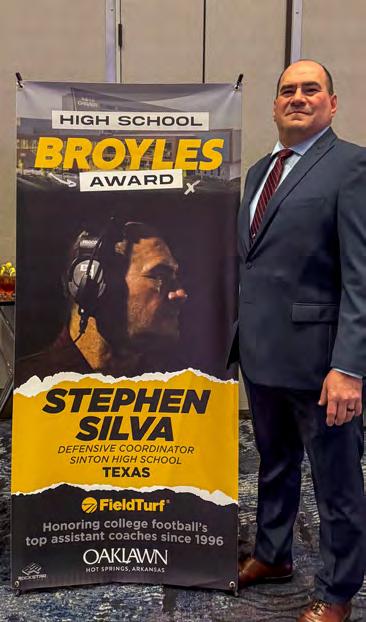
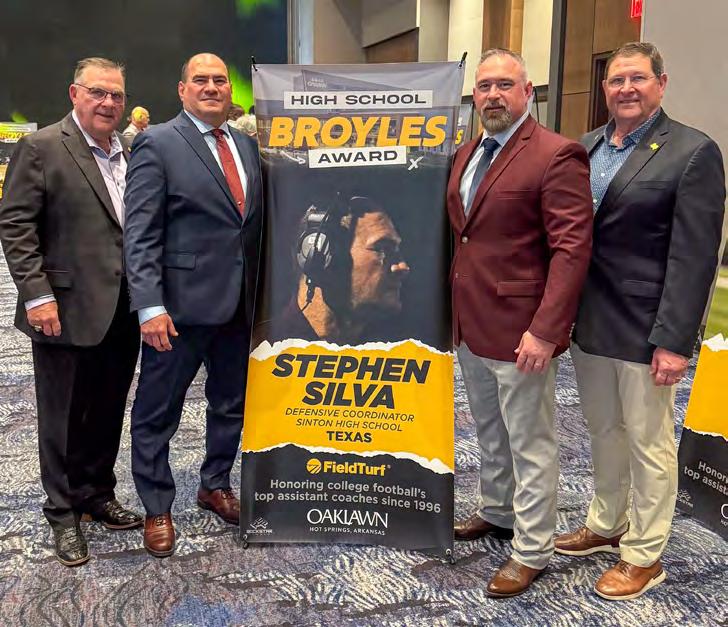
Congratulations to the Texas High School Broyles Award Recipients:
2025: stephen silva defensive coordinator | Sinton HS
A Texas based Football Camp that develops young Quarterbacks & Receivers through proper instruction and training. Established in 1990, Air It Out has left a lasting impact on many young players lives; not only through what they learned on the football field, but through leadership and teamwork exercises that can be used in their professional lives in the future.
Coach Chuck Cotton Memorial Scholarship
Coach Chuck Cotton’s youngest daughter, Colby Leigh Cotton of Austin, along with her two sons, Dalton & Dylan Cotton are offering their Annual Scholarship to a child athlete of a coach!
Applications will be accepted February 1, 2026 April 15, 2026 The 2025 - 2026 winner will be announced on May 15, 2026.
See rules and download the application at www.CoachCotton.org info@CoachCotton.org (512) 577.7952
Obituary
COACH ALLEN QUENTIN GRATTS, JR.
Allen Quentin Gratts, Jr. was born on March 7, 1967 and raised by Allen Quentin "Bill" Gratts and Camille Gratts. He passed from this life on February 8, 2026. A member of Mt. Zion Baptist Church, Allen lived a life rooted in faith, family, and basketball.
A 1985 graduate of Weatherford High School, he was a three-sport athlete in basketball, baseball, and track & field. He continued his basketball career at Weatherford College and earned a Bachelor of Science in Secondary Education from Texas A&M University–Kingsville in 1989.
Allen devoted his life to coaching and mentoring young men. He served as Assistant Boys Basketball Coach at Paschal High School and Cleburne High School before becoming Head Boys Basketball Coach and Athletic Coordinator at Arlington Bowie High School. Over his distinguished career, he achieved 564 wins, served on the Texas High School Coaches Association Board.
Among his many accomplishments were coaching athletes who went on to achieve great success, including former #1 overall NBA draft pick and All-Star starter, Cade Cunningham (Detroit Pistons); Weber State’s all-time three-point leader, Jeremy Senglin (Washington Wizards); Houston/Texas Tech All-Defensive guard, Kyler Edwards (Oklahoma City Thunder); and future NFL player, DJ Campbell. He retired in June 2025, leaving behind a legacy that will endure for generations. Beyond the court, Allen was an avid golfer and enjoyed muscle cars and time with friends.
Obituary
COACH HERBERT NEAL QUILLIN
Coach Neal Quillin, beloved husband, father, grandfather, friend and man of great faith, passed away on February 14, 2026. Herbert Neal Quillin was born on July 3, 1944 in Jacksonville, Texas, where he spent his formative years until he left for college. His life was shaped by loving parents and the wonderful East Texas town of Jacksonville. His love of football and coaching was influenced by his dad and his high school football coach, Dick Sheffield.
Neal graduated from Stephen F. Austin State University in 1965 where he played defensive tackle for the Lumberjacks. He earned his master’s degree from SFA in 1968. From 1965 to 1978, Coach Quillin served as an assistant coach at Nacogdoches, Jacksonville, Irving, DeRidder, Bonham, Pine Tree, and Dulles high schools. In 1979, he accepted his first head coaching position at Willowridge HS, where he led the Eagles through 1983, capturing three district championships and a state championship in 1982.
From 1983 to 1989, Coach Quillin was head coach at Langham Creek. In 1989, he became head football coach at Aldine Nimitz HS for one year before taking over as head coach at Humble HS in 1990. During his tenure, the Wildcats reached the state semifinals in 1995, were regional finalists in 2001 and 2002, and were bi-district champions in 1991 and 1998. Overall, Coach Quillin’s teams won or shared eleven district championships and made fifteen state playoff appearances. He also mentored countless players who went on to play college football, including ten who reached the NFL.
Among Coach Quillin’s many honors were nine District Coach of the Year awards, five Houston Touchdown Club Coach of the Year nominations—winning in 1995—and the prestigious Tom Landry Award in 1996. He was inducted into the Greater Houston Coaches Association Hall of Honor, the SFA Jacks of Honor, and the THSCA Hall of Honor. Coach Quillin considered his proudest recognition to be his election to the THSCA Board of Directors and his service as the association’s president in 1997-1998. He retired in 2005 and became Assistant Athletic Director for Humble ISD, then returned to the field as defensive line coach at Atascocita HS, with his son John, from 2006 to 2012. In 2012, he officially hung up his whistle and devoted his time to his church, children, grandchildren, golfing buddies, the Astros and traveling the world with the love of his life, his wife of 54 years, Linda.
While Neal was passionate about coaching football and mentoring the young men who played for him, he was also zealous in his commitment to Jesus Christ. Neal was also a devoted Bible and LifeGroup teacher for many years at the churches he attended throughout his life. Throughout his coaching years, Coach Quillin led Fellowship of Christian Athlete huddles in the high schools where he worked.
PRACTICE PLANNING TO GAME PLANNING:
COACHING THE OFFENSIVE LINE WITH PURPOSE
BY BILLY RUSHING
FRENSHIP MEMORIAL HIGH SCHOOL
From Practice Planning to Game Planning: Coaching the Offensive Line with Purpose
By Billy Rushing, Offensive Line Coach, Frenship Memorial High School
When it comes to coaching offensive linemen at the high school level, there’s one truth I’ve learned: technique matters, but execution wins games.
In a perfect world, every lineman would come equipped with ideal size, strength, and footwork. In reality, we coach what we’ve got—and that means adapting our teaching to fit the players in front of us. If you only know how to teach one technique or one way to block a play, you’ll struggle to reach kids with different body types, athletic abilities, or learning styles.
That’s why flexibility in coaching is key. I believe in building a toolbox of techniques and teaching methods that allow each player to find what works for them. Whether it’s a 6’3” 280-pound tackle or a 5’10” 210-pound guard, every lineman can contribute if they understand leverage, angles, and assignment.
Practice Planning with Purpose
Our practice plans are built around intentional reps. We don’t just run drills—we coach movements that translate directly to Friday night. That means:
• Teaching multiple ways to achieve a block, not just one.
o Learning to square our bodies on vertical doubles and close cover the DL on a down or back double team.
o Learning how to work together and when you must win the solo.
o Learning how to run to the half of a defender to achieve the block.
• Emphasizing leverage over mass—especially for undersized linemen.
o Learning how to work half a man in Pass Pro & Run game
o Learning how to settle hips and block in space
o Using the Defensive Linemen momentum against him
• Using film and walk-throughs to reinforce mental reps.
o Drone film is a great way to see first steps and head placement
o Kids are not always able to feel a mistake; but when they see the mistake, they can understand how to fix the issue
o Walk-throughs should be quick and work all the different calls that may be used within a given play.
o Slow down in film. Covering ten plays well is better than rushing through 50 plays.
• Creating competitive periods where players must adapt on the fly.
o Good on Good Chute work – communicate with the DL coach about what they need to see and work for each other. Use the time to slow down and teach; don’t rush through opportunities to correct technique in the moment.
o Good on Good Pass Pro – work both 1 on 1 and full-line sets to learn the fight and the protection. Don’t forget to work your Boot and sprint-out protections in these good-on-good settings.
o Schedule 3rd down and Redzone good-on-good. Have a winner and a loser in each of the sets. Finish Monday and Tuesday with good-on-good. Don’t let Friday be the first time a snap means something.
Technique is the foundation, but adaptability is the bridge to success.
Game Planning for Execution
When we build our game plan, we ask: What can our guys do well? Not what looks good on paper, but what our line can realistically execute against the defense we’re facing. That might mean:
• Adjusting splits to create better angles.
o Allow your linemen to use different splits and vertical alignment as they learn the offense. This will give them ownership and allow your alignment to look different to those scouting you.
• Your offensive line needs an identity – Slogan something to buy into.
o Give them schemes and opportunities to live up to that identity.
o Adjust to your kids – you can believe in a play or design; but if the kids are not performing well within a certain play, find what THEY do well.
o Be who you are as a coach; however, you need the kids to perform. Adjust to them and mold them into what you want them to become.
• Using formations to simplify reads and reduce confusion.
o Have a language that is unique to your line, and allow them freedom to develop it. They will take ownership in this way.
o Help your linemen by removing people from the box, and giving them as clear of a picture as you can.
o Be multiple without changing your play or attack points
The goal is always the same: put our linemen in a position to succeed.
Final Thoughts
At the end of the day, coaching the offensive line is more than just X's and O's. It’s about developing problemsolvers, building confidence, and helping young men find success through hard work and smart football. If you can teach a kid to use his body, understand leverage, and trust his technique—no matter his size, you’ve done your job.
Reliable In-Game Video Replay
• Analyze plays in the coaches’ booth
• Use our favorites and data to optimize your halftime strategy
• Videos are stored locally on iPads, allowing you to easily watch in the locker room and on the bus ride home
“SkyCoach allows our staff to see what is happening in between series and make needed in-game adjustments on the fly.”
- Ian Nichols, Mill Valley Assistant Coach
Struggling with your current replay system?
It’s NOT too late to sign up with SkyCoach!
WESTWOOD HIGH SCHOOL
ABILENE CHRISTIAN ABILENE, TX
wit wisdom&
LOYALTY
“The man who complains about the way the ball bounces is likely the one who dropped it.”
“Great teamwork is the only way we create the breakthroughs that define our careers.”
Pat Riley
“Coming together is a beginning, staying together is progress, and working together is success.”
Henry Ford
“None of us is as smart as all of us.”
Ken Blanchard
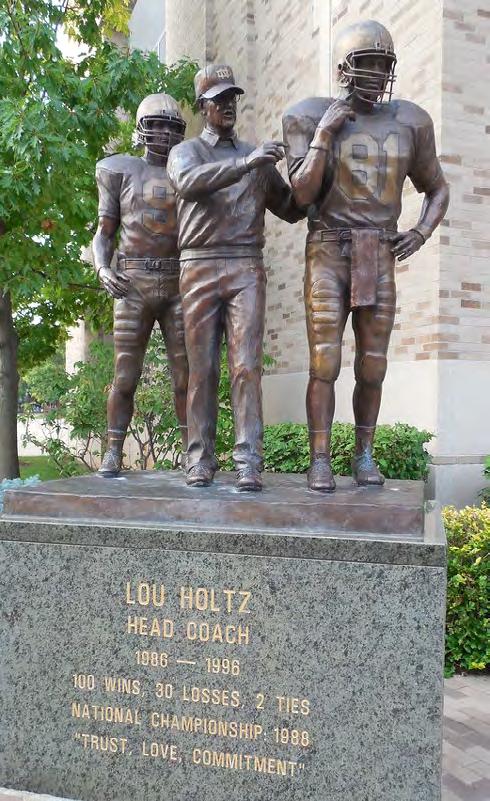
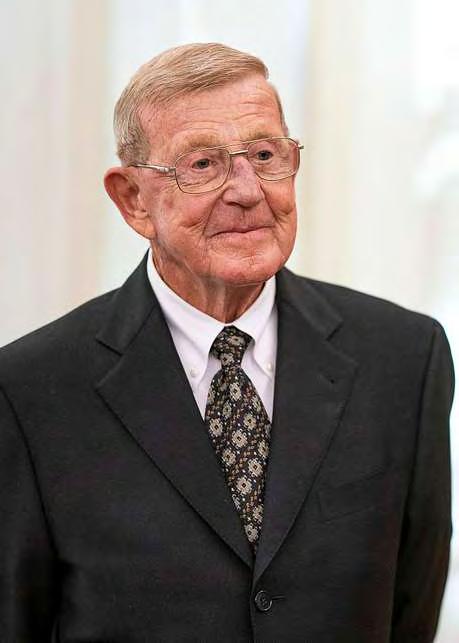
LOU HOLTZ
“Don’t ever promise more than you can deliver, but always deliver more than you promise.”
“You might not be able to outthink, outmarket or outspend your competition, but you can outwork them.”
“It’s not the load that breaks you down, it’s the way you carry it.”
“You’ll never get ahead of anyone as long as you try to get even with him.”
“It’s good to be successful, but it’s great to be significant.”
“Ability is what you're capable of doing. Motivation determines what you do. Attitude determines how well you do it.”
Lou Holtz
CURIOSITY
“Be less curious about people and more curious about ideas.”
Marie Curie
"I have no special talent. I am only passionately curious.”
Albert Einstein
“Curiosity is one of the permanent and certain characteristics of a vigorous intellect.”
Samuel Johnson
“The purpose of life is to live it, to taste experience to the utmost, to reach out eagerly and without fear for newer and richer experience.”
Eleanor Roosevelt
around the state
around the state
VOLLEYBALL NET SYSTEMS
BLOOD FLOW RESTRICTION TRAINING (BFRT): WHAT IT IS, THE RISKS, & SAFETY
By: Hannah Campbell | LAT (Dell Children’s)
What Is BFRT?
Blood Flow Restriction Training uses a belt or tourniquet to partially or fully block the flow of blood to a limb during exercise. The pressure used is moderate, and the training intensity is light. This triggers the endocrine system (think hormones that aid in muscle recovery) by triggering the brain to think that the muscles aren’t getting enough oxygen, creating metabolic stress with less muscle damage than with a regular HIIT workout. This creates an ideal anabolic muscle environment for muscle hypertrophy and recovery (Abe et al., 2010; Beaven et al., 2012; Arriel et al., 2020).
What Are The Benefits of BFRT?
When used with low-intensity resistance exercise and aerobic exercise, BFRT:
• Helps increase muscle mass
• Improves strength
• Enhances aerobic capacity (VO₂ max)
• Aids in recovery post-workout
• Reduces pain
• May improve bone health
• Can help with weight loss
• Can improve a tendon’s ability to withstand force, stiffness, and stretch, as well as its size, shape, and composition
Studies show that BFRT accelerates recovery and neurological function and reduces postexercise muscle soreness (Abe et al., 2010; Beaven et al., 2012; Arriel et al., 2020). Return blood flow causes muscles to swell with blood. The body wants to adapt to the stress, releases recovery hormones, and triggers more muscle protein synthesis, which is essential to muscle repair and recovery.
Training to near failure is essential to avoiding atrophy while recovering from an injury. BFRT increases strength and muscle size even when using lighter weights than required for regular strength training (de Smidt, 2025).
How to Mitigate Risks
We can mitigate risks when patients are properly screened and exercises are done
within the correct parameters, such as pressure and intensity, as well as using the guidelines in the tables above in determining who is eligible is key to safety (Bond et al., 2019). The guidelines for eligibility are listed below: (No BFRT if more than 4 points)
History of DVT
Acute sickness or fever
Blood pressure > 180/100mmHG
Early post-op period
High-class arrhythmia or coronary ischemia
Pregnancy
Varicose veins
Prolonged inactivity
A-Fib or heart failure
Blood pressure: 160-179/95-99mmHg
Age > 60 years
BMI > 30kg/m^2
Malignancy
Hyperlipidema
Estrogen therapy
Age 40-50 years
Women
BMI 25-30 kg/mm^2
What BFRT Is NOT:
5 points
References
Abe, T., Fujita, S., Nakajima, T., Sakamaki, M., Ozaki, H., Ogasawara, R., et al. (2010). Effects of low-intensity cycle training with restricted leg blood flow on thigh muscle volume and VO2max in young men. Journal of Sports Science and Medicine, 9, 452-458.
Anderson, F. A., Jr, & Spencer, F. A. (2003). Risk factors for venous thromboembolism. Circulation, 107(23 Suppl 1), I9-I16. https://doi.org/10.1161/01. CIR.0000078469.07362.E6
4 points
3 points
2 points
1 point
• A magic pill: You still need to work hard, eat right, and get sufficient sleep.
• Occlusion Training: Restriction isn’t occlusion. Full arterial occlusion is not desired, but BFRT does provide full venous occlusion.
• Only for athletes: BFRT is ideal in rehab settings.
• Just a strap or band: Proper pressure must be safely determined.
• Easy: It is just as intense as high-intensity, heavy training. Soreness and fatigue are expected. Training to near failure is essential for results.
Arriel, R. A., Rodrigues, J. F., Souza, H. L. R. D., Meireles, A., Leitão, L. F. M., Crisafulli, A., & Marocolo, M. (2020). Ischemia–reperfusion intervention: From enhancements in exercise performance to accelerated performance recovery—A systematic review and meta-analysis. International Journal of Environmental Research and Public Health, 17(21), 8161.
Beaven, C. M., Cook, C. J., Kilduff, L., Drawer, S., & Gill, N. (2012). Intermittent lower-limb Occlusion enhances recovery after strenuous exercise. Applied Physiology, Nutrition, and Metabolism, 37(6), 1132-1139.
Bond, C. W., Hackney, K. J., Brown, S. L., & Noonan, B. C. (2019). Blood flow restriction Resistance exercise as a rehabilitation modality following orthopaedic surgery: A Review of venous thromboembolism risk. Journal of Orthopaedic & Sports Physical Therapy, 49(1), 17-27. https://doi.org/10.2519/jospt.2019.8375
de Smidt, P. L. (2025). Blood flow restriction training: Understanding the safety, mechanisms, and efficacy (2nd ed.). Home CEU. Uematsu, A., Mizushima, Y., Ishizaka, H., Hortobágyi, T., Mizushima, T., Toyoda, S., & Nakajima, T. (2023). Blood flow restriction reduces the increases in cardiorespiratory responses and subjective burden without inhibiting muscular activity during cycling at ventilatory threshold in healthy males. PLoS One, 18(12), e0294524.
BUILT-IN SEGMENT TIMER
DISPLAYS AND ANNOUNCES PERIOD NAME AND NUMBER
SPEAKERS SWIVEL AND ROTATE 360°
CUSTOMIZE GRAPHICS FOR YOUR TEAM
HEAVY-DUTY LOCKABLE WHEELS FOR EASY TRANSPORT
4.0 COMPATIBLE
BUILT-IN 25/40 SECOND CLOCK
RICH, BOLD AUDIO PERFORMANCE AND IMMERSIVE SOUND
12” SUBWOOFER FOR MASSIVE, DEEP BASS
FEATURES:
NEW & IMPROVED TEMPO® PRACTICE MANAGEMENT
• Drive the pace of practice by keeping it moving
• Displays and announces periods
• Practice with structure and organization
SUPER POWERFUL SOUND
• Simulate loud and hostile game day environments
• Motivate and energize your players
• Stay in communication from anywhere on the field
WEATHER-RESISTANT TO ENDURE HARSH ELEMENTS
• Bright, sunlight-readable screen
• Water-resistant, crystal-clear 4k display
• One tool - Use it anywhere on or off the field WHAT CAN TEMPO MAV PRO DO FOR YOUR PROGRAM?
The Proven Leader in Coaching Communication
DIGITAL TICKETING IS NOW PART OF THE FAN ENGAGEMENT SUITE.
Fan-friendly and easy to manage. Meet Hudl Tickets.
Everything in one place.
Fans can watch live games and highlights, see schedules, and now buy tickets, all in one place.
Completely customizable. Choose your pricing, ticket types, capacity and single or multi-game ticketing.
No added cost.
It’s free to add Hudl Tickets to your organization.
More efficient entry.
Each ticket holds a QR code that fans scan at the gate, giving them direct entry in seconds and reducing lines. No minimums.
There are no minimums on tickets sold. Sell as many or as few as you’d like.
Let Hudl do the setup.
Let us know which events you want to offer digital ticketing and we’ll set it up for you.
Better reporting and security.
Digital sales simplify the accounting, security, and reporting process. Get a real-time look at who purchased tickets, tickets sold, and revenue generated.
Make your live events easier to attend. Get started with Hudl Ticketing at: hudl.com/solutions/fan/ticketing
A Word from the Sidelines A Word from the Sidelines
Navigating the New Playbook for Texas Coaches
By Anna Draker, Esq., M.S.Ed.
As a fellow educator and coach, now viewing the field from a legal perspective, I want to speak directly to you. I’ve stood where you stand. After 27 years in public education as a head coach, teacher, and administrator, I understand the weight of your responsibilities. Every coach in Texas knows this fundamental truth: you cannot control the arena, only your preparation. Today, that preparation must extend beyond the game plan and into the intricate landscape of the law.
The 89th Texas Legislative Session introduced sweeping changes, tightening accountability and raising the bar for compliance. Our core mission remains the same: building athletes, discipline, and culture; but new laws have heightened expectations regarding student safety, mandatory reporting, and personal liability. Adaptation is no longer optional; it is a critical component of our professional playbook.
The Acceleration of Duty: Mandatory Reporting
Timing is now critical. Under Senate Bill 571, the legal framework for mandatory reporting has undergone substantial revision. Texas law now mandates that you report suspected child abuse or neglect within 24 hours of having reasonable cause. The previous 48-hour window has been cut in half. This single change embodies a profound shift: it is not just policy, but a demand for heightened vigilance and personal responsibility.
This deadline is rigid. The legal “shot clock” ticks twice as fast, and noncompliance can result in administrative penalties, loss of certification, or fines. More seriously, in cases involving intent to conceal, failure to report may be prosecuted as a State Jail Felony.
Case Example: You notice unexplained injuries on a student-athlete during practice. Trusting your instincts and your knowledge of the new law, you must document your observations immediately and submit a report within that 24-hour window. The duty to act is yours alone. Section 261.101(b) of the Family Code clarifies that “a professional may not delegate to or rely on another person to make the report.” This responsibility is individual, non-transferable, and immediate. Waiting to consult with colleagues or administrators is no longer a viable option.
This diligence to act not only protected the student but shielded the coach from later accusations of negligence.
Systemic Changes to the Texas Education Code
SB 571’s reach extends across the Texas Education Code (TEC) by doing the following:
• Creating Chapter 22A which consolidated all misconduct reporting requirements for certified employees, non-certified staff, and contracted service providers into a single, comprehensive framework.
• Strict 24/48-Hour Reporting Windows: 1. State Reporting: Superintendents must report evidence of specific misconduct to the Texas Education Agency (TEA) within 48 hours. 2. Abuse Reporting: Shortens the deadline for school professionals to report suspected child abuse to law enforcement or DFPS from 48 hours to 24 hours.
• Mandatory “Do Not Hire” Registry & Affidavits: 1. Universal Reach: Expands the registry (moved to TEC § 22A.151) to include all campus personnel, including contractors and volunteers. 2. Pre-Employment Affidavits: Under the new
TEC § 22A.055, all applicants must submit a TEAapproved affidavit disclosing past investigations or criminal history.
• Expanded Definition of Misconduct: Reportable offenses now explicitly include physical mistreatment without injury, inappropriate communications, solicitation of romantic relationships, and failure to maintain professional boundaries.
• Enhanced TEA & SBEC Authority: 1. Grants the TEA power to investigate uncertified educators. 2. Allows the State Board for Educator Certification (SBEC) to temporarily suspend a certificate if an educator is arrested for specific felonies or deemed an imminent threat.
• Parental Notification (TEC § 22A.053): Requires school boards to adopt policies for notifying parents when an employee or contractor is alleged to have engaged in misconduct with their child.
• Felony Penalties: Establishes that a superintendent who intentionally fails to report misconduct to conceal a person’s criminal record commits a state jail felony.
SB 571 requires school boards to develop and maintain robust policies on sexual abuse, sex trafficking, and maltreatment. These policies must be deeply integrated into every facet of district operations, from improvement plans to campus training and communications with students and parents.
Case Example: Imagine a parent goes to the principal and reports that you, the coach, engaged in “excessive discipline” during practice. Alleging that you grabbed a player’s facemask and proceeded to verbally threaten them. Under the new rules, the school might place you on administrative leave. The reporting protocol follows a strict timeline: the principal has 24 hours to report to the Texas Department of Family and Protective Services (DFPS/CPS) if there is reasonable cause to believe abuse occurred. From there, a cascade of notifications to the Superintendent and the State Board for Educator Certification (SBEC) must follow. Even if you resign, the school remains legally obligated to investigate and report.
A significant repercussion is the potential placement of an “investigative flag” on your public record within the SBEC database. This flag serves as
a public alert to other districts, effectively barring you from securing new employment while an investigation is ongoing. The consequences can range from sanctions like reprimands and suspension to permanent placement on the Do Not Hire Registry. Even minor physical interactions, if interpreted as mistreatment, can precipitate the end of a career.
Another Case Example: A district’s volunteer athletic trainer, not technically an employee, was implicated in an incident of inappropriate behavior with students. Because the law defines “professional capacity” broadly, the same expectations and reporting requirements are applied. The school’s lack of clear onboarding for volunteers led to compliance failures, prompting the district to overhaul training and documentation for every adult in contact with students.
Deepening Legal Compliance: Practical Steps
Legal compliance is far more than a box to check, it is a mindset; one that mitigates risk and forms the backbone of professional integrity. Policies shift, language evolves, and each line of legislation can require reinterpretation in the field. For educators and coaches, the challenge is not just reading the policy manual, but translating those words into daily practice.
Key Strategies for Compliance
• Ongoing Professional Training: Be proactive in seeking out regular training on new laws and district policies. Districts should provide annual refreshers, but take initiative to attend webinars, consult legal updates from educator associations, and ask questions at staff meetings.
• Clear Reporting Protocols: Familiarize yourself with district decision trees and incident-reporting templates. Having these resources at hand during stressful moments saves precious time and reduces uncertainty.
• Culture of Transparency: Foster an open environment where questions are welcomed. Encourage colleagues to share concerns and “comply out loud,” making the act of reporting a visible norm that strengthens community trust.
The Importance of Documentation
Your records are your lifeline. Document every incident, no matter how minor, including what you
observed, when, and any steps you took. Use districtapproved, secure digital portals for every submission; these time-stamped entries serve as impartial witnesses if called upon in future proceedings.
Practical Advice: Keep a daily coaching log. Note any behavioral or injury concerns, parent communications, and discipline actions. Over-document rather than under-document. If an incident is later questioned, this log can demonstrate a consistent pattern of professional conduct.
The Erosion of Immunity
Historically, the Texas Tort Claims Act provided educators with broad protection from lawsuits. House Bill 4623, however, significantly limits this immunity. If a district or employee is found to be grossly negligent, reckless, or engages in intentional misconduct related to sexual misconduct or failure to report, they can be sued directly. Governmental and official immunity is waived in these cases, exposing both the individual and the district to liability for damages and legal fees.
This signals the end of informal resolutions. In the past, an administrator might have asked you to “handle” a behavioral issue quietly. Today, such an approach is a direct legal liability. Any attempt to resolve concerns “off the books” can have severe consequences. Every allegation or suspicion, however minor, must be documented and reported through proper channels immediately.
Case Example: Principal Lewis received a complaint regarding inappropriate messages from a coach. Opting for a verbal warning without documentation seemed the path of least resistance. Instead, it opened him and the district to legal consequences when more serious evidence later came to light. This illustrates the new imperative: document and report, always.
The Strategy of Defense: Proactive Steps for Your Career
In this climate of heightened accountability, a reactive stance is a liability. Your professional security demands a proactive framework of personal defense. Consider the strategies below as essential armor in your day-to-day work:
1. Align with Professional Bodies: Organizations like the Texas High School Coaches Association (THSCA) offer essential resources, including professional
liability insurance. This coverage provides a critical layer of financial and legal protection against allegations. (This insurance only applies if coverage is purchased before the incident in question.)
2. Prioritize Individual Vigilance: Ignorance of new statutes is not a defense. Commit to continuous professional development focused on legal updates and compliance. An informed coach can anticipate issues before they escalate.
3. Cultivate Meticulous Documentation: Your records are your most reliable witness. Diligently document student interactions, parental communications, and any steps you take to address concerns. This practice ensures transparency and creates a verifiable account of your professional conduct. Utilize secure, date-stamped digital tools for notes and communication logs whenever possible.
4. Regular Compliance Audits: Propose and participate in periodic reviews of your compliance processes, auditing documentation, case outcomes, and reporting chains, to stay ahead of regulatory changes.
5. Mentorship and Peer Support: Seasoned coaches should actively mentor colleagues, fostering a community of mutual accountability and support, especially in navigating new compliance expectations.
Case Studies: Lessons From the Field
Case 1: The Hasty Resignation
An assistant basketball coach, accused of inappropriate conduct, resigned immediately, hoping to avoid professional repercussions. Under current statutes, the investigation continued regardless, and an “investigative flag” was placed in the SBEC database. This signal prevented subsequent hiring and reinforced a system where resignation is not a shield from accountability.
Case 2: The Vigilant Coach
Coach Ramirez noticed recurring absences from a previously dependable student-athlete. Rather than dismissing the matter, she contacted the student’s guardian, documented their exchange, and reported her concerns through formal channels. Subsequent investigation revealed a situation at home requiring intervention; her diligence may have fundamentally altered the student’s life trajectory.
Case 3: The Untrained Volunteer
A newly onboarded volunteer assistant failed to report a concerning conversation between students, believing it was not his place. When the oversight emerged, the lack of training for non-employee adults came under fire. This prompted the district to overhaul compliance onboarding for all volunteers, ensuring everyone who works with students is fully aware of their legal duties.
Adjusting Your Craft: A New Philosophy for Leadership
Effective leaders do not resist new boundaries; they refine strategies to excel within them. Your professional conduct must now rely on three essential principles:
• Educational Purpose: Every action must advance student learning and development.
• Student Safety: Safeguarding student well-being is the priority in all procedures.
• Observable Professionalism: Your interactions should consistently reflect transparency, integrity, and ethical standards.
Incorporating these principles means viewing every student interaction, disciplinary moment, and parent meeting through a dual lens: What serves learning best? And what serves compliance? With careful alignment, these two goals work in concert to build a nurturing, law-abiding school culture.
Some Sample Practical Tools:
• Create a compliance calendar with deadlines for reporting, training, and policy reviews.
• Host periodic team meetings focused on compliance scenarios invite questions and share learning moments.
• Keep a visible, accessible resource folder with law summaries and reporting templates.
Common Questions in Navigating the Landscape:
• What if I am unsure whether something is reportable? Err on the side of caution. Proactive reports, even if later found unnecessary, are far safer than a missed concern with tragic or legal repercussions.
• How can we ensure substitutes or part-time coaches understand the rules? Support robust onboarding systems. Provide clear, up-to-date written guides and rapid scenario-based training for every adult interacting with students.
• Can up-to-date compliance be measured? Advocate for and participate in regular compliance audits, review processes, documentation, and outcomes to identify gaps and reinforce best practices.
Cultivating The Locker Room Mindset
The “Locker Room Mindset” embodies unity and vigilant awareness. It requires discipline to anticipate needs and reinforce shared values. When the playbook changes, successful teams do not resist; they adapt, analyze, and execute the new plan together.
For instance, when rumors swirled about evolving safety rules, Coach Lin gathered her team, explained the law transparently, and invited questions. Her openness reassured students and modeled adaptive leadership, transforming anxiety into clarity and trust.
We cannot control the laws crafted in Austin, just as we cannot sway an official’s call. However, we have absolute control over our preparation and our response. Keep showing up early. Keep setting the cones. Keep unlocking the gyms: but approach each task with a renewed intention. When the whistle blows, success belongs to those who are prepared, focused, and play by the rules. To rise to this challenge is itself a profound educational act; one that secures not just your legal safety, but the enduring trust of the communities you serve.
A Final Reflection
The modern landscape of Texas education is complex and always in motion. Within these boundaries lies a profound opportunity for educators and coaches to lead with both compliance and the kind of integrity that inspires trust and transformation. Your work, at its core, is the elevation of students; not only as athletes, but as individuals worthy of protection, advocacy, and respect.
Master the law, own your preparation, and play your part with wisdom. The field may change, but the spirit of the coach, vigilant, courageous, and devoted remains the heart of our profession.
School-Safe Communication
for Schools, Built for Coaches
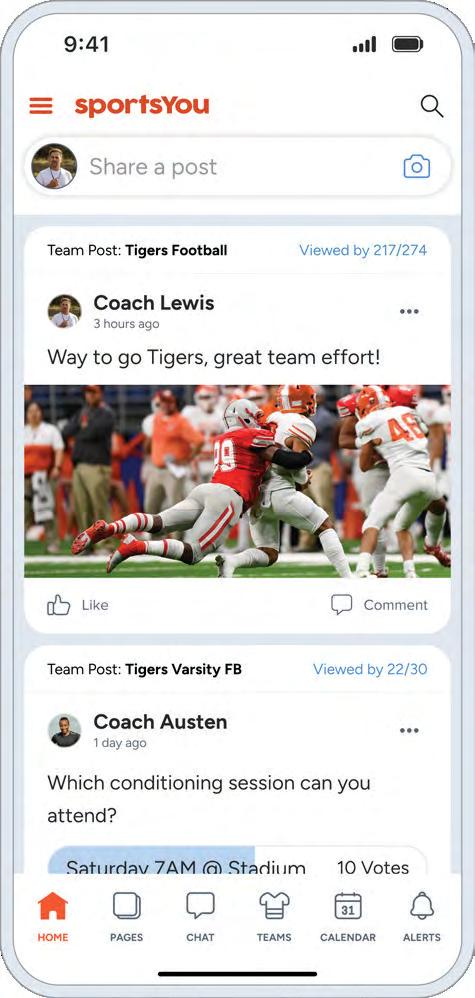
Elevate your team culture with sportsYou: the free, secure messaging platform built for coaches, not classrooms. sportsYou streamlines athletic communication across every team, all in one place – saving you time so you can focus on what matters most: your athletes.
sportsYou is 100% Americanowned. All data is stored and encrypted in the US
sportsYou does not sell individual user data
Communication settings are customizable to support your school/district policies
Districts own + can access communication history
sportsYou will review your DPA upon request
sportsYou will support you through the approval process + help you navigate HB 1481 and HB 4623
Meet with us: go.sportsyou.com/approval
FOUR BECOME
Four outstanding organizations, transformed into one powerhouse. And while our name may have changed, everything you count on - great service, uniforms, and gear remain.
YOUR GAME IS ALWAYS GAME ONE
The future of flag f tba INCLUDES the GIRLS!
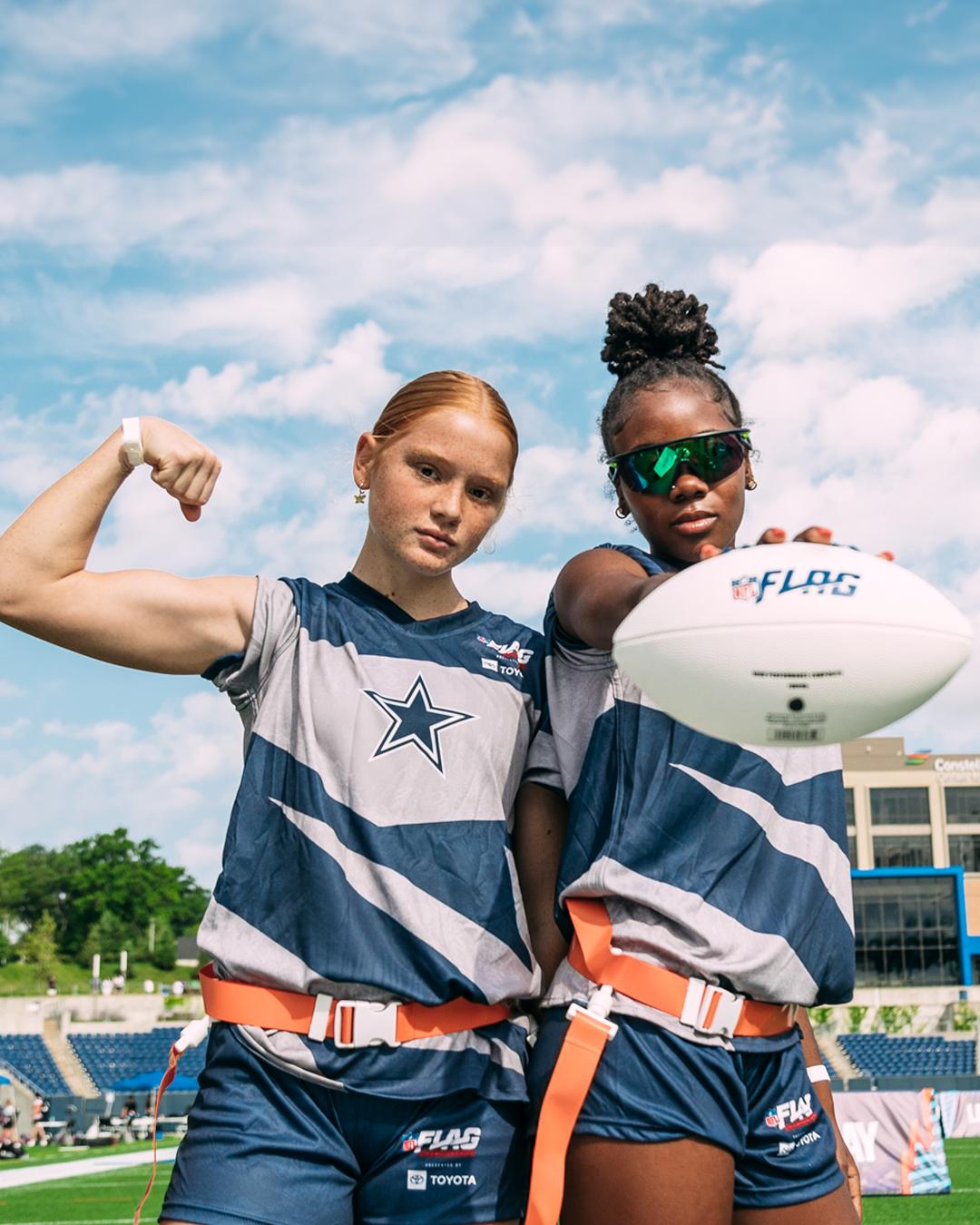
As the popularity of high school girls flag football grows in the United States, the Dallas Cowboys are working with school communities across Texas to provide girls an opportunity to use the game of flag football as a fun and exciting way to be healthy, to learn values taught through sport, and potentially further their education with scholarships to collegiate intitutions now playing flag football at a higher level.
For more information or to discuss partnering with the Dallas Cowboys on this effort, contact YouthFootball@DallasCowboys.net.
Hall of Honor Class of 2026 Hall of Honor
The 2026 THSCA Hall of Honor Banquet, presented by Balfour, will be Saturday, July 18, 2026 in the George R. Brown Convention Center, Grand Ballroom in Houston, Texas. Ticket info available at www.thsca.com/hoh
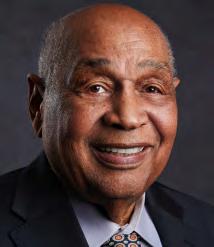
ROBERT BROWN
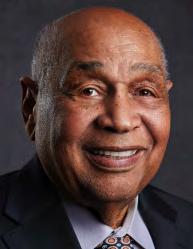
Coach Robert Brown is a life member of the Texas High School Coaches Association. He became chairman of PVILCA (Prairie View Interscholastic League Coaches Association) in 2004. At that time, he had a vision to not only induct coaches, but outstanding PVIL high school athletes as well. He also initiated the PVILCA efforts to give scholarships to high school athletes.
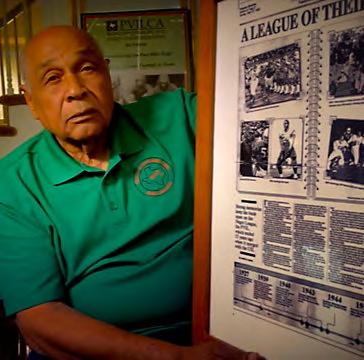
Coach Brown had a vision to educate the public about the PVIL: former athletes, coaches and their outstanding accomplishments. He has collected memorabilia and artifacts pertaining to years of the PVIL existence. The University of Texas housed the PVIL memorabilia at the Marvin C. Griffith building in Austin, Texas, from 2010 until 2017.
Coach Brown graduated from Texas Southern University with a Bachelor’s degree in Physical Education in 1962. He later completed a Master’s degree in Administration. In 1963, he began a 40year teaching and coaching career with Houston Independent School District. In 1968, at the age of 28, he became the youngest HISD 4A high school head coach at M.C. Williams High School. He coached basketball, track and baseball at several high schools
in HISD, including Jefferson Davis, Ross S. Sterling, and Robert E. Lee. After retirement in 2002, he continued coaching basketball for AAU teams and private schools in the Houston area.
Coach Brown continues to encourage young coaches and athletes to recognize the impact and the importance of those who paved the way for the current generation of African-American players and coaches.
Coach Brown has been married for 62 years to Barbara; and they have three adult children: Robin LaDawn Brown, Ryan Lamont Brown, and Robert Lawrence Brown.
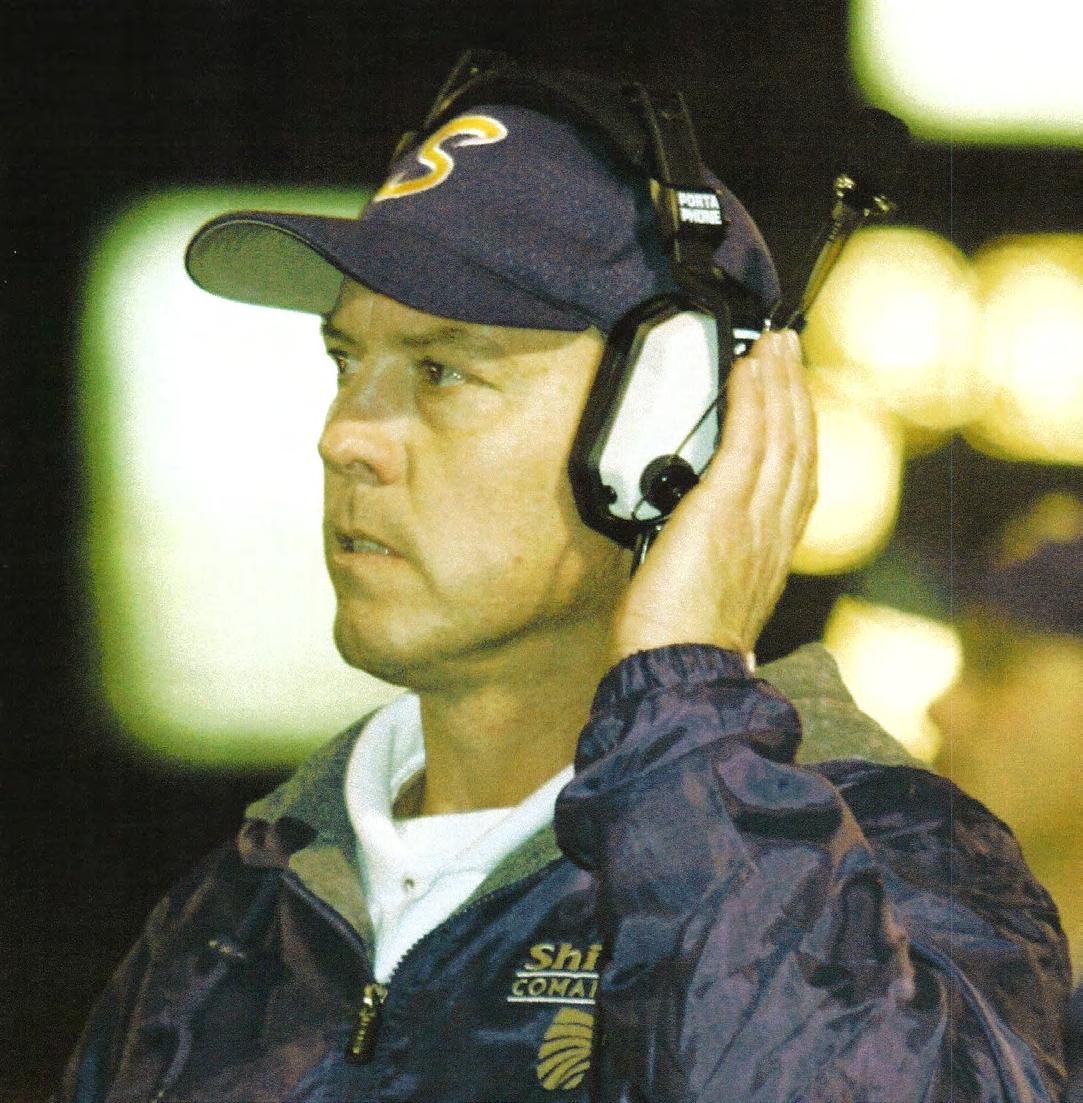
STEVEN CERNY
I grew up in Sealy, Texas with three brothers, four sisters and the best parents a person could ask for. I thank my parents for the person I am today. No matter how busy they were, they always made it a priority to do their best to support all of us kids in all the extracurricular activities in which we were involved. They taught me and my siblings so many life lessons. I truly believe I was able to have the success I have had because of the foundation they provided for us. The four things that stand out the most is God, family, respect for others, and hard work.
I also have two brothers that were coaches and they helped me out tremendously. Melvin, who coached baseball at Katy Taylor, and David, who coached baseball at Huntsville, Bellville, and now Sealy. They were excellent assistant coaches in football as well, so the hotline stayed open year-round. I benefited tremendously from their experience and often was able to solve problems before they occurred.
As for me, my passion was always sports. Whatever the season, our neighborhood friends were getting together, and we were playing the sport of the season. I loved to compete and did not like losing. I knew I wanted to be a coach ever since career day in the fifth grade and I proudly wore my “Coach” sticker all day long.
In high school, I participated in football, basketball, and baseball. I loved all three sports, but baseball is what I excelled at the most. I was fortunate to be able to play college baseball at Stephen F. Austin State University, and I served one year as a graduate assistant. This was also the year I married my high school sweetheart, Donna. Without her love and support, I definitely would not have been the person or the coach I became.
My coaching career began and ended at Shiner High School from 1988-2019. I was fortunate to have worked under one of the best coaches and Athletic Directors a person could ask for, Billy Turek. The award I am receiving should also be shared with him
because he is the one who helped shape my coaching style. He was an all-sports and total program coach. The girls program was just as important to him as was the boys program. He set the foundation for the success Shiner is still having today.
During my time in Shiner, I was fortunate to coach my son, Brandon, in football and my daughter, Emily ,in softball. This was truly a special time of my life and many great memories were made.
I begin my career at Shiner as Head Baseball and Assistant Football Coach. As the Head Baseball Coach, Shiner had a record of 229-149. This included 12 playoff appearances consisting of seven District Championships, one Area Championship, two Regional Championships, and two State Championships (1992 and 2002). I also served as the assistant baseball coach from 2004 to 2013.
In 2002, I became the Head Football Coach and Athletic Director, a position I held until I retired in 2019. Over my career as Head Football Coach, Shiner had a record of 173-51. This included four Area Finalist, four Regional Finalist, five State QuarterFinalist, one State-Semifinalist, two State Finalist (2003, 2013), and one State Championship (2004).
In the spring of 2014, Shiner needed a Head Softball Coach. After an exhausting search to try to fill this position, my superintendent talked me into taking over this role. Little did I realize how much
I would enjoy coaching a girls’ sport. I was Head Softball Coach from 2015 until I retired in 2019. During this time, Shiner had a record of 170-36-4. This included two Regional Finalist, one Regional Quarter-Finalist, one State Runner-up (2017), and two State Championships (2015, 2016).
During my coaching career in Shiner, I never was a big awards or stats guy. I just tried to instill in the athletes that if you worked hard, gave it your best effort, and followed the rules, good things would come your way. I definitely never expected to be inducted to the Texas High School Coaches Hall of Honor. I am truly honored by this award that would not have been possible without all the people that have come into my life over the 31 years that I coached - great mentors, great assistant coaches, great administration, great players, and especially my great family.
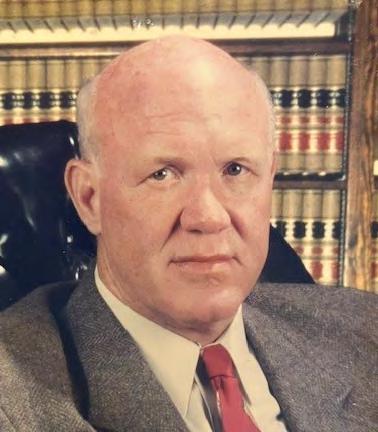
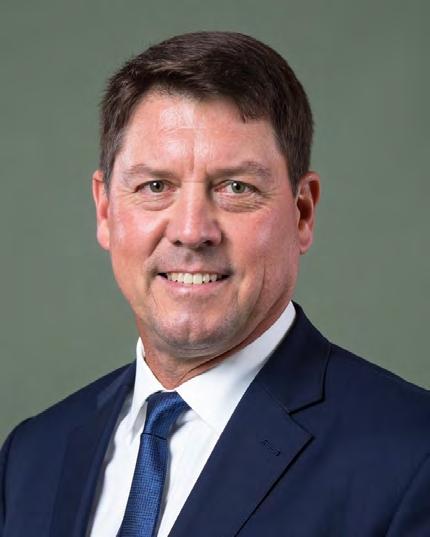
MIKE HEDRICK
Legendary Texas high school football coach Mike Hedrick retired in 2019 after a distinguished 44-year career defined by dedication, loyalty, and an unwavering commitment to the young men he coached. Finishing with an outstanding career record of approximately 307-163-11, Hedrick secured his place among the winningest coaches in Texas high school football history while leaving a legacy that extended far beyond the scoreboard.
Hedrick’s final chapter as head coach at Franklin High School from 2006 to 2019 highlighted both his competitive success and his steady leadership. During his tenure, the Lions captured multiple district championships and reached the 2015 state championship game; one of the program’s most memorable seasons. In 2017, he achieved the remarkable milestone of his 300th career win — a testament to decades of consistency, resilience, and belief in his players.
Across his career, Hedrick led teams to 26 district championships, building programs known for toughness, discipline, and pride. Yet statistics tell only part of his story. Above all, Coach Hedrick loved
coaching kids. Day in and day out — 365 days a year — he poured time into his craft, finding genuine joy in teaching, mentoring, and shaping lives.
He brought a unique energy and spunk to the field. While some say he mellowed over the years, his generosity and heart never changed. He would give the shirt off his back to help someone, especially a student-athlete. In his later years, he could often be found riding his Gator around the facilities, checking on details and ensuring everything reflected the standard he believed his players deserved.
It is difficult to fully capture what Coach Hedrick meant to those around him. Players and coworkers alike respected his honesty and knew exactly where they stood. His impact was so profound that many former players returned to work alongside him at Leon and Franklin — a reflection of the relationships he built and the culture he created.
One former player summarized his influence best:
“Loss of words… Coach Hedrick meant an awful lot to the thousands of players he coached over his tenure. He was a hell of a coach and taught us toughness. We didn’t have a ton of talent at Leon ;and he could have won more by leaving earlier, as he had many suitors over the years, but he was loyal. He took pride in everything he did. We always had the best looking field thanks to his long hours and dedication. He always fielded a tough, disciplined team and got the most from his players.”
Mike Hedrick’s career was built on loyalty, hard work, and a deep love for the game and the people in it.
His induction into the Texas High School Hall of Honor recognizes not only his wins and championships, but the lasting influence he had on generations of athletes, colleagues, and communities — a legacy measured in character as much as in victories.
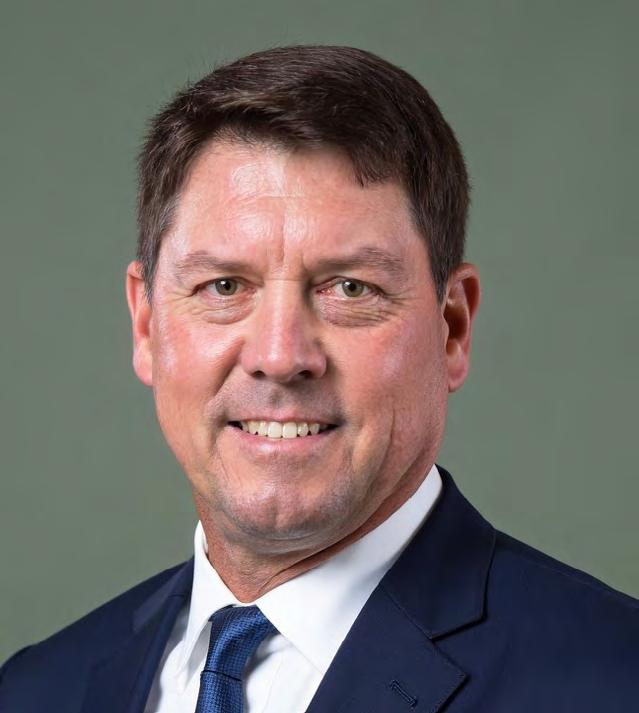
JOHN KING
John King grew up in the small town of Springhill, LA, as the son of two lifelong educators, Wayne and Mary King. It was here that he developed his love for sports and community. John King graduated from Springhill High School in 1986, and was a state champion in football, powerlifting, and track for the Lumberjacks. He attended Northwestern State University (LA) on a football scholarship, and was a four year lettermen for the Demons in the offensive line. John was recognized at NSU as the 1990 Male Scholar Athlete; he was selected to the Demon Top 100 All-Time Player List in 2007, and later was inducted into the N Club Hall of Fame in 2012.
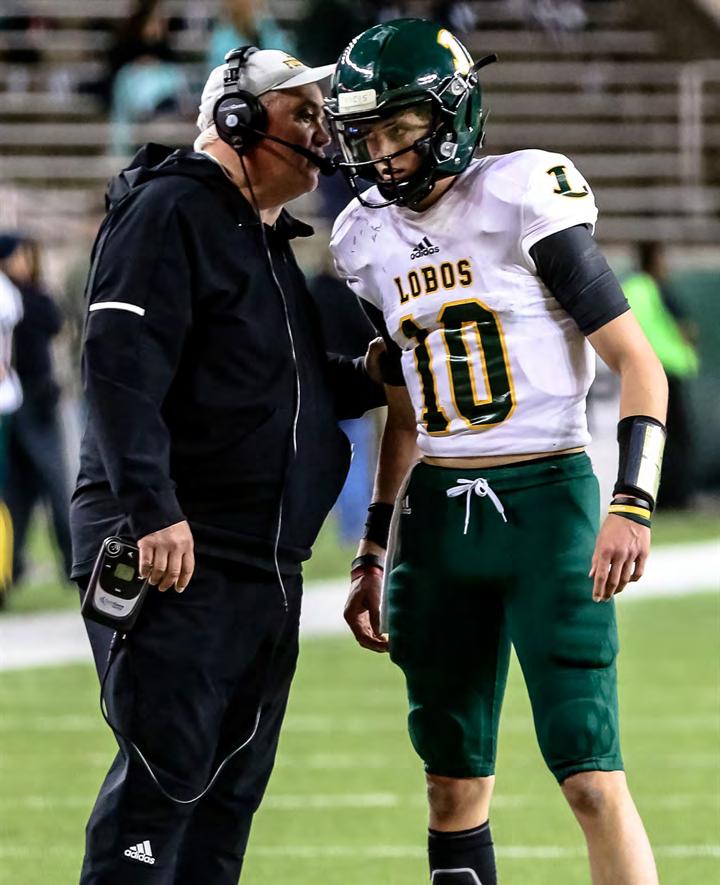
John King began his coaching career in 1992 at Many High School (LA), and also served as an assistant coach at Northwestern State University, Vidor HS, West Ouachita HS, and Ouachita Parish HS. In 2000, King moved to Longview High School as Offensive Coordinator under Pat Collins and held that position for four years before being promoted to Head Coach in April of 2004. King has served as Head Coach of the Lobos for twenty-two years, with an overall record of 240-52 and a district record of 122-11 while also amassing seventeen district titles and fifty-six play-off victories. He has been selected District Coach of the Year seventeen times, Longview News Journal East Texas Coach of the Year in 2009 & 2018, Padilla Poll 6A Coach of the Year in 2017 & 2018, and TSWA 6A Coach of the Year in 2018. Coach King has also been recognized twice as Athletic Director of the year by the Longview News Journal.
In 2018, Coach King led the Longview Lobos to their first state title in 81 years, as the team earned a perfect 16-0 record and the 6A- D-II State Championship. His son, Haynes, was the starting QB on that year’s team and won the Offensive MVP Award
in the State Championship Game. The Lobos were also State Finalists in 2008 and 2009 and State SemiFinalists in 2010, 2017, 2022, and 2024. In addition to coaching the Lobos, Coach King has participated in the NETX FCA All-Star Game in 2012, 2015, 2017, and 2021; the U.S. Army All-American Game in 2018 and the 2020 Under Armour All-American Game.
Coach King has served and promoted the Texas High School Coaches Association by serving as president of the association in 2021, THSCA Board of Directors for Region VI (2011-2014), nominee for THSCA President-Elect 2014, 2015, 2018, THSCA Football Advisory Committee (2016-2018), and the THSCA Athletic Director Advisory Committee (20182020). In addition to his service to the THSCA, Coach King also serves as a charter member of the East Texas Coaches Association, serving as treasurer of the organization since 2014; and he was inducted into the ETCA Hall of Honor in 2019.
John and his wife, Jodie, have been married 29 years and are the proud parents of two children: Haynes, a Texas A&M graduate and 2025 ACC Player of the Year at Georgia Tech (currently preparing for the NFL Draft), and Steelie, who is an All-American gymnast and two-time National Champion at Texas Woman’s University.
Mexico University, where he continued playing both football and baseball. During his collegiate career, Coach Nelms was recognized as an All-Conference football player and earned Academic All-Conference and Academic All-American honors, reflecting his dedication to excellence both athletically and academically.
Coach Nelms brings more than three decades of championship-level experience in high school football and athletic administration. Throughout his 33-year career, he has remained committed to serving as a positive and effective role model for student-athletes while emphasizing the importance of leadership, character, and education both on and off the field.
Over the course of his career, Coach Nelms compiled an outstanding overall record of 249140-3 and led his teams to 23 playoff appearances. His programs consistently competed at the highest levels of postseason play, highlighted by State Championships in 2005, as the Class 3A Division I State Champion, and in 2011, as the Class 3A Division II State Champion; both achieved with undefeated 15-0 seasons. His teams also reached the state semifinals in 1993 and 2010, advanced to the quarterfinals in 1988, 2006, and 2009, and competed in regional finals in 1989, 1998, 1999, and 2007. Coach Nelms’ teams captured district championships from 1989 through 1993, from 2004 through 2007, and again from 2009 through 2012.
Coach Nelms spent the majority of his career at Wimberley Independent School District, where he served as Athletic Director and Head Football Coach and compiled a remarkable 147-44-1 record. Under his leadership, Wimberley became one of the premier
football programs in the state. His success and influence were recognized with numerous honors, including the President Gerald R. Ford All-American High School Coach Award, Texas Sportswriters AAA Coach of the Year, Padilla Poll AAA Coach of the Year, Austin American-Statesman Central Texas Coach of the Year, and the UIL Sponsor of Excellence Award. He was selected as the THSCA South All-Star Coach and coached in the prestigious Oil Bowl All-Star Game in both 1997 and 2015. In recognition of his lasting impact on Texas high school football, Coach Nelms was named to the Padilla Poll Coaching Legend list.
Beyond wins and championships, Coach Nelms’ greatest legacy may be the leaders he helped develop. Thirty-three of his former players went on to become high school coaches, and nine of them eventually served as Athletic Directors and Head Football Coaches, reflecting the lasting influence of his mentorship and commitment to leadership development.
In addition to his tenure at Wimberley, Coach Nelms served as Athletic Director and Head Football
and at Springlake-Earth Consolidated School District, gaining valuable experience in program development and athlete mentorship.
After completing his degree, Coach Nelms remained at Western New Mexico University as a graduate assistant coach, working with defensive backs before beginning his long and distinguished career in Texas high school coaching. His early experiences at the collegiate level helped shape the disciplined, player-centered coaching philosophy that would define his success for decades.
Family remains central to Coach Nelms’ life and values. He is the proud father of three daughters, Randi, Sara, and Vanessa, and shares them with their mother, Casey. He is also the grandfather of Isabella, Isaiah, Logan, Landry, Revelry, Ellison, and Remington Weldon. His family, along with his belief in educationbased athletics, continues to be a guiding influence in his career and leadership.
Coach Nelms’ philosophy is rooted in the belief that athletics provide a powerful platform to teach discipline, perseverance, teamwork, and service. He has devoted his life to developing young men not only into successful athletes, but into responsible leaders prepared for success in the classroom, in competition, and in their communities.
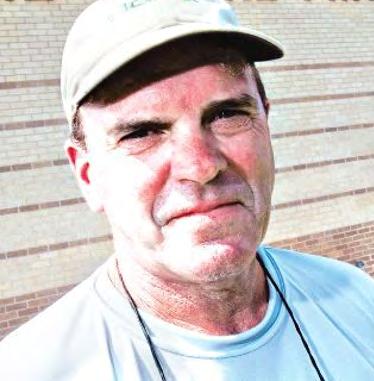
DENNIS PARKER
Dennis Parker began coaching in 1972 as a junior high coach at Whittier Junior High in San Antonio. His last year to coach was 2017 in his hometown of Idabel, Oklahoma.
During his 45-year coaching career, (1972 - 2017), Dennis coached at the high school level, both large and small schools; he also coached DI-DII-DIII college football. He has coached in Texas, Missouri, Arizona ,and Oklahoma.
Throughout his career, Dennis has gone 0-10 and he has been a State Champion, with playoff caliber teams in every state he has coached. Dennis has been fired, and he has been named a “Coach of the Year,” a Paul Harris Fellow, a Grand Marshall for two
Christmas parades, and a Chamber of Commerce Man of the Year. Dennis is in the East Texas Coaches Hall of Fame and the Idabel Hall of Fame.
The greatest accomplishment of his career is that he co-authored a character curriculum used by many Texas High Schools. The curriculum is free at www.developingcharacter.org, and he still speaks nationally on character education.
JOHNNY RINGO
Johnny Ringo is a 1979 graduate of Carrizo Springs High School, where he participated in football, basketball, track, and golf. He had the unique privilege of playing football for his father, Alvin Ringo. He and his sisters, Rhonda and Lisa, were raised by loving and supportive parents, Alvin and Frances. Coach Ringo graduated with honors from The University of Texas in 1984, where he played football and was a member of the 1983 Southwest Conference Championship team that finished 11–1 during his senior season.
Coach Ringo began his coaching career in 1984 when he was hired by Ebbie Neptune at Austin Westlake, starting at Hill Country Middle School. He later served as a graduate assistant under David McWilliams at Texas Tech and The University of Texas during the 1986–87 seasons. In 1987, Ringo returned to Westlake as offensive coordinator, working under Ron Schroeder for six years. During his final three seasons there, the Chaparrals compiled a 39–6 record, advancing to the State Finals, Semifinals, and Quarterfinals.
In 1993, Coach Ringo became Athletic Director and Head Football Coach at Uvalde High School, where he compiled a 16–4–1 record over two seasons. He moved to Irving MacArthur in 1995, and in his second year the Cardinals finished 9–2, advancing to the bi-district round of the playoffs. In 1997, Coach Ringo took over the Coppell program, which had not reached the playoffs since 1963. In his third season, the Cowboys went 11–2 and advanced to the regional round — one of the finest seasons in school history. At Uvalde, MacArthur, and Coppell, he and his staff successfully revitalized programs in short order. From 2000–2004, Coach Ringo coached at SMU before returning to the high school ranks at Plano East, where he served from 2004–2012. During his tenure, Plano East made five playoff appearances. His 2006 team finished 10–3 and advanced to the regional round, ranking among the top teams in school history. At Uvalde, Coppell, and Plano East, his teams finished in the Associated Press Top Ten at the end of the regular season, and his offenses were consistently state-ranked.
Coach Ringo’s career includes numerous honors. He was named District Coach of the Year three times, Dallas Cowboys NFL Coach of the Week four times, Dallas Morning News Coach of the Year in 1999, and a member of the Gatorade Coaches Care Honor Roll in 1994. He was nominated for the Outstanding Texas Exes Award in 2003 and recognized by MaxPreps in 2006 as one of the Top 100 High School Coaches in the nation. He served on the THSCA Board of Directors from 2009–2011 and as President of the Texas High School Coaches Association from 2012–2013.
Coach Ringo credits much of his success to the influence of outstanding mentors, including his father, Alvin Ringo, and his father-in-law, Charlie Spano, both respected Texas high school coaches. He
considers it a privilege to have worked alongside so many outstanding coaches (many of whom went on to be head coaches), athletes (many of whom played in college and the NFL), superintendents, and principals during his 38 years in athletics. Coach is also grateful for the guidance of E.B. Neptune, Ron Schroeder, Derek Long, Mark Hurst, David McWilliams, Don Poe, Joe Barnett, Cliff Odenwald, Randy Allen, and David Visentine, along with many former THSCA presidents and Hall of Honor inductees who invested in him throughout his career.
In June 2013, Coach Ringo joined Highland Park ISD as Athletic Director. During his nine-year tenure, Highland Park teams won 19 team state championships and 46 individual state titles, with numerous additional state finalists and medalists. The Scots captured the Lone Star Cup in 2016–17, 2018–19, 2020–21, and 2021–22, and were runnersup in 2013–14 and 2017–18. Highland Park remains one of only two high schools in Texas to have won 13 Lone Star Cups.
Coach Ringo retired in June of 2022, after 38 years in athletics. He and his wife, Tamerah — whom he met while coaching in Austin — have been married for 37 years and reside in Dallas. Tamerah retired in 2021, after 21 years as Communications Director and Public Information Officer for Coppell ISD. Their daughter, Haley, graduated from The University of Texas at Austin in December, 2014, and works as a photographer, actress, and screenwriter. Her husband, Bryan, is a 2014 United States Air Force Academy graduate and works in the defense industry.
Coach Ringo extends sincere appreciation to his immediate and extended family for their unwavering support throughout his career.
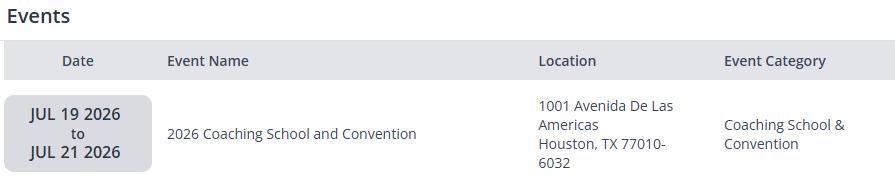
2026 THSCA Convention & Coaching School Houston, TX
George R. Brown Convention Center
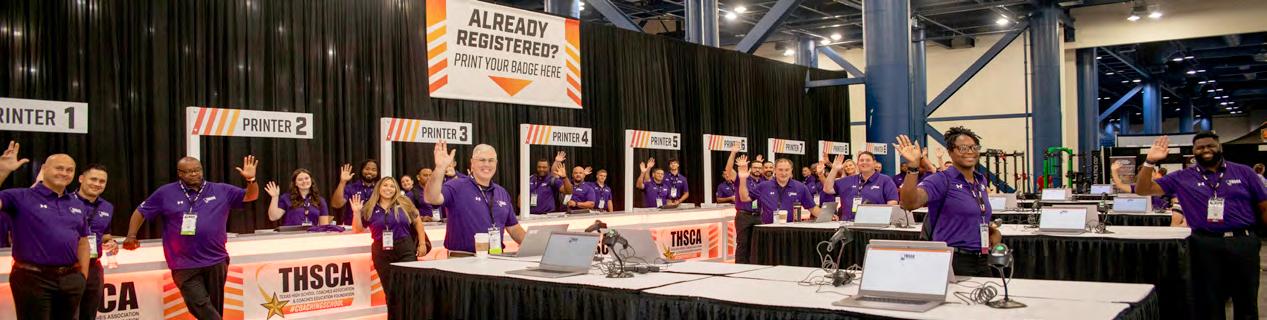
Planning for the 2026 Coaching School & Convention in Houston is underway, and we are excited to host all our Texas coaches! We want to provide you with some details & updates and what to expect for 2026!
what to start planning for now...
» REGISTRATION Please make note of the registration deadlines below to afford our office staff time to get registrations processed before the event.
REGISTRATION DEADLINES/COST:
MARCH 1 - JUNE 1 - $85 PER COACH
JUNE 2 - JULY 1 - $100 PER COACH
ONSITE AT CONVENTION - $115 PER COACH
(Please note convention registration fees are separate from the annual membership fee. Membership fee/renewal is a separate $70 fee.)
Registering a group of coaches with a school payment? You can now find a packet including a Registration Checklist & a Registration Payment Cover Sheet for download on our THSCA website. www.thsca.com/convention
» TRANSFERS & REFUNDS The deadline to request a refund or transfer of payment for a Coaching School registration will be July 1st. If you are paying with a school check and still need to hire a coach, you may send in the registration fee with the rest of your staff and make a note that you would like us to store it in our system as open credit on your school's account until you are able to hire that person.
July 19-21
» THSCA MEETINGS AT COACHING SCHOOL
Regional meetings will be on Monday afternoon, from 3:45-5:00 PM as the final agenda item to finish out the day. The THSCA general meeting will still be held on Tuesday morning at 11:00 AM, and we will vote on the THSCA President-Elect nominees.
» HALL OF HONOR We will celebrate all of our Hall of Honor Class of 2026 Inductees (Robert Brown, Steven Cerny, Mike Hedrick, John King, Weldon Nelms, Dennis Parker and Johnny Ringo), our State Champion coaches, and our esteemed award winners at the Hall of Honor Banquet presented by Balfour. This banquet will kick off our Coaching School schedule on Saturday, July 18th at 7:00 PM in the George R. Brown Convention Center, Grand Ballroom on the third floor. Tickets will be available for purchase in advance only.
» WHAT IS INCLUDED IN THE 2026 COACHING SCHOOL REGISTRATION FEE:
► ACCESS to LIVE Demos, Sport Lectures & Professional Development Lectures, Exhibit Show and Sponsored Networking Events
► ACCESS to THSCA Regional Meetings & General Meeting, including your OPPORTUNITY TO VOTE OR BE NOMINATED in our 2026 THSCA elections.
► IN-PERSON OPTION to print/laminate your THSCA membership card for upcoming year.
► Email Certificate of Participation for Continuing Education Hours to provide to your School. (Only available to those who attend the convention in-person and pick up their badge onsite.)
Booking for the THSCA housing block and updates on hotel availability and parking are only accessible on our website at:
www.thsca.com/hotels
Online booking will require a credit card in order to secure the room; Your card WILL NOT BE CHARGED during the initial stage and will be held as a GUARANTEE only. THE DEADLINE FOR BOOKING AT THE DISCOUNTED RATE WILL BE JULY 1ST.
CANCELLATION POLICY:
Cancellations made after June 1, 2026, and prior to 5 days prior to arrival date will be charged a $50.00 cancellation fee.
Continue to use Orchid.Events for all changes and cancellations through July 1, 2026. After July 1, 2026, cancellations must be directed to your assigned hotel at least 5 days prior to arrival or a one night’s room and tax charge will be assessed by the hotel.
An early departure date fee will apply. Verify your departure date and contact the hotel at least three (3) days prior to check-in to avoid this penalty. Your hotel reserves the right to charge your credit card a deposit for one night’s room and tax for each room reservation on or after July 1, 2026.
Orchid.Events is the ONLY THSCA designated housing provider for the 2026 THSCA Convention & Coaching School. Beware of other companies misrepresenting themselves as affiliated with THSCA.
TENTATIVE OUTLINE OF EVENTS FOR 2026 COACHING SCHOOL AND CONVENTION...
SATURDAY, JULY 18
8:30 AM New Board Member Indoctrination
1:00 PM THSCA Board Meeting
7:00 PM Hall of Honor Banquet GRBCC Grand Ballroom
7:30 AM - 4:30 PM
SUNDAY, JULY 19
Registration Open
THSCA Office & Help Desk
Exhibits Open
THSCA Career Center
10:00 AM FULL LINE-UP OF LECTURES
11:00 AM FULL LINE-UP OF LECTURES
12:00 PM FULL LINE-UP OF LECTURES
1:00 PM FULL LINE-UP OF LECTURES
2:00 PM FULL LINE-UP OF LECTURES
3:00 PM FULL LINE-UP OF LECTURES
4:00 - 5:15 PM - NCAA FBS Div. I Head Football Coaches Panel - Leadership in Women's Coaching Panel - Athletic Trainer's Networking Event
5:30 - 6:30 PM Various Networking Opportunities
7:30 AM - 4:30 PM
MONDAY, JULY 20
Registration Open THSCA Office & Help Desk Exhibits Open
THSCA Career Center
9:00 AM FULL LINE-UP OF LECTURES
10:00 AM FULL LINE-UP OF LECTURES 11:00 AM FULL LINE-UP OF LECTURES
12:00 PM FULL LINE-UP OF LECTURES 1:00 PM FULL LINE-UP OF LECTURES 2:00 PM FULL LINE-UP OF LECTURES 3:45 - 5:00 PM THSCA REGIONAL MEETINGS
5:15 - 6:15 PM Various Networking Opportunites
7:30 AM - 12:00 PM
TUESDAY, JULY 21
THSCA Office & Help Desk Exhibits Open
THSCA Career Center
8:30 AM FULL LINE-UP OF LECTURES 9:30 AM FULL LINE-UP OF LECTURES 11:00 AM - 12:30 PM THSCA GENERAL MEETING
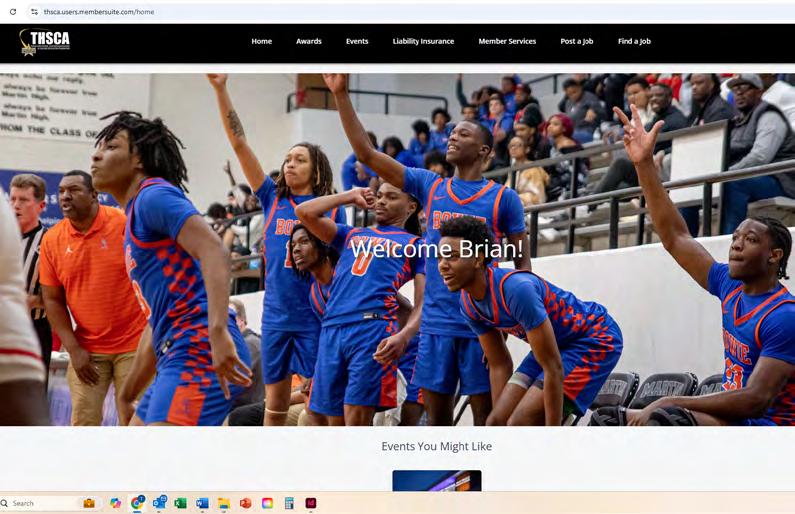
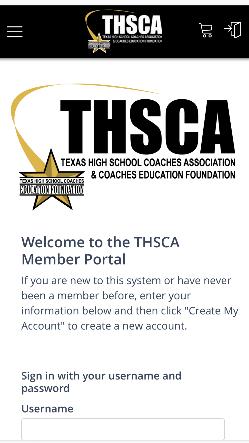
UPDATE YOUR MEMBER PROFILE:
1. The first time visiting the new portal you will be required to set up a new password, so select the Forgot your Password? option. Your username will be the email address we have on file for your member account.
2. The system will email a link/verification code for you to verify your account and set-up a new password. (If you have any difficulty remembering the email address you used for account set-up, or you do not receive the verification email to reset your password, please call our THSCA office 512.392.3741 and we can assist you.)
3. Once you have logged in, click on the Round User icon on the top right and select “Update Profile/ View My Membership”
4. Select the pencil icon under “My Personal Information” to update your contact data.
5. Under “Communication Preferences” please OPT-IN to receive THSCA Updates & Reminders via email throughout the year.
access your THSCA Member Portal online today! Please visit www.thsca.com and click on login at the top to update your THSCA profile info, renew your membership for 2026-2027, and register for thsca Coaching School.
Membership & Event Registration:
The THSCA member portal functions as a shopping cart experience. If you would like to pay for multiple things at once, (example: Membership, Coaching School Registration, Liability Insurance, etc.) you will need to add them ALL to your shopping cart before proceeding to check out.
To Renew your Membership:
1. Click on the Round User icon on the top right and select “Update Profile/View My Membership”
2. Click on the Membership tab, and you should find an button to Renew at the bottom.
3. Be sure that your contact information and profile settings are correct and then hit the blue Update button to save your changes.
4. Select the appropriate membership type and hit the Next button to proceed.
5. Read the disclaimer information and check the box marked “Above Read.” Also, please select an option on your Texas Coach magazine delivery preference. Then click Next.
6. Select any add-ons, including a Political Action Committee Donation, Benevolence Donation or Professional Liability Insurance. Then click Next.
7. You will be prompted with a summary of your selections. When you are satisfied with your selections, choose Add to Cart.
To Register for an event like Coaching School:
1. Click on the Events tab on the menu at the top and select Browse Events.
2. Select the event you would like to register for:
3. And look for the Register button on the top right.
4. Select the appropriate registration fee and hit the Next button to proceed.
5. Read the disclaimer information and check the box that you understand the terms of registration, then click Next.
6. Select any add-ons you would like (Benevolence Donations) and then click Next.
7. You will be prompted with a summary of your selections. When you are satisfied with your selections, choose Add to Cart.
REAdy to checkout?
1. Click on the shopping cart icon to view the summary of selected items to purchase.
2. When you are satisfied with the summary click, CHECK OUT.
3. You should be redirected to the Checkout screen to proceed with credit card payment.
Upon completion of the transaction you should IMMEDIATELY receive an emailed, itemized receipt you can turn in to administration for reimbursement if necessary. You no longer have to wait until coaching school to pick up your receipt. If for any reason you do not receive the email, you can always log back into your Member Portal account and print it from your account history.
You should also receive an email confirming registration for Coaching School if you have registered for that event. (Please remember that THSCA membership for the year and Coaching School registration are TWO SEPARATE fees.)
After you have completed check-out in the member portal you will be prompted to update your profile information. Please make sure we have the correct contact information for you and that your communication preferences are set-up so you can receive THSCA Updates & Reminders emails.
If you need to update the school you are affiliated with in your profile please email your name, THSCA ID number and new school affiliation to info@thsca.com so we can correct it for you.
26-27 MEMBERSHIP
Professional -
1st)
- $115 (7/19 or 7/20 Only)
Raise more with less effort
ATHLETIC WEBSITES
Unite your community through seamless communication. Engage provides a free, easy-to-use website for athletic and activity programs. Integrate tickets, schedules, rosters, announcements, and more.
Proud Sponsor of
DIGITAL TICKETING
Easily sell tickets, check in attendees, and access revenue faster than ever. Streamline operations with season passes, custom seat maps, and secure gate entry, while reducing the need for staffed windows and cash handling.
Simplify ticketing, fundraising, and more with Hometown's digital solutions.
Learn more at hometown.com
ONLINE FUNDRAISING
Access a fee-free fundraising platform designed to help you raise more and keep more. Our intuitive, district-friendly solution makes running fundraisers effortless, rallying donors with less work and stress.
INTRUSIVE LEADERSHIP:
THE COACHING STANDARD OF TOMORROW
BY SHAUN MCDOWELL
GRAND OAKS HIGH SCHOOL | THSCA SENIOR DIRECTOR - REG 5
In the fall of 1997, I had just completed Swab Summer, which is the US Coast Guard Academy’s (USCGA) version of Boot Camp. As a freshman, I was indoctrinated on the mission and values of the Coast Guard and its Academy, and was ready to start the football season and academic classes. At the Academy, the student body or Corps of Cadets, is divided by companies, and I was assigned to Foxtrot Company. This is when I first met an upper-class cadet named Marcus Canady.
Like all freshmen cadets, I struggled with the demands of cadet life early in the semester. From juggling 24 academic hours, football practices and games, and military demands, happiness and joy were forgotten feelings. I had never been more overwhelmed in my life. Marcus was a sophomore cadet at the time and was my next-door neighbor in the cadet barracks. He was also my football teammate, a standout basketball player, and wildly popular among the corps.
I don’t know how he knew, but Marcus sensed I was struggling and sprang into action. From that moment on, Marcus changed everything for me. He would talk to me after practice like I was a human being, not just a freshmen cadet. He introduced me to other cadets and teammates to expand my circle. He taught me how to do things that would make me successful as a cadet such as time management, membership into the Genesis Club, places to go
when there was free time, and many other things. He learned about my family and what motivated me to be great. Marcus reminded me why I was at the US Coast Guard Academy in the first place. Marcus was a true inspiration and mentor for me then and continues to be now.
Marcus and I kept in touch through-out the years. I watched in awe of his success in the US Coast Guard and he would come to see my football games when I was the head coach at Foster HS and attended some playoff games in San Antonio. After the dreaded Covid year in 2021 and the social events that followed, Marcus wrote a book and sent it to me. The book was titled, “Intrusive Leadership: How to be THAT leader”. Knowing about Marcus and his career, I knew it was going to be a great read. I had never heard of this type of leadership before, so I dove into the book. Even though Marcus is a Captain in the US Coast Guard and I am a high school coach, this leadership style resonated with me more than anything I have ever experienced. After I read the book, I realized that Marcus had been an intrusive leader with me all those years ago at the Academy.
Leadership That Leans In
What is Intrusive Leadership? It’s the proactive, personal engagement of a leader in the lives of their team members. Intrusive leadership means showing up, checking in, and stepping in, not waiting for
issues to become crises. It’s the belief that leadership doesn’t stop at the locker room door or the end of practice. It extends to how our players and fellow coaches think, feel, and function as human beings. As Marcus describes it, an intrusive leader is “deliberately engaged in the growth, morale, and welfare” of their people by asking questions, noticing changes, and offering support before anyone asks.
When athletes and staff know their coach truly cares, they are more likely to buy in, work hard, and trust the process. Intrusive leadership is not about control or micromanagement, but about connection. It’s knowing when a player’s unusual quietness signals an academic struggle, when an assistant coach’s fatigue hints at burnout, and when a small conversation could prevent a big problem. Simply put, intrusive leaders care enough to get involved.
Intrusive Leadership in Action
Imagine a head coach who notices that a captain has grown distant during practice. Instead of ignoring it, the coach pulls him aside and asks how he is doing. The player admits he is struggling with his parents’ divorce. The coach connects him with counseling resources and checks in weekly. Within weeks, the athlete regains focus, confidence, and gratitude.
Another example could be when a track coach notices one of her sprinters has missed morning workouts two weeks in a row. Instead of benching her outright, she sits down to ask what’s going on. She confesses that she’s been taking care of a
younger sibling due to a family issue and can’t make the 6:00 am practice time. The coach adjusts her training schedule and lets her know she’s proud of her responsibility at home. She feels respected and recommits to the team.
Or when a head football coach notices his offensive line coach, who is usually the team’s most energetic voice, is quieter and shows up later than normal. Instead of criticizing, he invites him to lunch. The assistant admits he’s overwhelmed at home with a new baby and a sick parent. The head coach helps adjust his schedule temporarily and delegates a few responsibilities. The assistant regains balance and feels grateful for the support.
These are all examples of intrusive leadership in action: intentional presence that changes outcomes.
Translating “Intrusive Leadership” to School Athletics
Marcus’s book influenced me to analyze everything that I was doing in my role as Head Football Coach and Campus Athletic Coordinator. Do I really know my staff? Am I doing enough to help kids? As I reflected on these questions and more, I also realized that the locker room, the sidelines, practices, and games are places that can feel as highpressure as any environment. Our players and fellow coaches carry burdens and battles that don’t always show on the scoreboard. Intrusive leadership bridges the gap between performance and personhood by prioritizing relationships and trust.
For a coach, being “intrusive” in the positive sense means leaning into your team’s lives in practical ways:
• Be Deliberately Present: Walk the school halls. Chat with your players and assistants outside of practice or game time. Learn about their families, their classes, their hobbies and goals.
• Know Your People: Pay attention to patterns. Notice the player who suddenly stops joking around, or the assistant coach who’s staying in the office later and later. Small changes can reveal big issues.
• Address Issues Early: Don’t wait for a minor issue to turn into a major meltdown. If you sense something is off, pull that person aside. A quick “How are you doing?” today can prevent a crisis tomorrow.
• Balance Care with Accountability: Hold your athletes to high standards and show them you’re personally invested in their well-being. Discipline without care breeds resentment; care without discipline can breed chaos. The sweet spot is caring enough to demand their best because you want what’s best for them.
• Lead by Example: Show your own humanity. Whether it’s admitting a mistake or sharing a personal story of struggle, let your team see that you’re human, too. When players see their coach lead with authenticity, they’re more likely to respond with honesty and trust.
Building a Strong Coaching Staff through Care
Intrusive leadership isn’t just top-down; it transforms how a head coach works with assistant coaches and staff. Just as our athletes need guidance and support, so do the adults on our coaching staff. When a head coach is not a distant figure but an engaged mentor, the whole staff thrives. Some ways to practice this include:
• Regular One-on-One Check-Ins: Make it a point to periodically sit down with each assistant coach away from the X’s and O’s. Talk about their career goals, any challenges they’re facing, or how they’re balancing work and family. Showing genuine interest in them beyond their job builds loyalty and openness.
• Invest in Their Growth: Support your coaches’ professional development. Encourage them to attend clinics or certification courses, or even lead parts of practice or team meetings. When you help your staff learn and advance, you’re not only strengthening your program but also showing you care about their future.
• Intervene with Compassion: If you notice an assistant coach’s energy, attitude, or performance dipping, don’t ignore it or write them off. Ask them if everything is alright and how you can help. Maybe they’re dealing with a tough classroom issue or personal matter. By addressing it early with understanding, you can help them get back on track and feel valued.
When assistant coaches feel supported and valued, they’ll mirror that behavior with their
players. Your presence and empathy as a head coach sets a tone that can ripple through the entire program. A staff that knows you “have their back” will pass that support along to the students, creating a culture of care from top to bottom.
Applying Intrusive Leadership with Players
For our student-athletes, intrusive leadership can transform team culture from one of simple compliance (“I do this because Coach says so”) to one of commitment (“I do this because Coach cares about me, and I trust them”). Here’s how a coach can apply intrusive leadership with their players to boost both performance and personal development:
• Check In Regularly: Don’t let any player fly under the radar. A quick two-minute conversation in the hallway or after practice: “How’s your day going? How’s your family?” can reveal issues that need addressing or even prevent a larger breakdown later. Consistent check-ins show each kid that their life beyond the sport matters to you.
• Set Boundaries, Not Barriers: You can be approachable without losing professionalism. Make it clear you’re there to listen and help, while still maintaining the coach-player boundaries. When players respect you and know you respect them, it creates a safe space for them to open up.
• Be Attentive to Red Flags: Keep an eye on academic performance and emotional cues. If a usually energetic player is dragging and skipping assignments, or a shy kid seems extra down, don’t ignore those signs. Ask them how things
are going with classes, with friends, at home. Sometimes a struggle outside of sports is at the root of on-field issues.
• Show Up Outside of Games: Whenever possible, support your players in other arenas of their life. Attend a school play, a band or choir concert, or visit them at their after school job. When kids see you cheering them on beyond the court or field, they know you value them as more than just athletes.
Intrusive leadership isn’t about winning the next game, but about winning hearts and minds. An athlete who feels truly seen and supported will run through a wall for a coach. They’ll also grow in confidence and character, which is ultimately far more important than what the scoreboard says. In essence, when we invest in players as people first and athletes second, we are developing young men and women who will succeed in life, not just in sports.
Not Micromanaging but Mentoring
It’s important to clarify that “intrusive” does not mean “overbearing.” Some hear “intrusive leadership” and picture a meddling micromanager. That’s not what I’m advocating. The difference comes down to intent. Micromanagers hover to control every detail because they operate from a place of mistrust. Intrusive leaders, on the other hand, step in out of genuine care. They intervene not to punish or control, but to help and support.
In practice, that means knowing when to step back as much as when to step in. The best coaches
still give their players space to grow and their assistants room to do their jobs. Intrusive leadership is about being available and attentive, not stifling or controlling. It’s mentorship, not manipulation. By keeping our intent rooted in helping others while checking ourselves to ensure we respect personal boundaries, we create an environment of support rather than smothering.
A Culture That Wins Beyond the Scoreboard
Embracing intrusive leadership can spark a cultural shift in a program. When a coach leads this way, it encourages everyone in the athletic community to communicate more openly and show more compassion. Problems are addressed before they escalate. Team members start looking out for one another the same way coaches look out for them.
This kind of culture saves more than games, it can save futures. The quiet chat after a tough loss, the unexpected check in on a student who seemed off in class, the extra time spent with a kid who’s having a rough week at home are moments that
define true leadership. They build the kind of trust that outlasts a season. Years later, players may forget the play calls or the drills, but they will remember that you cared. They will carry that forward, perhaps becoming caring leaders themselves.
The New Standard
Marcus’ vision of intrusive leadership isn’t just an idea, it’s a model for every locker room, every gym, every field house and beyond. It calls for coaches who lean in, not away, who listen and act, who care enough to ask the uncomfortable questions and do the inconvenient thing when a person’s well-being is on the line. For coaches, that means leading with presence, empathy, and courage.
Intrusive leadership reminds us that the best teams are built on trust, not fear or titles. It’s a leadership standard that can literally save lives, build character, and create wins that aren’t measured on a scoreboard. At the end of the day, intrusive leadership isn’t about being “in charge”. It’s about being there for your people when it counts most.
THE FOUNDATION OF A PROGRAM: THE IMPORTANCE OF MIDDLE SCHOOL COACHES
By Gillian Herrera
When people study successful high school athletic programs, they often see varsity trophies, playoff runs, and senior leaders signing to play at the next level. What they don’t always see is where it all truly began.
The foundation of every strong high school program is built years earlier — in middle school gyms, on practice fields after school, and in classrooms where expectations are first established. Middle school coaches are not simply preparing athletes for the next level. They are shaping mindsets, establishing standards, and creating the culture that high school programs depend on.
Laying the Foundation
Middle school is where athletes first learn what it means to be part of something bigger than themselves. It is where expectations are introduced — not just in athletics, but in the classroom and in life. Student-athletes begin to understand that:
● Grades matter.
● Attendance matters.
● Behavior in the classroom matters.
● Responsibilities at home and at school matter.
● Every choice is an opportunity to learn and grow.
When middle school coaches establish clear expectations and appropriate consequences, they teach accountability. They raise the level of what is considered acceptable. They help build strong discipline and positive habits from the start.
These coaches teach time management — how to balance homework, practices, games, and family life. They model professionalism and show athletes how to listen, how to respond to correction, and how to carry themselves with confidence.
They also teach something that is harder to define but critical to long-term success: body language. The way an athlete responds after a mistake. The way athletes handle being subbed out. The way athletes reacts when the score isn’t in their favor.
head volleyball coach & girls Athletic Coordinator | Permian High school
Middle school coaches begin shaping the winner’s mindset — focus, resilience, and awareness of the moment. They teach athletes how to win with humility and lose with dignity. They help young athletes process both success and disappointment in healthy, productive ways.
Most importantly, they create a climate where it is fun to work hard.
Work ethic is not something that magically appears at the varsity level. It is cultivated early. When middle school coaches create an environment where effort is celebrated and improvement is valued, they build a love for the sport — sometimes even in athletes who never expected to fall in love with it.
Teaching the Fundamentals
Middle school is also where the physical and technical foundation is set.
This is where athleticism is developed — coordination, balance, agility, and strength. It is where sportspecific skills are introduced and repeated until they become habits.
Fundamentals matter.
Teamwork is taught long before championships are won. Athletes learn how to communicate, how to support teammates, and how to compete alongside one another rather than against each other.
If fundamentals are weak at the middle school level, high school coaches spend years correcting. If fundamentals are strong, high school coaches can build.
The difference is significant.
Building Relationships That Matter
Middle school coaches often spend some of the most influential years with student-athletes. These are formative years — emotionally, socially, and physically.
Relationships built in middle school often determine whether athletes continue in sports at all.
When young athletes feel seen, heard, and valued, they stay. They grow. They take risks. They buy into the program long before they wear a varsity jersey.
Middle school coaches are often the first mentors outside of family who help athletes navigate adversity, friendships, confidence issues, and self-doubt. That relational investment creates a positive path to long-term success.
The Role of High School Coaches
The responsibility does not rest solely on middle school coaches.
High school coaches must actively build relationships with their feeder programs. We must mentor middle school coaches, serve as a sounding board, and support their growth.
Alignment matters.
High school coaches should provide:
● Consistent program terminology
● Skill progression guidelines
● Program-specific drills
● Offensive and defensive systems
● Clear expectations for performance and behavior
When middle school and high school programs speak the same language, athletes transition smoothly and confidently.
It is also our responsibility to recognize and celebrate middle school coaches and athletes. Their work often goes unseen, yet it is essential to the sustainability of the program.
Strong high school programs are not built in isolation. They are built collaboratively.
Creating a Positive Path to Success
Championships are won in high school, but cultures are built with 6th, 7th, & 8th graders.
Middle school coaches set the tone. They raise expectations. They teach life lessons through wins and losses. They cultivate the work ethic. They develop fundamentals. They build relationships.
They create the path.
As high school coaches, we must honor that role, invest in those coaches, and never forget where our program’s success truly begins; because long before an athlete becomes varsity-ready, they are middle school molded.
And that foundation makes all the difference.
•
•
•
•
You deserve more than healthcare. You deserve compassionate
care.
Personalized healthcare when you need it most
Your questions and concerns about your health matter. Ascension Seton care teams are here to empower you and your family by listening, respecting your experiences, and creating a care plan that works for you. You deserve to be seen and heard. That‘s why our doors are always open to provide health and healing, for the whole you — body, mind and spirit. To us, you are more than a patient. And together, we are a community.
ARE YOU READY TO BE A HEAD COACH?
THINK THESE THINGS
BEFORE TAKING THE PLUNGE
11 THINGS TO KNOW BEFORE YOU GO!
1. Define Your Philosophy
Early before you start, you need to know what you stand for. Are you a high-press, "out-workthem" coach, or do you prioritize technical possession? More importantly, what are your nonnegotiables regarding discipline and effort? If you aren't consistent, the players will spot the cracks immediately. BE ABOUT IT!
2. The "Parents"
In high school sports, parents can be your greatest allies or your biggest headache.
The Pro-Tip: Hold a mandatory parent meeting before the season.
The Pro-Tip 2: Hold rules about parent behavior- I call it the “Parent Rule”. If they cant behave, their kid will not play until they do.
The Rule: you won't discuss playing time or game strategy EVER - if you have to, wait 24 hours
3. Culture Over Chemistry
Chemistry happens naturally when kids like each other; culture is built by you. Create traditions like the team dinners, specific pre-game rituals, college visits, or community service days. A team that feels like a brotherhood/sisterhood will play significantly harder for each other in the 80th minute.
WHAT IS YOUR FORCED FUN?
We have a culture calendar that the students have to attend in the fall offseason. The players a required to have a certain amount of the events to be on the team. This could be whatever for you! For us its 3 college visits, 2-3 football games, 1-2 volleyball/CC events, and 2-3 community volunteer opportunites.
Summer/Fall Leagues and workouts are a must!
4 Understanding the locker room “The Internal Scout Report”
You need to know who the leaders, the jokers, and the "quiet" ones are. Sometimes the most influential kid in the locker room isn't your captain. Identify the "social leaders" early and get them on your side; if they buy into your message, the rest of the team will follow.
5. Master the Logistics
You’ll spend more time on paperwork than you expect.
Transportation: Is the bus booked for the away game?
Eligibility: Are your players keeping their GPAs up?
Equipment: Do you have enough inflated balls and clean pinnies? Missing a minor detail here can result in a forfeited game or a frustrated athletic director.
6. Tactical Flexibility
In club soccer, you can recruit players to fit a system. In high school, you have to fit a system to your players. If you love a 43-3 but don't have fast wingers or a creative holding mid, you have to be willing to pivot to a 44-2 or a 3-5-2 to maximize the talent you actually have.
7. Managing the "Star" vs. the "Bench"
Your 18th player is just as important as your leading scorer for team morale. If the players at the end of the bench feel ignored, they can become a source of toxicity. Find ways to give them meaningful feedback so they stay invested GIVE THEM A ROLE = in our program we call it “how to effect on the filed when you arent on the field.
8. Education is the Priority
You are an educator first Build a relationship with the teachers and guidance counselors If a player is struggling in Algebra, they shouldn’t be surprised when you sit them out. High school sports are a privilege, not a right.
9. Win the Off-Season
Championships are often won in the months where nobody is watching
Strength & Conditioning: High schoolers vary wildly in physical maturity A solid weight room program can be the difference between a win and an injury Summer Leagues: Encourage (but don't mandate, per many state rules) getting touches on the ball during the break.
**A quick note on Perspective: You might forget the score of a random Tuesday night game in five years, but your players will remember how you treated them when they made a mistake. Lead with character
10. Navigate the "Club vs. High School" Tension
Many of your top players likely play for elite clubs These clubs often view high school soccer as a "distraction" or an injury risk
The Strategy: Don't compete with their club coaches. Acknowledge the club’s role in their development, but emphasize that high school is where they play for their community and their friends In my program we call this “club and country” It is a privilege to play for your country.
11. Focus on "Transition Moments"
High school games are often more chaotic and less tactical than professional ones Most goals at this level are scored within 10 seconds of a turnover
In our program it looks like our favorite game: Transition the Game(LINK)
WHAT ARE YOU WILLING TO PUT UP WITH/SACRIFICE?
A really wise athletic coordinator once told me “What problems are you willing to sacrifice ” And as you are becoming a head coach you need to know what you want in a program. Some programs are have no money or resources, but kids who will run through a wall for you Some programs have all the facilites and resources in the world -
but the kids are not really invested in the program and you. What are you willing to put up with and or sacrifice? What are the things you value most?
11 Link : https://coachesinsider co m/soccer/transition-thegame-with-alexi-uptonsulphur-springs-highschool-tx/
ALEXI UPTON - ROYSE CITY HS BOYS SOCCER
THSCA MAGIZINE
Coaches
ONE APP FOR STATS, MAXES, AND RECRUITING
KB3 SPORTS APP has allowed us to streamline our stats & maxes for inseason & offseason as well as given us the ability to promote our players across the country.
James Clancy HFC, Klein Cain HS
ACCURATE INFORMATION
MAXES & MEASURABLES can be entered by a player or coach and will be added to a player’s profile page.
TEAM PROFILE PAGE
Your teams’ profile page is publicly accessible to parents, players, media and recruiters with links to each player’s profile page.
PLAYER TRACKING
Download a Team Stat File to keep track of team stats by player or team totals.
Download a Game Summary File to view play-by-play game recap.
Automatically generate a Player Stat File to view per game and cumulative player stats as well as in-season and off-season maxes and measurables.
RECRUITING
College coaches can access your players test scores, stats, maxes & measurables.
College Coaches can DM with coaches and players via our IN-APP MESSAGING.
Get Started!
Download the free app for Android or Apple, join now!
TITLE
THE KEY TO SUCCEEDING AGAINST YOUR MOST CHALLENGING OPPONENT
by: andres gomez
The most dangerous opponent an athlete faces isn’t across the field — it’s between their own ears. The list of gifted athletes limited by their own mindset is endless. What is it that makes an athlete’s mind such an obstacle, and how can we train our kids to better manage self-imposed setbacks and find success? If we want athletes to win consistently, we must train the mind with the same intentionality we train the body.
The Brain Is Built for Survival
In order to understand why we fight so many battles in our own mind, we must realize that the human brain is designed for survival. It is wired to keep us safe and guide us toward comfort. This conflicts with competition, which requires us to push past discomfort to succeed. However, our brain tricks us into believing that comfort will be the key to living a long life, so we are torn between growth and comfort. I once coached an athlete who refused to give a final “push” toward the end of a 400 meter run. He said that he felt as though he was giving so much effort during the first 350 meters, that he had nothing else left at the end of the race. The kid matured and later admitted that he was scared of pushing himself at the end because of the fear ot trying hard and still failing to attain his desired goal.
Purpose Aligns Preparation
So how do we defeat this internal opponent? The first step to overcoming the mindset of survival is
finding a purpose. Why are you here? Why are you competing? Why are you at practice? We have all known players who consider themselves “gamers”. They coast through practice, then expect excellence when the lights turn on. Unfortunately, talent alone will only take you so far, and at some point you will face an opponent with just as much, if not more talent. What will make the difference in those matchups? Preparation — and the ability to transfer practice into performance.
Practice shouldn’t be as much about having to be there as it is about wanting to be there in order to maintain the alignment between goals and the process. Motivation is not the problem with teams or programs that don’t have consistent success. Every player and coach on every team wants to win when competition starts. The difference is made by what has transpired leading up to the beginning of the contest and how much the preparation will carry over to the game itself. Practicing with a purpose is what attains long term results. Stepping into a practice looking for the clock to find out when it will be over is not a sustainable way to achieve success because being a victim of your circumstances only causes doubt and future excuses. However, walking into a practice knowing that a specific goal (which lines up with the bigger long term goals of the individual or team) is attainable, the time spent preparing is much more valuable and enjoyable.
Klein Cain High School | Assistant Head Coach, Wide Receivers Coach
The Two-Question Reset
The next step in conquering the comfortseeking mind is having alternatives to rely on when situations don’t line up as desired. When a player faces an unexpected challenge — like a bitterly cold, windy day — their approach determines whether they have a championship practice. A good way to maintain positivity in adverse situations is to assess the situation through The Two-Question Reset:
1. Is this the worst I’ve ever been through?
2. Will there be relief soon?
If the answer to the first question is no, whether it applies to cold, heat, discomfort, or pain, then you can easily remind yourself that you have endured worse situations before and came through them successfully; therefore, this situation shouldn’t bother you. If the answer happens to be yes, this is the coldest day you've ever lived through, then appreciate the significance of a personal milestone and power through knowing that you will have a new standard to live up to as well as quite a story to tell.
If the answer to the second question is yes, then there is no need to worry. If you are out in 110degree heat or freezing temperatures, but know that in 20 minutes you will be off the field and in a more favorable situation, you can once again talk yourself positively about how to get through the moment and focus on the aforementioned purpose of that practice. It may be uncomfortable, but things will be better soon so there’s no reason to dwell on it or let it affect your thoughts or actions.
Focus Determines Growth
The final technique to help achieve mental victories is to train yourself to focus on what matters. Our brains are not able to handle the millions of stimuli they are presented with at any given moment, so it automatically works to filter out only the important ones. However, what is important changes depending on the situation and environment you are in, and we have the ability to help determine what is important and necessary. If you find yourself surrounded by people who find something to complain about each day, you’ll start finding little things in your life to complain about in order to fit in. If you surround yourself with
people who have high standards and are willing to get uncomfortable for the sake of growth, you will find areas to grow and improve yourself alongside them.
As a competitor or a leader, there are always going to be challenging situations that present themselves. We are always capable of adjusting our focus to be on the task at hand, or the factors preventing us from achieving said task. If I’m faced with an uncomfortable situation, I'm not going to let it bother me. Whether it’s an unexpected occurrence in a game, an uncomfortable interaction, or a negative situation off the field, I will treat it as though it was exactly what I expected to happen. I won’t overreact, I won’t revert back to childish behavior; I will simply analyze the predicament and focus on making the best decision to move past it. I will control my response. If, however, it does bother me when that difficult player talks back or the referee’s call doesn’t go my way, I will shift my focus to myself so my opponent doesn’t see that it bothers me through negative body language or harsh criticism.
Pressure Is a Privilege
Yes, comfort is nice, but a .500 record is nice too. It’s comfortable. The living room couch on a November afternoon is comfortable. Comfort carries no pressure. But pressure is a privilege — and pressure creates diamonds. In our case, pressure creates memories and experiences that help us grow exponentially, as we will create a neural pathway of how that pressure molded us to be something we may not have been without it.
Being part of a team since the early 90’s has changed my mindset into one loaded with ambition and the chase for growth through discomfort. When imposter syndrome shows up and I ask myself questions like, “Am I really good enough to do this?”, “What if I fail and fall on my face?”, “What if I succeed beyond my wildest imagination and end up in a place I never expected?”. “What if growth demands more than I expected?” As coaches, we can “what if” ourselves until we are blue in the face. Ultimately we just have to go out and conquer our opponents one at a time, and it starts with ourselves. More often than not, the call is coming from inside the house.
R E G I S T E R A T : P L A Y T H E T E X A S W A Y . C O M