Chief Justice Roberts visits Rice, addresses Supreme Court criticism at Baker Institute event
LILY NGUYEN THRESHER STAFF
Chief Justice John Roberts spoke at Rice’s campus about public criticism of the Supreme Court’s decisions just days a er President Trump lashed out over a recent decision on social media.
Roberts was appointed by President George W. Bush and has served as Chief Justice of the United States since 2005. During the conversation hosted by the Baker Institute for Public Policy on March 17, Roberts said he condemned personal attacks on Supreme Court justices.
Judges around the country work very hard to get it right, and if they don’t, their opinions are subject to criticism. But personally directed hostility is dangerous and has got to stop.
John Roberts CHIEF JUSTICE OF THE UNITED STATES
“Criticism comes with the territory. The problem, sometimes, is that the criticism can move from a focus on legal analysis to personality,” Roberts said. “Judges around the country work very hard to get it right, and if they don’t, their opinions are subject to criticism. But personally directed hostility is dangerous and has got to stop.”
A er Roberts authored a late February
decision that struck down Trump’s tari s, the president was quick to denounce the opinion. In a Truth Social post on March 15, he praised the justices who had dissented in the tari case while criticizing the rest of the court.
“This completely inept and embarrassing Court was not what the Supreme Court of the United States was set up by our wonderful Founders to be,” Trump wrote.
In his remarks, Roberts did not name Trump. The hourlong conversation, which was Roberts’ second visit to Rice, was moderated by U.S. District Judge Lee H. Rosenthal. Rosenthal is a district judge in Houston and a former Rice University Board of Trustees member.
Roberts criticized the misconception that political agendas are carried out by Supreme Court justices to create biased decisions.
“President George W. Bush appointed me 20 years ago,” Roberts said. “The idea that I’m carrying out his agenda somehow is absurd. Certainly I’ll always be grateful for President Bush … but the idea that justices are carrying out other agendas is really fallacious.”
In his opening remarks at the event, Baker Institute director David Satter eld said the current tensions between the Supreme Court and the executive branch make the judiciary more important now than ever before.
“Criticisms of judicial decisions are not unknown in our history. The current president has not withheld his views on judicial decisions and judges with whose actions he doesn’t agree,” Satter eld said. “It makes the role of the judiciary and the Supreme Court all the more critical, and all the more challenging.”
Satter eld also commented on Roberts’
leadership in the current political climate, touching on President Trump’s recent criticisms of the Supreme Court justices.
“[Chief Justice Roberts] has been a thoughtful voice amidst a storm of social
Summer program in Jordan canceled amid Iran war
ABIGAIL CHIU SENIOR WRITER
A Rice summer program in Jordan has been canceled due to increased military actions after the U.S. and Israel attacked Iran on Feb. 28, killing Supreme Leader Ayatollah Ali Khamenei.
The conflict has since spread to other areas of the Middle East, including Lebanon and the United Arab Emirates.
The program was scheduled to run from May 17 to June 26, with students taking two courses in Arabic as part of the Rice in Country program while living in Amman, the capital of Jordan.
The Center for Languages and Intercultural Communication announced the cancellation to students via email on March 10 due to ongoing safety concerns in the region, according to the program’s webpage.
Hossam Elsherbiny, the program’s faculty leader, said he had been monitoring the situation in the Middle East since January as the U.S. moved military assets into the region.
[When] you see that the American Embassy and State Department are advising evacuation, that’s generally a really big red flag that you know the trip is probably not, unfortunately, going to be viable for this year.
Juliana Crim
GLOBAL TRAVEL SAFETY MANAGER FOR RICE GLOBAL
travel to a country with an elevated risk for health and security.
Chris Stipes, a Rice spokesperson, declined to comment.
Elsherbiny, a lecturer in Arabic, said he reached out to Rice Global on March 4 to request a meeting.
The next day, he discussed the viability of Rice in Jordan for the summer with CLIC and Juliana Crim, the global travel safety manager for Rice Global.
media and political incitement, all too o en from the most senior level of the executive branch itself,” Satter eld said.
Rice announces a 6.5% tuition increase for 2026-27
CAMERON GUTIERREZ FOR THE THRESHER
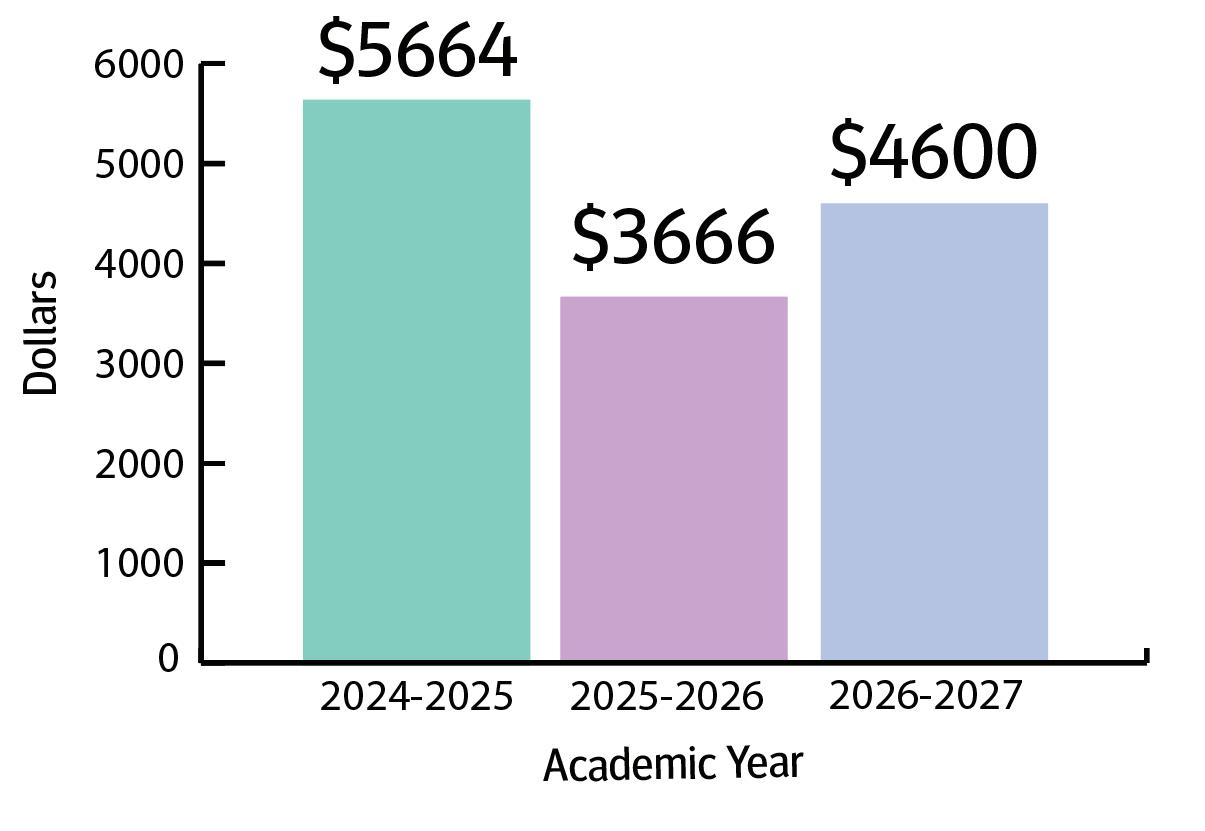
Rice announced a 6.5% increase in its undergraduate tuition rate for first, second and third-year students, raising it to $71,140 for the 2026-27 academic year.
Rice’s Policy 852 regarding international travel designates all countries classified at level 3 or 4 by the U.S. State Department as “elevated risk.”
The policy prohibits undergraduate
The U.S. Department of State updated its travel advisory on March 2, reclassifying Jordan from level 2 to level 3, placing it under a “reconsider travel” warning, citing terrorism and armed con ict.
“We had a meeting where [Crim] laid out what the options are, and they were not looking good,” Elsherbiny said. “A couple of days later, we at CLIC decided that it’s best to cancel the program. I sent an email to the students as the faculty leader, telling them that the program has been canceled and that they will not be penalized financially when they drop the course.”
Crim said she reached out to counterparts in global safety at other universities with programs in Jordan, and most were also canceling their trips.
Tuition will be raised by $4,600. All other continuing students will see their tuition increase by $2,806, or about 4%, according to the Feb. 23 press release. Room and board also increased from the 2025-26 year to $20,530, marking a 4.8% increase from the previous $19,550 costs.
The announcement follows a previous tuition increase from the 2025-26 school year, with an increase of $3,666 for rst and second year students. In the 2024-25 school year, tuition was raised by $5,664 for rst year students, a 9.9% increase.
COURTESY BAKER INSTITUTE
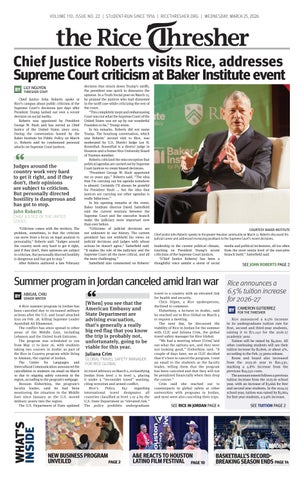
Chief Justice John Roberts speaks to the greater Houston community on March 17. Roberts discussed his judicial career and addressed increasing pushback to the Supreme Court’s recent decisions.
New business program to train students for competitive industries
are fully prepared.
Rice’s Virani Undergraduate School of Business announced the Moody Business Scholars Program on March 12. The program will introduce a new initiative to prepare students for careers in competitive industries.
The program, which will be open to a select group of undergraduate students, will work on a cohort-based system, giving the group earlier access to training, mentorship and industry networks. The program will take about 30 students across the finance and management tracks, according to a Rice News press release.
Investment banking and consulting recruiting now begins earlier than ever with applications opening up to 18 months in advance and acceptance rates at top firms below 1%. Students are often expected to interview for junior year internships even before completing an introductory finance course.
Robert Dittmar, associate dean of the Virani School, said this shift has compressed the timeline for skill building and left students competing before they
FROM FRONT PAGE JOHN ROBERTS
Less than a week a er his appearance at Rice, Roberts returned to the Supreme Court to hear oral arguments.
On Monday, the Supreme Court heard a voting rights case and appeared ready to strike down a Mississippi law allowing mail-in ballots, according to the New York Times. Many other states have similar laws that could be a ected by the case’s ruling,
“We’re seeing recruiting timelines move earlier and earlier, to the point where students are interviewing for investment banking roles before they’ve even taken an introductory finance course,” Dittmar wrote in a message to the Thresher. “The goal of this program is to give them access to that knowledge and those networks much earlier.”
We’re seeing recruiting timelines move earlier and ealier, to the point where students are interviewing for investment banking roles before they’ve even taken an introductory finance course.
Robert Dittmar ASSOCIATE DEAN OF THE VIRANI SCHOOL
The Moody Business Scholars Program does not change the core curriculum,
and President Trump has long opposed mail-in voting measures.
“ELECTIONS CAN NEVER BE HONEST WITH MAIL IN BALLOTS/VOTING,” the president wrote on Truth Social in August 2025. “I, AND THE REPUBLICAN PARTY, WILL FIGHT LIKE HELL TO BRING HONESTY AND INTEGRITY BACK TO OUR ELECTIONS.”
During his time in the Reagan administration, Roberts worked under former U.S. Secretary of State James Baker, the founder of the Baker Institute.
Dittmar said. Instead, it adds structured and real world experiences.
“Investment banking and consulting interviews have very specific formats, and our goal is to enhance preparation for these interviews,” Dittmar wrote.
In addition to early exposure and interview preparation, the program is structured around concentration-based tracks that offer tailored experiences for students pursuing different career paths.
Along with the current finance and management pathways, a marketing pathway is planned to launch in 2028.
Finance scholars will travel to Wall Street during fall recess, attend a speaker series and manage a portion of the university endowment, gaining exposure typically reserved for MBA students.
Management scholars will complete consulting preparatory programs, work on projects with national and global firms and have expanded opportunities to travel to case competitions and conferences.
Karma Elbadawy, a Martel College senior majoring in social policy analysis and economics, said her experience navigating consulting recruiting reflected a lack of early, structured guidance the
“I got a letter from Secretary Baker a few months ago inviting me to come [to Rice],” Roberts said. “He ended by saying, ‘I look forward to your favorable response.’ I was still used to saying yes.”
In opening remarks at the Baker Institute event, Provost Amy Dittmar re ected on Roberts’ visit to Rice 13 years ago at the university’s centennial.
“That conversation le a very lasting impression,” Dittmar said. “Even today, alumni will approach us about that event as one of the de ning intellectual moments
program now aims to address.
“I didn’t really know what consulting was until a few weeks before the application,” Elbadawy said. “I wasn’t prepping for months like a lot of other people.”
I didn’t really know what consulting was until a few weeks before the application. I wasn’t prepping for months like a lot of other people.
Karma Elbadawy MARTEL COLLEGE SENIOR
Elbadawy said earlier access to mentorship and structured preparation could have significantly changed her experience, especially as recruiting timelines continue to accelerate.
“A program like this would have helped,” she said. “I could have found out about consulting earlier and had more time to prepare.”
of their time at Rice.”
As the United States approaches its 250th anniversary, Roberts ended the discussion by re ecting on the state of the nation’s judicial systems.
“From my perspective, the sun is rising,” Roberts said. “The commitment I see, not only on the court, but in the trial judges where the rubber really does hit the road, the faith of so many people in our institutions, emerges from the criticism stronger. We’re at two centuries, and I think it’s going to continue for many more.”
AISHA KHEMANI SENIOR WRITER
FRANCESCA NEMATI / THRESHER
The Moody Business Scholars Program is a new initiative aimed at preparing students for competitive careers in nance and management. As of now, the program will take 30 undergraduates.
“As we invest in our academic programs and campus resources for student success, we are focused on sustaining our competitive strength and advancing Rice’s trajectory as a leading global teaching and research university with impact — ensuring every graduate is able to achieve their goals,” said Amy Dittmar, the Howard R. Hughes Provost and executive vice president for academic a airs in the press release.
Dittmar said the change would support Rice’s overall mission in relation to the changing needs of the university.
“Supporting a highly personalized, student-centered educational experience while responding to the evolving needs of our community and the world is central to Rice’s mission,” Dittmar wrote.
Samuel Nowlin, a Duncan College freshman who receives nancial aid via The Rice Investment, said he is uncertain about whether or not the increase in tuition would be justi ed to the student body.
“I would need a very detailed action plan for how this tuition increase is actually going to be used to better my Rice education,” Nowlin said. “Right now, considering that I wasn’t even aware of the tuition increase, I would say that it’s very unlikely that we will see it.”
The press release emphasized Rice’s agship nancial aid program The Rice Investment, which provides a student with 100% of their demonstrated need.
According to the press release, in fall 2025 54% of undergraduates received nancial aid. The average rst-year aid
o er was $71,698. Despite these gures, some students have expressed concerns about the accessibility of aid. Annie Coulter, a Duncan freshman, said although she does
not qualify for nancial aid, the cost of attendance has placed a signi cant strain on her family’s nances. She said she appealed her nancial aid decision, but the request was not approved.
“I think they’re very helpful for people who are very low income,” Coulter said. “But for people like me who are middle class without savings, they make it not very a ordable.”
Tuition Increases
Student-built game puts Rice campus knowledge to the test
LILLY WU THRESHER STAFF
Think you know Rice campus better than everyone else? A new online game is giving students the chance to prove it.
On March 7, Brown College sophomore Darshon Singh launched Rice GeoGuessr, a version of the popular geography game that challenges players to guess the location of Google Street View images.
Singh’s version adapts the concept speci cally for the Rice campus, placing players in a 3D street view and asking them to identify the exact location on a birds-eye view map.
The game consists of ve rounds, each featuring a di erent location on campus. Players can adjust their camera perspective to better understand their surroundings before making a guess.
Singh said he intentionally made the scoring system strict. The nal score is determined by their accuracy in pinpointing the location shown — a perfect score is 25,000 points, with points deducted based on how far the guess is from the actual location.
“I was shocked by the scores, as they were surprisingly very high,” Singh said. “Because our campus is so small, I graded the game pretty harshly. If you were just 10 meters o , you dropped a couple thousand points o your score.”
Brown College freshman Isaac KoMoyet played the game and said he enjoyed it despite some drawbacks.
“It was a pretty good experience overall, I was a big fan of how I was able to see locations I have not seen on campus before and try to guess where they are,” Ko -Moyet said. “One negative experience I did have was that some of the locations did appear frequently, so you might have the same place show up back to back.”
Singh said the idea for the game was inspired by a visit to the University of Washington, where he was amazed by the size of the campus and imagined how a location-based guessing game could work in that setting. The entire project came together in just two hours, Singh said.
Singh said he built the game independently using TypeScript and Next.js, and connected street view visuals to locations
I launched the game without checking for any security things, so people hacked my leaderboard. There were a lot of perfect scores, and I am surprised that people spent the time to try to figure out the vulnerabilities.
Darshon Singh BROWN COLLEGE SOPHOMORE
on the campus map. Because the game relies on free, open-source data, the images used are from around 2015.
Singh said using more up-to-date images through Google’s Street View API would have required paid access.
The game also features a leaderboard that allows players to compete for the highest score. Shortly a er the launch, Singh said users discovered a vulnerability in the game’s
leaderboard system.
“I launched the game without checking for any security things, so people hacked my leaderboard,” Singh said. “There were a lot of perfect scores, and I am surprised that people spent the time to try to gure out the vulnerabilities.”
To x this issue, Singh later implemented row-level security.
As for the future, Singh is considering expanding the game with new features that do not appear in the original GeoGuessr game.
“I wanted to add a version where you start really with a very zoomed-in picture and guess where you are,” Singh said. “If you get it wrong, it will slowly zoom out and reveal more of the image. I also wanted to add indoor buildings, but I feel like that would be really di cult to guess.”
As of March 24, the game has over 200 attempts.
“I was thinking that during [Orientation] Week we could have all the new students try out this game,” Singh said. “I think it would be cool to see how well they know the Rice campus before and a er O-Week.”
New RSA administration kicks off first Senate discussing fantasy football
TOBY CHOU SENIOR WRITER
During their rst o cial meeting of the year, the newly renamed Rice Student Association spent over half of the time discussing a bill to establish a fantasy football league.
Introduced by Chao College Senator Jake Pessin, the bill aims to form the Rice University Fantasy Football League. The league, Pessin said, would promote school spirit, increase cross-college interaction and create new residential college traditions.
“The goal is to increase inter-college engagement,” Pessin said. “A lot of people love tennis, football and other sports, and people rally behind that. I think that starting a Rice University undergraduate fantasy football league would be a great addition to our culture.”
Under the bill, each residential college
would have a general manager that would compete on their behalf in the league. The general manager would be responsible for dra ing players, ensuring league rule compliance, promoting the league and engaging the residential college.
The goal is to increase inter-college engagement.
Jake Pessin
CHAO COLLEGE SENATOR
Brown College Senator Neya Gupta raised concerns if the traditional fantasy football punishment for coming in last place could be considered hazing.
“Obviously right now, with [Orientation Week] and hazing, how are you planning to make people do the punishments while not
creating hazing?” Gupta asked.
The RUFFL would be run by a league commissioner appointed by the RSA president and con rmed by Senate. Pessin said the punishments would be chosen by the commissioner and approved by the RSA at the start of the season.
The bill speci es that punishments should be limited, with suggestions such as a public service activity bene ting the Rice community or the hosting of a campuswide event.
Pessin also said no one would be forced to do anything that they do not want to do.
RSA President Chelsea Asibbey said that the word “punishment” in the bill might elicit a negative response from administration and recommended that the wording be changed.
“I think that the word has a weird connotation,” Asibbey said. “Maybe we should change it to taxations or forfeitures, both of which are far more appealing. The
moment there is the word ‘punishment,’ it puts out red ags.”
Pessin amended the bill, changing the word “punishment” to “leaguedesignated forfeiture.”
Another concern brought up by Will Rice College President Raye Osayimwese-Sisson was the potential for sports gambling with the creation of RUFFL.
Pessin addressed this concern and said while he did not expect it to be an issue, he is entirely willing to add an amendment making general managers responsible for prohibiting gambling and sports betting on the RUFFL.
“Think about a comparison to intramural sports,” Pessin said. “I hope that there aren’t bad actors betting on their intramural teams, but it is de nitely against our rules.”
Having run out of time, the meeting was adjourned, with two amendments to the bill in the works.
JESSICA XU / THRESHER
“We don’t want anything happening on the ground that could potentially put [students and faculty] in danger. So even though Jordan is not the primary location of this con ict, there are still knock-on e ects that happen, and one of the big ones is the closure of their airspace,” Crim said. “[When] you see that the American Embassy and State Department are advising evacuation, that’s generally a really big red ag that you know the trip is probably not, unfortunately, going to be viable for this year.”
Jasper Munden, a Jones College senior who did the Rice in Jordan program last year, said it was a valuable experience to experience the culture of an Arabic speaking country.
We had Iranian missiles over Jordan on a daily basis. It was definitely scary for some time, and I still think about that conflict on a daily basis. However, I feel that I was still pretty safe in Jordan, ironically.
Jasper Munden JONES COLLEGE SENIOR
“Throughout all the bumps and bruises that current events caused at the time, I think we still had a very culturally impactful and meaningful experience, and we felt safe,” Munden said.
During last year’s program, the 12day war between Israel and Iran in June 2025 also included military conflict in the region, with the U.S. and Israel launching airstrikes on Iran’s nuclear sites. Iran retaliated with its own missile strikes.
“We had Iranian missiles over Jordan on a daily basis. It was definitely scary for some time, and I still think about that conflict on a daily basis,” Munden said. “However, I feel that I was still pretty safe in Jordan, ironically.”
Last year, Elsherbiny and seven undergraduate students, including Munden, were already in Jordan when the war broke out during the last few weeks of the program.
“Throughout the war, last summer, Jordan was never elevated to level 3. It remained level 2,” Elsherbiny said. “So it
was a much di erent situation, of course.”
Elsherbiny said he and CLIC are exploring an alternative to the program where students would stay in Houston to take the Arabic courses at Rice and leverage the Houston Arab community by interacting with non-governmental organizations and local business owners.
This proposal is still in discussion and is currently gauging student interest, with preparation underway to draft a proposal to be presented to the Dean of the School of Humanities and Arts for approval.
“We’re treating this as a study abroad
AN / THRESHER
program,” Elsherbiny said. “The plan is to reach out to NGOs that have a strong Arab presence, reach out to business owners, so that we can do experiential learning activities with them.”
Elsherbiny said he hopes Rice in Jordan will resume next summer after the conflict subsides.
“It is very disappointing for students, because it’s different being in Amman and doing all of the amazing things that we promised our students to do,” Elsherbiny said. “It is not the same as being on campus.”
SYDNEY
LETTER FROM THE EDITOR’S DESK
We’re retiring from the Thresher to a nice farm upstate
On our rst Tuesday as editors-in-chief, we took a sel e together a er sending the newspaper to print. The timestamp is 11:49 p.m., but we were still smiling, proud of what we had accomplished.
A lot has changed since we started a year ago. We’ve learned to decline invitations to do anything besides Thresher work on Tuesdays, and we’ve gotten very good at explaining the signi cance of student journalism to people who don’t understand.
Even before that sel e was taken, our rst o cial act as editors was to paint our o ce. We cleaned, bought new furniture and covered the years of marker drawings made a er the rst time the Rice Memorial Center was supposed to be torn down. People who saw the o ce before we took over will understand how big of a change that was.
We had big goals coming into this job, and we accomplished a lot of them. We went from printing 12 pages a week to 16, and this semester we printed the rst 20-page issue in at least a decade. We won Best in Show at
COLUMN
a national conference in Washington, D.C. and launched both an updated website and a brand new app courtesy of the incredible Ayaan Riaz.
It’s interesting being the editors-inchief of a newspaper at a school without a journalism program. Everything we know about journalism comes from our peers at other universities, our adviser Chris Evans and from the Thresher sta members who came before us. More editors plan on pursuing careers in journalism a er graduation (including us) than ever before in our time at Rice.
As we wrap up our tenure as editors-inchief (the issue you’re reading right now is our last at the helm), we want to recognize the people who helped us reach our goals and stay sane this year.
The two of us, along with our managing editor Juliana Lightsey, have read every story published by the Thresher since we started last April. We truly could not make a newspaper without her. Both her
journalistic prowess and emotional stability have been invaluable.
We can’t wait to watch James Cancelarich and Evie Vu take our places next year and accomplish goals of their own. They grow up so fast. Between them and our section editors, we know the Thresher will be in good hands.
This year would not have been the same without Jenna Perrone, Andersen Pickard and Arman Saxena behind the wheels of their respective sections. Their new ideas have kept the paper exciting, and their ability to adapt and grow according to our sometimes insane requests was unparalleled.
Without Francesca Nemati, Konstantin Savvon, Jessica Xu and Richard Li, our paper would be just words on a page and no one would ever read it. Every photo, illustration, graph or design element is from their creative minds. Steven Burgess has also revolutionized our social media game with his new video team.
While we’re de nitely ready to spend
our Tuesdays anywhere else but our o ce, we will miss the many talented people who listened to the Pitch Perfect soundtrack with us in there. Finally, thank you to everyone who has picked up a Thresher issue this year. Everything we do is for you (even if you only get it for the crossword).
Hoots around campus: In the silence, campus continues
CAELYN WANG THRESHER STAFF
Spring break didn’t empty campus. It reshaped how people chose to utilize the place and move around it. What disappeared was not activity itself, but the visibility of it. Things still went on, just in corners we typically overlook. Without packed schedules and crowded classrooms, campus life becomes less obvious, but no less real. Instead of rushing, people linger; instead of lling every hour, they make choices about how to spend it.
I expected campus to feel empty when
the break began. But staying here, I found myself doing more than just wandering around and passing the time.
I stopped by Brochstein Pavilion. Even though it was not as busy as usual, the smell of fresh brewed co ee and baked goods, along with the sound of small talk among the people still here, created a soothing atmosphere.
I caught up with friends. Co ee, laughter and conversations stretched on for longer without the pressure of the next class or deadline. There was no need to check Canvas or hastily wrap up the conversation. The pace slowed, and with it, the quality of interaction changed.
At the same time, spring break seemed to be a good time to catch up on work le behind. My friends and I gathered together, laying out materials and sketching designs for theater, moving steadily through what had been postponed during the rush of the semester. Music played in the background as we worked, wood dust dri ing in the air, lling the space with a rhythm that replaced the usual urgency.
Under the sunlight on the quad, pieces were spray-painted and le out to dry, colors gradually settling onto surfaces that would soon become part of something larger, something magical.
These moments reveal that spring break is not simply a pause. Whether staying on campus, returning home or traveling, each choice carries its own story. What matters is not where we go but how we choose to be present in that time — whether by reconnecting with others, creating something with our hands or simply allowing ourselves to slow down and appreciate the beauty we o en overlook.
As I walked through campus Saturday morning, I saw scooters, bicycles and cars begin to re ll the Inner Loop. As chatter lled the air, I knew the familiar campus was returning with its usual melody.
Caelyn Wang is a Jones College junior majoring in business and mathematical economic analysis. Her column explores how the sounds and rhythms of daily life, from radio broadcasts to late-night chippings, shape students’ experiences and sense of community at Rice.
Global chats: Rice must guarantee housing for international students
VALERIA REVATTA THRESHER STAFF
It’s late. I’m in the architecture studio. I have only slept about ve hours in the past week. A classmate and I are taking photos of our recently nished model. As I stand on top of a table holding a camera, quick footsteps burst through the door. One of my friends, also an architecture and international student, comes up to me. “We got kicked o campus,” she says. Silence.
I can feel the blood in my brain drain all the way down to my stomach. My heartbeat quickens. My hands start shaking. This cannot be happening, I tell myself. But it was happening, and to make things worse, I was nearly last on the waitlist to receive on-campus housing.
When I came to Rice, I expected the residential college system to provide a safe and stable place where I could spend my college years. I was excited to form a strong sense of community and build close friendships: late-night conversations in commons, going to FITQs every week and dancing at dorm pregames. However,
due to the demands of the architecture program and the complex housing system, I quickly realized that reality was anything but what I had expected.
In my experience, as an architecture student, ful lling the freshman volunteering requirements is challenging. At Duncan College, it a ects on-campus housing status. Long studio sessions, working overnight, constant project reviews and pin-ups leave little room for extracurricular involvement. Even if events are scheduled, they o en con ict with studio hours or project deadlines. As a result, participating in the very activities meant to help students integrate into the community becomes nearly impossible.
Faced with this reality, I began to evaluate the options available. However, these were limited.
One option is to live in the new Main Street Residence for my sophomore year. But a er hearing about the concerning conditions of the building and the limitations students will face in participating in their college culture, I doubt I’d enjoy it.
The second option is to transfer to Chao
College. However, I don’t want to leave the friendships I started to build at Duncan. It would be like starting all over again, and I’d have to put in extra e ort to see my current friends. Yet, with the demands of the architecture program, that’s not guaranteed to happen.
The third option is to go o campus. But, if the process is already challenging for domestic students, imagine how it is for international students. I don’t have su cient documentation to sign a lease. I have no Social Security number, no credit scores and no proof of income. While I won’t say it’s impossible to nd housing as an international student, I wouldn’t like to worry about where I will live, especially when I’m trying to focus on my academics.
When I sought guidance from people who are close to me, their responses left me with more questions than answers.
One friend suggested we go to the Main Street Residence together. My parents urged me to transfer colleges. Another friend proposed being brave and going off campus.
As for me, I don’t know. I want to stay on campus and live in decent conditions.
At the same time, I would like to develop more friendships in my residential college and stay involved there. But if I learned anything from coming to the United States, it is that some things require sacri ce. I feel lost, unsupported and sad. The whole process is so stressful, overwhelming and confusing. I don’t wish for any international student to have to constantly worry about not having a place to live.
That said, I propose that international students have guaranteed housing. We already struggle with visas, we worry every single day about changes in immigration policies, we have limited financial support — the list goes on. We do not need another barrier to our education. If athletes can have guaranteed housing, why shouldn’t we?
For international students, being structurally excluded by the housing system raises important questions about who can truly be part of Rice’s community. If I already felt a sense of alienation due to my nationality, this just ampli ed it. I hardly feel like I belong in my residential college anymore.
COLUMN
Eye on accessibility: Dining with allergies at Rice
COLETTE MINTON FOR THE THRESHER
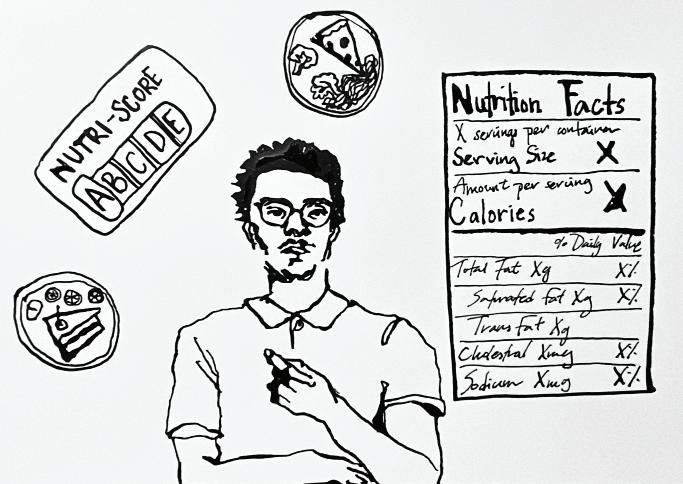
A large part of our social lives — going out to lunch, grabbing a coffee — revolves around meals. Allergies and dietary restrictions can turn fun outings into a source of stress and anxiety, as navigating menus can be mentally draining.
To avoid this, people often stick to “safe foods” and forgo dining at unfamiliar restaurants. Access to allergyfriendly food is often top of mind and can dictate where people choose to eat.
Several Rice students share this experience, as 52.4% of the 21 respondents to a recent Thresher survey said their allergies influence how frequently they go to the serveries.
The shortcomings of the serveries can be divided into two categories of miscommunication: incorrect information and a failure to adequately publicize new programs designed to help students.
While many students appreciated that dietary information concerning the top nine allergens is available for every dish, the signs bearing this information are not always accurate.
If the allergy information signs better reflected the actual ingredients in a dish and Housing and Dining’s recent initiatives were better disseminated, students with allergies and dietary restrictions would have a much better time getting meals on campus.
The two most informative questions in the survey — navigating specialty menus and menu transparency — also received the lowest ratings of 2.43 and 2.81 stars out of 5, respectively.
Both areas stem from the unavailability of a complete menu online. This makes it hard to gauge which foods have changed and what might be available without gambling a swipe on the possibility of food I can or cannot eat.
Some specialty menus, like Ramen Rendezvous, will take over areas like the Grill, leaving students with allergies or dietary restrictions unexpectedly without safe food.
I consistently have to go to another servery due to specialty menus. I am not alone in this experience, as 52.4% of survey respondents have gone to a di erent servery just for allergen-free food.
More crucially, multiple students reported consuming an allergen due to servery mislabeling. While many students appreciated that dietary information concerning the top nine allergens is available for every dish, the signs bearing this information are not always accurate.
Frequently, dishes with soy sauce — which contains wheat — are labeled gluten-free. Multiple students reported having su ered from allergic reactions due to mislabeling like this. Understandably, students feel they can no longer trust that foods are allergen-free out of fear of another allergic reaction.
While I thankfully have not experienced an allergic reaction while dining at the serveries, I can attest to instances of mislabeling. Earlier this semester, there were Honey Nut Cheerios mixed in with the regular Cheerios, which led me to no longer eat cereal in the serveries.
In other instances, I have noticed the food change but not the signage. Because of this, it’s hard to trust that food is safe.
Another critical takeaway from the survey is the lack of widespread knowledge about the initiatives Rice is implementing to help students with dietary restrictions.
None of the respondents had worked with Clare Rezentes, the registered dietitian on campus, but almost a third said they think they would benefit from working with a dietitian.
To better understand similar untapped resources, I spoke with the current food allergy ambassador, master’s student Dumari De Leon. She explained how the ambassador role serves as a peer resource for students with allergies, connecting them with chefs and gathering feedback
to work with the dietitian on allergy concerns.
I am hopeful that if more students knew about food allergy ambassadors, and if the program were more integrated into the residential colleges, students would get the assistance they need to navigate the serveries.
Similarly, if the many forms new students have to ll out included a question or two on food allergies, and an opportunity to meet with the dietitian, that could also improve the servery experience.
Ultimately, the stakes could not be higher. Oncampus students don’t have many choices when it comes to where to eat. With small improvements in communication and awareness, Rice has the opportunity to make crucial changes to improve the health and well-being of its students.
Ultimately, the stakes could not be higher. On-campus students don’t have many choices when it comes to where to eat. With small improvements in communication and awareness, Rice has the opportunity to make crucial changes to improve the health and well-being of its students.
Thresher’s latest online poll results
* Indicates Editorial Board member
Kathleen Ortiz* Editor-in-Chief
Sarah Knowlton* Editor-in-Chief
Juliana Lightsey* Managing Editor
NEWS
James Cancelarich* Editor
Belinda Zhu Asst. Editor
Hongtao Hu Asst. Editor
Hope Yang Asst. Editor
OPINION
Jenna Perrone* Editor
Andrew Rynsburger Asst. Editor
FEATURES
Amelia Davis Editor
ARTS & ENTERTAINMENT
Arman Saxena* Editor
Chi Pham Asst. Editor
SPORTS Andersen Pickard* Editor
Evie Vu* Editor
Keya Patel Asst. Editor
Patrick Shukis Asst. Editor
BACKPAGE
Charlie Maxson Editor
Max Scholl Editor
Will Howley Editor
Rykelle Sandidge Senior Writer
COPY
Shruti
ABOUT
The Rice Thresher, the official student newspaper of Rice University since 1916, is published each Wednesday during the school year, except during examination periods and holidays, by the students of Rice University.
Letters to the Editor must be received by 5 p.m. on the Friday prior to publication and must be signed, including college and year if the writer is a Rice student. The Thresher reserves the right to edit letters for content and length and to place letters on its website.
Editorial and business offices are located on the second floor of the Ley Student Center: 6100 Main St., MS-524 Houston, TX 77005-1892
Phone: (713) 348 - 4801
Email: thresher@rice.edu
Website: www.ricethresher.org
The Thresher is a member of the ACP, TIPA, CMA and CMBAM.
Colette Minton is a Martel College freshman studying mechanical engineering. Colette’s experiences with physical and invisible disabilities give her unique insight into the shortcomings of Rice’s infrastructure. Through this column, she aims to spread awareness and improve accessibility at Rice.
NHU CHU / THRESHER
Students place rst at annual baseball analytics competition
RISHI ANARKAT
THRESHER STAFF
Standing before a panel of Major League Baseball executives and seasoned data scientists, members of the Rice University sport analytics team were not just trying to win a trophy. They were trying to convince the panel that their method of managing star hitters might be completely wrong.
When the nal scores were tallied at the Society of American Baseball Research Diamond Dollars Case Competition, a national baseball analytics competition for high school students and undergraduates, the Rice team had not only secured rst place among 17 national teams but had also earned a rare invitation for an encore presentation to the entire conference.
For students Mark Cohen, Brady Detwiler, Brendan Lloyd, Andersen Pickard and Saylor Robinson, a weekend in the world of highstakes sports analysis was a chance for them to share their knowledge.
Editor’s Note: Andersen Pickard is the Thresher’s sports editor.
This year, the case focused on a speci c pro le known as the power-variant hitter: players who hit a high number of home runs but strike out o en and have low contact rates.
Traditionally, these athletes are encouraged to stick to their high-power approach all season to maximize their total production.
“The question we were trying to answer was, ‘Given this hitter-optimized approach, are there speci c situations in a game, based on base-out states or context, where these players should adjust their approach to better optimize for run creation?’” said Cohen, a Hanszen College sophomore.
The team realized that while a
The question we were trying to answer was, ‘Given this hitteroptimized approach, are there specific situations in a game, based on base-out states or context, where these players should adjust their approach to better optimize for run creation?’
Mark Cohen
HANSZEN COLLEGE SOPHOMORE
seasonlong strategy is valuable for a player’s personal stats, it might not be the best choice in the bottom of the ninth with a runner on third base.
“A lot of times in analytics, you’re trying to quantify some sort of seasonlong value, player value, regardless of the situation,” said Detwiler, a Duncan College junior. “Now you’re asking, how can I make this player better in this very specific situation?”
Scott Bush, CEO of SABR, said the case was highlighting the idea of hitters optimizing every at-bat for optimal production over an entire season.
“While that approach is broadly effective, there are specific game situations where it may not be the best choice for the team,” Bush said.
Bush also said the Rice team’s performance reflected the current state
of the industry, where teams are moving toward situational optimization.
“One of the biggest pitfalls teams encounter is failing to recognize the weaknesses in their approach or assuming they’ve arrived at a complete solution,” Bush said. “Clear communication is first and foremost.”
Cohen said the highlight of the weekend was the encore presentation, given after the team had already been declared the winners. However, it didn’t come without challenges.
“Putting together a professional presentation for a large audience, and answering questions from people with much more experience than me, was initially nerve-wracking,” said Pickard, a Duncan junior.
Fortunately, the congenial atmosphere of the conference helped ease the tension.
“In the end, it felt more like a group of
A lot of times in analytics, you’re trying to quantify some sort of seasonlong value, player value, regardless of the situation. Now you’re asking, how can I make this player better in this very specific situation?
Brady Detwiler DUNCAN COLLEGE JUNIOR
like-minded baseball people discussing the game,” Pickard said.
Detwiler said the experience has sharpened the team’s focus on where the future of baseball is heading. The project reinforced his interest in the strategic “chess match” aspect of the sport.
It wasn’t one or two people carrying the project; it was a true team effort.
Everyone contributed in a meaningful way in a way that only they really could have.
Mark Cohen
HANSZEN COLLEGE SOPHOMORE
“This project really felt like a game theory problem — guring out optimal decisions while accounting for how the opposing team might respond,” Detwiler said.
The team’s success was also rooted in a highly effective group dynamic, Detwiler said. Each team member was able to choose what part of the case to tackle, which he said made them work more efficiently since they were interested in their tasks.
Cohen said the final victory belonged to the entire group.
“It wasn’t one or two people carrying the project; it was a true team effort,” Cohen said. “Everyone contributed in a meaningful way in a way that only they really could have.”
COURTESY ANDERSEN PICKARD
A team of undergraduates competes at the Society of American Baseball Research Diamond Dollars Case Competition. The team placed rst, analyzing a power-variant hitter’s season performance.
Crash Course
THOMAS LU GUEST CONSTRUCTOR
Play our new daily mini on the Thresher app!
Intersection
sh The Last Frontier Classroom rniture Shade of color Sort
Mean-spirited Naval fleet
Chocolate substitute
See 20-Across Misbehave
What union members pay Private, e.g. Hispaniola native Hanukkah money Pre x for freeze The color of grass, or a hint to the
Approves
Gave
Rice, rice baby: Inside the gure skating club
In a city known for its heat, the Rice University Figure Skating Club is carving out a space for ice skaters at Rice. Practicing at the Bellerive Ice Center and Sugar Land Ice & Sports Center, the club boasts athleticism, artistry and a tight-knit community.
The club’s origins are rooted in both absence and longing — and the attempt to turn those feelings into a positive space for growth and support, said Melissa Lee, the club’s president and founder.
“I grew up gure skating competitively through high school, but when I came to Rice, I was okay with stepping away since I felt like I had accomplished what I wanted in the sport,” said Lee, a Jones College senior. “Over time … hearing about [friends’] experiences made me realize how much I missed both the sport and the sense of community around it.”
Every time the Olympics comes around, there’s definitely a significant peak in interest. Alysa Liu is amazing and has pulled so much attention and virality in a way that I haven’t seen skating do in a long time.
Ashley Yang
BAKER COLLEGE FRESHMAN
What began as a personal desire to reconnect with skating has since evolved into a growing organization. Lee said the club was never just about returning to the ice — it was about creating a space at Rice for anyone interested in skating, regardless of experience.
Melissa Lee,
That vision is already gaining traction, she said, with prospective students reaching out about skating opportunities.
Despite its relatively recent founding, the club has quickly established itself in competition. Melody Jing, vice president of competitions, said the team primarily competes locally, including at the Lone Star Skate competition in Sugar Land.
This year marked a milestone: Rice co-hosted the event with Texas A&M University. Jing said the team also competes against universities such as Michigan State University, Trine University and the University of Texas at Austin.
“We fall in the Midwest region,” said Jing, a Hanszen College senior. “This year, we had eight team members on the ice …
many friends also came to the Sugar Land rink to watch the competition and cheer for the Rice team.”
For many skaters, the club o ers something they hadn’t experienced before. Micayla Pang, a member of the competition team, described joining as a shi from the individual nature of the sport.
“I started skating when I was seven,” said Pang, a Wiess College freshman. “I joined RUFSC because I wanted to be part of a skating team for the rst time, since singles skating is very much an individual sport.”
The club is focused on growth — both in numbers and ambition. Lexi Otero, the club’s vice president of nances, said the team plans to expand competition participation.
“We are also focusing on fundraising and recruiting skaters so we can begin traveling to other collegiate events,” said Otero, a Baker College sophomore.
We’re a super [small] but close-knit community. Skating has definitely brought us together in ways that I never could have imagined.
Claire Wang
BAKER COLLEGE JUNIOR
The team also hopes to continue building collegiate skating in Texas, Otero said.
The timing is ideal: With the recent 2026 Winter Olympics, skating has surged in cultural visibility. This year, much of the attention on the event has centered on American skater Alysa Liu, whose backstory and personality have captured a new generation of fans and brought a fresh energy to the sport. Competition team member Ashley Yang said this renewed attention has brought more exposure to the sport.
“Every time the Olympics comes around, there’s de nitely a signi cant peak in interest,” said Yang, a Baker freshman. “Alysa Liu is amazing and has pulled so much attention and virality in a way that I haven’t seen skating do in a long time.”
For the Rice Figure Skating Club, this broader cultural momentum mirrors something happening on a smaller scale within the university itself: a small skating club on campus is now gaining edges, speed and community.
“We’re a super [small] but close-knit community,” said Claire Wang, a Baker junior. “Skating has definitely brought us together in ways that I never could have imagined.”
HANNAH GUO THRESHER STAFF
KONSTANTIN SAVVON / THRESHER
Rice Figure Skating Club’s president and founder, competes on the ice.
Rice Beekeeping Club creates a buzz on campus
For O’Connor, a student volunteer in the Betty and Jacob Friedman Holistic Garden, founding the club was a continuation of familiar work.
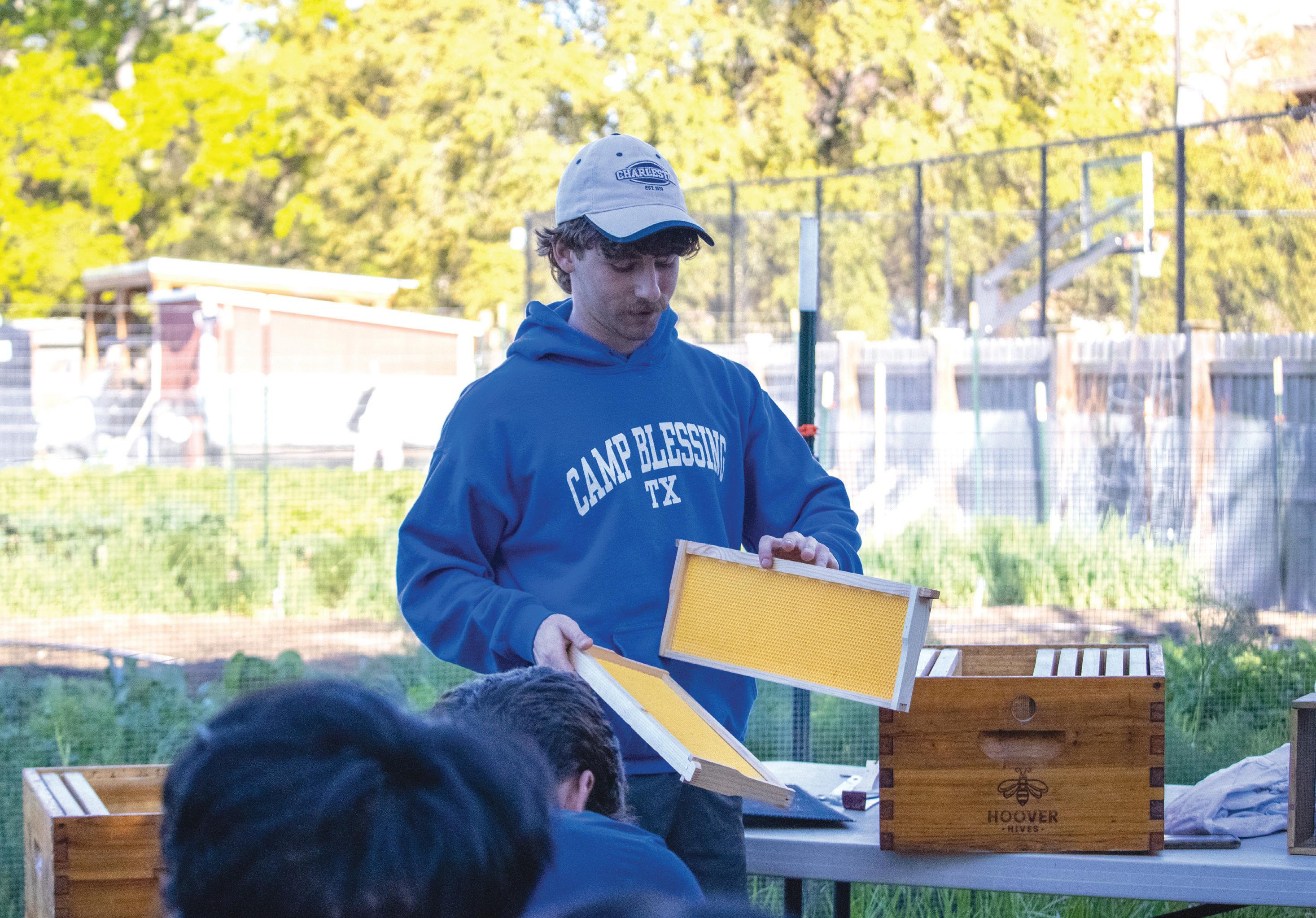
On March 12, students tried on beesuits and handled beekeeping tools in the back of the Betty and Jacob Friedman Holistic Garden as a part of the Rice Beekeeping Club’s demonstration on installing beehives.
The interactive tutorial was given in preparation for a special forthcoming delivery: a shipment of two new boxes of Italian honey bees.
“They’re coming from this company called Mountain Sweet Honey, which is based in Georgia,” said Kamden O’Connor, the club’s founder. “They come with their queens, and then it’s kind of like ordering crawfish where you buy it by the pound. We’re ordering two 3-pound packages of bees.”
During the club’s second meeting, students learned how to properly install new packages of bees, a lengthy process that involves hydrating the bees in their shipping container, coating them in a sugar syrup, and, as O’Connor put it, “dumping them out like cereal” into the hive.
Although still in the process of officially registering as a club, the Rice Beekeeping Club has quickly grown in membership since its preliminary meetings, introducing students, faculty and community members alike to the art of beekeeping.
I love spreading that awareness and skill, especially when people have an appetite for it. There’s nothing stopping you from learning this skill that you can use for the rest of your life.
Kamden O’Connor
BAKER COLLEGE JUNIOR
Globally, there’s a bee problem. Bees are dying across the globe, certainly in the United States, and even here in Houston. So what Kamden is doing is great on many different levels.
Todd Walker
BETTY AND JACOB FRIEDMAN
HOLISTIC GARDEN MANAGER
During his sophomore year, he began maintaining the garden’s beehives after connecting with garden manager Todd Walker, who said previous attempts to maintain beehives were largely unsuccessful.
“It has to do with pesticides, herbicides being sprayed in the neighborhood and on campus [that are] very detrimental to bee health,” Walker said. “Additionally, mites can be devastating to a bee colony, including the one we lost a couple of months. Fortunately [O’Connor] has figured it out and it is on top of it, and it shouldn’t happen again.”
Recognizing the interest in beekeeping on campus and the Holistic Garden’s mission of promoting sustainability, O’Connor took the initiative to create an active beekeeping organization on campus at Walker’s encouragement.
“I love spreading that awareness and skill, especially when people have an appetite for it,” said O’Connor, a Baker College junior. “There’s kind of a joke recently [about] ‘beekeeping age,’ you could argue that’s 21 or around there. There’s nothing stopping you from learning this skill that you can use for the
rest of your life.”
O’Connor said he considers himself a “very outdoorsy person” and has been beekeeping since eighth grade, after finally convincing his father to set up a beehive in the courtyard of their house. His hobby developed from a longstanding fascination with bees.
“I feel like it’s just one of those things that you have a fixation on when you’re younger,” O’Connor said. “I bought this book, ‘Beekeeping for Dummies.’ I remember driving to my grandma’s house, and I’d be reading it in the backseat.”
Club treasurer Jakob Gilbreth said he was introduced to beekeeping through his friendship with O’Connor, who is his teammate on the Rice men’s track and field team.
In addition to managing club funding, Gilbreth said he is also responsible for determining what to do with the collected bee products.
“There are so many products that can be made with beeswax, it’s pretty astonishing,” Gilbreth, a Jones College sophomore, wrote in a message to the Thresher. “However, the ideas we like the most currently are various lip balms, leather conditioners to give your boots that extra shine, candles, and most important of all: honey!”
Current ideas for distributing the bee products are centered around sharing the success of the beehives with as many students as possible, O’Connor said.
“People could buy smaller jars of [honey] at Archi Market and support the club,” O’Connor said. “Selling it or giving it to the serveries for students to enjoy I think is important. The garden is for everybody on campus, so I think by extension so are the bees.”
In addition to benefiting Rice community members, Walker said the Rice Beekeeping Club is taking an important step to address trends in declining bee populations worldwide.
“Globally, there’s a bee problem. Bees are dying across the globe, certainly in the United States, and even here in Houston,”
Walker said. “So what Kamden is doing is great on many different levels.”
Ethan Zhang, who attended the first two meetings, said his dream of keeping bees in the future initially drew him to the club. Having grown up in an urban area without much exposure to beekeeping, the organization provided him with an opportunity to explore his interest.
“I always wanted to keep bees,” said Zhang, a Wiess College senior. “I want to try installing [the hive], putting on the bee suit and taking care of them.”
Since the organization is still in its early stages, certain long-term logistics still need to be determined, such as how to balance the popularity of the club with opportunities for hands-on participation.
Currently, the garden anticipates having three to five beehives by the end of the year, but that number could expand in later years by splitting existing hives, O’Connor said.
I think we’re gonna find out a really good system so everyone can learn and get involved, because the goal at the end is to produce people who can take care of bees and have that sort of husbandry outside of Rice and my help.
Kamden O’Connor
BAKER COLLEGE JUNIOR
“I’m used to one person taking care of several [hives]. The challenge is, how do you have tens of people work on a few beehives?” O’Connor said. “But I think we’re gonna find out a really good system so everyone can learn and get involved, because the goal at the end is to produce people who can take care of bees and have that sort of husbandry outside of Rice and my help.”
YILIAN JIANG THRESHER STAFF
AMELIA DAVIS / THRESHER Rice Beekeeping Club founder Kamden O’Connor provides a demonstration on installing beehives in the Betty and Jacob Friedman Holistic Garden.
Thresh
Stay up to date
Stay up to date
Follow what matters on campus
Follow what matter
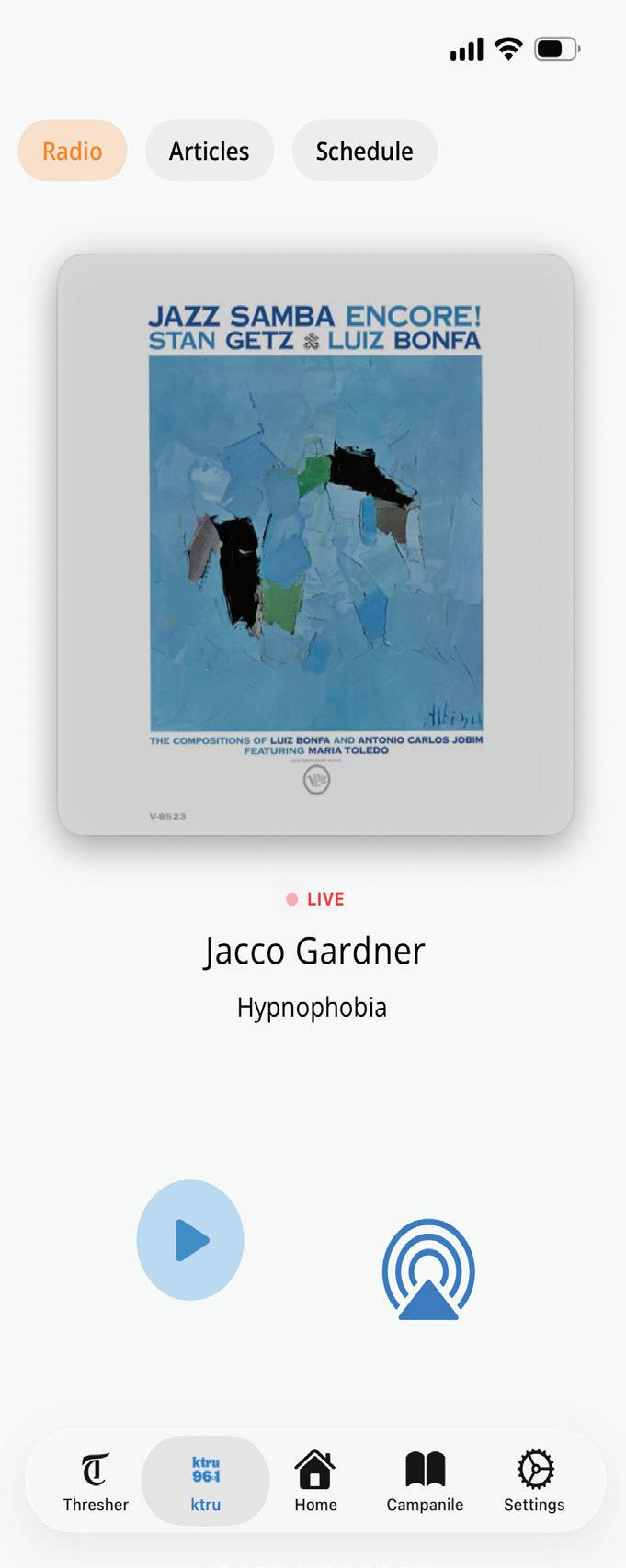
Listen to ktru live
Listen to ktru live
Explore 100+ years of The Campanile
Explore 100+ years of The Campanile
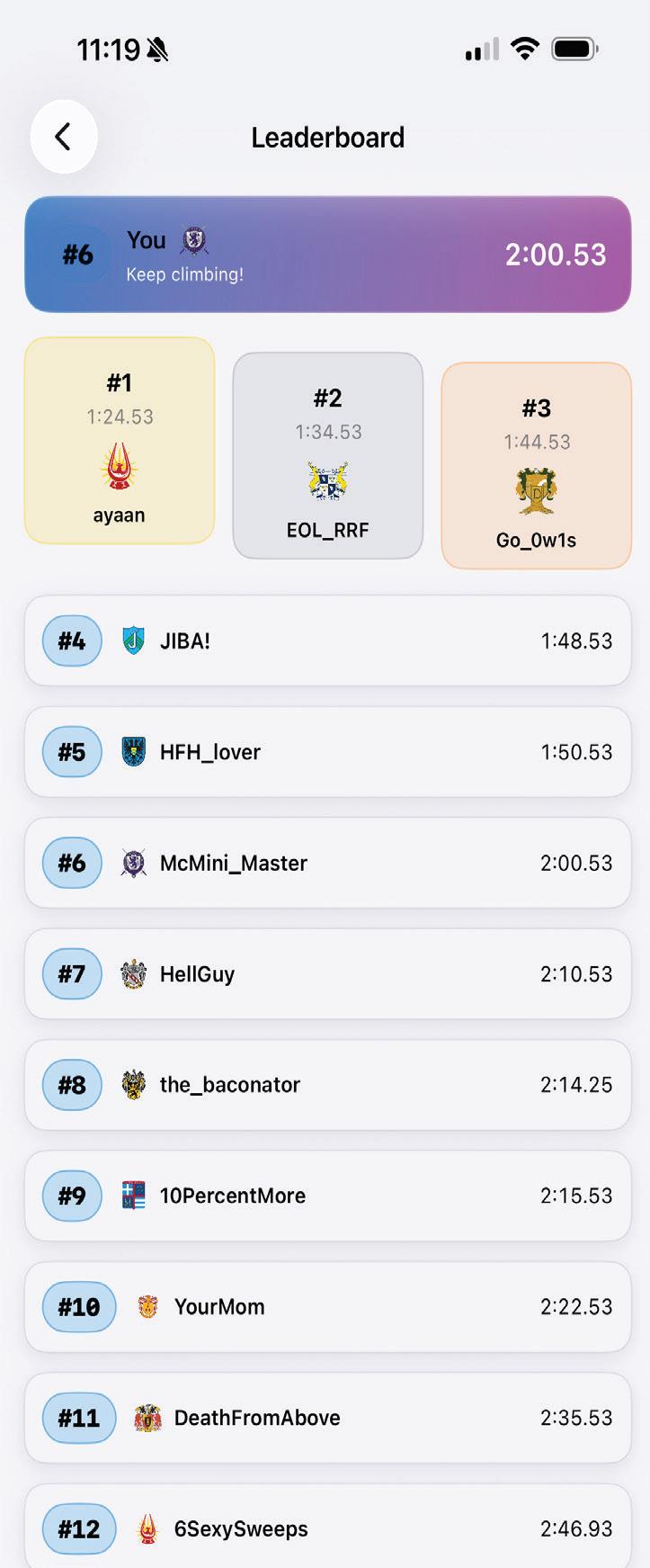
Compete for a spot on the crossword leaderboard a here!
Complete for a spot on the crossword leaderboard Scan here!
A&E picks the best of the Houston Latino Film Festival
urgent and formally striking essay lm that examines displacement, war and the power of media.
This year marks the 10th anniversary of the Houston Latino Film Festival. Featuring a wide variety of feature and short lms from the United States and Latin America, the lm festival draws a crowd of hundreds to celebrate Latino and Chicano cinema.
Take a look at some of the films from the festival that showcase some of the strongest voices coming out of the Latino community.
“Take It Away” (dir. Adrian Alejandro Arredondo)
Score: 4/5
Centered on the career of legendary Mexican TV host Johnny Canales, “Take It Away” is a stunning bilingual documentary that tracks the rise of Tejano music, featuring archival footage of early performances from Selena Quintanilla and Bobby Pulido.
In 1983, Canales created “The Johnny Canales Show” to showcase emerging artists from the United States and Mexico, recording in Corpus Christi, Texas.
Featuring a wide variety of interviews and decades of footage, director Adrian Alejandro Arredondo does a great job at pacing the lm with 73 minutes of cohesive storytelling and powerful visuals.
The energy within the room during the screening was powerful: a beautiful mix of laughter and tears. Before the screening, the crowd met Canales’ family with love; following a wave of applause and compliments, audience members acknowledged the impact Canales had on their lives during the Q&A after the screening.
“Take It Away” does a fantastic job at showcasing the lasting impact Canales’ show had on Tejano music and how its popularity has greatly impacted the careers of contemporary artists like Peso Pluma and Grupo Frontera.
“Notes On An Exile” (dir. Gustavo Castro)
Score: 3/5
“Notes On An Exile” is a politically
Centered on a Brazilian-Palestinian family navigating questions of return and belonging, the lm traces the experience of a homeland marked by occupation, partition and systemic injustice, where physical walls mirror deeper divisions imposed on identity and homeland.
Blending archival footage with contemporary media drawn from platforms like TikTok and Instagram, the lm constructs a jarring visual contrast between everyday digital consumption and the realities of life under occupation and war.
Images of fashion, beauty and luxury are placed alongside documentation of war and survival, forcing viewers to confront the disparity between global attention and human su ering.
In doing so, the lm not only critiques war but also interrogates the structures that determine which stories are ampli ed and which are silenced.
At the same time, “Notes On An Exile” honors the journalists and medical workers who risk their lives to document and respond to these conditions, grounding its experimental form in lived reality.
Through its use of real footage and fragmented storytelling, the lm resists passive viewing, demanding an ethical engagement from its audience.
At its core, “Notes On An Exile” is not only a re ection on exile and return, but a critique of mediated visibility challenging viewers to reconsider where their attention lies and what it means to truly witness.
“TheyDream” (dir. William David Caballero)
Score: 4/5
William David Caballero’s “TheyDream,” which premiered at this year’s Sundance Film Festival, is one of the most innovative lms of this year’s HLFF showcase.
Blending 2D and 3D animation with a live-action documentary approach, Caballero explores family loss and memory by recreating old videos with his deceased
relatives. Milly, Caballero’s mother, is a core component of the lm as Caballero’s only immediate family member, helping him throughout his ve-year process of making the lm.
The lm manages to capture Puerto Rican and LGBTQ+ identity through audiovisual material spanning decades of home videos.
Infused with humor and heart, “TheyDream” is a vulnerable experiment in catharsis by reusing material from the past to create a visual spectacle. Much of the lm retains a DIY approach, making all the technicalities more impressive.
Caballero’s lm touched many in the audience, leaving many in tears. At its core, “TheyDream” is a lm about using creativity as a combatant of grief and preserving the memories of loved ones.
Shorts: Houston, Te Queremos
Alongside its feature presentations, the festival spotlighted a diverse series of
shorts lms highlighting local lmmakers, emphasizing experimentation, storytelling and cultural re ection.
Among the standout works was “An Analog Moment,” a documentary centered on Houston’s Love Lock Bridge. The short evoked a strong sense of nostalgia through its re ective narration while exploring the emotional weight and permanence of promises of love.
In contrast, “Finn and The Odd Girl” embraced a more experimental approach. The film presented its narrative entirely through still images, challenging conventional storytelling by relying on composition and pacing rather than motion.
Ranging from intimate dramas to abstract explorations of identity, the shorts re ected the creative breadth of Houston’s local lmmaking community and their ability to push narrative boundaries while remaining grounded in personal expression.
STEVEN BURGESS / THRESHER
Adrian Arredondo and Nora Canales speak with moderator Roger Palomino about the Johnny Canales documentary “Take It Away” at the Houston Latino Film Festival, which ran March 18-22.
STEVEN BURGESS / THRESHER
William D. Caballero joins Roger Palomino on stage to speak about his lm “TheyDream,” which played at the Houston Latino Film Festival.
STEVEN BURGESS, SOHAILA BAWAR VIDEO EDITOR, FOR THE THRESHER
Celebrate Women’s History Month with cinema
ARMAN SAXENA A&E EDITOR
“Jeanne Dielman, 23, quai du Commerce, 1080 Bruxelles” and “The Watermelon Woman” are feminist classics for a reason. They stand as some of the most in uential, inventive and thoughtful cinematic explorations of womanhood by women ever made.
In recent years, a new wave of female lmmakers has expanded on that canon in novel and necessary ways. Here are some of the best recent female-centered and female-directed lms to watch this Women’s History Month.
“American Honey” (2016, dir. Andrea Arnold)
One of the best lms about youth made this century, “American Honey” is a movie about freedom and exploration starring Sasha Lane as the fearless Star. Andrea Arnold has made her name with female-led coming-of-age tales, breaking out with the stellar “Fish Tank” in 2009.
“American Honey” is her magnum opus, exploring poverty, social inequality and the death of the American dream while telling the story of a ragtag crew of young people running around the Midwest.
The soundtrack also plays a major role in enhancing the film’s moments. “Fade Into You” by Mazzy Star playing over an incredible montage is one of the film’s best sequences.
“Anatomy of a Fall” (2023, dir. Justine Triet)
The Thresher’s pick for the fourth best lm of the decade so far, “Anatomy of a Fall” is a tour-de-force mystery/legal drama anchored by a staggering performance from
Sandra Hüller as author Sandra Voyter.
But beyond its procedural surface, the lm interrogates how women are perceived, judged and ultimately de ned — not just in courtrooms, but in relationships themselves.
Director Justine Triet dissects truth, love and marital roles and expectations, forcing the audience to confront their own biases.
“Atlantics” (2019, dir. Mati Diop)
Born out of a script she wrote while still a student at the Harvard Radcli e Institute, “Atlantics” is French-Senegalese lmmaker Mati Diop’s directorial debut, which makes it all the more incredible.
“Atlantics” follows Ada as she pines for her lover Souleiman, even though she’s betrothed to another man. It’s a lm that explores transnational identity, postcolonialism, memory and love through a feminist lens.
“The Farewell” (2019, dir. Lulu Wang)
Lulu Wang’s “The Farewell” is a deeply personal lm that explores family and cultural identity.
Anchored by Awkwa na’s incredible performance, the lm examines the tension between individual expression and collective responsibility.
It’s not overly didactic, and it doesn’t need to be; the lm’s power lies in its speci city. Wang captures the nuances of intergenerational relationships with remarkable tenderness, showing how love can be both comforting and su ocating.
“Portrait of a Lady on Fire” (2019, dir. Celine Sciamma)
In Celine Sciamma’s period romance
“Portrait of a Lady on Fire,” every frame is a painting. But the lm isn’t just visually beautiful. The central romance between
Marianne (Noémie Merlant) and Héloïse (Adèle Haenel) is depicted with exquisite tenderness, with the eeting looks between the characters showcasing that love is about practicing attention.
Beyond that, the lm is about the constraints of patriarchy on female agency. It is about the female gaze itself, “seeing” as both a reclamation of agency and a profession of love.
“Rocks” (2019, dir. Sarah Gavron)
“Rocks” is a coming-of-age story that feels deeply real. Following a teenage girl navigating the sudden absence of her mother, the lm is grounded in community, friendship and resilience. What makes “Rocks” so special is its authenticity.
Gavron mostly works with amateur actors, allowing their personalities to shape the lm’s rhythm and energy. The result is a portrait of girlhood that feels lived in and characters with the rapport and feel of an actual group of teenage friends.
“Saint Omer” (2022, dir. Alice Diop)
Alice Diop’s “Saint Omer” is a quietly devastating courtroom drama that transcends its genre. Inspired by a real case, the lm interrogates motherhood, migration and the societal expectations placed on women. Diop resists easy answers, instead presenting a layered, deeply unsettling portrait that demands re ection rather than judgment. It’s a lm about understanding and its limits.
“Toni Erdmann” (2016, dir. Maren Ade)
Maren Ade’s “Toni Erdmann” is one of the most idiosyncratic comedies of the 21st century. At its core, it’s a lm about a strained father-daughter relationship, but it’s also about the ironies of corporate life and the emotional repression required to survive within it.
Sandra Hüller delivers a remarkable performance as a woman caught between professionalism and personal disintegration. Ade nds humor in discomfort, cra ing a lm that is as hilarious as it is anxiety-inducing.
‘Project Hail Mary’ is an out-of-this-world hero’s journey
“I just woke up from a coma. I am several light-years from my apartment, and I’m not an astronaut.”
Middle school teacher Ryland Grace finds himself in this predicament at the beginning of “Project Hail Mary,” which is based on Andy Weir’s 2021 novel of the same title. Spoilers ahead.
Grace has amnesia, but is able to calculate that he’s light-years from Earth with a whiteboard. When his memories start coming back, the movie cuts between the spaceship and his old life on Earth.
The audience gets to know Grace as he learns about himself, and the first thing to know is that he does not consider himself a hero. His girlfriend and old academic colleagues both thought he had his head in the clouds, so he’s left single and riding a bike to a job he’s overqualified for.
The silver lining is that he actually loves teaching. But when a student asks him about Astrophage, the alien life form that’s consuming the sun, it’s an impossible question — not because he isn’t an expert on Astrophage, but because he’s smart enough to not want to be the one to tell a group of kids about what Harry Styles’ featured song refers to as “the final show.”
Grace’s expertise on extraterrestrial life gets him tapped by the U.N. to help prevent the sun’s death, and he becomes friends with his superior, Eva Stratt, whose humorless con dence in him makes him start to believe in his own potential.
It helps that he’s only a scientist, not an astronaut going on a suicide mission to save Earth — or so he thinks.
Alone on the Hail Mary vessel, Grace’s task is to figure out why Tau Ceti is the only nearby star unaffected by the Astrophage. That’s when he meets Rocky, an alien.
There’s a beauty to the slowness of
this scene. The audience really feels the tension coming from the language barrier between Grace and Rocky (whose appearance matches his name). The development of their friendship is given room to breathe.
We learn that Rocky is also trying to save his planet, named Erid, from the Astrophage. We get to know him personally, too: He’s stubborn, nosy and excitable. Seeing him interact with Grace is funny throughout. Together, the pair collect Taumoeba,
which live on a planet orbiting Tau Ceti and eat Astrophage. A er a tearful goodbye, they separate to deliver it to their respective planets.
If “Project Hail Mary” were about friendship, the movie could have ended there. But the audience is waiting for a flashback where we see Grace decide to step in as an astronaut. It never comes. Instead, we see Stratt violently forcing him to board the Hail Mary.
Although he’s displayed intelligence
and compassion throughout, we need to see Grace take charge of the story. As he’s on the Hail Mary heading home, an alarm goes off. The Taumoeba have escaped their containers.
Grace is able to contain the escaped Taumoeba, but because Rocky’s ship is made of the same material as the containers, Grace realizes that Rocky will die if he continues his course. If he goes back to save Rocky, he has no reason to believe he’ll see Earth again. When he does go back, he proves that he really is a hero.
After reuniting with Rocky, Grace sends a Taumoeba farm to Earth and travels with Rocky to Erid. Both planets are saved, and the Eridians are accommodating of Grace’s alien physiology. A detail from the novel about Grace eating “meburgers” cloned from his muscle tissue is omitted.
At the end of the film, Rocky reveals that the Hail Mary has been readied to make the journey to Earth. But Grace isn’t sure if he wants to go back. Returning home is a key step in the hero’s journey, but Grace is a schoolteacher too, and he’s teaching science on Erid.
“Project Hail Mary” is obvious at times, but its predictability and humor help audiences feel comfortable relating to Grace when he’s alone on a spaceship, especially since the whole world is at stake. The music that backs most of the film makes it an easy watch (moments of absolute silence are notable).
“Project Hail Mary” uses most of its 156-minute runtime to create a space where the audience feels safe, like atmosphere control, and only sometimes leaves us breathless.
COURTESY NEON
COURTESY AMAZON MGM STUDIOS
CORA WAREH THRESHER STAFF
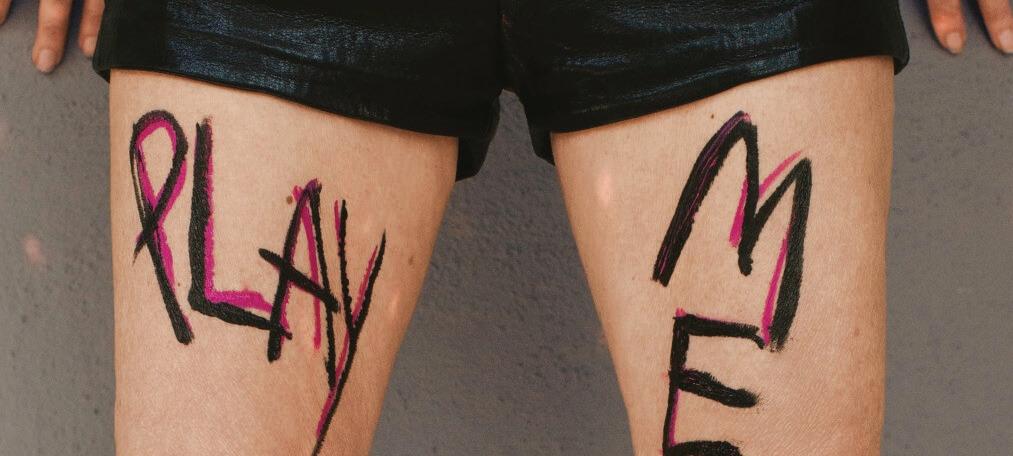
‘PLAY ME’ is a front-loaded trap venture from Kim Gordon
Yes, Kim Gordon of legendary alt-rock band Sonic Youth makes trap music now. And it’s actually good, for the most part. It may come as even more of a shock that Gordon’s 2026 project “PLAY ME” is actually the artist’s second foray into hiphop after her 2024 experimental rap-rock album “The Collective.”
On “PLAY ME,” Gordon adopts more of the modern hip-hop sonic landscape than she did on “The Collective.” Taking influence from experimental rage-trap rappers like Jane Remover and Che, Gordon brings her sound into a new direction with varying results.
The title track opens the album with a trippy, jazzy MF DOOM-esque beat. The lyrics are abstract but begin a narrative about performance, identity and femininity.
This opening track immediately establishes what Gordon is trying to do
on this project: not make rap music in the traditional sense, but recontextualize its sonic templates to fit her own detached, talk-sung style and sociopolitical preoccupations.
“GIRL WITH A LOOK,” the second track, has an energetic synth pulse that sounds like something Yves Tumor could have sung over. Along with the excellent “NOT TODAY,” the song illustrates that Gordon is still most compelling when she returns to her rock music roots.
However, these songs are more traditionally structured than the music she’s known for, with something closer to more traditional pop verses and choruses, yet still aren’t as earwormy as they could be.
“NOT TODAY” stands out, and its longer runtime gives Gordon room to build something that actually lingers.
Elsewhere, the album operates on a much tighter and more repetitive wavelength. Most of these songs are short, and what you get in the first few
seconds is pretty much what you get throughout. In some cases, that works.
ultimately sound much more generic than the best of the genre.
The project’s relative lack of sonic experimentation within genres makes the album less distinctive than “The Collective.” That record was more avant-garde and abrasive, but also more singular.
“DIRTY TECH,” a song about the rise of artificial intelligence, stands as the strongest of the album’s mantra-like trap tracks, hypnotic and sleek in a way that makes Gordon’s cool detachment feel intentional rather than awkward.
But the repetition does not always work in the album’s favor. “BLACK OUT” is the clearest misstep, pairing Gordon with a bland trap beat that feels pulled from the bottom drawer of a Metro Boomin and 21 Savage session.
More broadly, some of the instrumentals on “PLAY ME” feel too standard. “BLACK OUT” and “SQUARE JAW” both irt with rage and trap, but
Still, when “PLAY ME” falters, it remains an interesting project. Little else sounds quite like Gordon murmuring about the modern world over trap beats, turning the genre’s hard edges into something surreal, ironic and occasionally seductive. The back half starts to wilt as the beats get blander and the songs less memorable, but the project never loses its curiosity.
Gordon is decades into her career and still testing herself against new sounds, still willing to sound awkward or out of step if it means finding a new lane. “PLAY ME” is not as revelatory or consistent as “The Collective,” but when it works, it sounds like nothing else.
Gorillaz ascend ‘The Mountain’ in ambitious return
catchy enough.
It’s been a long time since the world has heard an ambitious Gorillaz project. The band made its name in the early 2000s on sprawling, genre-defying concept albums, projects that felt like glimpses of what the future of pop music may sound like. On “The Mountain,” they return to that ethos, not just in scale, but in intentionality.
From the opening moments, it’s clear this is a record that takes itself seriously. The title track sets a spiritual, almost meditative tone, rooted in hypnotic repetition and textured instrumentation.
“The Hardest Thing” serves as a tender tribute to Tony Allen, the co-founder of the Afrobeat genre, before bleeding seamlessly into “Orange County.” The song’s acoustic textures, paired with Damon Albarn’s gentle vocal delivery, create one of the album’s more intimate moments.
And then there’s “The God of Lying,” which features Joe Talbot of IDLES. It channels the gritty, o -kilter energy of early Gorillaz, but doesn’t land with the same authentic punch as those early records.
“The God of Lying” illustrates one of the album’s biggest problems, which is that sometimes the big-name features don’t resonate with the same power that the other tracks do. “Casablanca,” featuring Johnny Marr of The Smiths and Paul Simonon of The Clash, is the project’s most prominent example of a high-pro le track that doesn’t really linger because of the limits of the bland, polished production.
There’s something unmistakably reminiscent of George Harrison here, in the way melody, atmosphere and spiritual philosophy intertwine.
“The Mountain” features contributions from major Indian artists like Asha Bhosle and Anoushka Shankar, but don’t expect a Hindustani classical album. Like with Harrison’s work, Indo-musical elements are used as color and texture to familiar pop structures. The intermixing of these musical styles doesn’t sound as unique as it potentially could, but it still remains
Even when the collaborators shine, and they do more often than not, there’s a sense that the record is holding something back.
“Delirium” is a standout in this regard, with Mark E. Smith’s unhinged delivery crashing into one of the album’s most dynamic basslines. “Damascus,” meanwhile, is a highlight and one of the band’s best songs in years, an electrifying blend of driving instrumentation and Omar Souleyman’s commanding presence.
The album reaches another peak with
“The Manifesto,” a seven-minute, threepart epic that feels like the project’s thesis statement. It’s ambitious and constantly evolving, the kind of track that justi es the album’s conceptual weight.
From there, “The Mountain” settles into a more reflective closing stretch. “Casablanca” and “The Sweet Prince” lean into Albarn’s melancholic tendencies, while “The Sad God” closes the record on a subdued but emotionally resonant note, allowing the album’s themes of mortality, loss and renewal to fully land.
And that’s really what “The Mountain”
is about. Beneath its global influences and shifting soundscapes, it’s a meditation on death not as an ending but as a transformation. That perspective, drawn from Eastern philosophies, gives the album a sense of quiet optimism even in its most somber moments.
It’s not perfect. Some of the production still carries over the overly polished feel of the band’s recent work, and some of the features don’t stick out. But even with its inconsistencies, “The Mountain” is a compelling listen: a project that feels both like a return to form and a step into something new.
COURTESY MATADOR RECORDS
ARMAN SAXENA A&E EDITOR
COURTESY KONG
ARMAN SAXENA A&E EDITOR
Top Track: “DIRTY TECH”
Top Track: “DAMASCUS” ( Yasiin Bey & Omar Souleyman)
Owls’ record-breaking run concludes in Kansas
ANDERSEN PICKARD SPORTS EDITOR
A historic season for women’s basketball came to a close on Sunday evening, but not before Rice set a new all-time program record for most wins in a single season.
The Owls played their nal two games of the season as the No. 3 seed in the Women’s Basketball Invitation Tournament a er losing to the University of Texas at San Antonio in the American Conference Championship.
Rice was the conference’s regularseason champion and had an automatic bye to the American semi nal round before falling in the nal.
The Owls kicked o the WBIT against Louisiana Tech University at Tudor Fieldhouse on Thursday. O ense was hard to come by in the opening quarter, as the two sides combined to go 10-for-32 shooting, including 1-for-12 from three.
Momentum swung in the Owls’ favor in the second quarter as the Owls went on a
13-2 run and didn’t look back.
Junior guard Louann Battiston scored 10 points in the second quarter alone. The American Conference’s Sixth Player of the Year seamlessly worked her way into contributing as a starter with junior guard Victoria Flores injured.
Survive and advance. That is what March is all about.
Lindsay Edmonds WOMEN’S BASKETBALL HEAD COACH
Edmonds said Flores was talking to and coaching Battiston when she wasn’t on the oor.
“[Flores] was encouraging Lou,” Edmonds said. “That’s the sign of a good team. When you have a woman go down, it’s next woman up mentality. Vic did an incredible job leading from the bench.”
Battiston nished her rst game as a
“At least we don’t have to face UConn.”
Rice starter with 21 points.
“She stepped up when her number was called,” Edmonds said. “She’s the Sixth Player of the Year for a reason. I think she showed that tonight.”
The Owls took a 35-24 lead into hal ime, but the Lady Techsters didn’t go down without a ght. They outscored Rice in the third and fourth quarters, fueled by 11 made free throws on 12 attempts. Louisiana Tech pulled ahead with less than ve minutes to play.
“I wish we had kept our foot on the gas a little bit more,” Edmonds said. “We allowed them to get back into the game and take the lead.”
With the game tied and 41 seconds on the clock, Rice called a timeout to regroup. Redshirt junior guard Hailey Adams found Battiston in the corner, and the Duke transfer sank a three-pointer to give the Owls a late lead.
“It was huge,” Edmonds said. “I was contemplating calling another timeout, but I gured I’d let my players make plays, and Lou is really good at making plays. I’m proud of her being ready, for the con dence to take the shot and knock it down.”
A Louisiana Tech travel and subsequent foul gave Rice the 66-61 win as the nal buzzer sounded.
“We had resilience when things didn’t go our way,” senior center Shelby Hayes said. “I’m really proud of this team for the e ort that we put in, and just our toughness that we showed tonight.”
The victory was Rice’s 29th of the season, breaking the all-time program record.
“Winning is hard,” Edmonds said. “And winning at the level that we have won this season is really, really hard. It just goes to show how special this group is. Because of how special they are, we’ve been able to now put their names in the record books.”
By taking down Louisiana Tech, the Owls punched their ticket to the next round of the WBIT against the University of Kansas.
“Survive and advance,” Edmonds said. “That is what March is all about.”
The Jayhawks controlled the entire rst half of Sunday’s contest, setting the tone
for the remainder of the game. Throughout the rst 20 minutes, Rice shot 6-for-28 and was outscored 31-19.
The Owls attempted to mount a secondhalf comeback, improving to 13-for-33 from the oor, but their e orts fell short. Kansas led by as much as 15 points in the second half. Meanwhile, Rice never led.
The Owls fell 62-55, ending their season in Kansas. Battiston, occupying her newfound starting role once again, led the team with 13 points. Adams’ defensive efforts kept Rice in the game, as she delivered seven blocks, four steals and 10 rebounds.
Rice nished its historic season with a 29-6 record, including 17-1 in American Conference regular-season play.
Cricket club finds ‘camaraderie’ at championship
CALEB CARROLL
THRESHER STAFF
In the fifth year since its founding and second active season, the Rice Cricket Club competed in their first National Collegiate Cricket Association championship March 11-15.
Club o cer Rishi Madhuvairy said the club was o cially formed around ve years ago, but did not become active with players until the 2024-25 season. The team now has 15 members, including 12 undergraduate students, two graduate students and one alumnus.
It felt less like a tournament and more like a group of friends just having the time of our lives.
Ashmith Perugupalli RICE CRICKET CLUB OFFICER
The team played four games in total at the tournament — two against Texas A&M University and a game each against Purdue University and Indiana University.
Rice lost all four games, but the players said the tournament was a valuable experience to not only build connections within the team, but also connect with opposing schools.
O cer Ashmith Perugupalli said the Owls particularly bonded with Virginia Tech.
“It felt less like a tournament and more like a group of friends just having the time of our lives,” said Perugupalli, a Jones College sophomore. “We were cheering not just ourselves on but other universities too.”
Madhuvairy, a Wiess College freshman, said while the tournament was a pivotal experience for the club, the team still has a way to go. He said the lack of a true cricket pitch on Rice’s campus was a reason for the team’s winless result at the tournament.
“The fact we didn’t have a pitch on campus forced us into compromising alternatives that ultimately hindered our abilities to keep runs on the board,” Madhuvairy said.
He also said the club’s youth and inexperience proved challenging at the tournament.
“We were de nitely challenged to our limits as the only undergraduate majority team there,” Perugupali said.
While the team was not able to secure a victory, Perugupalli said the experience and team bonding were more important than the results of the matches.
“My favorite part of the team is de nitely the camaraderie because no
other cricket team has the level of fun and shared brotherhood that Rice Cricket Club does,” Perugupalli said. “That’s always a sight to see.”
Despite the overall result, the team was still able to take positives from their performance at the tournament.
“Our elding and bowling were beyond impressive, and everyone in the starting 11 showed immense enthusiasm and energy,” Madhuvairy said.
Madhuvairy said he hopes to use the
experience at this tournament as a building block for the club’s future.
“I feel extremely con dent in Rice’s future as a top ten cricketing school,” Madhuvairy said.
Perugupalli said he wants to make the Rice Cricket Club an o cial team, and he has ambitious goals for its expansion.
“In the near future, we could integrate into the athletic department at Rice, o ering scholarships to high school prospects,” Perugupalli said.
HONG LIN TSAI / THRESHER
ANDERSEN PICKARD / THRESHER Redshirt junior guard Hailey Adams wins the tip-o for Rice during the opening round of the Women’s Basketball Invite Tournament.
Sophomo re swimmers make splash in final meet
KEYA PATEL ASST. SPORTS EDITOR
The Rice women’s swimming and diving program concluded its 2025-26 season Friday at the NCAA Division I Championships, highlighted by personal-best performances from sophomores Ava Portello and Reese Cole.
Portello finished 37th in the 500 freestyle with a time of 4:44.09, matching her seed entering the event. Earlier in the week, she placed 24th in the 1650 freestyle with a personalbest time of 16:14.80, marking the program’s highest finish in the event since 2008.
Cole recorded a personal best of 4:12.59 in the 400 individual medley, placing 35th on the second day of competition.
“2026 is in the books,” said head coach Seth Huston. “Ava and Reese had a great meet. They posted personal bests, moved up in their respective events and are heading home knowing they can compete with the top athletes in Division I.”
The NCAA Championships featured a different competitive environment than regular-season meets, with Rice represented by two swimmers rather than a full roster. Portello said the adjustment required a shift in how energy and support were maintained during competition.
“At regular meets, we have the entire team behind us, so we really had to channel that energy into the two of us,” Portello said.
Cole said the meet was more intimidating than typical competitions, but emphasized the importance of
maintaining focus.
“You just kind of have to stay in your own mindset and remember all the training that we’ve done,” Cole said. “That doesn’t go away because you’re nervous.”
Both swimmers cited competing at an NCAA Championship meet as a defining moment. Portello described the atmosphere as “surreal,” noting the transition from watching the event to participating in it.
The national meet capped a season in which Rice secured backto-back American Athletic Conference championships and finished runnerup at the 2026 CSCAA National Invitational Championships.
Team culture remained a central theme throughout the season, Portello said, highlighting the program’s emphasis on academic and athletic balance. During the fall semester, Rice swimming and diving recorded the highest team GPA on campus.
“We really just want to see everyone succeed,” Portello said. “That includes in the pool and in academics.”
Cole said the team’s collaborative environment extends beyond competition.
“We’re a very close-knit team,” Cole said. “A lot of my best memories have been with the girls on this team, even when it’s early morning practices.”
With returning athletes and an incoming freshman recruiting class, Huston said the program aims to build on its recent conference success and national experience.
“The future looks bright for Rice women’s swimming and diving,” Huston said.
COURTESY AMERICAN CONFERENCE
Sophomore Reese Cole’s performance in the 400 individual medley at the American Conference Championships similarly quali ed her for a spot in the NCAA Division I Championships.
COURTESY JABROWNPHOTOS / RICE ATHLETICS
Sophomore Ava Portello quali ed for a spot in the NCAA Division I Championships after her nish in the 500 freestyle at the American Conference Championship.
The Backpage is the satire section of the Thresher, written this week by Will Howley, Charlie Maxson, Rykelle Sandidge, and Max Scholl, and designed by Brandon Nguyen. For comments or questions, please email realricethreshero cial@rice.edu.
CLASSIFIEDS
ADVERTISING
The Thresher accepts display and classified advertisements and reserves the right to refuse any advertising for any reason. Additionally, the Thresher does not take responsibility for the factual content of any advertisement. Printing an advertisement does not consititute an endorsement by the Thresher.
Display advertisements must be received by 5 p.m. on the Friday prior to publication; see ricethresher.org for pricing. Classified advertisements must be received with cash, check or credit card payment by 12 p.m. on the Friday prior to publication; see ricethresher.org for pricing.