
SPRING




LIFE-CHANGING LIFE-



As the founding school of Augusta University and Georgia’s flagship medical school, the Medical College of Georgia is proud to expand its statewide mission with a new dedicated cohort of students in Thomasville – thanks to a dynamic partnership with
This means future physicians are now learning directly from Archbold’s expert clinicians, gaining hands-on experience and building lasting connections with the communities they’ll one day serve. Together, MCG and Archbold are investing in the health of Southwest Georgia, training the next generation of doctors, right where they’re needed most.



We believe your mouth says it all. . .and we want to help you have a healthy confident smile!








“Your
success is our success”
— STEPHEN H. CHENEY I CEO



A bank’s success is never an idea alone. Thomasville National Bank’s success lies in our community of customers, in their character, in their loyal response. They value trust: the handshake agreement.
They are proud of Thomasville: its families, traditions, and prosperity.


The first and finest in the Red Hills Region FOUNDER


John D. “Jack” Kelly | March 15, 1931 - July 8, 2015
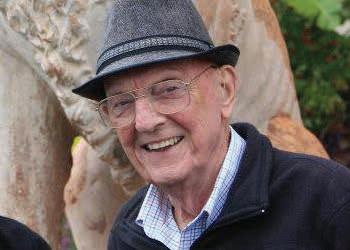
“He spent his life giving back to the community he loved!”
EDITOR IN CHIEF
Karen “KK” Snyder| kk@thomasvillemagazine.com •
CREATIVE DIRECTOR
Lauren Wootton | WorkWithADELE.com
GRAPHIC DESIGN
Lauren Wootton
ADVERTISING SALES
Wendy Montgomery
CONTRIBUTING WRITERS
Andrew Bellacomo, Joy Dickinson, Kristen Soles McCrackin, Stephanie Rice, Sarah D. Shearer, Darlene Crosby Taylor
PHOTOGRAPHY
Emily Tucker Photography | Whigham Images MAGAZINE


WELCOME FROM THE EDITOR

There is something about spring in the Deep South that feels less like a season and more like a homecoming. The light softens, the air carries that unmistakable mix of fresh-cut grass and blooming jasmine, and suddenly the whole town seems to exhale. In Thomasville, spring doesn’t tiptoe in—it arrives in full color. Each year, the Thomasville Rose Show & Festival reminds us just how deeply beauty and tradition are woven into our community.
Just as the last of the rose petals begin to drift away, anticipation builds again for Due South. What began as a spirited celebration has grown into one of the most anticipated spring gatherings in the region — a lively mix of music, community pride, and Southern hospitality. It captures that distinctly local magic: the way downtown can transform into a shared front porch, where neighbors linger a little longer and newcomers are welcomed like old friends.
This season also reminds us why we choose to do what we do. A smalltown publication is built on connection. We are not just reporting on events—we are preserving moments. Spring is about renewal, yes, but it is also about roots. It is azaleas blazing pink against historic brick, little ones dressed in pastels, porch swings in the late afternoon light, and the quiet gratitude of living in a place where tradition still matters.
As always, thank you for allowing us to tell these stories. We are honored to celebrate this beautiful season alongside you—and to capture, page by page, the spirit of spring in our beloved corner of the South.
EDITORIAL INFORMATION
Thomasville Magazine is published four times each year. Subscription rates are $15 for one year.
SUBSCRIPTIONS
ThomasvilleMagazine.com
Subscriptions@ThomasvilleMagazine.com
Checks may be mailed to:
Thomasville Magazine
15125 US Hwy 19 S Box #375
Thomasville, GA 31792
Be sure to specify your delivery address when submitting a check.



DIGITAL EDITION & SOCIAL
You can follow us online on our social media accounts @ThomasvilleMagazine.
KK Snyder, Editor-in-Chief

ON THE COVER
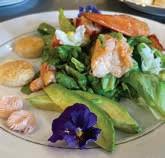
This French Lentil Salad is the perfect way to celebrate spring with friends. Find the recipe and others like it on page 66.
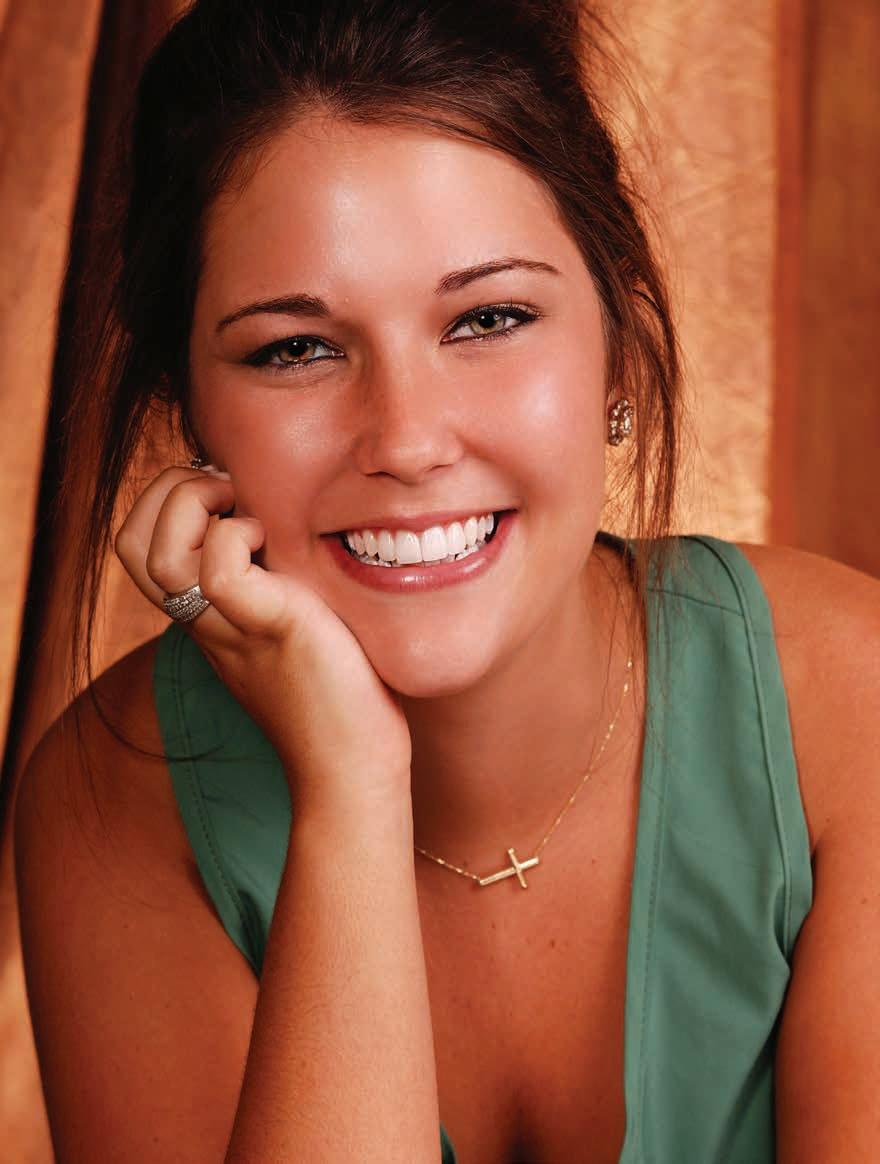
Nothing can match a life-changing smile

Before
Why did Kaitlyn choose Dr. Oppenheim? Was it Dr. Oppenheim’s ten gold medals in international dentistry competitions, or that he’s one of only 63 AACD Fellows in the world, or that his patients have appeared on the cover of The Journal of Cosmetic Dentistry eight times? Kaitlyn says, “Yes it was!”
actual patient of Dr. Oppenheim.
Kaitlyn,

8
Hawk Eye
BY JOY DICKINSON
Thomasville is home to the Red Hills Region’s youngest licensed hawker in the state.
22
Elusive Goals?
BY STEPHANIE RICE
Tips to have you hitting your health and fitness goals in no time.
29 Patent Pending
BY KRISTIN SOLES MCCRACKIN
Eleanor Whitte made history during her career with Xerox.
38
Digging for Treasure
BY SARAH D. SHEARER
Vintage Treasures is a Thomasville go-to for antiques and more.
49
Bottomland Gun Dogs
BY ANDREW BELLACOMO
A young dog trainer is gaining a great reputation among owners.
66 Spring Into Flavor
A few recipes to celebrate the spring season.
74
Due South
Get ready to experience this annual favorite art, food & music festival.
76
Public Art
BY DARLENE CROSBY TAYLOR
Downtown comes alive with a public art display featuring beautiful quilts.


Georgia’s Youngest
Falconer
BY JOY DAUGHTERY DICKINSON

PHOTOS BY EMILY TUCKER PHOTOGRAPHY
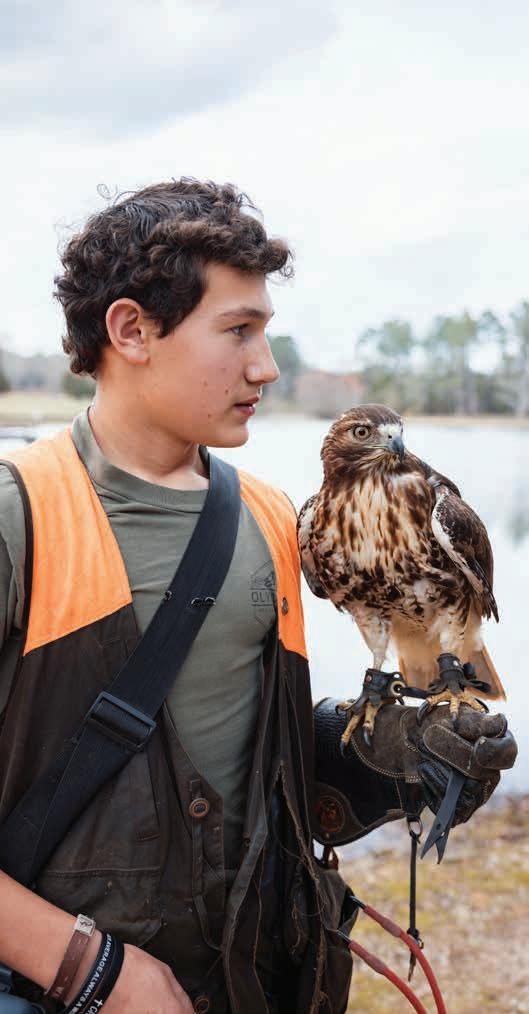
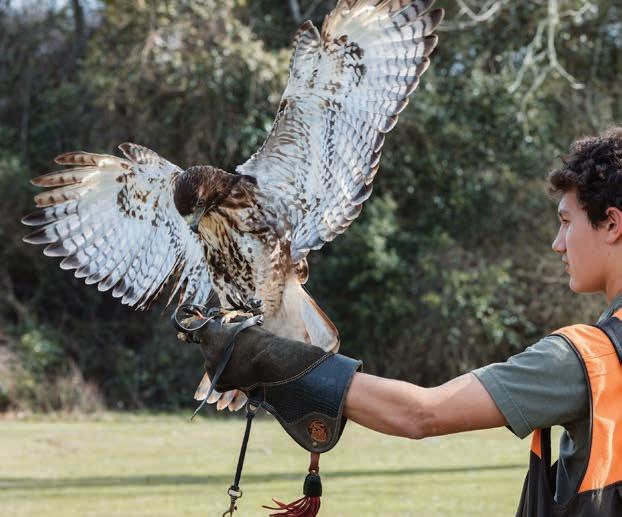
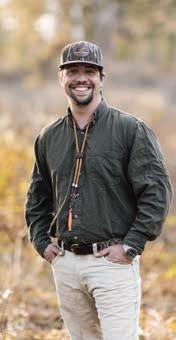
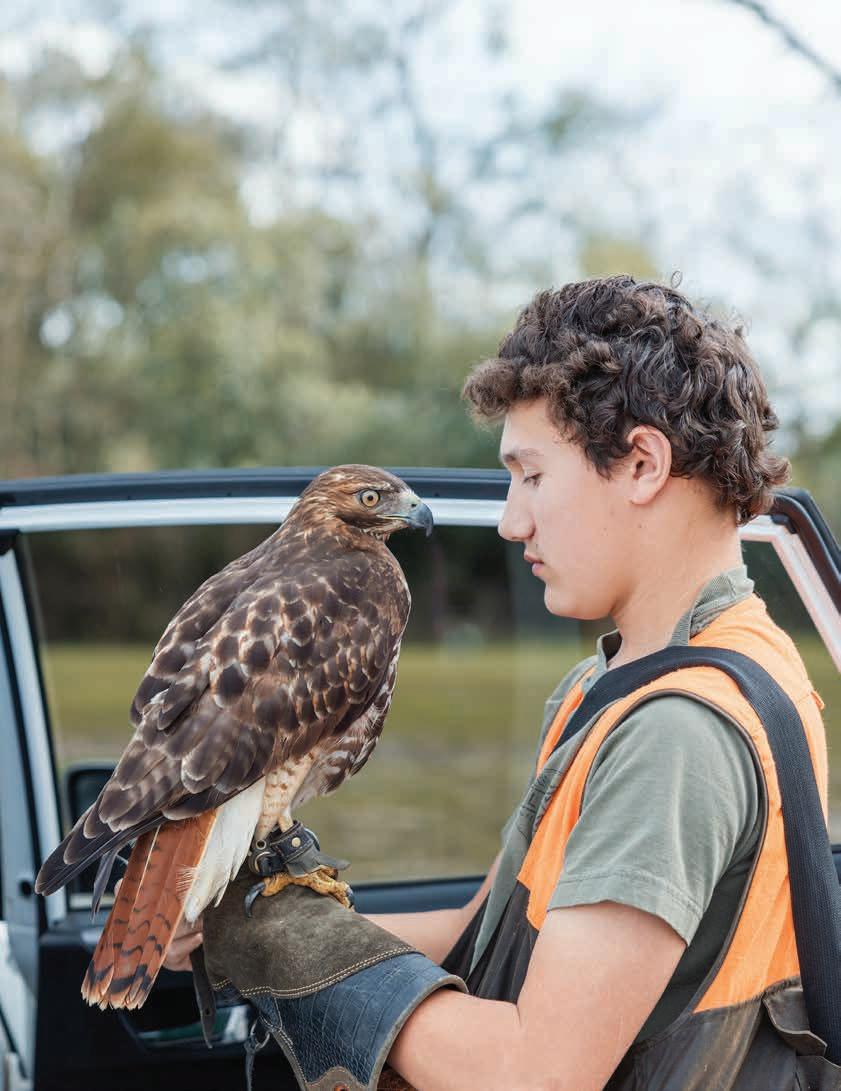
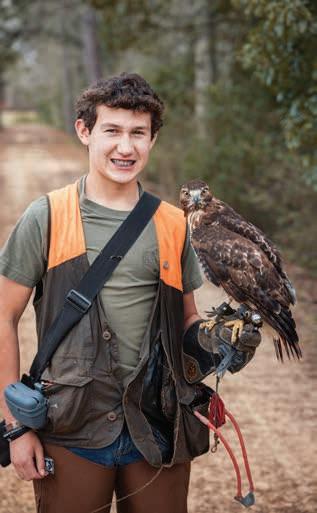
Falconry, one of the oldestknown hunting sports, captured the attention of Caleb Lawrence when he was only 10 years old. The Meigs resident learned to trap, train and hunt with a raptor over the next couple of years. At age 12, he became the youngest licensed falconer in Georgia, and he is one of only about 200 in the state.
Caleb, now 13, had an interest in birds even younger. He studied bird encyclopedias, collected laminated pamphlets from every bird-related place the family visited, and could recall information about birds from field guides. “We had already lovingly nicknamed him our ‘bird nerd,’” says his mom, Amanda Barnes.
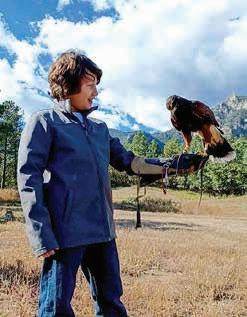
Caleb’s interest in falconry grew from a family vacation to Colorado, where his family participated in a falconry experience. He learned that the goal of falconry is to train and then release a bird “that is more confident and better equipped to survive than when it was trapped, while building a remarkable bond along the way,” Barnes says. “It also preserves an ancient sport.”
The licensed falconer offered an educational experience that included a training flight with some raptors, or birds of prey. Caleb was intrigued. “When she offered the glove to Caleb and instructed him on how to cue the bird to his arm, he became even more invested,” Barnes says. When the hawk “soared down from high in the sky, landed on his arm with a rush of wind that blew his hair back and looked directly into his eyes, Caleb was hooked,” Barnes says.
He began writing down names and ideas for his first raptor and the species he hoped to fly. “This interest in falconry never dwindled,” Barnes says.
Caleb attended the Apprentice Academy at Georgia Mountain Falconry in Helen two times, “just for the experience and knowledge,” he says.
The next step was for Caleb to
attend hunts, but many falconers were hesitant because of his age. Someone who was a falconry apprentice offered to bring his hawk to hunt on the family farm. “Seeing a bird of prey hunting the land he explores daily made everything real for Caleb,” Barnes says. “This dream was now possible.”
Caleb began fundraising for the financial commitments involved in training. He cared for his family’s farm animals, sold eggs, carried out yard work and mobile detailing, and even sold magnets with images of his paintings. He also kept studying.
To become a licensed falconer, Caleb had to pass a 105-question exam administered by the Georgia Department of Natural Resources. When he turned 12, he was old enough to take the exam. “The test was difficult, and most people don’t pass the first try,” Caleb says. He passed on his second try. Barnes says, “While passing the exam is a major milestone, additional steps are required: securing a sponsor, passing a state inspection, obtaining housing permits and receiving authorization to trap a bird.”
Caleb needed to be an apprentice until he turned 16. Barnes found Billy Shores, a master falconer with over a decade of experience. His
guidance was “invaluable,” Barnes says. He taught Caleb hands-on skills, ensured the safety of Caleb and his bird, and fostered a “respectful working relationship,” she says.
Caleb needed to build a mew, the housing where the bird lives, and have it inspected. Caleb constructed it with the assistance of his “bonus” dad, Bryan Shiver, and family members helped. He also had to obtain a hunting license and a falconry permit.
Caleb was still 12—the youngest legal age to be a falconer—when he trapped his first bird, Amber, a red-tailed hawk, in December 2024.
Caleb began his training with “manning,” which is when the bird became accustomed to Caleb and his glove. Next, the bird ate near Caleb, and then it stepped.
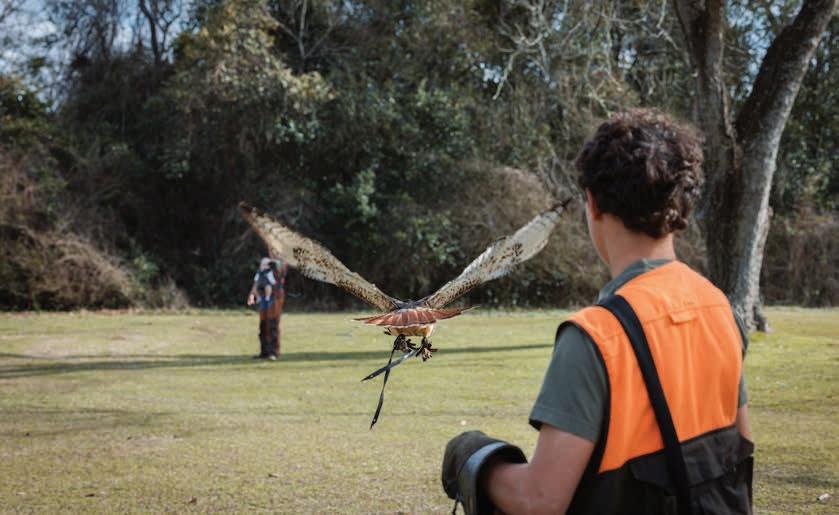
Caleb worked with the bird until it would “hop” with opened wings to the glove. “The hardest part for me was getting my bird to hop,” he says. Then Caleb gradually increased the
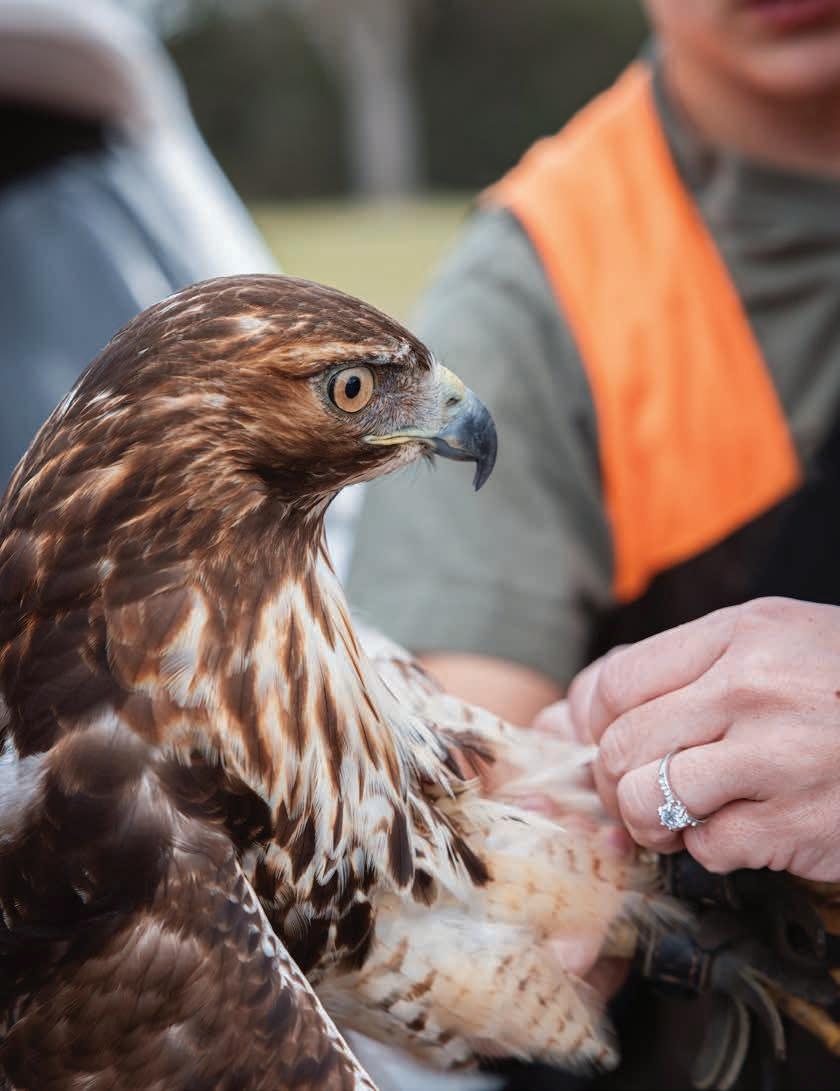
Caleb first experienced falconry on vacation in Colorado.
distance until the bird was coming to him on command consistently at 100 yards or so. “The bird stays on a long leash, called a creance, during training, so the bird does not fly away,” Caleb says.
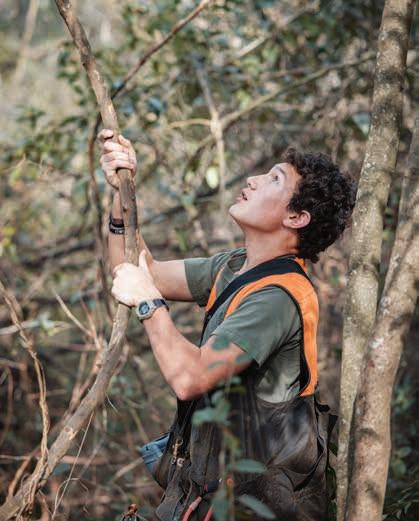
The bird learned to hunt on the creance. “The bird already knows how to hunt,” he says. “We just boost their confidence and amplify their skills.” He taught his bird to follow him through the woods from tree to tree. Caleb would pull vines and shake limbs to flush out game such as squirrels and rabbits.
Falconry carries a significant obligation of time, responsibility and finances. Shores says, “From the very beginning, I knew that Caleb would be very attentive and take in all of the information to become a good falconer. Caleb has the patience, the eagerness to learn and the desire to be successful with these birds he will encounter during his falconry adventure.”
Most of the falconry equipment is custom-made
Always accepting new patients


Caleb was mentored by older falconers in SWGA.




for an individual bird. Unfortunately, in February, Caleb accidentally left much of his equipment in a tan tackle box at Cassidy Park in Thomasville. Two young men picked up the box, but they were gone with it by the time Caleb returned. Barnes says, “We truly believe this may have been an honest attempt to help. Unfortunately, our contact info was not on the box to aid in an easy return.” Because the equipment has no resale value, and it’s needed for Caleb to complete the bird’s training, the family is



1323 West Jackson St
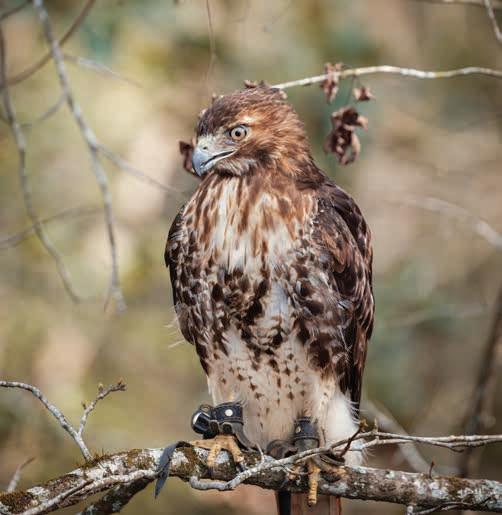
Some pieces of training gear are customized for the bird.
offering a reward for its return, with no questions asked.
In the meantime, Caleb is sharing about falconry by giving educational presentations for schools and homeschool groups. And his adventure is just beginning, Shores says.
“He literally has a lifetime to fly hawks and falcons, and I can only imagine what tips and techniques he may discover and bring to the falconry world,” he says. TM
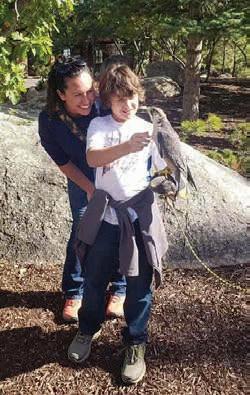



Above and center: Caleb is pictured with his mom and a hawk during his first experience.

TRAVEL WITH CONFIDENCE.
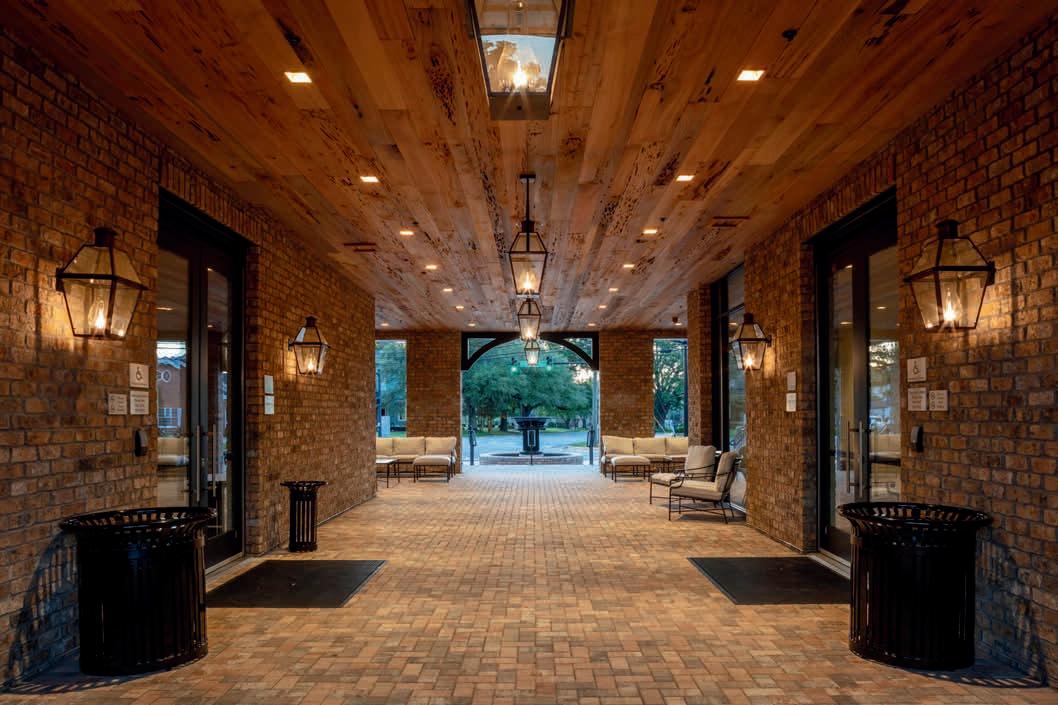




Modern hotel rooms and suites
Free Wi-Fi
Plush bedding
Work desk with ergonomic chair
Mini fridge & Microwave
55-inch

Made for business and leisure, Courtyard Thomasville Downtown offers the perfect blend of comfort and convenience. Our hotel in downtown Thomasville is located in the heart of the historic district near major businesses. Enjoy convenient access to top attractions, restaurants, bars and more than 100 boutiques and antique shops. Enjoy healthy breakfast and dinner options at The Bistro, sit poolside with a cocktail, or sip a coffee on the patio.





Chasing WellnessGoals

The people who succeed aren’t more disciplined or genetically gifted. They are simply more consistent – in very specific ways.
By Stephanie Rice

The excitement of New Year’s resolutions has faded. The gym is less crowded. Motivation isn’t as loud. And if you’re like most people, your wellness goals now feel harder than ever. After more than two decades coaching clients through fat loss, muscle gain, and lifestyle change, I’ve noticed a consistent pattern. The people who succeed aren’t more disciplined or genetically gifted, they are simply more consistent – in very specific ways.
Here are the most common reasons people fail to reach their wellness goals, and the evidence-based strategies that work.
1. Inconsistent Exercise (Or the Wrong Type)
The best workout is the one you will continue doing. If you hate high-intensity training, forcing yourself into it will not lead to long-term success. If you love Pilates, walking, or strength training, lean into that. Consistency matters more than intensity. However, there is one form of exercise that research consistently supports as foundational: resistance training. According to the American College of Sports Medicine, adults should engage in strength training at least two days per week.
Resistance training has been shown to:
• Increase lean muscle mass
• Improve resting metabolic rate
• Enhance insulin sensitivity
• Improve bone density
• Preserve muscle during fat loss
For Your Health
Muscle is a metabolically active tissue. When you lose weight without resistance training or adequate protein, you risk losing muscle, not just fat. This reduction in your lean muscle mass can lower metabolic rate and make weight regain more likely. Even short sessions of 10 to 20 minutes performed consistently can produce meaningful results. The key is to gradually increase weight, repetitions, or intensity (progressive overload) so your body continues adapting.
2. Nutrition Consistency and the Role of Tracking
Many people believe they are eating “healthy.”
Yet their intake is highly inconsistent: skipping breakfast, eating very little during the day, overeating at night, consuming 1,300 calories one day and 2,400 the next, or jumping from one trending diet to another. The body thrives on predictability. Consistency in calorie intake and macronutrient balance matters far more than constantly switching strategies or chasing the latest nutrition trend.
I’ll be honest. I used to be completely against calorie counting. I believed that if you focused solely on quality foods, everything would fall into place. But over time, I kept seeing the same pattern: people weren’t failing because their diet was “bad,” they were failing because it was inconsistent. Skipped meals, overeating at night, mindless bites throughout the day, and no awareness of the bigger picture.
When I began reviewing the research, my perspective shifted. Studies show that individuals commonly underestimate their calorie intake by 20–40 percent (Lichtman et al., 1992). That discrepancy between perceived intake and actual intake is often enough to completely stall progress. Without tracking, even temporarily, it becomes extremely difficult to identify meaningful patterns. A daily surplus of just 300–500 calories may not seem significant, but over weeks and months, it can result in substantial weight gain. Small, repeated habits create large, long-term outcomes.Tracking is not about obsession, and it does not need to be a lifelong practice. It is simply a tool, a short-term strategy to build awareness, recognize patterns, and make informed adjustments. Once you can see the full picture, you can make intentional changes. Without that awareness, you are simply guessing.
American College of Sports Medicine considers resistance foundational.
3. Weight Loss Without Muscle Preservation
In 2010, a nutrition professor from Kansas State University conducted a widely discussed experiment in which he ate snack foods (including Twinkies) while maintaining a calorie deficit and, get this, lost weight. I know! I was just as shocked as you are. The takeaway was not that junk food is healthy. It was that calorie balance drives weight change. However, weight loss alone does not equal improved health or body composition.
Without sufficient protein intake and resistance training, weight loss often includes a loss of lean muscle mass. Research published in journals such as The American Journal of Clinical Nutrition highlights the importance of adequate protein, particularly during caloric restriction, to preserve lean tissue. Preserving muscle is critical for long-term metabolic health and sustainable fat loss.
4. Inadequate Protein Intake
Protein is the most under-consumed macronutrient in many active adults, especially women. Research supports protein intake in the range of:
• 0.8 grams per pound of bodyweight for active adults
• Up to 1.0 gram per pound during fat loss
Higher intakes for older adults are due to agerelated anabolic resistance. In other words, as we age, our muscles don’t “turn on” muscle-building processes as easily as they did when we were so much younger.
Protein plays a critical role in overall metabolic health. It supports muscle preservation, especially during fat loss, helping maintain lean mass and protect resting metabolic rate. It also increases satiety, meaning you feel fuller for longer, which can naturally reduce overall calorie intake.








Adequate protein intake helps stabilize blood sugar levels, preventing dramatic spikes and crashes that often lead to cravings. Additionally, protein has a higher thermic effect compared to carbohydrates and fats, meaning the body burns more calories during its digestion and metabolism. Together, these benefits make protein one of the most powerful tools for sustainable body composition and long-term health. A practical starting point:
Bodyweight × 0.8–1.0 = daily protein goal
Once protein is set, fats and carbohydrates can be adjusted based on preference and activity level.
5. Eating Out Frequently
Restaurant meals are difficult to estimate accurately. Added oils, butter, sauces, and portion sizes significantly increase calorie density.
For example: 1 tablespoon of butter = ~100 calories. Oil-heavy dressings and sautéed foods can double the expected calorie count
Even individuals who track their food carefully may unintentionally exceed targets when eating out frequently. Cooking at home more often increases your own control and consistency.

6. Low NEAT (Non-Exercise Activity Thermogenesis)
NEAT refers to calories burned outside of structured workouts:
• Walking
• Standing
• Cleaning
• Yard work
• Playing with children
Research shows that differences in NEAT can account for hundreds of calories per day between individuals (Levine et al., 1999). Increasing daily steps, for example, from 4,000 to 8,000+, can significantly impact total energy expenditure without increasing your formal exercise time.

PERSONALIZED VETERINARY CARE IN SOUTH GEORGIA.



7. Poor Sleep and Chronic Stress
Discussions of fat loss must address stress and sleep. Chronic stress elevates cortisol, which can:
• Increase cravings
• Impact appetite regulation
• Disrupt sleep
• Affect fat storage patterns
Sleep deprivation alters hunger hormones. Research shows reduced sleep increases ghrelin (hunger hormone) and decreases leptin (satiety hormone), often leading to increased calorie intake (Spiegel et al., 2004).
Many individuals would see measurable progress by simply prioritizing 7–9 hours of consistent sleep. Adding even five minutes of daily breathwork or stress reduction can help you to regulate the nervous system and improve overall recovery.
Sustainable results aren’t built on extremes; they’re
built on consistency. Lift weights at least twice per week, prioritize protein daily, track your intake long enough to identify patterns, move more throughout the day, sleep adequately, and manage stress intentionally. There is no secret formula, no magic reset, no shortcut. Just structure, awareness, and repeated daily habits. The individuals who commit to these fundamentals, even when motivation fades, are the ones who ultimately succeed. TM
ARTICLE BY STEPHANIE RICE
B.S. Exercise Science, Jacksonville University
ASCM, Certified Personal Trainer
ACE, Weight Management Specialist
Balanced Body Pilates Instructor
MBG Functional Nutrition Specialist
Fit Fab Life – Owner fitfablifetraining@gmail.com; fitfablife.biz













PATENT GRANTED
Thomasville’s Trailblazing Engineer

LEGACY PEOPLE
On a quiet stretch of land off Midway Road in Thomasville, a little girl once slipped through the woods to sit beside a pond and dream.
A little girl’s dreams of becoming an engineer became reality.
“I would always travel through the woods,” Eleanor Whitte recalls. “It would open up to an open field, and there was a pond back there,” Eleanor Whitte recalls, noting it was the Knapp family’s pond. “I would sit on the edge of the pond just dreaming that someday I’d be an engineer, inventing unique things.”
There was just one problem.
“At that time, I didn’t even know what an engineer was,” she says with a laugh. “I just knew I wanted to be working in a lab and inventing things.”
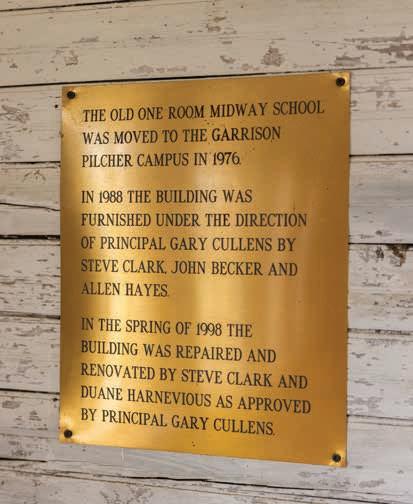
Born and raised in Thomasville, Whitte began first grade in 1955 in a
one-room schoolhouse in the Midway community. She later attended Magnolia High School, graduating in 1967 from what was then a fully segregated school.
Growing up in the 1950s and ’60s South, she had no engineers in her family. No visible role models in science. No blueprint for how a Black girl from Thomasville might one day design technology that would be used around the world.
But she had a dream.
Whitte believes that dream may have been planted before she was even old enough to understand it.
She remembers crawling toward her great uncle, Ananias Hopkins, as he sat on the steps of her childhood home. He lifted her onto his knee and tapped her forehead.
“You have a Hopkins forehead,” he told her. “You’re going to be smart in arithmetic. And you’re going to be working on something that has to do with arithmetic.”






LOCATED JUST MINUTES FROM DOWNTOWN SHOPS, RESTAURANTS, AND LIVE MUSIC.







“I remember that little frame,” Whitte says. “My mother said there’s no way I could remember it because I was just a toddler. But I remember him pointing to my forehead.”
Looking back, she believes those words took root.
“Someone said he planted that seed in my head,” she reflects. “You have to be careful what you say to children. You can plant something good—or something bad.”
For Whitte, it was something powerful.
At Magnolia High School, she excelled in math and science. She loved biology. She entered science fairs and once won first place for an experiment
and chickens.
Still, the path wasn’t always straightforward.
When a guidance counselor insisted she take typing, Whitte resisted.
“I said, ‘I’m not going to take typing because I’m going to be an engineer. I don’t need typing,’” she recalls. “She looked at me funny.”
LEGACY PEOPLE
Her father, Malachi Wiggs, eventually intervened so she could stay on her chosen track. Years later, she admits with a chuckle, “I wish I had taken typing. I found out as an engineer, I had to write reports.”
But perhaps the most lasting influence came from Magnolia’s principal, Johnnie J. Jones.
Bread Pudding, continued
“He was tough on us,” Whitte says. “He expected excellence. No excuses.”
She remembers once turning in homework with missing problems because her textbook was missing pages.
“I got an F,” she says. “And I started crying. The teacher said, ‘No excuses. If your page was missing, you should have gone to the library or borrowed a classmate’s book.’”
That lesson stayed with her for life.
“If you ran into a problem, you had to find a way around it,” she says. “That carried over into my work life.”
Whitte was initially accepted to Savannah State, but an uncle from Buffalo, New York encouraged her father to consider a stronger engineering program up there. She ultimately moved north, studying in Rochester and beginning work in office technology before earning a bachelor’s degree in imaging science.
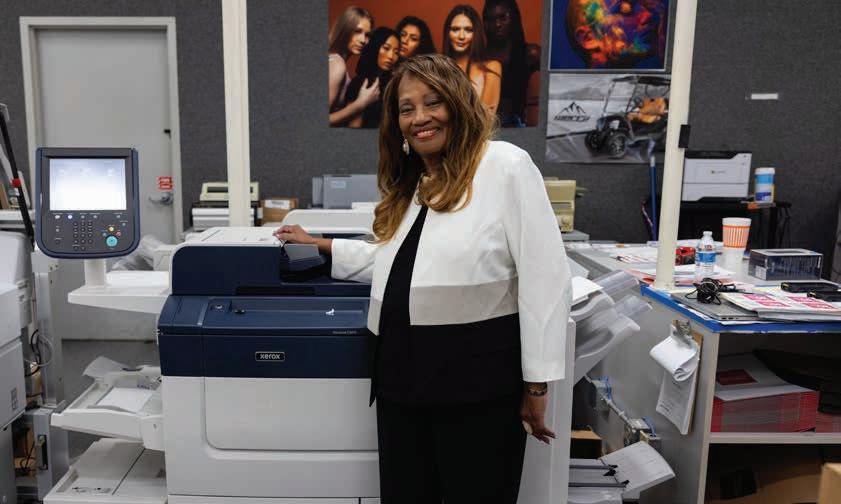
In 1976, she joined Xerox as the only woman—and the only African American—in her engineering group.
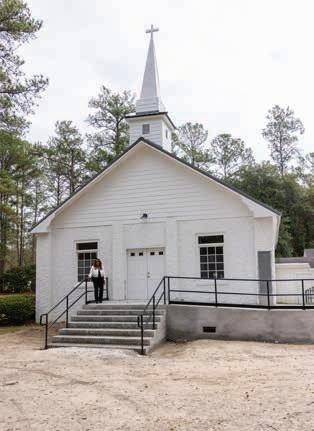
Whitte reflects on younger years at Rebecca Missionary Baptist Church.



“When I stepped in there, I was told I was the first African female in that group,” she says. “I didn’t even know that.”
She sensed skepticism.
“I could feel they thought I was there through affirmative action,” she says. “So I had to prove to them that I knew my stuff.”
The discipline instilled in Thomasville carried her through her challenge.
“Once they realized I knew my work, they invited me into the boys’ club,” she says. “After that, we became true buddies.”
Over a 35-year career, Whitte worked in research and development and later in product development, collaborating with teams in Japan, Russia, and Israel. In 1990, the government granted her a patent for a vacuum belt transport system that reduced document show-through and shadowing in Xerox machines—a breakthrough still embedded in machines today.
“It’s in the Xerox machine now,” she says proudly. Later, as Xerox transitioned from analog copiers to digital imaging, she returned to school to deepen her knowledge and skill set.
“My last project was developing software print drivers,” she explains, describing software that ensured colors displayed on a computer screen matched the printed output. “When you print a document, you want it to look the same as what you saw on your PC. That was our job.”
Through tight deadlines and high-stakes product launches, she relied on her Magnolia training.
“If the CEO said we’re launching in September, you had to be ready,” she says. “When I ran into problems, I found another way. No excuses.”
In 2024, Whitte was inducted into Magnolia High School’s Academic Hall of Fame.
“I never thought that would happen,” she says. “To come back and be inducted—it’s just amazing.”
Now retired and living in Wesley Chapel, Florida, she often drives the two-and-a-half hours back to Thomasville.
“The first thing I did was walk down Broad Street,” she says. “I used to go every Saturday as a child. Popcorn, the movies, just walking.”
She remembers a teacher, Clarice Davis-Warren, who would spot her downtown and offer encouragement.
“She would hug me and say, ‘I hear you made the honor roll. Keep it up,’” Whitte says. “That meant everything to me.”
Her Sunday school teacher, Dorothy Monroe-Jones, at Rebecca Missionary Baptist Church would also offer encouragement.
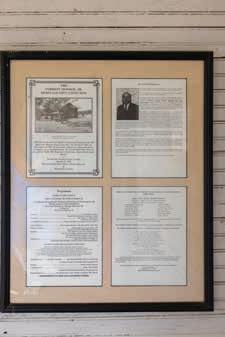
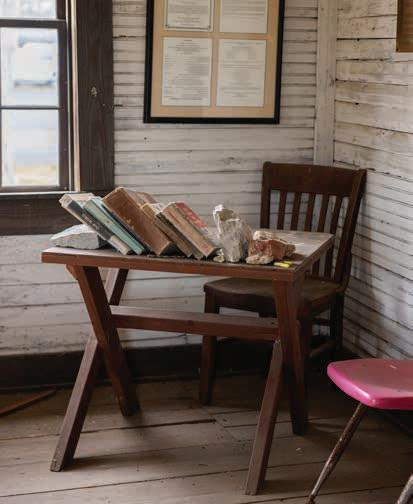
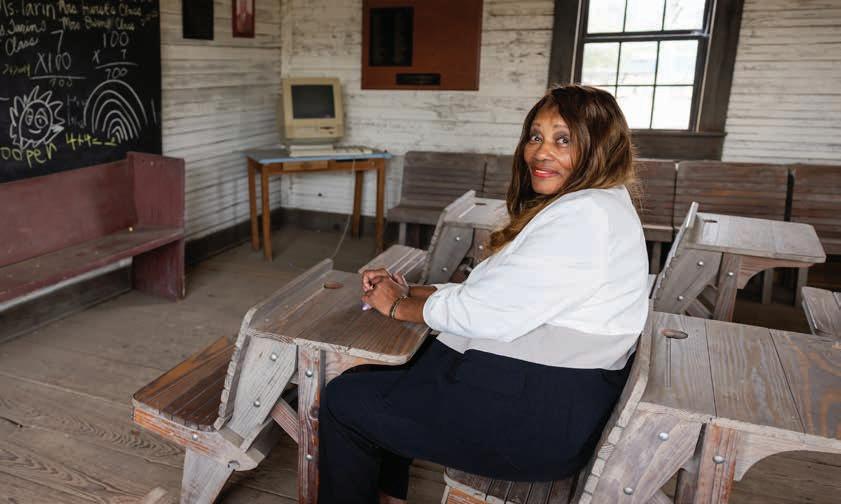
She recently visited the historic one-room schoolhouse she once attended—now preserved as a historic site.
“When I go back, I feel like a little kid,” she says. “It’s where it all started.”
LEGACY PEOPLE

As a young girl, Whitte spent many hours sitting by
Retirement hasn’t slowed her down.
Whitte continues mentoring aspiring engineers—young women especially, though she now mentors young men as well, after a Thomasville principal reminded her, “Our boys need it too.”
Her mentorship extends internationally.
In 2010, she participated in a program connecting women engineers from Xerox with young women in Ghana. She mentored a student named Joyce who dreamed of becoming an engineer but doubted herself.
“She struggled with crippling doubt,” Whitte says.
Years later, Joyce wrote about Whitte’s influence in a book called Roots to Wings
“She said I became her anchor,” Whitte says, her voice catching. “She wrote that meeting a woman engineer proved science wasn’t just for boys.”
Today, Joyce leads a community health initiative, and all five original mentees from the program went on to professional careers, including medicine.
“It just gives me gratification,” Whitte says. “To see someone you mentored reach their dream—that makes the world better.”
When Whitte reflects on her life—from that pond in Midway to a patented engineer at Xerox—one message rises above all.
“If you hold on to your dream, it can come true,” she says. “Don’t let anyone steal it.”
She pauses, thinking of Thomasville—the teachers, the principal who demanded excellence, the uncle who tapped her forehead.
“I’m so glad I grew up in Thomasville,” she says. “If I didn’t grow up there, I don’t think I’d be where I am now.”
And somewhere in that wooded stretch near Midway Road, a little girl once dreamed of inventing things— never imagining how far those dreams would take her. TM


the pond.
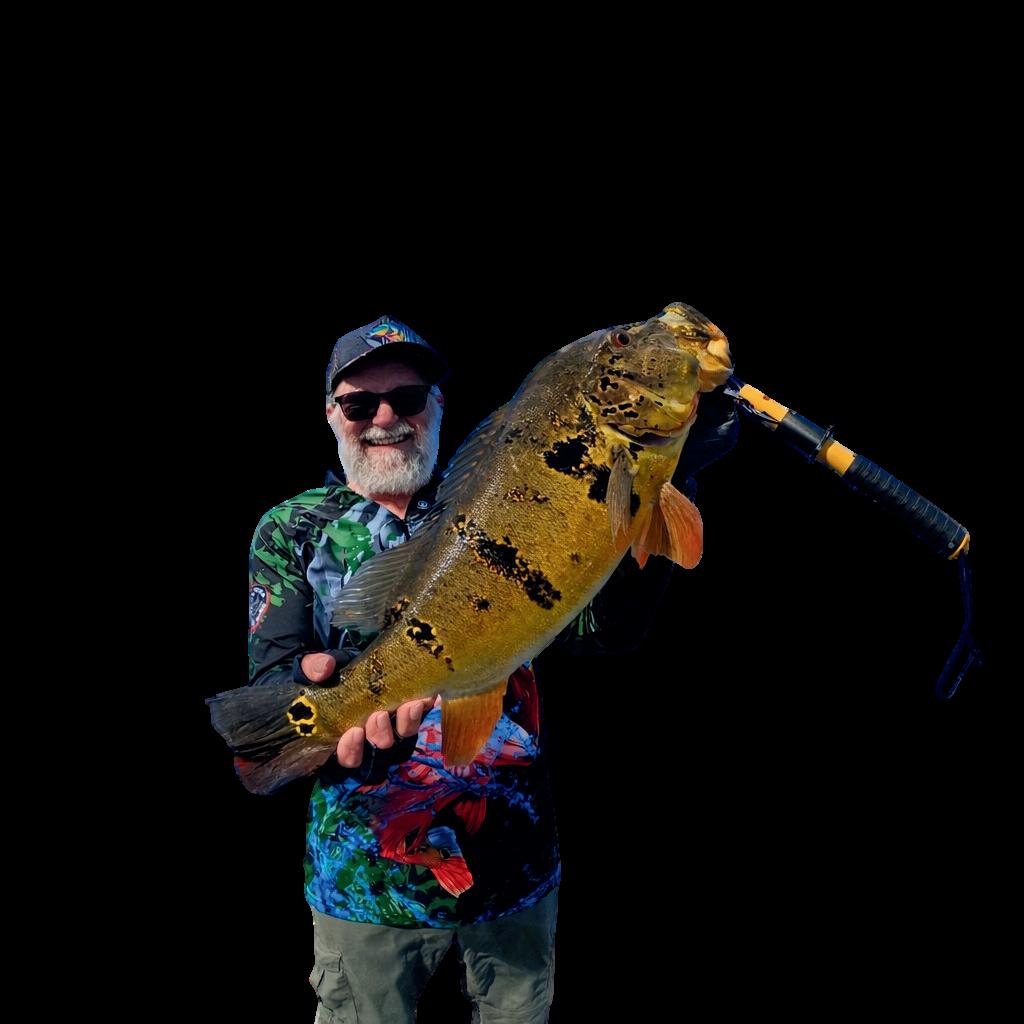
Follow our guide, Thomasville native Milton Fielding, on Amazon Peacock Bass Fishing’s social media
VINTAGE TREASURES
BY SARAH SHEARER
PHOTOS BY EMILY TUCKER PHOTOGRAPHY
Business SPOTLIGHT
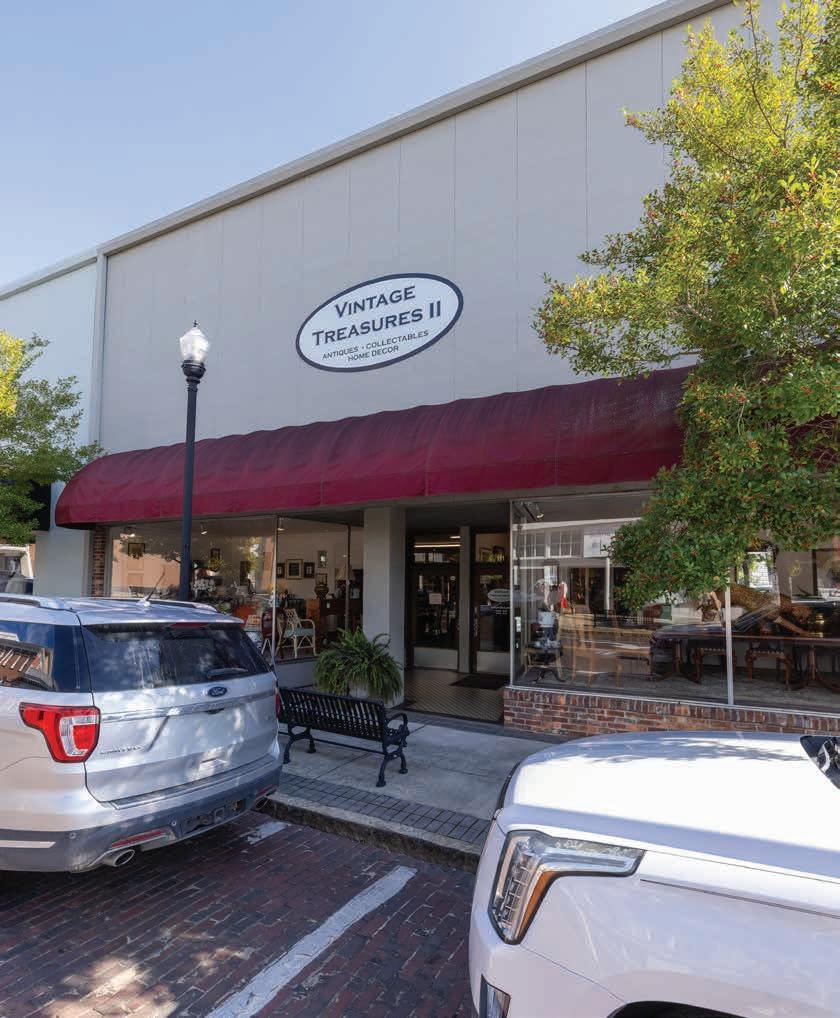
Vintage Treasures in Downtown Thomasville, GA is an extension of the flagship location just a hop, skip and jump over in neighboring Monticello, Florida. The antique store began as a dream in the heart of Pamela Willis, Monticello native, around the year 2009. It just didn’t seem like an economic recession was the prime time to open a business, especially an antique store, but she was adamant that the timing was right. Mike and Pam Willis were a strategic couple, and they launched into the project on the cusp of their retirement years with full force and enthusiasm. They knew if they were going to open a store in a little postage stamp town, it needed to be big enough to be a destination.
Together, they poured their efforts and intentions into making Vintage Treasures a place worth the trip, and before they knew it, Monticello’s downtown scene was reviving, bit by bit. They’ve had visitors from all over the country; they even have a map in the store with little pins representing their visitors’ hometowns. All 50 states are represented.
When asked what makes this neck of the woods appealing for tourists, Mike Willis answers immediately in his kind, Southern drawl. “We have what everyone else in the country would like to have.” He mentions the rolling red hills, easy access to beaches and safe communities to raise children.
Now a retired plantation manager, Mike well understands what it means to be connected to the land in which you dwell. This sense of home and preservation pours over into their enthusiasm for collectibles and other treasures. To see something repurposed and carried forth into the next generation is a highly rewarding undertaking.
Willis’s Florida ancestry dates clear back to the origin of Florida as a territory, so it’s safe to say he has a vested interest in his community. Over the years he and his wife have learned a great deal about business and they have made countless friends along the way. They started out looking for products to sell, and now people are coming to them.
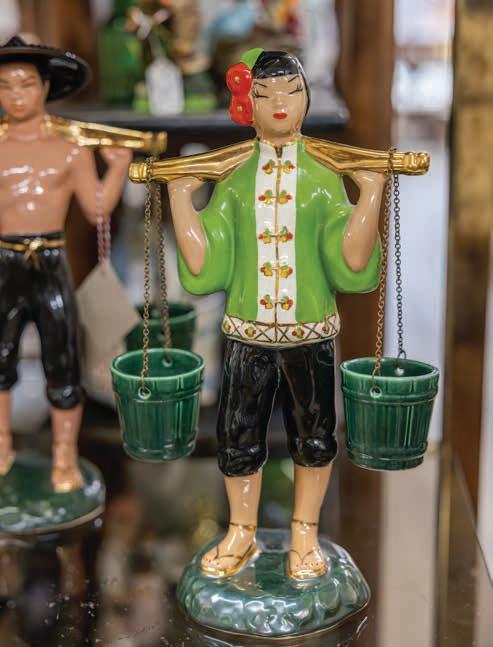
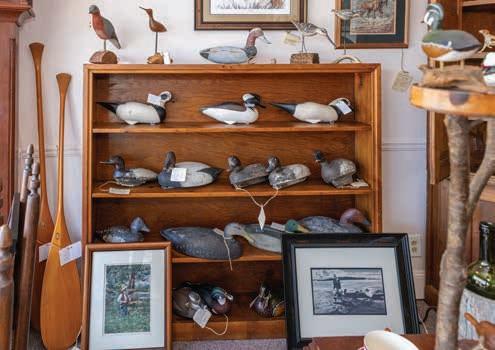
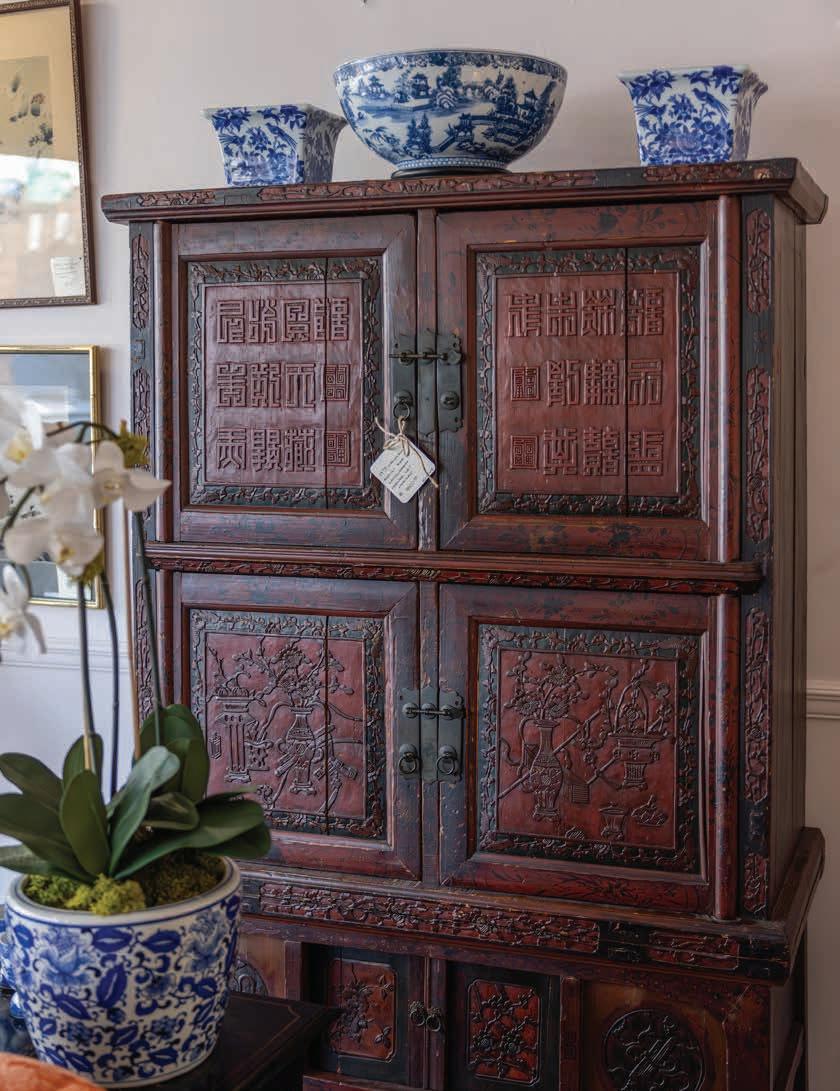
From vendors to estate sales to private sellers and artists, their curated collections will keep a browsing customer busy for hours as they peruse aisles filled with unique art pieces, Southern pottery, furniture collections from old plantations and more. Regarding the secrets to a successful business, Mike grins and says “You can’t sell anything if the doors aren’t open!”
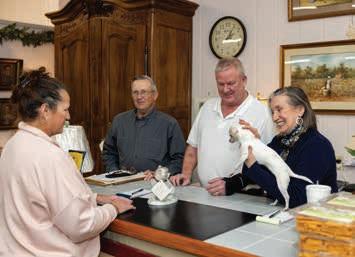
Gradually, Mike and Pam pulled back from their previous employment situations as the business grew. “This is something she and I can do together,” Mike says, a reminder that strong marriages are the union of two friends who truly enjoy one another’s company. But it’s not all peaches and cream! Mike jokes that he is forbidden from redecorating the store, but Pam usually lets him handle the business side of things. They call themselves purveyors of history, and their love for antiques and collectibles is contagious because they were thrilled to open a Thomasville location a few years ago. Of course, it needed the right person running it.
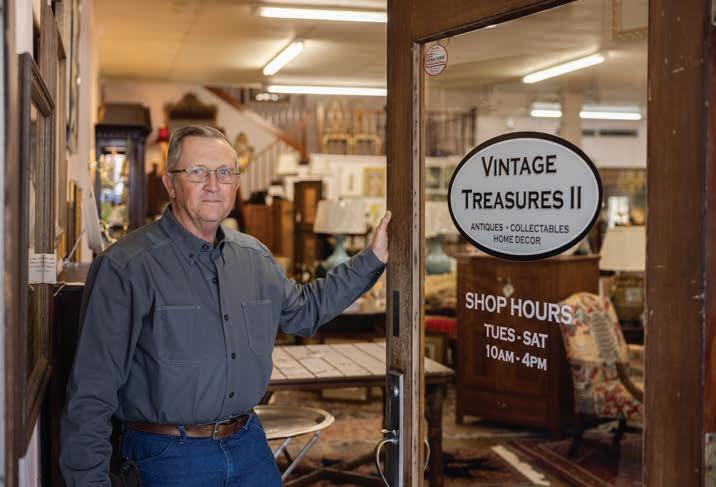
Brian Kincaid turned out to be that person. Since 2021 he has embraced the vision for the Thomasville store in the heart of downtown Thomasville. Kincaid, similar to the Willises, was looking for a new passion project after a decades-long career in another retail store downtown. Through a mutual friend, Kincaid and Willis were introduced and it was kismet. They were originally located on Smith Avenue but now sit on the corner of Madison and West Jackson.
“Brian is the heart of the Thomasville store,” Willis relays, confident in Kincaid’s ability to ascertain the Thomasville clientele. Lynn Wilson helps Kincaid run the Thomasville shop, and it is a delight to explore.
From fine china and jewelry to books and eclectic furniture pieces, there is truly something for everyone. Their customers come from all over, from Tampa to Atlanta. Kincaid said they are frequented by interior designers in the Atlanta area who are always on the hunt for the right piece at the right price.

Both Willis and Kincaid noted an upsurge in younger shoppers. Willis said, when Vintage Treasures first opened, the majority of their clientele was of the silver-haired persuasion, but now that’s changing. Younger people, even high schoolers, are coming in to shop to hunt for just the right thing. Kincaid observes their desire for feature pieces in each room of their house. Vintage Treasures is a veritable feast for anyone in search of a feature piece: their extensive list of vendors has made sure of that. “Right now we have a five year waiting list for quality vendors,” says Kinkaid.
Vintage Treasures has turned out to be a symbiotic relationship for its proprietors. The Willises and Brian Kincaid have found deep purpose and joy in running their respective stores and in seeing the growth.
“As long as we’re having fun, we’ll keep doing it,” says Willis. TM
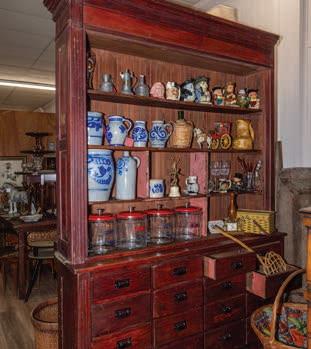
Surprises await around every corner at Vintage Treasures, where dozens of vendors offer their wares.






residential · agricultural · commercial residential · agricultural · commercial local offices in valdosta, thomasville, Tallahassee & cairo local offices in valdosta, thomasville, Tallahassee & cairo


Local Independent propane Local Independent propane
South Georgia and North Florida’s leading local provider
South Georgia and North Florida’s leading local provider
In 2022, several local hometown companies came together to form Southern Quality Propane—the leading provider of local, independent propane in our communities. We believe being local matters. It allows us to keep prices low while providing great customer service. You are not a revenue stream to us—you are our neighbors. And we care about this community.




LETTING THE DOGS OUT
BY ANDREW BELLACOMO
PHOTOS BY WHIGHAM IMAGES
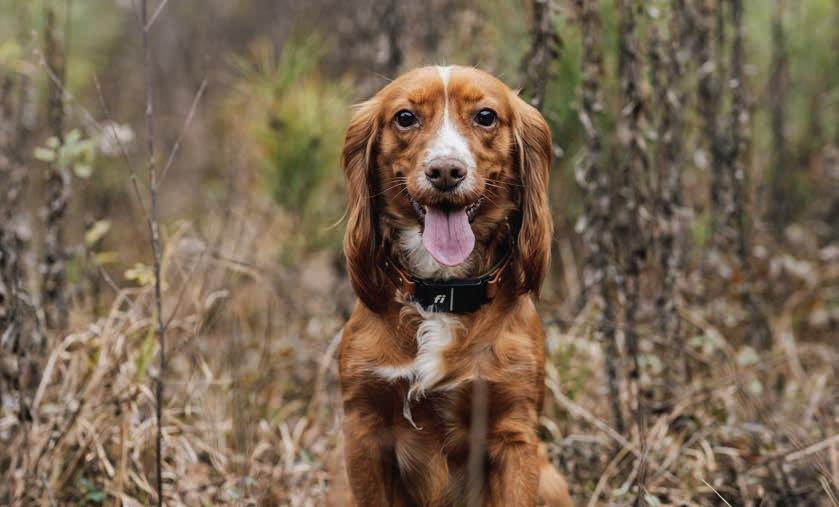
For someone who discovered a love for hunting as an adult, 33-year-old Ethan
Galloway has built a reputation quickly as one of the most sought-after dog trainers in the Red Hills. Born and raised in Tallahassee, Florida, he grew up near some of the most renowned hunting land in the country. His first full-time foray into the outdoor world, though, was when he got a job with a fencing company that did work on hunting plantations close to home.
“I started working for a fencing company that did commercial work for a lot of these local plantations in the area. I ended up meeting one of the managers and eventually got out of building fences and started to pursue a career on the plantations.”
After spending a few years learning the day-today operations of plantation work, how hunts were conducted and the way dogs were used in the field, he realized that the part of this outdoor work that really interested him the most was working with dogs.

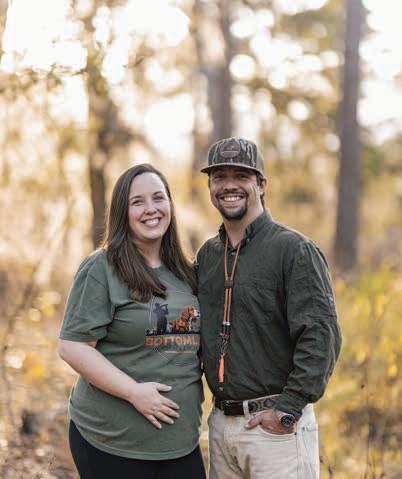
Ethan and Cearra Gallaway
“I’ve always loved training my own dogs and I kind of got bored with the plantation scene—doing the same thing pretty much every day, a lot of tractor work. I also really wanted to be more hands-on with the dogs and do a variety of different things rather than just mainly working with pointers alone.”
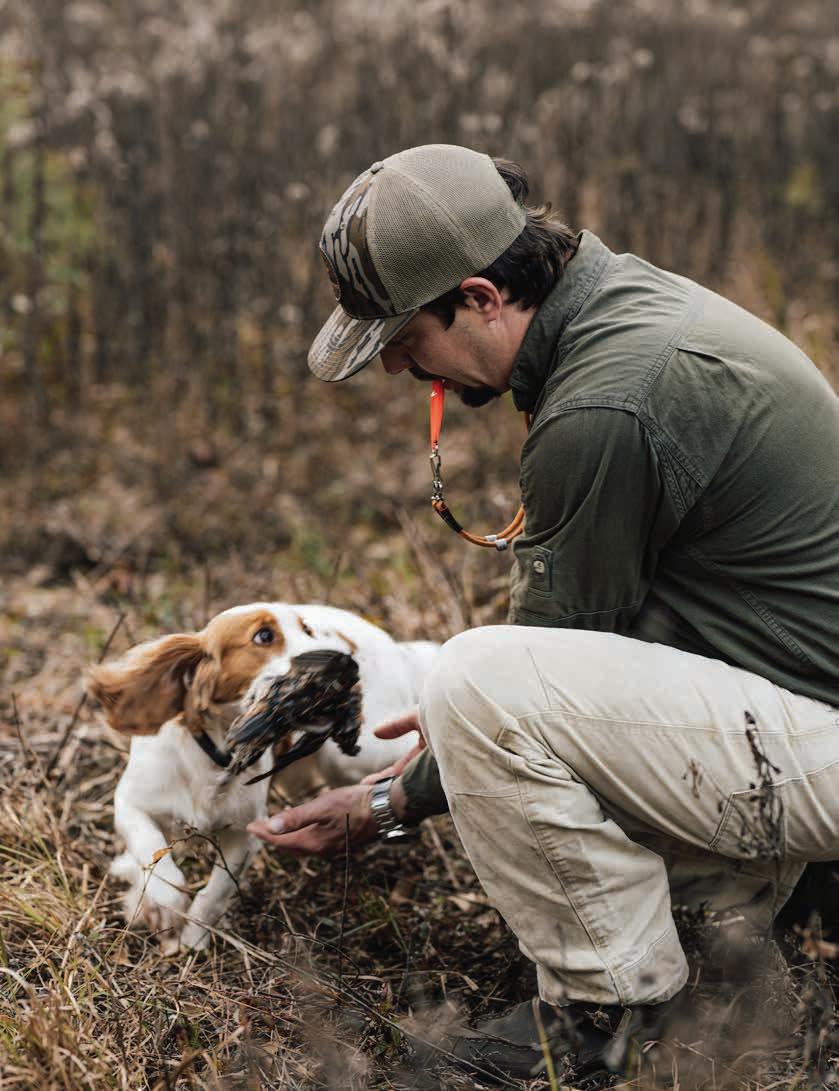
And so Galloway began focusing on dog training intensively. He learned his craft from a variety of places—by working at a kennel, by watching pro trainers work with dogs, by watching videos posted by trainers all over the world, and by spending hours and hours out with the dogs learning by trial and error what truly worked and what didn’t.
Soon, dog owners were hiring Galloway to apply what he had learned to train their dogs, and he was able to make the shift to working as an independent trainer.
“I was working on a plantation and had my personal cocker with me, and we went on a duck hunt with some folks I’d never met before. They ended up having some young cockers that they wanted trained.”
Galloway’s reputation as a promising up-and-coming trainer spread quickly through word of mouth and social media. Today, Galloway has a diverse range of clients from around the country seeking services from his business, Bottomland Gun Dogs.
“Word just spread, and I ended up training their other bird dogs … mainly by word of mouth and social media. I work with clients from all different regions. I’ve got some from as far away as Tennessee, Texas, and I had one in Colorado.”
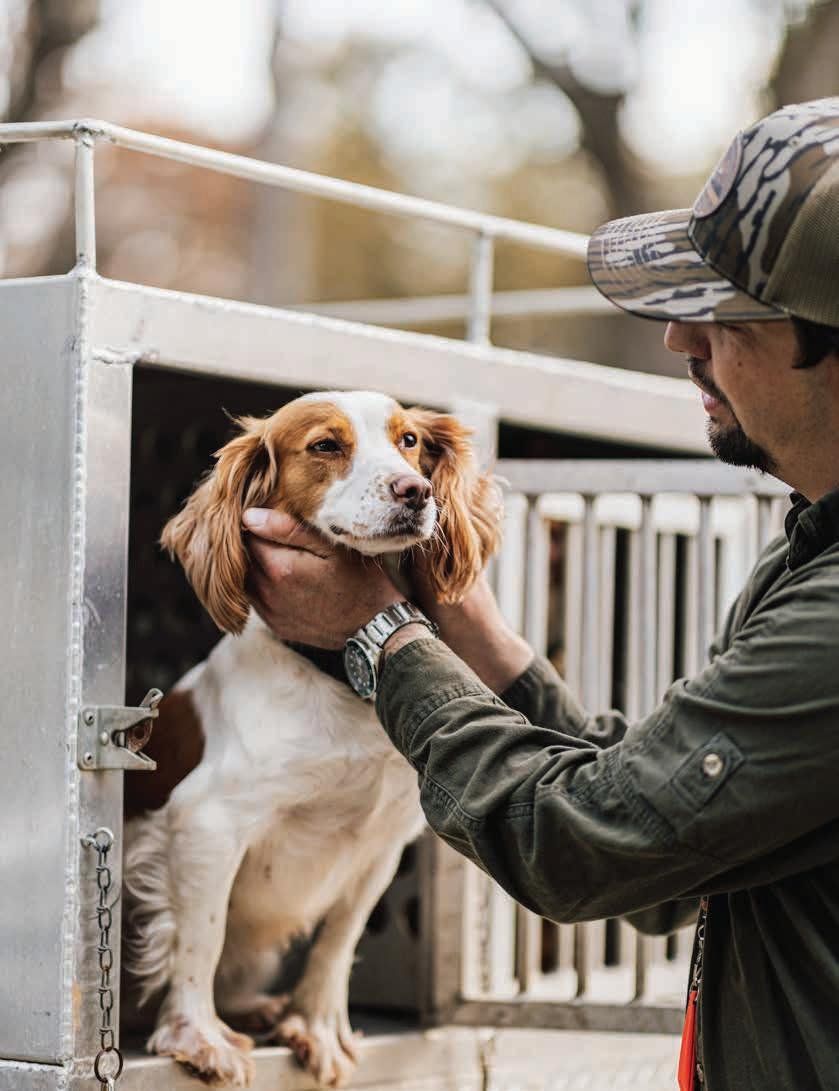
Galloway enjoys training a diverse range of dog breeds for a wide variety of different types of hunts. The variety allows him to grow, experiment, and understand the dogs in a way that specializing might not have allowed him to do.
“I train all different types of bird dogs—pointers, flushers, and retrievers. It depends on what dogs I have in the
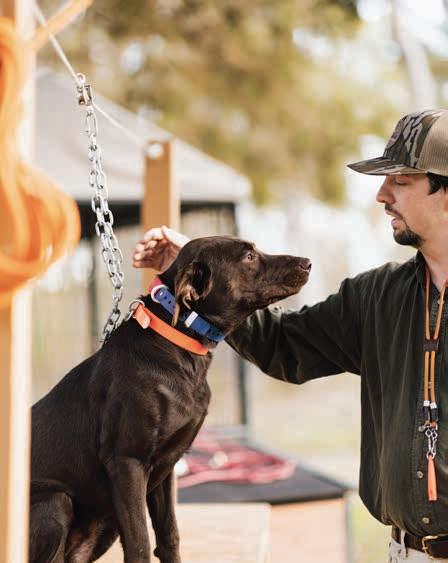
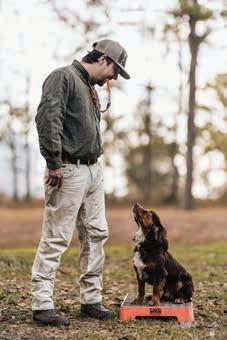
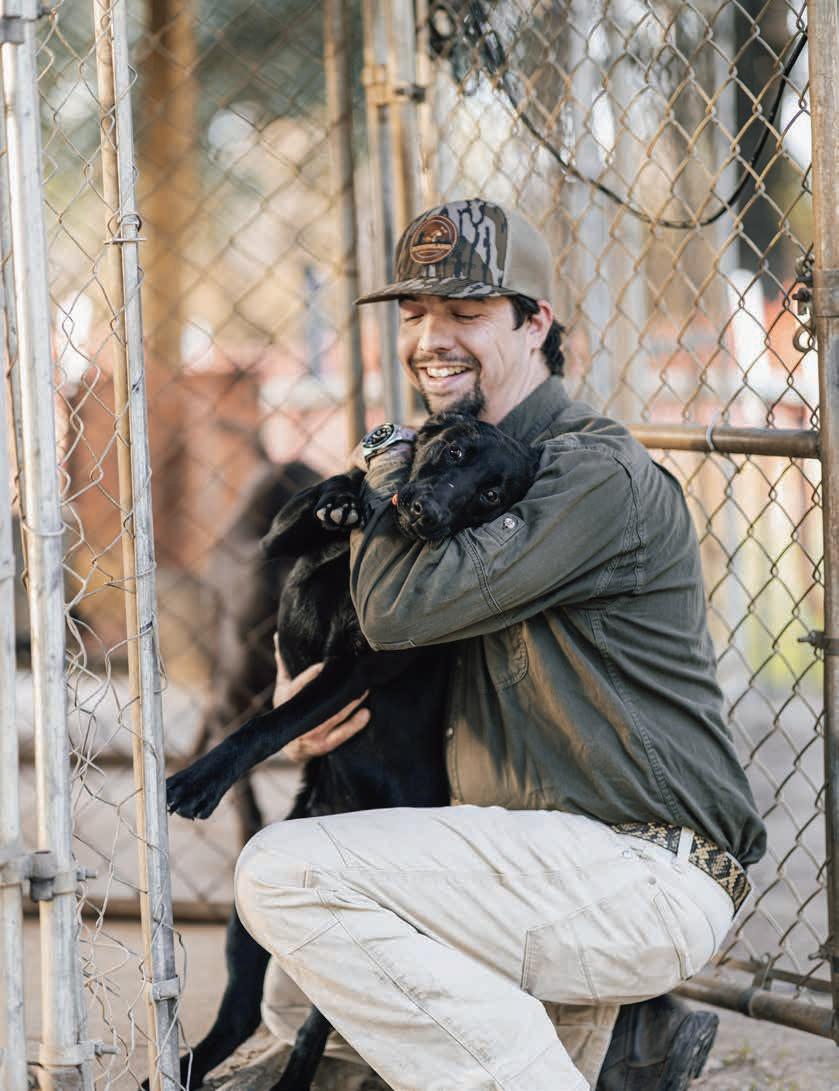
Working on a plantation, it didn’t take Galloway long to realize working with dogs was his passion.



Family Style Buffet Restaurant
Enjoy fresh country cooking served buffet style daily in a casual family friendly atmosphere.


14815 US Hwy 19 S., Ste 100 Thomasville (229) 227-0622 Enjoy our lakeside
Rotating menu features 10-plus meats, 20-plus vegetables, a 70-item salad bar, and over 20 varieties of fresh baked desserts, served every day.

kennel at the time.”
The training foundation for Galloway always starts with obedience work.
“We do a lot of obedience training because I believe to have a well-rounded gun dog out in the field, you’ve got to have obedience so you can control them out there while on birds. So, we focus a lot on obedience in the beginning, and introduce all the dogs to birds, gunfire, water, and retrieving.”
After building that relationship with the dogs, Galloway moves into more specialized work.
“Then we’ll take them out into the field and work on birds, getting the retrievers marking out in a pond, getting pointers steady to shoot.”
Over time, Galloway has identified certain qualities that make some dogs stand out naturally over others. A lot of what he looks for is prey drive.
“To have a really great hunting dog, you’ve got to have a good amount of prey drive—but also the obedience to control that prey drive. You want them steady while birds are coming in. A good bird dog might have a little drive, but not a total insane amount like you want out of a great dog. Some dogs
are a little more lazy and don’t have quite as much obedience as you’d really get out of a great bird dog.”
The more experienced Galloway becomes as a trainer, the more he can’t help but notice mistakes many owners make when training their dogs.
“One of the main things I see is a lot of folks trying to do too much with a dog—working them 20 or 30 minutes at a time. The best way to work a dog is in short, positive sessions—five, ten minutes at a time.”
Working with dogs, he says, takes patience.
“A lot of it is being patient with the dogs and not trying to rush the process. Some dogs just take longer and take more time to mature. A lot of owners repeat themselves—repeat the command over and over again. The best way is to be patient, say the command one time, try to get the response, then praise the dog. A lot of people also try to introduce dogs to birds too early or shoot around them too early in the wrong situation and cause a gun-shy dog, which is very a hard behavior trait to overcome.”
When it does all come together, though, Galloway says there is no feeling like it.
“Watching a young dog when that lightbulb switches in their head and they figure out what they’re supposed to be doing— there’s no better feeling.”
Once that lightbulb moment happens for the dogs, he says he loves seeing them take to their newfound skill.
“I really enjoy watching the training I’ve done with them get put together out in the field. They start enjoying it and loving
Continued, p.59

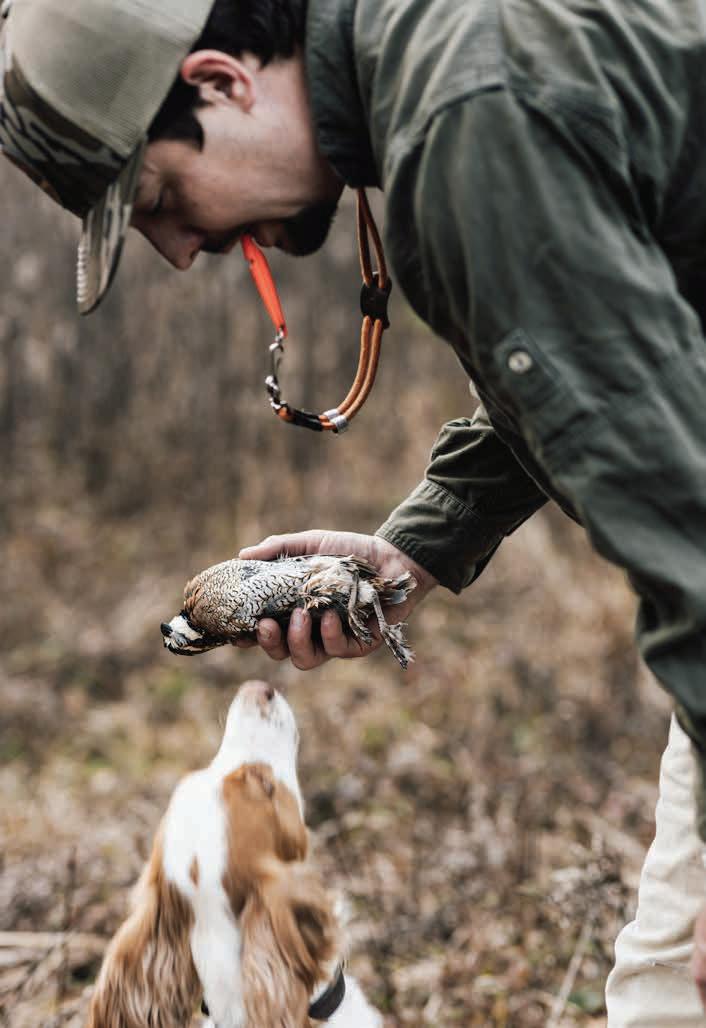
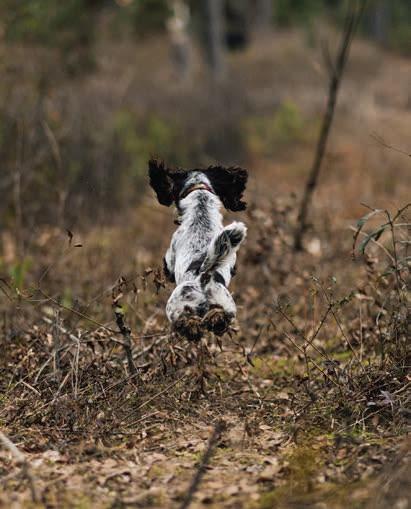
Galloway can appreciate the difference between a good bird dog and a great one.

Secure your spot today! Let’s make your business stand out in our Health & Wellness issue.
Ideal advertising opportunity for:
· Physicians · Medical Practices
· Wellness Practitioners
· Any Health/Wellness Business
EVERY ISSUE OF THOMASVILLE MAGAZINE REACHES THOUSANDS OF READERS IN THE COMMUNITY.
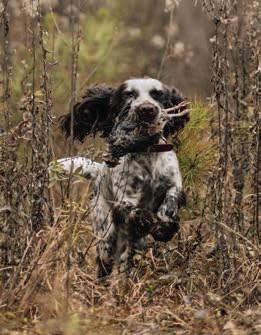
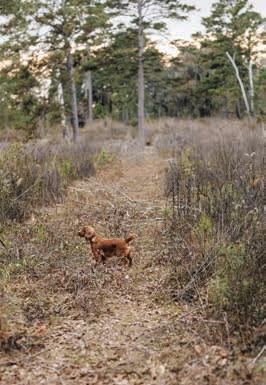
There’s nothing like watching a welltrained, eager bird dog out in the field doing what they love best.

RESERVE AD SPACE BY MAY 2!

2



everything about it and are always excited to go out to the field.”
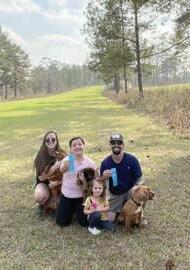
Galloway’s operation has expanded quickly over the past few years, and he and his wife, Cearra, now stay busy, training dogs for clients and taking care of their own canine family.
“We have nine personal dogs: six cockers and three labs—a 13-year-old chocolate lab, a six-month-old black lab, and a 12-week-old red lab.”
Now an avid hunter, Galloway looks forward to those thrilling moments in the field when it all comes together.
“With quail hunting, I just like the aspect of having pointers out there as well and then having the flushers and just watching the dogs work. And there’s nothing better than having nice wild coveys get up in your face.” TM


• LASIK Surgery
• Cataract Surgery
• Glaucoma Treatment and in-Office Laser Surgery
• Corneal Dystrophy
• Corneal Transplant
• External Eye Diseases

• LASIK Surgery
• Cataract Surgery
• Glaucoma Treatment and In-Office Laser Surgery
• Diabetic Eye Disease Evaluation and Laser Treatment
• Complete Eye Examinations
• Glasses and Contact Lenses Evaluations and Purchases

• Corneal Dystrophy
• Corneal Transplant
• External Eye Diseases
• Diabetic Eye Disease Evaluation and Laser Treatment
• Complete Eye Examinations
• Glasses and Contact Lenses Evaluations and Purchases
Barbara Fluder, OD
Michael Haney, MD | Michael Magbalon, MD
Josh Newton, MD | Matthew Biedron, OD
Barbara Fluder, OD | Derrick Thornton, OD
Robert Assantes, OD
Michael Magbalon, MD | Josh Newton, MD
Jodie Norman, OD | Matthew Biedron, OD
The Galloways work together in the dog training business.

























Handcrafted for Easter.








recipes
French Lentil Salad
1 1/2 cup dried French-style green lentils
Kosher salt
1/3 cup olive oil, plus more to serve
7 cloves garlic, divided (6 thinly sliced, 1 finely grated)
1 tsp crushed red pepper flakes, plus more to taste
Freshly ground black pepper
4 small Persian cucumbers or 1 large hothouse cucumber, coarsely chopped
1 tomato, chopped
1 lemon with peel still on, finely chopped (seeds removed)
2 cup soft mixed herbs with tender leaves and stems, coarsely chopped (I used cilantro, dill, and parsley)
Flaky sea salt
Optional toppings:
Feta or soft goat’s cheese, crumbled
Castelvetrano olives, crushed
Sumac, for sprinkling
Whelchel & Carlton LLP Attorneys at Law
Turnipseed J. Hamilton Garner | Kyle T. Swann
Kyle T. Swann Real Estate | Business Law | Wills | Trusts Estates |
Kenneth M. Turnipseed J. Hamilton Garner
www.wcgalaw.com
Avenue
Georgia 31768 229-985-1590
www.wcgalaw.com
Cook the lentils in a large pot of salted, boiling water until just tender, about 18 to 22 minutes. Drain and set aside (do not rinse). Meanwhile, heat 1/3 cup olive oil in a small pot over medium heat. Add sliced garlic and cook, letting the garlic toast in the oil until golden-brown and tender, 4 to 6 minutes. Add crushed red pepper flakes and remove from heat.
Place lentils in a large bowl and drizzle with the spicy toasted garlic oil. Toss to combine and season again with kosher salt, black pepper, and more crushed red pepper flakes, if you like. Toss cucumbers in a medium bowl with remaining grated garlic clove and finely chopped lemon and season with kosher salt and lots of black pepper. Let sit for 5 to 10 minutes to get the juices from the cucumber and lemon flowing (they’ll create a liquid that you’ll use to dress the lentils further).
Spoon the cucumber-lemon mixture onto the lentils, along with all their juices. Scatter with herbs, followed by flaky sea salt, black pepper, and a good drizzle of olive oil. Optional: Scatter the salad with feta, olives, and/or sumac, if using.




Spring Greens Soup
recipes · ring in the spring

2 tbsps extra virgin olive oil
1 medium onion diced
2 cups broccoli, chopped florets and stalk
2 cloves garlic chopped
¼ tsp salt plus more to taste
5 oz baby spinach
14 oz can white beans like navy or cannellini, rinsed and drained
1 cup fresh green peas, blanched
½ tsp ground cumin
¼ tsp ground nutmeg
chili flakes to taste
32 oz container of gluten free vegetable broth or 4 cups of water plus 2-3 tsp of bouillon concentrate
Heat oil in a soup pot over medium heat, and sauté onion until glossy and translucent, about 5-7 minutes. Add garlic and broccoli, and sauté for about 3 minutes, stirring constantly so garlic doesn’t burn, until broccoli is bright green. Season with 1/4 teaspoon salt.
Next add spinach and stir until wilted, about 2-3 minutes. Add beans and peas and stir until heated through. Add cumin, nutmeg, chili flakes and broth (or water plus bouillon concentrate) and let come to a boil on high for 3 minutes.
Take soup off the heat, then carefully puree with an immersion blender to desired consistency. I do about three-quarters pureed so there is still some texture there. You can also puree this soup in your blender, but it is about double the capacity of a normal blender, so do it in two batches.
Taste and adjust! This is a very simple soup for a reason ... but a little hit of acid from a squeeze of lemon or a tsp of vinegar may help pump up the flavor. Add more spices if you wish ... or more salt! Serve with whole grain crackers or bread.


Thomas E. Edwards, III, M.D.
Jeremy W. Poole, D.O.
Calvin J. Reams, M.D.
Rachel Bennefield, FNP
Rainey Williams, FNP
Philip J. Dubose, Psy.D
McCall Taylor, FNP
Kayla Howell, FNP
Phone 229-228-4130


recipes · ring in the spring
Tuscan Salmon
2 tbsp olive oil
4 6oz salmon fillets, skin on and patted dry salt pepper
3 tbsp butter
4 cloves garlic, minced
1 1/2 cups cherry tomatoes, halved
2 cups fresh baby spinach
1/2 cup heavy cream
1/4 cup grated Parmesan cheese
1 tbsp chopped Italian parsley
4 leaves fresh basil
Place the olive oil in a large skillet over medium high heat. Sprinkle salt and pepper over both sides of the salmon. When the oil is shimmering, place one salmon fillet skin side down and gently press on the top with a flexible spatula to keep the salmon from shrinking for 15-20 seconds. Repeat for every fillet.
Reduce heat to medium and cook all of them for 6-8 minutes, or until the salmon changes color (gets paler) about two-thirds up the sides for an internal temperature of 120°F. Flip and cook for another 60 seconds. Remove to a plate and set aside.
Add butter and deglaze the pan (scrape up brown bits from the salmon, if any). Add the garlic and sauté for about 1 minute, or until the garlic is fragrant and not burned. Add the cherry tomatoes and simmer for 5 minutes, or until the tomatoes start to burst. Stir in the spinach and basil and cook for 1 minute, or until wilted. Stir in the heavy cream, Parmesan and Italian parsley.
Reduce heat to low and simmer for 3-5 minutes. Place the salmon back in the skillet and cook for 2-3 minutes. Spoon sauce onto a dish and place a salmon fillet on top. You can also serve this over rice or pasta.










DUE SOUTH Headed...
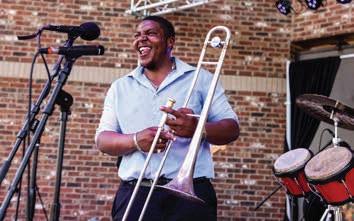
Lace up your dancing shoes and get ready to get down with JJ Grey & Mofro, this year’s headliner for Thomasville Center for the Arts’ Due South art, music and food festival.
Always a crowd favorite, the band recently released Olustee—their 10th album and first in eight years—rich with stories rooted in the lore of Grey’s generational Florida home and inspired by the people who have shaped his life. Known for Grey’s unbridled energy, passion, and powerful storytelling, JJ Grey & Mofro promise a performance that Due South attendees won’t forget.
“We are honored to welcome JJ Grey & Mofro back to Thomasville for Due South 2026,” says Lyle Williams, IV, vice president of the center’s board of trustees and a Due South committee member. “Their performance promises to be an exceptional experience for our community, showcasing artistry of the highest caliber. Just as importantly, this event directly supports the ongoing growth and vitality of the arts in Thomasville—a mission we are proud to advance.”
Having served audiences of thousands since Due South made its debut in 2012, the Thomasville Center for the Arts envisions 2026 as its most successful year yet, promising a memorable celebration of its Southern roots.

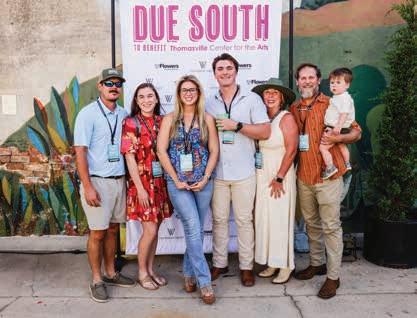
Sponsor packages are also available and include a variety of benefits, including premiere concert seating, sponsor recognition, an exclusive sponsor party and more.
Proceeds from Due South directly support year-round programming at Thomasville Center for the Arts, the vibrant heart of our community, dedicated to making lives brighter through the arts. Each year, the center engages over 85,000 youth and adults across the region through art education, cultural experiences, public art and more, nurturing creativity, connection, and lifelong learning.
Due South is planned for 6-10pm, April 18, at the Ritz Amphitheatre. General admission tickets are $60, with children 12 and under free. Several vendors will offer food and drinks for sale. To learn more about the festival and secure your ticket, visit thomasvillearts.org/duesouth.
Photo credit: Daniel Shippey









THEIR STORYSewing

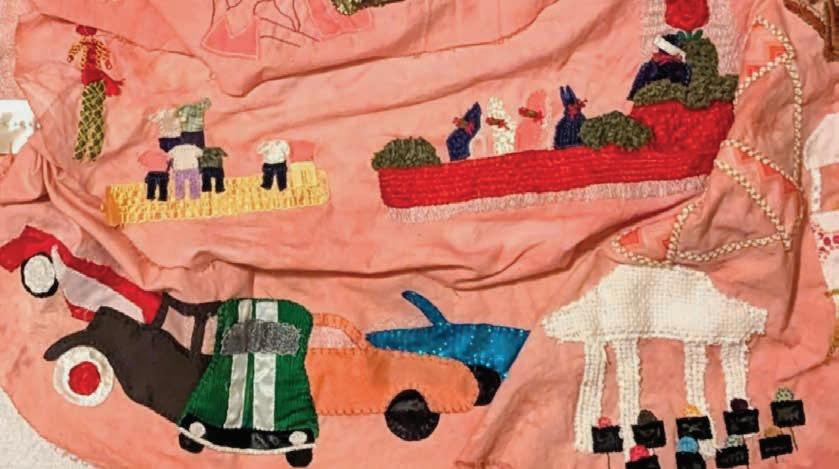
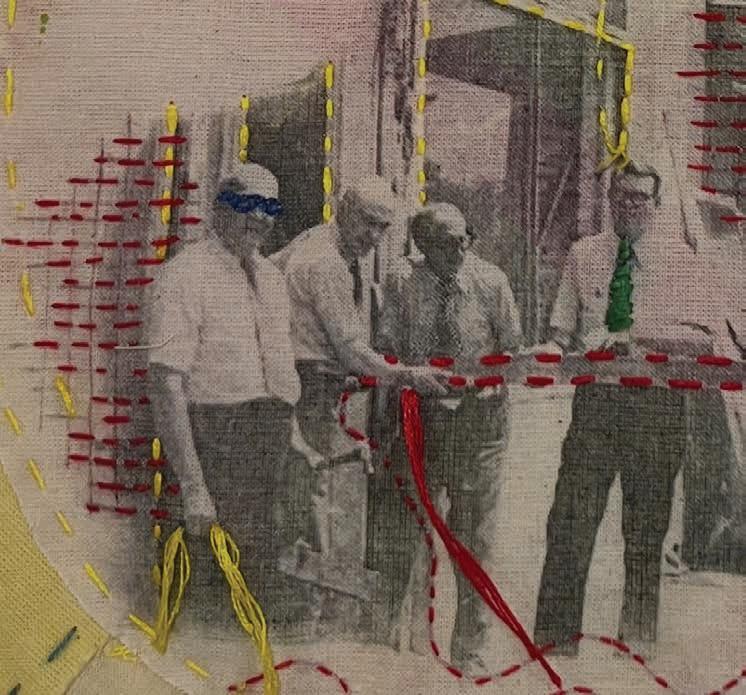
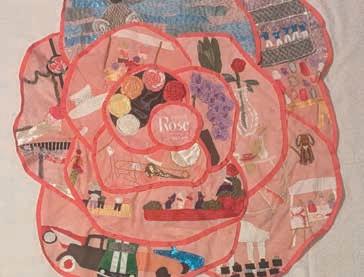
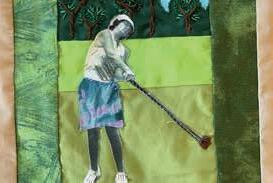
The Creative District in historic Thomasville will come to life April 2 when Thomasville Center for the Arts launches “My Side of the Story,” featuring multiple public art displays of one-of-a-kind quilts in all shapes and forms.
More than 85 works of art, including quilts, quilt images, and an homage to quilt pioneers, will be showcased, along with historic quilt collections from the Jack Hadley Black History Museum and the Thomasville History Center.
The launch leads up to the center’s Due South fundraiser and continues through the 105th Rose Show and Festival. This series celebrates Southern quilting and showcases makers and artists across the South, providing a platform for them to share their talents.
On Friday, April 3, the public can get a sneak peek of the handmade, one-of-a-kind quilts representing Thomasville’s people, places, and things during First Friday at Hubs & Hops. Find a list on page 78 of art installations, all of which are free and open to the public.
Jennifer Vanderbeek
Jacqueline Jenkins

Darlene Crosby Taylor
Marlo Ransdell
Jennifer Vanderbeek


THE LINEUP
The Creative District Airing of the Quilt Flags Along East and West Jackson Street Through May 19



The Creative District Installation by David Junker Corner of West Jackson Street and Gen. Lloyd J. Austin III Way Through June 2
The UnVacant Lot
Installations by Mary Proctor and Marlo Ransdell 217 West Jackson Street Through June 2
Grassroots Coffee Co
118 South Broad Street
Narrative Quilt Exhibition & FSU Studio D Paper Quilt Wall Through August 2
Artists Talk May 1, 5:30pm
Thomasville History Center & Jack Hadley Black History Museum
Historic Quilts on Display Through June 2
Thomasville Center for the Arts
600 East Washington Street
Quilt Exhibition by the Cotton Pickin’ Quilters July - October
Read more at thomasvillearts.org/duesouth.
Williams Family Quilt – Jack Hadley Black History Museum
Margina Gabriel
March, April & May
Through October 31
Bicentennial Exhibit
Pebble Hill is proud to take part in the Thomasville–Thomas County Bicentennial Celebration with a special exhibit in the Elisabeth Ireland Poe Gallery. Marking 200 years of life there, Pebble Hill Plantation: A 200-Year Legacy, features artifacts, documents, and photographs that trace the property’s story from its early beginnings to its heyday as a winter sporting estate for the Howard Melville Hanna family of Cleveland, Ohio. For info and times, visit pebblehill.com.
Through May 22
40th Arts Anniversary
In recognition of its 40th anniversary, Thomasville Center for the Arts hosts Rediscovered Treasures: The Parker Poe Exhibition. Guest curated by Amanda Karioth Thompson, the exhibit explores the richness of Parker Poe’s art collection through over 70 works of esteemed artists, including Ogden Pleissner, Walter Stein, Henri de Toulouse-Lautrec, Audubon, and others. Visitors may also explore Little Things, a showcase of artwork created by Pre-K through 12th grade students with disabilities. This exceptional exhibition is on view in the Ground Floor Gallery through May 12. For info, visit thomasvillearts.org.
March 20
Salute to Spring
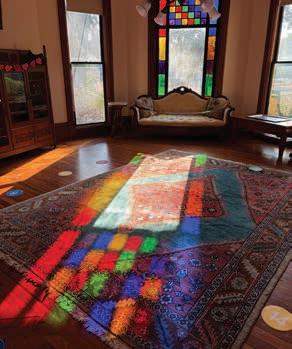
Join the Thomasville History Center to mark the vernal equinox at the Lapham-Patterson House during Perfect Alignment: An Equinox Evening with Lapham, a new immersive fundraising dinner. Cocktail hour at 5:30pm with hors d’oeuvres, a signature equinox-inspired sangria, a
selection of regional wines, tarot card readings and docent-guided equinox light viewings. Dinner with limited seating will be served in the courtyard. thomasvillehistory.org; 626 N. Dawson Street
March 21-22
Ragtime: The Musical
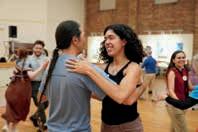
Thomasville Center for the Arts will host a community production of Ragtime: The Musical. Based on the Tony Award–winning Broadway show, this powerful production brings depth, intimacy, and inspiration to audiences while exploring the American experience at the turn of the 20th century. Performances at 7pm, March 21 and 2pm, March 22. General admission tickets are $20, with discounted tickets available for students, educators, and veterans at $15. Performances at 600 East Washington Street. For tickets and info, thomasvillearts.org/community.
March 29
Trails & Tales
Thomasville Humane’s Annual
Tails & Trails event at Pebble Hill Plantation. Enjoy live working dog demonstrations, explore a pet-themed vendor village, take scenic trail walks, and more! Bring the whole family, including your furry friends. friendly, leashed dogs are welcome. 4pm. Tickets and VIP packages online at pebblehill.com. Pebble Hill Plantation, U.S. 319, Thomasville
March 28
Easter Eggstravaganza Bring your Easter basket and join us for free games and an Easter egg hunt with over 5,000 eggs. Event sponsored by City of Thomasville and community partners. 11am-1pm, Paradise Park; 229-227-7001
April 3
Sip and Shop
Head downtown to sip, shop, stroll, dine and listen to some great music. Grab a beer or wine from your favorite downtown restaurant or venue and stroll the historic streets in style.
Participating shops and restaurants will be open late. Bring your chairs or a blanket and enjoy a free concert by Macon Music Review, 8-10pm, at The Ritz Amphitheater, 131 South Stevens Street. 6-10pm; 229-228-7977
April 4
Pebble Hill Egg Hunt
Children ages 2 years to 2nd grade are invited to enjoy filling their baskets with Easter eggs from our beautiful grounds. Special “Golden Egg” prizes, games, and other activities. Space is limited. 9am-noon, Pebble Hill Plantation. Tickets and info available at pebblehill.com.
April 18
Due South
Enjoy this annual benefit concert for Thomasville Center for the Arts. This art, food and music festival weaves together show-stopping talent across performing, visual and culinary arts. 6-10pm. For details visit thomasvillearts.org/duesouth. Ritz Amphitheatre, Downtown Thomasville
April 24-25
105th Rose Show & Parade
This annual event kicks off April 24 with several flower shows open to the public and the 7pm parade downtown, followed by a street dance at 8:30pm. On Saturday, flower shows continue, in addition to a car and truck show, the Rose Fest Market at the Ritz, and the Rose Fest finale concert with Dana King. For more info, visit thomasville.org.
April 30-May 2
Shakespeare Performance
Southern Shakespeare Company will turn The Tallahassee Museum’s live oak groves into fairy-filled pathways for a progressive performance of A Midsummer Night’s Dream. Visitors will walk from scene to scene in the groves. Performances are 90 minutes. For info and tix, visit southernshakes.org.




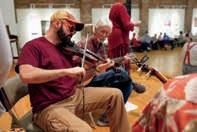



May 1
Sip and Shop
Head downtown to sip, shop, stroll, dine and listen to some great music. Grab a beer or wine from your favorite downtown restaurant or venue and stroll the historic streets in style. Participating shops and restaurants will be open late. Bring your chairs or a blanket and enjoy a free concert by the Michael Miller Band, 8-10pm, at The Ritz Amphitheater, 131 South Stevens Street. 6-10pm; 229-228-7977
May 2
Landmark’s Derby Day

Landmarks hosts its annual Kentucky Derby Party, complete with a Bourbon Pull, a bowtie and hat contest, a signature cocktail, dinner, and dancing. This is a ticketed event, but one that is open to the public. 5:30-9pm at Greenwood Plantation. For tickets, thomasvillelandmarks.org.
May 9
Pavo Peacock Day
Parade, crafts, food, games, rides, music, drawings, family fun for all ages. 8am-3pm; 2061 W. McDonald Street, Pavo
The Equinox Light at the Lapham Patterson House, Thomasville History Center


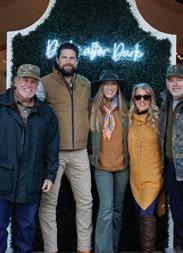

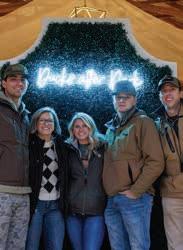
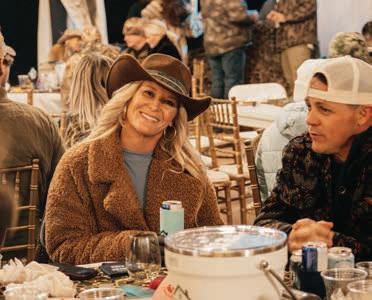
Ladies Ducks Unlimited
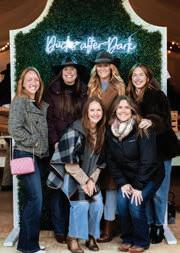
A great time was had by all when the Red Hills Ladies Ducks Unlimited Chapter hosted their Ducks After Dark banquet in January, blending conservation, camaraderie, raffles, and celebration. Every dollar raised supports Ducks Unlimited’s mission. The chapter plans more events and more opportunities for women to learn life skills like patience, organization, and sustainability. Photos by Megan Gwynn


Bicentennial Celebration
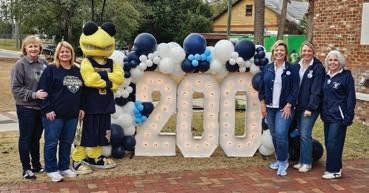
The City of Thomasville kicked off its Bicentennial Celebration at The Ritz Amphitheatre in January, honoring the history and traditions of the Red Hills region. More events are planned throughout the year.