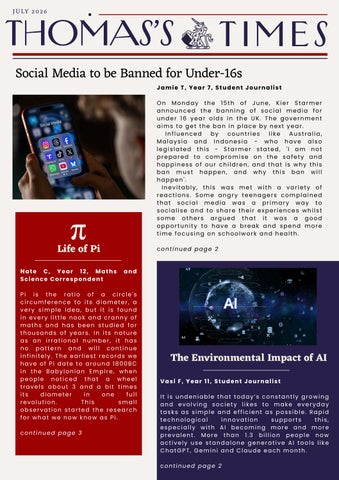
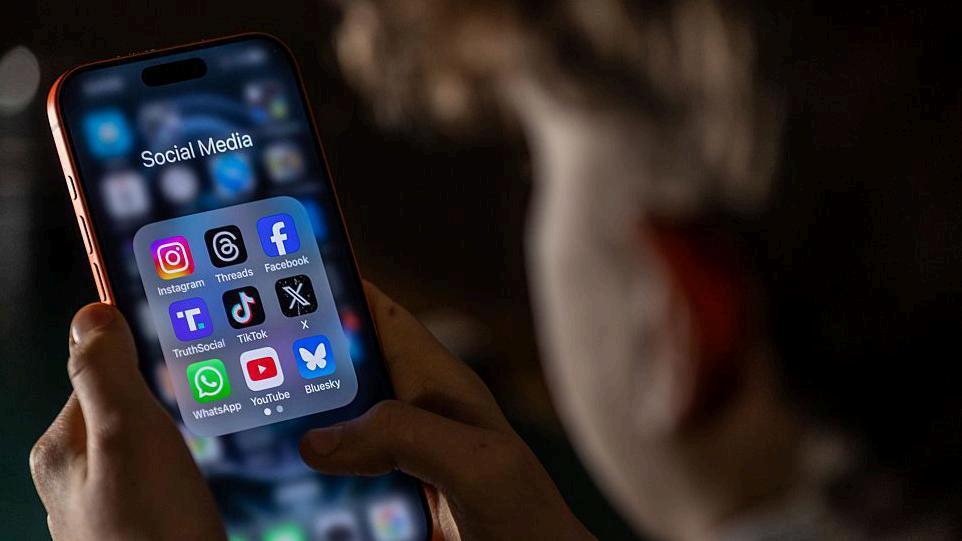
On Monday the 15th of June, Kier Starmer announced the banning of social media for under 16 year olds in the UK. The government aims to get the ban in place by next year.
Influenced by countries like Australia, Malaysia and Indonesia - who have also legislated this - Starmer stated, 'I am not prepared to compromise on the safety and happiness of our children, and that is why this ban must happen, and why this ban will happen'.
Inevitably, this was met with a variety of reactions. Some angry teenagers complained that social media was a primary way to socialise and to share their experiences whilst some others argued that it was a good opportunity to have a break and spend more time focusing on schoolwork and health
continued page 2
Nate C, Year 12, Maths and Science Correspondent
Pi is the ratio of a circle's circumference to its diameter, a very simple idea, but it is found in every little nook and cranny of maths and has been studied for thousands of years. In its nature as an irrational number, it has no pattern and will continue infinitely The earliest records we have of Pi date to around 1800BC in the Babylonian Empire, when people noticed that a wheel travels about 3 and a bit times its diameter in one full revolution This small observation started the research for what we now know as Pi
continued page 3
Vasi F, Year 11, Student Journalist
It is undeniable that today’s constantly growing and evolving society likes to make everyday tasks as simple and efficient as possible Rapid technological innovation supports this, especially with AI becoming more and more prevalent More than 1 3 billion people now actively use standalone generative AI tools like ChatGPT, Gemini and Claude each month
continued page 2
have stopped 39% of 12-15 year olds who were previously using social media A quarter avoided the ban by successfully passing the age verification whilst some others utilised‘VirtualPrivateNetwork’(VPN)tomakeitlooklikethey livedabroad.
Keir Starmer’s approach seems much more meticulous, with more restrictions to apps that entail live streaming and access to stranger communication. This will result in popular video games being restricted, such as Roblox and Minecraft, which heavily rely on players under 16 years of age This Evidence suggests that around half of the children who are currently using social media will be prevented from doing so bynextyear
WhytheBanisDetrimental
Whether it’s increased productivity, automated problem solving, rapid data analysis or even offering support in hospitals, AI has become part of everyday living for its users. However, AI also presents significant risks regarding job displacement, data privacyandfakenews Theseareallseriousconcerns with potentially long-term effects on our economy andsociety.ThemostpressingriskofAI’srise,though, is likely to be its significant and growing environmentalfootprint
Although social media has an abundance of downsides, it is crucial that the government acknowledges how important it can be for children. Some use it for communication with friends and others may use it to share blogs or photos Additionally, for some troubled or isolated children, it can be viewedasalifeline.
For some, social media is not just a way to temporarily entertain themselves or socialise with people, but a great sourceofeducation,with77%ofschoolfacultyusingsources likeYouTubeforteaching.
Furthermore, some argue that that if children are banned from social media platforms, they will seek other, less wellregulatedcornersoftheinternet
While it can help solve problems, the immense energy,water,andmineralresourcesrequiredtotrain and run AI models present major ecological challenges Itshighenergydemand,forexample,has increasedfossilfuelreliancesignificantly.AI’sreliance on fossil fuels is driven by the massive electricity demands of data centres, with nearly 40% to 50% of the additional power required for this infrastructure generated by coal and natural gas, releasing 100 to 300milliontonsofCO2equivalentannually Theissue only worsens with its extreme water usage requiring up to 764 billion litres of water annually to cool AI computer servers. This can even result in strain on localwatersuppliesleadingtodroughts Furthermore, AI hardware requires scarce materials like copper Mining these critical minerals and managing electronic waste creates further environmental damage
Although it is not plausible to shift an overly reliant world of such a useful resource with constantly evolving opportunities, it is possible to shift to more environmentallyfriendlyAIplatforms
Eco-friendly AI alternatives focus on lowering computational strain, powering operations with renewable energy, and running tasks locally to reduce massive data centre footprints. Some of the top sustainable AI platforms include ViroAi (a climate-neutral platform that allows you to chat with multiple platforms while dedicating a portion of usage to fund clean energy and carbon removal projects), EcosiaAi (uses smaller, highly efficient models and generates more renewable solar and wind energy than its servers consume), and MorphCast (runs entirely on your local device, eliminating server data centres and reducing energy use)
AI is changing the way we learn, work, and communicateinalmosteveryareaoflife Itsinfluence will only continue to grow as the technology expands and becomes smarter As we embrace this new technology, though, we should also think about the resources that make it possible Innovation is importantbutsustainabilityisessential Ifwe’regoing toletAIshapeourfutureinsomanyways,weshould make sure that future benefits both people and the planet
MathsSpecial-LifeofPi:ItsOriginsandHistory
NateC,Year12,MathsandScienceCorrespondent
Shownintherecordsandtheirarchitecture,theyhadused3 for their value of Pi; however, one tablet tells us that their approximation was 3125 There are claims that Ancient Egyptians also approximated Pi to 22/7 or 3142857, a very good estimation for that time and is still sometimes used today,buttheseclaimsaremetwithmuchskepticism.
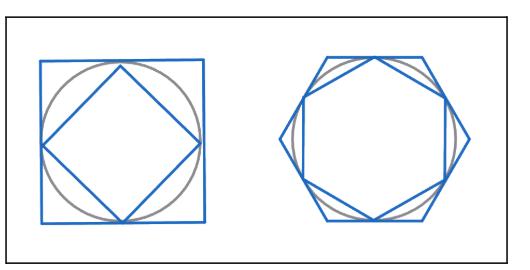
In 250 BCE a great mathematician called Archimedes created the first algorithm to calculate the digits of Pi. His idea was to inscribe a hexagon inside a circle, then draw a larger hexagon around the circle Using this, he could calculate the perimeter and divide it by the diameter for boththesmallerandlargerhexagonsanddeducethatPiis between them. For a hexagon, this is relatively inaccurate; however, as the number of sides on the shapes increases, theaccuracyalsoincreases
Archimedes went up to a 96-sided shape before stopping, obtainingtheapproximationof31408<Pi<31429
Many years later, in the year 480 CE, mathematician Zu Chongzhi established the most accurate small number approximation He managed to get 7 decimal places of accuracy with the fraction 355/113, an impressive feat for thattime
Later in the 14th century, a new type of approximation was proposed by the Indian mathematician Madhava of Sangamagrama; it involved using an infinite series of fractions. This was one of the earliest cases of someone using an infinite sum to approximate a value, a massive shift in the world of mathematics His approximation reached 11 decimal places, with later texts in his lineage extendingitto17decimalplaces.Thesameinfinitesumwas later rediscovered in Europe by Gottfried Wilhelm Leibniz in the late 17th century and is why it is often referred to as the 'Leibnizformula'
Where does the name Pi come from? In 1706, the mathematician William Jones used the symbol π to represent the ratio between the circumference of a circle and its diameter, believed to be an abbreviation of the Greek word for perimeter (περίμετρος) Only much later, in 1748,afterEuleradoptedtheletterπinhis'Introductionin
analysininfinitorum,' diditbecomewidespreadintheworld of mathematics Before this, people had just referred to Pi as the ratio between the circumference of a circle and its diameter,quiteamouthful,sothankyou,William.
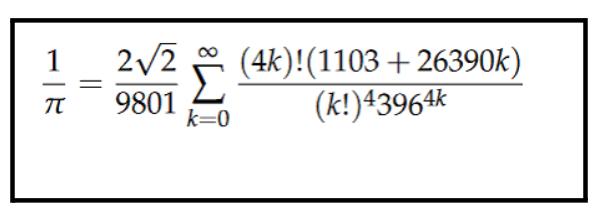
Fast forward a couple hundred years, to 1914, the time of one of the greatest mathematicians, Srinivasa Ramanujan Amongmanyofhisgreatcontributionstomathematicslies his'CrownJewel'formulatoapproximatePi,stillusedtoday as the best and most efficient formula, able to compute 8 decimal places of accuracy for each additional term But whatwassodifferentaboutRamanujan'sapproach?Unlike manyothergreatmathematiciansbeforehim,hehadused the arc length of an ellipse instead of using standard circles This had allowed him to use a topic called elliptic integrals, something that could take advantage of the hidden symmetries in his elliptic functions A lot of scarysoundingwords,sotoputitsimply,hehadmanagedtofind a pattern in something other than a circle that still uses Pi and use that to compute Pi to extremely high levels of accuracy Using this, we have managed to calculate 300 trilliondigitsofPi,somethingtrulyastonishing
PUZZLE CORNER
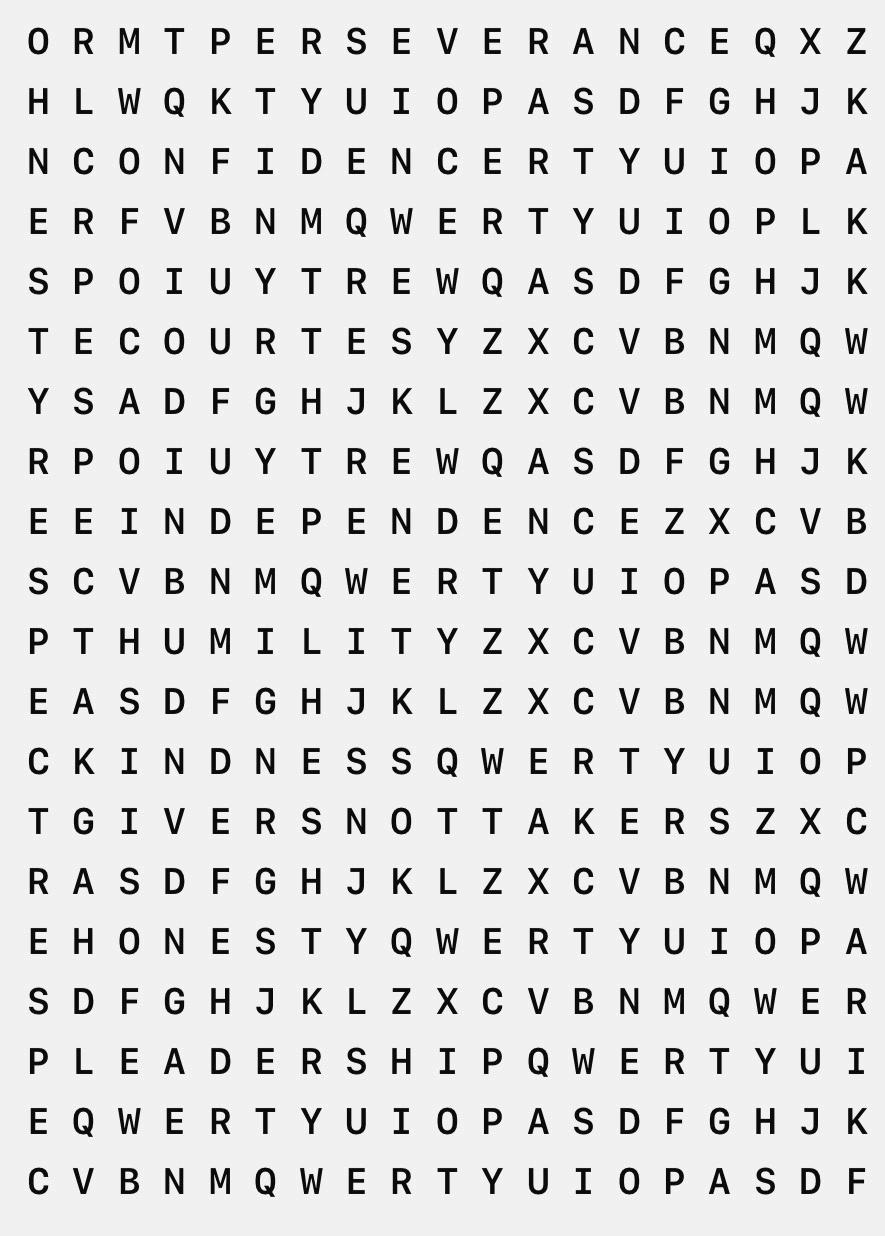
HowmanyThomas’svaluescanyoufind?
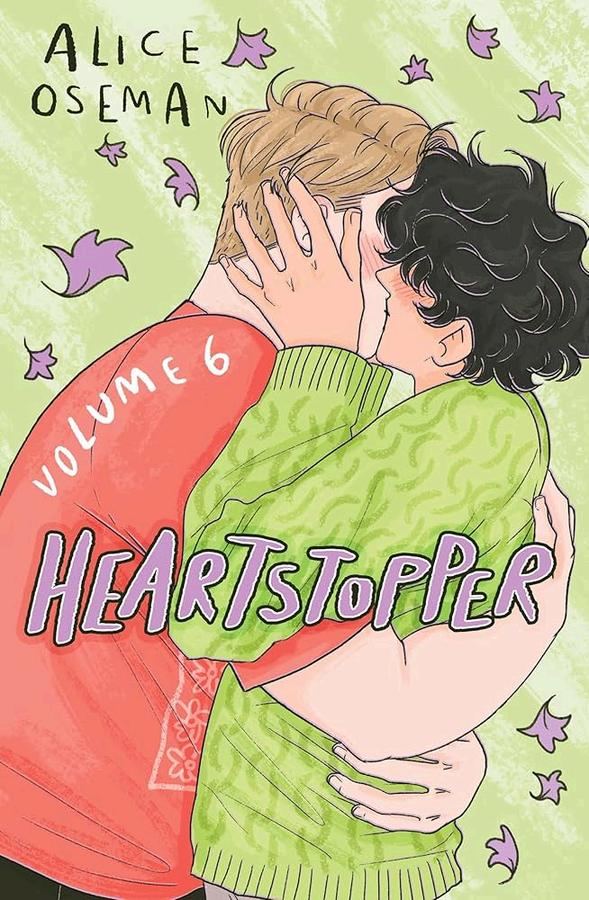
Following celebrations of Pride last month at school, we thought it would be appropriate to write about Alice Oseman’s recently released graphic novel, Heartstopper Volume6.Thislong-awaitedbookwrapsuptheseriesnicely and gives it a sweet and satisfying ending but at the same time leaving room for the reader’s mind to invent their own continuations
The wildly-popular Heartstopper franchise follows the romance of Nick and Charlie, two students at Truham GrammarSchoolwho,atthebeginningofthefirstbookare coincidentally placed in the same form and subsequently befriend each other - after an incident involving a pen explosion - but you’ll have to read the book to get the contextforthat!
There is then much yearning between the two until they finally admit their feelings to each other However, this is onlythebeginning!
Alice Oseman’s Heartstopper has grown a large fanbase and gained much popularity over the years It started as a few sketches on Tumblr following Alice’s novel Solitaire (whichfollowCharlie’seldersisterTori)andhassincegrown to sell over 8 million copies worldwide and has been publishedin37languages
Many people have reported that Heartsopper has not only provided interesting reading material, but has also improved (and even saved) lives Oseman tends to cover very serious and important themes in her literature, including mental health issues and homophobic bullying, however the light she sheds on this topic has raised much needed awareness, helping readers feel seen and recognised,andlettingthemknowtheyarenotalone.
During this term’s Pride Week, we discussed, in form time, how to be a good ally Heartstopper provides a wonderful embodiment of this. Nick and Charlie are surrounded by many supportive and kind characters who are there for themthroughouttheirrelationship,especiallythroughNick’s coming out process - an example of friendship, solidarity andkindnessthatwecanalllearnfrom.
It was clear love was in the air Day by day Brumby had done his best and now, he’d take his well-earned rest
Upon the hills, man does scheme to put an end to this short-lived dream, to steal him, under key and lock, and add old Brumby to his stock
So in the morning at the rise of sun they marched on down to Brumby’s run, and as the sky did turn pink they gave Brumby no time to think
Whips were cracked, lassos were thrown, and man tok Brumby’s right to roam. Rope tightened and began to choke, and poor old Brumby’s heart, it broke
Bo C-C, Year 10
A wild cat leaps across the ribbons of rooftops, like a lithe shadow springing through the darkness. Fur bristling with the wave of the wind, tail curling cautiously around itself.
Her amber eyes dart through the shadows, harmonious with the current of the sky. She races through the portal of alleys and dips her head into the inky night.
Her life is one of wildness and freedom, dreading change when it inevitably comes Yet she is a resilient creature, hopeful and courageous, and dares to claim the sky.