M
App Development: Process,
Tools, and Frameworks
The process of developing software applications that works on mobile devices like smartphones and tablets. These apps are designed to perform different functionalities from simple use to difficult tools for businesses. As mobile technology continues to change, app development has become an important part of offering services or reaching out to customers and improving user experience.
Pre-Development Considerations
We will learn more about mobile app development further. We should take into consideration a few important steps that must be addressed to make sure that the project is successful.
● Initially: dene the app ’ s purpose like What problem does it solve, and how will it benet users?
● Next: identify your target audience and choose the appropriate platform , it can be Android or IOS or maybe both
● Finally: Make a budget and timeline because this plays an important role in planning the app ’ s features and its functionality and also the resources.
Step-by-Step Development
Process
The mobile app development lifecycle involves different stages, each important to building a successful mobile app:
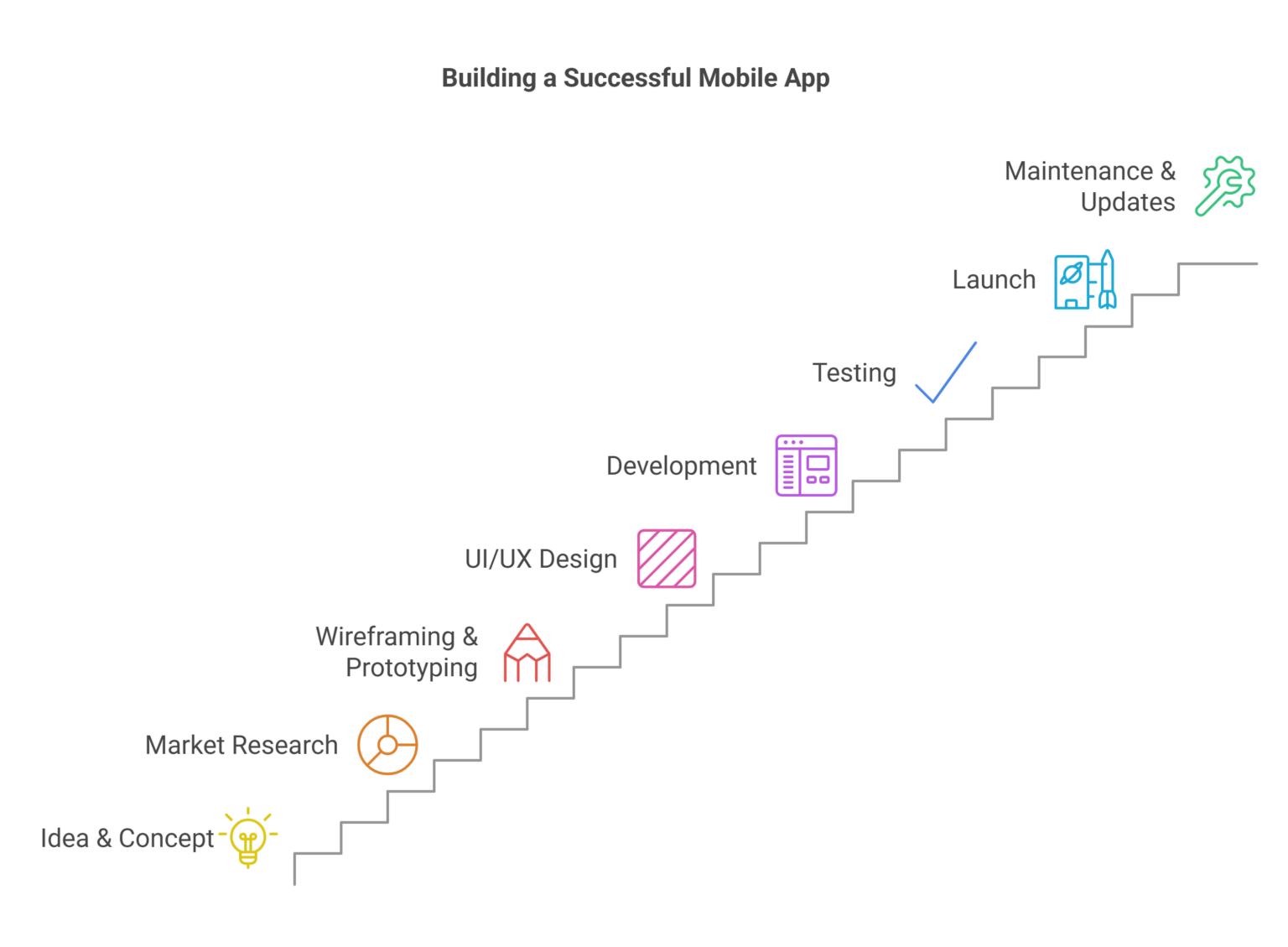
1. Idea and Concept: The rst step is to understand the purpose of the application and targeted audience and also how the challenges will be faced.
2. Market Research: This is an important step which includes analyzing competitors, understanding the trends, and fullling user needs and also keeping updated with.
3. Wireframing and Prototyping: Once the idea is noted down and made a proper market research. Then comes the creation of an outline of the app ’ s design and user interface according to user trends.
4. UI/UX Design: If the UI of the application is attractive and appealing then you win. Because it acts as the rst impression of your brand to users. More focus on the user experience and interface to make sure that an innovative and attractive design.
5. Development: Execution starts here. The process of coding Start the actual coding process, breaking it down into the front-end that is UI/UX and back-end that is server-side.
6. Testing: Time to time testing for bugs or performance and any usability to make sure that the app is running smoothly and bug-free.
7. Launch: Once all is done, it is the time to make the mobile application live on app stores like Google Play, Apple App Store for users to download and use the app.
8. Maintenance and Updates: It is very important as part of post-launch support to x issues and keep the app updated with new features.
Advantages of Mobile App
Development
This process brings many benets to both businesses and users. These helps include increased brand recognition and creating better customer engagement and also accessibility for users and the ability to offer personalized experiences. Mobile apps also allow businesses to push notications, provide recent data, and improve customer loyalty.
Types of Apps
Developing mobile applications the most important thing is to consider which type of app needs to be developed?
Below mentioned are main types of app:
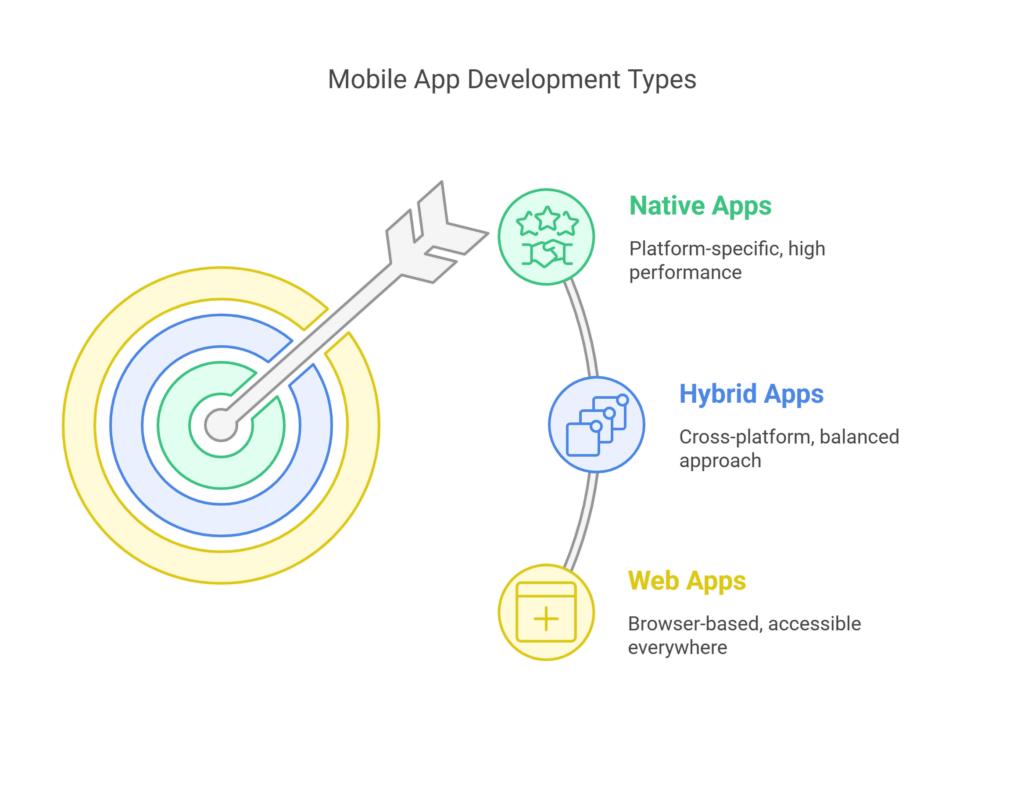
Native Apps:
These types of apps are specially made for using one platform like IOS or Android. It has specic programming languages like Swift for iOS and Java or Kotlin for Android.
Hybrid Apps:
These types of apps are a combination of the best of both worlds. This allows for deployment across multiple platforms using technologies like HTML5 and CSS and JavaScript.
Web Apps:
These types of apps run through a browser, without needing to be downloaded from an app store, often built with responsive web design techniques.
Popular Frameworks
Frameworks are most important when it comes to choosing the right one for the development of your application. Below mentioned are main frameworks with its different specialities;
React Native: It is a JavaScript framework by Facebook. It allows the developers to build cross-platform apps with native performance.
Flutter: This framework is owned by Google and for building natively collected applications for mobile or web and desktop from a single codebase.
Xamarin: A framework that uses C# to develop apps for iOS and Android and also Windows with shared code.
Ionic: It is a hybrid mobile app framework. This uses HTML5 and AngularJS to build cross-platform apps with web technologies.
SwiftUI: It is a framework by Apple for building user interfaces across iOS devices using Swift programming.
Choosing the Right Tech Stack
The app development tools and technologies are important for the success of the project. The technology chosen should be based on the application’s requirements and the development team expertise. It includes the programming languages and frameworks and databases and third-party services that will be used throughout the development process.
Factors to consider include:
Application Complexity: This is the main aspect where simple apps may need lighter frameworks while more complex ones require advanced tech stacks.
Cross-Platform or Native: To make it easy with a single codebase choose frameworks like React Native for cross-platform apps or go for native development if performance is a priority.
Scalability: Make sure that the chosen tools can expand as your app grows.