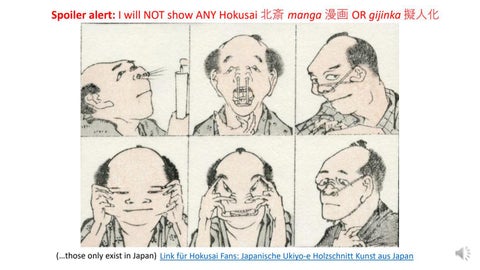
Spoiler alert: I will NOT show ANY Hokusai 北斎 manga 漫画 OR gijinka 擬人化
(…those only exist in Japan) Link für Hokusai Fans: Japanische Ukiyo-e Holzschnitt Kunst aus Japan
uki yo e 浮世絵 Impressions
Kawabata Gyoshô [1842-1913]: Squirrel Seminar: Cultureclimbing of the Edo priod Lecturer: Dr. Chantal Weber Presenter: Thomas Schneider Kawabata Gyoshô [1842-1913] risu (squirrel)
11.02.2021
Japonisme
ôhashi atake no yûdachi 大はしあたけの夕立 (heavy rain at the large bridge in Atake) Original 9/1857 by Utagawa Hiroshige (left) and 1887 interpretation by Vincent van Gogh (right)
Epochen-Teilung nach Andreas Marks: Japanese Woodblock Prints, Taschen, Cologne, 2019.
Kabuki in Asakusa death reprint, 1900 (original 1884)
1680 – 1761: The Early Masters
1765 – 1783:
The Beginning of Full Colour Printing
1784 – 1798: The Golden Age
1800 – 1829:
The Response to Censorship
1830 1852: Peak Production
1857 – 1904:
1916 1938:
The Last Phase of Traditional Prints
Shin Hanga
Print innovation: from monochrome to color… • initially only monochrome printing, hence essential characteristic: picture elements are (mostly) framed by lines • tan-e 丹絵 : hand colored in orange, sometimes green und yellow colors • urushi-e 漆絵 (laquer picture) shiny ink, golddust (1720-40) • beni-e 紅絵: hand colored in pink safran (1720-40) • benizura-e 紅ずら絵: print with pink, green, later also yellow color (several printing plates) (1745-1755) • nishiki-e 錦絵 (brocade print): multicolored, decoratively woven (after 1760)
…from surimono to mass medium.
Links & sources: Secrets of Ukiyo-e reproduction
How an ukiyo-e is created Tools and Materials
ukiyoe 浮世絵 („pictures of the floating world“) • genre of japanese painting and print graphic • term coined 1682 by Hishikawa Moronobu: pictures that show the daily life of the people, their festivals and their environment.
ukiyo 憂き世 („this melancholic/miserable world“) • Allusion to the buddhistist concept of the transience of wordly life • In Edo: enjoyment of the fleeting earthly pleasures of life
ukie 浮絵 („floating image“) • „3D like“ i.e. linear perspective (but also birdseye view & macro perspective)
hanga 版画 (woodcut) printed on washi 和紙 (jap. paper) • color is manually rubbed off a carved woodblock onto moist paper
surimono 刷(り)物 (print matter) ≠ nikuhitsuga 肉筆画 • greeting cards sent to friends and acquaintances for various occasions Actor Otani Oniji III (1759–1796) in the role of Edobei in the kabuki „koi nyobō somewake tazuna“ by Chikamatsu Monzaemon May 1794 in 河原崎座 (Kawarasaki theater in Edô); Designer: Tôshûsai Sharaku 東洲斎 写楽 (activ 1794–1795); Publisher: Tsutaya Jûzabûro.
→ List of ukiyo-e terms - Wikipedia
Tōkaidō Gojūsan-tsugi 東海道五十三次 Scenes from the Genji monogatari (?), unsigned and undated
(The Fifty-Three Stations of the Tōkaidō) Publisher: Hoeidō (保永堂), 1836 Artist: Utagawa Hiroshige
礒田 湖龍斎 Isoda Koryûsai [1735-1790] two courtesans cleansing hands (1770s) 柱絵 hashira-e
„Be it pictures or characters on folding screens or sliding doors – when poorly executed with untrained strokes they are not only unpleasant to watch, but speak badly of their owner‘s bad taste.“ (Tsurezuregusa 徒然草 „Essays in Idleness“, 1330-31)
emaki 絵巻 (picture roll) & shunbon 春本 (spring roll) • Demand: citizens with rising buying power
Shikido torikumi juniban 色道取組十二番 (Twelve Bouts in the Way of Love) Isoda Koryusai, dated 1777, source: The British Museum
• mass medium: affordable luxury, decoration & diversion • cultural self-presentation, „man of the world“ in step with fashion
• Enabler: technological progress
• new technology & division of labor for mass production • new colors, variety of paper formats • diverse distribution channels, competition
• but: state censorship & self-censorship:
• examination & aratame (mark of approval) • propaganda, prohibition of political criticism
commercial product & social phenomenon
礒田 湖龍斎 Isoda Koryûsai [1735-1790] - also known as: Isoda Masakatsu, Shôbei, Haruhiro, Kôriûsai - a „follower“ or „bridge“ since his oeuvre falls between ukiyo-e masters Harunobu & Kiyonaga - 2,500+ works incl. 90 nikuhitsu-ga (paintings), 350+ hashira-e, many kachō-e (flora & fauna), shunga (erotic)… 1735: born Isoda Masakatsu 磯田 政勝 samurai serving the Tsuchiya clan 土屋氏 (today‘s Ibaraki). Became rônin 浪人 on death of his master and moved to Edô, Yagenbori, near Ryôgoku bridge 1769: took on the artist‘s name Haruhiro 1782: awarded buddh. honor of hokkyô 法橋 1790: deceased
Koryûsai-ga 湖龍斎画 source: National Diet Library of Japan
Models & Fashion „Is not the sketch on delicate yellow woven fabric that the emperor took to designing [in person} of a truly extraordinary charm? The glow of the ink writing vastly exceeds the gay colourful representation of the seasons […].“ (Genji monogatari 源氏物語, ca. 1000 A.D.) left: kanaya uchi ukifune right: yottsume uchi 四ツ目屋内 (Inside the Yotsume house) from the series: 雛形若菜初模様 hinagata wakana no hatsu moyô (Models for Fashion: New Year Designs as Fresh as Young Leaves) Artist: Isoda Koryûsai Publisher: Nishimuraya Yohachi (Eijudô), 1776 (An'ei 5), spring [Museum of Fine Arts, Boston]
Stars & Entertainment 青楼七小町 玉屋内花紫 Hanamurasaki of the Tamaya; from the series: Seirō Nana Komachi (Seven Komachi of the Pleasure Quarters) Kitagawa Utamaro [1753–1806] dated ca. 1790 Source: Metropolitan Museum of Art
江戸花京橋名取 山東京伝 Edo no hana Kyôbashi natori (Flowers of Edo, the Master of Kyôbashi): Portrait of Santô Kyôden (Kitao Masanobu) Rekisentei Eiri [active about 1781–1818] (this impression unsigned; Eiri ga on others) dated about 1795 (Kansei 7) Source: Museum of Fine Arts, Boston
Okamura Masanobu [1686-1764] Tanabata Fest ca. 1716-36
Suzuki Harunobu [1767-68]: Courtesan riding ox (parody of Botange Shôhaku), 1760s
Utagawa Kunisada [1786-1865] Kambara 蒲原宿, #15 from the series: „53 Stations of the Tōkaidō“, ca.1835
Kunisada [1786-1865] from the series: Tôkaidô gojûsan tsugi no uchi 東海道五十三次之内 (Fifty-three Stations of the Tôkaidô)
(1840s) left: Yokkaichi no zu 四日市之図 (View of Yokkaichi, station 43) SIGNED:五渡亭国貞画 gototei Kunisada ga about 1838 (Tenpô 9)
right: Kanaya no zu 四日市之図 (View of Kanaya, station 24)
top & right: rokudanme 六段目 (act 6)
from the series: Chûshingura 忠臣蔵, 1850s, signed: 祐滋‘画Hiroshige-ga
left: karuta (playing cards) one page of 25 cards, unsigned, undated
chûshingura 忠臣蔵 (The Storehouse of Loyal Retainers), signed: 広重画 Utagawa ga, Publisher: Yamaguchiya Tôbei (Kinkôdô), Censor: kiwame 極, undated Source: Museum of Fine Arts Boston. (series of twelve designs on four uncut sheets)
Utagawa Hiroshige [1797-1858]
Kunisada I [1786-1865] actor 市川升之? Ichikawa Masunojô asけいせい大淀 Keisei Ôyodo in the play 関取二代勝負附 sekitori nidai no shobuzuke (Champion Sumô Wrestlers Victorious in Two Generations) at the 河原崎座 Kawarazaki-za in the scene sumô no ba (right of 3) (1/1839)
AKITSUSHIMA SAWAMURA TOSSHO I
ONIGATAKE ICHIKAWA EBIZO V
KEISEI OYODO ICHIKAWA MASUNOJO
Kunisada [1786–1864] 「春日屋時次郎」八代目 市川団十郎、「山名屋浦 里」初代坂東しうか Actors Ichikawa Danjûrô VIII as Kasugaya Tokijirô and Bandô Shûka I as Yamanaya Urazato from the play Akegarasu Hana no Nureginu at the Ichimura-za Publisher: Tsujiokaya Bunsuke (Kinshôdô) 1851 (Kaei 4), 2nd mth Kunisada II source: [1823-1880] MFA characters 濱名屋浦里 Hamanaya Urazato 春日屋時治郎 Kasugaya Tokijirô from the play 明烏 Akegarasu (Raven at Dawn) (1856)
Kunisada [1786-1865]: môshun: odorizome 孟春 踊始 (The start of spring: beginning the dance) from the series: jûnigatsu no nai 十二月ノ内 (The Twelve Months), 安政元年 Ansei 1 (1854) (tryptich, left 2 of 3) below: complete tryptich Kunisada‘s Twelve Month Series Exhibition at the Risdmuseum, RI
Kunisada [1786-1865]: Mitate tsuki zukushi 見立月尽 (Parody of Scenes in Moonlight) left: Yowa tsuki 夜半月 (Midnight Moon) Nishino Kingorô にしの金五郎 (Actor Bandô Hikosaburô V as Nishino Kingorô) Publisher: Hayashiya Shôgorô 1857 (Ansei 4), 6th month right: Jûsan‘ya no tsuki 十三夜 (Gibbous Moon) Kozaru Shichinosuke 小猿七之助 (Thief Ichikawa Kodanji IV as „little monkey“ Shichinosuke on Eitai Bridge) Publisher: Hayashiya Shôgorô 1857 (Ansei 4), 7th month
Utagawa Kunisada [1786-1865]: 東都両国橋 川開繁栄図 Tôto ryôkoku kyô kawa kai han‘ei zu (River Opening Fireworks, Ryôgoku bridge, Eastern capital) (1858) Publisher: Ebisuya Shôshichi (Kinshôdô) Signed: 豊国画 Toyokuni ga in toshidama cartouche, Censor‘s seal.: 午三 (horse 3), Ansei 5, 3rd mth.
top: Utagawa Toyokuni I [1769–1825]:
江戸両国すずみの図 五枚つづき Edo Ryôgoku suzumi no zu, gomai tsuzuki (Cooling Off at Ryôgoku Bridge in Edo, a Pentaptych), Publisher: Yamamotoya Heikichi (Eikyûdô), Censor‘s seal: Censor's seal: 極 kiwame: Bunka 8, 3rd mth. (1811) source: Boston Museum of Fine Arts
right: Utagawa Toyokuni III (Kunisada) [1786-1865]:
東都両国橋 川開繁栄図 Tôto ryôkoku kyô kawa kai han‘ei zu (River Opening Fireworks, Ryôgoku bridge, Eastern capital) Publisher: Ebisuya Shôshichi (Kinshôdô) Signed: 豊国画 Toyokuni ga in toshidama cartouche, Censor‘s seal.: 午三 (horse 3), Ansei 5, 3rd mth. (1858)
left: Utagawa Kunisada (歌川国貞) / Toyokuni III (三代豊国) (artist 1786 – 01/12/1865) #18 (十八), HINAZURU (ひな鶴の話) from the series AN EXCELLENT SELECTION OF THIRTY-SIX NOTED COURTESANS (MEIGI SANJŪROKU KASEN – 名妓三十六佳撰) DATED: 1861 Signed: ōju Toyokuni ga 応需豊国画 Publisher: Tsutaya Kichizō (Marks 556 - seal 25-427) Combined date and censor's seal: 1/1861 and aratame
right:
Ochiai Yoshiiku [1833-1904] 柳橋の晴嵐 Yanagibashi no seiran #7 from the series 両国八景の内 ryôkoku hakkei no uchi (Eight Scenic Views of Ryôgoku Neighboorhood) (1869) Signed: 薫斎芳幾筆 Date: 明治2年5月
会員・名妓三十六佳撰2 (coocan.jp)
TOKYO DIGITAL MUSEUM (rekibun.or.jp)
Utagawa Kunisada II [1823-1880]: the series Murasaki Shikibu genji karuta (Lady Murasaki‘s Genji Cards) (1857): #27 篝火 kagaribi (Flares), #33 藤裏葉 fuji no uraba (Wisteria leaves), #50 東屋 azumaya (Easter cottage)
Shokunin 職人 (Artisans) from series: Imayo mitate shi-no-ko-sho 今様見立士農工商 (Modern-day Match-up with Four Estates), Print artist: Utagawa Kunisada (歌川国貞 Toyokuni III); 1857 [The British Museum]
Utagawa Fusatane [active 1854-1889]:蚕養 (Silkworm cultivation)
Vertical ôban Triptych; signed: 応需房種画(Ôju Fusatane ga) 房種画(Fusatane ga) 応好房種画 (Ôkô Fusatane ga ); publisher: Kiya Sôjirô, censor: 卯七改 Hare 7 aratame; dated: 1867 (Keiô 3), 7th month [see also: Museum of Fine Arts, Boston]
Nise Murasaki inaka Genji 偐紫田舎源氏 (False Murasaki and a Country Genji)
Utagawa Fusatane [active 1854-1889]: Kaiko yashinai gusa 蚕養草 (Silkworm cultivation) Vertical ôban Triptych; signed: 応需房種画 (Ôju Fusatane ga) 房種画(Fusatane ga) 応好房種画 (Ôkô Fusatane ga ); publisher: Kiya Sôjirô; censor: 丑八改 Ox 8 aratame; dated: Genji 2/Keiô 1(1865), 8th month [Museum of Fine Arts, Boston]
Genji Sangyo Kei (Genji Silkworm Sericulture Scene) signed: Utagawa Fusatane 歌川房種 dated: Keiô 2 (1966)
Toyokuni III 豊国三代 (Kunisada): kabuki scene from Azuma kudari gojûsan tsugi (Tenjitsubô) 吾嬬下五十三駅(天日坊) 安政元年(1854/8 at Kawarazaki-za) character/ actor (from left): 人丸おろくHitomaru Oroku/初代坂東志うか
天日坊Tenjitsubô/四代目市川小団次
地雷太郎Jirai Tarô/三代目嵐璃寛
Toyokuni III 豊国三代 (Kunisada): scene from Yari no Gonza [kasane katabira] 木鑓の権三重帷子 (Gonza the Lancer [heavy sash], Bunraku Sewamono by Chikamatsu) 木鑓の権三 (left) ; 安政6年(1859)
Sadahide [1807-1873]: 1. Battle of the Minamoto and the Taira at Uji [1180], 1847-52 (Link: Similar print by Kuniyoshi at MFA Boston)
Yoshitora [1836-1882]: Kamakura „star-moon-night“ (1847)
Sadahide [1807-1873]: Battle from the Taiheiki [1319 to 1367] (circa 1848)
Utagawa Hiroshige: TOC to „Famous views from the 60 odd Provinces“ (1853) arranged according to the highways of the land close-up example: Tôkaidô
Utagawa Hiroshige: Ise „Mount Asama Tea houses“(#7), Kai „Monkey Bridge“(#13) and Wakasa „Net fishing“(#30) from „Famous views from the 60 odd Provinces“ (1853)
more: complete print series at Shizuoka Museum
Hiroshige [1797-1858] Akasaka, 38 赤坂, 卅八 from the series:
Gojūsan-tsugi meishô zue 五十三次 名所図会 Publisher: Tsutaya Kichizō, dated: 安政二年 (1855) (Source: The National Diet Library Japan)
Hiroshige II [1826-1869] Akasaka 赤坂 from the series:
Suehiro Gojūsan-tsugi 末広五十三次 (1865)
Ok, just once… gijinka 擬人化 !!!
Kyôsai: Artistic depiction of the Great Frog War, 1864. Backed, slight browning, restored small wormholed. Source: Arts Catalog #20, Gallery Sômei-dô, Kanda-Jinbôchô, Tôkyô.
Renowed artists by period (selection, schematical) • Hishikawa Moronobu (ca. 1630–1694), Okumura Masanobu (1686–1764), Torii Kiyonobu (1664–1729), Ishikawa Toyonobu (1711–1785), Torii Kiyomitsu (1696–1716) • Suzuki Harunobu (um 1725–1770), Isoda Koryusai (tätig 1765–180), Utagawa Toyoharu (1735–1814), Katsukawa Shunshō (tätig 1780–1800), Buncho (tätig 1765– 1792) • Kitagawa Utamaro (1753–1806), Torii Kiyonaga (1752–1815), Hosoda Eishi (1756– 1829), Eishosai Choki (tätig 1785–1805), Tōshūsai Sharaku (tätig 1794–1795), Utagawa Toyokuni I. (1769–1825) • Katsushika Hokusai (1760–1849), Kikugawa Eizan (tätig 1804–1829), Keisai Eisen (1790–1848) • Utagawa Kunisada (1786–1865), Utagawa Kuniyoshi (1798–1861), Utagawa (Andō) Utagawa Hiroshige (1797–1858) • Toyohara Kunichika (1835–1905), Toyohara Chikanobu (1838–1912), Tsukioka Yoshitoshi (1839–1892).
Questions Has Japanese art lost its magic through commercialization?
What effect does the new information cycle have on daily life? 菱川師宣筆 By Hishikawa Moronobu. 63.0x31.2. Edo Period, 17th century. Source: Tokyo National Museum
Sources CARPENTER, John: Stoikov Lecture: Ways of Reading Ukiyo-e Paintings and Prints (Video & Transkript). Cornell University Lecture, 28. Sep 2017. KÖHN, Stephan: Tradition und visuelle Narrativität in Japan. Japonica Humboldtiana 7 (2003). MARKS, Andreas: Japanese Woodblock Prints. Taschen Verlag, Köln, 2019. SHÔNO-SLÁDEK, Masako: “Japanische Holzschnitte als Kunst des Bürgertums”. In: EHMCKE, Franziska (Hrsg.): Lifestyle in der Edo-Zeit. Iudicium Verlag, München, 1994. RYOKO, Matsuba: Edo Iconography: Reading Popular Prints in Early Modern Japan. Sainsbury Institute Lecture, 21. Jan 2021.