Aramco, Exxon, BP, Chevron Reap Massive Profits Off Iran Conflict
Addeh in Abuja
www.thisdaylive.com
Wike: Amaechi’s Vice Presidency of No Use to Rivers Peoples, Has Zero Electoral Value
Olawale Ajimotokan in
Minister of the Federal Capital Territory
Continued on page 8
Tinubu Approves Up to 80% Pay Rise for 250,000 Armed Forces Personnel
New salary scale effective Sept. 1 Brig. Gen. and above get 30% raise, Colonel to warrant officer get 50% Private and sergeant to receive 80% pay rise Annual military wage bill increases from N660bn to N924bn Senate committee hails President, says fresh move will strengthen anti-terror war
Deji Elumoye and Sunday
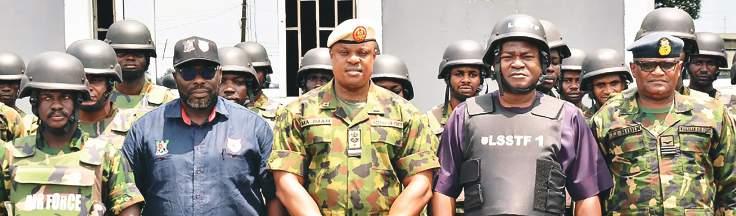
In a major move aimed at boosting troop morale and strengthening Nigeria’s fight against terrorism, banditry and other security threats, President Bola Tinubu has approved salary increases of between 30 and 80 per cent for about 250,000 personnel of the Armed Forces. Presidential spokesperson, Bayo Onanuga, in a statement issued yesterday, disclosed that under the new arrangement, which becomes effective from September 1, 2026, officers above the rank of colonel would enjoy a 30 per cent salary increase.
This applies to BrigadierGenerals, Major-Generals,
Continued on page 8
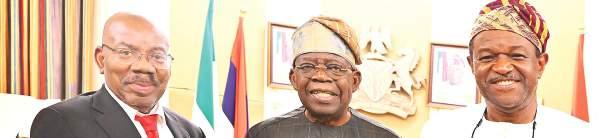
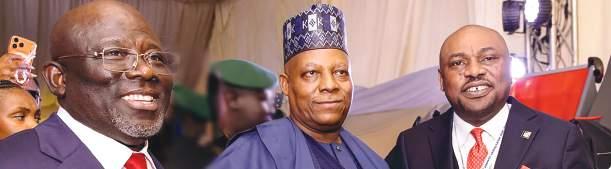
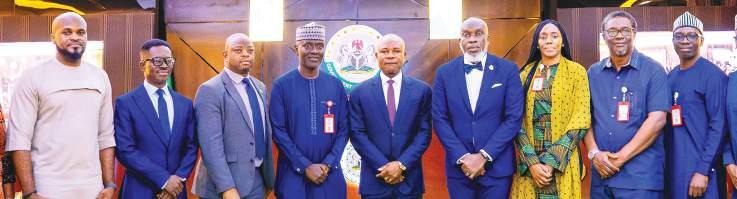
L-R: Executive Governor of Delta State, His Excellency Rt. Hon. Sheriff Oborevwori; Vice President of the Federal Republic of Nigeria, His Excellency Senator Kashim Shettima, GCON; and Managing Director/Chief Executive Officer, PremiumTrust Bank, Mr. Emmanuel Efe Emefienim, CON, FCIB, at the
and Investment Summit 2026
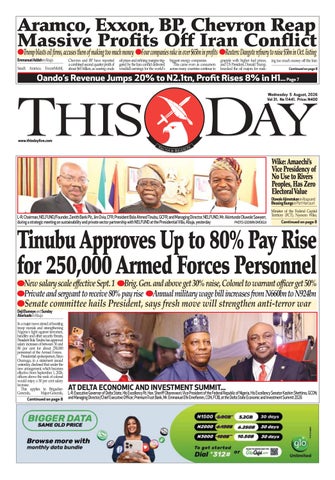
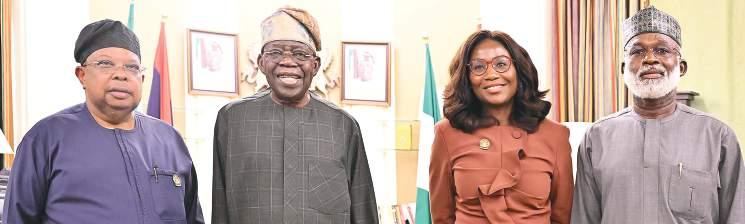
L-R: Chairman, NELFUND/Founder, Zenith Bank Plc, Jim Ovia, CFR; President Bola Ahmed Tinubu, GCFR; and Managing Director, NELFUND, Mr. Akintunde Oluwole Sawyerr, during a strategic meeting on sustainability and private sector partnership with NELFUND at the Presidential Villa, Abuja, yesterday PHOTO: GODWIN OMOIGUI
Aborisade in Abuja
Abuja and Blessing Ibunge in Port Harcourt
(FCT), Nyesom Wike,
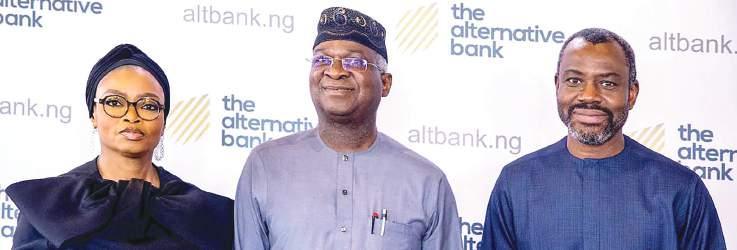
ALTBANK’S ‘BEYOND INTEREST’ EVENT FOCUSED ON CAPITAL, INNOVATION AND FUTURE OF WEALTH...
L-R: Executive Director, The Alternative Bank (AltBank), Korede Demola-Adeniyi; Former Governor of Lagos State and former Minister of Works and Housing, Mr. Babatunde Raji Fashola (SAN); and Non-Executive Director, Sterling Financial Holdings Company Plc, Mr. Abubakar Suleiman, at AltBank’s ‘Beyond Interest’ event focused on capital, innovation and the future of wealth, held in Lagos... recently
Alliance Chairman Contrasts Anambra’s Zeroborrowing Model with FG’s Rising Debt Burden
Says while Soludo-led state is strengthening fiscal position, FG continues to expand its debt stock at an unsustainable pace Calls for lower cost of governance, stronger revenue mobilisation, stricter borrowing limits, others Recommends measures to lift Nigerians out of poverty
James Emejo in Abuja
Chairman, Alliance for Economic Research and Ethics (AERE), Hon. Dele Oye, yesterday urged the federal government to adopt a more disciplined fiscal management strategy modelled after Anambra State’s zeroborrowing policy.
Oye warned that the country’s mounting debt profile was becoming a major threat to sustainable economic development.
In a policy statement titled, “A Tale of Two Ledgers: Anambra’s Zero-Borrowing Masterclass vs. Nigeria’s Debt Spiral,” Oye contrasted Anambra’s conservative fiscal approach under Governor Chukwuma Soludo with what he described as the federal government’s growing dependence on debt financing.
According to him, the contrast presents two sharply different models of public finance—one anchored on revenue generation and prudent expenditure, and the other driven by persistent borrowing to fund government operations.
Separately, Oye unveiled an eight-point policy framework aimed at transforming economic reforms
into broad-based prosperity, adding that the country’s current growth trajectory will remain unsustainable unless it directly improves the lives of ordinary citizens.
He stated that rising government revenues and improving macroeconomic indicators would amount to little if households, farmers, and productive businesses continued to grapple with soaring prices, expensive credit, insecurity, and rising production costs.
The AERE boss stated that Soludo, while speaking at the 2026 Delta State Economic Summit, effectively showcased how fiscal discipline could deliver development without piling up debt.
He recalled that when Soludo assumed office in March 2022, he inherited a debt burden of about N109 billion, limited cash reserves, and an economy facing severe macroeconomic pressures arising from fuel subsidy removal, exchange rate unification, and rising inflation.
Despite the difficult economic environment, Oye said the governor committed himself to a zero-borrowing policy—a promise he said had remained intact more than three
years into his administration.
Oye observed that Anambra’s budgeting strategy had consistently prioritised long-term investments over recurrent expenditure, with about 77 per cent of the state’s 2024 and 2025 budgets devoted to capital projects and only 23 per cent allocated to recurrent spending.
According to the policy paper, this spending pattern enabled the state to finance over 540 kilometres of road infrastructure, alongside investments in healthcare and education, without
taking on new debt.
Oye attributed the achievement largely to improvements in Internally Generated Revenue (IGR), which he said rose by 62 per cent between 2019 and 2024 to approximately N42 billion, while recording a seven-fold increase over a 16-year period.
He said stronger tax administration and efforts to block revenue leakages helped drive the improvement, earning Anambra the highest fiscal performance rating among Nigeria’s 36 states in BudgIT’s 2025 State of States Report,
with a score of 72.6 per cent.
AERE further pointed out that while Anambra was strengthening its fiscal position, the federal government continued to expand its debt stock at an unsustainable pace.
Citing figures from the Debt Management Office (DMO), the group said Nigeria’s total public debt rose to about N159.28 trillion by the end of 2025, representing one of the fastest increases in recent years.
It stated that domestic debt accounted for about N84.85 trillion, while
external debt stood at approximately N74.43 trillion.
Oye warned that excessive domestic borrowing was reducing credit available to businesses while rising external obligations exposed the country to exchange rate risks.
Oye particularly expressed great concern over the country’s debt servicing obligations, stating that the International Monetary Fund (IMF) projects that the country will spend 53.7 per cent of its federal revenue on debt servicing in 2026.
Air Peace Expands Central Africa Network, Launches Lagos-Douala-Libreville Route
Nigeria’s leading carrier, Air Peace Limited, has expanded its regional footprint with the commencement of inaugural flight operations on the Lagos–Douala–Libreville route. With this service, the airline has reinforced its commitment to deepening intra-African connectivity and
linking more African cities through its growing network.
Air Peace stated in a statement that the new route marks another significant milestone in the airline’s strategic expansion across the continent, connecting Nigeria’s commercial capital with Cameroon and Gabon while creating greater opportunities for business,
PTDF Trains Journalists on Deepening Oil, Gas Reporting in Nigeria
Says media critical to transparency, national development
Emmanuel Addeh in Abuja
The Petroleum Technology Development Fund (PTDF) yesterday commenced a capacity building programme for journalists and media stakeholders, saying the initiative was designed to enhance reporting on Nigeria’s oil and gas industry and strengthen public understanding of the sector.
Speaking at the event in Lagos, the Executive Secretary of the PTDF, Prof. Shuaibu Aliyu, said the media occupies a strategic position in shaping public discourse, promoting
transparency and supporting national development, stressing that journalists require a sound understanding of the technical, policy and operational issues defining the petroleum industry.
Aliyu, whose remarks were delivered by the Head of Press and External Relations of the PTDF, Kay-Hambolu Dupe Bella, said the training reflected the Fund’s commitment to promoting informed, accurate and impactful reporting on the country’s oil and gas sector.
“The media is far more than a conveyor of information; it is a strategic partner in shaping public
discourse, promoting transparency, and driving national development.
In an industry as technical and constantly evolving as oil and gas, effective journalism requires not only timely reporting but also a sound understanding of the policies, technologies, and issues that shape the sector,” he said.
According to him, as Nigeria’s foremost human capacity development agency for the oil and gas industry, the PTDF believes capacity development should not be limited to industry professionals alone but should also extend to those
responsible for informing the public.
“By strengthening your understanding of the sector and of PTDF’s mandate, programmes and interventions, we are investing in more accurate, balanced and insightful reporting,” he stated.
Aliyu noted that the PTDF’s contributions to the industry include developing skilled manpower, advancing research and innovation, supporting local content and contributing to Nigeria’s energy future, adding that those achieve- ments deserve to be communicated with clarity, context and credibility.
trade, tourism, cultural exchange and stronger people-to-people relationships across Central and West Africa.
Upon arrival at the Douala International Airport, the Air Peace delegation, led by the airline’s Chief Commercial Officer, Mr. Nowel Ngala, and Director of Flight Operations, Captain Augustine Kamano, was warmly received by Mrs. Suliat Paramole, Foreign Affairs Officer, Nigeria General Consulate, representing the Nigerian Ambassador to Cameroon; Hon. Chief Sir Lovinus Ezeh.
They were also received by the President General of the Nigerian Community in the Littoral Region; Deputy Chief of the Airport Security Unit, Douala, Lt. Col. Adolphe Nyamke Bongkwaha, who represented the Douala Airport Authority; and representatives of the Transport Regulator and the Civil Aviation Authority of Cameroon.
Speaking at the welcome ceremony, Paramole, representing the Nigerian Ambassador to Cameroon, commended Air Peace for strengthening the air link between Nigeria and Cameroon, noting that the new route would enhance mobility and further support the longstanding relationship between both countries.
Also speaking, Ezeh welcomed
the new service, describing it as a significant development for the Nigerian community in the Littoral Region and expressing optimism that the route would make travel between Nigeria and Cameroon more convenient while supporting stronger economic and social ties. Representing the Douala Airport Authority, Lt. Col. Adolphe Nyamke Bongkwaha welcomed Air Peace to Douala and highlighted the importance of the new connection in strengthening the city’s position as a key gateway for regional travel and facilitating increased movement between Cameroon and Nigeria.
Speaking on behalf of Air Peace, Ngala described the launch as another important milestone in the airline’s regional expansion journey, noting that the Lagos–Douala–Libreville connection further strengthens Air Peace’s growing African network and provides passengers with greater access to destinations across West and Central Africa.
Ngala reaffirmed Air Peace’s commitment to building a robust and interconnected African aviation network, enabling passengers to travel seamlessly from destinations across the airline’s domestic network through Lagos to regional and international destinations, including London and the Caribbean.
Chinedu Eze
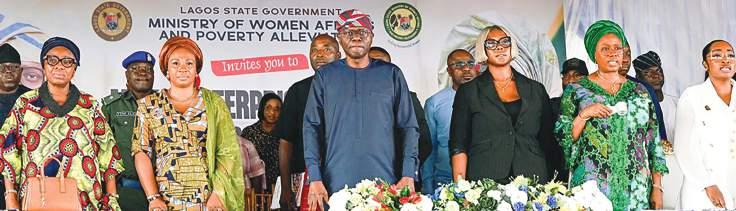
Y2026 MICRO ENTERPRISE SUPPORT INITIATIVE...
L-R: Former Deputy Governor of Lagos State, Princess Sarah Sosan; APC Deputy Governorship Candidate, Princess Damilola Sonayan-James; Governor of Lagos State, Mr. Babajide Sanwo-Olu; Representative of the First Lady of Lagos State and Vice Chairman of Oshodi-Isolo Local Government, Hon. Modupe Badmus-Aregbe; Commissioner for Women Affairs and Poverty Alleviation (WAPA), Mrs. Bolaji Dada; and Member of the Lagos State House of Assembly, representing Lagos Island Constituency I, Princess Omolara Oyekan-Olumegbon, during the Y2026 Micro Enterprise Support Initiative (MESI), organised by the Lagos State Ministry of Women Affairs and Poverty Alleviation (WAPA), at LTV 8 Blue Roof, Agidingbi, Ikeja, Lagos, yesterday
Cardoso Credits Policy Reforms for Stronger Reserves, Stable FX Market, Lower Inflation, Others
Governor of the Central Bank of Nigeria (CBN), Mr. Olayemi Cardoso, yesterday said monetary and foreign exchange reforms introduced by the bank helped to restore investor confidence and attract sustained capital inflows that have significantly strengthened the country’s external reserve position.
He said the reforms also improved macroeconomic stability, moderated inflation and stabilised the Naira, the bank noted.
The apex bank governor spoke at the CBN Fair held at the International Conference Centre in Gombe.
Represented by CBN acting Director, Corporate Communications and Investor Relations Department, Mrs. Hakama Sidi Ali, he said the sustained
growth in the country’s reserves was driven by stronger foreign exchange inflows and increasing investor confidence in economic management.
He added the reforms initiated under his watch were beginning to yield measurable results.
Specifically, the reforms have helped external reserves surpass its annual target, climbing above $52.5 billion as of July 17, 2026 - the highest
level recorded in 17 years.
According to the CBN, the reserve accretion reflected renewed foreign investor participation across multiple asset classes, supported by improved transparency in the foreign exchange market and disciplined monetary policy.
He said the gains are evident in improved macroeconomic stability, easing inflationary pressures and
stronger confidence in the foreign exchange market.
The CBN governor noted that headline inflation eased marginally from 15.93 per cent in May to 15.91 per cent in June 2026, while both food and core inflation also moderated, attributing the trend to disciplined monetary tightening, exchange-rate unification and enhanced market transparency.
Adewale Adeniyi Declares New Era in Customs Recruitment
Releases final list of successful candidates for 2024/2025 exercise as 3,852 out of 573,680 applicants scale hurdle Says annual exercise to be merit-based, void of favouritism, uncertainty going forward
James Emejo and Deborah Adekoya in Abuja
Comptroller-General of Customs (CGC), Mr. Basir Wale Adeniyi, yesterday announced a landmark reform of customs recruitment process, stating that enlistment into the service will now become an annual, predictable, and strictly merit-based exercise.
Adeniyi, who also released the final list of successful candidates for the 2024/2025 recruitment exercise, said the move aimed at eliminating years of uncertainty, ending perceptions of favouritism, and ensuring a steady pipeline of qualified personnel.
Speaking at a media briefing in Abuja, he said the service had institutionalised a transparent recruitment framework that would guarantee yearly opportunities for qualified Nigerians.
The reform came as the service concluded one of the most competitive recruitment exercises in its history, selecting 3,852 successful candidates from a staggering 573,680 applications received nationwide.
Declaring the commencement of a new era in customs recruitment, the CGC said future recruitment would no longer be conducted at irregular intervals but would become a standing annual exercise.
He said, “The Nigeria Customs Service is moving to an annual recruitment cycle. Recruitment will no longer be an occasional event undertaken every several years. It will be a standing, predictable, yearly process.
“The 2026 Recruitment Exercise will open later this year, and it is my firm intention that it will be completed within a single calendar year, from advertisement to final list.”
He explained that the digital systems, screening architecture and verification processes developed during the just-concluded recruitment exercise had now become permanent institutional assets, making future exercises faster, more efficient and transparent.
According to him, much of the delay experienced during the current recruitment arose from building the recruitment infrastructure from scratch, stressing that the difficult phase had now been overcome.
Adeniyi said, “The systems, the screening architecture and the verification processes built during this exercise now exist, and they will not have to be built again. The delays of this cycle were in significant part the cost of constructing that machinery. That cost has now been paid.”
He maintained that the new annual recruitment framework would enable the service to replace retiring officers in a systematic manner while giving unsuccessful applicants certainty about when the next opportunity would arise.
He stressed that the recruitment process remained entirely meritdriven despite enormous interest generated across the country.
Adeniyi said, “I will say one further thing, and I will say it plainly. An exercise of this scale, in a country of this size, attracts interest from many quarters.
“What I can tell you is that the list I place before you today is one I am prepared to defend on its merits, and the standards the Service set for itself at the beginning of this process are the standards that produced it.”
The CGC disclosed that only 3,852 applicants eventually secured employment out of 573,680 applications submitted, representing an overall success rate of 0.67 per cent, or nearly one successful applicant out of every 148 candidates.
Of the successful candidates, 1,275 were recruited into the Superintendent Cadre, 367 into the Inspectorate Cadre, while 2,210 gained entry into the Customs Assistant Cadre.
The Inspectorate Cadre emerged as the most competitive category,
attracting 128,604 applications for only 367 vacancies—equivalent to one successful candidate out of every 350 applicants.
Similarly, the Superintendent Cadre recorded 276,995 applications for 1,275 positions, while 168,081 applicants competed for 2,210 Customs Assistant vacancies.
Commenting on the more than 560,000 unsuccessful applicants, the customs boss urged them not to lose hope. He said many met the required standards but were edged out by the intense level of competition.
“he stated, You were not rejected; you were unlucky in a field of extraordinary competition. Many of you met every requirement the
Service set. There were simply not enough places.
“I encourage you to remain engaged with the Service, to keep your credentials current, and to apply again. The next opportunity is not years away.”
The CGC also apologised for the prolonged recruitment process, acknowledging the anxiety and frustration experienced by applicants and their families.
He explained that the lengthy exercise resulted from the unprecedented number of applications, extensive verification procedures and significant retirements among senior officers, all of which placed enormous pressure on the administrative machinery overseeing the exercise.
He further stated that the Naira had continued to strengthen, with the gap between the official exchange rate and Bureau de Change rates narrowing to below two per cent, describing the development as a clear indication of improving stability in the foreign exchange market.
The apex bank boss highlighted several reforms implemented over the past 34 months, including the ongoing banking sector recapitalisation programme, the launch of the nonresident Bank Verification Number (BVN), deployment of the B-Match foreign exchange trading platform, the Nigeria Payments System Vision 2028 and the introduction of the Nigerian Overnight Financing Rate benchmark.
He alao reaffirmed the CBN’s commitment to sustaining monetary and price stability through policies that support investment, deepen financial markets and promote long-term economic growth.
Earlier, the Branch Controller of the CBN Gombe Branch, Mr. Yunusa Buba Mubi, described the CBN Fair as an annual public engagement platform aimed at educating Nigerians on the Bank’s policies while providing stakeholders the opportunity to ask questions and offer feedback.
He encouraged participants to actively engage during the sensitisation sessions to deepen public understanding of the apex bank’s initiatives and their impact on the economy.
FG’s Team Visits FMBN After Fire Incident, Says Records Safe
Minister vows sanctions for negligence
The Minister of Housing and Urban Development, Rabe Darma, has assured Nigerians that no critical records or customer data were lost in the fire incident that affected a section of the Federal Mortgage Bank of Nigeria’s (FMBN’s) headquarters in Abuja last weekend.
The minister spoke yesterday during an inspection of the affected section of the bank’s headquarters, where he received briefing from its management and technical personnel on the incident, the extent of dam-
age and measures taken to ensure continuity of operations.
He noted that the fire was contained within a section of the second floor of the building and disclosed that preliminary findings suggest it was most likely caused by an electrical fault, although investigations by relevant experts were still ongoing.
The minister, however, emphasised that anyone found to have been negligent in the discharge of their duties, following the conclusion of ongoing investigations, would be held accountable.
He commended FMBN’s successful digital transformation, noting that the bank’s cloud-based data backup system had safeguarded critical records and ensured uninterrupted access to customer information and operational documents despite the incident.
Darma further reaffirmed the federal government’s commitment to expanding access to affordable housing across the country, noting that ongoing reforms at FMBN would strengthen mortgage delivery and support the achievement of the current administration’s housing
objectives.
”I assure Nigerians that the 100,000 housing units Mr. President promised in four years will come to pass, and we will tell every single person exactly where those housing units are,” he stated.
He also disclosed that the federal government had directed FMBN to strengthen its internal processes and institutional framework to enhance mortgage delivery and improve operational efficiency.
”As part of the policy reformulation of the bank, we have asked FMBN to look into its internal arrangements and improve mortgage access to about 2,000 mortgages in a year,” he stated.
Emmanuel Addeh in Abuja
James Emejo in Abuja
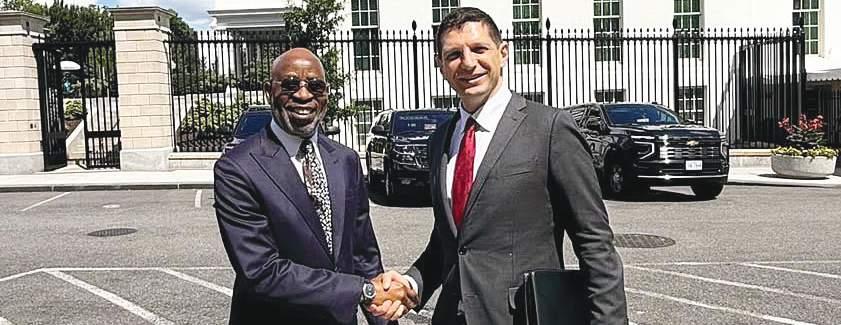
ALAKE IN WASHINGTON...
L-R: Mr. Dele Alake, Minister of Solid Minerals Development, with David Copley, Special Assistant to the President and Senior Director for Global Supply Chain at the U.S. National Security Council, in Washington, yesterday
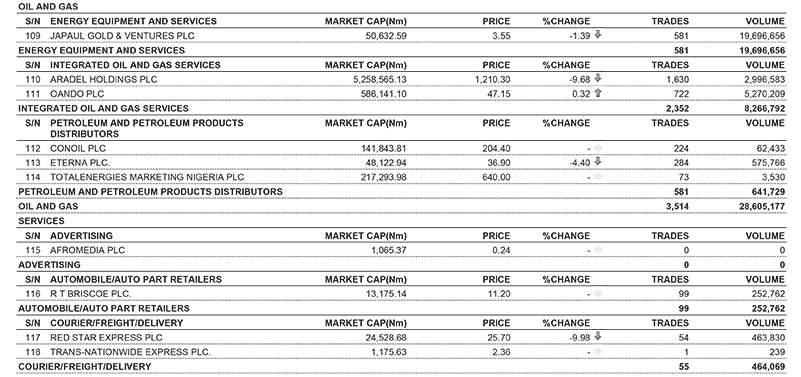
Oando Plc has reported a 20 per cent increase in revenue to N2.1 trillion for the first half of 2026, driven by higher hydrocarbon production, improved operational efficiency and sustained cost optimisation initiatives.
The company’s unaudited results for the six months ended June 30, 2026 released yesterday also showed that Profit After Tax (PAT) rose 8 per cent to N68.6 billion, while gross profit surged 331 per cent to N101 billion.
Overall, the company attributed the improved financial performance to lower transport, logistics, service and ICT costs, alongside higher production across a largely fixed field cost base.
Operationally, Oando’s upstream subsidiary recorded a facility uptime of 92 per cent during the period, compared with 85 per cent in the corresponding period of 2025, resulting in a 16 per cent increase in average production to 42,789 barrels of oil equivalent per day (boepd), from 36,836 boepd.
The production comprised crude oil output of 12,358 barrels per day, up 19 per cent; gas production of 28,497 boepd, representing a 14 per cent increase; and natural gas liquids production of 1,935 boepd, a 16 per cent rise.
Wale Tinubu: We have established clear roadmap for growth
According to the company, the improved production performance was driven by the successful drilling of new wells, the restoration of 12 previously shut-in wells and sustained improvements in facility uptime across OMLs 60, 61, 62 and 63.
Besides, its trading business recorded a 2.1 per cent increase in crude trading volumes to 13.15 million barrels, supported by its crude oil marketing and offtake programmes as well as increased sourcing from marginal field producers.
Commenting on the performance, Group Chief Executive of Oando, Wale Tinubu, said the first half of the year represented a major milestone in the company’s transformation, describing it as an inflection point.
“The first half of 2026 marks an important inflection point in Oando’s journey. The progress achieved during the period demonstrates that we are now delivering the operational and financial outcomes expected from that transformation,” he said.
Tinubu noted that operational efficiency remained the cornerstone of the company’s performance, with strengthened asset integrity, improved facility reliability and enhanced security helping to reduce production operating costs by 18 per cent to $16.83 per barrel of oil equivalent.
He added that the company’s drilling and well intervention programme had gained momentum, with two development wells completed, another currently being drilled and a second drilling rig mobilised to accelerate activities across its operated assets.
“The progress achieved during the period demonstrates that we are now delivering the operational and financial outcomes expected from that transformation. Operational efficiency underpinned our performance during
the period as we strengthened asset integrity, improved facility reliability and reinforced security across our operating areas, resulting in average facility uptime of 92 per cent while reducing production operating costs by 18 per cent to $16.83 per boe.
“Our development programme also gathered significant momentum during the period as we successfully drilled and completed two land development wells, with an additional land well currently being drilled, while mobilising a second
drilling rig to accelerate activity across our operated portfolio.
“In parallel, we continued an extensive programme of rig-less well interventions designed to restore production, sustain plateau output and mitigate natural field decline. Together, these activities increased average production to 42,789 boepd, representing 16 per cent year-on-year growth.
“This translated into a stronger financial performance, with revenue increasing by 20 per cent to N2.1
trillion, while the business generated N179.5 billion in operating cash, improving liquidity. Profit after tax also increased by 8 per cent to N68.6 billion, reflecting the overall improvement in operating performance during the period,” he stated.
Tinubu said the company had embarked on an extensive drilling programme across both its operated and non-operated assets, with early results already evident in OMLs 60 to 63.
Nigeria, Israel Renew Security, Trade Alliance as Envoy Bows Out
Olugbode
Nigeria and Israel have reaffirmed their commitment to deepen cooperation in security, defence, trade, agriculture, technology, healthcare and innovation, as both countries moved to strengthen bilateral relations during the valedictory visit of Israel’s outgoing Ambassador to Nigeria, Michael Freeman.
The renewed commitment was made on Monday when Ambassador
Freeman paid a farewell visit to the Minister of Foreign Affairs, Ambassador Bianca Odumegwu-Ojukwu, at the ministry’s headquarters in Abuja.
The meeting underscored both nations’ resolve to expand collaboration in combating insecurity, boosting food production, promoting technological innovation and increasing trade, with Israel pledging sustained support for Nigeria’s development priorities. Speaking during the meeting,
Federal High Court Relocates Lagos Division to New Ikoyi Complex, Offers Lawyers One-Month Free Parking
Wale Igbintade
The Federal High Court has commenced the phased relocation of its Lagos Judicial Division from its old premises at No. 24, Oyinkan Abayomi Drive, Ikoyi, to its newly completed court complex at No. 1B, Bourdillon Road, Ikoyi, with a one-month free parking concession approved for lawyers to ease the transition.
The relocation, which began on
July 31, 2026, follows the completion of the modern judicial complex and is expected to enhance the administration of justice by providing improved facilities for judges, court personnel, legal practitioners, litigants and other court users.
The development was announced in separate public notices issued by the Chief Registrar of the Federal High Court, Yahaya Yakubu Shafa, FCIArb., and the court’s management. According to the notices, the
relocation is being implemented in phases to ensure a seamless transition and minimise disruption to court proceedings and administrative operations.
The first phase covers Vacation Courts 7 and 12, as well as Courts 2, 3, 4 and 5. Also relocating are the offices of the Chief Registrar, the Deputy Chief Registrars and the Electronic Litigation Registrar of Process (ELRP).
The court further announced that
the Vacation Courts would commence sittings at the new Bourdillon Road complex on Monday, August 3, 2026, while the remaining courts and administrative offices would be moved in subsequent phases.
To facilitate the relocation, the court approved free parking for legal practitioners at the new complex from July 31 to August 31, 2026. It stated that the concession is intended to make the transition more convenient for members of the Bar.
Odumegwu-Ojukwu commended the Israeli envoy for deepening relations between the two countries during his tenure, saying he had built a solid foundation for even stronger engagement.
“I know you are here at a critical period. Under you, everybody saw that there’s a lot of understanding. You’ve made the job so easy for your successor,” the minister said.
She disclosed that the federal government was seeking stronger collaboration with Israel in counterterrorism, intelligence gathering, information sharing, security financing and the training of security personnel, while also looking to benefit from Israel’s expertise in border security to curb cross-border crimes.
According to her, security remains at the heart of President Bola Ahmed Tinubu’s development agenda, stressing that sustainable economic growth cannot be achieved without a secure environment.
She cited the recent rescue of the abducted Oriire schoolchildren by Nigerian security forces as evidence of ongoing efforts to tackle insecurity across the country.
The minister also highlighted opportunities for greater collaboration in technology and innovation,
urging stronger partnerships between Nigerian startups and Israeli technology companies.
“When Nigerian ingenuity meets Israeli innovation, remarkable achievements become possible,” she said, adding that Nigeria was keen to leverage Israeli expertise in water management and modern agricultural technology to improve food security.
Responding, Ambassador Freeman described Nigeria as “an amazing country” blessed with warm and hospitable people, while reaffirming Israel’s commitment to expanding cooperation in innovation, agriculture, healthcare, education, security and skills development.
“We are more than willing to work with Nigeria. We know that after the elections, things will be a lot easier. We are committed to defence and security cooperation with Nigeria,” he said.
Freeman also observed that bilateral trade between both countries, currently estimated at about $200 million annually, falls short of its full potential and expressed confidence that both governments would work towards significantly increasing trade and investment in the coming years.
Michael
in Abuja
NESG Paper to FG: Remove Unconditional Fiscal Support to Underperforming Discos
Dike Onwuamaeze
The Nigerian Economic Summit Group (NESG) has advised the federal government to impose conditions that would deny fiscal support to underperforming electricity Distribution Companies (Discos).
The advice was contained in a recent publication of the NESG’s titled “Economic and Policy Review Journal H1’ 2026, Volume 24: Number 1.”
A paper in the publication titled “Beyond Reform Announcements: The Role of Institutional Credibility in the Viability of the Nigerian Electricity Sector,” authored by Mr. Eyo O. Ekpo and Dr. Taiwo H. Odugbemi of Excredite Consulting Limited, Abuja, Nigeria, stated that the incentive to improve performance was blunted by the federal govern-
ment’s protection of Discos from the consequences of underperformance.
This protection, according to the authors, has allowed Discos that missed their performance targets to continue to receive the same government’s relief with companies that have invested in efficiency.
They said: “Perhaps the most corrosive institutional failure is the provision of financial support without enforceable conditions.
“Through the Nigerian Bulk Electricity Trading Company (NBET) payment deferrals, sovereign guar- antees, and direct fiscal transfers, the federal government has repeatedly insulated sector participants from the consequences of underperformance.
“This has created a classic moral hazard problem.
“In practice, a support regime of this kind removes the differential
reward for performance: operators that miss targets continue to receive relief on essentially the same terms as those that invest in efficiency, so the incentive to improve is blunted regardless of intent.”
The authors recalled that by 2025, Discos’ arrears to NBET were estimated at N2.6 trillion while government subsidy obligations exceeded N3.3 trillion.
“These figures reflect a settlement system that has never functioned as intended because its foundational conditions, particularly cost-reflective tariffs, full metering, and enforceable contracts, were never established, the same preconditions India’s framework made non-negotiable,” they stated.
They, therefore, urged the government to emulate the India government’s Revamped Distribu-
tion Sector Scheme (RDSS), which linked financial support directly to measurable performance indicators, including reductions in Aggregate Technical and Commercial (AT&C) losses, improvements in cost recovery, and the deployment of smart meters.
“The results have been more encouraging. National AT&C losses (in India) declined from 21.91 percent in FY2021 to 16.16 percent in FY2025, demonstrating the value of tying financial support to verifiable operational improvements rather than relying solely on debt relief.”
The paper stated that the effectiveness of the Nigeria’s power sector reform was hobbled by gas-to-electricity failure and the reality that the Nigerian Electricity Regulatory Commission (NERC) is bereft of regulatory authority.
The authors stated: “The NERC was designed as an independent, technically competent regulator with clear statutory responsibilities.
“In practice, its authority has been repeatedly constrained by political intervention, particularly in tariff-setting.
“Beyond tariffs, regulatory enforcement against non-compliant Discos has been weak.
“Discos have routinely missed performance targets without facing proportionate sanctions.
“By sanctions, we mean that the licence-conditions enforcement already available to NERC under the Electricity Act 2023, performance improvement plans with binding milestones, financial penalties for missed ATC&C and metering targets, and, for persistent non-compliance, licence review, rather than any new
instrument.
“Discos here face precisely the liquidity constraints, low metering, and high ATC&C losses that conditional sanctions are designed to correct. This is not primarily a technical capacity issue; it is a political economy constraint.
TINUBU APPROVES UP TO 80% PAY RISE FOR 250,000 ARMED FORCES PERSONNEL
Lieutenant Generals and Generals.
Personnel from colonel down to warrant officer would have a 50 per cent increase, while Private to Staff Sergeant will have an 80 per cent increase.
The pay package will increase the yearly salary bill for the country’s armed forces personnel from N660 billion to N924 billion.
The President has always praised the courage and sacrifices of members of the armed forces as they confront the scourge of
banditry, kidnapping and terrorism in some parts of the country.
According to Tinubu: “The men and women who help to keep us safe in our homes must be supported and appreciated in the course of their duties to our nation.
“Our administration will continue to prioritise troop welfare and modernise the armed forces by providing the weapons and technological tools needed to discharge their duties.
“Our administration believes that no nation can achieve greatness without security. We therefore remain resolute in mobilising all military and law enforcement assets to eliminate security threats and protect the lives and property of all Nigerians
“I urge our servicemen to take our gesture as a sign of our deep appreciation of the services they render to our fatherland. Together we shall prevail over the enemies intent on destroying the fabric of
WIKE: AMAECHI’S VICE PRESIDENCY OF NO USE TO RIVERS PEOPLES, HAS ZERO ELECTORAL VALUE
has launched an attack on his predecessor and former Minister of Transportation, Chibuike Amaechi, saying his candidacy as presidential running mate to Atiku Abubakar on the platform of African Democratic Congress (ADC) is of no benefit to the people of Rivers State.
Delivering the attack at a media chat in Abuja, yesterday, Wike alleged that Amaechi was a political liability with no electoral value in Rivers State or the wider South-south region.
Wike insisted that the Rivers electorate would not be cajoled by Amaechi’s vice presidential ambition, saying never in the history of Rivers State, from 1999, has the state enjoyed the type of attention it is now enjoying under President Bola Tinubu.
He highlighted major infrastructure developments in Rivers State, such as the Bonny Road project, saying the state has received unprecedented federal attention under the current political dispensation compared to previous administrations.
Wike claimed that Amaechi did not command followership and could not point to tangible achievements his leadership brought to the people of Rivers State and the South-south.
Wike alleged that Amaechi failed to secure significant votes in Rivers State across multiple election cycles despite holding high-profile positions.
He stated, “If you are choosing a vice presidential candidate, a running mate, I’m sure the only factor that has been used to choose Rotimi Amaechi, maybe financial, because the former governor lacks the capacity to deliver votes.
“He has never won a presidential election after 2011, when I was the Director of Campaign. Never! He was the Director-General of Buhari in 2015 when he was governor;
why did he not get 25 per cent?
“He was the DG in 2019 when he was a super minister; why did he not get 25 per cent? He supported Atiku in 2023; how come he didn’t get 15 per cent?”
The FCT minister accused Amaechi of political inconsistency, stating that he has previously criticised the ruling All Progressives Congress (APC) primaries as corrupt and irregular, only to turn around and participate in or benefit from the same system.
Wike said, “This was the same man, just one month ago, who said the APC primary is manual, full of irregularity, and corruption.
“How can we talk about removing a government that we are saying there is no election, and then we are in another election? The same man now is benefiting from the corruption, from irregularities of the same system.”
He justified why the region would reject Amaechi’s national ambitions, pointing to his past political decisions, including Amaechi’s open opposition to former President Goodluck Jonathan—a fellow South-south man—during his 2015 re-election bid, as well as his perceived role in the removal of former Chief Justice of Nigeria, Walter Onnoghen.
The FCT minister stated, “A South-south person wanted to go for a second term. You were proud you kicked him out. Now, will South-south be happy for you to be vice president?
“You think that people have forgotten?”
Wike added that the electorate in the region would demand accountability for those actions.
The minister also referenced the recent exchanges between the presidency and the Archbishop Emeritus of Abuja, Cardinal John Onaiyekan, following a meeting with Tinubu, and accused Onai-
yekan of partisanship in the 2023 general election.
Wike, who conceded that constructive criticism was valid, stated that religious leaders undermined their credibility when their commentary was purely biased.
He said, “If a religious leader is seen taking a side, it becomes difficult for people to see their comments as helpful. Onaiyekan’s political leanings in 2023 were not hidden.”
Wike alleged, “I am aware of the position of Cardinal Onaiyekan; all of us know, it’s not hidden, whom he supports; everybody knows that. It’s not every time
conflict.
The development emerged after months of disruptions to global energy supplies following the United States and Israel’s attacks on Iran and Tehran’s retaliation, which severely disrupted shipping through the Strait of Hormuz, a vital waterway that normally carries about one fifth of global oil and liquefied natural gas supplies.
The conflict pushed Brent crude prices from about $70 per barrel before the crisis to above $100 for much of the April to June quarter, peaking at about $126 at one point, while diesel, jet fuel and gasoline prices also surged.
To this end, Saudi Aramco yesterday reported a 44 per cent increase in second quarter net profit to $32.69 billion from $22.67 billion a year earlier, driven by higher prices for crude oil, refined products and petrochemicals.
The world’s largest oil exporter said it maintained a supply reliability rate of 98.4 per cent despite the geopolitical crisis by rerouting exports through its East West
our nation.”
The Minister of Defence, General Christopher Musa (Rtd), had about two weeks ago, while delivering the keynote address at a one-day training and financial empowerment workshop for widows and wives of service personnel serving in theatres of operation, disclosed the government’s plan to raise the salary of the military.
Musa had said: “When I was Chief of the Defence Staff, our soldiers were receiving N49,000. Two years ago, I made efforts to have it increased to N100,000, and that was achieved.
“We are, however, still making efforts for it to be increased further. We know our President is a listening father who will ensure that our troops are well remunerated because they are sacrificing so much. I am confident that Mr. President will soon announce another increase in the salaries of our personnel.
“So, we should continue to pray for our President, our leaders, and our troops on the front line.”
The minister added: “Through the Renewed Hope Agenda, Mr President continues to implement policies that promote enterprise development, strengthen skills acquisition, and broaden access to economic opportunities. His firm belief that entrepreneurs are the engine of economic growth
Pipeline to the Red Sea.
However, Aramco President and Chief Executive Officer, Amin Nasser, warned that the disruption had depleted global oil inventories and could have lasting consequences for the world economy.
“Despite the unprecedented supply disruption through the Strait of Hormuz, we continued to demonstrate our ability to maintain business continuity,” Nasser said, adding that more than 2.6 billion barrels of oil destined for global industries had been lost due to the disruption.
According to him, even if the Strait of Hormuz reopened immediately, it could take as long as 18 months to rebuild depleted global inventories.
In the United States, ExxonMobil more than doubled its second quarter earnings to $14.53 billion from $7.1 billion a year earlier, while Chevron posted earnings of $12.07 billion, almost four times the $2.5 billion it earned in the corresponding period of 2025.
The results were supported by
continues to inspire programmes that enable Nigerians to build sustainable businesses and improve their quality of life.”
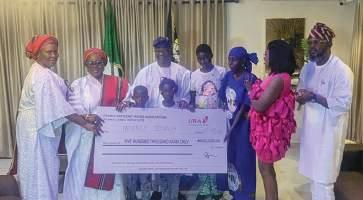
The Minister also presented a cheque for N250 million to the beneficiaries of the capacity-building programme.
“We want you to know that we appreciate your sacrifice. We will continue to support your wives and spouses by empowering them to become entrepreneurs who can sustain their families while you defend the nation. “We appreciate your service and will ensure that your sacrifices are not in vain,” he added.
Meanwhile, the President has won the backing of the Senate Committee on Defence over the newly approved salary increase for personnel of the Nigerian Armed Forces, with the committee describing the package as a major morale booster that should galvanise the military to intensify the fight against insecurity across the country.
Chairman of the Senate Committee on Defence, Senator Ahmad Lawan, said the presidential approval, which raises the salaries of military personnel by between 30 and 80 per cent effective September 1, 2026, demonstrates the administration’s commitment to the welfare of officers and men risking their lives to defend the
stronger oil prices and exceptionally high refining margins as refiners capitalised on shortages of diesel, jet fuel and petrol.
BP also joined the list of major beneficiaries, reporting that its underlying replacement cost profit, its preferred measure of net income, more than doubled to $5.73 billion from $2.35 billion a year earlier, beating analysts’ expectations.
The British energy giant attributed the performance to stronger energy prices, improved trading results and higher refining margins, while announcing a four per cent increase in its quarterly dividend.
BP also disclosed plans to continue reducing its exposure to renewable energy by selling its US biogas business, Archaea, as part of its renewed focus on oil and gas under Chief Executive Officer, Meg O’Neill.
The strong earnings have intensified criticism that oil companies are profiting from a geopolitical crisis that has imposed significant costs on households and businesses
country’s territorial integrity.
In a statement issued yesterday, Lawan described the salary review as “a masterstroke of compassionate and strategic leadership,” saying the decision reflected President Tinubu’s recognition of the sacrifices being made daily by members of the Armed Forces in combating terrorism, banditry, kidnapping and other security threats. According to him, the new salary structure is not only comprehensive but also equitable, as it caters for personnel across all ranks while giving greater consideration to frontline troops engaged in combat operations.
The president of the 9th Senate noted that junior military personnel, including Privates, Lance Corporals, Corporals, Sergeants and Staff Sergeants, would receive an 80 per cent increase in their emoluments, while officers from the rank of Warrant Officer to Colonel would benefit from a 50 per cent increase. Senior officers up to the rank of General are to receive a 30 per cent salary adjustment.
Lawan said the implementation of the new salary structure would increase the annual military wage bill from N660 billion to N924 billion, representing an additional government investment of N264
around the world.
In his reaction, US President, Trump, has publicly rebuked ExxonMobil and Chevron, saying they had made excessive profits from the conflict and should pass some of the gains on to consumers.
“They’re making too much money based on a shortage. I don’t like it,” Trump told reporters at the White House.
Naming the companies directly, he said: “Chevron, too much money. ExxonMobil, too much money. They’re going to give some of that back to the public and they better cut the retail price, the consumer price.”
Trump also criticised Chevron Chief Executive Officer, Mike Wirth, accusing him of failing to acknowledge his administration’s role in supporting the US oil industry.
The extraordinary earnings have also reignited calls in the United States and Europe for windfall taxes on oil producers, with advocates
NESG boss, Mr Olaniyi Yusuf
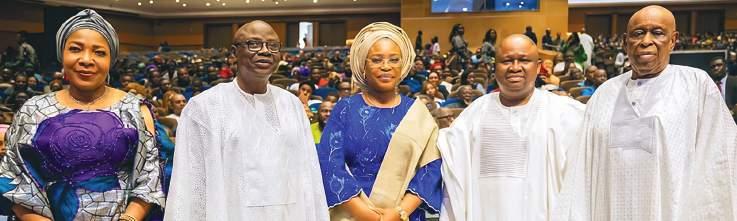
PRESENTATION OF THREE-VOLUME BOOK BY TUNDE BAKARE...
L-R: Wife of Abia State Governor, Mrs. Priscilla Otti; Serving Overseer, Citadel Global Community Church, Pastor Tunde Bakare; Wife of All Progressives Congress (APC) Governorship Candidate, Ogun State, Mrs. Temitope Adeola; Governorship Candidate, APC, Ogun State, Senator Olamilekan Solomon Adeola; and Former Governor of
Chief
during the public presentation of a three-volume book titled Strategic Intervention in Governance, written by
US CDC: Nigeria Records 96% Viral Suppression for Persons on HIV Treatment
Urges action to fill remaining gaps
Onyebuchi Ezigbo in Abuja
United States Centre for Disease Control (US-CDC) said Nigeria had attained measurable progress in the fight against the spread of the HIV virus.
The centre said Nigeria recorded 96
per cent target of viral load suppression from among HIV patients placed on regular treatment programme.
Branch Chief, Continuum of Care and Treatment, U.S. CDC, Nigeria, Dr. Dennis Onotu, who spoke in an interview with THISDAY in Abuja, said viral load suppressor
was a new global strategy used to prevent continued spread of HIV virus infection.
According to Onotu, statistics from the Nigeria national data repository said as of June 2026, out of 1.5 million people on antiretroviral therapy, who had a viral load test in the past 12
months, 96 per cent achieved viral suppression.
He stated, “That is above the UNAIDS target of 95 per cent. But that is programme-related suppression.
“The 95-95-95 UNAIDS targets requires increased testing, treatment adherence, and regular viral load monitoring.”
With Nigeria already above target on suppression among those in care,
Onotu said the next push will be to find the missing people and ensure no one was left behind in the fight to stop AIDS.
The health expert stated that the attention of the federal government must now shift to the remaining four per cent who were on treatment but not suppressed, to find out what was responsible. He said reaching people who were
UNICEF Launches Malnutrition Preventing Project
Funded by Church of Jesus Christ of Latter-Day Saints
The United Nations Children’s Fund (UNICEF), the Bayelsà State Government, yesterday launched a $25 million Church of Jesus Christ of Latter-Day Saint funded one-year project on prevention of malnutrition during the first 1,000 days of a life.
Funded by the Church of Jesus Christ of Latter-Day Saint, Bayelsà State Government and UNICEF, the project seek to give every child born in the state a fighting chance not just to survive, but to grow, to learn, and to reach their full potential.
In another development, the Katsina State Primary Health Care Agency (KSPHCA), with the support of United Nations Children’s Fund (UNICEF), has intensified community engagement efforts to address cases of Non-Compliance (NC) and Child Absent (CA) in a renewed push to improve routine immunisation coverage across the state.
The initiative follows the implementation of the Majalisa Rigakafi programme in the eight zero-dose implementing Local Government Areas, where communities were mobilised to identify and vaccinate children who had never received routine vaccines.
Partner Katsina in move to tackle non-compliance cases in immunisation Two victims
This was revealed at a one-day orientation for the Majalisa Rigakafi members and local governments health educators on polio noncompliance, non-compliance resolution skills and data tools held at Classique Event Centre on Tuesday in Katsina.
Meanwhile, Chief of Field Office, UNICEF Lagos Field Office, Celine Lafoucre, in his key note address, at
grant inception meeting with Local Government stakeholders on the Latter-Day Saint Church ((LDSC) grant for prevention of malnutrition in the state, emphasized the importance of this initiative.
He added the project is designed to address the critical period from pregnancy to a child’s second birthday, ensuring that children receive the necessary nutrition for healthy growth and development.
The project’s focus is to combat the high rates of stunting and anemia among children and pregnant women in Nigeria, with the goal of breaking the cycle of malnutrition and its long-term effects on individuals’ health and well-being.
She said, “We are here to launch a one-year project on prevention of
malnutrition during the first 1,000 days of life. This gives every child born in this state a fighting chance not just to survive, but to grow, to learn, and to reach their full potential.
That is what the first 1,000 days of life
“Fromprotect.the moment a woman becomes pregnant to her child’s second birthday, a body and a brain are being built. What happens in that window cannot be undone later.
“The most recent national survey, the National Demographic Health Survey (NDHS 2024), found that more than one in four children in Nigeria are stunted, and nearly half of pregnant women are anemic.
“That is exactly what this project, and the funding behind it, is built to change. Stunting means a child’s
body, and often their brain, did not get enough good food early in life to grow as it should.
“These are children who will struggle more in school, and who may struggle later to earn a living, through no fault of their own. That is why today matters. The Church of Jesus Christ of Latter-Day Saints chose to fund this project in Bayelsa State for one year.
“The Bayelsa State Government added 140 million naira of its own, and UNICEF matched it with another 140 million. Government and donors, side by side, putting real money behind children who cannot yet speak for themselves.”
The State Commissioner of Health, Prof. Seiyefa Brisibie, while thanking the donor and UNICEF, he said the
gesture will go a long way in helping in the fight against malnutrition.
Represented Dr. Williams Appah, Executive Secretary Primary HealthCare Board, said that the malnutrition grant is for four Local Government Area of Bayelsa, appealing to donors to let the grant get to the children in the other local government areas.
He said that the Bayelsa State Government has equally contributed their quoter to ensure that stunted growth in children should be a thing of the past in Bayelsa.
According to him, before this time I and my colleagues have been assisting children with stunted growth, but with the grant from donors, and proper orientation malnutrition will be properly addressed.
HIV positive but did not know their status had become more critical.
“If people don’t know their HIV status, of course, they will not be on treatment and will not be suppressed,” he said
Onotu cautioned that failure to achieve viral load suppression among people living with HIV posed serious risks to individuals and public health. He explained that viral load suppression meant treatment was working and the virus was under control. But when suppression was not achieved, the virus continued to replicate and damage the immune system.
Onotu stated, “For those not on treatment, the virus will keep doing damage until it completely destroys immunity. For those on treatment but not suppressed, it usually means they are not taking their drugs regularly or correctly.”
He warned that continued replication left patients vulnerable to infections that healthy people could easily fight, such as tuberculosis, fungal infections, and other HIV-related complications. It also increased the risk of drug resistance, where the virus learnt to resist medication, he said. Beyond individual health, there were public health implications also, Onotu said.
According to him, “A person who is not virally suppressed can potentially transmit HIV to others through unprotected sex, exposure to blood, and from mother to child during pregnancy, childbirth, and breastfeeding.”
The Nigeria Immigration Service (NIS) has dismantled a suspected transnational organised crime syndicate allegedly operating under the guise of the QNET/IGNITE network, arresting 12 suspects and rescuing two victims in a major intelligence-led operation in Lagos State.
The crackdown, which targeted a fraudulent recruitment and network marketing operation allegedly linked to irregular migration activities,
resulted in the arrest of the suspected leader of the syndicate, identified as Ouattra Adama, a Burkinabe national, alongside 11 other suspected facilitators.
The arrested suspects comprise eight Liberian nationals and three Cameroonians, according to a statement issued on Tuesday, by the Service Public Relations Officer, Deputy Comptroller of Immigration Service (DCI) Akinsola Akinlabi.
The NIS said the operation was carried out following credible intel-
ligence on trafficking networks allegedly exploiting vulnerable individuals through deceptive employment and business opportunities.
The statement revealed that two Liberian nationals believed to be victims of the syndicate were rescued during the operation and are currently receiving necessary attention from authorities.
“Accordingly, the twelve (12) suspects and the two (2) victims have been transferred to the Service Headquarters for further investigation
and necessary legal action,” Akinlabi stated.
According to the Service, the QNET/IGNITE network is a transnational organised criminal group allegedly involved in fraudulent employment and business schemes used to facilitate irregular migration.
The NIS warned Nigerians and other residents against falling victim to criminal networks that exploit the search for jobs, education opportunities, business ventures and migration pathways.
It urged members of the public to always verify the authenticity of employment offers, business opportunities and migration arrangements through approved channels before committing funds or travelling abroad.
The Service described the arrests as a major achievement in its intelligence-driven border security operations, reaffirming its commitment to combating human trafficking, irregular migration and other forms of transnational crime.
Ogun State,
Olusegun Osoba,
Pastor Tunde Bakare and held in Lagos on Sunday
Michael Olugbode in Abuja
Olusegun Samuel in Yenagoa and Francis Sardauna in Katsina
MIP SESSION WITH GOOGLE...
L-R: Vice
REA, Ecotech Seal Landmark Deal to Drive Local Solar Manufacturing, Boost Energy Transition
John Enoh: MoU success depends on collective commitment to patronise locally manufactured products, services Abba Aliyu: 85 million Nigerians— about 40% of population lack reliable access to grid electricity Ecotech boss reveals plan to commence local manufacturing to boost jobs
James Emejo in Abuja
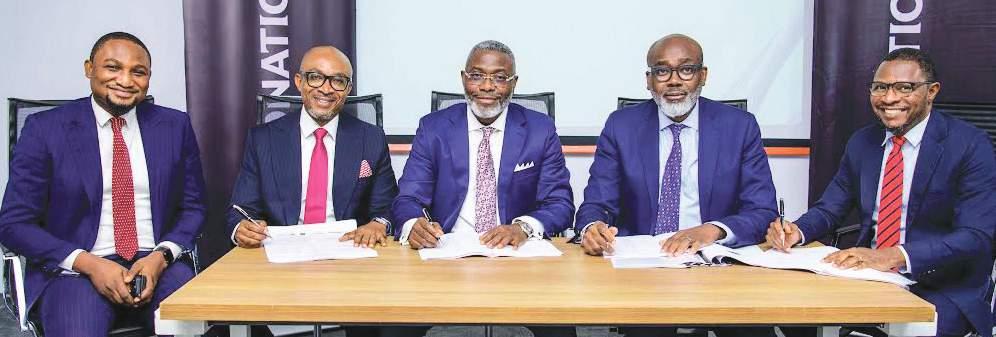
The Rural Electrification Agency (REA) and Ecotech Development Nigeria Limited, yesterday signed a landmark Joint Development Agreement that is expected to reshape the country’ s renewable energy landscape.
The initiative aimed at strengthening local solar manufacturing, deepening technology transfer and accelerating the industrialisation agenda.
The agreement establishes a framework for the annual offtake of up to 200 megawatts (MW) of locally manufactured solar photovoltaic modules and 200 megawatt-hours (MWh) of battery energy storage products, marking one of the country’s boldest moves yet to develop a domestic renewable energy value chain.
The partnership is designed to reduce Nigeria’s dependence on imported renewable energy equipment while creating jobs, retaining foreign exchange, expanding local technical capacity and supporting the federal government’s clean energy and industrial development objectives.
Speaking at the signing ceremony in Abuja, Minister of State for Industry, Senator John Enoh, described the agree-
ment as a major milestone that reflects the kind of strategic collaboration required to build industrial capacity while expanding access to sustainable energy infrastructure.
He said the initiative comes as the implementation of Nigeria’s industrial policy gathers momentum, stressing that manufacturing, innovation and local value addition remained central to economic growth, employment generation and national competitiveness.
According to him, the agreement aligns squarely with the Nigeria First Policy, which seeks to place Nigerian industries, businesses and workers at the centre of national economic development.
Enoh said the success of the policy would depend not only on government interventions but also on a collective commitment to patronise locally manufactured products and services.
He noted that every Nigerianmade product strengthens domestic industries, supports jobs, reinforces supply chains and ensures that greater economic value remains within the country.
The minister added that the federal government intends to increasingly deploy public procurement as a
catalyst for industrial development by creating sustainable demand for locally manufactured goods and infrastructure.
“No country has successfully industrialised without deliberately leveraging its domestic market to support local production,” he said.
Enoh further stressed that government alone cannot industrialise the economy, just as private investors
cannot thrive without an enabling policy environment.
He said partnerships such as the REA-Ecotech collaboration would attract investments, reduce project risks, encourage innovation and fast-track the delivery of critical infrastructure.
The minister also pointed to the declining cost of solar technologies globally, saying Nigeria now has a unique opportunity to accelerate
renewable energy deployment while positioning itself as a competitive manufacturing hub for solar panels, batteries, inverters and other clean energy technologies.
He maintained that building domestic manufacturing capacity would strengthen energy security, create quality jobs, facilitate technology transfer and integrate Nigeria more competitively into emerging global
value chains.
Earlier, Managing Director/ Chief Executive of REA, Abba Aliyu, described the agreement as a watershed moment for Nigeria’s renewable energy sector, noting that it represents the first commitment by a Tier-One Chinese renewable energy company to establish manufacturing and assembly operations in the country.
NAICOM Issues New Licences to Recapitalised Insurers, Signals New Regulatory Era
James Emejo in Abuja
The National Insurance Commission (NAICOM), yesterday said it has commenced the issuance of new licence certificates to insurance companies that successfully met the new minimum capital requirements, a move aimed at strengthening the sector’s financial resilience and global competitiveness.
The presentation of the new licences at the commission’s headquarters in Abuja marked
the formal commencement of a phased transition to a higher capital regime designed to improve insurers’ financial capacity, solvency and claims-paying ability.
Speaking at the ceremony, Commissioner for Insurance, Mr. Olusegun Ayo Omosehin, described the exercise as a major milestone in the industry’s recapitalisation programme, adding that it ushers in a new regulatory era anchored on stronger capitalisation, sound corporate governance, product
Kidnapping: Education Ministry Orders Heads of Tertiary Institutions to Dismiss Students Involved in Crime
Discloses strategic meeting with defence ministry to strengthen safe schools nationwide
Kuni Tyessi in Abuja
The Minister of Education, Dr. Tunji Alausa, has directed Vice Chancellors, Rectors and Provosts across Nigeria to dismiss any student found culpable, after due investigation, of involvement in kidnapping or other related crimes.
He also ordered the heads of tertiary institutions to strengthen internal intelligence systems and deepen collaboration with the Department of State Services (DSS) and other security agencies in their respective states as part of a nationwide strategy to safeguard campuses and protect students.
The directive was given during
a meeting with the Pro Chancellor of the Federal University of Lafia, Nasarawa State, Dr. Mrs. Adebimpe Adebajo, members of the Governing Council and Management of the institution.
While noting that Nigeria’s universities, polytechnics and colleges of education remain largely safe and secure, the minister said recent isolated incidents involving students outside campuses underscore the need for stronger intelligence gathering and closer collaboration with security agencies.
“We have a collective responsibility to protect every Nigerian child, from
primary school to tertiary education. While our campuses remain safe, we must continue to strengthen intelligence gathering and work closely with our security agencies to ensure that students are protected both within and outside our institutions,” he said.
Alausa disclosed he recently held an extensive meeting with the Minister of Defence, Gen. Christopher Musa (Rtd) to develop a coordinated strategy aimed at strengthening the Safe Schools Initiative and enhancing the protection of learners across the country.
According to the minister, the administration remains committed to ensuring that every Nigerian child has
access to quality education in a safe and conducive learning environment.
He therefore directed governing councils and heads of tertiary institutions to establish effective internal intelligence mechanisms, sustain close collaboration with the DSS and other security agencies, and take decisive action against anyone who threatens the safety of students.
“If you tolerate bad behaviour for too long, it becomes a culture. Any student found culpable, after due investigation, of planning or participating in the kidnapping of fellow students has no place in our tertiary institutions. Such individuals must be dismissed.
innovation and sustainable growth.
In a statement, he congratulated the successful companies, noting that the completion of the recapitalisation exercise represents more than compliance with regulatory requirements.
According to him, the exercise lays the foundation for building a stronger, more resilient and globally competitive insurance industry capable of supporting Nigeria’s economic aspirations.
The commissioner urged the newly recapitalised firms to deploy their enhanced capital base towards developing innovative insurance products, improving operational efficiency and expanding insurance penetration across the country.
He stressed that the commission expects higher standards of professionalism, innovation and improved returns on investment from operators, adding that the industry is now well-positioned for the next phase of regulatory reforms.
He said, “The commission has high expectations for professionalism, innovation, operational efficiency and improved returns on investment.”
The NAICOM boss added that stronger balance sheets should translate into better value for policyholders and investors alike.
Omosehin also disclosed that NAICOM’s next major regulatory initiative would be the implementation of the Risk-Based Capital (RBC) framework, under which insurers’ capital requirements will be aligned
with the level of risks embedded in their respective business portfolios.
He explained that the framework is expected to strengthen risk management practices across the industry while ensuring that companies maintain adequate capital buffers relative to their underwriting exposures.
The commissioner reaffirmed NAICOM’s commitment to creating an enabling regulatory environment by removing unnecessary impediments where appropriate while maintaining effective oversight and enforcing standards that protect policyholders and boost public confidence in the insurance market.
A total of 43 insurance companies that successfully met the commission’s new minimum capital requirements are expected to receive the new licence certificates.
NAICOM said the issuance of the certificates represents the beginning of a structured transition to enhanced capital standards aimed at improving the financial strength, stability and long-term sustainability of Nigeria’s insurance industry.
The development comes days after the commission confirmed that 43 insurance companies had complied with the minimum capital requirements under the ongoing recapitalisation programme, reinforcing regulatory efforts to position the sector for greater resilience, increased investment capacity and improved service delivery.
President, MTN MIP Cohort 5, David Eluemunoh; Strategy Partner Manager, Google, Onyinyechi “Nini” Eze; Course Director, MTN MIP, Dr. Chike Mgbadichie; and Class President, MTN MIP Cohort 5, Veronica Dan-Ikpoyi, during the MIP Session with Google, held at Pan-Atlantic University, Lagos, yesterday
Acting Group Politics Editor DEJI ELUMOYE
Email: deji.elumoye@thisdaylive.com
08033025611 sms only
Oyebamiji: Osun Deserves Better Value for Its Resources
The all Progressives Congress candidate for the august 15, 2026 governorship election in Osun state, asiwaju Munirudeen Bola Oyebamiji, a renowned banker and administrator, had previously served as Commissioner for Finance under former Governors Rauf aregbesola and Gboyega Oyetola. He also served as the Managing Director/Chief Executive Officer of Omoluabi Holdings Limited. In this interview, Oyebamiji articulates his vision towards building a prosperous and economically vibrant Osun State through prudent fiscal management, industrialisation, infrastructure development, quality education, accessible healthcare, and the empowerment of youths and women, among other key policy priorities. Excerpts:
What informed your decision to meet with the media at this stage of the governorship campaign?
I considered it important to meet with the media for two major reasons. First, I wanted to express my sincere appreciation for the support the media gave me during my tenure as Managing Director and Chief Executive Officer of the National Inland Waterways Authority (NIWA). Many of the reforms we introduced at the agency received fair and objective coverage, and that support contributed significantly to the success we recorded.
Secondly, I felt it was necessary to formally present myself to this distinguished gathering as the governorship candidate of the All Progressives Congress (APC). The media remain critical stakeholders in our democracy, and I believe it is important for journalists to hear directly from those seeking public office. I also want Nigerians and the people of Osun State to understand the vision we have for the state and why we believe a new direction has become necessary. How would you describe your record in public office and why should the people trust you with the governorship?
My record is available for public scrutiny. Before serving at NIWA, I was Commissioner for Finance under the administrations of Governors Rauf Aregbesola and Adegboyega Oyetola. Prior to that, I served as the Managing Director of the Osun Investment Company Limited, now known as Omoluabi Holdings Limited.
At NIWA, we implemented structural reforms that have continued to produce positive results. The Water Marshals Scheme remains operational, community-based water safety campaigns are still active, and workers’ welfare received significant attention during my tenure. These initiatives were designed to improve safety on Nigeria’s inland waterways and strengthen institutional efficiency.
Throughout my career, I have always believed in accountability, prudent management of public resources and measurable results. Those principles will also guide my administration if elected governor.
Why do you believe Osun State needs a change in leadership?
The facts speak for themselves. At the end of the APC administration under Governor Adegboyega Oyetola, Osun State received approximately N2.6 billion monthly from the Federation Account Allocation Committee (FAAC). Today, the state receives an average monthly allocation of about N16 billion. Ordinarily, such a significant increase in revenue should translate into visible improvements in infrastructure, education, healthcare, agriculture, youth employment and economic development. Unfortunately, many residents believe they have not experienced benefits that reflect the huge increase in public revenue. There are also concerns about infrastructure projects allegedly awarded without sufficient transparency, with some reportedly deteriorating even before commissioning. Our position is that public funds must be managed responsibly and every kobo must deliver value for the people.
Can you explain your Prosperity Agenda and what it represents?
The Prosperity Agenda is the blueprint that will guide our administration. It is built around seven strategic pillars designed to address the immediate and long-term needs of Osun State.
The first pillar focuses on poverty alleviation, workers’ welfare and job creation. The second is responsive, accountable and transparent governance. The third promotes economic growth through support for small and medium-scale enterprises as well as youth and women empowerment.
The fourth pillar is security, safety and social protection. The fifth promotes productive agriculture through public-private partnerships and rural development. The sixth focuses on education, skills acquisition and targeted investment in healthcare delivery. Finally, the seventh pillar emphasises renewed investment in infrastructure, culture and tourism to stimulate inclusive economic growth.
Together, these pillars provide a comprehensive roadmap for sustainable development and improved living standards across Osun State. What specific programmes will your administration implement within the first 100 days?
We have identified a number of practical actions that can begin immediately upon assumption of office.
First, we will undertake a comprehensive review of all outstanding entitlements owed to serving and retired workers and commence pay-
ment based on available resources.
Second, we will ensure that the Dagbolu Dry Port becomes operational because of its enormous potential to stimulate commerce, create employment and attract investment.
Third, through strategic partnerships with both public and private organisations, we intend to train and empower not fewer than 10,000 young people in Information and Communication Technology (ICT), thereby equipping them with globally competitive digital skills.
We will also establish monthly meetings of the State Security Council involving security agencies, traditional rulers and local government leaders to strengthen intelligence gathering and improve coordination in tackling security challenges.
In addition, we shall undertake a comprehensive fiscal sustainability review covering government revenue, expenditure and debt obligations. This will enable us to understand the true financial position of the state and make informed policy decisions.
Finally, we will conduct a statewide infrastructure audit to identify priority roads and other critical infrastructure requiring urgent intervention.
How do you intend to improve the state’s economy and public finances?
Sound financial management is essential for sustainable development. Having served as Commissioner for Finance, I understand
There are also concerns about infrastructure projects allegedly awarded without sufficient transparency, with some reportedly deteriorating even before commissioning. o ur position is that public funds must be managed responsibly and every kobo must deliver value for the people.
both the opportunities and the challenges associated with public finance.
Our administration will begin with a detailed assessment of the state’s financial position. We must know our actual revenues, obligations and liabilities before embarking on major expenditure programmes.
Beyond that, we will expand the state’s internally generated revenue through economic growth rather than excessive taxation. We will encourage investment, support businesses, promote agriculture, improve the ease of doing business and eliminate waste in government spending.
Our objective is to ensure that public resources are utilised efficiently and transparently while directing more funds to sectors that directly improve the lives of citizens.
Youth unemployment remains a major concern. What opportunities does your administration offer young people?
Young people occupy a central place in our development agenda because they represent the future of Osun State. Our administration will prioritise digital skills development by training at least 10,000 youths in ICT during our first phase in office. Beyond training, we intend to connect participants with opportunities for entrepreneurship, innovation and employment.
We will also strengthen support for small and medium-scale enterprises by improving access to business support programmes, encouraging innovation and creating an enabling environment for private investment. Agriculture, technology, tourism and the creative industry will also receive attention because they possess enormous potential for job creation. We want young people to see Osun not as a state they must leave in search of opportunities, but as a place where they can build successful careers and businesses.
Education and healthcare are critical sectors. What reforms should the people of Osun expect under your administration?
Education and healthcare are fundamental to the development of any society, and they will receive priority attention under our administration. A government that genuinely cares about its people must invest in quality education and accessible healthcare. We are concerned about the current state of education in Osun. There are reports of shortages of teachers in many public schools, while parents and students continue to express concerns over the rising cost of tertiary education. We believe every child deserves access to quality education regardless of background.
Our administration will undertake a comprehensive assessment of the education sector to identify gaps in infrastructure, manpower and learning outcomes. We will recruit qualified personnel where necessary, improve learning facilities and strengthen technical and vocational education to equip our young people with skills that meet today’s economic realities.
In healthcare, we intend to revitalise primary healthcare centres, improve access to essential medical services and ensure that investments in the sector directly benefit the people. Preventive healthcare, maternal and child health, and rural healthcare delivery will receive special attention because a healthy population is the foundation of economic growth.
NOTE:
oyebamiji
POWA CARES: Redefining Welfare Through Integrity, Impact
From healthcare and economic empowerment to education and social inclusion, the Police Officers' Wives association (POWa) has been steadily redefining welfare for police families under the leadership of its 23rd National President, Chief Mrs. Olufunmilola Mutiat Disu. By fulfilling a promise made months earlier to winners of the POWa CaRES Ballot Draw, Chiemelie Ezeobi writes that beyond the numbers and interventions lies an equally powerful lesson in leadership, one that values integrity as much as impact
Integrity is often measured not by the promises people make but by the promises they keep. In an era where public commitments are sometimes forgotten as quickly as they are announced, the Police Officers' Wives Association (POWA) recently demonstrated that integrity still matters.
What began as a simple pledge during the POWA CARES Initiative Outreach in Lagos on April 29, 2026, culminated in an unforgettable evening of celebration as winners of the POWA CARES Ballot Draw enjoyed an exclusive dinner hosted by the Inspector-General of Police (IGP), Olatunji Rilwan Disu, and the 23rd National President of POWA, Chief Mrs. Olufunmilola Mutiat Disu, last weekend.
For the four lucky winners, it was more than a prize. It was proof that a promise made was indeed a promise honoured.
Building Trust Through Action
For the four winners and their respective families, the dinner symbolised far more than hospitality to genuine concern for the welfare of police families.
Months after the Lagos outreach where four members of POWA emerged
winners of a special ballot prize—an exclusive dinner the Inspector-General of Police and also the Lagos State Governor, that commitment was fulfilled.
Beyond even the dinner, the recipients received the sum of N500,000 for each family, much to their great joy and astonishment. Thus, the evening ended with smiles, celebration and renewed hope, underscoring the association's commitment to recognising and supporting police families.
From Welfare to Sustainable Social Protection
Since assuming office on March 4, 2026, Chief Mrs. Disu has anchored her administration on five policy priorities: mental health support; economic empowerment; expanding skill acquisition, entrepreneurship training and access to sustainable financial opportunities; education and youth development; fostering national unity among members; and strengthening welfare systems for police families. These priorities found expression in the POWA CARES Initiative, which she describes
as a deliberate shift from isolated welfare gestures to a structured, scalable and sustainable framework for social protection.
Rather than offering one-off interventions, the initiative seeks to create long-term support systems capable of improving the lives of police families across Nigeria.
What POWA CARES Lagos Outreach Offered
Before the dinner, the Lagos Outreach of POWA CARES hosted over 1,000 beneficiaries, who received medical support while 200 families received N50,000 empowerment grants. Also, raffle winners were presented with N10,000 Cowry Cards to ease transportation costs, 15 nursing scholarships were awarded, and participants benefited from free eye, dental and general healthcare services.
Corrective eyeglasses were provided free of charge, while critical health cases were referred for specialist care. Beyond healthcare and financial assistance, the initiative addressed education and economic stability simultaneously, creating opportunities for long-term selfreliance.
The inclusion of the ballot draw, which eventually brought beneficiaries face-to-face with the nation's top police leadership, further reinforced the programme's emphasis on dignity, recognition and inclusion.
Strengthening Institutions Through Strong Families
Mrs. Disu has consistently maintained that the outreach was designed to improve lives and establish sustainable support systems for police families.
The overwhelming prayers and appreciation from beneficiaries, many of whom described the initiative as unprecedented, reflected its impact. By institutionalising welfare through a structured and collaborative approach, the POWA CARES Initiative is easing immediate burdens while laying the foundation for a more resilient police community. Its underlying message is clear: when families are supported, institutions become stronger and the nation benefits.
Praise for POWA
The Inspector-General of Police, IGP Olatunji Rilwan Disu, praised the leadership of POWA for sustaining the initiative, describing it as a noble effort that continues to inspire hope and positively impact lives across Nigeria. Adding a touch of goodwill to the memorable evening, Nollywood actress and producer Funke Akindele also pledged her support for the association, saying, "Anytime you need me, please call me."
When the curtains came down on that fateful night at the Police House, for the beneficiaries, the exclusive dinner was not simply the fulfilment of a raffle prize but also a powerful reminder that integrity still matters.
Patience Joshua's family
L-R: The Inspector General of Police, IGP Olatunji Rilwan Disu; National President POWA, Chief Mrs. Olufunmilola Mutiat Disu; and award winning Nollywood Actress and Producer, Funke Akindele, at the exclusive dinner for winners of the POWA CARES Ballot Draw
Adama Mustapha's family
The Jacinta Adam's family with the IGP; POWA National President; Funke Akindele; Honourable Adekoya Hassan, Senior Special Assistant to the Lagos State Governor on Transportation; Lagos State Chairperson of the Police Officers' Wives Association (POWA) is Mrs. Oluwakemi Tijani; Lanre Olagunju and others
The Oriire Rescue and the Security Lessons
Lanre Olagunju
When news broke that the children abducted from the Oriire Community had been rescued, it brought a collective sigh of relief across the country. For their families, the nightmare had finally ended. For the security personnel involved, it was the successful conclusion of what must have been days of painstaking intelligence gathering, operational planning and immense personal risk.**
But as the celebrations subside, perhaps the more important question is not simply how the children were rescued, but what the operation tells us about the future of security in Nigeria. For years, insecurity was viewed through institutional silos, with successful operations judged by which agency deserved the credit. Yet criminals do not distinguish between the police, the military or intelligence services; they exploit gaps between agencies, making the growing culture of inter-agency collaboration one of the most encouraging developments in Nigeria’s security architecture.
The Oriire operation is another reminder that collaboration is no longer optional. Intelligence-led policing is strongest when backed by military capabilities, inter-agency coordination and community support. As recent joint operations have shown, insecurity has become too complex for any single agency to tackle alone.
Equally commendable was what happened after the operation. Both the Nigerian Army and the Nigeria Police Force honoured officers who distinguished themselves while paying tribute to colleagues who made the ultimate sacrifice. Such moments remind us that behind every successful operation are men and women who risk
everything in service to the nation. A country that expects such sacrifice must never fail to honour it. It was therefore disappointing, though perhaps not surprising, that almost immediately after the rescue, some voices chose to dismiss the entire incident as staged. Healthy scepticism has an important place in every democracy. Public institutions should never be immune from scrutiny. But there is a moral line that should not be crossed.
To casually dismiss the trauma endured by abducted children, the agony experienced by their parents, and the sacrifice of officers who lost their lives is to trivialise human suffering for the sake of political commentary. Not every national tragedy should become fodder for conspiracy theories. Some moments demand empathy before opinion. Regardless of political persuasion, Nigerians should be able to agree that the lives lost in the line of duty
and the pain endured by victims deserve far greater respect than careless speculation. Yet even as the country celebrates this successful rescue, we should resist the temptation to mistake recovery for victory. Every successful rescue is commendable, but it is also evidence that criminals were able to strike in the first place. The true measure of an effective security system is not how efficiently it responds after an attack but how consistently it prevents attacks from occurring.
That is where Nigeria’s security conversation must now evolve. Preventive policing, supported by technology and intelligence, offers the most sustainable pathway forward. Around the world, law enforcement agencies increasingly rely on artificial intelligence, predictive analytics, geospatial intelligence, drones, digital forensics and integrated surveillance systems to detect threats before they materialise. Criminal networks have embraced technology with remarkable speed. Security institutions cannot afford to fight twenty-first-century crime with nineteenth-century methods.
This thinking is beginning to find expression within the Nigeria Police Force. Speaking at the Fifth United Nations Chiefs of Police Summit in New York earlier this month, Inspector-General of Police Tunji Disu, observed that while technology presents enormous opportunities through artificial intelligence, digital forensics and geospatial intelligence, it can never replace public trust.
He also noted that criminals now exploit AI, encrypted communications and cyber-enabled platforms, making innovation an operational necessity. That perspective is significant because it recognises two realities at once. First, technology is no longer an accessory to policing; it is becoming its backbone. Second, technology without trust, accountability and collaboration cannot produce lasting security. Public confidence remains the currency upon which effective policing depends.
The implication is clear. Nigeria does not simply need more security personnel; it needs smarter security systems. It needs deeper intelligence sharing among agencies, stronger partnerships with local communities, greater investment in surveillance and forensic capabilities, and the political will to sustain collaboration long after the headlines disappear. The success of joint operations should become the rule rather than the exception.
The children from Oriire are home. That is a victory worth celebrating. But the greater national success will come when our investments in collaboration, intelligence and technology make such rescues increasingly unnecessary. In security, the highest achievement is not responding brilliantly after tragedy. It is preventing tragedy from happening at all.
•Lanre Olagunju wrote in from Abuja.
Strategic PR May Be a Nigerian Startup's Most Undervalued Growth Asset
Nosa iyamu
Nigeria has reclaimed its position as Africa's leading venture capital destination, demonstrating that its innovation ecosystem remains one of the continent's strongest despite years of global funding headwinds. Venture financing is becoming more sophisticated, with startups embracing venture debt, blended finance, mergers and acquisitions, and institutional capital beyond traditional fintech. At the same time, investment is expanding into clean energy, logistics, agritech, healthcare, and other sectors solving fundamental infrastructure challenges.
This evolution signals an important shift: investors are no longer funding bold ideas alone, they are backing businesses that demonstrate resilience, credibility, and long-term viability. In this environment, strategic public relations (PR) is no longer a communications function; it is a value creation tool.
The first half of 2026 reflected this growing maturity. Nigeria attracted approximately $254 million in equity venture funding, reclaiming the top spot in Africa as investor confidence strengthened alongside foreign exchange reforms. Landmark transactions, including Flutterwave's Series E funding and its acquisition of open-banking platform Mono, underscored increasing liquidity within the ecosystem. Capital also flowed into sectors such as clean energy, logistics, mobility, and agricultural infrastructure, proving that investors are looking beyond consumer fintech toward businesses solving real economic problems.
However, funding alone has never guaranteed success. Recent years have witnessed the collapse of several wellfunded startups that raised millions of dollars but struggled with governance challenges, regulatory hurdles, operational inefficiencies, or shifting market conditions.
These failures reinforce a critical lesson for founders: building a great product is only one part of building a great company. How a startup is perceived by investors, regulators, customers, employees, and the broader market increasingly influences its ability to raise capital and sustain growth. This is where strategic PR becomes indispensable. Investors conduct far more than financial due diligence. They assess leadership credibility, corporate governance, regulatory maturity, market positioning, and brand reputation before committing capital. Strategic PR helps shape these perceptions by communicating the qualities that financial statements alone cannot capture. One of PR's most valuable contributions is establishing founder credibility. Through thought
leadership, media interviews, speaking engagements, and executive profiling, founders become recognised voices within their industries. Investors often discover opportunities through networks, conversations, and market visibility long before a formal fundraising process begins.
A founder who consistently demonstrates expertise and vision is more likely to remain top-of-mind during investment discussions.
PR also strengthens confidence in corporate governance. Startups frequently communicate product launches and funding announcements but overlook opportunities to showcase board appointments, compliance milestones, governance frameworks, cybersecurity investments, and risk management practices. Transparently communicating these developments signals operational maturity and reassures investors that the business is built for sustainable scale rather
than rapid expansion at any cost.
Equally important is narrative management. In today's digital economy, every startup has a story, whether it chooses to tell it or not. Without deliberate communication, competitors, speculation, or isolated incidents can shape public perception. Strategic PR enables startups to define their market category, communicate their impact, respond effectively during periods of uncertainty, and maintain stakeholder trust through both growth and adversity.
Perhaps most importantly, PR translates business performance into investor value. Funding rounds, customer growth, technology innovation, job creation, and measurable social impact become far more powerful when communicated through compelling narratives supported by credible third-party validation. This visibility enhances brand authority, attracts strategic partnerships, strengthens customer confidence, and can positively influence enterprise valuation ahead of future fundraising.
Nigeria remains one of Africa's most compelling investment destinations because of its large market, youthful population, expanding digital economy, progressive policies such as the Nigerian Startup Act, and growing investor confidence. Yet as competition for venture capital intensifies, startups must differentiate themselves on more than innovation alone.
The startups that will define Nigeria's next generation of unicorns will not simply be those with the best technology. They will be the companies that build trust, communicate transparently, demonstrate strong leadership, and consistently tell a story that investors believe. In today's venture capital landscape, strategic PR is no longer an afterthought. It is a strategic asset that can strengthen reputation, reduce perceived investment risk, and ultimately drive valuation.
Nosa i yamu ivi P r
Nigeria Police s pecial i ntervention s quad ( sis ) who were also part of the rescue operation
HEALTHCARE AS ECONOMIC INFRASTRUCTURE
Kelechi Ohiri, directorgeneral of NHIA, is one of the country’s foremost health reformers, writes BASHIR IBRAHIM HASSAN
THE IMF’S AI DEBT WARNING SONNY IROCHE
argues that policymakers, especially in Africa, should take the alarm seriously
The maiden South East Regional Security Summit met in Umuahia to address issues of concern, writes JOSHUA OCHEJA
THE UMUAHIA CONVERGENCE
I was in Umuahia in Abia State these past few days for the first time. I experienced something different and unique. The people, the weather, and the food were pleasant. But what took me there was beyond these. It was the security of the South East region. What were the issues, and what were the best ways of addressing the security situation in the region? The maiden South East Regional Security Summit, organized by the Ministry of Defence in collaboration with the Office of the Senior Special Assistant to the President on Community Engagement (South East), provided a platform for this conversation, and the International Conference Centre in Umuahia came to life with the array of A-list guests that graced the occasion with their accoutrements, experiences, and commitment.
I think South Easterners are genuinely interested in addressing the security situation in the region. Mention a heavyweight name in the five states in the region within the security and political class, and I will tell you he or she was present at the summit. Yes, it was called a summit. But in my estimation, it was beyond a summit. It was a gathering of a people who felt that enough was enough and that the solution to the security challenges in the region was local, and therefore the solution was also local. This necessitated the theme “Collaborative Approaches to Strengthening Regional Security and Stability” and, indeed, at the end of the summit, the anthem was the “Whole of Society Approach” to achieving sustainable peace and prosperity in the South East region.
The Abia Advantage: Who was responsible for the upsurge in insecurity in the region? What was the response of the authorities? And how did things fall apart? General Ike Nwachukwu gave an idea in his address. He said: “Security is not simply the absence of violence. It is the presence of justice, trust, opportunity, and legitimate authority. When these pillars weaken, insecurity begins long before the first gunshot is fired.” He went further to state that “the greatest intelligence asset any nation possesses is not technology. It is citizens who believe that the government will protect rather than punish.” The point I gleaned from his statement is that competition among states must never become competition in security. And I was glad the governor of Abia State, Dr. Alex Otti, was in attendance and sat through the event that stretched till late
in the evening.
Dr. Otti was the only governor present; others sent in their representatives. He clearly had an advantage. I don’t mean to question the absence of other governors, but I recognize that the most critical social contract they entered into with the people is security, and their absence told a million stories. The summit was also hosted by the Abia State government. In the matrix of insecurity in the South East, Abia is not the epicentre. But it was the epicentre for the convergence of ideas on how to address the security challenges in the region. And it was strategic for historical reasons.
Abia State occupies the southern interior and transit corridor position within the South-East region. It borders every single state—sharing boundaries with Imo to the west, Anambra to the north-west, Enugu to the north, and Ebonyi to the north-east, and it sits in the Igbo heartland, which comes with its attendant advantages and disadvantages. This could mean different things. But one thing stands out: one could easily tell who was interested in addressing the menace that has presented itself in the region.
And this is why Lt. Gen. Azubuike Ihejirika, in his presentation, asked some fundamental questions. He asked: “The central issue before this summit is therefore not whether collaboration is necessary, but how it should work in practice. What form should it take? Who should perform each responsibility? How should institutions coordinate their activities? How can dialogue produce measurable security improvements and enable people to travel, trade, work, learn, and live without fear?”
Lt. Gen. Ihejirika expanded his position by stating that “the more useful question is therefore not whether another regional security outfit should be announced, but how existing federal,
state, local, and community structures can work together more coherently and sustainably. Addressing this question requires a practical understanding of what collaboration should mean and how responsibilities should be distributed.” In my estimation, he sent a salvo to the governors of the southeastern states.
This is the task before the South East Governors. The human resources in the region are outstanding. For example, the South East Veterans Welfare Association of Nigeria (SEVWAN) is an association of retired military officers of south-eastern extraction—most of them very brilliant and having commanded sensitive positions in the military. They were in full attendance at the summit and delivered a paper titled “Building Lasting Peace in Igbo Land: The Federal Government’s Integrated Security for South-East Nigeria.”
Among other things, the association advocated that the “South-East governors should leverage on the enormous resources of SEVWAN towards curbing insecurity in the SouthEast.” Has SEVWAN contributed to the framing of the security architecture in the region? If it has, it has to do more, and if it hasn’t, it is a misnomer that corroborates the summit’s theme of “Collaborative Approaches to Regional Security and Stability.”
This much was advocated by the Minister of Defence, General Christopher Gwabin Musa, who, in declaring the summit open, stated: “It is my sincere expectation that this maiden Summit will become an enduring annual platform for strategic engagement, continuous dialogue, and coordinated action among all stakeholders. I hope it will reaffirm our collective commitment to building a peaceful, secure, and prosperous South East that contributes meaningfully to the unity, stability, and development of our great nation.” He said it all. Everyone in the value chain is important. It is another word for collaboration.
The Minister of Defence emphasized that regional security is a framework that stabilizes the centre. This is also planned for other regions of the country. According to him, “an important truth is that security is not solely the responsibility of the Armed Forces, the Police, or other security agencies.
Ocheja, PhD, is a military historian and alumnus of the Nigerian Defence Academy
Kelechi Ohiri, director-general of NHIA, is one of the country’s foremost
health reformers, writes BASHIR IBRAHIM HASSAN
HEALTHCARE AS ECONOMIC INFRASTRUCTURE
Economic reforms dominate Nigeria's public discourse. Inflation, taxation, exchange rates and fiscal deficits command headlines almost daily. Yet beneath these familiar debates lies a quieter question with far greater implications for the country's long-term prosperity: who will build the Nigeria those reforms are meant to serve?
For Kelechi Ohiri, director-general of the National Health Insurance Authority (NHIA), the answer begins with people. "We don't make enough reference to Nigeria's greatest resource, which is human capital," he observed during a fireside conversation at the BusinessDay CEO Forum. It was a simple statement, delivered without rhetorical flourish, yet it captured a philosophy that has defined his career across medicine, global development and public policy.
Unlike many healthcare leaders who see hospitals, insurance schemes and disease control as ends in themselves, Ohiri views healthcare as economic infrastructure. Healthy populations are more productive. Productive citizens build stronger businesses. Stronger businesses create wealth. Universal health coverage, in his worldview, is not merely a social obligation. It is a national competitiveness strategy.
That conviction explains why one of Africa's most accomplished health policy professionals returned home in 2023 to lead an institution long regarded as one of Nigeria's most difficult public sector assignments. At first glance, the move seemed counterintuitive.
Before his appointment by President Bola Ahmed Tinubu as director-general of the NHIA, Ohiri had assembled the kind of international career many public policy professionals spend a lifetime pursuing. A medical doctor trained at the University of Lagos, he later earned both a Master of Public Health and a Master of Science in Health Policy and Management from Harvard University before joining McKinsey & Company's London office, where he advised governments and institutions across Europe, the Middle East and Africa. He subsequently joined the World Bank through its prestigious Young Professionals Programme, working on health financing and social protection reforms before moving to Gavi, the Vaccine Alliance, where he rose to become chief strategy, policy and innovation officer.
Few professionals accumulate experience across clinical medicine, strategy consulting, multilateral finance and global health institutions with such ease. Fewer still choose to exchange those platforms for the demanding realities of public sector reform at home. Yet the decision was entirely consistent with Ohiri's philosophy. Throughout his career, he has gravitated towards systems rather than programmes.
As special adviser to successive Nigeri-
an ministers of health and later to the minister of finance, he helped shape reforms that extended beyond healthcare, including the Saving One Million Lives Programme and the conceptual foundations of Nigeria's National Social Safety Nets Programme. These initiatives reflected his enduring belief that poverty, health and economic opportunity cannot be addressed in isolation. That systems perspective would become even more pronounced at Gavi.
There, he contributed to the strategic direction of one of the world's most successful public health partnerships, helping guide policies that have enabled the immunisation of more than one billion children across lower-income countries while strengthening national health systems. The experience reinforced an important lesson: sustainable progress depends less on isolated interventions than on institutions capable of scaling impact over decades.
It is precisely that lesson he brought to the NHIA. For years, Nigeria's health insurance system struggled with low enrolment, fragmented financing and widespread public scepticism. Healthcare remained overwhelmingly financed through out-of-pocket spending, leaving millions of households vulnerable to financial hardship whenever serious illness struck.
Ohiri inherited more than an agency. He inherited one of Nigeria's most significant structural development challenges. His response has been to redefine the institution's purpose.
The NHIA, under his leadership, is no longer presented simply as an insurance administrator. It is increasingly positioned as the financial architecture underpinning universal health coverage and, by extension, one of the foundations of long-term economic resilience. That ambition is already reflected in measurable progress.
Through closer collaboration with state governments, accelerated implementation of the National Health Insurance Act and targeted interventions for vulnerable populations, health insurance coverage has expanded steadily under his leadership, rising from approximately 16 million beneficiaries when he assumed office to more than 22 million Nigerians.
Hassan writes from Abuja
SONNY IROCHE argues that policymakers, especially in Africa, should take the alarm seriously
THE IMF’S AI DEBT WARNING
The Rise of Artificial Intelligence as a Global Investment Phenomenon has been described by many experts and scholars as disruptive. It has become the defining investment story of our generation. From Silicon Valley to Shanghai, from London to Lagos, governments and corporations are racing to build AI infrastructure at unprecedented speed. Data centres are rising across continents. Semiconductor demand has reached historic levels. Cloud computing companies are investing hundreds of billions of dollars, while governments are committing enormous resources to national AI strategies.
Until recently, much of the discussion centred on whether the world was witnessing another technology bubble similar to the dot-com era.
Today, however, the conversation has become far more sophisticated.
The IMF’s Warning, clearly raises alarm bells of debt, not just valuations. The International Monetary Fund (IMF) has shifted attention away from stock market valuations towards something potentially far more dangerous; the enormous debt being accumulated to finance the AI revolution.
That distinction is critically important.
Stock market bubbles can destroy wealth. Excessive debt can threaten the stability of the global financial system itself.
The IMF’s Monetary and Capital Markets Director, Tobias Adrian, recently observed that while current earnings do not necessarily indicate an AI asset bubble, the growing leverage behind AI investments deserves much closer attention. Borrowers and investors are increasingly financing AI expansion through debt, creating vulnerabilities that could become systemic if future revenues fail to justify today’s expectations. This warning deserves serious consideration. It is consistent with similar concerns raised by the Bank for International Settlements (BIS), often described as the central bank for the world’s central banks. (The Wall Street Journal)
Understanding Financial Mechanisms: Equity vs Debt
The distinction between equity financing and debt financing cannot be overstated. When investors buy shares, they participate in both the upside and the downside. Losses, while painful, are generally confined to investors. Debt behaves differently. Debt must be repaid regardless of whether the investment succeeds or not. If expected revenues fail to materialise, lenders become exposed. Banks tighten credit. Bond markets become nervous. Financial institutions become reluctant to lend. What begins as an isolated problem in one sector can quickly spread throughout the entire financial system.
We must learn from History, as history provides numerous examples. The railway boom of the nineteenth century transformed transportation but also produced spectacular financial collapses.
The telecommunications expansion of the late 1990s revolutionised communications yet ended in widespread bankruptcies.
The dot-com bubble reshaped the digital economy but destroyed trillions of dollars in market value.
The 2008 financial crisis demonstrated how excessive leverage, not merely falling asset prices, could destabilise the entire global economy.
The AI revolution may ultimately prove every bit as transformative as electricity or the internet.
But history teaches us that transformative technologies are not immune from financial excess.
The Scale of AI Investment and Emerging Risks:
The BIS estimates that the world’s largest technology companies will spend well over one trillion dollars on AI-related capital expenditure during 2025 and 2026 alone. Increasingly, some of this investment is being supported through borrowing as companies attempt to remain competitive in what has become an AI arms race. (Bank for International Settlements)
Competition itself is becoming a financial risk. No major technology company wishes to be perceived as falling behind. This creates incentives to continue investing, even when commercial returns remain uncertain.
In economics, this resembles an arms race where strategic necessity overrides traditional investment discipline.
Complex Financial Interdependencies: The danger is compounded by increasingly complex financing arrangements, as large technology firms invest in AI companies. Those AI companies purchase cloud computing services from the same investors.
Iroche is an Oxford-trained AI researcher and scholar. He is a retired Investment Banker and currently the Founder & CEO of GenAI Learning Concepts Ltd.
Editor, Editorial Page PETER ISHAKA Email peter.ishaka@thisdaylive.com
FIFA 2026 WORLD CUP: A POSTMORTEM
It’s time to start serious preparations for the next tournament
The Super Eagles is a brand that should not be left in incompetent hands
The 2026 FIFA World Cup has since ended with the Spanish national team winning the trophy for a second time while their women national team are the World Cup defending champions. Meanwhile, Africa had 10 representatives at the tournament, namely Morocco, Egypt, Senegal, Ghana, Cote d'Ivoire, Cape Verde, South Africa, DR Congo, Algeria and Tunisia. Nine of them reached the knockout stages. Cape Verde won the neutrals' hearts in their tournament debut; Ghana exceeded predictions; Senegal became the first African team to score five goals in a World Cup game while Morocco became the first to reach consecutive quarterfinals, narrowly missing matching their 2022 feat in Qatar.
From these performances, Africa can no longer be regarded as presenting the whipping teams that merely come to the World Cup tournaments every four years to make up the numbers. But for Nigerian football followers, failure of the Super Eagles to qualify for a second consecutive World Cup despite the arrays of stars making waves in European leagues has left more questions than answers.
tings at the Mundial in North America have all returned to the drawing boards to check what went wrong with their preparations and participations. To show the seriousness of these football nations, France (former champions and runners up in the 2026 edition) has sealed a deal to bring on board Zinedine Zidane to take over from Didier Deschamps. Deschamp won the 2018 edition in Russia and finished with silver in 2022 and 2026. That French football federation wasted no time in appointing the former Real Madrid manager as the new Les Bleus Head Coach indicates seriousness. Elsewhere, the German football federation has also appointed former Liverpool boss, Jurgen Klopp as new head coach.
The Super Eagles is a Nigerian brand that should not be left in the hands of incompetent people to manage
When the Super Eagles failed to make the cut to the 2022 edition in Qatar, the Nigeria Football Federation (NFF) promised that such an embarrassment would not happen again. When draws were made for the 2026 edition jointly hosted by US, Mexico and Canada, nobody envisaged that the Super Eagles were going to struggle in a group that had Zimbabwe, Rwanda, Lesotho, Benin Republic and South Africa. At the end, the national team failed. Even when we managed to sneak into the final African playoff, the Super Eagles still blew that window of making up for the failure in the qualifiers.
The 2026 edition has been won and lost. Now, all serious countries that failed to have decent ou-
EDITOR SHAKA MOMODU
DEPUTY EDITOR WALE OLALEYE
MANAGING DIRECTOR ENIOLA BELLO
DEPUTY MANAGING DIRECTOR ISRAEL IWEGBU
CHAIRMAN EDITORIAL BOARD OLUSEGUN ADENIYI
EDITOR NATION’S CAPITAL IYOBOSA UWUGIAREN THE OMBUDSMAN KAYODE KOMOLAFE
EDITOR-IN-CHIEF/CHAIRMAN NDUKA OBAIGBENA
GROUP EXECUTIVE DIRECTORS ENIOLA BELLO, KAYODE KOMOLAFE, ISRAEL IWEGBU
DIVISIONAL DIRECTORS SHAKA MOMODU, PETER IWEGBU, ANTHONY OGEDENGBE
Unfortunately, nobody is looking at how to prevent another scandalous performance from the Super Eagles in World Cup qualifiers that begin by mid next year. Perhaps because authorities at the Glass House in Abuja imagine that the next tournament is far away. They don’t believe that now is the time to start preparations like other serious countries. What is preoccupying the attention of the current NFF board members is their election coming up next month. They are crisscrossing the country to woo members of the NFF General Assembly so that they can remain in office and perhaps, cause Nigerians another heartbreak in the qualifiers for the 2030 World Cup to be jointly hosted by Spain, Portugal and Morocco.
This is perhaps where the Presidency should come in and play a major role in deciding against having the same failed administrators to continue running Nigerian football. This is not the time to hide behind the fear of a FIFA ban in making sure that those who have poorly managed the game in the country are prevented from doing further damage to the sport that brings joy to millions of Nigerians. The Super Eagles is a Nigerian brand that should not be left in the hands of incompetent people to manage. Enough is enough!
Letters in response to specific publications in THISDAY should be brief (150-300 words) and straight to the point. Interested readers may send such letters along with their contact details to opinion@thisdaylive.com. We also welcome comments and opinions on topical local, national and international issues provided they are well-written and should also not be longer than (750- 1000 words). They should be sent to opinion@thisdaylive. com along with photograph, email address and phone numbers of the writer.
THE CATHOLIC BISHOPS’ INTERVENTION
The Catholic Bishops’ Conference of Nigeria (CBCN) deserves commendation for demonstrating courage and moral responsibility by speaking truth to power at a critical moment in the nation’s history. At a time when many voices have chosen silence, the bishops have shown remarkable boldness by drawing the attention of the President and the government to the realities confronting Nigerians and by expressing concerns about the country’s current direction. Such courage has become increasingly uncommon in a society where hypocrisy, sycophancy, and political patronage often overshadow truth and accountability. Unfortunately, some institutions, including religious bodies, have also struggled to maintain their independence, with many choosing caution over conviction for fear of losing the goodwill, support, or influence of those in positions of authority.
The CBCN’s intervention is a reminder that the responsibility of religious and moral leaders goes beyond offering comfort to those in power. Their duty also includes speaking on behalf of the vulnerable, defending justice, and promoting the common good. Nigeria needs more voices prepared to stand firmly on the side of truth, regardless of the political consequences.
The concerns raised by the bishops are not based on misinformation or exaggeration. They reflect the realities of Nigeria’s prolonged security challenges. The persistent cases of killings, kidnappings, and violent attacks across different parts of the country remain issues of serious concern.
The bishops’ call on the federal government to intensify efforts to protect lives and restore public confidence is a reflection of the frustrations of many Nigerians who have grown weary of insecurity and
uncertainty.
The reality is visible to all. Nigerians are facing severe economic pressures daily. Families are struggling to meet basic needs, businesses are closing due to rising costs, young people are losing hope, and the increasing cost of living continues to place a heavy burden on ordinary citizens.
Yet, despite these challenges, some government officials continue to present a picture of improvement that does not always correspond with the experiences of many citizens. Whether driven by fear, personal interest, or the desire to protect political positions, presenting only favourable reports does not help a nation confront its problems.
Abba Dukawa, Abuja
RATES AS AT Augu ST 4, 2026
Kayode Tokede
The Nigerian Exchange Limited (NGX) Banking Index outperformed other indices, with a 22.10 per cent Month-till-Date (MtD) performance in July 2026, to emerge the best in the month under review.
In the month under review, the overall NGX All Share Index or ASI appreciated by 6.92 per cent and 57.62 MtD and year-to-date (YtD), respectively, driven by investors’ confidence, improvement in the foreign
exchange market, improved corporate earnings by listed firms, among other factors.
The growth in the NGX Banking Index was driven by stock price appreciation in First Holdco Plc, Ecobank Transnational Incorporated and six others.
Stanbic IBTC Holdings Plc was the only financial institution with 2.5 per cent drop in stock price to N159 per share.
The stock price of First Holdco appreciated by 131.13 per cent to close at N129.55 per share from N56.05 per
share it closed for trading in June 2026.
The oldest financial institution in Nigeria in July 2026 saw its market capitalisation above N5.7 trillion to become the most capitalised financial institution on the NGX.
The growth in stock price is on the back of additional shares acquisition by the Group Chairman of First Hooldco, Mr Fem Otedola and impressive half year (H1) 2026 result and accounts that was posted on the Exchange.
The billionaire investors in
July 2026 acquired additional 2,485,226,155 shares of the Group to hike its stake to 26 per cent.
The firm had announced its unaudited results for the half year (H1) ended June 30, 2026 with profit before tax of N653.5billion, representing an increase of 84.5 per cent Year on Year (YoY)from N356.1 billion reported in half year (H1)2025.
Its profit after tax moved from N289.8 billion in H1 2025 to N526.1 billion in H1 2026, a growth of 81.6 per cent YoY.
The result and accounts
posted on the Exchange revealed that gross earnings closed H1 2026 at N1.93trillion, about 16.7per cent increase over N1.66 trillion reported in H1 2025.
The group closed the period with total assets of N30.65trillion, about 12.5 per cent growth from N27.25trillion reported in the 2025 full financial year. Modest increase in net customer loans & advances and customer deposits impacted on the total assets declared in the period under review.
For Ecobank, its stock price
in July appreciated by 58.7 per cent to close at N88.95 per share from N56.05 per share it closed for trading in June 2026, while Fidelity Bank gained 17.4 per cent to close July 2026 at N21.55 from N18.35 per share it closed for trading the previous month. However, the NGX Oil & Gas Index gained 96.32per cent YtD is on the backdrop of impressive earnings by Aradel Holdings Plc, Seplat Energy Plc, Conoil Plc, among others
Delta State Governor, Rt. Hon. Sheriff Oborevwori, yesterday declared that the state can no longer rely solely on oil revenue, urging local and foreign investors to take advantage of the vast opportunities across critical sectors of the economy as his administration intensifies efforts to diversify the state’s economic base.
Speaking at the close of the second day of the
Delta State Economic and Investment Summit 2026 in Asaba, the governor thanked all participants, local and foreign investors, saying deliberations at the summit had reinforced the urgent need to expand investments beyond the oil and gas sector to ensure sustainable economic growth, job creation and shared prosperity.
He said the business sessions on agriculture and livestock development, the
energy ecosystem, the blue economy and transport infrastructure, solid minerals and mining, the digital economy and innovation, as well as the legal framework for investments, had demonstrated that Delta State possesses enormous untapped investment opportunities capable of transforming its economy.
According to him, “We can no longer depend on one source of revenue. We must diversify our economy
by attracting strategic investments into sectors where Delta State has a clear comparative advantage. That is the pathway to creating jobs, growing businesses and improving the quality of life of our people.”
He explained that the summit was deliberately designed as a private sectordriven initiative rather than a government-centred event, stressing that its primary objective was to connect investors with viable business
opportunities capable of delivering sustainable returns.
The state government’s role, he said, is to create an enabling environment for businesses to thrive through supportive policies, improved infrastructure, security and strategic partnerships with the private sector.
He said the state had already secured land and put other critical measures in place to encourage investments across key sectors of the economy,
adding that investment roadshows had been undertaken to countries such as China and Brazil to showcase Delta’s economic potential.
Describing the summit as more than a policy dialogue, he said it had become a practical platform for connecting investors with bankable opportunities and translating investment interests into concrete projects.
Eromosele Abiodun
Consolidation: Leadway Emerges Unified Brand, Assets Under Management Hits
Stories by Ebere Nwoji
Following the successful operational integration of Leadway Pensure and PAL Pensions, Leadway Holdings has officially unveiled Leadway PFA as its single, unified pension brand. This announcement marks the final milestone in the consolidation process, retiring the legacy entity names and introducing a bold new identity built for the future of wealth creation in Nigeria.
Operating with a combined Asset Under Management (AuM) of over N3 trillion, the newly established brand, Leadway PFA emerges as a formidable institution in the Nigerian pension landscape. The unified brand now operates on a fully harmonised and
upgraded technological infrastructure, ensuring that its 1.2 million Retirement Savings Account (RSA) holders benefit from a seamless, highly secure, and optimised customer experience.
Speaking on this, the Managing Director, Leadway PFA, Olusakin Labeodan, said the transition to Leadway PFA represents more than a name change, it is a renewed commitment to exceptional financial security. According to him, by bringing together the rich heritage, specialised talent, and robust risk frameworks of both legacy firms, the new brand leverages expanded market reach and deeper investment capacity to drive sustained, long-term value for contributors.
APM Terminals Apapa Leads Major Port Clean-up Drive
Nigeria’s largest container terminal, APM Terminals
Apapa has reinforced its commitment to environmental sustainability and responsible port operations by spearheading a large-scale clean-up exercise across key corridors of the Lagos Port Complex, Apapa, as part of activities marking
Group Business Editor
Eromosele Abiodun
Deputy Business Editor
Chinedu Eze
Comms/e-Business Editor
Emma Okonji
Asst. Editor, Energy
Emmanuel Addeh
Asst. Editor, Money Market
Nume Ekeghe
Correspondents
KayodeTokede(CapitalMarkets)
James Emejo (Finance)
Ebere Nwoji (Insurance)
Reporter
Peter Uzoho (Energy)
the Company’s 2026 Go Green Week.
The initiative which took place on Friday, saw employees of APM Terminals
Apapa mobilize to clean major access roads within the port environment, demonstrating the company’s dedication to reducing waste, promoting environmental stewardship and contributing to cleaner and more resilient ecosystems in and around Nigeria’s busiest port.
Go Green Week is APM Terminals’ annual global environmental awareness and action campaign aimed at accelerating the company’s ambition of achieving net-zero operations by 2040 through impactful, community-focused environmental initiatives.
Speaking during the exercise, Managing Director of APM Terminals Apapa, Kamal Alhraishat, described Go Green Week as an important platform for raising environmenmtal and encouraging collective action within the port community.
Labeodan emphasised the institution’s readiness for the future saying “Today, we are thrilled to formally introduce Leadway PFA to
the world,” Over the past few months, we have executed a meticulous integration of our systems, processes, and people. Leadway PFA is the result
of that dedication, resulting into a stronger, more agile institution built to protect and exponentially grow our contributors’ wealth. Our
unified brand identity reflects our singular, unwavering purpose to be the ultimate, most trusted partner in our customers’ retirement journeys.”
Rex Insurance Limited occupied a prominent position in the list of successfully recapitalised insurance companies recently released by the National Insurance Commission( NAICOM).
The company said it has successfully met the new minimum capital requirement prescribed by the National Insurance Commission (NAICOM) under the
Nigerian Insurance Industry Reform Act (NIIRA) 2025.
This has enabled it reinforce its financial strength, enhanced its underwriting capacity and reaffirmed its unwavering commitment to policyholders and stakeholders.
The company’s announcement follows NAICOM’s publication of list of insurance companies that have complied with the
new capital requirement.
Commenting, the Managing Director/Chief Executive Officer of Rex Insurance Limited, Mrs. Ebelechukwu Nwachukwu, said: “This achievement reflects the disciplined financial management, strong corporate governance, and strategic vision that have positioned Rex Insurance as a resilient organisation committed to
delivering greater value to customers while supporting national economic growth. It also marks the beginning of a new phase in the company’s journey, one focused on sustaining capital strength, accelerating profitable growth, enhancing operational excellence, and delivering superior customer value. Ebelechukwu Nwachukwu.
Lekki Port Welcomes MSC’s Weekly Feeder Service, Expands Access to Global Markets
The management of Lekki Port, promoters of Lekki Deep Seaport, is set to welcome the maiden call of the Mediterranean Shipping Company’s (MSC) new weekly feeder service. This significant development marks the commencement of a strategic
shipping connection linking Lekki Port with Lomé, Togo, further expanding access to global markets for Nigerian importers and exporters.
Under the arrangement, import cargo from MSC’s worldwide network will be transshipped through Lomé before being distributed to
key locations in Apapa Port, Tin Can Port and Lekki Port. Likewise, export cargo originating from Lekki Port will be conveyed to Lomé, where it will connect to MSC’s mainline services serving Europe, Asia, the Mediterranean, North America and South America.
Commenting on the development, the Managing Director, Lekki Port, Wang Qiang, emphasised the growing confidence of leading global shipping lines to collaborate with Lekki Port because of its world-class infrastructure and operational efficiency.
AXA Mansard Tackles Delays in Accessing Healthcare Services
AXA Mansard Plc, has said it has tackled delays in access to healthcare services through digital innovation with the introduction of Karis, a WhatsApp-based platform designed to simplify health insurance processes for enrolees.
The company’s Head of Marketing, Mr Olusesan
Ogunyooye said this during the inauguration of the newly elected executives of the Nigerian Association of Insurance and Pension Editors (NAIPE) in Lagos.
Ogunyooye said Karis was developed to address the frustrations often experienced by customers in accessing healthcare services.
According to him, the platform seeks to eliminate long waiting times for treatment authorisation, uncertainty about health plan benefits and dependence on customer care or employers for information.
Ogunyooye said the solution allows enrollees to access healthcare services directly
CIoD Tasks Directors on Building Resilient
Dike Onwuamaeze
The Chartered Institute of Directors Nigeria (CIoD) has tasked directors on building resilient institutions that would create value for shareholders, stakeholders and society.
The President of CIoD Nigeria, Mr. Adetunji
Oyebanji, gave this task recently at “The July 2026 New Members’ Induction Ceremony” that took place recently in Lagos.
Oyebanji said: “Today’s induction is far more than the conferment of membership.
It is an acceptance of the responsibility to lead with
integrity, exercise independent judgement and contribute meaningfully to building resilient institutions that create sustainable value for shareholders, stakeholders and society.”
He said that governance is no longer simply compliance but about providing strategic
through WhatsApp without downloading a separate application. He explained that users simply send a message to the dedicated WhatsApp number, after which the chatbot provides a welcome message, consent notification, privacy policy and a menu of available services.
leadership, anticipating risks, strengthening institutional resilience and ensuring that organisations remain relevant, competitive and sustainable.
“The quality of leadership in the boardroom has become one of the defining factors of organisational success,” he said.
L–R: Business Development and Marketing Director, Fidson Healthcare Plc,Mr. Oshoke Ayebae; Managing Director/CEO,Mr. Abiola Adebayo; Chairman, Dr. Fidelis Ayebae; Finance Director,Mr. Imokha Ayebae and Commercial Director, Mr. Ola Ijimakinat the 27th Annual General Meeting (AGM) of the company held virtually… recently
Anammah: Sound Corporate Governance Practices
Crucial to Nigeria’s Economic Growth
Oluchi Chibuzor
The Board Chair of Nigerian Breweries Plc, Juliet Anammah, has underscored the importance of strong corporate governance and consistent industrial policy as critical drivers of Nigeria’s long-term economic growth and prosperity.
She made the call while delivering the keynote address
at the 2026 National Corporate Governance Summit held in Lagos.
In her speech, Anammah called for consistent industrial policies that enable businesses to move up the value chain and create higher-value products. Using Nigerian Breweries as an example, she explained that the right policy environment could support the company
in expanding beyond brewing into products that serve industries such as pharmaceuticals and aerospace.
She explained that industrial policies must outlive political administrations if Nigeria is to build globally competitive industries. According to her, long-term policy consistency would encourage private
investment, deepen industrial capability and ultimately help Nigeria transition to upper middle-income status.
“Government must be willing to support these industries with good governance, thereby allowing them to move from the first level of where they are in terms of the types of products they’re producing to a much more complex
level of products that make our economic cycle and the engine of the economy much more complex. From there, you can get value-added products that you can export to get foreign exchange”, she said.
Other speakers, including Vice President of the Federal Republic of Nigeria, Senator Kashim Shettima, represented by the Special Adviser to
the President on Economic Affairs, Dr. Tope Fasua; the President/Chairman, Institute of Directors, Centre for Corporate Governance, Urum Eke, and the Chairman, National Corporate Governance Summit, Abba Kyari Bukar, also highlighted the importance of strong corporate governance in achieving Nigeria’s ambition of building a resilient, competitive $1 trillion economy
Rite Foods Blazes the Trail in Sustainability, Commits to Clean Energy Adoption, Community Growth
Rite Foods Limited, has reaffirmed its commitment to sustainable business practices, recording significant progress in environmental stewardship, cleaner energy adoption and community investment as it continues to embed sustainability at the heart of its operations.
The company’s 2025 performance underscores its deliberate efforts to build a more resilient and responsible
business, achieving a reduction of more than five per cent in greenhouse gas emissions, a 23 per cent improvement in carbon intensity, a 15 per cent increase in water-use efficiency and a 27 per cent improvement in solid waste management.
While presenting the company’s 2025 Sustainability Report in Lagos on Friday, 24th July 2026, the Head of Corporate Affairs and Sustainability at Rite Foods Limited, Mr. Ekuma Eze, stated that sustained investments in cleaner production processes, resource efficiency and
operational excellence drove these milestones.
He affirmed that Rite Foods also continued its transition to cleaner energy, with natural gas accounting for more than 93 per cent of its energy mix while expanding investments in renewable energy solutions to support its long-term sustainability ambitions.
Beyond its environmental achievements, the company has continued to create meaningful socio-economic value by sustaining approximately 3,000 direct jobs and supporting more than 12,000 indirect jobs across
its value chain. It has also invested over ₦581.92 million in education, healthcare, youth empowerment, environmental initiatives and other community development programmes, reaffirming its commitment to improving lives and strengthening the communities where it operates.
Given that, Eze pointed out, “Sustainability has become a defining pillar of Rite Foods’ growth strategy and a key driver of long-term value creation. Every milestone we have achieved reflects our resolve to operate responsibly, reduce our
environmental footprint, create shared value for our stakeholders and contribute meaningfully to national development.”
He noted that as the company continues to grow, it will remain focused on innovation, transparency and continuous improvement, ensuring that its success delivers lasting benefits to consumers and its host community.
Eze added that the proudly Nigerian and world-class company has voluntarily aligned its sustainability disclosures with internationally recognised reporting
frameworks, demonstrating that responsible corporate leadership, transparency and accountability are essential to building a resilient and globally competitive business.
Prepared with reference to the Global Reporting Initiative (GRI) Standards and incorporating elements of the IFRS Sustainability Disclosure Standards, the 2025 Sustainability Report reflects Rite Foods’ unwavering commitment to advancing environmental, social and governance performance in line with global best practices.
Oluchi Chibuzor
‘AfCFTA Can Rescue 1.4bn Africans from Economic Fragmentation’
Oluchi Chibuzor
Prominent pan-African corporate leaders have called for an urgent end to market fragmentation across the region, warning that the continent will remain globally competitive only in theory until it dismantles artificial trade barriers.
MTN Group Chairman
Mcebisi Jonas and the Board Chairman of MTN Ghana, Dr. Ishmael Yamson, made this call during the MTN’s The Y’ello Chair vodcast, cautioning that operating as a cluster of small, isolated markets guarantees perpetual economic vulnerability.
Expressing deep frustration over the persistent regulatory silos choking crossborder enterprise, Yamson noted that treating sovereign
Oriarehu Bonny
Organisers of the Kwara Tech Fest 2026 are set to hold the maiden edition of the event in Offa to provide global technology, investment and innovation opportunities.
The two-day festival will connect founders, developers, investors, institutions, sponsors, exhibitors and emerging talent while presenting Kwara as Nigeria’s next technology frontier.
markets as independent pockets cripples African businesses before they can reach global scale.
“We need to understand that together we will be bigger. If we continue to deal with small companies, they’re not going to make any impact anywhere,” Yamson cautioned, stressing that African nations are dangerously underestimating the power of collective market weight.
Yamson further observed that while non-African multinationals are often welcomed with open arms, home-grown African conglomerates routinely face bureaucratic resistance across regional borders.
“By 2050 Africa will probably be about 1.4, 1.6 billion people equal to the population of China and India. If
Scheduled for October this year, the festival is being convened by MoiPayWay Technologies Limited to strengthen Kwara’s position in Nigeria’s technology and digital economy.
In a statement, the Chief Executive Officer, MoiPayWay Technologies Limited, Damilola Parkinson, said the event is expected to bring together technology leaders, startup founders, investors, developers,
that population is not harmonised, if that population doesn’t see itself as one continent and act as such, then we will not get the benefit of a China,” Yamson argued, calling for an urgent mind-shift among political leaders.
The economic case for immediate integration is overwhelming.
According to the African Union Secretariat, the African Continental Free Trade Area (AfCFTA) represents a market of 1.4 billion people with a combined gross domestic product (GDP) of roughly $3.4 trillion. However, intra-African trade stubbornly hovers between 15% and 21% of the continent’s total trade volume - paling in comparison to intraAsian trade at nearly 60% and intra-European trade at over 68%.
students, corporate organisations, government institutions, universities and international partners for two days of innovation, investment discussions, product exhibitions and practical collaboration.
The event would create direct connections between local talent and organisations seeking new markets, investment opportunities, skilled professionals, institutional partnerships and emerging technology solutions, he added.
From Blandness to Tasty Meal with Tastemaker
Many cooks know the disappointment of spending time preparing a meal, only to discover that the final dish does not deliver the flavour they expected. For many Nigerian home cooks and food vendors, achieving the right balance of taste can be a challenge, and getting consistent results can sometimes feel like guesswork.
Today, however, more cooks are discovering that moving meals from blandness to great taste does not have to be complicated. With Tastemaker by Terra chicken seasoning powder, creating delicious, flavourful chicken dishes is as simple as three steps: Sprinkle, Stir, Serve.
Designed as a balanced blend of carefully selected herbs and spices, Tastemaker by Terra eliminates the need to combine multiple seasonings while delivering rich,
savoury flavour that enhances the natural taste of chicken. From stews and soups to grilled and fried chicken, the seasoning powder helps cooks achieve consistently tasty meals with ease. Since its introduction, the product has continued to earn positive feedback from home cooks, mothers, and commercial food vendors who say it has transformed the way they prepare everyday meals.
According to Probal Bhattacharya, Chief Marketing Officer at TGI Group, “Every great meal begins with confidence, and confidence comes from knowing your food will deliver the right taste, aroma, and appeal every time. We developed Tastemaker by Terra to help consumers overcome the challenge of bland meals by providing a simple solution that
Employees of APM Terminals Apapa during a clean-up exercise along the common user roads at the Lagos Port Complex, Apapa, as part of activities marking the terminal operator’s 2026 Go Green Week...recently
delivers rich, consistent flavour. Our promise is straightforward, Sprinkle, Stir, Serve. It is an easy way to transform everyday meals from blandness to satisfying taste, and the positive feedback from consumers shows us we are making a meaningful difference in kitchens across Nigeria.”
As more consumers look for simpler ways to prepare flavourful meals, Tastemaker by Terra continues to earn a place in Nigerian kitchens by helping take the guesswork out of everyday cooking. With its simple “Sprinkle, Stir, Serve” approach, the brand is making it easier for cooks to move from blandness to consistently tasty meals.
Tastemaker by Terra Seasoning Powder is expertly crafted with a carefully balanced blend of spices designed to elevate your cooking effortlessly.
The price of OPEC basket of twelve crudes stood at $63.14 a barrel on Monday, according to OPEC
Saharan Blend (Algeria), Djeno (Congo), Zafiro (Equatorial Guinea), Rabi Light (Gabon), Iran Heavy (Islamic Republic of Iran), Basrah Medium (Iraq), Kuwait Export (Kuwait), Es Sider (Libya), Bonny Light (Nigeria), Arab Light (Saudi Arabia), Murban (UAE) and Merey (Venezuela).
Stock Market Drops by N599bn on Profit-taking in Nestle, 39 Others
Kayode Tokede
The Nigerian stock market closed negative yesterday as the market capitalization dropped by N599 billion following sell off in in Nestle Nigeria Plc and 39 others.
The All-Share Index declined by 927.70 points, representing a loss of 0.38 per cent, to close at 244,802.83 points. Similarly, the overall
market capitalisation value lost N599 billion to close at N 158.016 trillion. The market negative performance was driven by price depreciation in large and medium capitalised stocks which are; Nestle Nigeria, Nigerian Aviation Handling Company (NAHCO), First Holdco, Nigerian Exchange Group and Eterna.
Market sentiment remained
weak, as 13 stocks advanced against 40 decliners. AVA Capital recorded the highest price gain of 9.94 per cent to close at N9.95, per share.
Livestock Feeds followed with a gain of 9.71 per cent to close at N113.00 and Neimeth International Pharmaceuticals up by 8.43 per cent to close at N9.00, per share.
AIICO Insurance appreciated by 3.47 per cent to close at N4.18, while
Oando rose by 3.30 per cent to close at N36.00, per share. On the other hand, Multiverse Mining & Exploration and LivingTrust Mortgage Bank led the losers’ chart by 10.00 per cent each to close at N22.95 and N3.42 respectively, while McNichols followed with a decline of 9.92 per cent to close at N5.45, per share.
Thomas Wyatt Nigeria declined by 9.87 per cent to
close at N3.56, while Eterna shed 9.09 per cent each to close at N33.00 each, per share.
Meanwhile, the total volume traded rose by 69.25 per cent to 1.562 billion units, valued at N28.733 billion, and exchanged in 54,160 deals. Transactions in the shares of Japaul Gold & Venture topped the activity chart with 904.418 million shares valued at N2.718
billion. Sterling Financial Holdings Company followed with 53.980 million shares worth N431.858 million, while FCMB Group traded 49.544 million shares valued at N545.862 million.
Chams Holding Company traded 44.856 million shares valued at N199.221 million, while Neimeth International Pharmaceuticals transacted 42.440 million shares worth N327.838 million.
PRICES FOR SECURITIES TRADED AS OF AUGUST 4/26
Building Homes or Building an Economy? Why Nigeria’s Housing Strategy Will Determine the Path to a US$1 Trillion Economy
Nigeria needs approximately 20 million additional homes. Most discussions focus on how quickly those homes can be built. That is an incomplete question. The more important question is what building those homes can do for the Nigerian economy.
Countries that became economic powers did not treat housing merely as shelter. They used housing as an engine of industrialisation, job creation and wealth creation. Nigeria has an opportunity to do the same by using housing policy to deliver Decent Housing, Thriving Industries and Lasting Wealth.
The recent publication regarding a proposed Chinese intervention in Nigeria’s housing sector provides the immediate context for this opinion. It is important to state from the outset that there should be no objection to Chinese participation, or indeed to any credible foreign investor bringing capital, expertise and technology into Nigeria. On the contrary, Nigeria requires significant interventions and partnerships if it is to address its infrastructure and housing challenges at scale.
The issue, therefore, is not whether Chinese companies, or foreign companies generally, should participate. The more important question is whether the structure of such interventions maximises Nigeria’s long-term economic interests. Does the intervention simply deliver houses, or does it use the opportunity to build Nigerian industries, create jobs, transfer skills, strengthen domestic companies and expand productive capacity? That distinction matters because Nigeria’s housing challenge exists within a much broader national ambition: the goal of becoming a US$1 trillion economy.
A trillion-dollar economy cannot be achieved simply by constructing more buildings or importing more goods and services. It requires a fundamental expansion of Nigeria’s productive capacity: more manufacturing, stronger domestic enterprises, higher productivity, better-paying jobs and a larger middle class. Housing provides one of the greatest opportunities to achieve these objectives simultaneously.
The real measure of success should therefore not only be the number of houses delivered, but the economic capability created in the process of delivering them. Housing has one of the highest economic multipliers of any sector. Every house built generates demand across dozens of industries—from cement and steel to furniture, transport, insurance, banking and professional services.
Housing and Industrial Policy
The world’s most successful economies did not view housing merely as a social intervention. They recognised that housing is also industrial policy. Every housing development creates demand across a broad economic ecosystem. Imagine the economic impact of constructing 500,000 homes annually using up to 80% locally sourced building materials: creating 250,000 direct contruction jobs and more than 1 million indirect jobs, while catalysing demand across major sectors of the economy, such as cement, steel, tiles, furnitute, logistics, engineering, finance, insurance and professional services. A well-designed housing programme does more than provide shelter. It creates factories, develops technical skills, supports small businesses and generates employment far beyond the construction sites.
Countries such as South Korea, Singapore, Malaysia and Turkey deliberately used housing and infrastructure development to strengthen domestic industries that later became internationally competitive. Perhaps the most instructive example is China.
China did not become a global construction powerhouse because it relied on foreign companies to build its cities. It used its enormous domestic demand to develop Chinese manufacturers, construction companies, engineering firms, equipment producers and technology providers. Over time, these companies became global players.
That is perhaps the most important lesson Nigeria should take from China. The objective is not to reject foreign participation but to ensure that foreign participation builds Nigerian capability. Every housing policy should pursue four objectives simultaneously: 1) Shelter 2) Industrialization 3) Employment 4) Wealth Creation
The Difference Between Investment and Imported Growth
There is an important distinction between attracting foreign investment and importing economic activity. Nigeria undoubtedly needs foreign capital, technology and expertise. However, a predominantly turnkey approach, where foreign companies finance, design, supply and execute projects with limited domestic participation, risks solving today’s housing shortage while missing tomorrow’s industrial opportunity.
Government must therefore carefully weigh not only the intention behind every policy intervention but also its broader consequences. Every policy decision has economic outcomes. It influences whether local manufacturers invest in new
capacity, whether Nigerian contractors develop expertise, whether young Nigerians acquire technical skills and whether domestic companies can grow into competitive enterprises. A policy may achieve its immediate objective while unintentionally weakening the foundations required for long-term economic transformation.
The question policymakers must therefore ask is not simply: “Will this policy deliver houses?” It should also extend to: “Will this policy leave Nigeria with greater productive capacity than it had before?”
This is especially important given the ambition of building a US$1 trillion economy. A trillion-dollar economy cannot be built by importing economic activity. It must be built by expanding domestic production.
Nigeria Has Two Housing Problems, Not One
Much of the housing debate focuses on the shortage of supply. That is certainly a major challenge. However, Nigeria faces another equally important problem: affordability. The depreciation of the naira has fundamentally changed the economics of housing delivery. Construction costs have risen significantly due to foreign exchange pressures, imported inputs and higher financing costs. House prices have inevitably followed. Household incomes, however, have not increased at the same pace. The result is a widening affordability gap.
This reveals a deeper reality: Nigeria’s housing challenge is not only a housing supply challenge. It is also an economic development and wealth distribition challenge. A country cannot achieve mass homeownership if a significant proportion of its population lacks the purchasing power to buy homes. This is a lesson that many successful economies understood.
Broad-based homeownership did not emerge simply because governments built houses or expanded mortgage availability. It emerged because those countries first created productive employment, increased incomes and expanded the economic capacity of their citizens. In other words, prosperity generally precedes widespread homeownership. This is an important distinction for Nigeria.
While homeownership should remain the ultimate aspiration, expecting immediate mass ownership in an economy where incomes remain under pressure may create unrealistic expectations. The more important policy objective should be creating pathways through which citizens can progressively move towards ownership as their economic circumstances improve. This is where rent-to-own models become particularly relevant.
Why Rent-to-Own Should Be a Central Part of Nigeria’s Housing Strategy
If industrial policy addresses the supply side of housing, then rent-to-own addresses the demand side by expanding the number of households able to participate in the market.
Rent-to-own should not be viewed as a compromise or a
second-best alternative to ownership. In many countries, rental housing has played a critical role in allowing citizens to access secure accommodation while economies develop and household wealth accumulates.
At different stages of economic development, many successful societies recognised that immediate homeownership was not always realistic or desirable for every household. Strong rental markets provided stability, while rising incomes and asset accumulation gradually enabled more people to transition into ownership. The mistake is to assume that ownership must always be the starting point of housing policy. In reality, ownership is often the outcome of economic progress.
For millions of young Nigerian professionals, entrepreneurs, informal sector workers and families with stable incomes but limited savings, the challenge is not the willingness to pay. The challenge is the inability to immediately meet the deposit requirements and financing conditions associated with mortgage ownership.
A well-designed rent-to-own model creates a bridge. It allows households to secure decent housing today while gradually building equity towards ownership tomorrow.
It also aligns housing policy with the broader objective of wealth creation. Rather than placing families into mortgages they may struggle to sustain, it allows ownership to develop alongside increasing incomes and financial capacity. This should form an important second phase of MREIF.
The Next Evolution of MREIF:
Building on a Successful Foundation
The establishment of the Ministry of Finance Incorporated Real Estate Investment Fund (MREIF) represents one of the most important and innovative interventions in Nigeria’s housing sector in recent years. Its introduction of a single-digit mortgage rate structure addresses one of the most significant historical barriers to homeownership in Nigeria: the absence of affordable, long-term housing finance.
For decades, the Nigerian housing market has been constrained by mortgage rates that made homeownership inaccessible to a large proportion of the population. By addressing this challenge, MREIF has created a more credible pathway towards ownership and has demonstrated the important role that government-backed financial innovation can play in unlocking the housing market. Since its inception in March 2025, MREIF has disbursed a total of N140bn through 21 financial institutions towards the creation of 2018 mortgages in 27 states. This achievement should not be understated.
The objective should be to amplify and expand the success of MREIF, not to question its relevance. However, as important as affordable mortgage finance is, Nigeria’s housing challenge is multidimensional. Access to financing is a necessary condition for homeownership, but it is not the only condition. While mortgages solve the financing challenge, they do not, by themselves, solve
every affordability challenge.
The ability of households to access mortgages ultimately depends on broader economic factors: income levels, employment stability, housing prices, construction costs and household wealth. This is why the next phase of MREIF should build on its current success by expanding the housing ecosystem around it.
Beyond providing affordable mortgage finance, MREIF could become a broader platform that supports the supply side of the market by encouraging lower-cost housing production, supporting domestic manufacturers of building materials, providing development finance to credible developers and promoting modern construction methods that reduce costs.
Equally important, MREIF should recognise that Nigeria’s pathway to widespread homeownership will evolve as the economy grows. Many Nigerians today may not yet be ready for immediate mortgage ownership, not because they lack aspiration or commitment, but because their income and accumulated wealth have not yet reached that stage. This is where a complementary rent-to-own model becomes valuable.
Rent-to-own should not be viewed as an alternative to MREIF’s mortgage success. Rather, it should be viewed as an additional pathway that expands the number of Nigerians who can eventually benefit from homeownership. It provides a bridge for households who can afford rental payments today but need time to build equity, savings and financial capacity before transitioning into full ownership. In this way, MREIF can serve both those who are ready for ownership today and those who are on the journey towards ownership tomorrow. The ultimate ambition should be a housing ecosystem where affordable mortgages, rent-to-own pathways, lower construction costs and rising household incomes work together to make sustainable homeownership achievable for millions more Nigerians.
A Better Framework for Foreign Partnerships
None of this argues against foreign participation. Nigeria should welcome investors who bring capital, technology and expertise. However, partnerships should be structured around national development objectives. The key question should be: When this project is completed, what additional capability will Nigeria possess? A successful partnership should leave behind more than completed buildings. It should create Nigerian suppliers, skilled workers, manufacturing capacity, stronger local companies and technology transfer. Foreign expertise should accelerate Nigerian capability, not replace it.
That is how countries have successfully used global investment to build national prosperity.
Building More Than Homes
Nigeria unquestionably needs more houses, but it needs something even more fundamental: an economy in which millions more Nigerians can afford those houses. The housing deficit should therefore not be viewed merely as a construction problem. It should be seen as one of Nigeria’s greatest opportunities to accelerate industrialisation, create employment, deepen manufacturing, increase incomes and expand the middle class.
The objective should not simply be to build 10,000 homes through a foreign contractor. The objective should be to use those 10,000 homes to build the industries, skills, companies and wealth that enable Nigeria to build the next one million. If Nigeria approaches housing with that mindset, it will not merely reduce a housing deficit, it will create one of the foundations required to achieve a US$1 trillion economy. The true measure of success is therefore not how many houses are completed. It is whether the process of building those houses leaves Nigeria stronger, more productive and more prosperous than before. Housing policy is not simply about shelter. It is about nation-building.
Nudges: Making the Behavioural Shift to Sustainability
By Ella Haines-Messenger
Researchers have extensively explored ways to motivate people to choose sustainable actions, often through psychological interventions. These can include more traditional interventions, such as offering money incentives, like “hand in your used cans and get money back,” or governmental regulations, like the sugar tax.
However, while these kinds of traditional interventions rely more on people’s conscious motivations, another way to change someone’s behaviour is known as nudging.
Nudging is a unique kind of intervention that focuses on the unconscious shortcuts and biases people make every day.
Nudging is, by definition, a cheap and easy-to-avoid recommendation that aims to make a certain behaviour more attractive. A well-known example is when a shop places healthy foods on higher shelves compared to unhealthy foods, making them more easily accessible to customers, a phenomenon known as a “repositional nudge.”
There are many kinds of nudges, with some more widely accepted than others. This blog will provide a few examples related to sustainability, explain the underlying mechanisms that make them effective, and conclude with some of the ethical challenges to consider when thinking about nudges. By the end of this blog, you will look at the world around you a little differently, and I daresay start picking out nudges all around you.
Social norms
One of the most popular forms of nudging, social norms involve making people aware of what “most” people are doing, for example, “80% of hotel guests reuse their towels.” “More and more students are choosing plant-based meals.” “7 out of 10 customers bring their own coffee cup.”
Due to psychological mechanisms such as in-group bias, a phenomenon
DANIEL EKIYE ekiye@sostainability.co.uk | 08033110470
where people tend to follow the crowd and align with the majority, social norms are an effective way to promote sustainable actions. While people are still freely able to make their own choices, these messages steer people towards the sustainable majority.
Default rules
One of the most effective forms of nudging when it comes to changing people’s behaviour is default rules, such as…
• Printers typically have
double-sided, black/white printing as the default unless specified otherwise, saving paper and colour ink
• Universities are making vegetarian meals the default lunch, and students have to ‘opt-in’ to have meat-based lunches, decreasing meat consumption
• Car rental companies are making electric cars a default unless customers specifically request petrol/diesel cars, reducing fuel emissions
A part of being a human is typically going with the easiest course of action, known as inertia, taking the path of least resistance. While these examples still afford people their free will to choose alternative options, the sustainable choices are set as a standard ‘default’.
Informational nudges
Seen as a more ‘upfront’ type of nudge, informational nudges are in the name:
• Smart meters, allowing people to monitor their energy usage in real-time and giving them the information they need to make greener choices
• Stickers on bins reminding people of what rubbish belongs in which bin
• Available CO2 impact information about certain routes to nudge commuters towards greener transport options
Less about harnessing people’s brains and more about providing them with useful information to make an informed choice, this type of nudging remains a firm favourite for increasing sustainable behaviour.
Nudging and the ethical challenge
While nudging is strictly bound to ensure people can maintain their free will, some people believe that nudging takes advantage of others, pushing them towards a pre-dictated choice. Who gets to be in charge of setting an ‘ideal’ way to live? Furthermore, how can people choose freely when they aren’t even aware they are making a choice? Nudging can utilise the cognitive shortcuts in a person’s brain, which some countries, in particular, frown upon, such as Germany and Denmark. However, there are ways to combat these concerns, such as ensuring nudges are transparent and providing people with sufficient control to make their own choices.
Take control of sustainable behaviour
Now that you have a bit more knowledge of a very common way people are steered towards certain behaviours, you may look around and see some nudges in your environment. Nudges hold great promise for promoting sustainability in both daily life and the workplace, encouraging sustainable behavior. However, I would emphasise the importance of consulting a professional to ensure it is done effectively and ethically.
•Ella Haines-Messenger writes on behaviour change, sustainability, and how everyday actions can shape a better future.
“ SOS Alert
Today is a black day in the history of Nigeria that people’s lives could be on the line for this number of months and nothing has been done about it.
Flakes and Flaks
Bille Gas Leak and the Shame of a Nation
The puzzling lack of accountability for the environmental injustice perpetuated by the fossil fuel industry against the Niger Delta Region of Nigeria has been well documented. Perhaps the unborn can weaponize the records to demand appropriate restitution and reparationthe precise outcomes past and current generations of victims have not been able to achieve in full. And until accountability begins to bite and perpetrators, colluders, and collaborators are brought to justice, appropriate redress applied, and formidable deterrant measures established, the effrontery to perpetuate the status quo can only continue with impunity.
That is what is playing out in Bille Community, Degema local government area of Rivers State. Since November 2025, there has been a toxic gas leak, which no organ of state has been able to fathom, let alone address and identify perpetrators. For over ten months, the people of Bille have endured this grave environmental assault, health hazard, and existential threat to their livelihoods. Water sources
have been contaminated. Land use for farming and other production activities is imperiled. The people are in constant fear of fire, while disease vectors are on
IndustryMonitor
a rampage. It is worse that there is no end in sight. It is incredibly incredulous that this is happening in 2026, not 1956 when the black gold was first discovered in Ogoni,
Energy Transition: Good Boost for EV, CNG, and LNG
Apiece of good news for Nigeria’s energy transition emerged last week. The Customs Service announced a zero per cent duty for importation of Electric Vehicles, Compressed Natural Gas (CNG, and Liquefied Natural Gas (LNG) into the country. These products will also attract zero per cent Value Added Tax (VAT), the Service said.
“Pursuant to the approved fiscal incentives, the importation of specified environmentally friendly and gas-powered vehicles, equipment, and components shall enjoy exemption from the payment of Import Duty and Value Added Tax (VAT),” the statement from NCS said, providing clarity on the exemptions thus:
“The approved categories include Compressed Natural Gas (CNG) fuel vehicles (100 per cent CNG), Liquefied Petroleum Gas (LPG) fuel vehicles (100 per cent LPG), Pure Electric Vehicles (100 per cent Electric), Extended Range Electric Vehicles (EREVs) with a minimum pure electric range of 200 kilometres, CNG and LPG conversion kits for petrol and diesel vehicles, tricycles and motorbikes certified for resale by the Federal Ministry of Finance, as well as semi-trailers configured
with skid-mounted CNG, LPG, and Liquefied Natural Gas (LNG) storage tanks for gas distribution.”
“The implementation of these fiscal incentives is intended to support the Federal Government’s broader objectives of reducing transportation and energy costs, encouraging investment in clean energy infrastructure, expanding the adoption of alternative fuel technologies, and strengthening Nigeria’s energy security and environmental sustainability
agenda.” This policy is commendable for several reasons, including alignment with the broader national agenda to use gas as a transition fuel. It will have a positive ripple effect on transportation by encouraging the adoption of CNG, which in turn, helps to reduce the environmental footprint of the sector. The policy will also facilitate the switch to electric vehicles which are quite expensive to acquire.
same Rivers State.
This deeply distressing situation was brought to further public attention at a hearing in the House of Representatives last week. Two agencies of the Federal Government with regulatory responsibility over the issue - the Nigerian Upstream Petroleum Regulatory Commission (NUPRC) and the National Oil Spill Detection and Response Agency (NOSDRA) - were invited for questioning. The former was absent. So was the Nigerian National Petroleum Company Limited, NNPC Exploration and Production Limited, and officials of the Rivers State Government. This is how irresponsibility and lack of accountability festers. Chairman of the Parliamentary Committee on South South Development Commission, Julius Pondi, said the probe was a fact-finding exercise with the aim of putting an end to the prolonged nightmare.
“As representatives of the Nigerian people, we have a duty to ensure that operators in the oil and gas industry conduct their activities in accordance with extant laws, government regulations and international best practices, while ensuring that host communities are adequately protected from avoidable environmental and safety hazards,” he said. Unfortunately, there were no answers to the questions posed by the lawmakers. The representative of NOSDRA, Engr Chukwuemeka Woke, Mr Cytrus Nkangwung, confirmed that the agency officially received notification of the incident on 25 November 2025. So why has nothing been done since then?
“This incident is not the regular incident that attracts reporting. It is not a leak from any facility. It is gas bubbling that enveloped the community. When we became aware of it, we reached out to stakeholders within the community. It is different from a conventional oil spill,” another official from the agency said, much to the chagrin of the lawmakers. Chairman of the House Committee on Host Communities, Robinson Dekor, could not hide his displeasure. “I feel sad sitting here listening to what you are telling us today. Gas is bubbling from the ground, and after all these months, you are still telling us you do not know the cause.” The leak is unabating. Causes cannot be established. Culprits cannot be identified. Zero accountability. Sadly, not much help emerged from the parliamentary hearing. Meanwhile, Bille and its people continue to suffer from the collective shame of a nation.
• Hon. Julius Pondi
• Hon. Dum Dekor
• Taiwo Oyedele, Minister of Finance • Adewale Adeniyi, Comptroller-General Customs
–Hon. Robinson Dekor, Chairman, House of Representatives Committee on Host Communities, speaking on the Bille Gas Leak
From Awareness to Inclusion: How GTCO Charts New Course for Autism Education
The 16th Guaranty Trust Holding Company Autism Conference, held recently, reinforced the need for Nigeria to move beyond creating awareness about autism to building an education system that truly supports inclusion. Bringing together educators, behavioural specialists, therapists, caregivers and employers, the conference emphasised the critical role of schools and families in helping children on the autism spectrum to develop the communication, social and life skills needed to succeed. Funmi Ogundare reports
Sixteen years ago, conversations about autism in Nigeria were largely confined to whispers. Many families hid their children from public view, fearful of stigma, discrimination and misunderstanding. A diagnosis was often met with denial, while schools, workplaces and even healthcare providers had limited understanding of the condition.
Today, that narrative is slowly changing. Parents are increasingly seeking diagnoses, schools are beginning to embrace inclusive education, and organisations are creating platforms for conversations around neurodiversity. Yet, as experts recently converged on the Muson Centre, Lagos, for the 16th Guaranty Trust Holding Company (GTCO) Autism Conference, they observed that awareness alone is no longer enough. The challenge now is translating awareness into action.
The two-day conference, aptly themed ‘Acceptance in Action’, restated an important shift in autism advocacy, from simply telling people that autism exists to equipping families, schools and employers with practical skills to help autistic individuals thrive. Opening the conference, GTCO Group Chief Executive Officer, Segun Agbaje, highlighted the remarkable progress made since the organisation began its autism advocacy 16 years ago. He noted that awareness campaigns have helped to dismantle the culture of denial that once surrounded autism in Nigeria.
“I think that over a 16-year period, we have done a decent job of creating awareness,” he said. “Today, more families are willing to acknowledge that they have children or adults living on the spectrum, even if they do not fully understand why.”
According to him, the increased awareness has also helped many adults, including people in
Osezusi
Proctor, Autism
their 50s, to recognise that the academic and social struggles they experienced throughout their lives may have been linked to undiagnosed autism.
For Agbaje, however, awareness is only the beginning.
“The next thing we have to deal with is learning how to cope and learning how to live with people on the spectrum,” he noted, stressing that autism advocacy should now focus on helping families and communities to provide practical support rather than merely promoting acceptance.
He acknowledged that not every workplace would be able to accom-
modate every autistic individual because support needs vary considerably.
“There will be a lot of people who cannot work in Guaranty Trust simply because it would be too difficult for them and too difficult for the organisation,” he explained. “There will also be others who can. What we must do is learn how to live with people on the spectrum and help them cope.”
Describing autism advocacy as a journey without a destination, Agbaje noted that while there is still no cure for autism, society can continue improving understanding, strengthening support systems and making life easier for individuals on the spectrum and their families.
“Our responsibility is to educate you, help you cope and make the journey a little easier,” he added.
The conference featured discussions on ‘Bridging the gap between awareness and acceptance’; ‘Practical caregiver strategies, communication, regulation and daily routine’; ‘Transitioning and creating employment pathways for the adult on the spectrum’; ‘How everyday citizens can drive ‘Acceptance in Action’ from the home to the public square’, among others.
One of the strongest messages came from Autism Spectrum Disorder Clinical Consultant, Dr Bernadette Kilo, who argued that genuine inclusion begins within the family. Presenting her ‘Three A Framework’, (Acknowledge, Accept and Act), Kilo said that research consistently shows that children who experience acceptance at home are better equipped to deal with rejection outside the home.
“Charity begins at home. For the community to accept an autistic individual, the home and the family must first accept that individual. A child who is accepted at home can face any world,” she said.
International behaviour analyst and autism advocate Solape Azazi echoed the same message, urging families to make their homes spaces of acceptance, emotional safety, and predictable routines. According to her, meaningful inclusion begins long before a child enters school or the workplace.
“Acceptance must first be lived at home if we want autistic individuals to feel accepted in classrooms, workplaces and public spaces,” she said.
NOTE: Interested readers should continue in the online edition on www.thisdaylive.com
Nigerian Universities Ready for Conversation on Climate Literacy, Says UNILAG VC
Dike Onwuamaeze
Nigerian universities are ready to be a part of the conversation that will foster coordinated action on climate literacy in the country.
This was disclosed by the Vice-Chancellor, University of Lagos (UNILAG), Prof Folasade Ogunsola, during the ‘Scaling Climate Literacy: An Inter-University Dialogue for Curriculum Transformation in South-west Nigeria’, which held at UNILAG last week.
The event also witnessed the presentation and launch of a toolkit, prepared by the Institute of Nigeria-China Development Studies (NCDS), UNILAG, in partnership with the Pulitzer Centre’s Africa Impact Seed Fund.
The toolkit is for embedding climate literacy into the Core Curriculum Minimum Academic Standard (CCMAS) not only for environmental science programmes, but across accounting, law, engineering, the arts, and every other ‘non-traditional’ discipline. Ogunsola described climate change as one of the defining challenges “of our time, and it does not respect our institutional or disciplinary” boundaries. She said, “It is therefore fitting that our response should equally cut across boundaries, drawing together law and engineering, the sciences and the arts, and now drawing together the
universities from Lagos, Oyo, Ogun, Osun, Ondo, and Ekiti States, in a shared region of effort. So, I would like to extend my thanks to the Pulitzer Centre for being a part of this and supporting us.”
In his goodwill message, the Education Manager, Africa Pulitzer Centre, Eric Selemani, said that the dialogue “represents a vision of commitment” to education for the 21st century.
“As you know, we are living in an era of climate change, misinformation, public health crisis, and social inequality increasingly in the lives of our learners,” stated Selemani. “These challenges cannot be addressed by science alone. They require citizens who can think creatively, evaluate evidence, understand
possible perspectives, and develop practical solutions.”
The Director of NCDS, University of Lagos, Prof Olufemi Muibi Saibu, said that curriculum response to the climate crisis cannot be generic.
“A law faculty, an engineering faculty, and a faculty of arts will each need to internalise this differently, and south-west Nigeria’s university will need to internalise it differently again from anywhere else. What we build today, and what we launch today, in the Climate Literacy Toolkit and the South-west Nigeria Climate Literacy Educators’ Network, must be ours: designed here, tested here, and owned by the institutions that will use it,” he said.
University Don Seeks Urgent Biological Solutions to Nigeria’s Environmental Crisis
Segun Awofadeji in Bauchi
A professor of Ecology at Abubakar Tafawa Balewa University (ATBU), Bauchi, Ahmed AbdulHameed, has called for the adoption of biological solutions to tackle Nigeria’s growing environmental challenges.
AbdulHameed, who stated this while delivering the university’s 48th inaugural lecture at the 1,000-seat lecture theatre on the Yelwa Campus, Bauchi, emphasised that ecology is not merely a descriptive science, but a practical discipline that offers solutions for restoring ecosystems, ensuring food security, and promoting sustainable development.
The professor explained that the Anthropocene is an era in which human activities have become the dominant force shaping the earth’s ecosystems. He identified population growth, industrialisation, urbanisation, deforestation, fossil fuel consumption, intensive agriculture, excessive use of fertilisers and pesticides, and consumerism as key drivers of climate change, biodiversity loss, pollution, and ecosystem degradation. He said unchecked human activities had pushed the planet beyond its natural capacity to recover.
Speaking on the theme of environ-
mental sustainability, the ecologist said that rapid industrialisation, urbanisation, poor waste management and unsustainable agricultural practices contributed significantly to the pollution of land, air and water resources across the country.
AbdulHameed explained that humanity’s relentless exploitation of natural resources in pursuit of improved living standards had accelerated climate change, global warming, biodiversity loss, and ecosystem degradation, with grave implications for both the environment and public health.
“While agricultural expansion, irrigation, mechanisation, fertilisers, and pesticides have
greatly increased food production, they have also caused unintended ecological consequences such as soil degradation, salinisation, pollution, loss of beneficial soil organisms and declining biodiversity,” AbdulHameed explained.
He stressed that sustainable agriculture ultimately depends on healthy ecosystems, fertile soils, beneficial microorganisms, pollinators, and stable climatic conditions.
Abdulhameed recapped his academic journey spanning more than three decades, highlighting his research in forest ecology, biodiversity conservation, ecotoxicology, entomopathogenic fungi, mycorrhizal biotechnology, food safety, ecological restoration, and food security.
Bolodeoku, International Behaviour Analyst and Autism Advocate; and Camille
Advocate, at the 16th GTCO Autism Conference, in Lagos... recently
REQUIEM MASS HELD FOR LATE PADDY KEMDI...
Delta Unveils Roadmap to Unlock 3,000MW Power
Potential, Attracts Fresh Investment Commitments
State to establish electricity regulatory commission, rural electrification agency
Transcorp, Manitoba, InfraCredit, CNG initiative pledge investments in power infrastructure
Sunday Ehigiator
Delta State has unveiled roadmap to unlock its nearly 3,000 megawatts of installed electricity generation capacity, with plans to establish a state electricity regulatory commission and a rural electrification agency as part of efforts to deepen private sector investment in the power sector.
The roadmap was unveiled yesterday at the Delta State Economic and Investment Summit in Asaba, where key stakeholders in the energy
sector, including Transcorp Power, Manitoba Power, Infrastructure Credit Guarantee Company (InfraCredit), and the Presidential Initiative on Compressed Natural Gas (CNG) and Electric Vehicles, pledged investments to strengthen the state’s electricity market.
Speaking at the summit, the Consultant to the Delta State Government on Electricity Market Development, Mrs. Uche Okafor, said the Delta State Electricity Sector Law had laid the legal foundation for a competitive
electricity market capable of attracting private investment.
She disclosed that the immediate priority after the summit would be the establishment of the Delta State Electricity Regulatory Commission and the Delta State Rural Electrification Agency.
According to her, the commission would ensure investor confidence by guaranteeing returns on investments while protecting consumers from exploitation.
“The Delta State Electricity Sector
Law provides the platform to build an electricity market that serves industries, investors and consumers. One of the immediate steps after this summit is the establishment of the Delta State Electricity Regulatory Commission and the Delta State Rural Electrification Agency.
“The government is ready. It has been ready since 2024 when it passed the Electricity Sector Law. We can now move forward to establish the institutions that will drive investments across the electricity value chain.”
FG Approves Financing Mechanism to Actualize Steady Power Supply to Hospitals
Says 30% of federal health facilities to enjoy power by 2027
The federal government has approved a financing framework and a series of institutional reforms aimed at accelerating the electrification of Nigeria’s health facilities.
The approval was conveyed on Tuesday during the third meeting of the Inter-Ministerial Steering Committee (IMSC) of the Nigeria Power for Health Initiative (NPHI).
The committee is a presidential initiative jointly coordinated by the Federal Ministry of Health and Social Welfare and the Federal Ministry of Power to drive sustainable energy access across the health sector.
Government said the target is to provide reliable 24-hour electricity to at least 30 per cent of the country’s federal health institutions nationwide by the end of 2027.
It also said the target is to eradicate the use of electricity generators in all federal health facilities nationwide by the end of 2027.
Speaking on Tuesday, at the 3rd Meeting of the Inter-Ministerial Steering Committee (IMSC) for Consideration of Inter-Agency Technical Committee recommendations, the Minister of State
for Health and Social Welfare, Dr. Iziaq Adekunle Salako, said the Steering Committee approved a financing framework, endorsed institutional reforms and cleared eight private sector proposals for further engagement to fast-track implementation of the initiative.
He said the committee approved a framework for financing the initiative and another for facility energy management to ensure every that participating health institutions have a structured system for managing its energy assets.
According to Salako, Energy Management Teams have already been constituted in federal tertiary hospitals, while state governments have been encouraged to establish similar structures in their health facilities.
He also said that the committee approved continued engagement with eight private sector proposals shortlisted by the Technical Committee from about 70 submissions arising from the National Healthcare Electrification Investor Matchmaking Week held in Lagos. He added that the initiative would now be institutionalised through dedicated budgetary provisions and the establishment
of a Project Coordination Unit with full-time staff.
“This is progress with respect to the Nigeria Power for Health Initiative that was established by Mr. President after the National Dialogue in December 2025. Today, the National Steering Committee is meeting for the third time.
“The Steering Committee has considered the report of the Technical Committee, and members were particularly happy with the progress made so far. The membership reflects a broad partnership involving the federal government, state governments, the private sector and development partners,” Salako said.
Earlier, the minister traced the origin of the initiative to the National Power for Health Dialogue held in September 2025, following which President Bola Tinubu approved the Nigeria Power for Health Initiative and its governance structure in December, the same year.
Salako noted that most federal tertiary hospitals have already established Facility Energy Management Teams, while a national guideline has been developed to support energy management in healthcare facilities.
He added that the Rural Electrification Agency (REA) has already provided containerised solar power systems to about 100 hospitals nationwide, while several development partners are supporting similar projects at the primary healthcare level.
“Our goal, as approved by Mr. President, is to ensure that we deliver reliable energy access to at least 30 per cent of Nigeria’s health facilities by the end of 2027 using public-private partnerships that prioritise energy-as-a-service delivery models,” he said.
Chief Executive Officer of Transcorp Power Ughelli, Mr. Peter Ikenga, described Delta as uniquely positioned to become Nigeria’s energy hub, citing its abundant gas reserves and nearly 3,000MW of installed generation capacity.
He noted that the remaining challenges were investments in gas feedstock, transmission expansion and stronger distribution networks.
“Transcorp is ready to collaborate with the Delta State Government from gas production to generation, transmission and distribution. Delta State can become the number one economic engine in Nigeria and indeed West Africa,” he said.
Also speaking, Emmanuel Jakpa of Manitoba Power said electricity generation was no longer the country’s major challenge, stressing that distribution bottlenecks had left significant power stranded.
“There is over 3,000 megawatts of installed capacity, but there is stranded power because of bottlenecks in distribution. Delta has already created the legal framework for private investment and we are prepared to invest aggressively to close that gap,” he said.
For PowerGas Nigeria, Mr. Sumeet Singh, said the company’s decade-long operations in Delta had demonstrated the reliability of gas in sustaining industrial production.
He disclosed that more than 20 factories in the state currently rely on the company’s gas supply to
generate electricity independently of the national grid.
Representing the Presidential Initiative on Compressed Natural Gas and Electric Vehicles, Engineer Tari Mayo Bright, revealed that discussions had begun with the Delta State Government to establish CNG refuelling stations, electric vehicle charging hubs, conversion centres and training institutes.
She said Governor Sheriff Oborevwori had directed immediate implementation of the initiative, noting that Delta’s challenge was not gas availability but infrastructure integration.
InfraCredit Executive Director, Mr. Daniel Muller, assured investors that adequate long-term financing was available for viable infrastructure projects.
He said Nigeria’s pension industry, with assets exceeding N31 trillion, was well-positioned to fund bankable investments in gas infrastructure, electricity distribution and industrial energy projects.
Meanwhile, Managing Director of the Niger Delta Development Commission (NDDC), Dr. Samuel Ogbuku, urged both local and international investors to take advantage of the improved security and investment climate across the Niger Delta.
According to him, the Renewed Hope Agenda of President Bola Tinubu’s administration had transformed the region into a peaceful and attractive investment destination.
Edo Govt Appoints Ex-Senator as Okumagbe of Uwanno Kingdom, Coronation Scheduled for Aug 22
Felix Omoh-Asun in Benin
The Edo State Governor, Senator Monday Okpebholo, is to present the staff of office to a two-time Senator, Francis Alimikhena as the Okumagbe of Uwanno Kingdom in Etsako East Local Government Area of Edo State.
His appointment as Okumagbe of Uwanno Kingdom was approved
by the Edo State executive council on the 6th July, 2026.
In a statement signed by Chief Tony Akiotu, the Chairman, Media/ Publicity Coronation Planning Committee, Chief Alimikhena will be conorated on 22nd August, 2026. Alimikhena was in the Senate between 2015 and 2023.
He was elected into the 8th National Assembly in 2015 and
was made the deputy chief whip of the Senate even as a first-timer. Senator Alimikhena was re-elected to the Senate in 2019, where he served as the chairman of the Senate Committee on Customs, Excise and Tariff. The coronation ceremony is expected to attract eminent sons and daughters of Uwanno Kingdom within and outside Nigeria.
L-R: Wife of the former Governor, Lady Ebere Ihedioha; Former Governor of Imo State, Rt. Hon. Emeka Ihedioha; Catholic Archbishop of Abuja, Ignatius Kaigama; Daughter of late Sir Paddy Njoku, Miss Ogechi Njoku; and Auxiliary Bishop of Abuja, Bishop Umorem, during the Requiem Mass held for late Dr. Paddy Kemdi at the Catholic Church of the Assumption, Asokoro, Abuja, on Monday PHOTO: SUNDAY AGHAEZE
Onyebuchi Ezigbo in Abuja
INAUGURATION AND INDUCTION OF NEW MEMBERS OF CHURCH OF GOD IN CHRIST...
L-R: Music Director, Church of God in Christ (COGIC), Southern Nigeria Ecclesiastical Jurisdiction, Min. Ngozi Orji; Regional Overseer, Rev. Dr. Nelly Nnamdi; Mission President and Regional Overseerdesignate (Missionary Region), Apostle Augustus Edet; Prelate, Southern Nigeria Ecclesiastical Jurisdiction (SNEJ), His Eminence, Bishop Henry Chukwudi Praise; Rev. Assistant/Regional Secretary, Dr. Sandra Akinbuyuyi; Welfare Director, Pastor Joy Aigbe; and Regional Adjutant, Apostle Abraham Wilfred, during the Ministers Conference, inauguration and induction of new members of Lekki Region of Church of God in Christ (COGIC), Southern Nigeria Ecclesiastical Jurisdiction, held in Ajah, Lagos... recently
Tijani: FG to Roll Out 90,000km Fibre Optic Network within Weeks
Minister of Communications, Innovation and Digital Economy, Dr. Bosun Tijani, has disclosed that the federal government will, in a matter of weeks, roll out a 90,000-kilometre fibre optic network nationwide.
He described it as one of the country’s most ambitious digital infrastructure projects targeted at transforming broadband connectivity across the country.
Tijani, who spoke with newsmen yesterday after briefing President Bola Tinubu at the State House, Abuja, on the progress of three flagship digital projects being implemented by his ministry, said government had completed the resource mobilisation and contractual processes required for the fibre project and was ready to begin deployment across the country.
He said: “We’re now at the point where, in a few weeks’ time, we should start to lay those fibre, so people will start seeing us around the country deploying the fibre. This is going to transform Nigeria for good.”
According to him, the project would extend fibre optic infrastructure to every state, geopolitical zone, local government area and ward, significantly improving the quality and reach of
internet connectivity.
“This is a project where every state, every geopolitical zone, every local government and every ward in this country will be covered with fibre optic cables, which will transform the quality of connectivity,” he added.
Tijani also appreciated Tinubu for policy reforms that have strengthened the communications sector, including the designation of digital infrastructure as Critical National Infrastructure, tariff adjustments and tax harmonisation.
“I think our sector has been extremely fortunate. With Mr. President, as you can imagine, he’s given us quite a number of things that the sector has been demanding for a long time. Whether it’s the critical national infrastructure designation for all digital infrastructure, or the slight adjustment in tariff, which you’ve seen, the tax harmonisation, which the sector has been asking for.
“I think it’s probably the sector that is most appreciative of this government because when we came in, the sector was contributing between 16 to 18 per cent to our GDP, but today that sector is tracking close to 21 per cent, so it’s a significant growth”, he said.
On rural connectivity, the minister stressed that the government would begin deploying about 3,700 telecom-
munications towers from October to provide network coverage for more than 20 million Nigerians currently living in communities without access to telecommunications services.
He stressed: “Mr. President also sanctioned that project. Today we’re in a place where, before the end of the year, we’ll also start to deploy close to 3,700 towers. It’s taken a lot of time putting this project together, raising the capital for it, but we are at a point where we should now start deploying around October.”
Tijani also stated that Nigeria would launch an alphanumeric postcode system on October 1, placing the country among a small number of nations using the advanced addressing technology.
“Nigeria will be amongst maybe 10 or 15 countries in the world with an alphanumeric postcode. It’s the latest design in the postcode system where we can now identify every property in this country. We’re hoping to launch that one on the 1st of October”, he said.
The system, the minister said, will
assign a unique address to every building, making deliveries faster, boosting e-commerce, strengthening security and improving public service delivery.
“Inability to locate places comes at a cost. You can start to imagine what this will do to e-commerce.
This would transform e-commerce completely because it means that things can now be delivered in record time”, Tijani said.
According to him, integrating the postcode system with existing government identity databases would
enhance security and improve the efficiency of government services.
“Our alphanumeric postcode is unique because it allows us to have unique addresses for every property. In a lot of countries, like the UK, postcodes are not unique to one building; they’re typically for a cluster of buildings. But what we have here is one where you can identify every building. That will change the game significantly for Nigeria in terms of the delivery of public services,” he added.
ADC Faults House of Representatives over Alleged WhatsApp Votes on State Police Bill
African Democratic Congress (ADC) has accused the House of Representatives of undermining the country’s constitution in its handling of the State Police Constitution Alteration Bill, calling for the legislation to be recommitted to a fresh and transparent legislative process.
Cadbury Nigeria Board Names Salami as New Chairman, Appoints Additional Director
Dike Onwuamaeze
The Board of Cadbury Nigeria Plc today announced the appointment of Dr. Rasaq Adedoyin Salami as his successor.
The board also announced the appointment of Mrs. Uwa Osa-Oboh as an Independent Non-Executive Director. Both appointments took effect from Monday, August 3, 2026.
The announcement was contained in a notification issued by the Company Secretary of Cadbury Nigeria PLC, Afolasade Olowe, to the Nigerian Exchange Limited (NGX) and the investing public.
The board thanked Sulaiman for his immense contributions to the company since his appointment as a Non-Executive Director in August 2009, and later Chairman effective July 22, 2020.
The statement added that Salami who was appointed as an Independent Non-Executive Director on March 26, 2026, is expected to bring his wealth of experience both in the private and public sectors of the economy to the board of Cadbury Nigeria.
The statement said that Salami
The statement said that the appointment of Salami followed the resignation of Mr. Adedotun Sulaiman as the company’s chairman.
is an experienced economist with over three decades of professional and leadership experience spanning academia, consulting, public-sector policy, and corporate governance.
He is currently the Chief Executive Officer of KAINOS Edge Consulting Ltd, an applied economics advisory firm he co- founded.
It said: “In the private sector, Salami has been involved in the governance of companies across logistics, insurance, asset management, pensions and infrastructure.
“He has previously led the boards of Prestige Assurance Plc and ARM Investment Managers Ltd. Says process lacks
In a statement by its National Publicity Secretary, Mallam Bolaji Abdullahi, ADC questioned reports that the constitutional threshold for passage was only met through votes transmitted via WhatsApp and by counting members, who were not present in the chamber.
ADC also stated that the current version of the bill had not been subjected to adequate public scrutiny. It warned that a legislation of such national importance should not be driven by political expediency or shielded from rigorous public debate, particularly in the face of overwhelming concern over political abuse, despite widespread desire for state police.
ADC said it supported the establishment of policing that met the demands of Nigeria’s security challenges, but could not support a process that undermined the very constitution it sought to amend.
According to accounts publicly given by members who participated in the proceedings of the House of Representatives on July 23, 2026, the constitutional threshold for the amendments was achieved by recognising votes transmitted through WhatsApp from members, who were absent from the chamber, and by counting members who had signed the attendance register but were not present when the question
was put to vote.
ADC stated, ‘’These allegations raise profound legal and constitutional concerns. The Constitution is not amended by convenience. It is amended through strict procedures that leave no room for improvisation.
“Therefore, regardless of the noble intentions behind the amendment, the constitutional process for amendment must not be circumvented.
‘’The ADC is indeed concerned by reports that meaningful clause-by-clause consideration of the Bill was curtailed and that constitutional objections raised during the proceedings were not given proper consideration.
“Constitutional alteration demands openness, robust debate and strict fidelity to both the Constitution and the Standing Orders of the House. This appears not to be the case in respect of this particular amendment.”
ADC added, ‘’It is of equal concern to us that the current version of the State Police Bill has not undergone the level of public scrutiny that a constitutional reform of this magnitude deserves.
“While the idea of State Police has featured in previous constitutional review exercises, this latest effort contains significant policy reform that Nigerians
have not had the opportunity to interrogate through a dedicated public process.”
The opposition party said, ‘’It is one thing to pass a Bill for political expediency. It is another thing to ensure that it actually solves the problem it was intended to solve. The objective is not merely to establish another police institution.
“It is to reduce the insecurity that has devastated communities across the country. This is why this new proposal for the establish- ment of State Police demands careful scrutiny, not legislative manipulation.’’ Abdullahi stated, ‘’Unless this bill is subjected to rigorous public examination, we risk enacting legislation that has survived only the echo chamber of the ruling party rather than the searching questions of the Nigerian people.
‘’Nigeria has witnessed too many major laws and policies that required amendments, reversals or somersaults because they were insufficiently interrogated before passage. We cannot afford to make the same mistake with a constitutional amendment that will fundamentally reshape the nation’s security architecture.’’ ADC called on the House to recommit the bill to a process that was constitutional, transparent, and inclusive.
Deji Elumoye in Abuja
Chuks Okocha in Abuja
PRESENTATION OF REFURBISHED OPERATIONAL VEHICLES, OTHER ITEMS TO 651 BASE SERVICES...
L-R: Flight Lieutenant Moshood K. Adekanmbi; Director, Administration, Lagos State Security Trust Fund (LSSTF), Mr. Adegbola Lewis; Commander, 651 Base Services Group, Nigerian Air Force, Air
Commodore Mohammed A. Imam; Executive Secretary/CEO, LSSTF, Dr. Ayodele Ogunsan; and Squadron Leader, 651 Base Services Group, Nigerian Air Force,
of 50 bulletproof vests, 50 ballistic helmets, 100 raincoats and five refurbished operational vehicles by the LSSTF to 651 Base Services Group, Nigerian
Catholic Church, Mulumba, Kwankwaso, Others Back Onaiyekan’s Take on Tinubu
The leadership of the Catholic Laity Council of Nigeria (CLCN) has supported the views of John Cardinal Onaiyekan regarding the outcome of the recent meeting of Catholic bishops with President Bola Tinubu.
In a statement jointly signed by National President of the council, Sir Ambrose Obioba, and SecretaryGeneral, Mr. Francis Olayinka Ojo, the group, which is an umbrella body of all Catholic faithful in Nigeria, rejected allegations that the cleric breached confidence by commenting on the recent meeting between Tinubu and the Catholic bishops.
The council reaffirmed its solidarity with Onaiyekan and the Catholic Bishops’ Conference of Nigeria, urging Nigerians to pray for national leaders and support policies that promote justice, security, and relief for the poor.
The council, which said it represented more than 38 million Catholic laity, defended the Cardinal’s position, describing it as a fulfilment of the Church’s prophetic mission rather than a violation of trust.
billion in the welfare of military personnel.
He added that about 250,000 members of the Armed Forces would benefit from the review, expressing confidence that the enhanced remuneration would significantly improve morale and provide the confidence required to confront the country’s numerous security challenges.
“The Commander-in-Chief has demonstrated that the welfare of the men and women who stand in the line of fire to protect our sovereignty is a top priority of this administration,” he said.
The former Senate President, however, urged the Armed Forces to reciprocate the Federal Government’s gesture by demonstrating greater dedication to duty and improved operational efficiency.
According to him, improved welfare should translate into better service delivery and a renewed commitment to defeating criminal elements threatening national peace and stability.
The council stated that the Catholic Church had a God-given mandate to hold political leaders accountable in line with the teachings of the gospel. It also dismissed suggestions that Onaiyekan disclosed confidential matters from the meeting with Tinubu.
While acknowledging the importance of confidentiality in private engagements, CLCN said discussions affecting the welfare of Nigerians could not be shielded from public scrutiny.
“A disagreement over facts, as the presidency rightly noted, should not be read as arrogance. Neither should a pastoral reflection be read as a breach of trust,” it stated.
The Laity Council called for continued cooperation between the Church and government, adding that both parties should sustain dialogue in the interest of national development.
It said, “Government and Church must continue to work together for the common good. We urge both the presidency and the Church to sustain the channels of dialogue. Nigeria needs moral voices now more than ever.”
KSM to Tinubu: Revisit the Concerns
Lawan also called for closer collaboration among the Army, Navy and Air Force, stressing that enhanced funding must be accompanied by stronger operational coordination and intelligence sharing.
He said the era of inter-service rivalry and operational compartmentalisation should come to an end, arguing that the country’s complex security challenges require a unified military response.
He said: “As the resources and support for our military improve, so must the synergy among the various agencies of our security architecture. The old era of interservice rivalry and operational compartmentalisation must give way to an unprecedented level of collaboration.
“The Army, Navy and Air Force must seamlessly integrate their operations and intelligence-sharing mechanisms. The complex nature of today’s threats demands that we not just fight as individual services, but as one unified, lethal
The Order of the Knights of St. Mulumba Nigeria (KSM) also threw its weight behind the Catholic Bishops’ Conference of Nigeria (CBCN), and condemned attacks against church leaders. It urged Tinubu to revisit the concerns the clerics raised.
In a statement jointly signed by the Supreme Knight, Sir Steve Adehi (SAN), CKSM, KCSS, and the Supreme Secretary, Sir George Eze, CKSM, the Catholic organisation described the criticism of the bishops by presidential aides as “shameful” and an attempt to silence moral voices speaking on behalf of ordinary Nigerians.
The statement, titled, “A KSM Response on the CBCN Presidential Visit and Its Aftermath,” maintained that the bishops’ July 28 visit to the president was far more than a routine courtesy call. The group said the bishops made a sincere appeal for adjustments in governance in response to the country’s worsening socio-economic conditions.
According to KSM, the Catholic Church has a responsibility to speak whenever the nation’s moral fabric is under threat.
The statement said, “The Order of The Knights of Saint Mulumba Nigeria (KSM) is a Catholic fraternal Order of
laymen bound by three obligations: charity to the poor, defence of the faith, and service to the common good. We are not politicians. We do not seek office, nor do we align with parties.
“When the moral fabric of the nation is torn, we speak. Not as partisans but rather as citizens who have seen it all about governance and cannot afford to stay silent.”
Kwankwaso: Onaiyekan, Seeks Urgent Action on Cost of Living, Insecurity
Former Kano State Governor and vice presidential candidate of Nigeria
Democratic Congress (NDP), Senator Rabiu Kwankwaso, defended the Catholic Bishops’ Conference of Nigeria over their concerns on the state of the nation.
In a statement, Kwankwaso commended the bishops for their “courage and patriotism” in speaking out on the rising cost of living, worsening insecurity, declining public confidence, and the hardship faced by millions of Nigerians. He said the issues raised by CBCN were “neither partisan nor isolated”, but reflected the daily experiences of ordinary citizens across every region of the country.
Osun Guber Poll: Stop Blaming Tinubu for Your Woes, APC Warns Governor Adeleke
Yinka Kolawole in Osogbo and Adedayo Akinwale in Abuja
All Progressives Congress (APC) has told Governor Ademola Adeleke of Osun State to stop blaming President Bola Tinubu and other
and professional force.”
The defence committee chairman expressed optimism that the enhanced remuneration package would serve as a catalyst for what he described as a coordinated offensive capable of restoring peace to troubled parts of the country. He also pledged sustained legislative support for the Armed Forces, assuring that the Senate Committee on Defence would continue to ensure adequate budgetary allocations for the security sector.
According to him, the committee would work to remove any legislative impediments capable of undermining efforts to defeat insurgency, terrorism and other security threats confronting the nation.
Lawan thanked Tinubu for approving the salary increase, describing the decision as a fitting reward for the sacrifices of the nation’s fighting forces and a significant investment in Nigeria’s security architecture.
leaders of the party for his woes.
National Secretary of APC, Senator Ajibola Bashiru, stated this during an interview with journalists yesterday in Abuja ahead of the August 15 Osun State governorship election.
Bashiru said Adeleke should run an issue-based campaign if he truly had what to show the people of Osun to earn him a second term.
Adeleke had during his campaign on Monday blamed Tinubu and the immediate-past governor of the state, Adegboyega Oyetola, for the political violence in the state.
The governor also called on the president not to turn a blind eye to the extrajudicial killings occurring in the state, while cautioning against a repeat of the 1983 political crisis.
Bashiru stated that the governor’s
outburst was born out of fear of his imminent defeat.
The party’s scribe wondered why a sitting governor would be crying over rigging in an election that was 11 days away.
The state chapter of APC also accused Adeleke and Accord Party of needlessly blaming Tinubu and Minister of Marine and Blue Economy, Gboyega Oyetola, of being responsible for his political woes.
A statement by APC’s Director of Media and Information, Mogaji Kola Olabisi, said, “The visibly disorganised state governor reminded President Tinubu that he (the governor) saw no reason for what he called his political persecution despite the fact that he has endorsed him as the presidential candidate of the Accord Party in the
2027 election.”
Relatedly, Deputy Senate President, Barau Jibrin, projected that APC’s candidate, Asiwaju Munirudeen Oyebamiji, would emerge victorious in the governorship election. Jibrin stated this in Abuja at the inaugural meeting of APC National Campaign Council for the Osun State Governorship Election. He said, “With the overwhelming support of the good people of Osun State across all 30 local government areas, we are confident that, by the grace of God, our candidate, Asiwaju Munirudeen Bola Oyebamiji (AMBO), will emerge victorious in the governorship election scheduled for August 15 by the Independent National Electoral Commission (INEC).
Musa Seeks ECOWAS-AES Alliance to Combat Terrorism, Fix Regional Stability
Linus Aleke in Abuja
Minister of Defence, General Christopher Gwabin Musa (Rtd.), has called for a unified security alliance between the Economic Community of West African States (ECOWAS) and the Alliance of Sahel States (AES) to tackle terrorism, dismantle cross-border criminal networks and restore stability across the region. Musa made the call upon his arrival in Cotonou, Benin Republic, for a three-day working visit focused on
harmonising regional defence strategies and strengthening collective efforts to combat insurgency and secure the Gulf of Guinea.
According to a statement by the Minister’s Special Assistant on Media, Leah Katung-Babatunde, Musa was received at the Cotonou International Airport by Benin Republic’s Minister of National Defence, Mr Gildas Agonkan.
Addressing defence officials during the visit, General Musa stressed that West Africa’s complex security challenges
required a coordinated and inclusive approach.
He urged ECOWAS and AES leaders to work towards common solutions that would prevent insurgent spillover across land borders and enhance maritime security along the Gulf of Guinea. Responding, Agonkan commended Nigeria for its leadership role in promoting stability within the sub-region, highlighting the country’s swift interventions in safeguarding democratic governance.
John Jeremiah Hibin, during the presentation
Air Force, Ikeja, Lagos, yesterday
Onyebuchi Ezigbo in Abuja, Sunday Ehigiator in Lagos, Emmanuel Ugwu-Nwogo in Enugu and Ahmad Sorondinki in Kano
Election critical to state’s future, Bashiru tells party members Oyebamiji says 27 out of 30 LGAs visited will vote for our party
BOOSTING DIGITAL ECONOMY...
L-R: Special Adviser to the Enugu State Governor on Digital Economy and MSMEs, Arinze Chilo-Ofia; Commissioner for Lands and Urban Development, Barr. Chiamobi Okorie; Attorney General and Commissioner for Justice, Barr. Osinachi Nnajieze; Executive Vice Chairman/CEO, Nigerian Communications Commission (NCC), Dr. Aminu Maida; Governor of Enugu State, Dr. Peter Mbah; Secretary to the Enugu State Government, Prof. Chidiebere Onyia; Non-Executive Commissioner/Member of the NCC Board, Princess Nere Emiko; Non-Executive Commissioner/Member of the NCC Board, Engr. Ikechukwu Ugwuegede; and Secretary of the NCC Board, Mr. G. T. Mohammed, during the signing of the lease agreement and handover of the NCC’s Digital Industrial Park and Learning Centre in Enugu to the state government at Government House, Enugu, yesterday
Atiku: 2026 Budget is Fraud, Wonders How N1.08trn Can Be Allocated to Federal College
Presidential candidate of African Democratic Congress (ADC), Atiku Abubakar, has expressed concern over revelations from the 2026 Appropriation Act, independently analysed by Tracka, showing that the Federal Cooperative College, Oji River, Enugu State, was allocated a staggering N1.08 trillion to execute 2,791 capital projects across the 36 states and the Federal Capital Territory (FCT).
In a statement by his Senior Special Assistant on Public Communication, Phrank Shaibu, Atiku commended Tracka for exposing one of the most disturbing examples of budget distortion under the Tinubu administration.
He said the revelations came at a time when the presidency asked Nigerians to believe that painful reforms, higher taxes, and unprecedented borrowing were products of prudent
economic management.
According to THISDAY checks, of the over one trillion naira appropriated for Federal Cooperative College, Oji River, in the 2026 budget, N920,997,145 was for personnel cost, N220,833,301 was for overhead, and N1,089,446,962,812 was for capital expenditure, making a total of N1,090,588,793,258
Sources told THISDAY, government agencies including the budget office are trying to verify these claims and establish what really happened.
THISDAY is working to establish where the capital projects are to be domiciled.
The Federal Cooperative College, Oji River is an agency under the Federal Ministry of Agriculture and Food Security.
Atiku in statement said, “Nothing exposes the hollowness of that claim more than a budget that turns a federal
WIKE: AMAECHI’S VICE PRESIDENCY OF NO USE TO RIVERS PEOPLES, HAS ZERO ELECTORAL VALUE
you say things are bad; nobody has heard you say the government has done this well.
“The point I am trying to make is that, as a leader, commend the government when it has done well in certain areas. Criticise, but acknowledge areas of progress, ‘but you should improve in these other areas.’”
ADC to Wike:
Your Attacks on Amaechi Reveal Fear of Rising Opposition
The ADC leadership in Rivers State accused Wike of displaying anxiety over the growing strength of the opposition ahead of the 2027 general election.
The party said Wike’s recent criticism of Amaechi stemmed more from fear than political confidence.
In a statement by the state publicity secretary, Chizy Enyi, ADC described the minister’s comments as contradictory, stating that his repeated attacks on opposition figures undermine his claim that they pose no electoral threat.
The statement said, “It is ironic that a man who has repeatedly claimed that the opposition poses no threat has continued to devote so much time and energy attacking the very people he says have no
electoral value.
“Such contradictions betray anxiety rather than confidence.”
ADC maintained that Amaechi remained one of the most influential political figures to emerge from Rivers State, insisting that his record in governance and national leadership “speaks for itself” and requires no validation from political opponents.
Responding to Wike’s assertion that the outcome of the 2027 election was already certain, ADC stated that no individual or political party could predetermine the will of the electorate.
According to the opposition party, every election is shaped by prevailing political realities. It stressed that the people of Rivers State, not political declarations, would determine the outcome of the next general election.
ADC also urged public office holders to focus on addressing pressing national challenges, including economic hardship, insecurity, unemployment, and inadequate infrastructure, instead of engaging in political confrontations. It said, “It is also curious that the minister now seeks to present himself as the sole custodian of Rivers State’s political destiny.
“Rivers State belongs to its people, not to any individual.”
cooperative college into one of Nigeria’s largest project-implementing agencies.”
He said the revelations raised serious questions about the credibility of the 2026 budget.
The former vice president stated, “It defies logic, public finance principles and the institution’s statutory mandate that a college established to promote cooperative education should suddenly become responsible for roads, drainage systems, solar streetlights, markets, football pitches, dialysis centres, ambulances, water schemes, recycling
plants, empowerment programmes and thousands of other projects scattered across the federation.
“Who decided that a cooperative college should become one of Nigeria’s biggest ministries by stealth? Under what law was it transformed into the implementing agency for 2,791 projects? Who nominated these projects, who approved them, who will supervise them, and who will be held accountable?”
Atiku said the disclosures undermined the Tinubu administration’s
claim of fiscal discipline.
He said, “This government operates a medieval financial system in which the national treasury is treated as the personal purse of the ruler—available to be spent, diverted or dispensed at will, with little regard for transparency, accountability or the public interest. In a constitutional democracy, however, the treasury belongs to the Nigerian people, not to the President or his cronies.
“A government that says there is no money, removes fuel subsidy, raises
taxes, accumulates unprecedented debt and demands endless sacrifices from Nigerians cannot simultaneously operate a budget that appears designed to hide public spending behind institutions with neither the statutory mandate nor the institutional capacity to execute projects of this magnitude.
“A government that plans to spend N1.08 trillion through a cooperative college cannot claim to be fighting waste or promoting fiscal discipline. It looks less like governance and more like a blueprint to defraud Nigerians.”
Olawepo-Hashim: I Pity Tinubu But More Concerned for Nigeria, Warns on 2027 Poll
Chuks Okocha in Abuja
Presidential candidate of Accord Party, Gbenga Olawepo-Hashim, has expressed concern and sadness over Tinubu’s remarks during his meeting with Catholic Bishops at the State House, Abuja, recently, saying he not only pity Tinubu but more concerned for Nigeria.
Olawepo-Hashim, who is the Co-Chairman of Movement for
Democratic Renewal, said the president’s public communication left him saddened rather than angry. He added that he listened repeatedly to the president’s remarks and came away with the impression that the Tinubu he heard was markedly different from the man he interacted with on several occasions between 2018 and 2021.
“I listened to the recording over and over again. That was not the Bola
Tinubu I knew between 2018 and 2021. I left deeply concerned. I am not making a medical diagnosis, but the president’s public communication gives me the impression that he may require genuine help,” he said.
Olawepo-Hashim, who noted that his interest was not political, but human, said: “Unlike many Nigerians who are angry with him, I genuinely feel pity for President Tinubu.
“My greatest worry is that those around him appear more interested in securing another election than in giving him the attention that he deserves.
“If they truly love him, they should put his comportment, wellbeing and the national interest above politics.” He warned that whatever challenges the President might be facing, must never become an excuse for undermining Nigeria’s democracy and stability.
ARAMCO, EXXON, BP, CHEVRON REAP MASSIVE PROFITS OFF IRAN CONFLICT
crises generate outsized profits while consumers bear the burden of higher energy prices.
Meanwhile, Africa’s largest refinery, the Dangote Petroleum Refinery, is targeting about $5 billion through an Initial Public Offering (IPO) expected to conclude in October, in what could become the biggest stock market listing in the continent’s history, a Reuters report said yesterday.
The planned listing is expected to provide fresh capital for the 650,000 barrels per day refinery as it pursues expansion plans, including increasing refining capacity and supporting the development of a similar facility in Kenya.
Reuters, citing sources familiar with the transaction, reported that the refinery has already submitted its IPO application to Nigeria’s Securities and Exchange Commission (SEC), with regulatory approval expected in the coming weeks. A prospectus is projected to be published in September ahead of the October listing.
The primary listing is expected to be on the Nigerian Exchange (NGX), although stock exchanges
in South Africa, Kenya, Egypt, Ghana and Rwanda have reportedly held discussions with the refinery’s advisers on ways to enable investors in their respective markets to participate in the offer.
According to one of the sources, Kenya’s capital market alone could contribute as much as $500 million towards the fundraising target, reflecting what was described as “tremendous” interest from institutional investors, including pension funds.
However, the sources noted that the final amount to be raised would depend on the size of the offer eventually approved by the Nigerian regulator.
The report did not indicate the percentage stake that would be offered to the public or the refinery’s final valuation. However, Reuters said a recent $2.5 billion private placement involving a 6 per cent stake implied a valuation of about $40 billion for the business.
If achieved, the fundraising would represent one of the largest equity offerings ever undertaken in Africa and would account for just over 4 per cent of the Nigerian stock market’s total capitalisation, estimated at about
$116 billion.
The report noted that the valuation would place the refinery significantly above comparable standalone refining companies globally. Turkey’s Tupras, which has similar combined refining capacity across four refineries, has a market value of about $12 billion, while New York-listed HF Sinclair, with refining capacity of 678,000 barrels per day, is valued at roughly $16 billion.
According to the report, although the Nigerian Exchange requires a minimum free float of 20 per cent for companies listed on its main board, exceptions have been granted previously, including for Dangote Cement, whose free float stands at just over 12.7 per cent.
The sources also said there are currently no plans for a dual or cross-listing on other African exchanges. Instead, investors outside Nigeria may participate through structured investment instruments such as global depositary receipts or exchange-traded products that mirror the Nigerian-listed shares.
The Dangote Refinery, built at an estimated cost of about $20 billion, commenced operations in
2024 and reached full operational capacity earlier this year. Nigeria’s state-owned oil company, NNPC Limited, owns just over 7 per cent of the refinery.
The refinery has emerged as a major supplier of refined petroleum products across Africa and into Europe, particularly jet fuel, benefitting from increased demand during the Iran conflict.
Reuters also said the refinery’s founder, Aliko Dangote, plans to use proceeds from the IPO to further expand refining operations and advance his ambition of reducing Africa’s dependence on imported fuels.
According to the report, Dangote also intends to develop a refinery on Kenya’s coast in partnership with East African governments, although it remains unclear whether proceeds from the IPO would be deployed for that project. It added that investors in the offering are expected to have the option of subscribing in either naira or US dollars, while details of allocations to regional investors and any underwriting arrangements are still being finalised.
Chuks Okocha in Abuja
LASEPA ONE-DAY WORKSHOP FOR BAKERY OPERATORS...
L-R: Chairman, Association of Master Bakers and Caterers of Nigeria, Mr. Ayoola Matthew; General Manager, Lagos State Environmental Protection Agency (LASEPA), Dr. Babatunde Ajayi; Representative of the Commissioner, Lagos State Ministry of the Environment and Water Resources/Director, Sanitation Services, Mr. Hassan Sanuth; and Director, Partnerships, Grants Management and Innovation, LASEPA, Mrs. Olabisi Shonibare, during the LASEPA One-day Workshop for Bakery Operators in Lagos, yesterday
Donald Duke: Nigeria’s Situation Demands
Urgent Intervention, Disaster Looms
Rotimi Amaechi: Attack on Onaiyekan unwarranted, cleric holding govt to account
Former governor of Cross River State and presidential candidate of the Peoples Redemption Party, Donald Duke, yesterday warned that Nigeria is heading towards a dangerous path that requires urgent intervention, saying the country could face disaster within the next four years if its current trajectory is not reversed.
Speaking during an interview on Arise Television, Duke argued that the nation’s worsening economic, governance and leadership challenges had combined to create an atmosphere of uncertainty and instability, while calling for a united opposition to offer Nigerians a credible alternative.
His remarks came as former Rivers Governor and Minister of Transportation as well as African Democratic Congress (ADC) vice presidential candidate for the 2027 election, Rotimi Amaechi, defended Catholic Cardinal John Onaiyekan over his criticism of President Bola Tinubu’s administration.
Amaechi insisted that the cleric had done nothing wrong but was merely holding the government accountable over the hardship
confronting Nigerians.
Duke said the current state of the country demanded immediate action, stressing that continued inaction would have grave consequences.
“The direction the country is going, I think, requires urgent, very urgent intervention,” he said. “Another four years, if we don’t change the trajectory, I see disaster already looming. It will deepen further,” he pointed out.
According to him, the opposition must put aside personal ambitions and unite in the national interest.
“We have a splintered opposition with a common goal. It doesn’t work that way, so I want to be the voice of reason, because eventually I think we all have to come together to decide where this country would go,” Duke stated.
He described Nigeria’s problems as multifaceted, arguing that weak economic growth, poor governance and ineffective leadership had reinforced one another over the years.
“A combination of all. The economy is broken, it’s not growing,” he said, adding that insecurity across the country was merely a symptom of deeper economic failures.
“We have not grown the economy. Governance is poor. In the last close
to 20 years, there’s been very little governance going on, more politics than governance,” he explained.
He also questioned how businesses could thrive under prevailing lending conditions. Duke maintained that the government exists primarily to create an environment where citizens could be productive and secure.
“The focal point of governance is to ensure that the citizens are optimally productive within a safe and orderly environment.
Our citizens are not productive. The environment is not safe. There’s no order. So it’s chaos,” he stated. He added that if the current trend continued unchecked, the country’s future would become even more uncertain.
“If it’s not stemmed now, the urgency of now, I wouldn’t want to be around in the next 20 to 30 years,” he said.
Reflecting on his record as governor of Cross River State, Duke said leadership was ultimately about
assembling competent people rather than rewarding political loyalists.
“When you’re governing a country like Nigeria... you must look for the best hands. The politics is over, now go to the governance... Make sure you leave this place better than you met it,” he said.
Meanwhile, Amaechi dismissed suggestions that Cardinal Onaiyekan’s criticism of the Tinubu administration was politically motivated, insisting the cleric was motivated solely by concern for the
welfare of Nigerians.
Speaking on Channels Television yesterday, Amaechi said Onaiyekan neither supported any political party nor any presidential hopeful. “He supports nobody. I see Cardinal Onaiyekan regularly; I worship in his private chapel. Cardinal Onaiyekan himself supports nobody,” he said. Amaechi explained that the Cardinal’s interventions were driven by his concern over the worsening socio-economic conditions in the country.
I Paid N400m to ‘Fake’ Agency DG for Contract, Businessman Tells House C’ttee
Adedayo
The Managing Director of Divine Dopacy Nigeria Limited, Mr. Gbenga Collins, has revealed that he paid N400 million to the Director-General of the Presidential Foreign Investment Promotion Council (PFIPC), Adeniyi Adeyemi, after being promised a contract to renovate and furnish the official residence of the embattled executive.
Mohammed Urges Army to Crush Illegal Mining, Even If His Son is Involved in Crime
Segun Awofadeji in Bauchi
Bauchi State Governor, Senator Bala Abdulkadir Mohammed, has directed security agencies to take decisive action against illegal mining, declaring that no individual should be spared, even if the offender was a member of his own family.
The governor spoke while receiving the General Officer Commanding (GOC) 3 Division of the Nigerian Army and Commander of Operation Safe Haven, Major General W.M. Dangana, who paid him a courtesy visit at the Government House, Bauchi, yesterday,
as part of his maiden operational tour of military formations under the division.
Mohammed described illegal mining as one of the major drivers of insecurity in parts of Bauchi State, particularly in Alkaleri Local Government Area, and urged the Nigerian Army to intensify intelligence gathering and coordinated operations to dismantle criminal networks behind the illicit activities.
He emphasised that the fight against illegal mining must be pursued without fear or favour, saying, “Even if my son is involved in illegal mining, deal with him decisively.”
The Governor noted that the state government would continue to support security agencies with logistics and intelligence to ensure those violating the law were brought to justice.
Earlier, Major General Dangana commended the Bauchi State Government for its support to the Nigerian Army, particularly in the provision of operational infrastructure, logistics and welfare for troops.
He assured the governor of the Army’s commitment to strengthening security operations and protecting lives and property across Bauchi State and the North-East.
Collins made this known yesterday in Abuja when he appeared before the House of Representatives Ad-hoc Committee investigating the alleged establishment and activities of the PFIPC, chaired by Hon. Yusuf Gagdi.
He told the committee that he first met Adeyemi in Ogbomoso in December 2024 during a programme in their hometown.
According to him, Adeyemi subsequently invited him to Abuja around January or February 2025 to discuss a business opportunity.
Collins revealed that on his arrival at the Abuja airport, an official vehicle was sent to pick him up and conveyed him to Adeyemi’s office at the Federal Secretariat.
He told lawmakers that Adeyemi presented himself as the Director- General of both the Presidential Economic Advisory Council (PEAC) and PFIPC.
“When I arrived at the airport, he sent an official car to come and pick me from the airport to his office at the Federal Secretariat, Abuja.
“When I got to his office, I met him there. He is a well-known man in Ogbomoso. I met a lot of people, very big dignitaries in his office, and I met a group of security officers guarding the office,” Collins stated.
Collins stressed that the presence of security personnel, government vehicles and what appeared to be a
functioning government office gave him no reason to doubt Adeyemi’s claims.
According to him, “I saw police officers with him. That was my first time of coming to Abuja because I’m not familiar with Abuja very well. He sent his official car to pick me from the airport. It had a federal government registration number attached to the Lexus SUV.
“Adeyemi subsequently informed him that he intended to renovate and furnish the official residence purportedly allocated to him as Director-General and offered his company the contract.”
Collins explained that Adeyemi personally took him to inspect the property the following day, accompanied by staff and security personnel.
He added: “He told me that he wanted to do refurbishment and renovation of the official house assigned to him as the DG of that agency and asked whether I would be able to handle the contract.
“He took me to the house to show me the property because I slept in Abuja. We went there the following day with his staff. We went with more than four, five or six vehicles with security. They opened the house and took us round, showing me what they wanted to do.”
Due to unfamiliarity with Abuja, Collins said he could not recall the
exact location of the property but added that he still had photographs of the house.
He disclosed that discussions continued after returning to Ogbomoso until around April 2025, when Adeyemi invited him back to Abuja.
Collins said Adeyemi allegedly presented him with a contract award letter, scope of work and an agreement between the purported agency and Divine Dopacy Nigeria Limited for the refurbishment project.
“He gave me the contract award letter, the scope of work and the agreement with my company to execute the refurbishment project.
“I had to pay N400 million for the facilitation of that project to show my strength that I would be able to handle the project. At the same time, he said it would fast-track the mobilisation for the contract.”
Collins disclosed that he raised the money from business associates who trusted his judgment because he had personally visited Adeyemi’s office and was convinced that he was dealing with a genuine Federal Government agency.
According to him, the N400 million was paid in five installments between May and July 2025, saying the first N100 million was paid on May 16, 2025, into a Guaranty Trust Bank account belonging to World Entrepreneurs Limited.
Emmanuel Addeh in Abuja
Akinwale in Abuja
PaCT FOR CORONaTiON iNFRasTRUCTURE FUNd OFFER…
L–R: Head, Coronation Infrastructure Fund, Mayowa Ikotun; Company Secretary/Legal Adviser, Coronation Merchant Bank, Stanley Ubani; Managing Director/Chief Executive Officer, Coronation Merchant Bank, Obeahon Ohiwerei; Managing Director/Chief Executive Officer, Coronation Asset Management, Agbovbioise Aig-Imoukhuede, and Chief Operating Officer, Coronation Asset Management, Yemi Soneye, at the signing ceremony ahead of the Coronation Infrastructure Fund Series II Offer, held in Lagos…recently
Lawmaker Urges Military Authorities to Patronise Indigenous Defence Equipment
Linus aleke in abuja
The Chairman of the House Committee on Defence, Hon. Babajimi Benson, has called on the Armed Forces of Nigeria to prioritise the procurement of locally manufactured defence equipment, stressing that supporting indigenous manufacturers would strengthen national security
and reduce dependence on foreign suppliers. Represented by his Chief of Staff, Benjamin Ekeyi, at the unveiling of X-Shield’s latest indigenous light tactical armoured vehicle, AEGIS-X 2.0, in Abuja yesterday, Benson urged the military to end the unnecessary expenditure of huge resources on equipment that can be produced locally.
Kano Assembly Suspends 3 LG Chairmen over Alleged Fraud
ahmad sorondinki in Kano
The Kano State House of Assembly has suspended the chairmen of Bagwai, Bebeji and Rogo Local Government Areas for three months over allegations of financial misappropriation and abuse of office.
The suspension followed the adoption of a report by the House Committee on Local Government and Chieftaincy Affairs during plenary yesterday. Majority Leader, Lawan Hussaini Dala, presented the report on behalf of the committee chairman.
According to the report, the probe was triggered by petitions from the legislative councils of Bebeji and Rogo LGAs, and concerned citizens of Bagwai LGA.
The committee said it found evidence of fund diversion in Bagwai; contract irregularities and illegal land sales in Bebeji, and mismanagement of funds for roads and rural electrification in Rogo.
It recommended a threemonth suspension to allow for a thorough investigation, citing Sections 128 and 129 of the 1999 Constitution.
Oga9ja Adds Glamour to Peller, Jarvis’ Wedding
Every wedding has a moment guests remember long after the cake is cut. The Habeeb Hamzat, known professionally as Peller and Amadou Elizabeth Aminata known as Jarvis wedding ceremony on Saturday, August 1, 2026, witnessed glamorous moment courtesy of a masked guest known as Oga9ja.
He arrived by Bentley, flanked by two female companions and a full entourage, moving through the crowd in an elaborate, regal-style outfit and a mask that gave away nothing about Witnesses described
the entrance as cinematic: a slow, deliberate approach, phones instantly raised, and a wave of murmurs spreading through the venue before he had said a single word. The presentation didn’t stop at the outfit. Oga9ja’s gift of N10 million to the newlyweds, followed by cash showers on other guests, added to the buzz already surrounding the day. Video captured by attendees has since circulated widely, with commentary focusing as much on the theatrics of the entrance as on the generosity behind it.
He described the country’s security situation as deeply concerning, noting that many personnel continue to lose their lives on the battlefield
while defending the nation. He attributed many of the casualties to the inadequate provision of protective equipment
for frontline troops and reiterated that mobility and protection remain critical to successful military operations. He added that
the House Committee on Defence was proud of the contributions X-Shield is making to Nigeria’s defence manufacturing industry.
Former AGF, Aondoakaa, Condemns Renewed Killings in Benue
George Okoh in Makurdi
The governorship candidate of the Peoples Democratic Party(PDP) in Benue State, Michael Aondoakaa (SAN), has condemned the latest attack on Abaashwa community in Mbaasar, Nzorov Council Ward of Guma Local Government Area of the state, where
suspected armed herdsmen killed four people.
In a statement issued yesterday by his media aide, James Ian, the PDP governorship candidate described the attack as “barbaric, heartbreaking and yet another painful reminder of the worsening security situation in Benue State.”
While extending his condolences to the families who lost their loved ones in the attack and praying for the speedy recovery of those currently receiving treatment for injuries sustained during the assault, Aondoakaa expressed deep concern over the deteriorating security situation in the state.
He stressed that the true
test of effective security lies in preventing attacks rather than merely responding after lives have been lost.
He said: “Recurring attacks on Benue communities have created an atmosphere of fear, forcing many farmers away from their ancestral lands and threatening the state’s agricultural economy.”
Government authorities, policymakers, educators, and environmental stakeholders have been urged to embrace environmental education (EE) as the fourth pillar of ecological governance, to tackle Nigeria’s worsening environmental challenges.
The Director of Planning, Research and Statistics of the Niger Delta Development Commission (NDDC), Dr. Patterson Ogon, made the call while delivering the lead paper at the Environmental Education Summit organised by the Department of Adult and Non-Formal Education, Faculty of Education, University of Port Harcourt,
Rivers State, yesterday.
Speaking on the theme: ‘Environmental Education as a Strategic Response to Nigeria’s Environmental Polycrisis: Stakeholder Responsibilities, Delivery Approaches and a Roadmap for Ecological Governance’, Ogon argued that environmental laws and enforcement alone cannot reverse the country’s
ecological decline without a corresponding shift in public knowledge, values, and leadership orientation.
“At the centre of this rather complex and disturbing environmental crisis we face today is leadership. Sophistry is not scholarship. An environmentally uninformed leadership is a disaster waiting to happen,” he said.
SEC Approves Magen Doxa Umerim Capital as Fund, Portfolio Manager
Nume Ekeghe
Magen Doxa Umerim (MDU) Capital Limited has received approval from the Securities and Exchange Commission (SEC) to operate as a Fund/Portfolio Manager in Nigeria’s capital market, expanding its investment management offerings to individuals, corporates, institutional investors and
the Nigerian Diaspora.
The firm, in a statement, noted that the approval, which took effect from July 28, 2026, marks a significant milestone in its growth and reinforces its commitment to delivering regulated investment solutions built on professionalism, strong corporate governance and client-focused service.
With the licence, MDU
Capital is now authorised to provide fund and portfolio management services, offering tailored investment strategies designed to help clients preserve and grow wealth in line with their financial objectives.
It stated: “MDU Capital Limited is pleased to announce that it has secured approval from the Securities and Exchange Commission
(SEC) to operate as a Fund/ Portfolio Manager in Nigeria’s capital market, effective 28 July 2026.
“This milestone marks a new chapter for the firm, which has built its foundation on professionalism, integrity, strong governance and a deep commitment to helping clients grow and preserve their wealth.
Awori Elders Seek ADC’s Candidate Relisting for Alimosho Fed Constituency
A group of Awori ethnic speaking leaders in Alimosho Federal Constituency of Lagos has urged the leadership of the opposition African Democratic Congress, (ADC) to list their son, Mr. Olalekan Abdulmojeed Anjolaiya, as its candidate for the forthcoming general election.
In a statement issued to newsmen in Lagos the Coordinator of the Awori Renaissance Forum, (ARF), Alhaji Muraina Ajala, stated that doing so would end the continued marginalisation of his people in the constituency.
Alhaji Ajala stated that it would a miscarriage of justice
for the party to field a nonindigene while his people have enough competent sons and daughters to represent them in the National Assembly. According to him, doing so would help the indigenous Awori speaking people to produce a representative for the constituency and that it would end years of continued marginalisation of his people. He added that the call is premised on the report indicating that the candidate who had initially been presented by the party had been disqualified by the ADC leadership for engaging in multiple party registration.
Blessing ibunge in Port Harcourt
Tinubu Felicitates Team Nigeria Over Remarkable Performance at Glasgow C’wealth Games
Deji Elumoye in
Abuja
President Bola Tinubu has felicitated Team Nigeria on their remarkable performance at the 2026 Common-
wealth Games which ended recently in Glasgow, Scotland. The President, in a release issued on Tuesday by his Adviser on Information and Strategy, Bayo
Herve Renard Back as Côte d’Ivoire Head Coach
Côte d’Ivoire have announced the appointment of Hervé Renard as their new head coach, with the Frenchman returning to the role 11 years after he guided the Elephants to the Africa Cup of Nations title.
The 57-year-old succeeds Emerse Faé, who departed his post on July 31 at the end of his contract, despite having guided the Elephants to the knockout stages of the World Cup for the first time in their history.
Renard has been out of work since leaving Tunisia at their end of their group stage campaign, having been appointed as the emergency replacement to Sabri Lamouchi, who was relieved of his duties after the Carthage Eagles’ opening 5-1 demolition by Sweden.
“This appointment reflects the Federation’s determination to consolidate the achievements made by the senior national team in recent years, while continuing to pursue the ambitions set for Ivorian football on both the African and international stages,” read a Federation statement.
“An African champion with Côte d’Ivoire in 2015, Mr Hervé Renard
returns to lead the Elephants with the mission of guiding the national team in its preparation for and participation in upcoming international competitions,” it continued.
“Drawing on his experience at the highest level of football, his knowledge of African football, and his attachment to Ivorian football, he will be responsible for continuing the senior national team’s momentum of success, working in close collaboration with the Federation’s governing bodies and technical structures.”
CANAL+ Secures Exclusive UEFA Club Competition Rights for SuperSport
CANAL+ has secured the exclusive broadcast rights to all UEFA men’s club competitions across Sub-Saharan Africa through 2031, ensuring SuperSport will continue to broadcast the UEFA Champions, Europa and Conference Leagues live to DStv and GOtv subscribers.
The four-season agreement, which begins with the 2027/28 campaign, covers more than 40 countries across the region and includes exclusive rights to the UEFA Champions League, UEFA Europa League and UEFA Conference League.
In English- and Portuguese-speaking Africa, SuperSport will continue as the exclusive broadcaster of UEFA club competitions, bringing the continent’s biggest European club matches to DStv and GOtv subscribers. The agreement also restores full UEFA Champions
League coverage on CANAL+ Sport channels in French-speaking Africa, alongside the UEFA Europa League and UEFA Conference League.
The rights deal further strengthens CANAL+’s sports portfolio, which already includes major football competitions such as the Premier League, LALIGA EA SPORTS, Ligue 1, the Betway Premiership and the ongoing TotalEnergies CAF Women’s Africa Cup of Nations Morocco 2026. Maxime Saada, CEO of CANAL+, said:“We are very proud of this new partnership, which gives us exclusive rights to all UEFA Men’s Club competitions across more than 40 countries in Sub-Saharan Africa. For four seasons, until 2031, our subscribers will enjoy the thrill of the UEFA Champions League, UEFA Europa League and UEFA Conference League biggest matches.
Flying Eagles Chase Final Ticket and AFCON Qualification
Nigeria’s U20 boys, Flying Eagles will be aspiring to book a WAFU B tournament final ticket when they take on host nation Cote d’Iivore in a semi final clash this evening at Stade Charles Konan Banny in Yamoussoukro.
The Flying Eagles finished as runners-up in Group B having lost to Young Stallions of Burkina Faso 0-2 in their last group game.
and 7 bronze—are a testament to their hard work and perseverance.
The President noted that the experience gained by every
will serve as a strong foundation for greater accomplishments in future international competitions and inspire many young Nigerians to embrace the values of commitment and national service.
He praised the leadership of the Nigeria Olympic Committee and the National Sports Commission for their continued commitment to the development of sports and support for athletes.
Tinubu urged the athletes to remain focused and continue reaching for excellence.
“Whether on the podium or through courageous performances in the competition, every member of Team Nigeria has represented our nation with honour, dignity, and pride.
“On behalf of the Government and the people of the Federal Republic of Nigeria, I express profound appreciation to our athletes, coaches, technical officials, medical personnel, administrators, and all those whose dedication and sacrifice made Nigeria’s participation at the Games possible.
“My administration remains steadfast in its resolve to invest in sports development, strengthen our sporting institutions, improve training facilities, and create greater opportunities for our talented athletes to excel on the continental and global stage,” the President further stressed.
Super Falcons in Make or Mar Clash with Egypt Over Q’final Ticket
Cup-holders Nigeria have their eyes trained hard on a ticket to the quarter-finals as they confront Egypt in today’s final match of Group C of the 2026 Women Africa Cup of Nations (WAFCON) finals.
Defeat by debutants Malawi in
their opening match, shocking as it was, has been forgotten and replaced by the determination to push aside all before them to earn a FIFA World Cup
ticket and retain the trophy.
The champions showed grit and incredible energy in pipping Zambia 1-0 in their second game, to put their campaign back on track and with the high possibility of reaching the last eight if they overpower the Egyptians.
Super Falcons need outright win with lots of goals against Egypt to stand any chance of progressing to the next
Egypt lost by six goals to Zambia on the opening day of the group and fell 1-3 to pacesetters Malawi, but football is not mathematics and the Falcons will not be under-rating the girls from Misr. Coach Justin Madugu must deal with the immediate challenge of finding replacements for defender Tosin Demehin and midfielder Jennifer Echegini, who are both ruled out of the contest following disciplinary issues.
Demehin was sent off against Zambia for holding back Barbra Banda who was clear on goal, while Echegini accumulated two yellow cards in the team’s games against Malawi and Zambia.
Madugu, who tweaked his starting line-up versus Zambia on Saturday has more tweaking to do, with Christy Ucheibe, who did well in centre-back following Demehin’s expulsion on Saturday, likely to start alongside Osinachi Ohale, with Toni Payne favoured to start alongside captain Rasheedat Ajibade and perhaps Halimatu Ayinde in the middle.
Ajibade’s penalty and Uchenna Kanu’s shot in added time reduced the tally against the Malawians, and Coach Madugu may again start Kanu alongside Oshoala, who scored the goal that amassed all three points against the Zambians.
Nigeria and Cote d’Ivoire last met in a crucial last group game in 2024 in Togo with Flying Eagles coming from behind to win the encounter 2-1 in Lome. An equalizer from Clinton Jeptha and a goal by Kparobo Ariehi was enough for the seven-time African champions to progress to the semi finals that year, and go ahead to win the trophy.
marathon fixed for November 14, 2026 in the state capital.
This year, the Ivorians maintain a 100 percent record, having won all their group games and scoring seven goals without conceding any. After the defeat in the hands of the Burkinabes, Coach Abdu Maikaba is expected to ring some changes in his squad to face the Young Elephants.
Port Harcourt is set to reinforce its status as a major destination for sports, tourism and economic activities with the staging of the Port Harcourt International Marathon, as organisers say the event will showcase the city’s rich potential to the global community. Already, over 10,000 runners and officials from across African countries are expected during the international
Convener of Port Harcourt To The World, Goodluck Azunwena, who disclosed this while briefing journalists in Port Harcourt, describing the marathon as a landmark initiative that transcends athletics and serves as a catalyst for unity, youth empowerment, tourism promotion and economic development. Azunwena said the organisation’s decision to relaunch its public engage-
ment after a decade of impactful work reflects a renewed determination to project a positive image of Port Harcourt through strategic initiatives with lasting benefits.
According to him, ‘Port Harcourt To The World’ has spent the last 10 years quietly supporting projects and collaborations aimed at celebrating the resilience, creativity, culture, enterprise and immense potential of the Garden City.
“While our voice on social media grew quiet, our work never stopped,” Azunwena said.
“Behind the scenes, we have collaborated, supported, advised and championed initiatives that celebrate the resilience, creativity, culture, enterprise and limitless potential of Port Harcourt. Many of the moments that have made our city shine over the past decade have carried our fingerprints, even when our name was not in the spotlight.”
2026 WAFCON
Onanuga, celebrated the athletes for demonstrating the resilience, determination, discipline, and excellence that define the Nigerian spirit.
Tinubu commended Team Nigeria for flying the country’s flag with dignity and pride, affirming that the 24 medals won—10 gold, 7 silver,
athlete
Samuel Ogazi was one of Team Nigeria star athletes at the just concluded 2026 Commonwealth Games in Glasgow, Scotland. He won the men’s 400m gold at the competition
Round of WAFCON 2026
Hervé Renard.
Blessing Ibunge in Port Harcourt
STABLE POWER ON THEIR MINDS...
L-R: Minister of Power Joseph Tegbe, President Bola Ahmed Tinubu, Special Adviser Energy to the President, Mrs Olu Verheijen, Special Adviser to the President on Power and Chairman of the Presidential Task Force on Power Sector Reset and Restoration, Mr. Rilwan Lanre Babalola, during an audience with the President, at Presidential Villa Abuja ... yesterday
ERIC TENIOLA
House of Chiefs Should be Next
Now that we are about to establish State Police in the Constitution, the next step should be the establishment of House of Chiefs in the Constitution too. It is a wish. I am afraid the wish may be dead on arrival. Considering the present set of politicians that we have, I do not see the possibility. They would not want competition for power and influence with the future House of Chiefs. They would rather give the traditional rulers gifts or collect titles from them or use them for state functions. Moreover, the traditional rulers themselves seem to be satisfied with what they are indulging in now. Low profile responsibilities without constitutional schedules. They are not pushing enough to have constitutional roles and they are behaving as if they are helpless. If not for fear and the urgency of necessity the State Police will not be. Yet, the idea of House of Chiefs is not new in our political history. If we want it, we can reactivate the process.
After the London Constitutional Conference of 1957, the conference noted with approval the intention of the government of the Northern Region to secure wider representation in the Northern House of Chiefs. It agreed that the members of the Northern House of Chiefs should be all first-class chiefs, and 95 chiefs other than first class chiefs, as at present an adviser on Muslim Law, and those members of the Executive Council of the Northern Region who were members of the Northern House of Assembly.
The conference also agreed that the West membership of the House of Chiefs should be increased to 124, that power to recognize and grade chiefs for the purpose of the Constitution should be vested in the Governor-in-Council and that the House of Chiefs should have delaying powers similar to those possessed in the United Kingdom by the House of Lords.
The Conference noted that the Government of the Western Region had decided that the Governor-inCouncil, after consultation with the President of the Western House of Chiefs, should set up a Council of Chiefs to advise the government on matters relating to the discipline of chiefs and any other matter that might be referred to them by the responsible Minister.
The question of constitutional provision governing the selection of chiefs and designation of certain head chiefs as permanent members of the House of Chiefs was under consideration by the Western Regional government.
The Conference took note of the agreement of the Western Regional Government that the principles governing the selection of members of the Western House of Chiefs should in due course be included in the Constitution. The Conference took note that the government and the opposition in the eastern region had reached on a formula for the classification of chiefs which would enable a House of Chiefs to be established.
The Conference agreed to recommend that the Southern Cameroons House of Chiefs should for the present continue to be advisory body and its members
should continue to be appointed by the Commissioner of the Cameroons acting in his discretion, but that these arrangements should be reviewed between the Secretary of State and the Southern Cameroons Government towards the end of 1959.
Those who attended the conference among others, were Sir James Robertson, Governor General, Sir John Rankie, Governor, Western Region, Sir Robert Stapledon, Eastern Region, Sir Gawain Bell, Governor Northern Region, Mr. J.O. Field, Commissioner of the Cameroons, Chief Obafemi Awolowo, Premier, Western Region, Chief S.L. Akintola, Mr. L.J. Dosunmu, Mr. E.O. Eyo, Mr. S.O. Ighodaro, Mr. S.G. Ikoku, Chief A.O. Lawson and Chief F.R.A. Williams(Action Group), Dr. E.M.L. Endley, Premier Southern Cameroons, Mr. P. A. Aiyuk and Mr Mr. J.T. Ndze (Kamerun National Congress), Mr.J.N. Foncha (Kamerun Democratic Party and Mr. P.M. Kale (Kamerun People’s Party).
Others were Dr. Nnamdi Azikiwe, Premier, Eastern Region, Mr. A.M.F. Agbaje, Mr. M.O. Ajebo, Mr. T.O.S. Benson, Dr. S.E. Imoke, Mr R.A. Njoku, Chief F.S. Oktie-Eboh, Dr. M.I. Okpara, Mr. D.C. Osadebay and Mr B. Olowofoyeku (National Council of Nigeria and the Cameroons), Malam Amin Kano, Malam Abdul Mumuni (Northern Elements’ Progressive Union), Alhaji Ahmadu Bello, Sardauna of Sokoto, Premier of the Northern Region, Alhaji Abubakar Tafawa Balewa, Prime Minster of the Federation, Alhaji Aliyu, Makama of Bida, Alhaji Isa Kaita, Madawaki of Katsina, Alhaji Muhhammadu Ribadu and Alhaji Muhammadu Inuwa Wada(Northern People’s Congress).
The rest were Mr. H.J.R. Biriye(Rivers), Mr. J.S. Tarka (United Middle Belt Congress), Dr. E.U. Udoma (United National Independence Party), Sir Muhammadu Sanusi, Emir of Kano, Alhaji Usman Nagogo and Emir of Katsina (Chiefs Norther Region), Sir Adesoji Aderemi, Oni of Ife, Oba Aladesanmi, Ewi of Ado-Ekiti(Western Region) and Chief S.E. Onukogu(Eastern Region).
As a result of the London agreement, certain portions
of the Constitution relating to the establishment of House of Chiefs were included in the 1963 Constitution.
Section 41 of the 1963 Constitution states that “There shall be a Parliament of the Federation, which shall consist of the President, a Senate and a House of Representatives.
42.---(1) Without Prejudice to the provisions of section 46 of this Constitution, the Senate shall consist of---
(a) twelve Senators representing each Region, who shall be selected at a joint sitting of the legislative houses of that Region from among persons nominated by the Governor; (b) four Senators representing the Federal territory; (c) four Senators selected by the President, acting in accordance with the advice of the Prime Minster.
(2) The Senators representing the Federal territory shall be
(a) the Oba of Lagos, who shall be an ex-officio member of the Senate;
(b) a Chief selected in such manner as may be prescribed by the Parliament by the White-Cap Chiefs and War Chiefs of Lagos from among their own number; and (c) two other persons selected for that purpose in such manner as may be prescribed by Parliament.
(3) A joint sitting of the legislative houses of a Region may regulate its own procedure for the purposes of this section.
1. Without prejudice to the provisions of sections 47 and 88 of this Constitution, the House of Representatives shall consist of three hundred and twelve members.
2. Subject to the provision of section 45 of this Constitution----
(a) a person shall be qualified for selection as a Senator if he is a citizen of Nigeria and has attained the age of forty years;
(b) a person shall be qualified for election as a member of the House of Representatives if he is a citizen of Nigeria and has attained the age of twenty-one years and in the case of a person who stands for election in the Northern Nigeria, is a male person.
Section 4 of the 1963 Western Region Constitution states that “There shall be a legislature for the region, which shall consist of the Governor, a House of Chiefs and a House of Assembly and which shall have power to make laws for the peace, order and good government of the Region.
1. (1) The House of Chiefs shall consist of---
(a) the person for the time being holding such chieftaincies as may be described by the Governor, who shall be ex officio members of the House;
(b) eighty-seven Chiefs having such qualifications and selected in such manner as may be prescribed by the Legislature of the Region;
(d) if he is not a member of the House of the House of Chiefs apart from this paragraph, the President of the House.
(2) (a) The seat in the House of Chiefs of a member
other than an ex officio member or a Special member shall become vacant in such circumstances as may be prescribed by the Legislature of the Region;
(b) The seat in the House of Chiefs of a Special Member, including a Special Member appointed by the Governor at any time before the coming into force of this Constitution, shall become vacant if he is removed from office as a Special Member by the Governor, acting in accordance with the advice of the Premier.” Let me refer specifically to Section 26 of the Constitution of Mid-Western Nigeria Act 1964.
It states “(1) The House of Chiefs shall not--- (a) proceed upon any bill, other than a bill sent from the House of Assembly, that, in the opinion of the person presiding, makes provision for any of the following purposes—
(i) The imposition, repeal or alteration of taxation;
(ii) The imposition of any charge upon the Consolidated Revenue Fund or any other public fund of the Region;
(iii) The payment, issue or withdrawal from the Consolidated Revenue Fund or any other public fund of the Region of any moneys not charged thereon or any alteration in the amount of such a payment, issue or withdrawal; or
(iv) The composition or remission of any debt due to the Region; (b) proceed upon any amendment to any bill that, in the opinion of the person presiding, makes provision for any of those purposes; (c) proceed upon any motion (including any amendment to a motion) the effect of which, in the opinion of the person presiding would be to make provision for any of those purposes; or (d) receive any petition that, the opinion of the person presiding, requests that provision be made for any of those purposes. (2) Except upon the recommendation of the Governor signified by not a Minister of the Government of the Region, the House of Assembly shall not----
(a) Proceed upon any bill (including an amendment to a bill) that, in the opinion of the person presiding, makes provision for any of the following purposes--- (i) the imposition of taxation or the alteration of taxation otherwise than by reduction; (ii) the imposition of any charge upon the Consolidated Revenue Fund or any other public fund of the Region or the alteration of any such charge otherwise than by reduction (iii) the payment, issue or withdrawal from the Consolidated Revenue Fund or any other public fund of the Region of any moneys not charged thereon or any increase in the amount of such a payment, issue or withdrawal; or (iv) the composition or remission of any debt due to the Region;
(b) proceed upon any motion (including any amendment to a motion) the effect of which, in the opinion of the person presiding would be to make provision for any of those purposes; or (c) receive any petition that in the opinion of the person presiding requests that provision be made for any of those purposes.”