





jude Oba is the kind of festival that creates nostalgia even before you experience it. Or, as Gen Z would put it, FOMO. Before I got to Ijebu-Ode, I thought I understood Ojude Oba. had seen
Lifestyle & Fashion



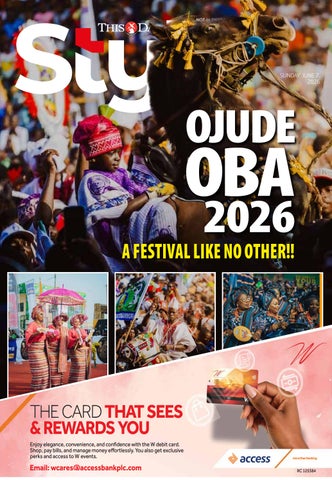
jude Oba is the kind of festival that creates nostalgia even before you experience it. Or, as Gen Z would put it, FOMO. Before I got to Ijebu-Ode, I thought I understood Ojude Oba. had seen

There are certain events that seem to have taken on a life of their own, and Ojude Oba is undoubtedly one of them. Yes, it has always been an important cultural festival, but somewhere along the line, it became much bigger than that. People now organise their calendars around it. Fashion designers prepare for it. Hotels anticipate it. Friends coordinate trips for it. Social media spends days talking about it. And before one edition is over, conversations about the next have already begun. What fascinates me most is what it says about culture itself. For years, we have been told that younger generations are becoming disconnected from tradition, yet lately, Ojude Oba seems determined to prove otherwise. The people travelling for it, styling for it, documenting it and counting down to it are often young people. Culture did not disappear. It simply adapted. It found new platforms, new audiences and new ways to tell its story.
That is why Ojude Oba 2026 is our cover feature this week. Beyond the horse riders, fashion and spectacle lies a much bigger story about identity, belonging and community. The article takes you inside this year’s celebration and captures the atmosphere of a festival that has become one of the country’s most powerful cultural exports. Speaking of connection, one of the most interesting conversations in this issue revolves around dating apps.
A friend recently told me she downloaded one while she was abroad. What amused me wasn’t the fact that she joined. It was how quickly she explained herself. She wasn’t looking for anything serious, she insisted. She was just curious. “Just seeing what was out there.”
She would delete it when she got back home.
The disclaimer arrived so quickly that it almost felt rehearsed. It made me realise that many people are perfectly comfortable being found but far less comfortable admitting they are looking. We have accepted meeting people online. Friendships begin online. Relationships begin online. Entire marriages have started from a DM. Yet mention a dating app, and suddenly, people become shy. Perhaps what many people are uncomfortable admitting is not that they use dating apps, but that they are actively searching for connection.
My feature asks a simple question: Will you find love on a dating app? Even though the more interesting question should be whether dating apps deserve the stigma they still carry in the first place.
This week also reminded me how easy it is to become overwhelmed by everything competing for our attention. The endless stream of news. The constant notifications. The pressure to stay informed. At some point, realised there is a difference between being informed and being overloaded. Protecting your peace does not mean ignoring the world. It simply means recognising that your mind needs rest too. Before go, I would like to ask that we constantly keep those affected by the recent wave of insecurity across the country in our prayers, especially the people of Oyo State and all other communities currently dealing with uncertainty and fear. Our hearts remain with them, and we pray for safety, comfort for grieving families, protection for vulnerable communities and lasting peace across the country. It will be well.



By Konye Chelsea Nwabogor
If you’ve been outside, online, or at a wedding recently, you’ve probably noticed it. People are losing weight at a speed that would have seemed almost suspicious a few years ago. The friend who has been trying to lose weight for years suddenly appears looking like a completely different person. The colleague who once complained about stubborn weight somehow drops four dress sizes between quarterly meetings. The influencer who spent years promoting detox teas now looks dramatically slimmer. Even the aunties are getting in on the action.
For every five dramatic weight-loss transformations you see these days, at least two were probably helped along by a Glucagon-Like Peptide-1 (GLP-1) medication. Maybe more.
It has become one of the biggest open secrets in wellness. Behind many of the striking before-andafter photos flooding social media are medications originally developed to help manage diabetes and obesity. The question is no longer whether people are using them. The question is whether you should. We are living through the first era in modern history where rapid weight loss has become so common that people barely ask questions anymore. In the same way everyone suddenly seemed to get veneers, then everyone seemed to discover Pilates, everyone now seems to know someone who is taking Ozempic, Wegovy, Mounjaro, or one of the growing number of GLP-1
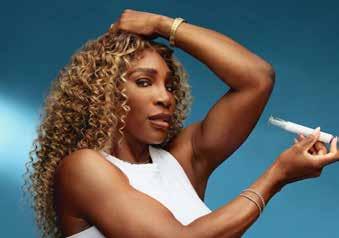
medications.
The new body trend is not a handbag, a hairstyle, or a fashion aesthetic.
It is weight loss itself. And unlike most trends, this one is rooted in science.
GLP-1 receptor agonists are medications that mimic a naturally occurring hormone in the body. They help regulate blood sugar, slow digestion, and reduce appetite. The result is that people feel fuller for longer and often consume significantly fewer calories than they did before.
The reason these medications have become so popular is simple: they work.
For years, the weight-loss industry made billions selling hope. Fatburning teas, miracle supplements, detox plans, appetite suppressants, waist trainers, and countless diets promised dramatic results. Most delivered frustration. GLP1 medications, however, have produced substantial weight loss for many users in both clinical studies and real life.
That does not mean they are for everyone.
Somewhere along the way, the conversation became entirely aesthetic. We became fascinated by shrinking waistlines, smaller dress sizes, and dramatic before-and-after photos. What often gets forgotten is that these medications were developed to help manage serious medical conditions.
For people living with obesity, type 2 diabetes, insulin resistance, or weight-related health complications, GLP-1 medications can be lifechanging. In many cases, they are
not simply helping someone look different. They are helping someone become healthier.
That distinction matters.
Because social media has a way of turning medical treatments into lifestyle accessories.
The reality is that not everyone who wants a GLP-1 medication necessarily needs one. Losing a few kilograms before a holiday is very different from managing obesityrelated health risks. The decision should be based on health needs, not social pressure or comparison.
Another thing people rarely discuss is that these medications do not magically fix your relationship with food.
Many people lose weight while taking them. Some regain weight after stopping. This is because weight gain is often more complicated than appetite alone.
Sleep, stress, emotional eating, activity levels, hormones, and longestablished habits all play a role. A medication may make eating less easier, but it does not automatically solve every underlying issue.
There is also the reality of side effects.
Some users experience nausea, constipation, diarrhoea, fatigue, headaches, or digestive discomfort. Others tolerate the medication extremely well. Like most medical treatments, experiences vary from person to person.
Then there is the financial question.
These medications are expensive, and for many people, maintaining them long term may not be realistic.
That is part of the reason healthcare professionals often stress the importance of viewing them as one
tool within a broader health strategy rather than a stand-alone solution.
Yet perhaps the most fascinating thing about the rise of GLP-1 medications is what it says about society.
For years, weight loss was treated almost like a moral achievement.
People admired discipline, selfcontrol, and willpower. Now, as more people openly discuss medical interventions, the conversation is beginning to change. There is a growing recognition that weight management is often far more complex than simply eating less and moving more.
And perhaps that honesty is a good thing.
There is nothing noble about struggling unnecessarily. If a medically approved treatment can improve someone’s health, confidence, mobility, and overall quality of life, there should be no shame attached to that.
The real question is not whether GLP-1 medications are good or bad.
The real question is whether they are appropriate for you. That answer should come from a qualified healthcare professional, not TikTok, not Instagram, and certainly not from that friend who lost twenty kilograms and now insists the secret was “just cutting out bread.” GLP-1 medications are neither miracle cures nor villains. They are simply another tool in the increasingly complicated conversation about health, weight, and the bodies we live in.
And judging by how many suddenly slimmer people are walking around these days, that conversation is only just getting started.


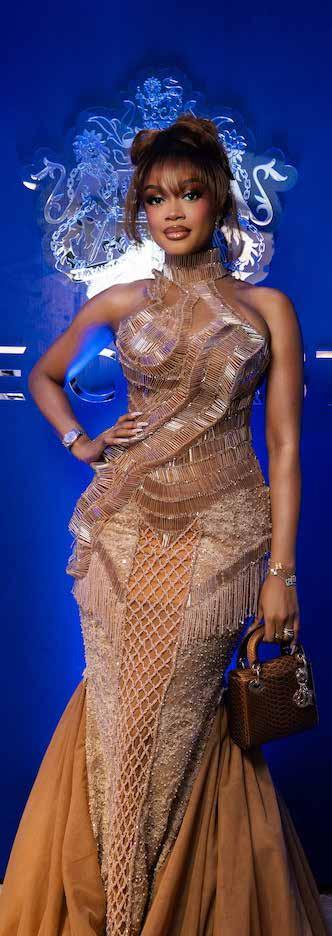
These days, beauty is no longer something people simply hope for. It is something they plan for. From skincare routines that rival laboratory experiments to Pilates classes, teeth whitening appointments, collagen supplements, and personal styling consultations, more people are approaching beauty with the same intentionality they bring to their careers, finances, and fitness goals. The internet has given this phenomenon a name: beauty maxxing. At its core, beauty maxxing is the idea that looking your best is not entirely about genetics. It is about making deliberate choices that help you become a more polished, confident, and attractive version of yourself. While the name may be new, the concept is not. People have always invested in their appearance. The difference is that today’s approach is more strategic, more informed, and often far more holistic.
So what exactly does beauty maxxing involve?
1. Start With Your Skin
If beauty maxxing has a headquarters, it is probably skincare.
The days when a bar of soap and a prayer were considered a skincare routine are long gone. People are paying closer attention to ingredients, consistency, and prevention. Sunscreen has become non-negotiable, while products containing vitamin C, retinol, niacinamide, and hyaluronic acid have become staples in many bathrooms. Professional treatments have also become increasingly common. Microneedling, chemical peels, laser treatments, skin boosters, and facials are no longer reserved for celebrities. The goal is not necessarily perfection. It is healthier, brighter, and more eventoned skin.
2. Give Your Hair the Attention It Deserves
Hair remains one of the quickest ways to transform your appearance.
Whether natural, relaxed, braided, locked, or covered, healthy hair immediately elevates a person’s overall look. More people are becoming intentional about scalp health, protective styling, deep conditioning, and choosing hairstyles that genuinely suit their face shape and lifestyle. The conversation has moved beyond simply making hair look good. People want it to actually be healthy, too.
3. Build a Better Body, Not Just a Smaller One
One of the most interesting shifts in beauty culture is the move away from simply trying to be thin.
Today’s beauty conversation focuses more on strength, posture, mobility, and overall wellness. Walking, Pilates, strength training, yoga, and


products while ignoring one of the most effective beauty treatments available for free.
7. Upgrade Your Grooming Routine
The little details matter.
Well-maintained nails, shaped brows, smooth skin, a signature fragrance, and good personal hygiene may seem minor individually, but together they create a significant impact. This is often what separates looking good from looking polished.
resistance exercises have become popular because they improve not only how the body looks but also how it feels.
A strong body often creates the kind of confidence that no beauty product can replicate.
4. Don’t Ignore Your Smile
People often underestimate how much a smile affects their appearance.
Teeth whitening, professional cleanings, orthodontics, and better oral hygiene have become major parts of modern beauty routines. A healthy smile can make someone appear younger, more polished, and more approachable almost instantly.
It is one of the simplest upgrades available.
5.
Beauty does not stop at skincare and fitness.
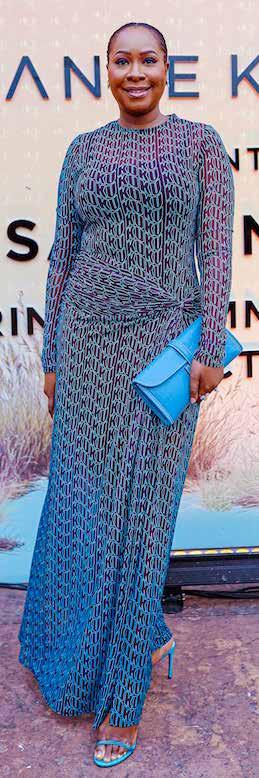
Fashion plays a huge role in how attractive and put-together a person appears. Understanding what colours flatter your complexion, what silhouettes suit your body, and what personal style feels authentic to you can completely transform your appearance.
Sometimes the biggest glow-up has less to do with your face and more to do with finally learning how to dress yourself properly.
6. Sleep More Than You Think You Need
Beauty maxxing has reminded people of something experts have known for years: sleep matters. Good sleep affects everything from skin quality and hormone balance to energy levels and mood. Chronic sleep deprivation often shows up first on the face through dull skin, puffiness, dark circles, and premature ageing. Many people spend thousands on
One of the reasons beauty maxxing attracts so much attention is that it has normalised conversations around aesthetic treatments.
Botox, fillers, body contouring, laser procedures, skin-tightening treatments, and other non-surgical enhancements have become far more common than they once were. While not everyone chooses this route, many people now view these treatments in the same way previous generations viewed hair appointments or facials. For some, they are simply another tool in the beauty toolkit.
9. Wellness Is the New Luxury
Perhaps the biggest beauty trend of the past few years has been the rise of wellness. People are paying closer attention to hydration, nutrition, gut health, supplements, hormone balance, and stress management because they understand that beauty often begins internally. Glowing skin, healthy hair, and sustained energy are frequently signs of overall well-being rather than just a good product recommendation.
Looking healthy has become just as desirable as looking beautiful.
For all the treatments, products, routines, and wellness practices in the world, there is one thing that remains impossible to bottle. Confidence.
The most attractive people are not always the ones with the most symmetrical faces or the most expensive routines. They are often the people who know themselves, carry themselves well, and feel comfortable in their own skin. Which may be the real lesson behind beauty maxxing. Looking your best is not about becoming someone else. It is about becoming a more refined version of who you already are.
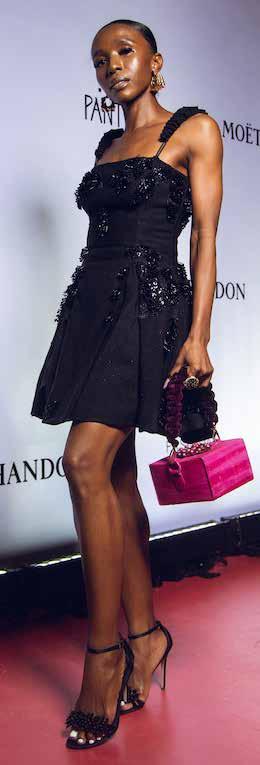
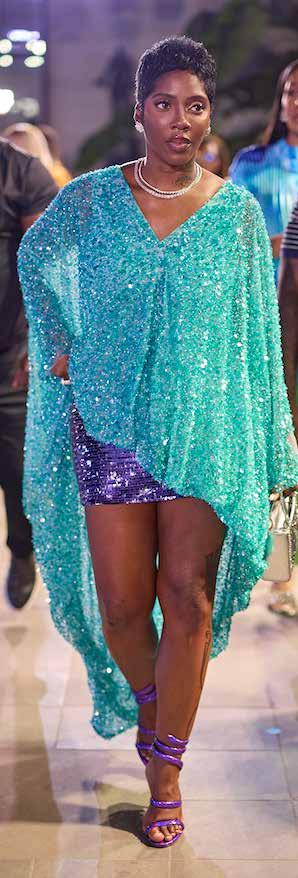
There is a good chance that even if you don’t immediately recognise the name Yutee Rone, you have seen her work.
You have seen it at parties, commanding attention at weddings, appearing on red carpets, and turning heads at some of the country’s most glamorous social events.
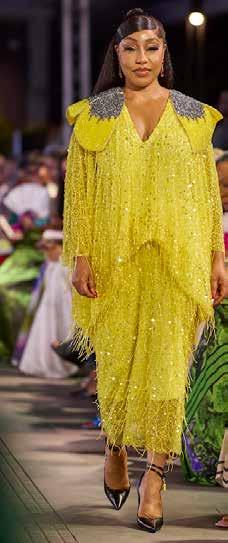
You have also seen it on celebrities, society women, business leaders, and women who understand that style is not simply about getting dressed but about making an entrance. You have seen the dramatic pleats, the fluid draping, the rich fabrics, and the unmistakable elegance that have become synonymous with the brand.
For nineteen years, Yutee Rone has been quietly building one of Nigerian fashion’s most respected eponymous luxury womenswear labels. In an industry often obsessed with what is new, she has achieved something far more difficult: creating a brand with a clear identity, a loyal clientele, and an aesthetic that remains instantly recognisable season after season.
That achievement becomes even more remarkable when placed against the backdrop of the Nigerian fashion industry itself. Fashion may be one of the country’s most exciting creative sectors, but it is also one of its most competitive. New designers emerge every year, trends evolve rapidly, consumer tastes shift, and the realities of running a fashion business continue to test even the most talented creatives. Yet through all of that, Yutee Rone has not only endured but continued to grow, earning a reputation for craftsmanship, sophistication, and a distinct approach to modern femininity.
The story of the brand began in 2007 when Yutee Rone decided to fully embrace what had always been her first love. Fashion had long occupied her thoughts, but like many entrepreneurs, she spent years exploring different interests before finally committing herself completely to design. Looking back, she credits passion, focus, tenacity, and an enduring love for the craft as the qualities that have carried her through nearly two decades in business.
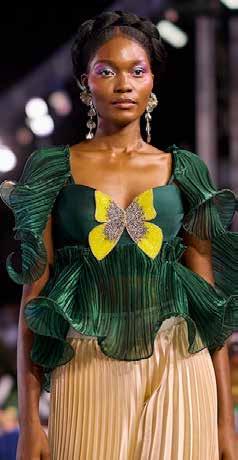
What started as a vision has since evolved into a brand recognised for its experimental textiles, intricate craftsmanship, luxurious fabrics, and signature pleating techniques. Yet
IS
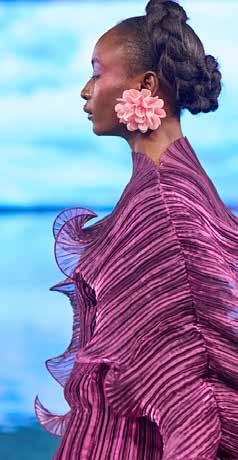
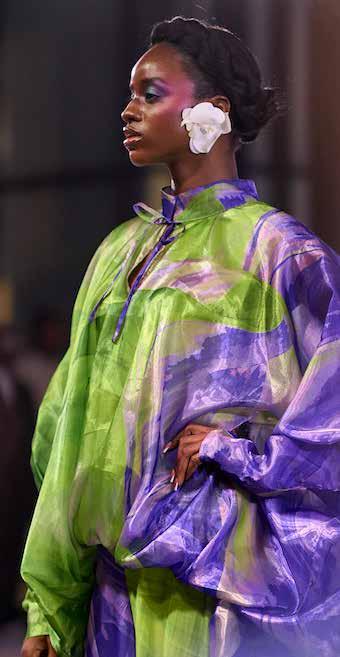
the real success of Yutee Rone lies not simply in what the garments look like but in how they make women feel.
“I design with a real woman in mind,” she said in a recent interview. “A woman who wants to feel powerful, graceful and completely herself.”
That philosophy has remained remarkably consistent throughout the brand’s evolution.
While trends have come and gone, the Yutee Rone woman has remained at the centre of every collection. She is sophisticated, feminine, elegant, ambitious, and confident.
She appreciates luxury but does not need excess. She understands style and values quality. Most importantly, she dresses for herself.
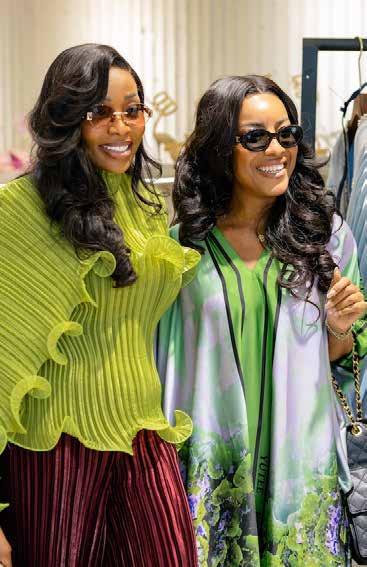
It is perhaps why the brand has developed such a loyal following over the years. Yutee Rone’s clients do not simply buy clothes; they buy into an aesthetic and a feeling. Whether it is a dramatic evening piece, a flowing boubou, or one of the brand’s now-famous pleated designs, there is a consistency to the experience that women have come to trust.
having Yutee Rone on the New York Fashion Week official calendar,” she says. “That recognition meant the world to my team and I.”
The achievement represented years of dedication and persistence, but it also highlighted a larger story unfolding across the continent. African fashion is increasingly commanding global attention, and Nigerian designers continue to play a leading role in shaping that narrative. Yutee Rone’s presence on such an important platform reinforced her position among the designers helping carry that story forward.
Yet despite the significance of New York Fashion Week, some of the brand’s most memorable moments have happened much closer to home.
Few designers manage to establish a signature aesthetic strong enough to become instantly recognisable. Yutee Rone has done exactly that.
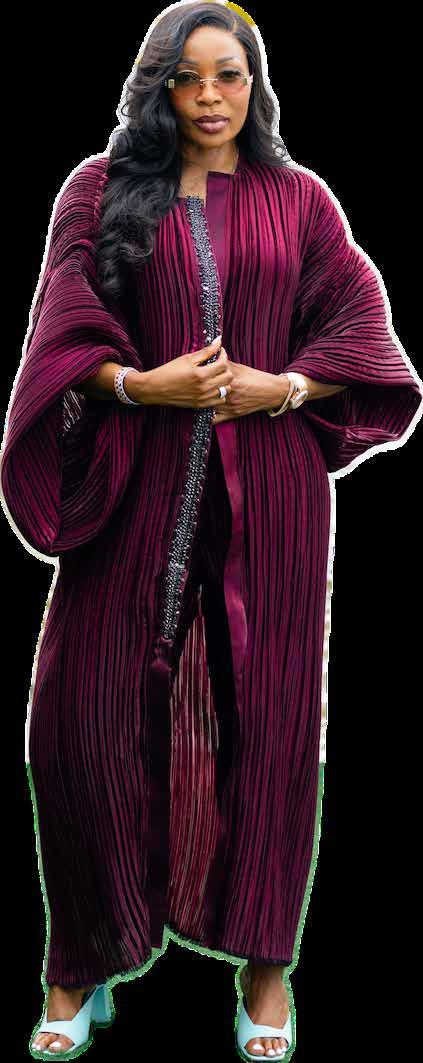
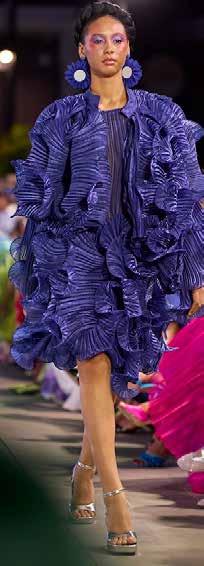
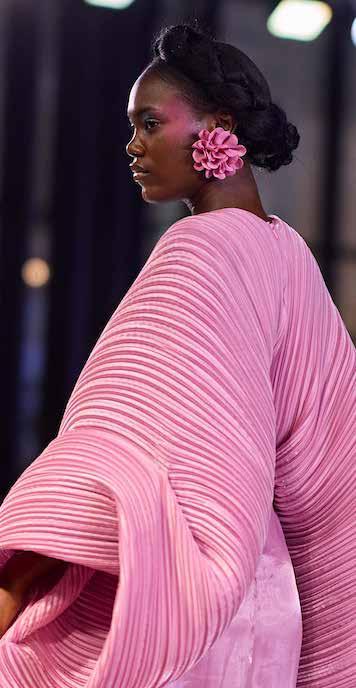
Mention pleats within Nigerian fashion circles and her name almost inevitably enters the conversation. Over the years, pleating has become one of the brand’s defining signatures, helping distinguish it in an increasingly crowded luxury market.
“I truly am the queen of pleats,” she says with characteristic confidence. “I’ve always been drawn to straight lines. The complexity of taking those lines in different directions is a skill I’m deeply proud of.”
It is a statement that feels less like selfpromotion and more like fact. Her mastery of pleating has become one of the most recognisable elements of the Yutee Rone aesthetic. Combined with her skill in draping and fabric manipulation, it has allowed her to create garments that feel sculptural and fluid at the same time.
Her now-iconic organza pleated trousers have become favourites among clients, while her customised boubous continue to attract women looking for pieces that balance comfort, elegance, and impact. Organza and silk appear consistently throughout her collections, serving as part of the visual language that has become deeply associated with the brand.
Yet perhaps what separates Yutee Rone from many of her contemporaries is her willingness to evolve without abandoning her identity.
The Nigerian fashion industry has transformed dramatically since she launched her label.
International interest in African fashion has grown significantly. Social media has altered consumer behaviour. Luxury itself has become more competitive. Through all of these changes, Yutee Rone has continued refining her aesthetic rather than chasing every passing trend.
That ability to remain relevant while staying authentic has earned the brand opportunities beyond Nigeria’s borders.
One of the most significant came when Yutee Rone’s Wavering Lines Fall/Winter 2024 collection was presented on the official New York Fashion Week calendar, placing the brand on one of fashion’s most prestigious global platforms.
“My real breakthrough moment will always be
Over the years, Yutee Rone has become a familiar presence on major fashion platforms, including Arise Fashion Week, where her collections have consistently demonstrated her ability to combine technical craftsmanship with strong visual storytelling. Her work has also found its way into the wardrobes of numerous high-profile women, further cementing her reputation as a designer who understands the relationship between luxury and wearability.
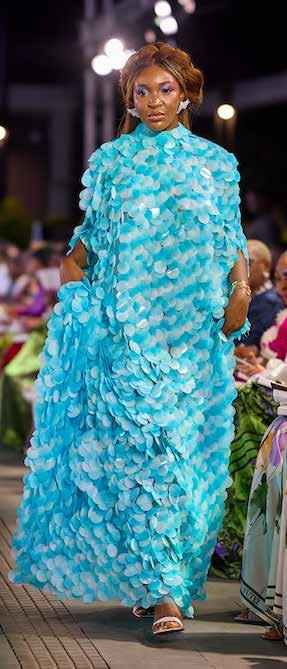
That understanding was on full display during the unveiling of her latest collection, Textures of the Ocean.
Presented at a breathtaking standalone showcase in Lagos, the collection was one of the season’s most talked-about presentations. Inspired by a trip to Mykonos, it explored the movement, beauty, mystery, and depth of the ocean through flowing silhouettes, layered textures, and intricate detailing.
The showcase itself reflected the maturity of a designer completely comfortable in her creative voice. There was confidence in the execution, sophistication in the presentation, and a clear understanding of how to transform inspiration into an immersive fashion experience.
“The ocean captivated me completely,” Rone explains. “Have you ever looked at the water and imagined the many textures moving beneath the surface? Or sat on the shore watching waves wash up onto the sand? The ocean is truly beautiful, and that beauty became the heart of the collection.”
The result was a collection that felt both emotional and technically accomplished, demonstrating why Yutee Rone continues to command attention nearly two decades into her career.
Of course, building a luxury fashion business in Nigeria comes with challenges that extend far beyond creativity. Rising production costs, economic uncertainty, intellectual property concerns, and the demands of maintaining quality at scale are realities every designer must navigate.
“We are growing, but we’re doing it carefully,” she says. “Expanding production while preserving the exclusivity that defines the brand is important to us.”
That intentional approach has become central to the brand’s growth strategy. As the African luxury market continues to expand, Yutee Rone is focused on widening its reach without compromising the craftsmanship and detail that define its identity.
The ambitions are clear. Paris. London. Milan. New audiences. New markets. New opportunities.
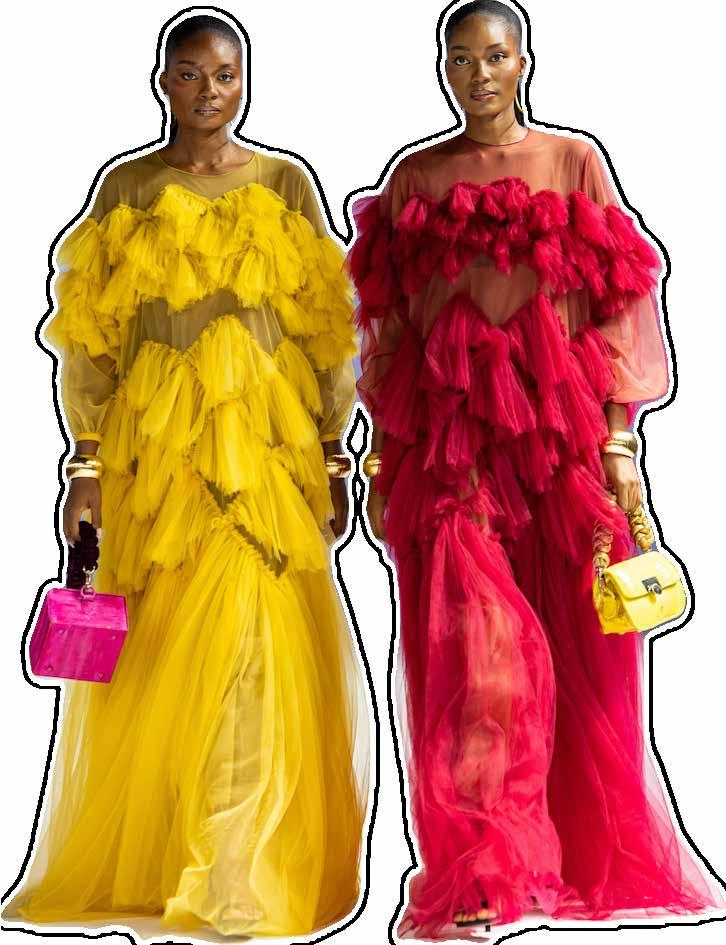
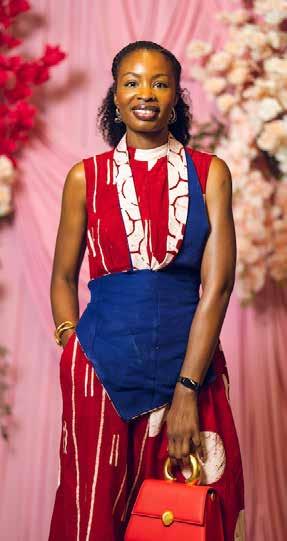
If your wardrobe currently consists of black, white, beige, navy, and the occasional grey thrown in for excitement, you are not alone. Many of us reach a point where we realise our wardrobes have become suspiciously neutral. Everything matches, everything works, and everything is... a little predictable.
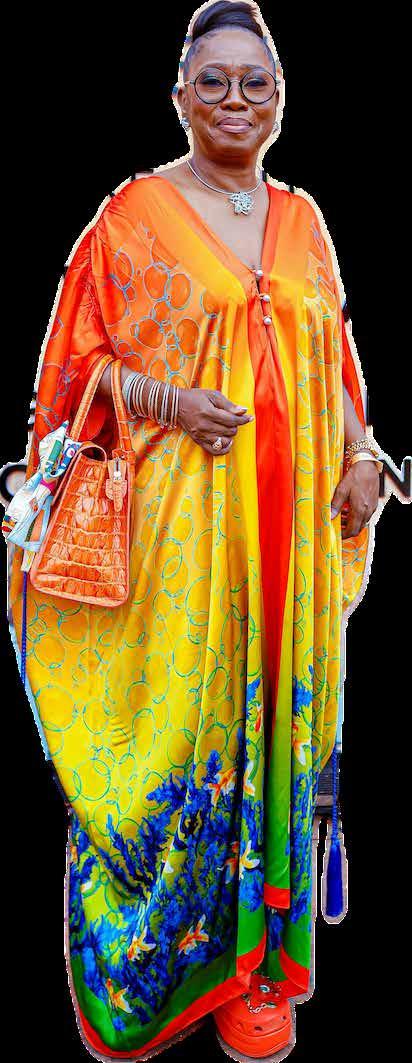
There is nothing wrong with neutrals. In fact, they are the backbone of most great wardrobes. The problem starts when they become the entire wardrobe. Colour has a way of changing not just how an outfit looks but how it feels. A woman in a bright orange dress walks into a room differently from a woman in head-to-toe black. A cobalt blue blazer carries a different energy from a beige one. Colour communicates confidence, creativity, optimism, and sometimes even playfulness before you say a single word. Yet for many people, colour feels intimidating. What if it is too loud? What if it doesn’t suit you? What if people stare? The truth is that colour is far easier to wear than most people think.
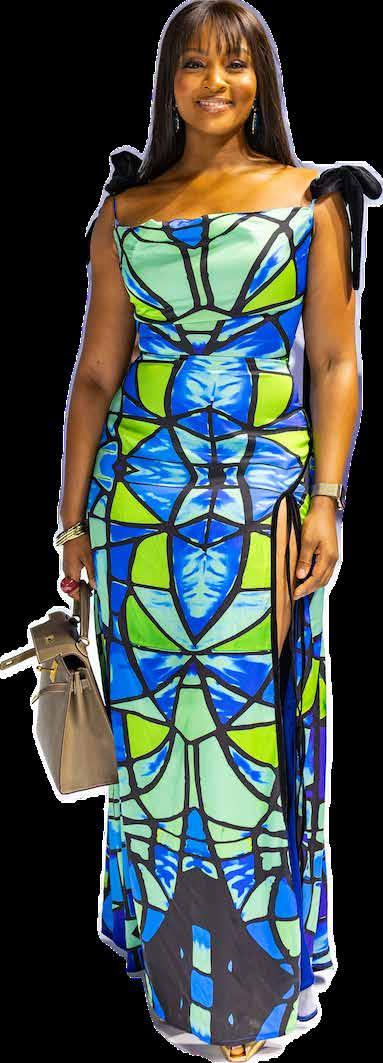
One of the biggest mistakes people make when trying to embrace colour is attempting too much too quickly.
If your wardrobe has been neutral for years, you do not need to suddenly appear in a neon green suit tomorrow morning. Start with accessories.
A bright handbag, colourful sandals, statement earrings, or even a vibrant scarf can completely transform an otherwise simple outfit. A white shirt and blue jeans become instantly more interesting when paired with a red handbag or a pair of yellow heels.
Not every colour makes everyone feel amazing.
Some people come alive in jewel tones like emerald green, sapphire blue, ruby red, and deep purple.
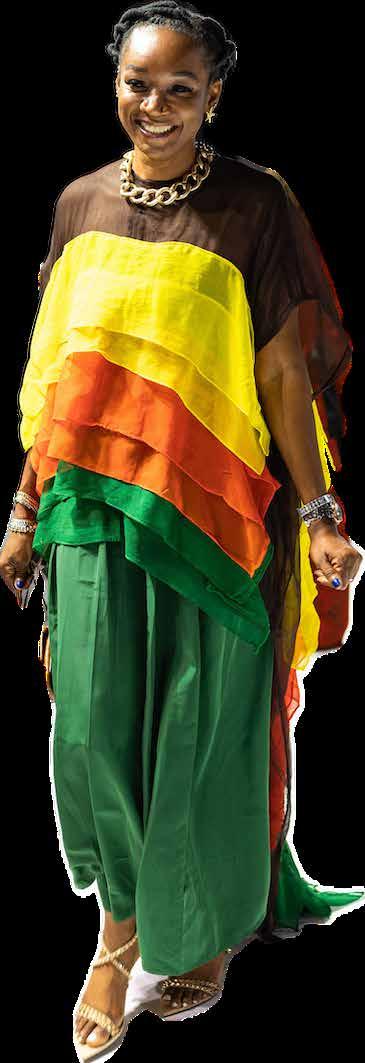
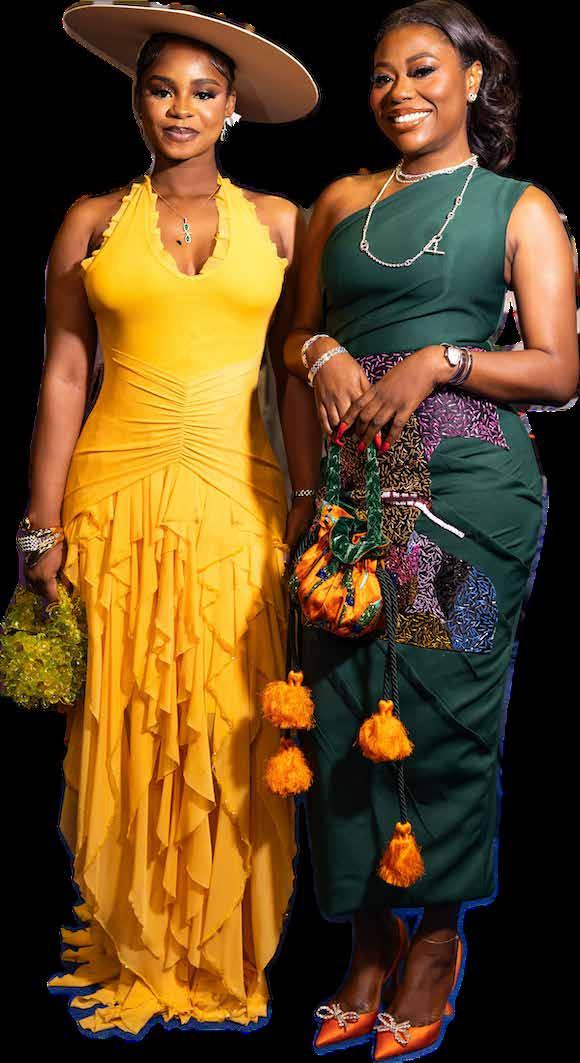
Others look incredible in softer shades like blush pink, sage green, lavender, or powder blue.
The easiest way to figure out what works is surprisingly simple. Pay attention to compliments. Which colours do people consistently mention when you wear them? Which outfits make you feel attractive, confident, and comfortable? Those are usually clues worth following.
If colour makes you nervous, keep the rest of the outfit simple.
A bright pink blazer works beautifully with black trousers. A bold yellow skirt looks elegant with a white shirt. A green dress needs very little else beyond simple accessories.
When one colour becomes the focal point, the outfit feels intentional rather than overwhelming.
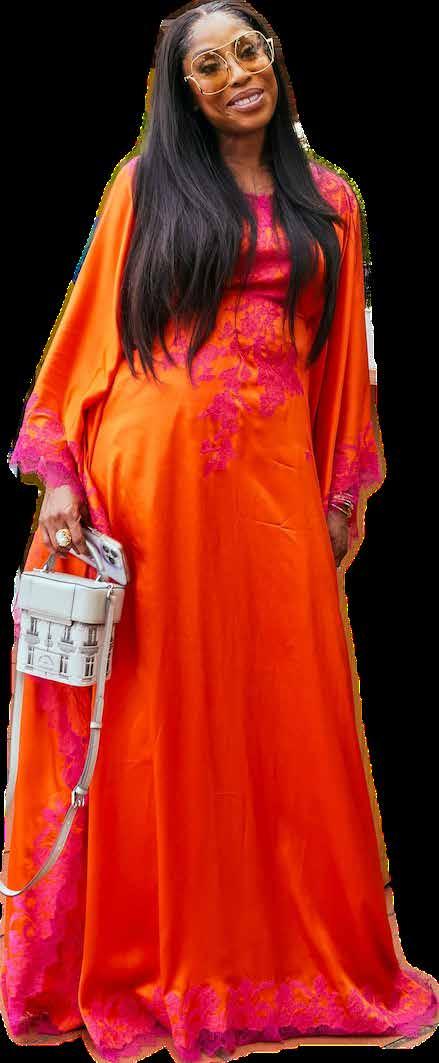
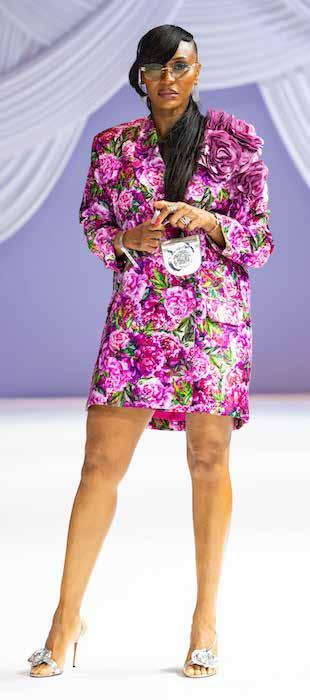
One reason some people avoid colour is that they think matching colours is complicated. It really is not.
Blue and orange work beautifully together. Pink and red have become a modern classic. Green and purple can look unexpectedly chic. Yellow and brown create a rich, sophisticated combination. Even colours that seem unusual at first often work when worn confidently.
If wearing a solid orange dress feels too bold, try a print that contains orange instead.
Floral dresses, patterned skirts, striped shirts, and printed kaftans often combine multiple colours effortlessly. The work is already done for you.
One of the easiest places to find colour inspiration is all around you. Look at nature, art, interiors, fabrics, markets, and even architecture. Some of the most beautiful colour combinations exist outside fashion. Think of the rich earth tones found in northern landscapes. The vibrant blues of the ocean. The pink and orange hues of a sunset. The colourful fabrics worn across Africa.
Perhaps the biggest mistake people make is treating colourful clothing like it belongs in a separate category called “special.”
A print can introduce colour into your wardrobe without making you feel like a human highlighter.
The bright dress waits for a
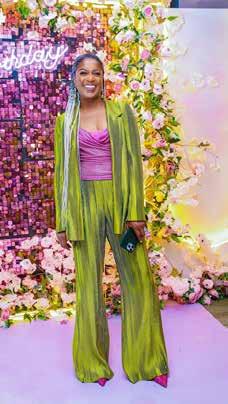
wedding. The colourful blazer waits for an important event. The beautiful pink trousers wait for a future version of you that feels brave enough. Meanwhile, everyday life gets the black T-shirt. Wear the colour now. Wear the green dress to lunch. Wear the orange blouse to work. Carry the red handbag on an ordinary Tuesday.

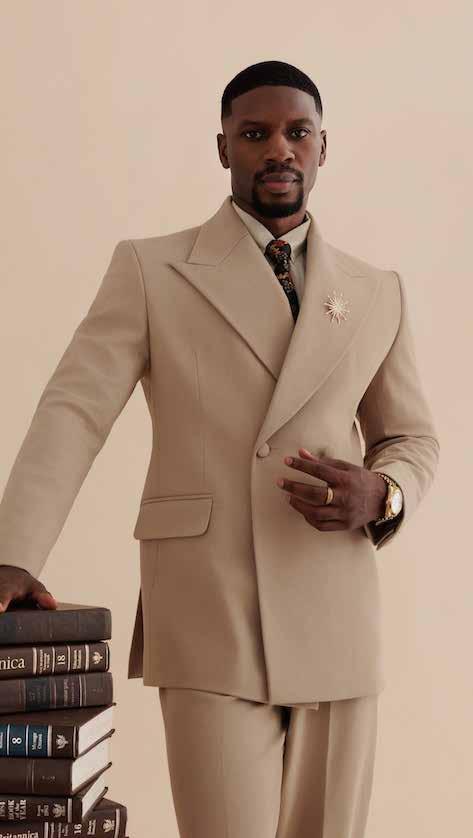
For decades, theatre has asked audiences to sit back, watch, and applaud when the curtain falls. AbdulQudus Ibrahim had a different idea.
As the Founder and Creative Director of QIB Productions, Ibrahim is helping reshape the live entertainment landscape through interactive theatre, a form of storytelling that places audiences at the centre of the action rather than on the sidelines.
In an entertainment culture increasingly driven by experience, immersion, and participation, his productions have carved out a distinct space, attracting audiences eager for something beyond the traditional stage. What began as a bold, creative experiment has grown into one of the most talkedabout movements in contemporary theatre.
Through QIB Productions, Ibrahim has produced a series of immersive performances that challenge conventional storytelling, blur the lines between actor and audience, and redefine what live entertainment can look like in Nigeria. Yet his ambitions extend far beyond the stage. With plans to expand into television, film, and larger-scale immersive productions both within and outside Nigeria, he is creating a new model for audience-centred entertainment.
In this conversation, AbdulQudus Ibrahim reflects on his journey from Banking and Finance graduate to award-winning storyteller, the challenges of pioneering a new entertainment category, the evolution of interactive theatre, and his vision for the future of African storytelling.
You’re widely recognised as one of the pioneers of interactive theatre in Nigeria, but for anyone hearing that term for the first time, what exactly is interactive theatre, and what made you believe Nigerian audiences were ready for something so different?
When you’re watching a movie at home and find yourself wishing you could tell the characters what to do, that’s exactly the experience interactive theatre offers. Instead of being passive observers, the audience becomes part of the story. In our productions, for example, the audience can influence key decisions and ultimately decide how the play ends. Interactive theatre is a theatrical performance that allows the audience to become completely immersed as participants and the primary reason of the production.
Nigerians love entertainment & believe people are always looking for new entertainment experiences. I felt that if we delivered a high standard, Nigerian audiences would embrace it, and fortunately, they have.
Before QIB Productions, theatre here largely followed a familiar formula: audience sits, actors perform, curtain

closes. What made you want to disrupt that model and create something far more immersive?
People naturally enjoy being involved rather than just watching from a distance.
Interactive theatre delves into that desire for participation, connection and shared experiences. I took a chance on the idea, listened closely to audience feedback, and the response showed me that there was a real appetite for something fresh and immersive in the Nigerian entertainment space.
You studied Banking and Finance before moving fully into storytelling. How much of QIB Productions’ growth has been shaped not just by creativity, but by your understanding of business, structure, and audience behaviour?
When running a business, you have to draw from all your knowledge and experiences. You have to balance the creative side with the business side, because at the end of the day, it is a business that provides entertainment services. Much of our growth has come from understanding the industry we are in, constantly putting ourselves out there, and paying close attention to our audience: what excites them, keeps them engaged, and enhances their experience.
Winning the Beeta Universal Scriptwriting Competition was an important early moment in your journey. Looking back, was that the first real sign that this could become something much bigger than passion?
Sometimes all you need is one “Yes”, and winning the competition was definitely the sign needed. I was uncertain about the path wanted to take and was struggling to balance a corporate 9-5 career with my desire to pursue storytelling. That win gave me the confidence and validation to believe that my passion could become something bigger, and it ultimately encouraged me to commit fully to the journey.
Interactive theatre sounds thrilling, but also incredibly demanding. How do you create productions where audience participation feels seamless and exciting rather than unpredictable chaos?
While there is an element of unpredictability, the experience is actually built on a great deal of structure and preparation. As the writer, carefully anticipate different decisions the audience might make, and create multiple pathways the story can follow. The goal is to make participation feel natural and exciting, not chaotic. Our actors are extensively trained to think on their feet, adapt in real time, and guide the audience without making them feel restricted. We give people the freedom to influence the story, but within a carefully crafted framework that keeps the narrative engaging and coherent.
The audience may not know what will happen next, but behind the scenes, there’s a lot of planning that ensures every choice leads to a meaningful and entertaining experience.
QIB Productions has built a reputation for audience-driven experiences that genuinely get people talking. What do you think audiences are truly responding to—the storytelling, the novelty, or the rare chance to become part of the performance itself?
I think audiences are responding to everything. It’s not just another stage play; it’s an experience. As the writer, producer & director of all our plays, am intentional about creating a memorable and immersive journey from when you arrive to the end of the show. The goal has always been to make the audience forget their own world and become fully immersed in the world of the characters we’ve created for the duration of the play. Most times the audience find themselves wondering whether they’re watching a play or witnessing real life drama unfold right before them. That’s what makes the experience so engaging and unforgettable.
Nigeria’s entertainment ecosystem is dominated by film, music, and increasingly digital content. Was it difficult convincing people that theatre— especially an unconventional version of it—could be commercially viable, culturally relevant, and exciting? Yes, it was definitely challenging in the beginning. Many people have the perception that theatre is boring, and unlike film or music, a large percentage of Nigerians haven’t been regularly exposed to theatre as a form of entertainment. While there are powerful theatre houses doing incredible work and serving as inspiration, we had to do a lot of convincing for people to buy into our own version of it. The challenge is even greater in today’s digital age, where people are constantly consuming short-form content and are used to instant entertainment. Asking someone to leave the comfort of their home, spend money on a ticket, and dedicate a few hours to a live performance requires a lot of trust and persuasion. That’s why we’ve focused heavily on promotion in an engaging way and showcasing that our productions are more than just plays; they are immersive experiences. Once people attend a show and see how interactive and exciting it is, they usually become advocates for the brand. The biggest hurdle isn’t getting people to come back, it’s getting them through the door for the first time.
Entertainment globally is shifting from passive consumption to immersive experiences. Do you see QIB Productions as part of a bigger cultural shift in how Nigerians want to be entertained?
Absolutely. believe QIB Productions is part of that shift. Traditionally, theatre audiences simply watched the performance, but we introduced a format where they become active participants in the story. The success of our productions, along with the emergence of more interactive and immersive experiences, shows that there is a growing appetite for immersive and interactive forms of entertainment in Nigeria.
QIB Productions is already looking beyond stage productions into television and film. What kinds of stories are you interested in telling in those spaces, and how do you intend to carry your signature storytelling style into screen entertainment?
I am interested in telling stories that spark conversations, stories that are relatable and emotionally engaging. As we expand into television and film, we’ll carry our signature storytelling style through compelling characters and stories that make viewers feel personally connected to the experience. It’s about bringing the essence of what makes QIB Productions unique to a wider audience.
As someone building a relatively new entertainment category in Nigeria, what has been the biggest challenge: funding, infrastructure, talent, audience education, or simply getting people to understand the vision? Honestly, all of the above. Building a business comes with its challenges, but I am incredibly grateful for my support system: my sisters, Ayeesha Ibrahim (Branding & Communications Director) and Maryam Ibrahim (Operations Consultant), who practically run the business alongside me, and I am also thankful for my mother. When you’re building something new, people don’t immediately understand it because they have nothing to compare it to. We constantly have to explain what interactive theatre is in order to sell tickets. It is also a struggle getting sponsors on board to see and believe in the vision.
When you think about QIB Productions in the next five to ten years, what are you really building—a theatre company, an entertainment powerhouse, a storytelling studio, or something even more ambitious? In the next five to ten years, I see QIB Productions as an entertainment powerhouse known globally for producing high-quality content. While theatre is where we started, the vision has always been bigger than a single medium. Whether it’s theatre, television, or film, our goal is to create compelling stories and unforgettable experiences that resonate with audiences around the world. We want QIB Productions to be recognised globally as a leading storytelling brand that consistently delivers quality across all platforms.
If your work succeeds in the way you envision it, what do you hope your contribution to Nigerian entertainment will ultimately be? What game do you believe you’re changing?
I hope my contribution to Nigerian entertainment will be showing and proving that theatre can be innovative, commercially viable, and appealing to a new generation when approached differently.
I hope QIB Productions inspires more innovation in storytelling and helps redefine what’s possible in Nigerian entertainment.



Enjoy elegance, convenience and confidence with the W debit card. Shop, pay bills and manage money effortlessly. You also get exclusive perks and access to W events












BY KACHI OFFIAH
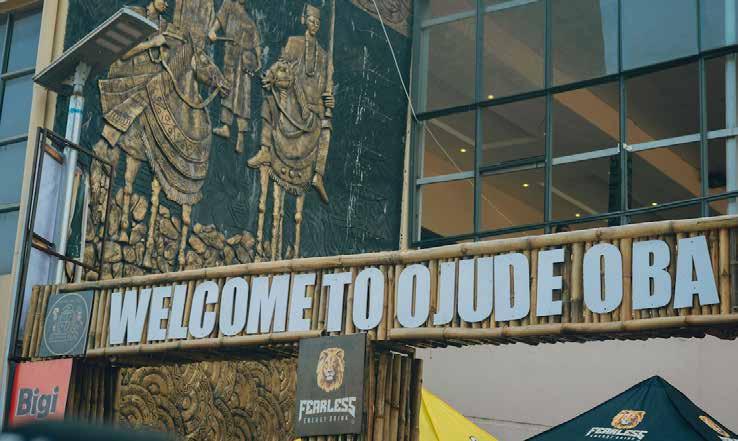
Ojude Oba is the kind of festival that creates nostalgia even before you experience it. Or, as Gen Z would put it, FOMO.
Before I got to Ijebu-Ode, I thought I understood Ojude Oba. I had seen the documentaries, the Instagram reels, the coordinated aso-oke, the horse riders, the famous faces, the viral moments. But nothing prepares you for the way the city receives the festival before the arena does.
Long before one arrives at the arena, Ijebu-Ode has already begun to speak. This was my first time in Ijebu-Ode, and was certain it was going to be everything I had heard and seen.
Ojude Oba is held annually in Ijebu-Ode, Ogun State, traditionally on the third day after Eid al-Kabir. The 2026 edition, held on Friday, May 29, carried extra emotional weight because it was the first after the passing of Oba Sikiru Kayode Adetona, the late Awujale of Ijebuland, who died on July 13, 2025, after a 65-year reign.
In the absence of a crowned Awujale, Olorogun Dr Sunny Kuku, the Ogbeni Oja of Ijebuland, received homage on behalf of the institution. Amid mixed reactions, the ceremony continued as a celebration of the


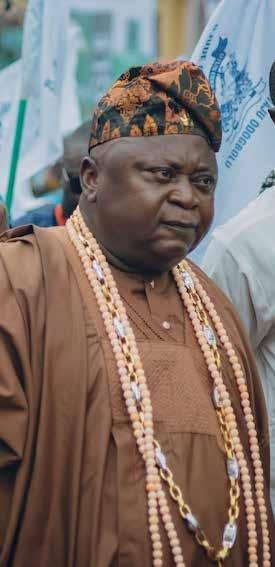
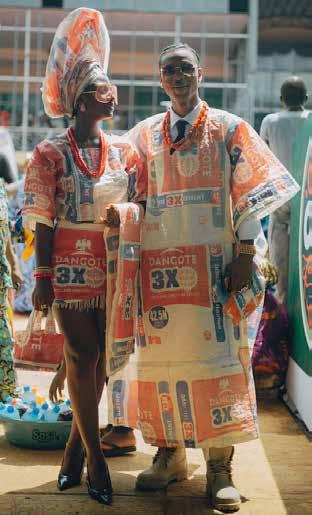
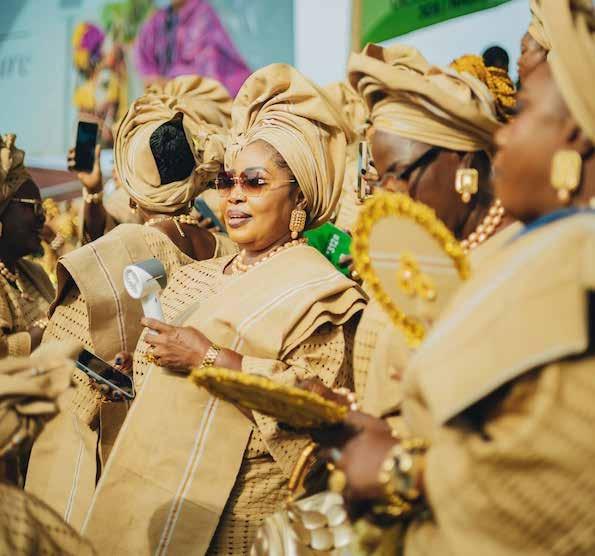

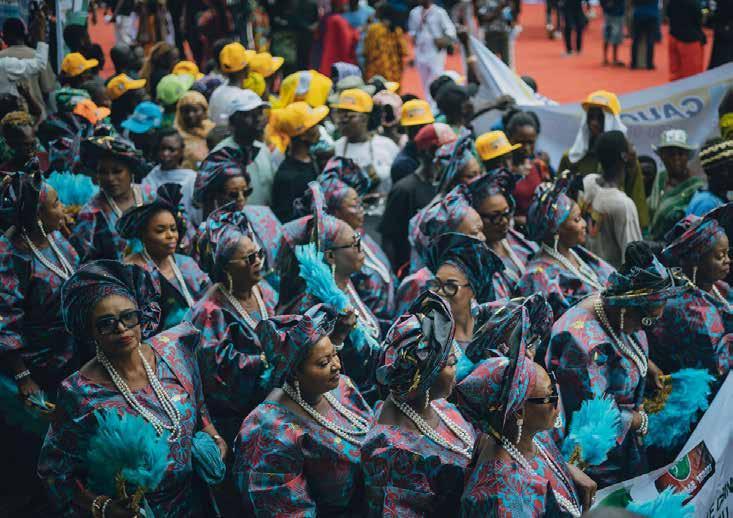
Awujale’s life. Spectators wondered how a festival built to honour the Awujale could hold without its symbol of relevance and authority. For the people of IjebuOde, Ojude Oba 2026 was not simply a gathering. It felt like a homecoming that everyone had rehearsed for years and, perhaps most powerfully, a reminder that heritage does not fade when held by a people determined to keep it alive. It is important for people to approach Ojude-oba as more than a cultural phenomenon. It is something deeper. It is an homage. It is a reunion. It is Thanksgiving. It is the annual moment when sons and daughters of Ijebuland, at home and across the diaspora, return to stand before history and say, with elegance and conviction: “We are still here, and we know who we are.”


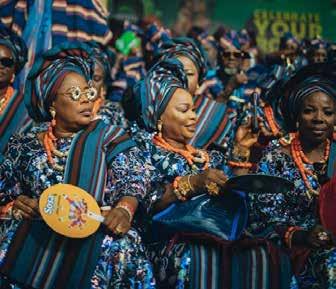
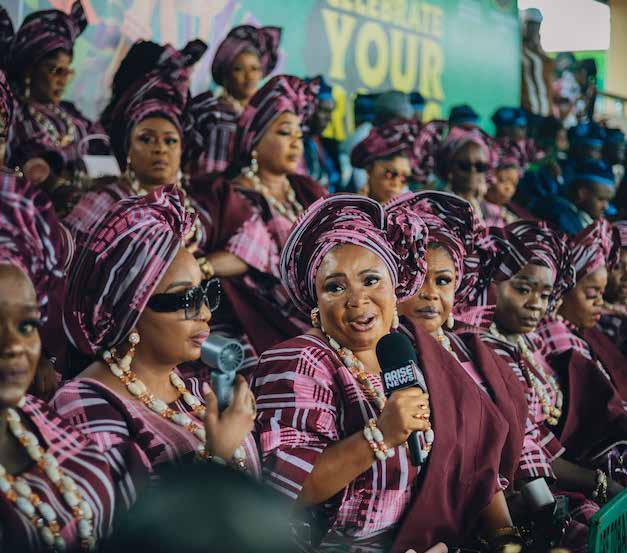
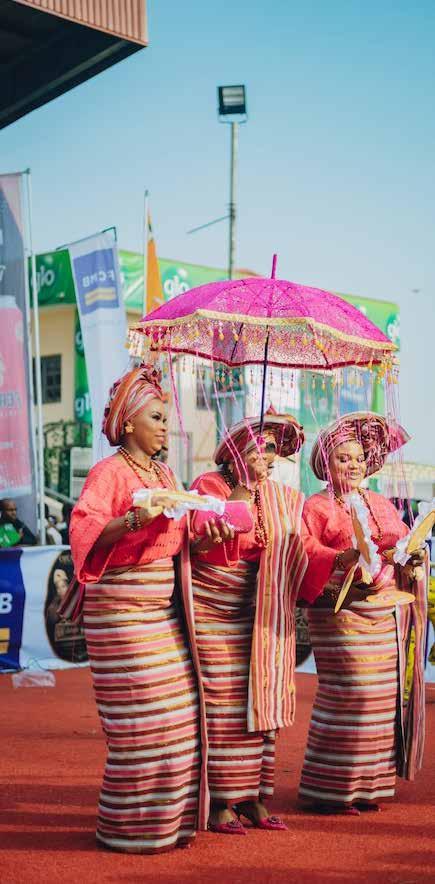
The beauty of Ojude Oba lies in its balance. Ojude Oba makes ageing beautiful. The Regberegbe are Ijebu agegrade societies, usually grouped by age brackets and separated into male Okunrin and female Obinrin groups. It’s difficult to pronounce the name, ‘Regberegbe’, without feeling the rhythm of it. You almost cannot help but shake your shoulders because the name in itself is an honour.
Led by their Giwa and Iyalode, the men and women of the Regberegbe are grouped by age, but their purpose goes beyond the parade. They are social, cultural, and community development societies, bound by generation and responsibility. At Ojude Oba, they appear before the royal pavilion not only to display grandeur but also to renew their allegiance to the Awujale institution.
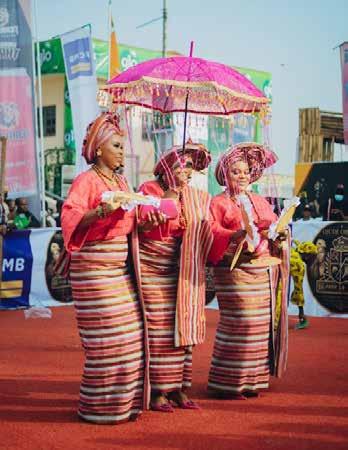
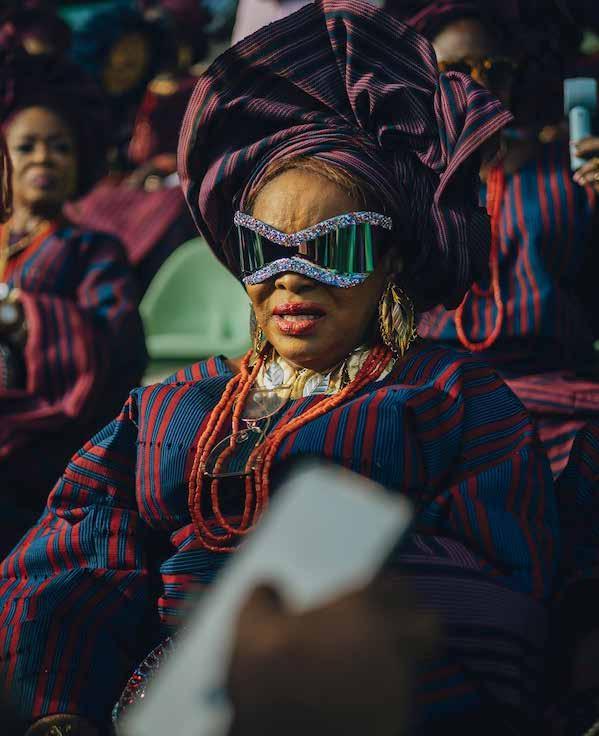
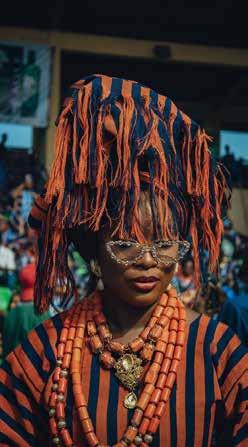
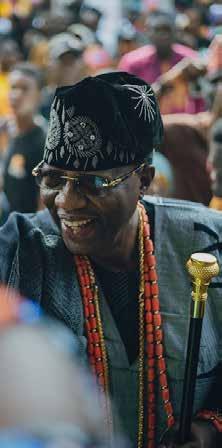
The Regberegbe is regal without being distant and ancient without feeling frozen in time. The familiar fabric for the Regbe Regbe is Aso-Oke, Damask, Lace and Brocade. Gele rose like architecture. Fila sat with quiet confidence. Coral beads, gold accents, walking sticks, fans and sunglasses added their own punctuation to the poetry of appearance.
The festival featured over 90 Regberegbe age-grade processions draped in colour and majesty.
As the sun begins to heat up, so does the festival. The Regberegbe began to file in, group after group, dancing towards the royal pavilion where Olorogun Dr Sunny Kuku received homage on behalf of the Awujale institution.
The parade is a moment where the men and women sing, dance and celebrate themselves. It is a dance to the finish as they compete for a prize. The competition is not merely ceremonial. In 2026, the winning Regberegbe groups and horseriding families received cash prizes: firstplace winners received ₦750,000, secondplace winners ₦600,000, and third-place winners ₦500,000.
Egbe Bobakeye led the male category, while Egbe Arobayo Obinrin Precious won the female category.
Few sights at Ojude Oba rival the drama
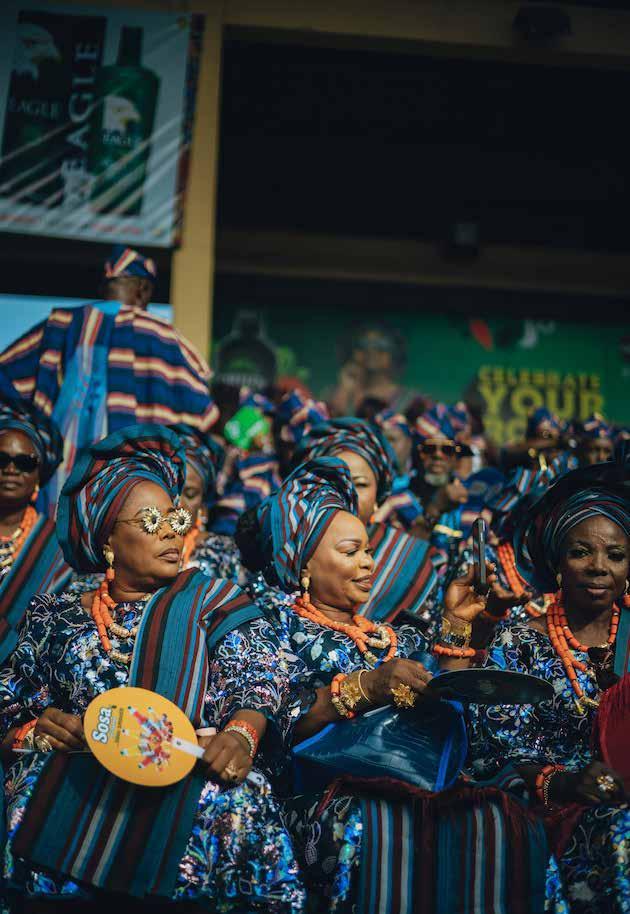
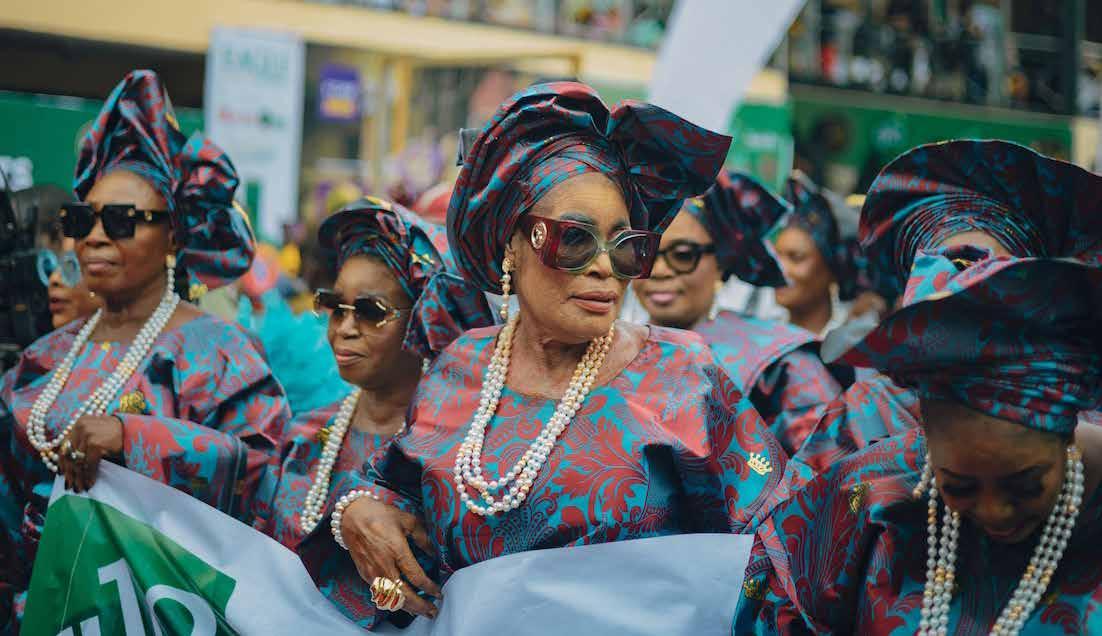
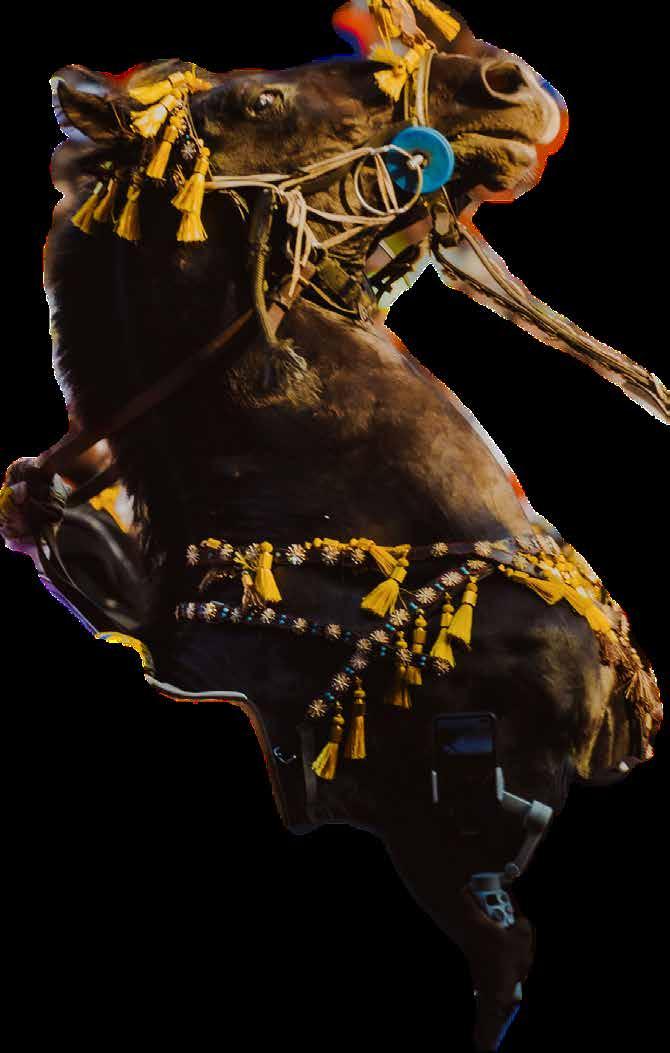
of the Balogun families and their horse-riding displays. The horses, adorned with colour and ceremony, moved through the arena like living emblems of history. Their riders carried themselves with the confidence of descendants who understand the weight of what they represent. At this point, the RegbeRegbe have retired to their respective individual parties, and the gates are open for the Horses and their Riders.
The crowd responded as crowds do when tradition becomes theatre: with cheers, phones raised, bodies leaning forward so as not to miss a second, drones in the air and every cinematographer clamouring for the best shot. You blink, and you’d miss the best part of it.
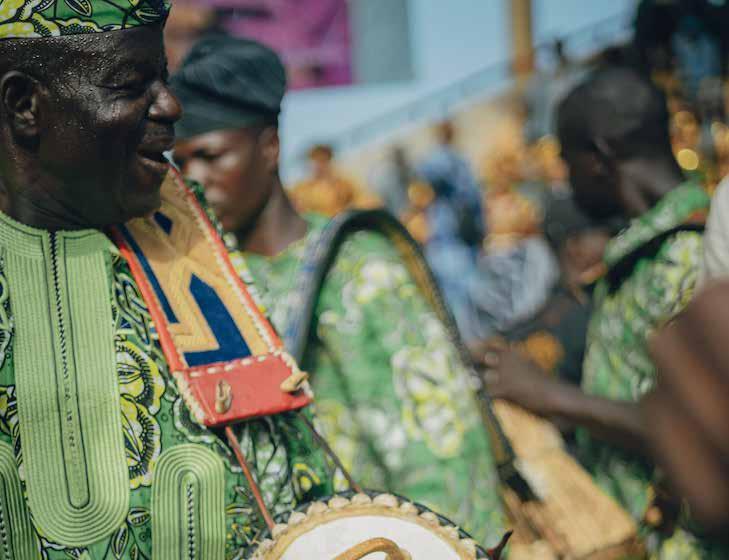
This year’s celebration carried an unmistakable tenderness. It was impossible to ignore the absence of the late Oba Sikiru Kayode Adetona, the revered Awujale of Ijebuland, whose reign became inseparable from the modern stature of the festival. Yet, in that absence, there was also a profound kind of presence. His legacy hovered over the day, not in silence, but in continuity. The people came. The age grades came. The horse riders came. The community beheld a specctacle and watched the splendour of the Ijebu people on display. The drums rose. The chants followed. And Ijebu-Ode proved that true institutions do not end; they echo.
What makes Ojude Oba so compelling is that it never stops. It is a silent code, the drums of the ijebu people must be heard far and wide.
For a generation often accused of being detached from tradition, the festival offers a beautiful rebuttal. Young Ijebu men and women are not simply attending; they are participating, styling, documenting, interpreting and preserving. They are proving that culture survives best when it is not locked away in reverence, but worn, danced, photographed, debated, celebrated and passed on with joy.
This is perhaps the greatest lesson of Ojude Oba: heritage does not have to shrink to remain pure.
It can expand.
It can attract cameras, designers, tourists, influencers, corporate sponsors and global attention, and still retain its soul.
The key is ownership. The Ijebu people own this festival with a certainty that cannot be borrowed.
In a country as culturally abundant as Nigeria, Ojude Oba still stands apart because it understands theatre without losing meaning.
Ojude Oba is more than a festival. It is proof that tradition, when cherished properly, does not become old. It becomes iconic.
Somehow, it’s June already. Half the year is gone, which means we have just six months left before people start posting “2027 is my year” and making fresh resolutions they may or may not keep. The good news is that six months is still plenty of time to make meaningful changes. In fact, six months of disciplined consistency can achieve more than years of good intentions. You do not need to quit your job, move to another country, wake up at 4 a.m., or suddenly become the sort of person who drinks green juice and journals for an hour every morning. Most of the things that improve our lives are far less dramatic than that. Often, they are small habits. The kind that seem insignificant on a random Tuesday but add up over weeks and months until you suddenly realise you feel better, look better, have more money, less stress, stronger relationships, or a clearer sense of where your life is going. If you’re looking at the calendar, wondering where the year went, here are ten habits worth adopting before December arrives.
Most of us consume an astonishing amount of content every day and remember very little of it. We know what a celebrity wore to dinner, who unfollowed whom, and which influencer is trending, yet struggle to recall something useful we learned last week. Reading forces you to slow down and engage differently. Whether it’s a novel, biography, business book, or
even long-form journalism, reading expands your thinking in ways social media rarely does. Twenty minutes a day may not seem like much, but over six months it can expose you to hundreds of new ideas and perspectives.
Walking is probably the most underrated wellness habit in existence. It costs nothing, requires no special skill, and can improve everything from your cardiovascular health to your mood. It is also one of the few forms of exercise that does not feel intimidating. Some of the clearest thinking happens during a walk. Problems seem more manageable. Ideas come more easily. Stress levels drop. If you are looking for one habit that benefits both your mind and body, this is a good place to start.
There is a reason sleep has become such a major topic in health conversations.
Many of us are functioning on far less rest than we need while expecting ourselves to perform at our best. We want more energy, better focus, improved skin, greater productivity, and better moods while consistently sleeping at midnight and waking up exhausted. Getting enough sleep is not lazy. It is one of the most practical investments you can make in yourself.
It sounds simple, yet it remains one of the hardest financial habits to master. We live in a culture that constantly encourages consumption. There is always something to buy, somewhere to go, or a trend to keep up with. Social media certainly doesn’t help. Learning to pause before spending can make a remarkable difference to your finances. Not every desire requires immediate action. Sometimes the smartest
financial decision is simply waiting a few days before making a purchase.
The people who remain relevant are usually the people who never stop learning.
The world is changing quickly. Industries are evolving.
Technology is transforming how we work. Skills that seemed unnecessary a few years ago are now becoming valuable.
Whether it’s learning how AI works, improving your public speaking, taking a photography course, mastering Excel, or understanding digital marketing, six months of consistent learning can open doors you didn’t know existed.
Not every life-changing habit is exciting.
Drinking more water is unlikely to become your personality trait, but it can improve your energy levels, digestion, skin, concentration, and overall well-being. Many people are walking around tired, sluggish, and constantly snacking when what they actually need is hydration.
Sometimes the most obvious advice is also the most effective.
A lot of us claim we do not have enough time,, yet we spend several hours every day looking at our phones. The average person checks their device dozens, if not hundreds, of times daily. Those minutes add up. Imagine what could happen if just one hour of scrolling was replaced with reading, exercising, learning a skill, or simply being present with the people around you. Six months later, the difference would be noticeable.
As adults, friendships often require more effort than they did when we were younger. Life gets busy. Careers become demanding. Families grow. Responsibilities multiply. Before you know it, months have passed since you spoke to someone you genuinely care about.
Make the call. Send the text. Arrange the lunch. Strong relationships rarely happen by accident. They are built through consistent effort, just like everything else worth having.
9. Stop Waiting for Motivation
This might be the habit that changes everything. Many people spend years waiting to feel motivated before they begin. They will start exercising when they feel inspired. They will save money when they feel ready. They will launch the project when confidence arrives. The reality is that motivation is unreliable. Some days it shows up. Many days it doesn’t. Discipline, however, works whether you feel inspired or not. The people who achieve the most are often the people who have learned to keep going even when enthusiasm disappears.
10. Keep One Promise to Yourself Every Day
Confidence is often misunderstood. People think confidence comes from compliments, achievements, or external validation. Sometimes it does. But lasting confidence usually comes from trusting yourself. When you repeatedly tell yourself you will do something and then fail to do it, you slowly weaken that trust. The opposite is also true.
One promise a day may not sound like much, but six months of keeping your word to yourself can change how you see yourself entirely.
There is always something.
One minute, we are all convinced we need a tiny handbag that fits absolutely nothing. The next minute, we’re carrying bags large enough to survive a weekend away. One month everybody is contouring like their lives depend on it. The next, we’re applying blush with reckless abandon and calling it a beauty routine. Fashion, beauty, and lifestyle trends come and go, but every now and then, a few things take hold of us all at once. They become the items we keep buying, the looks we keep recreating, the conversations we keep having, and the little pleasures we keep returning to. Right now, these are the things we simply cannot seem to get enough of.


Blush. Then More Blush.
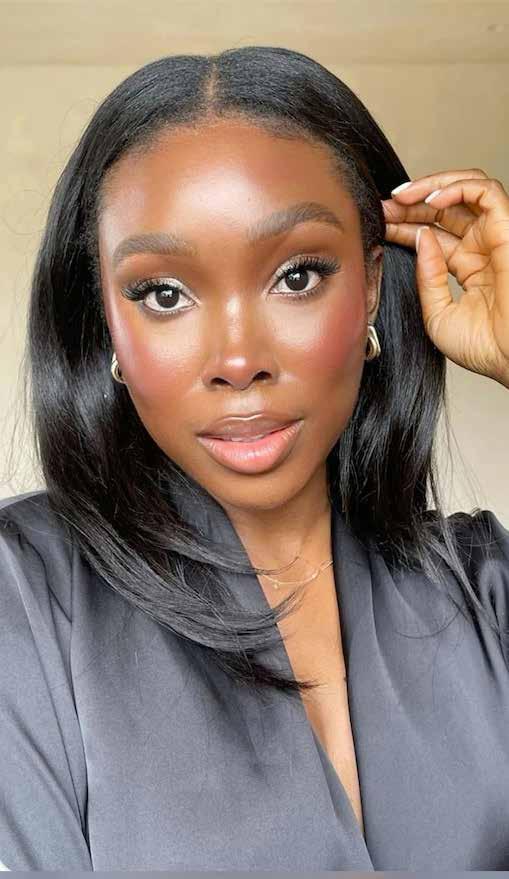
It is impossible to ignore the blush obsession. Every makeup bag seems to contain at least one. Most contain three. The current approach to beauty is less about looking perfectly sculpted and more about looking fresh, healthy, and glowing. Blush is doing a lot of the heavy lifting. Soft pinks, peaches, berries, corals — it almost doesn’t matter which shade you choose. The goal is to look radiant, well-rested, and as though life is treating you exceptionally well. Whether it is applied across the cheeks, temples, or lightly dusted across the nose, blush has become the beauty product of the moment.

Everybody wants better skin. Not necessarily full-coverage makeup. Not dramatic contour. Not complicated beauty hacks.
Just really good skin. The skincare conversation has moved beyond products and into lifestyle. Hydration, sleep, facials, sunscreen, treatments, skin consultations, and consistency are all becoming part of the equation. More people are investing in skin health rather than simply trying to cover imperfections. The dream is simple: to walk out of the house wearing little makeup and still feel fantastic.
Pic – Bidemi Akande
The wellness industry’s most successful trend might also be its simplest. Walking is having a serious moment. People are walking before work, after work, during phone calls, on weekends, and whenever life starts feeling overwhelming. Unlike many fitness trends that require expensive memberships or complicated routines, walking feels achievable. It is good for your body, good for your mind, and perhaps most importantly, it gives people a chance to step away from screens for a little while. Sometimes the simplest habits really are the best ones.
Fashion spent years trying to convince us that tiny bags were practical. They were not. Yes, they were cute. Yes, they looked fantastic in photographs. But eventually reality stepped in. People want bags that can carry a laptop, charger, notebook, makeup pouch, water bottle, sunglasses, hand sanitiser, and all the other things we insist on carrying around daily. The return of larger bags feels less like a trend and more like a collective sigh of relief. Functionality has officially become fashionable again.
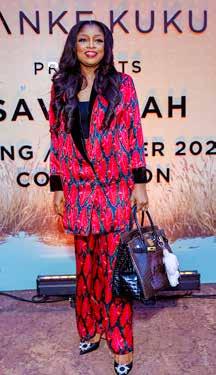

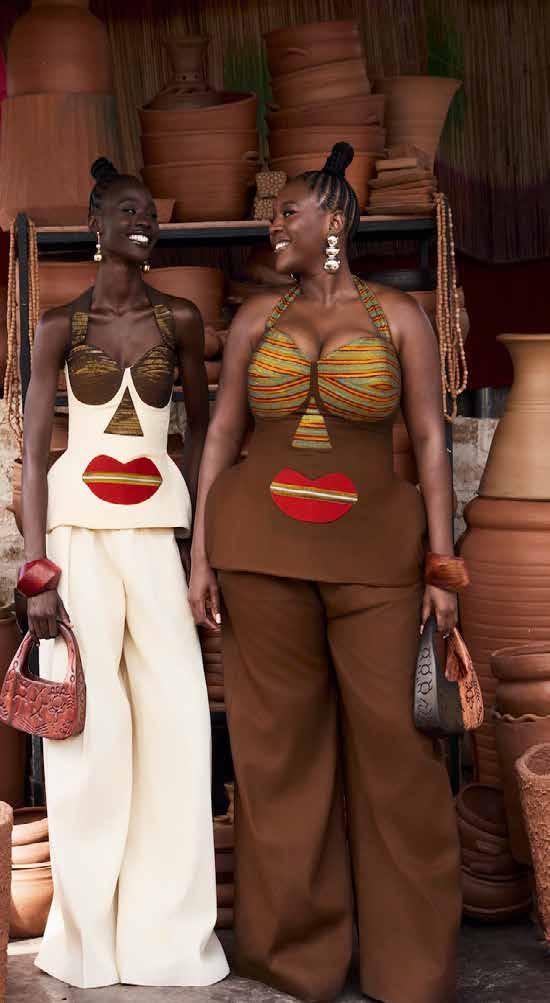
Every season produces that one fashion item. The piece that keeps appearing at brunches, events, birthday dinners, and all over stylish women’s wardrobes. At the moment, that piece is Hertunba’s Dona Face Top. The appeal is obvious. It is artistic, memorable, instantly recognisable, and manages to stand out without looking like it is trying too hard.

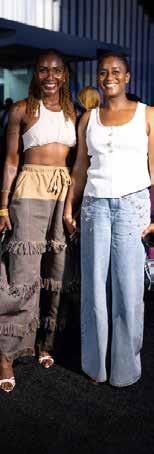
There is a growing confidence in Nigerian beauty brands, and honestly, it is deserved. Consumers are increasingly reaching for products from brands like Zaron Cosmetics, Beauty by AD, Dabota Cosmetics, Nuban Beauty, Hegai & Esther, and a growing list of others. The products understand our skin tones, our weather, our beauty needs, and the realities of wearing makeup in a country where stepping outside can immediately become a battle between your foundation and humidity.
The quality continues to improve, the packaging keeps getting better, and beauty lovers are paying attention.
The humble tank top is currently enjoying a very glamorous rebrand. What was once considered a basic layering piece has become a genuine fashion staple. Designers and contemporary brands are reimagining it with better fabrics, cleaner cuts, flattering silhouettes, and elevated styling.
Labels such as Kai Collective, Wannifuga, Fruche, and several others are embracing the trend, and fashion lovers are responding enthusiastically.
The beauty of the tank top lies in its versatility. It works with tailored trousers, maxi skirts, denim, shorts, and practically everything else already hanging in your wardrobe.

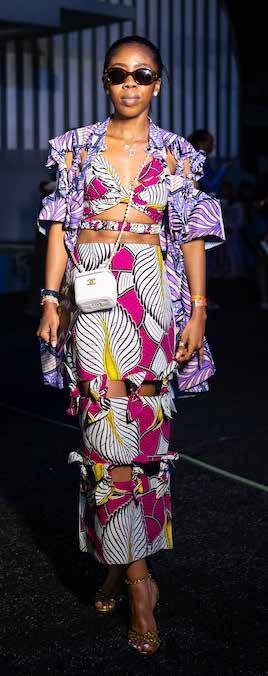
Perhaps the most interesting obsession of all is the growing focus on feeling better rather than simply looking better. People are embracing Pilates, stretching, mobility classes, recovery sessions, wellness retreats, journaling, better sleep habits, and healthier routines. The goal is no longer punishment disguised as self-improvement. The focus is shifting toward sustainability, balance, and habits that can actually be maintained.

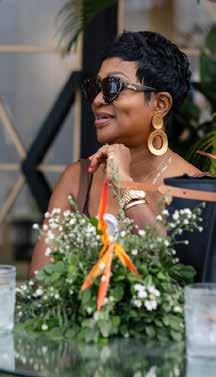
Some trends come and go. Matching sets simply refuse to leave. And honestly, nobody seems to want them to. Coords have become one of the hardest-working categories in fashion because they solve one of the biggest daily problems: deciding what to wear. They instantly make an outfit look intentional while requiring very little effort. What makes the trend particularly exciting right now is the sheer variety available. There are linen sets, printed sets, knit sets, skirt sets, trouser sets, vacation sets, airport sets, and even elevated evening versions. Designers continue finding new ways to reinvent them, which is probably why the trend keeps surviving season after season.



This one is actually everywhere. Fashion is swinging back toward pieces that make a statement. Chunky gold earrings. Oversized bangles. Sculptural cuffs. Bold rings. Thick necklaces. The interesting thing is that these pieces are often being paired with very simple outfits. A white tank top, tailored trousers, a matching set, or a black dress suddenly feels elevated when styled with strong accessories. It’s less about wearing more jewellery and more about wearing jewellery that people actually notice.
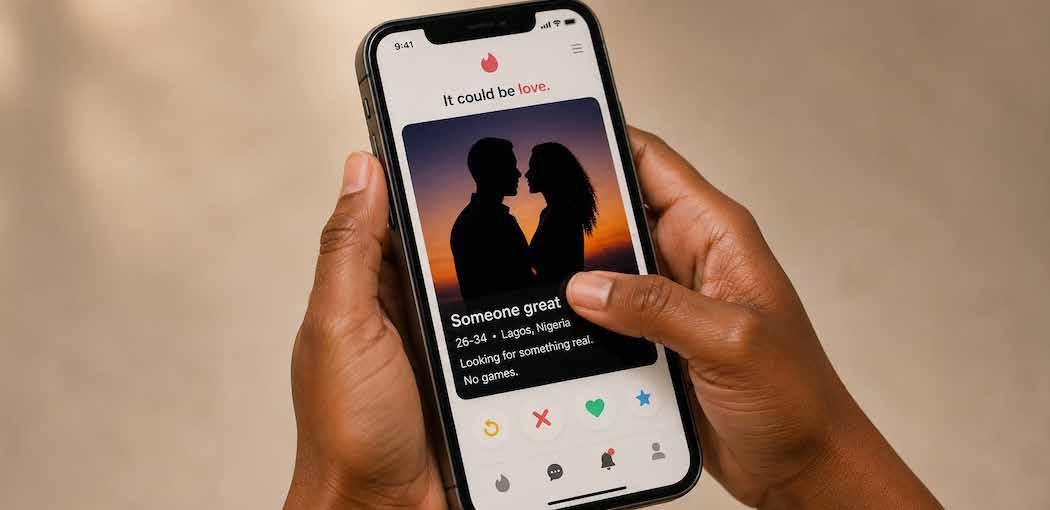
Imagine you’re having dinner with friends and someone casually asks, “So, are you on a dating app?”
The reaction is usually immediate. Someone laughs and says, “God forbid.”
Another insists they prefer to meet people naturally. Somebody else suddenly becomes fascinated by the menu. Yet there is a good chance that at least one person at that table has downloaded a dating app before, another still has one on their phone, and someone else deleted theirs only a few weeks ago after a particularly disappointing conversation with a stranger who seemed incapable of saying anything beyond “Hi, dear.” Welcome to Nigeria’s complicated relationship with dating apps. Unlike many countries where meeting your partner online has become completely normal, Nigerians still seem unsure about the whole thing. We know the apps exist. We know people use them. We know some people have even gotten married after meeting online. Yet there remains a certain discomfort around admitting that you are actively looking for love on the internet. For many people, downloading a dating app feels less like a practical decision and more like an announcement that something has gone terribly wrong. Part of the problem is perception. Dating apps have acquired a reputation, and not necessarily a romantic one. Instead of being viewed as places where people go to find companionship, many have become associated with hookups, situationships, and individuals who claim they are looking for something serious while behaving as though commitment is a highly contagious disease. Mention certain dating apps in a Nigerian gathering, and most people immediately think of ghosting, catfishing, endless talking stages, and conversations that somehow become inappropriate
before anyone has even exchanged surnames.
Whether that reputation is entirely fair is another matter. The reality is that dating apps are simply tools. Unfortunately, the stories that travel fastest are usually the disastrous ones. Nobody gathers friends together to recount a perfectly normal relationship that started online. People are far more interested in discussing the man who claimed to be six feet tall but arrived looking suspiciously shorter than the average dining chair. There is also another issue that people rarely discuss openly.
For a certain class of Nigerians, particularly professionals, public figures, people from prominent families, and those who move within certain social circles, there remains a surprising amount of shame attached to publicly looking for love.
Looking for a partner is perfectly acceptable. Publicly advertising the fact that you are looking for one is where things become uncomfortable.
Many people would happily post holiday photos, gym selfies, birthday shoots, luxury purchases, and updates about every major achievement in their lives. Yet uploading a profile specifically designed to meet a potential partner somehow feels far more vulnerable. The fear is not necessarily rejection. It is visibility. What if a colleague sees it? What if someone screenshots it? What if your former classmate sends it to a group chat? What if your ex comes across it and suddenly starts feeling far more important than they actually are?
Nigeria does not help matters because, despite our population, the country often feels like one giant village with excellent WiFi. One of the biggest complaints people have about dating apps here is how quickly familiar faces begin to appear. Your former classmate shows up. Your friend’s exboyfriend shows up. Someone you interviewed three years ago shows up. The son of your mother’s friend
shows up. Sometimes, you even come across people you are fairly certain should not be on a dating app at all because they appear to have a spouse somewhere. Many Nigerians are not worried about strangers seeing them online. They are worried about people they know seeing them there. The irony is that traditional methods of meeting people are not exactly thriving either. Adults today spend most of their lives moving between work, home, traffic, social media, and increasingly smaller social circles. Opportunities to meet new people organically are not what they once were. Yet many people continue to insist that love must arrive through more respectable channels. It should happen at a wedding, through a mutual friend, during a church programme, or perhaps through one of those romantic movie moments where two strangers reach for the same item in a supermarket and somehow end up married.
The fantasy is lovely. Reality, however, has become considerably more complicated. Perhaps the funniest part of this entire conversation is that many Nigerians who proudly declare that they would never join a dating app are already using an alternative version of one. They simply call it Instagram. Stories are strategically liked, reactions are carefully timed, and direct messages have become the modern equivalent of asking for someone’s number. Entire relationships have started because somebody replied to a photo, a quote, or a seemingly innocent story update. It is difficult to argue that Instagram is somehow more respectable than a dating app when both are often being used for exactly the same purpose. There is also the challenge of self-promotion. Dating apps force people to answer questions many of us are not particularly comfortable answering. Who are you? What do you enjoy? What are you looking for? For people raised to be modest,
especially women, the exercise can feel awkward. Many would rather attend ten weddings and endure twenty uncomfortable conversations with matchmaking relatives than sit down and write a bio describing themselves.
Of course, none of this means dating apps are magical solutions. They come with fake profiles, misleading photographs, professional time-wasters, and enough strange conversations to convince some people that romance itself was a terrible idea. But then again, people have met disappointing partners at weddings, churches, offices, conferences, birthday parties, and through mutual friends. Human beings remain unpredictable regardless of the setting.
And yet, despite all the complaints, people are finding love there.
Quietly. Every now and then, somebody disappears from the dating scene entirely and resurfaces engaged, married, or posting matching Christmas pyjamas with a partner they met online. Those stories exist far more often than people realise. They simply receive less attention than the horror stories because happiness is rarely as entertaining as chaos.
Perhaps the real issue is that many of us remain attached to a particular version of how love should arrive. We romanticise chance encounters, introductions through friends, or the classic story of locking eyes across a crowded room, often forgetting that meaningful connections can begin in unexpected places. The route may look different, but the possibility of love remains the same.
Because whether it comes through a mutual friend, a wedding, a church programme, an Instagram DM, or an app on your phone, most people are ultimately looking for the same thing: connection. The route may have changed, but the destination remains exactly what it has always been.
Dear Reader,



BY DR. KEMI DASILVA-IBRU AND GLORIA JOACQUIM
Welcome to the WARIF Survivor Stories Series, a monthly feature where stories of survivors of rape and sexual violence are shared to motivate and encourage survivors to speak their truth without the fear of judgment or stigmatisation and to educate the public on the sheer magnitude of this problem in our society. The Women at Risk International Foundation (WARIF) is a non-profit organisation set up in response to the extremely high incidence of rape, sexual violence, and human trafficking of young girls and women in our society. WARIF is tackling this issue through a holistic approach that covers health, education, and community service initiatives.
WARIF aids survivors of rape and sexual violence through the WARIF Centre - a haven where trained professionals are present full-time, 6 days a week, including public holidays, to offer immediate medical care, forensic medical examinations, psychosocial counselling, and welfare services which include shelter, legal aid, and vocational skills training. These services are provided FREE of charge to any survivor who walks into the Centre.
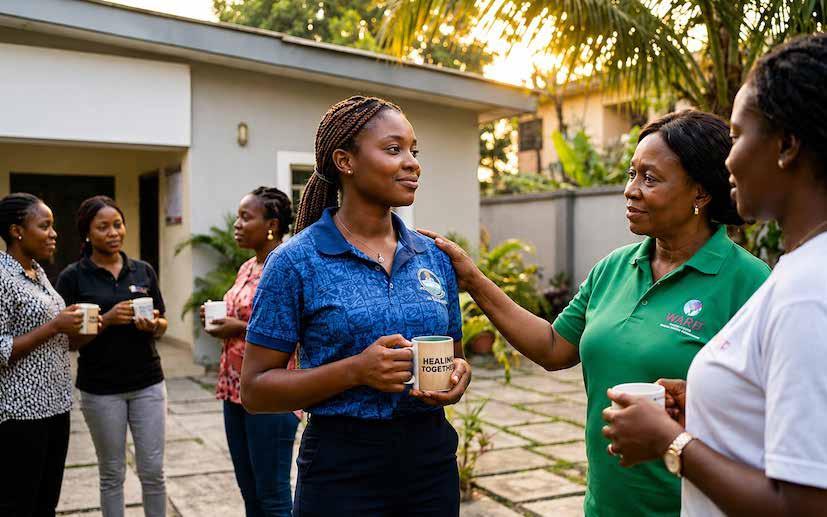
My name is Davida, a 23-year-old student at one of the prestigious universities in Lagos State. This is my story of survival, resilience, and healing.
In June 2025, my life changed in a way never imagined. I was referred to the WARIF Centre for medical assessment, treatment, and counselling after reporting a case of sexual assault to the police. The incident occurred on a day when I had been unable to order food due to poor network service in my hostel. At about 10:30 p.m., I decided to walk to a nearby restaurant to buy food. After waiting in a long queue and purchasing my meal, I began the journey back to my hostel.
As I walked, a man deliberately bumped into me. When I looked up, he lifted his shirt and showed me what appeared to be a gun. He threatened to shoot me if refused to follow his instructions. Fearing for my life, I complied.
He led me to a dark, isolated area with no one around. There, he ordered me to sit on the ground. Claiming to be a cultist, he demanded my phone and forced me to transfer all the money in my bank account to him. After taking my money, phone, and AirPods, he raped me.
When the assault ended, he ordered me to get dressed and lie face down on the ground. He threatened to summon other cult members if disobeyed and told me he was going to check on them. Terrified, remained where I was.
A few minutes later, I heard a vehicle pass and the whistle of a nearby vigilante patrol. Realising had an opportunity to escape, quickly grabbed my slippers and ran back to my hostel. When arrived, my roommates immediately noticed that something was wrong.
was visibly shaken and distressed. They tried calling my phone and used a tracking application to locate it. The following morning, they accompanied me to the nearest police station to report the incident. The police followed us to the tracked location, but the perpetrator kept moving from place to place. Each time the phone was traced, he had already left the area. The police subsequently referred me to the WARIF Centre for support and care.
At WARIF, I received free medical treatment, laboratory investigations, and psychosocial counselling. In the aftermath of the assault, struggled with sadness, mood swings, flashbacks, insomnia, and difficulty concentrating. These symptoms affected my daily life and made it difficult to feel safe. Through counselling, learned that my reactions were common responses to trauma and that I was not responsible for what had happened to me. The support I received at WARIF marked the beginning of my healing journey. The counsellors provided a safe, compassionate, and supportive environment where I could process my experience and develop healthy coping strategies. Their guidance helped me gradually regain a sense of control, confidence, and hope for the future. was also privileged to participate in one of WARIF’s monthly Group Therapy Sessions. Being surrounded by other survivors who understood my experiences reminded me that I was not alone. The session offered a safe and confidential space where we shared our stories, encouraged one another, and learned practical ways to cope with trauma. The support received from both the counsellors and fellow survivors strengthened my confidence and renewed my determination to heal. With the assistance of the police, the perpetrator and other members of his cult group were eventually arrested, and the case was charged in court. Although the legal process is still ongoing, remain hopeful and confident that justice will be served.
While my healing journey continues, I am deeply grateful for the care and support I received at WARIF. The compassion, professionalism, and dedication of the staff helped me take important steps toward recovery and rebuild my sense of self. Despite the challenges I faced, I completed my last semester examinations with excellent grades and remain optimistic about my future.
I would like to express my heartfelt gratitude to the medical team, counsellors, staff, and management of the WARIF Centre for helping me begin the journey toward healing and recovery.
Thank you, WARIF.
* Real name of the Survivor changed for confidentiality Dear Survivor, please know that you are not alone, and it is not your fault. Help is available. If you have been raped or know someone who has, please visit us at:
The WARIF Centre 6, Turton Street, off Thorburn Avenue, Sabo, Yaba, or call our 24-hour confidential helpline on 0800-9210-0009.