every decade presents an opportunity for personal introspection and public scrutiny, for better or for worse.This is especially true for public officials and for Bamidele Abiodun, who
coups d’etat, eventually leading to a civil war mere months after her birth in July 1966.
Lifestyle & Fashion
EDITOR’S LETTER
Ilove beautiful things.
I probably always will.
Perhaps that comes with working in lifestyle, but I’ve always appreciated good design, beautiful spaces, thoughtful packaging and all those little details that make everyday life feel just a bit more special.
What didn’t expect was how much beauty would become part of our everyday conversation.
Somewhere along the way, we all started noticing the lighting, the tablescape, the flowers, the coffee cup, and the hotel lobby. A café is no longer just somewhere to eat; it has to be aesthetically appealing. We have become far more visually aware than we used to be, and actually think there’s something lovely about that.
What I’m still trying to figure out is where appreciation ends, and the pressure begins. When does loving beautiful things become feeling like everything has to be beautiful? don’t have the answers, but do think it’s an interesting conversation, which is exactly what inspired my opinion piece Are We Addicted to Aesthetics? I’d love to know what you think after you’ve read it.
If you’ve ever dreamed of starting a fashion brand or you’re already building one, don’t skip Building a Fashion Brand That Lasts. Fashion is one of the most exciting industries to be in, but behind every successful label are the things people rarely see: consistency, patience, smart business decisions and the resilience to keep showing up. Beautiful clothes may get people through the door; a great brand is what keeps them coming back.
This week also gave the THISDAY family every reason to celebrate. On July 14, our Chairman, Prince Nduka Obaigbena, CON., turned 67, while THISWEEK, the magazine that started an extraordinary media journey, celebrated its 40th anniversary.
It’s easy to admire the institution today. It’s harder to picture the young man who first imagined them. Forty years later, that bold idea has grown into far more than newspapers and television stations. It has become a place where talent is discovered, challenged and given room to thrive. Generations of journalists, editors, photographers, producers and broadcasters have passed through platforms he created, helping shape the Nigerian media landscape as we know it today. That, perhaps, is the greatest legacy of all. Happy Birthday, sir, and congratulations on an extraordinary journey that continues to inspire.
Before leave you to enjoy the rest of the issue, let me ask: how are you?
hope work has been kind, life has given you reasons to smile, and you’re taking a little time to enjoy the people who matter most.
Thank you, as always, for reading. Wishing you a
and if you do find
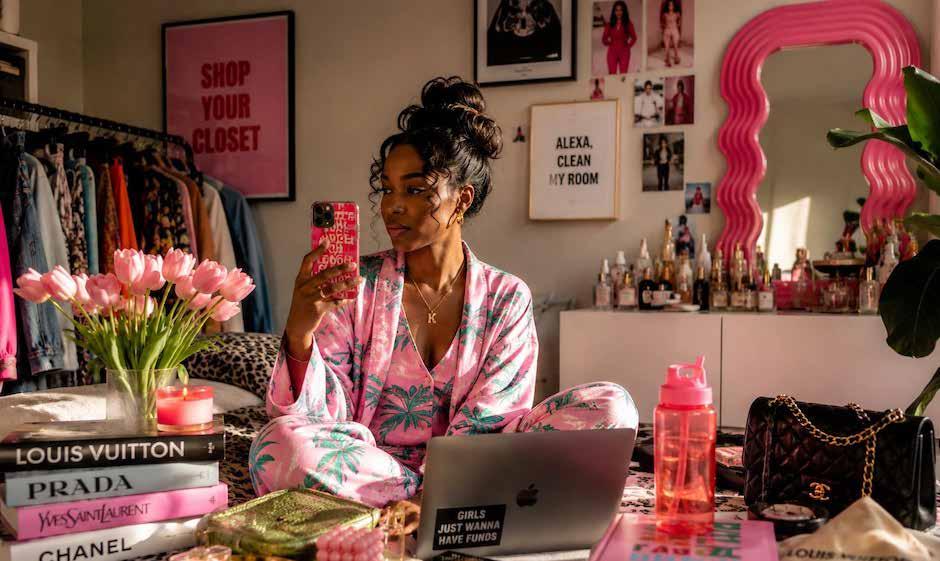
ARE WE ADDICTED TO AESTHETICS?
Twenty years ago, nobody cared what your hand soap looked like. It cleaned your hands. That was the job. Today, millions of people decant perfectly good soap into amber glass bottles. Milo is poured into matching containers, coffee-table books are chosen to complement the living room, and cafés are picked as much for the lighting as the menu. Somewhere between Pinterest, Instagram and TikTok, aesthetics stopped being about beauty. They became a lifestyle. Then an identity. And, increasingly, a status symbol. That may sound dramatic until you stop and think about how much of modern life is now influenced by how it looks.
We don’t just choose restaurants anymore; we choose the ones with the nicest interiors. We don’t simply book holidays; we look for hotels with infinity pools that photograph well. Before buying an outfit, many people subconsciously ask not just, “Do I like this?” but, “Will this look good in pictures?” Somewhere along the line, the camera became an invisible guest at almost every experience.
Beauty has always mattered. Nigerians, perhaps more than most, have always appreciated looking good and living well.
show apartments rather than floor plans. Beauty brands obsess over packaging because they know their products will spend as much time on bathroom shelves as they will in people’s hands. Even supermarkets have become the backdrop for aesthetically pleasing “restock” videos. Businesses have realised something consumers often haven’t.
People no longer buy products alone.
They buy images.
Or perhaps more accurately, they buy the life they imagine those products represent.
A candle is no longer just a candle. It represents slow mornings and calm evenings.
luxury often feels more attainable.
You may not be able to afford a beachfront villa, but you can recreate the look through carefully chosen furniture, neutral décor and designer-inspired accessories. Social media has democratised aspiration. The appearance of luxury has become far more accessible than luxury itself.
The problem is that aspiration rarely stands still. Every few weeks, the internet introduces something new to desire. One month it is a particular water bottle. Then everyone suddenly wants a handbag charm. Before that it was “quiet luxury.”
advertising. Influencers rarely sell products directly. Instead, they invite us into beautifully curated lives where every object appears to contribute to happiness, success or peace. The products become attached to those emotions, making it surprisingly easy to believe we’re buying more than a lamp, a handbag or a coffee mug. Of course, there is a price. Financially, constantly chasing aesthetics is expensive.
the
We love beautiful homes, stylish clothes and celebrations that leave an impression. But social media has fundamentally changed our relationship with beauty because it has turned it into something that is constantly on display. We are no longer inspired by the occasional magazine spread or a neighbour’s beautifully decorated home. We now consume hundreds of carefully curated images every day, each one subtly redefining what we consider normal. That constant exposure has changed our aspirations. Take a walk through Lagos and you’ll see it everywhere. New cafés compete as much on aesthetics as they do on food. Restaurant bathrooms with flattering mirrors become almost as famous as the menu. Luxury apartment developments are sold through beautifully styled
Linen bedding suggests a softer, more intentional life. A Stanley cup, a Labubu charm clipped to a handbag or a Pilates membership says something beyond its practical purpose. They have become signals, small visual cues that communicate taste, lifestyle and belonging.
Status itself has evolved. There was a time when wealth announced itself loudly through designer logos, expensive cars and oversized houses. Those symbols haven’t disappeared, but today there is another layer. Increasingly, status lies in knowing what is current. Which handbag is quietly fashionable. Which restaurant everyone is booking. Which colour is replacing the last trend. Which coffee shop, perfume or skincare brand belongs to a particular lifestyle.
Taste has become social currency.
The irony is that this version of
Before that, colour-drenched interiors. Trends move so quickly that perfectly good possessions begin to feel old, not because they have worn out, but because they no longer fit the visual language of the moment.
Economists have long talked about planned obsolescence, where products are designed to wear out. Social media has created something different: visual obsolescence.
Nothing is actually wrong with the dining table.
It just isn’t “giving” anymore. That simple shift has quietly fuelled hyper-consumerism. We replace things that still work. We buy things we never knew existed until the algorithm introduced them. We convince ourselves that one more purchase will finally complete the picture, only to discover that the picture keeps changing.
Perhaps the cleverest part is that very little of this feels like
Environmentally, it encourages perfectly usable clothes, furniture and homeware to be discarded long before their time. Emotionally, it creates a quiet dissatisfaction, a feeling that our homes are never quite finished, our wardrobes never quite complete and our lives somehow always one purchase away from looking the way we imagined they should. Yet perhaps the biggest irony is this: social media promised endless opportunities for selfexpression, but it has made many of us surprisingly similar. Beauty isn’t the problem. Neither is good design or an appreciation for style. The real question is whether we still know the difference between buying something because it genuinely brings us joy and buying it because we’ve seen it often enough to mistake familiarity for desire. Because if every trend leaves us feeling that what we already own is no longer enough, then perhaps we aren’t just consuming aesthetics anymore. They’re consuming us.
EXECUTIVE EDITOR
Happy Birthday to The Duke
THE DUKE’S DOUBLE MILESTONE: CELEBRATING NDUKA OBAIGBENA AT 67 AND THE 40-YEAR LEGACY OF THISWEEK
By Yinka Olatunbosun
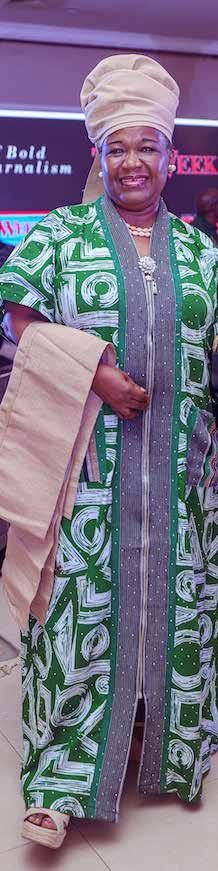
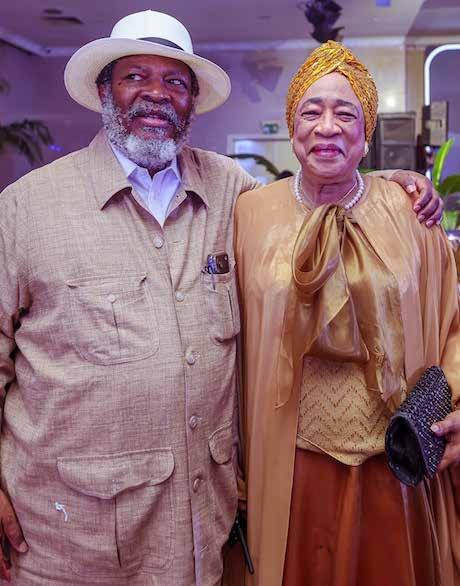
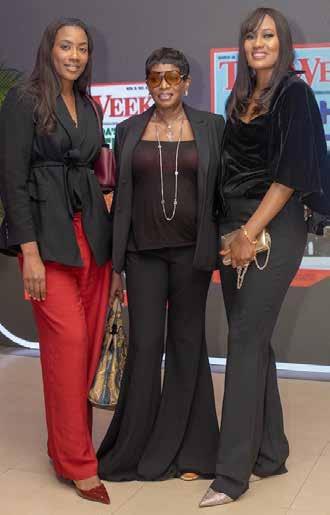
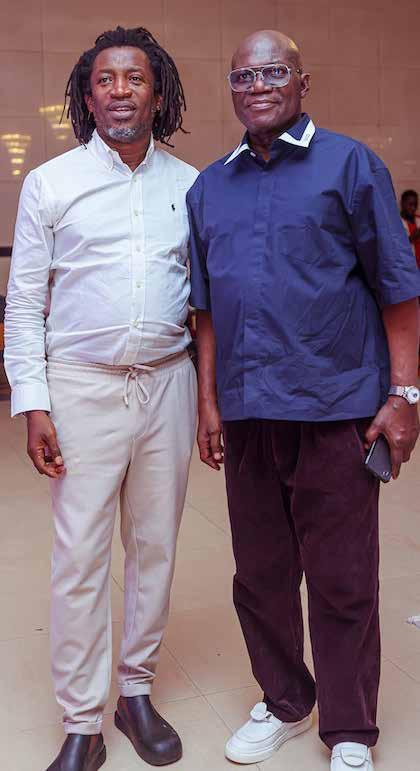
Prince Nduka Obaigbena, CON., marked his 67th birthday on July 14 with an intimate celebration that also commemorated the 40th anniversary of THISWEEK, the magazine that transformed Nigeria’s media landscape and laid the foundation for one of Africa’s most influential media empires.
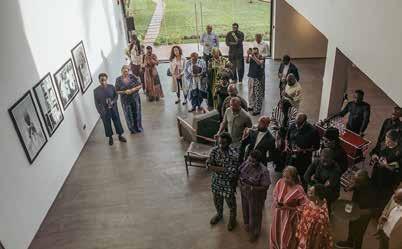
Held at the Civic Centre in Lagos, the evening brought together family, friends and associates of the media entrepreneur affectionately known as “The Duke.” Guests were welcomed by Motown classics, electronic displays of iconic THISWEEK covers and conversations steeped in memories of the publication’s formative years.
Obaigbena, characteristically restless, moved around the room encouraging guests to dance before settling into the celebration, where sliced cakes, berries, melons, pineapples and champagne completed the festive atmosphere.
The coincidence of his birthday with THISWEEK’s 40th anniversary offered an opportunity to reflect on a career built on bold ideas. In 1986, at just 27, Obaigbena launched THISWEEK during a period of economic hardship and military rule with the rallying call, “We Can Do It.” Conceived as “a pocket of excellence in journalism,” the publication combined strong writing, compelling photography and editorial independence.
To realise that vision, he assembled a newsroom that included pioneer editor Sonala Olumhense alongside Pini Jason, Lawson Omokhodion, Tunji Lardner, Lanre Idowu, Greg Obong-Oshotse and Taiwo Obe. Olumhense described THISWEEK as “the purest expression of grassroots journalism,” adding that it proved young journalists could build institutions that outlived generations.
The magazine’s visual-first, high-standard approach later evolved into a media conglomerate, with THISDAY launching in 1995 as Nigeria’s first colour newspaper and ARISE News Channel following in 2013.
Speakers throughout the evening reflected on both the publication’s influence and Obaigbena’s enduring commitment to nurturing young talent. Nigerian Guild of Editors President, Eze Anaba, praised his “brilliance, creativity, and immense contributions,” noting that he had mentored some of the country’s finest journalists. Lanre Idowu recalled the audacious launch of THISWEEK, when its founders declared Time magazine their closest competitor, while Newswatch co-founder Ray Ekpu reflected on the spirited rivalry between the two publications and urged today’s media to distinguish clearly between news and commentary to strengthen public trust.
Lawson Omokhodion recounted the industry excitement surrounding his move from Newswatch to THISWEEK, while THISDAY Managing Director, Eniola Bello, said the innovative culture established in 1986 naturally evolved into THISDAY.
The celebration drew to a close with music, conversation and the arrival of additional guests, including former Ogun State Governor Chief Olusegun Osoba, former NTDC Director-General Omotayo Omotosho and Makin Soyinka, capping an evening that honoured both a milestone birthday and four decades of media innovation.
PHOTGRAPHS: Kunle Ogunfuyi
BOOK REVIEW
SHADOWS:
SHADOWS:
PROTEST ESSAYS ON AFRICA’S MOST CONSEQUENTIAL COUNTRY (1999–2023)
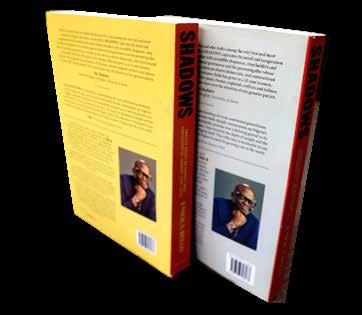
For more than two decades, Eniola Bello has been one of the most recognisable voices in Nigerian journalism. A seasoned journalist and the Managing Director of THISDAY Newspaper, Bello built a loyal following through his back-page column, “eniB,” where his sharp observations on politics, governance and national affairs became required reading for many. The column became so closely associated with him that “eniB” eventually became his nickname. Now, many of those essays have been brought together in his new book SHADOWS: Protest Essays on Africa’s Most Consequential Country (1999–2023), a two-volume collection that captures the story of Nigeria’s democratic journey over the first 25 years of the Fourth Republic.
Spanning more than 900 pages, SHADOWS revisits some of the defining moments, debates and controversies that shaped the country between 1999 and 2023. Bello writes about corruption, insecurity, electoral malpractice, leadership failures, policy inconsistency, the growing cost of governance and the widening disconnect between public officials and the people they serve. He also examines the influence of godfatherism, ethnic politics, religious manipulation and the persistent struggle to build strong democratic institutions.
What makes the book particularly engaging is that it reads like a running conversation with history. Rather than looking back with the benefit of hindsight alone, the essays capture events as they unfolded, reflecting the mood, expectations and frustrations of the time. The result is a collection that feels immediate and relevant, even years after some of the pieces were first published. Beyond political commentary, SHADOWS serves as an important record of Nigeria’s evolving democracy. It documents not only the country’s setbacks but also the moments that inspired hope, encouraging readers to reflect on how far the nation has come and how much further it still has to go. Thought-provoking and meticulously observed, SHADOWS is more than a compilation of newspaper columns. It is a valuable historical record and an insightful read for anyone seeking to understand the forces, personalities and decisions that have shaped modern Nigeria.
DAVIDSON IRIEKPEN
AYOMIDE OLUFAWO
YINKA AKINKUGBE
RUFAI OSENI
ENIOLA BELLO
VALENTINE OZIGBO
INSIDE MBARI KOLA,
UGOMA EBILAH’S LOVE LETTER TO AFRICAN ART AND MODERN STYALE
By Yinka Olatunbosun
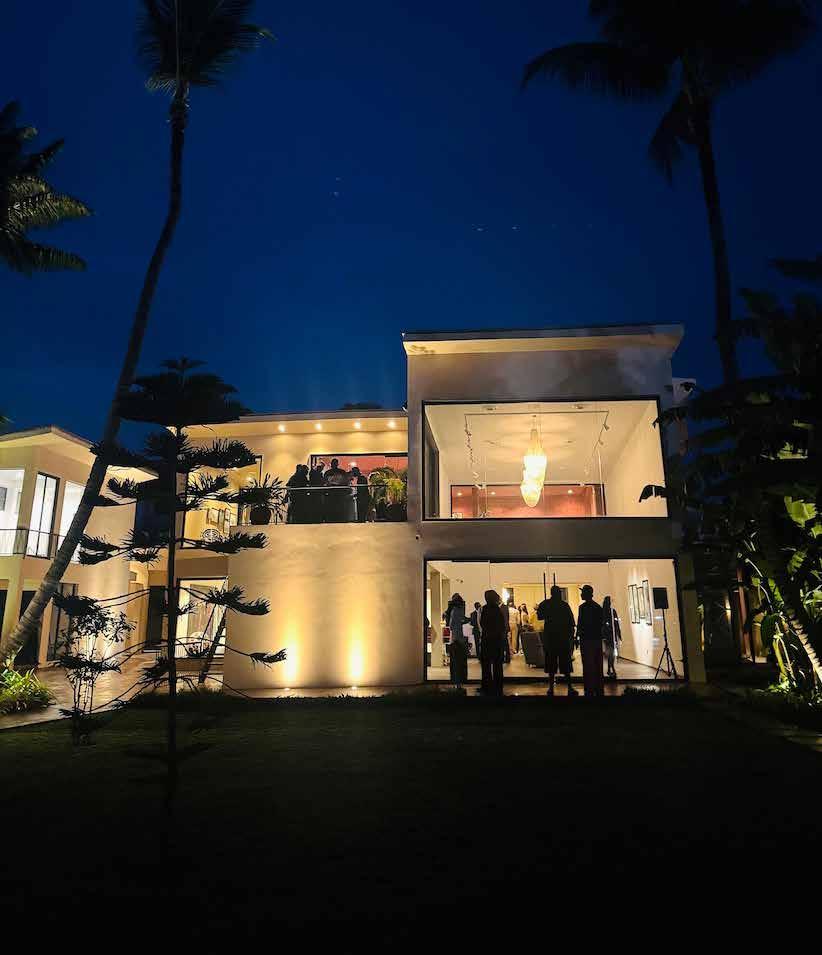
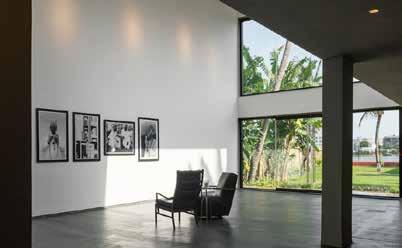
If you walk down a quiet close in Ikoyi, Lagos, the city’s familiar chaos begins to soften. At the end of the road sits a restored 1960s villa overlooking the lagoon. It is calm, understated and unlike almost anything else in the city. This is Mbari Kola, a newly opened private arts society and boutique cultural institution that feels less like a gallery and more like a carefully composed conversation between Nigeria’s cultural past and its creative future.
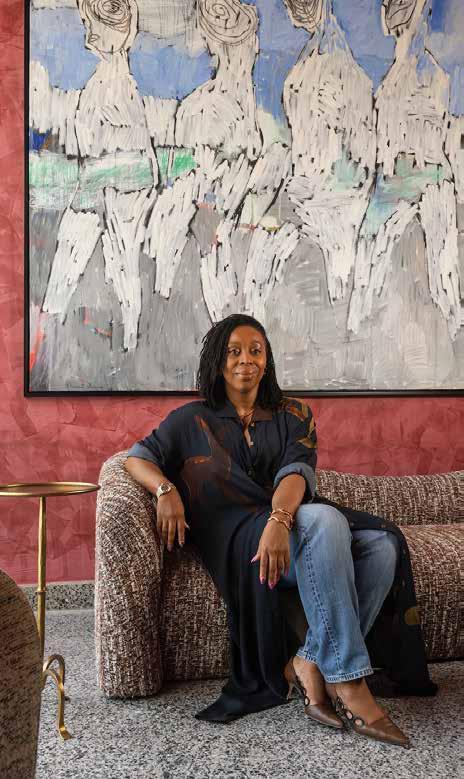
The project is the vision of curator, cultural strategist and entrepreneur Ugoma Ebilah, founder of Zebra Living and the contemporary art gallery BLOOM Art. Having spent years working within Nigeria’s cultural ecosystem, Ebilah recognised something was missing. Lagos may be regarded as one of Africa’s cultural capitals, but beyond institutions like the MUSON Centre, there are few permanent spaces intentionally created for artists, writers, collectors and thinkers to gather, exchange ideas and build community.
Mbari Kola is her response. Rather than creating another white-cube gallery, Ebilah looked backwards to move forward. She drew inspiration from the influential Mbari Artists and Writers Clubs established in Ibadan and Osogbo shortly after Nigeria’s independence. Those spaces brought together some of the country’s greatest creative minds, including Wole Soyinka, Chinua Achebe, John Pepper Clark, Demas Nwoko and Ulli Beier, helping shape a generation of African literature, visual art and theatre.
“From the beginning, was interested in the idea of feet forward, eyes back,” Ebilah says. “The belief that cultural advancement should never come at the cost of memory.”
That philosophy is visible from the moment you step inside.
Designed with architect Kelechi Odu, the building is a thoughtful reinterpretation of Nigerian mid-century modernism. The restored villa takes inspiration from the traditional Igbo Obi, the communal heart of the home, while rich laterite finishes reference the earthen Mbari structures of southeastern Nigeria. Original terrazzo floors have been painstakingly restored and extended by local craftsmen practising a technique that is quietly disappearing.
During the press preview, Ebilah noted that many of the artisans responsible for the terrazzo work are now in their sixties and older, a reminder that preserving architecture also means preserving endangered skills.
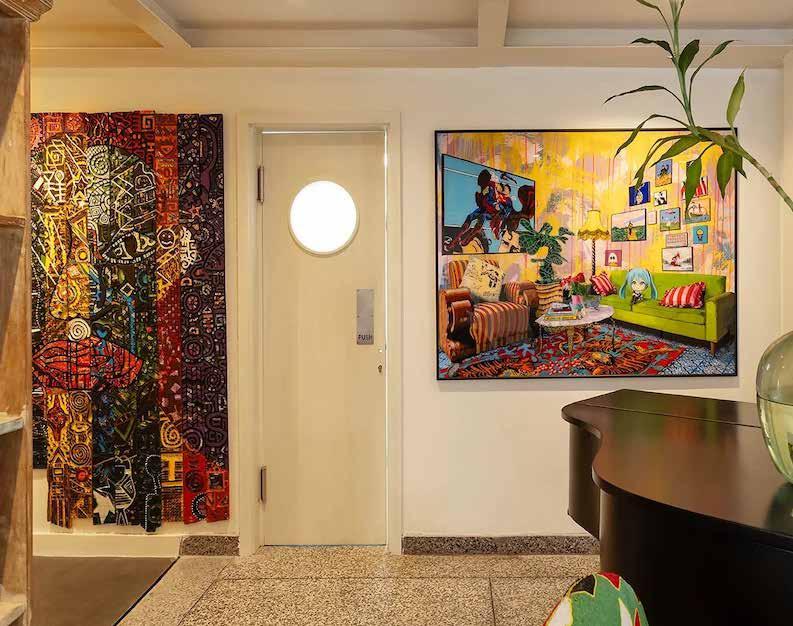
The interiors balance heritage with contemporary sophistication. A rare midcentury seating collection designed by celebrated architect Demas Nwoko anchors one of the reception spaces, while works by Victor Ehikhamenor and Obi Okigbo hang comfortably on the walls. Every room feels curated rather than decorated, with art, furniture and architecture speaking the same visual language.
There is an effortless elegance to the entire experience. Visitors might attend an intimate literary salon in the morning, browse exhibitions in the afternoon or spend the evening overlooking the lagoon with a thoughtfully prepared cocktail. Through Studio Ugoma Lab, Ebilah’s fascination with textiles, craftsmanship and material culture extends beyond the gallery walls, offering another way to experience African design through touch as
much as sight.
More than aesthetics, however, Mbari Kola is built around the idea of community.
“Kola is life. Kola is togetherness,” Ebilah explains. “Every Nigerian speaks kola, technically speaking. If you are not growing it, you are patronising it or snacking on it. Mbari Kola is a charge to all of us to continue the Mbari tradition.”
The name itself reflects that ambition. While Mbari means “creation” in Igbo, kola is recognised across Nigeria as a symbol of welcome, hospitality and shared experience. Together, they intentionally transcend ethnic boundaries. The historical references run deep. The original Mbari Club, established in Ibadan in 1961, became one of Nigeria’s most influential cultural spaces.
A year later came Mbari Mbayo in Osogbo, founded by Duro Ladipo, Ulli Beier and Ezekiel Mphahlele, which helped give birth to the internationally celebrated Osogbo Art Movement.
“The independence period was responding to who we were,” Ebilah reflects. “I am responding to who we want to continue to be. This initiative is managed by private individuals, not the government.”
That distinction matters. Rather than recreating history, Mbari Kola builds upon it, positioning itself as a home for new conversations, collaborations and cultural movements.
The institution also honours those who helped document Nigeria’s artistic journey. Ebilah paid tribute to the late documentary photographer Tam Fiofori, whose remarkable archive captured defining moments including FESTAC ‘77 and the 1979 coronation of the Oba of Benin.
Spread across an 800-square-metre property, Mbari Kola houses a public gallery, library, members’ lounge and landscaped garden. Yet its greatest achievement may not be the building itself. It is the confidence with which it argues that African luxury does not need to borrow from elsewhere. It can be found in memory, craftsmanship, architecture and the simple act of creating spaces where ideas are allowed to flourish.
Enjoy elegance, convenience and confidence with the W debit card. Shop, pay bills and manage money effortlessly. You also get exclusive perks and access to W events
COVER COVER ABIODUN BAMIDELE
A FORCE FOR GOOD
BY YOMI OWOPE
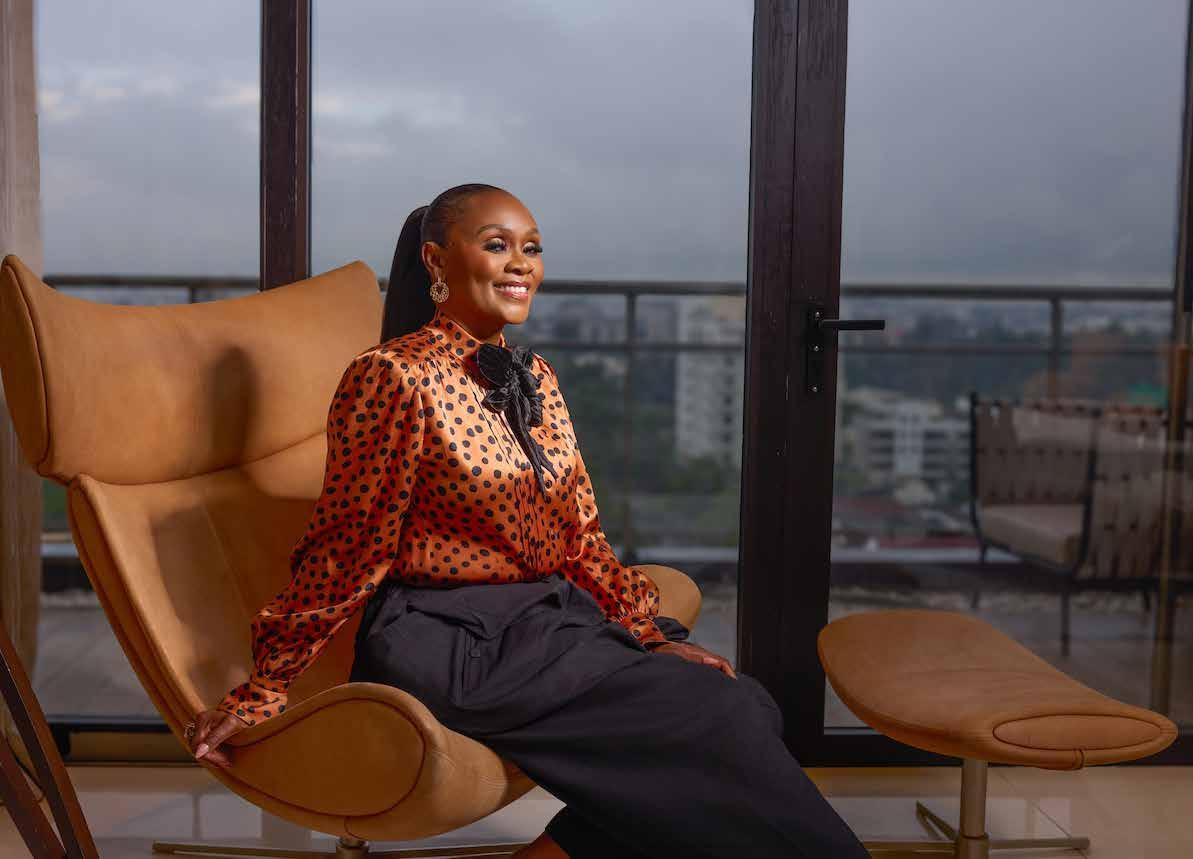
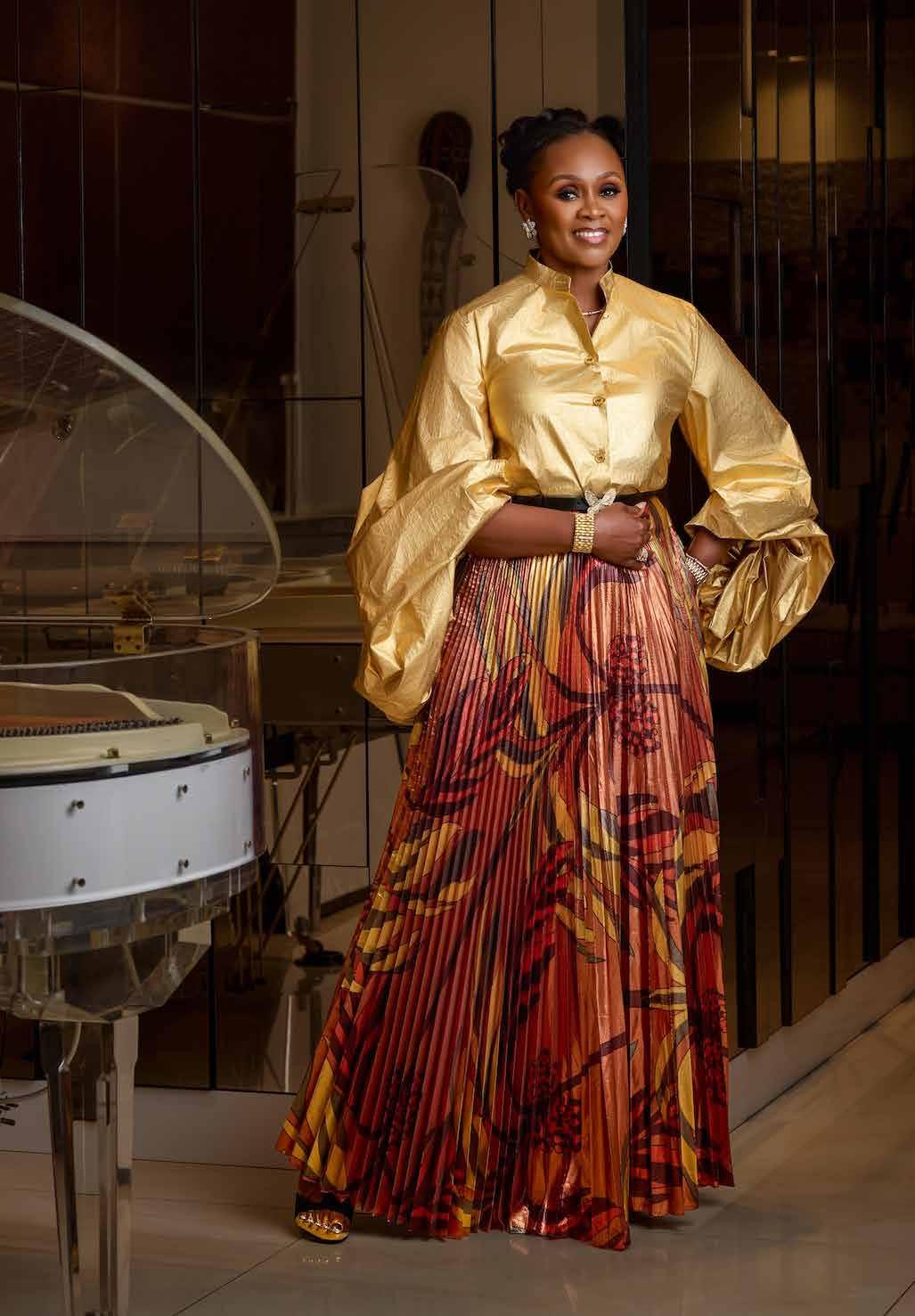
Life can only be understood backwards, said Kierkegaard. And for people who attain any kind of significance in the world, every decade presents an opportunity for personal introspection and public scrutiny, for better or for worse. This is especially true for public officials and for Bamidele Abiodun, who was born 60 years ago this month in Glasgow, Scotland. It was during a tumultuous time in Nigeria, a year of two coups d’etat, eventually leading to a civil war mere months after her birth in July 1966.
The businesswoman, philanthropist and wife of Governor Dapo Abiodun CON. of Ogun State, grew up in Ibadan, in the university community where her father was a professor and her mother an administrator. She remained in Ibadan for about 20 years, attending the International School, Ibadan (ISI), and then graduating from the University of Ibadan before moving to Lagos.
She married her teenage sweetheart. Friends say she would sneak out of her sheltered existence inside U.I. and make the two-hour journey to see her then boyfriend (now husband) Dapo, who was at the University of Ife. She laughs this story off, saying she doesn’t quite remember:
“Maybe it happened once or twice.”
Leaving the university community was her first experience of the real world. After her national youth service and first work experience, it was time to decide her future.
“I got married early,” she said of a simpler time when this was what was expected of young women after they completed their education. She set herself to the task of starting a family and raising five children, who are her pride and joy. Two are development bankers, one is an entrepreneur, and a fourth is wrapping up college.
Her second child and first son, Oluwagbemiga, popularly known as DJ Olu and a close associate of music star Davido, died in October 2017, causing her unspeakable sorrow. Nothing in her life had prepared her for the moment she received the call in Dubai. It was the call that would change everything, and the
eight-hour flight back to Lagos was hell on earth, she said. “I have not been to Dubai since that night nine years ago.”
She doesn’t speak about it publicly, but an emotional social media post on ‘Gbemiga’s birthday last year gave an indication that she still mourns his loss but continues to show strength for the sake of her other children.
“Despite my faith in God,” she said, “I am honest with myself enough to know that this is an enduring pain.”
She always said that her life is divided into two - before ‘Gbemiga and after - but she has not allowed this define what her future would be or cloud the joys of her current existence:
“there’s always so much to be thankful for,” she said recently. The family started a scholarship endowment in his name, disbursing nearly 100 million naira to hundreds of less privileged children and youth since 2024.
She decided to return to school in 2023 to pursue a master’s degree in public policy. Getting admitted to the University of London was the easy part. She would soon discover that trying to balance family, business, her work as first lady and doing weekly assignments would lead to years of little sleep and a struggle to keep up with her younger classmates.
“It took months to adjust to the learning environment,” she said. “I hadn’t been in school in more than 30 years, so the modern way of school was hard.”
This wasn’t helped by the fact that she had to travel back and forth between Abeokuta and London, often arriving on Monday morning when she had a test to write. She put in the work but still could not believe when she received the email that she passed, and her dissertation on primary healthcare had been accepted.
The master’s project was a direct result of her work as first lady of Ogun State and founder of Ajose Foundation, where she has found a purpose in helping people. “There’s nothing more fulfilling than being in a position to assist someone in need,” she said, “especially where there is a notable difference in their circumstances after they met with you.”
The self-funded foundation was launched after Governor Abiodun’s election, with an outreach to widows and children with special needs. It has since expanded into programmes in economic empowerment and health, with a widely acclaimed yearly medical mission partnership with U.S-based Nigerian doctors.
Mrs Abiodun founded her company, Brixworth Limited, in the early 2000s, when she traded diesel in jerrycans. She still sells diesel today and says the worst part of being in this business is that you’re stuck between debtor clients and sudden price swings. “Those two issues alone can bring you to financial ruin,” she said, adding that she has been tempted to quit several times in the more two decades she has run the business.
Many of her programmes are funded by her business as well as friends and institutional partners whose vision aligns with hers, including the governor’s office and the Office of the First Lady, Senator Oluremi Tinubu CON, whose Renewed Hope Initiative (RHI) has invested more than 200 million naira in Ogun State alone. It’s a vision she aims to keep alive after office, she says, “because have been blessed with opportunities that very few people ever experience.”
Mrs. Abiodun is many things to many people. To the young people she has mentored over the years, she is “Aunty Bams.” Friends know her simply as Bamidele, while those closest to her affectionately call her Bamsy. People who have met her often say she is reserved, friendly and approachable, with a calm and composed manner.
“Keep it simple,” is what guides her approach to fashion, she says. She is a longtime supporter of homegrown tailors and often wears adire pieces made from fabrics produced by young artists and emerging designers from Abeokuta, Oshogbo and Lagos. Her style is “whatever’s comfortable,” she says, rather than what is trending. She is deliberate about blending contemporary Western influences with traditional Nigerian tailoring.
In 60 years, Mrs. Abiodun believes that she has grown in wisdom, and her life’s experiences have combined in shaping who she is becoming. With her husband transitioning from a two-term governorship assignment to a potential senatorial career, she will likely remain in the public eye or the foreseeable future.
Asked what she wants for her birthday this year, she said nothing. And how she feels about turning 60? She said, “I am happy and very grateful.”
THE ART OF LOOKING WELL DRESSED WITHOUT OVERDOING IT
By Yinka Olatunbosun
They Know When to Stop
One of the quickest ways to make an outfit look overdone is trying to make every piece the centre of attention. The bestdressed people understand restraint. If the earrings are making a statement, the necklace stays in the jewellery box. If the blazer has strong shoulders, the shoes don’t need to compete. They know that editing an outfit is just as important as putting one together.
They Prioritise Proportion Over Trends
Great style is less about following trends and more about understanding balance. Wide-leg trousers are paired with fitted tops. An oversized shirt is grounded with tailored trousers. A structured jacket works because the rest of the outfit isn’t competing for volume. You don’t need expensive clothes to achieve this. You simply need pieces that fit well and work together. A modest outfit with the right proportions will almost always look more polished than an expensive one that doesn’t.
Texture Does the Heavy Lifting
Many stylish wardrobes are built around surprisingly simple colours—black, white, cream, chocolate, olive or navy. Instead of relying on bold prints or complicated colour combinations, they create interest by mixing fabrics. These subtle contrasts give an outfit depth without making it feel busy.
They Invest in the Right Basics
The backbone of a great wardrobe isn’t a collection of trendy pieces. It’s
The Small Details Matter
Sometimes
off the hanger.
They
Aren’t Afraid to Repeat Clothes
Contrary to what social media might suggest, the most stylish people don’t wear something new every time they leave the house. Instead, they rely on favourite pieces and wear them repeatedly in different ways. The same blazer appears over dresses, denim and tailoring. The same trousers are styled for work, brunch and evening events. Style isn’t built by constantly buying more. It’s built by knowing how to wear what you already own.
Maintenance Is Part of Getting Dressed
Beautiful clothes lose their appeal when they’re wrinkled, covered in lint or paired with worn-out shoes. The people who always look well-put-together usually spend more time maintaining their wardrobe than replacing it. They steam their clothes. They polish their shoes. They replace loose buttons before they become missing ones. These quiet habits often
They
Dress for Their Actual Lives
Perhaps
Know Exactly Who You’re Dressing
One of the biggest mistakes new designers make is trying to appeal to everyone. It sounds like good business, but it usually has the opposite effect.
A woman looking for polished workwear isn’t shopping for the same pieces as someone building a holiday wardrobe or searching for the perfect wedding guest dress.
The strongest brands know exactly who they are designing for. They understand their customers’ lifestyles, tastes, budgets, and daily routines.
That clarity shapes everything, from fabric choices and pricing to marketing and photography.
Build A Signature, Not Just A Collection
Fashion moves quickly, and the temptation to chase every trend is real. One season, it’s oversized tailoring; the next, sheer dressing, or butter yellow. While trends can inspire, they shouldn’t define your brand.
The labels people remember have a signature. It might be impeccable tailoring, sculptural
silhouettes, vibrant prints, relaxed resort wear or beautifully cut basics. Customers should be able to recognise your work without seeing your logo.
Quality Is Your Greatest Advertisement
No amount of clever marketing can make up for poor quality.
Beautiful campaign images might convince someone to place an order, but the garment itself determines whether they’ll ever come back.
Invest in quality fabrics where possible. Pay attention to construction, finishing and fit.
Make sure zips, buttons and seams can withstand regular wear. Customers notice these details, and they remember them.
In fashion, word of mouth remains one of the most powerful forms of marketing. People happily recommend brands that consistently exceed expectations.
Make Customer Experience Part Of The Brand
FASHION BRAND BUILDING A THAT LASTS
By Konye Chelsea Nwabogor
Starting a fashion brand has never been easier. Building one that is still around five or ten years later is a very different challenge. Every season brings a fresh wave of labels with beautiful collections and ambitious founders, yet many disappear almost as quickly as they arrive. The difference rarely comes down to talent alone. Lasting fashion brands are built on far more than good design. They understand their customer, deliver consistently, make smart business decisions and create an identity people remember long after a trend has passed. If you’re hoping to build a label with real staying power, these are the foundations worth building on.
Your product isn’t the only thing customers are buying. They’re also buying the experience. Was their order delivered on time? Was the packaging thoughtful? Did someone respond quickly when they had a question? Was resolving an issue easy or frustrating? These moments shape how people feel about your business. In many cases, exceptional service creates stronger loyalty than a discount ever could. Customers may forget exactly what they paid, but they rarely forget how a brand made them feel.
Don’t Depend Entirely On Social Media
Instagram and TikTok have transformed fashion, giving small brands access to audiences they could once only dream of. But relying on one platform is risky. Algorithms change, trends shift, and engagement can fluctuate overnight. Smart fashion businesses build communities beyond social media. They invest in a professional website, grow an email list, encourage repeat purchases, attend pop-ups, collaborate with likeminded brands and nurture relationships that don’t depend on an algorithm.
Know Your Numbers
Fashion is creative, but it is also a business, and businesses survive on healthy finances. Many promising brands struggle because pricing is based on guesswork rather than actual costs. Every garment should account for materials, labour, packaging, marketing, overheads and profit. Selling out isn’t always a success if every sale leaves you
with little or no margin. Understanding cash flow, inventory and production planning allows a brand to grow steadily instead of constantly reacting to financial pressure.
Stay Consistent
Building a respected fashion label takes time. There will be quiet seasons, delayed deliveries, unexpected production challenges and collections that perform better than others. Every established designer has experienced moments when growth felt slower than expected. The brands that endure are usually the ones that keep showing up. They continue refining their products, listening to customer feedback, improving operations and maintaining their standards, even when the spotlight moves elsewhere. Consistency rarely makes headlines, but it quietly builds credibility.
Think Beyond The Clothes
The most memorable fashion brands sell more than garments. They sell a feeling, a lifestyle and a point of view. People don’t simply buy into the product; they buy into the story behind it. What does your brand represent? Why should someone choose you instead of dozens of similar labels? The answers should be reflected in everything you do, from your campaigns and packaging to your customer service and the conversations you have online. Fashion trends will always come and go, but a strong brand identity has remarkable staying power.
10 GENIUS WAYS TO REAPPLY SUNSCREEN WITHOUT RUINING YOUR MAKEUP
If you’re serious about skincare, you’ve probably heard it countless times: sunscreen isn’t something you apply once in the morning and forget about. To keep your skin protected from harmful UV rays, dermatologists recommend reapplying it every two to three hours, especially if you’re outdoors or sitting near windows for long periods. The problem, of course, is that by lunchtime most of us already have a full face of makeup on.
The thought of rubbing sunscreen over carefully blended foundation is enough to make anyone skip reapplication altogether. Fortunately, beauty brands have finally caught up with real life. From featherlight mists to clever SPF powders and cushion compacts, there are now plenty of ways to top up your sun protection without watching your makeup melt away. The trick is choosing the right formula and applying it correctly. Here are ten genius ways to keep your skin protected while your makeup stays exactly where you want it.
Mist It On
If convenience is what you’re after, sunscreen mists are hard to beat. Simply hold the bottle about 20 to 30 centimetres away from your face, close your eyes and spray evenly over your makeup. Let it dry naturally rather than touching your face. Look for a broad-spectrum SPF 30 or higher to make sure you’re getting proper protection.
Powder sunscreens are a lifesaver on hot, humid days. They add another layer of sun protection while absorbing excess oil, reducing shine and refreshing your makeup at the same time. The builtin brush makes touch-ups quick and mess-free, whether you’re at work, travelling or heading out for dinner.
Try: Supergoop! Resetting Mineral Powder SPF 35.
Pat It On With a Beauty Sponge
If you prefer using your regular cream or fluid sunscreen, don’t rub it across your face. Instead, dispense a small amount onto a clean beauty sponge and gently press it into your skin. The patting motion helps preserve your foundation, blush and concealer while still giving your skin the protection it needs.
Try a Sunscreen Cushion Compact
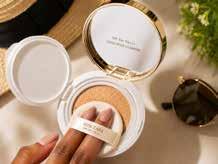
One of K-beauty’s smartest innovations, sunscreen cushion
compacts make reapplying SPF surprisingly easy. Simply dab the sponge lightly over your makeup for smooth, even coverage. They’re portable, mess-free and ideal for busy days when you need a quick touch-up between meetings or while commuting.
Finish With an SPF Setting Spray
Some setting sprays now do double duty by locking your makeup in place while adding sun protection. A few spritzes instantly refresh your complexion and provide an extra layer of defence against UV rays without disturbing your look. They’re especially useful if you wear a full face of makeup that you’d rather not touch.
Try: Bondi Sands Sunscreen Spray.
Use an SPF
Stick
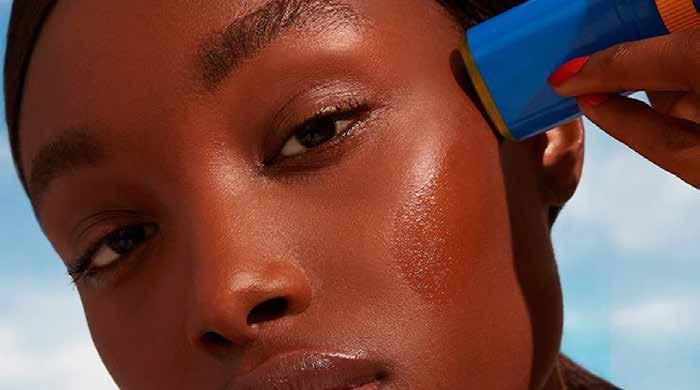
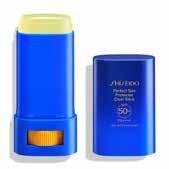
Clear sunscreen sticks are another handbag essential. They glide directly onto the skin without leaving a white cast or requiring messy hands. Apply with gentle strokes, then lightly tap the product into your skin with clean fingertips or a beauty sponge to blend it seamlessly.
Try: Shiseido Clear Sunscreen Stick SPF 50+.
Blot Before Reapplying
If your skin has become oily during the day, don’t apply sunscreen straight away. First, use blotting papers to absorb excess oil. This creates a smoother surface, helps prevent your makeup from sliding around and allows your sunscreen to sit much more evenly for a freshlooking finish.
Pay Extra Attention to High-Exposure Areas
Some parts of your face catch more sunlight than others. Your nose, forehead, cheeks and the tops of your ears are usually the first to lose protection, so don’t rush through those areas when reapplying SPF. Giving them a little extra attention can make a noticeable difference over time.
Layer Your SPF Throughout the Day
Think of sunscreen as something you build up rather than apply once. Start your morning with a dedicated sunscreen, then reinforce it later with an SPF mist, powder or stick.
Makeup products containing SPF can offer an extra boost, but they shouldn’t replace your primary sunscreen because most people simply don’t apply enough makeup to achieve the advertised level of protection.
Don’t Rely on Sunscreen Alone
Even the best sunscreen has its limits. If you’re spending extended periods outdoors, seek shade whenever possible and wear a wide-brim hat and UV-protective sunglasses. Great sun protection isn’t about one product; it’s about combining smart habits that keep your skin healthy, youthful and protected for years to come. After all, the best makeup always starts with healthy skin, and protecting it every day is one of the simplest beauty investments you can make.
TTHE FOODS THAT TASTE BETTER WHEN IT RAINS
here is something about rain that changes the way we eat. Maybe it is the cooler weather, the steady rhythm of raindrops on the roof or simply the excuse to slow down for a while. Whatever the reason, rainy days have a way of making us crave food that is warm, hearty and deeply comforting. Salads suddenly lose their appeal. Cold drinks can wait. What you really want is something steaming, richly flavoured and satisfying enough to make the gloomy weather feel worthwhile.
In Lagos, the rainy season comes with its own food rituals. Roads flood, traffic stretches endlessly and plans are often abandoned, yet somehow good food makes everything feel more manageable. There are certain dishes that seem made for grey skies. Nobody writes these rules down, but almost everyone has that one meal that immediately comes to mind the moment the rain begins.
Pepper soup sits comfortably at the top of that list. Whether it is made with fish, goat meat, chicken or assorted meat, there is something almost therapeutic about a perfectly cooked bowl. The fragrant spices, fiery broth and rising steam warm you from the inside out. It clears your head, wakes up your senses and somehow makes the rain outside feel less like an inconvenience and more like part of the experience. Yam porridge, or asaro, is another rainy-day favourite. Cooked until the yam softens into a rich, velvety blend of tomatoes, peppers, onions, palm oil and fish or assorted meat, it is the kind of meal that asks for nothing except a spoon and a little patience. The same goes for beans. Whether it is ewa riro, beans served with ripe plantain or a comforting plate alongside soft Agege bread, these everyday classics somehow taste even better when the weather cools.
For many people, nothing beats a steaming plate of amala with gbegiri, ewedu and richly spiced obe ata. Filling, comforting and unapologetically Nigerian, it is a meal that demands your full attention. The same is true of pounded yam paired with egusi or ogbono soup. These are dishes that encourage you to sit down properly, forget about rushing and savour every mouthful.
Rainy weather also brings out our love for simple pleasures. Freshly roasted corn with pear and coconut becomes almost irresistible once the season arrives. So does hot akara wrapped in brown paper and served with pap or soft Agege bread. You spot the akara
seller through the drizzle, join the queue almost instinctively and, moments later, you are reminded how satisfying the simplest foods can be. Even boli with groundnuts or pepper sauce somehow tastes better when the air is cool.
Then there are the meals that feel like a reward after surviving Lagos traffic in a downpour. You finally make it home with soaked shoes and rainsplashed clothes, and all you want is a bowl of hot noodles loaded with vegetables and chicken or freshly cooked fried rice still steaming from the pot. Some people swear by jollof rice on rainy evenings, while others crave seafood okra, afang or banga soup. That is the beauty of comfort food. It is deeply personal, and everyone has a dish that instantly makes a difficult day feel better.
As someone who spends a great deal of time exploring restaurants across Lagos, I have noticed that the best rainy-day menus are rarely the most elaborate. A restaurant does not need an extensive seasonal offering to get it right. Sometimes all it takes is an exceptional pepper soup, a generous bowl of seafood okra or beautifully cooked yam porridge. These are the meals people remember long after the rain has stopped because they prove that comfort does not depend on expensive ingredients or complicated techniques. It comes from familiar recipes prepared with care and served piping hot.
Rain also reminds us that food is closely tied to emotion. We do not always eat because we are hungry. Sometimes we eat because we want to feel better, because the weather calls for warmth or because the smell of a simmering pot reminds us of meals our mothers cooked or soups our grandmothers patiently tended for hours. Few things evoke nostalgia as effortlessly as a comforting meal on a rainy afternoon.
Perhaps that is the real gift of the season. It gives us permission to pause, refill the bowl and enjoy food without rushing. The meals we remember most are rarely the fanciest. They are the ones that leave us feeling warm, full and at home, even while the rain continues to fall outside.