Nestoil Towers Reopens after Supreme Court Judgments Setting Aside Court of Appeal Decisions as
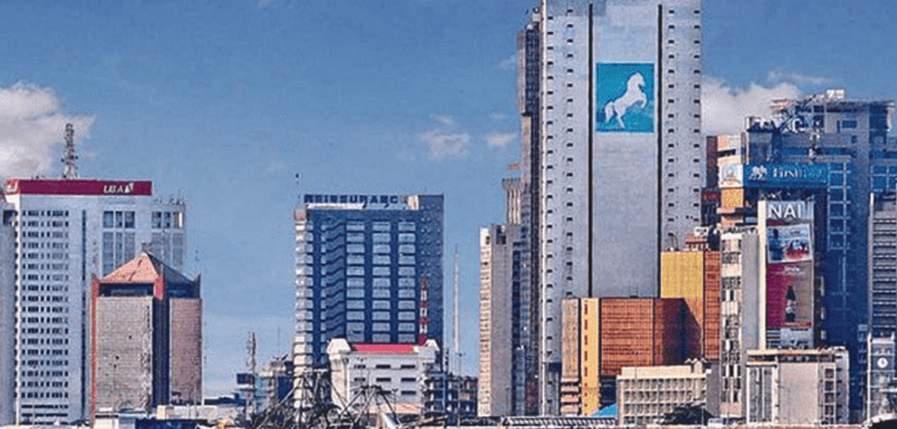
After months of impasse and epic legal battles, the iconic Nestoil Towers has been reopened for use by its owners
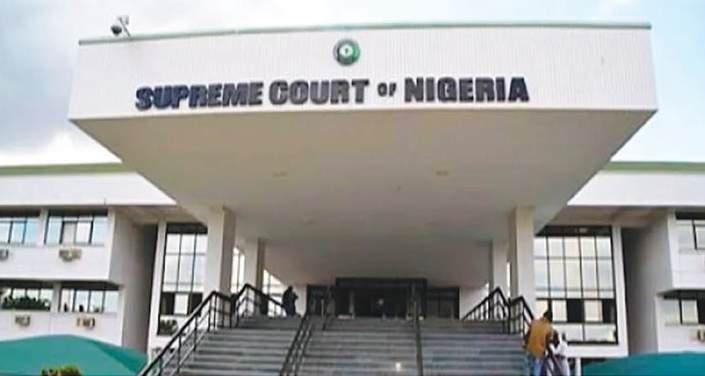
and their promoters following two successive decisions of the Supreme Court in favour of Neconde Energy Ltd. and
Nestoil Ltd., the most recent being the one delivered on June 1, 2026 setting aside the ex parte orders of the Court of
IG Complies with Ruling
Appeal, which gave judicial support to a receiver appointed by a club of junior lenders. It would be recalled that on
November 27, 2025, the Court of Appeal granted ex parte orders injunction in favour of the lenders and their appointed receiver.
The same court was to also subsequently disqualify
Nigeria, 38 Others to Benefit as US Judge Strikes Down Trump’s Policies Targeting Immigrants…
www.thisdaylive.com
Akpabio: Probing Nigerian Military Will Undermine Troops’ Morale, Operational Effectiveness
Sunday Aborisade in Abuja
The President of the Senate, Senator Godswill Akpabio, has explained
Continued on page 5
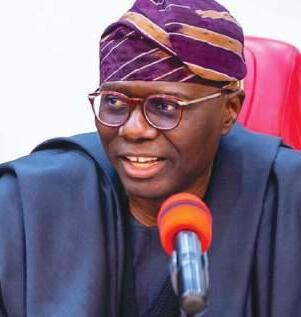
Sanwo-Olu: We Won't Bow to Terror, Nigeria Shall Overcome Security Challenges
Police kill two kidnappers, rescue former power minister’s sister, two children
NAF pledges commitment to safe rescue of abducted Oyo schoolchildren, teachers
Yari calls for national unity, collective responsibility, renewed hope
Apparently miffed by the rising insecurity across Nigeria, which has generated
heightened concerns among the citizens, the Governor of Lagos State, Mr. Babajide Sanwo-Olu, last night declared that the country
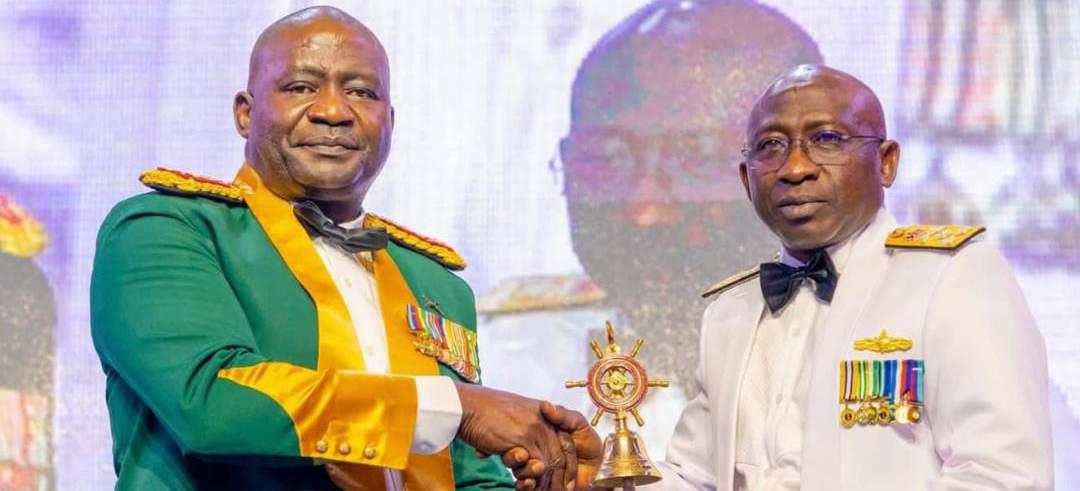
CELEBRATING NIGERIAN NAVY AT 70…
L-R: Minister of Defence and Special Guest of Honour, General Christopher Musa (rtd.), receiving a souvenir from the Chief of the Naval Staff, Vice Admiral Idi Abbas, during the 70th Anniversary Ceremonial Sunset Dinner and Awards Night as part of the grand finale of the Nigerian Navy's week-long celebrations in Lagos…weekend
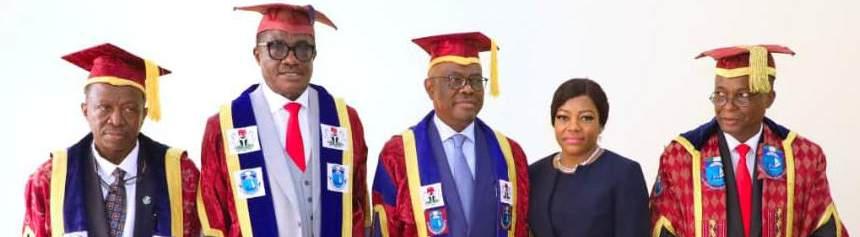
L-R: Incoming Vice-Chancellor of the University of Port Harcourt, Prof. Princewill Chike; Chairman, Governing Council, Senator Mao Ohuabunwa; Minister of the Federal Capital Territory, Mr. Nyesom Wike; his wife, Justice Eberechi Suzzette Nyesom-Wike; and the UNIPORT’s Vice-Chancellor, Prof. Owunari A. Georgewill, during the university’s 36th Convocation Lecture delivered by the minister…yesterday
Ejiofor Alike in Lagos, Linus Aleke in Abuja and Kemi Olaitan in Ibadan
Nigeria, 38 Others to Benefit as US Judge Strikes Down Trump’s Policies Targeting Immigrants
Sunday Ehigiator
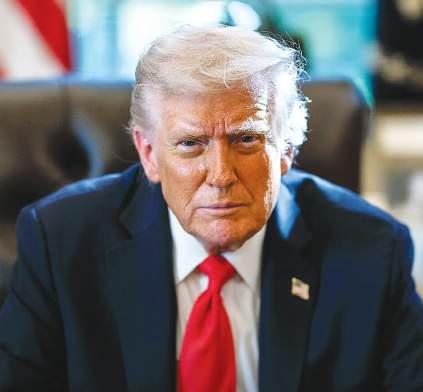
A federal judge has struck down a policy enacted by the United States President Donald Trump’s administration after the shooting of two National Guard members that made it harder for immigrants from dozens of countries to stay and enter the US.
Immigrants from Nigeria and 38 other African, Asian, Latin American, and Middle Eastern countries will benefit
from this judgment as they are now eligible to receive final decisions on, among other things, their asylum, work permit, green card, and citizenship applications.
Countries facing partial restrictions include: Angola, Antigua and Barbuda, Benin, Burundi, Cuba, Côte d’Ivoire, Dominica, Gabon, The Gambia, Malawi, Mauritania, Nigeria, Senegal, Tanzania, Togo, Tonga, Turkmenistan, Venezuela, Zambia and Zimbabwe.
Countries facing total restrictions include: Afghanistan, Burkina Faso, Myanmar, Chad, Republic of the Congo, Equatorial Guinea, Eritrea, Haiti, Iran, Laos, Libya, Mali, Niger, Sierra Leone, Somalia, South Sudan, Sudan, Syria, and Yemen.
In a ruling harshly criticising the administration, US District Chief Judge, John McConnell Jr. said the policy “threw the lives of countless immigrants living in the United States into
indeterminate legal limbo,” and he accused the US Citizenship and Immigration Services (USCIS) of ignoring the law.
“In enacting its latest immigration policies, USCIS: claims statutory and regulatory authority that it does not possess; makes decisions without the reasoned explanations that it must provide; acts without regard for the reliance interests of applicants that it must consider; and justifies its actions with pretextual
concerns of ‘national security’ that mask anti-immigrant sentiments that it is forbidden from letting influence its decision-making,” he wrote.
“In legal terms, that means USCIS’s actions are contrary to law and arbitrary and capricious.”
The policies enacted after the National Guard shooting last year meant that immigrants from 39 African, Asian, Latin American, and Middle Eastern countries have been “categorically barred”
SANWO-OLU: WE WON'T BOW TO TERROR, NIGERIA SHALL OVERCOME SECURITY CHALLENGES
would not bow to terror but would overcome its security challenges.
This is just as the operatives of the Nigeria Police Force have rescued Mrs. Olaide Busayo Adegoke John-Paul, a 43-year-old younger sister of former Minister of Power, Mr. Adebayo Adelabu, along with her 12-year-old twin sons, Peter and Paul, in Ibadan, the Oyo State capital.
The Chief of the Air Staff (CAS), Air Marshal Sunday Aneke, has also reiterated the commitment of the Nigerian
Air Force (NAF) to the safe rescue of the abducted schoolchildren and their teachers in Oyo State.
Meanwhile, a former governor of Zamfara State and Senator representing Zamfara West, Alhaji AbdulAziz Yari, yesterday, called for national unity, collective responsibility and renewed hope in the battle against insecurity in the country.
Reacting to the various security incidents in parts of the country, Sanwo-Olu stated that Nigerians must
stand united as one people
behind President Bola Tinubu and all the armed forces, stressing that the forces of evil confronting the nation did not ask for the political affiliation of Nigerians before they killed, maimed and destroyed.
“We are Nigerians. Our will is strong, and our spirit is unbreakable,” he said.
According to him, every life lost is a tragedy, and every community threatened by violence deserves solidarity, support, and protection.
Sanwo-Olu urged Nigerians to be united in prayers for the teachers and students abducted from Orire Local Government Area (LGA) in Oyo State.
“In trying moments like this, Nigerians must never lose faith in our nation or in our collective ability to overcome adversity. We are Nigerians. The seed of greatness lies within every one of us,” Sanwo-Olu added.
“Our country has faced many challenges throughout its history. We have confronted
economic setbacks, political instability, social tensions, and security threats. Yet, through resilience, courage, and unity of purpose, we have always emerged stronger. This moment will be no different.
“The security challenge confronting our nation today is not insurmountable. The forces seeking to spread fear and instability do not represent the character of our people or the future of our country. Their actions are designed to weaken our resolve and diminish our
from receiving final decisions on, among other things, their asylum, work permit, green card, and citizenship applications.
“This ruling reaffirms a basic principle: the federal government cannot shut down lawful immigration pathways or discriminate against people based on where they come from,” said President and CEO of Democracy Forward, which represented the plaintiffs in the case, Skye Perryman.
confidence. We must deny them that victory because we are Nigerians,” he added. The governor urged Nigerians across every state, region, faith, and ethnic background to remain united, insisting that the moment was not a time for division or despair but a time to reaffirm common identity and shared commitment to peace, progress, and national development. He noted that the
Continued on page 12
AKPABIO: PROBING NIGERIAN MILITARY WILL UNDERMINE TROOPS’ MORALE, OPERATIONAL EFFECTIVENESS
the Senate’s refusal to probe military spending, stressing that subjecting the military to a public legislative inquisition at a critical time when the Nigerian troops were engaged on multiple fronts against terrorism, banditry, and other grave threats to national security risked undermining their morale and operational effectiveness.
Akpabio has also denied reports claiming he promised to secure senatorial tickets for incumbent senators who lost their party primaries, describing them as misleading and a gross misrepresentation of his position.
Explaining the reasons for the lawmakers’ rejection of a senator’s call for a probe of
the lawyers of Nestoil and Neconde and ordered that it is the lenders through the receiver as adversaries of Nestoil and Neconde that should appoint lawyers for the two companies.
Following the Court of Appeal ex parte orders, the Nestoil Towers complex was taken over and sealed with security operatives stationed to enforce the status quo.
Conspicuous inscriptions in red were marked on the building indicating that it was taken over on the order of court.
The commercial edifice remained sealed for over seven months as legal proceedings moved swiftly to the Supreme Court.
The Supreme Court on April 10, 2026 and June 1, 2026 delivered two landmark
military spending, Akpabio, in a statement issued yesterday by his Special Adviser on Media and Publicity, Hon. Eseme Eyiboh, insisted that the present moment was not appropriate for a public investigation of the Nigerian Armed Forces.
The Senate last Wednesday rejected a motion seeking an investigation into military spending amid rising insecurity across the country.
The rejection followed deliberations on a motion sponsored by Senator Abdulfatai Buhari, who drew the senators ' attention to the abduction of students and teachers, including a toddler, during attacks on communities in Oyo State.
During the debate, Senator
decisions, which set aside the two orders of the Court of Appeal disqualifying the companies’ lawyers and granting ex parte orders.
The judgment of June 1, 2026 is the most proximate and final force that removed every resistance to the unsealing and opening of the property.
It was gathered that, following the decision of the Supreme Court, the law firm of Wole Olanipekun & Co. made representations to the Inspector General of Police and Commissioner of Police in Lagos to immediately reopen the property, a request which was acceded to promptly in a commendable show of respect for the rule of law.
The actions of the police give an indication of a new narrative and positive mindset
Adams Oshiomhole had called for a comprehensive audit of military spending, arguing that greater accountability was needed in the security sector.
Supporting Oshiomhole’s position, Senator Sani Musa raised concerns about the possibility of military funds being diverted.
Though the Deputy Senate President, Barau Jibrin, who presided over the session, acknowledged that calls for scrutiny of military spending were not entirely misplaced, the lawmakers rejected Oshiomhole’s proposal on procedural grounds.
Defending the lawmakers’ decision, Akpabio, while acknowledging legislative oversight as a constitutional
shift under the regime of the new IG.
Commenting on the development during a telephone conversation, lead counsel to Neconde, Bode Olanipekun (SAN), described the sealing of the property as “wasteful”.
He decried the situation where the property was sealed under the pretext of a court order when there was no such order in the first place.
According to the senior counsel, “it is unfortunate that bold markings were made on the building that possession was taken pursuant to orders of the Court of Appeal and Federal High Court when there was no order for possession by either of the Courts”.
He further stated that “There was no regnant inhibitive, punitive or prohibitive order
responsibility of the National Assembly, argued that with Nigerian troops currently engaged on multiple fronts against terrorism, banditry, and other grave threats to national security, the present moment was not an appropriate time for such public investigation.
"The Senate President believes strongly that support, collaboration, and closed-door engagements with security agencies are more productive at this critical time," the statement noted.
It added that oversight would be exercised responsibly, without creating distractions that could embolden adversaries or draw attention away from the urgent task of securing the nation.
Meanwhile, Akpabio has also denied reports that he promised senatorial tickets to lawmakers who lost the APC primary elections, saying the reports did not reflect his stance on the matter and should be disregarded entirely.
"We must categorically assert that this report does not reflect the position of the President of the Senate. Senator Akpabio has neither made nor authorised such a promise," the statement said.
According to the clarification, the Senate President's remarks during an interaction with his colleagues were an expression of empathy towards senators adversely affected by the outcomes of their primary elections.
The statement explained that Akpabio promised them that the leadership of the All Progressives Congress (APC) was actively working to resolve all issues arising from the primaries, and that a final list of candidates would be released in due course, in strict accordance with the party's constitution and electoral guidelines. The statement further reiterated Akpabio's commitment to party discipline, due process, and the internal dispute resolution mechanisms of the APC, stressing that he would not interfere with the autonomous processes of the party or make commitments that fall outside the constitutional purview of the National Assembly leadership.
OF APPEAL DECISIONS AS IG COMPLIES WITH RULING
of the Federal High Court as at the date the property was sealed and the ex parte orders of the Court of Appeal did not, in its express terms make an order for possession of the property”.
He commended the IG for bringing an end to the illegal actions.
The lenders had commenced the action that originated the legal battles at the Federal High Court against Nestoil, Neconde and their directors alleging indebtedness to them.
The case had remained stalled and frozen since last year because the same lenders obtained ex parte orders of the Court of Appeal staying proceedings in the action filed by them.
In Neconde and Nestoil’s appeal to the Supreme Court, they had argued that it was
curious for the lenders to stay proceedings of their own case and in the same breath get rewarded with orders of injunction.
The Supreme Court set aside both the orders of injunction and the stay proceedings by which the lenders have stalled their own case.
With the removal of the clog put by the lenders, the case at the Federal High Court can now proceed for a determination of whether the lenders had any right in the first place to even appoint a receiver at all.
The coast for that determination is clear since there is no extant order of court permitting or authorizing the receiver to act.
It would be recalled that the Court of Appeal decision disqualifying Neconde and
Nestoil’s lawyers was given on the pretext that appointing lawyers was part of the duties of a receiver upon appointment.
In setting aside the Court of Appeal’s decision, the Supreme Court decided that the nature of the case at the Federal High Court to determine the right to appoint a receiver and validity of such appointment will not permit of a situation for the receiver to perform duties before the case is decided.
Despite the pendency of the suit and the Supreme Court decision of April 10, 2026, the receiver has continued to insist vide paid newspaper adverts that he wants to continue acting and exercise rights as if the ex parte orders of the Court of Appeal have not been set aside by the Supreme Court.
Listed insurance companies on the Nigerian Exchange Limited (NGX) delivered a mixed performance in the first quarter of 2026 as industry-wide insurance revenue declined by 9.9 per cent, even as stronger investment income, improved efficiency and prudent cost management helped boost profitability.
An analysis of the unaudited results of 13 quoted insurance firms showed that aggregate insurance revenue fell to N228.07 billion in the first three months of 2026 from N253.01 billion recorded in the corresponding period of 2025.
The development highlights
the persistent challenge of low insurance penetration in Africa's largest economy, despite ongoing reforms aimed at deepening market participation, strengthening operators and expanding the industry's contribution to economic growth.
The companies reviewed include: NEM Insurance Plc, AIICO Insurance Plc, AXA Mansard Insurance Plc, Consolidated Hallmark Holdings Plc, International Energy Insurance Plc, Lasaco Assurance Plc, Prestige Assurance Plc, Sovereign Trust Insurance Plc, and other listed underwriters.
A breakdown of the results revealed that several operators witnessed significant declines in
insurance revenue during the period under review.
Among the most affected was Consolidated Hallmark Holdings Plc, which reported one of the sharpest contractions in premium income. The company posted insurance revenue of N11.69 billion in the first quarter of 2026, representing a decline of nearly 73 per cent from N43.30 billion reported in the corresponding period of 2025.
International Energy Insurance Plc also recorded a steep decline, with insurance revenue dropping by almost 61 per cent to N615.78 million from N1.56 billion a year earlier.
Similarly, NEM Insurance Plc, one of the industry's leading
players, reported insurance revenue of N37.24 billion, down about 19 per cent from N46.06 billion recorded in the first quarter of 2025.
Lasaco Assurance, Prestige Assurance and Sovereign Trust Insurance also posted declines in insurance revenue, reflecting the challenging operating environment and intense competition within the sector.
Despite the pressure on top-line earnings, many insurers demonstrated resilience through improved operational efficiency and disciplined cost management.
Consolidated Hallmark Holdings emerged as one of the strongest performers in terms of profitability. The
Xenophobia: FG to Deploy Aircraft to Evacuate Nigerians in South Africa, Concludes Screening
Michael Olugbode in Abuja
The federal government is set to move to the next phase of its emergency repatriation plan for Nigerians stranded in South Africa, with arrangements for the deployment of aircraft expected to commence immediately after the screening exercise that ended yesterday.
The spokesman of the Ministry of Foreign Affairs, Kimiebi Ebienfa, in a message to journalists on a WhatsApp group, disclosed that the verification process, which began on Thursday, was being jointly conducted by the Nigerian High Commission in Pretoria; South Africa’s Department of International
Relations and Cooperation (DIRCO); the South African Police Service and immigration authorities to determine those eligible for evacuation.
He noted that the exercise was expected to produce a definitive figure of Nigerians cleared for return, enabling authorities to finalise logistics for the airlift operation.
“At the end of the screening, we will have a definite figure that has been cleared for evacuation. Thereafter, the government will finalise the details about the deployment of aircraft to bring them home,” Ebienfa said.
The planned evacuation comes amid heightened concerns over the safety of
Nigerians and other foreign nationals in South Africa following renewed attacks, intimidation and threats linked to anti-immigrant sentiment in parts of the country.
Reports of violence, looting, and harassment targeting African migrants have triggered anxiety among members of the Nigerian community, prompting many to seek assistance from Nigerian authorities to return home.
The latest repatriation effort follows a series of xenophobic incidents that have periodically strained relations between Africa’s two largest economies. In previous waves of attacks, Nigerian-owned businesses
were vandalised, while several citizens were forced to flee affected communities. Similar incidents in 2008, 2015, and 2019 resulted in deaths, injuries, and the displacement of thousands of foreign nationals.
The situation escalated in recent weeks after reports emerged of growing hostility towards migrants in some South African communities, leading more than 1,000 Nigerians to register for voluntary evacuation.
Ebienfa said the ongoing screening was intended to verify identities, immigration status, and travel documentation to ensure a smooth and orderly evacuation process.
company grew profit before tax by an impressive 159.4 per cent to N21.1 billion, compared with N8.15 billion in the corresponding period of last year.
The remarkable performance enabled the company to account for more than 37 per cent of the sector's combined profit before tax during the quarter.
Overall, the 13 listed insurers generated N56.8 billion in profit before tax in the first quarter of 2026, representing nearly 14 percent growth over N49.99 billion reported in the corresponding period of 2025.
The improvement in earnings underscores the ability of many operators to navigate revenue pressures through stronger investment returns, improved underwriting discipline and tighter expense management. Beyond Consolidated Hallmark Holdings, Linkage Assurance Plc delivered one of the most impressive earnings performances in the sector. The company reported profit before tax of N6.6 billion, representing a remarkable 689 percent increase from N833.2 million reported in the corresponding period of 2025.
2027: PRP Clears Donald Duke as Presidential Candidate, 420 Others
Chuks Okocha in Abuja
The National Working Committee (NWC) of the Peoples Redemption Party (PRP) has cleared a former Governor of Cross River State, Donald Duke, as its presidential candidate for the 2027 general election.
Duke’s clearance followed the conclusion of the review of the recently held primaries by the Primaries Appeal Committee and the subsequent approval of the committee’s report by the NWC.
The party’s National Publicity Secretary, Muhammed Ishaq, said in a statement issued yesterday in Abuja that the NWC also upheld four other election outcomes, including governorship, Senate, House of Representatives and State
House of Assembly primaries. Ishaq said that all other candidates had been cleared to contest the 2027 general election, except in the Tarauni Federal Constituency in Kano, where the primary election was nullified.
According to him, the party will field a total of 420 candidates across all elective positions in the 2027 general elections.
“In line with our commitment to active participation in the electoral process, the PRP is proud to field a total of 420 candidates across all positions in the 2027 general elections,” he said. Ishaq expressed the PRP’s commitment to the principles of internal democracy and service, as well as to delivering credible and transformative leadership for the country.
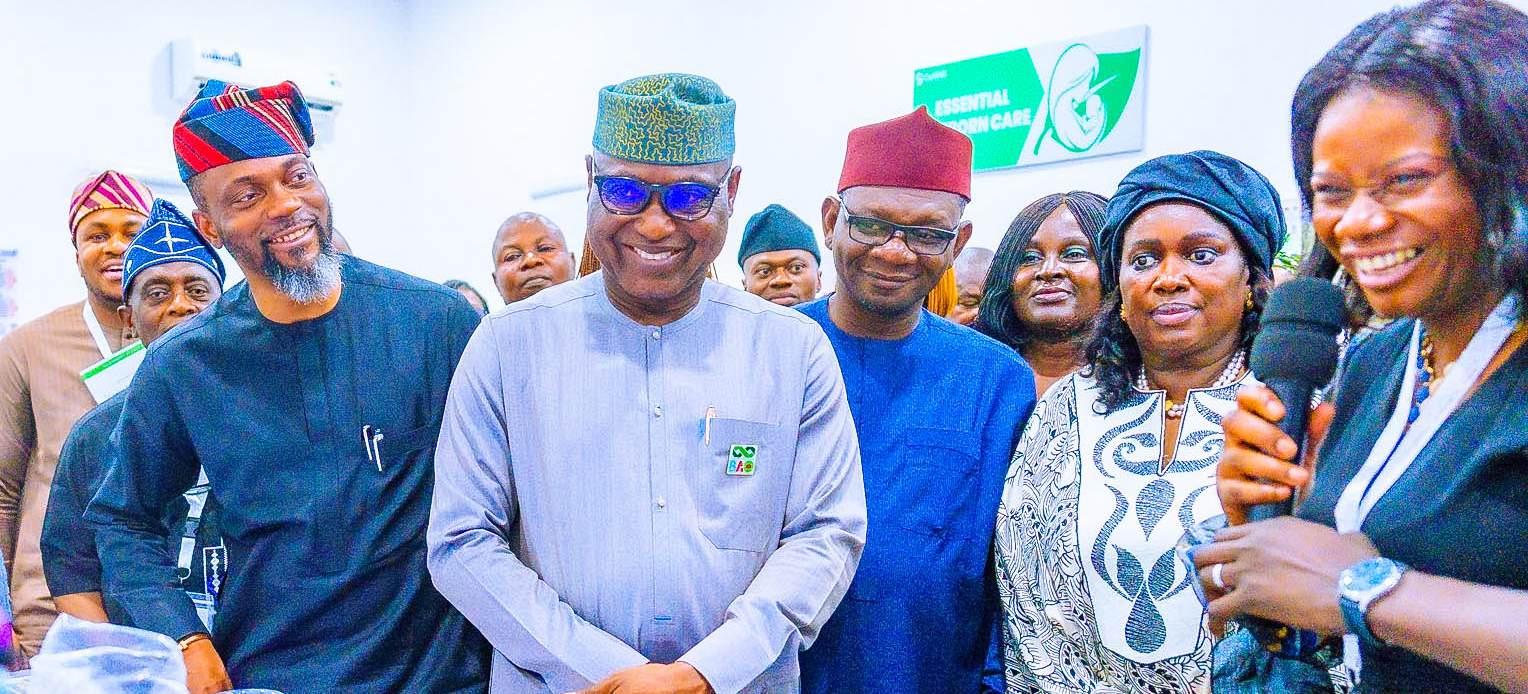
L-R: Ekiti State Commissioner for Health and Human Services, Dr. Oyebanji Filani; Governor Biodun Oyebanji; Executive Director, National Health Care Development Agency (NPHCDA), Dr. Muyiwa Aina; Deputy Director, Family Health, Gates Foundation, Rodio Dialo; and Director, Centre for Newborn Health Research and Innovation (CeNHRI), Dr. Olufunke Bolaji, during the inaguration of the centre at Ekiti State University Teaching Hospital (EKSUTH), Ado- Ekiti…Friday
REWARDING PRODUCTIVITY AND EXCELLENCE…
WHO: Nearly 500 Cases of Ebola Outbreak Confirmed in Central Africa
LAWMA issues advisory to Lagos health facilities
Nearly 500 Ebola cases have now been confirmed in the deadly outbreak raging in central Africa, a World Health Organisation (WHO) overview showed yesterday, amid mounting concern over the swelling scale of the epidemic.
The latest confirmation comes as the Lagos Waste Management Authority (LAWMA) yesterday issued a precautionary advisory to health facilities and medical waste handlers across the state
following reports of an Ebola Virus Disease outbreak in parts of East Africa.
WHO, in its daily update on the situation yesterday, tallied 452 confirmed cases, including 82 deaths, in the Democratic Republic of Congo, where the outbreak was declared three weeks ago.
In neighbouring Uganda, meanwhile, it counted 19 confirmed cases, including two deaths.
The total of 471 cases and 84 deaths, based on numbers reported by the DRC and Ugandan governments, marked a hike of 100 cases and 20 deaths from a day earlier.
The increase came amid warnings that the outbreak, which the WHO has declared an international public health emergency, could eventually swell to become the largest on record.
A top official at the US
Centers for Disease Control and Prevention said Friday that models indicated that without strong public health interventions, the current outbreak risked rivaling the scale of the 2014 West Africa epidemic, which saw over 28,000 cases and more than 11,000 deaths.
“That scale is possible,” said Jason Asher, director of CDC’s Center for Forecasting and Outbreak Analytics, during a press briefing.
Defence Minister Reiterates Commitment to Maritime Security, Blue Economy
The Minister of Defence, General Christopher Musa (rtd.), has reaffirmed the federal government’s commitment to strengthening maritime security and advancing Nigeria’s blue economy through sustained support for the Nigerian Navy.
He pledged continued investment in the resources, capabilities and enabling environment required to build a technologically advanced, interconnected and globally
respected naval force capable of safeguarding Nigeria’s maritime interests and regional waters.
The minister pledged while serving as Special Guest of Honour at the 70th Anniversary Ceremonial Sunset Dinner and Awards Night, the grand finale of the Nigerian Navy’s weeklong celebrations marking seven decades of service to the nation.
According to a statement by the Minister’s Special Assistant on Media, Leah Katung-Babatunde, the minister stressed the need for
innovation and the adoption of modern technologies to address emerging security threats.
He noted that the future of naval operations depends on advanced surveillance systems, intelligence capabilities, unmanned technologies, cyber defence tools and data-driven operational platforms.
“The future of the Nigerian Navy lies in its ability to harness cutting-edge technology and strengthen collaboration with regional and international partners. A modern, technology-
driven Navy will enhance maritime domain awareness and operational effectiveness and contribute significantly to collective security within the Gulf of Guinea and beyond,” he said.
He further assured that the federal government would continue to strengthen the Navy’s operational capacity to protect Nigeria’s maritime assets, safeguard national interests and support national development in line with its motto, Onward Together.
Jonathan Urges Judiciary to Uphold Justice, Rule of Law
Former President Goodluck
Jonathan has said Nigeria’s future would depend on strong institutions, an impartial judiciary and adherence to the rule of law.
Jonathan stated this at the weekend while speaking at the opening ceremony of the 2026 Law Week of the Yenagoa Branch of the Nigerian Bar Association (NBA) in Bayelsa State.
The event, themed “Securing
the Future: Sustainable National Asset Protection in Africa; Opportunities, Risks and Regulatory Pathways,” brought together legal practitioners, judicial officers and other stakeholders.
Addressing participants during a plenary session, Jonathan urged lawyers and judicial officers to uphold justice, fairness and the rule of law, describing
members of the Bench and Bar as custodians of the nation’s legal system.
He said Nigeria’s progress and stability depended on the ability of its institutions to function independently and effectively.
According to him, the country can secure a prosperous future only when the rule of law prevails over individual influence.
“As ministers in the temple of
justice, I reminded them that the future of our nation can only be secured when justice is stronger than power; when institutions are stronger than individuals; when our post-colonial education system is thoughtfully reformed to meet the demands of a changing world; and when the law affords equal protection to both the powerful and the vulnerable,” Jonathan said in a statement.
Ebola, which is spread through close contact and bodily fluids, has killed more than 15,000 people in Africa over the past 50 years.
The current outbreak was declared on May 15 in northeastern DR Congo, but the virus is believed to have spread under the radar for some time beforehand.
There are no approved vaccines or treatments for the rare Bundibugyo species of Ebola behind the outbreak.
The WHO and the African CDC on Friday launched a $518-million plan to battle the outbreak over the next six months, focusing, among other things, on boosting surveillance, laboratory testing, and infection prevention.
“The outbreak is moving fast, and we are still playing catch-up,” WHO chief Tedros Adhanom Ghebreyesus told reporters.
“We need to stop the outbreak where it is, support countries that are responding today, and ensure that neighbouring countries are ready to detect and act quickly if cases appear,” he said.
“This is a serious outbreak, and it's one we know how to stop, but we need to move fast and together.”
Meanwhile, LAWMA has issued a precautionary advisory to health facilities and medical waste handlers across the state following reports of an Ebola Virus Disease outbreak in parts of East Africa.
Its Managing Director and Chief Executive Officer, Dr. Muyiwa Gbadegesin, said the advisory was aimed at ensuring health facilities, medical waste handlers, transporters and treatment operators remain vigilant and comply with infection prevention and medical waste management protocols.
According to a statement shared by the Lagos State Government yesterday, Gbadegesin stressed that there were currently no confirmed cases of Ebola in Lagos State or anywhere in Nigeria.
“Although there is currently no confirmed case of Ebola in Lagos or Nigeria, preparedness remains one of the most effective tools in disease prevention.
“We are therefore urging all health facilities and licensed medical waste operators to strengthen infection prevention and control measures and ensure strict compliance with approved medical waste management protocols,” he said.
He said medical waste management plays a critical role in preventing the spread of infectious diseases and protecting healthcare workers, patients, waste handlers and the wider public.
The advisory directed health facilities to reinforce infection prevention measures, including proper hand hygiene, use of personal protective equipment, safe handling of medical specimens, environmental decontamination and strict segregation of infectious waste at source.
LAWMA also urged medical waste handlers and transporters to adhere to approved collection, transportation, treatment and disposal procedures for infectious waste and ensure the consistent use of protective equipment during operations.
Gbadegesin said the authority would continue monitoring compliance and engaging stakeholders to maintain high standards of medical waste management across the state.
Linus Aleke in Abuja
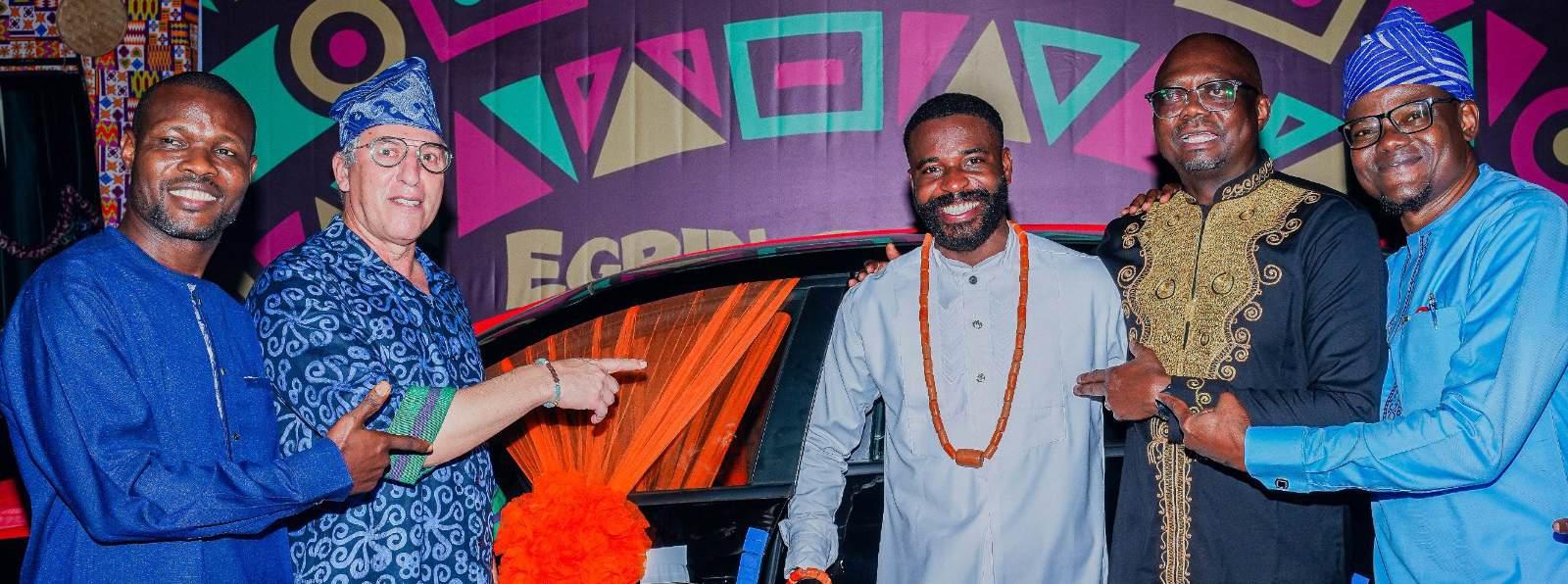
L-R: Chief Risk Officer, Egbin Power Plc, Mr. Babatope Ajayi; Managing Director/Chief Executive Officer, Mr. Mokhtar Bounour; winner of Top Performer Award at Egbin Power’s Employee Recognition Awards (ERA) 2026, Amos Oshanugo; Head of Maintenance, Felix Ebiware and Acting Head of Human Resources, Ololade Shin-Aba, during the presentation of the grand prize of a brand-new Chery Tiggo 2 Pro SUV to the winner at Egbin Power plant, Ikorodu, Lagos…recently
CONGRATULATIONS ON YOUR ACADEMIC FEAT…
First Lady to Nigerian Girls: Remain Curious, Confident, Courageous, Lead Nation's Digital Future
Deji Elumoye in Abuja
Wife of the President, Senator Oluremi Tinubu, has tasked Nigerian girls to remain curious, confident and courageous, urging them to continue
learning, creating and deploying technology to solve societal challenges and uplift their communities.
Speaking at a dinner organised for the winners of the third edition of the National Girls in
ICT competition in Abuja at the weekend, Mrs. Tinubu told the girl-innovators to cherish their ideas while assuring them that their dreams were valid and potential limitless.
"My charge to you is to
remain curious, confident, and courageous. Never underestimate your inquisitiveness, which is basically the power of your ideas. Continue to learn, create, and use technology not only to solve problems but also to
Report Ranks Kaduna, Delta Ahead of 34 States in Governance Index
Sylvester Idowu in Warri
Kaduna and Delta states have been ranked the best-governed states in Nigeria, according to the 2025 Commonwealth Institute of Advanced and Professional Studies (CIAPS) Governance Performance Index. While Kaduna State emerged first with 73 per cent, Delta State followed closely with 70 per cent.
A statement issued yesterday by the Chief Press Secretary to the governor, Festus Ahon,
said the result “highlights the growing recognition of Governor Oborevwori’s administration for its performance in governance, infrastructure development, public service delivery and overall management of state affairs.”
According to the report, “Governor Oborevwori’s second-place ranking places Delta ahead of 34 out of the 36 states in Nigeria, including Anambra, Niger, Ekiti, Akwa Ibom, Lagos, Oyo, Enugu and
Borno, which completed the top ten positions.”
It added: “Kaduna State, under Governor Uba Sani, emerged first with 73 per cent, while Delta State followed closely with 70 per cent.
“Anambra State, led by Governor Charles Soludo, ranked third with 65.5 per cent, while Niger State under Governor Mohammed Umar Bago placed fourth with 65.1 per cent.
“Ekiti State, governed by Biodun Oyebanji, came fifth
with 64.5 per cent, while Akwa Ibom and Lagos States, led by Governors Umo Eno and Babajide Sanwo-Olu respectively, each scored 64 per cent to occupy the sixth and seventh positions.
“Oyo State under Governor Seyi Makinde secured eighth place with 61 per cent, followed by Enugu State under Governor Peter Mbah with 56.5 per cent. Borno State, led by Governor Babagana Zulum, completed the top ten with 54 per cent.”
Kidnappers of Ex-Army General Release Video, Demand Livestock, Members’ Release
A former Director of Defence Information, Major General Rabe Abubakar (rtd.) and his wife, Hajiya Amina Abubakar, who were abducted along the Karaduwa–Matazu Road in Katsina State exactly a week ago have begged the government to come to their aid. Their abductors released a video showing the couple in captivity.
In the four-minute, twosecond video circulated on social media, the couple were seen standing and relaying their captors' demands.
Speaking in the video,
the wife of the retired army general conveyed the abductors’ demand for the release of three of their members identified as Sani, Aminu, and Nasiru.
The abductors also demanded the return of livestock allegedly seized from them.
According to her account, two of the detained individuals were arrested in Jikamshi, while the third was arrested in Kano.
She further appealed to the Katsina State Government and the leaders of five local government areas to facilitate compliance with the demands to secure their release.
The retired army general, who spoke briefly in the
video, called for efforts to ensure peace, stating that the abductors had expressed interest in dialogue and peaceful coexistence.
Throughout the video, no ransom demand was mentioned.
As of the time of filing this report, neither the Katsina State Government nor security agencies had issued an official statement regarding the video released by the abductors.
The retired major general was reportedly travelling to Katsina on Saturday last week alongside his wife, Hajiya Amina Abubakar, and their driver, Abdullahi Sa’idu, when their vehicle was ambushed
along the Marabar Musawa–Kafinsoli road in Matazu LGA.
The attack occurred near Zakin Baure village, where witnesses said armed men, believed to be bandits, suddenly emerged from hiding, blocked the road, and opened fire on the vehicle, forcing it to a halt.
Sources familiar with the incident said the driver was shot in the hand during the attack but was later spared by the gunmen.
Notorious bandit leader Kachallah Muhammad, who operates in parts of Katsina State, had reportedly established communication with relatives of the victims.
uplift others and strengthen your communities," she said.
The First Lady said the programme demonstrated Nigeria’s commitment to empowering girls through technology, innovation and digital inclusion, noting that this year’s edition engaged more than 3,700 girls across the six geopolitical zones through competitions, boot camps, mentorship sessions and innovation challenges.
Of that number, she said, 111 girls emerged as regional winners, and six finalist teams participated in the national competition.
According to her, the projects showcased how young Nigerians could use ICT to solve real-life
problems, including smart fishpond monitoring systems, AI-powered farm protection, platforms supporting deaf patients, and applications for children with autism.
“These projects highlight the programme’s success in nurturing digital skills, creativity, leadership, and problem-solving capabilities among young girls. I am very proud of your achievements and congratulate you all," she added. She linked the initiative to President Bola Tinubu’s Renewed Hope Agenda, which she said placed youth empowerment, digital innovation, education, economic inclusion and human capital development at the centre of national transformation.
24 Years After, Barnabas, Amaka Igwe Yet to Get Justice Despite TJCP’s Report
Sunday Ehigiator
Twenty-four years after the brutal killing of former Chairman of the Nigerian Bar Association (NBA), Onitsha Branch, Barnabas Igwe, and his pregnant wife, Amaka, justice has remained elusive despite a report by the Anambra State Truth, Justice and Peace Commission (TJPC), detailing the circumstances surrounding their murder and recommending remedial actions.
A confidential TJPC report, exclusively obtained by THISDAY, described the unresolved murder of the Igwes as “a continuing violation crying out for remedy” and documented allegations of state complicity, failed prosecution efforts and institutional interference that allegedly frustrated justice in one of Anambra State’s most controversial murder cases.
The 14-man commission was chaired by Nigerian human
rights activist Prof. Chidi Odinkalu, while Ambassador Bianca Odumegwu-Ojukwu served as secretary.
The report, prepared as part of the commission’s assignment to investigate historical violence, insecurity and unresolved grievances in Anambra and the South-east, traced the murder of the couple to September 1, 2002, when Barnabas and Amaka Igwe were attacked on Oraifite Street, Onitsha, shortly after returning from the NBA Annual General Conference in Ibadan, Oyo State.
According to the report obtained by THISDAY, the couple were allegedly blocked by armed men, dragged out of their vehicle, brutally assaulted with machetes and clubs, and run over with an automobile. Amaka reportedly died later that night, while Barnabas succumbed to injuries in the early hours of the following day after reportedly identifying some of his attackers.
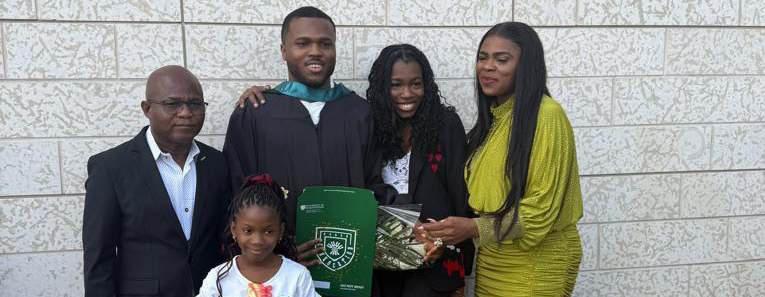
L-R: Chief Executive Officer, Nech-Auto Supply Industries Limited, Mr. Emeka Olisaemeka; Miss Chisom Olisaemeka; Graduand, Mr. Tochukwu Olisaemeka; Miss Winifred Olisaemeka; and Director, Nech-Auto Supply Industries Limited, Mrs. Nkiruka Olisaemeka, at the graduation ceremony of Tochukwu after obtaining a degree in Computer Sciences from the University of Saskatoon, Canada…recently
Chuks Okocha in Abuja
Group of 60 out of 82 minority lawmakers who nominated Ikenga Imo Ugochinyere as House of Reps Minority Leader designate
Democracy is Power to Choose
The House rule book dema nds that members must elect their leaders from a mong themselves.
It is too late to cha nge ou r sta nd!
Hon Ikenga Imo Ugochinyere Remains the Minority Leader D esig nate we nominated.
Su pport us to deepen democracy.
Signed: Hon. Mukhtar Umar Hon. Seyi Sowunmi
For G-60Minority Lawmakers , House ofRepresentatives
BETTER LIVESTOCK MANAGEMENT ON THEIR MINDS…
L-R: Commissioner of Livestock Development, Niger State, Adamu Mammagi Abdullahi; Chief Technical Officer, Promasidor Nigeria, Mr. Brighton
Development, Dr. Ishak. Bello; Minister of Livestock Development, Alhaji Idi Mukhtar Maiha;
Development Centre, Abubakar Tafawa Balewa University, Bauchi, Prof. Demo Kalla; and Presenter,
and
Arla
Wike: Tinubu’s Courageous Leadership, Vision, Political Will Transforming Nigeria
Blessing Ibunge in Port Harcourt
The Minister of the Federal Capital Territory (FCT), Nyesom Wike, yesterday said President Bola Tinubu’s courageous leadership, vision and political will were transforming the country.
Wike cited ongoing infrastructure projects across the country as evidence of purposeful leadership.
Speaking at the 36th Convocation Ceremony of the
University of Port Harcourt, where he delivered a lecture titled: ‘Leadership and Infrastructure Development in Nigeria: Lessons for Future Leaders,’ Wike described the scale, direction and momentum of infrastructure initiatives under Tinubu’s administration as a reflection of a leadership committed to national transformation.
According to him, the president has shown an uncommon willingness to confront difficult decisions and
mobilize resources to address Nigeria’s infrastructure deficit.
Wike said: “What the present moment offers is a rare and defining possibility, a window in which purposeful leadership can begin, in earnest, to narrow the enduring gap between Nigeria’s vast potential and its historically uneven performance.
“In this regard, the evidence increasingly suggests that President Bola Ahmed Tinubu has demonstrated, beyond reasonable doubt, the courage to confront difficult choices, the
capacity to mobilize national resources, and the will to pursue infrastructure as a serious instrument of transformation”.
The FCT minister argued that infrastructure remains the clearest measure of leadership effectiveness, stressing that roads, railways, power projects, housing schemes and digital infrastructure are critical foundations for economic growth and social development.
He noted that while some ongoing projects were inherited from previous administrations,
the Tinubu government has injected renewed urgency and strategic direction into their execution.
According to him, projects that were previously isolated initiatives are now being integrated into a broader national development framework to stimulate productivity, strengthen national cohesion, and expand economic opportunities.
Wike cited major projects, including the Lagos-Calabar Coastal Highway, the Sokoto-
SANWO-OLU: WE WON'T BOW TO TERROR, NIGERIA SHALL OVERCOME SECURITY CHALLENGES
government alone cannot win this battle without the support, cooperation, vigilance, and active intelligence sharing by the local communities.
“I wish to reiterate my confidence in the leadership of President Tinubu and in the ability of our security and intelligence services to be able to defeat the forces of evil unleashing terror attacks on soft targets within the civilian population in our land,” he said.
Police Kill Two Kidnappers, Rescue Former Power Minister’s Sister, Two Children
Operatives of the Nigeria Police Force have rescued Mrs. Olaide Busayo JohnPaul, the younger sister of a former minister of power, and her 12-year-old twin sons, Peter and Paul, three days after they were kidnapped.
John-Paul and her children were abducted at about 7:30 a.m. last Wednesday while heading to the children’s school in Ibadan, the Oyo State capital.
THISDAY gathered that the victims were rescued unhurt during a late-night rescue operation carried out
around 7:30 p.m. yesterday.
Two suspected kidnappers were also neutralised in a gun duel with police operatives, while two firearms were recovered from the gang.
Police sources disclosed that sustained intelligence tracking and tactical pressure forced the kidnappers into a confrontation with operatives, leading to the successful rescue of the victims.
Confirming the release of the victims, Adelabu’s media aide, Femi Awogboro, said the Oyo State Commissioner of Police called his boss to inform of the rescue.
"The Commissioner of Police just called to inform my boss that his sister alongside her twin sons have been rescued by the police," he said.
NAF Pledges Commitment to Safe Rescue of Abducted Oyo Schoolchildren, Teachers
Meanwhile, the CAS, Air Marshal Aneke, has reiterated the commitment of the NAF to the safe rescue of the abducted schoolchildren and their teachers in Oyo State.
Aneke gave the assurance yesterday in Abuja during
the Nigerian Air Force (NAF) second quarter 2026 route march exercise.
Represented by the Chief of Policy and Plans, Air Vice Marshal Abubakar Abdullahi, the CAS said that the NAF remained committed to supporting ongoing security operations across the country.
He said the service would continue to work in synergy with other security agencies to protect lives and property and advance national security objectives.
According to him, a healthy and physically fit workforce is better positioned to meet the demands of modern military operations and contribute meaningfully to national security efforts.
He said the exercise also promoted teamwork, camaraderie, esprit de corps, and overall wellness among personnel, while strengthening the bond necessary for effective service delivery.
Aneke expressed appreciation to President Bola Tinubu for his continued support towards the development and operational effectiveness of the Nigerian Air Force.
He also commended senior officers, officers, airmen, airwomen, and civilian
staff for their dedication and participation in the exercise.
Yari Calls for National Unity, Collective Responsibility, Renewed Hope
In a related development, a former governor of Zamfara State and Senator representing Zamfara West, Yari, has called for national unity, collective responsibility, and renewed hope in the battle against insecurity in the country.
In a statement he personally signed, Yari expressed deep sadness about the recent incidents of violence and insecurity that claimed innocent lives and brought pain, grief, and uncertainty to many families and communities across the nation.
“The pain of one Nigerian is the pain of all Nigerians. At moments such as this, we must remember that beyond our differences of ethnicity, religion, language, or region, we remain one people bound together by a common destiny.”
Speaking to the heart of the crisis, Yari said, “I strongly condemn these senseless acts of violence and criminality.
The enemies of our country seek to sow fear, create division, and weaken the spirit of our people. Their objective is to make us distrust one another and lose faith in our nation. We must never allow them to succeed.
“Today, more than ever before, Nigerians must come together in unity and solidarity. Security is not merely the responsibility of government and security agencies; it is a shared national responsibility,”
Yari said.
Yari called on Nigerians to resist the temptation to blame one another or retreat into ethnic, religious, or regional sentiments.
“Terrorists, bandits, kidnappers, and other criminal elements do not distinguish between tribe, faith, or political affiliation. Their victims are Nigerians. Therefore, our response must also be Nigerian—united, collective, and unwavering.
“I appeal to our traditional rulers, religious leaders, community associations, youth groups, women leaders, and civil society organisations to continue serving as bridges of peace and understanding. Let us strengthen the values of
Badagry Super Highway, the Abuja-Kaduna-Zaria-Kano Road, the East-West Road, and access roads to the Second Niger Bridge, as examples of the administration’s commitment to reshaping Nigeria’s economic landscape.
He also highlighted ongoing investments in rail transportation, including the rehabilitation of the Port Harcourt-Maiduguri railway corridor and efforts to expand the standard-gauge network across the country.
neighbourliness, mutual trust, and collective vigilance that have always defined our communities,” he said.
Yari commended President Tinubu and the leadership of the armed forces, intelligence agencies, police, and other security institutions for their ongoing efforts and sacrifices.
According to him, “This is not the time for despair. It is not the time for division. It is the time for unity, courage, and collective resolve. The history of our great nation is a story of resilience. Time and again, Nigerians have demonstrated the capacity to rise above adversity and emerge stronger. I do not doubt that we shall do so again.
“Let us stand shoulder to shoulder as brothers and sisters. Let us comfort those who mourn, support those who protect us, and work together to deny criminals and enemies of our nation the opportunity to divide us.
“With unity of purpose, faith in God, and commitment to one another, we shall overcome these challenges. Nigeria will prevail. Peace will prevail. The spirit of our people will prevail. May Almighty Allah continue to bless, protect, and guide the Federal Republic of Nigeria.”
Ochieng; SA to the Minister, Federal Ministry of Livestock
Head of Raw Milk Supply
Production,
Foods, Snorri Sigurdsson; Acting Director, TETFund Dairy Research and
Voice of Nigeria, Rita Ene Okwanihe, during the 2026 World Milk Day Forum held in Abuja…recently
GREETInGS FROM nIGERIA…
24 Years After, Barnabas, Amaka Igwe
Yet to Get Justice Despite TJCP’s Report
Sunday Ehigiator
Twenty-four years after the brutal killing of former Chairman of the Nigerian Bar Association (NBA), Onitsha Branch, Barnabas Igwe, and his pregnant wife, Amaka, justice has remained elusive despite a report by the Anambra State Truth, Justice and Peace Commission (TJPC), detailing the circumstances surrounding their murder and recommending remedial actions.
A confidential TJPC report, exclusively obtained by THISDAY, described the unresolved murder of the Igwes as “a continuing violation crying out for remedy” and documented allegations of state complicity, failed prosecution efforts and institutional interference that allegedly frustrated justice in one of Anambra State’s most controversial murder cases.
The 14-man commission was chaired by Nigerian human rights activist Prof. Chidi Odinkalu, while Ambassador Bianca Odumegwu-Ojukwu served as secretary.
The report, prepared as part of the commission’s assignment to investigate historical violence, insecurity and unresolved grievances in Anambra and the South-east, traced the murder of the couple to September 1, 2002, when Barnabas and Amaka Igwe were attacked on Oraifite Street, Onitsha, shortly after returning from the NBA Annual General Conference in Ibadan, Oyo State.
According to the report obtained by THISDAY, the couple were allegedly blocked by armed men, dragged out of their vehicle, brutally assaulted with machetes and clubs, and run over with an automobile.
Amaka reportedly died later that night, while Barnabas
succumbed to injuries in the early hours of the following day after reportedly identifying some of his attackers.
According to the document, the attackers were allegedly members of the then statebacked Anambra Vigilante Service (AVS). At the same time, Mr. Ken Emeakayi, who served as Commissioner for Works under the administration of former Governor Chinwoke Mbadinuju, was named as the leader of the convoy linked to the attack. The report stated that witnesses and police investigators at the time identified Emeakayi and other suspects, leading to arrests and prosecution, efforts that later stalled.
THISDAY reports that Emeakay is currently the Special Adviser on Community Security to Governor Soludo and also heads the Agunechemba security outfit in Anambra State. However, no court conviction has been secured in connection with the case, and the allegations contained in the report remain claims documented by the commission.
The commission stated that the killings occurred amid growing tensions between the then Anambra State Government and the NBA, with Barnabas Igwe emerging as a vocal critic of the administration over unpaid salaries owed to teachers, judiciary workers and civil servants.
According to the report, Igwe had become one of the loudest critics of governance under the Mbadinuju administration at a time when workers, including teachers, judicial staff, and civil servants, were owed salaries and were on prolonged strike.
The report stated that as Chairman of the NBA’s largest branch in the old Eastern Region, Igwe regularly criticized
what he described as poor governance and was outspoken against the operations of the Bakassi Boys, a vigilante group licensed by the then government and accused in the report of carrying out intimidation, unlawful detention and violent attacks.
According to the commission, tensions escalated in August 2002 after the NBA Onitsha branch, under Igwe, issued a 21day ultimatum to the Anambra State Government, demanding payment of salary arrears owed to judiciary workers, teachers, civil servants, and legislative staff, or face consequences. The report stated that Igwe had also demanded the governor’s resignation if he was unwilling or unable to resolve the salary crisis.
The TJPC report further detailed an altercation between the NBA leadership and a political appointee in the Mbadinuju administration during a highlevel meeting of senior lawyers convened to discuss possible action against the government. According to the report, the
incident deepened tensions between the state government and the NBA leadership shortly before the killings.
The commission also noted that Barnabas and Amaka Igwe were not the only critics of the administration allegedly attacked during the period. It cited the case of the then Chairman of the Nigeria Labour Congress (NLC) in Anambra State, Charles Onyeagba, who was reportedly attacked and nearly killed around the same period after criticising the government over unpaid wages. At the same time, his office was allegedly burnt down.
According to the report, the couple had returned from Ibadan on August 31, 2002, and were attacked the following day while leaving work on Oraifite Street in Onitsha. The document alleged that a convoy led by Emeakayi blocked their vehicle and that Amaka, believing she recognised him as a client of the family’s law firm, reportedly ran toward him seeking safety as the assault began.
The report stated that armed men allegedly dragged the couple from their vehicle and attacked them with machetes and clubs before running over them with an automobile. It further alleged that neither Barnabas nor Amaka died from gunshot wounds but from the brutal physical assault that followed.
The commission said onlookers rushed the couple to several hospitals but that treatment was allegedly delayed because medical facilities reportedly insisted on a police report before admission. According to the report, the victims were eventually admitted after a police report was obtained, but the delay may have proved fatal. “It is believed that one or both of Barnabas and Amaka Igwe would have survived if they had been attended to promptly when they were rushed to hospital,” the report stated.
The report further claimed that before his death, Barnabas identified some of his attackers
to his elder brother, Vincent Igwe, and narrated details of the incident.
According to the document, Barnabas reportedly told his brother that one of the attackers described the assault as “a lesson for fighting the government and that in his next life, he would not fight a sitting Governor again.”
The commission further alleged that subsequent investigations were interfered with. According to the report, a Special Investigation Team of the Nigeria Police initially handled the matter. Still, investigators allegedly came under political pressure to either drop the case or compromise it.
The report also stated that senior police officers who pursued the investigation allegedly suffered career setbacks.
It further alleged that the prosecution of the case was repeatedly disrupted through judicial transfers, interference, and the disappearance of suspects.
Egbin Power Rewards Employees for Productivity, Excellence at ERA 2026
Ejiofor Alike
In recognition of the outstanding performance and contributions of its employees, Nigeria’s largest power generation company, Egbin Power, recently rewarded the stellar contributions of exceptional employees in the past year at its Employee Recognition Awards (ERA) 2026.
The colourful awards ceremony brought together the management team and staff for an evening dedicated to honouring outstanding performers in the business and top talents across different departments, reinforcing the company’s
culture of excellence.
The highlight of this year’s ceremony was the recognition of the Top Performance Award winners.
Amos Oshanugo of the Instrumentation & Control Department emerged as the Top Performer, driving home a brand-new Chery Tiggo 2 Pro SUV, while Chidima Celestine of the Operations Department and Endurance Otaru of the Business Operations Department were recognised as first and second runners-up, respectively, each receiving cash rewards.
Speaking at the event, the CEO of Egbin Power, Mokhtar
Bounour, said, “At Egbin Power, we believe excellence is not an accident. It’s built through hard work, teamwork, and the courage to go beyond expectations. That’s why we are passionate about celebrating excellence, commitment, teamwork, and the people whose efforts continue to power Egbin forward every single day.
“The initiative spotlights those who go above and beyond, those who quietly make extraordinary contributions, and those who consistently raise the standard across our organisation. These efforts are seen, valued, and rewarded. When we celebrate
results, we create a ripple effect. It motivates teams to raise the bar, strengthens accountability, and deepens our shared commitment to powering Nigeria. Our people are our greatest asset, and their growth and success will always be a priority for us,” Bounour said. He further acknowledged that the hard work and commitment of other team members contributed significantly to the overall achievements of the company.
Oshanugo, who won the grand prize, expressed his appreciation to the Chairman of the Board, and the management of Egbin Power.
Ondo State Attorney General and Commissioner for Justice, Dr. Olukayode Ajulo (left), and Nigeria’s Permanent Representative to the United Nations, Dr. Jimoh Ibrahim, when the commissioner visited the UN envoy at the Nigeria House in New York, USA... recently
PReMIeRe OF WHX…
L-R: Portfolio Director, Informa, Tom Coleman; Minister of State for Health and Social Welfare, Dr. Iziaq Adekunle Salako; Special Regional Representative of the DG AfCDC Western Regional Coordinating Centre, Prof. Aliko Ahmed; and President of Healthcare Federation of Nigeria and Country Director, PharmAccess, Njide Ndili, during the premiere of WHX Lagos 2026 at Landmark Event Centre, Lagos…recently
Wike-backed PDP Fumes over Turaki Faction’s Alleged Misrepresentation of Judicial Pronouncements
The Peoples Democratic Party (PDP) backed by the Minister of the Federal Capital Territory (FCT), Mr. Nyesom Wike, has raised the alarm over what it described a misrepresentation of judicial pronouncements by a faction of the party led by Tanimu Turaki (SAN), and also called on relevant security and regulatory authorities to immediately investigate the source of the faction’s fake court judgments and take appropriate action in accordance with the law.
In a statement issued yesterday by its National Publicity Secretary, Jagundo Haruna Mohammed, the Wike-led faction also urged the Legal Practitioners Disciplinary Committee (LPDC) and the Nigerian Bar Association (NBA)
to investigate the conduct of legal practitioners who deliberately misrepresented court judgments and used their professional standing to promote falsehoods capable of bringing the legal profession into disrepute.
The party argued that distorting and misrepresenting judicial decisions to achieve political gains was capable of undermining the judiciary and eroding public confidence, while also endangering democracy.
Wike-led PDP was reacting to statement by the Publicity Secretary of the Turaki-led Interim National Working Committee of PDP, Comrade Ini Ememobong, which claimed that the Court of Appeal had nullified the caretaker committee, which organised the National Convention that produced
FCCPC Distances Self from Report Linking It to Fintech Lending Market Submission
The Federal Competition and Consumer Protection Commission (FCCPC) has distanced itself from reports alleging that it participated in the submission of names of local fintech companies to the Presidency for consideration in Nigeria’s digital lending market as part of efforts to curb capital flight.
In a statement yesterday, the commission said it was neither aware of nor involved in the claims attributed to it, describing the report as inaccurate.
The FCCPC stated: “The attention of the Federal Competition and Consumer Protection Commission (FCCPC) has been drawn to a report in a section of the media purporting it was involved in the submission to the Presidency, the names of local fintech companies seeking to partake in the digital lending market with a view to curbing capital flight abroad.”
Rejecting the report, the commission added: “The commission wishes to state clearly that it is not aware of, and was not involved in, the
claims attributed to it in the report absolutely.”
The agency explained that its role in matters concerning digital and non-traditional lending remains limited to its statutory responsibilities under the Digital, Electronic, Online or Non-Traditional Consumer Lending Regulations 2025 (DEON Regulations).
According to the commission, regulatory activities under the DEON framework are currently suspended following a court order.
“As previously communicated by the commission, implementation and enforcement of the DEON Regulations were suspended following service of an ex-parte order of the Federal High Court in Lagos in Suit No. FHC/L/ CS/760/2026, filed by the Wireless Application Service Providers Association of Nigeria (WASPAN),” the statement said.
FCCPC further noted that it remains bound by the court’s directive pending the determination of the substantive suit.
the current leadership of the Wike’s faction.
Reacting, the party said disciplinary action must be taken against any legal practitioner who misrepresented judicial pronouncements, adding that failure to act decisively would only embolden those who seek to weaponize misinformation against the judiciary and weaken public confidence in the administration of justice.
“The Peoples Democratic Party
(PDP) is deeply disturbed by the persistent and deliberate distortion of judicial pronouncements by a group of individuals falsely parading themselves as the Interim National Working Committee of the Party. “The latest instance is contained in a press statement issued by one Comrade Ini Ememobong, a legal practitioner, on June 3, 2026, on behalf of the said group.
“Of particular concern are paragraphs three and four of the statement, which contain claims,
conclusions, and interpretations that are not only misleading, but are entirely inconsistent with the clear, unambiguous, and unequivocal contents of the judgment of the Court of Appeal.
“The party considers this development a dangerous assault on the integrity of the judiciary and the administration of justice.
It is particularly disturbing that individuals who are members of the legal profession, including a Senior Advocate of Nigeria, would engage
in the distortion and misrepresentation of a clear judicial pronouncement for partisan political purposes,” the statement explained. The Wike-led PDP stated that the Certified True Copy (CTC) of the ruling of the Court of Appeal delivered by Justice Uchechukwu Onyemenam on June 3, 2026, and certified on June 5, 2026, “speaks for itself and leaves no room for the false narratives currently being circulated across the media and social media platforms.”
Troops of Operation Fansan Yamma have recorded a major operational success against bandits terrorising Sokoto and Zamfara states, killing several insurgents, including top kingpins, and dismantling their fortified hideouts.
The offensive was carried out around the villages of Dangulbi and Kurawa in the Tureta Local Government Area (LGA) of Sokoto State, on high ground
bordering Zamfara State that has long served as a bandit enclave.
A credible security source, who pleaded anonymity, disclosed the development to journalists in Sokoto State yesterday, confirming that the operation delivered a heavy blow to criminal elements operating in the axis.
According to the source, the troops engaged the bandits in a fierce gun battle after storming their camps on the high grounds that offered them a strategic advantage over security forces
and civilians.
Several bandits were neutralised during the encounter, with the source revealing that some of the kingpins coordinating attacks in the border communities were among those killed.
The source added that numerous other bandits escaped with varying degrees of gun wounds and fled into forests extending into neighbouring states.
The operation was executed by personnel of the 8 Division,
Nigerian Army, in collaboration with other security agencies and local vigilante groups familiar with the terrain. The source said soldiers recovered a cache of weapons and motorcycles used by the bandits to launch attacks and move swiftly across the porous border communities.
He described the swift response, professionalism, and courage displayed by the military personnel as instrumental in averting what could have been a tragic incident for residents of Tureta LGA.
Tinubu, Babangida, Daniel, Celebrate Folasade Ogunbiyi at 80
Deji elumoye in Abuja and Sunday ehigiator in Lagos
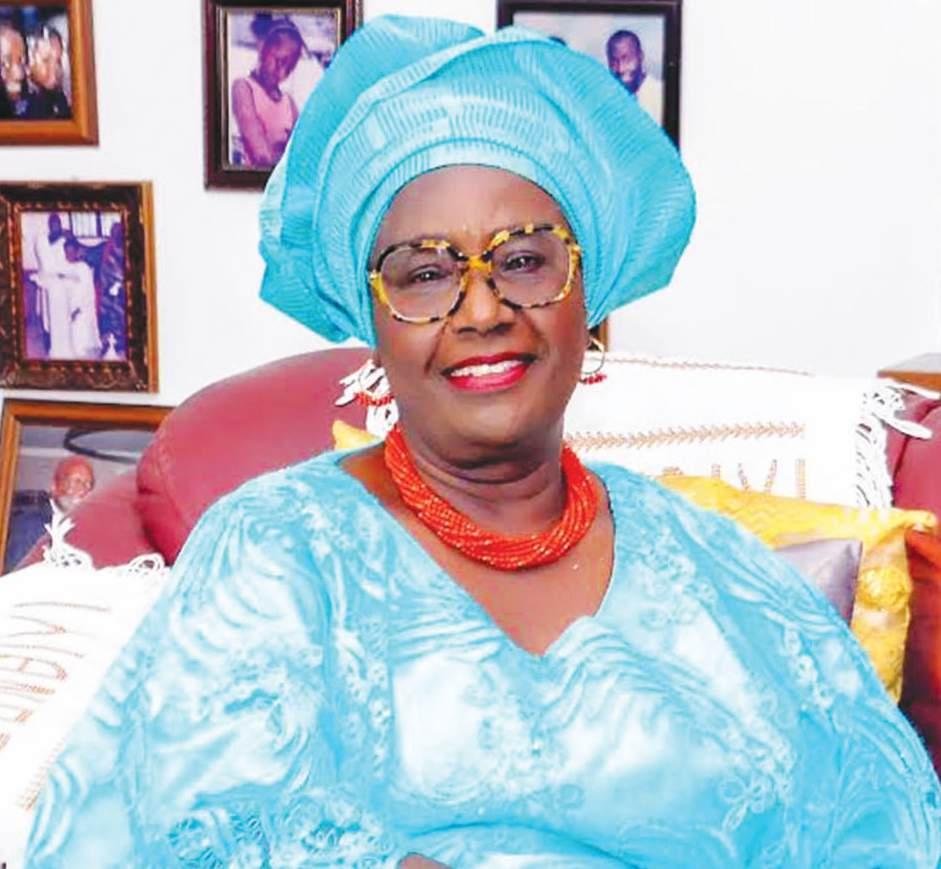
President Bola Tinubu; former military President, General Ibrahim Babangida (rtd.); and former Ogun State governor and Senator representing Ogun East Senatorial District, Gbenga Daniel, have congratulated Chief Folasade Ogunbiyi, Iyalode of Remoland and wife of renowned academic, journalist and entrepreneur, Dr. Yemi Ogunbiyi, on her 80th birthday.
The leaders highlighted Mrs Ogunbiyi’s invaluable contributions to the country and the international community through her vital work in Nigeria’s education sector and beyond.
President Tinubu, in a statement signed by his Special Adviser to
the President on Information and Strategy, noted that Mrs. Ogunbiyi’s strict Christian background prepared her for devotion to Christianity and community services in later years.
Mrs. Ogunbiyi succeeded the late Chief HID Awolowo, wife of the late Chief Obafemi Awolowo, as the Iyalode of Remoland.
President Tinubu remarked: “Her remarkable life journey shows that despite her over half a century of devotion to her husband and home, she did not stop fortifying herself with academic qualifications, both at home and abroad.
“As her husband was recording remarkable strides in academics and later in journalism and book publishing, Mrs. Ogunbiyi was also building a distinctive career, first as a local and international teacher, university administrator,
and manpower manager at NAL Merchant Bank, and later as a wine merchant after retirement, with membership in professional associations and as an avid golfer.
“I wish her many more years of good health and happiness, along with her husband, Dr. Yemi Ogunbiyi.”
On his part, former President Babangida prayed for long life and healthier years ahead for Mrs. Ogunbiyi.
He equally thanked her sincerely for looking after husband whom he described as “our irrepressible
‘Mr. Activity, Yemi!”
“Wishing you the best, as always, Sade, even as we all pray for longer life, healthier years ahead for you. And thank you so much for looking after our irrepressible
‘Mr. Activity’, Yemi!
“Many happy returns.”
On his part, Daniel congratulated Mrs. Ogunbiyi, describing her life as a shining example of purpose, grace, and service to humanity.
In his congratulatory letter to the octogenarian, Daniel said: “It is with great delight that I extend warm felicitations on your Oak anniversary, a life’s journey that stands as a radiant testament to purpose, grace, and enduring impact. At 80, you embody a rare blend of wisdom, strength, and elegance that continue to inspire generations across Remoland and beyond.”
The senator commended Ogunbiyi’s leadership as Iyalode of Remoland, noting that her ascension to the position in 2015 marked a significant turning point for women’s leadership in the community.
Chuks Okocha in Abuja
InternatIonal Futility of United States of Nigeria: The Need to Go Beyond United States of America and United States of Africa
There are speculations that the name, Nigeria, has the likelihood to be changed to ‘United States of Nigeria’ by end of December 2026, that is, under the current political dispensation. President Bola Ahmed Tinubu (PMB) has reportedly denied any intention to send a draft bill to that effect to the National Assembly. However, Vie Internationale considers that, in the event of a change of name, it will only be change-in-continuity: change of name and continuity of the well-known national problems.
There are always different reasons for changing the name of a country. Turkey changed its name in 2022 to Türkiye for two reasons: First, people jokingly liken Turkey to chicken, which is not appreciated. Secondly, the Turkish people want to disassociate themselves from the English word, Turkey. The Republic of Macedonia changed its own name in 2019 to Republic of North Macedonia for better geo-political identity to enable differentiation between Greece and qualification requirements to join the European Union. Czechia, as from 2016, is the new abbreviated name for the former Czech Republic, which is still in use. Like Ivoiriens rejected ‘Ivory Coast’ in favour of ‘Côte d’Ivoire,’ the French translation, Cape Verde similarly changed its name in 2013 to Cabo Verde, the Portuguese translation. In the same vein, Swaziland changed its name to the Kingdom of Eswatini.
Grosso modo, every change of name is driven by protection of national interest: the adoption of the French name, Côte d’Ivoire is to underscore the character of French speakingness. At the United Nations where sitting arrangement is by alphabetical order, the English name, Ivory Coast, puts the country at a sharp corner, and not in a well visible place. The French name puts the country at the centre, hence the request for a change to Côte d’Ivoire. What is the rationale for changing Nigeria’s name? Reportedly, sustainable true federalism
Futility of United States of Nigeria
There is no big issue with seeking to have Nigeria become United States of Nigeria, but there is problem with the likely aftermath, which is futility of the exercise. In discussing the futility of the new name, what should we mean by a United States of Nigeria? The notion and concept of a State in international law and relations considers a ‘State’ as the unit of analysis in official diplomacy. First, a State cannot exist in the absence of a permanent population, a well-defined territory over which authority can be exercised, and a government that is independent and capable of executing the internationally-contracted obligations by the State. With these three definienda – spopulation, territory, and government – a State exists, but cannot enter into international diplomatic relations in the absence of international recognition, either in terms of recognition of state or recognition of government. When a State exists, the issue of attributes are necessarily raised. For instance, does the State have the highest authority? Is it sovereign? Is it dependent or independent? These questions are raised because there can be a union of population, government, and territory, as it is the case with overseas territories of some metropolitan countries, and yet, they are not sovereign.
There is also the notion of Westphalian sovereignty which talks about nation-state sovereignty. Put differently, we have state, sovereign state, and nation-state, which should not be confused with a sociologicallydefined state. Sociological definition underscores cultural affinity, common language, etc. It is important to note that nation-states already existed in Africa before colonisation, even though they were referred to as empires: Ethiopian Empire, Ghana Empire, Mali Empire, Songhai Empire, Benin Empire, Kanem Empire, etc.
It is against this background that Marcus Garvey first used the notion of ‘United States of Africa’ in his poem, ‘Hail, United States of Africa,’ in 1924. As of 1924, most of African countries were dependent territories. Apart from Liberia and Ethiopia, which Italy attempted to colonise with its aggression of 1936, and were not colonized, all others were dependent territories without sovereignty. Consequently, when Marcus Garvey talked about United States of Africa, he was only dreaming of States that would not only be independent and sovereign, but also come together to be united.
President Kwame Nkrumah of Ghana talked about Union of African States in the mania of the United States of America. He wanted a common African government that would encompass political and economic unity in order to achieve and ensure true independence and development.
This was the background to the holding of the All-African People’s Conference held in Accra, Ghana in 1958. The Conference was the first pan-African conference to be held on African soil. At the conference, Nkrumah called for the creation of a United States of Africa, and no more Union of African States. Thus, from 1958 through 1965, Nkrumah and his advisor, a Trinidadian activist and writer, laid the foundation for further sensitization on the need for a United States of Africa. This could not work because of the conflicts of interest between the Monrovia and Casablanca schools of thought.
Additionally, Muammar Gaddafi, as Chairman of the African Union, in February 2009, was reported by the BBC to have told the AU Assembly of Heads of State as follows: ‘I (Gaddafi) shall continue to insist that our sovereign countries work to achieve the United States of Africa.’ He proposed ‘a single African military force, a single currency and a single passport for Africans to move freely around the continent.’ As good as Gaddafi’s suggestion might have been, there were still strong oppositions to it. The enmity between the proponents and opponents was divisive and not helpful to continental integration.
On the one hand, for examples, President Abdoulaye Wade of Senegal anticipated in 2011 that the United States of Africa could be a reality by 2017. The African Union believed that building a ‘United and Integrated’ Africa would be achievable by 2025. In fact, the territorial scope of Africa was redefined to include the African Diaspora in the Caribbean (Haiti, Jamaica, Dominical Republic, and the Bahamas), etc. On the other hand, Wikipedia has it that ‘a week before Gaddafi’s death during the Libyan civil war, South African President Jacob Zuma expressed relief at the regime’s downfall, complaining that Gaddafi had been intimidating many African Heads of State and Government in an effort to gain influence throughout the continent and suggesting that the African Union will function better without Gaddafi and his repeated proposals for a unitary
This point by President Zuma reminds one of President Robert Mugabe’s postulation that ‘Africa without Nigeria is hollow.’ Is Africa without Libya not similarly hollow? The death of Gaddafi during the Battle of Sirte in October 2011 did not put an end to the quest for a United States of Africa. His death has not solved the internal imbroglio in Libya. And true enough, Robert Mugabe of Zimbabwe came to reassure of his preparedness to sustain the quest for the United States of Africa. Most unfortunately, he died not a long time after his decision to revive the Gaddafi project. While Ghana, Senegal, and Zimbabwe gave active support to the project, South Africa, Kenya, and Nigeria opposed it vehemently. And true enough again, the Maghrebin countries did not show much interest in the United States of Africa project. Algeria, Morocco, Egypt, Tunisia, and Libya were not much interested. They showed much interest in pan Arabism, Arab nationalism, Berberism, and Islamism.
Whatever is the intimidation by Gaddafi, the animosity of President Zuma was unnecessarily too deep to have wanted the downfall of Gaddafi. Wishing the downfall of any African leader and at the same time be talking about African unity and integration is very conflicting. This alleged intimidation by President Zuma and his wishes for the downfall of Gaddafi is also an issue in Nigeria. There has been, at least, one coup d’état aimed at removing President Bola Ahmed Tinubu from power alive or dead. The coup failed. But who are the major coupists? Will the change of name of Nigeria remove the animosity vis-à-vis PBAT? This is most unlikely.
What about insecurity? There is no convincing evidence of any preparedness of Government of Nigeria since the time of President Goodluck Jonathan to nip insecurity in the bud. President Jonathan knew that there were boko haramists in his government and he told the whole world about it. The United Arab Emirates gave the identities of those funding terrorism in Nigeria to the Government of Nigeria under President Muhammadu Buhari. The Government even publicly claimed to know all the funders. In the same vein, Alhaji Sheikh Gumi, an Islamic scholar, has reportedly justified in different ramifications armed banditry and terrorism while Sheikh Gumi is claiming to be only engaged in facilitating peaceful dialogue with the terrorists to end blood-shell. As he put it, ‘I never met bandits alone’ (TVC News, 26 May, 2026). More disturbingly again, how do we explain the case of Mrs. Grace Ogunleye, the Vice Chairman of the Ilejemeje Local Government Area in Ekiti, who reportedly stage-managed her own kidnapping in order to raise funds for political and personal financial obligations? She was declared missing following the abandonment of her vehicle on the Ipere-Iludun Ekiti Road. Police investigation, after being rescued unhurt, showed that the kidnapping was fake. This led to her arraignment on June 4, 2026 before a Chief Magistrate Court in Ado-Ekiti. Mr. Pius Dada, the Chairman of the Council said the fake kidnapping was ‘embarrassing, unfortunate, and unacceptable’ (The Premium Times Nigeria, June 4, 2026). Mrs. Ogunleye is an elected leader, and there are many Grace Ogunleyes in most Nigerians who want money by hook or by crook. Her case is still better than a Federal Government who collected funds for construction of houses that were not meant to be built. Changing of Nigeria’s name can be good but cannot be good enough to solve Nigeria’s problems. The implication of changing Nigeria’s name, if need be, is serious.
Beyond United States of America and United States of Africa
The National Anthem cannot but be the first victim of any change of name. It will no longer be ‘Nigeria We Hail Thee’ but ‘United States of Nigeria, We Hail Thee.’ In ‘Nigeria We Hail Thee,’ the operational defining word in the anthem is ‘Nigeria.’ It is in Nigeria that ‘though tribe and tongue may differ, in brotherhood we stand.’ In ‘United States of Nigeria,’ the operational words are ‘United States.’ Are there disunited States in Nigeria? Can Nigeria be simply referred to as U.S.? Can Africa really answer the name U.S.A. as an abbreviation? Without any whiff of doubt, it has become necessary to go beyond the politics of United States of America and the United States of Africa.
First, the life-style of the Nigerian elite is largely influenced by that of the Europeans and Americans. Socio-behaviourally, it is mostly Europeanised. Politically, it is Americanised. Nigeria has adopted the American-styled presidential system. While a true federal system can be said to exist in the United States, the same cannot be said to exist in Nigeria. We noted already in 2011 how then Governor of Lagos State, Senator Ahmed Tinubu began the struggle for a true federal system in Nigeria (vide Bola A. Akinterinwa, ed., Bola Ahmed Tinubu and the Struggle for True Federalism in Nigeria (Ibadan: Vantage Publishers, 2011). Nigeria is yet to witness true federalism. In fact, it is still under PBAT that more constructive efforts are now being made to achieve true federalism with the renewed determination to devolve more powers to the constitutive states of Nigeria, especially in terms of state police. Africa, in general, and regional organisations like the ECOWAS, in particular, pattern their political governance after the Europeans. The ECOWAS Treaty was done in the mania of the 1957 Rome Treaty that established the European Economic Community of Six. The structure of the 1991 Abuja Treaty Establishing the African Economic Community also followed the pattern of the Rome Treaty. For instance, when the Organisation of African Unity was in place, it was the use of SecretaryGeneral and Secretariat that was in vogue. When the European Economic Community changed its usage from Secretary-General and Secretariat to President and Commission, African leaders also did the same thing. Thus, Africa has always been a copy-cat, an intellectual consumer.
Read full article online on www. thisdaylive.com
Trump
Banks Flush with Capital, Economy Starved of Credit
Banks have fresh capital, but businesses still lack credit. Can that change? Festus Akanbi asks
Nigeria’s banking sector has emerged from one of the most ambitious recapitalisation exercises in its history, raising about N4.65 trillion in fresh capital and strengthening balance sheets across the industry. Yet, despite stronger banks and improved profitability, the African Development Bank (AfDB) has raised concerns about the sector’s limited contribution to economic growth, noting that credit to Nigeria’s private sector accounts for only 9.4 per cent of Gross Domestic Product (GDP).
The figure places Nigeria among the weakest performers in Africa. It highlights a critical challenge facing the economy: the inability of businesses, particularly small and medium-sized enterprises (SMEs), to access affordable financing needed for expansion, innovation and job creation.
AfDB’s Concern
In its African Economic Outlook 2026, the AfDB described Nigeria’s financial system as shallow and insufficiently developed to support long-term economic transformation.
According to the report, Nigeria’s privatesector credit-to-GDP ratio of 9.4 per cent trails Kenya’s 31.6 per cent, Egypt’s 28.3 percent, and Côte d’Ivoire’s 21.4 per cent. It is also far below those of emerging economies such as Vietnam (121.6 percent), Malaysia (121.5 percent), and Chile (111.8 percent).
The bank noted that financial institutions across Africa generally favour short-term, low-risk assets over long-term investments capable of generating significant developmental impact. As a result, the continent’s domestic credit to the private sector averaged just 34.6 per cent of GDP between 2020 and 2024, the lowest globally.
For Nigeria, the implication is significant. Limited access to finance constrains business growth, weakens industrial expansion, and reduces the economy’s capacity to create jobs.
Why Lending Remains Weak
The weak flow of credit reflects several structural and policy challenges.
Experts pointed out that one major factor
is banks’ growing preference for government securities. Treasury bills and federal government bonds offer attractive returns with little risk, making them more appealing than lending to businesses operating in a volatile economic environment.
Data from the Central Bank of Nigeria (CBN) showed that while private-sector credit stood at N75.62 trillion in February 2026, lending to the government rose to N35.77 trillion, representing a year-on-year increase of 24.2 per cent.
Economists have repeatedly warned that rising government borrowing is crowding out private investment. Chief Executive Officer of the Centre for the Promotion of Private Enterprise (CPPE), Dr. Muda Yusuf, has argued that banks naturally gravitate towards risk-free government instruments rather than businesses facing uncertain operating conditions.
High lending rates also discourage borrowing. Despite recent moderation in monetary tightening, businesses continue to face borrowing costs ranging from 26 per cent to over 40 per cent. At such levels, many investment projects become economically unviable.
The high Cash Reserve Ratio (CRR) imposed by the CBN has also been cited as a constraint. Banks argue that a significant portion of deposits remains locked with the apex bank, limiting funds available for lending.
SMEs Remain the Biggest Casualties
The impact is particularly severe on SMEs, widely regarded as the backbone of the Nigerian economy.
Although SMEs contribute substantially to employment and economic activity, they receive only a tiny fraction of formal credit. According to Yusuf, SMEs account for roughly one per cent of total bank lending, compared to an estimated sub-Saharan African average of about five per cent.
Industry estimates put the financing gap facing Nigerian SMEs at about N48 trillion, leaving many businesses unable to expand production, invest in technology, or create additional jobs. Consequently, many firms rely on personal savings, informal financing arrangements, commercial papers, and intervention funds
from institutions such as the Bank of Industry.
Can Recapitalisation Change the Narrative?
Supporters of the banking recapitalisation programme believe the sector now has the capacity to support economic growth more effectively.
Speaking at an investors’ conference in Lagos, the Managing Director of FSDH Merchant Bank, Bukola Smith, said stronger capital bases would enable banks to finance infrastructure and productive sectors more aggressively.
According to her, Nigeria faces enormous investment gaps that public resources alone cannot address. Well-capitalised banks, she argued, can provide the long-term funding required to stimulate industrialisation and economic expansion.
There is evidence supporting this optimism. Stronger balance sheets increase banks’ ability to fund larger projects and absorb risks. However, analysts caution that capital adequacy alone will not automatically lead to increased lending.
The real challenge lies in creating an environment in which productive-sector lending is attractive and sustainable.
The Liquidity Paradox
Ironically, some analysts now fear that banks may have more capital than they can profitably deploy.
Vice-President of Highcap Securities, David Adonri, argues that recapitalisation may have created excess liquidity in a market where lending opportunities remain limited by weak infrastructure, insecurity and policy uncertainty.
As yields on government securities begin to moderate, banks may increasingly face pressure to lend. Yet the risks associated with the real sector remain high.
This creates a paradox: banks are stronger than ever, but many businesses remain too risky to finance at scale.
Structural Barriers Persist
The AfDB insists that deeper reforms are necessary to unlock credit growth.
The report highlights weak savings mobilisation, poor collateral enforcement
mechanisms, lengthy judicial processes, and regulatory inefficiencies as major obstacles to lending. Africa’s gross domestic savings averaged only 16.6 per cent of GDP between 2021 and 2024, well below the global average of 27.3 per cent.
In Nigeria, insecurity, particularly in agricultural regions, further increases lending risks. Manufacturers also continue to struggle with unreliable electricity, poor transport infrastructure, and high operating costs. These conditions increase the probability of loan defaults and encourage banks to remain cautious.
The Way Forward Experts say addressing Nigeria’s credit deficit requires a combination of financial and structural reforms.
Government borrowing from the domestic market must be moderated to reduce the crowding-out effect. Regulatory reforms that strengthen collateral enforcement and accelerate dispute resolution could improve lenders’ confidence.
Many stakeholders also support a review of the CRR framework to release more liquidity into the banking system.
In addition, development finance institutions can expand credit guarantee schemes to encourage lending to SMEs, agriculture, and manufacturing.
Most importantly, improvements in infrastructure, security, and policy consistency would reduce business risks and make productive lending more attractive.
Beyond Stronger Banks
The AfDB’s warning highlights a critical reality: strong banks do not automatically translate into a strong economy.
Nigeria has successfully recapitalised its banking sector. The next challenge is ensuring that the industry’s expanded capital base reaches factories, farms, technology firms, and small businesses that create jobs and drive economic growth.
As regulators conduct post-recapitalisation stress tests and banks navigate a changing economic landscape, the true measure of success will not be how much capital they raised, but how effectively that capital supports the productive sectors of the economy.
Broad Street, Lagos
How Supreme Court’s Verdict Deepens Confidence in Providus, Unity, Banks’ Merger
The Supreme Court’s approval of the Providus–Unity merger clears the path for a stronger bank and reinforces confidence in Nigeria’s banking reforms, writes Festus Akanbi
The Supreme Court’s approval of the merger between Providus Bank Limited and Unity Bank Plc marks a significant milestone in Nigeria’s banking sector and the ongoing recapitalisation programme initiated by the Central Bank of Nigeria (CBN).
Beyond resolving a protracted legal dispute, the judgment reinforces confidence in consolidation as a viable strategy for strengthening financial institutions and ensuring long-term stability in the banking industry.
In a unanimous decision delivered by a five-member panel led by Justice Tijani Abubakar, the apex court, in its Judgment, noted that the respective notice of preliminary objections and brief of arguments filed by the respondents are substantially similar in content and objection and thus in flagrant disregard of the provisions of Order 16 Rule 7 of the Supreme Court Rules. It directed that counsel having similar interests in an appeal should file a single brief.
The court, however, held that it would not discountenance the briefs filed by the 2- 10 respondents, but it shall, for the appeal utilise the brief of the 1st respondent. It further noted that the 2nd respondent filed an application on March 30th, 2026, urging the court to invoke its powers under Section 22 of the Supreme Court Act.
In resolving the preliminary objection, the court held that though inelegantly drafted, the appellants’ appeal raises issues which ought to be considered on the merits. It consequently dismissed the preliminary objection.
On the merits of the appeal, Issues 1, 3, and 4 were resolved in favour of the respondents while Issue 2 was resolved in favour of the appellant. The appeal was subsequently dismissed, and the lower court’s decision was affirmed in part.
The court noted that, though the appeal has been dismissed, it would proceed to entertain the 2nd respondent’s motion filed on March 30th seeking an invocation of Section 22 of the Supreme Court’s Act.
In section 22 of the Supreme Court Act, the court held that the provision is intended to advance the course of justice and prevent undue delay in the administration of justice. It noted that the appeal is commercial in nature, as it concerns the banking sector and depositors’ confidence.
More importantly, invoking Section 22 of the Supreme Court Act, the court directly sanctioned the merger, approving the transfer of all assets, liabilities and undertakings of Unity Bank to Providus Bank and authorising the adoption of the new name, ProvidusUnity Bank Limited. It consequently granted all the reliefs sought in the 1st and 2nd respondents’ Joint Ex Parte Originating Summons.
The ruling concludes a legal process that moved from the Federal High Court through the Court of Appeal to the Supreme Court, removing uncertainty for shareholders, depositors and regulators while paving the way for the emergence of a stronger banking institution.
According to counsel to Unity Bank, Chief D.D. Dodo, (SAN), “What the Supreme Court has done by this judgment is to bring closure to the merger between Providus Bank and Unity Bank. Some persons went to the Federal High Court and attempted to truncate the merger, and the matter progressed through the Court of Appeal to the Supreme Court. Today, that chapter has been conclusively closed.”
Boost for Banking Consolidation
The judgment comes at a critical time, as Nigerian banks adjust to the recapitalization program introduced by the CBN under Governor Olayemi Cardoso. Under the framework unveiled in 2024, international commercial banks are required to maintain a minimum capital base of N500 billion, national banks N200 billion, and regional banks N50 billion.
The policy has compelled banks to raise fresh capital, attract strategic investors, or pursue
mergers and acquisitions. Industry figures indicate that banks collectively mobilised over N4.6 trillion during the exercise, making it one of the greatest capital-raising efforts in Nigeria’s financial history.
Against this backdrop, the Providus–Unity merger represents a practical example of how consolidation can help institutions meet regulatory requirements while strengthening operational capacity. Rather than allowing weaker banks to struggle independently, the recapitalisation framework encourages combinations that preserve jobs, protect depositors and enhance financial stability.
Strategic Benefits
The merger brings together two institutions with complementary strengths. Providus Bank has established itself as a technology-driven lender with strong digital banking capabilities and an expanding corporate banking franchise. Unity Bank contributes a broad branch network, deep regional penetration, and a longstanding customer base.
The combined institution is expected to begin operations with approximately 230 branches nationwide, positioning it among banks with extensive physical reach across the country.
For customers, the merger promises access to improved banking products, stronger digital services, and wider geographical coverage. Businesses, particularly small and medium-sized enterprises, could benefit from greater access to credit and banking support.
The enlarged bank is also expected to operate with a stronger capital adequacy ratio, enhancing its ability to absorb shocks, finance larger transactions and support economic activity during periods of uncertainty.
Implications for Shareholders
For Unity Bank shareholders, the judgment provides clarity regarding the future of their
investments. The court approved consideration of N3.18 per share, or 18 Providus Bank shares of 50 kobo each, for every 17 Unity Bank shares held.
The arrangement allows investors either to realise value from the transaction or to continue participating in the future growth of the enlarged institution through the approved share exchange. Equally important, the conclusion of the litigation removes uncertainty that could have negatively affected valuation and investor confidence.
Strong Signal to Investors
Perhaps the most significant aspect of the ruling is the message it sends to the wider financial market.
Nigeria has previously experienced transformative banking consolidation. The 2004 banking reform, which increased minimum capital requirements from N2 billion to N25 billion, reduced the number of banks from 89 to 25 through mergers and acquisitions. Many of today’s leading financial institutions emerged from that exercise.
The current recapitalisation programme seeks a similar outcome in a more sophisticated environment shaped by digital banking, fintech competition and stricter regulatory expectations.
By directly approving the merger, the Supreme Court has reinforced the legitimacy of consolidation as a policy tool. Analysts believe the judgment will encourage other institutions considering mergers to proceed with greater confidence, knowing that the legal and regulatory framework supports such arrangements when they promote financial stability and public interest.
Protecting Depositors and Stability
The court’s decision also underscores the importance of protecting depositors and maintaining confidence in the financial system.
According to senior counsel to Unity Bank, Chief D. D. Dodo, SAN, the court recognised the need to safeguard depositors’ funds, preserve confidence in the banking industry, and ensure continuity of commercial activities. This emphasis is particularly important because banking stability remains central to economic growth. Confidence in the banking system enables institutions to mobilise savings, extend credit and support investment across key sectors of the economy.
By bringing the legal dispute to a close, the Supreme Court has removed a potential source of uncertainty and reinforced trust in regulatory oversight.
Wider Economic Impact
Nigeria’s economic ambitions require stronger financial institutions capable of supporting largescale investments in infrastructure, agriculture, manufacturing, energy and technology.
As businesses seek larger financing facilities, capital strength becomes increasingly important. Larger banks are generally better positioned to finance major projects, support trade transactions, and participate in long-term development initiatives.
The ProvidusUnity Bank merger therefore aligns with the broader objective of building institutions capable of supporting sustainable economic growth. The combined bank’s stronger capital base and extensive branch network could improve access to finance, deepen financial inclusion and expand banking services in underserved communities.
A Landmark Decision
Legal observers have described the ruling as historic because the Supreme Court chose to invoke Section 22 of the Supreme Court Act and directly sanction the merger rather than return the matter to a lower court. According to Dodo, this may be the first instance in which Nigeria’s apex court has directly approved a banking merger.
Whether viewed from a legal, regulatory, or economic standpoint, the decision represents a defining moment for the banking sector. For banks, it validates consolidation as a practical response to recapitalisation requirements. For investors, it assures that approved transactions can proceed despite lengthy litigation. For regulators, it strengthens confidence in efforts to build a more resilient financial system. Most importantly, for the economy, the emergence of ProvidusUnity Bank signals the arrival of a stronger institution with the capital, scale and operational reach required to support Nigeria’s development ambitions in an increasingly competitive financial environment.
PERSPECTIVES
Beyond the Glitch: How NIBSS is Defending Nigeria’s Quadrillion Naira Payment Ecosystem
Ogochukwu Onwaeze
Every modern digital payment ecosystem eventually encounters a difficult truth: no financial infrastructure built by humans is completely immune to technical disruptions.
Across the world’s most advanced banking systems, operational outages, settlement delays, and transaction backlogs have repeatedly tested public confidence in digital finance.
The United States Federal Reserve has experienced payment processing outages that temporarily disrupted wire transfers across financial institutions. The United Kingdom’s Faster Payments network has also faced periodic settlement bottlenecks during traffic surges. In Asia and Europe, even highly sophisticated payment rails occasionally suffer operational interruptions during periods of extreme transaction pressure.Nigeria’s financial system is now confronting its own moment of scrutiny following the controversy surrounding the recent glitches linked to the Nigeria InterBank Settlement System Plc (NIBSS). But the bigger story is not the existence of the glitch itself. The deeper issue is whether the country possesses the institutional architecture capable of identifying and fixing the issues when they occur within a complex digital ecosystem handling quadrillions of naira in transactions.
The answer emerging is that Nigeria’s payment system is no longer operating at a primitive or weak level. Instead, it has evolved into one of the most sophisticated real-time settlement ecosystems in Africa, supported by biometric identity tracking, centralized interbank switching, and nationwide payment visibility.
The recent incident did not expose the collapse of Nigeria’s payment rails. Rather, it revealed the immense scale and sensitivity of a robust digital economy now processing transaction volumes that would have been unimaginable less than a decade ago.
Over the last 10 years, Nigeria’s electronic payment ecosystem has expanded at an extraordinary speed. What was once a trillion-naira digital transaction environment has grown into a quadrillion-naira ecosystem driven by mobile transfers, instant payments, agency banking, fintech applications, and cashless retail adoption.
The transformation accelerated sharply after the COVID-19 pandemic reshaped consumer behaviour and pushed businesses toward digital transactions. The 2023 cash scarcity crisis further intensified the migration away from physical cash, while the explosive expansion of Point-of-Sale agents decentralised financial services beyond traditional banking halls.
At the centre of this transition sits NIBSS, the core switching and settlement infrastructure connecting banks, fintech firms, mobile money operators, and payment service providers.
Its NIBSS Instant Payment (NIP) platform processes enormous transaction volumes daily across banks and digital platforms. The infrastructure has become the invisible backbone powering salary payments, online commerce, transfers, airtime purchases, merchant settlements, and government collections.
The rapid expansion of fintech companies such as Moniepoint, OPay, Kuda, and PalmPay was also enabled by the interoperability and open API ecosystem built around NIBSS infrastructure.
This explosive growth, however, comes with what can be described as the “growth tax” of digital finance. The larger and faster the transaction ecosystem becomes, the greater the operational pressure placed on switching engines, reconciliation systems, and settlement architecture.
At a systems level, this creates predictable stress points. Peak-volume windows such as
holiday seasons or salary payment cycles can trigger temporary synchronization delays between switching layers, bank core systems, and reconciliation engines. These do not necessarily represent structural failure, but rather the friction that emerges when real-time demand expands faster than backend settlement and validation cycles are able to scale in perfect alignment.
That context is critical to understanding the N13.66 billion dry posting incident linked to the country’s payment platform. Contrary to widespread public assumptions, the issue was not a fresh cyberattack. The operational glitch actually occurred nearly two years ago, between September 6 and September 9, 2024.
The root cause was a technical accounting logic error within the NIBSS Instant Payment engine. The system successfully credited beneficiary accounts but failed to execute the corresponding debit instructions from originating accounts. In banking operations, this is known as “dry posting,” a situation where credits are created without matching debits.
Importantly, the system did not lose visibility of the transactions. The affected funds were traced directly to 176 beneficiary accounts that received unearned credits during the error window.
The more consequential issue emerged afterward. Rather than reporting the unexpected inflows, several account holders reportedly transferred, layered, dispersed, or withdrew the funds across multiple financial institutions during the weekend period before reconciliation processes resumed.
This transformed an operational mistake into a financial crime issue involving unjust enrichment and unlawful retention of funds.
By Monday, September 9, 2024, NIBSS had identified the anomaly and sought immediate reversals through participating financial institutions. However, Nigerian banking laws create strict liability around customer account debits.
Commercial banks risk major legal exposure if they reverse customer balances without judicial authorization, especially after funds have already been transferred across institutions or partially withdrawn.
That legal deadlock explains why the issue resurfaced publicly in May 2026.
NIBSS approached the Federal High Court in Lagos seeking judicial intervention against 19 financial institutions connected to the traced accounts. The respondents include major Tier-1 lenders such as Access Bank, Guaranty Trust Bank, Zenith Bank, and United Bank for Africa, alongside institutions including Ecobank, FCMB, Fidelity Bank, Polaris Bank, Sterling Bank, TAJ Bank, Titan Trust Bank, Providus Bank, Wema Bank, Moniepoint MFB, Kuda MFB, and FairMoney MFB.
The legal strategy goes beyond simple account restrictions.
NIBSS is attempting to deploy Nigeria’s Bank Verification Number (BVN) infrastructure as a nationwide enforcement mechanism.
The request before the court seeks blanket Post No Debit (PND) orders tied to the BVNs associated with the implicated accounts.
This approach is significant because the BVN system links
customer identities across the entire banking ecosystem. It means an affected individual cannot simply move funds from one bank to another to escape restrictions.
Once a BVN-linked PND is activated, the freeze potentially extends across all connected financial accounts nationwide. The scale of recovery already achieved also changes the broader narrative around the incident.
More than N12.34 billion has reportedly been successfully traced and isolated through the recovery process. About N8.15 billion remains within primary beneficiary accounts, while another N4.19 billion has been tracked across secondary transaction layers. Only a relatively smaller portion, estimated at roughly N1.32 billion, is believed to have escaped into physical cash withdrawals or external channels before account restrictions intensified.
Mathematically, the numbers also place the controversy into perspective. Against total annual transaction volumes exceeding N1.07 quadrillion, the N13.66 billion glitch represents roughly 0.0012 percent of processed value.
That translates to an operational success rate approaching 99.99 percent across one of the largest real-time payment ecosystems in the developing world.
The recent pre-Eid network congestion complaints should also be viewed through this same infrastructure lens. Holiday periods now generate massive transaction spikes as millions of Nigerians simultaneously move funds for travel, trade, salary payments, family support, and retail purchases.
What appears publicly as “network failure” is often the strain created by a digital economy expanding faster than underlying infrastructure capacity upgrades.
Nigeria’s financial ecosystem has effectively become a high-frequency transaction economy operating at an extraordinary scale. The current controversy, therefore, represents less of a systemic collapse and more of a stress test for the country’s
regulatory and technological response mechanisms.
The more important takeaway is that the system identified the anomaly, mapped the transaction trail, isolated beneficiary accounts, activated legal recovery channels, and leveraged biometric identity infrastructure to pursue enforcement. That capability matters.
Many emerging economies still lack centralized settlement visibility strong enough to trace dispersed digital funds once they move across multiple institutions. Nigeria’s payment architecture now possesses that capability.
The incident also highlights the growing importance of continuous infrastructure investment as digital finance expands deeper into everyday commercial activity.
As transaction volumes continue climbing, payment switching infrastructure, fraud monitoring systems, reconciliation engines, and settlement frameworks will require constant upgrades to manage scale efficiently.
The broader lesson is that Nigeria’s cashless economy has become too large, too interconnected, and too economically important to be evaluated through the lens of isolated glitches alone.
The country is now operating one of Africa’s largest digital payment ecosystems, processing enormous transaction flows daily across banks, fintech platforms, merchants, and mobile channels. Infrastructural pressure is therefore inevitable.
What ultimately determines institutional credibility is not the absence of operational incidents, but the speed, transparency, traceability, and legal effectiveness of the response architecture.
On that front, the NIBSS recovery operation is gradually revealing that Nigeria’s digital banking ecosystem may be far more resilient than the public backlash initially suggested.
•Onwaeze writes from Lagos.
Cardoso
SANWO-OLU:
SEVEN YEARS ON
Development in Lagos is achieved through partnership and a shared commitment to the collective good, writes ADE OLUWATOYIN
By all measures, the story of Lagos over the last seven years has been one of resilience, transformation, and strategic governance. From unprecedented infrastructure expansion to transportation reforms, healthcare improvements, housing delivery, and urban renewal initiatives, the administration of Governor Babajide SanwoOlu has left an indelible imprint on Nigeria’s commercial capital.
As the governor marks seven years in office, his message to Lagosians is both reassuring and ambitious: the best is yet to come.
The declaration is not merely a political slogan. Rather, it reflects the confidence of an administration that has navigated some of the most difficult periods in modern governance while laying the foundation for what many observers believe could be a more prosperous and globally competitive Lagos.
When Governor Sanwo-Olu assumed office in May 2019, he inherited the enormous responsibility of governing Africa’s most populous city and one of the fastest-growing urban centres in the world. Expectations were understandably high. Yet, barely months into his administration, the world was confronted with the COVID-19 pandemic, an unprecedented health crisis that disrupted economies, livelihoods, and governance systems across the globe.
For Lagos, the challenge was even greater.
As Nigeria’s economic nerve centre and international gateway, the state became the epicentre of the country’s response to the pandemic. It was a period that tested leadership, institutions, and public trust.
Against this backdrop, Sanwo-Olu’s administration demonstrated remarkable adaptability and resilience. The government quickly mobilised resources, strengthened healthcare infrastructure, expanded testing facilities, and implemented measures aimed at protecting lives and livelihoods.
The experience reinforced an important lesson: effective governance requires not only vision but also the capacity to respond decisively to unforeseen challenges.
Perhaps one of the most visible achievements of the administration has been its commitment to infrastructure development. Across the five divisions of Lagos—Ikorodu, Epe, Badagry, Ikeja, and Lagos Island—road construction and rehabilitation projects have transformed communities and improved connectivity.
Major projects such as the completion and commissioning of the Blue Rail Line have fundamentally altered the transportation landscape of Lagos. The rail system represents a significant step toward reducing traffic congestion, improving mobility, and creating a more efficient urban transport network.
The commencement of passenger operations on the Red Rail Line further underscores the administration’s determination to provide sustainable transportation alternatives for millions of residents. Together, these projects represent a historic shift in urban mobility and position Lagos among the few African cities with modern rail infrastructure.
Transportation reforms have also extended to water transportation, road infrastructure, and traffic management systems, reflecting a holistic approach to addressing one of the city’s most pressing challenges.
Beyond infrastructure, the Sanwo-Olu administration has invested heavily in housing development. Recognising the enormous housing deficit confronting the state, the government has pursued policies aimed at increasing access to affordable housing for low- and middle-income earners.
Numerous housing estates have been completed and delivered across different parts of the state, providing thousands of families with decent accommodation while stimulating economic activity in the construction sector.
Healthcare has equally remained a major
priority. The administration has undertaken significant investments in hospitals, primary healthcare centres, medical equipment, and personnel development. New healthcare facilities have emerged, while existing institutions have undergone extensive upgrades.
The completion of specialised medical infrastructure and expansion of healthcare access have strengthened the state’s capacity to deliver quality medical services to residents. These interventions have not only improved healthcare outcomes but have also enhanced preparedness for future public health emergencies.
Education remains another critical pillar of the administration’s development agenda. Through targeted reforms and investments, Lagos has continued to improve educational infrastructure, strengthen teacher capacity, and expand access to quality learning opportunities.
The emphasis on technology-driven learning, innovation, and skills development reflects an understanding that the future competitiveness of Lagos depends largely on the quality of its human capital.
Equally noteworthy is the administration’s commitment to youth empowerment. Through various initiatives focused on entrepreneurship, digital skills, innovation, and job creation, thousands of young people have been equipped with tools to participate meaningfully in the modern economy.
These interventions are particularly important in a rapidly evolving global environment where knowledge, creativity, and technology increasingly define economic success.
Urbanrenewalhasalsofeaturedprominently in the Sanwo-Olu administration’s agenda. Across numerous communities, efforts to improve environmental sustainability, beautify public spaces, upgrade infrastructure, and enhance the quality of urban living have continued.
Markets, public facilities, drainage systems, and neighbourhood infrastructure have benefited from targeted interventions designed to improve residents’ quality of life and support economic activity.
The governor’s confidence about the future is also tied to broader economic reforms taking place at the national level under President Bola Ahmed Tinubu’s Renewed Hope Agenda. Sanwo-Olu has consistently acknowledged the positive impact of federal reforms on Lagos State’s development trajectory.
While some of these reforms have involved short-term sacrifices, they are gradually creating a more transparent, competitive, and investment-friendly economic environment. Improved fiscal sustainability, infrastructure investments, and enhanced collaboration between federal and state governments are opening new opportunities for growth and development.
Importantly, the governor’s seventh anniversary message reflects an appreciation of the role played by Lagosians themselves in the state’s progress. Development on the scale witnessed in Lagos cannot be achieved by the government alone.
The
effectiveness of decentralized policing depends not merely on structure but on the quality of governance that supports it, contends FELIX OLADEJI
STATE POLICE AND NIGERIA’S SECURITY DILEMMA
The recent call by Oyo State Governor Seyi Makinde for expedited action on the creation of state police has once again brought one of Nigeria’s most enduring constitutional debates to the forefront of national discourse. As insecurity continues to manifest in various forms from banditry and kidnapping to communal violence and organized criminal activity arguments for decentralizing policing powers have gained increasing traction. Supporters view state police as a necessary response to the limitations of Nigeria’s highly centralized security architecture. Critics, however, warn that such a move could create new challenges relating to accountability, political interference, and national cohesion. The debate therefore raises a fundamental question: would state police strengthen Nigeria’s security framework, or merely decentralize existing problems?
The argument for state police is rooted largely in questions of effectiveness. Nigeria’s current policing system remains one of the most centralized in the world, with operational authority concentrated at the federal level despite the country’s vast geographic size, demographic diversity, and complex security challenges. Governors are often described as the chief security officers of their states, yet they possess limited constitutional control over police commands operating within their jurisdictions. This contradiction has frequently generated frustration among state governments confronting localized security threats.
Advocates of state police argue that security is most effective when it is locally informed. Criminal activities often emerge within specific social, cultural, and geographic contexts that may be poorly understood by centrally deployed personnel. State-controlled police forces, supporters contend, would possess greater familiarity with local languages, community dynamics, and emerging threats. Such proximity could improve intelligence gathering, enhance community trust, and facilitate quicker responses to security incidents.
Recent security challenges across various parts of the country have strengthened these arguments. Rural banditry in the northwest, separatist tensions in the southeast, communal conflicts in the Middle Belt, and urban criminality in major cities all demonstrate the diverse nature of Nigeria’s security environment. A uniform policing model may struggle to address such varied realities effectively. In this context, proponents view state police as a practical adaptation to Nigeria’s complex security landscape.
Furthermore, the growing reliance on regional security initiatives such as Amotekun in the southwest and other community-based security arrangements suggests an increasing demand for decentralized approaches. These initiatives emerged partly because communities perceived gaps within existing security structures. The state police proposal can therefore be understood as an attempt to formalize and institutionalize a trend that is already unfolding in practice.
Yet the case against state police remains equally significant. Critics argue that decentralization alone does not guarantee improved security outcomes. Indeed, one of the most frequently cited concerns is the risk of political misuse. Nigeria’s democratic history includes numerous examples of state institutions being deployed for partisan purposes. Opponents fear that state-controlled police forces could become instruments of political intimidation, electoral manipulation, or suppression of dissent under powerful
governors.
This concern is not merely theoretical. The country’s political landscape remains characterized by intense competition, weak institutional safeguards, and uneven accountability mechanisms. In such an environment, granting coercive powers to state governments raises legitimate questions about oversight and abuse. Without strong institutional protections, state police could potentially undermine civil liberties rather than strengthen security.
Another challenge relates to disparities in resources and administrative capacity. States differ significantly in terms of revenue generation, institutional strength, and governance effectiveness. While some states may possess the financial and administrative capacity to sustain professional police forces, others may struggle to fund even basic operations. This could result in uneven security standards across the federation, deepening regional inequalities and creating new vulnerabilities.
Questions of coordination also deserve attention. Modern security threats increasingly transcend state boundaries. Criminal networks, insurgent movements, arms trafficking, and cybercrime often operate across multiple jurisdictions. A fragmented policing system could complicate intelligence sharing and operational coordination if not carefully designed. Maintaining national security coherence would therefore require robust mechanisms for collaboration between federal and state authorities.
The debate also reflects broader tensions within Nigeria’s federal structure. Calls for state police are often connected to wider demands for restructuring, devolution of powers, and greater subnational autonomy. Supporters argue that true federalism requires states to exercise meaningful authority over security matters. Critics, however, caution that excessive decentralization could weaken national institutions and complicate governance in a diverse federation. International experience offers lessons for both sides of the debate. Federal systems such as those in the United States, Canada, and Australia operate with multiple layers of policing that combine local responsiveness with national coordination. However, these systems also rely on strong institutions, clear legal frameworks, and extensive oversight mechanisms. The effectiveness of decentralized policing depends not merely on structure but on the quality of governance that supports it.
Oladeji writes from Lagos
Oluwatoyin writes from Ikeja, Lagos
Editor, Editorial Page PETER ISHAKA
Email peter.ishaka@thisdaylive.com
AN EPIDEMIC OF STOLEN SCHOOL CHILDREN
The authorities must do more to secure and protect our children
On the morning of 15 May, as children in three schools in the Oriire area of Oyo State were settling into the ordinary rituals of a school day, more than a dozen gunmen on motorcycles rode into Baptist Nursery and Primary School, Yawota; Community Grammar School, Esiele; and L.A. Primary School. By the time they rode back into the forest, an assistant headmaster and a motorcyclist lay dead while dozens of pupils and their teachers were herded into the bush at gunpoint. A few days later, the abductors beheaded one of those teachers. Later still, a member of the security forces who had joined the rescue effort died after running into explosives the kidnappers had planted on the trail.
Meanwhile, on the very same day in distant Borno State, gunmen seized more than 40 children from a school in the Askira/Uba area, as though to remind Nigerians that this is not a local tragedy but a national condition. Those abducted Borno children are still unaccounted for while the pupils and the surviving teachers of the Oyo State tragedy remain somewhere in the forest. The principal of one of the schools, herself a captive, has filmed a video from the bush, begging the country to remember that they are alive and waiting.
Perimeter fencing, solar-powered lighting, early-warning systems, and rapid-response protocols are the minimum decency we owe a child who shows up to learn
SUNDAY NEWSPAPER
editor DAviDSoN iriEkpEN
deputy editors FESTUS AkANBi, EJioFor ALikE
millions of dollars were pledged and raised. And then the project quietly lost its breath. Today, going by most reports, more than 42,000 vulnerable schools across the country still stand without so much as a perimeter fence between a child and a kidnapper. Perimeter fencing, solar-powered lighting, earlywarning systems, and rapid-response protocols are the minimum decency we owe a child who shows up to learn. Some form of properly designed and checked sub-national policing is a matter of survival. The Nigeria Union of Teachers (NUT) has refused to suffer in silence by taking its grief to the streets in Lagos, Kano, Plateau, Enugu, Osun, Taraba, Kogi, and other states. The teachers have also threatened to shut down the nation’s classrooms if the government does not act. In response, there is a presidential directive to recruit 1,000 Forest guards. But a specialised security unit announced in a press release is not the same as a child returned to his/her mother.
For years, Nigerians had comforted themselves that this was an affliction restricted to a section of the country, a problem of ungoverned forests far from where the powerful sleep. Not anymore. Today, no zone in the country is safe from these marauders. And lest anyone imagine that proximity to power offers protection, last week in Ibadan, the capital of Oyo State, gunmen abducted the younger sister of a former Minister of Power, together with her 12-year-old twin sons, while on the school run. Fortunately, they have regained their freedom.
In the aftermath of the April 2014 abduction of 276 schoolgirls from Government Girls Secondary School, Chibok, Borno State, a coalition of Nigerian business leaders, working with the former British Prime Minister Gordon Brown in his capacity as United Nations envoy, launched what was christened the Safe Schools Initiative. Tens of
Managing director ENioLA BELLo
deputy Managing director iSrAEL iwEgBU
chairMan editorial Board oLUSEgUN ADENiYi
editor nation s capital iYoBoSA UwUgiArEN the oMBudsMan kAYoDE koMoLAFE
THISDAY NEWSPAPERS LIMITED
editor-in-chief/chairMan NDUkA oBAigBENA
group executive directors ENioLA BELLo, kAYoDE koMoLAFE iSrAEL iwEgBU
divisional directors SHAkA MoMoDU, pETEr iwEgBU ANTHoNY ogEDENgBE
deputy divisional director oJogUN viCTor DANBoYi snr. associate director EriC oJEH
associate director pATriCk EiMiUHi controllers ABiMBoLA TAiwo UCHENNA DiBiAgwU, NDUkA MoSEri director, printing production CHUkS oNwUDiNJo to send eMail: first name.surname@thisdaylive.com
Education is the one thing that might, in a generation, drain the swamp from which banditry rises. Already, the sheer weight of insecurity is making many parents reluctant to send their wards to school in a nation already plagued with millions of out-of-school children. Indeed, Amnesty International Nigeria has warned on the consequences of the ongoing wave of kidnappings targeting schools. “The trauma that comes with being abducted, or with the fear of being abducted, is going to prevent thousands of children from getting an education completely,” according to Country Director, Isa Sanusi. Sadly, many schools, especially in rural communities across the country, are easy targets for these criminals.
A nation that cannot keep its children in school has, in the most literal sense, mortgaged its future. Therefore, guarding schools and equipping them with electronic warning systems and devices that help track affected locations are minimum requirements. If children cannot freely and safely go to schools, and citizens freedom is curtailed by fear of abduction and kidnapping, where lies the soul of our republic?
Letters in response to specific publications in THiSDAY should be brief(150-200 words) and straight to the point. interested readers may send such letters along with their contact details to opinion@thisdaylive.com. we also welcome comments and opinions on topical local, national and international issues provided they are well-written and should also not be longer than (950- 1000 words). They should be sent to opinion@thisdaylive. com along with the email address and phone numbers of the writer
LETTERS
RETURN OF NIGERIA’S PRODIGAL SONS
Nigeria’s fatal affection and preoccupation with her returned prodigal sons seems fated to consume her relationship with her loyal sons. However, and clearly too, those in charge of the country couldn’t care less.
For many Nigerians, the story of the prodigal son in the Bible bears many teachable moments for Nigerians at this inopportune time, and not just because the Chief of Defence Staff himself drew the comparison. The optics are simple: the decision to reintegrate returning terrorists in the country does not sit well with many Nigerians. Add the murky reasons for the reintegration to the huge amounts of money rumored to have been given to them, and the distress of Nigerians grows darker.
Nigeria’s decision to reintegrate the terrorists appears defiant of the concerns of Nigerians. Indeed, unlike the father of
the biblical prodigal son, there is no attempt whatsoever to reassure the loyal son that his loyalty all these years would not be in vain. Rather, the government thinks it is all a foregone conclusion.
The problem Is that nothing is foregone yet. Many Nigerians cannot imagine living side by side with the terrorists who destroyed their lives, families, and communities. This is especially true when the process for letting them back into communities is dubious at best.
With every day that goes by, Nigerians feel increasingly insecure in their country. It is not just on roads or at their farms that people are attacked these days. Right at their homes, people are attacked, hacked to death, or abducted. Through it all, the helplessness of the security agencies is downright alarming. But for the weighty demands of hope and patriotism, one would say that Nigeria is losing
the battle against terrorists in the country. The fight has been going on for years now, and rather than being contained, insecurity seems to be spreading fast. What started as a few gunshots in the North has exploded into deafening bomb blasts echoing all the way to the South.
Yet, through it all, those who are supposed to silence the noise, those who opened their hands to embrace the prodigal sons, are silent, cocooned into complacency and complicity by the comfort of barracks and government houses.
There is something profoundly wrong with this beleaguered union called Nigeria. It is as if it has been put under a spell of carelessness. Those who are supposed to care simply don’t.
They don’t care that the roof of this house caves in or that everything burns down. They don’t care that nothing remains for those
whose only hope is here.
Those who betray Nigeria would perch precariously on the shoulders of the highways, peering down anxiously as they wait for their brigand children to return.
They aren’t concerned about the danger posed to those who are at home. They do not care that those who are returning are only returning to finish what they started.
A country, any country, Is doomed the moment those who are supposed to defend it sit to sign the dotted lines with those who would destroy it.
As insecurity plows through Nigeria with precipitous fury, plundering all the country has ever held dear, those who have stayed loyal to the cause are being betrayed while prodigal sons are invited from their voyages of debauchery to reign as princes.
Kene Obiezu is a lawyer and writer
Polity
Kaduna Scores Another Big Win Under Uba Sani
Raheem Braimah
The recent announcement of the 2025 Phillips Consulting State Performance Index (pSPI) has illuminated Kaduna State’s remarkable progress, ranking it third nationally and awarding it an Excellent Four-Star Rating. This accolade not only showcases the state’s achievements but also serves as an independent validation of the transformative and inclusive leadership exemplified by Governor Uba Sani since he assumed office on May 29, 2023.
The significance of this ranking is profound. It reflects measurable advancements in governance, fiscal management, economic development, infrastructure, healthcare, education, agriculture, security, and social inclusion. Utilising a robust methodology that combines objective performance indicators with citizen feedback, the assessment illustrates Kaduna’s substantial strides in critical areas vital to the well-being of its citizens.
Governor Sani’s leadership style has been characterized by a commitment to dialogue, inclusion, and meaningful service over mere propaganda. This approach resonates deeply in a state previously beset by insecurity and social fragmentation. Upon assuming office, Sani faced a daunting landscape where banditry and violent attacks had become commonplace, leading to a crisis of confidence among the populace. Rather than succumbing to despair, he chose to rebuild trust through focused initiatives.
A cornerstone of Governor Sani’s security strategy is the Kaduna Peace Model. By working closely with security agencies, traditional leaders, and local stakeholders, the administration has adopted a holistic approach to peace-building, addressing not only immediate security threats but also their underlying causes. This multidimensional strategy has yielded impressive results, with reports indicating a significant reduction in violent crime rates. Communities previously paralysed by fear are regaining their confidence, farmers are returning to their fields, and schools that once faced disruptions are now operational.
In fiscal management, the Governor Sani administration has exhibited remarkable discipline. Faced with substantial debt obligations, the governor opted for restraint, prioritizing fiscal sustainability over short-term gains. This prudent governance approach has seen Kaduna State repay more than ₦90 billion in inherited debts without incurring new loans, a feat that underscores responsible governance. The administration’s commitment to transparency has fostered investor confidence, enhancing revenue collection and reducing dependency on external funding sources.
Equally remarkable has been the restora- tion of confidence in Kaduna’s financial management architecture. Under Uba Sani, transparency and accountability ceased to be rhetorical ornaments and became measurable governance principles. For two consecutive years, Kaduna emerged as Nigeria’s most transparent and accountable state, according to the Transparency and Integrity Index released by the Centre for Fiscal Transparency and Public Integrity, supported by the MacArthur Foundation. This ranking was not accidental. Kaduna institutionalized open procurement systems, strengthened citizen engagement frameworks, expanded fiscal transparency mechanisms, and deepened the Open Government Partnership framework through its extended State Action Plan III covering 2024–2027. Governance increasingly became participatory rather than opaque. Perhaps nowhere is the administration’s reformist instinct more visible than in revenue generation. At the time Governor Sani assumed office, Kaduna’s monthly internally generated revenue hovered around
₦5 billion. Through tax reforms, automation, expansion of the tax net, and improved ease of doing business, Kaduna rapidly emerged as the leading internally generated revenue-performing state in Northern Nigeria.
The numbers tell the story. Kaduna generated ₦62.48 billion in internally generated revenue (IGR) in 2023; ₦71 billion in 2024; and ₦86 billion in 2025, with projections nearing ₦90 billion by 2026. This remarkable leap did not arise from arbitrary taxation but from systemic reforms. The introduction of the PAYKADUNA integrated tax administration portal automated revenue collection, reduced leakages, and enhanced compliance. Financial inclusion initiatives and innovative taxpayer complaint systems further strengthened public confidence.
The effect has been transformative. Kaduna gradually moved from fiscal fragility toward financial resilience, enabling the government to sustain salaries, execute projects, and attract investments without mortgaging the future. Indeed, investor confidence has steadily returned. The administration has attracted investments worth over $2.5 billion; a remarkable feat for a state that, only a few years earlier, was more associated with instability thanTheopportunity.administration’s economic reforms have also been impressive. By launching various initiatives
aimed at diversifying the economy beyond its traditional reliance on oil revenues, Governor Sani has positioned Kaduna as a hub for entrepreneurship and innovation. The establishment of the Kaduna State Economic Development Agency has facilitated partnerships with local and international investors, resulting in the creation of thousands of jobs and a projected GDP growth rate of 5.6%.
Industrial parks have been developed to support manufacturing, attracting foreign direct investment and fostering a dynamic business environment.
Infrastructure development has emerged as another defining feature of Governor Sani’s governance. Over the past three years, approximately 150 road projects covering about 1,345 kilometers have been initiated across Kaduna’s 23 local government areas. This robust infrastructure agenda has improved connectivity within the state and to neighboring regions, enhancing trade and commerce. Notable projects include the 35-kilometer Gadan Gayan-Gwaraji-Kujama Road and the ongoing Bagoma-Gagumi Road in Birnin Gwari, which are poised to support economic activities and agricultural productivity.
In the healthcare sector, significant reforms have transformed access to medical services. Kaduna became the first state in Nigeria to upgrade all 255 Primary Healthcare Centres to Level II status, significantly expanding healthcare access in both urban and rural communities. The administration has increased funding for healthcare facilities by 40%, enabling the renovation and equipping of hospitals across the state. Vaccination campaigns have successfully raised immunization rates, while maternal health programs have been expanded, resulting in
a notable reduction in maternal and infant mortalityEducationrates.remains a cornerstone of Governor Sani’s governance. More than 25% of the state budget has been consistently allocated to this critical sector, leading to the renovation of over 500 primary and secondary schools, the recruitment and training of teachers, and the introduction of technology in classrooms. Notably, the administration has made strides in reducing the number of out-of-school children, a crucial step toward breaking cycles of poverty and exclusion. Vocational training initiatives have also been launched to equip young people with relevant skills for the modern economy, ensuring that they are well-prepared for future challenges.
Agriculture has experienced a revitalization under Governor Sani’s leadership, with the government recognizing food security as integral to economic stability. Allocations to the agricultural sector now exceed ₦74 billion, representing approximately 14% of the state budget and surpassing the Malabo Declaration benchmark. Through the Tallafin Noma program, thousands of farmers have received improved seeds, fertilizers, and mechanization support, resulting in a reported 25% increase in agricultural output. The administration’s vision extends beyond increasing farm production; initiatives like the Special Agro-Industrial Processing Zone are positioning Kaduna as a key player in agricultural processing and value addition. Social inclusion has been a guiding principle throughout Governor Sani’s tenure. The administration has made concerted efforts to engage women and youth in governance, ensuring that their voices are heard in decision-making processes. Empowerment programs have been launched to provide skills training and financial support to marginalized groups, aiming to improve living conditions and reduce poverty.
The recognition of Kaduna State’s performance in the 2025 pSPI is not merely a reflection of statistical achievements; it signifies a transformative journey under Governor Sani’s leadership. This independent validation underscores a state that has emerged from the shadows of insecurity and division to embrace a future defined by inclusivity, accountability, and sustainable development.
As Kaduna continues to chart its path toward prosperity, it stands as a beacon of hope for other states in Nigeria. The administration’s focus on governance reform, economic diversification, and social cohesion has laid a robust foundation for long-term success. The achievements thus far not only reclaim Kaduna’s place among Nigeria’s top-performing states but also set a standard for others to emulate.
In celebrating this remarkable accomplishment, it is crucial to recognise the collective efforts of citizens, traditional institutions, civil society organizations, and development partners whose unwavering support has been instrumental in this journey. Together, they are forging a resilient, inclusive, and prosperous Kaduna; one that truly belongs to all its people. The future beckons brightly, and Kaduna is poised to seize it.
Governor Sani’s leadership offers a compelling narrative of resilience and hope, underscoring that effective governance is not merely about addressing immediate challenges but about fostering a culture of inclusivity, accountability, and sustainable growth. As the state moves forward, the lessons learned and the successes achieved will undoubtedly serve as a guiding light for other regions or states striving for similar transformative change. The path taken by Kaduna under Governor Sani exemplifies what is possible when visionary leadership meets the collective aspirations of a determined populace.
Uba
Braimah, a freelance journalist resides in Barnawa, Kaduna.
Afrobeats Goes to World Cup
• Burna Boy, Davido, Ayra Starr, and Rema featured on the 2026 World Cup Album
Kunle remi in Netflix original ‘Anikulapo’
World Cup fever is on, and this year, FIFA is making music a big part of the tournament. Returning to North America for the first time since the United States hosted it in 1994, the 2026 edition will be the first World Cup cohosted by three countries — the United States, Mexico and Canada. It will also be the biggest in history, featuring 48 teams and more than 100
matches.
Apart from the football action and the star players, the tournament’s music offerings are already generating global buzz. FIFA officially released the 2026 World Cup album on Friday, June 5, featuring a lineup of international stars, including several Nigerian artists.
For years, World Cup music leaned heavily on Western pop formulas with occasional global flavouring. What is different now is balance, and the inclusion of Nigerian stars shows that afrobeats’ global appeal is not dying anytime soon.
Colombian superstar Shakira, whose 2010 World Cup anthem Waka Waka remains one of the tournament’s most iconic songs, returns to the global stage. She teams up with Nigerian Grammy winner Burna Boy on the official theme song titled ‘Dai Dai.’
Afrobeats star Ayra Starr appears on ‘Show Me’ alongside American rapper Latto, while Rema collaborates with Thai rapper and singer Lisa and Brazilian singer Anitta on ‘Goals,’ a cross-continental fusion blending Afrobeats, K-pop and Latin pop.
On ‘No Place Like Home,’ Davido joins forces with Major Lazer and Canadian pop star Nelly Furtado in another high-profile global collaboration.
The album also features South African star Tyla and Moroccan-American rapper French Montana, among other international acts.
The 18-track project is described as FIFA’s most extensive music and culture initiative yet for a World Cup tournament, bringing together artists across continents, languages and genres. “FIFA has brought together an extraordinarily strong music squad and one befitting the biggest single-sport event in history,” said FIFA President Gianni Infantino.
“From global superstars to breakthrough voices who are shaping the future of music, the Official FIFA World Cup 2026 Album features artists from across continents, languages and genres in a project designed to unite fans worldwide through the power of music and football.”
Burna Boy is also expected to perform ‘Dai Dai’ alongside Shakira at the opening ceremony in Mexico on June 11, while Canada and the United States will host their own opening ceremonies on June 12.
Adekunle Gold Celebrates The Macallan Partnership with Star-Studded Lagos
It was an evening of fine whisky, music and storytelling as singer Adekunle Gold gathered some of Lagos’ biggest names in entertainment and fashion to celebrate his partnership with luxury Scotch whisky brand The Macallan.
Held at Vici Lagos in Victoria Island, the intimate dinner drew a select guest list that included his wife, Simi, Bovi, Ladipoe, Kaylah Oniwo, Enioluwa Adeoluwa, Teniola Aladese, Ugo Mozie and other personalities from the creative industry.
The event marked another milestone for the awardwinning singer, who was recently announced as The Macallan’s Brand Ambassador in Nigeria.
Against the backdrop of a live string quartet and curated whisky experiences, guests were treated to an evening that reflected both the premium heritage of the whisky brand and Adekunle Gold’s evolution as one of Nigeria’s most respected music stars. The Macallan educator and brand
of the
Speaking at the event, Hammed Adebiyi, Senior Brand Manager, West and Central Africa for Edrington Portfolio, said the partnership was built on shared values of excellence, patience and craftsmanship. According to him, Adekunle Gold’s decade-long journey in the music industry mirrors the dedication and intentionality that define The Macallan brand.
“That is why the partnership with Adekunle Gold feels so natural. He is someone who is intentional about his craft, and that has been evident across more than a decade of work, from Gold to what has now become a trademark name,” he said.
One of the highlights of the evening was a
fireside conversation with the singer, who reflected on his rise from aspiring musician to one of Afrobeats’ most celebrated voices.
Describing the partnership as a deeply personal one, Adekunle Gold said it represented years of hard work and staying true to his craft.
“It has been a long time coming. I took the stairs, I did the work, and it is incredible to see that the time and hard work have chosen to become forever,” he said.
The celebration concluded with a toast by the singer, officially marking the partnership before an audience of friends, colleagues and industry stakeholders.
AFRIMA Diamonds Shine at Prize Presentation Ceremony in Lagos
The seven artistes selected for the AFRIMA Diamonds talent development programme took centre stage on Wednesday at the AFRIMA Diamond Party and Prize Presentation held at Voyage Lagos, delivering performances that showcased the next generation of African music talent.
The artistes — Ellacentric, Black Astro, Yamayeh Vibez, Mayowa Afolabi, DELLFIRE, El Nayaan and Blinkz Baba — entertained guests comprising entertainment executives, industry stakeholders and creatives during the event organised by the All Africa Music Awards (AFRIMA).
Speaking at the ceremony, AFRIMA President and Executive Producer, Mike Dada, urged the young artistes to seize the opportunities provided by the platform and position themselves among Africa’s leading music stars within the next few years.
“You are not here by accident. You were chosen because we saw something special in you. We saw talent, passion, discipline and the potential to become stars not just in your countries, but across Africa and the world,” he said.
He reiterated AFRIMA’s commitment to talent development, noting that the initiative was designed to nurture emerging artistes and create pathways for them to compete globally.
“The world is moving towards a content creation economy. Content is the new currency. Young people are creating value every day through music, digital media, fashion and entertainment. Our culture is our competitive advantage.
“The question is how we can leverage it for economic benefit, job creation and sustainable development. That is the direction AFRIMA is focused on, and we will continue to invest in initiatives that empower young Africans through creativity,” he said.
As part of their rewards, the artistes secured participation slots in the Showbiz 101 Workshop and Music Creation Camp organised by bridgeAFRIC, where they will receive mentorship and collaborate with established producers and artistes from across the continent. They also received professional music equipment donated by New Media Technologies Nigeria, the national distributor of SE Electronics.
An emotional Black Astro described the initiative as a turning point in his career. “This opportunity has changed everything for me. AFRIMA has given us visibility, confidence and access to people who can help shape our future. We are ready to show the world what we can do,” he said.
Mayowa Afolabi shared similar sentiments, stating that the platform offered emerging artistes valuable exposure within the industry.
The event attracted notable personalities from the entertainment industry, including hypeman Do2dtun, Head of the AFRIMA International Jury Olisa Adibua, and Voyage Lagos CEO Nader Issa.
The AFRIMA Diamonds programme is designed to identify, support and promote promising African music talents through mentorship, exposure and industry engagement.
Vanessa Obioha
Daniel Atteh, Adekunle Gold and Hammed Adebiyi
AFrIMA Black Diamonds ambassador, Daniel Atteh, guided the guests on the craftsmanship
whisky.
Vanessa Obioha
A decade after assuming the mantle of Iyalode of Remoland, Chief Mrs. Folasade Ogunbiyi remains a respected symbol of service, leadership and advocacy. As she turns 80, Vanessa Obioha chronicles her life and legacy
Ten years ago, when Chief (Mrs.) Folasade Ogunbiyi was installed as the Iyalode of Remoland, she accepted the honour with a genuine sense of responsibility, admitting that she never expected nor understood why people would consider her a good candidate to succeed the late H.I.D. Awolowo, who held the title until her death.
“I feel highly honoured. I don’t know why everybody thinks I should become Iyalode. I pray that God will give me the enablement,” she said in a THISDAY interview in 2016. She was 70 years old then.
Installed by the late Akarigbo and Paramount Ruler of Remoland, His Royal Majesty Oba (Dr.) Michael Adeniyi Sonariwo (Erinjugbo II), Ogunbiyi stepped into one of the most revered traditional offices in Remoland.
Now 80, and a decade after her installation as Iyalode of Remoland, Ogunbiyi is widely regarded as a worthy successor to the late H.I.D. Awolowo. She is widely admired for her commitment to women’s development, community service, and cultural preservation. The office of the Iyalode, the apex female traditional title in Remoland, places her at the forefront of women’s leadership and community engagement. While each of Remo’s 40 communities has its own Iyalode, her office serves as the umbrella authority, bringing together the various groups and providing leadership through regular engagements. Traditionally, she is referred to as ‘Oba Obirin,’ meaning the ‘Oba of Women.’
To an outsider, occupying such a role may appear daunting, but not to Ogunbiyi. From the outset, she embraced the responsibilities of the office with a clear sense of purpose. From supporting the girl-child to empowering women across her community, she has remained intentional about helping people overcome challenges and improve their circumstances. It is therefore not uncommon to hear stories of her influence across Remoland and beyond. Beneficiaries frequently recount how she has empowered them, guided them, and served as a model of leadership. Her impact cuts across schools, churches, community organisations, and social initiatives.
On her 79th birthday, the Management and Staff of First Heritage Culture and Hospitality extolled her life of selfless service, visionary leadership, and an unyielding commitment to the advancement of women and the preservation of Remo heritage. “Her passion for community development and her advocacy for social upliftment have earned her the respect and admiration of many,” CEO of the culture and hospitality company Abiola Ogundeko wrote on Instagram.
Her astounding level of responsibility can be traced to her upbringing.
Born in Ifetedo, present-day Osun State, to Prince Emmanuel Adebola Osiberu of the Olasibo Ruling House of Epe in Sagamu and Juliana Mogbojubade Osiberu, on June 6, 1946, Ogunbiyi is the only daughter among five children. She had an elder brother who later passed away and three younger brothers, one of whom is the Elepe of Epe of Sagamu, Oba Adewale Osiberu.
She grew up in a household where extended family members and domestic staff lived together under one roof. As she recalled in the 2016 interview,
Inspiring Generations
her parents never treated house-helps as servants but as members of the family. At her mother’s burial, many testified to the generosity of her parents and the lasting impact they had on their lives.
“The lesson is that don’t look down on anybody and depending on where you are coming from, try and help people in your own little way,” she reflected.
For one who had a nurse as a mother and a Health Superintendent as a father, it would have seemed natural to follow a similar path. But it didn’t turn out that way. Indeed, she once considered becoming a nurse, but the sight of blood quickly discouraged her. When she later expressed an interest in joining the police force, her father firmly opposed the idea. Instead, her career would span education and administration.
The lesson is that don’t look down on anybody and depending on where you are coming from, try and help people in your own little way
She studied English at the University of Ibadan and taught for a year before pursuing postgraduate studies at the same institution. She later earned a master’s degree in Educational Administration and Supervision from the City University of New York, United States. Her teaching career began at Our Lady of Apostles Secondary School, Ijebu-Ode, where she taught English Language. During an exchange programme in the United States, she also taught in schools, including the United Nations International School, Bedford, New York, and worked as a Claims Manager for the CaMagher Administrator in New York. She later returned to Nigeria with her husband, Chief Yemi Ogunbiyi, former Managing Director of Daily Times. While her husband joined Obafemi Awolowo University as a lecturer, Ogunbiyi took up an administrative role at the institution, serving for a decade
and her family
as Chief Personnel and Administrative Officer across different faculties.
After leaving the university where she rose to the position of Principal Assistant Registrar, Obafemi Awolowo University (OAU), Mrs Ogunbiyi made history when she became the first Human Resources Manager of the now-defunct NAL Merchant Bank. She subsequently moved into the private sector, serving as Deputy Managing Director of Signal Health (Nigeria) Limited, a pharmaceutical company that distributed Nature’s Bounty products in West Africa.
She is also a member of the Nigerian Association for Public Administration and Management (NAPAM), the Association of Nigerian University Professional Administrators (ANUPA), and an Ordinary Member of the Chartered Institute of Bankers.
Beyond the title of Iyalode of Remoland, Chief Ogunbiyi is decorated with other titles, including Yeye-Oba of Ipara-Remo; Yeye Looyin of Ile-Ife, and Yeye Meso of Ijebu Ife.
She is a life member of the Ikoyi Ladies Golf Club and enjoys swimming and cooking.
At her 80th birthday celebration yesterday, family members, friends, associates, community leaders and dignitaries poured tributes on her, honouring a woman whose life has been defined by service, leadership, and compassion. Her legacy indeed
lies in the lives she has touched through mentorship, advocacy, and community service. She is blessed with a son, Tokunbo, and many grandchildren.
To celebrate her, former Ogun State Governor and Senator representing Ogun East Senatorial District, Otunba Gbenga Daniel, congratulated Mrs. Ogunbiyi, describing her life as a shining example of purpose, grace, and service to humanity.
In a congratulatory letter to the octogenarian, Daniel said: “It is with great delight that I extend warm felicitations on your Oak anniversary, a life’s journey that stands as a radiant testament to purpose, grace, and enduring impact. At 80, you embody a rare blend of wisdom, strength, and elegance that continues to inspire generations across Remoland and beyond.”
The senator commended Ogunbiyi’s leadership as Iyalode of Remoland, noting that her ascension to the position in 2015 marked a significant turning point for women’s leadership in the community.
“Your emergence in 2015 as Iyalode of Remoland, succeeding the revered Chief Mrs. H.I.D. Awolowo, marked the dawn of a new era of compassionate leadership for women in our land,” he stated.
Daniel also praised her professional accomplishments and contributions to women’s empowerment, describing her as a trailblazer whose impact has transcended generations.
Ogunbiyi
HrM Alayeluwa Oba Michael Adeniyi Shonariwo, the Akarigbo of remo land (L) performing
HighLife
Tony Elumelu’s Heirs Insurance Story
Tony
tells stories, they are seldom about instant success but more about patience.
Heirs Insurance Group marked its fifth anniversary this June, 2026, but the journey began long before the launch. Elumelu recently revealed that obtaining operational licenses took eight years. Eight years of believing in a vision yet to materialise. Eight years of navigating uncertainty, staying committed, and refusing to give up.
The company was finally authorised in 2020, then launched alongside the commissioning of Heirs Towers on June 1, 2021. Five years later, it serves nearly two million customers across Nigeria. The Financial Times recently ranked Heirs Life Assurance 7th and Heirs General Insurance 41st on its list of Africa’s Fastest-Growing Companies. For a sector where insurance penetration in Nigeria still languishes below one per cent of GDP, those numbers represent genuine disruption.
Heirs Insurance has achieved this growth by rejecting traditional models. The group has leaned heavily into digital onboarding, microinsurance, and mobilefirst products designed for customers who had never considered insurance accessible. Cross-selling through the broader Heirs Holdings ecosystem, including UBA, Transcorp, and Heirs Energies, has accelerated customer acquisition.
The challenges, however, remain visible. Nigeria’s insurance penetration rate is stubbornly low, and convincing a population accustomed to informal risk management to pay premiums requires continuous education.
The company also operates in a sector dominated by older, more established players who are not surrendering market share without a fight.
Elumelu’s contribution has been twofold. First, he provided the capital and patience to survive eight years of regulatory limbo, a period when many investors would have walked away. Second, he has used his platform to advocate for raising insurance penetration to three per cent of GDP, a goal that would transform the entire industry.
Niyi Onifade of Heirs Life and Wole Fayemi of Heirs General Insurance have led the operational execution. But the anniversary celebration belonged to Elumelu’s philosophy: institutions are not built overnight. They are built through patience, perseverance, and an unwavering belief in what is possible. Five years in, Heirs Insurance is proof that the formula works.
...Amazing lifestyles of Nigeria’s rich and famous
Jimoh Ibrahim: The Scholar-Diplomat Recasting Nigeria’s Global Narrative
Most diplomats arrive at the United Nations and spend years climbing the ladder. Jimoh Ibrahim arrived and picked up the ladder. On June 2, 2026, less than six weeks after presenting his credentials to António Guterres, the Nigerian Permanent Representative was elected Chairman of the Fifth Committee for the UN General Assembly’s 81st session.
The Fifth Committee is not a ceremonial post. Simply put, it controls the money. Every peacekeeping operation, every administrative budget, every dollar the UN spends anywhere in the world flows through this committee. Being chairman, therefore, means being able to determine— or at least strongly influence—the financial priorities of the global body.
Ibrahim’s timing is as brutal as it is brilliant. The UN is facing a budget shortfall exceeding $1.8 billion. Whoever leads the Fifth Committee during this crisis will
either emerge as a hero or become a scapegoat. Ibrahim has chosen the hero route, pledging in his acceptance speech to use institutional reforms and consensus-building to manage deficit financing.
The international community is watching. His academic credentials from Harvard, Oxford, and Cambridge have generated considerable intrigue among diplomats who are accustomed to career foreign service officers, not senatorscholars with two doctorates. That curiosity has translated into remarkable engagement. Senior diplomats from the United States and Germany have already sought meetings with Nigeria’s new envoy.
What the casual observer might miss is the calculation behind this push. The Fifth Committee chairmanship is a rare platform for a Nigerian diplomat to demonstrate competence on a global stage. Success in managing the UN’s financial crisis would elevate Nigeria’s standing across the entire
organisation. That standing matters for the country’s long-standing quest for a permanent seat on the Security Council. Ibrahim is not just balancing budgets. He is building a case.
Nigeria’s New Security Dance with Poland
more calculated than it first appears.
The Ministry of Interior plans to deploy personnel from the NSCDC, Immigration Service, Correctional Service, and Federal Fire Service to Poland for advanced specialist training. The European Security Academy in Wrocław will host them. They will learn tactical skills, emergency response, and critical infrastructure protection. On the surface, this is a routine capacity-building exercise. Below the surface, it is something else entirely.
Poland is not a traditional Western donor. It does not tie its security assistance to human rights conditions or lengthy procurement delays. It manufactures rugged, NATO-standard hardware and sells it commercially, without the diplomatic strings attached by the United States or the United Kingdom. Nigeria can buy what it needs and receive training on its own terms.
The cybersecurity component is equally strategic. Poland ranks among the top global nations for cyber-defence, and both countries are now co-developing frameworks for digital
security, threat intelligence sharing, and countering disinformation. Nigeria’s critical state infrastructure has become a target. Poland offers expertise without the baggage of espionage accusations that often accompany similar offers from other powers.
There are risks, of course. Mixing Polish hardware and tactics with existing Chinese, Russian, and Western systems could complicate military logistics. Budget deficits may stall implementation. Aligning closely with a staunch NATO member could strain Nigeria’s delicate diplomatic ties with Russia. The government will have to manage these tensions carefully.
But the strategic intent is clear. This is not a chance encounter. Nigeria has deliberately chosen a partner with specific strengths in asymmetric warfare, border security, and independent defence manufacturing. For a government eager to project an image of reform and self-reliance, Warsaw is the right dance partner. Now the question is whether Abuja can keep in step.
From Badagry Royalty to Deputy Governor: The Rise of Princess Damilola Sonayon-James
Princess Damilola Sonayon-James carries a royal lineage. She is the granddaughter of the late Oba Afolabi James of Kweme Kingdom in Badagry West. But in Lagos politics, bloodlines open doors. What has propelled her onto the APC deputy governorship ticket for 2027 is something else: patience, competence, and the quiet backing of the most powerful forces in the state.
Princess Damilola’s nomination alongside Dr. Obafemi Hamzat was announced on May 31, 2026. The endorsement came from President Bola Tinubu and the Governance Advisory Committee, the supreme decision-making body of Lagos APC. For a woman who once contested for Badagry West LCDA Chairmanship and was even passed over for the Secretary to the Local Government position, the elevation was sudden and sweet. Supporters have celebrated it as a case of “delay is not denial.”
The princess is not a novice. She has served as Supervisory Councillor for Agriculture and Social Services in Badagry West and as Assistant
The Nigerian National Assembly did something unusual this week. It passed a vote of confidence on a private security company. And not just any company but Tantita Security Services, the pipeline surveillance firm led by former Niger Delta agitator, Government Ekpemupolo, better known as Tompolo.
According to lawmakers, Tantita is a “company of strategic national economic interest.” They dismissed all petitions seeking to break up or revoke its surveillance contract. And the numbers seem to back the decision.
Before Tantita deployed its hybrid security model, which combines local intelligence with coordination from the Nigerian Navy and Civil Defence Corps, crude oil production had
State Woman Leader of the APC, a role in which she built formidable networks across the party’s female and youth wings. Her grassroots initiatives, including the “Light Up Project” that installed solar-powered streetlights in Badagry and distributed educational supplies, have earned her a reputation as a technocrat who bridges corporate expertise with local governance.
Professionally, she is an ESG and sustainability risk consultant, the Managing Director of DGS Chauffeurs & Logistics, and a former consultant for BOLT Nigeria. She holds a Master’s degree in Social Work with a specialisation in Community Development from LAUTECH and a Bachelor’s degree in Business Management from the University of Hull.
Her selection is also a political calculation.
The Badagry division has long agitated for higher representation in Lagos leadership. By picking Princess Damilola, the APC has answered that agitation. For a 40-year-old
Why Tantita
Won Big in Abuja
slumped below 1.2 million barrels per day. Today, production has rebounded to over 1.7 million barrels per day, with thousands of illegal tapping points dismantled and environmental damage from crude spills slowed.
The country is earning more money from the oil it actually pumps, not the oil it loses to thieves in the night. Of course, this being the Niger Delta, nothing is simple. Rival groups had lobbied hard to split the contract, arguing that other corridors like Ondo
woman from a royal house, the journey from local council disappointment to state-wide ticket is the stuff of political lore. Now she must prove that the backing was justified.
and Ogun deserved their own separate surveillance arrangements. Lawmakers rejected those proposals, ruling that decentralising security would fragment intelligence and weaken national economic security. Instead, they pivoted to a different fight: pushing to double Host Community development funds from three per cent to six per cent of oil companies’ operating expenses under the Petroleum Industry Act.
There is still friction. Minor factions claim the parliamentary hearings sidelined critics. The Nigerian Navy and Tantita have occasionally traded accusations over jurisdictional overlaps. And some civil society groups remain uncomfortable with a private company wielding this much responsibility over national assets.
When
Elumelu
Tinubu
Ibrahim
elumelu
Sonayon-James
Nigeria is looking East. Not to China or Russia this time. To Poland. The Federal Government is deepening security cooperation with the Eastern European nation, and the details reveal a strategy that is
Tompolo
In politics, influence is measured by numbers, not by whispers. And the numbers coming out of Ondo State suggest that Olubunmi Tunji-Ojo, the Minister of Interior, is no longer just a rising political figure but the defining force.
Consider the 2024 governorship
Numbers Proving Olubunmi Tunji-Ojo’s Growing Grip on Ondo
election. Tunji-Ojo delivered his home constituency of Akoko North West with an 81.2 per cent vote share for the APC. That was the highest percentage recorded by any political bloc across all 18 Local Government Areas in the entire state.
But his influence has long outgrown his home base. He approved and funded digital technology hubs across all 18 LGAs in Ondo, transforming a localised political career into a state-wide infrastructure play.
His outreach structures have completed aid and medical programs, hitting all 203 political wards. In early 2026, he launched an academic intervention that provided customised learning materials to over 120,000 primary school pupils. None of these can be captioned under constituency project politics. At least, they demonstrate a governor’s agenda.
The structural penetration is undeniable. Tunji-Ojo has been backed by top party stalwarts to anchor the Ondo State APC Elders’ Movement for Tinubu 2027. His political machinery is now
the primary driver for federal interest mobilisation in the state. Formidable support groups like the Abimbola Movement Group and BTO Ambassadors operate at the ward level, executing mobilisation tours to lock down loyalty ahead of future political cycles.
Perhaps most telling is his behindthe-scenes role. Political insiders widely acknowledge that Tunji-Ojo played a decisive part in stabilising the state’s leadership during the crisis that preceded Governor Lucky Aiyedatiwa’s rise to power. That intervention solidified his capital among the state’s executive branch and lawmakers.
The consensus now is that TunjiOjo is not just a minister from Ondo but a kingmaker who has already made one governor. Therefore, even old adversaries are locking in their seat belts, happy to ride shotgun with him.
The question is no longer whether Tunji-Ojo has influence. The question is what he will do with it. The numbers say he is ready for more.
Kemi Nandap’s Steady Hand at Nigeria’s Immigration Service
With Kemi Nandap, the way of things is not to seek the spotlight but to have it chasing her anyway. As the 19th Comptroller-General of the Nigeria Immigration Service (NIS), she has become one of the most consequential leaders in the agency’s history.
President Bola Tinubu recently approved a tenure extension for Nandap through December 31, 2026, a decision that reflects confidence in her reform agenda. The good lady’s approach is methodical, so the decision is a nobrainer.
Presently, she is driving the expansion of advanced e-Border Solution Projects, deploying airport e-Gates, and implementing the Advance Passenger Information System. According to experts, these technologies serve two purposes: one, they speed up legitimate travel; two, they close loopholes that have historically enabled corruption. By limiting face-to-face interactions between officers and travellers, Nandap is effectively removing opportunities for bribery at the source.
The visa regime is also changing. Thanks to Nandap, Nigeria is transitioning to a fully electronic visa system, phasing out the traditional visa-on-arrival process. The goal is transparency. An applicant who applies online and receives approval
How David Odumbaku is Redefining Grassroots Governance
David Odumbaku’s governance style is not one based on distance but circlespecific. At the Ojodu LCDA Secretariat, he regularly convenes community stakeholder meetings where property owners, youth leaders, and artisans sit together to debate and adjust the council’s annual budget. The format is a democratic one, with a strategic intent. By the time a policy reaches implementation, Odumbaku already knows who will support it, who will resist it, and who needs to be convinced. This approach has defined his two terms as Executive Chairman of Ojodu LCDA.
Odumbaku, who turned 50 in February 2026, is not a politician who confuses activity with progress. He is a systems analyst by training, holding an MSc in Computer and Information Systems from Dublin Business School, with additional certifications from Harvard and PanAtlantic University. He spent years at IBM Dublin before returning to Nigeria. That background informs a governance style rooted in data, feedback loops, and measurable outcomes.
The HEYS Agenda, his administration’s flagship program, targets Health, Education, Youth and Women Empowerment, and Social Infrastructure. Under this framework, his office has facilitated over 600 free medical surgeries and constructed primary healthcare facilities. The THRIVE Scheme provides zero-interest microcredit to local market women and artisans, a lifeline for small traders who cannot access traditional bank loans.
Odumbaku has also invested in digital inclusion, establishing local ICT hubs and containerised secondary schools. When he launches youth digital skills programs, he uses the platform to urge young people to register for their Permanent Voter Cards. He understands that technology without civic engagement is just hardware.
His record has earned him recognition, including the GovTec Award from the Bureau of Public Service Reforms and the title of Best Performing Local Government Chairman from Global Excellence Magazine. But the quietest evidence of his effectiveness may be the simplest.
electronically does not need to negotiate with an officer at a counter. The system either approves or denies. There is no middle ground for middlemen. Her zero-tolerance stance on corruption has produced visible results. She suspended NIS commanders at the Lagos-Seme border following serious extortion allegations. The message to the service was unmistakable: no officer is untouchable.
Beyond Nigeria’s borders, Nandap serves as Chairperson of the ECOWAS Heads of Immigration Forum, pushing for intra-regional mobility through the ECOWAS National Biometric Identity Card. She understands that immigration management is not just about keeping people out. It is about letting the right people move freely.
Her leadership has earned recognition, including the African Iconic Women Recognition Award and the Security Partnership Recognition Award at the Nigeria Police Awards. But the most telling tribute is quieter.
Under Nandap’s watch, the Immigration Service is becoming an institution defined by professionalism rather than patronage. What is not to like about it? So, on her birthday on Wednesday, June 3, 2026, there was much rejoicing.
Pastors Paul and Ifeanyi Adefarasin celebrated 31 years of marriage on June 3, 2026. The anniversary is remarkable not because they are famous. It is remarkable because they have endured what would have broken many couples. When they started, there was no glamour. House on the Rock did not exist. Paul refused to sign church checks or draw a salary, choosing to rely on faith. The couple shared a single car with a burnt bonnet they could not afford to replace. Ifeanyi, a former banker turned pastor’s wife, cooked on a basic kerosene stove. Those early years tested not just their finances but their understanding of partnership. Looking at them now, they passed the test.
Paul brought vision. He is an architect turned minister, a broadcaster, and the convener of The Experience Lagos, the largest gospel music concert in Africa. Ifeanyi brought structure and compassion. She established the Woman to Woman Ministry, which has provided education, healthcare, and empowerment to countless vulnerable women and children. His strength is public and prophetic. Hers is organisational and nurturing. Together, they built a global network of over 50 churches.
The challenges have been relentless. In 2017, a fire severely damaged their Abuja sanctuary. In 2021, Paul faced backlash for advising his congregation to have a “Plan B” amid national insecurity. In 2025, a traffic incident involving a stun gun went viral, forcing him to voluntarily appear before the Lagos Police Command to clear his name. He has also drawn criticism for stating that Nigeria was not a divine creation but a British colonial project.
Through each crisis, Ifeanyi has remained steady, holding the rear, listening, and completing. And Paul has never missed an opportunity to hail her for it.
Behind the public ministry is a personal testimony. Paul battled substance abuse in his youth before finding faith. That history fuels his compassion for others struggling with addiction. 31 years later, the couple who once could not afford a new car bonnet now lead a ministry that touches millions.
Tunji-Ojo
Adefarasin
Nandap
Odumbaku
Bola Tinubu: A prediction is Unravelling
Mr. President has had a good run. Since coming back from Chicago, he has built one of the most expansive political empires on the continent. What he has built, I can safely say, is unique and cannot be compared to anything else in Africa except maybe the one built by Chief Obafemi Awolowo. Other political empires on the continent were built with violence, military dictatorships and all what nots. But this one, although it has its own smattering of violence in the form of thuggery and a large dose of intimidation, still has very credible pretensions towards a democratic ethos.
This structure has seen him first capture Lagos, then the South-west which he used to forge alliances with other blocks to capture the country. Today, what we have is an unidentified political system, very unique to Nigeria and the “BATIST” movement that has not been seen in any political science textbook.
It is looking like a democratic
contraption with a mix of monarchy and spirituality. It is then horned by some level of feudalism, with tribalism as the fuel that oils it.
There is no need to waste time doing any research to see if this form of political system was identified or projected by the fathers of democracy –it even has its language, “Bala blue” with strong ethos built on “Emilokan” and “Baba sope” philosophies.
Well, he has tried. Over 30 years, the empire is now beginning to show signs of wear and tear. The seeming feeling of helplessness in tackling insecurity for one, the lack of control of some powerful elements within the system, the continued economic challenges and finally the electoral process that will inevitably disenfranchise millions of Nigerians are debilitating signs of overheating.
It’s only a matter of time. We have passed the point of “if” and are now firmly in the region of “when.” The sad
thing is that I personally love President Tinubu. His doggedness, his resolution to forge beyond the earlier challenges of life that would have brought down many to emerge as President/Commander-inChief of these 200 million strong people, can only be commendable.
But it is very clear that Daddy has bitten much more than he can chew and can only just watch as the empire bursts at its seams from the many issues, both internal and external, that continue to chug at it.
President Tinubu has tried and must be given a nice place in history books for his effort, but where we are now, the empire, like every other one before it, has reached its sell-by date and must also go the inevitable way of its predecessors. My prayer is that history will treat President Tinubu kindly for his inspiring run, because truly, he has really inspired me – dropping from the sky and building this from almost nothing? Mad!
I had a private session with Governor Sanwo-Olu at his official residence in Marina during the week. I had met him at a function during the Muslim festival and had requested to see him – when do you want to come? He asked.
As I was ushered in, I noticed the calm and quiet of the residence. No crowd, a splattering of policemen, few aides and a feeling of just spiritual calmness. He looked well, smooth faced, lovely glassed and some kind of gentle handsomeness. Not this my kind of handsomeness but the Yoruba one. He looked fresh and rested but his voice showed his tiredness and his gait also showed the need to rest, I sat across him in the inner room. The conversation was both animated and deep. He started slow and later brightened up and we had a wonderful few minutes together.
After it all, Hmmmmmm I smiled, stood up, and shook his hands and walked away.
I really do like him, his energy, seeming clarity and passion to do well have always been the attributes that have dragged
me to him. For him and Ambode, they remain those two that keep making me ask God – if there were only two good people in Sodom (APC) would you still destroy it? And God is delaying in sending the answer. May be he is waiting for his tenure to end. Sanwo-Olu is a good man.
THe ScAleS FAll oFF pASTor eNocH ADeBoYe’S eYeS, BUT…
Now I have to pick my words. Not because I am afraid that the Almighty will fly down and strike me for “touching his anointed,” but because he has one major follower who is a former First Lady that I love to pieces, and does not like anytime I come heavy on Daddy.
When Daddy comes out with one of those his funny statements, like drinking tea with God, or holding the exchange rate with prayers, and I slam, she will not talk to me for months, and I will feel bad.
So no matter how Daddy provokes me, I used to sha ignore him and carry my wahala go somewhere else.
But this time, I have really tried to ignore, but the thing is just pushing me, so I will beg my mummy not to vex. Just this once. After this one, I promise, I will not come
near Daddy again. Whoever wrote that speech does not like President Tinubu. Daddy proclaimed in his best Safari suit. I saw that one and waka pass. Then he slammed again – Service Chiefs should go if, after 90 days, they cannot solve this insecurity problem. Well, this is a classic case of refusing to see what is in front of you. So you see very clearly but choose to be in denial for whatever reason. Daddy is looking very clearly at President Tinubu but throwing blame at the speech writer and Service Chiefs. Mbok, if allowed, he would soon blame the caterer inside Aso Rock ooo. Everybody to blame but not the Commander-in-Chief with his 160-strong motorcade and the most powerful first son Africa has seen. Even as I am writing, my fingers are shaking before they come and say I have touched the anointed. But unlike him, who is staring at President Tinubu very clearly and instead firing at employees and people who take orders, I will face him squarely: Daddy, stop playing games. If you can’t take aim and shoot straight, go and sleep or do something useful with your time. Thank you, you
may come and beat me.
prImATe elIJAH AYoDele: TrUTH To power
Shebi it was this one that was accused by the former minister that he had asked for millions to buy candles to make sure he wins election. Every time, he will be sending out prophesies and putting fear in people’s minds – six governors will get gonorrhoea this year, the president will have apollo this year, Nigeria’s First Lady will get a toaster, and she needs very serious prayers to avoid the temptation, and Chike will get HIV for sleeping with a married woman.
Me, I used to sha ignore and not bother myself with his tomato and pepper predictions, but this latest one that I have just read, I agree with him o.
He was quoted as saying that our governors, with their increased revenues, are just spending the same on women. Kai, kai, kai. This one is so true o. Not only women, but also everything else. Their states are suffering with dilapidated infrastructure, health crises, education in cesspools and growing threats of insecurity, and yet they live like Emperor Nero while their Rome burns.
BABAJIDe SANwo-olU: A QUIeTTIme To TAlk
Sanwo-olu
Ayodele
Adeboye
Tinubu-ojo
Tinubu
The other day, I witnessed one. One South-west governor exiting a party was accosted by some females, and one of them said: “Your Excellency, anything for the girls?” And pronto, One Million Naira cash was thrown at them. So that is me wondering how much would be budgeted daily for that kind of giveaway. I am sure that on his way out every morning, he would tell his Chief of Staff, “Oya, put N100million in a bag as pocket money. We may have a flat tyre on the way.” Kai. Nigeria we hail thee.
FolASHADe TINUbU-oJo: THe IYA-oloJA IN proper perSpecTIve
Mbok, I have not been paying attention to this Iya-Oloja since she exploded into the scene.
Aghh she is beautiful o. I just saw a clip of her and gasped My image of Iya-Oloja, especially the ones we grew up with in Shomolu, was that of an old, scraggly woman with shrivelled-up skin. Flat breast, brownish teeth where there are teeth but mostly no teeth and browned finger nails from snuff
So when they have been saying Iya-Oloja since morning, I will hiss and go Even all the controversy that came with her ascension and up to the one in Benin, I didn’t even bother to look at her well o That is how I saw her complaining about how people are rushing to the Justice mandate because of Hamzat
That clip first caught my attention but it didn’t hold it well. But the one that I just saw now, I stared at it well.
This Iya-Oloja is sexy o. Aghhj big eyes, even complexion, round and curvy. The way she was speaking and displaying nice jewellery on a very elegant hand and the way she was looking, I was just staring at her eyes as she was speaking ehnn. This one is very far from Shomolu Iya-Oloja o. This one is very beautiful o. She was abusing one Oshodi, that one was very rude and someone in the crowd said he was from Cotonou, and Iya-Oloja said shiorrrr Kai, the way she said that shioor ehn. She blinked her eyes, she reminded me of Eno, her lips pursing into an attractive smile, and the word came out very smoothly and I followed the shior with my eyes.
Mbok, I didn’t know that this Iya Oloja is fine like this o. I have been carrying her papa’s eye and be looking at her oo.
Let me describe her from what I saw. You know those Yoruba socialite women at the average owambe party
When KSA starts singing or Obey, they will eye themselves, stand up in a group open their wrapper and tie it well, adjust their Iro and headgear and carry face up and strut very appetizingly towards the stage. They are usually rotund, nice backside, nice light skin, nice jewellery, with designer frames and beautiful bags and when they get to the stage, they will start swaying and weaving as KSA will be shouting - ma fo wa kan be yen, Ijo lo bami jooo daddyyyyy Kai, that is how this Iya-Oloja is looking o. Very demure and the way she speaks her Yoruba with so much panache, so much diction if there is anything like diction in speaking the Yoruba language
Mbok what is her status? Is she married, is she single, does she have children, what exactly is her story because this is a modern-day Iya-Oloja that we could build a bridge on the Lagos Calabar road that will detour to Oshodi to pick her up and take her straight to Etinan in Akwa Ibom
So APC had this on for a while and they have been throwing Obasa and the rest of the chimps at us
Please where do they register to join APC, I want to be in the Iya-Oloja constituency, we have postponed activism. Please better warn Atiku and Obi not to come near me o, I will slap somebody oo. We are now firmly in the Oshodi constituency of the APC
wAlTer AkpANI: clArITY comeS Home
Hello, sir, my name is Joseph Edgar. He looked at me, and the name did not mean anything to him. This is beginning to be my next wahala. Once I introduce myself by my real name, many cannot relate, but the moment I mention Duke of Shomolu, they brighten up: “Oh, you. You are that one that used to be yabbing everybody in THISDAY,” or the more recent, “you’re that one that is supporting side chic on Ruth Osime’s programme.”
That is exactly what happened with Mr. Akpani as I walked up to introduce myself to him at Gabriel Ogbechie’s party. “Oh, it is you?”
Yes o, it is me. For context, we once had a small brush off when the CBN announced some support for the Providus Bank, Unity Bank merger. I kicked very vehemently against it. He invited me later to his office and explained the transactions very technically. This meeting was now held on the back of the Supreme Court’s final greenlight that the merger could go on. He explained the origin of the transaction, mentioned that it was about four years in the making and that it was more of a “corporate civic responsibility” type thing. He also explained his deliberate initiatives from people management and their integration to the more complex upside operational integration to the vision and objectives going forward. As he spoke, he sounded and
looked so sincere, pained by my initial misunderstanding, especially when he was seemingly “mandated” to rescue this situation. While talking, he mentioned Providus’ balance sheet size at N4.4 trillion for such a young bank and the fact that it provides an operational backbone for the giant fintech that is giving traditional banking a fight in the marketplace. The discussion went to other areas of Providus massive growth and his vision for the expansive behemoth, which all now sank in very succinctly in my head. By the time he had finished, I saw the whole transaction from a different perspective, which brought a clarity that was not there initially. At this point, was I to apologise? Me ke, I thanked him for taking the time from his busy schedule to explain this to me and walked away to the second floor, where I had seen a very beautiful young staffer to get her phone number. But by the time I got there, the girl was nowhere to be found. Please, Mr. Akpani, don’t vex. You know in this our new friendship, we have to support each other. So can you assist? The lady is lightskinned, tall and works on the second floor. She was wearing a black skirt suit and smiled at me on my way up. Can you kindly help tell your HR to assist with her number? Thank you, my brother.
Iya-Oloja of the world do you eat Afang? Kai, they will soon beat me o emekA Ike: A STrIppeD-DowN vIolATIoN
If not for the seriousness of the matter, one would have really laughed. So if you have been living under a rock, let me summarise the gist. This Nollywood actor transferred his registration from one place to Abuja so that he could contest the elections, and one INEC official allegedly approached a robust ministerial spokesman on Facebook with the information. That one now gleefully but allegedly released all the information on his X account, causing major uproar. INEC jumped in with a statement dissociating itself, handing over its official to the authorities, and the ministerial spokesman also questioned and may be charged, according to reports. The ministerial spokesman and I belong to the same WhatsApp group, so I will not lay it on him just yet. And also, investigations are still ongoing, so let’s not jump the gun. But what I will say is that throwing that thing on X as reported could only be a symptom of the disease I want to call, “na we dey here”. Meaning say – nothing can happen. Shebi we as Nigerians are helpless abi? No worry, no worry, it’s only a matter of time. Thank you.
GAbrIel oGbecHIe: leT’S DowNTHe rAIN
My brother Ogbechie, at his 60th birthday party, committed two grievous offences. First, he mandated a dress code that saw me squeezing into a suit that I had not worn since Nicholas Nyamali sacked me at his investment financial services. Second, as I wandered around the expansive venue of the party, I did not see anything that looked like afang, but instead I was seeing people like Tony Elumelu, James Ibori, Emmanuel Udom, Johnson Chukwu, Ike Chioke and then Flavour was now on stage serenading the female guests.
When you have achieved what Gabriel has achieved in this life, building Rain Oil from scratch to a huge conglomerate with over 3,500 staff, you can bend over backwards and forgive him for forgetting to put afang on the menu.
At 60, Gabriel is truly the epitome of a “selfmade” billionaire. The bobo has scratched his nails to build one of the most enduring institutions in this country, spreading its tentacles through varied sectors from oil and gas to real estate, finance and others. Well done, bro, well done and a happy birthday once again to you. May you live long and continue to contribute massively to the growth of our country. Thanks.
TeNI STUFFmAN: leT’S lebArA IT
You know this my Editor does not travel outside his Okokomaiko abode and will not now know what Lebara is. Lebara, for those of us who are very sophisticated world travellers, is that SIM Card that you quickly insert immediately you land at the world-famous Heathrow Airport. Most Nigerians, unlike Editor, who are frequent travellers, would have used Lebara one time or another.
Thankfully, and through the very hard work of this lithe and beautiful Teni Stuffman, Lebara Nigeria is about to berth.
I met with her the other day at her office, where she talked to me about Lebara in such glowing terms that you would be forgiven if you no longer connect with the struggles she went through to secure the 5th telco licence, as they call it.
With an initial target of one million subscribers and a soft market approach, coupled with her rude determination and a wonderfully skilled workforce, Lebara Nigeria is poised to take the fight in that space to the giants.
Stay close as Lebara Nigeria begins its pointed inroad into the huge Nigerian telecoms ecosystem. Welcome ma.
Akpani
Healthcare Tycoon Ahmed Omilana Sets Dynasty in Motion
Healthcare entrepreneur and physician, Dr. Ahmed Omilana, is no overnight success. As the Executive Vice Chairman and Chief Executive Officer of FitPlus Healthcare Limited, he has, over the years, scaled remarkable heights, earning a reputation for excellence and consistency in Nigeria’s healthcare industry.
His story is one of discipline, resilience, and quiet ambition. Omilana’s rise to prominence reflects years of hard work, unrelenting determination, and a steady transition from modest beginnings to entrepreneurial distinction. In many ways, his journey mirrors the classic tale of success earned through grit rather than chance.
He is credited as one of the first medical practitioners within the Isolo, Ago-Okota, and Surulere axis of Lagos to establish a fully integrated diagnostic medical facility combining specialist hospital services and fertility care under one roof. Through this model, he has continued to redefine patient experience by prioritising quality care, accurate diagnostics, and compassionate service delivery.
However, the Oyo State-born healthcare entrepreneur is far from done. Recognising the critical importance of world-class diagnostic infrastructure, he is currently investing billions of naira in a new state-of-theart healthcare complex along the Lekki axis of Lagos State.
The upcoming facility, designed to meet global standards, will be equipped with advanced medical technologies and modern diagnostic machines. Omilana has reportedly taken a hands-on approach, personally overseeing project execution and ensuring strict adherence to timelines and quality benchmarks.
Amidst his busy professional engagements, the healthcare tycoon recently experienced a personal loss with the passing of his beloved grandfather at the age of 117. The late elder statesman, a respected community leader, has since been laid to rest according to Islamic rites in his hometown of Ayete, Oyo State. The final funeral ceremonies are scheduled to hold in November.
Babachir Lawal and the Politics of Endless Drama
In Nigerian politics, controversies, shifting loyalties, and unexpected exits have become almost as routine as election campaigns themselves. The nation’s political class, often accused of thriving on intrigue, rarely disappoints when it comes to delivering moments of suspense and spectacle. And once again, former Secretary to the Government of the Federation (SGF), Babachir Lawal, has found himself at the centre of yet another political storm.
For many observers, Lawal’s latest political move merely reinforces his reputation as one of the country’s most outspoken and controversial political figures; a man whose name has, over time, become synonymous with headlinemaking drama.
The former SGF, whose time in office came to an abrupt and controversial end following the much-publicised grass-cutting scandal, has
once again stirred the political waters. This time, the outspoken politician recently announced his resignation from the African Democratic Congress (ADC), a development that has sparked conversations across political circles.
However, true to the familiar script of Nigeria’s political establishment, his departure did not come quietly. Rather than simply walking away, Babachir left with strong allegations, accusing the party’s presidential candidate, Atiku Abubakar, of manipulating and rigging the primary election process.
His claims, unsurprisingly, have generated fresh debate over the persistent concerns surrounding transparency, fairness and internal democracy within Nigeria’s political parties. For critics, the accusations represent yet another example of the deep cracks that continue to plague opposition politics, while supporters insist
that Lawal’s outspokenness reflects his unwillingness to stay silent in the face of perceived injustice.
Tech Titan, Leo Stan e keh’s Inspiring r eturn to His r oots
“There could be no definition of a successful life that does not include service to others.” These timeless words by former American President, George H.W. Bush, resonate deeply with one man whose life has become a testament to purposeful giving — Nigeria’s foremost digital entrepreneur
Like a man unwilling to surrender his dreams to the tides of political disappointment, oil magnate and seasoned politician, Dumo LuluBriggs, is once again stepping into the arena, poised for what may become the battle of his political life.
The influential businessman and Rivers State political heavyweight recently secured the governorship ticket of the National Democratic Congress, NDC, setting the stage for another fierce contest for the top seat in the oil-rich state.
For Lulu-Briggs, this is not unfamiliar terrain.
Having tested the turbulent waters of Rivers’ politics in the past, he appears determined to make another bold attempt, this time with renewed vigour and stronger political resolve.
Known for his towering influence in the oil and gas sector as well as his philanthropic interventions, Lulu-Briggs has remained one of the notable names in Rivers politics, commanding respect among supporters and political associates alike. To many, his latest emergence signals not just ambition, but unfinished business.
and Chairman of Zinox Group, Leo Stan Ekeh.
For decades, the celebrated billionaire businessman has stood tall as one of Africa’s leading figures in digital innovation and e-commerce. Yet, beyond the boardrooms, technology empire, and enviable business milestones lies a man whose commitment to humanity speaks even louder than his corporate achievements.
Interestingly, Ekeh has never been one to seek applause for his acts of generosity. Philanthropy, for him, is neither spectacle nor public relations; it is simply an extension of who he is.
Last weekend, the respected tech titan once again demonstrated his unwavering belief in giving back as he donated a state-of-the-art multimillion-naira AI-Tech Centre to Holy Ghost College, Owerri, his alma mater, in celebration of the institution’s 77th anniversary.
The ultra-modern centre, personally supervised by Ekeh from structural standards to finishing touches, boasts highly integrated allin-one Zinox computers, uninterrupted 24-hour solar power, and premium Starlink corporate internet connectivity prepaid for five years. Designed to meet global standards, the ecofriendly facility also features lifestyle-integrated
Dumo Lulu-Briggs ready for Another political Showdown
workstations and two AI-powered smart screens for real-time online tutorials.
Reputed to be the first of its kind in Nigeria’s South-East, the project instantly positions the renowned Catholic college among forward-thinking smart institutions exploring limitless digital possibilities.
Speaking at the unveiling, Ekeh said his motivation stemmed from a desire to raise globally competitive, 21st-century talents.
“It is my prayer that this centre shall produce Nigeria’s tech-driven billionaires who can alter destinies and defend their wealth,” he stated. “Many of us who create wealth today succeeded despite lacking basic opportunities. I want this centre to inspire a tech culture among our children.”
The facility, according to him, is expected to evolve into a certification hub for global technology giants, including Microsoft, Cisco, Oracle, and Starlink, while also serving as a model for schools across the South-east and Nigeria at large.
In a further demonstration of commitment, Ekeh also pledged to employ a director and support staff to ensure the centre remains functional and impactful.
Political watchers in the state are already predicting an intense contest as permutations and alignments begin to shape the political atmosphere ahead of the governorship race. Rivers’ politics, notorious for its fierce rivalries, strategic alliances, and dramatic twists, is expected to witness another gripping season of political manoeuvring.
For the Kalabari-born politician, the journey ahead may be steep, but those familiar with his political history know he is not one to retreat from a challenge. His supporters believe that his experience, business acumen, and grassroots appeal may yet become defining factors in the race.
As the drums of another political season begin to beat louder, all eyes will undoubtedly be on the Chairman of Platform Petroleum, a man many believe is once again ready to fight, strategise, and perhaps rewrite his political story in Rivers.
High Chief Tochukwu ezisi rolls Out the Drums for wife’s Golden Jubilee
It was an evening wrapped in glamour, splendour and heartfelt celebration as the President of the National Association of Government Approved Freight Forwarders (NAGAFF), High Chief Tochukwu Ezisi, gathered an array of distinguished personalities to honour his beloved wife, Lolo Helen Ezisi, on the occasion of her 50th birthday.
For the respected businessman and influential freight forwarding magnate, family remains at the very core of his existence. Known for his generosity, humility and deep sense of responsibility, Ezisi spared no expense in celebrating the woman who has stood solidly by his side through the years.
The elegant Lekki Monarch Event Centre was transformed into a haven of luxury and festivity as guests from different walks of life converged for
the golden celebration. From the breathtaking décor to the towering cake, premium hospitality and carefully curated entertainment, every detail reflected sophistication and grandeur.
The atmosphere came alive with melodious music from a live band, flowing champagne and an irresistible spread of gourmet delicacies.
The event attracted prominent business associates, social club members, freight forwarding stakeholders and notable personalities who came to celebrate the amiable entrepreneur and his wife. For many, the occasion was not only a birthday celebration but also a testament to enduring love, loyalty and companionship.
Widely admired for his leadership qualities and philanthropic disposition, Ezisi has continued to
distinguish himself in both business and humanitarian circles. The highly connected businessman, who holds several prestigious titles, including Ukawanyau I of Igbu Agulu in Anambra State, remains a respected figure whose generosity has touched many lives.
Beyond the glitz and glamour, however, the celebration underscored a remarkable love story. Married for over two decades and blessed with five children, Ezisi have built their union on trust, commitment, loyalty and mutual respect.
Their shared passion for humanitarian service has equally endeared them to many, as the couple continue to provide support for widows, widowers, orphans and less-privileged members of society.
Lawal
ekeh
Lulu-Briggs
Tochukwu ezisi and wife
From Sand Drawings to Epic Journeys
Hassan Aliyu’s 40-year retrospective at Wolfson College and ArtSpace 5–7 in Cambridge, UK, traces a life and practice shaped by movement and memory, and by the persistent work of making art in the wake of displacement. Okechukwu Uwaezuoke reports
“My calling in life was to be an artist,” Hassan Aliyu declares. From the inner recesses of memory, he dredges up a moment from his childhood. As a young boy kneeling in the sand, he is drawing shapes with his fingers. Absorbed in the act itself, he seems barely aware of the war raging around him. Then a wind sweeps across the ground, wiping everything clean, as though nothing had ever been there. He pauses. Then begins again. That repetition—marking, losing, and starting over—would, in retrospect, reveal the first flickers of a calling. Back then, it was simply a child’s pastime.
Over the years, he has returned to overlooked chapters of the past, working through fragments and gaps to hold together what displacement has scattered. This impulse finds fuller expression in the ongoing retrospective Epic Journeys, mounted at Wolfson College and ArtSpace 5–7 in Cambridge, UK, and running until June 30. The exhibition is both a celebration and an opportunity to reflect on what has been lived through. Spanning 40 years of work, it traces a practice shaped by movement and migration as much as by paint, collage, and conceptual inquiry. Viewed as a whole, the exhibition reveals a world in motion—memories of migration, journeys between cultures, and fluid identities.
Born in the UK in 1964 to Nigerian parents who arrived during the post–Second World War wave of Commonwealth migration, Aliyu’s early life was shaped by the contradictions of empire’s afterlife. His parents had come in search of education and opportunity, joining Britain’s postwar rebuilding. But the promise of the Mother Country soon gave way to racial hostility and exclusion. As housing became increasingly unstable, Hassan and his twin sister were sent to live with their grandmother in Auchi, southern Nigeria.
What might have offered stability became yet another shift in an unsettled childhood. In 1967, the Nigerian Civil War broke out. Those early years—marked by movement and disrupted belonging—echo in his later work, where fractured forms and unfinished surfaces become ways of holding memory.
By 1970, after the war, he and his sister rejoined their mother in Zaria. The movement continued—Kaduna, then Jos—each relocation bringing disruption. In Jos, he attended boarding school, but during these years art shifted from interest to necessity.
His father had hoped he would study law or politics. Instead, Aliyu chose a different path, enrolling in fine art at Ahmadu Bello University. He graduated in 1986 with the Nigeria Art Council Award for Best Final Year Student and entered professional life just as Nigeria was beginning to feel the weight of economic strain.
That same year, the Structural Adjustment Programme—commonly known as SAP—reshaped everyday life in visible ways. Inflation, currency devaluation, and austerity affected not only the economy but artistic practice itself. For many artists, survival meant rethinking the very materials they worked with.
For Aliyu, this became a turning point. Collage, appropriation,
and reuse emerged not only as aesthetics but as response. Found materials—packaging, print fragments, torn documents—began to appear in his work and remained, while shredded banknotes and commercial debris became embedded in layered surfaces, making economic systems visible in material form.
In this sense, what began as necessity became method. Meaning was embedded in the materials themselves—history embedded in texture and construction. This resourcefulness extended beyond the studio. With limited infrastructure and few exhibition opportunities, artists often had to become their own organisers, and Aliyu embraced this reality. “The artist had to be his own agent and dealer,” he recalls. “We took art to where art did not previously exist.”
Art, for him, has never been confined to galleries. He has worked as artist, organiser, educator, and advocate—often simultaneously. Collaboration became necessity. Where institutions did not exist, they had to be built.
In 1990, an invitation to exhibit in Britain shifted his trajectory. He travelled to London intending a short stay, but political instability in Nigeria made return increasingly difficult. A visit became migration. Arrival in the UK brought little relief. Despite being British-born, Aliyu encountered exclusion and racism within the art world. Rather than softening his practice, this sharpened it.
Over decades, his work has engaged histories of slavery, colonialism, inequality, and structural injustice—not as themes, but as continuing conditions. His practice operates as inquiry into how history persists in the present.
This culminated in his doctoral research, Enslaved by Debt: An Artistic Exploration of Africa’s Colonial Legacy, which traces colonialism’s transformation into systems of economic dependency and control.
Yet the work is not only political. It remains deeply sensory. Colour in his paintings is unstable—merging, breaking, flaring across surfaces. Rhythm and movement are embedded in composition itself.
Earlier works depicting runners, cyclists, and boxers carry this energy. Thick impasto gives form a sculptural presence; motion becomes material. His collages extend this logic. Built from fragments, they appear chaotic before revealing internal structure—chains, figures, text, and symbols accumulating into slow-forming visual systems.
The exhibition’s title Epic Journeys is apt. “Epic” gestures to storytelling across generations and geographies. Aliyu works like a visual griot, weaving personal memory into collective history. The works do not conclude; they continue. “Journeys” is equally crucial. There is no single path—only crossings between Britain and Nigeria, memory and history, biography and politics. Migration is not an event but a condition. Standing before the work, what remains is persistence rather than resolution. Images fracture, but endure. In this sense, the work returns to the child in the sand. The marks are made. The wind comes. They disappear. And still, the drawing begins again.
Epic Journeys reveals an artist who has turned movement into method. Across decades and continents, Aliyu’s practice holds to a simple conviction: that art can carry memory, register injustice, and remain open to renewal. History is never fixed, identity never final, and even what is erased leaves a trace.
Exhibition opening at Wolfson College
One of Aliyu's paintings, titled Angel of Love and Light
Aliyu
Reimagining Soyinka’s The Trials of Brother Jero as an Opera
Anew stage was set for Wole Soyinka’s classic play The Trials of Brother Jero when it was transformed into a full-scale opera in Lagos on May 16 at the National Theatre, Iganmu. The production marked a significant milestone in the evolution of Nigerian performing arts, turning the playwright’s beachside satire into a grand orchestral experience.
Produced by the Vesta Orchestra and Opera Foundation under the leadership of Rosalyn Aninyei, the adaptation sought to elevate African storytelling by merging it with the structural depth of European classical tradition.
Rather than presenting a conventional musical, the production employed a libretto written by Kehinde Oretimehin and a score composed by Seun Owoaje. Its most striking feature was its distinctive soundscape: instead of adhering strictly to European classical patterns, the music embraced an “ethno-African” sensibility, rich in percussion and familiar rhythms that preserved the cultural authenticity of the story.
In a departure from the original play, the characters did not speak their lines. Instead, the entire narrative — including the cynical manoeuvres of the manipulative “Prophet” Jero — was delivered entirely through song. A 50-piece orchestra and a 25-member chorus provided a lush, cinematic backdrop to the
THEATRE
familiar tale of religious hypocrisy and material desire.
While the format was new, the essence of Soyinka’s satire remained intact. The production preserved the original scenes and character dynamics, ensuring that its critique of commercialised faith remained as biting as when the play first appeared in the 1960s.
By placing Brother Jero on an operatic stage, the Vesta Orchestra sought to demonstrate that Nigerian literature can be continually reinterpreted, finding new resonance with contemporary audiences while
bridging historical storytelling and modern high art.
In a conversation with Rosalyn Aninyei, she revealed that the choice of the play was driven by a desire to move audiences from the familiar into the unfamiliar.
“This is a timeless story,” she said. “I grew up going to the National Arts Theatre with my mother and siblings to watch various plays and, even then, as a music student, I wanted to hear more instruments and more music in these productions. Later, while repeatedly attending the opera in Vienna as an adult, it occurred to me that there would be people in Nigeria like me who enjoy the drama, spectacle, and music of opera.”
That vision led to the founding of the Vesta Orchestra and Opera Foundation in 2016. As the organisation marks its tenth anniversary, Aninyei says more operatic productions are on the horizon. Known for her eye for talent, she decided to experiment with Soyinka’s work.
“In opera, you do not always hear every word being sung,” she explained. “We also could not adapt the entire book into a libretto because the number of songs would have been excessive. So we had to decide which scenes to summarise and which to perform in full. There have been criticisms about one or two scenes missing some dialogue, but overall, I believe the story was performed coherently and without major gaps.”
She described the show as a continuous musical flow, blending recitatives and arias in every scene. For her, it was essential to create social commentary that was also entertaining. Unsurprisingly, many of those who registered interest in the performance came from academic communities within and beyond Lagos. Funding, however, proved far more difficult.
“This was my first time directing, and I chose an opera,” she recounted. “Potential sponsors did not understand what I was proposing, since the art form is still relatively unfamiliar here. Funding was therefore a major challenge. Now that we have a successful example, I hope returning to them will produce a more positive response the second time around.”
Paving the Paths for Future Artists
Abreezy pedestrian bridge leads into the Department of Fine Arts at Mountain Top University, Ogun State — the first department of its kind in a private university in the state. Established in 2019, the department was conceived to provide aspiring artists with structured, contemporary training that aligns with the realities of today’s creative industries.
Today, the department is undergoing a quiet transformation under the leadership of its Acting Head of Department, Dr Kehinde Hassan Shobukola, who joined the university on 1 August 2022.
At the time of his arrival, student enrolment was modest but encouraging. Having observed the department during its first two academic sessions, Shobukola quickly identified the gaps that needed to be addressed to improve both teaching and learning.
“I spearheaded the curriculum,” he explained during a chat. “The department was established
VISUAL ARTS
following the vision and directive of the Chancellor’s wife, Dr Folashade Olukoya.” Olukoya, herself a trained artist, has long maintained a deep interest in the arts and played an active role in supporting the department from its inception.
“When I came in, I learnt she had offered full scholarships to the first 25 students for the four years they would spend here,” Shobukola said. “We initially had two students in year one, alongside direct-entry students and a few others who transferred internally from the Music and Mass Communication departments.”
Across the lake on campus stands a new building designated for the Fine Arts department, expected to accommodate facilities for sculpture, textile production and other studio-based practices. The vision, according to Shobukola, is to equip students with both practical skills and professional exposure.
“To establish this kind of department, you need materials and facilities. That may be one reason many private university managements are reluctant to introduce Fine Arts as a course of study,” he noted.
Reflecting on the department’s evolving curriculum, Shobukola emphasised the importance of continuous learning and adaptability in contemporary art education.
“Our performance as a department will ultimately be assessed by the outcomes of the curriculum,” he said. “The curriculum is dynamic, and we have the opportunity to introduce courses that were previously absent. We added five new courses, including Artificial Intelligence for Visual Art.”
The Hype and Art Speculators
DISCOURSE
In the contemporary art world, few words provoke stronger reactions than ‘flipping’ — the practice of buying artworks, often straight from an emerging artist’s first exhibition, and quickly reselling them for multiples of the original price. To many, flippers are opportunistic speculators who exploit talent and destabilise promising careers. To others, they are savvy players in a market that rewards bold early bets and shines a spotlight on overlooked voices. The truth, at least from where I stand, is simpler and a bit awkward. Once art becomes a market, this kind of behaviour is almost inevitable. At its simplest, flipping is buying art because you think it will go up in value, not because you want to live with it. When you buy a painting, after all, you own it. You can sell it whenever and to
you
that
collector might buy a work at a gallery opening and, within
months, resell it — sometimes at an international auction — for two, five, or even ten times what he paid. Sometimes, the art market feels less like a cultural space and more like a trading floor. The case against flippers
For him, the role of art extends far beyond the studio.
“There is hardly any organisation that does not need an artist — whether as an illustrator, designer or creative consultant. Virtually every profession relies on artists in one way or another. Artists are not meant to be job seekers; they should be job creators. We prepare our students to fit into any organisation, but more importantly, to create opportunities for themselves. Even while in school, many of our students are already making money. Through exhibitions and outings, we expose them to the realities of professional practice.”
Drawing from years of experience in the printing industry, Shobukola has introduced a more practical, industry-oriented approach to the department’s graphics unit. Students are encouraged to participate in commissioned projects while learning the values of professionalism, discipline and teamwork.
“I take them out to build their networks early,” he said. “They meet gallery owners, collectors and practising artists.”
For the first two years, students undergo broad foundational training across various aspects of art before specialising during their final years in the department.
to many of us who care about artists. For a young creator, especially one just finding her footing, rapid price inflation may look like good news, but it can be disruptive.
Traditional galleries, not just art shops, try to nurture talent gradually by pricing work accessibly, placing it with collectors who truly engage with it, securing museum loans, and building a reputation, patiently, over years. Flippers often short-circuit that careful process. One strong auction result can swiftly reset expectations. Suddenly, everyone — collectors, institutions, even the artist’s own gallery — is measuring new work against that inflated benchmark. When the hype inevitably cools, the artist is left carrying a burden her developing practice may not yet sustain. The pressure is also subtler than it first appears. An artist in his late twenties or thirties might hear quiet suggestions: “Don’t change your style too much,” “Keep producing what the market wants,” or “Stay recognisable.” The slower parts of becoming an artist — trying things out, getting it wrong, rethinking, changing direction — feel risky once the market has fixed an idea of what that “promising new artist” should be making. See
• Jess Castellote, PhD, is the Director, Yemisi Shyllon Museum of Art, Pan-Atlantic University
Yinka Olatunbosun
Jess Castellote
Yinka Olatunbosun
Shobukola
Aninyei
An art auction in session
IN THE ARENA
Is INEC’s Complicit in Political Parties’ Crises
With four opposition political parties producing more than one presidential candidate at the end of their primaries, the Independent National Electoral Commission has once again come under heavy scrutiny, Davidson Iriekpen writes
By the time the primaries of the political parties ended on May 30, four opposition parties, African Democratic Party (ADC), People’s Democratic Party (PDP), Labour Party (LP) and Social Democratic Party (SDP) submitted the names of more than one presidential candidate each to the Independent National Electoral Commission (INEC).
While the ADC submitted the names of three candidates to the commission, PDP, LP and SDP came up with two each based on their factionalisation.
Though INEC did not witness some of the primaries, the various factions of the opposition political parties communicated their intentions to hold the elections to the electoral umpire.
Even when the electoral commission has until August 29, 2026, to publish the final names of the presidential candidates of the political parties based on its guidelines, not a few have argued that by allowing illegal factions to hold alternative primaries, the electoral umpire is complicit in destabilising the parties.
They argued that in as much as the political parties share in the blame by not strictly adhering to and abiding by their internal mechanisms to resolve their crises, INEC’s lackadaisical attitude or its lack of decisive intervention as the regulator of political parties makes it guilty of bias.
Already, the electoral process has come under scrutiny as its integrity is being questioned by opposition parties, which feel that the incessant legal disputes, administrative decisions, and internal party crises are being leveraged to further weaken candidates.
The commission had - in the pastbeen accused of playing an active role in internal party disputes, particularly within LP. It is somewhat believed that the political standing of former Anambra State governor and 2023 LP presidential candidate, Mr. Peter Obi, who many analysts regard as a significant challenge to the ruling APC, remains at the centre of this controversy.
Opposition figures allege that state institutions, including INEC and elements of the judiciary, are being deployed to weaken opposition platforms and limit Obi’s political options ahead of the next election cycle. INEC’s refusal to recognise the Nenadi Usman–led caretaker committee of the LP emerged as a focal point of the dispute.
Critics noted that the commission formally invoked the Supreme Court ruling several months after it was delivered, a delay that fuelled allegations
Amupitan
of selective interpretation of judicial decisions.
The controversy deepened following Obi’s resignation from the party on December 31, 2025. Within a week of his exit, INEC announced its reliance on the April judgment to justify its stance, prompting opposition figures to argue that the dispute was less about procedural compliance and more about Obi’s continued political relevance.
Thus, its constant involvement in political party conflicts raises doubts about its independence now that the 2027 general election is near.
Many analysts have continued to highlight perceived inconsistencies in INEC’s approach, including its willingness to act on Federal High Court rulings in some cases while insisting on Supreme Court judgments in others. Such actions, they argue, reinforce concerns that the commission’s decisions are influenced by prevailing political pressures rather than a clear, uniform administrative standard.
The same accusation trailed the commission’s interpretation of the Court of Appeal ruling on the maintenance status quo ante bellum, which it relied upon to withdraw recognition of the Senator David Mark-led NWC of the ADC. The decision created a leadership vacuum and exposed the commission’s bias towards opposition political parties.
Also, in spite of the judgment of the Supreme Court which dismissed the cross-appeal by the Nyesom Wike-led PDP, the commission has remained silent for crisis to continue to tear the party
apart.
However, INEC has consistently denied allegations of partisanship, maintaining that its actions are guided strictly by the law and existing court judgments.
Last March, INEC Chairman, Prof. Joash Amupitan (SAN), lamented that recurring leadership tussles and protracted intra-party disputes are diverting its attention from core election planning ahead of the 2027 general election.
Despite the denial, the winner of the ADC presidential primary, former Vice President, Atiku Abubakar, in his acceptance speech shortly after his victory, blamed the leadership crisis in the opposition political parties on the All Progressives Congress (APC), INEC and elements in the judiciary.
“As I speak, virtually all opposition political parties in the country have leadership crises engineered by the APC government, the INEC and elements in the judiciary. And opposition figures continue to be harassed and intimidated, including those languishing in detention, such as Mallam Nasir El-Rufai who distinguished himself as a public servant, including as a minister and two-term Governor of Kaduna State.”
Former member of the House of Representatives and chieftain of the Peoples Redemption Party (PRP), Usman Bugaje also stated that the government is working with INEC to sabotage opposition political parties.
Similarly, legal scholar and political analyst, Dr. Sam Amadi, said the country’s electoral system and judicial institutions
POLITICAL NOTES
Let’s
have become central drivers of the growing instability within political parties, arguing that inconsistent rulings, unclear regulatory directions, and conflicting administrative decisions are worsening internal disputes and weakening party cohesion across the political space.
Amadi linked the escalating crises in parties such as the ADC and others to what he described as a systemic failure of clarity and authority in both INEC’s management of political parties and the courts’ handling of intra-party disputes.
Former National Chairman of the Inter-Party Advisory Council (IPAC), Chief Peter Ameh, urged INEC to address what he described as a lingering credibility crisis. He added that the trust deficit arising from the handling of the 2023 presidential election had not been remedied.
The Foundation for Environmental Rights Advocacy and Development (FENRAD) likewise warned that this trend could undermine Nigeria’s democracy ahead of the 2027 general election.
Its Executive Director, Nelson Nwafor, expressed deep concern over recent developments involving INEC and court interventions in the leadership crisis within opposition political parties, including the ADC, the PDP, and LP, noting that the situation raises “critical legal and constitutional questions regarding the scope of INEC’s powers, the binding nature of court orders, and the broader implications for Nigeria’s democratic stability.”
The group stressed that INEC must exercise its powers with “clarity, consistency, and independence,” warning that failure to do so could deepen ambiguity and destabilise party structures. Similarly, a coalition of civil society organisations under the Network of Civil Society Groups also urged INEC to resist being used as a political tool amid the ongoing leadership crisis within the ADC. Its leader, Comrade Yaya Ademola, alleged that INEC is being manipulated to remove the lawful leadership of the ADC under the pretext of court judgments.
The group warned that if the crisis persists, it could undermine opposition parties, effectively clearing the path for President Bola Tinubu to secure a second term in the 2027 elections.
With the growing concerns about INEC’s interference in political party disputes, the commission needs more than just rhetoric to assure Nigerians that the 2027 general election will be free and fair.
Prioritise Bringing Back Oyo Children
Rather than put heads together to see how the children and teachers abducted by terrorists in Oyo State can be rescued, the agents of the federal government have resorted to playing politics with the issue.
On one hand, while some are accusing the Oyo State Government of deliberately staging or allowing the abduction to occur as a calculated move to embarrass the administration of President Bola Tinubu, others are questioning what the state governor has been doing with the security votes at his disposal to secure the state.
There are also some who are accusing the state government of neglecting local governments in the state and diverting their allocations.
They noted that as the chief security officer of the state, it is Governor Seyi Makinde’s sole responsibility
to protect lives in the state, thereby absolving President Tinubu, who is the Commander-In-Chief of the Armed Forces of any blame.
First, school children were kidnapped in Kaduna, Kebbi, Niger, and Borno states, nobody blamed the governors because they do not control the police, armed forces and DSS.
Currently, tens of children kidnapped in Borno and Ekiti states are still in kidnappers’ dens. Being APC-controlled states, nobody has told Governors Babagana Zulum and Abiodun Oyebanji that they have been collecting security votes, why can’t they protect their people?
When Chibok girls were abducted by Boko Haram in Borno State under President Jonathan, Tinubu as opposition leader then, did not blame then Governor
In fact, in one of his speeches, he was quoted as saying: “No governor of the state in Nigeria is the chief security officer. Putting the blame on the governors who have been effectively emasculated of the abysmal performance of the government at the centre which controls all these security agencies, smacks of ignorance and mischief.” It remains inherently illogical to blame state governors at this point. Insecurity is a systemic, multi-faceted national crisis that cuts across party lines and geographical boundaries.
Throwing unsubstantiated allegations into the public sphere during a time of immense grief especially when children’s lives are at stake does nothing to rescue victims. This should not be the time for that.
Kashim Shettima. It was Jonathan he blamed.
Makinde
BRIEFINGNOTES
Political Parties’ Undemocratic Primary Elections
With the allegations of imposition of candidates and widespread electoral malpractices that characterised the recent primary elections conducted by the leading political parties, what moral justification do political parties have to criticise general and off-season elections managed by the Independent National Electoral Commission? Ejiofor Alike asks
The outcomes of the recent primary elections conducted by the various political parties in Nigeria have shown that elections managed by political parties do not fare better than the ones conducted by the Independent National Electoral Commission (INEC) in terms of transparency, fairness and credibility.
The primaries were widely criticised as the general and off-season elections conducted by INEC due to the widespread electoral malpractices that characterised the exercise in various states.
The All Progressives Congress (APC), People’s Democratic Party (PDP), Nigeria Democratic Congress (NDC), African Democratic Congress (ADC) and the Labour Party (LP) were all accused of imposition of candidates, disenfranchisement of bonafide party members and other electoral malpractices during their primary elections.
During the primaries, videos of the different political parties mocking democracy by their fraudulent counting of the number of people on queues, using Option A4, went viral on social media.
In a most brazen manner, voters on queues were counted as 1, 10, 50, 100, 300, etc, as against the numerical arithmetical order of 1,2,3,5,6,7, etc.
Field reports showed that no election took place in many places but votes were allegedly allocated to the aspirants, according to the choice of the party leaders in different states or the state governments.
In Bauchi State for instance, the immediate past Minister of Foreign Affairs and governorship aspirant on the platform of the APC, Ambassador Yusuf Tuggar accused the ruling APC of imposing a governorship candidate on the party in the state.
According to Tuggar, while aspirants, including himself, were hoping for a transparent, free and fair primaries, they were shocked to observe that the party had already settled for an anointed candidate.
“We wanted an election where whoever won would emerge, and whoever lost would accept the outcome.
“But the National Chairman of our party called us, and announced that MA Abubakar had been selected as the governorship candidate,” Tuggar stated.
Similarly, the former Minister of Communications and Digital Economy, Prof. Isa Pantami, withdrew from APC governorship primary in Gombe State, citing an alleged violation of the Electoral Act 2026 by the APC.
The former minister in the administration of the late President Muhammadu Buhari also alleged that there were no elections in the state but imposition of candidates during the National Assembly primaries.
“During the National Assembly primaries, no actual election took place in the state. According to the testimony of several aspirants, relevant details on venues, procedures, and agent and observer accreditation were not provided, but results were announced,” the former minister explained.
“If two former senior members of Buhari and Tinubu’s cabinets could be treated shabbily in such brazen manner and candidates handpicked by the ruling party without any election in Bauchi and Gombe states, one can imagine what could have happened to ordinary aspirants in other states,” said a political analyst, who opted not to be quoted.
In ADC, one of the presidential aspirants and former Minister of Transportation, Mr. Rotimi Amaechi also rejected the results of the party’s presidential primaries, alleging widespread voter disenfranchisement and electoral malpractice during the process.
According to the former Rivers State governor, the results were being “concocted”.
These are the same electoral offences, which political parties and civil society organizations (CSOs) accuse INEC of perpetrating in general and off-season elections.
Senator Ned Nwoko representing Delta North on the platform of the APC has also rejected the official results announced by the party and insisted that he emerged victorious in the primary by a landslide.
Nwoko claimed to have secured about 123,000 votes against the 6,000 votes he said were recorded by former Delta State Governor, Dr. Ifeanyi Okowa.
In the official results announced by the APC’s Returning Officer, Johnbull Tonukari, the former governor of the state, Okowa was declared winner of the APC senatorial ticket,
after polling 113,309 votes in the exercise.
Tonukari, a professor, said Nwoko secured 2,612 votes, while Ms Maryam Ali polled 40 votes in the primary election conducted across the senatorial district.
But Nwoko rejected the results, insisting that he won in 97 out of the 98 wards in the senatorial district.
“I defeated Dr. Ifeanyi Okowa overwhelmingly in 97 of the 98 wards, and I have video evidence from across the district to support the outcome. Are authenticated video recordings from 98 wards not more credible than figures allegedly concocted by a panel appointed by the governor who is openly working for Okowa?” he asked.
Even NDC, an opposition party, which claimed to be on a rescue mission, was also accused of electoral malpractices in its primaries.
A frontline Federal Capital Territory (FCT) senatorial aspirant on the platform of the party, Aisha Yesufu, alleged that the primary election in the FCT was a heavily subverted process.
She described the exercise as a “predetermined outcome dressed in procedural formalities.”
According to her, the party leadership repeatedly violated its own guidelines, postponed the exercise without justification, and shifted venues at the last-minute to deliberately alienate ordinary members.
“Delegate-based process was introduced to be conducted at a central location instead of the direct primaries to be conducted at local government headquarters,” she revealed.
“When the moment came, the contest was not decided by delegates in the open; it was affirmed in a closed room, away from the people whose voices it was supposed to
NOTES FOR FILE
reflect,” she said.
Some aspirants of NDC in Imo State also alleged that the party’s national and state assembly primaries were manipulated, accusing the electoral panel sent by the national leadership and led by Chief Babatunde Ali, of failing to conduct a credible exercise and producing results outside the approved procedure.
The allegations were contained in a petition read during a press briefing in Abuja by a former member of the House of Representatives who represented Mbaitoli/Ikeduru Federal Constituency between 1999 and 2003, Dr. Uche Nwole.
In Kebbi State, the governorship candidate of the NDC, Hon. Faruk Umar Besse, also accused the state chairman of the NDC of compromising the party primaries.
Addressing journalists during a media parley in his office in Abuja, Faruk alleged that the state chairman of the NDC compromised the process, which prompted the petition submitted to the party headquarters.
Allegations of imposition of candidates, massive irregularities and other electoral malpractices also trailed the primary elections conducted by the PDP and the LP.
The shameful conduct of the primaries by political parties has validated the claims in some quarters that politicians and political parties are largely responsible for the electoral frauds witnessed in the elections conducted by INEC.
Therefore, what moral justification do political parties have in demanding accountability from the commission during general and off-season elections if they cannot conduct free, fair and transparent primary elections within their parties?
The Abracadabra of Chinda’s Defection and Democratic Rot
Last Tuesday, the Minority Leader of the House of Representatives, Kingsley Chinda, formally resigned from his position and defected from the Peoples Democratic Party (PDP) to the ruling All Progressives Congress (APC). Speaker of the House, Abbas Tajudeen, announced Chinda’s resignation and defection during plenary as lawmakers resumed legislative activities after a four-week recess.
The announcement officially ended weeks of speculation surrounding Chinda’s political future after he participated in the APC governorship primary in Rivers State without publicly resigning from either the PDP or his position as minority leader.
According to information made available to journalists, details of Chinda’s resignation letter, showed that the lawmaker stepped down from the position with effect
from April 23.
The tradition has always been that lawmakers defect on the floor of the House and their letters read loudly by the Speaker. In the case of the former minority leader, these never took place.
It was gathered that Chinda was nominated by the Minister of the Federal Capital Territory (FCT), Nyesom Wike, to contest the governorship on the platform of the PDP.
However, reliable sources alleged that sensing the hurdles he might face within his faction of the PDP, following the Supreme Court judgment involving Sam Anyanwu, and the complications that could arise from any formal announcement of defection to the APC, he obtained the APC nomination form.
Many believe that this development confirms that the
APC is willing to absorb and normalise any anomaly that can help it win power.
The drama also showed that the House leadership either failed to notice a major breach or chose not to confront it.
A minority leader cannot simultaneously personify opposition and serve as a ruling-party candidate without forcing the chamber to defend its own credibility.
A democracy that treats defections as private convenience rather than public accountability is teaching cynicism, not citizenship.
A democracy that tolerates opaque cross-carpeting, strategic silence, and litigation as afterthought cannot easily command confidence at home or abroad. Confidence comes from rules being visibly enforced, not merely recited.
Tinubu
Atiku
Obi
Chinda
As Insecurity Continues to Hit Retired Generals
Despite their several decades of exploits in warfare and other acts of gallantry, top retired military officers are not spared by the security challenges in Nigeria. Sunday Ehigiator chronicles a few unfortunate incidents of abduction and the killing of top military officers
Nigeria’s political landscape has long been marred by ethnic tensions and the proliferation of militia groups, non-state actors, bandits and terrorists whose activities have over the years undermined the lives of Nigerians.
While Nigerian soldiers have not been spared in this wave of violence, oftentimes losing their lives on the battlefields with terrorists, ironically retired officers who are supposed to be enjoying their peace, have also fallen victim. They are either killed, tortured, harassed or forced to pay ransom from the little money they have left. In some cases, they have to rely on contributions from friends and loved ones to stay alive. Below are some of the affected retired officers.
Major General Rabe Abubakar
Former Director of Defence Information, Major General Rabe Abubakar (rtd) and his wife were reportedly travelling towards Katsina on Saturday, May 30, 2026, when gunmen intercepted their vehicle in Matazu Local Government Area and whisked the retired officer and his wife to an unknown location.
The driver was said to have escaped with gunshot wounds and is receiving treatment in the hospital. Maj-Gen Abubakar served as Director of Defence Information, the media arm of the Defence Headquarters, between 2015 and 2017. During his tenure, he was one of the military’s principal spokespersons and frequently briefed Nigerians on security operations across the country. At the time of filing this report, nothing has been heard from him.
Brigadier-General Maharazu Tsiga
Major Gen. Peter Ademokhai
After being shot by armed robbers on April 9, 1994, Major Gen. Peter Ademokhai (rtd), ex-GOC 1 Division of Nigerian Army, and ex-member of the defunct Armed Forces Ruling Council (AFRC) was abducted at Iguoriakhi, Ovia North East Local Government Area of Edo State, April 23, 2009. He paid the ransom and was released after two days.
On February 5, 2025, the former Director-General of the National Youth Service Corps (NYSC), Brigadier-General Maharazu Tsiga (rtd), was abducted from his hometown in Bakori Local Government Area of Katsina State, alongside nine other residents. However, after payment of ransom by his family, his abductors still held him captive for weeks. A close family member revealed that the kidnappers had called to demand more money, which he said was not given to them. There were conflicting figures regarding the ransom paid earlier. While some claimed the sum of N60 million was paid, sources indicated that the actual money paid for his release is thrice higher than that. The retired general eventually regained his freedom after spending 56 days in the hands of kidnappers.
Major General Idris Alkali
Major General Idris Alkali (rtd) was tragically abducted and killed in 2018 while travelling between Abuja and Bauchi State.
It was reported that on September 2, 2018, unknown gunmen attacked a shopping complex at Lafande community, Dura-Du district, Jos-South, Plateau State. During the attack, 11 people were killed, while several others were injured. The following morning, the youths in the area barricaded the roads in protest against the attack. As General Alkali was travelling on his Toyota Corolla car from Abuja to Bauchi through the Jos road without his driver and orderly, the general was stopped by the protesting youths. After he introduced himself, he was attacked and killed by the protesters, while his phones, cash and laptop were stolen. His body was later found on October 31, 2018, in an abandoned well in Guchwet, Shen, Jos South.
Air Chief Marshall Alex Badeh
A former Chief of Defence Staff, Air Chief Marshall Alex Badeh (rtd), was assassinated in an ambush in December 2018. The retired military officer was returning from his farm along the Abuja-Keffi Road when gunmen rained bullets on his vehicle.
Shortly before his retirement, Badeh had led an onslaught that led to the killing of many members of the Boko Haram territory.
Major Gen. Richard Duru
Since his abduction in September 2023 till date, nothing has been heard about the whereabouts of Major Gen. Richard Duru (rtd). Duru, who later became the security adviser to the Imo State governor, was said to have been abducted along Bishops Court, Area 7 Orji/Uratta, Owerri North Local Government Area of the state, by gunmen who also snatched his black Mercedes-Benz GL 450 car with registration number LND 826 NG. Duru, a member of the 33rd Regular Course of the Nigerian Defence Academy (NDA), was reportedly killed by the gunmen after they had collected a ransom of $50,000 from his family. Till date, his body has not been found.
Major Gen. Hassan Ahmed
Gunmen killed the former Provost Marshall of the Nigerian Army, Major Gen. Hassan Ahmed on July 15, 2021. He was killed when his vehicle was attacked by gunmen while travelling along the Lokoja-Abuja road. Until his death, he served as a director at the Army Headquarters in Abuja.
Major Gen. Joseph Aondo
On June 14, 2007, Major Gen. Joseph Aondo (rtd) was killed in the Federal Capital Territory (FCT), Abuja. He had been chairman of the political campaign group, Yar’Adua Associates. He was seized at the entrance to his house, driven five kilometres on the Kubwa expressway, and shot dead in his car.
Major Gen. Edet Akpan
A former Commandant of the Nigerian Army Education Corps and National Youth Service Corps (NYSC), Major Gen. Edet Akpan (rtd), was kidnapped inside a church at his village, Iwok, in Nsit Atai Local Government Area of Akwa Ibom State, on January 31, 2010. He was held captive for five days and was freed on February 4.
Major Gen. Mohammed Shuwa
On November 2, 2012, former General Officer Commanding (GOC), 1 Division, Nigerian Army, Major Gen. Mohammed Shuwa (rtd), who was also Federal Minister of Trade (1975 – 1979), was shot dead at his home in Maiduguri, Borno State, by suspected Boko Haram gunmen. He was 73.
Major Gen. Peter Unuode
On March 20, 2013, Major Gen. Peter Unuode (rtd), aged 67, and CEO, Bayam Security Guards Limited, was kidnapped in Ekiugbo, Ughelli North Local Government Area of Delta State. He was blindfolded, chained to a chair, and tortured. Kidnappers had initially demanded N50million, but later reduced it to N5million. The General was freed after three days, but the police had insisted that no ransom was paid.
Brig. Gen. Umar Uwuigbe
On September 20, 2011, Brig. Gen. Umar Uwuigbe (rtd) was hacked to death, and his wife seriously wounded by armed men who invaded their home in Iragon village, Badagry area of Lagos State.
Police said the killers were from the Benin Republic, who were working on the General’s farmland.
Brig. Gen. Sylvester K. Iruh
In April 2012, Brig. Gen. Sylvester K. Iruh (rtd) was killed by suspected hoodlums at a ‘black spot’ near the Berger Bridge on the outskirts of Lagos. His last posting was as the Commandant, Army Records, Lokoja, and he retired in January 2009.
Brig. Gen. Harold Udokwere
A three-man armed robbery gang had in June 2024, killed the national chairman of the Retired Members of Nigerian Armed Forces, Brig. Gen. Harold Udokwere (rtd).
The retired general was killed during an attack on his house located in the Kubusa area of the Federal Capital Territory (FCT).
The robbers who killed Brig. Gen. Udokwere, N/5575 15th Regular Course, according to his wife, requested for her jewellery and took his husband’s pistol. The house security guard said he saw three of the robbers trying to force themselves into the compound. He said upon hearing the disturbing sounds and movement of the robbers, Udokwere opened the door, came down from the top floor of the duplex where his wife and two children were, and was immediately attacked and stabbed.
Col. Samaila Inusa
Col. Samaila Inusa was killed in Kaduna in March 2016. Investigation had revealed that he was likely killed the same day he was kidnapped because the body was found decomposing around Ajyaita village off Eastern Bypass Kaduna, Kaduna State.
The abductors were said to have intercepted the officer’s personal car and later dropped off his wife before leaving with him as they travelled along the Abuja-Kaduna road.
The kidnapping and killing of military personnel, whether serving or retired is a proof that the country is seriously bleeding. The powerful who used to feel safe behind their walls and sirens should now understand that the threat of insecurity has no bounds. The bandits are no longer afraid. They are confident.
It is time for federal government to wake up and do something drastic. A country where even Generals are no longer safe is a great threat.
NOT A FODDER FOR POLITICS: ORIRE ABDUCTION & SECURITY CHALLENGES
Security Adviser, Nuhu Ribadu and Minister of Defence, General Christopher Musa, among others, to empathise with the families and relations of the victims and comfort the leaders and people of Ogbomoso and Orire communities. The visit was in addition to the ongoing efforts by security agents to trace and apprehend the kidnappers, secure the release of the abducted students and teachers, bring them back to their families and also bring the criminals to justice.
There are indications that the government is close to securing the safe release of the abducted children and teachers. The government has not abdicated its responsibility and continues to work tirelessly to strengthen security across the country. To those sponsoring or exploiting kidnapping and banditry for political gain ahead of 2027, your days are numbered—the government will find you and bring you to justice.
This new security challenge presents a significant opportunity to restate what the Tinubu administration has been doing to confront insecurity in the land, protect Nigerian citizens, and end the security problem for good. These efforts have already yielded some positive results. The desired full outcome will soon emerge.
architecture has recently been reset, with a new counterterrorism doctrine anchored in unified command, intelligence gathering, community stability, and counterinsurgency.
Nigeria has collaborated with the United States over this security challenge. And since May 2023, Nigeria-US security cooperation has shifted from training and provision of equipment to real-time intelligence fusion, precision strikes, and targeting highvalue terrorist commanders. The Nigeria-AFRICOM (United States Africa Command) model emphasises fewer bombs, greater accuracy, and other measures.
In 2024, Nigerian Air Force strike precision rose to 67% as opposed to 41% in 2022, according to official sources. The recent Joint Nigeria-US strike in Arege, Borno State, which degraded ISWAP’s Command Centre, reducing attacks on military outposts and civilian communities, is a case in point.
and insurgents, and over 124,000 fighters and their dependents surrendered to the authorities.
In November last year, President Tinubu declared a nationwide security emergency and designated bandits as terrorists to enable harsher responses, with the firm words: “The terrorists lurking in our forests will have no more hiding places”. He directed that the police recruit 20,000 additional officers, raising the total recruits to 50,000, as well as new recruitment in the military/DSS.
Only last week, the President also approved the recruitment of 1000 forest guards for Oyo State in the wake of the Orire abduction.
to our culture’ and an economic drag, a conviction underscored in tying security to the Renewed Hope Agenda, which prioritises economic diversification, productivity, and human capital to undercut drivers of violence.
This recent security problem also provides an opportunity to address the controversy trailing President Tinubu’s appointment of General Adeyinka Famadewa (rtd) as Special Adviser on Homeland Security. Some have insinuated that the appointment was an attempt to whittle down the influence of the National Security Adviser, Mallam Nuhu Ribadu.
PaGE 60
President Tinubu’s security strategy against kidnapping, banditry and terrorism, for the avoidance of doubt, rests on two legs: kinetic and non-kinetic. On the kinetic side, where intelligence gathering and the use of force are involved, the administration has moved from capacity building to precision targeting. The country’s national security
According to reports, 21 suspected ISWAP terrorists were killed in that joint operation. Credible sources had disclosed that three of the 21 terrorists eliminated were middle-level commanders responsible for coordinating raids into Monguno and Damasak.
On 16 May 2026, both President Tinubu and President Trump confirmed that Abu-Bilal al-Minuki, alleged to be the second-in-command of ISIL (ISIS) globally, was killed in a joint counterterrorism operation conducted by Nigeria and US armed forces targeting terrorists in the Lake Chad area.
Last year, the Defence Headquarters announced that between 2024 and 2025, armed forces in various theatres neutralised over 13,000 terrorists, arrested 4,375 suspected terrorists, convicted 124 terrorists
President Tinubu restated that the police remain the frontline agency in internal security. But they must work with the military, the Directorate of State Services, the National Security and Civil Defence, and other security agencies, explaining that cooperation among security agencies is “vital to eliminating banditry, kidnapping, and armed robbery.”
President Tinubu is also known to have committed substantial funds to the security operations. There has been an increased budgetary allocation to the military. For instance, the 2026 budget earmarked N5.41trillion for Defence and Security – the largest single allocation – to procure modern equipment and boost operational capacity.
Yet, force alone is not enough. Non-kinetic strategies—stakeholder engagement, crime prevention, and de-radicalisation—remain active, with over 124,000 insurgents and dependents exiting through Operation Safe Corridor since 2023.
President Tinubu frames insecurity as ‘foreign
EMERGING PATTERNS FROM THE 2027 ELECTORAL CYCLE
after only because age is still on his side. Tinubu does not have that luxury, and this will add to his quest to attempt to retain the office by all means.
But Tinubu is not the only one without the luxury of time. Alhaji Atiku Abubakar is even more pressed for time. The former vice president will turn 80 on 25th November. His active interest in the presidency predated Tinubu’s by more than a decade, as he ran unsuccessfully in the presidential primary of the Social Democratic Party (SDP) in 1993. He also did not get the presidential ticket of his parties in 2011 and 2015, but he has run thrice as a presidential candidate (2007, 2019 and 2023), making him the permanent feature in all the eight presidential elections held between 1993 and 2023 (including the two times he
ran as the vice-presidential candidate to Obasanjo). As Simon Kolawole wrote on this page a few weeks ago, 2027 will be Atiku’s last roll of the dice. Not surprisingly, Atiku has emerged as the 2027 flagbearer of the African Democratic Congress (ADC). He looks good for someone who is a few months shy of 80, by the way. And he hopes to follow the path of Buhari who won the presidency at the fourth attempt as a candidate. But 2027 could be the realistic end of the road for Atiku’s presidential quest if he does not win. He can still run in 2031, and might still be spright and articulate, but it is unlikely that an 84-year-old who is not an incumbent would be a serious contender. This election is thus Atiku’s last chance of achieving what is evidently a life-long
ambition. He appears to be at a touching distance, and will thus be expected to throw everything he has got at it.
Mr. Peter Obi, former Anambra State governor and the major discovery of the 2023 electoral cycle, is the youngest of the three frontrunners. He will be 65 on July 19th. However, he also has his own pressure to win in 2027, more than in 2023 when the support he garnered must have surprised even him. On account of the political consensus on power rotation, the presidency should return to the North in 2031. This is one of the reasons why Obi himself has pledged to do only one term if elected. It is obvious that he would need votes from the core North to cross over the line. He has teamed up with Senator
Famadewa’s appointment was informed by the need to put more hands on deck in a bid to tame insecurity and bring terrorists and bandits to justice. It is neither an attempt to curb the powers of NSA Ribadu nor an attempt to curb the influence of top Northerners in government, as some writers have insinuated. The President has often said that he would do whatever is required to end insecurity in the land, including putting more men on the job and more boots on the ground.
The NSA has always been a key ally of President Tinubu. He remains so to date. He remains one of the closest to the President, and nothing has undermined that in my view. Mallam Ribadu, as NSA, remains in charge of the country’s national security architecture. Indeed, all good hands must be on deck to bring this menace to an end.
*Rahman is Senior Special Assistant to President Tinubu on Media & Special Duties.
Rabiu Kwankwaso as his running mate in Nigeria Democratic Congress (NDC) and is promising to do just four years in office. Whether people believe him or not, this one-term pitch is basically to boost his appeal among those who want to be re-assured that power would return to the North after eight consecutive years in the south. If Obi does not win in 2027 and the Nigerian political elites and the electorate stick by the power rotation arrangement, this means that he may not stand a realistic chance of winning the presidency until 2039 when he would be 77 years old. He can run for presidency in 2031 and 2035, by the way. (As Continued on page 61
BACKPAGE CONTINUATION
WILL OGBOMOSO BE THE TURNING POINT?
love Atiku and Obi to articulate their security plans beyond campaign talk. Something like “The Atiku Plan to End Insecurity” and “The Obi Doctrine to Keep Nigeria Safe”. If we really know what is best for Nigeria, we will never play politics with insecurity. That is why I am hoping the Ogbomoso abductions will become a turning point in the way we tackle the security challenges. From all indications, the abductors are not mere bandits. They are terrorists. People often confuse the two, especially as both groups terrorise their victims. Bandits come to steal, kidnap and kill, but they are mostly robbers operating out of the bush. Terrorists also adopt the same method but, on the other hand, they have a political demand/goal. The terror groups in Nigeria, Mali, Niger and Burkina Faso, for instance, want to establish an Islamic caliphate. That is political.
The beheading of the Ogbomoso teacher is an indication that this is a terror group, not just some random bandits doing kidnapping. And they have leverage: the schoolkids and the teachers. Any attempt to use force to rescue the captives can lead to collateral damage. Some Nigerians are saying it doesn’t matter — just level the whole place. I notice that those saying this do not have children or relatives among the captives. The traumatised parents, families and communities want the captives safely back home. The terrorists have shown that southern schools are just as vulnerable as those in the north. That is why the Ogbomoso abductions appear to be generating more than a mere interest.
Someone said the terrorists are only “testing the mic” with Ogbomoso. If they get away with it, they may have found a new market, what with the heat the Nigeria-US military operation is putting on them in the north. The terrorists
FAKE NEWS FIESTA
As we go deeper into the 2027 elections, we must tighten our seatbelts for a deluge of fake news, especially in the age of AI. One Ifechukwu Dennis, a social media content provider, has just been arrested by the police on suspicion of using AI to generate an audio purportedly of President Tinubu saying: “I’ve begged Peter Obi to step down for me. He refused. Now I will make sure the insecurity affects only south-east.” I worry about those who generate this sort of content just to spread disaffection. But I worry more about those who share such without caution. It is now of epidemic proportions and it may get worse. People are free to play politics but are there no boundaries? Evil.
may start moving southwards. Sadly, as you solve one problem somewhere, another surfaces elsewhere. But we can use the Ogbomoso case as a catalyst, a turning point. We have missed similar opportunities in the past. It is time for Tinubu to press the hard reset button. As I have said before, something is not working well in our war strategy. The bandits and terrorists regularly raise their capacity and change tactics, and we must be a step ahead of them.
But, first, Tinubu and his security chiefs must ask themselves the hard and inconvenient questions. A starting question, I suggest, is very simple: are these criminals ghosts? The answer is no. They are human beings like the rest of us. That means they are visible, like you and me, to the naked eye. In that case, how do they settle down at a location, build camps, purchase and transport supplied, carry out surveillance, and launch attacks on communities without detection or prevention by the Nigerian security agencies? To the best of my knowledge, there is no village in this country that does not have the presence of a security operative. Are these operatives really doing their job or sleeping on duty?
The Ogbomoso abductions did not happen suddenly, from all indications. Those guys did not fly into the community. They went there by land. There were reports that they killed one or two people in some of those villages recently. What did the police do about it? What did the other security agencies do? What kind of analysis did they do? From what we are reading in the media, some criminal elements have been living in the bush for a very long time. If the security agencies are not aware, why? Who failed in their duties? If they were aware, what did they do about it? Who failed in their duties? We need to ask these questions if we are really interested
in diagnosing the challenges.
Another hard question Tinubu and his security chiefs must ask themselves and provide us with a cogent answer is the fate of the trillions of naira being poured into security expenditure. From experience, these security guys do not believe in transparency and accountability. Many feed fat on the security budgets while hapless Nigerians continue to be at the mercy of the well-equipped and more committed terrorists and bandits. After the death of Major General Iyanda Muraina, army chief of accounts and budget, in 2022, we got to know, following family feuds, that he left behind dozens of choice mansions and a bevy of elite bulletproof cars. He was just the accountant. Do the math.
One more question Tinubu and his security chiefs should ask themselves is: can we go on like this and expect a better result? Can we continue with this ineffective approach to tackling insecurity and expect God’s grace to abound? Is it fair to all concerned? Will it be beneficial to all concerned? How long shall these criminals pillage our villages, kidnap our women and children, and waste human lives while we stand aside and look? Shall we continue to attribute it to God and say it is our destiny to be at the mercy of kidnappers, bandits and terrorists? While we pray, some prey on the resources of the commonwealth, heartlessly feeling secure in their air-conditioned offices. Something has to change.
I have read suggestions by many wellmeaning Nigerians on how to improve security. Some say an emergency security fund should be set up, an assumption that money is the problem. But is it? I don’t know. Some want state police — as if the police can tackle a problem the entire military has been battling
And Four Other Things…
DATTI TALK
Dr Yusuf Datti Baba-Ahmed has said he only agreed to be Mr Peter Obi’s running mate in 2023 out of sympathy. “People don’t understand that between me and Obi, there is a great deal of sympathy. I have sympathy for him. And this sympathy was at the core of our relationship,” he told Symfoni TV. “When he approached three other major politicians in 2022, I would have been glad if one of them had gone with Peter Obi in 2022. But they all avoided him. I took it upon myself because naturally I have always been a volunteer. For the sake of Nigeria, I extended that sympathy to him.” Pray, is this statement absolutely necessary? Politically, he benefitted more from the pairing than Obi did. Fact.
POLITICIAN PASTORS
On Thursday, handlers of Pastor EA Adeboye went on a long “shalaye” after he was falsely accused of protesting against President Jonathan in 2014. A short clarification is not out of place, but he should not allow himself to be dragged into partisan politics by the gods of social media. They have an agenda. Jesus Christ, our example, focused on the gospel, refusing to be lured into political talk. He made the famous “render unto Caesar” statement to ward off those trying to trick him into making political statements. Many Nigerian pastors have totally missed the road with their neckdeep involvement in politics, even campaigning for candidates. Adeboye must not join the fad. Wisdom.
EMERGING PATTERNS FROM THE 2027 ELECTORAL CYCLE
is their constitutional rights, southern and northern candidates have run when it was not considered the turn of their region to hold office, but fidelity to the political bargain on power rotation largely kept them out). Obi might still be a strong contender at 77 in 2039, but it is also possible that his electoral appeal would have waned and some of his ardent supporters would have grown weary or fallen in love with someone else. He doesn’t come across as a desperate politician. But the fact that this is also a must-win election for him will likely shape how he and his base approach the election and the aftermath.
The second pattern that I have seen is that 2027 will feature not just a fragmented but a fractious opposition. It had been expected that the major opposition figures would band together to present a united front and increase their chances of upstaging the incumbent. The was considered more imperative because a divided opposition offered Tinubu the narrow path to victory in 2023. There was a tested template for assembling a formidable opposition in the formation of the All Progressives Congress (APC) in the lead up to the 2015 elections when it dislodged the ruling Peoples Democratic Party (PDP). ADC was not a merger of legacy parties, unlike the APC of 2013, but it looked set to be the platform that could cause an upset, with three of the top four candidates of 2023 and other heavyweight politicians in its midst.
Not unexpectedly, however, the coalition fractured, as Obi and Kwankwaso pulled out to join NDC. We are not just back to a divided opposition, but also an opposition likely to turn on itself. Atiku and Obi appear to have some respect for each other. But that love is not shared among their supporters who see the other camp as the stumbling block. Of course, they will both attack Tinubu, but not with one voice. More remarkably, they will probably have a go at each other with equal or greater venom, and their
candidates might not be able to hold them to check.
The third pattern that I have noticed is that this cycle will be unusually light on ideas. Nigeria still faces serious economic, social and security challenges. The period leading to elections offer a rare opportunity for proposing, contesting and harvesting ideas on how to turn around the fortunes of the country, especially ideas about what should and would be done differently. Seven months to the polls, we are not seeing any such robust engagement, and this is not likely to change even when campaigns officially kick off in August.
The old and the new parties have not made any pretence that ideas really matter to them. In actual fact, it is difficult to tell one political party apart from another in terms of what they stand for. On their part, those standing for the highest positions in the land have not really articulated what they stand for, except what they stand against. Long before they emerged as the flagbearers of their prospective parties, the incumbent and the challengers had ample time to lay out and sell their policy plans beyond catch-phrases and the usual promises. By now, we should know what the different candidates plan to do or tweak and how to confront the critical developmental challenges facing the country and we should be able to appraise how reasonable or realistic those plans are. In fact, we should have branded plans such as Mr. A’s Plan on Tackling Insecurity, Mrs. B’s Policy for Reducing Poverty and Inequality, etc.
Most likely, the leading candidates will just regale us with why they are a better fit for the office than their opponents. Not about how their ideas are better, more appropriate, or more implementable, and how they will fund them. Of course, the incumbent would have to defend his policies, which though necessary and yielding some macro-level gains have inflicted serious hardship on most Nigerians. So, we would
since 2009. Good luck with that. Pastor EA Adeboye said service chiefs should resign if they don’t end terrorism in 90 days, but we have been firing service chiefs since the days of Jonathan. Tinubu changed service chiefs just recently. Nigerians are not short of suggestions, but my concern is that we typically make prescriptions based on assumptions, not insightful diagnosis.
May I confess here that I myself do not know the solution. However, my own diagnosis is that the political and military authorities need to be more committed to this war. They must first admit that whatever they have been doing — and they have been doing a lot — is not enough to quench this fire. It is not about doing more of the same but having a rethink and doing things differently after undertaking a sincere appraisal of their strategy. The US-Nigeria military partnership is, so far, yielding tangible results despite initial opposition by some Nigerians. We should get help from anywhere and make Nigeria too hot for these criminals. Nigeria must not become another Mali.
It goes without saying that we cannot begin to think of finding an enduring solution if there is no single-mindedness and tenacity of purpose on the part of the political and military authorities. Tinubu, of course, must lead the way. He is the commander-in-chief of the armed forces. He is the chief security officer of the Federal Republic of Nigeria. The buck stops with him. Those politicising insecurity by blaming it on his political enemies are not helping matters. It will only serve the agenda of the terrorists when we leave the real issues and begin to politicise our collective trauma. Tinubu and his security chiefs must have a total rethink of their war strategy and press the reset button.
NO COMMENT
Gunmen abducted a woman and her twin sons in Ibadan, Oyo state, on Wednesday. If the criminals were in doubt about the value of their captives, they were helped in no little way by a statement by the media aide to Chief Adebayo Adelabu, former minister of power, announcing to the world that she was his sister. That automatically shot up whatever ransom the abductors were planning to collect. To make matters worse, the statement gave extensive details on her, listing the places she had worked (including the CBN, where Adelabu was deputy governor) and her plans to relocate to the US. The only thing they didn’t tell us was the balance in her bank accounts. Wonderful.
have some policy discussion. But if you expect anything more than superficial and a robust contest on the details of policy alternatives, you are likely to be disappointed. Rather, expect to be treated more to attacks and counter-attacks and a festival of slogans. This, no doubt, is part of electoral politics. But attacks, counter-attacks and sloganeering are not the same as outlining fresh and well-considered sets of concrete ideas and plans, with trade-offs and mitigation plans that can conceivably improve the quality of lives of most Nigerians.
The expected focus on personalities instead of policies is not new. For long, we have prioritised personality over policy in our politics. The result is that the policy ideas of contestants (when they do have ideas) are not subjected to serious scrutiny and all sorts of ill-thought policies get implemented at a serious cost to the country and its citizens. This is one of the things that need to change if we want a different outcome. But I think our politicians, especially in the current republic, have figured it out that policies are the least of the things that animate a majority of the voters. Identity issues and patronage have greater resonance with most of our people, and rather than try to change that, our politicians milk it to the hilt.
The fourth pattern I want to highlight is what I call the death of the high-ground in this electoral cycle. A major appeal of those challenging incumbents is the credible signalling of positive difference. Basically, it is saying without saying it that: “we are promising you a different outcome because we are different and we intend to politick and govern differently.”
However, what we have seen in this electoral cycle is a patent reversion to the mean of Nigerian politics.
Very recently, there used to be an open disdain for politicians changing parties, especially among those who aim for the moral high-ground of politics. In this electoral cycle, we have however witnessed the normalisation of defections, with defections being
narrativized as a noble form of dissent and honourable way of expanding choice and deepening democracy. Without missing a beat, leading opposition politicians changing parties twice, which is a record. For example, Kwankwaso moved from NNPP to ADC, then to NDC while Obi left LP for ADC, then joined NDC. Their supporters elected on the platforms of their earlier parties (NNPP and LP) also moved with them, first to ADC, then to NDC, without the ethical army screaming that it is immoral to be elected on the platform of one party and move to another party and still retain the office. Ethics has conveniently become situational, as defection is seen as bad or good depending on who is doing it. If the first set of defections in this cycle could be blamed on Tinubu for trying to impose a “one-party state”, the second set was clearly driven by something else and in a particularly instance drove some politicians into what is clearly a “one-man party” or run largely from one-man’s sitting room.
However, serial defections in the same electoral cycle and their hollow justification are not as egregious as the damage that the challenging parties have done to themselves with the shambolic and opaque ways in which they conducted their primaries. They exhibited all the bad forms and the dark arts of the legacy parties during their just-concluded primaries. They imposed candidates, rammed through consensus, wrote or change results, counted votes in fraudulent manners, etc.
Appealing to and embodying a high-ground do not necessarily win or lose votes. But the new or renewed parties and their leaders have not covered themselves in glory by failing to be different when handled the opportunity to walk their talk. They have given extra ammunition to those who reckon that all Nigerian politicians and political parties are cut from roughly the same cloth. And that is not a good thing to do.
EngagEmEnts
For ‘Sade Ogunbiyi at 80, Let’s Dance at the Square
As we trickled into Yemi Ogunbiyi’s cosy bungalow in the Staff Quarters at Ife, we were greeted by pulsating calypso tunes playing from a real stereo equipment. The trending hit songs of Lord Kitchener and Mighty Sparrow were softly booming in the background. A rich whiff of good food and rare fine wines added to the spirit of momentary opulence and release from academic Alcatraz. At the bar, there was a wide choice of fine cognac and champagne. Yemi’s habitual sense of welcoming friendship was everywhere in evidence.
The atmosphere defied the austere and often suffocating spartan modesty of a typical academic environment. But Yemi was a free spirit. Free always to mingle town and gown without missing the essence of his cardinal mission as a scholar. His extensive linkages with contacts and friends in high places outside the campus meant that he was constantly receiving external friends at his residence on campus.
On this particular evening, Yemi had invited like-minded colleagues to his home in honour of two sets of guests. A good friend of his called , I believe, Yemi Adefulu had been appointed a commissioner in Ogun state under the military. In addition, he was receiving the late Dele Giwa and a select group of the Lagos media high priesthood to grace the occasion. Stanley Macebuh was in attendance, So was, I believe, Eddie Iroh and the Newswatch collective. The atmosphere was electric and the company lively. Fine cognac and Cuban cigars were freely on offer.
For those of us literally jailed in the secluded intellectual aloofness of campus life, occasions such as this were a refreshing rarity, an escape to exhale from the boring embrace of ideas. Occasions like this only served to remind us that there was indeed another life outside. Very few of us knew much about that other life.
In the monastic contentment of university campus life, the prospect of meeting and mixing with opinion leaders from the world of high journalism was a refreshing departure from the humdrum of academia. Ife was even more of a cocoon of eggheads in the 1980s. Lagos was the abode of the new military rulers and the hotbed of high journalism, recently infiltrated by the intellectual and literary stars. The new journalism was pioneered by the likes of Stanley Macebuh, Patrick Dele Cole, Dele Giwa, Doyin Abiola and a few others. Yet because the university at Ife had been founded on a template of free flow of ideas and cross influences between town and gown, there was a generous infusion of ‘scholars of the world’ among the younger breed of lecturers.
Besides our star guests, Dele Giwa, Stanley Macebuh and the glittering media cast from Lagos, the real stars of this unusual evening on campus were Yemi Ogunbiyi and his bubbly amiable wife ‘Sade. Yemi was his usual self, ever friendly and cheerful to us all. He had on this one evening brought to our campus staff quarters a spark of life to animate our humdrum life of research, seminars, lectures, useless arguments about intangible and mostly irrelevant things, arguments with thousands of people, mostly dead, at Oduduwas library.
‘Sade was a natural hostess. Bubbly and infinitely cheerful, she was all over the place exuding good breeding and a sophisticated sense of hospitality. Her friendship was spontaneous. She
Ogunbiyi
danced towards every guest to take your food orders. ‘Sade was alive to our every need. Her expansive friendship was a natural complement to Yemi’s instinctively boisterous sense of life. She danced around the living room, making sure we were all being taken care of and were all taking in the air of life lived and celebrated. We literally danced away the evening!
For the 45 odd years that I have known the Ogunbiyis as close family friends from our Ife days, ‘Sade has remain essentially unchanged. Ever friendly, mature and a habitual problem solver.
As an Assistant Registrar at Ife, many ex -students recall taking recourse to her to resolve their routine issues with the university administration because she had a listening ear and a caring heart. This instinctive maturity and friendliness was carried over to her tenure as Human Resources manager at NAL Merchant Bank in Lagos. What made her stand out in these human relations roles is her natural friendliness and natural gift of compassion. Active in both professional life, religious activities and traditional/cultural life, Sade has remained active in diverse roles. In the process, she has been rec-
ognized and variously rewarded with leadership roles in various women’s organizations and has worked in these roles to influence positive change. She is active in church societies, community work in Ipara-Remo Ogun state and Lagos. She is also an avid golfer to keep fit and active.
‘Sade comes from a very illustrious background. She is a prime daughter of the Osiberu family of Shagamu, Ogun State. In addition to her traditional titles in Remo-land, ‘Sade has been conferred with many other traditional titles by various communities in the country.
These include: The Yeye-Oba of IparaRemo, Yeye Looyin of Ile-Ife, and Yeye Meso of Ijebu Ife.
In recognition of her royal heritage, leadership qualities and outstanding character, she was Installed as the Iyalode of Remo-land in 2016 as the virtual successor to the late Mrs. H.I.D Awolowo. She has in this capacity continued to play a key leadership role in different apex women’s organizations in Remo and beyond with the aim of mobilizing and empowering women through micro credit schemes aimed at supporting women to be economically independent.
Easily one of Sade’s major triumphs in life is her stable marriage to my friend and brother, Yemi Ogunbiyi. On account of Yemi’s natural restlessness and boundless energy as a person, being married to him for a life time
must be quite a task. It is to the credit of Sade’s moderating calmness and friendship that she has remained not only Yemi’s stabilizer but also best friend and ‘manager’.
In a sense, ‘Sade has remained an unflinching ally and most reliable life partner. Even in managing this boundless vortex of human energy, ‘Sade has remained calm, resolute, unshaken and unmoved. The result is an unusually calm and stable family life. To both Yemi and all the children, the atmosphere that Sade has created at the home of the Ogunbiyis is that of a friend, not that of a howling matron.
In the process of carrying on her maternal duties, ‘Sade dutifully travels around the world to wherever duty calls her as a grand mother to oversee her daughters -in -law in the business of raising young children. This is a role that she undertakes with instinctive eagerness. Not one to be indifferent when friends are in distress, Sade is always on hand when a friend is challenged. I recall her personal interventions in my personal health and family challenges. She remains a rock of a friend but always fair in her judgment and counsel.
Therefore, as she celebrates this enviable milestone, I join family and friends to celebrate this rare person and icon of womanhood. Happy birthday Iyalode. We love you.
Amusan Wins New Taipei 100m Hurdles with Meet Record 12.72s
Nigerian world record holder, Tobi Amusan, yesterday won the women’s 100m hurdles at the New Taipei Athletics Open in Taiwan, clocking a meet record of 12.72 seconds (-0.3).
Amusan dominated and finished well ahead of host athlete Bo Ya Zhang, who placed second in 13.17s.
A meet record refers to the fastest time ever recorded at a particular athletics competition. Amusan’s 12.72s performance therefore became the fastest women’s 100m hurdles time ever recorded at the New Taipei Athletics Open.
Although the performance secured another title for the Nigerian star, it was slower than her season’s best of 12.28s, which she set earlier this year. Her personal best and the world record remain 12.12s, achieved at the 2022 World Athletics Championships in Eugene, Oregon, United States.
The New Taipei Athletics Open is an annual World Athletics-sanctioned track
and field meet held in New Taipei City, Taiwan. It features both local and international athletes competing for ranking points and early-season form ahead of major championships.
The 2026 edition of the meet took place yesterdday, at Banqiao Stadium.
The victory comes less than a week after Amusan claimed her first Diamond League meeting win of the season at the Rabat Diamond League in Morocco.
The Diamond League is the premier annual series of track and field competitions organised by World Athletics. Athletes compete across several meetings held in different cities around the world, earning points towards qualification for the season-ending Diamond League Final, where overall champions are crowned.
In Rabat, Amusan clocked 12.28s to win the women’s 100m hurdles and break her own meeting record, finishing ahead of Devynne Charlton and Nadine Visser.
The 29-year-old had earlier finished third in her opening Diamond League race of the season before placing second in Xiamen, China, where she also ran 12.28s.
Iran Accuses U.S. of Discriminatory Treatment Over World Cup Visa Denials
Iran has accused the United States of subjecting its national football team to “discriminatory treatment” after several members of its World Cup delegation were reportedly denied entry visas ahead of the 2026 FIFA World Cup.
The protest followed confirmation by U.S. authorities that visas had been granted to Iranian players, enabling them to participate in the tournament being co-hosted by the United States, Canada and Mexico.
Tehran, however, said a significant number of administrative and support personnel had been excluded from the approval process.
In a statement posted on X, Iran’s embassy in Turkey criticised Washington for failing to disclose that visas had been refused for “a large portion of the managerial and executive staff, technical advisers, and others who are an integral part of any national football team.”
The embassy described the move as “deliberate and discriminatory treatment” against Iran’s national team, arguing that the decision undermined the country’s participa-
Sunday Ehigiator
tion in the global sporting event.
Iranian state television reported that 15 members of the delegation’s administrative and management staff had been denied visas. Reports also indicated that several senior officials of the Iranian Football Federation were among those still awaiting approval.
The visa dispute comes amid ongoing tensions between Tehran and Washington, which have complicated Iran’s preparations for the tournament. Iran recently shifted its World Cup training base from the United States to Tijuana, Mexico, citing visa uncertainties and broader political concerns.
Despite the controversy, U.S. officials maintained that Iranian players, coaches and essential support staff had received the necessary documentation to enter the country for World Cup matches. U.S. Secretary of State Marco Rubio has also indicated that individuals linked to Iran’s Islamic Revolutionary Guard Corps would not be granted entry visas.
With European Heavyweights
Gala Chief Says Replicating
Record-breaking Move will
Former Galatasaray vicepresident, Abdurrahim Albayrak has admitted that replicating the club’s record-breaking move for Victor Osimhen will be a difficult task, despite the Turkish giants’ continued ambition to compete at the highest level in Europe.
After inspiring Galatasaray to a domestic double during the 202425 season, the Lions completed the biggest transfer in Turkish football
history by signing the former African Footballer of the Year on a permanent deal in July 2025.
The move came despite strong interest from clubs in the Saudi Pro League and several teams across Europe’s top five leagues.
Osimhen ended his collaboration with Napoli last summer after his 75 million euros release clause was activated by Galatasaray.
Speaking about Galatasaray’s transfer strategy and long-term ob-
jectives, Albayrak reflected on the impact Osimhen made following his high-profile arrival.
“It is in the hearts of all Galatasaray fans, but to be realistic, the teams we are facing are very strong,” Albayrak said in an interview with NTV, via Ajansspor.
“We signed Osimhen and paid 75 million euros. The entire world press was buzzing about it. He contributed a lot to Galatasaray. Paying 75 million euros a second or third time is very difficult right now.”
The former club executive acknowledged the financial challenges involved in securing players of Osimhen’s calibre.
“Galatasaray will certainly make good transfers. The dream of every Galatasaray management is to win the Champions League.
“God willing, just as He granted us the UEFA Cup, He will also grant us the Champions League.”
Although he still has three years left on his Galatasaray deal, Osimhen has been heavily linked with a summer departure, with European heavyweights Barcelona, Real Madrid, Paris Saint-Germain, Chelsea and Arsenal said to be interested in securing his signature.
Pisa of Italy Star Durosinmi Leaves S’Eagles Camp to Prepare for His Wedding
Nigeria’s Super Eagles will be without one of the fresh faces from their successful summer international campaign when they take on Portugal in a high-profile friendly in Leiria next week.
Pisa striker Rafiu Durosinmi was excused from the Super Eagles camp and will not feature in the friendly against Portugal on June 10. Initially, the Nigeria Football Federation
described his departure from camp as being due to “personal matters”, but the real reason has now emerged. The 23-year-old forward left the team after Nigeria’s entertaining 2-2 draw against Poland in Warsaw to travel home for his wedding ceremonies. The special occasion meant he
could not remain with the squad as they moved from Poland to Portugal for the next stage of theirHeadpreparations. coach, Éric Chelle approved the striker’s request, recognising the importance of the milestone in the player’s personal life. With the wedding taking place just days before the Portugal fixture, there was little chance of Durosinmi returning in time to participate fully in tactical sessions ahead of the game. His absence is a blow for a player who has
a memorable
Amusan sets a new meet record at New Taipei meet
enjoyed
start to life with the senior national team.
Durosinmi was one of the newcomers called up by Chelle for the 2026 Unity Cup in London. He made his senior debut against Zimbabwe at The Valley, coming on in the second half as Nigeria secured a comfortable 2-0 victory. Standing at 192cm, the former Czech league star immediately caught the eye with his strength, hold-up play and ability to trouble defenders.
Osimhen
PROMOTING CULTURE AND TRADITION…
SIMO N KOLAWOLE
Will Ogbomoso Be the Turning Point?
The nationwide protest organised by the National Union of Teachers (NUT) over the Ogbomoso school abductions is a welcome development. And for many reasons. For one, newspapers are giving the abductions more front-page treatment. In a country perpetually consumed by politics, where electioneering is what we live for, the diversion of media focus to the burning issue is timely and necessary. It is expedient to put the issue of school kidnappings — and insecurity in general — on the front burner. Kidnappings happen regularly in the north such that they get scant media attention, maybe because many
we now need to cast politics aside. Alhaji Atiku Abubakar and Mr Peter Obi, two key opposition figures, have been talking a good game about insecurity under President Bola Tinubu and the APC, but they are yet to show us what they will do differently to make Nigerians safe. The APC leaders talked more than this ahead of the 2015 elections. They called Jonathan all sorts of names and promised to end Boko Haram in the twinkling of an eye. Eleven years later, are we safer than we were in 2015? Talk is cheap. Political talk is even cheaper. I would think “it is their problem”. Ogbomoso is closer to home for some people.
ADIO
I am quietly hoping that the Ogbomoso abductions will, at last, get everybody on the same page. By “everybody”, I refer to leaders, commentators and ordinary Nigerians. By “same page”, I mean recognising that we are faced with a threat that affects everybody, regardless of religion and region. We love to politicise things in Nigeria. The APC weaponised the Chibok abductions of 2014 against President Goodluck Jonathan ahead of the 2015 elections. And now, the Ogbomoso incident is an opportunity for the opposition ahead of 2027. We have been politicising insecurity since the days of President Olusegun Obasanjo but what is our gain? Maybe
Continued on page 61
Emerging Patterns from the 2027 Electoral Cycle
There are enough intimations by now that the 2027 general election is likely to be keenly and bitterly contested, on the field and off it, probably more than most of the other elections since Nigeria returned to democracy in 1999. If you think that the 2023 general election was uniquely competitive and toxic, you may need to brace yourself for more than an encore. The stakes, for some of the leading contestants and their avid followers, are even higher this time around.
We won’t know how things will pan out until after
the elections. However, some things are becoming knowable. Certain patterns of politicking and electioneering are already evident, some of which are peculiar to the current cycle and some of which are not.
The first pattern has already been foreshadowed in the opening paragraph. It is that the 2027 electoral cycle is likely to feature more desperation than earlier ones. It is an open secret that President Bola Tinubu had been eyeing the presidency possibly before he stopped being the governor of Lagos State in 2007. The first time he was on the ballot was in 2023, and
he won at the first attempt. He will be standing for re-election next year, the fourth incumbent to do so in the current dispensation, following President Olusegun Obasanjo in 2003, President Goodluck Jonathan in 2015 and President Muhammadu Buhari in 2019. He had a difficult path to the presidency in 2023.
Like previous incumbents, he is vulnerable but he is also the most political of the incumbents of the Fourth Republic and is not likely to shy away from pressing incumbency to his advantage.
Some of his opponents have threatened to ensure he ends up as a one-term president (or what they call
OTP). It is clear, however, that he would do whatever he could to be in the same column with Obasanjo and Buhari, not in the one with Jonathan. If he loses in 2027, Tinubu might not technically timed-out because age is not on his side. He is unlikely to stand any chance in 2031, which is considered the turn of the North not to talk of 2039 when the presidency is expected to return to the South but he would be well advance in age. Jonathan lost his re-election in 2015 but is seen as a viable candidate 12 years
Continued on page 60
Not a Fodder for Politics: Orire Abduction & Security Challenges
The recent abduction of schoolchildren in Ahoro-Esiele Community, Orire Local Government Area of Oyo State, remains deeply distressing. On May 15, 2026, heartless kidnappers abducted 38 schoolchildren, killing one teacher in a heinous assault on our nation’s security and educational system.
The Nigerian Union of Teachers and students across the country have taken to the streets in protest. The action is understandable. However, this and similar tragic incidents should never be
used as political fodder, especially in the midst of our country’s challenging security situation.
Anyone who has fallen victim to kidnapping or is a close relation of a victim will appreciate the enormity of the pain and trauma involved. I know how it feels because I went through such trauma in April when my cook, who had a phobia of air travel, was kidnapped in broad daylight in Kabba, Kogi State, while travelling from Lagos to Abuja. He was one of the 18 passengers in a Chisco Transport Company bus abducted at gunpoint alongside their driver by daredevil bandits on April 15. He spent
13 days in captivity before we were able to secure his release through a combined effort coordinated by the Commissioner of Police in Kogi State. The ordeal he described—at the hands of kidnappers, mostly Fulani, with only one able to speak even basic English—was harrowing. What the families of the 18 abducted endured to secure their release is better left unsaid.
With more cases of kidnapping making the headlines, there is a tendency for some to think the government is helpless and not doing enough to combat this scourge. This perception is simply
inaccurate.
President Bola Tinubu views the security situation as an existential threat. He is doing everything possible, leaving no stone unturned to put the security monster in a chokehold and ensure that the security and safety of Nigerians – the raison d’étre of government – is guaranteed.
After the Orire abduction, the President sent a high-powered delegation led by his Chief of Staff, Hon. Femi Gbajabiamila, including the National
Continued on page 60
Tinubu
L-R: Kogi State Governor, Usman Ododo; Imo State Governor/Chairman of Progressives Governors’ Forum, Senator Hope Uzodimma; Ekiti State Governor, Mr. Biodun Oyebanji; and President General, Ohaneze Ndigbo, Ekiti State, High Chief Alex Ndubisi, during the 2026 Igbo Cultural Day celebration at the Ekiti Parapo Pavilion, Ado-Ekiti…yesterday