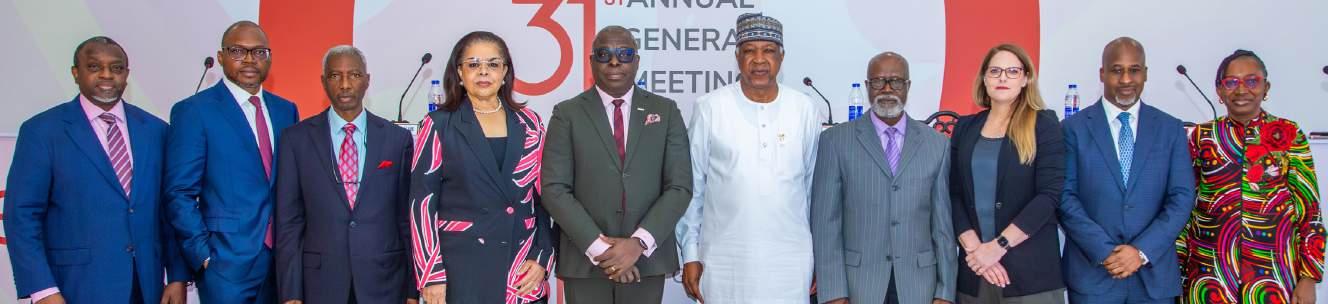
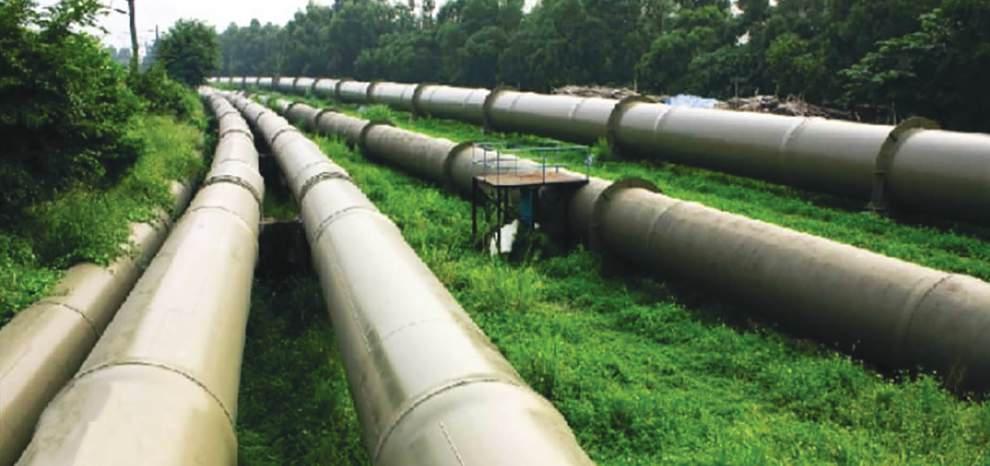
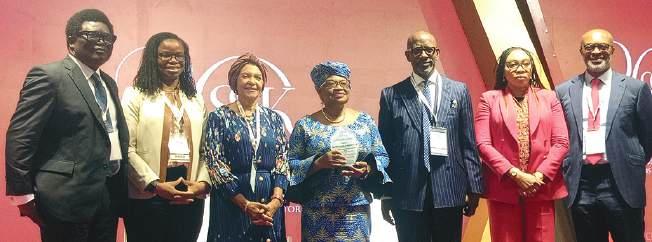
Axxela Limited, Nigeria’s leading gas infrastructure company, has celebrated the achievement of 10 million Lost Time Injury (LTI)-free manhours across its operations
and Dual Credit Rating Milestones
while securing recognition from two of Nigeria's foremost credit rating agencies, underscoring its operational excellence, financial strength and disciplined growth strategy.
These milestones further reinforce Axxela’s position as one of the country’s most resilient energy infrastructure companies, reflecting exceptional safety performance
and strong independent validation of its financial strength and long-term strategic direction.
Global Credit Ratings (GCR) upgraded Axxela's national
scale long-term issuer rating to A+(NG), while Agusto & Co. affirmed the company’s Aa- Long-Term Rating
Continued on page 5
Forty Three Insurance Firms Scale NAICOM’s Recapitalisation Hurdle...
www.thisdaylive.com
Adeleke to Osun Voters: Ignore Threats, Troop Out to Vote Accord on August 15
Imole campaign council alerts nation, international community, IGP on unsettled political climate in state Olawepo-Hashim urges people to stand with party despite gov’s alleged disloyalty, reject Tinubu’s endorsement AAC: debate boycott shows APC, ADC, others unprepared to lead state Oyintiloye charges police on neutrality, security
Electric Vehicles Sales to Hit 23m in 2026 as African Market Doubles
IEA: EV cars to account for 29% of worldwide sales this year Nigeria missing as S’Africa records fivefold growth, Egypt triples sales
Emmanuel Addeh in Abuja Electric Vehicle (EV) sales are expected to reach a record 23 million units worldwide in 2026 despite a slowdown in the global automobile market, with Africa emerging as one of the world's fastest-growing markets.
Sales on the continent more than doubled in the first half of the year, according to a new report by the International Energy Agency (IEA), titled: “Electric Car Markets in a Time of Uncertainty.”
It projected that electric cars will account for 29 per cent of all new vehicles sold globally this year, up from previous estimates, even as overall global car sales are expected to decline by about two per cent amid economic uncertainty and geopolitical tensions.
The IEA noted that while the global automotive industry continues to grapple with weakening demand, rising costs and disruptions linked to the 2026 energy crisis triggered by conflict
in the Middle East, demand for electric vehicles has remained remarkably resilient because of concerns over fuel security and volatile oil prices.
For Africa, the report highlighted a breakthrough year, with electric vehicle sales more than doubling to exceed 30,000 units during the first six months of 2026.
The strongest performances came from South Africa, where EV sales increased more than fivefold year-on-year, while
Egypt recorded more than a threefold increase, underscoring the continent's growing appetite for cleaner transportation despite relatively low market penetration.
The report also pointed to increasing government support across Africa, citing Kenya's decision to waive import duties on 100,000 electric vehicles and Rwanda's directive requiring all public institutions to ensure that at least 30 per cent of newly procured vehicles are electric.
Globally, more than 9 million
electric cars were sold during the first half of 2026, with over 5 million sold in the second quarter alone. Although first-half sales were about one per cent below the corresponding period in 2025 because of weaker demand in China, EVs still accounted for 24 per cent of all global vehicle sales, one percentage point higher than last year.
According to the IEA, electric vehicle sales increased in more than 90 countries during the first half of the year, reflecting
broad-based global adoption despite a challenging economic environment.
The agency said road transport accounts for nearly half of global oil consumption, making countries heavily dependent on imported petroleum particularly vulnerable to fuel price shocks.
NLNG: Nigeria Risks Losing Global Gas Relevance as Market Share Slips to 5%
‘If we don't do anything, we'll go down to 3% or even 2%,’ CEO warns Cites feedstock supply challenge Force majeure on Bonny Island gas plant remains 45 months after
Nigeria LNG Limited (NLNG) has warned that Nigeria’s position in the global liquefied natural gas market is under serious threat, with the country’s share slipping from six per cent to five per cent, currently, and further risk of falling to as low as two per cent, if urgent action is not taken to address feedstock supply
Chuks Okocha in Abuja, Yinka Kolawole in Osogbo and Sunday Ehigiator in Lagos
Osun State Governor, Ademola Adeleke, has charged Osun residents and voters to ignore threats from the opposition All Progressives Congress (APC) and troop out en masse to vote for his re-election on August 15.
Addressing worshippers during a church service at the Winners Church, in Osogbo, yesterday, Adeleke accused Minister of Marine and Blue Economy, Gboyega Oyetola, the APC governorship candidate; Bola Oyebamiji; Senator Adenigba Fadahunsi; and Hon. Wole Oke of unleashing violence on Osun people because the people had rejected them.
Adeleke’s comments came as his campaign organisation, Imole Campaign Council, alerted the country and the international community to what it called the unsettled political climate in the state as the people prepared for the governorship election on August 15.
The council also notified the Inspector-General of Police, Mr. Tunji Disu, and the highest echelons of Nigeria's security services of the arrest of 46 leaders of Accord party and other prominent figures penned down "for systematic, unlawful arrests in the days leading up to the election by All Progressives Congress in the state”.
Deputy Director-General of Imole Campaign Council, Alimi Kolapo, made the disclosure at
challenge and low processing capacity.
Managing Director and Chief Executive Officer of NLNG, Mr. Adeleye Falade, gave the warning during the NLNG Facts & Figures Presentation in Lagos, as he positioned the company as a critical pillar of Nigeria’s economy and a gateway for international investment.
Falade said the decline reflected
a press conference in Osogbo.
The governor stated, “Because the people have rejected them, because voters have endorsed me, because defeat stared them in the face, they resorted to violence. We are not scared. Osun people are not afraid.
“August 15, Osun people will show agents of violence that we are not cowards. Our people's safety is guaranteed. Come out and vote. Punish those killing and maiming our people by voting against them on August 15th.
“We are not scared of Osun APC. We have the capacities and the strengths. But we care for the safety of our people. My primary goal is the protection and safety of my people.
“My people, come out and vote your conscience.”
Adeleke, who declared that God gave power to whom He wished, said his achievements in office overwhelmed Oyebamiji and Osun APC.
He stated, “Our achievements in workers’ welfare, health, education, infrastructure, agriculture and other sectors speak for us.
“I will be victorious against Mr Oyebamiji and Osun APC on August 15. We represent the light and we shall overcome darkness. Osun people must rise and they are rising. We must and we are fighting for our rights to vote and be voted for.”
The resident pastor, Adekunle Oluseyi, had earlier declared the month and the service the reign and shower of blessings, praying
slow capacity growth compared to global competitors who were moving faster to monetise their gas reserves.
He stated, “About three to four years ago, NLNG held six per cent of global LNG market share. Eventually, we're down to five per cent. There are other countries that are growing. If we don't do anything, we'll go down to three per cent. We'll go
to God to bless the governor and grant him wisdom to continue to pilot the affairs of the state.
Imole Alerts Nation, International Community, IGP toUnsettled Political Climate in State
Imole Campaign Council alerted Nigerians and the international community to the unsettled political atmosphere in the state on the eve of the governorship poll.
In a press conference in Osogbo, Deputy Director-General of Imole Campaign Council, Alimi Kolapo, who doubles as Commissioner for Information and Enlightenment, also notified the Inspector-General of Police, Mr. Tunji Disu, and other security services of the arrest of 46 leaders of the Accord party and prominent figures pencilled "for systematic, unlawful arrests in the days leading up to the election by All Progressive Congress party in the state”. Kolapo stated that even more alarming were the credible security reports reaching the leadership of Imole Campaign Council regarding a coordinated "hit list" drawn up by political opponents in collusion with compromised security operatives. He stated, "We have confirmed information that the 46 individuals have been marked for arbitrary arrest, harassment, and forcible transfer to Abuja to keep them out of circulation during the election."
down to two per cent.
“But that's not our dream. Our dream is that we'll continue to stay relevant even in the global space.”
Falade linked the risk directly to Nigeria’s failure to scale up despite massive gas endowment.
Nigeria currently has 215.19 trillion cubic feet (TCF) of proven gas reserves and an additional 600 TCF yet to be proven, according
Kolapo stressed that APC and its desperate agents were using the police not as a shield for the public, but as a weapon of oppression against political figures.
The council equally demanded the immediate, unconditional release of Taofeek Akinyemi, or his prosecution in a court of competent jurisdiction if there was any legitimate allegation against him, insisting, however, there is none.
Gbenga OlawepoHashim Urges Voters to Stand with Accord in Spite of Adeleke's Disloyalty
Presidential candidate of Accord Party, Dr. Gbenga
for the second consecutive review period and assigned an A1+ Short-Term Rating, the highest rating in that category. The agencies cited Axxela’s robust business model, strong earnings performance, resilient cash generation and sustained financial profile as key drivers of the ratings.
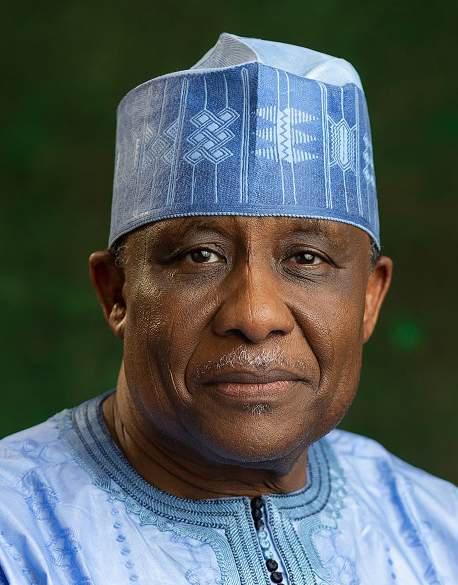
Commenting on the achievements, Group Chief Executive Officer of Axxela, Moshood Olajide, said the milestones reflect the company's deliberate and consistent approach to building a resilient business.
"These recognitions are a
to official figures by Nigerian Upstream Petroleum Regulatory Commission (NUPRC).
However, current liquefaction capacity remains at just 22 million tons per annum (MTPA) via NLNG's Bonny Island six-train processing plant.
Comparing Nigeria with other countries in the global LNG processing and supply league, Falade said Australia
Olawepo-Hashim, called on all Accord Party stakeholders and supporters in Osun State to close ranks, remain loyal to the party, and mobilise massively for victory in the forthcoming governorship election, stating that the actions of a few individuals must not derail the party's mission.
Olawepo-Hashim made the call after receiving the report of a seven-member committee of Accord Party stakeholders in Osun, which consulted widely and briefed him on recent political developments and the state of the party.
He urged members to reject anti-party activities and stressed that the future of Accord in Osun would be determined by the commitment and loyalty of its
strong endorsement of the choices we have made over the years. Beyond validating our financial strength, they reflect the resilience of our business model, confidence in our strategic direction and our ability to consistently deliver value to stakeholders. As we continue to expand critical gas infrastructure, strengthen our operational footprint and advance our sustainability agenda, we remain disciplined in how we deploy capital, serve our customers and create longterm value. Our ambition is not only to grow, but to build an enduring business that
had a proven reserve of about 120 TCF but has a processing capacity of about 88 MTPA. According to him, Malaysia, with just 97 TCF of gas reserves, has capacity that is even more than Nigeria, "But then you look at us (Nigeria) 209 TCF and just 22 MTPA. So at that point in time,
members, not by the actions of any individual.
Describing Adeleke's recent actions as a betrayal of the Accord Party, Olawepo-Hashim said he would not respond by undermining the party's electoral prospects in the state. He stated, "Governor Ademola Adeleke has obviously acted as a disloyal party man, but I will not respond by engaging in anti-party activities in Osun. Two wrongs do not make a right.” In a related development, a support group of the 2027 presidential candidate of Accord Party, Gbenga Hashim Solidarity Movement (GHSM), dismissed the reported endorsement of President Bola Tinubu’s 2027
continues to power industries, support economic development and contribute meaningfully to Nigeria's energy future."
Together, the 10 million LTIfree manhours achievement and the dual credit rating milestones reinforce Axxela's reputation as a leading gas infrastructure company delivering operational excellence, financial resilience and responsible growth. As the company continues to expand energy infrastructure across Nigeria and Africa, it remains focused on creating lasting value for investors, customers, communities and the wider economy.
Minister of Power, Joseph Tegbe
Peter Uzoho
Email: Goddy.egene@thisdaylive.com,
GRAND RECEPTION FOR A WORTHY SON...
NCDMB, BOI Set up Investment Committee for
$100m
Nigerian Content Equity Fund
Board to invest
In a move to provide a new financing solution for the Nigerian oil and gas service sector, and accelerate local content growth, Nigerian Content Development and Monitoring Board (NCDMB) and Bank of Industry (BOI) have inaugurated the Investment Committee of the Nigerian Content Equity Fund (NCEF).
The fund is a groundbreaking $100 million financing product designed to avail long-term
$5m
in each oil service firm, unlock 13,200 jobs
financing to service companies and provide access to funds in exchange for equity rather than traditional debt instruments.
The committee was inaugurated in Lagos by the Executive Secretary of NCDMB, Mr. Felix Ogbe, setting the stage for the rollout of the pioneering financing window under the Nigerian Content Intervention Fund (NCI Fund), a statement signed by NCDMB's General Manager, Corporate Communications, Dr. Obinna Ezeobi, said.
According to the product paper, the underlying goal of the Nigerian Content Equity Fund (NCEF) is to reduce perunit cost of oil and gas products and services locally, create an additional source of income for NCDMB, and play a catalytic role in attracting other investors and lenders to financially viable organizations.
“By providing access to equity financing, the NCEF will enable service companies to expand and increase their market share, which will contribute to the growth
of the Nigerian oil and gas industry,” the paper further read.
The statement said the Fund size is $100 million, while the obligor limit is $5million.
It added the Fund is provided by the NCDMB, while the BOI serves as the Fund Manager.
The target beneficiaries are oil field service companies, manufacturers connected to the oil and gas sector, fabrication yards, and connected sectors, with the primary goal being to promote economic growth, job creation, and wealth creation
FG Overhauls Agricultural Quarantine System to Boost Global Market Access Amid Export Rejections
James Emejo and Deborah Adekoya in Abuja
Minister of Budget and Economic Planning, Senator Abubakar Baguda, has inaugurated an inter-ministerial committee to strengthen the country's agricultural quarantine system.
The renewed drive aimed to curb the rejection of the country's agricultural exports, improve biosecurity and accelerate non-oil export growth.
The move is expected to improve compliance with
international sanitary and phytosanitary (SPS) standards, enhance market access for Nigerian agricultural products and support the country's economic diversification agenda.
Represented by Permanent Secretary, Federal Ministry of Budget and Economic Planning, Dr. Deborah Odoh, the minister said Nigeria could no longer sustain the economic losses arising from the rejection of agricultural exports due to non-compliance with international standards.
The committee will therefore, coordinate reforms aimed at eliminating regulatory bottlenecks and aligning Nigeria's agricultural quarantine system with global best practices.
Bagudu said the establishment of the committee underscored government's determination to improve policy coordination, harmonise regulatory processes and build an efficient quarantine system capable of protecting the country's agricultural resources while expanding access to regional and international markets.
He said the committee's work is expected to strengthen Nigeria's biosecurity framework, improve agricultural trade, raise non-oil export earnings, increase farmers' incomes and support sustainable economic growth.
Bagudu added that the initiative represented another milestone in government's efforts to build a resilient agricultural sector, strengthen food security and position Nigeria as a leading exporter of safe, high-quality agricultural products.
House Committee on Public Petitions Accuse MDAs of Evading Summons
Onyebuchi Ezigbo in Abuja
The House Representatives Committee on Public Petitions has alleged that some ministries, agencies and departments were hindering its efforts to conclusively address complaints brought before it.
Speaking at the Retreat Session of the House of
Representatives Committee on Public Petitions organised by the Policy and Legislative Advocacy Centre (PLAC) in Abuja, the Chairman, Hon. Bitrus Kwamoti Laori, said the action of MDAs inhibits the committee's work.
"Some of them will not allow until we threaten them with arrest before you see them
appearing," he said.
Laori said the committee said has so far received a total of 890 petitions from members of the public since the commencement of the 10th legislative session.
Out of these petitions, he said the Committee on Public Petitions attended to 200, while 70 were have been resolved by the Lower Chamber.
Laori said the House of Representatives has maintained its role as the principal legislative platform for addressing citizens' grievances He also said that the Lower Chamber has been working to ensure accountability in public institutions and strengthening public confidence in democratic governance.
in Nigeria. NCDMB estimated that the impact of the Fund on oil and gas projects could potentially create about 12,500 direct jobs and 7,000 indirect jobs.
The inauguration of the investment committee marks another milestone in the evolution of the NCI Fund, a flagship intervention established under section 104 of the Nigerian Oil and Gas Industry Content Development (NOGICD) Act, to bridge financing gaps confronting indigenous oil industry firms.
While the five NCI Fund products managed by the BOI and two products managed by Nigerian Export-Import Bank (NEXIM) have provided debt financing to qualified service companies over the past decade, with loans lasting five years and interest rates of eight per cent, the Equity Fund has carved a
new niche.
In his remarks, the Executive Secretary charged the investment committee to carry out rigorous due diligence on every company seeking support and ensure that the objectives for which the Fund was established are fully achieved. According to him, the Equity Fund must never be mistaken for a grant. He stressed that beneficiaries are expected to deploy the capital judiciously and repay in accordance with the terms of the investment. He urged the committee to ensure that only credible people with viable businesses benefit from the scheme. "Our top priority should be identifying people who will use the Fund properly and, most importantly, return our funds back to us so that we can continue the programme for other deserving beneficiaries," he said.
FG Launches Digital Acceleration Programme to Boost Students' Employability
Gideon Arinze
in Enugu
The federal government has launched the Renewed Hope Students Leaders Engagement and Digital Acceleration Programme as part of efforts to improve the employability, entrepreneurial capacity and digital competitiveness of Nigerian students.
The Senior Special Assistant to the President on Students Engagement, Comrade Sunday Daya, unveiled the initiative yesterday in Enugu during the South-east edition of the programme, themed "Empowering Students With Digital Skills and Innovation."
In his address, Daya said that
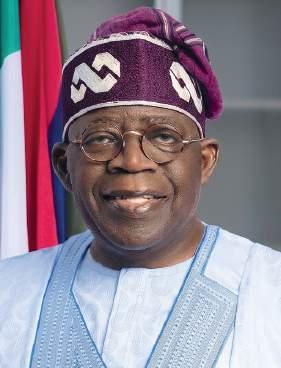
President Bola Tinubu believes Nigeria's greatest asset lies not only in its natural resources but also in its youthful population, noting that the administration has continued to implement policies and programmes aimed at equipping young Nigerians with the skills, opportunities and platforms needed to thrive in the 21st-century economy.
“The Digital Acceleration Programme was designed to strengthen engagement between government and student leaders while exposing participants to emerging technologies and digital opportunities that would enhance their employability and entrepreneurial capacity,” he said.
Peter Uzoho
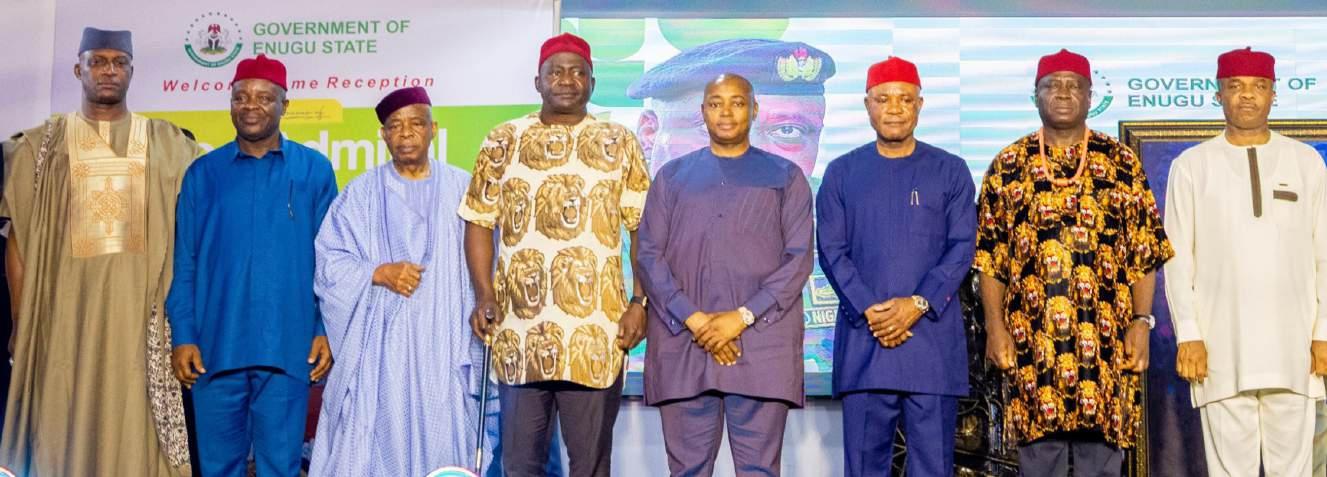
L-R: Representative of the Chief of the Naval Staff, Rear Admiral S.D. Ibrahim; former Chief of the Army Staff, Lt. Gen. Azubuike Ihejirika; former President of the Senate, Senator Ken Nnamani; Minister of Defence, Gen. Christopher Musa (Retd); Deputy Governor of Enugu State, Barr. Ifeanyi Ossai; Governor of Enugu State, Dr. Peter Mbah; former Chief of the Naval Staff, Vice Admiral Emmanuel Ogalla; and the Chief of the Air Staff, Air Marshal Sunday Aneke, in Enugu during a reception organised in honour of Ogalla by the Enugu State government to mark the successful completion of his tenure as the Chief of the Naval Staff, weekend
AMNESTY INTERNATIONAL'S COURTESY VISIT TO MINISTRY OF FOREIGN AFFAIRS...
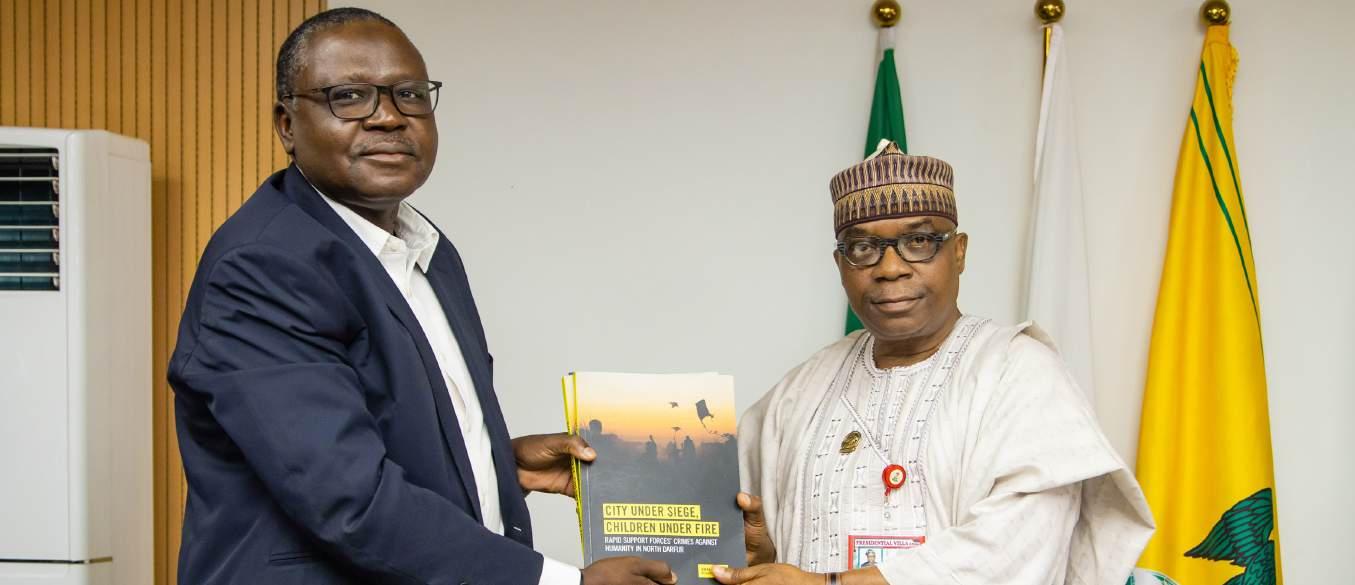
L-R: The Executive Director, Amnesty International Nigeria, Isa Sanusi, presenting the organisation's latest report on the conflict in Sudan to the Minister of state for Foreign Affairs, Ambassador
for onward transmission to
Forty Three Insurance Firms Scale
NAICOM’s Recapitalisation Hurdle
Eight others undergoing final verification as regulator concludes review within 14 days Commission declares new capital regime will drive $1tn economy, usher stronger insurers to finance infrastructure, absorb larger risks, enhance insurance penetration
James Emejo in Abuja and Ebere Nwoji in Lagos
National Insurance Commission (NAICOM), yesterday, disclosed that 43 insurance and reinsurance companies had fully complied with its new minimum capital requirements. It was a landmark overhaul expected to transform the industry's capacity to finance economic growth, protect policyholders, and mobilise longterm investment for President Bola Tinubu's $1 trillion economy ambition.
Alternative
The conclusion of the 12-month exercise marked one
Bank Bags Two Awards for Inclusive Finance, Social Impact
Two independent recognitions this week have highlighted The Alternative Bank's growing role in advancing inclusive finance and social impact, recognising its efforts to expand economic opportunity while supporting communities that conventional systems often overlook.
The Alternative Bank received the Champion of Sustainable Development Award at the Africa Social Impact Summit (ASIS) 2026 Impact Capital Dinner in Lagos.
of the biggest structural reforms in the country's financial services industry since the banking sector consolidation. It positioned the insurance industry to underwrite larger and more complex risks while strengthening confidence among investors, businesses, and policyholders.
The exercise was the country's most ambitious insurance sector recapitalisation in decades.
programme commenced shortly after the enactment of NIIRA 2025, with NAICOM issuing detailed implementation guidelines covering the new minimum capital requirements, eligible capital instruments, admissible assets, reporting obligations, verification procedures, and regulatory timelines.
the economy through increased underwriting capacity and long-term investment financing.
It said stronger capital bases would enable insurers to settle policyholder claims more promptly, absorb emerging risks more effectively, participate in financing critical infrastructure, and compete more favourably within regional and international insurance markets.
sound market conduct, and accelerating the digital transformation of the insurance ecosystem through technology and innovation.
Speaking on the recognitions,
Korede Demola-Adeniyi, Executive Director, Commercial and Institutional Banking, Lagos and South-West, said inclusive finance must remain central to long-term economic progress.
"Finance delivers its greatest value when it expands opportunity. Sustainable growth is achieved by supporting businesses, strengthening communities and ensuring more people have access to the tools they need to succeed, anything less leaves the job unfinished."
The Champion of Sustainable Development Award was presented during the Africa Social Impact Summit Impact Capital Dinner, convened by Sterling One Foundation in partnership with UNFPA and with support from the MacArthur Foundation.
The Bank was also honoured with the Distinguished Humanitarian Partnership Award by the National Association of Nigerian Visually Impaired Students (NANVIS), University of Lagos Chapter, during the association's 20th anniversary celebration. Although presented by different organisations, both awards recognised a common principle: that sustainable development depends not only on access to capital, but also on ensuring that more people can participate meaningfully in the economy regardless of their circumstances.
In a statement, NAICOM said the recapitalisation exercise was undertaken pursuant to Section 15 and other relevant provisions of the Nigerian Insurance Industry Reform Act (NIIRA) 2025, which was signed into law by Tinubu on July 31, 2025.
Although 43 insurers and reinsurers were confirmed as fully compliant, the commission disclosed that eight insurance companies that submitted evidence of compliance shortly before the statutory deadline were still undergoing final verification and regulatory review, which it said would be concluded within 14 days.
The recapitalisation
Throughout the transition period, the commission stated that it carried out extensive reviews, verification, and validation of submissions from insurance operators to ensure a transparent, credible and orderly implementation process.
According to the commission, the exercise has significantly strengthened the financial resilience of insurance companies, attracted fresh domestic and foreign investments, and restored investor confidence in the sector.
NAICOM said the successful completion of the exercise signalled the beginning of a stronger, safer, and more resilient insurance industry capable of supporting strategic sectors of
The regulator also stated that the new capital regime provided a stronger foundation for the implementation of riskbased supervision, ensuring that regulatory capital is better aligned with the scale, complexity, and risk profile of licensed operators.
Beyond improving the financial health of insurers, the commission said the reform would deepen financial inclusion, expand insurance penetration, and reinforce the stability of the broader financial system.
The commission reiterated its commitment to strengthening consumer protection, promoting
It reaffirmed its commitment to continue to engage stakeholders while providing regular updates on post-recapitalisation supervisory actions, companies undergoing final verification, industry restructuring, and implementation of the risk-based Capital Framework.
NAICOM expressed appreciation to the federal government, shareholders, investors, operators, development partners, and other stakeholders for their support throughout the recapitalisation process. It described the exercise as "the foundation" for a new era of stronger institutions, improved governance and greater public confidence in insurance. Under the new recapitalisation template, insurance companies were required to meet higher minimum capital thresholds, depending on their class of business.
Glo, Samsung Offer Data, N1m Benefits to Customers on Galaxy Z Fold8 Preorder
Emma Okonji
Globacom has assured that customers who pre-order the Galaxy Z Fold8 Ultra or Galaxy Z Fold8 at any Gloworld outlet across the country will receive 10GB of free Glo data every
month for six months, plus additional Samsung pre-order benefits valued at up to N1 million.
Thi s was as both partners shared the innovations in the Galaxy Z Fold8 Series with
Glo customers and high net worth individuals during an exclusive Masterclass at Gloworld in Abuja
The Galaxy Z Fold8 series is Samsung's most sophisticated foldable smartphone to date, according to the North
Regional Trainer for Samsung Nigeria, Bobby Ochang, who spoke at the Masterclass. He disclosed that the devices combine strong performance with clever AI capabilities to make daily living easier and activities more productive.
Kuni Tyessi in Abuja
Sola Enikanolaiye,
President Bola Ahmed Tinubu, during Amnesty International's courtesy visit to the Ministry of Foreign Affairs in Abuja... recently
3RD AFRICA HIGH-LEVEL CIVIL SOCIETY AML/CFT CONFERENCE ...
L-R: Executive Director,Space4 Change, Victoria Ibezim-Ohaeri; Registrar and Chief Executive Officer, Compliance Institute, Nigeria, Bawo Egbakhumeh; Deputy Director, Development and Finance Institutions Supervision Department, Central Bank of Nigeria, Tagbo Chinanu Nwajagu; Chief Executive Officer, Compliance Institute Southern Africa, Rianne Potgieter; Managing Director, FTI Consulting Johannesburg, South Africa, Manet Basson; Immediate Past President, Compliance Institute, Nigeria, Pattison Boleigha; and Director, Central Bank of Nigeria, Sanni Mustapha at the 2026 SPACES FOR CHANGE 3rd Africa High-Level Civil Society AML/CFT Conference held in Abuja...recently
Dele Oye: Naira Vulnerable Amid $4.4bn Week-Long FX
Claims Dangote's temporary dollar pricing exposed how major firms can trigger FX shocks Seeks
greater transparency, deeper reforms, long-term capital to strengthen market resilience
James Emejo in Abuja
Chairman, Alliance for Economic Research and Ethics (AERE), Hon. Dele Oye, has warned that the $4.4 billion Foreign Exchange (FX) turnover recorded in a single week, reveals underlying fragility of the currency market rather than proving its strength.
He said while the historic trading volume underscored the market's ability to process large transactions, this should not be misconstrued as evidence of a deeper, more liquid or resilient FX market capable of withstanding economic shocks.
In a statement titled, "What a Record FX Week Really Reveals About Nigeria's Market," Oye cautioned policymakers against celebrating the milestone without addressing the structural weaknesses it exposed.
According to him, the FX market recorded $4.375 billion in combined spot and derivatives
turnover in the week ended July 24, 2026—an 83.38 per cent jump from the $2.386 billion recorded in the preceding week and the first weekly turnover above $4 billion this year.
He, however, maintained that unusually high trading volumes do not automatically translate into stronger liquidity, improved reserves or wider access to foreign exchange.
According to him, "The headline deserves attention. Yet it should not be read too quickly as proof that Nigeria's FX market has become deep, stable, or broadly accessible.
"A market can generate unusually high turnover because it is liquid and well diversified; it can also generate it because a few large participants suddenly need to buy, sell, settle, or hedge dollars."
Oye noted that available evidence suggested caution before interpreting the record week as a sign of lasting improvement
Group: Anti- Terror War Reinforced by Improved Intel Gathering, Investment in Modern Military Equipment
Adedayo Akinwale in Abuja
The Good Governance Advocates Without Borders has said that improved intelligence gathering, enhanced collaboration among security agencies and increased investment in modern military equipment had strengthened ongoing operations against terror groups across the country.
It said while security challenges persist in some regions, sustained military offensives, intelligence-driven operations and collaboration with local communities are yielding measurable results.
in market fundamentals.
He pointed to the sharp volatility in recent weekly turnover figures, which climbed to $3.053 billion in the week ended July 3, dropped to $1.631 billion the following week, recovered to $2.386 billion, before surging to $4.375 billion.
According to him, the swings illustrated that high transaction velocity should not be mistaken
for market resilience.
He further highlighted a 333.59 per cent jump in forward contracts—from $14.5 million to $62.87 million—arguing that although the contracts represented just 1.44 per cent of total turnover, their sharp increase indicated growing demand by market participants to hedge against future exchange rate uncertainty. He said, "When spot-market
activity and forward hedging rise together, it is consistent with participants seeking both immediate dollars and protection against a future change in the exchange rate."
Oye also warned against the creeping dollarisation of the economy, noting that the growing practice of pricing domestic transactions in foreign currency could undermine the
Naira's role as the country's legal tender.
He cited the recent decision by Dangote Petroleum Refinery to temporarily price petrol, diesel and aviation fuel in dollars before reversing the policy, describing the episode as evidence of how the actions of a few dominant firms could send shockwaves through the foreign exchange market.
OPay Launches ‘OPay is Okay’ Campaign to Reinforce Customer Trust
Sunday Ehigiator
OPay has unveiled a new brand campaign, “OPay is Okay,” aimed at reinforcing customer confidence in digital financial services by highlighting the company’s commitment to security, reliability, and transparency.
while digital finance has transformed how millions of Nigerians pay bills, transfer money, save, and run businesses, building and sustaining customer trust remains central to the industry’s long-term growth.
are protected, and the platform they use will be there when they need it,” Adekunle said.
customers have developed through consistent service and dependable financial solutions.
The company noted that millions of Nigerians rely on OPay daily to receive salaries, pay bills, transfer funds, save money, and manage business transactions.
Chief Commercial Officer of OPay, Elizabeth Wang, said the campaign represents the relationship the company has built with customers, merchants, and agents across the country.
The group said recent months have seen intensified military operations against insurgents, bandits, kidnappers and oil thieves in several parts of the country.
The fintech company said the campaign reflects its belief that trust is earned through consistent service delivery rather than mere promises, at a time when concerns over online fraud, misinformation, and digital scams continue to shape public perception of financial technology platforms.
According to the company,
It noted that security agencies have repeatedly reported the elimination of terrorist commanders, the rescue of kidnapped victims, the destruction of criminal hideouts and the recovery of arms and ammunition as part of the federal government's renewed efforts to tackle insecurity. Against this background, the group has announced plans to stage a series of non-partisan rallies across Abuja, Lagos and other major cities to commend President Bola Tinubu for the significant improvements in Nigeria's security landscape under his administration.
Speaking on the campaign, Chief Operating Officer and Chief Technology Officer of OPay, Dotun Adekunle, said trust remains the foundation of every financial service.
“Trust is the foundation of every financial service. Technology or innovation alone is not enough. People need to know that their money is secure, their transactions
It added that the platform processes millions of successful transactions every day through a nationwide agent network, backed by continuous investment in security infrastructure.
According to OPay, the new campaign is more than a marketing slogan, describing it as a reflection of the confidence
“OPay is Okay is more than a campaign. It is a reflection of the relationship we have built with tens of millions of customers, merchants, and agents across Nigeria. Every successful transaction, every business we help grow, and every customer we support strengthens that relationship,” Wang said.
LUTH Unveils West Africa’s First EyeSi Surgical Simulator, Deepens Push for Continuous Medical Education
Gbenga Sodeinde
Nigeria has taken a significant step in strengthening ophthalmic medical education with the unveiling of West Africa’s first EyeSi Surgical Simulator and the inauguration of the Gbemisola Olowolafe Centre for Ophthalmic Surgical Simulation at the Guinness Eye Centre, Lagos University Teaching Hospital (LUTH), Lagos. The development is expected
to transform specialist training in eye care by embedding simulation-based learning into clinical education, with the goal of improving surgical precision, reducing complications and enhancing patient outcomes across Nigeria and the wider West African region. The facility, delivered through a partnership involving the Faculty of Ophthalmology of the National Postgraduate Medical
College of Nigeria (NPMCN), LUTH and the Tunji Olowolafe Foundation, is designed to provide world-class hands-on training in phacoemulsification cataract surgery and vitreoretinal procedures for ophthalmologists in training and practice.
Speaking at the inauguration on Friday, Chairman of the Tunji Olowolafe Foundation, Dr. Tunji Olowolafe, said the project represents a shift in how
Nigeria must approach professional development in the health sector, stressing that continuous learning and retraining are essential to maintaining competence in modern medicine.
He said the initiative was inspired by a presentation from the Faculty of Ophthalmology during its 2025 Faculty Lecture, which highlighted the need for advanced simulation tools in surgical training.
Delta State Government
UNAUDITED FINANCIAL STATEMENTS HIGHLIGHTS
FOR THE SIX MONTHS ENDED 30th JUNE, 2026
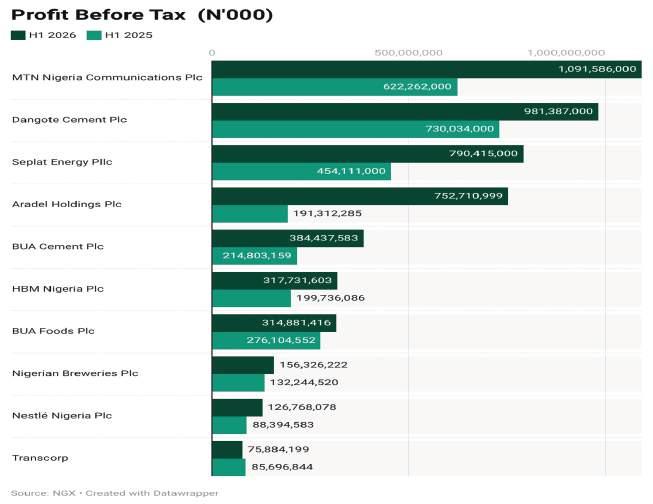
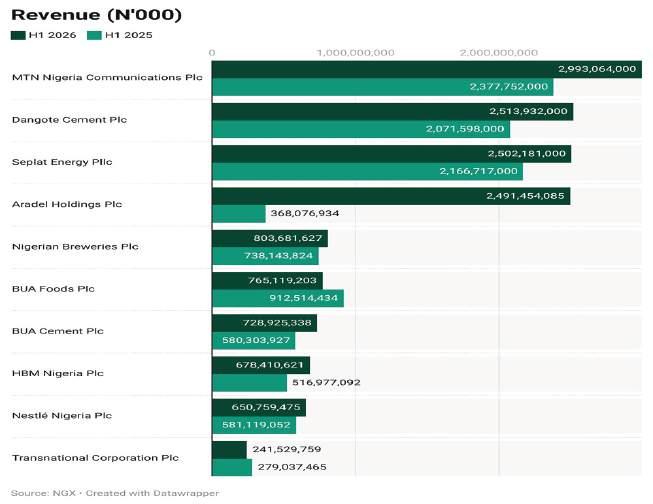
The Board of Directors of BUA Foods PLC is pleased to announce the unaudited results of the Company for the six months ended 30th June, 2026
CAVEAT EMPTOR
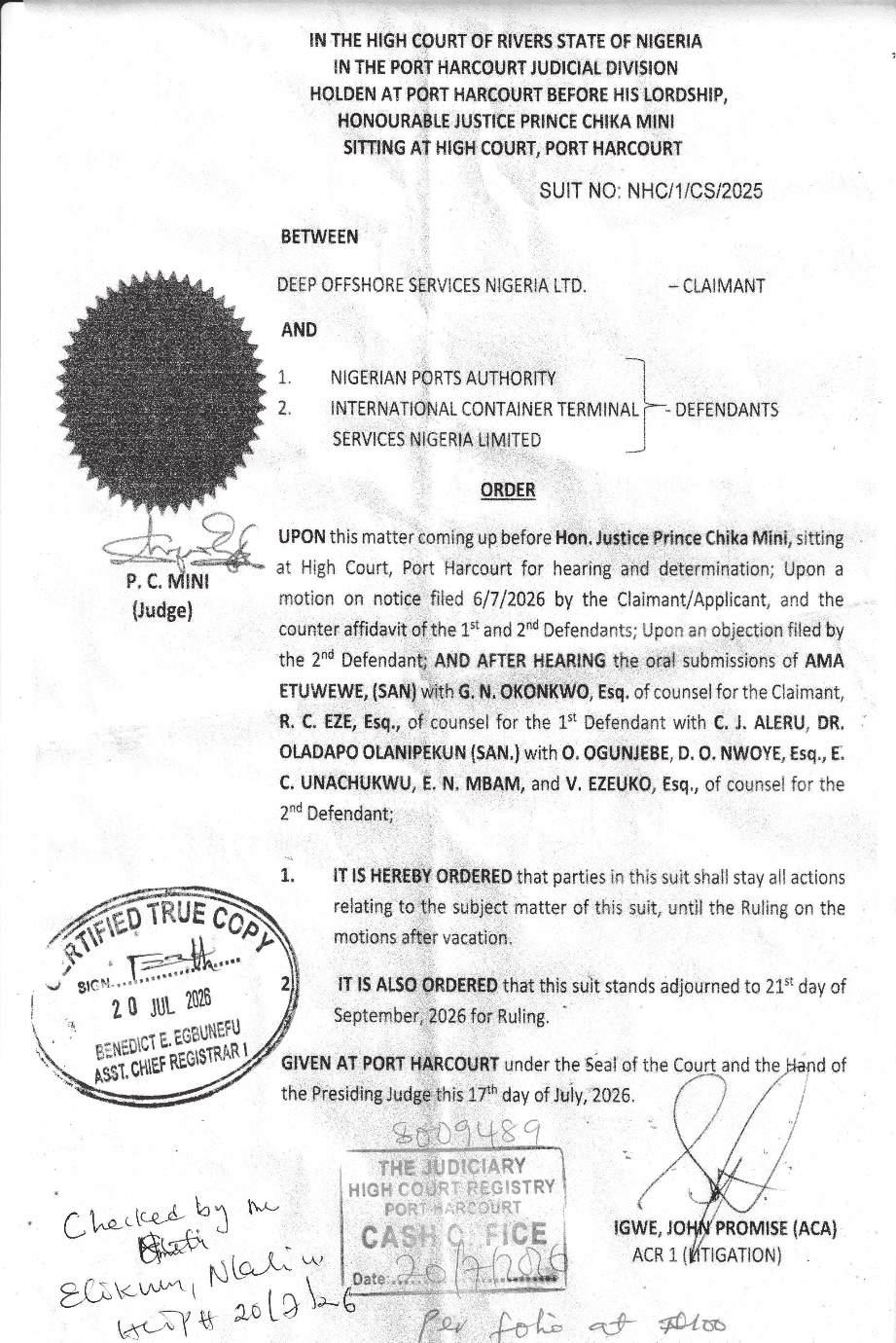
The General Public is hereby notified that by an Order of
the Rivers State High Court of Justice, Sitting at Port Harcourt, made on Friday, the 17th day of July, 2026, in
TERMINAL SERVICES NIGERIA LIMITED (Defendants), the Honourable Court directed as follows:
‘IT IS HEREBY ORDERED that parties in this suit shall stay all actions rel ating to the subject matter of this suit, until the Ruling of the motions after vacation’.
A certified true copy of the Order of the Court is herein attached
The e�ect of the said Order is far-reaching and binding on all parties to the suit, their privies, agents, ser vants, assigns, and any person or entity acting through or on their behalf. It imposes a complete and immediate stay on any further a c t i o n , s t e p , d e a l i n g , t r a n s a c t i o n , o r i n t e r f e r e n c e whatsoever in respect of the subject matter of the suit, particularly Berth 12 located at the Federal Ocean Terminal, Onne Port Complex, Onne, Rivers State. This means that no party is permitted to execute any formal deed of lease, grant
any new rights or interests, carr y out any constructi on, occupation, development, or any other activity that would alter the existing state of a�airs regarding Berth 12, pending the final determination of the pending motions, slated for 23rd September, 2026. The Order is intended to preser ve the status quo and prevent any irreversible changes that could render the eventual judgment of the Cour
ine�ective.
TAKE NOTICE that any person, company, corporate entity, g o v e r n m e n t a g e n c y, a u t h o r i t y, i n v e s t o r,
contractor, financier, or member of the public who deals w i t h , l e a ses, o c cu p i es, fi
es, c
takes any step whatsoever in respect of Berth 12 in violation of this subsisting Order of the Court does so at his, her, or its own peril. Such actions are liable to be declared null and void and of no legal e�ect whatsoever. Furthermore, any deliberate or reckless violation of the Order may expose the o�ender to contempt proceedings before the Honourable C o u r t , w h i c h i s a s e r i o u s
stakeholders are hereby strongly warned and placed on n o t i c e
agreement, memorandum of understanding , sale, lease, sub -lease, assi
interest, right, or title therein until the Honourable Court has finally determined the motions or has expressly lifted or varied the said Order. Any transaction entered into in breach of this Order shall be invalid, unenforceable, and incapable of conferring any legal title or protection on the parties involved.
This Caveat Emptor is issued pursuant to the Order of the Court made on 17th July, 2026, in order to protect the sanctity, dignity, and authority of the judicial process, to safeguard the integrity of ongoing judicial proceedings, and to prevent any party from attempting to present the Court with a fait accompli by altering the status quo ante pending the resolution of the issues placed before the Court for determination.
Members of the public and all stakeholders are therefore urged to take due notice of this publication and govern
DATED THIS 24TH DAY OF JULY, 2026.
NSCDC AND INTELLIGENCELED OPERATIONS
The NSCDC is gradually being positioned as a consequential institution in the protection of critical national assets, argues ISRAEL FAGBEMIGUN
GAFAR MUHAMMED argues for greater collaboration among neighbouring states to fight insecurity
BEYOND THE TROPHIES
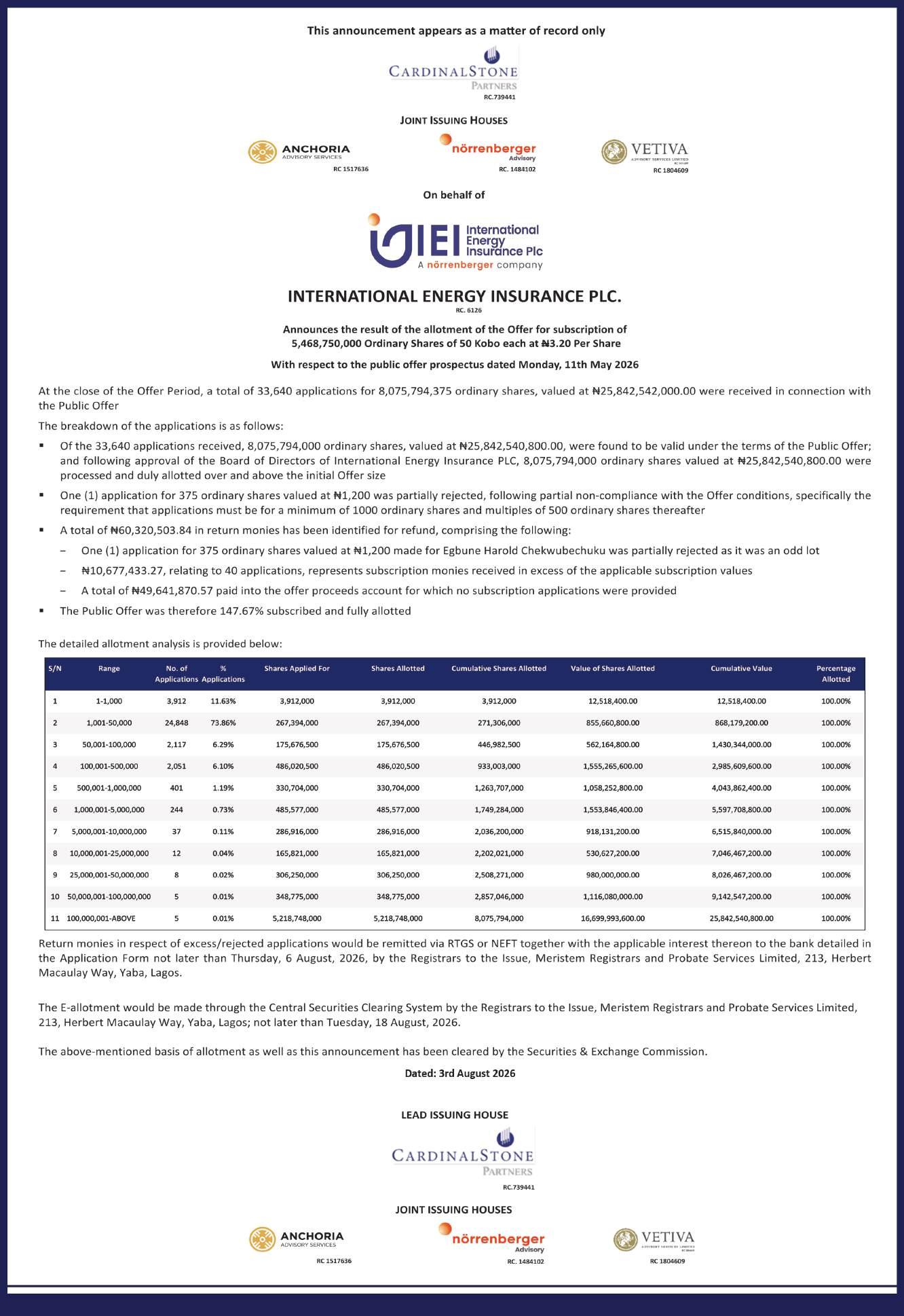
CardinalStone's awards affirm that an indigenous investment banking institution can compete at the highest levels of global finance, writes SOLA ONI See page 21
THE NARIDON TRAGEDY AND BORDER SECURITY
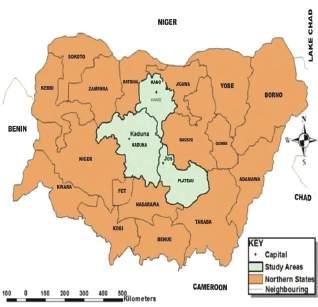
The tragic killing of innocent residents of Naridon Village in Kamaru Ward of Kauru Local Government Area once again reminds Nigerians that insecurity is no respecter of state boundaries. It also exposes an uncomfortable reality that has become increasingly evident across the North-West and North-Central: no state can win the war against terrorism and banditry in isolation.
According to reports surrounding the latest attack, the assailants crossed into Kaduna from neighbouring Plateau State before unleashing violence on unsuspecting villagers along the KadunaPlateau border. Several innocent lives were lost, properties were destroyed, and yet another community has been thrown into mourning.
While Governor Uba Sani rightly condemned the attack and immediately directed security agencies to hunt down the perpetrators as well as ordered emergency relief for affected families, the incident raises a broader national security question that can no longer be ignored.
What happens when one state strengthens its internal security architecture while neighbouring states remain vulnerable? The answer is painfully obvious. Criminals simply relocate.
This phenomenon has become one of the greatest challenges confronting Nigeria's security managers today. Over the last two years, Kaduna State has recorded remarkable improvements in security compared to the dark years when terrorism, banditry, kidnappings and communal violence almost became daily occurrences across several local government areas.
Communities that were once inaccessible have gradually reopened. Thousands of displaced farmers have returned to their farms. Markets that had disappeared are gradually returning. Schools that were previously shut because of insecurity have resumed activities.
These achievements did not happen by accident. Governor Sani adopted a security philosophy that combines kinetic and non-kinetic approaches. Beyond supporting military operations, the administration invested heavily in intelligence gathering, community engagement, conflict resolution, traditional institutions and economic empowerment.
Rather than viewing security purely
through military lenses, the governor understood that sustainable peace also requires rebuilding trust between government and communities.
Traditional rulers were empowered. Religious leaders became active partners in peacebuilding. Community intelligence networks were strengthened. Youth engagement received renewed attention.
These interventions have significantly weakened criminal networks operating within Kaduna. However, as security experts frequently observe, criminal groups rarely disappear. They simply migrate to areas where resistance is weaker.
Kaduna shares boundaries with several states, including Plateau, Niger, Zamfara, Katsina, Kano and Bauchi. Each of these borders presents unique security challenges. Unfortunately, terrorists, bandits and other violent criminals do not recognise state boundaries.
They move freely across forests, rural settlements and ungoverned spaces that stretch across multiple states. Today's attackers may strike in Kaduna. Tomorrow they may retreat into Plateau forests. Next week they may surface in Niger or Zamfara.
This fluid movement explains why isolated security successes often produce only temporary gains unless neighbouring states adopt similar levels of vigilance. The latest attack on Naridon Village painfully illustrates this reality. If indeed the attackers crossed from Plateau territory before launching their assault, then the challenge extends beyond Kaduna's internal security arrangements. It becomes a regional security problem requiring regional solutions.
Uba Sani's response deserves commendation. Instead of resorting to political rhetoric, he immediately
condemned the killings, sympathised with bereaved families, activated emergency humanitarian support and directed security agencies to intensify efforts to arrest those responsible.
That is what responsible leadership demands. Equally important is the fact that this isolated attack should not be allowed to overshadow the tremendous progress Kaduna has made under the present administration.
Before Governor Sani assumed office, insecurity dominated conversations about Kaduna. Today, discussions increasingly focus on infrastructure development, agriculture, education, healthcare and economic revival.
Road projects are ongoing across the state. Farmers are returning to previously abandoned farmlands. Commercial activities are gradually expanding into areas once considered dangerous. These developments became possible largely because the security situation has improved considerably.
No honest observer can deny that Kaduna is significantly safer today than it was only a few years ago. The latest tragedy also carries an important lesson for neighbouring states. Every governor has a constitutional responsibility to secure lives and property within his jurisdiction.
When security collapses in one state, neighbouring states inevitably bear the consequences. This explains why greater collaboration among governors has become imperative. Joint border patrols should become institutionalised.
Intelligence sharing must improve. State governments should regularly convene regional security meetings involving military commanders, police authorities, intelligence agencies, traditional rulers and community leaders.
Criminal networks already cooperate across state boundaries. Governments must become even more coordinated. Modern security challenges cannot be addressed solely through deployment of troops. Intelligence gathering remains the decisive factor.
Kaduna's recent security gains have been supported by improved intelligence coordination involving federal security agencies, local communities and traditional institutions. Neighbouring states should adopt similar models.
Muhammed writes from Kaduna State
The NSCDC is gradually being positioned as a consequential institution in the protection of critical national assets, argues ISRAEL
FAGBEMIGUN
NSCDC AND INTELLIGENCE-LED OPERATIONS
For many years, the Nigeria Security and Civil Defence Corps (NSCDC) has struggled with an identity problem. The military, police and Department of State Services dominated conversations around national security.
That perception has however changed significantly, since inception of the President Bola Ahmed Tinubu led government. under the innovative supervision of Olubunmi Tunji-Ojo, the Commandant General, Abubakar Audi of NSCDC has achieved a lot and transformed the corps, repositioning it to rob shoulders with other security agencies in the country.
Recent operations by the Corps' Special Intelligence Squad suggest an institution quietly redefining its role—not through rhetoric or showmanship, but through intelligence-driven enforcement against crimes that often receive less public attention despite their devastating consequences.
Nigeria's security conversation has largely revolved around terrorism, banditry and kidnapping. Yet beneath these headline-grabbing threats lies another category of crime that steadily weakens the nation's economy: the systematic vandalism of critical infrastructure, illegal mining, arms manufacturing, counterfeiting and the criminal networks that finance them.
The recent dismantling of a syndicate responsible for stealing electricity and telecommunications cables across the Federal Capital Territory and neighbouring states illustrates this shift. More importantly, the arrest of suspected major buyers of vandalised materials sends a stronger message than arresting street-level vandals alone.
Crime survives because there is a market.
As long as industries and middlemen continue to profit from stolen national assets, replacing damaged infrastructure will remain an endless and expensive cycle funded by taxpayers. Targeting buyers rather than merely pursuing thieves reflects a more strategic understanding of organised crime.
Equally significant is the courtbacked sealing of branches of some companies over allegations that vandalised national infrastructure was routinely transported to their facilities for melting. Regardless of how the legal process unfolds, the willingness to investigate corporate actors marks a notable departure from focusing solely on low-level offenders.
The same intelligence-led approach is evident in other operations.
The discovery of a local arms manufacturing factory in Yobe State, where sophisticated tools and locally fabricated rifles were recovered, highlights an uncomfortable reality: Nigeria's insecurity is sustained not only by weapons smuggled across borders but also by
locally produced firearms feeding insurgency and banditry.
The arrest of kidnapping suspects across Kano and Edo, including foreign nationals allegedly operating illegally within Nigeria, reinforces another important lesson. Modern criminal networks are increasingly transnational, demanding stronger intelligence sharing among security agencies and neighbouring countries.
Again, there was the interception of fake $600,000 in counterfeit United States currency in Kano. Counterfeiting is often dismissed as a financial crime, yet its implications extend far beyond economics. Such activities fund organised crime, undermine investor confidence and expose weaknesses in border security and financial oversight.
The Corps' increasing attention to illegal mining also deserves recognition. This is because Illegal mining has evolved into one of Nigeria's most overlooked security threats. Beyond environmental degradation and revenue loss, mining sites have become recruitment grounds for armed groups and criminal syndicates. Arresting suspects and reclaiming illegal mining locations is therefore as much a security intervention as it is an economic one.
Still, impressive arrest figures alone should not become the benchmark for success.
Nigeria is targeting ₦30 trillion ($21 billion) in annual revenue from its domestic solid minerals industry by 2030, as part of efforts to diversify the economy away from oil. The Nigeria Security and Civil Defence Corps, through its mining marshals, has been working to support this target.
Between January and June 5, 2026, the mining marshals arrested 138 suspects linked to illegal mining activities. Of these, 91 suspects were formally charged to court across 12 cases, though none has yet resulted in a conviction.
The marshals also identified 133 mining sites nationwide during the period, 59 of which were found to be operating illegally. Of these illegal sites, 26 have so far been cleared or recovered.
Fagbemigun, a communication strategist, writes from Abuja
CardinalStone's awards affirm that an indigenous investment banking institution can compete at the highest levels of global finance, writes SOLA ONI
BEYOND
THE TROPHIES
For discerning investors, international awards matter not because they embellish a company's reputation, but because they often validate what the market has already recognised: superior execution, resilient leadership and an enduring capacity to create value. Viewed from that perspective, CardinalStone's multiple honours at the Euromoney Awards for Excellence 2026 represent far more than another milestone in the firm's growing catalogue of global recognitions. They are an independent affirmation that an indigenous Nigerian investment banking institution has built the institutional capabilities to compete consistently at the highest levels of global finance.
The significance of these awards becomes even more profound when considered against the backdrop of Nigeria's operating environment. In an economy characterised by high interest rates, policy uncertainty and an increasingly demanding regulatory landscape, sustaining world-class performance is neither accidental nor easily replicated. It requires disciplined leadership, robust governance, deep market intelligence, relentless innovation and the ability to execute complex transactions with precision despite formidable headwinds.
For investors, these recognitions extend beyond corporate prestige. They provide a valuable signal of institutional quality in an industry where trust, execution capability and credibility are indispensable assets. They also reinforce the growing attractiveness of Nigeria's capital market by demonstrating that indigenous financial institutions are capable of delivering advisory and capital-raising solutions that meet international standards while competing effectively with global investment banking franchises.
CardinalStone's double victory at the Euromoney Awards for Excellence, Nigeria's Best Investment Bank for M&A and Nigeria's Best for Capital Markets Advisory, deserves attention beyond the celebratory headlines. These honours recognise institutions that consistently demonstrate excellence in execution, innovation, client service and market leadership.
The firm's Euromoney success did not occur in isolation. Within months, CardinalStone was honoured with the Debt Deal of the Year at the 2026 African Banker Awards for serving as Lead Financial Adviser and Lead Issuing House on the landmark ₦501.021 billion Nigerian Bulk Electricity Trading Plc (NBET) Power Sector Bond. Earlier, DealMakers
Africa named the firm Winner of Financial Adviser by Transaction Flow (Equity) and ranked it Third by Transaction Value, reinforcing its leadership in equity advisory across the continent.
These recognitions confirm CardinalStone's strength across mergers and acquisitions, debt capital markets and equity advisory, the core disciplines of a leading investment banking franchise. For investors, this breadth of expertise matters because successful investment banks do far more than arrange financing. They facilitate capital formation, improve market liquidity, connect investors with quality opportunities and guide businesses through complex strategic transactions that shape economic growth.
The firm's advisory role in African Capital Alliance's ₦387.4 billion divestment of its 15.92 per cent stake in Aradel Holdings Plc illustrates this capability. As one of Nigeria's largest private equity exits and the biggest secondary sale in the country's energy sector, the transaction demonstrated that the Nigerian capital market can efficiently accommodate sophisticated, large-scale equity transfers while attracting long-term institutional investors. Successful exits of this nature recycle capital, encourage new investments and reassure global investors that Nigeria offers credible pathways for value realisation.
Equally significant was CardinalStone's leadership in structuring the award-winning ₦501.021 billion Power Sector Bond under the Federal Government's ₦4 trillion Presidential Power Sector Debt Reduction Programme. More than a fully subscribed bond issuance, the transaction showcased how capital markets can be deployed to solve structural economic challenges by mobilising long-term funding to address legacy liabilities within the electricity sector. It also highlighted the increasingly important role investment banks play in financing infrastructure and supporting national development.
These landmark transactions underscore the growing prominence of indigenous investment banks in mandates that were once dominated by international firms.
Oni, an Integrated Communications Strategist, Chartered Stockbroker, Commodities Broker and Capital Market Registrar, is the Chief Executive Officer, Sofunix Investment and Communications
Editor, Editorial Page PETER ISHAKA
Email peter.ishaka@thisdaylive.com
POWER SECTOR AND THE VANDALS
All stakeholders should do more to protect the vital assets
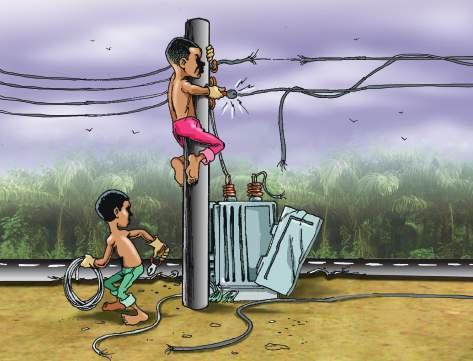
As the nation continues to grapple with persistent power outages and unreliable electricity supply, this most critical sector is also witnessing the twin-problem of theft and vandalism of its transformer and power-line cables. The Minister of Power, Joseph Tegbe, who recently lamented this development, has called on the Nigeria Police Force (NPF) to intensify its crackdown on vandals targeting critical power installations across the country. At a meeting with the Inspector General of Police, Olatunji Disu, the discussion reportedly dwelt on widespread energy theft and the continuous destruction of electrical equipment that has remained major obstacles to reliable power supply nationwide. At the end, both agreed on stronger tactical collaboration to protect the national grid, It is unfortunate that at a period when the nation is overburdened with the quest for improved and steady power supply, some unpatriotic elements are hell-bent on sabotaging government efforts. The immediate consequence of this criminality is that life is made more difficult for law abiding citizens who are thrown into darkness due to erratic and unreliable power supply. Also, the national economy is seriously threatened as industries are being shut down and employees laid off because companies cannot meet production targets. It is therefore time that the authorities took serious measures against these criminals.
and power-line cables without having an assured off-taker market somewhere ready to buy such equipment. Sometimes these stolen transformers and other equipment turn up for resupply by contractors in the sector. After all, no single individual can afford the purchase and installation of such specialised equipment without the active connivance of the officials.
There is no doubt that the incidents of theft and equipment vandalism are costing the nation huge sums of money. On annual basis, the Transmission Company of Nigeria (TCN) announces loss of several billions of Naira to this sabotage, including the ones deliberately inflicted by insurgents in the Northeast of the country.
Community leaders should consider it a patriotic duty to join in the fight against the vandalism of electricity equipment
EDITOR SHAKA MOMODU
DEPUTY EDITOR WALE OLALEYE
MANAGING DIRECTOR ENIOLA BELLO
DEPUTY MANAGING DIRECTOR ISRAEL IWEGBU
CHAIRMAN EDITORIAL BOARD OLUSEGUN ADENIYI
EDITOR NATION’S CAPITAL IYOBOSA UWUGIAREN THE OMBUDSMAN KAYODE KOMOLAFE
EDITOR-IN-CHIEF/CHAIRMAN NDUKA OBAIGBENA
GROUP EXECUTIVE DIRECTORS ENIOLA BELLO, KAYODE KOMOLAFE, ISRAEL IWEGBU
To the extent that what we are dealing with is a serious national economic sabotage, the security agencies should be up and doing in apprehending the hoodlums and bringing them to justice. We also call on the host communities to help by way of real-time intelligence and information to the security agencies. Criminals come from within specific communities and when they realise that they would be exposed by their kinsmen they would certainly have a second thought. Community leaders should therefore consider it a patriotic duty to join in the fight against the vandalism of electricity equipment.
While we lament this deplorable situation, it must also be stated that the menace of electricity equipment vandals persists because of the existence of some “market” for these stolen items. Obviously, no criminal would be foolish enough to take the risk of stealing whole transformers
DIVISIONAL DIRECTORS SHAKA MOMODU, PETER IWEGBU, ANTHONY OGEDENGBE
DIRECTOR, PRINTING PRODUCTION CHUKS ONWUDINJO TO SEND EMAIL: first name.surname@thisdaylive.com
Letters to the Editor
What is particularly worrying is that the security agencies have a long history of tough words that have been of no effect as the criminally minded people within our society get more and more emboldened. It is incumbent on all the critical stakeholders to come up with a solution that will work. But the bottom-line remains that we must protect these vital assets of the nation from the grip of criminals.
Letters in response to specific publications in THISDAY should be brief (150-300 words) and straight to the point. Interested readers may send such letters along with their contact details to opinion@thisdaylive.com. We also welcome comments and opinions on topical local, national and international issues provided they are well-written and should also not be longer than (750- 1000 words). They should be sent to opinion@thisdaylive. com along with photograph, email address and phone numbers of the writer.
NIGERIA’S BUDGETING SYSTEM AND THE NEED FOR CHANGE
Nigeria’s budgeting system has, over the years, come under intense scrutiny due to its inability to deliver the desired level of development and public service. As Ministries, Departments and Agencies (MDAs) of government continue to grapple with little or no release of budgeted and approved funds, there is an urgent need to reform the nation’s budgeting process. A budget should serve as a practical roadmap for national development, not merely an annual ritual that raises expectations only to leave them unmet.
The current situation is particularly troubling, with Nigeria said to be implementing the 2024, 2025 and 2026 budgets simultaneously. Such an abnormal situation creates confusion, delays project execution and weakens public confidence in government planning. It also makes it difficult to accurately assess performance, monitor expenditure and hold public officials accountable for the implementation of approved projects.
At the centre of this challenge are numerous projects captured in the budgets of various MDAs that are yet to
be executed because of funding constraints. Roads remain uncompleted, schools and hospitals await rehabilitation, while critical infrastructure projects continue to suffer unnecessary delays. When funds approved by the National Assembly are either released late or not released at all, development is stalled and the people bear the consequences through poor service delivery and declining living standards.
Equally disturbing are the recurring allegations and counter allegations of budget padding and the insertion of strange projects into the national budget. Year after year, controversies emerge over provisions that were allegedly smuggled into appropriation bills without due scrutiny. Such practices undermine the credibility of the budgeting process and fuel public distrust in government institutions.
Indeed, many items contained in the national budget remain nothing more than a mirage. Some government agencies are reportedly allocated funds for projects that have little or nothing to do with their statutory mandates.
This misalignment not only wastes scarce public resources but also diverts attention from the core responsibilities for which such agencies were established. Every budget item should directly contribute to the mandate of the implementing institution.
Nigeria’s budgets have also become unnecessarily bloated and should be made more realistic by expunging non essential items. A leaner and more focused budget would improve implementation, reduce waste and ensure that available resources are channelled towards projects with measurable impact on the lives of citizens. Government must resist the temptation to include politically motivated expenditures that offer little value to the economy.
The recent statement credited to a principal member of the House of Representatives that about one billion naira inserted into the budget was meant for youth engagement, community outreach and church instruments within his constituency is, to say the least, unfortunate. Tochukwu Jimo Obi, Obosi, Anambra State
Street Preaching: Senate and Public Perception of Tougher Traffic Sanctions
Senate’s amendment of the Federal Road Safety Corps act has triggered nationwide debate, with controversy centring on claims that it seeks to ban street preaching. While lawmakers insist the legislation merely retains an existing provision and strengthens road safety enforcement, the episode highlights broader questions about legislative communication, proportionality of penalties and effective traffic governance. Sunday Aborisade reports.
The controversy that greeted the Senate’s consideration of the Federal Road Safety Corps (FRSC) (Amendment) Bill, 2026, illustrates how public perception can sometimes overtake legislative reality.
Within hours of reports that the National Assembly had approved stiffer sanctions for traffic offences, social media platforms became awash with claims that lawmakers had moved to criminalise street preaching across Nigeria.
The reaction was swift. Religious organisations, civil society groups and many citizens questioned what they believed was an attempt to restrict constitutionally guaranteed freedoms.
The narrative gathered momentum before the Senate eventually issued a formal clarification, insisting that the widely circulated interpretation of the bill did not reflect its actual contents.
The clarification may have settled one aspect of the debate, but it has also opened broader conversations about legislative communication, public trust, road safety policy and the effectiveness of punitive sanctions in changing behaviour.
At the heart of the controversy is a provision prescribing a ₦50,000 penalty for preaching, hawking or trading inside commercial vehicles. Critics interpreted the clause as a fresh attempt to prohibit public evangelism.
The Senate, however, maintained that no such intention existed.
According to the upper chamber, the provision has existed since the enactment of the FRSC (Establishment) Act in 2007 and is further reinforced by Regulation 220 of the National Road Traffic Regulations of 2012.
Rather than introducing a new offence, lawmakers explained that the ongoing amendment merely renumbered the existing provision within the revised schedule of offences.
In its explanation, the Senate stressed that the law applies only to activities conducted inside commercial vehicles where such actions may distract drivers or compromise passenger safety. It insisted that the provision neither prohibits religious activities in public spaces nor limits constitutionally protected freedoms
of worship.
The chamber also sought to correct another misconception by clarifying that the amendment bill did not originate from the Senate Leader, Senator Opeyemi Bamidele, contrary to widespread reports.
It explained that the legislation was first considered and amended by the House of Representatives before being transmitted to the Senate for concurrence in line with constitutional legislative procedures.
These clarifications underscore an important lesson about lawmaking in the digital age.
Legislative texts are often technical documents whose provisions can easily be misunderstood when isolated from their legal context.
Once simplified narratives gain traction online, correcting misinformation becomes significantly more difficult than preventing it in the first place.
Beyond the controversy surrounding preaching in commercial vehicles, the amendment bill represents one of the most comprehensive revisions of Nigeria’s traffic enforcement regime in recent years.
The proposed legislation substantially increases penalties for several traffic offences. Motorists who disregard traffic lights, road signs or traffic control devices would face fines of up to ₦100,000.
The same penalty is proposed for speeding violations and reckless driving.
The bill also introduces significantly tougher sanctions for driving under the influence of alcohol or intoxicating substances. Convicted offenders could face a ₦100,000 fine, imprisonment for up to two years or both.
Drivers who refuse to undergo breathalyser tests when reasonably suspected of intoxication may also be liable to fines or custodial sentences.
Supporters of the amendment argue that these provisions reflect international best practices where stricter penalties serve as deterrents against dangerous driving.
Nigeria continues to record thousands of road crashes annually, many linked to speeding, reckless driving, alcohol consumption, fatigue and disregard for traffic regulations.
Road safety experts generally agree that behavioural change remains one of the most effective strategies for reducing accident rates.
In that context, higher penalties are often viewed as part of a broader deterrence framework designed to encourage compliance.
However, deterrence is rarely determined by the size of penalties alone.
Criminological research consistently suggests that the certainty of enforcement often matters more than the severity of punishment.
A modest penalty that is consistently enforced may have greater preventive value than a severe sanction that is rarely implemented.
This reality explains why the amendment bill has attracted scrutiny beyond the headline figures.
One concern relates to proportionality. Some
Senate’s clarification regarding the preaching provision ultimately shifted attention back to what the amendment principally seeks to achieve: safer roads through stronger compliance with traffic regulations.
observers question whether identical fines for offences of varying degrees of risk adequately reflect the principle that punishment should correspond to the gravity of misconduct.
For instance, treating relatively minor regulatory violations and more dangerous behaviours within similar financial penalty ranges may invite debate over whether the sanctions have been appropriately calibrated. Such discussions are common whenever governments seek to strengthen regulatory enforcement.
Another issue concerns affordability and socio-economic realities.
A ₦100,000 fine represents a significant financial burden for many commercial transport operators, artisans and low-income earners. While the objective may be to discourage unsafe conduct, questions remain about whether fixed penalties affect all offenders equally irrespective of income levels.
Several countries have experimented with income-based traffic fines under which wealthier offenders pay substantially more than lower-income motorists for similar violations.
Although Nigeria has not adopted such a model, discussions around proportionality may become increasingly relevant as policymakers continue reviewing enforcement mechanisms.
Equally significant is the issue of enforcement capacity.
Higher penalties can only achieve their intended objectives if enforcement institutions possess adequate manpower, technological resources and transparent operational procedures.
Without effective monitoring systems, consistent patrol coverage, reliable speed detection equipment and professionally administered breath-testing mechanisms, stricter sanctions alone may not substantially improve compliance.
Public confidence also depends on perceptions of fairness.
Akpabio
Barau
Bamidele
From Relief to Growth: How NEDC’s ₦230bn Package Is Rewiring the North-East POLITY
IYOBOSA UWUGIAREN writes that with NEDC’s N230 billion package, the commission appears to be rewiring the North-East region.
At 6:15pm in Garkida, Adamawa State, Aisha Buba used to close her vegetable shop. Not because she had sold out, but because darkness made it unsafe to stay open.
That changed six months ago. When NEDC solar streetlights were installed on her street, Aisha added two more hours to her day. She bought a small freezer. Now she sells cold drinks and keeps tomatoes fresh overnight. Her daily profit has gone from N4,000 to nearly N9,000.
“It’s not just light,” she said. “It’s time. It’s money. It’s my children’s school fees.”
Aisha’s story is being repeated across the North-East. And on Wednesday in Abuja, the North East Development Commission (NEDC) placed a big bet that thousands more stories like hers are coming.
The Commission’s Governing Board approved a historic N230 billion package of investments in power, transport, enterprise, healthcare and mobility. The goal: move the region from a decade of recovery into a decade of growth.
“We are moving from recovery, renewal and stabilisation to development, from recovery to prosperity,” said Mohammed Alkali, Managing Director and Chief Executive Officer of NEDC. “The North-East is no longer defined by its past, but by the promise of its future.”
The approvals, announced at a media briefing, are anchored on the North-East Stabilisation and Development Master Plan (NESDMP) and President Bola Ahmed Tinubu’s Renewed Hope Agenda. Officials described them as the Commission’s most ambitious development package to date.
For years, insurgency displaced millions. Schools, clinics, roads and markets were destroyed. Farming communities abandoned land. Supply chains collapsed. When the NEDC was established, its first job was stabilisation. That meant rebuilding what was lost.
According to the Commission, that work is largely done. “Over 300 kilometres of roads and more than 50 bridges have been delivered across the six states. More than 100,000 solar streetlights have been installed under the Light Up the NorthEast project. And 49 tertiary institution projects, 18 Mega Schools and over 100 WASH facilities have been completed. Healthcare facilities have begun receiving MRI and CT scan machines,” Alkali told journalists in Abuja recently.
He added: “In Adamawa, the 32km Dabna Road and the Numan, Bole, Madagali and Michika Bridges have reconnected farming communities. In Bauchi, the Kirfi–Gombe Abba Road and Tashan Turmi Bridge have cut travel time to markets. In Borno, the Ngom–Koshebe–Zabarmari corridor and the Fogori Bridge have restored routes destroyed by conflict. In Yobe, the 54km Mutai–Ngalda Road has improved access to Potiskum.”
The Commission also recently attained five ISO certifications covering quality, environment, health and safety, anti-bribery and sustainable communities. Development experts say for a regional development agency in the country, that is unprecedented.
“We have spent the past years rebuilding confidence,” Alkali said. “Having laid this foundation, the Governing Board has approved a new generation of interventions that will serve as catalysts for change, growth and development.”
He said the NESDMP, the Commission’s roadmap, is built on 11 pillars: peaceful society, leadership in agriculture, healthy citizens, purposeful infrastructure, productive entrepreneurs, educated populace, protected environment, industrialisation,
flourishing trade, memorable tourism, and a connected region.
According to the CEO, the plan has moved in phases. Phase 1 was Stabilisation: restoring basic services. Phase 2 was Renewal: expanding education, health and energy. Phase 3, which begins now, is called Expansion and Sustainable Growth. The focus shifts from rebuilding to competitiveness.
“If you ask any trader, welder or clinic owner in the North-East what they need most, the answer is almost always the same: light,” Alkali added.
Nigeria’s national electrification rate is about 58%. In the North-East, it is 39%. That means 61% of people live without reliable power. The result is expensive diesel, spoiled goods, and businesses that close early.
To close that gap, the NEDC Board has approved N100 billion for 50MW of renewable energy through solar mini-grids and distributed systems.
In the Commission’s estimation, this is not just more streetlights. The investment will target homes, schools, hospitals, markets, agricultural clusters and industrial parks, and will be implemented with the Rural Electrification Agency and other partners.
The bigger picture is even larger. Assessments carried out by the Commission show that achieving universal electrification in the North-East by 2030 will require about $4.29 billion to reach 4.26 million households and over 218,000 communities. The plan mixes solar home systems, grid connections and mini-grids.
“This 50MW investment is a strategic catalyst. It will lower the cost of doing business, improve productivity, accelerate agro-processing, support digital innovation, strengthen healthcare delivery, and create green jobs,” Alkali said.
For people like Aisha in Garkida, it means the possibility of refrigeration, milling machines, and welding shops staying open after sunset. For hospitals, it means vaccines that don’t spoil. For schools, it means computers that actually work.
The Board’s most eye-catching approval was the launch of the NEDC Electric Vehicle Programme. Phase one is expected to deploy 300 electric taxis, 12-seater electric minibuses, and larger electric buses. The long-term plan
is to scale to over 10,000 EVs, with charging infrastructure and maintenance hubs across the region. The Commission said the first set of vehicles are already in Nigeria.
Officials frame it as more than transport. It is an industrial strategy. The Commission explained that the EV programme will be powered in part by the new solar mini-grids, creating a loop: renewable energy charging clean vehicles. The rollout is expected to create new jobs for engineers, electricians, mechanics and ICT professionals. Charging stations, battery services and fleet management will also open space for local entrepreneurs.
“It is an investment in people, productivity and prosperity. It positions the North-East as a national leader in sustainable mobility,” the CEO said.
Project monitors say if delivered, it would be one of the largest electric mass transit initiatives on the African continent.
Power without movement is not enough. That is why the Board also approved another N100 billion for roads and bridges. The new funding will build on existing projects and focus on linking agricultural hubs to commercial centres and industrial clusters. The idea is simple: reduce transport costs, cut post-harvest losses, and make it easier to get goods to market.
But the Commission is thinking bigger than roads. It also advanced plans for two transformative projects: The North-East Railway, designed to move freight and passengers, reduce logistics costs, and link the region to national and cross-border trade routes; and a North-East Regional Airline to improve business travel, tourism, emergency response and cargo movement.
“In Alkali’s thinking, together, road, rail and air are meant to do one thing: connect producers to markets, and the North-East to Nigeria and its neighbours,” an official said.
The Commission noted that in Taraba, the rehabilitation of the Jalingo–Wukari Highway and new bridges at Mayo Ndaga and Namnai have already shown what connectivity can do for farmers. In Gombe, the Gombe Abba–Kirfi Road has opened new trade corridors. The new approvals aim to replicate that across the region.
Apparently recognising that infrastructure creates the conditions and enterprise creates the jobs, the Board has also approved a N30 billion NEDC–Bank of Industry MSME Development Fund. The fund will provide financing, business development services and training, with priority for youth- and women-owned businesses.
For a region with a young population and a strong trading culture, access to capital has been a major barrier. The fund is designed to fill that gap and stimulate local industries. It complements ongoing skills programmes in photovoltaics, metering, linesmen work, waste-to-wealth and entrepreneurship that have already trained thousands of young people.
Under the “Healthy Citizenry” pillar, Alkali told journalists that the Commission is making its biggest push yet into healthcare.
The flagship project is the procurement of eight 1.5 Tesla Helium-Free MRI machines for the six states, alongside CT scanners, digital X-rays, mammography and dialysis equipment.
To ensure they work, the NEDC has built dedicated facilities, provided alternative power,
signed five-year maintenance contracts, and started training radiologists and biomedical engineers. The Commission is also upgrading the Borno Eye Hospital and establishing a Fertility Centre at the University of Maiduguri Teaching Hospital. Hundreds of Primary Healthcare Centres have been renovated.
On the financing side, the Community Targeted Social Health Insurance Programme (CTSHIP) has enrolled about 10,000 vulnerable beneficiaries, including internally displaced persons. The objective is to reduce referrals outside the region, cut medical tourism, and build a health system that can serve the next generation.
NEDC officials said they cannot deliver this alone. The new phase depends on partnerships with UNIDO for industrialisation, UNDP for resilience and enterprise, and REA for energy.
The five ISO certifications are also meant to signal to investors that public money will be managed transparently and efficiently. “These certifications demonstrate that the Commission operates in accordance with globally recognised best practices,” Alkali said. “They strengthen investor confidence.”
Members of the public may ask: why do these investments matter together? NEDC officials said looked at separately, these are big projects. Looked at together, they form one strategy. Reliable power allows agro-processors to run machines. Roads and rail move the processed goods to market. The MSME fund helps young people start the businesses that use that power and those roads. Healthcare and education build the workforce.
For the North-East, the potential is enormous. The region has fertile land, a strategic border location, and millions of young people. What it has lacked is energy, connectivity and capital. If this package delivers, the impact could be measured in factories, jobs, higher incomes, and stronger food security.
The hard part will be implementation. In Maiduguri, people have heard big announcements before. The difference now, officials argue, will be in delivery and monitoring.
The maintenance agreements for medical equipment, the partnership frameworks, and the ISO systems are all designed to ensure accountability. The Commission said beneficiary selection for the MSME fund and other programmes will be transparent.
But the real test will be on the ground. Will the solar mini-grids reach rural clusters? Will the EV charging stations be maintained? Will the roads be completed on time?
Alkali acknowledged the challenge. “These interventions are not merely investments in infrastructure. They are catalysts for change, growth and development, laying the foundation for a peaceful, connected, energy-secure and prosperous North-East.”
Back in Aisha Buba’s shop, the solar light comes on at dusk. Customers now stop by after evening prayers. She is saving to buy a second freezer.
Her story is small. But multiply it by thousands, across farms in Michika, markets in Damaturu, and workshops in Gombe, and you begin to see the ambition behind the N230 billion.
The North-East has spent 10 years rebuilding. Now, the plan is to build forward. “The North-East is ready,” Alkali said as he closed the briefing. Whether that becomes the story of the next five years will depend on execution. But for the first time in a long time, the conversation in the North-East is not about what was lost. It is about what can be built.
NEDC MD/CEO, Mohammed Goni Alkali
INTERVIEW
Sina Behmanesh: Why Commercial Farmers Should Use New Tech to Battle Fall Armyworms
The disparity between investment and returns has led to frustrations for farmers, especially commercial ones in the North. The major cause of this disparity is the Fall Armyworms that usually ravage maize farms in the North. Dr Sina Behmanesh, the Chief Executive Officer of Informiton, a firm based in Virginia, United States of America, which is into agricultural and biometrical technology, said access to the latest technology, incentives, and infrastructure is the reason American farmers seem far ahead of their Nigerian counterparts. The reason Sentinel X, a new technology developed by his company, is the final solution to Fall Armyworms is revealed in this interview with Raheem Akingbolu
How do you compare agricultural practice in the United States and Nigeria? How far do we still have to go to catch up?
I want to resist the framing of a race with one finish line, because the two systems are solving different problems. American agriculture is capital-deep and labour-scarce. A single farmer in Virginia may work two thousand hectares alone, and every part of that system-the machinery, the credit, the irrigation, the roads, the storage, the extension service, the insurance-is built to substitute capital for hands. Nigerian agriculture is the opposite: labour-rich, capital-scarce and dominated by smallholders working one to five hectares. Those are not the same enterprise at different stages of maturity. They are different enterprises. Where the real gap sits is not in the intelligence or the effort of the farmer. It is in the layer around him. The Nigerian farmer typically absorbs risk that his American counterpart never sees, because in the United States, the system carries it: crop insurance, forward contracts, subsidised inputs, financing tied to the season rather than the harvest, cold storage and roads
So how far is there to go? On yield per hectare, the distance is real, and it is measurable. But I would be careful about assuming the path is the same path. The United States reached its position over eighty years by building enormous physical infrastructure first. Nigeria does not have to repeat that sequence, and in some ways should not. Mobile banking here leapt over branch networks entirely. The same logic applies in agriculture: the technologies that will close the gap fastest are the ones that do not require the physical build-out to come first. I would add one point of honesty in the other direction. Nigeria has crop diversity, climatic range and a young farming population that most developed systems have lost. American agriculture is efficient but narrow, and increasingly brittle.
As someone who knows a little about agriculture and its changing faces, what do you think is the biggest challenge facing farmers in tropical Africa?
We are locked in a practice race we cannot win on current terms. Every chemical we deploy applies selection pressure, and the pest evolves. Fall Armyworm has already developed resistance to multiple insecticide classes, and Tuta absoluta has done the same across the tropics. So the farmer sprays more often, at higher concentrations, mixing products, and the yield he protects is bought with residues in the food and contamination in the water table. Resistance is not a distant risk. It is the reason a chemical that worked five years ago no longer works today, and it guarantees that any purely chemical strategy has an expiry date. The second is structural. Even where good science exists, it does not reach the farmer who needs it most. Chemicals need distribution and cash at the exact moment in the season. Biological controls need production facilities and living organisms kept viable across hundreds of kilometres of bad road. Equipment needs
power, spare parts, and trained technicians. So the tools cluster around commercial farms near cities, and the smallholder, who grows most of Africa’s food, is served last or not at all.
Put those together, and you get the real test any solution must pass. It must be sustainable, meaning it does not degrade in effectiveness the moment the pest adapts and does not poison the soil, the water, or the people. It must be scalable, meaning it works for a million farms as easily as for ten. It must be broadly accessible, and it must be affordable, meaning the cost per hectare fits inside a smallholder’s actual margin.
You mentioned that a chemical that worked five years ago a pest like the Fall Armyworm is now resistant to it. Was this what gave birth to Sentinel X, the new agricultural technology?
Partly, yes—but resistance told us what not to build, more than it told us what to build. And resistance was only half of the reason. The logic on resistance was this. Every chemical we spray is a single molecule with a single mode of action, applied from outside the plant. That is the perfect setup for evolution: one target, enormous selection pressure, millions of insects per hectare, several generations per season. The pest only has to solve one puzzle, and it will. So a new chemical does not fix resistance; it resets the clock and buys you five or eight years before you are standing exactly where you started. But there is a second cost, and it is the one that troubles me most, because
it is paid by people rather than by yields. When resistance forces a farmer to spray more often, at higher concentrations, mixing products in ways no label ever recommended, the exposure does not stay in the field. It reaches the man carrying the knapsack sprayer, usually without gloves, without a mask, often barefoot, frequently a young person hired for the season. It reaches the woman working the rows behind him before any re-entry interval has passed. Acute pesticide poisoning is not a rare event on this continent; it is routine, under-reported and largely invisible in health statistics because the symptoms are attributed to something else. The chronic exposures, the neurological effects, the reproductive effects, the long-latency cancers are almost never counted at all.
So we are asking farmers to protect their crop by damaging their own bodies, and then to sell that produce to families who have no way of knowing what is on it. That is not a sustainable bargain, and it gets worse every year resistance advances, because the dose only goes one direction. That forced a different question. Not what should we spray? But why does the pest attack this plant at all? And what does the plant itself do about it? Plants are not passive. A crop under attack releases volatile organic compound, with its own chemistry, that repel the pest, warn neighbouring plants, and in some cases call in the insect’s natural predators. That system is millions of years old, and the armyworm has not defeated it because it is not one molecule. It is a shifting blend, produced by the plant, in the field, in real time.
So Sentinel X does not attack the pest. It communicates with the crop. We use photonic information exchange, altering the energy states of photons to create information-laden signals. To stimulate the plant to express those natural defences more strongly and more consistently than it would alone. The plant does the work. We simply tell it when. Nothing is sprayed, so there is no applicator exposure, no re-entry risk, no residue on the food and no run-off into the water table.
The last part matters as much as the rest. Because there is nothing to manufacture, ship, store or install, a farm in a remote corner of Kaduna receives exactly the same intervention as a large commercial estate. We need only the farm’s location and boundaries. A ministry with an extension network maps its farms once, and from then on the signal reaches every mapped farm every season. Resistance, human health and reach. These are reasons Sentinel X exists.
Beyond the Sentinel X Pest control and Sentinel X Crop booster, how do you see Sentinel X transforming the agricultural value chain vis-a-vis the current practice?
Pest control and yield are what a farmer
buys. They are not what change the industry. What changes the industry is what happens to everything downstream once those two things become predictable and clean and once the money the farmer used to burn on inputs stays in his pocket.
Beginning with cost. For a smallholder, that is the whole conversation. Today his cash goes into consumables: agrochemicals and fertiliser, priced in dollars. Worse, they are not bought once. He sprays, but the pest returns, as resistance advances, he sprays more often and at higher concentration. That is a recurring bill that rises every year by the logic of evolution itself. Sentinel X and Sentinel XC are delivered for a fixed, known cost per hectare, agreed before the season begins, with nothing to buy again mid-season and no product to be adulterated, stolen or counterfeited on the way to him. And because there is no manufacturing, no packaging, no shipping in our cost base, that price is structurally lower than any physical input can be.
The consequence is that the farmer ends the season holding money he did not previously keep, and I would argue that is the single most transformative thing we do, more than the yield figure. Most Nigerian smallholders are not small because they lack ambition or land access. They are small because the working capital required per hectare caps how much they dare plant. When that disappears, what returns to the farmer is his own time and attention for spacing, for soil, for water management, for weeding at the right moment, for post-harvest handling, and for the most valuable activity of all, which is thinking about his farm as a business rather than reacting to the emergency in front of him. A farmer who is not fighting fires plans expansions.
From there, the chain effects follow. Input costs stop being an imported, dollardenominated variable, which at national scale is a foreign exchange question as much as an agricultural one. Produce that was never sprayed carries no residues, which turns quality from a luxury tier into the default—Nigeria has lost export value over residues before, and the clean route here is also the cheap route. The mapping we require to deliver the technology is itself a georeferenced farm registry, and Nigeria’s agricultural finance problem has always partly been an identification problem: a bank cannot lend against a farm it cannot locate, an insurer cannot underwrite a hectare it cannot verify. Map once, and a population that was financially invisible becomes bankable. And there is no distribution gradient at all—nothing to ship or install means a remote farm in Kaduna receives exactly what a commercial estate receives, at the same moment and the same cost, which changes who is worth aggregating and therefore where processing and off-take can reach. I would be careful not to overclaim. We do not fix roads, storage or market structure, and no signal will. But most of Nigeria’s value chain losses trace to two things: unpredictable output and a cash-hungry input model. Address both, and the rest of the chain becomes financeable—through banks and off-takers, not through us.
Behmanesh
Kayode Tokede
Despite persistent macroeconomic pressures arising from inflationary trends, high interest rates and geopolitical tensions, Nigeria’s leading corporates demonstrated remarkable resilience in the first half of 2026.
At the close of business for the first half ended June 30, 2026, 10 of the country’s largest listed companies posting a combined revenue of approximately N14.4 trillion, representing a 36 per cent increase over the
Nume Ekeghe
Nigeria’s fixed income market remained robust in July 2026, with transactions across Open Market Operation (OMO) Bills, Nigeria Treasury Bills, Federal Government of Nigeria (FGN) Bonds and Sukuk reaching a combined face value of N29.36 trillion from 9,875 trades. According to the Central Bank of Nigeria (CBN) Fixed Income Dashboard, OMO Bills accounted for the largest
N10.59 trillion recorded in the corresponding period of 2025.
The companies also recorded a combined profit before tax (PBT) of N4.99 trillion, up by 66.7 per cent from N2.99 trillion declared in the first half of last year, underscoring their ability to sustain earnings despite a challenging operating environment.
The companies, drawn from key sectors of the economy, including telecommunications, cement manufacturing, oil and gas, brewing, consumer goods,
share of market turnover, recording a face value of N16.44 trillion across 2,809 trades, underscoring investors’ continued appetite for the CBN’s short-term liquidity management instruments amid elevated yields.
Treasury Bills ranked second with a traded face value of N6.98 trillion from 3,700 trades, the highest number of transactions among all fixed income instruments during the
and conglomerates, continued to benefit from strong consumer demand, improved operational efficiency, and strategic pricing, analysts said.
The impressive performance came against a backdrop of persistent economic uncertainty.
An analysis of the unaudited half-year financial statements of the companies showed that MTN Nigeria Communications Plc emerged as the highest revenue earner with N2.99 trillion, representing a 25.9 per cent increase from
period. FGN Bonds followed with N5.87 trillion across 3,343 trades, while Sukuk instruments recorded a comparatively modest N69.11 billion from 23 trades.
In terms of market participation, Treasury Bills attracted the broadest investor base, with 30 participants, followed by OMO Bills with 25 participants and FGN Bonds with 24 participants. Sukuk recorded six market participants
N2.38 trillion recorded in the corresponding period of 2025.
It was closely followed by Dangote Cement Plc, which reported N2.51 trillion in revenue, a 21.4 per cent increase over N2.07 trillion recorded a year earlier.
Seplat Energy Plc posted N2.50 trillion in revenue, representing a 15.5 per cent increase from N2.17 trillion, while Aradel Holdings Plc delivered one of the strongest performances, with revenue surging by 576.9 per cent to N2.49 trillion from N368.08
during the month. Overall, 31 participants executed transactions across the fixed income market in July.
The yield curve continued to reflect Nigeria’s high interest rate environment.
For OMO Bills, closing yields ranged between 20.47 per cent and 21.62 per cent, maintaining their position as the highest-yielding instruments in the market.
Treasury Bills also traded at elevated levels, with yields
billion in the corresponding period of 2025.
MTN Nigeria also topped the profitability ranking, reporting N1.09 trillion in profit before tax, compared with N622.26 billion in the first half of 2025.
Explaining the performance, the telecommunications operator attributed the growth to sustained demand for its services, disciplined commercial execution and increasing customer adoption of data and digital products.
According to the company, data revenue rose by 38.4
ranging from 17.62 per cent to 20.91 per cent, reflecting sustained investor demand despite relatively tight monetary conditions.
Across the FGN Bond curve, yields remained broadly stable, ranging from approximately 15.5 per cent to 18.6 per cent across maturities extending to 27 years. The long end of the curve continued to trade around the 18 per cent mark, suggesting that investors are demanding relatively high
per cent, driven by growth in active data subscribers, improved smartphone penetration and rising demand for high-speed connectivity. It added that network data traffic increased by 25.8 per cent, while average data consumption per subscriber grew by 15.2 per cent to 14.8 gigabytes, with smartphone penetration reaching 66.4 per cent, reinforcing data services as its most significant longterm growth opportunity.
returns to hold longer-dated government securities. The trading pattern highlights investors’ preference for short-dated government securities as elevated interest rates continue to make money market instruments attractive. At the same time, the sizeable volume traded in FGN Bonds indicates sustained institutional demand from pension funds, banks and asset managers seeking duration and stable returns.
The National Pension Commission (PenCom), has said that as at March 2026, uncredited pension contributions stood at approximately N99.28 billion.
PenCom said having made efforts to identify the true owners of the contributions without success,it would soon take decision on the huge funds.
The above figures represent deductions made by employers from their workers’ salaries as part of
their contributions to be saved in their Retirement Savings Accounts (RSA) but which was not credited or paid into the accounts.
The commission disclosed this at the one year anniversary of introduction of the Pension Contribution Remittance System (PCRS), organised by PenCom in collaboration with Pension Operators Association of Nigeria(PenOp) the umbrella body of Pension Fund Administrators and Nigerian Employers’ Consultative Association( NECA) in Lagos.
Speaking on the topic, “Strengthening Trust Through PCRS, Safeguarding the Future of Pension Remittances,” Director,
Surveillance Department of PenCom, Saleem Muhammad, said about 70 per cent of the above uncredited pension contributions of
workers came from private sector employers, while the remaining 30 percent came from public sector employers. He traced causes of
Recapitalisation: Guinea Insurance Surpasses
Ebere Nwoji
Guinea Insurance Plc has emerged the first insurance firm to successfully surpassed the N15 billion minimum capital requirement set by the regulator, the National Insurance Commission( NAICOM).
Breaking the news over the weekend in a statement to the media,
the company’s Managing Director, Mr Adebola Abidogun, said, “Guinea Insurance has achieved a significant milestone in its recapitalisation programme, having surpassed the N15 billion minimum capital requirement prescribed for non-life insurance companies by the National Insurance Commission (NAICOM), following the successful
conclusion of its hybrid capital raising exercise.”
Abidogun, said the company successfully raised approximately N12.6 billion through a hybrid offer comprising a Rights Issue and a Private Placement. “Both transactions were executed in line with regulatory guidelines and received all requisite approvals from the Securities
accumulation of the uncredited contributions to weaknesses in the manual remittance system previously employed by the pension sector managers.
and Exchange Commission (SEC),” he said.
According to Abidogun, the proceeds from the capital raising exercise, when aggregated with the company’s existing paid up capital, position Guinea Insurance above the N15 billion minimum capital threshold for nonlife insurers, subject to final regulatory capital verification.
IHS Nigeria Donates Equipment to Empower People with Disabilities NAICOM, NIA Advocate Deeper Collaboration to Deepen Insurance Growth
IHS Nigeria, a communications infrastructure company, has donated business support equipment to empower people with disabilities within the Karonmajiji community in the Federal Capital Territory, Abuja.
The support is part of the company’s commitment to drive inclusive community development and sustainable livelihood
support under its Project Empower initiative.
Speaking at the event, Director, Sustainability, IHS Nigeria, Titilope Oguntuga, described the initiative as a reflection of the company’s commitment to advancing inclusive development by equipping persons with disabilities with the tools and opportunities needed to build resilient livelihoods.
The National Insurance Commission (NAICOM) and the Nigerian Insurers Association (NIA) have renewed calls for closer collaboration with the media through the Nigerian Association of Insurance and
Pension Editors (NAIPE), saying a stronger partnership with the media is critical to deepening insurance penetration, boosting public confidence and accelerating ongoing reforms in the insurance industry.
The call was made at the investiture of the newly elected
executives of NAIPE held in Lagos, where industry leaders underscored the media’s strategic role in promoting insurance awareness, enhancing consumer understanding and supporting national economic development.
Speaking at the event, the
Commissioner for Insurance and Chief Executive Officer of NAICOM, Mr. Olusegun Omosehin, said sustained collaboration among regulators, operators and the media remains indispensable to building a stronger and more inclusive insurance industry.
Lagos State Government Launches Greenhouse Gas Registry
Group Business Editor
Eromosele Abiodun
Deputy Business Editor
Chinedu Eze
Comms/e-Business Editor
Emma Okonji
Asst. Editor, Energy
Emmanuel Addeh
Asst. Editor, Money Market
Nume Ekeghe
Correspondents
KayodeTokede(CapitalMarkets)
James Emejo (Finance)
Ebere Nwoji (Insurance)
Reporter
Peter Uzoho (Energy)
She explained that rather than providing shortterm financial assistance, IHS Nigeria adopted an asset-based approach by donating 50 pieces of business support equipment, including sewing machines, freezers, generators and hairdressing kits, to the selected beneficiaries.
According to her, the intervention is designed to create lasting value by supporting entrepreneurship, promoting self-reliance and strengthening household incomes, while contributing to the achievement of the United Nations Sustainable Development Goals, particularly SDG 1 (No Poverty), SDG 8 (Decent Work and Economic Growth) and SDG 10 (Reduced Inequalities).
The Lagos State Government has recorded another milestone in its environmental sustainability agenda with the launch of the Lagos State Greenhouse Gas Registry (LGHGR), making Lagos the first sub-national government in Nigeria to establish a comprehensive greenhouse
gas emissions registry. Speaking at the event, the General Manager of the Lagos State Environmental Protection Agency (LASEPA), Dr. Babatunde Ajayi, described the Registry as a defining milestone in Lagos State’s climate action journey and a significant step towards building a resilient, climate-smart, and low-carbon economy.
He said the initiative reflects the commitment of Governor Babajide Olusola Sanwo-Olu to promoting sustainable development through innovative environmental policies.
According to Dr. Ajayi, the Registry will serve as a strategic platform for measuring, monitoring, reporting and verifying
greenhouse gas emissions across key sectors of the economy.
Delivering the keynote address, the Commissioner for Health, Professor Akin Abayomi, described the Registry as a landmark initiative that places Lagos at the forefront of climate governance and emissions accountability in Nigeria and Africa.
STEM Africa Equips 3,800 Young Nigerians with Hands-on Skills
More than 3,800 children, parents, teachers, and enthusiasts were empowered at the STEM Africa Fest 2026 event that transformed Science, Technology, Engineering, and Mathematics (STEM) into one of the country’s
largest practical learning events for children.
Themed: ‘Building Future Innovators’, the sixth edition of STEM Africa Fest, Africa’s largest STEM festival for children, featured 46 exhibitors, and welcomed participants from over 119 schools into a full day of discovery, experimentation,
and creativity. Rather than simply observing, children built, tested, solved problems, and experienced how innovation comes to life through robotics, artificial intelligence, coding, engineering, science laboratories, drone technology, and entrepreneurship.
Speaking about the vision behind the festival, Co-founder of STEM Africa Fest, Mrs. Jadesola Adedeji, said: “Children are naturally curious. We simply asked ourselves what learning would look like if they had the chance to explore, build, and discover things for themselves.”
Oluchi Chibuzor
Emma Okonji
Ebere Nwoji
Ebere Nwoji
Emma Okonji
Lekki Port Hosts NDLEA Chairman, Reaffirms Commitment to Safe, Efficient Trade
The management of Lekki Port, promoters of Lekki Deep Seaport, welcomed the Chairman/Chief Executive Officer of the National Drug Law Enforcement Agency (NDLEA), Brigadier General Mohamed Buba Marwa (Rtd.), to the port on a familiarisation visit aimed at strengthening collaboration in securing Nigeria’s maritime gateway and combating illicit drug trafficking through the nation’s ports recently.
During the visit, Marwa toured the port facilities and engaged in strategic discussions with the Lekki Port management, focusing on their shared commitment to enhancing port security, facilitating legitimate trade and safeguarding Nigeria’s supply chains. The NDLEA, having been one of the first security agencies deployed to Lekki Port after the commencement of commercial operations, plays a critical role in ensuring that the port operates in line with global security standards.
In his remarks, Marwa commended Lekki Port for its growing contribution to Nigeria’s economy, noting that as maritime trade continues to expand, stronger partnerships, intelligence sharing and robust security measures will remain critical to safeguarding Nigeria’s ports and preserving the integrity of the nation’s supply chains.
“Lekki Deep Sea Port is a very important component of our national economy and a source of pride for the nation. The port has continued to perform remarkably well, supporting government revenue generation and the country’s broader economic aspirations. I commend the management of Lekki Port and all the government agencies operating here for their dedication and professionalism. As Nigeria confronts the growing challenge of illicit drugs, we must deepen collaboration to ensure our ports remain secure while facilitating legitimate trade,” he said.
On his part, the Managing Director, Lekki Port, Wang Qiang, praised the NDLEA for its proactive role in protecting Nigeria’s borders against illicit drug trafficking while supporting the seamless movement of legitimate cargo, noting that security remains a cornerstone of the port’s operations.
Wang explained that Lekki Port’s modern infrastructure, deep draught and technologydriven operations, combined with effective collaboration with government agencies, position the port to deliver world-class services that support Nigeria’s economic development and strengthen its competitiveness in regional and global trade.
“We are honoured to receive the Chairman and Chief Executive Officer of the NDLEA at Lekki Port. His visit reflects the importance of close collaboration between port operators and security agencies in safeguarding our maritime gateway while facilitating legitimate trade.
NIMASA, Mission to Seafarers Strengthen Partnership on Seafarers
The Nigerian Maritime Administration and Safety Agency (NIMASA) has reaffirmed its commitment to advancing the welfare and wellbeing of Nigerian seafarers through stronger collaboration with key maritime stakeholders, including the Mission to Seafarers (MtS).
The Director General of NIMASA, Dr. Dayo Mobereola, made this known while receiving the Chairman, Management Committee of Mission to Seafarers (MtS) Lagos, Chief Adebayo Sarumi, OON, and the Regional Director, Mission to Seafarers Africa, Reverend Cedric Rautenbach, on a courtesy visit to the Agency’s headquarters in Lagos.
Speaking during the visit, Executive Director Operations, NIMASA, Engr. Fatai Taiye Adeyemi who represented the NIMASA DG reiterated the
Agency’s resolve to continue implementing policies and initiatives that enhance the welfare and professional development of Nigerian seafarers.
According to him, “NIMASA remains committed to improving the welfare of seafarers through enhanced certification processes, capacity development, and policies that promote their wellbeing and professional advancement. We will continue to collaborate with stakeholders such as the Mission to Seafarers to ensure that seafarers receive the support they deserve both at sea and in port.”
Earlier, the Chairman, Management Committee of Mission to Seafarers Lagos, Chief Adebayo Sarumi, expressed appreciation to NIMASA for receiving the delegation and commended the Agency’s ongoing reforms in the maritime sector. He
noted that the Mission to Seafarers has remained committed globally to providing welfare, pastoral care, and practical support to seafarers, while expressing confidence that deeper collaboration with NIMASA would further improve the welfare of maritime professionals in Nigeria.
The Regional Director, Mission to Seafarers Africa, Reverend Cedric Rautenbach, explained that although the Mission to Seafarers and the Port Welfare Committee share the common objective of improving the welfare of seafarers, both organisations operate under distinct but complementary mandates. He emphasized that greater collaboration among stakeholders would strengthen support systems available to seafarers calling at Nigerian ports.
Pinnacle StrengthensVendor Partnerships to Drive Operational Excellence
Pinnacle Oil & Gas Limited, a leading downstream oil and gas company, has reaffirmed its commitment to strengthening strategic partnerships with its vendors through the successful hosting of its 2026 Vendors’ Forum, themed “Partnering for Operational Excellence.” Held under the sub-theme, “Strengthening Partnerships Through Compliance, Safety, Performance and Innovation,” the event brought together more than 100 existing and prospective vendors, alongside key stakeholders, both physically and virtually, to deepen collaboration and support the Company’s growth and operational
efficiency.
Speaking at the event, the Managing Director/Chief Executive Officer, Adenike Labinjo, described vendors as strategic partners whose commitment to quality, safety, innovation and compliance directly impacts Pinnacle’s ability to deliver value to customers and stakeholders. She noted that as the Company’s operations continue to expand, it is increasingly important for Pinnacle and its vendors to operate from a common understanding of expectations, responsibilities and performance standards. She further reaffirmed that safety, regulatory compliance
and ethical business practices remain non-negotiable across all vendor engagements.
The forum featured presentations from senior leaders across Procurement, Engineering, Compliance, Finance, Legal, HSE, and Sales & Marketing, providing vendors with practical guidance on Pinnacle’s procurement processes, onboarding and prequalification requirements, Know Your Customer (KYC) procedures, tax invoicing, payment processes, contractual obligations, technical specifications, contractor responsibilities, supplier performance expectations and Service Level
ASHON Backs African Trading Project as Capital Market Hits 33% of GDP
The Association of Securities Dealing Houses of Nigeria (ASHON) has thrown its
weight behind the African Exchanges Linkage Project (AELP), saying the initiative will accelerate cross-border securities trading, deepen
VFS Global Clarifies Visa Role, Unveils Safeguards Against Fraud
Sunday Ehigiator
VFS Global has reiterated that it plays no role in deciding whether visa applications are approved or rejected, while unveiling a range of anti-fraud measures designed to protect applicants from scams and ensure transparency in the visa application process.
The global visa outsourcing company in a media parley recently held at its Ikeja office, said its responsibilities are limited to administrative functions, including visa application intake, biometric collection and document handling, while sovereign governments retain exclusive authority over visa assessments, approvals,
refusals, appointment availability and processing timelines.
Chief Operating Officer for the Middle East and Africa at VFS Global, Siddharth Mehra, made the clarification amid growing public interest in visa processing and the role of private service providers as international travel demand continues to rise.
According to him, “VFS Global operates under strict oversight on behalf of 71 client governments across more than 160 countries, with its operations subjected to over 10,000 audits and assessments annually by internal teams, external bodies and governmentappointed agencies.”
Aviation Institute Confers Gold Award on Okonkwo
The Executive Chairman of United Nigeria Airlines (UNA), Prof. Obiora Okonkwo, has been conferred with a gold medal award by the Institute of Nigerian Aeronautical Engineers (INAE), in recognition of the airline’s safety culture, capacity building and rapid growth despite a turbulent economic climate.
The award, presented by the national president of INAE, Dr. Ebitei Charles, at the International Conference Fellowship Conferment which held in Lagos on Wednesday, is reserved for individuals whose work has significantly advanced the field
of aeronautical engineering.
The Institute said Okonkwo was honoured for steering UNA’s rapid expansion in the five years since its inception, especially at a time there was a global economic downturn as a result of covid-19.
Though, Prof. Okonkwo was not present to receive the award in person, he was represented by the airline’s Director of Continuing Airworthiness, Alex Iheuwa, and the Chief Pilot, Capt. Joan Obasi-Ibraheem.
Ebitei said the recognition reflects a shared commitment to advancing safety standards and modernising infrastructure.
capital market integration and unlock fresh investment opportunities across the continent.
Chairman of ASHON, Sehinde Adenagbe, made the call on recently at the AELP Broker Activation Webinar, where he urged African capital market operators and regulators to strengthen collaboration
to realise the full benefits of a unified continental securities market.
Adenagbe said the webinar came at a time when Nigeria’s capital market was posting impressive performance, noting that the market now contributes about 33 per cent to the country’s Gross Domestic Product (GDP) and has
become a key barometer for assessing Nigeria’s economic prospects.
According to him, the migration to the T+1 trade settlement cycle has significantly improved market liquidity, efficiency and investor confidence, while Nigeria has emerged as the world’s best-performing stock market at mid-year
2026, outperforming South Korea’s Kospi Index. He added that the Investment and Securities Act (ISA) 2025 has strengthened the legal and regulatory framework by enhancing investor protection, improving market efficiency and positioning Nigeria as one of Africa’s leading investment destinations.
AVA Capital Adds N37.5bn Market Capitalisation to NGX Main Board
Kayode Tokede
AVA Capital Plc has been admitted to the Main Board of Nigerian Exchange Limited (NGX) following the listing by introduction of its 5 billion ordinary shares at N7.50 per share, with a market
capitalisation of N37.5 billion.
The listing marks a significant milestone in the Company’s growth journey, reinforcing its commitment to sustainable growth, strong corporate governance and long-term value creation, while enhancing its visibility within
Nigeria’s capital market.
Speaking at the “Facts Behind the Listing” ceremony in Lagos recently, Chief Executive Officer of AVA Capital Plc, Kayode Fadahunsi, stated that by listing by introduction, existing shares are admitted to trading.
“No new shares are issued and no capital is raised. No shareholder is diluted. Price is discovered by the market from the first day of trading,”he said. Fadahunsi described the admission as a defining moment in the Company’s evolution. “
Foundations Host Regional Seminar to Promote Youth Reorientation
The seminar, themed: ‘Rebuilding Character, Strengthening Values, Empowering Minds, Enabling the Future’, was designed as a train-the-trainers initiative to prepare women, teachers,
The Nkata Ndi Iyom Igbo Foundation and the Leo Stan Ekeh Foundation (LSEF) have successfully concluded a four-day regional seminar aimed at equipping trainers with the knowledge, and practical skills required to inspire positive behavioural change among young people across Southeast Nigeria.
mothers, and community leaders as catalysts for moral reorientation and social transformation.
Declaring the seminar open, the Vice-Chancellor of Imo State University, Prof. Uchefula Chukwumaeze, emphasised the urgent need for collective action to rebuild the moral fabric of society.
Foreign Affairs Ministry, Aviation to Host Expatriates
Chinedu Eze
The stage is set for the third edition of the Expatriates Business Awards (TEBA), Nigeria’s premier platform dedicated to celebrating the remarkable contributions of
expatriate businesses, foreign missions, international personalities, and migrant communities to the country’s economic growth and national development.
The prestigious event is scheduled to hold on
Thursday, 20th August, 2026, at the Rotunda Hall, Ministry of Foreign Affairs, Abuja, with the Minister of Foreign Affairs, Ambassador Bianca Odumegwu-Ojukwu, serving as the Chief Host.
Speaking ahead of the
He observed that the increasing rate of moral decadence and the erosion of cultural values among young people, demand immediate and sustained intervention from all stakeholders.
Business Awards
ceremony, the Director of Awards, Odunola Abayomi, described this year’s edition as a significant milestone in strengthening Nigeria’s relationship with the international business community.
Onyema, Air Peace Clinch Top Honours at NTTSE 2026
Nigeria’s leading carrier, Air Peace, has secured double recognition at the 9th National Tourism Transportation Summit & Expo (NTTSE) 2026, with the airline and its Chairman and Chief Executive Officer, Dr Allen Onyema, receiving
prestigious awards for their contributions to aviation growth, regional connectivity and continental integration.
Speaking on the recognition, Air Peace Spokesperson, Efeoghene Osifo-Whiskey, expressed appreciation to the organisers,
describing the awards as a strong affirmation of the airline’s commitment to transforming the African aviation landscape through strategic connectivity and regional expansion.
Also speaking at the event, the Chairman’s
Special Assistant on Communications, Ms Hawa Alege, said the recognition further reinforced Dr Onyema’s enduring vision of using aviation as a catalyst for African unity, economic growth and stronger connections between nations.
Kayode Tokede
L-R: Director, Cabotage, Nigerian Maritime Administration and Safety Agency (NIMASA), Ms. Gloria Anyasodo; President, Chartered Institute of Transport Administration of Nigeria (CIoTA), Dr. Segun Obayendo; Dr. Olayinka Agunloye and Deputy Director, Maritime Guard Command, NIMASA; Dr. Chizoba Anika, during a study visit of the University of Lagos Business School to NIMASA… recently
A Mutual fund (Unit Trust) is an investment vehicle managed by a SEC (Securities and Exchange Commission) registered Fund Manager. Investors with similar objectives buy units of the Fund so that the Fund Manager can buy securities that willl generate their desired return.
An ETF (Exchange Traded Fund) is a type of fund which owns the assets (shares of stock, bonds, oil futures, gold bars, foreign currency, etc.) and divides ownership of those assets into shares. Investors can buy these ‘shares’ on the
floor of the Nigerian Stock Exchange.
A REIT (Real Estate Investment Trust) is an investment vehicle that allows both small and large investors to part-own real estate ventures (eg. Offices, Houses, Hospitals) in proportion to their investments. The assets are divided into shares that are traded on the Nigerian Stock Exchange.
GUIDE TO DATA:
Date: All fund prices are quoted in Naira as at 30th July 2026, unless otherwise stated.
CIoD Tasks Directors on Building Resilient Institutions, Inducts
Dike Onwuamaeze
The Chartered Institute of Directors Nigeria (CIoD) has tasked directors to focus on building resilient institutions that would create value for shareholders, stakeholders and society.
The President of CIoD Nigeria, Mr. Adetunji Oyebanji, gave this task at “The July 2026 New Members’ Induction Ceremony”.
Oyebanji said: “Today’s induction is far more than the conferment of membership. It is an acceptance of the responsibility to lead with integrity, exercise independent judgement and contribute meaningfully to building resilient institutions that create sustainable
value for shareholders, stakeholders and society.”
He said that governance is no longer simply about compliance but also about providing strategic leadership, anticipating risks, strengthening institutional resilience and ensuring that organizations remain relevant, competitive and sustainable.
“The quality of leadership in the boardroom has become one of the defining factors of organisational success,” he said.
The Partner at Olaniwun Ajayi LP, Professor Konyinsola Ajayi (SAN), who delivered the keynote address during the ceremony, said that directors should discharge their tasks not merely for today’s
profits, but for tomorrow’s prosperity and generation of stakeholders to come.
Ajayi said that the greatest legacy of a director is to bequeath an institution that would continue to flourish because of his stewardship.
He said, “This is governing for value. This is building resilience. This is a mandate of the director.”
The Chief Executive Officer of Dangote Refineries and Petrochemical Company, Mr. David Bird, who spoke on behalf of the newly inducted members, said that they were exposed to enriching and practical sessions on global strategies in corporate governance, leadership and board effectiveness.
Coronation Infrastructure Fund Completes Milestone Ahead of Offer
subscription.
Coronation Infrastructure Fund (CIF) has reached a major milestone in the launch of its Series II Offer, following the successful execution of the transaction documents and receipt of regulatory approval from the Securities and Exchange Commission (SEC).
The signing ceremony, held in Lagos, formally brought together the Fund’s transaction parties, marking the completion of a critical regulatory milestone and paving the way for the opening of the Series II Offer for
Speaking at the signing ceremony, Managing Director/Chief Executive Officer of Coronation Asset Management, Aigbovbioise AigImoukhuede said:”Today’s signing marks an important step towards the launch of the Series II Offer.
“It reflects the strength of our partnerships, the confidence of our regulators and the disciplined approach we have taken in managing the Fund since inception. Series I demonstrated strong demand for wellstructured infrastructure investment opportunities
Cook To Impress With Peppe Terra
One of the strongest indicators of a great meal is not always the recipe itself. Sometimes, it is the second helping. Other times, it is the quiet satisfaction that follows the first bite or the familiar question: “What did you put in this?” These are the moments many cooks look forward to, and increasingly, they are the moments consumers have been sharing with Peppe Terra Cooking Paste. For many consumers, balancing work, family, and social responsibilities often means finding smarter ways to cook without compromising the quality of meals served at the table. Feedback from users shows that Peppe Terra Cooking Paste has become a trusted kitchen companion, helping them prepare Stews, Jollof-rice, Porridge and Soup with greater consistency and confidence.
Funmi Obey, a
newlywed Lagos-based home cook, shared “As a newly married woman, I always want my meals to leave a lasting impression on my husband, family, and guests whenever I cook. Peppe Terra Cooking Paste has become my go-to for Stews, Jollof-rice, Porridge and Soup. I no longer have to worry about getting the flavour, colour, or consistency right, it gives me the confidence to serve every meal with pride.”
According to Probal Bhattacharya, Chief Marketing Officer, TGI Group, “ There is nothing more fulfilling than hearing from consumers who have made Peppe Terra Cooking Paste a part of their everyday cooking. Their trust and positive experiences motivate us to remain committed to delivering the same rich taste and quality they enjoy. We believe every meal is a chance to create
deliver attractive riskadjusted returns alongside real economic impact,” he said..
Also speaking, Head of the Coronation Infrastructure Fund, Mayowa Ikotun said: “Series II is designed to build on the strong foundation established by the inaugural issuance. The Fund will continue to target a diversified portfolio of infrastructure debt opportunities across telecommunications, transport, energy, utilities, social infrastructure and real estate, investing in projects with resilient cash flows and strong credit fundamentals.”
something memorable, giving home cooks the confidence to prepare delicious dishes that truly live up to our promise: Cook to Impress.”
Beyond simplifying cooking, Peppe Terra Cooking Paste is helping people create memorable dining moments with confidence. Every piece of consumer feedback serves as motivation to keep delivering the quality, consistency, and flavour that cooks expect every time they step into the kitchen.
Peppe Terra Cooking Paste is expertly crafted from a blend of wholesome herbs, spices, and seasonings to elevate your cooking experience. Designed to ensure every meal delivers bold, consistent flavor, thickness, and aroma, Peppe Terra Cooking Paste leaves a lasting impression with every dish.
Kayode Tokede
following: Saharan Blend (Algeria), Djeno (Congo), Zafiro (Equatorial Guinea), Rabi Light (Gabon), Iran Heavy (Islamic Republic of Iran), Basrah Medium (Iraq), Kuwait Export (Kuwait), Es Sider (Libya), Bonny Light (Nigeria), Arab Light (Saudi Arabia), Murban (UAE) and Merey (Venezuela).
NAHCO Grows Profit by 22% to N14.4b in H1 2026
Kayode Tokede
Nigerian Aviation Handling Company (NAHCO) Plc sustained impressive growth trajectory in first half 2026 with 22 per cent growth in profit as recent strategic investments and corporate management initiatives continued to strengthen overall performance outlook.
NAHCO’s six-month
report for the period ended June 30, 2026 released at the Nigerian Exchange (NGX) showed that the West Africa’s leading aviation handling and logistics group continued to benefit from increasingly efficient operations and diversified income sources, thus moderating the negative effects of adverse operating conditions on the group’s overall performance.
The report showed that gross revenue rose to N35.36 billion in first half 2026 compared with N32.33 billion in first half 2025. Operating profit grew by 25.4 per cent from N11.637 billion in first half 2025 to N14.593 billion in first half 2026.
Profit before tax improved by 21.8 per cent to N14.37 billion in first half 2026 as against N11.79 billion in comparable period of
2025. After taxes, net profit rose by 22.2 per cent from N8.88 billion to N10.85 billion. With this, adjusted basic earnings per share improved from N4.55 in first half 2025 to N4.87 in first half 2026, providing enough headroom for cash dividend despite increase in outstanding shares due to bonus shares distributed for the 2025 business year.
Shareholders of NAHCO had
at their annual general meeting in May, approved combined dividend of cash and bonus shares. The company increased cash dividend to N12.18 billion for the 2025 business year as against N11.58 billion paid for the 2024 business year. Shareholders received a dividend per share of N6.25 for the 2025 business year compared with N5.94 paid for the previous year.
Shareholders also received one ordinary share of 50 kobo each as bonus share for every seven ordinary shares held, automatically increasing the number of shares held by each shareholder by 14.3 per cent. The company’s outstanding paid up shares thus increased from 1.949 billion ordinary shares of 50 kobo each to 2.228 billion ordinary shares of 50 kobo each.
PRICES FOR SECURITIES TRADED AS OF JULY 31/26
DIGITAL ASSET MARKETS
with Nicky Okoye ( digitalassets@anabelgroup.com
)
The Inheritance Paradox of Digital Assets
Irecently explored the digital cold wallet as a security model for digital asset portfolios. Using digital cold wallets as a cohesive risk management strategy for digital asset portfolios remains one of the most important decisions an asset management firm or family office will make when considering its digital asset market strategy. We must confront a more uncomfortable truth: the very mechanisms that make digital cold wallets impregnable during the investor’s lifetime make them inaccessible upon death.
The current statistics are sobering. Recent research estimates that approximately 3.8 million Bitcoins, worth over $390 billion at current prices, may already be permanently lost, with inadequate succession planning cited as a significant contributing factor. This is not a theoretical concern. As one US law firm notes, when it comes to self-custodied crypto, “there is no password reset facility”. The blockchain does not recognise wills, death certificates, or probate orders. It simply responds only to a valid cryptographic signature and nothing else.
The Technical Reality: Why Digital Cold Wallets Change the Conversation
Traditional wealth assumes institutional custodial intermediation. Such as Bank accounts, brokerage holdings, and real estate, which are all documented, traceable, and transferable through established legal channels. Cryptocurrency, on the other hand, can be held in digital cold storage and operates on a fundamentally different paradigm.
As I mentioned earlier, a digital cold wallet is an offline device, such as hardware, a hard drive, or a paper wallet, that stores private keys without an internet connection. To access the digital assets, you need either the physical device with its private key or PIN, or, depending on the protocol, the 12- or 24-word recovery phrase, which can be used to regenerate the digital wallet.
The challenge for estate planning is acute:
There is no central authority to petition. Unlike a bank, which can assist an executor with proper documentation, a blockchain will not unlock a wallet for beneficiaries without the private keys.
Irreversibility of error. Most hardware wallets are configured with security features that automatically wipe data after a few incorrect PIN attempts. Executors who attempt to “guess” the PIN risk permanently losing access.
The “scavenger hunt” problem. One wealth advisory firm recounted a high-net-worth client who, inspired by early crypto pioneers, designed their passkey as a treasure hunt. He designed hiding fragments across several family homes, safety deposit boxes, and storage units. Unfortunately, the client suffered memory loss, and the family now faces the daunting task of piecing together these clues, knowing that a well-meaning donation or spring cleaning could permanently lock away the assets forever.
Catching Up to the Digital Asset Age
There are attempts across the World to bring the legal framework up to speed with the digital asset age. For instance, in December of 2025, the United Kingdom’s Property (Digital Assets etc.) Act 2025 received Royal Assent. This new legislation makes a single but pivotal change: UK courts are no longer constrained from recognising digital assets as property merely because they do not fall into orthodox categories of ownership. This strengthens the proprietary footing for the
succession, administration, and recovery of digital assets upon the initial investor’s death. However, the new Act does not change the scope of “personal chattels” in wills. Digital assets, being intangible, fall outside the standard definition of “personal possessions”. This means that a generic will leaving “all my personal possessions” to a beneficiary will not transfer cryptocurrencies or digital assets. Explicit, deliberate drafting that refers to digital assets is essential, or strategic protocols for sharing private keys to digital assets held in cold wallets or in institutional custody are required.
In the United States, many of the states have adopted the “Revised Uniform Fiduciary Access to Digital Assets Act (RUFADAA)”, which governs fiduciary rights to access digital property. Critically, fiduciaries may access crypto holdings only if estate planning documents expressly authorise them to do so. Without explicit authorisation, privacy laws and platform terms of service may prevent retrieval, even when assets are known to exist.
The Family Office Imperative: How does the Do-it-Yourself approach affect the ability to operate in Structured Governance systems? This clearly calls for a new adoption within the family office and High Net-Worth individual framework, as the digital cold-wallet inheritance challenge demands a deliberate shift from ad hoc solutions to clear, institutional-grade protocols and governance, without apologies for the structures of the wealth portfolio.
1. The Crypto Access Annex (The “Letter of Wishes”)
In the world of digital assets, best practice dictates that actual private keys and seed phrases for regeneration should never be included in a written will, which becomes a public document upon probate. Instead, families should maintain a secure, private “Crypto/ Digital Asset Access Annex”, which is a sealed instructions guide or even an encrypted file containing the following:
- A complete inventory of all digital assets owned and their locations.
- The locations of hardware digital cold wallets and the recovery phrases for regeneration in case of loss.
- A Step-by-step recovery instruction protocol.
- Security protocol guide for device handling.
This particular “Letter of Wishes” should be stored with a trusted fiduciary or law firm, or in a bank safe deposit box, with clear instructions in the will referencing its existence, location, and how to access it.
2. Multi-Signature Wallets and “the Dead
Man’s Switches”
Multi-signature digital cold wallets, which require multiple keys, can be held by different trusted parties to authorise transactions and offer a sophisticated governance solution. These can be configured so that a spouse, child, or trustee co-signs transactions when the primary holder is unavailable. Some Inheritance services have started using smart contracts, which have also emerged to offer what we call “dead man’s switch” mechanisms. These are direct instructions, executed automatically, that transfer access to designated heirs if the account holder becomes inactive for a set or extended period, typically a year or so. While still nascent, these technology-enabled solutions represent the future of automated digital asset succession.
3. Trusts and Foundations: The Structural Solution
For substantial digital holdings, such as those held by a family office or very wealthy individuals, the most robust approach may be to segregate digital assets during one’s lifetime through wealth-planning vehicles, including decentralised enterprises (DEs) and decentralised autonomous organisations (DAOs) that I have written about.
For instance, a Cayman Islands foundation company, which is essentially a DAO, for example, can directly own and manage digital assets, engage in smart contracts, and interact with blockchain protocols under its own name. Its perpetual existence and custom governance framework allow founders to appoint directors and advisors to oversee digital assets in accordance with defined strategies, thereby entirely avoiding probate across jurisdictions.
Recently, the authorities at the “Dubai International Financial Centre (DIFC)” have taken some proactive steps by introducing a dedicated Digital Assets Will and amending the foundation law to explicitly include “Digital Assets” in the definition of property that a foundation can hold. These vehicles offer confidentiality, asset protection, and governance flexibility.
4. Appointing the Right Fiduciaries
The final selection of executors and fiduciary trustees for estates containing digital assets is paramount. Traditional fiduciaries may lack the technical competence to handle private keys, navigate digital exchanges, or secure digital holdings. Many wealthy families are now appointing co-executors, such as folks with traditional legal/financial expertise, or another with demonstrated crypto & digital asset competence, or authorising the engagement of specialist digital asset advisors.
Global Investment Advisor’s Opinion
In my opinion, as estate planning in the digital asset market age becomes more fundamental for family offices and HighNet-Worth individuals, the digital cold wallet inheritance challenge will require a three-tiered approach:
Tier 1: For Strategic Reserves (Digital Cold Storage)
Family Offices will be well advised to maintain a detailed inventory, secure access to the annex with a trusted fiduciary, implement multi-signature governance, and educate heirs on the existence and nature of these holdings.
Tier 2: For Active Holdings (Digital Institutional Custody)
For actively traded, lent, or staked wealth and asset management portfolios, consideration must be given to regulated institutional custodians. These institutions have established protocols for estate administration and can simplify the transfer process.
Tier 3: For Multi-Generational Wealth (Trusts/Foundations)
For significant digital asset portfolios intended to span several generations, it is advisable to segregate assets within a trust or foundation structure during one’s lifetime. This eliminates the probate challenge entirely and ensures continuity of professional governance.
The Gen Z Generational Transition
A 2025 Bank of New York Wealth survey found that 74% of investment professionals have either invested in digital assets such as cryptocurrencies or are exploring the possibility. This is a 21% rise in just 12 months. Gen Z is much more tech-savvy and expects digital assets to play a central role in their future investment portfolios. Families and Family Offices that involve heirs early in these plans, by educating them on digital cold wallet management, security protocols, and the family’s digital asset governance framework, will be far better positioned to ensure a smooth wealth transition.
The digital cold wallet is the 21st-century vault, not a legacy. Without deliberate strategic planning for investors as well as on behalf of heirs, it can become a digital tomb for all the wealth it was designed to preserve. The time to address this is now, while the private keys and recovery phrases remain accessible to those who hold them.
Indeed……Great Things are Happening.
•Dr Nicky Okoye Global Investment Advisor Founder, Global Investment Advisory Community (GIAC)
L-R: Nicky Okoye, Founder, Global Investment Advisory Community; Bola Ajomale, Executive Commissioner, SEC Nigeria; Joseph Tegbe, Hon Minister of Power, Federal Republic of Nigeria, at a Digital Assets Strategy Session
Business Special
Tantita’s Pipelines Protection: ensuring 500 Million Barrels Oil Output Target
Goddy egene
Following the recent licensing round conducted by the Nigerian Upstream Petroleum Regulatory Commission (NUPRC), Nigeria has opened a new chapter in its upstream petroleum development.
The target is 500 million barrels in new reserves and 300,000 barrels per day within three years. Although the target may be a huge task, many stakeholders believe it is achievable provided there is the continued protection of oil pipelines through Tantita Security Services Nigeria Ltd (TSSNL) operations and peace and stability in the Niger Delta.
There is no doubt that over the years, Nigeria has continually charted new pathways in attaining oil sustainability and enhanced production timelines.
And the 2025 NUPRC oil licensing results speak to the country’s commitment to achieving new milestones in the sector. In this exercise, NUPRC reported that 143 companies submitted 200 bids for 37 out of 50 blocks during the commercial bid phase, targeting 500 million barrels in new reserves and 300,000 barrels per day within three years.
However, achieving this goal will require more than commitment to oil production. It requires sustainable oil assets protection and fight against oil theft and marinating peace in the Niger Delta.
It extends to assigning critical surveillance roles to institutions with tested expertise and commitment to taming the scourge.
That was what the Federal Government of Nigeria did when it appointed TSSNL TSSNL led by High Chief Government Oweizide Ekpemupolo, alias Tompolo, to protect oil assets and ensure peace and stability in the Niger Delta.
The appointment was to enable TSSNL, through its security operations, support the national economy in getting the full benefits of oil resources.
The TSSNL works in collaboration with other security outfits to achieve its goals of securing oil assets and ensuring peace and stability in the Niger Delta region.
Its operations had ensured the security of oil pipelines, ensuring the uninterrupted flow of petroleum resources, and ensuring that Nigeria migrated from a position of constant loss management to stability, planning, growth and development.
The TSSNL operations have transformed the oil and gas landscape and allowed Nigeria to expand oil production quota and significantly cut rampant oil theft.
Its track record in mitigating risks associated with oil pipelines has positioned it as a reliable partner in preserving Nigeria’s economic backbone.
As stakeholders advocate the continued collaboration with TSSNL, the imperative of securing oil infrastructure remains at the forefront of efforts to ensure the nation’s sustainable development.
In the development process of any society, certain assets contribute to the advancement of society and its people. These assets ensure economic or monetary benefits for the people. These assets could be regarded as operating assets, non-operating assets or leased assets, among others.
Chief Executive Officer, Centre for the Promotion of Private Enterprise, Muda Yusuf, said Nigeria is in the age of energy transition, and protection of oil assets will significantly help boost production.
He said the 2025 round is ultimately an attempt to build a more resilient, more attractive, and more future-ready energy sector but security in the sector must also be in place.
“We are in the age of energy transition. NUPRC’s operation in this exercise is good for the economy. It will boost foreign reserves, firm up the naira and macroeconomic environment while deepening foreign capital inflows to the domestic economy,” Yusuf said.
According to him, the level of investment in the oil and gas industry is also expected to rise with the current exercise given that improved security in oil and gas assets. “The new momentum generated will help build capaicty to increase the level of production in the oil and gas industry,” he added.
Also speaking, an Abuja based energy expert, Steven Martins, the new bid round’s transparent output signals far more than another administrative exercise. He said more should be done to ensure continued protection of oil assets.
“It represents a strategic recalibration of Nigeria’s energy ambitions at a time when global markets are shifting rapidly and the country faces pressure to strengthen production, attract capital, and reposition itself in the era of energy transition.
“As NUPRC is looking forward to harvesting additional 500 million barrels to the national crude oil reserve from the 2025 bid round. These extra barrels expectedly will be driven by the commencement of operational activities of the 31 companies that emerged as winners of 37 oil and gas blocks in the bid round licencing. Protection of oil assets should also form part of the priority areas for stakeholders and that is where TSSNL should always be supported to achieve its goals,” he said.
Explaining how the exercise was done, NUPRC said the blocks were drawn from diverse terrains including the Niger Delta Onshore 16; Niger Delta Shallow Water, 18; Niger Delta Deep Offshore, one; Benin Basin Onshore, three; Anambra Basin Onshore, four; Chad Basin Onshore, four and Benue Trough, four.
The Commission’s Chief Executive Officer, Mrs. Oritsemeyiwa Eyesan, who spoke at the commercial Bid Conference for the Nigeria Licensing Round, noted that “the assets available in this Licensing Round have potential to add about 500
million barrels to Nigeria’s reserves, increasing our existing reserves of crude oil and condensate—which currently stand at 37.01 billion barrels—and 215.19 trillion cubic feet of gas.”
According to her, the rejection of the 13 frontier blocks did not take the commission by surprise when they were returned with bidders.
She said that even the assets presented at the 2025 commercial bid were recovered from operators and the NUPRC will similarly assess the meeting the threshold for return to the basket.
Eyesan said: “The reason why we are in the market is because of the blocks that we have recovered from existing operators.
Other analysts said the licencing round marked the first time in the country’s energy landscape that frontier basins would attract such level of investor interest.
The companies that emerged winners of the 2025 Licensing Round include: SSonic Petroleum Limited (PPL 2A29);CFP Pipeline and Flowlines (2A30); Dutchford E&P Limited (2A32); Attabanson Global Company Limited (2A33 and PPL 901); Rosem Energy Limited (2A38); Pivot-GIS Limited (2A39); Network E&P (2A40); Asharami (2A41); LexOil (2A42);BVOF (2A43); GupscoEnergy Limited (2A44 and 2A51); Saratoga (2A45); Volante (2A46); Concept-Reel Petroleum Services Limited (2A47 and 2A55); Clinton Oil Field (2A48 and 2A62); and Nuway Oaklane Limited (2A49).
Others are: Ramec (2A50); Italia (2A53); Blueridge E&P (2A54); Up Energies Limited (2A56); AYM Shafa (2A57); Blackrock Holdings Limited (2A58); Funtay Integrated Business Limited (2A59); Riparian Development and Production Limited (2A60); Nikstallis (2A61 and PPL 900); Stardeep Petroleum (PPL 2010); Dakoda & U Limited (PPL308 and PPL 800); Southborne Oil and Gas Limited (PPL 902); Lanaka Petroleum (PPL 903) Highban Resources Limited (PPL 700); Eyre Energy Limited (PPL 801).
Views from stakeholders
Before the licensing round conference, President General, Niger Delta Progressive Alliance, Nse Victor Udoh, had emphasized the importance of oil assets. According to him, pipeline protection
enabled national institutions to progress from reactive crisis management to strategic foresight, from temporary containment to durable systems-building, and from uncertainty-driven decisions to calculated national ambition.
“It is important to clarify the role of pipeline surveillance within the wider energy landscape. Energy security encompasses the full value chain, from exploration and production to refining, distribution, pricing policy, and subsidy frameworks. Pipeline surveillance does not manage these domains,” he said.
He added: “Its mandate is precise: safeguarding critical infrastructure that transports petroleum resources. Yet this single function has proven foundational. Without secure transportation channels, production targets falter, refining plans collapse, exports decline, and fiscal projections become unreliable.”
According to him, asset protection, in this context, is not a supporting activity.
“It is a precondition for economic order. In effect, the pipeline is the hinge on which the entire petroleum value chain turns. When that hinge is weak, every other link in the chain carries strain. When it is secure, the entire system gains coherence.”
The immediate impact, Udoh noted, has been operational.
He said: “Sustained monitoring and rapid response systems have sharply reduced pipeline breaches and illegal tapping. Receipt rates have climbed toward full recovery, with national output rising to levels not seen in recent memory.
This redirection has restored Nigeria’s credibility in international oil markets, allowing Nigeria to reclaim market share lost to Angola and Libya.
“Economic stability follows predictability. When crude flows are secure, refineries can plan feedstock intake with assurance. Export commitments can be met without fear of sudden shortfalls. Gas-to-power projects can operate without recurrent shutdown risks.”
“Investors can assess Nigeria’s petroleum sector with clearer risk profiles. Surveillance therefore does more than stop theft. It reintroduces reliability into national energy planning. And reliability is the bedrock upon which sustainable economic growth is built. With predictable flows, national budgeting becomes more credible, infrastructure planning becomes more precise, and long-term contracts become easier to negotiate. Predictability is the silent currency of modern economies, and pipeline surveillance has begun restoring it.”
Okonjo-Iweala: My Dream is to Keep Replenishing the WEIDE Fund to Reach More Women All Over the World
as part of activities to mark Streamsowers and Köhn's 20th anniversary last Thursday in Lagos, Nigeria, the director General of the World Trade Organisation, dr. Ngozi Okonjo-Iweala, during a fireside chat, amongst other topical issues, addressed concerns around the impact of geopolitics and global conflicts on trade, key factors that would aid the successful operation of the africa Continental Free Trade agreement and her vision for women and youth-led businesses. Esther Oluku brings the excerpts
How has the recent convergence of geopolitics, geo-conflicts, escalations in the Middle East and Red Sea, as well as shipping disruptions impacted global supply networks and the architecture of global trade? And, what does this mean for countries with limited leverage?
Ialways say that the world is facing the greatest disruptions to global rules and to the multilateral trading system that it has faced in the past eight decades. There's tremendous uncertainty, which is not good for business. And multilateralism is at the weakest that I've seen it in a long time meaning that organisations like the UN, the World Bank, the WTO, the IMF, and so on, and so many of the multilateral groups have been in a situation of attack where they've been weakened. So with respect to multilateral trade rules and multilateralism in general, the world is not in a very good place. As we have seen, there's been a shift to more power-based rather than rules-based systems.
On the trade side, it has manifested with one of my members that has taken a lot of unilateral actions with respect to tariffs. Some of the actions are not only about trade alone. That's the other thing I want to tell you. The reason it's very difficult to deal with these issues is that trade instruments are sometimes being used to tackle non-trade problems. So there could be a political problem somewhere. You say we'll put X percent tariffs on you because you didn't do things this way. It could be an immigration issue. We'll put X percent tariffs on you for this. It could be drugs. It could be anything. That makes it very difficult to handle from a WTO standpoint because there are so many issues bundled into the use of a trade instrument which we are not capable of dealing with. So countries that are weak feel very vulnerable under these circumstances.
We saw that in the 1930s, which led to the Great Depression and the world really went into a very bad place economically. So my advice and our advice from the WTO to the members is don't do tit-for-tat. Even when the U.S. and China started, our plea to both of them is it's bigger than you. If you both continue this tit-for-tat, world trade will fragment even more. Weaker countries will be forced to join and take sides because that's what's going to happen. They'll come to you and say, well, you know, I trade with you, if you join my side... and what will happen? That will fragment world trade. And we already modelled that if the world fragments into two trading blocs, you're going to see a 7 per cent loss in global GDP in the longer term and that is too much.
What are less powerful countries to do in this situation?
It is listening to that no tit-for-tat advice. What happened is countries listened. It wasn't just our advice. We were working in the background a lot to give this advice. There was very little tit-for-tat and that, kind of, brought everybody to focus on making sure they practise and use the global rules as much as possible.
Today, what I can tell you is that in spite of all these disruptions, global trade has been very resilient. 72 per cent of world trade still goes on under WTO terms. And people are shocked when I say that. We have a methodology for calculating it. We've not changed that. 72 per cent of world trade, meaning that countries have realised that both weak and strong, but especially the middle powers–Australia,
L-R: Founding Partner, Streamsowers and Köhn, Etigwe Uwa, SAN; Senior Investment Banker, International Standard Bank Advisory, London Limited, Yewande Sadiku, Publisher, The Guardian Newspaper, Lady Maiden Alex-Ibru; Director General, World Trade Organisation, Dr. Ngozi Okonjo-Iweala; Founding Partner, Streamsowers and Köhn, Kemela Okara; Award-winning journalist, Nancy Iloh-Nnaji; and Founding Partner, Streamsowers and Köhn, Chiagozie Hilary-Nwokonko in a photograph session after the fireside chat with the WTO DG as part of activities to mark Streamsowers and Köhn's 20th anniversary. The event held in Lagos, Thursday.
Singapore, New Zealand, UK– that trading according to global rules is more to the benefit of their businesses, their countries, than the fight with each other.
Many African SMEs now reach global customers digitally. Do you think that digital trade can become Africa's fastest route to global value chains?
I think, yes. I mean, people say that I'm excited about digital trade, services trade and then within digital, there's digitally delivered services trade, which is all the electronic transmissions and things delivered over the Internet. This means music, education services, health, and business services. When you are providing services electronically to some customer somewhere, you're trading and it's categorised as digitally delivered services trade.
It is the fastest-growing segment of trade at almost 6 per cent per year. The reason I'm excited about it is if you look at the type of people who are involved, younger people, women. This provides them the means with which they can trade and reach other parts of the world in a way that perhaps they were not able to do before. So I think it shows a lot of promise.
The only issue we have is making sure that the digital physical infrastructure, the connectivity, is there to be able to make this trade work. We find that in Africa, our youth are the most prevalent on the Internet. Of course, they are connected much more than the older people.
But if we don't make sure that we work hard on the digital infrastructure, we will not be able to expand the benefits of what promises to be a very good means. It means you can sit here in Nigeria, you don't have to go anywhere, and you can deliver your intellectual services elsewhere. Look at how well our music people are doing all over the world.
That music streaming is trade. Videos, films, fashion, so much of the creative industry, which is now two per cent of our GDP here, and employs hundreds of thousands of young people. A lot of it is digitally developed. So that's the hope. If we could really push this aspect of trade it promises employment
for many of our young people. But you ask me, is the WTO in a place to be able to push this? The answer is we are not where we should be. I think we have gaps in our rules that need to be filled and that is why the WTO needs reform. I'm the DG and I'm a very big spokesperson for the WTO. The members pride themselves that it is a member-driven organisation. You know, we need reform. We have the first set of rules for e-commerce that just came into being.
It's a plurilateral agreement with 67 of our members. But we need to go much further and faster, because AI is here and things are moving very fast, technologically. So we are not there yet, but we are working on it.
How are we moving from measuring women's participation to actively positioning them in high-value trade corridors?
We need to make sure that the WTO and the AfCFTA work in tandem and buttress each other. We found that women who trade externally make almost three times more than those who trade domestically. So, if we can empower women, give them access market access externally, the knowledge that they may lack to access external markets, finance and all the things we talked about, they will make three times more than what they're making.
What we set out to do at the WTO is to create a programme that enables us to do that and we started the Women Exporters in the Digital Economy Fund. We started by raising $50 million to do that. It's a global competition. We first asked countries to compete. Four won. We picked four, and Nigeria was one of them. So I was very proud.
I have to tell everybody I had nothing to do with it. Then we came down to the country and conducted a competition, and we were able to pick over 100-andsomething women. Now we have 300-andsomething from all over the world.
This is just the first batch. The idea is they get grants anywhere from $5,000 to $30,000, 18 months of technical assistance free, accompanying them an giving them information so they can access markets, whatever their business is, and enhance the quality of their products. One of the problems we have is meeting standards when we want to sell abroad. We just accompany them until they can penetrate that market and do what they need to do. My dream is to keep replenishing the fund and reaching more and more women here and all over the world.
Can you speak to trade vulnerabilities
because we have been through so much In the last few years.
Resilience is the ability to come out on the other side strong even when houlone have been battered. Global trade was created for interdependence in the belief that when countries are interdependent on each other for trade, there's less likely to be conflict and war. So it wasn't just about prosperity and incomes and improving living standards. It was also about peace to some extent.
And to that extent, I think the global trading system has delivered until now, people must not forget it. It has issues, problems, but it largely delivered. There has been no major world war since the creation of this system. There have been conflicts here and there, but no major world war. That's number one.
Number two, it has lifted 1.5 billion people out of poverty. It has contributed to that.
Even when you take China out of it, you still see a positive effect of the global trading system. So these are things we should remember. But in the process, some things happened that I think have exposed vulnerabilities in the system and that's what you're referring to.
We found out during COVID that 10 countries in the world export 80 per cent of the world's vaccines. And when the epidemic came, what happened? Africa was left waiting in the queue for vaccines because we import more than 95 per cent of our vaccines and 90 per cent of other pharmaceuticals. We don't make them. So we were left in the queue and I believe many died.
That is a vulnerability. Is the world resilient when you need these medicines that there's a concentration of vaccine manufacture and export in a few countries? That's one. Two, what I call over-dependences. The U.S., part of why it's doing the unilateral actions on tariff that it does, the U.S. woke up and said yesterday, there's some countries that are over-dependent on us for markets. They rely too much on the U.S. market and they don't reciprocate. Some of their criticisms of the world trading system are right.
Not all, but many are correct. So we shouldn't dismiss what they say out of hand because we're upset with their unilateralism. They have some points. They feel there are countries over-dependent on them for markets. Many countries are overdependent on China for critical supplies. What happens when there are these over-dependences? They can be weaponised.
We need to think about these things and say, how do we build better global resilience? And that's where you've made a very good point. There's some overdependences that have built up over time that we now need to do something about, otherwise we're vulnerable.
On this, I think for Nigeria and Africa, there actually is an opportunity for us. Why don't we try to attract some of these supply chains to decentralise our country and our continent? There is an opportunity of critical minerals and renewable energy, for instance, a golden opportunity.
We have 30 per cent of the world's critical mineralson the continent. We have our renewable energy potential. Wecan process these things in a clean waywhich is good for the environment.But we need to compete to attract those supply chainsand that will bolster us and make the world more resilientat the same time.
BoA Overhauls Digital Platform to Unlock Credit to Farmers
Ayo Sotinrin: we can't finance every farmer, but we can fix the system constraining agriculture Seeks to reduce loan defaults through aggregators, insurance, AI-powered monitoring, others
James Emejo in Abuja
Managing Director/Chief Executive, Bank of Agriculture (BoA), Mr. Ayo Sotinrin, said the institution is abandoning obsolete lending practices in favour of a technology-driven financing model designed to reach millions of genuine farmers, improve food production and safeguard public funds.
Speaking during an interaction with journalists in Abuja, Sotinrin said the bank’s renewed strategy is focused less on disbursing loans and more on delivering measurable outcomes that directly improve the livelihoods of Nigerians while addressing structural bottlenecks across the agricultural value chain.
He stressed that the country’s foremost agricultural development bank is repositioning itself as a commercially-run development finance bank rather than a government agency, insisting that although government owns the bank, it operates as a limited liability company with a developmental mandate.
According to him, the transformation programme rests on three major pillars -
restructuring the institution, recapitalising it to strengthen lending capacity and redesigning agricultural financing to better serve farmers and agribusinesses.
Sotinrin disclosed that when he assumed office just over a year ago, he met an institution weakened by years of neglect, outdated technology and inefficient processes.
He said many branches still operated with obsolete computer systems while several banking processes remained manual, making efficient service delivery almost impossible.
Rather than merely modernising existing systems, he explained that the bank opted for a complete digital overhaul.
To achieve this, BoA constituted a Technical Working Group led by Ernst & Young, supported by chief technology officers from some of Nigeria’s biggest banks, to design a modern digital banking architecture.
The reforms, he said, have culminated in the deployment of core banking applications, internet and mobile banking platforms, digital payment systems, ATM cards embedded with customers’ identity
information, electronic wallets and smart point-of-sale devices capable of opening accounts, verifying identities and processing agricultural input transactions.
According to him, digitisation will significantly improve transparency while reducing fraud and administrative bottlenecks that have historically plagued intervention programmes.
He explained that the new system enables government interventions such as fertiliser, seeds and agrochemicals to be loaded electronically into farmers’ wallets, ensuring beneficiaries collect only approved inputs from accredited suppliers.
Sotinrin said this would eliminate leakages, diversion and the activities of middlemen that have often undermined agricultural support programmes.
The BoA boss said the institution had also integrated Artificial Intelligence (AI) into its operations to automate account monitoring, payment reconciliation and loan administration.
He noted that AI would replace labour-intensive manual
verification processes, allowing the bank to manage transactions involving thousands of farmers with greater efficiency.
A major shift in the bank’s lending strategy, according to him, is the decision to finance farmers largely through carefully selected farmer aggregation companies instead of lending directly to millions of individual smallholders.
He noted that recovering small loans from millions of dispersed farmers is both expensive and operationally unsustainable.
By leveraging aggregators with established relationships in farming communities, BoA expects to deepen financial inclusion while improving loan recovery and programme monitoring.
Sotinrin disclosed that following a rigorous screening process, the bank selected 24 aggregation companies from over 120 applicants based on operational capacity, governance standards and proven track records.
He said the bank also planned to strengthen more aggregators across the country using its network of 110 branches to ensure wider geographic
coverage.
According to him, the approach allows the bank to penetrate remote farming communities that conventional banking channels rarely reach.
He maintained that the objective is to identify genuine farmers rather than politicallyconnected beneficiaries.
To further safeguard public funds, Sotinrin explained that BoA no longer disburses agricultural loans entirely in cash.
Instead, approved loans are largely converted into farming inputs procured directly from accredited suppliers, while only about five per cent of the facility is released to beneficiaries as working capital for logistics and related expenses.
He said the arrangement ensures loans are used strictly for farming activities rather than diverted into unrelated businesses or financial investments.
The MD said the bank had also redesigned its loan products to reflect agricultural production cycles instead of imposing conventional repayment schedules that often force farmers into default before harvest.
He disclosed that one of the flagship initiatives under the new strategy is the Renewed Hope Agricultural Financing Programme, developed in partnership with the Federal Government to support smallholder farmers across various agricultural value chains. According to him, despite fiscal constraints, President Bola Tinubu approved funding for the programme because of its potential to improve food production and rural livelihoods.
Sotinrin said BoA is currently implementing pilot phases of the initiative to identify operational gaps before nationwide expansion.
Beyond financing production, he revealed that the bank is introducing a Guaranteed Minimum Price Programme aimed at protecting farmers against sharp declines in commodity prices after harvest. Under the scheme, farmers will receive price support whenever prevailing market prices fall below production costs, while the bank subsequently markets the commodities to processors and manufacturers to recover its investment.
A TRIBUTE TO ALHAJI ABUBAKAR ALHAJI CON, MNI: A MASTERCLASS IN LEADERSHIP AND HUMANITY
extent to protect his troops. He always led from the front, never from the rear.
My journey with Alhaji Abubakar Alhaji began when I was on secondment to the Katsina State Government as Commissioner of Finance. As Federal Minister of Finance, he chaired the Federation Accounts Allocation Committee, of which I was a member. With my banking background, I was able to scrutinize the papers presented by the Accountant General of the Federation and raise cogent issues. That diligence endeared me to him. It ultimately led to my transfer to the Federal Civil Service and a posting to the Federal Ministry of Finance. On resumption, I faced some hostility from those who wanted a different person in that department. But “Triple A,” as we fondly called him, would have none of it. He had specifically asked for someone with my background and aptitude. The Hon. Minister had his way, and in the end, even those who initially opposed the decision came to admit he was right.
He kept me very close. When he was turbaned as the Sardauna of Sokoto, he involved me, alongside his Special Assistant, Alh. Jibrin, in the arrangements. To Alh. Jibrin, wherever you are, I extend my warm greetings and prayers.
He was such a steady hand at a historic moment. My closeness to the Sardauna peaked at a historic crossroads for Nigeria: the formal relocation of the Federal Capital from Lagos to Abuja in April 1992. As a Director in the Federal Ministry of Finance, I stood alongside him during that monumental move
under the leadership of President, General Ibrahim Badamasi Babangida. Moving the nation’s financial engine was a Herculean task with immense logistical and administrative pressure. Yet under his steady guidance, the transition was seamless. He absorbed the stress of the era so that his directors could execute their duties with clarity and confidence.
It was during this period that he began to say privately that the time
had come for him to rest from active public service — that he had served long enough. His subsequent appointment as Nigeria’s High Commissioner to the United Kingdom was, to me, a fitting reward at the right time.
He was a Leader defined by humility. Beyond his undisputed intellect, Alhaji Abubakar Alhaji’s greatest attribute was his humanity. In an environment often defined by rigid bureaucracy, he chose kindness and consideration.
He did not merely manage personnel; he cared for people. He listened, he mentored, and he treated every public servant under his purview with deep respect.
My last earthly contact with him was in sometimes in 2024, at his residence in Sokoto. I was then Pro-Chancellor of Usmanu Danfodiyo University, Sokoto, and I made it a point to visit him. He was frail in body, but his mind was sharp and his intellect intact. I was amazed that he could recall events, incidents, and people with such clarity — details that I, the much younger one, had to strain to remember.
That was Alhaji Abubakar Alhaji, the Sardauna of Sokoto, for you. That is the Boss, the Leader, the Mentor, and the person I will continue to remember. That is the persona he was to me. The persona he was to Aminu and the others who had the privilege and blessing of having such a worthy father. His greatest legacy to me is that Nigeria has lost a statesman of rare quality. But that legacy lives on securely in the institutions he built, the policies he shaped, and the leaders he painstakingly raised. He was born 22nd February 1940 in Sokoto, and rose through the ranks to become one of the most respected Permanent Secretaries and Ministers of his generation. His service across Finance, Health, and Foreign Affairs set a gold standard for public service in Nigeria.
May his noble soul rest in eternal peace.
Allah SWT Ya jikansa da gafara, Yasa Aljanna Firdaus ta kasance makomar sa. Amin!
Alhaji Abubakar Alhaji
7TH AFRICA EMERGING MARKETS FORUM....
Africa at a Crossroads: Pan-Africanists to Reassess South Africa’s Relations with Rest of Continent
The changing dynamics of South Africa’s relationship with the rest of Africa, amid growing concerns over xenophobia, migration, economic cooperation and the future of Pan-Africanism, will come under intense scrutiny at a major continental roundtable being organised by the League of National Columnists (LNC).
Themed “From Mayibuye
iAfrika to Abahambe!: South Africa and Other African Countries – Reflections on the Trajectory of a Relationship,” the event is expected to bring together scholars, journalists, diplomats, policymakers and Pan-African advocates to examine how relations between South Africa and fellow African nations have evolved since the end of apartheid. The choice of theme reflects
what many observers describe as one of Africa’s most compelling paradoxes. During the antiapartheid struggle, virtually every African country, alongside the Organisation of African Unity (OAU), now the African Union (AU), rallied behind South Africa’s liberation movements.
Countries such as Nigeria, Zambia, Tanzania, Angola, Zimbabwe, Mozambique and others provided financial
assistance, military training, diplomatic support and safe havens for exiled activists of the African National Congress (ANC) and other liberation movements.
Nigeria, in particular, earned international recognition as the “Frontline State without Borders” after contributing millions of dollars to the antiapartheid campaign, awarding scholarships to South African
VFS Global Clarifies Visa Role, Unveils Safeguards Against Visa Fraud
VFS Global has reiterated it plays no role in deciding whether visa applications are approved or rejected, while unveiling a range of anti-fraud measures designed to protect applicants from scams and ensure transparency in the visa application process.
The global visa outsourcing company in a media parley recently held at its Ikeja office, said its responsibilities are limited to administrative functions, including visa application intake, biometric collection and document handling, while sovereign governments retain exclusive authority over
visa assessments, approvals, refusals, appointment availability and processing timelines.
Chief Operating Officer for the Middle East and Africa at VFS Global, Siddharth Mehra, made the clarification amid growing public interest in visa processing and the role of private service providers as international travel demand continues to rise.
According to him, “VFS Global operates under strict oversight on behalf of 71 client governments across more than 160 countries, with its operations subjected to over 10,000 audits and assessments annually by internal teams, external bodies
and government-appointed agencies.”
Mehra said the company’s “contracts are awarded only after rigorous competitive tender processes lasting between 12 and 18 months, during which governments assess compliance standards, security systems, operational resilience and financial strength.”
Addressing concerns over value-added services offered at visa application centres, Mehra stressed that premium services such as priority lounges and document assistance are entirely optional and are designed solely to improve applicants’ convenience.
“These services are developed in consultation with, approved by, and monitored by client governments,” he said.
He explained that applicants are clearly informed through online platforms and at visa application centres that purchasing optional services does not improve the chances of obtaining a visa or reduce government processing times.
According to him, “pricing for such services is approved by client governments and transparently communicated, while the company maintains a zerotolerance policy against coercion or any form of misrepresentation.”
NDLEA Intercepts Cocaine Hidden in Mortar, Backpack Bound for China, Italy, Nabs Suspected Drug Dealers Nationwide
Michael Olugbode in Abuja
The National Drug Law Enforcement Agency (NDLEA) has intercepted cocaine consignments ingeniously concealed in a local mortar and the false bottom of a backpack destined for China and Italy, as it intensified its nationwide crackdown on drug trafficking syndicates.
The seizures, made by operatives of the Directorate
of Operations and General Investigations (DOGI) at a Lagos logistics company on Thursday, involved 250 grammes of cocaine factory-fitted into the base of a traditional local mortar packaged for export to China and 500 grammes of cocaine hidden in the false compartment of a backpack bound for Italy.
The latest interceptions came as the anti-narcotics agency recorded a string of major arrests and seizures
across Rivers, Anambra, Delta, Nasarawa and Zamfara states.
In Rivers State, NDLEA operatives arrested a 38-yearold suspected notorious drug dealer, Ugo Okonkwo, at Eagle Island, Port Harcourt, following intelligence-led surveillance.
Various quantities of cannabis, cocaine, methamphetamine, swinol, tramadol and codeine syrup were recovered from him during the operation.
In Anambra State, officers on a stop-and-search operation
at the DMGS Roundabout, Onitsha, intercepted a truck bearing registration number XK 131 BDG loaded with 26,000 bottles of codeine syrup weighing 3,960 kilogrammes.
The truck driver, Chinedu Nwanze, 40, was arrested.
Similarly, in Delta State, operatives recovered 331.84 kilogrammes of skunk from a Toyota Sienna bus with registration number KUJ 26 DV along the Kwale-Ughelli Expressway.
students, imposing sanctions on the apartheid regime and creating the Southern African Relief Fund, to which millions of Nigerians voluntarily donated.
The rallying cry “Mayibuye iAfrika” (“Let Africa Return” or “Africa Shall Return”) became a powerful symbol of the struggle for liberation and continental solidarity.
With the collapse of apartheid in 1994 and the election of Nelson Mandela as South Africa’s first democratically elected Black President, many Africans believed a new era of continental unity had begun.
South Africa quickly emerged as one of Africa’s largest economies, playing leading roles in the African Union, the Southern African Development Community (SADC), the
New Partnership for Africa’s Development (NEPAD), and later the BRICS grouping.
However, hopes of an enduring Pan-African partnership have been repeatedly shaken by waves of xenophobic violence targeting African migrants.
Since 2008, attacks against foreign nationals—particularly Nigerians, Zimbabweans, Mozambicans, Somalis, Ethiopians and other African communities—have resulted in deaths, injuries, destruction of businesses and diplomatic tensions across the continent.
The phrase “Abahambe!”, a Zulu expression meaning “Let them leave,” has increasingly come to symbolise hostility towards foreign Africans in some sections of South African society.
Minister’s Aide Rejects Claims of Chinese Bias, Defends Licence Revocation
Folalumi Alaran
in Abuja
The Special Adviser to the Minister of Solid Minerals Development, Kehinde Bamigbetan, has rejected allegations that the federal government is handing Nigeria’s mineral wealth to Chinese interests, insisting the revocation of Basin Mining Limited’s mining licences was based solely on the company’s failure to meet its statutory obligations.
Responding to allegations made by Steve Kefas, Bamigbetan said Basin Mining Limited’s licences were revoked after the company failed to pay statutory annual service fees amounting to N1,223,750,000 on Mineral Title Numbers 45454ML, 45117ML, 45118ML, 40532ML and 40533ML in 2024.
He said the outstanding liability had risen to N2,494,000,000 by the time the licences were eventually revoked.
Bamigbetan alleged that Jupiter, which he described as a British-Australian firm “alien to the transaction”, subsequently sued the federal government at an international arbitration court over an alleged violation of a bilateral treaty between Nigeria and the United Kingdom. According to him, rather than allow the legal process to run its course, Jupiter engaged propagandists, including Kefas, to mount a campaign against the Minister of Solid Minerals Development, Dele Alake, in an attempt to secure a reversal of the licence revocation. He dismissed claims that Alake was favouring Chinese investors over their Western counterparts, stating the minister had travelled to China only twice on official assignments since assuming office—first as part of President Bola Ahmed Tinubu’s state visit and later at the invitation of the Chinese government to attend China Mining Week 2025.
Michael Olugbode in Abuja
Sunday Ehigiator
L-R: CBN Deputy Governor, Financial System Stability, Mr. Lamido Yuguda; Minister of Innovation, Science and Technology/Keynote Speaker, Dr. Kingsley Tochukwu Udeh, SAN; and Founding Director/CEO of Emerging Markets Forum, Dr. Harinder Kohli, during the 7th Africa Emerging Markets Forum held at the CBN Headquarters, Abuja... recently
16TH AGM OF NAMB AND THE INAUGURATION OF ITS NWC...
AbdulRazaq Lauds Tinubu for Placing Food Security, Agric Transformation on Forefront
Kwara State Governor and Chairman of Nigeria Governors’ Forum (NGF), Alhaji AbdulRahman AbdulRazaq, at the weekend lauded President Bola Tinubu for placing food security, agricultural transformation, and the welfare of Nigerians at the forefront of national development.
AbdulRazaq made the commendation in Ilorin, the state capital, during the distribution of relief materials to
the farmers affected by natural disasters during the last dry year season.
The event was in collaboration with the management of the National Hydro Electric Power Producing Areas Development Commission (N-HYPPADEC), Abuja.
He said that, "Flooding remains a major challenge to agricultural production in our riverine communities. It destroys crops, disrupts livelihoods and threatens food security.
"Today's distribution of relief
materials is therefore more than an act of compassion; it is an investment in the resilience of our farmers and the future of agriculture in Kwara State".
Governor AbdulRazaq, represented at the event by the Supervising Commissioner for Agriculture, Mrs. Olutoyosi Thomas, said that "The Kwara State Government remains committed to agricultural transformation through strategic investments and strong partnerships.
"As part of this commitment,
the state recently commenced the Special Maize Farm Project, targeting one thousand (1,000) farmers across the sixteen Local Government Areas with improved hybrid maize seeds, complementary agricultural inputs and technical support.
"This initiative complements the food security objectives of the Renewed Hope Agenda. Beneficiaries of this intervention are encouraged to make the best use of the support provided today.
The Organisation of the Petroleum Exporting Countries and its allies (OPEC+) has approved a further increase in crude oil production for September, effectively completing the phased reversal of a key layer of voluntary output cuts introduced in 2023.
At a meeting held yesterday, the alliance agreed to raise production quotas by about 188,000 barrels per day from September for its core producers, including Saudi Arabia, Russia, Iraq, Kuwait, Algeria, Kazakhstan and Oman.
The latest increase marked the
completion of the unwinding of the 1.65 million barrels per day voluntary production cut adopted in 2023 to support the oil market. The United Arab Emirates, which was originally part of the arrangement, exited OPEC in May.
Despite successive monthly output increases this year, the additional supplies have had limited impact on the global market due to export disruptions affecting producers in the Gulf, Russia and Kazakhstan, arising from the conflicts involving Iran and Ukraine.
Although market expectations had pointed to a pause in
production increases during the final quarter of the year, the alliance made no reference to its plans for October through December in its official communiqué.
OPEC+ will now focus on managing any surplus that could emerge once export flows normalise, with the alliance most likely to pause output changes in the fourth quarter while preparing for negotiations on production quotas for 2027.
Oil prices rose after the meeting, with Brent crude, Nigeria's benchmark, settling at $90.12 per barrel, while the US West Texas Intermediate (WTI)
of National Devt
seeds of renewed productivity, for every great harvest begins with a single seed planted in hope.
"When timely support meets diligent hands, adversity gives way to opportunity.
While expressing sincere appreciation to President Bola Ahmed Tinubu, the Management of N-HYPPADEC and all stakeholders whose collective efforts continue to bring hope to our communities.
"Let us continue to work together to build resilient farming communities, strengthen food security and secure a more prosperous future for Kwara
crude closed at $84.67 per barrel. Both benchmarks gained more than one per cent after falling over 5 per cent during the previous week on expectations that tensions in the Middle East could ease.
Separately, the Joint Ministerial Monitoring Committee (JMMC), which oversees compliance with OPEC+ production agreements, expressed concern over attacks on energy infrastructure during the ongoing United States and Israeli military operations against Iran, warning that damage to critical facilities was expensive to repair and could affect global oil supplies.
CMD Vows to Reposition Federal Teaching Hospital Lokoja to Deliver Mandate
Oyewale in Lokoja
Onyebuchi Ezigbo in Abuja
The Integrated Community-Led Monitoring (CLM) initiative, has unveiled a nationwide study on the state of healthcare interventions in rural communities in Nigeria, particularly as it concerns responses to HIV, Tuberculosis and Malaria scourge.
State and Nigeria". Also in his remarks, the Managing Director of N-HYPPADEC, Dr. Abubakar Sadiq Yelwa, said the commission has donated a sum of N100m as intervention to the farmers affected by dry season disasters in Kwara State.
Yelwa said that, the donation was part of effort to boost food production and boosting the socio-economic growth of the affected farmers. He said the interventions being given to the farmers covered the last dry season's flooding in Kwara.
ranging from shortages of skilled healthcare workers, frequent stock-outs of essential medicines and diagnostic commodities, weak health infrastructure and limited access to quality services, particularly in underserved communities.
The findings also highlighted high out-of-pocket and transportation costs that discourage people from seeking care, persistent stigma and discrimination against persons living with HIV which affects access to services as well as delays in viral load testing and result turnaround gaps in retention and continuity of treatment.
Professor Shehu made this known during the interactive session with the members of the Correspondents Chapel, Nigeria Union of Journalists, Kogi State Council in Lokoja at weekend. He pointed out that within
The Chief Medical Director, Federal Teaching Hospital, Lokoja, Dr. Abdulrahman Shehu, has vowed to reposition the institution, stressing the management is poised to raise the standard of healthcare service delivery at FTHL to deliver the mandate.
shortest period of time, the present management has put machineries in motion to uplift the tertiary health institution, noting this will ignite improved quality healthcare service delivery.
"The major priority of the management is the workers
welfare, if the hospital must deliver it mandate the staff here must be motivated. Just recently the staff sat for the outstanding promotion examination and by the grace of God the staff are already enjoying the results with new salary scale with immediate effect.
The CLM initiative jointly executed by the Civil Society for the Eradication of Tuberculosis in Nigeria that is the full meaning of TB Network, Network of People Living with HIV and AIDS in Nigeria (NEPWHAN) and Association of Civil Society Organizations in Malaria Control, Immunization and Nutrition (ACOMIN) said they worked with communities to gather evidence on the realities of accessing HIV, TB and Malaria services.
The findings presented at a National Advocacy-focused Media Dissemination Meeting on Integrated Community-led Monitoring (CLM) in Abuja showed health system challenges
It showed limited awareness and uptake of HIV prevention services among priority populations and delayed TB diagnosis and treatment initiation.
In addition, the study indicated periodic shortages of TB medicines and laboratory commodities, inadequate infection prevention and control measures in some health facilities
Hammed Shittu in Ilorin
Ibrahim
Emmanuel Addeh in Abuja
L-R: Immediate Past President, National Association of Microfinance Banks (NAMB), Alhaji Abubakar Adamu Ahmad; Representative of the Managing Director, Moniepoint MFB, Bemigho Awala; National President, Dr. Adenrele Oni; and National 1st Vice President, Benjamin Mapac, at the 16th AGM of NAMB and the inauguration of the Association's National Working Committee (NWC), held in Abuja... recently
MAKINDE INAUGURATES JUDICIAL COMMISSION OF INQUIRY ON ABDUCTION IN ORIIRE LG...
FRC Moves to Ensure Audit Integrity in AI Era, Hosts 2026 Audit, Assurance Leadership Summit
Dike Onwuamaeze
The Financial Reporting Council of Nigeria (FRC) is set to hold its “2026 Audit and Assurance Leadership Summit,” designed to advance discussions on audit quality, assurance, governance, and the transformational impact of Artificial Intelligence (AI) on the profession.
The summit themed “Audit Integrity in the AI Era: Independence, Accountability and Reliable Financial Reporting,” is scheduled to take place in Lagos on Thursday, August 13, 2026.
The summit will bring together regulators, audit professionals, corporate leaders, academics, investors, technology experts, policymakers, and governance practitioners to examine the opportunities, risks, and responsibilities
ECOWAS Salutes Benin
associated with AI adoption in audit and assurance.
The FRC said that the summit is specifically targeted at “audit and assurance professionals, CEOs and executive directors, chief financial officers, finance executives, audit committee
at 66, Touray Recommits to Regional Unity Before Exit
Michael Olugbode in Abuja
The President of the ECOWAS Commission, Dr. Omar Alieu Touray, has reaffirmed the regional bloc’s commitment to West African unity and integration, congratulating the government and people of Republic of Benin on the country’s 66th Independence Anniversary in what is regarded as one of his final symbolic messages before leaving office.
Touray described Benin as a key pillar of regional integration, democracy and peace, commending its
longstanding contributions to the ideals and objectives of the Economic Community of West African States (ECOWAS).
In his independence message, the ECOWAS Commission President praised the resilience and patriotism of the Beninese people, while reaffirming the Commission’s resolve to deepen cooperation with the country in advancing peace, security, economic integration and sustainable development across the sub-region.
He stressed the future of West Africa depends on stronger solidarity among member states,
saying regional cooperation remains indispensable to tackling insecurity, boosting economic growth and improving the welfare of citizens.
Touray’s goodwill message comes as he prepares to conclude his tenure as President of the ECOWAS Commission, giving the tribute added significance as a reaffirmation of the enduring partnership between the regional body and one of its founding member states.
The Commission noted that Benin has remained an active participant in efforts to strengthen regional institutions, promote
democratic governance and advance the free movement of people, goods and services within the Community.
As Benin celebrated 66 years of independence, ECOWAS reiterated its commitment to working with the country’s authorities and people to build a more integrated, peaceful and prosperous West Africa.
The message comes at a time when the regional bloc is seeking to reinforce cohesion among its member states amid evolving political, economic and security challenges facing the sub-region.
BYU-Pathway Worldwide Secures NUC Accreditation to Operate in Nigeria
Sunday Ehigiator
Brigham Young University (BYU)-Pathway Worldwide, Idaho, United States, has secured accreditation from the National Universities Commission (NUC) to operate as a transnational higher education institution in Nigeria, marking a major milestone after a six-year approval process.
The President of BYU-Pathway Worldwide, Brian Ashton, announced the development yesterday, during a special devotional service of the Church
of Jesus Christ of Latter-day Saints held in Ikeja, Lagos.
Ashton described the accreditation as a significant achievement for the institution and expressed appreciation to the NUC for its support throughout the approval process.
“We are grateful to the NUC for recognising BYU. It has been six years in the process. It’s been great to work with everyone at the NUC, and they’ve been very supportive,” he said.
He added that the university hopes to contribute meaningfully to Nigeria’s education sector by
equipping students with globally recognised qualifications while enabling them to participate in the National Youth Service Corps (NYSC) scheme and compete for employment opportunities in the country.
“We hope to be able to serve the people of Nigeria and have our students do their national service and be employed in whatever opportunities they’re qualified for,” Ashton said.
According to him, the NUC’s approval currently covers six of the university’s eight bachelor’s degree programmes, while
accreditation for the remaining two programmes is still being processed.
“We offer eight bachelor’s degrees, and the approval is for six of those. The other two are accredited by a separate institution, and so we’re working on that,” he explained.
BYU-Pathway Worldwide delivers fully online degree programmes designed to provide students with internationally recognised qualifications that can be used for employment and further education across the world.
members, internal auditors, regulators and policymakers, investors and financial analysts, academics and researchers, corporate governance practitioners, technology and AI professionals and public and private sector stakeholders.”
It also “invites the financial reporting ecosystem and the wider public to join this important national dialogue as Nigeria examines how the audit profession can uphold integrity, independence, accountability and public trust in an AI-driven business environment.”
It said that audit integrity, professional scepticism, auditor independence and stakeholder accountability are more critical now than ever in an environment where emerging technologies are rapidly reshaping business operations and financial
reporting. It said that the summit will provide a platform for high-level dialogue on strengthening assurance, governance, and the reliability of financial reports in an increasingly AI-driven economy. The key highlights of the summit will include insightful keynote presentations from renowned local and international thought leaders, regulatory and policy updates shaping the future of audit and assurance, strategic discussions on AI, audit quality, and professional ethics.
It will also provide practical perspectives on strengthening assurance, governance, and financial reporting reliability. As well as high-level networking opportunities with industry leaders, regulators, and key stakeholders.
Royal Celebration as Ooni Welcomes New Princess with Olori Oluwatosin
The Permanent Chairman of the Southern Nigerian Traditional Rulers Council (SNTRC), Arole Oodua Olofin Adimula and the Natural Head of the Oduduwa race worldwide, the Ooni of Ife, Ooni Adeyeye Enitan Ogunwusi, CFR, Ojaja II, has welcomed the birth of a Royal Princess with his queen, Her Majesty Olori Oluwatosin Ogunwusi.
The joyous announcement was contained in a statement issued on Sunday by the Senior Media Officer, Ooni’s Palace, Sodiq Lawal on behalf of the Director of Media and Public Affairs, Ooni’s Palace, Otunba Moses Olafare.
The Ooni expressed profound gratitude to Almighty Olodumare for what he described as the precious gift of new life and a divine blessing to the House of Oduduwa.
According to the statement, the Ooni attributed the safe delivery to Olodumare’s unfailing grace
and faithfulness, offering prayers that the newborn Princess would flourish in wisdom, grace, honour and divine favour throughout her lifetime.
“The Ooni gives all glory to Almighty Olodumare for His unfailing grace and the precious gift of new life. His Imperial Majesty heartily congratulates the entire House of Oduduwa on the blessed arrival of a Royal Princess through Her Majesty, Olori Oluwatosin,” the statement read.
The Palace also reassured the public that Her Majesty, Olori Oluwatosin, and the Royal Princess are both in excellent health.
The Ooni prayed that Almighty Olodumare would continue to preserve the royal household, bless the House of Oduduwa with enduring peace and prosperity, and grant the newborn Princess a life filled with purpose, honour and abundant grace.
L-R: Chairman, Judicial Commission of Inquiry on the Abduction of Students and Teachers at Esinele and Yawota Communities in Oriire Local Government Area of Oyo State, Professor Mojeed Owoade; Deputy Governor of Oyo State, Barr. Bayo Lawal;
Governor Seyi Makinde; Prof. Wale Alamu and his wife, Mrs. Rachel Alamu; and Major General Sanusi Nasir Muazu (rtd), during the inauguration of the Judicial Commission, held at the Executive Chamber, Governor's Office, Secretariat, Ibadan
CARDINAL TORCH MEDIA PARLEY...
Chief
Atiku: Attacks on Onaiyekan Validate Tinubu's
Intolerance for Dissent and Truths
Declares Catholic bishops are not props or rented cheerleaders, no dubious statistics can save president HURIWA defends cardinal against criticisms Reno: Tinubu is Catholic’s best friend
Chuks Okocha in Abuja
Presidential candidate of African Democratic Congress (ADC), Atiku Abubakar, has condemned the presidency's attacks on the Catholic Church and one of its respected clerics, Cardinal John Onaiyekan, describing it as yet another demonstration of the President Bola Tinubu administration's growing intolerance of dissent and uncomfortable truths.
In a statement by his Senior Special Assistant on Public Communication, Phrank Shaibu, Atiku said it was both unfortunate and dangerous that, instead of reflecting on the substance of the cleric's message, the presidency chose the familiar path of intimidation, ridicule and political attacks.
"The Catholic Church has, for generations, stood as one of the moral voices of our nation. Its bishops and priests have consistently spoken for the poor,
the oppressed and the vulnerable, irrespective of who occupies Aso Rock. Their duty is not to flatter those in power but to speak truth to power.
"The Catholic Bishops demonstrated rare courage by looking the president in the face and telling him the bitter truth about the state of the nation. That is precisely what patriotic religious leaders are called to do—not to decorate power with praise, but to confront it with truth.
“We urge other religious leaders, regardless of denomination or faith, to emulate this example by speaking truth to power whenever the nation's interest demands it.
"The commentary by the Tinubu Presidency against Cardinal John Onaiyekan—a respected voice, elder statesman and beacon of truth within the Catholic Church—was delivered in language that was unbecoming of a government and amounted to sheer arrogance, not only
towards the Church but towards millions of Nigerians who hold the Cardinal and the institution he represents in the highest esteem. Such haughtiness betrays a government that has lost respect for independent voices.
"What the media managers of the Tinubu administration attempted to do was to cancel and overwrite the voices of the revered Catholic Bishops by selectively editing and reframing their engagement with the President in order to manufacture a narrative favourable to the government. That cynical exercise amounted to an affront to the integrity, credibility and moral authority of the bishops.
"Cardinal Onaiyekan's decision to speak to the press after the Presidency sought to dominate and distort the public conversation was nothing more than an effort to place the facts on record. Such a responsible act cannot justify the vile, uncouth
and disrespectful reaction that followed from Tinubu's media handlers. Resorting to insults instead of addressing the issues only exposes the bankruptcy of their arguments.
"It is disappointing that the Presidency has chosen to attack a respected servant of God simply because he refused to join the growing army of sycophants whose only assignment is to applaud failure and defend the indefensible.
"The Presidency is not a secret cult where only approved voices are permitted to speak. In a constitutional democracy, no one needs the permission of Aso Rock to tell the truth about the state of the nation.
"Perhaps the Presidency has become so accustomed to inviting 'fake bishops' that it now assumes every cleric can be recruited into political propaganda. But Catholic bishops are different. They are not political props, rented cheerleaders or praise singers.
DSS, Other Security Agencies Dislodge ESN Camps, Kill Two Commanders in Imo State
Sustained counterinsurgency operations by security agencies, led by the Department of State Services (DSS), have continued to weaken the operational capacity of suspected Eastern Security Network (ESN) militants in Imo State, resulting in what security sources described as growing disarray within the group’s camps.
Within the last one month, security operatives reportedly neutralised
several suspected ESN fighters during separate operations.
Among those identified were two alleged notorious commanders, Solomon Akarachukwu Alisiobi, also known as “Maddox”, and Chima Azubuogu, alias “Akajiofor”, during raids on camps linked to suspected commanders Ifeanyi Okorienta-Eze, popularly called “Gentle de Yahoo”, and Monday Oluchi Ogu, also known as “B44”.
The DSS in the state has
been widely credited for providing the intelligence, coordination and operational leadership behind many of the successful joint operations carried out alongside other security agencies.
Available security information indicated that the relative calm witnessed across parts of the state in recent weeks was largely attributable to coordinated offensives by the joint security forces against the armed group.
Sources said the
operations had significantly disrupted the command structure of the militant network, depleted its fighting strength and forced surviving members into disarray, making it increasingly difficult for the group to coordinate attacks.
Sustained intelligencedriven approach, according to security stakeholders, has contributed to the noticeable reduction in violent attacks and improved public confidence in the state’s security architecture.
They are shepherds with a moral obligation to speak truth to power, regardless of whose interests are bruised. They cannot be used.
"The cleric merely gave voice to what millions of Nigerians discuss daily in their homes, markets, churches and workplaces. Silencing or attacking him will not erase the harsh realities of hunger, insecurity, rising
poverty, unemployment and the unprecedented cost-of-living crisis confronting ordinary citizens.
"A government confident in its record welcomes criticism because it provides an opportunity for reflection and improvement. Only an insecure government wages war against honest voices while rewarding those who tell it only what it wants to hear.
Lulu-Briggs Backs Creative Economy, Recommits to Developing Creative, Entertainment Industry in Rivers
Blessing Ibunge in Port Harcourt
The governorship candidate of the Nigeria Democratic Congress (NDC) in Rivers State, High Chief Dumo Lulu-Briggs, has reaffirmed his commitment to developing the state's creative and entertainment industry, declaring that the sector would become a major driver of economic growth under an NDC-led administration.
Lulu-Briggs made the pledge at the weekend, during the grand finale of the NDC Rivers State Campaign Song Contest, where 11 finalists competed for the top prize in an event organisers described as a demonstration of the party's vision for empowering young people through the creative economy.
The contest, organised by NDC Rivers State in collaboration with Olowo Records under the leadership of the state chairman of the party, Hon. Success Jack, ended with emerging female artiste, So-Bliss, clinching the overall prize after impressing judges and the audience with her performance.
Her winning composition has also been adopted as the official campaign song of the NDC in the state ahead of the 2027 governorship election.
Speaking as the Guest of Honour, Lulu-Briggs sat through the performances of all 11 contestants and interacted with the participants after the competition.
Beyond the official prizes, he also made personal financial contributions to several contestants whom he described as exceptionally talented, underscoring his resolve to encourage young creative minds.
The governorship, hopeful, said the initiative reflected the kind of support the entertainment and creative industry should expect under his administration, stressing that the sector has remained largely neglected despite its immense contribution to youth employment and economic activities in the state.
According to him, Rivers possesses enormous creative potential that deserves structured government investment rather than being left to thrive solely on private initiatives.
L-R:
Technical Officer, Cardinal Touch Company Limited, Mr. Emmanuel Mshelia; MD/CEO, Mr. David Olurin; Head of Business Development and Commercial, Ms. Ndutimobong Sunday; and Executive Director, Operations and Logistics, Mr. Bamitale Akindele, at the Cardinal Torch Media Parley held in Victoria Island, Lagos... recently
As NDC campaign song contest crowns female winner
Amby Uneze in Owerri
YAYI’S FARMERS MEGA EMPOWERMENT PROGRAMME...
Presidency Knocks Atiku, Dismisses
Alleged N7.98 Trillion Oil Windfall
Defends Tinubu's economic reforms, says debt remains sustainable Accuses opposition of using outdated data to criticise government
The Presidency yesterday launched a defence of President Bola Tinubu's economic reforms, dismissing former Vice President Atiku Abubakar's criticisms of the administration's fiscal policies as misleading and based on outdated economic data.
In a lengthy statement, the Special Adviser to the President on Information and Strategy, Bayo Onanuga, argued that Atiku's assessment of the current administration ignored the progress recorded since the difficult adjustment period that followed the implementation of key reforms in 2023 and 2024.
Earlier, Atiku had accused the administration of Tinubu of fiscal recklessness, citing excess borrowing in the 2024 budget, questioning the removal of fuel subsidy, criticising tax reforms, alleging an oil windfall of N7.98 trillion, and suggesting that Nigeria is drifting economically.
But rejecting Atiku's claim of a N7.98 trillion oil windfall, the Presidency described the
calculation as fundamentally flawed.
“There is no such windfall of N7.98 trillion. Any incremental revenue from higher oil prices is reflected in the monthly FAAC figures. While the average price for the half-year 2026 for Brent is around $90 compared to the $64.85 benchmark, the average daily production fell short at about 1.6m bpd compared to the forecast of 1.84m bpd.
“The production shortfall partly offset the price premium. In addition, some crude volume had been pledged for loans used to pay for the wasteful subsidy in the past, which the President was bold enough to remove, stopping the bleeding but not immediately translating into available revenue.
“The convenient mistake many analysts make is to multiply the oil price by the daily crude production volume to determine revenue to the government. Such analyses ignore the cost of production, the share of crude belonging to the oil-producing companies and the impact of
crude sale contracts such as forward contracts designed to hedge against price volatility,” the government explained.
The Presidency maintained that the Tinubu administration had pursued necessary structural reforms aimed at restoring macroeconomic stability and laying the foundation for sustainable growth.
According to the statement, it was inappropriate to judge a reform programme solely on its most painful phase, stressing that the Nigerian economy had recovered considerably since the exchange rate realignment.
It stated that after Nigeria's dollar denominated Gross Domestic Product (GDP) fell to about $253 billion following the foreign exchange reforms, it had rebounded to approximately $377 billion, while naira Gross Domestic Product (GDP) had risen from about N314 trillion in 2024 to around N530 trillion.
On borrowing, the Presidency argued that Nigeria's debt position should be assessed in relation to the size of the
economy, revenue generating capacity and the productive use of borrowed funds rather than the absolute value of public debt.
It maintained that Nigeria's debt to GDP ratio remained at about 40 per cent, significantly below those of several peer and advanced economies, while the debt service to revenue ratio had declined from nearly 100 per cent in December 2022 to less than 60 per cent.
“Debt, in itself, is not the defining measure of fiscal health. What matters are the size of the economy; our revenue-generating capacity; debt servicing costs; the purposes for which funds are borrowed; and whether borrowed resources finance productive investments or recurrent consumption. Nigeria’s debts have been acquired for productive, long-term infrastructural and investment purposes – according to the law,” the statement added.
The Presidency also defended the removal of fuel subsidy, describing it as one of the boldest economic decisions taken by the
Jostle for APC Presidential Campaign DG Continues as Group Endorses Al-Makura
Adedayo Akinwale in Abuja
The All Progressives Congress (APC) Integrity Group has endorsed Senator Tanko AlMakura for the position of the Director-General of the Presidential Campaign Council (PCC) ahead of the 2027 general election. While discussions and consultations surrounding the appointment of a presiential campaign DG continues, a former Governor of Zamfara State, Senator Abdulaziz Yari, has ben tipped as the likely choice, the Chairman of Progressive Governors Forum
(PGF) and the Governor of Imo state, Senator Hope Uzodimma is equally a strong contender.
However, the group in a statement by its National Coordinator, Ibrahim Mamman and National Secretary, Goodluck Okafor, acknowledged that several party leaders and loyal stakeholders have shown interest and possess the requisite credentials to serve in such a strategic position.
The group maintained that it believed that the success of the APC presidential campaign would depend largely on the emergence
of a leader with proven capacity, unquestionable loyalty to the party, broad national appeal, and a political record free from divisive controversies.
“After a thorough assessment of the personalities being considered, the APC Integrity Group is convinced that former Governor of Nasarawa State and former Senator representing Nasarawa South, Senator Tanko Umar AlMakura, stands out as the most suitable candidate for the position of Director-General of the APC Presidential Campaign Council.
“Senator Al-Makura remains
one of the few founding fathers of the progressive movement whose political journey has been defined by discipline, integrity, humility, and service.
“His role in the growth and consolidation of the APC, particularly in the North Central region and across the country, is well documented.”
The group stressed that Al-Makura has consistently demonstrated commitment to the ideals of the party and has maintained cordial relationships across political, ethnic, and religious divides.
administration.
It said the policy had significantly increased statutory allocations to states and local governments through the Federation Account, providing subnational governments with greater fiscal space to invest in roads, healthcare, education, salaries, pensions and social programmes.
“This means that President Tinubu has tactically placed more responsibility for socioeconomic development on states and local governments, while providing requisite funding. This is true federalism and a bold statement on the much-vaunted subject of economic restructuring – another important issue gallantly avoided by the government in which Alhaji Atiku served and wielded great influence,” it stressed.
On the tax reforms, the government rejected claims that it was imposing heavier taxes on Nigerians, insisting that the objective was to build a broader and more equitable tax system.
According to the Presidency, the reforms exempt low income earners and small businesses while ensuring that wealthier individuals and profitable enterprises contribute a fairer share of tax revenue.
“The underlying principle is that those with greater capacity should bear a larger share of the tax burden, while microenterprises and vulnerable households receive greater protection. Nigerians understand that to have a fine, working nation, we all must contribute to her prosperity. And we are on course,” the Tinubu administration argued.
The statement further highlighted achievements in healthcare, education and infrastructure, noting that more than 3,000 primary healthcare
centres had been revitalised while over 78,000 frontline health workers had been retrained in the last three years. It added that three world class cancer centres were now operational in Kubwa, Enugu and Katsina, while cancer treatment facilities had been expanded in 13 states.
In the education sector, the Presidency said over 11,000 projects had been undertaken by the Universal Basic Education Commission in collaboration with state governments.
It also cited the Nigerian Education Loan Fund (NELFUND), stating that more than 1.64 million students had benefited from loans amounting to over N303 billion across about 300 tertiary institutions.
On infrastructure, the Presidency said ongoing investments in roads, bridges, railways, gas infrastructure, electricity transmission, airports, housing and digital connectivity were aimed at reducing logistics costs and stimulating private sector growth.
The Presidency maintained that Nigeria was not over borrowed and argued that ongoing reforms were already improving revenue mobilisation, strengthening public financial management and reducing fiscal vulnerabilities.
While acknowledging that the reforms had imposed short term hardships, the statement insisted they were necessary to eliminate long standing structural distortions and reposition the economy for long term growth.
It added that recent social intervention programmes, including the ward-based NG-CARES, HOPE and SOLID initiatives, alongside cash transfers to 15 million vulnerable households, were designed to cushion the impact of the reforms on Nigerians.
L-R: All Progressive Congress(APC) Deputy Governorship Candidate, Ogun State, Mrs. Kudirat Adegunwa-Balogun; APC’s Governorship Candidate, Ogun State, Senator Solomon Olamilekan Adeola; Wife of APC’s governorship candidate, Ogun State, Mrs. Temitope Adeola; and Husband of the Deputy Governorship Candidate, APC, Ogun State, Abdulrazak Balogun, during the donation of farm equipment and inputs at the second Yayi Farmers Mega Empowerment held in Ilaro Yewa, Ogun State, on Friday
Emmanuel Addeh in Abuja
COMMONWEALTH CSR AWARDS...
Babangida: Alhaji’s Passing is a Personal Loss
Laleye Dipo in Minna
A former Military President, General Ibrahim Badamasi Babangida, has described the death of a former Minister of Finance and the Sardauna of Sokoto, Alhaji Alhaji, "as a personal loss" In a condolence message to the family of the deceased, Babangida also described him as an "accomplished public servant, a diplomat, an elder statesman, and a patriot, who dedicated his life to the development of Nigeria"
He added: "To me, this is a personal loss as I have lost a friend, an associate, a confidant, and a brother, and all I can hold on to are fond memories of the relationship we had which was built on trust and mutual respect and the shared vision for Nigeria."
He noted that the deceased’s "immense contributions to our nation’s greatness and dedication to every national assignment
FG Hails Otti as Abia Hands over First Nigerian Air Force Complex in Umuahia
Air Force Chief: It’s
about the first time a governor has done something of this magnitude Boniface Okoro in Umuahia
The federal government has commended the Abia State Governor, Dr. Alex Otti, for constructing and handing over the first-ever Nigerian Air Force Administrative Complex in Umuahia to the federal government.
The facility was formally handed over on Friday, July 31, 2026, to the Chief of the Air Staff, Air Marshal Kelvin Aneke, and the Minister of Defence, General Christopher Musa (Rtd.), at a ceremony in Umuahia.
Otti said the gesture was a demonstration of his administration’s commitment to protecting the lives and property of Abians and visitors.
“For us, the right to security for our people, whether they
it became obvious to us that we needed to be more ambitious about our growth,” Falade said.
The implication is that Nigeria risks losing billions of dollars in potential export earnings, foreign direct investment, and strategic relevance at a time when global demand for gas is still strong.
Falade said the world’s shift away from dirty energy sources had created a limited window for gas-producing nations to maximise value.
He stated, “While the world has moved away from sources of energy that are very dirty... gas will still be dominant in the
are residents or visitors, is non-negotiable,” the governor declared, describing the establishment of the Air Force presence as “a dream come true” that completes the deployment of all three arms of the nation’s armed forces in Abia.
“This completes the presence of the Nigerian Army’s Goodluck Ebele Jonathan Barracks in Ohafia and the Nigerian Navy College of Accounts and Finance in Owerinta alongside the Air Force,” Otti said.
The governor expressed appreciation to President Bola Ahmed Tinubu, and the leadership of the Nigerian Air Force for supporting the establishment, assuring them of continued state support for the Force’s operations in the state.
“I formally welcome the
energy mix, not just for today, not just in 10, 20, 30, up to the next 40, 50 years. But we can't assume that window will be open for a long period of time.”
He said gas applications now extended beyond power to fertilisers, petrochemicals, cosmetics, and transport, including Compressed Natural Gas (CNG) buses.
“What all of that is doing is allowing us to be able to maximise that potential that God has given us as a country," he said.
For international investors, the warning signals both risk
Nigerian Air Force to Abia and assure you that, within the limits of our powers, we shall provide whatever is required to guarantee your success in safeguarding our dear state,” he said.
In his remarks, the Chief of the Air Staff described the project as a historic milestone that would strengthen security and socio-economic development in the South-East.
“This gesture transcends politics. It is a defining contribution to national defence and stability and a trailblazing legacy that will bear your name in the annals of Nigeria's security architecture.
“In my nine to ten months as Chief of Air Staff, this is about the first time a Governor has called me and handed over infrastructure of this magnitude. He has taken a huge burden
and opportunity. Risk, because delays in project execution and gas supply uncertainty could undermine Nigeria’s bankability.
Opportunity, because NLNG’s growth agenda requires massive upstream investment, infrastructure, and partnerships.
Competitors, such as Qatar, United States, and Australia are already expanding capacity to fill supply gaps created by geopolitical disruptions.
Falade said if Nigeria failed to act, those countries will capture the market share Nigeria was losing.
To counter the slide, NLNG
off my shoulders,” Air Marshal Aneke said.
He assured the governor that personnel deployed to Abia would prioritise the safety and welfare of citizens.
The Minister of Defence, Christopher Musa, commended Otti as “a leader whose actions speak louder than words.”
He charged Air Force personnel to uphold professionalism and contribute positively to the state’s development.
Earlier, the Commissioner for Lands, Mr. Chaka Chukwumerije, and Special Adviser on Security, Navy Commander MacDonald Uba, Rtd, said the complex was built to NAF specifications.
Facilities included an auditorium, conference hall, clinic, armoury, offices, canteen, guardroom, gatehouse and observatory post.
said Train 7 was underway and will increase total LNG capacity by 35 per cent, from 22 MTPA to 30 MTPA.
He said the company had also begun exploratory work on Trains 8, 9 and 10 in line with its continuous expansion drive.
Falade said, “That ambition is why Train 7 is underway, and why NLNG has begun exploratory work on Trains 8, 9 and 10. Still very much at the embryonic stage, but it's one that is already having conversations around... So we do have a growth agenda.”
became the benchmark for diligence and forthrightness," adding that his exemplary leadership skills, and selflessness were evident from a young age and was brought to bare all through his service to the nation.
"Alhaji Alhaji as he is fondly called was an accomplished public servant, a diplomat, an elder statesman, and a Patriot who dedicated his
ADELEKE
life to the development of Nigeria," Babangida said . He prayed almighty Allah to grant his immediate family, the good people of Sokoto State and Nigerians the fortitude to bear the irreparable loss and that Allah grants him Al-Janaat Firdaus Born in 1937, Alhaji Alhaji, died last year and has been buried according Islamic rites.
TO OSUN VOTERS: IGNORE THREATS, TROOP OUT TO VOTE ACCORD ON AUGUST 15
presidential bid by Adeleke and some officials of the Accord Party, describing the move as unconstitutional and of no political consequence.
In a statement, yesterday, the group described the reported meeting in Osogbo as an “illegal, politically contrived and inconsequential gathering,” insisting that it lacks any constitutional authority to determine the party’s presidential direction.
GHSM maintained that the Accord Party had already produced Olawepo-Hashim as its presidential candidate through a nationwide direct primary conducted on May 30, 2026, in line with the Electoral Act and guidelines of the Independent National Electoral Commission (INEC). it stated, “No beer parlour meeting in Osogbo can determine the presidential direction of the Accord Party. The mandate of Accord members given to Dr. Gbenga Olawepo-Hashim on May 30, 2026 cannot be traded inside any Government House.”
AAC: Debate Boycott Shows APC, Accord and ADC Are Unprepared to Lead Osun
African Action Congress (AAC), Osun State Chapter, weekend, condemned the decision of the governorship candidates of APC, Accord Party, and African Democratic
Congress (ADC) to boycott the governorship debate organised by reputable media organisations in the state. AAC governorship candidate, Olajide Esan, who stated this, said, "The governorship debate is a vital democratic platform where candidates present their vision, defend their policies, and answer questions from journalists and the people they seek to govern.
“By refusing to participate, these parties have demonstrated an unwillingness to subject themselves to public scrutiny.
"In our view, their absence speaks volumes. It suggests they lack the courage, competence, and preparedness required to govern Osun State. A candidate who cannot face the media and the electorate to explain his agenda cannot be entrusted with the responsibility of leading the state.”
Esan stated, "Leadership is about accountability, transparency, and the confidence to defend one's ideas before the people. Running away from a debate is not leadership—it is an admission of unpreparedness.
“The people of Osun deserve leaders who are ready to answer questions, defend their records, and present practical solutions to the challenges facing our state.
"I, therefore, urge the good people of Osun not to entrust their future to political parties and candidates who refuse to engage the electorate. Democracy demands openness, not avoidance."
L-R: Abdullahi Aliyu Maiwada, PhD National PRO, Nigeria Customs Service, Mr. Timi Bomodi, Deputy Comptroller-General of Customs (DCG), Roger Wolens, President, Green Apple Awards, Mbiduffu Ibrahim fsi, Comptroller in Charge of CSR, Prof. John Struthers, University of West Scotland and Mr. Chris Adetayo, Consultant CSR at the Commonwealth CSR Awards held at the Bargeddie International Hub, Bargeddie, Scotland, United Kingdom on Friday
BOOSTING EDUCATION…
general manager, social Performance department, dangote Cement, obajana Plant, ademola adeyemi (right), presenting some learning materials to a pupil at the uBE LgEa school, st. Luke model II, adankolo, Lokoja Local government area in Kogi state…recently
Political Thugs Attack Journalists, PDP Members in Ebonyi
Benjamin Nworie in abakaliki
Over 50 thugs suspected to be members of the All Progressives Congress (APC) in Ebonyi State have disrupted a rally organised by a People Democratic Party (PDP) chieftain, Mr. Ifeanyi Nworie, to announce
his detection from the APC to the PDP in the state.
The thugs, who inflicted injuries on 10 members of the PDP, also attacked journalists who came to cover the event.
The event, which occurred at Ikwuato Idembia in Ezza South Local Government Area of the state, turned
Dangote Cement Distributes Education Materials in Kogi
Ibrahim Oyewale in Lokoja
As part of the Corporate Social Responsibility, Dangote Cement Plc, Obajana Plant, has deepened its social footprint by distributing educational materials in Lokoja, the Kogi State capital.
General Manager, Social Performance Department, Dangote Cement, Obajana Plant, Ademola Adeyemi, described it as an extension of the company’s corporate social responsibility (CSR) schemes.
According to him, the Lokoja educational intervention came days after Dangote Cement Plc distributed similar education materials
to pupils in public schools in its catchment communities of Oyo, Iwaa, Obajana and Apata and inaugurated a multi-million-naira hospital in Obajana, which added to the growing list of social investments that includes an earlier hospital project in Iwaa and Oyo Communities.
He noted that while, over the years, the company has invested billions of naira in a wide range of social programmes for host communities, including empowerment programmes, road construction, and potable water projects, it remains resolute in its commitment to sustaining and expanding its interventions.
Musician Femi Gold Organises Live Concert
A fast rising musician in the Tungba and Alujo genre, Femi Gold Falade is set to organise a live musical concert on Friday, September 4, 2026, in Ikotun, Lagos between According to Femi Gold, popularly known as Eldorado, “the live concert will feature Dr Lanre Teriba, gospel singer, songwriter, and worship minister also known by his stage name Atorise and having released over 20 albums; Teeone Yuppymate; BoyeBest Laneminder; Teejay Maveloz and Oluomo Matto.
He explained that “the live concert is themed night out, a sweet evening in September to entertain lovers of good music with dance, wine and merry and relaxation.”
He further urged participants, especially couples not to miss the fun, tungba and alujo genre of music with cooked fassa.” Corporate partners and sponsors of the event as part of their CSR to healthy lifestyle include: Jaybukk Tools Limited, Elyon Limited, Max Tech Limited.
violent immediately the attackers sighted any person suspected to be attending the rally.
The political event was originally scheduled to take place at a roadside village
square in the community, but the thugs stormed the venue and disrupted it, destroying plastic chairs, canopies, and other property at the venue.
At a press conference in Abakaliki, the state
capital, after the incident, the state PDP Chairman, Mr. Chukwuma Igwe, described the attack as provocative and an assault on democracy.
Igwe called on the police, Department of State Services (DSS), Nigeria Security and Civil Defence Corps (NSCDC), and other relevant security agencies to ensure a level playing field for all political parties and political activities in the state.
Troops of Sector 2, Operation FANSAN YAMMA, have successfully repelled an attempted infiltration of their Forward Operating Base at Kasuwan Daji in Kaura Namoda Local Government Area of Zamfara State.
The early morning attack was foiled with heavy casualties inflicted on the terrorists.
According to a statement issued yesterday by the acting Deputy Director, Army Public Relations, 8 Division, Nigerian Army, Lieutenant Colonel Olaniyi Osoba, the incident occurred at about 1:40 a.m. on August 2, 2026.
The terrorists had sought to take advantage of darkness to breach the military facility.
Colonel Osoba said the alert troops detected the hostile movement in good time and responded with coordinated
and overwhelming firepower.
The intensity of the defense, he noted, forced the attackers to abandon their mission and retreat in disarray.
Following the initial engagement, military reinforcements arrived at the scene and immediately launched a hot pursuit of the fleeing terrorists. The attackers had reportedly abducted an unspecified number of residents from communities around the base during the raid.
The relentless pursuit by the troops yielded results as nine of the abducted locals were rescued and safely recovered. Military authorities said efforts are ongoing to locate and free any other persons who may have been taken.
Regrettably, the firefight claimed the lives of one Army officer and one Police officer who were on duty at the base. Two soldiers also sustained gunshot wounds during the encounter.
Cross River Unveils $1.075bn Historic PPP Investment Package
The Cross River State Government has unveiled a historic Public-Private Partnership (PPP) investment package valued at over N70 billion and US$1.075 billion, following the approval of 16 transformative projects by the State Executive Council (ExCo).
The landmark approvals, spanning agriculture, renewable energy,
transportation, manufacturing, healthcare, infrastructure and environmental sustainability, will reinforce the Governor Bassey Otu administration’s determination to accelerate industrialisation, attract private capital, create thousands of jobs and position Cross River State as one of Nigeria’s most competitive investment destinations.
Approving the projects during the Executive Council meeting, Governor Otu said the ratification marked “another defining moment in our determination to reposition Cross River State as Nigeria’s foremost investment destination.”
He declared that the projects were “not mere proposals on paper but carefully structured
partnerships that will unlock jobs, stimulate industrial growth, expand our revenue base and improve the quality of life of our people.”
The governor stressed that his administration remained committed to creating “an enabling environment where private capital can thrive while delivering measurable value to the citizens of Cross River State.”
Nigeria Customs’ CSR Initiative Wins Commonwealth Gold Award
Ayodeji Ake
The Nigeria Customs Service (NCS) has received global recognition as its flagship Corporate Social Responsibility (CSR) initiative, ‘Customs Cares’, won the Commonwealth Environment and CSR Gold Award in Glasgow, Scotland, on July 31, 2026. The award honours organisation with measurable, sustainable and community-
driven interventions that advance the United Nations Sustainable Development Goals. Customs Cares stood out for its impact in education, healthcare, food security, and environmental sustainability across Nigeria.
Receiving the award on behalf of the ComptrollerGeneral of Customs, Adewale Adeniyi, the Deputy Comptroller-General of Customs (DCG) in charge of Enforcement, Investigation
and Inspection, Timi Bomodi, described the recognition as a defining milestone in the Service’s transformation journey.
According to him, “This award is both humbling and inspiring. It affirms our belief that public institutions create their greatest value not only by fulfilling their statutory mandates, but by improving lives and strengthening the communities they serve.”
Adeniyi attributed the honour to President Bola
Ahmed Tinubu’s Renewed Hope Agenda. He said Customs Cares has reached over 10 million Nigerians in 12 states and the Federal Capital Territory, through school renovations, healthcare projects, clean water, food support and the Green Borders Initiative.
“Beyond every classroom renovated, every borehole inaugurated and every tree planted is something even more enduring- trust,” he added.
BET9JA FOUNDATION SCALEUP BUSINESS ACCELERATOR PITCH……
L-r: Executive director, Lagos angel network, Solomon King; regional manager, West africa, african Venture Philanthropy alliance (aVPa), Chinedu allison; Founder of Schooled afrika and winner of ScaleUp Business accelerator 2.0, Bukola aleriwa; Chief Financial officer, axxela, yetunde demerun; Head of Inspection, Bet9ja, akinwumi akerele; Head of Programmes, and Grants, aspire Coronation Trust Foundation (aCT Foundation), Ugochukwu nwosu, at the Bet9ja Foundation ScaleUp Business accelerator 2.0 Business Pitch night in Lagos…recently
Civil Society Groups Urge INEC to Invite EU, International Observers for 2027 Elections
Sunday Okobi
Prominent civil society organisations in Nigeria have called on the Independent National Electoral Commission (INEC) to issue timely invitations and accreditations to the European Union Election Observation Mission (EU EOM) and other reputable international and domestic monitoring groups ahead of the Nigeria’s 2027 general election.
In a joint statement issued yesterday, group like the Youths United for Good Governance (YUGG) and the Moses Okorie Development
and Awareness Foundation (MODAF) commended the electoral body for its early preparations and sustained commitment to strengthening Nigeria’s democratic framework through continuous reform.
The statement signed by, the National Coordinator of YUGG, David Maxwell, and National Coordinator of MODAF, Moses Okorie, acknowledged the commission’s ongoing engagement with key stakeholders and its introduction of innovative measures designed to enhance transparency and public confidence in the electoral
Ogun Approves Major Infrastructure Projects, Chieftaincy Upgrades
James Sowole inabeokuta
The Ogun State Executive Council has approved a fresh set of strategic infrastructure projects, including the construction of new legislative quarters, housing schemes, the reconstruction of the Ogun State Governor’s Lodge in Abuja, the rehabilitation of major roads across the state.
The Council also approved the upgrading and recognition of traditional stools as part of Governor Dapo Abiodun’s commitment to sustainable development, urban regeneration and the preservation of the state’s cultural heritage.
The approved projects include the construction of 450 units of two-bedroom semi-detached bungalows with basic infrastructure facilities, the development of 28 new official quarters for members of the Ogun State House of Assembly, the construction of 28 sellable duplexes at Ibara Government Reservation Area (GRA) Scheme II, as well as the reconstruction of the Ogun State Governor’s
Lodge in Asokoro, Abuja.
The Executive Council also approved the reconstruction of several strategic roads across the three senatorial districts to improve connectivity, facilitate economic activities and enhance the quality of life of residents.
The road projects approved are the reconstruction of the Okun-Owa–Ijebu-Ode Road in Odogbolu and Ijebu-Ode Local Government Areas; the AgoIwoye–Ijebu-Igbo–Abraham Adesanya Polytechnic Road in Ijebu North Local Government Area, covering 19.05 kilometres with carriageway widths ranging from 5.5 metres to 14 metres; Phase One of the Odeda-Olugbo Road in Odeda Local Government Area, spanning 5.5 kilometres with an average width of 8 metres; the Ayobo (Mopol Junction)–Lafenwa Junction Road in Ota, Ado-Odo/Ota Local Government Area, measuring 3.6 kilometres with a width of 10 metres; and the Agbala Road in Iperu, Ikenne Local Government Area, covering 2.78 kilometres with a width of 8 metres.
process.
Highlighting a partnership spanning more than two decades, the groups emphasised that the EU EOM remains one of Nigeria’s most trusted international electoral partners.
“Independent assessments provided by the mission have consistently enriched public discourse, informed policy reforms, and fortified democratic institutions.
“The participation of the
EU Election Observation Mission, together with other recognised observer missions would further reinforce public confidence in the credibility, transparency, and inclusiveness of the 2027 electoral process,”
the statement noted. Beyond bolstering electoral integrity, the organisations highlighted the substantial economic benefits that international observer missions bring to host communities.
NARD Defends August 10 Strike Ultimatum, Cites
Sunday Okobi
Assaults on Doctors, Poor Welfare
Prominent civil society organisations in Nigeria have called on the Independent National Electoral Commission (INEC) to issue timely invitations and accreditations to the European Union Election Observation Mission (EU EOM) and other reputable international
and domestic monitoring groups ahead of the Nigeria’s 2027 general election.
In a joint statement issued yesterday, group like the Youths United for Good Governance (YUGG) and the Moses Okorie Development and Awareness Foundation (MODAF) commended the electoral body for its early
preparations and sustained commitment to strengthening Nigeria’s democratic framework through continuous reform.
The statement signed by, the National Coordinator of YUGG, David Maxwell, and National Coordinator of MODAF, Moses Okorie, acknowledged the commission’s ongoing engagement with key stakeholders and its introduction of innovative measures designed to enhance transparency and public confidence in the electoral process.
Highlighting a partnership spanning more than two decades, the groups emphasised that the EU EOM remains one of Nigeria’s most trusted international electoral partners.
Armed Men Abduct Three Persons in Enugu Church, Abandon One
Emmanuel Ugwu-Nwogoin Enugu
No fewer than three persons were abducted yesterday when armed men stormed a Church in Enugu community thereby throwing residents in panic and fear.
The Enugu State Point Command confirmed the
incident in a statement issued by the state Police Public Relations Officer(PPRO), SP Daniel Ndukwe, saying that the abduction happened “within the precinct of a church at Inoyi, Affa Community, Udi Local Government Area.
He said that the armed men attacked the unsuspecting victims “in the early hours of
today, August 2, 2026”, adding that one of the abducted persons has been rescued.
It was learnt that the incident happened at a Catholic Church and the victims were among worshippers that came for early Sunday mass.
The police spokesman said that a joint security operation has been activated involving Police
operatives, Forest Guards, and members of the Neighbourhood Watch, adding that they were on the trail of armed men.
“The operatives, while closing in on the fleeing suspects, forced them to abandon one of the victims, who was immediately rescued unhurt. The assailants, however, escaped with the remaining two victims,” he said.
APC Ex-House Member, Danmaliki Defects to PRP in Bauchi
The All Progressives Congress (APC), suffered a major setback in Bauchi State on Saturday as Hon. Aminu Mohammed Danmaliki, a former Commissioner, federal lawmaker and prominent party chieftain, resigned and joined the People’s Redemption Party (PRP).
Danmaliki announced his defection at Majidadi B Ward in Bauchi during a gathering of PRP leaders, elders, women, youths, among other stakeholders.
“Today is not simply about changing political parties. It is about choosing principles over
convenience, conviction over comfort, and the people over power,” he said.
The former member of the House of Representatives said the decision followed careful reflection, sincere consultation, and prayerful consideration.
He added that he was leaving
the APC without bitterness or malice, but out of concern for the hardship facing ordinary Nigerians.
“Across our nation, millions of families struggle daily to feed themselves. Young graduates roam our streets searching for opportunities that never come.
At Majigiri Children’s Wedding, Radda Seeks Prayers to End Insecurity
Francis Sardauna in Katsina
Katsina State Governor, Dikko
Umaru Radda, has called on Nigerians to continue praying forthecountryasgovernments
at all levels intensify efforts to address the nation’s security challenges.
Governor Radda made the appeal on Saturday while attending the wedding ceremony of the son and
daughter of the member representing Mashi/Dutsi Federal Constituency in the House of Representatives, Hon. Salisu Yusuf Majigiri.
The wedding, which was held at the Mashi Central Mosque
in Mashi Local Government Area of the state, attracted prominent political leaders, traditional rulers, religious leaders and government officials from within and outside the shores of Katsina State.
MONDAYSPORTS
Australia Tops Glasgow 2026 Commonwealth Games with 70 Gold Medals
Yusuf Alli Excited by Team Nigeria’s seventh placed finish as Africa’s top team
The 2026 Commonwealth Games ended last night in Glasgow, Scotland with Team Nigeria ending the former British Empire Games seventh on the final medals table with 10 gold, seven silver and seven bronze medals.
Australia emerged the overall winner with 70 gold, 45 silver and 56 bronze to have a total of 171 medals while England with 29 gold, 45 silver and 36 bronze medals settled for runners up slot. Canada with 19 gold, 20 silver and 23 bronze medals finished third on the overall medals table.
Some 3,000 athletes from 74 nations won 1,168 medals - 141 in Para events - over 10 sports. In all, 41 nations won at least one medal.
Veteran Team Nigeria Para Powerlifter, Folashade Oluwafemiayo, broke a world record, bench pressing 175kg, to win the Women’s Heavyweight title. There were 47 gold medals across Para sport. Thomas Young’s T38 100m gold and Sophie Hahn were stars and India’s Para squad made history, winning seven medals - their best-ever Commonwealth haul.
Team Nigeria’s performance was one gold medal less than the 11 won at the 2022 edition which was Nigeria’s best performance ever.
Speaking about Team Nigeria’s outing here, Chairman of Elite Athletes Development and Podium Board, Yusuf Alli, described the performance as a refreshing development for Nigeria.
“Our athletes have done well here at Glasgow 2026 Commonwealth Games. If you compare our performance here against past outing with more sports like wrestling, table tennis and many others where Team Nigeria have more strength, you will appreciate the medals that we won from few sports events here,” observed the former Team Nigeria captain whose 8.27m national long jump record has endured over three decades.
Alli also believe that the good preparation started in Nigeria before moving the camp to Aberdeen for final skill honing played a large role in making the 23 medals won at Glasgow 2026 possible.
“I can’t remember the last
time Nigerian athletes have enjoyed the kind of welfare they have received under this National Sports Commission led by Chairman Malam Shehu Dikko and Director General, Hon. Bukola Olopade. They matched action with words, paying the athletes improved win bonuses at competition venues in addition to allowances they received before competitions began,” observed the Elite Athletes and Podium Performance chairman.
Most exciting to track & field aficionados, is the manner of the spread of medals won by Nigeria between the male and female athletes.
Unlike in the past when the women folks dominated the medals table leaving the male athletes to play second fiddle, there was a revival sort. For the first time in over three decades, the male athletes ended the jinx.
Leading the male athletes revival was Team Nigeria Captain, Chukwuebuka Enekwechi. He finally exorcised the spirit of playing second fiddle to become the top man of the Commonwealth Games’ men’s Shot Put event as he won the gold medal in this his third attempt.
His championship-winning throw of 21.07m ensured that he leapfrogged defending champion from the Birmingham Games four years ago, New Zealand’s Tom Walsh (21.03m), to claim the gold medal.
While the gold medal was Team Nigeria’s eighth in Glasgow, it was Enekwechi’s first in three editions. It was a perfect compensation for the silver he got in Gold Coast, Australia in 2018 and fourth place finish in Birmingham in 2022. Also, Nathaniel Ezekiel, claimed Nigeria’s first-ever gold medal in track & field’s 400m hurdles with a 48.47secs, leaving England’s Jake Minsull (48.99) and Assinine Wilson (49.22) of Jamaica for the silver and bronze respectively.
Another gold medal performance was by Samuel Ogazi who ran a blazing 44.17sec to win the men’s 400m. The University of Alabama graduate had earlier in the outdoor season erased Innocent Egbunike’s long-standing 400m record to set the stage for this feat in Glasgow. Udodi Onwuzurike also put FINAL
Fire Hoax at Team Nigeria’s Maldron Hotel Base in Glasgow
Team Nigeria athletes and officials were forcefully evacuated from their Maldron Hotel base in Central Glasgow, Scotland on Sunday afternoon. On a cool afternoon, while some of the athletes and officials were having their lunch and others getting ready to attend the closing ceremony of the 2026 Commonwealth Games at the SEC Armadillo Hydro Stadium, a fire alarm jolted everyone out of their paces. While some sleeping rushed out barely cladded, others didn’t remember to wear their shoes.
Some of the Nigerian journalists conducting interviews at the hotel lobby, abandoned what they were doing to run for safety.
But few minutes later, an official of the hotel came around to douse the tension. He showed an electric cigarette that ignited the smoke picked up by smoke detectors installed all over the highbrow hotel facility.
The incident later became a joke amongst some of the athletes who few minutes ago feared the worst for their lives.
the male athletes on the medals table as he claimed a precious silver medal for Team Nigeria with a season’s best performance of 20.09secs behind South Africa’s Sinesipho Dambile (19.96) while Jamaica’s Christopher Taylor (20.11) settled for the bronze. Against all expectations, starboy, Kanyisola Ajayi, missed the opportunity to win the 100m gold for Team Nigeria despite the fact that he had the best time of 9.84secs leading to the Games. There was excitement in Team Nigeria’s camp that finally, Ajayi was going to end the country’s jinx in the 100m. The gold medal was seen as a sure-bet, 20 years after Olusoji Fasuba won the silver medal at the 2006 edition in Melbourne, Australia. There was no doubt that Ajayi was capable of making the gold happen.
After all, he had twice got the better of reigning world champion, Oblique Seville, in the Diamond League and the Classic in Eugene, USA. But a disappointing 9.90secs returned
in the final by the 21-year-old Nigerian could only earn him a bronze medal. It was a far cry from Fasuba’s silver in Melbourne but not bad altogether when compared with the no-show of past editions.
The revival of the male athletes appears to have made up for Nigerian track aficionados to take cognizance of Tobi Amusan’s failure to grab a third consecutive Commonwealth Games gold medal in the 100m hurdles event.
As world record holder in the women’s barrier sprint event at 12.12secs, it was unthinkable that Amusan would miss the gold and silver only to settle for the bronze on a wet evening at the Scotstoun Stadium track here. Her gold medal was part of the projected seven in track & field here. But ‘Tobi Express’ had a bad day in the office, occasioned by poor start. Athletics Federation of Nigeria officials however hinted after the race that Amusan competed in the event battling a pain in the toe.
If Amusan failed to deliver like
Team Nigeria’s ladies have done in the past, there is however a new wind of younger generation athletes, emerging to take over from the ageing ones.
Most exciting is the feat of 19-year-old Jessica Oji in the women’s shot put where she won a historic silver medal. Her silver was Nigeria’s first medal in the event in the last two decades. She claimed it with 17.3m. Now, the former junior champion is looking forward to doing better than any former shot put female athlete as Nigeria will begin preparation for the 2028 Los Angeles Olympic Games.
Also worth talking about is another young athlete, Ella Onojuvwevwo, who also added a bronze medal to Team Nigeria’s collection here in Glasgow. Her
strong 51.00 seconds has set her apart as Nigeria’s leading female quarter-miler, chasing the legacies of national record holder, Falilat Ogunkoya’s 49.10 second. Jamaican Dejanea Oakley (50.21) settled for the silver while Barbados’ Sada Williams (50.99) won the bronze. Worth commending also is the performance of the country’s para-power-lifters as well as the weightlifters. Folashade Oluwafemiayo, Esther Nworgu, Idris Rilwan, Onome Didih, Edidiong Umoafia and Rafiatu Lawal all proved their worth, winning gold medals in the para powerlifting and weightlifting events to make Nigeria the topmost team from the African continent.
bronze medal
…AFN Performance Director Says Glasgow 2026 Marks Beginning of New Era for Nigerian Sports
Nigeria’s historic performance at the 2026 Commonwealth Games in Glasgow has been described as the beginning of a new era for the nation’s sports development, with AFN Performance Director and Athletes Liaison, Victor Okorie, a former Nigerian track and field international, insisting the achievement should serve as a springboard towards greater success at the Los Angeles 2028 Olympic Games. Okorie, who won the silver
medal in the men’s 400m hurdles at the 2003 African Games, remains one of Nigeria’s finest one-lap barrier runners. He is among only 14 Nigerians to have broken the 50-second barrier in the event and is the fifth-fastest Nigerian in history over the distance, bringing a wealth of elite competitive experience to his current role in athlete development and high-performance management.
Reacting to Team Nigeria’s
record-breaking outing, Okorie said the country’s achievement went beyond the number of medals won, noting that the team excelled despite competing in a significantly reduced Games programme.
“Today, we are not just celebrating medals; we are celebrating a defining moment in the history of Nigerian sports,” Okorie said. “Glasgow 2026 will go down as Nigeria’s finest outing in Commonwealth Games history. What makes this achievement truly
exceptional is not just the number of medals won, but the circumstances under which they were won.” He explained that unlike previous editions, where athletes competed in about 19 or 20 sports, Glasgow 2026 featured only 10 sports, reducing medal opportunities by almost half. Despite that limitation, Team Nigeria claimed 10 gold medals, just two fewer than previous campaigns contested across nearly twice as many events.
L-R: Team Nigeria’s men’s 4x100m relay quartet of Nicholas Fakorede, Kanyinsola Ajayi, Udodi Onwuzurike and Favour Ashe claimed the
of the 2026 Commonwealth Games in Glasgow, Scotland... at the weekend
OUR OWN ORIGINAL SIN?
TV’s Prime Time and gave us a run down. The bishops’ statement, read by their President Ndagoso, complained that Nigerians are hungry but the president said [correctly, I think] that "there has always been hunger" in Nigeria. Only that, it is now his duty to end or at least to ameliorate it.
The bishops complained that the economy is in a parlous state and that it is crushing ordinary families. The President however insisted that the economy is on the rebound due to his Administration’s reform measures, even though the benefits are yet to cascade all the way down. The bishops, who as far as we know are not running for election, expressed concerns about public confidence in INEC to conduct a free and fair election, but the president assured that INEC is neutral. The bishops said there may not be a level playing field in next year’s election, but the president, by now exasperated, said "Whoever wants power should be ready to wrestle for it."
From all indications, the Presidency didn’t like what the Catholic Bishops said, but in truth, this is not the first time in the world, even outside the Philippines, that Catholic priests took it upon themselves to, as they see it, tell the truth to power, often at great personal and institutional cost. Old timers like me will remember liberation theology which flourished in Latin America in the 1980s. At the time, almost the entire region was under the boot of brutal dictators, some military, some civilian, a few of them clerical. They ranged from Jean Claude ‘Baby Doc’ Duvalier in Haiti to Ephrain Rios Montt of Guatemala, El Salvador’s farright death squad leader Roberto ‘Major Bob’ D’Aubisson, to Nicaragua’s General Anastacio Somoza Debayle, to Panama’s General Omar Torrijos, to Brazil’s Generals Ernesto Geisel and Admiral Joao Figueirido, to Argentina’s Jorge Rafael Videla to Chile’s General Augusto Pinochet and all the way to Paraguay’s absolute dictator for 35 years, General Alfredo Stoessner. With all opposition voices silenced in Latin America, scores killed and tens
of thousands imprisoned or exiled, the priests took it upon themselves to speak out. They paid dearly for it, including high-profile 1980 assassination of Roman Catholic Archbishop of San Salvador Oscar Romero while he celebrated mass, and the brutal harassment of his successor, Arturo Rivera Damas.
Before my friend Temitope Ajayi reaches for his sharp pen to fire salvoes at me, let me quickly state that there is no basis for comparison between President Bola Tinubu and Ferdinand Marcos. I do not know if Cardinal Onaiyekan aims to become the Original Sin of Nigeria, but last week, the Presidency certainly thought of him as one. Presidential media aide Ajayi wrote that “There is something fundamentally inappropriate about Cardinal John Onaiyekan granting a television interview to offer his own account and interpretation of what transpired during the private meeting between the Catholic Bishops’ Conference of Nigeria and President Bola Tinubu. It is, in my view, an abuse of clerical privilege.”
Look at it this way; if a meeting was private, what civil society people call “Chatham House rules,” then the Presidency was probably right not to expect to hear the transcript of it on television. On the other hand, one can understand the bishops’ worry. They knew very well what their parishioners are thinking; if they did not publicise what they said to the president, the dangers of misunderstanding are real. Not the least because, as one social media wag wrote at the weekend, almost all the people who go to see the President are believed to be seeking contracts, lobbying for appointments, seeking endorsement for their political ambitions, and assuring the president that they are "standing on his mandate," the anthem of Nigerian political sycophancy.
Not that this is a new problem in Nigeria. During the Abacha era when we were at New Nigerian Newspapers in Kaduna, our managing director Prof Abubakar Rasheed made spirited efforts to gain
ABUJA: THE CASE FOR DRY FASTING (II)
needs to be put on a financial dry fast — in some areas. Not starved of its legitimate functions. Defence, monetary policy, foreign affairs, the national grid’s transmission backbone: these are federal by nature. But the interventions we persist in running from the centre — the SME loan schemes, the empowerment programmes, the training initiatives designed in a conference room and deployed identically from Sokoto to Calabar — should be pushed down to the level where the knowledge lives.
Consider what that means concretely. Subsidised loans allocated and administered locally, by institutions that know which trader actually trades and which farmer actually farms. Not borrower programmes where sponsors walk in fields then look for the borrowers. Training programmes that understand the local landscape: cassava agronomy in Oyo, leather in Kano, catering logistics on Lagos Island, not a uniform national curriculum that understands nowhere by trying to address everywhere. Every failed federal empowerment scheme I encountered in office failed at the same point — the last mile. The centre could disburse. It could not discriminate. It did not know, and could not know, who was real and what was really needed, what would work and what had failure built in.
The Nations That Went Bottom-Up
This is not a romantic theory. It is the documented development path of the most successful poverty-reduction episodes in modern history.
government assistance for the newspaper. He lobbied several elder statesmen in Kaduna, that it they managed to see Abacha, they should put in a word for New Nigerian. Finally, an elder told him, “Look MD, whoever manages to see the Head of State, has many personal issues of his own. No one will have the time to put in a word for you.” Or, for that matter, for down trodden folks.
Ajayi wrote that “The bishops requested an audience with the president, he graciously granted it, they presented a catalogue of the country’s economic, social and security challenges as they saw them, they were dismissive of the other great things done by the administration, but the president listened patiently and responded.” The matter should have ended there, Ajayi said. How could it? If you have a flock of 30 million parishioners waiting to hear what you told the president, surely you have to find a way to let them know, even before you climb the pulpit on Sunday? Maybe going on a TV program was not the best way, but the bishops could at the minimum have leaked Ndagoso’s speech to the media.
Ajayi said “None of the issues raised by the bishops is beyond scrutiny or rebuttal because their assessment is neither scripture nor an article of faith.” Certainly; the bishops apparently misfired when they demanded for the return of mission schools to their owners, an issue more appropriate for the states than for the Federal Government. As to the economic, social, and security conditions in the country which the bishops painted in unflattering terms, Tinubu argued that his administration has laid the foundations for recovery and that “the country has emerged from a dark tunnel.” As things now stand, probably no bishop or priest will stand on the pulpit and give this assurance to his flock; perceptions here are dead set against the official line. The Presidency was also irked by the bishops’ contention that with respect to internal security, “the country is bleeding.” Ajayi wrote that “the bishops, like other Nigerians, rely largely on media reports and
public information,” while “Commanderin-Chief receives operational briefings, intelligence assessments and battlefield reports unavailable to the general public…. He possesses information unavailable to the generality of the people.” Trouble is, with respect to insecurity and the cost of living, the public might also have information that is not available to the President. Parish priests hear stories of woe directly from IDPs and other distressed citizens, while the information available to the president from officials is carefully nuanced and edited. Of course, the President reads newspapers, watches TV and has some friends and associates, but the rawest of raw information is more available to parish priests than is found in official files.
Ajayi also wrote, “To assume that criticism delivered publicly is the only form of truth-telling is to misunderstand how government works. Presidents are exposed daily to competing advice, conflicting intelligence, uncomfortable assessments, and hard realities. Presidents are constantly confronted with information, much of it unpleasant. The real question is not whether they know the truth but what choices they make in response to it.” I suspect that is true. Problem however is that “lived experience,” to borrow a phrase that Ajayi used earlier, is that information hidden in official files hardly generates the response of political leaders as much as publicly revealed information does. The PFIPC scandal, for example, was known to top government officials since at least last year, but a probe was only ordered when it became public. Even the Orire kidnap saga may not have attracted the sweeping security response had it been mentioned only in secret files. So, Presidency, you should be grateful to Cardinal Onaiyekan for offering himself to occupy the vacant seat of Original Sin in Nigeria and to continue where Jaime Cardinal Sin left off. Hear not only from friendly visitors such as City Boys and anointed APC governorship candidates from various states. Every now and then, listen to an Original Sin, even if he follows a meeting with a television expose.
China’s post-1978 miracle did not begin in Beijing’s ministries. It began with Township and Village Enterprises — rural firms owned and run at local government and community level. Between 1978 and the mid-1990s, TVE employment grew from roughly 28 million to over 130 million people, and these local enterprises came to account for a substantial share of China’s industrial output. Deng Xiaoping himself admitted the TVE boom was a surprise to the centre: “this was not something I had thought about.” The greatest industrial take-off of the twentieth century was, in its first phase, a local government story.
Indonesia made the principle explicit. Its 2014 Village Law created the Dana Desa — the Village Fund — transferring money directly from the national budget to more than 75,000 villages, bypassing the intermediate blockages, with village assemblies deciding priorities. The fund has financed tens of thousands of kilometres of village roads, water systems, markets and early-childhood facilities, and villagelevel poverty has fallen measurably faster since its introduction.
India’s Kerala offers the most deliberate experiment. In 1996 the state launched its People’s Plan Campaign, devolving roughly a third of the state’s development budget to elected local governments, with local assemblies setting priorities. Kerala today posts human development indicators — literacy, life expectancy, infant mortality — that rival middle-income countries, on a fraction of their income. The consistent finding across all three cases
is the same: when money and mandate move to the tier with local knowledge, delivery improves, because the deciders can see the ground.
The Objection, Answered Honestly I know the objection, because I have made it myself. Nigeria’s local governments are, in much of the country, the weakest and most captured tier we have — their allocations historically absorbed into state joint accounts, their chairmen often selected rather than elected, their capacity hollowed out by decades of irrelevance. Handing them money, the argument runs, is handing it to the wind.
Two responses. First, the constitutional ground has already shifted. The Supreme Court’s 2024 judgment on local government financial autonomy — directing that federation allocations flow directly to local governments — removed the structural excuse. The pipe now exists. The question is what we build at the end of it.
Second, weakness is not an argument against reform. It is the argument for it. We do not conclude from a weak federal ministry that the federation should be abolished; we reform it. The same logic applies downward. Local delivery, like the state police I wrote about recently, is not a panacea — it depends entirely on design: published accounts, community oversight of allocation, performance frameworks of the kind Rwanda built into its imihigo local performance contracts, where mayors publicly commit to measurable targets and are publicly scored against them. Capture is a design flaw, not a law of nature.
And note what Yemisi Iranloye’s villages tell us about oversight. The most effective accountability mechanism in development is a stakeholder who lives beside the asset. Nobody in Abuja will notice if a training centre in Ado-Awaye quietly dies. Thirty-five thousand farmers will. What the Diary Records
I spent over seven years at the tables where national interventions were designed, and I designed some myself. I understand the gravitational pull of the centre: the budgets are there, the press conferences are there, the sense of scale is there. But scale without proximity is how a nation spends billions and changes nothing.
The evidence from my podcast travels is consistent with the evidence from China, Indonesia and Kerala, and with everything I have written this year about the fourth tier: development is not distributed from above. It is grown from below, by people who know their patch, financed by systems humble enough to trust that knowledge. One woman moved a factory to a village and changed 35,000 lives. Imagine what happens when the policy architecture stops treating that as a heartwarming exception — and starts treating it as the model.
Kemi Adeosun is a former Minister of Finance of the Federal Republic of Nigeria and former Commissioner for Finance of Ogun State. She is the founder of Nidacity. com and the Dash Me Foundation. She writes from Lagos.
MOU AGREEMENT BETWEEN DANGOTE CEMENT AND SINOMA INTERNATIONAL ..
MAHMUDJEGA
VIEW FROM THE GALLERY
TOur Own Original Sin?
he blistering exchange last week between the Presidency and the Catholic Bishops Conference of Nigeria and in particular, Archbishop Emeritus of Abuja John Cardinal Onaiyekan reminded me of the tussle in Manila in the 1980s between the Filipino dictator Ferdinand Marcos and Archbishop of Manila, Jaime Cardinal Sin. The outspoken Archbishop once declared himself to be “the Original Sin,” and he regularly fired broadsides at Marcos and his extremely flamboyant wife, Imelda Marcos.
In the wake of the Iranian revolution
of 1979, an angry Marcos told newsmen that Sin “is trying to be a Khomeini,”
leader of the revolution that overthrew the Shah of Iran. Trust pesky reporters; they immediately ran across the street from Marcos’ Malacanang Palace to the Cathedral and told Sin what the president said. The Archbishop laughed heartily and said, “If there is a Khomeini, then there must be a Shah.”
The katakata here started on Tuesday last week when President Tinubu granted audience to a Catholic Bishops Conference of Nigeria delegation led by their president, Archbishop Matthew Ndagoso. Google search engine describes Catholic Church as “the single largest Christian denomination
in Nigeria with an estimated 20 to 30 million adherents, possessing a widespread network of parishes, schools and hospitals.” Not a group to be trifled with, especially with elections coming up soon. If Foreign Ministry diplomats were to issue the communique after that highlevel private meeting, they would nimbly describe it as “frank and businesslike,” diplomatic code for sharp disagreement. We might not have known exactly what transpired, if not because three days later, Cardinal Onaiyekan featured on Arise
Abuja: The Case for Dry Fasting (II)
Last week I shared two stories from my podcast travels: Yemisi Iranloye, who located her cassava factory in a village encircled by farmland and changed 35,000 mainly female lives, and Saheeto, the King of Small Chops, who
gave thousands of young Lagosians their first earnings by knowing Lagos Island at a resolution no federal database will ever capture. I ended with a claim: proximity is not a sentiment. It is a production input — and it is the one input the federal government structurally cannot supply.
This week, the argument that follows from it. If the people delivering development are the ones closest to the ground, then the money and the mandate must move closer to the ground too. That has consequences — for Abuja first.
The Case for Putting Abuja on a
Financial Dry Fast
Here is the conclusion which, as a former Minister of Finance, I keep resisting and keep arriving at anyway: if this nation is to truly develop, Abuja
A Tribute to Alhaji Abubakar Alhaji CON, mni:
A Masterclass in Leadership and Humanity
It is with profound respect and a heavy heart that I honor the memory of Alhaji Abubakar Alhaji CON, the Sardauna of Sokoto. To the nation, he was an
exceptional civil servant, a brilliant Minister of Budget and Planning, an effective and hands-on Minister of Finance, and a distinguished High Commissioner to the United Kingdom*.
He was rightly described as a “super civil servant,” a financial colossus, and a diplomatic giant.
To those of us privileged to serve under him, however, he was much
more. He was a leader, a protector, and a cherished mentor. He was the kind of general who would go to any
Onaiyekan
L-R, Managing Director of Sinoma International (Nanjing) Engineering Co. Limited, Zhang Jian; Chairman of Board Sinoma International (Nanjing) Engineering Co. Limited, Lin Zhong; President/CE, Dangote Industries Limited, Aliko Dangote; Group Vice President, Oil and Gas, Dangote Industries Limited; Devakumar Edwin; and Group Managing Director/CEO, Dangote Cement Plc, Arvind Pathak;
during the Signing of MoU agreement Between Dangote Cement Plc, and Sinoma international (Nanjing) Engineering Co. Limited, for the Expansion of Dangote Cement Itori Plant, in Lagos on Saturday