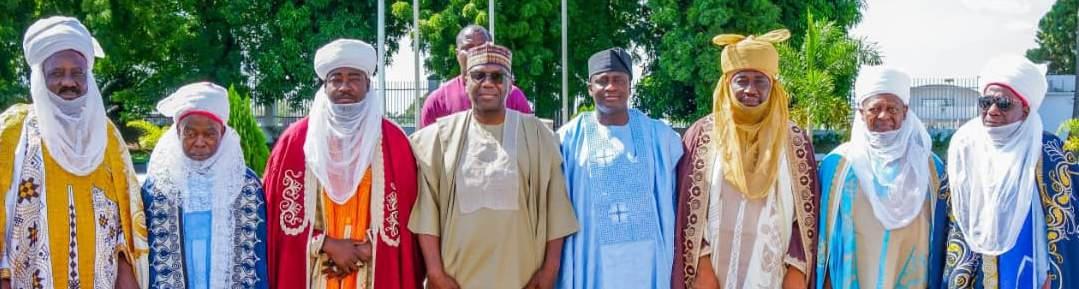
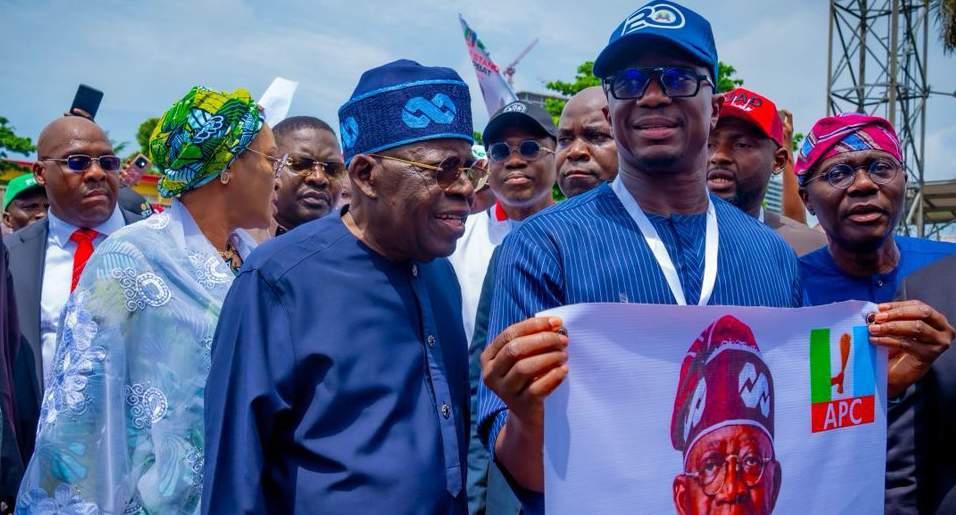
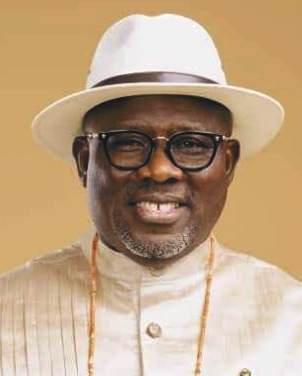
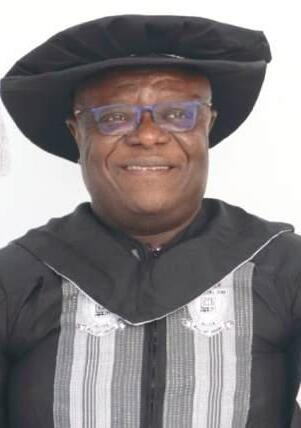
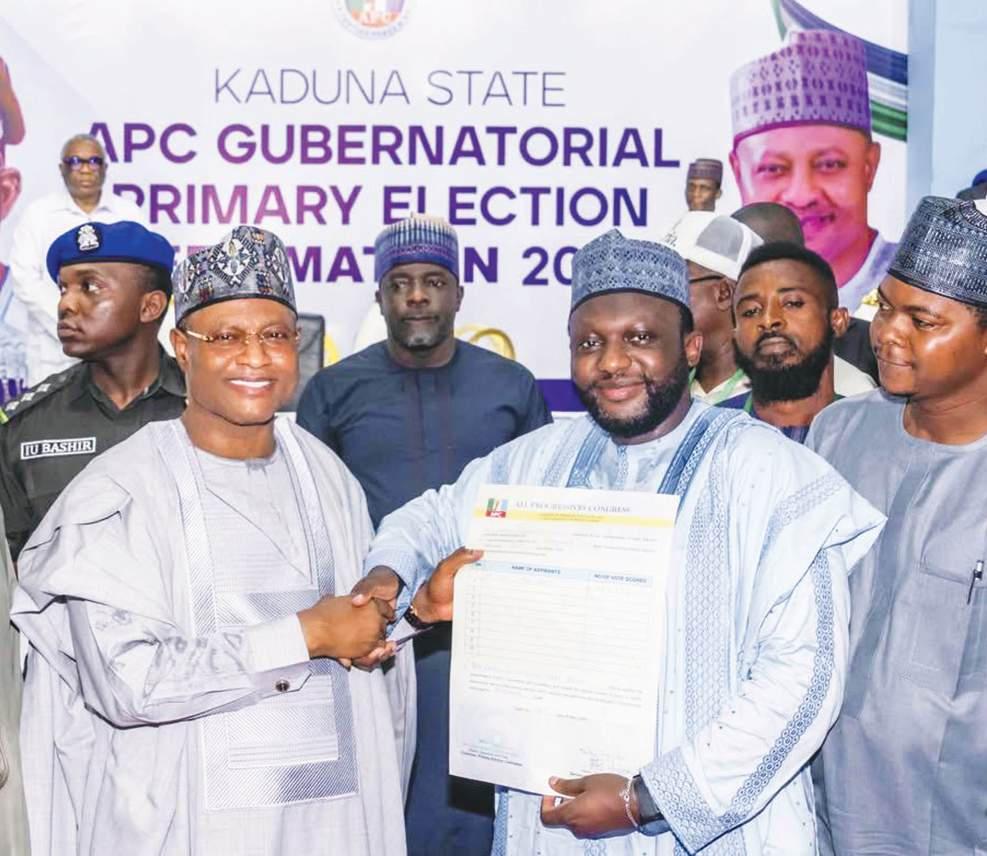
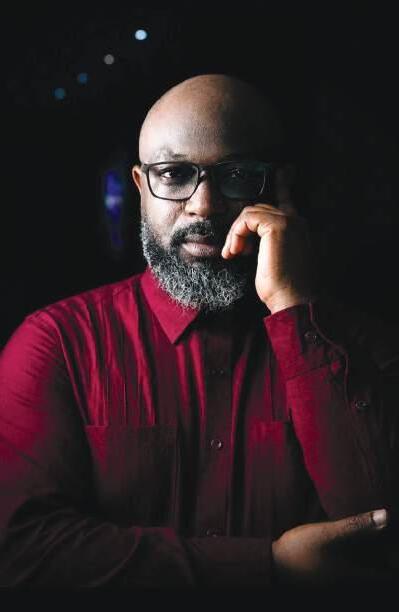
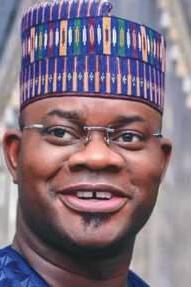
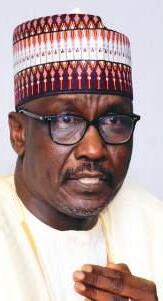
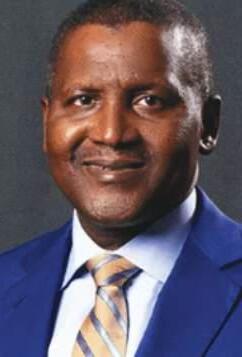
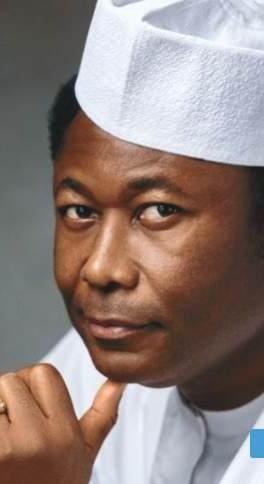
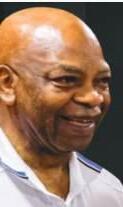
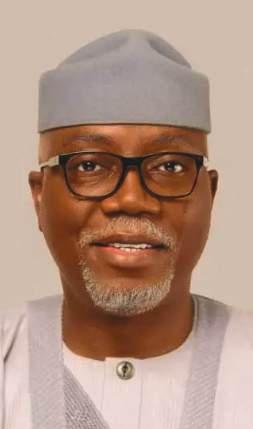
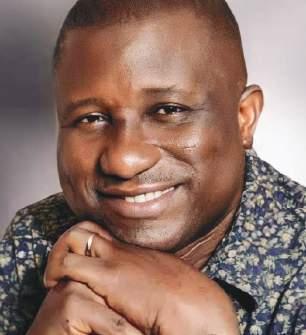
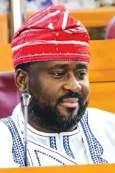
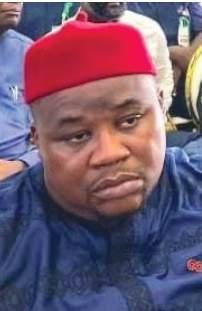
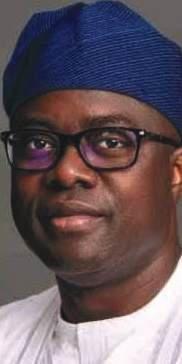
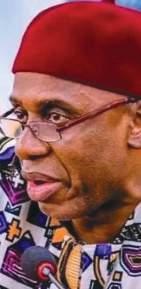
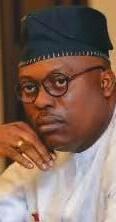
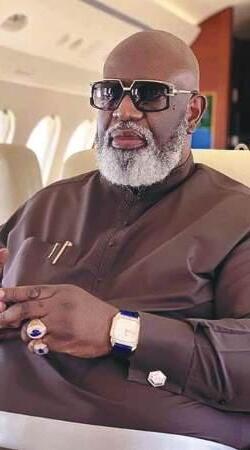
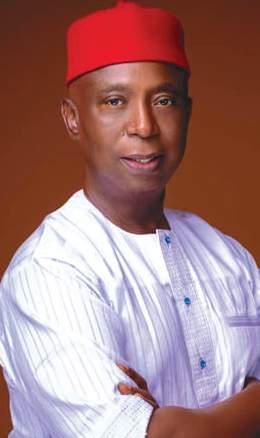
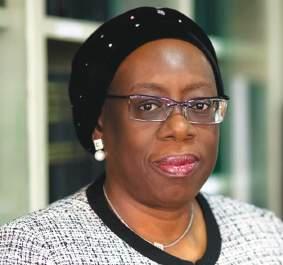
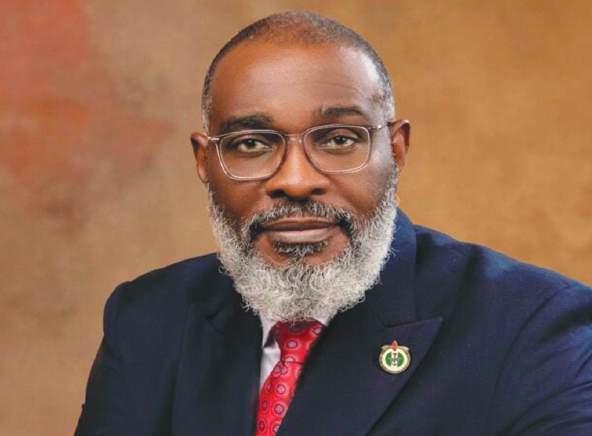
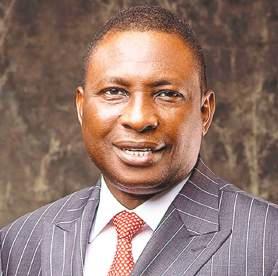
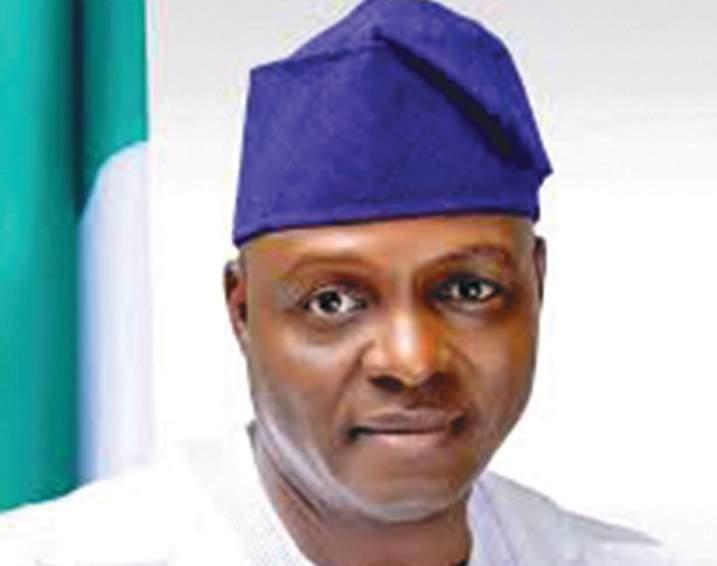
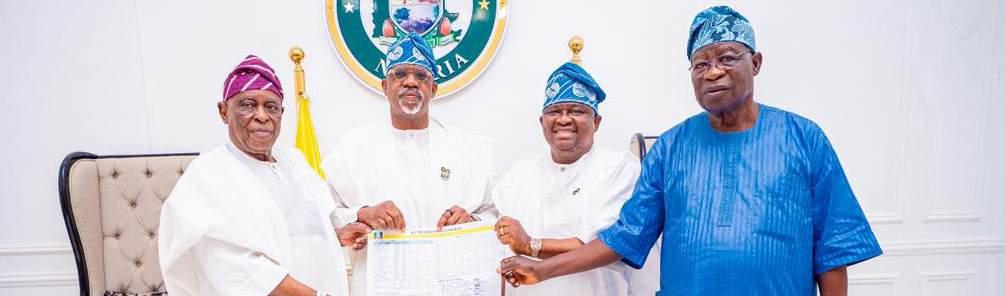
L-R: Emir of Okuta, His Royal Highness, Alhaji (Dr.) Idris Abubakar; Emir of Kaiama, HRH, Alhaji Mu'azu Shehu; Etsu Patigi, His Royal Highness, Alhaji (Dr.) Ibrahim Umar Bologi II; Governor Abdulrahman Abdulrazaq; Emir of Lafiagi, His Royal Highness, Alhaji Mohammed Kudu Kawu; and the Emir of Shonga, His Royal Highness Dr. Haliru Ndanusa Yahaya, during a 'thank you' visit to Governor AbdulRazaq on the emergence of a Kwara Northerner, Salihu Yakubu Danladi as APC governorship candidate in Ilorin, Kwara State…yesterday
www.thisdaylive.com
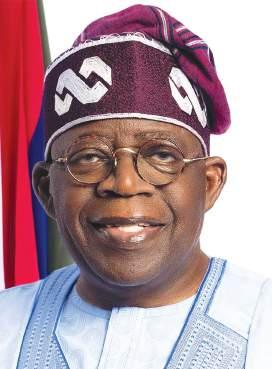
Tinubu: APC Members’ Support for Me, A Challenge to Do More for Nigeria
To receive certificate of return, flag as ruling party’s 2027 presidential candidate today
Appreciation
It is with a heart filled with profound gratitude, humility, and a deep sense of responsibility that I accept my choice as the governorship flagbearer of the All Progressives Congress (APC) in the February 6, 2027 gubernatorial election in Lagos State.
First and foremost, I give glory and honor to Almighty Allah, the owner of heaven and earth whose grace, mercy and guidance have brought us to this remarkable moment. Without His divine favour, this great day would not have come.
I wish to express my sincere appreciation to our father, mentor and pathfinder, the national leader of our great party, APC, His Excellency Asiwaju Bola Ahmed Tinubu, GCFR, for his firm belief in my candidacy, as well as my capability and capacity. I extend the same gratitude to the mother of the nation, our dearest First Lady, Senator Oluremi Tinubu, OON, CON, for her motherly support and prayers.
To my principal, friend, and brother, Governor Babajide Olusola Sanwo-Olu, and his lovely wife, Dr. Ibijoke Claudiana Sanwo-Olu, I say thank you so much. I am grateful also to the Speaker of the Lagos State House of Assembly, the Right Hon. Mudashiru Ajayi Obasa, all our former governors, deputy governors, members of Conference 57, the chairman of our great party in Lagos State, Pastor Cornelius Ojelabi and his team, members of the state Executive Council and all leaders of our party in all the 376 wards for their unflinching support.
My special gratitude goes to members of the Governance Advisory Council (GAC), the highest political decision-making and advisory body of the Lagos APC under the leadership of our revered father, Prince Tajudeen Olusi. I thank you all for your overwhelming endorsement of my candidacy, guidance, and commitment.
I acknowledge all members of our formidable party from Lagos State at the National Assembly (NASS), whose sacrifices and steadfast commitment have continued to sustain the progressive ideals upon which our party is built.
To every aspirant who dropped his/her ambition to support my candidacy for the sake of party supremacy and unity, I commend your spirit of sportsmanship and commitment to democracy.
The primary election was not a contest among bitter rivals, but a demonstration of the strength, vibrancy, and democratic spirit of our party. I extend a hand of fellowship to all because the task ahead requires unity, collaboration, and collective action.
I sincerely thank all community leaders, youth groups,
women’s associations, professional bodies, market leaders, traditional institutions, religious organisations, political stakeholders, the media, and well-wishers who have stood firmly with us in our collective vision for a ‘Greater Lagos’. Your belief in our mission to build a more inclusive, innovative, secure, and prosperous state remains deeply appreciated.
I also extend my appreciation to my family, especially my darling wife, Oluremi, and our children, the entire Hamzat family, friends, associates, campaign team members, volunteers, and supporters across the state, whose sacrifices, prayers, and tireless efforts made this feat possible. Your loyalty and commitment will never be forgotten.
The task before us is clear. Of every 10 Black people in the world, six are believed to be Nigerians, with over 200 million people. Our dear state is the tiniest in the Federation, occupying some 3,577 sq. km. (25% of which is water), yet it is home to no fewer than 25m people, which is more than the population of 32 African countries combined, and growing 10 times faster than New York and Los Angeles.
We are aware that the popular thinking is that should Nigeria make it, the Black man will occupy a pride of place in the world and earn his due respect. Therefore, Lagos will continue to lead the charge. So, I have no illusion that we have our job cut out for us. The good news is: WE ARE READY!
As we move forward, I call on all members of APC to remain united, focused, and committed to victory. The road ahead may still present challenges, but with unity, determination, and shared responsibility, I am confident that together we will build a Lagos that future generations will be proud to inherit.
I accept this nomination with utmost humility and a solemn promise to serve diligently, transparently, and selflessly. I pledge to remain accessible to the people and committed to the ideals of justice, fairness, accountability, and
God bless the All Progressives Congress (APC)
God bless Lagos State
God bless the Federal Republic of Nigeria
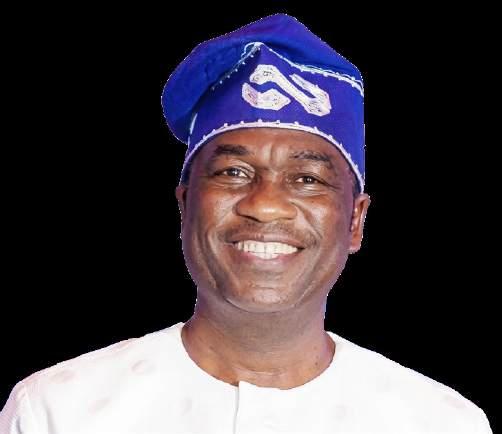
Dr. Kadri Obafemi Hamzat
Deputy Governor and APC Candidate
US Secret Service, FBI Confirm Lockdown of White House After Reports of Gunshots Nearby
US, Iran getting a lot closer to agreement, says Trump
Ejiofor Alike
Barely four weeks after United States President Donald Trump was evacuated from the annual White House correspondents' dinner after a gunman opened fire near a security checkpoint at the event in Washington DC, gunfire was heard last night evening near the White House, triggering a lockdown and a rapid response from the US Secret Service and the Federal Bureau of Investigation (FBI), according to a statement posted to social media.
This is just as President Trump has stated that his country and Iran were “getting a lot closer” to an agreement to end the war in the Middle East.
Police and security forces swarmed the area around the White House yesterday evening after reports of shots
fired, AFP journalists said.
President Trump was at the White House at the time as he worked to negotiate a deal with Iran.
Police cordoned off access to the White House and National Guard troops blocked an AFP reporter from entering the area.
FBI Director, Kash Patel, in a post on X, said that the FBI was assisting in the response and would provide further updates.
"FBI is on the scene and supporting Secret Service responding to shots fired near White House grounds - we will update the public as we’re able," according to the post.
Reporters on the scene said they heard what appeared to be dozens of gunshots near the White House complex. They said approximately 20 shots were heard just after 6 p.m. ET, with reporters saying
the sounds appeared to come from the side of the White House complex containing the Eisenhower Executive Office Building.
The Secret Service said it was investigating reports of shots fired near the corner of 17th Street and Pennsylvania Avenue Northwest, just outside the White House grounds.
Secret Service spokesperson, Anthony Guglielmi said in a statement to CBS News, the BBC's US partner, that the agency was aware of "reports of shots fired near 17th Street and Pennsylvania Avenue NW" and are "working to corroborate the information with personnel on the ground".
Members of the press corps gathered on the North Lawn were rushed inside, with reporters directed into the White House briefing room as
Secret Service agents shouted “get down” and warned of “shots fired,” according to one of the reports.
One reporter said the sounds appeared to come from the side of the complex near the Eisenhower Executive Office Building.
Secret Service agents carrying rifles were seen moving through the North Lawn area following the incident and blocking access near the briefing room.
Footage shared by ABC News correspondent Selina Wang showed her taking cover as a volley of bangs could be heard ringing out across the White House's north lawn.
It is currently unclear where the apparent shots originated from or if there is any ongoing threat.
"We were told to sprint to the press briefing room
where we are holding now," she wrote on X.
The BBC has contacted the Secret Service, the White House and local police.
According to CNN, two people were shot and wounded in an encounter with the Secret Service near the White House.
US, Iran Getting a Lot Closer to Agreement, Says Trump
Meanwhile, President Trump has stated that his country and Iran were “getting a lot closer” to an agreement to end the war in the Middle East.
Speaking in an interview with the CBS TV network yesterday, Trump also warned that if the US and Iran do not come to an agreement, “we’re going to have a situation
TINUBU: APC MEMBERS’ SUPPORT FOR ME, A CHALLENGE TO DO MORE FOR NIGERIA
Our Correspondents
President Bola Tinubu yesterday overwhelmingly won the All Progressives Congress (APC) presidential primary elections in all the states where results were collated, declaring that the massive support he enjoyed from members of the ruling party was a challenge for him to do more for the country.
Following the impressive victory, the president would today receive the Certificate of Return and the ruling party's flag as its presidential candidate for the 2027 elections.
According to a statement issued yesterday by presidential spokesperson, Bayo Onanuga, the Presidential Primary Elections Committee would present the certificate and flag at the Bola Ahmed Tinubu International Conference Centre in Abuja after a nationwide collation of the primary election results.
APC governors, members of the National Executive Committee (NEC), the National Working Committee (NWC), and the National Assembly, along with party stalwarts, are expected to attend the event.
Before the presidential primary elections, Tinubu was expected to emerge as the sole candidate following his endorsement by the Progressive Governors Forum (PGF) in May 2025.
Speaking yesterday with journalists after participating in the APC presidential primary at Ikoyi-Obalende Ward L2 in Lagos, the president, when asked to comment on the massive support he was receiving from the members of his party, said: "I'm just
excited, they challenge me to do more."
He described the conduct of the 2026 APC primary elections nationwide as a strong demonstration of internal democracy within the ruling party, noting that the exercise has further deepened the democratic process.
Tinubu, who arrived at the venue alongside his wife, Senator Oluremi Tinubu, was received by the Lagos State Governor, Babajide Sanwo-Olu; Lagos State APC Chairman, Pastor Cornelius Ojelabi; Minister of Industry, Trade and Investment, Dr. Jumoke Oduwole, and former Minister of Finance, Wale Edun, among other party leaders.
He commended the members of the party for their orderly conduct, enthusiasm, and commitment to democratic values.
According to the president, "This is a demonstration of internal democracy, and it has been going on very well according to plan. This is grassroots politics where every member of the party has the right to participate.
“It shows that we have internal democracy and it’s peaceful and well organised.”
On the conduct of the primaries across the states, Tinubu said, "I am very satisfied that governors have done well in their various states, from the ward congresses to local government congresses to the delegate accreditation, validation, membership registration, and the certification of the electoral process. It has been done very well, and with this, you could rate democracy at a high level."
He stressed that APC remains committed to transparent and inclusive democratic processes that give party members at the grassroots the opportunity to freely choose their leaders and representatives, emphasising that their involvement remains the foundation for sustainable democratic development.
The president also praised electoral officials, party leaders, and security agencies for ensuring the exercise was conducted peacefully and credibly, and urged Nigerians to continue supporting democratic institutions and national unity.
Tinubu reaffirmed his administration’s commitment to democratic ideals, good governance, and policies to improve the welfare of Nigerians while strengthening political stability nationwide.
Meanwhile, President Tinubu was leading his lone challenger, Stanley Osifo, with landslides in all the states where the APC presidential primary results were declared yesterday.
In Rivers State, Governor Siminalayi Fubara, who was the Coordinator and Collation Officer for the Rivers APC presidential primary, said President Tinubu scored 208,082 votes, while Osifo had zero votes.
In Sokoto State, the collation officer and Governor of Sokoto State, Dr. Ahmed Aliyu, announced that Tinubu polled 301,000 votes, while Osifo scored zero votes.
Announcing the result of Abia State at the State Party headquarters in Umuahia, the Collation Officer for the Abia presidential primary election and Deputy Speaker of the
House of Representatives, Hon. Benjamin Kalu, said President Tinubu scored 161,005 votes against Oshifo's paltry 1, 002 votes across the 184 electoral wards in the 17 local government areas of the state.
Declaring the result of Kwara State at the Kwara Collation Centre in Ilorin, the Collation Officer and Kwara State Governor, AbdulRahman Abdulrazaq said the president polled 310,990 votes to defeat Osifo, who got zero votes.
In Imo State, Tinubu polled 582,823 votes to defeat Osifo, who scored 103 votes.
Announcing the result, the Imo State Coordinator of the APC presidential primary election, Governor Hope Uzodimma, declared that President Tinubu had earned the right to seek re-election in 2027, citing his administration’s grassroots-driven political reforms and democratic inclusiveness.
In Delta State, the result was announced in Asaba by the governor and the State Coordinator/Returning Officer of the APC Presidential Primary Election, Hon. Sheriff Oborevwori.
Announcing the result, Governor Oborevwori disclosed that President Tinubu received 407,646 votes, overwhelmingly defeating his only challenger, Osifo, who polled zero votes.
Declaring the result of the Osun State exercise in Osogbo, the state collation officer, Mr. Gboyega Oyetola, who is the Minister of Marine and Blue Economy, said President polled 100,880 votes against Osifo’s zero votes.
In Kogi State, Tinubu polled
where no country will ever be hit as hard as they’re about to be hit.”
Meanwhile, Iran said that it was finalising a 14-point “framework agreement” for a deal with the US, but signalled that major gap still remained.
The US president struck a less upbeat tone in another Saturday morning interview with news website Axios, saying that it was a “solid 50/50” chance of a deal being struck.
Trump warned he would “blow them to kingdom come” if a deal wasn’t reached, Axios reported. Both outlets also reported that Trump was scheduled to speak with Gulf leaders by phone later yesterday.
On a visit to India, Secretary of State Marco Rubio said “there may be some news a little later today,” but added, “there may not be.”
a total of 197,370 out of the 224,166 registered voters
Announcing the result, the Returning Officer for the APC presidential Primaries in the state, Governor Usman Ododo, stated that the state has 224,166 registered voters, 197,370 accredited, and 197,370 votes cast.
In Bayelsa State, Tinubu polled 277,192 votes across the 105 wards in the eight local government areas of the state.
Governor Douye Diri, who served as the state’s Coordinator/Collation Officer for the presidential primary, declared the results at the collation centre at the Chief DSP Alamieyeseigha Memorial Banquet Hall, Yenagoa.
In Zamfara State, President Tinubu secured 321,579 votes to emerge as the winner.
The Chief Returning Officer for the APC Presidential Primary in Zamfara, Governor Dauda Lawal, announced that Tinubu secured an overwhelming majority of the votes, polling a total of 321,579 votes, while his opponent, Osifo, scored 42 votes.
In Gombe State, Governor Muhammadu Inuwa Yahaya announced that Tinubu secured an overwhelming 450,516 votes, while Osifo recorded zero votes.
Members of the APC across Kaduna State yesterday unanimously endorsed President Tinubu as the party’s preferred presidential candidate ahead of the 2027 general election.
The affirmation exercise was conducted across the state’s 255 political wards in all 23 local government areas,
attracting a large turnout of party members, leaders, and stakeholders who expressed support for Tinubu’s bid for a second term in office.
Governor Uba Sani described the affirmation as a strong demonstration of unity, loyalty, and confidence in both the APC and President Tinubu's leadership.
Democracy
Not Sustained by Noise or Borrowed Platforms
In a statement on his X page, after participating in the primary, Tinubu re-echoed the importance of strong democratic ideals, insisting that democracy was not about noise or borrowed platforms. He said democracy only thrived when citizens actively participated in the political process, and institutions remained strong.
“Democracy is not sustained by noise, speculation, or borrowed platforms,” Tinubu said.
“It is sustained by citizens who show up, party members who believe, institutions that endure, the grassroots, and a political family rooted in the people.”
The president noted that through entrenched internal democracy and hard work, the APC has remained focused, organized, and deeply grounded across Nigeria.
“Others may gather around grievances. We gather around structure, service, and the work of nation-building,” he said.
The president said the party would continue to renew hope, strengthen democracy, and build a stronger Nigeria for all.
STARTING 2027 PRESIDENTIAL RACE…
Despite Headwinds, Zenith Bank, Access Holdings, Eight
Others’ Interest Income Rises to N4.6tn in Q1 2026
Access Holdings Plc, Zenith Bank Plc, United Bank for Africa (UBA) Plc, Guaranty Trust Holding Company Plc, Ecobank Transnational Incorporated, and five other leading Deposit Money Banks (DMBs) generated a combined N4.6 trillion in interest income in the first quarter of 2026, underscoring the resilience of banks’ earnings amid persistent macroeconomic pressures.
An analysis of the unaudited first-quarter results of the lenders showed that the N4.6 trillion in interest income
represented an 8.2 per cent increase over the N4.3 trillion recorded in the corresponding period of 2025.
The banks earned the income largely from loans and advances to customers, investments in government securities, balances with banks, and other interest-yielding assets, despite the Central Bank of Nigeria’s (CBN) moderation of benchmark interest rates.
The banks reviewed included Access Holdings Plc, Zenith Bank Plc, United Bank for Africa Plc, Guaranty Trust Holding Company Plc, Ecobank Transnational
Incorporated, First Holdco Plc, Wema Bank Plc, Sterling Financial Holdings Company Plc, and Stanbic IBTC Holdings Plc.
The strong performance came despite the CBN's decision to lower the Monetary Policy Rate (MPR) from 27 per cent to 26.50 percent between January and March 2026, amid relative stability in the foreign exchange market and easing inflationary pressures.
Among the lenders, Access Holdings, Zenith Bank, and First Holdco emerged as the top earners in interest income during the period under review.
Access Holdings posted N824.75 billion in interest income, although lower than the figure recorded in the corresponding period of 2025.
Zenith Bank followed closely with N869.1 billion, representing a 3.8 per cent increase from N837.64 billion recorded a year earlier.
First Holdco reported N704.45 billion in interest income, reflecting a growth of 12.7 per cent from N625.28 billion in the corresponding period of 2025.
Similarly, UBA recorded N641.1 billion in interest income, representing a 6.8 per cent year-on-year increase,
while Ecobank posted N561.08 billion, up 23.4 per cent from N454.63 billion in the first quarter of 2025.
GTCO also maintained strong earnings momentum, posting N466.5 billion in interest income, representing nearly 18 per cent growth compared with the corresponding period last year.
The banks’ earnings performance came against the backdrop of persistently elevated lending rates in the Nigerian economy.
Data released by the CBN showed that the average maximum lending rate remained unchanged at 35.17 per cent in March 2026, despite the reduction in the policy rate.
The figure represents one of the highest lending rate levels on record.
to continue working through the economy.
According to him, the committee acknowledged the recent marginal increase in inflation but considered it largely driven by temporary external shocks.
“The committee’s decisions were anchored on a comprehensive assessment of risks to the outlook,” Cardoso said, expressing confidence that the current policy environment remained capable of supporting disinflation over time.
Analysts, however, attributed the sustained growth in banks’ interest income to prevailing macroeconomic conditions and the high-interest-rate environment.
Linus Aleke in Abuja
Troops of the Joint Task Force (North East), Operation Hadin Kai (OPHK), have eliminated 12 ISWAP and Boko Haram fighters during a failed attack on a military position in the Kirawa axis of Sector 1 OPHK Area of Responsibility in the early hours of May 22, 2026.
The operation was carried out under Operation Desert Sanity and Siege Operations after suspected terrorists attempted to infiltrate positions occupied by troops of the 153 Task Force Battalion and other allied forces along the NigeriaCameroon border axis.
According to the Media Information Officer of
Joint Task Force (North East) Operation Hadin Kai, Lieutenant Colonel Sani Uba, the attack was promptly detected and effectively repelled by troops and members of the Civilian Joint Task Force (CJTF), who responded with superior firepower and maintained control of their positions throughout the encounter.
The terrorists were subsequently forced to abandon the mission and retreat towards the Cameroon axis after suffering heavy casualties during the gun battle.
"Intelligence, Surveillance, and Reconnaissance assets, as well as platforms of the Air
Component of OPHK and partner forces, provided coordinated support during the operation.
"Following the engagement, troops confirmed the neutralisation of 12 terrorists, while several others reportedly escaped with gunshot wounds, as evidenced by blood trails along their withdrawal routes.
"Recovered items included AK-47 rifles, rocket-propelled grenade systems, ammunition, and a PKT machine gun, further weakening the operational capability of the insurgents in the area," the statement said.
Troops of OPHK, working alongside the Civilian Joint Task Force, have continued
exploitation operations to track fleeing terrorists and recover additional weapons and equipment, while maintaining heightened vigilance across the area.
The Joint Task Force reaffirmed its commitment to sustaining pressure on terrorist groups until they are completely neutralised across the theatre of operations.
The military high command also commended the troops for their gallantry, professionalism, and swift response, which it described as the third successful operation recorded within the week, urging them to sustain the operational momentum in the interest of national security.
Similarly, the average prime lending rate remained flat at 19.29 per cent for the second consecutive month in March 2026, after hitting 19.54 per cent in January, its highest level in nearly two decades.
While the prime lending rate reflects rates offered to the most creditworthy customers, the maximum lending rate represents the highest rate banks can charge borrowers.
Explaining the Monetary Policy Committee’s decision to maintain key monetary parameters at its 305th meeting, CBN Governor, Olayemi Cardoso, said members of the committee voted unanimously to allow previous tightening measures
Global rating agency, Fitch Ratings, noted that the CBN’s tight monetary stance remained necessary to contain inflationary pressures and stabilise the economy.
The agency warned that despite the tightening measures, rapid credit expansion and money supply growth still suggested a relatively loose monetary environment, adding that real interest rates remained negative, thereby limiting foreign portfolio inflows.
Speaking with THISDAY, investment banker and stockbroker, Tajudeen Olayinka, said the prevailing high-interest rate regime was largely designed to attract foreign portfolio investment, strengthen foreign reserves, and stabilise the naira.
Kayode Tokede
President Bola Tinubu (right), and First Lady, Senator Oluremi Tinubu, during their participation in the All Progressives Congress presidential primary election at Ward L2, Ikoyi, Lagos…yesterday
BRAINSTORMING ON FUTURE OF AFRICA…
Obi
Meets
S’African Ministers to Defuse
Immigration Tensions, Denies Avoiding Atiku over 2027 Elections
NDC begins screening, warns aspirants against thuggery
Chuks Okocha and Sunday Aborisade in Abuja
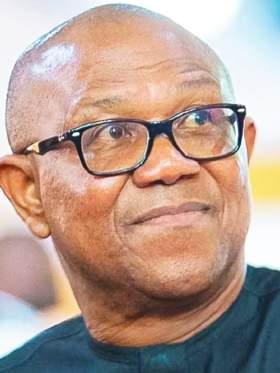
As the Nigeria Democratic Congress (NDC) yesterday intensified preparations for the 2027 general election, a former governor of Anambra State and presidential aspirant on the party’s platform, Mr. Peter Obi, has met with South African ministers in a move to address rising immigration concerns involving Nigerians residing in that country.
Meanwhile, he has also contrasted the lending practices of British banks with what he described as Nigeria’s collateraldependent banking system.
This is as Obi also pushed back against suggestions that he was avoiding former VicePresident Atiku Abubakar ahead of the 2027 presidential election.
Obi, who arrived in South Africa to participate in an international conference, held consultations with top South African ministers and political
leaders following complaints by Nigerians residing in the country over growing immigrationrelated tensions and hostility toward African foreigners.
In a statement posted on his X account from Cape Town, Obi said he met with South African Minister of Home Affairs, Leon Schreiber; Minister of
ADC’s Presidential Screening Committee Clears Atiku, Amaechi, Hayatu-Deen for Monday's Direct Primaries
The presidential screening committee of the African Democratic Congress (ADC) has cleared all three of its presidential aspirants for Monday’s direct primary elections.
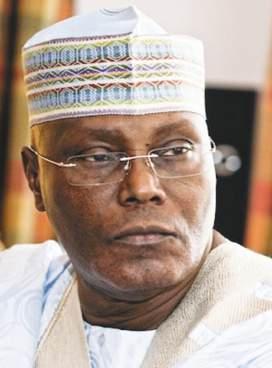
The three presidential aspirants seeking to fly the ADC presidential ticket in the 2027 general election are the former Vice President, Atiku Abubakar; former Governor of Rivers State, Rotimi Amaechi; and renowned economist, Hayatu-Deen Mohammed.
ADC has also cleared 513 aspirants for the House of Representatives, 109 senatorial aspirants, 80 governorship aspirants, and three presidential aspirants.
The cleared aspirants will participate in the primary elections in their respective wards as of Monday, May 25.
Former Cross River State Governor, Senator Liyel Imoke, chairs the high-level Presidential Screening Committee.
Other members of the committee are Hon. CID Maduabum as Secretary; Alhaji Lawal Batagarawa; Prof. Bode
Ayorinde; Hon. Nnena ElenduUkeje; Prof. David Salifu, and Col. Abubakar Ali Ciroma (rtd.).
The direct presidential nomination elections will take place in 8,809 wards of the federation.
Speaking on condition of anonymity, one of the sources from the Imoke-led presidential committee stated that: "We spoke to the presidential aspirants and none of them agreed to step down for each other. So, we have recommended that the leadership of the party put in motion all processes for the
Amaechi Debunks Claims Tinubu
direct primary election as directed by the Independent National Electoral Commission (INEC).
"The presidential nomination election will take place in all the wards, and the presidential aspirants have been so informed," the source explained.
Earlier, one of the presidential aspirants, Amaechi, had insisted on contesting for the party’s presidential nomination ticket, explaining that he did not purchase the presidential nomination form to end up as a vice-presidential candidate to anyone.
Made Buhari
President, Says APC’s Victory Product of Collective Efforts
A former Minister of Transportation, Rotimi Amaechi, has challenged the assertion that President Bola Tinubu was chiefly responsible for the election of the late former President Muhammadu Buhari in 2015.
Amaechi, who served as Director-General of Buhari’s 2015 Presidential Campaign, insisted that Buhari’s
victory was the product of collective efforts within the All Progressives Congress (APC).
The minister said he played a leading role in the political mobilisation that culminated in the APC’s historic defeat of the then-ruling Peoples Democratic Party (PDP).
Speaking during an interview on ARISE NEWS, the former Rivers State governor responded to
Tinubu’s repeated claims that Buhari would not have emerged president without his intervention and support.
Amaechi said it would be inaccurate to credit a single individual for Buhari’s emergence, arguing that many key actors contributed to the formation of the APC and the success of its presidential campaign.
“When we decided to form the APC, while I was
a minister, President Tinubu was claiming he made Buhari president, and I couldn’t respond because I was the minister under President Buhari,” Amaechi said.
“That will be suicidal because Buhari could fire you. So, I couldn’t have said ‘no’ then. He wasn’t the president. I couldn’t tell him, ‘You are wrong. You didn’t make President Buhari president.”
Cooperative Governance and Traditional Affairs, Velenkosini Hlabisa; and Minister of Sports, Arts and Culture, Gayton McKenzie, where discussions focused on migration, youth unemployment, security concerns, and worsening tensions involving African migrants.
The former Anambra State governor stressed the need for stronger cooperation between Nigeria and South Africa, urging both governments to pursue solutions anchored on justice, mutual respect, dialogue, and the rule of law.
Obi also appealed for restraint among citizens of both countries, warning against violence, hate, and provocation, while calling for grievances to be addressed through lawful and constitutional means.
Reacting to suggestions that he was avoiding Atiku ahead of the 2027 elections, Obi, had while speaking on the sidelines of the Spier Dialogue 2026, a
pan-African governance forum in Cape Town, said:
“There are very few human beings who are as close as I am to Atiku. So, I can’t be running from him. This man is my very respected leader and elder brother.
“I don’t run from him. Never! It has nothing to do with running from anybody. I’ve never run from anybody. I just believe that I do things differently,” he said.
Atiku and Obi had jointly adopted the African Democratic Congress (ADC) as a coalition platform to challenge President Bola Tinubu in the 2027 election. Obi has since left the coalition, saying his decision to leave was not due to personal issues with Atiku or the chairman of the party, Senator David Mark. Meanwhile, Obi contrasted the lending practices of British banks with what he described as Nigeria’s collateral-dependent banking system.
France Bans Israeli National Security Minister
France has banned the Israeli National Security Minister, Itamar Ben-Gvir, from entering its territory, citing his conduct toward activists detained from the Gaza-bound Global Sumud Flotilla, as international condemnation over the treatment of the 430 detainees continued to mount yesterday.
French Foreign Minister Jean-Noël Barrot announced the ban on X, saying the decision followed Ben-Gvir’s “unspeakable actions toward French and European citizens who were passengers on the Global Sumud Flotilla.”
“We cannot tolerate that a French national can be
threatened, intimidated or brutalised in this way, all the more so by a public official,” Barrot wrote.
Ben-Gvir sparked global outrage after promoting a video of himself taunting detained flotilla activists who were seen forced to kneel with their foreheads to the ground and their hands tied, as they awaited deportation at the southern port of Ashdod. Poland had already barred Ben-Gvir earlier in the week, announcing a five-year ban on Thursday. Polish Foreign Minister Radek Sikorski posted: “In the democratic world we do not abuse and gloat over people in custody.”
Chuks Okocha in Abuja
Chuks Okocha in Abuja
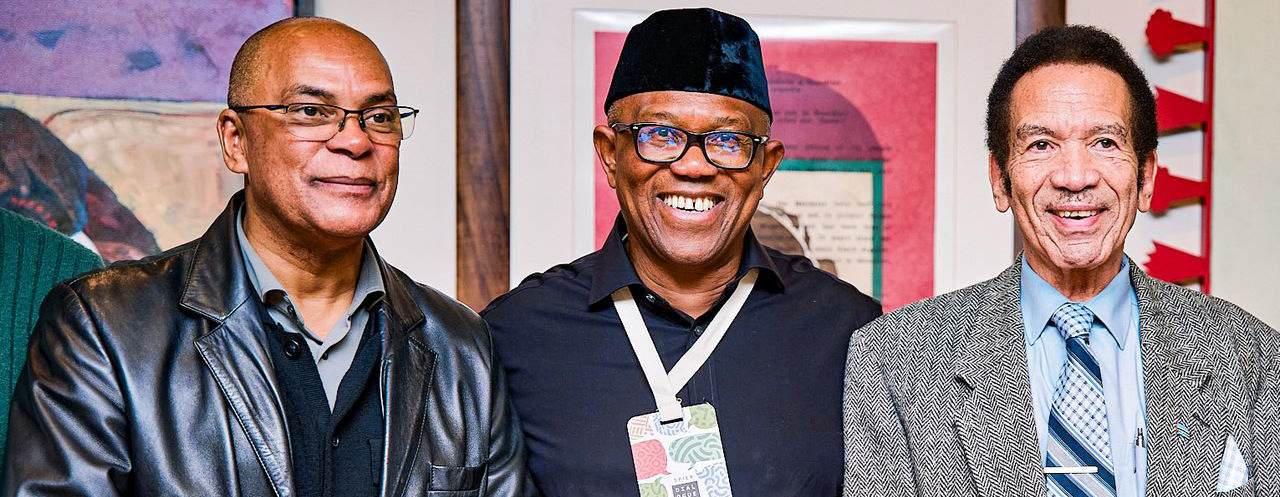
L-R: Angola’s foremost opposition leader, and leader of UNITA Party, Adalberto Costa Júnior; Presidential aspirant of the National Democratic Congress, Mr. Peter Obi; and former two-term President of Botswana, Ian Khama, at the Spier Dialogue Conference in Cape Town, South Africa… yesterday
VALEDICTORY LECTURE AND AWARD…
UN Moves to Counter Fast-spreading Ebola in Eastern DR Congo, Three New Cases Confirmed in Uganda
PSN orders pharmacies to activate emergency surveillance
Onyebuchi Ezigbo in Abuja
The United Nations has moved emergency personnel, funding, and supplies into eastern Democratic Republic of the Congo (DRC) to counter the fast-growing Ebola outbreak spreading through conflict-ravaged provinces.
This comes as Uganda has confirmed three new cases, bringing the total to five since
the virus was discovered in the East African country on May 15.
Meanwhile, the Pharmaceutical Society of Nigeria (PSN) yesterday placed pharmacists and community pharmacies across the country on high alert following a fresh Ebola virus disease (EVD) outbreak reported in parts of Central and East Africa.
The World Health
Organisation (WHO) on Friday raised the national risk assessment for DRC to “very high”, although the global risk remains “low”.
So far, 82 cases and seven deaths have been confirmed in DRC, but the WHO said the real scale of the outbreak was likely far larger.
The global health body said there were nearly 750 suspected cases and 177 suspected deaths reported.
UN’s Emergency Relief Coordinator, Tom Fletcher, announced the allocation of 60 million dollars from the Central Emergency Response Fund to support the response in DRC and neighbouring countries.
“These are tough operating environments for lifesaving work,” Fletcher said.
“We face conflict and high population movement.”
He stressed the importance
Shettima Departs Abuja to Attend Wadagni's Inauguration as Benin President
Deji Elumoye in Abuja
Vice President Kashim Shettima yesterday departed the nation's capital, Abuja, for Cotonou to represent President Bola Tinubu at the inauguration of Romuald Wadagni as the President of the Republic of Benin.
Shettima, according to a statement issued by his Media Assistant, Stanley Nkwocha, will join other leaders across Africa and beyond at the event scheduled for the Presidential
Oluremi
Palace in Cotonou today, Sunday, May 24, 2026.
At the swearing-in ceremony, which marks his assumption of a seven-year constitutional term, Wadagni will take the oath of office in the capital of Porto-Novo, with his running mate, Mariam Chabi Talata, taking the oath as Vice President.
Benin's official inauguration ceremonies typically follow a traditional state protocol, comprising the official
handover of power and the transfer of the presidential sash and insignia at the Presidential Palace in Cotonou, and a motorcade procession to the Charles de Gaulle Stadium in Porto-Novo.
Benin Republic and Nigeria share deep historical, sociocultural, and economic ties, though their modern bilateral relations are frequently defined by border security, trade policies, and energy cooperation.
Of importance to Nigeria is also the stability, peace, and deepened integration of the Economic Community of West African States (ECOWAS) to which President Tinubu has remained committed since the assumption of office, despite its challenges.
The Vice President, who is accompanied by senior aides and top government functionaries, will return to the country after his engagement in the Republic of Benin.
of securing access for frontline responders, including in areas controlled by armed groups.
“It is essential that there is no obstruction,” he said.
WHO said the outbreak was unfolding amid intensified fighting, mass displacement, and deep mistrust of outside authorities, fuelled by rumours and misinformation.
One hospital in Ituri province on Thursday was reportedly set on fire by angry relatives after authorities refused to release the body of a deceased family member, fearing contamination.
Two cases, linked to travel from DRC, have been confirmed in Uganda, including one death.
Similarly, two American nationals, including a doctor and another person described as a “high-risk contact”, have been transferred to Europe for treatment or monitoring.
WHO said the outbreak was caused by the Bundibugyo strain of Ebola, for which there were no approved vaccines or therapeutics.
Meanwhile, Uganda has
confirmed three new cases of Ebola.
“Three new cases of the Ebola Virus Disease (EVD) have been confirmed in the country,” the health ministry said, naming the patients as a Ugandan driver, a Ugandan health worker, and a woman from the neighbouring Democratic Republic of Congo (DRC), the epicentre of a deadly outbreak sowing fear in the region.
“The ministry continues to strengthen surveillance, case management, contact tracing, and public awareness efforts to contain the outbreak and protect the health and safety of all Ugandans,” it said in a statement on X.
The news came a day after the World Health Organisation said the risk from the outbreak had been raised to the highest level for the DRC.
On Thursday, Uganda suspended all public transport to the DRC after confirming two cases of Ebola — one infection and one death — involving Congolese nationals who crossed the border
Tinubu Demands Urgent Action Against Child Marriage to End Obstetric Fistula
Says education, quality healthcare key to protecting women and girls
The First Lady, Mrs. Oluremi Tinubu, has called for urgent and coordinated action to end child marriage, describing it as a major contributor to obstetric fistula and a threat to the health and future of women and girls.
The First Lady said efforts must be intensified to empower girls through education and ensure
access to quality healthcare services, insisting that no woman should suffer from a condition that was preventable and treatable.
Mrs. Tinubu made the call in a message commemorating the 2026 International Day to End Obstetric Fistula.
“We must act urgently to end child marriage, empower girls through education, and ensure every woman has access to quality
healthcare,” she said.
She noted that this year’s theme, “Her Health, Her Right: Shaping a Future without Fistula,” underscores the need to guarantee access to quality maternal healthcare as a fundamental right for all women.
The First Lady explained that early marriage and early pregnancy remained among the leading causes of obstetric fistula, particularly
because many young girls were physically unprepared for childbirth.
According to her, harmful traditional practices and inadequate awareness further worsened the situation by limiting access to skilled healthcare and critical maternal health information.
Mrs. Tinubu stressed the need for governments, communities, and stakeholders to work
together to eliminate barriers preventing women and girls from accessing healthcare services.
She reiterated that no woman or girl should be subjected to avoidable suffering resulting from complications associated with childbirth.
“On this International Day to End Obstetric Fistula, I join the global community to reaffirm that no woman or girl should suffer from
a condition that is entirely preventable and treatable,” she stated.
The First Lady further urged collective efforts towards creating a future where every childbirth was safe and no woman would lose her life while giving birth.
“Let us work together to build a future where every birth is safe, and no woman loses her life in childbirth,” she added.
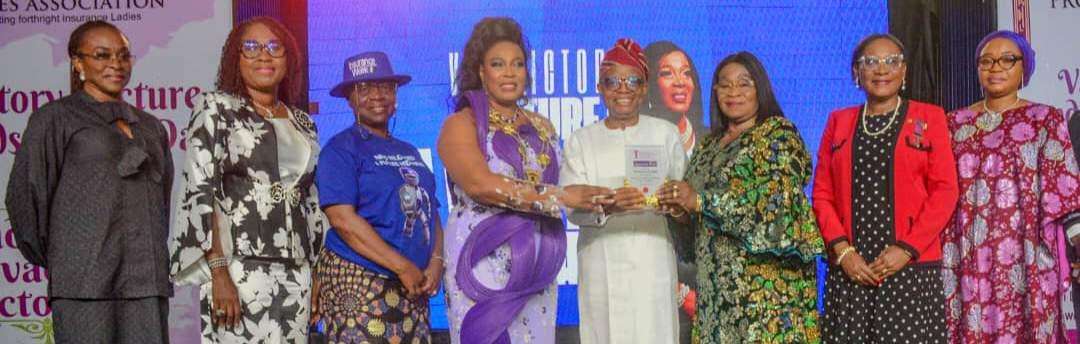
L-R: Executive Director, Sahara Group, Moroti Adedoyin-Adeyinka; Managing Director of First City Monument Bank, Yemisi Edun; President, Chartered Insurance Institute of Nigeria, Mrs. Yetunde Ilori; 15th President, Professional Insurance Ladies Association, Bimbo Onakomaiya; Guest Speaker, Prof. Lere Baale; First Female President of the Nigerian Council of Registered Insurance Brokers, Mrs. Laide Osijo; 23rd President and Chairman of the Governing Board of the Nigerian Council of Registered Insurance Brokers, Ekeoma Ezeibe; and Representative of the Commissioner for Insurance, Oluwatoyin Bello, during the valedictory lecture and awards in Lagos.... yesterday
PHOTO: SUNDAY ADIGUN
Deji Elumoye in Abuja
NATIVE ARTICLE PROPOSAL
What is a Native Article?
ARISE NEWS is Africa’s leading business and financial news website, providing a unique blend of international and pan‑African business and economic news.
Native Article is the innovative way of strategically packaging content to blend in with editorial.
This allows for content to appear as more credible, as it reads naturally without the marketing agenda of the company coming across as obvious.
How it works
Client to provide Arise News with an article, Arise News Editorial team will then re‑write this to fit the consumer content behaviour.
The Article will be posted on the website, and the article page will have full advertiser branding.
The Article link will be embedded on the homepage for one week.
The article will get a social post dedicated to drive users to the article page on the day it is released.
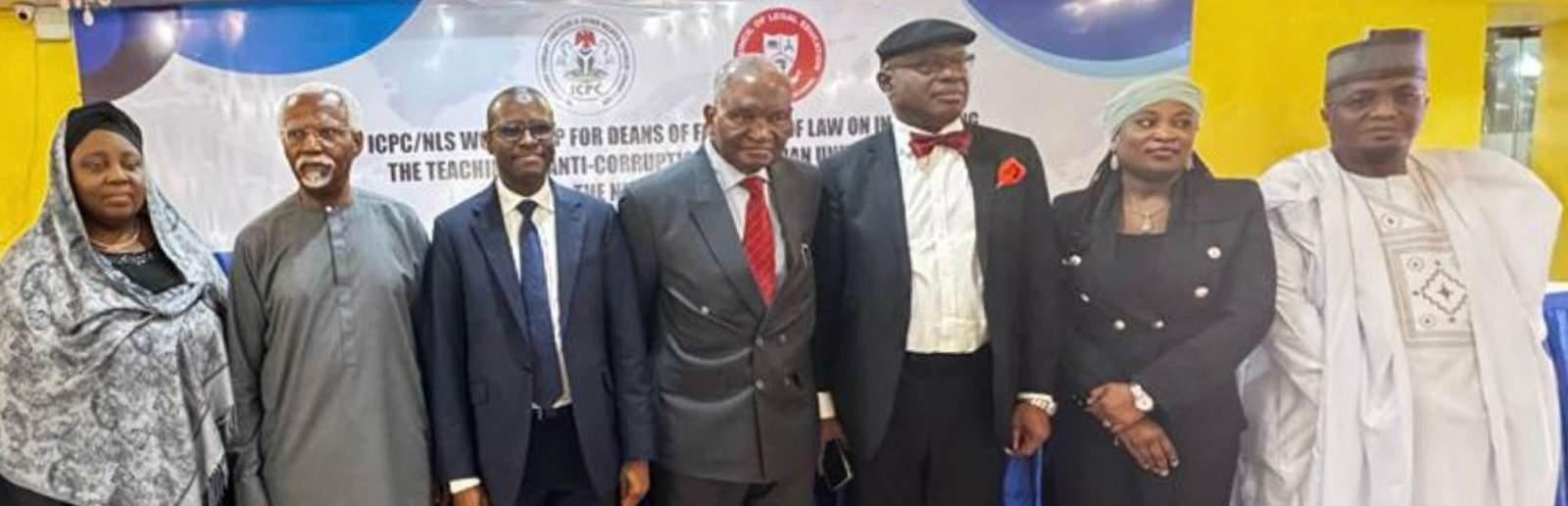
L-R: Acting Legal Adviser, Code of Conduct Bureau, Mrs. Sambo Saadat Omotayo; former Chairman, ICPC and Chairman National
the national workshop on the teaching of anti-corruption for Deans of Faculties of Law in Nigerian universities and the Nigerian Law School at Abuja…recently
ICPC: We
Denied ADC Leaders Access to Nasir
El-Rufai Based on Subsisting Court Order
The Independent Corrupt Practices and Other Related Offences Commission (INEC) has defended its decision to deny leaders of the African Democratic Congress (ADC) access to former Kaduna State Governor, Nasir El-Rufai, insisting that the action complied with a subsisting court order.
The ICPC spokesman, John Odey, spoke yesterday while reacting to allegations by the
Ganduje’s
ADC that its leaders were harassed and denied access during a visit to the former governor on Friday.
According to Odey, the commission had formally replied to the ADC after receiving a letter requesting permission for some party leaders to visit El-Rufai.
“Yes, we denied them. They wrote to us saying that they wanted to come and visit ElRufai. They listed those people who came: Aregbesola, Bolaji
Abdullahi, and others.
“We got their letter on the 20th or thereabouts and replied to them on the 21st that they should not come because the court order was specific,” he said.
He explained that the court order only allowed access to El-Rufai’s immediate family members, legal counsel, and medical doctors.
“The access is limited to the category of his immediate family members, his legal counsel, and
his medical doctors. Based on the court order, under the circumstances, we are not able to grant them their request to visit,” he stated.
Asked whether the ADC was informed before arriving at the commission’s office, Odey maintained that the party received the commission’s response.
“The letter was given to them, and it was stamped that they received it.
“But there is evidence that
Son Joins Kwankwaso in NDC to Vie for House of Representatives’ Seat in 2027
AbdulAziz Umar, son of the former National Chairman of the All Progressives Congress (APC), Dr Abdullahi Umar Ganduje, has declared his intention to contest the House of Representatives’ seat for the Dawakin Tofa/Tofa/Rimin Gado Federal Constituency in Kano State on the Nigeria Democratic Congress (NDC). His decision to pick a
nomination form under the NDC was a significant departure from the family’s longstanding alignment with the APC and a movement into the political camp of his father’s estranged ally and former governor of Kano State Dr Rabiu Musa Kwankwaso.
A video circulating on social media showed AbdulAziz
speaking about his political ambitions and his engagement with Kwankwaso, publicly confirming his alignment with the former governor’s expanding political network.
The NDC is the party Kwankwaso adopted after leaving the African Democratic Congress (ADC), and it has been gaining momentum across Kano State, attracting
established political figures and grassroots support.
Political analysts say AbdulAziz’s entry into the race is likely to intensify competition in the constituency, with a potentially high-stakes contest expected against an APC candidate in what observers are already describing as one of the more closely watched 2027 races in the state.
APC Cautions Fayemi Against ‘Demarketing’ Ruling Party, Advises Him to Defect or Face Sanction
The National Secretary of the All Progressives Congress (APC), Ajibola Basiru, has cautioned former Governor of Ekiti State, Dr. Kayode Fayemi, against making comments capable of damaging the image of the ruling party.
Basiru warned that disciplinary measures could be taken against him for comments that may portray the party in a bad light.
The warning followed Fayemi’s criticism of the APC during an interview on ‘State
Affairs with Edmund Obilo’, where he said the party had drifted away from the ideals of its founding fathers and was gradually losing internal debate and ideological direction.
Fayemi noted that the growing culture of endorsements and consensus arrangements within the party could trigger internal crises ahead of future elections.
“This is not where the party has come from. We have lost our bearings and the vision of the founding fathers of this party,” Fayemi said during the interview.
He also warned that the increasing rush by party members to seek political favour from the presidency was unhealthy for the APC.
“It would be unfortunate if everybody is running to Aso Rock because they want something,” he said.
“Those who don’t get consensus won’t be happy… and you’re waiting for an implosion.”
Reacting to the remarks, Basiru dismissed Fayemi’s concerns and suggested the former governor should leave the APC if he no longer believes
in the party.
“We urge him that since he so much despises the party and wishes the party an implosion, he should go to where whatever he thinks his best ideas can be ventilated,” Basiru said.
“We wish him the best of luck, but he should not stay within our party and be wishing us bad luck. He should go to another political party if he no longer believes in the party he represents.”
Basiru said the APC would not overlook actions or comments perceived as undermining the party’s interests.
ADC received the letter. The fact remains that ADC is a political association and does not fall under the category that the court ordered us to grant access,” he added.
Odey also dismissed allegations that ADC leaders were intimidated or harassed by security operatives at the commission’s headquarters.
“No, no, no. They were not harassed. No harassment whatsoever. They were not intimidated,” he said.
He explained that armed police officers stationed at the commission’s gate were part of routine security arrangements.
“Usually, you know that we have a detachment of mobile policemen at the gate all the time. Sometimes you see their trucks parked there. Those are the things they saw that they said we brought three trailers of police,” he stated.
The ICPC spokesman insisted that the commission would continue to obey the court
order restricting access to the former governor.
“We will not allow them. The court was specific, stating that the persons allowed are his immediate family, his lawyers, and his doctors. Anybody outside that category, we do not have the authority of the court to grant access,” he said. He added that the commission was acting in compliance with the law and ensuring El-Rufai’s safety while in custody.
“We are apolitical. We did not bring police officers to intimidate them. The police officers have always been there,” Odey said.
The ADC had earlier accused the ICPC of obstructing access to El-Rufai after senior leaders of the party were prevented from seeing him at the commission’s headquarters in Abuja. The party also alleged that heavily armed police officers were deployed to the premises during the visit, describing the action as intimidation targeted at opposition figures.
UN Raises the Alarm over Acute Hunger in Nigeria, Says 35m People at Risk in Coming Months
Onyebuchi Ezigbo in Abuja
The United Nations (UN) at the weekend warned that about 35 million Nigerians were at risk of acute hunger from June to August.
The UN Humanitarian Country Team in New York City, United States, said Nigeria was facing a deepening hunger crisis, with millions at risk as the lean season approaches.
“Nearly one in seven people, that is 35 million people nationwide in Nigeria, are likely to face acute food insecurity during this year’s lean season, which runs from June to August,” it said.
The UN said the latest
report made Nigeria one of the world’s largest hunger crises, with the burden falling overwhelmingly in the northern part of the country.
“If assistance is further delayed, millions of families will be forced to reduce meals further, sell assets, or withdraw their children from school with the long-term impact that we know it has,” it said.
Across North-west and North-east Nigeria, the UN said an estimated 6.4 million children were likely to be acutely malnourished this year.
“Our partners and we are appealing for urgent funding to scale up life-saving assistance,” the global multilateral body said.
Alex Enumah in Abuja
Adedayo Akinwale in Abuja
Salaries and Wages Commission, Mr. Ekpo Nta; Chairman, ICPC, Dr. Musa Aliyu (SAN); former Attorney-General of the Federation and Minster of Justice, Mr. Kanu Godwin Agabi (SAN); Chairman, Council of Legal Education, Chief Emeka Ngige (SAN); Representative of the Attorney-General of the Federation and Deputy Director and Head, Cybercrimes Unit, Federal Ministry of Justice, Mrs. Jamilla Akaaga-Ade; and Director, Research Innovation and Information Technology, NUC, Malam Lawal Farouk, at
aFFIRMING TINUBU’S CaNDIDaCy FOR 2027…
AGF Moves to Defend Nigeria’s Energy Security, Receives NNPC’s Submissions on Dangote Suit
Wale Igbintade
The Nigerian National Petroleum Company Limited (NNPCL) and the Office of the Attorney General of the Federation (AGF) have moved to vigorously challenge a fresh lawsuit by Dangote Refinery seeking to halt the issuance and renewal of petroleum import licences in Nigeria.
The suit, marked FHC/L/ CS/857/2026 before the Federal
High Court in Lagos, was the latest escalation in the growing legal and commercial battle over Nigeria’s downstream petroleum market and crude oil supply obligations.
Dangote Refinery filed a new lawsuit against the AGF in a bid to overturn fuel import licences issued to marketers and the NNPC Limited.
The refinery is asking the court to restrain the federal government from issuing or
Troops Apprehend Four Suspected Illegal Miners, Recover Weapons in Ebonyi
Troops of Operation Udo
Ka have apprehended four suspected illegal miners in Ivo Local Government Area (LGA) in Ebonyi State, for allegedly extracting mineral resources without authorisation.
The military disclosed that the suspects were intercepted during an operation in the area, while troops also recovered a mini-truck, heavy-duty sapper cables, and an automotive battery.
According to the Director of Defence Media Operations, Major General Michael Onoja, the troops came under attack while transporting the suspects and recovered items to their base.
He explained: “While transporting the arrested suspects and seized equipment to the military
base, troops were aggressively obstructed by an organised mob of local youths from the Ihietu community who attacked the convoy with stones to free the suspects; demonstrating extreme professional restraint, troops fired two warning shots into the air to safely disperse the rioters, restore public order, and ensure the secured delivery of the suspects for prosecution without recording any casualties.”
In a related development, troops conducting a night patrol within the Ibeagu general area of Izzi LGA of Ebonyi State spotted two suspicious hoodlums transporting a concealed container. However, upon being challenged, the suspects fled into the bush, abandoning a bag containing a locally fabricated pistol and live ammunition.
renewing import licences for petrol, Automotive Gas Oil (AGO) and Jet A1, arguing that its refining capacity is now sufficient to meet national demand.
It also accused the federal government and agencies, including NNPC Limited, of failing to ensure adequate crude oil supply to support its local refining operations.
However, documents and submissions now before the AGF indicate that NNPC Ltd is strongly opposing the suit, insisting that the reliefs sought could undermine national fuel security and disrupt statutory supply obligations imposed on the national oil company under the Petroleum Industry Act (PIA).
NNPC was formally served with the enrolled order on May 4.
While the AGF subsequently requested the company’s official position on May 7, NNPC
The Minister of Works, Senator David Umahi, has assured Nigerians that President Bola Tinubu will tackle Nigeria’s insecurity challenges within the next four years if given another mandate.
Umahi made the declaration yesterday at Umunaga Ward in his Uburu, Ohaozara Local Government Area of Ebonyi State during the APC presidential primary election.
He said the 5,009 party members who turned out at the ward to elect
responded the following day.
Officials privy to the NNPC’s submissions to the AGF, said the national oil company, in its response to the justice minister, argued that the case is substantially identical to an earlier suit filed by Dangote Refinery in 2024, marked FHC/ ABJ/CS/1324/2024, which was eventually discontinued by the refinery.
According to NNPC’s position, the current suit merely seeks to revive the same claims under Sections 317(8) and 317(9) of the Petroleum Industry Act.
The national oil company is therefore seeking to be joined as a necessary party in the matter while simultaneously challenging the competence of the suit.
NNPC further argued that Section 317(9) of the PIA can only operate pursuant to a formally activated Backward Integration
President Tinubu as the party’s candidate for the 2027 general election shows the peoples trust and confidence in the president.
Addressing party faithful and leaders at the event, Umahi described Ebonyi State as a stronghold of the President and All Progressives Congress (APC), stressing that the people had resolved to demonstrate total loyalty and support for President Tinubu and the ruling party.
“Ebonyi State is totally APC.
Policy under Section 317(8), noting that no gazette, directive or official policy instrument has been issued to activate such provisions.
The company also maintained that the law, in any case, applies to NNPC because of its longstanding trading operations and ownership interests in the Port Harcourt, Warri and Kaduna refineries.
In its submission to the AGF, NNPC stressed that under Section 64(m) of the PIA, it remains the statutory supplier of last resort, a responsibility that requires continuous import planning, strategic fuel storage and nationwide distribution readiness to prevent shortages and safeguard energy security.
NNPC also warned that granting Dangote’s requests could directly impair its ability to respond swiftly to supply emergencies or potential scarcity situations.
We are only APC,” Umahi declared, adding that there was no other political party in Ohaozara Local Government Area apart from the APC.
He said the massive turnout of party members showed the people’s appreciation for Tinubu’s administration, especially for the appointments and infrastructure projects being executed across the South-East region.
According to him, President Tinubu has integrated the South-East into national politics
The company also argued that NNPC, the Nigerian Midstream and Downstream Petroleum Regulatory Authority (NMDPRA) and the Nigerian Upstream Petroleum Regulatory Commission (NUPRC) are all proper and necessary parties because they possess critical operational and regulatory information relating to crude allocation, import planning, refinery operations, storage and nationwide product distribution.
The matter took a dramatic turn after the Federal High Court on April 29 ordered all parties, including NNPC Ltd., to maintain the status quo pending further proceedings.
The outcome of the case is expected to significantly reshape Nigeria’s petroleum supply framework, competition structure and fuel import regime in the post-subsidy era.
through key appointments and developmental projects.
“Bola Tinubu is the Biafra we have been looking for. A man who has integrated the entire South-East, given us juicy appointments and very important infrastructure,” he said.
Speaking on the economic reforms introduced by the Tinubu administration, Umahi acknowledged the difficulties Nigerians initially faced but insisted that the policies had stabilized the nation’s economy.
Linus aleke in Abuja
L-R: Wife of the Senate President, Mrs. Unoma Akpabio; and Senate President, Senator Godswill Akpabio; and other members of the All Progressives Congress, queuing to be counted during the presidential primary in Ukana West II, Essien Udim Local Government Area, Akwa Ibom State … yesterday.
PRODUCT UNVEILING…
Nigeria Retains Position as World Bank’s Third-largest IDA Borrower Despite Slight Debt Decline
Nigeria has retained its position as the third-largest borrower from the World Bank’s International Development Association (IDA), despite recording a marginal decline in its debt exposure to the institution in the first quarter of 2026.
Latest financial statements released by the IDA for March 2026, which Nairametrics quoted yesterday, showed that Nigeria’s outstanding exposure dropped slightly
to $18.5 billion as of March 31, 2026, down from $18.7 billion recorded at the end of December 2025.
The $200 million decline represents a 1.1 per cent reduction over the three months, suggesting a modest easing in the country’s short-term debt profile with the World Bank’s concessional lending arm.
However, a broader year-onyear assessment showed that Nigeria’s exposure remains
Otti Scores His Administration High, Says He’s Satisfied With His Performance in Three Years
Abia State Governor, Alex Otti, has said that his administration prioritised education, infrastructure, and resource management, and expressed satisfaction with the outcomes in his third year in office.
Otti spoke during his monthly media chat held at the Okpara Auditorium, Umuahia, at the weekend.
He expressed dismay over the alleged conversion of some state-owned higher institutions, including the College of Education (Technical) Arochukwu and Abia State Polytechnic, Aba, to universities by the Okezie Ikpeazu administration.
He said there was no document to buttress the claim that such conversions existed.
He further said that there was no justification for such proliferation of universities, adding that the state would focus on consolidating the existing ones rather than duplicating efforts and dissipating the limited resources.
He said: “When you set up three universities, you duplicate vice chancellors, registrars, administrators, and infrastructure.
“It is better to have one properly funded university
with the right faculties and
“Some universities in the country have very large populations and still function well.
“We should not be apostles of duplicating universities, when we can strengthen one and maximise its potential,” Otti explained.
The governor admitted that while progress had been made in education, infrastructure renewal had not reached the level he desired.
He said that the government was still working to ascertain the number of mineral deposits in the state.
He pointed out that mineral resources were on the exclusive legislative list, hence under the federal government’s control.
“This is a blessed state, with virtually every local government having something beneath its soil.
“Our role is to ensure that the resources exist and that we are good partners with the Federal Government.
“The process is ongoing, and it does not happen overnight,” he said.
Reacting to reports of the influx of herders in some communities, Otti cautioned against profiling people based on ethnicity.
significantly higher than it was a year earlier. The country’s debt to the IDA rose by $1.2 billion from $17.3 billion in March 2025, reflecting a 6.9 per cent increase within one year and underlining Nigeria’s continued reliance on concessional financing to support development programmes and fiscal reforms.
The latest ranking placed Nigeria behind Bangladesh and Pakistan among the World Bank’s largest IDA borrowers globally.
According to the IDA exposure report, Bangladesh remained the institution’s largest borrower with an outstanding exposure of $22.7 billion, followed by Pakistan at $19.2 billion, and Nigeria at $18.5 billion.
Ethiopia ranked fourth with $14.4 billion, Tanzania followed with $14.3 billion, while Kenya recorded $13.2 billion.
report also indicated a slight moderation in the World Bank’s overall lending portfolio during the quarter.
Total loans outstanding under the IDA stood at $230.8 billion as of March 31, 2026, marginally lower than the $231.1 billion recorded at the end of December 2025.
The institution disclosed that loans classified as non-accrual accounted for only 0.4 percent of the total portfolio. In contrast, provisions for potential loan losses stood at $6.3 billion, representing about 2.0 percent of underlying exposures.
Nigeria alone accounted
for roughly 8.0 per cent of the IDA’s total loan portfolio and about 13.3 per cent of the combined exposure represented by the institution’s ten largest borrowing countries.
The World Bank further noted that the ten largest country exposures represented approximately 60 per cent of its total lending portfolio as of March 2026, highlighting the concentration of concessional financing among a relatively small group of developing economies.
Despite the marginal quarterly decline, the longer-term trajectory of Nigeria’s exposure remains upward, reflecting increasing dependence on multilateral financing amid domestic fiscal pressures and growing infrastructure needs.
Across Africa, other major
borrowers also recorded increases in their debt exposure during the period under review. Ethiopia’s exposure rose from $13.2 billion in March 2025 to $14.4 billion in March 2026, while Tanzania’s increased from $12.6 billion to $14.3 billion over the same period. Similarly, Bangladesh’s exposure climbed from $21.2 billion to $22.7 billion, while Pakistan’s rose from $18.3 billion to $19.2 billion. Ghana’s exposure also increased from $7.1 billion to $7.4 billion.
Nigeria nevertheless maintained its third-place ranking globally, reflecting both the scale of its financing requirements and its longstanding access to concessional resources under the World Bank’s lowincome lending framework.
How Supreme Court Cleared ex-GOC Otiki Six Years after Dismissal over Missing Military Funds
The Supreme Court has affirmed the acquittal of a former General Officer Commanding (GOC), 8 Division of the Nigerian Army, Major General Hakeem Oladapo Otiki (rtd), by the Court of Appeal.
The verdict brought to a close a six-year legal battle over the alleged disappearance of N100 million of military operational funds.
In a unanimous judgment delivered by a five-member panel, the apex court upheld the December 2024 decision of the Court of Appeal, which voided the conviction of the retired senior officer by a General Court Martial (GCM).
The court dismissed the Nigerian Army’s appeal and sustained Otiki’s discharge and acquittal, effectively clearing him of all allegations linked to the missing funds.
Otiki had been convicted in 2020 by a military tribunal over the disappearance of N100 million allegedly stolen by soldiers detailed to transport the cash from Sokoto to Kaduna in July 2019. Following the conviction, the
tribunal ordered his dismissal from service, a reduction in rank from Major General to Brigadier General, and a severe reprimand. The Army Council later ratified the sanctions.
The retired officer, however, consistently denied wrongdoing, maintaining that he neither stole nor concealed the money. He argued that he promptly reported the incident to military authorities and refunded the missing funds.
The Court of Appeal subsequently nullified the entire proceedings of the General Court Martial, restored his rank, and ordered the payment of his entitlements. Dissatisfied with the ruling, the Nigerian Army approached the Supreme Court, which on Friday affirmed the appellate court’s judgment.
The verdict has revived discussions within military and legal circles about the circumstances of Otiki’s prosecution, amid claims that the case may have been influenced by political interests tied to the 2019 Sokoto governorship election.
Otiki was appointed GOC of 8 Division, Sokoto, on March
16, 2019, shortly after the March 9 governorship election in the state was declared inconclusive because of the narrow margin between Governor Aminu Waziri Tambuwal of the Peoples Democratic Party (PDP) and the All Progressives Congress (APC) candidate, Ahmad Aliyu.
Upon assuming office, the senior officer reportedly warned soldiers against unlawful involvement in the rerun election and insisted that military personnel could participate in election duties only with approval from Army Headquarters.
Following the March 23, 2019, rerun, the Independent National Electoral Commission (INEC) declared Tambuwal the winner with 512,002 votes against Aliyu’s 511,660 votes, a margin of 342 votes that heightened political tension within Sokoto and Abuja.
At the time, there were allegations that certain political interests expected the newly deployed GOC to influence the election’s outcome.
A source had claimed that Otiki’s refusal to compromise
military neutrality allegedly triggered moves to remove him.
Otiki’s lead counsel, Israel Olorundare (SAN), had pleaded for leniency during the trial, informing the tribunal that the General had refunded the N100 million and that projects linked to the operational funds had either been completed or were nearing completion.
The soldiers accused of absconding with the money were identified as Corporal Gabriel Oluwaniyi, Corporal Mohammed Aminu, Corporal Haruna, Oluji Joshua, and Hayatudeen.
One of the soldiers, Lance Corporal Isah, reportedly returned N15 million and $6,600 voluntarily to military authorities.
However, questions persisted over whether the fleeing soldiers were fully prosecuted and whether justice had been fairly administered in the case against the retired General.
The Supreme Court’s judgment affirming his acquittal has restored the retired officer’s reputation while renewing debate over alleged political influence in the administration of military justice.
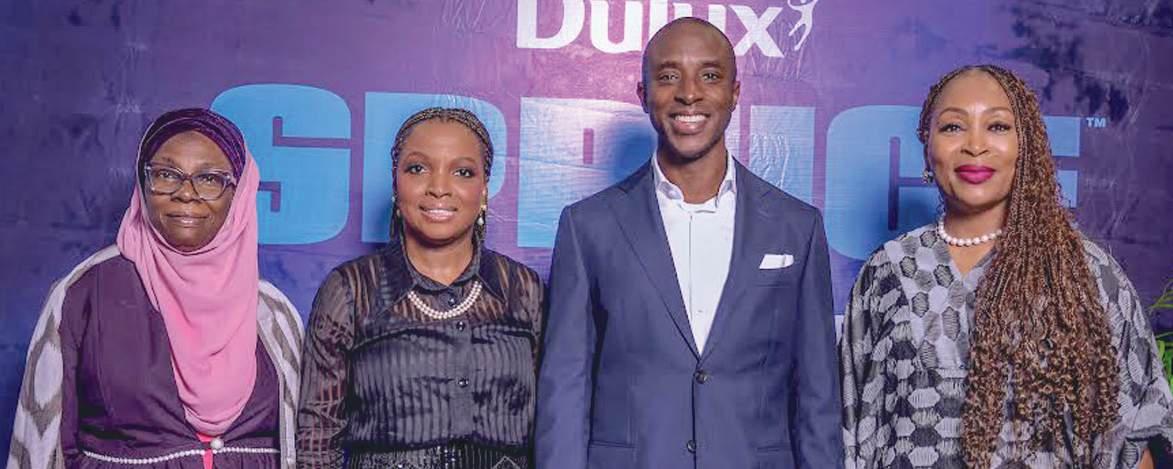
L-R: Non-Executive Director, Chemical and Allied Products PLC, Muhibat Abbas; Managing Director, Bolarin Okunowo; Chairman, Board of Directors, Fola Aiyesimoju; and Independent Non-Executive Director, Udo Okonjo, at the Spruce Media, Partner Parley and unveiling of new Dulux’s variant
CBN Stands Firm as Fiscal Risks Mount
Behind the CBN’s calm rate pause lies rising fear over inflation, political spending, and economic stability, writes Festus
Akanbi
The Central Bank of Nigeria’s (CBN) decision to retain the Monetary Policy Rate (MPR) at 26.5 per cent may have appeared predictable to financial markets, but beneath the calm language of the Monetary Policy Committee (MPC) lies a more delicate economic reality.
Nigeria is approaching a politically sensitive season when campaign-related spending is expected to intensify ahead of next year’s general election preparations. At the same time, inflationary pressures, exchange-rate vulnerabilities, and global geopolitical tensions continue to test the economy’s resilience.
By choosing to hold rates steady after February’s modest 50-basis-point cut, the MPC signalled that its primary concern remains inflation containment and exchange-rate stability, even as businesses struggle under punishing borrowing costs.
CBN Governor Olayemi Cardoso defended the decision as a cautious response to global shocks and domestic vulnerabilities. According to him, recent inflationary pressures were largely externally driven, with rising energy costs linked to tensions in the Middle East.
The committee retained all major policy parameters, including the Cash Reserve Ratio at 45 per cent for commercial banks and 16 per cent for merchant banks, while also maintaining the asymmetric corridor around the MPR at +50/-450 basis points.
The figures confronting policymakers remain sobering. Nigeria’s headline inflation climbed to 15.69 per cent in April 2026 from 15.38 per cent in March, while food inflation accelerated sharply to 16.06 per cent due largely to transportation and logistics costs. Core inflation, however, eased marginally to 15.86 per cent, suggesting that underlying price pressures may be moderating.
Yet, beyond the statistics lies a more politically charged challenge. Historically, election cycles in Nigeria have often been accompanied by heavy liquidity injections into the economy through campaign spending, political mobilization, patronage networks, and increased fiscal disbursements. Economists warn that such spending could complicate the CBN’s fight against inflation in the months ahead.
Managing Director of Financial Derivatives Company, Bismarck Rewane, described the current environment as one requiring vigilance rather than panic. According to him, recent
reforms may insulate Nigeria, but it is not isolated from global disruptions. He noted that many central banks worldwide have adopted a cautious stance amid slowing global growth and persistent inflation concerns.
Indeed, the broader global backdrop remains fragile. Crude oil prices have remained volatile amid renewed tensions among Iran, Israel, and the United States, while supply chain disruptions continue to drive imported inflation across emerging economies. Nigeria, despite benefiting from higher oil prices as an oil producer, remains vulnerable due to its dependence on imported refined products, industrial inputs, and food items.
The CBN argues that reforms implemented over the past year have helped build buffers against these shocks. Gross external reserves rose to $49.49 billion as of May 15, 2026, enough to provide import cover for over nine months. The apex bank also pointed to relative exchange-rate stability and improved investor confidence following recent sovereign rating upgrades by S&P Global Ratings.
For investors, the rate hold reassures them that the CBN remains committed to maintaining macroeconomic stability. The naira traded within relatively stable levels after the MPC announcement, while yields in Nigeria’s debt market remained attractive to foreign portfolio investors seeking returns in frontier markets.
However, for manufacturers and small businesses, the implications are more painful. Commercial lending rates remain elevated, making access to credit increasingly difficult for productive sectors already weighed
down by high energy costs, insecurity, and weak consumer demand.
Chief Executive Officer of the Centre for the Promotion of Private Enterprise, Muda Yusuf, argued that inflation in Nigeria is currently driven more by structural and supply-side factors than by excess liquidity alone. According to him, aggressive monetary tightening cannot repair broken supply chains, solve insecurity, or eliminate logistics bottlenecks.
That argument resonates strongly within the organised private sector. Businesses continue to battle soaring electricity costs, high diesel prices, exchange-rate uncertainties, and declining consumer purchasing power.
Although the Dangote Refinery’s operations have helped reduce diesel prices from nearly N3,000 per liter to about N1,675, many firms say financing costs remain prohibitively high.
Development economist Justin Amase warned that persistently high interest rates could further weaken production and aggregate demand. He argued that industries are already struggling to expand because the cost of funds has become excessively expensive, while households continue to face declining purchasing power.
The political calendar may intensify these pressures. As consultations, alignments, and campaign structures gather momentum ahead of the 2027 election cycle, economists expect increased fiscal injections and heightened liquidity across the economy. Such spending often stimulates short-term consumption without a corresponding increase in productivity, thereby exacerbating inflationary trends.
This creates a policy dilemma for the CBN. Raising rates further could deepen the strain on businesses and suppress economic growth, while loosening policy prematurely risks triggering renewed exchange-rate instability and inflationary spikes fuelled by political spending.
For now, the MPC appears to be betting that existing reforms and exchange-rate
management will contain those risks. Cardoso repeatedly emphasised that exchange-rate stability remains the “centrepiece” of the bank’s toolkit.
The banking sector recapitalisation programme also forms part of that broader stabilisation strategy. The CBN disclosed that 33 banks have successfully met new capital requirements. This development, policymakers believe, will strengthen the financial system’s resilience and improve the sector’s capacity to support long-term economic growth.
Still, analysts note that monetary policy alone cannot deliver durable stability in an election-bound economy. Fiscal discipline will be equally critical. Rising government expenditure without commensurate productivity gains could offset much of the progress achieved through tighter monetary policy.
Nigeria’s fourth-quarter 2025 GDP growth of 4 percent offers some encouragement, particularly given stronger contributions from the non-oil sector and refining activities. Yet growth remains fragile amid weak household incomes and persistent structural inefficiencies.
What emerges from the MPC’s latest decision is not triumphalism, but caution. The central bank is effectively attempting to balance three difficult objectives simultaneously: slowing inflation, defending the naira, and avoiding a complete strangulation of economic activity.
That balancing act may become far more difficult in the months ahead as political spending rises, global uncertainties persist, and ordinary Nigerians continue to grapple with elevated living costs. For the moment, the MPC has chosen steadiness over shock therapy. Whether that restraint proves sufficient may depend less on monetary policy alone and more on the discipline of fiscal authorities, the conduct of political actors, and the ability of reforms to survive the pressures of Nigeria’s election season.
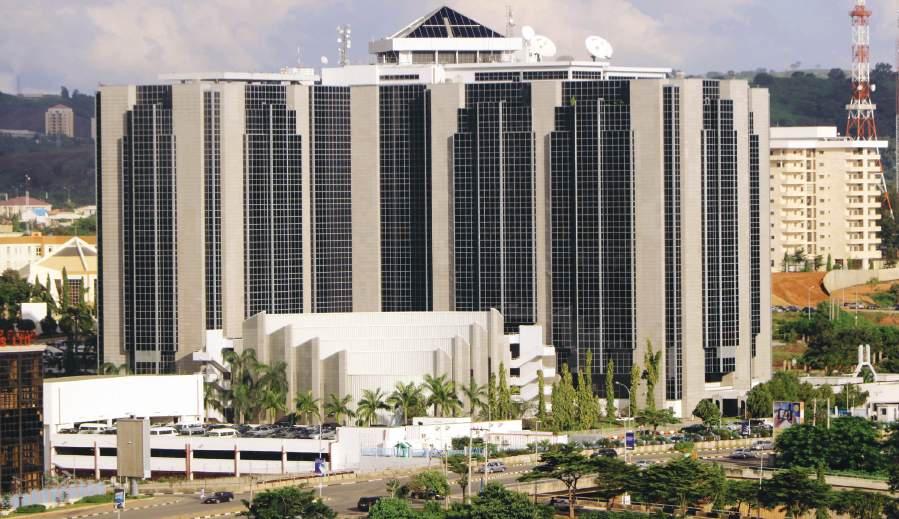
CBN Building, Abuja
Romanticising Africa’s Economic Opportunities Beside the Thames
Crusoe Osagie writes about a brief but hopeful immersion at the London Business School, where young African professionals explored the continent’s vast business potential despite the socio-economic and political challenges that have constrained Africa’s growth for decades
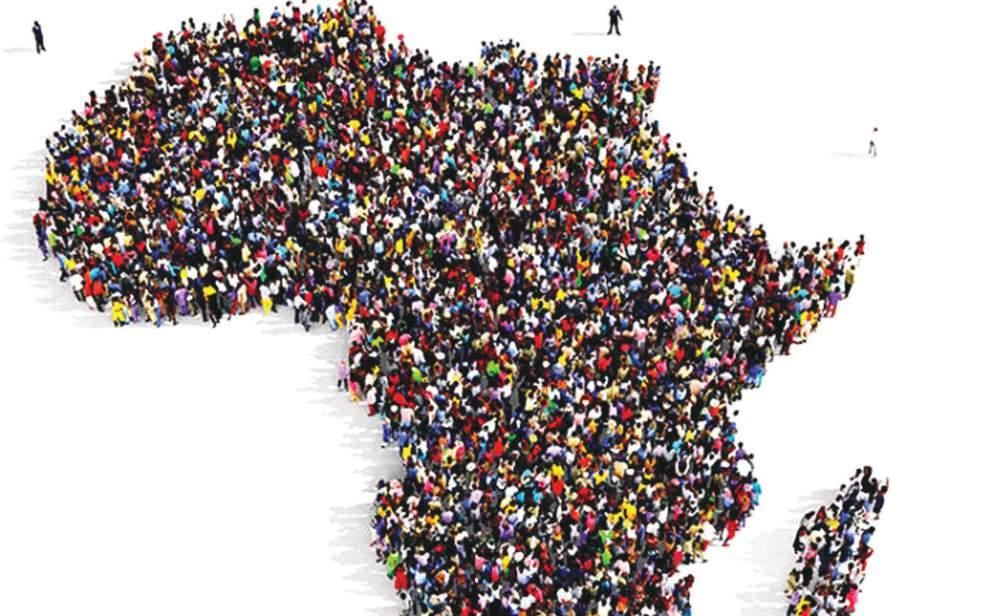
The prestigious London Business School, nestled along the elegant Sussex Place overlooking Regent’s Park in Central London, became a meeting point for some of Africa’s brightest young minds during the first two days of May 2026. More than 100 participants from across the continent gathered with a shared ambition: to explore how Africa can transform its immense promise into sustainable prosperity and finally redefine its position in the global economy.
The atmosphere at the summit was one of optimism, ambition and intellectual energy. Speaker after speaker highlighted the enormous opportunities spread across the 54 nations that make up the African continent. From its rapidly growing youth population to its vast deposits of rare earth minerals, fertile agricultural land, abundant solar energy potential and significant non-renewable resources, Africa was presented as a continent standing at the threshold of economic greatness.
Assistant Professor of Strategy and Entrepreneurship at London Business School, Bukky Oyedeji, described these opportunities as both flattering and daunting. She argued that while Africa’s potential is undeniable, translating that potential into prosperity requires far more than optimism.
According to her, building the continent’s next generation of growth champions will demand fresh ideas, innovative initiatives, resilience, the right mindset and a new set of skills capable of navigating the unique complexities of African markets.
Her remarks reflected a broader sentiment that resonated throughout the conference: Africa’s future cannot simply depend on the abundance of its natural resources. Instead, success will come from the ability of Africans themselves to innovate, create systems that work and build globally competitive enterprises.
This theme of creativity and innovation was further reinforced by Seun Solanke of the Boston Consulting Group. Drawing attention to the uniquely Nigerian fabric and design she wore to the event, Solanke used fashion as a metaphor for African ingenuity. She explained that the same creativity responsible for the exquisite craftsmanship of African designs is also the driving force behind the continent’s growing influence in music, film, art, sculpture and dance.
According to her, the global success of African creative talents demonstrates that the continent possesses not only raw materials, but also the intellectual and cultural capital necessary to compete on the world stage. From internationally celebrated musicians to award-winning artists and entrepreneurs, African creativity is increasingly becoming a major export and a source of economic power.
Providing compelling data on Africa’s youthful workforce and extensive
mineral wealth, Solanke insisted that the continent is rapidly emerging as one of the world’s most attractive investment destinations. In her view, global investors who continue to ignore Africa do so at their own peril.
The discussion then shifted toward finance and investment.
Chuba Ezenwa, Managing Director for Sub-Saharan Africa at Bank of America, spoke about the level of agility and strategic thinking required from African entrepreneurs and investors to attract meaningful capital. He stressed that Africa’s transformation would depend heavily on the ability of businesses and governments to inspire investor confidence and create environments capable of sustaining long-term growth.
Yet, despite the conference’s overwhelming optimism and celebration of opportunity, there remained an uncomfortable silence around some of the continent’s most pressing realities. With technology and the creative industry dominating both the conversations
and the imagination of participants, many attendees appeared conveniently oblivious to the elephant in the room: the enormous gap between Africa’s potential and its lived experience.
To their credit, speakers did identify certain structural challenges confronting the continent. Africa’s fragmented markets, excessive tariffs and non-tariff trade barriers were repeatedly mentioned as obstacles to regional integration and economic growth. However, there was far less emphasis on perhaps the most significant threats to investment and development — insecurity and political instability.
In recent years, no fewer than 10 African nations have experienced military coups or unconstitutional changes in government, plunging millions into uncertainty and weakening investor confidence. Across several regions, insecurity, terrorism, banditry and political unrest continue to undermine economic progress and disrupt the daily lives of ordinary citizens.
As a participant at the summit, I expected these concerns to receive more serious attention. At the very least, I anticipated robust discussions on how investors, policymakers and entrepreneurs might mitigate the risks associated with political instability
and insecurity. Instead, these issues were treated almost as side notes in conversations dominated by enthusiasm and aspiration.
The omission left me deeply reflective. Why would such critical realities be downplayed at a gathering supposedly committed to Africa’s economic future? One possible explanation gradually came to mind. Perhaps I was simply more cautious than most people in the room. Being at least ten years older than the average participant — whose age appeared to hover around 40 — maybe I had become more risk-conscious with time and experience.
Still, the conference succeeded in achieving something important. It reminded everyone present that Africa’s story is no longer solely one of poverty, conflict and dependency. There is a new narrative emerging — one driven by innovation, entrepreneurship, technology and creativity. However, for that narrative to become reality, Africa must confront not only its opportunities but also its uncomfortable truths.
Romanticising Africa’s economic opportunities may inspire hope beside the Thames, but only honest engagement with the continent’s challenges will unlock the prosperity so passionately envisioned within the halls of London Business School.
Top 10 African countries by population at the start of 2025
LESSONS IN INCLUSIVE GOVERNANCE
Oborevwori’s lecture at the 100-year-old Yoruba Tennis Club holds lesson for Nigeria, writes RAY UMUKORO
Delta State governor, Sheriff Oborevwori, has a knack for speaking with the wisdom of a centurion, a savant of grand old age. But he’s only 62, two years younger than independent Nigeria. On Wednesday, April 29, this year, he once again demonstrated such sagely wisdom. He was guest of the 100 years old Yoruba Tennis Club in Onikan, Lagos. Don’t be deceived by its name. The club was never conceived as a club for the Yoruba. It is a national club founded by great and outstanding statesmen including the unapologetic nationalist Herbert Macaulay. It has since become the recreation and networking watering hole for persons from all walks of life. Rich in history, high on social equity, the Yoruba Tennis Club has acquired a national, even global appeal. It profited from the cosmopolitan nature of Lagos and it has grown into an elite sanctum of Nigeria’s moneyed class; men and women whose moral premium is oiled by integrity and driven by goodwill to all men creed. Oborevwori as guest lecturer spoke on the theme: Inclusive Governance and National Unity – Lessons from Delta State for a More United Nigeria. The topic was as apt as the choice of speaker. And how well it turned out. It was more than a lecture. It was a bell ringer for both the hosts and the governor.
Without disputation, Nigeria has been walking a tight rope of unity and national cohesion. There seems to be a high tide of centrifugal forces pulling the nation to disintegration point, almost overwhelming the centripetal forces trying to pull the people into the centre, into the umbra of unity. This centrifugal power seems to make us all forget our past. Nigeria was once a united, highly bonded collective. Pre-Independence statesmen like the great Nnamdi Azikiwe, Chief Obafemi Awolowo, Sir Abubakar Tafawa Balewa among others were united in their common resolve to birth a sovereign Nigeria. They were not divided along ethnoreligious cleavages. They were driven by nationalistic fervour, an abiding faith in what they believed in: to unclasp Nigeria from the stronghold of colonial manacles. Even at Independence, they still held out a banner of unity while recognizing their diversities. Though tribes and tongues differed, they did not compromise the bond of brotherhood and sisterhood.
But that nationalistic flame has waned. Well over 60 years after Independence, Nigerians are today searching for their nation; a nation founded on the tripodal props of unity, peace and progress. Where is the Nigeria of 1960, a nation whose overriding ethos were forged in the fire of unity; a Nigeria where anyone irrespective of tribe, religion or social status felt a part of the national super-structure; where everyone is a subset of the whole?
That was the task before Oborevwori as he stepped forth to deliver the lecture. He used Delta as a template as he navigated the labyrinthine contour of leadership among a people of distinct diversities. As he took the audience through the hallway of history, economics, administration and leadership, the applause that intermittently signposted his lecture justified the depth of his thought, the pragmatic plank of his argument and the wisdom that underpinned his suggestions. Oborevwori did not just deliver a scholarly lecture. He offered leadership nuggets that Nigeria should adopt at the centre, subnationals, local government areas and in the private sector ecosystem to achieve and sustain national unity.
Oborevwori should know. That’s why the club’s choice of the Delta governor is both apropos and fitting. Oborevwori has a rare record in leadership in Delta. He is the longest serving Speaker of the State Assembly in this 4th Republic, serving out
almost two terms in a position littered with the banana peel landmines. By his simple and open leadership style, he endeared his way into the hearts of his colleagues in the State Assembly. He earned the love of multiethnic Deltans. He is the beloved of the people with proven street credibility. It was of little wonder that he won overwhelmingly at the 2023 guber election that brought him to office. And even now, by the stroke of good governance, not good luck, his re-election is as assured as the rising of the sun. So, what did Oborevwori do in Delta in barely three years that has kept the state more united than ever? He provides the answer in his lecture. He offered leadership that embodies geographic and ethnic inclusivity, political inclusivity and socioeconomic inclusivity, all captured in his MORE agenda of Meaningful development; Opportunities for all; Realistic reforms, and Enhanced peace and security. Oborevwori has deployed this template of leadership to knit Delta together, ensuring that no part of the state is left behind. This is called inclusive leadership. It ensures even distribution of development. It guarantees equity, fairness and justice.
Oborevwori is the architect of development-centric leadership that has productively engaged the once restive youths; empowered once idle and helpless women; aggregated the citizens of the state into a robust healthcare system; created jobs and wealth across all sectors; upskilled the workforce; entrenched a healthier reward system for civil servants and generally uplifted the productivity quotient of farmers, both agrarian and aqua-culture farmers. Oborevwori has allowed power to be domiciled among the people through positive and independent legislation by the State Assembly without undue Executive interference as is common in some states.
He believes that infrastructure is the bridge between the people and economic opportunity; he sees genuine inclusive governance as the type that intentionally considers the needs of all stakeholders. This is the type of leadership he prescribes as the antidote to the forces of disunity tugging at the fabrics and foundation of the nation. He lists the benefits of inclusive leadership to include: Mitigating discord and intergroup conflicts through equitable allocation of resources; promoting national unity because when diverse groups perceive genuine representation and respect, their allegiance and dedication to the nation is fortified; and empowering the citizens which increases civic participation while affording robust protection and entitlement to the excluded population.
Baze University appoints Abiodun Adeniyi as Vice
IN PURSUIT OF EXCELLENCE
“Nothing contributes so much to tranquilise the mind as a steady purpose – a point on which the soul may fix its intellectual eye.”
- Mary W. Shelley, English Novelist
As the first private university in the Federal Capital Territory (FCT), Abuja, Baze University has a unique feature within the realm of tertiary education in Nigeria. Its strict adherence to academic calendar, excellence and quality control position the university as an RI research institution capable of leading the charge in global scholarship. Its strategic location and ability to provide cognate knowledge on education, research and classroom-industry experience sets the university apart among other equals. More so, the entrenchment of astute corporate governance in the day-to-day running of the university highlights the most important values modern tertiary institutions seek to adapt. However, Baze University’s drive to head-hunting the best brains; not just intellectual wizardly, but academics who combine classroom knowledge and practical industry experience distinguished the university from among several others.
For the Chancellor and Founder of Baze University, Sen. Datti Baba-Ahmed, the ideals of an ivory tower are to constantly bridge existing societal gaps, both in innovation and scaling up human capital development. In that light, the basic antidote for universities in remedying today’s enormous global challenges lies squarely in assembling the best minds and reliable experts in the management of educational institutions. It is on this benchmark and threshold that recruitment in Baze University is wholly centred. According to Baba-Ahmed, to ensure global standards and quality control, “I don’t get to know staff who are recruited in the university,” he told national television during an interview late last year. Thus, the idea of embracing competence and excellence in the composition of the university’s human resources is fundamental to the sustained growth and success recorded so far for more than a decade now, and since inception.
Consequently, the announcement by the Board of Directors and Management of the institution appointing Abiodun Adeniyi as the substantive Vice Chancellor of Baze University, Abuja recently received applause across the broad spectrum of Nigerian larger society. In emphasizing the imperative of the elevation ofAdeniyi as the Vice Chancellor, and the appointment of Ahmad Mahmoud Lawi as the Registrar, the university management contended that “the appointments underscore the university’s commitment to continuity, merit-based leadership, and sustained institutional growth.” These values over the last 15 years have become the cornerstone of Baze University, and the touchstone of its rise to global acclaim. Critically, there can be no better definitive parameters in headhunting talents like Adeniyi and Lawi than the normative values of the university that encapsulate continuity, meritocracy and institutional knowledge.
For Adeniyi, the appointment resonates in many ways across different segments of the Nigerian society, taking cognizance of his multi-disciplinary engagements. He comes to the job with bureaucratic, administrative and intellectual skills and tools necessary to navigate the running of a university. As a public intellectual, journalist, civil society advocate, consultant, scholar and teacher, Adeniyi not only embodies contemporary scholarship acumen, but he is also an amalgam of social engineering required for today’s world. His combined years of journalism practice, civil society, consultancy and teaching are all testable track records that would help shape Baze University.
Adeniyi’s adventure to the world began
when he graduated from Ahmadu Bello University (ABU), Zaria in the early 1990s, with a degree in Sociology. Adeniyi would kick-start his professional calling when he joined Today Newspaper, a Kaduna based newspaper to horn his journalistic skills. He would later join The Guardian Newspaper, one of Nigeria’s flagships of journalism as a political reporter covering several news beats both in Lagos and Abuja, the nation’s capital. Despite being engrossed with the ever-powerful influence of being a journalist, Adeniyi’s instincts and craving for intellectual commitment will lead him to the United Kingdom for his postgraduate studies. Adeniyi won the prestigious Chevening Scholarship to study International Communication at the University of Leeds. He would further pursue doctoral studies, finally earning a PhD in Communication. After his return to Nigeria in the early 2000s, Adeniyi would pick up the job of communication consultancy, where his clientele of organizations included World Bank, ECOWAS, Bureau of Public Procurement (BPP), European Union (EU), USAID, DFID, among other multilateral organizations.
Across the social spectrum and public policy, Adeniyi has been a strategic stakeholder setting benchmarks, shaping citizen-centric policies and mitigation of institutional challenges and bottlenecks. His foothold revolves around providing the road map for bridging gaps that often impede our social world and public policy succinctly. In the same vein, Prof Adeniyi was also instrumental in shaping strategic communication of the Federal Ministry of Humanitarian Affairs’ disasters and risk management unit for optimal performance. In addition, he contributed in no small measure to remodeling the strategic communication of the National Bureau of Statistics (NBS) in driving home how national data on socio-economic lives is communicated across a multi-ethnic society like Nigeria. In rebranding the country, Adeniyi as the Deputy Chairman of the National Values Charter, was a key player in the creation of the National Values Charter where national values became the centrepiece of President Bola Ahmed Tinubu’s National Orientation Agency (NOA) national values project. The Professor of Communication’s role was also part of the retooling of the NOA’s national values which was later remodelled as statutes between the state and citizens, also known as 7 for 7.
Abuja
Umukoro, a policy analyst, writes from Warri
Editor, Editorial Page PETER ISHAKA
Email peter.ishaka@thisdaylive.com
CORRUPTION AND THE POWER SECTOR
The Mambilla hydroelectric power project is yet another monument to waste
Conceived in 1972 under the military administration of General Yakubu Gowon, the 3,050MW Mambilla Hydroelectric Project in Taraba State was earmarked as a veritable tool to tackle the country’s persistent power shortages and stimulate economic growth. But after more than five decades and almost a billion dollars expended on preparing feasibility studies, hiring consultants, and doing preliminary works, the project remains more of a paperwork. Plagued by corruption, mismanagement, legal disputes and other structural delays, the Mambilla hydroelectric power project has become another monument to waste for which Nigeria has become notorious.
A fortnight ago, a former Minister of Power, Saleh Mamman, was convicted of corruption, following which he was sentenced to a hefty 75 years in prison. Mamman was prosecuted by the Economic and Financial Crimes Commission (EFCC) on 12-count charges bordering on money laundering and diversion of funds released for the Mambilla and Zungeru hydroelectric power plant projects to the tune of N33.8 billion. Although Mamman went underground before and after his conviction by the Federal High Court in Abuja and refused to show up for the sentencing, he was eventually apprehended last week by the EFCC with the agency releasing his mugshot in handcuff. Incidentally, while the case was playing out in the court, Mamman had joined the Taraba State governorship race under the All Progressives Congress (APC) ahead of the 2027 general elections. That gubernatorial dream may remain a dream. Meanwhile, in one of very rare instances, Mamman was sacked in 2021 by the late President Muhammadu Buhari after barely two years in office. But his conviction has again sparked conversations on why the power sector has not worked, and what accounts for the $5.8bn Mambilla failed project.
In response, Sunrise took Nigeria and Sinohydro Corporation Limited to the International Court of Arbitration (ICA) in Paris, France for contract breach. The process of settlement is still in progress, with millions of dollars to the bargain. So, Nigerians are in a long and perpetual wait for Mambilla to solve the agonising problem of darkness. Moreover, it is not even on the priority list of the current administration.
Mambilla highlights critical issues of transparency, accountability, and governance deficits in the country’s public sector
SUNDAY NEWSPAPER
editor DAviDSoN iriekpeN
deputy editors FeSTUS AkANBi eJioFor ALike Managing director eNioLA BeLLo
deputy Managing director iSrAeL iwegBU
chairMan editorial Board oLUSegUN ADeNiYi
editor nation’s capital iYoBoSA UwUgiAreN the oMBudsMan kAYoDe koMoLAFe
THISDAY NEWSPAPERS LIMITED
editor-in-chief/chairMan NDUkA oBAigBeNA group executive directors eNioLA BeLLo, kAYoDe koMoLAFe, iSrAeL iwegBU divisional directors SHAkA MoMoDU, peTer iwegBU ANTHoNY ogeDeNgBe deputy divisional director oJogUN viCTor DANBoYi snr. associate director eriC oJeH associate director pATriCk eiMiUHi controllers ABiMBoLA TAiwo UCHeNNA DiBiAgwU, NDUkA MoSeri
director, printing production CHUkS oNwUDiNJo to send eMail: first name.surname@thisdaylive.com
Indeed, Mambilla highlights critical issues of transparency, accountability, and governance deficits in the country’s public sector. It is in the mould of the abandoned $460 million Abuja CCTV camera project for which a Chinese loan was obtained, and the moribund Ajaokuta Steel project that has become a painful drain pipe. A complex of four dams and two underground stations, the Mambilla hydro project has over several decades enjoyed serial funds allocations from successive administrations but still has zero megawatts on the national grid After years of dilly-dallying, the project was formally awarded in 2003 under the administration of former President
Olusegun Obasanjo. But since then, Mambilla has been enmeshed in serial problems, passing from one contractor to another with all sorts of disputes. Incidentally, Sudan, at about the same time, and even though at war, awarded and built 1,250 MW hydropower project in record five years. The Mambilla Power project was awarded to a local contractor named Sunrise Power Transmission and Procurement Company on Build, Operate and Transfer (BOT), a company allegedly discovered later to be fronting for another foreign company.
However, apparently in a bid to undercut Sunrise that was not performing, the federal government decided to deal directly with Sinohydro to which fresh contracts for civil works were awarded.
Given the monumental scandals that have emanated from this project, it is no surprise that anti-graft agencies have had to wade into some of the disputes. In January 2024, the EFCC arraigned former Minister of Power Olu Agunloye over the failed Hydropower project, accusing him of awarding contract to Sunrise Power without budgetary provision, presidential approval, or cash backing. A year later in 2025, the charges were amended to include forgery, gratification, and disobedience to lawful presidential directive. Agunloye has, of course, denied the allegations.
In a 2021 report, the World Bank had rated Nigeria as the poorest country in the world on power supply to citizens with 85 million people not connected to the grid and a loss of $26 billion annually. If anything, the situation in this critical sector has only worsened, with NISO now projecting a $29 billion loss going by its 2025 report.
Lack of electricity has limited access to healthcare, education, and other opportunities for majority of Nigerians. Many small and medium scale businesses have been crippled due to the prohibitive cost of generating their own power. Even the big business ventures, particularly the manufacturing ones, are also feeling the biting effect of energy poverty with consequences stretching to every part of the economy.
Despite the fact that we cannot grow our economy without sorting out this critical infrastructure, most of the people that have been saddled with the responsibility seem to care more about their pockets than the public good. It is therefore commendable that Mamman is being held accountable. But the Mambilla and power related corruption scandals are mere symbols of a culture of graft for which much of Nigeria’s public sector is known. What is shocking is that neither investigation, trial, nor conviction has deterred present and future corruption schemes. It is perhaps time to review the regime of punishment for public sector corruption in Nigeria.
For Uba Sani, a Resounding and Deserving Endorsement
By every serious political measure, the unanimous affirmation of Governor Uba Sani by all registered members of the All Progressives Congress (APC) in Kaduna State as the party’s consensus gubernatorial candidate for the 2027 election was not merely symbolic; it was historic, emphatic, and profoundly earned.
At a time when Nigerian politics is increasingly defined by factional intrigue, bruising primaries, and elite rivalries, the seamless endorsement of Governor Sani stands out as a rare political moment shaped not by coercion or spectacle, but by performance, restraint, inclusion, and steady leadership under extraordinarily difficult circumstances.
When Senator Uba Sani assumed office on May 29, 2023, Kaduna State stood at a delicate crossroads. The state was weighed down by crippling debt obligations, rising insecurity, economic uncertainty, social fragmentation, and declining public trust. Vast rural communities were trapped by fear. Farmers abandoned their lands. Schools and markets shut down. Public finance had become dangerously strained.
At that difficult moment, many expected excuses and political blame-shifting. Instead, Uba Sani chose responsibility and reconciliation. “We chose dialogue over division. Inclusion over exclusion. Compassion over bitterness. Service over propaganda,” the governor declared in his acceptance speech following his emergence as APC flag bearer.
Those words have since evolved into the moral architecture of his administration.
Faced with near-fiscal distress, the easier political path would have been fresh borrowing and populist spending. Yet Governor Uba Sani embraced prudence, institutional reform, transparency, and disciplined governance. Through aggressive revenue mobilisation, tighter fiscal management, and structural reforms, Kaduna gradually moved from financial fragility toward stability and renewed confidence.
The administration recently disclosed that over N90 billion of inherited debts had been repaid without contracting fresh loans. In Nigeria’s political climate, where borrowing often substitutes for innovation, such restraint represented uncommon discipline and political courage.
Equally transformative has been the restoration of public confidence in Kaduna’s financial management architecture. Under Uba Sani, transparency and accountability ceased to be campaign rhetoric and became measurable governance principles. For two consecutive years, Kaduna emerged as Nigeria’s most transparent and accountable state under the Transparency and Integrity Index supported by the MacArthur Foundation.
“Our administration has prioritised transparency and accountability as pillars of sustainable development,” the governor repeatedly affirmed. Open procurement systems were strengthened. Citizen engagement expanded. Fiscal transparency deepened. Governance became increasingly participatory and institution-driven.
Yet perhaps the most consequential aspect of Uba Sani’s leadership has been his deliberate effort to govern through inclusion rather than division. When he assumed office, Kaduna remained burdened by painful ethno-religious tensions and political polarisation. Rather than weaponise those divisions, he consciously pursued reconciliation, dialogue, and consensus-building.
“My dear people, Kaduna State belongs to all of us,” he declared. “Our diversity is not a weakness; it is our greatest strength.”
That message has resonated deeply across Kaduna’s complex social and political landscape. Christians and Muslims increasingly view government through the lens of fairness rather than sectarian suspicion. Communities once alienated from governance now feel a stronger sense of belonging. Trust, though gradually, is returning.
“No political ambition is worth the blood of any citizen,” the governor stated pointedly. “No election is worth destroying the peace of our communities.”
Those are not empty political phrases. They reflect a governing philosophy carefully designed to reduce tensions and rebuild social trust.
The results are increasingly visible. Kaduna has witnessed measurable improvements in security
and peaceful coexistence. Through strategic collaboration with security agencies, traditional rulers, religious leaders, and community stakeholders, intelligence gathering improved, peace-building initiatives expanded, and critical transport corridors became safer.
But beyond conventional enforcement, Uba Sani embraced a broader peace-building framework now widely described as the Kaduna Peace Model.
“We understood clearly that sustainable peace cannot be built through force alone,” he explained. “Peace must rest on justice, fairness, opportunity, and mutual respect.”
That philosophy informed the establishment of the Kaduna State Disarmament, Demobilisation and Reintegration Committee, now serving as a practical mechanism for rehabilitation, reconciliation, and reintegration.
Communities once paralysed by fear are rediscovering hope. Farmers are returning to their lands. Markets are thriving again. Schools once shut by insecurity have reopened.
“Kaduna State is witnessing a quiet but profound transformation,” the governor observed recently.
International partners have taken notice. The United Kingdom moved Kaduna from “red” to “amber” in its travel advisory classification, citing improvements in governance and security. Kaduna subsequently emerged as host of the UK-supported Strengthening Peace, Resilience and Inclusive Governance Programme.
Beyond peace-building, Uba Sani has fundamentally repositioned agriculture at the centre of Kaduna’s development vision.
When he assumed office, agriculture received barely N1.48 billion, representing only 0.4 per cent of the state budget. Today, the sector receives over N74 billion, representing about 14 per cent of the state’s total budget, surpassing the Malabo Declaration benchmark.
Through the Tallafin Noma programme, more than 69,000 smallholder farmers have received improved seeds, fertilisers, agrochemicals, and mechanisation support. The administration also executed the largest fertiliser distribution programme
in Kaduna’s history, distributing over 900 trucks of fertiliser to 300,000 farmers across all 23 local government areas.
“Our philosophy is straightforward,” the governor said. “Agriculture must be continuous, not seasonal; inclusive, not selective.”
More than 4,000 solar-powered water pumping machines have also been distributed to support irrigation and dry-season farming, while livestock farmers have benefited from cooperative-driven interventions spanning the entire state.
Critically, Uba Sani’s agricultural reforms extend beyond cultivation into agro-industrialisation. Through the Special Agro-Industrial Processing Zone initiative, Kaduna is positioning itself as a major processing and export hub for crops such as maize, ginger, tomatoes, and soybeans.
A similarly ambitious transformation is unfolding in education. Through deliberate planning and targeted interventions, Kaduna reduced the number of out-of-school children from approximately 550,000 to 187,720 within two years. More than 25 per cent of the state budget is consistently allocated to education, surpassing international benchmarks.
“We understand clearly that the future of Kaduna State depends on the quality of opportunities available to our youth today,” the governor stated.
Under his administration, 62 new secondary schools have been completed while additional schools remain under construction. Hundreds of classrooms have been built and renovated. Thousands of teachers have been recruited and trained.
Vocational and technical education has received particularly strong attention. The Institutes of Vocational Training and Skills Development established in Rigachikun, Samaru Kataf, and Soba now rank among Nigeria’s best-equipped technical training centres.
Thousands of young people are receiving training in artificial intelligence, renewable energy, welding, information technology, and advanced technical skills.
Meanwhile, the modernisation of Panteka Market, widely regarded as Africa’s largest informal vocational hub, reflects an administration deeply conscious of the relationship between skills, dignity, productivity, and economic empowerment.
Healthcare reforms have also expanded significantly. Through the Kaduna State Mental Health Law and strategic partnership with the United Nations Office on Drugs and Crime, the administration shifted from an enforcement-driven response to substance abuse toward a more humane public
health model. “We are building systems that place human dignity at the centre of governance,” the governor explained during the visit of the UNODC Country Representative to Nigeria.
Mental health services have expanded across the state, while Adolescent Wellness Centres now provide psychosocial support and substance abuse services integrated into the healthcare system.
The administration’s social welfare interventions have equally reflected its people-centred orientation. Billions of naira have been paid in pensions, gratuities, and death benefits. The Free CNG Bus Service has reduced transportation burdens for millions of residents, while the Kaduna Bus Rapid Transit project, Kaduna Connect, signals a broader urban transformation agenda.
“Kaduna Connect is a statement of intent,” Governor Uba Sani declared. “It reflects our commitment to innovation, sustainability, and shared prosperity.”
Perhaps what makes Uba Sani’s leadership especially compelling is the consistency of its moral centre. Whether discussing security, agriculture, education, healthcare, or politics, his message remains remarkably steady: governance must restore dignity, expand opportunity, and strengthen social trust.
That consistency explains why his unanimous emergence as APC gubernatorial candidate for 2027 carries significance far beyond party politics. It reflects broad public confidence in a leader who has governed with restraint during tension, humility during triumph, and compassion during hardship.
“I therefore accept this nomination not as a personal triumph,” he said, “but as a renewed covenant with the people of Kaduna State.”
That covenant; to govern inclusively, listen attentively, and place the people first, increasingly defines the emotional connection many citizens now feel toward his administration.
In Uba Sani, many residents see not merely a politician, but a stabilising statesman; not merely a governor, but a bridge-builder determined to heal old wounds while preparing Kaduna for a more peaceful, prosperous, and inclusive future.
The unanimous endorsement by the APC was therefore neither accidental nor transactional. It was the natural consequence of leadership that has combined prudence with compassion, discipline with inclusion, and politics with humanity.
For Governor Sani, it was truly a resounding and deserving endorsement.
Usman Ahmed
Governor Sani (left), being presented with a Certificate of Return after he secured a second term ticket
Ahmed, a freelance journalist, resides in Kurmin Mashi, Kaduna.
Enugu Guber: Now the Eagle Has Landed, What Next for Nnajis?
Ifeanyichukwu Jaja
The recent gubernatorial primary of the All Progressives Congress (APC) in Enugu State was very remarkable for many reasons. That was so, because it came up barely a year after the state governor, Dr. Peter Ndubuisi Mbah, officially joined the party.
So, the gubernatorial primary, which was conducted through direct voting by party faithful confirmed one very fact that is well known to every knowledgeable adult in Nigeria and Enugu State in particular: That is, that Governor Mbah’s popularity is organic and not structurally propelled. Meaning that those who bandy the shibboleth that his exit from the Peoples Democratic Party (PDP) has robbed him of a very crucial factor for his re-election, have clearly misread the political reality on ground.
Secondly, the direct governorship primary, which was more like a mock election, showed that contrary to the arguments in some quarters that the governor defected to APC without the endorsement of the people, his political decision enjoyed overwhelming popular endorsement.
It is therefore not for nothing that Mbah is called the Peoples Governor. Within the last three years, the governor has exemplified humility in serving the people of Enugu State without recourse to clannish, religious or partisan considerations. In a methodical manner the governor has continued to reach out to various leaders of thought in the state, including past governors, traditional and religious leaders, as well as former military administrators from the state.
Although he does not make noise about it, seldom does Governor Mbah take any decision that concerns the interest or wellbeing of Enugu people without collecting a potpourri of perspectives on the matter. He has always said that the mandate bestowed on him is held in trust for the people.
It is against that rich consultative background that I was excited to see the festival-like endorsement of the governor’s aspiration for a second term in office. It was not just the members and stakeholders of APC that queued up behind Mbah last Thursday, it was the generality of Enugu people clapping for their son and governor.
Whenever you hear Enugu people talking affectionately about their governor, it is not just because of their satisfactory appraisal of his mammoth achievements, but the unique leadership style he has come to exemplify.
When the holy book says that before honour is humility and the fear of God, in Enugu, we take it that our governor has internalised those golden nuggets and continues to walk with it: He is humility personified, just as he wears the halo of the fear of God as his hat.
It is the combination of these virtues that has made Mbah’s governorship so unique in Enugu State such that it is very hard to factor in political differences on the basis of party platforms. And, that is where many indigenes of the state feel that the ongoing plots to raise concerted opposition against the governor will fall flat before its take-off.
Already, the disgraced former Minister of Science Technology and Innovation, Chief Geoffrey Uchechukwu Nnaji and Minister of Power, Prof Barth Nnaji, are being associated with a possible run for the governorship to challenge the incumbent.
While these pretenders to the throne have been assuring Ndi Enugu that they would restrict their tenure to just four years in line with the strong power rotation arrangement in the state, it is doubtful if their ambitions are backed by desire for public good.
For instance, it is a well-known fact that Uche Nnaji is being propelled by Governor
Mbah’s rivals in the Progressives Governors’ Forum (PGF) who are disturbed by his rising political clout in the ruling party, while Prof Nnaji is banking on the social dichotomy between Odenigbo and Amala in the Nkanu clan.
It was that same obnoxious segregation of Osu and Oru caste system that the Prof employed during the failed Chijioke Edeoga governorship challenge in 2023. Therefore, it is most likely that Prof Nnaji wants to continue from where Edeoga stopped before retracing his steps back to the mainstream of Enugu politics under Governor Mbah.
However, one salient point that the respected Professor of Robotics fails to acknowledge is that Mbah has so welded Enugu State together socio-politically that those unchristian segregation will no longer cut ice, even in search of a fruitless political mandate.
Although some supporters of Prof. Nnaji recently put out a statement distancing him from the gubernatorial contest, the tell-tale signs around his GRA Enugu residence and Oruku country home, leave concrete footsteps of continuing mobilization for a showdown on February 8, 2027. But, until the National Democratic Congress (NDC) rounds off its gubernatorial primary, it is too early in the day to conclude that reason has prevailed against the ill-intentioned gubernatorial chase.
Yet, for Uche Nnaji, who
recently won the governorship nomination on the platform of the Minister Nyesom Wike-led faction of Peoples Democratic Party (PDP), the expected re-match with Mbah is sure to end in hot tears as in 2023, when he came a distant fourth at the end of governorship poll.
Two months ago, the entire Awkunanaw clan unanimously declared their unalloyed support for Governor Mbah’s second term, stressing that the governor has so performed creditably that no Nkanu person is disposed to look elsewhere during next year’s governorship poll.
My understanding of that Ekeotu Declaration is that the entire Enugu East Senatorial Zone has aligned itself with similar resolutions from both Enugu West and Enugu North districts to retain Governor Mbah in the Lion Building, the seat of Enugu State Government, until 2031.
It was that uncommon resolution that defined the recent APC governorship primary in the state. From Owo to Akpufu, Enugu-Ezike to Amagunze, Akpakwume to Umuabi, the singsong was “Tomorrow Is Here,” to stay with Governor Mbah.
Enugu people have gone beyond recounting the many success stories of Governor Peter Mbah’s unprecedented achievements in just three years of his four-year first term. They are now sold to his inclusive leadership style that emphasizes equality in the qualitative distribution of governmental access and attention.
Like the bible said, a body has God prepared for his purpose; and Peter Mbah has become a vessel for the emancipation of Enugu State from stunted vision and pedestrian project conception and execution. He is indeed that leader that Enugu people started dreaming about since 2007.
Now that Enugu people have seen the light, there can be no going back to the Egypt of political taskmasters and jobbers. The people now know the tiny details that define a servant leader. That was why while the people were rejoicing at the opportunity to reaffirm their support for Governor Mbah’s second term, nobody was in doubt of his capacity to make things happen.
Tears of joy streamed down my eyes while watching how a people can wholeheartedly embrace their leader in united acknowledgement of his style, comportment and character. Not only the APC faithful, but the entire Enugu people were excited while the results of the governorship primary were being reeled out.
The greatest show of popular endorsement came up, when Governor Mbah was returned unopposed. The Enugu State APC Governorship Primary Election Committee led by Hon. Danmalikin Hausa, had rounded-off the collation of results, remarking that 397,370 members of the party from across 260 wards lined up for the poll. He noted the unique harmony and peaceful atmosphere that pervaded the primary, just as he gave kudos to President Tinubu and the APC National Working Committee (NWC) led by Professsor Goshwe Nentawe Yilwatda, for providing the exemplary leadership that midwifed the peaceful and credible primaries at the subnational level.
According to Hausa: “Enugu State APC is a well-coordinated chapter where internal democracy, consensus-building, discipline, synergy and peace reign supreme. The whole exercise has been rancor-free and indeed a carnival of sorts.
Shortly after announcing the outcome, it was the turn of the Governor to render his acceptance speech. But, his attempt to rehash his achievements in office was met with shouts of “We know, Ozugo (it is enough), We know!”
The governor was trying to do a rehash of his administration’s landmark deliverables in the areas of industrial development, infrastructure uplift, educational reforms, environmental sustainability and healthcare reinvention, where he noted: “With at least one Type-2 Primary Healthcare Centre in each of our 260 Wards, we have ensured that location is no longer a hindrance to quality healthcare.”
The echo of public acknowledgement of his achievements showed that the Enugu State governor’s programmes and projects are not only measurable, but also impactful and credible. No wonder he had stated in his speech: “This moment is not one I take for granted. For me, there was never a sense of entitlement. I accept this nomination with full awareness of the expectations that come with it, buoyed by the knowledge that it’s not an unfamiliar path for me.”
So, for those who think that Enugu people are carping, Tomorrow is Here means that Tomorrow is Here and Governor Mbah has come to stay the course until consolidation in 2031. The governor had a word for the fringe opposition elements that describe his administration as rich in slogan but scant in delivery. He declared: “What once felt distant – that tomorrow could be different – is no longer abstract. It is taking shape. It is visible in the routines of daily life, in how people travel, how they work, and how they now access services that were once unreliable or out of reach.
“We have smashed the notion that promises matter more than performance. Every naira spent has been made to give the people of Enugu a return on their investment of trust and faith.”
So, in Enugu State, the people have seen a governor who shows in concrete terms that good governance consists not just in words, but in visible actions. And, they cannot let him go!
•Dr Jaja, writes from Awgu, Enugu State.
Uba
On the hindsight of globetrotting and two decades in finance, Adetilewa Owodunni, General Manager of Dulles Lifestyle made a discovery that true fulfillment lies in hospitality, Vanessa Obioha writes.
Adetilewa Owodunni looks every bit the finance executive. He is stylish, articulate and composed. Only the glittering stud in his ears hints at a personality that enjoys life beyond the rigid structures of the corporate world.
Owodunni does not hide this side of himself. In fact, he readily admits that he enjoys having a good time. Perhaps that explains why, after more than 20 years in finance, he chose to pivot into hospitality, an industry he says aligns more closely with who he truly is.
During a recent visit to Dulles Lifestyle, the fast-rising restolounge shaping contemporary nightlife culture in Lagos where he now serves as General Manager, Owodunni reflected on his journey from banking halls and revenue systems to curating nightlife experiences.
With a degree in Banking and Finance and an MBA in Banking and Financial Institutions, he built a diverse career across the financial services ecosystem. His professional journey took him across marketing, insurance, fintech and public-sector revenue administration.
Part of his early international experience was gained in the United Kingdom where he worked with First Data International, rising from a Collections Agent to a Chargeback Clerk in the Fraud and Disputes department. The role sharpened his understanding of risk management, financial operations and customer service systems.
He worked across several insurance firms before joining the Lagos State Internal Revenue Service as a Senior Revenue Supervisor, deepening his expertise in compliance, revenue systems and public-sector operations. Back in Nigeria, he later transitioned into fintech as a Business Development Executive where he focused on partnerships, client engagement and revenue growth.
But by 2025, after years in finance, Owodunni began yearning for something different.
“For me, I like to do what I love doing so it doesn’t feel like work. After 20 years, it began to feel like I was going to work every morning, and looking at my personal life and the things that I love to do, hospitality was top on the list, and that was how I switched.”
To prepare for the transition, he enrolled in a leadership hospitality course at SAHA Africa before landing his first hospitality role as Duty Manager at Nostalgia Lagos. His transition into hospitality eventually led him to Dulles Lifestyle where he now channels his corporate discipline into creating immersive nightlife and dining experiences.
Located on Bishop Oluwole Street in Victoria Island, Dulles Lifestyle, popularly known as Dulles Lagos, has steadily carved a niche for itself within Lagos’ competitive hospitality scene. The serene interior, which combines fine dining, a lounge and a performance stage, creates the perfect setting for celebrities and high-profile guests seeking privacy and relaxation.
Music stars such as Davido, Tiwa Savage, Waje and actress Genevieve Nnaji are among notable personalities who have visited the venue.
Originally launched in 2024 as a restaurant, Dulles Lagos temporarily shut its doors in June 2025 for renovations before reopening in November of the same year as a
Turning Passion into Portfolio
restaurant and lounge facility.
According to Owodunni, the expansion was driven by the need to broaden the brand’s offerings and create fresh nightlife experiences.
Since reopening, the venue has witnessed increased traffic, largely due to the culture-driven nightlife atmosphere it has cultivated. Activities are spread throughout the week, helping to create a vibrant entertainment destination beyond weekend nightlife.
One of its standout attractions is its inhouse live band, Aristos, which performs three Sundays every month alongside guest musicians. Legendary juju musician Ebenezer Obey and Fuji icon K1 De Ultimate have both performed at the venue, while entertainer Segun Johnson is scheduled to headline the last Sunday in May.
Dulles is also expanding its cultural offerings through a partnership with Inspiro Productions. As part of activities under the Lagos International Jazz Festival, the company is launching a monthly jazz residency titled Super Sessions, with the maiden edition scheduled to hold at Dulles on May 30.
Themed ‘An Uncommon Jazz Experience,’ the event will feature jazz guitarist Kunle Ayo, Saxoqueen and other performers.
Other weekly activities at the venue include karaoke nights, salsa nights and BYOB evenings.
“We are infusing culture into the nightlife. People need to understand that Nigeria has a thriving culture that is authentically theirs and not borrowed from international scenes.”
However, he wishes this cultureled hospitality would be replicated by others. This entails creating spaces and experiences that celebrate our energy, creativity and heritage while maintaining world-class standards. He also believes one of the biggest challenges within the industry is manpower retention and proper training.
Many entry-level workers in hospitality, he argued, see the industry merely as a temporary stopgap until better opportunities emerge, making staff retention difficult.
“Now, one thing about hospitality, and especially for those that are still at the bottom level, a lot of them just do this because they don’t have something to do yet. As soon as they get something better, they move. But if you’re patient and you’re able to move up the ladder.”
To address this, he advocates better staff welfare, training and career progression. For instance, at Dulles, he said employees are encouraged to express themselves, properly remunerated and even provided accommodation to reduce transportation stress and improve productivity.
He believes such measures not only motivate workers but also reduce operational risks such as theft, extortion and poor customer service.
Owodunni also called for more hospitality academies and structured training programmes to help bridge the industry’s talent gap and improve service delivery standards across the country.
As General Manager of Dulles Lifestyle, he oversees daily operations, workforce performance and service delivery with a focus on consistency, profitability and guest satisfaction. His finance background, he admitted, has proven invaluable in managing the business side of hospitality.
After spending 21 years abroad and travelling across 22 countries, including the United Kingdom, the United States and Dubai, Owodunni returned to Nigeria in 2021 and has since immersed himself in the nightlife cultures of Lagos and Abuja.
From pricing to ambience, he insists there is still no place like home.
Beyond hospitality management, Owodunni is also the founder of a hospitality consulting firm where he advises lifestyle and hospitality brands on operations, service culture and business growth.
He is equally the Founder and Creative Director of a fashion brand that he has run successfully for over a decade. In addition, he runs a prison outreach initiative through which he donates clothes, books and food items while offering encouragement to inmates.
But with all his numerous ventures and the years spent building a successful career in finance, Owodunni said hospitality has given him something more meaningful.
“I’m passionate about people. Hospitality is a people’s industry. It’s how you deal with different people from different walks of life, different demographics, different cultures, different ethnicities and different nationalities. So I’m more of a people person.”
The greatest reward is seeing customers leave the facility happy.
“With or without me, I have a good team and a very solid team, but one thing about Dulles is guest satisfaction. You’re not just coming because you want to eat, you’re coming to have an experience, and you’re dealing with that experience.”
He described nightlife hospitality as a profession that hardly feels like work.
“It is like getting paid to have fun every night, especially if you’re in nightlife, because basically I’m home all day doing my own thing, and in the evening I take a shower, come to work, I’m listening to music, I’m meeting people, and at the end of the month I get paid,” he laughed.
“That’s how it should feel if you love what you do, it drives you, you know. You’re meeting people from all workshops, like you’re making new connections, you’re making new friends, you’re making new acquaintances, and all of that.”
One of the things Owodunni loves to do is have a good time, particularly in the evening when people are more relaxed.
“A lot of business deals are closed in informal settings rather than in the boardroom.”
Indeed, it is in hospitality that Owodunni has found the ultimate fulfillment.
“I would say that I feel happier, fulfilled, actually. That’s the right word. I love where I’m at and what I’m doing.”
Owodunni
HighLife
Indicted But Not Disqualified: How Yahaya Bello Won Kogi Central
Yahaya Bello lost his governorship and lost his influence in some circles. Then, out of the blue, he proved that he has not lost his political touch.
On May 18, 2026, the former Kogi governor secured the APC senatorial ticket for Kogi Central with 72,399 votes. His closest rival managed 319. The result would be unremarkable if not for one detail: Bello is standing trial.
For readers who may have forgotten, the EFCC filed a 19-count charge against him involving alleged mismanagement of over N80 billion, so he still has a trial to attend at the Federal High Court in Abuja. Yet here he is, the APC’s flagbearer for the 2027 Senate race.
The Nigerian Constitution Section 66 disqualifies a candidate only upon conviction; trial alone does not count. A man can stand before the EFCC in the morning, walk to the party secretariat in the afternoon and collect his nomination form.
Critics see this as a loophole to which lawyers respond that it is the letter of the law.
But this is not new. Theodore Orji won the Abia governorship in 2007 while in EFCC custody. He was released just in time for his inauguration. Omisore Iyiola won a Senate seat from prison while on trial for murder. Orji Uzor Kalu won a Senate seat in 2019 while facing a N7.1 billion fraud trial. He remained a Senator even after conviction, until the Supreme Court nullified the judgment on procedural grounds.
Bello’s supporters see resilience. His opponents see a system that protects its own. The constitution does not bar him from running. And since the voters of Kogi Central seem to have chosen him, he will likely face incumbent Senator Natasha AkpotiUduaghan of the PDP in the general election.
For Nigerians watching from afar, it has never been clearer that you can be on trial and on the ballot at the same time. With the law allowing it and history confirming it, Bello is only the latest proof of it.
Dangote’s Audacious Deep Seaport Plan for Ogun State
Aliko Dangote built the world’s largest single-train refinery, but he is not stopping there. His company has now begun preliminary work on a 10,000-hectare deep seaport at the Olokola Free Trade Zone in Ogun State, a project that signals a massive expansion into maritime infrastructure and exportdriven industrialisation.
The proposed port, located in Ogun Waterside Local Government Area and extending toward Ilaje in Ondo State along the Atlantic coastline, is designed as a major logistics hub for exports, imports and regional trade. It will support exports of fertilisers, petrochemicals and refined petroleum products, and could eventually handle liquefied natural gas exports and heavy industrial equipment imports. The goal is to create an integrated industrial ecosystem that strengthens Nigeria’s competitiveness in regional and global trade.
A delegation led by the Managing Director of Infrastructure and Logistics, Captain Jamil Abubakar, has already visited host communities in both states to begin stakeholder engagements. The
team met with traditional rulers including the Lenuwa of Ode-Omi, Oba Folailu Hassan, and the Alara of Araromi Seaside Kingdom, Oba Adeoloye Olawole. Both monarchs welcomed the project and approved the commencement of surveys and household enumeration. The Nigerian Navy Forward Operating Base in Igbokoda also expressed support.
The Olokola port is part of Dangote’s broader Vision 2030 strategy, which aims to transform the conglomerate into a $100 billion global powerhouse. That vision includes doubling the refinery’s capacity from 650,000 to 1.4 million barrels per day, a 20,000MW power project that would exceed Nigeria’s entire current grid capacity, and entry into steel production. The company is also exploring a second refinery in East Africa and scaling up fertiliser production to dominate global markets.
For host communities, the port represents jobs, business activities and long-term development. For Nigeria, it represents a bet that private industrial giants can build the infrastructure that government has struggled to deliver. Dangote is placing that bet. Now Ogun and Ondo states wait to see if it pays off.
Where’s Mele Kyari?
Mele Kyari once moved through Abuja’s corridors with the confidence of a man who commanded power. He stood beside presidents, addressed global energy summits and was the face of Nigeria’s oil establishment. Today, he is barely a whisper.
Kyari was replaced as Group CEO of NNPCL in April 2025 after six years at the helm. His successor, Bashir Ojulari, now occupies the corner office. That alone would not explain the silence. Former officials often resurface as board chairmen or policy advisers but Kyari has done neither.
The reason became clearer in September 2025. The EFCC detained and interrogated Kyari over the alleged misappropriation of $7.2 billion earmarked for refinery turnaround maintenance. A Federal High Court ordered the temporary freezing of four bank accounts linked to him. He was granted administrative bail, but
What Money Can’t Buy: Tein Jack-Rich Learns Politics the Hard Way
With his majestic oil empire, Tein Jack-Rich has money. But that’s not all. He was a presidential aspirant in 2023, an APC faithful for over 13 years. But none of these mattered on the day the party’s screening committee released its list.
This May, Jack-Rich was disqualified from the Rivers West senatorial race. His supporters describe it as a bitter pill, one still lodged in the throat.
What makes the decision sting is the comparison. Felix Obua, a former PDP chairman who joined the APC only months ago, was cleared for the same seat. The committee also disqualified 65 other aspirants perceived as loyal to factions opposed to FCT Minister Nyesom Wike.
For Jack-Rich, it can be said that the wealth that bought him a business empire and
boardroom respect also brought him visibility and national recognition. But it did not buy him the loyalty of the local party machinery that now obviously matters more than money
The irony is thick, as it is commonly said. Because political influence in Nigeria is typically married to wealth, Jack-Rich’s ordeal is a startling contradiction. Here is a man of enormous resources, suddenly confronted with the uncomfortable truth that political systems can still humble even the affluent.
Jack-Rich’s supporters took to the streets in Rivers State, warning that the disqualification could cause the party to capsize before 2027. The National Youth Council of Nigeria called for President Bola Tinubu’s intervention, describing the exclusion as disturbing and unacceptable. But the decision stands.
the investigation has not concluded. He remains a key person of interest.
The silence, then, is not chosen but very likely forced, say experts. A man who once dominated headlines now avoids them. This is to be expected since on Nigeria’s table of political billiards, this is how the power cue screeches to an end. And this one is doing so with soft coughs as it slides into legal uncertainty.
Kyari’s supporters still point to his achievements, interestingly. He oversaw the transition of NNPC to a limited liability company. He helped push through the Petroleum Industry Act after nearly two decades of legislative failure. His defenders argue that he inherited a broken system and did his best.
But the $7.2 billion question hovers over everything. Until the EFCC concludes its case, Kyari exists in a strange limbo: not convicted, not cleared, not in power, and not entirely forgotten. And in Abuja, nothing bangs as loudly as silence.
Bello
Dangote
Kyari
Jack-rich
Arthur Eze: The Cracks in a Billionaire’s Empire
Arthur Eze built an oil empire on a simple model: secure licenses through political connections, hold them, and wait for international partners to buy in. For decades, that strategy worked. Today, across Africa, it is falling apart.
Between 2025 and 2026, Atlas Oranto Petroleum lost oil and gas licenses in at least four countries. The most symbolic blow came in Senegal where the company held the Cayar Offshore Shallow block for 17 years. In all that time, it did not drill a single exploratory well. Authorities finally revoked the license, accusing the firm of failing to meet drilling commitments and financial guarantees.
South Sudan followed the same path. The government refused to renew Block B3 in April 2026 and is now seeking 17 million in unpaid obligations.
Equatorial Guinea sidelined Atlas Oranto from Block I after the company failed to meet cash calls for a gas project.
Uganda declined to renew the Ngassa Deep permit and cashed a 2.4 million performance guarantee deposited by the company.
The count is now four countries, four losses, and one pattern. What changed? Experts say that African governments have grown impatient.
For years, politically connected energy
firms acquired vast exploration acreage, sat on it and waited. Governments tolerated the delay because crude prices were high and speculation was easy. That era is fading. Across the continent, energy ministers are enforcing stricter timelines. Licenses are no longer trophies to be warehoused. They are expected to produce rigs, wells, jobs and revenue.
Eze’s business model was built for the old Africa. He excelled at closeddoor meetings and elite networking. He was less focused on technical operations.
In Senegal, his team described the revocation as unfair, claiming the company had already invested over $45 million. The government disagreed; drilling matters more than promises.
Atlas Oranto still has some assets. It secured four offshore blocks in Liberia in late 2025. But local lawmakers are already questioning whether the company can follow through on its $800 million investment pledge. The scrutiny follows the company wherever it goes.
While Eze has survived oil crashes and political shifts before, the ground beneath him now has changed. Governments no longer reward licence accumulation. They reward activity. And on that front, his empire is running out of time.
Aiyedatiwa and BTO: Who Leads the Conquest?
In politics, there are moments when silence becomes impossible. Ondo State has entered one of those moments.
A viral declaration by a prominent supporter has framed the current political struggle as a moral contest between Governor Lucky Aiyedatiwa and Interior Minister Olubunmi Tunji-Ojo, popularly known as BTO. The language was blunt. Sitting on the fence, the post declared, is a sign of cowardice or being a traitor. By one stroke, neutral ground has been eliminated.
What makes the statement remarkable is not only its emotional force but what it reveals about widening fractures within Ondo’s political architecture. For decades, politics in the Sunshine State revolved around influence blocs and regional loyalties. Those tensions are no longer hidden behind diplomatic curtains.
At the centre of this confrontation are two contrasting symbols. Governor Aiyedatiwa represents incumbency, institutional authority and the machinery of state power. He ascended to office under difficult circumstances following the death of former Governor Rotimi Akeredolu. Since then, he has sought to consolidate legitimacy while navigating fragile coalitions within the APC.
On the other hand, BTO embodies
youthful ambition, aggressive grassroots networking and rising national relevance. As Minister of Interior, he has built a reputation that stretches far beyond Ondo. To supporters, he represents a new generation of technocratic influence. To rivals, that growing influence appears threatening.
A Federal High Court ruling in March 2026 added fuel to the fire. The court declared that Aiyedatiwa is ineligible for re-election after his current term, finding that serving again would exceed the eight-year constitutional limit because he completed the tenure of his predecessor before being sworn in for his own. That decision, whether it stands on appeal or not, has shifted perceptions of who holds the future.
Both men have publicly denied any conflict. Aiyedatiwa has stated that he has no issues with Tunji-Ojo, emphasising that they are both leaders within the same party. But behind the polite statements, a cold war reportedly simmers. The BTO Unit-toUnit movement is actively mobilising coordinators to secure a 90 per cent vote for President Tinubu and APC candidates in 2027, positioning BTO as either a kingmaker or a successor.
Gbenga Elegbeleye: From Football Reforms to Senate Victory
For years, the relationship between Femi Gbaja remains unclear. What is clear is that the relationship has changed.
In the often turbulent arena of Nigerian public life, Otunba Gbenga Elegbeleye has remained a steady symbol of discipline, competence and institutional leadership. From grassroots politics in Ondo State to the commanding heights of national sports administration, his career reflects the journey of a man shaped by vision, resilience and service.
Fresh from his recent emergence as the winner of the APC senatorial ticket for Ondo North, Elegbeleye has once again demonstrated his enduring political relevance and grassroots acceptance. The victory, celebrated across political and sporting circles, is widely seen as a recognition of his years of public service, administrative competence and unwavering loyalty to progressive politics.
Currently serving as Chairman of the Nigeria Premier Football
League (NPFL), Elegbeleye has earned widespread respect for restoring structure, credibility and renewed energy to Nigerian domestic football. His calm but strategic leadership style has continued to strengthen confidence in the league while repositioning it for greater continental relevance.
A former Director General of the National Sports Commission and one-time member of the House of Representatives, Elegbeleye’s influence stretches across politics, governance and international sports diplomacy. In 2018, he made history as the first Nigerian to lead the country’s delegation to the Winter Olympics in South Korea.
Beyond titles and public office, Elegbeleye represents a fading but admirable tradition of leadership built on substance rather than spectacle. Refined, experienced and deeply respected across political and sporting circles, he remains one of the quiet architects shaping the future of Nigerian sports administration and
His latest political triumph now positions him for a possible return to the National Assembly, where many supporters believe his experience, moderation and administrative depth could bring renewed value to legislative representation for Ondo North and the nation at large.
There was a time when Akinwumi Ambode appeared destined for enduring relevance. The urbane, disciplined technocrat entered Lagos politics promising efficiency over theatrics. Among the middle class and business elite, he earned praise as a governor more concerned with execution than political drama. Then came the humiliation that altered his trajectory forever.
In 2018, Ambode became the first sitting Lagos governor to lose a party primary. He secured roughly 72,000 votes against Babajide Sanwo-Olu’s 970,000. The margin was not a defeat but a public political disinheritance. A sitting governor armed with the powers of incumbency could not secure the blessing of the Governor’s Advisory Council and party leader Bola Tinubu. The message echoed far beyond Lagos: performance alone does not guarantee survival in Nigerian politics.
Since leaving office in 2019, Ambode has existed in a curious political twilight, being neither fully absent nor genuinely present. Occasionally, his name resurfaces in speculation: a federal appointment here, a strategic comeback there, a quiet reconciliation whispered in elite circles.
Public appearances with President Tinubu since 2023 have fueled rumours that he might be rehabilitated within the APC. Groups like the “Ambode Comeback Crusaders” actively lobby for his return, citing his record on infrastructure.
Yet the long-anticipated resurrection never truly arrived. Unlike many fallen politicians who reinvent themselves through defiance, Ambode chose restraint. He neither launched a rebellion nor publicly challenged the establishment that sidelined him. He retreated with uncommon calm, maintaining a dignified silence that some interpret as maturity and others as political surrender.
In 2025, viral claims suggested he would defect to the African Democratic Congress (ADC) to run for governor. Ambode quickly distanced himself, reaffirming his APC loyalty and endorsing Tinubu’s 2027 re-election bid. That statement closed the door on opposition speculation but did not open any new doors within his own party.
The Governor’s Advisory Council remains a significant hurdle. Their endorsement is critical for any APC candidate in Lagos, and no such endorsement has emerged for Ambode. His name carries weight in elite circles, but when political machinery is in the room, weight does not win primaries. And that machinery has moved on.
Aiyedatiwa
elegbeleye progressive politics.
Desmond elliot: we lost, but won Hearts
It was something else in Surulere this past week. The establishment came out in all their violent finery. They opened up their full arsenal. Everything, including the kitchen sink was thrown at Desmond Elliot. The actor-cum-politician dared to go against the system as personified by the graying overlord. They said after three terms, what else are you looking for?
Your overlord has said he doesn’t want you, so step down. You plotted Obasa’s downfall but Desmond said no. He leveraged precedence; the overlord was in the House of Representatives representing the same Surulere for a marathon tenure. It was only this appointment where we hear he is just a roman figure on the mantle that saved Surulere from his grasp. Desmond fell on a clean democratic ethos of allowing the people to decide when to step out and push his ambitions.
Then agbaya things started to
happen – massive intimidation, threats to his life by withdrawing his security, threats to local government workers who support him, pulling in mercenaries into Surulere, barring his people from accreditation, thereby stopping them from casting votes.
All of this seen in clips Desmond himself captured and sent out to Nigerians and the world. At the end, they got their way. Their candidate beat Desmond with the kind of margin only a corrupt process can throw up.
People have been wondering why I am supporting Desmond despite my very rich pedigree in anti-establishment activism. They say, “Edgar, you are not a member of the APC, you do not belong to any group. Wetin concern you?”
Oya, let me answer now – it is never about Desmond but the quest to free our democratic process from the very painful grasp of inherent godfatherism.
Oga said we should Babasope. Why must one old man sit in his bedroom and after being given a shoulder massage now decide our fate? Once the Baba talks, everybody will fall down and just agree. Mbok that is what I am utterly against. My spirit abhors it and I will never agree. So anywhere I find rebellion – democratic rebellion – no matter how tarred, no matter the person, there I stand.
So far, all my candidates have failed. I don’t mind, one day we will win and at that point, the domino that is our current system will fall and we will be free to choose our own leaders by ourselves. Till then, all I will say is who next will get my support because this is a marathon.
We lost but we won because the flame of dissent is still burning, even though in a weakened flare, it sha is still burning. What we saw in Surulere has given us hope. Thank you.
cHIef
This fellow crashed in a spectacular way at the recent primaries in his Orlu Constituency. Pascal Okechukwu better known as Cubana Chief Priest and who started his career as a bar man, we hear, got only 14 votes out of thousands that voted. His loss is very symbolic as he represents a new crop of arrogant young leadership that his bosses had thought were ready to upturn the old guard and install a social mediadriven type of leadership on the system. They had launched the City Boy Movement all over the country, perfectly positioning it side by side with traditional structures. They pushed loud and glitzy campaigns featuring arrant displays of wealth, public giveaways positioned as philanthropy but which the public saw as handouts, and launched a fleet of crested vehicles on a society where minimum wage ensured minimum living. The ostentatious mode of campaign could only draw spectacle – you know that thing
we used to call America Wonder –pulling out impoverished people to join long queues in expectation of the ever-present bag of rice to curry their support.
Pascal was the poster boy of this movement – loud, brash and wealthy. He carried on like an emperor and went into that contest with great confidence and came out of it with mud splattered all over his chubby face. He blames it on the elders of his village but remains unbent. He is of no consequence to us as he represents a very temporary blight in our national ethos. All these will soon be over. It’s just a matter of time. Thank you.
focuS oN SeYI MAkINDe
At times like this, one will just be looking at the governor in pity. He is chief security officer of his state by name only. Has no command over troops. Police report to a federal authority, the intelligence community don’t even see him but when things like this latest violence happens, everyone calls his name. If you have not seen the video of the
slaughtering of the Mathematics teacher in Mr. Makinde’s state, please do not make any attempt because you will be traumatised. I watched the video and saw things in the man’s eyes that keep haunting me.
His school children and himself were abducted by bandits and since we have not responded in any responsible, credible way, the kidnappers responded by “slaughtering” this man in the most barbaric way they can think of. They recorded it and posted it for all to see.
I think we should all just pause and recalibrate. Are we still a nation? Are we still an enclave of proud people? Why should these things continue to be happening in Technicolor and we are still going about as if everything is normal? Are we normalising this thing? And we have leaders, armed forces, police and an intelligence community? Tears beget a nation. Nigerians cry without cease because we do not have leaders, what we have are caricatures with no iota of concern.
AMAecHI:
coMeS before prIDe
I saw a clip of Rotimi Amaechi angrily walking out of a house and entering his gleaming black SUV and driving himself off. They say he was storming out of David Mark’s house in indignation after they allegedly told him that he should step down and be running mate to the legendary presidential contender, Atiku Abubakar.
While all of you were running after that news, I was examining that clip very closely to make sure it was not a brothel he was coming out of. I watched it over and over again, hoping to see any telltale sign. My investigations remain inconclusive as I am still watching the clip even as I write this morning.
But seriously, it is beginning to look like juju is involved, because how can I sit down in this Shomolu and know for a fact that Baba Atiku will not step down for anybody, no matter what happens. And very experienced politicians like Obi and Amaechi were
Kai!
roTIMI
AMbITIoN
cubANA
prIeST: fAIlure IN ITS True perSpecTIve
fubara
Amaechi
Alliot
flocking to his party with the hope that they could somehow wrestle him down.
It is funny. In fact very, very funny. Obi saw the red light a little bit early and jumped ship. Amaechi is just seeing the light after Arsenal just won the title and then stormed off to the nearest beer parlour.
If not that we are trying to save this country and as such we must take the mission with all the seriousness it deserves, I would have laughed so much that my neighbours would wake up from the raucous noise.
If Amaechi crosses his chest and tells me that he felt very strongly that he had the tiniest of chances to grab that ADC ticket when Atiku still can have an erection, then I will point out a very lazy and unserious politician to you. And if that is the case, he should go and sit down because the Presidency of Nigeria, especially at this time, is not for clowns. He should go and open a law chamber like Dino and be handling domestic violence cases. Thank you.
SIM FubArA: SolDerINg oN ClAY FeeT
I think it is my inexperience that is causing all these problems. I have to go and relearn and retool, especially in spotting heroes and backing them. My record in this guise has been very poor as everyone that I have chosen has failed very spectacularly.
None more than this fellow with the big eyes. He has just pulled out of the APC contest after carrying us on a yeoman’s journey and making us believe that he had the spine to withstand the tsunami of an overbearing warlord who is not even in his party.
How someone will stay very far from you and still beat you up in such a silly way beats the imagination. This one just wear him bowler hat and confused us. He had first stepped in the ring with confidence, threw some strategic punches, made relevant noise and we thought that our David had finally arrived and that with one sling, would help us slaughter the Goliath. From there, all the Goliaths in our country will all fall down with collective stones on their foreheads.
Little did we know that this was a cartoon character with clay as feet. The first blow was the suspension of his government and the humiliating terms he agreed to come back. From there, it was just downhill, culminating in this expected but still very shameful and humiliating exit at the primary level o. Kai, I wish him well. He should go and open a school where he will be coaching WAEC candidates because that is his temperament, I tell you. Kai, a lost hope.
SAleH MAMMAN: A FugITIve CoMeS HoMe
The EFCC Chairman was gloating and rightly so. The agency had “caught” a fugitive. The former Power Minister after bagging a 75-year jail sentence for sundry offences bordering on misuse of public funds and others decided to do a Saddam on us.
They say he went into hiding and it took all the training that the EFCC operatives had taken to fish him out of his hideout in Kaduna.
They were so happy that they had caught him as they displayed him like price hunting for the cameras. In handcuffs, they made him carry that infamous board where they will put your name and offence with a huge EFCC logo on it.
When I saw all of that, what came to my mind was the statement credited to the late President of Nigeria, Muhammadu Buhari. He reportedly said, “Look, everyone take care of
JulIAN oSulA: SoCIAl power IN reD SkIrT
My big brother Julian Osula is a power broker. You will not know because he prefers to operate behind the scenes, in the shadows. Last weekend, however, he had no choice but to come out in the open to show what stuff he is truly made up of. His handsome son was taking a princess as his wife. Julian pulled out all the stops to make the ceremony very memorable for the young couple.
Now, since Chike Ogeah introduced me to Julian, I have remained totally enamoured with the way he does his things, and this event was not different.
“Edgar, my family does not joke with you,” he keeps telling me.
“Even before I put your name on the list, Madam has put your name.” Madam, in this case, is the gracious, stupendously beautiful and one of the most brilliant investment bankers in Nigeria, Oghogho Osula.
I entered the party in my Mudi newspaper-inspired designer wear. If you see me, you will think say na human THISDAY Newspaper was walking towards you o. People were staring at me, and I was loving the attention. Mbok, enough on me o.
The traditional wedding was remarkably rich. Kai, Julian, his wife, and in-laws really portrayed
the Bini, Itsekiri, and OgwashiUku traditions in a very beautiful ensemble of costumes, songs, rituals and more. Kai, you should have been there.
One remarkable thing about the whole ceremony was the kind of people that Julian pulled in. Oya let me list the very powerful people I saw there. There was Olu Akpata, Chuka Onwuchekwa, Chuka Eseka, Nnamdi Okonkwo, Tony Elumelu and wife, Awele, Aliko Dangote, Aigboje AigImoukhuede, former Governor Donald Duke, Onari Duke, Abimbola Olashore, Cubana Chief Priest, Charlie Boy, former Governor Segun Osoba, Uju Ifejika, Senator Daisy Danjuma, Dr. Tony Eze, and so many super high profile Nigerians that you would think that Julian was a godfather of sorts.
Well, my real fear after seeing all these kinds of super weddings sponsored by the parents, is that I have three daughters. Is it by selling tickets of stage plays that I will be able to afford weddings like this? I know my daughters, especially that crazy Chantal, will want something more grand than what Julian did.
I wish the young couple a blissful marital journey. God bless them, and God help me.
yourselves because when I am gone, nobody should come to me and be telling me to protect them o.”
So you see that post his regime, he was a very wise man. It was not out of stupidity that he was saying “I am not aware.” He knew what was going on and since he did not have the power or intellect to stop it, he went to hide under the “I am not aware” mantra.
What is going on with this Mamman fellow is exactly as Buhari had envisaged and that is why he used to shout “I am not aware.”
We are now very aware, and thankfully the EFCC and the courts have also been made aware. Na wa.
IFeANYI okowA vS NeD Nwoko: wHAT I SAw
Let me gist you guys o. I saw two lines in one bush place like that. It looked like a village somewhere in Delta State and they were supposed to be voting for either of the two candidates contesting there.
The candidates were the EFCCchallenged Ifeanyi Okowa and the Regina-challenged Senator Ned Nwoko. How the people of that region came about these two out of the obvious credible candidates that they could have thrown up will form part of my PhD thesis when I finally decide to go back to school.
The line representing Okowa was filled with a lot of potbellied men and scraggly women who did not look like they had eaten for days. Anyways, they all stood and nobody fainted. The line was really long o and they all looked very enthusiastic as they stood where they were told to stand.
Then Ned’s line had only three people. I am sure maybe his domestic staff or something like that. Obviously Okowa was declared winner and Ned took his protest to ARISE TV.
Mbok, how this will pan out is not really my concern but what is making me laugh is how a sitting senator can emerge with only three votes in one voting pool. An experienced political big wig like that? That is Dele Momodu and Chief Priest territory o. Kai, something has definitely gone wrong. Nemesis? Mbok no call my name o. Kai.
FrANk eDoHo: wHY we Are SIleNT
My brother, please let me tender my apology for keeping silent since your matter of adultery came up. You see, since our hands are not totally clean, we cannot come out very strongly in support. You know that talk about “skeletons in the cupboard and those who live in glass houses? You see, we cannot strongly defend you before they go and release our own. This is why we have been silent and will remain silent till the thing blows over. I have a secret advice for you: stop talking bro. The more you talk, the more you fuel the thing. You are the man, you are the bigger boy, take it on your chin, send a message to your ex-wife, stating, “Babe, for the sake of the children, I am sorry, let bygone be bygone and just lay low because the next thing we will see will be your hairy buttocks in public.”
Please, my brother, don’t tell anyone that I sent this advice. Just keep it between us because we too are in hiding. We don’t know who has our own recording. You know this thing about adultery is a case of the “person dey catch” since we are all in this business. Stay safe my brother. Please don’t call me or tell anyone you know me o. Thank you.
Fresh Loss for Ned Nwoko
For Senator Ned Nwoko, life in the public space has remained a cocktail of politics, controversies and unending conversations. Whether it is discussions surrounding his highprofile marriage to actress Regina Daniels, allegations of land disputes, or the lingering controversy around the Paris Club refunds, the billionaire politician has never strayed far from public attention. But this time, the buzz surrounding the Delta North senator appears to have little to do with society drama or celebrity fascination. Rather, it is politics.
In what many political observers have described as an unexpected twist, Nwoko is said to have suffered a major political setback in Delta State, allegedly losing out in a crucial political battle connected to the race for the ticket of the All Progressives Congress (APC) for the Delta North Senatorial District ahead of the 2027 elections.
The reported defeat, political insiders claim, came at the hands of his longtime political rival and former Delta State governor, Ifeanyi Okowa, whose political influence in the region remains formidable despite shifting alliances within the state’s power structure. While details of the political manoeuvring seem unending, many believe the development could significantly alter the senator’s political calculations going forward.
For some of Nwoko’s critics, especially on social media, the moment has become one for ridicule, with detractors suggesting that his political relevance may have suffered a dent. Some have even controversially linked his political rise to his personal life, particularly his marriage to Regina Daniels, with online commentators offering varying, and sometimes harsh, interpretations of his fortunes.
Yet, politics has never been a game of permanent victories or irreversible defeats. If history has shown anything, it is that political careers are often defined by resilience, strategic alliances and the ability to reinvent oneself after setbacks. Whether this moment signals a decline or merely a temporary stumble for Nwoko remains to be seen, but one thing is certain: he is not leaving the headlines anytime soon.
The Rise, Ruin and Reckoning of Ex-minister, Saleh Mamman
For a man who once wielded enormous influence in the nation’s power sector, the unfolding spectacle surrounding former Minister of Power, Saleh Mamman, is one that many would have once dismissed as impossible. Never in his wildest imagination could the Taraba State-born politician have envisaged a moment when the aura of authority that once surrounded him would evaporate so dramatically, leaving behind scenes of disgrace, humiliation and public scrutiny.
Life, as they say, has a curious way of humbling even the most powerful. The same man who once occupied the exalted corridors of power, moved with influence and commanded respect in government circles, now finds himself navigating an entirely different reality—one defined not by prestige but by legal troubles and
For a man whose name has become synonymous with power, discipline, enterprise, and philanthropy, General Theophilus Yakubu Danjuma stands as one of the rare figures whose influence spans both military distinction and a commanding presence in Nigeria’s economic landscape.
For Mrs. Olajumoke Abegunde, touching lives and driving meaningful community development have never been mere aspirations but a lifelong calling. Over the years, she has remained unwavering in her commitment to humanitarian causes, firmly believing that the responsibility of uplifting the less privileged should not rest solely on government shoulders. This conviction has continued to inspire her extensive charitable engagements both within and beyond Nigeria.
As the founder of the Jummy I Care Foundation, Abegunde has positively impacted thousands through targeted interventions aimed at vulnerable groups. Her foundation has provided humanitarian relief materials and social support to over 3,000 widows and elderly citizens across Ondo State, while also extending care to orphaned and vulnerable children through various outreach initiatives.
Driven by a passion for women’s empowerment, she has facilitated economic opportunities for more than 5,000 women by supporting income-generating ventures and providing seed capital for small businesses. Through these interventions, many women have attained financial independence and entrepreneurial stability.
A graduate of Criminology and Security Studies from the National Open University of Nigeria, Abegunde has equally championed
public embarrassment.
The images and reports of the former minister appearing with shackles on his wrists have stirred conversations in political and social circles alike. For many observers, it represents the stark contrast between the heights of political office and the depths to which one can descend when allegations of misconduct take centre stage. His conviction over corruption-related offences has not only dented his public image but also rewritten a narrative that once seemed secure.
Even more dramatic was the revelation that the former minister had, at one point, reportedly become elusive, evading the law while authorities intensified efforts to bring him to justice.
Mamman’s story is yet another reminder of the fleeting nature of power and influence. Political office, no matter how exalted, offers no permanent immunity from accountability.
TY Danjuma’s unrivalled philanthropic Journey
From his early days in the Nigerian Army, where he rose to one of the highest echelons of command, Danjuma carved a reputation defined by courage, strategic brilliance and authority. Beyond the barracks, however, he seamlessly transitioned into the corporate world, where he has since become a towering force in the oil and gas sector and one of the country’s most financially successful private investors. His trajectory from soldiering to boardroom dominance remains one of the most remarkable post-service success stories in modern Nigeria.
Born in Taraba State, the former Minister of Defence has also distinguished himself in a quieter but equally impactful arena— philanthropy. Through consistent and often staggering donations, Danjuma has entrenched himself as one of the nation’s most generous benefactors, particularly in education, healthcare and humanitarian causes. His interventions have continued to shape lives across communities, reinforcing his image as a man deeply conscious of legacy and national development.
In recent times, his philanthropic gestures
Olajumoke Abegunde earns Global recognition for Humanitarian Impact
youth-focused programmes, sponsoring essay competitions, entrepreneurship contests and leadership workshops across Ondo State to inspire
have drawn even greater attention. At a recent public event, he reportedly made a significant donation in honour of his former military superior and former Head of State, Yakubu Gowon, further underscoring his enduring loyalty and respect for historical bonds forged in service to the nation. Only days ago, he was again in the headlines after contributing a staggering sum—reported in the region of billions of naira—at a high-profile gathering, reinforcing his growing reputation as one of the most consistent high-value donors in Nigeria’s public and philanthropic space.
Yet beyond the figures and fanfare, Danjuma’s story reflects a broader narrative of service, transition and influence: from the structured command of military life to the unpredictable yet rewarding world of business and philanthropy. In every phase, he has remained a figure of considerable weight, whose actions continue to resonate across both public and private spheres of Nigerian society.
a new generation of changemakers. Her interventions have also extended to medical outreaches, orphanage support projects, Ramadan iftar programmes, Easter entrepreneurship fairs and feeding initiatives for underserved communities. For Abegunde, investing in one’s immediate environment remains essential to building safer, stronger and more prosperous societies.
Her impactful work recently gained international recognition in Canada, where her foundation partnered with the Habeeb Okunola Foundation and MakeMee Elegant Foundation to facilitate free skill acquisition programmes in Brampton during the Africa Invest Brampton Forum held from May 8 to 10. Participants were trained in practical creative skills including resin bag production, ornamental crafts, fabric printing and rhinestoning.
In recognition of her humanitarian efforts and dedication to entrepreneurship development, the Mayor of Brampton, Patrick Brown, hosted Abegunde and other delegates at his office, where he presented her with a personally signed and sealed certificate of appreciation for her outstanding contributions to philanthropy and community development.
Celebrating princess Fifi ejindu’s Timeless Grace
When it comes to certain personalities, words often fail, not for lack of adjectives or eloquence, but because some individuals are simply too layered, too impactful, and too extraordinary to be captured in neat descriptions. This perhaps best explains the enduring allure and timeless fascination surrounding Princess Fifi Ejindu, the sophisticated woman of style, substance, and unmistakable grace whose presence has continued to command admiration across generations. Indeed, Princess Ejindu means different things to different people. To some, she is the very definition
of elegance — refined, graceful, and effortlessly regal. To others, she represents resilience, intellect, and a remarkable sense of purpose. For many within high society and beyond, she is a symbol of class, poise, and enduring relevance, a woman whose influence stretches beyond the superficial glitter of social prominence.
Perhaps what makes her truly remarkable is her ability to connect with people from all walks of life. Whether in business, philanthropy, culture, architecture, or social circles, she has carved a niche that continues to inspire admiration. Those privileged to know her speak glowingly of her warmth, generosity of spirit, and rare
ability to make people feel valued. Little wonder she remains one of those iconic personalities whose name naturally commands respect wherever it is mentioned.
For this reason, when the beautiful celebrates her birthday, it becomes far more than another date on the social calendar. It transforms into a moment of reflection, admiration, and celebration by people whose lives she has touched in countless ways. This was the mood last Thursday, May 21, when she marked another year. Tributes poured in from family, friends, associates, admirers, and well-wishers, honouring a woman whose influence transcends titles and social standing.
Mamman
Nwoko
Danjuma
Abegunde
At 75 Mama Nike Still Stitches Worlds Together
At 75, Chief Nike Davies-Okundaye remains what she has always been — a restless cultural force stitching together art, memory and identity across continents in indigo-dyed threads. Okechukwu Uwaezuoke reports
If Chief Nike Davies-Okundaye stands out at cultural gatherings as one of the Nigerian art scene’s most recognisable figures, it is first because of her large fan-like gélé — that elegantly wrapped Yoruba head-tie which, over the decades, has become almost as iconic as the woman herself. Then there is the warmth she exudes: the irrepressible laughter, the relaxed sociability, the animated conversations punctuated by sweeping gestures. Around her lingers the unmistakable sense of someone for whom art is not merely profession, but second nature. Indeed, the woman fondly called “Mama Nike” wears culture with the same effortless ease with which others don their favourite fabric.
It makes sense, therefore, that this matriarch of the Nigerian art community — who marked her 75th birthday yesterday, May 23 — recently led a contingent of 13 Nigerian artists to the US for Threads of Heritage: A Cultural Confluence Connecting Africa to Atlanta. The event, an ambitious cultural diplomacy initiative, officially opened on May 15 after pre-event activities began on May 6. Organised by Fulton County Arts and Culture under Commissioner Robb Pitts and director David Manuel, alongside Georgia State Representative Kim Schofield, the programme combines exhibitions, workshops, artist talks, youth engagement projects, HBCU (Historically Black College or University) collaborations, masquerade performances, dance, cuisine and other communal rituals of cultural exchange.
Perhaps the timing of the Atlanta event was deliberately arranged to dovetail neatly into her 75th birthday celebrations. Still, in the case of the effervescent woman fondly called Mama Nike, 75 years seem only to have enlarged the almost mythic aura surrounding her presence. Even the title of the Atlanta initiative sounds autobiographical. Threads have, after all, always run through her life — threads of indigo, memory, displacement, survival and inheritance.
The exhibition features artists such as Shayee Awoyomi, Lasaki Olubunmi, Adeleke Akeem, Ola Balogun, Ajibade Awoyemi, Bimbo Samson Adenugba, Ade Odunfa, Owolabi Ayodele, Nduka F. Onyia, Doba Afolabi, Folami Olanrewaju Razaq, Mukaila Ayoade and Fatoye Ifalowo. Yet, even amid this impressive constellation of talents, Mama Nike remains the exhibition’s emotional centre of gravity.
She speaks about the initiative with the conviction of someone weary of seeing Nigerian art treated as an exotic sidebar to “mainstream” global culture. According to her, the agreement for the project had been signed as far back as 2018 before logistical setbacks and embassy closures delayed its realisation. Still, she sees Atlanta as merely the beginning. If sustained, she believes the platform could evolve into
a larger diasporic crossroads for African creativity.
That idea — art as bridgework across oceans and histories — has quietly defined much of her life. Long before “cultural diplomacy” became fashionable policy jargon, Mama Nike had already been practising it in indigo, batik and human generosity.
Textile artist Shayee Awoyomi, who coordinates the project’s youth and HBCU engagement programming, describes the initiative as an opportunity to reconnect cultural circuits within the African diaspora long fragmented by migration and institutional neglect. Nigerian visual art, she argues, opened global doors decades ago, although inadequate infrastructure and weak collaboration have prevented it from fully translating visibility into lasting cultural and economic power.
What makes Mama Nike’s story compelling is not merely the scale of her achievements, but the difficult terrain she crossed to attain them. Before the fame and museums, there was the little girl from Ogidi-Ijumu who lost her mother at six and her grandmother a year later. Raised by her greatgrandmother — the head of all the craftswomen in the community — she learnt weaving, indigo-dyeing and adire-making not in classrooms, but around dye pits and woven fabrics amid the rhythms of women’s conversations.
Art already ran through the family bloodstream. Her mother had been an artist. So too was the aunt who later helped raise her, while her father, Nicholas, is described by Kofo Adeleke in Mama Nike’s biography, Bàtà Mi A Dùn Kò Kò Ká (My Shoes Will Make a Clapping Sound), as “a skilled artisan with many talents.”
Circumstance, however, forced clarity upon the young girl’s ambitions. When lack of funds cut short her formal education, she refused resignation. At 14, rather than submit to marriage to a polygamous junior government minister, she fled home with a friend named Justina and joined a travelling theatre group. Reckless perhaps, but decisive. The move also set her on the road to Osogbo, then emerging as a magnet for artistic experimentation.
Osogbo changed everything. There, she immersed herself in indigo-dyeing and adire-making through the informal art school established by Ulli and Georgina Beier. Yet even within that bohemian artistic circle, her entrepreneurial instincts surfaced early. “My first gallery was in my bedroom and I called it ‘Africa No. 1 Shop’,” Kofo Adeleke quotes her as saying.
Osogbo also brought her into the orbit of the late charismatic artist Twins Seven-Seven — Omoba Taiwo Olaniyi Oyewale-Toyeje Oyelale Osuntoki — whose flamboyant persona loomed large over the movement. Their relationship led to marriage, though life within the famously crowded household proved far from harmonious.
Soon, fate was pulling her away with remarkable momentum. In 1974, she was selected among 10 African artists invited to teach traditional weaving in the US. The trip — her first outside Nigeria — exposed her to museums, international audiences and techniques such as quilt-making.
Fame followed almost incidentally. She became a favourite among expatriate collectors and moved within circles that included the late Afrobeat icon Fela Anikulapo-Kuti. Yet celebrity alone does not explain her stature.
What distinguishes Mama Nike is the way philanthropy and artistic practice became inseparable in her life.Through her art centres in Lagos, Osogbo, Abuja and Ogidi, she has trained thousands of young Nigerians free of charge in visual, musical and performing arts. For many young people with
few opportunities, those centres became places where talent was noticed, encouraged and given room to grow.
Meanwhile, her own works continued travelling into major global collections. Her myth-infused figurative paintings, shaped by Yoruba cosmology and the Osogbo aesthetic, have captivated audiences since her 1968 solo exhibition at Goethe-Institut Lagos. Already in 2012, her works have entered collections such as the Smithsonian Institution, the British Library and the Gallery of African Art in London, alongside numerous public and private collections worldwide, including that of former US vice-president Walter Mondale.
Not a mean achievement, perhaps, for the little girl from Ogidi-Ijumu who once ran her first gallery out of a bedroom.
Mama Nike at the Atlanta, US exhibition (Inset) A section of the Nike Art Gallery in Lagos. A section of the Nike Art Gallery in Abuja
Quiet Masters Behind Nigeria’s Creative Future
In a society where art education is often understated, an exhibition in Lagos shifted attention back to the people quietly shaping Nigeria’s creative future — art teachers.
Art teachers in Nigeria are stepping out of the classroom and into the spotlight as Fobally Art World Africa hosts the third edition of its Art Teachers Exhibition, themed Breathtaking.
The show, which ran from May 2 to 16, brought together 71 artworks by art educators drawn from tertiary institutions and secondary schools across the country. The exhibition offered art lovers a rare opportunity to experience the creative depth of those shaping the next generation of artists.
Indeed, the exhibition sought to highlight and interrogate the role of art teachers in sustaining Nigeria’s art industry, while also projecting them as practising artists with strong creative identities.
At a press briefing, the Creative Director of the gallery, Abiola Folasade, described the exhibition as a meeting point for educators who have quietly served as the backbone of African art development.
“This exhibition is the convergence of art educators in Nigeria. It’s a celebration of their artistic journeys and their commitment to nurturing the next generation of creatives,” she said.
The exhibition paraded a wide range of styles and
EXHIBITION
media, from paintings and drawings to photography and digital art, reflecting the diversity of artistic expression among teachers. Beyond aesthetics, it also explored how teaching and professional practice intersect, showing that creativity does not end in the classroom but continues to evolve.
For many participants, the exhibition was also a response to long-standing challenges in art education. According to Augustine Ekhaiyeme, CEO of Cultural Arts Academy, the initiative was
born out of a need to address the neglect of the arts in society and the struggles faced by art teachers.
“We saw a need in the industry. Society does not encourage the arts. Many artists had to leave out of frustration,” he explained. “This exhibition is a way of saying that even though you are teaching, you should not devalue your craft.”
Ekhaiyeme noted that the first edition of the exhibition was held at the Nigerian Conservation Foundation in Lekki, with subsequent editions expanding in scope and participation. This year’s edition featured about 25 exhibiting teachers and artists, each bringing unique perspectives and techniques.
Also lending his voice, Assam Victor, the exhibition coordinator and a sculptor, stressed the historical importance of art teachers in Nigeria’s creative landscape.
“Most of the masters in this industry were teachers,” he said, referencing icons like Pa Fasuyi and Bruce Onobrakpeya. “This exhibition is meant to bring that reality to the forefront and show that those in the classroom are highly skilled professionals shaping the future.”
Among the highlights was One–Many Breaths, a thought-provoking piece by Kehinde Hassan Shobukonla of Mountain Top University. Inspired by motherhood, the work explored themes of shared existence, identity, and continuity through interconnected forms.
For Shobukonla, the exhibition offered more than visibility. It was a platform for collaboration and mentorship. “I want to connect with fellow art teachers and also present my students on the same platform,” he said, describing the opportunity as both rare and inspiring.
Another exhibiting artist, Kazeem Mumin, challenged the stereotype that art teachers are less capable than full-time studio artists.
“There is this notion that if you are teaching, you cannot compete,” he said. “This exhibition proves that being an art teacher does not limit your excellence.”
A Lagos Gathering Redefining Artistic Mentorship
Aunique opportunity was opened recently in Lagos by The Gemini Art Gallery as it hosted a transformative event at the JK Randle Centre for Yoruba Culture and History in Onikan, Lagos. This gathering, known as the Lagos Life Drawing Workshop, took place on April 25 and 26, 2026, serving as a bridge between generations of Nigerian artistic talent.
Founded by Raphael Akinnire, Gemini Art Gallery utilised the workshop to address a specific gap in the market: the foundational importance of drawing in an industry that often prioritises finished paintings.
The workshop was distinguished by the presence of “Art Masters”—veteran practitioners who shared their studio-style techniques with younger enthusiasts. The event fostered a unique camaraderie, breaking the traditional barrier between teacher and student.
Some of the key facilitators and established artists include Abiodun Olaku, Duke Asidere,
WORKSHOP
Ogbemi Heymann, George Edozie, Bob Nosa Uwagboe, Uche Uzorka, and Steve Ekpenisi. Participants were made to focus on human anatomy and form, which are often considered the
most difficult skills to master. The exercises were designed to help artists “loosen their pencils” and maintain the integrity of their strokes.
Raphael Akinnire encouraged young artists to view their skill as an “alternative currency,” highlighting the immense economic potential within the Nigerian art sector.
Roaring Against an Unholy Age
This is an audacious book, blisteringly bulldozing its way into the reader’s mind. Its author, Pastor W. F. Kumuyi, is unafraid that his unalloyed holiness message is a bitter pill that cannot be appeased with a sweet coating. But like Apostle John several centuries before him, who even in his advanced age (90+) could still gather the strength and courage to roar against the unholy lifestyle of his age, the octogenarian founder and General Superintendent of Deeper Christian Life Ministry (DCLM) also stoutly insists that his nonnegotiable purity teaching is a mandate from God, not a personal or divisive denominational enterprise. Kumuyi is only Heaven’s repeater station here on earth. There are two broad extrapolatory reasons we glean from Holiness: A Holistic Approach as to why God seeks righteous living among men and women in this evil world.
BOOK REVIEW
First, this planet is His creation. It was a perfect setting until it slid into the grip of the devil through the sin of man’s disobedience and rebellion. Now, He wants to recover His property — man, whom He formed in His own flawless reflection — and make humanity live with Him eternally in Heaven. That cannot happen while people remain mired in unbridled passions arising from the uncircumcised heart. They must be cleansed here on earth before their transition to Heaven. Faith in Christ’s death and resurrection paves the way for the removal of the stain of sin and the burden of ungodly living. A personal confession, rather than a corporate or communal effort, precedes this sanctification encounter. The sincere believer must be sanctified in order to be fit to dwell with the Holy God in His saintly abode. Secondly, a loving God says His quest for man’s entire cleansing is for humanity’s benefit. People can experience salutary material success, multidimensional prosperity, true joy, and hope for Heaven if they
heed His invitation into His orbit of holiness. The present sinful system that men and women embrace will not allow access to these delights. But this is not the case for godly and sanctified children of the Lord, Kumuyi says. He argues that holy men and women share in the power of God to defeat temptations, trials, and tests that seek to deny them victory and a fulsome relationship with their Creator. Corruption may surround them, but they — “the chosen generation, the royal priesthood, the holy nation, and the peculiar people” — will continually soar above the deadly influences of the world system, remaining alive in Christ and feasting on His sumptuous celestial bestowals right here on earth.
Pastor Kumuyi’s extensive treatment of purity of heart leads him to the question of perfection. He cautions: “We are not referring to being perfect in knowledge, understanding or activity, as the best professors in academia are hugely ignorant outside their fields of study. God alone is omniscient, and no one else. Neither should we lay claim to angelic perfection, which God does not require from any human being. Christian perfection relates to character and behaviour… God’s word provides the yardstick
“For those of us that belong to my generation, it is an opportunity to share the experience we have built over time… Often, they call us masters, but to my understanding, we are all colleagues,” said Olaku.
This workshop is part of a broader movement by Gemini Art Gallery to ensure that the “old wine” of traditional mastery is poured into the “new skin” of contemporary Nigerian art.
The participants—ranging from teenage prodigies from Yaba to retired professionals rediscovering their passion—were tasked with “Visual Mapping.” They spent the first two hours sketching the intricate patterns found in the JK Randle architecture. They captured the way the light hit the bronze-colored fins of the building, translating the physical space into abstract geometry. As the afternoon rolled in, the workshop shifted toward mixed media provided by Gemini Art Gallery.
The mentors—established artists represented by Gemini—moved between the tables like shadows. They didn’t correct; they nudged. At the wrap of the session, the workshop transformed into an impromptu exhibition. The work was pinned to mobile partitions, creating a labyrinth of fresh perspectives.
for behavioural perfection. Those who hate holiness, purity, or perfection are quick to point out the believer’s imperfections based on preconceived standards or weaknesses in their own character. Christ is the Model of perfection and holiness for those who obtain the experience of sanctification or circumcision of heart.” See concluded
• Ojewale is an author at Ota, Ogun State, Nigeria.
Yinka Olatunbosun
Banji Ojewale
Yinka Olatunbosun
A scene from the workshop
L-R: Assam Victor, Ibrahim Quadri Brainq, Kehinde Hassan Shobukonla, Abiola Folasade, Augustine Ekhaiyeme, with other artists
08066066268
IN THE ARENA
As Insecurity Escalates in South-west
Once considered relatively insulated from extremist violence, the recent brazen assaults on two schools in Oyo State have shown that the South-west is becoming increasingly engulfed by terror activities that have tormented the northern region, Davidson Iriekpen writes
The recent abduction of pupils from the LA Primary School and Community Grammar School in Oyo State has again shown that terrorists have infiltrated the South-west from the northern parts of the country through Kwara and Kogi states.
Information gathered from the state showed that the attackers in military uniforms stormed the areas on motorbikes and a car, fired indiscriminately, sending residents fleeing in panic across the three rural communities of Yawota, Esinele, and Alausa in the Oriire Local Government Area of the state. In the chaos, they carted away the victims and fled into the local forest reserves.
In total, 48 persons were said to have been kidnapped, including the school principal, Mrs. Rachael Alamu; two vice principals, and three teachers at Community High School. A teacher was tragically shot dead.
Residents said there were warning signs and that since there was no police station or division in the area, police arrived about three hours after the terrorists had fled.
The attack, to many, is not surprising since Nigeria operates a strained, centralized policing system, where the police workforce is overstretched, and a significant portion of officers are diverted to protect VIPs.
As expected, the state police command issued the usual rhetoric: “We have deployed tactical squads, forest rangers, and local hunters to comb the surrounding bushes and secure the safe release of the victims.”
Two days after the abduction, Mrs. Alamu was seen in a viral video frantically begging the federal government, Oyo State government, and Christian Association of Nigeria (CAN) to negotiate for their freedom.
But soon after, one of the teachers, Michael Oyedokun, was gruesomely beheaded in a disturbing video, allegedly released by the abductors. In the footage, the victim was seen tied up and forced to speak before being executed.
The killing heightened fear and anger across the affected communities, as families of abducted victims and residents continued to appeal for urgent rescue efforts.
For many, the attack is an indication that the South-west is not spared from the terror activities that have tormented the northern region.
Terrorism was initially restricted to the northern region. But when Kogi and Kwara states started witnessing frequent
Famadewa (rtd)
and unchecked terror attacks, killings, and kidnapping for ransom, many knew that in no time, insecurity would spread to the South-west states and other parts of the southern region.
Currently, the malaise has escalated significantly to Ondo, Oyo, Ogun, Osun, and Ekiti, with coordinated mass abductions and highway kidnappings worsening.
In many rural communities and along major highways, residents now live in constant fear as criminal elements exploit forests and remote areas to carry out their heinous activities. Innocent people are being kidnapped for ransom or killed by gunmen, especially farmers, which threatens food security in the region.
For Oyo, this is not the first time the state has witnessed terrorism. The last four months have been marked by increased kidnappings, particularly in the Oke-Ogun, Ibarapa, and Ogbomoso areas, signalling the infiltration of the state by criminal elements.
In January, over 15 cases of abductions were reported, with bandits attacking a National Park Service office in Oloka, Oriire, killing five rangers.
Two representatives from the Cocoa Farmers Association of Nigeria (Ogun State Chapter) were abducted while submitting seedlings at the CRIN nursery site in Oluyole Local Government Area.
Four persons were reported abducted along the Igbeti–Kishi road, prompting a police force, vigilante, and Amotekun search.
A lady in Jobele, Afijio local government area escaped abduction, a suspect was arrested, escaped from custody, but through public outcry and protest by the community, he was re-arrested by the Jobele police division.
Also, masked gunmen kidnapped one Adetutu Aderibigbe at Bolumole Area, off Ring Road, Ibadan, the capital. The assailants had trailed the victim to her residence while attempting to enter her premises. She was accosted at the gate by four-armed men wearing masks and subsequently forcefully taken away in an unregistered black Lexus vehicle. These are among other kidnappings recorded in the state in the last few months.
Last February, bandits abducted and killed the Alagamo of Agamo in Akure North Local Government Area of Ondo, Oba Kehinde Falodun. A day later, a couple was abducted at Ilu Abo in the same LGA.
Recently, residents of Eda Oniyo Ekiti in Ilejemeje Local Government Area of Ekiti State were thrown into confusion when the bandits invaded a church during an open-air crusade service. It was learnt that the gunmen who stormed the church
POLITICAL NOTES
located on the outskirts of the community killed the presiding pastor and abducted several worshippers.
With these widespread incidents, it is no longer just about a particular state, but about the entire region that is fast becoming exposed.
The Oyo incident calls for governors to convene an urgent regional security meeting to discuss immediate, short-term measures, including the possibility of establishing a regional security office. It would be recalled that it was the wave of insecurity that culminated in the killing of Funke Olakunrin, daughter of Pa Reuben Fasoranti, in July 2019, that prompted South-west governors to establish the Amotekun Corps in early 2020. The move was championed by the late Ondo State Governor, Rotimi Akeredolu, despite initial resistance from the Muhammadu Buhari-led federal government.
Despite the challenges, the Amotekun Corps in some states has proven to be effective. All that is required is for the state governors to strengthen, properly fund, expand, and equip it with modern tools to achieve the purpose for which it was set up.
The Oyo incident calls for governors to convene an urgent regional security meeting to discuss immediate, short-term measures, including the possibility of establishing a regional security office.
The region must shift from passive response to proactive containment. Where necessary, they should think of reinvigorating the O’odua Peoples’ Congress (OPC).
In an interview last week, the Aare Ona Kakanfo of Yorubaland, Gani Adams, revealed that terrorists have made inroads into 40 local governments in the South-west geopolitical zone.
Given the federal security agencies’ failure to address worsening insecurity, state governors in the South-west must take decisive action to tackle the problem. They can no longer hide behind the limitations of the federal policing structure as an excuse for inaction or inertia.
The insecurity in the South-west requires a unified approach that brings together government, security agencies, and grassroots organisations into a coordinated system driven by intelligence and shared objectives.
This is not the time for politics or blame games; it is the time for decisive action. If they don’t act now in a structured, collaborative way, the situation will only get worse, and that’s not an option for the team.
Supreme Court’s Open-ended Judgment on PDP
After the Supreme Court delivered judgment on the disputes that have torn the Peoples Democratic Party (PDP) apart, not a few Nigerians again wondered why it is only in Nigeria that the court will deliver judgment and both parties would be rejoicing.
Irreconcilable crises had divided the party into two -
Tanimu Turaki and Nyesom Wike factions - and when the case was reserved for judgment, almost everybody held their breath, anxiously waiting.
But when it was eventually delivered, it left everybody confused with both parties claiming victory.
Wike’s faction refused to accept the dismissal of its cross-appeal on Samuel Anyanwu’s expulsion.
Today, both factions are claiming victory with nobody knowing which of the two is authentic.
This was exactly what happened recently when the apex court delivered judgment in the suit filed by the Osun State government against the Attorney General of the Federation and Minister of Justice over the withholding of the allocations due to local governments in the state.
The state government had urged the Supreme Court to compel the federal government to release all the seized funds due to the local governments.
In a split decision of six justices to one, the court struck out the suit, saying the Osun State Attorney General and Commissioner for Justice had no legal right to have instituted the case on behalf of the 30 local governments in the state.
It held that those who won the local government
election and were inaugurated were the right persons who can sue and be sued directly.
Justice Mohammed Idris, who read the lead judgment, held that the federal government was wrong in withholding the local government fund, adding that the action was in breach of the 1999 Constitution.
The court ruled that the federal government improperly seized the funds and urged it to ensure that the funds were directly allocated to the local government accounts.
After saying all these, the court went on to strike out the suit.
This made both parties to be jubilating and claiming victory, and till date, not only are the allocations still being withheld, judgement made mockery of the purpose of going to court.
Justice Kekere-Ekun
BRIEFINGNOTES
Primaries: Can APC Weather the Storm?
With the rejection of the results of the primaries of the All Progressives Congress by many aspirants across several states, can the ruling party weather the storm?
Ejiofor Alike asks
More aspirants vying for the tickets of the All Progressives Congress (APC) in the 2027 general election have continued to reject the outcome of the primaries across many states, putting the ruling party’s capacity to manage internal crises to test.
The APC had held its senatorial primaries between last Monday and Tuesday, while the governorship primaries were held on Thursday.
However, the primaries witnessed controversies with many of the aspirants withdrawing from the race due to alleged imposition while others disagreed with the processes and the outcomes.
Despite efforts being made to placate the aggrieved aspirants, many have refused all entreaties for them to accept the outcomes of the exercises.
Aggrieved aspirants in Lagos, Ogun, Edo, Ondo, Imo, Rivers, Benue and Adamawa states were also said to be planning a showdown over the alleged malpractices and imposition of candidates during the primaries.
In Kogi State, the senator representing Kogi East, Isah Jibrin, has also rejected the official results of the primaries as announced by the party and declared himself the authentic candidate.
According to the official results, Joseph Erico, the preferred aspirant of Governor Usman Ododo, polled 3,642 votes and was subsequently declared winner.
Since the announcement of the result, Jibrin has continued to express anger for being denied the ticket despite his loyalty to Governor Ododo and former Governor Yahaya Bello.
In a statement issued last Thursday, three days after losing the primary election, Jibrin
insisted that he remained the rightful candidate of the party for the district.
“Let me state categorically and without ambiguity: I remain the authentic candidate of the APC in Kogi East and firmly committed to seeking the mandate of my people once again under the platform of our great party, the APC. At no time did I withdraw, step down, or authorise any individual or group to issue statements on my behalf regarding such baseless claims.”
In Lagos State, the lawmaker, representing Surulere Constituency I, Desmond Elliot, has also rejected the outcome of the primary election, insisting that he would challenge the process through the party’s appeal mechanism.
In the official results, Odunuga-Bakare, who enjoyed the backing of the Chief of Staff to President Bola Tinubu, Femi Gbajabiamila, polled 11,385 votes to emerge the winner of the contest, while Elliot secured 270 votes.
Reacting to the outcome in a chat with reporters on Wednesday, the lawmaker said he was dissatisfied with the conduct of the primary and would formally challenge the process.
In Kaduna, the former Speaker of the state House of Assembly and Kaduna Central senatorial aspirant, Yusuf Ibrahim Zailani, has also rejected the outcome of the exercise insisting that no valid primary election was conducted across the zone.
Addressing journalists on Tuesday, Zailani’s campaign council alleged that the process was flawed, non-transparent and did not meet the standards set by the APC.
In Bauchi State, a senatorial aspirant in the
Southern Senatorial District, Abdulmumin Kundak, alleged that no valid primary election was conducted in the district.
Addressing a press conference in Bauchi, Kundak insisted that there was no evidence that any primary election took place across the senatorial district.
An aspirant from Ekiti State, Senator Ayo Arise, has also rejected the results of the primary of APC in Ekiti North, which showed that incumbent Senator Cyril Fasuyi won.
Arise insisted that he won the Ekiti North Senatorial District primary with 8,687 votes, against Fasuyi’s 7,755 votes.
In Cross Rivers State, the Senator representing Cross River central senatorial district, Senator Eteng Jones Williams and former APC national women’s leader, Ms. Mary Ekpere have also rejected the APC Central Senatorial District results, arguing that there was no primary election in all the 66 wards of the senatorial zone.
Similarly, APC stakeholders in the Kwara South senatorial district of Kwara State had also alleged massive irregularities in the House of Representatives primary exercise in the Ekiti/ Oke Ero/Isin/Irepodun federal constituency of the state.
The chairman and secretary of the group, Olaiya Bello and Ayobola Samuel, called for cancellation of the results arising from the process.
In Oyo State, five APC governorship aspirants, in a communiqué signed by the former Deputy Governor of Oyo State, Rauf Olaniyan; Hakeem Alao; Prince Musibau Asatola; Dr. Ololade Usman Bakare; and Akeem Agbaje, described
NOTES FOR FILE
the House of Representatives’ primaries as charade, and called on President Tinubu to step into the matter.
In Gombe State, a former governor of the state, and incumbent senator, Danjuma Goje, on Monday rejected the senatorial primary election in Gombe Central.
Rejecting the results through his Special Assistant, Ahmed Kashere, Goje urged party members, supporters, and residents of the district to disregard the purported results. Media reports quoted President Tinubu as expressing displeasure over the conduct of the party’s legislative primaries.
Tinubu also reportedly distanced himself from the widespread reports of candidate imposition and directed the party’s national leadership to take corrective action.
Unnamed sources were quoted as saying that during a meeting with South-west APC leaders, Tinubu was visibly unsettled by the turn of events across the country during the National Assembly primaries.
“Yes, I gave governors the privilege to coordinate and take charge of party affairs in their respective states, but I did not ask anyone to impose candidates indiscriminately. Even where necessary, no one should be a judge in his own case,” the president was quoted as saying by sources privy to the meeting. Tinubu was said to have told the meeting that he had since moved to address the fallout. He said, “Where free-and-fair primary elections did not take place, I have directed the National Chairman and National Secretary to do the needful in restoring the integrity of the party”.
Aggrieved aspirants have continued to call for justice.
However, after a meeting with Tinubu last Wednesday, the National Chairman of APC, Prof. Nentawe Yilwatda, declared that the ruling party had activated internal mechanisms to quickly address grievances and disagreements arising from the primary elections, assuring that aggrieved members would be reconciled ahead of the 2027 general election.
According to him, the APC already has established structures for resolving disputes and ensuring that post-primary tensions do not degenerate into prolonged crises.
Can the APC weather the storm or will the aggrieved aspirants take advantage of last Thursday’s judgment of the Federal High sitting in Abuja, which has provided a window for the aspirants that lost the primaries to defect to other political parties?
The judgment, delivered by M. G. Umar, changed INEC’s schedules for the conduct of primary elections of political parties as well as timeframes for the nomination, withdrawal and replacement of personal particulars of candidates by their political parties and the publication of the final list of candidates for the 2027 general elections by the commission.
The events of the coming weeks will reveal the capacity of the ruling party to manage internal crises.
EFCC’s Responsible Intervention in Operatives’ Lawlessness in UUTH
The responsible leadership exhibited by the Chairman of the Economic and Financial Crimes Commission (EFCC), Mr. Ola Olukoyede in the show of shame by the operatives of the commission at the University of Uyo Teaching Hospital (UUTH), Akwa Ibom State on May 12, has shown that the leadership of the anti-graft commission does not tolerate lawlessness of its operatives.
Many EFCC operatives have resorted to impunity and lawlessness in the course of carrying out their operations, raiding students and other law-abiding Nigerians in a most brazen and violent manner at odd hours like bandits.
The latest act of impunity by the operatives was the recent invasion of the UUTH where they traumatised staff and patients and also assaulted and arrested the
Deputy Chairman of the Medical Advisory Committee of UUTH, Professor Eyo Ekpe and three other staff, within the hospital premises.
Media reports indicate that the operatives were investigating a report that purportedly emanated from the hospital and was tendered by a defendant in the court.
However, instead of arresting the lawyer who tendered the document, which UUTH confirmed to be fake, the overzealous operatives invaded the hospital in a most lawless manner to assault staff and patients and dehumanise Ekpe.
It is heartwarming that Olukoyede not only condemned the acts of lawlessness of his operatives but also authorised a public apology by the commission to Professor Ekpe and the Nigerian Medical Association (NMA) over the incident.
The apology was in response to the outrage and strike actions by doctors in Akwa Ibom State after the invasion.
In a statement released on Monday via its official X handle, the anti-graft agency disclosed that Olukoyede directed that an apology be made to Ekpe and members of the NMA after reviewing a preliminary report on the incident.
The anti-corruption agency said a full investigation into the incident was ongoing and promised sanctions against any officer found culpable.
Apart from sanctioning the operatives, Olukoyede should ensure that the operatives of the commission must henceforth carry out their duties in a most responsible and civilised manner.
Olukoyede
2027 Presidential Polls:
The Calculus of Victory and Failure
Paul Obi x-rays the political undercurrents in APC, Wike-PDP, NDC and ADC ahead of the 2027 presidential election
About the twilight of 2022, when the All Progressives Congress (APC) were on the verge of conjuring who flies the party’s presidential ticket, and then President Muhammadu Buhari’s handlers were shopping for a presidential candidate outside of Bola Ahmed Tinubu, – the calculations for both the APC and the then opposition People’s Democratic Party (PDP) were already in top gear. In APC: Buhari’s men were zeroing in on then Senate President, Ahmad Lawan.
The Tinubu’s camp had two options – work hard to get the ticket and if it failed, disrupt APC at the presidential polls by supporting a southern candidate. In PDP, the juggernauts led by then party’s National Chairman, Senator Iyorchia Ayu not only underestimated Peter Obi, they clandestinely etched him out from the vice presidential candidacy, while boasting that Atiku Abubakar already had 11 million votes in his pocket.
What were the outcomes of the above politicking? Before the Buhari’s handlers knew it, Tinubu had infiltrated all the party apparatchiks, including state institutions.
In PDP, Obi sensing the betrayal and the naked marginalisation of the South-east, shipped to unknown Labour Party.
In Obi’s stead, then Governor of Delta State, Senator Ifeanyi Okowa was railroaded to the vice presidential ticket.
At the presidential elections, Obi went to the campaign with no shishi – a moniker for no sharing of money (a political aberration in the Nigerian sense).
Atiku went with the swaggering of 11 million votes – some said was merely a phantom. Tinubu on the other hand went to town invoking the insidious doctrine of grab it, snatch it, and run with it.
What many political observers said amounted to a rallying of the troops for the subversion of the democratic process – the 2023 presidential election.
At the end, the trio of Tinubu, Obi and Atiku all won 11 states each; while Tinubu was nocturnally announced the victor.
Atiku came second with 6.8 million votes. An underrated Obi shocked many and came third with about 6.1 million votes. Those were the calculus of victory and failure in 2023.
By January 16, 2027, Nigerians will return to similar calculus. A calculus that will be shaped by
uncertainty, subterfuge, horse-trading, tribesmen up in arms in support of their pseudo-democrats and powers-that-be.
More so, a disparate opposition unwilling to learn from its past self-harm, and a hybrid democracy that Prof. Farooq Kperogi now tagged ethnocracy.
Within the Tinubu’s camp, APC believes it has the magic wane to coast to victory. In April, Tinubu bragged that the “Deal is done… During the primary that brought me here, it was tough.
During the general election that brought me here, it was tough…” Is it now that I am the president that they will scare me off, Tinubu seems to demonstrate with his hands.
This confidence recently compelled APC stalwarts like Senator Orji Uzor Kalu to boast that “APC is rocking like hurricane.”
Conversely, the response that greeted the defection of Rabiu Kwankwaso to ADC, then to NDC, the joining of forces with the Obi camp, including the shenanigans by the Independent National Electoral Commission (INEC) which an Abuja Federal High Court has now nullified and voided was nothing more than a panic mood on steroid.
It exposed the ruling party and gave the opposition the hint that they could defeat Tinubu and APC squarely.
In the far North, mobilisation against Tinubu’s second term ambition has become more intense. Some said it surpasses the one that was staged against Goodluck Jonathan in 2015. Reasons?
The vexations of the North against Tinubu are legion: i) that the weaponization of MuslimMuslim ticket was purely a political hoodwink and dribbling, ii) neglect and marginalization of the rest of the country except the South West, iii) complete takeover of government and state institutions by Lagos City Boys, iv) government self-inflicted economic hardship on Nigerians with the North, being the worst hit, v) incarceration of Northern Nigeria political heavy weights like Nasir Ahmed El-Rufai while freeing others, vi) reports that Tinubu will promptly restructure Nigeria to True Fiscal Federalism should he win – a move the North is vehemently opposed to.
These labels against Asiwaju are same political crimes the late former President Buhari committed against the Nigerian state. Buhari even constructed a railway to Maradi in Niger Republic. A feat Tinubu will never contemplate extending to Benin Republic. Yet, both Buhari and Tinubu’s policies
have been the most excruciating since 1914 – the amalgamation.
Chances are that in 2027, the debate on whether Tinubu’s policies would or should continue will be front and centre. The dynamics of the calculus of victory and failure, is therefore, being put to test with where the pendulum swings to in the North and partly the South-South.
In January, the North would have to prove the veracity of such a calculus by dethroning President Tinubu or hand him a second term. To achieve the former, the million-dollar question in the hearts of many now is whether the North would be able to overcome a Peter Obi’s Presidency with 2027 presidential polls even as Obi pledged a single term of four years? Or stay with Atiku Abubakar whose presidential ambition barely resonates in any of the 17 Southern States but has the potential to sweep the Northern votes wholly? Again, will Goodluck Jonathan enter the race, and what happened next to President Tinubu and Peter Obi Southern base?
First, let’s explore the calculus arithmetically: Tinubu has the South-west. In the South-south, it would appear the First Lady, Remi Tinubu, Senate President, Godswil Akpabio and Minister of FCT, Nyesom Wike have locked down the zone.
In Delta, the combined forces of Governor Sheriff Oborevwori, Senator Okowa and James Ibori (Ogidigbodigbo) may hold sway.
But just like in 2023, the Gen Zs might teach them another bitter lesson. In Edo, Adams Oshiomhole and Governor Monday Okpehbolo said they have 2.5 million votes locked down for Tinubu. How realistic? The signpost of Tinubu’s defeat in Edo in favour of Obi still looms large courtesy of Gen Zs. Akwa Ibom, Obi’s in-law might be a hard nut to crack for the opposition.
In Cross River, Governor Out’s lieutenants like Ambassador Soni Abang has been moving across the length and breadth of the state fortifying vote banks to avoid the shame of losing to Peter Obi like in 2023. Still, nothing is certain. Therefore, the South-south and North-central are basically the swing states for 2027. The South-east is completely checked in for Peter Obi. Then the whole battle shifts to the three Northern zones. The real headache for Tinubu is in the North-east and North-west.
In Bauchi for instance, a Tinubu’s endorsement event went up in smoke, turning violent and anti-Tinubu rally. Speaker Abbas Tajudeen recently was likewise attacked in Zaria, Kaduna State for campaigning for Asiwaju. What will then happen
in places like Jigawa, Kebbi, Sokoto and Kano? Strategically, the calculus of victory and failure for the 2027 is also depended on what happens with the opposition mostly the Nyesom Wike led PDP, NDC and the ADC.
With Obi and Kwankwaso defecting to NDC, the expected unified single front has been busted and derailed. Some opined that the opposition must therefore navigate the murky political waters of Atiku, Obi, Kwankwaso, Rotimi Amaechi and Jonathan’s dilly-dallying ambition to scale through. But even at that, who will call the shots among the opposition? The argument is that with the most popular Southern politician in Peter Obi; the most popular Northern politician in Rabiu Kwankwaso; and with the duo boosting 2027 polls with the largest political movements in the country – Obidient Movement and Kwankwasiyya Movement, a Tinubu’s ambition will be shaken to its roots.
With Kwankwaso and Countryman – Senator Seriaki Dickson, Obi, this time, may avoids the loopholes of setting up not-too impressive presidential campaign like in 2023. What if the whole Northern Nigeria decides to vote for their son – Atiku Abubakar only? That is another web of uncertainty.
In Nigeria, just like Tinubu has also displayed with his hands as the signpost of what is to come in 2027, politicians do not really wait to be asked by voters to follow Sydney J. Harry’s quote above on whether they are the powers that ought to be.
For the most part, political brigandage is the most portent tool. In 2027, ending such democratic carnage lies with citizens and voters.
In 2027, is Nigeria dealing with sophisticated voters or tribalists with voter’s ID to thump-print for fellow tribesmen? All things being equal, for the North, it must first overcome several of its own phobias and political frailty.
Overall, would Obi and Kwankwaso have the political gravitas to undo Asiwaju in January, 2027? Does Atiku have a hidden magic wane? How about Jonathan? The indispensable answers to the above question gravitate around the acts of omission and commission hovering around APC, NDC, Wike-PDP and ADC; and the dichotomies of North and South. There also lies the calculus of victory and failure in Africa’s biggest democracy.
Obi, is a lecturer, journalist, researcher and teaches journalism and political communication.
Tinubu Jonathan Atiku Obi
InternatIonal Impossibility ofPaxNigerianaandAfricana :
Gaddafi’s Conditionality and France-Africa Partnership
Pax Africana, is an advocacy doctrine made in Professor Ali Mazrui’s book, Towards a Pax Africana, in 1967. The advocacy doctrine asked all African leaders to be responsible for and take ownership of peace, security, and development in Africa. It asked African leaders to seek African solutions to African problems without undue recourse to external help. More importantly, African leaders were required to mobilise their native resources for self-governance and development. Responsively, Pax Africana was institutionalised by the African Union in various forms: establishment of an African Union Peace and Security Council, African Standby Force, etc. Most unfortunately, however, neither the Pax Africana nor Pax Nigeriana has achieved the objective of the doctrine as espoused by Professor Mazrui for one reason not far-fetched: Africa’s regional military operations remain largely dependent on foreign logistics and international funding.
In the same vein, Pax Nigeriana is a Nigerian ambition to be a benevolent ‘Big Brother’ in the conduct and management of intra-African relations. As a benevolent big brother, Nigeria wants to provide leadership in the quest for regional stability and conflict resolution. In this regard, being the most populous and the biggest arable land in Africa, Nigeria at times behaves as the West African regional hegemon, championing the anti-apartheid struggle in the 1960-1980s, engaging in conflict resolutions, especially in the ECOWAS Ceasefire Monitoring Group (ECOMOG), in the 1990s.
Again, like Pax Africana, Pax Nigeriana has not been achievable in the past two decades as a result of internal security challenges: boko haramism, herders-farmers conflict, armed banditry, kidnapping, selfdetermination struggle, political chicanery, institutional corruption, etc. While these problems are much threatening in the whole of Africa, a new international collaborative partnership has been proposed by France and it has the potential to divide the whole of Africa, making Pax Nigeriana and Africana more a myth.
Pax Nigeriana and Pax Africana
Nigeria is currently playing host to a politico-economic cold war, which is well known but which is also quietly acquiesced to. The issue of national unity is one major problem that is played politics with. Under the late President Muhammadu Buhari, the strong belief was that Nigeria is indivisible and indissoluble simply because the 1999 Constitution as amended provides for indivisibility and indissolubility of Nigeria. The belief is most unfortunate because it does not learn any lesson from international history. First, national unity cannot be maintained by manu militari.
In Nigeria, unity is maintained by force. The mentality of unity by force dates back to the time of Nigeria’s civil war that lasted from July 1967 to January 1970, when the war slogan was ‘to keep Nigeria One is a task that must be done.’ In order to keep Nigeria united, war was not only fought, the regional system put in place was also set aside and replaced with a state system. Even though the national objective was to unite, the adopted approach involved continual division of existing States. The different ethnic groups were always clamouring for self-identity.
Without any jot of doubt, the battles ended on 12 January 1970 with the unconditional surrender of Biafran General Phillip Effiong but the war is yet to come to an end. Biafra lost the battles but not the war as agitations for an independent, sovereign State of Biafra are still waxing stronger than ever before. Proponents of Biafran Republic are not alone in this matter of self-determination struggle. The Yoruba people are similarly agitating for an Oduduwa Republic. Unlike the Biafrans who use force, the Yoruba have generally adopted a non-confrontational method, but the objective of possible separation is not at all put in the cooler. In fact, there are many organisations, like the Yoruba Selfdetermination Movement (YSM) and the Ilana Omo Oodua which have been campaigning internationally for a separate Oduduwa Republic. And true enough, the Yoruba World Congress (YWC), led by Professor Banji Akintoye, has joined the Unrepresented Nation and Peoples Organisation (UNPO), based in The Hague. The UNPO is an international body for unrepresented peoples of the world.
With the struggle for separation, to what extent and for how long can national unity be maintained by use of force? The state system has fostered more of irredentism, anti-Nigerianism, and abuse of rule of law in the political governance of Nigeria. President Bola Ahmed Tinubu
(PBAT) is making strenuous efforts to remove the visible centrifugal and centripetal irritants to national unity. In the current thinking of the 44th Olubadan of Ibadan, Oba Rashidi Adewolu Ladoja, the election of a northern president in 2027 before the complete reorganisation of Nigeria by PBAT, cannot but bring the Yoruba land under siege. As the Olubadan reportedly put it, ‘if we let Yorubaland indulge more odales (traitors) like Aregbesola and they eventually help bring back another feudal overlord in ADC to Aso Rock before total reorganisation of the system is completed in Nigeria, Yorubaland will be back under siege.’
And perhaps more disturbingly, in the eyes of the Olubadan, ‘Futa Jalon will assert its revenge in Yorubaland for the daring policies of Tinubu that frustrated their tax exploitation, Aboki exchange, fuel subsidy and regionalism. We will be back to the age of terror under Buhari… It will be a full revenge mission… Sons of Zik will give them all the support they need… the military will once again be restricted from fully going after bandits… We don’t want our destiny decided in Abuja, we want home-grown local leaders with power to shape the country’s future. When power becomes local, we know how to hold our leaders accountable like our fathers did in the First Republic.’
The implications of the view of the Olubadan are very critical. His viewpoint was made in the context of electoral politics. The Olubadan wanted ‘Aregbesola’, who he considered as a traitor, not to hobnob with a feudal overlord in the ADC. The feudal overlord he probably had in mind is former Vice President, Alhaji Abubakar Atiku. Why? Deductively speaking, Alhaji Atiku Abubakar as President has the potential to serve as a northerner, and by so doing, cannot but seek to strengthen northern hegemony in Nigeria, rather than lessening political inequality. The Olubadan foresees the renewal of internecine wars which should be forestalled by allowing PBAT to complete the reorganisation of Nigeria. Good or bad as the viewpoint of the Olubadan may be, there
is no peace in Nigeria, as people live under great fear: fear of insecurity of the stomach, fear of armed banditry and boko haramism, fear of institutional corruption and injustice, fear of disintegration of Nigeria, fear of living in Nigeria, etc.
Most frightening is the prescription of the late Libyan leader, Muammar Gaddafi and Nigeria’s reaction to it. In 2010, and probably because of the sectarian violence between Muslim and Christian groups, particularly in the Jos area of Plateau State, and probably because of Gaddafi’s plan to have a politically and economically United States of Africa that would be free from Euro-American colonial influence and domination, Colonel Muammar Gaddafi suggested the partitioning of Nigeria into smaller, independent states along ethnic and religious lines (Reuters March 29, 2010, and BBC News, http://news.bbc.co.uk). He considered that the multi-ethnic nation system was not sustainable as it was in Nigeria then. He proposed splitting Nigeria into Muslim North and Christian South as it was done in 1947 in India (India and Pakistan). He also proposed the Yugoslav Model according to which Nigeria should simply break up along ethnic lines in the mania of Yugoslavia.
The Government of Nigeria was hostile to this type of suggestion. Nigeria’s ambassador in Libya was recalled from Libya. The Senate in Nigeria rejected the idea partitioning. What is noteworthy is that, considering that the religious and ethnic diversity in Nigeria was too deeply divided to co-exist within one nation, Gaddafi predicted that Nigeria would not have peace until Nigeria is divided into Muslim North and Christian South. Keeping Nigeria united by force would cause ‘war followed by more war and instability,’ in Gaddafi’s words. And true, Nigeria has not known peace since 2010, and there is nothing to suggest the likelihood of peace with the politics of insincerity that has come to characterise the fight against boko haramism in Nigeria. On the one hand, how do we reconcile Gaddafi’s suggestion of a divided Nigeria with his quest for a United States of Africa with a common passport, a gold-backed African currency (gold dinar) to replace the CFA franc and the US dollar, a single government in which he would be the President, Nigeria would provide the Defence Minister, etc. How can a partitioned, and therefore a weaker Nigeria, be able to serve Gaddafi’s quest for an African Investment Bank to be located in Sirte (natal town of Gaddafi in Libya), an African Monetary Fund, an African Central Bank, and a unified African army?
Has Gaddafi, who declared himself a ‘Soldier of Africa’ on March 2, 2007 and who also said that the whole of Africa should be united under a single government, been proved wrong with the present situation of insecurity in Africa, and particularly in light of the crisis of xenophobia in South Africa? How do we explain the fact that 40% of the world’s armed conflicts are happening in Africa? Sudan is playing host to the world’s largest displacement crisis. The Democratic Republic of Congo is not only coping with intense fighting with rebels, but is now additionally being challenged by the resurgence of ebola virus. The Eritrea-Ethiopia is still there. Somalia’s decades of civil war are yet to abate. These problems are different from the crisis of hunger with which more than 55 million people are confronted. To these challenges is now added the challenge of the France-Africa forward Summit held in Kenya.
Issues in France-Africa Summit Partnership
The new format of the Franco-African Summit, that is, the FranceAfrica Forward Summit that took place on May 11 and 12, 2026 in Nairobi, Kenya has thrown up many challenges, and particularly the determination of Africa’s future in the area of continental unity and regional integration. There is the first question of what future for Africa by ignoring old wives to court new concubines? It is true that Niger, Burkina Faso, and Mali, as old wives divorced France as a husband, and the husband accepted only to look for new wives, especially Kenya as the head of the new wives (Anglophone countries).
Is it not a future of mistrust in Africa? France was declared unwanted by the countries of Alliance of Sahel States for reasons of discontinuation of neo-colonial exploitation of their countries. France reacted by seeking a new understanding with Anglophone Africa. Can this be sustainable? Will the re-direction of France’s foreign policy attitude towards Anglophone Africa put an end to the unequal partnership that had characterised Franco-African summits? Will there be an end to the preferential treatment often given to French businesses when there is the case for international business tender?
More interestingly, the reasons for the choice of Kenya as a first priority for France are noteworthy. First, Kenyan President, William Ruto, is on record to have condemned Mali for ungratefulness towards France. This cannot but serve as a pole of attraction of Kenya towards France. Secondly, France has been declared persona non grata in Mali, Burkina Faso, and Niger. This is apart from the calls by Senegal and Chad for the suspension of their military cooperation programmes with France. This means that France is under compulsion to find alternatives to the countries which do not want her.
The choice of Kenya by France cannot but be also helped by the signing of a Franco-Kenyan defence cooperation accord in October 2025. The military cooperation of Kenya with France cannot but also have its purpose and an unexplained or untold enemy. Put interrogatively, defending Kenya against who? Training Kenyan soldiers for what purposes? There are 800 French soldiers in Kenya. Are they all for the training of Kenyan soldiers? Is Kenya going to be the first port of call for a new French military base? What is the proof that the failure of French foreign policy in Francophone Africa will be met with success in Kenya and subsequently in other Anglophone countries? And perhaps most significantly, how does Kenya intend to relate with Francophone countries fighting France? Read full article online on
Gaddafi
PERSPECTIVES
Tinubu, Abiodun, and the
Cost of Rewarding Rebellion
Alex Olutunbosun
There is a difference between political strategy and the erosion of principle. When that line is blurred, what emerges is not strength, but a dangerous precedence, one that can outlive its architect and ultimately weaken the very structure it was meant to protect.
What now appear as a quiet but consequential recognition of Ogun State Governor, Dapo Abiodun, as leader within the South-West political architecture of President Bola Ahmed Tinubu, is one such anomaly that demands scrutiny. It is not merely puzzling; it is a troubling signal of how power may be recalibrating itself within the ruling party.
This is a path the president has walked before, and history is not kind to its outcomes. In the tense build-up to the 2023 elections, political lines were not as neatly drawn as public rhetoric suggested.
Ironically, some of those long perceived as beneficiaries of Tinubu’s political goodwill became hesitant, if not outright oppositional, to his presidential ambition. Among them were figures like Rauf Aregbesola, a two-term governor whose rise was significantly shaped by Tinubu’s political structure, and Femi Ojudu, a long-time associate from the pro-democracy era.
Governor Abiodun himself has not come out to refute reports linking him as part of this circle of ambivalence, aligning more visibly with the then Vice President, Yemi Osinbajo, whose own presidential aspiration placed him in direct contest with his political benefactor.
Yet, while dissent existed, so too did loyalty. Figures like Gbenga Daniel and other steadfast allies held the line, offering unambiguous support when it mattered most. Senator Ibikunle Amosun even stood down his aspiration, just so his brother from South-west emerges president.
These were individuals who did not hedge their bets, who did not recalibrate their loyalties in moments of uncertainty, and who helped sustain the political momentum that eventually carried Tinubu to victory. It is against this backdrop that the current elevation of Abiodun becomes not just questionable, but instructive, for all the wrong reasons.
The contradiction is stark. A leader once publicly diminished in Abeokuta, the Ogun State capital, through the now infamous “Eleyi” remark, a word that, within Yoruba sociopolitical context, conveys unmistakable condescension, is today being repositioned as a central figure in the President’s regional calculus. That reversal is not merely ironic; it is emblematic of a deeper inconsistency that risks redefining the moral compass of party politics.
Illustratively, the trajectory of Aregbesola stands as a cautionary tale. What began as a relationship rooted in trust and political mentorship gradually deteriorated into one of the most consequential fractures within the progressive fold. The fallout did not just strain personal ties; it destabilised party cohesion in Osun State with some scathing effects on Lagos as well as exposed the vulnerability of alliances built without enduring alignment.
The lesson should have been clear: loyalty, once discounted, is difficult to rebuild; rebellion, once normalised, is difficult to contain. Yet, the current pattern suggests that lesson is being overlooked.
The attempt to elevate Abiodun above
long-standing loyalists, many of whom have been integral to the South-West political structure since its formative years, the President risks institutionalising a troubling precedence. It is one where strategic hesitation is forgiven, even rewarded, while consistency is quietly sidelined.
The implications are profound. First, it erodes internal morality within the party. Political organisations are sustained not just by power, but by shared expectations. When those expectations are disrupted, when loyalty is no longer the currency of advancement, what happens next is the beginning of the collapse of trust.
Second, it incentivises opportunism. If political actors come to believe that alignment at critical moments is optional, and that eventual reward is still guaranteed, then discipline gives way to calculation. The party becomes less of a cohesive force and more of a marketplace of shifting allegiances.
Third, it heightens the risk of repeated betrayal. Political history, both within and beyond Nigeria, shows that individuals who ascend through ambiguous loyalty often retain that ambiguity. Elevating such figures into strategic roles is not merely a gamble, it is a replication of a known risk.
Fourth, it breeds resentment
among committed loyalists. Across Ogun State and the wider South-West, there are party members who have invested years, sometimes decades, in building grassroots structures. To see such investments overshadowed by what appears to be a reward for political and ideological fluidity is to invite quiet disaffection, the kind that often manifests when it matters most: at the ballot.
For the APC in Ogun State, the danger is immediate and tangible. A fractured internal structure heading into 2027 could weaken electoral confidence, deepen factional divides and as well, create openings for opposition forces. Elections are not won by proximity to power alone; they are secured by cohesive, motivated and trusted networks.
Even more concerning is the long-term implication, the post-Tinubu era. The president’s legacy would not be defined as enduring solely by his tenure in office, but by the resilience of the political structure he leaves behind. The APC, particularly in the South-West, is a product of sustained effort, sacrifice and strategic vision. To recalibrate its reward system in a way that diminishes loyalty is to risk leaving behind a weakened, fragmented organisation.
The anomaly becomes even more pronounced when local realities are considered. In Ogun East, political tensions and intra-party disputes continue to shape perceptions. Incidents such as the reported exclusion of Gbenga Daniel from key stakeholder engagements raise questions about inclusivity and internal democracy. If anything, such developments suggest a political environment
that is far from consolidated.
In that context, the notion of continued recognition given to Abiodun, potentially positioning him for broader influence or future contests, appears not only contentious but strategically fragile. Rather than strengthening the party’s base, it risks amplifying existing fractures. This is where the question of value becomes unavoidable: what exactly is being rewarded? If the answer is political expediency, then the cost may be far greater than the immediate gain.
Leadership demands more than tactical brilliance. It requires consistency, memory and the discipline to learn from precedent.
Agreeably, President Tinubu’s political journey is defined by resilience and strategic depth, even at that, he must be reminded that the most seasoned actors must guard against repeating patterns that history has already exposed as flawed.
The warning, therefore, is neither personal nor sentimental, it is structural. A system that rewards rebellion over loyalty cannot not build stability; it cultivates uncertainty. It does not inspire confidence; it encourages calculation. And ultimately, it does not endure; it fragments.
For the sake of the APC in Ogun State, for the stability of the South-West political architecture, and for the integrity of the legacy he has laboured to build, this is a lesson President Tinubu cannot afford to ignore.
*Olutunbosun wrote from Ijoko in Ogun State.
Abiodun
EngagEmEnts
Election Fever in an Affordability Crisis
Democracy and adversity are strange bedfellows. Hungry and deprived people either troop out to vote or look the other way at election time. Deprived people who observe the ritual of elections do so in the forlon hope that perhaps a new political cast could alleviate their condition. But more often than not, such hope is repeatedly dashed. Changing political seasons hardly bring about positive living conditions for the masses in these parts. The pessimism that informs the apathy of voters and leads to low voter turnout is born out of a culture of treachery and habitual betrayal by our political elite. People look back at decades of voting rituals and expectations of sweeter times and can only see disappointment and shredded dreams. Yet our past is replete with seasons of these elections and their accompanying rituals of transitions that lead nowhere.
In this season, something novel has hap- pened. Adversity now wears a new face. There is something called the Affordability Crisis. It is a social and economic malaise that is afflicting different countries. Rich and poor countries alike are faced with a viral inability of majority of citizens to afford the basic things of life: food, gasoline, transport fare, primary medical costs, house rents, access to employment etc. The affordability crisis is a socio economic epidemic of global proportions. It is meeting nations where they are, whether rich or poor, developed or developing. It does not matter.
Donald Trump in his second term has unconsciously globalized something now commonplace among nations of the world. Increasingly, more and more nations are witnessing widespread hardship among the broad majority of their citizens. Living costs are escalating. Basic necessities of life are becoming hardly affordable. Basic indices of normal daily living such as rents, transportation , healthcare and food prices have dramatically shot up.
The specific degree and nature of these increases are of course localised. But in most places, the nature and enormity of the affordability crisis differs. It is mostly an urban problem. In the United States, Donald Trump’s second term has magnified America’s affordability crisis. It is a strange animal called “af- fordability”. It is no strange economic term. It is now an everyday and everyman terminology. Simply put, it just sums up how affordable basic things of life have become for the ordinary citizen. For a president who won an election on the basis of intending to make life more affordable for the ordinary American, the current affordability crisis in American has taken most people unawares and generated an atmosphere of social and economic disquiet that can no longer be ignore. Affordability has crept into America’s everyday political idiom. It can be heard at the gas station, in the grocery stores, at fast food joints and almost everywhere. It was recently popularized by New York Major Mamdani as he campaigned for the office in New York. Mamdani campaigned on a message of intending to make basic things more affordable for the majority and he won overwhelmingly. His victory has driven President Trump more to the right, making him more billionaire friendly and distanced from the things that matter to most people. Only the forthcoming mid term elections will prove how far gone Mr. Trump has gone in his alienation from the masses who mostly voted him back into office. Retaliatory tariff muddles have increased the prices of American basic consumer imports. This situation has been aggravated by Trump’s rudderless involvement in a series of wars, first in Venezuela and currently in Iran. The Iran war in particular has worsened America’s affordability crisis because of its effect on the global oil market and the domestic gasoline prices. The cosmetic gasoline prices have shot up from about $2.85 a gallon to the current average of
tinubu
about $4.65 a gallon nationwide. The ripple effect on the costs of other essential goods and services has eroded consumer confidence and comfort. The corresponding ripple effect across international borders has spread to nations in the Middle East, Europe and parts of Asia. Suddenly, affordability has become a major political item in many countries. Even the recent electoral ousting of Trump’s friend, Viktor Organ, in Hungary by the leftist opposition has been cited as the tangential result of increasing hardship and drying affordability in that Nigeriacountry. has witnessed the onset of widespread affordability crisis since 2023. President Bola Tinubu literally inaugurated the crisis at his inauguration. His instinctive removal of the long standing sub- sidy on gasoline and liberalization of the exchange rate of the Naira were all it took to send the entire Nigerian economy into a terminal tailspin. Gasoline pump prices escalated from less than N200 to over N1,000. The exchange rate of the Naira to the US dollar shot from less than N500 to the dollar to over N1,600. In tandem, tariffs on power, telecommunications and duties on every good including essential drugs have skyrocketed. Tragically, Mr. Tinubu has branded these hardship measures as reform policies. But every reform policy ought to be accompanied by projec- tions as to where the reform will lead and what ‘good’ will accrue to the society after the depriva- tion. Tinubu and his crew have remained silent on all matters. Instead, they have glorified the imposition of hardship while tales of monumental corruption daily fill front page headlines. Of course the key driver of af- fordability everywhere is inflation. Nigeria has had hyper inflation at well over 30% for most of the
last three years. In addition to general inflation, food inflation has continued to climb, leading to widespread hunger and starvation in many parts of the country. There have been a few sporadic hunger riots and protests beaten back by police truncheons and tear gas. Governmental compassion has been demonstrated by sporadic distributions of bags of rice and packs of Indonesian noodles. People have either been injured or died in scrambles for these so-called palliatives. Those injured in hungr scrambles have been rushed to hospitals with no drugs to treat them. Soon after the distribution of these palliatives, hunger has returned and general hardship has increased. The death toll in places where some cash was being sprinkled by the rich have been worse. Those with money are holding back for fear of being responsible for unintended injury and avoidable deaths. Nigeria’s affordability crisis is hydra headed. Our housing deficit is scandal- ous. Our population which is growing at an alarming rate has overwhelmed public and private capacity to house the multitude. Nigeria’s housing shortage currently stands at between 15,000,000 to 20,000,000 units. Building material costs have similarly skyrocketed in response to the general upsurge of inflation, leading to a shortage in availability of affordable housing. Rents on available housing have gone up several percentages just as many urban artisans have been thrown out of work. In response to inflationary pressures, agency fees and professional real estate fees have skyrocketed.
It is true that every country’s afford- ability crisis is usually localised, most often in urban areas. But in Nigeria, both urban and rural areas are steeped in crises of affordability. While our urban areas are subject to inflation driven affordability crises, the northern agricultural rural areas especially are threatened by insecurity driven affordability issues. Bandits and kidnappers are ravaging farming com- munities. Farmers are being ambushed, abducted and levied by armed gangs. Both planting and harvesting have been made impossible in most northern farming
areas by uncontrolled insecurity over large areas of agricultural production. Higher food prices in the urban areas are the logical outcome. Bandits attacking tomato farms in Zamfara have forced up fresh tomato prices at Mile 12 Market in AtLagos! the moment, what makes Nigeria’s affordability problem more topical is that it is raging in the midst of preparations and rehearsals for the 2027 general elections. A ruling party that unleashed Nigeria’s worst affordability crisis is running for re-election. The great question is that of the electability of politicians and a party who plunged the nation into a historic economic meltdown. Worse still, the majority of Nigerian voters happen to belong to the worst affected segments of those affected by our affordability crisis. The youth are mostly unemployed. Their parent can hardly pay rents and tariffs. The demographics is heavily weighted in favour of throwing out the incumbent party. In some sense, then, the affordability crisis can serve as a reliable forecast of the outcome of the 2027 contest. But some would say that political outcomes do not always obey socio economic logic. Democracy thrives on popular participa- tion. All democracies are festivals of life and sustenance. Faith in the continuation of the commonwealth and individual survival in it is what sustains every democracy from season to season. Freedom of political choice dies when people lose hope in their own survival or indeed a better life in the republic. The critical burden which the 2027 election has posed for Nigerians is almost a religious question: Will there be life after this election? The question has been made more urgent and present by the desperation imposed on most Nigerians by the current crisis of affordability. Politicians are bracing for a do or die contest irrespective of current living conditions. On their part, the people are prepping for a contest to either oust the current regime of affordability disaster or reaffirm it as a permanent condition by conceding defeat. Nigeria- the equivalents of warfare.
SundaySPORTS
Zimbabwe Talks Tough Ahead of Super Eagles Clash
The Super Eagles are set to take on Zimbabwe in the 2026 Unity Cup on Tuesday, but one of the opponents’ midfielders, Marshall Munetsi, is pumped ahead of the showdown.
Eric Chelle’s men were crowned Champions in the previous edition last year, which was hosted at the Gtech Community Stadium in Brentford.
That edition featured Nigeria, Ghana, Jamaica, and Trinidad & Tobago. The 2026 edition will see Nigeria square up against Zimbabwe in the first semi-final, while India takes on the Reggae boys of Jamaica.
Speaking in an interview with the Zimbabwe FA, the 29-year-old revealed he and his teammates are looking forward to playing against the Super Eagles.
“We have some big games coming up, the first one is against Nigeria which everyone is looking forward to.
“We have some new guys coming in, some fresh faces. It’s a good opportunity for us to know each other. Obviously these two games are important, but the one we are looking forward to is the AFCON qualifiers that are coming up.
“We know how much these matches mean to the fans, especially Zimbabweans here in the UK. We appreciate their support and we
UNITY CUP
want to give them something to be proud of.
“We know how much these matches mean to the fans, especially Zimbabweans here in the UK. We appreciate their support and we want to give them something to be proud of,” the former Wolverhampton Wanderers midfielder concluded.
Zimbabwe’s coach, Kaitano Tembo, also weighed in on the atmosphere in the team’s camp in London.
“We are happy with how camp has started. The players who have reported are in good spirits and eager to get to work.
“The focus now is on preparing well, building cohesion and ensuring we are ready to represent Zimbabwe positively at the Unity Cup.
“These are important days for us as a team. We want to prepare well, work hard and make sure we are ready competitively.
“Every training session matters and the players understand the responsibility that comes with wearing the national jersey,” the 55-year-old concluded.
Super Eagles coach, Eric Chelle has released a 27-man squad ahead of the tournament, including new faces like Femi Azeez, Arthur Okonkwo and Owen Oseni.
S’Eagles Defender, Ajayi Inspires Hull City to Premier League Promotion with Win Against Boro
Super Eagles centre-back Semi Ajayi delivered a solid performance as Hull City Middlesbroughdefeated 1–0 in the Championship playoff final on Saturday evening to seal promotion to the Premier League.
Ajayi played the entire 90 min- utes, delivering a composed and disciplined performance to help neutralise Middlesbrough’s attack- ing threat and ensure defensive stability throughout the match.
The former Arsenal defender registered six clearances, won two ground duels, and maintained a 100 percent tackle success rate at Wembley Stadium.
Ajayi also came close to setting
up a goal in the second half, but his dangerous cross into the box was well intercepted and cleared by the Middlesbrough defence.
Meanwhile, Scottish forward Oliver McBurnie netted the winner deep into stoppage time, reacting quickest to a rebound on the goal line to seal victory and spark jubilant celebrations among Hull supporters.
His showing in the final under- lined his importance to Hull City, capping off a consistently strong campaign for the Tigers. Since arriving last summer, the Nigeria international has been a regular fixture for Hull City, impressing with solid defensive displays while also offering an attacking threat when needed.
Nigeria Bids to Host 2028 Esports Nations Cup
Nigeria made a bold and strategic move to establish as Africa’s esports capital, after the Esports Federation of Nigeria (EFN) officially bid to host the 2028 Esports Nations Cup (ENC) — one of the most prestigious international esports tournaments in the world.
With over 3.3 billion gamers globally and esports audiences now rivaling traditional sports in reach and engagement, competitive gaming has evolved into a powerful cultural, technological, and economic force. Nigeria, powered by one of the youngest populations on the planet, a rapidly expanding digital economy, and a vibrant creative sector is positioning itself at the centre of that global transformation.
The bid is being led by EFN President Yahaya Maikori, with strategic
GTI Lauds NPFL Dramatic Season’s Finish
Strategic partners to the Nigeria Premier Foot- ball League (NPFL), GTI Asset Management and Trust Limited, have expressed delight at the high level of competition among clubs as the 2025/26 NPFL season heads for what football analysts describe as a dramatic finale on Sunday, May 24, 2026.
Speaking in Lagos on Friday, GTI Head of Media and Publicity, Andrew Ekejiuba, commended the clubs for their fighting spirit, noting that the title race remains undecided until the final matchday of the season.
“It’s going to be a massive week-
end filled with emotions because the stakes are extremely high and the situation remains very tense. Nine out of the ten Matchday 38 fixtures are crucial to the aspirations of the participating clubs, which clearly reflects the competitiveness of the outgoing season.
“GTI is delighted to witness this kind of scenario where some clubs are battling for continental tickets, while others are fiercely fighting to avoid relegation on the final matchday of the season,” he said.
Ekejiuba noted that for much of the campaign, Rangers International have looked destined for glory under Coach Fidelis Ilechukwu, building their title challenge on defensive
organisation, tactical discipline, and remarkable consistency in difficult away“Thefixtures.Flying Antelopes have conceded only 25 goals all season — the best defensive record in the division — while grinding out results with the mentality of experienced champions. However, their clash against Ikorodu City this weekend may prove to be their toughest test yet.” He further observed that Ikorodu City remain unbeaten at home this season and are still chasing a possible CAF Confederation Cup qualifica- tion spot, setting up what promises to be a fascinating encounter against Rangers.
coordination by the Bid Chairman, Ikechukwu Okoye, and national communications leadership from the Federation’s Director of Communications/Media -Ifeanyi Elumeziem.
Speaking on the ambition, Maikori emphasized that the bid goes far beyond sport as it entails jobs, youth empowerment, tourism, technology, and placing Nigeria firmly on the global digital map.
Reinforcing the vision, Ikechukwu Okoye, Chairman of the Bid Committee, noted:
“Nigeria is not just participating in the global esports ecosystem, we are ready to host it. This bid reflects our confidence in our people, our infrastructure potential, and the immense talent of our youth. We intend to deliver a world-class experience that sets a new standard for Africa.”
The Esports Nations Cup, organised
by the Esports World Cup Foundation, is a nation-versus-nation global tournament designed to ignite national pride through competitive gaming.
The inaugural edition will debut in Riyadh in 2026, bringing together more than 2,000 players from over 100 countries competing across 16 major game titles. Following this launch, the tournament will begin rotating internationally from 2028 thereby opening the door for Nigeria’s historic bid to become the first African host nation.
EFN projects that hosting the four-week global tournament could unlock significant economic value for Nigeria. The event is expected to attract thousands of international visitors, including players, coaches, media teams, investors, influencers, and fans, creating a major uplift across tourism, hospitality, aviation, retail, and entertainment sectors.
Iheanacho Completes Celtic’s Double with Scottish Cup Win
Super Eagles striker, Kelechi Iheanacho capped his remarkable late-season resurgence by scoring in Celtic FC’s 3-1 victory over Dunfermline Athletic FC to secure the Scottish Cup title yesterday.
The Nigerian striker came off the bench to score Celtic’s third goal in the final as the Scottish champions completed a domestic double after recently clinching the Scottish Premiership title.
The former Leicester City FC striker latched onto a through ball from Benjamin Nygren, displayed brilliant footwork to evade multiple defenders and the goalkeeper, and
calmly slotted home from close range. His latest goal further highlighted Iheanacho’s growing influence during the closing weeks of the season after what initially appeared to be a difficult and frustrating move to Scotland.
After joining Celtic on a one-year contract last summer following his departure from Sevilla, the Nigerian endured a turbulent start at Celtic Park.
Injuries disrupted his rhythm early in the campaign, while instability around the managerial situation also affected the club’s consistency. At one stage, questions surrounded both his fitness and long-term future.
Eric Chelle and Super Eagles players celebrating winning the last edition of the Unity Cup
As the 2027 electioneering season descends upon us, this article is a gentle reminder on how we usually make our choices at the ballot box. We may or may not know it, or may even be in denial, but there are certain factors that influence how we think at election times and how we pick the candidates to support. Every four years, I try to remind us of the conscious and unconscious motivations that shape our electoral behaviours. I started this seasonal series ahead of the 2015 elections. Now that we are overly in the mood for 2027, I have taken it upon myself to remind us once again why we behave the way we do. I often add more items or fine-tune them based on my latest empirical observations.
If you ask voters why they are supporting a particular presidential (or governorship) candidate, they are likely to say it is based purely on merit, that their favourite candidate is the most competent. They will say their choices are based on “patriotic principles” and that they are making an unbiased, or unemotional, decision. They may even argue that they have studied all the candidates on the ballot and their preferred choice is the one best suited to manage the economy and the country in general. Most of those who say these things are lying. There is something else driving them. Either they do not understand the unconscious motivations or they have somehow successfully deceived themselves.
Nevertheless, there is still a tiny group of “principled voters”, and I acknowledge that many of them still believe in Nigeria’s potential in spite of the disturbing picture in front of them. They believe the country can be redeemed. They picture a candidate who can lead this much-needed change. They assess the credentials and pedigrees of all the candidates and come to a conclusion that a particular flag bearer fits the bill best, all pros and cons considered. Some voters in this cluster also have certain ideologies — socialist, capitalist, rightist, leftist or centrist. They tend to project and promote candidates who campaign around these ideals and ideologies or favour certain economic policies.
While the first group is made up of “principled voters”, the second consists of “prospect hunters” who do not assess candidates solely on the basis of credentials or ideologies. They are looking at who is
Atiku
more likely to win an election. They don’t want to waste their votes or jeopardise their personal political or economic well-being. In the politics of patronage that we practise in Nigeria, you can be left out in the cold if you support a candidate that eventually loses. Those who stand to benefit from appointments, contracts, policies, and other forms of patronage are mostly to be found in this group. They include high net worth individuals, upwardly mobile professionals and “unattached” politicians.
I call those in the third group “mercantile voters” — they are there for the money. No pretence. Who is going to bring the cash and the cow? Who is going to bring the rice and the vegetable oil? These voters are “freelancers” who base their decisions on material benefits. They do not pretend to be principled, patriotic or prospect-hunting. In local parlance, it is “money for hand, back for ground”. Or “pay before service”. They are the ones who talk the most about “stomach infrastructure”. Most of them are low-income earners. They do not trust politicians and do not deceive themselves about manifestoes. Their votes are to be bought and sold. Whoever brings the mint gets the thumbprint.
For many “mercantile voters”, it is only at election times that they get benefits from the politicians. It is their own Eid or Christmas. The politicians come around, make outlandish campaign promises about
eradicating poverty and building roads and hospitals, and then become unapproachable, unreachable, and unquestionable after they have been elected into office. As far as the stomach infrastructure chasers are concerned, it is only during elections that they can ever get anything from these politicians. Half a loaf, they say, is better than none. They collect all the goodies they can and move on with their lives, knowing they may not see the politicians again until another election cycle.
There is a subgroup among “mercantile voters” — they are for the money quite all right, but they also have some loyalty to a candidate, a godfather or a party for as long as the vegetable oil is flowing. They do not believe their loyalty should go unrewarded. In fact, they believe their loyalty should be oiled regularly, not just at election times. While they are not freelancers in the real sense, they are not averse to receiving “akara” and “ankara” from other candidates as well, but that is not a guarantee that those ones will get their votes. They may still vote for the candidate to whom they are largely loyal. Mercantile voters generally believe there should be “transport fare”. But some have loyalty.
The fourth group consists of the “primordial patrons”. This is one of the biggest voting clusters. Voters are mobilised, or mobilisable, around ethnic, regional or religious emotions. They are naturally programmed to choose people who speak their language, or who come from their own part of the country, or who share their religious beliefs. If they cannot find a strong candidate of their kin on the ballot, they will vote for whoever is “closest” — someone who is most likely to serve their interests or not hurt them in the final analysis. Their choice could be to protect or project group interests. They may tell you their choice is based on patriotism and altruism, but it is all lies. It is patently primordial.
Primordial voting is very evident in every election cycle in Nigeria, although we like to deceive ourselves that we are choosing based on “merit”. In the 2023 presidential election, there were those who voted for Asiwaju Bola Tinubu because of the Muslim/Muslim ticket or because he was Yoruba. Mr Peter Obi received massive votes based on religion as well: he was the only Christian in the race with a realistic chance. Also,
he had a great deal of support among his Igbo kindred. There were northerners who supported Alhaji Atiku Abubakar solely because he was a northerner — and a northern Muslim at that. All these are natural motivations that many pretend otherwise all the time. The fifth group is made up of those who vote according to “political affinity”, in line with historical ties to a candidate or a party. They are partisan voters. They are reliable because they are not often influenced by material inducement. They can vote against candidates of the same ethnic or religious affiliation because they are not in the same party and are not their endorsed contestants. This is a good support base to have. They have an electoral bond which may not always be along Nigeria’s popular fault lines. They often go where their allies or leaders go. This is one of the largest, if not the largest, voting groups. There is a reason some states or zones are predictably safe for certain parties. Let me cite a few examples. The Niger Delta used to align with the core north dating back to the Independence era. This affinity was also at play in the 1979 and 1983 elections. Likewise, in 1979 and 1983, Plateau state voted for Dr Nnamdi Azikiwe. Religion would ordinarily be seen as the main factor, but Chief Obafemi Awolowo was also a Christian. Rather, the Great Zik had strong political ties with Chief Solomon Lar, the moving spirit behind his electoral victories. In 1993, Chief MKO Abiola defeated Alhaji Bashir Tofa in Kano — an embarrassing home loss. But the victory was made possible by Alhaji Abubakar Rimi, the former governor of the state who was in Abiola’s corner.
I must quickly admit that my list is not exhaustive. Moreover, group sentiments are not mutually exclusive. Political affinity and primordial sentiments can influence the same voter. We can also vote along primordial lines because we believe in the candidate or think it is our turn. Candidates, in the end, get support from across these sentiments. In sum, whenever you see people jumping up and down in support of one candidate or another, try to understand their motives and motivations. Some are genuinely principled. Some are playing safe. Some are just trading. But most voters support candidates because of partisan, ethnic, religious or regional sentiments. Let’s be guided, please.
The Festival Arena, Opposite the Awujale Palace, Ijebu Ode Celebrating the legacy of our late monarch Oba Sikiru Kayode Adetona
Former Governor Ogun State, Chief Olusegun Osoba; Governor Dapo Abiodun; All Progressives Congress governorship candidate in the state, Senator Solomon Olamilekan Adeola; and the state APC Chairman, Chief Yemi Sanusi, when Senator Adeola presented his result sheet to Governor Abiodun and Osoba, following his emergence as the party’s candidate for the 2027 gubernatorial election in Abeokuta…yesterday