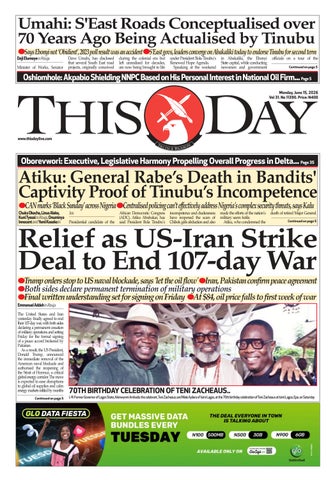
Says Ebonyi not ‘Obidient’, 2023 poll result was an accident S'East govs, leaders converge on Abakaliki today to endorse Tinubu for second term
Deji Elumoye in Abuja Minister of Works,
Dave Umahi, has disclosed that several South East road projects, originally conceived
during the colonial era but left unrealised for decades, are now being brought to life
under President Bola Tinubu’s Renewed Hope Agenda. Speaking at the weekend
in Abakaliki, the Ebonyi State capital, while conducting newsmen and government officials on a tour of the Continued on page 5
Atiku: General Rabe’s Death in Bandits'
Captivity Proof of Tinubu’s Incompetence
CAN marks ‘Black Sunday’ across Nigeria Centralised policing can’t effectively address Nigeria's complex security threats, says Kalu
Jos Presidential candidate of the
African Democratic Congress (ADC), Atiku Abubakar, has said President Bola Tinubu’s incompetence and cluelessness have reopened the scars of Chibok girls abduction and also
Relief as US-Iran Strike Deal to End 107-day War
Trump orders stop to US naval blockade, says 'let the oil flow' Iran, Pakistan confirm peace agreement Both sides declare permanent termination of military operations Final written understanding set for signing on Friday At $84, oil price falls to first week of war Emmanuel Addeh in Abuja
The United States and Iran yesterday finally agreed to end their 107-day war, with both sides declaring a permanent cessation of military operations and setting Friday for the formal signing of a peace accord brokered by Pakistan.
As a result, the US President, Donald Trump, announced the immediate removal of the American naval blockade and authorised the reopening of the Strait of Hormuz, a critical global energy corridor. The move is expected to ease disruptions to global oil supplies and calm energy markets rattled by months
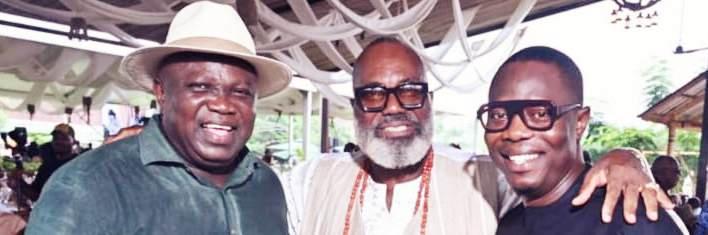
OF TENI ZACHEAUS..
Chuks Okocha, Linus Aleke, Kuni Tyessi in Abuja, Onuminya Innocent and Yemi Kosoko in
Senator
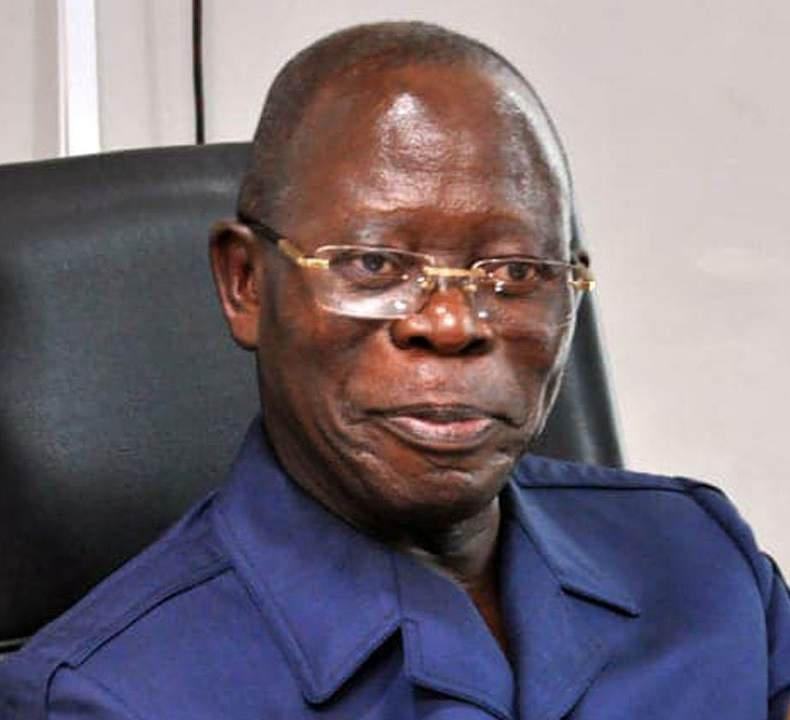
Oshiomhole: Akpabio Shielding NNPC Based on His Personal Interest in National Oil Firm
Altercation festers amid alleged battle for Senate headship in 2027 Former Edo gov says lawmakers grumbling about Akpabio’s leadership style
Emmanuel Addeh in Abuja
The simmering dispute between Senate President, Godswill Akpabio, and Senator Adams Oshiomhole escalated at the weekend, with the former governor of Edo State alleging that Akpabio's defence of the Nigerian National Petroleum Company Limited (NNPC) was driven by personal
of conflict.
The opening of the Strait of Hormuz is expected to offer relief to the global economy more than three months after fighting began.
Details of the deal were not immediately available, but key mediator, Pakistan, confirmed the signing will be Friday in Switzerland, even as key issues like Iran’s nuclear programme are expected to be addressed later.
“I hereby fully authorise the toll free opening of the Strait of Hormuz, and, simultaneously herewith, authorise the immediate removal of the United States Naval blockade,” Trump wrote on Truth Social.
The U.S. previously said it would ease its blockade of Iranian ports as the strait reopens, and would agree to relax sanctions to allow Iran to sell more of its oil and strengthen its battered economy.
Abubakar Rabe in the captivity of bandits, further described the incident as a damning indictment of the federal government's failure to secure the lives of Nigerians.
The former Vice President, in a statement issued by his media office, yesterday, said the death of the former Director of Defence Information, has once again exposed the ineffectiveness of the Tinubu administration in tackling insecurity and highlighted the frightening reality that no Nigerian, regardless of status or service to the nation, was safe.
administration’s legacy projects, Umahi - former governor of Ebonyi State - highlighted the Calabar-Ebonyi-Benue TransSaharan Superhighway as a project of strategic importance to the South East, South South, and parts of the North Central region.
According to him: “It is a colonial-era dream long forgotten, but President Tinubu has revived it, and construction is now underway. We must thank him immensely."
He reported steady progress on the project, noting that Section One, initially 118 kilometres, has been extended to 123.6 kilometres, with a contract sum of ₦45 billion, and that dualisation works are ongoing.
Section Two, Umahi stated, which runs from the Aboadi
interests linked to the employment of his daughter in the national oil company.
Speaking on ‘Mic On Podcast’ hosted by Seun Okinbaloye, Oshiomhole accused the Senate president of acting outside established parliamentary procedures in the handling of a recent Senate resolution distancing the Upper Chamber from
the agreement on state television but said Iran would not start implementing it until it was signed on Friday. He said the deal followed over 14 hours of talks in Tehran with a representative from Qatar, another mediator.
Pakistan first announced the deal after a day in which Israel, sidelined from the negotiations, attacked Beirut’s southern suburbs while pursuing the Iranianbacked Hezbollah. The attacks posed a threat to completing the negotiations, an Associated Press report said.
“Both sides have declared the immediate and permanent termination of military operations on all fronts, including in Lebanon,” Pakistani Prime Minister Shehbaz Sharif said, adding that mediators this week will facilitate meetings to “lay the foundation for the technical talks.”
However, broader negotiations on outstanding issues like Iran’s nuclear programme would
"It is with profound sadness and deep anger that we mourn the death of retired Major General Abubakar Rabe, a distinguished former Army Spokesperson and Director of Defence Information, who tragically passed away while in the captivity of bandits.
"General Rabe devoted the better part of his life to defending Nigeria. He served this country with honour, courage, and distinction. That such a man could end up dying in the hands of criminals is both heartbreaking and unacceptable," Atiku said.
border through Benue and Kogi States to Nasarawa, has also been awarded at a cost of ₦668 billion.
He noted the project has reached about 28% completion in some areas, with work continuing even during the rainy season, thanking Tinubu’s adoption of concrete road technology.
"The Trans-Sahara Superhighway is not just a road; it is an investment corridor that will catalyse trade in agricultural produce like cassava, yams, cashews, and palm oil from Cross River, Benue and Ebonyi, while also connecting Nigeria to Cameroon," the minister explained.
He noted the concrete road technology pioneered by President Tinubu as governor is
comments made by the senator during an ongoing investigation into the affairs of NNPC.
The altercation comes amid growing political manoeuvring within the Senate ahead of the 2027 election cycle, with speculation mounting over the future leadership of the National Assembly.
Oshiomhole maintained that
continue over the next 60 days, two senior Pakistani officials said earlier Sunday, speaking on condition of anonymity because they were not authorised to discuss the matter publicly. If the sides fail to reach a resolution within that time, the timeline could be extended.
The deal likely returns the region to a status that existed before the war, but with thousands of people dead and Iran wielding a new source of negotiating pressure with its ability to influence shipping in the strait. The waterway is crucial to significant shipments of oil, natural gas and related products like fertilizer, and its effective closure rocked the global economy.
Of the stated targets by the U.S. and Israel when they launched the war on February 28 with strikes that killed Iran’s supreme leader, Ayatollah Ali Khamenei, Tehran still has a missile programme, support for armed proxies in
Reports indicate that the retired General succumbed to complications arising from diabetes and hypertension during his ordeal after efforts to secure his release proved unsuccessful.
According to Atiku, the tragedy was not merely the death of one retired military officer, but a stark reflection of a nation where criminal elements have become emboldened while citizens were increasingly left to fend for themselves.
His words: "His death marks yet another painful blow to our
now being deployed nationwide.
Umahi expressed the gratitude of the South East to the president for ending decades of exclusion, stating, “All our forefathers sought—inclusiveness—we have it now.”
During the tour, the team inspected critical bridges in Section One and the concrete pavement on the Onueke section. They also inspected the 1.3-kilometre Ndi-Egbe Bridge in Afikpo LGA, Ebonyi, which links Ugep in Cross River State and is expected to be completed by December, 2026.
Regarding the Onueke Flyover in Ebonyi’s Central Senatorial District, Umahi noted that the ₦35 billion project is designed to decongest the highway.
The flyover stands 90 metres high and is flanked by a
Akpabio acted improperly, stressing that the former Akwa Ibom governor had a personal interest in the matter and sought to single him out over comments he made during a Senate committee investigation into the oil company's operations.
The senator recalled that his remarks arose after remarks by a former NNPC Chief Financial
the region like Hezbollah and a stockpile of highly enriched uranium for its nuclear program. Khamenei’s son is now supreme leader, though he has not been seen in public since the war began. His approval was needed for Iran to sign off on the deal, AP said.
Iran wanted a ceasefire deal to include the fighting in Lebanon, where Israel has pushed its invasion deeper than at any point in over a quarter-century as it targets Hezbollah. Tehran also has sought the release of billions of dollars in frozen funds.
The emerging deal had been sharply criticised by Israel’s government and by critics in Trump’s own Republican Party. Some said it did not improve on the terms of the 2015 Iran nuclear deal that Trump withdrew the U.S. from during his first term and still describes as “bad.”
Tehran has emphasised that it wanted a deal to focus on ending the war, with discussions
nation's security architecture and a chilling reminder of the vulnerability of even our most experienced military leaders in the face of rampant banditry and terrorism.
"General Rabe's ordeal is not an isolated case. In recent times, other senior military officers and distinguished Nigerians have either been killed or subjected to similar traumatic experiences at the hands of criminal gangs.
“The message being sent is dangerous: that those who once defended the nation can no longer
2.2-kilometre road on both sides.
The minister explained that Section Two of the Superhighway, awarded to Infiouest International Limited, runs from the Ebonyi border through Benue and Kogi to the Loko-Oweto Bridge in Nasarawa State, covering 123.6 kilometres.
The team also inspected the completed concrete pavement link road between Ebonyi and Cross River States, particularly from Okposi-Ukawu in Oha-Zara Local Government of Ebonyi and Ugwulangu-Abaomege in UGEP Ugep Local Government of Cross River State.
Meanwhile, Governor Francis Nwifuru of Ebonyi state has declared that his state remains the safest in Nigeria, with no reported kidnapping cases since
Officer (CFO), Umar Ajiya, who accused lawmakers of wanting to push their own children for employment in the organisation, and stressing that they wouldn't do so if the national oil company was rotten.
"I think the Senate president has personal interest…Somebody told me that the Senate president's daughter was taken without going Oshiomhole through the regular interview process. That is his own problem," Oshiomhole said, insisting that his comments were made in his personal capacity as a senator and not on behalf of the Senate.
put off until later on its nuclear programme — the issue at the centre of it all.
Iran has 440.9 kilograms (972 pounds) of uranium that is enriched up to 60 per cent purity, a short, technical step from weapons-grade levels of 90 per cent, according to the International Atomic Energy Agency (IAEA).
Iran has long maintained its nuclear programme is peaceful and has not publicly committed to giving up the enriched uranium, which is believed to be buried under three nuclear sites that were badly damaged by U.S. strikes last year.
Meanwhile, oil prices dropped on Sunday after Trump said an agreement with Iran had been reached and the United States would end its naval blockade on the country.
Brent crude prices fell 3.9 per cent to about $84 a barrel, and US crude dropped 4.8 per cent
rely on the nation for protection."
Atiku noted that the tragedy of General Rabe's death was made even more disturbing by another horrifying development that occurred on the very same day.
"As Nigerians mourned the passing of a retired Major General in the captivity of bandits, terrorists were simultaneously attacking the Kautikari community in Chibok Local Government Area of Borno State and setting primary and secondary school facilities ablaze.
“Chibok is not just a location;
he assumed office.
Speaking while receiving the media delegation in Abakaliki, Nwifuru thanked Tinubu for his commitment to infrastructure development in the South East, especially in Ebonyi, and for his national renewal programme.
He also highlighted numerous completed and ongoing projects in the state, including rural roads, primary health centres, and water schemes.
"We have kept contractors busy in the state with projects spread across every local government area, from rural roads to primary health centres and water schemes. We do not even view the road projects as a big deal because we have road projects scattered all over the state."
South East governors and
to about $81 a barrel. If oil settles at that level, it will be the lowest price for crude since March 4, just a few days into the war.
Anticipating a deal framework to be reached this weekend, oil settled below $90 a barrel on Friday for the first time since the first week of the war. Still, it has a long way to go to get back under $70, where it was before the United States and Israel launched attacks on Iran in late February.
Markets have cheered apparent progress, but the oil market still has significant work ahead to return the flow of crude to normal. The Strait of Hormuz needs to be de-mined, ships need to be able to freely flow in and out of the strait, Middle East production needs to come back online, emergency petroleum reserves need to be refilled, and damaged energy facilities need to be repaired, a CNN report stated.
it is a national scar. Since the abduction of more than 270 schoolgirls in April 2014, the name has become a symbol of pain, loss, and collective trauma.
“Twelve years later, many families have still not fully recovered from the emotional devastation of that tragedy. Yet, on the very day a retired Major General died in the captivity of bandits, terrorists returned to the Chibok axis to burn schools.
“It was as though Nigeria was
leaders are scheduled to converge in Abakaliki on Monday at a major rally to endorse Tinubu for a second term.
Umahi said Nwifuru would lead the people of Ebonyi State at the rally to show appreciation to the president. He urged Ebonyi citizens to ignore the ranting of opposition politicians who cannot match Tinubu's record. The National Media Tour is organised by the Governor Hope Uzodimma-led Renewed Hope Ambassadors, in collaboration with the Presidential Media Team.
The visit to the South East is the team’s second regional tour, following the team's North-West tour. The delegation is jointly led by presidential spokespersons, Bayo Onanuga and Sunday Dare.
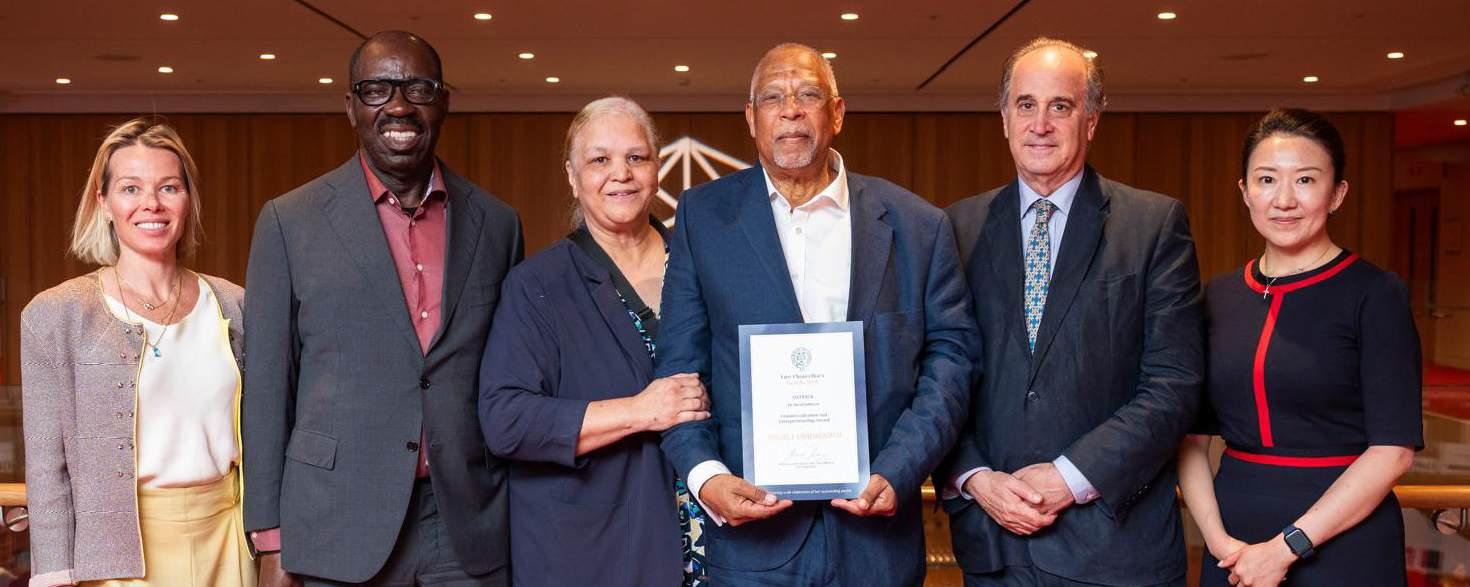
AT THE UNIVERSITY OF OXFORD VICE CHANCELLOR’S AWARD...
CBN Moves to Isolate Risks Across Banks, Fintechs, Financial Groups
Proposes strict limits on shared directors, staff, technology platforms and intra-group funding
Nume Ekeghe
Central Bank of Nigeria (CBN) has unveiled sweeping proposals aimed at isolating risks across banks, fintechs, and other closely linked financial institutions.
The proposals, contained in the apex bank's newly released “Exposure Draft Guidelines
on Ring-Fencing Operations of Closely Linked Entities in the Nigerian Financial System,” seek to establish clear operational, governance, and financial boundaries among affiliated institutions to prevent distress in one entity from spreading across an entire financial group.
The draft guidelines come
amid the growing convergence of banking, payments, lending, wealth management and other financial services businesses, many of which increasingly operate under common ownership structures.
According to CBN, the framework is designed to "establish clear operational and functional boundaries
among closely linked entities within the financial system" and address "regulatory arbitrage arising from the commingling of activities across different licence categories".
The exposure draft, signed by Director of Financial Policy and Regulation Department, Dr. Rita Sike, stated that the guidelines were developed, "In
Zrosk Report: CBN’s Proposed HoldCo Reforms May Trigger Fresh Capital Raise, Banking Restructuring
Policy may create N370 billion capital shortfall, compel UBA, Zenith to restructure, as Tier-1 banks risk fresh capital beef-up Declares ring-fencing plan threatens cross-sell model, raises compliance burden for banks, fintechs
James Emejo in Abuja
Leading investment research firm, Zrosk Investment Management, has cautioned that the proposed overhaul of the Financial Holding Company (HoldCo) framework by Central Bank of Nigeria (CBN) could trigger fresh capital raise by major banking groups, force structural reorganisation by some lenders, and significantly alter the economics of financial services industry.
In its assessment of the apex bank’s recently released exposure drafts on revised HoldCo regulations and new ring-fencing guidelines, the firm described the proposed 20 per cent capital buffer requirement and mandatory HoldCo formation for certain institutions as the most consequential regulatory changes to the sector in over a decade.
Zrosk is a Lagos-based Nigerian investment management and alternative investments firm that deploys capital across public equities, private credit, and early-stage venture investments.
It is a research-driven investment manager focused on long-term capital growth through disciplined investing and risk management.
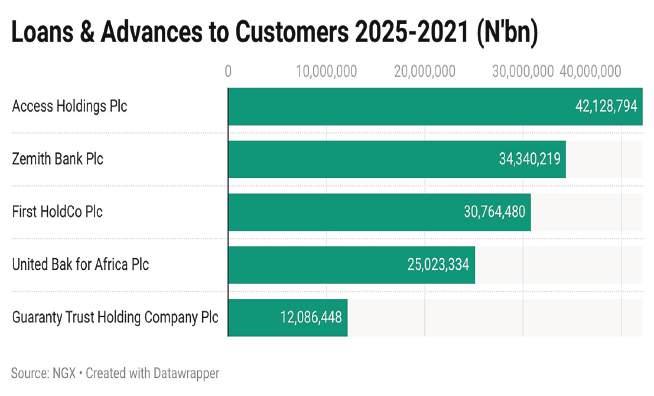
According to the firm, the proposed rules, currently open for stakeholder comments, can leave all four existing Tier-1 banking HoldCos — GTCO, Access Holdings, First HoldCo, and Stanbic IBTC Holdings — below the new capital threshold, creating an estimated aggregate capital shortfall of about N370 billion.
The investment firm stated that under the current framework introduced in 2014, HoldCos were only required
to maintain paid-in capital equivalent to the aggregate capital of their subsidiaries.
However, the revised draft raises the threshold substantially by requiring HoldCos to maintain capital that exceeds the combined paid-in capital of all subsidiaries by at least 20 per cent.
Zrosk stated that the proposed requirement automatically widened compliance gaps following every regulatory recapitalisation exercise because increases in subsidiary capital would necessitate corresponding increases at the HoldCo level.
Its analysis showed that Access Holdings faced the largest estimated shortfall of about N120 billion under the proposed framework, followed by GTCO N103.7 billion, First HoldCo N90 billion, and Stanbic IBTC Holdings N11.8 billion.
The firm observed that while GTCO, Access, and Stanbic currently complied with existing rules, they would all require additional capital under the revised regime.
First HoldCo, according to the report, is already under pressure as it remains the only major HoldCo currently in breach of the existing capital requirement, although recent capital injections have helped improve its position.
Beyond the capital implications, Zrosk highlighted another major provision requiring institutions that own multiple closely linked financial entities to establish a non-operating HoldCo structure.
The report stated that the draft used mandatory language, leaving little room for discretion, effectively compelling Zenith Bank and United Bank for Africa (UBA) to restructure.
furtherance of the mandate to promote a safe, sound and stable financial system, safeguard consumer interests and strengthen regulatory oversight within the Nigerian financial system."
CBN explained that the framework prescribed requirements relating to governance, intra-group transactions, segregation of customer funds and data, operational independence, recovery and resolution planning, and consolidated supervision.
According to the regulator,
the guidelines are intended to strengthen consumer protection, enhance transparency and accountability, mitigate contagion risks among closely linked entities and preserve financial stability while supporting innovation and fair competition within the financial services sector.
Under the proposed framework, the number of directors permitted to serve simultaneously on the boards of closely linked entities would be capped at 20 per cent of the total number of directors on the board of an institution.
Experts Urge Nigerians to Turn Challenges into Opportunities
Blessing Ibunge in Port Harcourt
Nigerians have been urged to turn societal and economic challenges into opportunities for innovation, growth, and impact.
The charge was made in Port Harcourt at the Strategic Elevation Conference 2026, with theme, “Positioning for Relevance, Influence and Impact.”
It was organised by an international business development consultant, Dr. Brian Reuben, in partnership with My-Ace China, Chief Executive Officer of Housing and Construction Mayor Limited.
In their various presentations, the leadership and business experts emphasised personal responsibility and strategic positioning as essential drivers of success.
In his opening address, titled, “Strategic Elevation: The Hidden Architecture of Market Leadership,” Reuben stated that success depended more on perspective and positioning than on the quality of a product or idea.
He said many individuals and businesses failed to achieve their goals because they did not interpret markets, opportunities, and human interactions from the appropriate strategic standpoint. Reuben said, “Your results in life depend on your perspective, your perspective depends on your strategic positioning, many at times it is not because a product is not good, but because the vantage point from where you are looking needs to be changed, you need to reposition yourself, you need to look at markets and people differently.
L-R: Member of the advisory board of OxTrack, Camille Park; former Governor of Edo State and member of the OxTrack board, Mr. Godwin Obaseki; Other board members, Mrs Johnson, Prof David Johnson
and Mr. Brooks Newmark at the University of Oxford Vice Chancellor’s award in the United Kingdom, where the OxTrack education technology solution initiative was nominated in the commercialisation and entrepreneurship category … recently
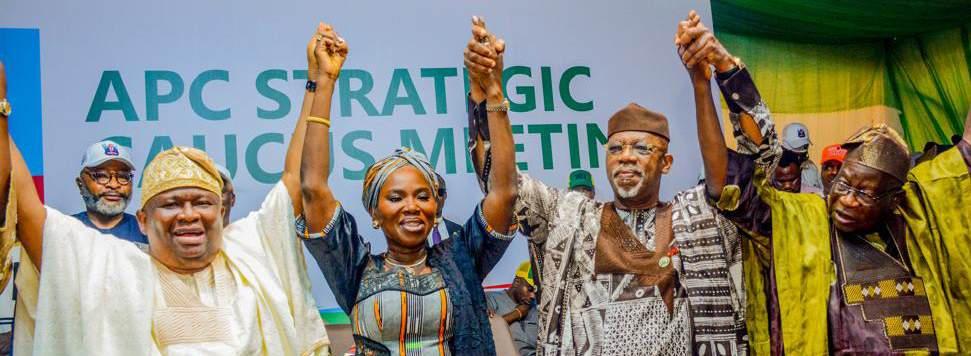
OGUN APC STRATEGIC MEETING...
L-R: The All Progressives
governorship
Alliance Urges FG to Reject IMF Tax Proposals, Offers 7-Point Recovery Plan
Urges FG to review generous incentives,
exemptions granted to oil and gas, other large corporations CPPE faults fund's support for monetary tightening, advocates development financing
James Emejo in Abuja and Dike Onwuamaeze in Lagos Alliance for Economic Research and Ethics (AERE) has urged the federal government to reject the recommendation by International Monetary Fund (IMF) for additional taxes on fuel and telecommunications services, warning that such measures could worsen poverty, stifle businesses, and undermine ongoing efforts to stimulate economic recovery.
Instead, the policy think tank proposed a seven-point reform agenda which it said would strengthen government finances, improve revenue generation
and support economic growth without imposing fresh burdens on Nigerians.
In a policy response to the IMF's latest assessment of the Nigerian economy, Alliance argued that the country's immediate challenge is not insufficient taxation but weak revenue administration, high production costs, revenue leakages and a worsening poverty situation.
Similarly, the Centre for Promotion of Private Enterprise (CPPE) also expressed concern over IMF's support for continuance of monetary tightening without sufficient consideration of the adverse
ACAMB Flags Off 30th Anniversary Celebration with Tree-Planting Initiative
The Association of Corporate Communication and Marketing Professionals in Banks (ACAMB) has commenced activities marking its 30th anniversary with a tree-planting exercise.
Held in Lagos recently, the initiative formed part of the association's efforts to promote environmental sustainability while commemorating three decades of advancing corporate communications and marketing excellence within Nigeria's banking industry.
In a statement by the association, the tree planting exercise which was led by President of ACAMB, Jide Sipe and the Registrar/ Chief Executive Officer of the Chartered Institute of Bankers of Nigeria (CIBN),
Akin Morakinyo, in the company of Vice President 1, Chinwe Bode Akinwande; Vice President 2, Morolake Onifade; Executive committee Members, both past and present, alongside, Group Heads of marketing and Corporate communications, and Heads of Departments across banks waded through the heavy downpour, planting trees in the rain in a display of commitment that set the tone for the milestone celebration.
A tree was planted, by representatives of banks in the country and named after each bank.
ACAMB President, Jide Sipe, who welcomed members and dignitaries to the exercise, reaffirmed the Association’s commitment to the reputation and growth of the banking industry.
consequences for investment, enterprise growth, job creation and sovereign debt service pressures.
Chief Executive Officer of CPPE, Dr. Muda Yusuf, in a public statement titled, “IMF Article IV Report on Nigeria: Commendable Diagnosis, But Greater Policy Balance Is Required,” emphasised that development financing remained an economic necessity.
However, AERE called on the government to reject new taxes on fuel and telecommunications in 2026; focus on improving tax administration and compliance; rationalise tax expenditures enjoyed by extractive industries and large corporations and reduce the cost of governance.
It said government should
lower interest rates to support productive enterprises, expand social protection programmes; and tackle revenue leakages with greater urgency.
According to the think tank, these measures offer a more sustainable route to fiscal stability than imposing additional taxes on consumers and businesses already grappling with elevated living costs.
Essentially, AERE is a policy think tank chaired by Hon. Dele Oye, a former National President, Nigerian Association of Chambers of Commerce, Industry, Mines, and Agriculture (NACCIMA).
Oye is the immediate Past Chairman of the Organised Private Sector of Nigeria
(OPSN) and Chairman of the Nigeria-Türkiye Business Council (NTBC).
It maintained that the IMF's recommendations failed to adequately reflect the country's social realities, particularly the scale of poverty and food insecurity confronting millions of citizens.
Citing recent poverty estimates, the group noted that the number of Nigerians living below the poverty line had risen significantly over the past few years, arguing that policies capable of increasing transport, communication and energy costs could further erode household incomes.
It stated, "The timing is wrong, the targets are wrong, and the consequences would
be devastating. Nigeria has already implemented major reforms including exchangerate unification, fuel subsidy removal, tighter monetary policy and new tax laws.
"While these measures may have improved macroeconomic stability, their benefits have yet to reach ordinary citizens. The patient needs recovery time, not another surgery."
The organisation argued that Nigeria's tax challenge is largely administrative rather than legislative, pointing out that the IMF itself acknowledged that improved tax administration could generate revenues equivalent to about 3.1 per cent of Gross Domestic Product (GDP) without introducing new taxes.
World Bank Reduces SSA Growth to 4.0%, Sees Higher Energy Prices Favouring Nigeria, Angola
Dike Onwuamaeze
World Bank’s latest forecast has projected that growth in SubSaharan Africa (SSA) would edge down to four per cent in 2026 and then recover to 4.4 per cent on average in 2027 and 2028.
It also projected that real per capita GDP growth in SSA would remain at 1.6 per cent in 2026, before firming to an average of two per cent per year in 2027 and 2028, which would still be insufficient to deliver substantial reductions in extreme poverty.
World Bank also said higher energy prices will benefit oil exporters, particularly Angola and Nigeria, while non-oilexporting economies, on the other hand, will face higher
fuel, fertiliser, and transport costs, driving up inflation, especially food prices.
It said rising government debt posed a key challenge for Emerging Market and Developing Economies (EMDEs), as it led to higher interest rates, higher debt-service payments, and a greater likelihood of debt distress.
Debt levels are positively associated with dollardenominated sovereign bond spreads and domestic-currency government bond yields.
The forecast was contained in the June edition of World Bank’s “Global Economic Prospects.”
It stated, “The growth forecast for 2026 has been revised down by 0.3 percentage point since
January, with the negative impact of the conflict in the Middle East expected to outweigh existing growth drivers—including structural reforms and recent trade agreements that support investment and exports.
“The outlook assumes that the geopolitical environment stabilises in the near term and that security improves in economies in Fragile and Conflict-affected Situations (FCS) in the region.
“Though the impact of the conflict in the Middle East, operating through higher commodity prices and weaker external demand, is expected to be overwhelmingly negative, it will be heterogeneous across SSA economies.”
World Bank said, “Higher energy prices will benefit oil exporters, particularly Angola and Nigeria. Non-oil-exporting economies, on the other hand, will face higher fuel, fertilizer, and transport costs, driving up inflation, especially food prices.
“Consequently, growth in non-oil-exporting economies is expected to be markedly lower than anticipated, as elevated consumer prices and input costs are set to dampen consumption and raise production costs.”
The bank said limited fiscal resources were restricting efforts to manage rising energy and food prices across many SSA economies, notwithstanding the improved fiscal positions and buffers in recent years.
Nume Ekeghe
Congress (APC)
candidate for the 2027 Ogun State election and Senator representing Ogun West Senatorial District, Senator Solomon Olamilekan Adeola; the party’s deputy governorship candidate, Alhaja Kudirat Abiodun Adegunwa-Balogun; Ogun State Governor, Prince Dapo Abiodun; and the Ogun State APC Chairman, Chief Yemi Sanusi, during the party’s Strategic Stakeholders’ Meeting held at the APC State Secretariat, Abeokuta, on Sunday
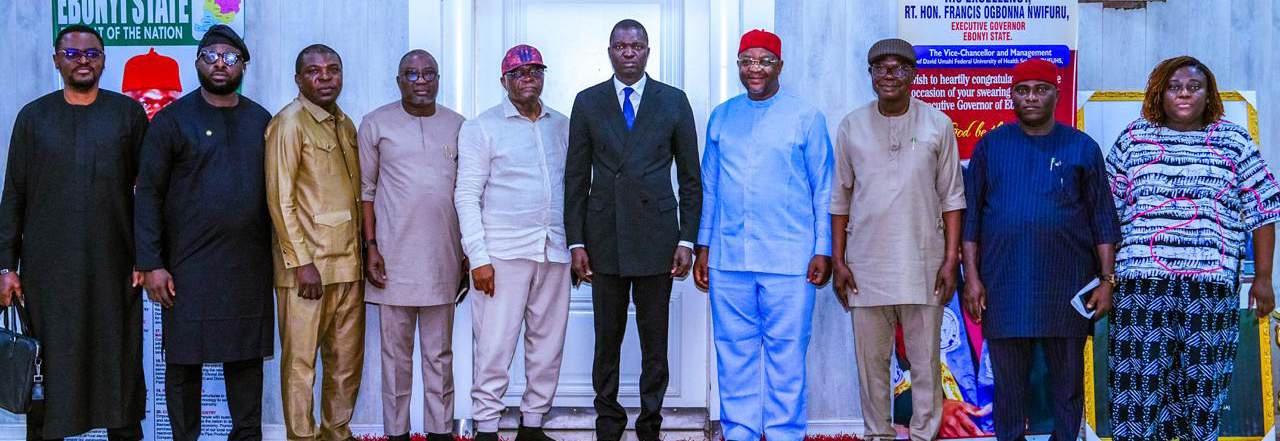
RENEWED HOPE AMBASSADORS VISIT EBONYI GOVERNOR...
and
NGX Prepares for Dangote Refinery IPO, Doubles
Efforts to Midwife African
Exchanges Linkage Project
650,000bpd refining facility may consider dual listing in global financial centre
Chairman of Nigerian Exchange Group (NGX Group), Dr. Umaru Kwairanga, has disclosed that the exchange was getting set for the Initial Public Offering (IPO) of Dangote Refinery, which was reportedly offering three billion ordinary shares at $0.35 per share, with investor demand already exceeding $2 billion.
Kwairanga expressed NGX's preparations for the
IPO at the weekend during a visit to the Abu Dhabi Stock Exchange (ADX), United Arab Emirates (UAE), where he met with their board and management. He said, in a statement he personally signed, "In Nigeria, we are also preparing for Dangote Refinery IPO, which is seen as a continental project. Hopefully, the refinery which is one of the biggest refineries in the world will consider a dual listing in a global financial centre and
NCDMB, Chevron, Bristow Begin Pilot Training to Boost Human Capacity in Oil Sector
The Nigerian Content Development and Monitoring Board (NCDMB), in partnership with Chevron Nigeria Limited (CNL) and Bristow Helicopters Nigeria Limited (BHNL), has commenced a significant Human Capacity Development (HCD) programme aimed at developing a new generation of pilots for the aviation segment of the oil and gas industry.
The move aligns with the board's determination to build Nigerian workforce with practical skills for top careers in the local and international oil and gas industry.
Unveiled in Lagos last week, the training will provide 10 Nigerians with world-class aviation training, positioning them for careers in one of the specialised and critical sectors supporting offshore oil and gas operations.
In a statement signed by its General Manager, Corporate Communication, Dr. Obinna Ezeobi, NCDMB said helicopter
piloting was identified as one of the priority skills under its Field Readiness Training, which was spurred by the resurgence of big-ticket investments and new projects in the Nigerian oil and gas industry.
The Field Readiness Training initiative is a special Human Capital Development (HCD) Programme that would train over 10,000 young graduates and technicians in top 10 high-demand skills in the sector and position them to take part actively in the oil and gas projects recently launched by some international and indigenous operating oil and gas companies.
Speaking at the kick-off ceremony, the Executive Secretary of NCDMB, Mr. Felix Ogbe, represented by the Director, Capacity Building Directorate, Abayomi Bamidele, described the programme as more than the commencement of a training exercise, noting it represents the opening of a rare opportunity for young Nigerians to build careers in a highly specialised profession.
we hope to have the active participation of Middle East investors with roadshows likely in the UAE."
Quoting sources and a placement document, Reuters on Friday reported that the refinery was offering three billion ordinary shares at $0.35 per share, with investor demand already exceeding $2 billion.
According to the report, investors must subscribe to a minimum of one million shares ($350,000), with additional purchases in multiples of 500,000 shares, adding that shares will be subject to a 365-day lock-up period.
Proceeds will be used for expansion and general corporate purposes as the refinery ramps up operations and strengthens its market
position, the document shows.
During the meeting with the executive of the UAE-based exchange at the weekend, Kwairanga solicited collaborative efforts between NGX and DAX, stating that both markets can explore knowledge sharing and training programmes.
He expressed delight that despite the ongoing geopolitical tensions, the Abu Dhabi Exchange and the United Arab Emirates, in general, were still working, peaceful, and a global destination of choice for business.
He said that was a clear demonstration of the solid foundation laid by the founding fathers and the resilience, determination and focus of current leaders, adding that he has no doubt
that the UAE will emerge stronger from present issues.
Kwairanga said NGX, which he chairs, and the Nigerian capital market had witnessed dramatic improvement in performance and operations over the last couple of years.
According to him, "Our index and market capitalisation has more than doubled in the last couple of years and we have been attracting renewed interest from investors from all parts of the globe, including the middle east.
"I recall that our President, Bola Ahmed Tinubu, GCFR, who is Nigeria's leader and chief marketer was in Abu Dhabi earlier this year to inform investors about ongoing economic reforms in Nigeria and why it is a
very attractive destination for business."
The NGX chairman said the exchange was also at the forefront of the African Exchanges Linkage Project, which will seamlessly link stock exchanges in several African countries for intra African trading and broaden the continent's capital markets significantly. He added, "I believe during this visit, we will discuss areas for collaboration between our two exchanges in areas, such as exchange of knowledge and training programmes especially product development, cross border listings, openings in Nigeria for UAE quoted companies that may wish to expand. One product/ platform that I believe we can work on is Tabadul.”
Ijaw and Urhobo Accept Presidential Intervention over Warri Delineation Dispute
Sylvester Idowu in Warri
The Indigenous Ijaw and Urhobo leaders of Warri Federal Constituency of Delta State, have accepted the presidential intervention in the Warri delineation dispute, warning against further alteration of the Independent National Electoral Commission (INEC)'s delineation report as presented on May 20th in Asaba.
The Ijaw and Urhobo, at a joint press conference in Warri, yesterday, stated that they accepted the presidential intervention reluctantly as a mark of respect for President Bola Tinubu in respect of the alteration to the Registration/
Electoral Wards in Warri South West Local.
They, however, warned that they would not accept any further alteration to INEC's delineation report of May 20th in any form whatsoever and under any circumstances.
"That we have reluctantly accepted the intervention of the President and Commander-inChief in respect of the alteration to the Registration Areas/ Electoral Wards in Warri South West Local Government Area as mark of respect for the President and in the interest of peace.
"That we would not accept any further alteration to the INEC’s delineation report presented to stakeholders on the 20th day
of May, 2025 with respect to the Registration Areas/Electoral Wards Composition between the ethnic nationalities in the different Local Government Areas, names of Registration Areas, Polling Units Composition or any other form of alteration to the report.
"INEC must not do any alteration to the May 20, 2026 report in any form whatsoever and under any circumstances", they stated.
The Indigenous Ijaws and Urhobos noted that the Itsekiris were still unsatisfied despite the political interventions that have altered the INEC delineation report in their favour and urged the electoral body to upload the
final report without further delay.
“We call on INEC to upload the report of the Registrations Areas/Polling Units into its portal without further delay and commence a special registration and transfer of voters to the newly created Registration Areas and Polling Units in the Warri Federal Constituency of Delta State.
“We state in conclusion that any further delay in the implementation of the delineation report and attempt to alter the report would amount to betray of trust by the Federal Government and INEC, and we should not be blamed for the likely consequences that would follow," they added.
Peter Uzoho
Ndubuisi Francis in Abuja
L-R: Senior Special Assistant to the President on Public Engagement, Fredrick Nwabufo, Senior Special Assistant on Education
Youth Engagement, Dare Ojepe, Senior Special Assistant on Media and Publicity, Temitope Ajayi, Senior Special Assistant on Special Duties and Director of Media and Publicity of Renewed Hope Ambassadors, Tunde Rahman, Special Adviser on Information and Strategy, Bayo Onanuga, Ebonyi State Governor, Francis Nwifuru, Special Adviser on Media and Public Communication, Sunday Dare, Chief of Staff to Ebonyi State Governor, Emmanuel Echiegu; Commissioner for Information, Ikeuwa Omebeh and Senior Special Assistant on Strategic Communication, Linda Akhigbe during a courtesy call to Governor Nwifuru at the Government House in Abakaliki ahead of the Renewed Hope Ambassadors South-East Projects inspection tour
YEDI COHORT 3 GRADUATION AND MSME TAX ENGAGEMENT SESSION...
United Nigeria Airlines Welcomes Two New Aircraft to Expand Its Operations
ABUAD students get 50% airfare discount as university-airline partnership yields fresh dividend
As Ibom Air commences flight service from new international terminal
Chinedu Eze and Gbenga Sodeinde in Ado-Ekiti
United Nigeria Airlines has announced it has received two new aircraft to expand its operations, add more destinations in its domestic and regional services.
The newly delivered equipment is a Boeing 737-800NG aircraft, bearing registration numbers 5N-CFC and 5N-CFB.
A statement from the airline said the aircraft are named in honour of two distinguished figures: His Royal Majesty, Igwe Nnaemeka Achebe (Obi of Onitsha), a revered traditional ruler and custodian of cultural heritage, and the late Professor Chinua Achebe, Africa’s literary giant whose works reshaped global narratives about Africa.
United Nigeria Airlines said the double dedication to these notable figures positions them as flying symbols of legacy, culture, and national pride.
“This milestone strengthens United Nigeria Airlines growing fleet and reinforces its position within Nigeria and Africa's evolving aviation landscape. Beyond a routine delivery, the aircraft brings capacity, enhanced comfort, and improved reliability, meeting rising demand for a more seamless and premium travel experience,” the airline said.
In another aviation sector related development, barely four months after signing a landmark Memorandum of Understanding (MoU), Afe Babalola University, Ado-Ekiti (ABUAD) and United Nigeria
Airlines have recorded another major milestone, with the airline granting a 50 per cent airfare discount to students of the institution during the June 2026 holiday period.
The latest gesture is coming on the heels of an existing partnership that has already seen 20 final-year Aeronautical and Aerospace Engineering students of the university undergoing hands-on industrial training at the airline's ultramodern maintenance facility in Lagos, with each student receiving a monthly stipend of N100,000.
Meanwhile, the United Nigeria Airline disclosed that its newly acquired aircraft arrived the Murtala Muhammed Airport Terminal 2 (MMA2), Lagos, on June13, 2026, and will be formally unveiled in
a ceremony attended by the Obi of Onitsha, the Minister of Aviation and Aerospace Development, and other key stakeholders.
Speaking ahead of the arrival, the Chief Commercial Officer, Mr. Adedayo Olawuyi, described the development as “a defining chapter in the airline’s growth journey and a proud statement of Nigerian excellence taking flight.”
“This aircraft is not just about expanding capacity; it is about telling our story, celebrating our icons, and uniting our people with a renewed sense of pride,” he added.
The Boeing 737-800, globally recognised for efficiency, reliability, and passenger comfort, will strengthen United Nigeria operational capacity and route network, supporting
Halilu: NASENI Committed to Manufacturing of Local Medical Diagnostics
The Executive Vice Chairman and Chief Executive Officer of the National Agency for Science and Engineering Infrastructure (NASENI), Mr Khalil Suleiman Halilu, has reaffirmed the agency’s commitment to strengthening Nigeria’s healthcare sovereignty through local manufacturing of medical diagnostic technologies.
Halilu made the remark while hosting participants of the Harvard Universityled Science of Defeating Malaria programme at a
closing dinner in Abuja at the weekend, following their visit to the NASENI-Troment biotechnologies factory, where they commended the facility’s role in advancing disease control and healthcare innovation in Africa.
A statement said the delegation, led by Prof. Dyann Wirth of Harvard University and comprising about 85 global health professionals, scientists and policymakers, toured the state-of-the-art facility and described it as a significant step towards combating malaria and other infectious diseases across the continent.
Speaking at the dinner, Halilu noted that the commendation further validated the vision behind the NASENI-troment biotechnologies factory, a strategic project initiated 18 months ago to reduce Nigeria’s dependence on imported diagnostic kits and strengthen local healthcare manufacturing capacity.
He explained that the facility is designed to produce up to 600 million diagnostic kits annually, enough to meet about 80 per cent of Nigeria’s diagnostic testing needs while creating opportunities
for export to other African countries and global markets.
The factory manufactures rapid diagnostic tests (RDTs) and in-vitro diagnostic (IVD) products under the N-CheckUP brand for diseases and conditions including malaria, hepatitis B and C, HIV, typhoid, syphilis, COVID-19, pregnancy and blood glucose monitoring.
According to Halilu, the project aligns with NASENI’s broader mandate of deploying science, technology and innovation to address national challenges, create jobs and build industrial capacity.
the airline’s commitment to safe, seamless, and worldclass service, with plans for more regional and long-haul expansion.
In another major sector related development, the management of Nigeria’s rising carrier, Ibom Air, has announced that it has relocated its domestic operations to the new terminal at the Victor Attah International Airport, Uyo.
The new terminal, which would host the airline’s international operations, has modern facilities and expanded departures and arrival areas.
“Ibom Air is pleased to announce the commencement of its domestic flight operations from the newly commissioned International Terminal of the Victor Attah International Airport, Uyo, effective today, June 14, 2026.
Brazil-based Businessman Held as NDLEA Uncovers Cocaine-Soaked Shirts at Lagos Airport
Operatives of the National Drug Law Enforcement Agency (NDLEA) have intercepted a Brazil-based Nigerian businessman at the Murtala Muhammed International Airport, Lagos, after discovering shirts and towels allegedly impregnated with liquid cocaine in a major anti-narcotics operation that also led to the seizure of over two tonnes of illicit drugs across the country.
The suspect, 41-year-old Abugu Ikechukwu, was arrested upon arrival from São Paulo, Brazil, via Addis Ababa, Ethiopia, aboard an Ethiopian Airlines flight.
NDLEA said a detailed examination of his luggage uncovered 14 shirts and towels soaked in liquid cocaine, dried and carefully ironed to evade detection.
The spokesman of the anti-narcotics agency, Femi Babafemi, in a statement on Sunday, said forensic analysis revealed the concealed narcotics weighed 6.1
kilogrammes.
Abugu reportedly told investigators that he had lived in Brazil for more than 14 years where he operates an African restaurant and had travelled to Nigeria to visit his family and purchase food supplies for his business.
The arrest was part of a nationwide crackdown that saw NDLEA operatives recover massive consignments of cannabis, tramadol and other controlled substances in multiple states and the Federal Capital Territory.
In a development highlighting the growing reach of drug trafficking networks, the agency also arrested two persons living with disabilities for alleged involvement in the illicit drug trade.
A 60-year-old woman, Chidimma Sunday, was taken into custody in Abia State after being caught with 1.8 kilogrammes of skunk, while 28-year-old Abubakar Usman was arrested in Rivers State with cannabis, methamphetamine, tramadol, diazepam and other prohibited substances.
Emmanuel Addeh in Abuja
L-R: Head, Alpher, Union Bank, Aderonke Chukwudeme; First Runner-up, Ohun Qudus; Second Runner-up, Alese Iyiola; President and Chairman of Council, Nigerian-British Chamber of Commerce (NBCC), Prince Abimbola Olashore; Grand Prize Winner, Sapara Adewale; Chairperson, NBCC MSME and Women and Youth Entrepreneurship Development Initiative (WYEDI) Committee, Adeola Azeez; and Head, Retail Segments, Union Bank, Adenike Olokunbola, at the WYEDI Cohort 3 Graduation and MSME Tax Engagement Session at the NBCC Plaza, Lagos ...recently
Michael Olugbode in Abuja
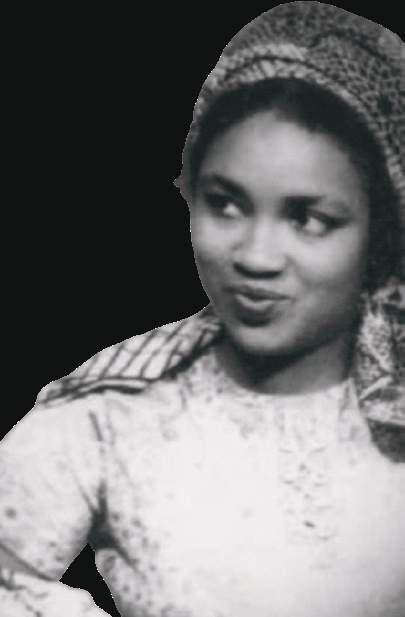
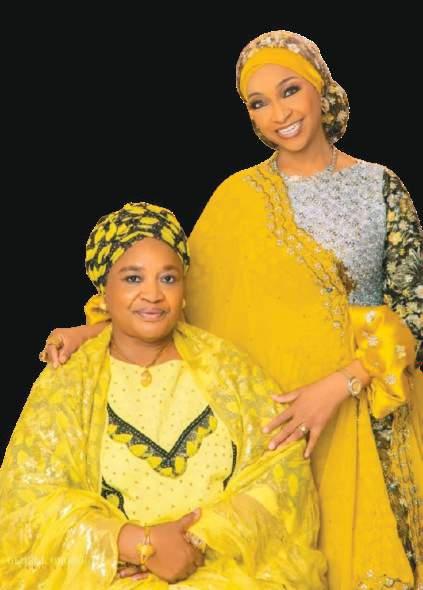
My Dearest Mom…
(TRIBUTE TO HAJIYA BINTA LADI MUSA MUSAWA BY HANNATU MUSA MUSAWA )
My Darling Mom,
As I try to pen down some sort of tribute for you, I can only think of beginning by telling you how much I miss you, how much I love you and just how much I am so grateful to you.
You and Dad have always been the most important part of my entire life, and you will remain in my heart for all of eternity. Now that you are no longer with us, I know that my life just isn't ever going to be the same without you. You were everything to me and did so much for me. You have been my guardian angel and there will never be a day that I will not think about you and pray for you. Upon your passing, my heart shattered into a million pieces. I am in pain. The sort of pain that has taken a grip of me and seems determined to suffocate me.
This is by far the most devastatingly heart-ripping and life-altering incident I've ever experienced. And if I didn't know when Dad passed that I would experience even more pain than at his loss, I now know. And I am aware that the heartbreak of losing you may never leave me. While I hope that time is a great healer, I don't think I will get over this agony. My greatest fear has always been how I would be able to navigate life without you. But as much as I love you, I know that Allah loves you more. The concept of Tawakkul, the Islamic concept of the reliance on God and trusting in God's plan will have to be my comfort and healing.I will remain prayerful, faithful, grateful and comforted knowing how much you positively affected my life, our family and the lives of so many others.
Mom not only were you, my mother, you were my greatest role model, my hero, my inspiration, and my rock Even though every day I communicated to you how grateful and lucky I was to have had you as a mother, I feel as if you didn't know how much I appreciated everything you represented in my life.
As I sit here writing what will be the hardest article I have ever written, I want to tell you Mom just how much your dedication has been appreciated by your family. I would want the world to know how much of a good mother you have been and I would want the strong bond between you and your children to serve as an inspiration to all. I'm writing these words with the hope that it would be worthy of you.
Mom, I had come to learn that in the real world, where domination, bigotry, oppression, dishonesty, and corruption intertwine with all aspects of our lives, there are no easy, uncomplicated sources of inspiration. But there are lessons. I have always looked to you for those lessons about how to struggle against immorality and dishonesty. In your example and lessons, I have been able to find both inspiration and warning, inseparably tied.
Anyone who knewyou Mom, (Hajia Ladi Binta Musawa (nee Yusuf Gurshe Rafindadi), will be aware of what a difficult task it is for me to attempt to find the words to describe you. A role model to all who knew and loveed you, you lived life with great humility. Your selflessness and kindness to others knew no bounds. You were a fantastic person who had been blessed with a kind nature, and an unassuming ability to make all those around you feel special and loved.
To have the blessing of being able to have called Hajia Ladi, 'Mom' is, perhaps, the greatest fortune of my life. I will continuously learn and grow from the pure example set by you. The energy you pumped into the love and caring you displayed to all those around you and beyond is boundless. You will always be a source of inspiration to so many you met by your
encouragedyour children, family, friends, neighbors and associates to work hard at life but always to put Allah first. Your faith cradledyou and your loved ones even during the times when life threw curve-balls. The courage you always showed in the face of adversity and your inner strength were truly what great people are made of. She were a true blessing.
My greatest hope for you Mom, is that you were able to see yourself the way the World sawyou; which is as a blessing, an incredibly special and amazing person. A woman who was indeed a pure soul with a pure heart, a remarkable role model and a woman with great faith.
To me, Hajia Ladi Binta Musawa, you were a shining gem; a gift, an angel. You had incredibly strong values. In my eyes, if ever there was a portrait of a Godly mother, it was you. I am convinced that anything that is pure and good in me, Allah has planted it in me directly from you Mom. You were big on teaching. On a daily basis, you taught me to live my life, make my decisions and conduct myself as if I am teaching my children and the next generation. One of your favorite quotes to me is one of Ghandi's. “Hannatu, always be the change you want to see in the world…” you would say. This quote consistently reverberates in my head and sticks with me wherever I go. It is exactly how you lived your life.
Some of the greatest values I try to uphold; defending my honor religiously, keeping integrity, trying to do right, caring for the downtrodden, were instilled in me by you Mom. Your lessons and example influence every good part of my life and positive thought process. Mom you taught me the difference between rght and wrong and urged me to constantly try to make good choices. You taught me to be faithful to myself, to my family, to my culture, to my nation, to my calling, to people around me, to my identity, to my bloodline, to my Father's name and especially to Allah. You encouraged me to be more focused and strive and finish things that I start. You always urged me to try as best as I can to keep my word and learn to accept and take correction. And you always worry and counsel me about tempering the fiery temper I inherited from Dad. Mom you taught me that the things I should treasure should never be made with human hands. You taught me that it is through giving that I will be filled and fulfilled.
You taught me that originality feeds the soul and energizes the mind. You taught me to exercise greater patience and always try to endure. You taughtme the difference between right and wrong. You taughtme not to use my power to hurt others. You taughtme to always strive to give more than I receive. This is an example that you lived with daily. Throughout your life you has always been known to help people, even at your own expense. It is the way you lived.You simply loved being there for others and making their lives easier. It is the times that you help people that one can see the greatest joy in your eyes.
Mom you were my rock, my anchor, my strong, beautiful, vibrant angel; my heart and my precious gift from Allah. I am beyond proud of you and everything you were. You have always been all I have ever needed in my life. I thank The Almighty with everything that I have for the grace and gift he has given me in the form of parents.
Summing up your life, Mom, those who knew you will always reiterate and come back to one thought. Never will you meet a woman who more faithfully lived his values. Your kind was rare. You were a teacher of all things. Your method was simple. You taught by example. Your character is the foundation of the conscience of many of those who encountered you, who worked with you and who were part of your life. Your teachings are endless. You were strong in body, in spirit, and in commitment. You fulfilled every obligation you ever undertook. Your word was your bond, and everyone knew it.
You were loyal. You are a loss that nothing can replace. Your faithfulness to the people you interacted with during your lifetime could be seen in the way you steadfastly maintained ties with anyone you ever knew. You had a quiet dignity, respecting yourself the way you respected others. Although you are no more, today, however, we have the privilege of celebrating someone who epitomizes leadership; someone whose life reflects a heart of service and commitment to faith, family, friends, and certainly those who strive to follow your example.
Mom, I will never miss an opportunity to speak of what a great mother you were and how you never missed an opportunity to speak about how your greatest pride and joy were your children and grandchildren. You were always supportive to every one of us in our personal, professional, and educational lives. And you always made yourself available to us. You struggled to make sure you gave us the very best education.
Mom, the love you draped in this world will grow and live on, and that is the greatest measure of any human being. You had a heart of gold, and it is incredibly empowering and inspirational to see just how infinite your reach has been.
Sometime a very long time ago, I learnt that the truest way to gage the character of any person is through how much love they can give; how selflessly they share whatever they can to help others; how consistently they lift those around them with a kind word, through humor, a compliment, or with humility. By this very benchmark, Mom, you were immeasurable.
In everything I do Mom, I have felt your hand on my shoulder, especially when things got tough to deal with. I have heard your words of encouragement, I have heard your advice, and I even heard your reprimand. I promise to abide by everything you taught me as if you were right there watching and guiding me. And while I know that I have my memories of you, I also know that your spirit will live on in my heart. They often say that “Love leaves a memory no one can steal, but death leaves a memory no one can heal.” It is a loving memory for me when I think about your life and all you did for me and my siblings. The good memories will remain with us forever, knowing the ability imparted by you into our lives.
I adore you Mom very much and the most sincere way I know of expressing my love is never to compromise the ethics youstrived so hard to instil in me, to learn from the mistakes you confided in me and to never ignore the privilege you have given me. To forget any of this would be the greatest disrespect to you. In this sense, I will continue to carry you with me and use you as a yard stick for honour and integrity.
Mom, your life, your influence, your legacy, your struggles, your energy will always be inextricably linked to mine and I now take comfort in that. I take comfort in knowing that you are no longer in painand that your struggle with your health that we watched you go through is no longer something you have to endure.
I feel so blessed to have you as my mother and I'm thankful for the wonderful life you have given me.The legacy you left is what makes me what I am today and keeps me progressing in life. I'll do my best to carry on in your footsteps dear Mom.
Momma, everything I have written in this tribute mirrors the hearts and minds of each one of your six children and eighteen grandchildren. I know that I speak for them as much as I speak for myself.
Mom, you are in my heart, and I will always love and miss you. You brought so much joy to our family, more than you'll ever know. I salute you; I honor you for an infinite number of reasons, I celebrate you, and I thank you for so much more than I can express with these words. My gratitude to you is endless…
Thank you for teaching me the importance of humility, philanthropy, and the remarkable power of emotional and financial generosity!
Thank you for making fulfilled with my heritage of being a Nigerian!
Thank you for showing me what it means to be a good woman, an extraordinary citizen, and an outstanding mother!
Thank you for loving me so much!
Thank you for being you!
Thank you for making me proud to be the daughter of Hajiya Binta Ladi Musa Musawa!
Mom you will long remain an inspiration to those who will serve their community, their country, and we are blessed to have shared the gift of your life with us all. I am so proud of you. You will not soon be forgotten. Your reward will be great in Heaven. We pray for you and for those who knew you.
My final words for you Momis a prayer… To all who loved you; your staff, assistants, neighbors, colleagues, admirers, community, friends and family: especially Hadiza (Hadi), Ahmed (Babangida), Rabi, Sa'adatu (Ummy), and Zainab (Zee) and all your grandchildren…
“May the Almighty reward you and help you to apply patient endurance and appreciation. Indeed our spirit, possessions and families are magnificent gifts, which God has loaned us for a period and he takes them away after the termination of that period. Gratitude becomes necessary when He gives, and patience is mandatory when He takes.
…Hajiya Ladi Musa Musawa, your boss, neighbor, friend, colleague, sister, mother and daughter was from among that great gift which God allowed you to enjoy in a way that was fortunate and gratifying. Although you loved her, her place is with her maker now. As she has gone home, it is your duty to show patience in her death and gratitude for her life.
…May the Almighty augment your recompense, be kind in your misfortune, forgive the deceased, encourage you with endurance and give you peace. I pray you have the fortitude to bear her loss.”
As I witness a painful twilight and the death of my mother, I pray that God forgives and has mercy on the soul of Hajiya Ladi Musa Musawa and makes honorable her reception. May Allah keep her safe and sound, protect the place where she has rested and make her entrance wide; bless her for her good deeds and surround her with a garden filled with beauty. May she receive the gentle blow of a cool breeze, be washed with snowflakes, ice, sleet, water and everything pure and cleansed Allah her with I moon
Forever, HANNEY
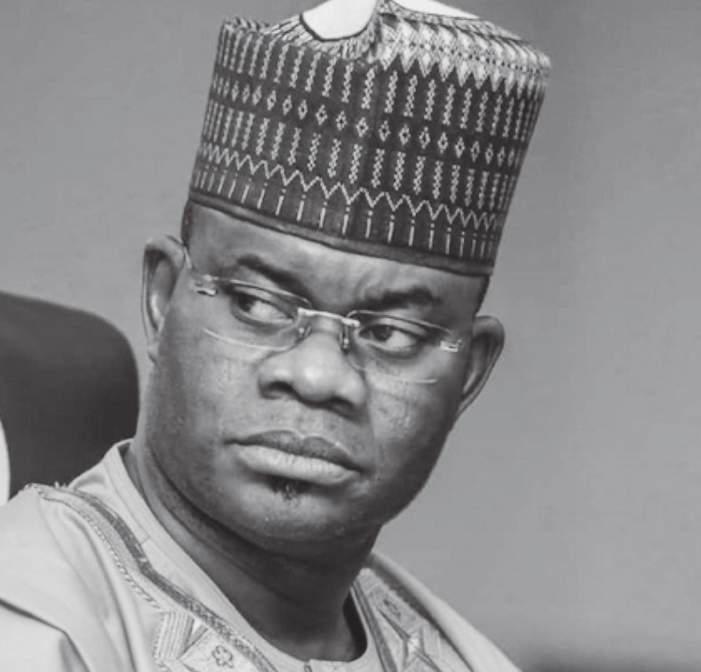
KOGI CENTRAL: The Defect Of Yahaya Bello’s Candidacy
THE All Progressives Congress (APC) primary elections for elective offices may have come and gone, but among all the candidates that emerged, few have generated as much controversy, disquiet, surprise, and public anger as the candidacy of Yahaya Bello for the Kogi Central Senatorial District.
Across political circles in Kogi State and beyond, analysts, party loyalists, and neutral observers are increasingly questioning the wisdom behind handing the APC senatorial ticket to a man whose public image remains heavily burdened by allegations of corruption, poor governance records, and ongoing legal battles with the Economic and Financial Crimes Commission (EFCC).
For many, the issue is not merely about party politics; it is about public perception, credibility, and electoral consequences.
A Candidacy Seen as a Political Liability
Political observers argue that Yahaya Bello’s candidacy may become a major defect in the APC’s electoral fortunes in Kogi Central and even beyond. Rather than energizing the party base, his emergence appears to have deepened internal dissatisfaction and public skepticism.
There is growing concern that:
The APC risks losing substantial votes in the senatorial district.
The party may find it difficult to market its candidate to undecided voters.
Opposition parties could capitalize heavily on Bello’s controversial image.
Many voters may see the ticket as a reward for impunity rather than competence.
In politics, perception is often as powerful as reality. Unfortunately for the APC, the dominant public perception surrounding Yahaya Bello is deeply negative.
To many Nigerians, Bello represents a former governor whose administration left behind unresolved questions regarding governance, workers’ welfare, insecurity, infrastructure, and financial accountability. These concerns are now being amplified by the ongoing corruption cases instituted against him by the EFCC.
Additional Allegations and Security Concerns
In another allegation by a Kogi State group christened “Intelligence Report on All Illegal Activities of the Former Governor of Kogi State, Yahaya Bello, During and After His Tenure,” which was reportedly sent to the Inspector General of Police and copied to President Bola Ahmed Tinubu, the National Security Adviser, and the Chief of Defence Staff, Yahaya Bello was accused of several alleged unlawful activities.
The document reportedly raised security concerns and called for closer scrutiny of Bello’s activities before and after leaving office. Although the specific claims contained in the report have not been judicially determined, the development has further fueled public debate surrounding his political re-emergence and suitability for elective office.
The EFCC Cases Hanging Over Bello
One of the strongest factors fueling public resistance to Bello’s candidacy is the scale and gravity of the allegations against him.
The 80.2 Billion Money Laundering Case
The first major case is currently before the Federal High Court in Maitama, Abuja, presided over by Justice Emeka Nwite.
The EFCC filed a 19-count charge bordering on money laundering, criminal breach of trust, and alleged misappropriation of public funds amounting to over 80.2 billion.
Among the major allegations are:
Diversion of Kogi State funds, including local government allocations.
Structured transfers through multiple private accounts al-
legedly designed to evade financial reporting regulations.
Alleged acquisition of luxury properties in high-profile areas of Abuja and one property in Burj Khalifa, Dubai.
Alleged involvement of close associates and aides in handling and moving funds.
The anti-graft agency also alleged that public funds were used for massive cash transactions, dollar conversions, and expensive property acquisitions, including one Abuja property reportedly worth 650 million.
The 110.4 Billion Criminal Breach of Trust Case
The second case is before the FCT High Court, Maitama, under Justice Maryanne Anineh.
In this matter, Bello and some co-defendants are facing a 16count charge involving alleged criminal breach of trust and money laundering amounting to 110.4 billion.
The EFCC alleged:
Diversion of state treasury funds.
Illegal acquisition of properties in Abuja and Dubai.
Unlawful control and movement of massive sums linked to state resources.
Although Yahaya Bello has pleaded not guilty to all charges, both trials remain ongoing, with several adjournments for witness testimonies, admissibility of evidence, and legal arguments.
Burden of Public Opinion
Even though every accused person is presumed innocent until proven guilty by a competent court, politics operates differently from legal proceedings. Elections are fought not only in courtrooms but also in the court of public opinion.
For many voters, the existence of multiple high-profile corruption cases involving hundreds of billions of naira is enough to create distrust and political resistance.
This is where the APC may face its greatest challenge.
The party may struggle to convince ordinary voters that it stands for accountability and integrity while simultaneously presenting a candidate facing such monumental corruption allegations.
Opposition parties are already likely to weaponize these issues during campaigns, portraying the APC as insensitive to public concerns about corruption and governance.
The Kogi Central Question
Kogi Central has historically been politically active and emotionally invested in representation. Many constituents are expected to ask difficult questions:
Is Yahaya Bello the best the APC can offer?
Will his candidacy unite or divide the electorate?
Can he effectively represent the district while battling multiple court cases?
Will voters prioritize ethnic and party loyalty over credibility and public image?
These questions may define the political atmosphere in the months ahead.
A Risky Political Gamble
By giving Yahaya Bello the APC senatorial ticket, the party may have taken a major political gamble whose consequences could extend beyond Kogi Central.
Instead of projecting renewal, credibility, and public confidence, the candidacy risks reviving debates about corruption, governance failures, and political impunity.
In modern democratic politics, parties win not only through structures and power but through public trust. Whether the APC can successfully defend and market Yahaya Bello before the electorate remains uncertain.
What is certain, however, is that his candidacy has already become one of the most controversial political developments in Kogi State ahead of the next election cycle.
KEYAMO AND THE OGWASHI-UKU MISSED LANDING
VICTOR IKEM argues that the missed landing is a metaphor for the overdue expansion of Asaba Airport
THE VOICE OF NIGERIA’S CAPITAL MARKET REGISTRARS
Registrars are indispensable partners in market’s modernisation and longterm stability, writes SOLA ONI with party rules
Every year, companies spend huge money on employee engagement programs yet the ROI is nothing compared to what was expended and still haemorrhage their best people. According to Gallup, nearly 70% of employees are disengaged at work globally. Billions were spent but the engagement still broken.
The crisis is a leadership problem. Most leaders have been handed a flawed operating manual, one that confuses compensation with connection. So, they keep throwing money at a wound that money cannot heal. Meanwhile, the teams that move mountains, weather crises, and genuinely outperform are almost never built on lavish budgets. They are built on something rarer, and far cheaper: leadership that is human, consistent, and intentional.
This is what this article is about; putting people first, and trusting the numbers to follow. Let us be honest about what most "culture-building" actually looks like in practice: a catered lunch here, a team outing there, maybe a company hoodie at Christmas. And while nobody is refusing the free lunch, nobody is staying for it either. Perks attract while culture retains. And they are built from fundamentally different materials.
Culture is the answer your team members give when someone asks them, "What is it actually like to work there?" It can be how disagreements are handled, whether people feel safe raising a concern, whether their manager knows something about them beyond their job title. These are things every leader can do without requiring a budget.
Research from the Harvard Business Review consistently shows that the top drivers of employee commitment are not monetary. Rather, they are feeling respected, trusted, and heard.
Before we get to habits, let's name what your people are really working for beyond their salary. Every person on your team is quietly keeping score on three things: Do I feel psychologically safe here? Do my contributions get seen and acknowledged? Does my manager actually listen when I make recommendations?
There are the real concerns of your team members. When answered rightly, the cost does not show up in the company’s account statement, but its absence can be felt immediately in disengagement or in quiet quitting.
Psychological safety is the certainty that you will not be punished for asking a question, sharing a concern, or admitting a mistake. This is the bedrock of highperforming teams. Google's famous Project Aristotle, which studied hundreds of internal teams for years, found it to be
Always put people first, and the numbers will follow, contends LINUS
OKORIE
PEOPLE FIRST, NUMBERS SECOND
the single most important factor in team effectiveness.
Creating psychological safety costs nothing. It only requires a leader willing to model vulnerability, to say "I was wrong," to ask "what am I missing?" before issuing a verdict.
Five Daily Habits of Deeply Respected Leaders
Great leadership is the accumulation of small, consistent choices made in ordinary moments. Here are five that cost nothing and change everything.
One, begin with the person, not the task. Before launching into the agenda, take sixty seconds to ask how someone is doing, and wait for the real answer. Not the reflexive "fine." The two-minute conversation that follows often tells you more about team health than any quarterly report.
Two, narrate your decisions. When something changes like a restructure, a priority shift, a policy update, share the reasoning with your team, not just the outcome. "Here is what we decided" is information. "Here is why we decided it, and here is what we weighed" is trust.
Transparency as a leadership currency costs nothing to dispense and compounds relentlessly.
Three, name good work specifically and promptly. "Great job" is not enough. Go ahead to give usable context like "I noticed how you handled that escalation on Thursday. The way you stayed calm and reframed the client's concern turned a potential loss into a renewed contract."
Four, protect people from the pressure they cannot see. Your team does not need to absorb every wave of organizational turbulence that hits your desk. Part of leading well is filtering — taking in uncertainty above you and translating it into clarity below. This is not deception; it is stewardship. Your people should focus on the work in front of them, not the anxiety behind your door.
Five, stay consistent. This is perhaps the most underrated leadership habit of all. Show up the same way on a difficult Thursday as you do on a celebratory Monday. Your emotional consistency becomes your brand. Teams build their confidence around predictability, not the absence of challenge, but the certainty of how their leader will show up in one.
There is a quiet arrogance embedded
in the idea that a person's value to a team begins and ends with what you do at work. Every individual on your team arrived with a history, a set of aspirations, a set of fears, and a life that extends well beyond their role. The leaders who understand this are the ones people talk about for the rest of their careers.
You do not need to become a therapist. You need to become genuinely curious. Ask what someone is working toward long-term, not just what they are delivering this quarter. Notice when someone seems off and create space for the conversation, even if they do not take it immediately. Remember the small things like a sick parent, a side project they mentioned once, a goal they shared in a one-on-one six months ago, etc. These are leadership skills, and they are what separate a manager people forget from one they remember for life.
Fear-based management seems to work in the short term. People do deliver when they are afraid of consequences. But what they deliver is the barest minimum needed to stay safe. It was not their best thinking or their boldest ideas.
Curiosity-led leadership sounds like this: "Walk me through your thinking here" instead of "Why did this go wrong?" It sounds like "What would you do differently?" instead of "This is not acceptable." It sounds like "Help me understand what you need" instead of "I need this fixed by Friday."
This is not about softening your language for the sake of it. It is a strategic choice to have a team where people bring problems to their manager early, because they trust the response will be helpful. A team where people hide problems until they blow up is one built on fear. And fear, eventually, has a price tag no budget can cover.
Every day, whether you are conscious of it or not, you are building a leadership brand. Your team is watching how you handle pressure, whether your actions match your words, how you treat the quietest person in the room.
Okorie MFR is a leadership development expert spanning 30 years in the research, teaching and coaching of leadership in Africa and across the world. He is the CEO of the GOTNI Leadership Centre.
VICTOR IKEM argues that the missed landing is a metaphor for the overdue expansion of Asaba Airport
KEYAMO AND THE OGWASHI-UKU MISSED LANDING
Driven by social, cultural, and symbolic affinities, I write as someone from a neighboring community to Ogwashi-Uku. My hometown, Ubulu-Uku, shares a direct boundary with this historic and vibrant community, which hosts the headquarters of the Aniocha South Local Government Area of Delta State.
Ogwashi-Uku is prominent for many good and noble reasons beyond the missed landing of a private airplane. It is the birthplace of one of Nigeria’s finest and globally acclaimed economists, Dr. Ngozi Okonjo-Iweala, Director-General of the World Trade Organization and former Nigerian Minister of Finance. The town is also home to distinguished diplomat Ambassador Ralph Uwechue, the very first Nigerian Ambassador to France and one-time President-General of Ohanaeze Ndigbo.
Beyond its notable sons and daughters, Ogwashi-Uku is renowned for its rich agrarian heritage and strategic location. Sharing borders with Ibusa and Kwale, the town serves as an important transit corridor linking Asaba in the north to Warri in the south. Every day, thousands of people traverse this axis for commerce, business, education, and social engagements.
Recently, news of an aircraft missing its landing and diverting due to operational constraints sparked conversations across Delta State and Nigeria. While aviation incidents are often explained by technical and environmental factors, I see the episode as a metaphor and a reminder of an opportunity that has been delayed for too long: the expansion and modernization of the Asaba Airport.
Some months ago, I wrote a personal note to the Minister of Aviation and Aerospace Development, Chief Festus Keyamo, SAN, urging him to consider upgrading Asaba Airport into a truly international-standard aviation hub.
My proposition was simple: Asaba Airport possesses the strategic potential to become a major gateway connecting Nigeria’s South-East and South-South regions directly to key international destinations.
The South-East and South-South geopolitical zones are home to tens of millions of Nigerians, including one of Africa’s most vibrant and entrepreneurial populations. Yet, international travellers from these regions often have to endure long road journeys to Lagos or Port Harcourt before accessing international flights. This arrangement is inconvenient, costly, and economically inefficient.
Asaba is strategically positioned to bridge this gap.
Located at the intersection of major economic corridors, Asaba has rapidly emerged as one of Nigeria’s fastest-growing urban centers. The city enjoys proximity to Onitsha, one of West Africa’s largest commercial centers, and serves as an important administrative and eco-
for Delta State and the wider region. The increasing volume of passengers using the airport is evidence that its current infrastructure is already under significant pressure.
Today, the airport is simply too small for the level of traffic it handles.
The terminal facilities require expansion. Passenger handling systems need modernization. The runway and supporting infrastructure require upgrades that can accommodate increased traffic and position the airport to attract more domestic and international airlines. There is also a need for enhanced cargo facilities that can support trade, agricultural exports, and regional economic integration.
More importantly, the future growth of Delta State increasingly depends on an airport that can support emerging investments and rising economic activity. Major developments are rapidly taking shape along the Asaba corridor, with one of the most notable being the expansive Cubana Millennium City, a world-class mixed-use urban development expected to redefine real estate, hospitality, commercial activities, and leisure in the region.
Projects of this magnitude require robust transportation infrastructure. Investors, business executives, tourists, diaspora Nigerians, and potential homeowners will increasingly depend on efficient and expanded air connectivity. A modern airport is often the first gateway to major investment destinations. In many parts of the world, airports have become economic catalysts that stimulate urban development, attract capital, and create entire ecosystems of business opportunities.
The success of developments such as Cubana Millennium City and similar investments along the Asaba growth corridor is therefore closely tied to the capacity and competitiveness of the Asaba Airport. It is difficult to envision Asaba fully realizing its enormous economic potential without corresponding investments in aviation infrastructure.
Chief Festus Keyamo is uniquely positioned to champion this transformation.
Dr. Ikem is a communications consultant and public affairs analyst writing from Asaba, Delta State
Registrars are indispensable partners in market’s modernisation and long-term stability,
writes SOLA ONI
THE VOICE OF NIGERIA’S CAPITAL MARKET REGISTRARS
During a brainstorming session organised by Central Securities Clearing System (CSCS) Plc ahead of the launch of its T+1 Settlement Cycle, I listened to a brilliant and passionate defence of the role of registrars by the President of the Institute of Capital Market Registrars (ICMR), Dr Catherine Nwosu. Her presentation strategically highlighted their enduring importance in Nigeria’s evolving capital market. Given how often their contributions are overlooked, her intervention was both timely and necessary.
Originally established in 2004 as the Association of Capital Market Registrars, the organisation has grown into the Institute of Capital Market Registrars (ICMR). Its development owes much to pioneers such as Mrs Lola Oyebadejo, a retired banker and Dr Bayo Olugbemi, former President of Chartered Institute of Bankers of Nigeria (CIBN) and a Fellow of Chartered Institute of Stockbrokers (CIS). The duo was the Institute’s first and second Presidents respectively. Their visionary leadership laid the foundation for the strong professional institution that exists today.
My decision to join the Institute nearly two decades ago was driven by a deep appreciation of the value registrars bring to capital market operations. That appreciation was further strengthened through our Investor Education Programme during my time at The Nigerian Stock Exchange, now NGX. Registrars serve as custodians of investor information and have long been critical to market efficiency, though their role is often misunderstood. Even as technology transformed the market, some observers mistakenly assumed that registrars were becoming less relevant.
For years, a narrative has persisted that registrars are gradually being displaced by technological innovation. With the rise of artificial intelligence, blockchain technology, automated trading systems, and digital settlement infrastructure, some view registrars as relics of an earlier era. However, this perception ignores a fundamental reality: the Nigerian capital market still depends heavily on registrars to ensure trust, accuracy, accountability, and investor confidence.
Registrars successfully navigated some of the most challenging periods in the history of Nigeria’s capital market. During the era of manual clearing and settlement, shareholder records were maintained physically, dividend warrants processed manually, and reconciliations among market participants often took weeks. Registrars managed missing share certificates, duplicate claims, identity disputes, delayed settlements, and the growing problem of unclaimed dividends. Despite significant operational risks, they remained central to maintaining market stability and investor confidence.
These experiences helped shape registrars into one of the strongest operational pillars of the market. Having witnessed the inefficiencies of paper-based systems, they recognised early the need for automation, stronger controls, and better
data management. Rather than resisting change, registrars embraced technology to improve efficiency, transparency, and investor protection.
Today, registrars operate sophisticated digital platforms supported by cloud infrastructure, cybersecurity frameworks, automated reconciliation systems, and electronic dividend-processing tools. Processes that once took weeks can now be completed within hours. Shareholder verification has become faster, dividend payments more efficient, and the administration of corporate actions more seamless. Technology has not diminished their role; it has strengthened it.
Registrars remain indispensable to the post-trade ecosystem. They maintain shareholder records, facilitate dividend payments, administer corporate actions, and coordinate activities among issuers, investors, brokers, regulators, and settlement systems. In any capital market, institutions responsible for maintaining ownership records remain essential to preserving confidence and integrity.
Their importance is further highlighted by the introduction of faster settlement cycles. With the implementation of the T+1 settlement framework by CSCS, transactions are completed the next business day, leaving little room for errors or delays. Such an environment demands real-time reconciliation, accurate shareholder verification, and seamless coordination. Faster settlement cycles therefore increase, rather than reduce, the need for the precision and control provided by registrars.
Registrars also play a significant role in promoting corporate governance and market transparency. Listed companies depend on them to maintain accurate shareholder registers, administer annual general meetings, process proxy voting, and support regulatory compliance. As investors place greater emphasis on governance standards, the registrar’s role in facilitating transparent communication between companies and shareholders becomes even more critical.
Oni, an Integrated Communications Strategist, Chartered Stockbroker, Commodities Broker and Capital Market Registrar, is the Chief Executive Officer, SofunixInvestment and Communications
nomic hub
Editor, Editorial Page PETER ISHAKA
Email peter.ishaka@thisdaylive.com
A BLOOD GIVER, A LIFE SAVER
Blood donation is good for the country’s health
Yesterday, 14 June, the 2026 Blood Donor Day was held with the theme, ‘One Drop of Humanity. Give Blood. Save Lives.’ Even when less than 10 per cent of Nigerians donate blood voluntarily and the country is currently reeling under the onslaught of serious shortage of safe blood products, there was not much awareness campaign to demonstrate seriousness on this issue. With a message that each voluntary donation is a powerful expression of solidarity and compassion, we call on Nigerians to cultivate the habit of voluntary blood donation, because of what it means to the health of our society.
Statistics from the World Health Organisation (WHO) reveal that Nigeria needs an average of 1.8 million pints of blood annually whereas the National Blood Transfusion Service (NBTS) collects only 500,000 pints of blood, a shortfall of about 73.3 per cent. This has resulted in a situation in which most hospitals and patients in the country depend on commercial donors for their blood needs. In other countries, people usually donate blood voluntarily because it feels good to help others, and such altruism has been linked to a lower risk for depression and greater longevity. According to medical practitioners, those who need a blood transfusion include victims who have been involved in road accident and have lost blood, patients going for surgery and those with blood disorder, like sickle cell anaemia. There are also patients whose blood doesn’t clot (hereditary bleeding disease e. g. haemophilia) as well as children whose blood cells have been depleted by malaria. Cancer patients also use lots of blood as well as those with burns. Women on antenatal or about to deliver a baby use lot of blood while statistics have indeed revealed that
women use at least 53 per cent of the blood that is collected. Men only use 47 per cent. “In Nigeria, 80-90 per cent of maternal mortality is as a result of bleeding complications that we are not able to manage due to shortage of blood,” according to Suleiman Akanmu, a Professor of Haematology and Blood Transfusion at the College of Medicine, University of Lagos.
There is a need for the relevant health authorities to partner with the media and the civil societies on the benefit of voluntary blood donation to the larger society
T
EDITOR SHAKA MOMODU
DEPUTY EDITOR WALE OLALEYE
MANAGING DIRECTOR ENIOLA BELLO
DEPUTY MANAGING DIRECTOR ISRAEL IWEGBU
CHAIRMAN EDITORIAL BOARD OLUSEGUN ADENIYI
EDITOR NATION’S CAPITAL IYOBOSA UWUGIAREN
THE OMBUDSMAN KAYODE KOMOLAFE
EDITOR-IN-CHIEF/CHAIRMAN NDUKA OBAIGBENA
GROUP EXECUTIVE DIRECTORS ENIOLA BELLO, KAYODE KOMOLAFE, ISRAEL IWEGBU
DIVISIONAL DIRECTORS SHAKA MOMODU, PETER IWEGBU, ANTHONY OGEDENGBE
Unfortunately, whereas several other countries within the continent like Uganda, Egypt and Kenya have embraced 100 per cent voluntary, non-remunerated blood donation by their citizens, Nigerians have not imbibed the habit. Given that there is so much ignorance about blood donation in our country, there is a need for the relevant health authorities to partner with the media and the civil societies on the benefit of voluntary blood donation to the larger society. That will help to allay some of the myths and misconceptions associated with blood donation, especially given the belief in certain quarters that the donated blood could be used for rituals. An urgent public enlightenment is needed to address some of the fears often bandied.
Medically, people who donate blood regularly are very healthy as such habit has no side effect. According to experts, the amount of blood usually taken from a person is only 450 mills, and a healthy individual has 10-12 times that quantity while the little that is taken would be generated back to the body within two to four weeks. What the foregoing suggests clearly is that it is very safe and indeed healthy to donate blood. We urge Nigerians, who ordinarily care for the welfare of their fellow citizens, to embrace the habit of voluntary donation so we can have a robust blood bank.
We hope the relevant health authorities will also ensure that donated blood is properly screened to avoid storing infected blood.
Letters in response to specific publications in THISDAY should be brief (150-300 words) and straight to the point. Interested readers may send such letters along with their contact details to opinion@thisdaylive.com. We also welcome comments and opinions on topical local, national and international issues provided they are well-written and should also not be longer than (750- 1000 words). They should be sent to opinion@thisdaylive. com along with photograph, email address and phone numbers of the writer.
IS THE ERA OF POS OPERATOR COMING TO AN END?
Step outside your home in Lagos, Kano, or Port Harcourt, and walk twenty meters. Under a frayed umbrella, seated on a plastic chair with a small banner, you will find a "POS operator." These operators are the capillaries of Nigeria’s cash-dependent economy, pumping naira notes into the hands of millions. When commercial bank branches shrank, and automated teller machines (ATMs) consistently ran dry, these retail entrepreneurs stepped in. They brought financial services within reach of the poorest farmer and the busiest market woman, effectively humanising fintech for tens of millions of citizens.
But today, the street-corner cash merchants are facing a perfect storm. What was once a highly lucrative blue-ocean opportunity has devolved into a hyper-competitive race to the bottom. Estimates suggest Nigeria now has well over 1.5 million mobile money agents, possibly more than the entire West African sub-region combined.
Walk down any street in an urban hub, and you will see
four, five, or six operators clustered within shouting distance of each other, thin-slicing margins that are already compressed by platform fees. When multiple neighbours on the same street split the daily traffic, revenue per operator crashes. Many now earn less than the minimum wage, and the dream of easy money is fading. Visit any POS agent today, and you will hear the same laments. Sourcing naira notes amidst inflation and cash scarcity causes severe "float fatigue," often requiring hours in bank queues or paying a premium. Network nightmares and telecom downtimes stop an agent's income instantly. Rising fraud and crime have forced many to operate behind iron grilles, while fintechs like OPay, PalmPay, and Moniepoint slash commission rates as they chase corporate profitability.
Furthermore, the Central Bank of Nigeria (CBN) has aggressively moved to formalise and secure the sector, implementing a strict single-principal exclusivity rule. Historically, an agent could survive network downtimes by juggling
multiple terminals. Under the new regulatory framework, that flexibility is illegal. Agents are required to affiliate with a single licensed provider, register with the Corporate Affairs Commission (CAC), and operate from fixed, geofenced coordinates. When your lone service provider goes down, your business comes to a standstill.
Yet, the most dangerous competitor to the traditional POS vendor is an invisible shift in technology and consumer behaviour. The heavy, dedicated plastic terminal, susceptible to battery degradation and printer jams, is growing obsolete. The emergence of SoftPOS (Software POS) and nearfield communication (NFC) means any mid-range Android smartphone can now function as a payment collection point. Merchants no longer need to pay an upfront hardware lease; they can accept payments via card taps or phone-to-phone interactions instantly.
Elvis Eromosele, elviseroms@gmail.com
10th Senate’s Scorecard Exposes Productivity Gap Among Lawmakers
a review of the Senate Bills Progression Chart from June, 2023 to april, 2026 indicates uneven legislative productivity in the 10th Senate, with a small group of lawmakers sponsoring most bills while many others record minimal outputs, raising questions about engagement, effectiveness and representation in the upper chamber system performance. Sunday Aborisade reports.
As the 10th Senate reached the third year of its four-year tenure mandate on June 12, a detailed review of legislative records covering June 2023 to April 2026 obtained by THISDAY, suggests a marked concentration of bill sponsorship among a relatively small number of lawmakers, with a significant portion of senators recording limited legislative initiatives during the period under review.
The Senate Bills Progression Chart, which tracks legislative activity across hundreds of bills introduced within the period, presents a picture of uneven participation in one of the legislature’s core constitutional responsibilities: the making of laws for the peace, order and good governance of the federation.
While several senators have been consistently active in introducing bills across multiple policy areas, others have registered comparatively modest legislative footprints.
Although parliamentary performance cannot be reduced solely to the number of bills sponsored, the data provides a useful lens through which to assess levels of engagement, policy initiative and legislative activism within the upper chamber.
It also reflects broader questions about how legislative responsibilities are distributed in a chamber of 109 senators, each elected to contribute to national lawmaking and oversight.
At the centre of the legislative activity is Senate Leader, Senator Opeyemi Bamidele, whose name features prominently across nearly all major categories of bills considered by the chamber within the period under review.
Representing Ekiti Central, Bamidele has emerged as one of the most prolific sponsors of legislation in the 10th Senate, with about 70 bills attributed to him across diverse policy areas, a handful of which are executive bills.
His legislative portfolio spans constitutional amendments, education reform, health sector legislation, security-related proposals, electoral reforms, institutional restructuring and governance-related bills.
In addition to his leadership responsibilities, his sponsorship record reflects sustained involvement in shaping policy direction and coordinating legislative priorities within the Senate.
Observers of legislative processes note that principal officers often play a central role in driving the business of the chamber, particularly in systems where agenda-setting and coordination require strong leadership.
In this context, Bamidele’s output reflects both his institutional position and a high level of legislative engagement. However, the scale of his bill sponsorship relative to the total number of senators also highlights the extent to which legislative initiative may be concentrated in the hands of a few individuals.
Close behind him is Deputy Senate President, Senator Jibrin Barau, whose legislative record also places him among the most active lawmakers in the current Senate.
Representing Kano North, Barau has sponsored about 46 bills, mostly private member legislative proposals, within the review period, with legislative interventions spanning governance reform, institutional development, education, regional development and public accountability frameworks.
His legislative activities include proposals aimed at strengthening governance institutions, advancing constitutional amendments and supporting development-oriented frameworks across different sectors.
As Deputy Senate President, his role
combines presiding responsibilities with active participation in shaping legislative outputs, and his sponsorship record reflects a consistent engagement with national policy issues.
Another senator with notable legislative activity is Mohammed Sani Musa, who has sponsored more than 20 bills during the period under review. Known for his policy-focused interventions, Musa’s legislative efforts cover electoral reform, digital governance, technology policy and broader institutional reforms aimed at improving governance systems.
His contributions place him among a group of lawmakers who have maintained a steady presence in legislative debates and bill sponsorship, particularly in areas related to governance modernization and public sector efficiency. His record also reflects a broader trend among some senators who have prioritised structural reforms and policy innovation within their legislative agendas.
Beyond the top three legislators, a second tier of active senators has also made visible contributions to the legislative process. This group includes Olamilekan Adeola, who chairs the Senate Committee on Appropriations and has been actively involved in fiscal and governance-related legislation, particularly in areas connected to budgetary processes and public finance management.
Others in this category include Tokunbo Abiru, Chairman of the Committee on Finance whose legislative activities have focused on economic governance, financial sector reforms and development-related bills, and Orji Uzor
For senators seeking re-election, the legislative record may form a central part of their accountability narrative, alongside constituency projects and oversight activities. The growing availability of legislative data also means that performance is more easily tracked and compared than in previous assemblies.
Kalu, who remains active in legislative debates and sponsorship of select bills across different sectors.
Also included in this group is Ipalibo Harry Banigo, who has contributed to legislative discussions on health, education and social development, as well as Ned Nwoko, a firstterm senator who has recorded multiple bill sponsorships and has been active in proposing legislation on national development and institutional reform.
Others are, Osita Ngwu, prominent in constitutional and establishment bills; Sunday Karimi, who sponsored several reform and establishment bills; Shehu Lawan Kaka, one of the chamber’s most visible bill sponsors; Asuquo Ekpenyong, who sponsored multiple economic and governance bills and Mustapha Saliu, who maintained a strong legislative presence.
They also included Senators Natasha Akpoti-Uduaghan who sponsored bills on gold reserves, autism centres, cottage industries, and infrastructure, advocating economic development, healthcare and digital creators’ financial inclusion.
Similarly, Senator Umar Sadiq Suleiman, featured prominently across several legislative initiatives; Aliyu Wadada, sponsored significant public finance and governance bills, while Abdul Ningi is also among the senators with a notable volume of legislative proposals.
The dominance of these lawmakers illustrates the concentration of legislative activity in the 10th Senate. Collectively, they account for a substantial proportion of the bills introduced between June 2023 and April 2026, while many of their colleagues sponsored only a handful of bills during the same period.
This disparity has become a key indicator in assessing legislative performance and influence within the National Assembly.
Other senators who appear in the legislative record include those who have sponsored bills on specific thematic areas such as agriculture, mining, creative economy, education, security and constitutional amendments.
Barau Musa
Adeola
Bamidele
Oshiomhole’s Rash Generalisation and the Damage Done to Nigeria’s Image PERSPECTIVE
By Olufemi Soneye
Senator Adams Oshiomhole is one of Nigeria’s most recognizable political figures. As a former labour leader, governor, national party chairman and now senator, his words carry enormous weight. That is why his recent assertion that the Nigerian National Petroleum Company Limited, NNPCL, is “filled with rogues” deserves serious scrutiny.
No institution should be immune from public scrutiny. Where there is evidence of corruption, abuse of office or misconduct, those responsible must be identified, investigated and punished. Accountability is essential to good governance.
However, there is a fundamental difference between demanding accountability and condemning an entire institution with one sweeping statement.
NNPCL is not a handful of executives. It is a national institution employing thousands of Nigerians - engineers, geologists, accountants, economists, lawyers, technicians, project managers and other professionals - who work daily to sustain the country’s most strategic industry. To describe the organisation as being “filled with rogues” is to cast a shadow over every one of these hardworking Nigerians, regardless of their individual records or integrity.
Such rhetoric may generate headlines, but it comes at a significant cost.
Undermining Investor Confidence
First, it undermines investor confidence. Nigeria is competing aggressively for investment in the global energy market. International investors, lenders and strategic partners closely monitor public statements made by senior political leaders. When a prominent senator publicly portrays Nigeria’s flagship energy company as an organisation populated by criminals, it sends a damaging signal to potential investors.
Investors do not hear nuance. They hear risk.
At a time when President Bola Tinubu’s administration is working tirelessly to attract billions of dollars in investment into Nigeria’s energy sector, such statements are deeply counterproductive. Over the past two years, the Federal Government has committed enormous resources, diplomatic capital, time and energy to rebuilding confidence in Nigeria’s oil and gas industry.
Senior government officials have travelled across the world engaging investors, development finance institutions, energy companies and strategic partners. Regulatory reforms have been introduced. Investment roadshows have been organised. Bilateral engagements have been pursued.
The goal has been clear: To convince the world that Nigeria is open for business and remains one of the most attractive energy destinations on the African continent.
These efforts are not theoretical. They are real, deliberate and ongoing.
As someone who has personally participated in efforts to build international partnerships for both the organisation and Nigeria’s energy
sector, I understand the painstaking work involved in restoring investor confidence. Relationships are built over months and years. Confidence is earned through consistency, professionalism and credibility.
Just two weeks ago, I was part of a delegation that engaged senior officials of the United States Government on strengthening energy cooperation with Nigeria. Those discussions focused on expanding collaboration, encouraging investment, supporting energy security and creating new opportunities within Nigeria’s oil and gas sector.
The message from our American counterparts was encouraging. There was a clear willingness to deepen cooperation, explore new partnerships and support investment opportunities in Nigeria’s energy industry. Such engagements represent the type of strategic international collaboration that can unlock billions of dollars in investment, create jobs and strengthen Nigeria’s economy.
It therefore becomes troubling when a senior Nigerian leader publicly characterises the country’s flagship energy company as being “filled with rogues.” Statements like these undermine the very work that government officials, diplomats, regulators and industry stakeholders are undertaking to attract investment and strengthen international confidence in Nigeria.
Damage to Nigeria’s reputation
Second, it damages Nigeria’s international reputation.
Nigeria already battles negative perceptions abroad. Unfortunately, stories about corruption often travel faster than stories about reform, innovation and progress. When a senior lawmaker publicly characterises
one of the country’s most important institutions as being “filled with rogues,” the statement quickly becomes international ammunition for those who already view Nigeria through a lens of dysfunction.
The consequence is reputational damage that affects not only NNPCL but the entire country.
Weakening of public institutions
Third, it weakens public institutions.
Strong democracies are built by strengthening institutions, not by indiscriminately destroying public confidence in them. If there are individuals within NNPCL who have violated the law, they should be named, investigated and prosecuted. Accountability should be specific and evidence-based.
Painting an entire institution with one broad brush encourages cynicism and erodes public trust in the state’s ability to function effectively. That does not strengthen governance. It weakens it.
Demoralization of honest workers
Fourth, it demoralises honest workers.
Thousands of Nigerians working within NNPCL have dedicated decades of their lives to building expertise in one of the world’s most complex industries. Many operate under difficult conditions to ensure the country’s energy security and economic stability.
To dismiss the contributions of these professionals through a sweeping label is unfair and deeply demoralising. Ironically, Senator Oshiomhole himself should appreciate the dangers of broad generalisations.
Throughout his political career, he has faced numerous controversies, petitions, accusations and political battles. Various groups and individuals have at different times called for investigations into his conduct while serving as Governor of Edo State and during other periods of his public life. Political opponents have levelled allegations ranging from abuse of office to financial impropriety and other forms of misconduct against him
Whether those allegations were substantiated or not is beside the point.
The principle remains the same. Allegations do not amount to guilt, and no public official should be condemned solely on the basis of accusations or perceptions. If Senator Oshiomhole would rightly reject attempts to define his entire public career by allegations and controversies, then he should extend the same fairness to thousands of employees at NNPCL who have not been accused of any wrongdoing.
The fight against corruption should never become a war against institutions themselves.
Nigeria’s challenge is not a lack of institutions. The challenge is ensuring that those institutions become stronger, more transparent and more accountable. That process requires evidence, investigations and due process, not blanket condemnations that tarnish the reputations of innocent professionals and damage the country’s standing before the world.
Senator Oshiomhole has every right to ask hard questions. He has every right to demand accountability. That is part of his constitutional responsibility as a lawmaker.
What is not helpful is resorting to populist soundbites that may win applause in the moment but inflict long term damage on Nigeria’s economic interests.
Leadership is not about playing to the gallery. Leadership is about understanding the consequences of one’s words and actions.
At a time when the Federal Government is working aggressively to attract investment, deepen international partnerships and reposition Nigeria’s energy sector for growth, leaders must exercise greater restraint and responsibility in public discourse.
Words Matter
When spoken by influential leaders, words matter even more.
If there are rogues within any institution, let them be identified and punished. But let us not undermine investor confidence, weaken national institutions, demoralise honest workers and damage Nigeria’s global reputation through careless and sweeping declarations.
Nigeria deserves accountability. Nigeria also deserves responsible leadership.
*Olufemi Soneye is a former Chief Corporate Communications Officer of the Nigerian National Petroleum Company Limited, NNPCL, a veteran of the United States Air Force, and an advisor to the Government of Grenada in Washington, D.C.*
Oshiomhole
RATES AS AT J UNE 12,2026
stories by Kayode tokede
Driven by industry competition and relative liquidity,10 Nigerian banks loans & advances to corporates and individual customers reached an estimated N187.13 trillion between 2021 and 2025.
This is according to THISDAY analysis of the banks’ audited result and accounts posted on the Nigerian Exchange Limited (NGX).
The10 banks investigated are: First HoldCo Plc, Access Holdings Plc, United Bank for Africa Plc (UBA), Guaranty
Trust Holding Company Plc (GTCO) and Zenith Bank Plc.
Others include: Fidelity Bank Plc, Wema Bank Plc, FCMB Group Plc, Stanbic IBTC Holdings Plc and Sterling Financial Holdings Company Plc.
The loans were disbursed to critical sectors such as Oil & Gas, Manufacturing, Power, Small & Medium Enterprises, Agriculture, Real Estate, among others.
In the five years under review, Access Holdings, Zenith Bank, First HoldCo and UBA Plc were outpaced others in loans
to the real sector.
Together, these four Ter1 banks account for roughly 71 per cent of the total loans, highlighting their dominant role in the financing of Nigeria’s economy.
A breakdown revealed that GTCO’s loan book is similar to those of Access Holdings, Zenith Bank, First HoldCo and UBA, reflecting its historically conservative risk and lending strategy over the years.
Between 2021 to 2025, Access Holdings has granted an estimated N42.13 trillion loans to customers, while Zenith Bank and First HoldCo
disbursed N34.34 trillion and N30.76 trillion, respectively.
Access Holdings, a PanAfrican financial institution, has demonstrated the broadest lending footprint, among the banks with its loan book up significantly by 221 per cent from N4.2 trillion in 2021 to N13.3 trillion in 2025.
Zenith Bank has seen its loan books rise by 211.4 per cent to N10.45 trillion in 2025 from N3.36 trillion reported in 2021. First Holdco grew its loans to customers by 211 per cent to N8.97 trillion in 2025 from N2.88 trillion declared in 2021.
THISDAY investigation showed that Wema Bank with the smallest loan portfolios in the period under review reported the highest percentage increase.
Wema Bank’s loans to customers grew by 314.92 per cent from N418.866 billion in 2021 to N1.74 trillion in 2025.
Over the years banks have competed with Fintech companies such as, Moniepoint Microfinance Bank, MoMo Payment Service Bank (MoMo PSB), Fintech subsidiary of MTN Nigeria. Airtel SmartCash, PiggyVest, Opay, Palmpay,
among others that offer lucrative interest rate on loans to customers.
Moniepoint’s recent data highlight how Nigerian fintechs are powering the informal economy with credit. A recent disclosure by FairMoney MFB, showed that Fintech disbursed over N150 billion in loans to small businesses in 2025.
As technology evolves, customer demands continue to affect how businesses operate especially in the banking sector.
Nigeria’s pension industry has further strengthened its position as a major source of long-term capital for the economy, with Pension Fund Administrators (PFAs) increasing their exposure to equities and federal government securities to N23.87 trillion as of April 2026.
The figure represents an increase of N3.58 trillion,
or 17.65 percent, from the N20.29 trillion recorded at the close of 2025.
Latest report from the National Pension Commission (PenCom) showed a significant rise in pension investments in both the stock market and government securities, reflecting the dual attraction of strong market returns and the safety of sovereign debt instruments.
A breakdown of the data showed that PFAs’ investments in quoted equities climbed to N6.5 trillion in April 2026, up from N3.95 trillion at the end of December 2025, representing an increase of about 64.68 per cent.
This sharp appreciation underscores pension managers’ growing confidence in the Nigerian stock market amid improved
corporate earnings and favorable macroeconomic conditions.
Similarly, investments in Federal Government securities rose to N17.36 trillion from N16.33 trillion in December 2025, an increase of N1.02 trillion or 6.3 per cent, further reinforcing the role of government debt instruments as a cornerstone of pension
portfolio allocation.
PenCom explained that Federal Government securities comprise FGN Bonds held-to-maturity and available-for-sale, Treasury Bills, Agency Bonds issued by the Nigeria Mortgage Refinance Company (NMRC), Sukuk instruments, Green Bonds, and state government securities.
The latest asset allocation
indicates that, of the pension industry’s net asset value of N30.94 trillion as of April 2026, investments in government securities accounted for 77.15 per cent, while equities accounted for about 21 per cent, highlighting the industry’s preference for a balanced mix of safety and growth.
Expert Urges Nigeria to Harness Oil & Gas Wealth Before Global Energy Shift
Energy expert and former Group Executive Director of the Nigerian National Petroleum Corporation (NNPC), Dan Kunle, has called on Nigeria to urgently accelerate the development of its oil and gas resources, warning that the country risks losing enormous economic opportunities if it fails to transform its hydrocarbon wealth into industries, jobs and infrastructure before global energy dynamics change.
Kunle made the call while
delivering a keynote lecture titled, ‘Availability, Accessibility and Sustainability of Oil and Gas Resources for Enhanced Benefits to Nigerians’, at the 4th Annual Distinguished Lecture, Book Presentation, Golf Tournament and 80th Birthday Celebration of Engineer Yusuf Lanre Sagaya, held recently in Ilorin, Kwara State capital.
Speaking before engineers, industry leaders and government officials, Kunle said Nigeria’s challenge was not the absence of natural resources but the inability
to effectively convert those resources into sustainable prosperity for its citizens.
He said, “At first sight, this appears to be a conversation about petroleum resources.
With the accumulation of over N32 trillion assets as at May 2026, up from N30.9 trillion as April 30th 2026, the Nigerian pension sector is now a reference point to other African countries in their pension reform efforts.
Recently, delegates from Kenya’s Retirement Benefits Authority (RBA) visited the National Pension
Commission (PenCom) at its headquarters in Abuja, with the motive to learn from the commission how it embarked on its Environmental Social and Governance (ESG ) initiatives.
Speaking during the opening session of the visit in Abuja, the Director General of PenCom, Ms Omolola Oloworaran, disclosed that pension assets under management have grown to over N32trillion, representing approximately 10.4 percent of Nigeria’s Gross Domestic Product (GDP).
Asst.
Asst.
Correspondents
KayodeTokede
James
Ebere
Oloworaran, who was represented at the meeting by the director of the Surveillance Department, Abdulrahaman Muhammad Saleem said, growth in pension assets, over the years, reflected the sustained success of the country’s pension reform implemented since 2004.
The PenCom DG said, the industry’s growth has been driven by consistent regulatory reforms, stronger governance standards and enhanced supervisory mechanisms designed to protect contributors’ funds and improve retirement outcomes.
However, I submit that it is far more than that. It is a conversation about civilisation. It is a conversation about development. It is a conversation about
the relationship between natural resources and human progress.”
According to him, history has consistently shown that resources alone do
not create wealth, stressing that technology, innovation, engineering and human knowledge remain the true drivers of national development.
Industry Experts Canvass for Proper Infrastructure, Systems to Drive e-Commerce
Players in the e-commerce ecosystem have been urged to embrace technology, robust infrastructure, and effective systems to achieve the desired growth they expect.
This was the position reached during a panel session titled, “Powering Commerce: the systems, the infrastructures and the
in-between,” moderated by Founder, Subtext, Osarumen Osaruyi at the Future of Commerce Summit, organised by Glovo recently.
Speaking at the session, Co-Founder of ORDA Africa, Olakunle Ogungbamila, stated that it was important for businesses to build software or products that can
be easily adjusted to meet market needs. According to Ogungbamila, the success or effectiveness of any software depends solely on the people who are meant to use it.
“People who are going to use the software most of the time will make you change how your software behaves. When we started
ORDA, one of the things we built was direct integration with delivery products. We built our product with the intention of making it seamless, but the truth is that we have learnt a lot from the user experience, and in the end, users will challenge how your software behaves for the better,” he said.
ACA Foundation Awards N14m in Prizes to Nigerian Students
No less than 120 secondary school students across Lagos State have received N14 million in prizes at the closing ceremony of the 2026 Ethical Living Project.
The Ethical Living Project is an annual mentorship
Airtel Africa Foundation, the philanthropic arm of Airtel Africa plc, has released its inaugural annual report, marking its first full year of impacting millions of learners and communities across Africa.
programme and essay competition organised by the African Capital Alliance Foundation in partnership with Enactus Nigeria aimed at nurturing ethical and leadership values amongst secondary school students and empowering them to become positive changemakers in their communities and beyond.
In the 2025/2026 annual report, the foundation said it connected 1,028 schools to the internet through its partnership with UNICEF, bringing the total to 3,296 schools connected across 13 countries, reaching over two million learners and nearly 39,000 teachers. In
The prizes, which were awarded to the first, second and third place winners of the essay competition across the 40 participating schools, was announced in Lagos, yesterday, in a combination of cash consolation rewards and scholarships.
addition, 64 zero-rated digital platforms enabled over 11 million learners to access free educational content.
Speaking about the report, Chair, Airtel Africa Foundation Segun Ogunsanya, said: “The Airtel Africa Foundation was established to help dismantle barriers caused by unequal
According to the Chairman, African Capital Alliance Foundation, Mr. Paul Kokoricha, the programme, which is now in its third year, has grown in reach from its first edition which hosted only ten schools across three of the state’s six education districts.
access to opportunity. While talent and ambition are abundant, access to education, digital tools and economic participation remains uneven. Through partnerships and our continental reach, we are committed to investing in communities furthest from opportunity.”
Environment Day: FAAN Assures of Commitment to Green Airports
Chinedu Eze
The Federal Airports Authority of Nigeria (FAAN) has reaffirmed its commitment to environmental sustainability and climate action as it joined the global community to commemorate the 2026 World Environment Day.
The event, themed, “Global Call for Climate Action,”
began with a road walk and sensitization exercise involving FAAN staff and stakeholders to promote environmental awareness and sustainable practices.
Representing the Managing Director/Chief Executive, Mrs. Olubunmi Kuku, the Director of Public Affairs and Consumer Protection, Mr. Henry Agbebire, said
environmental protection remains a key priority for FAAN.
He noted that the Authority is implementing several initiatives aimed at reducing its environmental impact including the successful implementation of the ISO 14001:2025 Integrated Management System (IMS), for which FAAN received
certification in December 2025. Earlier, the Director of Airport Operations, Captain Abdullahi Mahmood, commended FAAN staff and stakeholders for their contributions to the Authority’s environmental sustainability efforts and appreciated the Managing Director’s continued support for climate-focused initiatives.
Emma Okonji
Ebere Nwoji
Sunday Ehigiator
Esther Oluku
L-R: President Dangote Group, Alhaji Aliko Dangote; Managing Director Nigerian Ports Authority (NPA) and President Port Management Association of West & Central Africa (PMAWCA), Dr. Abubakar Dantsoho during the Meeting of the Board of Directors PMAWCA in Lagos… recently
Fidelity Bank Reaffirms Support for MSMEs, Explains Growth Agenda
Kayode Tokede
Fidelity Bank Plc, has reaffirmed its commitment to advancing the growth and sustainability of Micro, Small and Medium-scale Enterprises (MSMEs), positioning itself as a trusted partner beyond traditional banking and financing.
This commitment was reiterated by the bank’s management during a keynote address delivered by the Executive Director, South, Mrs. Pamela Shodipo, at the recently held SME Quarterly Business Forum in Port Harcourt, Rivers State.
The Forum, themed, “Scaling Trade and Distribution of Businesses for Sustainable Growth,” brought together entrepreneurs, business owners, industry experts and customers for insightful discussions on strategies for expanding businesses, strengthening distribution networks and unlocking sustainable growth opportunities in Nigeria’s
evolving marketplace.
Shodipo reiterated Fidelity Bank’s commitment to supporting SMEs beyond traditional banking and financing. She stated, “Our objective is clear: to help Nigerian enterprises grow, become more competitive and create sustainable value in their communities and the wider economy. We want to be more than a provider of funds; we want to be your trusted partner in growth,” she said.
“Port Harcourt occupies a strategic place in the economic life of Nigeria. It is a major commercial hub, a gateway to the SouthSouth and a city whose influence extends across trade, logistics, marine services, manufacturing, agriculture and energy. Businesses here understand what it means to operate in a dynamic environment, respond to market demand quickly and keep commerce moving,” she said.
Shodipo maintained
that, the Forum’s theme was particularly relevant given the vital role trade and distribution businesses play in connecting producers to consumers, supporting
supply chains, creating jobs and sustaining livelihoods.
“Trade and distribution businesses play a critical role in the Nigerian economy. They connect producers to
consumers, support supply chains, create jobs and sustain livelihoods. In the South-South, this role is even more significant because the region remains one of the
vital arteries of commerce in Nigeria, with strong links to ports, industrial activity, wholesale trade and regional distribution networks,” she remarked.
NSIB: Critical Evidence Retrieved in Warri-Itakpe Train Derailment Investigation
The investigation by the Nigerian Safety Investigation Bureau (NSIB) in the train derailment that occurred along the Warri-Itakpe rail corridor on Monday has progressed with the retrieval of critical evidence and the completion of key on-site investigative activities, NSIB has said.
Following the notification of the accident, the Director General of the NSIB, Captain Alex Badeh Jr., led the Bureau’s investigation team to the accident scene to initiate an inquiry.
He was accompanied by the Managing Director of the Nigerian Railway Corporation (NRC), Mr. Kayode Opeifa, and the Permanent Secretary
NBC Welcomes 20 Young Talents into Empowerment Programme
Nigerian Bottling Company (NBC), a member of Coca-Cola HBC Group, has welcomed 20 young Nigerians into the 2026 cohort of its Youth Empowered Internship Programme, reaffirming its commitment to equipping young people with practical workplace experience and skills that enhance employability and career readiness.
The six-month internship programme provides participants with immersive learning opportunities across key business functions, including Supply Chain, and Commercial. Throughout the programme, the interns will gain hands-on experience, receive mentorship from experienced professionals, and develop critical workplace competencies
in one of Nigeria’s leading FMCG companies.
The new cohort was selected from a pool of Youth Empowered beneficiaries across several tertiary institutions, including the University of Lagos (UNILAG), Lagos State University (LASU), University of Abuja and the Federal University of Technology Akure (FUTA), following a competitive screening process.
Speaking on the significance of the programme, Director of Corporate Affairs & Sustainability at Nigerian Bottling Company, Soromidayo George, said:“Creating meaningful pathways from education to employment is essential to unlocking the potential of young people.
Through Youth Empowered, we are equipping young Nigerians with practical skills, workplace exposure, and professional networks that enhance their employability and prepare them to thrive in today’s evolving world of work.”
She added: “The success of our first internship cohort demonstrates the transformative impact of meaningful workplace experience. We are particularly encouraged that three members of the pioneer cohort have progressed into full-time roles within our business, validating the programme’s ability to create tangible career opportunities. We are excited to welcome this new cohort and look forward to supporting their growth and development over the next six months.”
Firm Launches Maiden Impact Report
HabariPay Limited, the fintech subsidiary of Guaranty Trust Holding Company Plc has unveiled its maiden HabariPay Impact Report 2025, in its bid to provide stakeholders with a comprehensive account of the company’s evolution, innovation journey, business performance, and impact on the digital payments landscape. The firm in a statement noted that the report captures HabariPay’s transformation from a newly established fintech venture into one of Nigeria’s leading payment infrastructure providers, highlighting the milestones, strategic decisions, and
investments that have shaped its growth. It showcases the company’s contributions to enabling digital commerce, supporting businesses, strengthening payment infrastructure, and expanding financial access through technology-driven solutions.
The HabariPay Impact Report 2025 also highlights the company’s strong financial and operational performance, the growth of the Squad platform, and the development of infrastructure that powers payment acceptance, switching, transfers, merchant services, and value-added solutions. The publication further explores the role of innovation, talent development, and ecosystem
partnerships in driving the company’s success.
Speaking on the launch of the report, the Managing Director of HabariPay, Eduofon Japhet, said: “As a technology-driven company, we believe that impact extends beyond financial performance. It is reflected in the businesses we enable, the merchants we support, the infrastructure we build, and the opportunities we create for the next generation of innovators. The HabariPay Impact Report 2025 captures this journey and demonstrates our commitment to creating sustainable value for customers, partners, and the broader economy.”
of the Federal Ministry of Transportation, Funsho Adebiyi, as part of a coordinated response involving relevant transportation stakeholders and authorities.
Speaking at the accident scene, Badeh expressed the
Bureau’s condolences to those affected by the accident.
“Our thoughts and deepest sympathies are with the families who have lost loved ones, those that sustained injuries, and every passenger affected by this tragic occurrence. We understand the pain and uncertainty such an event brings, and we want the public to be assured that the Nigerian Safety Investigation Bureau has commenced a thorough and evidence-based investigation.
‘Arridex’s 3D Manufacturing Bold Move Towards Nigeria Industrial Innovation’
Dike Onwuamaeze
The Governor of Lagos State, Mr. Babajide Sanwo-Olu, has described the Arridex Group’s multi-technology industrial 3D manufacturing facility as a bold steps towards industrial innovation, advanced manufacturing, and economic transformation in Nigeria.
Sanwo-Olu stated this yesterday when he officially commissioned Arridex Omnifactory, which is West Africa’s first multitechnology industrial additive manufacturing facility in Victoria Island, Lagos State. Arridex serves clients
across oil and gas, maritime, manufacturing, defence, aerospace, and construction.
He said that the “factory represents bold steps towards industrial innovation, advanced manufacturing, and economic transformation, not only in Lagos State, but in our country.
“This factory strengthens industry and industrial capabilities. It contributes meaningfully to the prosperity of Lagos, Nigeria.”
He said that the factory, which is West Africa’s first multi-technology industrial
and digital manufacturing facility.
“By bringing together cutting-edge technologies from the production of industrial components and spare parts, this facility demonstrates what is possible when vision, innovation, and indigenous expertise all come together,” he said.
The governor said that for far too long, Nigeria, and indeed the wider African continent, has depended on sources outside the country and Africa for components and spare parts, which has often exposed Nigeria to the vagaries of unpredictable supply chain disruption.
Nume Ekeghe
DIGITAL ASSET MARKETS
with Nicky Okoye ( digitalassets@anabelgroup.com )
Decentralised Enterprises
The decentralised autonomous organisations and decentralised enterprises are the next stage in the digital asset journey. The blockchain rails of digital asset markets offer almost limitless opportunities for the finance and capital markets industry, which, in turn, is affecting all other industries. When we integrate these innovations with artificial intelligence, then the opportunities explode into even more valuable commercial systems. I have provided a detailed article on Decentralised Autonomous Organisations (DAOs) as they relate to non-governmental and commercial organisations; however, looking more deeply at the structures emerging across the World offers a more interesting approach to the use of digital tokens and token holders for decentralised enterprise governance and even enterprise organisational design. In this regard, I am examining certain aspects of the Decentralised Enterprise (DE).
Token-Weighted Governance
In traditional corporate governance, the more shares an investor holds, the more control that investor has over the company’s direction, including appointing their proxies to the board of directors. In a token-weighted governance model, the same holds: token holders with the most tokens have the most control. This model of governance, whether the traditional or token-weighted approach, is considered “plutocracy”. Any investor with the most capital has the most control. In most DeFi protocols, DAOs and DEs, a handful of venture capital firms and financial whales hold a majority of what we call “governance tokens”, creating a system that looks remarkably like traditional corporate governance but without the fiduciary duties or regulatory oversight.
Strategic Alternatives
Non-transferable governance tokens: “Soulbound” digital tokens cannot be bought or sold; they are typically intended to align corporate governance with the long-term participation of token holders rather than to extend control in exchange for capital.
Proof of Personhood: Certain systems, such as Worldcoin and Gitcoin Passport, are attempting to create the “one person, one vote” structure, a sybil-resistant governance system.
Reputation-based systems: We are seeing certain Protocols, such as SourceCred, that attempt to quantify contributions and allocate governance power based on demonstrated value creation rather than based on capital contributed.
Corporate Voter Apathy
In most DAOs and DEs, the digital token holders do not vote. Those token holders who do vote mostly do so without sufficient information. The result is that governance is dominated by a very small but highly active minority of token holders.
The Risk of this approach is that, within the decentralised enterprise ecosystem, it creates an informal oligarchy. Whereas the same “governance professionals” tend to accumulate outsized influence across the ecosystem, thereby replicating the very centralisation that Decentralised Enterprise is trying to solve.
We are seeing many token holders that use delegation to achieve their voting obligations. However, even for delegated voting power, the new delegates themselves are becoming a new power centre. In this respect, the decentralised enterprise ecosystem is still
L-R:DrNickyOkoye,Founder,GlobalInvestmentAdvisoryCommunityJohnsonChukwu,CEO,CowryAssetManagement at an Investment Strategy conference recently
searching for innovative mechanisms to create informed, engaged, and distributed governance without creating capture.
The Evolutionary market approach is evolving toward a “Fractal Governance” model, with sub-DAOs/DAEs, working groups, and core units with delegated authority that can act quickly and autonomously while remaining accountable to the broader token holders.
The Security Paradox
Some decentralised enterprises manage billions of dollars in their treasuries, which are governed by smart contracts and typically administered by multisig wallets. This creates an extraordinary surface which could be vulnerable to attack. For instance, in Governance Attacks, an attacker could accumulate enough digital tokens to pass a malicious proposal, draining the treasury. This is not necessarily theoretical; it has actually happened at Beanstalk Farms. Other examples of security weaknesses include the human layer, which remains the weakest point. Key signers on multisigs have been targeted with sophisticated social engineering attacks. Finally, many DAOs and DEs rely on oracles for price data. If an oracle is compromised, a governance vote could be conducted using false data.
Decentralised Enterprises from 2026 – 2050
The Decentralised Organisations and Enterprises are currently a work in progress. And the current ones operating across the World, are considered prototypes and pilots. Over the next two decades, things will change significantly, and we will likely see DAOs/ DEs evolve through several distinct phases, driven by legal recognition, technological maturation, and the emergence of new use cases. Like-minded individuals and investors living in different parts of the World can use these DAO and DE systems to capture value in specific industries, especially those with transnational value chains.
2026 - 2030 will be driven by Legal Integration
The immediate evolution of DAOs and DEs will be defined by the normalisation of DAO legal structures. Major financial centers such as Singapore, Switzerland, UAE, and potentially the EU under MiCA frameworks, will develop clear DAO/DE legislation that provides liability protection, tax clarity, and the ability to interact with TradFi. DAOs and DEs will move from their regulatory grey zone to a recognised organisational form. This regulatory clarity
will unlock institutional capital, insurance products, and banking relationships. The “DAO LLC” or “DE LTD” will become as common as the Delaware C-Corp for blockchain-native ventures.
2031 – 2040 Integrating AI
The convergence of DAOs/DEs with AI agents will be transformative. We will see the emergence of AI agents that participate in governance, analysing proposals, voting consistently based on programmed parameters, and providing liquidity to markets. These “AI-integrated corporate governors” will raise profound questions about whether corporate governance should be limited to humans even in traditional organisations. DAOs/ DEs will increasingly deploy AI agents to perform operational functions, such as treasury management, yield optimisation, and risk monitoring, with the Decentralised enterprise providing strategic oversight rather than day-to-day management.
2041 – 2050 Network State Emergence
The future of successful DAOs and DEs will show that some will begin to take on the shape and attributes of quasi-sovereign entities. Owning a Physical Footprint, whereas social DAOs like “Cabin” are already acquiring physical land, which indicates a physical footprint for the DAO. Some Investment DAOs and DEs are acquiring real estate portfolios. Over time, DAOs and DEs may accumulate sufficient physical assets and population density to negotiate directly with nation-states for limited sovereignty or special economic zone status. We may even see diplomatic recognition for DAOs and DEs with over $10 billion in treasury value, over 100,000 members, and significant physical assets. Such entities could be recognised as legal entities capable of entering into treaties or agreements with nation-states. This would be significant for commercial terms, trade agreements and the investment landscape. As a potential network state, the modern DAO/ DE can grow into a highly aligned online community capable of collective action to crowdfund physical territory and eventually gain diplomatic recognition.
How to Evaluate DAOs
For private clients, DAOs present a novel asset class that does not fit neatly into traditional equity or venture capital frameworks. Evaluation requires a different analytical lens. When valuing DAOs and DEs, we have several options, and in some cases we will need to combine them to arrive
at an acceptable valuation. The DE treasury can serve as both the balance sheet and the collective asset base of the DAO/DAE. If DE assets are mostly in cryptocurrencies and stablecoins, a dollar-for-dollar comparison will need to be conducted once the total asset value is defined.
Global Investment Advisor’s opinion
In my opinion, Decentralised Autonomous Organisations and Decentralised Enterprises represent the most radical experiment in organisational human commerce since the invention of the joint-stock corporation and the stock/ securities exchange. They are still a work in progress, as many are expected to fail, some are collapsing into infighting, and some are falling back to a quasi-centralised institutional model. However, the successful DAOs and DEs will become some of the most valuable and resilient organisations of the 21st century.
The blockchain rails provide the DAOs and DEs of the future and are consistent with digital asset markets. The DE and DAO approach for the future will rely to a large extent on the following approaches:
1. Infrastructure DAOs/ DEs: The Decentralised Enterprise using governing major Layer-1s and DeFi protocols are the closest analogue to “blue-chip” equity. These have the largest treasuries, the most proven governance, and the clearest revenue models. We consider these as long-term holdings with appropriate volatility tolerance.
2. Legal Arbitrage: DAOs and DEs that have successfully adopted robust legal wrappers in some favourable jurisdictions will thrive. These Decentralised Enterprises have a structural advantage; they can hire employees, sign contracts, and interact with TradFi in ways that pure on-chain DAOs cannot.
3. The AI Frontier: The DAOs/DEs that successfully integrate AI agents into governance and operations will achieve efficiency gains that traditional organisations cannot match. This is the frontier where the most asymmetric returns will be found. This process is already happening and will redefine corporate structures of the future.
4. Risk Management: Investors will be well advised to refrain from holding a DAO’s native governance token as a pure “governance play” without understanding the underlying economics. In the World of Decentralisation, governance tokens have no cash-flow rights and capture no value from the protocol’s success. These are closer to “voting shares without dividends”, a structure that historically leads to shareholder irrelevance.
The Decentralised Autonomous Organisation and Decentralised Enterprise will not adversely affect the traditional corporation. Rather, it is an evolution of the traditional corporation into an organisation that replaces hierarchy with protocol, jurisdiction with code, and employment with contribution. Over the next 25 years, the most successful decentralised organisations will most likely be the hybrids that combine the capital efficiency and legal clarity of the traditional corporate structure with the permissionless coordination and global reach of Digital Assets on the Blockchain. Our digital asset investment portfolios should be positioned to capture value as that synthesis unfolds.
Indeed……Great Things are Happening.
Dr Nicky Okoye Global Investment Advisor Founder, Global Investment Advisory Community (GIAC)
FEaturEs
CMTF-GoG: Setting the Stage for a New African Approach to Maritime Security
The flag-off of the Combined Maritime Task Force Gulf of Guinea (CMTF-GoG) in Lagos on June 1, 2026, marked a significant step in Africa's efforts to tackle maritime insecurity through collective action.With six pioneer member states — Côte d’Ivoire, Gambia, Ghana, Liberia, Nigeria and Sierra Leone — joining forces under a standing collaborative framework, the initiative reflects a growing commitment to securing the Gulf of Guinea, protecting maritime trade and advancing the continent's blue economy through African-led solutions. Chiemelie Ezeobi reports
The flag-off of the Combined Maritime Task Force Gulf of Guinea (CMTF-GoG) in Lagos on June 1, 2026, may well be remembered as one of the most significant maritime security milestones on the African continent in recent years. Beyond the ceremonial display of naval assets and regional solidarity, the event represented the beginning of a new chapter in Africa's effort to take ownership of its maritime security challenges through a permanent, collaborative framework.
With six pioneer member states — Côte d’Ivoire, Gambia, Ghana, Liberia, Nigeria and Sierra Leone — joining forces under a common operational structure, the initiative reflects a growing consensus that the security threats confronting the Gulf of Guinea can no longer be effectively addressed by individual nations acting alone.
President Bola Ahmed Tinubu, Commander in Chief of the Armed Forces of Nigeria, formally flagged off the task force at the Eko Atlantic Waterfront in Lagos last Monday, signalling the commencement of what is expected to become Africa's first standing combined naval force.
The presentation of the flag and charge of office to the pioneer Force Commander, Commodore Mohammed Shettima, underscored the transition from years of planning and policy discussions to operational reality.
According to Navy Captain Chinwe Umar, Deputy Director of Defence Information, the development has set the stage for "a new African approach to combating crime through a standing collaborative framework."
Why the Gulf of Guinea Matters
The Gulf of Guinea is one of the world's most strategically important maritime regions. Stretching along the West and Central African coastline, it serves as a vital corridor for international trade linking Africa with Europe, North America and South America.
Its importance extends beyond shipping. The region holds enormous potential for fisheries, offshore energy resources, maritime commerce and the broader blue economy. It is also expected to play a critical role in supporting the African Continental Free Trade Area (AfCFTA), which seeks to deepen economic integration across the continent.
Yet for decades, the region's potential has been undermined by persistent insecurity. Piracy, armed robbery at sea, kidnapping for ransom, illegal bunkering, drug trafficking, arms smuggling, human trafficking and illegal fishing have continued to threaten economic activity and discourage investment.
Recent intelligence assessments have also raised concerns about the growing nexus between terrorist organisations operating in West Africa and transnational criminal networks. Security experts fear that extremist groups may seek access to coastal areas to establish logistical routes connecting with international drug cartels and arms traffickers.
These developments have reinforced the urgency of establishing a regional mechanism capable of responding swiftly
and collectively to emerging threats.
From Vision to Reality
The origins of the CMTF-GoG can be traced to decisions taken by the African Union Peace and Security Council (PSC) in July 2021.
At its 1012th meeting, the PSC approved the creation of a multinational regional maritime task force and called on African littoral states to strengthen maritime cooperation. Subsequent communiqués, including those numbered 1128, 1174, 1209 and 1275, further refined the concept and endorsed the task force as a regional ready-to-deploy naval force under the African Standby Force framework.
The initiative also aligns with the African Integrated Maritime Strategy (AIMS) 2050, which envisages stronger continental maritime governance, improved security and the eventual establishment of a Combined Exclusive Maritime Zone for Africa.
The concept is not without precedent. The successful multinational efforts that defeated Somali piracy through Combined Task Forces in the Horn of Africa demonstrated the effectiveness of sustained international maritime cooperation. Likewise, the
Multinational Joint Task Force helped significantly reduce the cross-border activities of Boko Haram across Nigeria, Chad, Niger and Cameroon.
For Gulf of Guinea nations, the lesson was clear: collective threats require collective responses.
Nigeria's Strategic Role
Nigeria has emerged as the driving force behind the operationalisation of the CMTF-GoG.
Following endorsement by the 67th ECOWAS Authority of Heads of State and Government, Lagos was selected as the headquarters of the task force. The decision reflected Nigeria's central role in regional maritime security and its longstanding advocacy for stronger continental cooperation.
As host nation, Nigeria has provided furnished office facilities, three naval ships, one helicopter and eight operational vehicles to support the task force's initial activities.
The NN has also played a leading role in coordinating consultations, planning frameworks and engagement with regional stakeholders over the past several years.
The support provided by Nigeria is expected to ensure a smooth take-off while encouraging other member states to contribute resources as the task force expands.
It is worthy of mention that the Defence Headquarters carried out a complete
renovation and equipping of the CMTF Headquarters in Lagos. Additionally, DHQ provided vehicles to enable the HQ commence with little hitches.
Beyond Piracy: A Broader Security Agenda
While piracy remains a major concern, the CMTF-GoG has been designed to address a much wider spectrum of threats.
The task force is expected to enhance intelligence sharing, coordinate joint patrols and improve maritime domain awareness across participating countries.
It will also help tackle drug trafficking, arms smuggling, human trafficking and illegal fishing activities that continue to drain billions of dollars from African economies annually.
Another growing concern is maritime pollution. Oil spills, plastic waste and other contaminants have increasingly threatened marine ecosystems and coastal livelihoods throughout the GoG.
Regional leaders recognise that maritime security cannot be separated from environmental sustainability and economic development. Protecting maritime resources is essential for preserving biodiversity, food security and long-term economic growth.
As succinctly put by Commodore Shettima, "One of the unique features of the CMTF is the Mission Support Components (MSC) which brings together Organised Private Sector (OPS) and governor diplomatic representatives of member states thereby leveraging funding from OPS and a standing government team to provide legal finish...this two factors would provide the CMTF strong position to sustain operations and prosecutions."
African Solutions to African Problems
Perhaps the most important significance of the CMTF-GoG lies in its symbolism.
For decades, maritime security operations in African waters often relied heavily on external interventions and temporary deployments by international partners.
While such partnerships remain valuable, African leaders have increasingly emphasised the need for homegrown solutions led by African institutions.
The establishment of the CMTF-GoG embodies that philosophy. The six pioneer nations have demonstrated a willingness to move beyond declarations and establish a standing operational mechanism capable of responding to real-world challenges.
As maritime traffic continues to increase and security threats become more complex, the success of the task force could serve as a model for future regional security initiatives across the continent.
The flag-off in Lagos therefore represents more than the launch of a naval formation. It marks the beginning of an ambitious effort to secure one of Africa's most valuable maritime spaces and create safer conditions for trade, investment and economic prosperity.
If sustained political commitment, adequate resources and regional cooperation are maintained, the Combined Maritime Task Force Gulf of Guinea could become one of the most important instruments for safeguarding Africa's maritime future and advancing the vision of African solutions to African problems.
Clockwise: The Chief of Naval Staff, Nigerian Navy, Vice Admiral Idi Abbas (third right) flanked by the five other pioneer member states of the Combined Maritime Task Force Gulf of Guinea (CMTF-GoG) — Côte d’Ivoire, Gambia, Ghana, Liberia and Sierra Leone; President Bola Ahmed Tinubu presenting the flag and charge of office to the pioneer CMTF-GoG Force Commander, Commodore Mohammed Shettima; Minister of Defence, General CG Musa (third right) with Commodore Shettima (second left) and other officers of the taskforce; Commodore Shettima and other member states of the taskforce; and the bus donated by the DHQ to CMTF-GoG
Brighter Prospects as United Capital Expands to East Africa
sunday ehigiator
Since it got listed on the Nigerian Exchange in 2013, leading panAfrican investment banking and financial services group, United Capital Plc, has been performing very well, satisfying all stakeholders.
For instance, shareholders have enjoyed significant returns on their investments, while customers have also enjoyed best of services.
Apart from regular dividend to the shareholders following its growing profitability, United Capital has also delivered over 700 per cent in shareholder value for the last seven years in terms of share price, since 2018.
Also, the company has been ranked fourth time fastest growing publicly listed company in Africa by the Financial Times.
And in line with its quest to expand beyond Nigeria and continue to satisfy all stakeholders, United Capital, has successfully acquired investment banking licences in Ethiopia and Rwanda.
With these approvals, United Capital becomes the first foreign institution licensed to provide investment banking services in Ethiopia, covering financial advisory services, securities brokerage and portfolio management, marking a significant milestone in the development of the country’s emerging capital market ecosystem.
The licence enables the group to establish operations in Ethiopia and participate in capital market activities, supporting market development while expanding access to its range of financial and investment solutions across the region.
The Ethiopian Capital Market Authority said the approval followed a comprehensive regulatory review process involving multiple government institutions and extensive crossmarket due diligence.
Before now, the group also recently secured regulatory approval from the Capital Market Authority (CMA) to provide Trust Services, Investment Banking and Portfolio Management Services in Rwanda.
These milestones have further reinforced the company’s strategic footprint across East and Central Africa.
Group Chief Executive Officer of United Capital, Peter Ashade, said Ethiopia and Rwanda represent two of Africa’s most significant growth opportunities.
“We are pleased to receive these licences at an important moment in the region’s capital market development journey. The region’s
strategic location as an international trade route connecting Africa and the East, a large youthful workforce, and ongoing reforms are expected to continue attracting foreign investment,” he said.
Getting these new licences may appear to some people as an easy task, but United Capital’s good governance, credibility and performance record, among other factors played a major role in this successful expansion bid.
According to the Director, Africa Operations, United Capital, Mr. Ejikeme Okoli, the governance structure, impressive performance record of the company and support of regulators of the markets facilitated this achievement, describing it both as a corporate breakthrough and a reflection of Africa’s evolving financial landscape.
He explained that the licensing process required extensive scrutiny, particularly around governance, financial strength, compliance standards, and institutional credibility.
“They were looking at our financial background, regulatory compliance, financial stability, and our track record in governance over the years. All of these were put to test. It was a strong and demanding process that we had to defend at every level. We are proud that we were able to meet those expectations,” Okoli said.
He also highlighted the role of regulators in both countries and in Nigeria, stressing that cross-border cooperation was essential in securing the licences.
“The leadership has been quite instrumental. I must appreciate the Ethiopian Capital Market Authority, the Rwanda Capital Market Authority, and the National Bank of Rwanda. One of our licences in Rwanda is a trust licence issued by the central bank, and that engagement was very important in the process.”
Okoli further acknowledged the support of Nigerian financial institutions, including the country’s securities regulator and stock exchange operator.
“I also want to appreciate the Nigerian leadership of the Securities and Exchange Commission and the Nigerian Exchange Limited. We are a listed company, and they supported us along the way. They were aware of our engagements, and they communicated with the relevant authorities. This level of cooperation made
the process smoother and more transparent. This expansion is a demonstration of Nigeria’s growing financial influence abroad,” he said.
He noted that the achievement is worth celebrating, “not just for us at United Capital, but for the entire Federal Republic of Nigeria. Because when a Nigerian institution becomes the first foreign firm to enter a market like Ethiopia in investment banking, it is a statement about what Nigeria can export in terms of capacity and professionalism.”
“This is a strategic milestone, not only for United Capital, but for Africa. It is changing the narrative of how we relate with one another. The new African story is one of integration, collaboration, and shared growth across markets,” he added.
The director said United Capital’s strategy is anchored in what he described as a belief in African-led development.
“Our vision is simple but powerful. We believe that the next growth phase in Africa will be determined by Africans. We are aligning with that belief, and we want to play a catalytic role in economic development across the continent.”
On Ethiopia, he pointed to strong macroeconomic indicators and recent reforms, adding that Ethiopia represents one of Africa’s most significant growth markets, both in population and economic scale.
“When you look at Ethiopia, it is the second most populous country in Africa after Nigeria, with over 130 million people. So it is a very significant market, and it is a country where a lot of transformation is currently happening.”
“Ethiopia has shown impressive growth performance. Between 2024 and 2025, the economy has recorded strong expansion, with forecasts of around 7.1 per cent GDP growth. There is also a clear reform agenda that is opening up the economy,” he said.
He added that recent investment forums have attracted billions of dollars in commitments, particularly in energy, green infrastructure, manufacturing, and industrial development to the country.
On Rwanda, he described the country as an emerging regional financial and innovation hub.
“Rwanda is positioning itself as a regional hub for innovation and financial services. It has recorded consistent GDP
growth in the range of 5.2 to 5.5 per cent over the last two years, and it continues to attract investor confidence due to its stability and policy direction,” he said.
Looking ahead, Okoli said the company is now focused on execution and delivering value from its expansion footprint.
“For us, what comes next is execution. We have been consistent over the years in what we promise and what we deliver. Now it is about ensuring that our African expansion translates into real value creation for investors and stakeholders,” he said.
He reaffirmed the company’s commitment to shareholder returns, noting its track record of dividend payments.
“We have consistently delivered value to our shareholders. In the last two years, we have been paying interim dividends alongside final dividends. As our operations expand, we expect that scale will reflect in stronger earnings and continued value creation.”
On future expansion, he said the group will take a measured but opportunistic approach.
“For now, the priority is to consolidate our presence in these new markets. As opportunities emerge, we will evaluate them carefully. There is nothing impossible if it aligns with our long-term objective of wealth creation and sustainable growth,” Okoli stressed.
United Capital recorded a remarkable growth in revenue of 35 per cent for the year ended December 31, 2025, to N58.55 billion, up from N43.43 billion in 2024.
The reflected the group’s continued execution capability, diversified revenue base, and resilience across its business lines.
Profit before tax (PBT) grew faster by 37 per cent to N41.18 billion, while profit printed at N28.15 billion.
Board approved a final cash dividend of N0.70 per ordinary share (N12.6billion), bringing total dividend for FY 2025 to N1.00 per share (N18 billion), up 25 per cent from N14.4 billion payout in 2024.
The group has started the 2026 financial year on a very promising note, posting highly improved results for the first quarter (Q1) ended March 31, indicating another bountiful harvest ahead for the shareholders. For instance, gross earnings rose by 31 per cent from N13.098 billion in Q1 of 2025 to N17.169 billion in 2026. Profit before tax recorded a stronger growth, showing 72 per cent jump from N6.728 billion in 2025 to N11.631 billion in 2026. Similarly, profit after tax stood at N9.793 billion, indicating a rise of 66 per cent compared to N5.893 billion in 2025.
shade Okoli
MAIDEN EDITION OF THE LAGOS SCHOOLS DEBATE COMPETITION...
Experts: 14.4m Nigerians Exposed to Substance Abuse, Urge Churches to Lead Fight Against Addiction
Marwa canvasses stronger collaboration against drug abuse as N2.8bn illicit drugs destroyed in Edo As MTN restates commitment to youths’ wellbeing, seeks collective efforts to combat drug abuse
Asun in Benin and Emmanuel Ugwu-Nwogo in Enugu
Mental health experts, religious leaders and anti-drug advocates have raised concerns over the growing prevalence of substance abuse in Nigeria, revealing that an estimated 14.4 million Nigerians have been exposed to psychoactive substances and urging churches to take a frontline role in combating addiction through prevention, rehabilitation and reintegration efforts.
The call was made at the 40th Anniversary Lecture of Fountain of Hope Society 10NG held at the Archbishop Vining Memorial Church Cathedral, over the weekend in Lagos.
The event, themed ‘Overcoming the Scourge of Substance Abuse and Addiction:
The Role of the Church in Prevention and Rehabilitation’, brought together psychiatrists, healthcare professionals, church leaders and community stakeholders to examine the causes, consequences and solutions to Nigeria’s growing drug abuse crisis.
Meanwhile, in another development, the Chairman/ Chief Executive Officer of the National Drug Law Enforcement Agency (NDLEA), Brig. Gen. Mohamed Buba Marwa (retd), has called for stronger collaboration among government agencies, community leaders, parents, teachers and religious organisations to tackle the drug menace.
He stressed that combating substance abuse requires collective action.
Speaking at the public destruction of 73,463.21
kilogrammes of assorted illicit drugs in Benin, with street value put at N2.8 billion, seized across Edo State, Gen. Marwa (retd) described the exercise as a major blow to criminal networks involved in drug trafficking and abuse.
A breakdown of the destroyed exhibits showed that cannabis sativa dominated the haul with 73,210.23 kilogrammes, followed by psychotropic substances 246.36 kilogrammes, which included Tramadol (141.81kg), diazepam (8.4258kg), and codeine cough syrup (61.7652kg).
Meanwhile, on its part, the MTN Foundation has reiterated its commitment to promoting the wellbeing of Nigerian youths as part of its corporate social responsibility, saying that stakeholders must join hands to combat the menace of substance abuse.
The Foundation said that it has so far spent over N30 billion in CSR projects, including initiatives aimed at youth development and empowerment.
The Executive Director of MTN Foundation, Odunayo Sanya, made this known at a stakeholders conference organised by the Foundation in collaboration with its partners, NDLEA and UNODC.
Delivering a lecture titled ‘Overcoming Psychoactive Substance Use: The Way Forward’, at the 40th Anniversary Lecture of Fountain of Hope Society 10NG held at the Archbishop Vining Memorial Church Cathedral, over the weekend in Lagos Consultant Addiction Psychiatrist at the Federal Neuropsychiatric Hospital, Yaba, Dr. Olajumoke Koyejo,
Caleb University Students Lead Campaign for Cultural Preservation, Tasked to Challenge Ethnic Stereotypes
Sunday Ehigiator
Students of Caleb University have been urged to challenge ethnic stereotypes, build friendships across tribal lines, and embrace Nigeria’s cultural diversity as a means of fostering national unity and preserving the country’s rich heritage.
The charge was given by actor, businessman and creative media strategist, Olanrewaju Olakanlu, popularly known as Mr. Kogberegbe, during a cultural showcase organised by students of the Department of Mass Communication, Journalism and Media Studies at the university.
The event featured music, dance, drama and cultural displays from different ethnic groups, aimed at celebrating Nigeria’s diversity while promoting cultural appreciation among students.
Speaking at the programme, Olakanlu said cultural diversity should be seen as a unifying strength rather than a source of division.
“Culture contains valuable wisdom that can help bridge social divides. Nigerians must rise above ethnic biases and stereotypes because our similarities are far greater than our differences,” he said.
He stressed that the
performances reflected the beauty of Nigeria’s shared identity and the need for greater cultural understanding among young people.
In an interview with journalists after the event, Olakanlu commended the students for what he described as a purposeful and impactful initiative.
“I am impressed by the efforts of both the 100-level and 200-level students. They have gone beyond mere entertainment to create something that celebrates and preserves culture,” he said.
He particularly praised the energy and coordination
displayed in one of the dance performances, noting that it reflected strong teamwork, preparation and creativity.
Olakanlu also urged students, journalists and broadcasters to embrace cultural storytelling in a rapidly changing digital age.
“In a world shaped by globalization and artificial intelligence, we must be intentional about telling our own stories and preserving our cultural identity for future generations,” he said.
Earlier in her welcome address, a lecturer in the department, Mrs. Funmilayo Falobi, emphasized the importance of cultural preservation and unity.
described substance abuse as a major public health challenge that threatens the future of the country’s youth population.
She disclosed that an estimated 14.4 million Nigerians have been exposed to substance use, while nearly 45 per cent of young people and students have experimented with drugs, noting that Nigeria’s prevalence rate is about three times the global
average.
Warning about the scale of the crisis, Koyejo said: “The future of our youths is being ravaged.”
Explaining how addiction develops, she stated: “The brain gets rewired. Eventually, obtaining and using these substances becomes the central focus of the user’s life. That is addiction.”
Paediatrician Leverages Social Media to Deliver Trusted Child Healthcare Across Nigeria
Sunday Ehigiator
A Nigerian paediatrician, Dr. Gbemisola Boyede, has leveraged social media to provide trusted healthcare information to hundreds of thousands of parents across Nigeria, helping bridge a critical gap in child healthcare access amid a shortage of medical specialists.
Through her Facebook community, Ask The Paediatricians (ATP), Dr. Boyede has built a platform that connects parents with qualified healthcare professionals, offering evidence-based advice on child health and combating the growing threat of medical misinformation online.
The initiative comes at a time when Nigeria has fewer than 1,000 paediatricians serving more than 40 million children, leaving many families without timely access to specialist care.
Speaking on what inspired the initiative, Dr. Boyede said she observed a worrying trend of parents turning to social media for medical advice, only to receive conflicting
and sometimes dangerous information.
“I was on Facebook just as everyone else was on Facebook then and I do see mothers come to Facebook to discuss their issues and concerns about the health of their children and see other mothers try to help them sincerely but end up making them more confused with multiple responses and some are frankly dangerous,” she said.
She explained that the experience prompted her to create a platform where parents could receive professional guidance directly from healthcare experts.
“So I decided I needed a platform where parents can interact with real professionals when it comes to child health issues and not get confused. That is how I started the Facebook group,” she added.
Established in July 2015, Ask The Paediatricians has grown from a small online forum into one of Africa’s largest child-health communities, attracting more than 700,000 followers.
Sunday Ehigiator, Felix Omoh-
L-R: Jamiu Tolani Alli-Balogun, Lagos State Commissioner for Basic and Secondary Education; Bukunmi Babatunde, Co-founder, DebateChamps; Halimat Usman, Co-founder, DebateChamps; Donatus Okpako, Chief Marketing Officer, Sterling Bank; and Tina Fasugbe, Operations Lead, Sterling One Foundation, at the maiden edition of the Lagos Schools Debate Competition (LSDC), held at the British International Junior School, Victoria Island...recently
LAUNCH OF THE SMDF EARLY STAGE MINERAL EXPLORATION AND RESEARCH GRANT ENDOWMENT PROGRAMME...
on Solid
(EMERGE). Applications open on July 10 at smdf-emerge.com.ng
Hon.
Accord State Chairmen Welcome OlawepoHashim as Party’s Presidential Candidate
Chuks Okocha in Abuja
Twenty-three state chairmen of the Accord Party have endorsed and formally
welcomed the emergence of Dr. Gbenga Olawepo-Hashim as the party’s presidential candidate for the 2027 general election, describing
his candidacy as a unifying force and a credible platform for national renewal.
In a joint statement, yesterday, the chairmen
said their position followed extensive consultations and a collective acceptance of his emergence through the party’s presidential primaries.
Beijing Pushes Xi’s Devt Philosophy as Alternative Path to Modernisation
Michael Olugbode in Abuja
China has declared its readiness to share its governance experience with Nigeria and other African countries, signaling a fresh push by Beijing to export key elements of its development model as African nations search for solutions to persistent governance and economic challenges.
The move came in Abuja where Chinese diplomats and Nigerian scholars advanced President Xi Jinping’s governance philosophy as a framework capable of accelerating modernization, reducing poverty and strengthening state capacity across the continent.
Speaking at a high-level policy dialogue on China-Nigeria cooperation, Chinese Embassy Counselor Wang Jun said China was prepared to share lessons from its development journey, including its poverty reduction programmes, longterm planning culture and governance mechanisms that have transformed the world’s second-largest economy.
The declaration places governance and policy exchange at the centre of China’s growing engagement with Africa, beyond the traditional focus on infrastructure financing, trade and investment.
Wang pointed to China’s record of lifting hundreds of millions of people out of poverty as evidence of what
he described as a people-centred development model, arguing that African countries could draw useful lessons from the experience while adapting them to their local realities.
“China is willing to share its governance experience with African countries,” he said, stressing however that every nation must chart a development path that reflects its own conditions and priorities.
The discussion comes amid growing debate across Africa over the effectiveness of existing governance models as governments struggle with unemployment, insecurity, weak institutions and slow industrial growth.
Director of the Centre for Contemporary China-Africa
Research and Provost of the Anti-Corruption Academy of Nigeria, Prof. Sheriff Ghali Ibrahim, said China’s experience offered important lessons on modernization, state planning and economic transformation.
He noted that China’s governance framework is built around people-centred development, common prosperity, ecological sustainability, national rejuvenation and long-term strategic planning.
According to him, China’s modernization drive demonstrates that countries can achieve rapid development without following historical models associated with colonial expansion or external domination.
They affirmed that his emergence reflected the democratic will of party members and reaffirmed their full support for his candidacy ahead of the 2027 elections, stressing that internal party democracy must be respected by all stakeholders.
The chairmen noted that their position came amid ongoing internal disputes within the Accord Party over differing interpretations of the presidential primary process and its outcome.
According to the communique of the meeting, several other state chairmen who were unable to attend the Abuja gathering also conveyed their endorsement of the position through consultations.
The initiative was spearheaded by the chairmen of the Lagos and Kaduna State chapters of the party and was said to enjoy the support of a majority of members of the National Working Committee.
The forum maintained that Olawepo-Hashim’s
emergence represented the legitimate outcome of a democratic process and called on all stakeholders within the party to uphold unity, discipline, and respect for internal democratic structures.
They described him as a unifying figure with the capacity to address Nigeria’s pressing economic and security challenges, citing his ideological grounding, democratic credentials, and long-standing involvement in pro-democracy struggles. The chairmen further highlighted his $4 trillion economic blueprint, focused on industrialisation, energy expansion, job creation, and the unlocking of stranded national assets as a pathway to national transformation.
They urged party members and supporters to close ranks and rally behind what they described as a credible opportunity for the Accord Party to present a strong, disciplined, and competitive alternative ahead of the 2027 general election.
NUJ Warns NSCDC Against Further Aggression, Harassment of Journalists in Kogi
Ibrahim Oyewale on Lokoja
The Nigeria Union of Journalists, NUJ, has warned that an embargo may be placed on the coverage of the activities of the NSCDC in Kogi State should the agency engage in any further acts of aggression against journalists in the state.
The Vice Chairman Zone D, Comrade Adeiza Momojimoh, gave this warning while addressing journalists at press conference in Lokoja yesterday.
Comrade Adeiza noted the Nigeria Union of Journalists (NUJ), Zone D, has followed with grave concern the arrest and detention of Mr. Opeyemi
Owoeye, Editor of Kogi Report, by the Kogi State Command of the Nigeria Security and Civil Defence Corps (NSCDC).
He pointed out that the circumstances surrounding this unfortunate incident represent a dangerous trend capable of undermining press freedom and democratic governance in our country.
"The Union is particularly disturbed by allegations linking a federal lawmaker, Hon. Leke Abejide, to the events that culminated in the arrest of the journalist.
"If indeed the lawmaker had any grievance regarding the publication in question, he ought to have explored the
existing cordial relationship between him and the Kogi State Council of the Nigeria Union of Journalists to seek an amicable resolution.
"His alleged resort to law enforcement agencies as instruments of intimidation and harassment against a journalist has no place in a democratic society.
"Democracy thrives on tolerance, dialogue, accountability, and respect for dissenting opinions, not on the suppression of the media through coercive state powers.
"More disturbing was the reported insistence by officials of the NSCDC that they could not grant Mr. Opeyemi
Owoeye bail without first obtaining the permission of the federal lawmaker alleged to have initiated the complaint.
"Such a position, if true, raises serious questions about the independence, professionalism, and impartiality expected of a law enforcement agency.
"No individual, regardless of status or political office, should be placed above the law or be allowed to exercise authority over the constitutional powers and responsibilities of security agencies.
"The administration of justice must remain guided by law, due process, and established procedures, not by the whims or approval of
private individuals or political actors.
"Political office holders and governments that consistently preach obedience to the rule of law must not be seen resorting to self-help or actions that undermine constitutional safeguards and fundamental rights.
"The rule of law demands that disputes arising from media publications be addressed through lawful and established channels, including the courts, and not through arbitrary arrest and detention.
"The Union wishes to place on record its appreciation of the professionalism displayed by the Department of State
Services (DSS) in Kogi State in handling matters relating to complaints against journalists and media practitioners.
"The current leadership of the agency has demonstrated a commendable understanding of the role of the media in a democratic society and has maintained a cordial and professional relationship with journalists in the state.
"This approach has helped to promote mutual respect, dialogue, and adherence to due process whenever issues arise. We encourage other security and law enforcement agencies to emulate this exemplary conduct in their dealings with members of the press.
L-R: The Executive Secretary, Solid Minerals Development Fund (SMDF), Hajiya Fatima Umaru Shinkafi; Chairman, Senate Committee on Solid Minerals, Senator Ekong Sampson; Minister of Solid Minerals Development, Dele Alake; and Chairman, House Committee
Minerals,
Gaza Gbefwi, during the launch of the SMDF Early Stage Mineral Exploration and Research Grant Endowment Programme
MBAH INSPECTS CACHE OF ARMS INTERCEPTED BY JOINT SECURITY FORCES AT DSS OFFICE IN ENUGU...
Sacked Lecturers of Ojukwu Varsity Reject Allegations of Insubordination, Sexual Harassment
David-Chyddy Eleke in Awka
Two lecturers of Chukwuemeka Odumegwu Ojukwu University, Prof. Chike Osegbue and Comrade Emeka Nwabunnia, who were among five academic staff sacked by the university's governing council have rejected the allegations leveled against them.
While Osegbue of Political Science Department was accused of insubordination by
refusing to teach a course to Msc students allocated to him, Nwabunnia was accused of sexually exploiting students in his department - Microbiology. Osegbue was suspended for six months before
the announcement of his eventual sack on Friday, while Nwabunnia was suspended for 30 months before his sack was announced.
But in a press conference on Sunday, both lecturers refuted
800,000 Set to Benefit as Dettol, Wellbeing Foundation Flags-off Hygiene Quest Phase 3
Mary Nnah
Dettol Nigeria and the Wellbeing Foundation Africa have officially flagged off Phase 3 of the Dettol Hygiene Quest initiative in Lagos, with plans to reach more than 800,000 students and mothers across Nigeria in 2026.
The launch took place at Eko Akete Junior Secondary School, Lagos Island, recently, where students joined interactive handwashing demonstrations and hygiene education sessions, and received Dettol antibacterial soaps and learning materials to promote healthy habits at home and in school.
The Clean Naija Initiative, which drives the Dettol Hygiene Quest programme,
is working to reach 6 million schoolchildren by 2030 while raising handwashing rates by 20 percent, reducing diarrhoea cases by 10 percent, and reducing school absenteeism linked to hygiene-related illnesses.
Speaking at the event, Toluwase Abikoye, Brand Manager for Dettol, who represented Cassandra UzoOgbugh, Head of External Affairs, Media, and Partnerships, said when children learn healthy habits early, those habits create lasting impact far beyond the classroom.
She noted that a thirdparty evaluation of Phase 2 recorded declines in reported communicable disease symptoms among students of 9.3 percent in Abuja, 12.3 percent in Lagos,
and 15.7 percent in Kwara, with corresponding drops in school absenteeism linked to illness.
She added that the partnership with the Wellbeing Foundation Africa has shown measurable progress and that Phase 3 will empower even more children and families with the knowledge to lead healthier lives.
Representing WBFA President, Princess Toyin Ojora Saraki, Dr. Osinachi Onyeoziri, Director of Programming and Reporting, said the future of Nigeria depends on children and their ability to grow into responsible leaders, but that staying healthy matters for that to happen.
She stressed that healthy children learn better, thrive better, and build stronger futures, which continues to
guide the Foundation’s work on health, education, and hygiene outcomes for children, women, and families.
As the flag-off ended, students left with practical hygiene knowledge and renewed confidence to champion healthy habits in their schools, homes, and communities, reinforcing the programme’s aim of raising a generation of hygiene-conscious Nigerians.
Since it began, the initiative has reached more than 440,000 beneficiaries in 716 schools, 36 healthcare facilities, and 456 communities nationwide, using lessons on handwashing, cleanliness, and healthy living to build lifelong habits among children, mothers, and families.
the allegations, while further speaking of what they referred to as the rot in the university.
Osegbue told journalists that: "I'm not aware of my sack. When I was suspended, even though it was a poorly contrived allegation, at least I got a letter of suspension, but as for sack, I'm hearing it from the media just like you. I have just concluded my six months suspension and I'm waiting for a recall."
Tendering his reply to the query he received months back about not teaching a postgraduate course, PSC 811: Environmental Politics and Sustainable Development allocated to him, Osegbue said he refused to teach the course because the students did not meet the criteria for examination, and were only admitted two weeks before exams, which violated the law of the institution.
The reply which he presented to journalists read: "None of these students met the eligibility requirement, but they were nevertheless allowed to write examinations in other courses but I refused. Certificate racketeering within the institution is high."
He stated that his problem started when he vied to be the Vice Chancellor of the institution and came tops, against the current Vice Chancellor, Prof. Kate Azuka Omenugha, who was reported to have come 5th in the interview, but was picked by the visitor of the institution, Prof. Chukwuma Soludo.
"We are already in court about that because I don't see how someone who came fifth was picked ahead of someone who came first.
"They are several petitions against the Vice Chancellor relating to fraud at EFCC and we are in court with them on that, so I will not delve into that.
Comrade Nwabunnia on the other hand told journalists that the accusation of sexual exploitation was untrue, insisting that a video tendered as evidence against him was fabricated with AI technology. He said in the entire department, he remained the most upright lecturer, who stood against bribery and sexual exploitation, insisting that as a former chairman of ASUU in the university, he had integrity to protect.
Rising Insecurity: Jega, Nine Eminent Nigerians
ask FG to Appoint Special Envoy for Sahel
Chuks Okocha in Abuja
Some Nigerians, including former Chairman of Independent National Electoral Commission (INEC), Professor Attahiru Jega, and ex-Nigerian Ambassador to Botswana, Fatima Balla, have called on the federal government to appoint a
special envoy for the Sahel to help in addressing rising insecurity in Nigeria. The call came against the backdrop of growing cases of banditry, kidnapping, and other terrorist activities in Nigeria.
In a statement signed by 10 eminent Nigerians, the group said insecurity in
Nigeria could not be fully understood in isolation from the broader instability in the Sahel region.
They urged the federal government to recognise that instability in the Sahel was directly fuelling Nigeria’s security challenges.
The statement said, “Government should as a
matter of urgency recognise that insecurity in the Sahel fuels the Nigerian crisis and that rapprochement between AES (Alliance of Sahel States) and ECOWAS is an important element in Nigeria’s national interest.”
The group called for the immediate appointment of a high-level special envoy to
lead diplomatic engagement and rebuild trust between Nigeria, the Alliance of Sahel States (AES), and Economic Community of West African States (ECOWAS).
According to the group, such engagement is critical to strengthening regional cooperation on intelligence sharing, border management, and coordinated responses to armed groups operating across West Africa.
They warned that without stronger regional coordination, Nigeria’s security challenges could worsen amid porous borders, arms trafficking, and the spill over of extremist violence from neighbouring countries.
L-R: Commissioner of Police, Enugu State Command, CP Mamman Bitrus Giwa; Garrison Commander, 82 Division, Nigerian Army, Enugu, Brigadier General Garba Suru; Governor of Enugu State, Dr. Peter Mbah; and State Director (Enugu), Directorate of State Services, Humphrey Ohikhuare, at the DSS State Office during the inspection of caches of arms hauled in by joint security forces at the DSS State Headquarters in Enugu, at the weekend
NATIONAL YOUTH STAKEHOLDERS FORUM ON DEMOCRACY DAY....
2027: Ogun APC Picks Adegunwa-Balogun, Chartered Accountant, as Dep Gov Choice
James Sowole in Abeokuta
Two months after the endorsement of Senator Solomon Adeola as the All Progressives Congress (APC) governorship candidate for Ogun State, the party, yesterday, picked a Chartered Accountant, Alhaja Kudirat Abiodun AdegunwaBalogun as the deputy governorship candidate.
The nomination of AdegunwaBalogun, was done at an APC Strategic Caucus Meeting, held at the party secretariat, in Abeokuta, the state capital.
Adegunwa- Balogun is a native of Ososa Town in Odogbolu Local Government of the state. She is a daughter of an industrialist, Alhaji Sulaiman Adegunwa, the Founder of RITE FOODS.
stakeholders of the party, Governor Dapo Abiodun, said the candidate was chosen after careful consideration of factors.
Announcing the nomination of the candidate at the meeting attended by leaders and other
Abiodun said in Ogun State, the way APC candidates were selected for 2027 election, had become a model for other states. He commended those
The governor of Gombe State and secretary of the Renewed Hope Ambassadors (RHA), Alhaji Muhammadu Inuwa Yahaya has mounted a strong defence of President Bola Ahmed Tinubu’s economic reforms, declaring the administration’s bold policy decisions are already laying the foundation for national recovery despite prevailing economic challenges.
Governor Inuwa Yahaya spoke at the opening of the Renewed Hope Ambassadors’ Retreat in Abuja recently, where political leaders, grassroots mobilizers, civic engagement advocates and party faithful gathered to
strategise on deepening public engagement with the policies and programmes of the Tinubu administration ahead of the 2027 general elections.
The Renewed Hope Ambassadors (RHA) is a nationwide civic engagement movement dedicated to bridging the gap between government reforms and citizen understanding across Nigeria.
Addressing participants at the retreat, Governor Inuwa Yahaya described President Tinubu as a courageous and visionary leader who chose to confront Nigeria’s long-standing structural and economic problems instead of postponing difficult decisions for political convenience.
“Mr. President has undertaken bold reforms that many leaders before him avoided. These reforms have been difficult, requiring great sacrifice. But they are already bearing fruits in the form of a more disciplined fiscal environment, renewed investor confidence and the steady rebuilding of our national institutions.”
He maintained that although the reforms may come with shortterm pains, they remain necessary steps towards rescuing Nigeria from years of economic distortions, unsustainable spending patterns and systemic inefficiencies that hindered national growth and development.
The governor also warned
against deliberate and coordinated campaign of misinformation aimed at discrediting the administration and undermining public confidence in the achievements recorded under President Tinubu.
“We must never allow the opposition to define the narrative. Our job is to meet falsehood with facts, despair with data and cynicism with the undeniable evidence of progress.”
Governor Inuwa Yahaya urged the RHA members to intensify grassroots engagement and aggressively communicate the achievements and longterm objectives of the Tinubu administration across communities nationwide.
Liberia Consulate Hails Louis Odion on National Honour, Commends Contribution to Journalism, Governance
Sunday Ehigiator
The Consulate of the Republic of Liberia in Lagos has congratulated the Executive Commissioner (Operations) of the Federal Competition and Consumer Protection Commission (FCCPC), Mr. Louis Odion, on his conferment of a National Honour by President Bola Ahmed Tinubu, GCFR, describing the recognition as richly deserved and reflective of his contributions to journalism and public service.
In a letter signed by the Honorary Consul of the Republic of Liberia in Lagos, Dapo Akinosun, SAN, FCArb, the Consulate said: “On behalf of the Consulate General of the Republic of Liberia in Lagos, I warmly congratulate you on the conferment of the National Honour by His Excellency, President Bola Ahmed Tinubu, GCFR.”
The Consulate described the honour as a fitting recognition of Odion’s contributions, adding; “This distinguished recognition
is richly deserved and reflects your outstanding contributions to journalism, the advancement of democratic values, and your unwavering dedication to public service.
“Over the years, you have earned widespread respect for your principled advocacy, professional excellence, and steadfast commitment to truth and democratic governance. Your contributions to the prodemocracy movement and your role in fostering an informed and engaged society have left
a lasting impact on Nigeria’s democratic development.”
On his work at the Federal Competition and Consumer Protection Commission, the letter noted: “Equally commendable is your continued service within the Federal Competition and Consumer Protection Commission, where you have contributed to strengthening consumer protection, promoting ethical business practices, and advancing a fair and competitive marketplace.
aspirants, who stepped down in line with consensus arrangement, stating that the party stood by its position to compensate those who abided by the arrangement as some had been pencilled down for positions as commissioners, special advisers, special assistants to ensure inclusiveness
Speaking on the deputy governorship candidate, Adeola said he had known his running mate for over 27 years through her husband, who was a three term member of the Lagos State House of Assembly.
According to Adeola, the candidate was chosen among 17 women, who showed interest in the position of deputy governor
and were eminently qualified.
The senator said Abiodun had really helped him in the choice of his running mate and also commended him for providing good leadership in the running of the affairs of the party and in ensuring a rancour-free consensus arrangement and primaries.
In her acceptance speech, the deputy governorship candidate, appreciated Abiodun and party leaders for her choice promising not to betray confidence reposed in her.
She promised to work with her principal to move Ogun State forward, saying the action of party leaders, demonstrated inclusiveness.
Court Authorises Public Notice of Alkem Winding-Up Case Amid Corporate Dispute
Wale Igbintade
The Federal High Court in Lagos has granted Silena Trade Corporation leave to advertise its winding-up petition against Alkem Nigeria Limited, dismissing objections that the action constituted an abuse of court process.
In a ruling delivered on June 9, 2026, Justice Dehinde Dipeolu authorised Silena to publish notices of the petition in the Federal Government Gazette on two widely circulated newspapers.
The decision marks a significant step in the longrunning corporate dispute involving Alkem Nigeria Limited and its directors, Laju Chanrai, Ravi Chanrai and A. Ramalingam, as it opens the door for wider public notification of the winding-up proceedings.
At the hearing, Bolu Agbaje Akadiri, for the petitioner, while M.O. Ajana, appeared for the respondents.
In support of the application, the petitioner argued that under Order 19 Rule 1 of the Companies Winding-Up Rules, a winding-up petition cannot be advertised without the court's approval.
Counsel submitted that the purpose of the advertisement is to notify creditors, shareholders, directors and other stakeholders whose interests may be affected by the proceedings.
Silena further contended that Alkem Nigeria Limited has numerous stakeholders who should be informed of the petition to enable them take appropriate steps, including lodging claims where necessary.
The petitioner maintained that its case was founded on the "just and equitable" ground for winding up a company under the Companies and Allied Matters Act (CAMA).
Silena had filed a Motion on Notice dated October 29, 2019, seeking leave to advertise the petition in accordance with the Companies Winding-Up Rules, 2001.
L-R: Director, Shekarau's Forum, Engr. Abubakar Jubril Mohammed; Sooko Agboriesin of Ile-Ife and Founder, National Youth Stakeholders Forum (NYSF), Nigeria, Chief Oladotun Hassan; former Governor of Kano State, Senator Ibrahim Shekarau; and National Chairman, NYSF, Jamiu Saliu Ahmed, during the Democracy Day National Youth Conference organised by NYSF in Abuja, at the weekend
PHOTO: ENOCK REUBEN
DIGITAL TECHNOLOGY PROJECT
ESTABLISHMENT PACT...
L-R: Head, Legal Unit, National Information Technology Development Agency (NITDA), Elizabeth Ntekim; Director-General, NITDA, Kashifu Inuwa Abdullahi; Director-General, Development Agenda for Western Nigeria (DAWN) Commission, Dr. Seye Oyeleye; and Head of Special Projects, DAWN Commission, Prince Adetayo Adeleke-Adedoyin, at the signing of a Memorandum of Understanding (MoU) for the establishment of digital technology projects in Abuja...recently
Oborevwori: Executive, Legislative Harmony Propelling Overall Progress in Delta
Omon-Julius Onabu in Asaba
Governor Sheriff Oborevwori on Sunday attributed the giant strides recorded by his administration’s achievements recorded in the state in the past three years to the conviviality existing between the executive and legislative arms of government.
The governor stated this in his remarks at the 3rd Anniversary Thanksgiving Service of the 8th Delta State House of Assembly
held at the Redeemed Christian Church of God (RCCG) Asaba, noting that prevailing peace, progress and development across the state were products of the strong partnership and mutual understanding between both arms of government. He commended the Speaker of the Delta State House of Assembly, Hon. Emomotimi Guwor, and the legislators for their commitment to the prosperity and stability of the state, saying they have
"demonstrated focus, maturity, discipline and commitment to good governance".
According to him, the lawmakers' support and constructive engagement have strengthened the machinery of governance and enhanced the democratic process and delivery of the fruits of governance.
The governor assured that his administration would continue to uphold the principles of constitutional democracy by respecting the roles and
responsibilities of the Legislature while providing leadership anchored on the fear of God.
Emphasizing the importance of divine direction in leadership, Oborevwori urged political leaders and citizens to continue praying for those in authority.
Quoting Proverbs 3:5-6, he said trust in God had remained the secret behind the successes recorded by his administration and encouraged lawmakers to continue acknowledging God in all their endeavours.
The governor further charged members of the Assembly to intensify efforts at communicating government policies, programmes and achievements to the grassroots.
He described legislators as the vital link between government and the people, noting that through constituency engagements, town hall meetings and stakeholder consultations, lawmakers could help deepen public understanding of government initiatives while
drawing attention to the needs of their constituents. According to him, development projects are spread across all parts of the state under his administration's broad-based budgeting framework, which allows legislators to contribute to identifying and addressing critical needs within their constituencies.
He urged the lawmakers to continue supporting efforts aimed at ensuring inclusive development across Delta State.
ATIKU: GENERAL RABE’S DEATH IN BANDITS' CAPTIVITY PROOF OF TINUBU’S INCOMPETENCE
being dragged back into one of the darkest chapters of its history. The flames that consumed those school buildings yesterday also reignited painful memories that Nigerians have spent more than a decade trying to overcome.
“The tragedy is not merely that schools were burnt; it is that a wound that never truly healed has been torn open once again.
"The symbolism is devastating. A retired General who spent his life fighting for the security of Nigeria dies in the hands of criminals, while terrorists return to one of their most notorious trademarks — attacking schools and terrorising communities in Borno State.
"What this tells Nigerians is simple and painful: despite the sacrifices of our soldiers, despite the billions spent on security, despite the countless lives lost in the war against terror, the nation is steadily losing the gains that were won through blood and sacrifice."
He lamented that approximately 90 schoolchildren and teachers abducted from Oyo and Borno States since May 15 remained in captivity, alongside scores of other Nigerians being held by bandits and terrorists across the country.
He said the burning of schools in Chibok while schoolchildren remained in captivity elsewhere should alarm every Nigerian and force the government to confront
the reality that insecurity was worsening rather than improving.
"Every school burned by terrorists is an attack on Nigeria's future. Every child abducted is a reminder of state failure. Every citizen killed or left in captivity is an indictment of a security architecture that is no longer working.
"The death of General Rabe and the burning of schools in Chibok on the same day are not isolated incidents. Together, they tell the story of a nation under siege and a government that is steadily allowing hard-won security gains to slip away.
"This is precisely why I called for the declaration of a state of emergency on security. We cannot continue to pretend that all is well while bandits and terrorists roam freely, abduct citizens, burn schools, occupy communities, and even bring down our senior military officers.
"The federal government must rise to the occasion without further delay. Empty promises, propaganda, and routine condemnations are no longer enough.
“Nigerians deserve decisive, coordinated, and result-oriented action that will rescue those in captivity, dismantle criminal networks, and restore confidence in the capacity of the state to protect lives and property."
Atiku extended his condolences
to the family of the late Major General Abubakar Rabe, prayed for the safe release of his wife and all Nigerians currently held captive, and urged the nation not to become numb to the daily tragedies unfolding across the country.
"May the soul of General Rabe rest in peace. But let his death serve as a wake-up call. A nation that cannot protect its heroes, its children, and its citizens is a nation facing a grave crisis. The time for decisive action is now."
CAN Marks Black Sunday Across Nigeria
President of the Christian Association of Nigeria (CAN), Archbishop Daniel Okoh, has sent a message to Christians and Nigerians as CAN observed yesterday, Sunday, June 14, 2026, as Black Sunday across the country in honour of the countless victims of insecurity.
CAN noted that the lives of men, women, children, clergy, farmers, students, and entire communities have been shattered by violence, kidnapping, terrorism, banditry, and bloodshed.
Addressing the nation, Okoh noted that Nigerians were not only mourning but speaking with one voice, saying, “Our nation is bleeding, and the Church cannot remain silent while innocent lives are lost and families live in fear.
“As we mark this solemn Black Sunday, we are mindful that our period of mourning coincided with the celebration of Democracy Day on June 12. Democracy is founded on the sanctity and dignity of human life, the rule of law, justice, and the protection of citizens.
“Therefore, there can be no more fitting way to honour the sacrifices that birthed our democracy than by recommitting ourselves to building a nation where every Nigerian can live, work, worship, and travel in safety. The quest for security is not separate from the democratic journey; it is central to its success and sustainability.
“As Christians, we believe that every human life is sacred because each person is created in the image of God. The Scriptures remind us in Matthew 5:4: ‘Blessed are those who mourn, for they shall be comforted’.
“Today, we stand in solidarity with the bereaved, the displaced, the wounded, and the traumatized. We pray for God’s comfort, healing, protection, and justice for all affected by these tragic events.
“We call on government on all levels to take urgent, decisive, and sustained measures to secure lives and property across our nation. The protection of citizens is a sacred responsibility entrusted to those in authority and must
be treated with the utmost seriousness.
“While we wait for the Senate to complete it’s process, the Christian Association of Nigeria commends the House of Representatives for the passage of the bill on Community and State Policing on Thursday, June 11, 2026.
“This legislative initiative represents an important step toward strengthening grassroots security architecture and enhancing the capacity of communities to contribute meaningfully to the protection of lives and property.
“At this critical time, we call upon churches, Christian schools, hospitals, mission institutions, and all faith-based organisations to take proactive measures to safeguard their congregants, students, teachers, health workers, facilities, and properties.
“Security awareness, preparedness for emergency situations, collaboration with local security networks, and vigilance at all times have become necessary responsibilities in the face of prevailing threats. While we trust in God’s protection, we must also exercise wisdom and prudence in protecting those under our care.
“Dear Brethren, let this day deepen our compassion, strengthen our unity, and renew our commitment to peace, justice,
and national healing. Let us continue to pray fervently for our nation, support affected families and communities, and refuse to surrender to fear.
“May God comfort the bereaved, heal the wounded, protect our nation, and grant our President, Senator Bola Ahmed Tinubu, the Commander-in-Chief of the Armed Forces of the Federal Republic of Nigeria and all those in governance, the wisdom, courage, and determination to confront and overcome this menace.”
Kalu: Centralised Policing Can’t Effectively Address Nigeria's Diverse Security Threats
Deputy Speaker of the House of Representatives, Hon. Benjamin Ndubuisi Kalu, has reiterated his call for a decentralised policing structure, arguing that Nigeria's centralised security system waas incapable of effectively addressing the country's increasingly diverse and complex security challenges.
Speaking at the Nigerian People's Strategic Conference and Defence Exhibition 2026 in Abuja over the weekend, Kalu stressed that the nature of security threats varied across regions, making it imperative to empower local authorities and communities to respond more effectively.
DELTA STATE HOUSE OF ASSEMBLY MEMBERS MARK THIRD ANNIVERSARY…
delta State Governor, rt. Hon. Sheriff oborevwori (fifth right), his wife, deaconess tobore oborevwori (fourth right); Speaker of the delta State House of assembly, rt. Hon. Emomotimi Guwor (fifth let); wife of the deputy Governor, Ezinne Catherine onyeme (third right); immediate past Governor of the State, Senator Ifeanyi okowa (second right), former Governor James Ibori (right), and members of the delta State House of assembly and their spouses cutting the anniversary cake during the third anniversary thanksgiving service of the state assembly in asaba…yesterday
Security Expert: Lack of Good Governance at Grassroots Level Fuels Insurgency, Insecurity
Linus Aleke in abuja
A defence and security expert, Kola Balogun, has identified the disconnect between governance and the grassroots as one of the major drivers of insecurity and insurgency in Nigeria.
Balogun, who also serves as Secretary of the Defence Industrial Association of Nigeria (DIAN), observed that government presence remains largely invisible in many local government areas across the country, creating conditions that enable insecurity to thrive.
Speaking on the sidelines of
the ongoing Nigerian People’s Strategic Conference and Defence Exhibition 2026 in Abuja, the Chairman of EPAIL Nigeria Limited, a leading indigenous defence equipment manufacturer, stressed that areas with weak governance often become fertile grounds for criminality and instability.
He argued that strengthening local government administration is essential to tackling insecurity, noting that effective governance at the grassroots level can help address poverty, create economic opportunities and restore citizens’ confidence in
ODI Commends Aiyedatiwa on Flyover Approval
Yusuf Ebiti
Ooye Development Initiatives (ODI), a socio-cultural group of Akure, Ondo State sons and daughters, has commended the State government for its approval of the construction of a new 2.38-kilometer flyover bridge in the state capital.
In the release issued by the President of ODI, Mr. Muyiwa Jegede, the group commended Governor Aiyedatiwa for prioritising development in the state capital, maintaining that posterity would never forget his infrastructural interventions on the part of the people.
“We commend the governor for this noble effort. It will surely change the face of the state capital and bring further development to the people. More importantly, the flyover will ease traffic, ensuring seamless transportation in the state capital,” the group said.
Recently, Governor Lucky Aiyedatiwa had approved the project which spans Adegbola Junction to the St. Matthias/NNPC Filling
Station area in Alagbaka, with the aim of easing traffic on the busy Federal University of Technology, Akure (FUTA) corridor.
Reports from the state government said the approved Akure flyover project, spanning 2.38 kilometers, will tremendously ease traffic in the state capital.
Traffic studies have identified the Alagbaka–FUTA route as one of the most grappling traffic bottlenecks in the state capital, a challenge which prompted the flyover as government’s intervention as the most effective solution.
While commending the government for this bold initiative, ODI, however, implored the Aiyedatiwa government to find an alternative market for the traders in Erekesan market whose sources of livelihood would most likely be affected by the flyover construction. It urged government not to renege in further changing the face of the state capital, maintaining that this would be a sure way of immortalising government in the hearts of the people.
government institutions.
Reflecting on the lead paper presented at the conference, Balogun said: “I believe we must continue to explore ways of improving local governance and encouraging
competent leadership at the grassroots. Strong local government institutions are essential to national security and development.”
He further emphasised the role local governments can
play in supporting security efforts and boosting domestic production.
“In addition, local governments can play a major role in supporting community security initiatives by procuring
locally produced protective equipment and other securityrelated tools. Such actions would not only enhance security but also stimulate local manufacturing and economic growth,” he said.
INEC Urged to Restore Two Suppressed Constituencies in Kogi West
Ibrahim Oyewale inLokoja
Worried by the inability of the Independent National Electoral Commission (INEC) to restore Yagba West I and ll Constituencies despite land mark court judgement, the concerned constituents have urged the electoral umpire to restore the two suppressed state constituencies.
This was contained in a press statement signed by the Publisher of Kogi-based magazine, Policy and Lawmakers, Mr. Friday Ogungbemi, copy of which was made available to journalists in Lokoja yesterday.
“The people of these two state constituencies (Yagba West I and Yagba West II) have for a long time suffered a lot of set
back as a result of the failure of INEC to restore their various constituencies since the present political dispensation.
This, he said, has inadvertently denied the people of the constituencies adequate representation in act of governance within the state.
“This call becomes imperatives for the INEC to consider these two constituencies that were
earlier created in the year 1991 for the general election into the State House of Assembly then.
“It has therefore, become very necessary to enforce the recent Federal High Court judgement order in Suit No: FHC/LKJ/ CS/01/2026 delivered in Lokoja directing the INEC to restore and conduct elections in the suppressed constituencies in Kogi State.
Police Arrest Four Suspected Cult Members in Kwara
The Kwara State Police Command at the weekend said that, it arrested four suspected cult members that have been causing various forms of attacks among the residents of Ijagbo town in Oyun Local Government Area of the state.
RaheemAkingbolu
Nigeria’s Out-of-Home (OOH) advertising industry is set to enter a new era of data-driven planning and investment as OOH Academy Nigeria has officially commissioned an extensive
APC
A statement issued in Ilorin by the Command’s Public Relations Officer(PPRO) SP Adetoun Ejire-Adeyemi, said the suspects were arrested by operatives of the Violent Crime Response Unit (VCRU) of the state police command.
The statement read: “The Kwara State Police Command has recorded another major breakthrough in its ongoing efforts to rid the State of cultrelated violence and other criminal activities following the arrest of four suspected members of a notorious cult group during a targeted operation in Ijagbo, Oyun Local Government Area of the State.
nationwide audience behaviour and consumer penetration study aimed at providing the sector with credible, independent, and actionable market intelligence.
The initiative, titled the Nigeria OOH Advertising Consumer Penetration and Audience
Behaviour Study, was formally unveiled recently at a press conference in Lagos, bringing together leading stakeholders from across the advertising, media, research, and outdoor advertising ecosystem. The study, which is being conducted by Research
“Acting on credible intelligence regarding the activities of suspected cultists and violent criminals operating within the area, operatives of the Violent Crime Response Unit (VCRU) on Thursday, 11th June 2026, carried out a coordinated raid on identified criminal hideouts in Ijagbo.
Brooks Limited in collaboration with TMKG Consulting and supported by key industry stakeholders, is widely seen as one of the most ambitious independent research projects ever undertaken within Nigeria’s Out-of-Home advertising sector.
Mpumalanga Chairman Donates Campaign Vehicle for Oyebanji’s Re-election
The Chairman of the All Progressives Congress (APC) in Mpumalanga Province, South Africa, Dr. Oluwatosin Ademola Ojo, has donated a campaign vehicle to support the re-election bid of Governor Biodun Oyebanji of Ekiti State, ahead of the 2026
governorship election.
Ojo, who led members of the APC Mpumalanga executive council on a solidarity visit to Ekiti State, presented a Toyota Hummer Bus to the governor’s campaign team as part of efforts to mobilise support for the secondterm aspiration of the governor. Speaking during the
presentation, Ojo described Oyebanji as a performing leader whose administration has continued to deliver democratic dividends to the people of Ekiti State, calling on residents of the state to come out en masse and vote for the governor during the forthcoming election.
As part of the visit to the state, the delegation also paid courtesy visits to several traditional rulers, including the Ajero of Ijero-Ekiti, Oba Joseph Adewole Adebayo; Elekole of Ikole Ekiti, Oba Adewumi Ajibade Fasiku; Oore of Otun-Ekiti, Oba Adekunle Adeagbo; Elerinmo of Erinmo, Oba Michael Odunayo Ajayi and Oba David Olusegun Aleji.
Hammed Shittu in Ilorin
Kemi OlaitaninIbadan
MONDAYSPORTS
Japan’s Late Header Rescues Draw Against The Netherlands
Daichi Kamada’s late header rescued a deserved point for Japan against the Netherlands in their opening World Cup 2-2 draw in Dallas last night.
One of the most anticipated games in the tournament’s group stages was a slow burner before developing into a second-half thriller, after the Dutch side’s Premier League contingent looked to have set them on their way to an important victory.
Liverpool captain Virgil van Dijk and West Ham United forward Crysencio Summerville were on target before Crystal Palace’s Kamada struck with a deft header to divert Koki Ogawa’s effort with two minutes left and secure a draw.
Ronald Koeman’s side posed the greater threat in a subdued first half, with Donyell Malen the main danger, forcing three saves from Japan keeper Zion Suzuki.
The game burst into life after the restart, captain
Van Dijk heading the Dutch in front after 51 minutes with a precise header from Liverpool team-mate Ryan Gravenberch’s cross.
Japan were never out of contention and they were level six minutes later when Keito Nakamura’s low shot carried too much power for Dutch keeper Bart Verbruggen.
The Netherlands responded with a moment of real quality to restore their advantage after 64 minutes, Summerville cutting inside the area before sending a low drive beyond the outstretched arm of Suzuki.
Japan continued to press and got their reward
Olopade, Yemi Idowu, Others Advocate Transparency, Investment in Nigerian Sports at LIS Summit
Leading voices in Nigeria’s sports ecosystem have emphasised transparency, infrastructure development, and sustained investment as critical drivers of long-term growth in the sector.
These calls were made at the 11th edition of the Ladies in Sports (LIS) International Summit in Lagos, where policymakers, administrators, investors, and advocates gathered to chart the future of sports in Nigeria and across Africa.
Notable speakers included Bukola Olopade, DirectorGeneral of the National Sports Commission (NSC); former Minister of Finance, Kemi Adeosun; philanthropist and National Patron of the Nigeria School Sport Federation (NSSF), Yemi Idowu; and LIS founder, Tega Onojaife.
Adeosun underscored the importance of governance, stressing that sustainable success requires more than building facilities.
“Transparency, accountability, and athlete-centred policies are essential for a thriving sports industry. Structures must be built for sports to thrive, and stakeholders must remain
committed to the process,” she said.
She added that good governance means identifying athletes’ real needs before investing in infrastructure and programmes.
Idowu urged governments, corporations, and private investors to view sports as a tool for social transformation rather than purely commercial gain.
“If your intention in sports is profit alone, then you have missed its true purpose. Sports is fundamentally a social service, offering disadvantaged youth opportunities to rise above poverty and build meaningful livelihoods,” he noted.
He further emphasized the need for public investment in facilities and youth programmes, calling for regional assessments to tailor infrastructure to community needs.
Stakeholders expressed optimism about Nigeria’s future in sports, citing the country’s large youth population and untapped talent as major advantages. They challenged all parties to turn existing challenges into opportunities for innovation and sustainable development.
through Kamada, to the delight of the thousands of Samurai Blue fans who were in Dallas to support their country.
Elsewhere, four-time winners Germany overcame a brief scare from World Cup
debutants Curacao before turning on the style to win their Group E opener 7-1 in Houston.
Die Mannschaft went ahead in the sixth minute with the tournament’s earliest goal so far coming from
a delightful curling effort from one-time England youth international Felix Nmecha after a classy Florian Wirtz touch.
But they were stunned by a historic leveller from the smallest nation ever, by size and population, to take part in a World Cup. With around 155,000 inhabitants, the Caribbean island of just 171 square miles is smaller than the Isle of Man with a population the same as Huddersfield.
FIFA to Pay Somali Referee, Artan, Full World Cup Fee
Somali referee Omar Artan, who was denied entry to the United States to officiate at the World Cup, will still receive his full tournament fee.
Artan was interrogated for 11 hours by US immigration authorities at Miami International Airport on Monday before being told he would not be allowed into the countryafter his diplomatic passport and single entry US visa were rejected.
A US government official said Artan had not been allowed
to enter the country because of an alleged “association with suspected members of terror organisations”.
Artan said he had been questioned by border officials over his links to Somali militant group Al Shabab and had told them he knew nothing about the organisation.
“I had the right papers and everything. I had the right visa,” said Artan.
“I’m just simply a referee who’s trying to live his dream, the biggest dream of my life,
to come to the World Cup.”
After being put back on a plane to Turkey, Artan received assistance from Fifa officials in Istanbul before boarding a flight to the Somali capital Mogadishu.
Sources told BBC Sport that even though Artan will take no part in the World Cup, Fifa has committed to paying his salary.
Referees do not know the actual fee they will receive for officiating at the World Cup, which is paid after the tournament is over.
Artan, the 2025 Confederation of African Football (Caf) men’s referee of the year, has since been invited to officiate the Uefa Super Cupbetween Paris St-Germain and Aston Villa in Salzburg, Austria on 12 August.
The 34-year-old, who thanked “my people and my country” after being welcomed in his homeland, has vowed to officiate at the 2030 World Cup. Artan had a year to remember in 2025, becoming the first Somali to take charge of a continental final.
Edo Queens Clinch Second NWFL Premiership Title
Edo Queens were yesterday crowned champions of the 2025/26 Nigeria Women Football League (NWFL) Premiership following a determined 0–0 draw against Bayelsa Queens in the final matchday of the Super Six playoffs at the Adokiye Amiesimaka Stadium in Port Harcourt.
Bayelsa Queens entered the decisive fixture needing an outright victory to secure the title, while Edo Queens required only a draw. The Benin-based side executed their game plan with discipline in a tightly contested encounter that saw both teams create chances but ultimately canceled each other out.
The result sealed a second NWFL Premiership crown for Edo Queens, reaffirming their status as one of the dominant forces in Nigerian women’s football. It also places them alongside Bayelsa Queens as the only clubs to have won the league twice within the
last six seasons.
Head Coach, Moses Aduku, further etched his name in the competition’s history, becoming the first manager to win three NWFL Premiership titles in six seasons. He previously guided Bayelsa Queens to the title in 2022 before leading Edo Queens
to triumphs in 2024 and 2026.
Elsewhere on Matchday 5, Nasarawa Amazons and hosts Rivers Angels played out a goalless draw, while FC Robo Queens came from behind to secure a 1–1 draw against Abia Angels.
Final standings saw Edo Queens top the Super Six
table with 10 points, finishing two points ahead of Bayelsa Queens in second place, with Nasarawa Amazons completing the top three. Abia Angels ended their debut campaign with six points, while FC Robo Queens and Rivers Angels finished on four points apiece.
The Netherlands’s Donyell Mallen completely shielded
It’s Africa’s Day as Four Teams from the Continent on Parade in Group Fixtures Today
Duro Ikhazuagbe
As you are reading this page, both Côte d’Ivoire and Tunisia would have finished their early hour fixtures against Ecuador and Sweden respectively. The Ivorian Elephants who returned to the World Cup after 12 years hiatus, were handed a tough Ecuador fixture in their opening game of Group E starting at zero hour of Monday. But for the Ivorians to stand toe to toes with former champions France and even win their pre-World Cup warm up shows the Elephants mean business in North America.
However, against Ecuador considered one of the dark horses of this tournament, the Elephants will find no easy prey in their opponents. To finish second in CONMEBOL shows they have what it takes to play at this stage of the Beautiful Game. They signaled their presence to Group opponents when they hammered Guatemala 3-0 in their final warm up match before heading out to the Mundial.
Elsewhere, Tunisia and Sweden should be rounding up their fixture by the time people are waking up to face commerce in Tunis. In truth, Tunisia’s preparations for a third successive World Cup appearance have been far from ideal. The Carthage Eagles lost their two friendlies in June before heading out to the Mundial. Against a better prepared Swedish side, Tunisia may well be on the way to preparing ground for their eight
successive exit from the World Cup at the group stage. Yes, Sweden finished at the bottom of their UEFA Nation’s League qualification race but made up with beating Poland and Ukraine in March playoffs to reach the World Cup. With such top players as Arsenal’s Viktor Gyokeres, Victor Lindelof (Aston Villa), Anthony Isak (Liverpool), Benjamin Nygren (Celtic), Gabriel Gudmundsson (Leeds), Daniel Svensson (Dortmund), etc, our Tunisian brothers will have their hands full this morning.
After the early morning fixtures, our Blue Sharks from Cape Verde will make their debut against one of the favorite teams for the title Spain’s La Roja at 5pm Nigerian time. The reigning European champions are hoping to emulate their 2010 performance in South Africa when they won the title. Since Spain lost in their only defeat to an African team at France ‘98 to the Super Eagles of Nigeria, La Roja will come out in full force against the debutants fromCape Verde. With Lamine Yamal, Mikel Oyarzabal, Ferran Torres, Alex Baena, Rodri, Pedri, Fabian Ruiz, Marc Cucurella, Aymeric Laporte, Marcos Llorente and goalkeeper Unai Simon in top shape, it will be a baptism of a sort for Cape Verde.
The fourth African team on parade today is the Pharaohs of Egypt who will engage Belgium in a bruising battle of wits. Going by the records, Egypt have never won a match at the World Cup since they
Why Referees Will Wear Pink in Miami Today
Flamingos, convertible Cadillacs cruising down Ocean Drive, Art Deco buildings and, of course, the sunsets...
Miami is synonymous with the colour pink, and now the influence has spread to officials at the World Cup, who have been based in the South Florida city in the lead-up to the tournament.
Italian referee Maurizio Mariani and his team taking charge of Monday’s Group H game between Uruguay and Saudi Arabia (23:00 BST) will wear pink jerseys to ‘pay homage’ to the city and its hospitality.
Iconic Italian official Pierluigi Collina, now FIFA’s Chief Refereeing Officer and Chairman of the FIFA Referees Committee said: “We thought it would be nice to show our appreciation to the city where we’ll live for about two months.
started participating in 1934 but that may change today as the Pharaohs inspired by Mohamed Salah take on these Belgians that lack conviction in their play of recent. What
Belgium couldn’t do with their golden generation, it is doubtful if these new kids and sprinkles of “leftovers” from the experienced oldies will make any difference. Yes,
“We chose this ‘pink flamingo’ - it’s a sort of recognition.”
FIFA President Gianni Infantino added: “Pink is the colour of Miami, and we (want) to give a little bit of a shout-out, to give a little bit of a smile to the city which is hosting us.”
Leandro Trossard, Youri Tielemans Amadou
Stakeholders Call for Sustained Investments, Stronger Partnerships as Panacea to Elevate African Boxing to Global Stage
Sunday Ehigiator
Industry stakeholders have called for greater investment, stronger partnership and increased visibility in African boxing, insisting that the continent possesses an abundance of talent capable of competing at the highest levels of the sport if given the right opportunities and exposure.
The call was made recently in Lagos by the Founder of NEffect Mode Ltd and manager of Nigerian boxer Appah Godday, Osaze Bazuu; the Chief Executive Officer of Balmoral Group and promoter of the popular boxing event, Chaos in the Ring, Ezekiel Adamu, during the official
presentation of the World Boxing Organisation (WBO) Africa cruiserweight and super lightweight title belts to Nigerian boxers, Appah Godday and Basit Adebayo.
The event celebrated the emergence of the two Nigerian champions and highlighted growing efforts by private sector operators to position Nigeria as a major force in continental and global boxing.
Speaking at the ceremony, Bazuu described the title presentations as a testament to what can be achieved when talented athletes are provided with the right support and opportunities.
“Today’s presentation is more than a celebration of achievement; it is a statement
about the future of Nigerian athletes and their ability to compete and succeed on the global stage. These champions have demonstrated tremendous dedication and determination,” he said.
According to him, the achievements of Appah Godday and Basit Adebayo, alongside fellow Nigerian boxer Taiwo Agbaje, reflect the growing recognition of Nigerian boxing on the African continent and beyond.
Bazuu noted that while boxing remains one of the most demanding sports, the success of Nigerian fighters proves that local athletes can thrive internationally when provided with adequate management, exposure and
institutional support.
On his part, Adamu lamented the lack of a structured pathway for the development of many Nigerian athletes, saying the situation has contributed to the migration of sporting talents to foreign countries where they often receive better support and recognition.
“Nigeria and Africa don’t lack talent. What we consistently lack is a proper platform and infrastructure around us.
“We know that we have to sometimes fight for our own opportunities in Nigeria and these fighters are also pushing to make ends meet for their families, but most especially make Nigeria proud.
Otu, Udofia, Others Eye CBN Senior Tennis Titles as Battles in Main Draw Begin
With the qualifying rounds of the 47th edition of the Central Bank of Nigeria Senior Tennis Championship concluded in earnest at the tennis courts of the Package ‘B’ of the Moshood Abiola National Stadium, Abuja, real hostilities will begin today in the men and women’s main draw chat on the tournament. According to the draws, the men drawn to slug it out in the single’s Round of 64 are made up of players drawn from the National rankings and the few that made the cut from the just concluded qualifiers. There are also few entrants with wild cards. The same format is applicable
in the ladies single’s category for the Round of 32 battles.
In the men’s single’s, Abua Cannice is top seed while Adeleye Daniel is seeded 2 while Michael Emmanuel is number 3. Seed 4 is Danjuma Lucky while seed 5 is Mohammed Musa. Seeded 6 is Sani Inabo Yahaya.
Meanwhile, seed 14, Thomas Otu popularly known as ‘Star Boy’ who reached the quarter final stage last year, has vowed to do better this year by playing in the semi-final stage. Top seed, Abua Cannice, believes that what made him the top seed will also guide him to win his first CBN Senior Tennis title
this year.
Also talking tough is women’s single’s seed 4, Udofia Mary who claimed to have corrected all the ills that worked against her and is rearing to do better this year.
On her part, Miss Toluwaloshe Agubiade who played older girls in the single’s and double’s categories of the ITF junior tournament in Abuja this year, promised to improve on her game by going far at this 47th CBN Senior championship.
Top seed, Abua Cannice will face Ureyang who came from the qualifiers in the single’s opener today while Timbra Godsgift will engage Kpum
Egypt’s Pharaohs ready for clash with Belgium tonight
Later in another encounter. In the ladies category, top seed, Mohammed Kadilat will be up against Maxwell Timipre while seed 2 Emmanuel Essien Bright will battle it out with Bajo Puriniman.
Manchester City’s Jeremy Doku holds the ace in the Belgian side, even with support from such stars as Kevin de Bruyne,
Onana, the Pharaohs also parading Omar Marmoush, Salah, Mohamed Abdelmonem and a host of others have the capacity to make possible their first win today.
Italian referee Maurizio Mariani will wear ‘Flamingo Pink’ as Uruguay take on Saudi Arabia in Miami today
Thomas Otu.... eyes on CBN Senior Tennis title
PASSING THE BUCK TO GOD
passing the buck, but the President could not pass the buck anywhere upstairs, since the Constitution vested him with all the Executive powers of the Federal Government.
On top of the abduction and very tragic death in bandits’ captivity of General Abubakar, insecurity in the country is currently further dramatised by the ongoing case of 39 students and seven teachers of Oriire Local Government Area of Oyo State, still held in the Old Oyo National Park, according to Governor Seyi Makinde; the 42 school pupils abducted by Boko Haram insurgents in Mussa, Askira-Uba Local Government Area of Borno State; as well as many other kidnap incidents in Zamfara, Sokoto, Katsina, Kwara, Niger, Kogi and Taraba states, among others.
Unlike Malam Isa Kaita, who outlined many things that humans could do about corruption before matters reach God’s desk, Minister Mutawalle passed the insecurity buck to several other quarters before he passed it to God. He passed the buck to opposition politicians, whom he said have used “insecurity to incite people… Some members of the opposition appear pleased with the situation. They do not care about the people. What matters to them is portraying the government as a failure for their own political interests and deceiving people into believing they alone can end insecurity.” Since it is the duty of the opposition to point out any lapses of government, why not deny them that chance by ending the insecurity?
During the Buhari era, I briefly earned the ire of my senior colleague Malam Garba Shehu when I said in a meeting that in ancient Japan, the Emperor was blamed even for earthquakes. At a subsequent meeting, Malam Garba misquoted me as having said that the Japanese Emperor
accepted blame for earthquakes and implied that President Buhari should do the same. What I actually said was that ancient Japanese “blamed the Emperor” even for earthquakes and any other calamities. With good reason, because the Emperor was the Chief Priest of the Shinto national religion, so if misfortune befalls the country, the belief was that he did not do enough to appease the ancestors. Luckily for our President and his ministers, there is no national religion in Nigeria for him to be the Chief Priest. In fact, the Constitution forbids a state religion; it however vests the President with “all the Executive powers of the Federation,” which may sound to some people like the equivalent of a National Chief Priest.
Coming back to our Minister Mutawalle, when the President called you and appointed you a Minister, for that matter of Defence, did you tell him at that stage that only God can solve the insecurity situation? When you were given a fat salary and allowances, an armoured official car, a bullet proof helmet and a retinue of military guards, why didn’t you turn them over to God, since he is the One that can end insecurity? When the Federal Government’s budget allocated hundreds of billions of naira to your ministry, did you ask God to be the Accounting Officer?
Why did you accept that spacious office in the Defence Ministry, complete with an ADC, personal and military assistants, staff officers, even snipers and military bodyguards, when you knew that the task the president gave to you can only be done by God? I saw pictures of you visiting your native Zamfara State early in your tenure, with a whole battalion of soldiers surrounding you on the banditinfested Funtua to Gusau highway, and more soldiers surrounding your personal
house at Maradun. Since it is only God that can solve insecurity problems, what were you doing with all those soldiers? Some people were even saying that since you had no security experience in your previous career, the only reason why the President posted you to Defence Ministry is so that you can have soldiers as escorts and be able to visit your home state. Otherwise, even as Governor of Zamfara for four years, all you had were Mobile Policemen, and that apart from the President who is Commander-in-Chief, it is only the Defence Ministers that have military escorts. You should have said then that you did not need soldiers, that since God provides security, you will rely on Him to provide protection to you as you visit Zamfara State.
You see, Oga Mutawalle, ordinarily I wouldn’t have taken you on the pages of a newspaper because of solidarity, that you being from Zamfara and I being from Kebbi, we are from the same, bedeviled extreme North West corner of Nigeria. However, I fear that if I do not say something now, I will not be able to say anything when other ministers borrow a leaf from you and try to pass the buck to God for their ministerial challenges. For five decades now we have been blaming NEPA and its successor companies for being stuck at 3,000KVA power generation and inability to distribute a good part of it. Even the great politician who said we should not vote for him again if he does not provide reliable power during his first term, we are misquoting him, because he was talking about providing solar power to State House, which he has achieved. What if a Power Minister now comes and says only God can provide power? In this election season, some Muslim politicians are already [mis]quoting the Holy Quran’s Chapter
LISTEN TO THE COMMITTEE, THEN DO WHAT YOU THINK
level told that her fees, and maintenance are covered. Thousands of meals funded, a wheelchair here, a prosthetic limb there. Nigerians give. Some are more comfortable giving things than money, but once they trust the mechanism, the generosity is real and consistent. What the naysayers confused was the absence of a trusted vehicle with the absence of the giving impulse. The impulse was always there. We needed to build something people felt safe putting their faith in.
The Same Pattern, at National Scale
In December 2016, my ministry introduced the Whistleblower Policy. The idea was straightforward: pay citizens between 2.5 and 5 per cent of whatever they helped the government recover from corruption. Give ordinary Nigerians a financial stake in honest governance.
The resistance was immediate and, in some quarters, ferocious. This was a new idea with no Nigerian precedent. The committee had no existing data to validate it against. What it had instead was instinct, habit, and the institutional comfort of the status quo.
We proceeded anyway. The $43 million found in a single Ikoyi apartment became one of the most dramatic recoveries in Nigerian history.
The committee had no existing data to validate it against. What it had was instinct, habit, and the institutional comfort of the status quo. We proceeded anyway.
But I was unable to turn the Whistleblower Policy into law. It lived as an executive policy — powerful while it had political backing, invisible the moment that backing shifted. Without legislation, there was nothing structural to hold it in place. A great idea that worked, abandoned
not because it failed but because it was never institutionalised.
The lesson is not that the committee was right to resist. The lesson is that new ideas in Nigeria face a double jeopardy: first the resistance to trying them, then the failure to embed them when they prove themselves. You have to beat the committee twice.
Why the Committee Always Wins
There is a structural reason Nigerian institutions are particularly hostile to new ideas, and it is worth naming plainly. The incentive system in Nigerian public life — and in many of our private institutions — rewards the person who blocks a bad idea far more reliably than it rewards the person who enabled a good one.
This is not a failure of character. It is a failure of incentive design. And it is one of the most expensive structural problems Nigeria has — more expensive, arguably, than any single policy the committee ever blocked.
Niche Causes Find Their People
Yesterday I was keynote speaker at Ladies in Sport International — a small charity doing serious work in an area many dismiss as peripheral. Eleven years of supporting women in sport, through the years when nobody was watching, when the funding was thin and the cause was told it was too niche.
Eleven years later, they are still here. Women's sport is now one of the fastestgrowing segments of the global sports economy. The broadcast deals, the sponsorship valuations, the attendance records — none of it was visible when they started. Ladies in Sport did not wait for the world to validate the cause before committing to it. They committed first.
3, Verse 26, that Allah gives power to whom He pleases. One politician implied that Allah gives electric power to whom He pleases!
Already, a resurgent Ebola epidemic has started in DR Congo and could easily spread to other parts of Africa, including Nigeria. The last time Ebola came here, then President Goodluck Jonathan blamed “that crazy man Sawyer,” who arrived with it from Liberia, infected and killed our sister, Dr. Adadevoh. This time, if Ebola comes or if COVID 19 resurfaces, a top Health official here is likely to say that only God has the solution to epidemics. Even though here in Nigeria we sometimes manufacture our own solutions, like one crazy night in 2014 when millions of Nigerians went out at midnight and took bath with salt water, because one young woman said in a social media post that salt bath is the cure for Ebola. Very soon, a top Education official will come up and say that only God can solve the problem of out of school children, now said to number up to 20 million. Remarkable thing is, is it not itinerant Muslim clerics who pick poor people’s children from the rural areas, take them to hostile city environments ostensibly for religious learning, only to unleash them in the streets to beg for food? Are these clerics not supposed to be closer to God than the rest of us, yet they are the ones subverting His message? Ok, how did countries such as Cuba, Albania, USSR, North Korea and China achieve near 100% literacy, even when the Communist ruling parties in those countries were all atheistic and did not even believe in God? Next time a top official tries to pass the buck to God, we should swallow it with a bucket [not pinch] of salt.
The validation followed. Niche causes find their people. But only if you stay long enough for your people to find you.
Dash Me is the same story. The giving impulse existed before we arrived. The trustworthy orphanage operators existed before we found them. The donors were there before we gave them somewhere to give. What we contributed was consistency — showing up, month after month, until the people who were always going to support this work could locate us.
You Cannot Model What Has Never Existed
The naysayer operates from existing data. They look at what has been tried, what has failed, what the cultural or institutional record says, and they extrapolate. This is not unreasonable — it is the sensible thing to do when you have no new information. The problem is that new things, by definition, are not in the existing data. You cannot model what has never existed. You can only try it.
My staff member understood this instinctively. He did not tell me he was leaving until he had already arrived, because he understood that announcing the plan invites the committee. The committee then generates heat, doubt, and the pressure to reconsider. Arriving is the proof. The committee cannot argue with a fait accompli.
This creates a sad equilibrium. Because our institutional resistance is so predictable, the people with the best ideas learn to move in secret — to build first, announce later, present the committee with evidence rather than proposals. We lose, in this arrangement, exactly the kind of collaborative scrutiny that might improve an idea before it launches. The caution that was meant to protect
us instead teaches us to hide.
The Cost of the Committee Stage
The committee stage kills more good ideas than failure does. Failure at least generates data. The committee stage generates nothing except the comfortable feeling that risk has been avoided — and the invisible, unaccountable cost of everything that was never tried.
Five years of Dash Me has taught me that the naysayers were not the enemy. They were just working with old data. The only answer to old data is new evidence. And the only way to get new evidence is to try.
The Whistleblower Policy taught me something additional: that trying is not enough. You have to publicise what works— turn the proof of concept into the law, the executive order into the statute, the pilot into the permanent programme— before the committee finds a way to dismantle it.
We tried. ₦450 million later, four orphanages later, five shops later — and $378 million recovered from a policy that the committee didn't want — the evidence is in. As we move into political season, I want to believe there will be a handful of Governorship candidates and future ministers seeking new ideas. To whoever is building those lists: the person in the room who says “it won’t work” is not contributing unless they can tell you what will. That is not a new rule. Nigeria has simply forgotten to enforce it.
•Kemi Adeosun is a former Minister of Finance of the Federal Republic of Nigeria and former Commissioner for Finance of Ogun State. She is the founder of Nidacity.com and the Dash Me Foundation. She writes from Lagos.
CONFERMENT OF HONORARY MEMBERSHIP OF SOFTWARE ENGINEERING ALUMNI COMMUNITY ON OBA ABDUL OLABOMI...
L–R: Vice-Chancellor of the Blekinge Institute of Technology (BTH), Karlskrona, Sweden, Prof. Henric Johnson; the Aragbiji of Iragbiji and Pro-Chancellor/Chairman of the Governing Council of the Federal University of Agriculture, Abeokuta (FUNAAB), HRM Oba Dr. Abdul Rasheed Ayotunde Olabomi; and the Institute's Head of the Department of Software Engineering, Prof. Michael Matheson, during the presentation and conferment of Honorary Membership of the Software Engineering Alumni Community on the monarch in Sweden recently
MAHMUDJEGA
Passing the Buck to God
In the very weekend in which the insecurity situation in the country was further magnified by the death in bandits’ custody of retired Major General Rabe Abubakar, a top security official made a jarring attempt to pass the buck to God. Minister of State for Defence Mohammed Bello Matawalle was quoted as having said in a BBC Hausa radio interview that “only God can ultimately bring an end to Nigeria’s insecurity challenges.” It is good that he added the word “ultimately.” Ultimately, the final solution to all matters rests with the Almighty, but before that, there are many things that people should do for themselves, beginning with those vested with the authority and the resources to
in well-crafted systems, in meticulous selection of persons for appointment to all positions, in forceful enforcement of rules and regulations, in active supervision of subordinates’ work, and in meting out severe punishment for infractions. It was US President Harry Truman [1945-53] who famously kept a small wooden sign on his Oval Office desk. Inscribed on it was the message, "The Buck Stops Here". Truman was tired of buck passing in the sprawling US federal government, by civilian and military officials, by civil servants and political appointees, by diplomats and professionals. Everybody was fond of take care of human problems.
This is not the first time that a Nigerian
buck appeared to be passed to God. In 1980, when President Shehu Shagari nominated the eminent statesman Alhaji Isa Kaita to be chairman of the Code of Conduct Bureau, he appeared before a Senate committee for screening. A senator asked the elder statesman what was the solution to pervasive corruption in Nigeria, and he answered that “only God can solve the problem of corruption in Nigeria.” Although the newspapers grabbed that statement and made it look like that was the only thing he said, in truth, Alhaji Isa Kaita did not assign all responsibility to God. After all, he was a prominent member of the generation of political leaders that believed first and foremost in the force of personal example,
KEMI ADEOSUN
Listen
Amember of my staff japa'd to London some months ago. I found out not when he was packing, not when he was at the airport, not even when he had cleared immigration. I found out when he had crossed to the part of London where he now lives — when the decision was, in every practical sense, irreversible.
I was not angry. I understood immediately. Because we say we want people to be honest with us about big decisions, but what we usually mean is that we want the opportunity to talk them out of it. He knew that. So he
waited until there was nothing left to talk about.
This is not a piece about japa. It is a piece about what that moment revealed: that human beings — including the ones who support us most warmly — have a deep preference for things staying as they are. We dress this up as concern, as wisdom, as experience. But underneath, it is almost always the discomfort of change. The naysayer is rarely malicious. They are usually just comfortable.
I have been thinking about this a great deal, as Dash Me Foundation marks five years.
Do What You Think
What They Said
On the 13th of June 2021, I started something I was told would fail. The model was simple: a shop that sells donated items and uses the proceeds to help the needy. Charity shops raise billions globally. I wanted to adapt the model for Nigeria.
The warnings came from people who cared. That is the thing about naysayers — they are rarely your enemies. They are usually friends.
"Nigerians give their unused items to their families." "Many burn old clothes for spiritual reasons." "Some orphanage founders cannot be trusted." "The
volunteer culture that thrift stores rely on globally won't work here."
Of those four objections, only one proved correct. We adapted to use paid staff. Everything else — worked. Five years on, Dash Me has opened five branches and raised over ₦450 million. Those closest to me are used to my screenshots — a ₦1 million single transaction, our first ₦10 million month. They know what the numbers mean in practice: orphanages built from scratch, moving vulnerable children out of the rental market. An orphanedstudent in 400