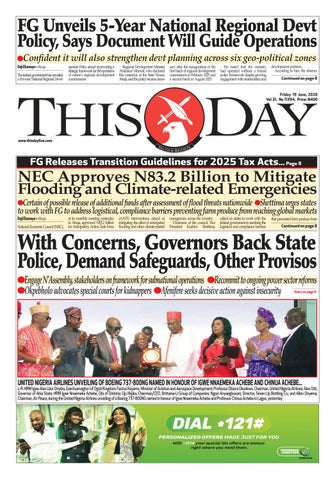
FG Unveils 5-Year National Regional Devt Policy, Says Document Will Guide Operations
Deji Elumoye in Abuja
The federal government has unveiled a five-year National Regional Devel-
www.thisdaylive.com
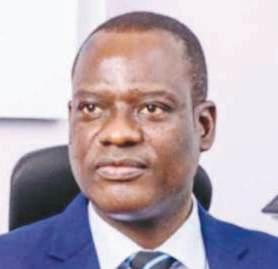
Regional Development Minister, Abubakar Momoh, who disclosed this yesterday at the State House, Abuja, said the policy became neces-
sary after the inauguration of the first batch of regional development commissions in February 2025 and a second batch in August 2025.
He noted that the ministry had operated without a formal policy framework despite growing engagement with stakeholders and Continued on page 8
development partners. According to him, the absence
Confident it will also strengthen devt planning across six geo-political zones opment Policy aimed at providing a strategic framework for the operations of nation’s regional development commissions.
NEC Approves N83.2 Billion to Mitigate Flooding and Climate-related Emergencies
Certain of possible release of additional funds after assessment of flood threats nationwide Shettima urges states to work with FG to address logistical, compliance barriers preventing farm produce from reaching global markets
Deji Elumoye in Abuja
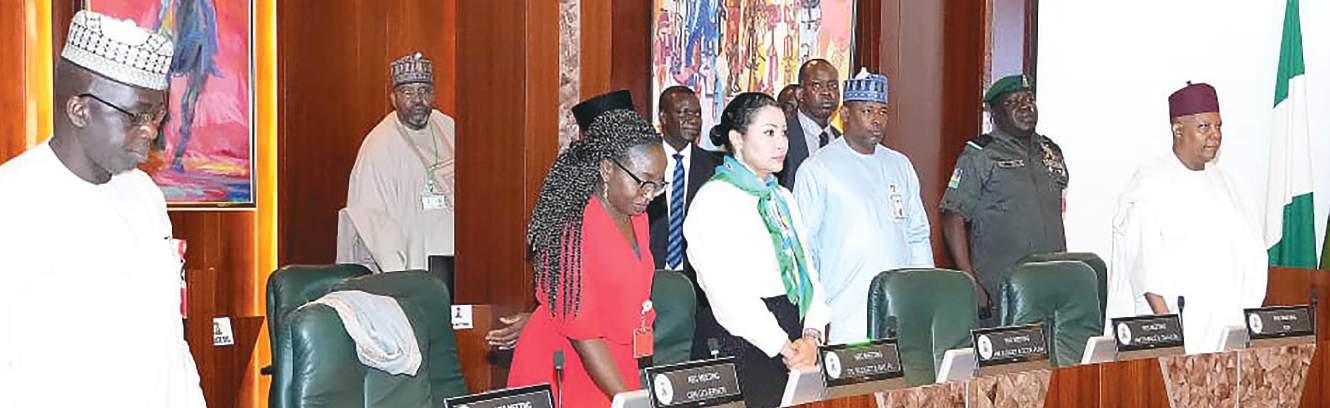
National Economic Council (NEC), at its monthly meeting yesterday in Abuja, approved N83.2 billion for Anticipatory Action Task Force
(AATF) interventions aimed at mitigating the effect of anticipated flooding and other climate-related emergencies across the country. Chairman of the council, Vice President Kashim Shettima, called on states to work with the federal government in resolving the logistical and compliance barriers
Continued on page 8 that prevented farm produce from
With Concerns, Governors Back State Police, Demand Safeguards, Other Provisos
Engage N’Assembly, stakeholders on framework for subnational operations Recommit to ongoing power sector reforms
Okpebholo advocates special courts for kidnappers Afenifere seeks decisive action against insecurity
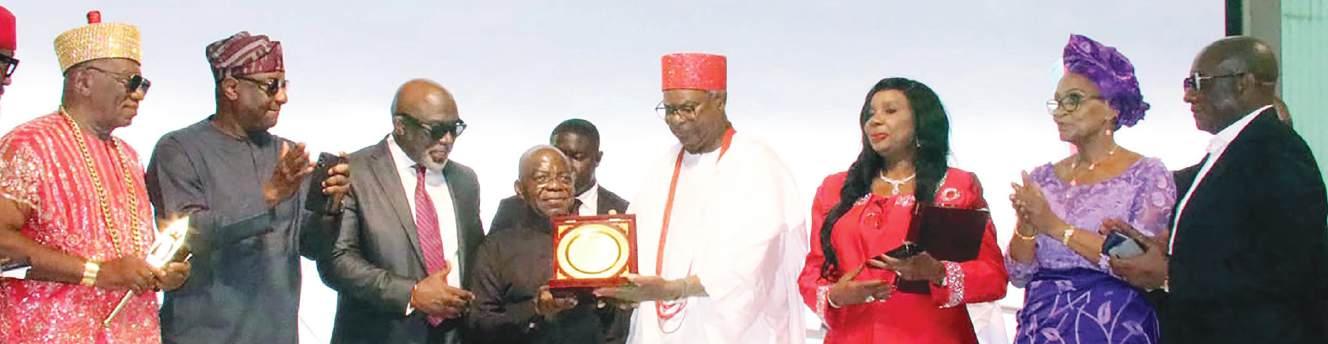
UNITED NIGERIA AIRLINES UNVEILING OF BOEING 737-800NG NAMED IN HONOUR OF IGWE NNAEMEKA ACHEBE AND CHINUA ACHEBE...
L-R: HRM Igwe Alex Uzor Onyibo, Ezechuamagha I of Ogidi Kingdom; Festus Keyamo, Minister of Aviation and Aerospace Development; Professor Obiora Okonkwo, Chairman, United Nigeria Airlines; Alex Otti, Governor of Abia State; HRM Igwe Nnaemeka Achebe, Obi of Onitsha; Uju Ifejika, Chairman/CEO, Brittania-U Group of Companies; Ngozi Anyaegbunam, Director, Seven Up Bottling Co.; and Allen Onyema, Chairman, Air Peace, during the United Nigeria Airlines unveiling of a Boeing 737-800NG named in honour of Igwe Nnaemeka Achebe and Professor Chinua Achebe in Lagos, yesterday
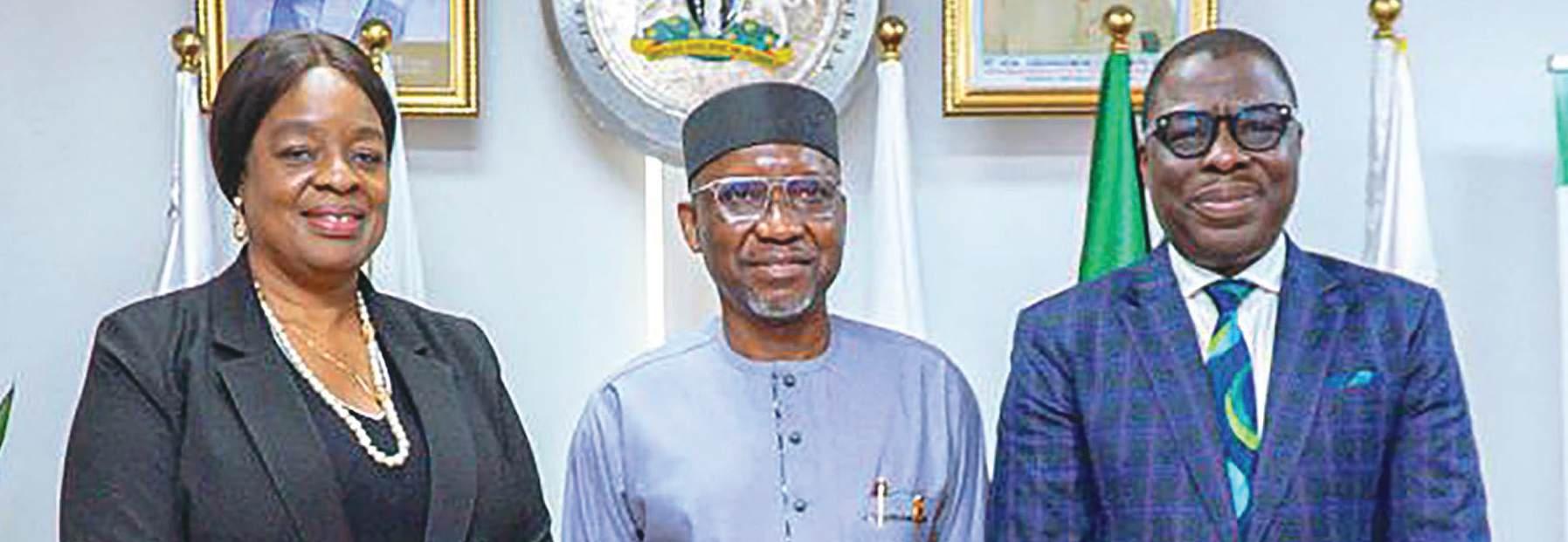
COURTESY VISIT BY NLNG DELEGATION TO MINISTER OF STATE PETROLEUM, GAS...
R-L: Adeleye Falade, Managing Director, NLNG; Rt. Hon. Ekperikpe Ekpo, Minister of state for Petroleum Resources (Gas); and Sophia
General Manager, External Relations and Sustainable Development, NLNG, during a courtesy visit by the NLNG delegation to the minister’s office in Abuja
AFNIS Attracts $600m Investments in Four Years, Alake Seeks End to Raw Mineral Exports
Folalumi Alaran in Abuja Minister of Solid Minerals Development, Dr. Dele Alake, on Wednesday urged African countries to move beyond the export of raw minerals and focus on value addition, industrialisation, and regional collaboration to maximise the benefits of the continent’s vast natural resources.
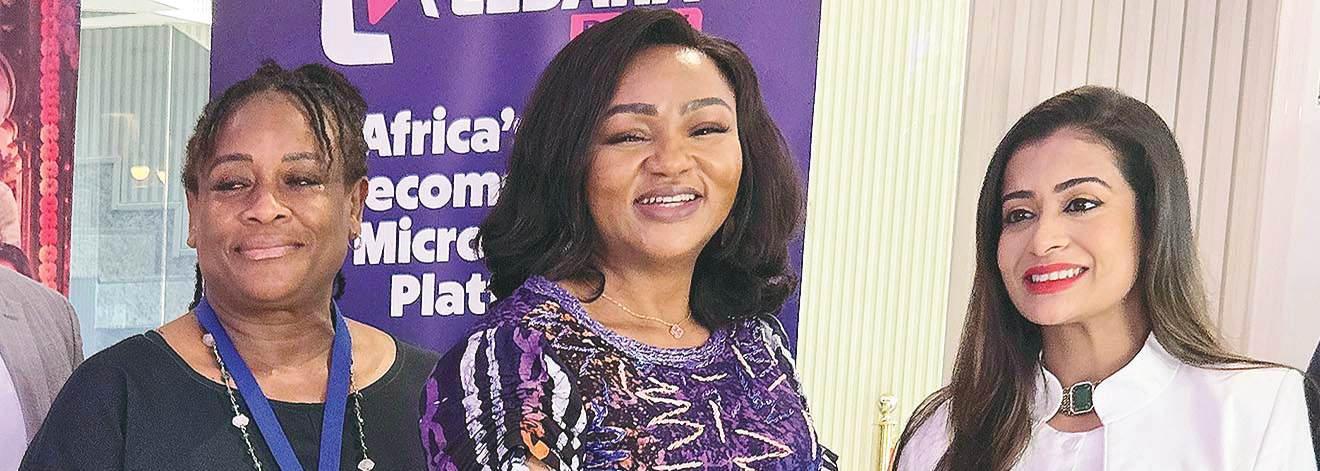
Alake made the call in Abuja during a press conference ahead of the 5th African Natural Resources and Energy Investment Summit in Abuja.
The minister, represented by Managing Director and Chief Executive Officer of Nigeria Solid Minerals Company, Martins Imonitie, said Africa must leverage its mineral wealth to drive economic transformation, job creation, and long-term prosperity.
He stated, “Africa must move from being merely a source of raw materials production to becoming a centre of value creation, industrialisation and shared prosperity.
“Our resources must become catalysts for economic transformation, job creation, technological advancement, infrastructure development
and long-term wealth creation for African people.”
According to Alake, the summit, themed, “One Africa, One Resource Vision,” comes at a critical period when global demand for critical minerals is rising, nations are repositioning to secure supply chains, and the global energy transition is creating fresh opportunities for resource-rich countries.
Alake said the summit would bring together government officials, investors, financiers, mining and energy companies, technology providers, geoscience experts, project developers, and policymakers from across Africa and beyond.
He added that countries expected at the event included Democratic Republic of Congo, Kenya, Uganda, South Sudan, Somalia, Liberia, and Mauritania.
The minister stated that AFNIS, which started five years ago as a platform for dialogue among governments, investors and industry stakeholders, had evolved into one of Africa’s leading forums for discussions on mining, energy, industrialisation, and sustainable development.
He said the theme of this year’s
summit reflected the growing need for African countries to adopt a coordinated approach to issues, such as critical minerals, energy infrastructure, regional value chains, project financing, and technology
transfer.
Speaking earlier, Director of Strategy and Platform Development, Core International, Archibald Troko, disclosed that AFNIS had attracted more than $600m in investments
over the last four years. Troko said efforts were ongoing to attract additional development partners and de-risk investments in the mining and energy sectors to encourage greater participation
by local investors. “We will continue to seek development partners to help de-risk the sector so that local investors can also begin to take their share,” he said.
NGX Introduces New Trading Framework for Stocks Price Movement
Kayode Tokede
Nigerian Exchange Limited (NGX) has launched a new rule intended to adjust its pricing methodology for listed stocks, to introduce a graduated, three-tier volume system for share price movements.
The move by the bourse reverts close to the 2018 market microstructure rules governing how listed stocks prices moved on the trading floor by setting minimum trading volume thresholds before prices can change.
Witt its effective date yet to be communicated, the new rule means the management of NGX has cancelled the uniform 100,000 units requirement
NILDS, UNIBEN Launch PhD Programmes in Law, Governance
Renew partnership to deepen research, policy development, democratic governance
Sunday Aborisade in Abuja
National Institute for Legislative and Democratic Studies (NILDS) and University of Benin (UNIBEN) have renewed their Memorandum of Understanding (MoU) and expanded their academic collaboration with the launch of doctoral programmes in law, policy and legislation as well as social science, politics, and governance.
The renewed agreement, according to a statement by NILDS, signed in Abuja on Thursday, marks a significant expansion of a partnership that has spanned more than a decade and focused on postgraduate education,
research, capacity building and policy development.
Speaking at the signing ceremony, Director-General of NILDS, Professor Abubakar Sulaiman, described the renewal as a major milestone in a relationship that had consistently contributed to research, policy formulation, and higher education in Nigeria.
According to Sulaiman, the agreement represents more than a routine renewal of cooperation.
He said it reinforced the shared commitment of both institutions to academic excellence and national development.
“This renewed MoU is not just another agreement. It is a
reaffirmation of a partnership that has delivered tangible value in research, policy development and higher education,” Sulaiman said.
He stated that the newly introduced PhD programmes were designed to strengthen research capacity, produce highly skilled professionals, and nurture future leaders for public service and governance.
Sulaiman said, “The inclusion of the PhD in Law, Policy and Legislation and the PhD in Social Science, Politics and Governance reflects our determination to advance knowledge, build expertise and contribute meaningfully to democratic governance.”
implemented years ago, and returned to three-tier volume framework.
According to the new rule, “Price movements: the minimum quantity of equities traded that will change the published price of an equity security shall be as follows: Group A: Ten Thousand (10,000) units; Group B: Fifty Thousand (50,000) units and Group C: One Hundred Thousand (100,000) units.”
Under the new rule, stocks trading at N1,000 and above will require a minimum of 10,000 shares to be traded before a price movement can occur.
Equally, stocks trading at N500 and below N1,000 will require a minimum of 50,000 shares to trigger a price change,
and stocks trading at below N500 will require a minimum of 100,000 shares to move the market price.
The development marks a significant shift in the exchange’s price discovery mechanism and is expected to affect trading strategies, particularly, in stocks where relatively small volumes have historically been sufficient to move prices.
Market participants say the move can help improve price stability and reduce the impact of low-volume transactions on share prices, especially in highly priced equities.
Commenting on the new rules, Managing Director of Globalview Capital Limited, Aruna Kebira, said, “This was how it used to be. Highpriced stocks required 10,000 units, medium-priced stocks required 50,000 units, while lower-priced stocks required 100,000 units.
“So, in many ways, the Exchange is returning to a framework that operators are already familiar with.”
However, some traders are already expressing concerns that the new thresholds can reduce price responsiveness in less liquid stocks. The policy comes amid heightened regulatory attention on market integrity, liquidity, and price formation as the Nigerian capital market continues to attract increased retail and institutional participation.
TETFUND Boss, Echono Shares PhD Insights on Picking University Leaders
Launches Abuja Leadership Centre Lecture Series
Kuni Tyessi in Abuja
The Executive Secretary of the Tertiary Education Trust Fund (TETFund), Dr. Sonny Echono, has called for a strict merit-based system in the appointment of Vice-Chancellors across Nigeria’s federal universities.
Echono who stated this while delivering a public lecture on Research Findings at the University of Abuja yesterday, also warned that political interference in leadership selection undermines academic excellence, institutional stability and good governance in the tertiary education sector.
The lecture was organised by the Abuja Leadership and
Governance Centre with the theme: “Leadership Selection Process and Governance of Federal Universities in Nigeria (1993-2024).”
He noted that political considerations can affect governance, academic excellence and institutional development of the universities.
According to the findings he presented while delivering the lecture, there is a strong positive correlation between transparent and inclusive leadership selection processes and effective governance in federal universities.
Echono in his presentation found that institutions that embrace accountability, stakeholder participation and transparency
tend to enjoy greater trust, improved governance structures and stronger institutional performance. He said, “The research clearly demonstrates that transparent and inclusive leadership selection processes are critical to effective governance in our federal universities. Institutions that prioritise accountability and stakeholder engagement consistently record better governance outcomes and stronger institutional stability. “Where leadership appointments are conducted openly and fairly, universities are better positioned to achieve their academic objectives, strengthen public trust and foster a culture of excellence.”
Horsfall,
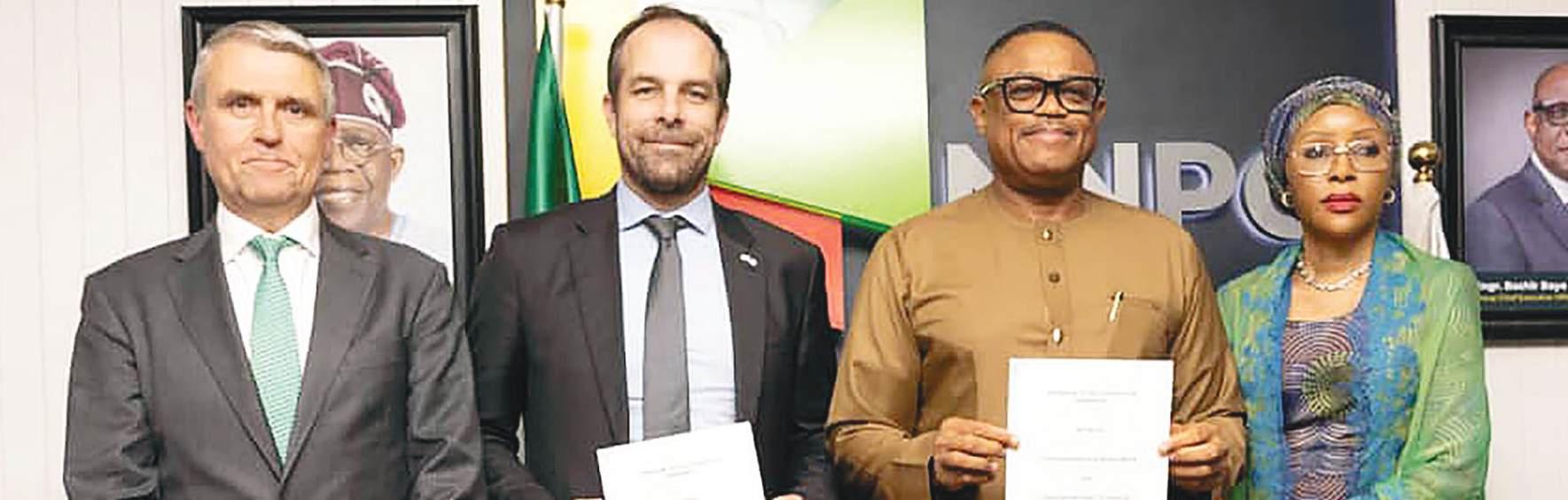
SIGNING CEREMONY FOR THE TOTALENERGIES, NNPCL RENEW AUSEA TECHNOLOGY COOPERATION...
L-R: TotalEnergies Senior Vice President, EP, Africa, Mike Sangster; Managing Director and Country Chair, TotalEnergies Companies in Nigeria, Matthieu Bouyer; Nigerian National Petroleum Company (NNPCL) Executive Vice President, Upstream, Udobong Ntia; and Nigerian National Petroleum Company (NNPCL) Company Secretary and General Counsel, Adesua Dozie, at the signing ceremony for the TotalEnergies, NNPCL Renew AUSEA
Africa Social Impact Summit Unlocks $1bn in
Investments, Targets Additional $500m Deals
Africa Social Impact Summit (ASIS) has mobilised over $1 billion in investments and partnerships across critical sectors since its inception, the organisers disclosed on Wednesday.
The summit also targeted an additional $500 million in commitments at its 2026 edition, as preparations intensified for the continent’s flagship
sustainable development financing platform.
Speaking at a media briefing ahead of the summit, Chief Executive, Sterling One Foundation, Olapeju Ibekwe, said the platform had evolved beyond a discussion forum into a major vehicle for attracting capital and forging strategic partnerships aimed at tackling Africa’s development challenges.
Ibekwe said the summit had
already unlocked over $1 billion across multiple sectors and expressed confidence that this year’s gathering would significantly expand that figure through fresh investment commitments and collaborative initiatives.
According to her, the summit is positioning as a catalyst for mobilising both local and international capital towards inclusive economic growth, sustainable development, and resilience-
building initiatives across the continent. Ibekwe said, “The Africa Social Impact Summit platform has already unlocked over $1 billion across sectors, and this needs to be scaled significantly. The future of Africa will be defined by the quality of the sustainable partnerships we build today.
“The Africa Social Impact Summit is a platform that brings together African leaders, local and international
LCCI: Nigeria’s Education System Has Funding, Access, Tech, Policy Problems
Tasks private sector to co-invest in educational infrastructure
The President of Lagos Chamber of Commerce and Industry (LCCI), Mr. Leye Kupoluyi, has declared that Nigeria’s educational system has funding, access, technology and policy misalignment problems.
Kupoluyi declared this yesterday at the chamber’s education conference with the theme “Technology, Policy and Access: Building Inclusive Education Systems for the Future,” where he tasked the private sector to co-invest in developing educational infrastructure.
The LCCI’s president pointed out that technology, policy, and access are not three separate panels today but are three legs of the same chair that this chamber intends to help build.
He said: “Nigeria’s education story is, at its core, a business story: it determines the workforce we hire, the consumers we sell to, and the country we trade in. I want to make that case in five numbers.
“Nigeria does not have an education funding problem alone; it has an access, technology, and policy misalignment, and closing that gap is the single highest-return investment available to this chamber.”
He stated that Nigeria is host to one of the largest out-of-school populations on earth that is measured in the tens of millions, not thousands, which meant that roughly one in five of the world’s out-of-school children is a Nigerian.
According to him, UNICEF’s 2024 data put the figure at approximately 18.3 million children out of school,
which is comprised of 10.2 million at the primary level and 8.1 million at the secondary level.
He remarked that federal government’s funding still falls well below the benchmark needed to close that gap.
The president of LCCI said that 2026 federal budget allocated N3.52 trillion to education, which represented 6.1 per cent of N58.18 trillion in total spending, against UNESCO’s 15–20 per cent global benchmark and the 26 per cent threshold set out in Nigeria’s National Policy on Education.
He however noted that some state governments like Enugu, Kano and Jigawa have chosen to fund
education at scale, implying that the model already exists substantial funding of education by governments that have the political will.
Kupoluyi said that “Enugu allocated 32.2 per cent of its 2026 budget to education; Kano committed N405.3 billion (30 per cent), and Jigawa committed N234.5 billion (26 per cent),” which are “proof that the recommended benchmark is achievable within Nigeria’s existing fiscal envelope once political will aligns with policy.”
The LCCI said that financing innovation is already proving that scale is possible once the right instrument is in place.
It said: “The Nigerian Education
Loan Fund has disbursed over N32 billion to students since 2024, and Nigeria’s National Artificial Intelligence Strategy now commits to equipping 70 per cent of young Nigerians aged 16–35, half of them women, with AI-relevant skills by 2029.
“Our members in the Education Group are potential employers who will absorb that talent if the pipeline is built correctly.”
He also said that connectivity, the infrastructure beneath every EdTech promise, crossed the halfway mark only in November 2025, but noted that the gap is concentrated exactly where access is worst particularly in the northern Nigeria.
investors, innovative ideas and catalytic capital to address some of the continent’s most pressing challenges while unlocking opportunities for inclusive and sustainable growth.
“We are excited to unveil an edition that is bigger, more collaborative and more action-oriented than ever before. We expect deals of over $500 million to be signed this year.”
Global development leaders, investors, policymakers and private sector stakeholders gathered in Abuja to unveil the agenda for the 2026 summit, which was expected to bring together over 2,000 delegates from more than 50 countries in Lagos next month.
The summit, scheduled for July 22 to 24, in Lagos, is themed, “Financing for Development: Building Resilience and Transforming Emerging Economies.”
The organisers said the gathering was coming at a critical period for Africa as countries grappled with tightening global capital flows, climaterelated shocks, food security concerns, and the need to create opportunities for a rapidly growing youth population.
They explained that discussions at the summit would focus on translating dialogue into concrete investments, partnerships, and scalable solutions capable of accelerating sustainable development outcomes across the continent.
In his remarks, United Nations Resident Coordinator in Nigeria, Mohamed Malick Fall, stressed the need for stronger collaboration among governments, development institutions, businesses, and civil society groups
to unlock the continent’s growth potential.
Fall said Africa’s development aspirations could only be achieved through collective action and sustained investments targeted at advancing the Sustainable Development Goals (SDGs). Fall stated, “Africa’s greatest opportunity lies in the strength of its partnerships. The Africa Social Impact Summit continues to provide a unique platform where governments, the private sector, development partners and civil society come together to mobilise the investments, innovation and collaboration needed to accelerate progress towards the Sustainable Development Goals.
“Together, we can build resilient economies that leave no one behind.” Board Member of Sterling One Foundation, Mr. Abubakar Suleiman, said the summit’s success would ultimately be measured by the quality of commitments and outcomes generated beyond the event itself. Suleiman stressed that ASIS was designed as a long-term platform for action rather than a one-off conference, adding that stakeholders must ensure discussions translate into measurable development impact.
He said, “What we are building through ASIS is not just a convening, but a long-term platform for action. The conversations we are having today must translate into real commitments, measurable outcomes and partnerships that outlive the summit itself.
‘That is how we move from intention to impact across the continent.”
COREN Unveils Key Reforms to Strengthen Regulation, Public Safety in Engineering
The Council for the Regulation of Engineering in Nigeria (COREN) has announced a number of strategic resolutions arising from its 189th Ordinary Council Meeting, aimed at strengthening engineering regulation, enhancing public safety, improving professional standards, and advancing key institutional reforms across the country.
Among the key decisions approved by Council is the estab-
lishment of a 90-Day Engineering Regulation Monitoring and Enforcement (ERM&E) Rapid Response Task Force to intensify the fight against quackery, strengthen project monitoring, and support efforts aimed at preventing building collapse and other engineering-related failures.
A statement in Abuja signed by COREN Registrar, Prof. Austine Uche, stated that Council also approved the launch of a nationwide public awareness campaign to educate Nigerians on the dangers of
engaging unregistered engineering practitioners and to promote compliance with engineering regulations and standards.
In a major step towards strengthening professional discipline and ethical conduct, Council also approved the activation of the Engineering Disciplinary Tribunal, which will provide a framework for addressing cases of professional misconduct and enforcing accountability within the engineering profession.
As part of efforts to deepen regulation and improve service delivery, the Council said it approved the registration of 3,328 engineering practitioners across various categories and 107 engineering firms, while also directing a review of existing registration guidelines to reflect emerging industry realities and global best practices.
“Council further reaffirmed its commitment to maintaining the integrity of the engineering profession by directing the reporting of nine
cases involving fraudulent academic certificates submitted for registration to the appropriate anti-corruption authorities for investigation and possible prosecution.
“To strengthen engineering education and quality assurance, Council approved the gazetting of the Engineering and Technology Accreditation Bureau (ETAB) and reiterated COREN’s statutory role in the accreditation of engineering programmes in Nigeria,” the statements said.
Technology Cooperation on Methane in Abuja, Wednesday
Emmanuel Addeh in Abuja
Dike Onwuamaeze
James Emejo in Abuja
LAUNCH OF DIGITAL SWITCH OVER...
L-R: Minister of Communication, Innovation and Digital Economy, Bosun Tijani; Deputy Speaker, House of Representatives, Rt. Hon. Benjamin Kalu; Minister of Information and National Orientation, Mohammed Idris; Permanent Secretary, Ministry of Information and National Orientation, Binyerem Chigbonwu Ukaire; and Director General, National Broadcasting Commission (NBC), Charles Ebuebu, during the official launch of the Digital Switch Over (DSO) in Abuja on Wednesday
IsDB 2026: First Abu Dhabi Bank Lauded for $626m Murabaha
Financing Transaction for Lagos-Calabar Coastal Highway
Policymakers, regional integration experts in Africa, Asia accelerate sustainable growth, economic resilience for member states
Sunday Okobi in Baku, Azerbaijan
First Abu Dhabi Bank (FAB) has been lauded for its role in the USD626 million Murabaha financing transaction for the Lagos-Calabar Coastal Highway Development in Nigeria, on the side-lines of the ongoing IsDB Group Annual Meetings 2026 in Baku, Azerbaijan.
The commendation was made when Islamic Corporation for the Insurance of Investment and Export Credit (ICIEC), a Shariah-based multilateral credit and political risk insurer and member of the Islamic Development Bank Group (IsDB), announced the winners of its flagship awards at the IsDB Group Private Sector Forum 2026 at the meeting yesterday.
FAB was named winner of the ICIEC Most Impactful Project of the Year award for its role in the financing transaction that made the Lagos-Calabar Coastal Highway Development in Nigeria a possibility.
Backed by ICIEC’s Non-Honouring of Sovereign Financial Obligations (NHSFO) policy issued in favour of FAB, the transaction covers 95 percent of the financing provided to the Federal Ministry of Finance of Nigeria.
ICIEC’s cover helped mobilise long-term funding for Nigeria for a strategic infrastructure project that will enhance connectivity, improve the
movement of goods and people, and contribute to long-term socio-economic growth.
Similarly honoured at the event was Standard Chartered as winner of the Most Innovative Trade Development Initiative of the Year award for the EUR 160 million Murabaha facility provided to Agrobank in Uzbekistan by Standard Chartered under ICIEC’s cover.
The facility marked Uzbekistan’s first-ever Murabaha transaction and established a practical Shariah-compliant model for future liquidity solutions in trade. It also represents ICIEC’s first direct commercial banking partnership in Uzbekistan and provides important support to the country’s SME and retail sectors.
This year’s awards, the organisation disclosed, were to recognise leading financial institutions that had used Shariah-compliant financing backed by ICIEC’s insurance solutions to facilitate trade and support sustainable development across member states.
Commenting on the awards, Chief Executive Officer of ICIEC, Dr. Khalid Khalafalla, told journalists, “ICIEC is proud to honour First Abu Dhabi Bank, Standard Chartered, and Agrobank for two landmark transactions that demonstrate the impact of Shariahcompliant risk mitigation.
“These awards reflect how strong
partnerships can mobilise capital, enable strategic infrastructure, expand access to trade finance, and deliver meaningful development impact across our member states.”
Khalafalla added that the winning transactions highlighted ICIEC’s role as a trusted partner in de-risking trade and investment, supporting financial institutions, and helping member states to advance sustainable and inclusive growth.
The CEO stated that as a member of the rated Islamic Development Bank
(IsDB) Group, ICIEC commenced operations in 1994 to strengthen economic relations between OIC Member States and promote intra-OIC trade and investments by providing risk mitigation tools and Shariah-compliant financial solutions.
The corporation is the only Islamic multilateral insurer in the world. ICIEC has led in delivering a comprehensive suite of solutions to companies and stakeholders across its 51 member states.
For the 18th consecutive year,
ICIEC maintained an “Aa3” insurance financial strength credit rating from Moody’s, ranking the corporation among the top tier of the Credit and Political Risk Insurance (CPRI) industry. Khalafalla stated, “Additionally, S&P has reaffirmed ICIEC’s ‘AA-‘long-term Issuer Credit and Financial Strength Rating for the third consecutive year, with a Stable Outlook. ICIEC’s resilience is underpinned by its sound underwriting practices, a robust global reinsurance network, and strong risk management policies.
“Cumulatively, ICIEC has insured more than USD 138 billion in trade and investment. ICIEC’s activities span several key sectors, including energy, manufacturing, infrastructure, healthcare, and agriculture.” Meanwhile, senior policymakers, development finance institutions, and regional integration experts across Asia, MENA, and Africa deliberated on how strong regional cooperation could accelerate sustainable growth, economic resilience, and shared prosperity across IsDB Group member countries.
FG Commends Progress in Hasetins’ Ongoing $400m Rare
Alex Enumah in Abuja
A delegation of the federal govern- ment has visited the site of the ongoing construction of a $400m rare earth processing plant under construction in the Uke community of Nasarawa State, to assess the level of compliance with relevant regulations and standards.
The facility being constructed by Hasetins Commodities Limited, will add 12,000 tonnes per annum to the company’s existing
NNPC, TotalEnergies Renew Deal to Accelerate Methane Emission Reduction
Addeh
The Nigerian National Petroleum Company Limited (NNPC) has renewed its agreement with TotalEnergies to extend the deployment of modern technology for the detection, measurement, and reduction of methane and carbon emission across its upstream operations for another 24 months.
The agreement for the the deployment of Airborne Ultralight Spectrometer for Environmental Applications (AUSEA), NNPC said, is aimed at helping it meet its gas flare reduction obligation in keeping with its Oil & Gas Decarbonisation Charter (OGDC) commitments, Oil &
Gas Methane Partnership (OGMP) 2.0 participation and near-zero methane ambition by 2030.
According to a statement signed by the Chief Corporate Communications Officer of the national oil company, Andy Odeh, the deal was a follow-up on an earlier agreement signed in 2023 for the adoption of the AUSEA technology.
The agreement was signed by NNPC Ltd’s Executive Vice President, Upstream, Udy Ntia and TotalEnergies Country Chair and Managing Director, Matthieu Bouyer, on behalf of their respective companies, at the NNPC Towers, in Abuja, yesterday.
Speaking on the occasion, Ntia expressed satisfaction with the
first phase of the deployment of the technology, stressing that he would like to see it scaled across more assets.
“Today’s signing represents a practical step in NNPC Limited’s journey to build a credible, transparent and action-oriented decarbonisation programme. Through the AUSEA initiative, we are strengthening our ability to detect, quantify and prioritise methane abatement opportunities using advanced measurement technology,” Ntia added.
He also called for the institutionalisation of progress reporting, in line with compliance requirements and the possibility of leveraging transfer of the AUSEA technology.
Earth Plant Project, Targets 10,000 Jobs
capacity, pushing its total output to 18,000 tons per annum (tpa), thereby placing Nigeria as number one in Africa, in the area of rare earth processing.
The delegation which included the Director, Mining Inspectorate, Federal Ministry of Solid Minerals Development (MSMD), Mr. Ganiyu Imam and the Director, Mines Environmental Compliance, Dr. Vivian Okono, expressed delight about the progress made so far, the commitment of those behind the project and their willingness to play by the rules.
Imam said the delegation was satisfied with the level of compliance with relevant requirements and standards and urged Hasetins to
ensure that all necessary precautionary and safety measures being put in place are sustained.
A Deputy Director in the MSMD, Mr. Oladehinde Oladusi, who stood in for Dr. Okono, commended Hasetins for the quality of work as well as modern standard equipment available at the site.
Oladusi said: “The commitment that we have seen so far in respect of the way the company is starting is different from the narrative of just bumping into our environment, break the ground and carry our minerals away.
“You can see equipment stacked properly, administrative block is there where you have the initial test machine to be put in place, and of
course the cite under clearance”, Oladusi stated. He specifically commended Hasetins for not only carrying out a proper environmental assessment of the community but also having on ground advanced technology that would reduce to the barest minimum the hazards and dangers associated with mining.
“One of the first things that impressed me when you are putting up something like this is definitely the environment will be touched and for this company to take the initiative to prepare a sound environmental and social impact assessment which is one of the prerequisites to commence this kind of big project.
FG Flags 2,755 GBV Cases in 4 Months, Opens New Rehab Centre as Only 4% of Cases Lead to Prosecution
Kuni Tyessi in Abuja
The federal government has described the surge in Gender-Based Violence, GBV, as a “national emergency” after 2,755 cases were formally documented nationwide between January and April 2026, with just 4% successfully prosecuted.
Minister of Women Affairs, Imaan Sulaiman-Ibrahim, disclosed the figures yesterday in Abuja during the signing of a Memorandum of Understanding between her ministry, the New Era
Foundation, and the National Primary Health Care Development Agency to establish a rehabilitation facility for survivors.
The 2,755 cases average 23 reported incidents daily, the Minister said. Females account for 81% of survivors and sexual violence makes up 82% of all reported abuses, mostly affecting girls aged 10-14. “Nationally, only four per cent of formally reported GBV cases have been successfully prosecuted, leaving a staggering 96 per cent unresolved due to
structural bottlenecks,” Sulaiman-Ibrahim stated.
“I have always said we do not want Nigeria to become the capital of rape. That is why we are approaching this issue from every angle — addressing root causes, strengthening prevention and ensuring protection,” she added. The minister said Nigeria has only 50 shelter and support centres for its population and landmass. “This is clearly inadequate and underscores the urgency of partnerships such as this,” she said.
PHOTO: ENOCK REUBEN
Emmanuel
in Abuja
FG Releases Transition Guidelines for 2025 Tax Acts
Tax liabilities, assessments, audits, investigations, disputes predating new tax laws to be treated under repealed ones
Ndubuisi Francis in Abuja
The federal government has issued General Guidelines for the implementation of the Tax Acts 2025, designed among others, to promote uniform implementation and support effective administration.
The new guideline traverses the Nigeria Revenue Service (NRS), State Internal Revenue Services, the FCT Internal Revenue Service, Local Government Revenue Committees, tax practitioners, and taxpayers nationwide.
It also sets out the process for transition from the repealed tax laws to the new tax framework effective from January 1, 2026.
Issued by Federal Ministry of Finance, the guidelines provide direction to taxpayers, tax practitioners, revenue authorities, and other stakeholders on how to address various issues arising from the old regime to the new framework.
Under the guidelines, the Tax Act 2025, comprising Nigeria Revenue Service (Establishment) Act, Nigeria Tax Act, Nigeria Tax Administration Act, and Joint Revenue Board (Establishment) Act, applies from the respective commencement dates as enacted in each law.
In particular, January 1, 2026 for the Nigeria Tax Act, 2025. Tax liabilities, assessments, audits, investigations,
disputes, and enforcement actions relating to periods before that date will be treated under the repealed tax laws.
Tax returns relating to accounting periods ending before January 1, 2026, will be filed under the previous tax laws, while returns falling due from January 1, 2026, onward, will be administered under the new tax framework.
The document also covers the treatment of income taxes, transaction taxes, development levies, tax incentives, exemptions, record-keeping obligations, and transactions that span both the old and new tax regimes.
Existing tax incentives and exemptions granted under the repealed
laws will remain in place until their expiration dates.
New applications and pending requests, however, will be considered under the provisions of the Tax Act 2025.
Speaking on the release of the guidelines, Minister of Finance and Coordinating Minister of the Economy, Mr. Taiwo Oyedele, said the document provided a framework for managing transitional issues while ensuring that the new laws were not applied retrospectively.
Oyedele described the Tax Act 2025 as a significant milestone in Nigeria’s tax reform programme, stating that the guidelines set out how existing obligations, ongoing matters, and future
transactions will be treated under the new regime.
According to the minister, the guidelines are anchored on three key principles - clarity, fairness, and administrative certainty.
The guidelines are intended to promote uniform implementation and support effective administration across the Nigeria Revenue Service, State Internal Revenue Services, the FCT Internal Revenue Service, Local Government Revenue Committees, tax practitioners and taxpayers nationwide
He reaffirmed government’s commitment to building a transparent, efficient, and modern tax system that supports economic growth, strengthens revenue
WITH CONCERNS, GOVERNORS BACK STATE POLICE, DEMAND SAFEGUARDS, OTHER PROVISOS
lawmakers and other stakeholders more closely on the matter.
Nigeria’s 36 governors have called for constitutional safeguards, among other provisos, to guide the proposed establishment of state police, raising concerns over any framework that would require approval from the National Assembly before states can set up their police.
Although all the governors agreed that there was a need for state policing and pushing for it in view of the security situation in the country, the framework and detailed parameters, THISDAY gathered, remained hazy, prompting the decision to engage the federal
reaching international markets.
The approval of the intervention fund at the 158th meeting of NEC followed a presentation to council by Minister of State, Budget and Economic Planning, Senator Atiku Bagudu.
The presentation focused on the need to proactively address issues associated with flooding across Nigeria, particularly during the rainy season.
NEC highlighted the importance of AATF in addressing disasters and emergencies across the country, saying NEC cannot continue to be seen as always taking reactionary measures with regard to emergency and disaster management.
Briefing newsmen after the meeting, Cross River State Governor, Bassey Otu, said NEC approved N83.21 billion, representing 50 per cent of the amount requested under AATF, which was established to coordinate early interventions against flooding and other climate-related disasters.
For instance, they want policing transferred from the Exclusive Legislative List to the Concurrent Legislative List to enable states play a more active role in tackling insecurity in their respective jurisdictions.
In the same vein, they argued that such a framework that required the subnational heads to approach the National Assembly individually for approval would undermine the autonomy, responsiveness and effectiveness of subnational policing structures in addressing local security challenges.
Although these were not part of the communiqué by the Nigeria Governors’ Forum (NGF) on Wednesday after a meeting in Abuja, which ran till the morning of yesterday, it was exclusively
the vice president, we are taking proactive measures to mitigate the potential impact of flooding, which has become a recurring challenge.”
He explained that NEC recognised the growing threat posed by annual flooding and agreed that government must move from a reactive to a preventive approach in tackling natural disasters.
The governor stated, “Council underscored the importance of the Anticipatory Action Task Force in addressing disasters and climate-related emergencies across the country.
“Members agreed that NEC must not always be seen reacting to disasters after they occur but should take steps to prevent or mitigate their impact.”
Justifying the decision to cut the proposal by 50 per cent, Otu said the council was guided by the need to balance available resources with the urgency of early intervention.
learnt from top inside sources that aside from the issues mentioned earlier, another issue of concern was funding. It was gathered that the framework has proposed three per cent Federation Account allocation, which some governors said would be barely enough to pay the salaries of the recruits into police in their states, talk more of purchase of equipment and training.
But after the meeting, the governors unanimously threw their support behind the immediate establishment of state police in the country, stating that such a structure should be constitutionally guaranteed and aligned with federalism and citizens’ rights.
The Governor AbdulRahman AbdulRazaq-led NGF and the state executives, disclosed that they received a presentation from the Forum’s
of the country during the 2026 rainy season and growing efforts by the federal and state governments to strengthen disaster preparedness and climate resilience.
In a separate presentation, NEC considered the proposed National Regional Development Policy (NRDP) 2026-2030, presented by Ministry of Regional Development as a framework for promoting balanced and inclusive development across Nigeria.
The council stated that the policy had become imperative in view of persistent spatial inequalities, fragmented regional interventions, alignment with the Medium-Term National Development Plan (MTNDP) 2026-2030, and the need to institutionalise global best practices in regional development planning.
secretariat and a delegation of the Attorneys-General of the States on efforts to support establishing state police in Nigeria.
According to the governors, there was a dedicated consultation with the attorneys-general to review the proposed constitutional amendments and frameworks.
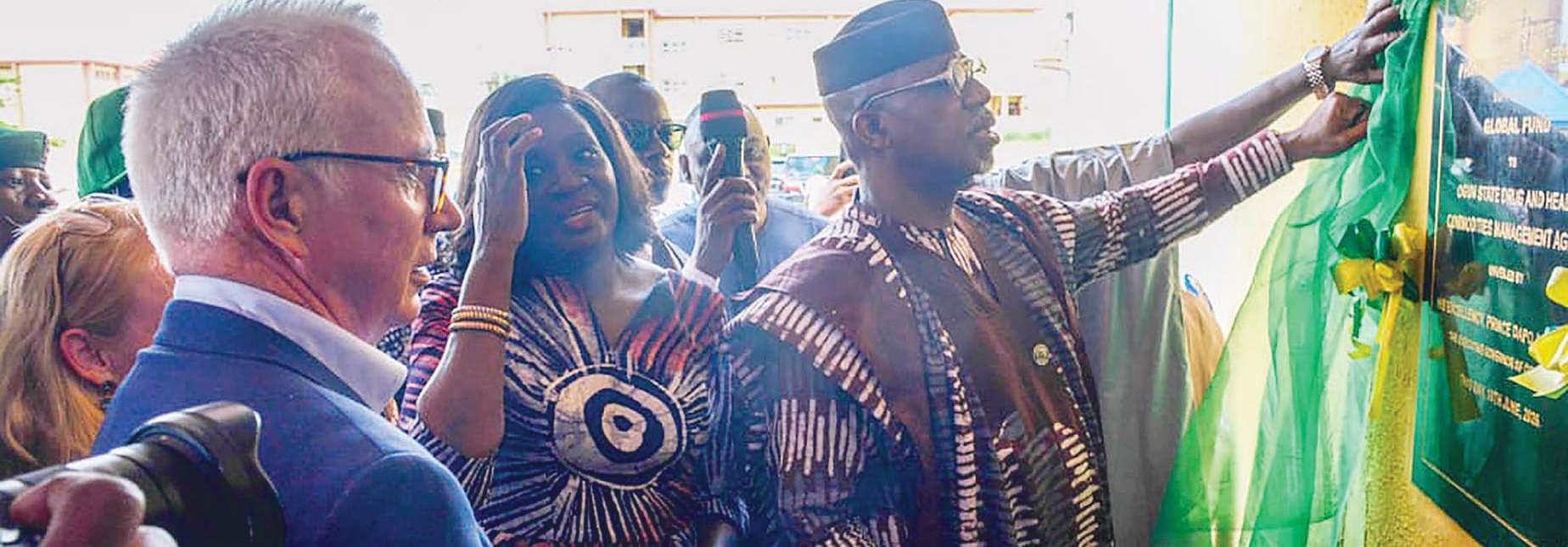
In the communique read by the Ogun State Governor, Dapo Abiodun, the Forum noted the need for collaborative effort and added that the consultation outcomes would strengthen states’ collective position.
Abiodun said: “We, members of the Nigeria Governors’ Forum (NGF), at our meeting held today, deliberated on issues affecting the country. Following extensive deliberations, the Forum resolved as follows:
ments, and supervise the operations of the commissions.
The framework is also expected to align regional development programmes with the President Bola Tinubu administration’s priority areas, including economic growth, food security, national security, energy development, infrastructure expansion, education, healthcare, social investment, industrialisation, innovation, and the digital economy.
Among the key proposals before the council were the endorsement of NRDP 2026-2030, approval of the Regional Development Policy Framework mechanism, support for state-level adoption of the policy, and backing for the establishment of a Regional Development Bank.
‘’The Forum received a presentation from the NGF Secretariat and a delegation of the Honourable Attorneys-General of the States on efforts to support establishing State Police in Nigeria. It noted a dedicated consultation with the attorneys-general to review the proposed constitutional amendments and frameworks.
“Governors emphasised the need for the State Police to be constitutionally sound and aligned with federalism and citizens’ rights. The Forum noted the collaborative effort and added that the consultation outcomes would strengthen the states’ collective position.”
Separately, THISDAY was told by other sources that one of the issues to be ironed out was whether the National Assembly should approve modalities for each individual state, with a number of the governors feeling that this might be politicised.
According to the source, while some governors propose moving policing from the Exclusive to the Concurrent Legislative List, giving State Houses of Assembly the power to legislate on State Police, the National Assembly bill did not incorporate this, meaning that this has to be corrected.
It is understood that the existing bill vests all legislative power over state police in the National Assembly, a framework the source described as defective and constitutionally inoperative at state level.
governance structures, financing models, human capital standards, digital systems and oversight mechanisms.
However, another reliable NGF source stated that there were no serious disagreements per say, pointing out that intense engagements were ongoing to ensure that areas of concern were thrashed out.
“No, we didn’t give any condition (for the operationalisation of state police). We’re just engaging with National Assembly etc. No conditions. We’re just engaging and discussing. So, that’s what the meeting was all about to kind of reach the parameters,” he stated.
On the section that requires the National Assembly to ‘micromanage’ the process by approving details of modalities to be followed, rather than leave the job for State Assemblies, the NGF source explained that it was necessary to carry out an assessment because the policing need of every state is peculiar.
“There are constitutional safeguards already, because it’s going from here (Abuja) to state assemblies. Those are the constitutional safeguards. An assessment has to be made.
“For example, I cannot come out and say we want 20,000 policemen or that Kano with its population will say we think we want 10,000. There’s an anomaly there.
“Similar to all, there is an important point that is unacceptable, which is the fact the National Assembly will be the one to approve the operations of a state police after the state meets some set criteria. This might be applied subjectively,” a top source within the NGF told THISDAY.
The proposal had sought approval for the disbursement of N166.42 billion through the Federation Account Allocation Committee (FAAC) mechanism to designated implementing agencies and beneficiaries.
Otu said the intervention marked a significant shift from the country’s traditional disaster response model, which often focused on post-disaster relief rather than preventive action.
He stated, “I want you to know that this is the first time, as a nation, that we are taking proactive steps. Most times, we wait until floods have caused significant damage before taking action.
“This time, under the leadership of the chairman of the council,
According to him, “We felt it was important to begin putting measures in place. As we evaluate and assess the situation, going forward, the council will certainly make additional provisions where necessary.
The policy, according to the presentation, sought to provide strategic oversight for the formulation and implementation of regional development initiatives, coordinate development master plans for the regional development commissions, in collaboration with state govern-
At the end of deliberations, NEC directed Minister of Regional Development to circulate the draft policy to state governors for review and input, while also mandating consultations with the Nigeria Governors’ Forum (NGF) to secure broad sub-national participation and
Continued on page 35
The governors had in April this year backed what they described as the proactive development of a state police framework by the secretariat, the umbrella body of the forum, in preparation for the proposed constitutional amendments.
The framework brought out key readiness requirements, including
“So, you cannot employ police you can’t pay. It’s to give room for discussions and parameters or yardstick. We can then say this is your population. We want to use a yardstick of 10 policemen per 1,000 people. So, those are the parameters.
“That is something that can be discussed. Like they say, ‘the devil is in the details’. There are other issues like, what are light weapons? What are small weapons?
“If state police can have light weapons, those are very dangerous weapons. So, light weapons is not pistol or AK-47. These are GPMGs that are tripodmounted,” the source added.
He explained further that the issue of funding and training would have
Continued on page 34
NEC APPROVES N83.2 BILLION TO MITIGATE FLOODING AND CLIMATE-RELATED EMERGENCIES FG UNVEILS 5-YEAR NATIONAL REGIONAL DEVT POLICY, SAYS DOCUMENT WILL GUIDE OPERATIONS
“You also have to look at the intervention within the context of available resources. The idea is to deploy what is currently available in a proactive manner and establish mechanisms that can reduce the impact of flooding before it occurs.
“That is essentially why the council decided to reduce the proposal by 50 per cent. As we move forward and continue to evaluate the situation, more adequate provisions can be made where required.”
The approval came amid forecasts of severe flooding in several parts
of a guiding policy had become increasingly apparent as international agencies and development partners repeatedly sought clarity on the ministry’s strategic direction.
“We came to brief the National Economic Council on the National Regional Development Policy. Since the inauguration of the first set of regional development commissions in February 2025 and the second set in August 2025, the ministry has not had a policy document to guide its operations.
“Several international and development partners requested
the ministry’s policy framework, but we were unable to provide one because it did not exist.
“It was not that we did not appreciate the need for such a policy, but we needed to properly define the direction of the ministry. Once that became clearer, we commenced the process of developing the document,” he said.
Momoh explained that the policy was developed with technical support from the United Nations Development Programme (UNDP), while a committee headed by the Permanent Secretary coordinated
the drafting process.
To ensure broad stakeholder participation and ownership, the ministry embarked on consultations and validation exercises across the country’s six geopolitical zones.
He said the NEC presentation marked a critical stage in the policy approval process, adding that the document would subsequently be presented to the Federal Executive Council (FEC) for final approval.
According to the minister, governors at the NEC meeting generally welcomed the initiative, although some raised constitutional concerns
regarding the regional development commissions.
“A number of governors supported the policy and commended the initiative. Some also raised constitutional issues. However, these commissions were established through Acts of the National Assembly and duly constituted by the President.
“They are institutions backed by law. For any bill to pass through the National Assembly and receive presidential assent, it means it has undergone extensive legislative scrutiny and enjoys broad national support,” Momoh said.
Chuks Okocha, Emmanuel Addeh, Adedayo Akinwale in Abuja, Hammed Shittu in Ilorin, Wale Igbintade, Sunday Ehigiator in Lagos and Felix Omoh-Asun in Benin
administration, encourages voluntary compliance, and improves Nigeria’s investment climate.
Taiwo Oyedele
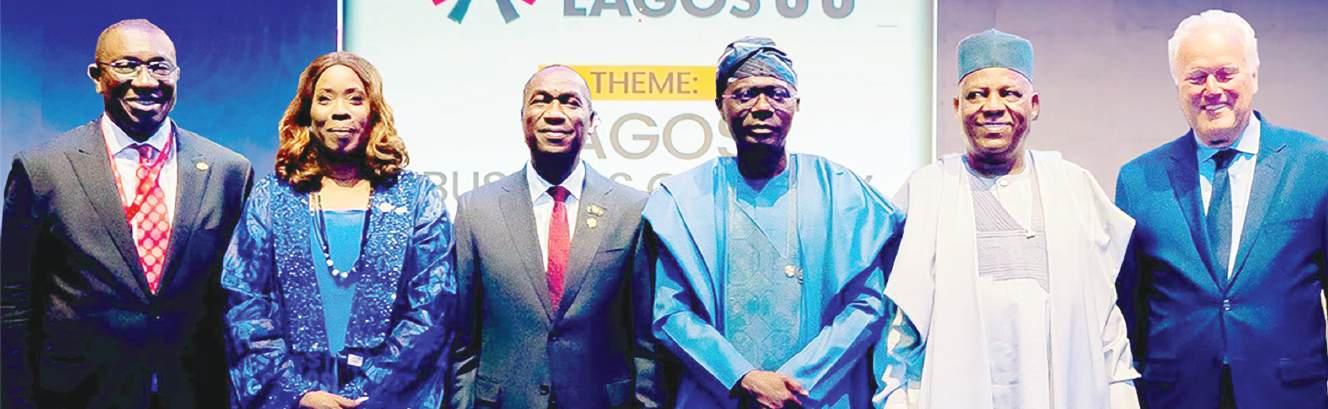
OPENING CEREMONY OF INVEST LAGOS SUMMIT 3.0...
L-R: Deputy Chief of Staff to Lagos State Governor, Sam Egube; Honourable Commissioner for Commerce, Cooperatives, Trade and Investment, Lagos State, Folashade Ambrose-Medebem; Deputy Governor, Lagos State, Dr. Obafemi Hamzat; Governor, Lagos State, Babajide Sanwo-Olu; Vice President, Federal Republic of Nigeria, Senator Kashim Shettima, and Chair, Commonwealth Enterprise and Investment Council( (CWEIC), Lord Marland, during the opening ceremony of Invest Lagos Summit 3.0 held at Eko Hotel and Suites, Victoria Island, Lagos ... recently
Keyamo Reiterates FG’s Support for Domestic Operators as UNA Unveils Additional Aircraft to its Fleet
Minister explains why Nigeria cannot have national carrier
Enugu Airport to receive direct cargo flight from Guangzhou, China in December
Chinedu Eze
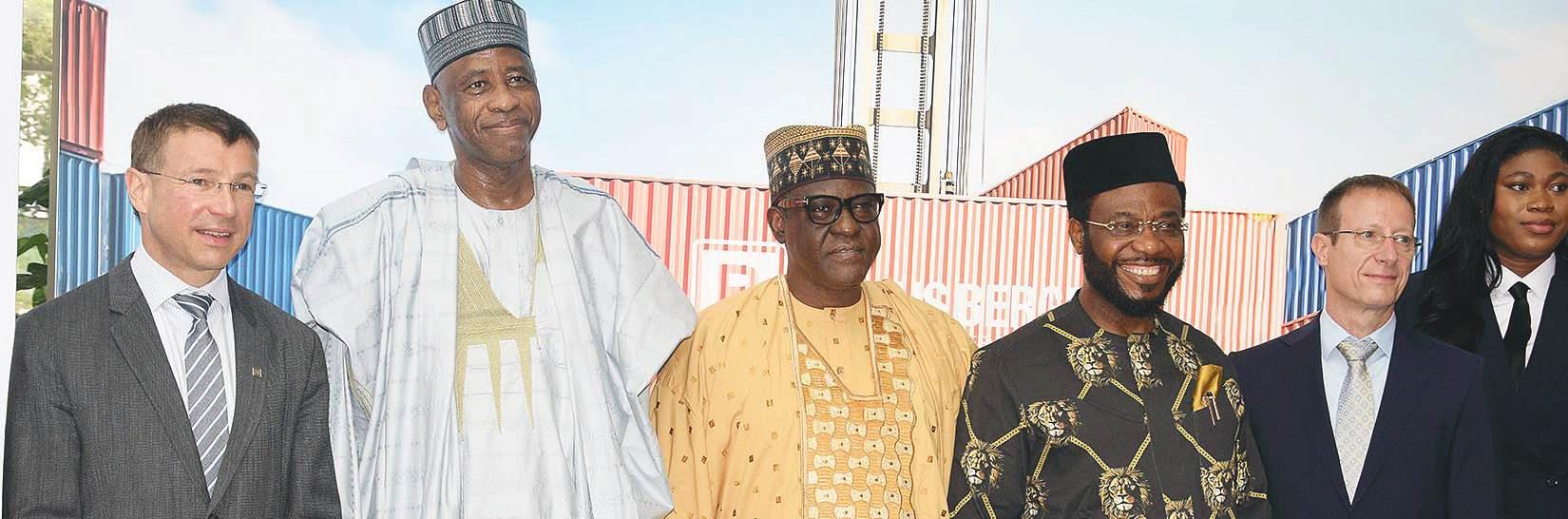
Minister of Aviation and Aerospace Development, Festus Keyamo, said the federal government had done a lot to support domestic airlines in line with President Bola Tinubu’s focus on empowering domestic airlines to take advantage of the multibillion dollars Nigeria air travel market.
Keyamo spoke at the unveiling of two aircraft acquired by the fast-rising carrier, United Nigeria Airlines (UNA), state-of-the-art Boeing B737-800 aircraft
with registration numbers 5N-CFC and 5N-CFB, respectively.
The minister said the first target of the Tinubu administration in the aviation sector was to get the right policy direction and to give full support to domestic airlines.
He commended United Nigeria Airlines on its rapid rise, and disclosed that government was fully in support of the airline and the others.
On the issue of national carrier, Keyamo explained that the federal government had kept mum on the
United Nigeria Airlines loses N10bn to Jet A1 Price surge over Iran crisis
establishment of a national carrier because after various case studies it realised that a national carrier could not thrive under a democratic setting like Nigeria’s.
He said that was why government was focused on supporting Nigerian airlines owned by the private sector, under strict government regulation.
Keyamo stated, “All governments in the world are divesting from national airlines. It is not possible to run a national carrier under a bureaucratic setup without it collapsing into a
Tinubu Lauds MOFI, NADF for
bottomless pit.”
The minister stated that the federal government’s five-point agenda was strictly centred on the aggressive empowerment of local carriers, dropping policies that undermined the growth of domestic airlines. He said this explained why Ministry of Aviation and Aerospace Development approved major international routes for United Nigeria Airlines, which included Canada, Dubai, and United States.
He said, “We are giving United Nigeria Airlines fruitful reciprocal
Strengthening
Nation’s Fertiliser Value Chain, Supporting Food Security
Assures of delivery of 1.1m metric tonnes of fertiliser, equivalent to about 22m bags, nationwide in 2026
Says Nigeria now has 90 operational fertiliser blending plants, largest fertiliser blending capacity in Sub-Saharan Africa
NADF now distributing 515,720 bags of locally produced fertiliser to 128,930 small farmers across 25 states and FCT
President Bola Tinubu has hailed Ministry of Finance Incorporated (MOFI) and National Agricultural Development Fund (NADF) for their roles in strengthening Nigeria’s fertiliser value chain, improving farmers’ access, supporting local production, and advancing the administration’s food security agenda.
Tinubu, in a release issued on Thursday by his Adviser on Information and Strategy, Bayo Onanuga, said the interventions implemented through the Presidential Fertiliser Initiative (PFI), now restructured under MOFI, and Renewed Hope Farm Input Support Programme (RHFISP), implemented through NADF, demonstrated the administration’s commitment to fulfilling its promise to make food security a major pillar of the Renewed Hope Agenda.
According to him, “When we came into office, we made a promise to Nigerians that food security would be a major pillar of our Renewed Hope Agenda.
“We promised to support our farmers, strengthen local production, reduce dependence on imports, and build an agricultural system strong enough to withstand shocks from
beyond our borders. That promise is being kept.”
Tinubu stated that disruptions in global supply chains and rising costs of key fertiliser inputs, compounded by conflict in the Middle East, posed significant risks to agricultural productivity and food prices worldwide.
He said Nigeria moved early to mitigate the risks through strategic interventions across the fertiliser value chain.
Tinubu said through the Presidential Fertiliser Initiative under MOFI, the government strengthened procurement systems, secured critical raw materials, signed forward supply agreements, improved coordination across the value chain, and protected local fertiliser blending plants from the worst effects of global market disruptions.
As of May 2026, more than 449,000 metric tonnes of fertiliser inputs, equivalent to approximately nine million bags, had been secured, with 10 vessels either discharged or in transit.
Tinubu said Nigeria was on course to deliver a 1.1 million-metric tonne fertiliser programme in 2026, equivalent to about 22 million bags nationwide.
He disclosed that strategic
contracting arrangements for key fertiliser inputs generated savings of N61.58 billion in 2026 alone, helping to moderate costs and improve affordability for Nigerian farmers.
The president stated that Nigeria now had more than 90 operational fertiliser blending plants, giving the country the largest fertiliser blending capacity in Sub-Saharan Africa and
supporting local industry, employment generation, and agricultural resilience.
Tinubu said while MOFI’s work had strengthened procurement and protected local blending capacity, NADF’s intervention was focused on last-mile access, ensuring that locally produced fertiliser reaches smallholder farmers in time for the planting season.
routes, including New York, Canada, and Dubai. We are only looking for the equipment to run these routes right now.”
Keyamo said with the growing passenger throughput, it was important that domestic operators captured a larger share of Nigeria’s 16 million annual passengers’ market.
He regretted that, currently, over 90 per cent of the market was dominated by foreign carriers.
The minister said it was the changes that the Tinubu administration brought into the aviation industry that made banks, which had hitherto shunned the aviation sector, to return to financing aircraft acquisitions and providing other funding services.
He said banks were also encouraged by the way the country’s biggest operator, Air Peace, promptly serviced its credit facilities.
The minister said government had moved to solve a major challenge for the domestic carriers, aircraft acquisition, disclosing that Tinubu approved the creation of a state-backed leasing company to resolve long-standing aircraft leasing barriers for local operators.
He stated, “I went to Mr. President to advocate for local operators who face strict international leasing hurdles.
“He has formally approved the establishment of the Nigerian Aircraft Leasing Company. This company will exist solely to bring in aircraft under a solid government guarantee through
private dry-lease agreements, which will then be sub-leased directly to our domestic airlines.
“We are already in the process of taking this.”
Keyamo also spoke on how he pushed to get the federal government to earmark funds for the building of an airstrip in Abia State, the only state in the South-east that does not have an airport.
He stated, “The first thing we did when we came to power was that I went to Mr. President and said, ‘Abia does not have an airstrip or airport in the whole of the South.’ President was surprised, and we ensured it was captured as one of our first critical projects in the 2024 budget.”
Keyamo credited Governor Alex Otti’s aggressive counter-funding strategy for scaling up the scope of the project to a full airport. He explained, “Credit to Dr. Alex Otti—he did not stop at that. When we scheduled an airstrip, he went straight to Mr. President behind me and said, ‘Sir, bring the money budgeted for the airstrip, I have counterpart funding. I will now make it a full international airport.’
“He is bringing his own state’s resources to the table. In fact, let me confess today, Abia State has injected its counterpart funding far ahead of the federal government’s allocation. Our money is coming, but work has advanced rapidly under his guidance.”
Group Demands Public Disclosure of Zamfara Gold Reserves Records
Sunday Aborisade in Abuja
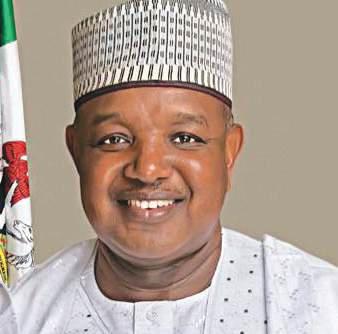
A civil society group, Patriots for the Advancement of Peace and Social Development, has called for the public disclosure of records relating to the Zamfara State Gold Reserve Initiative introduced during the administration of former Governor Bello Matawalle. The demand was contained in a statement issued on Thursday in Abuja by the group’s Convener, Sani Abdullahi Shinkafi, a former National
Secretary of the All Progressives Grand Alliance (APGA).
The group specifically urged the Zamfara State Government to make available documents relating to the initiative, including handover notes and transition committee reports, to provide clarity on the status of assets reportedly acquired under theShinkafiprogramme.recalled that in October 2020, Matawalle presented gold and precious stones to former President Muhammadu Buhari and publicly
described the development as part of a state-backed gold reserve initiative aimed at strengthening Zamfara State’s economic base.
According to him, there is a need for greater public information regarding the implementation and current status of the initiative.
“We believe that making relevant records available to the public will help promote transparency and strengthen public confidence in governance,” Shinkafi said. He added that the group was
interested in understanding the scope of the programme, including the quantity of gold acquired under the initiative, the value of the assets, and whether details of such assets were reflected in official transition documents at the end of the previous administration.
The statement also called for information on the institutional framework that guided the implementation of the programme, including arrangements for storage, documentation and management of any assets acquired.
Deji Elumoye in Abuja
COURTESY VISIT...
L-R: Council Manager, Apapa Local Government Area, Toyin Sonate; Permanent Secretary, Lagos State Ministry of Tourism, Arts and Culture, Bopo Oyekan-Ismaila; Chairman, Apapa Local Government Area, Hon. Idowu Adejumoke Senbanjo; Director, Research and Development Department, Lagos State Ministry of Tourism, Arts and Culture, Frank Legunsen; and Head of Tourism, Apapa Local Government Area, Alogba Olabisi, during a courtesy visit to Apapa Local Government Area on tourism engagement ... recently
Estate Developers Seek More Govt Support as Nigeria’s
Housing Deficit Exceeds 20m Units
Say building costs, funding constraints, obstacles to affordable
housing
delivery Seek legislation to improve professionalism and investor confidence
Sunday Aborisade in Abuja
The Federal Capital Territory (FCT) chapter of Real Estate Developers Association of Nigeria (REDAN) said Nigeria’s housing deficit had exceeded 20 million units, urging the federal government to provide stronger support and incentives to developers to accelerate housing delivery and improve affordability. Vice Chairman of REDAN, FCT Chapter, Mr. Amos Gbadewole, stated this in Abuja while addressing participants at the National Youth Entrepreneurship and Empowerment Programme (YEEP) 2026, where he spoke on entrepreneurship, housing development, and opportunities for young Nigerians.
Gbadewole, who is also Managing Director and Chief Executive Officer of Crown Luxury Properties, lamented the widening gap between housing demand and supply.
He underscored the need for greater collaboration between government and private sector operators to expand access to affordable housing.
“The housing deficit in Nigeria is estimated at over 20 million units for a population of more than 250 million
people. That is a huge gap that must be bridged,” he said. He identified limited access to affordable land, inadequate financing, shortage of skilled professionals, and the rising cost of building materials as some of the major challenges confronting estate developers across the country.
He said, “One of the major challenges facing developers is access to affordable land and access to professionals.
“We also have funding challenges because many developers do not have access to capital to acquire land and build estates.
“The increasing cost of building materials is another major concern.”
Gbadewole acknowledged existing government interventions in the housing sector but maintained that additional measures were required to lower construction costs and make homes more affordable.
“We need government regulations and incentives that can help reduce the cost of building materials. If government comes to the aid of developers as a body, it will go a long way in reducing housing costs,” he stated.
He said targeted support for developers through financing, infrastructure, and policy incentives would help increase
housing supply and moderate prices.
Gbadewole stated, “In a capitalist economy, demand and supply determine prices. The cost of inputs affects the final selling price. Building materials remain expensive, but as developers we are encouraging our members to be reasonable with pricing.”
The REDAN leader also expressed support for efforts to strengthen regulation within the real estate sector, stating that a bill before the National Assembly could improve professionalism and investor confidence.
According to him, the proposed legislation would require operators to
obtain licences before engaging in real estate business, a move he said would help identify genuine practitioners and discourage fraudulent activities.
“Operators must be known and properly regulated within the industry.
The proposed law will help identify genuine developers and protect investors,” he said.
Gbadewole commended ongoing federal government urban renewal and housing initiatives, expressing optimism that sustained intervention and stronger mortgage financing frameworks would help address the nation’s housing challenge.
NSIB DG Leads Safety Assessment Visit to Benue Boat Accident Scene
Governor Alia seeks stronger NSIB presence
Kasim
Sumaina in Abuja
The Director General and Chief Executive Officer of the Nigeria Safety Investigation Bureau (NSIB), Capt. Alex Badeh Jr., Wednesday, led a team of investigators and senior officials of the Bureau on an on-the-spot safety assessment visit to Wadata, Benue State, following the recent boat accident that claimed 11 lives.
The visit NSIB stated, forms part of its ongoing efforts to assess the safety
NGO Tasks Traditional, Religious Leaders to End Harmful Acts against Women
James Sowole
A Non-Governmental Organisation, the Centre for Women’s Health and Information (CEWHIN), has tasked traditional rulers, religious leaders and other community stakeholders in Ogun State to intensify efforts towards eliminating harmful cultural practices that violate the rights and dignity of women and girls.
The organisation said the appeal became necessary in view of the persistent cases of violence, discrimination and inhumane treatment being meted out to women, under the guise of culture and tradition, with far-reaching social and psychological consequences.
CEWHIN gave the challenge during a town hall meeting on the prevention of Violence Against Women and Girls (VAWG) in Ogun East Senatorial District held in Ijebu-Ode.
The event organised by CEWHIN with support from the Ford Foundation, attracted religious, community leaders and other stakeholders, from the senatorial district, has as its theme
“Partnership for Enhanced VAWG Prevention Among Religious and Traditional Stakeholders in Ogun State and is the second year the organisation had been carrying out campaign to end VAWG in the state. In their various contributions, participants identified harmful
cultural practices, poverty, ignorance and poor access to education as major factors fueling violence against women and girls in many communities.
They stressed the need for collective action to challenge belief systems that perpetuate discrimination and deny women their fundamental rights.
“We need to break through the walls built by harmful belief systems that continue to disregard the dignity and rights of women and girls in our society. Beyond legislation, there must be stronger political will, community ownership and sustained advocacy to eradicate these practices,” one of the participants said.
conditions surrounding the accident, gather first-hand information, and engage with key stakeholders as part of its broader commitment to accident prevention and transport safety advocacy.
Upon arrival in Makurdi, the NSIB delegation was received by the deputy governor, Dr. Barr. Samuel Ode, who welcomed the delegation on behalf of Governor Hyacinth Alia of Benue State.
The team subsequently met with the governor after commissioning investigative activities and activating family assistance protocols for victims and families affected by the accident.
During the meeting, Governor
Alia commended NSIB’s swift response. He called for a stronger and more sustained NSIB presence in Benue State to support ongoing safety advocacy and risk-reduction initiatives along the River Benue.
The governor also stressed the importance of strengthening public awareness, operational safety standards, and stakeholder engagement to improve safety outcomes across the state’s waterways.
Responding, NSIB Director General, Captain Alex Badeh Jr, welcomed the governor’s request and reaffirmed the bureau’s commitment to working with state governments and relevant stakeholders to promote
safer transportation systems in Benue State and across the country.
“The NSIB welcomes every opportunity to collaborate with state governments, local communities, operators, and regulators in advancing transport safety. We remain committed to exploring practical avenues for institutionalising safer navigation on the River Benue and across Nigeria’s inland waterways,” he said.
Addressing journalists during a media briefing, Capt. Badeh expressed condolences to the government and people of Benue State, particularly the families of those who lost loved ones in the accident.
Barau Seeks Review of N56 Billion KanoDayi Road Contract Over Slow Progress
Raises concerns over delays on strategic Kano–Katsina–Kebbi corridor
Sunday Aborisade in Abuja
Deputy President of the Senate, Senator Jibrin Barau, has asked the Federal Ministry of Works to undertake an assessment of the contractor handling the Kano–Gwarzo–Dayi Road project. He raised serious concerns over the pace of work on the strategic highway despite significant budgetary allocations to the project.
In a letter addressed to the Minister
of Works, Senator Dave Umahi, seen by our correspondent on Thursday, the Deputy Senate President expressed disappointment about the progress of the road project.
The highway was designed to transform the approximately 100-kilometre Kano–Gwarzo–Dayi single-lane road into a dual carriageway.
The project is expected to enhance transportation, improve connectivity among communities, and facilitate the movement of agricultural produce from rural areas to markets across neighbouring states. According to the letter, which has been acknowledged by the Ministry of Works earlier this month, Barau noted that substantial funds had been appropriated for the project in recent federal budgets and urged the ministry to evaluate the contractor’s performance in line with project expectations.
in Abeokuta
Acting Group Politics Edito r DEJI ELUMOYE
Email: deji.elumoye @thisdaylive.com
08033025611 s M s O n LY
Africa and France: From Colonial Shadows to Partnership of Equals
French President, Emmanuel Macron and his Kenyan counterpart, William Ruto, recently cohosted the a frica Forward Summit in Nairobi, the Kenyan capital, with the intention of rebuilding relations between France and a frican countries. Michael Olugbode , in this report, tries to place what the meeting means to France and a frica, now and in the future.
For more than six decades after formal decolonisation, relations between France and Africa have remained among the most complex, controversial and strategically important international relationships in the world. What began as a colonial enterprise evolved into political alliances, military partnerships, economic dependence, cultural exchanges and, increasingly in recent years, bitter disputes over sovereignty and influence.
Today, however, that relationship appears to be entering another turning point.
At the Africa Forward Summit in Nairobi, Kenya, co-hosted by Emmanuel Macron and William Ruto, African and European leaders attempted to redefine the future of Africa-France relations around the language of equality, coinvestment, sovereignty and shared prosperity.
The summit was historically symbolic. For the first time, the traditional Africa-France summit was held in a major Anglophone African country rather than a Francophone former French colony. That alone reflected a deliberate shift in France’s African policy.
But beneath the optimistic language of partnership lies a deeper historical question: can France truly build a new relationship with Africa without confronting the enduring legacies of “Françafrique”?
Burden of History
France’s relationship with Africa cannot be understood without examining colonialism and the post-independence system that followed it.
Following the independence movements of the 1950s and 1960s, France retained enormous political, military and economic influence over many of its former colonies in West and Central Africa. Through military agreements, monetary arrangements such as the CFA franc, strategic resource control, and elite political networks, Paris maintained what became known as “Françafrique” — an informal system of influence that critics described as neo-colonial.
For decades, France intervened militarily in African states, supported friendly governments, influenced political transitions and protected economic interests. French companies dominated sectors ranging from oil and mining to telecommunications and infrastructure.
To many Africans, particularly younger generations, the relationship increasingly appeared unequal. France was often seen not as a partner but as a guardian of old structures that preserved dependency.
Anti-French sentiment grew sharply across parts of West Africa in recent years, particularly in Mali, Burkina Faso and Niger, where military juntas expelled French troops and questioned France’s long-standing role in regional security.
This changing political mood explains why the Nairobi summit represented more than diplomacy; it was an attempt at political reinvention.
Macron’s Attempt to Redefine FranceAfrica Relations
President Macron openly acknowledged during the summit that France’s traditional approach to Africa had become unsustainable.
“For too long,” he admitted, “too many people… saw Africa as their back yard. That is over.”
That statement was perhaps one of the most candid acknowledgements ever made by a French president regarding France’s historical posture toward Africa.
Macron’s speeches in Nairobi repeatedly emphasized that Africa no longer wants charity, paternalism or lectures from Europe.
“The African continent does not want us to come along with aid,” he declared. “People in Africa want us to come and invest.”
Throughout the summit, Macron framed the future relationship around four key concepts:
equality; co-investment; sovereignty; and mutual strategic interest.
He argued that Europe’s own future prosperity and strategic autonomy are increasingly tied to Africa’s success.
“Supporting your success is a condition of our success,” he said.
This language marked a sharp departure from older diplomatic frameworks in which Africa was often treated primarily as a recipient of aid, humanitarian assistance or security intervention.
Instead, Macron repeatedly described Africa as: “the continent of the present,” a hub of
innovation, and a critical partner in technology, energy, industrialisation and artificial intelligence.
NOTE: Interested readers should continue in the online edition on www.thisdaylive.com
Ovie Omo-Agege and Delta Central’s Politics of Defiance
Beyond party labels and elite calculations, there exists a cultural tendency to reward leaders perceived to have defended the collective interest of the people. Jonathan Eze writes on the win ability of former deputy President of the Senate, Ovie Omo-agege.
In the ever-evolving theatre of Delta State politics, few political figures have demonstrated the resilience, audacity, and staying power of Senator Ovie Omo-Agege with the same consistency and strategic depth.
At a time when many political careers rise and fade with fleeting relevance, the former Deputy President of the Senate has continued to command attention across Delta Central through a potent combination of grassroots appeal, political courage, and infrastructural visibility.
His recent defection to the National Democratic Congress (NDC) and declaration for the Delta Central Senatorial contest ahead of 2027 has naturally triggered waves of debate within the political establishment.
To many observers, the move appears risky. To his supporters, however, it is another chapter in the story of a politician who has repeatedly thrived against the odds.
Indeed, if history is anything to go by, dismissing Omo-Agege politically has often proven to be a costly miscalculation.
From his emergence as Senator representing Delta Central in 2015 to his eventual ascension as Deputy President of the Senate in 2019, Omo-Agege’s trajectory has been marked by uncommon political dexterity.
He broke through entrenched political structures, survived fierce opposition, and rose to become one of the most influential Urhobo politicians in contemporary Nigerian politics.
More importantly, he succeeded in transforming his national influence into tangible political capital back home in Delta Central.
In Nigerian politics, particularly in the SouthSouth, electoral memory is often tied not merely to rhetoric but to visible impact. This is where Omo-Agege’s political strength becomes difficult to ignore.
Across communities in Delta Central, his supporters continue to point to road projects, educational interventions, power infrastructure, water schemes, constituency empowerment programmes, and legislative advocacy as evidence of effective representation.
Reports and political commentaries over the years have consistently highlighted his role in facilitating developmental projects across the senatorial district, including investments in education, healthcare, electricity, and community development initiatives.
For many within the Urhobo nation, politics is deeply emotional. Beyond party labels and elite
calculations, there exists a cultural tendency to reward leaders perceived to have defended the collective interest of the people.
This is perhaps the greatest asset Omo-Agege carries into the coming political contest.
There remains a strong emotional attachment between the former Deputy Senate President and significant segments of Delta Central voters who view him not just as a politician, but as a symbol of Urhobo visibility and assertiveness at the national level.
His emergence as the first Deputy Senate President from Delta State elevated his stature considerably within the region and reinforced the perception that he brought political prestige to the district.
Politics, after all, is not always an arithmetic of party structures alone. It is also the psychology of identity, loyalty, memory, and emotional connection.
In many electoral contests, especially within Nigeria’s subnational environment, voters often gravitate toward personalities they believe possess strength, courage, and the capacity to protect regional interests.
Omo-Agege has carefully cultivated that image over the years.
His political style is confrontational when necessary, unapologetically assertive, and occasionally controversial, yet these very traits have paradoxically strengthened his appeal among supporters who interpret his combative posture as evidence of courage and conviction.
Nigeria continues to grapple with a multifaceted security crisis marked by terrorism, banditry, kidnapping, and recurring communal conflicts. Driven by a combination of poverty, youth unemployment, weak governance structures, porous borders, and longstanding deficiencies in the country’s security architecture, these threats have undermined socio-economic development and endangered the lives of millions of citizens.
Against this challenging backdrop, state governments have increasingly sought innovative ways to complement federal security efforts. In many parts of the country, subnational leaders are exploring new approaches to strengthen local security and protect vulnerable communities.
During a recent condolence visit to families affected by bandit attacks in communities within Shagari Local Government Area of Sokoto State, Governor Ahmed Aliyu drew attention to a critical but often overlooked dimension of the insecurity challenge: the role of local informants.
According to the governor, individuals who provide intelligence and logistical support to criminal groups significantly undermine ongoing security operations. His observation highlights a reality that security experts and military authorities have repeatedly acknowledged—that armed groups rarely operate in complete isolation. Rather, they often depend on networks of local collaborators who provide information, resources, and operational support.
Indeed, the activities of informants have become an important factor in sustaining insecurity not only in Sokoto State but across many parts of Nigeria. These individuals often function as the “enemy within,” compromising security efforts by leaking sensitive information, identifying potential targets for kidnappings, and facilitating the movement and operations of criminal groups.
Informants frequently provide real-time intelligence on troop deployments, police patrols, and security checkpoints. Such information enables bandits and insurgents to evade security operations, launch surprise attacks, and relocate before law enforcement agencies can act.
Similarly, many high-profile kidnappings depend heavily on insider knowledge. Criminal groups often rely on local collaborators to gather details about a victim’s movements, financial status, family background, and security arrangements. Such information increases the likelihood of successful attacks and complicates rescue efforts.
Beyond intelligence gathering, armed groups often depend on local networks for logistical support. Informants and sympathizers may assist in procuring food, fuel, communication equipment, and other supplies necessary for sustaining criminal operations, particularly in remote rural areas.
The presence of such networks also erodes trust within affected communities. Residents may become reluctant to share information with security agencies for fear that their identities could be exposed, potentially leading to retaliation from criminal elements. This atmosphere of suspicion weakens community-based intelligence gathering, which remains one of the most effective tools in combating insecurity.
The motivations behind collaboration with criminal groups vary. While some individuals are driven by financial incentives, others act under coercion or fear. In certain cases, ethnic affiliations, local grievances, or
ideological sympathies may also contribute to such cooperation.
Governor Aliyu’s concerns have been echoed by senior national security officials.
The Minister of Defence, General Christopher Musa (Rtd), has repeatedly emphasized the importance of community participation in addressing insecurity. Speaking during activities commemorating the June 12 Democracy Day celebrations, he noted that terrorists and bandits continue to survive because they receive support from individuals within the communities where they operate.
According to the Defence Minister, defeating insecurity requires more than military operations alone. Success depends on dismantling the supply chains, intelligence networks, and support structures that enable criminal groups to function. His remarks underscore the growing consensus that sustainable security can only be achieved through effective collaboration between security agencies and local communities.
While state governors are constitutionally regarded as chief security officers of their states, their ability to directly control security operations remains limited under Nigeria’s centralized policing structure. The Constitution vests primary responsibility for internal security in federal institutions, particularly the Nigeria Police Force and the Armed Forces.
Section 214 of the Constitution establishes the Nigeria Police Force as the country’s primary law enforcement agency, while the Armed Forces are empowered to defend the nation’s territorial integrity and, where necessary, assist in maintaining internal security.
Other security-related institutions, including the Nigeria Security and Civil Defence Corps (NSCDC), operate within clearly defined statutory mandates.
Consequently, state governments lack
constitutional authority to establish independent police forces or arm local security outfits without federal approval. Firearms regulation remains under the Exclusive Legislative List, placing ultimate authority over arms and policing within the jurisdiction of the Federal Government.
Despite these limitations, the Sokoto State Government has pursued several initiatives aimed at strengthening security across the state. Under Governor Aliyu’s Nine-Point Smart Agenda, security occupies a central position among the administration’s priorities.
The government has invested in supporting federal security agencies through the provision of operational vehicles, motorcycles, and other logistics intended to improve mobility and rapid response capabilities in vulnerable communities. It has also established the Sokoto State Community Guards Corps to complement existing security structures and enhance grassroots intelligence gathering.
The Community Guards Corps is designed to strengthen early warning systems, improve information sharing at the community level, and expand surveillance coverage in rural areas and forest corridors that are frequently exploited by criminal groups. Such initiatives seek to close intelligence gaps that often enable criminal activities to flourish.
In addition to security-focused interventions, the administration has implemented social and economic programmes aimed at reducing the vulnerability of young people to criminal recruitment. Addressing poverty, unemployment, and educational deficits remains essential to any long-term strategy for reducing the pool of individuals susceptible to recruitment as informants or active participants in criminal networks.
At the national level, discussions surrounding the establishment of state police continue to
gather momentum. Growing concerns about the effectiveness of Nigeria’s centralized security architecture have intensified calls for constitutional reforms that would allow states to establish and manage their own police services.
Recent legislative developments indicate increasing support for this proposal within the National Assembly. Both chambers have advanced discussions on constitutional amendments that would move policing from the Exclusive Legislative List to the Concurrent Legislative List, thereby granting states greater authority over local law enforcement.
Proponents argue that state police would improve responsiveness, strengthen local intelligence gathering, and enhance accountability. Critics, however, caution against potential abuses and emphasize the need for strong institutional safeguards. Regardless of the eventual outcome, the ongoing debate reflects a broader recognition that Nigeria’s security challenges require innovative and adaptive solutions.
Ultimately, confronting insecurity demands a comprehensive approach that combines effective law enforcement, community engagement, intelligence-driven operations, and socio-economic development. The challenge posed by local informants is real and deserves sustained attention. Addressing it will require not only stronger security measures but also efforts to eliminate the conditions that make collaboration with criminal groups attractive or necessary.
As Sokoto State and Nigeria continue their search for lasting peace and stability, building resilient communities, strengthening public trust, and dismantling criminal support networks will remain critical components of any successful security strategy.
Governor Ahmed Aliyu of Sokoto State
SOStainability Week ly
Edited by Oke Epia |
NCIS London: Connecting Nigeria’s Policy Progress to Global Climate Capital
This time next week, London will be playing host to the world’s most influential climate finance conversations at the London Climate Action Week (LCAW) 2026. Nigeria, Africa’s most populous nation and its largest economy, is stepping into the spotlight not as a bystander, but as a headline act. The Nigerian Climate Investment Summit, known simply as the NCIS, is scheduled for June 23, 2026, and it represents far more than a conference. It is a declaration. A strong statement. An open invitation for the world to come and invest in Nigeria’s green future. Perhaps that is why the organisers of LCAW conferred the highly coveted flagship status on NCIS, making it one of about a dozen of the 1,000-plus events taking place during the week.
But here is the real story: no country, no matter how rich in natural resources, climate ambition, or policy architecture, can pull off a green economic transformation by itself. That is the lesson the world has been learning for decades and it is the lesson that collaborations and partnerships have been designed to teach. The important question Nigeria faces today is how to make those assets work in a way that is productive, structured, systematic, and sustainable. The NCIS is, at its heart, the most serious attempt Nigeria has made to answer that question to a global audience next to the COPs.
Nigeria’s Climate Policy Progress in Focus
First, let us be clear about the magnitude of what is at stake. In 2025, Nigeria submitted its third Nationally Determined Contribution (NDC 3.0) to the United Nations Framework Convention on Climate Change (UNFCCC). The targets set are the most ambitious the country has ever declared: an unconditional 29 percent reduction in greenhouse gas emissions by 2030, a conditional reduction of up to 32 percent by 2035, and a pathway to net-zero emissions by 2060 all measured against 2018 baseline levels.
The total cost is estimated at about $337 billion between 2026 and 2035. Nigeria has pledged to cover roughly 20 percent of this amount using its own resources but the remaining 80 percent (about $270 billion) is expected to come from international partners, development finance institutions, technology transfers, and private sector investment. Let that sink in for a moment. Nigeria is asking the world to trust it with $270 billion in climate finance over the next decade. This is one reason NCIS London is so strategically important as Mr. Pablo Vieira, Global Director, NDCS Partnership Support Unit, is one of several high-profile speakers at the event. The NDC 3.0 commits Nigeria to achieving universal electricity access by 2030, with 50 percent of its electricity generation mix sourced from renewables. It commits to reducing deforestation by 60 percent, to accelerating afforestation at a rate of 250,000 hectares, and to delivering an economy-wide industrial shift away from carbon-intensive fuels. The NDC Partnership has noted that the plan, anchored in Nigeria’s Climate Change Act, projects up to 840,000 new jobs by 2060, marking a significant economic policy.
Why NCIS is the Go-to Platform for Partnerships and Collaborations
There is a reason why conversations about Nigeria’s green economy always circle back to collaborations and partnerships involving public, private, and international development sectors, among others. Governments, even the most committed ones, have limitations. They face budget constraints, political cycles, and administrative bottlenecks. Global capital, including from the private sector, brings elements like speed, scale, technology, and market discipline. When all parties are aligned, things move quicker: roads get built, power plants get commissioned, and
carbon credits get generated.
Nigeria’s Rural Electrification Agency offers a compelling proof of concept. Under the Nigeria Electrification Project (NEP), the REA deployed more than 200 mini-grids across underserved communities, backed by a combined financing package of $1.45 billion. This was not a purely public exercise; it was mobilised through the World Bank’s Distributed Access through Renewable Energy Scale-up (DARES) programme, with parallel support from the Japan International Cooperation Agency (JICA) and the African Development Bank. The REA further entered a $200 million partnership with pan-African energy company WeLight and signed memoranda of understanding worth $435 million with a consortium of renewable energy developers.
In October 2025, Vice President Kashim Shettima announced that over $400 million in new investment commitments were being mobilised into Nigeria’s renewable energy manufacturing value chain. The investments covered solar panels, smart meters, battery storage, and recycling facilities projected to create over 1,500 direct jobs across multiple states. That is another example of structured partnership alignment in action.
And then there is the African Development Bank, which in November 2025 approved a $500 million loan to support the second phase of Nigeria’s Economic Governance and Energy Transition Support Programme. The programme prioritises power sector reforms,
fiscal transparency, and clean energy investment, areas where collaboration is not just helpful, but serves as the backbone.
The National Carbon Market Framework as Game-Changer
If there is one policy move that has done more than almost anything else to signal Nigeria’s readiness for serious private sector engagement, it is the approval of the National Carbon Market Framework (NCMF) in October 2025. This was not a routine policy decision. It was a structural inflection point. The NCMF establishes the legal, institutional, and operational foundation for carbon credit generation and trading in Nigeria. Nigerian companies, state governments, and project developers can now engage in verified carbon-reduction projects: renewable energy, afforestation, clean cooking, waste-to-energy, and sell credits both domestically and internationally. President Tinubu’s administration has projected that this framework could unlock between $2.5 billion and $3 billion annually in carbon finance over the next decade.
Think about what that means for a country grappling with foreign exchange pressures and infrastructure deficits. Climate finance stops being an abstract development concept and becomes a concrete economic lever. NCIS London presents a platform to engage on the framework, being one of the strongest signals that Nigeria means business.
The Electricity Act of 2023 is another pillar. By devolving authority for electricity generation,
transmission, and distribution to states, companies, and individuals, the Act opened a new frontier for private sector participation in Nigeria’s power sector. Some states are already running ahead. Enugu State, for instance, became the first to domesticate both the national climate change law and the Electricity Act 2023, developing its own climate action plan and establishing a dedicated Ministry of Environment and Climate Change. These sub-national actors are not waiting for federal government permission to act; they are becoming investment destinations in their own right.
The NCIS Promise NCIS is being convened by SOStainability, a sustainability consulting firm headquartered in the UK, in partnership with GLOBE Legislators — the parliamentary focal point of the United Nations Framework Convention on Climate Change’s Parliamentary Group. The combination is significant: it ensures that Nigeria’s lawmakers and legislative frameworks are woven into the investment conversation from the very beginning, not bolted on as an afterthought. Policy and capital are being brought to the table simultaneously. The roster of organisations backing the summit tells its own story. The United Nations Sustainable Energy for All (SEforAll), the Commonwealth Secretariat, the Climate Investment Funds (CIF), and London City’s Worshipful Company of Fuellers have all endorsed and are participating fully at the event. Others include the NDCs Partnership, the UK’s Bankers for NetZero, Association for Renewable Energy and Clean Technology (REA) of the United Kingdom, among others. The fact that subnational leaders, including Lagos Governor, Babajide Sanwo-Olu, Dr. Peter Ndubuisi Mbah, Enugu State Governor, and the North East Development Commission (NEDC), are participating underscores that Nigeria is presenting itself as a federation of investment opportunities, not a single monolithic entity.
Nick Mabey, Founding Director/CEO of E3G, and founder of London Climate Action Week (LCAW), puts it succinctly when he said the Nigeria Climate Investment Summit will “showcase the energy transition of Africa’s largest oil and gas producer, as it adopts an ambitious new climate and energy regime. It is one of many events at LCAW linking global climate opportunities to London’s capital markets and investors.”
Damilola Ogunbiyi, CEO of SEForAll and Special Representative of the UN Secretary-General, agrees with Nick by saying NCIS London “provides a valuable high-level platform to connect Nigeria’s climate policy ambitions with global capital and strategic partnerships, while fostering meaningful dialogue among government leaders, investors, development institutions, and the private sector.”
According to Rt. Hon. Sam Onuigbo, FCIS, FNIM, KJW, President-designate of GLOBE Legislators & Sponsor of Nigeria’s Climate Change Act, 2021 “the Nigeria Climate Investment Summit (NCIS) will be a pivotal moment for green industrialisation for Nigeria as it seeks to leverage the global convergence of key actors at London Climate Action Week to showcase the Nigerian landscape, especially the policies and investment opportunities.
• Malini Mehra, CEO of GLOBE Legislators
•Oke Epia, CEO of SOStainability
• Nick Mabey, Founding Director/ CEO of E3G, and founder of London Climate Action Week (LCAW)
SOStainability Week ly
Edited by Oke Epia |
Trends and Threads
Race for the Future: How Climate Investment is Reshaping Economic Advantage
Three decades ago, if a country wanted to become economically competitive, the formula was relatively straightforward: secure energy supplies, attract manufacturing, build infrastructure, and expand trade. Today, that formula is being rewritten.
The world’s largest economies are now competing for something different: climate capital. Governments are racing to attract investments into renewable energy, green manufacturing, carbon markets, battery production, clean transportation, climate-smart agriculture, and resilient infrastructure, and the objective is not merely environmental protection; it is economic dominance.
What began as a conversation about emissions has evolved into a contest for investment, technology, jobs, and industrial leadership, and the numbers tell the story. According to the International Energy Agency (IEA), global energy investment surpassed $3 trillion in 2024 for the first time in history. Of this amount, approximately $2 trillion flowed into clean energy technologies and infrastructure, nearly double the amount invested in fossil fuels. Twenty years ago, such a ratio would have been unimaginable. Today, it represents the new direction of global capital. The global economy is redefining where growth will come from.
The Economy of Extraction is Second Place
For much of the twentieth century and the early years of the twenty-first, economic advantage was closely tied to the extraction and consumption of fossil fuels. Countries rich in oil, gas, and coal enjoyed substantial strategic advantages. Capital followed hydrocarbons. Industrial growth depended heavily on cheap fossil energy.
The model delivered undeniable benefits.
Between 1990 and 2020, global GDP expanded from roughly $23 trillion to more than $84 trillion. Hundreds of millions of people escaped poverty, and industrialization accelerated across developing
IndustryMonitor
economies, but the model also revealed structural weaknesses. Energy shocks repeatedly destabilized economies, oil price crashes triggered recessions in producer nations, and supply disruptions exposed vulnerabilities in energy security. Meanwhile, climate-related disasters became increasingly expensive.
The economic costs of climate change were no longer theoretical; they were appearing in national budgets, insurance losses, declines in agricultural productivity, and infrastructure damage. Investors began to recognize a critical reality: future economic resilience would require a different investment model.
Climate Capital Begins to Change Direction
The most important change brought by climate investment is not just about environmental benefits; it is financial. Capital now increasingly
rewards countries and sectors that can demonstrate long-term resilience, technological readiness, and low-carbon growth potential.
Consider China: in the early 2000s, China viewed renewable energy primarily as an environmental necessity. Today, it dominates global solar manufacturing and controls significant portions of battery and electric vehicle supply chains. According to the IEA, China is expected to attract approximately $675 billion in clean energy investment annually, more than any other country in the world. The result is not simply lower emissions; it is industrial leadership.
Similarly, the United States transformed climate investment into economic policy through large-scale incentives aimed at clean energy manufacturing, battery production, and infrastructure. Europe has followed a comparable path; in each case, climate investment became a
Sustainability Support for MSMEs
As global business standards continue to evolve, Nigerian small and medium-sized enterprises (MSMEs) are increasingly being called upon to embrace sustainability, transparency, and responsible business practices. It is against this backdrop that the Nigeria Employers’ Consultative Association (NECA), in partnership with the International Labour Organization (ILO), recently launched an Environmental, Social and Governance (ESG) Implementation Guide for Micro, Small and Medium Enterprises (MSMEs), aimed at helping small businesses integrate sustainable practices into their operations. According to NECA, ESG has become a critical factor in determining long-term business competitiveness, resilience, and access to opportunities in both local and international markets.
The initiative comes at a crucial time for Nigeria’s SME sector, which remains the
backbone of the economy but continues to face challenges ranging from limited financing to weak governance structures. By providing a practical framework for ESG adoption, NECA is not only encouraging responsible business conduct but also preparing Nigerian enterprises for a future where sustainability increasingly influences investment and market access.
Interestingly, this effort aligns closely with the strategic direction of the Bank of Industry (BOI), which has placed sustainability at the centre of its financing model. BOI recently released an ESG Adoption Report on Nigerian MSMEs based on data gathered across the country’s six geopolitical zones, highlighting both awareness gaps and financing constraints facing small businesses. The report is intended to guide sustainable financing and improve support for enterprises operating in sectors such as renewable energy, climate-smart agriculture, healthcare, and the circular economy.
Together, NECA’s advocacy and BOI’s financing framework represent a growing recognition that the future of Nigerian SMEs will depend not only on access to capital but also on their ability to operate responsibly, sustainably, and competitively in a rapidly changing global economy.
tool for economic competitiveness. The countries attracting climate capital are simultaneously attracting industries, innovation, and employment. However, some have questioned whether climate investment delivers tangible economic benefits. The evidence increasingly suggests it does. For the first time in history, investment in renewable power generation and electricity grids exceeded investment in fossil fuel supply. Clean energy spending has risen so rapidly that the world now invests almost twice as much in clean energy as in fossil fuels. Countries such as China, the United States, Germany, and several Gulf states are increasingly viewing climate investment as industrial policy rather than environmental policy. Manufacturing, research and development, energy infrastructure, and supply chains are being redesigned around low-carbon growth opportunities; in fact, BloombergNEF estimates that global energy transition investment exceeded $2.1 trillion in 2024, with electric mobility, renewable energy, and power infrastructure accounting for the majority of spending. Solar energy provides another compelling example: only a decade ago, solar technology was considered expensive and heavily subsidy-dependent. Today, falling technology costs have made solar one of the cheapest sources of electricity in many regions of the world. Investment in solar alone is projected to reach approximately $500 billion annually. These developments are not environmental achievements alone; they represent the creation of entirely new industries.
Where Gaps Remain
Despite the growth of climate investment, most climate finance still flows to developed economies and a handful of emerging markets. According to the IEA, emerging and developing economies outside China account for only about 15 percent of global clean energy spending despite representing a substantial share of future energy demand. Africa illustrates this imbalance; the continent possesses extraordinary renewable energy resources, abundant critical minerals, significant carbon sequestration potential, and one of the world’s youngest populations. Yet it receives only a fraction of global climate investment flows. This is not because opportunities do not exist; it is because many investors still perceive policy uncertainty, inadequate project preparation, weak financial structures, and elevated investment risks. The challenge facing Africa is therefore not a shortage of climate assets; it is a shortage of investment-ready opportunities.
For decades, communities across the Niger Delta have lived in the shadow of gas flare stacks. Day and night, flames have burned beside homes, schools, farms, rivers, and fishing settlements, releasing methane, carbon dioxide, particulate matter, and other pollutants into the atmosphere. For many residents, the flare stacks have become permanent fixtures of the landscape, burning continuously throughout their entire lives.”
-–Civil society group, We The People, in a statement to mark World Environment Day 2026
• Taiwo Oyedele, Minister of Finance and Coordinating Minister of the Economy
• Sen Abubakar Atiku Bagudu Minister of Budget and Economic Planning
• Balarabe Abbas Lawal, Minister of Environment
Musawa: Nigeria Generates N30bn Annually from Interior Design Industry
Olawale Ajimotokan in Abuja
Minister of Arts Culture and Creative Economy, Hanatu Musa Musawa has lauded the interior design industry for contributing N30 billion annually to Nigeria’s economy
She asserted this yesterday in her keynote address at the 2026 Interior Design Summit held in Abuja.
The minister represented by Special Assistant to the President on Arts and Culture, Moriam Ajaga, said interior design occupied a unique position in the country’s creative economy and likened it to a discipline where the nation’s culture becomes intimate.
She lauded the Interior Designers Association of Nigeria ( IDAN) FCT Chapter for organising the Summit.
Musawa commended IDAN, Nigeria’s leading professional body of interior designers, affiliated with the International Federation of Interior Architects and Designers globally for hosting the first ever African Culture and Design Festival on the continent in addition to advocating for curriculum reform and professional standards.
Musawa noted that under President Bola Tinubu’s Renew Hope Agenda, the creative economy had been elevated as a genuine driver of natural development given that Nigeria has climbed 16 places on the Global Soft Power Index.
“This is a proof that when culture is taken seriously, at the highest level of government, the world takes notice.
The Ministry of Arts, Culture and Creative Economy has built on this foundation with
deliberate action. Four high-level drafting committees have been inaugurated to design policy and financing frameworks across the creative sectors, including design.
The Ministry’s 2023 Nigeria Everywhere strategy is embedding our creative industries into Nigeria’s global brand.We are also working to ensure that Nigerian designers have permission for Nigerian spaces. Government buildings, federal institutions, and public institutions should be showcases for our homegrown design excellence,” Musawa said.
She noted that discussions were ongoing around grants, tax incentives for design mechanisms, and investment readiness programmes, noting the ministry recognizes item advocacy for these structures.
Nigeria World Hydrography Day to Focus on Transforming Ocean Data Sharing
Nigeria will join the global maritime community in commemorating World Hydrography Day (WHD) 2026 with a focus on modernising the way ocean data is collected, managed, and shared to enhance maritime safety, economic growth, and environmental sustainability.
Speaking during a press briefing at the National Hydrographic Agency (NHA) Headquarters in Abuja, the Hydrographer of the Federation and Chief Executive Officer of the NHA, Rear Admiral Olumide Fadahunsi, announced that Nigeria’s official WHD celebration will take place on Saturday, June 20, 2026, at the Lagos Oriental Hotel, Lagos.
The 2026 World Hydrography Day theme,
“Transforming How Ocean Data is Shared,” aligns with the agenda of the International Hydrographic Organization (IHO) and highlights the transition to advanced S-100-based hydrographic data services. These services include S-101 Electronic Navigational Charts (ENCs) and S-102 Bathymetric Surface products, which support the International Maritime Organization’s approved use of S-100 Electronic Chart Display and Information Systems (ECDIS) in global shipping.
Fadahunsi noted that although the theme is rooted in technical developments, it was deliberately framed in accessible language to engage policymakers,
industry stakeholders, academia, and the public. According to him, modern hydrography and digital ocean-data services play a critical role in maritime safety, efficient trade, offshore operations,environmental protection, fisheries management, and coastal resilience planning.
He noted that “Hydrography remains the bedrock of maritime safety, ocean governance, and environmental protection. By transforming how ocean data is organized, standardized, and shared, Nigeria can reduce navigational risks, enhance maritime trade efficiency, and contribute to safer regional and global sea lanes.”
KENNA Appoints Alasa as Deputy Managing Partner
Alasa advises on governance and transactional matters, with a particular focus on clients in the telecommunications, energy, and financial services sectors. She has been instrumental in shaping the firm’s governance advisory practice and has earned recognition for her strategic counsel on complex regulatory and commercial issues.
Commenting on the appointment, Managing Partner of KENNA, Ituah
One of Nigeria’s leading corporate law firms, KENNA, has appointed of Ms Eunice Alasa as Deputy Managing Partner, effective June 17, 2026. Ms Alasa, a Partner in the firm’s Governance and Financial Services practice, brings a wealth of experience in energy law, intellectual property, and financial services. In her new role, Alasa will work closely with the Managing Partner to oversee the firm’s strategic direction, drive operational excellence, and further strengthen KENNA’s commitment to delivering integrated legal solutions across key practice areas. According to the law firm, her appointment reflects the firm’s continued investment in leadership depth and its dedication to nurturing talent from within.
Imhanze, expressed full confidence in Alasa’s leadership capabilities.
He said, “Eunice has been an invaluable asset to our firm, demonstrating exceptional legal acumen, strategic foresight, and an unwavering commitment to our clients and colleagues. Her deep understanding of governance and financial services, combined with her collaborative leadership style, makes her the ideal choice to serve as Deputy Managing Partner. I have every confidence that she will excel in this new capacity and help guide KENNA toward even greater heights.”
Saharan Blend
Djeno (Congo), Zafiro (Equatorial Guinea), Rabi Light (Gabon), Iran Heavy (Islamic Republic of Iran), Basrah Medium (Iraq), Kuwait Export (Kuwait), Es Sider (Libya), Bonny Light (Nigeria), Arab Light (Saudi Arabia), Murban (UAE)
L-R: CIS Registrar and Chief Executive, Ayorinde Adeonipekun; Immediate Past President, Oluropo Dada; First Vice President, Dr Akeem Oyewale; former Director-General of The Nigerian Stock Exchange (now NGX), Professor Ndi Okereke-Onyuike; CIS President and Chairman of Council, Dr Fiona Ahimie and Second Vice President, Jude Chiemeka during a courtesy visit to Okereke-Onyuike in Lagos...recently
Stock Market Sustains Downward Trend, Drops by N2.2tn
Kayode Tokede
The Nigerian stock market extended its downward trend this week, with the capitalisation dropping by N2.2 trillion on profit taking in Dangote Cement, 39 others.
As Dangote Cement dropped by 3.6 per cent to close at N1,070.00 per share, the Nigerian Exchange Limited
All-Share Index (NGX ASI) lost 3,398.80 basis points, or 1.41 per cent to close at 237,404.92 basis points. Consequently, the NGX ASI in its Month-to-Date and Yearto-Date returns settled lower at -5.1per cent and +52.8per cent, respectively.
Sectoral performance was negative as the Industrial Goods (-3.4per cent), Insurance (-2.8per cent), Banking (-1.5per
cent), Consumer Goods (-0.6per cent) and Oil and Gas (-0.1per cent) indices declined. Market breadth was broadly negative as 40 decliners outpaced 13 advancers. Legend Internet recorded the highest price gain of 9.52 per cent to close at N5.75, per share.
NPF Microfinance Bank followed with a gain of 9.18 per cent to close at N5.35, while Transnational
Corporation (Transcorp) rose by 7.32 per cent to close at N44.00, per share.
NEIMETH International Pharmaceuticals went up by 7.03 per cent to close at N9.90, while Daar Communications appreciated by 5.29 per cent to close at N1.79, per share.
On the other hand, Africa Prudential, Cadbury Nigeria and Tripple Gee & Company led the losers’ chart by 10
per cent each to close at N11.70, N62.10 and N3.60 respectively, per share.
John Holt followed with a decline of 9.93 per cent to close at N12.25, while McNichols declined by 9.33 per cent to close at N6.80, per share.
Meanwhile, the total volume traded advanced by 4.33 per cent to 691.639 million units, valued at
N116.848 billion, and exchanged in 50,025 deals. Transactions in the shares of First Holdco topped the activity chart with 115.836 million shares valued at N7.065 billion.
Access Holdings followed with 109.646 million shares worth N2.537 billion, while Dangote Cement traded 71.473 million shares valued at N83.394 billion.
PRICES FOR SECURITIES TRADED AS OF JUNE 18/26
KADUNA'S NEW POLITICAL ORDER
There is an emerging order built on inclusion and partnership, contends ADAMA JOSEPH
The future war over Nigeria may not begin at the border. It may begin in the feed, argues K BOLANLE ATI-JOHN
THE BATTLE FOR NIGERIA’S MIND
For too long, social media has been treated as entertainment, expression, youth culture, political noise or private choice. That view is now dangerously inadequate. The digital public square has become something far more consequential. It is a behavioural environment, a psychological marketplace, a political amplifier, a social battlefield and, increasingly, a national security domain.
Nigeria and Africa must therefore ask a question that goes beyond technology: who is shaping the mind of the nation?
OPPOSITION AND THE VAGUE AUDITION
The opposition could do more to earn the confidence of the people, contends JOSHUA J. OMOJUWA See page 21
page 21
The issue is not simply whether children spend too much time online. That is only the visible surface. Beneath it lies a deeper struggle over attention, identity, aspiration, social cohesion, public trust, truth and national destiny. A country may protect its borders, oilfields, banks, ports and military bases, yet still lose control of the forces shaping the imagination of its next generation.
That is the new sovereignty question.
The digital environment is not neutral. More importantly, it is asymmetric. The ordinary citizen enters social media with curiosity, boredom, grievance, loneliness, ambition, insecurity, desire or fear. The dominant platforms arrive with engineers, behavioural insights, machine learning systems, psychological design, engagement metrics, advertising incentives and vast quantities of personal data. The individual thinks he is merely scrolling. The system is learning him.
It learns what angers him, what frightens him, what flatters him, what makes him compare himself with others, what keeps him awake, what brings him back, what makes him share, what makes him attack and what makes him believe. That is not a neutral exchange. It is human vulnerability meeting industrialised behavioural optimisation.
This is why the old argument that people should simply be left to choose for themselves is insufficient. Choice assumes a reasonably equal field. But in the digital environment, the field is unequal. The user sees content. The platform sees patterns. The user reacts. The platform predicts. The user thinks he is exercising freedom. The platform has already designed the room in which that freedom is being exercised.
In an asymmetric digital environment, non-intervention is not neutrality. It is exposure to manipulation.
Children are the first victims because they are the most vulnerable. Their judgment, impulse control, identity, self-worth, emotional regulation and attention span are still developing. Yet they are placed before systems designed to defeat adult discipline. They face infinite scrolling, autoplay, streaks, likes,
notifications, algorithmic feeds, public comparison, stranger contact, sexualised content, bullying, grooming, sextortion and the fear of missing out. Childhood becomes a marketplace. Attention becomes inventory. Emotion becomes data.
But adults are not immune. They too are caught in loops of outrage, vanity, tribal loyalty, political suspicion, social comparison, conspiracy, gambling, influencer worship, religious manipulation and permanent distraction. The same mechanisms that weaken a child’s concentration can weaken an adult’s judgment. The same algorithmic rabbit holes that capture teenagers can radicalise voters, inflame communities and delegitimise institutions.
This is where the matter moves from welfare to statecraft.
Nigeria offers a painful example. Our social media spaces are not merely arenas of debate. They have become theatres of digital combat. Every election, killing, court judgment, policy failure, police incident, religious controversy or ethnic dispute is quickly dragged into the furnace of suspicion. Algorithms then reward the loudest, angriest and most divisive voices because outrage produces engagement. In such an environment, grievance does not remain linear. It becomes geometric. A careless post becomes a trend, a trend becomes a tribe, a tribe becomes a mob, and a mob can become a security threat.
The platform may claim neutrality, but in a fragile society, algorithmic amplification is never neutral. It can turn national disagreement into national combustion.
Nigeria has already seen glimpses of this. During moments such as #EndSARS and recent election cycles, digital platforms did not merely carry public anger; they shaped its tempo, visibility, emotional register and international reach. The grievances were real. The mobilisation was not invented by algorithms. But the digital environment altered the speed, scale and volatility of the contest over legitimacy.
That is why Nigerians now often combat
one another online with frightening ferocity. The individual actor believes he is defending his tribe, faith, party, region, leader, grievance or moral position. But beneath the surface, invisible forces may be shaping what he sees, how often he sees it, which voices are amplified, which enemies are framed, which emotions are triggered and which reactions are rewarded.
The most dangerous manipulation is the one citizens experience as their own anger.
Many Nigerians fighting one another online do not realise that they are also being fought over. Their anger is harvested, their identity is activated, their fears are amplified, and their loyalties are converted into data, influence, money and sometimes political power. A country is in danger when its citizens become foot soldiers in information battles they do not know they are fighting.
South Africa offers a continental warning. Xenophobic violence there long predates the smartphone age, and it would be dishonest to pretend that social media created the underlying grievances of unemployment, crime anxiety, migration pressure and political failure. But the digital layer matters. Antimigrant narratives, vigilante mobilisation, inflammatory claims and misrepresented videos can travel faster than institutions can verify them. What begins as local resentment can become continental anger, diplomatic strain, retaliatory threats and a wider crisis of African solidarity. Platforms may not create a society’s fractures, but they can accelerate them, monetise them and make them harder to contain.
It is important, however, to distinguish between two related but different dangers. The first is commercial: platforms optimise for engagement, attention and advertising value, often rewarding outrage, novelty and emotional intensity. The second is strategic: hostile actors, political entrepreneurs, extremist networks or foreign influence operations can exploit that already-primed environment for mobilisation, disinformation or destabilisation. The platform may not intend national harm. But by organising attention around emotional intensity, it can create the terrain on which others conduct influence operations.
This leads directly to fifth-generation warfare.
Rear Admiral Ati-John (Rtd) psc(+) fdc(+) is a Distinguished Fellow of the National Defence College, Abuja, and writes from Lagos.
There is an emerging order built on inclusion and partnership, contends ADAMA
JOSEPH KADUNA'S NEW POLITICAL ORDER
Politics is ultimately a game of relationships, trust, and the ability to inspire loyalty beyond personal ambition. Elections may be won through structures and strategies, but enduring political relevance is sustained by alliances, goodwill, and the confidence of followers. It is against this backdrop that the unfolding political drama in Kaduna State can best be understood. What is playing out is not merely a contest between two politicians. It is the story of Governor Uba Sani's growing ascendancy and the steady unraveling of the once formidable political empire of former Governor Nasir El-Rufai.
For years, El-Rufai was one of the most influential political figures in Northern Nigeria. Brilliant, outspoken, and fiercely independent, he built a reputation as a reformer and political strategist. Yet, politics has a cruel way of exposing the difference between power and influence. While power can be acquired through office, influence is earned through relationships. Today, the greatest challenge confronting the immediate past governor is not opposition from political rivals but estrangement from many of those who once stood firmly by his side.
The recent African Democratic Congress (ADC) primaries in Kaduna offered a revealing glimpse into this reality. Of the 27 aspirants reportedly associated with El-Rufai's political camp, only one secured a ticket, his son, Bello El-Rufai. Every other aspirant, including former Commissioner Jafaru Sani, suffered defeat. The outcome was politically devastating.
For a politician who once dominated Kaduna politics and shaped electoral outcomes almost single-handedly, the inability to secure nominations for his loyalists raises fundamental questions about the strength of his current political structure. More significantly, it exposed a growing perception among former allies that El-Rufai's political project has become increasingly personalized and family-centred.
Many of his supporters had expected him to deploy his influence to secure victories for those who had stood by him through thick and thin. Instead, the only visible beneficiary of his political capital was his son. In politics, perception often becomes reality. Among many former associates, the perception is that El-Rufai fought hardest for his family while leaving loyal followers to fend for themselves.
Several of his former associates began gravitating towards Governor Uba Sani, whose leadership style stands in sharp contrast to that of his predecessor.
This difference has become one of the defining features of Kaduna's evolving political landscape.
Since assuming office, Uba Sani has quietly but steadily consolidated his position, not through dramatic political battles but through strategic relationship-building. He has reconnected with political stakeholders across party lines, engaged traditional institutions, strengthened grassroots networks, and pursued policies aimed at reducing tensions that had accumulated over the years. His approach has yielded remarkable dividends.
Prominent political figures who once stood on opposing sides of Kaduna's political divide have increasingly found common ground with the governor.
Former Vice President Namadi Sambo, former Governor Ahmed Makarfi, and numerous political actors across the state have embraced a more collaborative relationship with the Uba administration.
This broad coalition represents one of the governor's greatest political assets. The defections and realignments currently taking place in Kaduna go beyond party politics. They reflect a broader acceptance of Uba Sani's leadership style and governance philosophy. Politicians are naturally drawn towards stability, inclusion, and political certainty. Increasingly, many believe that Uba Sani offers all three.
The greatest threat to any political leader is not opposition from rivals but disillusionment among loyal supporters. The ADC primaries merely brought these tensions into the open. The defeat of Jafaru Sani was particularly symbolic. Few individuals had demonstrated greater loyalty to El-Rufai over the years. He served in key positions under his administration, remained steadfast during difficult moments, and was widely viewed as one of his closest political associates. Many expected him to emerge as El-Rufai's political heir within Kaduna.
Joseph writes from Zaria, Kaduna State
The opposition could do more to earn the confidence of the people, contends JOSHUA J. OMOJUWA
OPPOSITION AND THE VAGUE AUDITION
The World Cup in North America has been off to a great start. The global festival of football has often been the platform for new stars to stake their claim for the throne. In that sense, Erling Haaland has laid a marker whilst Kylian Mbappe has simply continued from where he stopped in Qatar. This was not meant to be another World Cup with a Messi-Ronaldo theme. The old guard, having dominated the game for the better part of the last two decades, were expected to filter off at this tournament. Whilst Cristiano Ronaldo is living up to that expectation (like he did in Qatar), Lionel Messi is having a laugh. A hat-trick in his opening game suggests that whilst the new kids on the block are welcome to fight for it, he won’t be letting go easily. You cannot fault the others for not putting up a fight, because they are. Lionel Messi is just too much. The same cannot be said about those looking to replace President Bola Tinubu as Nigeria’s president next year.
There was a moment in Peter Obi’s interview with Rufai Oseni that should worry anyone seriously evaluating Nigeria's 2027 alternatives. Oseni asks Peter Obi what he would do, as Commander-in-Chief, about the children still in the bush in Oyo and Borno. Obi declines to answer. Oseni presses. Obi says: "I will not tell you. It is not for you to know how." When Oseni pushes back, "Nigerians need to know," Obi replies that only people who don't know what to do are asking that question.
A man seeking the most powerful office in the country was asked how he intends to address the defining crisis of the moment, and his answer was that the public has no right to the details of his plan. That is a troubling worldview, but it is not even the most important problem with the answer he gave instead.
Obi's fallback, each time he declined to offer specifics, was his record as Anambra governor. "Go and ask about my record. I confronted insecurity head-on. Notorious kidnappers like Evans could not operate in Anambra." That claim deserves scrutiny.
Anambra under Obi's eight years as governor was not the security success story he now presents. His successor, Willie Obiano, has stated publicly that Obi handed over a state with, in his words, zero security, citing over 69 kidnapping cases recorded during Obi's tenure and noting that many Anambra indigenes avoided returning home because of insecurity. More seriously, the Awkuzu SARS command, operating in Anambra throughout Obi's governorship, became one of the most notorious police formations in Nigeria's recent history, with documented allegations of extrajudicial killings and bodies dumped in the Ezu River during a kidnapping crisis. Obi's defence, that Awkuzu SARS was a federal police formation he did not control, is a legally accurate point about command structure. It is also an inad-
equate answer to the question of why a state chief security officer did not stop, or could not stop, a documented pattern of killings happening inside his own state for years. The hotel demolition and prolonged unlawful detention of Bonaventure Mokwe, carried out without a court order, is a separate and equally serious mark against the rule-of-law credentials Obi now campaigns on.
"Trust my record" is not a neutral deflection when the record itself is genuinely contested, partially documented as a failure, and shadowed by serious human rights allegations that were never fully resolved. Obi is not simply asking Nigerians to judge him by results instead of promises. He is asking them to accept a curated version of those results without independent verification — the same epistemic move he is making, in real time, by refusing to detail his security plan for the country.
The fuel subsidy answer in the same interview is, by comparison, more substantive. Asked what he would have done differently from Tinubu's subsidy removal, Obi said he supported removal but would have sequenced it differently: engaging industry stakeholders first, addressing alleged criminality in the subsidy regime, coordinating it with exchange rate reform. That is at least a position with content. But it is also offered entirely in hindsight, about a decision Tinubu already made, with three years of outcomes to react to. It tells us nothing about how Obi makes decisions in real time, under pressure, with the same incomplete information any president actually has.
Now to the question: who, among those positioning to replace Tinubu, is doing enough to earn that trust?
The honest answer is nobody yet, and the reasons are instructive. Atiku Abubakar has spent the better part of this year hiring American lobbyists to criticise Nigeria's human rights record to the US government, a strategy that generates headlines while offering zero clarity on what he would do differently in office.
Omojuwa is chief strategist, Alpha Reach/BGX Publishing
Editor, Editorial Page PETER ISHAKA
Email peter.ishaka@thisdaylive.com
UNSAFE FOOD AND PUBLIC HEALTH
All stakeholders should do more to attain a high level of food hygiene and safety practices
The revelation that unsafe food accounts for the death of more than 53,000 Nigerians and 50 million illnesses annually is quite disturbing. These illnesses and deaths, according to the Minister of State for Health and Social Welfare, Iziaq Salako, result in a staggering 4.26 million years of healthy life that are invariably wasted. “Most of this burden falls heavily on children under five, who account for more than 80 per cent of all foodborne disease burden in Nigeria,” Salako said. “The true cost of unsafe food in Nigeria is not only measured in sickness and death, but also in the lost cognitive, physical, and developmental potential of our children.”
Food safety has for years been a growing concern in the country. Increasingly, many Nigerians are dying, ironically, from what ought to sustain and indeed, keep them alive. With many disturbing incidents of deaths after meals across the country, the issue of food safety has posed a daunting challenge, hence an urgent need for strict compliance with laws on food preservation. Indeed, health authorities at all levels should be concerned about the rate of deaths linked to food processing and storage. For instance, experts have identified improper use of agro-chemicals and pesticides to control pests on agricultural products and grains as one of the causes of the rising cases of food poisoning in the country. The consumption of food grains that have been laced with pesticides by vendors to preserve their shelf life and protect them from destruction by pests puts many people at risk of gastro-intestinal disorder and cancer.
food-borne diseases with their attendant social, economic and health costs. The abiding objective of the policy is to attain a high level of food hygiene and safety practices which will promote health, control food-borne diseases, minimise, and finally eliminate the risk of diseases related to poor food hygiene and safety. Implementation of the policy and other national legislation will address the unsatisfactory level of food hygiene and safety practices which to a large extent is responsible for the prevalence of food-borne diseases in Nigeria.
Foodborne diseases affect disproportionately the most vulnerable of society - the infants, young children, pregnant women, and the elderly
EDITOR SHAKA MOMODU
DEPUTY EDITOR WALE OLALEYE
MANAGING DIRECTOR ENIOLA BELLO
DEPUTY MANAGING DIRECTOR ISRAEL IWEGBU
CHAIRMAN EDITORIAL BOARD OLUSEGUN ADENIYI
EDITOR NATION’S CAPITAL IYOBOSA UWUGIAREN
THE OMBUDSMAN KAYODE KOMOLAFE
EDITOR-IN-CHIEF/CHAIRMAN NDUKA OBAIGBENA
GROUP EXECUTIVE DIRECTORS ENIOLA BELLO, KAYODE KOMOLAFE, ISRAEL IWEGBU
Meanwhile, associated mostly with food poisoning in recent years are cassava-based dishes which are widely consumed in Nigeria, and indeed in many places in Africa, as in South America, where it is a major source of carbohydrates. They are by far the commonest meals, with popular appeal to the poor. It has one major drawback: the roots and leaves of poorly processed cassava plants contain a substance named Linamarin which when eaten is converted to cyanide, a poisonous gas which could be fatal when inhaled or ingested. Experts say that poor preparation of cassava meals can leave enough of the poisonous substance to cause acute intoxication, goiter and in some cases death.
The whole essence of the National Policy on Food Hygiene and Safety that was launched in 2000 as an integral part of the Nigerian National Health Policy is being questioned if attaining food safety remains a mirage several years after. And like several other countries, Nigeria must contend with the problem of
DIVISIONAL DIRECTORS SHAKA MOMODU, PETER IWEGBU, ANTHONY OGEDENGBE
Foodborne diseases, according to the National Agency for Food and Drug Administration and Control (NAFDAC), affect disproportionately the most vulnerable of society, the infants, young children, pregnant women, the elderly. The World Health Organisation (WHO) has also identified unsafe food as containing harmful bacteria, viruses, and parasites which cause more than 200 diseases. We therefore urge concerned authorities to ensure safety compliance by monitoring the quality of food being sold in Nigerian markets. This can be actualised by educating food vendors on hygiene and safety practices as well as concentrating effort in enlightening farmers on the dangers of applying banned agro-chemicals to boost or preserve farm produce.
Letters in response to specific publications in THISDAY should be brief (150-300 words) and straight to the point. Interested readers may send such letters along with their contact details to opinion@thisdaylive.com. We also welcome comments and opinions on topical local, national and international issues provided they are well-written and should also not be longer than (750- 1000 words). They should be sent to opinion@thisdaylive. com along with photograph, email address and phone numbers of the writer.
PREVENTIVE HEALTH IS STRATEGY FOR HEALTH FINANCING
There really is a quiet arithmetic we seem to forget whenever we speak about financing health, and that is, “money not spent is money saved”. It sounds almost too simple to be taken seriously in policy circles, yet it is perhaps a foundational principle of any sustainable system, economic or otherwise.
In recent years, the conversation around health financing has become so popular yet increasingly narrow, that whenever it’s being discussed, the theme of bigger budgets, expanded insurance schemes, increased donor flows, and new funding mechanisms is the only thing in lens. Though all of these are unarguably important, they are only one side of the equation, as financing health is not merely about how much money enters the system, but also about how much unnecessary expenditure we can prevent from ever occurring. And this is where preventive health quietly stands as one of the most underutilized financing strategies.
Often preached, prevention is prevalently taken as some moral or clinical responsibility, something good to do for public health, but not worth framing as a fiscal strategy. Yet, at its core, prevention is economic discipline.
I don’t think it should be difficult to interpret that a well-prevented illness is not just a life improved; it is a cost avoided, a drug regimen that was never needed, and in many cases, a financial burden that never fell on a household.
In a country where out-of-pocket expenditure still defines access to care for many citizens, this distinction matters deeply. Because when people stay healthier for longer, they spend less on treatment. When communities adopt preventive behaviors, the strain on health facilities reduces. When systems prioritize early detection and risk reduction, the cost curve bends—not because we spent more, but because we needed to spend less.
This is not an argument against mobilizing more funds for health. On the contrary, it is a call to think more intelligently about what “financing health” truly means. Generating revenue is one part. Structuring systems efficiently is another. And, crucially, reducing avoidable expenditure must sit at the center of that conversation. Interestingly, this broader view aligns with deeper conversations around governance and federal structure. True federalism, as many have argued, is not just about distributing resources but about enabling systems to function efficiently at all levels. The recent legislative developments in that direction are, for once, a step that deserves cautious commendation. It suggests that perhaps we are beginning to think beyond surface-level reforms and towards more grounded, structural solutions.
Oladoja Mark Olamilekan, Abuja
Group Business Editor Eromosele Abiodun Email oriarehu.eromosele@thisdaylive.com 08056356325, 07034471123
Lome Declaration: Experts Push for Cheaper Air Travel across Africa
The adoption of the June 16, 2026 Lome Declaration by African ministers, has brought African states closer to making air travel affordable on the continent.
African ministers adopted the declaration and implementation matrix in Lome, Togolese capital, to accelerate accessible,
connected, affordable, and sustainable air transport across the continent.
Lomé Declaration is a continental commitment adopted by African leaders and transport ministers in Lomé, which is designed to remove the structural and regulatory barriers currently limiting air connectivity across Africa.
Africa has the least air
connectivity globally and it is a region that has less intra-state trade among the countries on the continent compared to other regions of the world. Over the years there have been efforts to increase air connectivity and to make air transport affordable to majority of the people on the continent in order to boost trade, create jobs and develop market for goods produced
on the continent.
Lomé Declaration therefore marks a decisive continental shift towards integrated, affordable and sustainable African air transport.
Adopted by ministers and heads of delegation during the African Air Transport Convention and Expo 2026 in Lomé, the Lomé Declaration reinforces commitments to the Single African Air Transport
Market (SAATM) and the Yamoussoukro Decision. It positions aviation as a strategic driver of trade, tourism and regional integration, while demanding measurable implementation rather than repeated policy ambition.
At the African Aviation Convention in Lomé, ministers highlighted that high costs and closed skies continued to suppress demand and hinder
economic growth.
The main issues concerning affordable air transport cantered on excessive taxes and fees as air transport in the region is known for unprecedented aviation taxes, fees, and government charges make air travel artificially expensive, weakening route viability.
story continues online on www.thisdaylive.com
A new report released by the Food and Agriculture Organisation (FAO) has revealed that trade in aquatic animal products continues to hit high records with $184 billion generated by 230 economic territories and now rivals terrestrial meat trade in value.
Disclosing this new record, FAO, in its latest State of World Fisheries and Aquaculture
(SOFIA 2026) at the ongoing 11th Ocean Conference in Mombasa, Kenya - presents updated global fisheries and aquaculture statistics.
The State of World Fisheries and Aquaculture 2026 provides the latest evidence-based information and insights on challenges, opportunities and solutions shaping the present and future of the sector.
According to the report, “At $184 billion, trade in aquatic animal products continues to
hit record highs and now rivals terrestrial meat trade in value. Ensuring sustainable and equitable growth of marine and inland ecosystems, however, remains a key challenge, according to the latest State of World Fisheries and Aquaculture (SOFIA 2026) report by the Food and Agriculture Organization of the United Nations (FAO).”
However, commenting the FAO Director-General, Qu Dongyu, said the 2026 edition
presents a comprehensive evidence base to inform and guide policy, investment and action at all levels, and conveys encouraging messages.
For him, the Global production of aquatic resources has continued to grow, reaching a new high of 235 million tonnes in 2024, including both aquatic animals and algae, driven primarily by aquaculture.
According to him, “In 2024,
this subsector surpassed a record 100 million tonnes of aquatic animal production. In the same year, an estimated 21.3 kg per capita of aquatic animal foods were available for consumption globally.
Aquatic animal foods contributed 15 percent of animal protein availability globally; and provided at least 20 percent of animal protein availability for over 40 percent of the world’s population in 2023. About 36
percent of the 2024 aquatic animal production was traded worldwide.
“Overall, trade in aquatic products involved almost 230 economic territories and generated an estimated $186 billion in revenue. In parallel, employment in the primary sector increased to over 65 million workers, supporting the livelihoods of more than 600 million people.
Oluchi chibuzor
chinedu eze
FMITI: Nigeria Industrial Policy
Recorded Strong First 90 Days
Oluchi Chibuzor
The Office of the Honourable Minister of State For Industry at the Federal Ministry of Industry, Trade and Investment has said that it recorded significant progress in the first 90 days of implementing the Nigeria Industrial Policy 2025, with early gains across financing, skills development, value-chain activation, export readiness, industrial infrastructure and Made-inNigeria patronage.
Issued by the Office of the Honourable Minister of State for Industry, Senator John Owan Enoh, the 90-Day Progress Report showed that the Policy has moved decisively from launch to execution, with implementation activity recorded across all eight strategic objecCves.
Keyamo’s
Within the period under review, the ministry said it mobilised over $380 million in strategic financing, advanced a proposed N350 billion MSME Development Fund, activated five Bank of Industry quick-win tracks, supported the training of 620 youths and arCsans, facilitated export-readiness milestones for Nigerian manufacturers, and strengthened coordination across priority industrial value chains.
In a statement, Enoh, said the first 90 days demonstrate the Federal Government’s commitment to converCng industrial policy into measurable action.
He said, “The Nigeria Industrial Policy is not intended to remain a document on the shelf. It is a delivery instrument for productivity, competitiveness,
Air WAtCh
investment, job creation and national value retention. In the first 90 days, we have focused on building the foundations required for implementation: financing, partnerships, value-chain activation, skills, infrastructure and accountability.”
Under the Made-in-Nigeria patronage objective, the ministry commenced stakeholder coordination with the Bureau of Public Procurement, the National Automotive Design and Development Council, the Manufacturers Association of Nigeria, the Association of Local Automotive Manufacturers and Coton, Textle and Garment stakeholders to strengthen enforcement of the Nigeria First Policy and expand patronage of locally manufactured goods.
Policy Direction Deepens Aviation Capacity Development
Stories by Chinedu Eze
Nigeria’s drive to build a world-class aviation workforce received a significant boost yesterday with the official unveiling of the United Nigeria Airlines/Boeing B1/B2 Engineers Training Programme for the Boeing 737-800 Next Generation (NG).
The training is a landmark initiative aimed at strengthening local technical expertise and supporting the country’s rapidly expanding commercial aviation sector.
The programme was formally launched at Aviation Techniks & Trainings International (ATTI) in Ikeja, Lagos, by the Minister of Aviation and Aerospace Development, Festus Keyamo, alongside the Consul General of the United States in Nigeria, Mr. Rick Swart.
The training initiative comes at a critical moment for Nigeria’s aviation industry, coinciding with the planned induction of fourteen Boeing 737-800NG aircraft by three major Nigerian carriers, United
Nigeria Airlines, ValueJet, and Air Peace.
Speaking at the event, on behalf of the minister, Senior Special Adviser to the Minister on foreign direct investment and Capital Improvement Programmes, Obafemi Bajomo, described the initiative as both timely and strategic, reflecting the federal government’s commitment to developing indigenous technical capacity and reducing dependence on foreign maintenance expertise.
Air Peace Boosts Domestic Connectivity for Summer, Winter seasons
Air Peace, Nigeria’s leading airline and the largest carrier in West and Central Africa, has announced a significant expansion of its domestic operations for the Summer 2026 season, introducing additional frequencies,
enhanced connectivity, and increased seat capacity across key routes within Nigeria.
Group
Deputy
Comms/e-Business
Asst. Editor, Energy
Emmanuel Addeh
Asst. Editor, Money Market
Nume Ekeghe
Correspondents
Kayodetokede(CapitalMarkets)
James Emejo (Finance)
Ebere Nwoji (Insurance)
reporter Peter Uzoho (Energy)
The schedule enhancement, effective June 22, 2026, reflects the airline’s commitment to meeting growing travel demand while providing customers with greater flexibility, more convenient departure times, and seamless travel options across its domestic network. Under the revised summer schedule, passengers will benefit from increased frequencies on several high-demand routes, including: Lagos – Abuja: Up to 7 daily flights, Lagos – Owerri: Up to 4 daily flights, Lagos – Asaba: Up to 3 daily flights, Lagos –Benin: Up to 2 daily flights, Lagos – Warri: Up to 2 daily flights, Lagos – Enugu: Up to 2 daily flights, Abuja – Owerri: Up to 2 daily flights. Abuja – Asaba: Up to 2 daily flights.
The expanded schedule will be operated using Air Peace’s modern fleet of next-generation aircraft, delivering enhanced comfort, reliability, and operational efficiency while increasing available seats across the network.
Commenting on the development, Air Peace Management, in a statement, said: “As travel demand continues to rise during the summer season, we are strategically increasing capacity and frequencies on key domestic routes to better serve our customers. These additional flights will provide greater flexibility, improved travel options, and more convenient schedules for both business and leisure travellers at very affordable fares. Our objective remains to connect people, businesses, and communities while delivering a superior travel experience.”
Addressing NCAA, Airlines’ Debt Impasse
Aviation Round Table (ART) also known as Aviation Safety Round Table Initiative (ASRTI), a think-tank body in the aviation industry made up of experienced industry experts, has waded into the over N20 billion debts owed by airlines.
The debts, according to an insider source, accrued from 5 per cent Ticket Sales Charge (TSC) and Cargo Sales Charge (CSC), owed the Nigeria Civil Aviation Authority (NCAA) by domestic airlines.
The 5 per cent Ticket Sales Charge and Cargo Sales Charge are statutory levies originating from the Civil Aviation Act. Airlines collect these fees on behalf of the Nigeria Civil Aviation Authority (NCAA). The funds are subsequently shared among five key aviation agencies.
THISDAY learnt that the revenue suddenly accrued without its being liquidated when the prices of aviation fuel spiked due to the Middle East crisis; that a litre of jet fuel rose from N900 per litre to as high as N3, 500 per litre. The Iran-US war started on the last day of February and immediately cost of aviation fuel more than doubled.
The airlines said that the sudden increase in the cost of aviation fuel almost liquidated them and in other to continue to operate, they literally ran to the bank for loans at outrageous interest rate of 30 per cent. So, the cost of operation made it impossible for them to continue to remit money to NCAA to liquidate the debts from the five per cent TSC and CSC.
But ART has waded into the matter and it is suggesting that NCAA should introduce fixed rate on each ticket purchased instead of the current five per cent charged on the ticket. In its advisory note 6A/26 titled, ‘Integrated Framework for Regulatory Fee Basis and Automated Collection’ the body said the ongoing impasse between the civil aviation authority and domestic carriers under the Airline Operators of Nigeria (AON), exposed deep structural flaws in the administration of the five per cent Ticket Sales Charge (TSC).
In the advisory, which was signed by ART President, Commodore Ademola Onitiju (rtd), the body observed that the industry participants argue that the current ad valorem percentage model (the system of collecting a percentage of their ticket sales)
transformed airlines into unpaid tax collectors, forcing them to absorb commercial merchant processing fees (historically 1.5% to 2.5%) on funds that do not belong to them.
“This ART Advisory notes that these regulatory funds are commingled with operational revenues at the moment of booking, airlines face intense liquidity temptation. In an environment characterised by low single-digit margins and strict cashbefore-service demands for Jet A1, aviation fuel and immediate maintenance deadlines, commingled cash is frequently absorbed into daily survival costs.
“This creates a retrospective accounting nightmare, leading to multi-billion-naira debt backlogs, endless reconciliation disputes, and disruptive “no-pay, no-service” regulatory standoffs. Furthermore, the core complaint around the collection process itself centres on the administrative friction of manual filing and delayed billing, which pits the regulator against carriers during routine audits,” the experts noted.
In order to enforce the collection of the debts, NCAA had introduced no-pay, noservice strategy, which it quickly withdrew, maybe in order not to strain relationship with the airlines which are under its oversight and regulation.
However, ART said that from a policy perspective, operators frequently cite International Civil Aviation Organisation (ICAO) Doc. 9082 to challenge the fee’s legitimacy. It stated that they rightly point out that charging a percentage violates the core ICAO principle of cost-relation: a business-class passenger and an economy passenger on the same flight consume the exact same safety infrastructure and air navigation services, yet they are assessed vastly different fees based on their fare tier.
The body said it converts a justifiable costrecovery charge into an illegal turnover tax on gross earnings—“a systemic failure this ART Advisory Note is designed to correct” ART explained that under the legacy five percent ad valorem system, the regulator’s revenue is fundamentally compromised by the structural malleability of modern airline ticketing. According to ART, the statutory five percent levy is calculated strictly against the ‘base fare’, adding that airlines have perfected the art of unbundling ticket prices to minimise their regulatory exposure.
Chinedu Eze
Fayolle: Nigeria is a Strategic Priority for EIB in Africa
Nigeria continues to play a central role in the European Investment Bank’s engagement across Sub-Saharan Africa. During his first official visit to the country, EIB Vice-President, Ambroise Fayolle, announced new financing initiatives to support small and medium-sized enterprises, healthcare, sustainable transport and green finance. In this interview with THISDAY, Fayolle discusses the EIB’s growing partnership with Nigeria, the role of development finance in mobilising private investment, and how the Bank, working as part of the European Union’s Global Gateway strategy and Team Europe approach, is supporting the country’s long-term development priorities. He also highlights the importance of the 10th Nigeria–EU Business Forum as a platform for strengthening trade and investment ties and invites investors, policymakers and business leaders to participate in shaping the next chapter of the Nigeria–EU economic partnership.
Mr. Vice-President, could you briefly explain what the European Investment Bank is and its role in Africa and more particularly in the West African region?
The European Investment Bank (EIB), known as the EU Bank, is the financing arm of the European Union and one of the biggest multilateral financial institutions in the world. Through our activities, we aim to accelerate the green transition, technological innovation, social infrastructure. Our priority is to support an inclusive and sustainable growth across the EU and around the world. As the EU Bank, we finance and implement our activities in close cooperation with the European Commission and our partners in a Team Europe spirit, multilateral and national development finance institutions. Africa is a key partner for EIB and the biggest continent beneficiary with a total of €3.1 billion of new investments in 2025, of which 40% in West Africa.
In 2025, Nigeria was our first country of operations in sub-Saharan Africa. Beyond the figures, our priority via EIB Global, our branch for development and international partnerships, is to finance high-impact projects promoting sustainable and resilient growth, employment and the quality of people’s daily lives.
This includes enhanced access to health, water, energy (both on-grid and off-grid), transport and digital inclusion. It also includes a financing focus on renewable energy, sustainable agriculture, food security and support for the local private sector, including by improving access to finance for MSMEs. Our strong presence in Africa falls under the EU Global Gateway strategy in which the EIB remains a key finance provider.
This is your first visit to this country. What is the objective of this visit? How would you define the EIB’s partnership with Nigeria?
EIB has a strong and very long partnership with Nigeria, which is one of the largest economies in Sub-Saharan Africa. EIB has invested €2.3billion since the first operation in 1978, supporting concrete and impactful
projects in key areas for the country such as sustainable transport, access to agrimarkets, flooding and erosion protection, digital systems, health, SMEs and Midcaps financing, green energy, innovation and new technologies, agriculture.
It was important for me to come to Nigeria and review our ongoing and future activity with high government representatives and private sector counterparts. This first visit is also a nice opportunity to announce new investments in both private and public sectors and to visit projects financed by EIB on the ground such as the emblematic Waterways OMI EKO project in Lagos.
What are the new investments announced during this visit?
Yesterday in Abuja, we announced a €200 million financial partnership with the Development Bank of Nigeria to strengthen the competitiveness of Nigeria’s private sector, especially for SMEs and Midcaps in the green and digital sectors. It will concretely support entrepreneurs and job creation by easing access to suitable finance for local enterprises. And today, I will sign the first transaction with Wema Bank to strengthen youth employment, gender equality and women’s empowerment. With this financing, we also offer technical assistance to support and accompany entrepreneurs in the process of adopting the best practices in green financing.
This is one of our key actions as EU climate bank. A few months after signing the health financing agreement of €50million with the Bank of Industry, I will also visit one of the first beneficiaries of this credit line: FIDSON HEALTHCARE, one of the leading pharmaceutical manufactories campaniles in Nigeria. In public sector, today we will confirm our strong commitment of €170 million Investments to develop sustainable Waterways transport.
As the largest funder of the Omi Eko Project, the bank is very happy to finance this flagship green project, which will have a real impact on the daily lives of Lagos’
large population. In developing a more safe, clean, efficient and affordable public transport, we also develop socio-economic and environmental benefits for the population. It is a concrete demonstration of our action on the ground with the EU and our partners of Team Europe - the project is indeed also supported by the European Commission and the French Development Agency.
In your engagement with Nigerian stakeholders, what sectors are currently developing as the most important for the country? What role can development finance institutions like the EIB play in de-risking investments in Nigeria and catalysing greater participation from private sector investors, particularly in infrastructure and energy?
Various sectors as healthcare, agriculture, mobility, digital transformation and innovation, emerge as very important to the country’s long-term development: And these sectors are deeply interconnected.
A stronger healthcare system improves human capital and productivity; a more competitive agricultural sector enhances food security and livelihoods; better mobility infrastructure facilitates the movement of people and goods, connecting markets and creating economic opportunities; and digital technologies act as an enabler across all sectors, driving efficiency, innovation, and access to services.
They can accelerate inclusive growth, create jobs, strengthen resilience, and support Nigeria’s ambition to become a more diversified and competitive economy. And our role aims to mobilise greater private sector investment in Nigeria, particularly in infrastructure and energy, where financing needs are significant and investment horizons are often long-term.
The EIB can help bridge financing gaps and increase investor confidence in strategic projects by providing long-term and concessional capital.
This can encourage additional private investors to come on board. Beyond
financing, we can also support project preparation, develop technical assistance and institutional capacity building. Our role is to act as a catalyst, unlocking private capital, supporting sustainable infrastructure development, and contributing to Nigeria’s long-term economic growth.
Looking ahead, what is the EIB’s strategic outlook for Nigeria over the next three to five years, and under what conditions would you expect to significantly scale up investment commitments into the country?
Looking ahead, Nigeria will remain a strategic priority for the EIB given its economic scale, market potential, and pivotal role as a regional trade hub. Over the next three to five years, we will continue supporting Nigeria’s development ambitions through investments that are aligned with both the country’s priorities and those of the European Union. This includes working closely with local commercial and public banks through dedicated long-term credit facilities to expand financing for sectors such as sustainable infrastructure, clean energy, digital transformation, innovation, and support for MSMEs and Midcaps. We are also mobilized to support investments that strengthen Nigeria’s digital economy and foster innovation-led growth. This aligns closely with the EU’s Strategic Corridors agenda, where Nigeria is well positioned as a gateway for regional integration, trade, and economic growth across West Africa.
The 10th Nigeria–EU Business Forum takes place in Lagos this week. What message would you like to share with investors and business leaders attending the Forum?
The Nigeria–EU Business Forum has become one of the leading platforms for strengthening economic cooperation between Nigeria and the European Union. As we celebrate its tenth edition, it reflects a shared commitment to building partnerships that deliver sustainable growth, create jobs and unlock new investment opportunities.
Fayolle
Rumpus Over Ogwashi-Uku Jet Landing
Aviation stakeholders including operators and service providers have expressed apprehension over the incident that involved a private jet that landed on motorway at Ogwashi-Uku instead of the Asaba airport. Chinedu Eze writes on the implications of such incident.
The aviation industry is still shaking by the operations of a private jet with foreign registration number, N989BC, which approached to land at the runway of the Asaba airport, but instead landed at the second Niger bridge link road under construction at Ogwashi-Uku near Asaba, the capital of Delta State.
After it landed, the pilot in command did not contact the Nigeria Civil Aviation Authority (NCAA) or the Air Traffic Control; rather, it took off again without start up clearance from the control tower and it was after it had taken off that it contacted Air Traffic Controllers.
Since that incident occurred on June 10, 2026, the Nigeria Civil Aviation Authority and the Nigeria Safety Investigation Bureau (NSIB) have not explained what exactly happened, thus giving room to conjectures and conspiracy theories.
But stakeholders and other industry observers are still aghast that such incident could take place and neither the operator of the aircraft nor NCAA could state clearly the mission of the aircraft and what exactly happened to the pilot why he chose to land at the motorway. Was it emergency landing or he mistook the road for runway? What is his experience operating in Nigeria’s airspace?
The aircraft involved is a 1988 Bombardier Challenger 601-3A business jet (MSN 5021) originally operated by Best Aircraft Deals LLC.
NCAA’s Reaction
NCAA had issued a statement hours after the incident to explain what might have happened but that explanation did not ebb the rising curiosity because a lot of questions remained unanswered.
NCAA, in a statement, announced that it had suspended the operational permit of the airline operating the aircraft, VMO Aero and described the action of the pilot as a violation of aviation regulations.
The Director of Public Affairs and Consumer Protection, Michael Achimugu, confirmed that NCAA had received reports concerning the incident, saying that the incident began when the aircraft encountered difficulties while attempting to land at Asaba Airport.
“Available information indicates that the aircraft conducted a missed approach at approximately 0743 local time while attempting to land at Asaba.
Subsequently, the aircraft reportedly landed on a roadway in the Ogwashi-Uku area near Asaba. Reports received from personnel at the scene indicated that all occupants safely exited the aircraft and were transported to Asaba by road.”
Minister’s Reaction
The Minister of Aviation and Aerospace Development, Festus Keyamo, who was obviously miffed by the incident, said the aircraft returned to Lagos without obtaining the requisite regulatory approval and the pilot did not notify the Air Traffic Control before take-off, but did so after the aircraft had become airborne.
The operator of the aircraft, VMO Aero provided additional details regarding an occurrence involving one of its aircraft during a flight from Lagos to Asaba on June 10, 2026.
In a statement signed by its Accountable Manager, Oluwaseun Ayodeji, the company said the aircraft departed Lagos and during its initial approach into Asaba Airport at about 7:43am local time, the flight crew determined that the approach parameters were not within the required limits for a safe landing.
According to the company, the crew subsequently carried out a missed approach in line with established aviation safety procedures and repositioned the aircraft for another approach.
VMO Aero stated that the aircraft later landed on a roadway in the Ogwashi-Uku area near Asaba.
The company said it was engaging with the Nigerian Safety Investigation Bureau, the Nigerian Civil Aviation Authority and other relevant authorities to support a comprehensive review of the occurrence and the implementation of any necessary corrective actions.
NCAA’ Further Explanation
The Nigerian Civil Aviation Authority, however threw more light over the incident. Director of Operations, Licensing and Training, Capt. Don Spiff, disclosed that there was an on-going investigation of real owners of the aircraft. He queried the age limits of the pilot and his counterpart on the Nigeria Airspace when he spoke on Arise TV and acknowledged that Nigeria allows maximum age of 65 years but the pilot in command of the flight is 75 years while his co-pilot
is 70 years, thus negating the Nigerian Civil Aviation Regulations.
Spiff disclosed that both pilots held American licences and operated under United States aviation regulations and that neither of them was considered over-aged under the applicable rules and the aircraft was American-registered.
“The pilot is 75. The co-pilot is 70. The pilot is not over-aged in America. The standards in Nigeria are slightly different from America. This aeroplane is an American-registered aeroplane with November registration.
“The pilots that flew it hold American licences. They operate in America. They have different parts. They call them the condition of regulations. They are operating under what they call American-registered aeroplane with November registration.
“The pilots that flew it hold American licences. They operate in America. They have different parts. They call them the condition of regulations. They are operating under what they call Section 14. And not only was Section 14, but also this aircraft was operated under Section 14.
The story continues online on www.thisdaylive.com
Salah: African Markets HaveTalents, Potential to Scale Businesses
AVEVA’s Vice President in charge of African markets, Khaled Salah, who was in Nigeria recently, spoke on the resilience and potential of the African markets to scale businesses, using the right data, among others. Emma Okonji presents the excerpts
As an industrial software company, how will AVEVA use existing market data to support business growth in Nigeria and Africa?
AVEVA is an industrial software company and we help our customers to utilise their data to bring efficiency and to put data into context to bring utilisation to their operation. So, since January we took the decision at AVEVA to separate the legacy market Middle East and Africa into two markets, Middle East alone and Africa alone. I took the leadership role on Africa since January and since then, I’m focusing on six main countries in Africa. In the North are Egypt, Morocco, and Algeria. In the South are Nigeria, South Africa and Kenya. The reason why I’m focusing on the six countries is because I see a lot of potential there in terms of talents, innovation, resilience and as well as maturity and we can build on such attributes to achieve what the country wants to achieve.
You had the AVEVA’s Day in Nigeria,
where you brought partners and customers together. What is AVEVA’s interest in Nigeria and what has been the milestone so far?
Nigeria is really the heart of digital transformation in Africa for a couple of reasons. The first reason is about the youthful population that is almost 60 per cent. Nigeria has a vibrant youthful
population with the right ingredient and the right skills to take the country to a higher level. The second point is the experience in oil and gas. There are major oil and gas companies in Nigeria that we can support to take them to the next level of transformation.
The other point is the government initiative. There are lots of initiatives that are people focused. Nigerian government is investing a lot on digital transformation of the country. We are interested in investing in people and we are investing in sales leaders in the country to get them closer to the customers. Africa should be Africa for Africa. This is what I mentioned on the stage during the AVEVA Day in Nigeria. What does it mean? It means that we need to prioritise what the continent needs. We cannot just bring a global standard
and push it to Africa, because it will not work. We need to tailor our technology and tailor our go-to-market and tailor our model to Africa. My strategy is to utilise the local continent, the students, the talent, the partners, and then
Continued on page 27
Salah
support them to innovate in our technology to support the customers. This is really why I see Nigeria as a great potential for AVEVA business.
Nigeria is positioned as a dynamic market in the EMEA region. What specific investments and talent development did AVEVA’s 2026 business roadmap bring to the Nigerian market?
Our first line of investment is in our partners. We have technology partners in Nigeria that resell AVEVA technology to the customers. They are considered as our extended AVEVA team here in Nigeria. We invest in them. We give them the best training. We give them the best technology. We engage with them with our learning outcomes.
We also engage with some universities in Nigeria, and we offer them technology training. We bring talents from engineering school just about to graduate. Then we give them education. One of my initiatives that I will start to work on is to engage strongly with the universities of Nigeria. I want to establish a strong partnership with the university system, where we will give them our solution to build on in their laboratories. So the students at their final stage before graduation, they can have hands-on experience with our technology. With such partnership, they can bridge the theoretical academic education with the practical and have industry experience. The reality is that studies and experience in the university are different from industry experience and that makes the partnership an ideal one.
Nigerian businesses are under
pressure from FX liquidity challenges and high capital cost. How will AVEVA’s Connect solution reduce cost of doing business in Nigeria?
We support customers to utilise the power of their data. Every customer has the data, but they don’t utilise the power of the data. So when I was speaking with a customer two days ago in Abuja, I realised that the main task was how to increase production or decrease the utility bills. And to achieve that, you need to bring the data of the organisation, put data into context so you can have enterprise visibility to see what’s happening. So I was discussing with company executives in Abuja few days ago. They are executives, but they don’t see what’s happening in real time about their business. They need to make a call and they need to ask for a report, and also ask for a presentation before they can get vital information about the business they control.. They don’t have such visibility in real time. But once we bring data into context, into visibility, the executive can take decisions, the right decisions at the right time. To address the situation, we will take all the operation data and we put them in a unified platform. And then we take all the engineering data and we put them in a platform. Once we have the operation data and the engineering data together, we call that the digital twin, which is a digital representation for our physical assets. Once you have the digital representation and full visibility of the enterprise, you can take better and fast actions.
the story continues online on www.thisdaylive.com
A Mutual fund (Unit Trust) is an investment vehicle managed by a SEC (Securities and Exchange Commission) registered Fund Manager. Investors with similar objectives buy units of the Fund so that the Fund Manager can buy securities that willl generate their desired return.
An ETF (Exchange Traded Fund) is a type of fund which owns the assets (shares of stock, bonds, oil futures, gold bars, foreign currency, etc.) and divides ownership of those assets into shares. Investors can buy these ‘shares’ on the
floor of the Nigerian Stock Exchange. A REIT (Real Estate Investment Trust) is an investment vehicle that allows both small and large investors to part-own real estate ventures (eg. Offices, Houses, Hospitals) in proportion to their investments. The assets are divided into shares that are traded on the Nigerian Stock Exchange.
GUIDE TO DATA:
Date: All fund prices are quoted in Naira as at 10th June 2026, unless otherwise stated.
FrANKLIN NeCHI: empowering Lives Across Africa
From healthcare and women’s empowerment to culture, enterprise and global mobility, Optiva Capital Partners is redefining corporate impact in a frica, writes Chiemelie e zeobi
In the evolving story of African enterprise, a new class of institutions is emerging, companies that measure success not only by financial performance, but by the depth of their impact on society. At the forefront of this shift is Optiva Capital Partners, widely known for its leadership in investment immigration, yet increasingly recognized for a broader mission: empowering lives across sectors and generations.
While the firm has built a strong reputation as a gateway to second citizenship and global mobility, its footprint extends far beyond passports. From healthcare and women’s advancement to culture and entrepreneurship, Optiva Capital Partners is building a legacy anchored in purpose, access and transformation.
Healthcare as a Foundation for Life and Dignity
One of the most impactful pillars of Optiva Capital Partners’ social responsibility is its investment in healthcare infrastructure, particularly in Lagos State. The firm acquired and upgraded a hospital located in Victoria Island, Lagos, transforming it into a more efficient and accessible facility capable of delivering quality healthcare services in one of Nigeria’s busiest commercial districts. This intervention has improved access to modern healthcare for residents and professionals within the area.
In addition, as part of its commitment to maternal and child health, Optiva rebuilt and equipped a maternity facility serving an underserved community. The upgrade improved infrastructure, medical equipment, and care standards, resulting in safer deliveries and better health outcomes for mothers and newborns
These initiatives reflect a clear philosophy: true wealth must include well-being. By investing in healthcare, Optiva is investing in life itself—supporting families at their most vulnerable and most hopeful moments.
Empowering Women: A Core Pillar of Optiva’s Impact
Beyond infrastructure and investments, Optiva Capital Partners has made women’s empowerment a central part of its corporate identity. Today, over 70% of the company’s workforce are women, many of whom have risen through the ranks into leadership and executive positions. This is not accidental, it is the result of a deliberate commitment to merit, inclusion and opportunity.
At the helm of this leadership structure is Dr. Amaka Okeke, Executive Director of Business Development, whose journey within the organisation exemplifies what is possible when talent is nurtured and leadership is earned. Her rise to executive management reflects Optiva’s belief that women are not just contributors, but drivers of growth, strategy and innovation.
Celebrating Women, Building Leaders
Optiva’s commitment extends beyond internal representation. The company actively creates platforms to celebrate, recognise and empower women across society.
Each year, Optiva hosts high-impact International Women’s Day (IWD) events, bringing together female leaders, entrepreneurs and professionals to share insights, build networks and inspire change.
In March this year Optiva Capital Partners hosted Apostle Folorunso Alakija in a landmark International Women’s Day Leadership event which brought together influential female leaders, entrepreneurs and professionals shaping the future of business and enterprise across the continent.
Apostle Folorunso Alakija, one of Africa’s most respected business icons and widely recognised as the richest Black woman on the
continent shared insights on navigating challenges, building enduring businesses and empowering women to lead with conviction in an increasingly complex global economy.
The firm also supports initiatives such as the “We Can” Women Empowerment programmes, which focus on mentorship, leadership development and economic inclusion for women.
Through these platforms, Optiva is not just celebrating women, it is building ecosystems where women can thrive, lead and create generational impact.
Strengthening Communities Through Care
Optiva’s healthcare and empowerment initiatives are part of a broader vision of community resilience. By improving access to healthcare and empowering women economically and professionally, the firm contributes to stronger family structures, healthier communities, and greater economic participation. These ripple effects extend far beyond individual beneficiaries, shaping more inclusive and sustainable societies.
Championing Arts, Culture and Creative Expression
Understanding that culture is a vital part of economic and social life, Optiva Capital Partners has also invested in Nigeria’s vibrant creative and entertainment sectors. Its sponsorship of the Eko Hotels Christmas Fair has provided a valuable platform for small businesses, artisans and creatives to showcase their work, connect with customers and generate income. Such events not only support entrepreneurship but also preserve cultural expression and community engagement.
Supporting the Creative Economy
Optiva’s involvement extends further into comedy, entertainment and global
creative industries. By supporting comedy platforms and engaging with international productions, including collaborations linked to Nollywood, the firm contributes to job creation within the creative sector, increased visibility for African talent, and expansion of Africa’s cultural influence globally. This reflects a broader understanding that empowerment must also include creative voices and cultural industries.
Second Citizenship as a Tool for Empowerment
At its core, Optiva Capital Partners remains a leader in investment immigration and second citizenship advisory, a service that has become increasingly relevant in today’s interconnected world. For African families and entrepreneurs, second citizenship is not merely about travel convenience. It is about access to global opportunities, business expansion across borders, educational and healthcare advantages, and financial and geographic diversification. By helping clients secure legal pathways to global mobility, Optiva enables them to build resilience and seize opportunities in multiple jurisdictions.
Empowering Businesses to Think Globally
For entrepreneurs, the ability to operate beyond national borders can redefine growth trajectories. Through its services, Optiva supports business owners in expanding into international markets, accessing global financial systems, and also building cross-border partnerships. These not only benefit individual enterprises but also strengthen Africa’s position in the global economy.
“Optiva Capital Partners represents a new kind of African enterprise, one that competes globally while investing locally, one that drives profitability while delivering purpose.”
Building Generational Security for Families
For families, the benefits of Optiva’s work extend across generations. Second citizenship and residency solutions provide access to world-class education, improved healthcare options, and long-term security and flexibility. These advantages ensure that families are not only protected today but also positioned for the future.
A Holistic Vision of Wealth
What sets Optiva Capital Partners apart is its holistic understanding of wealth. It recognises that wealth is not just financial but it is also health, opportunity, access, influence, and security. By addressing all these dimensions, the firm has positioned itself as a comprehensive partner in life planning and wealth creation.
Corporate Responsibility as a Strategic Imperative
For Optiva, social responsibility is not an add-on, it is embedded in its business model. From healthcare investments and women’s empowerment to cultural support and global mobility solutions, the firm has created a multi-layered impact framework that aligns business success with societal progress.
Optiva Capital Partners represents a new kind of African enterprise, one that competes globally while investing locally, one that drives profitability while delivering purpose. Its initiatives demonstrate that companies can lead with integrity, empower communities, and create sustainable impact As Africa continues to evolve within the global economy, the importance of mobility, healthcare, gender inclusion and cultural expression will only grow. Optiva Capital Partners stands at the intersection of these forces, helping individuals, families and communities navigate a rapidly changing world.
From acquisition of a healthcare institution to supporting maternal and child health facilities, from empowering women leaders to enabling global citizens, Optiva Capital Partners is building more than a business - it is building a legacy; a legacy grounded in a simple but powerful truth - When people are empowered, through health, opportunity and access, they transform not only their own lives, but the future of society itself.
L-R: Executive Director, Dr. Amaka Okeke, and Franklin Nechi, Chairman, both of Optiva Capital Partners, at their Quarterly Media Briefing on “How Optiva Capital is Driving Wealth, Access, and Social Impact Across Africa.”
How tantita’s p ipeline Surveillance Operations Entrenched p eace, Stability in n iger Delta
Tantita Security Services Nigeria Ltd (TSSNL’s) role in providing pipeline surveillance operations in the Niger d elta has significantly entrenched lasting peace and stability in the region. Findings showed that despite the escalating insecurity across several parts of the country, tension in the Niger- d elta region has been on the decline due to lasting impact of Tantita’s operations. The Tantita‘s success story continues to attract ovations from patriots across the country who see the Niger d elta peace and stability as crucial in building sustainable economic growth and development for the country. precious u gwuzor reports
For a region severally described as the goose that lays the golden eggs, Niger Delta remains central to the growth and prosperity of the national economy.
It has the potential to be a hub of economic growth and development, which can only be achieved by sustaining the prevailing peace and stability in the region.
Besides, achieving the revenue and economic growth targets of the Federal Government depends largely on the peace and stability of the Niger Delta.
Tantita Security Services Nigeria Limited (TSSNL) in collaboration with other security outfits are central in safeguarding Nigeria’s oil assets and ensuring a lasting peace in the Niger Delta region.
The TSSNL operations have transformed the oil and gas landscape and allowed Nigeria to expand oil production quota and significantly cut rampant oil theft.
The impact of TSSNL’s operations was captured in a recent survey, with majority of the respondents attributing the de-escalation of security incidents in the Niger-Delta region to the pipeline surveillance operations executed by TSSNL.
Violent events in South-south dip
As captured in the Armed Conflict Location and Event Data project (ACLED), violent events declined by 20.9 per cent in the South-South geopolitical region between 2023 and 2025. The rate of fatalities arising from such violent events in the oil rich region declined by 8.3 per cent within the same period of time.
Although the rate of similar conflicts declined by a higher margin of 26.9 per cent in the South-East region, the rate of fatalities resulting from such events increased within the region by 8.3 per cent.
The violent events tracked by ACLED within the period under review include violence against civilians, battles between the authorities and armed groups, protests, strategic developments, riots, and explosions/remote violence.
The South-West recorded a decline of 14.1 per cent in the total number of incidents between 2023 and 2025. However, the fatality rate increased by 12.21 per cent. The picture takes a different look in the three geopolitical regions of Northern Nigeria.
Further analysis of the database showed that North-West incidents increased by 127.9 per cent between 2023 and 2025 and in the process, recorded an increase of 99.1 per cent in fatality rate.
North-East remains volatile
For the North-East, there was a rise of 19.5 per cent in the number of events and an increase in fatality rate of 26. 4 per cent within the period under review. According to the report, the number of incidents in the North-Central region increased by 74.1 per cent while the number of fatality rate increased by 38.3 per cent between 2023 and 2025.
ACLED tracked a total of 4,701 incidents
in all the regions in 2023. The number increased to 5,815 in 2024 and 6,570 in 2025. These give a total of 17,086 incidents within a period of three years.
Regional distribution of conflicts showed that the North-West recorded a total of 1,076 events in 2023; 1,727 in 2024, and 2,452 in 2025. These give a total of 5,255 incidents for the years under review.
The North-East recorded 923 events in 2023; 985 in 2024, and 1,103 in 2025. These give a total of 3,011 for the three-year period.
Similarly, the North-Central recorded 918 incidences in 2023; 1,140 in 2024 and 1,598 in 2025. These give a total of 3,656 for the three-year period.
For the South-South, a total of 651 conflicts occurred in 2023; 720 incidents in 2024, and 515 incidents in 2025. These sum up to a total of 1,886 for the period of review.
The South-West recorded a total of 573 incidents in 2023; 654 in 2024, and 492 incidents in 2025. These give a regional total of 1,719 events for the three-year period covered by this period.
On the other hand, the SouthEast recorded 560 events in 2023; 589 events in 2024, and 410 in 2025. These sum up to a total of 1,559 events for the years, 2023 to 2035.
In terms of fatalities, the national figure increased from 8,847 in 2023 to 9,862 in 2024. By 2025, it increased to 12,858. These give
a total of 31,567 deaths for the period of three years.
Regional fatalities showed that the North-East recorded 3,469 deaths in 2023; 2,530 in 2024; and 4,486 in 2025. These come to a total of 10,485 in the three-year period.
The North-West recorded 2,351 deaths in 2023; 3,952 in 2024; and 4,680 in 2025. These sum up to a total of 10,983 within a period of three years.
The North-Central region recorded 1,921 fatalities in 2023; 2,038 in 2024; and 2,657 in 2025. These come to a total of 6,616 within the three years under review.
Turning down south, the South-East recorded 471 deaths in 2023; 598 in 2024; and 510 in 2025. These sum up to 1,579 in the three-year period.
In the South-South, regional fatalities rose from 399 in 2023 to 438, but declined significantly to 366 in 2025. These add up to 1,203 within a period of three years, 2023 to 2025.
The South-West recorded 231 deaths in 2023; 306 in 2024; and 259 in 2025. These come to a regional fatality of 796 within the three-year period under review.
For the first five months of this year ending on May 23, 2026, the ACLED data showed a total of 3,477 incidents occurring in the regions in the following order: North-West, 1,318; North-East, 910; North-Central, 781; South-South, 158; South-West, 206; and South-East, 104.
In the first five months of the present year ending on May 23, 2026, the casualty figure stood at 7,061. The casualty figure is shared among the six geopolitical zones in the following order: North-East, 3,303; North-West, 2,153; North-Central, 1,335; South-East, 56; South-South, 124, and South-West, 90.
The ACLED statistics show that Nigeria’s security environment deteriorated significantly between 2023 and 2025, with both conflict events and fatalities rising sharply.
Within the period under review, the North-West became Nigeria’s primary conflict hotspot, recording the highest number of violent events.
The North-East remained the deadliest region, reflecting the continued impact of insurgency-related violence. The North-Central zone experienced sustained escalation, suggesting a widening geography of insecurity, according to experts.
The southern zones generally recorded lower levels of violence. The South-East, however, experienced elevated insecurity in 2023–2024 before the declining in 2025.
Oil production hits 15-month high
Data released by the Nigerian Upstream Petroleum Regulatory Commission (NUPRC) showed Nigeria’s crude oil production topped its OPEC quota in May, reaching its pinnacle in 15 months and cementing its position as Africa’s leading oil producer.
The report said the country produced an average of 1.53 million barrels of crude oil per day (bpd) during the month. With a condensate production of 170,446 bpd included, the commission put Nigeria’s average total hydrocarbon output at 1.7 million bpd.
“Nigeria’s oil production witnessed an upswing in May 2026, averaging 1,530,354 barrels of crude oil and 170,446 barrels of condensates per day, bringing the total combined production to 1,700, 800 barrels per day and consolidating Nigeria’s position as Africa’s largest oil producer,” NUPRC said in a statement.
The figure represents 102 per cent of Nigeria’s OPEC production quota of 1.5 million bpd, according to the regulator. The latest performance marks a significant milestone for the country’s oil sector, with total production standing at its peak since last July, when the combined crude oil and condensate output reached 1.71 million bpd.
With the figure for condensates excluded, the 1.53 million bpd in May represents Nigeria’s strongest performance since January 2025, when output touched 1.538 million bpd. The May figure also represents a 15-month high for crude oil production, excluding condensates.
Views from stakeholders
Chairman of the House Committee on Host Communities, Dekor Dumnamene Robinson had said the contributions of Tantita and its leadership to national security deserve appreciation.
Also, in one of the strongest endorsements yet of the firm’s operations, lawmakers under the Joint Committee of the House of Representatives on Host Communities and Public Petitions and other stakeholders also commended Tantita for what they described as effective and patriotic service in safeguarding Nigeria’s critical oil infrastructure.
They specifically cited the recovery of crude oil production, reduction in pipeline vandalism and restoration of relative peace in oil-producing communities as major achievements recorded under the leadership of High Chief Government Ekpemupolo, popularly known as Government Ekpemupolo.
“Tantita Security Services Nigeria Limited, in partnership with NNPCL, has rendered demonstrably effective service in the protection of crude oil pipelines and the recovery of national crude oil production,” they stated.
Oil Pipelines
Oweizide Ekpemupolo, alias Tompolo
INAUGURATION CEREMONY OF PHARMA GRADE WAREHOUSE...
L-R: Executive Director, Global Fund, Peter Sands; Commissioner for Health, Tomi Coker; and Ogun State Governor, Prince Dapo Abiodun, during the official commissioning ceremony of the Pharma Grade Warehouse, Oke Mosan, Abeokuta, on Thursday
Delta Security Summit: Oborevwori
Rallies Stakeholders to Tackle Insecurity
Says collective action, intelligence sharing germane to process
Delta State Governor, Rt. Hon. Sheriff Oborevwori, on Wednesday, appealed to stakeholders across the state to unite against terrorism, kidnapping, and other forms of criminality.
Oborevwori declared that security was a collective responsibility that required the active participation of government, security agencies, traditional institutions, community leaders, and citizens.
The governor made the call while delivering his keynote address at the Delta State Security Summit 2026 held at Unity Hall, Government House, Asaba, with the theme, “Security: A Collective Responsibility.”
The summit brought together heads of security agencies, local government chairmen, traditional rulers, community leaders, civil society groups, youth and women organisations, and members of the business community to deliberate on strategies for strengthening peace and security across the state.
The governor said the security of life and property was fundamental to sustainable development, stating that no society can prosper in an atmosphere of fear and instability.
He stated, “Security remains the foundation of every prosperous society. Without peace and stability, economic growth slows, investments decline and communities struggle to thrive. This is why the protection of
lives and property remains one of the most important responsibilities of government.
“The theme of this summit is both timely and relevant because it reminds us that security is not the responsibility of government alone. Traditional institutions, religious bodies, businesses, civil society groups and every citizen have critical roles to play in building a safe and secure society.”
Oborevwori disclosed that his administration had continued to strengthen the state’s security architecture through strategic partnerships with security agencies and communities, while making substantial investments in security operations and logistics.
He said the state government recently restructured and strengthened Operation Delta Sweep, the state’s joint security outfit, which had recorded significant successes in combating crime across Delta State.
The governor disclosed that, in preparation for the eventual establishment of state police, the State Executive Council had approved the construction of divisional police headquarters in all the 25 local government areas of the state.
He also highlighted the establishment of Delta State Security Trust Fund as a sustainable platform for collaboration between government and the private sector in supporting security operations.
Oborevwori said, “I assure Deltans
PenCom to Enroll 9 Million NURTW Workers into Personal Pension Plan
The National Pension Commission (PenCom) has disclosed that it plans to enroll 9 million transport workers under the National Union of Road Transport Workers( NURTW) into the Personal Pension Plan (PPP) as part of moves to include the informal sector in the scheme.
The commission stated that it has already commenced discussions with NURTW on the innovative partnership under the Contributory Pension Scheme (CPS).
The proposed collaboration came to the fore during a visit by the National President of NURTW, Alhaji Musiliu Akinsanya, popularly known as MC Oluomo, to the Director General of PenCom, Ms. Omolola Oloworaran, at the PenCom’s headquarters in Abuja.
The engagement, attended by senior officials from both organisations, focused on expanding pension coverage for transport workers through the PPP and on exploring innovative financing models to support the acquisition of modern mass-transit vehicles
nationwide.
Speaking at the meeting, Akinsanya said the union’s nationwide structure and its estimated membership of 9 million transport workers operating across motor parks, logistics corridors, interstate routes, and urban transport networks present a unique opportunity to deepen pension and financial inclusion among informal-sector workers.
He disclosed that the union had proposed a three-pronged partnership framework that includes the mass enrolment of transport workers into the PPP and the deployment of an automated daily pension contribution system integrated into existing transport revenue collection platforms.
He also advocated the development of a National Transport Workers Mobility Enhancement Programme to facilitate access to modern vehicles through structured financing arrangements.
A key component of the proposal, the statement said, is the establishment of a sustainable financing framework that would enable transport operators to
acquire buses and other transport infrastructure through support from development finance institutions, commercial banks and other stakeholders.
Under the model, daily collections from transport operators would be channelled through existing union structures to service vehicle financing obligations while simultaneously funding individual Personal Pension Plan Accounts.
The union leader said the arrangement was expected to improve repayment efficiency, reduce financing risks and encourage a culture of long-term savings among transport workers who have traditionally remained outside the formal pension net.
Responding, Oloworaran welcomed the initiative and commended the NURTW leadership for pursuing sustainable social protection and economic empowerment solutions for its members. She described the proposal as a bold intervention that could significantly advance pension inclusion in the informal sector and contribute to broader economic development goals.
The PenCom boss reaffirmed the Commission’s commitment to working with the union and other relevant stakeholders to explore practical pathways to implement the proposed reforms.
that government is in the process of procuring additional operational vehicles and security equipment, while efforts are ongoing to train and retrain personnel to improve our security capabilities.
“If you don’t share information, security agencies are not magicians. They operate based on intelligence and credible information. Criminals thrive when communities remain silent and stakeholders work in isolation.
“The strongest security systems are built on trust, cooperation, vigilance and timely sharing of information. If you see something, say something.”
He added, “Let me make a resounding statement that Delta State condemns every act of terrorism recorded in any part of our country. We will continue to unite against terror until our nation is fully safe and secure for all citizens.
“I call on every resident of Delta State to be security conscious and report suspicious activities to law enforcement agencies. Together, we can enhance peace and security in our communities.”
Earlier, Secretary to the Delta Government (SSG), Dr. Kingsley Emu, stated that the summit was a direct response to growing security
concerns across the country and the need for proactive engagement with critical stakeholders towards addressing the concerns.
The summit was designed not only to identify security challenges but also to develop actionable solutions that would enhance peace and security throughout the state, Emu pointed out.
Emu had earlier received members of a non-governmental organisation, United for Good Governance and Better Life, who were on a peaceful advocacy to Government House, Asaba, as part of efforts to promote collective action for improved governance, enhanced security, and a safer, more prosperous society in Nigeria.
The state government urged “Nigerians to rise above political, ethnic and ideological differences and embrace collective responsibility in the fight against insecurity.”
It stressed that intelligence sharing, citizen vigilance, and constructive engagement were critical to defeating terrorism and criminality in the country.
Emu made the assertion on Wednesday while receiving members of United for Good Governance and Better Life, at Government House, Asaba.
FG, CSOs Validate Ethnic Profiling Toolkit
for
Media, Security Reporting
Linus Aleke in Abuja
The federal government and civil society organisations have validated the Draft Anti-Stereotyping and Ethnic Profiling Toolkit for Media and Security Reporting in Nigeria, urging the media, military and other security agencies to avoid stereotypes, ethnic profiling and prejudicial labels that could deepen social divisions and undermine national cohesion.
Speaking during the validation meeting, President of the WhiteInk Institute for Strategy Education and Research (WISER), Brigadier General Saleh Bala (rtd), stressed
that both the media and security institutions play critical roles in shaping public perception and maintaining public trust.
According to him, the language, narratives and labels used in reporting and official communication can either foster understanding, inclusion and peace or reinforce stereotypes, deepen divisions and fuel mistrust among communities.
“Nigeria’s diversity remains one of its greatest strengths,” he said, noting that greater responsibility is required when communicating issues relating to security, conflict, ethnicity, religion, gender and regional identities.
He added that the toolkit
in Nigeria
provides practical guidance for identifying and avoiding harmful stereotypes and prejudicial narratives.
Also speaking, the Director- General of the Institute for Peace and Conflict Resolution (IPCR), Dr. Joseph Ochogwu, represented by Dr. Gerald Okafor, described the exercise as a landmark initiative aimed at strengthening peace, security and responsible communication.
He said it reflects a commitment to addressing identity-based conflicts while promoting mutual understanding, peace- ful coexistence and sustainable development.
Ebere Nwoji
Omon-Julius Onabu in Asaba
LAUNCH OF LEBARA PLAY, AN AFRICA’S FIRST TELECOMS OWNED MICRODRAMA...
DSS Kicks Against Foreign Funding of Security Operations, Backs Trust Fund Bill
Adedayo Akinwale in Abuja
Department of State Services (DSS) has rejected the funding of security operations in Nigeria by foreign entities. DSS made this known yesterday in Abuja, at the public hearing on the Bill for an Act to Establish the Department of State Services Security Trust Fund (HB.2178) and the Bill for an Act to Establish the Strategic Intelligence Management Institute (HB.2589), organised by the House of Representatives Committee on National Security and Intelligence.
DSS supported the bill, but demanded clearer funding mechanisms, and changes to the composition of the proposed governing board.
The service also warned that a separate bill seeking to establish a Strategic Intelligence Management Institute could duplicate the functions of an existing institution unless its mandate was redefined to focus exclusively on external intelligence.
Making the presentation on behalf of the service, Emmanuel Daubry explained that the proposed trust fund was intended to
provide dedicated and sustainable funding for intelligence gathering, counterterrorism operations, and other national security activities.
Daubry stated, “The fund is designed to facilitate the acquisition of modern operational equipment, enhance training, and enable swift responses to emerging security challenges, while also minimizing delays often associated with conventional budgetary procedures and safeguarding the confidentiality required for sensitive activities.
“It is further intended to guarantee the availability of prompt funding during emergencies such as terrorism incidents, civil unrest, and other crises.”
Daubry explained, “Allowing foreign funding for a securityrelated trust fund raises serious concerns relating to sovereignty, operational confidentiality, and institutional independence.
“International funding arrangements may impose reporting and disclosure obligations capable of compromising sensitive security operations, including intelligence methods, procurement processes, and deployment strategies.”
He added, “There is also a
risk that foreign funding may introduce external influence over domestic security priorities, which may not always align with Nigeria’s specific security realities, including insurgency, banditry, and kidnapping.”
Daubry stated that the institute
should focus on external intelligence in line with the mandate of National Intelligence Agency under the National Security Agencies Act.
According to him, “The design and functions of the proposed institute should be refocused to
serve as a specialised training and capacity-building hub specifically oriented towards external intelligence, foreign intelligence operations, and international intelligence cooperation.
“This would ensure clear differentiation from the National
Institute for Security Studies, which already provides generalised strategic security training.”
Daubry recommended amendments to Sections 17 and 18 of the bill and a revision of the explanatory memorandum to reflect the new title.
In a Bid to Prevent Ebola Outbreak, FG Inaugurates Presidential Task Force
Gbajabiamila: we mustn’t be caught off guard NCDC declares no Ebola case recorded, sensitises states and border agencies
Deji Elumoye in Abuja
In a move to prevent the outbreak of Ebola in Nigeria, the federal government on Thursday inaugurated a Presidential Task Force on Ebola Virus Disease Preparedness, stressing that Nigeria would not wait for an outbreak before taking action.
It vowed to prevent a repeat of the 2014 Ebola scare in the country.
Chairman of the task force and Chief of Staff to the President, Hon.
Former Chairman of Independent National Electoral Commission (INEC), Professor Mahmood Yakubu, has formally assumed duty as Ambassador of the Federal Republic of Nigeria to the state of Qatar.
A statement yesterday by Rabiu Ibrahim, Special Assistant (Media) to Minister of Information and National Orientation, said Yakubu was received at the airport by 13 African Ambassadors and Director of Protocol Department of Qatar’s Ministry of Foreign Affairs, His Excellency, Ambassador Ibrahim Yousif Abdullah Fakhro.
The statement added that Secretary-General of Gas Exporting Countries Forum (GECF), Dr Philip Mshelbila, and President of Nigerians in Diaspora Organisation (NIDO), Qatar, Mr Michael Ihekwaba, were also among those that formally welcomed Yakubu at the airport.
Yakubu was among the political and career diplomats appointed recently by President Bola Tinubu.
He brings to his new diplomatic assignment a distinguished record of public service, including as INEC Chairman from 2015 to 2025, when he oversaw major electoral reforms that strengthened Nigeria’s electoral process,
improved the use of technology in elections, enhanced voter accreditation systems, and deepened public confidence in democratic institutions.
His appointment to Qatar, according to the statement reflected the federal government’s confidence in his leadership, experience, and capacity to advance Nigeria’s diplomatic, economic, and bilateral interests in one of Middle East’s most strategic nations.
The statement emphasised that Yakubu was expected to further strengthen relations between Nigeria and Qatar, particularly in trade, investment, energy, education, and people-to-people exchanges.
Femi Gbajabiamila, said the task force was set up as a proactive measure to ensure Nigeria was prepared against any possible outbreak of the deadly disease.
NCDC confirmed that no case of Ebola had been reported in Nigeria.
Speaking with newsmen after inaugurating the task force at State House, Abuja, Gbajabiamila said the government’s focus was on prevention rather than response, stressing that authorities are determined not to be caught unprepared.
He said, “We did the inauguration today on the preparedness of Nigeria for the Ebola virus disease. We’ve covered a lot of grounds. Right
now, there’s no case reported, and that’s good news, and that’s why all hands have to be on deck to make sure that the measures we are taking are preventive and not curative.
“We don’t want to be in the situation we were last time, where we had a carrier in the country and we’re all running helter-skelter.”
The chief of staff disclosed that the task force had established several subcommittees to coordinate critical areas of preparedness, including surveillance, border control, immigration management, and emergency response.
The task force chairman stressed that one of the key lessons from the 2014 outbreak was the need
for stronger coordination among all stakeholders, particularly between the federal government and sub-nationals, with regard to international points of entry.
Gbajabiamila stated that governors and representatives of states hosting international airports, including Lagos, Rivers, Enugu, and the Federal Capital Territory (FCT), participated in the meeting, describing the collaboration as essential to preventing the virus from entering the country.
He said special attention was also being given to Nigeria’s extensive land borders, warning that disease transmission through informal migration routes poses a significant risk.
The process for the selection of the New Awujale of Ijebuland in Ogun State, has resumed as the council of ilamuren kingmakers in Ijebu-Ode, led by the Olisa, Chief Rasheed Adeoye Adesanya, has nominated five princes for the throne.
The nomination of the princes, was contained in a letter dated April 14, 2026 and addressed to the Ogun State Governor, Dapo Abiodun.
The State Government had earlier this year suspended the process
for the appointment of the new king for the throne vacated by the Late Oba Sikiru Kayode Adetona, who joined his ancestors last year.
In the letter signed by the Olisa, he said the kingmakers acted under Section 4(2) of the Chiefs Law 1957, and the Customary Law regulating the selection and succession to the Awujale of ljebuland.
The letter listed the nominees as Prince Ademorin Aliu Kuye, Prince Isiaq Ayodele Adewale Adekoya (Eleruja), Prince Onabanjo Abimbola John, Prince Oluwaseun Waheed Omopenu Onanuga, and Prince
Olabode Onanuga. The Olisa explained that he, being the royal authority over the Ilamuren in Council and Head of Kingmakers convened several meetings to consider the selection of the new Awujale. The letter read: “The declaration provides that all the kingmakers must unanimously pick one candidate or send preferred candidates of the kingmakers to the State Government for final choice. It is in pursuance of that we forward the five names for the choice of the State Government.
L-R: Chief Operating Officer, Lebara Nigeria, Mary Akin-Adesokan; Chief Executive Officer, Lebara Nigeria, Teni Stuffman; and Chief Executive Officer, Forever 7 Entertainment, Hamisha Daryani, during the launch of Lebara Play, an Africa’s First Telecoms Owned Microdrama Platform in Lagos, yesterday
PHOTO: ABIODUN AJALA
56TH ANNUAL GENERAL MEETING OF JULIUS BERGER...
L-R: Managing Director/CEO, Julius Berger Nigeria Plc (JBN), Peer Lubasch; Chairman, Goni Musa Sheikh; Director of Administration, Abdulaziz Kaita; Director, Ernest Azudialu-Obiejesi; and Executive Director, Finance, Christian Hausemann, during the 56th Annual General Meeting (AGM) of Julius Berger in Abuja, yesterday
ADC: APC Shameless for Celebrating Judges’ Housing
Says project undermines judicial independence
Chuks Okocha in Abuja
African Democratic Congress (ADC) has condemned the governing All Progressives Congress (APC) for celebrating the commissioning of residential quarters for judges.
ADC described the project as shameless, unethical, and an inappropriate spectacle that further eroded public confidence in the independence of the judiciary.
In a statement by its National Publicity Secretary, Bolaji Abdullahi,
ADC stated, “Let it be clearly understood: judges deserve decent accommodation, adequate security and proper welfare.
“However; these must not be packaged as personal achievement of government officials or as favours
from politicians. They are constitutional obligations of government funded by the Nigerian taxpayer.”
ADC said the issue was not the construction of the quarters per se, but the dangerous impression of the executive arm of government
WITH CONCERNS, GOVERNORS BACK STATE POLICE, DEMAND SAFEGUARDS, OTHER PROVISOS shot at.
to be sorted out before the take-off of state police.
“Do we need revenue alocation adjustments to accommodate this number of people to be employed? Because if you’re employing, say, 10,000 across board, 10,000 times 36, that’s 360,000. That’s almost double the strength of the Nigerian Army today.
“We are in a hurry to pass the police law, but we need safeguards in the bill that will checkmate what we’re heading towards. So, it shouldn’t be seen as if we dissenting.
“If you look at it, it might take three years for the first police man to be on the beat after training and so on, registration and so on, deciding how many policemen in a state,” he stressed.
The governors also reiterated their commitment to ongoing power sector reforms and to strengthening collaboration among stakeholders to expand access to reliable and affordable electricity for Nigerians.
According to the communiqué, the Forum received a presentation on the National Solar Super-Grid (NSSG) Initiative, a proposal to expand electricity access through large-scale decentralised solar generation integrated with a national high-voltage transmission network.
Against this backdrop, the governors noted the initiative’s potential to support industrialisation, improve energy security, strengthen state electricity markets, and accelerate economic growth.
The governors have also resolved to support the National Nutrition 774 (N-774) Initiative as they reaffirmed their commitment to improving nutrition outcomes and reducing child malnutrition across Nigeria.
They also noted the ongoing work on the National Nutrition Bill and encouraged continued engagement with relevant stakeholders to strengthen the legal and policy framework for nutrition governance.
Okpebholo
Advocates Special Courts to Try Kidnappers
Edo State Governor, Senator Monday Okpeholo, has advocated a special court to try Kidnappers and cultists in the state.
The governor disclosed this during the parade of some kidnappers and cultists arrested by the Edo Police Command in Benin yesterday.
Okpebholo said there was a need for special courts to fast track trials of criminals so that cases would not go forever.
According to him, once courts have done their bit he was ready to sign the death warrant with immediate effect.
Addressing suspected kidnappers, Okpebholo said: “Now we are going to set up a special court to try kidnappers and cultists, within two or three weeks we are done with it and I will sign your warrant for execution or hanging.
“I will take you to the roundabout, that is a ring road, so that the whole people will see you. And this I will not have any regrets about it. So please don’t take my simplicity for granted, thank you very much,” the governor said.
He warned criminals not to settle in Edo, adding: “Whoever has such mind to kidnap, let me tell you, you cannot do it and go free. No crime that will be committed in Edo State, that such person will not be arrested. Whoever is supporting you or aiding you to do it please you have to stop because we are ready for you. We are not joking, we are not sleeping day and night. We are working to make sure that this land is safe.”
He appealed to youth to stay away from cultism and kidnapping because it would take them nowhere.
“It is cheaper for you to maintain your standard than to go into kidnapping because when you kidnap what you have before, you will lose it, at the same time you will lose your life,” he said.
Among those paraded included a 45-year-Oluchi Ugbowan, who conspired with her accomplices to stage her own abduction to extort N50 million from her family.
Explaining how Oluchi was arrested, the Edo State Commissioner of Police, CP Monday Agbonika, said a technical intelligence led to the arrest of one Israel Ability, who confessed to making ransom calls on her instructions.
The purported victim was subsequently traced and arrested in a hotel
in Obiaruku, Delta State, where she confessed to the crime.
He added: “Further investigation led to the recovery of a pump-action gun used in videos created by one Chukwudem Uwadia, from Kwale, Delta State and his son, Chibuzor Chukwudem.”
Also paraded were kidnappers of a woman at the Vegetable Market, on June 14, along Airport Road, Benin City, who the Commissioner said were arrested through intelligence led operation.
Afenifere Urges FG to Be Decisive in Tackling Insecurity
Afenifere has called on the federal government to be more decisive in tackling the insecurity problem in the country.
It also called on the Southwest governors to come together to secure the region.
National Publicity Secretary, Jare Ajayi, in a statement, lamented that the failure of northern governments and leaders to rein in bandits in their midst was creating problems for people in the south including Yorubaland.
Ajayi noted that the antics of the leaders in the north “is making efforts at tackling insecurity in the South a herculean task”.
He added: “The terror acts occurring in the Southwest are being perpetrated by bandits from the northern part of the country as attested to even by security chiefs.
“For banditry and related insecurity acts to be stopped in Nigeria, there is the urgent need to take prompt steps against the perpetrators of these heinous crimes and their sponsors wherever they are.”
Ajayi pointed out that the abductions of school children in Oyo and Borno States over a month ago put a serious slur on what would have been a joyous celebration of the 27th uninterrupted civil rule in Nigeria.
He added that the monarch of Odo-Oriya, Oba Adeniyi Adelana in Owo Local Government Area of Ondo State was, on Sunday night, abducted right in his palace while his wife was
In a similar gory situation, Ajayi said bandits also struck in Igbeti-Igboho-Kisi area of Oyo State over the weekend killing at least two people.
“Only on Tuesday night, a family was attacked in its home at Igbope, Oorelope Local Government Area of Oyo State.
“The family’s head, Mr. Ismail Aderoju popularly known as Al-Iklas, escaped being abducted but with a gunshot. Unfortunately, his wife, Kuburah, his two year-old child and three of his workers were abducted.”
Ajayi emphasised that the rate at which royal fathers were being abducted or killed in Yorubaland was very embarrassing as much as it was disturbing.
He noted: “It is embarrassing because our Obas who used to be the symbol of authority and power are being so plucked like lame ducks. Disturbing
Continued on page 36
presenting itself as the benefactor of another constitutionally independent arm.
According to the spokesman of ADC, “Neither President Bola Tinubu nor Minister Nyesom Wike is therefore entitled to personal acclaim for discharging responsibilities financed from public funds.
“What the APC has done, by awarding personal acclaim to both the president and his minister for building houses for judges is to create the impression that the welfare of judges is subject to the whims and caprice of government officials or to executive benevolence.”
Abdullahi added, “In every constitutional democracy governed by the principle of separation of powers, the Judiciary must never be placed in a position where its welfare can be publicly portrayed as a favour granted by political actors whose actions and interests may ultimately come before the courts.
“What makes this development particularly troubling is the APC’s attempt to glorify President Tinubu and Minister Wike as patrons of the judiciary. This action alone creates the unmistakable appearance that judicial welfare is dependent on
executive benevolence rather than constitutional entitlement.
“It sends the wrong signal to Nigerians and inevitably raises legitimate concerns about the proper boundaries between the executive and the judiciary.”
The statement added, “This is particularly disturbing given the widespread perception that the President and this particular minister, Wike already wield undue influence over the judiciary.
“The statement by the ruling party celebrating the duo can only give further credence to this belief. After all, he who pays the piper dictates the tune.”
ADC explained, “It is noteworthy that the APC attempted to portray the project as part of government efforts to strengthen judicial independence. This is an Orwellian irony.
“Judicial independence is not achieved by the number of buildings commissioned by politicians. Rather, it is measured by institutional autonomy, financial independence, security of tenure, freedom from political pressure and the confidence of citizens that judges are accountable only to the constitution and the law.”
Nigeria Explains Ethiopia Prisoner Transfer Deal, Denies Viral Inmate List
Michael Olugbode in Abuja
The federal government has defended its recent agreement with Ethiopia on the transfer of sentenced persons, saying the deal is aimed at allowing Nigerian inmates serving jail terms in the East African country to complete their sentences at home under more humane conditions.
Minister of Foreign Affairs, Bianca Odumegwu-Ojukwu, said the agreement aligned with President Bola Tinubu’s citizen diplomacy policy, which placed the welfare of Nigerians abroad at the centre of the administration’s foreign policy. Odumegwu-Ojukwu also dismissed as false a list circulating on social media claiming that 136 Nigerians were imprisoned in Ethiopia, describing both the figures and the crimes attributed to the
inmates as fabricated.
According to her, only 98 Nigerian prisoners in Ethiopia’s maximum-security prisons were covered by the transfer arrangement.
The minister explained that negotiations for the agreement had spanned several years due to difficulties in establishing the actual number of Nigerian inmates held in Ethiopia’s prison facilities, particularly the maximum-security prisons at Kaliti and Aba Samuel.
She said many of the prisoners had repeatedly appealed to the Nigerian government to facilitate their return home because of harsh living conditions, inadequate healthcare, poor feeding, limited access to legal services, language barrier, and the absence of family visitation rights.
The minister disclosed that four Nigerian inmates died while the
two countries were finalising the agreement, underscoring the urgency of the intervention.
She described many of the prisoners as young and vulnerable Nigerians who had fallen victim to criminal syndicates and made regrettable choices, insisting that they still deserve humane treatment despite their offences.
Addressing concerns that the transferred inmates could be released upon their return to Nigeria, the minister clarified that the memorandum of understanding expressly prohibited the granting of pardon or amnesty without the consent of Ethiopia, the sentencing state.
She also rejected attempts to portray the inmates as belonging predominantly to one ethnic group, stressing that criminality should not be ethicised.
PHOTO: KINGSLEY ADEBOYE
NATIONAL ECONOMIC COUNCIL MEETING...
L-R: Accountant General of the Federation, Shamseldeen Babatunde Ogunjimi; Permanent Secretary, Ministry of Budget and Economic Planning, Deborah Bako Odoh; Minister of State for Budget and Economic Planning, Doris Nkiruka Uzoka-Anite; and Vice President Kashim Shettima, during the National Economic Council meeting at the Presidential Villa in Abuja, yesterday
Mark, Aregbesola Lead ADC Grand Finale Campaign Ahead of Ekiti Governorship Poll
time has come for Ekiti to elect choice
Chuks Okocha in Abuja and Gbenga Sodeinde in Ado Ekiti
National Chairman of African Democratic Congress (ADC), Senator David Mark, and National Secretary, Ogbeni Rauf Aregbesola, yesterday, led the party’s top hierarchy to Ado-Ekiti for the grand finale of campaigns ahead of Saturday’s governorship election in Ekiti State.
The ADC leaders called on the people of Ekiti State to rise and reclaim their state from forces that had held it hostage since its creation in 1996.
In a statement by Mark’s Special Adviser, Media and Publicity, Kola Ologbondiyan, the chairman said the party’s governorship candidate, Ambassador Dare Bejide, was presented to supporters as the man capable of delivering the “government of the people’s dreams”.
Speaking at the rally in Ado-Ekiti, Aregbesola lamented the socioeconomic and political challenges confronting the country, accusing the ruling All Progressives Congress (APC) of holding Nigeria hostage.
“Your country has been abducted,” Aregbesola declared, alleging that beyond the ransoms paid to bandits and terrorists, Nigerians are also paying the price of poor governance
ownership.
The council said the initiative would deepen cooperation between the federal and state governments, strengthen the operations of the regional development commissions, and provide a coordinated framework for addressing development imbalances across the federation.
Shettima said the Tinubu administration’s reform agenda must now produce visible results across the federation.
He stated that the council’s work must be judged by changes in the lives of ordinary Nigerians, especially farmers, manufacturers, vulnerable citizens, unemployed young people, and children who will inherit the country.
He said, “When this council last met, I called our economy a workshop. A place of measurement and correction. A place where plans are turned into systems, and systems into institutions, before any of it
under the APC administration.
He said the country’s resources were being deployed in a manner that did not serve the interests of ordinary citizens.
The ADC national chairman urged Nigerians to reject the ruling party at all levels of election, insisting that citizens must take responsibility for changing the country’s trajectory.
Mark said the people of Ekiti deserved a governor who would reflect their aspirations and deliver good governance.
He said, “After so many years, the people of Ekiti deserve the governor of their dreams. Come out en masse and vote for your candidate. I believe that by your votes, we shall return here for the inauguration of the new government that will be elected.”
IPC, CEMESO, Yiaga Africa Raise Integrity Alert, Demand Credible Election
Leading democracy and media advocacy organisations raised fresh concerns over factors that could undermine the credibility of Saturday’s poll.
They commended preparations by Independent National Electoral Commission (INEC) and urged
becomes prosperity.
“A workshop is judged by one thing. Not by the plans pinned to its walls, but by what comes off the bench. We return to that bench today. Not to admire the image, but to ask the question that honours it. Is the work taking shape?”
The vice president said Nigeria was a federation moving from stabilisation to production, from aspiration to implementation, and from isolated interventions to coordinated national growth.
He added that the agenda before the council was not a new conversation, but a continuation of the national assignment with greater pressure for action and results.
Shettima stated, “The assignment has not changed. We remain a federation moving from stabilisation to production, from aspiration to implementation, from isolated interventions to coordinated national growth.
journalists to uphold professionalism and safety standards.
International Press Centre (IPC), Centre for Media and Society (CEMESO), and Yiaga Africa, in separate interventions on Thursday, called for vigilance by all stakeholders, warning against actions capable of eroding public confidence in the electoral process.
While applauding INEC’s stakeholder engagements, trainings, mock accreditation exercises, and logistical preparations, despite funding delay,
Yiaga Africa identified critical areas requiring urgent attention before voting begins.
The organisation stated that observations from the mock accreditation exercise revealed weaknesses in the implementation of provisions of the Electoral Act 2026 and the Electoral Regulations and Guidelines.
Yiaga Africa urged INEC to ensure the timely deployment of election materials and personnel, full functionality of Registration
Area Centres (RACs), proper use of Bimodal Voter Accreditation System (BVAS), and transparent management and transmission of election results.
The election observer group also highlighted security concerns in some parts of the state, identifying Ado-Ekiti, Ikole, Oye, and Ikere local government areas as locations requiring close monitoring.
IPC and CEMESO urged journalists covering the election to adhere strictly to professional ethics while
taking necessary precautions to ensure their personal safety.
Executive Director of IPC, Mr. Lanre Arogundade, said journalists must remain non-partisan and avoid any conduct, appearance or expression that could create the impression of political affiliation.
“It is very important for journalists covering the Ekiti State election to be safety conscious in the discharge of their duties and avoid situations that will put them in harm’s way,” he said.
Tinubu: No Nigerian Should Suffer for Development Projects
President Bola Tinubu, yesterday, declared that no Nigerian should be made to suffer as a consequence of national development projects, stressing that communities that sacrifice for the country’s progress must be adequately compensated and supported.
Tinubu spoke while commissioning
What has changed, I hope, is our proximity to delivery.
“A federation does not earn its prosperity by leaving its most vulnerable behind and hoping they catch up. The dignity of the citizen with the least is the floor beneath, which we have resolved that no Nigerian shall fall.”
Shettima pointed out that the social protection agenda before the council was an opportunity to convert national conscience into a durable system that protected citizens and strengthened human capital.
On exports and production, Shettima said Nigeria must stop relying on the export of raw materials while importing finished prosperity from other countries.
He maintained that the country’s economic transformation depended on a complete value chain linking farms to factories, factories to standards, standards to ports, and
an access road bypassing the Abuja airport second runway, from Clinton Drive to Tunganmadaki settlement in the Federal Capital Territory (FCT).
Represented by President of the Senate, Senator Godswill Akpabio, Tinubu said the road project was a fulfilment of the federal government’s commitment to communities that ceded their ancestral lands for the construction of the second runway
ports to markets.
“We cannot continue to export raw materials and import finished prosperity,” he said.
The vice president also assured the people that the council would confront bottlenecks that weakened Nigeria’s agricultural exports, especially the challenges affecting movement of goods through the ports and the standards required by international markets.
He said improving port processes and meeting export compliance requirements were central to rewarding farmers, strengthening manufacturers, and expanding Nigeria’s participation in global trade.
Shettima added, “A nation that cannot move its goods has imprisoned its own farmers. Meeting international standards is not submission to foreign demand. It is the price of the markets that will reward our labour.”
at Nnamdi Azikiwe International Airport.
He said while the affected communities made significant sacrifices in the national interest, they were left without basic infrastructure for years.
Tinubu said, “When it became necessary to construct the second runway of the Nnamdi Azikiwe International Airport, the original inhabitants of this area surrendered their ancestral lands. They sacrificed for the collective good of the nation.
“Yet the paradox remained. These patriotic communities gave up land for airplanes to fly, yet they had no motorable roads for their own feet and vehicles. They were cut off. Let me state clearly: No citizen should be made a victim of national development.”
Tinubu disclosed that after the issue was brought to his attention by Minister of the Federal Capital Territory, Nyesom Wike, he directed that the concerns of the affected communities be fully addressed.
He stated, “When the Honourable Minister of the FCT, Barrister Nyesom Wike, brought this matter to my attention, my directive was clear and unequivocal: ‘Whatever the communities ask for to make their lives whole, give it to them.’
“We do not just take, we build, we replace and we elevate. Today, we have fulfilled that solemn promise.”
The president also appealed for continued public support for his administration, acknowledging the economic difficulties currently facing many Nigerians.
He said, “The reforms we embarked on three years ago were never going to be easy. We made hard choices, but they were necessary choices. Hard choices today mean a stronger Nigeria tomorrow.
“That is why I urge everyone resident in the FCT and every Nigerian to continue to support this administration and the Renewed Hope Agenda.
“I know the cost of living is biting. But I assure you, this government means well for all. We are not building for headlines. We are building for generations to come. We will keep working day and night until every Nigerian feels the impact of good governance.”
Wike said Tunganmadaki community demonstrated exemplary cooperation during the acquisition of land for the airport runway project. He stated that rather than demanding financial compensation, community leaders requested employment opportunities for their people and the construction of access roads.
He said the federal government’s response had restored the community’s confidence in public institutions.
The minister said, “Other communities should learn from Tunganmadaki. Instead of asking for money, they asked for jobs and roads for their people.
“This community had lost hope. They did not believe in government. But with the emergence of this administration and the implementation of the Renewed Hope Agenda, hope has returned to them.”
Front row: Celebrant, Anthony Cardinal Okogie; and his Secretary, Rev. Fr. Theophilus Inegbeneboh. Back row, L-R: Emeritus Catholic Archbishop of Ibadan, Archbishop Alaba Job; Emeritus Catholic Archbishop of Abuja, John Cardinal Onaiyekan; Bishop of Oyo, Most Rev. Emmanuel Badejo; Bishop of Osogbo, Most Rev. John Oyejola; Apostolic Nunciature in Nigeria, Archbishop Michael F. Crotty; and Archbishop of the Metropolitan See of Lagos, Most Rev. Alfred Adewale Martins, during the 90th Birthday Anniversary, 60th Priestly Ordination and 55th Episcopal Ordination of Anthony Cardinal Olubunmi Okogie held in Lagos, yesterday
TCN, ONSA, NSCDC Move to End Vandalism of Power Infrastructure
Emmanuel Addeh in Abuja
The Transmission Company of Nigeria (TCN) has reaffirmed its commitment to protecting the nation’s critical electricity transmission infrastructure through enhanced collaboration with the Office of the National Security Adviser (ONSA) and the Nigeria Security and Civil Defence Corps (NSCDC).
The renewed commitment was the highlight of a strategic meeting aimed at strengthening inter-agency cooperation to combat vandalism and acts of sabotage targeting transmission facilities across the country, a statement by the General
because the message such is sending seems to be a mockery of our very existence.
“It is as though the bandits are saying, ‘if we can so easily remove your leaders, what difficulty would we have to grab anyone of you that we set our hands upon?”
Ajayi recalled that since January 2024 when bandits ambushed the convoy of three monarchs returning from a security meeting and killed two of them, Oba Olatunde Samuel Olushola (Onimojo of Imojo-Ekiti) and Oba David Babatunde Ogunsakin (Elesun of Esun-Ekiti) and the invasion of Olukoro of Koro palace where they killed Oba Segun Aremu the following month, Afenifere has almost lost count of traditional rulers who had either been killed or abducted by bandits.
He said the situation was so serious that over 30 rulers in Kwara State had abandoned their palaces.
“The humiliation is not confined to traditional rulers. Top army brass have fallen victims. Among such were the former army spokesman, retired General Rabe Abubakar who was abducted along with his wife.
“The General died in his captors’
Manager, Public Affairs of TCN, Ndidi Mbah, noted.
Welcoming the delegation, at the TCN Headquarters, Abuja, the Managing Director/Chief Executive Officer, TCN, Dr. Sule Abdulaziz, highlighted the growing collaboration between TCN and the security agencies in safeguarding the nation’s transmission network.
He emphasised that sustained inter-agency partnership, intelligence sharing, prompt response and effective law enforcement remain critical to combating vandalism and protecting critical national infrastructure.
Abdulaziz described the persistent
den while his wife was shot at when soldiers bombarded the bandits to rescue her after the burial of her husband.
“The General’s death in terrorists’ den is a sad commentary of our security situation as was the audacity of bandits to even operate in broad daylight in cities as exemplified by the abduction of Mrs Olaide John-Paul and her twin sons in Ibadan penultimate week.
“By ascribing the cause of the General’s death to nature, the Katsina government is giving the bandits an alibi to continue to perpetrate their evil acts.”
Yoruba Group Calls for Regional Unity
The Yoruba for Democratic Values (YDV), has expressed concern over the worsening security situation across Yorubaland, urging political leaders, traditional rulers, socio-cultural organisations, and citizens to unite against what it described as a growing wave of insecurity threatening the region.
In a statement, yesterday, by its spokesman, Debo Adeniran, the group expressed concern over increasing cases of kidnapping, violent attacks and criminal infiltration in parts of the
destruction of transmission assets as a major financial and operational challenge to the company, citing the recent vandalism of six transmission towers along the Apir–Makurdi transmission line and the 14 spans of conductors also recently vandalised along Lambata 132kV Transmission line as an example of the devastating impact of such criminal activities.
According to him, the vandalism of the towers compelled TCN to immediately mobilise contractors for emergency repairs despite prevailing financial constraints. He disclosed that while repair works were ongoing, the vandals struck again, underscoring the need for
South-West and other Yoruba-speaking communities.
According to it, “Recent developments across the Southwest should concern every Yoruba son and daughter irrespective of political affiliation, religious leaning, social status, or ideological persuasion.”
YDV noted that reports of kidnappings and violent criminal activities in Oyo, Ogun, Ekiti, Ondo and Kwara states, as well as Yoruba-speaking areas of Kogi State, showed that insecurity had “increasingly crept into the heart of Yorubaland.
“Recent incidents include schoolrelated abductions and attacks in parts of Oyo State, kidnapping incidents and arrests linked to criminal networks in Ekiti and Ondo State, as well as attempted abductions and violent operations in Ogun State.”
It stressed that the worsening security situation required collective action rather than political divisions.
Rights Group Demands Accountability in Safe Schools Initiative
The Women Empowerment and Legal Aid (WELA), has called on
more proactive and coordinated security measures.
He further noted that TCN has continued to embark on community sensitisation programmes across the country, engaging host com- munities, traditional rulers and security agencies to promote collective ownership and protection of transmission facilities.
He explained that due to the extensive spread of the transmission network, there was an urgent need to deploy technology-driven surveillance systems and establish a joint monitoring centre that would enable both TCN and the NSCDC facilitate real-time monitoring of
the federal government to provide a comprehensive public account of the Safe Schools Initiative, questioning what has been achieved more than a decade after the programme was launched to protect schools and students from attacks and abductions.
The call was contained in a statement by Mrs. Funmi Falana, SAN, Chairperson of WELA, in which the organisation expressed concern over the continuing attacks on schools and recurring abductions of schoolchildren across the country despite substantial public investments aimed at improving school security.
WELA said recent incidents involving the kidnapping of students had once again drawn attention to the vulnerability of educational institutions and the fears faced by many Nigerian parents who send their children to school uncertain whether they will return home safely.
According to the organisation, the continued attacks demonstrate that schools, which should be safe spaces for learning, remain vulnerable to criminal violence, while families and communities continue to suffer trauma and anxiety.
The group recalled that following
transmission assets and prompt response to security threats.
Also speaking during the engagement, the Deputy Commandant, Nigerian Army Intelligence Programme (NAIP) from the office of the National Security Adviser (NSA), Air Vice Marshal (AVM) E. E Effiom, said that there was a need to adopt innovative approaches to protecting critical national assets. He proposed a three-tier asset protection strategy anchored on deploying of physical barriers to stall intruders; leveraging surveillance technology for early detection, and apprehending and prosecuting offenders.
the abduction of more than 200 Chibok schoolgirls in 2014, the federal government, in collaboration with private sector stakeholders and international development partners, launched the Safe Schools Initiative to strengthen school security and ensure uninterrupted access to education, particularly for girls.
Rumour of Bandits’ Invasion
Stirs Unrest in Ilorin
Parents and guardians of students in public and private schools in Ilorin, Kwara State capital, yesterday, hurriedly stormed schools to pick their wards in view of swirling rumour that suspected bandits had stormed the ancient city of Ilorin.
Already, men of the forest guards and other allied security agencies had been deployed to all the parts of Ilorin and other strategic areas of the city to avoid unforeseen circumstances on the alleged rumour.
On a visit of our correspondent to some schools in Ilorin like ECWA Secondary school, United Secondary school, Sheikh Abdulsalam school, Methodist Secondary, all at Taiwo Isale area of Ilorin, parents were seen
He said that effective infrastructure protection also requires a combination of physical deterrents, technology-driven surveillance systems and rapid security response. Effiom further emphasised that while community vigilance groups remain important partners, their effectiveness depends largely on timely intelligence and adequate technological support.
Also speaking at the meeting, the representative of the NSCDC, Assistant Commandant General (ACG) Power, Akinlade Esther, reaffirmed the Corps’ commitment to supporting TCN in safeguarding critical transmission infrastructure.
in hundreds, struggling to pick their children from the mentioned schools.
Also, at Lanjorin area of Ilorin, Cherubim and Seraphim Secondary School, His Grace school, St. Barnabas School, Mercy T Secondary School among others, parents were seen picking their children from the schools. It was gathered that, the reported rumours of suspected invasion of Ilorin also created fears in the city as some businesses were paralysed for many hours in the town.
However, the state police command has debunked the alarm, describing it as misleading.
A statement issued in Ilorin by the police command Public Relations Officer(PPRO) SP Adetoun Ejire-Adeyemi stated that, “At about 9:15 a.m., the command received reports of panic and commotion around Government Girls Secondary School, Oke-Oyi, following claims that suspected bandits had invaded the school premises.
“Upon receipt of the information, the Divisional Police Officer, Oke-Oyi Division, promptly mobilised personnel to the scene to assess the situation and ensure the safety of students, staff, and residents.
PHOTO: KOLAWLE ALLI
OMOEKOH WEaLTH aNd iMPaCT sUMMiT...
L-R:Principal
IPCR: Electoral Violence Threatens Democratic Consolidation in Nigeria
Linus aleke in abuja
The Institute for Peace and Conflict Resolution (IPCR) has warned that electoral violence, intimidation, and coercive political practices remain major threats to democratic consolidation in Nigeria.
Speaking at a joint press conference to commemorate Democracy Day 2026, the Director-General of IPCR, Dr Joseph Ochogwu, said a strong democracy depends on informed, active and responsible
citizen participation, as well as peaceful, credible and violence-free elections.
According to him, IPCR’s mediation, early warning and conflict prevention engagements have shown that electoral violence suppresses voter turnout, discourages civic participation, and undermines the credibility and legitimacy of electoral outcomes.
He said: “Through its mediation, early warning and conflict prevention engagements, IPCR has consistently observed that
Firms Partner to Tackle Menstrual Poverty
ayodeji ake
As conversations around menstrual health and gender inclusion gained momentum during the commemoration of World Menstrual Hygiene Day 2026, financial technology company Moniepoint and non-profit organisation Sanitary Aid for Nigerian Girls (S.A.N.G) have partnered to provide menstrual hygiene
CHANGE of NA m E
I, formerly known and addressed as FALUYI, IFEOLUWA FEYIFUNMI
IYINOLUWA, now wish to be known and addressed as FALUYI, IFEOLUWA FEYIFUNMI. All former documents bearing the old name remain valid and refer to the same person. The general public should take note.
I, Formerly known and addressed as MISS OKOLIE IMMACULATE
ONYINYECHI, now wish to be known and addressed as MRS
OBODOECHI IMMACULATE ONYINYECHI All former documents remain valid. The general public should take note
I formally known and addressed as MAKONG BLESSING OGBONGO now wish to be known and addressed as MAKONG BLESSING IGELLE all formal documents remain valid. The general public should please take note.
support and financial literacy education to secondary school girls in Lagos.
The initiative, held at New Era Girls Secondary School in Surulere, reached 500 students who received sanitary kits and participated in sessions on menstrual health, hygiene management, anatomy, and financial education.
The programme formed part of activities marking this year’s World Menstrual Hygiene Day, which was observed globally under the theme, “A Period-Friendly World.” Organisers said the outreach was designed to address challenges associated with menstrual poverty while equipping young girls with knowledge to make informed personal and financial decisions.
The intervention comes against the backdrop of growing concerns about the impact of poor menstrual health management on girls’ education and wellbeing. Global estimates indicate that about 500 million women and girls lack adequate access to menstrual products, sanitation facilities, and information needed to manage their periods safely and with dignity.
electoral violence not only suppresses voter turnout and discourages civic participation but also undermines the credibility and legitimacy of electoral outcomes, deepens
societal divisions, and fuels grievances that may persist long after elections have concluded.
“It is, therefore, imperative that political actors, electoral
institutions, security agencies, the media, civil society organisations, and citizens collectively uphold the principles of peaceful political engagement and recommit
themselves to a democratic culture where ideas, policies, competence and leadership capacity-not violence, money or manipulation-determine electoral outcomes.”
NDC Candidate, Gwarzo, Questions Kano’s Evidence in Alleged LG Funds Diversion Scandal
ahmad sorondinkiinKano
The governorship candidate of the Nigerian Democratic Congress (NDC) in Kano State and former state Deputy Governor, Aminu Abdussalam Gwarzo, has questioned the state government over evidence backing its allegation that his son diverted local government funds.
In a statement issued yesterday
by his spokesperson, Ibrahim Shuaibu, Gwarzo said the burden of proof lies with the government to substantiate claims of financial misconduct against his son.
The former deputy governor described the allegations as baseless, outrageous, and a totally ridiculous attempt to tarnish his hard-earned integrity throughout his public service.
He, however, challenged
the state governor to provide concrete evidence to support his allegations that he received funds from local government councils through his son, Mujahid Aminu Abdussalam.
Gwarzo’s response followed allegations made by the spokesperson to Governor Abba Kabir Yusuf, Sunusi Bature Dawakin Tofa, who reportedly claimed that funds from local government councils
were channeled to the former deputy governor through his son.
“The allegations are mere figments of the governor’s imagination, lacking any basis. We, therefore, categorically challenge the accuser to provide credible and verifiable evidence to substantiate these callous claims. Mere accusations, no matter how often repeated in the media, do not amount to proof,” the statement added.
Abia, UNICEF, ILO Target Functional Social Register
Boniface Okoro in umuahia
Abia State Government has revealed that it is drafting a social protection bill for submission to the House of Assembly in September to guarantee the sustainability of social protection policies, interventions and programmes in the state.
One of the programmes the bill will give legal backing to is the ongoing 36-month EUfunded ‘Supporting Sustainable Social Protection Systems in Nigeria (SUSI)’ project. The project focuses on four key result areas: making the social register functional and expanding it to capture more poor and vulnerable
households; improving the capacity of staff and policymakers through requisite training; developing a legal and policy framework with a social protection bill; and enhancing the social protection management information system across sectors.
Under the project, the state government is partnering
with the United Nations Children’s Fund (UNICEF) and the International Labour Organisation (ILO) to build a functional social register already containing about 1.5 million individuals and over 240,000 poor and vulnerable households, train policymakers, and push for a social protection bill.
Sanwo-Olu Felicitates Petralon Energy Boss, Unuigbe,
Lagos State Governor, Mr. Babajide Sanwo-Olu, has congratulated the Founder and Chief Executive Officer of Petralon Energy, Mr. Ahonsi Unuigbe, on his golden jubilee birthday celebration.
He described Unuigbe as a patriotic Nigerian and visionary business leader who embodies an indigenous ambition to
showcase Nigeria through technical expertise, commercial discipline, and leadership excellence to the world.
Unuigbe, who also serves as the chairman of the Nigerian Exchange Limited (NGX), will be 50 today.
Governor Sanwo-Olu, in a congratulatory message issued yesterday by his Special Adviser
on Media and Publicity, Mr. Gboyega Akosile, described Unuigbe as an innovative mind with a clear conviction that Nigeria is a country with huge potential, and every Nigerian must participate in helping the country achieve its goals.
He said Unuigbe demonstrated his belief in
at 50
Nigeria with the disciplined nurturing of Petralon Energy from 2014 to its place of admiration in the country’s upstream oil and gas sector.
“His courage is commendable, but what to emulate is his optimism and patience, which perhaps may have been strengthened by his investment banking background,” he said.
Odukoya Memorial Lecture to Focus on Nigeria’s Leadership Crisis
Mary Nnah
Lagos is set to host what organisers call a direct challenge to Nigeria’s leadership deficit on Saturday, June 20, 2026, with the 3rd Daniel Taiwo Odukoya Memorial Lecture at The Fountain of Life Church
(TFOLC), Ilupeju.
TFOLC, in a statement, said that the event scheduled for 12 noon is free and open to the public, and it is designed to do more than honour its late founder. It is a call to confront a national culture of transactional leadership that leaves no lasting harvest.
Pastor Daniel Taiwo Odukoya died in 2023, but his influence has not. For three decades he built institutions, mentored thousands, and pushed a people-first model of leadership through ministry, entrepreneurship, and community impact. The institutions remain. The people he raised remain.
The question TFOLC is now asking is whether Nigeria has enough leaders willing to replicate that model in a time when quick wins are prized over legacy.
Image and Style Consultant, Kuartz, Bayode Ketiku; Commissioner for Wealth Creation and Employment, Lagos State, Hon. Akinyemi Bankole Ajigbotafe; Convener, OmoeKOH, Imran Hamzat, and Principal, Asher Blackthorn, Rotimi Williams, during the 2026 OmoeKOH Wealth and Impact Summit in Lagos… recently
Mokoena Revives S’Africa’s Hope as Bafana Secure Draw with Czech Rep
Teboho Mokoena scored an 83rdminute penalty to earn South Africa a 1-1 draw against the Czech Republic at the ongoing FIFA World Cup.
South Africa trailed after five minutes and seven seconds when Michal Sadilek latched on to a clever lay-off and rifled home the earliest goal of the tournament so far.
The Bafana Bafana, who also conceded early against Mexico in their tournament opener, eventually settled into the game and slowed down play, but they struggled to create chances and only managed their first shot on target in the 74th
Substitute Johan Manzambi scored twice as Switzerland beat BosniaHerzegovina 4-1 in a chaotic final 20 minutes to edge towards a place in the World Cup last 32. Manzambi met a knockdown in the penalty area with a first-time volley past Bosnia goalkeeper Nikola Vasilj in the 74th minute, just two minutes and 46 seconds after he came off the bench. It was only the 20-year-old’s fourth touch.
With Bosnia down to 10 men following Tarik Muharemovic’s straight red card for bringing down Breel Embolo when clean through on goal, Ruben Vargas doubled Switzerland’s advantage with a precise curling finish into the bottom corner.
Vargas turned provider in the 90th minute when he set up Manzambi to score his second of the night from close range, before Granit Xhaka converted an injury-time penalty after Djibril Sow was tripped by Amar Memic.
Ermin Mahmic scored a late consolation for Bosnia with a spectacular volley following a corner.
“It’s probably the best moment of my career so far,” Manzambi said after the game. “We knew why we didn’t start well and we had to be
minute.
But their fortunes finally changed as Thapelo Maseko’s shot thundered into Pavel Sulc’s arm in the Czech box with less than 10 minutes of regulation time remaining.
Mokoena made no mistake with the finish, slotting into the left corner.
A point does little to help either side and their chances of qualifying for the knockout stages remain in the balance, with Mexico and South Korea on three points from their first
patient but we’re a good team and I think we showed that.”
Until Manzambi’s opener, Switzerland had been frustrated by their own lacklustre finishing and a stubborn Bosnia defence.
In the early stages, Switzerland exploited space on the left wing because of Bosnia’s narrow shape out of possession, but Dan Ndoye fired into the side-netting before failing to make contact with a low cross with an attempted flick.
Ndoye saw his spectacular bicycle kick effort tipped over the bar early in the second half, before he made way for Manzambi.
Bosnia began to push again and looked the stronger side, but lost momentum at the hydration break midway through the second half.
Bosnia’s veteran striker Edin Dzeko made his first appearance in his second World Cup and was his side’s main threat, but could not muster a goal and was replaced on 64 minutes.
Switzerland top Group B with four points, while Bosnia are bottom with one point and a goal difference of minus three. If Canada also win their clash with Qatar, they will be tied on same four points as the Swiss.
games above them in the Group A table.
However, with the eight best
With activities marking the ongoing 47th edition of the Central Bank of Nigeria Senior Tennis Championship gradually winding to an end, semifinal matches in all categories of the championship will hold today at the Tennis Courts of the Moshood Abiola, Stadium, Abuja.
In the men’s single’s, top seed, Abua Cannice, will slug it out with Yusuf Abubakar in the first semifinal while the defending champion, Emmanuel Michael, seeded 3 in the tournament, will face unseeded Jimoh Joseph in the second semifinal. The final will hold this Saturday, June 20, 2026.
In the women’s single’s, top seed, Mohammed Khadijat, will be up against Ogunjobi Success in the first semifinal while seed 2, Emmanuel Essien Bright will engage seed 5, Bassey Itoro in the second semifinal.
To reach this stage of the championship, Khadijat defeated Godwin Favour, 2-0 ( 6-0, 6-1) while Ogunjobi Success beat Udofia Mary 2-0 as well (6-2, 6-0).
In the men’s single’s of the wheelchair category, Ajani Idowu defeated Odunuga Pelumi, 2-1 ( 2-4, 5-4 on 2, 10-3) to advance.
In the women’s wheelchair single’s, the defending champion, Usoh
Andrea, is drawn by alongside top seed, Nwaozuzu Chituru, together with other three players as they will have their first feel later in the day.
The men and women’s doubles events are also in the semifinal stage to be decided today.
Some of the notable pairings include, the duo of John David and Jimoh Joseph, Akagha Samuel/ Uwandu Charles and the duo of Michael Emmanuel and Sylvanus Ajano.
Abua Cannice and Mohammed Musa rated tops in the men’s double cadre
Prominent pairs in the women’s doubles include, top seeds, Ogunjobi Success and Mohammed Khadijat who are already through to the semifinal and the 2nd seeds Suwa Nenrot and Omotayo Blessing among others.
Also are the likes of Udofia Mary and Bamidele Abosede, Godwin Favour and Kwange Emmanuella all made it to the doubles semis.
Meanwhile, tournament seed 2, Adeleye Daniel, who qualified for the semifinal, abandoned the championship for international competition in Italy.
He departed Nigeria shores this morning via the Murtala Mohammed International Airport, Lagos.
third-placed teams progressing to the last 32 and three points likely to be enough to secure a place in the knockout stages, South Africa and the Czech Republic still have it all to play for in their final group
games.
South Africa face South Korea on Thursday, 25 June at 02:00 BST, while the Czechs will take on co-hosts Mexico in the Azteca Stadium at the same time.
Nigeria’s Top Stars Arrive Lagos for Commonwealth Games Trials Showdown
Duro Ikhazuagbe
All eyes will be on the Yaba College of Technology Sports Complex in Lagos starting from tomorrow, Saturday June 20 through Monday , June 22 when the best of Nigeria’s track and field stars and their home-based counterparts begin for quests in the country’s team to the Commonwealth Games in Glasgow, Scotland.
Unlike past editions, the Athletics Federation of Nigeria (AFN), made it clear that participation in the Commonwealth Games Trials in Lagos was conditional for any athlete that aims to represent Nigeria at the Glasgow 2026 Games.
A total of 32 events will be contested in the three-day competition, with focus on 14 marquee events expected to produce world-class performances and fierce rivalries.
The men and women’s 100m, 200m and 400m races are expected to dominate discussions throughout the three days with the women’s 100m hurdles almost a one-way affair.
Expectedly, Nigeria’s world record holder in the 100m hurdles, Oluwatobiloba Amusan, is the star cast in the event where her 12.12secs record remains unchallenged. This outdoor season, Amusan has returned to the event smoking.
Amusan, 29, successfully defended her African title earlier this season at the African Senior Athletics Championships in Ghana before launching an impressive Diamond League campaign.
She finished third in Shanghai, second in Xiamen and then produced
a stunning victory in Rabat, equalling her season’s best of 12.28 seconds while breaking her own meeting record.
She recently added another gold medal to her collection after winning the New Taipei Athletics Open in Taiwan in a meet-record 12.72 seconds.
Adaobi Tabogo is expected to provide strong competition and test the reigning queen of African hurdles.
Similarly, there is going to be real fireworks in the men’s 100m.
Rave of the moment, Kanyinsola Ajayi, the Auburn University star who
has emerged as Nigeria’s latest sprint sensation will be the start to beat here.
Ajayi shocked the athletics world at the NCAA East Regional Championships when he clocked 9.84 seconds to erase the long-standing Nigerian record of 9.85 seconds set by Olusoji Fasuba two decades ago. Ajayi further underlined his exceptional form by running a wind-assisted 9.72 seconds at the NCAA Championships.
Ajayi, will however, face formidable opposition from CAA Senior Athletics Championships bronze medallist
and field
Chidera Ezeakor, Olympian Enoch Adegoke, Israel Okon and Favour Ashe. Nigeria has never had it this good in a long while.
The women’s sprint events is equally loaded with quality. The depth of Nigeria’s sprinting will be showcased by athletes such as Blessing Ogundiran, Rosemary Nwankwo, Rosemary Chukwuma, Maria Thompson and teenage sensation Miracle Ezechukwu will all be in the line up. Both Chukwuma and Ogundiran have already broken the 11-second barrier, while Nwankwo and Ezechukwu possess the talent and confidence to spring surprises in Lagos.
In the quarter mile, no athlete has generated more excitement this season than Samuel Ogazi. The University of Alabama star, who celebrated his 20th birthday last month, recently clocked a stunning personal best of 43.38 seconds in the 400m, propelling him to the top of the world rankings and announcing himself as one of the brightest talents in global athletics. His rise has renewed hopes for Nigeria in an event that once produced world-class stars but has struggled for consistency in recent years. Ogazi will not have things his own way, however, with Ezekiel Asuquo, Gafari Badmus and Sikiru Adeyemi all expected to challenge for podium places.
The women’s 400m is equally stacked with talent. Ella Onojuvwevwo leads a field that includes Jecinta Lawrence, Esther Okon, Toheebat Jimoh and veteran Patience OkonGeorge.
Teboho Mokoena celebrating his vital equalizer for South Africa against Czech Republic....last night
Tobi Amusan ...leading Nigeria’s top track
stars to Lagos this weekend for Commonwealth Games Trials
Morocco Seeking Repeat of History against Scotland’s Tartan Army Tonight
After opening their 2026 FIFA World Cup campaign with an impressive 1-1 draw with Brazil, African champions Morocco, will be aiming to repeat history when they take on Scotland in their second Group C match in Boston this evening.
At the 1998 World Cup in France, Morocco swept away Scotland’s Tartan Army with a 3-0 result.
The Atlas Lions however know tonight’s game presents a different scenario from what happened in Etienne, in France 28 years ago.
Going into today’s game, Scotland are the surprise leaders of the Group C standing on three points. Both Morocco and Brazil are on one point from their drawn game. The Tartan Army have been buoyed by their victory over Haiti and will be looking forward to consolidating tonight.
But against Morocco that finished as semifinalists at the last edition in Qatar, the game promises to be full of fireworks.
Tartan Army Head Coach, Steve Clarke, said after the match that the team can be “happy” with the victory and that the win eased the pressure on them ahead of the clash with Morocco today.
If Scotland were to beat Morocco, that would set them well on course to make it through to the knockout rounds of the World Cup for the first time in their history.
In their final training session ahead of Friday’s showdown, Scotland had a full complement of players available, which will
come as a relief to Clarke after centre-back Scott McKennamissed training on Wednesday.
The Tartan Army played in a 4-4-2 formation against Haiti and, although they won, there were numerous nerve-shredding moments throughout the game, as Haiti had chances to equalise, pushing Scotland hard right up until the final whistle.
They will need to be at their very best against a Morocco side full of talent, including one of the
and the performance will have to be better than it was against
SportyTV Joins DStv, GOtv Line-up Across Africa
SportyTV has been added to select DStv and GOtv packages in Nigeria, expanding the sports content available to subscribers.
The 24-hour sports channel offers a range of live sporting events
alongside news, analyses, highlights and is available to DStv Yanga and GOtv Jolli customers. The channel is also available on GOtv in Kenya and Ghana.
The addition of SportyTV comple-
ments the existing sports offering on DStv and GOtv, providing subscribers with access to additional football, basketball and combat sports content. “SportyTV is a valuable addition to the DStv Access and GOtv Value
Enoh, Dikko, Imoke Hail Ikpeme’s Sports Devt Book
Stakeholders demand deeper reforms of the country’s sports
Senator John Owan Enoh, National Sports Commission (NSC) Chairman Shehu Dikko and former Cross River State Governor Liyel Imoke led tributes on Thursday at the launch of Dr Emmanuel Edem Ikpeme’s new book, Perspectives on Sports Development in Nigeria: Challenges and Ways Forward, describing it as a timely blueprint for the country’s sports administration.
The public presentation at the VIP Lounge of the Moshood Abiola National Stadium, Abuja, drew government officials, football legends, academics and corporate leaders, who praised the publication as a guide for sustainable sports development.
Presenting the book, Ikpeme said it drew on decades of experience within Nigeria’s sporting ecosystem and a desire to offer practical solutions on governance, infrastructure, funding and athlete welfare.
“Sports remains one of Nigeria’s greatest assets for youth empowerment, national unity and economic growth,” Ikpeme said. “This book is designed to encourage informed dialogue and practical action that will strengthen the sector for future generations.”
Enoh, Minister of State for Investment and chairman of the occasion, called the book an important intellectual contribution, saying it examined Nigerian sport with rigour.
“Dr Ikpeme’s book is both timely and important because it examines the sector with clarity, with experience and with intellectual discipline,” Enoh said. “I can attest to his competence, humility, depth of knowledge and quiet commitment to the development of
Nigerian sports.”
The former Minister of Sports Development called for greater recognition of private investors in sport and urged officials to move beyond reactive policymaking.
He credited President Bola Tinubu’s reforms — including the restored National Sports Commission, increased sports funding and the approved Sports Infrastructure Development Bond — as evidence of progress.
“Our duty must go beyond emergency funding for tournaments and last-minute interventions before competitions,” Enoh said. “We must treat sports as social infrastructure and a platform for youth development. Reforms themselves must be deepened, institutionalised and protected from policy reversals.”
Imoke recalled working with Ikpeme during his time as Cross River governor, when the state hosted Super Eagles fixtures and the Golden Eaglets ahead of their FIFA U-17 World Cup success.
“No game that Nigeria played in Cross River State during that period was ever lost, and from there we went on to win the 2013 Africa Cup of Nations,” he said.
Rather than write a memoir, Imoke said, Ikpeme had chosen a policyfocused publication that could guide future administrators. “I’ve never met anyone so committed and dedicated to sports,” he said. “Many years from now, this book will remain a reference point, and I believe the government will continue to draw from it in addressing the challenges facing the industry.”
NSC Chairman, Malam Shehu
Dikko, called the publication “a brilliant work” and said he had urged Ikpeme to add a chapter documenting reforms already under way, many of which he said mirrored the book’s recommendations.
“The restoration of the National Sports Commission is already reducing bureaucracy and making sports administration more professional,” Dikko said. “That challenge identified by Dr Ikpeme is already being addressed.”
On funding, Dikko cited a near600 per cent rise in sports budget allocations following a presidential directive, alongside the removal of sports financing from Treasury Single Account constraints. He pointed to the Sports Infrastructure Development Bond, approved by Tinubu, as central to modernising and building new facilities
nationwide.
“In the final analysis, this book is a validation of the reforms being undertaken,” Dikko said, encouraging more administrators to document their experiences. “We are even waiting for Dr Amos Adamu’s book, because it could become the encyclopaedia of Nigerian sports.”
The launch drew applause from the Nigeria Football Federation (NFF)
President Ibrahim Musa Gusau, NFF General Secretary Mohammed Sanusi, former Minister of Youth and Sports Development Solomon Dalung, former NSC Director-General Amos Adamu, former NFF General Secretary Musa Amadu, former Nigeria Premier Football League COO Salihu Abubakar, NFF Director of International Competitions Enebi Achor, former Super Eagles midfielder Femi Ajilore, Sports Writers Association of Nigeria Secretary-General Ikenna Okonkwo and Nigeria Coaches Association President Ladan Bosso.
Football legends who sent their tributes include Enyimba FC chairman and former Super Eagles captain Nwankwo Kanu, multiple African Women’s Player of the Year Asisat Oshoala, Super Falcons defender Onome Ebi, former Super Falcons goalkeeper Precious Dede, and current and former internationals Odion Ighalo, Alex Iwobi, William Troost-Ekong, Semi Ajayi while the trio of Emmanuel Amuneke, Taiwo Awoniyi and Anthony Ujah as well as super Eagles coach Eric Sekou Chelle and NFF Technical Director Austin Eguavoen were physically present at the event.
content offering across Africa,” said David Mignot, CEO of CANAL+ Africa. “It expands the range of sporting events available to customers at an accessible price point and reflects our commitment to making quality sports content available to audiences across the continent.”
Sudeep Ramnani, Founder and CEO of Sporty Group, said: “Our ambition has always been to provide African audiences with broad access to sports content and storytelling. Through this partnership with CANAL+, we are extending that offering to more households across the continent.”
“The SportyTV channel gives DStv and GOtv subscribers additional viewing options that complement SuperSport’s existing range of sports programming,” said Rendani Ramovha, Director of Sport Content for English and Portuguese-speaking Africa at CANAL+. “It broadens the overall sports proposition with additional live events and supporting content.”
SportyTV’s football schedule includes competitions such as the English Premier League, Carabao Cup, EFL Championship, Women’s FA Cup, La Liga, Bundesliga, Serie A and the Spanish Super Cup. The channel also carries South American competitions including the Copa Libertadores, Argentina League and Brazil Serie A, as well as select basketball and other international sports content.
Elias Gallego, Vice President of Business Development, Marketing and Media at Sporty Group, said: “Launching SportyTV on DStv and GOtv allows us to extend our reach and bring a broader range of sports content to viewers across Africa.”
SportyTV will also carry dedicated club channels including Real Madrid TV, Arsenal TV, Chelsea TV and Manchester City TV. Additional content includes coverage from leagues in Greece and Saudi Arabia, alongside basketball programming featuring the NBA.
best right-backs in the world in Achraf Hakimi, Real Madridstar Brahim Díaz, rising star Ayyoub
Bouaddiand, goalscorer against Brazil, Ismael Saibari.
If they are to win this game,
Scotland will need their own stars to step up. McGinn, Scott McTominayand co will need to
be at their goalscoring best
Haiti.
Morocco’s Atlas Lions at final training before heading to Boston to confront Scotland today at the ongoing 2026 FIFA World Cup
L-R: Former Minister of Sports, Barr. Solomon Dalung; Author of the book, Dr Emmanuel Ikpeme; Minister of State Trade and Industry, Senator John Owan Enoh; Chairman of the National Sports Commission, Malam Shehu Dikko and several other guests at Dr Ikpeme’s book presentation in Abuja...yesterday
STEVE OSUJI EXPRESSO
A Smorgasbord of Sad ‘Newses’
‘Newses’ is of course not correct grammar. News is an uncountable noun. News is news. But when events become overwhelming, we take some liberties and lapse into the unusual.
This columnist is so snookered by the rash of sad news items he found in the newspapers in one day that he couldn’t help but call them ‘ newses.’
Going through the newspapers last Tuesday June 16, to source ideas produced over 10 issues of serious national concerns that could have taken up this space. How do you have such a number of unpleasant occurrences and still term them news? They naturally have to be ‘newses’ and we must manage the space to accommodate as many of them as possible. This is hoping someone would see them and take some positive action.
So below is a smorgasbord, a salad of offensive matters happening in our country currently.
YELEWATA: A BLOOD MONUMENT FOR 272 CITIZENS KILLED IN COLD BLOOD
June 13, 2025 will forever remain a dark day not only for the people of Yelewata in Guma LGA of Benue State; it is indeed a never, never day for the entire world and the human race.
The hapless people of that remote precincts of central Nigeria were slaughtered, annihilated and incinerated in a four-hour holocaust. It was the kind of tragedy possible only in an ungoverned jungle. But it happened in Nigeria. Four hours of blood festival.
If the massacre of Yelewata couldn’t be preempted by superior intel, if four hours was too short for Nigeria’s military to stem the blood lust, what has government done in 365 days? Virtually nothing.
A slew of suspects have been arrested and are undergoing trials. One thought that a matter of this nature with self-evident proof of massacre would be conducted with expedited trial and justice?
Beyond bringing the murderers to quick justice, not much else has been done in that blood soaked patch. Even the marbled memorial was donated by a foreign NGO. Displaced compatriots have not been resettled, fear pervades the land as farmlands are still besieged.
All 272 innocent Nigerians quenched in one night - 67 children, 83 women and 122 men quenched. No metrics or mention of lost limbs and broken heads. Even many more Nigerians have been put down across Nigeria since June 13, 2025.
The orgy of blood letting and destruction rages on daily. Government remains at sea... confounded and helpless.
GENERAL RABE AS METAPHOR
It’s a failed State, isn’t it? Okay, let’s tweak the question: how many army generals and officers would a country lose to ‘bandits’ before such an entity would be termed a failed State? One? Two? How many exactly before the commander in chief takes umbrage and command the troops to annihilate the threat once and for all?
Let’s count: Gen. Dzarma Zirkusu; Gen. Musa Uba; Gen. Oseni Braimah; and now Gen. RABE Abubakar.
This is not to forget numerous other officers killed without a song or bugle by the military and government.
Exactly on June 13th, the first anniversary of the Yelewata blood party, government announces the death of Gen RABE
in the hands of terrorists within Nigeria’s territory.
The late, retired Rabe and wife were captured during a trip. They were held captive somewhere in Katsina State with other victims for 14 days. Nigeria’s military couldn’t rescue her General for all of two weeks right here on our soil!
But here’s the sad twist: Gen RABE died in the bush and was brought home by the so-called bandits who killed him, for burial. Nobody threw even stone at them. They walked in and out. Nobody has been sacked. Nobody is chagrined!
What about the other victims. Are they collateral damages? No one word.
If we had a military or even a government, why are these non-State actors operating freely and with brazen impunity? Why is nigh the whole country besieged and overawed by terrorists?
Why is President Bola Tinubu looking so helpless? Why has Nigeria become the terrorism capital of the world? Why is no other country in Africa being terrorised like Nigeria?
One thinks Mr President should resign if he has no answer to this 20-year-old war against Nigeria.
JUSTICE LIFU’S BEFUDDLEMENT
How could a grown up man act so befuddlingly? Could it be that Justice Peter Lifu of the Federal High Court, Abuja lost his marbles or he’s bent on self-destruction?
We and the entire Nigerian are right now wondering why he would make such an utterly irrational judicial call. He decided to deregister some political parties, including the giant, ADC.
It’s common knowledge that the court have no such powers.
It’s also known to all that there’s a subsisting appellate court case on the matter. Even a layman can see that this is a matter of serious national interest as parties are in advanced stages of preparation for the next election.
Since Lifu’s pronouncement is nothing short of a mendacious act liable of causing a national breach of peace, we urge the National Judicial Council (NJC) to step in as a matter of national emergency to moderate the situation.
That’s the very least Nigerians expect.
YARI’S N4BILLION GOLD BARS AND ALAKE’S LAXITY
A Sitting senator and former governor of Zamfara State has been fingered in a N4b gold bars trafficking saga. But he denied it furiously blaming political adversaries who according to him, are bent on tainting his “hard-earned reputation.”
Well, while the EFCC owes Nigeria a duty to get to the bottom of this (and this is easy if the commission wants Nigerians to take her seriously), more cogent is that this episode is a further confirmation that Nigeria truly has a huge wealth of fine gold deposit in Zamfara and a few other States.
This matter has been going on for quite a while and the FG seems to have been complicit in the relentless stealing Nigeria’s most precious solid mineral resources.
We urge Mr Dele Alake, Solid Minerals Minister to be more upfront with Nigerians about the status of our abundant non-oil minerals.
Unfortunately, the Minister seems to have sustained the opacity inherent in the sector.
Alake needs to be more open, more accountable and more acute in capturing our solid mineral resources in a more structured national framework the way oil and gas is operated.
Enough of this finders-keepers system.
Considering that the free for all carting away of our gold and other minerals is a major inspiration for terrorism in Nigeria, Alake must do better. He has made little impact in the sector so far.
His time is far spent.
ALL HAIL SHETTIMA’S 10,000 ELECTRIC TRICYCLE ROLLOUT!
Who will help the Tinubu administration to think clearly? The bane of the government seems to lie squarely in the lack of a think-tank.
Emblazoned in the news on the same day is a shouting headline by Vice President Kashim Shettima in which he proclaimed rather proudly that the APC government would unveil ten thousand electric tricycles by August.
He presents it as part of the North East Development Commission (NEDC) initiative. He also said it was a part of a proposed integrated logistics chain of sea ports, rail lines, CNG-powered trucks, inland waterways, airports and local feeder roads that would work together to support the economy.
First, it is hoped that these tricycles wouldn’t be branded as RENEWED HOPE GIFTS if they are truly to be rolled out.
Second, NEDC funds are for special high-end infrastructure projects and not for funny tricycles that rigs the people deeper into poverty.
Third, Shettima wants development commissions in other zones to emulate this tokenistic IDIOCY as policy. No sir.
Development funds are for high impact infrastructure and each zone has peculiar needs.
Nigerians must resist any attempt by the FG to impose its wonky will on zonal commissions.
WE CAN’T BREATHE, COOKING GAS PRICE CHOKING THE POOR TO DEATH
Nigerians can’t breathe. At least not properly anymore. Tens of millions are falling into poverty every year yet the Tinubu government seems oblivious of this. Prices of essential needs continue to soar daily.
Cooking gas, which is the main fuel in kitchens today is getting out of the reach of the populace.
Prices have jumped from about N1000 in January this year
to about N2400 currently. Such steep hike in only six months. To think that Nigeria has one of the highest gas deposits in the world. Yet she still imports gas. Petrol, the life blood of the economy has had its pump price spike by 500% in just three years of Tinubu. Prices of every commodity, including food have leapfrogged in this manner. This of course, is no way to run a country. It’s unsustainable. President Tinubu must rework his model or something would give soon.
INFLATION HITS 16%
The National Bureau of Statistics, NBS has reported that inflation has continued to rise in the last three months peaking at 16% in May. With petrol and cooking gas prices hitting the skies, headline inflation is the logical result.
President Tinubu has made no attempt to make life easy for the people. It’s unlikely he has such an agenda.
The question is: as the 2027 elections approach, what is he going to tell Nigerians who are suffering acute hunger?
VANDALS DESTROY 14 POWER TRANSMISSION TOWERS IN NIGER STATE
Niger State is one of the hotbeds of terrorism in Nigeria today. So also are Borno (the headquarters) and Sokoto, Zamfara, Katsina, and lately, Kwara States.
Niger is also fondly referred to as the POWER STATE because it’s home to the Kainji and Shiroro hydro electricity dams. It’s also the country home of many army generals, both serving and retired.
But a running irony today is that terrorists are in control of many LGAs in the State.
Everyday, there’s always a tale of blood and sorrow emanating from the marauders running the towns there.
Their latest news offering is that they have just destroyed 14 transmission towers, among other facilities of the Transmission Company of Nigeria, TCN.
The enemies of Nigeria seem to be attacking from all fronts. Apparently they seek a total eclipse of the giant of Africa. The vandals are succeeding. The question is: who will stop them?
LAST LINE: STATE POLICE... YES, YES, STATE POLICE!
This debate has gone on for far too long now that it has become irritating. It has become like a mountain-sized community fufu which everyone approaches from whichever side he cares to.
This column will applaud President Tinubu if he can push this through.
That will represent a phenomenal milestone for Nigeria - for better or for worse.
Decentralised policing works all over the world. Why would Nigeria be different.
Let’s give it a shot please. If it fails, it wouldn’t be the end of Nigeria.
But it can jolly well succeed. Let’s say some governors might just make a model of the police in their states; giving it verve and enduing it with a healthy competition that would drive many other States... the way Alex Otti is making most other governors shamefaced with his stellar performance in Abia. Let’s do it!###