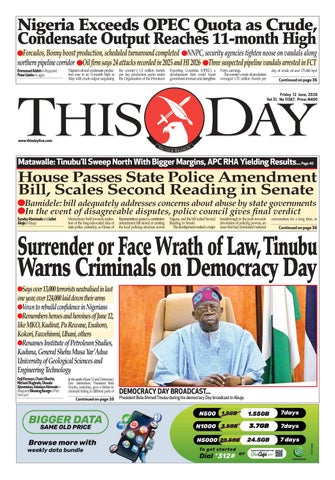
Nigeria Exceeds OPEC Quota as Crude, Condensate Output Reaches 11-month High
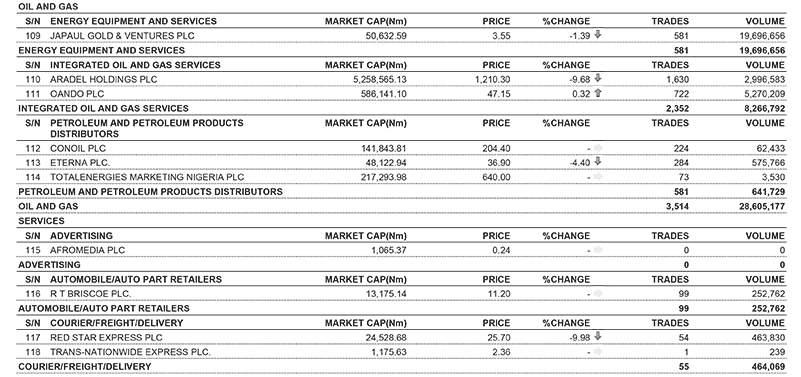
Forcados, Bonny boost production, scheduled turnaround completed NNPC, security agencies tighten noose on vandals along northern pipeline corridor Oil firm says 24 attacks recorded in 2025 and HI 2026 Three suspected pipeline vandals arrested in FCT Nigeria’s oil and condensate production rose to an 11-month high in May, with crude output surpassing
www.thisdaylive.com
Matawalle: Tinubu’ll
House Passes State Police Amendment Bill, Scales Second Reading in Senate
Bamidele: bill adequately addresses concerns about abuse by state governments In the event of disagreeable disputes, police council gives final verdict
Surrender
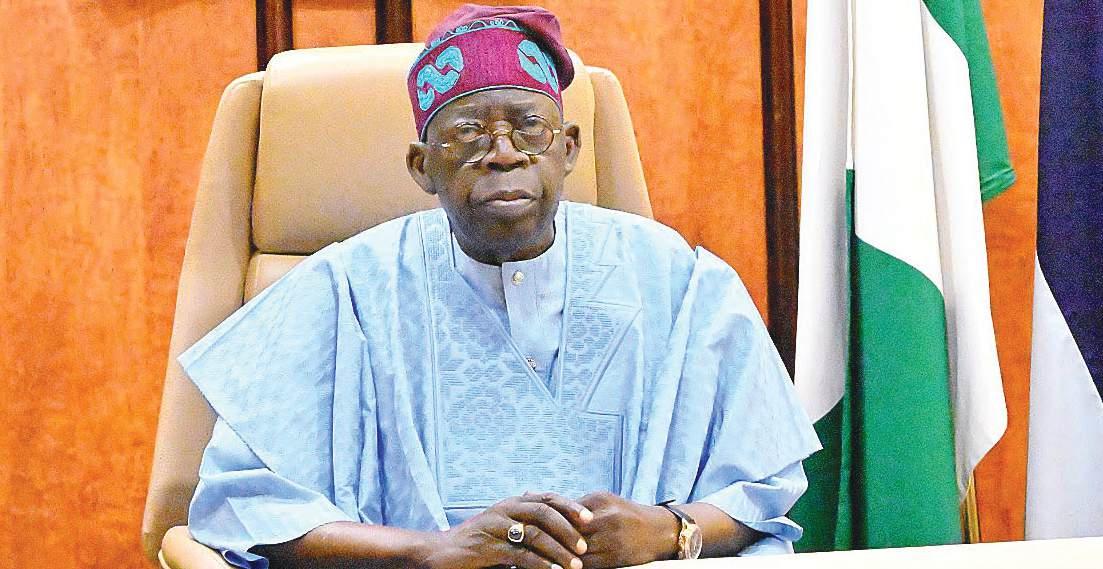
or Face Wrath of Law, Tinubu Warns Criminals on Democracy Day
Says over 13,000 terrorists neutralised in last one year, over 124,000 laid down their arms
Vows to rebuild confidence in Nigerians
Remembers heroes and heroines of June 12, like MKO, Kudirat, Pa Rewane, Enahoro, Kokori, Fawehinmi, Ubani, others Renames Institute of Petroleum Studies, Kaduna, General Shehu Musa Yar’Adua University of Geological Sciences and Engineering Technology
In
of
in Abuja. Continued on page 39
Emmanuel Addeh in Abuja and Peter Uzoho in Lagos
Deji Elumoye, Chuks Okocha, Michael Olugbode, Olawale Ajimotokan, Adedayo Akinwale in Abuja and Blessing Ibunge in Port Harcourt
Sunday Aborisade and Juliet Akoje in Abuja
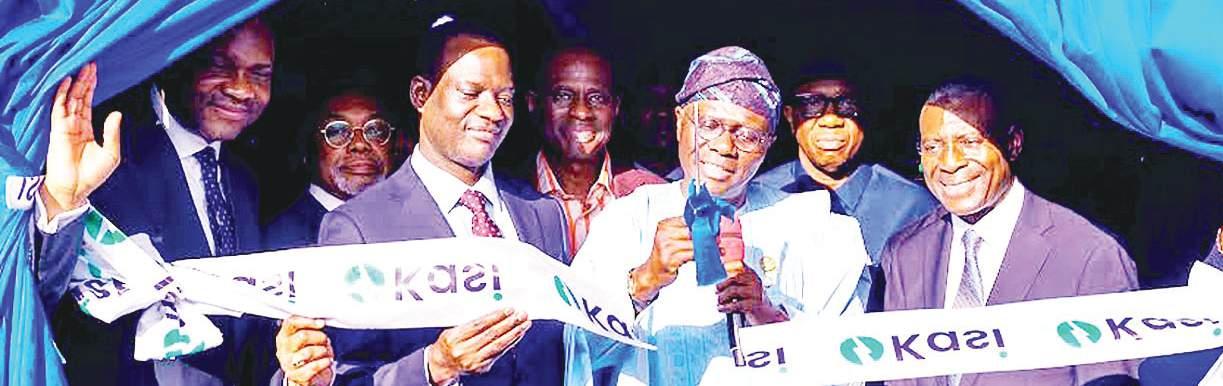
INAUGURATION OF KASI CLOUD DATA CENTRES...
L-R: Managing Director/CEO, Nigeria Sovereign Investment Authority (NSIA), Aminu Umar-Sadiq; Minister of Finance and Coordinating Minister of the Economy, Mr. Wale Edun; Chairman, Presidential Fiscal Policy and Tax Reforms Committee, Mr. Taiwo Oyedele; Lagos State Governor, Mr. Babajide Sanwo-Olu; and Founder/CEO of Kasi Cloud, Mr. Johnson Agogbua, at the inauguration of Kasi Cloud Data Centres, West Africa’s first hyperscale ready, AI capable data centre campus in Lagos...recently
Senate Extends 2025 Capital Budget Implementation to September
Third extension in six months as MDAs struggle to utilise released funds Lawmakers cite procurement delays, outstanding obligations, ongoing projects Akpabio says move necessary to ensure accountability, value for money
Sunday Aborisade in Abuja Senate on Thursday approved a fresh three-month extension of the implementation period for the capital component of the 2025 Appropriation Act. It shifted the deadline from June 30, 2026, to September 30, 2026, in a move aimed at salvaging ongoing projects and enabling ministries, departments and agencies (MDAs) to fully utilise funds already released by the federal government.
The decision, which followed the adoption of a motion sponsored by Senate Chief Whip, Senator Tahir Munguno, marked the third extension granted to the capital component of the 2025 budget.
The National Assembly had initially extended the implementation period from December 31, 2025, to March 31, 2026, and later from March 31 to June 30, 2026, before Thursday’s latest shift to September 30.
With the extension, MDAs will have an additional three months to complete ongoing capital projects, process outstanding payments, and meet contractual obligations tied to projects captured in the 2025 fiscal plan.
Leading debate on the motion, Munguno said the extension became imperative because a substantial portion of funds released for approved projects and programmes had yet to be utilised owing to procurement
timelines, project execution challenges, and other administrative bottlenecks.
According to him, several strategic projects across key sectors of the economy are already at advanced stages of implementation and require additional time for completion, certification and payment.
He warned that allowing the implementation window to lapse
at the end of June could result in the abandonment of critical projects, waste public resources already committed to them, and disrupt ongoing government interventions.
Munguno also expressed concern that some projects contained in the 2025 budget might not be reintroduced in future appropriation cycles, thereby creating funding gaps and
undermining national development objectives.
He stated that extending the validity of the capital component would promote efficient utilisation of public funds, improve budget performance and support economic growth.
“The Senate is convinced that granting a further extension of
the implementation period is in the national interest and will ensure value for money in public expenditure,” he said.
Chairman of Senate Committee on Appropriations, Senator Olamilekan Adeola, who seconded the motion, said although payment for some capital projects had commenced, numerous obligations remained
outstanding. Adeola recalled that President Bola Tinubu had earlier informed the National Assembly that only about 30 per cent of the funds required for the outstanding 2025 capital commitments would be accommodated through the rollover arrangement, while the balance would be reflected in the 2026 budget framework.
...Voids Kyari’s Arrest Warrant, Rebukes Oshiomhole Over NNPCL Remarks
Says only Senate President can authorise warrants against witnesses Distances upper chamber from claim that NNPCL is ‘a bunch of criminals and thieves’ Orders committees to respect due process, presumption of innocence Akpabio summons Public Accounts Committee members over hearing controversy
In a dramatic move aimed at safeguarding its institutional credibility and reinforcing constitutional procedures, Senate on Thursday nullified the arrest warrant purportedly issued by its Committee on Public Accounts (SPAC) against former Group Chief Executive Officer of Nigerian National Petroleum Company Limited (NNPCL), Mele Kyari.
The red chamber also formally distanced itself from comments reportedly made by a member of the panel, Senator Adams Oshiomhole, describing the national oil company as “a bunch
of criminals and thieves”.
The upper chamber, after an extensive debate, adopted a motion sponsored by Senate Leader, Senator Opeyemi Bamidele, declaring that Senate Committee on Public Accounts lacks the authority to issue an arrest warrant. It stressed that only the senate president could exercise such powers under the law.
The resolution came barely 24 hours after the Public Accounts Committee announced an arrest warrant against Kyari during its probe of alleged financial irregularities involving the NNPCL.
Moving the motion, Bamidele said
the senate was under obligation to protect constitutional order and ensure that its oversight functions were exercised within the limits prescribed by law.
He stated that while Sections 88 and 89 of the 1999 Constitution empowered the National Assembly to conduct investigations, the authority to compel attendance through the issuance of warrants rested exclusively with the presiding officer of the chamber.
According to him, Sections 4, 5 and 6 of the Legislative Houses (Powers and Privileges) Act clearly vest such powers in the President of the Senate in matters relating to Senate proceedings and committee activities.
Asaba Incident: NSIB Retrieves Cockpit Voice, Flight Data Recorders in Probe of Aircraft Roadway Landing
Kasim Sumaina in Abuja
The Nigerian Safety Investigation Bureau (NSIB), Thursday said it has swiftly recovered and secured the Cockpit Voice Recorder (CVR) and Flight Data Recorder (FDR) from the Bombardier Challenger CL-601 aircraft, registration N989BC, operated by VMO Aero Limited.
“The power to issue a warrant affecting the liberty of a citizen is an extraordinary statutory power which must be exercised strictly in accordance with the procedure prescribed by law,”
Bamidele said.
He warned that legislative investigations should not be mistaken for criminal trials and that neither individuals nor institutions should be pronounced guilty before the completion of investigations or judicial determination.
He added, “The constitutional doctrine of fair hearing and the presumption of innocence require that no person or institution be adjudged guilty except by a court of competent jurisdiction after due process of law.”
official position of the Senate and may undermine confidence in the impartiality and objectivity of ongoing legislative oversight proceedings.” The senate subsequently adopted a resolution dissociating the chamber from Oshiomhole’s comments, insisting that they neither reflect the opinion nor findings of the upper legislative chamber.
Deputy Senate President Barau Jibrin threw his weight behind the motion, describing it as a necessary step to uphold constitutional governance and Senate rules.
Barau stressed that committees remained subordinate organs of the senate and could only make recommendations rather than exercise powers reserved for the full chamber.
Following notification of the occurrence on Wednesday, June 10, 2026, the NSIB immediately activated its emergency response procedures, deployed a Go Team (investigative team) to the site near Asaba, Delta State, and commenced investigation into the incident involving the private aircraft that landed and subsequently departed from a roadway during a flight from Lagos to Asaba.
NSIB acted promptly following the occurrence on June 10, 2026.
Director General of the NSIB, Captain Alex Badeh Jr., stated: “The
Badeh, in a statement issued by Director, Public Affairs and Family Assistance, NSIB, Mrs. Funke Adebayo-Arowojobe, said: “The immediate deployment of our investigative Go Team and the swift recovery of the Cockpit Voice Recorder and Flight Data Recorder are critical steps that will help establish the facts of this incident.
“We are relieved that there were no reported fatalities or serious injuries. Our commitment remains the advancement of aviation safety in Nigeria.
“Investigative activities are ongoing and will include analysis of the recovered flight recorders, examination of technical and operational records, interviews with relevant personnel, and review of additional evidence.”
Bamidele also faulted comments attributed to Oshiomhole during the proceedings of the Public Accounts Committee in which the former Edo State governor, reportedly, described NNPCL as “a bunch of criminals and thieves”.
According to him, such remarks suggest a conclusion of criminal culpability before the conclusion of any lawful investigation, and risks creating the impression that the comments represents the official position of the senate.
Bamidele stated, “Such statements, if left unclarified, may be misconstrued by the public as representing the
He said, “The committee overstepped its bounds, and he has done the right thing by drawing attention to it. We need to do things in line with our rules and with the law of the land.”
Senate Chief Whip, Senator Mohammed Monguno, described the motion as a timely intervention and a reminder that lawmakers must be seen to obey the same laws they enact for the country.
Monguno stated, “The senate, being the highest law-making body of the country, should not only be above board but should be seen manifestly to be above board.”
Sunday Aborisade in Abuja
PHOTO: ETOP UKUTT
Elon Musk’s SpaceX Heads for Record
$1.78tn IPO Amid Overvaluation Concerns
American businessman set to become world’s first trillionaire
Elon Musk’s SpaceX is set to launch the biggest stock market float in history amid warnings that it may be overvalued, the UK Guardian reported yesterday.
The space exploration, satellite broadband and AI company will join the US stock market on Friday at a valuation of $1.78 trillion, after offering at least $75 billion of shares to investors through an initial public offering.
According to the report, the offering is oversubscribed by three or four times, with more than $250 billion of bids from investors keen to take part in the Initial Public Offer (IPO).
The $75 billion share offer is nearly three times the previous record, Saudi Aramco’s $29.4 billion offer when it floated in 2019. If the float goes as planned, Musk could make history as the world’s first trillionaire, the Guardian report added.
However, the investment research group Morningstar has calculated
that SpaceX is worth only $63 a share – well below the anticipated IPO price of $135 – and warns there is “a major disconnect between market expectations and underlying fundamentals”.
Michael Field, the chief equity strategist at Morningstar, suggested investors should sit out the IPO and wait for “a more attractive
Sanwo-Olu Set for Nigeria Climate Investment Summit as Lagos Plans Big Move in London
The Lagos State Government has joined the growing lineup of highlevel global stakeholders confirmed to participate in the Nigeria Climate Investment Summit (NCIS), billed to hold in London on June 23.
A statement released yesterday by GLOBE Legislators and SOStainability, conveners of NCIS London, said the growing interest in the Summit, designed as a major programme of the London Climate Action Week (LCAW), confirms Nigeria’s rising profile as a destination of choice for green global investments.
Recent data from the National Bureau of Statistics (NBS) indicate that the UK is Nigeria’s biggest source of Foreign Direct Investment (FDI), with some $12.21 billion attracted to the country between 2023 and 2025 following the deliberate diplomatic engagements of President Bola Tinubu.
The NCIS has been programmed to leverage investments into Nigeria by specifically signposting financing and multilateral funding into bankable green project pipelines in states like Lagos that have shown leadership in climate policy delivery.
The summit is supported by major global, national, and municipal partners, including the Commonwealth Secretariat, the United Nations Sustainable Energy for All (SEforAll), British Investment International (BII), and the City of London’s Worshipful Company of Fuellers, among others.
Confirmed Speakers and session
moderators include Rt. Hon. Benjamin Kalu, Deputy Speaker of Nigeria’s House of Representatives; Gedion Timothewos, President-Designate of COP32 and Ethiopia’s Minister of Foreign Affairs, Catriona Laing, United Nations Secretary-General António Guterres’ Special Representative for Somalia and Head of the United Nations Assistance Mission in Somalia (UNSOM), and immediate past UK High Commissioner to Nigeria.
Also expected are: Ms Damilola Ogunbiyi, Special Representative of the UN Secretary-General and Cochair of UN-Energy; Suresh Yadav, Senior Director, Climate Change and Oceans, Commonwealth Secretariat; Ashutosh Shastri, Master Fueller, Worshipful Company of Fuellers (City of London Livery Company), and Prof. Chukwumerije Okereke, President, Society for Planet and Prosperity, among others.
According to the organisers of the Summit, Sanwo-Olu will lead a delegation of senior Lagos State officials, including the Commissioner for Environment and Water Resources, Mr. Tokunboh Wahab.
The governor is slated to officially unveil plans to host Africa’s first climate action week in Lagos, joining other global capitals, including London, New York, Shanghai, Sydney, Rio, and Baku, that now convene these exclusive high-profile events annually.
According to the statement, the Lagos State delegation will engage with the global investment community, intergovernmental organisations,
Development Finance Institutions, regulators, institutional investors, businesses with innovative investment plans in Nigeria, and diaspora capital networks, who will be joining senior officials from the federal and state governments at the Summit.
Besides, The NCIS will explore investment pathways into numerous renewable energy and transition opportunities in Nigeria, given recent policy initiatives like the launch of the National Carbon Market Framework (NCMF), Phase 3 of the Nationally Determined Contributions (NDCs), activation of the Climate Action Plan, and unbundling of the electricity sector through the Electricity Act 2023.
The Summit will reaffirm, with
demonstrable evidence, Nigeria’s position as the destination of choice for climate finance, green investments, and delivery of SDG 7 on energy access; broker deals and initiate twinning opportunities for investment uptake and sustainable, productive partnerships around energy access, renewables, and transition projects; support engagement by leading Nigerian lawmakers and subnational leaders with global energy and climate diplomacy, ahead of COP 31 in Antalya, Turkey; and offer policy recommendations and clear implementation pathways, including through Nigeria’s NDC on advancing climate action with intergovernmental and policy partners.
entry point down the line”.
“We believe the business has real strengths, particularly in Starlink, but with so many unknown and untested technologies underpinning much of the valuation price, particularly within the AI business, we think the valuation is extremely speculative,” Field said.
SpaceX, which made a net loss of $4.9 billion in 2025, is made up of three businesses: space exploration, including its Falcon and Starship rockets; connectivity, such as its Starlink satellite constellation providing high-speed internet access; and artificial intelligence, though its xAI division.
At $1.78 trillion, the IPO values SpaceX at roughly 92 times its trailing sales, a very hefty valuation which means investors are wagering that Musk can achieve his ambitious goals for the company – such as orbital datacentres in space, building a base on the moon and cities on other planets, and to “extend the light of consciousness to the stars”.
SpaceX has claimed that Starlink has a total addressable market of $1.6 trillion; Morningstar estimates the segment’s realistic global opportunity at about $129 billion.
Earlier this week, the US senator Elizabeth Warren called for the Securities and Exchange
Commission to delay SpaceX’s IPO, owing to concerns about the company’s valuation and corporate governance.
“Given the unprecedented threats to investor protection and market integrity posed by the biggest IPO in history, you must delay any eventual acceleration of the registration statement’s effectiveness accordingly,” Warren wrote to the market regulator on Tuesday. Investors who do not take part in the IPO may still find themselves with a stake in SpaceX, once the company is added to stock market indices.
Earlier this week the index provider MSCI confirmed it would apply existing rules for early inclusion of large IPOs in its Global Standard Indexes, which probably clears the way for SpaceX to join. That would create demand from passively managed investment funds which track those indices. The Nasdaq index has made changes that will make it easier for new listings such as SpaceX to join its indices.
However, S&P Dow Jones Indices has declined to relax its strict entry rules, blocking fast-track inclusion, which means it could take months before SpaceX is added to the tech-heavy S&P 500 stock index.
The federal government Thursday deepened its Renewed Hope Agenda in the agricultural sector with the launch of a major food security intervention in Ekiti State, distributing 80,640 bags of fertiliser to 20,160 smallholder farmers across the South-West.
The initiative, implemented under the Renewed Hope Farm Input Support Programme (FISP), is aimed at boosting agricultural productivity, improving food security, strengthening rural livelihoods
and positioning agriculture as a key driver of national economic transformation.
The programme was officially flagged-off in Ado-Ekiti by the National Agricultural Development Fund (NADF), marking a strategic step in the federal government’s broader Renewed Hope vision to ensure food sovereignty and sustainable agricultural development across the country.
Speaking at the event, the Executive Secretary of NADF, Mr. Mohammed Ibrahim, said the intervention reflects the Renewed
Hope Agenda’s commitment to targeted, data-driven agricultural support that directly benefits genuine farmers.
According to him, 20,160 farmers from Ekiti, Ondo, Ogun and Lagos States will benefit from the programme, with each receiving four bags of fertiliser for use in the current planting season.
He explained that the Renewed Hope Farm Input Support Programme was designed not as routine distribution, but as a structured intervention to improve farm output, increase yields and
deliver measurable impact on food production.
“At the National Agricultural Development Fund, agriculture is central to the Renewed Hope Agenda because it remains one of the strongest engines of national development.
“When agriculture works, it creates jobs, strengthens rural communities, improves food supply and increases farmers’ incomes. This programme is about ensuring that the right farmers receive the right inputs at the right time,” he said.
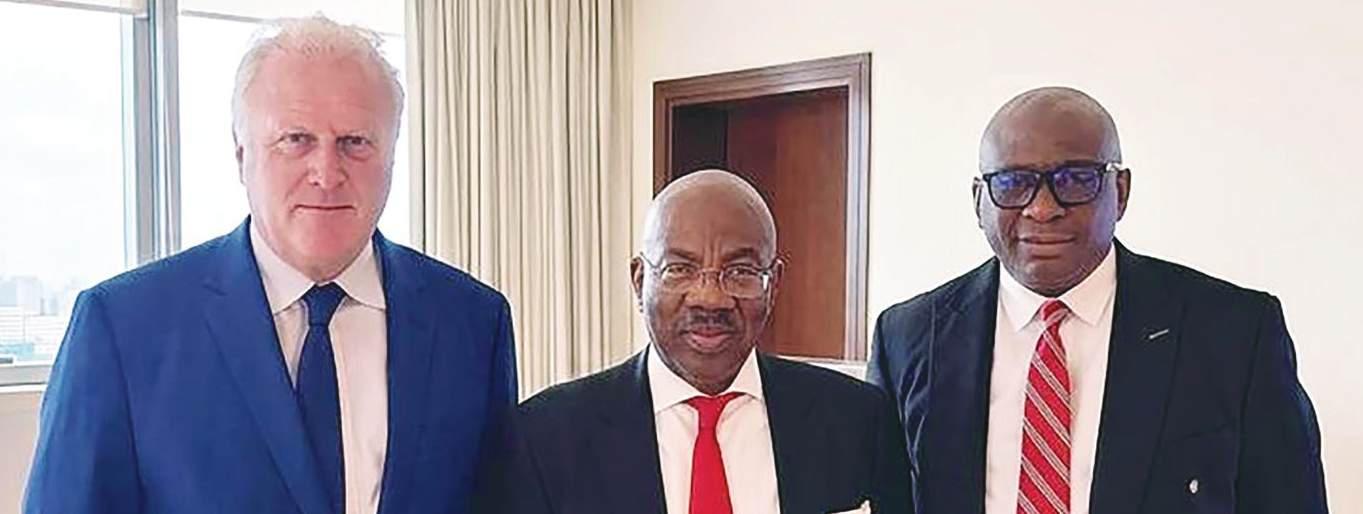
L-R: Chairman, Commonwealth Enterprise and Investment Council (CWEIC), Lord Jonathan Marland; Founder of Zenith Bank Plc, Jim Ovia, CFR; and Country Director, Commonwealth Enterprise and Investment Council (CWEIC), Obinna Anyanwu during a courtesy visit to Jim Ovia on the occasion of Lord Marland’s visit to Lagos for the Invest Lagos 3.0 Summit ...recently
Gbenga Sodeinde in Ado Ekiti
Emmanuel Addeh in Abuja
Emmanuel Addeh in Abuja
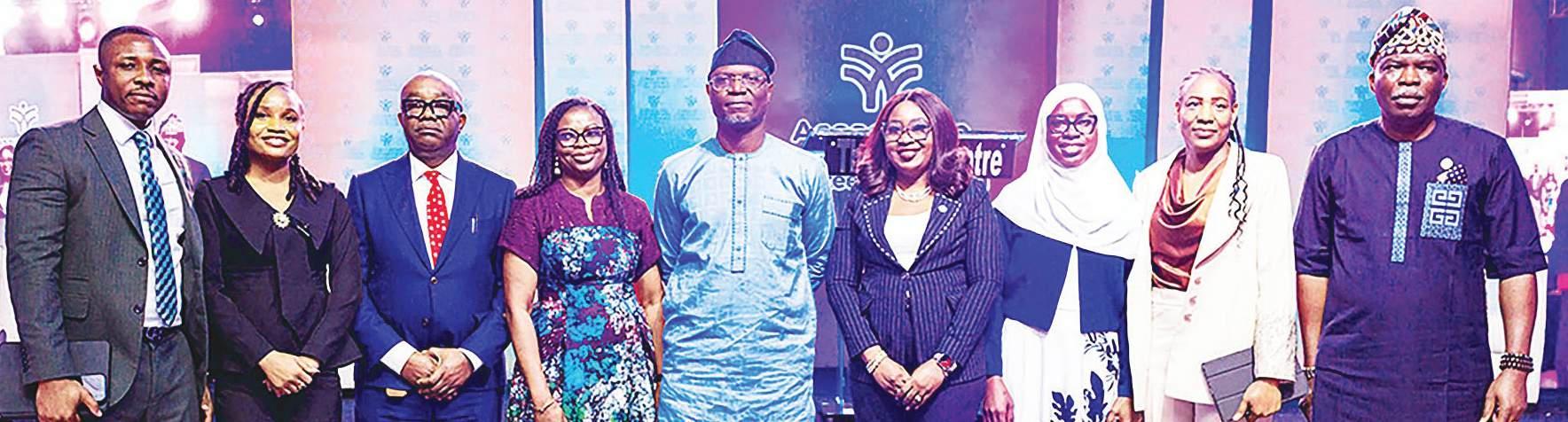
ACT 2026 ANNUAL CONFERENCE...
L-R: Partner, M & A Tax, KPMG West Africa, Oludayo Adeniji; Legal/Trust Officer, Apel Capital and Trust Limited, Sylver Okwudiri; Head Lagos Office, Securities and Exchange Commission, John Briggs; representative of Olaniwun Ajayi LP, Prof. Kayinsola Ajayi, Yewande Senbore; Director General, Securities and Exchange Commission
Association of Corporate Trustees (ACT), Omolola Iyinolakan; Partner, Banwo & Ighodalo,
Director, Nigeria Revenue Service (NRS), Dr. Ajayi Adepoju during the
Access Holdings Affirms Long- Term Value Strategy at 4th AGM
Access Holdings Plc has reaffirmed its commitment to long-term value creation, balance sheet resilience and disciplined growth, assuring shareholders that its strategic priorities remain firmly focused on sustainable returns despite prevailing economic uncertainties.
Speaking at the Group’s fourth Annual General Meeting (AGM), the Chairman of Access Holdings, Aigboje Aig-Imoukhuede, said the institution’s performance demonstrates a deliberate shift towards strengthening long-term fundamentals while maintaining robust financial results.
According to him, the true measure of a financial institution is not merely its ability to grow, but its capacity to do so sustainably and profitably over time.
“The defining test of a financial institution is not merely its capacity for growth, but its ability to grow profitably, sustainably, and with discipline over time,” Aig-Imoukhuede told shareholders.
The Group reported a Profit Before Tax (PBT) of N1.007 trillion for the 2025 financial year, driven by strong contributions across its diversified businesses and markets. Total assets rose to N51.56 trillion, while customer deposits also recorded significant growth, reflecting continued customer confidence and franchise expansion.
Despite the strong financial perfor-
mance, the chairman noted that the results should be viewed within the context of deliberate risk management decisions taken by the Group during the year.
He explained that Access Holdings accelerated provisions on legacy and regulatory forbearance credit exposures, leading to higher impairment charges, as part of efforts to strengthen its balance sheet and reinforce long-term resilience.
“Periods of economic uncertainty often reveal more about an institution than periods of uninterrupted growth.
Our focus remains on building a business that is not only growing, but improving in the quality, resilience, and sustainability of its earnings,” he said.
The AGM also highlighted the Group’s continued transformation from a banking-focused institution into a diversified financial services ecosystem spanning investment management, pensions, insurance, consumer finance and payments.
While banking remains its core earnings driver, Access Holdings said emerging businesses such as Access ARM Pensions, Access Insurance Brokers, Oxygen X Finance and Hydrogen Payments are increasingly contributing to earnings growth and expanding the Group’s footprint across key segments of the financial services industry.
Aig-Imoukhuede said the Group’s next phase of growth would be guided
by its strategic framework tagged “From Scale to Value.
“Our strategy, From Scale to Value, reflects the natural evolution of our journey. Scale created opportunity; value creation is how we fully realise it,” he stated.
He added that although the Group continues to generate strong returns, ensuring that earnings per share consistently exceed the cost of capital remains critical to delivering sustainable shareholder value.
The chairman also acknowledged what he described as significant
unrealised value embedded in the Group’s international subsidiaries, assuring investors that management remains focused on improving market recognition of that intrinsic value.
Responding to shareholders’ concerns over dividend payments, the Board clarified that the temporary suspension of dividend distributions was necessitated by regulatory compliance requirements and not by any deterioration in the Group’s financial position.
Aig-Imoukhuede maintained that Access Holdings’ earnings capacity remains strong and that the Board’s
decision reflects prudent capital management and adherence to supervisory expectations.
He assured shareholders that dividend payments would resume once the relevant regulatory conditions are satisfied.
“Our approach is clear: capital retained today must translate into greater value tomorrow and sustainable returns for our shareholders,” he said.
The AGM also reviewed developments in governance and leadership succession within the Group.
During the year, Innocent C. Ike
was appointed Group Managing Director/Chief Executive Officer, while Ibironke Adeyemi joined the Board as an Independent Non-Executive Director. Shareholders equally commended Bolaji Agbede, Executive Director, Business Development, for her stewardship of the institution during her tenure as Acting Group Chief Executive Officer before the appointment of Ike. According to the chairman, the transition process was executed seamlessly, ensuring continuity of strategy, operational stability and stakeholder confidence.
US-based Venture Launches N600 Billion Scheme for Imo’s MSMEs
A US-based venture studio, Calpe Labs, says it has launched a N600 billion scheme, which targets to boost entrepreneurship and capital access of 50 grassroots micro-businesses in Imo State
The Managing Director of Calpe Labs, Mr. Mambu Sherman, disclosed this during an interaction with journalists in Owerri. The beneficiaries were selected
Nigeria, Ethiopia Sign Prisoner Transfer Pact, Move to Repatriate Incarcerated Citizens
Michael Olugbode in Abuja
Nigeria and Ethiopia have signed a landmark agreement that will allow convicted citizens of either country to serve the remainder of their prison terms in their home nation, marking a major step in consular cooperation and humanitarian justice between the two African countries.
The Transfer of Sentenced Persons Agreement was signed on Thursday in Addis Ababa by Nigeria’s Attorney-General and Minister of Justice, Lateef Fagbemi, and Ethiopia’s Justice Minister, Hanna Arayaselassie, in the presence of senior officials from both governments.
The diplomatic breakthrough was facilitated by Nigeria’s Minister of Foreign Affairs, Bianca OdumegwuOjukwu, and her Ethiopian counterpart, Gideon Timothewos.
Under the agreement, convicted nationals of either country may, subject to legal requirements and agreed conditions, be transferred to their country of origin to complete their sentences.
Speaking at the signing ceremony, Odumegwu-Ojukwu described the accord as a reflection of the shared commitment of both nations to justice, humanity and international cooperation.
According to her, the arrangement recognizes the critical role of family support, language, culture and social connections in the rehabilitation and reintegration of offenders.
She noted that modern correctional systems should go beyond punishment to provide opportunities for reform and eventual reintegration into society.
“For Nigeria, the welfare and
protection of Nigerian citizens abroad remain a cardinal responsibility of government, particularly at a time when citizen-centred diplomacy is a key pillar of our foreign policy,” she said.
The minister however urged Nigerians living abroad to respect the laws of their host countries and conduct themselves in ways that project a positive image of the nation.
She maintained that while offenders must face the consequences of their actions, they should also be treated with dignity and accorded their rights under applicable legal frameworks.
Odumegwu-Ojukwu said the agreement underscored the determination of both countries to strengthen consular relations and adopt a more humane approach to criminal justice administration.
under the state government’s One Kindred One Business Initiative (OKOBI), a local initiative designed to leverage communal and family businesses in addressing unemployment.
The micro-businesses are mainly into agribusinesses and agro-processing, micro-manufacturing and production, artisanal and skilled services, trade, and commerce.
Sherman said the enterprise development initiative stemmed from the successful Imo Economic Summit hosted by the State Government in December 2025 to drive inclusive economic growth in the state.
He said Africa Business Affairs (AfriBA), a business development organisation, initiated the scheme.
He said AfriBA was partnering Calpe Labs, InnoPower Africa, and EvaTech Global, for the strategic implementation of the scheme to bring global technology and capital innovation to the state.
According to him, EvaTech Global integrates advances digital underwriting and business analytics.
“This technology will help local entrepreneurs in the state to strengthen capital readiness and seamlessly improve access to vital financing opportunities.
“One of the greatest challenges facing MSMEs is not a lack of ambition or opportunity, but fragmented support systems,” the director said.
Sherman also said that the part-
nership reflected a broader global shift, saying modern entrepreneurs required connected support systems and alternative finance rather than isolated, uncoordinated programmes. He said InnoPower Africa, a workforce and economic development organisation which focuses on entrepreneurship, innovation, and talent development, would help connect people, institutions, and opportunities to drive an inclusive economic growth.
Sherman said: “The initiative ultimately aims to empower over 1,000 businesses across the state.
“Partners project a massive N600 billion total economic impact and 20,000 new jobs.
War Against Hunger: Varsity Invests N20m, Clears
16 Hectares for Cassava, Maize Production
Michael Okpara University of Agriculture, Umudike (MOUAU) has unveiled a N20 million cassava and maize production farm project across 16 hectares as the university’s frontline response to food insecurity in the Southeast.
Vice Chancellor of MOUAU, Prof. Ursula Ngozi Akanwa, said the farm project was aimed at “dismantling hunger,” while striving to achieve the university’s mandate by addressing food insecurity.
Giving stewardship of her first 100 days in office at her Conference Room, Prof. Akanwa listed her other achievements since her inauguration
on March 1, 2026 as the 7th and first
female Vice Chancellor of MOUAU to include revival of the university radio station and overhauling the institution’s security apparatchik.
She said she approved separate requests for 10 hectares and six hectares of land by the Centre for Excellence in Root Crop Research and Development (CERCORD) and the University Farms for massive cassava cultivation.
“As a federal university of agriculture, we must play the key role to dismantle the mounting trends of hunger, acute food insecurity and malnutrition in the host communities and beyond,” Prof. Akanwa said.
The VC said the farms would boost food crop production, make
food products available at affordable prices and create jobs for youths in the host communities while increasing the university’s Internally Generated Revenue (IGR). Plans are also underway for value-chain addition to produce more cassava-based products. Prof. Akanwa revealed that the Niger Delta Development Commission (NDDC), has proposed donating tractors to MOUAU.
“The agricultural tractors will catalyze large-scale cultivation of hectares of land for intensive food production to feed the teeming population of people in South east Nigeria,” she said, adding the machines will also train students on practical courses and Students Industrial Work Experience Scheme.
Sheriff Oborevwori’s peace initiative in Warri is welcome, writes RICHARD AKPOVONA
NDC PRIMARIES AND THE AFTERMATH
KALU OKORONKWO argues that the NWC bears responsibility for ensuring that primaries are conducted in accordance with party rules
It is a nation in search of itself, argues ABIODUN OLUWADARE
NIGERIA AT A CROSSROADS
There comes a defining moment in the life of every nation when silence becomes betrayal and reflection becomes a necessity. A moment when citizens must confront painful realities, ask uncomfortable questions, and honestly assess the direction of their collective journey. Nigeria has arrived at such a moment.
Today, our beloved country stands at a crossroads, wounded but not defeated, troubled but not hopeless, battered but not beyond redemption. The Nigeria that was once celebrated as the Giant of Africa now appears burdened by uncertainty, insecurity, economic hardship, and a growing crisis of confidence. Across the nation, anxiety hangs in the air like a dark cloud. Fear has become a regular companion in places where hope ought to flourish. For many Nigerians, sleep no longer comes easily. Farmers worry about whether they will return safely from their farms. Traders wonder if they will survive the journey to the market. Parents pray anxiously for children travelling to school or work. Commuters scan the roads with apprehension. Communities that once echoed with laughter and social interaction now live under the shadow of fear.
This was not the dream of our founding fathers nor the promise of independence. This was not the destiny envisioned by generations of patriots who believed that Nigeria could become a beacon of prosperity, stability, and greatness on the African continent.
The tragedy of Nigeria is not that we lack resources. On the contrary, few nations have been blessed as abundantly as ours. We possess vast deposits of oil and gas, rich mineral resources, fertile agricultural land, a strategic geographical location, and perhaps most importantly, one of the largest and most energetic youth populations in the world.
Nature has been generous to Nigeria. History has been generous to Nigeria. Providence has been generous to Nigeria. Yet, despite these extraordinary blessings, millions of our people struggle daily to survive. Poverty persists amidst abundance. Hunger thrives in a land blessed with fertile soil. Unemployment grows despite enormous human potential. Insecurity expands despite substantial investments in security. The contradiction is both painful and perplexing.
How did a nation so richly endowed arrive at a point where so many citizens feel abandoned by the promise of their country? The answers are neither simple nor comfortable. Many analysts point to decades of leadership failure, corruption,
weak institutions, policy inconsistency, ethnic mistrust, religious intolerance, and poor governance. Successive administrations have often spoken eloquently about national transformation, yet the gap between promises and performance remains disturbingly wide. For far too long, public office has been viewed by some as an avenue for personal enrichment rather than public service. Resources that should have built schools, hospitals, roads, industries, and modern infrastructure have too often disappeared into private hands. Merit has frequently been sacrificed on the altar of patronage. Competence has sometimes yielded to connections. National interest has repeatedly been subordinated to sectional calculations.
The consequences are visible everywhere.
Public institutions that should inspire confidence often struggle to command trust. Infrastructure remains inadequate. Educational institutions face numerous challenges. Healthcare systems continue to operate below expectations. Citizens increasingly find themselves relying on private alternatives for services that government ought to provide.
Perhaps nowhere is the crisis more evident than in the security sector. The rise of terrorism, banditry, kidnapping, armed robbery, communal violence, and other forms of criminality has inflicted deep wounds upon the nation. Entire communities have been displaced. Families have been torn apart. Economic activities have been disrupted. The psychological impact of persistent insecurity has left scars that may take years to heal. There was a time when many Nigerians travelled freely across the country without fear. Today, numerous highways have acquired frightening reputations. Stories of abductions, attacks, and violence circulate with alarming
regularity. Farmers abandon their fields. Investors hesitate. Businesses scale down operations. The social and economic costs are enormous.
Citizens naturally ask difficult questions. Why does insecurity continue despite significant budgetary allocations? Why do criminal networks appear resilient? Why do innocent citizens often feel vulnerable? Why does peace remain elusive in many parts of the country?
These questions deserve honest answers rather than political rhetoric.
Public confidence in any nation depends significantly on the ability of the state to protect lives and property. When citizens begin to doubt that protection, fear gradually replaces trust, and social cohesion begins to weaken.
Yet security challenges do not exist in isolation. They are often symptoms of deeper structural problems. A hungry population is vulnerable. An unemployed population is vulnerable. A poorly educated population is vulnerable. A marginalized population is vulnerable. This is why the growing despair among Nigerian youth should concern every patriot. Across the country, young men and women graduate from universities, polytechnics, and colleges with dreams of contributing meaningfully to society. Many possess intelligence, creativity, and determination. Yet countless young people encounter a labour market that offers limited opportunities. Years of study frequently end in prolonged unemployment or underemployment. The emotional consequences can be devastating. Dreams are postponed. Ambitions are frustrated. Hope begins to fade.
While the overwhelming majority of Nigerian youths remain hardworking and law-abiding, persistent economic exclusion creates fertile ground for criminal recruitment, social unrest, and migration pressures. A nation that neglects its youth is ultimately neglecting its future. Unfortunately, our political culture has not always helped matters. Rather than working collaboratively to address national challenges, political actors often appear trapped in endless cycles of blame and counter-blame. The opposition blames the government. The government blames previous administrations. Regional interests blame one another. Political parties focus on electoral calculations.
Oluwadare is a Professor of Political Science Nigerian Defence Academy, Kaduna
Sheriff Oborevwori’s peace initiative in Warri is welcome, writes RICHARD AKPOVONA
KALU OKORONKWO argues that the NWC bears responsibility for ensuring that primaries are conducted in accordance with party rules
BRIDGES, NOT SWORDS NDC PRIMARIES AND THE
AFTERMATH
Warri has seen this movie before. It is a movie nobody wishes to watch again. For those old enough to remember the dark years of ethnic conflicts in Warri and its environs, the recent tensions arising from the ward and unit delineation exercise in the Warri Federal Constituency immediately triggered uncomfortable memories. The fears are understandable. The issues involved are sensitive. The emotions are deep. The fact is that the interests at stake are both political, economic and historical. And the principal actors — the Urhobo, Itsekiri and Ijaw ethnic nationalities are among the most influential groups in Delta State. In such situations or circumstances, it often takes only a spark to ignite a dangerous fire.
That explains why Monday’s intervention by Governor Sheriff Oborevwori is both timely and deserves commendation from all lovers of peace and progress. At a moment when tensions were beginning to escalate and inflammatory rhetoric threatening to overshadow reason, Governor Oborevwori acted swiftly and decisively by convening a high-level peace meeting involving leaders of the three ethnic nationalities, security chiefs and top government officials. Talk about a ‘stitch in time’. The outcome of that meeting has been reassuring. Leaders of the Ijaw, Itsekiri and Urhobo communities collectively pledged to maintain peace and embrace dialogue as the preferred means of resolving disagreements surrounding the delineation exercise. The significance of the intervention cannot be overstated.
Warri is not just another city. It is one of the most strategic economic centres in Nigeria's oil-producing region. For decades, it served as a thriving commercial hub, attracting businesses, investors and workers from across the country. Its cosmopolitan character was built on the contributions of diverse ethnic groups who lived, worked and prospered there together.
Unfortunately, history also reminds us that Warri has paid a terrible price because ethnic rivalries were allowed to spiral out of control. The violent conflicts that engulfed Warri and surrounding communities in the late 1990s and early 2000s left behind a trail of destruction that remains one of the saddest chapters in Delta State's history. Lives were lost. Communities were displaced. Businesses shut down. Investments vanished. Families were torn apart.
The greatest tragedy was that everybody lost. The city that once buzzed with economic activities gradually lost its shine. Multinational corporations and indigenous businesses alike relocated their operations to safer environments. By some estimates, more than 90 percent of major companies operating in Warri either moved to Lagos, Port Harcourt or other locations where peace and security were guaranteed. The con-
sequences are still visible today. And now, Governor Oboorevwori’s firm resolve are in his unspoken words – never again!
Many years after, many communities continue to grapple with the economic scars of those conflicts. Opportunities that could have transformed generations disappeared. Jobs were lost. Infrastructure development slowed. Investor confidence evaporated. Warri's standing as one of Nigeria's foremost commercial cities suffered a severe setback from which it has yet to fully recover. This painful history should serve as a warning to all stakeholders. And that is why Governor Oborevwori’s call for peace must be headed without further ado by all stakeholders.
No political disagreement, no ward delineation exercise, no contest over representation and certainly no ambition of a few individuals is worth shedding the blood of innocent people.
Political interests come and go. Elections are won and lost. Government policies change. Administrative decisions are reviewed. But once a life is lost, it can never be recovered. Once violence erupts, the consequences often extend far beyond those who initiated it. This is why Governor Oborevwori's message deserves serious attention.
His declaration that "Warri is one family" was more than a political statement. It was a reminder of a fundamental truth. Regardless of ethnic differences, the destinies of the Urhobo, Itsekiri and Ijaw people are intertwined. They share the same geographical space. They benefit from the same economic opportunities. Their children attend the same schools. Their wives patronise the same markets. Their future prosperity depends on their ability to coexist peacefully.
The governor's insistence on dialogue rather than confrontation reflects wisdom born out of experience. Every enduring solution in a plural society emerges through engagement, consultation and compromise. Violence has never solved complex political disputes. If anything, it only deepens divisions and creates fresh grievances.
Dr Akpovona,
a Strategic Communications professional, writes from Asaba, Delta State.
The emergence of the National Democratic Congress (NDC) as a political platform attracted diverse political tendencies and support groups. Among the most notable were supporters of Mr. Peter Obi, former Governor of Anambra State, and Senator Rabiu Musa Kwankwaso, former Governor of Kano State. Both politicians have demonstrated significant electoral appeal and grassroots support, making them influential figures in Nigeria's political calculations.
Their arrival in the NDC injected fresh energy into the party and generated enthusiasm among supporters who viewed the alliance as a vehicle for political renewal and a credible challenge to the established political order.
However, politics is often as much about perception as it is about reality. In the aftermath of party primaries, emotions are running high, expectations colliding with outcomes, and disappointed aspirants are searching for explanations. In such moments, facts are frequently overshadowed by sentiments, and political actors become targets of accusations for events over which they have little or no control.
This appears to be the unfolding situation following the NDC primaries. What should ordinarily have been an internal party exercise to select candidates for various elective offices has, in some quarters, evolved into a blame game. Aspirants who failed to secure tickets have begun looking beyond the party's established structures for explanations, with some directing their frustrations at Peter Obi, Kwankwaso, the Obidient Movement, and the Kwankwasiya Movement.
The controversy raises an important question: who should bear responsibility for the outcome of the NDC primaries?
The answer may not be politically convenient, but it is necessary if democratic institutions are to be strengthened rather than weakened.
Political excitement can sometimes create unrealistic expectations. For some aspirants, affiliation with either the Obidient Movement or the Kwankwasiya Movement appeared to foster the belief that party tickets to different elective positions would be automatic. The assumption was simple: if Obi and Kwankwaso were the most popular figures within the alliance, then their followers should enjoy preferential treatment in the distribution of political opportunities.
Such a narrative may be politically appealing, but it ignores the realities of party administration and the principles that govern internal party democracy.
To understand the situation properly, it is important to begin with a simple fact: Obi and Kwankwaso are relatively new entrants into the NDC. Alongside many of their supporters, they joined the party only recently. Before their arrival, there were loyal party members who had spent years building structures, sustaining party activities, and keeping the organisation alive through difficult periods.
These longstanding members can rightly
claim to have made sacrifices for the party long before the arrival of Obi, Kwankwaso, the Obidients, and the Kwankwasiya Movement. They helped lay the foundation upon which the party stands today. Consequently, it would be historically inaccurate to portray Obi and Kwankwaso as controllers of a political structure they neither founded nor managed.
Political parties are institutions governed by constitutions, rules, and administrative organs. The authority to organise congresses, conduct primaries, resolve disputes, and determine party procedures rests with the party's leadership structures, particularly the National Working Committee (NWC) and relevant state executive committees.
At present, neither Obi nor Kwankwaso controls the NWC of the NDC. They were not involved in the formation of the party, nor do they exercise administrative authority over its internal mechanisms. Their status within the party is that of aspirants and candidates, not party administrators. This reality makes it difficult to sustain arguments that seek to hold them responsible for the conduct or outcome of the primaries.
In every democratic system, there is a distinction between those seeking office and those managing the process through which candidates emerge. The umpire and the contestant are not the same. When that distinction becomes blurred, confusion and misplaced accusations inevitably follow.
Obi and Kwankwaso, like every other aspirant, are participants in the party's democratic process. They were issued tickets to contest under the platform of the NDC. Beyond that, there is little evidence to suggest that they exercised authority over candidates’ selection in states and constituencies across the country.
One of the enduring principles of party politics is the doctrine of party supremacy. Courts, political analysts, and party constitutions have consistently affirmed that political parties retain significant authority over their internal affairs. While candidates may express opinions, offer advice, or appeal for the reconsideration of certain decisions, they are not expected to usurp the powers of party organs charged with managing internal processes.
Okoronkwo is a communications strategist, a leader-
Editor, Editorial Page PETER ISHAKA
Email peter.ishaka@thisdaylive.com
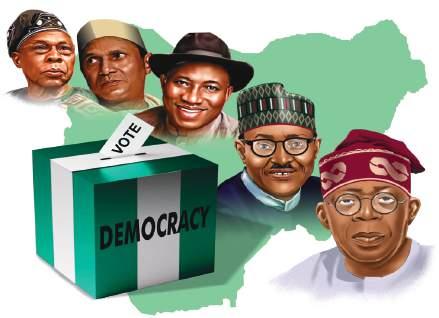
THE ESSENCE OF DEMOCRACY DAY
Much more needs to be done to make democracy meaningful
As Nigeria marks another Democracy Day, it is important to note that the last 27 years have been the longest stretch of civilian government in our history. Indeed, longer than all our earlier republics combined. Under the current dispensation, Nigeria has also transferred power from one political party to another at the ballot box, a thing that once seemed impossible. Today, Nigerians argue loudly and in public. Our citizens take to the streets, as the Nigeria Union of Teachers (NUT) and civil society groups have done in Oyo, Kano, Lagos, Plateau, and beyond these past weeks. That right to protest, petition, and vote their choice is the machinery of a free society. And Nigerians exercise it so routinely that they now take it for granted.
Even on the economy, where the pain has been real, there are signs that the worst may be passing. Inflation that roared above 33 per cent in 2024 has been brought down to around 15 per cent; the Naira, which not long ago seemed in free fall, has steadied below N1,400 to the dollar; our foreign reserves have soared. These are not abstractions. They are the difference between the currency a family can plan its life around and one it cannot. But the same figures that comfort the policymaker offer cold consolation to the trader in Bodija market or the civil servant in Kaduna, for whom the price of a bag of rice and a litre of fuel remains punishing, and for whom ‘easing inflation’ still means prices that rise, only a little more slowly. A macroeconomy can stabilise while a household sinks, and democracy is judged, in the end, not in the briefing rooms of Abuja but at the kitchen table.
of the citizen. What is the essence of holding elections every four years if a child cannot sit in a classroom in Oriire without being marched into the bush at gunpoint? When the gunmen who took those Oyo pupils make demands, they are a standing rebuke to what government represents. So, has democracy served the people? The honest answer is that it has served Nigerians unevenly, and that it has too often been democracy in form, not in substance. We have mastered the ritual of the ballot but not the discipline of accountability.
The whole meaning of the sacred day is that the people's verdict, freely given, is the only legitimate foundation for power
T H I S D AY
EDITOR SHAKA MOMODU
DEPUTY EDITOR WALE OLALEYE
MANAGING DIRECTOR ENIOLA BELLO
DEPUTY MANAGING DIRECTOR ISRAEL IWEGBU
CHAIRMAN EDITORIAL BOARD OLUSEGUN ADENIYI
EDITOR NATION’S CAPITAL IYOBOSA UWUGIAREN THE OMBUDSMAN KAYODE KOMOLAFE
EDITOR-IN-CHIEF/CHAIRMAN NDUKA OBAIGBENA
GROUP EXECUTIVE DIRECTORS ENIOLA BELLO, KAYODE KOMOLAFE, ISRAEL IWEGBU
DIVISIONAL DIRECTORS SHAKA MOMODU, PETER IWEGBU, ANTHONY OGEDENGBE
This is not an argument against democracy. The cure for the failures of democracy has never been less democracy; it is more of it, and better. Every alternative some people might be tempted to romanticise in frustration, Nigeria has already tried. And they are precisely what June 12 was a revolt against. The whole meaning of the sacred day is that the people's verdict, freely given, is the only legitimate foundation for power, and that no amount of order purchased at the price of freedom is ever worth the buying.
Then there is the matter that no Democracy Day broadcast can talk its way around: the safety
DIRECTOR, PRINTING PRODUCTION CHUKS ONWUDINJO
TO SEND EMAIL: first name.surname@thisdaylive.com
Letters to the Editor
That precisely is why Nigerians mark June 12 today, even with many children still in captivity and the living conditions still tough. The work that remains -securing our communities, lifting our people out of want, building institutions that serve - is the work of deepening a democracy, not abandoning one. The symbol of that democratic struggle that gave Nigeria June 12, Moshood Abiola, did not die so that we could hold galas. He and several others died so that the Nigerian people might one day be served by a government they truly choose. We are not there yet. But the road there runs through the ballot box. The people returned their verdict in 1993. Our task, three decades on, is to prove ourselves worthy of it.
We wish al Nigerians Happy Democracy Day.
Letters in response to specific publications in THISDAY should be brief (150-300 words) and straight to the point. Interested readers may send such letters along with their contact details to opinion@thisdaylive.com. We also welcome comments and opinions on topical local, national and international issues provided they are well-written and should also not be longer than (750- 1000 words). They should be sent to opinion@thisdaylive. com along with photograph, email address and phone numbers of the writer.
TRAVAILS OF NIGERIA'S DEMOCRACY
June 12, 1993 is etched in our collective psyche because the freest and fairest presidential election in Nigeria's political annals took place on that date. International and local election observers, who monitored the election, wrote reports that stated that the election was free and fair. But incredibly, and to our utter bewilderment, Nigeria's political 'Maradona', Ibrahim Badamasi Babangida, annulled that election. Consequently, Nigeria was thrown into a political culde-sac, which prevented the birth of the third republic. Before then, the military boys had truncated the growth and evolution of democratic governance in Nigeria in the first and second republics. We had experienced military interregnums in our country between 1966 and 1979; and between 1983 and 1998. The military rule we experienced in Nigeria disrupted the evolution and growth of our democracy and stalled our national development. Is corruption, which is the
cancer asphyxiating life out of our country, not institutionalized in Nigeria by the military?
And it was Ibrahim Babangida, who cancelled the June 12, 1993 presidential election, that installed Chief Ernest Shonekan as the head of the Interim National Government. Shonekan's government, which was a lame duck, was shoved aside by the dark-goggle wearing Sani Abacha.
It took the death of Sani Abacha for Nigeria to return to civilian governance in 1999. Since then, we have enjoyed and experienced 27 years of uninterrupted civilian rule with one national leader handing the baton of political leadership to another elected national leader. Those transitions from one government to another were not characterized by chaos, violence, and bloodletting.
But aside smooth transition from one government to another, have we enjoyed other gains of democracy in
this fourth republic? The answer to this question is an emphatic no. President Tinubu's execution of economic policies to revamp our economy has thrown it into a tailspin. As a result, millions of Nigerians have been reduced to sub-humans, who live below the breadline. Those unfortunate Nigerians who live in the margins of our society scavenge for leftovers in refuse dumps. Not only is our economy in the doldrums, but also security challenges have beset and crippled our country. Has Nigeria not returned to the Hobbesian state of nature where life is short, brutish, and nasty? Daily, people are killed in the north, which has become the epicenter of bloodletting, by bandits, terrorists, and insurgents. And kidnappers' abduction of people for ransom has become common occurrences in the north and south-west of Nigeria.
Chiedu Uche Okoye, Uruowulu-Obosi, Anambra State
with Lanre Alfred
…truth behind the headlines, conspiracies, cover-ups, trials and triumphs
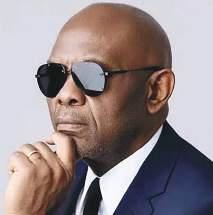
Reading Tony Elumelu: Beyond Wealth and the Human Condition
Writing about Tony Elumelu has always felt, to me, like a private reckoning disguised as public prose. I do not approach his story as a distant chronicler might, armed with sterile facts and perfunctory admiration. No. Each time I sit with the weight of his journey, I find myself implicated, drawn into a deeper contemplation of what it means for one man to bend the arc of a continent’s possibilities without noise, without theatrics, yet with a force so steady it becomes undeniable.
Some men accumulate wealth, and there are those rarer beings who generate motion; living currents that surge through economies and imaginations alike. Tony belongs, unquestionably, to that rarified order. I have watched, sometimes from the polished margins of society gatherings, sometimes from the more contemplative solitude of my own reflections, as his name travels effortlessly, and almost conspiratorially, through boardrooms, presidential villas, and conversations of ambitious young Africans. Wherever his name settles, something stirs. A quiet but insistent belief that perhaps, just perhaps, Africa needs not wait for permission to rise.
To celebrate him, therefore, is not merely to indulge in society-page flattery or the ritual of penning birthday tributes. It is to trace the trajectory of a life that has, with deliberate precision, rearranged the emotional and economic vocabulary of a people long accustomed to deferral. It is to admit, quite personally, how profoundly my own sense of possibility has been altered simply by observing him.
I must confess: I know him through the residue of his actions, through the testimonies of those whose lives he has disrupted in the most constructive sense, through the quiet revolutions he has seeded across a continent that has known too many false dawns. In that sense, acquaintance becomes influence, and influence, in his case, becomes something close to presence.
I remember vividly the moment news filtered through the social circuits about his honour in the US by TIME100. It was one of those stories that society thrives on: the convergence of power, prestige, and symbolism. Interestingly, Tony, and his wife, Awele Elumelu, were named among the TIME100 philanthropists for 2026. According to TIME, the list of top philanthropists for this year was finalised to recognise 100 individuals, representing the most compelling stories in philanthropy today, in a field that moves more than $1 trillion globally each year.
“By telling stories about the world’s most influential givers, leaders, advocates and thinkers, we hope to inspire others to give, and to consider the profound impact that this field has on our future,” TIME added.
The TIME100 Philanthropy initiative spotlights the world’s most influential leaders, activists and donors transforming the future of charitable giving.
The initiative was launched as a new annual franchise in 2025, highlighting how philanthropy was evolving toward collaborative and community-driven models to address urgent global challenges.
Now, I have witnessed honours bestowed before. I have seen medals pinned, titles announced, applause orchestrated. But this felt different, even from afar. It did not read like mere ceremony; it resonated like recognition earned in the quiet, unglamorous trenches of sustained impact. It was Africa, in one of its rare moments of coherence, turning to one of its own and saying: We see you.
Yet what struck me most, as I replayed the scene in my mind, was not the honour itself but the man receiving it. Tony did not appear, even in that grand moment, as a solitary figure basking in deserved glory. He seemed, rather, like a conduit, bearing, almost solemnly, the aggregated aspirations of millions. That distinction matters. Because in Tony’s story, the celebration of the individual is inseparable from the validation of an idea.
And that idea, as we have all come to know, sometimes through admiration, sometimes through scepticism, that eventually dissolves is Africapitalism.
I have heard many men articulate doctrines. It is, after all, fashionable in elite circles to speak in frameworks, to coin philosophies that sound compelling over cocktails and conferences. But how many embody what they preach? How many collapse the distance between rhetoric and reality? In Tony Elumelu, I have observed a rare coherence. His philosophy does not float above his actions; it breathes through them.
Just recently, in Abuja, in a room thick with anticipation and the usual society mix of policymakers, development partners, and the ambitious, Tony unveiled a fresh
cohort of 3,200 young African entrepreneurs drawn from 54 countries, each armed with $5,000 in seed capital and something far more potent: validation. I watched him speak, not with the distant authority of a benefactor dispensing largesse, but with the deliberate urgency of a man who understands the stakes. “This selection was purely by merit and not by quota,” he said. Then he leaned into a detail that electrified the room: “Across thousands of applications, women stood out, through the strength of their ideas, the clarity of their business models and the ambition of their vision… when opportunity is accessible, African women do not simply participate—they lead.”
Through the Tony Elumelu Foundation, Tony funds businesses and democratises access to possibilities. The selected entrepreneurs will receive capital, mentorship and entry into TEFConnect, a digital ecosystem that binds thousands of African dreamers into a community of practice. He spoke of systems, shared prosperity, and the moral urgency of job creation. “It is not about the money in our bank accounts, but about the impact we make,” he insisted, before delivering what felt like both a warning and a vow: “It would be a great betrayal of Africa’s youth if we fail to do so.” In that moment, I understood why his interventions resonate so deeply.
Through Heirs Holdings, he has constructed not just a business empire but a deliberate intervention into Africa’s structural inertia. Energy, hospitality, healthcare, finance, these are not random sectors of conquest. They are carefully chosen pressure points, each investment a calculated incision into the stubborn anatomy of underdevelopment. I have often found myself studying this pattern, almost like a social cartographer, tracing how influence expands not by accident but by intention.
And then there is United Bank for Africa (UBA), as it is more familiarly invoked in both elite and everyday conversations. I have watched its evolution with a mixture of professional curiosity and personal intrigue. What was once another bank in a crowded financial landscape has, under his stewardship, become something far more expansive. A bridge. A network. A statement. When I encounter traders in Accra, entrepreneurs in Abidjan, or even the restless, idea-rich youth of Lagos, I often notice how seamlessly UBA threads through their aspirations. It is not just a financial institution; it is an enabler of motion. And in its unmistakable scarlet identity, one senses something deeper than branding; one senses ambition, continental in scope and unapologetic in its reach.
But if I am to be entirely honest, and this is, after all, a personal reflection, it is not his corporate conquests that move me most. It is what he has chosen to do with the power those conquests confer.
Through the Tony Elumelu Foundation, I have seen a different dimension of him emerge, one that feels less guarded, more revealing. Here, the language shifts. It is no longer about balance sheets or expansion strategies; it is about belief. About beginnings.
We often speak, rather casually, of numbers: 18,500 entrepreneurs empowered, over a million Africans digitally connected, more than $100 million disbursed. These figures circulate easily in media reports and conference speeches, impressive in their scale but somehow inadequate in capturing the emotional gravity of what they represent. Because behind each number is a story I have either encountered directly or absorbed through the social bloodstream, a young woman in Kaduna daring to build, a young man in Kinshasa refusing the seduction of migration because he has, finally, something to stay for.
These surpass random statistics to me; they connote salvation.
And as I reflect on this, I find myself arriving at a conclusion that feels both obvious and profound: Tony’s genius lies not merely in building systems, but in restoring faith. In a continent where hope has often been treated as an inaccessible commodity, he has made it accessible and very practical.
There is something subtly rebellious in this. For as long as I can remember, Africa has been narrated, often by outsiders, sometimes by ourselves, as a continent in waiting. Waiting for aid. Waiting for validation. Waiting for solutions imported from elsewhere. Tony rejects this script with a calm but unmistakable defiance. Through every investment, initiative, and carefully curated intervention, he asserts that Africa’s future will not be delivered; it will be designed.
And I must admit, this insistence has influenced how I see things: how I write, how I interpret the movements of power and possibility across our society. It has reinvigorated my expectations.
When I consider his journey, I am struck not just by its scale, which is, undeniably, vast, but by its intentionality. Nothing feels accidental. From the audacious consolidation that reshaped UBA into its modern form, to its expansion across more than twenty African countries and into global financial capitals, there is a discernible logic at work. A refusal to be confined. A quiet but relentless pursuit of relevance.
Yet for all this, what continues to intrigue me, what keeps drawing me back to his story, is the man himself. Because beyond the boardrooms and policy circles, beyond the accolades and carefully staged photographs, there is a human presence that feels remarkably grounded. I have observed, with no small fascination, how comfortably he navigates the highest corridors of power while remaining attentive to the faintest murmurs from the grassroots. He can engage presidents with ease, yet listen—genuinely listen—to the untested ideas of young entrepreneurs whose only currency is conviction. That duality is not common.
Perhaps that is why his influence feels so expansive. He is not distant from the people he impacts; he is, in many ways, an extension of their aspirations. I recall the description offered in Libreville, how President Nguema spoke of him not merely as a visionary entrepreneur but as a committed friend of Gabon. I found that choice of word, friend, particularly striking. In our world, where relationships between capital and countries are often transactional, even predatory, friendship suggests something else entirely. It suggests empathy. Shared destiny. A refusal to extract without also giving. And this is where Tony’s approach reveals its most radical edge. He does not enter markets with the appetite of conquest; he arrives with the discipline of cultivation. He builds. He nurtures. He stays.
In an era where global capital often behaves like a transient visitor, arriving loudly, extracting quickly, departing quietly, his model feels almost subversive. He expands ecosystems rather than exploits them. He distributes opportunity rather than hoards advantage. His battles, if one can call them that, are not fought through aggressive monopolies or theatrical takeovers. They unfold in quieter spaces, in mentorship sessions, investment deliberations, the slow, patient construction of institutions designed to outlive him. And his victories are measured not in dominance, but in distribution. In how widely opportunity travels. In how deeply impact is felt.
Yet even this does not fully capture the essence of the man. Because beyond the empire, beyond the philosophy, there exists a more intimate dimension, one that I find particularly revealing.
In his marriage to Awele Elumelu, I have glimpsed a different kind of leadership. One that operates not in public declarations but in private gestures. The story of the marathon medal, for instance, lingered with me far longer than I expected. The image of Tony retrieving that medal and placing it gently around Awele’s neck, it may seem, at first glance, like a simple act of affection. But I read it differently.
To me, it was an extension of his broader philosophy. A refusal to let effort go unrecognised. A commitment to honour even the smallest victories. In that moment, the empire builder receded, and the attentive partner emerged. And somehow, the two felt inseparable. That, perhaps, is the most compelling thing about him. The consistency.
He does not relapse into public brilliance and private absence. He remains, in essence, the same. He is attentive, intentional, and relentlessly invested in the people and possibilities around him.
And so, as I sit with the full arc of his journey, I find myself returning to a singular insight: that his greatest contribution may not be the institutions he has built, impressive as they are, but the imagination he has inspired. Because in a place where limitation has often been internalised, he has proposed—no, demonstrated—a different narrative. One in which Africans are not peripheral to global prosperity, but central to it. One in which wealth is not an end, but a means. One in which success is measured not by accumulation, but by elevation.
This is the moral bent of Africapitalism as I have come to understand it, not merely an economic framework, but a proposition about how power should behave: onscientiously and accountably.
And in living this philosophy so visibly, so consistently, Tony Elumelu has become, for many of us, something more than a businessman. He has become a symbol. A living argument that capitalism, in African hands, can be both profitable and principled.
How does one quantify the restoration of hope? How does one measure the dignity returned to individuals who had long been told, explicitly or otherwise, that their dreams were excessive? How does one account for the quiet revolutions that occur when a young entrepreneur is told, perhaps for the first time: You are enough?
TonyElumelu
Group Business Editor Eromosele Abiodun Email oriarehu.eromosele@thisdaylive.com 08056356325, 07034471123
Report: Improvement in Manufacturing, Trade, Service Drove Business Expansion in May
Dike Onwuamaeze
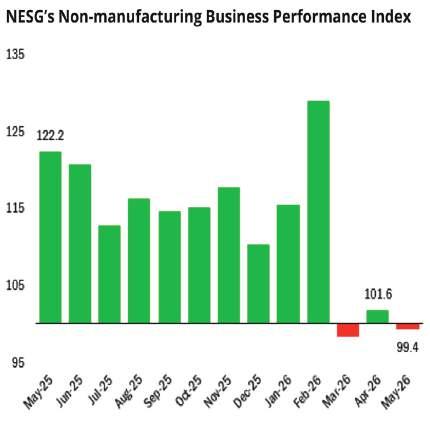
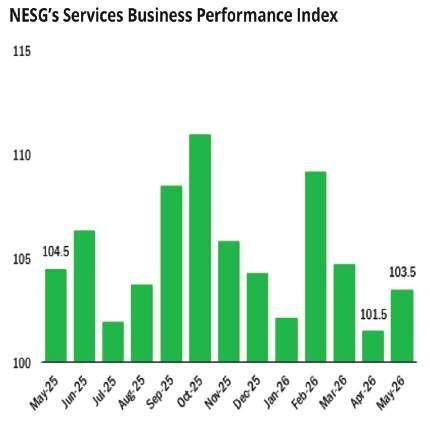
The Nigeria Economic Summit Group’s (NESG) Business Confidence Monitor (BCM) report stated that improved performances in manufacturing, services and trade drove business expansion in May 2026.
The report said that Nigeria’s business environment remained in the expansion territory in May 2026 as its Current Business Performance Index rose to 104.6 points in the month under review from 102.1 it recorded in April 2026.
The report said that despite this expansion, business activity was constrained by limited access to finance, incessant power outages, elevated rental costs, and persistent insecurity during the month.
The report said, “In May 2026, Nigeria’s business environment improved, albeit recording fragile expansion. The NESG Business Confidence Monitor (BCM) Current Business Performance Index rose to 104.6 points in the month from 102.1 points in April 2026. However, the index reading represents a
downturn from 109.8 points recorded in May 2025.”
Further breakdown of the report indicated broadly positive performance across sectors in May 2026.
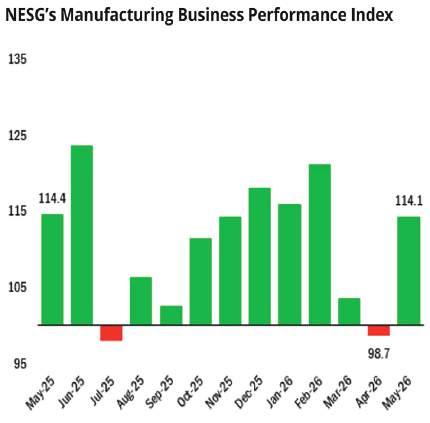
It said that manufacturing moved into the expansion territory to 114.1 points from 98.7 in April 2026.
Similarly, the index reading rose for services to103.5 points from 101.5 and trade grew to105.5 points from 102.7.
Also, key BCM sub-indices, including general business situation, production, demand conditions, operating profit, financial results,
supply order, access to credit, cash flow, and employment, remained in the expansion territory, even though only a few performed relatively better than in April 2026.
However, the cost of doing business and input prices remained elevated. During the month, business activity faced key constraints, including limited access to finance, inadequate power supply, high office rental costs, and elevated insecurity.
According to the report, “business activity in the manufacturing sector moved into the expansion
territory in May 2026, with the NESG BCM Index rising significantly to 114.1 points from 98.7 in April 2026.”
It attributed the strong business expansion in the manufacturing sector to improved performance in key subsectors, including food, beverage and tobacco, textile, apparel and footwear, pulp, paper and paper products, and basic metal, iron and steel that posted almost stronger performance than in April 2026. Conversely, cement, chemical and pharmaceutical products, plastic and rubber
products, wood and wood products, and non-metallic products largely contracted during the month.
The report said that many industry players in the manufacturing sector faced key constraints, including limited access to credit, an irregular power supply, a shortage of raw materials, and inadequate infrastructure, resulting in elevated input prices, a high cost of doing business, and limited new investment commitments during the month.
chinedu eze
The Airline Operators of Nigeria (AON) has insisted that the Nigeria Civil Aviation Authority (NCAA) should henceforth device a way to collect its 5 per cent Ticket Sales Charge (TSC) and Cargo Sales Charge (CSC) levied on passengers. NCAA has indicated that it currently suffers fiscal incapacitation, including
the inability to pay its over 1,500 workforce allowances and carry out essential projects because many of the airlines owe it accruals from these charges with debts rising to over N20 billion.
But AON said that in order to end the recurring impasse over the charges and put an end to airlines being indebted to the regulatory authority, the agency should put up a framework to collect the
charges directly from the passengers.
The operators cited the action taken by the Federal Airports Authority of Nigeria (FAAN), which some years ago ended similar controversies with the airlines by collecting its Passenger Service Charge (PSC) directly from the passengers.
To make this possible, FAAN issues stickers to the airline which buys them
upfront for their passengers; so, every boarding pass is attached PSC sticker and through that way FAAN collects is revenue from the travellers.
But reacting to the request of the airlines, the Director of Public Affairs and Consumer Protection, Michael Achimugu, told THISDAY in a telephone interview that it was possible that NCAA could device a
means to collect the charges directly from passengers.
However, he noted that currently the law stipulates that airlines should collect the charges on behalf of NCAA.
Achimugu indicated that NCAA could put up a system to collect the money directly from the airlines when the law is changed and emphasised that even if the authority would collect the charges directly from the
passengers, the airlines ought to offset their debts first to the agency.
“Anything (collecting the charges directly from passengers) is possible in a situation like this. Protocols have the right to evolve, but this is in the Civil Aviation Act. Airlines will continue to collect the charges pending when the law is changed.”
United Nigeria Airlines Celebrates Democracy Day
Stories by Chinedu Eze
Rising domestic carrier, United Nigeria Airlines, has joined the nation in commemorating June 12, Nigeria’s official Democracy Day by supporting Kalakiri, the latest Nigerian movie whose central theme is the celebration of democracy and national unity.
The airline said its partnership with the film was a deliberate and values-driven decision, citing the movie’s powerful theme of unity as a natural fit for the brand.
Viewers who watch Kalakiri in Nigerian cinemas on Friday, June 12 will have the chance to enter a special prize draw with a grand prize of one round-trip premium (business class) ticket on
United Nigeria Airlines to any destination served by the airline within Nigeria. The second prize winner will receive a round-trip economy class ticket to any domestic destination served by United Nigeria Airlines. In addition, all moviegoers who watch Kalakiri and present their cinema ticket will enjoy a 10 per cent discount on any United Nigeria Airlines ticket purchase.
Speaking on the partnership, United Nigeria Airlines’ Chief Commercial Officer, Dayo Olawuyi, said:
“June 12 is a reminder of the sacrifices made for the freedom and unity we enjoy today. Supporting Kalakiri is our way of honouring that legacy. As an airline that
Air WAtCh
connects every corner of this nation and unites people of all tribes, we believe strongly in the power of storytelling to reinforce what holds us together as a people. This film does exactly that, and we are proud to stand behind it.”
The airline’s Marketing Manager, Ebele NebolisaMokaogwu, echoed that sentiment, pointing to the film’s alignment with the company’s core mission. “We also fly to unite cultures and unite people, and we see that this aligns with us, where the film is trying to unite Nigerians through democracy,” she said, adding that Kalakiri is currently showing in cinemas nationwide.
FAAN Launches Programme to Showcase Aviation Transformation
The Federal Airports Authority of Nigeria (FAAN) is set to premiere ‘FAAN IN FOCUS’, a new 30-minute weekly television programme designed to keep Nigerians and the international community informed about key developments, reforms, infrastructure projects and strategic initiatives within Nigeria’s aviation sector.
The programme forms part of FAAN’s commitment to transparency, stakeholder engagement, public education and effective communication on the ongoing transformation of the nation’s airport system.
To ensure broad reach
and accessibility, ‘FAAN IN FOCUS’ will air on major television networks, including Channels Television, NTA Network Service, Arise News, TVC News and Global Television, providing nationwide and international visibility through terrestrial and satellite platforms.
According to FAAN, the programme will serve as a strategic platform to showcase efforts aimed at modernising airport infrastructure, enhancing safety and security, improving passenger experience and advancing the Renewed Hope Agenda of President Bola Ahmed
Tinubu’s administration in the aviation sector.
Speaking about the launch, the Director of Public Affairs and Consumer Protection, Henry Agbebire, described the initiative as a major step in strengthening public engagement and accountability.
According to him, ‘FAAN IN FOCUS’ represents an important milestone in our communication strategy. Through this platform, Nigerians will have regular access to accurate and engaging information about the transformation taking place across our airports and the wider aviation ecosystem.
SAHCO Set for Stronger Trade Relationship with UAE, Others
Skyway Aviation Handling Company Plc (SAHCO) has expressed its willingness to strengthen trade facilitation between Nigeria and the United Arab Emirates (UAE).
The company is also
exploring strategic partnerships with leading Middle East Airlines with the intent of boosting passengers, cargo and e-commerce activities between the two countries.
Comms/e-Business
Asst.
Asst. Editor, Money Market
Nume Ekeghe
Correspondents
Kayodetokede(CapitalMarkets)
James Emejo (Finance)
Ebere Nwoji (Insurance)
reporter Peter Uzoho (Energy)
The Managing Director/ CEO, SAHCO, Mrs. Adenike Aboderin, spoke on strengthening bilateral trade, enhancing passenger and cargo handling, trade facilitation, e-commerce partnerships with other collaborations and leveraging aviation as a catalyst for economic growth.
Speaking on behalf of the SAHCO Chairman, Dr Taiwo Afolabi, Mrs. Aboderin, assured that SAHCO was committed to supporting initiatives that promote seamless passenger movement, cargo movement and trade between Nigeria and the UAE. According to her, SAHCO possesses the operational capacity,
infrastructure and expertise required to facilitate increased Passenger, cargo volumes and support the growing demand for e-commerce logistics across the region.
She said: “We (SAHCO) are strategically positioned to support trade facilitation between Nigeria and the UAE through efficient Passenger Handling, Baggage Handling, Cargo handling services, modern infrastructure and a strong commitment to operational excellence. We are open to collaborations that will strengthen connectivity and create value for businesses in both countries.”
Furthermore, she emphasised that SAHCO remained open to opportunities for collaboration with UAE Airlines emphasizing that stronger partnerships between aviation stakeholders in Nigeria and the UAE would contribute significantly to expanding trade volumes.
Addressing Cost of Airline Operations in Nigeria
Chinedu Eze
The International Air Transport Association (IATA) has again identified Nigeria as one of the most expensive countries in the world to operate airline business, citing high operational costs that continue to challenge the viability and growth of local carriers.
Although the global body had reiterated this at different aviation fora, at the just concluded IATA AGM held in Rio de Janeiro, Brazil, the IATA Regional Vice President for Africa and the Middle East, Kamil Al-Awadhi, pointed it out again, saying that it will be very difficult for Nigerian carriers to survive because they are literally strangled with too many taxes and charges.
AI-Awadhi said despite on-going efforts by Nigeria’s Minister of Aviation and Aerospace Development, Festus Keyamo, to reform and improve the aviation sector, airlines in the country were still faced significant cost pressures.
According to Al-Awadhi, the high cost environment has made it difficult for Nigerian airlines to remain competitive and profitable, limiting the sector’s ability to reach its full potential.
He noted that excessive taxes, charges, and other operational expenses continue to burden airlines across the region, with Nigeria ranking among the most challenging markets from a cost perspective.
To address the issue, Al-Awadhi urged member states of the Economic Community of West African States (ECOWAS) to implement the proposed 25 per cent reduction in aviation taxes and charges.
He said the measure would help lower the cost of air travel, stimulate passenger traffic, and improve the competitiveness of airlines operating within West Africa.
The call by IATA adds to growing pressure on governments in West Africa to create a more enabling environment for the aviation industry, which is widely regarded as a key driver of trade, tourism, and economic development.
The CEO of ASKY Airlines, Esayas Woldemariam Hailu, once pointed it out to THISDAY that heavy taxation on Africa’s aviation sector was stifling economic growth, undermining job creation, and fuelling youth unrest across the continent, noting that onethird of the cost of tickets in Africa goes to taxes and fees. Only two-thirds go to the airline to cover all operational expenses.
Nigeria has a total of about 54 taxes, fees and charges spread across four major government agencies – the Nigeria Civil Aviation Authority (NCAA), the Federal Airports Authority of Nigeria (FAAN), the Nigerian Airspace Management Agency (NAMA), and the Nigeria Revenue Service. Some of the charges include Common User Terminal Equipment (CUTE) at $1.40 per passenger, along with Passenger Service Charges (PSC) of N2,000 for domestic and $150 for international passengers, according to the document. Other payments include: Apron pass (Abuja) – N250,000, (Lagos) – N150,000 and Port Harcourt – N125,000 per vehicle and it’s paid annually. Registration fee per annum – N500,000; On-Duty Card (ODC) – N25,000 per staff. Extension charges – N100,000; Air Charge Cargo (ACC) – N5 per kg; Cargo registration fee -N250,000 (non-refundable).
Others are trans-shipment – N5 per kg; Export charge – N5 per kg; Courier/ tarmac/pre-release – N20 per kg; Landing charge – N16,000 (day) and N24,000 (night) and parking charge – .0315k by aircraft weight and multiply by hours of parking.
The Executive Chairman of United Nigeria Airlines and the spokesman of Airline Operators of Nigeria, Professor Obiora Okonkwo, said excessive and multiple taxation continued to stifle the growth of Nigerian carriers.
Okonkwo said the number of taxes imposed on airlines remained a key driver of high airfares in the country and urged that the National Assembly should review some of these taxes and charges.
“We are charged about 18 taxes on one single ticket. So, any ticket you buy, maybe 70 per cent of them goes to other government agencies. If the National Assembly will help us reduce these things, which are legislative in nature, we will be able to reduce also the cost of ticket so that it should be affordable to all.
The airlines pay about 30 taxes, fees and charges to the NCAA regularly and annually but it has to be noted that airlines make compulsory payments to agencies in other parts of the world but some governments introduce waivers to help their airlines and support them in other ways,” Okonkwo said.
Email: deji.elumoye @thisdaylive.com
2027: Anosike Seeks to Redefine Governance in Abia
as countdown to the 2027 governorship election begins, Peoples democratic Party’s candidate in abia state, dr Kelechi anosike, in an interactive session with newsmen, discusses his vision for the state, offering insights into his background, political experience and plans to drive economic prosperity, create jobs, modernise agriculture, strengthen healthcare, and expand social welfare programmes. Wale Igbintade reports.
As political activities gradually gather momentum ahead of the 2027 governorship election in Abia State, one name increasingly drawing attention within political and policy circles is Dr. Kelechi Anosike, the governorship candidate of the Peoples Democratic Party (PDP).
A lawyer, businessman, academic and longstanding member of the PDP, Anosike presents himself not merely as another politician seeking public office but as a reform-minded leader determined to redefine governance through a people-centred approach.
His message is straightforward: development should be measured not only by roads, bridges and public buildings, but by the quality of life enjoyed by citizens.
For many observers, Anosike’s emergence on the political scene may appear sudden. However, he insists that his journey to the governorship race is the culmination of years of involvement in politics and public affairs.
A specialist in international petroleum law and policy, commercial law, energy law, oil and gas transactions, and property law, Anosike boasts an impressive academic and professional pedigree. After obtaining his law degree, he pursued postgraduate studies abroad, earning a Master’s degree in Scotland before obtaining a doctorate in Property Law and Mortgages.
His professional career has spanned both Nigeria and the United Kingdom. Along the way, he has been associated with notable professional bodies, including the Scottish Bar Association, the International Association of Petroleum Negotiators and the Society of Petroleum Engineers, where he held leadership responsibilities.
These experiences, according to him, exposed him to global best practices and strengthened his conviction that governance must be innovative, accountable and focused on human development.
Contrary to suggestions that he is a political newcomer, Anosike says he has been actively involved in the PDP since 2005. Over the years, he has served on various party committees and participated in several party activities and assignments.
His emergence as the PDP governorship candidate, therefore, reflects years of commitment to the party and sustained engagement in the political process rather than a sudden entry into public life.
At the heart of Anosike’s campaign is a philosophy he describes as “governance with a human face.”
He argues that governments often define success through physical infrastructure while neglecting the welfare of citizens. In his view, no society can genuinely claim to be developed if large numbers of its people remain poor, unemployed, hungry, or unable to access quality healthcare and education.
For him, governance should be assessed by its impact on ordinary people.
“A government should be judged by whether citizens are healthier, more prosperous, better educated and more secure,” he says.
Economic empowerment occupies a central place in his vision for Abia State. He believes the state’s abundant natural and human resources remain largely untapped and can be harnessed to create wealth and employment opportunities.
His proposed economic agenda focuses on supporting small and medium-scale enterprises, encouraging entrepreneurship, providing grants and creating skills acquisition programmes capable of stimulating sustainable growth.
Anosike points to the state’s mineral resources, particularly limestone deposits, as examples of opportunities that could attract industrial investments and support local manufacturing.
Rather than relying solely on welfare programmes, he advocates policies that empower
to Farm” initiative. However, his approach goes
beyond traditional farming methods.
He envisions a modern agribusiness ecosystem that integrates technology, innovation and entrepreneurship. His proposal includes the establishment of modern farm settlements equipped with internet connectivity, technology centres, recreational facilities and training hubs designed to attract young people to agriculture.
According to him, agriculture should no longer be viewed as a subsistence occupation but as a profitable and technology-driven enterprise capable of creating jobs, increasing food production and reducing social vices.
Youth development is another area where Anosike seeks a departure from conventional approaches.
While acknowledging the value of empowerment schemes that provide physical assets such as buses, tricycles or motorcycles, he believes the future belongs to technology and innovation.
His vision includes the creation of technology hubs and digital training centres that will equip young people with skills required in the global digital economy. He hopes to position Abia youths to compete for remote work opportunities and participate in the rapidly expanding global outsourcing industry.
Drawing inspiration from countries such as India and Kenya, which have leveraged technology to create employment and boost economic growth, Anosike believes Abia can become a hub for digital innovation if the necessary investments are made.
Healthcare reform forms another major pillar of his agenda. He argues that many healthcare challenges stem not only from inadequate infrastructure but also from the absence of effective diagnostic facilities.
NOTE: Interested readers should continue in the online edition on www.thisdaylive.com
Davies: ADC Will End Corruption, Bad Governance in Rivers
a former member of the House of Representatives and current Secretary of the african democratic Congress Committee on Mobilisation and Registration, dr Sokonte davies, in this interview, expresses optimism that the adC has the pedigree to restore integrity and end bad governance in Rivers State. Blessing Ibunge brings excerpts.
What informed your interest to run as an aspirant under the ADC for the governorship of Rivers state?
My interest is largely because I’ve seen governance take a very bad seat, specially from 2015 to today. As a politician, there is a time to politic, and there is a time to govern. After elections, you try to govern. If you are holding an executive position, you try to govern for at least three years plus. They use half a year, thereabout, to politic. But I’ve seen that, especially from 2015, it became more apparent, but from 2012, it has been politicking all through and that has negatively affected governance. Even if you look at the years Chibuike Amaechi was a governor, due to events that came up, first with the party congresses and all that stuff, and the ambitions of Mr Jonathan and a few other people, the issues of governance started taking a back seat. And it became very apparent from 2013, when even the governor of Rivers State, as at that time, didn’t have a free movement in the state as governor.
So, from 2013 to today, 2016, that’s 13 years we have been facing politics instead of governance, and that has negatively affected the citizens.
People working and doing business in Rivers State can see that the state is enormously blessed and wealthy.
You cannot mention not even one foreign direct investment, even local direct investment for these 13 years.
And when you don’t see such investments, it will effectively create unemployment, but
when there are these investments, jobs are created and hands are engaged. These are some of the reasons why we feel that the current trajectory of development of the state is negative. It’s very negative. Government alone can’t do everything. The government must create enabling environments for people to have confidence to come and bring in their money to invest, and when the investing community sees that there are no such enabling environments, they will not be able to come in and invest. So, these are some of the things that influence our decision to throw our hats in the ring to want to govern the state, to give it a proper direction.
The other aspect is that we are from Rivers State. We have been working and living in the State. You see that there is extreme division among
the political class, not only the political class, in fact, even among the ethnic groups. And somebody needs to unite the ethnic groups. Presently, conversations have become a little bit difficult. Not with my friends in the state. And then in the city, you’re easily tagged as somebody, of course, we have better relationships with some people. Some of us also have relationships that cut across some of these borders, which we believe that we can use such platforms to unify the state, because the disunity in the state is affecting the development of the state terribly, and you see that there is no income generated within the state. The income generated within the state is very small. It’s small because people are mostly concentrated in sharing what comes from the centre or federal location. And then because of our position where we are and by who we are, and by how God has blessed us, we have some internally generated revenue, which you can almost count as statutory. Rivers State is such a state that should be the number one destination for everything, what sustains the economy of this country largely comes from Rivers State. A very good percentage comes from Rivers State and we are so situated that even without oil revenue, we can generate a lot of income from the blue economy. We have the sea, the sand, and the sun. It’s all natural.
citizens to become productive and economically self-reliant. Agriculture also features prominently in his development blueprint.
Recognising the growing concerns over food insecurity and youth unemployment, Anosike plans to launch a comprehensive “Back
Accion MFB Grows Earnings to N11.58bn, Raises Dividend to 35 Kobo
Sunday Ehigiator
Accion Microfinance Bank
Plc has reported a strong financial performance for the 2025 financial year, posting gross earnings of N11.58 billion, a 51 per cent increase from N7.65 billion recorded in 2024, while recommending a dividend of 35 kobo per share for shareholders.
The financial results were presented at the bank’s 20th Annual General Meeting (AGM), held in Lagos, where the Board highlighted significant growth across key performance indicators despite prevailing macroeconomic challenges.
According to him, interest income rose to N10.76 billion, while net interest income improved to N8.67 billion, driven largely by growth in loans and advances to customers.
He disclosed that profit before tax increased to N1.82 billion from N800.25 million in 2024, while profit after tax rose to N1.03 billion from N575.63 million in the previous year. Earnings per share also improved to 85 kobo from 48 kobo in 2024.
“The Bank recorded gross earnings of N11.58 billion in 2025, representing a 51 per cent increase from N7.65 billion in 2024. Interest income rose to N10.76 billion, while net interest income improved to N8.67 billion, supported principally by the growth in loans and advances to customers,” Ruehmer stated.
Speaking on behalf of the Board of Directors, Chairman of the bank, Christian Ruehmer, said the institution delivered on its mission through stronger earnings, expanded outreach and improved financial inclusion.
Providing an operational review, Managing Director and Chief Executive Officer, Taiwo Joda, said the bank remained resilient despite economic headwinds characterised by inflationary pressures, high interest rates, exchange rate volatility and rising operating costs.
According to him, the bank maintained a balance between growth and risk management while expanding access to finance for underserved communities and small businesses.
“Our theme for the year, ‘Innovating for Impact: Scaling Access, Transforming Futures,’ speaks directly to the responsibility we carry as a national microfinance bank. Innovation for us is about removing barriers, improving access, creating income opportunities and deepening financial inclusion,” Joda said.
Global Educators Forum for Students Launched
Project Management Institute (PMI), the leading authority in project success, has announced its partnership with Cannes Lions to launch the LIONS Educators Forum, a global initiative designed to connect academia with creative industries and better prepare students for the evolving world of work.
In a statement released to the media in Lagos,
the organisation said the forum would respond to a growing need for closer alignment between what is taught in classrooms and the skills required in today’s rapidly changing, AI-enabled economy.
As creativity, problemsolving, collaboration, and adaptability become increasingly critical across every profession, educators and industry leaders have an opportunity to
work together to ensure students are equipped to thrive,” the statement added.
Addressing the areas the forum will focus on, Chief Marketing Officer at PMI, Menaka Gopinath, said: “The LIONS Educators Forum will focus on two core areas: Developing futureready curricula and Strengthening pathways between education and employment.
Coy Strengthens Homegrown Talent, Graduates Second Cohort
Moniepoint, Africa’s leading digital financial services provider, has officially graduated the second cohort of its flagship DreamDevs Bootcamp, marking a significant milestone in the company’s ongoing effort to build world-class engineering talent from the ground up.
The graduation was celebrated at a Demo Day event held in Lagos, themed: ‘Training Done!Demo
Up’, where participants presented capstone projects built to realworld engineering standards.
The graduation comes at a crucial time for Africa’s tech ecosystem.
Commenting, CoFounder and Chief Technology Officer of Moniepoint, Felix Ike, said: “DreamDevs is a structural investment in Nigeria’s digital economy, not a recruitment exercise, not a pipeline built solely to serve Moniepoint’s
hiring needs. That said, we are proud that some graduates from our first cohort are already active members of our engineering team, proof that when young African engineers are given the right training and the right environment, they can compete at the highest level.”
The initiative also aligns with Nigeria’s broader national agenda on technology skills development.
Firm Advocates Sustainable Energy for Healthcare
Recognising the growing need for reliable power supply, Simba Power has showcased its latest commercial and industrial energy solutions at the 2026 WHX Medic Exhibition, introducing advanced energy storage and hybrid power technologies designed to help healthcare facilities improve reliability, reduce operating costs, and strengthen operational resilience.
Speaking at the exhibition, Simba Power
spokesperson, Debdeep Mukherjee said: “Healthcare providers should be focused on patient outcomes, not worrying about power interruptions. As healthcare infrastructure continues to evolve across Nigeria, facilities need energy systems that are reliable, efficient, and capable of supporting critical operations around the clock.”
In addition to improving energy reliability, he said:
“The solutions help organisations reduce dependence on diesel generators, optimise energy consumption, and create a more sustainable operating model. The launch reflects Simba Power’s continued commitment to supporting critical sectors with worldclass energy solutions backed by local expertise, nationwide service support, and decades of experience serving Nigerian organisations.
Saharan
(Algeria), Djeno (Congo), Zafiro (Equatorial Guinea), Rabi Light (Gabon), Iran Heavy (Islamic Republic of Iran), Basrah Medium (Iraq), Kuwait Export (Kuwait), Es Sider (Libya), Bonny Light (Nigeria), Arab Light (Saudi Arabia), Murban (UAE) and Merey (Venezuela).
L-R: Former President and Chairman of the Board of Directors of the African Export-Import Bank (Afreximbank), Professor Benedict Oramah; Founder and Lead Consutant at NAB Consulting, Dr Ismaila Kamara during announcement of the successful completion of a EUR 250 million structured finance facility for the Republic of Niger…recently
FCMB Appoints Rewane as Non-executive Director, Chairman Board of Directors
Kayode
Tokede
First City Monument Bank (FCMB) Limited has appointed Mr. Bismarck Rewane as a Non-Executive Director and Chairman of its Board of Directors, following approval from the Central Bank of Nigeria (CBN). Rewane is a respected
economist and experienced leader in Nigeria’s financial sector, with more than 40 years of experience in macroeconomic research, investment banking, and strategic management. He is the Managing Director at Financial Derivatives Company Limited, a top financial advisory and economic research firm. He
is a Fellow of the Nigerian Economic Society and has held leadership roles at International Merchant Bank Nigeria Limited and First National Bank of Chicago. He graduated from the University of Ibadan with a degree in Economics and is a Fellow of the Chartered Institute of Bankers of Nigeria and an Associate of the
Institute of Chartered Bankers of England and Wales. Rewane has served on the boards of bluechip companies and multinationals, including Guinness Nigeria Plc., British American Tobacco, Henkel Nigeria Limited, Top Feeds Nigeria Limited, and Africa Infrastructure Plus Partners. He was a member
of the Presidential Steering Committee for the Resolution of the Global Economic Crisis.
He has completed executive management programmes at top business schools, including the Oxford International Capital Markets programme, the Euromoney Institute of Finance, and IMD Lausanne, Switzerland.
The Board of Directors of
First City Monument Bank welcomes Mr. Rewane. The Bank is confident that his expertise in macroeconomics, corporate governance, and strategic management, together with the Bank’s stronger capital base, will strengthen its leadership and help drive the next phase of growth while continuing to deliver value to stakeholders.
PRICES FOR SECURITIES TRADED AS OF JUNE 11/26
Beijing and Chongqing: China’s Cities of Memory and Green Dreams
Iyobosa Uwugiaren, who recently returned from China after a three-month seminar, writes on how the Great Wall, the National Museum of China, the Temple of Heaven, and the rise of Chongqing reveal China’s culture, traditions, arts, and urban development.
Long before the day fully begins, Beijing is already awake. In public parks, elderly residents move gracefully through tai chi routines, commuters flood subway stations, and the morning sun illuminates ancient rooftops that have stood watch over the capital for centuries.
Thousands of kilometres away, in the mountainous metropolis of Chongqing, ferryboats glide across the confluence of the Yangtze and Jialing rivers, while high-speed trains emerge from tunnels carved into steep hillsides.
Beijing is often described as the political and cultural heart of China, while Chongqing is celebrated as a symbol of modern innovation and urban transformation.
Together, the two cities tell the story of a nation that treasures its past while boldly shaping its future. They are cities of memory and green dreams—places where heritage and development exist side by side. Through Beijing’s iconic landmarks—the Great Wall of China, the National Museum of China, and the Temple of Heaven—and through Chongqing’s remarkable urban landscape, China’s culture, traditions, arts, and vision for sustainable development come sharply into focus.
The Story of the Great Wall
The story begins at the Great Wall, where history stretches across mountain peaks like a stone dragon winding through northern China. Near Beijing, visitors climb ancient watchtowers and gaze across landscapes that have witnessed centuries of change. The wall stands as a monument to endurance, resilience, and national unity.
Built over many centuries by successive dynasties, the Great Wall was designed to protect the empire’s northern borders. Yet its significance today extends far beyond defence. It has become a powerful symbol of Chinese civilisation itself—a reminder of collective effort, determination, and the capacity of people to achieve extraordinary feats.
Artists, writers, and poets have long drawn inspiration from the Great Wall. It appears in paintings, literature, and folklore as a symbol of perseverance and identity. For many Chinese citizens, it embodies the spirit of a nation that has overcome countless challenges throughout its long history.
While the Great Wall preserves memories of China’s ancient past, modern conservation efforts around the site point toward the future. Reforestation projects and environmental protection programmes have helped restore the surrounding landscape, demonstrating how historical preservation can coexist with ecological responsibility. This balance between memory and sustainability has become an increasingly important hallmark of China’s urban development.
What the National Museum Offers
Back in central Beijing, the National Museum of China offers another window into the nation’s story. Located beside Tiananmen Square, the museum houses millions of artefacts that trace the progression of Chinese civilisation from prehistoric times to the present day. Walking through its galleries feels like travelling across thousands of years. Ancient bronzes, jade carvings, porcelain masterpieces, calligraphy, and paintings reveal the richness of China’s cultural heritage. Each artefact tells a story of creativity, innovation, and social transformation.
The museum serves as a custodian of collective memory. It preserves the achievements of past generations while helping new generations understand their cultural roots. Schoolchildren stroll through exhibitions, discovering the stories of emperors, philosophers, inventors, revolutionaries, and artists. International visitors gain a deeper appreciation of the civilisation that helped shape East Asia and the wider world.
The institution also highlights the importance of art in Chinese society. Throughout history, artistic expression has reflected philosophical ideas, spiritual beliefs, and social values. Traditional Chinese paintings celebrate harmony with nature, while calligraphy transforms language into visual art. These artistic traditions continue to influence contemporary Chinese culture.
The museum itself is a product of modern Beijing.
Advanced technology, digital displays, and innovative exhibition designs demonstrate how historical conservation can embrace contemporary methods. The result is a cultural institution that connects the past to the future, much as Beijing itself does.
Temple of Heaven: Where Emperors Prayed for Good Harvests
Not far away, the Temple of Heaven provides a different perspective on Chinese civilisation. Surrounded by ancient cypress trees—many of them planted more than 800 years ago—and expansive green spaces, the temple stands as one of the finest examples of traditional Chinese architecture.
Constructed during the Ming Dynasty, the temple was once the site where emperors prayed for good harvests and sought harmony between heaven and earth. The rituals performed there reflected a worldview that emphasised balance, responsibility, and respect for natural forces.
The magnificent Hall of Prayer for Good Harvests remains one of China’s architectural masterpieces. Its elegant circular form symbolises heaven, while its intricate details reveal the sophistication of traditional craftsmanship.
More importantly, the Temple of Heaven reflects a philosophy that remains relevant today: the belief that human prosperity depends upon harmony with nature. This principle has gained renewed importance as Chinese cities pursue more sustainable forms of development.
The Mountain City
That vision becomes especially visible in Chongqing, one of the fastest-growing urban centres in the world. Unlike Beijing’s broad avenues and imperial landmarks, Chongqing rises naturally from rugged mountains. Skyscrapers seem to emerge directly from cliffs, while bridges span vast river valleys. The city is often described
as a “mountain city,” and its unique geography has shaped both its identity and its development.
For many visitors, Chongqing represents the future of urban China. Among them is the President of the International Press Institute (IPI), Nigeria, Musikilu Mojeed, who visited China as part of the delegation. He argued that elected politicians in Nigeria should visit Chongqing before assuming office because it offers valuable lessons in infrastructure development and long-term urban planning.
It is a city where modern transit systems navigate steep terrain with remarkable efficiency. Green spaces are integrated into densely populated neighbourhoods, while new technologies support transportation, environmental management, and public services.
Yet beneath its futuristic appearance, Chongqing remains deeply connected to Chinese traditions. Historic neighbourhoods preserve local culture, architecture, and cuisine. Ancient temples stand alongside modern commercial districts, while traditional arts, including folk music and crafts, continue to thrive within the rapidly expanding metropolis.]
The Contrast Between Beijing and Chongqing
The contrast between Beijing and Chongqing is striking, yet the two cities share common aspirations. Beijing preserves the symbols of China’s historical memory, while Chongqing demonstrates how innovation can shape the future. Together, they reveal a broader national effort to balance cultural heritage with modernisation. This balance lies at the heart of China’s “green dream.”
Across the country, cities are seeking ways to improve quality of life while protecting natural resources and historical landmarks. Sustainable transportation systems, expanded urban forests, renewable energy initiatives, and heritage conservation projects all contribute to this vision.
In Beijing, the green spaces surrounding the Temple of
Heaven provide a sanctuary within a bustling metropolis. Conservation efforts at the Great Wall protect both cultural and natural landscapes, while the National Museum ensures that historical knowledge remains accessible to future generations.
In Chongqing, green corridors and riverfront parks soften the impact of rapid urbanisation. Modern engineering solutions help reduce environmental pressures while supporting economic growth. The city demonstrates that even large-scale development can incorporate sustainability and respect for local culture. As evening descends, the lights of Beijing and Chongqing illuminate two different chapters of China’s story. In Beijing, ancient monuments stand quietly against the night sky, preserving memories of emperors, scholars, and artists. In Chongqing, illuminated skyscrapers reflect on river waters, symbolising ambition, innovation, and possibility.
Their stories remind us that progress does not require abandoning the past. Instead, the most successful cities often draw strength from their history while embracing new opportunities. In Beijing and Chongqing, memory and dreams walk hand in hand, creating urban landscapes that honour tradition, celebrate culture, inspire artistic expression, and build a greener future for generations to come.
What Lessons Can Abuja Learn from Beijing?
For the Nigerian journalists who visited China, Beijing appeared to have discovered something many developing cities often overlook: modernity without memory eventually becomes hollow. That observation raises an important question: What lessons can Abuja learn from Beijing?
The question is significant because Abuja itself was conceived as a modern African capital—a planned city designed to symbolise national unity, order, and effective governance. Yet decades after its establishment, Abuja still grapples with weak cultural identity, inadequate maintenance of public spaces, shrinking green areas, uncontrolled expansion, and insufficient long-term urban planning.
The Nigerian capital was originally designed with green belts, open spaces, broad avenues, and environmental aesthetics in mind. However, years of unregulated growth, political pressure, poor maintenance culture, and weak enforcement of planning regulations have steadily eroded many of those ideals. Beijing demonstrates that preserving green spaces requires political discipline and long-term commitment.
In many parts of Abuja today, public parks are poorly maintained, converted to commercial use, or neglected altogether. Recreational spaces that could strengthen community life remain underdeveloped, while urban planning often appears reactive rather than strategic.
China’s experience suggests that environmental planning must become central to governance rather than an afterthought.
The transformation of Beijing also offers Abuja lessons in cultural confidence. Abuja still lacks sufficient cultural symbols capable of projecting Nigeria’s historical depth and civilisational diversity. Beyond the National Mosque and the National Christian Centre, much of the city’s architecture and public spaces struggle to communicate a distinctly Nigerian identity. A capital city should reflect the soul of a nation.
Abuja possesses the natural landscape to achieve something similar. Its hills, open land, and relatively organised structure provide opportunities for urban forests, waterfront recreation, pedestrian-friendly districts, cycling infrastructure, botanical gardens, and protected ecological corridors. Yet many of these possibilities remain underutilised.
For Abuja, the deeper lesson is not that Nigeria should copy China wholesale. Rather, it is that cities earn global respect when they combine infrastructure with identity, environmental sustainability, and cultural purpose.
The Nigerian editors who visited Beijing returned with more than photographs of the Great Wall or memories of museum galleries. They encountered a civilisation using urban planning to tell a national story. Perhaps that is the central challenge facing
Abuja today.
An hotel in Chingqing
Jotun in nigeria unveils Flagship Inspiration Centre to Boost Industry Collaboration, technical Capacity
Mary Nnah
Jotun Paints, a global leader in decorative and protective coatings, has launched a state-of-the-art flagship Inspiration Centre in Lagos, a purpose-built space designed to showcase the brand’s latest advancements in colour, design, and product technology.
The centre is an immersive space designed to bring colour choice, design inspiration, and technical expertise closer to Nigerian consumers and professionals. The facility showcases the company’s latest decorative and protective coating solutions while offering personalised guidance for projects spanning housing, commercial developments, marine operations, and industrial production.
The Inspiration centre features an interactive colour zone that allows visitors to visualise finishes, explore global colour trends, and make informed decisions for both small- and large-scale projects: reinforcing Jotun’s commitment to delivering world-class paint and coatings solutions, empowering customers with design inspiration, expert guidance, and immersive displays under one roof.
According to the Managing Director, Regency Overseas Limited, Jagdish Jethvani, the new centre aligns with the company’s broader commitment
to sustainable development and local empowerment.
Speaking at the launch, he said: “Our investment in local manufacturing represents a strategic commitment to Nigeria’s broader development agenda. By strengthening local content, creating employment, and supporting key sectors such as oil and gas, construction, and marine, we are reinforcing our belief that sustainable growth starts with empowering
local capabilities by providing structured training and certification for applicators at all levels.”
Also speaking at the unveiling, General Manager, Middle East and North Africa, Gareth Alcock, emphasised Jotun’s expansion plans across the country.
“The planned expansion to Abuja, Ikeja, and Port Harcourt underscores the company’s focus on accessibility and national reach. These locations will bring our premium decorative, marine, and protective coating solutions closer
to homes and infrastructure projects, while contributing to higher professional standards and improved project outcomes,” he noted.
The inaugural ceremony was attended by key stakeholders, partners, design professionals and representatives from Jotun’s regional leadership. With this launch, Jotun reaffirms its long-term commitment to providing quality solutions that meet global standards for durability, innovation, sustainability and customer empowerment in Nigeria.
The Jotun Inspiration Centre is now open to the public and located at Akinbo Savage Street, Off Adeola Hopewell Street, Victoria Island, Lagos.
Jotun is a global paint and coatings manufacturer and a leader in delivering innovative solutions across decorative, protective, marine, and flooring segments. Officially distributed in Nigeria by Regency Overseas Company Limited, Jotun leverages cutting-edge technology and industry-leading standards to meet evolving market needs with sustainability at the core of its product development. For nearly a century, Jotun has protected and beautified the world, from architectural landmarks to modern homes, with unmatched quality, durability, and design expertise.
ACpn urges FG to Strengthen regulations on tobacco, nicotine Consumption Amongst Children
Esther Oluku
The Association of Community Pharmacists of Nigeria (ACPN) has called on the Federal Government to adopt stronger regulation to curb tobacco and nicotine consumption amongst children.
The association made the call at a press conference to mark the World No Tobacco Day which is celebrated globally on May 31.
Speaking on this year’s theme “Unmasking the Appeal: Countering Nicotine and Tobacco Addiction,” ACPN president, Pharm Ezeh Igwekamma, said that the growing prevalence of
tobacco and nicotine use among children is alarming, citing a World Health organisation estimate of about 40 million children aged 13 to 15 using at least one of both products.
This, he said, is driven by marketing campaigns which sell tobacco in attractive flavours, deceptive packaging, aggressive
branding to lure children into tobacco or nicotine addiction.
“The tobacco industry continues to target young people through carefully crafted campaigns designed to make harmful products appear attractive and harmless. This is creating a new generation of nicotinedependent individuals,” Ezeh
warned.
Ezeh also raised concern about the increasing promotion of e-cigarettes and other nicotine delivery systems. He said these products are frequently marketed as safer alternatives but “ultimately sustain nicotine dependence while recruiting new users into a cycle of addiction.”
While blaming weak enforcement of existing tobacco-control laws for Nigeria’s continuing burden of tobacco-related illness and deaths, he stated that the federal government needs to adopt more decisive action “that will safeguard present and future generations from the dangers of tobacco and nicotine addiction.”
Lodù’s Artistic Evolution Continues as ‘Follow’ Spotlights Clarity Over Complexity
Nigerian Afro-soul singer, songwriter, and producer Lodù, born Laura Ayomide Oduwole, is stepping into a quieter, more deliberate chapter of her artistry, and you can hear the shift in every note of her new single “Follow.”
The record arrives as a deeply intimate Afro-pop offering infused with subtle folk elements, and it frames love not as a fleeting impulse but as a conscious, defining choice. It is the kind of song that feels like a late-night conversation with yourself, where emotion is measured against intention.
Lodù has long been known for merging technical discipline with emotional clarity, a skill rooted in her background as a classical violinist. That training still shows in the precision of her compositions, but it never overwhelms the human pulse of her music.
Her sound continues to occupy the space where tradition and modernity meet, where Indigenous storytelling is carried on refined musical structure.
“Follow” sits squarely in that intersection. It operates less as a conventional love song and more as a meditation on commitment and emotional alignment, a reflection on what it means to choose someone and
let that choice reshape your life.
The track draws its inspiration from the idea of eloping. It captures the quiet urgency of deciding on one person and reorienting everything around that decision. Freedom and intentional love run through the record, presenting
devotion as both an act of surrender and a form of self-definition.
There is a sense of resolve in the lyrics and arrangement, as if Lodù is documenting the moment when romance moves from possibility to responsibility.
Musically, “Follow” is restrained and precise. The blend of Afro-pop and folk influences creates an intimate atmosphere without losing scale. Soft melodic arrangements and understated instrumentation give her vocals room to carry the emotional weight, reinforcing the song’s core themes without excess or distraction.
Nothing is overplayed, nothing is forced. The production mirrors the message: love, when chosen deliberately, doesn’t need noise to be powerful. The creation of the record reflects a similarly focused approach. Rather than building around complexity, Lodù leans into clarity, allowing emotion to guide the structure and pacing. That restraint defines the final product, with the record maintaining balance while delivering depth. It’s a deliberate move away from maximalism, a choice to let feeling do the heavy lifting.
The release builds on the momentum of her previous single “Olowo Orimi,” which debuted at No. 32 on the Nigeria Top 50 chart and sustained its run for several weeks. That record marked a
clear point of connection with a growing audience, reinforcing her position as an emerging voice within Afro-soul.
With “Follow,” she appears to be consolidating that connection while nudging her sound toward a more minimal, intentional expression. Beyond its sonic identity, “Follow” carries a broader emotional intention. It extends an invitation to embrace love with clarity and purpose, positioning devotion as something active, chosen, and enduring. It’s a perspective that feels increasingly rare in a music landscape often dominated by instant gratification and performative romance. Here, Lodù makes the case for commitment as both personal freedom and identity. The single reflects a continued refinement of her artistic voice.
While rooted in the Afro-soul sensibilities that define her work, it moves toward a more distilled sound, placing greater emphasis on storytelling and emotional resonance.
With “Follow,” Lodù continues to shape a body of work defined by discipline, identity, and depth. The single serves as both a continuation of her trajectory and a subtle shift toward a more purposeful sound, signaling where she’s headed as she writes the next chapter of her story.
Mary Nnah
Lodu
Jotun in nigeria unveils Flagship Inspiration Centre to Boost Industry Collaboration, technical Capacity
Mary Nnah
Jotun Paints, a global leader in decorative and protective coatings, has launched a state-of-the-art flagship Inspiration Centre in Lagos, a purpose-built space designed to showcase the brand’s latest advancements in colour, design, and product technology.
The centre is an immersive space designed to bring colour choice, design inspiration, and technical expertise closer to Nigerian consumers and professionals. The facility showcases the company’s latest decorative and protective coating solutions while offering personalised guidance for projects spanning housing, commercial developments, marine operations, and industrial production.
The Inspiration centre features an interactive colour zone that allows visitors to visualise finishes, explore global colour trends, and make informed decisions for both small- and large-scale projects: reinforcing Jotun’s commitment to delivering world-class paint and coatings solutions, empowering customers with design inspiration, expert guidance, and immersive displays under one roof.
According to the Managing Director, Regency Overseas Limited, Jagdish Jethvani, the new centre aligns with the company’s broader commitment
to sustainable development and local empowerment.
Speaking at the launch, he said: “Our investment in local manufacturing represents a strategic commitment to Nigeria’s broader development agenda. By strengthening local content, creating employment, and supporting key sectors such as oil and gas, construction, and marine, we are reinforcing our belief that sustainable growth starts with empowering
local capabilities by providing structured training and certification for applicators at all levels.”
Also speaking at the unveiling, General Manager, Middle East and North Africa, Gareth Alcock, emphasised Jotun’s expansion plans across the country.
“The planned expansion to Abuja, Ikeja, and Port Harcourt underscores the company’s focus on accessibility and national reach. These locations will bring our premium decorative, marine, and protective coating solutions closer
to homes and infrastructure projects, while contributing to higher professional standards and improved project outcomes,” he noted.
The inaugural ceremony was attended by key stakeholders, partners, design professionals and representatives from Jotun’s regional leadership. With this launch, Jotun reaffirms its long-term commitment to providing quality solutions that meet global standards for durability, innovation, sustainability and customer empowerment in Nigeria.
The Jotun Inspiration Centre is now open to the public and located at Akinbo Savage Street, Off Adeola Hopewell Street, Victoria Island, Lagos.
Jotun is a global paint and coatings manufacturer and a leader in delivering innovative solutions across decorative, protective, marine, and flooring segments. Officially distributed in Nigeria by Regency Overseas Company Limited, Jotun leverages cutting-edge technology and industry-leading standards to meet evolving market needs with sustainability at the core of its product development. For nearly a century, Jotun has protected and beautified the world, from architectural landmarks to modern homes, with unmatched quality, durability, and design expertise.
ACpn urges FG to Strengthen regulations on tobacco, nicotine Consumption Amongst Children
Esther Oluku
The Association of Community Pharmacists of Nigeria (ACPN) has called on the Federal Government to adopt stronger regulation to curb tobacco and nicotine consumption amongst children.
The association made the call at a press conference to mark the World No Tobacco Day which is celebrated globally on May 31.
Speaking on this year’s theme “Unmasking the Appeal: Countering Nicotine and Tobacco Addiction,” ACPN president, Pharm Ezeh Igwekamma, said that the growing prevalence of
tobacco and nicotine use among children is alarming, citing a World Health organisation estimate of about 40 million children aged 13 to 15 using at least one of both products.
This, he said, is driven by marketing campaigns which sell tobacco in attractive flavours, deceptive packaging, aggressive
branding to lure children into tobacco or nicotine addiction.
“The tobacco industry continues to target young people through carefully crafted campaigns designed to make harmful products appear attractive and harmless. This is creating a new generation of nicotinedependent individuals,” Ezeh
warned.
Ezeh also raised concern about the increasing promotion of e-cigarettes and other nicotine delivery systems. He said these products are frequently marketed as safer alternatives but “ultimately sustain nicotine dependence while recruiting new users into a cycle of addiction.”
While blaming weak enforcement of existing tobacco-control laws for Nigeria’s continuing burden of tobacco-related illness and deaths, he stated that the federal government needs to adopt more decisive action “that will safeguard present and future generations from the dangers of tobacco and nicotine addiction.”
Lodù’s Artistic Evolution Continues as ‘Follow’ Spotlights Clarity Over Complexity
Nigerian Afro-soul singer, songwriter, and producer Lodù, born Laura Ayomide Oduwole, is stepping into a quieter, more deliberate chapter of her artistry, and you can hear the shift in every note of her new single “Follow.”
The record arrives as a deeply intimate Afro-pop offering infused with subtle folk elements, and it frames love not as a fleeting impulse but as a conscious, defining choice. It is the kind of song that feels like a late-night conversation with yourself, where emotion is measured against intention.
Lodù has long been known for merging technical discipline with emotional clarity, a skill rooted in her background as a classical violinist. That training still shows in the precision of her compositions, but it never overwhelms the human pulse of her music.
Her sound continues to occupy the space where tradition and modernity meet, where Indigenous storytelling is carried on refined musical structure.
“Follow” sits squarely in that intersection. It operates less as a conventional love song and more as a meditation on commitment and emotional alignment, a reflection on what it means to choose someone and
let that choice reshape your life.
The track draws its inspiration from the idea of eloping. It captures the quiet urgency of deciding on one person and reorienting everything around that decision. Freedom and intentional love run through the record, presenting
devotion as both an act of surrender and a form of self-definition.
There is a sense of resolve in the lyrics and arrangement, as if Lodù is documenting the moment when romance moves from possibility to responsibility.
Musically, “Follow” is restrained and precise. The blend of Afro-pop and folk influences creates an intimate atmosphere without losing scale. Soft melodic arrangements and understated instrumentation give her vocals room to carry the emotional weight, reinforcing the song’s core themes without excess or distraction.
Nothing is overplayed, nothing is forced. The production mirrors the message: love, when chosen deliberately, doesn’t need noise to be powerful. The creation of the record reflects a similarly focused approach. Rather than building around complexity, Lodù leans into clarity, allowing emotion to guide the structure and pacing. That restraint defines the final product, with the record maintaining balance while delivering depth. It’s a deliberate move away from maximalism, a choice to let feeling do the heavy lifting.
The release builds on the momentum of her previous single “Olowo Orimi,” which debuted at No. 32 on the Nigeria Top 50 chart and sustained its run for several weeks. That record marked a
clear point of connection with a growing audience, reinforcing her position as an emerging voice within Afro-soul.
With “Follow,” she appears to be consolidating that connection while nudging her sound toward a more minimal, intentional expression. Beyond its sonic identity, “Follow” carries a broader emotional intention. It extends an invitation to embrace love with clarity and purpose, positioning devotion as something active, chosen, and enduring. It’s a perspective that feels increasingly rare in a music landscape often dominated by instant gratification and performative romance. Here, Lodù makes the case for commitment as both personal freedom and identity. The single reflects a continued refinement of her artistic voice.
While rooted in the Afro-soul sensibilities that define her work, it moves toward a more distilled sound, placing greater emphasis on storytelling and emotional resonance.
With “Follow,” Lodù continues to shape a body of work defined by discipline, identity, and depth. The single serves as both a continuation of her trajectory and a subtle shift toward a more purposeful sound, signaling where she’s headed as she writes the next chapter of her story.
Mary Nnah
Lodu
In London, Cardoso Receives Prestigious Central Bank of the Year Award
James Emejo in Abuja
Governor of the Central Bank of Nigeria (CBN), Mr. Olayemi Cardoso, has received the Central Bank of the Year Award at the Central Banking Awards ceremony in London.
In his acceptance speech, Cardoso expressed appreciation to Central Banking Publications and the award judges for the recognition.
He dedicated the honour to the board, management, and staff of CBN for their steadfast commitment to institutional reform and economic stability, and congratulated fellow institutions and individuals honoured during the event.
The CBN governor stressed
that the award was not a personal achievement but a testament to the collective efforts of the entire apex bank, particularly the professionals whose dedication, integrity, and expertise - often exercised away from public attention - had strengthened the bank and reinforced confidence in Nigeria’s economy.
In a statement, Cardoso said, “I accept this award on behalf of the Board, Management and staff of the Central Bank of Nigeria,. “Above all, it belongs to the many dedicated professionals who serve our institution with integrity, expertise, and an unwavering commitment to the public good.”
Reflecting on the global economic
landscape, Cardoso stated that te recent years had presented significant challenges for central banks worldwide, with Nigeria facing its own share of economic pressures and policy tests.
He highlighted several difficult but necessary measures undertaken by CBN, including efforts to address elevated inflation, implement major reforms in the foreign exchange market, and invest in critical digital and financial infrastructure to support the country’s long-term economic development.
Cardoso also pointed to key milestones achieved during the period, including Nigeria’s removal from the Financial Action Task Force
(FATF) grey list and the successful completion of the banking sector recapitalisation exercise.
He stated that the accomplishments reflected the collaborative efforts of multiple institutions and stakeholders.
According to the CBN governor, the bank’s reform agenda has been guided by a clear objective: restoring confidence, strengthening institutional resilience and policy credibility, and laying a solid foundation for sustainable economic growth.
While acknowledging that significant work remained ahead, Cardoso expressed optimism on the progress made so far and the renewed confidence emerging across
the economy.
He attributed the gains to the support of the federal government, market participants, development partners, and, most importantly, the resilience and confidence of the Nigerian people.
He stated, “We receive this recognition with humility.”
Cardoso added, “We see it not as a destination, but as encouragement to continue the important work ahead.”
He reaffirmed CBN’s commitment to preserving public confidence, safeguarding financial and monetary stability, and fulfilling its mandate with integrity, professionalism, and accountability.
HOUSE PASSES STATE POLICE AMENDMENT BILL, SCALES SECOND READING IN SENATE
Nigerians sought ways of enhancing internal security nationwide.
The bill, titled, “A Bill for an Act to Alter the Constitution of the Federal Republic of Nigeria, 1999, to Provide for the Establishment of State Police and for Related Matters (Sixth Alteration) Bill, 2026,” received approval during deliberation at Committee of the Whole at a session chaired by Speaker of the House, Hon. Tajudeen Abbas.
In the senate, Senate Leader, Opeyemi Bamidele, who led debate on the state police bill, acknowledged a major concern often raised against the policing
structure, saying, it “is the possibility of abuse by state governments. This bill adequately addresses those concerns through several safeguards.”
Consideration of the proposal in the House culminated in a vote after Deputy Speaker and Chairman of the House Committee on Constitution Review, Hon. Benjamin Kalu, presented the committee’s report. Kalu, while speaking on the report, urged lawmakers to support the measure, emphasising that a decentralised policing structure is necessary to effectively confront the country’s escalating security
problems.
The outcome of a vote on the bill showed overwhelming support, as 289 members voted in favour, one lawmaker abstained, and no member opposed it, showing a broad cross-party endorsement of the significant reform.
The constitution amendment sought to comprehensively overhaul Nigeria’s policing system through the establishment of separate federal police and state police structures.
A major provision of the bill proposes an amendment to Section 214 of the 1999 Constitution to formally recognise both the Federal
Police and State Police.
Under the proposed arrangement, the National Assembly would have the authority to determine the structure, administration, organisation, and powers of the federal police, while also setting the legal framework and minimum operational standards for state police services.
The legislation further provides that a state police outfit cannot begin operations unless it is created through a law passed by the relevant state House of Assembly and certified as meeting the national minimum standards that would
Congratulates
Aviation Appointment
be established by the National Assembly.
It also stipulates that until a state successfully establishes and operationalises its police force, the federal police will continue to perform all policing duties and responsibilities within that state.
To safeguard the independence of state police commands and prevent excessive federal interference, the bill places restrictions on federal involvement in state security matters.
According to the proposal, the federal police may only intervene in a state under specific circumstances, including a complete breakdown of law and order, at the request of a state governor, or when a state police service becomes incapable of functioning because of administrative, financial or operational difficulties.
The award represents significant international recognition for CBN at a time when monetary and financial sector reforms remains central to the country’s economic recovery and long-term growth agenda.
requiring confirmation by the relevant State House of Assembly.
The bill also grants governors the authority to issue lawful directives to State Commissioners of Police on matters concerning public safety and the maintenance of law and order. However, if a commissioner believed such instructions were unlawful or inconsistent with accepted policing practices, the matter might be referred to the Nigeria Police Council, whose decision would be binding and final.
Additionally, the proposal seeks to amend Section 84 of the 1999 Constitution by replacing references to the “National Police Council and the Federal Police Service Commission” with the “Nigeria Police Council and the Police Service Commission.”
The Group Chief Executive Officer of Ethiopian Airlines, Mr. Mesfin Tasew, has conveyed his warm congratulations to the Minister of Aviation and Aerospace Development, Festus Keyamo, on his recent appointment by the African Development Bank (AfDB) as the Champion of the landmark $7 billion Integrated Aviation Transformation Programme for Africa (IATP).
In a personally signed congratulatory message addressed to the Minister, the Ethiopian Airlines Chief described the appointment as a fitting recognition of Keyamo’s “visionary leadership and unwavering commitment to advancing aviation in Nigeria and across the African continent.”
According to Mr. Tasew, the
Laleye Dipo in Minna
As part of activities to mark the 84th birthday of former head of state, General Abdulsalami Abubakar, three books are to be presented to the public on Saturday.
The presentation of the books will take place at the State House Banquet Hall, Presidential Villa, Aso Rock Abuja.
The three books according to the organisers of the event are titled: “A Call of Duty: My Autobiography” , Mediating for Peace in Africa: A Festschrift in Honor of General Abdulsalami A. Abubakar” and “Nigeria’s Grand Patriot: Abdulsalami Alhaji Abubakar, GCFR”.
According to the programme of events the Abdulsalami Abubakar African Resource Center AAARC
confidence reposed in the Nigerian Aviation Minister by the African Development Bank underscores Africa’s collective belief in his capacity to drive a transformative agenda that will modernize the continent’s aviation ecosystem and mobilize strategic investments for sustainable growth.
“On behalf of Ethiopian Airlines Group and myself, I extend my heartfelt congratulations on your appointment by the African Development Bank as the Champion of the $7 billion Integrated Aviation Transformation Programme for Africa. This recognition is a testament to your visionary leadership and unwavering commitment to advancing aviation in Nigeria and across the continent,” the message read.
Reaffirming Ethiopian Airlines’
longstanding commitment to the growth and integration of African aviation, Mr. Tasew noted the appointment comes at a defining moment in the continent’s developmental journey, when African nations must leverage aviation as a critical enabler of trade, tourism, investment, and people-to-people connectivity.
The Ethiopian Airlines Group CEO expressed confidence that, under the stewardship of Honourable Minister Keyamo, the Integrated Aviation Transformation Programme would create new opportunities for African airlines, airports, investors, and other critical stakeholders across the aviation value chain.
“We are confident that under your
of condensates, bringing the total combined production to 1.70 bpd and consolidating Nigeria’s position as Africa’s largest oil producer.
will also be unveiled at the ceremony. It was learnt that a public presentation of “Tributes to a National Icon” and Reflections on Leadership and National Unity” would also take place. According to one of the organisers, Professor Mohammed Kuta Yahaya, Chancellor of the Abdulkhadir Kure University, Minna, Niger State, the event is themed: “ The Legacy of A Statesman.”
Professor Kuta Yahaya, one-time Secretary to the Niger State Government said prominent Nigerians, top politicians and people from the academia would grace the event. Born on June 13, 1942, General Abdulsalami Abubakar was Nigeria’s military head of state from 1988 to 1999. He is celebrated for keeping his promise to hand over government to a civilian government in 1999.
Data released by the Nigerian Upstream Petroleum Regulatory Commission (NUPRC) indicated that the average crude oil production recorded during the month of under consideration represented a 102 per cent of Nigeria’s 1.5 million bpd of production quota allocated by OPEC.
The rise in output is significant because oil remains Nigeria’s largest source of export earnings and a major contributor to government revenue. Higher production means more barrels available for export, potentially increasing dollar inflows and improving the country’s fiscal position, especially if international oil prices remain supportive at around $100 per barrel.
Besides, meeting the OPEC quota signals continued recovery in Nigeria’s oil sector following years of production disruptions caused by crude theft, pipeline vandalism and underinvestment, although sustaining the momentum remains
stewardship, the Integrated Aviation Transformation Programme will unlock new opportunities for African airlines, airports and aviation stakeholders.
“We look forward to collaborating with you and supporting this landmark initiative that will shape the future of African aviation,” he added.
A statement issued by Keyamo’s Special Adviser On Media and Communications, Tunde Moshood, noted that the message further reflects the growing continental support for Nigeria’s leadership role in the ongoing transformation of Africa’s aviation sector and reinforces the strategic partnerships required to build a more connected, competitive, and prosperous Africa.
a challenge. It may also reduce the Dangote Refinery’s dependence on crude imports.
According to the NUPRC data, production performance during the review period remained robust, with combined crude oil and condensate output ranging between a low of 1.51 million bpd and a peak of 1.86 million bpd.
The May 2026 production figures represented the highest recorded by Nigeria since July 2025 when output surged to 1.712 million bpd.
In strict crude oil terms (excluding condensates), the NUPRC figures showed that the 1.53 million bpd recorded in May 2026 represented the highest Nigeria has witnessed since January 2025 when crude oil production hit 1.538 million bpd. The latest crude oil production statistics thus represents a 15-month high.
Similarly, on a month-on-month basis, production rose by 2.77 per cent in May 2026 as against 1.48 million bpd in April.
In the same vein, the broader production trend over the last five months remained positive. Combined
The amendment equally introduces substantial changes to the leadership and command structure of policing institutions in the country.
Under the proposed revision of Section 215 of the 1999 Constitution, the Inspector-General of Police would be appointed by the President based on the recommendation of the Nigeria Police Council from among serving Federal Police officers, subject to confirmation by the National Assembly.
Similarly, a State Commissioner of Police would be appointed by a governor following the advice of the Nigeria Police Council from among serving members of the State Police, with the appointment
crude oil and condensate output increased from 1.48 million bpd in February to 1.54 million bpd in March, 1.66 million bpd in April, and then 1.7 million bpd in May, underscoring sustained growth in Nigeria’s hydrocarbon production levels.
Among production streams, Bonny Terminal led the pack with a total blend of 293,870 bpd, closely followed by Forcados Terminal at 289,900 bpd. Qua Iboe ranked third with 173,360 bpd, while Escravos Oil Terminal contributed 135,470 bpd.
Also, Odudu (Amenam Blend) completed the top five production streams, accounting for 63,250 bpd during the month under review.
According to the upstream commission, the rise in production was attributable to a sustained positive momentum as operations remained stable throughout the reporting period with no significant pipeline or facility outages recorded.
Additionally, all previously scheduled turnaround maintenance activities, the commission said, had been successfully completed,
The House’s passage of the bill represents one of the most significant security-sector reforms proposed since Nigeria’s return to democratic governance in 1999. Following its approval, the amendment bill will be transmitted to the senate for consideration and concurrence.
If approved by the upper chamber, it must then secure the support of at least two-thirds of the state Houses of Assembly before receiving presidential assent to become part of the constitution.
Bill Passes Second Reading in Senate
In the senate, the state police bill
Continued on page 42
contributing to improved operational reliability and production efficiency. Meanwhile, the Nigerian National Petroleum Company Limited (NNPC) and a horde of security agencies operating in the country have moved to end the incessant vandalism and theft around the country’s Northern pipeline corridor. Under the Industry Wide Security Architecture (IWSA), it stated that the Nigerian Pipelines & Storage Company (NPSC) in collaboration with the Office of the National Security Adviser (ONSA) Special Prosecution Team (SPT), the Federal Capital Territory (FCT) Police Command, the Nigerian Army and other security stakeholders, have conducted a joint inspection of a vandalised section of the NPSC crude oil pipeline at Pai Community in Kwali Area Council of the FCT, Abuja. The high-level inspection, according to a statement signed by the NNPC spokesman, Andy Odeh, was undertaken to assess the extent of damage to critical national assets, advance ongoing investigations,
NIGERIA EXCEEDS OPEC QUOTA AS CRUDE, CONDENSATE OUTPUT REACHES 11-MONTH HIGH
Kasim Sumaina in Abuja
Cardoso
CONSUL GENERAL OF GERMANY VISITS SANWO-OLU...
MOFI: Nigeria Not Exposed to Disruptions
Currently Affecting Global Fertiliser Markets
Says early procurement strategy secured fertilisers for wet season, saved over $42m
The Ministry of Finance Incorporated (MOFI) has stated that Nigeria is not exposed to the current disruptions affecting global fertiliser markets, attributing this to its early procurement strategy, designed to shield Nigeria from external shocks occasioned by the ongoing Middle East conflict which led to the blockade of the Strait of Hormuz.
In a statement, MOFI said while several countries across Africa grapple with fertiliser shortages and rising input costs triggered by fresh global disruptions, Nigeria had secured its fertiliser supply for the
2026 wet season, following early procurement decisions that have also saved the country over $42 million.
The latest disruptions, linked to escalating tensions affecting critical global shipping routes, have pushed up freight costs and driven increases in the prices of key fertiliser inputs, including Granular Ammonium Sulphate (GAS), Diammonium Phosphate (DAP), and Muriate of Potash (MOP).
Across multiple markets, supply gaps are emerging, leaving farmers uncertain about availability and pricing ahead of the planting season.
According to MOFI Nigeria has
however, moved ahead of the curve.
“PFI NPK Limited, the whollyowned entity of the MOFI and implementation vehicle for the Presidential Fertiliser Initiative (PFI), confirmed that it secured its 2026 supply position months before the current market volatility.
According to official Q1, 2026 procurement and shipment records made available, the company locked in nine vessels carrying a combined 407,304.00 metric tonnes, making a total of 534,219 metric tonnes of raw materials, including the opening balance at the beginning of the 2026 cycle, available for NPK fertiliser production.
MOFI disclosed that all associated Letters of Credit (LC) have been fully established or settled, ensuring supply continuity.
The records further show that as of mid-April 2026, over 323,109.24 metric tonnes (approximately 6.5 million 50kg bags) had been released to registered blending plants nationwide, with more than 198,264.41 metric tonnes (approximately 4 million 50kg bags) already offtaken, indicating active distribution across the country ahead of peak planting.
Speaking on the development, the Director of PFI NPK Limited, who doubles as the Chief Executive Officer of MOFI,
Bluechip Acquires YAN-GPT, as AI Summit Highlights Africa’s Shift from Consumers to Builders of Intelligence
Industry leaders at the third edition of the Bluechip Data and AI Summit 2026, yesterday, said the conversation around artificial intelligence (AI) in Africa has moved far beyond simple chatbot interactions to enterprise-wide deployments, localized language models, and strategic technology acquisitions.
The summit, held at the Eko Hotels and Suites in Lagos, and built on the theme: ‘The Future, Now’, brought together technology executives, innovators, and policymakers to discuss how Africa is increasingly positioning itself as a builder of AI-driven solutions rather than merely a consumer of global technologies.
A major highlight of the event was the announcement by Bluechip Technologies Limited of its strategic acquisition of YAN-GPT, a specialised text-to-speech engine designed to convert text into Nigerian tonal formats and indigenous dialects.
Reflecting on the evolution of AI adoption since the summit was first held in 2023, Bluechip Technologies Co-Founder, Olumide Soyombo, said the industry’s understanding of AI has matured significantly.
According to him, “Interestingly, I was watching our first summit from
2023, and everyone’s interpretation of AI was strictly ChatGPT—using a chatbot to answer quick questions.
“But the industry has evolved sharply since then. Today, we are looking at agentic AI, AI-enabled startups, and clear applications for business users. In banking and fintech, panels highlighted how operators deploy AI for real-time fraud monitoring, core routing optimization, and base station efficiency.”
Soyombo noted that Africa’s greatest competitive advantage in the global AI race lies in its youthful population, with the continent’s median age currently estimated at 19 years.
He said ongoing investments in digital infrastructure, including the Federal Ministry of Communications, Innovation and Digital Economy’s planned 90,000-kilometre fibre-optic network, are laying the foundation for AI-powered innovation across sectors.
“We are seeing AI’s use case shift into cybersecurity, biosciences, and genome sequencing to discover drugs quicker. The big opportunity for Africa in this race is using our talent in the knowledge economy. Our youth need to be AI-first,” he said.
While explaining the rationale behind the acquisition of YAN-GPT, Bluechip Technologies, Chief Executive
Officer and Data Architect, Kazeem Tewogbade, said the deal aligns with the company’s broader strategy of strengthening its AI infrastructure stack.
Tewogbade explained that: “The way we are stacked up, we have our data ecosystem, our business operations ecosystem, and an intelligence fabric in between.
“That intelligence fabric houses our predictive modelling and optimisation tools. We were looking to build something small internally to convert
UN
text to local African dialects when the YAN-GPT opportunity arose. Why build from scratch when you can acquire an engine that effectively converts text into indigenous tones?”
He described the acquisition as part of a growing trend in Africa’s technology ecosystem, encouraging startup founders to develop highly specialized software products that can complement larger enterprise platforms and attract acquisition interest.
Dr. Armstrong Ume Takang, said the early procurement strategy was designed to shield Nigeria from external shocks.
He said, “We took a deliberate decision to move early, well ahead of market pressures, by securing supply, locking in pricing, and putting the necessary financial instruments in place. That foresight is what has ensured that Nigeria is not exposed to the disruptions currently affecting global fertiliser markets.”
Financial data reviewed alongside the procurement records indicate that the early purchasing strategy generated total savings of $43.99 million, equivalent to approximately N61.58 billion, when compared with prevailing spot market prices.
A breakdown of the figures shows that GAS was secured at $228 per metric tonne against a current market price of $343, while DAP was locked in at $775 per tonne compared to $950, and MOP at $400 per tonne against $430.
These price differentials reflect the impact of securing supply ahead of global price escalations.
Fertiliser availability and pricing remain central to Nigeria’s agricultural productivity and overall food supply.
With global market conditions placing increasing pressure on input costs, ensuring consistent supply
and price stability is critical to supporting production outcomes across the agricultural sector. PFI NPK operates a centralised bulk procurement and distribution model, importing raw materials and supplying them to 94 FEPSAN registered blending plants across Nigeria.
The company does not import finished fertiliser, ensuring that all NPK production is carried out domestically, supporting local industry and value addition.
In 2025, it delivered 648,000 metric tonnes of raw materials. For 2026, operations are being scaled significantly, with a target of 1.52 million metric tonnes.
The supply chain operates under strict governance protocols. Collateral Management Agents provide independent oversight at warehouses, while raw materials remain under PFI NPK control until confirmed sales and repayment are executed.
Standard operating procedures, developed in collaboration with the Fertiliser Producers and Suppliers Association of Nigeria (FEPSAN), guide handling, storage, and distribution, with regulatory compliance ensured through the National Agency for Drugs Administration and Control (NAFDAC) and Standards Organisation of Nigeria (SON) requirements.
Women, TY Danjuma Foundation Boost Rural Women’s Livelihoods with Agro-Processing Centre in Abuja Community
Michael Olugbode in Abuja
Rural women in Great Sheda Community of Kwali Area Council, Abuja, have received a major economic boost following the inauguration of a modern agroprocessing centre designed to ease cassava processing and expand income-generating opportunities for women farmers and processors.
The facility, established through a partnership between UN Women and the TY Danjuma Foundation, was officially launched
on Monday in the community, with stakeholders describing the intervention as a significant step toward strengthening women’s economic empowerment and rural development.
At the heart of the project is a cassava peeling and grinding machine that is expected to transform the production of Akpu, a staple food that serves as a major source of livelihood for many women in the area.
For years, local processors relied largely on manual methods that
demanded long hours of labour and limited production capacity. The new facility is expected to reduce processing time, improve efficiency and enable women to devote more time to other productive ventures.
Speaking during the inauguration, the UN Women Representative to Nigeria and ECOWAS, Beatrice Eyong said the initiative goes beyond providing equipment, stressing that it represents an investment in the productivity and economic future of rural women.
According to her, reducing the
burden associated with manual cassava processing would help women increase their earnings, pursue additional economic activities and contribute more effectively to the development of their families and communities.
Chairman of the Board of Trustees of the TY Danjuma Foundation, Hannatu Gentles, reaffirmed the foundation’s commitment to supporting underserved communities through strategic interventions in health, education and economic empowerment.
Consul General, German Consulate in Lagos, Daniel Krull (left) with Governor of Lagos State, Mr. Babajide Sanwo-Olu, during a courtesy visit at Lagos House, Marina, yesterday
Sunday Okobi
Ndubuisi Francis in Abuja
NIGERIAN RETURNEES FROM SOUTH AFRICA...
Some of the first batch of Nigerians returnees from South Africa on arrival at the Cargo Terminal of Murtala Muhammed International Airport, Ikeja, yesterday
Xenophobia: 258 Nigerians Evacuated by FG from South Africa, Arrive Home
As Pretoria blames repatriation of 586 Nigerians on irregular immigration status Citizens heave sigh of relief as SA evacuees arrive Lagos
Michael Olugbode in Abuja and Chinedu Eze in Lagos
The first batch of 258 Nigerians from South Africa following a rising wave of xenophobic attacks targeting foreign nationals in the country arrived Lagos on Thursday after Nigerian government assisted in their evacuation.
The returnees arrived at the Murtala Muhammed International Airport in Lagos aboard a special Air Peace flight that landed at about 10:25 a.m.
Receiving the evacuees on behalf of President Bola Tinubu, the Minister of State for Foreign Affairs, Ambassador Sola Enikanolaiye, described the evacuation as a clear demonstration of the administration’s commitment to protecting the lives and welfare of Nigerians, irrespective of where they reside.
However, pitching a different message, the South African Department of Home Affairs announced that the repatriation of 586 Nigerian nationals was because they were found to be residing illegally in the country, with the first batch of 268 individuals deported on Thursday, June 11, 2026.
According to a statement issued by the department, all those processed for repatriation were provided with Emergency Travel Documents by the Nigerian High Commission to facilitate their return to Nigeria.
South African authorities said the affected individuals had been declared undesirable persons under the country’s Immigration Act and would be barred
DICON’s
from re-entering South Africa for a period of five years.
Meanwhile, worried Nigerians heaved a sigh of relief when the flight operated by air Peace Airlines evacuating the first batch of 268 Nigerians safely landed at the MMIA, Lagos, yesterday morning and many of the returnees were also visibly relieved that they were back in Nigeria, safe.
The returnees were received by government officials, including Minister of State for Foreign Affairs, Sola Enikanolaiye.
He was accompanied by representatives of Nigeria’s mission in South Africa led by acting High Commissioner Temitope Ajayi who coordinated arrangements for their safe departure from the country.
Speaking at the reception, Enikanolaiye said Nigeria would not stand by while its citizens face harassment, violence, or intimidation abroad, describing the evacuation as a swift response to protect Nigerians caught up in the unrest.
Enikanolaiye conveyed President Tinubu’s message of solidarity to the evacuees, assuring them that the federal government would continue to prioritize the safety, dignity and well-being of Nigerian citizens abroad.
He emphasized that the decision to evacuate affected Nigerians was a necessary response to the threats posed by the recent attacks, stressing that no citizen should be forced to live in fear because of his or her nationality.
According to the minister, the opera-
Partner
tion reflects Nigeria’s citizen-focused foreign policy and should not be interpreted as a retreat in the face of adversity. He added that additional evacuation flights are expected in the coming days as authorities continue efforts to assist Nigerians willing to return home.
The evacuation exercise was coordinated by the Ministry of Foreign Affairs in partnership with the Nigerian High Commission in Pretoria and several government agencies, including the Ministries of Humanitarian Affairs,
Aviation and Health, as well as the Nigeria Immigration Service and security agencies.
Enikanolaiye commended officials of the Nigerian Mission in South Africa for their role in facilitating the operation and urged Nigerians still residing in the country to remain vigilant, obey local laws and promptly report security concerns to the mission.
He also disclosed that the Nigerian government remains actively engaged with South African authorities through diplomatic channels to ensure the
protection of Nigerians and address the factors fueling the attacks.
The returnees are currently undergoing documentation, profiling and medical screening procedures. Government officials said temporary accommodation and other support services would be provided before they are reunited with their families.
The Ministry of Foreign Affairs reaffirmed its commitment to safeguarding Nigerians across the world and appealed for calm as diplomatic efforts to resolve the situation continue.
Meanwhile, on its part, the South African Department of Home Affairs expressed appreciation to the Nigerian High Commission for its cooperation during the documentation and repatriation process.
A second flight carrying the remaining Nigerians is scheduled to depart on June 15, completing the repatriation exercise. The Department of Home Affairs reiterated that all foreign nationals living in South Africa must possess valid visas or other legal authorisations permitting their stay in the country.
NIMC Moves to Shield Data of 120 Million Nigerians, Trains 4,000 Staff as Privacy Officers
Michael Olugbode in Abuja
In a sweeping move to strengthen the security of Nigeria’s national identity database, the National Identity Management Commission (NIMC) has commenced the training and certification of more than 4,000 staff members nationwide as Data Protection Officers (DPOs).
Officials described this as a major step towards safeguarding the personal information of over 120 million Nigerians enrolled in the National Identity Number (NIN) system.
The initiative, being implemented in partnership with the Nigeria Data Protection Commission (NDPC), comes
amid growing concerns globally over data breaches, cyber threats and the misuse of personal information.
Speaking at a joint press conference in Abuja on Thursday, NIMC DirectorGeneral, Engr. Abisoye Coker-Odusote, said the programme underscores the commission’s determination to strengthen public confidence in the country’s identity management system by ensuring that citizens’ data are protected in line with international standards.
According to her, NIMC is the custodian of one of the nation’s most strategic assets—the personal information of millions of Nigerians and legal residents—making data protection a critical national responsibility.
She explained the training would equip staff with advanced knowledge of data privacy, governance, cybersecurity, breach prevention and incident response, while fostering a culture of accountability across the commission.
“Today marks another significant milestone in our collective commitment to strengthening trust, accountability and professionalism in Nigeria’s identity management ecosystem,” she said.
Coker-Odusote noted the programme would also be extended to vendors and strategic partners within the identity ecosystem to ensure comprehensive protection of citizens’ information throughout the data value chain.
The NIMC boss said the initiative aligns with the federal government’s drive towards building a secure digital economy and protecting the rights of citizens in an increasingly technology-driven society. She further assured Nigerians that the commission is taking deliberate measures to guarantee that personal information entrusted to it remains secure and is handled in accordance with the law.
On his part, the National Commissioner and Chief Executive Officer of the Nigeria Data Protection Commission, Dr. Vincent Olatunji, described the exercise as unprecedented within the country’s data protection ecosystem.
Firm Unveils Indigenous Shotgun Platform to Tackle Insecurity
Set to boost local defence manufacturing, training CJTFs, forest guards, vigilante groups to benefit from initiative
Emmanuel Addeh in Abuja
DICON Gray Insignia Ltd (DGI), a strategic partner of the Defence Industries Corporation of Nigeria (DICON), has launched a locally manufactured tactical shotgun aimed at supporting state security operations and strengthening Nigeria’s defence manufacturing capacity. The company said the new platform was developed to address the operational realities of Nigeria’s security environment, particularly as state governments increasingly
invest in community-based security structures to complement federal security agencies in tackling insecurity.
In a statement in Abuja, DGI stated that the tactical shotgun platform was designed for use by government-approved security formations, including Civilian Joint Task Forces (CJTFs), forest guards, vigilante groups, community protection units, critical infrastructure protection teams and other state-backed security outfits.
The company noted that the
initiative aligns with ongoing efforts to reduce Nigeria’s dependence on imported defence equipment while promoting indigenous manufacturing, job creation, technical skills development and long-term industrial growth.
DGI described the platform as part of a strategy to provide locally supported security solutions that combine equipment supply with maintenance, training and technical support.
“The launch represents another step forward in Nigeria’s efforts
to build indigenous defence manufacturing capability, reduce dependence on imported security equipment, and create local jobs, technical expertise, and long-term industrial capacity,” the firm stated.
It added that beyond supplying equipment, the company intends to provide state governments with direct access to maintenance services, spare parts, technical assistance and operator training, thereby reducing downtime and ensuring long-term operational sustainability.
According to DGI, effective
security operations require more than the acquisition of equipment, arguing that training and human capacity development remain critical components of any successful security architecture.
To support this objective, the company said it has developed an integrated training programme covering weapons handling and safety, tactical marksmanship, armourer training, instructor development, protective security operations, leadership and security management, as well as range
management and safety.
The training programmes, it said, will be delivered by former military, intelligence and security professionals with extensive operational experience in firearms instruction, protective security and national security operations.
DGI maintained that professional training helps promote accountability, responsible equipment usage and improved operational effectiveness among personnel deployed by state governments and security organisations.
ENTERPRISE SECURITY RISK MANAGEMENT CONFERENCE...
L-R: Acting Customs Area Controller, Kirikiri Lighter Terminal (KLT) Command, Bolaji Lukman Adigun; Director General, Association of Enterprise Risk Management Professionals (AERMP), Dr. Olayinka Odutola; Chairman of the Occasion, Rear Admiral Kenneth Ati-John Rtd; Controller of Correctional Centre Lagos State Command, George Daramola; and Deputy Director, Lagos State Safety Commission, Engr. Festus Todowede, during the inaugural Enterprise Security Risk Management Conference organised by AERMP in Lagos... recently
SURRENDER OR FACE WRATH OF LAW, TINUBU WARNS CRIMINALS ON DEMOCRACY DAY
the country, asking them to either surrender now or face the full wrath of the law.
Tinubu attested to the fact that many Nigerians were facing economic woes, but vowed to rebuild confidence in the economy.
In a national broadcast this morning to mark this year’s Democracy Day, the president also appreciated efforts by the armed forces, police, and other services to secure the country.
He saluted the courage of democracy activists who were at the frontline of efforts to actualise the June 12, 1993 presidential election mandate, widely believed to have been won by Chief Moshood Abiola.
Secretary to the Government of the Federation (SGF), Senator George Akume, cautioned against allowing ethnic, religious, and regional divisions to weaken the country’s democratic foundations.
Akume issued the caution yesterday at a public lecture held at State House Conference Centre, Abuja, to commemorate the 2026 June 12, Democracy Day.
However, former Vice President Atiku Abubakar said Nigerians would be marking this year’s June 12 anniversary under the darkening shadow of a systematic assault imposed by the governing All Progressives Congress (APC).
Atiku, the presidential candidate of African Democratic Congress (ADC), made the assertion yesterday, in a statement he personally signed.
National Chairman of APC, Professor Nentawe Yilwatda, said June 12 Democracy Day was a solemn reminder of the collective struggle for freedom, representative government, and the right of every Nigerian to determine the destiny of the nation through democratic means. Yilwatda said this yesterday, in a statement by his Special Adviser on Media and Information Strategy, Abimbola Tooki.
Tinubu stated, “To bandits, kidnappers, and sponsors of terror: surrender or face the full force of the Nigerian state. These windows of surrender will not remain open forever. No mercy will be shown to those who trade in the blood of Nigerians.
“At a time like this, let us not assign blame or point fingers. Crime has no ethnicity. We must stand united and be assured that the enemies of our nation shall soon be history. We will triumph over terror and continue to build a more prosperous nation.”
Giving a breakdown of the casualty figures and those who had surrendered, the president disclosed that terror-related deaths were down by 81 per cent since 2025.
He said, “Over 13,000 terrorists have been neutralised in the past year. But we also keep the door of surrender open. Over 124,000 fighters
and dependents have laid down their arms since 2023 through Operation Safe Corridor.”
Alluding to the economic hardships being faced by many Nigerians, he assured that his government remained focused on reducing inflation, expanding food production, creating jobs, improving living standards, rebuilding confidence in the economy, and creating conditions for sustainable prosperity.
Tinubu stated, “We are moving from uncertainty to stability. The next phase is about accelerating growth and ensuring the benefits are felt in every home, every community, and every region. We believe that Democracy must be felt in the pocket.”
He also had a word of advice for the youth, asking them not to jump ship but to see Nigeria as their home and future.
He stated, “To our young people: Nigeria is your home and your future. Build here, code here, work here, and vote here. Every great nation was built by those who stayed to solve problems, not by those who abandoned ship.”
Tinubu declared that June 12 occupied a sacred place in “our national memory, it represents more than an election; it is a defining chapter in our story”.
He stated, “We remember Chief M.K.O. Abiola, who won a panNigerian mandate transcending ethnicity and religion. We remember Alhaja Kudirat Abiola.
“We also remember Chief Gani Fawehinmi, Chief Bola Ige, Chief Alfred Rewane, Pa Abraham Adesanya, Chief Anthony Enahoro, Alhaji Balarabe Musa, Commodore Dan Suleiman, Dr Beko Ransome-Kuti, Frank Kokori, Arthur Nwankwo, Chima Ubani, Shehu Musa Yar’Adua, and the many other heroes and heroines of democracy whose sacrifices helped secure the freedoms we enjoy today.
“As beneficiaries of their struggle, we have a duty to strengthen and deepen the democratic institutions for which they fought. The greatest tribute we can pay is to build a Nigeria where freedom is protected, justice is upheld, opportunity is expanded, and government is accountable.”
Tinubu said, “June 12, 1993 revealed the possibility of a true Nigerian nation. The heroes of June 12 secured political freedom. Our challenge is to secure economic freedom. Democracy must be felt in the quality of people’s lives—in opportunities for youth, in prosperous farmers, successful entrepreneurs, and the dignity of our workers.”
Tinubu announced the upgrade and renaming of Institute of Petroleum Studies, Kaduna, as General Shehu Musa Yar’Adua University of Geological Sciences and Engineering
Technology.
He also announced national awards for 33 civilians and 17 former military officers including Ayo Opadokun, Dele Alake, Obayuwana, Garba, Dasuki, and Gwadabe for their pro-June 12 struggles.
Tinubu stated, “Among the architects of modern democratic Nigeria, we honour General Shehu Musa Yar’Adua for his vision of national partnership.
“In recognition of his contributions, the Federal Government has approved the revitalisation and renaming of the completed Institute of Petroleum Studies, Kaduna, as the General Shehu Musa Yar’Adua University of Geological Sciences and Engineering Technology.
“I am also pleased to announce national awards to the following Nigerians, who suffered persecution, endured indignities, exile, incarceration, and, at times, solitary confinement, so that we have democracy today.
“Barrister Ayoka Lawani, Tunde Fagbenle, Oladele Alake, Olatunji Bello, Louis Odion, Segun Babatope, Sam Omatseye, Sir Ademola Osinubi, Bola Bolawole, Lade Bonuola, Femi Kusa, Debo Adeniran, Chief Ayo Opadokun, Chief Ralph Obiora, Ose Osayande, Barrister Osa Director, and Prof. Sylvester Odion-Akhaine.
“Dr Arthur Nwankwo (Posthumous), Dr Osagie Obayuwana, Dr Joe Okei-Odumakin, Barrister Titus Mann, Joe Igbokwe, Richard Akinnola, Ben Charles-Obi (Posthumous), George Mbah, Dr Niran Malaolu, MajorGeneral Ishola Williams (rtd), Femi Aborisade, Jenkins Alumona, Gbemiga Ogunleye, Muyiwa Adekeye, Babajide Kolade-Otitoju, Ike Okonta.
“We also recognise the soldierdemocrats of the June 12 struggle: Major General MA Garba, Brigadier General Lawal Jaafaru Isa, Col Umar Farouk Ahmed, Col Sambo Dasuki, Col Lawan Gwadabe, Brigadier Jonathan Ndam Temlong, Col Musa Shehu, Major General Chris Eze, Major General Harris Dzarma, Col Isa Jibrin, and Maj. General Joseph Oshanupin.
“Col Olusegun Oloruntoba, Olugbede of Gbede Kingdom, Lieutenant Colonel Happy Kefas Bulus, Col J Okai, Col Emmanuel Ndubueze, Lt Col Yakubu Muazu, Brigadier Yahaya Abubakar, the Current Etsu Nupe, who is already the holder of the CFR title.
“The honours list will be released in the next few days.”
Don’t Allow Ethnicity, Religious Prejudice Weaken Democracy, George Akume Warns
Secretary to the Government of the Federation (SGF), Senator George Akume, cautioned against allowing
ethnic, religious and regional divisions to weaken the country’s democratic foundations.
Akume issued the caveat yesterday at a public lecture held at State House Conference Centre, Abuja, to commemorate June 12, Democracy Day.
Akume called for sincere assessment of Nigeria’s democratic experience.
He urged citizens and institutions to interrogate their performance in meeting the aspirations of the people, stating that Nigerians have the obligation to strengthen democratic institutions and safeguard the country’s hard-earned civil rule.
The SGF, who reflected on the theme of the lecture, “27 Years of Democratic Governance: Achievements, Challenges and the Road Ahead,” said in spite of the mounting challenges against the country’s electoral and governance systems, Nigeria’s democracy was worth defending.
He also addressed the lingering challenges threatening the credibility of the democratic process.
Akume identified electoral integrity as a major concern, stressing that allegations of corruption within the electoral system continues to undermine public confidence.
He stated, “Nigeria is worth all our sacrifices and our democracy is worth defending. Democracy is not merely the act of voting; it is the guarantee that every vote counts equally.”
He said since the return to civilian governance in 1999, the past 27 years of Nigeria’s democratic journey had been marked by resilience, determination, and significant progress.
Akume said the country had successfully conducted eight consecutive national elections and witnessed peaceful transfers of power across political parties and regions, including a historic transition from a ruling party to the opposition.
He said, “The present and upcoming generations are standing on the shoulders of those who struggled for civil rule, and they have both the responsibility and the opportunity to build the nation our founding fathers envisioned and which our children deserve to inherit.”
The SGF highlighted achievements recorded under democratic rule, including economic expansion, improved financial inclusion, and investments in critical infrastructure, such as the Lagos-Calabar Coastal Highway and the Sokoto-Badagry Superhighway.
He also referenced the reforms in the power sector and expanded access to education and healthcare through initiatives, such as the Universal Basic Education programme, National Health Insurance Scheme,
and Nigerian Education Loan Fund (NELFUND).
Atiku: We’re
Under Darkening Shadow of Systematic Assault
Presidential candidate of African Democratic Congress (ADC), Atiku Abubakar, said Nigerians would be marking this year’s June 12 anniversary under the darkening shadow of a systematic assault imposed by the ruling All Progressives Congress (APC).
In a statement personally signed, Atiku said, ‘’As Nigerians prepare to commemorate another Democracy Day on June 12, we do so under the darkening shadow of a systematic assault on the democratic space by the Bola Ahmed Tinubu-led APC administration.
“What ought to be a celebration of freedom, popular sovereignty, and constitutional governance has instead become an occasion for sober reflection on the steady dismantling of the very ideals that inspired our struggle against military dictatorship.”
The former vice president added, ‘’Over the past three years, Nigerians have witnessed a deliberate and coordinated effort to weaken, fragment, and neutralise opposition political parties ahead of the 2027 general elections.
“Through manufactured leadership crises, orchestrated defections, political intimidation, and the abuse of state institutions, every credible opposition platform has come under sustained attack.’’
He said institutions that ought to serve the Nigerian people impartially had increasingly been transformed into instruments of partisan warfare.
According to Atiku, ‘’Financial crimes agencies, the police, the National Assembly, and even segments of the judiciary have been deployed to harass, intimidate, and coerce opposition voices into submission or defection.
“The Electoral Act 2026 has further entrenched provisions that disproportionately favour the ruling party, while freedom of speech, freedom of association, and media independence have come under relentless assault.
‘’These actions strike at the very heart of democracy and stand in direct contradiction to the spirit, sacrifice, and legacy of June 12.”
He stated, ‘’I speak not as a distant observer but as one who paid a personal price in the struggle to enthrone democratic governance in our country. I resisted every attempt to be co-opted into military rule.
Alongside other patriots, I stood firmly against dictatorship and paid dearly for that conviction. My businesses were confiscated.
‘’An assassination attempt was launched against me and my family
in Kaduna. Several police officers lost their lives in that attack, and I was forced into exile.”
He stated, ‘’In the historic June 12, 1993 presidential election—the foundation upon which this Democracy Day rests—I stepped aside for the late Chief Moshood Kashimawo Olawale Abiola to emerge as the presidential candidate of the Social Democratic Party and the eventual winner of that epochal election.
‘’The democracy we enjoy today was not gifted to us by benevolent rulers. It was won through sacrifice, courage, resistance, and blood. Politicians, pro-democracy activists, patriotic military officers, labour leaders, civil society organisations, students, journalists, and ordinary Nigerians united to confront military tyranny.
“Many paid the ultimate price. Chief MKO Abiola and Kudirat Abiola laid down their lives. So did Pa Alfred Rewane, Shehu Musa Yar’Adua, scores of journalists, students, activists, and countless unnamed heroes whose sacrifices paved the way for the democratic order we now risk taking for granted.
‘’Today, twenty-seven years after the military returned to the barracks, Nigeria finds itself confronted by a different but equally dangerous threat: the emergence of an increasingly authoritarian civilian order.”
Atiku stressed, “Unlike military dictatorship, which ruled by decrees and brute force, this new authoritarianism seeks legitimacy through institutions it has steadily captured and weakened.
“Its methods may be more sophisticated, but its objective is the same: the concentration of power, the silencing of dissent, and the subversion of the will of the people.’’
He said the warning signs were everywhere, stating, ‘’A shrinking civic space. A compromised electoral environment. The intimidation of opposition figures. The weaponisation of poverty.
“The weakening of democratic institutions. The growing perception that the ruling party is more interested in retaining power at all costs than in governing for the benefit of Nigerians.
‘’This is why June 12 must remain more than a public holiday. It must remain a living reminder that democracy is never permanently won; it must be continually defended.
‘’Once again, Nigerians are called upon to stand up in defence of the Republic. The hard-won gains of democratic rule are being steadily eroded, and there is a growing and legitimate concern that the Tinubu administration is determined either to manipulate the outcome of the 2027 elections or undermine the democratic process itself if it cannot secure victory
HANDOVER OF 10 WASTE COMPACTORS TO THE MINISTRY OF THE ENVIRONMENT...
L-R: Permanent Secretary, Office of Environmental Services, Dr. Gaji Omobolaji; Honourable Commissioner for the Environment and Water Resources, Mr. Tokunbo Wahab; Special Adviser on Environment, Engr. Olakunle Rotimi-Akodu; CEO, Lagos State Lottery and Gaming Board, Mr. Bashir Abiola-Are; and Managing Director, Lagos Waste Management Authority, Dr. Muyiwa Gbadegesin, during the official handover of 10 waste compactors to the Lagos State Ministry of the Environment and Water Resources by the Lagos State Lottery and Gaming Board, held at Lagos Fire Service Station, Alausa Secretariat, Ikeja, Lagos, on Wednesday
Matawalle: Tinubu’ll Sweep North with Bigger Margins, APC RHA Yielding Results
Says no amount of propaganda will distract him from delivering on his mandate Accuses opposition groups of exaggerating security challenges, spreading false narratives
Onuminya Innocent
Minister of State for Defence, Bello Matawalle, has projected that President Bola Tinubu would win the votes in northern Nigeria, especially the North-west, in the 2027 presidential election with margins higher than those recorded in previous polls.
In a press statement issued and signed by his Personal Assistant on Media, Ahmad Dan-Wudil, Matawalle said Tinubu remained “politically strong across the North-west and deserves much of the support from north than anywhere, and well-positioned for victory in the 2027 presidential election”.
The minister dismissed “propaganda, misinformation, or politically motivated attacks” by opposition elements, insisting that such moves would not distract the administration from delivering on its mandate.
“No amount of propaganda, misinformation, or politically motivated attacks by opposition elements would distract the president from delivering on his mandate to Nigerians,” he stated.
Matawalle accused some opposition
groups, particularly in the North-west, of spreading false narratives and exaggerating security challenges to undermine the Tinubu government.
He alleged, “The opposition is uncomfortable with the visible progress being recorded in the fight against insecurity and the ongoing developmental strides across the country.”
He stated that critics were focusing on isolated incidents rather than overall gains.
The minister said, “Rather than acknowledge the sacrifices of our security personnel and the gains being made, they focus solely on isolated incidents in an attempt to create an atmosphere of fear and political instability.”
Commending the armed forces and other security agencies, Matawalle stated that many personnel had “paid the ultimate price in the service of the nation” while defending Nigeria’s territorial integrity.
He said their commitment had enabled the administration to record measurable progress.
On security strategy, the junior minister said the Tinubu administration
had adopted a more coordinated and intelligence-driven approach, especially in Sokoto, Zamfara, Katsina, Kaduna, and Kebbi.
According to him, the approach has led to “the neutralisation of several notorious bandit leaders and the destruction of criminal enclaves,” while also restoring relative peace to allow residents return to farming and economic activities.
Matawalle also pointed to improvements in the North-east
against insurgency and efforts to reduce communal and criminal violence in the North-central. He stated that the results validated the president’s security blueprint.
The minister added, “Renewed Hope Agenda of President Bola Ahmed Tinubu is yielding positive results across critical sectors. From security and infrastructure to agriculture, social investment and economic reforms, Nigerians are beginning to witness the impact of
purposeful leadership which will certainly outlive this administration.”
He listed road rehabilitation, rail and energy investments, agricultural value chain support, food security interventions, and youth/women empowerment programmes as key projects benefiting northern Nigeria.
The minister said the administration’s commitment to education, local industries and economic opportunities was receiving “positive responses from citizens across the region”.
Matawalle expressed confidence that the administration’s achievements would resonate with voters in 2027. He stated, “The people of the region understand the efforts being made to improve their security, livelihoods and overall well-being. They are witnessing the results first-hand.
“So, no amount of propaganda or blackmail can erase the achievements of this administration, as the gains of the Renewed Hope Agenda continue to unfold positively.
Accord Leaders Reaffirm Olawepo-Hashim as Presidential Choice, Defy Osun Governor
Chuks Okocha in Abuja
Leaders, stakeholders, and longstanding members of Accord Party in Osun State, including executives, have defied Governor Ademola Adeleke’s position that President Bola Tinubu should be adapted as the party’s presidential candidate.
Abbas: Agbedi New House Minority Leader
PDP congratulates him
Chuks Okocha and Adedayo Akinwale in Abuja
Speaker of the House of Representatives, Tajudeen Abbas, announced the member representing Ekeremo/ Sagbama federal constituency of Bayelsa State, Frederick Agbedi, as Minority Leader.
The leadership of Peoples Democratic Party (PDP), led by Tanimu Turaki, congratulated Agbedi on his emergence as Minority Leader.
The aspiration of the member representing Ideato north/Ideato South federal constituency of Imo State to lead the minority caucus of the House of Representatives came to a halt on Wednesday when the green chamber barred first-term lawmakers from holding principal offices.
Last week, some opposition
lawmakers nominated Ugochiyere for the minority leader position to succeed Kingsley Chinda, lawmaker representing Obio/Akpor federal constituency of Rivers State, who vacated the role after emerging the APC governorship candidate for the state.
However, during the plenary last Thursday, deputy spokesperson of the House and a member of LP, Hon. Philip Agbese denied endorsing the Action Peoples Party (APP) lawmaker to lead the minority caucus.
He alleged that his signature was forged on the document nominating Ugochinyere for the role.
But Ugochinyere dismissed his claim as an “outrageous lie” and subsequently released a video to back his claim that Agbese signed the document endorsing him for the position of Minority Leader.
Speaking during plenary, Abbas
named Agbedi, a PDP, member as the leader of the minority.
Prior to the announcement, opposition lawmakers loyal to Ugochinyere chanted “no announcement no sitting” when they made their way into the chamber.
However, the speaker said the emergence of Agbedi as Minority Leader was a unanimous decision by the members of the minority caucus.
In their letter read by the speaker, the caucus said they were appointing Agbedi, one of the most experienced members in the House, by consensus to occupy the position.
Other members of the minority leadership announced by the speaker included Hon. Manu Soro (APM, Bauchi) as Minority Whip and Hon. Abdulsamad Dasuki (ADC, Sokoto) as Deputy Minority Leader.
Rather, the stakeholders chose Gbenga Olawepo-Hashim as presidential candidate.
Before the meeting of the stakeholders of Accord Party, the governor had urged them to adopt Tinubu, but they rejected the advice. Instead, Olawepo-Hashim was declared the Accord Party presidential candidate.
The declaration was made at a rally in Osogbo, attended by party leaders, women groups, youth supporters, and grassroots members
from across the state.
Speaking on behalf of the party, Daniel Adedayo said the gathering was convened to formally reaffirm Olawepo-Hashim’s mandate and send a clear message that Accord Party members in Osun State remained firmly behind his presidential aspiration.
According to Adedayo, OlawepoHashim possesses the vision, experience, and national appeal required to provide the leadership Nigeria needs at this critical moment.
He stated, “Our gathering here today is to reaffirm our support for Olawepo-Hashim as the party’s presidential candidate. He is the man Nigerians are waiting for, and we are ready to stand with him all the way.”
The women leader, Rukayat Olanrewaju, described OlawepoHashim’s emergence as a reflection of the confidence party members had in his leadership, integrity, and vision for a united and prosperous Nigeria.
At Oslo Peace Forum, Tuggar Calls for Intensified Global Action on the Sahel Crisis
Former Minister of Foreign Affairs, Ambassador Yusuf Tuggar, has called for renewed and sustained global engagement to address escalating insecurity across the Sahel.
Tuggar warned that prolonged armed conflict had continued to undermine regional stability, threaten civilian lives, and stall progress towards the Sustainable Development Goals (SDGs).
He spoke at the Oslo Forum, one of the world’s leading platforms for conflict mediation
and peace diplomacy, where policymakers, mediators, and international stakeholders gathered to explore practical pathways towards resolving contemporary conflicts.
In a press statement by his media aide, AlKasim AbdulKadir, Tuggar stressed the urgency of intensified regional cooperation and international collaboration, stating that only sustained dialogue and preventive diplomacy can produce lasting solutions to the complex security challenges confronting the Sahel region.
He underscored the importance
of platforms, such as the Oslo Forum, in convening global actors to confront ongoing crises, stating that such engagements help to sharpen attention on conflict zones and generate actionable strategies for peacebuilding.
This year’s edition of the forum brought together about 150 participants, including mediators, conflict parties, and security experts from across the world.
The gathering was hosted by Norway’s Minister of Foreign Affairs, Espen Barth Eide, in collaboration with Centre for Humanitarian Dialogue.
Michael Olugbode in Abuja
TAX OMBUD BREAKFAST MEETING WITH FINANCE CORRESPONDENTS...
L-R: Vice Chairman, Finance Correspondents Association of Nigeria (FICAN), Mrs. Elizabeth Atte; Chairman/Chief Executive Officer, Office of the Tax Ombud, Nigeria, Dr. John Nwabueze; Chairman, FICAN, Mr. Bassey Udoh; and Chief Press Secretary to the Chairman, Tax Ombud, Mr. Chukeudi Achife, during the Chief Tax Ombud breakfast meeting with FICAN members in Abuja on Wednesday
Katsina
Gov,
Radda, Advises Bandits to Dialogue, Hands over 152 Houses to IDPs
Joint DSS–military team foils kidnap attempt on WAEC students in South-east Senate orders crackdown on criminals flaunting activities on social media Concerns mount over bandits raids in Kogi
Igboho
writes Makinde, expresses readiness to guard public schools in Oyo groups to publicise their operations.
to banditry, kidnapping and violence, hear me very well today: there is a better way. The doors for dialogue, repentance and reintegration remain open to you.
Katsina State Governor, Dikko Radda, has called on bandits terrorising communities across the state to embrace dialogue and lay down their weapons in the interest of peace and development.
Radda said the state government’s doors remained open to bandits and kidnappers who were willing to abandon criminality and choose peace for development to thrive in the state.
Speaking during the handing over of 152 houses to internally displaced persons (IDPs) in Jibia, yesterday, Radda said the bandits should embrace dialogue, repentance, and reintegration into the society.
The housing units were built under the UNDP Northwest Prevention Facility Project, in collaboration with Katsina State Government, as part of efforts to provide durable solutions for victims of banditry in the state.
Radda urged the marauding bandits to denounce banditry and return to their families and communities, adding that the opportunities being provided by the government can also be extended to them if they embrace peace.
He said, “To our brothers and sisters in the bush or in the forest, to those who still raise weapons against our own people, to those who have taken
“Lay down your arms, come back to your families, come back to your communities. The same houses, the same grants, the same opportunities being delivered here today can be yours tomorrow.
“Not through fear, not through bloodshed, but through peace, good governance, and honest labour. Choose your children over your weapons. Choose prosperity over destruction. Choose life.”
The governor said his administration was committed to exploring lawful and practical measures that would bring an end to the prolonged insecurity in the state.
Earlier, Resident Representative of the United Nations Development Programme (UNDP), Ms Elsie Attafuah, said the housing project was a major step towards restoring dignity and rebuilding communities affected by conflict and displacement.
Attafuah stated, “It is about families rebuilding their lives. It is about communities recovering from hardship. It is about creating opportunities for a more secure and prosperous future.”
She acknowledged the effect of insecurity, displacement and climaterelated pressures on communities in the
North-west, but commended residents for their resilience.
Attafuah said the 152 housing units provided more than shelter but also dignity, stability, and a place families can once again call home.
Joint DSS–Military Team Foils Kidnap Attempt on WAEC Students in South-east
Operatives of the Department of State Services (DSS), working with troops of the Nigerian Army, thwarted an alleged plot by members of the outlawed Eastern Security Network (ESN) to abduct students sitting for the West African Senior School Certificate Examination (WASSCE) in the South-east.
Security sources disclosed that the planned attacks targeted selected schools in Enugu, Anambra, and Imo states.
According to a highly placed security source, the operation followed actionable intelligence indicating that members of the group were preparing coordinated attacks on examination centres in the region.
Acting on the intelligence, DSS operatives and military personnel on Wednesday raided an ESN armoury in the Agbani axis of Enugu State, leading to the recovery of a significant cache of weapons and other items.
The source revealed that the security team recovered eight AK-47 rifles, 12
AK-47 magazines, 323 rounds of 7.62mm special ammunition, one smoke grenade launcher and two tear gas canisters. Also recovered were 10 National Youth Service Corps (NYSC) trousers, eight NYSC T-shirts and four NYSC lanyards.
The source said intelligence reports indicated that the attackers intended to disguise themselves in NYSC uniforms during the operation.
Several suspected members of the organisation were reportedly arrested during the operation.
Senate Orders Crackdown on Criminals Flaunting Activities on Social Media
Senate directed security agencies to immediately track, identify, and arrest bandits and terrorists using social media platforms to flaunt their activities and display money.
It described the trend as a dangerous show of impunity and a direct challenge to the Nigerian state.
The resolution followed a motion on the worsening security situation in Kogi West and other parts of the country, sponsored by Senator Sunday Karimi (Kogi West).
The debate took a dramatic turn when Senator Natasha AkpotiUduaghan drew attention to the growing use of TikTok and other social media platforms by criminal
2027 Presidency: LP Ratifies Okereke’s Candidacy
Chuks Okocha in Abuja
Labour Party (LP) ratified Chibuzo Okereke as its presidential candidate for the 2027 general election.
LP picked Okereke as its presidential candidate following a broad-based consensus among party members and stakeholders, affirmed in Abuja on May 30.
Speaking during his ratification, Okereke asked Nigerians to believe again, stating that politics should not be the purpose of government, but instead governance should be the real purpose of government.
He said leadership must focus on developing Nigerians, securing Nigerians, expanding socio-economic opportunities, restoring the dignity of the people, building trust among citizens, and investing in the Sustainable Development Goals.
“We are convinced that when Nigerians prosper, Nigeria prospers,” he said, adding, “The people and governance must be made the front burner before politics.”
Okereke added that no Nigerian citizen should live as though there was no government
He stated, “Nigeria suffers not
only from economic, security, and institutional challenges but also from a crisis of confidence.
“The truth is that millions of Nigerians no longer believe in the promise of this land. Millions no longer believe that government can work, institutions can be trusted, merit can prevail
“For too long, governance has focused on Nigeria as an abstract entity, classically described by the late political sage as a mere geographical expression, while neglecting the Nigerians whose lives give meaning to the nation.
“Our nation’s greatest asset
is not its oil, land, minerals, or government buildings. Our greatest asset is our people and our population. The Nigerian government and democracy must therefore deliver happiness to the people of Nigeria wherever they may be. Under our Presidency, this will be delivered.
“Nation-building through responsible government is not rocket science. When citizens are educated, healthy, secure, productive, and empowered, the nation prospers. Similarly, when citizens are neglected, divided, and excluded, the nation weakens.”
Akpoti-Uduaghan, the senator for Kogi Central Senatorial District, urged the Nigerian Police, National Cybercrime Centre, and other security agencies to leverage the digital footprints left by criminals online to track and apprehend them.
According to her, bandits and terrorists have become increasingly audacious, openly displaying their activities and distributing huge sums of money through social media channels without fear of arrest.
She told the senate that only days earlier, suspected bandits allegedly organised a giveaway on TikTok during which more than N100 million was reportedly distributed within 30 minutes.
The lawmaker questioned why security agencies had failed to exploit such online activities to identify and arrest the perpetrators.
Her proposal received overwhelming support from senators across party lines and was seconded by Senator Osita Ngwu of Enugu West.
Backing the call, Senate President Godswill Akpabio said the public display of criminal activities and large sums of cash on social media amounted to a brazen challenge to government authority and a mockery of the country’s security architecture.
Akpabio said there was no justification for allowing criminals to openly advertise their exploits online while remaining beyond the reach of security agencies.
According to him, agencies such as the Department of State Services and other intelligence outfits possess the capacity to trace the movements of such individuals and bring them to justice.
He described the online displays as evidence of growing impunity among criminal elements and warned that failure to act could further undermine public confidence in government institutions.
The senate president called on all security chiefs to treat the matter as a serious national security threat requiring urgent intervention.
He also urged Nigerians who encounter such content online to draw the attention of lawmakers and security agencies to it.
Akpabio assured that the senate would demand explanations from relevant authorities whenever criminals identified through social media were not apprehended.
Concerns Mount over Bandits Raids in Kogi
Concerns continued to mount over the incessant raid on communities in Kabba/ Bunu Local Government Area of Kogi State by suspected bandits.
Former Speaker of the state House of Assembly, Mathew Kolawole, urged the federal government to engage the traditional rulers and people at the grassroots in the bid to combat insecurity across the country.
Kolawole, who made the call while speaking with journalists in Lokoja, yesterday, stated that security was everybody’s business, as government alone could not do it without the total support from the citizens.
The former lawmaker explained that as part of efforts to tackle the current security challenges, government at all levels must engage traditional rulers across the states, local government councils, as well as all the wards to be part of security architecture at the grassroots.
Igboho Writes Makinde, Expresses Readiness to Guard Public Schools in Oyo
Yoruba nation activist, Sunday Adeyemo, otherwise known as Sunday Igboho, formally wrote to Governor Seyi Makinde of Oyo State, expressing his readiness to guard public schools in the 33 local government areas of the state.
The move came against the backdrop of growing insecurity in the state, especially the kidnapping of 47 teachers and students at both Yawota and Ahoro Esienle in Oriire Local Government Area.
Igboho, founder of Iru Ekun Private Security Limited, in a correspondence addressed to the state Commissioner for Education, and copied Makinde, said the security outfit was ready to partner the government in providing effective security in public schools in the state.
PHOTO: ENOCK REUBEN
Sunday Aborisade, Linus Aleke in Abuja, Francis Sardauna in Katsina, Kemi Olaitan in Ibadan and Ibrahim Oyewale in Lokoja
PEAK456 CHILDREN’S DAY FUN FAIR...
L-R: Senior Brand Manager, Peak Milk, Moronke Adisa- Abayomi; Nigerian Food and Lifestyle Influencer, Yemisi Odusanya ( Sis Yemmie) and a Dietician, Gbemisola Ogundipe at the Peak456 Children’s Day Fun Fair, held at the Balmoral Convention Centre, Victoria Island, Lagos ... recently
Nigeria Slams $6m Penalty on Indian Vessel, 11 Sailors Over Cocaine Smuggling
Michael Olugbode in Abuja
A Federal High Court in Lagos has dealt a major blow to international drug trafficking networks, convicting 11 Indian sailors and a merchant vessel for smuggling 31.5 kilogrammes of cocaine into Nigeria and imposing financial penalties totaling more than $6 million.
The landmark judgment, delivered on Thursday by Justice Joseph Chukwujekwu Aneke, followed the successful prosecution of the foreign crew members and their vessel, MV Aruna Hulya, by the National Drug Law Enforcement Agency (NDLEA).
The vessel and its crew were arrested in January after NDLEA operatives uncovered 31.5 kilogrammes of cocaine concealed within Hatch 3 of the ship at the GDNL terminal in Apapa Port, Lagos. Investigators said the illicit consignment had been transported from the Marshall Islands before being intercepted at Nigeria’s busiest seaport.
Among those convicted were the ship’s master, Sharma Shashi Bhushan, and ten other crew members identified as Bharati Manoj Kumar, Nevage Sandesh Suresh, Pandey Prashant, Nuttu Anand, Akash Babu, Nilesh Mukuno Bhalerad, Melethil Insaf Rahman, Barla Chantanya Krishna, Prabhasukhan Singu and Jai Parkash.
The defendants had been standing trial on charges bordering on unlawful importation of narcotic drugs under the NDLEA Act.
In approving a plea bargain agreement reached by the prosecution and defence, the court convicted all twelve defendants and imposed various financial sanctions. While each defendant was ordered to pay a statutory fine of N100,000, the vessel itself was directed to pay restitution of $5.3 million to the Federal Government.
The court further ordered three senior officers of the ship — Sharma Shashi Bhushan, Nilesh Mukuno Bhalerad and Melethil Insaf Rahman — to pay $100,000 each in
restitution. The remaining crew members were directed to pay $50,000 each.
The judgment marks one of the most significant drug trafficking convictions involving foreign nationals and a foreign vessel in Nigeria in recent years.
Reacting to the ruling, Chairman and Chief Executive Officer of the NDLEA, Buba Marwa, said the
verdict sends a strong warning to international drug syndicates seeking to use Nigerian territory as a transit route for narcotics.
He declared that Nigeria would no longer tolerate attempts by criminal organisations to exploit its ports, waterways and borders for the movement of illicit substances.
According to Marwa, the conviction is the third major case
in recent times involving foreign nationals and vessels engaged in drug trafficking, underscoring the growing effectiveness of the agency’s intelligence-driven operations.
He stressed that the agency’s surveillance network now extends across all entry points into the country and warned that anyone involved in trafficking narcotics into Nigeria, regardless of na-
tionality, would face severe legal consequences. The NDLEA boss commended officers of the Apapa Strategic Command for their vigilance and professionalism in uncovering the cocaine shipment hidden deep within the cargo vessel. He also praised the agency’s Directorate of Prosecution and Legal Services for securing the successful conviction.
HOUSE PASSES STATE POLICE AMENDMENT BILL, SCALES SECOND READING IN SENATE
passed Second Reading.
The bill, which enjoyed broad support among all senators across political divides, was referred to Senate Ad-hoc Committee on the Review of the 1999 Constitution by President of the Senate, Senator Godswill Akpabio, for further consideration and scrutiny.
Leader of the Senate, Opeyemi Bamidele, led the debate on the bill, highlighting the national significance of creating a state police amid the dwindling capacity of the Nigeria Police to ensure internal stability.
Nigeria has struggled with huge security challenges, including terrorism and violent extremism, banditry, kidnapping, farmer-herder conflicts, cultism and gang violence, armed robbery, pipeline vandalism and economic sabotage, communal clashes, and emerging cyber-enabled crimes.
To curb the escalating security challenge, may Nigerians called for the establishment of state police, citing the inability of a centralised policing structure to adequately respond to the complex, evolving,
NIGERIA EXCEEDS OPEC QUOTA AS CRUDE, CONDENSATE OUTPUT REACHES 11-MONTH HIGH and reinforce coordinated efforts to combat economic sabotage and safeguard Nigeria’s strategic energy infrastructure.
The visit followed the arrest of three suspected pipeline vandals in the Piri and Pai communities through a joint operation involving the ONSA Special Prosecution Team, the FCT Police Command, as well as the NNPC’s IWSA.
NPSC, a subsidiary of NNPC, owns more than 5,000 km of crude oil and petroleum products pipeline network. Pipeline theft across NPSC’s network, the NNPC said, has been on the increase since 2024.
According to the national oil company, well-equipped criminals disguising as “NNPC/Federal Government Taskforce for Recovery of Abandoned Pipelines” connive with locals to dig out and steal the pipelines.
“In 2025, a total of 19 cases were reported with about 9km pipeline section stolen along Enugu-MakurdiYola and between Piri & Izom along
Warri – Kaduna pipeline corridors. So far in 2026, five cases were reported at Piri-Kwali & Gwagwalada, along Warri-Kaduna crude oil pipeline segment and at Badanga, along Jos-Gombe pipeline corridor,” the statement said.
Speaking during the visit, Group Chief Executive Officer of NNPC, Bayo Ojulari, represented by the Chief Interface Officer of the company, Dahiru Sani-Gwarzo, described the arrests as an important step in a broader effort to dismantle the criminal networks responsible for attacks on the nation’s oil and gas infrastructure.
“The industry-wide security architecture has been actively pursuing criminal elements involved in the sabotage of our energy infrastructure. Those apprehended are only a small part of a larger network. Our focus remains on identifying and bringing to justice the masterminds and sponsors behind these criminal activities.
“Beyond the significant economic
losses they cause, such acts undermine national development, energy security and investor confidence. We will continue to work closely with our security partners to ensure these crimes are decisively addressed,” he said.
In his comments, the Commissioner of Police, FCT Command, Ahmed Sanusi, stated that the operation demonstrated the resolve of security agencies to protect critical national infrastructure and dismantle criminal syndicates involved in pipeline vandalism.
He disclosed that the suspects were apprehended following intensive intelligence gathering, surveillance operations and targeted patrols after reports of interference with sections of the pipeline.
According to him, investigations have already generated valuable leads regarding the sponsors and receivers of the vandalised materials, adding that all individuals connected to the crime would be identified and prosecuted in accordance with
the law.
Also speaking, the Director of Energy Security at ONSA, Mr. Goodluck Ebelo, called on Nigerians to support security agencies with timely and credible information that could assist in preventing pipeline vandalism and other acts of economic sabotage.
He emphasised that public vigilance and cooperation remain critical to the protection of national assets and strengthening of Nigeria’s energy security.
A representative of the Nigerian Army, Lt. Col. J.O. Ajongbo reaffirmed the military’s commitment to working with NNPC and other security agencies to safeguard oil and gas infrastructure across the country.
Deputy Chairman of the House Committee on Petroleum Resources (Upstream), Hon. Sesi Whingan, also pledged continued legislative support to strengthen deterrence against pipeline vandalism through enhanced legal and regulatory activities.
and localised security threats facing communities.
In response to the public quest, Bamidele had sponsored the state police bill as one of the measures to strengthen internal security architecture across the federation.
Bamidele stated that the bill sought to modernise Nigeria’s security architecture by establishing federal and state police structures.
He added that the new bill also defined their respective responsibilities; created State Police Service Commissions; provided oversight mechanisms; transferred policing from the Exclusive Legislative List to the Concurrent Legislative List; and strengthened cooperative federalism in security administration.
He explained that the proposed amendment “does not weaken national unity. Rather, it strengthens the federation by enabling each level of government to effectively discharge its constitutional responsibilities.”
Bamidele acknowledged that one of the major concerns often raised against State Police “is the possibility of abuse by state governments”, but said, “This bill adequately addresses those concerns through several safeguards.”
The safeguards, according to Bamidele, include establishment of State Police Service Commissions; federal oversight through the Federal Police Service Commission; uniform national policing standards; and legislative confirmation of senior appointments.
He highlighted measures for strengthening constitutional procedures for removal of state commissioners of police; periodic certification and review of state police operations; and federal intervention mechanisms in situations of complete
breakdown of law and order, saying these are part of the safeguards to prevent abuse of state police by state governments.
Bamidele stated that all the safeguards “are intended to create a balanced framework that combines operational autonomy with accountability and constitutional oversight”. He said security “is most effective when it is local”, explaining, “The individuals, who understand the terrain, language, culture and peculiar security dynamics of a community are often best positioned to detect criminal activities before they escalate.”
He added that the establishment of state police “will improve intelligence gathering: Local police officers are better equipped to obtain actionable intelligence from communities because they understand local languages, customs and social structures”.
He stated, “Modern policing relies heavily on intelligence rather than force. State Police will significantly strengthen Nigeria’s intelligence architecture.”
The senate leader said state police would facilitate rapid response to security threats, stressing that the centralised command structure “often creates bureaucratic delays in responding to emergencies”.
Bamidele explained, “State Police formations will possess operational flexibility to respond swiftly to security incidents within their jurisdictions.
“It will promote community policing. Effective policing requires trust between law enforcement and the public. State police will foster stronger community partnerships and improve public confidence in law enforcement institutions.
PRESENTATION OF OAU’S 65TH ANNIVERSARY AWARD OF EXCELLENCE...
L-R: Vice Chancellor, Obafemi Awolowo University (OAU), Prof. Adebayo Bamire; Pro-Chancellor and Chairman of the Governing Council, Hon. Bello Adejare; Chairman, Green Energy International Limited, Prof. Anthony Adegbulugbe; and Deputy Vice Chancellor, Prof. Ade Aderounmu, during the presentation of OAU’s 65th Anniversary Award of Excellence to Adegbulugbe at Ile-Ife, Osun State... recently
SURRENDER OR FACE WRATH OF LAW, TINUBU WARNS CRIMINALS ON DEMOCRACY DAY
through the ballot.”
He said, ‘’I remain committed to working with all Nigerians of goodwill—across political parties, civil society organisations, labour unions, professional bodies, youth groups, and the broader public—to resist these authoritarian tendencies and defend our constitutional democracy.
‘’The task before us transcends partisan politics. It is a national duty. We must ensure that the sacrifices of June 12 were not in vain. We cannot celebrate the defeat of military dictatorship while tolerating the rise of civilian autocracy.
‘’We cannot honour the heroes of democracy while remaining silent as democratic institutions are weakened and captured.
‘’For June 12 to retain its meaning, we must once again summon the courage of those who marched, protested, resisted, suffered, and sacrificed for freedom. We must stand up against bad governance, reject the politics of intimidation, and resist every manifestation of democratic backsliding.’’
June 12 is Solemn Reminder of Our Collective Freedom Struggle, Says Yilwatda
National Chairman of All Progressives Congress (APC), Professor Nentawe Yilwatda, described June 12 Democracy Day as a solemn reminder of the citizens’ collective struggle for freedom, representative government, and the right of every Nigerian to determine the destiny of the nation through democratic means.
Yilwatda, in a statement, yesterday, by his Special Adviser on Media and Information Strategy, Abimbola Tooki, added that June 12 was a celebration of resilience, hope, and the enduring belief that the people’s voice must always prevail.
The chairman stated that June 12 was one of the most important dates in Nigeria’s democratic journey, representing the courage and sacrifice of countless patriots, who stood firmly for justice, electoral integrity, and the sovereignty of the Nigerian people.
He stated, “Democracy Day is not merely another public holiday; it is a solemn reminder of our collective struggle for freedom, representative government, and the right of every Nigerian to determine the destiny of our nation through democratic means. It is a celebration of resilience, hope, and the enduring belief that the people’s voice must always prevail.”
Yilwatda said the observance of June 12 provided an opportunity for Nigerians to reflect on the country’s democratic progress while renewing their commitment to protecting the institutions that sustained constitutional governance.
He emphasised that democracy had provided Nigeria with the platform
for peaceful political participation, greater accountability, protection of fundamental rights, and opportunities for citizens to contribute meaningfully to nation-building.
Yilwatda stated, “Every generation has a responsibility to defend democracy. The sacrifices made by our democratic heroes should never be forgotten, nor should we allow actions capable of undermining our constitutional order.
“Regardless of our political affiliations or differences, Nigeria’s democracy must remain stronger than individual ambitions or sectional interests.”
Yilwatda called on political leaders, civil society organisations, the media, religious institutions, youth groups, and all stakeholders to promote dialogue, tolerance, respect for the rule of law, and peaceful engagement in the democratic process.
Democracy Remains Nigeria’s Strongest Path to Unity, Prosperity, Fubara Declares
Rivers State Governor, Siminalayi Fubara, said democracy was the most effective system of government for Nigeria, given the country’s rich diversity of ethnic, religious, and cultural identities.
Fubara made the assertion in his goodwill message to Nigerians on the occasion of 2026 Democracy Day.
In a statement by his Chief Press Secretary, Onwuka Nzeshi, the governor said June 12 represented far more than a historic date; as it embodied the enduring struggle, sacrifice, and collective aspiration of Nigerians for freedom, justice, and representative governance.
He extended felicitations to Nigerians at home and across the Diaspora, paying tribute to the heroes and heroines of the democratic struggle, particularly Chief MKO Abiola, his wife, Kudirat Abiola, and countless others whose courage and sacrifices helped secure the democratic freedoms Nigerians enjoy today.
Fubara stated, “June 12 is a reminder of the price paid for the democracy we enjoy today. The sacrifices made by Chief MKO Abiola, Kudirat Abiola, and many other patriots who laid the foundation for the democratic journey we continue to enjoy today.
“Their commitment to the principle that power must ultimately reside with the people remains a source of inspiration for every generation of Nigerians.”
Fubara said 33 years after the historic June 12, 1993 election, Nigeria’s democratic experiment had continued to evolve, despite challenges and setbacks.
He said, “Our democratic journey has not been without difficulties, but the resilience of our institutions and
the determination of our people have kept the nation moving forward.
“The ability to express differing opinions, engage in constructive debate, and peacefully choose leaders through the ballot remains one of the greatest achievements of our nation.”
Omo-Agege: Emphasis Should Shift to Results Delivery to the People
Former Deputy President of the Senate, Senator Ovie Omo-Agege, said the celebration of June 12 and the sacrifices made by late Chief M. K. O. Abiola and other pro-democracy activists should be emphasising the deliverables from democratic governance.
In his message to mark this year’s Democracy Day, Omo-Agege, who is Nigeria Democratic Congress (NDC) standard bearer for Delta Central Senatorial district in 2027, said it was no longer enough to just celebrate democracy.
He said, “The issue isn’t democracy itself; the problem is that we have practiced democracy without delivering results we desperately need. What’s truly missing is the value of every vote.
“Abiola didn’t sacrifice his life just so we could have elections every four years. He fought for a Nigeria where the vote of a farmer in Udu, Delta State, could genuinely change his life.”
He added, “Thanks to June 12, a young man in Warri can run for councillor, and a woman in Bayelsa can voice her opinions on the radio without fear of repercussions. That kind of freedom is invaluable.
“We have democracy, but where are the benefits? People are struggling with hunger, the roads are in disrepair, and insecurity is rampant. The issue isn’t democracy itself; the problem is that we have practiced democracy without delivering the results we desperately need.”
The #EndBadGovernance Movement, a coalition of civil society organisations, yesterday, called for a 48-hour nationwide general strike and mass protests over worsening insecurity across Nigeria, demanding the immediate release of abducted schoolchildren, teachers, and other victims of kidnapping.
Addressing a press conference in Abuja ahead of the June 12 Democracy Day celebrations, the coalition accused successive governments of failing to protect life and property, warning that the country’s security crisis has reached an alarming level.
The group demanded the immediate and unconditional release of all abducted children, teachers,
and other Nigerians currently held by kidnappers, bandits, and other terrorist groups in different parts of the country.
Led by Comrade Michael Adaramoye, the group expressed concern over the continued captivity of dozens of pupils and teachers abducted in Oyo State as well as students held by kidnappers in Borno State, insisting that government must deploy all available resources to secure their freedom.
Beyond the release of abductees, the coalition called for the establishment of democratically elected, multi-ethnic community security committees in every local government, ward and community across the country to complement existing security structures and strengthen grassroots participation in the fight against crime.
The movement also demanded a comprehensive public probe of security votes and other security-related expenditures at both federal and state levels. It said billions of naira allocated to security over the years had failed to translate into improved safety for citizens.
According to the coalition, all records relating to security spending should be published, independently audited and subjected to public scrutiny, while officials found to have diverted security funds should be prosecuted.
CAPPA Urges FG to Treat Worsening Insecurity as Threat to Democratic System
Corporate Accountability and Public Participation Africa (CAPPA) called on the federal government to treat the country’s worsening insecurity as a direct threat to democracy, the rule of law, and the credibility of the 2027 general election.
The call was made in a statement signed by Media and Communication Officer, CAPPA, Robert Egbe, to mark the 33rd anniversary of the June 12, 1993 election, and 27 years of uninterrupted civilian rule.
In the statement, CAPPA’s Assistant Executive Director, Zikora Ibeh, warned that no democracy could flourish when citizens lived under the constant threat of kidnapping, terrorism, banditry, communal violence, and other forms of criminality.
“Democracy cannot thrive where people are afraid to travel on highways, send their children to school, cultivate their farms, operate businesses, or participate in elections,” Ibeh said.
The organisation lamented the continued spread of kidnapping-forransom across the country, stating that persistent mass abductions, including attacks on schools and educational institutions, pose a grave danger to national growth and development.
It said, “According to available data, no fewer than 4,722 people were
abducted in 997 kidnapping incidents between July 2024 and June 2025, while at least 762 people lost their lives in kidnapping-related incidents during the same period. Nigerians also paid an estimated N2.57 billion in ransom to kidnappers over the course of the year.”
Particularly troubling, CAPPA said, was the continued targeting of children, women, and young girls, many of whom remain separated from their families for extended periods under traumatic conditions.
ADC Salutes Democracy Heroes, Martyrs
African Democratic Congress (ADC) saluted all democracy heroes and martyrs as Nigerians marked the June 12, 1993 presidential election won by late Chief MKO Abiola.
In a statement by National Publicity Secretary of ADC, Mallam Bolaji Abdullahi, the party said, ‘’Today, as our nation marks Democracy Day, we join millions of our compatriots across the country in paying tribute to all those who sacrificed, struggled, and stood firm in defence of the democratic freedoms we enjoy today.
‘’June 12 remains one of the most important dates in our national history—a reminder that the Nigerian people have always believed that their voices matter, that their votes should count, and that government must ultimately derive its legitimacy from the consent and confidence of the governed.’’
Abdullahi said Democracy Day must be more than a celebration of the past, it must also be an honest reckoning with the present.
He stated, ‘’This is because democracy is not measured by the number of years since military rule ended. It must be measured by the meaning it has brought to citizenship and the freedoms it has brought to citizens – freedom from fear, freedom from poverty, freedom to participate and freedom to choose.
‘’It is about whether citizens are safer; whether families live better; whether young people get opportuni- ties; whether institutions command public trust; and whether government remains accountable to the people from whom it derives its authority.
“Twenty-seven years after the return to democratic rule, and three years into the administration of President Bola Ahmed Tinubu and the All Progressives Congress, we ask you these simple questions: Is your life better today than in the past? Do you feel safer today than you felt in the past? Do you trust the government more than before?
‘’The answer to these questions is, no doubt, painfully clear: a resounding no. Across vast stretches of our country, insecurity continues to cast a shadow over everyday life. In Nigeria, life has assumed a Hobbesian reality: nasty, brutish and short.”
NSCIA Decries Unfair Profiling of Muslims with Kidnapping, Violent Crimes
Nigerian Supreme Council for Islamic Affairs (NSCIA) described as misleading and unfair the attempts in some quarters to associate the overwhelming majority of Nigerian Muslims with the criminal activities of banditry, kidnapping, and other forms of violent crimes perpetrated by criminals.
The council under the leadership of its President-General and Sultan of Sokoto, Alhaji Muhammad Sa’ad Abubakar, issued the condemnation yesterday in a statement congratulating Nigerians on the occasion of the 2026 Democracy Day.
In the statement by its Public Affairs Officer, Abbas Jimoh, NSCIA said it was disturbed by the religious profiling of Nigerian Muslims, who continued to live, work, and contribute positively to national development across all sectors of the society. It said those threats had continued to claim innocent lives, disrupt livelihoods, displace communities, and undermine national development.
The statement said, “The council unequivocally condemns all acts of violence and criminality and, for the umpteenth time, admonishes those involved to abandon and repudiate their destructive activities.
“Our thoughts and prayers remain with the victims and their families. Indeed, insecurity affects all Nigerians, and collective efforts are required to address this menace.
“The council reiterates that Islam, like other divinely revealed religions, neither condones nor permits the shedding of innocent blood, kidnapping, banditry, terrorism, or any form of criminal conduct.”
In relation to the abduction of some students and their teachers in Oyo State, NSCIA said it was outraged that the perpetrators of the recent mischief to criminalise Islam and the Muslims did not even take into consideration the safety of the people in captivity.
It said in spite of the work of mischief-makers blaming Muslims and Shariah as suspects in the kidnapping of students and teachers in the Orire Local Government Area of Oyo State saga, recent developments had vindicated the Muslims.
FG Declares June 12 Public Holiday, Recommits to Democratic Ideals
The federal government declared today, June 12, a public holiday in commemoration of this year’s Democracy Day, underscoring Nigeria’s continued commitment to democratic governance and the principles of freedom, justice, and national development.
sPaRKLaB
LaUNCHEd...
Director of the Enterprise Development Centre, Dr. Nneka Okekearu(left), and Managing Director, Equinix West Africa, Mr. Wole Abu, during the launching of SparkLab, a one-year incubation programme designed to transform innovative ideas into scalable businesses in Lagos…recently
The Nigerian Publishers Association (NPA) yesterday criticised the implementation of the federal government’s proposed textbook ranking
CHANGE OF NAME
I formerly known as MiSS OLAduNJOYE OLufuNMi ELizAbETh now wish to be known and addressed as MRS OMOTAYO OLufuNMi ELizAbETh. All former documents remain valid. The general public take note.
I, formerly known and addressed as ONAEMOR JAMES SYLVEL, now wish to be known and addressed as ONAEMOR JAMES SYLVESTER. All former documents remain valid. The general public should please take note.
I, formally addressed as OkAfOR, NJidEkA iMMAcuLATA of Green Gate Housing Estate, Nkwelle Ezunaka, Anambra State wish to be addressed as OkAfOR, iMMAcuLATA NJidEkA
All documents relating to the previous configuration of my name remain valid.
I formally known and addressed as EdwARd kOkO, now wish to be known and addressed as EdwARd kOkO MkpONENYONG
All documents bearing my former name remain valid. The general public please take note.
I formerly known and addressed as ASMAu ALiYu AbOki now wish to be known and addressed as ASMAu AhMEd ALTi All documents remain valid. NPA, NIMC, NIS, Embassies, Banks, ARM Pension and the general public should take note.
I, formerly known and addressed as OSOLu JEREMiAh iwuchukwu, now wish to be known and addressed as ObiOhA JEREMiAh iwuchukwu. All former documents remain valid. The general public should please take note.
I formaly know Addressed as MAkONG OGbONGO bLESSiNG now which to be known and Addressed as MAkONG iGELLE bLESSiNG. All documents remain valid. The general public should please take note.
policy, expressing concerns over the transparency of the process and warning that the initiative could commercialise access to educational materials. The association also decried a 300 per cent increase in textbook assessment fees by the Nigerian Educational Research and Development Council (NERDC), from N500 to N2,000 per page, alongside an additional charge of N1 million per subject for ranking. The publishers argued that the new fees, introduced as the preliminary assessment exercise, commenced on June 8,
In a major boost for regional transport infrastructure, Rand Merchant Bank (RMB) recently helped close a $1.8 billion financing deal for the Kano–Maradi railway project, one of the largest rail investments linking Nigeria with the landlocked Republic of Niger.
RMB served as Global Coordinator and initial Mandated Lead Arranger on the transaction, collaborating with Nigeria’s Ministry of Finance to mobilise funding from development finance institutions and local currency lenders for the 374-kilometre railway.
In a statement, Executive Director and Head of Investment Banking RMB Nigeria, Chidi Iwuchukwu, stated: “This pivotal transaction connects regional entities, supporting trade and development in the region. The RMB team demonstrated its skill in cross-border African transactions, arranging transport assets under EPC+f arrangements for sovereign borrowers.”
2026, and could place a heavy financial burden on industry operators and ultimately affect the affordability of textbooks. Speaking to journalists in Lagos, the NPA President, Mr. Lukman Dauda, explained that while the policy proposes
to ensure that learners have access to accurate, relevant, and affordable educational materials, it inherently smacks of deceit and breeds commercialisation,on thereby weakening the standard it seeks to uphold.
According to him, “If the policy is being followed through, it will disrupt the nation’s academic sector, stifle market competition, and precipitate an unprecedented scarcity of instructional materials nationwide.
“How will such charges bring down the cost of books and make them more affordable to parents? We urge the Federal Ministry of Education to come out clean on the real intentions behind this unpopular experiment.
Tinubu Urged to Establish Special Taskforce to Address Resettlement Issues
Blessing ibunge in Port Harcourt
Finima community in Bonny Local Government Area of Rivers State has urged President Bola Tinubu to set up a special task force to address the troubling resettlement issues in the area.
The Amadabo of Finima, HRH Aseme Alabo Dagogo
Lambert Brown, Kongo XVII, wappealedeal, reiterated the community’s demand for justice, proper resettlement, and recognition of its rights as the host community of the Nigeria LNG project.
The monarch appealed to President Tinubu to intervene by “establishing a special task force to address the outstanding resettlement issues and ensure
the fulfilment of agreements entered into between the community and the project’s promoters.”
He made the call during an event to commemorate June 10 anniversary of the 2021 attack on Finima residents by neighbouring communities during a protest against alleged neglect and abandonment by NLNG.
He described the anniversary’s date as a “historic reminder of the sacrifices made by the people of Finima for Nigeria’s economic development.”
According to the monarch, who is also the Chief and Head of Buoye Omuso Brown Major House, June 10 has become a permanent memorial for present and future generations of Finima people.
FG, Lagos Develop Framework to Tackle Youth Unemployment
sunday Okobi
The federal and Lagos State Governments yesterday disclosed that they have developed a framework to connect available skills and labour market demands through technical and vocational training aimed at reducing youth unemployment in the country.
While speaking at the National Technical and Vocational Education and Training (TVET), 2026 conference with the theme: ‘Harnessing TVET as a Pathway to Employment: Building a System for Employability Inclusion and Green Growth in Nigeria,’ held
in Lagos yesterday, the Minister of Education, Dr Tunji Alausa, who made the disclosure, also said the President Bola Tinubu’s government was implementing the Nigeria Education Sector Renewal Initiative (NESRI), a comprehensive education reform programme, to achieve this objective. Alausa said the initiative was necessary because Nigeria’s population was projected to exceed 350 million people by 2050, with nearly 70 per cent under the age of 30. He added that through NESRI, more than 4,000 instructors and teachers had been trained in modern teaching methods and industryspecific trades.
A fresh N2 billion gratuity payment approved by the Ekiti State Governor, Biodun Oyebanji, has further strengthened support for his re-election bid, with retirees across the state rallying behind the
governor and applauding his administration’s commitment to their welfare.
The endorsement came last Tuesday during the distribution of gratuity cheques to retired state and local government workers in Ado-Ekiti, where beneficiaries and labour leaders praised the governor for steadily reducing
the backlog of retirement benefits and ensuring regular payment of pensions.
The latest disbursement covers gratuities for state government retirees up to 2017 and local government retirees up to 2014, marking another milestone in the administration’s drive to address long-standing welfare
challenges facing pensioners. Represented by the Deputy Governor, Chief Monisade Afuye, Governor Oyebanji reaffirmed his commitment to prioritising the welfare of retirees, describing them as elder statesmen and women whose years of service laid the foundation for the state’s growth and development.
EDC, Equinix Foundation Launch SparkLab to Empower Tech Entrepreneurs
The Enterprise Development Centre (EDC), Pan-Atlantic University, in partnership with the Equinix Foundation, has launched SparkLab, a oneyear incubation programme designed to equip early-stage entrepreneurs, technopreneurs, and startups with the skills,
mentorship, networks, and practical experience required to transform innovative ideas into scalable businesses.
The programme, was officially launched at EDC’s headquarters in Lagos and represents a significant milestone in the
Centre’s commitment to fostering innovation-driven entrepreneurship. SparkLab is a dedicated incubation programme for early-stage technology entrepreneurs and is designed to bridge the gap between idea generation and market success.
Through a structured twelvemonth journey, participants will undergo six months of intensive learning and venture development, progressing from idea validation and business model refinement to investor readiness and pitching opportunities.
INDEPENDENCE, DEMOCRACY AND PROSPERITY
since 2023 through Operation Safe Corridor. To bandits, kidnappers, and sponsors of terror: Surrender or face the full force of the Nigerian State. These windows of surrender will not remain open forever. No mercy will be shown to those who trade in the blood of Nigerians.
At a time like this, let us not assign blame or point fingers. Crime has no ethnicity. We must stand united and be assured that the enemies of our nation shall soon be history. We will triumph over terror and continue to build a more prosperous nation.
June 12 occupies a sacred place in our national memory. It represents more than an election; it is a defining chapter in our story. We remember Chief M.K.O. Abiola, who won a pan-Nigerian mandate transcending ethnicity and religion. We remember Alhaja Kudirat Abiola.
We also remember Chief Gani Fawehinmi, Chief Bola Ige, Chief Alfred Rewane, Pa Abraham Adesanya, Chief Anthony Enahoro, Alhaji Balarabe Musa, Commodore Dan Suleiman, Dr Beko Ransome-Kuti, Frank Kokori, Arthur Nwankwo, Chima Ubani, Shehu Musa Yar’Adua, and the many other heroes and heroines of democracy whose sacrifices helped secure the freedoms we enjoy today.
As beneficiaries of their struggle, we have a duty to strengthen and deepen the democratic institutions for which they fought. The greatest tribute we can pay is to build a Nigeria where freedom is protected, justice is upheld, opportunity is expanded, and government is accountable.
June 12, 1993, revealed the possibility of a true Nigerian nation. The heroes of June 12 secured political freedom. Our challenge is to secure economic freedom. Democracy must be felt in the quality of people’s lives—in opportunities for youth, in prosperous farmers, successful entrepreneurs, and the dignity of our workers.
The reforms we are undertaking were not chosen for ease, but for necessity. Three years ago, our public finances were under severe strain, investment was discouraged, and economic uncertainty threatened our future. We chose to act, embracing reforms to advance Nigeria’s economic freedom.
Since 2023, our reforms have restored stability and credibility to economic management. Federation revenues have risen, providing states and local governments with more resources for infrastructure, education, healthcare, and security. Fiscal transparency has improved, leakage has been reduced, and public funds are better directed to national priorities. Investor confidence has returned, with investments in agriculture, energy, manufacturing, technol-
ogy, mining, transportation, and the creative industries growing.
Domestic refining capacity has increased, strengthening energy security and reducing our reliance on imported petroleum products. By 2023, when we came on board, the electricity sector was characterised by chronic generation shortfalls, an unreliable gas supply, and transmission infrastructure so fragile that it could not evacuate available power. Distribution companies were burdened by massive losses and a metering deficit of over four million. Worst of all, the value chain was drowning in legacy debt. The result was a sector that generated less than the 13,500 Megawatts installed capacity, a sector that transmitted less than it generated, distributed less than it transmitted and collected revenue far below what it needed to sustain itself.
To address the problems besetting the sector, I signed the Electricity Act, which grants states
authority to generate, transmit, and distribute power. The Presidential Power Sector Task Force is working hard to reduce the metering deficit. It has also been authorised to raise N4 trillion bond to settle verified legacy debts. The Rural Electrification Agency, supported by the World Bank and the African Development Bank, has deployed off-grid and mini-grid power to underserved communities, universities, markets, and hospitals. Electricity is a democratic dividend we owe every Nigerian.
We intend to deliver it.
Across the country, infrastructure projects are connecting producers to markets and creating opportunities for enterprise and employment.
The National Agricultural Development Fund is deploying 10,000 tractors over five years. Over 1,000 SMEs have been certified for export. Non-oil exports grew by 21% last year.
Yet, many Nigerians still face economic hardship. We remain focused on reducing
JUNE 12, DEMOCRACY AND A RESILIENT PEOPLE
Through our THEMES+ Agenda, we have expanded access to infrastructure, improved transportation networks, and enhanced service delivery across critical sectors, such as healthcare, education, housing, and technology. These efforts are designed not only to improve the quality of life but also to ensure that governance is responsive to the needs and aspirations of the people.
We have also prioritized transparency and inclusiveness by leveraging digital governance platforms to enhance public participation, streamline service delivery, and promote openness in government operations. Initiatives that support budget transparency, citizen feedback mechanisms, and public accountability have further strengthened trust between the government and the people.
In justice and rule of law, Lagos State continues to invest in institutional strengthening, judicial reforms, and access to justice. By enhancing the capacity of our legal and law enforcement systems, we are fostering a society where rights are protected, disputes are fairly resolved, and the rule of law prevails. We are equally committed to ensuring that democracy delivers real dividends. Through sustained investments in infrastructure, we are transforming transportation networks, expanding housing opportunities, and improving urban development.
Our healthcare reforms are increasing access to quality and affordable medical services. Our education initiatives are equipping the next generation with the knowledge and skills required to thrive in a rapidly changing world.
Youth development remains central to our democratic vision. We continue to implement programmes that empower young people through education, digital skills, entrepreneurship support, and job creation initiatives. By nurturing a generation of informed, engaged, and economically empowered citizens, we are laying the foundation for a more resilient and participatory democracy.
Security and peaceful coexistence are also critical pillars of democratic stability. Our administration has strengthened collaboration with security agencies and community-based structures to ensure that Lagos remains safe, secure, and conducive for economic and social activities. We believe that democracy can only flourish in an environment where lives and property are protected.
Cheerfully, our investments in the youth, especially, are beginning to yield fruit. According to the 2025 Dealroom Global Tech Ecosystem Index, which benchmarks 288 tech hubs across 69 countries, Lagos is the world’s fastest-growing tech ecosystem in 2025, surpassing Istanbul, Mumbai, and São Paulo.
The report placed Lagos at the top of the
inflation, expanding food production, creating jobs, improving living standards, rebuilding confidence in our economy, and creating conditions for sustainable prosperity.
We are moving from uncertainty to stability. The next phase is about accelerating growth and ensuring the benefits are felt in every home, every community, and every region. We believe that Democracy must be felt in the pocket.
Recognising that democracy is undermined when people do not feel its impact, my administration has sought financial autonomy for our 774 local councils. A fundamental challenge to our nation’s advancement has been ineffective local government administration. The insecurity we are addressing is partly due to the collapse of grassroots governance. The Renewed Hope Agenda is about ensuring that all Nigerians benefit from governance. Every generation has a defining responsibility. The generation of our founding fathers secured independence—the generation of June 12 secured democracy. Our generation must secure prosperity.
Let us move forward together—rejecting division, cynicism, and despair; embracing unity, hope, and confidence. Let us build a Nigeria united by a common purpose, strengthened by diversity, where justice is accessible, liberty is secure, and opportunity is abundant.
Among the architects of modern democratic Nigeria, we honour General Shehu Musa Yar’Adua for his vision of national partnership. In recognition of his contributions, the Federal Government has approved the revitalisation and renaming of the completed Institute of Petroleum Studies, Kaduna, as the General Shehu Musa Yar’Adua University of Geological Sciences and Engineering Technology.
The honours list will be released in the next few days.
Fellow Nigerians, 27 years ago, many doubted democracy would survive here because of our diversity. Today, our diversity sustains our democracy. The road ahead is steep. But June 12 reminds us: Nigerians do not break. We bend, we bleed, but we do not break. Let us renew our covenant: That the labours of our heroes past shall never be in vain, and that government of the people, by the people, for the people, shall not perish from this land. May God bless the heroes of our democracy. May God bless the Federal Republic of Nigeria. May God continue to bless us all. Happy Democracy Day.
•Being full text of President Bola Ahmed Tinubu’s Democracy Day address on Friday, January 12, 2026
“Rising Stars” category, outpacing emerging markets such as Istanbul, Pune, Mumbai, and Belo Horizonte.
Lagos has been named Nigeria’s bestperforming state in the 2025 Phillips Consulting State Performance Index, emerging as the only state to attain a five-star rating in the annual assessment of governance and development outcomes.
The ranking, released by Phillips Consulting, evaluated the 36 states and the Federal Capital Territory across key sectors, including fiscal management, economic development, infrastructure, healthcare, education, governance, environmental sustainability, and digital access.
It is against this backdrop that TIME Africa presented to me the 2025 Special Recognition Award. The award testifies to our administration’s sustained contributions to infrastructure modernisation, urban renewal, and the ongoing transformation of Lagos into a globally competitive, 21st-century megacity.
The Presidential Enabling Business Environment Council (PBEBEC) has named Lagos State number one in its Subnational Ease of Doing Business Report 2025.We are the headquarters of entertainment in Africa. The world is dancing to Afrobeats, which has its ancestral home right here.
Dear compatriots, recent security incidents
in parts of our country have understandably generated concerns among citizens. But moments like this require that we remind ourselves of our national character as a people. We are Nigerians. Our will is strong, and our spirit is unbreakable.
Every loss of life resulting from violence is a national tragedy, so I urge Nigerians to remember victims of insecurity in their prayers. We must, however, rebuff attempts to politicise insecurity because terrorists, kidnappers and other criminal groups do not discriminate, based on ethnicity, religion or political affiliation. Theirs is man’s inhumanity to man, perpetrated on a scale beyond belief.
As a people, like we battled COVID-19, we possess the capacity to overcome insecurity through our resilience, unity and sustained support for our security institutions.
I, therefore, urge everyone to remain committed to the ideals of democracy. Let us continue to promote peace, tolerance, and unity. Let us actively participate in governance, hold our leaders accountable, and work together to build a nation that reflects our highest aspirations.
Together, we can build a Lagos and a Nigeria where democracy is not only sustained but truly works for the benefit of all.
Happy Democracy Day!
•Mr. Sanwo-Olu is Governor of Lagos State
Late MKO Abiola
Super Eagles Retain Status Quo as Argentina Leapfrog France to Number 1
Duro Ikhazuagbe
Nigeria’s Super Eagles maintain their position as the third-highest-ranked team in Africa and 26th in the world in the latest FIFA ranking released barely hours to the kickoff of the 2026 FIFA World Cup in North America.
FIFA RANKING
Despite the Super Eagles not making it to the Mundial, Coach Eric Chelle’s output in the last 18 months shows the team’s steady progress back to reckoning.
Nigeria is only third behind Morocco and Senegal on the continent, while traditional rivals like South Africa and Ghana at the World Cup continue to trail significantly.
Expectedly, Super Eagles impressive performance at the last AFCON in January and the defence of the Unity
Artan to Officiate UEFA Super Cup after Losing World Cup Role
Somali referee Omar Artan, who was denied entry to the United States to officiate at the World Cup, has been appointed to take charge of the Uefa Super Cup match between Paris St-Germain and Aston Villa.
The contest between Champions League winners PSG and Aston Villa, who triumphed in the Europa League, is scheduled to take place on 12 August in Salzburg.
European football’s governing body said the decision had been taken after discussions with the Confederation of African Football (Caf).
Uefa president Aleksander Ceferin said: “Omar Artan is an excellent young but already experienced referee, who has proven himself at the highest competition level of the Confederation of African Football.
“Football is made to connect people, and Uefa wants to show its respect to Omar and his outstanding officiating skills, which had earned him such a prestigious nomination.
“I am grateful to my friend Caf president Patrice Motsepe for supporting enthusiastically our initiative.” Artan, the 2025 Caf men’s referee of the year, who has been on Fifa’s international list since 2018, was set to be the first Somali to referee at the World Cup finals. However, he was turned away by border officials in Miami despite holding a diplomatic passport and a single-entry US visa.
Real Madrid Reappoint Jose Mourinho on Three-year Deal
Real Madrid have confirmed the reappointment of Jose Mourinho as head coach.
The 63-year-old has agreed a three-year deal and will begin work when the club returns for pre-season training on 13 July.
Real Madrid have paid Benfica £13m (15m euros) in compensation to bring the Portuguese head coach back to the Bernabeu - more than a decade after his first stint at the club came to an end.
Mourinho is returning to Real that have won nothing in two seasons.
Florentino Perez had vowed to reappoint Mourinho as head coach if he was re-elected as club president
earlier this month.
Perez, 79, who has been in office since 2009, beat challenger and renewable energy magnate Enrique Riquelmein the election by picking up 65% of the votes.
It is the second time Mourinho has taken charge of Real Madrid, with his previous spell, which began in 2010 and lasted three seasons, yielding a La Liga title, a Copa del Rey and a Spanish Super Cup.
Mourinho has since taken charge of Premier League clubs Chelsea, Manchester United and Tottenham Hotspur and had stints at Roma, Fenerbahce and Benfica in more recent years.
Fourth Edition of Prime Atlantic Squash Tourney Gets June 22 Date
The Lagos State Squash Association says all is set for the 4th edition of the Prime Atlantic Squash Tournament scheduled to hold from June 22 to June 27 at the Teslim Balogun Stadium, Surulere, Lagos.
Chairman of the association, Tomi Falase, said the annual tournament had grown into one of Nigeria’s foremost squash competitions, providing a platform for elite players and emerging talents to showcase their abilities.
Falase said this year’s edition would be bigger and more competitive, bringing together some of the country’s finest players and promising
young athletes eager to make their mark on the national stage.
“The Prime Atlantic Squash Tournament has continued to grow in stature and significance over the years, contributing immensely to the development of squash in Nigeria.
“We are excited about the fourth edition and look forward to another week of exciting matches, healthy competition and the discovery of new talents,” he said. According to him, the tournament goes beyond competition by promoting grassroots development and sustaining interest in squash among young Nigerians.
Cup in London in addition to holding Poland in an international friendly recently, all contributed to Nigeria maintaining status quo.
World Cup-bound Portugal ended Super Eagles’ 12-match unbeaten run after they defeated Nigeria 2-1 in their final warm-up game in Leiraearly this week.
Ranked as the fifth best team in the world and having Cristiano Ronaldo in their fold, the Seleção das Quinas took the lead after 23 minutes through Chelsea star Pedro Neto. But Eagles ranked 21 places below Portugal in the FIFA Rankings, drew level in the 39th minute through Jerome Akor. Fisayo Dele-Bashiru contributed the assist. Substitute Francisco Conceicao however got the winner for the hosts in the 75th minute. A win perhaps
would have raised Nigeria’s rating in this latest classification released yesterday.
The three-time African champions climbed from 38th to 26th in the world rankings on January 19 after a strong tournament run. That AFCON performance lifted Nigeria to their highest FIFA ranking in five years, and they have managed to preserve that position through a series of encouraging results in 2026.
Morocco remain Africa’s highestranked team and sit seventh in the world, while Senegal occupy second place on the continent.
Behind Nigeria, Algeria are ranked fourth in Africa, followed by Egypt in fifth and Côte d’Ivoire in sixth.
Globally, reigning world champions, Argentina leapfrogged France
S’Africa’s Bafana Open Campaign with Defeat by Mexico and Two Red Cards
Duro Ikhazuagbe
One of Africa’s 10 representatives at the 2026 FIFA World Cup, South Africa, kicked off their campaign on a poor note last night, beaten 2-0 by co-host Mexico inside iconic Azteca Stadium in Mexico City.
Unlike 16 years ago when South Africa hosted the Mundial and were forced to a 1-1 in the opening game like this by the El Tri , Bafana Bafana played far below their strength from the first
minute. They were far from convincing and paid dearly for it conceding in the opening 10 minutes when Julian Quinones who plays his club football with Al Qadsiah in the Saudi Arabian Pro League fired the winner. He cashed on a loose ball by Yaya Sithole and fired the opener through the legs of Bafana’s goalkeeper, Ronwen Williams to send the packed stadium into frenzy celebrations.
However, Hugo Broos’ side found themselves reduced to 10-men in the
49th minute when the same Sithole was dismissed for fouling Brian Gutierrez as the last man.
With time ticking to an hour and seven minutes of play, Alex Iwobi’s teammate at Fulham, Raul Jimenez sealed the victory for Mexico. Jiménez proved why he’s Mexico’s biggest goal threat at this World Cup. The striker was brilliant against South Africa, scoring one goal and creating multiple chances for his team.
He was left in tears after celebrating
his goal, embraced by all his teammates who ran over to congratulate him. He then pointed to the sky after walking back to his half, perhaps thinking about his father, who passed away earlier this year.
The highlight of this opening game of the 2026 edition of the Mundial was the sending off of two more players. Bafana’s substitute player, Themba Zwane was shown a straight red for altercation with Roberto Alvarado. The hosts also lost a player to red card in the closing minutes when Cesar Montes was sent off for a clinical foul on Khuliso Mudau.
Mexico’s Group A rivals South Korea and Czech will begin their World Cup campaigns when they face off in Guadalajara in the early hours of Friday morning.
The World Cup’s other host countries, the United States and Canada will play their openers later on Friday when they take on Paraguayand Bosnia-Herzegovina, respectively.
LeagueBook: Where Sports Fans Shop While They Talk
Leaguebook, a trailblazing social e-commerce platform designed to transform
but also connect instantly with friends, influencers, and fellow shoppers to discuss trends, ask for advice, and share purchases in real time. The broader global sports apparel and equipment industry reached a market value of $360 billion and is projected to exceed $855 billion by
2033, accelerating at a compound annual growth rate (CAGR) of 9.8%. Digital sales channels have consistently expanded their penetration rate for 10 consecutive years. E-commerce is transitioning from a secondary sales channel into a primary revenue stream, with direct-to-consumer (DTC) digital sales poised to capture roughly 50% of total business for major brands.
Shopping has always been a social experience—we used to go to the mall with friends to get their opinions. Traditional e-commerce lost that human connection. The platform is bringing the mall into the digital age with Leaguebook,. You can chat, collaborate, and curate your style alongside a community that shares your passions.
to become the new Number 1 on FIFA Ranking. Les Bleus dropped to third while Spain are second. England stay 4th while Portugal(
5), Brazil (6), Morocco (7), The Netherlands (8), Belgium (9) and Germany (10) complete the Top 10 of global football.
Mexico’s El Tri celebrating opening their 2026 World Cup campaign at home with a 2-0 defeat of South Africa in Mexico City ...on Thursday night
Super Eagles retain status quo in latest FIFA ranking released on Thursday
Omar Artan
SPORTS
Shakira, Burna Boy, Others Light up Azteca Stadium as 2026 World Cup Kicks off
Colombian pop star Shakira and Nigeria’s Afrobeat star, Burna Boy and other stars opened the 2026 FIFA World Cup with a performance at the Azteca Stadium in Mexico City ahead of the opening fixture between
El Tri and Bafana Bafana of South Africa that ended 2-0 in favour of the hosts.
The 49-year-old ex-girlfriend of former Barcelona’s Gerard Piqué, performed “Dai Dai,” the official
anthem for the 2026 FIFA World Cup, alongside Burna Boy. The original song was officially released a month ago.
The song translates to ‘Come on, Come on’ in English, and was written by Shakira and Burna Boy together
with Benny Adam, Jon Bellion, Ed Sheeran and Alexander Castillo, who produced the song with Shakira.
Thousands of fans arrived at the legendary Azteca stadium in Mexico City with a real sense of excitement
and anticipation to watch the World Cup on their home turf for the first time in 40 years.
It’s been a complicated build-up, from the renovations of the airport and Azteca stadium, to protests around the event, and the cartel violence seen in Mexico only months ago.
On Thursday, those issues appeared to have been pushed to the side as football takes centre stage in Mexico.
Javier Pérez came with his family for the opener and told the BBC that the excitement now outweighs any hassles experienced up to this point.
“We were lucky to get hospitality tickets and it’s a unique experience.
I have never been to a World Cup before so to bring my family is wonderful,” he said.
“I just want Mexico to get off on the right foot, win today and score a load of goals! And then we’ll see how far we can go!”
Mexico is co-hosting the 2026 tournament alongside the US and
Canada, with those North American teams hosting their own opening ceremonies today. Fans in the stadium were treated to musical performances. Apart from Shakira and Burna Boy, there were other artists like Colombia’s J Balvin, Latin music star Danny Ocean and Fher Olvera. Mexican singer Fernández, who is the son of veteran crooner Vicente Fernández, sang the Mexican national anthem head of the match. And Grammy-winning South African star Tyla performed her national anthem.
Tyla, whose hits include Water and the FIFA song Game Time, will return to the World Cup stage this Friday to take part in the US opening ceremony in Los Angeles alongside Katy Perry, Future, Lisa and Anitta. Performers in the historic stadium wore indigenous clothing, while others were dressed in all gold and held giant golden footballs above their heads.
All The 48 Teams For The Battles In North America (2)
The 2026 FIFA World Cup kicked off yesterday with co-host Mexico taking on South Africa’s Bafana Bafana inside the 87,524 capacity legendary Azteca Stadium in Mexico City.It is the biggest tournament that the world has ever seen, with a whopping 48 nations starting out on the journey across North America in the expanded format. Will the familiar names come to the fore in the latter rounds or can one of the dark horse or new competing nations spring a shock?
Livescore here concludes the glimpses into the rest 25 of the 48 teams that we started yesterday
25. SOUTH KOREA
The Taegeuk Warriors were unbeaten in qualifying, but the form of key man Son Heung-min since moving to MLS is a worry.
26. UNITED STATES
The co-hosts have Mauricio Pochettino in the dugout and have a possibly decent pathway to the knockouts if ace man Christian Pulisic is on form.
27. AUSTRALIA
The Socceroos have done well under Tony Popovic and are now at their sixth successive World Cup. Watford winger Nestory Irankunda is an exciting talent.
28. ALGERIA
Riyad Mahrez is a 35-year-old now but still the leader of this Algerian side. They came through qualifying easily under coach Vladimir Petkovic but have
more on their hands now.
29. GHANA
Like Morocco, a recent managerial change undermines hopes for Ghana, but in appointing Carlos Queiroz they have gone for a wealth of experience. England, Croatia and Panama are tough opposition.
30. CANADA
Completing the triumvirate of cohosts, Canada and boss Jesse Marsch will be confident they can win a World Cup match for the first time, especially if Alphonso Davies is fully fit.
31. SCOTLAND
The Tartan Army are back after 28 long years. Steve Clarke’s squad is laced with experience and have a matchwinner in Scott McTominay alongside a stellar first XI with proven pedigree.
32. SWEDEN
Qualifying was anything but smooth but Graham Potter took over and steered them through the play-offs. Viktor Gyokeres and Alexander Isak are top tier forwards.
33. CZECH REPUBLIC
They twice survived penalty shootouts in their March play-offs to get here and in Patrik Schick they have a formidable frontman spearheading a solid side.
34. TUNISIA
The Eagles of Carthage have never
gone beyond the group stage in six World Cups and Netherlands, Japan and Sweden stand in their way now.
35. SOUTH AFRICA
Hugo Broos brings Bafana Bafana back onto this stage for the first time since they hosted in 2010 and Group A presents an opportunity on paper.
36. BOSNIA AND HERZEGOVINA
Their shock play-off win in March means Italy will go 16 years at least between World Cups and young star Kerim Alajbegovic will hope they can wreck a few more dreams in a very open Group B.
37. IRAN
Amir Ghalenoei’s side qualified in good style and are ranked just outside FIFA’s top 20 and will fancy their chances against Egypt and New Zealand in Group G.
38. NEW ZEALAND
Striker Chris Wood leads the line for the All Whites, the only side not beaten at the 2010 World Cup when they last appeared. They have a favourable draw.
39. SAUDI ARABIA
The Green Falcons changed manager in April, so Georgios Donis has not had long to prepare and scoring goals could be a problem after just seven in 10 games in their final qualifiers.
40. PANAMA
Experience is on Panama’s side but they lost all three games in 2018, including a 6-1 thumping from England – and the Three Lions are sizing them up again.
41. UZBEKISTAN
Captain Eldor Shomurodov scored 22 goals in the Turkish Super Lig last season and targeting DR Congo in Group K could see Uzbekistan’s debut prolonged to the last-32.
42. QATAR
Things did not go as planned in 2022 as hosts and, while Julen Lopetegui is an experienced coach, their defensive record in qualifying doesn’t bode well.
43. DR CONGO
DR Congo showed real resilience to get here and will be tough to break down. Their game against Uzbekistan could hand one or other a chance to progress.
44. JORDAN
A maiden World Cup awaits this defensively-minded side and they will likely park the bus, especially with key striker Yazan A-Naimat ruled out.
45. IRAQ
Boss Graham Arnold has lots of experience, including a World Cup with Australia, but the ‘prize’ of beating Bolivia in a play-off is a group containing France, Norway and Senegal.
46. CAPE VERDE
The Islanders are breaking new ground, but Spain, Uruguay and even Saudi Arabia await in Group H and the Blue Sharks will have to swim for their lives to survive.
47. HAITI
A 4-1 pre-tournament win against New Zealand caught the eye, but expectations are low and all of Scotland will be hoping Haiti do not cause a major upset on June 14 in Foxborough.
48. CURACAO
Dick Advocaat once again leads Curacao, the smallest nation by population and area to reach a World Cup. Their ability to draw on Dutch-born players is significant and both Ecuador and Ivory Coast will be wary.
Co-hosts Canada will open their World Cup campaign against Bosnia and Herzegovina today
Nigeria’s Afrobeat Star, Burna Boy (right) performing alongside Shakira at the opening ceremony of the 2026 FIFA World Cup at the Azteca Stadium in Mexico City...Thursday night
Michelle Godwin, Global Brand Director, Central Banking; Chris Jeffery, Editor-in-Chief, Central Banking; Mr. Olayemi Cardoso, Governor,
of
and
Lamido Yuguda, Deputy Governor, Financial System Stability (FSS), at the CBN, shortly after Mr. Cardoso formally received the 2026 Central Bank of the Year award conferred by Central Banking at a ceremony in London on Wednesday, June 10, 2026.
BOLA AHMED TINUBU
GUEST COLUMNIST
Independence, Democracy and Prosperity
Fellow Nigerians
Today, we celebrate democracy and the enduring Nigerian spirit. For 27 unbroken years, since May 29, 1999, Nigerians have chosen their leaders through the ballot, witnessed peaceful transitions of power, and resolved disagreements in courtrooms and legislative chambers—not through violence. We have experienced the longest stretch of civilian rule in our history. Our democracy is not perfect, but it is ours, and we must continue to defend and strengthen it. In the coming days, Ekiti and Osun States will hold elections. I urge INEC, security agencies, and all parties to ensure these polls are peaceful and credible. Democracy fails when citizens doubt the process. To our National Assembly, Judiciary, the Press, and Civil Society: you are the guardrails of our republic. Criticise me, disagree with me, but never stop believing
in Nigeria.
To our young people: Nigeria is your home and your future. Build here, code here, work
here, and vote here. Every great nation was built by those who stayed to solve problems, not by those who abandoned ship.
To our armed forces, police, and intelligence services: Nigeria salutes your sacrifice. To our traditional rulers, faith leaders, and community heads: thank you for your support of peace and reconciliation. The government cannot do it alone.
Today, we honour the resilience of Nigerians who refused to surrender their faith in freedom, and the courage of those who stood firm against intimidation. We pay tribute to patriots who endured persecution, imprisonment, exile, and even death so that future generations could enjoy democracy. I salute labour leaders, journalists, activists, students, women, professionals, political leaders, and soldiers—both those who have passed and those still with us—for their patriotic contributions.
Though this year’s mood is dampened by the
abduction of our children in Oyo and Borno, we remain hopeful for their safe return. Democracy without security is not solid enough. That is why this administration declared a security emergency and approved the recruitment of more than 50,000 new police officers and thousands of military recruits. Our 2026 budget commits N5.41 trillion—our largest ever—to defence and security. Our administration is ever ready to do much more to secure our people. We have moved from training with our allies, the United States, France and other European countries, to precision targeting. In Arege, Borno State, we degraded ISWAP’s command centre. Terror-related deaths are down by 81% since 2015. Over 13,000 terrorists have been neutralised in the past year. But we also keep the door of surrender open. Over 124,000 fighters and dependents have laid down their arms
BABAJIDE SANWO-OLU
GUEST COLUMNIST
Continued on page 45
June 12, Democracy And A Resilient People
Today, I join millions of Nigerians across the country and in the diaspora to commemorate June 12 - a day that stands as a defining moment in our nation’s democratic journey. It is a day that reminds us of the courage, sacrifice, and unwavering determination of patriots who fought to enthrone democracy in Nigeria.
The events surrounding the annulment of the June 12, 1993, presidential election –adjudged at home and abroad as Nigeria’s freest and fairest ever - remain a watershed in our collective consciousness. They represent the triumph of hope over adversity and the unyielding determination of Nigerians to enthrone democratic ideals.
We honour the memory of Chief Moshood Kashimawo Olawale (MKO) Abiola, the
winner of that historic election who died in the battle to reclaim his mandate, and all heroes of democracy - men and women who paid the ultimate price, as well as those who endured persecution, in the pursuit of a just and democratic Nigeria. Their struggles and sacrifices made in the aftermath of the June 12, 1993 election will forever remain etched in our national consciousness as a testament to the resilience of our people.
As we mark this year’s Democracy Day, we are reminded that democracy is not an end in itself but a continuous journey that requires nurturing, protection, and active participation. It demands responsible and responsive leadership, an engaged citizenry, and strong institutions that uphold the principles of transparency, inclusion, and accountability. The removal of fuel subsidy by the
administration of His Excellency President Bola Ahmed Tinubu (GCFR) has marked a turning point in the nation’s economic direction. This bold decision, though initially painful for many Nigerians, has since ushered in a wave of strategic reforms aimed at long-term national benefits.
The floating of the naira and the unification of the foreign exchange systems are brave and courageous steps aimed at stabilizing the economy and eliminating distortions in currency markets. While the naira is stabilizing, the spiral has been halted, and a rebound is anticipated.
Significant infrastructure projects, including Lagos-Calabar Coastal Highway, SokotoBadagry Highway, and ongoing rail and power projects, provide evidence of the Tinubu administration’s commitment to
balanced national development. Such projects have not only defied initial criticism but have also become positive indicators for potential investors.
Other key and laudable policy moves under the Tinubu administration include the Student Loan Scheme, Consumer Credit Corporation, Digital and Creative Enterprises programme, and extensive support for small and medium-scale businesses, among others. In Lagos State, we remain resolute in our commitment to deepening democratic governance and ensuring that the dividends of democracy are felt by every resident. Our administration continues to strengthen institutions and processes that promote good governance, citizen engagement, and public accountability.