55 IDEAS FOR SUMMER DAYS OUT
55 IDEAS FOR SUMMER DAYS OUT
Try something new with the UK'sfavourite travel insurance*


THE NATIONAL TRUST FOR SCOTLAND
Broadstone, 50 South Gyle Crescent, Edinburgh, EH12 9LD Website nts.org.uk
SUPPORTER CARE TEAM
Telephone 0131 385 7490
Patron
His Majesty The King
President Jackie Bird MBE
Chairman Dame Sue Bruce DBE CVO
Chief Executive Phil Long OBE
The National Trust for Scotland is a charity, independent of government, supported by legacies, donations and member subscriptions.
Scottish Charity Number SC 007410
NTS Magazine
Editor Ciaran Sneddon nts.editor@thinkpublishing.co.uk
Editor-in-Chief/Client Engagement Manager
Emily Rodway
Sub Editor Rachel Duffield
Art Director John Pender
Insert and Agency
Partnerships Representative Melissa Shipman melissa.shipman@ thinkpublishing.co.uk 020 3771 7195
Executive Director John Innes john.innes@ thinkpublishing.co.uk
The National Trust for Scotland’s member magazine is published three times a year by Think, on behalf of the National Trust for Scotland. thinkpublishing.co.uk
© The National Trust for Scotland 2026 ISSN 2631-3170
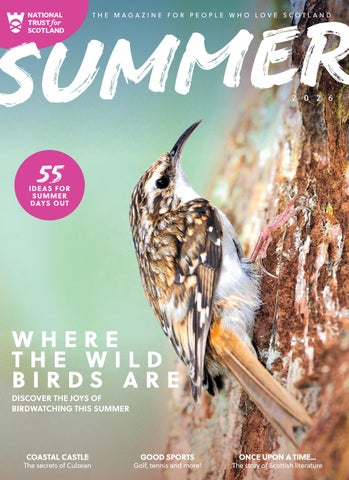
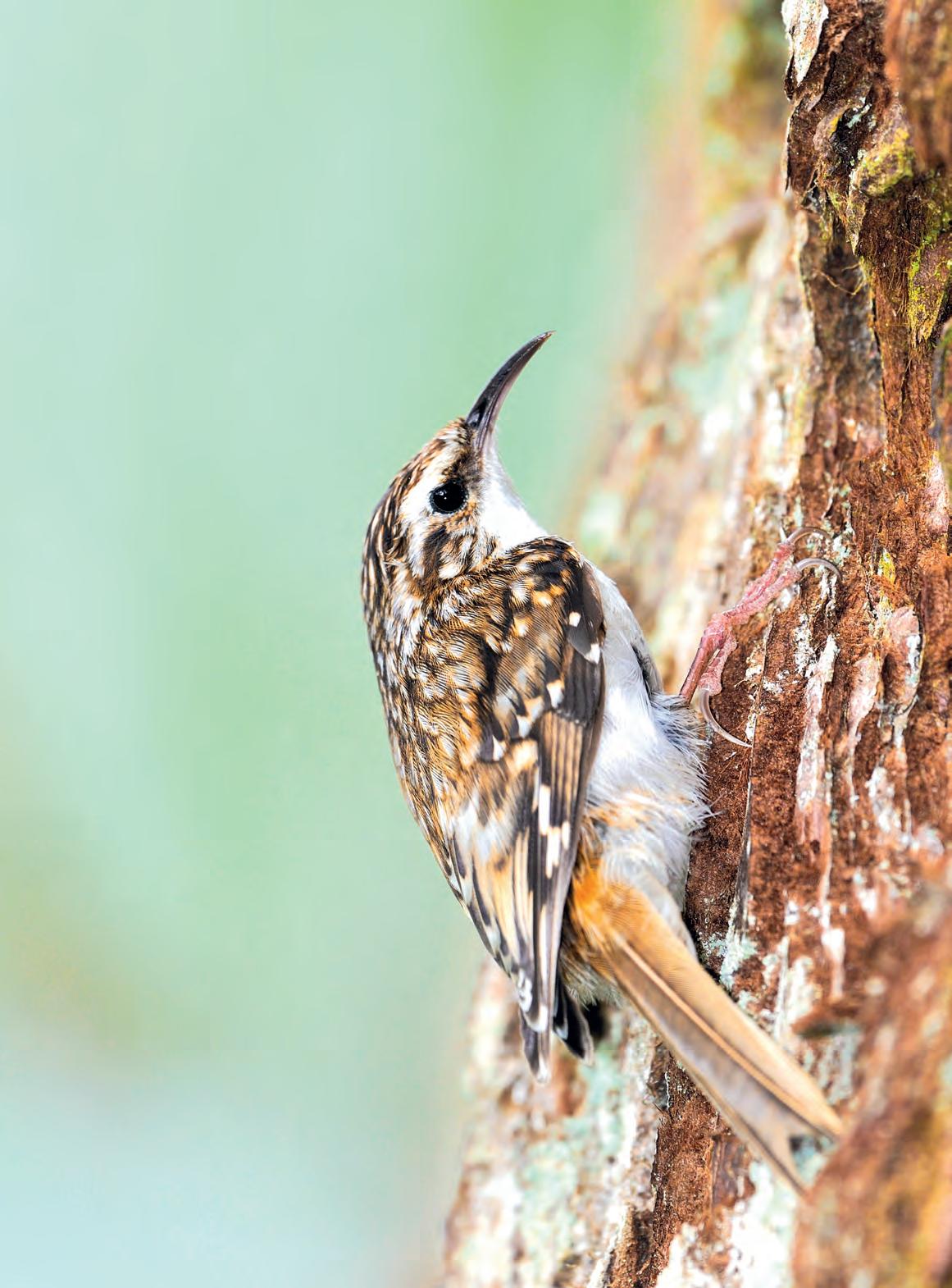
Cover image of treecreeper taken by Laurie Campbell.
Envelope images taken by Colin Heggie and Shutterstock
All other photography
© The National Trust for Scotland unless otherwise stated. Illustrations: Boxdog Inc
The National Trust for Scotland takes no responsibility for advertisements within the magazine. No unsolicited manuscripts please.
If you no longer wish to receive this magazine please contact our Supporter Care Team by telephone on 0131 385 7490 or by post to National Trust for Scotland, Customer Services, Broadstone, 50 South Gyle Crescent, Edinburgh, EH12 9LD.


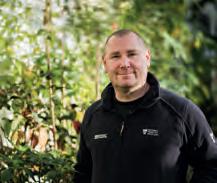
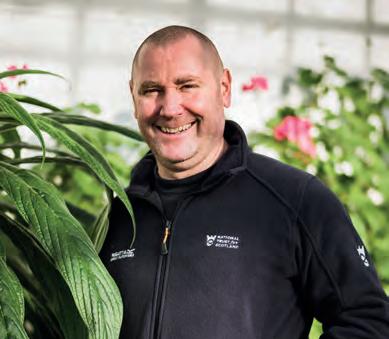
For many visitors to our places, the first impression is the beautiful gardens: vibrant blooms, woodland walks and the sweet sound of birdsong.
I’ve been fascinated by birds since I was a lad. My brother gave me a pair of binoculars, and I was hooked for life. As head ranger at Threave Garden & Nature Reserve, I’m surrounded by remarkable birds that make this corner of Dumfries and Galloway home (see more about the birds at our places on p24).
Some travel long distances to be here. As the weather warms, our eyes turn skyward to glimpse osprey arriving from West Africa. They share Threave with peregrine falcons, red kites, buzzards and hen harriers. In the evening skies, barn owls and tawny owls come out to hunt.
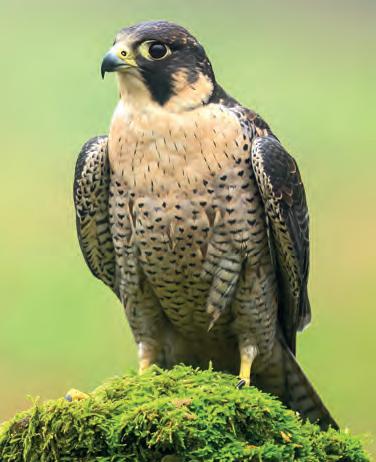
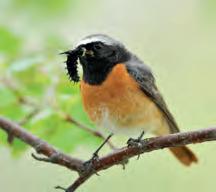
One woodland species close to our hearts at Threave is the willow tit. Sadly for this enigmatic little bird, with its creamy-brown body and black cap, habitat loss and fragmentation have taken their toll. Now a red-listed species, we’re trying hard to boost our cherished population by creating more nesting and feeding opportunities.
We’re supported by our volunteers, who help with everything from counting birds to manning the Dee View Wildlife Hide. It’s encouraging to see young people among them.
Armed with binoculars and huge enthusiasm, they remind me of my younger self and give me hope for the future.
Trust places across Scotland are glorious havens for birdlife and wildlife, as is reflected in our Plan for Nature. If we stop and look, there’s lots to see. This summer, bring your binoculars and members get spotting, the birds are calling…
David Thompson Head Ranger, Threave Garden & Nature Reserve
THE NATIONAL TRUST FOR SCOTLAND’S STATEMENT OF NEUTRALITY The National Trust for Scotland is a legally constituted charity independent of government. The Trust was established to further its charitable purposes, which are for the public benefit. The Trust is independent of all political parties and will not participate in any activity which furthers the interests of any political organisation or secures or opposes a change in the law for political purposes. No Trustee or employee of the National Trust for Scotland may in this capacity express political views or offer support for any political party, candidate or politician. The Trust reserves the right to organise and carry out campaigning activity, including bringing influence and pressure to bear on government, ministers, politicians and political parties, or to offer support for specific policies, if this serves its charitable purposes. In such circumstances the Trust will always comply with charity law, civil and criminal laws and codes of conduct as they apply in addition to its fiduciary duties.
Thank you for helping to protect Scotland’s heritage for the future as a member of the National Trust for Scotland. Here are just some of the benefits you get as part of your membership.
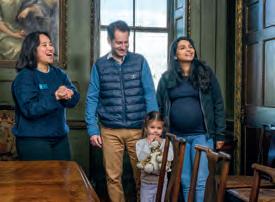
n As well as FREE ENTRY to more than 100 special Scottish places, you also get free entry to hundreds of places AROUND THE WORLD that are cared for by other National Trusts.

n You get FREE PARKING at all our car parks, and when you renew your membership, you’ll receive a BRING A FRIEND FOR FREE voucher to make memories with a companion.
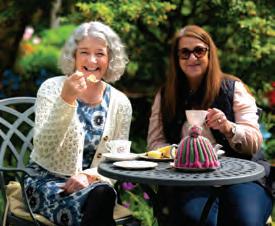
n Members can receive A £5 BIRTHDAY CAKE VOUCHER, plus a range of OTHER MEMBER EXCLUSIVES. Log into your My Trust account to see all your benefits!
Our refreshed member passports and online inspiration will help you to plan a busy summer of adventures
Sign up to our e-newsletter to be the first to hear about our brand-new member passports, which will be coming soon! The new passports are exclusive to members, and will celebrate some unique aspects of the incredible places in our care with bespoke stamps. We can’t wait to share more information with you soon! Find out more about our e-newsletter by visiting: nts.org.uk/stay-in-touch
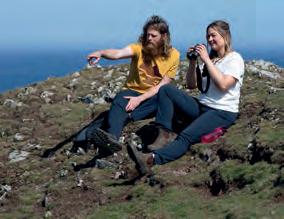
Join St Abb’s Head rangers Jordanna and Ciaran and discover our exciting new partnership with clothing company Keela on p54.
This summer, why not visit or re-visit the places on your doorstep? There’s always something new to see and you’ll find plenty of inspiration in this magazine. Plus, see nts.org.uk/visit for suggested itineraries, themed locations, and the latest information on individual properties. Many of our places are accessible by public transport, making it easy for you and your family to get around.
You can also enjoy some of our summer events – find suggestions on page 51, or check your local properties’ web pages for more.
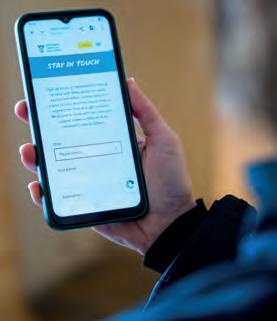
You can find more stories, inspiration and updates from the Trust through our national Facebook, Instagram and TikTok accounts. Many of our places also have their own Facebook pages, where they share all the latest information you’ll need for your visit, including upcoming events and the newest fresh, seasonal dishes being served up in their tea rooms. We love to see your photos – tag us @nationaltrustforscotland on Instagram. You can find more key information about your membership, including member exclusives and rewards, in My Trust. In your dashboard you can update your Gift Aid declaration and download your new Apple or Google Wallet-compatible digital member card. You can also download a car parking pass. To register or sign in, head online to nts.org.uk/ mytrust or scan the QR code here.
Go to nts.org.uk/visit to check current opening hours, accessibility information and upcoming events before you head off on your next trip.
Your membership gets you free access and parking at each of these very special places. Where will your next adventure take you?
Unst
Yell
St Kilda
41 miles west of North Uist
Corrieshalloch Gorge Inverewe
Hugh Miller’s Birthplace Cottage & Museum
Brodie Castle
Balmacara Estate
Pabbay
Mingulay Berneray
Treshnish Isles
Staffa
Burg Iona Canna Torridon
Abertaff House
Falls of Glomach Kintail & Morvich West Affric
Glenfinnan Monument
Glencoe
Arduaine Garden
Crarae Garden
Killiecrankie
Culloden
Leith Hall
Craigievar Castle
Mar Lodge Estate
Craigower
Ben Lawers
Dunkeld Linn of Tummel The Hermitage
Moirlanich Longhouse
Ben Lomond
The Hill House
Goatfell
Fair Isle
Castle Fraser Drum Castle Haddo House Fyvie Castle
Crathes Castle
J M Barrie’s Birthplace
Dollar Glen Alloa Tower
Bannockburn The Pineapple
Pitmedden Garden
House of Dun
Barry Mill
Branklyn Garden
Hill of Tarvit
Kellie Castle Falkland Palace
Preston Mill & Phantassie Doocot
Weaver’s Cottage
National Museum of Rural Life Geilston Garden
Robert Burns Birthplace Museum
House of the Binns
Malleny Garden Newhailes
Inveresk Lodge Garden
St Abb’s Head
Harmony Garden
Priorwood Garden Bachelors’ Club
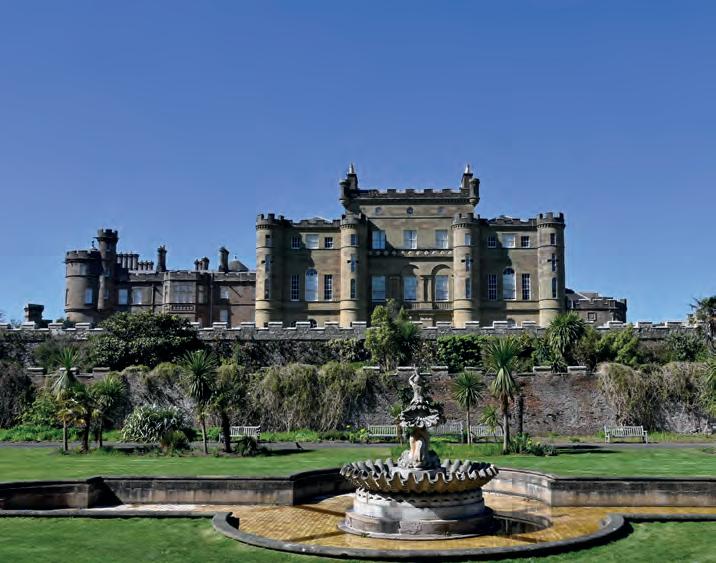
Culzean Castle & Country Park
Souter Johnnie’s Cottage
Robert Smail’s Printing Works
Grey Mare’s Tail
Thomas Carlyle’s Birthplace
Rockcliffe
Gladstone’s

There’s something for everyone this summer – whether you’re after a quiet day out, a weekend adventure, an afternoon of fun, or a trip back in time. Here are just some of our suggestions for new ways to enjoy the Trust’s places, whatever your passion or interest.


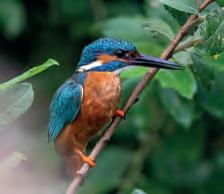
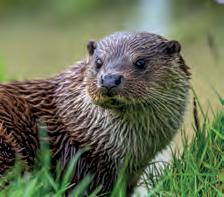
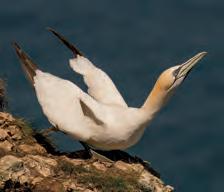
Spotting some of Scotland’s most charismatic species can take patience, effort and a bit of luck. How many of this popular trio can you spot this summer?
Otter
Those fortunate enough to see an otter in the wild will know that they are just as delightful as you’d imagine. Lucky visitors to Burg, Inverewe, Preston Mill and Unst & Yell stand a chance of having that magic moment for themselves.
Gannet
Kingfisher
A zip of blue speeding through the air above a river means just one thing: a kingfisher is on the move. Head to Barry Mill or Linn of Tummel to increase your odds of seeing one on the wing, or perched on a riverside tree.
TheUK’slargestseabirdcanbe identifiedbytheirwhitefeathers, hugewingspan,blackwingtips,and auniqueyellowblushontheir head.Theycanbefoundinlarge numbersatStKilda,aswellasSt Abb’sHead,FairIsleandCanna.
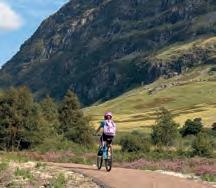
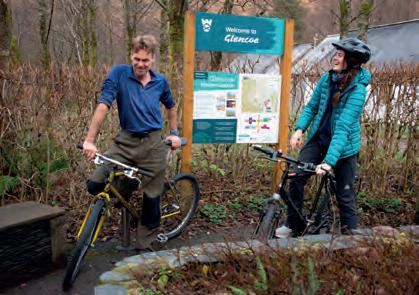
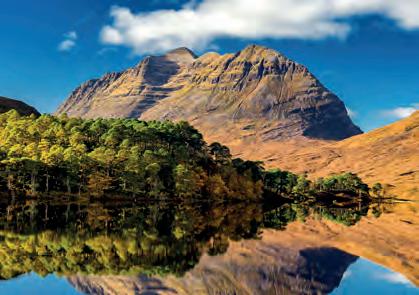
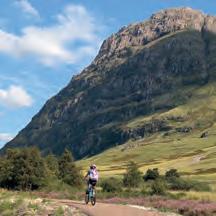
Experienced hikers will find unforgettable views at Torridon, where five Munros are available to be bagged. The tallest, Spidean a’Choire Léith (Liathach), sits at 1,055 metres, and the surroundings are truly enchanting. In all, the Trust cares for 46 of Scotland’s 282 Munros, so there are plenty to add to your checklist. If cycling’s more your bag, many of our places are open to responsible cyclists, including some bike-friendly routes at Glencoe and Balmacara Estate.
nts.org.uk/cycling
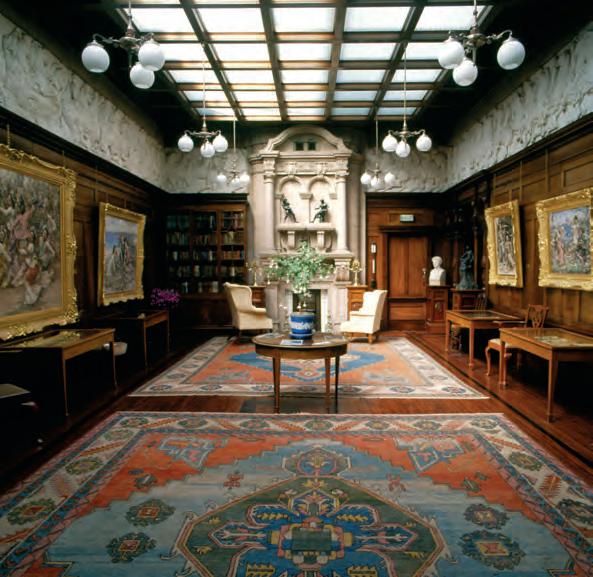
Australian-born E A Hornel is known equally as an artist, collector and antiquarian. At Broughton House & Garden, you can explore his creations and collections, as well as pieces by his contemporaries. Commissioned by Hornel in 1910, the gallery has been restored to its original glory and includes a Parthenon frieze replica. Meanwhile, Holmwood is currently home to a marble installation, Jonathan Owen at Holmwood. It includes a series of 19th century portrait busts carved to add new dimensions. And, at Crathes Castle, among the fairytale towers and stunning gardens, you’ll find the famous painted ceilings: richly detailed, beautifully maintained, and best enjoyed from directly below (some guests even like to lie on the floor).
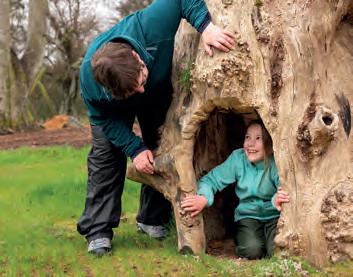
Don’t miss our Playful Summer events at Newhailes House & Gardens, Brodie Castle and Hill of Tarvit. Running throughout the holidays, they’re a chance for fun in the outdoors. Find more on p49.
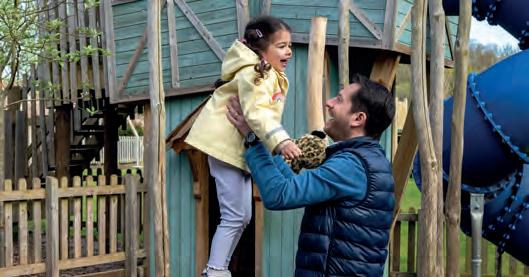
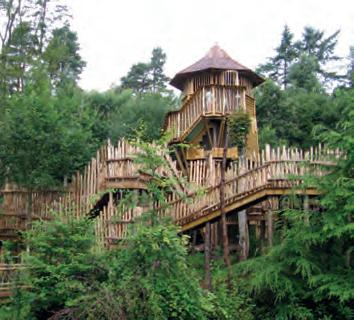
Our outdoor playgrounds are ever-popular and you’re sure to have a lot of fun wherever you go, even if you’ve been before, as exciting adventures await at many of our places. Rise towards the tree tops at Brodick Castle’s Isle Be Wild playground, take on the Tam o’Shanter zip wire at Robert Burns Birthplace Museum’s Scots Wa-Hey play area, visit the giant bunny in Brodie Castle’s Playful Garden or enjoy natural play among tree structures and sculptures at Drum Castle. And, of course, Culzean Castle’s Adventure Cove and Wild Woodland, plus Newhailes’ Weehailes playpark, are popular for a reason, with plenty of space for adventure and imagination.
nts.org.uk/playparks
A summer stroll doesn’t need to become a multi-mile marathon. We’ve compiled our favourite walks – and many of them are manageable for all. Here are some of our recommendations.
Our Glencoe Greenway takes you right into the heart of the glen whether you’re travelling by foot, bike, scooter, pram or wheelchair. The route begins and ends at Glencoe Visitor Centre and how far you go is up to you, but there are three miles of fully accessible path or an additional 1.5 miles for those on foot who want to go up Signal Rock. Refreshments can be found at the visitor centre’s café.
BARRY MILL
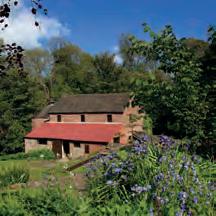
Try the meander at Barry Mill: a one-mile journey that takes in the lade, weir, mill pond and more. At this time of year the whole area is alive with wildlife, and a trip inside the mill itself always feels like a step back in history. You might even see a display of the mill in action.
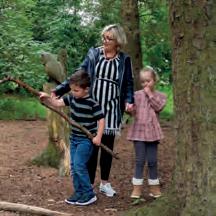
Nestled six miles south of Glasgow city centre sits Greenbank Garden. There’s a wheelchair and buggyaccessible gravel path that loops around the exterior of the walled garden – a route of around 1/3 mile. A longer version, which isn’t suitable for wheeled transport, takes in a series of wooden sculptures. Afterwards, grab a drink and snack at the café and enjoy the indoor or outdoor seating.

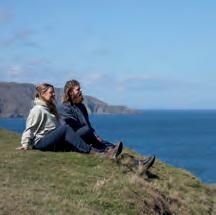
Get away from it all at this coastal nature reserve. A short accessible path takes in views of the cliffs, or you can try the Discovery Trail and extended Lighthouse Loop for a more adventurous day out that takes around 2-3 hours to complete.

Steeped in history, Fingal Hotel in Edinburgh is a ship with a story to tell. Luxury cabins, seasonal menus and a first class crew. Step aboard, stay awhile.
Exploring the grounds of Castle Fraser
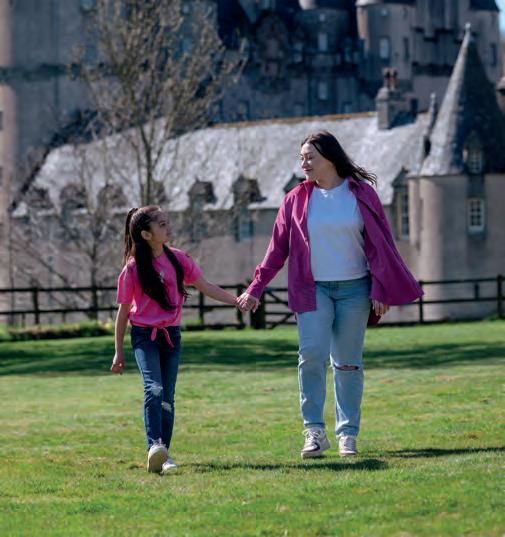
Ahead of your trip to his birthplace museum, listen to an episode of our award-winning podcast, Love Scotland, all about Hugh Miller’s life and legacy.
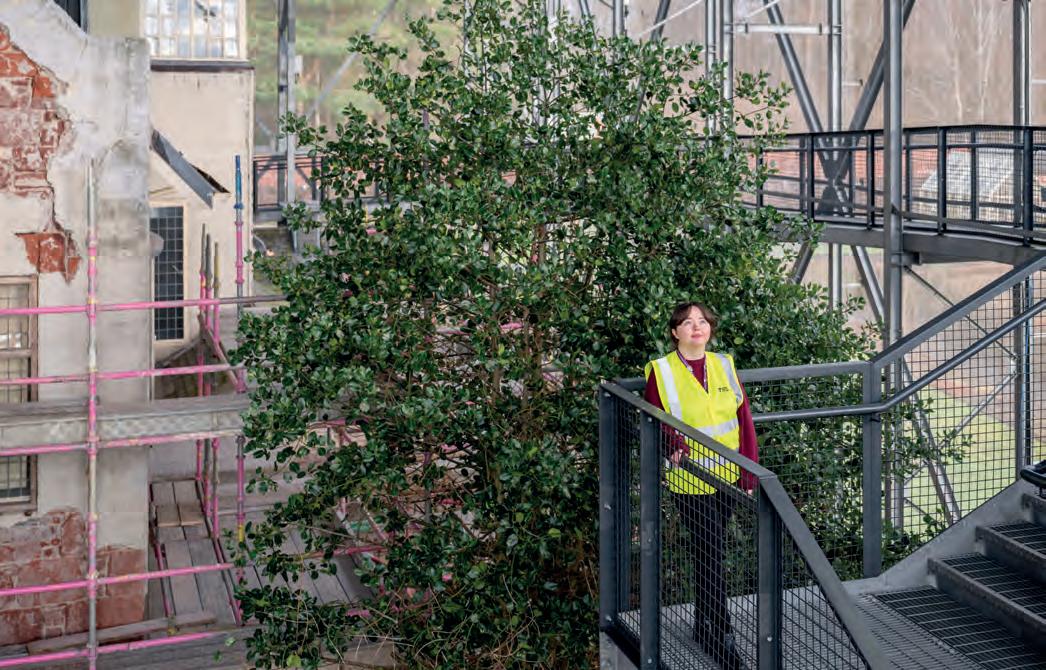
Wet weather is almost guaranteed at some point during your summer adventures, but grey clouds needn’t put a dampener on your plans. Head beneath the Box at The Hill House to see a major conservation project in action, all while sheltered from the drizzle. The protective mesh and steel frame was constructed to protect the house from rain damage. This year, the external roughcast was removed in order to further help the walls dry out. Visitors can explore walkways under the Box, or enjoy a look around the interiors of the Mackintosh masterpiece. Meanwhile, the thrumming machinery of Robert Smail’s Printing Works in the Scottish Borders offers an authentic look at Victorian printing machinery. See the presses in action and discover how this industry influenced the language we use today.
Over the coming months, why not discover more about some of history’s undeservingly overlooked characters? Hugh Miller, the renowned Scottish geologist, deserves a place among the 19th century greats for his achievements in scientific discovery. You can find his story at Hugh Miller’s Birthplace Cottage & Museum in Cromarty, and see some of the many fossils he discovered throughout his career. Meanwhile, focusing on the close relationship of Miss Fraser and Miss Bristow adds a new dimension to a Castle Fraser visit. Elyza Fraser inherited the castle in 1792 at the age of 58 and made improvements to the estate with the help of Mary Bristow – many of which can be seen today when following Miss Bristow’s Trail through the grounds. It was unusual at the time for women to play such active roles in the management of an estate. When Mary died, Elyza had a memorial erected in her memory.
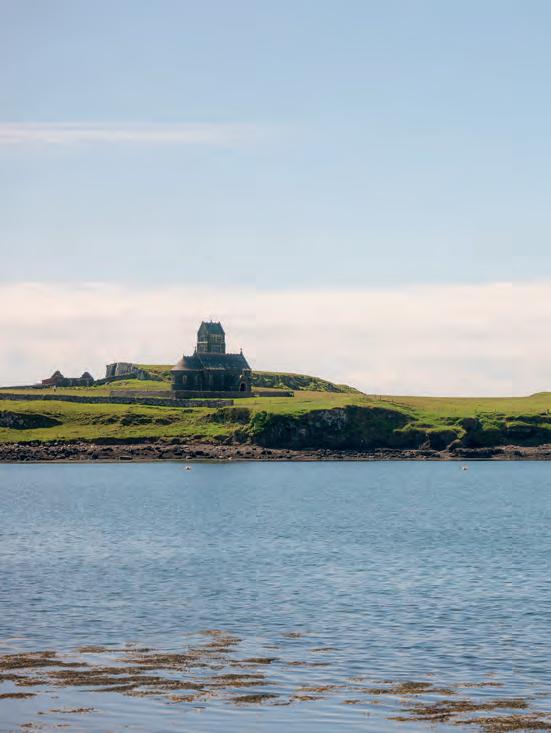
Make this the year that you visit some of Scotland’s islands, or revisit those you have loved on previous adventures. Your efforts will be rewarded by some of the nation’s biggest bird colonies, most beautiful landscapes and hidden treasures. Visitors who travel to Arran can explore Brodick Castle, Garden & Country Park, as well as Goat Fell and Glen Rosa. Or you can venture up to the UK’s most remote inhabited island, Fair Isle, to see some of the 350+ species that have been recorded here. You’ll also find signs of Iron Age settlements. Regular boat trips run to other islands in the Trust’s care throughout the summer months, including Canna, Iona, Mingulay, Pabbay & Berneray, and Staffa. Always check timetables and opening times before you travel.
Head to nts.org.uk/visit to find all the information you need for your next day out, including opening times, facilities, accessibility and more.




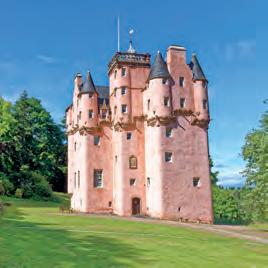
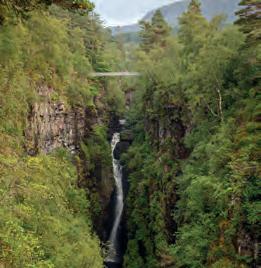


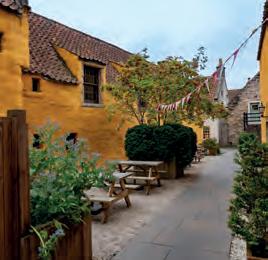
ThecoloursofCulrossmakeita stand-outlocation,especiallyona sunnydaywhentheyellowwalls trulysing.Headinsidefora fascinatingstepbackinhistory,a gardenfullofhappybees,anda fewfamiliarlocationsforfansof Outlander.CraigievarCastleis equallycolourful,withitsfamous pinkexteriorsthataresaidtohave inspiredWaltDisney.Thisyearis the400thanniversaryofthecastle, andthesurroundingestateisa wildlifeparadise.Awalkacross CorrieshallochGorge’ssuspension bridgeoffersbreathtakingviewsof theFallsofMeasach–adramatic backdropforselfies.



A lightweight cordless trimmer designed to keep lawns looking their best, the GTSO trims and edges to perfection, helping you create a neat finish around paths, borders and fences.
2-IN-l TRIMMING AND EDGING
The GT50 combines a grasstrimmer and lawn edger in one simple tool. Justtwist the cutting head to switch between trimming and edging in seconds.
CORDLESSPOWER & EASY-FITBLADES
The efficient l SV motor deliversup to 30 minutesof cordless runtime, and insteadof tangled lines,the GT50 usesdurable plasticbladesthat clip in quickly and cut cleanly.
LIGHTWEIGHT AND COMFORTABLE
At just 1.85kg, the GTSOis easyto handle even during longer gardening sessions.The ergonomic design keepsthe weight balanced so you can move comfortably and freely.
GTSOCordless GrassTrimmer
OVER2,300 ... 5 STARREVIEWS
A record number of one of the UK’s rarest flowers has been found at Ben Lawers National Nature Reserve. More than 1,100 alpine gentians were recorded on the slopes of Ben Lawers last summer, with many more uncounted because they were growing on inaccessible cliffs. The blue starshaped flowers have been monitored at the site since 1981 and the 2025 study marked a substantial increase on previous finds.
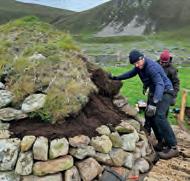
Lady Grange’s House, which experienced a major collapse in 2022, was successfully repaired in March thanks to support from The St Kilda Club. Known as a cleit, the structure on the main island of Hirta was used to preserve food, fuel and other essential supplies by those who once lived there. The cleit is considered one of the most interesting of its kind due to its size and historical connections.
‘EXPLOSIVE’
Intact government shell is first of its kind to be found at site of pivotal 1746 battle
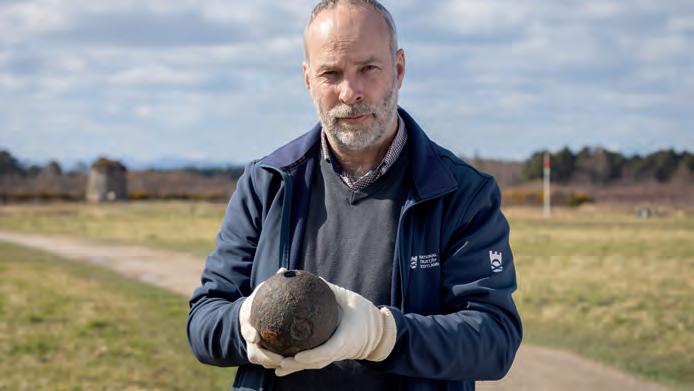
An unexploded mortar shell, thought to have been fired by government forces during the Battle of Culloden, has been discovered at the battlefield.
A team of archaeologists led by the Trust’s head of archaeology Derek Alexander and Glasgow University’s Professor Tony Pollard, recovered the 5.5-inch shell from a field to the north-west of the memorial cairn in October 2025. It is the first piece of complete government ordnance ever found at Culloden and its very existence will help to give new insights into how the battle unfolded.
Derek Alexander explained, ‘This is a remarkable – dare I say, explosive – find of the kind archaeologists dream of, but never expect to encounter.
‘Along with the other projectiles recovered, this discovery helps us better understand the formation of troops and concentration of fire during this brief, but brutal, battle. The mortars may have been aiming at the Jacobite artillery, so the place where the shell landed may mark the heart of the Culloden battlefield.’
The shell is currently on display for visitors to see at Culloden.
The National Trust for Scotland’s next Annual General Meeting will be held at Stirling’s Albert Halls on Friday 25 September 2026. Members are entitled to join the AGM and vote in our Trustee election, either in person or online. Information on how to do this can be found on the form enclosed with this magazine and we encourage you to register your attendance in advance.
The AGM will include updates from across the organisation, detailing some of the key achievements from the last year. If you have a question you’d like answered, these may be submitted in advance to trustsecretary@nts. org.uk by 5pm on 23 September.
Five members of our Board of Trustees will also be elected as part of the AGM.
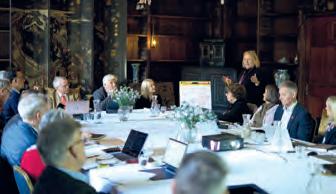
A meeting of the Trustees
You can find more information on those standing for election in the candidate brochure inserted with this edition of the magazine.
You can vote in person at the AGM or online by 5pm on Tuesday 22 September.
nts.org.uk/agm
Walking is one of the most beneficial forms of exercise, and also one of the most underestimated in terms of wellbeing.
When taking longer walks however, some of us can find it difficult.
Paul Goddard, 67, a Nordic Walking instructor from Saffron Walden in Essex, swears by a product called Turmeric+ Gold.
'I decided to become a Nordic Walking instructor in 2009 and started walking 40 to 50 miles a week. Four years ago it became uncomfortable to walk distances that should have been easy for someone of my age and fitness levels. I felt very apprehensive as walking is not only my passion, but my business.'
Paul continues: 'I started doing some research. I learned that

turmeric could be helpful and bought supplements ... and then stumbled upon Turmeric+ Gold.' Curcumin, the active ingredient in turmeric, is difficult for the body to absorb. Some turmeric products offer high levels of curcumin but unless this is easily absorbed by the body, the higher amounts make little difference.
This is what led the scientists at FutureYou Cambridge to create Turmeric+ Gold using the patented 'Curcuma Phospholipid Complex' formulation. It's 30 times more absorbable than standard turmeric and contains vitamin C and D, which contributes to normal
Discover why thousands of people trust Turmeric+ Gold for joint support, backed by over 45 human studies.
• 30 times more absorbable than standard turmeric: Powered by the patented Curcuma Phospholipid Complex formulation, Meriva®.
• Science-backed: Uses sunflower lecithin to naturally enhance absorption.
• Plus essential vitamins: C and D to support healthy bones, muscles and joints.
*Turmeric+ Gold contains vitamin C which contributes to normal collagen formation for the normal function of cartilage and bones. Vitamin D contributes to the maintenance of normal muscle function. Introductory offer valid for new UK customers only. Offer expires 31st August 2026 and cannot be used in conjunction with any other promotions. Cancel any time, without obligation. See FutureYouHealth.com/TG F602 for full terms and conditions.
it I ex 'light-
collagen formation for the normal function of cartilage and normal muscle function.
'Soon after taking it I experienced that 'light-bulb' moment -I realised my knees felt like they used to. I take Turmeric+ Gold religiously now. I walk around 200 miles a month. 'Walking is great for fitness as well as your mental health. Being able to walk easily has made a huge difference to my life and I feel fitter now than I did twenty years ago.'
JoyceMackieandPatriciaShaw are two long-time friends who, as members of the North East Aberdeenshire Members’ Centre, have jointly explored Haddo House,FyvieCastleandmore
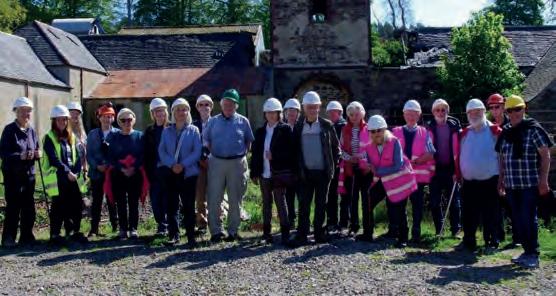
For more than 50 years, Joyce Mackie has been part of the National Trust for Scotland. As a founding president of the North East Aberdeenshire Members’ Centre, she has seen the Trust acquire several places in the region and helped to increase connections between those places and the local community.
‘We had around a dozen people who joined the committee to begin with,’ she explains. ‘And around a quarter are still involved today, all these years later. Although we all come from different backgrounds, we bond together and with the local area. The Members’ Centre embodies all of that.’
For those less familiar with Members’ Centres and Friends’ Groups, they are best described as independent charities who work to enrich the membership of local Trust members and support the Trust’s work.
‘Our members are typically people interested in history and Scottish heritage, of course,’ explains fellow committee member Patricia Shaw. ‘But they are also interested in that local history, too. We organise events on a diverse range of subjects, including visits to historic properties and gardens that may or may not be open to the general public.’
One such outing saw the group take a private tour of Old Home Farm – an area of the Fyvie Castle estate which is currently undergoing the early stages of a long-term masterplan that will open it up to future generations.
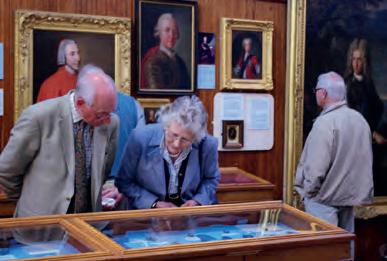
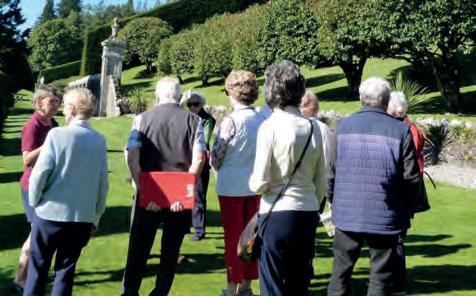
‘The project manager hosted a group of us and explained the vision for Fyvie,’ Patricia adds. ‘It was a wonderful visit and out of that came a request for volunteers to do some research as part of that project. Some of our members have been involved in that ever since, looking at the archives of the Fyvie estate and researching the activities that went on there. We’ve also given money to help with the redevelopment of the tearoom. That’s a great example of the two things our Members’ Centre can do: offer a visit to a special place, and then support the Trust’s work through volunteers and donations.’
Patricia and Joyce are one of many examples of bonds being created and strengthened through the Members’ Centres and Friends’ Groups.
‘We have a deep personal connection to these places,’ says Patricia. ‘Organisations like the Trust Members’ Centres and Friends’ Groups really help to make a better community, a better place, and we do our bit to support in a practical way.’
FRIENDS’
There are 18 supporter groups across Scotland, with a further two in England. These groups are independent to the NTS, but exist to enhance the opportunities available to members. We are hugely grateful for their continued enthusiasm, commitment and support and encourage members to connect with like-minded people via these groups. You can find a full list of the Members’ Centres and Friends’ Groups, and their upcoming events, at nts.org.uk/MCFG
It's only £1 per play, and it takes just two minutes to enter.
Whether the Trust is restoring paintings, maintaining footpaths or caring for the natural world, it’s all thanks to your support. To make even more projects possible, visit nts.org.uk/donate
Oil paintings and their gilded frames have undergone specialised conservation work at Alloa Tower. Frame conservator Colleen Donaldson helped to reverse decades of environmental wear and better stabilise the frames while painting conservator Owen Davison removed decades of discoloured varnish from the canvases themselves. Visitors to Alloa Tower may have seen the work unfold through our conservation-in-action events. Those visiting this summer will certainly see the results as they explore.
Some of the team
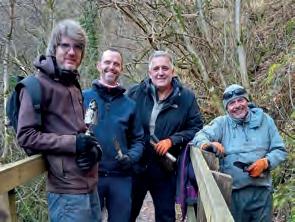
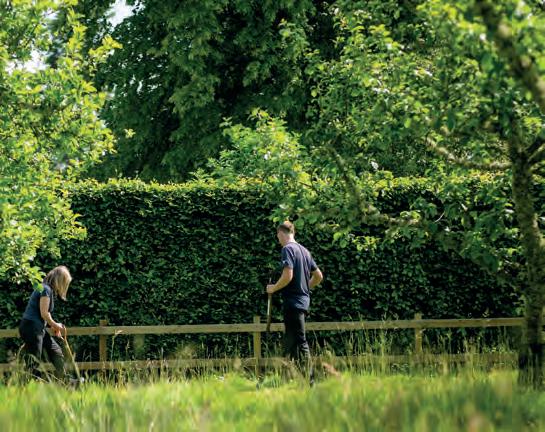
Our brilliant volunteers at Dollar Glen have helped to increase accessibility and make pathways more appealing ahead of the summer season. Cheered on by the sight of frogs and newts in the pond, the team helped to clean some of the site’s bridges and widen the road where mud and leaves had narrowed in on the tarmac. Their work has made a huge difference to encourage more people to explore Dollar Glen’s path network.
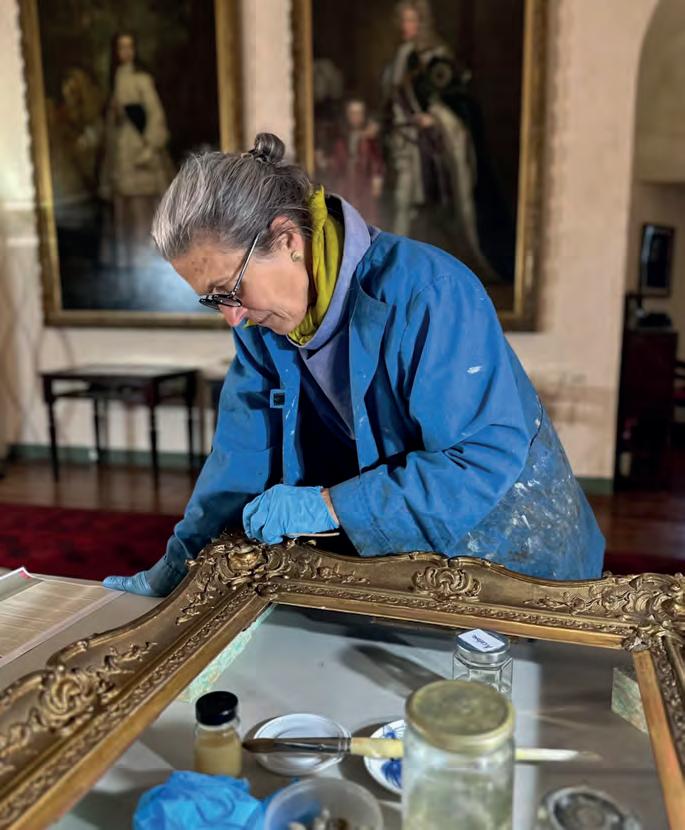
Colleen Donaldson was one of two conservators working on the project
It was a busy spring for our mountain path team, with projects spread across Glencoe, Iona, Kintail and more. This range of work included stabilising the steep descent of Allt Chòinneachain, building on efforts made in October last year, to help reinforce the path edge. On Iona, the focus was on improving the path down to St Columba’s Bay, while at Glencoe the team have been clearing drains and carrying out maintenance.
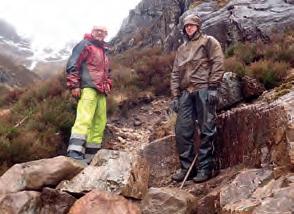
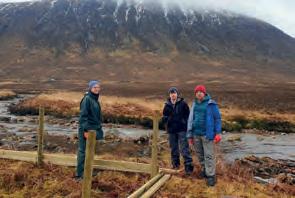
Across the country, volunteers have been supporting our rangers to better protect the places in our care. We love welcoming new and familiar faces to these activities. We hold monthly ranger volunteering group days at Glencoe, with tasks including tree planting, path repairs, and removing invasive and non-native species. Meanwhile, at Killiecrankie, our dedicated conservation volunteers have dug into path, drain and footbridge maintenance.
Chris
Wardle (above) details the work being done across the Trust’s gardens
into the environment so they won’t flower until set times. Bees start foraging in February and March, so they’re searching for nectar before their food sources are even available. That’s where our cultivated garden species are important: they can be a nectar source for all those insects that are thrown out of sync by climate shift. Suddenly, these flowers play a key role in the life cycle of our pollinators.
Your support helps protect Scotland’s wildlife and countryside. North East gardens & designed landscapes manager ChrisWardle reveals what this means for our gardens
Our gardens are an amazing amalgam of diverse and complex habitats with plants and flowers from all over the world providing all sorts of niches and environments for the native insects who thrive there. Our gardens are biodiverse, rich environments, and as such they are so important for our wider conservation aims, including those we’ve set out in the Plan for Nature.
The plan, which we published in 2024, outlines our ambitions for conserving the nature in our care and we’ve just published the first annual report tracking progress. It feels like a good opportunity to showcase exactly how our gardens are helping – and how all-day buffets of biodiverse gardens are supporting our insects.
Here’s an example. As the climate shifts, our bees are starting to come out earlier. Unfortunately, our native plants are hard-wired
Because of the changing climate, we’re adjusting how we think about our gardens and designed landscapes, and we’re changing the work we do, too. Take grassland. We sometimes reference big patches of grass as green deserts: they’re uniform, flat and there’s not a lot going on in terms of biodiversity. But, if we gradually convert our grassland away from formal grass into semi-naturalised grassland, suddenly we have more species, more wildlife. We know that sometimes people like things to be more manicured, especially within those garden settings, but we’re here to say that this is a deliberate choice to help our wildlife through habitat and nectar sources.
If you see our gardening teams this summer, come and chat to us. We’d love to talk to you about what we’re doing and how this is helping our native species to thrive. And, of course, you can find out more about the Trust’s wider work to deliver the Plan for Nature by reading our annual review.
Discover how the Trust has invested £2.65m in nature conservation projects, made possible by our supporters and funders. We have also:
• Completed more than 2,000 hectares of native pinewood regeneration at Mar Lodge Estate
• Increased populations of corncrakes on Canna and Sanday
• Monitored and protected seabirds at St Kilda and Canna
• Introduced nature-friendly farming across the country
Discover the full report at nts.org.uk/plan-for-nature-26
Why pay twice as much for boots of this quality, when these superb Rambler Boots (for men and women) are under £45. All the advantages of a 'performance' boot for half the price. Bird watchers, dog walkers and serious outdoor types have been trusting Hoggs of Fife boots for over 138 years.
So put your feet in Scotland's finest, order today.

• Fully waterproof and breathable
• Lightweight unisex boot for all ages
• Hydry™ lining wicks away moisture
• Comfortable padded ankle support
• Real suede/fabric uppers
• Quick release D-ring fastening
• Shock absorbing sure-grip sole
• Replaceable cushioned insole aids air circulation
Unisex sizes: 4, 5, 6, 7, 8, 9, 10, 11, 12
Colours: Fern Green, French Navy
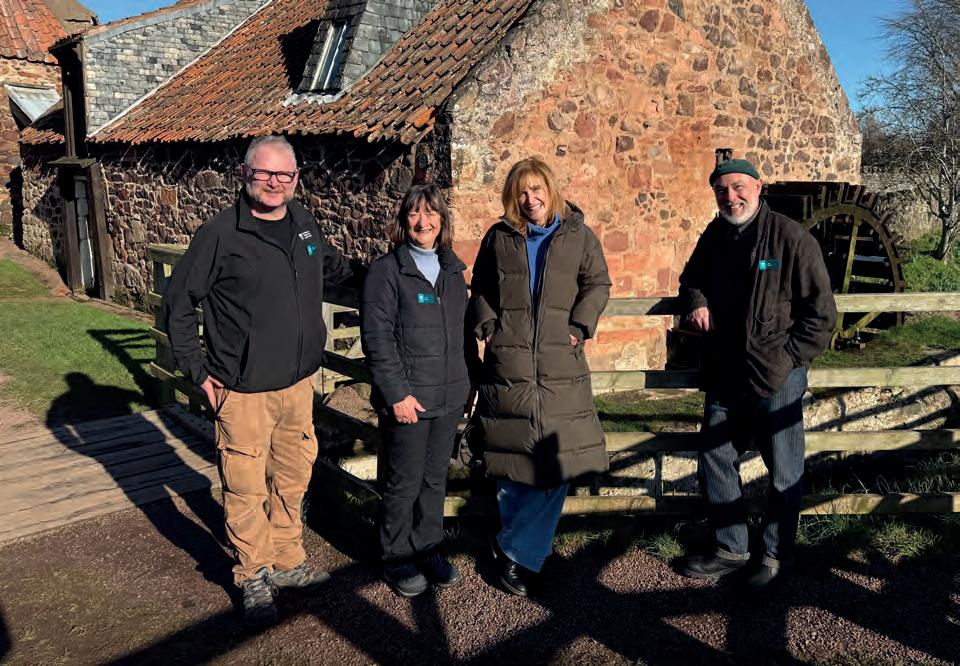
WITH JACKIE BIRD

TOur president Jackie Bird shares the industrial history – and much-loved screen appearances – of Preston Mill
hey come by the busload to see Preston Mill. They are fans of the phenomenally successful TV series Outlander and this is where its handsome 18th century Jacobite hero emerged from the mill waters in a state of undress. I’ve had to watch the scene several times to guarantee its historical accuracy.
Well done to the Outlander actor Sam Heughan who took the plunge for his art. When I was first at Preston Mill in the height of summer the water was freezing, so it’s not surprising the mill and its ice-bath have also been used as a backdrop for a murder mystery, as well as several period dramas.
A mill has existed on this East Lothian site since the 16th century and the landscape around is not only incredibly picturesque, with its rolling farmland and mill pond, but timeless. It’s easy to see why it’s a magnet for TV and film location scouts. Why build an expensive set when you can come along and film at the real thing?
But Preston is so much more than just a pretty place; it’s an authentic piece of the past which provides a valuable record of how the majority of us once lived. We have a rich array of buildings and relics to help us understand the past lives of royalty and the elites, but not so much when it comes to conveying the humdrum of centuries ago. Life was a bit more straightforward for the likes of you and me in this
rural landscape: you grew your oats, took them to the miller, paid your dues to the landowner and fed your family with what was left. No great historic battles or matters of state to contend with, just the daily grind, if you’ll excuse the pun.
In fact, the process of milling was so important to our forebears that our language is littered with phrases that have come directly from the process: milling around, grist to the mill, nose to the grindstone, run of the mill, and even the use of the word meal itself.
You can hear about Jackie’s visit to Preston Mill in an episode of our Love Scotland podcast series. Find it on Apple Podcasts, Spotify or ask your smart speaker to play the Love Scotland podcast.
Even though the exterior of Preston Mill looks a bit like Hagrid’s Hut from Harry Potter, inside, when the sheer force of water is unleashed to drive the mill wheel, the space is transformed into a noisy, labyrinthian network of conveyor belts, pulleys and grinding stones. It’s a joy to behold. Preston Mill was the region’s last working watermill, and in 1950, after a series of devastating floods it was heading for its own watery grave. Thankfully the National Trust for Scotland stepped in and the mill became its first industrial building.
We all love stories about kings and queens and notables from history, but it’s also thrilling to be able to witness human ingenuity from 500 years ago, accomplished by people just like us.
nts.org.uk/preston-mill podfollow.com/love-scotland
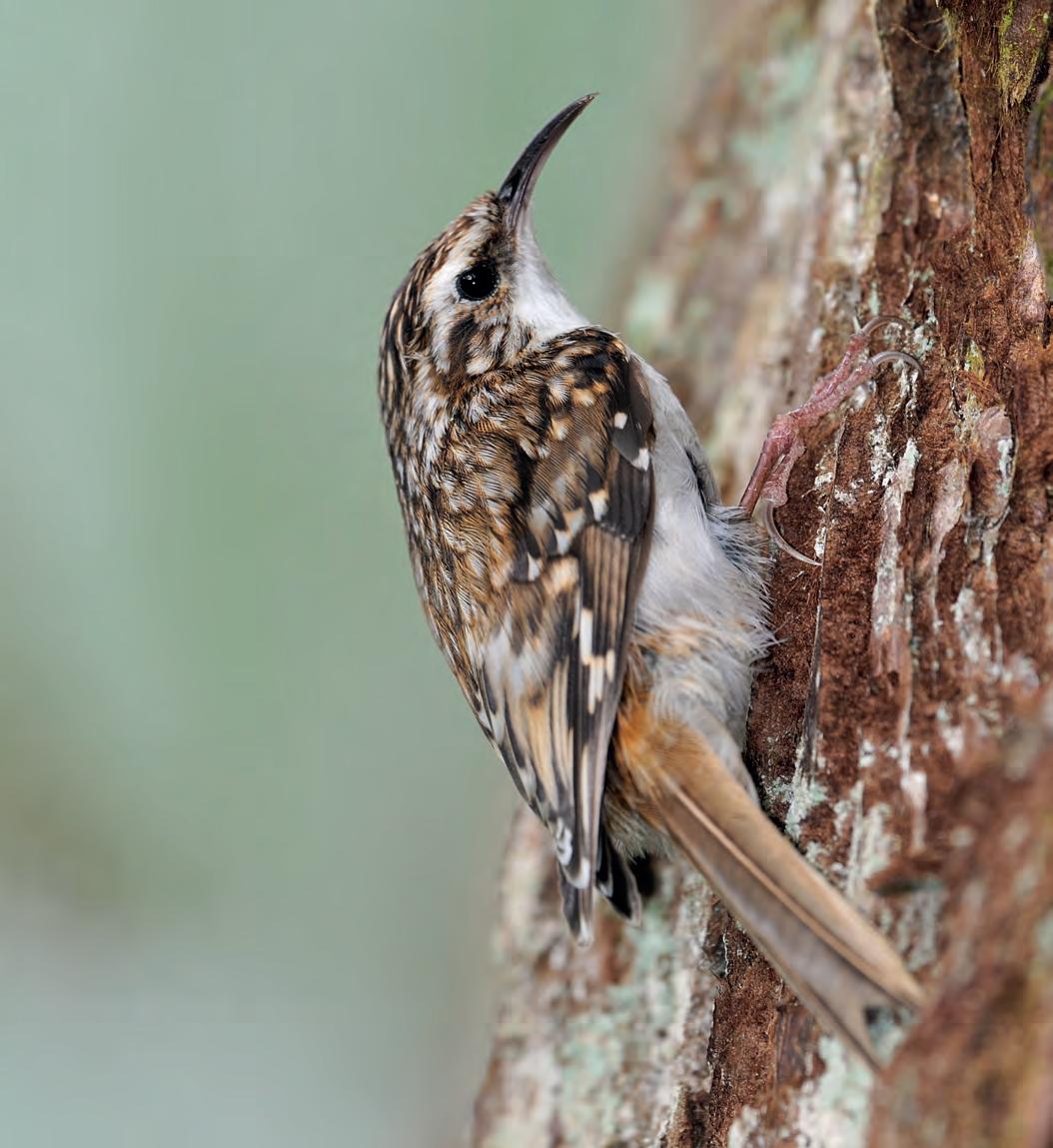
These adorable trunk-loving birds can be found in many parts of Scotland and favour areas of broadleaf or conifer woodland. Treecreepers are more common than many people might think, mostly as their camouflage feathers help them to go unnoticed.
Naturalist Lucy Lapwing takes us on a tour of Scottish birds – and shares how a single sound can reveal a whole story waiting to be told
‘I like to think of birds not as individuals, but as expressions of a life force – they are simply one part of the massive, interconnected web of life in which they operate’
Icould’ve sworn it was a mouse, at first, the way it scuttled up the tree trunk, darting and then pausing in such a rodent-like way. It was utterly dinky, with a brown, mottled back and pale cream underbelly. I watched it scurry and scoot up bark and through ivy, until it reached the top of the tree and took off, flying downwards and landing on the base of the tree closest to me. Now, I could see it clearly – feathers of chestnut and chocolate and caramel and a hundred other unnameable shades of brown. And that distinctive little hooked beak. What a cutie.
Treecreepers are, quite frankly, ridiculous little birds. They’re a species I didn’t know existed until I was an adult, and even when showed one, it was hard to believe they were real. Tiny and adorable, these birds do exactly what it says on the tin: they creep up trees. They’ll always start at the bottom, scampering their way up to the treetops, using their long toes to grip and their stiff tails to prop themselves up. As they go, they rootle among nooks and crannies, probing out tasty invertebrates with that slender, curvy beak like an inquisitive finger. Once they reach the top, and with no more crannies to investigate, they take to the air and fly all the way to the bottom of another tree to start again.
When I got into birdwatching, I thought treecreepers were quite rare. I’d only seen them a few times, usually when I was with someone more experienced, a ‘proper’ birdwatcher. But then I started listening to birds, as well as looking at them. One year, during a bout of ill health, I took to learning birdsong. What at first seemed like an impossible mission soon turned into an obsession, and a door to a world of secret sounds was suddenly unlocked. After learning some of the more common songs, like blackbird, wren and robin, I moved onto the trickier stuff: top of the list being treecreeper. One day, on a wander through some soggy, wet woodlands, I heard those iconic jingling, descending notes – the ones I’d listened to lots of time on my phone as I’d practised.
company. I learned that the art of bird listening really is as valuable, interesting and rewarding as birdwatching.
One of the best things about birds is that they tell stories. Let me explain what I mean. I like to think of birds not as individuals, but as expressions of a life force – they are simply one part of the massive, interconnected web of life in which they operate. In this sense, a treecreeper is not just a treecreeper, but a life telling you about the place you’re in. A treecreeper needs certain things from its environment: trees (obviously), a supply of invertebrate morsels to scoff, and hollows and holes in which they can nest. All of these chapters must be in place in order for this particular story to end with a treecreeper. When you start to think about bird life in this way, you find different habitats have different voices and flavours; qualities you tap into on an almost subconscious level. One place might feel a bit ‘stonechat-ish’, while another has a distinct flavour of short-eared owl. It’s quite magic.
Listen to a recent episode of our award-winning Love Scotland podcast to hear Lucy’s top tips on birdsong. She gives host Jackie Bird memorable advice on identifying garden species.
At the heart of every story a bird tells are plants. Plants are habitats and they’re the key ingredients that define what sort of
After this, I realised that treecreepers weren’t as rare as I’d thought. Lots of birds are tiny and easy to miss by eye, but get your ear in, learn their music, and you realise you’re very often in their
THE TWITCHER
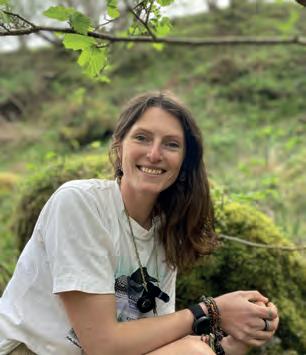
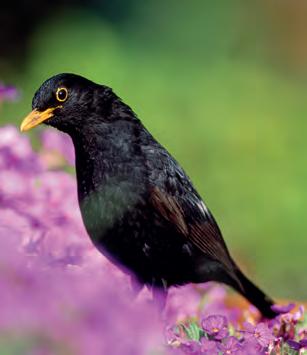
Lucy Lapwing is a keen birder and writer. She uses Instagram to share her love for wildlife and to teach people how to connect more with birds of all kinds, including common species like blackbirds (above).
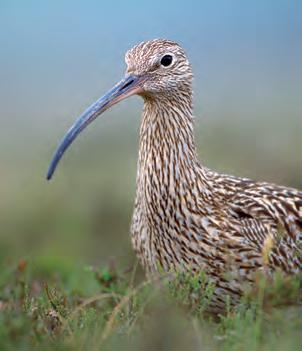
Found in moorland and rough pasture
Though at home in coastal areas by winter, curlews spend their summer at inland breeding grounds
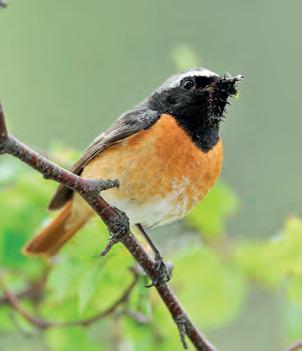
Found in west coast woodland
These colourful birds arrive from central Africa and can be seen in Scotland from April-September
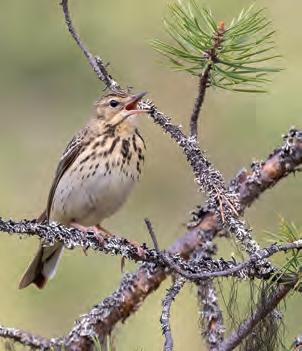
Found in woodland and grassland Tree pipit parents are often targeted by cuckoos, who use them to raise their own young
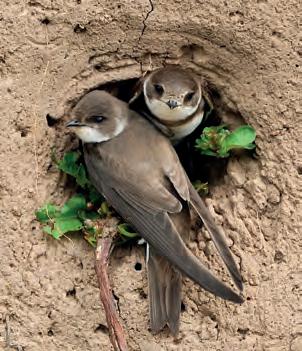
Found in sandy areas near rivers or lakes
Similar to house martins, but with brown feathers, sand martins nest in large colonies of hundreds of pairs
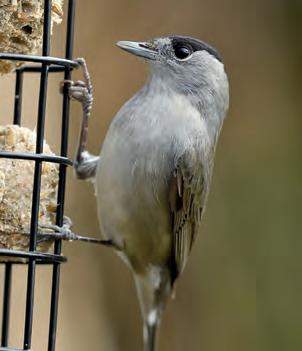
Found in woodland and farmland Blackcaps nest in among brambles and other thorny hedgerow bushes to avoid predators
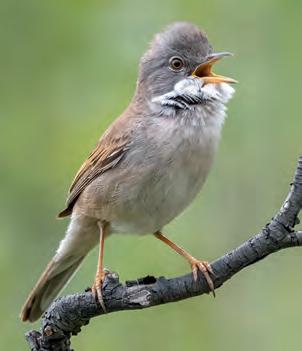
WHITETHROAT
Found in most countryside settings
Males build a number of nests to impress a female, who will then choose her favourite spot
insects, mammals and birds you might find in any given area. Gardens can speak directly to the birds: a range of flowering plants and grasses inevitably invites in invertebrates, including pollinators, plant-eaters and their predators. A good amount of invertebrates encourages the birds that eat them, in turn. Making space for plants that produce lots of seeds inadvertently creates natural bird feeders, and thick, bushy shrubs and climbers like hawthorn and honeysuckle create safe and hidden places to nest. The bottom line is this: a good mix of plant life in a garden will provide more for birdlife.
One of the best things about gardens is they give you a chance to get to know certain birds really well. Greenbank Garden, six miles from Glasgow city centre, is an 18th century walled garden managed by the Trust. A haven for birds, it has 30 birdboxes in its woodland, all made from timber reclaimed from an old path, and hung without screws to protect the health of the trees. Wandering around the flower and veg patches, surrounded by mature trees, you can expect to encounter nuthatches, long tailed tits and goldfinches. You’ll also find feathered faces that you recognise in sight and sound. Take the blackbird: the male in his jet black plumage, and the female a dusty chocolate brown. Then there’s the robin, just about the nosiest soul in the garden, and the house sparrow, which squeezes itself into tiny gaps and crevices in the eaves of houses where they nest. They’re gregarious, with lots living close together, bickering and chattering from hedges and bushes.
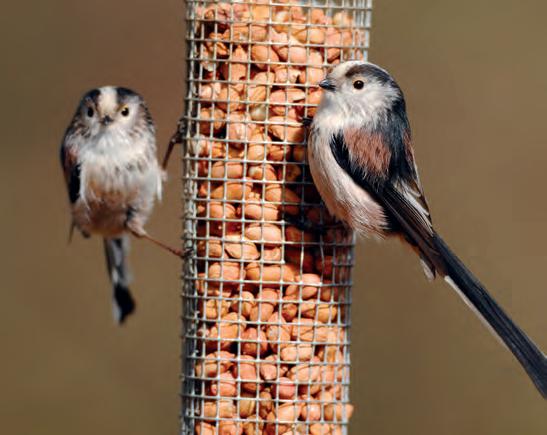
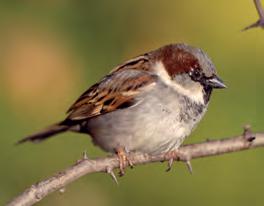
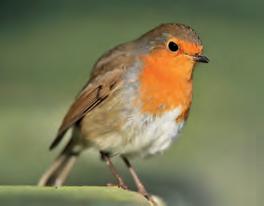
Keep an eye out for long-tailed tits (top), house sparrows (above left) and robins (above right).
WHEN YOU GO DOWN TO THE WOODS NEXT TIME…
…sit and have a listen. In summer, when the tree canopy is in full leaf, and birdlife is blotted out by foliage, sound becomes your secret tool. Nestle yourself down, back against a sturdy tree trunk and bum cushioned by moss and leaf litter, and listen.
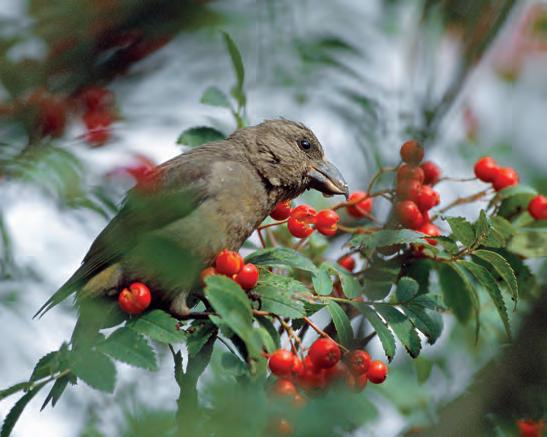
Scotland has a delicious mix of woodland types, and that means there’s also a nice mix of woodland birdlife you might encounter. Head to the uplands, and you’ll find remnants of ancient Caledonian Pine Forest. Comprised almost entirely of fiery-barked Scots pines, these woods are fragrant, atmospheric and very special. Work the Trust has carried out, in places like Mar Lodge Estate, is helping restore this unique and special habitat, which in turn is helping the bird species that rely upon it.
‘Previously this was a forest of old trees, many of them coming to the end of their life,’ Shaila Rao, conservation manager at Mar Lodge told me.
She continued to explain how the management of deer numbers across the reserve had reduced grazing pressure in the woods; fewer chomping teeth meant trees were now managing to sprout and establish before they were nibbled away, and the woodland was regenerating in a way it hadn’t for years. ‘Young pines are charging up the hills and broadleaved trees like birch and willow are starting to cloak the riverbanks.
‘One can get a sense of the exciting future for the woodland,’ she added, ‘which will be much more extensive and stretching up almost to the mountain tops.’
Already there have been benefits for birds like wonky-beaked crossbills and tiny, punkrocker goldcrests.
From uplands to lowlands, meadows to mountains and all the bits in between like hedgerows and scrub – exploring the countryside covers lots of different types of habitats, each of which will be home to a different suite of birds.
Find yourself a good meadow or grassland in early summer – somewhere like Threave Garden & Nature Reserve – and you’re in with a chance of experiencing one of nature’s greatest live music events. Skylarks, grassland-dwelling birds, are the ultimate songsters. They hold the record for the longest birdsong, with individuals recorded singing without pause for over 20 minutes at a time.
Their song is a never-ending waterfall of whistles, trills, chatters and tweets. When you stand at the edge of a meadow, with several singing at once, it’s like being stood under a symphony which is raining down upon you.
As you venture into the uplands of Scotland, you’ll notice different birdlife compared to lower altitudes. In higher grasslands and moorland you might encounter curlew, which move inland and upwards from
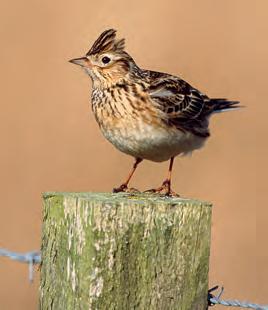
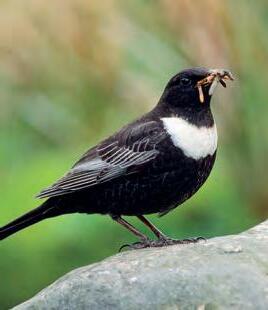
Meadows sing with the sound of skylarks (above left) over the summer months, while ring ouzels (above right) are at home in the mountains.
the coast each summer to breed. Their long, curled beaks and bubbling, fluty calls make them a weird yet utterly beautiful bird to see and hear.
Head higher still, as the hills become mountains, and you’ll encounter rocky crags. In places like Ben Lawers, you might find the ‘blackbird of the rocks’, the ring ouzel.
You can read the full annual review of our Plan for Nature by visiting nts.org.uk/ plan-for-nature-26
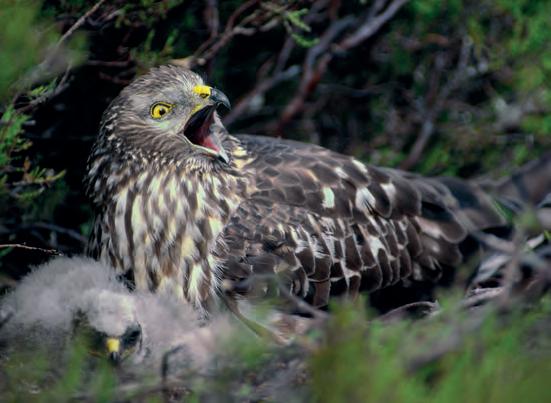
Up here, the moorlands are home to an iconic bird of prey, the rare hen harrier. Breeding across the islands and highlands of Scotland, they’re a Red-listed species due to ongoing persecution. Back at Mar Lodge, however, there is good news. As well as pine forest, the team there are also working to restore areas of heather moorland, the harrier’s favoured habitat. I asked Shaila how this work is helping such an iconic bird.
‘The reduction in grazing pressure here provides two key things for them,’ Shaila told me. ‘Firstly, they like to nest in long vegetation, particularly heather, and this habitat now abounds at Mar Lodge. Secondly, the areas of lower grazing hold higher small mammal populations, which are key prey items of hen harriers.’
Shaila told me how the Trust has been among the pioneers in adopting an approach of reducing grazing pressure – a brave and ambitious decision at the time.
Now the scattered, natural regeneration on the moorland supports lots of woodland birds, which provide an even wider prey base for the hen harrier.
‘The Trust is now reaping the benefits of this approach,’ she says. ‘Now the landscape is full of small trees and the woodland is coming back to life!’ Excellent, I think. This is a bird story with a happy ending.
nts.org.uk/birds


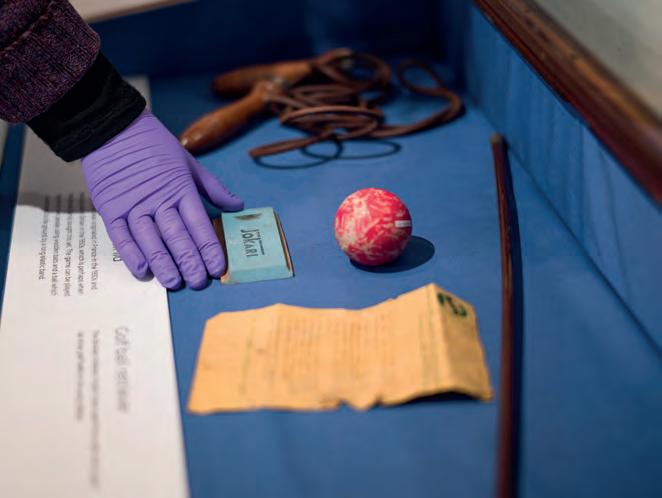
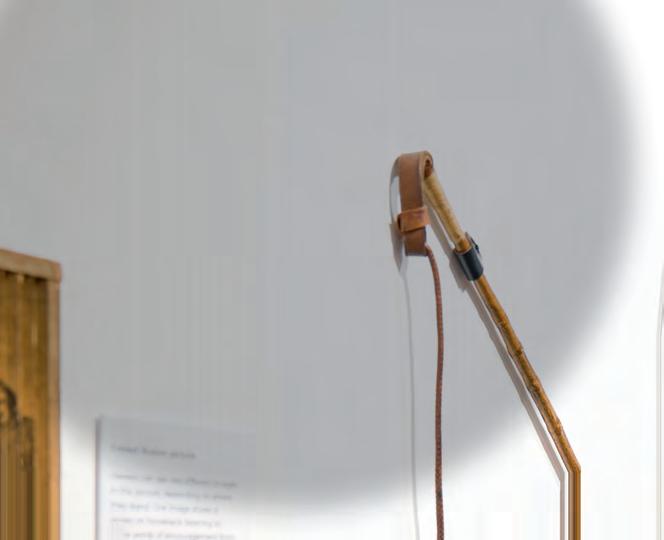
With the eyes of the world on Glasgow’s Commonwealth Games and Scotland’s participation at the FIFA World Cup, we look at the stories of sport from our special places, including here at Brodie Castle
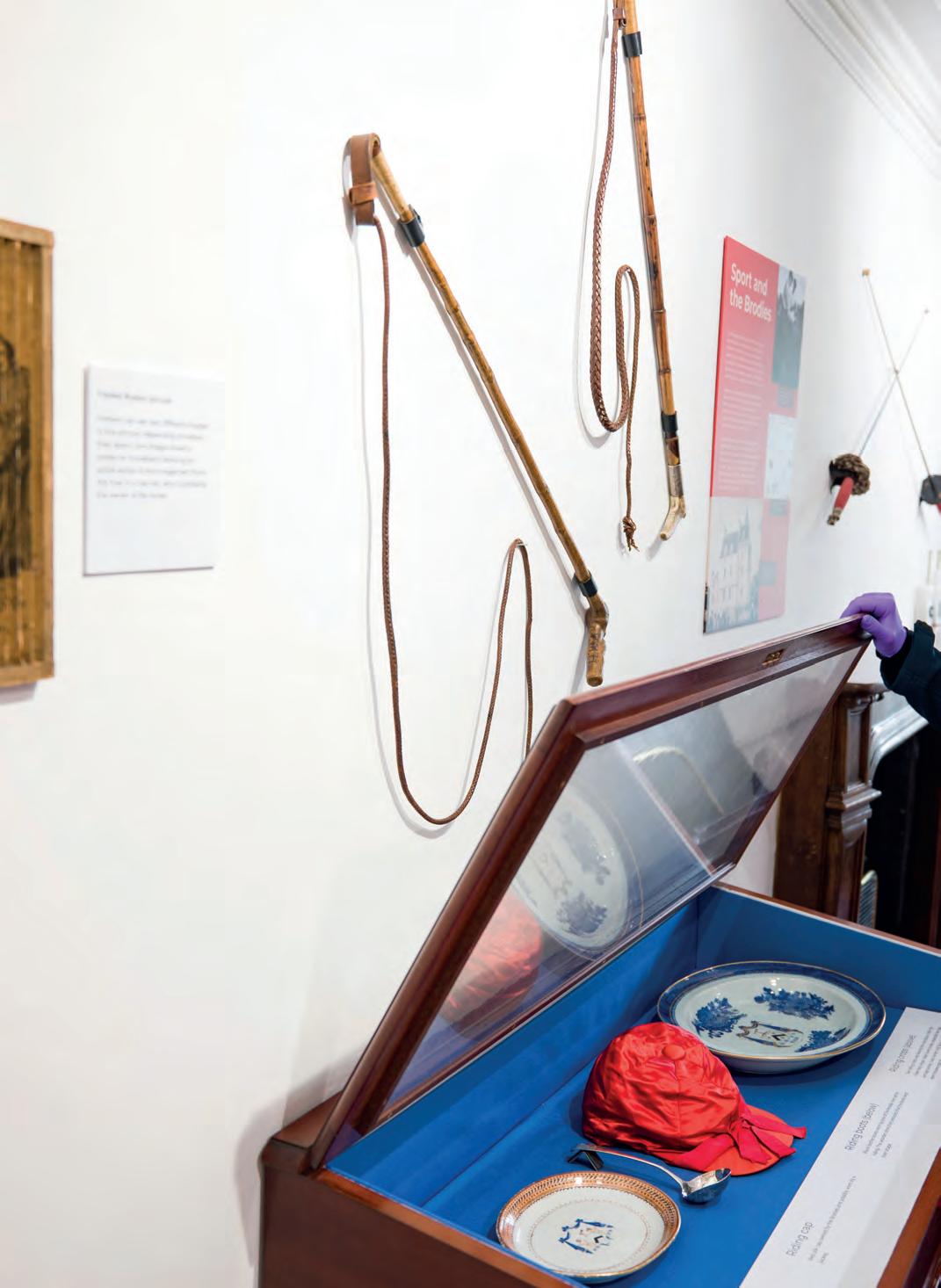
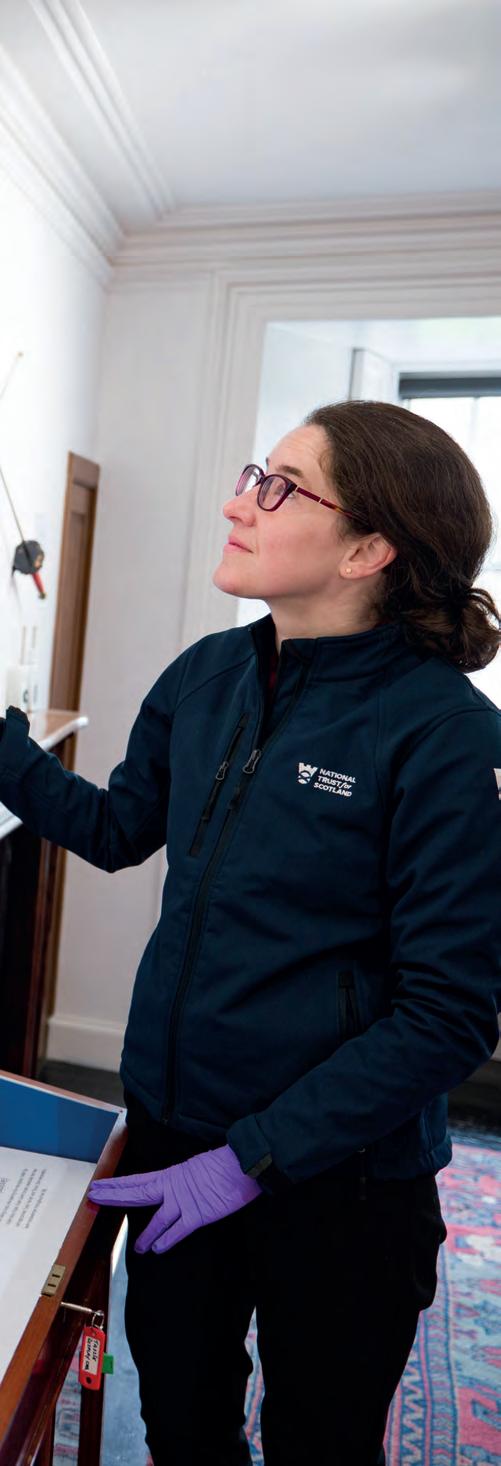
Golf. Shinty. Rugby sevens. Bowls, caber toss, curling. Scotland is the birthplace of many sports now loved around the world and of countless Scottish athletes who have gone on to greatness in their respective (and sometimes literal) fields.
This summer, Scotland will once again welcome competitors from all 74 Commonwealth Games associations while, across the Atlantic, the Scotland men’s football team has represented their nation at the FIFA World Cup. There’s no doubt that sports of all kinds are wrapped up in the story of Scotland, including at many of our places.
Curator Rosalyn Goulding inside the exhibition at Brodie
Items from the Brodie Castle collection
Sports don’t only belong to the professionals. Even for those who follow the pros closely, their best memories will almost certainly come from the times when the goalposts were made of jackets dumped on the ground, or when the rounders pitch was nothing but a stretch of empty beach.
Historically, however, sports haven’t always been accessible to all. For a long time, some of these active pastimes were considered a pursuit of the wealthy: a fact that makes the very history of sport one that is intensely wrapped up in questions of status, class, wealth, gender and privilege. These are just some of the themes explored in a new exhibition at Moray’s Brodie Castle, which uses items from within the collection to ask questions about the ways in which access to sport has been limited or opened up over time.
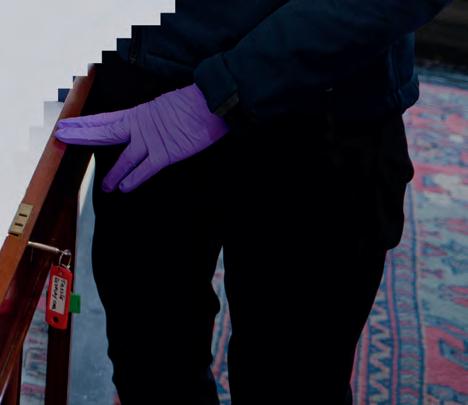

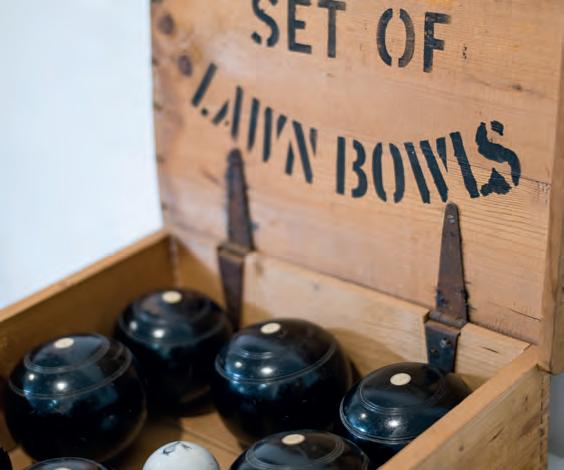
‘We have a lot of sports equipment at Brodie, some really nice pieces from the family’s past,’ explains curator Rosalyn Goulding. ‘We thought this summer was a great opportunity to put it on display, alongside some of our rarely seen works of art and the amazing family photos taken by Violet Brodie in the early 1900s.’
The exhibition largely focuses on the last few centuries, when sports were a part of everyday life for the Brodie family who called the castle home. Through historic photos, text panels and the objects themselves, the stories of the Brodies’ enjoyment of sports of all kinds is laid out for visitors to explore.
‘One of the reasons the Brodies enjoyed sports so much is because they had the time and the money to play,’ Rosalyn says, ‘and that wasn’t the case for many people. Nowadays, most sports are open to everyone, but it was different back then.’
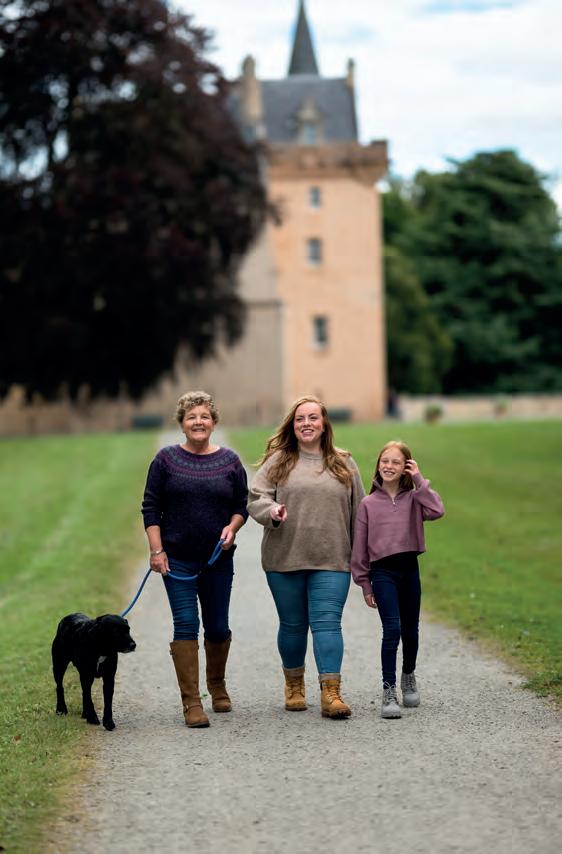
It’s fun to follow in the footsteps of history at Brodie Castle, from the castle itself (left) to the playpark (top right) and the estate where you’ll find woodland and the pond (bottom right)
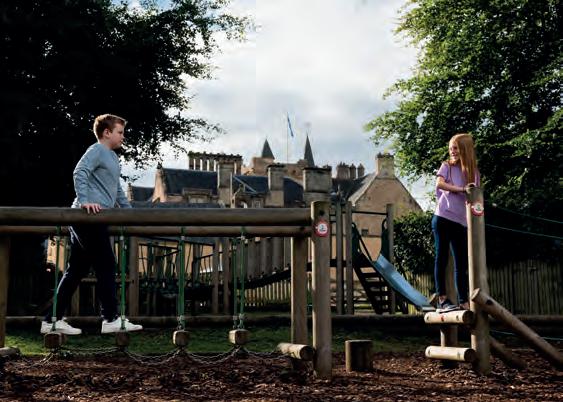
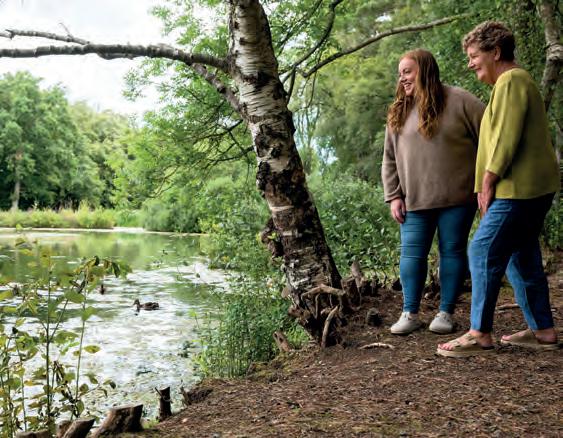
Traces of Brodie’s rich sporting past can be found both within the exhibition space and the wider estate grounds. The pond walk, for example, was a favourite with Ninian Brodie and takes you around a stretch of water probably used for skating in the cold winter months.
The estate itself was equipped for pursuits of all kinds: shooting, fishing, boating and skating in the woodland, rivers and pond, or the more formal sports of bowling, croquet and tennis elsewhere in the grounds. All this meant that year-round, the Brodies were always able to enjoy their favourite sports.
The history of sports is as much a social history as anything else. Changing attitudes across society directly influenced who was allowed to play sport, and what sports were most prevalent.
‘For many hundreds of years, women were prize-fighting, running races and so on, and then you come to the Victorian period and these activities are suddenly frowned upon,’ Rosalyn says.
BELOW
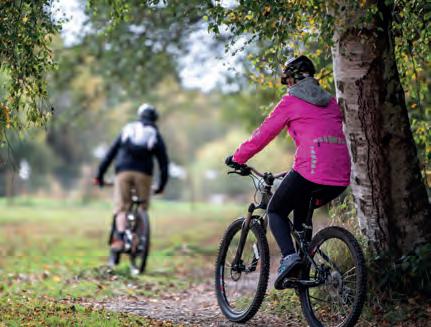
Cycling at Brodie Castle estate
‘It’s only in the last century that things started to change again, and the invention of the bicycle played an important role here. We use an interesting quote in the exhibition from the American activist Susan B Anthony, who said in 1896, “Bicycling… has done more to emancipate women than anything else in the world. I stand and rejoice every time I see a woman ride by.”
It’s a very revealing comment.
‘The exhibition is also a nostalgic trip back to a time when tennis racquets and skis were made of wood, curling brooms had heads of twigs or straw and the canvas bottom of a boat could be stuck back together with a plaster.’
The exhibition can be seen as part of the Brodie Castle tour on your next visit, or during a self-guided tour if you visit on a Saturday.
nts.org.uk/brodie
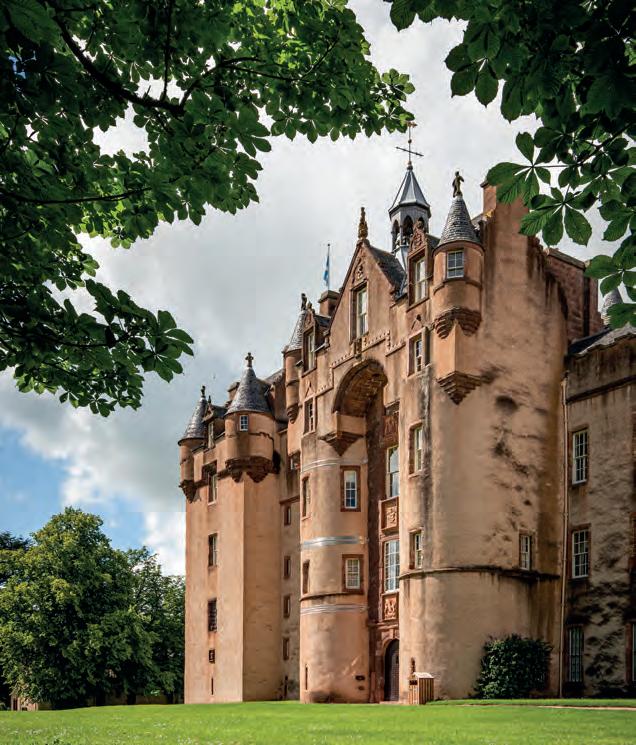
s at Brodie Castle, the fortress of Fyvie Castle has a long history of recreational sport. Perhaps the best-known jewel in the crown is a glass-roofed racquets court which, following storm damage, has been carefully restored thanks to the generous donations of our members.
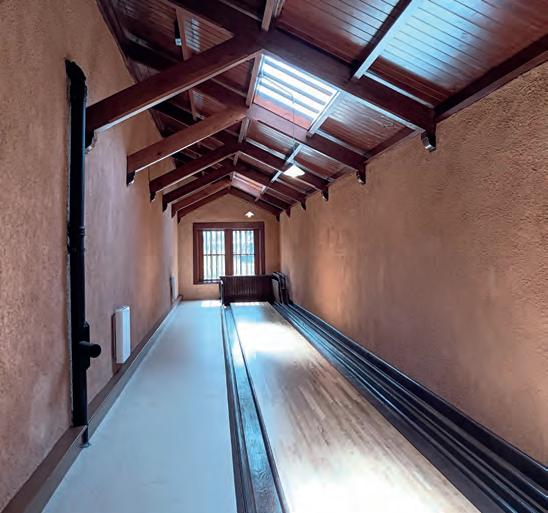
Built for Alexander Forbes-Leith in 1903, the B-listed court has a neo-Baronial style. Originally known as the Playhouse, the building features a glazed roof over the racquets court, with a viewing gallery and reception area for observing play. An adjoining lower structure holds a wooden skittles alley, made by the Brunswick Company. The space was used for sport, relaxation and enjoyment, a tradition that has continued even after the Trust acquired Fyvie in 1984: many functions and events have been held inside the racquet court’s walls.
For the last two years, the building has been shrouded in a tent. Storm Otto in February 2023 sent a tree crashing down onto the roof, but in November 2025 the shroud was lifted. Since then, the finishing touches have been carried out, and now the team are ready to show off the work.
Lindsay Napier, the Trust’s North East building conservation surveyor, explained, ‘The
ABOVE
Fyvie Castle
BELOW
The skittles alley
reinstatement project has been a long process of emergency action to protect the building and contents from damage, investigations and design of a new replacement glass roof and the restoration of materials and finishes. The finished building will boast a new double-glazed roof, a new electrical system, fire detection system, wi-fi connectivity, external connections for caterers and new heaters.
‘It has been a challenge to incorporate all these modernisations into an historic building, but all were necessary to ensure the smooth running of the facility.’
The process included moving the skittles alley piece-by-piece to a wood conservators’ workshop in Cumbria – a relatively short distance for the alley, which was originally shipped from Chicago in 1903. The original skittles and balls have been kept at the castle but a replica set is being made locally so the alley can be used on special occasions.
Restoring the court has been a painstaking process, but it is now hoped that the building can be used by many in the community moving forward. Already, plans are in the works for public events to open it up for all, and keen bowlers will take joy at trying out the re-installed skittles alley if they book the court out for a private function.
nts.org.uk/fyvie
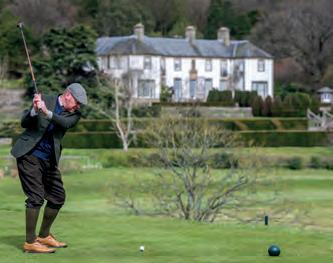
Worldwide, there are more than 38,000 golf courses – with at least one place to drive, chip and putt in more than four-fifths of the world’s nations. Hill of Tarvit’s Kingarrock hickory golf course is a celebration of the sport’s evolution, and its past.
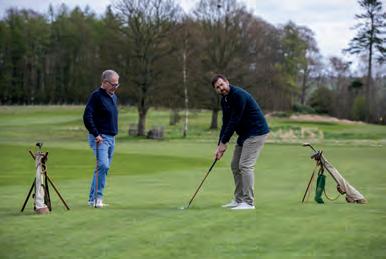
‘A round at Kingarrock is unlike any other,’ explains visitor services assistant Oliver Nicol. ‘We are the only hickory-exclusive course in the UK, meaning we only allow clubs with hickory shafts to be used. All our clubs are the real deal too, made in the golden age of golf. Our greenkeeper uses the techniques available in the 1920s, so our course matches the era.
‘This is my favourite thing about Kingarrock; this attention to detail transports players back in time to when golf was forming into the game we know today.’
He adds, ‘Golfers will make note that the grass length is longer: on the fairways, greens, and
Golf-lovers can take on the challenge of Kingarrock for themselves, with tee times available daily.
especially the rough. This makes playing different. Also, with only five clubs in your bag, you will need to get creative with your shots – my personal favourite thing about Kingarrock.’
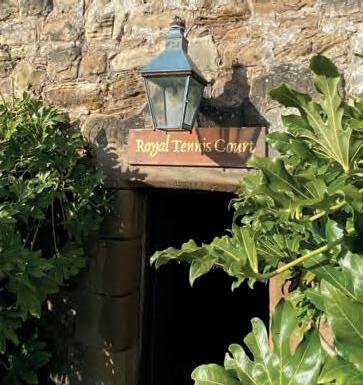
Hill of Tarvit isn’t too far from Falkland Palace, which has its own sporting connections. The real tennis court is the oldest in the world that is still in use, built in 1539 on the orders of King James V. The sport can be traced back to French monks, when it was played with bare hands rather than racquets, and the version played at Falkland Palace has many differences to the modern sport.
The court itself has a series of unusual markings that are still used by members of the Falkland Palace Tennis Club, and the walls and roof are both used in a match.
At other places in our care, you’ll find croquet sets – a classic activity for wealthy families – at House of Dun, Haddo House and Inverewe.
‘Our greenkeeper uses the techniques available in the 1920s, so our course matches the era’
OLIVER NICOL, KINGARROCK HICKORY GOLF COURSE
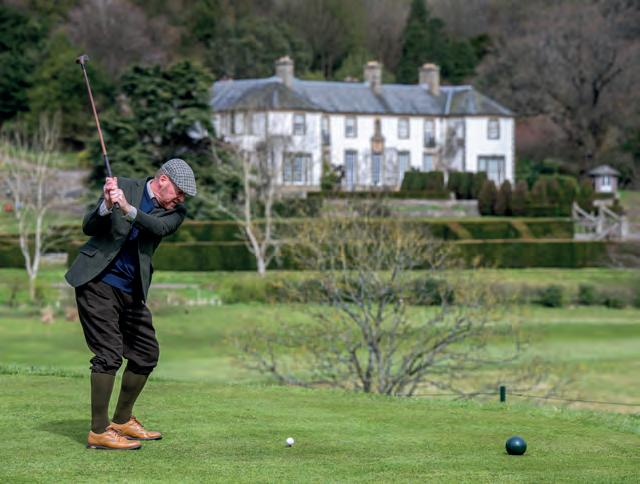
The entrance to Falkland Palace’s real tennis court; golfing at Kingarrock; playing against the backdrop of Hill of Tarvit

With new adventures around every corner, we meet the people powering Culzean Castle & Country Park
WORDS: JENNA MAXWELL
residents, queens and kings may most famously adorn the bills and notes of British currency, but sometimes it’s castles that take pride of place.
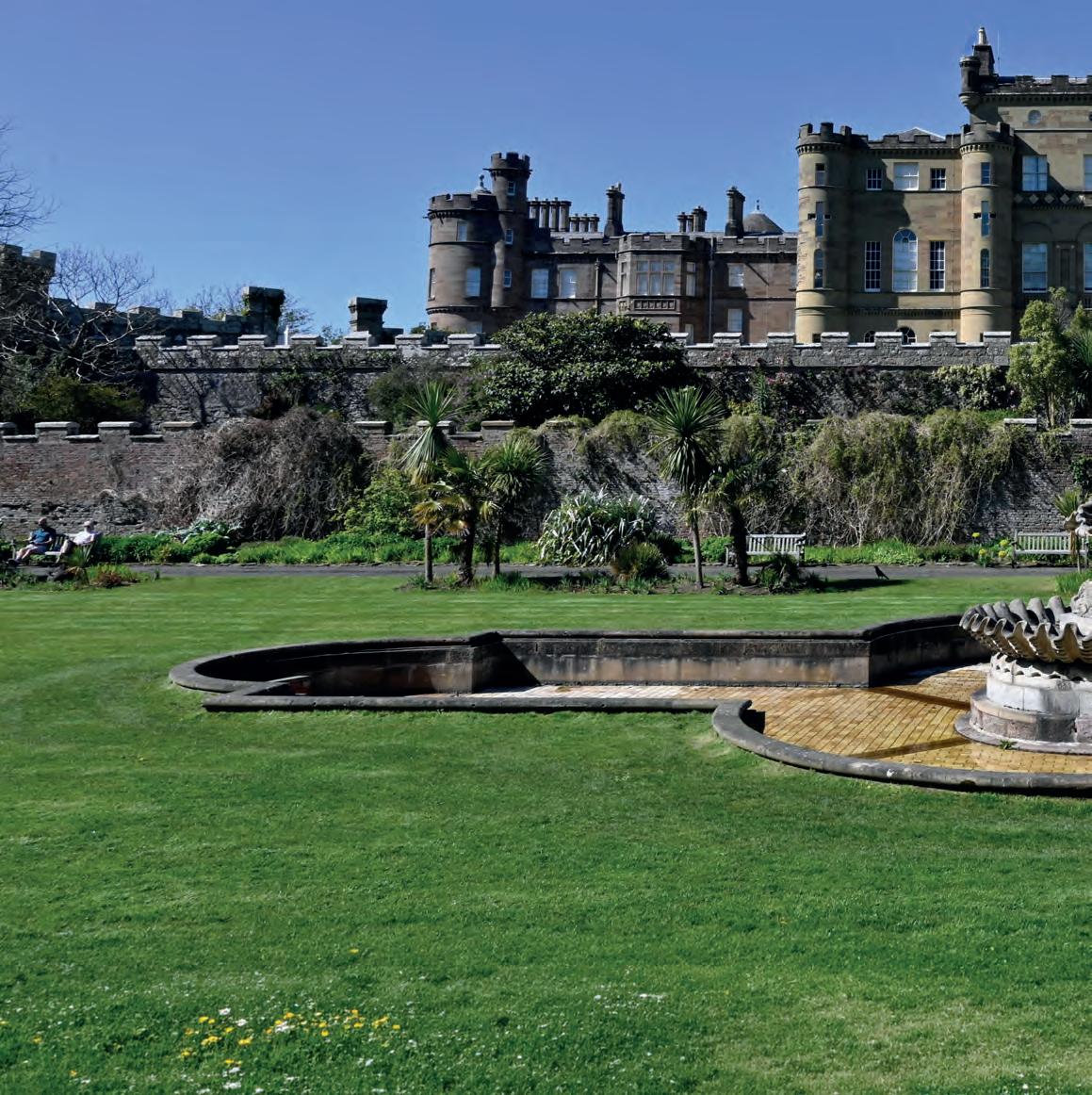
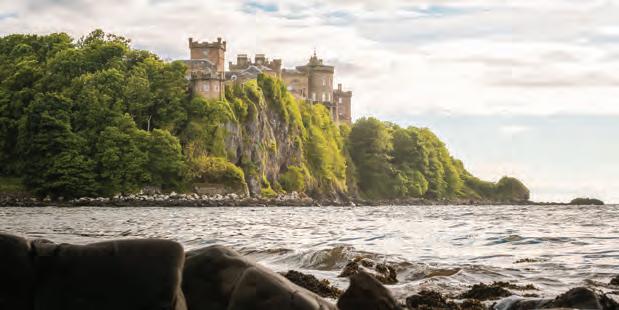
Culzean Castle holds a rare distinction and is one of only five Scottish castles – out of around 4,000 nationwide – to have been featured on banknotes, appearing on the Scottish £5 note from 1972 until 2015.
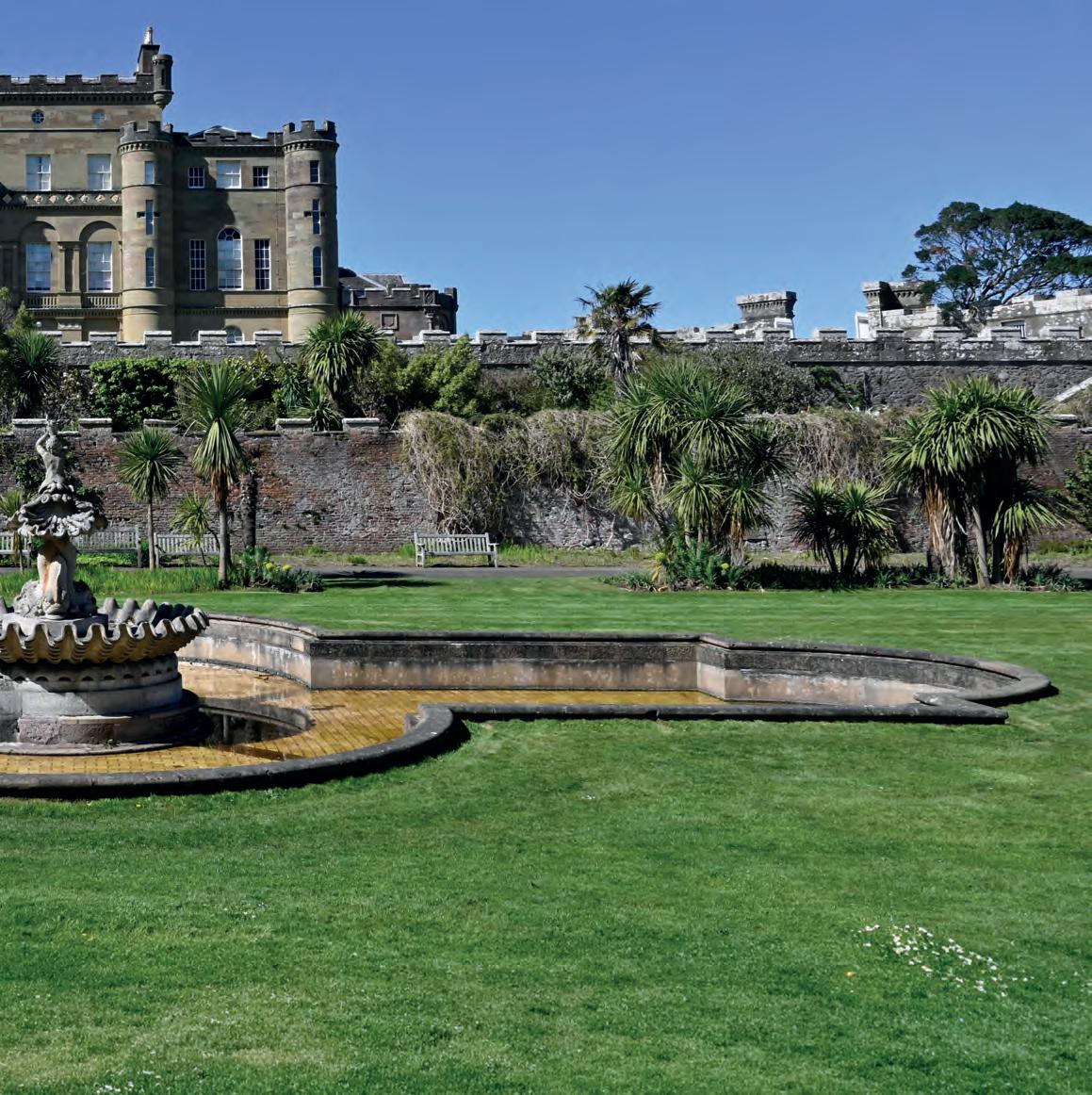
Culzean was given this high accolade for a reason. Perched dramatically above the Firth of Clyde, in the country park which shares its name, the castle’s sweeping sea views, grand
late-18th-century architecture and vast estate make it one of Scotland’s most recognisable landmarks. Like all historical sites, it holds some fascinating stories – and the staff are the ones who keep them alive.
‘One of my favourite parts of my job is creating events that bring Culzean to life,’ says visitor services supervisor, Amy-Louise Julyan. ‘Each day offers something different and I am very lucky to be able to work in such an amazing setting. Everything we do helps to protect and care for Culzean so future generations can enjoy it too.’
One of the most famous stories involves Culzean’s presidential connections. When the castle was gifted to the National Trust for Scotland in 1945, it came with an unusual condition. The entire top floor would be reserved for Dwight D. Eisenhower – who would later become president of the US – and his family to enjoy for the rest of his life, as a thank you from the people of Scotland for his role as supreme commander of the Allied Expeditionary Force in Europe during the Second World War.
‘Many Scots served during the war, and Eisenhower was hugely admired,’ says visitor
ABOVE
Culzean Castle and the stunning estate gardens
services supervisor Martin Montee. ‘Eisenhower accepted the offer of the top floor for his personal use and visited four times, including once while serving as president of the US. He even referred to Culzean as his “Scottish White House” and after his death in the 1960s, the suite reverted fully to the Trust.’
Long before Culzean became known as the Scottish White House, it was home to another influential owner in Archibald Kennedy, 1st Marquess of Ailsa.
‘Archibald Kennedy had an extraordinary life,’ says Martin. ‘He was born in New York City, inherited Culzean in 1794, and rose rapidly through the ranks of nobility.’
Kennedy was ambitious, socially-connected and fond of entertaining. He founded the Ayr Gold Cup horse race, still held today, and hosted lavish gatherings at Culzean. His marriage to Lady Margaret Erskine further strengthened the family’s social standing.
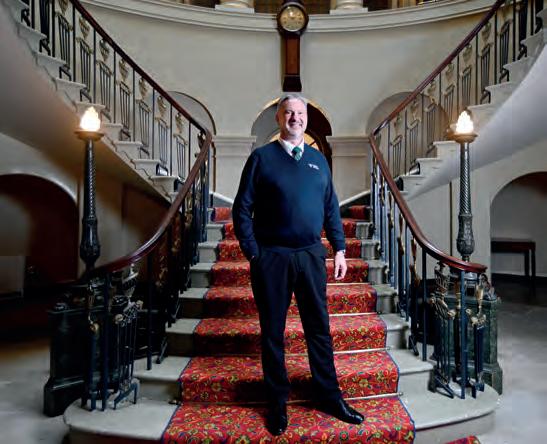
‘Their portraits hang in the Oval Staircase gallery,’ Martin explains. ‘It still feels like they’re watching over the house.’
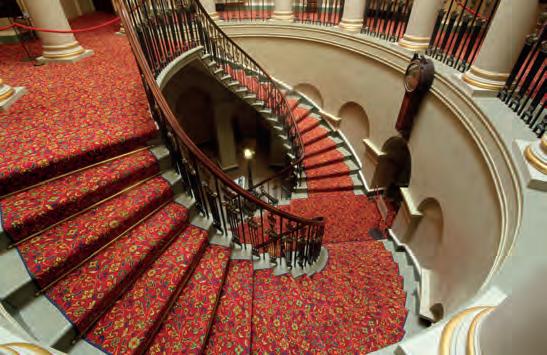
Visitors are in for a treat as there is so much to explore and marvel at. Not to be missed is the imposing entrance hall – displaying 716 pistols and more than 200 swords and bayonets – the panoramic Round Drawing Room and the masterpiece Oval Staircase.
‘The Round Room has an incredible sense of history,’ says Martin. ‘You can imagine the grand balls and concerts that took place here. With windows opening on to a curved balcony, guests once stepped outside with drinks in hand to enjoy sea air over the Firth of Clyde and sunset views – on a clear day, you can see across to Ireland.’
‘My favourite part has to be the Oval Staircase,’ says Amy-Louise. ‘It’s fascinating because it was one of the last elements to be constructed, despite being the centrepiece of the castle. There’s a portrait of Margaret Erskine of Dun and, if you focus on her foot, you’ll see an amazing illusion, it seems like her foot follows you as you walk past.’
There are many other attractions to draw visitors to Culzean. The estate is around 600 acres and includes woodland, parkland, beaches, ponds, formal gardens and adventure playparks.
‘We have around 17 miles of footpaths,’ says head ranger Robert Miller. ‘Most visitors probably walk three to four miles without even realising.
‘Families can easily spend a full day here as there’s so much to explore.’
While many visitors come here regularly, even those who are familiar with Culzean might miss some of the hidden hideaways and secrets within the estate.
‘Hidden away in a quiet corner of Culzean you can find the Cat Gates,’ says Amy-Louise. ‘These gates were intended as a showpiece and part of the original entrance to Culzean. The gates are topped with Coade stone leopard sculptures.
One of the many hidden gems to discover at Culzean Castle & Country Park is the second-hand bookshop. Situated within the New Stable block on the estate, it’s the perfect place to discover new stories.
TOP Visitor services supervisor Martin Montee and the Oval Staircase ABOVE
The sweeping staircase inside the castle
Run by the Friends of Culzean group (see page 17 for more on our Friends’ Groups) for more than ten years, the shop is staffed entirely by passionate volunteers who love to share their own stories and recommendations with guests. For many visitors, it becomes an unexpected highlight – a cosy treasure trove filled with books to suit all ages.
Open daily from 11am to 3pm, the bookshop features a diverse collection of good-quality donated books, from classic fiction and local history to children’s favourites, with every purchase helping to support the estate.
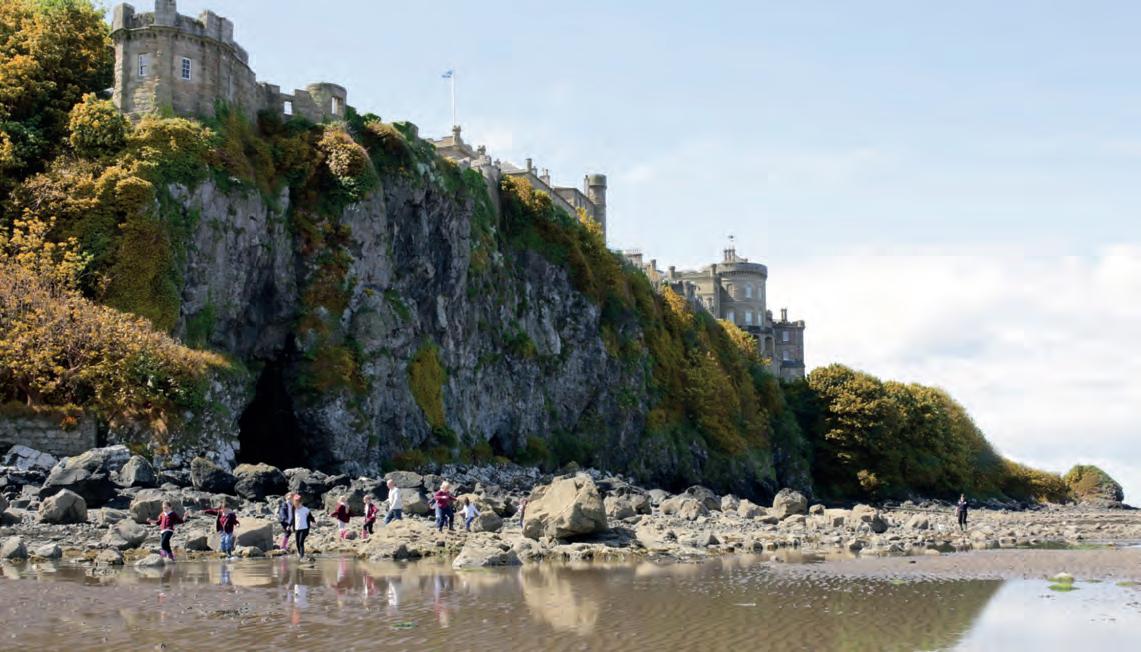
‘They are truly an amazing piece of history and worth seeking out. You can access these via another of our hidden gems: Happy Valley, a beautiful part of the estate, known for its woodland paths and natural beauty.’
‘Two of my favourites are the Cat Gates and the Sitka spruce trees known as Adam and Eve,’ adds Robert. ‘The trees are around 200 years old and were likely grown from seed collected by David Douglas – perhaps Scotland’s most esteemed botanist.
‘Douglas introduced 240 species of plant and tree to the UK and Adam and Eve are believed to have grown from seeds he collected shortly before his death in 1834.’
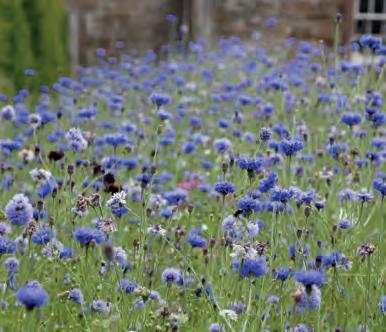
ABOVE
Culzean is perched on the South Ayrshire coast
BELOW LEFT
The gardens and country park are alive with colour
BELOW RIGHT
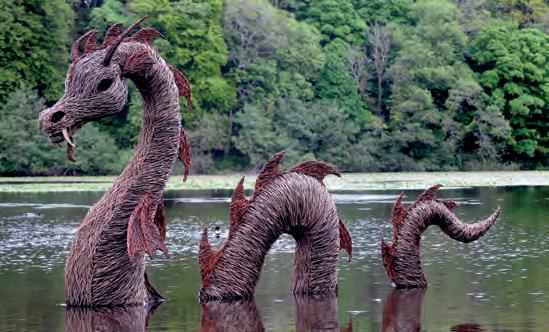
The sea dragon is one of several sculptures in Culzean’s ponds
The diverse habitats within the woodland, farmland, coastline, ponds and parkland of the estate support remarkable biodiversity.
‘The variety is what makes the estate so special,’ says Robert. ‘More than 165 bird species have been recorded, alongside 31 mammals, including nine species of bat. In 2025 alone, we documented new birds, moths and dragonflies. It shows how alive this place is.’
The younger generation is highly involved with the biodiversity around the Culzean estate, as the ranger team runs an extensive programme of activities. ‘We work with around 700 pupils a year through school visits,’ Robert explains. ‘We also run guided walks, wildlife clubs, pond dipping,
rock pooling and “feed the deer” sessions. Our conservation volunteers do incredible work. From habitat management to surveys, they’re vital to what we do.’
With the castle and estate being so vast, it’s a good idea to have some pointers on what to explore first. ‘I recommend allowing as much time as possible,’ says Amy-Louise. ‘There is lots to explore, including the Walled Garden, Deer Park, Swan Pond, Adventure Cove playpark and lots of woodland walks.’ With so much to see, and the ever-shifting Scottish weather, it makes sense to prepare for all eventualities before you set off.
With so much on offer, you might well be reluctant to leave: which makes it even more tempting to stay at one of the holiday cottages.
There’s so much to be found at Culzean Castle & Country Park that even regular visitors often stumble across something new. Here are our team’s must-sees:
• Close your eyes and imagine the sights and sounds of a glamorous ball inside the Round Room
• Find the portraits of Archibald Kennedy and Lady Margaret Erskine and try to spot the optical illusion
• Browse our gift shop
• Discover the Cat Gates
• Admire Adam and Eve, the Sitka spruces
• Venture down a path you’ve not walked before in the country park, and count as many sculptures as you can along the way
‘Visitors are often surprised to learn that Culzean has eight self-catering holiday cottages across the estate, each offering a different way to experience the castle,’ says Amy-Louise. ‘There are cottages situated right on the beach, overlooking the amazing views or even tucked away in the quieter areas of the estate.’
Guests, and day visitors, can make sure they properly refuel at Culzean’s refreshed food outlets. Recent improvements at the Home Farm Kitchen and Old Stables Coffee House have enhanced the dining experience, offering relaxed spaces to enjoy seasonal food and coastal views.
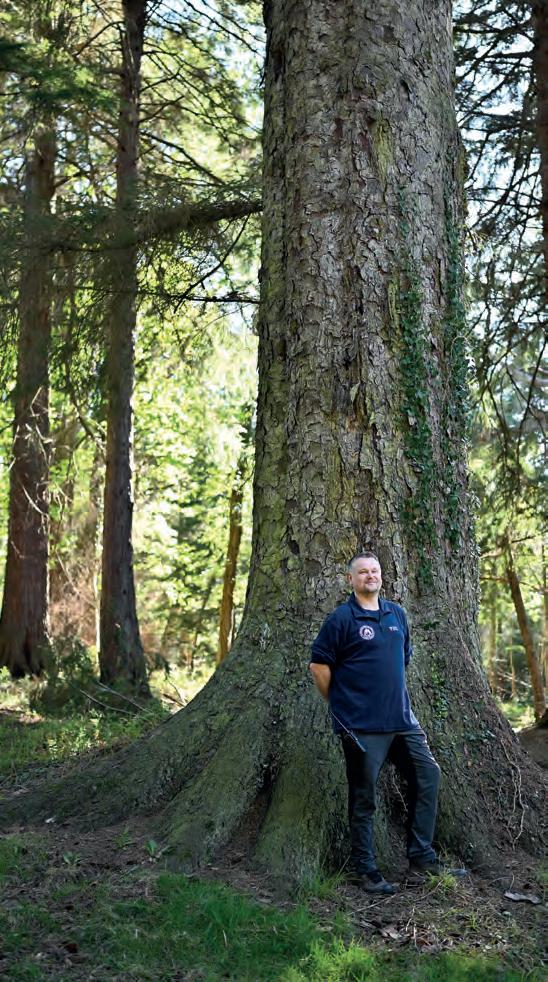
ABOVE
Robert Miller, head ranger, at the Sitka spruces
For all its grand architecture, sweeping landscapes and centuries of history, Culzean’s true character is shaped every day by the people who care for it. ‘I think it’s easy to
‘The variety is what makes the estate so special. More than 165 bird species have been recorded, alongside 31 mammals’
see why Culzean is so special,’ says Robert. ‘The variety of habitats and the amount of biodiversity within the estate is incredible, and then when you throw the history and built heritage plus the views across to Arran and Ailsa Craig into the mix, it just makes it a unique, special place.’
For Amy-Louise, the greatest reward comes from seeing those efforts reflected in visitors’ experiences. ‘Seeing families, friends and visitors enjoying something I have helped create is such a fantastic feeling,’ she says.
The shared moments of visitors discovering something new, spotting wildlife or learning a new story are what gives Culzean its lasting appeal, and it’s the staff who ensure it remains a place of history and discovery.
nts.org.uk/culzean

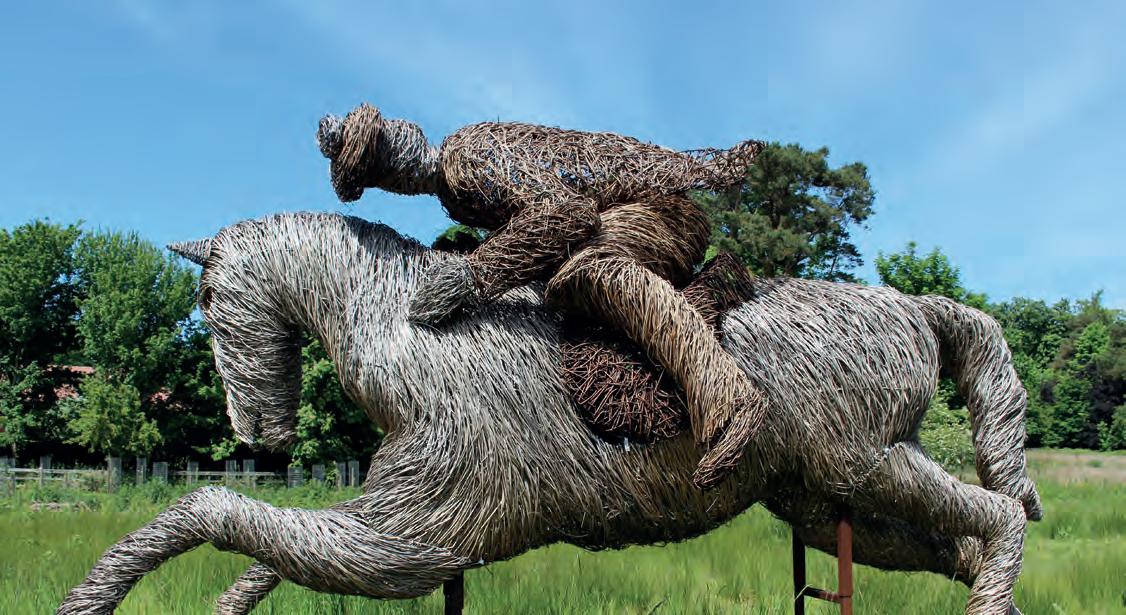

To honour the National Year of Reading, we sweep the nation in search of the places and people that have inspired generations of writers
WORDS: SARAH BURNETT
‘
For a wee nation, Scotland has produced a near unfathomable number of literary heavyweights, both past and present,’ wrote poet Michael Pedersen in a recent blog. ‘In my role as Edinburgh’s Makar, I’m constantly paying tribute to a whole gallimaufry of lexical butter churners.’
Or, to put it more succinctly, Scotland is – and always has been – home to a remarkably healthy population of talented writers.
In the National Year of Reading, we too are paying tribute to Scotland’s literary greats, many of them connected to the special places in our care, either through historical links or as a source of inspiration.
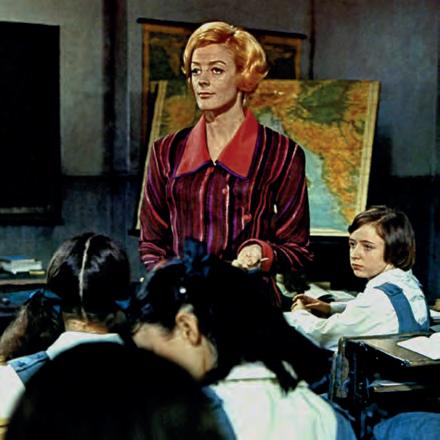
Many recommendations for a reading road trip start in Edinburgh, so vivid a backdrop for some writers that it often seems like a character in its own right. Books are the perfect introduction to the city’s many-layered personality, from Ian Rankin and Christopher Brookmyre’s contemporary crime scenes to Muriel Spark’s exploration of its 1930s faultlines in The Prime of Miss Jean Brodie. In fact, Ian Rankin has said his portrayal of Edinburgh’s darker side in his Rebus novels was inspired by studying Spark.
‘Edinburgh is full of literary overlaps,’ says Robbie MacRae, visitor services supervisor at the Georgian House, which is due to reopen later this year following conservation work, ‘and Charlotte Square is a perfect example of how different writers’ paths cross over time. The Georgian House alone links figures such as J M Barrie, Robert Louis Stevenson, Arthur Conan Doyle
BELOW
The Prime of Miss Jean Brodie, as adapted in 1969
and children’s writer Catherine Sinclair, who all lived nearby or visited, and we have a chair made by Deacon Brodie, whose double life famously inspired Stevenson’s Strange Case of Dr Jekyll and Mr Hyde.’
BELOW
Author Robert Louis Stevenson
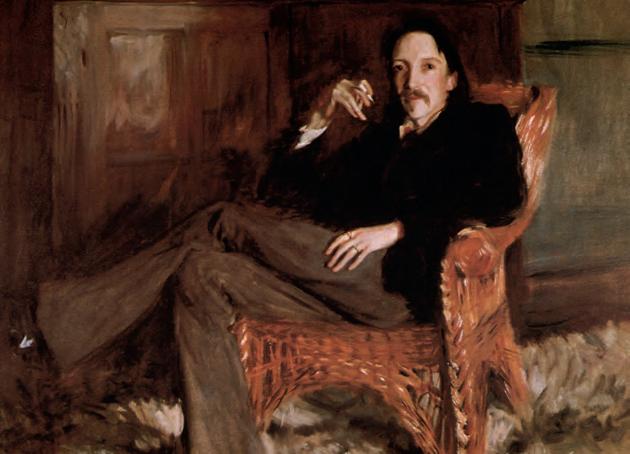
‘More recently, Ian Rankin frequently features Charlotte Square and the New Town in his Rebus novels. In Beggars Banquet, he references a fictional legend that Deacon Brodie escaped execution and was secretly buried beneath 5–7 Charlotte Square.’
The Old Town’s closes and wynds also enjoy fictional celebrity – and not just in ‘tartan noir’ crime novels.
One compelling tenement read is Jenni Fagan’s Luckenbooth which describes the lives of residents in a cursed Edinburgh tenement over the course of 100 years. It’s set close to Gladstone’s Land, another place in the Trust’s care, on the Lawnmarket.
Glasgow’s tenements also provide texture for a panoply of stories. ‘The tenements are a window into Glasgow’s social history from the 1800s to the present day, and were home to people
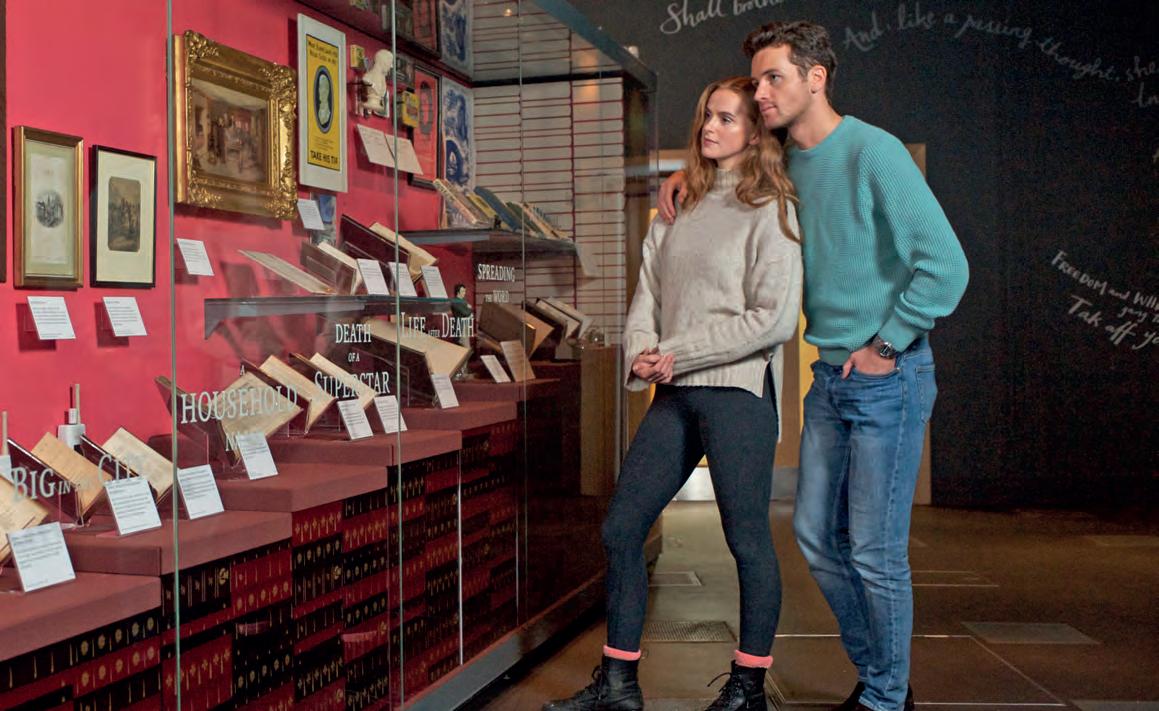
from all walks of life. This makes them the perfect setting for fiction,’ explains Ana De la Vega, visitor services manager at the Tenement House and Holmwood. ‘Glasgow’s suburbs also feature vividly in different stories, with characters moving westwards or southwards, to properties such as Holmwood, as their fortunes rise. Guy McCrone’s Wax Fruit trilogy is a good example.’
Ana and her team’s recommended tenement tales range from Denise Mina’s Garnethill crime novels to Maggie Ritchie’s Daisy Chain, some of it set at the Glasgow School of Art in the early 1900s, to Douglas Stuart’s wonderful Shuggie Bain. Tenement life also features in the fiction of Alasdair Gray – a father figure for the Scottish fiction boom of the 1980s and 1990s that produced writers such as James Kelman, Iain Banks, Alan Warner, A L Kennedy and Ali Smith.
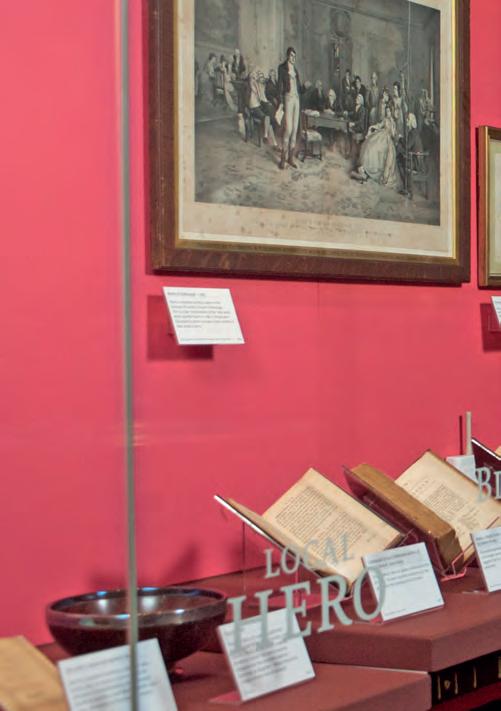
Still in the company of Alasdair Gray and also former Scottish Makar Liz Lochhead, we head south-west now. Both were present at the opening of Alloway’s Robert Burns Birthplace Museum in 2011, celebrating the national bard’s life, work and legacy. Burns’ use of Scots paved the way for Lochhead, Kelman and others to use it centuries later, and his ability to write about love, politics and human nature still resonates worldwide. Even Bob Dylan said ‘My Love is Like a Red, Red Rose’ was his greatest lyrical inspiration.
ABOVE
Inside Robert Burns Birthplace Museum
The museum and Burns Cottage are ideal gateways to his work, as is our Burns Online collection, where you can read handwritten poems like Tam o’Shanter or inspect his much-darned socks. A trip to nearby Souter Johnnie’s Cottage takes you inside the story of Tam o’Shanter.
The Highlands and Islands feature in so much literature that it’s impossible to give a full picture. The island of Staffa alone has stirred the imaginations of numerous writers, including Keats, Wordsworth, James Macpherson (aka the ‘Gaelic poet’ Ossian) and Jules Verne. Legend has it that Unst was an inspiration for Stevenson’s Treasure Island, while the nearby island of Canna has its own literary connections.
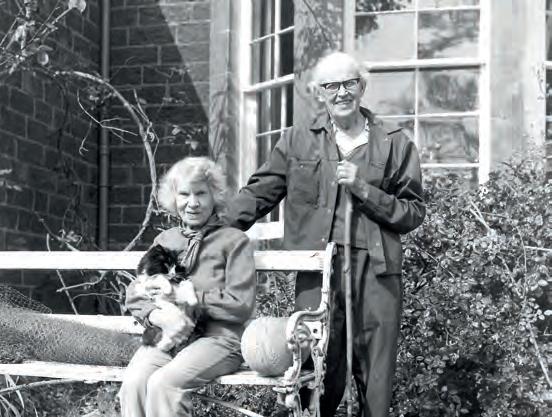
Canna has a rich heritage of Gaelic stories and songs and was home to John Lorne Campbell and Margaret Fay Shaw, who both published widely. They were also visited by many writers, among them Compton Mackenzie, author of Whisky Galore, and Gavin Maxwell, who wrote A Ring of Bright Water. Maxwell’s partner Kathleen Raine’s poem The Ancient Speech appears to have strong links to Canna, too.
Scotland’s mountains and glens are frequent backdrops for adventure – such as David Balfour and Allan Breck’s flight through Glencoe and Rannoch Moor in Stevenson’s Kidnapped. But not every Highland story is adrenaline-fuelled. Liz
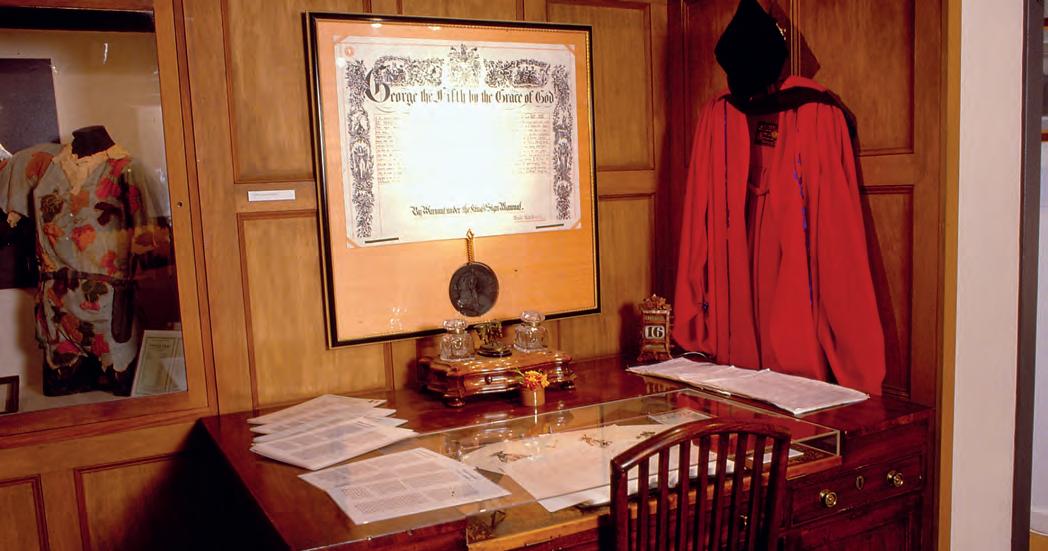
Lochhead’s poem Favourite Place is a beautiful and sad evocation of a journey to the west coast, past Glencoe and Glenfinnan. And Nan Shepherd’s meditative memoir of walking in the Cairngorms, The Living Mountain, focuses on connecting with landscapes, not conquering them. It has inspired many visits to Mar Lodge Estate.
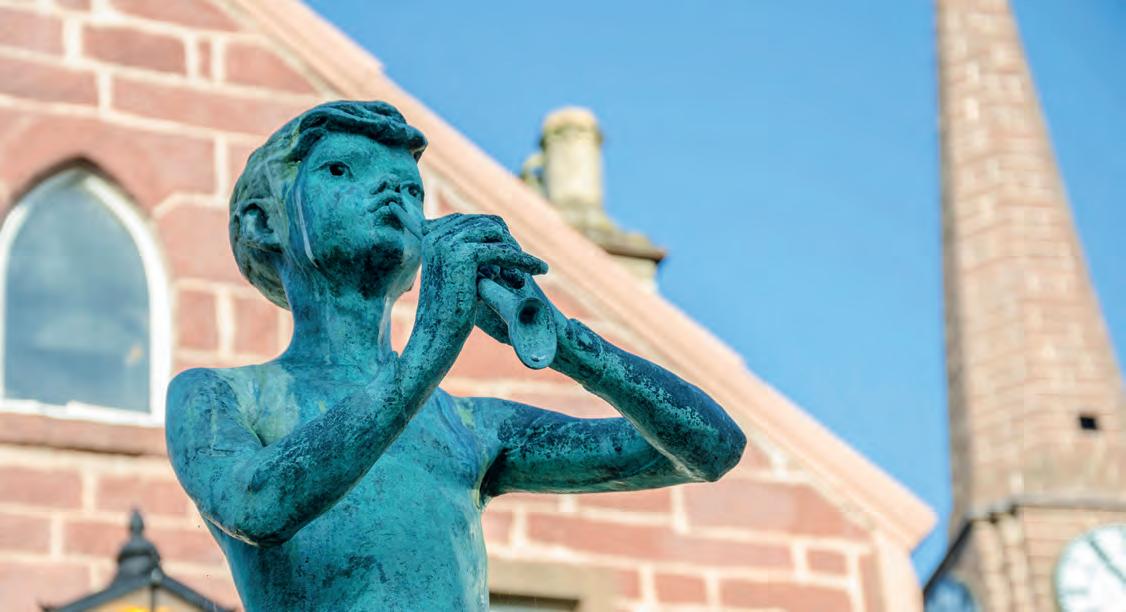
Returning southwards, we come to Angus – and specifically Kirriemuir, birthplace of J M Barrie in 1860. The story of Peter Pan is so iconic that it tends to eclipse his other work, but the themes of his books and plays still feel strikingly current.
At J M Barrie’s Birthplace, you can see for yourself the cottage where he grew up, and learn more about his work
ABOVE
InsideJMBarrie’s Birthplace
Thebirthplace’s residentcrocodile
BELOW MargaretFay ShawandJohn LorneCampbell
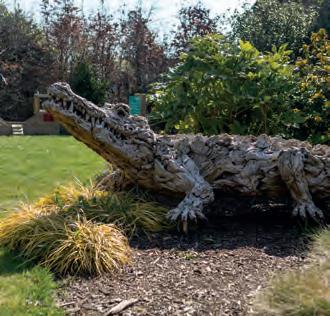
and influence – did you know, for example, that his play Quality Street inspired the name of the chocolates? If you’re curious about exploring more of his work, A Window in Thrums and The Little Minister are relatable portraits of small-town Scottish life, while his correspondence with Robert Louis Stevenson in A Friendship in Letters is gossipy, funny and touching. The crocodile statue in the back garden brings a sense of Pan’s adventure to life for younger visitors.
We sell a range of books in our shops, plus many of our places have second-hand bookshops, including Castle Fraser, Culzean, Falkland Palace, House of Dun and Newhailes. Find the full list at nts.org.uk/ bookshops
Poet and novelist Violet Jacob, born at House of Dun in 1863, is steeped in the land, people and dialect of a more rural Angus, though she spent many years living in India. Her well-known poem Wild Geese, in the collection Songs of Angus, powerfully uses the metaphor of migrating geese to describe her longing for home, and there’s an excerpt from it in the flagstones at Makar’s Court, behind Gladstone’s Land in Edinburgh.
This brings us back full-circle to the capital where we should mention one writer who’s neither Scottish nor resident here: US author Diana Gabaldon, whose Outlander books and TV serialisation have introduced millions to Scotland’s heritage.
There are many other wonderful writers we don’t have space for here, but whose work is equally brilliant. Perhaps you can find their books at the Trust’s many gift shops and second-hand bookshops, or else enjoy them over a cup of tea on your next day out this summer.
nts.org.uk/visit
Ideally situated in the centre of the Isle of Mull, you will be spoilt for choice for places to visit, quiet evening walks and places '-------------' to sample the local cuisine. Or just coorie
Discover the Isle of Mull's hidden gem, nestled in ancient Atlantic bluebell woods and surrounded by birds and wildlife. Take in the natural beauty of the forest's surroundings from your beautifully appointed, award-winning luxury lodge looking out down stunning Loch Na Keal.
down in your luxury lodge with a good book and some homemade shortbread whilst watching the wildlife go by. Oh and the sunsets and auroras can be pretty amazing too ...
There is so much time to relax here as you settle in and experience the joy of island life. Watch the tree creepers while breakfasting on your veranda and listen to the birdsong as you plan your adventures or just do a spot of forest bathing, soaking up all the peace and tranquillity this luxury hideaway has to offer.
STLlicensed, 5 star guest-rated and recipient of multiple self-catering and hospitality awards, you can be assured of a warm island welcome and a holiday to remember at Hideaway Lodges.
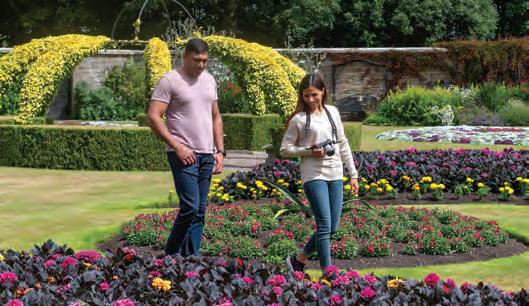
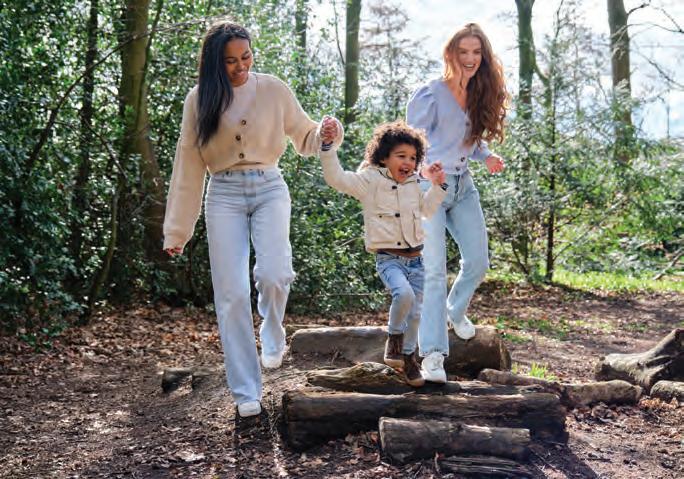
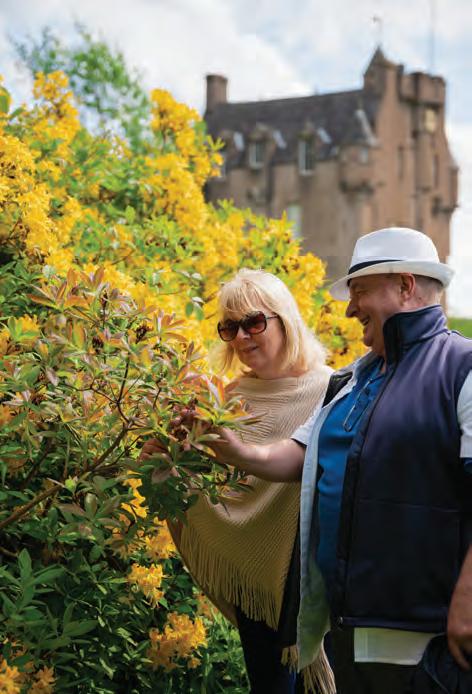
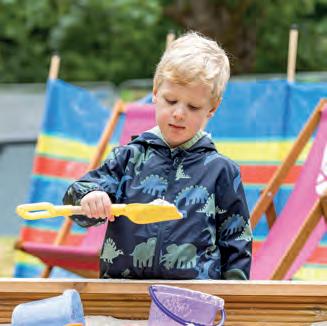
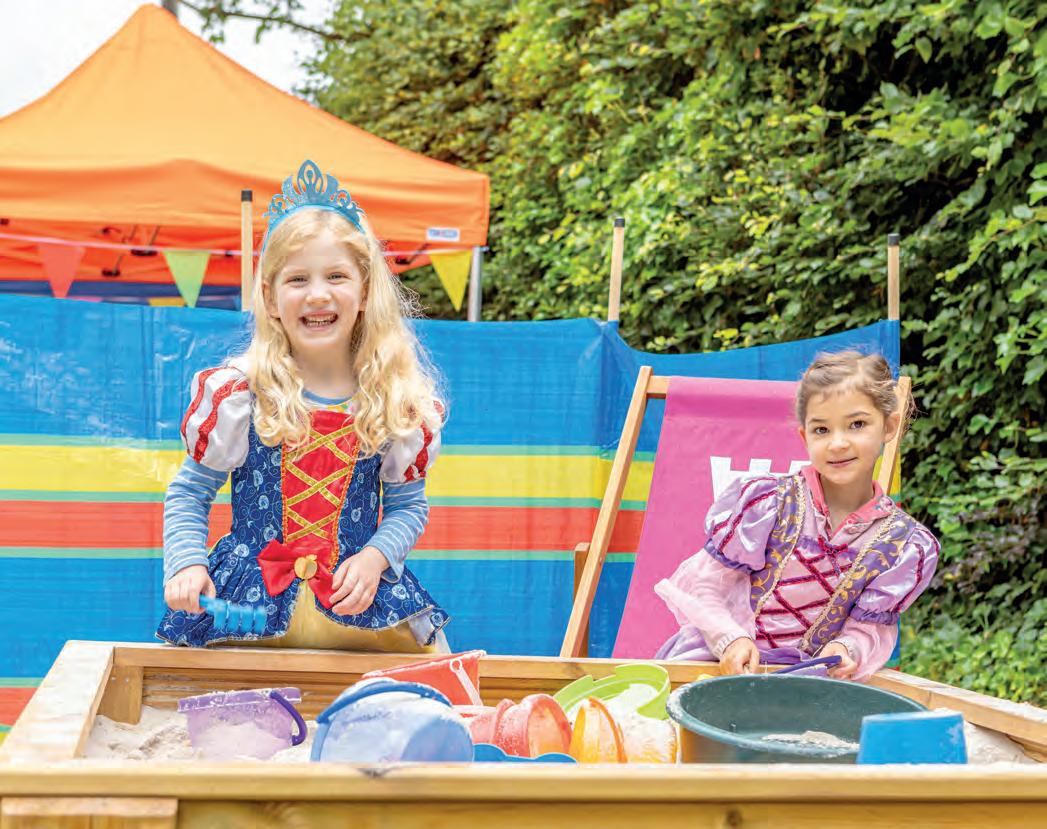
FJoin us at Brodie Castle, Hill of Tarvit or Newhailes for fun family activities PLAN YOUR SUMMER
inal preparations are now underway for our Playful Summer events at Brodie Castle, Hill of Tarvit and Newhailes House, where family fun is on the cards throughout the holidays. All three locations are inviting young adventurers to explore themed zones throughout the summer, with activities covering sports, nature, imagination, the beach, and a chilled area to relax and wind down.
Designed to offer plenty of outdoor opportunities for fun during the summer holidays, Playful Summer is a favourite at Newhailes, in Musselburgh, running for more than eight weeks last year. This year is the first time we’ve launched the event at Fife’s Hill of
Tarvit, near Cupar, and Moray’s Brodie Castle, where play spaces will be set against the backdrop of beautiful estates. Events run at both Brodie Castle and Hill of Tarvit from 1 July to 30 August, while at Newhailes the fun starts from 27 June.
For more ideas for summer days out, head to our website and explore upcoming events and activities.
Entry costs £5 per child at Hill of Tarvit, is included in the entry price for Weehailes at Newhailes, and is free at Brodie Castle. Under threes go free at all locations.
Booking is open for all three venues. Head to nts.org.uk/brodie, nts.org.uk/hilloftarvit or nts.org.uk/newhailes to secure tickets for your preferred location.
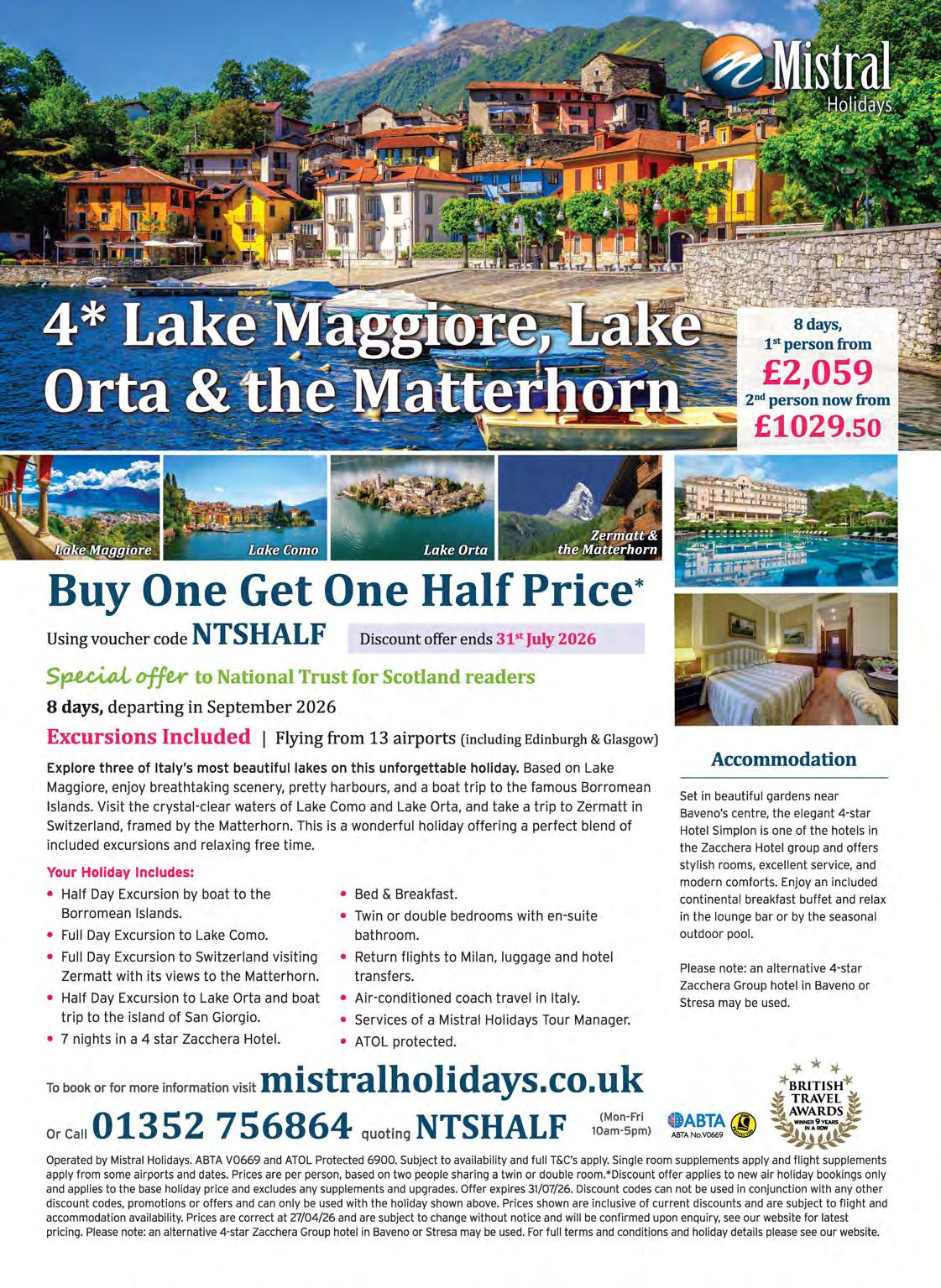
8days, 1 st person from £2,059 £1029.50
Usingvouchercode NTSHALF
Discountoffer ends 31 st July 2026
Sp.u.,u.tlt>ffe,,-to National Trust for Scotland readers
8 days, departing in September 2026
Excursions Included I Flying from 13 airports (including Edinburgh & Glasgow)
Explore three of Italy's most beautiful lakes on this unforgettable holiday. Based on Lake Maggiore, enjoy breathtaking scenery, pretty harbours, and a boat trip to the famous Borromean Islands. Visit the crystal-clear waters of Lake Como and Lake Orta, and take a trip to Zermatt in Switzerland, framed by the Matterhorn. This is a wonderful holiday offering a perfect blend of included excursions and relaxing free time.
Your Holiday Includes:
• Half Day Excursion by boat to the Borromean Islands.
• Full Day Excursion to Lake Como.
• Full Day Excursion to Switzerland visiting Zermatt with its views to the Matterhorn.
• Half Day Excursion to Lake Orta and boat trip to the island of San Giorgio.
• 7 nights in a 4 star Zacchera Hotel.
• Bed & Breakfast.
• Twin or double bedrooms with en-suite bathroom.
• Return flights to Milan, luggage and hotel transfers.
• Air-conditioned coach travel in Italy.
• Services of a Mistral Holidays Tour Manager.
• ATOL protected.
Set in beautiful gardens near Baveno's centre, the elegant 4-star Hotel Simplon is one of the hotels in the Zacchera Hotel group and offers stylish rooms, excellent service, and modern comforts. Enjoy an included continental breakfast buffet and relax in the lounge bar or by the seasonal outdoor pool.
Please note: an alternative 4-star Zacchera Group hotel in Baveno or Stresa may be used.
Operatedby Mistral Holidays.ABTAV0669 and ATOLProtected 6900. Subject to availability and full T&C'sapply.Single room supplementsapply and flight supplements apply from some airports and dales. Pricesare per person, basedon two people sharing a twin or double room.*Discountoffer applies to new air holiday bookings only and applies to the baseholiday price and excludesany supplementsand upgrades.Offer expires31/07/26. Discountcodescan not be used in conjunction with any other discount codes,promotions or offers and can only be used with the holiday shown above. Prices shown are inclusive of current discounts and are subject to flight and accommodationavailability.Pricesare correct at 27/04/26 and are subject to changewithout notice and will be confirmed upon enquiry,see our websitefor latest pricing. Pleasenote: an alternative 4-star ZaccheraGrouphotel in Bavenoor Stresamay be used.Forfull terms and conditionsand holiday details pleasesee our website.
Sign up for our e-newsletter to be the first to hear about our latest news and receive even more stories and inspiration. nts.org.uk/stayintouch
We’re making it easier than ever to transport yourself through the centuries, with reenactments at House of the Binns and Fyvie Castle
You don’t need a time machine for a trip to bygone eras this summer, with two reenactment events at our places.
For those wishing to experience life in the 17th century, Fyvie Castle will be transformed into a key moment from 1644, when the War of the Three Kingdoms raged across Britain. As part of the reenactment, the castle grounds will be the backdrop against which the Marquis of Montrose and his royalist army will face off against the Earl of Argyll’s covenanting forces.
Meanwhile, House of the Binns will showcase 1940s life on its front lawn. Reenactment groups will show what life was like at this tumultuous time through storytelling, props and vintage vehicles. There will also be a best dressed competition and a children’s code breaking trail.
The 1940s weekend runs from 11-12 July (£7 for children/£10 for adults, plus booking fee). Fyvie SummerTime Festival runs 8-9 August (£5 for children/£8 for adults, plus booking fee).
nts.org.uk/fyvie nts.org.uk/houseofbinns
We’re welcoming several theatre companies to our places this summer. Check your local property’s web page to book.
l The Jungle Book will be performed at Brodie Castle (8 July), Culzean Castle (10 July) and Falkland Palace (11 July).
l Romeo and Juliet visits Brodie Castle (15 July) and Culzean Castle (18 July).
l The Comedy of Errors tours House of Dun (18 July) and Falkland Palace (22 July).
l Pinocchio is at Greenbank Garden (14 July) and Drum Castle (18 July).
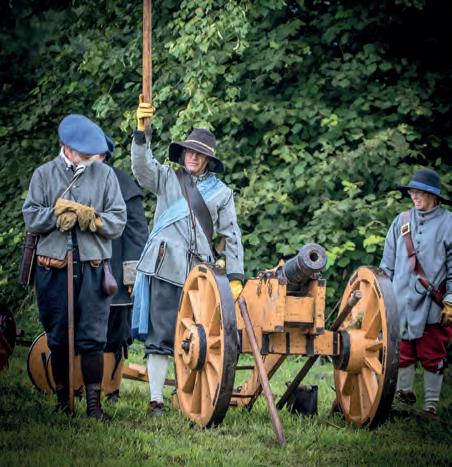
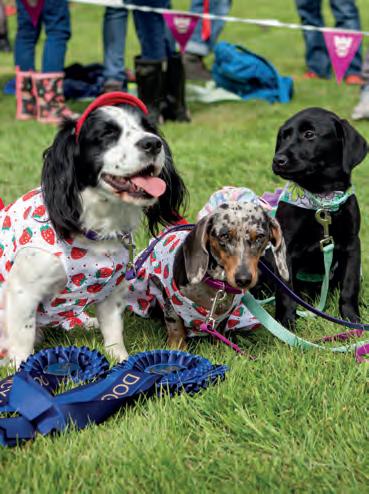
Newhailes will once again welcome pooches from across Scotland to this year’s Doghailes. With competition categories including the waggiest tail, most appealing eyes, scruffiest dog and best fancy dress, there’s something for everyone. Make sure you book online if you want your dog to compete on the day.
Beyond the competitions, there are plenty of chances for shopping, enjoying food and drink and walking the estate. This year’s Doghailes takes place on 9 August from 10am-4pm, with tickets costing £3 for humans.
Welcome to Culross: where there’s plenty to enjoy for fans of history,
As villages go, Culross is a stand-out. Those who have been will instantly recognise the ochrecoloured walls of the royal palace and other buildings that cluster around its cobbled streets. Today, it’s known to many not through its own deeply storied history, but the role it plays in TV’s Outlander adaptation. Interpretation boards throughout the palace
remind fans of how each room was used in the show, while a dress worn by the character Geillis Duncan is also now on display in the property.
Even for those yet to dip their toes into Diana Gabaldon’s world of the Jacobite Uprisings and a time-travelling nurse, a trip to Culross does feel like you’re stepping into a fully realised view of the past. Wandering the palace brings you
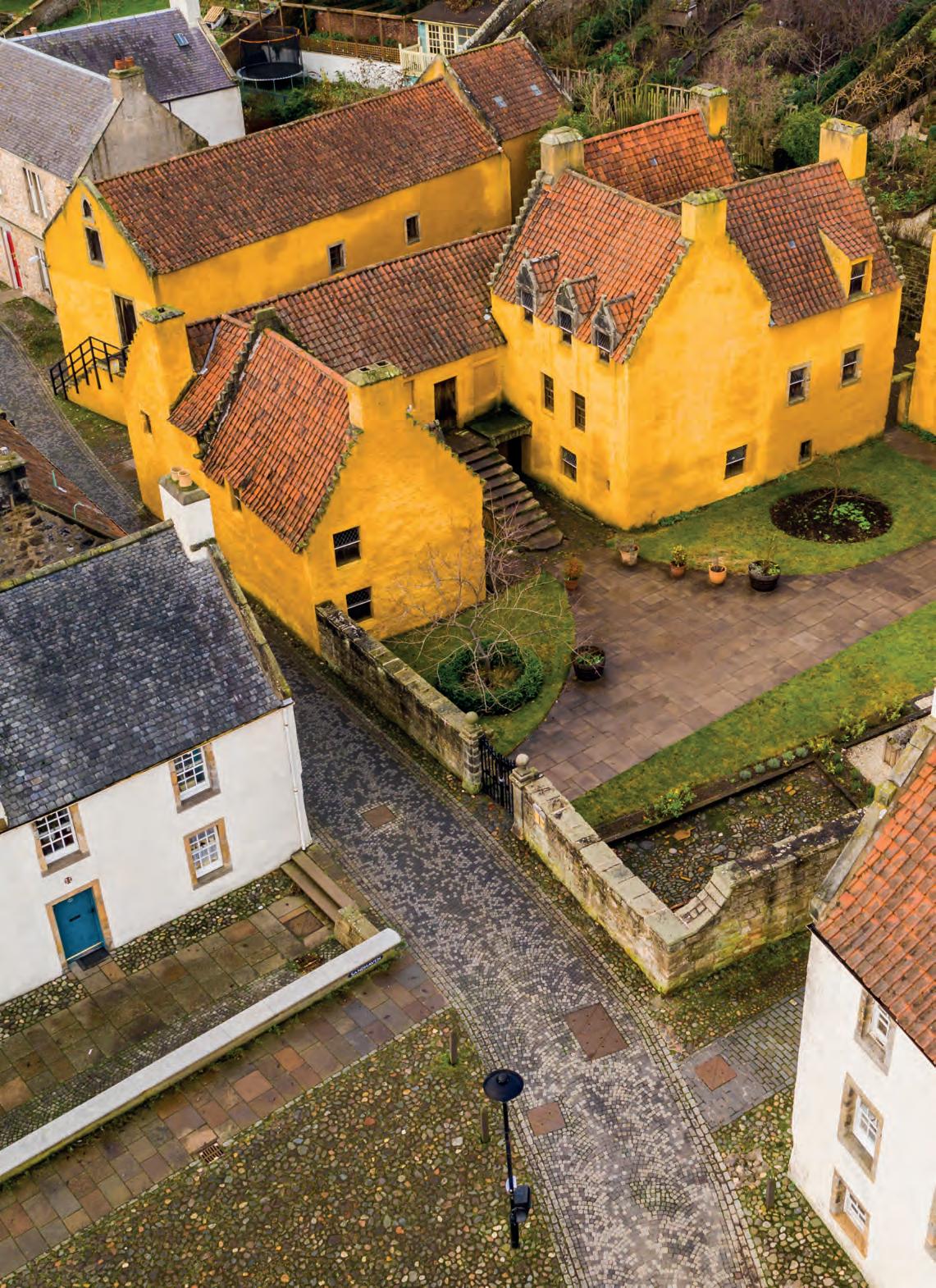
straight into the story of Sir George Bruce, an entrepreneur of the 17th century for whom the palace was built – though, of course, it is not a palace in the typical royal meaning of the term. The garden, meanwhile, is abuzz with pollinators. Explorers who have worked up an appetite will find that the history of Culross, and its vividly coloured walls, continue
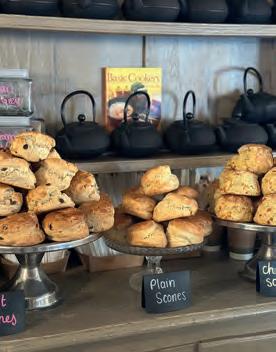
onwards in the adjacent Bessie’s Café. Serving up a mouth-watering range of homemade soups, cakes and scones, with indoor and outdoor seating and an inclusive menu for those who need gluten-free, dairy-free or vegan options, the café is a delightful way to extend a trip to Culross.
Head to the Townhouse shop to secure entry tickets for Culross Palace. Up to eight people can enter every 15 minutes from 10am until 4pm. Our 50-minute Town Tours are held twice a day on Wednesdays and Fridays and should be booked in advance.

As told by Bessie’s visitor services supervisor, Megan Douglas

Step 1
Heat your oven to 180oC and line a baking sheet. Add your dry ingredients into a large bowl then add the softened butter and rub everything together until it looks like breadcrumbs. Separately, whisk the milk and one of the eggs, then stir into your mix until just combined.
Step 2
Flour your hands and bring the dough into a loose ball. If it feels too sticky, add some flour, or if it’s too dry, a splash of milk. Transfer to a floured
surface and knead until it comes together without any cracks in the surface. Avoid over-kneading.
Step 3
Use your rolling pin to roll out the dough to a thickness of 2.5-3.5cm, then cut with a pastry cutter. Repeat this process until you have used all the dough. Place the scones on the
500g self-raising flour
1 tsp baking powder
1 tsp cinnamon
½ tsp ginger
baking tray, ensuring plenty of space around each one.
Step 4
Whisk your remaining egg and brush it onto the top with a pastry brush. Bake in the middle of your oven for 15 minutes. If they’re still soft, give them another five minutes, then remove to a wire rack to cool.
pinch of salt
125g softened butter
2 eggs (save one for egg wash)
300ml milk
An inspiring encounter on Jordanna Kitching’s first visit to the area six years ago sparked the chain of events that led to her becoming the engagement ranger for this very special place. On her walk, she introduced herself to the bobble-hatted, enthusiastically gesticulating head ranger, Ciaran Hatsell, who encouraged her conservation career ambitions. Together with the rest of the team, they now care for and share with others this incredible coastal landscape, home to seabird colonies in summer and seals by winter.
After working a season on St Kilda, Ciaran felt the draw of the mainland and started working at St Abb’s in 2019. ‘We have a fantastic team here,’ he explains. ‘It’s a real privilege to have this wonderful, ever-changing place to work.’
This year, the Trust launched a new clothing partnership with Keela, itself a Scottish organisation with deep roots in the outdoors, adventures and sustainability. The range, called Where Nature Leads, features t-shirts celebrating Trust places, including St Kilda, as well as hoodies, gilets, packaway jackets, ponchos and Insect Shield trousers, socks and neck tubes. The Insect Shield products have treatment built into the fabric, helping repel mosquitoes, ticks and other biting insects. As with all products sold in Trust shops, every purchase supports our mission to conserve Scotland’s heritage for the future.
Ciaran and Jordanna were more than happy to try them out in the field. ‘The big thing for me when I’m out walking is comfort and practicality,’ says Ciaran, ‘and these clothes are really flexible and comfortable. It’s nice we’re celebrating places the Trust cares for.’
‘I love the variety of designs and the quality of the cotton,’ adds Jordanna. ‘And the zipped pockets: it’s so rare to get good pockets on women’s trousers, but these have them.’
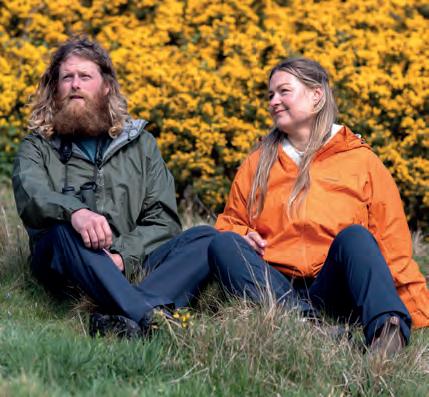
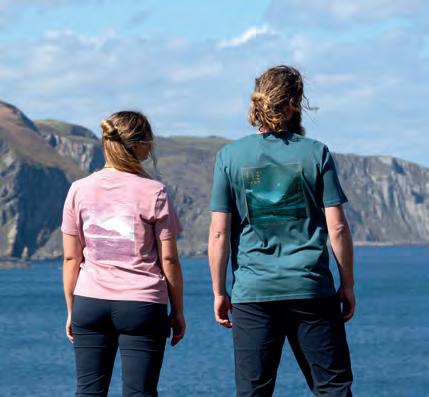


Find the range in some of our shops, at shop.nts.org.uk/keela, via the QR code or from Keela and third-party stockists
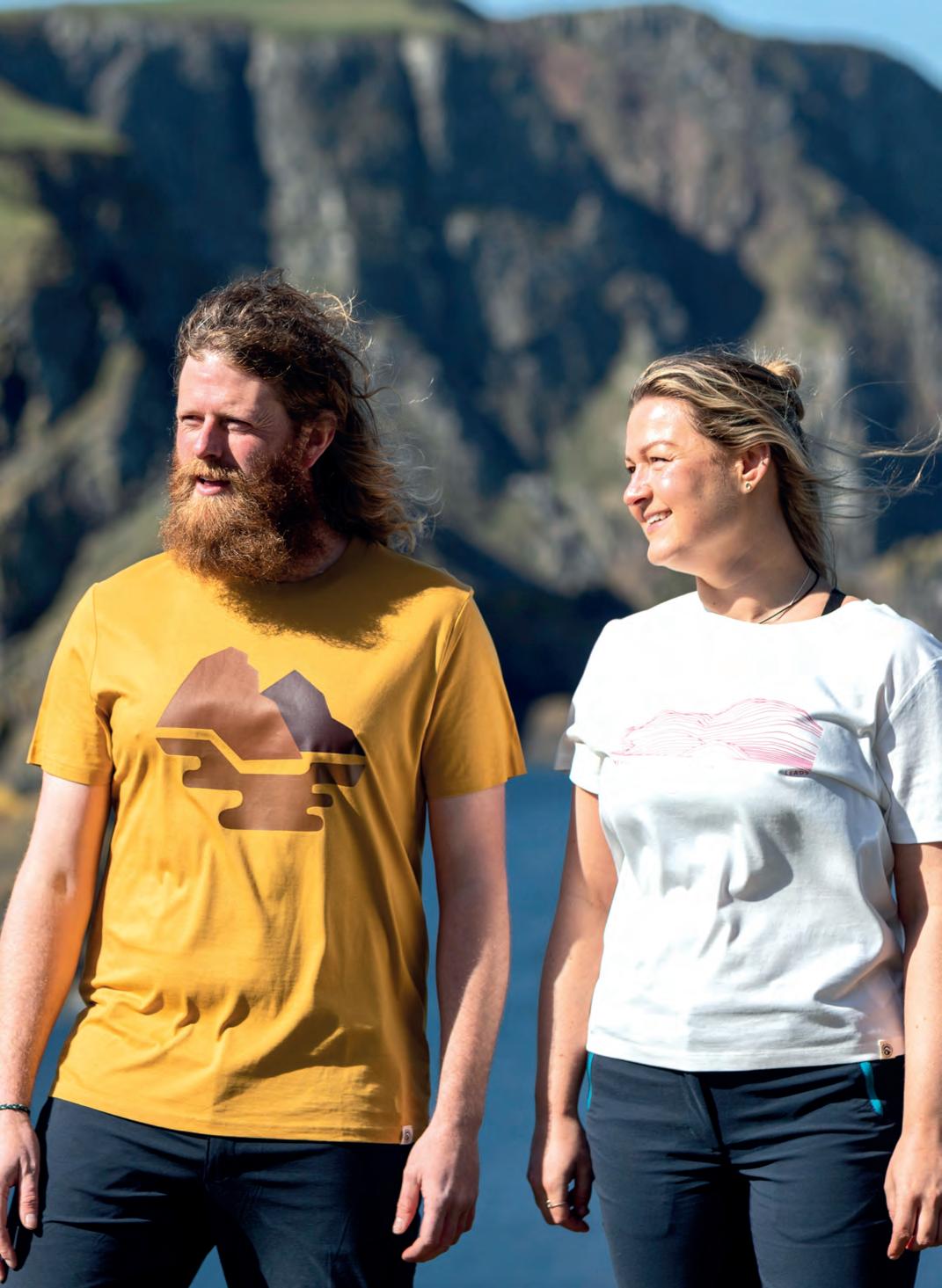
Where Nature Leads Insect Shield Trousers
The coastal garden features many international species
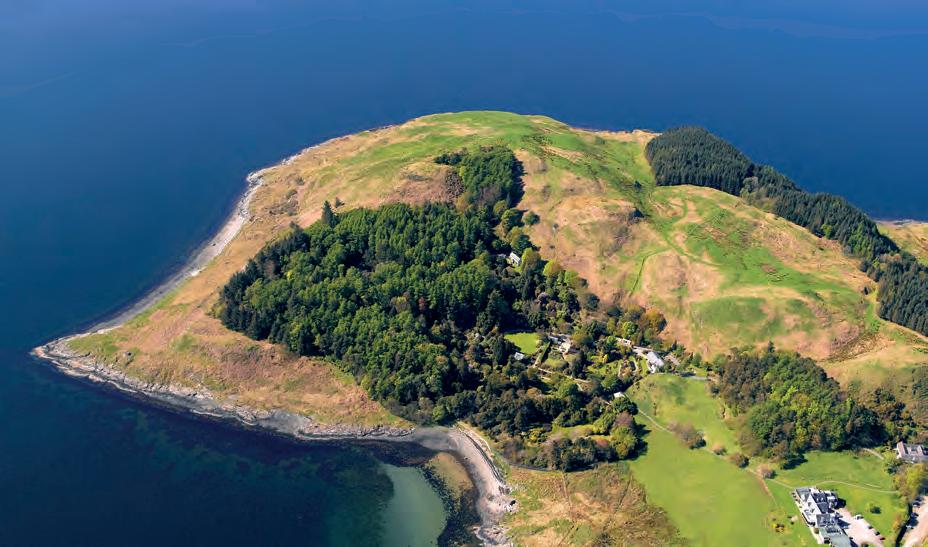
I
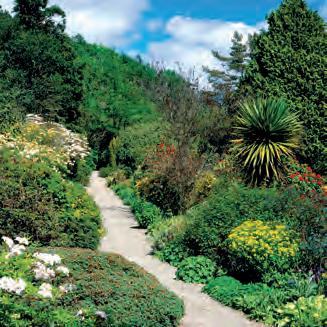
JoinheadgardenerMarkBrentforatriparoundthecoastaloasisof ArduaineGarden,wherebloomsoverlooktheSoundofJura
On a bright summer’s day, you’ll often find me heading towards the beach. But this is not the kind of seaside you might imagine: this rocky beach lies on the edge of Arduaine Garden, overlooking the Sound of Jura.
To reach my viewpoint just above it, I’ll have passed exotic plants that arrived on Scotland’s west coast from South America and India in the bags of intrepid Edwardian collectors. On the way, I’ll have inhaled the sumptuous perfume of tender rhododendrons from the Himalayas, walked past ferns with roots that have drawn sustenance from the soil for almost a thousand years, and trekked through lush rainforest dripping with lichen and moss.
This is the international make-up of Arduaine Garden.
The reward for my efforts is a glorious view across waters warmed by the North Atlantic Drift. Under huge skies rise the Slate Islands and the Isle of Mull. Porpoises sometimes break the surface, and, on the shore, otters may be at play. It can be so calm here, you easily forget the troubles of the world.
Twenty miles south of Oban, Arduaine Garden may be one of those intriguing places that’s lingered on your ‘to do’ list without ever quite coming to fruition. But those who do make the journey here are richly rewarded. The mild climate makes it an oasis for plants from across the globe: a rainforest that feels almost prehistoric, ponds bright with water lilies, lush foliage
and ferns, and those rhododendrons bursting with colour and scent are just the start.
I arrived as head gardener in 2024 after more than four decades in horticulture that included studying at the Royal Botanic Gardens, Kew. My favourite place there was the Temperate House – a cathedral of plants from around the world, just like where I work now. Arduaine had long been on my radar by the time I made my first visit. When I finally did arrive, I was immediately captivated.
Arduaine has a fascinating story. In the late 19th century, merchant James Arthur Campbell began an extraordinary rhododendron collection here, sourcing seeds from plant hunters and carefully shaping the garden to complement the landscape. Visitors are often pleasantly surprised to find exotic plants from New Zealand alongside species from China, and the continents of Africa and South America. In 22 acres of Scotland’s west coast, you can travel the world.
‘Porpoises break the surface and otters play. It can be so calm you easily forget the troubles of the world’
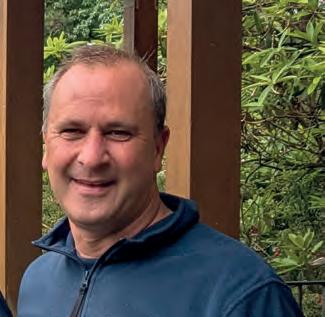
Mark Brent
And, of course, gardens constantly evolve. In recent years we’ve removed hundreds of diseased larch trees and in their place, we’re introducing a richer mix of native trees, while protecting the special plant collection that makes Arduaine unique.
This summer, why not make the most of your Trust membership and explore somewhere different? And, if you make it to the beach viewpoint, don’t forget to give me a wave.

MFSDFL £-94 NOW £75.20
• Pull-up leather upper • Non-slip, non-marking rubber sole
• Salt resistant • G fitting (wide) •UK½ sizes 7 to 11 and also 6 and 12
MFSDMU f-M NOW £59.20
• Oiled nu buck upper • Non-marking rubber deck sole
• Hand-stitched traditional mule • Salt resistant • G fitting (wide) • UK whole sizes only 7 to 12
MFSDAU £-94 NOW £75.20
• Full-grain oiled leather upper • Non-slip, non-marking rubber sole• Full leather padded insole • Salt resistant • G fitting (wide) • UK½ sizes 7 to 11 and also 6 and 12
MFSDON £-94 NOW £75.20
• Nu buck & pull-up leather upper • Non-slip, non-marking rubber sole • Salt resistant • G fitting (wide) • UK½ sizes 7 to 11 and also 6 and 12
MFSDTA f-M NOW £59.20
• Oiled nu buck upper with padded lining • Velcro 3-strap adjustment • Cushioned micro suede footbed • Salt resistant • UK whole sizes only 7 to 12
MFLARG £-94 NOW £75.20
• Nu buck upper • Non-slip, non-marking deck sole • Handstitched • Salt resistant • G fitting (wide) • UK whole sizes only 7 to 12
MFSDGR f-M NOW £59.20
• Oiled nu buck upper • Velcro fastening • Flexible, polyurethane sole • Cushioned micro suede footbed
• Salt resistant • UK whole sizes only 7 to 12
More styles available online
EXCLUSIVE 5% SAVING FOR NATIONAL TRUST FOR SCOTLAND READERS!
Do not miss your chance to save 5% off any Saga river cruise sailing in 2026. But with cabins selling fast, make sure you book soon! This exclusive offer cannot be booked on line.
CONTRASTS OF THE RHINE AND MAIN
7 nights from £1,524 £1,447
Sailing October 9 and November 6, 2026. aboard Spirit of the Moselle
Day 1: UK to Koblenz, Germany.
Day 2: Koblenz to Boppard, Germany.
Day 3: Boppard.
Scenic Cruise, Middle Rhine Gorge. Overnight sailing.
Day 4: Frankfurt, Germany to Aschaffenburg, Germany.
Day 5: Aschaffenburg to Miltenberg, Germany.
Day 6: Miltenberg. Overnight sailing.
Day 7: Wurzburg, Germany.
Day 8: Wurzburgto UK.
Cruise code: M0111
Call 0808 304 7548 quoting NTS26 For more information visit saga.co.uk/rivers-scotland or scan the QR code
ALL-INCLUSIVE RIVER CRUISE INCLUDES ...
No surcharges guaranteed
Nationwide shared chauffeur service included Included excursion in every port
Travel insurance and additional cancellation cover included§
All-inclusive dining and drinks on board
Return flights and transfers
On-board gratuities
Love your first river cruise, or we will give you your money back!
Experienceis everything