Bloomsbury Professional
Law of Companies, 4th edition
Thomas B. Cour tney
The Companies Act 2014 makes the most far-reaching and fundamental changes to Irish company law in two generations, putting for ward a radically di erent approach whereby the private company limited by shares will become the new model company The structure of the four th edition of this highly regarded title mirrors this new Act.
ISBN: 9781780438405
Format: Hardback
Price: €275.00
Pub date: Oct 2016

Intellectual Proper ty Law in Ireland
Rober t Clark, Shane Smyth, Niamh Hall
A detailed guide to patents, copyright and trademark law It covers all relevant European legislation and traces its weaving into Irish law It details European case law together with relevant case law from commonwealth countries, as well as detailing any Irish cases on the three areas and also covers design law.
ISBN: 9781780435411
Format: Hardback
Price: €245.00
Pub date: Nov 2016
Employment Law, 2nd edition
Consultant editor, Maeve Regan; General editor: Ailbhe Murphy
This practical guide brings together the knowledge and exper tise of Ireland’s leading employment, tax and pensions law practitioners This new edition includes the workings of the Workplace Relations Commission, whistleblowing, health and safety, mediation, agency workers, restraint of trade and injunctions
ISBN: 9781847663764
Format: Hardback
Price: €245 00
Pub date: Jan 2017
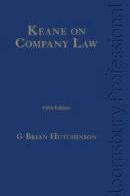
Keane on Company Law
Brian G Hutchinson
Keane on Company Law, Fifth Edition (previous edition: Company Law by Justice Ronan Keane) covers the Companies Act 2014 and is essential reading for students, solicitors and barristers alike All the changes to Irish company legislation are covered in a practical and userfriendly structure.
ISBN: 9781780435428
Format: Hardback
Price: €195 00
Pub date: Nov 2016
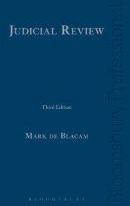
Judicial Review, 3rd edition
Mark de Blacam
Covers the grounds for review, defences to an application, the remedies and procedures involved and covers the Rules of the Superior Cour ts 2011, SI 691/2011 It is the de nitive text on judicial review available in Ireland and also of impor tant reference in the United Kingdom.
ISBN: 9781780437026
Format: Hardback
Price: €265 00
Pub date: Dec 2016
SNOWIN TOCK
SNOWIN TOCK
SNOWIN TOCK
The Bar Review
The Bar of Ireland
Distillery Building
145-151 Church Street
Dublin DO7 WDX8
Direct: +353 (0)1 817 5166
Fax: +353 (0)1 817 5150
Email: rfisher@lawlibrary ie
Web: www lawlibrary ie
EDITORIAL BOARD
Editor
Eilis Brennan BL
Gerry Durcan SC
Brian Kennedy SC
Patrick Leonard SC
Paul Anthony McDermott SC
Sara Moorhead SC
Brian Murray SC
James O'Reilly SC
Mary O'Toole, SC
Mark Sanfey SC
Claire Bruton BL
Claire Hogan BL
Mark O'Connell BL
Ciara Murphy, Director
Shirley Coulter, Director, Comms and Policy
Vanessa Curley, Law Library
Deirdre Lambe, Law Library
Rose Fisher, Events and Administration Manager
Tom Cullen, Publisher
Paul O'Grady, Publisher
PUBLISHERS
Published on behalf of The Bar of Ireland by Think Media Ltd
Editorial: Ann-Marie Hardiman Paul O’Grady
Colm Quinn
Design: Tony Byrne
Tom Cullen
Niamh Short
Advertising: Paul O’Grady
Commercial matters and news items relating to The Bar Review should be addressed to:
Paul O’Grady
The Bar Review
Think Media Ltd
The Malthouse, 537 NCR, Dublin DO1 R5X8
Tel: +353 (0)1 856 1166
Fax: +353 (0)1 856 1169
Email: paul@thinkmedia ie Web: www thinkmedia ie www.lawlibrary.ie
Views expressed by contributors or correspondents are not necessarily those of The Bar of Ireland or the publisher and neither The Bar of Ireland nor the publisher accept any responsibility for them

We must defend the rule of law
The
recent attack on judges in the UK for performing their duty is worrying.
Representing and promoting the Bar
Since the Oireachtas committee hearings in September 2016 into motor insurance costs, the Joint Committee on Finance, Public Expenditure and Reform, and Taoiseach has published its ‘Report on the Rising Costs of Motor Insurance’ Representatives of the Council met with Eoghan Murphy TD, Minister of State for (inter alia) Financial Services, and his officials in advance of the finalisation of this report to ensure that the views of the Bar were represented The establishment of a personal injuries commission has been recommended and we have sought the opportunity to contribute to the work of this commission when established The Council, at its November meeting, agreed to establish a new non-permanent committee on insurance and personal injuries to facilitate a proactive forum and ongoing engagement between both members and Government bodies in this area I met recently with the Tánaiste and Minister for Justice and Equality, Frances Fitzgerald TD This was a positive engagement and an opportunity to discuss issues including the publication of a judicial appointments bill, the need to establish a mechanism to address matters arising in the criminal legal aid scheme, the implementation of the Legal Services Regulation Act (LSRA), and in particular, the need to prioritise the commencement of that part of the Act dealing with legal costs The Council will host an Oireachtas day in January 2017 to meet with TDs and senators, share information with them on the work undertaken by the Bar, and highlight areas of policy such as those already mentioned above
Defending the rule of law and the judiciary
I have spoken with many colleagues in recent weeks about the vilification of judges in the UK following the ruling against the government in the Article 50 case This is a disturbing and objectionable development An independent, impartial judiciary is fundamental to a working democracy and the rule of law Any attack on a judge for performing his or her fundamental role in that democracy is an attack on the rule of law and democracy itself, and is to be condemned Irish judges are not immune from this kind of treatment and we have witnessed of late some politicians abusing their privilege to criticise individual judges in circumstances where they know that the judiciary is constrained from responding Other politicians resort to lazy statements of fact about the judiciary as a whole, whether by reference to the manner of appointment or their interests, sometimes without any basis in fact The media often follows uncritically The opinion piece published in The Irish Times on November 24, 2016, was a reaction to the unjustified denigration of the judiciary We all have a responsibility to protect the values of democracy and our institutions, or else face the reality of a destructive and dystopian society
Supreme Court legal assistance scheme
Following contacts with the Chief Justice and the Law Society, a pilot scheme has been established to assist unrepresented litigants who are parties to appeals before the Supreme Court A panel of volunteer barristers and solicitors willing to act at the request of the Supreme Court is being established Details have been circulated to members through the In Brief newsletter
Amicus curiae
The Council successfully made an application to be joined as amicus curiae in a Supreme Court appeal relating to the system of taxation of costs The appeal (in Sheehan v Corr) is due to be heard on February 21, 2017
Maurice Gaffney SC
It was with great sadness that we learned of the passing of our friend and colleague, Maurice Gaffney SC The obituary written by David Nolan SC in this edition provides us with great memories of our much loved colleague and our deepest sympathy has been extended to his wife Leonie and his family His drive for excellence, his determination, his can-do spirit and his commitment to the Bar will inspire and stay with us always We hope to be able to have his family with us when we formally dedicate The Gaffney Room in the new year May he rest in peace

Paul McGarry SC Chairman, Council of The Bar of Ireland

Change all around
New legal services regulations and the passing of an institution mark changing times for the Bar
Some of the provisions of the Legal Services Regulation Act 2015 were commenced in July of this year and the Legal Services Regulatory Authority (LSRA) was established as of October 1 While many of the provisions of the Act have not yet taken effect, it is time to take stock and to analyse where we are and what to expect in the months ahead In this edition, we analyse the new provisions and examine how the LSRA is expected to operate in practice As Irish banks continue to foreclose on residential mor tgages, a recent Cour t of Appeal judgment now confirms that the Circuit Cour t does not have jurisdiction over such cases This will lead to increased costs and most likely longer delays for all litigants Legislation may be required to address the issue and we explain the ramifications of the judgment, which is now being appealed to the Supreme Cour t Workplace investigations and grievance procedures have spawned a plethora of case law in the last few years and we explore the common themes that give rise to difficulty in employment relationships We also examine the progress of weeding out what is waste and obsolete in our statute book, so that we can hopefully clear the way for the codification and simplification of legislation in the years ahead
In our Closing Argument, we look to the United Kingdom and innovative measures employed there to combat gangland crime In that jurisdiction, convicted gangland criminals have been made subject to repor ting orders and have had restrictions placed on their access to mobile phones and multiple bank accounts and their use of cash Our commentator asks if it is time to consider some of those measures here
Finally, we say goodbye to our much-loved and much-mourned friend, Maurice Gaffney SC As King James I once said: “I can make a lord, but only God can make a gentleman”


Eilis Brennan BL Editor ebrennan@lawlibrar y ie
Poor treatment of elderly prisoners
In September, the Irish Penal Reform Trust (IPRT), a charity which campaigns for the rights of people in prison and for penal policy reform, published a research report on the experiences of older people in Irish prisons Launched by Senator David Norris, Patrick Gageby SC and others, and written by Joanna Joyce and Tina Maschi, the report examined the serious practical and ethical challenges in imprisoning older people, with a focus on evidence-based solutions
Older people constitute 10% of today ’s prison population, a substantial minority The report highlighted the unique vulnerability of elderly prisoners: their serious health needs, susceptibility to elder abuse, and the difficulties they face upon release in an ageist society that often stigmatises offenders
It unveiled the hidden daily struggles of elderly prisoners to climb stairs or carry trays, to manage their dementia, and to cope without trained carers, relying on fellow inmates to wash them, dress them, and even change their incontinence pads
The IPRT campaigns on many policy issues regarding the penal system It has published research reports on behalf of vulnerable minorities within our prisons, including LGBT people, women, young people and Travellers This has contributed to encouraging the Irish Prison Service to commit to supporting these groups Some campaigns the IPRT is involved in include: ending the detention of children at St Patrick’s Institution in Dublin; ending slopping-out; and, preventing penal expansion in the form of Thornton Hall
To find out more about the Trust, or to read its reports, please see its website www iprt ie

Patrick Gageby SC at the launch of the IPRT repor t (Photo credit: Derek Speirs )
Employment exper tise
On Friday, October 21, the Employment Bar Association (EBA) welcomed over 190 delegates to its flagship conference on employment law
The conference featured presentations on cutting-edge topics by leading senior and junior counsel who are recognised exper ts and published authors on employment law The conference addressed the latest developments on issues such as employment equality, unfair dismissal, bullying at work, cyber law and data protection In attendance were solicitors, barristers, in-house counsel and HR practitioners from across the health, business, finance and technology sectors, including representatives from Government, State bodies and industrial relations organisations
The event received extremely positive feedback from attendees and was hugely successful in showcasing the specialist exper tise at the Bar
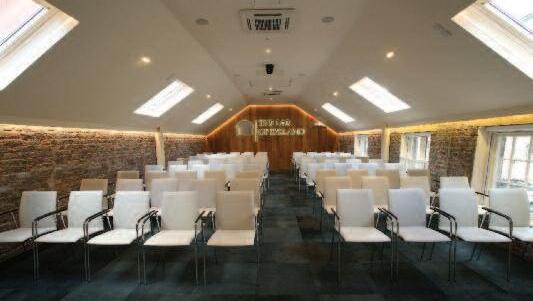
Introducing The Gaffney Room
The Bar of Ireland is delighted to announce that a new dedicated events and meeting space has opened above the Sheds The Gaffney Room, named after the recently deceased Maurice Gaffney SC, is fitted with state-of-the-art technology, allowing all CPD events to be webcast live and a range of events to be hosted All CPD seminars will now be available live to members on site and on circuit throughout the country Seminars can be easily viewed live by members on a PC, laptop, tablet or smartphone, or watched at a later date Full details can be found on the Members’ Section of www lawlibrary ie The first seminar and webcast, a CPD on professional negligence, took place on Monday, November 28


Supreme Cour t assistance
The Bar of Ireland is pleased to advise members that a Supreme Court Legal Assistance/Legal Representation Scheme has been established in agreement with The Honourable Mrs Susan Denham, Chief Justice, and in co-operation with the Law Society of Ireland, to assist unrepresented people who are parties to appeals from either the Court of Appeal or the High Court A panel of volunteer barristers and solicitors willing to act at the request of the Supreme Court will be established, comprised of members of The Bar of Ireland and the Law Society of Ireland who responded to a recent call for expressions of interest for inclusion on the panel The Scheme will only operate in such circumstances where the judgment to be appealed involves either a matter of general public importance and/or is in the interest of justice Legal advice and representation will be provided pro bono to users of the Scheme by the panel of volunteer barristers and solicitors; however, they will be entitled to apply for costs at the conclusion of the appeal The Supreme Court will determine an application for costs on the basis of the existing legal principles applicable to costs
The Registrar of the Supreme Court, on behalf of the Supreme Court, will select the solicitors and barristers to represent unrepresented people in applicable cases in accordance with the availability of the solicitor(s) and barrister(s) to act At all times, the relevant party to the appeal may decide whether he or she wishes to be represented by the solicitor(s) and barrister(s) selected under the Scheme
New information on claims
Detailed research on the levels of damages being awarded for personal injuries in Ireland was published recently The revised General Guidelines as to the amounts that may be awarded or assessed in personal injury claims (Book of Quantum) sets out the ranges of damages being paid in Ireland in personal injury claims
Prepared by Verisk Analytics (ISO), the General Guidelines are based on an examination of a representative sample of over 51,000 closed personal injury claims during 2013 and 2014 This analysis included compensation awards from court cases, insurance company settlements, State Claims Agency cases and data relating to awards of the Personal Injuries Assessment Board (PIAB), and is the most comprehensive publicly available analysis of this kind carried out in Ireland The revised guidelines were commissioned and published in accordance with the PIAB Act 2003 and are available at www injuriesboard ie
From left: Brendan Kirwan BL; Cathy Maguire BL, Chairperson of the EBA; Claire Bruton BL; and, Tom Mallon BL
The new dedicated meetings and event space above the Sheds, The Gaffney Room
Woman Lawyer of the Year
On November 5, the Irish Women Lawyers Association (IWLA) honoured solicitor Patricia Rickard-Clarke by presenting her with the IWLA Woman Lawyer of the Year award, in recognition of her work in promoting the rights of vulnerable adults and older people, and developing the law on the issue of capacity Until her retirement in 2012, Ms Rickard-Clarke was a commissioner of the Law Reform Commission (LRC) and was lead commissioner with regard to the LRC’s work on vulnerable adults and the law (which included the reform of the law on capacity) She is Chair of the Law Society's Mental Health and Capacity Task Force and Chair of the National Advisory Committee of Sage (Support and Advocacy Service for Older People) She is a member of the Council of the Hospice Foundation and a member of its Think Ahead project advisory group for the Forum on End of Life In December 2015, she was appointed the Independent Chair of the National Safeguarding Committee for Vulnerable Adults She is also a member of the Council of the Royal College of Physicians of Ireland
The award was presented at the IWLA Gala 2016 held in Blackhall Place, in collaboration with The Bar of Ireland and Law Society Skillnet, and with the support of Ronan Daly Jermyn, who sponsored the pre-dinner reception The keynote speaker on the night was Orlaith Carmody, author of Perform As A Leader and Managing Director of Mediatraining ie Further information on the IWLA is available at www iwla ie
PL ACE YOUR ORDER TODAY info legalsolutions thomsonreuters co uk/CriminalLaw
TRLUKI orders@thomsonreuters com or Pauline ward@thomsonreuters com 1800937982 (Ireland) +44 (0)1264 388560 (Int ’l) Quote reference 2522303A

At the Irish Women Lawyers Association Gala 2016 held in the Law Societ y were: back row (from left): Ashling Walsh, Ronan Daly Jermyn; Noeline Blackwell, Dublin Rape Crisis Centre; Attracta O’Regan, Law Societ y Skillnet; Michelle Ní Longáin, ByrneWallace; Eileen Creedon, Chief State Solicitor; and, Grainne Larkin BL, The Bar of Ireland Front row (from left): Orlaith Carmody, keynote speaker; Ms Justice Catherine McGuinness, President, IWLA; Patricia Rickard-Clarke, Irish Woman Lawyer of the Year 2016; Aoife McNickle BL, Chairperson, IWLA; and, Mary Rose Gear t y SC, The Bar of Ireland
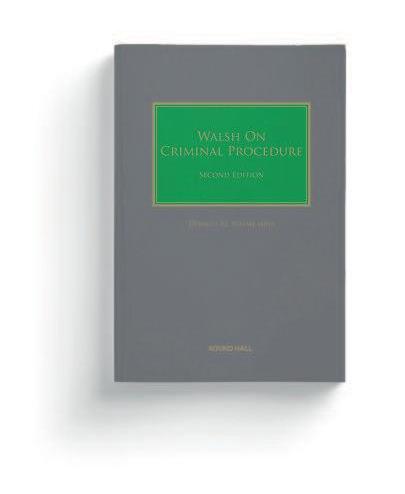
WALSH ON CRIMINAL PROCEDURE SECOND EDITION
Dermot P.J. Walsh
Walsh on Criminal Procedure is a comprehensive treatment of all aspects of criminal procedure from police powers of investigation right through to postsentencing processes. The second edition responds to recent developments by offering an expert and accessible analysis of all aspects of Irish criminal procedure. A consistent theme throughout is an emphasis on comprehensive detail and clarity with the needs of both prosecution and defence in mind
Publi 2016 • 9780414035041 €395
Also available on Westlaw IE and as an eBook on ProViewTM
ISBN: 9780414060500 | ProView eBook price: €395
ISBN: 9780414060517 | Print & ProView price: €514
Speaking for ourselves

On Thursday, November 24, Trócaire, the Immigrant Council of Ireland, the Irish Refugee Council, MS Ireland, Family Carers Ireland, Citizens Information and Samaritans were among 23 charities, NGOs and civic society groups that attended a pro bono advocacy training workshop called ‘Speaking for Ourselves’, hosted by the Voluntary Assistance Scheme (VAS) of The Bar of Ireland This workshop was established to assist charities in developing their advocacy skills and enhancing their capacity to communicate as organisations Addressing the workshop were barristers Michael Cush SC, Turlough O'Donnell SC, Louise Beirne BL, Mary Rose Gearty SC, Bairbre O’Neill BL, Micheal Lynn SC and
Focus on professional regulation
On Saturday, November 12, the Professional Regulatory and Disciplinary Bar Association (PRDBA) hosted over 70 delegates at a conference on the regulation of social workers Leading senior and junior counsel who are recognised experts in the field of professional regulation, and Gloria Kirwan, Assistant Professor of Social Work and Social Policy in Trinity College Dublin, provided a practical overview of the system of mandatory regulation for social workers and the implications of being a regulated professional The conference was well attended by social workers, legal practitioners, CORU (the regulator of health and social care professionals) and representatives from Tusla (the child and family agency) The event received

Leanne
Aoife Carroll BL Michelle Grant, Committee Secretariat – EU and International Relations for the Houses of the Oireachtas Service, and Thomas Ryan, Environment and Infrastructure Executive at the Irish Farmers’ Association, also presented on effective engagement with public bodies
The Bar provides pro bono advocacy training by barristers to groups from the voluntary sector as part of the VAS It also provides assistance to charities on a wide range of legal areas including debt and housing, landlord and tenant issues, social welfare appeals, and employment and equality law More information can be found on www lawlibrary ie


excellent feedback and also some media coverage, with speaker Teresa Blake SC appearing on Newstalk Breakfast
Left: Attendees at the VAS pro bono advocacy training for charities Above: from left: Ciara McDermott, Immigrant Council of Ireland; Libby Charlton BL, VAS Co-ordinator; Paul McGarry SC, Chairman of the Council of The Bar of Ireland; and,
Caulfield, Immigrant Council of Ireland
From left: Ciara McGoldrick BL; The Honourable Ms Justice Bronagh O’Hanlon; Barry O’Donnell SC; Professor Gloria Kirwan; and, Teresa Blake SC

New Committee elected
The Young Bar Committee has been busy putting a new committee in place, organising a Christmas event and setting up a new online hub.

Claire Hogan BL
We h a v e a n e w Yo u n g B a r C o m m i t te e i n p l a ce fo r 2 0 1 6 / 2 0 1 7 fo l l o w i n g
elections held in October The following members are year representatives,
w h o s h o u l d b e m a i l e d w i t h a n y i s s u e s y o u h a v e , w h i c h y o u w o u l d l i ke to
s e e a d d re s s e d :
Ye a r o n e : E o i n O ’ D o n n e l l B L a n d S u z a n n e D o o n e r B L
Ye a r t w o : E l l e n O ’ B r i e n B L a n d D y l a n We s t B L
Ye a r t h re e : J e n n i fe r M G o o d B L a n d Pa u l W J H e g a r t y B L
Ye a r fo u r : E l l e n O ’ C a l l a g h a n B L a n d S é a m u s Ó C o i g l i g h B L
Ye a r f i v e : A o i fe B e i r n e B L a n d L i a m O ’ C o n n e l l B L
Ye a r s i x : S e a n O ' Q u i g l e y B L a n d M a e v e C ox B L
Ye a r s e v e n : E v e B o l s te r B L a n d G e o rg e M a g u i re B L
C P D a n d S a n t a ’s S h e d s C h r i s t m a s Pa r t y
T h e Yo u n g B a r C o m m i t te e h a s i n v i te d t h e D u b l i n S o l i c i to r s B a r
A s s o c i a t i o n ( D S B A ) Yo u n g e r M e m b e r s to p a r t i c i p a te i n a j o i n t C P D e v e n t
to be held on Thursday, December 15, entitled ‘Personal Injuries Litigation
U p d a te ’
T h e e v e n t w i l l b e c h a i re d b y t h e H o n o u ra b l e M s J u s t i ce I r v i n e , a n d w i l l co m m e n ce a t 4 3 0 p m i n t h
n developments in the calculation of damages; n practice and procedure issues for the junior practitioner; n the new Book of Quantum; and, n fraudulent/exaggerated claims
The Committee is organising Santa’s Sheds Christmas Par ty to take place after the CPD, from 6 30pm until late Fur ther details of the combined event have been communicated by email
Young Bar hub online
We are currently developing an improved online hub, which will be aimed specifically at junior members and provide resources such as events and oppor tunities, nationwide cour t information and legal blog posts Content is welcome and can be sent to youngbar@lawlibrary ie
Discovery Counsel Database and research panel
Publicity of the Discovery Counsel Database has been ongoing, with an ar ticle by Eoin Mar tin BL featuring in the November Law Societ y Gazette, and online ads going live
Work is also continuing on devising a research panel based on the interest expressed in this idea at the end of the last legal year
Structuring the devil–master relationship
Last year ' s committee focussed on the need to improve the structure and quality of the devil–master relationship Pupil guidelines were produced (based on work by Ellen O'Brien BL and Hugh Good BL) and distributed to all new devils at induction in September
Master guidelines are underway A compulsory CPD for masters was held on Friday November 25, at which Conor Bowman SC and Mary Rose Gear ty SC impar ted words of wisdom Following the CPD, all new devils met their mentors, who are on hand to assist them and provide advice whenever the need might arise
Repossessing homes has become harder and this will create a backlog in the High Cour t.
Cour t of Appeal rules on rateable valuation

Stephen Healy BL
Introduction
Mor tgages secured by residential investment proper ties have generally been enforced in one of two ways If the borrower defaults on their mor tgage, the bank would generally realise the security by appointing a receiver or they would seek a possession order from the Circuit Cour t with ultimately the same outcome being reached – the bank gains control of the asset and the proper ty is sold, reducing or extinguishing the debt
A bank is more likely to appoint a receiver where there is rental income being diver ted from the mor tgage, or if they wish to avoid cour t proceedings However, lengthy receiverships become costly and can be a less attractive means of recovery For this reason, a bank may seek possession as a more economical mechanism to realise the security
Until recently, obtaining a possession order through the Circuit Cour t was an effective enforcement remedy However, this remedy was recently tested in a number of cases, resting with the Cour t of Appeal decision in Permanent TSB Plc v Langan 1 That case was referred to the Cour t of Appeal through the case stated procedure under section 38(3) of the Cour ts of Justice Act 1936 (as amended) by Baker J in the High Cour t By the time the case came before Baker J , there were two conflicting High Cour t judgments: Bank of Ireland Mor tgage Bank v Finnegan Ward and anor2 (a decision of Murphy J ) and Bank of Ireland Mor tgage Bank v Hanley and anor3 (a decision of Noonan J ) Both cases were appeals of possession orders granted by the Circuit Cour t A b a n k i s m o re l i ke l y to a p p o i
b e i n g d i v e r t e d f ro m t h e m o r t g a g e , o r
i f t h e y w i s h to a v o i d co u r t
p ro ce e d i n g s . H o w e v e r, l e n g t h y
re ce i v e r s h i p s b e co m e co s t l y a n d ca n
b e a l e s s a t t ra c t i v e m e a n s o f
re co v e r y. Fo r t h i s re a s o n , a b a n k
m a y s e e k p o s s e s s i o n a s a m o re
e co n o m i ca l m e c h a n i s m to re a l i s e
t h e s e c u r i t y
Jurisdiction of the Circuit Cour t to grant possession orders
The jurisdiction of the Circuit Court to grant possession orders was determined by the rateable valuation of the proper ty pursuant to section 22 of the Cour ts (Supplemental Provisions) Act 1961 (the “1961 Act”) Rateable valuations were necessary for properties subject to domestic rates, so that the appropriate rates could be levied Rates became very unpopular in the context of domestic proper ties and were discontinued by the Local Government (Financial Provisions) Act 1978 (the “1978 Act”) Section 3 of the 1978 Act provided that the relevant local authority would make an allowance to the domestic rate payer, which amounted to an abatement of the levy Because of the way the legislation was drafted, domestic proper ties remained on a valuation list but, effectively, no rates were levied nor did this class of proper ty get valued for rating purposes The practice of obtaining a rateable valuation for domestic proper ties became redundant
Notwithstanding the changes brought about by the 1978 Act, it was still necessary to establish jurisdiction in cer tain types of proceedings involving land In par ticular, when seeking an order for possession in the Circuit Cour t, it was necessary to prove that the rateable valuation for the proper ty had not exceeded ¤253 95 in order to confer the Circuit Cour t with jurisdiction The history as to how this type of rating methodology came about can be traced back to section 33(c) of the County Officers and Cour ts (Ireland) Act 1877 (the “1877 Act”) when civil bill cour ts operated and were the precursor to the establishment of the modern Circuit Cour ts The current rateable valuation threshold of ¤253 95 (£200 00) was updated under section 2(1)(d) of the Cour ts Act 1981 (the “1981 Act”) for rateable proper ties
As a consequence of section 3 of the 1978 Act, where a rateable valuation had not been carried out, a practice developed that the Valuation Office (upon request) would examine the deed plans of the property in issue and provide a certificate of valuation, which essentially amounted to a letter stating, inter alia:
“ if a building is erected/reconstructed in accordance with the dimensions shown on the deed plans submitted I cer tify that the rateable valuation of the said buildings will not exceed ¤252 95 (two hundred and fifty two euro)” 4
This became common practice to evidence that the Circuit Cour t had jurisdiction to grant possession orders for domestic proper ties
Implications of the Valuation Act 2001
It seems that prior to the introduction of the Valuation Act 2001 (the “2001 Act”), the rating system for domestic proper ties continued on at least a conceptual basis although in practice no levies were applied Provision for the valuing of lands dates back as far as the Valuation (Ireland) Act 1852 (the “1852 Act”) and similar to the development of rates, this area of law has also developed over time
Section 15 of the 2001 Act provides that cer tain relevant proper ty “shall not be rateable” Domestic dwellings are then specifically listed as relevant proper ty under schedule 4 of the legislation There is an exemption for classes of apar tments but that provision is of limited impor t and the majority of domestic dwellings would not fall within that class
Conflicting High Cour t judgments
In Bank of Ireland Mor tgage Bank v Finnegan Ward and anor, the appellant argued, inter alia, that a letter from the Valuation Office could not be relied upon as evidence of rateable valuation for the purpose of conferring jurisdiction on the Circuit Cour t to grant possession orders Fur ther to this issue and notwithstanding how problematic this issue might be, Murphy J concluded that the Circuit Cour t was divested of jurisdiction by Section 15 of the 2001 Act by making domestic proper ties not rateable
Separately, in Bank of Ireland Mor tgage Bank v Hanley and anor, Noonan J arrived at a different conclusion and took the view that section 22(1) of the 1961 Act was to vest the Circuit Cour t with the same original jurisdiction
enjoyed by the High Court for proceedings identified in column (2) of the third schedule of the 1961 Act 5 The reasoning of Noonan J was that in the absence of proof that the monetary limits had been breached, the Circuit Cour t was not deprived of jurisdiction
When considering the two conflicting High Cour t judgments Hogan J in the Cour t of Appeal in Permanent TSB Plc v Langan, held:
“Forced as I am to choose between two power fully argued High Cour t judgments, I find myself on balance agreeing with Murphy J in Finnegan It seems to me that it is necessarily implicit in the scheme of jurisdictional limits prescribed by the s 22(1) and the third schedule of the 1961 Act that the proper ty in question must have a rateable valuation If, whether by vir tue of the 2001 Act or otherwise, the proper ty is not rateable, then the Circuit Cour t simply has no jurisdiction to hear the proceedings ”6
It seems that prior to the introduction of the Valuation Act 2001 (the “2001 Act”), the rating system for domestic proper ties continued on at least a conceptual basis although in practice no levies were applied.
Hogan J considered the nature of the jurisdiction of the Circuit Cour t under Ar ticle 34 3 47 of the Constitution and noted that the Circuit Cour t “enjoys no inherent jurisdiction, as the limitations of the jurisdiction of the cour t must be specified by law” 8
By this reasoning, once section 15 of the 2001 Act removed domestic properties from the legislation, there was no mechanism conferring jurisdiction on the Circuit Cour t
How far reaching is the Cour t of Appeal judgment?
The decision of the Cour t of Appeal means that all possession orders for domestic proper ties which are not covered by par t 10 of the Land and Conveyancing Law Reform Act 2009 (the “2009 Act”) or do not come within section 3 of the Land and Conveyancing Law Reform Act 2013 (the “2013 Act”) must be initiated in the High Cour t
In practical terms, this means that mor tgages created on domestic proper ties after December 1, 2009 are saved by par t 10 of the 2009 Act, as are domestic properties which are private principal residences saved by section 3 of the 2013 Act Section 3 of 2013 Act was introduced to cure the lacuna which was successfully relied on in the Star t Mor tgages case9 when banks lost their right to obtain possession orders on domestic proper ties through a legal challenge
The Star t Mor tgages issue was caused when sections of the Registration of Title Act 1964 (the “1964 Act”) were repealed by the 2009 Act with no saving
provisions This issue affected a large asset class of domestic proper ties Many banks could circumvent this problem by appointing receivers on domestic investment properties but were unable to appoint receivers on domestic private principal residences
Interestingly, pipeline possession cases affected by Permanent TSB v Langan, which are already lodged in the Circuit Cour t, may not be as problematic as one might expect The reason for this is that question three in the case stated put forward by Baker J to the Cour t of Appeal asked:
“Is the Circuit Cour t entitled to proceed to judgment, unless it is shown by evidence that there is a rateable valuation which exceeds ¤253 95?”
Hogan J’s determination of this point was:
“Where the defendant has put the jurisdiction of the Circuit Cour t at issue, that Cour t is not entitled to proceed to judgment in respect of a domestic dwelling which has been rendered unrateable by the Valuation Act 2001, unless the case in question comes within either Par t 10 of the 2009 Act or s 3 of the 2013 Act”
Therefore, if jurisdiction has not been put in issue by the defendant, the Circuit Cour t can and should grant an order for possession However, that does not prevent the defendant from making an application to amend their pleadings and put jurisdiction in issue Pleadings can be amended on application to a county registrar or Circuit Cour t judge pursuant to Order 65, rule 1 of the Circuit Cour t Rules
The implications of the current state of affairs are highly unsatisfactory for litigants Borrowers are deprived of accessing their local Circuit Cour ts, and the costs for all par ties are increased The already busy High Cour t list will come under increased pressure As Murphy J eloquently put it in Bank of Ireland Mor tgage Bank v Finnegan Ward and anor:
“the Cour t observes that the defendants’ success on this aspect of the case is a pyrrhic victor y In circumstances where there is no dispute that the defendants borrowed the money and no dispute that they ceased making the agreed repayments in August 2011, this judgment merely postpones the day of reckoning while their debt keeps mounting So be it” 10
The purpose of section 45 was to replace the rateable valuation system with a market value system. The threshold for the Circuit Cour t under section 45 is a market value of up to ¤3,000,000, which clearly intends to capture the majorit y of domestic dwellings in Ireland. This section has not been commenced at the date of going to print
Summary
Leave to appeal has been granted by the Supreme Cour t but it could take a year or more before the appeal is determined If the Supreme Cour t upholds the decision of the Cour t of Appeal, the current state of affairs will continue This issue of relying on rateable valuations on domestic proper ties was identified and amending legislation was drafted under section 45 of the Civil Liability Act 2004 (the “2004 Act”), which substitutes section 2(1)(d) of the 1981 Act
The purpose of section 45 was to replace the rateable valuation system with a market value system The threshold for the Circuit Cour t under section 45 is a market value of up to ¤3,000,000, which clearly intends to capture the majority of domestic dwellings in Ireland This section has not been commenced at the date of going to print
It is not clear why the section has not been commenced but the consequences are far reaching and costly
Section 45 could be commenced quickly by statutor y instrument from the Minister Section 45 would provide swif t access to the Circuit Cour t for possession proceedings and reduce costs for litigants Section 45 was cited by Murphy J in Bank of Ireland Mor tgage Bank v Finnegan Ward and anor and by Hogan J in Permanent TSB Plc v Langan and would appear to be the appropriate way to remedy the situation
1 [2016]
2
3 [2015]
4 Supra note 2 at para 4
5 Supra note 3 at para 22
6 Supra note 1 at para 36
7 “The Cour ts of First Instance should include Cour ts of local and limited jurisdiction with a right to appeal as determined by law ”
8 Supra note 1 at para 11
9 Star t Mor tgages Ltd v Gunn [2011] IEHC 275 (High Cour t, Dunne J , July 25, 2011)
10 Supra note 2 at para 37
Clearing the statute book
The
statue law
revision programme has done great work and needs to be completed.

Mr Justice Richard Humphreys1
Over the past decade, a major process of statute law revision has been under way to improve the Irish statute book That process was recently highlighted by the judgments of Donnelly J in Persona Digital Telephony Ltd v Minister for Public Enterprise, 2 which noted the preservation of previous law on maintenance and champer ty by the Statute Law Revision Act 2007 in the context of proposed third-par ty funding of litigation against various defendants including Mr Denis O’Brien This ar ticle is an attempt to take stock of progress and examine the need for future work in this area
What is statute law revision?
What makes statute law revision a distinct activity? Af ter all, so many areas a re s u r ro
revision and ordinary repeal are distinct activities The ordinary repealing act re p
statute law revision is pure ground clearing – simply doing away with the old without replacement
Acts suitable for statute law revision fall into two categories Firstly, laws w h i c h
frequently referred to as ‘spent’, for example, where the act is for a limited time period which has expired) Secondly, statute law revision seeks to repeal l e g i s l a t i o n w h i c h , w h i l e te c h n i c a l l y i n fo rce i s n
practice Such legislation is normally referred to as ‘obsolete’ Elimination of the spent and the obsolete forms the bread and butter of the statute law revision process Substantive change to the law would be regarded as outside the scope of a statute law revision
Constitution (Removal of Oath) Act 1933, which removed the requirement for members of the

In practical terms, statute law revision bills are introduced by a par ticular depar tment on behalf of the public service more widely The sponsoring department (which has varied over the years – in 1962 and 1983 the Department of Justice, then the Department of the Taoiseach, and in more recent years, the Department of Public Expenditure and Reform) arranges for an analysis to take place of the legislation, which results in a recommendation as to whether it is either spent or obsolete If a particular department wishes to go beyond that to make a substantive change in its own legislation, it is more appropriate that it take responsibility for that change by introducing a bill of its own
Furthermore, it could be argued that to introduce significant, substantive change in a revision bill might dilute the general cross-party welcome for such measures, which is normally predicated on the expectation that there has been an expert assessment that the repeals do not change the substantive law A similar approach obtains in the UK where that assessment is carried out by the relevant law commission
A brief history of statute law revision
Like so many other worthwhile enthusiasms such as natural history, rail transport, or the county structure of local government in Ireland, statute law revision really got going in the Victorian era The first proper statute law revision act, entitled “An Act to repeal certain Statutes which are not in use”, was enacted in 1856 3 Following on from this, from 1861 to 1908 there were approximately 25 statute law revision acts, including the Statute Law Revision Act 1879, which specifically focused on acts of the Irish parliament 4 There were no fur ther statute law revision acts between 1908 and Irish independence in 1922
Following independence, there were two major revision initiatives prior to recent times, the Statute Law Revision (Pre-Union Irish Statutes) Act 1962, which revisited the generally neglected area of acts of the Irish parliament, including repeal of the Act of Union 1800, as passed by that parliament;5 and, the Statute Law Revision Act 1983, which repealed a wide swathe of legislation including the UK version of the Act of Union 1800 6
There matters largely stood until the present statute law revision programme was put in motion in early 2003 under the Attorney General of the day, the late Rory Brady SC on foot of proposals which I made to him that there was a need to restar t the review of pre-independence legislation, which had not been comprehensively re-examined for the previous 20 years 7
Oireachtas to take an oath of allegiance to his Majesty King George V and his heirs and successors

The statute law revision project is something that by its sheer scale and comprehensiveness surpasses any similar efforts in other jurisdictions. From the outset, the process of statute law revision was closely related to a wider imperative to make the statute book more accessible
First result
The first tangible result of the programme was the Statute Law Revision (Pre-1922) Act 2005, which repealed an initial tranche of 207 Acts This was followed by the major piece of work involved in the programme, the review of all pre-independence public general acts by the Statute Law Revision Act 2007 The 2007 Act examined a total of 26,191 such acts 8 The Act incorporated a new approach to statute law revision by the introduction of the ‘whitelist’, namely a specific list of acts retained, with any others being either expressly or impliedly repealed That approach allowed for complete certainty to be achieved as to what was and was not in force Up to 2007, the practice had been simply to list the acts being repealed, and not those being kept The 2007 Act retained 1,364 pre-independence public acts It expressly repealed 3,224 acts and impliedly repealed 12,562, making a total of 15,786 acts repealed in total At the time, that was the largest single repealing measure anywhere The next area to warrant attention was that of local, personal and private acts To give some idea of the scale of such acts, and of legislative activity during the Victorian period, one might take the example of the most productive legislative year ever, 1846 9 That year had a total of 117 public general acts, 51 private acts and 402 local and personal acts, giving a total of 570 enactments in a single year By comparison, the Oireachtas passed 67 acts in 2015 (including one constitutional amendment) The Nor thern Ireland Assembly passed 10 acts Westminster only managed 37 public acts and no private acts in that year
Local, personal and private acts were addressed in two tranches by the Statute Law Revision Acts of 2009 and 2012 Between them they reviewed over 33,000 acts and expressly repealed 4,300, impliedly repealing 27,000 In terms of total repeals (both expressed and implied) per act, the 2012 Act broke the previous

record by repealing, in a single act, a total of 21,936 acts at one stroke A further area to receive attention was that of secondary legislation such as proclamations, orders in council and similar instruments All such instruments that could be identified up to 1820 were reviewed in the Statute Law Revision Act 2015, which reviewed a total of 12,841 measures The previous record for express repeals was broken again with the express revocation of 5,782 instruments in a single act
In total the current series of acts has reviewed a remarkable total of 72,849 laws, each of which had to be individually assessed Of that total, 9,877 were found to have been already repealed In all, 60,681 laws were then expressly or impliedly repealed and 2,341 were retained That represents a repeal rate of 96% of extant legislation with only 4% being retained This extraordinary work rate was achieved over the relatively short period since 2003 on a shoestring budget I think one could fairly say that few other public service projects could claim a greater ratio of output to resources consumed 10
A further recent postscript was the recent publication of the Statute Law Revision Bill 2016, which aims to repeal a limited list of acts passed since Irish independence between 1922 and 1950 That Bill is currently before the Seanad The Bill reviewed 1,124 acts enacted during that period, and identified 297 acts suitable for repeal
The process has been maintained over the course of several different administrations from 2003 to date, supported by consecutive attorneys general, and latterly sponsored by the Department of Public Expenditure and Reform Few legislative projects can have laboured on a limited budget for so long with such significant results and with such fairly consistently maintained widespread support for the end result
Continuing the process
The statute law revision project is something that by its sheer scale and comprehensiveness surpasses any similar efforts in other jurisdictions From the outset, the process of statute law revision was closely related to a wider imperative to make the statute book more accessible Statute law revision in its modern form could not have occurred without the putting together of a publication of The Statutes of the Realm, an early 19th century publication aimed at making the text of statutes, as enacted, publicly accessible, at least insofar as concerned the public general statutes Similarly, once the process of formal statutory revision got rolling, it went hand in hand with the publication of ‘revised’ volumes of the statutes, from which repealed matter was omitted
The League of Nations (Guarantee) Act 1923, which provided for Ireland to join the League of Nations
The Eucharistic Congress (Miscellaneous Provisions) Act 1932, which provided for the hosting of the Eucharistic Congress in Dublin that year
The Emergency Powers Act 1939, which granted wide-ranging powers at the outbreak of the Second World War, including the power to suspend the operation of any law

The future of the statute law revision project is uncertain, in that the Government has indicated an intention to pause the project at present, although it plans to enact the Statute Law Revision Bill 2016 (which will review primary legislation up to 1950) Secondary legislation has already been reviewed up to 1820, as set out in the Statute Law Revision Act 2015, and thus there is a clear gap which needs to be addressed in terms of the secondary legislation enacted between 1820 and 1950 It would certainly be a pity if the project was not continued in order to close that gap in review of legislation, and indeed to continue the work forward to present times in a review of both primary and secondary law The project has been tremendously successful in the period of its operation, despite having operated on a very modest budget compared to many other public sector initiatives, and it would be regrettable if it were not to be continued to a conclusion, despite the very significant progress made and the fact that the completion of this overall review of Irish legislation is very much within grasp Indeed, a comprehensive, chronological and systematic process of statute law revision is essential in order to open up the horizon for a more far-reaching configuration of the statute book, such as comprehensive codification Such a codification process would have immense benefits in terms of public accessibility and transparency, as well as simplifying administration, saving costs and promoting democratic values 11 But those new horizons of a leaner, more organised and simplified statute book simply cannot be opened unless we first complete the removal of the legislative deadwood that has accumulated over the years The
References
1 Judge of the High Cour t This ar ticle is based on a speech delivered to the Attorney General of Nor thern Ireland’s Summer School in Belfast on August 12, 2016 I am grateful to Mr Jeff Walsh for assistance with this ar ticle
2 [2015] IEHC 457 and [2016] IEHC 187
3 19 and 20 Vict , c 64 The Act applied to Ireland (subsequently repealed by the Statute Law Revision Act 1875)
4 A full listing of extant statute law revision acts is set out in the table to section 9 of the Statute Law Revision Act 2015, which lists statute law revision acts between 1861 and 2012 that were in force at that time
5 40 Geo 3 c 38
6 As passed by the British Parliament, 39 and 40 Geo 3 c 67

Private divorce Acts, designed to dissolve marriages in the days when there was no judicial divorce jurisdiction in Ireland
OECD recognised this point by specifically welcoming the process of statute law revision as part of a modernisation of Irish law
A country’s statute book is a central element of the architecture of any developed modern state One might ask, if a society were to seem satisfied to leave legislative undergrowth, even legislative ‘weeds’, remain on the statute book indefinitely, what does that say about our attitude to what is the defining feature of what it means to be a democratic state – the function of law making? What does it imply regarding our commitment to ensure that the statute book is – at a minimum –accessible? Perhaps such issues might not seem urgent, but to let such matters slide by default would not only seem to rule out any effor t to consider such initiatives as codification, but could run the risk of provoking a more serious crisis in legal transparency at some future point, if the statute book passes a point of no return in terms of Byzantine complexity
The Law Reform Commission has since 2014 been examining the consolidation, codification and simplification of legislation12 and is due to publish an issues paper on this project shortly But the ambitions of any such project may be thwarted unless there is a willingness to continue and indeed complete a comprehensive programme of statute law revision that is essential to clear the ground for further initiatives All of the stakeholders in the legal system need to be conscious of the point that an inaccessible statute book is unacceptable in a democracy, and that the statute book cannot be made accessible without first completing a comprehensive process of statute law revision
7 See O’Callaghan and Barniville ‘Ror y Brady SC: A por trait’ In: Ruane, O’Callaghan and Barniville (eds ) Law and Government: A tribute to Ror y Brady Dublin, 2014: pp 14-15
8 See figures officially prepared by Minister of State Simon Harris and included in the Seanad debates on July 1, 2015
9 9 and 10 Vict
10 See also Kieran Mooney ‘The Statute Law Revision Project and Statute Law Revision in Ireland 2003 to 2015’ Statute Law Review Advance Access published January 21, 2016
11 See Heather Mahon Reform of the statute book and access to legislation The Bar Review 2008; 13: 115
12 The four th programme of law reform, project 11
U P DAT E
The Bar Review, journal of The Bar of Ireland
ARBITRATION
A directory of legislation, articles and acquisitions received in the Law Library from September 29, 2016, to November 9, 2016. Judgment information supplied by Justis Publishing Ltd
Edited by Deirdre Lambe and Vanessa Curley, Law Library, Four Cour ts
A D M I N I S T R AT I V E L AW
A u d i t i n g – N o n - co m p l i a n ce w i t h
a cco u n t i n g a n d a u d i t s t a n d a rd s –
Judicial review – Applied O'Keeffe v A n B o rd P l e a n á l a [ 1 9 9 3 ] 1 I R 3 9 , Applied State (Keegan and Lysaght)
v S t a rd u s t V i c t i m s C o m p e n s a t i o n
Tr i b u n a l [ 1 9 8 6 ] I R 6 4 2 – ( R y a n P , Pear t J , Edwards J – 26/10/2016) – [2016] IECA 301
N o w a k v I r i s h A u d i t i n g a n d Accounting Super visor y Authorit y
Librar y acquisitions
Craig, P Administrative law (8th ed )
Lo n d o n : S w e e t & M a x w e l l , 2 0 1 6 –M300
AG R I C U LT U R E
Statutor y instruments
C o n t ro l o n a n i m a l v a cc i n e s ( a m e n d m e n t ) re g u l a t i o n s 2 0 1 6 – S I 27/2016
E u ro p e a n C o m m u n i t i e s ( o f f i c i a l
co n t ro l s o n t h e i m p o r t o f fo o d o f
n o n - a n i m a l o r i g i n fo r p e s t i c i d e
re s i d u e s ) ( a m e n d m e n t ) re g u l a t i o n s 2016 – SI 39/2016
E u ro p e a n U n i o n ( b e e f p ro d u ce r organisations) regulations 2016 – SI 49/2016
Non-commercial pot fishing (lobster a n d c ra b ) re g u l a t i o n s 2 0 1 6 – S I 31/2016
N o t i f i c a t i o n a n d co n t ro l o f d i s e a s e s a f fe c t i n g te r re s t r i a l a n i m a l s regulations 2016 – SI 50/2016
Ar ticles
D o w l i n g - H u s s e y, A M o re q u e s t i o n s t h a n a n s w e r s ? H o w to i n c re a s e t h e n u m b e r o
2016; (34) (15): 223
BANKING
Banking and finance – Appointment of receivers – Deeds of appointment –
(O'Connor Tony J – 03/10/2016) –[2016] IEHC 522
Farrell v Petrosyan
B a n k i n g a n d f i n a n
judgment – Applied Aer Rianta cpt v Ryanair Ltd (No 1) [2001] 4 IR 607,
A p p l i e d C l o s e I n v o i ce F i n a n ce Lt d v Matthews and anor [2015] IECA 132 – ( H u n t J – 0 3 / 1 0 / 2 0 1 6 ) – [ 2 0 1 6 ] IEHC 562
Allied Irish Banks PLC v Meade
B a n k i n g a n d f i n a n ce –
Non-repayment of loan – Assignment o f l o a n f a c i l i t i e s a n d m o r t g a g e –
Applied Gyorgi Szabo v Tom Kavanagh
[ 2 0 1 3 ] I E H C 4 9 1 , Re fe r re d to P ro m o n to r i a ( A ra n ) Lt d v Wa l l a ce [2016] 1 JIC 2902 – (O'Connor Tony J – 12/07/2016) – [2016] IEHC 521
Gibb v Promontoria (Aran) Ltd
BUSINESS
Ar ticles
Maynes, D How do the World Trade Organisation agreements impact upon t h e l a w s a n d l e g a l s y s te m s o f t h e WTO member states? King's Inns Law Review 2016; 6: 1
COHABITATION
Ar ticles
R y a n , F T h e r i s e a n d f a l l o f c
Law 2016; 19 (3): 50
COMMERCIAL LAW
Library acquisitions M c Ke n d r i c k , E , G o
LexisNexis, 2016
P ro c to r, C , G
Transactions (3rd ed ) London: Sweet & Maxwell, 2016 – N305
COMMUNICATIONS
Statutory instruments
532/2016
COMPANY LAW
C o m p a n i e s – A p p o i n t m e n t o f receivers – Injunctions – Applied Kadri v The Governor of Wheatfield Prison [Supreme Cour t] [2012] 5 JIC 1002 –(Finlay Geoghegan J , Pear t J , Hogan J – 13/10/2016) – [2016] IECA 274
I n d e p e n d e n t Tr u s t e e C o m p a n y Lt d v Registrar of Companies
Companies – Personal liability – Debt
– A p p l i e d I n re H e f fe ro n Ke a r n s Lt d (No 2) [1993] 3 IR 191, Referred to P S K C o n s t r u c t i o n Lt d ( Ka v a n a g h ) v Killeen and Higgins [2009] IEHC 538, C i te d To o m e y Le
5 ]
IEHC 28 – (Pear t J , Hogan J , Baker J – 13/10/2016) – [2016] IECA 280 Toomey Leasing Group Ltd v Sedgwick
Company – S 150 of the Companies
A c t 1 9 9 0 a s a m e n d e d
to restrict a director – Applied David Hughes v Worldpor t Communications Inc [2009] 1 IR 398, Applied Director o f C o r p o ra te E n fo rce m e n t v Wa l s h [2016] 1 JIC 2002, Not followed In re Lynrowan Enterprises Limited [2002] IEHC 90 – (Keane J – 09/09/2016) – [2016] IEHC 533 Fitzpatrick v Connaughton
Company – S 509 of the Companies Act 2014 – Appointment of examiner – Applied Claremorris Tourism Limited
IESC 68 – (Baker J – 15/09/2016)
[2016] IEHC 524
JJ Red Holdings Ltd and Companies Act 2014
Company – Ss 160(2) and 150 of the
To
J –27/07/2016) – [2016] IEHC 525 Walsh v Barret t
of Orders
Companies Act
8 / 2 0 1 6 ) –[2016] IECA 234 In the Mat ter of Star Elm Frames Ltd v Companies Act 2014
Library acquisitions
Cour tney, T B , Hutchinson, G B The Law of Companies (4th ed ) Dublin: B l o o m s b u r y P ro fe s s i o n a l , 2 0 1 6 –N261 1 C5
Ar ticles Ly n c h Fa n n o n , I C r y s t a l l i s a t i o n o f f l o a t i n g c h a rg e s : re fo r m a n d c l a r i t y Commercial Law Practitioner 2016; 23 (8): 209 T h o m p s o n , M Pe r s o n a l l i a b i l i t
f co r p o ra te o f f i ce r s I r i s h L a w T i m e s 2016; (34) (16): 232 Quinn, J What it means to act in the i n te re s t s o f t h e co m p a n y I r i s h L a w Times 2016; (34) (15): 218
Statutory instruments
C o m p a n i e s A c t 2 0 1 4 ( s e c t i o n 1 3 1 3 ) regulations 2016 – SI 43/2016
CONSTITUTIONAL LAW
Ar ticles
G l y n n , B H o w u n e n u m e ra te d r i g h t s
h a v e c re a te d a m o re to l e ra n t a n d liberal Ireland Irish Law Times 2016; (34) (14): 202
Brennan, A The never-ending stor y:
a co m p a ra t i v e a n a l y s i s o f t h e problems with entrenched emergency
t h e o r y i n l e g i s l a t i v e a n d
a d m i n i s t ra t i v e a c t i o n i n I s ra e l a n d
N o r t h e r n I re l a n d K i n g ' s I n n s L a w Review 2016; 6: 11
CONSUMER LAW
Library acquisitions
Wo o d ro f fe , G , Lo w e , R , Twigg-Flesner, C Woodrof fe & Lowe's
C o n s u m e r L a w a n d P ra c t i ce ( 1 0 t h ed ) London: Sweet & Maxwell, 2016
Ar ticles
O'Sullivan, P Does the new consumer
r i g h t s d i re c t i v e e n h a n ce co n s u m e r
co n f i d e n ce i n t h e o n l i n e m a r ke t ?
King's Inns Law Review 2016; 6: 64
Statutory instruments
C o n s u m e r p ro te c t i o n a c t 2 0 0 7
( C o m p e t i t i o n a n d C o n s u m e r
P ro te c t i o n C o m m i s s i o n ) l e v y regulations 2016 – SI 479/2016
CONTRACT
C o n t ra c t – A m o u n t d u e – D i s h o n e s t
a n d u n re l i a b l e e v i d e n ce – A p p l i e d
A r ro w N o m i n e e s I n c a n d a n o r v Blackledge and ors [2002] EWCA Civ
3 7 8 , A p p l i e d Tra ce y t / a E n g i n e e r i n g
D e s i g n a n d M a n a g e m e n t v B u r to n
[ 2 0 1 6 ] 4 J I C 2 5 0 1 , Re fe r re d to Thomas Talbot v Hermitage Golf Club and ors [2014] IESC 57 – (Noonan J – 03/10/2016) – [2016] IEHC 539 W L Construction Ltd v Chawke
C o n t ra c t – Lo s s i n c u r re d – E x p i r y o f license – Applied Analog Devices B V v Zurich Insurance Company [2005] 1 IR 274 – (Noonan J – 03/10/2016) – [2016] IEHC 538
Commission For Aviation Regulation v Allied Irish Banks Plc
C o n t ra c t – S a l e o f l a n d – S p e c i f i c performance – Applied Hay v O'Grady [1992] 1 IR 210, Applied Supermacs
I re l a n d Lt d v Ka te s a n ( N a a s ) Lt d [2000] 4 IR 273 – (Finlay Geoghegan J – 12/10/2016) – [2016] IECA 272
relationship between par ties lawfully terminated – Applied Carroll v Bourke [1990] 1 IR 481, Considered Stemcor U K Lt d ( C l a i m a n t ) v G l o b a l S te e l Holdings Ltd and anor (Defendants) [ 2 0 1 5 ] E W H C 3 6 3 ( C o m m ) , C o n s i d e re d U n i t h e r m H e a t i n g Sy s te m s Lt d v Wa
Liquidation) [2015] IECA 191 – (Ryan P , F i n l a y G e o g h
J
19/10/2016) – [2016] IECA 290
ADM Londis plc v Ranzet t Ltd
Library acquisitions
Furmston, M , Tolhur tst, G J Contract
Fo r m a t i o n : L a w a n d P ra c t i ce ( 2 n d ed ) Oxford: Oxford University Press, 2016 – N13
Clark, R Contract Law in Ireland (8th e d ) D u b l i n : Ro u n d H a l l , 2 0 1 6 –N10 C5
Ar ticles
Ryan, F A note on the impact of the Assisted Decision-Making (Capacity)
A c t 2 0 1 5 o n co n t ra c t l a w I r i s h L a w
Times 2016; (34) (16): 231
Healy, S Swimming against the tide King's Inns Law Review 2016; 6: 39
COPYRIGHT
Library acquisitions
G l o b e E n t e r t a i n m e n t Lt d v P u b Po o l Ltd C o n t ra c t – Te r m i n a
H o w e , M R u s s e l l - C l a r ke a n d H o w e o n I n d u s t r i
N114
Ar ticles
Lo m b a rd , J T h e re co g n i
Commercial Law Practitioner 2016; 23 (8): 213
COURTS
Ar ticles
s 2 0 1 6 ; ( 3 4 ) (14): 210
M a ra , E Le t t h e g a m e s b e g i n L a w
Societ y Gazette 2016; (Aug/Sept): 26
D o w l i n g , S , M a r
(5): 153
Statutory instruments
District Cour t (housing) rules 2016 –
SI 506/2016
C i
Family Relationships Act 2015) 2016 – SI 18/2016
D i s t r i c t C o u r t ( C h i l d re n a n d Fa m i l y Relationships Act 2015) rules 2016 –
SI 17/2016
District Cour t (fines) rules 2016 – SI 19/2016
Rules of the Superior Cour ts (Children a n d Fa m i l y Re l a t i o n s h i p s A c t 2 0 1 5 ) 2016 – SI 16/2016
D i s t r i c t C o u r t d i s t r i c t s a n d a re a s ( a m e n d m e n t ) a n d v a r i a t i o n
f d a y s a n d h o u r s ( N a v a n , Tr i m a n d M e a t h ) order 2016 – SI 59/2016
CRIMINAL LAW
C o n v i c t i o n – A g g ra v a te d b u rg l a r y –A d m i s s i b i l i t y o f e v i d e n ce – A p p l i e d D P P v H a r t y [ 2 0 1 6 ] 5 J I C 1 0 0 5 , A p p l i e d D P P v J C [ 2 0 1 5 ] I E S C 3 1 –(Birmingham J , Mahon J , Edwards J – 13/10/2016) – [2016] IECA 287
DPP v Murphy
Conviction – Assault causing harm –
Fa i r t r i a l – ( S h e e h a n J , M a h o n J , Edwards J – 10/10/2016) – [2016] IECA 277
DPP v Kelleher
C o n v i c t i o n – C a u s i n g l o s s b y deception – Error in law – Referred to D P P v C ro n i n [ 2 0 0 3 ] 3 I R 3 7 7 , Referred to DPP v Griffin (applicant) [2008] 7 JIC 2402, Referred to DPP v Re d m o n d [ 2 0 0 1 ] 3 J I C 2 9 0 2 –(Birmingham J , Mahon J , Edwards J – 11/10/2016) – [2016] IECA 270
DPP v Synnot t
C o n v i c t i o n – I n d e ce n t a s s a u l t –
C o r ro b o ra t i o n w a r n i n g – C o n s i d e re d R v Makanjuola; R v Easton [1995] 1 WLR 1348 – (Birmingham J , Sheehan J , E d w a rd s J – 0 6 / 1 0 / 2 0 1 6 ) –[2016] IECA 278
DPP v K C
Conviction – Indecent assault – Error in law – Applied DPP v Cronin (No 2) [2006] 4 IR 329, Applied DPP v R A (No 1) and (No 2) [2016] 3 JIC 0408 – (Birmingham J , Mahon J , Edwards J – 13/10/2016) – [2016] IECA 283
DPP v K M
Conviction – Sexual assault – Charge to j u r y – C o n s i d e re d D P P v J a s o n
M u r p h y [ 2 0 1 3 ] I E CC A 1 –(Birmingham J , Sheehan J , Mahon J – 13/10/2016) – [2016] IECA 284
DPP v W L
C r i m e a n d s e n te n c i n g – O f fe n ce o f b u rg l a r y – S u m m a r y o r j u r y t r i a l –
Applied Clear y v DPP [2013] 2 IR 48, Applied DPP v Ní Chondúin [2008] 3 I R 4 9 8 – ( H u n t J – 1 4 / 0 7 / 2 0 1 6 ) –[2016] IEHC 559 DPP v Paget
C r i m e a n d s e n te n c i n g – P ra c t i ce –For feiture of assets – Applied DPP v E n g l a n
K
i
s Lt
v
rd Pleanála [1994] 2 IR 128 – (Laffoy J , D u n n e J , C h a r l e to n J –17/10/2016) – [2016] IESC 59 Reilly v DPP
Crime and sentencing – Road traffic –C a r r i a g e i n v e h i c l e w i t h o
J , Mahon J – 17/10/2016) – [2016] IECA 294 DPP v Coss C
[
6 ] 3 I
575 – (McDermott J – 07/10/2016) – [2016] IEHC 548 B S v DPP
C r i m e a n d s e n te n c i n g – Wa r ra n t fo r search – Sworn information – Applied A m b i o r i x Lt d v M i n i s te r fo r t h e Environment (No 1) [1992] 1 IR 277, Applied Breathnach v Ireland (No 3) [ 1 9 9 3 ] 2 I R 4 5 8 , A p p l i e d E d w a rd Ke a t i n g v R a d i o Te l e f í s É i re a n n a n d o r s [ 2 0 1 3 ] I E S C 2 2 – ( Ke a n e J –07/10/2016) – [2016] IEHC 549 M c G u i n n e s s v C o m m i s s i o n e r o f A n Garda Síochána
C r i m i n a l p ro ce d u re – E xc l u s i o n o f evidence – Re-trial – (Birmingham J , Mahon J , Edwards J – 21/07/2016) – [2016] IECA 261 DPP v C C Ro b b e r y – E xc l u s i o n o f e v i d e n ce –Retrial – Applied R v Shephard [1993] AC 380, Referred to Damache v DPP and ors [2012] 2 JIC 2306, Referred to D P P v B r i a n M e e h a n [ 2 0 0 6 ] 3 I R 4 6 8 – ( B i r m i n g h a m J , M a h o n J , Edwards J – 03/10/2016) – [2016] IECA 263 DPP v C C
S e n te n c i n g – A t te m p te d ra p e –Severity of sentence – Distinguished D P P v CO R [ 2 0 1 5 ] I E C A 7 2 –(Birmingham J , Sheehan J , Edwards J – 22/07/2016) – [2016] IECA 260 DPP v M K
S e n te n c i n g – B u rg l a r y – S e v e r i t y o f sentence – (Birmingham J , Sheehan J , Mahon J – 03/10/2016) – [2016] IECA 288 DPP v Canning
S e n te n c i n g – B u rg l a r y – S e v e r i t y o f sentences – (Birmingham J , Sheehan J , Mahon J – 09/06/2015) – [2015] IECA 359
DPP v Wall
S e n te n c i n g – D a n g e ro u s d r i v i n g causing death or serious bodily harm – Severity of sentence – Applied DPP
v C a s e y ( N o 2 ) [ 2 0 1 5 ] I E C A 2 7 8 , Applied DPP v Cash [2015] IECA 199, Applied People v M [1994] 3 IR 306 – (Birmingham J , Sheehan J , Mahon J – 24/10/2016) – [2016] IECA 299 DPP v O'Rourke
S e n te n c i n g – D e f i l e m e n t o f a c h i l d u n d e r f i f te e n y e a r s – S e v e r i t y o f
sentence – (Birmingham J , Sheehan J , Mahon J – 25/07/2016) – [2016] IECA 259
DPP v B D
Sentencing – Drug offences – Severity
o f s e n te n ce – ( B i r m i n g h a m J ,
S h e e h a n J , E d w a rd s J –18/07/2016) – [2016] IECA 258 DPP v Ryan
S e n te n c i n g – Fa l s e i m p r i s o n m e n t –
M i t i g a t i n g f a c to r s – ( S h e e h a n J , Mahon J , Edwards J – 10/10/2016) – [2016] IECA 286 DPP v Cummins
S e n te n c i n g – I n d e ce n t a s s a u l t –
M i t i g a t i n g f a c to r s – A p p l i e d D P P v Flynn [2015] 12 JIC 0405, Referred to DPP v Kelly [2005] 2 IR 321, Referred to DPP v Farrell [2010] IECCA 116 –(Birmingham J , Sheehan J , Edwards J – 22/07/2016) – [2016] IECA 250 DPP v T B
Sentencing – Possession of cannabis re s i n – M i t i g a t i n g f a c to r s –(Birmingham J , Sheehan J , Edwards J – 18/07/2016) – [2016] IECA 253 DPP v Cummins
Sentencing – Sexual assault – Severity
o f s e n te n ce – ( B i r m i n g h a m J ,
S h e e h a n J , E d w a rd s J –13/10/2016) – [2016] IECA 285 DPP v S D
S e n te n c i n g – S e x u a l o f fe n ce s –Propor tionality – (Sheehan J , Mahon J , E d w a rd s J – 1 0 / 1 0 / 2 0 1 6 ) –[2016] IECA 282 DPP v M M
S e n te n c i n g – S e x u a l o f fe n ce s –
U n d u e l e n i e n c y – A p p l i e d D P P v Tiernan [1988] IR 250 – (Birmingham J , M a h o n J , E d w a rd s J –03/10/2016) – [2016] IECA 271 DPP v Meyer Hustveit
S e n te n c i n g – V i o l e n t d i s o rd e r –
M i t i g a t i n g f a c to r s – A p p l i e d D P P v
Flynn [2015] 12 JIC 0405, Referred to DPP v Adam Keane [2008] 3 IR 177,
Re fe r re d to D P P v O ' D r i s co l l [ 2 0 0 8 ]
I E CC A 9 7 – ( S h e e h a n J , M a h o n J ,
Edwards J – 19/07/2016) – [2016]
IECA 252
DPP v Kiely
S e n te n c i n g – V i o l e n t d i s o rd e r –
S e v e r i t y o f s e n te n ce – ( B i r m i n g h a m
J , S h e e h a n J , M a h o n J –
04/10/2016) – [2016] IECA 276
DPP v C D
Library acquisitions
B u t l e r, M C r i m i n a l L i t i g a t i o n ( 4 t h
ed ) Oxford: Oxford University Press, 2016 – M500 C5
O r m e ro d , D B l a c k s to n e ' s C r i m i n a l
P ra c t i ce 2 0 1 7 O x fo rd : O x fo rd
University Press, 2016 – M500
Wa l s h , D Wa l s h o n C r i m i n a l
P ro ce d u re ( 2 n d e d ) D u b l i n : Ro u n d
Hall, 2016 – M500 C5
Ar ticles
C o f fe y, G A re v i e w o f d o u b l e
jeopardy law in Ireland Irish Criminal Law Journal 2015; 26 (3): 66
Long, S Deprivation of liber ty under the CRPD and its implications for the i n s a n i t y d e fe n ce I r i s h C r i m i n a l L a w
Journal 2016; 26 (3): 77
T h o m p s o n , M Pe r s o n a l l i a b i l i t y o f
co r p o ra te o f f i ce r s I r i s h L a w T i m e s
2016; 34 (16): 232
M c C a r ro n , D D e fe r re d p ro s e c u t i o n
a g re e m e n t s : a p ra c t i c a l p ro p o s a l
King's Inns Law Review 2016; 6: 54
C o f fe y, G A n e v a l u a t i o n o f
" p o s s e s s i o n " i n t h e co n s t r u c t i o n o f
c r i m i n a l l i a b i l i t y I r i s h C r i m i n a l L a w
Journal 2016; 26 (4): 108
G u i l fo y l e , E A n e x p l o ra t i o n o f t h e
p o te n t i a l n e g a t i v e e f fe c t s o f u s i n g
co m m u n i t y s e r v i ce o rd e r s a s a n
a l te r n a t i v e to i m p r i s o n m e n t fo r f i n e
d e f a u l te r s i n I re l a n d I r i s h C r i m i n a l
Law Journal 2016; 26 (4) 94
O ’ M a l l e y, T Re m e d i a l s e n te n c i n g :
penalty adjustments for human rights
violations Irish Criminal Law Journal 2016; 26 (4): 100
DAMAGES
D a m a g e s – W ro n g f u l a r re s t –N e g l i g e n ce – Re fe r re d to C ro n i n v
S te v e n s o n [ 2 0 1 6 ] 6 J I C 2 2 0 1 ,
Referred to Rossiter v Dún Laoghaire Rathdown County Council [2001] 3 IR 5 7 8 , Re fe r re d to S n e l l v H a u g h to n [ 1 9 7 1 ] I R 3 0 5 – ( F i n l a y G e o g h e g a n J , Ir vine J , Hogan J – 04/10/2016) – [2016] IECA 264
Buckley v Mulligan
DATA PROTECTION
Ar ticles
S m i t h , G R a i s i n g t h e b a r i n i n fo r m a t i o n s e c u r i t y L a w S o c i e t y
Gazet te 2016; (Aug/Sept): 40
Statutory instruments
Data protection act 1988 (section 2B) ( n o 2 ) re g u l a t i o n s 2 0 1 6 – S I 427/2016
Data protection act 1988 (section 2B) regulations 2016 – SI 426/2016
DEFAMATION
Defamation – Notice par ty – Private t r i a l – A p p l i e d D a v i d M o o n e y v Commissioner of An Garda Síochána, and ors [2014] 3 IR 189, Applied Irish Times Ltd v Ireland [1998] 1 IR 359 –(Ryan P , Birmingham J , Sheehan J – 21/10/2016) – [2016] IECA 296
G i l c h r i s t a n d Ro g e r s v S u n d a y Newspaper s Ltd
I n fo r m a t i o n Te c h n o l o g y a n d D a t a
Protection – Defamation – Ss 33 and 27 (2) (c) of the Defamation Act 2009 – D i s t i n g u i s h e d S o n y M u s i c
Enter tainment (Irl) Ltd and ors v UPC Communications Irl Ltd (No 1) [2015] IEHC 317, Distinguished Tansey v Gill and ors [2012] 1 IR 380 – (Binchy J – 23/08/2016) – [2016] IEHC 519 Muwema v Facebook Ireland Ltd
EDUCATION
Statutory instruments
Te a c h i n g C o u n c i l ( a m e n d m e n t ) a c t 2015 (commencement) order 2016 –SI 58/2016
EMPLOYMENT LAW
Trade – Judicial review – Recognition – D i s t i n g u i s h e d D e B u rc a v W i c k l o w
C o u n t y M a n a g e r a n d a n o r [ 2 0 0 9 ] I E H C 5 4 , D
Ar ticles
Kimber, C Socially unacceptable Law Societ y Gazet te 2016; (Oct): 24
Statutory instruments
Employment regulation (amendment) order (contract cleaning joint labour committee) 2016 – SI 548/2016
E m p l o y m e n t p e
regulations 2016 – SI 33/2016
ENERGY
Statutory instruments Energy Act 2016 (commencement of ce r t a i n p ro v i s i o n s ) o rd e r 2 0 1 6
ENVIRONMENTAL LAW
Applied Ainswor th v Wilding [1905] 1 Ch 435, Applied In re Swire Mellor v Swire 21 ChD 647 – (White Michael J – 14/10/2016) – [2016] IEHC 558 Friends of the Irish Environment v An Bord Pleanála E n v i ro n m e n t a n d p l a n n i n
A ( 7 ) , 1 7 1
n t a l I m p a c t assessment (EIA) – Distinguished Balz v An Bord Pleanála [2016] 2 JIC 2505, A p p l i e d G l a n c ré Te o ra n t a v A n B o rd Pleanála [2006] IEHC 250 – (Noonan J – 03/10/2016) – [2016] IEHC 536 A h e r n e a n
a and or s
Ar ticles
R y a l l , Á A cce s s to j u s t i ce i n e n v i ro n m e n t a l m a t te r s : t h e e v o l v i n g EU jurisprudence Irish Planning and Environmental Law Journal 2016; 23 (4): 115
Statutory instruments
Minister for Education and Skills and ors [2013] IEHC 226 – (Ryan P , Irvine
J , Hogan J – 19/10/2016) – [2016] IECA 291
Mullally v The Labour Cour t
Library acquisitions
6 –
C l i m a te a c t i o n a n d l o w c a r b o n development act 2015 (establishment day) order 2016 – SI 25/2016 Wa s te m a n a g e m e n t ( co l l e c t i o n p e r m i t ) ( a m e n d m e n t ) re g u l a t i o n s 2016 – SI 24/2016
I r i s h w a te r ( p re v i o u s s e r v i ce ) s u p e ra n n u a t i o n s c h e m e 2 0 1 6 – S I 57/2016 Wa te r S e r v i ce s ( N o 2 ) A c t 2 0 1 3 ( co m m e n ce m e n t ) o rd e r 2 0 1 6 – S I 41/2016
:
A s y l u m , i m m i g ra t i o n a n d n a t i o n a l i t y
– Refusal to revoke depor tation order – Best interest of children – Applied
E P I a n d o r s v M i n i s te r fo r J u s t i ce
Equality and Law Reform [2009] 2 IR
2 5 4 , A p p l i e d F ( I S O ) a n d o r s v Minister for Justice [2010] IEHC 457,
A p p l i e d M e a d o w s v M i n i s te r fo r
J u s t i ce , E q u a l i t y a n d L a w Re fo r m
[ 2 0 1 0 ] 2 I R 7 0 1 – ( Fa h e r t y J –27/07/2016) – [2016] IEHC 531
E B ( a m i n o r ) v M i n i s t e r fo r J u s t i ce and Equalit y
A s y l u m , i m m i g ra t i o n a n d n a t i o n a l i t y
– S 5 o f t h e I l l e g a l I m m i g ra n t s
( Tra f f i c k i n g ) A c t 2 0 0 0 – Le a v e to
a p p e a l to t h e C o u r t o f A p p e a l –
A p p l i e d G l a n c ré Te o ra n t a v S e a m u s
C a f fe r ke y [ 2 0 0 4 ] 3 I R 4 0 1 , A p p l i e d
Ke n n y v A n B o rd P l e a n á l a ( N o 2 ) [2001] 1 IR 704, Applied U (MA) (A minor) and ors v Minister for Justice
[ 2 0 1 1 ] I E H C 5 9 – ( H u m p h re y s J –14/10/2016) – [2016] IEHC 544
S T E v M i n i s t e r fo r J u s t i ce a n d
Equalit y
I m m i g ra t i o n – J u d i c i a l re v i e w –
Residency – Applied N H V v Minister for Justice and Equality [2016] 3 JIC
1 4 0 3 – ( B i r m i n g h a m J , I r v i n e J ,
H o g a n J – 1 9 / 1 0 / 2 0 1 6 ) – [ 2 0 1 6 ] IECA 292
B a ka re v M i n i s t e r fo r J u s t i ce a n d Equalit y
I m m i g ra t i o n a n d a s y l u m –Depor tation – Real risk of exposure to death penalty – Applied Al-Saadoon
a n d M u fd h i v U n i te d K i n g d o m ( A p p N o 6 1 4 9 8 / 0 8 ) ( 2 0 1 0 ) 5 1 E H R R 9 , Referred to B M (Eritrea) v Minister for Justice and Equality [2013] IEHC 324, Referred to Minister for Justice, Equality and Law Reform v Rettinger
[ 2 0 1 0 ] 5 J I C 0 7 0 1 – ( Fa h e r t y J –06/09/2016) – [2016] IEHC 515
M Y v M i n i s t e r fo r J u s t i ce a n d Equalit y
Ar ticles
Kane, J Credibility findings as a basis for judicial review of asylum decisions Irish Law Times 2016; 34 (17): 246
INFORMATION TECHNOLOGY
Library acquisitions
Law Reform Commission Law Reform
C o m m i s s i o n Re p o r t o n H a r m f u l
C o m m u n i ca t i o n s a n d D i g i t a l S a fe t y
INSURANCE
Distinguished Coleman v New Ireland A
n y P l c [ 1 9 9 0 ] 2 I R 3 8 3 ,
Re fe r re d to C h a r i o t I n n s Lt d v
A s s i c u ra z i o n i G e n e ra l i S p A [ 1
[2016] IEHC 560
Ombudsman
Ar ticles
M c D e r m o t t , M S o c i e t y c h a l l e n g e s
my ths of motor insurance costs Law
Societ y Gazet te 2016; (Oct): 20
INTELLECTUAL PROPERTY
I n te l l e c t u a l p ro p e r t y – I n f r i n g e m e n t
o f p a te n t – Re v o c a t i o n o f p a te n t –
Applied Boehringer Ingelheim Pharma
G m b H v N o r to n ( Wa te r fo rd ) Lt d
[ 2 0 1 6 ] 2 J I C 2 6 1 0 – ( C o s te l l o J –05/10/2016) – [2016] IEHC 540
B r i s to l M y e r s S q u i b b C o m p a n y O n o Pharmaceutical Company Ltd v Sharp or s
Library acquisitions
Wa d l o w, C M T h e L a w o f Pa s s i n g - O f f : U n fa i r C o m p e t i t i o n b y Misrepresentation (5th ed ) London: Sweet & Maxwell, 2016 – N112
Ar ticles
J o h n s o n , H , B o u r ke , J S A n o t h e r fine mess Law Societ y Gazet te 2016; (Aug/Sept): 30
J o h n s o n , H , B o u r ke , J S C a r p e
d i e m ? L a w S o c i e t y G a z e t t e 2 0 1 6 ; (Oct): 32
INTERNATIONAL LAW
I n te r n a t i o n a l l a w – P u b l i c p ro c u re m e n t – C o u n c i l D i re c t i v e 8 9 / 6 6 5 / E C ( Re m e d i e
D
c t i v e ) –A p p l i e d F re s e n i u s M e d i c a l C a re ( I re l a n d ) Lt d v H
Executive [High Cour t] [2013] 7 JIC 1605, Applied SIAC Construction Ltd v M a y o C o u n t y C o u n c i l ( C - 1 9 / 0 0 ) [2002] All ER (EC) 272, Distinguished Tideland Signal Ltd v Commission of t h e E u ro p e a n C
u n i t i e s ( C
T- 2 1 1 / 0 2 ) [ 2 0 0 2 ] E C R I I - 3 7 8 1 –
(Haughton Rober t J – 06/10/2016) – [2016] IEHC 546
B A M P P P P G G M I n f ra s t r u c t u re C o o p e ra t i e U A v N a t i o n a l Tre a s u r y Management Agency
I n te r n a t i o n a l L a w – S o v e re i g n i m m u n i t y – A g e n t o f g o v e r n m e n t –
Applied Adams v DPP [2001] 1 IR 47, Applied McElhinney v Williams [1995] 3 IR 382, Applied Shor t v Ireland (No 2 ) [ 2 0 0 6 ] 3 I R 2 9 7 – ( N o o n a n J –12/10/2016) – [2016] IEHC 552 Brady v Oliver Choiseul
JOINT VENTURES
Library acquisitions
H e w i t t , I , H o w l e y, S , Pa r ke s , J
H e w i t t o n J o i n t Ve n t u re s ( 6 t h e d )
Lo n d o n : S w e e t & M a x w e l l , 2 0 1 6 –
N269
JUDICIAL REVIEW
Extension of time – Notice of motion – J u d i c i a l re v i e w – A p p l i e d C a ro l
Collins v Minister for Justice, Equality and Law Reform and ors [2015] IECA 2 7 , A p p l i e d L i s m o re B u i l d e r s Lt d ( i n re ce i v e r s h i p ) v B a n k o f I re l a n d
Finance Ltd and ors [2013] IESC 6 –
( F i n l a y G e o g h e g a n J , I r v i n e J , H o g a n J – 0 4 / 1 0 / 2 0 1 6 ) – [ 2 0 1 6 ]
IECA 266
Shoaib v Medical Council
JURISPRUDENCE
Library acquisitions
Ke a t i n g , A J u r i s p r u d e n ce ( 3 rd e d )
Dublin: Clarus Press, 2016 – A10 C5
LANDLORD AND TENANT
Ar ticles
O ' S u l l i v a n , D Re n t , re g u l a t i o n a n d t h e p u b l i c i n te re s t i n I re l a n d
C o n v e y a n c i n g a n d P ro p e r t y L a w
Journal 2016; (21) 4: 74
LEGAL HISTORY
Ar ticles
O ' M a ra , C S o n g s o f t h e f i e l d s L a w
Societ y Gazet te 2016; (Oct): 46
O'Mara, C The ultimate sacrifice Law
Societ y Gazette 2016; (Aug/Sept): 36
LEGAL PROFESSION
Le g a l p
Conveyancing – Applied Livingstone v R a w y a rd s C o
Gazet te 2016; (Oct): 16
Society Gazette 2016; (Aug/Sept): 44 Lynch, M Rights and privileges Law Societ y Gazet te 2016; (Oct): 28 Ly
Bar Review 2016: 21 (5): 150
LIMITATIONS
9 ) 27 ILT 134, Applied Mulcahy v A S L Spor ts Park Ltd [2015] 12 JIC 0706 –( R y a n P , Pe a r t J , B a r re t t J –29/07/2016) – [2016] IECA 243
Kenny v Howard
LOCAL GOVERNMENT
Statutory instruments
Electoral act 1997 (section 78(a) and (b)) (commencement) order 2016 – SI 20/2016
Domestic lead remediation (financial a s
56/2016
European Union (restriction of cer tain hazardous substances in electrical and e l e c t ro n i c e q u i p m e n
) regulations 2016 – SI 42/2016 H
40/2016
Housing assistance payment (section 50) regulations 2016 – SI 38/2016
MARITIME LAW
Library acquisitions
Le w i n s , K I n t e r n a t i o n a l C a r r i a g e o f Passenger s by Sea London: Sweet & Maxwell, 2016 – N330
MEDICAL LAW
Library acquisitions
B ra z i e r, M , C a v e , E M e d i c i n e ,
Pa t i e n t s a n d t h e L a w ( 6 t h e d )
M a n c h e s te r : M a n c h e s te r U n i v e r s i t y
Press, 2016 – N185
Halliday, S Autonomy and Pregnancy: A Comparative Analysis of Compelled
O b s t e t r i c I n t e r v e n t i o n A b i n g d o n :
Ro u t l e d g e - C a v e n d i s h , 2 0 1 6 –N185 18
Madden, D Medicine, Ethics and the
L a w ( 3 rd e d ) D u b l i n : B l o o m s b u r y Professional, 2016 – M608 C5
F ra n c i s , R , J o h n s to n , C M e d i ca l
Tre a t m e n t : D e c i s i o n s a n d t h e L a w :
T h e M e n t a l C a p a c i t y A c t i n A c t i o n ( 3 rd e d ) H a y w a rd s H e a t h :
B l o o m s b u r y P ro fe s s i o n a l , 2 0 1 6 –N185
Ar ticles
C a r ro l l , S M a k i n g m e d i co - l e g a l
re p o r t s m o re e f f i c i e n t L a w S o c i e t y
Gazet te 2016; (Oct): 18
NEGLIGENCE
Negligence – Liability – s 3 Occupiers
L i a b i l i t y A c t 1 9 9 5 – A p p l i e d Lo u i s e
A l l e n ( p l a i n t i f f ) v Tra b o l g a n H o l i d a y
Centre Limited (defendant) [2010] 4 JIC 3002, Referred to Long v Saorstat and Continental Steamship Co Ltd 93 ILTR 137 – (Pear t J , Hogan J , White J – 11/10/2016) – [2016] IECA 268 Lavin v Dublin Airpor t Authorit y Plc
N e g l i g e n ce – M e d i c a l p ro ce d u re –
C re d i b l e e v i d e n ce – A p p l i e d
C u n n i n g h a m v N e a r y [ 2 0 0 3 ] 1 0 J I C 2802 – (Pear t J , Ir vine J , Hanna J –14/10/2016) – [2016] IECA 281 Farrell v Ryan
NOTARY PUBLIC
Pe t i t i o n – A p p o i n t m e n t – N o t a r y
P u b l i c – I n re H o l o h a n ( u n re p o r te d ) a p p l i e d – ( D e n h a m C J –27/09/2016) – [2016] IESC 54
I n t h e m a t t e r o f R i c h a rd H a m m o n d
s e e k i n g to b e a p p o i n t e d a n o t a r y public
PERSONAL INSOLVENCY AND BANKRUPTCY
Bankruptcy – Ss 61(7) and 71 of the B a n k r u p t c y A c t , 1 9 8 8 – Tra n s fe r o f claims of the bankrupt – (Costello J –
03/10/2016) – [2016] IEHC 527
Litigation Finance Ltd v Lehane
Personal insolvency – Irreparable loss – F i n a n c i a l a r ra n g e m e n t s – s 9 7 o f the Personal Insolvency Acts 2012 to 2015 – (Ryan P , Finlay Geoghegan J , I r v i n e J – 0 3 / 1 0 / 2
]
IECA 248
In re F McManus (a debtor)
PLANNING AND ENVIRONMENTAL LAW
Ar ticles
O ' S u l l i v a n , T P l a n n i n g a n d
e n v i ro n m e n t a l l a w a n d p ra c t i ce
Superior Cour ts in the last year Irish
L a w
Journal 2016; 23 (4): 126
Statutory instruments
Planning and Development Act 2000 (designation of strategic development
z o n e : N o r t h Q u a y s , Wa te r fo rd C i t y )
order 2016 – SI 30/2016
POWER OF ATTORNEY
Library acquisitions
Aldridge, T M , Shindler, G A , Sherr y, S E A l d r i d g e : Po w e r s o f A t to r n e y (11th ed ) London: Sweet & Maxwell, 2016 – N25 2
PRACTICE
AND PROCEDURE
A b u s e o f p ro ce s s – S t r i k i n g o u t –
Re c u s a l – A p p l i e d C o r r i g a n v I r i s h
L a n
[ 1 8 4 3 - 6 0 ] A l l
Johnson v Gore Wood & Co (a firm)
[ 2 0 0 2 ] 2 AC 1 – ( F
G e o g h e
J , Pear t J , Ir vine J – 12/10/2016) – [2016] IECA 273 Vico Ltd v Bank of Ireland
Practice and procedure – Addition of defendant – O 15 (13) of the Rules
o f t h e S u p e r i o r C o u r t s – A p p l i e d
Brandley v Deane [2016] 3 JIC 0202, Referred to Hegar ty v D & S Flanagan
B ro t h e r s B a l l y m o re Lt d a n d o r s [2013] IEHC 263, Referred to Hynes v the Western Health Board and anor [2006] IEHC 55 – (O'Connor Tony J – 03/10/2016) – [2016] IEHC 520
Morgan v Fair view Developments Ltd
P ra c t i ce a n d p ro ce d u re – B re a c h o
Re
G e n e ra l a n d M a r i n e Lt d [ 1 9 9 6 ] 1 I R
68, Referred to Schmidt v Secretary of State for the Home Depar tment 103
I L R 3 2 2 , Re fe r re d to S p i e l b e rg v Rowley [2004] 11 JIC 2601 – (Faher ty J – 03/10/2016) – [2016] IEHC 537
C a s t l e l y o n s E n t e r p r i s e s Lt d v E u ko r Car Carrier s Inc
P ra c t i ce a n d p ro ce d u re – C o s t s –
Lo s i n g p a r t y – A p p l i e d M a rg a re t
McCallig v An Bord Pleanála and ors [ 2 0 1 4 ] I E H C 3 5 3 , A p p l i e d
Ya m a s h i t a -S h i n n i h o n S te a m s h i p C o
Lt d v L ' O f f i ce C h e r i f i e n d e s
Phosphates and Unitramp SA [1994] 1 AC 4 8 6 , A p p l i e d Ye w B o n Te w v Kenderaan Bas Mara [1983] 1 AC 553 – (Laffoy J , Dunne J , Charleton J –17/10/2016) – [2016] IESC 58
Sweetman v Shell E & P Ireland Ltd
Practice and procedure – Damages for d e f a m a t i o n – F r i v o l o u s o r v e x a t i o u s proceedings – Applied Looney v Bank of Ireland [1996] 1 IR 157 – (Twomey J – 03/10/2016) – [2016] IEHC 364
O'Beirne v Bank of Ireland Mor tgage Bank
Practice and procedure – Discovery of documents – O 31, r 12 of the Rules
o f t h e S u p e r i o r C o u r t s – A p p l i e d
Framus Ltd v CRH plc [2004] 2 IR 20, A p p l i e d R y a n a i r p l c v A e r R i a n t a
c p t [ S u p re m e C o u r t ] [ 2 0 0 3 ] 4 I R
264 – (McDermott J – 07/10/2016) – [2016] IEHC 547
Tobin v Minister for Defence
P ra c t i ce a n d p ro ce d u re – O 8 o f t h e Rules of the Superior Cour ts – Service
o f s u m m o n s – A p p l i e d M o l o n e y v
Lacey Building and Civil Engineering
Lt d [ H i g h C o u r t ] [ 2 0 1 0 ] 4 I R 4 1 7 ,
A p p l i e d M o n a h a n v B y r n e [ 2 0 1 6 ] 1 JIC 2001, Applied Thorpe v Alexander
Fo r k L i f t Tr u c k s Lt d [ 1 9 7 5 ] 1 W L R
1459 – (Noonan J – 03/10/2016) –[2016] IEHC 535
D a r j o j n D e v e l o p m e n t s Lt d ( I n
L i q u i d a t i o n ) v I r i s h B a n k Re s o l u t i o n
Corporation Ltd
Ar ticles
M u r p h y, T Re ce n t d e v e l o p m e n t s i n
l i t i g a t i o n f u n d i n g i n I re l a n d
Commercial Law Practitioner 2016; 23 (8): 203
PRISON
M e d i c a l p ro v i s i o n – Tre a t m e
applied Governor of X Prison v McD (P) [2015] IEHC 259 – (Humphreys J – 03/10/2016) – [2016] IEHC 541
A B v C D
PRIVILEGE
Ar ticles
Wa d e , G Le g a l p r i v i l e g e a n d boilerplate provisions Irish Law Times 2016; 34 (17): 241
PROBATE
A d m i n i s t
A d m i n i s t ra t i o n d e b o n i s n o
[1997] 3 IR 431, Considered Vaughan v Cottingham [1961] IR 184 – (Pear
J
11/10/2016) – [2016] IECA 269 Dunne v Dunne W i l l
J
[ 1 9 7 4 ] N I 4 4 , Re fe r re d to Ro w e v Law [1978] IR 55 – (MacMenamin J , Laffoy J , O Malley J – 05/10/2016) – [2016] IESC 56
Corrigan v Corrigan
PROPERTY
P ro p e r t y a n d co n v e y a n c i n g –Valuation – Exemption – Considered Beamish Crawford Ltd v Commissioner o f Va l u a t i o n [
Commissioners of Valuation [1994] 3 I R 1 8
to
Lt d v Commissioner of Valuation [1960] IR 283 – (O'Donnell Donal J , Clarke J , O Malley J – 26/10/2016) – [2016] IESC 61
Kilsaran Concrete v Commissioner of Valuation
REVENUE
Revenue – Practice and procedure –
, Referred to Stacey and Harding Ltd v O'Callaghan [1958] IR 320 – (Hunt J – 03/10/2016) – [2016] IEHC 561 Gladney v Grehan
SOLICITORS
Library acquisitions
K n a f l e r, S A d u l t S o c i a l C a re L a w London: Legal Action Group, 2016 –N181
Ar ticles
Gaynor, M Entering the archives Law Societ y Gazet te 2016; (Oct): 22
Statutory instruments
S o l i c i to r s ( m o n e y l a u n d e r i n g a n d terrorist financing regulations) 2016 – SI 533/2016
T h e S o l i c i to r s A c t s 1 9 5 4 to 2 0 1 1 ( p ro fe s s i o n a l i n d e m n i t y i n s u ra n ce ) regulations 2016 – SI 534/2016
SPORTS LAW
Ar ticles
O ' C a l l a g h a n , A P i t c h e d b a t t l e L a w
Societ y Gazet te 2016; (Oct): 42
SUCCESSION
Ar ticles
Ke a t i n g , A T h e e f fe c t o f re v o c a t i o n clauses in foreign wills on Irish wills
C o n v e y a n c i n g a n d P ro p e r t y L a w Journal 2016; 21 (4): 70
TAXATION
Ta x – T i m e l i m i t s – Ta xe s
C o n s o l i d a t i o n A c t 1 9 9 7 –
D i s t i n g u i s h e d C o m m i s s i o n e r s o f
I n l a n d Re v e n u e v O F l y n n Construction Ltd and O'Flynn [2011]
IESC , Referred to Cronin (Inspector of
Ta xe s ) v C o r k a n d C o u n t y P ro p e r t y
C o Lt d [ 1 9 8 6 ] I R 5 5 9 , Re fe r re d to McGrath v McDermott [1988] IR 258 – (Clarke J , Dunne J , O'Malley J –06/10/2016) – [2016] IESC 55
The Revenue Commissioner s v Droog
Library acquisitions
G u n n , M To l l e y ' s I n h e r i t a n ce Ta x
2 0 1 6 - 1 7 ( 2 0 1 6 - 1 7 ) Lo n d o n :
LexisNexis, 2016 – M337 33
S m a i l e s , D To l l e y ' s I n co m e Ta x
2 0 1 6 - 1 7 ( 1 0 1 s t e d ) Lo n d o n :
LexisNexis, 2016 – M337 11
T h e x to n , M , R u d l i n g , D To l l e y ' s Value Added Tax 2016-17 (2nd ed )
London: LexisNexis, 2016 – M337 45
Wa l to n , K , H a r p e r, L J To l l e y ' s Corporation Tax 2016-17 (2016-17)
London: LexisNexis, 2016 – M337 2
Ar ticles B u r ke , J , M c G u i n n
tax appeal Law Societ y Gazette 2016; (Oct): 38
TORT
To r t – D a m a g e s – B a l a n ce o f p ro b a b i l i t i e s – ( Tw o m e y J –03/10/2016) – [2016] IEHC 188 Jamroziewicz v O Neill Brennan Ltd
Tor t – Trespass – Nuisance – Referred to G e ra g h t y v Q u i n n a n d o r s [
B u r ro w s 1 2 C h D 3 1 – ( Ke a n e J –09/09/2016) – [2016] IEHC 534
O'Regan v Carey
VULNERABLE ADULTS
– CAPACITY
Ar ticles
Ryan, F A note on the impact of the Assisted Decision-Making (Capacity)
A c t 2 0 1 5 o n co n t ra c t l a w I r i s h L a w Times 2016; 34 (16): 231
WORDS AND PHRASES
Library acquisitions
G re e n b e rg , D , S t ro u d , F S t ro u d ' s J u d i c i a l D i c t i o n a r y o f Wo rd s a n d P h ra s e s ( 9 t h e d ) Lo n d o n : S w e e t & Maxwell, 2016 – REF
Bills initiated in Dáil Éireann during the period September 21, 2016, to November 9, 2016
[ p m b ] : P r i v a te m e m b e r s ’ b i l l s a re p ro p o s a l s fo r l e g i s l a t i o n i n I re l a n d i n i t i a te d b y m e m b e r s o f t h e D á i l o r
S e a n a d O t h e r B i l l s a re i n i t i a te d b y the Government
Finance Bill 2016 – Bill 83/2016
J u d i c i a l A p p o i n t m e n t s C o m m i s s i o n
B i l l 2 0 1 6 – B i l l 8 2 / 2 0 1 6 [ p m b ] –
Deputy Jim O'Callaghan
Lo c a l G o v e r n m e n t Re fo r m (Amendment) (Directly Elected Mayor
o f D u b l i n ) B i l l 2 0 1 6 – B i l l 8 8 / 2 0 1 6 [pmb] – Deputy John Lahar t
S o c i a l We l f a re B i l l 2 0 1 6 – B i l l 91/2016
T h i r t y - F i f t h A m e n d m e n t o f t h e
Constitution (Neutrality) Bill 2016 –Bill 85/2016 [pmb] – Deputy Aengus Ó Snodaigh
B i l l s i n i t i a te d i n S e a n a d É i re a n n d u r i n g t h e p e r i o d S e p te m b e r 2 1 , 2016, to November 9, 2016 K n o w l e d g e D e v e l o p m e n t B ox (Cer tification of Inventions) Bill 2016 – Bill 90/2016
M i c ro - p l a s t i c a n d M i c ro - b e a d
Po l l u t i o n P re v e n t i o n B i l l 2 0 1 6 – B i l l
8 7 / 2 0 1 6 [ p m b ] – S e n a to r G ra ce O'Sullivan
Planning and Development (Housing) and Residential Tenancies Bill 2016 –Bill 92/2016
Protection of Employment (Uncer tain Hours) Bill 2016 – Bill 80/2016 [pmb] – S e n a to r s G e ra l d N a s h , Ke v i n Humphreys and Aodháin Ó Ríordáin Rent Cer tainty (No 2) Bill 2016 – Bill
8 1 / 2 0 1 6 [ p m b ] – S e n a to r Tre v o r Ó Clochar taigh
Progress of bill and bills amended d u r i n g t h e p e r i o d S e p te m b e r 2 1 , 2016, to November 9, 2016
P u b l i c H e a l t h ( A l co h o l ) B i l l 2 0 1 5 –Bill 120/2015 – Committee Stage
For up-to-date information please check the following websites: B i l l s a n d l e g i s l a t i o n –http://www oireachtas ie/parliament
G o v e r n m e n t Le g i s l a t i o n P ro g ra m m e updated September 27, 2016 http://www taoiseach gov ie/eng/Ta oiseach and Government/Governme nt Legislation Programme/
Recent case law raises questions about workplace investigations and grievance and disciplinary procedures.1
Making workplace investigations work

Peter Ward SC
Introduction
This article examines some recent case law governing workplace investigations and grievance and disciplinary procedures 2 Workplace investigations most often take place in the context of the operation of a grievance procedure or a disciplinary procedure Grievance procedures are those which apply when an employee has a complaint or grievance, of whatever nature, which he or she seeks to bring to the attention of his or her employer and to have investigated or resolved Disciplinary procedures govern the steps to be taken by an employer when an allegation of wrongdoing is made against an employee At all times throughout a workplace investigation – or during any step or process under a grievance procedure or disciplinary procedure – it is essential to know precisely where in the process one is and how any particular step is to be conducted and completed Confusion and missteps in relation to these essential elements have led to a considerable volume of recent case law, just some of which is considered here There is considerable reluctance on the par t of the cour ts to grant orders that would bring an investigation or a disciplinary procedure to an end 3 However, it is a reluctance which the courts are prepared to overcome if they find that a significant breach of contract or fair procedures has occurred, such as to significantly prejudice the employee concerned
What type of investigation?
The type of investigation to which one is entitled has been considered in the context of both grievance and disciplinary procedures in recent decisions
A failure to properly invoke the grievance procedure can result in an employer avoiding any obligation to conduct an investigation under its terms.
In Elmes and ors v Vedanta Lisheen Mining Limited and ors [2014] IEHC 73, Ryan
J (as he then was) considered an application for an interlocutory injunction where the plaintiffs, sought, inter alia, an external independent investigation of their grievances, which they claimed they had lodged with the defendant employer It was argued that an email sent on behalf of one of the plaintiffs and his colleagues constituted a grievance under the company’s grievance procedure Ryan J was satisfied that the plaintiffs had developed a deep sense of grievance about the manner in which they had been treated by their employer However, he was not satisfied that they had made out any case for an entitlement to an investigation independent of the company to be carried out Ryan J stated it was very doubtful whether the email sent by one of the plaintiffs was a statement of intention to initiate the grievance procedure At any rate, he did not believe the company could be faulted for not treating it as such
This case highlights the impor tance of an explicit invocation of the grievance procedure by aggrieved employees A failure to properly invoke the grievance procedure can result in an employer avoiding any obligation to conduct an investigation under its terms
In Conway v the Health Service Executive [2016] IEHC 73, Murphy J gave judgment at the interlocutory stage in a challenge to an investigation which had been commenced into a number of HSE employees employed at a residential care facility who were the subject of allegations of inappropriate and abusive behaviour
It is noteworthy that two procedures were invoked in the investigation that was under taken by the HSE – the Trust in Care policy and the HSE disciplinary procedure The Trust in Care policy provides that “the investigation will be
conducted by the designated person(s) agreed between parties” The disciplinary procedure provides that “ an investigation will be conducted by person(s) who are acceptable to both par ties” In December 2014, a number of employees were suspended pending investigation into allegations of abuse of patients The plaintiff employees were formally notified of the identities of the three members of the investigation team appointed by the HSE in March 2015, but their agreement to the composition of the investigation team was not sought Ms Justice Murphy stated that the contracts of employment of a number of the plaintiffs referred to the employee handbook as forming an integral part “of the terms and conditions of employment” The other plaintiffs’ contracts also referred in different terms to the employee handbook She was satisfied that the provisions of the Trust in Care policy and the disciplinary procedure formed part of the terms of the contract of each of the plaintiffs She stated that:
“The right of an individual, who is to be made subject to a disciplinary process, to have an input into the composition of the panel who are to conduct that investigation, is a right of real substance In all such disciplinary investigations, there is a potential inequality of arms in that the power of the institution is ranged against the individual The requirement that the investigation team be agreed between the parties redresses that potential imbalance and is a material safeguard for the right of the individual to have a fair, unbiased and impartial hearing As such, the right to have an input into the composition of the investigation panel appears to the Cour t to be a core value of both the Trust in Care and the disciplinary procedures of the defendant”
Murphy J thereby upheld the right of the employees concerned to be consulted and to have their agreement sought as to the composition of the investigation team where that right is clearly set out in the procedure itself She granted an injunction restraining the investigation, which had been initiated on the part of the HSE, and restraining the HSE from embarking on any further investigation other than any in accordance with the Trust in Care policy and the disciplinary procedure
Cross-examination by employees
In O’Leary v An Post [2016] IEHC 237, Mr Justice Keane considered an application by the plaintiff for an injunction prohibiting an investigation in circumstances where the plaintiff had not been permitted cross-examination at the investigation hearing The disciplinary procedure governing An Post itself acknowledges that An Post is not obliged to afford an employee the right of cross-examination of any person It permits an employee to raise questions which he or she wishes to have put to the person concerned, and the employer is obliged to put those questions to them under the procedure as part of a process of further inquiry following the employee’s initial response In this case, the plaintiff had not sought to raise any such questions or indeed sought to assert the right to cross-examine at the actual investigation itself Thus Keane J found that the plaintiff had failed to satisfy him that he had established a strong or a clear case that he was wrongly deprived of his right to cross-examine any relevant witness in breach of his contractual entitlement to natural and constitutional justice and fair procedures It was thus unnecessary for him to address in any detail the question of whether fair procedures require the right to cross-examination in this kind of case He did make clear, however, that he would regard consideration of that issue to take
account of a number of factors which would include the fact that the employee was in a position of trust and that an employer in those circumstances was entitled to expect a candid response of an employee when it puts misgivings to him/her Keane J was further of the view that the employer was not in a position to set up an independent tribunal with a power to subpoena witnesses, even if it wished to do so
While an employee will in most cases have the right to test and challenge evidence in a procedure that may result in an adverse finding against him or her, how precisely evidence is to be challenged must be considered in the light of the specific provisions of the governing procedure and how the employer proposes to facilitate this right in the proposals made for the conduct of the investigation
The right of an individual, who is to be made subject to a disciplinary process, to have an input into the composition of the panel who are to conduct that investigation, is a right of real substance.
Bias and prejudgement
The judgment of Mr Justice Binchy in Joyce v The Board of Management of Colàiste Iognàid [2015] IEHC 809 illustrates the impor tance of knowing the precise type of investigative process which has been undertaken, and where it fits into the overall procedure Binchy J granted an injunction restraining the board of management of the defendant school from continuing an investigation conducted pursuant to the disciplinary procedure for principals of schools, as set out in Circular 60/2009 of the Depar tment of Education and Skills The chairperson of the board of management had prepared a report into a number of matters of concern regarding the principal and presented it to the board of management The procedure provides for a comprehensive report on the facts to be prepared by the chairperson and forwarded to the board of management, who must then consider the matter and seek the principal’s views on the report in writing
Binchy J found that in the report, the chairperson’s views quite clearly reflected very negatively on the plaintiff regarding the performance of her duties and he was of the view that “there must be a strong case that they go far beyond the gathering of evidence or the formulation of allegations based upon the evidence” He concluded that the plaintiff had established a strong case that the chairperson of the board of management did not proceed with the investigation in accordance with the circular and that the report contained not just statements of facts but also findings and conclusions which had been made without affording the plaintiff an opportunity to respond, thereby depriving her of fair procedures and natural justice Also, that if the circular envisaged the making of findings as part of the preparation of a comprehensive statement of facts, then the plaintiff would be entitled to fair procedures in natural justice at that stage in the process, i e , when the report was being prepared by the chairperson
This case illustrates the importance of being clear about precisely what one is required to do in carrying out any particular type of investigation In this case, the procedure provided for the chairperson to complete a comprehensive report on the facts, but the High Court found it had strayed beyond that and into findings
adverse to the principal in respect of which the principal had not been given an opportunity to respond
Appeals in disciplinary procedures
Circular 60/2009 was also interpreted by the High Court in the case of Kelly v Board of Management of St Joseph’s National School [2015] 26 ELR 53 In that case, the plaintiff was the principal of the defendant school and had been demoted to the position of classroom teacher The appellant appealed to the disciplinary appeal panel under the provisions of Circular 60/2009 Paragraph 18 of the disciplinary appeal panel code stipulates that the final decision in respect of the appeal panel recommendation rests with the board of management, which shall set out in writing the basis for its decision
In Kelly, the disciplinary appeal panel was of the opinion that the proposed sanction of demotion was disproportionate and that the plaintiff should only be reprimanded for the manner in which she conducted herself in dealings with the board The board of management rejected the disciplinary appeal panel’s findings O’Malley J was of the view that the role of the disciplinary appeal panel deserved more respect than it was given It is a body drawn from the fields of teaching and management, with an experience of the areas that is unlikely to be matched or exceeded by the board members It has an independent chair She therefore concluded:
“Its recommendations should, accordingly, carry very substantial weight with boards of management While a board is not bound to carry out its recommendation, it should in my view depart from it only for very good reasons”
In what were judicial review proceedings, O’Malley J proceeded to quash the decisions of the respondent board demoting the applicant from the position of principal of the respondent school Thus it was clear that even where the procedure itself provided that the decision of the board of management was final, the recommendations of the disciplinary appeal panel could not be departed from without very good reasons
Trust and confidence issues
The recent decision of Mr Justice Gilligan in O’Leary Darcy v Lisdoonvarna Failte Limited [2016] IEHC 305 is an illustration of a case where, despite the argument that an investigation repor t contained prejudgment and findings arrived at in breach of fair procedures, the courts may not intervene to prevent an employer acting on foot of such a repor t when issues of trust and confidence and reputational damage outweigh the alleged shortcomings in the report Mr Justice Gilligan stated that he was not satisfied on the affidavit evidence, which contained admissions of wrongdoing, and the submissions as offered on behalf of both parties, that the plaintiff made out a strong case that she was likely to succeed at the trial of the action He also determined that damages would be an adequate remedy and that the balance of convenience, particularly having regard to issues of trust and confidence, and taking into account the aspect of reputational damage between the parties, lay in favour of the defendant
Parallel criminal proceedings
In Rogers v An Post [2014] IEHC 412, the plaintiff was a manager at a post office and was suspended on full pay by the defendant pending the determination of
disciplinary procedures against him The defendant sought to investigate whether the plaintiff had engaged in serious misconduct in the mistreatment of registered post The plaintiff was charged with a criminal offence arising from the same incident A trial took place before a judge and jury, at the end of which a jury could not agree upon a verdict and was discharged A retrial was fixed for hearing in December 2014 The plaintiff sought an injunction from the High Court prohibiting the defendant from proceeding with the disciplinary inquiry pending the conclusion of the criminal case The plaintiff argued that he would suffer irremediable prejudice – either through being constrained or inhibited in his par ticipation in the disciplinary process or, should he par ticipate fully, by potentially losing (at least some of) the benefit of the privilege against self-incrimination in the criminal process, or the tactical advantage of not disclosing his line of defence in advance of trial, or both Keane J cited the Supreme Court decision in O’Flynn v Mid Western Health Board [1991] 2 IR 223, which held that there is no immutable rule that civil proceedings must remain at a standstill to await the outcome of a criminal investigation Keane J stated that in order to demonstrate that the plaintiff was entitled to an injunction restraining a disciplinary process, the plaintiff must show more than merely that there is a criminal trial pending arising out of the same events If that was enough, there would be an immutable rule that disciplinary proceedings must remain suspended to await the outcome of a criminal prosecution in every case Keane J was of the view that an injunction such as that sought by the plaintiff does not exist to direct procedure in advance in relation to a proposed disciplinary process
An Post had informed the plaintiff that it was prepared to provide an undertaking that it would not oblige the plaintiff to provide any information which he believed might incriminate him It also conceded that it was not appropriate to maintain any objection to the plaintiff's intention to rely upon the terms of his written cautioned statement to An Garda Síochána as the explanation or representation that he wished to make for the purposes of the proposed oral hearing Keane J was of the view that if the interlocutory injunction was granted, the effective result of that would be to have decided the matter summarily in favour of the plaintiff, as it would effectively conclude the matter and that would preclude the defendant from the oppor tunity of having its rights determined at a full trial In all the circumstances, Keane J refused the plaintiff’s application for injunctive relief
The role of suspension
In Bank of Ireland v Reilly [2015] IEHC 241, Noonan J made some interesting observations on the right of an employer to suspend an employee, albeit in the context of a claim for unfair dismissal and not in an employment injunction case He stated:
“This suspension of an employee, whether paid or unpaid, is an extremely serious measure which can cause irreparable damage to his or her reputation and standing It is potentially capable of constituting a significant blemish on the employee’s employment record with consequences for his or her future career As noted by Kearns J (as he then was) in Morgan v Trinity College Dublin [2003] 3 IR 157, there are two types of suspension – holding and punitive However, even a holding suspension can have consequences of the kind mentioned Inevitably, speculation will arise as to the reasons for the suspension on the premise of there being no smoke without fire Thus, even a holding suspension ought not to be undertaken lightly and only after full consideration of the necessity for it pending a full
investigation It will normally be justified if seen as necessary to prevent a repetition of the conduct complained of, interference with evidence or perhaps to protect persons at risk from such conduct It may perhaps be necessary to protect the employer’s own business and reputation, where the conduct in issue is known by those doing business with the employer In general, however, it ought to be seen as a measure of design to facilitate the proper conduct of the investigation and any consequent disciplinary process”
In Canavan v the Commissioner of An Garda Síochána [2016] IEHC 225, the applicant was a member of An Garda Síochána who sought an order of prohibition to prevent the respondent from continuing a process of internal disciplinary investigation He also sought an order prohibiting the respondent from further suspending him from duty on foot of alleged breaches of discipline The applicant was suspended on May 31, 2014, and a formal notice of suspension pursuant to Regulation 7 of An Garda Síochána (Discipline) Regulations 2007 was served The reason given was that he had failed to prosecute certain cases in 2012 and 2013 During suspension, the applicant was paid a suspension allowance lower than his ordinary remuneration
Ms Justice Baker examined the authorities which make a distinction between a suspension required to address an urgent issue, i e , a summary or purely holding suspension, and a lengthy suspension when, she stated, considerations of fair procedures and unwarranted prejudice come into play She examined the dicta of Kearns J in Morgan v Trinity College and Henchy J in Flynn v An Post She held that while a holding suspension may be justified without giving the member the benefit of procedural fairness, the balance tipped towards a requirement of such fairness when the suspension has been a lengthy one and when no substantive progress has been made in the investigation Some part of the delay was justified on the grounds that a criminal investigation was underway and the decision of the DPP whether to prosecute or not was awaited Baker J held that the suspension had ceased to be a holding suspension long before that time and the delay was unwarranted The applicant had suffered prejudice, having been suspended for 18 months at the time the judicial review was commenced Baker J considered that the suspension had ceased to be a holding suspension and that the principles of fairness and due process came to be engaged She held that there was no obligation imposed by the regulations on the Commissioner to give reasons to a member of the force before effecting a suspension The authorities that supported the view that no such obligation was imposed must be seen as pertaining to the holding or summary suspension and do not deal with the requirements of fairness in the case of a longer suspension, which has ceased to have that character Baker J thus concluded that the continued suspension of the applicant had not been shown to be justified The decision maker had not sworn an affidavit and there was no evidence before her that pointed to a justifying feature For that reason, Baker J made a declaration that the continued suspension was not valid and that the
References
1 This is an edited version of a paper presented at the Employment Bar Association conference on employment law held at the Law Library, Distillery Building, on October 21, 2016
applicant should be reinstated to his employment on full pay and allowances While lifting the applicant's suspension, Baker J refused the application to prohibit the continuation of the disciplinary process itself as no evidence had been furnished to her to warrant the Court’s interference with that process
Suspension length
In Kinsella v Ulster Bank (unreported, Gilligan J October 25, 2016), Gilligan J also reviewed the law governing suspension of employees The plaintiff was a bank manager who was suspended on May 20, 2015 An application was made for ex par te relief on May 19, 2016 restraining the defendant from continuing the disciplinary process on the grounds that the suspension was unlawful and had been allowed to continue for such a lengthy period, without review, such that it had become invalid After reviewing the authorities on suspension, Gilligan J stated that he was satisfied, as a matter of law, that the rules of natural justice did not apply in the instant case to the investigative process, on the basis that it did not amount to any finding of fact, either adverse or otherwise, concerning the plaintiff He stated that it appeared to be purely investigative, leading in that instance to the instigation of a disciplinary process That process had not yet commenced He was satisfied that the plaintiff had not suffered such a level of prejudice that her capacity to defend herself had been sufficiently impaired as to cause her actual prejudice in dealing with the disciplinary process Gilligan J therefore concluded that the plaintiff, who had been suspended on pay for the year prior to the application to Cour t, which was made before a proposed disciplinary meeting was to be held, had not met the necessary threshold of satisfying the strong case principle that the process was so flawed that it was not capable of being remedied Nor had she satisfied the Court that she had suffered such a level of prejudice that she was sufficiently impaired in her capacity to defend herself While the distinction between a holding suspension and a suspension as a sanction has been maintained in recent case law, it is clear that greater judicial scrutiny is being applied to the circumstances when holding suspensions are effected by employers The mere invocation of a holding suspension will not immunise that suspension from close judicial examination as to its nature and effect, and potential prejudice to the employee
Conclusion
For all the stated reluctance to intervene in investigative and disciplinary procedures, the case law reveals a readiness on the part of the courts to intervene and halt such processes where there is a clear breach of contractual rights or fair procedures, and where prejudice to the employee is firmly established Clarity of procedure and purpose at the outset of any investigative or disciplinary process will in most instances avoid the pitfalls and traps into which so many employers descend with all the resultant cost and delay and, in many cases, a recommencement of the investigative process
2 Fo
Law, (2014), Chapter 18; Brendan Kirwan, Injunctions – Law and Practice, (2nd ed ), Chapter 9, par t F; Cox, Corbett and Ryan, Employment Law in Ireland, Chapter 18; and, Mar y Redmond, Dismissal Law in Ireland (2nd Ed), Chapter 13
3 See Carroll v Dublin Bus [2005] ELR 192 and Kinsella v Ulster Bank Limited (unrepor ted, Gilligan J , October 25, 2016)
Prepare for change
The commencement of the Legal Services Regulation Act 2015 has begun.

Brendan Savage BL
Introduction
Certain parts and sections of the Legal Services Regulation Act 2015 (the “LSRA 2015” or the “Act”) have now been commenced The Legal Services Regulatory Authority (the “Authority”) was established as of October 1, 2016 This article will consider a number of the more relevant provisions that are now in force, as well as the functions that have so far been conferred on the Authority
Part 1
As of July 19, 2016, Parts 1 and 2 of the Act (with certain exceptions) have been commenced 1 Part 1 of the Act entitled ‘Preliminary and General’ contains a number of standard provisions concerning, for example, regulations and orders made under the Act (section 3), and expenses incurred in the administration of the Act (section 4) Section 2, ‘Interpretation’, is of critical importance as the definitions inform the operation of the entire legislative scheme Of interest to practitioners is the fact that this section sets out to provide statutory definitions of concepts that are fundamental to legal practice, including: ‘legal advice’; ‘legal practitioner’; ‘practising barrister’; ‘qualified barrister’; and, ‘professional code’
Part 2
Part 2 of the Act, entitled ‘Legal Services Regulatory Authority’, provides for the establishment of the Authority Pursuant to section 7 of the Act, October 1, 2016 was nominated as establishment day for the Authority 2 Sections 8-12 set out the legislative framework for the establishment of the Authority and for the appointment and removal of members of the Authority
Section 13, ‘Functions of Authority’, describes the general parameters within which the Authority will function Under this section, the Authority is conferred with two general and broad functions, namely: (a) to regulate the provision of legal services by legal practitioners; and, (b) to ensure the maintenance and improvement of standards in the provision of legal services in the State 3
The remaining subsections of section 13 offer some insight into the manner in which the Authority will seek to achieve the general functions or objectives For example, it shall have the power to keep under review and to advise the Minister in respect of the admission requirements of the Law Society and the King’s Inns,4 and the availability and quality of the education and training for barristers and solicitors 5
The Authority will also have a role in promoting public awareness in respect of legal services6 and in keeping the Minister informed of developments in respect of the provision of legal services 7 The Act also stipulates that the Authority will be independent in the performance of its functions8 and that in performing its functions, the Authority will have regard to certain prescribed ‘objectives’, namely:
n protecting and promoting the public interest;
n supporting the proper and effective administration of justice;
n protecting and supporting the interests of consumers relating to the provision of legal services;
n promoting competition in the provision of legal services in the State;
n encouraging an independent, strong and effective legal profession; and,
n promoting and maintaining adherence to certain ‘professional principles’ 9
The professional principles are set out under section 13(5) of the Act They provide that legal practitioners shall act with independence and integrity, shall act in the best interests of their clients, and shall maintain proper standards of work Two further and important professional principles are also identified Section 13(5)(b) provides that legal practitioners who appear before any court shall comply with such duties as are rightfully owed to the court Section 13(5)(c) provides that subject to certain professional obligations and duties, the affairs of clients are to be kept confidential
While section 13 has brought about the establishment of the Authority and will see the Authority function immediately within defined and limited parameters, certain important provisions have not been commenced as of yet As matters stand, the Authority does not have a role in specifying the level and nature of professional indemnity insurance cover,10 nor will the Authority have a role in maintaining the roll of practising barristers 11
Similarly, and until such time as section 13(2)(e) is commenced, the Authority will not establish or administer a system of inspection of legal practitioners 12 Importantly, and in relation to the investigation of complaints under Part 6 of the Act, ‘Complaints and Disciplinary Hearings in respect of Legal Practitioners’, the Authority has not as yet been given the power to receive and to investigate complaints 13 14 Consequently, the comprehensive regime of disciplinary regulation envisaged under Part 6 is yet to be commenced and the various professional bodies will continue to regulate the conduct of practitioners for the moment
The meetings and business of the Authority are to be conducted in accordance with section 14 of the Act Section 16 of the Act envisages the establishment of committees to assist the Authority in the performance of its functions The Authority has also been given the power to appoint consultants and advisers 15 The Authority is to furnish a report to the Minister on an annual basis,16 as well as a strategic plan every three years 17
Legal privilege
Section 18 relates to legal privilege and this section provides that nothing in the Act shall compel a person, other than a person to whom subsection 2 applies, to disclose any information or documentation that the person would otherwise be entitled to refuse to produce on the grounds of legal professional privilege Under subsection 2 and “[n]otwithstanding the relationship between, or rights and privileges of, a legal practitioner and his or her client”, a legal practitioner shall, if so required by the Authority (or by a person authorised by the Authority) provide the person with any information or documentation which is required by the Authority for the purpose of enabling the Authority to discharge its functions under the Act
The section does contain one important limitation on the use to which any such information may be put and section 18(3) states that the information or documentation provided by a legal practitioner may only be used for the purpose of enabling the Authority to discharge its functions under the Act in relation to legal practitioners
It remains to be seen how this provision will be invoked and relied upon by the Authority in practice While the limitation identified above is of note, it does little to limit the scope of subsection 2, the effect of which would appear to be to compel a legal practitioner to divulge otherwise confidential and privileged material in any case where the Authority states that the material is required to enable it to discharge any of its functions under the Act (not just its investigative and disciplinary functions)
Codes of practice and professional codes
The Authority may issue codes of practice having regard to the general functions identified above, as well as the section 13(4) prescribed professional objectives 18,19
A code of practice issued by the Authority may relate to the provision of services by legal practitioners generally, or may be focused and directed to a particular cohort 20 Prior to issuing a code of practice, the Authority is obliged to consult with the professional body whose members will be subject to the proposed code and with any other interested parties 21
October 1, 2016 not only marked the date of establishment of the Authority but also the commencement of a number of time periods within which certain activities are to be performed by the Authority and by other parties under the Act In relation to professional codes,22 section 23(6) provides that the professional bodies are required to furnish to the Authority with a copy of all professional codes within one month of establishment day 23 Upon consideration of the relevant professional code, the Authority may issue notices where the code is found to fall foul of section 23(1) subsections (a)-(c) Where the Authority proposes to issue a notice under section 23, the Authority shall first notify the professional body concerned (and any other professional body it considers appropriate), and then invite and consider representations 24
Maurice Gaffney SC – 1916-2016
In May of 2014, the headline piece of an ar ticle in the Irish Independent read
“ Fa t h e r o f T h e B a r ( 9 7 ) g
Maurice waltzing with Miriam O’Callaghan outside the Four Seasons Hotel
H e h a d j u s t re ce i v e d a l i fe
service over a significant period of time Nobody could have deserved it more
However, Maurice wasn’t just an outstanding lawyer He was an outstanding person
Over the last number of weeks since he stopped coming to his desk to the lef t under the clock, we have all reflected on what Maurice meant to us It wasn’t simply his kindness, his compassion, his understanding, his humour, his charm It was the fact that all these characteristics and more were wrapped up in such a wonderful human being
O n t h e o d d o cc a s i o n t
would ask with concern: “Where’s Maurice”? But the next day he was there as constant as the moon
When asked by Miriam O’Callaghan, what was the secret of his longevity, he answered: “The company of young people, above all the opposite sex” It was very hard to approach Maurice without him being in the company of young p e o p l e H e o f te n re m a r ke
everything to him He became an institution H i s e a r l y l i fe i s w e l l k n o w n B o r n to Pa t r i c k a n d M a rg a re t G a f f n e y i n C o Meath, the family moved to Stoneybatter and then to Upper Gardiner Street By the time he attended NUI, the family had moved to Tolka Lodge, Finglas Bridge, Co Dublin
Af ter school at Earlsfor t Terrace, Maurice joined the Jesuits and thereaf ter became a teacher of history in Glenstal Priory, Co Limerick, teaching notables s u c h a s F re d d y M o r r i s , t h e f
H
h C
T h
Benedictines had a profound effect upon him and he of ten returned to the Priory to recharge and pray Those close to him believe that he exemplified the rules of St Benedict in that he was never proud, drowsy, lazy, a grumbler or a detractor
However, teaching was not his destiny By the early 1940s, while in his thirties, he did a law degree and became a student again at the King’s Inns There, he met the love of his life, Leonie Lehane In fact, she was called to the Bar the year before him in June of 1953 He was called on February 19, 1954 He devilled with Paddy MacKenzie BL on the Eastern Circuit They were ver y different people but became firm friends Never flamboyant, he did the work that others didn't – conveyancing, probate, landlord and tenant He was often briefed by his lifelong friend, Moya Quinlan née Dixon His devils recalled papers arriving with a note from her saying: "Please let me know the sum you filled the enclosed blank cheque for"!
Maurice married Leonie and had two wonderful children, Patricia and John He always felt that his clients got two barristers for the price of one as Leonie acted not only as a secretary, but as a sounding board and mentor

Success came slow as it did in those days, but within a decade, he was one of the Leaders of the Circuit So much so, that he was sought out as a master, a s m u c h fo r h
Michaelmas of 1966, Esther McGann née Hogan became his first devil She made quite an impact in the predominately male environment of the Law Library
Af ter Esther, it was Harvey Kenny in 1967, then Esmond Smyth in 1968 and finally Patrick Keane in 1969 In 1970, he took silk with Ronan Keane
Over the next 40 years, he became a very successful silk in every area of work, from personal injury to banking Indeed, he was unique in that there was no area of the law in which he did not practise, including the Commercial Cour t
His quiet, confident and cour teous manner always put clients at their ease
Never given to histrionics, his style was always sof t and low key, as when he explained to Mr Justice Butler in a bailment action against Dublin Airpor t that when his client’s car was stolen from the car park, his client must have said to himself: “O deary me, my brand-new spor ts car has been stolen” Judge Butler interjected: “Mr Gaffney: or words to that effect”
H
pleadings like the school teacher he used to be He was keen on clarity of legal expression and a stickler for clear language
Maurice had a secret love – high-performance cars He could be seen driving a fancy Alfa Romeo at a time when Italian fast cars were not the norm on the streets of Dublin When he changed his car in 2008, he researched the car with the lowest CO2 emissions, settling on a Toyota Prius, which he jokingly told Helen Callanan that he would change in ten years He nearly did
As a career-long member of the Benevolent Society of the Bar of Ireland, he delivered meals on wheels till recently On one occasion, Maurice delivered a hot lunch to an elderly man, who proudly proclaimed: "I am 87, would you e v e r t h i n k i t ? ” M a u r i ce
94-year-old simply got back into his car without saying a word
My fondest memory of practice was being led by him in a personal injury case before Mr Justice Cross in the last three years When we ultimately negotiated a settlement, Maurice was somewhat disappointed that he would not get to c
ageless He was a solver of other people’s problems, a labour which delighted him He was and will remain our moral compass, a beacon
It is a testament to his kindness, passion, understanding, spirituality and faith that he touched so many of us and we all have our own personal fondest of recollections To Leonie, Patricia, John and the rest of his family, we extend our condolences They are grieving as we are grieving, but in a very real way Maurice has not left us He remains with us and has become par t of the fabric of what we are It is just that he is not in today
Time to get tough
To stop notorious criminals, we need to make their lives as uncomfor table as possible.

Arran Dowling-Hussey BL
There has been much discussion in the Irish media during 2016 as to whether the policing and criminal justice framework in the country is adequate to deal with a number of indiscriminate murders, arising from a well-reported feud between two criminal gangs In 1996, when a notorious crime gang murdered a journalist, the then Government instigated a crackdown, which saw the Criminal Assets Bureau (CAB) established There were initial concerns that the CAB would not survive the constitutional challenges that followed It did The CAB has since seized millions of Euro from criminals While some asset seizures have taken years to conclude, the CAB has generally been seen as a success Indeed, it has been said that it served as the model for the establishment of similar organisations in other jurisdictions However, since then, the UK parliament has passed the Serious Crime Act 2007, which employs innovative measures to deal with restrictions on the movement of criminals Where the Republic of Ireland may have fallen behind is in dealing with criminal gangs by the use of lifetime offender management programmes
Impede offenders
The Serious Crime Act 2007 has allowed the UK to very much impede the room infamous British criminals such as Terry Adams and Curtis Warren have to reoffend Adams has been repeatedly described as the head of the London-based Adams family, which is also known as the ‘A-team’ or the ‘Clerkenwell Crime Syndicate’ The Adams family has developed a Keyser Söze-like reputation, and was until recently seen as the premier criminal gang in London, with a fortune in the tens, if not hundreds, of millions of pounds
Af ter his 2007 conviction for money laundering and subsequent seven-year imprisonment, Adams was made subject on release to a financial reporting order as allowed for under the 2007 Act Once released on parole, he was required to set out regular reports of any expenditure over £500 to the authorities In 2011,
a year after his release, he was convicted of breaches of the reporting order and sent back to prison
Liverpool gangster Curtis Warren was described in The Sunday Times’ 1998 Rich List as a proper ty developer said to be wor th £40 million In reality, he is a notorious drug dealer who has spent most of the time since 1998 in prison When Warren came towards the end of his last term of imprisonment, for a 2009 effort to traffic drugs into the States of Jersey, the High Court in London ordered, on foot of an application by the Director of Public Prosecutions (England and Wales), prohibitive restrictions on Warren’s access to mobile phones and telephone kiosks, his ability to hold multiple bank accounts, and his rights to hold more than £1,000 in cash on his person The operation of the order, which was the first of its type, has not yet been tested in practice, as the States of Jersey subsequently successfully obtained a £198m confiscation order This massive sum was said to be the total proceeds that Warren had made in his entire criminal career and in default of paying this amount, he is presently serving a fur ther term of imprisonment of ten years
Get them when we can
In shor t, it is suggested that, notwithstanding the differing constitutional frameworks in the two neighbouring jurisdictions, it is time in light of the 2016 Hutch/Kinahan feud, to employ the methods that UK courts have used against Messrs Adams and Warren against Irish criminals No doubt, aside from the constitutional issues arising, it will be remarked that the Irish counterpar ts of Adams and Warren are more freewheeling in terms of their geographical location and they are as much outside of the State as they are in it Be that as it may, many of those said to direct the upper echelons of the gangs have been flying in and out of Dublin Airport and have been driving around using, one would presume, Irish passports and driving licences During these periods in the country, the State could look to restrict the right to hold mobile phones and bank accounts, and indeed to restrict travel
Notwithstanding the gravity of the crimes committed, these proposals may be unpalatable to many However, such distaste will fade if it leads to an extended lull in the shooting on our streets As gunmen roam the capital with impunity, it is suggested that more innovative measures need to be considered