Plans for the merger with the IAVI are progressing, and the Society continues to lobby Government.
It seems a long time since the members voted on the merger with the IAVI. Since then, a significant amount of work has been undertaken to prepare for the formal merger on January 1, 2011, particularly in the areas of due diligence, governance, education, regulation and policy, not to mention operational issues such as the physical move to Merrion Square, staffing, and IT infrastructure needs. That said, we have made good and positive headway with this large body of work and there has been a high level of co-operation from both members and staff. We were very pleased with the feedback from the members at the various regional meetings prior to the June EGM and have been working to resolve all the issues and concerns that were expressed. As we outlined previously, we will be consulting again with the regions and the Divisions in relation to the detailed proposals on governance, and this is planned for the early autumn.
Working to influence policy
As I prepared for my term as President, I was conscious of the importance of promoting the work of our members by issuing comment on policy matters and already we have been enormously successful. We have made representations to various departments, local authorities and others, including An Bord Pleanála, on foot of our inter-divisional report, yet to be formally launched, on our recommendations to Government and others on issues of concern to the property and construction industry. Wide-ranging position statements have been researched and agreed on matters such as local authority administration, property tax, water charges, a National Property Register, and initiatives to improve the built environment, which as a by-product will provide badly needed jobs. The SCS continues to make a large number of submissions to various Government departments and agencies, including a review of the retail planning guidelines, submissions to county councils in relation to development plans, and ongoing input on matters of concern in relation to procurement with the Department of Finance. The recent publication of the Local Authority Review Group included a number of SCS recommendations in its final report.
The Society welcomes the publication of the Government’s revised capital investment programme and hopes that it will give renewed confidence to the
construction industry; however, there is a real concern that the committed expenditure levels over the next 18-24 months may not be reached because of the lack of new projects being brought to tender. The Society continues to advocate for the employment of a chief adviser to co-ordinate the industry and the implementation of this capital programme.
The Minister’s 2011 budget is now not too distant and we have already carried out much work in relation to our submission, which we will be making in September – thanks again to the work of a cross-divisional group. Given this increased commitment of members, we are more advanced in our considerations than in previous years. This is a trend that we will see escalating following the merger, as we increase our in-house resources in the area of policy and national affairs.
Annual Conference
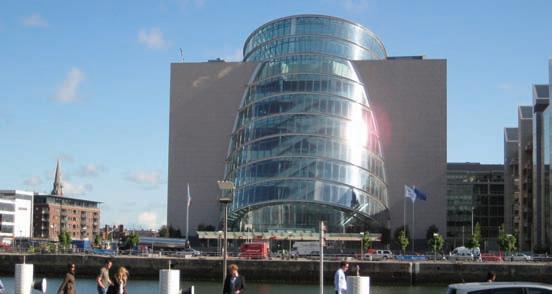
As you will by now be aware, the 11th SCS Annual Conference will take place in the new Convention Centre in Dublin on Friday October 15. The theme is very appropriate – ‘A New Beginning’ – and we have a number of excellent speakers lined up already, including Professor Ed Walsh, former President of the University of Limerick, one of President Obama’s advisors, Pat Cummens, Dr Edgar Morgenroth of the ESRI, the architect Sean Harrington, who will look at sustainability, our own Tom Dunne, who will discuss the inevitability of property tax, and others. The response from sponsors has been encouraging, including Marsh, Travelers, Ordnance Survey Ireland, Deloitte, Mason Hayes + Curran, Sage, Paramount and The Irish Times
As always, should you wish to contact me, please do so at president@scs.ie.
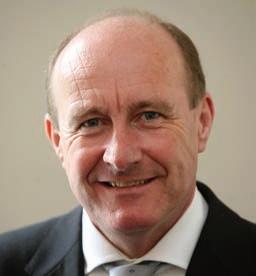
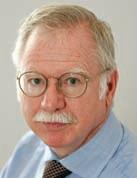
Peter Stapleton President of the SCS
The 11th SCS Annual Conference will take place in the new Convention Centre in Dublin on Friday October 15.
The Society of Chartered Surveyors, 5 Wilton Place, Dublin 2.
Tel:01-676 5500
Fax:01-676 1412
Email:info@scs.ie
Web:www.scs.ie
EDITORIAL BOARD
Chairman: John Oliver Costello
Board: Tom Cullen
John Minihane
Ciara Murphy
Paul O’Grady
Gillian Reynolds
Derry Scully
Peter Stafford
PUBLISHERS
Published on behalf of SCS by Think Media Ltd
Editorial: Ann-Marie Hardiman
Paul O’Grady
Design: Tony Byrne
Tom Cullen
Ruth O’Sullivan
Advertising: Paul O’Grady
www.scs.ie
Views expressed by contributors or correspondents are not necessarily those of the Society of Chartered Surveyors or the publisher and neither the Society of Chartered Surveyors nor the publisher accept any responsibility for them.
EDITORIAL
Change approaches, work continues
It is evident from this autumn edition of the SCS Review that while change approaches the Society on all fronts, there is both leadership for that change and a great deal of ongoing ‘normal’ work within the Society.
Our interview with SCS President, Peter Stapleton, demonstrates that there is a busy agenda for the Society while he identifies that the commercial property sector will have to deal with NAMA properties coming on the market just as some liquidity comes back to the commercial property market. In fact, if there is both order and value, he feels that might even help liquidity.
John Minihane guides us on the ins and outs of turnover rent, while Gwen Wilson keeps us up to speed on the Society’s work on alternative dispute resolution. Donal Buckley’s article quantifies the market for residential property and our President has reminded us that when residential property picks up, commerical property is likely to follow.
Superb national and international speakers
This year’s SCS Conference has attracted a cast of hugely influential speakers from home and abroad. It is being held at the impressive new Convention Centre on Dublin’s north quays on Friday October 15.
PANEL 1: Construction and property in the Irish economy
Prospects
for infrastructure
activities. He joined Travelers Insurance Company in 2007 to assist underwriters and claims handlers in their understanding of surveyor risks.
PANEL 2: Linking urban design and the smar t economy
John Oliver Costello, Honorary Editor
Ed Walsh, Edgar Morgenrath and Michael Mortimer
The opening panel will consider the outlook for the Irish economy and assess the fate of the construction and property sectors in 2011.
The keynote speaker, Dr Edward (Ed) Walsh, has been a driver of change in Irish society and his presentation will be on the central theme of the conference: A New Beginning. Dr Walsh maintains that talent, tax and competitiveness are the three critical issues for Ireland’s recovery. Radical structural reform of public institutions and evidencebased public policy are the essential drivers.
Dr Walsh is founding president of the University of Limerick. He served as first chairman of the Irish Council for Science, Technology and Innovation, the National Technological Park, and the National Council for Curriculum and Assessment. He was an Associate of the US Atomic Energy Commission Laboratory and serves on the boards of a number of organisations.
Leading expert on transport and infrastructure, Dr Edgar Morgenroth, Associate Research Professor at the Economic and Social Research Institute (ESRI) will make a presentation on the prospects for infrastructure development in Ireland. Dr Morgenroth is programme coordinator for research on transport and infrastructure at the ESRI. He has carried out extensive research on the formulation and evaluation of large public investment programmes and has modelled Irish commuting behaviour.
Learning
from our mistakes
Risk specialist Michael Mortimer, of Travelers Insurance Company, will combine his experiences of dealing with surveyor-related professional indemnity claims with his knowledge of the IT and GIS systems that are in use and being developed for property professionals. Michael has practised for 25 years as a Chartered Surveyor in both the private and public sectors, dealing with a wide variety of property-related sectors and
Pat Cummens, Patrick Bellew and Sean Harrington Speakers in the second panel will discuss how new trends in building design, and policy making, are intrinsically linked.
Playing it smart
Adviser to President Barrack Obama, Patricia (Pat) Cummens, is Senior Advisor on Government issues at the USA’s Environmental Science Research Institute. She will make a presentation on how geographic information systems (GIS) can be used to enable the smart economy by providing a spatial data infrastructure to allow for optimal decision making, oversight and reporting, analysing and prioritising investments and evaluating performance.
Ms Cummens has been working in the GIS field for the past 28 years with experience in both the public sector and private sector. In 1998 she joined the US Environmental Science Research Institute where she works with government executives on policy and technology issues. She says: “GIS can help citizens view and understand government information in a meaningful way”.
Ed Walsh
Sustainable architecture
Yale University lecturer Patrick Bellew will give an overview on his experiences over the past 20 years on how high performance buildings are informing the new target of zero-carbon solutions. Patrick is Founding Director of Atelier Ten and a Chartered Building Services Engineer with more than 25 years’ experience in the design of highperformance buildings and their systems. With extensive experience in the integration of environmental and building systems with architectural and structural schemes, Patrick has particular expertise in thermal mass energy storage technologies and high efficiency radiant conditioning systems. Patrick has taught the core environmental design course on the M.Arch programme at the Yale School of Architecture since 2000.
Human factors
Influential architect Sean Harrington says that to be truly sustainable, buildings must be designed well, be properly used and last for a long
time. In his address, he will explain that to achieve this, people must understand and love their buildings and have a sense of belonging. Seán is the principal at Seán Harrington Architects. After completing his first architecture degree at the University of Edinburgh he went on to University College Dublin where he graduated with first class honours in architecture in 1987. In 2005 he set up Seán Harrington Architects, now an eight-person practice. He is a former vice president of the RIAI, a professional practice examiner and a member of the RIAI Housing Committee.
PANEL 3: Property and planning in Ireland:
a
new beginning
Niamh Brennan, Tom Dunne and Conor Skehan
Latest trends in planning, governance and property will be discussed by the speakers.
Finishing the Docklands
Corporate
governance expert
Professor Niamh Brennan, who is Chairman of the Dublin Docklands
Development Authority, will present on Phase 2 – Completing the Docklands Regeneration Project. Her presentation will review the economic and social regeneration in the docklands area and will outline the strategy for completing this regeneration project.
Niamh Brennan is a chartered accountant and a chartered director. She holds the Michael MacCormac Professorship of Management and is Academic Director of the Centre for Corporate Governance at UCD.
Plucking the goose
Plucking the hissing property goose is the imaginative, but slightly alarming title of the presentation to be made by Tom Dunne, Head of the School of Real Estate and Construction Economics at DIT. He will pose the questions: is it possible to tax property fairly and equitably? If property taxes are so good for the state and local government why are property taxes so unpopular? Following 10 years in practice, Tom now lectures in property valuation and has a
research interest in property taxes. A former President of the SCS and a former Chairman of the IPFMA, he currently serves on the Governing Council of the RICS.
Planning the future
Conor Skehan is a Senior Lecturer in the Department of Environment & Planning at the Dublin Institute of Technology and his forward thinking is recognised through his Fellowship of the Futures Academy. He will make a presentation entitled: Planning with purpose - making planning work for economic recovery and development, not against it.
He will show that regionally distinctive and autonomous plans grounded in realities of demographics, environmental conditions and economic competitive advantage offer a way to accelerate a sustainable economic recovery.
Conor is a chartered architect, landscape architect, planner and impact assessor with over 25 years’ consultancy experience.
Conor Skehan
Patricia Cummens
Edgar Morgenroth Tom Dunne
Michael Mortimer
Patrick Bellew
Sean Harrington
Niamh Brennan
New CBRE staff
CBRE have two new members of staff, Paul Prendergast and Murray Osborne, who have been appointed to the Building Consultancy Department.
In the last issue of the SCS Review (Summer 2010), it was incorrectly stated that Sarah Johnson is a partner at Mason Hayes+Curran. Sarah is actually a partner at Philip Lee Solicitors. We apologise for this error.
Colliers
Colliers Jackson-Stops is now known as Colliers International. All Colliers branches were re-branded to Colliers International in May of this year. In addition, staff email addresses have changed to name@colliers.ie.
F. Bradley & Co. moves premises
F. Bradley & Co. has relocated its offices from Lynnwood House, Oldenway Business Park, Ballybrit, Galway, to:
The Sirius Centre, Northpoint, Tuam Road, Galway.
Michael J Broe & Associates
Michael J Broe & Associates has moved. Formerly located at Abbey Moat House, Abbey Street, Naas, Co. Kildare, the firm’s new address is:
Michael J Broe & Associates
Chartered Quantity Surveyors & Project Managers
Johnstown Business Centre
Johnstown House, Johnstown, Naas, Co. Kildare
T: 045-876328
F: 045-844051
M: 086-256 8742
E: info@mjbroe.ie
Hourihan & Hourihan
Property Consultants
Husband and wife team David and Nina Hourihan (pictured below) are pleased to announce the establishment of their niche practice based in Winchester, Hampshire, England.
The practice provides a professional service in commercial and residential property management on properties across England and Wales. Additional services provided include agency (sales, lettings and acquisitions) and consultancy (rent reviews, lease renewals and rates assessments) advice.
Between them, Nina and David have over 20 years of experience in the commercial and residential sectors of both the Irish and UK property markets, and are particularly interested in working with Irish investors who have UK property investment holdings.
Hourihan & Hourihan
Property Consultants
Avebury House, St Peter Street, Winchester, Hampshire SO23 8BN, England
Niamh Mansfield has moved to DNG. Her contact details are: Niamh Mansfield MIAVI MSCS
MRICS
Director of Valuations
Douglas Newman Good 30 Leeson Park
Ranelagh
Dublin 6
T: 01-491 2653
F: 01-491 2629 www.dng.ie
Phillip Chambers joins with John Stewart & Associates Phillip Chambers is pleased to announce that his practice –Chambers Chartered Surveyors – is to integrate with John Stewart & Associates, where Phillip will operate as a consultant and will continue to provide commercial property acquisition and relocation advice. The address is: John Stewart & Associates 20 Lower Baggot Street, Dublin 2 T: 01-634 5350
E: chambers2002@eircom.net
Watts appoints new
Watts Consultancy Ltd, part of the International Watts Group, is delighted to confirm that Denis Doherty BSc MSCS MRICS and Oliver Held BSc (Hons) MSCS MRICS of Watts’ Dublin office, have accepted invitations to become Associates within the Group. Denis Doherty joined Watts in 2002. A Chartered Surveyor and a member of both the RICS and the
Erratum
Paul Prendergast
Murray Osborne
Oliver Held
Denis Doherty
Society of Chartered Surveyors, he is responsible for the projects team. His expertise covers a number of areas, including defects analysis and dilapidations. Denis is also a Level 3 Conservation Surveyor after completing his studies with the Dublin Civic Trust.
A Chartered Surveyor, Oliver Held joined Watts in 2007. His expertise in all areas of commercial building surveying led to his recent appointment as Chairman of the Society of Chartered Surveyors Building Surveying Division. This high profile position is in recognition of his efforts in promoting the Society and the work that building surveyors undertake. In addition, he is a member of the RICS Dilapidations Forum and, as a fluent German speaker, has assisted Watts’ offices in Germany on several large due diligence commissions.
CBRE advises on impact of EU ozone regulations
The Dublin office of CB Richard Ellis Group (CBRE), the international commercial real estate firm, recently announced that it has established a specialist team to advise on complex EU regulations and the associated implications for those who own or occupy a building that has a refrigerant gasbased air-conditioning system. The specialist team, led by Tony Grant, Director and Head of CBRE’s Building Consultancy in Ireland, will advise on the implications of EU Legislation EC Reg 2037/2000 (Ozone Regulations). The main thrust of this legislation is the phasing out of hydrochlorofluorocarbon (HCFC) gases, of which the refrigerant R-
HSS Hire Ireland invests in new training centres
HSS Training, the specialist training division of HSS Hire tool and equipment hire company, has expanded operations to offer training courses throughout Ireland.
HSS Training offers over 100 industry-recognised technical and safety courses, delivered in more than 20 locations around Ireland by a team of trainers. All HSS trainers are qualified experts in their fields with years of experience, so you can be sure that all courses are delivered to the highest standards.
HSS Training will deliver courses in Ireland through a network of purpose-built ‘centres of excellence’ in Dublin, Cork, Limerick, Galway and Belfast. Training can also be offered on site at the customer’s location.
Managing Director of HSS Hire in Ireland, Michael Killeen, adds: “At HSS, we firmly believe in doing everything we can to make hire easy for our customers, which has helped establish us as the hire company of
choice in Ireland. We have maintained this customer focus despite the difficult trading conditions recently, and now this investment in our new training centres and team of trainers means we can help our customers with all aspects of health and safety and technical training, as well as continuing to offer them the best service delivery when it comes to tool and equipment hire”.
22 is the most common. R-22 is frequently used in the airconditioning systems of commercial buildings. Under this legislation, the use of new, recycled or reclaimed R22 will be completely banned after January 1, 2015. For property owners, managers and occupiers, there are potentially significant cost implications of replacing existing air-conditioning systems or implementing solutions to adhere to the new legislation. While it is not possible to accurately forecast the number of buildings affected in Ireland, most buildings that were built before the year 2000 are likely to use airconditioning systems containing R22, which, consequently, must be
updated or replaced by 2015. CBRE will assist clients in developing the most effective strategy for dealing with R-22, which may be present within existing air-conditioning systems, and it will be illegal to use R-22 in any form.
Tony Grant commented: “Our specialist team is uniquely qualified to advise property owners, managers, and occupiers on the potential implications of operating or occupying a building that has a refrigerant gas-based airconditioning system. The scale of the re-fit required in the Irish market is considerable, with most buildings built before 2000 likely to be affected”.
FYI: NDP, PCP, PPP. QED
New SCS Head of Policy and Public Affairs, PETER STAFFORD, presents the first in a regular series on the economic situation.
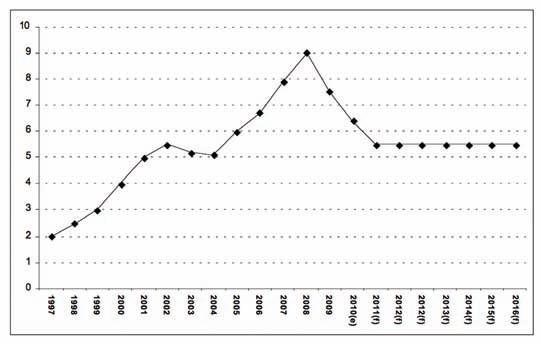
In 2009, the National Development Plan (NDP) was launched and had three underlying assumptions. Firstly, that economic growth would average 4-4.5% per annum over the life of the Plan; secondly, that there would be a soft landing in the housing market; and, thirdly, that there would be a benign international economic environment. Following the deterioration of the Irish and international economies and the collapse in the housing market in 2009, the Department of Finance undertook an evaluation of each department’s capital spending programme. The Minister for Finance recently produced revised ‘Infrastructure Investment Priorities 2010-2016’ – effectively a rewritten capital investment plan for the remainder of the NDP. In publishing this review, the Government has noted that because of lower tender prices and diminished need for infrastructure because of lower levels of economic activity, some projects will be cancelled, scaled back or withdrawn totally. Overall, capital investment between 2010 and 2016 will be ¤39.4 billion, of which ¤12 billion (32%) is in transport and ¤8.5 billion (22%) is in environment, heritage and local government.
In terms of job creation – a central tenet of the revised capital investment plan – the Government figures tally with those of the Construction Industry Council, where ¤1m of investment can sustain between eight jobs on a civil engineering project and 12 on a public building project. The revised programme has allocated two-thirds of investment in social and economic building works over less labour-intensive economic infrastructure such as roads and other civil engineering works. Notable exceptions to this rule are Metro North and the Dart Underground, which will be massive employment creators in their own right.
Change in emphasis
While all departments have seen their total allocation reduced, road transport and housing have lost the greatest share of the funding in favour of enterprise support, environmental services and public transport. The
Department of Environment will receive ¤8 billion, of which ¤3.4 billion will be spent on upgrading and expanding national water services infrastructure. A total of ¤4.4 billion will be spent on upgrading and regenerating social housing schemes.
Since the publication of the report, there has been a great deal of public interest in the extent to which Dublin is perceived as having benefitted from the revised allocations. In the report, the Government notes the importance of building economic infrastructure to support the important economic role the capital plays in the overall Irish economy, and the social infrastructure that is more urgently needed in regional cities and towns. An update on the implementation of the National Spatial Strategy (NSS) will soon be published, which will outline the funding structures for the Hub and Gateway towns in the NSS following the rapid changes that they have seen since the recession started. The revised capital programme has re-introduced the Gateways Innovation Fund, and ¤200m has been set aside to stimulate and support innovative and locally co-funded projects in the Gateway towns.
Beyond the scope of the Public Capital Programme are significant further investments from the state agencies and PPP schemes. There are currently ¤20 million of PPP works under construction, mostly in the fields of education, transport and environmental services. Commercial State investment will come from the State energy and transport companies. Both Metro North and the Dart Underground will be PPPs.
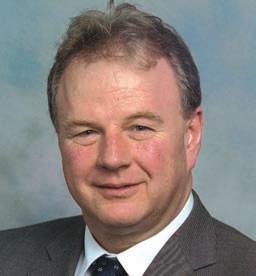
Dr Peter Stafford
Peter is Head of Policy and Public Affairs for the Society of Chartered Surveyors.
FIGURE 1: Capital expenditure 1997-2016 (¤bn) – 2010-2016 forecast expenditure based on 2010 infrastructure investment priorities.
We’re all agreed
GWEN WILSON presents an update on the Society’s work in the role of conciliation.
Society’s panel of mediators and conciliators
The Society has conducted its review of the President’s panel for the appointment of mediators and conciliators in respect of construction and related disputes. All members who expressed an interest in being considered for inclusion on one or both of the panels were invited to formally apply. These applications have been reviewed and successful candidates will be informed of their inclusion on the panel of mediators and conciliators in due course.
Planned autumn conciliation course
The Society issued an expression of interest to its members for a planned autumn conciliation course. A very positive response was received with over 120 expressions of interest. As a result, the Society commenced its preparation work with the view to running a number of courses in 2010 and 2011 to meet this demand, with a maximum number of 20 persons per course. The aim of the working party is to ensure comprehensive mediation/conciliation training at a reasonable price.
However, on foot of recent issues in alternative dispute resolution (ADR) –well advertised in the media and Seanad by Senator Feargal Quinn – the Society felt it important to bring to the attention of its members the following matters, and has since requested that members reaffirm their expression of interest to make sure that there is still a demand for such course:
Statutory adjudication: The Government, in consultation with the industry and professional institutions, has indicated an intention to introduce statutory adjudication for construction disputes, along with some other statutory changes to the construction industry, some time in 2011. The Society has accepted the Government’s invitation to take part in the consultation process and will be supporting the introduction of the adjudication process, which has become established in a number of common law jurisdictions as a statutory means to resolve disputes.
It is the Society’s intention to also offer training for adjudicators in late 2011/early 2012, as soon as the details of the new Construction Act are finalised and published.
Mediation/conciliation still an option: After the introduction of statutory adjudication, parties will continue to be able to agree to mediate or conciliate their disputes. However, it will be noted that in countries where adjudication is established as a legal right, it has become the dominant ADR process and, once commenced, the parties, unless they otherwise agree, are obliged to complete the process. The process differs radically from both mediation and conciliation, in that it can enforce a binding outcome (until arbitration) regardless of the participation of one or other of the parties.
Society’s continued support for mediation/conciliation
The Society will continue to support mediation/conciliation ADR processes as the first step to resolve any dispute with a view to preserving relationships between parties and minimising cost, and will encourage the Government to recognise the mediation/conciliation options within the proposed statutory framework. There is a sense that some parties would still prefer to opt for mediation/conciliation in the first instance.
In that light the Society still intends, subject to confirmation of continued interest from membership, to continue rolling out the conciliation course in autumn 2010/spring 2011. The course will incorporate mediation training with the drafting of recommendations for conciliation under both the private and public contracts.
The Society will continue to maintain its panel of mediators/conciliators and the Society’s course on conciliation will be a recognised qualification for acceptance onto that panel.
Gwen Wilson
Gwen is SCS
Arbitrations Officer.
Leader of change
It falls to Peter Stapleton to be the President who leads the SCS into a new and changed future, one merged with colleagues from the residential sector. PAUL O’GRADY spoke to him for the Review.
Peter Stapleton joined Lisney straight from school in 1974 as a trainee surveyor and did his exams directly with the RICS while he worked. It’s a route to becoming a Chartered Surveyor that has not been available for the past few years, as entry level to the profession is now at Level 8 (honours degree) standard. That may be, but it definitely allowed Peter a broader working experience in his formative years than would currently be available. On his way to becoming Managing Director of Lisney, Peter worked in all the commercial departments of the company – retail, office, investment, and valuation. He has enjoyed the journey, but felt a particular attachment to the office side of the business where he served as departmental head for several years.
Dealing with the merger
Peter has also had a long association with the Society, again serving in several posts before his rise to the Presidency this year (see panel ‘Professional man’). The Lisney man’s top priority for his term of office is to ensure the integration of surveyors and their kindred bodies. He says that there were understandable concerns about the merger among members. “I travelled to regional meetings of the Society where I met and talked with surveyors about their concerns, which included increased competition, standards generally, and areas of practice that new surveyors might see themselves operating in. I listened to those concerns and I am completely satisfied that we can address all of these areas to everybody’s satisfaction. On
Family man – and student of the game
Peter Stapleton is married to Sarah and they have three school-going children – two boys and a girl. In his younger days sailing was his passion, but now helping his kids with their sports, and a weekly round of golf, are
the issue of standards, there will be increased auditing of CPD activites and professional activities generally through more proactive regulation. There is a perception that residential agents who become Chartered Surveyors on foot of the merger will be able to practise outside their core area of expertise but, of course, this is not the case. All Chartered Surveyors must be conscious of their own professional competence, as well as professional indemnity cover, and should stick to their area of expertise so as to protect their exposure.” Stapleton does not envisage any difficulties with the process of merging the two bodies either. “We are being professionally advised on the matter of staffing, an area where we are looking for an early resolution of all outstanding matters. It is, of course, always a very sensitive issue but I do not foresee a huge problem. We are engaging in the process as we speak.”
Increased influence in public affairs
“There was and is a hugely compelling argument for this merger and I think members will be pleasantly surprised once they see the new body in operation. The first thing that they will notice is that we will be more vocal on national policy issues,” says Peter. His second goal as President is just that – to increase the influence of surveyors on the development and implementation of national policy in areas of relevance to all surveyors. “We haven’t taken a high profile before but then the merger gives us human and financial resources that we haven’t had before either.”
his spare time activities of choice. He is clearly a student of the game of golf from which he believes you can learn much about composure and strategy. Louis Oosthuizen’s win at The British Open was a source of some fascination to him when we met, particularly the South African’s mental approach.
Tenants beware!
OLIVER HELD outlines some important factors for tenants to bear in mind when considering breaking a lease.
A tenant’s ability to exercise a break in their lease can be a useful tool in the present economic climate; however, they must ensure that they comply with the various conditions of the ‘break option’ or ‘option to terminate’ clause, as it is sometimes known.
In this brief article, I will look at the three most prevalent conditions:
1. Compliance with covenant.
2. Payment of a rental sum/penalty.
3. Service of notice to the correct landlord entity, and any other bodies that may be referenced in the break option clause, within the specified time period.
Compliance with covenant
Firstly, with regard to compliance with covenant, a number of recent UK court cases have dealt with this issue, namely, Commercial Union Life Assurance Co Ltd v Label Ink Limited (2001) L&TR 29, and also Fitzroy House, Epworth Street (No. 1) Ltd. & Anr v The Financial Times Limited (2005) EWHC 2391 (TCC), and the appeal case ((2006) EWCA Civ 329) that followed the latter case. In these cases the concept of material compliance with the various lease covenants was examined. The appeal court following the Fitzroy House case held that material compliance can only be accepted by the landlord if he is able to re-let or sell the property without delay or additional expenditure. In other words, any breaches by the tenant must not render the property difficult to let.
As can be seen by this ruling, it is important that a tenant can prove material compliance with the lease covenants, such as the yield up clause, which generally dictates how the demise is to be left at the termination date. Failure to comply with covenant, even materially, can result in the break option not being executed and the tenant remaining tied into the lease until the next break or the natural lease expiry date.
Payment of a rental sum/penalty
The second condition is where the landlord will seek a lump sum rental payment or penalty from the tenant. The purpose of this sum is to give the landlord a level of financial security while the property remains unlet. Please note that this rental penalty is not to be confused with a financial settlement that may be agreed between the two parties in lieu of dilapidations work that should have been completed by the tenant.
Service of notice
Thirdly, but equally important, the tenant must ensure that notice is served on the correct landlord entity, which is sometimes ignored to the tenant’s detriment, as can be illustrated by a recent case in the UK courts. In the case Hot Group plc v the Royal Bank of Scotland plc 2010 All ER (D) 280, the lease required the tenant (Hot Group) not only to serve notice on the landlord entity, but also on the property manager. While the notice was served in sufficient time on the landlord (in this case “not less than nine months” prior to the lease termination date), a notice was not served on the property manager until after the last day for exercise of the break. It was found that the tenant had not exercised their break in accordance with the lease and therefore was required to see out the remainder of the lease term. As was seen by this case, where there is a clear requirement on the tenant to serve notice of their intention to break (the lease) within a specific time period, failure to notify the correct landlord entity equals a failure to comply with the conditions that were agreed at the start of the lease.
The importance of completing a thorough review of the lease cannot be underestimated and this review should be completed as soon as a break is being considered.
Oliver Held BSc (Hons) MSCS MRICS
Oliver is an Associate with Watts Consultancy Ltd, and Chairman of the Society of Chartered Surveyors Building Surveying Division.
€1,550,000
€910,000
John O’Sullivan of Lisney explains: “After one of our recent auctions one of the under bidders expressed relief that despite not being successful at the auction, they knew the outcome within a reasonable timescale and they could quickly move on and look for alternatives”.
Approvals keeping numbers down
Nevertheless, there have been relatively few auctions in Dublin this year because of the tardiness of bank mortgage approvals. Simon Ensor of Sherry FitzGerald says that this factor is also one of the reasons why his firm, which had been one of the most active auctioneering practices in Dublin, has not had one auction this year.
“Auctions present a very limited window (three or four weeks usually) for buyers and only those who need little or no finance, or have full loan approval, can bid. But auctions can work if the AMV is very attractive and is close to the reserve,” he adds.
This narrow AMV to reserve gap has also been seen at regional auctions. For instance, Galway agent O’Donnellan Joyce auctioned 20 properties in the first six months of this year: 10 properties sold in the room, six immediately afterwards and four were under active negotiation at the time of going to press. Director Colm O’Donnellan says that, on average, the sale price is about 10% over or under the AMV and the marketing campaign extends to six weeks. Its auction prices ranged from ¤178,000 for 49 McDara Road, Shantalla, Galway, a one-bedroom bungalow for which the AMV had been ¤165,000, to as much as ¤635,000 for 31 The Maples, Salthill, a fivebedroom detached house with a ¤595,000 AMV.
The biggest auction this year was the bumper Real Estate Alliance event. Of the 57 properties presented on the day, only six sold, although five had sold prior and a further five sold soon afterwards. The cheapest house to sell at the REA auction was a four-bedroom detached house on its own grounds at Gortinty, Drumsna, Co. Leitrim, which sold for ¤135,000 – ¤15,000 less than the ¤160,000 AMV. The best price at the REA auction was the ¤500,000 achieved for Mill House, Mill Road, Gowran, Co. Kilkenny, a four-bedroom period house on 12 acres sold for exactly its AMV. REA considered it a success and are planning another on November 9, at which they expect that the banks will sell some distressed properties. But despite the low AMVs not all auctions are successful. A few other large
€330,000
houses failed to sell at auction. For instance, Bennets withdrew 59 Dartmouth Sq, a two storey over basement redbrick house, at ¤1.075m. After a few weeks of negotiations a price close to the ¤1.2m AMV was agreed.
More regional sales
Co. Kildare and areas close by were also active areas for agents such as Coonans and Sherry Fitzgerald O’Reilly.
One of the highest prices achieved in the county was when Goffs Country sold Broadfield Stud on 147 acres near Naas for more than ¤2.75m to an Irish businessman. This was 10% above its AMV. Goffs also sold a four-bedroom bungalow at Clonlyon, Kilcock, on 16 acres, which was bought by a local farmer for around ¤390,000 – 4% above its AMV.
Farmers were among the most active buyers during the year and agents frequently opted for small lots of land at more affordable prices to appeal to more bidders. The few larger farms to sell are believed to have been bought by farmers who had funds from the sale of land to developers or to the Government for infrastructural projects.
A 72-acre north Dublin farm sold for ¤1.46m in April to a local farmer through auctioneer Liam Reilly. The price of around ¤20,100 per acre was close to the ¤1.5m guide.
In June two properties near Kilcullen in Co. Kildare sold for a combined price in excess of ¤1.29m. One of the lots, known as Brigade Lodge, on 33 acres, sold at auction for ¤640,000 – 42% over its guide price. The agents Jordans sold the other lot, consisting of 79 acres with a derelict farmhouse, prior to auction for in excess of its ¤650,000 guide price.
In Carbury, Co. Kildare, Knight Frank achieved ¤1.12m or about 28% over its guide for Collinstown, a 136-acre tillage farm with a derelict house.
Buckley
Donal is Commercial Property Editor of the Irish Independent.
Donal
The paying game
CASSANDRA BYRNE and JARLETH HENEGHAN offer advice on the best way to manage cashflow in construction contracts.
It takes astute playing of the payment game to conserve cashflow, reduce financial exposure and manage payment risks in construction contracts. Where payment issues arise, employers, contractors and sub-contractors each have their own positions to stand over. The current financial climate has created breaks in the cashflow chain from funders to employers, tapering down to contractors and sub-contractors, and has led parties to carefully review their respective development and construction contracts. With continuing market uncertainty, exploring options ranging from project suspension, termination and dispute resolution (for contractors, subcontractors and employers), to re-scoping and declaration of projects (for employers and contractors), can enable parties to determine the best suit to lead to trump in the payment game.
Suspension – holding your cards
Suspension stops the clock on financial and risk exposure. Incorporating clear
suspension clauses can reduce risks, giving parties the chance to ‘wait and see’ before deciding to resume or terminate a project.
Most standard form construction contracts in Ireland (e.g., GCCC and IEI) and the UK (e.g., JCT, NEC and ICE), as well as many bespoke agreements, expressly grant employers a general ‘no questions asked’ right to suspend all or part of projects for any reason.
Typically, contractors cannot suspend for no reason, but may be able to suspend for non-payment. There are also limited common law rights to support contractors’ right to suspend (CJ Elvin Building Services Ltd v Noble [2003] EWHC 837 (TCC)).
Calls to introduce a statutory framework similar to that in England and Wales (the Housing Grants, Construction and Regeneration Act 1996 [HGCRA]), to address non-payment of contractors through the mechanism of suspension and referral to adjudication, have found favourable support in Ireland through the presentation to the Seanad of the Construction Contracts Bill 2010.