Journal of the Irish Dental Association
Iris Cumainn Déadach na hÉireann



Journal of the Irish Dental Association
Iris Cumainn Déadach na hÉireann
A retrospective investigation of the oral health records of a cohort of preschool children who received extractions under general anaesthesia including cost analysis of treatment
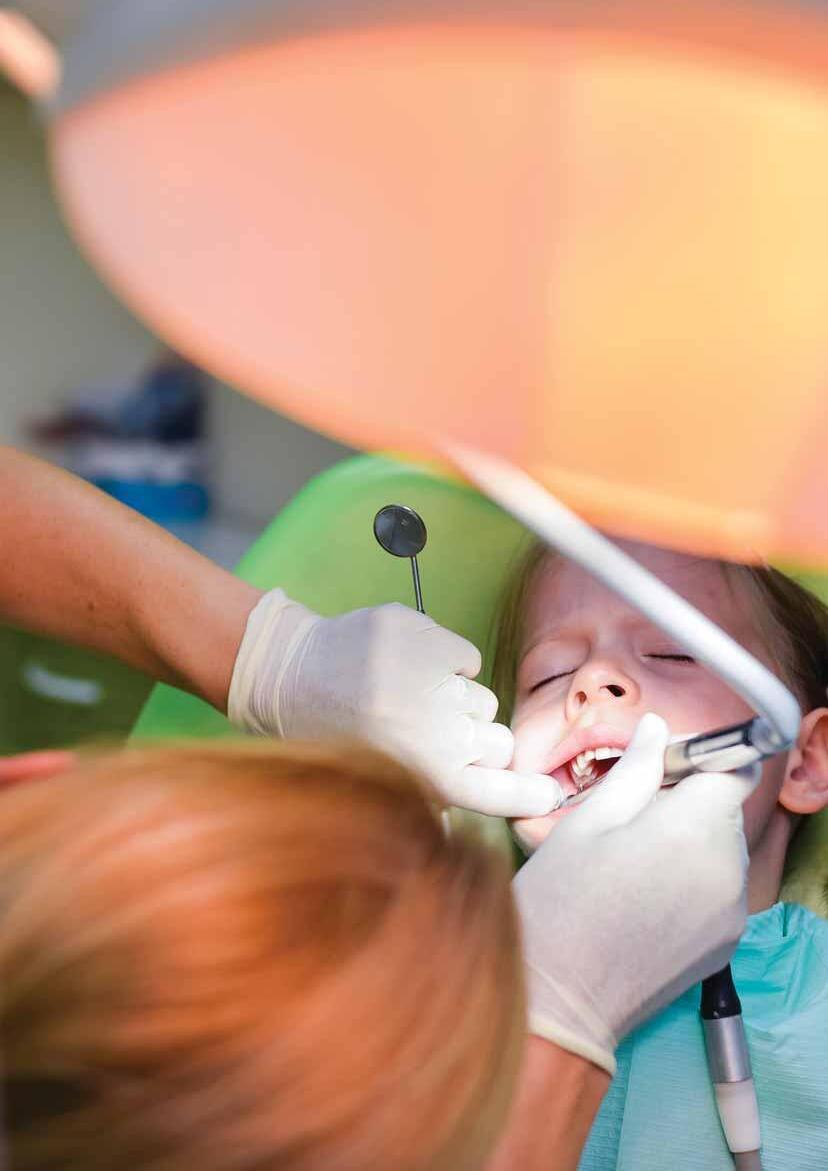




A retrospective investigation of the oral health records of a cohort of preschool children who received extractions under general anaesthesia including cost analysis of treatment U McAuliffe, M Kinirons, N Woods, M Harding




EDITOR Professor Leo F.A. Stassen FRCS (I), FDSRCS, MA, FTCD, FFSEM, FFDRCSI, FICD
DEPUTY EDITOR Dr Dermot Canavan BDentSc, MGDS(Edin), MS(UCalif)
EDITORIAL BOARD Dr Iseult Bouarroudj BDS NUI
Dr Michael Crowe BSc BDentSc DPDS (Bristol)
Dr Peter Harrison BDentSc MFD DChDent
Dr Mark Kelly BA BDentSc
Professor Christopher D. Lynch BDS PhD MFDRCSI FDS (RestDent) RCSI FACD FHEA
Ruth Moore RDN, BSc Management & Law, MIA Dip Journalism
Donna Paton RDH
Dr Ioannis Polyzois DMD, PhD, MDentCh, MMedSc
Dr Ciara Scott BDS MFD MDentCh MOrth FFD (RCSI)
Dr Seamus Sharkey BDS NUI FRACDS (Syd) MFDSRCS DChDent (Prosthodontics) FFDRCSI
Dr Simon Wolstencroft BDS FDSRCS MScD MOrth FDSOrth
Irish Dental Association Unit 2 Leopardstown Office Park, Sandyford, Dublin 18.
Tel: +353 1 295 0072 Fax: +353 1 295 0092 www.dentist.ie Follow us on Facebook (Irish Dental Association) and Twitter (@IrishDentists).

IDA PRESIDENT Dr PJ Byrne IDA CHIEF EXECUTIVE Fintan Hourihan CO-ORDINATOR Fionnuala O’Brien


See page 14



The Journal of the Irish Dental Association is the official publication of the Irish Dental Association. The opinions expressed in the Journal are, however, those of the authors and cannot be construed as reflecting the Association’s views. The editor reserves the right to edit all copy submitted to the Journal. Publication of an advertisement does not necessarily imply that the IDA agrees with or supports the claims therein.
For advice to authors, please see: www.dentist.ie/resources/jida/authors.jsp
Published on behalf of the IDA by Think Media, 537 NCR, Dublin 1 T: +353 1 856 1166 www.thinkmedia.ie
MANAGING EDITOR Ann-Marie Hardiman ann-marie@thinkmedia.ie JOURNALIST AND SUB-EDITOR Colm Quinn colm@thinkmedia.ie ADVERTISING Paul O’Grady paul@thinkmedia.ie DESIGN/LAYOUT Tony Byrne, Tom Cullen, Niamh Short

Total average net circulation 01/01/16 to 31/12/16: 3,227 copies per issue. Circulated to all registered dentists in the Republic of Ireland and Northern Ireland.

There is movement afoot on the DTBS, a bumper clinical feature, and excellent science which should underpin policy in our peer-reviewed paper.


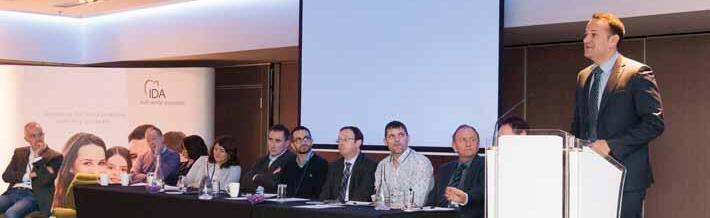
This is an edition with big issues in abundance. Members will read in the Members’ News section of the address by Minister for Social Protection, Leo Varadkar, to the National GP Meeting on January 28 last. At that meeting, our colleague, Dr Tom Rodgers, Chairman of the GP Committee, outlined the discussions held by IDA representatives with the Department of Social Protection on developing oral health services under the PRSI-related Dental Treatment Benefits Scheme (DTBS). Of particular interest was that the delegation found a high level of engagement and interaction was possible despite the constraints of contracts and politics. Members have since received a briefing on those discussions directly from head office. No scheme is ever perfect and as dentists and as an Association, we had great difficulty with the initial approach suggested by the Department of Social Protection. Therefore any positives that arise from movement in the Department’s position that can be achieved by our delegation are to be welcomed. We are very grateful to our colleagues who are voluntarily taking time out from their work to represent us at the table. It may be tough and sometimes frustrating, but it should never be thankless work.
On a wider note, frank exchanges of views such as those facilitated at the National GP Meeting are a sign of a healthy and engaged membership. We don’t always have to agree with each other’s views in order to be a good organisation.
Readers will be slightly envious when they read of how our former colleague, Dr John Tiernan, is enjoying his life since retiring from DPL. There’s mention of travel and golf and grandchildren. We should all pay attention, however, to the lessons he learned over a long time working in Dental Protection in several jurisdictions. His lessons about reform of systems helping to create a low cost, low award, low subscription fee environment (in Australia for example) are
ones from which many governments, including our own, could learn a lot. Indeed, they make us envious of Australia’s working environment for dentists. In the meantime, we need to practise as professionally as possible and to avoid the pitfalls of working in dentistry in Ireland – a legal environment that John describes as “not modern in terms of fairness” and as having very high legal costs and awards.
As you know, we introduced clinical features to the Journal relatively recently and the main thrust has been to have an expert remind dentists of best practice in a procedure. These have been very well received, partly due to their clarity and brevity. We have made an exception to the brevity requirement in this edition as Dr Pat Cleary, whose practice is limited to endodontics, has provided a comprehensive article on the areas that affect success in endodontics. While the article is undoubtedly lengthy, it is so comprehensive and so well illustrated that the Board felt compelled to approve it for publication. It will take you a little longer than usual to read it, but you will be well rewarded.
Dr Úna McAuliffe, together with colleagues Professor Martin Kinirons, Dr Noel Woods and Dr Máiréad Harding, has provided us with a compelling case for a nationally-structured prevention programme to lower caries levels and reduce costs targeting preschool children. Their peer-reviewed paper investigated the oral health of preschool children who had extractions under general anaesthesia and found that they demonstrated poor oral health into adolescence. Once again, science lights the way for policy, but will our politicians even take notice? Let’s see what comes out of the National Oral Health Strategy – if we ever get it.
Dr
PJ Byrne IDA President
Renewal and reform must be a priority for every representative organisation at a time of remarkable change.
As an association, we are conscious of the need to review how we organise ourselves but also how we deliver core services such as continuing professional development (CPD). That is why I have taken the initiative of not only organising a strategic planning day for the Board, but we will shortly convene a meeting of Council and branch officers to look at how we deliver and organise CPD. We will also discuss how we can ensure local level engagement by members, and provide the opportunity for members at a local level to be briefed on political and commercial issues, as well as scientific presentations, and also to feed back their views to their branch representatives and thereafter to the Council and the national officers. This is a critical priority for the Association and we will endeavour to keep members involved and informed as much as possible in the coming months.
Trust and confidence are the cornerstones of our relationship with our patients. It was refreshing therefore to hear so many examples of dentists exceeding the highest standards of care for their patients at the most recent Sensodyne Sensitive Dentist Awards dinner. This event, hosted by the Journal in conjunction with GSK, is one of the highlights of the year for the profession and how refreshing it was to hear our MC Joe Duffy recognise and pay tribute to the selfless humanity shown by so many of the dental team. Remember too that those dentists and team members were all nominated by patients and their families, which adds a unique value to the Awards.
As an organisation our policy is to promote independent practice for our members in private practice. That was the focus of our approach to the discussions on the PRSI dental scheme and it was also the theme chosen for this year's practice management seminar in Croke Park. The well-attended meeting gave members an opportunity to hear an update on the discussions which had been taking place regarding the PRSI dental scheme and to hear an address from the Minister for Social Protection, Dr Leo Varadkar. Both were extremely helpful and for the first time members could see the
prospect of a better future, and also the emergence of an approach that would see both patients and dentists benefit from grant-in-aid funding of dental care for those covered by the PRSI scheme. We heard many other invaluable contributions on the day, which illustrated the costs of relying on third-party schemes and equally the realisation that while costs are fixed, incomes will vary and therefore all dentists need to carefully consider their involvement in third-party schemes. Clearly, it will always remain a matter of individual choice, but as an organisation we have a clear duty to offer members sufficient information to make an informed choice about how to develop their practice. It was great to see so many enthusiastic members attend the meeting, which is now an established and vital event in the IDA calendar.
Private practice members will also have recently received a wonderful new publication from the Association, which offers concise and invaluable advice on human resource issues and employment law guidance. Prepared by our Employment and Communications Officer, Roisín Farrelly, this has been very warmly received by members and is now an essential resource to have close at hand for dentists, be they practice owners, partners or associates, or whether they are employed or self-employed dentists. Our intention is to update this manual on an annual basis and also to look at similar guidance to be made available to members in other branches of the profession.
Annual Conference 2017 is just around the corner and as you will read elsewhere there is once again a wonderful programme of events, both scientific and social, planned for the Conference. Kilkenny is always a popular venue and I have no doubt that the Conference will be attended by huge numbers once more. I would like to wish our incoming President, Dr Robin Foyle, every success. Once again, the Conference organising team, headed by Robin and Elaine Hughes, has done a super job in assembling such a wonderful team of speakers.
Dear Editor,
Thank you for offering me the opportunity to respond to Dr Frank McCrea’s letter (JIDA December 2016/January 2017; 62 (6)).
I read the letter you forwarded with interest and obviously support the author’s vision to reduce the tendency to prescribe antibiotics and encourage surgical/non-surgical drainage. I am also a supporter of negative pressure as a technique to encourage drainage and also improve irrigation of the root canal system. I use it frequently.
I am, however, concerned about certain aspects of the proposed technique. It involves a closed mouth technique with cotton wool between the teeth and the patient ‘sucking strongly’. Obviously this means that the tooth is being endodontically treated (files will have to be used to negotiate the canal) without rubber dam. This simply cannot be justified.
A similar result can be achieved with rubber dam in place using an irrigation syringe (by withdrawing to create negative pressure) or alternatively a negative pressure irrigation tip.
The technique described by Dr McCrea’s letter unfortunately does not represent best practice, but the principles he adheres to can be used as I have illustrated above. It is important for practitioners and specialists undertaking endodontics to work in a safe, protected and dry environment. We can all learn from history but we all need to use evidence-based dentistry for the best results for our patients.
Dr Hal Duncan
Assistant Professor/Consultant in Endodontics
Dublin Dental University Hospital
Dear Editor,
I would like to have the opportunity to thank Dr McCrea for his very useful tip with regard to reducing the use of antibiotics for treatment of peri-apical abscess.
Dear Editor,
Thank you for publishing the interesting article by Dr Yvonne Shaw regarding the challenges of adult orthodontics (JIDA 2016; 62 (6): 319-320). The article acknowledges that adult orthodontics is “costly, uncomfortable, time consuming and potentially embarrassing”. These are likely to be aspects that adult patients (and adults responsible for younger patients) want to avoid, so it is understandable that they will be attracted to treatment that appears to be cheaper/faster/unobtrusive.
The article notes an increase in claims relating to orthodontic treatment, with specific reference to clear aligner systems (which aim to be unobtrusive) and shortterm orthodontics (which may be perceived as of shorter duration and cheaper).
The author comments that these forms of orthodontic treatment are carried out by dentists of varying levels of formal training, experience and accreditation. These techniques can involve teledentistry, and varying levels of delegation of treatment planning, and possibly also of diagnosis and treatment execution.
At present, only two dental specialties are recognised in Ireland – orthodontics and oral surgery. Both of these areas of dentistry have long-established formal training programmes in Ireland and internationally, long predating their recognition here, and predating the increase in adults seeking orthodontic treatment described in the article.
Within the speciality of orthodontics, there is often speculation as to how much increase there is in complaints and how the increasing number of claims and complaints is related to specialists or non-specialists. Informally, speakers from
It is a tribute to our profession that retired colleagues like Dr McCrea continue to show interest in dentistry and take the trouble to put pen to paper, metaphorically speaking, to share from his wealth of professional experience. This is an example of true collegiality, which, I fear, may be on the wane in our profession.
The letter also points to a prescribing problem which dentists who are DTSS (Medical Card) contractors face due to the limitation of treatment items available through the DTSS since 2010, for budgetary reasons by the HSE. Dr McCrea refers to opening root canals to facilitate drainage of a peri-apical abscess. This option is not available to a dentist for patients seeking treatment through the DTSS for teeth other than canines and incisors, and even then for only one tooth in a calendar year without first seeking approval from a HSE dentist, which can take four weeks to process! Like many other aspects of the DTSS, the dentist is forced to provide treatment by prescribing antibiotics, which is necessary to relieve acute infection and pain, but may not be the most appropriate treatment or in the patient’s best interests in the long term. Long waiting lists in some HSE areas for wisdom teeth extractions can mean multiple repeat prescriptions to treat associated pericoronitis. The cost of a prescription for infection and pain relief for a DTSS patient is almost ¤50.
One the one hand, the HSE funds expensive public awareness campaigns to promote the appropriate use of antibiotics by doctors and dentists, and on the other, does not facilitate or limits more appropriate treatment options available to us to treat disease for reasons of budgetary restraint.
It is my view that it is our responsibility as healthcare professionals to raise this matter with the HSE and to ensure that the public are aware that the only treatment on offer through the DTSS is not always the most appropriate for them and may have deleterious long-term effects for their general health.
Yours sincerely,
Padraig
O’Reachtagain BDentSc DU
indemnity organisations have answered these enquiries at meetings in terms of “specialists are held to a higher standard of care and claims against them tend to be higher”, but I have never seen objective figures on the matter in the professional or public domain. Recently the Orthodontic Society of Ireland was formally asked by a specialist to find out details relating to claims and complaints in orthodontics and I contacted Dental Protection about this (December 6, 2016). Although they acknowledged receipt of my enquiry, at time of my writing this, no formal reply to the enquiry has been made. Either this information is commercially sensitive or it can be made available to the profession – probably on an annual basis.
I appreciate that if we had details of complaints, it may not be possible to put these numbers in context – that is, we have no easy way of knowing how many people have orthodontic treatment, and who is treating them. I think that any professional wants to be better at what they do and this information would be of benefit to the profession at large and the speciality in particular.
If the speciality is subject to an increase in complaints, this would have a bearing on specialist training and continuing professional development within the speciality. Alternatively, if the speciality is proportionately less subject to complaints, particularly with the orthodontic techniques mentioned in this article, it would be an endorsement of specialist training.
While I can’t comment on behalf of oral surgery or other areas of dentistry that seek specialist recognition, I don’t doubt it has parallels with them too.
Stephen Murray
President 2017, Orthodontic Society of Ireland

Many practitioners will remember the IOTN (Index of Orthodontic Treatment Need) as a complex and confusing table of numbers and letters. Developed in the University of Manchester in 1989, it classifies orthodontic malocclusions by identifying the most significant trait. It is still used by both the NHS and the HSE to identify patients with the highest need for orthodontic treatment, although it is applied differently in each service.
The British Orthodontic Society recently launched 'Easy IOTN', an app that is free to download. There is a CPD training application, which is verifiable for one hour of CPD for practitioners registered with the GDC. There is also an IOTN scoring application for both the dental health and aesthetic component. Practitioners can work through some short questions following the 'MOCDO' system to assess the patient’s IOTN. You can also take a picture on your phone and compare it to stock images to determine the aesthetic component.
Practitioners, especially those working in the HSE, may find it a useful aid to determining IOTN and knowing where to refer patients. Although the criteria for NHS treatment are different, the app aims to be helpful in making the IOTN easier to understand.
Notice is hereby given that the Annual General Meetings of the Irish Dental Union and the Irish Dental Association Limited will commence on:
Date: Thursday, May 11, 2017
Time: 6:00pm
Venue: Lyrath Estate Hotel, Kilkenny to transact, inter alia, the following ordinary business of the Union and the company:
4 to receive and consider the audited accounts for the year ended December 31, 2016;
4 to propose the appointment of Grant Thornton, Chartered Accountants, as auditors to hold office until the conclusion of the next Annual General Meeting at which accounts are laid; and, 4 to authorise the directors to fix the remuneration of the auditors.
All other motions for consideration at the AGMs must be forwarded, in writing or by email to info@irishdentalassoc.ie, together with the names of the proposer and the seconder, on or before March 31, 2017. The same deadline applies for nominations for the post of Honorary Secretary Designate and for members seeking election to our Council. (The proposer and seconder of each motion or nomination must be a current paid-up member.) The agenda and accounts for the meeting will be forwarded in due course.

LABORATORY
CELEBRATING 30 years serving Irish dentistry (1986-2016)
n Leading provider of advanced CAD/CAM and 5+1 Axis Milling using Zirkonzahn and Sirona technology.
n E-Max, Zirconia, PFM & simple to complex implant solutions.
n We accept and process both conventional and digital impressions.
n We offer a reliable 5 days-a-week service with daily telephone and on-site support to our clients.
Eastpoint Business Park • Dublin Road • Loughrea • Co Galway Tel: 091-880 108 • info@pdceramics.ie • www.pdceramics.ie
The Dublin Dental University Hospital (DDUH) is inviting applications to the Postgraduate Diploma in Conscious Sedation in Dentistry to commence in July 2017 for an 18-month course.
The course is aimed at primary care dental practitioners providing support for those patients with dental anxiety and undertaking dentistry in a safe, effective and anxiety-free manner. The objectives of the course are to provide:
1. A comprehensive education in the clinical practice of conscious sedation, anxiety and pain control for patients in the theoretical principles.
2. Development of an ability to critically analyse and apply the findings of the professional literature.
The Postgraduate Diploma is awarded by the University of Dublin, Trinity College and is a registerable qualification with the Dental Council. The course will involve attendance for 11 didactic days and a minimum of 20 clinical, hands-on sessions in the DDUH or an associated hospital over an 18-month period.
Applicants must have a dental qualification and be registered by the Dental Council of Ireland. As a prerequisite for acceptance on the course, students must provide evidence of satisfactory seroconversion for protection against Hepatitis B and Hepatitis C. Garda (police) vetting will be required.
Submitted by Dr Rona Leith.
Entry to the Diploma would normally follow on from a two-year period of dental training at least, preferably with exposure to/experience of conscious sedation.
Postgraduate students will be assessed throughout the course by:
4 written examinations;
4 course work and essays;
4 oral presentations;
4 a literature review project; and, 4 a professional practice placement logbook.
Further details may be obtained on www.dentalhospital.ie or at www.tcd.ie/graduatestudies. Applications to the course can only be made online by logging on to https://www.tcd.ie/courses/postgraduate/az/ course.php?id=DPDDE-CSED-1P01 from January 23, 2017 to February 28, 2017. Interviews will be held in the Dublin Dental University Hospital in April 2017. Please address any enquiries to Catherine Creagh, Course Administrator, at 01-612 7354 or via email at catherine.creagh@dental.tcd.ie
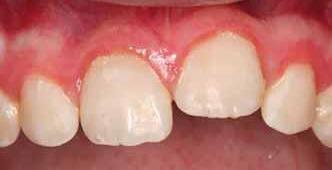
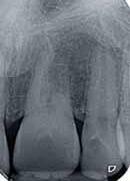
Here is a periapical radiograph and a clinical photograph of a 13-year-old girl who had suffered avulsion of tooth 21 at age nine. The tooth was replanted after less than one hour.
1. What physiological process is happening with tooth 21?
2. What clinical signs would you expect to find?
3. What radiographic signs are present to help confirm your diagnosis?
4. How would you treat this tooth?
Answers on page 48
Our Christmas Quiz winner of an O’Briens voucher is: Jessica Monaghan, Bray, Co. Wicklow Congratulations!

Table demonstrations – practical clinical demonstration of clinical techniques in prosthodontics, periodontics and endodontics
APRIL 25 North Munster Branch IDA Clinical quick tips – practical tips for every day practice and AGM
MAY
Portlaoise Heritage Hotel, Portlaoise, Co. Laois Annual Scientific Meeting
More details to follow – the O’Mullane prize will be awarded for the provision of dental care for children in Ireland
Poems of My Father and I
By Liam Lynch
Published by Lightfort Publishing

The JIDA has been asked to review Poems of My Father and I, by Liam Lynch (right) which was published in June 2016. This is an extraordinary collection of poems, well written and easy to follow. It documents and highlights the importance of the relationship between father and son and how, unfortunately, it often takes the birth of your own child or the death of a loved one to see how important your father is to you. The book gives us insight into the advice that parents offer us, the fun they create for us, and the trouble that we give them. These poems also highlight the importance of the difficult time parents had in Ireland during the period from the 1916 Rising leading to the freedom of the Irish State.
I would strongly advise people to read this book, in particular the poem
Favourite:
“He told me I was his favourite.
I learned
When he was dead
He said the same
To each of his children, expert psychologist".
I wish Liam, my dental and Dental Council colleague, the best, and I hope to read more.
Prof. Leo F.A. Stassen FRCS(I) FDSRCS MA FTCD FFSEM FFDRCSI FICD










All roads lead to Kilkenny from May 11-13 next for the IDA’s Annual Conference 2017. An interesting and educational line-up of speakers is planned for the few days in the Marble City. We are particularly delighted to welcome world-renowned endodontist Dr Stephen Buchanan, cariologist Professor Dan Ericson from Sweden, aesthetic expert Dr James Kessler, and sleep apnoea presenter Dr Roy Dookun.
Our headline speaker on Friday afternoon is Dublin graduate Professor Peter Butler, who will present on facial reconstruction.
An event not to be missed!
A full, dedicated dental nurses’ programme will take place on Saturday May 12. See you there!

















The Irish Dental Association, in conjunction with the Wrigley Company Foundation, is delighted to announce year two of grant aid towards worthy oral healthcare projects around the country.





€5,000 €15,000






€2,500









Dental support grants are available to help fund specific community service projects with a focus on improving oral health and educating participants. Up to seven projects across the country will be funded, with one project receiving funding of ¤15,000, three receiving ¤5,000 and three receiving ¤2,500.
The scheme is open to all IDA members to apply. Application forms will be sent to all members and will be available to download from www.dentist.ie.
Quintess Denta has been awarded the exclusive distributorship in Ireland of the Neodent implant system. Neodent, a Straumann group brand, was established over 20 years ago and is currently the fourth largest dental implant company worldwide, present in more than 20 countries. Over 1m Neodent dental implants are used by dentists per year. Quintess Denta states that Neodent is suitable for all clinical indications from single tooth to full arch immediate load. To facilitate the distribution, Ian Creighton has been appointed Implant Sales Manager with Quintess Denta and the company has just opened a new sales support office in Dublin. The company said Neodent customers can avail of clinical mentoring, along with practice support. Quintess Denta states that it provides a range of global brands supported locally by a team of experts.
Paddy Bolger of Henry Schein has told the Journal that he and Ken O’Brien of BioHorizons, along with some dental friends/customers, are going to cycle from Mizen Head to Malin Head in mid June for charity. Paddy says that they would love to have more cyclists join them on this trip. If you are interested, please call Paddy on 086251 1762, or Ken on 004475-1343 8259. There is a limit to the number that can be accommodated.







The art of endodontics: everything has changed except the anatomy Dr Stephen Buchanan
n The influence of endodontic anatomy on pulp degeneration and how the complexities of root canal systems dictate treatment to their full apical and lateral extents.
n How 3D and 2D radiography with thermal pulp testing can deliver 100% diagnostic confidence.
n How to plan emergency care, endo vs implant, and how you are going to successfully invade the patient’s root canal systems.

n How cutting with guided access burs reduces loss of tooth structure while improving file paths.
n How rotary negotiation brings the 10X improvement that rotary shaping did 15 years ago.
n Why 3D obturation can improve success rates and how simple it is to do with today’s technology.
Southern Cross Dental has announced that it has hired a new dental technician, Michael Gray. He is a GDC-qualified technician and Southern Cross states that he brings a wealth of clinical experience and expertise to the company. Michael started his dental technician career in Bangor, Co. Down, in 2004. Since then, Southern Cross states that he has continuously improved his skills in various areas of dentistry, through years of hands-on experience and by earning a degree in Dental Technology from De Montford University. He specialises in CAD/CAM restorations and IPS e.max layering techniques.
The company says it is impressed with Michael’s 12 years of experience and believes he is a valuable asset and a great addition to its team.

TePe has opened a new regional headquarters in Wells in Somerset, England. The Swedish oral hygiene company, well known for its interdental brushes, states that the new facility demonstrates its commitment to the UK and Ireland markets. The new facility will become the head office and warehouse for the UK subsidiary of TePe AB. The company believes that the move marks an exciting future for the company, as an expanded head office provides the opportunity for further investment and job creation. The headquarters was officially opened on January 26 and Jayne Lennon of TePe, said: “Moving to a new purpose-built office and warehouse facility marks a hugely exciting time and demonstrates commitment for the future growth of the business. We have potential to expand the current site as we expand the business – this will inevitably create new jobs”.
Many people are prompted to take out income protection on the back of a significant life event, starting up their own practice or taking out a mortgage. When responsibilities set in, protecting your income goes from nice to have to essential. But when exactly did you take your cover out and what are you covered for?
The chances are your salary looks very different today than it did 10-15 years ago. And perhaps you have a (bigger) family, staff, or another mortgage. Would the cover you took out years ago keep you in a position of financial security if you needed it now? Are you covered from the first day of illness, or is there a deferred period of a few months and, if so, could you afford to lose that amount of income? It’s the time of year to get your house in order and reviewing your income protection cover may be one of the most important things you do.
Student discount
Starting out in a career can be costly, one in dentistry in particular. Omega Financial wants to remind IDA graduates that it offers 50% off the first six months of their premium when they take out day one income protection. Visit: www.omegafinancial.ie/idagrads.
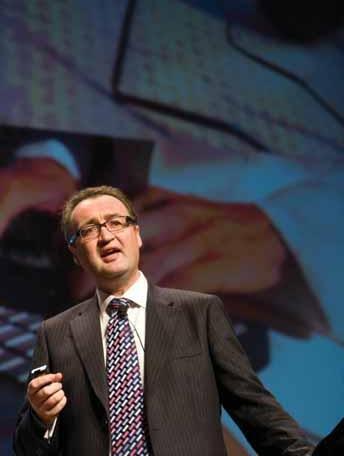
John Tiernan retired from Dental Protection in June 2016 after two decades of looking after dentists in Ireland and worldwide.
As a representative of Dental Protection Limited (DPL), John Tiernan will be familiar to dental professionals all over Ireland from his many presentations at conferences and workshops on the importance of communication and the dangers of being risk averse. His views on these issues come from experience, first as a general dental practitioner, and later in a variety of roles within DPL and Medical Protection (MPS).
John qualified from the Dublin Dental Hospital in 1980, graduating with the Sheldon Friel Prize, and went straight into general practice in Kent in the UK. He bought his first practice in Waterlooville in Hampshire not long afterwards, and added a second practice in Portsmouth in 1983. By 1984 he had consolidated these into one practice, where he worked until 1994, when he took up his first full-time role with DPL. The path out of clinical practice was a gradual one, however, with many elements coming together to indicate that a career shift was the right thing: “I developed an interest in communication through hypnosis, and other communication methods, especially to help anxious patients. I had also been involved with the dental committees and to me a lot of the problems dentists had were down to the way in which they communicated with patients. I had an interest in why dentists got into trouble”. This interest led him to take on a regulatory role when he became the youngest
member of the General Dental Council in the UK in 1991, and he also began to do some expert work for Dental Protection: “In 1993 I started working for them one day a week and within a few months the opportunity to take a full-time role came up – the role suited my skillset in terms of helping colleagues avoid problems, having sat on the other side and on the regulatory side”.
At first, John worked as a dento-legal adviser, becoming a senior adviser in 1997. Two years later he became Head of Practitioner Services, where he stayed until 2004, when he took up the role of Assistant Dental Director, responsible for dentist members in Ireland and South Africa (and occasionally Australia and New Zealand). This enabled him to gain valuable insights into the regulatory environments in different countries.
His move into a more educational role came about in 2007 when he was asked to take on a new position. As Director of Education, John was responsible for the worldwide delivery of education to both medical and dental members for the first time: “It was very daunting at first. Although I knew dental education really well and enjoyed putting programmes together, I found medical education fascinating and very educational in itself. Medical education is much more formalised and better funded than in dentistry. The mindset is very different. Dentists are education hungry and will fund their own education, but doctors are used to having it paid for them, previously by pharmaceutical companies but also by the State”.
He took up his final role with the company – Executive Director of the newly created Member Engagement Division of MPS – in 2013, and spent the next three years looking after the interests of members worldwide before his retirement in June 2016.
Changing times
John agrees that in over two decades there’s not much he hasn’t seen in terms of indemnity issues. So what have been the most striking changes in the dentolegal environment?
“The level of scrutiny of dental professionals has increased dramatically. The accountability has increased. This is partly driven by developing consumerism. It’s also because, partly driven by high-profile cases, there’s a general move against self-regulation. This has led, for example, to much more lay involvement in dental councils, and to some element of political interference”. He has no objection to these developments: “We need patients and dentists
1. Don’t be risk averse. The vast majority of patients do not complain – it’s important to have perspective.
2. A lot of problems occur because dentists don’t have good business systems. The IDA could help here; GPs in small businesses need support.
involved – it should be collective”. However, he feels that this has driven what he calls “a risk-averse approach to regulation”, an element of ‘blame culture’ that is not to the benefit of dentist or patient. He points out that in Ireland, regulation of dentists is “pretty soft touch” compared to Australia and the UK, and without the long-awaited Dental Act, it’s hard to know when and to what extent that will change. However, he certainly feels that more rather than less regulation is inevitable: “I can only see regulation getting tighter unless someone looks for an alternative approach”.
The legal system in Ireland is not modern in terms of fairness. Significant reform is required to bring down both legal costs and the size of awards, which are both very high in comparison with other jurisdictions.
John has his own views on how dentistry, and medicine, should deal with these issues, views he says may be seen as controversial:
“If we want a true learning environment, an environment where, when things go wrong, people genuinely learn from the experience, we need to be brave enough to give doctors and dentists immunity in the same way that the airline industry does. That industry has dramatically improved safety by taking a true learning approach. A pilot who makes an error will not be disciplined provided that, firstly, he or she did not breach a known safety rule (in other words, it wasn’t deliberate or reckless), and secondly, complies fully with an investigation so as to learn and help change what happened. It would be a huge move forward in healthcare if such a system were introduced”.
Perhaps unsurprisingly, another area he feels has changed is around litigation, and he has strong views on the Irish legal system too: “Litigation is much more likely, particularly post recession. The legal system in Ireland is not modern in terms of fairness. Significant reform is required to bring down both legal costs and the size of awards, which are both very high in comparison with other jurisdictions. Cases also take too long in the Irish system, which has consequences for both dentist and patient”.
With MPS, John has lobbied for change over the years, and would favour reforms similar to those that have taken place in the UK: “In the UK there’s full disclosure up front, everything is designed to keep the legal process to a minimum, and to get things over quickly, with fair compensation to patients who have been injured. Other systems also have strict time limits for cases to be brought, unlike in Ireland, where a patient’s lawyer can have a case for one or two years. It’s totally unfair to every party”.
3. Take risk management, and customer satisfaction, seriously. Learn about communication and about managing dissatisfaction.
“Develop business and people skills – both are required. While the studies tend to concentrate on communication rather than business skills, anecdotally, in my 23 years’ experience, the two often go hand in hand.”
John is married to Maire, and they have five wonderful grandsons (“and two wonderful sons!”). Home is Harrogate in Yorkshire, but since his decision to retire from his “all-encompassing” job, they’ve been following the sun, and when we spoke, he was enjoying a holiday in New Zealand: “I want to have a healthy retirement if I can. We love to travel, and we enjoy a game of golf and a glass of good wine”.
He says he’s loved the first six months of retirement; travelling and seeing family and friends means the months have flown. He comes back to Ireland every few weeks, to visit his brother and also to see Ireland play at the Aviva. Needless to say, he’s very much looking forward to the upcoming Six Nations.
He points out that the lack of reform has a direct impact for all dentists, even those who never have to face a legal case: “Australia had legal reform in 2000, which created a significant advantage because litigation is quite controlled, and as the cost of indemnity is related to litigation, subscription fees in Australia dropped dramatically. In Ireland, subscription fees are comparatively high because of the high cost of litigation. Ireland is also a high-cost environment where awards are high”.
No one wins in this situation, not even the patient: “The patient pays in the end – through taxation or fees”.
Unfortunately, this much-needed reform may take some time to achieve. In the meantime, there is much that dentists, their professional organisations and their indemnifiers can do to prevent problems arising and deal with them appropriately when they do. John says that good complaint systems are a must, and praises the IDA’s Dental Complaints Resolution Service (DCRS), saying that it has had an impact: “The DCRS is a good news story – it doesn’t involve legal fees and often the patient is quite happy to return to the dentist when the complaint is properly managed”.
He feels that peer-based learning is also vital: “Dentists need to be able to come together, to share problems, to be open about the challenges they face, and collectively work towards solutions. Dentists can get very isolated in their practice and they’re often very proud. I think one thing dentists don’t do well that other areas do well is to have forums for genuinely sharing and learning. I think healthcare tends not to look outside itself and it could learn an awful lot by doing so”.
As to where and how this vital business and communications training should take place, he is in favour of a postgraduate approach, rather than making it a core aspect of undergraduate training.
Ann-Marie Hardiman
Managing editor with Think Media, with an
interest in further education and CPD.

“Good communications training is part of many curriculums, but I think you do need the experience of a certain number of patients, so it’s in those early years that getting those interpersonal skills, those business skills, is paramount”.
For the future, John sees the role of the dental professional expanding, as the move towards a multidisciplinary healthcare approach continues: “We’ll see larger practices, with more chronic disease screening. We’ll see a big transfer in management of chronic disease from hospital to primary care and I think the whole dental profession will be involved in that”.
He also sees more corporatisation on the horizon: “The costs of regulation and compliance are getting so high now that many dentists can’t afford to set up on their own”. However, he doesn’t feel that these changes will fundamentally alter the relationship between dentist and patient: “Dentistry is very personal experience for most patients, more so than other services. People want the same dentist and I don’t think that will change”.
Costs are so high now that many dentists can’t afford to set up on their own
So what role can professional organisations play in this changing environment?
For John, the key is in remaining relevant to all levels of the profession: “There has been a generational shift. Studies have shown professional organisations being challenged in terms of membership in recent years. Dentistry is a small profession and that is the case worldwide. Professional associations can be a focus for sharing and learning, and for offering the business support that universities are unlikely to provide”.
However, to be really healthy, professional organisations need to be relevant to younger members, and to tailor some of their services to people who are less than ten years in the profession.
“Get people involved as early as possible. If you help someone out at the start of their career, they’re going to be loyal for a long time”.
As he embarks on “phase three” of his own life (see panel), John is still delivering some education and meeting colleagues, and says it’s great to be free to choose the projects he wants to do. He is proud of the work DPL has done for dentists in Ireland: “I hope I’ve helped. I’ve really enjoyed helping members in Ireland. It’s been a privilege”.
You can’t be too careful

Take a full assessment of a patient’s medical history or there may be unnecessary complications.

A young adult female patient with a congenital heart defect and an imminent date for cardiac surgery attended a new practice (practice A), as she had become dissatisfied with her dental care elsewhere. Tooth UL7 was grossly carious, painful and required extraction. The patient was on warfarin and had been prescribed a course of antibiotics for dental infection by her previous dental practitioner.
A periapical radiograph was taken and in an attempt to accommodate the patient’s request for extraction prior to the impending surgery, an urgent appointment was arranged for her at the end of the day.
The patient’s international normalised ratio (INR) had historically been stable between the levels of two and four, but was not checked in the 72 hours prior to the scheduled dental extraction. The clinical records also did not demonstrate that careful radiographic evaluation had taken place. The extraction procedure was fraught with difficulties, and after 50 minutes it became apparent that the functionless UL8 was acting as an obstacle and would also need to be extracted. The patient was told of the complication and provided verbal consent to the extraction while in the chair.
A second dentist was called into the surgery to assist with the procedure and the extraction of both UL7 and UL8 was completed after a further 20 minutes. Haemostasis was achieved prior to the patient leaving the surgery.
In the postoperative period, the patient had a bleed at home and contacted the surgery as a dental emergency. Unfortunately, however, the practice emergency system did not pick up the call. The patient therefore had no option but to attend the local hospital where she was kept for over eight hours until deemed fit to leave. During this time, the wound was cleaned, packed and sutured by the on-call clinician.
Practice A later received a letter of complaint from the patient, which raised
Dr Sue Boynton
Sue is a Senior Dentolegal Adviser and part of Dental Protection’s team supporting dentists and hygienists in Ireland.
issues around a lack of consent for the extraction of tooth UL8, and explained that she would not have agreed in advance to the extraction of a wisdom tooth so close to her cardiac surgery. Overall, the patient felt badly let down, and was very critical of the treatment received, the alleged poor clinical care and poor after care. She demanded a full refund.
Learning points
This case highlights the importance of the following:
n thorough preoperative assessment with due regard to anticoagulant medication;
n awareness that antibiotics may alter the INR level –ideally an INR record should be available in the 24 hours prior to the procedure if there is any suspicion of instability;
n being aware of the optimum timing of extraction procedures in patients who are likely to bleed; and,
n when endeavouring to accommodate patients, there is nothing to be gained by taking shortcuts; if complications arise, you will likely attract criticism.
There are vulnerabilities in this case with regard to the above and additionally in relation to:
n the quality of the preoperative case assessment and a careful consent process;
n the quality of the actual clinical care provided;
n the sufficiency of the clinical records, and the lack of written evidence of radiographic evaluation; and,
n the practice’s out-of-hours emergency arrangements.
Had the patient pursued this matter, there were multiple vulnerabilities that could have resulted in further scrutiny and stress for the dentist. Fortunately, after a consultation with Dental Protection, a swift, empathetic response to the patient was sufficient to defuse the matter. The practice’s response included a full apology with an expression of sincere regret and a full refund of the private fees. The patient was also reassured that action was taken within the practice to improve the emergency system, with the aim of preventing a similar situation happening again. The patient’s cardiac surgery proceeded as scheduled.


There have been some developments in the issue of costs arising from the IDU’s legal action against the HSE.
Members will be aware that the Irish Dental Union (IDU) agreed to support a series of legal challenges following the move by the HSE in 2010 to unilaterally breach the terms of the DTSS contract.
The challenges taken by Drs Martin Reid and James Turner initially, and subsequently involving another sixty-plus dentists, involved injunction applications and appeals, a High Court hearing and a Supreme Court appeal. Ultimately, the Supreme Court found that the HSE was entitled to take whatever steps it deemed necessary to live within its budget for the Scheme. It was always likely that if we failed in our challenges then the HSE would seek to recover legal costs from the Union and this has now come to pass. We have already paid our own legal bills having negotiated with our legal team to reduce these. In recent times, the HSE has notified us that they intend to pursue the Union for ¤700,000 (their estimate of their own legal costs) arising from the cases. Members need to be assured that the IDU has no intention of simply accepting this without challenge. We are investigating all options to reduce or even eliminate the charges being demanded by the HSE. A report on options available is to be presented to the Executive Committee as a matter of urgency.
Our priority is to protect the negotiating strength of the Union and its members. We will, of course, also be obliged to examine options to generate funds to meet the bill for the HSE legal costs if no basis can be found to reduce/eliminate it.
Thankfully we have made good progress in recent years to build our financial reserves so that we could cope with issues such as this and we are pleased to say that after another record year of membership growth, our Union has seen another surplus achieved, which will bolster our finances further. However, we don’t want to simply hand over such a significant amount of money to the HSE without exploring all other options.
We wish to thank all our members who have pledged their support to the Union
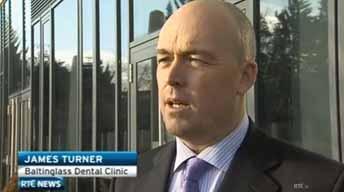
Dr James Turner was one of a number of dentists supported by the IDU in their legal action against the HSE.
at this difficult time and to assure you that every effort is being made to protect the integrity of the Union, its financial strength, but also its capacity to defend and represent its members.
We are investigating all options to reduce or even eliminate the charges being demanded by the HSE.
We will keep members fully informed as this matter develops. No decision or agreement will be reached without the support of the membership.

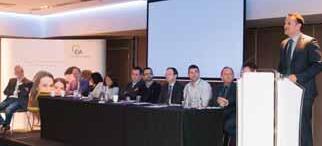
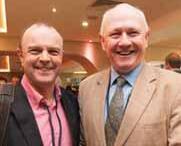
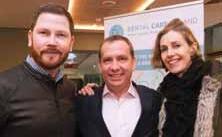
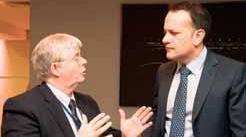
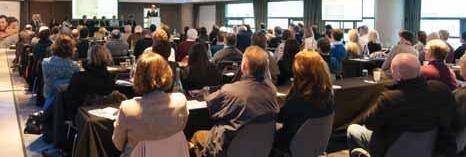
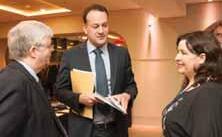
CLOCKWISE FROM TOP LEFT (all captions from left): Drs Eamon Croke, Susan Kiely and Martin Holohan • The Minister for Social Protection, Dr Leo Varadkar, addresses the meeting, watched by the GP Committee • Drs Seán Malone and Seán Ó Seachnasaí • IDA President, Dr PJ Byrne with the Minister • Dr Ciaran Kirrane, Colm Davitt of sponsors Dental Care Ireland and Dr Catherine Skelly.
The IDA’s annual practice management seminar updated members on the situation with the State schemes and informed them about other crucial topics related to modern practice.
The new Chair of the GP Committee of the Irish Dental Union, Dr Tom Rodgers, opened the National GP Meeting at Croke Park on January 28. He outlined the process of consultation that had been undertaken at the invitation of the Department of Social Protection in advance of changes to dental benefits being planned under the PRSI dental scheme (DTBS). While the precise details of those discussions have been circulated to members via an email briefing, Dr Rodgers contrasted the tone of these discussions with the experience of meetings with the HSE. Essentially, the IDA delegation was surprised to learn that the Department of Social Protection was willing to listen to their concerns – but within the confines of the legal and political agenda, and what was realistically achievable in this round of changes.
Following his presentation, and either side of the speech given by Minister for Social Protection Dr Leo Varadkar there was a robust discussion of the matters surrounding the consultation with the Department of Social Protection and separately in regard to the medical card scheme (DTSS) and other related issues. Contributions from Drs Ryan Hennessy and Martin Holohan were responded to and discussed, with further contributions from CEO Fintan Hourihan, and Drs Seán Ó Seachnasaí, John Barry, Brian Daly, Neysan Chah, Kieran O’Connor, and Eamon Croke, among others.
After the GP meeting, a series of practice management talks was kicked off by Simon Martin of Eonvia, who probably frightened many as he spoke on the cyber threats facing dental practices. He explained how to assess the security of your data and address the bad technological habits we can slip into. One thing he emphasised is that: “Public wifi is a disaster”. During the tea and
coffee break before the talk, he set up his phone as a network called “Free wifi”, and seven attendees connected to it. That network could have easily belonged to a hacker who would then be able to gain access to the connected person’s data. He said to use a virtual private network (VPN) if you are going to connect to one of these networks.
He warned of the dangers of ransomware, computer software that infects and encrypts all of a person’s files and will not allow them to access them until an amount of money (usually quite large) is paid. If the ransom is not paid within a certain time period, all the victim’s files are deleted. Unfortunately, this is becoming more common. A good back-up system is essential to protect from ransomware. When it comes to protecting yourself from other threats, the most advanced security in the world isn’t as important as people’s behaviour. He said people are prone to three types of phishing. The first is invoice mail – often made to look like it came from someone you know. Then there are attachments, which are ransomware. The third is emails asking you to sign into any of your accounts to gain your details.
He gave some tips to help enhance your security:
n use complex passwords (he recommended a programme called LastPass);
n be aware that an email may not be what it seems;
n don’t ignore warnings and update your computer and programmes when prompted;
n maintain and patch your firewall;
n do not allow employee phones on your business network (it’s relatively simple to set up a separate guest wifi for these); and,
n back up, back up, back up – have different ones in different places as advanced ransomware will try to target these as well.
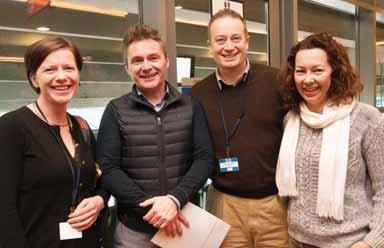
Michelle Ní Longain of ByrneWallace solicitors drew on her expertise in employment law to explain how to avoid many common HR challenges. If there is a complaint made against you, you need to be able to show why you did something. She said you need policies that deal with harassment, sexual harassment and discrimination.
One area of law to be particularly aware of is disability. Disability is very broadly defined in Ireland and the onus is on the employer to give reasonable accommodation – this means more than installing wheelchair ramps. Disability law is always developing and it requires the employer to be proactive. It is not up to a disabled employee to approach their employer with ideas to accommodate them.
She also reminded the attendees of recent developments of which they should be aware, including paternity leave and the minimum wage increase.
Colm Davitt of Dental Care Ireland, sponsors of the seminar, spoke briefly about his company. He started it with his brother, dentist Dr Kieran Davitt, and it purchases dental practices where the dentist may want to do more practising and less management and administration. He stated that the company wants to form long-term relationships with dentists and that it is mainly interested in larger practices. He said the company’s approach is one that may interest dentists who are close to retirement and looking to take a step back in the years before they hang up their handpieces.
After lunch, David McCaffrey of MedAccount looked at the financial independence (or lack of) of dental practices. An average Irish dental practice gains 75% of its turnover from private patients, 22% from GMS patients and 3% from PRSI, but every practice is unique. He said dental practices are highly vulnerable to falls in sales as overheads are very high. He recommended cost analysis to see where you are making and losing money, and to recommend, where appropriate, treatments that give the most profit, e.g., teeth whitening.
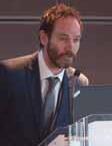
He said dentists should be aware of the effectiveness of different marketing approaches. Sometimes the new thing is not always the best and David said that in his experience Facebook advertising does not work very well for dentists.
It is important that practices develop a strategy. This does not just apply to those that want to be the biggest in the country. If you are happy with where you are now, maintaining that level is a strategy in itself.
He outlined what he believes dental practices should address this year: patient sentiment; cost bases; patient databases; and, most importantly for 2017, dentists should make sure they are highly adaptable.
Dr Martin Foster of Dental Protection said that communication is not a monologue; it is just as much about taking information in as giving it out. Most complaints do not arise because of disasters; they arise because of how dentists interact with patients. Patients don’t know if you’re a good dentist. If the filling doesn’t fall out, they will assume you did a good job. You don’t get extra points for doing your job properly. If a patient doesn’t like you, they will give you no slack if you do make a mistake. More than 50% of patients who sued over dental treatment said they wanted to before the incident occurred, so giving a good impression is vital.
Martin knows that dentists are busy and that there are things to do in between seeing patients, but he said to make sure to smile at patients when they come into the surgery. He gave some advice for clear two-way communication: n dentists should hold treatment discussions with patients;
n patients should give consent, i.e., they must be clear about what is going to happen; and,
n it is critical you have your receptors on when communicating. He also recommended that every practice have a suggestion box, noting that: “It is better to receive a complaint before it’s a complaint”.
Through good times and bad
The day was capped off by a talk from Anne Heraty, founder of recruitment

agency CPL. She started the company in 1989, specialising in the technology sector. Specialist recruitment agencies were not common at the time in Ireland and it was big risk for this reason and also because she was setting up during a recession. She was once told that the two most important days in your life are the day you’re born and the day you find out why. Anne got into recruitment by accident but knew it was where she was meant to be when she started. She was working in an agency and approached her boss about setting up as a specialist within the firm. He told her no and after growing more frustrated at not being allowed to do this she struck out on her own.
At first it was just her, a desk and a copy of the Golden Pages. She said she learned a lot from setting up during a downturn and has learned even more during 25 years of business. CPL listed on the stock exchange in 1999 and enjoyed a good couple of years after that during the dotcom bubble. But when that burst in 2001, many companies in the sector folded and CPL found itself in trouble.
Anne said she had a great team around her at the time and although the
The IDA’s new manual for members contains important information on human resources issues.
Roisín Farrelly
Employment and Communications Officer

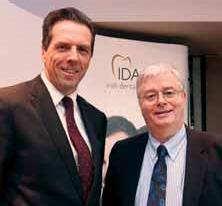
CLOCKWISE FROM TOP LEFT(all captions from left): Strong turnout • IDA Chief Executive, Fintan Hourihan with IDA President, Dr PJ Byrne • Drs Marcas Mac Domhnaill, Susan Crean and Peter McDonnell • Dr PJ Byrne, Minister Varadkar and IDA Vice-President, Dr Anne Twomey.
company wanted to stay specialist, she realised they had to adapt to survive. Instead of becoming a cover-all agency, she decided to develop a few other specialties.
The company thrived again and was worth ¤280m in 2008, but we all know what happened then. Business was almost wiped out but she had learned to be stubborn and adaptive. She said that good communication is even more important during bad times and about CPL: “We are a better business for what we’ve been through”.
She thinks that what matters most is who’s on your team and to make sure to set clear expectations for them, as clarity keeps you out of trouble. To finish, she criticised the exorbitant price of childcare in Ireland, as she believes this is the reason the country is one of the worst performers out of the OECD countries for female participation in the workforce.
All in all, there was plenty of food for thought for dentists at this year’s seminar, which has become an essential part of the IDA calendar.
All private practice members will receive a new 32page publication entitled ‘Human Resources: Essentials for your Private Practice’ on renewal of their membership for 2017. Many members should already have received their copy in the post over the past month.
The manual covers essential employment law with which all employers and employees in dentistry should be familiar. It should be used in conjunction with the members’ section of the IDA website, where you can download template contracts, policies and procedures from the Practice Management section.
If you need any further assistance or guidance on the matters covered in the pack, or if you have a particular query on a HR/staffing issue, please contact me in IDA House on 01-295 0072 or email me at roisin@irishdentalassoc.ie.

Assuming that the correct diagnosis and treatment plan are in place, the patient has given informed consent and good anaesthesia has been obtained, there are a number of areas that may impact on clinical success in endodontics.
This article discusses five areas that may contribute to an improvement in the overall success rate of root canal treatment.
“Starting the daily use of the rubber dam is the beginning of wisdom. When the rubber dam comes through the door, slipshod methods go out of the window. It marks the beginning of better dentistry.”
These were remarks made by Dr JM Prime in 1937, who appreciated the value of working in an isolated environment to achieve optimum standards in dentistry.
The rubber dam has been around for over 150 years and is considered mandatory for endodontic treatment. Credit is usually given to Sanford Christie Barnum for its introduction in 1864 in the US. Opinion among dentists and patients on the use of rubber dam is divided. A small percentage of patients hate it and a small percentage love it. However, the majority do not have a problem with it and understand its usefulness, particularly during endodontic therapy. Likewise, a small percentage of dentists dislike it and avoid using it as it is perceived as being difficult to place and unnecessary.

If it is not possible to isolate a tooth with the rubber dam then there is a question mark over whether endodontic treatment should be attempted at all. If a dentist finds that the use of the rubber dam is too difficult then the question needs to be asked if they have sufficient skill to be attempting root canal treatment.
The objectives in root canal treatment are to instrument, disinfect and fill the root canal to the apical foramen/constriction.1 Essential in this is the elimination of bacteria in infected root canals and the prevention of infection in vital pulps. The use of the rubber dam assists in achieving these objectives.
The advantages of using the rubber dam are:2
1.Patient protection from aspiration or swallowing of endodontic instruments/materials.
2. Retraction of tissues.
3. Improved visibility.
4. Prevention of contamination of the root canal.
It also improves the flow of treatment and increases efficiency, as there are fewer interruptions.
In spite of the fact that the use of the rubber dam is considered the standard of care in endodontics, and in spite of its advantages, the percentage of general dentists in the US who routinely use it for endodontics is reported to be as low as 59%.3
The advantages of the rubber dam far outweigh the perceived disadvantages, which include the difficulty in placement of the rubber dam and clamps, irritation of the skin by the latex rubber of the dam, difficulty for some patients in swallowing and feeling of claustrophobia.

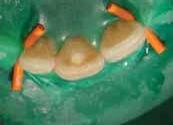
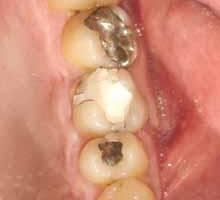
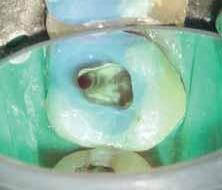
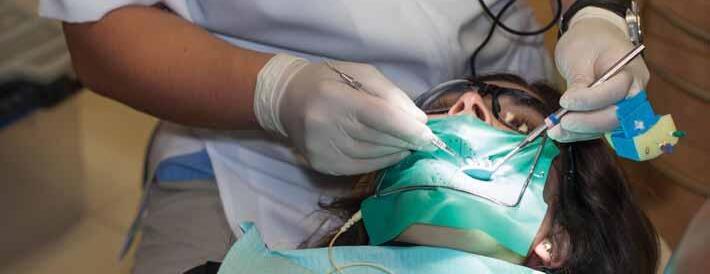
The skin irritation can be reduced by the use of a dental dam napkin. Patients who feel claustrophobic can be managed well once they realise that nothing will fall down their throat and they can breathe as normal. Latex sensitivity or allergy can be overcome by using a non-latex or silicone dam.
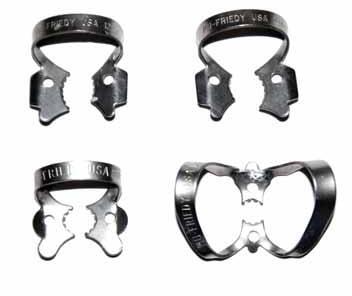
By far the biggest problem dentists have with the dam is the difficulty in placement. Selecting an appropriate clamp prior to placement goes a long way in facilitating this. Most dentists have their favourite clamps but it is important to minimise the inventory. In my experience the Hu-Friedy molar clamps 12A and 13A, premolar clamp 2AS and anterior clamp 9S (Figure 1) can be placed on over 90% of teeth.
Wedjets (Hygenic Corporation: Akron, Ohio) can also be used as a means of reducing the need for clamps, especially when treating anterior teeth (Figure 2). Alternatively, a piece of the rubber dam can be rolled up and used in a similar fashion.
Partially erupted teeth can be difficult to isolate, especially if there are no teeth distal to place a clamp. Acid etching buccally and lingually and bonding small segments of composite can provide ledges and undercuts for the clamp to grip, reducing slippage. Likewise, badly broken down teeth can provide a challenge and consideration should be given to placing a pre-endo build-up to temporarily restore these teeth prior to treatment (Figure 3). This will allow for caries removal and assessment of restorability prior to treatment. It also assists in disinfection by allowing for a reservoir of irrigant in the access cavity and aids retention of a temporary filling in the access cavity in multiple visit treatment.
“The only tooth that may be treated without the rubber dam is the tooth that is so severely damaged that the only instruments to be used are the extracting forceps.”
Castellucci. Endodontics, Chapter 10, page 226.
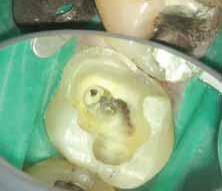
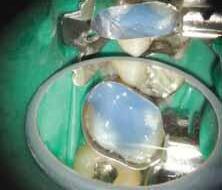
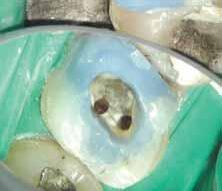
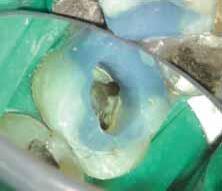
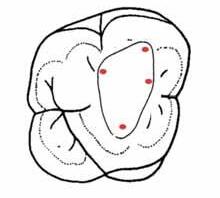
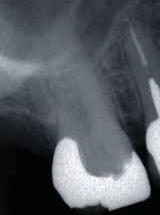
Table 1: Mean measurements (mm) for maxillary molars
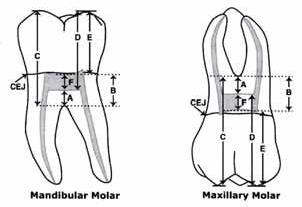
Table 2: Mean measurements (mm) for mandibular molars
*Values A-F refer to measurement distances illustrated in Figure 6 (above) (%CV = [SD/Mean]) and are a measure of the percent variance observed in the sample.
www.cjmengineering.com.
2 Access preparation
The ideal access preparation will:
*Values A-F refer to measurement distances illustrated in Figure 6 (above) (%CV = [SD/Mean]) and are a measure of the percent variance observed in the sample.
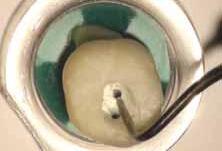
1. Allow for removal of the entire contents of the pulp chamber.
2. Allow for direct vision of the pulpal floor and canal orifices (Figure 4).
3. Facilitate the introduction of instruments into the root canal.
4. Provide straight-line access to the apical third of the canal.
5. Provide a positive support for the temporary filling.
6.Prevent excessive removal of the tooth with consequent reduction in strength of the remaining tooth.
In order to achieve these objectives it is important to appreciate the anatomy of the tooth under treatment. The shape of the crown is generally a reflection of the shape of the pulp chamber; however, oftentimes we are dealing with heavily restored teeth, or teeth that have been crowned, and the natural anatomy has been altered. In some cases it may be advantageous to commence access without the rubber dam to improve orientation.4 However, once the pulp chamber is accessed the dam is immediately placed. Radiographic examination will provide a certain amount of information, e.g.,
size and position of the pulp chamber, angulation of the crown of the tooth, presence of pulp stones or calcifications, or difficulty in locating the canal (Figure 5). Knowledge of the mean measurements and the use of radiographs may give an idea of the depth of the pulp chamber from occlusal landmarks and also the distance to the furcation area in molars (Figure 6). Knowing these may reduce the possibility of furcal perforations, as there is no reason why the bur should advance beyond the distance to the pulpal floor.
Most dentists have their standard burs that are used for access preparation. Surgical length burs can be useful as the head of the handpiece can be further away from the occlusal surface so as not to obstruct the view into the tooth.
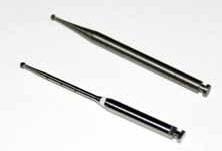
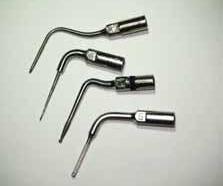
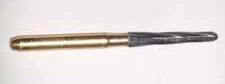
Munce Discovery Burs (Figure 7) can be very useful in trying to locate calcified canals as their extra length (34mm) and thin shaft facilitates improved vision. Ultrasonic instruments (Figure 8) are also invaluable in allowing for improved vision and for cleaning up debris in the pulp chamber, removal of pulp stones and smoothing off the walls of the access preparation. There are many brands available for the Satelec, NSK and EMS or MiniEndo piezoelectric ultrasonic units.
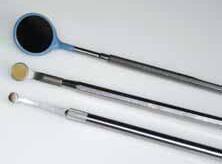
The use of smaller mirrors, particularly in posterior areas or where access is restricted due to limited mouth opening, provides better visibility of the working field, i.e., the pulp chamber (Figure 9).
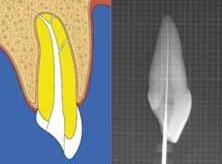
In anterior teeth, cingulum-placed access cavities (Figure 10) create file restrictions, which lead to more procedural errors and file breakages and are more likely to lead to labial perforations. The access preparation should be placed as incisally as possible (Figure 11) to give straight-line access to the canal. This minimises constriction of the files and allows for increased tactile awareness of the tip of the file. This increased tactile awareness allows for better negotiation of the canal with reduction in ledging and blockages, and minimises the risk of broken instruments.
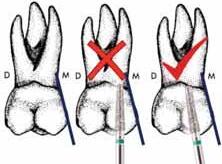
When designing the access preparation care should be taken not to remove excessive dentin in the cervical area. Orienting the bur towards the centre of the tooth is recommended (Figure 12), i.e., take note of the slope of the mesial wall and the initial orientation of the bur should reflect this. This will hopefully reduce the possibility of a subgingival perforation mesially and reduce excessive dentin removal in the cervical area.
Once the pulp chamber is penetrated the use of the Endo-Z bur (Figure 13) is recommended to un-roof the pulp chamber and refine the access preparation coronally. This is a tungsten carbide multi-fluted bur with a non-cutting tip so it smooths the walls of the access preparation while reducing the possibility of perforation. The size of the access is to a large extent dictated by the size of the pulp chamber and the position of the canal orifices.
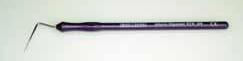
Exploration of the pulp chamber can be carried out with a sharp DG16 endodontic probe or the use of a Maillefer Micro-Opener (Figure 14).
We have to recognise that the more tooth structure we remove the weaker the tooth; however, we need sufficient access to allow for proper preparation and disinfection of the canals and also to allow us to locate all the canals present. Minimally invasive, so-called ninja access cavities, restrict our vision and
instruments, and are more likely to lead to procedural errors and untreated areas of the root canal system. The use of magnification and enhanced illumination significantly improve our ability to locate all the canal orifices while reducing the amount of tooth removal necessary for access. The more you can see the more you can treat.
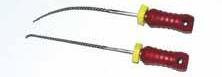
Once the canal orifice has been located the initial penetration of the canal should be carried out with a small file, usually size 10 in posterior teeth, which has a gradual bend in the body of the file. There are two general types of bends that can be placed in files. One is a gradual curve in the body of the file (Figure 15,A) and the other is an acute bend more apically placed (Figure 15,B). The gradual curve is more useful initially. This facilitates placement of the file in restricted areas. The apical curve is more useful when attempting to probe and negotiate a canal to the apical foramen.
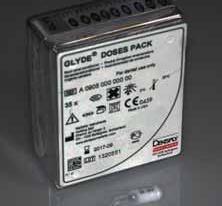
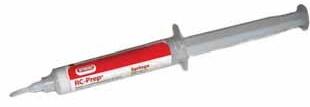
Negotiation of the canal is carried out in the presence of a viscous ethylenediaminetetraacetic acid (EDTA) gel such as Glyde (Figure 16) or Premier RC-Prep (Figure 17), which acts as a lubricant and an emulsifier.
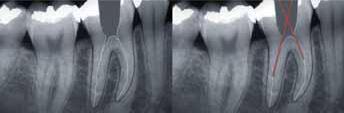

Passive penetration of the canal is carried out with gentle reciprocating motions with outward cutting strokes and no great apical force. In some cases the file can be advanced to the apical third of the canal. In many narrow canals the taper of the canal is less than the taper of the file and if resistance is felt then the file is withdrawn and then small filing motions are carried out short of this length until the file feels loose (Figure 18). Once there is increased space in the coronal third of the canal, the file will often have the freedom to advance more apically. Enlargement of the coronal two-thirds of the canal greatly facilitates access to the apical third.
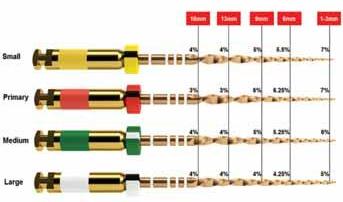
The canal orifice can be enlarged or modified to remove areas of restriction coronally. Gates Gliddens or the SX ProTaper files can be used for this (Figure 19). The size 10 file is then replaced and the canal again negotiated until resistance is felt. Filing motions are carried out until the file is loose and a smooth path exists to this area of resistance. A measurement is taken of the distance to this point. We can now enlarge the canal coronal to this with the use of larger files or we can take advantage of NiTi glide path instruments such as the Proglider from Dentsply Sirona (Figure 20). The use of glide path instruments has been shown to be a safe and efficient means of enlarging the canal with a reduction in canal curvature modification and canal aberration as compared to stainless steel hand files.6
The gel EDTA is replaced with sodium hypochlorite (NaOCl) prior to the use of rotary instruments. Once the Proglider has enlarged the glide path we are now ready to use whatever NiTi system is preferred, such as the WaveOne Gold (Figure 21), to shape the canal. Copious irrigation with NaOCl is carried out during this.
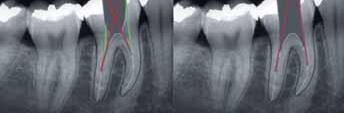
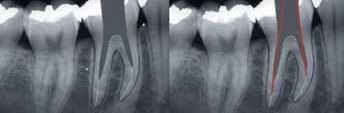
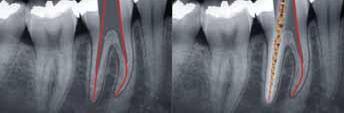
Once the canal is prepared to the area of restriction (Figure 22), the NaOCl is replaced by the gel EDTA so that the apical third of the canal can be explored. A size 10 file is reintroduced into the canal, this time with a small radius curve at the tip of the file.
The file is used in a probing fashion to find a path beyond the previous area of restriction/resistance. By gently rotating the file in the canal and using it as a probe, a path beyond the restriction can usually be negotiated. At this stage the electronic apex locator can be used to check the position of the file as it approaches the apical constriction or apical foramen. If the file can be negotiated to the terminus, small amplitude movements in an up and down motion will smooth irregularities.
Increasing the range of motion eventually creates a smooth pathway. Notice should be taken of the curve in the file and the orientation of the file in the canal so it can be replicated with larger files. Once this glide path is created and the 10 file is loose we can now reintroduce the Proglider, this time to the full length of the canal. The apex locator can be used to check the length and a file length radiograph can confirm correct length measurement. The EDTA gel is replaced with NaOCl prior to the use of the Proglider and NiTi shapers. If we have been able to use the Proglider to full length we can now prepare the canal to full length with our WaveOne Gold rotary files (Figure 23).
If a smooth pathway cannot be created with these small files then rotary files cannot be used to full length.
Attempting to do so is likely to lead to ledging and blockages making further instrumentation more difficult.
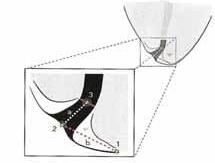
4 Use of the apex locator or electronic measurement devices
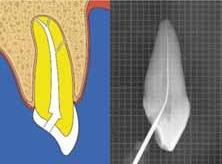
The ideal termination of our canal preparation is the dentinocemental junction or apical constriction.7 Neither the dentinocemental junction or apical constriction (Figure 24) can be determined by radiographs or clinically. Traditionally these points were estimated to occur at 0.5-1mm short of the radiographic apex.8 However, these measurements were found as average measurements in studies examining the apical areas of root canals histologically. It has also been shown that the foramen can be as much as 2.5mm short of the radiographic apex;9 hence, working to 0.5-1mm short can lead to over preparation in some cases. Working long can increase the irritation to the apical tissues, is more likely to extrude infected material apically and can alter the shape of the foramen.
Overextension of the gutta percha in these cases may further cause apical irritation and increase postoperative symptoms.
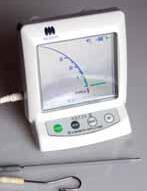
The use of the electronic apex locator (Figure 25) has been shown to be highly accurate in locating the position of the foramen or constriction.10 It is more accurate than radiographs and can reduce the need for additional radiographs.11 There are a number of different brands on the market and the modern devices are all highly accurate.
It may be of interest to note that the apex locator is not a modern device. L.E. Custer from Dayton, Ohio, presented, at the Michigan State Dental Society in April 1918, a paper titled ‘Exact Methods of Locating the Apical Foramen’. In this he described his method of using an electrical device using the difference between the conductance of the canal and that of the periodontal tissues to locate the foramen. He recognised the importance of eliminating necrotic tissues and bacteria from the apical region of the root canal for a successful outcome and the necessity to know where the foramen was to achieve this.
Although apex locators are highly accurate, there are a few areas to be mindful of that can lead to inaccurate or misleading readings:
1.Poor isolation and salivary contamination.
2.The presence of sodium hypochlorite in the pulp chamber in multi-rooted teeth.
3.Contact of the file with metallic restorations.
4. Contact between sodium hypochlorite and metallic restorations.
5.Instrument too small.
6. Obturating materials limiting contact of the instrument with the canal wall.
7. Presence of a perforation.
8. Instrument passing through a lateral canal.
The accuracy will be improved if the pulp chamber is dry and there is definite contact of the instrument with the canal wall. One thing to note is that the
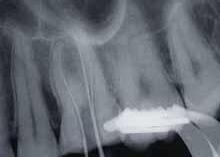
apex locator will not give a reading indicating the file is at the constriction. It can tell the operator when the instrument is long and when it is short of the constriction. The file must go beyond the constriction and is then withdrawn until the reading indicates that the file is short and a little skill is required to determine the point when the file goes from long to short. It is safest to prepare the canal 0.5mm short of this provided patency filing is carried out. Radiographs are necessary to confirm that the apex locator is giving an accurate reading (Figure 26). However, the correct use of the apex locator will go some way to improving the accuracy of our working length determination, while minimising the need for excessive radiographs.
Once a canal has been shaped with either hand or rotary files, it is not necessarily ready for obturation. Disinfection of the canal is a very important part of our preparation and failure to pay sufficient attention to this aspect of treatment is likely to increase failures even in cases where the final result, the obturation, appears good.
Irrigants are used to:
a)flush out debris;
b) dissolve tissue;
c) kill bacteria and disrupt the biofilm;
d) lubricate the canal to reduce friction during instrumentation; and, e) remove the smear layer.
No single solution will accomplish all of these objectives so we need combinations in the correct order to maximise their effects. We also want to avoid negative properties such as cytotoxicity, staining and weakening of tooth structure.
At present, NaOCl appears to be our best irrigant as it is a potent antimicrobial agent against both planktonic- and biofilm-containing bacteria and also has the ability to dissolve pulpal remnants. The antibacterial effect of a 1% solution of NaOCl is as good as that of a 5% solution. However, a 5% solution of NaOCl has a much better ability to dissolve tissue in a shorter time. NaOCl is a toxic solution and it cannot be emphasised sufficiently that great care needs to be taken in using it. There have been a number of reports over the years of the consequences of extrusion of NaOCl into the periapical tissues.12 There is nothing comparable to it for endodontic irrigation but there are risks involved. An endodontic safe-ended needle should be used (Figure 27). It should never be wedged into the canal. Light force should be used with the syringe and a measurement taken of the position of the needle in the canal. It’s not a powerwasher!
A
Précis: Over a two-year period, a considerable number of preschool children required dental extractions under general anaesthesia, with economically-disadvantaged children at a greater risk of requiring treatment. Children who underwent extractions under general anaesthesia at an early age demonstrated poor oral health into adolescence as confirmed by a 10-year follow-up. A nationallystructured prevention programme targeting preschool children is necessary in order to lower caries levels and reduce costs.
Abstract
Internationally, a considerable proportion of children aged five years and younger require extraction of teeth due to dental caries and frequently dental general anaesthesia (DGA) is the treatment of choice.
Aims: To investigate the records of a cohort of preschool children (aged five years and younger) referred to the public dental service provided at Cork University Hospital (CUH), Cork, Ireland, for extractions under DGA between the years 2000 and 2002. To determine the characteristics of the sample: disadvantage; the presence of a significant medical history; and, fluoride status. To establish the pattern of appointments and care, before, during and after DGA, and the pattern of dental treatment required up to sixth class (aged 11 to 12 years).
Methods: A retrospective review of dental records of a cohort of preschool-aged children referred for DGA in CUH during the years 2000-2002 was completed. Demographic and clinical data were collated and analysed using Statistical Packages for Social Sciences (SPSS). Costs were provided by CUH and the Health Service Executive (HSE). Data on costs relating to preventive programmes were obtained from information presented in the Irish Oral Health Services Guideline Initiative 2009.1
Results: A total of 347 children were included with a median age of four years and a range of one to five years. Children with a disadvantage were more likely to require extractions under DGA than their counterparts (50%, n=175). In total, 73% (n=253)
Journal of the Irish Dental Association 2017; 63 (1): 38-44

of patients had a fluoridated water supply and 91% (n=316) had no adverse medical history. For 88% (n=306), their first dental visit was an emergency appointment. The primary indication for DGA was treatment of dental caries. A recall appointment was provided for 18% (n=63). One-quarter (n=86) required an extraction, antibiotic or referral for a second DGA at their first visit following DGA. In first class, referral for a second DGA or extraction under local anaesthetic (LA) was required for 23% (n=79) of patients. Over 60% (n=211) required either an extraction or a restoration in third class. In excess of 20% (n=69) of patients did not attend the sixth class dental inspection, the final assessment appointment in the public services.
Conclusions: A considerable number of preschool children require extractions under DGA due to dental caries. The results of this study indicate that such children progress to adolescence with poor oral health, as evidenced by the need for further restorations, extractions and repeat DGA. The average cost of DGA was €819 per child. This figure has been shown to be as much as eight times the cost of a preventive/oral health promotion programme operating within a similar cohort. An integrated preventive programme targeting preschool-aged children should be considered in attempting to manage the high levels of dental caries within this age group.
Keywords: child; dental caries; dental general anaesthesia; healthcare costs; paediatric dental treatment.
Dr Úna McAuliffe
BDS (NUI) MFDS (RCSEd) MDPH (NUI)
Prof. Martin Kinirons
BDS (NUI) FDSRCS (ENG) FFDRCS (IRL) PhD (QUB)
Dr Noel Woods
PhD MATLHE MA (Economics) BA
Dr Máiréad Harding
BDS (NUI) MFGDP (UK) MPDH PgDipTLHE PhD (NUI)
Corresponding author:
Dr Úna McAuliffe BDS (NUI) MFDS (RCSED) Oral Health and Development Unit, Cork University Dental School and Hospital, University College Cork
Estimated at three hours and calculated according to
Average mileage rate over average geographical distance
Half a day in day care at the average rate
created and piloted using Microsoft Excel. CUH accepts referrals from the salaried dental HSE service in CHO 4, formerly North and South Lee, North Cork, West Cork and Kerry, and is funded by the Department of Health. In considering subsequent treatment need, a hierarchy of treatment severity was used for data collection. Oral hygiene instruction, dietary analysis and referral to a dental hygienist formed one group, followed by those who required fissure sealants only. A superior level in the hierarchy was represented by those requiring a restoration due to caries, with extraction under local anaesthetic (LA) or referral for DGA signifying the most severe treatment need. It was anticipated that in addition to those children requiring fissure sealants only, within the groups requiring restorations and extractions fissure sealants were also applied as part of the treatment plan.
An emergency appointment was defined as an appointment provided to a patient as a direct response to pain and/or infection.
The Delivering Equality of Opportunity in Schools (DEIS) status is used as a proxy for economic disadvantage at the school level, as an individual measure of disadvantage, such as medical card status, was unavailable. DEIS was introduced as an Irish Government action plan with a focus on targeting additional resources towards particular schools. Schools are identified for inclusion based on a range of indicators, including prevalence of
unemployment, local authority (public) housing and eligibility for the free book grant scheme. In total, around 21% of primary schools in Ireland have DEIS status, and this falls to 13% in the Cork and Kerry area.18 During the years in question, 71% of the population were served by a fluoridated public piped water supply.7
Statistical analysis
Analysiswas undertaken using Statistical Packages for Social Sciences (SPSS) Version 20 and testsof normalityconducted. Medians were used as a measure of central tendency where continuous variables were not normally distributed. Non-parametric tests were used with respect to proportions. The Mann–Whitney U test and the Kruskal–Wallis test were used to determine association. Costs were divided into direct and indirect expenditure. Direct costs were obtained from HSE service plan budgets, the HSE Principal Dental Surgeon and the CUH Theatre Manager. Such costs included total annual allocated theatre costs including personnel salaries, theatre cleaning costs and waste management costs.
Indirect costs were estimated mean values representing loss of income, mileage and childcare expenses (Table 2).
Results
Patient characteristics
A sample of 347 children aged five years and younger who were referred for DGA at CUH was obtained (Figure 1). The median age at first visit was four years, with a range of one to five years. The sample comprised 55% (n=190) males and 45% (n=157) females. The total population of zero to five year olds in the Cork and Kerry region in 2002 was 39,665.19
A higher proportion of children attending DEIS schools required DGA than was representative of the general population. In the sample 50% of the children requiring DGA attended DEIS schools yet DEIS status is assigned to only 13% of primary schools in the CHO 4 area.
In 91% (n=316) of subjects there was no medical reason necessitating DGA. The proportion of participants receiving a fluoridated water supply was 73% (n=253) (Table 3).
Table
at preschool age) in first, third and sixth class.
Typeoftreatment
Not examined in first class 9(3) - -
Antibiotic 2(1) 1(0.3) -
Emergency extractionunderGA 10 (3) - -
ExtractionunderLA 43(12) 68(20) 31(9)
Failuretoattend 27(8) 35(10) 69(20)
Fissuresealant only 66(19) 46(13) 46(13)
GDP 2 (1) 4(1) 4(1)
OHI/diet/hygienist/NTR 22(6) 10(3) 4(1)
OrthoxLA 1(0.3) 2(1) 19(5)
OrthoxGA - 1(0.3) 9(3)
ReferralforDGA2 36(10) 22(6) 5(1)
ReferralforDGA3 1(0.3) 3(1) 6(2)
ReferralforDGA4 - - 2(1)
Restoration 117(34) 143(41) 137(40)
Endodontictreatment - - 4(1)
Missingdata 11(3) 12(3) 11(3)
Total 347(100) 347(100) 347(100)
Note: GDP = general dental practitioner; OHI/diet/hygienist/NTR = oral hygiene instruction/dietary advice/referral to hygienist/nothing to report; Ortho xLA = orthodontic extraction under local anaesthesia; Ortho xGA = orthodontic extraction under general anaesthesia; referral for DGA 2/3/4 = referral for extraction under a second, third and fourth general anaesthetic.
Dental experience pre DGA
For 88% (n=306) of children their first dental visit was categorised as an “emergency appointment”. The median number of appointments prior to DGA was three in a range from one to eight. The median number of days spent waiting from initial referral was 30, in a range from one to 450 days. In 78% (n=271) of cases, a record of referral was present, while in 22% (n=76) no clear documented referral was present. Two or more referrals were recorded in 48% (n=167) of patients.
Treatment under DGA
The most common indication for treatment was extraction due to dental caries (88%, n=306). The most common type of extraction was a primary molar extraction (61%, n=212). Themediannumber ofteethextracted wasfour, with a minimum of one and a maximum of 17. The median number of DGAs was one, with a maximum of four.
Dental experience post DGA
In all, 18% (n=36) of patients received a recall appointment post DGA, 8% (n=28) of whom failed to attend for treatment. For 40% (n=139), the first appointment post DGA was an emergency appointment. In 8% of cases (n=27) an antibotic was required, 7% (n=23) required an extraction inder LA and 10% (35) were referred for a second DGA.
Pattern of care from first class (approximately six to seven years) to sixth class (approximately 11-12 years)
In first class, 34% (n=117) of these patients required a restoration due to
Costs 1. Annualtotalallocatedtheatrecosts €1,266,381.09 2. Annualthird-partycleaningcosts €15,246.00 3. Annualtheatreconsumables €229,550.67 4. Annualwastemanagementcosts €38,633.85
5. Annualtheatremaintenancecosts €20,000.00
6.Totalannualtheatreoperatingcosts (1+2+3+4+5) €1,592,888.86
7. Costperpatient €689.96
8. Indirect cost (patientloss) €129.41
Totalcost: 9. Totalnumberofpatientsper annum 2,310 10.Totalcostperpatient(9/10) ¤818.97
dental caries, 12% (n=43) required an extraction under LA and 3% (n=10) had an emergency extraction completed under DGA during the course of treatment. In third class, 41% (n=143) of children required a restoration due to caries, 20% (n=68) required an extraction under LA and 6% (n=22) were referred for their second DGA.
In sixth class, 40% (n=137) of children required a restoration due to caries, 9% (n=31) required an extraction under LA, and 20% (n=69) failed to attend their school screening appointment (Table 4).
Statistical analysis
The Mann–Whitney U test showed that there was no significant association between the number of teeth extracted and socioeconomic status (P>0.05), fluoride status (P>0.05), and medical history (P>0.05). The Mann–Whitney U test also showed that there was no significant association between socioeconomic status and number of appointments prior to DGA (P>0.05).
The Kruskal–Wallis test was used to determine if there was a relation between the number of appointments prior to DGA and the indicator for treatment. It showed that there was no significant association between indicator for treatment under DGA and the number of appointments prior to DGA (P>0.05).
Cost analysis
DGA costwasconsideredatamicroeconomiclevel with both directandindirect costsbeing collected.The totalcostperpatientwascalculatedatapproximately ¤818.97 (Table 5).
Discussion
The aims of this study were to consider a cohort of preschool children aged five years and younger who attended for DGA in CUH: to describe their characteristics, along with treatment provided prior to DGA, under DGA and at three scheduled oral health assessment appointments subsequent to DGA within the public dental service at CUH and HSE South. In addition, the average cost of DGA per child was calculated.
The median age of the children was four years. There was a greater proportion of boys requiring treatment and the majority of patients were from the north Cork area. Most authors agree that caries levels have not decreased in the preschool category and as a result more children are undergoing treatment under DGA at an earlier age.7,20 This has adverse consequences for overall dental health as the younger a child undergoes such extensive treatment, the more likely they are to suffer poor dental health into adulthood and have an increased susceptibility to further caries.21-23 The high proportion of patients referred from the north Cork region may be attributed to the fact that it represents the largest geographical region. In addition, there was a regional DGA service previously available, which may have contributed to increased referrals for DGA and increased expectation among parents.
The total population of zero to five year olds in the Cork and Kerry region in 2002 was 39,665;19 thus, our study sample is a small representation of this cohort. The majority of children referred for DGA were healthy children without a significant medical history. The proportion of children (73%, n=253) resident in an area with a fluoridated public piped water supply was similar to the proportion for the Republic of Ireland population (73%). These results indicate neither fluoride nor adverse medical history having an effect. This underlines national health promotion strategies and guidelines indicating that water fluoridation is not sufficient alone and should be supplemented by oral health promotion initiatives and targeted caries prevention measures.1,24,25 DEIS was used as a proxy for economic disadvantage. Half of patients (50%, n=175) were attending DEIS schools, despite only 13% of schools falling into this category in this area.26,27 Evidence has long established the relationship that exists between disadvantage and an increased risk of dental caries.7,28 Our research indicates that children of a higher social group also required DGA. This highlights the opinion of the literature that DGA is a facility for which there is demand from all social groups. Disadvantaged children have a higher risk of requiring a DGA in their lifetime; however, this is not occurring in isolation, with their equivalents in the higher group also placing a strain on the system.29 Dental caries is a disease of multifactorial aetiology, with dietary habits and tooth brushing frequency also having an effect. The North South Survey of Children’s Oral Health in Ireland7 demonstrated poor results in these areas among eight-year-old children. The data showed that just over 50% of children in the sample brushed twice a day and more than half of children had sugary snacks at least twice a day. Dental services in Ireland are organised in a manner that assumes attendance at private practitioners outside of designated school assessment or emergency appointments. These findings would suggest that this is not the case in either social group. These results also emphasise the multifactorial aetiology of dentinal caries and that the role of parental counselling, oral hygiene education and high-sugar diets must be examined. These findings would suggest that proportionate universalism must be considered. Focusing solely on the most disadvantaged will not reduce health inequalities sufficiently. To reduce the steepness of the social gradient in health, actions must be universal, but with a scale and intensity that is greater in those who are disadvantaged.30
The majority of patients (88%, n=306) required extractions under DGA due to dental caries.These results are consistent with reports from the literature where most authors agree that the primary indication for the provision of DGA is the treatment of dental caries and its sequelae.5,31,32 The median number of DGAs required by each participant was one, with a maximum of four distinct DGAs required for dental extractions among some patients. On occasion, the maximum number of DGAs could be attributed to the presence of a complicated medical history along with anxiety. However, in most cases there were no predisposing factors that would indicate an increased likelihood of requiring treatment under DGA.
For 88% of children (n=306), their first dental visit was an emergency appointment; thus, the first interaction a child aged five years or younger had with the dental health services was for the relief of pain or infection. We must consider thenegativeimplicationsonqualityof life and the lastingpsychological impactonattitudetowarddentaltreatment that may arise from such service organisation.33 Also treatment of pain only, without provision for elective care at the time when disease is identified, has a knock-on effect on services when these children reach an age of eligibility for routine care.
For 78% (n=271) of cases a record of referral was present. This was noted as a marker on the electronic patient chart. It was beyond the remit of this study to examine individual referral forms, which would have provided further insight into the referral patterns; however, this may be an area where further research is needed. Charts where there were missing referrals related to dentists who treated the child under DGA themselves or where the DGA was completed as an emergency treatment, usually within 24-48 hours.
Almosthalfof thechildren(n=166)requiredtwoormore referrals.Thisincluded childrenwhorequiredasubsequent DGA,butalsothosewho were referredand whileonawaitinglistdevelopedfurthersymptomswarrantinga second referral. The median waiting time was 30 days and ranged from one to 450 days. This echoesevidencefromliteratureregardingwaitingtimefortreatmentwhere North et al.34 foundthatwhileawaitingtreatment,41%ofparentsreportedthat theirchildren required analgesics and almost half required antibiotics.
An aim of this research was to investigatethedentalexperience,as derived from dental records, ofthe cohort subsequent toDGAinordertoidentifyany discerniblepatternsoftreatment. The bulk of patients were not recalled for review following treatment (80%, n=277) and this runs counter to evidence of best practice. By virtue of undergoing DGA at a young age, these children are all at a high risk for future dental caries. Evidence has shown that past caries experience is an indicator of future caries development,35 that children who undergo extensive treatment under general anaesthetic at a young age are at an increased risk of requiring a repeat procedure,22 and that attendance patterns postoperatively play a substantial role in the risk of repeat DGA.32 Evidencebased guidelines have been developed on the prevention and management of dental caries through a risk assessment approach, which should be incorporated into the public dental health services.1
Our research indicates that children of a preschool age who undergo comprehensive treatment under DGA consequently retain poor levels of oral health into adolescence, which mirrors previous findings.21,36 This is evidenced by the requirement for extractions under LA, restorations and referrals for DGA when the child was reviewed in first, third and sixth class. One-quarter of children in the sample required either an extraction under LA (7%, n=23), referral for a further DGA (10%, n=35), or placement on an antibiotic (8%, n=27) in the immediate visit following DGA.
A finding to emphasise is poor attendance rates that exist within this group. One-fifth of patients in sixth class (20%, n=69) failed to attend their examination. This is the last appointment within the public dental service and is concerning as from evidence we know there is no culture of attendance in the private dental sector.7
A further aim of our study was to calculate the cost per child of DGA specific to CUH within the public dental service, and to consider this figure in light of data relating to the cost of preventive programmes within similar cohorts. An average cost of ¤819 per child was calculated.
The Irish Oral Health Services Guideline Initiative examined the evidence-based guidance on the use of topical fluorides for caries prevention in children in Ireland including the cost-effectiveness of the programme.17 It obtained data on the costs of school-based, supervised tooth-brushing from a Scottish-based programme (Childsmile). The scheme resulted in a 56% reduction in caries increment in the first permanent molars after two years and consistent caries reductions were evident four and a half years after the programme ended. The total two-year costs were ¤102 per child per year. Similarly, a recent toothbrushing programme within the HSE was piloted, with an average cost calculated per child estimated at ¤14. This programme focuses on caries reduction in the permanent dentition and further research is needed in determining if the same results could be achieved for the primary dentition within the preschool cohort.17
There is an undoubted need to provide a safe, effective and child-centred DGA facility. However, the question must be asked: should some of the tremendous resources allocated to DGA be redistributed to provide an equally effective preventive and oral health promotion regime? If there was increased focus on this area, then there may be a reduction in the levels of dental caries, a corresponding reduction in the need for treatment under DGA and ultimately a reduction in cost.13 The presence of clear protocols around the time of DGA relating to carious teeth, recall and risk assessment may reduce the need for further treatment under DGA.
A framework for further research may be to consider the design of a preventive programme to operate within the preschool age group with limited resources, while maintaining a DGA service. We can state, tentatively, that the cost of a treatment under a DGA could be eight times that of a similar prevention/promotion scheme, bearing in mind that this is without consideration of the cost-effectiveness of this scheme.1 Furthermore, investment in a population prevention strategy is not only more economically prudent but may yield significant improvements in oral health contributing to a reduction in dental caries, reduced need for DGA and subsequently reduced cost.37 This early intervention would improve oral health in childhood but may also lead to a reduced burden of care and disease into adulthood and old age.38,39
Conclusion
A significant number of preschool children require extractions under DGA. Results indicate that such children progress to adolescence with poor oral health, as evidenced by the need for further restorations, extractions and repeat DGA. The average cost of the service is ¤819 per child. This figure could be as much as eight times the cost of a preventive/oral health promotion programme operating within the same cohort. A nationally-structured preventive programme targeting preschool-aged children is necessary in attempting to defeat the high levels of dental caries within this group.
References
1. Irish Oral Health Services Guideline Initiative. Strategies to prevent dental caries in children and adolescents: Evidence-based guidance on identifying high caries risk children and developing preventive strategies for high caries risk children in Ireland (Full guideline). Irish Oral Health Services Guideline Initiative, 2009.
2. U.S. Department of Health and Human Services. National Call to Action to Promote Oral Health. Rockville, MD: U.S. Department of Health and Human Services, Public Health Service, National Institutes of Health, National Institute of Dental and Craniofacial Research, 2003.
3. World Health Organisation. Oral disease burdens and common risk factors [Online]. WHO, 2012.
4. MacCormac, C., Kinirons, M. Reasons for referral of children to a general anaesthetic service in Northern Ireland. Int J Paediatr Dent 1998; 8: 191-196.
5. Karim, Z.A., Musa, N., Noor, S.N. Utilization of dental general anaesthesia for children. Malays J Med Sci 2008; 15: 31-39.
6. Subcommittee, AAOPDCA C.-B. M. American Academy on Pediatric Dentistry Council on Clinical Affairs. Guideline on behavior guidance for the pediatric dental patient. Pediatric dentistry 2008; 30: 125.
7. Whelton, H., O’Mullane, D., Harding, M., Guiney, H., Cronin, M., Flannery, E., et al North South Survey of Children’s Oral Health in Ireland 2002. 2006.
8. Tuohy, M. A study of dental caries levels among three-year-old children in South Tipperary – a comparison of medical card holders and non-medical card holders. University College Cork, 2000.
9. Cook, H.W., Duncan, W.K., De Ball, S. Berg, B. The cost of nursing caries in a Native American Head Start population. J Clin Pediatr Dent 1994; 18: 139-142.
10. MSHSD OHPL-B. General Anaesthic Data Oral Health Logan Hospital, 2011.
11. Association of Dental Surgeons of British Columbia. Children’s Dentistry Task Force. Vancouver, BC, 2001.
12. American Academy of Pediatric Dentistry. Guideline on periodicity of examination, preventive dental services, anticipatory guidance/counseling, and oral treatment for infants, children, and adolescents. Pediatric dentistry 2013; 35: E148.
13. Lee, J.Y., Bouwens, T.J., Savage, M.F., Vann, J., William, F. Examining the cost-effectiveness of early dental visits. Pediatric Dentistry 2006; 28: 102-105.
14. Savage, M.F., Lee, J.Y., Kotch, J.B., Vann, W.F. Early preventive dental visits: effects on subsequent utilization and costs. Pediatrics 2004; 114: e418-e423.
15. Sohn, W., Lim, S., Ismail, A. Effects of early preventive dental visits among Medicaid enrolled children. J Dent Res 2008; 87.
16. Beil, H., Rozier, R.G., Preisser, J.S., Stearns, S. Lee, J.Y. Effect of early preventive dental visits on subsequent dental treatment and expenditures. Medical care 2012; 50: 749.
17. Irish Oral Health Services Guideline Initiative. Oral health assessment: best practice guidance for providing an oral health assessment programme for schoolaged children in Ireland. Irish Oral Health Services, 2008.
18. Department of Children and Youth Affairs. Growing Up in Ireland, Influences on 9-Year-Olds’ Learning: Home, School And Community 2010; Report 3.
19. Central Statistics Office. Population Census Reports. 2002; Vol. 2.
20. Kakaounaki, E., Tahmassebi, J.F., Fayle, S.A. Repeat general anaesthesia, a 6year follow up. Int J Paediatr Dent 2011; 21: 126-131.
21. Amin, M.S., Bedard, D., Gamble, J. Early childhood caries: recurrence after comprehensive dental treatment under general anaesthesia. Eur Arch Paediatr Dent 2010; 11: 269-273.
22. Kakaounaki, E., Tahmassebi, J.F., Fayle, S.A. Further dental treatment needs of children receiving exodontia under general anaesthesia at a teaching hospital in the UK. International Journal of Paediatric Dentistry 2006; 16: 263-269.
23. Harrison, M., Nutting, L. Repeat general anaesthesia for paediatric dentistry. Br Dent J 2000; 189: 37-39.
24. Department of Health and Children. Dental Health Action Plan. Dublin: Hawkins House, 1994.
25. Parnell, C. Oral health policy – time to broaden our horizons? Journal of the Irish Dental Association 2012; 58 (3; Suppl.): S20.
26. Central Statistics Office. Survey on Income and Living Conditions (SILC). CSO, 2010.
27. Department of Education and Science. DEIS (Delivering Equality Of Opportunity In Schools): An Action Plan for Educational Inclusion. Dublin: Department of Education and Science, 2005.
28. Hosey, M.T., Bryce, J., Harris, P., McHugh, S., Campbell, C. The behaviour, social status and number of teeth extracted in children under general anaesthesia: a referral centre revisited. Br Dent J 2006; 200: 331-334, discussion 327.
29. Madan, C., Kruger, E., Perera, I., Tennant, M. Trends in demand for general anaesthetic care for paediatric caries in Western Australia: geographic and socioeconomic modelling of service utilisation. Int Dent J 2010; 60: 190-196.
30. Marmot, M. Fair Society Healthy Lives (The Marmot Review). University College London, 2010.
31. MacCormac, C., Kinirons, M. Characteristics of children referred to a general anaesthetic service in Northern Ireland. J Ir Dent Assoc 1999; 45: 119-123.
32. Jamjoom, M.M., Al-Malik, M.I., Holt, R.D., El-Nassry, A. Dental treatment under general anaesthesia at a hospital in Jeddah, Saudi Arabia. International Journal of Paediatric Dentistry 2001; 11: 110-116.
33. Olley, R.C., Hosey, M.T., Renton, T., Gallagher, J. Why are children still having preventable extractions under general anaesthetic? A service evaluation of the views of parents of a high caries risk group of children. Br Dent J 2011; 210: E13.
34. North, S., Davidson, L.E., Blinkhorn, A.S., Mackie, I.C. The effects of a long wait for children’s dental general anaesthesia. Int J Paediatr Dent 2007; 17: 105-109.
35. Almeida, A.G., Roseman, M., Sheff, M., Huntington, N. Hughes, C.V. Future caries susceptibility in children with early childhood caries following treatment under general anesthesia. Pediatric Dentistry 2000; 22: 302-306.
36. Berkowitz, R., Moss M., Billings R., Weinstein, P. Clinical outcome for nursing caries treated using general anesthesia. ASDC J Dent Child 1997; 3: 210-211.
37. Batchelor P., Sheiham A. The distribution of burden of dental caries in schoolchildren: a critique of the high-risk caries prevention strategy for populations. BMC Oral Health 2006; 6: 3.
38. Selwitz, R.H., Ismail, A.I., Pitts, N.B. Dental caries. The Lancet 2007; 369: 51-59.
39. Petersen, P.E. The World Oral Health Report 2003: continuous improvement of oral health in the 21st century – the approach of the WHO Global Oral Health Programme. Community Dentistry and Oral Epidemiology 2003; 31: 3-24.
west Cork. Replacing retiring partner. Tel: 086-172 7064 after 6.00pm.
Limerick city private practice wishes experienced associate to join Shields Dental Clinic on a four-/five-day week. Please telephone Conor on 085-751 1529 or email Conor.Shields71@gmail.com for details.
Full-time or part-time associate required (minimum three years’ experience). Very busy, established, modern practice one hour south of Dublin. Fully computerised, digital x-rays and OPG. Apply by sending CV and references to info@gracefielddental.ie.
Locum
Locum dentist needed in Athy, Co. Kildare, for the month of February 2017, three days a week. If interested, please submit CV to our email address. Email loretodentalsurgery@gmail.com.
Specialists/limited practice
Canada – St John's, Newfoundland – paediatric dentist needed now. Looking for a dynamic, energetic and exceptionally motivated paediatric dentist to join LOL dental, paediatric dentistry and orthodontics. Part-time or full-time. Remuneration: $1,200 per day guaranteed (Canadian funds), or 35% of net collection. Contact drlynanaseri@gmail.com.
Endodontist, Dublin – Smiles Dental is looking for an experienced, motivated dentist with a postgraduate qualification in endodontics to join our wellestablished, modern, state-of-the-art practice in O’Connell Street in Dublin. Email: joanne.bonfield@smiles.co.uk.
Orthodontic specialist required for a practice in north Dublin. Well-established practice with high orthodontic demand. Great earning potential with the opportunity to build an already excellent patient base for the right candidate. Other locations available. Email laura.cowman@dentalcareireland.ie.
Specialist orthodontist required to join two others in a very well-established Clontarf practice. Interest in lingual/invisible braces desirable. Flexible working hours, very experienced team. Periodontist also required. Call 087906 9303 or email shona@clontarfbraces.ie.
Specialist orthodontist required for busy and modern clinic in Ashbourne, Co. Meath. A young, friendly and dynamic team in a wonderful environment. Immediate start. Email adelaideperiodontist@gmail.com.
Periodontist and endodontist required to join a multidisciplinary team on the north side of Dublin. Newly-extended specialist practice looking to expand our well-established team. Applications can be sent to dentalspecialist8@gmail.com.
Orthodontist required for specialist orthodontic practice in Dublin. Four locations with state-of-the-art facilities. Please reply with CV to elaine.hand@dublinorthodontics.ie.
Part-time orthodontic specialist needed to replace a leaving colleague in Rathgar, Dublin. Immediate need for two-four days a month, but demand is growing. If interested, please apply by email to rathgardentalclinic@gmail.com.
Dental technician position available in a multidisciplinary busy practice in south Dublin. Experience with acrylic, implant-retained dentures and orthodontic appliances preferred. Email resumes to shauna@3dental.ie.
Dental technician wanted for multidisciplinary specialist practice in north Dublin. Part-time or full-time. Experience with acrylic and orthodontic
preferred. Salary depends on skill and experience. Please send CV to grainne@ncdental.ie.
Orthodontic therapist required for specialist orthodontic practice in Dublin. Applicant must have excellent manual dexterity and people skills. Please reply with CV to elaine.hand@dublinorthodontics.ie.
Dental nurse. Organised, personable individual required Tuesday to Friday for role as dental nurse/receptionist in a small family practice in north Dublin. Experience in similar role preferable; however, not essential. Email 1989dentalsurgeon@gmail.com.
Peter Doyle's dental centre requires a fully-qualified dental nurse for a parttime position in our busy Sligo practice. Experience essential. Please email your CV to Peterdoylewinestreet@gmail.com.
D12 dental practice seeks enthusiastic, caring, experienced dental nurse with receptionist duties also. May suit either one full-time or two persons job sharing. Good work ethic essential. Interested parties send CVs to no2dental@gmail.com.
Dental nurse required for immediate start in busy specialist orthodontic practice in Donnybrook D4. Great team, great package. Email elaine@ortho.ie or call 01-269 5566.
Full-time dental nurse required for immediate start in very modern practice one hour south of Dublin. Candidate must be available to work some late evenings. Please email CV to info@gracefielddental.ie.
Qualified nurse for oral surgery practice required from February 2017 to cover maternity leave for six months in Dublin 8. Email to info@specialist.ie.
Experienced dental nurse/receptionist required for two to three Saturday morning sessions per month in busy Dún Laoghaire practice. End of January start. Please contact jackgrennan@gmail.com.
Dental nurse required for busy Lucan dental practice. Immediate start. Pleasant working environment. Experience desirable. Apply with CV to mckeon.mcaleese@gmail.com.
Dental nurse position in a specialist clinic in Dublin 4. Ability to further career, gaining valuable experience in all aspects of dentistry. Flexible hours. Email laura.cowman@dentalcareireland.ie.
Experienced dental nurse with receptionist and cleaning duties for singlehanded dentist, required for city centre D2 dental practice. Interested parties please forward CV to no87dental@gmail.com.
Hygienists
Enthusiastic full-time hygienist required, including Saturdays, for modern new practice in Meath. Fully computerised, great long-term opportunity. Please forward CV to dentalhygienst02@gmail.com.
Part-time hygienist required for maternity cover starting beginning of February for a minimum of six months. Busy modern private practice in Castlebar. Three days per week guaranteed. Would suit outgoing and motivated individual. Email info@tobindental.com.
Enthusiastic hygienist required one day per week, Friday only, in busy practice in Ballyhaunis, Co. Mayo. Vacancy due to departing colleague. Immediate start. Please forward CV to bcjennings@live.ie.
Busy, award-winning south Dublin practice requires motivated, proactive hygienist. Profile-building opportunity to extend and expand hygiene services and sessions. Expressions of interest to rosemary@eircom.net please.
Hygienist required for one to two days per week in Co. Galway practice. Busy list. Immediate start. Forward CV to galwaydent14@gmail.com.
Busy midlands dental clinic seeking a senior dental hygienist for three/four days per week, including Saturdays and Sundays. To apply, please send your CV to jobs@carlowdentalcentre.ie with “Dental Hygienist” in the subject field.
Questions on page 12
1. What physiological process is happening with tooth 21?
External replacement root resorption (ankylosis).
2.What clinical signs would you expect to find?
• Loss of physiological mobility;
• high percussion tone; and,
• progressive infraocclusion.
Fully-equipped, two-surgery practice for immediate sale in D12. Kavo, Digital OPG, computerised, excellent condition for immediate sale. Used by specialist last three years – available for dentist to continue as general practice. Specialist relocating. Approx 50k. Please contact steven@medaccount.ie.
Dental suite 500-7,000 sq. feet in Rialto. The HSE will operate a primary care centre with GPs, pharmacy and other medical services on site. Suites can be shell and core or fully fitted out. Email tgunning@guardianpcc.com.
Fantastic opportunity to open dental practice in very busy west of Ireland market town. Ideal location in town centre with parking. Shared receptionist available. Email mcmahonbrew@gmail.com.
Kerry – well-established, very busy, full-time surgery in a prime location. Experienced, loyal staff. Excellently equipped, including serviced second room. High new patient numbers, low medical card. Immediate sale. Area wide open. Custom-built freehold property. Contact Niall at niall@innovativedental.com.
Specialist – surgery to let in specialist practice in Swords, Co. Dublin. Would suit endodontist or prosthodontist. Please contact elaine.hand@dublin orthodontics.ie for more information. Flexible terms.
Dublin south – fully private, very busy, long-established, good location. Parking on site. Two surgeries, modern equipment, ample room to expand, low overheads, loyal staff. Hygienist service. Strong new patient numbers. Principal available for transition. Contact Niall at niall@innovativedental.com.
For sale east Cork. Freehold dental practice, long established. Presently single surgery with designated sterilisation room. Ample space to expand to second surgery. Principal retiring. Realistically priced. Email barryjsj@gmail.com.
Cork – specialist dental surgery available to let in private consulting rooms in Cork clinic. Telephone: 087-257 7502, or email: corkclinic01@gmail.com.
Long-established, busy, two-man, three-surgery freehold practice for sale in Dublin. Email martacus12@hotmail.com.
OP100 with two imaging plates, Trophy CCX mobile, DenOptix scanner and computer all in good working order for ¤10,000. Also three Adec chairs, three operating lights and sundry small equipment. Situated West Cork. Email bantrydental@eircom.net.
For sale: Sirona OPG Machine – excellent condition – reason for sale: upgraded to CBCT. Manufacturer and model: Sirona Orthopos XG3-D3352. ¤6,000 ono. Email info@periodontalsuite.ie.
3. What radiographic signs are present to help confirm your diagnosis?
• Loss of PDL; and,
• resorption of the root (root is replaced by bone).
4. How would you treat this tooth?
There is no means of arresting or reversing replacement root resorption as it is a form of physiological healing. The rate of progression of infraocclusion depends on the metabolic rate. Progressive infraocclusion in a young patient requires intervention to avoid an alveolar bone defect, tipping of adjacent teeth and poor aesthetics. Decoronation in this case was carried out to preserve alveolar bone.
Dr Tom Rodgers is the new Chair of the GP Committee and practises in the seaside village of Blackrock, Co. Louth.
What led you to get involved with the IDA in the first instance?
I was a regular attender at IDA meetings and lectures. It’s a good way to get some postgraduate education. And I was a Belfast graduate so it gave me the chance to meet other dentists from the local area.
What form did that involvement take?
The first involvement I had was being the area rep on the GP Committee. I was at the GP Committee meetings regularly and continue to be. This means representing the needs of the general practitioners, dealing with anything that would affect members working in general practice. One of the main areas we cover is anything that involves the State schemes, which are a big thing.
How did your involvement progress?
After being on the GP Committee for a few years, I was put on the IDA negotiating team after the unilateral cuts were made to the State schemes in 2009, particularly the medical card scheme. That was quite an eye-opening experience. At the moment, I am taking over the Chair of the GP Committee and am on the team that is dealing with the Department of Social Protection.
What has your participation in the Association meant to you?
Personally, it’s great to get to know and work alongside dentists from throughout the country. It’s good to hear different views on everything from dentistry, clinical dentistry, the business of running a practice and also the political situation as it relates to dental practices and dentists.
The Association offers great support to dentists. When the cuts were brought in I had just opened my practice and they had a huge effect. It was very tough but I had opened a practice. At times, if things had gotten much worse I would have had to consider moving to the UK or moving back up north.
What is the single biggest benefit of membership in your opinion?
There is a huge amount of support available to dentists at all stages of their careers. That’s a huge asset to have. There’s so much information on running businesses and general help and support, and the Association also provides a network of colleagues to engage with. It’s great to have a national voice for dentists – that’s really important.
There are also a lot of things that maybe a lot of members don’t know about. There’s a mentoring scheme for younger dentists or dentists who are setting up practices. There are also supports in place for people who are experiencing difficulties. Stress is a big thing in our job, unfortunately.
What developments would you like to see in the Association?
I’d like to see a stronger, more vibrant association at branch level throughout the country. Some of the branches are very, very vibrant and some of them are not. The problem is we’re all very busy with our work and our family lives. Some people find it difficult to put time into their local branch.
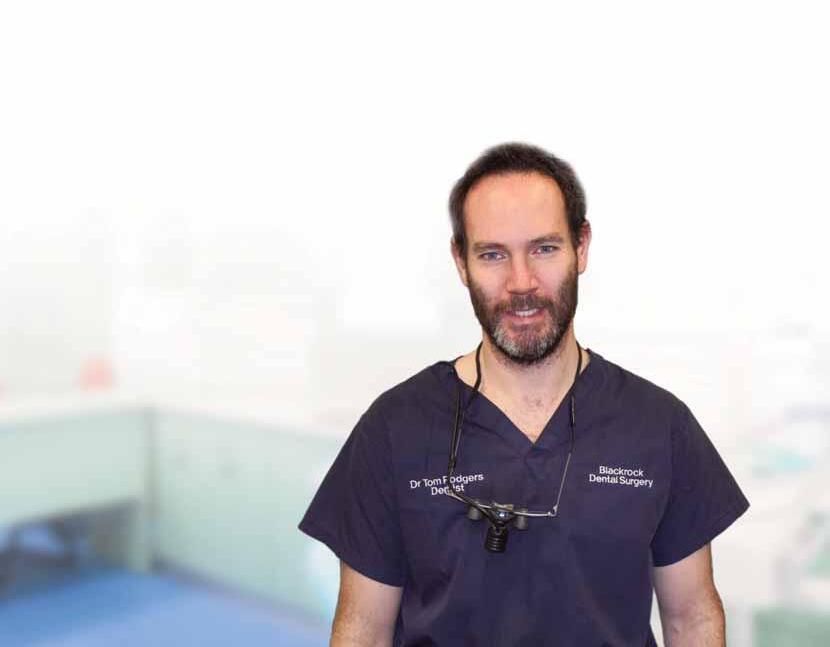
Tom is a graduate of Queen’s University Belfast and set up the Blackrock Dental Practice in Blackrock, Co. Louth, in 2007. He is the Chair of the IDA GP Committee and is married to Collette. Most of the little spare time he gets is taken up by his four children. Dentistry runs in the family and he followed his father into the profession. His mother is former SDLP deputy leader Bríd Rogers. His maternal grandmother was one of the first women to study dentistry in Ireland. Unfortunately, she had to drop out after she became ill and was told she had a weak heart and wouldn’t be strong enough to survive dentistry. She went on to live to 94, running a pub in Donegal on her own for 30 years after Tom’s grandfather died.
He’s a big sports fan, who played a lot of Gaelic football when he was younger for his club team St Peter’s of Armagh. He also played with Queen’s University and for Armagh at minor, under 21 and senior levels. He now coaches underage GAA teams for his local club, Geraldines GFC.