Follow us on Facebook (Irish Dental Association) and Twitter (IrishDentists).
85 CLINICAL FEATURE: Sleep apnoea for the dental practitioner Drs Padraig McAuliffe and Elaine Purcell
90 PEER-REVIEWED
90Smoking cessation and the role of the dental practitioner LFA Stassen, O Hammarfjord
93 Mandibular implant-supported overdentures: attachment systems, and number and locations of implants –Part I A Warreth, C Byrne, AF Alkadhimi, E Woods, A Sultan
98 ABSTRACTS
100 CLASSIFIED
102 DATES FOR YOUR DIARY
IDA PRESIDENT Dr Peter Gannon
IDA CHIEF EXECUTIVE Fintan Hourihan
CO-ORDINATOR Fionnuala O’Brien
JIDA is the only independently auditedmagazinedental in Ireland
The Journal of the Irish Dental Association is the official publication of the Irish Dental Association. The opinions expressed in the Journal are, however, those of the authors and cannot be construed as reflecting the Association’s views. The editor reserves the right to edit all copy submitted to the Journal. Publication of an advertisement does not necessarily imply that the IDA agrees with or supports the claims therein.
For advice to authors, please see: www.dentist.ie/resources/jida/authors.jsp
Published on behalf of the IDA by Think Media, 537 NCR, Dublin 1
T: +353 1 856 1166 www.thinkmedia.ie
EDITORIAL Ann-Marie Hardiman, Paul O’Grady
DESIGN/LAYOUT Tony Byrne, Tom Cullen, Ruth O’Sullivan
ADVERTISING Paul O’Grady paul@thinkmedia.ie
I D T A
Total average net circulation 01/01/13 to 31/12/13: 3,506 copies per issue. Circulated to all registered dentists in the Republic of Ireland and Northern Ireland.
Prof. Leo F. A. Stassen Honorary Editor
Face the change
Change is a theme in many of the articles in this edition of the Journal.
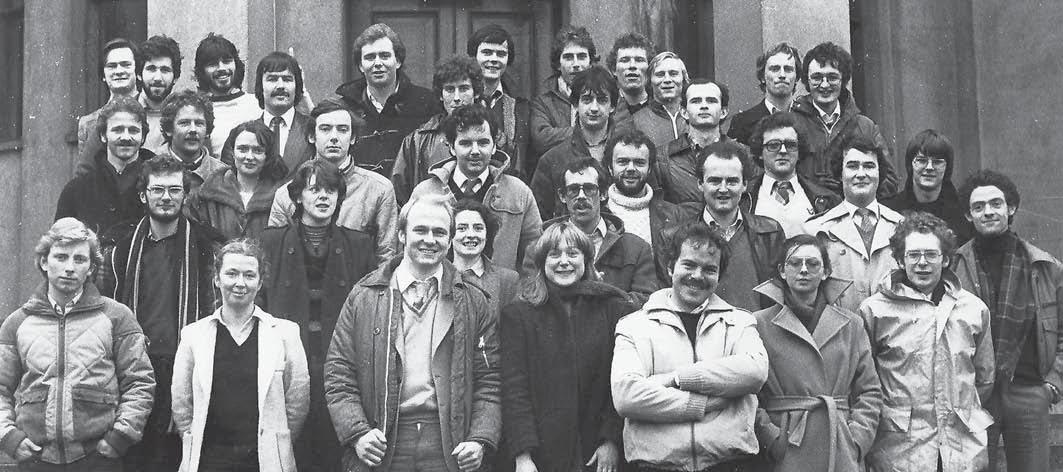
Like virtually every aspect of modern life, dentistry is changing and at a rate that is, at times, challenging for all of us. The gender imbalance so evident in the superb picture of the TCD class of 1980 that accompanies Dr Garry Heavey’s excellent and thought-provoking article on changes in dentistry, has long gone. Indeed, we report on the recent meeting of the Women in Dentistry (WIDEN) group, also in this edition. The questions posed at the end of Dr Heavey’s article have profound implications for our profession and deserve our close attention. Continuing professional education has always been essential, but as the pace of change continues to accelerate (will it ever slow down?), participation in CPD becomes a defence against redundant skills. The Annual Conference of our Association is the single biggest CPD event of the year. The programme is, once again, outstanding and I am personally looking forward to hearing both the Journal lecturer, Professor Tim Newton, and Dr Ben Goldacre, who gave such a good interview to Ann-Marie Hardiman in the last edition of the Journal. There is a particularly strong programme of Pre-Conference courses with an impressive mix of Irish and international course leaders.
The Annual General Meetings of the Union and the Association also take place at the Conference and there is an excellent presentation, in infographic form, of some of the highlights of the annual reports of both bodies from Fintan Hourihan in the members’ only pages in the centre of this edition.
One of our own
Our thanks are due to our former Editorial Board colleague, Dr Tom Feeney, for his assistance in securing an interview for the Journal with the President of the International College of Dentists, Dr Joseph Kenneally. As you might gather from the name, although he is USA born and educated, we can consider him one of our own as his grandfather and grandmother were both born and raised in
Ireland. Dr Kenneally is a distinguished practitioner and his views on the changes to dentistry in his lifetime are well considered, as are his views on fluoridation. We look forward to welcoming Dr Kenneally to Ireland in October when he presides at a meeting of the ICD in Dublin.
Clinical and peer-reviewed articles
One of the really pleasing developments in the production of the Journal in recent times has been the introduction of relevant, locally-sourced, clinical features. We asked three members of our Editorial Board to judge the first year’s articles and the winner, amid a very high standard of articles, was Dr Abigail Moore. Our congratulations go to Dr Moore and our sincere thanks to all the authors who provided such excellent information for our readers. In this edition, we are grateful to Drs Padraig McAuliffe and Elaine Purcell for their clinical feature on ‘Sleep apnoea for the dental practitioner’. Interestingly, they note that obstructive sleep apnoea affects approximately 5% of adults.
Our peer-reviewed articles are on ‘Smoking cessation and the role of the general dental practitioner’ and ‘Mandibular implant-supported overdentures’. In relation to smoking cessation, we as dentists have a role to play in helping our patients to understand how important it is for their oral health (as well as their overall health) to give up the cigarettes. And given that it is estimated that more than 50% of all smokers visit a dentist every year, we have an ideal opportunity to inform them of the negative effects of smoking on the oral cavity.
In our second article, Dr Abdulhadi Warreth and his colleagues, in the first part of a two-part article, provide an overview of options available to restore the mandibular edentulous arch with dental implants. Different types of attachment systems, their features and drawbacks are also reviewed.
I look forward to seeing as many of you as possible in Cork.
Dr Peter Gannon
IDA President
A
year of
self-discovery
Now more than ever it's important to get involved in your Association.
It has been a busy year serving as President of the IDA and also continuing to run a single-handed dental practice. This has only been possible because of the work of the staff at IDA House, and the advice and support of the many IDA members who serve on various committees of the Association. I wish to thank in particular Drs Sean Malone and Nuala Carney, who will stand down from the Board next month after outstanding service as Vice President and Honorary Treasurer, respectively. I have had the pleasure of representing the Association at several gatherings over the year and have met many colleagues who work in Ireland and overseas. I have learned a lot and realise that I can continue to change and to improve as a dentist.
Standards and responsibilities
Dentists remain the biggest drivers of improving standards in their own work and in promoting good oral health among their own patients. We are trusted and well regarded by our patients. Thankfully, many private practices are becoming busier after a number of difficult years and have survived because of the loyalty of these patients and the value they place on their oral health. It is important that we continue as an Association to put pressure on politicians, the Department of Health and the HSE to recognise their responsibilities and to improve access to dental care for those most in need. This often seems like a task without reward, but we must speak up for our patients. The Department of Health is preparing a new National Oral Health Policy, which will inform Government policy in the coming years. It is very important that all dentists give their views to any consultation process. Equally, the IDA needs to continue to hear the views of its members on the difficulties of providing care, in both public service dentistry and private practice, and more importantly, what changes may bring improvement.
The IDA is close to 100 years old. It has changed and will continue to change, and must remain relevant, effective and important to its members. A corporate governance review of the organisation is underway, to assess and improve the organisation, and to ensure that it meets corporate standards. Our recently completed Strategy Plan is being implemented to improve services for members, and to raise the public profile and public impact of the Association. We will get out what we put in and I would encourage any dentist to get involved in the organisation, something I myself have found to be very rewarding.
Services and guidelines
A review of the Dental Complaints Resolution Service is underway and a survey seeking the experiences and views of IDA members has contributed to this. Similar services in New Zealand and Hong Kong have been effective in reducing the number and size of legal claims against dentists and we hope that this will also be the case in Ireland. I hope that an efficient complaints service and a tougher approach by indemnity organisations towards dentists with regular legal claims against them will help to reduce our insurance premiums. Finally, I understand that the new Dental Council guidelines on infection control may be near publication. The Association put extensive efforts into representing the views of the profession on this issue, highlighting the need for evidence-based and pragmatic advice that recognises the cost burden facing the profession, and weighing this against the level of risk faced by both dentists and patients. We all await sight of the new guidance with great interest, and the presentation by Dr Nick Armstrong at this year’s conference in Cork on this very topic should be very informative. I have no doubt that this issue will remain a top priority for the Association under my successor, Dr Anne Twomey, to whom I offer my congratulations and full support.
Inspiring women
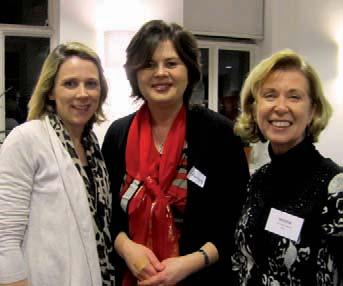
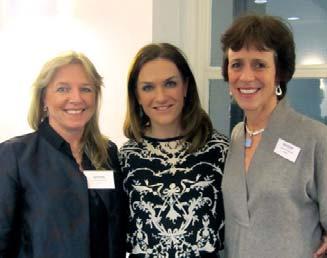
The IDA’s Women in Dentistry (WIDEN) group held a very successful meeting in the Dublin Dental University Hospital on February 24. A large group met to hear an inspiring speech from special guest Dr Rhona Mahony, Master of the National Maternity Hospital, Holles St. Dr Mahony, who is the first female master of the NMH, is a consultant obstetrician and gynaecologist, and a specialist in foetal and maternal medicine. She is also married to a dentist in private practice, so had an excellent insight into the ups and downs of the dental profession.
Dr Mahony gave a talk entitled ‘Beyond dancing at the crossroads’, a whistle stop tour through areas of Irish history that have had a particular impact on women’s lives. She pointed out that ancient Brehon law gave extensive rights to women, but over the centuries these were eroded to the point where, well into the 20th century in Ireland, women could not serve on juries, obtain legal contraception, or stay at work after marriage. While the legal position with regard to equality has improved enormously, she pointed out that barriers still remain. These days, however, the barriers are less tangible, and centre on the
practical difficulties in achieving a work–life balance for women whose careers often enter their busiest phase just as they also reach the stage of wanting to start a family.
In the very frank and insightful discussion that followed, Dr Mahony spoke about difficulties she had encountered in her career and about the need for women to support each other’s choices, whether to pursue a career outside the home, or to take time out to raise a family. With over 9,000 deliveries a year in Holles Street alone, she felt that as a society we need to see pregnancy and childbirth as a normal part of life and work, and plan for our workplaces to cope with this. She felt very strongly that until family and parenting are seen as a dual responsibility of both partners, particularly in terms of parental leave, then inequalities will remain.
Dr Mahony’s presentation was warmly received by those in attendance. WIDEN committee member Dr Nuala Carney thanked her for her honesty and felt that the talk was very fitting for the group, whose mission statement includes the aim of encouraging and supporting women to enhance their career satisfaction and become leaders in their profession, while maintaining a successful work–life balance.
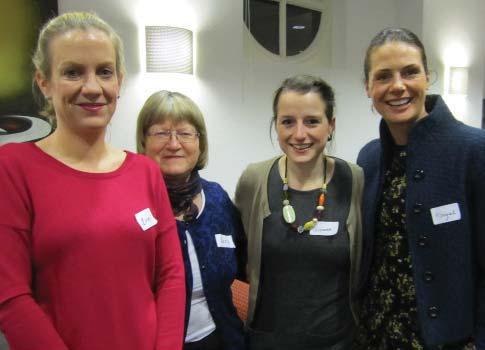
From left: Drs Eimear Morgan; Maria Jennings; Yvonne MacAuley; and, Abigail Moore.
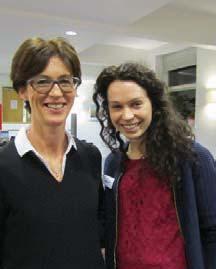
From left: Dr Sarah Brody; Dr Frances O’Callaghan; and, Dr Jane Renehan.
From left, Dr Linda Elliott; Dr Rhona Mahony; and, Dr Nuala Carney.
Dr Patricia Cunningham and Dr Eimear McHugh.
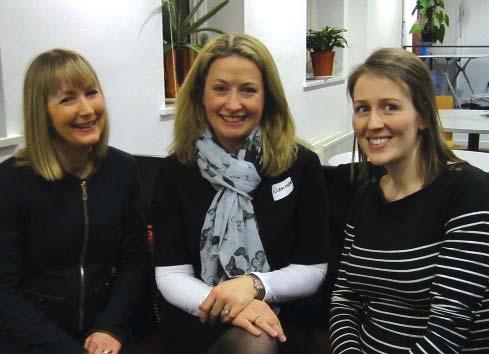
From left: Drs Maeve O’Hare; Eleanor McGovern; and, Mary McGeown,
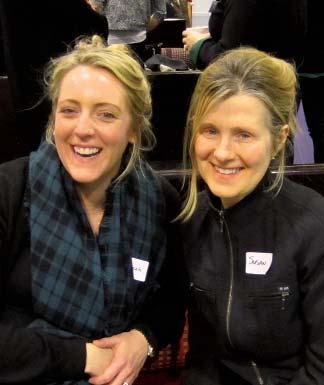
Dr Hannah Granville and Dr Susan Kiely.
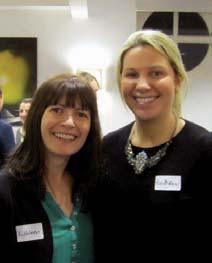
Dr Kathleen Lynch and Dr Kathryn Browne.
The write stuff –Clinical Feature of the Year
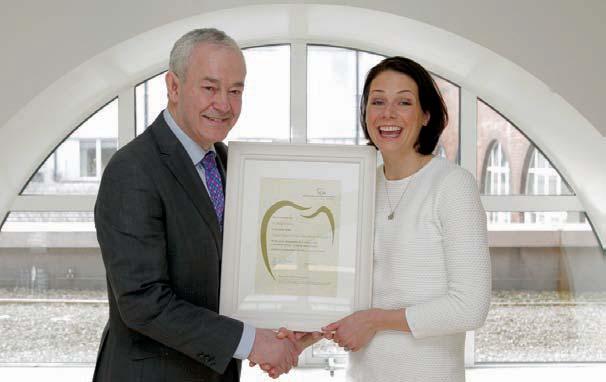
The Editorial Board of the Journal is pleased to announce that the winner of the Clinical Feature of the Year Award for 2014/15 is Dr Abigail Moore. The winning feature was chosen by the judging panel of three members of the Editorial Board – Drs Michael Crowe, Mark Kelly and Ciara Scott. Dr Moore won the award for her clinical feature entitled: ‘Management of an anxious child in the dental setting – a step-by-step approach’ which was published in the February/March 2015 edition. It was chosen from all the clinical features published in the Journal in the period April 2014 to March 2015. Abigail is pictured here receiving her award from Professor Leo Stassen, Editor of the Journal
Prestigious dental researchers
come to an end
New Xylitol research from Cochrane
New research concludes that there is limited evidence to show that xylitol is effective in preventing dental cavities in children and adults. Xylitol is a natural sweetener that is widely promoted globally, and can be found in a wide range of everyday products including sugar-free chewing gum, toothpaste, gels, lozenges and sweets. Xylitol is a popular sugar substitute in sweets and it is already known to cause less damage to teeth than sugar. It has also been suggested that the addition of xylitol to products may help to prevent tooth decay by stopping the growth of decay-producing bacteria. However, according to new evidence published in the Cochrane Library there is little high quality evidence that it is beneficial in the fight against tooth decay, which affects up to 90% of children and most adults worldwide.
The authors gathered together data from 5,903 participants in ten different studies. In most cases, the studies used such different methods that the researchers could not combine the results to create a summary effect estimate. Based on information from 4,216 school children who took part in two Costa Rican studies, they found low quality evidence that levels of tooth decay were 13% lower in those who used a fluoride toothpaste containing xylitol for three
Our current CPD Roadshow Programme has now finished after a very busy and educational three years. Over 500 delegates attended the workshops in six different locations nationwide.
On behalf of all members, the IDA would like to extend sincere gratitude to all the speakers on the CPD Roadshow Programme. Without their generous giving of their time and expertise, we would not be able to run these workshops in the regions. Also, a big thanks to all those who availed of these CPD workshops, and participated in the many interesting discussions and debates.
Finally thank you to GSK Sensodyne for their generous sponsorship of the programme over the last two years, and to Colgate for their sponsorship of year one of the programme. More details on the next phase of our programme of CPD in the regions will follow soon.
years, compared to those who used a fluoride-only toothpaste. For other xylitol-containing products, such as xylitol syrup, lozenges and tablets, there was little or no evidence of any benefit.
Lead researcher, Philip Riley of the School of Dentistry at the University of Manchester, said: “This Cochrane review was produced to assess whether or not xylitol could help prevent tooth decay in children and adults. The evidence we identified did not allow us to make any robust conclusions about the effects of xylitol, and we were unable to prove any benefit in the natural sweetener for preventing tooth decay. The limited research on xylitol-containing toothpastes in children may only be relevant to the population studied. He added: “For other products containing xylitol we were unable to determine whether they were beneficial. We were particularly surprised to see such a lack of evidence on xylitol-containing chewing gums.”
Several of the studies included in the Cochrane review did not report sufficient information on the side effects of xylitol, which can include bloating, diarrhoea and laxative effects. Philip Riley remarked: “We expected all studies to report adverse effects as an outcome. Sugar-free gums, sweets, mints and other products are well-known for their gastrointestinal effects and these should be clearly reported in future studies.”
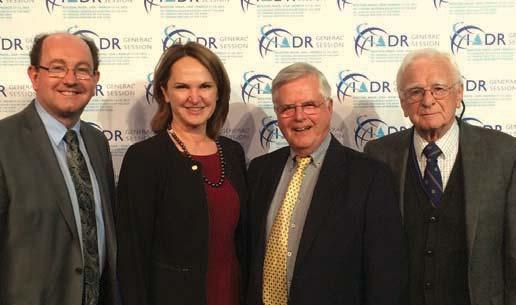
At the recent Conference of the International Association for Dental Research in Boston were (from left): Dr John O’Keefe, with former Association Presidents Professor Helen Whelton; Professor John Clarkson; and, Dr Bill Bowen.
CPD roadshows
A little alm twisting
Dr Denis Daly, President of the Irish Dental Benevolent Society, is a man on a mission,
Rathfarnham-based general dental practitioner Dr Denis Daly wants to ensure that all dentists are aware of the Irish Dental Benevolent Society (IDBS). He especially wants dentists to know what the Society does for dentists and dentists’ families in difficult times.
“Typically, the Society would, in the past, have helped widows of dentists who had died suddenly, relatively young, without adequate insurance, to provide for their families. The Society helped with small but vitally important regular payments,” says Denis. In more recent times, he points out, the crash of the economy and the withdrawal of State support for dentistry has put dentists under more pressure and, when perhaps combined with unforeseen illness, left some dentists in very straitened circumstances.
“There are a lot of dentists whose practices would have consisted of one-third medical card patients; one-third PRSI patients; and one-third private patients. The first two-thirds got effectively wiped out by Government cuts, and private patients were much less inclined to spend any money that they had managed to hold on to in the crash. This resulted in catastrophic drops in income for some practices resulting in subsequent pressure, hardship and illness. We have had several cases only brought to our attention at breaking point, i.e., the point at which the dentist was threatened with no longer being able to put food on the table.”
“We need your help”
Denis Daly is unequivocal: “If everyone gives just a little, there will be no problem.” However, the reality is that there is a problem. “The Society needs to replenish the funds it has used up in assisting dentists through the downturn. The good news is that a little helps a lot. The Society only needs dentists to make a small contribution. Donations of
as we recently found out.
The Society can help with protecting the family home mortgage, helping to educate dependents, helping to meet health costs such as health insurance or nursing home costs, helping with insurance premiums and helping with once off expenses.
Reluctance can be an issue
Some of the delay in coming to the Society is due to a reluctance to seek help but in other cases, says Denis, there was just no awareness that the IDBS existed and can help in an emergency. He comments: “While we did a campaign to raise our profile about 15 years ago, we think there are many dentists who have entered the profession since then who have no idea that our Society exists and can help. We need them to understand that we are available if they are in financial difficulty – they can contact any member of the IDBS Committee.”
IDBS Officers and Committee
Trustees John O'Grady Gerry Murray David Whitaker
President Denis Daly
Immediate Past President Aislinn Machesney Hon. Secretary Niamh Molloy Hon. Treasurer Mark Kelly Committee
Frank Houston, Marianne McHugh, Conor McAlister, Theo Hanley, Clare Quinlan, Kieran Daly, Gillian Smith, Bernie Fee (Monaghan), Sarah McMorrow (Galway), Joe Lemasney (Limerick), Frank Burke (Cork), Anthony Sweeney (Sligo), Philip Christie (Waterford).
just ¤10 a month or ¤100 a year from everybody would go a long way. Anything over ¤250 in a year qualifies for a tax rebate to the Society as it is a registered charity. Can I appeal to all dentists who can afford it to make a regular donation to the Society by standing order? We need your help.”
To make a contribution or to set up a standing order, see www.idbs.ie or contact any of the Committee members.
Coming home
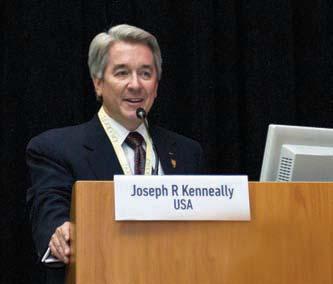
The ruling body of the International College of Dentists is meeting in Dublin in October, and the College’s international President, Dr Joe Kenneally, has a strong Irish connection.
Dr Joseph Kenneally is many things. He is a general dental practitioner in the town of Biddeford in the state of Maine in the United States of America. He is a former Vice President of the American Dental Association. He’s a family man with adult children. He is also the 2015 President of the International College of Dentists (ICD or just College). With 12,000 members, it is the largest and oldest honorary society of dentists in the world. And it is in his role with the ICD that Joe believes that his life, and his family story, will come full circle in October of this year. He will come to Ireland to preside over a global meeting of his profession in the country that his grandfather, a blacksmith, left in the early part of the last century. We in Ireland sometimes underestimate the emotional ties of the diaspora to our country. We shouldn’t. Dr Joe Kenneally is a man who has achieved a great deal in his life and it is evident from talking to him that it means a great to him to return to Ireland as President of the ICD.
ICD in Dublin
Joe Kenneally comes to Dublin with an agenda – the agreement and adoption of a strategic plan for the future of the ICD. It’s a big ask for an organisation that is so multicultural. “Some of our members place great emphasis on leadership; others on the honour; and others again on our humanitarian work. It’s a challenge to get all of them to agree to a single strategic plan,” says Joe. However, the underlying drive is for growth. The ICD currently has about 12,000 fellows. Joe believes that the top 2% of dentists in the world should be members; so there is room to grow to about 72,000 members globally. The ICD is a huge organisation, being divided into regions across the world. The European Section is currently headed by well-known Irish dentist Dr Tom Feeney (a former member of the Editoral Board of the Journal) and it was Tom who headed the drive to bring the ICD event to Ireland. In fact, it consists of both the 60th Annual Meeting of the European Section of the ICD, and the annual meeting of the International Council of the College. The formal meetings take place at the Royal College of Physicians of Ireland, Trinity
Paul O’Grady Journalist and managing editor at Think Media
Joe’s journey
College, the Royal College of Surgeons of Ireland, and the Shelbourne Hotel. The key social event is the Gala Dinner in the Royal Hospital Kilmainham on Saturday October 10.
Dr Kenneally feels that dentistry is in a period of strong growth and development in the advanced nations of the world. He cites the advent of electronic technology as having a transforming effect on dental surgeries, with the ability to use digital technology to see images in three dimensions as a huge help to dentists.
In the less developed areas of the world, there is a drive to raise standards and get care to people. The ICD has a strong humanitarian role and often partners with local organisations to get oral healthcare to places where no such care has previously existed.
Joe Kenneally is a second-generation Irish American. His grandfather was a blacksmith who emigrated to the United States from Tipperary. With the classic determination of hard working people, Joe’s dad became a Professor in Arts
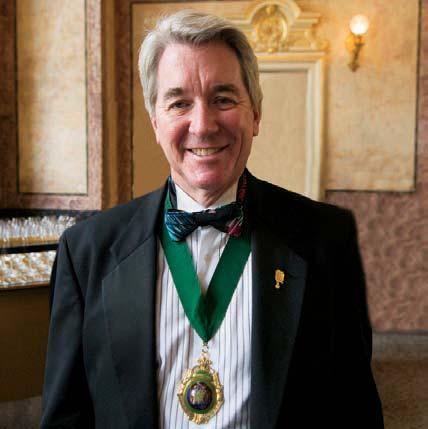
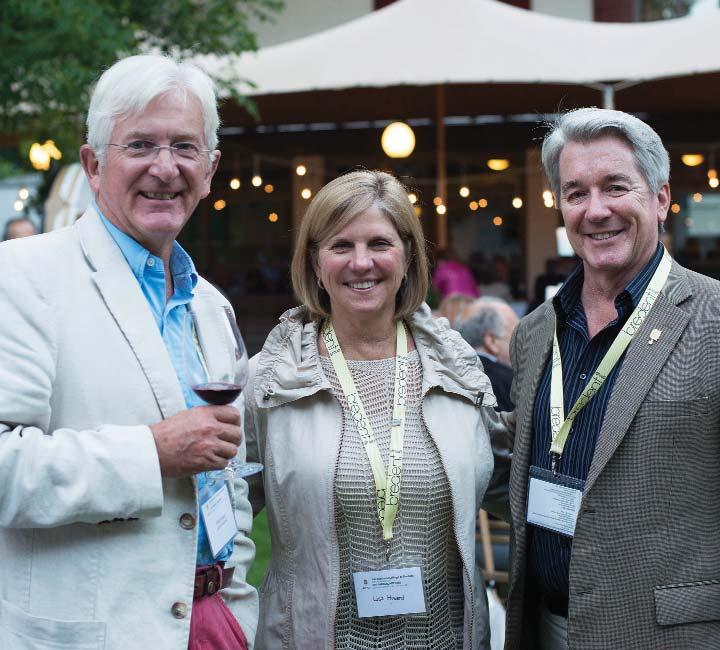
ICD International President-Elect for 2016 Dr Phillip Dowell of the UK (left) with Dr Lisa Howard and Dr Joe Kenneally.
Follow the clues…
The Rochestown Park Hotel in Cork plays host to this year’s IDA Annual Conference, and incoming Association
President Anne Twomey will join the hardworking Conference Committee in welcoming delegates to another excellent event.
From Thursday April 16 to Saturday April 18 a fantastic programme of handson courses, lectures, workshops and, of course, social events will keep everyone educated and entertained.
Once again, parallel sessions on Friday and Saturday will offer a wide choice of topics to attendees, while sessions for our technician, nurse and hygienist colleagues ensure that the entire dental team is catered for. The business of the
This course will discuss how one or two implants attached to a removable partial denture can create a stable and claspless aesthetic replacement for multiple missing teeth.
Drs PJ Byrne and Declan Corcoran
Crown lengthening – techniques for improving success in restorative and cosmetic dentistry
A review of the indications for and applications of clinical crown lengthening as an integral part of comprehensive diagnosis and treatment planning for your patients.
Conference will be dealt with at the IDA and IDU AGM, which takes place on Thursday evening at 6.00pm. A CPR/medical emergency workshop will allow you to address a core CPD requirement, or you can support the dentists of the future by paying a visit to the poster presentations for the Tony Costello Memorial Award. As always, our social programme is a vital addition to the conference, with golf, a fun run, and the Annual Dinner to look forward to,
Dr Tim Donley
Periodontics hands-on workshop for dentists: translating technology into practice
How to formulate a clear approach as to what to use and how to use it. Attendees will leave with a clear vision of what to look for, what to say and what to do every time they sit down and pick up a probe.
Dr David Clarke
Better, faster, prettier anterior composites
Experience a unique approach to modern resin dentistry. Participants will learn and perform the five new steps to achieve rock solid posterior composite contacts.
Professor Terry Donovan
Practical pearls for clinical use: a day with Terry Donovan
This presentation will discuss several controversial topics related to restorative dentistry and attempt to provide guidance based on the best available evidence.
Professor Ken KurtzDr PJ ByrneDr Declan CorcoranDr Tim DonleyDr David ClarkeProfessor Terry Donovan
while the trade show will allow you to support our colleagues in the dental trade, without whom events like this could not take place.
Pre-Conference Programme
Our Pre-Conference Programme on Thursday features an impressive range of hands-on courses, led by eminent experts from home and abroad. Professor Ken Kurtz extols the virtues of removable partial dentures in two half-day courses, while Drs PJ Byrne and Declan Corcoran will spend Thursday afternoon telling us all we need to know about crown lengthening. Dr Tim Donley shares his expertise in periodontics in two half-day courses – one for dentists and one for hygienists – while Dr David Clarke presents a full-day course on anterior and posterior composites. Finally, Professor Terry Donovan will give a fascinating full-day course looking at a number of controversial topics in restorative dentistry, teasing out the pros and cons and attempting to offer guidance to dental professionals.
Lecture programme
Once again, Friday is dental team day, with parallel lectures taking place on a wide range of topics. Clinical topics include presentations on successful strategies for tooth whitening from Lina Greenwall, diagnosis and management of dental erosion from Terry Donovan, and caring for patients with cancer from
Don’t miss…
DENTAL NURSES SATURDAY, APRIL 18
LAURA HORTON and MICHAEL BENTLEY
JACK OF ALL TRADES – the role of the dental nurse
Laura and Michael will share their knowledge and help the delegates to become effective at performing two roles or more in the practice. Many team members have multi-roles such as dental nurse and manager. This can lead to a feeling of being overwhelmed as the team member tries to ‘juggle’ several balls at once. Laura and Michael have been in this position and will share with you their tips to encourage a proactive work environment for the mutli-role team member.
Don’t miss…
DENTIST’S DAY SATURDAY, APRIL 18
PROFESSOR KEN KURTZ
Professor and Associate Director of the Advanced Education Programme in Prosthodontics, NYUCD
Post and core: update 2015
A review of prefabricated alternatives versus custom cast, and indications for this treatment modality.
for a pre-conference course on Thursday can play on Wednesday, April 15, in the afternoon instead, if they wish.
Please join our trade colleagues on Thursday evening, directly after the AGM, for the official opening of our “Evidentaly” trade show by the newly inaugurated IDA President Dr Anne Twomey. Fun, music and drinks will be provided for all.
Following this, everyone is invited to a buffet supper in the Rochestown Park Hotel from 9.00pm. Tickets are priced at ¤25 and are available from IDA House.
Our Annual Dinner takes place on Friday evening and will, as ever, be the highlight of the conference. A drinks reception at 7.30pm will be followed by dinner and dancing. Dress code is black tie, and this year’s guest of
honour will be Donal Óg Cusack, former Cork hurler, GAA pundit, and Chairman of the GPA (pictured above).
If you feel like a challenge after the late night on Friday, we are once again holding our 5K fun run on Saturday morning. Run, jog or walk around the Douglas area of Cork City, with all proceeds going to Irish Guide Dogs for the Blind.
Awards
We have made some changes to one of our awards this year.
Dr Joe Moloney Award
2015 sees a complete revamp of the Dr Joe Moloney Award, which will be awarded to an outstanding Irish presenter/lecturer at our conference, chosen by delegates. The Award, kindly sponsored by the Dental Health Foundation, will be chosen on the final day of the conference when all delegates will have the chance to nominate their presenter of choice.
Tony Costello Memorial Medal
The competition for the Tony Costello Memorial Medal is judged on a table demonstration or poster presentation of not more than 10 minutes on a subject applicable to general dental practice.
Donal Blackwell Chairman
Judith Phelan Pat O’Driscoll Kieran O’Connor
Conference Committee
Anne Twomey President Elect
Pioneering innovations from Voco
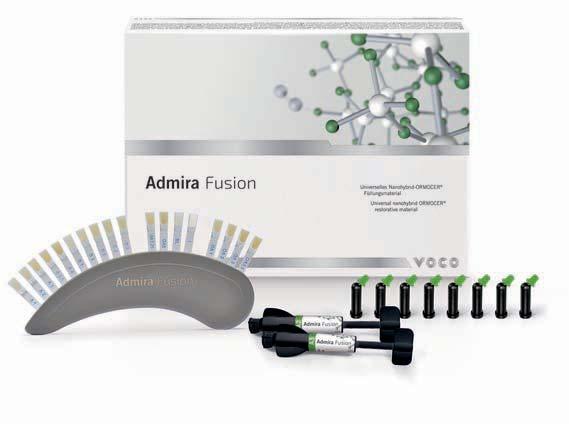
Voco will present several innovations at the IDA Annual Conference 2015. According to the company, Admira Fusion is the world’s first restorative material to combine Ormocer with nanohybrid technology. In this case, both the fillers and the matrix are based on silicon oxide. Thanks to this pure silicate technology, Admira Fusion boasts excellent biocompatibility, extremely low shrinkage, optimal colour stability and a high filler content. The new filling system is complemented by Admira Fusion x-tra, which allows increments of up to 4mm while displaying the same physical properties. Further new products include the fast-setting glass ionomer material IonoStar Plus and Clip Flow, a flowable restorative material for temporary restorations. Developed especially for the prophylaxis sector, Voco is introducing the protective dental cream Remin Pro forte, adding ginger to the range of flavours available in the Remin Pro product range. And last but not least, there is Celalux 3, a new cordless high-performance LED light-curing device in a pen design. It weighs only 70 grams and it can be handled like normal instruments in the surgery. In addition
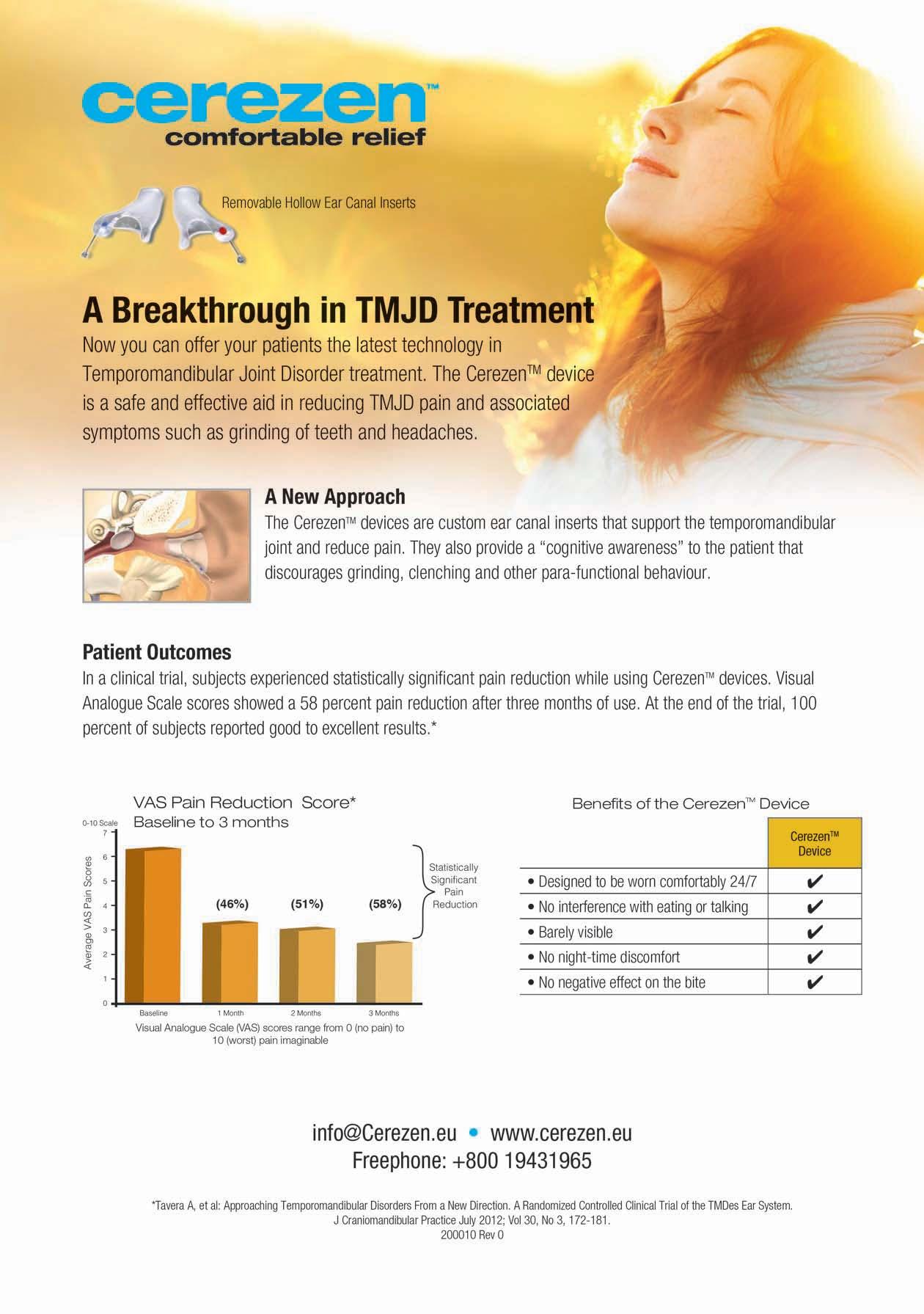
New treatment for TMJDs
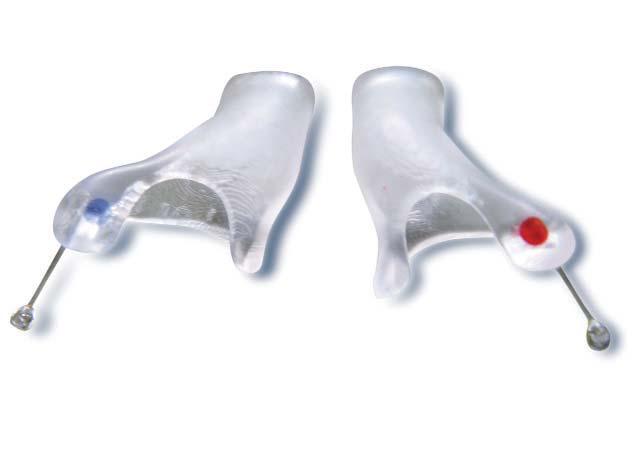
A new way to treat temporo-mandibular joint disorders (TMJDs) has been approved for use in the UK and Ireland. The Cerezen device comprises a pair of removable custom-made hollow inserts, which are placed within the ear canal to reduce the symptoms, pain and related conditions including grinding of teeth and headaches. A clinical study reports that 100% of patients are satisfied with these unique new ear canal inserts, which reduce TMJ pain.
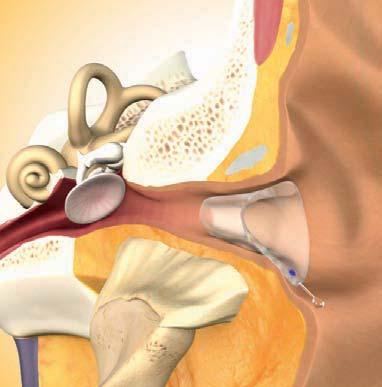
Simply inserted in the ear, the nearest access point to the TMJ, the device works by exerting subtle pressure on the walls of the ear canal when the jaw is in the closed position. This encourages the patient to return to the ‘open bite’ position, minimising the tendency to clench the jaw and tense the surrounding muscles.
to these innovations and the well-known “Made in Germany” bestsellers, Voco will also exhibit a host of offers at bargain prices in its highlights. Visit VOCO at the IDA Annual Conference: stand 9.
The Cerezen device was developed in the USA, has achieved USA FDA clearance and complies with the essential requirements of the relevant European Directives MDD93/42 (CE Mark). In addition, an A Level 1 Clinical Study showed that 100% of users indicated excellent (71%) or good (29%) overall satisfaction with the Cerezen device. One reason for the effectiveness of the devices is that they can be worn 24 hours a day and are practically invisible, ensuring total discretion –another reason why compliance levels among users is also markedly higher than with intrusive bite splints.
The device is quick and simple to fit, requiring only around 15 minutes’ chair time plus 25 minutes for the ear impression by a trained professional such as an audiologist. Once the
diagnosis is made and ear impressions taken and submitted, TMJ Health LLC produces the custom devices and supplies them in approximately two weeks. According to the company, they are easy and convenient for the patient to insert and remove, offering a simple and safe reduction of TMJD symptoms without impacting the patient’s lifestyle - as speech, eating and drinking are unaffected. As the device is hollow, it does not affect hearing, and is fitted with small retraction posts to make it easy to remove – which is advised for bathing and swimming.
The new Cerezen ear implants and, below, how they fit in the ear canal.
Dr Roger Wixtrom, who has 25 years of experience in the evaluation of the clinical performance and safety of a range of medical devices, was the Scientific Director of the pivotal clinical study of the Cerezen device. This compared its performance and safety to that of the most widely used current treatment, the bite splint and he commented: “While bite splints have helped to reduce pain associated with TMJD, there are drawbacks with these devices. For example, they cannot be worn while eating and they can also affect speech, and as such are typically only worn at night while sleeping. The Cerezen device offers a safe and effective option that patients should discuss with their dentist or ENT specialist”
Following regulatory approval, the Cerezen device can be seen at The Dentistry Show, Dentistry 15, the Irish Dental Association Show and Identex, where there will also be presentations for delegates about this innovative new device.
Dentsply Implants on display
At the major IDS show in Cologne recently, Dentsply Implants showed the following: their prosthetic solution with the comfort of a fixed restoration; a patient-specific suprastructure on transgingival implants that eliminates the need for additional abutments; and, an implant for sloped ridge situations for excellent aesthetic results.
These are the respective benefits of Atlantis Conus concept, Atlantis ISUS implant suprastructures on XiVE TG implants, and the OsseoSpeed Profile EV implant.
Conus concept
According to Dentsply Implants, the Atlantis Conus concept, for all major implant systems, is a new prosthetic solution that provides removable prosthesis with the comfort of a fixed restoration; the patient-specific ATLANTIS Conus Abutment together with prefabricated SynCone caps provide patients with a unique, cost-effective, friction-retained and non-resilient prosthetic solution. This solution offers renewed patient comfort and confidence, and helps to eliminate problems often associated with dentures, such as pain.
Patient-specific suprastructures
The company says that Atlantis ISUS implant suprastructures on XiVE TG implants provide the advantages of a patient-specific custom restoration and the cost-effectiveness of a transgingival implant design, eliminating the need for additional abutments. With the XiVE TG implant, high primary stability is achieved in all types of bone.
QUIZ questions
Submitted by Dr Seamus Sharkey.
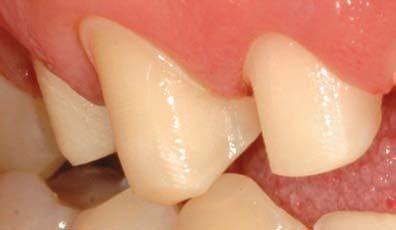
2: Veneer preparation on UR3 and UR2,4 – Emax crowns.
OsseoSpeed Profile EV implant
The OsseoSpeed Profile EV implant is the second generation of the uniquely shaped, patented implant specifically designed for sloped ridge situations that allow dentists to achieve 360° bone preservation, a prerequisite for excellent aesthetic result. This innovative implant was first introduced in 2011 and is now upgraded with the simplicity and design principles of Astra Tech Implant System EV.
Treatment solutions and product highlights
The advantages of an extensive and comprehensive product portfolio include the possibility of treatment solutions for all indications. At IDS, Dentsply Implants’ treatments solutions and product highlights included:
■ Simplant computer-guided implant treatment with the Astra Tech Implant System EV;
■ the release of Simplant 17 software, where the calculator shows important planned implant relations, such as the distances between implants, implant vertical heights and implant inclination compared to the desired insertion;
■ the Symbios regenerative solutions portfolio, including bone graft material, membranes and instruments, with a presentation of Symbios Collagen Membrane SR (slow resorbable) and Symbios Biphasic Bone Graft Material;
■ the introduction of the Atlantis Abutment Insertion Guide, making it easier and safer to install a patient-specific, cement-retained Atlantis abutment;
■ intraoral scanning for Atlantis Abutment with iTero; and,
■ new interfaces for Atlantis abutments, including ANKYLOS C/X C/ nonindexed and NobelReplace Conical Connection.
Permanent cementation and bonding of indirect restorations:
1. List four main functions of modern cements.
2. When selecting a dental cement, a number of considerations need to be taken into account such as: –the resoration itself; –the cement; and, –the clinical scenario.
List two factors for each of the above categories that need to be considered.
3.Two main categories exist for modern cements – water-based and polymerising. Give two examples of each.
4.Although a myriad of factors can affect the choice of dental cement, what type of cements are, in general, suitable for the following restorations:
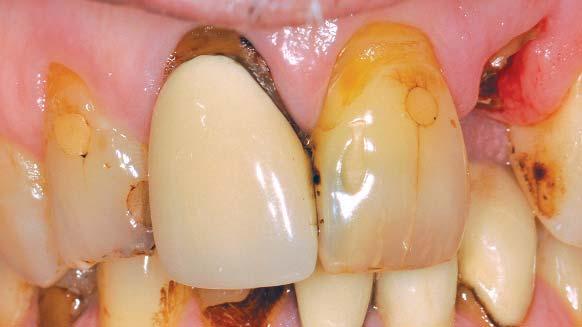
Ametal ceramic or full coverage metal restorations (Figure 1); Bpartial coverage restorations – onlays, inlays; Cceramic veneers (Figure 2); Dall-ceramic crowns (Figure 2); and, Eresin-bonded/Maryland bridges.
Answers on page 99.
The Atlantis ISUS implant superstructure.
FIGURE 1:
Old metal ceramic crown on UR1.
FIGURE
Advice
Garry gave two fundamental pieces of advice for young dentists. Firstly, he described what he calls the golden rule of separating business finance from personal finance. “Pay yourself a wage from the business and put it into a personal account. Do not use a business account for personal items.”
The second piece of advice he gave is to choose professional advisers very carefully – particularly accountants and solicitors. “A good question to ask potential advisers is how many dentists are on their books and remember that expense-sharing relationships are almost unique to dentistry.”
Feedback
Surveys carried out by Sandycove Dental Care have confirmed that the three most important parts of the dental experience for patients were: how well dentists explained the procedures they had to carry out; the quality of the friendliness and courtesy the patient experienced; and, the physical gentleness with which they were treated by the dentist.
The future
Change has accelerated in pace in recent years, with digital imagery, crossinfection control and computerisation all featuring in changes that challenge dentists. So if change is galloping ahead, what can we look forward to? He posed several questions about the future: how soon will impressions be a thing of the past?
The TCD class of 1980:
1. Robert Frost, 2. Clem Sullivan, 3. Brian Slein, 4. Bob McNulty, 5. Gerry Gaffney, 6. Tom O’Sullivan, 7. Chris Lynn, 8. Gerry Kearns, 9. Liam Costello, 10. James Hoey, 11. Darragh Coakley, 12. Dermot Canavan, 13. John Fahey, 14. John Tiernan, 15. Paddy Cullen, 16. Michael Lynch, 17. Irene Kennedy, 18. David Rutledge, 19. Michael Fleming, 20. Sean Malone, 21. Garry Heavey, 22. Barry Grundy, 23. Frank X. O’Brien, 24. Bill Anderson, 25. John D. Regan, 26. Niall McGuinness, 27. Mary Queenan, 28. Breifne Cully, 29. Joe Bergin, 30. Jane Renehan, 31. Michael Fenlon, 32. Moya McAlinden, 33. Simone Elyan, 34. Paddy O’Sullivan, 35. Grainne Cahill, 36. Eddie Owens.
what percentage of orthodontic work will be carried out by GDPs?; will most endodontic work be carried out by specialists?; will every practice have their own cross-infection control technician?; is there a future for single-handed practitioners?; will corporates dominate Irish dentistry?; and , what will happen to indemnity insurance?
Whatever the future brings, Garry’s message was to set personal and professional goals and to make changes that facilitate the achievement of those goals.
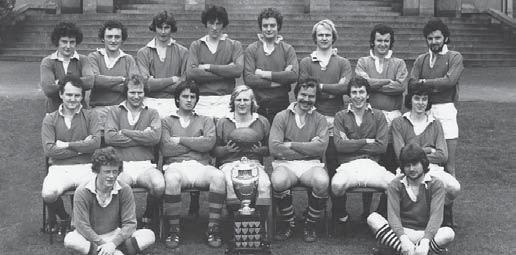
Hospitals Cup winning team 1980 SEATED:Gerry Cleary; and, Diarmuid McHugh. FRONT ROW: Garry Heavey; Barry Devaney; Niall McDonagh; Darragh Coakley; Paddy O’Sullivan; Gerry Kearns; and, Owen Dee. BACK ROW: Gerry Glackin; Bill Cleary; Niall O’Connor; Sean Tunney; Dave Gleeson; Michael Fenlon; Conor McAlister; and, Michael Fleming.
Dental indemnity and oral appliance treatment
It is important to clarify with your professional indemnity company in advance of getting involved in this type of treatment, whether or not you are covered to do so. Dental Protection and the DDU have position statements on their websites that clarify the requirements for indemnity. In many cases, a properly documented training course is required. The usage of oral appliances can have side effects for patients, particularly if treatment isn’t carefully carried out. A high proportion of oral appliance patients can develop permanent bite changes or TMJ problems, particularly in cases
This procedure’s availability is limited.
Treatment – dental
Oral appliances: A proportion of patients are either unsuitable for CPAP or refuse to use it. Some of these may respond better to the use of oral appliances made by a dentist. Normally, these patients have mild or moderate apnoea, but occasionally oral appliances can be used in severe apnoea where CPAP has failed. They are also an excellent treatment for snoring. Patients with a low BMI and a tendency towards more severe apnoea when lying on their backs than their sides are more likely to respond well to oral appliance treatment.
where a greater degree of advancement is required to achieve a successful clinical outcome. Ultimately, the final decision on treatment success or failure can only be determined by a sleep physician, and dentists should never attempt to sign off on a patient as being cured or treated on the basis of their own opinion. If a patient has a serious health complication or a car accident related to incompletely treated apnoea and the dentist has taken full responsibility for the diagnosis, treatment and discharge of the patient, they may not be covered by their indemnity company.
1:
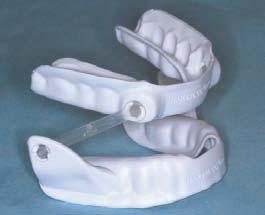
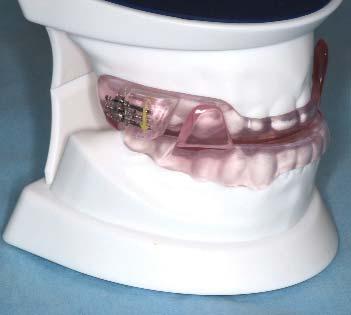
The Narval CC is a new generation of mandibular repositioning device (MRD) designed specifically for the treatment of adult obstructive sleep apnoea.
Practicalities of oral appliance therapy
SomnoDent is a custom-made medical oral appliance for the treatment of mild to moderate obstructive sleep apnoea.
Oral appliances for OSA are essentially like a maxillary and mandibular occlusal splint, related or connected to one another in a way that maintains the mandible in a protruded position. As the tongue is connected to the mandible, protruding the mandible pulls the tongue forward and makes it less likely that it will block the airway. There are lots of different types of oral appliances. They vary in their robustness and size but all should have some mechanism that allows the degree of mandibular advancement to be modified. Some common oral appliances are illustrated in Figure 1
Oral appliance treatment procedures
For patients who report having the signs or symptoms listed in Table 1, the first step is a referral to a sleep physician. If the physician diagnoses the patient as a non-apnoeic snorer or recommends oral appliances for actual OSA, they will refer the patient back to the dentist. The dentist then assesses the patient’s suitability for oral appliance treatment. If they are suitable, then impressions and a particular type of protrusive record are made. When the appliance comes back it is fitted and titrated forward gradually over time, until the symptoms are relieved and any symptoms or side effects from oral appliance usage are minimised. Titration involves adjustment of the degree of mandibular protrusion to its optimal level. At that point the patient is sent back to the sleep physician for a review, and in some cases a follow-up sleep study is done to assess treatment efficacy. The physician and dentist decide at that point what the plan is for the future, depending on the performance of the appliance and any side effects that may have arisen.
FIGURE
Smoking cessation and the role of the dental practitioner
Abstract
As dentists we are uniquely positioned to influence the rate of tobacco smoking and could contribute to a decrease in the associated mortality and morbidity. The detrimental effects of smoking on oral health are well established; thus, a structured approach to initiate smoking cessation, help to manage the initial phase of withdrawal symptoms, and provide long-term support is an important role for our profession. It has been shown that smoking cessation advice for even a few minutes increases long-term smoking abstinence rates by 5%, which can be increased by 50-70% with the use of adjunctive pharmacotherapy, e.g., nicotine replacement therapy, for withdrawal symptoms. This article aims to give a brief overview of smoking in relation to oral health, review the management of tobacco smoking dependence, and discuss how we as dentists can help our patients to quit smoking.
Journal of the Irish Dental Association 2015; 61 (2): 90-92.
Introduction
Most people are aware that tobacco smoking has serious effects on health and that it is the leading cause of preventable death worldwide.1 In spite of this, data from the Health Service Executive (HSE) from December 2013 show that 22.9% of the male and 20.2% of the female population in Ireland smokes tobacco.2 Although the negative effects of smoking, including cancer, cardiovascular disease and lung disease, are well recognised by smokers, they consistently underestimate their own risk of developing disease. A similar pattern of underestimation of their own risk appears to hold true for the association between smoking and oral cancer, although the general awareness that smoking can cause oral cancer is significantly lower than knowledge of the risk of cardiovascular/lung disease.3 In an effort to raise public awareness of oral cancer, the annual Mouth Cancer Awareness Day (MCAD) was introduced in 2010 in Ireland. In the MCAD campaign for the prevention and early diagnosis of oral cancer, a key message is the importance of smoking cessation in decreasing the risk of developing oral cancer.4,5
The negative effects of smoking on oral health are many and range from halitosis, unsightly staining of teeth, and black hairy tongue, to periodontal disease and squamous cell carcinoma of the oral mucosa. It has been estimated that up to 50% of all periodontal disease, 91% of all oral cancer in males, and 59% of oral cancer in females may be associated with smoking.6-8 In a recent study it was shown that 90.6% of oral and pharyngeal cancers in the UK are
Leo F.A. Stassen
FRCS (I), FDSRCS, MA, FTCD, FFSEM, FFDRCSI, FICD
St James’s Hospital, Dublin 8
Oscar Hammarfjord MScDS PhD
St James’s Hospital, Dublin 8
linked to lifestyle: 93% in males and 85% in females.9 The majority of these were estimated to result from smoking.9 The benefits of smoking cessation with regard to oral health should prompt action by the dentist. Directed questions about our patients’ smoking habits must be part of all dental assessments.
Discussion
Smoking and oral health
It is estimated that more than 50% of all smokers visit a dentist every year; hence, this is an opportunity to inform them about the risks of smoking and what benefits smoking cessation has on oral health, and health in general.10
The negative effects of smoking on the oral cavity are numerous (Table 1). Although oral cancer represents the most serious complication, only two out of three of the UK population is aware that smoking may cause oral cancer.3 There is no reason to believe that awareness is any higher in Ireland. The low public awareness of oral cancer results in late presentation, with advanced stages of disease and decreased survival rates as a result. The dentist has a central role to play to increase awareness of the association between smoking and oral cancer, and in the early detection of oral cancer.
The short-term benefits of smoking cessation with regard to oral health include less halitosis, and less discolouration of teeth and fillings. Smoking cessation also results in a decreased risk of developing complications after invasive dental procedures such as periodontal surgery and dental extraction, including
Corresponding author: Leo F.A. Stassen
National Maxillofacial Unit
St James’s Hospital
James’s Street, Dublin 8
T: +353 1 410 3860
F: +353 1 416 2055
E: stassen@tcd.ie
lowering the risk of developing alveolar osteitis (‘dry socket’).11-13 Moreover, it has been shown that smoking increases the failure rate of dental implants, as well as impairing the aesthetic outcome of dental implant treatment, due to failure of papilla regeneration and increased gingival recession.14,15 Smoking cessation plays a role in preparing the patient for any dental treatment. The long-term beneficial effects of smoking cessation include decreased progression of periodontal disease and a decreased risk of oral cancer.8 Oral cancer constitutes 2-3% of all cancers worldwide and carries a high mortality rate.16 It has been shown that smokers have a two- to five-fold increased risk of developing oral cancer and that this risk is dose dependent, i.e., the risk increases with the number of cigarettes and the years of use.8 The risk of developing oral cancer further increases if smoking is combined with excessive alcohol intake, which acts synergistically to increase the risk.11 There is no way at present to predict which patients will develop oral cancer. Thus, the only way to protect against oral cancer is smoking cessation and to decrease alcohol intake to lower and safer levels.
Diagnosing tobacco dependence
Nicotine is a highly addictive substance with physiological and psychological effects. It is known that nicotine, via actions on pre- and postsynaptic nicotinic receptors, affects a wide array of neurological functions by modulating the release of various neurotransmitters such as acetylcholine, serotonin, noradrenaline and dopamine. Thus, nicotine has several possible effects that could cause dependence. One mechanism for this has been shown to involve the mesolimbic dopaminergic system in the reinforcing effects of nicotine.17
The Diagnostic and Statistical Manual of Metal Disorders, fourth edition (DSMIV) and the International Classification of Diseases, 10th revision (ICD-10) criteria for nicotine dependence could be used for its diagnosis; however, in clinical practice, a formal diagnostic assessment of nicotine dependence is seldom warranted. Many patients with nicotine dependence are aware of their addiction and a history of previously failed cessation attempts is common. It is important to take a detailed history of the patient’s tobacco habits including quantity, modality and length of use. The Fagerström Test for Nicotine Dependence (FTND) could be used to assess the degree of nicotine dependence and studies have shown that the score from the FTND correlates with the risk of cessation failure.18,19 It is important to discuss previous cessation attempts with patients in order to identify potential blockages for successful treatment.
Treatment of tobacco smoking dependence
Brief intervention
It is estimated that, in developed countries, approximately 30-40% of all smokers try to stop smoking in any given year, but only 2-3% succeed long term.20 Interestingly, the long-term success rate can be doubled to about 5% by a three-minute brief intervention by the patient’s general practitioner.21 The general dental practitioner could probably achieve similar results, and it has been shown that brief intervention by a dental practitioner can result in cessation rates of 5-12%.22 A brief intervention is when a general medical or dental practitioner gives advice regarding the benefits of smoking cessation to the patient. This advice is to motivate and help the patient to stop smoking. It has been shown that focusing on short-term benefits is more effective than focusing on long-term risks. 21 A brief intervention typically involves identification of the problem, i.e., establish that the patient has an addiction,
Table 1: Selected reviews on tobacco smoking in relation to oral health.
Area of oral healthSee Reference
PERIODONTOLOGY28, 29
IMPLANTOLOGY30
DENTAL CARIES31
ORAL CANCER20
ENDODONTICS32
assess if the patient has considered stopping smoking, assess their level of motivation, provide support and guidance, and arrange follow-up to monitor progress, assess drug compliance, and provide encouragement.20 Currently, the Quit campaign (www.quit.ie) by the HSE provides a good source of information for both patients and healthcare providers regarding smoking cessation.
Nicotine replacement therapy
A Cochrane report published in 2008 concluded that the percentage of successful smoking cessation could further be increased by 50-70% by the addition of pharmacotherapy, such as nicotine replacement therapy (NRT), when compared to brief intervention.23 This Cochrane report suggests that NRT obtained without prescription appears to have similar efficacy as when prescribed.23 Thus, a brief intervention combined with advice regarding NRT has a significant positive effect on the smoking cessation rate.
NRT is used to reduce the intensity of the withdrawal symptoms on smoking cessation and in weaning doses of nicotine for about eight to 12 weeks after smoking cessation.20 The aim of NRT is to increase the cessation rate and reduce the relapse rate. NRT can be delivered by a wide array of technical modalities, including transdermal patches, chewing gum, lozenges, nasal spray and, more recently, via electronic cigarettes. NRT has a good overall safety profile and is available in Ireland as over-the-counter preparations. The various modalities of nicotine administration have many similarities, but with a few differences. Nasal sprays have a more rapid nicotine delivery than other NRTs. The plasma nicotine peak is reached with a similar speed to smoking.24 This might be of benefit when treating highly addicted patients. However, there is an increased risk of unintended long-term use.25
Recently, electronic cigarettes have emerged as a new NRT modality. A Cochrane report published in December 2014 concluded that electronic cigarettes are more effective than placebo, but the confidence in this result is rated as ‘low’ by GRADE standards.26 This Cochrane report found no evidence that short-term electronic cigarette use is associated with health risk.26 The long-term effects of electronic cigarettes on lung function and risk of oral cancer are not known. Today the effectiveness of electronic cigarettes as a smoking cessation tool is unclear, as is the role of electronic cigarettes as an instrument to reduce disease burden. It has been suggested that conventional NRT is to be recommended until electronic cigarettes have been longitudinally evaluated.27 The recent Cochrane review concluded that more studies on electronic cigarettes are needed and it stated that there are currently a number of ongoing studies aiming to assess the efficacy and safety of electronic cigarettes.26
Conclusions
To optimise treatment outcomes in dentistry, be it composite fillings, extractions, or periodontal therapy to reduce the risk of developing oral cancer, it is in the interest of all dental practitioners to actively try to influence their patients to stop smoking. Since patients commonly return to the same dental practitioner for many years, this provides a unique opportunity for healthpromoting initiatives such as smoking cessation. Given that brief intervention in combination with over-the-counter pharmacotherapy, e.g., NRT, has a proven efficacy in increasing the success rate of smoking cessation, this provides a scientific basis on which dental practitioners can offer help and support for their patients who smoke tobacco. Also, long-term support can easily be delivered by a few directed questions and encouragement during routine examinations. We suggest that every dental assessment should include a detailed history regarding tobacco use, and advice and support about smoking cessation should be offered.
References
1. Brundtland, G. H. Achieving worldwide tobacco control. JAMA 2000; 284: 750-751.
2. HSE. Ireland: Current trends in cigarette smoking.Available from: http://www.ntco.ie/research.asp.
3. Warnakulasuriya, K.A., Harris. C.K., Scarrott. D.M., Watt, R., Gelbier. S., Peters, T.J., et al An alarming lack of public awareness towards oral cancer. British Dental Journal 1999; 187: 319-322.
4. MacCarthy, D.,Nunn. J., Healy, C.M., Stassen, L.F., Gorman, T., Martin, B., et al Outcomes from the first mouth cancer awareness and clinical check-up day in the Dublin Dental University Hospital. Journal of the Irish Dental Association 2012; 58: 101-108.
5. Waldron, C., Cronin, O., Guray, A., Hynes. A., McGovern. C., Ryan., M. Results of data gathered at a smoking cessation counselling stand in the Dublin Dental University Hospital on Mouth Cancer Awareness Day 2012. Journal of the Irish Dental Association 2013; 59: 308-310.
6. Tomar, S.L., Asma, S. Smoking-attributable periodontitis in the United States: findings from NHANES III. National Health and Nutrition Examination Survey. Journal of Periodontology 2000; 71: 743-751.
7. Shopland, D.R. Tobacco use and its contribution to early cancer mortality with a special emphasis on cigarette smoking. Environmental Health Perspectives 1995; 103 (Suppl. 8): 131-142.
8. Winn, D.M. Tobacco use and oral disease. Journal of Dental Education 2001; 65: 306312.
9. Parkin, D.M., Boyd, L., Walker, L.C. 16. The fraction of cancer attributable to lifestyle and environmental factors in the UK in 2010. British Journal of Cancer 2011; 105 (Suppl. 2): S77-81.
10. Tomar, S.L., Husten, C.G., Manley, M.W. Do dentists and physicians advise tobacco users to quit? J Am Dent Assoc 1996; 127: 259-265.
12. Bowe, D.C., Rogers, S., Stassen, L.F. The management of dry socket/alveolar osteitis. Journal of the Irish Dental Association 2011; 57: 305-310.
13. Meechan, J.G.,Macgregor, I.D., Rogers, S.N., Hobson, R.S., Bate, J.P., Dennison, M. The effect of smoking on immediate post-extraction socket filling with blood and on the incidence of painful socket. British Journal of Oral and Maxillofacial Surgery 1988; 26: 402-409.
14. Hinode, D.,Tanabe, S., Yokoyama, M., Fujisawa, K., Yamauchi, E., Miyamoto, Y. Influence of smoking on osseointegrated implant failure: a meta-analysis. Clinical Oral Implants Research 2006; 17: 473-478.
15. Raes, S.,Rocci, A., Raes, F., Cooper, L., De Bruyn, H., Cosyn, J A prospective cohort study on the impact of smoking on soft tissue alterations around single implants. Clinical Oral Implants Research 2014. [ePub ahead of print.]
16. Reibel, J. Tobacco and oral diseases. Update on the evidence, with recommendations. Medical Principles and Practice 2003; 12 (Suppl. 1): 22-32.
17. Corrigall, W.A., Franklin, K.B., Coen, K.M., Clarke, P.B. The mesolimbic dopaminergic system is implicated in the reinforcing effects of nicotine. Psychopharmacology 1992; 107: 285-289.
18. Fagerstrom, K.O., Schneider, N.G. Measuring nicotine dependence: a review of the Fagerstrom Tolerance Questionnaire. Journal of Behavioral Medicine 1989; 12: 159182.
19. Kozlowski, L.T., Porter, C.Q., Orleans, C.T., Pope, M.A., Heatherton, T. Predicting smoking cessation with self-reported measures of nicotine dependence: FTQ, FTND, and HSI. Drug and Alcohol Dependence 1994; 34: 211-216.
20. Warnakulasuriya, S., Sutherland, G., Scully, C. Tobacco, oral cancer, and treatment of dependence. Oral Oncology 2005; 41: 244-260.
21. Austoker, J., Sanders, D., Fowler, G. Smoking and cancer: smoking cessation. BMJ 1994; 308: 1478-1482.
22. Warnakulasuriya, S. Effectiveness of tobacco counseling in the dental office. Journal of Dental Education 2002; 66: 1079-1087.
23. Silagy, C., Lancaster, T., Stead, L., Mant, D., Fowler, G. Nicotine replacement therapy for smoking cessation. The Cochrane Database of Systematic Reviews 2004; (3): CD000146.
25. Sutherland, G., Stapleton. J.A., Russell, M.A., Jarvis, M.J., Hajek, P., Belcher, M. et al. Randomised controlled trial of nasal nicotine spray in smoking cessation. Lancet 1992; 340: 324-329.
26. McRobbie, H., Bullen, C., Hartmann-Boyce, J., Hajek, P. Electronic cigarettes for smoking cessation and reduction. The Cochrane Database of Systematic Reviews 2014; 12: CD010216.
27. Drummond, M.B., Upson, D. Electronic cigarettes. Potential harms and benefits. Annals of the American Thoracic Society 2014; 11: 236-242.
28. Fiorini, T., Musskopf, M.L., Oppermann, R.V., Susin, C. Is there a positive effect of smoking cessation on periodontal health? A systematic review. Journal of Periodontology 2014; 85: 83-91.
29. Chambrone, L., Preshaw, P.M., Rosa, E.F., Heasman, P.A., Romito, G.A., Pannuti, C.M. et al. Effects of smoking cessation on the outcomes of non-surgical periodontal therapy: a systematic review and individual patient data meta-analysis. Journal of Clinical Periodontology 2013; 40: 607-615.
30. Clementini, M.,Rossetti, P.H., Penarrocha, D., Micarelli, C., Bonachela, W.C., Canullo, L. Systemic risk factors for peri-implant bone loss: a systematic review and meta-analysis. International Journal of Oral and Maxillofacial Surgery 2014; 43: 323334.
31. Benedetti, G., Campus, G., Strohmenger, L., Lingstrom, P. Tobacco and dental caries: a systematic review. Acta Odontologica Scandinavica 2013; 71: 363-371.
32. Walter, C., Rodriguez, F.R., Taner, B., Hecker, H., Weiger, R. Association of tobacco use and periapical pathosis – a systematic review. International Endodontic Journal 2012; 45: 1065-1073.
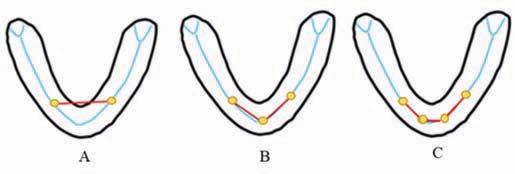
FIGURE 2: A schematic representation of v-shaped (narrow) mandibular edentulous ridges. A bar attachment on two implants (splinted) is not always indicated as it may encroach on the tongue space and interfere with function (A). Three implants connected with two bar segments is indicated when good retention and stability are not possible with two non-splinted implants (B). Four splinted implants with three segments can also be used with an RISO and a fixed prosthesis (modified from Mericske-Stern et al.).12
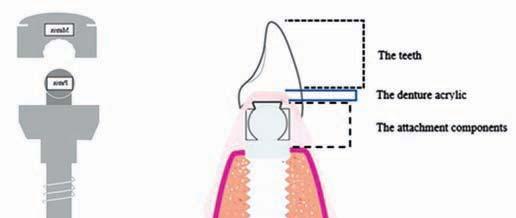
FIGURE 3: A schematic representation of the ball attachment system showing the vertical restorative space required when a ball attachment system is used. Room for the attachment components, denture acrylic base and the denture teeth is needed.
results. Also, acrylic teeth are more resilient; therefore, they can reduce the impact of occlusal loading. On the other hand, the porcelain-metal fixed prosthesis is made of metal substructure and porcelain in a similar way as that used in the fabrication of the conventional porcelain fused to metal fixed prosthesis. It is more expensive than the hybrid and is difficult to make, but it is a useful option when the vertical restorative space is limited.
Removable implant-supported and implant tissue-supported overdentures
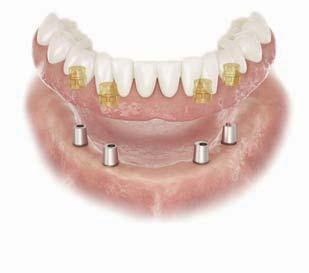
RISOs can be classified based on their source of support. The support during function may be obtained solely from the implants (mainly implant borne). In this case, the mucosa of the edentulous ridge does not take part in the supporting mechanism. Thus, RISOs should be denoted as implant-supported overdentures (Figure 1). Here, RISOs are usually entirely supported by multiple implants that are rigidly connected with a bar or a combination of bars, and other individual attachments.13 Therefore, an adequate number of implants is required. When an overdenture gains its support from both the implant and the tissue, it should be called an implant-tissue-supported overdenture (implant-mucosaborne).13 In such cases, fewer implants are required. RISOs are attached to the implants, usually in the form of a bar, balls, Locators, magnets or telescopic attachments that permit movement of the overdenture during function and allow the mucosa of the residual ridge to be involved in dissipating the imposed force. Comparisons between RISOs and FISOs that are used in restoring the edentulous mandible are presented in Table 1
It is important to mention that as all prostheses are retained by implants, the term implant-retained prosthesis is not precise, is confusing, and therefore should be avoided.
Attachment systems
An attachment is a mechanical device used for the fixation, retention and
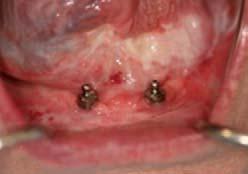
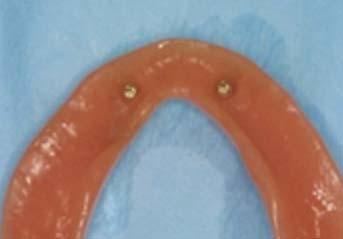
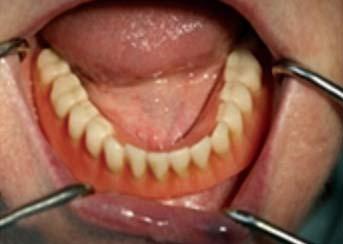
FIGURE 4: Clinical picture of an edentulous mandible with two ball attachments (Dalbo® ball attachment) placed in the inter-canine region (A) and the fitting surface of the denture with two patrices of the attachment (B). The RISO is attached to the attachment in the mouth (C).
stabilisation of a dental prosthesis.5 Five types of attachment systems are available and compatible with the main implant systems. Each attachment system has inherent attributes and drawbacks, and must be chosen with the particular patient profile in mind. The attachment systems that are commonly used with RISOs include: bar/clip; ball; resilient patrix; magnetic; and, telescopic. While the bar system is used in a splinting manner, the other attachments may be used individually (non-splinted) or in combination with the bar system (see below). Attachment systems may also be classified as resilient joints (connectors), when movements between parts of the attachment occur, or rigid joints, when such movements do not occur.14
A. Bar/clip attachment system
In this system of attachment, the implants are connected with a bar, which represents the anchor that retains the denture and gives it support (Figures 1, 2 and 4). An element that fits on the bar is usually in the form of a clip (sleeve/channel) that is attached to the fitting surface of the overdenture. The bar may have various cross-sections, such as a reverse U-shape (rigid joint)or egg-shape or circle (resilient joint). The bar may be made from pre-milled plastic patterns (castable) or prefabricated from gold, such as the Dolder® bar. It may also be produced by CAD/CAM technology. The bar should be rigid enough to prevent its distortion. The clip may be rigid, e.g., made of gold (i.e., Dolder®), or resilient, e.g., made of plastic (i.e., Hader®).