PRESIDENT’S WELCOME
Dear Colleague
Welcome to Galway 2016
The Annual Conference goes west in 2016 and back to the ever-popular city of Galway The Conference will take place from Thursday to Saturday, April 21-23, at the Radisson Hotel, and will feature a host of national and international speakers
The theme of this year’s event is ‘Dentistry into the Future’ The scientific programme will highlight many new and emerging ideas within dentistry, and there will be much discussion on how dentistry will look in the next five to ten years I look forward to hearing world-class speakers from far and near covering areas of significant interest to you and your dental team
I am particularly pleased to welcome such well-known speakers as Dr Charles Goodacre (USA), Professor Tara Renton (UK), Dr Bob Genco (USA), Dr Patrick Palacci (France), Dr James Mah (USA), Professor Mike Lewis (UK), and Dr Pat Cleary (IRL) We are also fortunate to have well-known Irish speakers who have been invited to present to us because of their proven track record in delivering high-quality research and clinically relevant presentations O
d e n t i s t r y ) , D r Pa t
e m e rg e n c i e s a n d ra d i o l o g y
I am par ticularly delighted to have the world-renowned explorer and writer Tim Severin speak to us about a journey into the new world
CyberPsychologist Professor Mary Aiken, whose work spawned an international TV series, will stimulate us with a presentation on the vir tual world
As every year, the dental trade show will showcase new and advanced products, equipment and technology from the dental industry All members of the dental team will have the oppor tunity to discuss these new products and services with our trade colleagues
As the IDA is the leading provider of CPD in Ireland, all lectures, presentations and workshops will be CPD cer tified
Our social programme will include our annual golf competition, our 5K fun run, and the highlight of the conference is our Annual Dinner, which takes place on Friday, April 22
A busy, vibrant and exciting city, Galway offers visitors the ver y best in hospitality to create the ideal location and atmosphere for our 2016 Conference Be sure to put the dates in your diar y now – April 21-23, 2016
I am really looking forward to seeing you at ‘Dentistry into the Future’
A Chara,
Fáilte go Gaillimh 2016 Téann an Comhdháil Náisiúnta siar i 2016, thar nais go dtí Cathair na dTreabh – Gaillimh Beidh an Chomhdháil ar siúl ón nDéardaoin, 21 –Satharn 23 Aibreán ag Óstán Radisson sa chathair agus beidh roinnt mhaith cainteoirí náisiúnta agus idirnáisiúnta i láthair
‘Sé an téama atá ann i mbliana ná ‘Fiaclóireacht atá amach romhainn’ Beidh an clár eolaíochta ag cur béim ar smaointe nua sa tsaol fiaclóireachta agus roinnt díospóireachta le closaint ar conas mar a bheidh an saol fiaclóireachta thar thréimhse cúig go deich mbliana romhainn Táim ag súil go mór le cainteoirí cáiliúla atá aitheanta ar fud an domhain a chlosaint Beidh a léachtaí ag clúdach rudaí suimiúla duitse agus dod’ fhoireann oibre
Tá ríméad orm fáilte Uí Cheallaigh a chur roimh an Dr Charles Goodacre (SAM), an Dr Pat Cleary, an tOllamh Tara Renton (An Ríocht Aontaithe), an Dr Bob Grenco (SAM), an Dr Patrick Palacci (An Fhrainc), an Dr James Mah (SAM), agus an tOllamh Mike Lewis (An Ríocht Aontaithe) Tá seans Dé linn go bhfuil cainteoirí cáiliúla as ár dtír féin a bhfuair cuireadh chun cainte toisc clú is cáil a bheith orthu ina gcuid taighde agus a dtaispeántaisí oiriúnacha
Tugann na cúrsaí roimh an chomhdháil an tseans dúinn ár scileanna ficalóireachta a fheabhsú le cúrsaí ón Dr Charles Goodacre (fiaclóireacht athtógála), an Dr Pat Cleary (fiaclóireacht laistigh des na fiacla) is an Dr Paddy Crotty (líontí bána) I mbliana tá cúrsa don fhoireann fiaclóireachta, dírithe ar shláinte is sábháltachta, smacht ar fridíní, cothabháil trealaimh, fadhbanna sláinte éigeandála agus an raideolaíocht
Táim thar a bheith áthasach fáilte a chur roimh Tim Severin an taiscéalaí agus scríobhnóir cáiliúl, a bheidh ag cur síos ar a thuras ó Chuas an Bhodaigh i nGaeltacht Chorca Dhuibhne in Iarthar Chiarraí siar go dtí an tOileán úr Beidh an tOllamh Mary Aiken, siceolaí (ar-líne) i láthair Spreag a cuid oibre sraith theilifíse idirnáisiúnta agus músclóidh sí ár misneach le taispeántas ar an ndomhan neamh-fhíreannach
Mar is gnáth beidh an taispeántas trealaimh fiaclóireachta ag cur táirgí nua, trealamh nua agus teicneolaíocht nua ós ár gcomhair Beidh fuíollach ama ag gach duine na táirgí agus na seirbhísí seo a chíoradh lenár gcairde ós na comhlachtaí éagsúla
Beidh poinntí don fhorbairt proifisiúnta leanúnach ar fáilt do gach léacht, taispeántas agus ceardlann
Inár gclár sóisialta; beidh an comórtas gailf bliantiúl, an rás 5 ciliméadair agus buaicphointe na comhdhála – an dinnéar bliantiúl a bheidh ar siúl ar an
Aoine, 22 Aibreán
Tá Cathair na dTreabh gnóthach, beomhar agus spleodrach agus tá fíorfháilte le fáilt ann ‘Sí an suíomh seo a thugann an taitmaisféar oiriúnach don chomhdháil dúinn i 2016 Bí cinnte na dátaí a chur id’ dhialann anois –
Aibreán 21-23, 2016
Táim ag súil go mór sibh a fheiscint ag ‘Fiaclóireacht atá amach Romhainn’
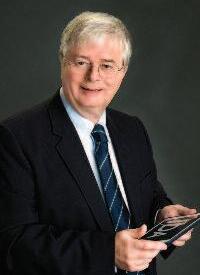
Dr PJ Byrne, President Elect
An Dr PJ Byrne, Uachtarán Tofa
INTRODUCTION
AGM
The Annual General Meeting of the Irish Dental Association and also the Irish Dental Union will take place at 6 00pm on Thursday, April 21, 2016, in the Inis Mór Suite All members are urged to attend this important meeting
REGISTRATION
All delegates must register before attending any of the Conference sessions Those who don’t register will not be granted access We ask that you don’t bring children to the event as they will not be allowed access
Attendance at the Trade Show is strictly for registered delegates only
CONFERENCE BADGES (No badge – no entry)
Conference badges must be worn to gain admittance to any of the scientific sessions and Trade Show Your co-operation would be appreciated
INFORMATION DESK
An information desk is located in the Conference Centre to deal with any queries you may have
CONTINUING PROFESSIONAL DEVELOPMENT (CPD)
Sessions have been approved for continuing professional development (CPD) points
Forms will be available for each morning and afternoon session at the accreditation desk in the Conference registration area For each morning/afternoon session you attend, a separate form must be signed and must include your accreditation number (Dental Council Registration Number)
It is the responsibility of each dentist to keep a record of his/her CPD points annually
ANNUAL DINNER
The Annual President’s Dinner Dance will take place on Friday, April 22 Dress code is black tie Tickets can be booked by contacting IDA House (Tickets cannot be guaranteed after Wednesday, April 20 )

COURTESY
Please ensure that noise is kept to a minimum around the conference area during scientific sessions, so as not to disturb those attending the session
MOBILE PHONES
Use of mobile phones is not permitted in the conference area Please ensure that all phones are turned to silent during lectures
PROGRAMME COLOUR CODE AND CONTENTS
This year instead of holding separate sessions for nurses and hygienists, all members of the dental team are welcome to attend all sessions on Friday and Saturday
WHICH TREATMENT IS BEST? Dr Charles Goodacre
Full-day lecture in two parts, morning and afternoon – 9.30am-5.30pm
Morning: Tooth retention through root canal treatment or tooth replacement using implants or fixed partial dentures: which treatment is best?
This presentation will discuss the scientific and clinical factors used to determine whether a tooth should be replaced through root canal treatment or be extracted and replaced with a dental implant or a conventional fixed partial denture
Objectives:
Following this presentation, attendees will be able to:
1 Identify the factors that should be considered when determining whether to perform root canal treatment or extract a tooth and place an implant or fixed partial denture
2 Compare the clinical survival rates of each treatment modality
3 Compare root canal treatment and dental implants based on biologic factors, associated procedures required, cost, aesthetics, and psychosocial factors
Afternoon: The most critical factors related to the restoration of endodontically treated teeth
The restoration of endodontically treated teeth requires a knowledge of contemporary science, techniques and materials This presentation will answer the most pertinent questions related to the evidence-based restoration of endodontically treated teeth
Objectives:
Following this presentation, attendees will be able to:
1 Identify which endodontically treated teeth benefit from crowns
2 Explain what a post and core does and does not do
3 Establish optimal post length
4 Choose the correct post diameter
5 Design an appropriate ferrule
6 Describe the instrumentation that promotes success
7 Summarise the benefits and limitations of new post materials
ANTERIOR COMPOSITES Dr Paddy Crotty
Full-day hands-on course – 9.30am-5.30pm
This course is designed to teach a predictable technique for restoring anterior teeth Attendees will complete a large anterior restoration, allowing them to explore the techniques necessary for a successful aesthetic restoration The background knowledge for successful bonding, simple composite layering and professional finish will be covered in an easy to understand format Related procedures such as class vs composite veneers, fibre splints and composite reinforcement will be discussed Each attendee will have the chance to characterise their tooth to their desired complexity under an experienced and watchful eye
Learning objectives:
1 To understand the background science behind the technique
2 To understand the concept of colour and colour generation
3 To learn how to prep teeth and manipulate the composite in order to generate a sound, durable restoration
4 To be able to trim, shape and polish to a tooth-like professional finish
ENDODONTIC CANAL PREPARATION: WAVEONE GOLD
Half-day hands-on course – 9 30am-1 00pm or 2 00pm-5 30pm
There are a staggering number of mechanical systems available for endodontic canal preparation
Dr Pat Cleary
Since the advent of NiTi, each new generation of shaping files has been launched with optimism for greater success Dr Cleary will describe a state-of-the-art file system that utilises the most proven design features from the past, coupled with the most recent technological advances currently available This presentation will focus on the WaveOne GOLD Single-File technique utilised to clinically improve safety, efficiency and simplicity when shaping canals Emphasis will be placed on creating minimally invasive shapes that promote 3D disinfection and filling root canal systems A demonstration on ProTaper NEXT will also be given by Dr Johanna Glennon
Course objectives:
At conclusion, participants should be able to:
1 Understand the mechanical and biological objectives for preparing canals
2 Identify the design features associated with each generation of shaping files
3 List the advantages of utilising reciprocating shaping files
PRE-CONFERENCE PROGRAMME THURSDAY APRIL 21
HEALTHCARE COMPLIANCE IN THE DENTAL
SETTING
There has been a significant increase in how regulatory bodies with responsibilities for general healthcare settings are impacting on dental practice
Standards set by organisations such as HIQA, the Office of Radiological Protection (EPA), the Health Protection Surveillance Centre, etc , cannot be disregarded by general practitioners, as many regulators have the power of inspection These half-day workshops will deal with the most frequently asked compliance queries that have been received by IDA House in recent months
WORKSHOP 1: COMPLIANCE WORKSHOP – MORNING OR AFTERNOON
Half-day course – 9.30am-12.30pm or 2.00pm-5.00pm
A: Infection prevention and control


Dr Nick Armstrong, Dr Jane Renehan and Ms Siobhan Carrigan
Since April 2015, a new Code of Practice in Infection Prevention and Control by the Irish Dental Council has been in place With this in mind, the IDA is offering practical hands-on infection control workshops for all dental team members
With support from Henry Schein, a full decontamination unit will be in situ and delegates will be walked through the entire process A detailed explanation will be provided of good practice in equipment layout in the decontamination area, with guidance on testing and essential documentation, all linked with the new Code There will also be an opportunity to ask questions on specific areas of concern It is the responsibility of all dental practitioners to ensure that their dental surgery is compliant with the new Code of Practice
B: Water quality including amalgam separators

Ms Fiona Heavey
With the support of DMI, the second workshop will cover water quality Dental unit waterlines must be maintained regularly to deliver water of an optimal microbiologic quality The source and quality of water being used in dental practices must be monitored and procedures put in place to prove that regular checking is carried out In addition, there are requirements on dental practices to ensure that waste water leaving the premises meets certain criteria, most especially with respect to the use of amalgam separators
C: Oral radiology
Dr Brendan Fanning
Intra-oral radiography
1 Correct use of film/sensor holder with paralleling technique for intra-oral dental radiography
2 Dose reduction with rectangular collimation
3 Use of thyroid protection
Panoramic radiography
1 Correct positioning of the patient
2 Use of laser lines to focus the image
4 Interpreting the image
5 Fault finding and reject analysis
3 Instructions to the patient to maximise potential for a good image
Synopsis: This workshop will cover most aspects of the clinical audit Technique selection and x-ray equipment will be covered, with a hands-on demonstration of the paralleling technique in intra-oral radiology and correct positioning for dental panoramic radiology Dose optimisation will be discussed The workshop will also incorporate image quality, image interpretation and training
Learning objectives: The attendee will be able to identify common faults in x-ray images and improve their diagnostic yield by using correct positioning of film/sensor and patient The patient dose will be optimised
WORKSHOP 2: MEDICAL EMERGENCIES – MORNING OR AFTERNOON
Half-day course – 9 30am-1 00pm or 2 00pm-5 30pm
Recognition and management of medical emergencies in the dental practice

This workshop is designed to update dental professionals on how to manage patients presenting with a medical/cardiac emergency while awaiting the ambulance service It will address what medical emergency drugs are required and how these drugs are prepared and administered Delivery will be provided through an interactive lecture and small group simulations/scenarios using a ‘hands-on’ approach addressing: choking; asthma; myocardial infarction; hypoglycaemia; seizure; and, anaphylaxis
On completion, par ticipants will be able to:
1 Demonstrate recognition, assessment and treatment of the ‘unwell’ patient using a structured A, B, C, D, E approach
2 Recognise and manage medical emergencies in the dental practice
3 Demonstrate indication/contraindication, preparation and administration of emergency drugs – oxygen, Ventolin, GTN, aspirin, Glucagon, Hypostop, Diazepam and adrenaline
4 Demonstrate awareness of legal, ethical and professional duty of care
6.00pm IDU Annual General Meeting followed by IDA Annual General Meeting
Followed by trade show opening par ty
PROGRAMME 1 HALL 1
9 00am – 10 00am Computer-aided engineering of complete dentures and implant prostheses
Charles Goodacre
10 00am – 11 00am Precision in implant placement
Patrick Palacci
11 00am – 11 30am COFFEE BREAK
11 30am – 12 15pm Restorative dentistry: future trends
Brian O’Connell
12 15pm – 1 00pm Managing the older patient
Frank Burke
1 00pm – 2 00pm LUNCH
2 00pm – 2 45pm Third molar surgery in practice
Tara Renton
2 45pm – 3 30pm Five keys to clinical success
Pat Cleary
3 30pm – 4 00pm COFFEE BREAK
4 00pm – 4 45pm Incisal migration of soft tissue around teeth and implants
Charles Goodacre
PROGRAMME 2 HALL 2
9 00am – 10 00am What to look for in the developing dentition
Marielle Blake
10 00am – 11 00am Trauma management
Anne O’Connell, Mary Freda Howley 11 00am – 11 30am COFFEE BREAK 11 30am – 12 15pm 3D imaging in or thodontics
James Mah
15pm – 1 00pm The psychology of cyberspace Mary Aiken
00pm – 2 00pm LUNCH
00pm – 2 45pm Advances in aligner therapy
James Mah 2 45pm – 3 30pm Risk factors in periodontal disease: an update
Bob Genco 3 30pm – 4 00pm COFFEE BREAK 4 00pm – 4 45pm Medications and their effect on the oral cavity
Mike Lewis
4 45pm – 5 45pm The Brendan Voyage Tim Severin


DENTAL TEAM MEMBER WORKSHOPS FRIDAY APRIL 22
FRIDAY AFTERNOON
This year, we are delighted to introduce very valuable and wor thwhile workshops, which will take place on Friday af ternoon and are open to all dental team members There are two workshops:
INFECTION CONTROL
Time: 2 00pm – 2 45pm
Since April 2015, a new Code of Practice in Infection Prevention and Control from the Irish Dental Council has been in place With this in mind, the IDA is offering practical hands-on infection control workshops for all dental team members
With suppor t from Henry Schein, a full decontamination room/area will be in situ and delegates will be walked through the entire process A detailed explanation will be provided of good practice in equipment layout in the decontamination area, with guidance on testing and essential documentation, all linked with the new Code There will also be an oppor tunity to ask questions on specific areas of concern It is the responsibility of all dental practitioners to ensure that their dental surgery is compliant with the new Code of Practice
2 45pm – 3 15pm TEA/COFFEE
4 45pm Costello Medal winner announced
WATER QUALITY, AND MAINTAINING AND SERVICING EQUIPMENT
Time: 3 15pm – 4 00pm
Dental unit waterlines must be maintained regularly to deliver water of an optimal microbiologic quality
The source and quality of water being used in dental practices must be monitored and procedures put in place to ensure that regular testing is carried out in house
How often do you send a hand piece for servicing with the engineer? Do you log this activity? Are maintenance costs out of control in your practice? If you want to improve how you maintain and look after equipment in the practice, then this workshop is for you or your dental nurse/practice manager
Places will be limited so you are advised to book early.
10
Paddy Crotty
2
Patrick Palacci 3
4
NURSES’ AND HYGIENISTS’ PROGRAMMES
Kevin
Mike
MARY AIKEN
JOURNAL OF THE IDA LECTURE
Professor of Cyber Analytics, Academic
Advisor to the Europol Cyber Crime Centre (EC3), and Director of the CyberPsychology Research Centre
The psychology of cyberspace
CyberPsychology is the study of the impact of emerging technology on human behaviour
Mary will discuss her research in this area, ranging from cyberchondria, to organised cybercrime, to using vir tual reality to treat PTSD The US primetime CBS television show CSI:Cyber is inspired by Prof Aiken’s work
NICK ARMSTRONG
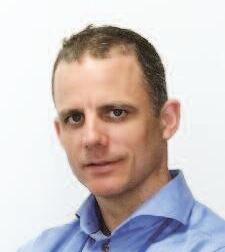
Former principal dental surgeon, HSE, and member of the IDA’s Quality and Patient Safety Committee
Infection prevention and control
Since April 2015 a new Code of Practice in Infection Prevention and Control by the Irish Dental Council has been in place With this in mind, the IDA is offering practical hands-on infection control workshops for all dental team members With suppor t from Henry Schein, a full decontamination unit will be in situ and delegates will be walked through the entire process A detailed explanation will be provided of good practice in equipment layout in the decontamination area, with guidance on testing and essential documentation, all linked with the new Code There will also be an oppor tunity to ask questions on specific areas of concern
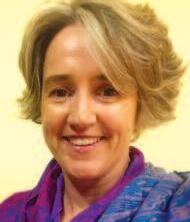
MARIELLE BLAKE
Consultant Or thodontist , HSE, St James’s Hospital, Dublin
What to look for in the developing dentition
This lecture will give an overview of the or thodontic examination of a young patient We will discuss what a clinician should be looking for at the various dental stages and the identification of present or future or thodontic issues The diagnosis of the developing canine position will be demonstrated Appropriate interceptive or thodontic measures will be discussed
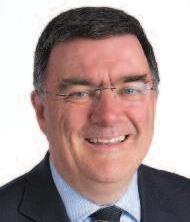
FRANK BURKE
Senior Lecturer/Consultant , Restorative Dentistry, University College Cork
Managing the older patient
The population’s structure is changing, with an increase in the older cohor t Frank will present an outline of the changes in oral health and the clinical presentations of disease Alternative modes of treatment and strategies for the delivery of oral care for the older population will be explored
CONOR BARRY
Consultant Maxillofacial/ Head & Neck Cancer Surgeon, National Maxillofacial Unit , St James’s Hospital Dublin/Dublin Dental University Hospital
Oral cancer diagnosis and treatment today Conor will discuss the challenges faced by the reconstructive surgeon dealing with defects in the head and neck secondary to cancer ablation and trauma, and outline some of the changes that have improved outcomes
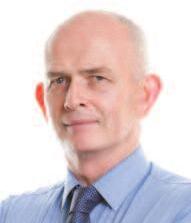
DERMOT CANAVAN
Practice limited to orofacial pain management , private practice, and Lecturer in the Dublin Dental University Hospital
Emerging issues in local anaesthesia and pain control in dentistry
Historically we have been dependent on the use of local anaesthetic (LA) to provide painless dentistry for our patients But there are limitations to the use of LA These limitations may reflect the nature of the LA drug or technique used, or possibly be associated with the unusual nature of the pain itself The presentation will focus predominantly on problems that arise in general dentistry, and will review progress in our understanding of LA and orofacial pain
SIOBHAN CARRIGAN
Senior Dental Nurse, HSE Dublin
Infection prevention and control
Since April 2015 a new Code of Practice in Infection Prevention and Control by the Irish Dental Council has been in place With this in mind, the IDA is offering practical hands-on infection control workshops for all dental team members With suppor t from Henry Schein, a full decontamination unit will be in situ and delegates will be walked through the entire process A detailed explanation will be provided of good practice in equipment layout in the decontamination area, with guidance on testing and essential documentation, all linked with the new Code There will also be an oppor tunity to ask questions on specific areas of concern
PAUL DOWLING
PD Ceramics
Educating our way to bridging the gaps
Paul will share his knowledge and help delegates to become aware of role of the dental technician and laboratory service in Ireland today The presentation will highlight the impor tance of education, customer relationship management (CRM) and service quality (SERVQUAL) in the business, along with their journey through recession, competition from foreign laboratories, and the financial and marketing decisions needed to futureproof an industry already struggling to see graduates enter the profession Finally, it will highlight the impor tance of fur ther education in the retention of skills, and how best to embrace new technological and material advancements that are changing the industry
Practice limited to endodontics, Dublin
Retreatment or extraction?
When a root canal treatment is not successful it is impor tant to recognise why treatment has failed If it is possible to overcome deficiencies in treatment and if the tooth can be restored following retreatment then a successful outcome can be achieved An extraction may be a better option in some cases This presentation will look at when to choose which option
Five keys to clinical success
Pat will present the endodontic journey through access, glide path management, shaping, disinfection and filling Focus will be on treating root canal systems, while maximising remaining tooth structure
BRENDAN FANNING
GDP, Wicklow and Dublin
Oral radiology workshops
This workshop will cover most aspects of the clinical audit Technique selection and x-ray equipment will be covered with a hands-on demonstration of the paralleling technique in intra-oral radiology and correct positioning for dental panoramic radiology Dose optimisation will be discussed The workshop will also incorporate image quality, image interpretation and training Attendees will be able to identify common faults in x-ray images and improve their diagnostic yield by using correct positioning of film/sensor and patient The patient dose will be optimised A handout will aid attendees in carrying out a clinical audit
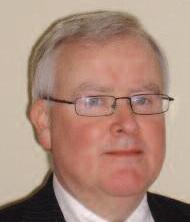
Restorative dentist , Dublin
Composites: how do we get the best results in practice?
This presentation will explore many of the factors that ensure that composite restorations will be durable and highly aesthetic It will consider modern concepts and research to ensure predictable bonding and examine material selection for difficult clinical scenarios, including bulk fill materials for the posterior region The lecture will be illustrated by many clinical examples demonstrating the versatility of composite as a material for restoring the worn dentition and enhancing some or thodontic cases The general theme will be one of a conservative approach to large restorations leading to fewer full coverage and post-retained restorations
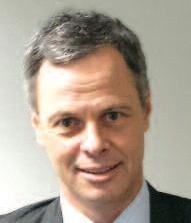
GARRY FLEMING
Senior Lecturer in Materials Science, Head of Materials Science Unit , School of Dental Science, Trinity College Dublin
Dental materials for the present and the future
The dental market is replete with ‘new’ restorative materials marketed on the basis of novel technological advances in materials chemistr y, bonding capability or reduced operator time and/or technique sensitivity This presentation will highlight how the marketing of these materials rather than their technological advances are the main driver for launching ‘new’ or re-packaged variants of existing materials onto the dental market
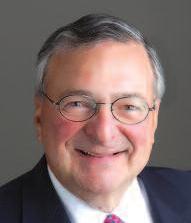
BOB
GENCO
SUNY Distinguished Professor of Oral Biology and Microbiology, Vice Provost, University at Buffalo Office of Science, Technology Transfer and Economic Outreach
Risk factors in periodontal disease: an update
This presentation will discuss the evidence suppor ting the modification of systemic risk factors as an impor tant component in the prevention and treatment of periodontal disease
The periodontal systemic link
Periodontal disease has been linked to a wide range of conditions The epidemiologic evidence for these associations, and the studies of the mechanisms that may help explain them, will be addressed in this presentation
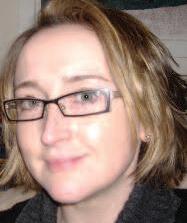
MARY FREDA HOWLEY
Private practice limited to endodontics and endodontist in the Trauma Clinic , DDUH
Trauma management
This is a case-based presentation outlining the impor tance of accurate diagnosis, appropriate treatment and follow-up in trauma cases The rationale and evidence for the management of complications and the timing of clinical decisions will be highlighted The endodontic cases discussed were fur ther complicated by a past history of trauma
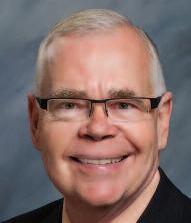
CHARLES GOODACRE
Professor of Prosthodontics, Loma Linda University School of Dentistry, California
Which treatment is best?
This presentation will discuss the scientific and clinical factors used to determine whether a tooth should be replaced through root canal treatment or extracted and replaced with a dental implant or a conventional fixed partial denture
Computer-aided engineering of complete dentures and implant prostheses
A review of the current status of clinical and technical procedures
Incisal migration of soft tissue around teeth and implants
Producing incisal migration of soft tissue around single crowns on natural teeth and implants
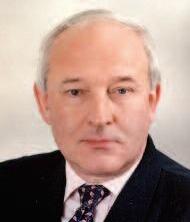
KEVIN LEWIS
Director, Dental Protection
DPL: what is coming down the tracks
Having worked in the dento-legal world for over 25 years – much of that time internationally –one cannot fail to be struck by the contrasts in the professional working environment over time, and between different parts of the world This presentation will explore the evolving challenges and discuss what works well and what doesn’t It will also look at the past, the present and future prospects for the world of dentistry
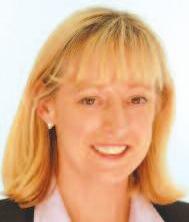
FIONA HEAVEY
Clinical manager and dental nurse, Dublin
Water quality including amalgam separators
Dental unit waterlines must be maintained regularly to deliver water of an optimal microbiologic quality The source and quality of water being used in dental practices must be monitored and procedures put in place to prove that regular checking is carried out In addition, there are requirements on the dental practices to ensure that waste water leaving the premises meet cer tain criteria, most especially with respect to the use of amalgam separators
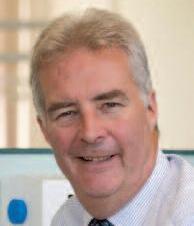
MICHAEL LEWIS
Professor of Oral Medicine, School of Dentistry, Cardiff University
The impact of systemic disease on the mouth
The mouth has sometimes been referred to as ‘the window on the body’, in that changes in the mouth can reflect disease at other sites This lecture will provide a highly illustrated guide to changes within the orofacial tissues associated with a range of disorders
Medications and their effect on the oral cavity
An increasing percentage of the population take medication for a range of medical reasons This lecture will provide a highly illustrated guide to the ways in which drug therapy can produce oral ulceration, lichenoid reactions, discolouration, blistering and reduced salivary flow
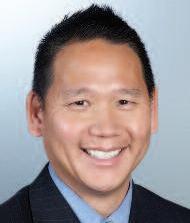
JAMES MAH
Clinical Professor and Programme Director in Orthodontics, University of Nevada, Las Vegas
3D imaging in orthodontics
This presentation provides clinical guidelines for utilisation of CBCT in orthodontics
Advances in aligner therapy
Attendees at this presentation will be introduced to the diversity of treatments in orthodontics with clear aligners, and will be able to provide this as a treatment option in a wider range of cases
New concepts in the management of bruxism
This presentation describes the clinical and radiographic changes associated with chronic bruxism, and discusses evidence-based support for the use of neuromodulators
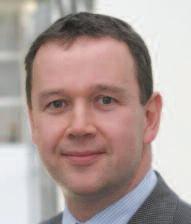
MICHAEL O’SULLIVAN
Associate Professor/Consultant in Restorative Dentistry, Dublin Dental University Hospital
Managing the hypodontia patient for optimum results
This lecture will describe the current management of patients with hypodontia at the Dublin Dental University Hospital Aspects of planning, treatment decision making and multidisciplinary management will be presented
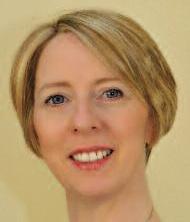
ANNE O’CONNELL
Associate Professor/Consultant , Paediatric Dentistry
Trauma management
This is a case-based presentation outlining the impor tance of accurate diagnosis, appropriate treatment and follow-up in trauma cases The rationale and evidence for the management of complications and the timing of clinical decisions will be highlighted The endodontic cases discussed were fur ther complicated by a past history of trauma
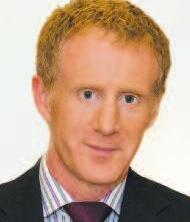
BRIAN O’CONNELL
Dean Of Dublin Dental University Hospital & Professor of Restorative Dentistry
Restorative dentistry: future trends
We have all become accustomed to rapid change and new technologies in our 'ordinary' lives, but how much of this will become par t of the practice of dentistry? What will the perfect storm of biology, technology and information bring to the surgery? Or might changes come from an unexpected source?
This lecture will explore some of the likely and less likely sources of change in our profession, and will ask how prepared we are for the future
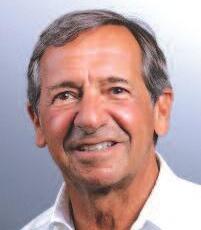
PATRICK PALACCI
Brånemark Osseointegration Center in Marseille
Precision in implant placement
Implants have long been considered an anchorage for fixed restorations, allowing edentulous patients to recover function Nowadays, there is also an aesthetic function Aesthetic success is related to optimal management of hard and soft tissues, prosthetic reconstruction and the precision of implant positioning
Hard and soft tissue management in implant dentistry
Reconstruction of hard and soft tissues is one of the main factors for optimal aesthetics The latest concepts in bone and soft tissue augmentation will be presented, as well as optimal treatment for severe and complicated aesthetic cases
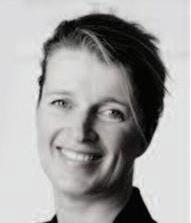
TARA RENTON
Professor in Oral Surgery, King's College London Dental Institute, and President , British Association Oral Surgery
Third molar surgery in practice
The objective of this lecture is to update delegates in current issues and solutions in third molar surgery
Avoiding complications in oral surgery in practice
The objective of this lecture is to provide delegates with an understanding of the risks and complications related to oral surgery and how to minimise them Common complications including pain, dry socket, nerve injury and haemorrhage are mainly avoidable with suitable risk assessment
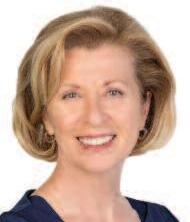
JANE RENEHAN
Principal Dental Surgeon,
HSE Dublin Nor th City
Infection prevention and control
There has been a significant increase in how regulatory bodies with responsibilities for general healthcare settings are impacting on dental practice Standards set by organisations such as HIQA, the Office of Radiological Protection (EPA), the Health Protection Surveillance Centre, etc , cannot be disregarded by general practitioners, as many regulators have the power of inspection
These half-day workshops will deal with the most frequently asked compliance queries that have been received by IDA House in recent months
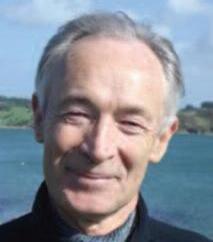
The Brendan Voyage
The 6th century Atlantic voyage of St Brendan is the most tantalising of sea legends Could Irish monks sailing boats of leather have reached North America nearly a thousand years before Columbus? Tim and his crew put the possibility to the test by setting out in a small open boat made of oxhides to follow the ‘stepping stone route’ by way of the Hebrides, the Faroes, Iceland and along the coast of Greenland The vessel was constructed only of materials available in St Brendan’s day The crew survived storms, fog banks and a collision with pack ice Welcomed by seafaring people wherever she touched land, the Brendan finally reached Newfoundland after a journey that has become a classic of maritime exploration and adventure