Spatial Interfaces: The Future of Immersive UX
What Are Spatial Interfaces?
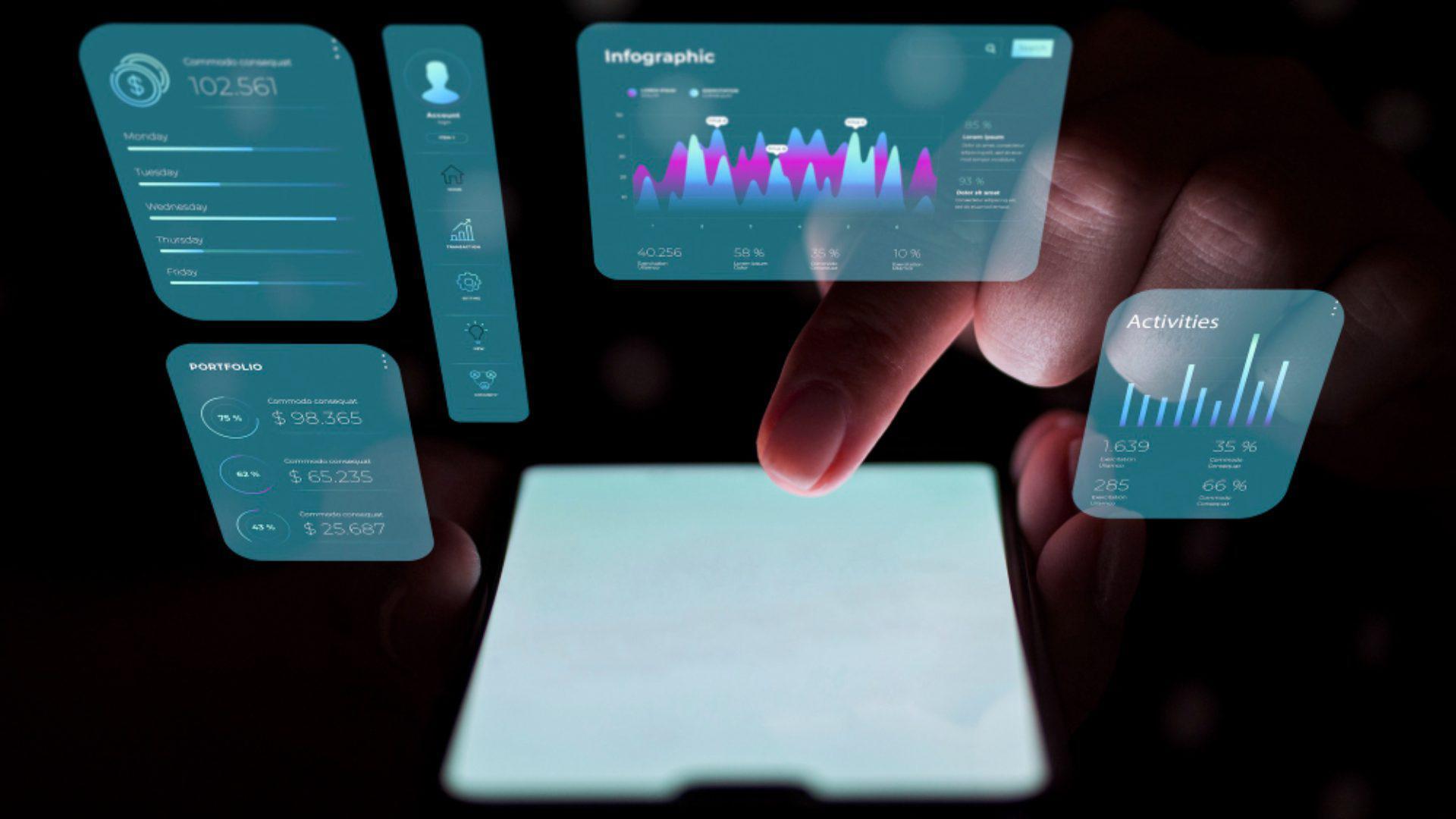
Spatial interfaces allow users to interact with digital content embedded in threedimensional space, rather than confned to fat screens. These interfaces utilize technologies such as augmented reality (AR), virtual reality (VR), mixed reality (MR), depth sensors, and advanced motion tracking to enable gesture control, eye tracking, and spatial audio—crafting experiences that feel natural and embodied.
Your text here 1
Key Characteristics Driving Immersion
Environmental Context: Spatial interfaces understand and adapt to the user’s physical surroundings, integrating virtual objects fuidly into real-world spaces.
Natural Interaction Modalities: Instead of mouse clicks or taps, users engage with digital elements through body language—hand movements, gaze direction, voice commands, and even subtle facial expressions.
Multi-Dimensional Navigation: Users move around and manipulate content in 3D, ofering intuitive control not possible in traditional 2D interfaces.
Impact on User Experience Design
Spatial UX design requires a paradigm shift:
Designing for Depth and Volume: Visual hierarchy extends beyond fat layers to include
spatial positioning, scale, and movement within a 3D environment.
Focus on Ergonomics and Comfort: Long-duration use demands interfaces that respect human physiology and minimize fatigue.
Contextual Awareness: Interfaces dynamically respond to environmental changes, user position, and intent, ensuring relevance and safety.
Applications Across Sectors
Gaming and Entertainment: Spatial interfaces deliver deeply immersive worlds that engage users physically and emotionally.
Healthcare: Surgeons use spatial AR to visualize anatomy in 3D during procedures, while therapy applications create calming, interactive environments.
Education and Training: Interactive spatial experiences enhance learning by enabling hands-on practice and real-world simulations.
Workplace Collaboration: Virtual meeting spaces and 3D design tools facilitate richer, more natural remote teamwork.
Challenges to Overcome
Despite their promise, spatial interfaces face hurdles including hardware accessibility, UX complexity, motion sickness, and privacy concerns. Designing balanced, inclusive spatial experiences that cater to diverse users remains a critical frontier.The Road Ahead
As sensor accuracy improves and more afordable hardware emerges, spatial interfaces will become mainstream, blending naturally into daily life. The future of immersive UX lies in creating fuid, contextually intelligent environments where digital content coexists harmoniously with the physical world—transforming how humans work, learn, and play.
Conclusion
Spatial interfaces represent a paradigm leap in UX design, shifting from screens to spaces. By harnessing the power of 3D interaction and contextual awareness, they open unprecedented opportunities for immersive, human-centric digital experiences that blur the line between reality and imagination.