

















1 vwo
Authors
Ronald den Haan
Raymond de Kreek
Eugenia Smit
Frank Tang
Stef Vink
Final editing
Ronald den Haan
Eugenia Smit
Design cover
Studio Vlak, Utrecht
Image cover
© Art Institute of Chicago
Photographic research
Daliz, Den Haag / Liane Volgers, Utrecht
Design layout
Tom Lamers, Reclamers, Veghel
Layout Crius Group, Hulshout
Illustrations and cartographic drawings
EMK, www.emk.nl
Adapting images to English Eduardo Media, Stampersgat
Translation
Taalcentrum-VU, Amsterdam
About ThiemeMeulenhoff
ThiemeMeulenhoff is an educational publisher committed to secondary and vocational education. The people at ThiemeMeulenhoff are here to support professionals in education with experience, expertise, and effective learning materials. These products are developed through ongoing collaboration with people working in education to improve education together. We create educational methods that can be easily combined with other learning materials, can be adapted to individual preferences, and have proven to be effective. Naturally, all of our methods are produced as sustainably as possible. In this way, together with other people working in education, we contribute to a brighter future for the next generation.
Learning to innovate together.
www.thiememeulenhoff.nl
ISBN 978 90 06 39896 0 Edition 2, printing 1, print run 1, 2026
� ThiemeMeulenhoff, Amersfoort, 2026
All rights reserved. Text and datamining, AI training, and other similar technologies are not permitted. No part of this publication may be reproduced, stored in an automated data file, or made public in any form or by any means, whether electronic, mechanical, through photocopying, recordings, or any other means without prior written permission from the publisher.
To the extent that making copies of this publication is permitted under Article 16b of the Dutch Copyright Act (Auteurswet) 1912 in conjunction with the Decree of August 23 1985, Bulletin of Acts and Decrees (Stb.) 471 and Article 17 of the Dutch Copyright Act 1912, the statutory fees must be paid to Stichting Publicatie- en Reproductierechten Organisatie (PRO), P.O. Box 3060, 2130 KB Hoofddorp (www.stichting-pro.nl). For the inclusion of part(s) of this publication in anthologies, readers, and other compilations (Article 16 of the Dutch Copyright Act), please contact the publisher. For more information on the use of music, film, and making copies for educational purposes, visit www.auteursrechtenonderwijs.nl.
The publisher has made every effort to arrange the copyrights in accordance with statutory regulations. Anyone who nonetheless believes that certain rights may be asserted should contact the publisher.
This publication is a completely carbon neutral product. ClimatePartner certified product climate-id.com/YI43H3
How you work with Phoenix 4
1 In search of the past 6
Background 6
1.1 What is history? 8
1.2 Why is history important? 12 Round-up 16

THE AGE OF HUNTERS AND FARMERS
2 Hunters, farmers and pharaohs 18
Background 18
2.1 The earliest humans: hunters and gatherers 20
2.2 The agricultural revolution 24
2.3 Powerful cities and states 28
2.4 Life before and after death 32
2.5 Three River Valley civilizations World History 36
Researching Egypt and Mesopotamia
Further study 38
Round-up 40

THE AGE OF GREEKS AND ROMANS
3 The Greeks 42
Background 42
3.1 The world of the Greeks 44
3.2 Athens and Sparta 48
3.3 The culture of Greece 52
3.4 Greeks in Egypt and Asia 56
3.5 Early Buddhism World History 60
Researching the Greeks Further study 62 Round-up 64
THE AGE OF GREEKS AND ROMANS
4 Imperium Romanum 66
Background 66
4.1 From city-state to global empire 68
4.2 Kingdom, republic, empire 72
4.3 Along the limes 76
4.4 The end of the Western Roman Empire 80
4.5 The Maya World History 84
Researching the Romans Further study 86 Round-up 88

THE AGE OF MONKS AND KNIGHTS
5 Knights, serfs and monks 90
Background 90
5.1 Charlemagne’s empire 92
5.2 Agrarian society in the Early Middle Ages 96
5.3 The spread of Christianity 100
5.4 A new religion: Islam 104
5.5 The Byzantine Empire World History 108
Researching the Early Middle Ages Further study 110 Round-up 112

THE AGE OF CITIES AND STATES
6 Kings, citizens and crusaders 114
Background 114
6.1 The medieval city 116
6.2 The kingdom of England 120
6.3 Centralization in France 124
6.4 The crusades 128
2.5 China in the Age of the Ming emperors World History 132
Researching the Late Middle Ages Further study 134 Round-up 136
Skills overview 138
Terms 140 Image credits 142
You’re going to work with the Phoenix history method. This method uses a coursebook and a workbook. Phoenix gives you assignments that help you to actively engage with the material and find the main elements in texts. Because the
Each chapter starts with a Background. This introduces you to the age that you’ll be studying.
The Background begins with a big picture that tells you about the topic of the chapter. The text in the coloured box tells you more about what you can see in the picture.
‘In this chapter’ tells you what the chapter is about.
After that, you’ll see two pictures that compare the past with the present
Under the Background, you’ll see a timeline that tells you which age the chapter is about.
method is based on an LRN-line, it also has a digital component. When working on assignments in the digital component, you can follow the hyperlinks to access videos, sound recordings or anything else you need to complete the assignment.
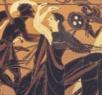




Each section also begins with a big picture followed by a text in a coloured box. This text explains what you can see in the picture.
After that, you’ll see the learning objectives you’ll be working towards.
The learning objectives are followed by ‘normal text’. This is the text you have to learn. Each section also has textual sources and visual sources. All of these sources are numbered, but you don’t have to learn them. The workbook contains assignments that are related to these sources. Some sections contain a text in a textbox about a historical skill or about our government. You also need to learn this text.
The World History section is about events in another part of the world during the same age as the chapter. You’ll not only study new material in this section, but also see comparisons with material from previous sections.
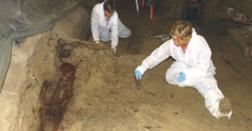
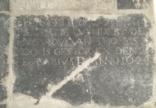
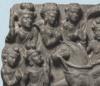




The ‘Researching…’ section is an assignment for further study. It’s a chance to learn more about a specific topic from the age that is discussed in the chapter. You’ll research a statement using sources. By the end, you’ll be able to give your own opinion.
Each section in the workbook begins with an assignment called ‘What you already know’. By doing this assignment, you’ll find out what you already know about the topic of this section.
Under the header ‘Learning essentials’, you’ll find the ‘normal assignments’ that belong to the section. At the beginning of an assignment, you can read which text or which sources you must use to complete the assignment. Some assignments also contain textual sources and visual sources. All of these sources also have a number. These numbers are labelled with ‘Assignment Source’.
Each section contains an assignment that focuses more on why the topic is important. Above these assignments, you’ll see a text and a brief explanation in a coloured text box labelled ‘Why history is important’. By completing this assignment, you’ll discover why the topic is important. Some assignments allow you to practice historical skills some more. You’ll see the header ‘Practise your knowledge’ above the assignment, followed by the historical skill you can practise.



The Round-up contains all important events, learning objectives, skills and terms from the chapter.
For some assignments, you’ll need a computer or tablet in order to look things up. These assignments are shown by the tablet icon.
Some assignments are done in pairs or groups. The assignments in pairs are shown by an icon with two faces.
The assignments in groups are shown by an icon with three faces.
At the end of each section, you can test whether you’ve achieved the learning objectives of the section. These assignments are shown by the header ‘What do you know now?’
Lastly, each section ends with the learning objectives that you’ve worked on in the section. These learning objectives show which assignments belong to which learning objective.
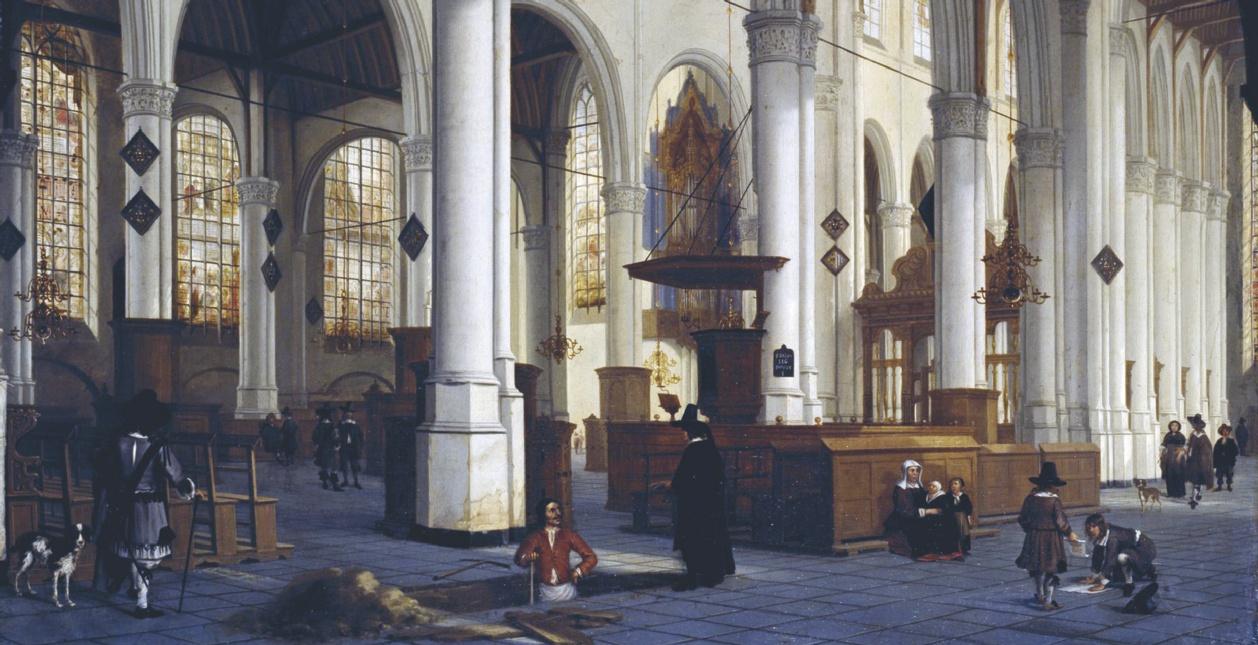
The large, colourful windows make it obvious that the building in Source 1 is a church. But something very odd is happening: someone is digging a hole! Why? If you’ve ever visited an old church, you may have seen large, square slabs on the ground. These slabs are graves and show the names of people. When the artist from Source 1 was alive, it was normal for people to be buried in a church. The hole being dug by that man is likely to be a grave for a rich man or woman, since being buried under the floor of the church was expensive. Poor people weren’t buried in the church but in the ground next to it: the graveyard. Nowadays, most graves in church buildings are empty. The human remains they contained have been destroyed or buried at another spot. We know that some graves do still contain bones. However, centuries-old buildings can hide secrets –just like the one uncovered in Gouda’s Sint-Janskerk church in 2014. When tens of unknown graves were discovered during repair work to the church’s foundations, a team of researchers was called in. They already knew about one of the graves, but what they found surprised them. According to the church’s old records, this grave contained one person: an old woman called Sarah. But half a metre below her, the researchers found a second skeleton – of a young man! They called him Jacob.
Jacob lived in the eighteenth century. Although it’s in the past, we can still find many traces from that time today. Jacob himself and the church in which he was found are two examples. Books, paintings and everyday objects used by people at the time are also traces. We don’t know anything about what kind of work Jacob did while he was alive. But these traces do tell us what kind of work most people did back then, what they ate and how they lived. Some of these people even wrote down their thoughts and feelings in letters and diaries.
History is about learning about life in the time before ours. This chapter teaches you how to order the past, so that you can make better sense of it. You’ll learn about the different types of traces of the past and how people use them to research history. You’ll reflect on why it’s important to read and learn about the past. And as you do, you’ll also get to know Jacob a little better.
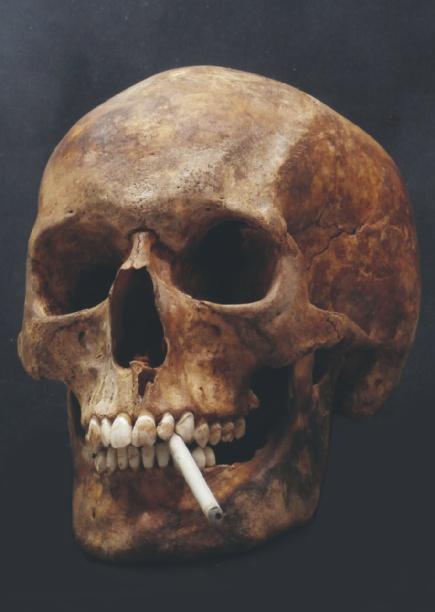
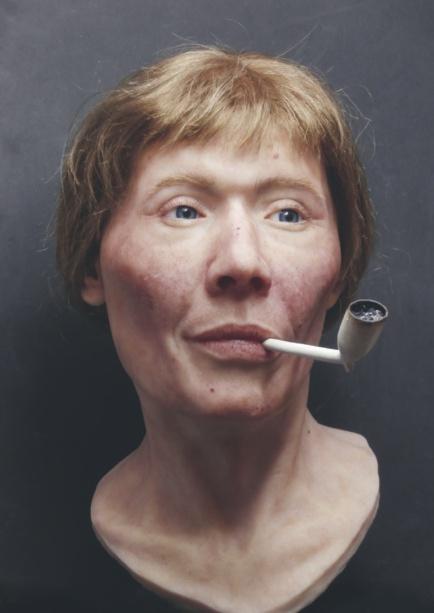
Researchers used the latest technologies to rebuild Jacob’s face. This might be how he looked. This is known as a ‘reconstruction’. As Jacob was a heavy smoker, he is shown with a pipe in his mouth – just as he would have had in real life. Photo from 2014.
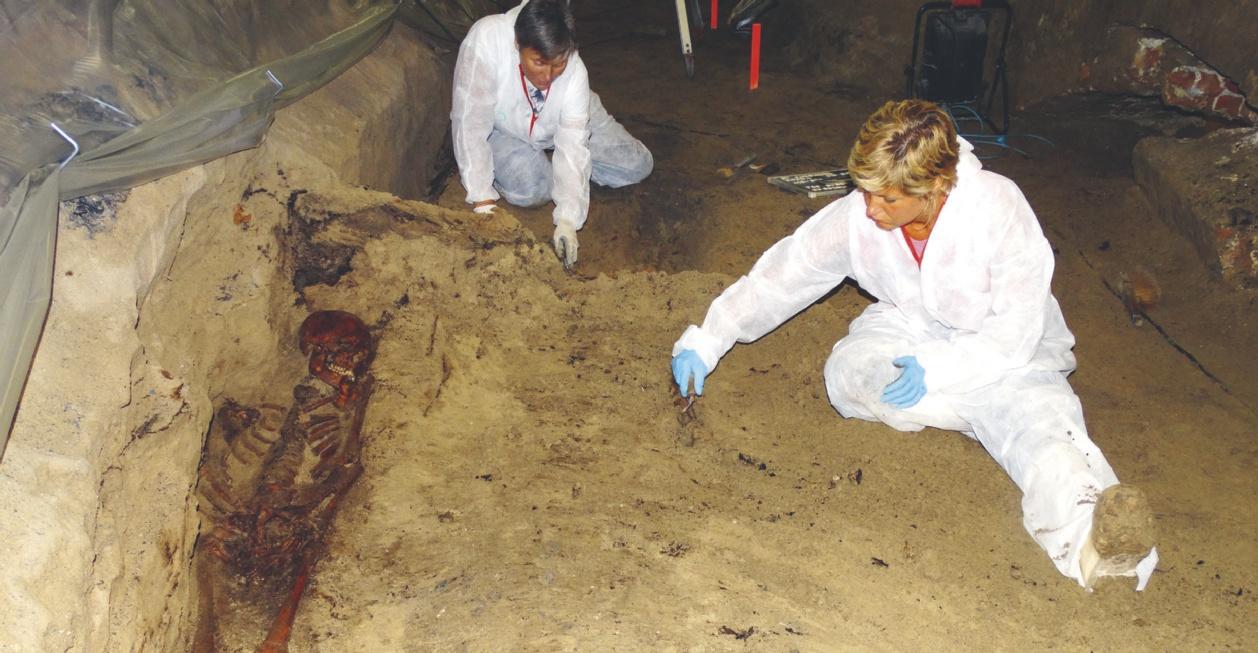
You can almost see Jacob’s entire skeleton. It’s ‘exposed’, as archaeologists say. Using different types of trowels (to dig) and brushes (to brush), the two researchers removed as much sand as they could from the skeleton. They switched to finer brushes as they got closer to the bone. They then focused on the sand next to the grave. They found lots of things in there, such as a piece of fired clay, known as ‘earthenware’, and a few tiny bones, perhaps belonging to a mouse. The researchers carefully put all of their findings to one side. They’d have a good look at them later in a laboratory, where they also brought Jacob’s skeleton. They studied it up close, using the same equipment as doctors in a hospital. That’s when they discovered that Jacob lived in the eighteenth century and was probably around seventeen years old when he died. The researchers couldn’t find out how Jacob died. However, based on damage to his bones, they knew he must have been hungry very often. Jacob was normal height for the time: 1.69 centimetres. The researchers spent months studying these traces from the past. But what exactly is the ‘past’? Is that the same as ‘history’? And how many ‘pasts’ really exist? How can you research that past? That’s what this section is about.
• You understand that history is about the past, and you know how archaeologists and historians study it.
• You can recognize different types of sources.
• You can periodize time into ages and number centuries, years and dates correctly.
• You can make and read a timeline.
The past is any time before the one we live in today. That means the past is always growing: the time you spent reading the last sentence is in the past now. A person who studies the past is called a historian. Historians are faced with a problem: the past is so huge that they can’t possibly describe everything that has ever happened. There’s too much to put in one book, or even in a million books. That’s why historians must always decide what they think is important to tell and what isn’t important. The historians who wrote Feniks did the same. This chapter tells you all about Jacob. But it doesn’t cover everything about his life. Sometimes, that’s because historians don’t know. Sometimes, it’s because they didn’t think it was important enough to talk about. By research and selecting, historians are able to build a story called a history. Historians aren’t the only people who study the past. The people shown in the photo in Source 4 aren’t historians, but archaeologists. An archaeologist digs in the ground to find and study traces of the past. Historians and archaeologists often work together. Archaeological findings can help historians to understand more about the time they’re researching. And books written by historians can help archaeologists to understand their findings better.
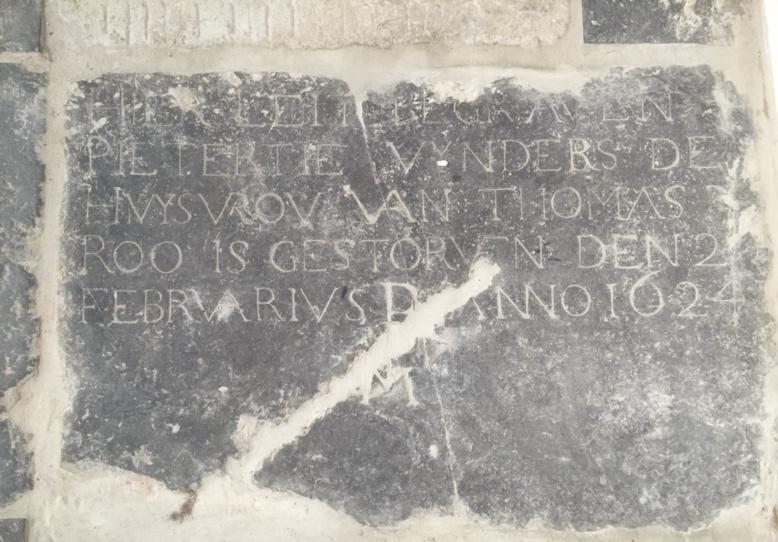
SOURCE 5 Archaeologists also found parts of old gravestones under the floor of Sint-Janskerk church in Gouda. Some parts were laid at a later date, and you can still read the writing on them. Photo from 2021.
Historians ask questions about the past, such as ‘How was life in Gouda when Jacob was alive?’ But in doing so, they face a tricky task: they have to research something that doesn’t exist anymore. After all, the past is in the past! Thankfully, there are still traces of the past that help historians to find answers. Historians look for these sources to try to uncover information about the past. Some sources are made in the period that historians are researching. In this case, that’s the time during which Jacob lived. These sources are known as primary sources. Other sources appear afterwards. They’re made by people who weren’t alive during Jacob’s time. These sources are known as secondary sources. Some sources are in text form and are known as written sources. Some sources are not in text form and are known as unwritten sources
‘We have all the time in the world,’ ‘It felt like it was never going to end,’ ‘I haven’t seen you in ages’: time is defined by the fact that there’s so much of it. And if you have a lot of something, you have to organize it. Otherwise, it becomes difficult to manage. One way of organising time is to periodize the past into ten ages. Their names always start with ‘Age of ...’. For example: the Age of Hunters and Farmers, or the Age of the World Wars. Sometimes, we use other names. The Age of Greeks and Romans is also known as ‘Ancient History’ or ‘Antiquity’. And the ‘Middle Ages’ is another name for two ages combined: the Age of Monks and Knights, and the Age of Cities and States. We also say the ‘Early Middle Ages’ (Age of Monks and Knights) and ‘Late Middle Ages’ (Age of Cities and States). The time before people used writing is called prehistory. As a result, no written records exist. And because people around the globe didn’t start writing at the same time, prehistory doesn’t have a definite end point. In the Netherlands, prehistory ended more than two thousand years ago. But in Egypt, a country in which people had been writing for centuries, prehistory ended a lot earlier. Prehistory is still ongoing in some places. These include the Amazon region, where some peoples still have no writing system.
Ages prehistory Periods
until 3000 BC
The Age of Hunters and Farmers
3000 BC to 500
The Age of Greeks and Romans
500 - 1000
The Age of Monks and Knights
1000 - 1500
The Age of Cities and States
1500 - 1600
The Age of Explorers and Reformers
1600 - 1700
The Age of Regents and Kings
1700 - 1800
The Age of Wigs and Revolutions
1800 - 1900
The Age of Citizens and Steam Engines
1900 - 1950
The Age of the World Wars
1950 - heden
The Age of Television and Computers
Ancient history
Middle Ages
Early Modern Period
The Modern Age
How does a historian know which details are important and which aren’t? The answer to this question is very simple yet completely true: they get to decide! A person writing a history chooses a subject and picks what they think is important to say about it. Somebody writing about the climate in the Middle Ages will focus on other details than somebody writing about wars during that time.
That said, most history books cover four types of subject:
• Political: the distribution of power and how areas are governed.
• Economic: anything that is related to how people earn their livelihood, including trade and agriculture.
• Social: anything that is related to how people and groups interact with one another.
• Cultural: a group of people’s customs, ideas, art and traditions.
One historian may focus on cultural history and is less concerned with who was in power. While another historian could do the opposite. That’s how so many histories are told about one past.
By dividing time into smaller fragments, such as one year rather than an entire age, you can say when something happened with greater precision. We use year numbering to order the years. But there’s more than one year numbering system in use worldwide: the Hebrew, Gregorian, Islamic and Chinese calendars are all examples. The Gregorian calendar is used almost worldwide, sometimes alongside the local calendar. The Gregorian calendar, a Christian calendar, begins with the year in which Jesus is said to have been born: the year 1. Any events after that year are said to happen in 124 Anno Domini (Latin for ‘in the year of our Lord’) or 322 after Christ. ‘Lord’ and ‘Christ’ are two other names used to refer to Jesus. If an event happened before the start of the current calendar era (known as the ‘Common Era’), we say it took place in 322 BC (before Christ) or 1000 AD (Anno Domini). ‘Anno Domini’ is often shortened to AD and is often left out. But we do have to write ‘Before Christ’, which is often shortened to ‘BC’.
The order in which events happened over time is called chronology. Events ordered from first to last are arranged in chronological order. Chronology helps you to understand the past better. Imagine you break a classmate’s bicycle, after which they’re angry at you. The situation would be very different if you didn’t arrange these two events in chronological order: your classmate would be angry at you, after which you break their bicycle.
If you want to put events in order, you can use a timeline. The timeline shows you when the events happened, their chronology and how much time separates them. If you make your own timeline, be sure to follow these five rules:
1 Each section of the timeline represents an equal amount of time. You can decide for yourself how much time that is. A month, a century – whatever works best for your timeline.
2 Give the timeline an appropriate beginning and end. If you make a timeline of your own life, you don’t have to start in the year 1500.
3 Write the events you want to order slightly above or below the timeline. Draw a line to connect them to the correct spot on the timeline.
4 Make sure your timeline is neat. A messy timeline is a waste of time and effort, as you won’t be able to read it properly.
5 If possible, give your timeline a title. For example: ‘Timeline of my life’ or ‘The twentieth century’.
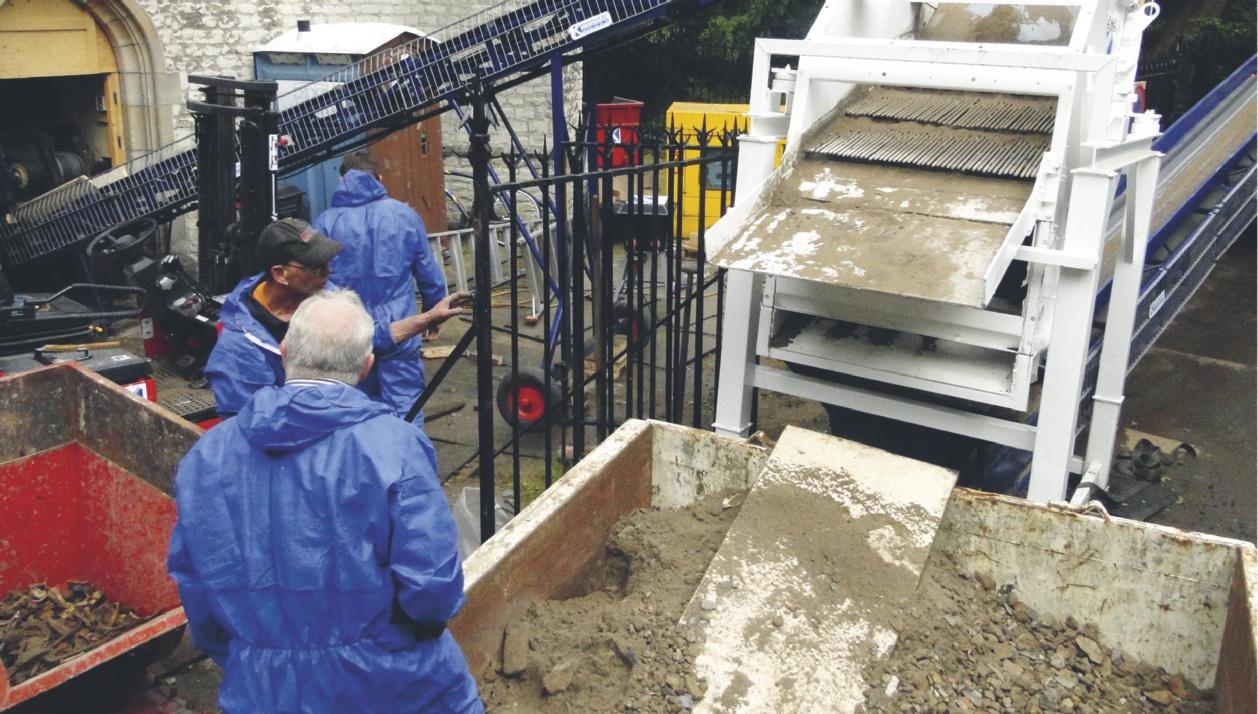
Work at the church is underway. The researchers are removing the sand from under the floor. Whenever they find a skeleton, like Jacob’s, they take extra care. But if they can’t see anything special, they pick up the pace. After all, they have to move almost one thousand cubic metres of sand – about fifty truckloads! They scoop the sand onto a conveyor belt that takes the sand outside and feeds it into a big ‘sifting screen’, like a sieve. The sand trickles through the screen and is carried away by lorries. The screen catches any bone remains. Some bones are small and intact. But sometimes, only pieces of bone are left. You can see the bones to the left in the red container. Later on, researchers will try to match bits of bones – an impossible task in most cases. Most of the bone remains will eventually be destroyed. This section is about why history is important. Why are you learning about the past? What’s the use of learning about the past experiences of people who died long ago? These are the questions you’ll be thinking about. And that will help you to understand why this photo is relevant.
• You can use examples to explain why history is important.
Jacob’s story tells you a lot about the city of Gouda when he was alive and the city today. When was Sint-Janskerk church built? It must have been standing when Jacob was alive. Why is there a huge church built in the crowded centre of the city? Because religion was incredibly important to people in the past. Even though you probably don’t live in Gouda, Jacob’s story teaches you something about your own local area. The importance of religion is something you will also see where you live. In almost all villages in the Netherlands, churches are the tallest building and are usually centrally located. For many centuries, they also had a central place in cities.
Remains from the past, such as churches, are heritage. There is lots of heritage at places where humans have lived for a long time. Many people think it’s important to protect and maintain heritage. A small exhibition has been made about Jacob. A story has been written about him, and you’ve read about him during your history lesson. These are ways in which history comes alive, in our age, for people today.
Jacob was poor. Poverty has existed throughout history. How should we deal with poverty? How did people respond to it in the past? Imagine you see a man begging. Should you give him money or food? Should you call the police? Should you tell him to leave? Or should you invite him to your home? History gives us arguments for all of these options. You can use these arguments to decide your opinion and why you think that way. That’s how history makes you think about what you agree and disagree with. How should society, all of us, deal with poverty? Should rich people help poor people or not? And if so, how? And why? As you read about this and other questions, history makes you think about your role in society. Thinking about ‘rich and poor’ shows that history is also about you. By studying history, you learn how ideas can change over time. Jacob had smoked since he was around ten years old. Back then, this was completely normal. Poor children would smoke in order to feel less hungry – there was a benefit to smoking! But if you saw a ten-year-old child smoking nowadays, you’d probably be shocked. That’s because opinions on smoking have changed since. History makes you realize that not everyone shares your views. In turn, this helps you to understand other people better.
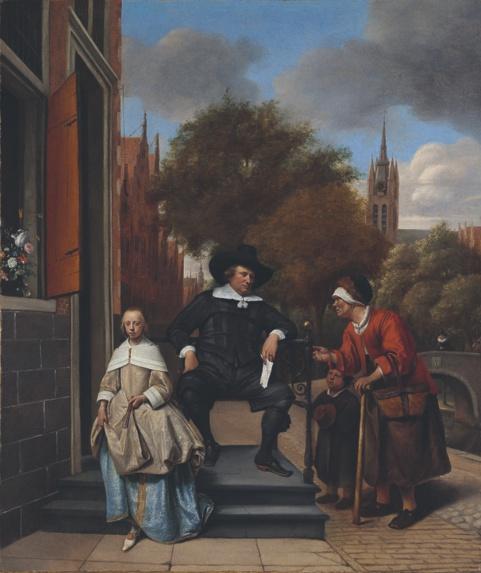
SOURCE 7 Catharina Croese steps down onto the street from her house in Delft. Her wealthy father, Adolf Croese, is sitting on a bench at the front door. A woman and a child are speaking to him. Painting by Jan Steen, made in 1655.
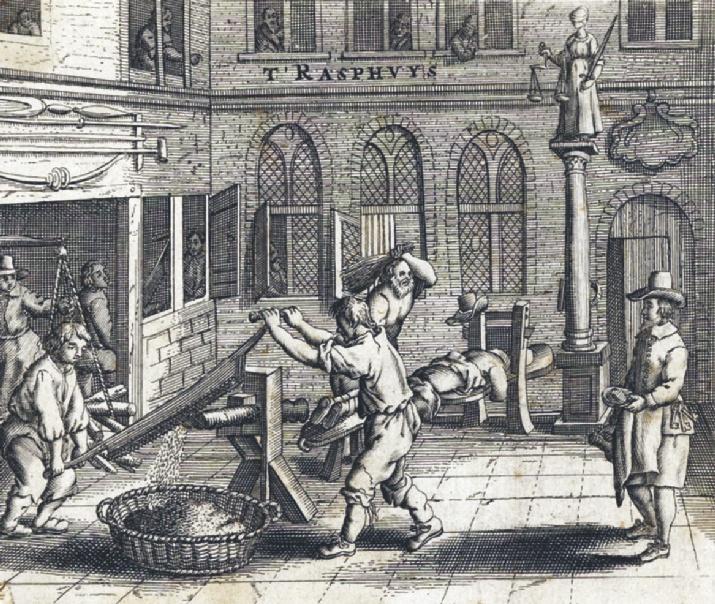
SOURCE 8 Various Dutch cities in the seventeenth and eighteenth centuries had workhouses known as ‘rasphuizen’. These places were used to lock up men who had done something wrong. The men were made to perform hard labour: shaving wood, as shown here. Someone caught begging would be sent to the workhouse. This drawing from the seventeenth century shows the yard of the workhouse in Amsterdam. Gouda had a workhouse, too.
A poem by an anonymous poet from Gouda:
“ Woe betide the person who leaves gold to lie idle and rust, to be harmed and damaged by hard times and war. They shall be overcome by illness and a horrible cough, that much they can trust! Lighting will strike those who show no sympathy for the suffering of the poor.”
According to: poem by anonymous poet (1606).
SOURCE 9
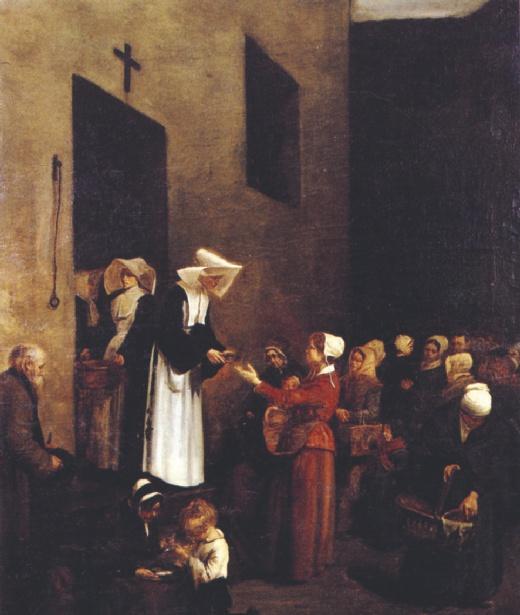
SOURCE 10 Poor people being given food. Begging has been around for a long time. Sometimes, wealthy people would buy food for poor people. Sometimes, the church or government would. This painting was made in the nineteenth century by the French painter François Bonvin.
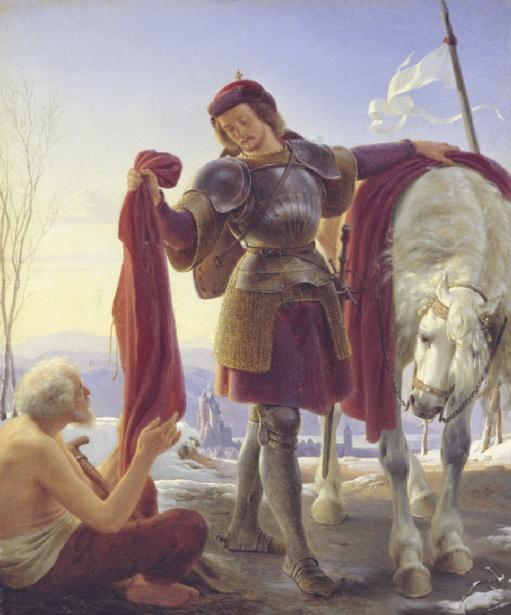
SOURCE 11 A wealthy man has cut the cloak into two pieces. He keeps one half for himself and gives the other half to a shivering beggar. This painting, made by Alfred Rethel in 1836, was made to get people thinking.
An unknown writer clearly thinks that we shouldn’t treat all poor people in the same way:
“ It is God’s will that the poor, who are often ill, and therefore unable to earn their bread, be given alms. But that does not mean that the rogues must be encouraged in their wicked deeds.”
From: Fielen, rabauwen, oft der schalcken vocabulair (1613).
SOURCE 12
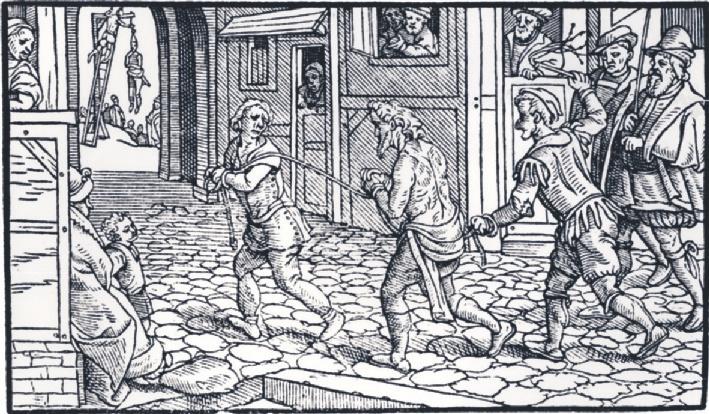
SOURCE 13 A beggar is forced to walk through the city while being whipped. This drawing was made in 1567 in England, but begging was also illegal in many Dutch cities. Begging was severely punished.
The Age of Hunters and Farmers
• You understand that history is about the past, and you know how archaeologists and historians research that past.
• You can periodize time into ages and number centuries and years correctly.
• You can make and read a timeline.
• You can recognize different types of sources.
• You can use examples to explain why history is important.
The Age of Greeks and Romans
• You can put events in chronological order.
• You can recognize different types of sources.
The Age of Monks and Knights
The Age of Cities and States
The Age of Explorers and Reformers
The Age of Regents and Kings
The Age of Wigs and Revolutions
The Age of Citizens and Steam Engines
The Age of the World Wars
The Age of Television and Computers
1.1 1.2
Antiquity
The age of Greeks and Romans (3000 BC-500 AD), also known as Ancient History.
archaeologist A person who digs in the ground to find and study traces of past human activity.
chronology The order in which events happened over time.
cultural Anything that is related to ideas, customs, art and traditions.
economic Anything that is related to how people earn their livelihood.
historian A person who studies the past.
history A description of part of the past.
past Everything that has happened before the present.
politics Anything that is related to the governance of an area and the division of power.
prehistory The time before people used writing. As a result, no written sources records exist.
social Anything that is related to how people and groups interact with one another.
source In the context of history: anything that helps you learn about the past. heritage Remains from the past that are considered important enough to keep.
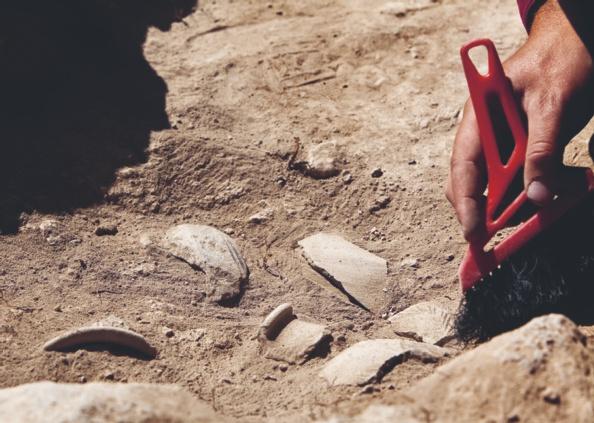

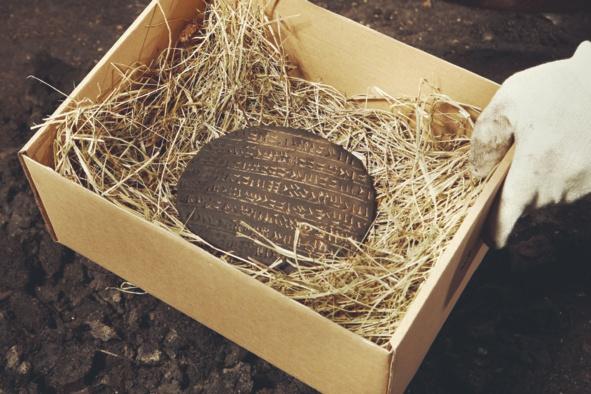
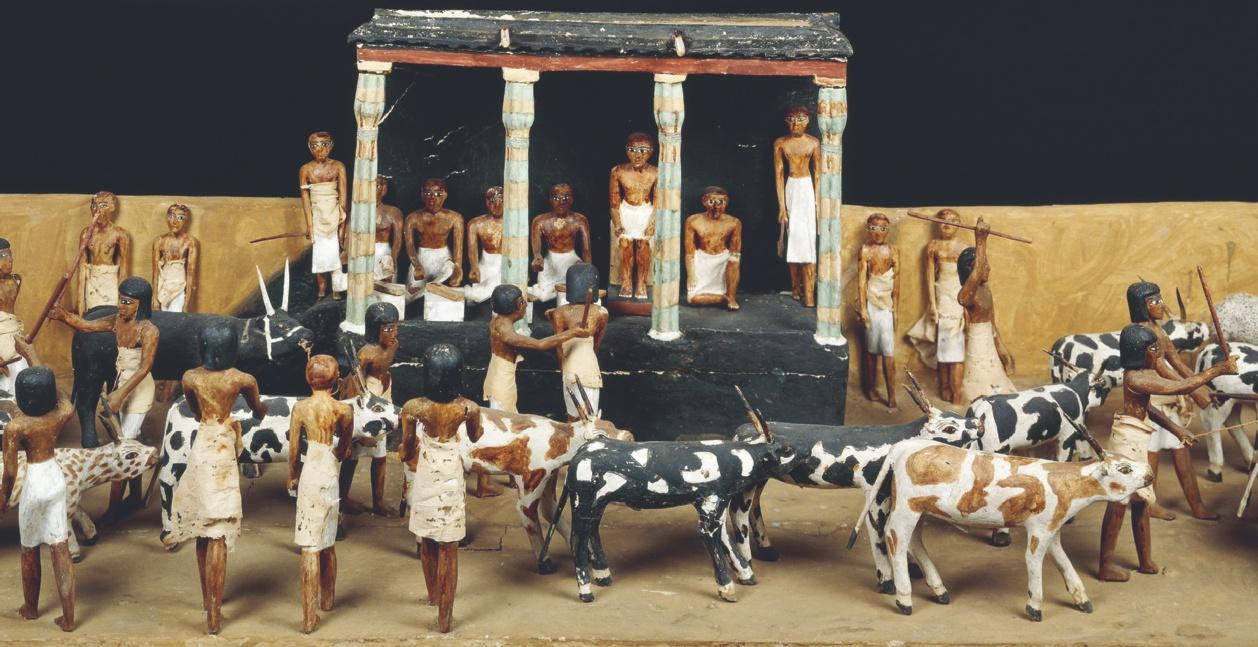
SOURCE 1 These wooden carvings were made around 1980 BC. Archaeologists discovered them in the tomb of Meketre; a rich Egyptian. They show how livestock was counted on Meketre’s estate.
Wah: Meketre’s scribe
Five men are sitting on a raised area beneath a canopy. They are inspecting the cattle presented to them by the farmers. One of the inspectors is called Wah. He learned to read and write when he was six years old. This was special because not many Egyptians could do this. This is why Wah became a scribe rather than a farmer. He worked for Meketre. Meketre was an important Egyptian because he was the chancellor to the pharaoh, the king of Egypt. Wah only did simple writing tasks for him at first, but because he was good at this, he became an inspector on the estate. Hundreds of farmers worked on the estate growing grain, grapes and other crops. Cows grazed there too. Meketre distributed part of the harvest among his workers each year. He stored another part in storehouses and traded what was left.
Meketre had wood carvings made of everyday events on his estate, as shown in Source 1. There are also carvings of the day on which they inspected the livestock. This was when Wah counted the cows and inspected their condition. If an animal were too thin, Wah would note that it still needed to be fattened up.
Archaeologists discovered these carvings around 1920. They are a unique source because they provide information about everyday life in ancient Egypt as well about Egyptians’ belief in life after death.
We receive a constant flow of information these days. Much of that information is in the form of text. Our society couldn’t function without writing.
Most people didn’t use writing in The Age of Hunters and Farmers. They passed on information verbally or made drawings. This means that we only have unwritten sources about the earliest humans: the hunter-gatherers. These people moved from place to place, hunted animals and gathered food. From the traces they left behind, we can see that nature had a major influence on their lives. This remained unchanged until groups of hunter-gatherers started farming. Farmers don’t move from place to place because they need to stay with their fields and livestock. This is how the first villages were established. In the Middle East, some of these villages expanded to become cities. In Egypt, cities were united to form one country, ruled by a pharaoh.
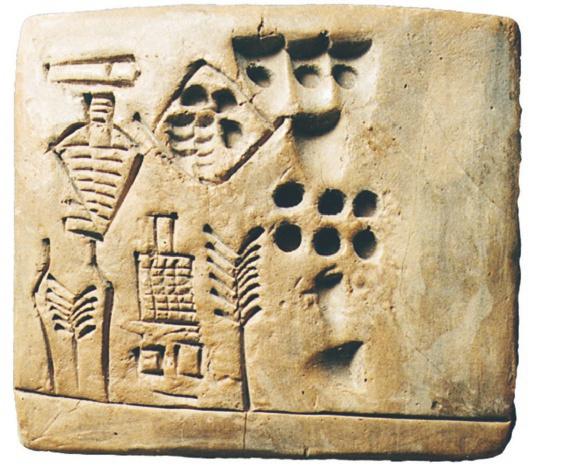
You need many more rules and agreements when people live together in cities than you need when they live in groups of hunter-gatherers. These rules need to be recorded so people remember them. This led to the development of systems of writing.
In this chapter, you can read how the earliest humans used nature, how they lived together and what traces they left behind. Written sources mean that we know a lot about how people such as Kushim, Wah and Meketre lived in the earliest cities and countries.
2

SOURCE 3 A program was launched online in 2022 that writes its own text after being given an instruction by a user.
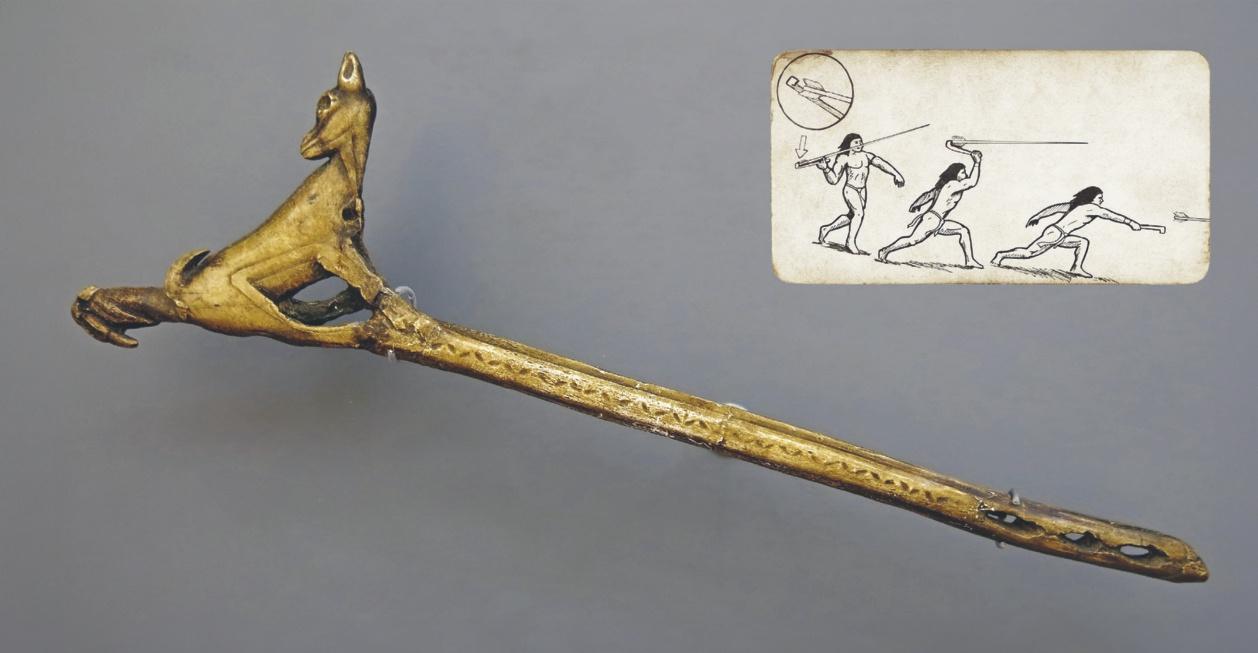
The deer’s head is turned. It is looking at two birds whose beaks are touching.
A hunter used flint to carve them carefully out of antlers 14,000 years ago. The result is full of beautiful details. Maybe the deer was his favourite animal? Its meat is delicious and the skin can be used for tent material and clothing.
The part of the antlers that the hunter has so skilfully crafted has a function: it is a spear thrower. The hunter hooked his spear behind the birds’ beaks, right at the end. With the deer’s head in his hand, he could then easily throw the spear a hundred metres. This also meant that the spear could reach speeds of over a hundred and fifty kilometres per hour. If the hunter was a good shot, his prey usually didn’t stand a chance.
The sentences above use ‘he’. But was this hunter a man? In recent years, scientists have discovered that prehistoric women were also hunters. So ‘she’ could also have been used in the sentences above.
You can read more in this chapter about how the earliest humans, the huntergatherers, lived in and from the natural environment.
• You can describe the course of human evolution.
• You can describe features of the hunter-gatherer way of life.
Planet Earth was created around 4.7 billion years ago. The earliest human beings emerged four billion years later. They developed through evolution. This is a long process during which a species develops features and behaviours that are useful in the environment in which they live. Features that are not useful disappear.
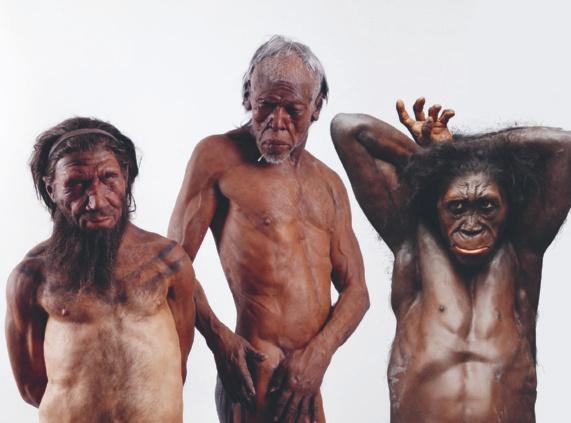
The earliest human species evolved from a species that biologists call ‘hominids’. These are also the ancestors of apes, such as gorillas and chimpanzees. This means that people and apes have the same ancestors but people did not evolve from apes.
The species Australopithecus lived almost four million years ago in southern Africa. This species was a hominid and had characteristics of apes and humans: the Australopithecus climbed trees but could also stand almost upright.
The earliest human species evolved two million years later: Homo habilis (‘the handy man’). This was followed by Homo erectus (‘the upright man’). As climate change resulted in the formation of grasslands, it was important to be able to stand upright to see approaching danger. Homo erectus was the first human species to use fire. After Homo erectus, Homo neanderthalensis evolved, followed by Homo sapiens around 250,000 years ago. This species spread across the world from Africa around 100,000 years ago.
Various human species co-existed during this evolution. However, over time, some species became extinct. Some 28,000 years ago, Homo sapiens were the only remaining human species.
There have been several Ice Ages throughout history: long periods during which the average temperature was much lower than it is today. The last Ice Age started some 115,000 years ago. The Arctic ice cap extended into northern Europe. The ice didn’t reach the Netherlands but temperatures here were below freezing, even in the summer. The landscape changed into a polar desert. Animals that were unable to withstand the cold moved elsewhere. They were replaced by mammoths and other animal species that can live in cold climates. The landscape in central Europe resembled a tundra, where only mosses, grasses and various shrubs grew. Southern Europe was covered in steppes: grasslands with some trees.
The first Homo sapiens settled in Europe around 45,000 years ago. This occurred during a period in the Ice Age in which the climate was temporarily slightly warmer and more pleasant. In Europe, Homo sapiens lived alongside Homo neanderthalensis. Neanderthals, who made small objects including beads and earrings, were slightly smaller than Homo sapiens. They had protruding eyebrows and deep eye sockets. But other than that, the two human species resembled each other. Neanderthals became extinct 28,000 years ago. We don’t know why. A possible explanation is that Homo sapiens cooperated intensively, passing on knowledge to each other and to the next generations. They could use this knowledge to improve their tools and hunting skills. Other human species didn’t cooperate in this way. The capacity for cooperation possibly made Homo sapiens ‘stronger’ than Neanderthals.
In history, you look at what happened in the past. But you also try to understand why events took place. Think, for example, of that time you arrived late for your history lesson. What caused that? It was because you got a flat tyre on the way. The reason why something happens is called the cause. Often, an event has several causes. Besides your flat tyre, you were also late because you hadn’t left home on time. And that happened because you didn’t hear your alarm clock. Because you arrived late to the lesson, you had to stay behind for an hour. This punishment is a consequence. Another consequence might be that you don’t understand the material, because you missed the explanation. When the consequences of events are very large and far -reaching, we speak of a revolution
Neanderthals and Homo sapiens lived in small groups. They were nomads and didn’t live in a permanent place. If the food supply ran out or weather conditions changed, they moved on somewhere else. They lived in caves and if no caves were available, they built huts or tents. From their temporary camp, they went hunting and searched for edible plants and fruits. The hunter-gatherers were very precise in choosing the site for their camp. It had to be safe and sheltered, and they had to be able to find enough food and drinking water nearby. Suitable locations included an elevated site in the landscape, along a riverbank, or close to animals’ regular migration routes. It is likely that wolves followed groups of hunter-gatherers and in various places hunter-gatherers were able to domesticate (tame) wolves. The domesticated animals helped the hunters during the hunt and protected the camps’ inhabitants.
For a long time, archaeologists thought that hunter-gatherers had a fixed division of labour: the men hunted, while the women looked after the children and gathered fruits and nuts. But researchers now know that women hunted too. Burial sites have been found in which women were buried with hunting tools. And women who live in modern tribal societies that still live like hunter-gatherers also go hunting.
Hunter-gatherers made tools from natural materials, including stone and bones. For hand axes, knives and spearheads, they usually used flint. They chipped away at the sides of this hard stone to make a sharp point. And striking two flints together creates a spark that you can use to light a fire. Hand axes were mainly used for chopping wood, butchering meat and scraping hides to prepare animal skins. This period is known as the Old Stone Age, because of the material used to make most objects. Hunter-gatherer tools were simple until around 40,000 years ago, after which they started to decorate them. They also produced cave paintings and even musical instruments. Figurines of female figures have been found in various places across Europe. Certain body parts, such as the hips and breasts, are often presented as unusually large. In creating these figurines, hunter-gatherers may have wanted to express their feelings for others, their respect for nature or their ideas about gods.

















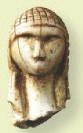



















SOURCE 6










Europe during the last Ice Age (between 115,000 and 11,000 years ago) showing sites where figurines of female figures have been found.













The last Ice Age ended some 11,000 years ago. The average temperature rose and the Arctic ice sheet became smaller. Due to this climate change, some animal species, such as the mammoth, became extinct in Europe. Another effect of melting ice sheets was a change in the landscape. Vast forests appeared everywhere, in which hunter-gatherers could find many edible plants and hunt for small animals.
The end of the Ice Age caused sea levels to rise, creating the North Sea. This had been a dry plain during the Ice Age. Large marshlands formed along the Dutch coast, where numerous animal species lived. Hunter-gatherers liked to roam there and, because so much food was available, they were able to settle in one place for longer. The camps and the groups of people living in them increased in size. People also started spending more time on building better huts and making more precise tools.
Groups of hunter-gatherers also had contact with each other. and exchanged materials such as flint. Some of these contacts also took place over great distances. For example, tools from this time have been found that were made from materials that were only available hundreds of miles away. This period of change in the lifestyle of huntergatherers is known as the Middle Stone Age.
SOURCE 7 Average July temperatures in the Netherlands from 150,000 BC until today.
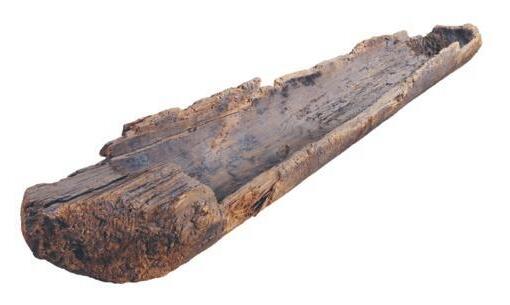
SOURCE 8 This three-metre-long canoe is the oldest vessel ever found in the world. The canoe was made 10,000 years ago by hunter-gatherers in the north-east of the Netherlands.
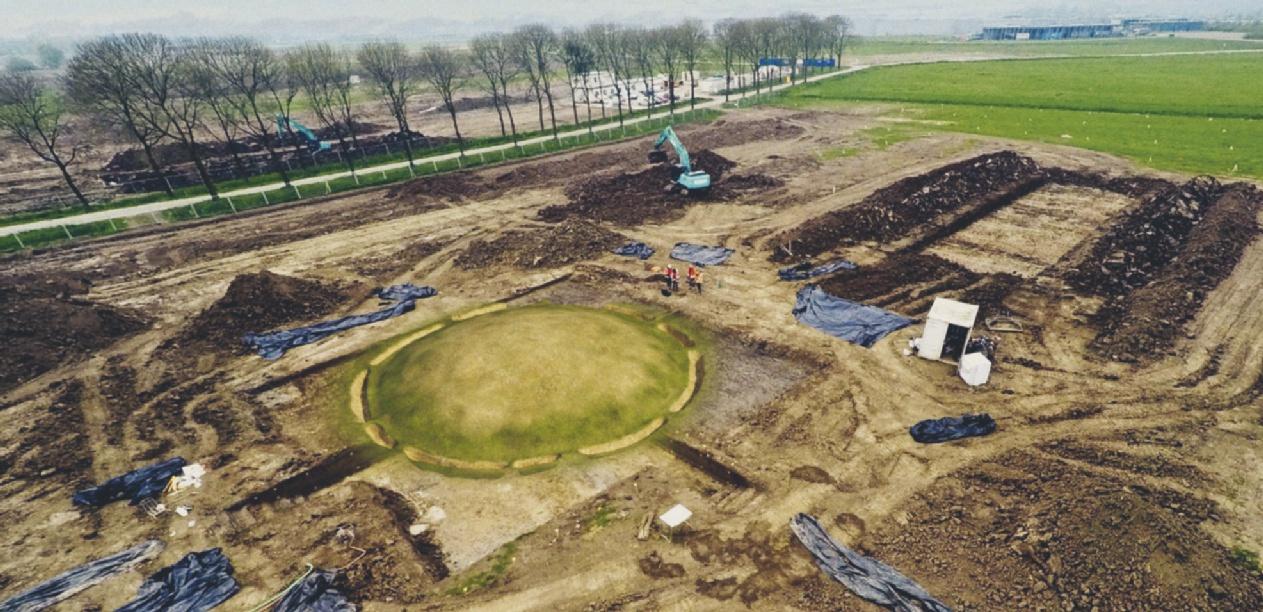
SOURCE 9 Archaeological dig of a sanctuary in Tiel dating from around 2000 BC. The hill was used as a solar calendar. Originally, wooden poles would have been positioned around the hill.
The hill looks deserted. But four thousand years ago this was an important and busy place. Farmers used to hold ceremonies here at the end of December. A priest would then climb the hill and perform rituals. The shortest day of the year had finally arrived. After this day, the sun would rise a little earlier each morning and set later each evening. The days would become longer: darkness would make way for light. This moment is known as the solstice.
Wooden poles were placed around the hill. They were probably used to form a solar calendar. When sunlight shone between two poles on the shortest day of the year, it meant that spring was approaching and farmers could start sowing their crops. Six months later, on the longest day of the year, the sun would shine between two other poles. This meant that the harvest could begin, as autumn was approaching.
The hill is around twenty metres in diameter. Archaeologists discovered hundreds of burial sites very close by. Some of these burial sites contained valuables, including a bronze spearhead and a glass bead. Researchers discovered that the bead had been brought all the way from the Middle East to Europe. The people buried here were probably wealthy and powerful farmers, otherwise they wouldn’t have been given such valuable grave goods (or burial gifts).
This section tells you more about the farmers who built this solar calendar. Their way of life was very different from that of hunter-gatherers. This is clear from the traces they left behind, such as the remains of this sanctuary.
• You can describe the emergence of agriculture in the Middle East and its spread to Europe.
• You can describe the impact of the agricultural revolution on the way of life of prehistoric people.
Hunter-gatherers roamed from place to place. This changed around 14,000 years ago in areas along the Dead Sea in the Middle East. The warm and humid climate meant that enough edible plants were available throughout the year and people could settle in the same place for longer periods. Villages emerged, in which over a hundred people lived. However, the climate changed from 11,000 BC. It became colder and drier, resulting in fewer and fewer edible plants growing in the wild. The villagers then decided to start farming as this would mean they would have enough food and could stay living in their village. Perhaps they’d noticed wild grains growing in some places along the road to their village and granaries. Was that because they’d dropped grain kernels here? By sowing the seeds themselves and then caring for the plants, they learned to produce their own food. They also succeeded in domesticating and breeding wild goats and sheep. This is known as livestock farming. Livestock farming made it easier for people to use animals for their wool, milk, meat and manure. Together, crop farming (or arable farming) and livestock farming are known as agriculture. The period in which agriculture emerged is known as the New Stone Age.
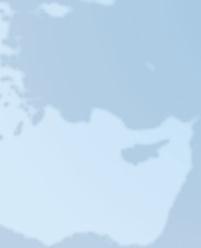




SOURCE 10 The area in the Middle East where the agricultural revolution began around 10,000 BC.
The development of agriculture is known as the agricultural revolution. The effects of this were huge:
• Hunter-gatherers in other parts of the Middle East also took up farming and abandoned their nomadic way of life. Small villages also emerged in those places.
• Farmers built sturdy farmhouses, sometimes using stone and clay as building materials.
• Farmers started building temples and tombs.
• Farmers used other tools, such as ploughs, to cultivate their fields. They also made pottery, which they used to store food and seeds, or to prepare meals.
• Farmers had many more possessions than hunter-gatherers. After all, farmers could store things in their homes, while hunter-gatherers had to be able to take everything with them. The transition from hunting and gathering to arable and livestock farming also had disadvantages. The population of the first villages grew rapidly. So rapidly that there sometimes wasn’t enough food for everyone. And diseases can spread more quickly and new diseases can emerge when people and animals live in close proximity. Archaeologists observed from skeletal remains that the first farmers were often smaller than hunter-gatherers, with frequent signs of wear and tear on their bones. They concluded that this was due to their lifestyle: life as a farmer was less healthy and more demanding than life as a hunter-gatherer.
www.thiememeulenhoff.nl/phoenix
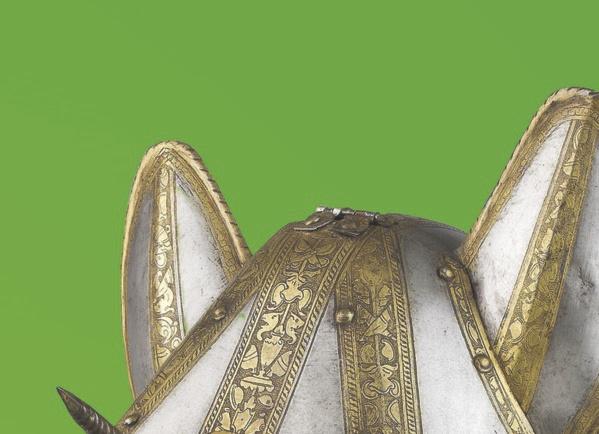
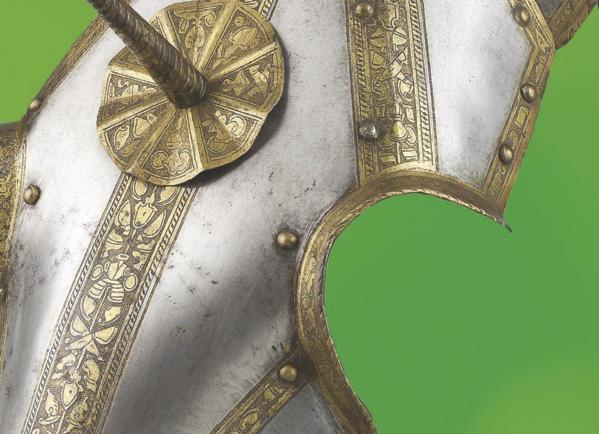
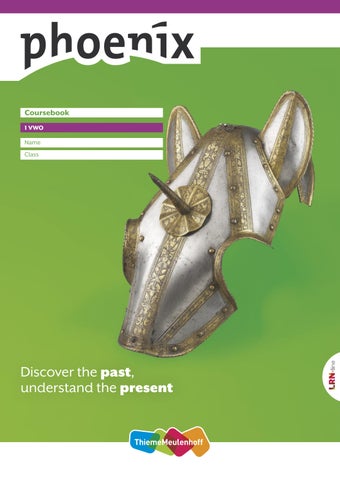
Knights wore a suit of armour in battle in the Middle Ages, as did their horses! A head-piece from such horse armour is shown on the front cover of this book. This armour protected the horse while the spike provided an extra weapon. Combat on horseback is difficult. Knights had to practise for long periods, together with their horses. They also competed in tournaments as preparation for battle. Other weapons were introduced towards the end of the Middle Ages. Gunpowder was invented, as were the crossbow, longbow and large bow and arrow. As these weapons could both penetrate armour and be used from great distances, hand-to-hand combat was no longer suitable. Especially if you first lured the knights and their armoured horses into a marshy area, which is what happened at the Battle of Agincourt, in France (1415). The knights proved too heavy and bulky to move through the mud... This marked the end of the age of knights. Although knights still competed in tournaments after this time, this was more of a combat sport with an audience.
Scan the QR code for more information on the place of horses in history.