The Yale Journal of Politics and Culture
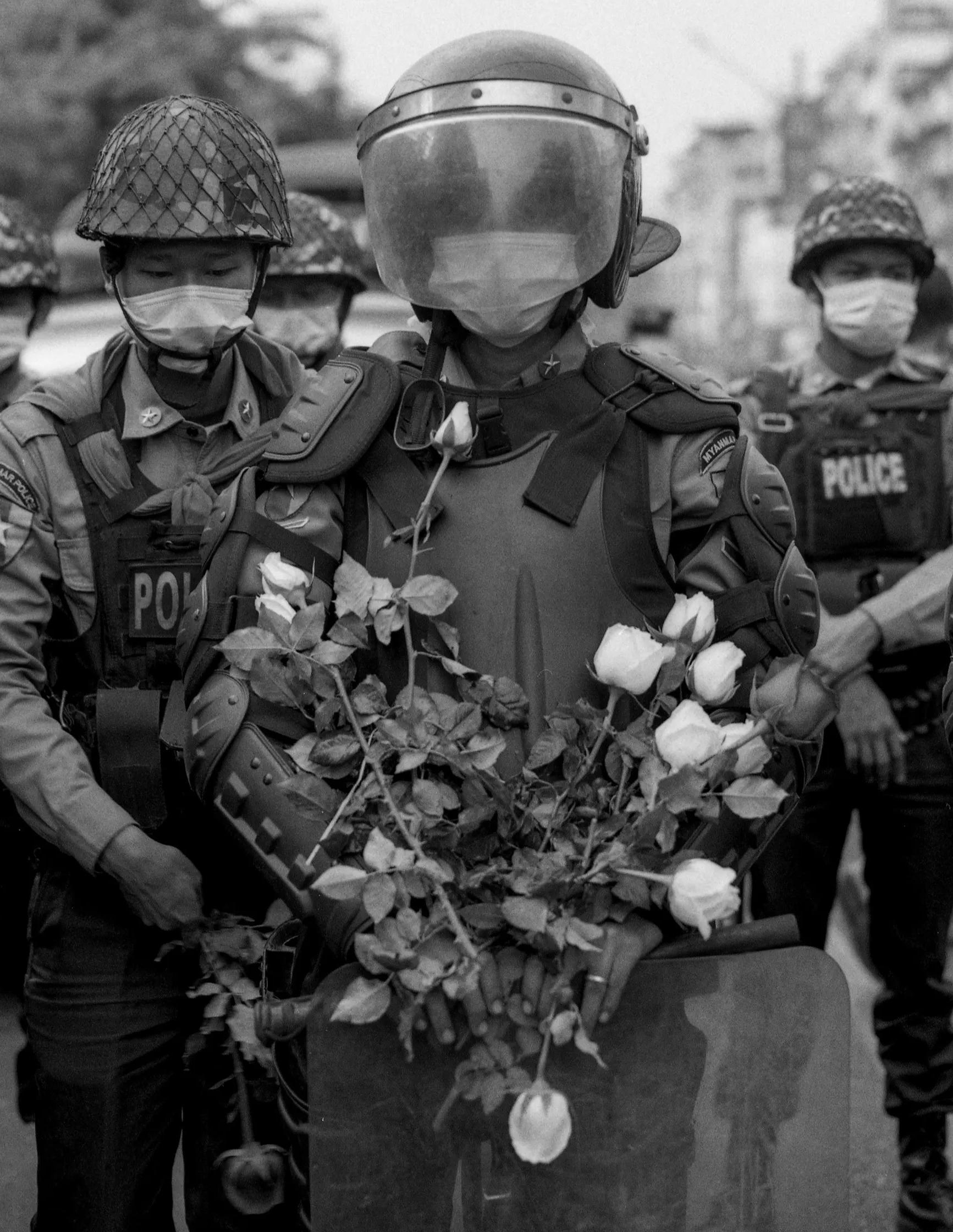

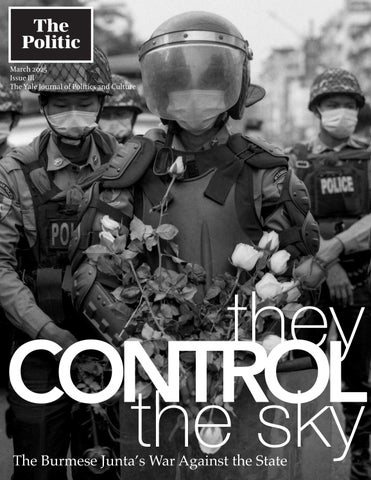
The Burmese Junta’s War Against the State
MANAGING BOARD
Editors-in-Chief
Eliza Daunt
Nicole Chen
Managing Editors
Hanna Klingbeil Canale
Rory Schoenberger
EDITORIAL BOARD
Associate Editors
Aubrie Williams
Ben Szovati Coulter
Logan Day-Richter
Lucy Dreier
Natalia Armas Perez
Nicole Manning
Pola Jancewicz
Sheena Bakare
Contributing Editors
Aarushi Dedhiya
Beatrice Formenton
Mattie Epstein
OPERATIONS BOARD
Creative Director
Katerina Matta
Communications Director
Abyssinia Haile
Business Director
Sheena Bakare
BOARD OF ADVISERS
John Lewis Gaddis
Publisher Suren Clark
Staff Writers
Brandon Gerosa
Eleanor Belinfanti
Kushan Mahesh
Contributing Writers
Kellin Henry
Rodrigo Cáceres Alburquerque
Taia Menefee
Lucy Dreier
Robert A. Lovett Professor of Military and Naval
History, Yale University
Ian Shapiro
Henry R. Luce Director of the MacMillan Center for International and Area Studies at Yale
Mike Pearson
Features Editor, Toledo Blade
Gideon Rose
Former Editor-in-Chief of Foreign Affairs
John Stoehr
Editor and Publisher, The Editorial Board
Dear readers, We’re delighted to share Issue III—our final issue as the 2025-2026 Managing Board. At a moment of rapid political and cultural change, it has been a privilege to work with writers and editors across every year who bring curiosity and rigor to understanding the world around us. This issue reflects what we believe The Politic does best: long-form reporting grounded in original interviews, shaped by empathy, and unafraid of complexity.
We open with Mattie Epstein’s exploration of the pressures placed on those married to public officials, featuring interviews with Doug Emhoff and Heidi Cruz. The piece examines how political spouses navigate the tension between public loyalty and private belief. Eleanor Belinfanti then examines the 2026 World Cup’s collision with a sharpened immigration regime, tracing how global fans grapple with scrutiny, politics, and what it means to be “welcomed” by a host nation. Our cover story by Kushan Mahesh, with photography by Ta Mwe, investigates Myanmar’s deepening civil conflict after the 2021 coup through on-the-ground testimony that captures both brutality and resilience.
Taia Menefee traces J.D. Vance’s transformation from Ohio to Yale, Silicon Valley, and Washington, exploring how his evolution may shape a 2028 presidential bid. Lucy Dreier examines “looksmaxxing,” showing how the manosphere turns insecurity into an industry of extreme self-optimization. Finally, Rodrigo Cáceres Albuquerque traces Venezuela’s oil-fueled rise and rupture, connecting state control and corruption to mass displacement.
Since 1947, The Politic has been grounded in firsthand sourcing, the pursuit of difficult questions, and careful, nuanced reporting. Serving as Editors-in-Chief of a publication with such a legacy has been both an honor and a responsibility. We are grateful to our thoughtful, dedicated staff and step away confident that their work will continue to shape important conversations.
Warmly,
Eliza and Nicole Editors-in-Chief
THE UNOFFICIAL OFFICE
Doug Emhoff, Heidi Cruz, and the Politics of Spousal Visibility
*This magazine is published by Yale College students, and Yale University is not responsible for its contents. The opinions expressed by the contributors to The Politic do not necessarily reflect those of its staff or advertisers. contributing editor
THE
The Burmese Junta’s War Against the State
BY MATTIE EPSTEIN
Political spouses inhabit many of Washington’s most crowded offices, often without ever holding one themselves. While their congested workplaces teem with staffers and spectacle, the spousal role itself is defined by absence: devoid of salary, authority over staff, and legislative authority.
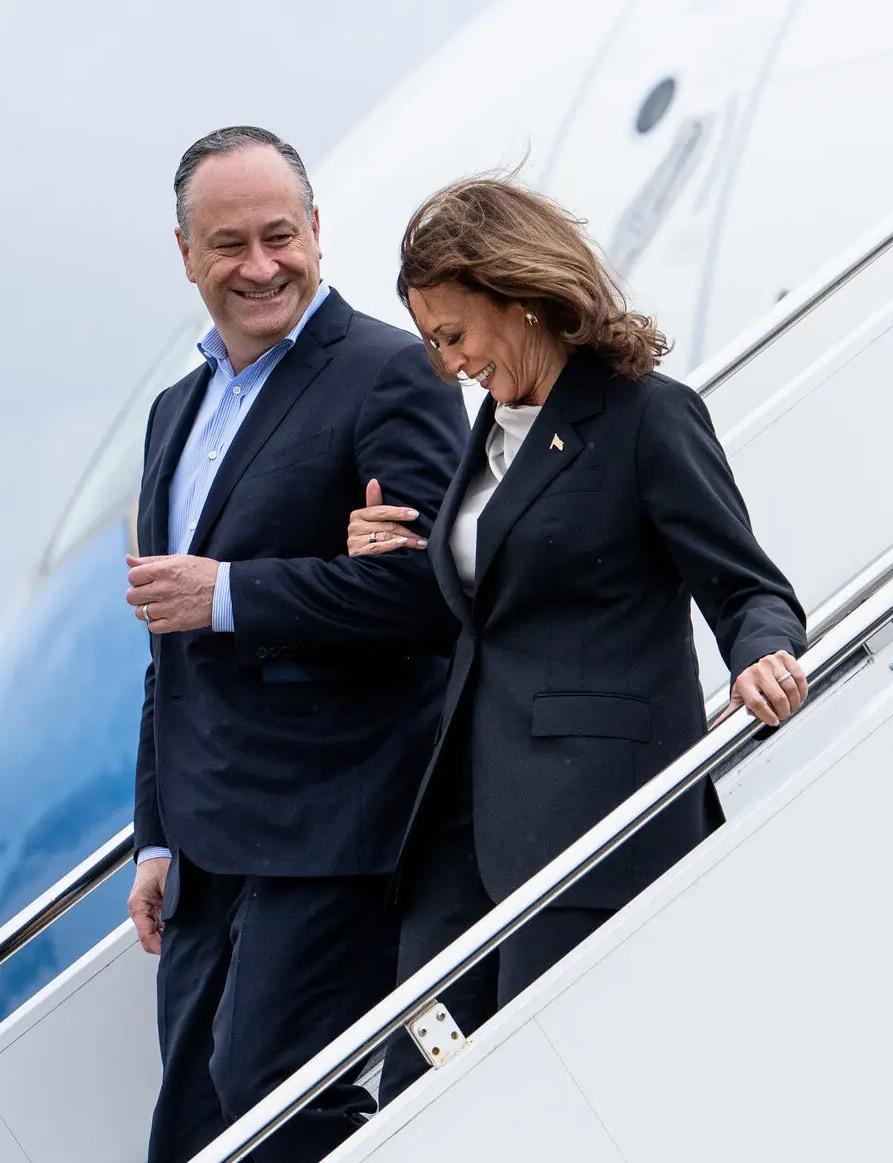
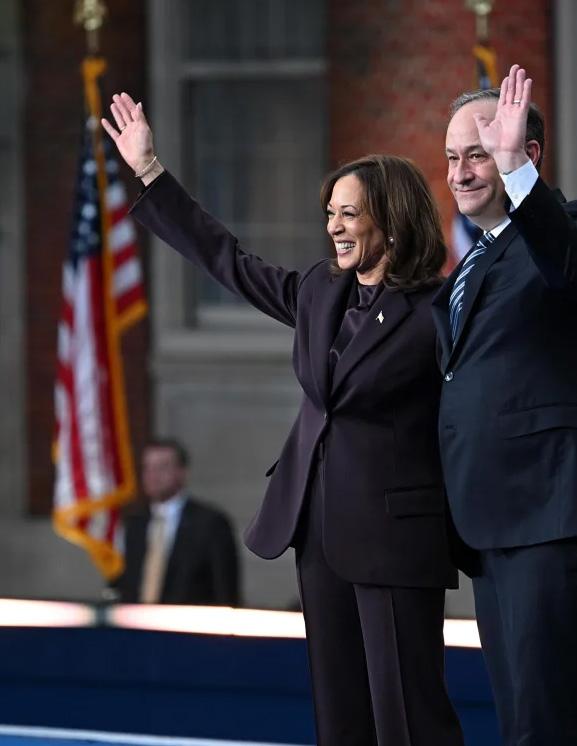
Within this institutional emptiness, political spouses must negotiate the meaning of their role. In an interview with The Politic, husband of Kamala Harris and former Second Gentleman Doug Emhoff reflected on the liminality of his position: “You have to make sure you are a spokesperson for the administration, but you do not always want to be part of the story. Do not screw up and add value if you can.”
As an envoy for Harris, Emhoff embodies a professionalized model of spousal politics through surrogate messaging, issue advocacy, and campaign support. Yet, the recent release of Melania, a documentary chronicling Melania Trump’s response to President Trump’s 2025 inauguration, offers an alternative prototype for political partnership. She is highly visible yet deliberately detached from governance. The former First Lady, who produced the film, presents herself as symbolically distant from politics but enveloped in the gingerbread aesthetics of her role—ornamental, carefully assembled, and meticulously staged.
While Emhoff embraces proximity to political power, Melania maintains distance from it, underscoring that the role has no fixed blueprint. As Sarah Bloom Raskin, the wife of Maryland Representative Jamie Raskin observes, “There’s no playbook that the spouses are given when the other spouse enters into public service.”
The capaciousness of the role allows
spouses to slide in or out of politics as necessary. During Senator Amy Klobuchar’s 2020 presidential bid, her husband John Bessler became a strategic advisor and campaign stand-in. “Elected officials cannot be everywhere at once. I’ve had to give speeches or attend events she was not able to,” Bessler said.
“You have to make sure you are a spokesperson for the administration, but you do not always want to be part of the story. Do not screw up and add value if you can.”
On the contrary, Senator Ted Cruz’s wife Heidi Cruz shared that, despite once considering a run for office herself, her job in private wealth management makes it impossible to fully commit to the public position. “There are spouses who are involved socially. I’m really not at all… partially because of my work at Goldman Sachs,” she explained.
Across interviews with The Politic, political spouses described the challenge of balancing public loyalty with private ideological disagreements. Betty Lieu, wife of California Representative Ted Lieu, reflected, “I was a little more conservative, and he was

a bit more progressive, but we’ve balanced each other out.”
Yet, intellectual reciprocity only goes so far. For spouses of more polarizing officials, the role often demands a quiet self-restraint. Heidi Cruz recounted how disagreements became fraught when marital solidarity was expected to align with campaign uniformity. “I do not want to impede his agenda if we disagree on something,” she admitted, “but I still have to be out there campaigning for it.”
While Emhoff described broad political alignment with Kamala Harris, he too was admittedly “not 100% in line with 100% of the people in the administration.” Behind the soft choreography of press lines and pantomime of photo-ops, he occasionally negotiated with staffers or declined roles that conflicted with his priorities. Ultimately, these boundaries are tempered by what Emhoff describes as a moral imperative to uphold the administration’s positions in the interest of democratic unity.

Such political forbearance also surfaces in conflicts of interest, where spouses must balance professional independence with political obligation. For example, in 2022, Massachusetts Representative Ayanna Pressley and her husband, consultant Conan Harris, took opposing sides on a ballot question regarding rideshare worker classification. Pressley argued contractor status weakened labor protections, particularly for workers of color, while Conan Harris represented drivers defending the model’s earning flexibility and tax advantages.
The dispute drew widespread coverage, particularly because Conan Harris’s public position was financed by advocacy groups linked to Lyft and other big-tech companies. “We were on two sides of it. The papers wrote about it,” Conan Harris told The Politic. “But we’re both adults. We respected each other’s decision.” The couple ultimately found consensus in creating what Conan Harris described as a “firewall” between their public and private careers: “My business is over here, and her government piece is over there.”
However, professional separation is rarely so clean, especially within the public-sector fishbowl. Upon being nominated by President Joe Biden to serve as the Federal Reserve’s Vice Chair for Supervision, Sarah Bloom Raskin encountered fierce opposition from Republican Senator Joe Manchin. Though publicly cast as disagreement over climate-related financial risk, much of the Republican backlash was driven by partisan resentment toward her husband, Representative Jamie Raskin, who led impeachment proceedings against President Trump.
“It triggered these nonsensical, meritless claims about me,” she said. “One spouse can get punished for what I call the ‘sins’ of the other.” In March 2022, she withdrew her nomination. Raskin has since transitioned from public service into academia—serving as a visiting professor of law at Duke University. This shift allowed her individual career ambitions and spousal obligations to coexist without one eclipsing the other.
“One spouse can get punished for what I call the ‘sins’ of the other.”
While these conflicts of interest can strain political marriages, they also encourage collaboration, especially to avoid the perceptions of influence-peddling. For example, in the mid-1990s, New Hampshire joined several states in a legal battle against major tobacco companies for smoking-related illnesses and sought outside counsel. Former U.S. Attorney of New Hampshire William Shaheen recalled that his highly esteemed law firm would have been the obvious choice to represent the state. Under any other governor, “[i]t was a done deal,” he noted. That changed when his wife, then Governor Jeanne Shaheen, intervened: “She figured, ‘Why should I

give him money?’,” said William Shaheen. Though his firm ceded $10 million in potential fees, he agreed the decision was necessary to avoid accusations of impropriety.
The dynamic reversed in 2023 when William Shaheen was mistakenly placed on the TSA’s “Quiet Skies” watch list as a co-conspirator with an alleged terrorist. While Senator Shaheen offered to intervene, William Shaheen decided to litigate the matter himself, ensuring she was not accused of backroom favoritism. The Senator still eventually got involved, prompting public allegations of crony advantage despite Shaheen’s unjust terrorist charge.
Betty Lieu also took professional distance to avoid accusations of nepotism. When she ran for the Torrance Unified School District Board of Education, she deliberately declined her husband’s endorsement, despite its political capital. “I did not want people to vote for me because I’m his wife,” she said. “Vote for me because of my credentials.” Now, in her bid for Torrance City Council, she similarly centers her campaign on a record independent of the Congressman, highlighting her work as an educator and local public servant. Paradoxically, while these spouses often limit collaboration to avoid the appearance of preferential treatment, cooperation is sometimes necessary to solve problems created by political proximity itself.
Many political partners cooperate by separating their professions from the public sphere entirely—building out pri-

vate-sector identities to avoid conflicts of interest. As Senator Klobuchar’s husband, John Bessler, sees it, “One elected official in the family is probably enough.”
Within this division of labor lies the simpler truth that public office does not cover rent—at least for those without inherited wealth or established lucrative careers. Political spouses often become breadwinners not out of ambition but necessity. “In New Hampshire, when you’re a state senator or a member of the House, you get paid $100 a year,” noted William Shaheen. When Jeannie Shaheen entered politics, the couple made an eleventh-hour decision: “I would make the money, and she’d make a difference,” he said. Shaheen went on to expand his law practice and build more than 20 businesses. Heidi Cruz put it bluntly: “Somebody’s got to make money in the family.”
“I would make the money, and she’d make a difference.”
On Constant Exposure in the Public Panopticon
Yet for every interviewee, the greater burden was not financial strain but relentless public exposure—living and working beneath a panopticon of scrutiny. Spouses inhabit a paradox of overexposure then
simultaneous erasure: “We’re hyper visible, but at the same time super invisible… Sometimes we’re just collateral, depending on what the press wants to write,” surmised Conan Harris.
For Emhoff, “vile negativity online” has produced and held especially painful emotional ramifications at home, particularly for his daughter, Ella. “The white, hot scrutiny is so intense and so personal that you get used to it. It almost bounces off you,” he said.
Under an unrelenting public gaze, even grief is regulated. On January 31, 2020, Representative Jamie Raskin’s 25-year-old son, Tommy, died by suicide. Days later, Raskin stepped onto the national stage as chief prosecutor in the second impeachment trial of Donald Trump.
Sarah Bloom Raskin found herself navigating private mourning alongside a sudden influx of caretaking responsibilities that fell to their family during the proceedings. The convergence created an emotionally paralyzing burden she felt was too heavy to share with friends or relatives. “You do not want to hurt the people that you would normally confide in by saying something. It’s the burden of vulnerability,” she said.
Amid scrutiny, public vulnerability manifested in private emotional sacrifices and reconciliations—especially for Emhoff. Although once his family’s primary provider as an entertainment lawyer, he was thrust into a sidelined public role, forcing a recalibration of selfhood within a role defined largely by another’s success. “I was a lawyer for all those years, and all of a sudden, I did not have that. It took a minute to

make that transition… and having to do it publicly, where I really could not make mistakes, was challenging,” he noted.
Ultimately, Emhoff set aside personal ambition to embrace a new form of labor: spousal support in service of a shared democratic mission. “You’re there to make sure they win… That’s your job: just to be supportive,” he said.
“The white, hot scrutiny is so intense and so personal that you get used to it. It almost bounces off you.”
William Shaheen echoed the importance of avoiding personal aggrandizement: “You’ve got to remember what this is for. At the end of my life, I do not want to say ‘it was for me.’”
Yet spouses were careful to distinguish their support from submissiveness. Raskin noted the frustration of having a complex career reduced to social-media shorthands: “I think it’s hard to show complexity. There is a motivation, often, to make the spouse into almost a meme.”
These public tropes were often gendered, anchored in stereotypes of female dependency or narratives that cast male support as emasculation. As Lieu observed,

traditional norms still dictate that women are more often expected to yield their careers. When her husband was appointed, she paused her own, calling it the more “socially acceptable” choice.
Heidi Cruz described how these stubborn assumptions too have trailed her career. “When I walk into a room with Ted, many people do not assume I’m working,” she said. “They assume there’s a trust fund in the family.” Were their roles reversed, she added, “and I was a Congresswoman, they probably would assume that Ted’s a partner at a law firm to pay the bills. That frustrates me.”
Emhoff encountered inverted gendered tropes, rooted in notions of spousal support as uniquely feminine. He described how the far-right cast him as a “beta” or an emasculated campaign prop, which he likened to earlier attacks directed at John Kerry. Emhoff acknowledged that his novelty as the first Second Gentleman drew intense coverage, “fair or unfair.” Female spouses, he argued, received far less attention—especially for policy work. “Usha Vance is an accomplished lawyer. But with her, it’s not being covered. I mean, I saw that she was pregnant. That was the only time I’ve seen her in the news,” he said.
Rather than being constrained, Emhoff reshaped the role on his own terms. “I showed the world that a man could be strong and love his family and be powerful and take a step away from his career,” he reflected. Framed by Time as a new “model of masculinity,” Emhoff turned his position as the first Second Gentleman into political capital. He leveraged his visibility to champion gender equity and combat antisemitism—convening Jewish leaders, backing federal antisemitism strategy, and advocating workplace equality and reproductive rights post-Dobbs.
In an interview with The Politic, Colorado’s First Gentleman, Marlon Reis, the first openly gay spouse to hold a gubernatorial First Gentleman role, described a similar form of policy entrepreneurship. Although Reis felt tokenized as a “symbol of progress,” he leveraged his heightened scrutiny to architect political reform, especially for LGBTQ+ rights. Notably, he used his public standing to raise the state capitol’s first Pride flag in 2019. Within Governor Jared Polis’s “Colorado for All” agenda, Reis also prioritized protections for not just humans but animals, which he believes “emboldened” legislators to pursue stronger safeguards. “This year, a record number of animal protection bills have been introduced,” he emphasized.
The soft power of Reis and other politi-
“There were times where I’d say, ‘I’m never holding your purse.’… I’ll be there if I’m adding value.”
cal spouses underscores broader paradoxes within the unofficial office. They are expected to be autonomous professionals yet ethically-restrained actors, private breadwinners yet public emissaries, and public fixtures yet powerless spectators.
Living within these contradictions pushes spouses to the periphery of political life, where a breakneck pace and elevated stakes rarely leave space for conventional romantic partnership. And yet what consistently sustains these relationships is not refuge from public life but a shared dependence on—and even attraction to—the churn of contemporary politics. For Betty Lieu, her partnership arose less out of conventional courtship than civic ambition: “I met [Representative Lieu] at a bar—not a drinking bar—a bar association.”
Ultimately, while the spousal role is conferred by love, romance often yields to political utility. As private partnerships bend toward public purpose, even small or intimate gestures become strategic choices in service of a shared civic mission. Love becomes less a vessel for political spousalship than a soft accessory to it. Doug Emhoff put it plainly: “There were times where I’d say, ‘I’m never holding your purse.’… I’ll be there if I’m adding value.”
by Austin Steele
BY ELEANOR BELINFANTI

Melissa Fernando began watching soccer in 2006 when her home country, Australia, qualified for the World Cup for the first time since 1974. More recently, she planned to fly to the United States (U.S.) to watch them compete in 2026. Faced with growing concerns about immigration enforcement and personal safety, Fernando, however, has decided that she will not attend the U.S. legs of the World Cup. In her own words, “what sealed the deal for us were all of the ICE incidents, and the killing of that lady, Renée Good.”
On January 7, 2026, Immigration and Customs Enforcement (ICE) tragically and fatally shot Renée Good in Minneapolis. Good, a 37-year-old unarmed U.S. citizen who was a legal observer of ICE activity in Minneapolis, was shot three times by ICE agent Johnathan Ross through her car window as she drove away. The Trump administration dismissed her death by calling Good a “left-wing agitator.” The image of masked, armed federal agents killing a civilian spread around the world, becoming a symbol for a new age of American state violence. For fans like Fernando, that translated into concerns about what it means for international visitors to be welcomed—or policed—in a new U.S.
The rapid expansion of ICE’s presence and the apparent overreach of its function are not simply American questions; they are becoming international issues—the Trump administration has ensured that. News that ICE would be present at the 2026 Winter Olympics in Milan sparked international outrage. Milan’s mayor, Giuseppe Sala, referred to ICE as, “A militia that kills.” He continued, “They are not welcome in Milan, without a doubt.” It raises the question of what the limits of ICE’s functions are under
the Trump administration. If ICE can find its way to the Olympics in Milan, what would it look like to host a World Cup in America?
“We were always apprehensive about the U.S.,” said Fernando. “What if they deny our entry and then we’ve wasted all this money?” Her fear extended beyond entry into the U.S. “The Renée Good incident and the administration’s response to it made us think that this was not going to be safe. Half of the group that was going, including my brother and me, are Brown. We were pretty scared of all this stuff that’s happening with ICE.”
Those fears are now being echoed by larger organizations preparing for the World Cup, like the American Federation of Labor and Congress of Industrial Organization (AFL-CIO). The director of their international department, Cathy Feingold, said, “For spectators to come to our country, they need to know that there will be no ICE, and no unnecessary militarization of the games.”
The international anxiety has only grown as U.S. immigration policy has hardened. On January 14, 2026, the White House announced that it would indefinitely freeze immigrant visa processing for individuals from 75 countries. Nations playing in the World Cup include Brazil, Colombia, Egypt, Ghana, Haiti, Iran, Jordan, Morocco, Senegal, Tunisia, and Uruguay. While the restrictions do not apply to tourist visas, the message of ostracization is unmistakable.
“It’s confusing that they’ve agreed to host a

World Cup and then banned a lot of countries where football is really integral,” said Fernando.
That climate of exclusion is especially jarring in the world of soccer, a sport with a large immigrant and non-white constituency. Latinos made up 33.4% of Major League Soccer (MLS) players and 25% of MLS head coaches in 2019—more than any other Major League sport in the U.S..
“Trump wants to be the face of the games.”
“I’m old enough to remember when MLS first started in this country. As a son of immigrant parents, I remember hearing grown-ups talk about how they would get harassed at the park for playing soccer. Soccer in this country was always, until recently, an immigrant sport,” said Rudy Crown, a Miami-based creative and Director of Content and Strategy for soccer podcast Hermanos F.C.
Felipe Cardenas, a senior writer for The Athletic, remembers a similar divide. “I grew up playing soccer in the 90s, which in America was very much a fringe sport. But when I went to Colombia, it was the biggest sport in the country. It was the biggest sport on the continent. The passion around it was just incredible.”
But, now, those same communities are being targeted by the policies of an administration positioning itself at the front of these games. “Trump wants to be the face of the tournament,” said Cardenas. “I think he views it as an opportunity to shine light on himself and the United States. But… anytime he has been alongside Gianni Infantino, he tends to say things that overshadow the tournament.”
This is the central contradiction. There is Trump—famous for his anti-immigrant and discriminatory rhetoric and policies—trying to use the World Cup as a form of self-promotion. Then, there is the reality of soccer as an international sport, with prominent players from the very same countries that Trump is barring from entry, such as Brazil and Colombia.
“The sport itself is so global,” said Crown. “But the beauty of it gets bogged down in how this administration is actively racist and enforcing policies that are going after people who are Brown and Black.”
FIFA’s moral ambivalence sustains the contradiction: despite pressure from the AFL-CIO and a broader coalition, the
organization has offered no guarantees. Given FIFA president Gianni Infanti no’s well-documented relationship with Trump, the organization had a clear ave nue to coordinate with the White House on this issue. Instead, FIFA declined to do so in favor of pursuing the tournament’s financial and commer cial benefits.
Cardenas attended a Miami event featuring Lionel Messi, Gianni In fantino, and Donald Trump. “I was honestly shocked by Infantino’s casual way of cussing the Trump administration,” said Cardenas. “Perhaps he got too comfort able in a setting of very pro-Trump poli tics. I’m paraphrasing, but he basically said that he didn’t understand why there was so much pushback against Trump’s policies, because they were working.”
“The sport itself is so global, but the beauty of it gets bogged down in how this administration is actively racist and enforcing policies that are going after people who are Brown and Black.”
That proximity only further reinforc es doubt about FIFA’s priorities heading into this World Cup. “FIFA’s priorities are making as much money as possible and not really having any kind of moral com punction about the people they’re work ing with,” said Andrew Helms, a sports journalist and documentary filmmaker. Crown puts it more bluntly: “It’s the al mighty dollar. FIFA has been notorious ly corrupt, and they don’t hide it. FIFA just doesn’t care. It’s all about the dol lar.” While FIFA could theoretically take a stand, realistically it could never do so without jeopardizing years of planning, sponsorships, and logistical commit ments.
FIFA’s refusal to draw a line—even around the presence of ICE at its own matches—emphasizes how they are will




shape. “It’s important not to lose sight of the fact that the people trying to grow soccer in America have existed and have been trying long before Donald Trump was ever
He contrasts the trilateral bid with Russia’s. “When Russia sought the Sochi Olympics and the World Cup, that was driven from a perspective of sportswashing.” Sportswashing refers to the use of major sporting events to cleanse a government’s reputation. When Russia hosted the Sochi Olympics in 2014 and the World Cup in 2018, it was illegally annexing the Crimean Peninsula and facing international condemnation—yet projecting an image
While Russian forces occupied Crimea and faced sanctions and international criticism, the government invested billions in the Olympics to portray Russia as stable and welcoming. The contrast between Russia’s political reality and the image they wished to present to the world was stark, demonstrating how events like the Olympics or the World Cup can distract from human rights violations and reshape international perception without addressing underlying is-

Global tournaments, then, do not exist in isolation from politics. The spotlight these tournaments put on a country enables administrations to capitalize off the immense viewership, and turn them
In that context, the Trump administration’s increasingly aggressive and discriminatory immigration policies take on an unsettling cast. “The U.S. World Cup before Trump felt a little more soft-powery,” said Helms. “But now, with the immigration crackdowns, it all feels a little different.” When ICE uses violent force in American cities, tears families apart outside of schools, and racially profiles Americans,
The question now is not whether the games will happen, but rather what they will come to represent.
it makes state force visible, routine, and woven into the fabric of everyday life in a new America. This is not a mere administrative or legal decision; it is a performance
of power. The question now is not whether the games will happen, but rather what they will come to represent.
For international fans like Fernando, that meaning has already shifted. “Growing up, we had a more positive image of the U.S.—as a melting pot of different cultures and different people,” said Fernando, “but that perception’s just completely shifted and gone the other way.” It is understandable that FIFA is too committed to back out now, but the tension between a tournament built on global openness and a country enforcing increasingly restrictive immigration policies is unresolved. “It’s confusing why FIFA would choose the U.S.,” said Fernando.
“The whole world is watching, but the world doesn’t love America.”
The Trump administration clearly sees the World Cup as an opportunity to put a glossy image of America on display. However, global events are risky marketing tools. The U.S. will have to reckon with its international image if it wants this World Cup to be successful. “There’s an incongruity of trying to host an event that is supposed to bring the world together under an America-first policy agenda,” said Helms. When the spotlight turns to America, it will not just capture goals and celebrations—it will capture detentions, arrests, and protests.
That global scrutiny will intensify as the tournament draws closer. As Crown put it, “the whole world is watching, but the world doesn’t love America.” The World Cup will bring the world’s eyes to America and the White House exactly as Trump wants. The question is what will happen once those eyes are here. Will they only see the spectacle, or will they see Trump’s agenda behind it?
BY KUSHAN MAHESH
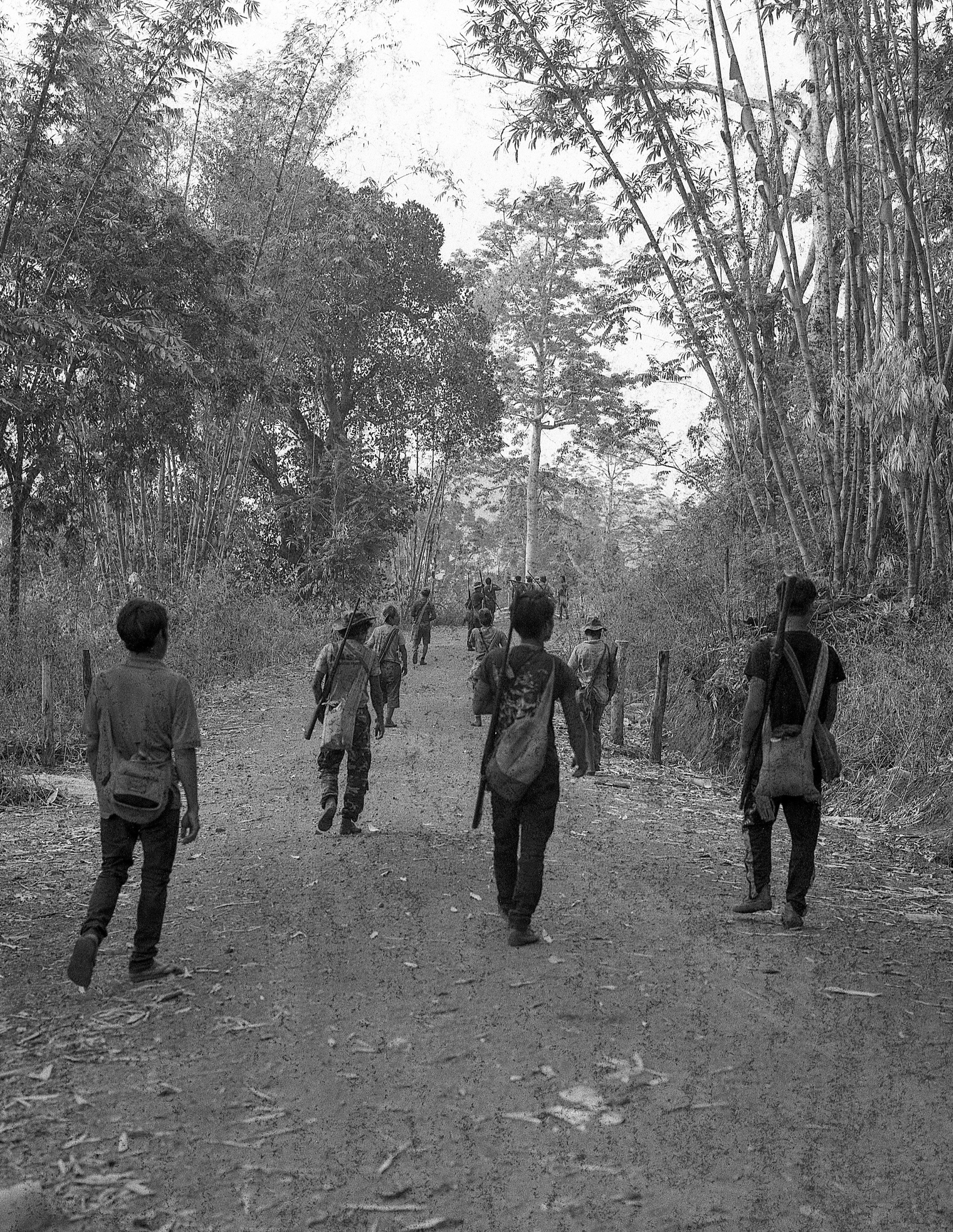
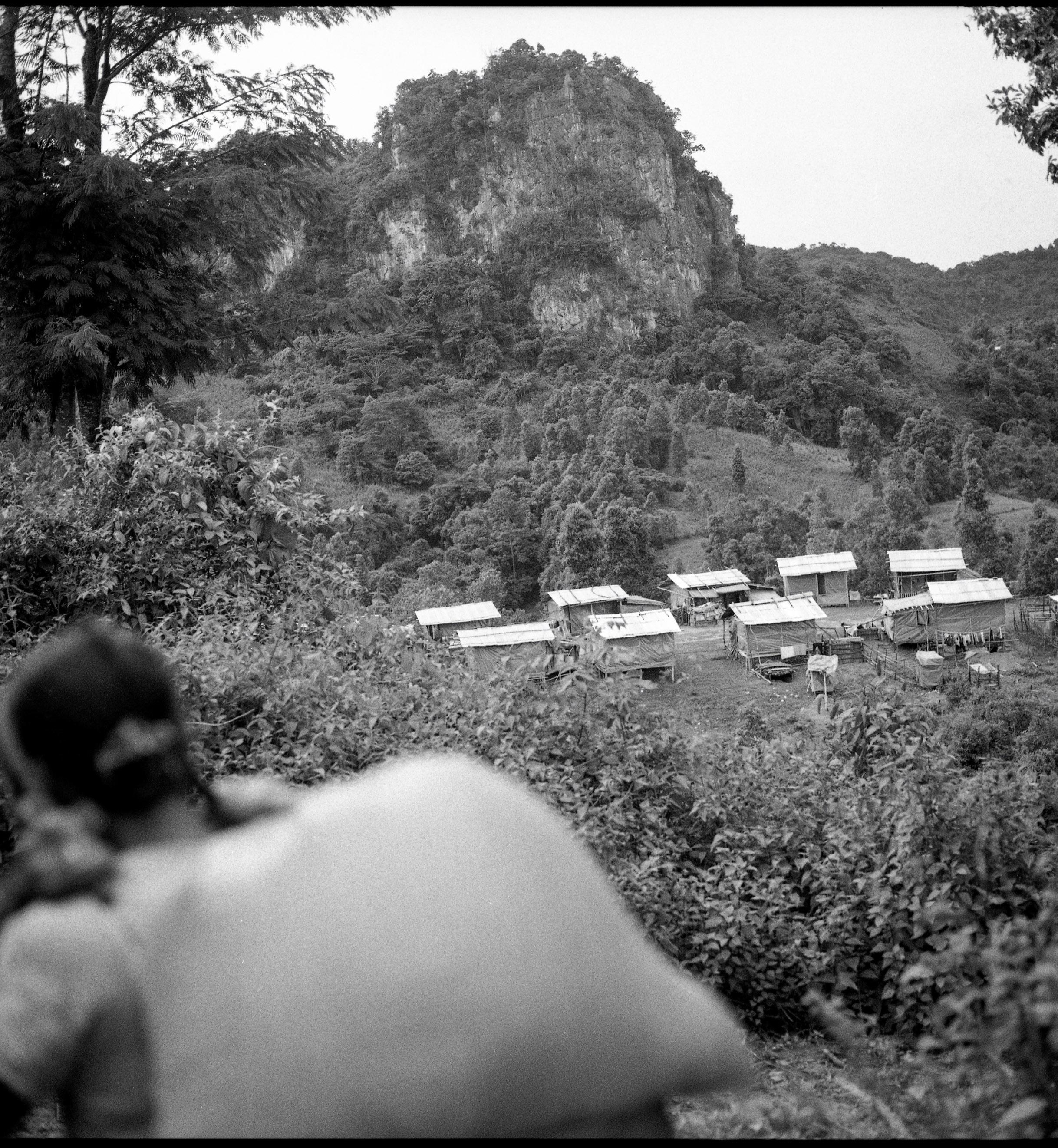
Stirrings begin before dawn. Rice is eaten by the fire while it is still dark. People move quietly, carrying only what they can, riding on horseback or on four-wheel drive trucks when danger requires it. There is a short pause around midday for some packed rice by a stream, then they continue on. Camps are temporary, fires a luxury for when the Burma Army is far enough away. No one stays anywhere long enough to feel secure.
Days like this repeat themselves. Sometimes without incident, sometimes not.
“I knew the war was going to be long,” said David Eubank, a former U.S. Army Special Forces Officer and founder of Free Burma Rangers, a humanitarian aid organization that works in conflict zones in Burma. “I did not expect anything to be short. This is the longest running war in the world from 1949 to now—fighting all over Burma.”
Conflict has shaped daily life across generations, not through decisive battles but through routines of avoidance and learned abnormality. Since the 2021 coup and the military junta’s takeover, everyday life has deteriorated. “They’re advancing, they’re shooting and shelling and doing air strikes and dropping drone bombs and people are being wounded,” added Eubank. “It’s all gotten worse.”
Eubank spends most of his days moving around the country, trying to help as many people as he can while hiding from the Burmese Army. “If you’re anywhere near a road they can find you,” he said. Some days are spent meeting displaced families at radio-designated clearings in the jungle to provide humanitarian assistance, ranging from food and clothing to setting up a make-
shift dental clinic. “You really have fun together and all your fears and worries go away for at least a day,” he added.
Other days are spent in combat.
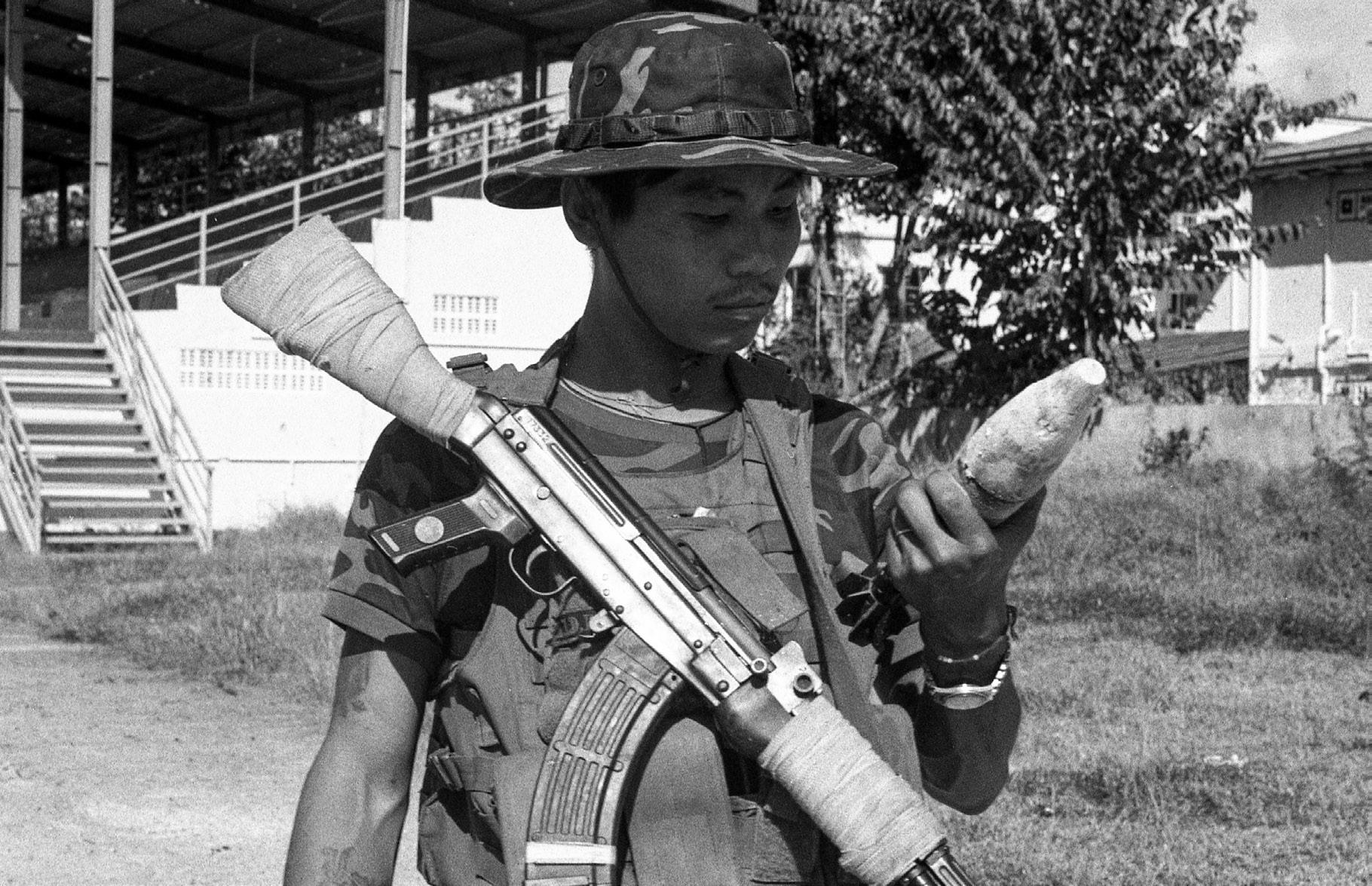
Eubank and his team accompany resistance groups to the front line, deploying rescue parties and manning casualty-collection points to treat the wounded. He recounted one incident, where his team evacuated a resistance fighter who had been shot in the back and was bleeding out through his chest.
“We carried him back on a hammock strung on a bamboo pole, then put him on a truck and drove him to a little hideout in the jungle,” he said. The operation took place under a tarp in the jungle. The man survived.
“Over half of Burma is controlled by different resistance groups,” Eubank said. “But every major city is still controlled by Burma Army…and they control the sky so any time you can be bombed from the air.” The country remains in a constant state of conflict and disquiet, with territory changing hands and millions of people being displaced along the destructive path of the Burmese Army. “In one village they went through, they looted most of the houses and placed over 100 landmines in that small village,” he added.
Five years after the coup, the war has neither abated nor burned out. “What scares people? Everything,” Eubank said. “If the Burma army is close—there’s shooting, getting captured, being tortured to death. If they’re further away—heavy mortars and artillery. And all the time, drones and jets.”
The war has embedded itself into the very fabric of daily life. People are hopeful, yet tired, having lost friends, families, and loved ones to the violence. More than any-
thing, “they feel more forgotten,” he said. “The world hasn’t stepped in.”
Tracing the Coup
Myanmar, often referred to by its former name Burma, has been shaped through a prolonged and intimate relationship with military rule. In 1962, the Tatmadaw seized power through a coup, with Myanmar entering decades of authoritarian governance and economic isolation. Mass protests in 1988 shook the nation, briefly destabilizing the regime, and opened the door to limited political reform. Two years later, Ang San Suu Kyi and her party, the National League for Democracy (NLD), won a decisive electoral victory—one that the military refused to honour. While under house arrest, Suu Kyi was awarded the Nobel Peace Prize in 1991 for her sustained struggle for democracy against the military regime.
Myanmar’s transition to democracy was tightly controlled. Rather than separating the state and the army, the 2008 Constitution institutionalized the military’s role in politics, guaranteeing the Tatmadaw a quarter of parliamentary seats, control over key ministries, and an effective veto over constitutional change. Nonetheless, elections in 2010, 2015, and 2020 marked a period of genuine progress. The NLD’s successive victories under Suu Kyi expanded civilian governance, economic liberalization, and international engagement. For many, this period marked a turning point, making the overt return to military rule in 2021 feel especially abrupt.
Following the military coup in February 2021, resistance took the form of mass pro-
tests throughout the country. Debbie Stothard, a long-term regional human rights activist and founder of ALTSEAN-Burma, said even the older-generation of activists were struck by the scale, “this is bigger than ‘88…there was a greater sense of solidarity [then].” Approximately 4,700 demonstrations were held throughout the first six months following the coup, spreading far and wide beyond the city-centers of dissent, drawing students, civil servants, and ethnic minorities into a shared rejection of the coup. “This is not only a political revolution,” she argued. “It is a social, cultural, and economic revolution.”
The aftermath of the coup was not simply repression but the internal fracture of the state. As the military opened fire on unarmed demonstrators killing over 1,350 protestors in the first year, “a lot of Burman-dominated groups didn’t have the stomach to see young people shot on the streets,” Stothard recalled. The violence expanded into what she described as “interrogation centers where thousands of people were tortured.” Yet the crackdown also altered the battlefield. “This is a military that is not used to being fought with,” she said. “They are not used to armed resistance on this scale.” Some soldiers and police defected, others quietly withdrew.
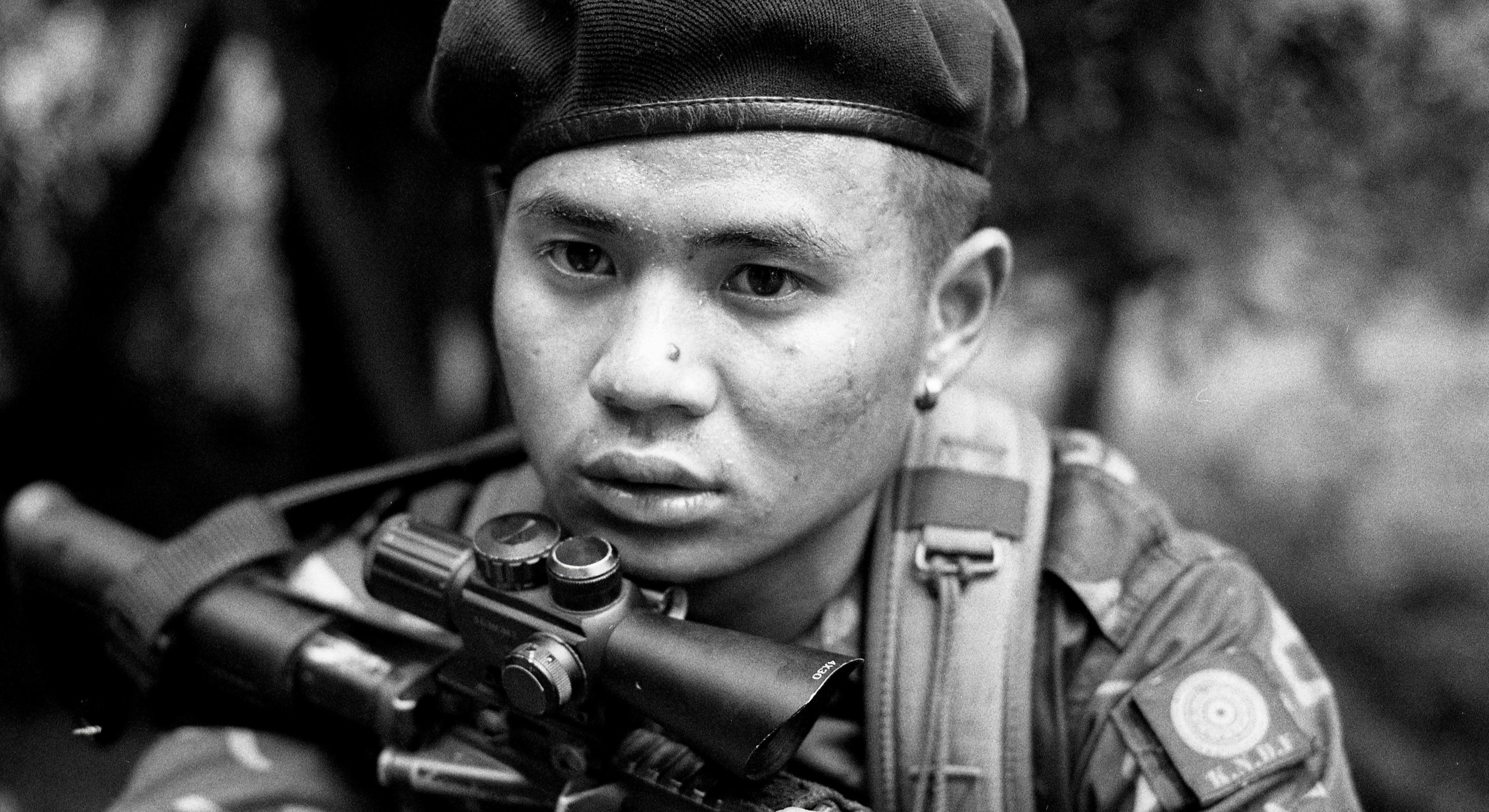
Following brutal and repressive crackdowns by the junta government, the protests would transform into widespread armed resistance. A documentary photojournalist operating under the pseudonym Ta Mwe described how quickly protests blurred into civil war. “I covered the protests, the military junta, and the crackdowns,” he said. Eventually, Ta was placed onto the watchlist, and was forced to flee
“A lot of Burmandominated groups didn’t have the stomach to see young people shot on the streets.”
Myanmar for Thailand. Since the coup, almost 200,000 people have been displaced to neighbouring countries, including Thailand and India. Three million people remain internally displaced.
In 2026, violence has intensified in conflict zones. Airstrikes, and more recently, drones, have come to define daily life for civilians. People adapted because they had to—makeshift bunkers, displacement, and relocation—routines reorganized themselves around constant threats of attack by the junta. “I’ve seen more destruction, more devastation,” Ta said. “Collective punishment for civilians for allowing the rebels to operate in their area.”
Governance Without the State
Myanmar’s post-coup fragmentation was structured not only along military lines but also by the country’s entrenched social divisions. Ethnic and religious diversity shaped where resistance took hold and where authority was exercised—primarily in minority regions such as Karen, Kachin, and Karenni states. Highland regions, which had long been distant from the state, quickly moved towards armed resistance and self-administration, while urban and lowland areas remained under the junta’s control. What emerged was a coalescence of overlapping authorities and individual priorities that shaped the struggle against the regime.
“I don’t think Myanmar is in transition,” Yale Professor in Southeast Asian Studies Dr. David Moe told The Politic. “If we say Myanmar is in transition, we have to think about its pathway to justice, peace, stability, and prosperity. But that is not the future of Myanmar.” For Moe, the language of ‘transition’ obscures the conditions that have unfolded since 2021. The junta controls the urban areas and parts of the lowlands; resistance forces administer the highlands. No faction commands a monopoly of control. “Myanmar is not really a country,” he added.
As political authority fractured, so did the moral authority that had long underpinned the state. Following the 2007 Saffron Revolution, the military systematically neutralized and depoliticized the Buddhist Sangha—defrocking monks, jailing dissenters, and elevating pro-establishment monks. “By the time the coup rolled
around in 2021, the Buddhist Sangha was essentially castrated,” said Stothard. The secular circumstances of resistance were markedly different from previous uprisings. Women, the youth, and minority groups moved to the forefront, no longer constrained by the Buddhist social hierarchies the regime once imposed.
Even as young activists try to distance themselves and the movement from religious language, the junta has continued to weaponize Buddhism for political authority and as a means of legitimacy. “The military regime uses high-profile monks to say that this regime is now in power,” said Moe. “We want to protect our religion, Buddhism, and we want to protect our race, the Bamar majority.” The junta derives power not from a democratic mandate, but by positioning itself as a guardian of a threatened religious and cultural order, aiming to pander both to older generations and the Burmese diaspora.
In areas beyond the junta’s reach, governance has not disappeared; it has been rebuilt. “What we’ve seen in many areas is local people engaged in local governance, reviving social services, civil administration,” Stothard explained. In many resistance-controlled areas, administrators have prioritized health and education while establishing courts, law enforcement, and even jails. In Karenni State, the Interim Executive Council (IEC) implemented a minimum 30% women’s leadership requirement across executive and legislative arms. For Stothard, these institutional developments matter more
“People don’t see resistance as just fighting back. They see resistance as recreating their society, recreating their governance, recreating their future.”
than territorial fluctuations. “It’s been exhausting, it’s been heartbreaking, but it’s also been very inspiring,” she said. “People don’t see resistance as just fighting back. They see resistance as recreating their society, recreating their governance, recreating their future.”
Yet state-building does not constitute nation-building. For Moe, the central problem is fragmentation. “In the early days of resistance, the ethnic minorities were united as they saw the regime as their common enemy,” he said. “But as the time goes on, the ethnic minorities are not quite united with one another.” Moe further highlights the dissonance between local authorities and the National Unity Government (NUG) of Myanmar, the government-in-exile. Different resistance groups have different vi-
sions of Myanmar’s political future.
“The movement is really decentralized,” Moe added. “The challenge really is how they should come together and form a strategic resistance under a centralized leadership, so that they have a more effective way of defeating the regime.” The resistance may be resilient, but its political future is still under negotiation. Meanwhile, the military has sought to resolve that uncertainty on their own terms—through elections designed to secure legitimacy and restore central control.
From 28 December, 2025, to 26 January, 2026, Myanmar’s junta held general elections, though these were widely criti-
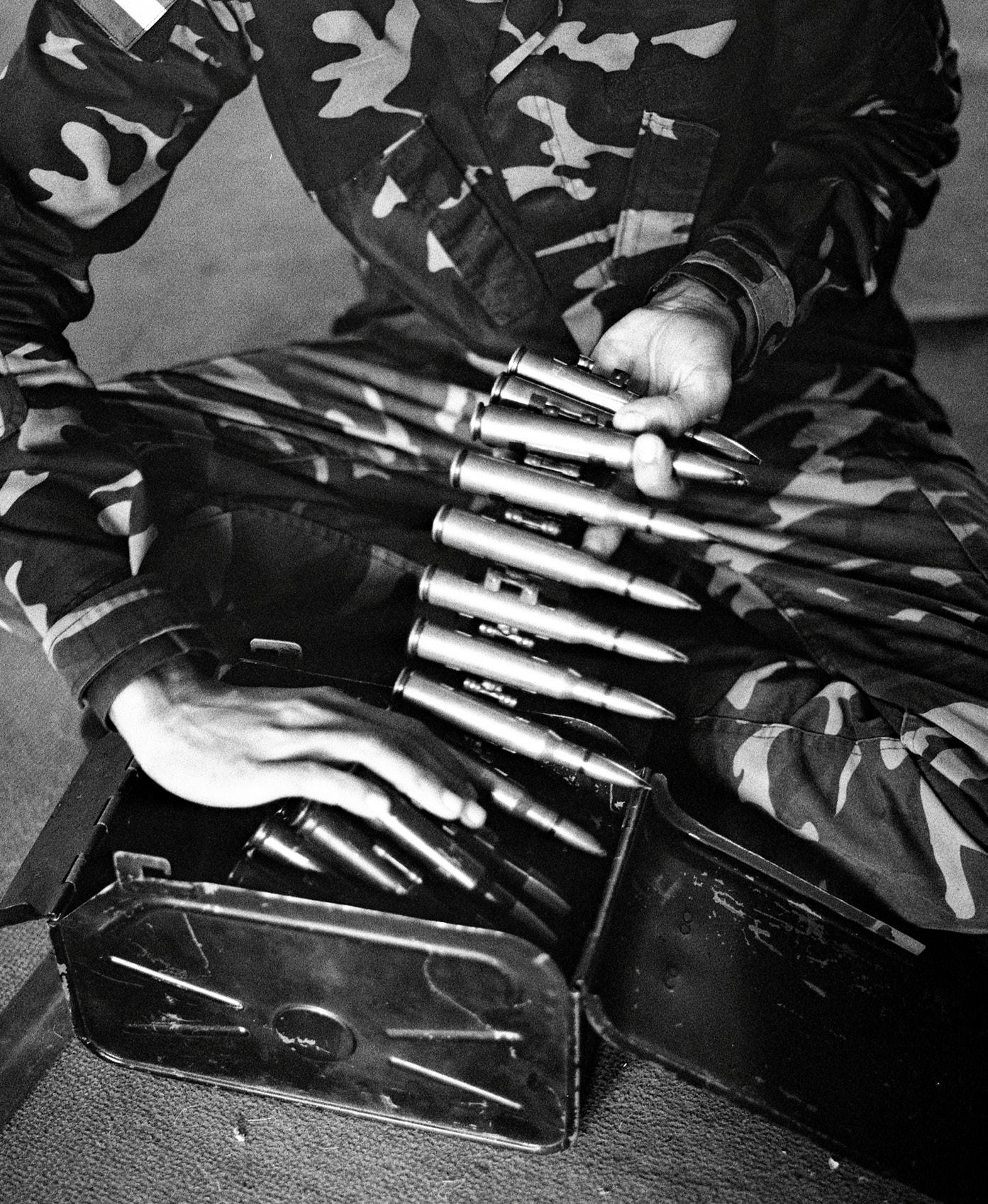
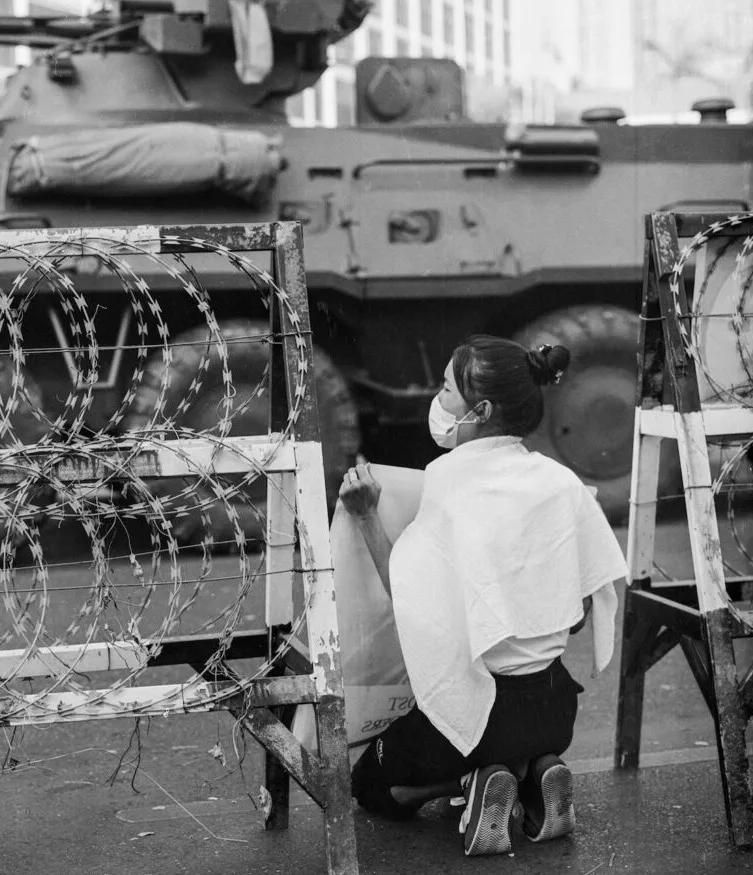
cized over claims of fraud. For Moe, the elections were less a democratic contest than a rehearsed performance. “That is not an election. That is selection,” he said. “They already know who will be the leader.” In his view, the purpose of the election is not domestic persuasion but external recognition. “The big goal of that election… is to get legitimacy from the international community,” Moe added. China and Russia have already accepted the junta government, and now the regime is trying to convince The Association of South East Asian Nations (ASEAN) and the West.
On the ground, the mechanics of voter participation have relied less on participation and more on pressure. Stothard described the structures of coercion. “We know who’s living in your household. You’ve got to make sure they come and vote,” she recalled an anecdote from one of her contacts. “If you don’t vote, you’ll be considered as opposing the election, and then you could go to jail.” Stothard described the smorgasbord of intimidation tactics, including threats of forced conscription, revoked passports and exit visas, and checkpoints in the capital where officials stopped vehicles to verify voter registration.
The abuses did not stop at intimidation. Stothard described hundreds of candidates jailed for anti-junta rhetoric and allegations of pre-programmed voting machines favoring the regime. According to her, approximately 20% of townships were excluded from the franchise, and out of the 80% included, townships were gerrymandered to exclude around 30% of the population. “It’s violence, it’s intimidation, it’s coercion, it’s fraud—all bundled into one,” she said.
Yet these intimidation tactics did not translate into votes. In several townships, turnout appeared strikingly low, especially compared to the 2020 elections. One of Stothard’s informants, who had refused to vote until the junta pressured her family, told her that barely a handful of voters had registered on the form. “Most of the people in rebel-controlled areas don’t even realise the election is going on,” said Ta. “For those who were aware of it, they didn’t care at all.” In some rebel-controlled townships, only two or three thousand people voted. “That’s even less than one IDP camp,” he remarked. For Ta, voter apathy was the norm simply because the results of the election seem predetermined.
As voting unfolded, Stothard criticized the focus on electoral standards as overshadowing the situation on the ground. “So when
people say, is it free or fair? That’s not the question. It’s irrelevant and ridiculous,” she said. “The issue is about violence.” During the first three weeks of the electoral period, there were 797 armed clashes and attacks on civilians in nearly 50% of all the townships in Myanmar. Ballots were cast as hundreds of airstrikes intensified throughout the country. “Who organizes elections over the Christmas period?” Stothard asked. “People who hope that you will all be on holiday and won’t see what’s happening.” While violence and intimidation failed to persuade voters at home, its real audience lay abroad.
The junta’s durability cannot be understood without Beijing. China maintains deep economic and security ties to Myanmar, from cross-border trade and rare earth mineral extraction in the North to oil pipelines linking China to the Bay of Bengal. Political stability often takes precedence over democratic legitimacy and moral authority. “China doesn’t care about democracy, they don’t care about human rights,” Moe claimed. “They just care about the economy.” To Moe, China remains pragmatically aligned to the junta. “China always looks at who is winning,” he added. “Myanmar is the backdoor of China,” said Ta. “If the West wants to contain China, this is the key area they should’ve supported a long time ago.” From rare earth minerals to overland access to the Indian Ocean, bypassing the South China Sea, Myanmar’s geopolitical importance stretches far beyond its borders.
China has even stepped in to broker local peace deals in bordering states, aiming to help the junta secure valuable infrastructure and resources, such as the ruby-mining town Mogok in 2025. Seen this way, as long as the junta retains leverage over key territories, China has little incentive to sever ties—and all the more incentive to strengthen them.
Beijing’s support is not only economic. The junta remains one of the heaviest armed militaries in Southeast Asia, sustained critically due to foreign equipment and training. “They have weapons. They have strong China and Russia support,” Moe said bluntly. “That’s why they are surviving so long.”
On the ground, that backing is felt overhead. “There’s constantly something, a drone or an aeroplane in the air,” said Eubank. “Chinese jets and transport [aircraft] used as bombers are dropping 120mm and 81mm mortar rounds on us.” Stothard echoes Eubank’s experience, emphasizing how the ground-based insurgency has turned into an asymmetric air-dominated war, sustained by external suppliers.
Myanmar also looks inward to its ASEAN counterparts for regional security. The Five-Point Consensus has condemned and unanimously rejected the junta, ASEAN’s consensus is symbolically significant. For Stothard, that is not enough. “To this day, ASEAN still does not have an arms embargo,” she said. “When the military started shooting, there was no sanction against the military for that.” Internal divisions between more outspoken, pro-democracy members and those favoring rapprochement further complicate the junta’s relationship with ASEAN. The result is a managed posture: the junta is neither em-
“It’s violence, it’s intimidation, it’s coercion, it’s fraud—all bundled into one.”
braced nor effectively restrained.
Beyond the region, the response has been all the more limited. Western governments have implemented targeted sanctions and refused to recognize the sham elections, but over the five years of conflict, attention has turned elsewhere. For Moe,
the resistance’s inability to overthrow the junta is not symptomatic of internal issues. “It’s not because of strategic failure,” he said. “But because of the international community’s failure to support them effectively.” Diplomatic statements have not been matched by material and economic commitments. As conflicts in Ukraine and the Middle East dominate headlines, Myanmar and its people risk being sidelined—acknowledged and condemned but never resolved.
The kyat continues to weaken. Prices of fuel and rice have risen much faster than wages. Electricity flickers for only a few hours each day. Millions of people are displaced, living in temporary encampments across the country. Airstrikes do not pause for elections. Corruption is rampant as institutions squeeze the nation dry for revenues.
“Why do they need revenues? It’s not to rebuild infrastructure. It is to keep bombing the hell out of resistance controlled areas,” Stothard added bluntly. Daily life has collapsed to survival—savings evaporate, families separate, hope erodes. The future feels less like transition than endurance.
“2026 is going to be a terrible year,” she said. “It’s going to get worse before it gets better.”
For many Burmese, the war now unfolds in a kind of silence. Headlines fade, and diplomatic statements blur together. International involvement feels distant, conditional, and abstract.
“They feel more forgotten because the world has not stepped in,” Eubank said. “But in spite of all of that, I see a resolve— amidst the tears, the sadness, the fear, and the disappointments—that we will continue to try to change Burma because we have no other choice.”
“Even if we die in the process and don’t see freedom come to this land, we have shared love together, we have walked in freedom together…I put my hope in God that one day Burma will be free, and I’m grateful we can be a small part of it.”
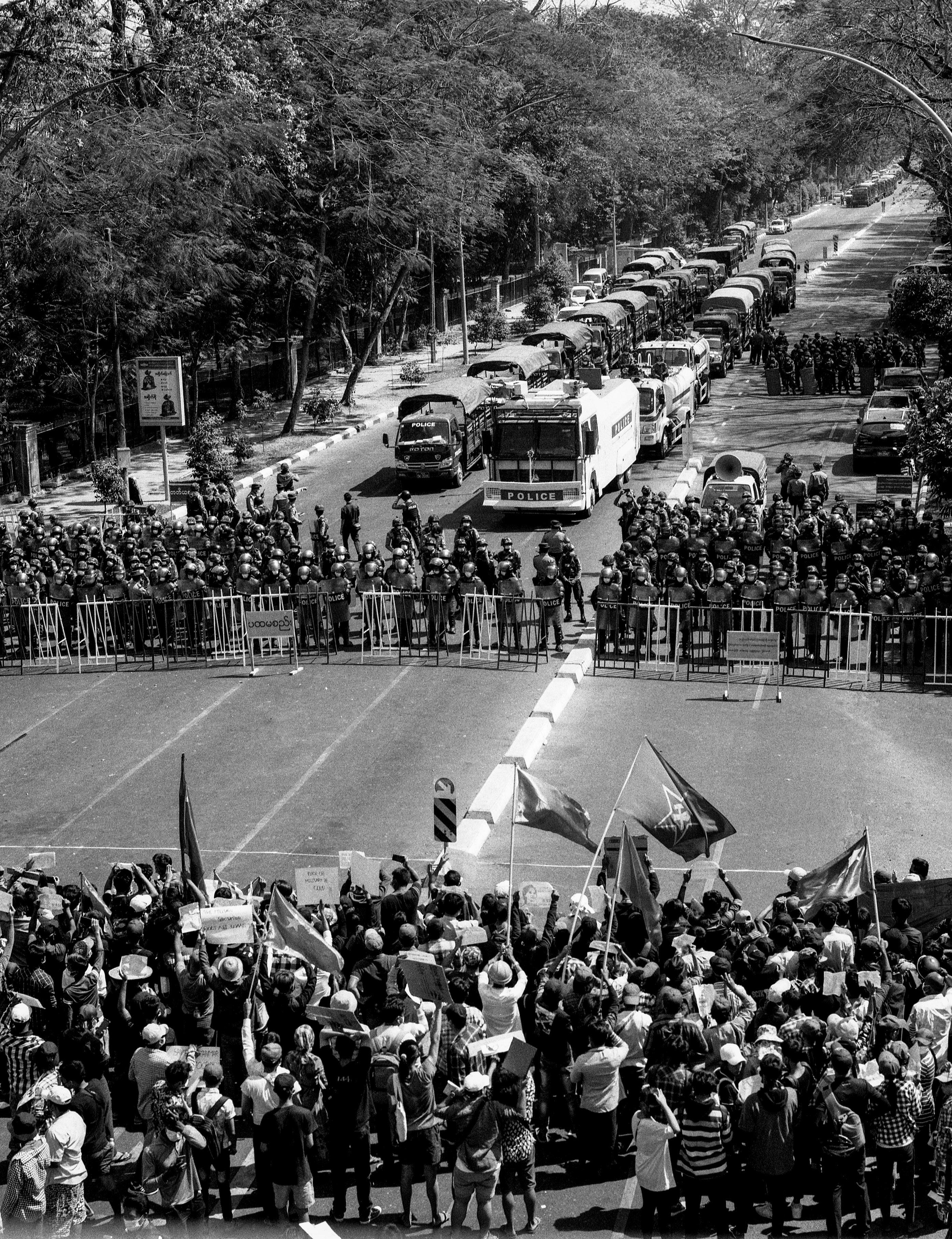
“I put my hope in God that one day Burma will be free, and I’m grateful we can be a small part of it.”
BY TAIA MENEFEE
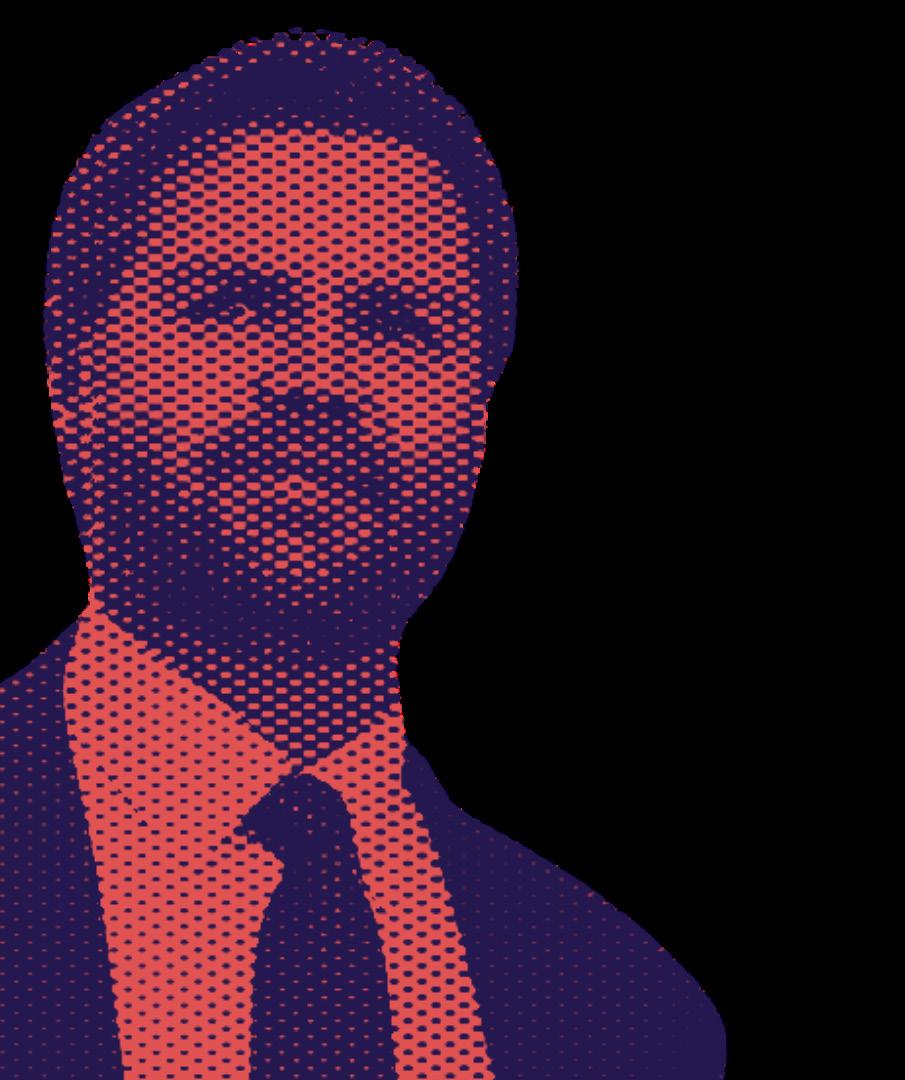
life,” wrote Vance in his memoir Hillbilly Elegy. “And in some ways, they found it.”
At 21, Vance joined the United States Marine Corps as a military journalist, serving for four years. “There was college, or nothing, or the Marines,” he wrote. “And I didn’t like either of the first two options.” He spent six months in Iraq, in a non-combat capacity. During his service, he wrote about U.S. interventionism, eventually concluding that the Iraq War was a
In one piece written before the publishing of his memoir, Vance criticized Trump, but also credited him for expressing an uncomfortable truth that most Republicans cannot. “That the war was a terrible mistake imposed on the country by an incompetent president.”
Following his time in the Marines, Vance used the G.I. Bill to attend The Ohio State University, graduating in 2009. He then attended Yale Law School, respected by students who identified across the political spectrum. He led a reading group, checked citations for the Yale Law Journal, and met his wife, Usha Chilukuri. While Vance was unashamedly conservative in law school, many of his former classmates note that his political orientation has changed over time.
His reading group focused on the social decline of White America, exploring
the causes of income inequality and lack of social and economic mobility within their community. The syllabus for Vance’s book club included Allen Batteau’s About Men: Whites Without Money and The Invention of Appalachia. In an interview with the Detroit Free Press, Sofia Nelson LAW ‘13, a former close friend of Vance, expressed their disappointment in Vance’s political shift over time. During law school, they described Vance as “thoughtful,” “compassionate,”
and empathetic toward LGBTQ+ and Black Americans. Writing about his time at Yale, Vance recalled a talk by billionaire venture capitalist Peter Thiel. He described it as “the most significant moment of [his] time” and credits Thiel as one of the primary reasons he chose a career in finance over law.
Vance was also inspired to convert to Catholicism following his growing interactions with Thiel, whom he admires for being one of a handful of Catholics in a Silicon Valley bubble of atheists. “My wife has said that the business of converting to Catholicism—studying and thinking about it—was “good for you,” Vance wrote. “And I came, eventually, to see that she was right, at least in some cosmic sense.” Following graduation, Vance worked as a litigator for Sidley Austin until 2015, when he decided to join Thiel’s co-founded venture capital firm, Mithril Capital.
In his memoir, Vance criticized the poor decisions of the community, characterizing his neighbors, family members, and friends as “chronic spendthrifts, dependent on government welfare payments and mostly failing to work hard and pull themselves up by their tattered boot -
straps.” He denounced what he called a “learned helplessness” among Appalachians, labeling it as a culture of pessimism, laziness, and blame.
“I don’t know what the answer is, precisely, but I know it starts when we stop blaming Obama or Bush or faceless companies and ask ourselves what we can do to make things better,” Vance wrote.
During his 2016 and 2017 book tour, Vance was a vocal critic of Donald Trump, calling himself a “Never Trump guy” in an interview with Charlie Rose. Moreover, he referred to Trump as “noxious,” “morally reprehensible” and an “idiot” in October of 2016. In a Facebook message exchange with his former classmate and roommate, Josh McLaurin, Vance suggested that Trump could either be a “cynical asshole” like former president Richard Nixon, or “America’s next Hitler.”
In 2017, Vance left Mithril Capital for Revolution, a D.C.-based investment firm that largely invests in startups around Silicon Valley and New York City. He started his own venture capital firm, Narya Capital, in 2018 backed by billionaires including Thiel, Marc Andreessen, and Eric Schmidt, the former CEO of Google. In January of 2021, Vance officially announced his plan to run for the open U.S. Senate seat in Ohio that had been vacated by former Senator Rob Portman (R-OH), marking the beginning of his formal political ascent.
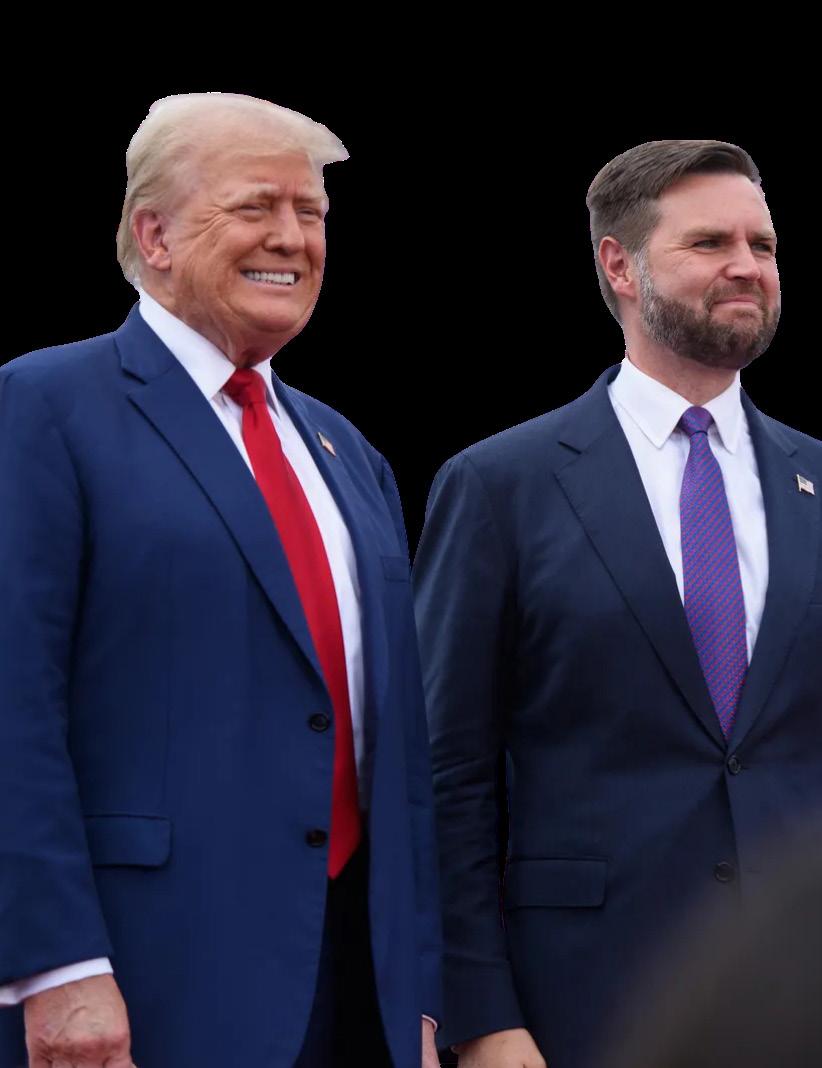
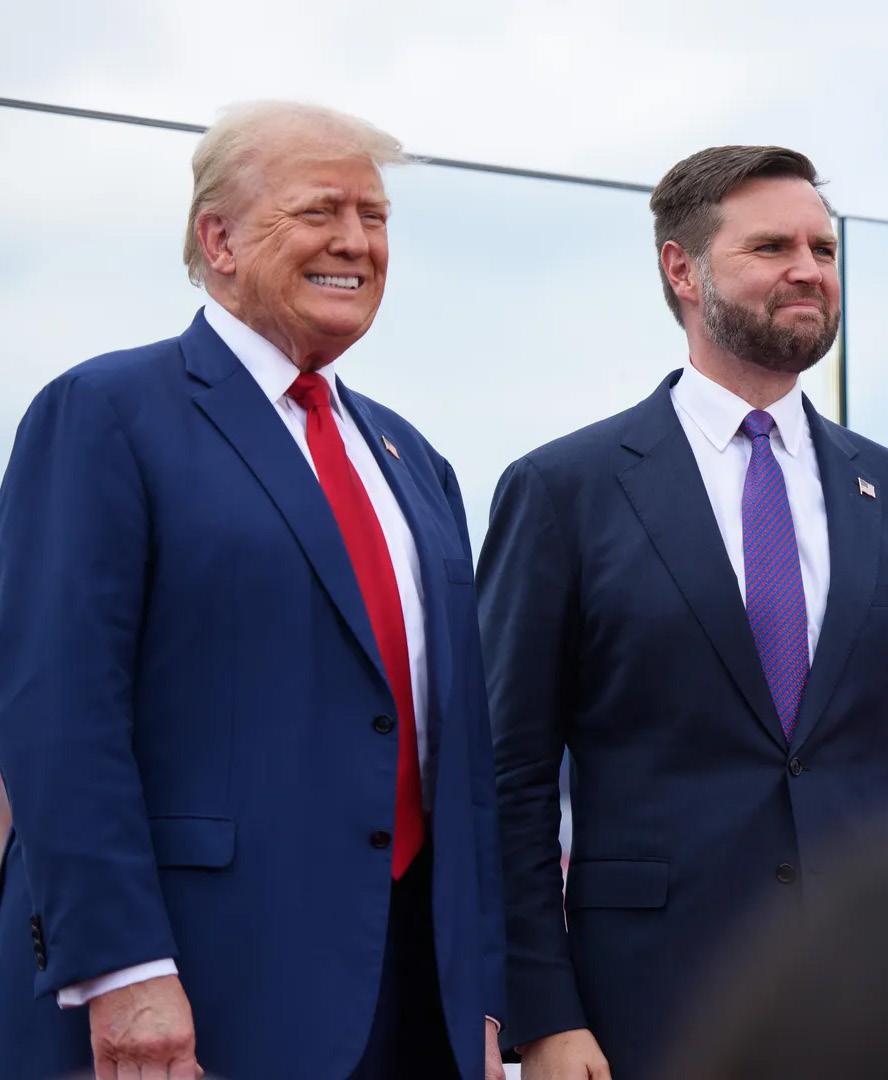
The following month, Thiel brought Vance to meet Trump at Mar-a-Lago in Florida. The meeting reportedly got off to a rocky start: a pile of papers, including an essay written by Vance criticizing Trump in The Atlantic, lay on Trump’s desk. In the piece, Vance referred to Trump as a “cultural heroin”, accusing him of taking advantage of the struggles of working-class White Americans with oversimplified solutions that shifted blame away from themselves.
“I’m not sure when or how that realization arrives…when his supporters realize that even with a President Trump, their homes and families are still domestic war zones,” Vance wrote. “But it will come, and when it does, I hope Americans cast their gaze to those with the most power to address so many of
these problems: each other. And then, perhaps the nation will trade the quick high of ‘Make America Great Again’ for real medicine.”
During the meeting, Trump reportedly told Vance, “You said some nasty stuff about me,” using an expletive. Vance apologized, later telling reporters that he had fallen for false media narratives.
Trump agreed, noting that given the themes of Hillbilly Elegy, Vance should have understood that both men were competing for the same constituency: non-college-educated working-class white voters, frustrated by immigration, endless wars, and diversity initiatives.The meeting between the two reportedly lasted over two hours, as they discussed the 2020 election and the Ohio Senate race. While Vance did not ask for Trump’s endorsement, Trump followed the race closely and, reportedly impressed by Vance’s performance, endorsed him just weeks before the election.
“Ultimately, a vice president’s power is derivative of their relationship with the president, which means loyalty and trust often matter more than formal authority.”
Vance defeated Democrat Tim Ryan and was sworn into the Senate on January 3, 2023. As a senator, he defended Trump’s actions, calling Trump’s hush-money trial and resulting 34 indictments “an absolute miscarriage of justice.” Another former acquaintance, using the pseudonym Cameron, described Vance’s personality while working in the Senate as “soft-spoken, analytical, and nerdy in private”.
Additionally, Cameron noted that Vance deeply valued antitrust law and remained skeptical of big banks and large corporations. Interestingly, while remaining socially conservative, Vance found common ground with Elizabeth Warren’s economic policy stance, specifically on reducing wealth inequality. During his time in the Senate, Vance also championed the same anti-interventionist and isolationist views that he gained during his time in Iraq, notably voting against aid for Ukraine.
The Vice Presidency
Vance is now arguably Trump’s most
loyal advocate. While some view this as a fundamental role of a vice president, it raises the question about whether the office should serve as a platform for personal identity or a vehicle for absolute executive defense.
The Constitution defines the vice president’s role through two primary duties: presiding over the Senate and breaking tie votes, and assuming the presidency if the president dies or is temporarily incapacitated.
Joel Goldstein, a law professor at St. Louis University and author of numerous books on the vice presidency, presidential succession, and constitutional law, further explained the informal relationship between the president and vice president. “Ultimately, a vice president’s power is derivative of their relationship with the president, which means loyalty and trust often matter more than formal authority,” he said. “While modern vice presidents are expected to be involved in governance, how much independence they exercise depends almost entirely on how the president views their usefulness and reliability.”
Goldstein also described how the modern role of the vice president has transformed over time, most notably during the Nixon era, as presidents began granting their deputies more access to the executive branch through meetings, foreign travel, and high-profile spokesperson roles. However, influence remains tethered to leadership style and personal trust.
“While there are now expectations that vice presidents will be involved in governance, their actual role is shaped less by formal authority than by personal dynamics,” he said. “In Vance’s case, his influence will largely turn on whether he is viewed primarily as a loyal defender of the president or as a governing partner within the administration.”
As vice president, Vance has balanced defending the administration’s aggressive anti-immigration campaign, “America First” economic policies, and interventionist foreign policy initiatives with numerous important public appearances. In February 2025, he had a heated exchange with Ukrainian President Volodymyr Zelensky at the Munich Security Conference. In April 2025, he met with Pope Francis the day before his death.
According to Goldstein, the delegation of such high-stakes tasks suggests that Trump deeply trusts Vance. He also discussed how Vance tries not to stray too far away from Trump: on the rare occasions their positions diverge, Goldstein remarked, it is typically because Trump says something unpredictable and Vance has to figure out how to reorient himself with the president.

Looking toward the 2028 presidential election, Vance appears to be the likely frontrunner for the Republican nomination. Jim McLaughlin, a longtime GOP pollster and strategist, explained that Vance’s political future will largely depend on his ability to carry forward Trump’s agenda and the outcome of upcoming elections.
“Vice President Vance has an opportunity to continue the Trump legacy in terms of policies and in terms of ideas, but that’s what the nomination process would be about,” McLaughlin told The Politic. “Because the midterms this November will be highly contested and hard fought, Republicans will be challenged to break history.”
McLaughlin acknowledged that midterm elections are usually unsuccessful for the party in power, as has been the case in the last 20 of 22 midterm elections. However, he remains hopeful for 2026; a Republican-held House and Senate would be a powerful legislative force for Vance’s 2028 prospects.
He also noted that Vance’s close alignment with Trump is a strategic asset, as Vance’s favorability is intertwined with that of President Trump’s. “President Trump, among Republicans, is very popular,” McLaughlin said, pointing to his firm’s December survey showing Trump with a 50% approval rating and 47% disapproval rating, which he said reflects a more accurate model of likely voters.
Goldstein also highlighted the inherent advantages of the vice presidency, including the use of Air Force Two, residence at the Naval Observatory, and the incumbency gained by association. He also mentioned Vance’s role as the chief fundraiser for the Republican National Committee, which gives him access to major donors.
Since 1933, 15 vice presidents have launched a presidential campaign; however, only five have gone on to win. McLaughlin described which voter groups he believes would likely form the core of Vance’s support, and which groups within the Re-
Should a 2028 bid materialize, his platform will not just be an extension of his vice presidency, but on the full sweep of his transformation.
publican electorate might present the biggest challenge for him.
“The core of his support will come from Trump voters, and that’s the overwhelming majority within the party, and he’s trying to keep that coalition together,” he said. “If he differs with policies in that base, where, if he were to take positions that split the base based on immigration or taxes or other issues, then he would make parts of that coalition available to other candidates.”
While there are many advantages to running for president as a former vice president, it also presents many challenges. Goldstein explained how being viewed as “second in command” could potentially disadvantage Vance.
“As Vice President, Vance is seen as number two, and that presents a real challenge for a future presidential run,” said Goldstein. “Voters want to see someone who can lead, and it can be difficult for someone who has spent years acting as a subordinate to suddenly be perceived as the number one. The public has gotten used to seeing him in a supporting role, and overcoming that perception will be critical if he hopes to be taken seriously as a candidate in 2028.”
Goldstein further discussed other obstacles that could emerge from Vance’s
campaign. “One of the biggest challenges Vance faces is that he inherits the baggage of the Trump administration. If the admin istration remains unpopular with certain voters, that unpopularity will follow him, and he’ll have to find a way to separate himself while still maintaining his polit ical identity,” he said. “On top of that, he has limited experience in government, so it’s unclear how well he’ll perform on a na tional stage or how voters will respond to him as a leader in his own right.”
Maya Koeber-Marx, the Elections Coordinator for Yale College Democrats, and Riley Getchell, President of Yale College Democrats, explained how they believe Vance’s close alignment with President Trump will negatively affect his chances of winning in 2028. For Getchell, this will be especially pronounced in young voters.“I think they’ll look at the fact that he’s blindly gone along with everything Trump has said, and continued to add incendiary stuff on social media. [That] will definitely stick out in the mind of young voters,” she said. Additionally, Koeber-Marx described how she believes that Vance will struggle to maintain his populist campaign in 2028. “Trump and what he stands for isn’t really about the working class, it’s about protecting billionaires,” she argued. “Vance falls in line with that rhetoric, and even though they try to appeal to working-class voters, many Democratic voters see through it. They view him as someone who ultimately prioritizes the wealthy over issues like healthcare or policies that actually help everyday people.”

It is no secret that Vance has changed. The “hillbilly” from Ohio has traded his working-class roots for a seat at the table of the global elite. Should a 2028 bid materialize, his platform will not just be an extension of his vice presidency, but on the full sweep of his transformation— from Middletown to Yale, from Silicon Valley to Washington. While reinvention is common in American politics, credibility is harder to sustain. In 2028, Vance’s adaptability may prove either his greatest asset or his greatest liability.

BY LUCY DREIER
Smashing their faces with hammers to carve sharper cheekbones, injecting steroids and testosterone to grow their muscles, and smoking crystal meth to reduce their weight: these are some of the practices of a growing online subculture of men, known as “looksmaxxers.” This nihilistic community takes the most severe measures to enhance their physical appearance, with men transcending their biological destiny in the pursuit of unrealistic beauty standards.
Looksmaxxing, short for “maximizing one’s looks”, pushes self-improvement to its most extreme edge. In online forums and TikTok feeds, men document their quest for aesthetic “ascension,” the ultimate transformation of physical appearance. The looksmaxxing ideal is characterized by a wide and forward-grown maxilla—the upper jaw bone—which contributes to higher cheekbones and a sharper jawline. A positive canthal tilt is also sought, meaning the inner corner of one’s eye is lower than the outer corner, creating a lifted effect. Looksmaxxing forums contain precise ratios and degrees of facial features that map onto the artificially constructed perception of perfection.
The movement exists within the manosphere—a loose collection of male-focused communities that claim to address men’s hardships but often promote misogyny. While women have long been subjected to unrealistic beauty standards, a growing subset of men now face similar pressures, as the looksmaxxing community has venerated performance-enhancing drugs, cosmetic procedures, and untested research chemicals.

Braden Peteres, a 20-year-old who goes by the name “Clavicular” (Clav), has pioneered the space with a large social media presence. Expelled from college for stashing testosterone in his dorm room, he now runs “The Clavicular System,” which is a supposedly data-driven framework that helps individuals supersede their genetic potential through looksmaxxing workshops, featuring a facial analytics dashboard, pharmaceutical skin protocols, and what he calls “structural training.”
“It’s this message that men are not good enough. It’s more than just selfimprovement; it’s that you will never get there.”
In a YouTube interview with Jack Neel— host of a crime, business, and psychology podcast—Clav defined looksmaxxing as “the furthest extent that you could take self-improvement.” He also admitted to taking testosterone to grow his muscles, minoxidil and dutasteride to thicken hair, accutane to clear acne, and crystal meth as a stimulant to hollow out his cheeks, every day.
Clavicular has a following of over 700k
on TikTok, influencing many to follow suit in his regimented routine of injecting peptides: research chemicals composed of amino acid chains that build protein. A male student from Southern Methodist University, who wished to be kept anonymous, remarked, “Social media is pushing this agenda of taking peptides. I know a couple of buddies who started taking these research chemicals, and it’s a little unsafe.”
In the YouTube interview, Clav claims his rationality justifies the risk. “If someone is hyper logical, doing the things that I’m doing, they can go up in looks-scale by 30-40%.” He frequently rates women on an internal scale: “Sub 3”, “Sub 5”, “Becky”, “Stacy”, “True Eve,” but has never asked women to rate him. This asymmetry is a reflection of the movement’s deeply rooted misogyny, where men feel entitled to objectify women and quantify their appearance.
In the video, he also claims, “I maximize all metrics of my life. I’ve just come to the conclusion, based on numbers, that looks are the most important metric, and it would be insane not to prioritize them.”
Maria Gendron, a Yale social psychologist, expressed her concern for the community:
“Giving yourself peptides and trying to change your hormonal landscape is not something that people should be doing without support from medical providers.” Evidence suggests that some peptides have the potential to trigger cancer and severe systemic issues such as hormonal imbalances and heart palpitations.
She warned, “Creating ideals that are close to unattainable is not good for people’s
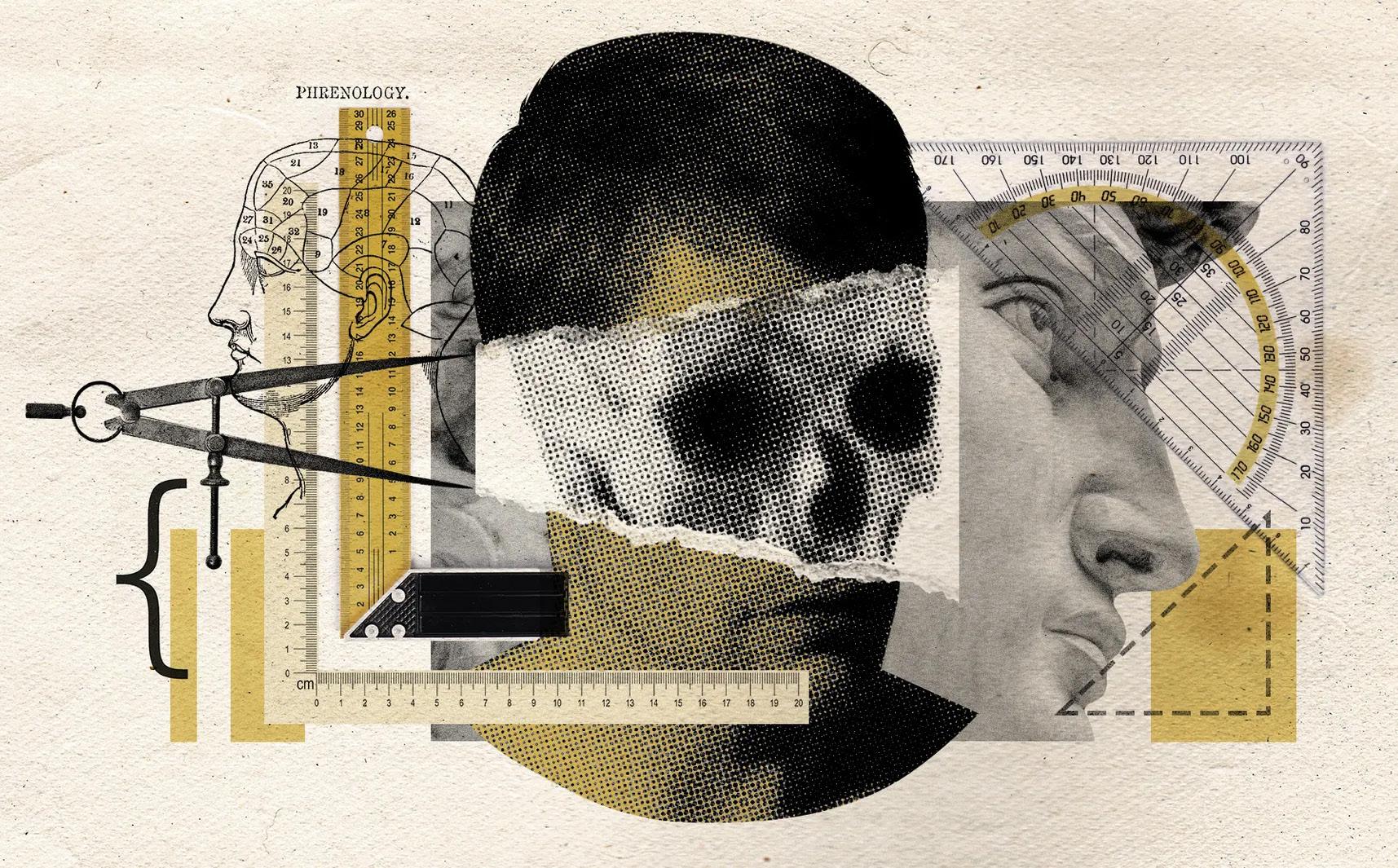
self-worth, particularly when it’s leading to using yourself as a test subject for interventions that aren’t safety tested.”
In the YouTube interview, Clav admits he is aware of the damage that he has inflicted on himself. “It is very likely that some of my lifespan will be diminished with the things that I’m doing.” Nonetheless, “I’m not a huge longevity guy.”
Clinical psychologist Callie Mims, who has conducted research on adolescents with eating disorders at Yale School of Medicine, believes looksmaxxing has one fundamental problem: “The best version, it doesn’t have a ceiling. So looksmaxing is striving for a ceiling that doesn’t actually exist.” This crazed obsession with one’s appearance has no end, fueling a toxic culture where satisfaction is impossible and discontent is inevitable.
Dr. Mims sees parallels between looksmaxxing and longstanding beauty standards placed on women. “It’s actually really similar to the messaging that women have received about their looks since, not even the mid 1900s, but really the dawn of time. It’s this message that men are not good enough. It’s more than just self-improvement; it’s that you will never get there.”
She frequently treats patients with muscle dysmorphia—a form of body dysmorphic disorder characterized by obsessive concern with muscularity. “We’re seeing that they are engaging and really connecting with this looksmaxxing culture.” The appearance-optimizing community can exacerbate existing eating disorders and may contribute to the development of new ones by heightening body dissatisfaction and promoting a distorted self-perception.
lot longer than we have.”
The allure of looksmaxxing is that it provides a tangible solution for men who feel insecure about their appearance. Dr. Mims observed, “The manosphere has come in and said, watch my series, and you can change your appearance like that. And so there’s this frustration of we’re receiving all of these messages that this should be something that we’re able to change.”
Although looksmaxing appears to supply an easy, accessible fix, the significant financial investment proves otherwise. Applicants to “The Clavicular System” must indicate how much they are willing to invest, with options ranging from $500 to over $5,000. Clavicular himself reportedly desires to get a $100,000 limb-lengthening surgery to grow from 6’2” to 6’6”. The movement preys on vulnerable youth, stripping their money and dignity, with potentially devastating consequences on their finances.
“It’s interesting, because we’re having this entire conversation around how to make yourself more attractive to women without any women being part of this conversation.”
Ironically, financial insecurity may be fueling the very obsession with appearance. Dr. Gendron noted, “Some of the ideas surrounding valuing physical attractiveness may be because financial security, as a way to be attractive to a partner, is less attainable right now.” With a national decline in male college enrollment and a rise in gender employment equality, men increasingly feel their role as financial providers is being threatened. In response, the body becomes a new arena for competition.
Dr. Mims explained that many men are suffering from masculine discrepancy stress. “Men who feel insufficiently masculine can also cling to this idea that, well, if I push myself in the gym, if I push myself to look better, then I will be more manly, more masculine.”
Adam Faze, short-form video producer, reflected in an interview with The Politic: “It’s almost like we’re following in the worst footsteps of eating disorders that women have struggled with for a
These pressures are felt by transgender men, too. “Trans men with body image issues oftentimes feel this extra pressure to be more manly because of minority stress,” said Dr. Mims, who works
with many trans men at her clinic.
The fragility of masculinity is captured by psychologist Jennifer Bosson in the theory of precarious manhood, suggesting that masculinity is “hard won and easily lost.” Looksmaxxing offers a way to reclaim it: chemically, surgically, obsessively.
Yet the movement is ridiculed with contradictions. Many participants claim their goal is romantic success, but the culture often discourages vulnerability or authentic connection. Yale undergraduate, Dexter Wells, noted that looksmaxxing “reinforces this idea that you’re not good enough. So you kind of shut yourself down from looking for anything to begin with, until you’ve reached this version of yourself that very few people do actually achieve.”
While it’s clear the community seeks to optimize its aesthetic appearance, the ultimate aim of such enhancement remains contested. Faze observed a paradox: “Men are really just trying to perform for other men. It’s interesting, because we’re having this entire conversation around how to make yourself more attractive to women without any women being part of this conversation.”
While most looksmaxxers chase hyper-muscular physiques—taking testosterone to enlarge their frame—mainstream male sex symbols like Timotheé Chalamet embody a slimmer aesthetic, revealing how unstable and contradictory these ideals truly are.
Dr. Mims explained that even though many people consider hyper-muscularity synonymous with looksmaxxing ideals, there is also the “lean ideal” of maintaining both muscle and trim. She highlighted how this embodies the unattainable essence of the movement: “the rise of these two competing ideals kind of fits in perfectly with the sense that they are very hard to achieve and, at times, at odds with one another.”
The community also carries darker ideological undercurrents. Eurocentric features are often upheld as the golden standard, and some forums echo social Darwinist language. Though
looksmaxxing communities are visible online, they remain largely underground on college campuses, revealing their taboo nature. Numerous looksmaxxing students and influencers were contacted, but none agreed to interview with The Politic.
Even those who reject its extremes admit feeling its pull. “I’m kind of vain,” Wells admitted. He shared, “I don’t necessarily take things to the extreme of getting headgear to correct a recessed maxilla. But I probably stress out about how I look. I’ll try to maintain a pretty normal diet, because you can maintain better facial definition if you maintain a lower body fat percentage.”
Faze reflected on how the community is negatively affecting younger generations: “My 12-year-old cousins are only talking about who has aura and who’s mogging each other. And, one of them’s like, I have no aura because I have braces, and I’m chopped. These are crumbles of the conversation that are now starting to infect youth conversation.” As Generation Alpha continues to be inundated with looksmaxxing content during their formative years, what’s at stake is long-lasting mental health issues and flawed perceptions of self-worth.
Turning to healthier conversations about masculinity, Dr. Mims shared a solution centered on what she calls the “man box.” “Within the man box are all these pre-prescribed notions of traditional masculinity, what we think men should look or act like. Outside of that are all of the other things that men can be, which is just everything under the sun.” She explained how she helps individuals feel comfortable moving within and around the box without feeling demasculinized.
Looksmaxxing presents itself as radical self-optimization, a game with measurable inputs and outputs. But when selfworth becomes a metric to be maximized, the result may not be perfection. It may be permanent dissatisfaction. With every bone smashed by a hammer, looksmaxxing strays further away from self-enhancement and creeps closer to self-harm.

BY RODRIGO CÁCERES ALBURQUERQUE
“I never worked in the oil industry, but oil decided I had to leave.”
Eddy, who asked to only be identified by his first name, once worked as a swimming coach in Venezuela and now lives in the Dominican Republic. He didn’t leave out of choice, but out of necessity. It was not just economic instability that cemented his decision, but the precariousness of his future. “The economy of the country revolved so much around [oil] that when the system started to fail, the rest of the sectors were pulled down with it,” he said.
Eddy never imagined leaving the country he loves, and the choice took years to make. Eventually, he could no longer continue to adjust to the country’s worsening conditions. He simply saw no future in the place he called home.
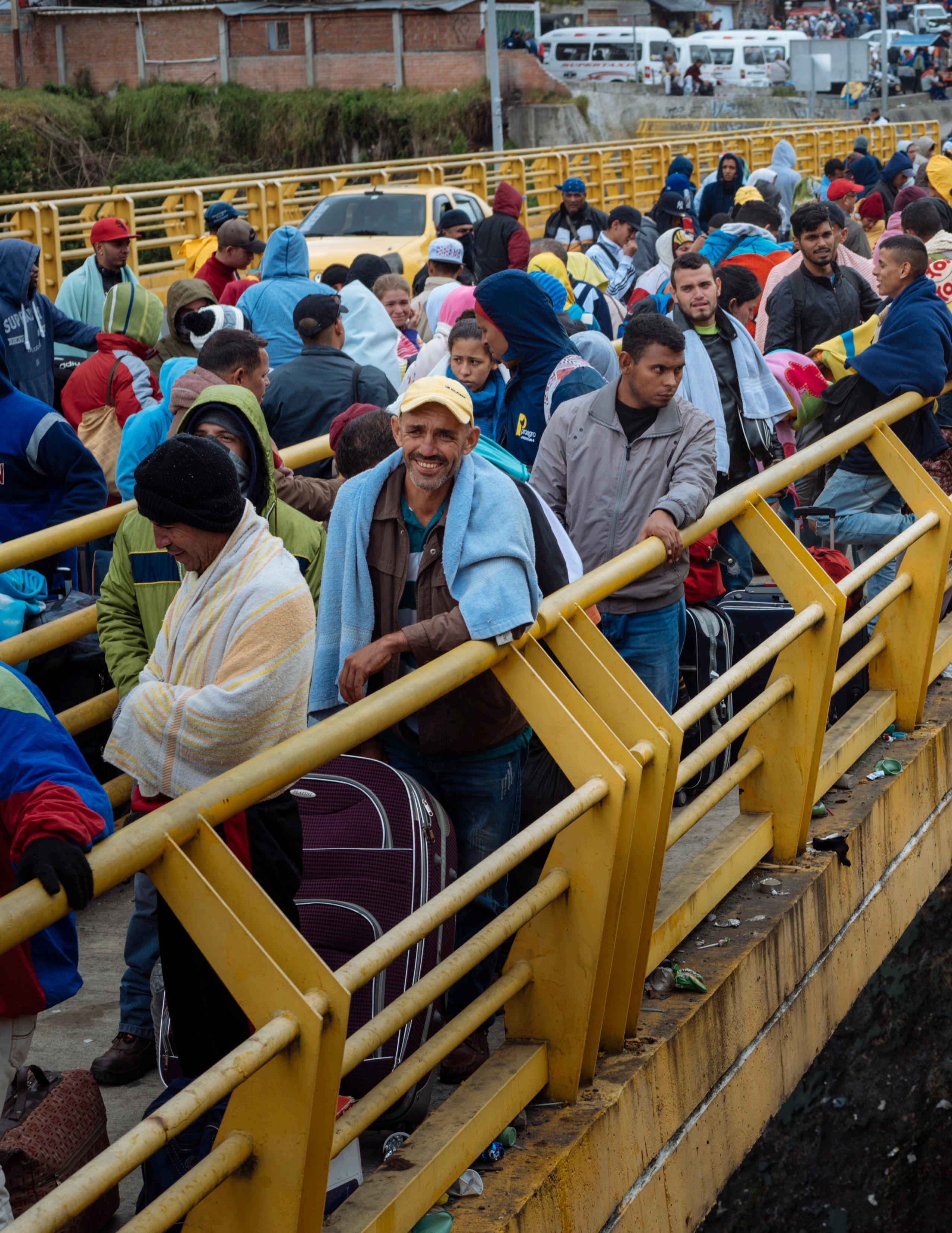
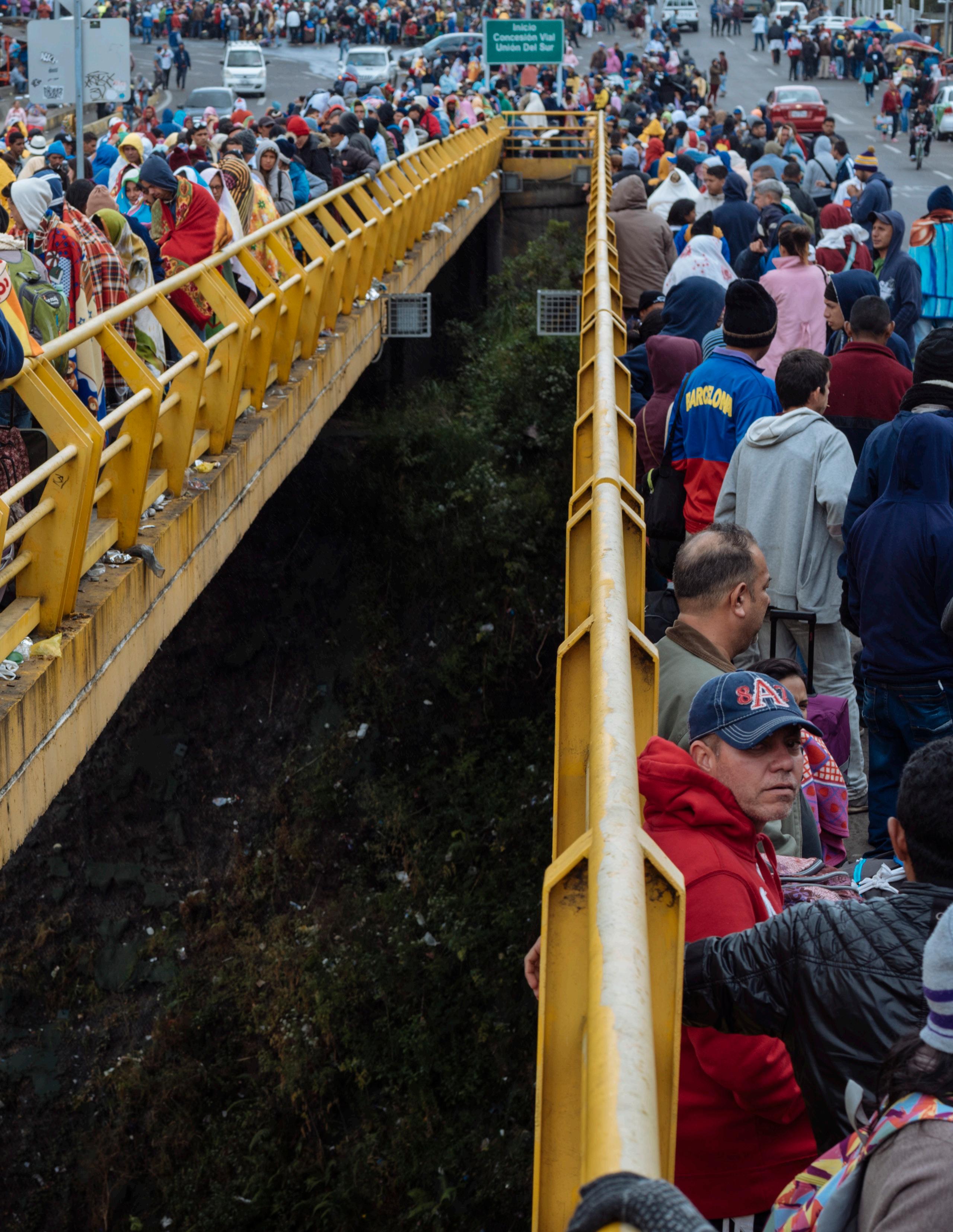
His story is not unique. Since the early 2000s, nearly 7.9 million Venezuelans have emigrated. This exodus is driven by uncertainty, as currency restrictions, nationalization, and shifting regulations have made it increasingly difficult to sustain a business or plan for the future. While the oil industry helped to shape the country’s trajectory, the deterioration of state institutions bears the ultimate responsibility.
Venezuela’s oil abundance in the
mid-1900s once promised prosperity and global prominence. Instead, that resource exposed structural weakness. Harvard Political Economy Professor Ricardo Hausmann noted that in 1970, Venezuela had become “one of the richest 20 countries in the world.” However, this prosperity was short-lived. The economy plummeted sharply in the early 1980s, as both non-oil and oil GDP began a long decline.
“I never worked in the oil industry, but oil decided I had to leave.”
How does a country so resource-rich end up in an economic crisis? The answer lies in the governmental framework that concentrated control over national wealth.
As José Ignacio Moreno León, former Venezuelan Minister of Mines and Energy, argued in an interview with The Politic, “Venezuela’s problem has not been oil itself, but the rentier framework historical-
ly constructed to manage the resources it generated.”
A critical turning point was the nationalization of the oil sector in the 1970s. Evanan Romero, former Venezuelan Vice Minister of Energy and Mines and former Director of Petróleos de Venezuela, S.A (PDVSA)—the biggest Venezuelan oil company—explained that this policy fundamentally restructured the industry “by transferring full operational authority to the state, eliminating the autonomy that previously existed.” The 1976 nationalization gave rise to PDVSA, a fully state-operated oil company.
Romero highlighted that while Venezuela was supposed to diversify its sources of income, oil revenues were so overwhelming they “discouraged the development of other sectors.” This created a mono-productive economy.
Even as oil generated immense revenue, much of it was absorbed by the costs of sustaining production and maintaining PDVSA’s expanding bureaucracy. This created a structural tension between the company’s operational demands and the state’s broader fiscal responsibilities. “The amounts that the company demanded to continue producing came into conflict
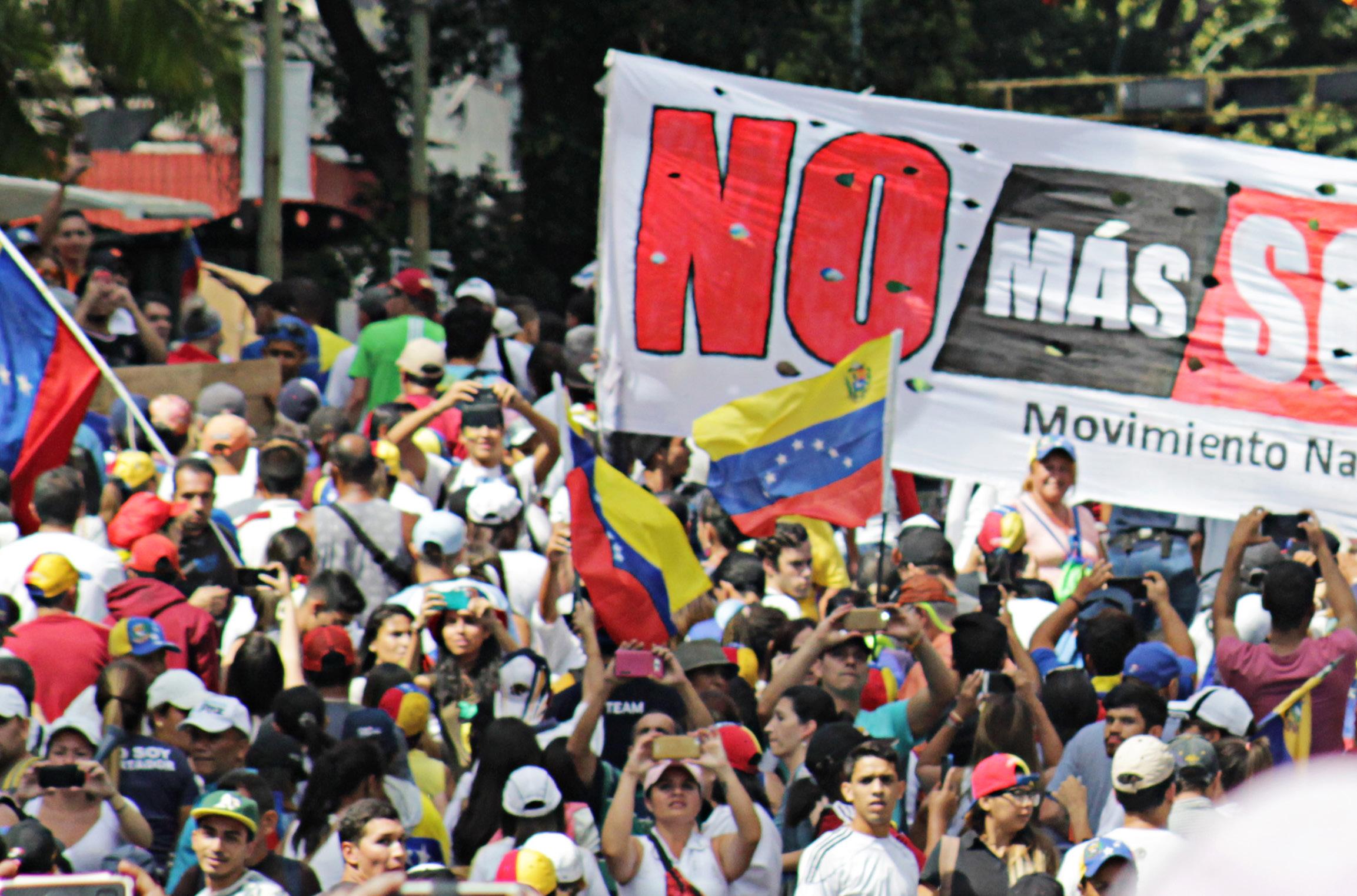
with what the country required to sustain its own structure, its bureaucracy, and its needs,” Romero said.
In the early 1990s, the state briefly pivoted. Under President Carlos Andrés Pérez’s, “La Apertura Petrolera” sought foreign investment and liberalization efforts. These policies represented a significant departure from Venezuela’s earlier state-dominated model.
Even though the “Oil Opening” was short-lived, it had long-lasting political effects.
Domestically, public dissatisfaction grew. Karen Koenig, a Jewish Venezuelan who lived in the country most of her life, told The Politic that during her time at university in Venezuela, “protests against market-oriented policies occurred regularly— many opposed the Apertura, while many of us, students, supported it.” After years of relying on oil rents—the source of over 90% of Venezuela’s exports—the economy struggled with rising debt and inflation, weakening trust in Venezuela’s traditional political parties.
Venezuelan Literature Professor Jesus Puerta at Universidad de Carabobo noted that, in this tense climate, the Apertura Petrolera quickly became politically
charged. Reform-oriented officials—largely from the social-democratic Acción Democratica party—supported the opening.
On the other hand, nationalists and anti-neoliberal factions opposed privatization, believing it to be a threat to control over the country’s most vital resource. As a result, the policy was widely framed as a neoliberal initiative that risked Venezuela’s sovereignty and national wealth. The ideological divide reflected a conflict over the structural and political transformation of the oil industry.
“If Maduro decided one day he wanted to imprison a friend of yours, there was no one to stop him.”
The wave of anti-neoliberalism was rekindled when Hugo Chávez, founder of the Revolutionary Bolivarian Movement-200, and former Lieutenant Colonel, rose to power in 1998. According to Venezuelan
historian Rafael Arráiz, a professor at Universidad Metropolitana in Caracas, “Chávez reshaped Venezuela’s political makeup, consolidating authority in the presidency, subordinating other branches of government, and strengthening the state’s role in political and military institutions.” Despite previous attempts at market reform, the return to heavy state involvement met relatively little resistance. Decades of oil-funded public spending made extensive state involvement familiar, leaving many citizens more receptive to state-led development.
At the same time, this reliance on oil revealed deeper problems. As Arráiz noted, when oil becomes the central pillar of the state, “oil ceases to be merely an economic resource and becomes political.”
Chávez’s 14 year-presidency marked a turning point. He did not allow for the full development of the Apertura and “returned to the stage in which [PDVSA] took 100% control of the industry.” While Romero describes operational return to full state control, Moreno León viewed the shift as more than administrative, explaining that “the original framework established after nationalization became distorted. PDVSA was assigned responsibilities unrelated to core petroleum activity, and the harmful politi-
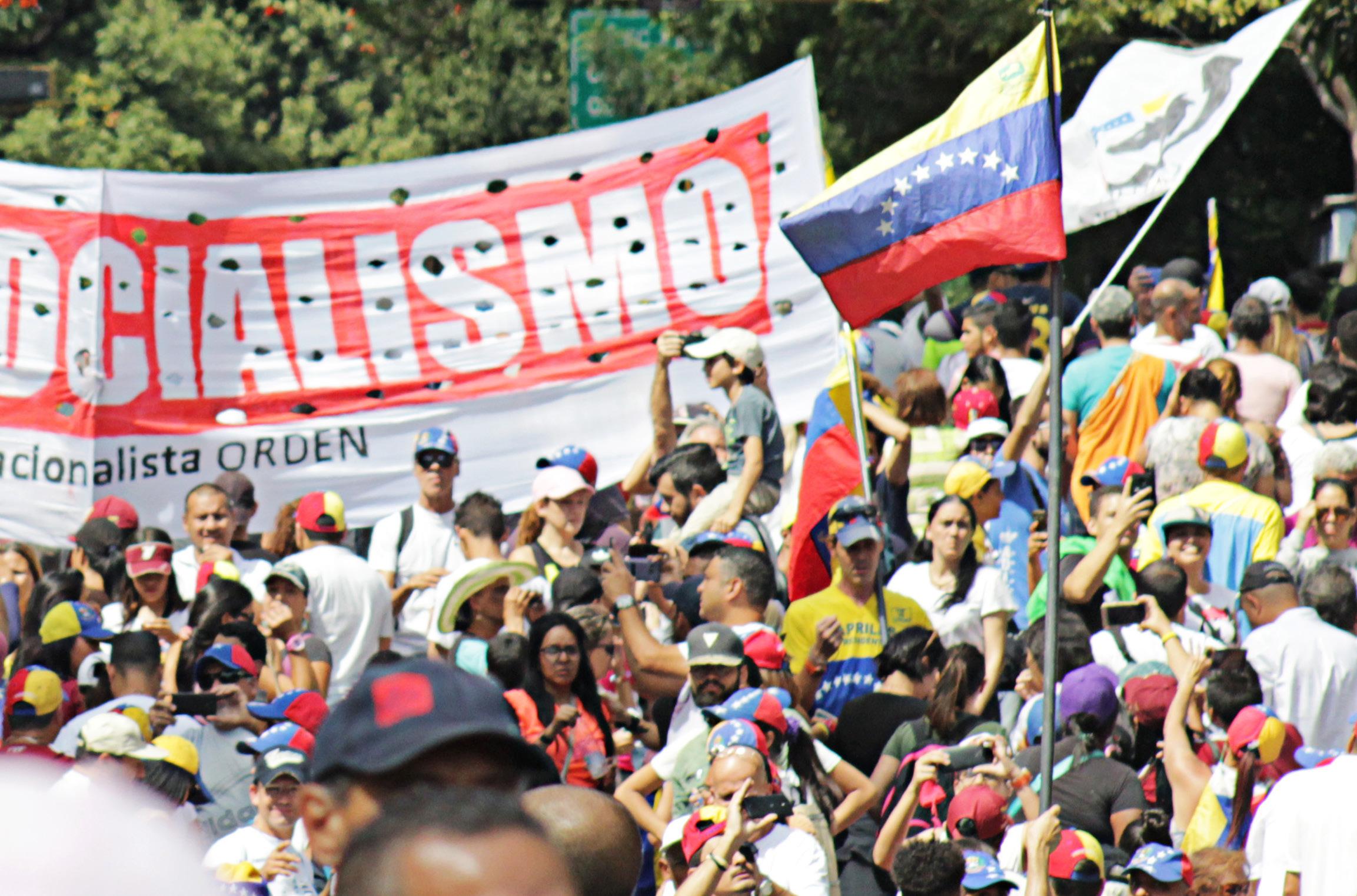
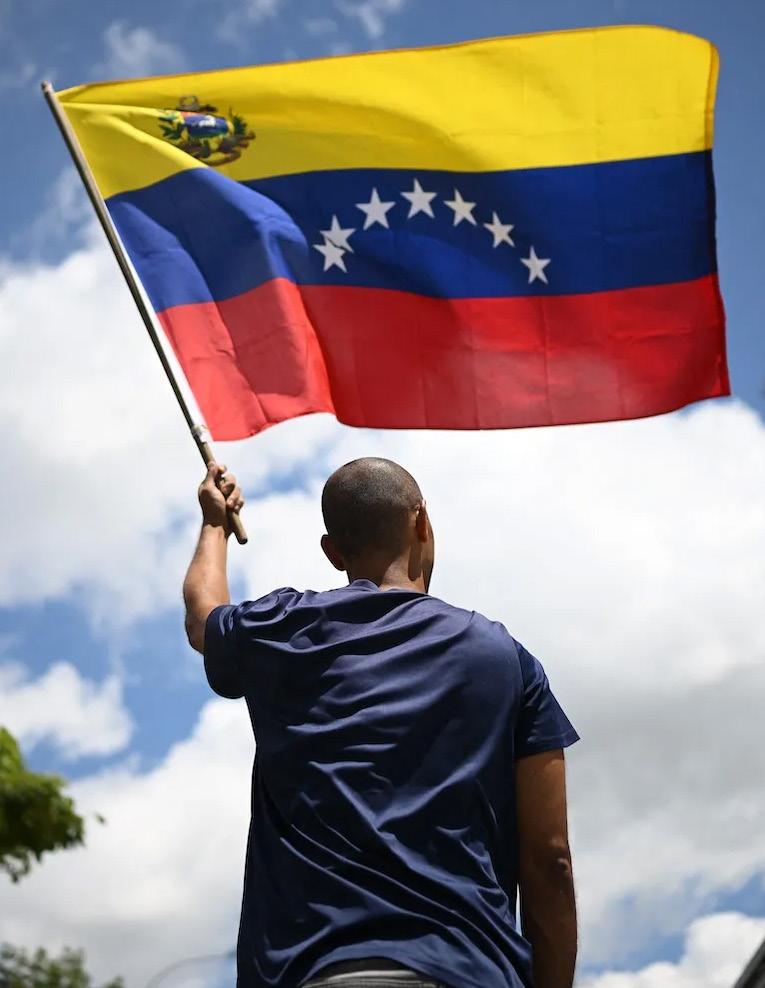
by
cization of the industry deepened.”
The transition was not seamless. Many foreign oil companies that refused to cede control saw their assets expropriated. Major players like ExxonMobil and ConocoPhillips were forced to abruptly abandon their operations and filed for international arbitration to recover compensation from the Venezuelan government.
Even with international opposition, Chávez appealed to many Venezuelans through his left-wing populist political style, which was charismatic and confrontational. Arráiz explained that Chavez “framed his movement as a political moral struggle between the marginalized majority and a corrupt elite.” The country soon polarized between pro-Chávez supporters (chavistas), largely drawn from lower-income communities and public-sector workers, and an opposition coalition of business leaders, the urban middle class, and university students.
“For Eddy, institutional weakness was not theoretical; it was the reason he had to leave home.”
While oil revenues financed social programs and strengthened Chávez’s political goals, the lack of oversight led to further corruption. The non-profit organization Transparencia Venezuela has identified more than 400 cases of corruption tied to the Chavista government. As of March 2023, known corruption transfers totaled USD 68 billion—an amount seven times larger than Venezuela’s national reserves.
The consequences of these policies eventually trickled down into everyday life. Alongside her husband Boris Shamis, Koenig recalled how “the effects weren’t instant; you would be in a mall, and the escalators wouldn’t be working because the companies that once maintained them had either left the country or no longer existed.” She elaborated that “even though we knew things in the country were getting worse…every time something happened, you got used to it, so your new reality became worse and worse over time.”
For Koenig and Shamis, the breaking point was the economic uncertainty generated by the Exchange Administration Board (CADIVI). Created in 2003 to limit capital flight, CADIVI restricted access to U.S. dollars. Because the exchange board could not process foreign currency requests efficiently, the Central Bank sup-
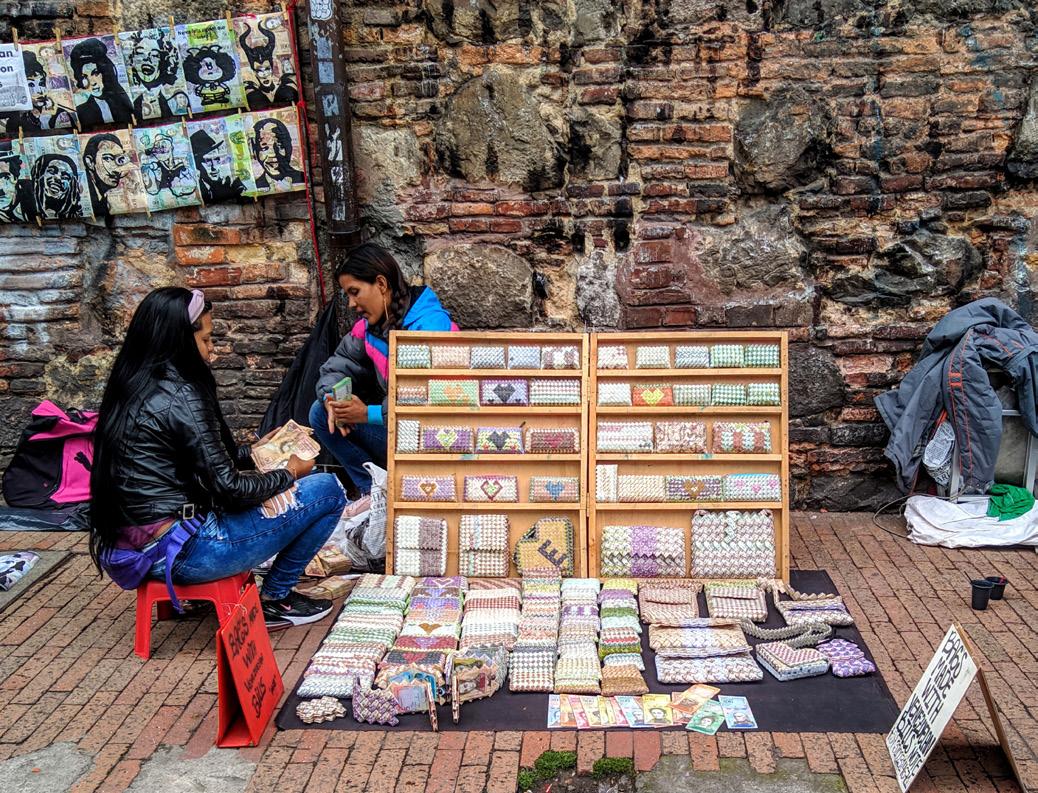
plied only a fraction of authorized currency. This forced businesses to rely on the volatile bolivar or a prohibited black market for dollars—an arrangement Koenig notes the government was well aware of.
Chávez further squeezed the private sector with the 2011 Law on Fair Cost and Prices. While the law aimed to curb inflation by setting price caps on consumer goods, it ignored the reality of importers who had to purchase goods using expensive black-market dollars. As a result, many business owners experienced unsustainable losses.
Former Minister Romero argued that many of Chávez’s policies contributed to Venezuela’s institutional collapse. Trust was completely lost, he explained, as Venezuela became “the extreme example of what happens when absolute control over strategic resources is placed in the hands of those in power.”
When Nicolás Maduro assumed the presidency in 2013, he did not reverse this model.“Under this new leadership, Venezuela entered a period marked by hyperinflation, a dramatic collapse in oil production, and a decrease in human rights protections,” Koenig noted. Oil production declined drastically: once pumping as much as 3.5 million barrels per day in 2012, Venezuela’s crude production is now roughly 640,000 per day, a 70% decrease. Given that oil is the state’s central revenue source, this decline had profound consequences. As Moreno León observed, “the politicization of the industry has pushed the sector to the brink of bankruptcy, into heavy indebtedness, and into disgraceful levels of corruption.”
Maduro met this crisis by extending Chávez’s previous restrictive price control legislation. Romero explained “the law made it a crime to use foreign currency acquired through official mechanisms for purposes other than those authorized, with penalties.” This only fueled the black market for U.S. dollars, further depreciating the bolivar and stoking hyperinflation.
Beyond economic ruin, Maduro’s authoritarian government oversaw wide human rights abuses. While the country experienced a serious economic decline, physical safety became a major concern. As a father, Eddy stressed that the loss of utilities was manageable, but the lack of rule of law was not. “What scared me most was sending my kids to school, because you would hear about someone being shot outside a school one day,” he said. “There was no safety or rule of law in the country. If Maduro decided one day he wanted to imprison a friend of yours who owns a business for not selling at the proper price, there was no one to stop him.” This existential insecurity, rather than just economic hardship, pushed thousands to flee.
The international response shifted dramatically when President Donald Trump intensified his stance against the regime. On January 3, 2o26, Trump announced that the intervention was necessary to protect U.S. interests and ensure stability in the Western Hemisphere, asserting that American involvement would prevent hostile forces from threatening regional security. This move received surprising widespread support among some Venezuelan immigrants. “Many Americans assume that we, Venezuelans, oppose Trump’s intervention in the country, yet it was our government that first violated the law and continues to do so,” Koenig said. “His measures represent accountability for those in power who caused us so much damage.”
The case of Venezuela offers a lesson for the rest of Latin America and the world: when absolute control over strategic resources is concentrated in the hands of the state without institutional safeguards and accountability, corruption becomes systematic. Once seen as Venezuela’s ticket to economic security, oil instead uncovered systematic vulnerabilities that restructured institutions and upended the lives of citizens. For Eddy, institutional weakness was not theoretical; it was the reason he had to leave home.