
Summer 2023 Volume 4, Issue 2 Life is Like a Game of Baseball Past and Present Come Together to Celebrate History in the Making Senior Living A Vision for Victory Village Resident Uses Finance Background to Restore Bird Rookery Mission Amplification: Serving Seniors Across Two States
With more than 100 years of combined experience in Accounts Receivable in a skilled nursing environment, we have the expertise to offer A/R assistance in a professional and effective manner. We have highly trained, highly motivated staff always available to you for any A/R needs that may arise.


Third Party SNF Billing and Consulting Services tailored specifically to your facility needs. Providing the most efficient and cost effective services across the country.




bottomlinesolutions.org
more valuable information by visiting our website or calling us today!
money using our dedicated and experienced staff. Increase cash flow. Receivables training from SNF billing experts
239-242-4303 Learn
Save
Partnership, service, care
Discover a care model designed to help you do more for your residents and staff.
The Optum care model and UnitedHealthcare Assisted Living Plan deliver both clinical care and specialized health care benefits to help you support health of your residents and ease the burden on staff.
Our model provides 24/7 telephonic support through advanced care professionals who work on site, coordinating care between residents, care teams and families. Learn more at optum.com/alc

1. 2019–2020 IE-SNP results.
2. McGarry BE, Grabowski DC. Managed care for long-stay nursing home residents: An evaluation of institutional special needs plans. American Journal of Managed Care. 2019;25(9):400–405. © 2022 Optum, Inc. All rights reserved. WF6331817 02/22
Extending stays, reducing readmissions
Our program is: Increasing resident stays 8 months longer than the national average1
Reducing hospital readmissions by 38% 2
Optum enhances the member and facility experience
Optum® works with skilled nursing facilities to provide an added layer of care for residents in participating health plans. Our advanced practice clinicians provide these long-term residents and their families care that supports aging in place. A study done by Harvard Medical School found that the Optum ISNP model can lower emergency department (ED) and inpatient utilization among nursing home residents. This means a higher quality of care, reduced costs and improved census stability. optum.com/SNF
112% higher rate of SNF use
We’ve been helping bring peace of mind to residents and their caregivers for over 30 years. We appreciate your participation in this journey. Together, we can help make the health care system work better.

Let’s talk about a partnership in care. 38% fewer hospitalizations 51% fewer ER visits 45% fewer re-admissions
226748A-012023
Chief Operating Officer Dawn Jimenez djimenez@LeadingAgeFlorida.org
Vice President of Advocacy
Susan C. Langston slangston@LeadingAgeFlorida.org
D. Bruce Jones, Chair
Garry Hennis, Chair-Elect
Joel Anderson, Immediate Past Chair
Teresa Scott, Secretary
Steve Kramer, Treasurer

Janet Stringfellow, Affordable Housing Chair

Kevin Smaage, ALF/HCBS Chair
Scott Cairns, CCRC Chair
Mauri Mizrahi, Nursing Home Chair
Publication Team
Living
›serves as a LeadingAge Florida member resource that supports the LeadingAge promise: to advocate, educate, and serve aging services professionals.
Managing Editor Nick Van Der Linden Director of Communications, LeadingAge Florida For advertising inquiries, please contact Katie White at kwhite@thewymancompany.com or (352) 388-7031.
Senior Living is the official publication of LeadingAge Florida. All rights reserved. Contents of this publication may not be reproduced without permission from LeadingAge Florida.

SENIOR LIVING • SUMMER 2023 5 Cover Story 14 Life is Like a Game of Baseball Past and Present Come Together to Celebrate History in the Making By Nick Van Der Linden, Director of Communications, LeadingAge Florida Features 8 In Memory of Dad Plymouth Harbor Resident Bill Johnston Uses Finance Background to Restore Bird Rookery By Nick Fortuna 12 Mission Amplification: Serving Seniors Across Two States By LeadingAge Florida Staff 18 It Takes a (Victory) Village By Nick Van Der Linden, Director of Communications, LeadingAge Florida 22 Life in the Fast Lane By Nick Van Der Linden, Director of Communications, LeadingAge Florida 7 Board Chair’s Message Channeling Our Collective Energy By D. Bruce Jones, LeadingAge Florida Board Chair Support Our Advertisers 26 Advertiser Index Contents SUMMER 2023 VOLUME 4, ISSUE 2 LeadingAge Florida 1812 Riggins Road, Suite 1 Tallahassee, FL 32308 (850) 671-3700 www.leadingageflorida.org
Executive Staff
&
LeadingAge Florida
President
CEO Steve Bahmer sbahmer@LeadingAgeFlorida.org
LeadingAge Florida Officers
8 18 22 Departments
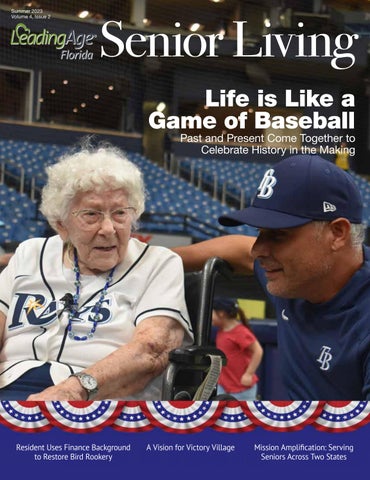
About the cover Westminster Palms resident
Ingles got to watch the
take on the Boston Red Sox. Read more on page
Senior
magazine
Agnes
Tampa Bay Rays
14.
















Providing the highest quality of care in senior living is a team effort. Keeping medications on track is just the beginning. Our experienced medication management teams help you face rising acuity and staff development and retention challenges. From survey preparedness and staff education to EHR/eMAR support and streamlined workflows, we provide your staff with the tools and support they need to do what they do best...provide amazing care.
Experience the Guardian difference. Learn more at guardianpharmacy.com/seniorliving Daytona 888-615-1925 Jacksonville 904-345-4304 Northwest Florida 850-718-7651 Orlando 863-670-7554 Southeast Florida 561-756-3909 Southwest Florida 727-366-6766 Tampa 727-366-6766
GOING THE EXTRA MILE STARTS BY BUILDING THE RIGHT TEAM.
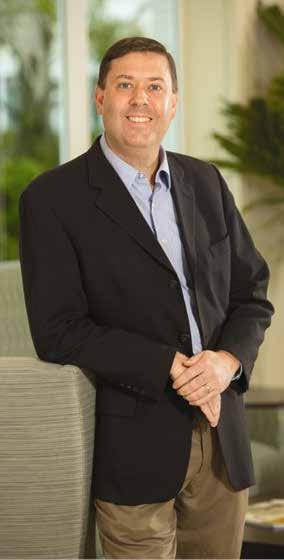
Channeling Our Collective Energy
At LeadingAge Florida, we have been in conversations over the last several years about momentum and evolution. We have been an industry in motion, and you can feel the excitement as we change and grow to best serve the amazing people for whom we care. This energy carries right through each story in this edition of Senior Living magazine!
In this edition, you will feel the excitement as you read about Agnes Ingles and the energy around a special engagement with her hometown team, the Tampa Bay Rays. A fan since the beginning of the franchise, this 106-year-young lady was invited to be an honorary bat girl and cheer on the team from a suite! You will also meet Bob Sharp, who is someone who knows about energy as a former race car driver. He took his love of racing and selling cars to build the relationships between manufacturers and racing teams that are used today. These articles show that aging doesn’t need to be a limiting factor to get the most out of an energetic life.
Growth and change bring a different kind of energy. Bill Johnston, a second-generation resident of Plymouth Harbor, worked with fellow residents to raise the money to improve a bird rookery on the campus to honor his father, who got so much enjoyment out of watching the birds. Member community Air Force Village is also growing and improving by adding Victory Village. This new residential community provides a special home honoring veterans and their surviving spouses from any branch of service. This unique focus makes this community one-of-a-kind.
This same energy and growth can be seen within LeadingAge Florida. We are excited to now serve the wonderful members of LeadingAge Alabama through a recent merger. Our proximity to Alabama made it a natural fit to provide our robust selection of offerings to member communities to our immediate north.
I hope you feel the energy and excitement from these stories as you enjoy this edition!
In closing, I want to extend my heartfelt appreciation to the entire board, the dedicated staff, and our esteemed stakeholders for their support during my tenure as the association’s Chair. It has been an honor to serve and I am immensely proud of what we have accomplished together. The collective passion and expertise displayed by this remarkable group have been a constant source of inspiration. I look forward to continuing my involvement with the association in different capacities and supporting its growth and impact in any way I can.
 D. Bruce Jones
Message from the Board Chair 7 SENIOR LIVING • SUMMER 2023
LeadingAge Florida Board Chair
We have been an industry in motion, and you can feel the excitement as we change and grow to best serve the amazing people for whom we care.
In Memory of Dad
Plymouth Harbor Resident Bill Johnston Uses Finance Background to Restore Bird Rookery
By Nick Fortuna
Bill Johnston witnessed the cruelty of Alzheimer’s disease up close, as his elderly father, once a savvy trader on Wall Street, gradually declined, eventually losing the ability to recognize family members. Throughout that difficult time, there was one place where his father consistently found comfort, and now, Johnston wants to honor him by making it better than ever.
Before Johnston’s father died at age 85 in 1990, staff in the skilled-nursing department at Plymouth Harbor would wheel his chair outside to the Peninsula, one of only three natural bird rookeries in Sarasota County. On any given day, that 3.2-acre parcel could be visited by up to 320 locally identified bird species, according to the Audubon Society, giving nature lovers quite a show.
Johnston said the Peninsula was a place of tranquility for his father, who would listen to the birds sing as the waves from Sarasota Bay lapped up against the bulkhead.
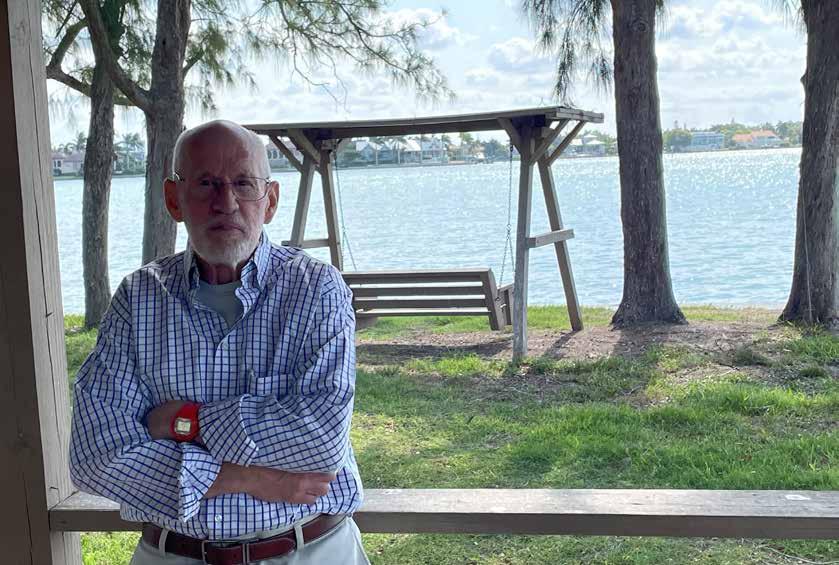
“It was a happy place for him,” Johnston said. “I’m eternally grateful to this place for the care he received.”
In remembrance of his father, Johnston recently set out to raise $1.65 million to im-
8
Using his finance background, Bill set out on a mission to restore Plymouth Harbor’s bird rookery in memory of his dad.
prove the Peninsula. Plymouth Harbor, where seven members of the Johnston family have lived over the years, pitched in $250,000, and generous residents of the Sarasota CCRC came up with the rest.
As a result, the Peninsula is getting a total makeover, including habitat restoration, the removal of dead trees, the planting of new shrubs and flowers, the installation of a walkway and a second gazebo for residents to enjoy.

“It’s a complete redo of a piece of land that really wasn’t serving a great practical purpose except for a place to take your kayak out, and now we’ll create some gardens and opportunities for residents to go out there,” Johnston said. “This was important to me emotionally because of my dad, and my mother, because dealing with an Alzheimer’s patient is not the easiest thing in the world.”
A project involving finances and Plymouth Harbor was right in Johnston’s wheelhouse. Following in his father’s footsteps, Johnston had a successful career on Wall Street, working as an executive with several investment firms before becoming president and chief operating officer of the New York Stock Exchange. And when it comes to Plymouth Harbor, few residents know the CCRC quite as well as he does.
Johnston’s father, mother, uncle and two aunts retired to Plymouth Harbor beginning in the late 1970s and enjoyed spending their golden years there. Johnston, 84, and wife Elizabeth, 83, who have been married for 61 years, had been on the waiting list at Plymouth Harbor for several years before snapping up an apartment in 2018.
Even before that, Bill Johnston was a part of the community there. He served as a director on Plymouth Harbor’s board from 2009 to 2015, and for the past 10 years, he’s been a board member for the Plymouth Harbor Foundation, which raises and manages funds to support the CCRC’s residents, workers and programs. Johnston was chairman of the foundation from 2013 to 2016, and he recently completed a three-year term on Plymouth Harbor’s Residents Association board.
Surrounded by spectacular water views, the Johnstons know they picked the right place to retire. He said they’ve enjoyed befriending residents who had distinguished careers in a wide variety of industries and specialties, leading to many hours of interesting conversation. The staff, management team and facilities are all top notch, he added, helping residents to enjoy a high quality of life.
“This institution has been very much a part of our lives for more than 40 years,” Johnston said. “The thing that makes Plymouth Harbor special is the people who live here and the management and staff who take care of the place.”
The Johnstons came to Florida after many years in New York City and the surrounding metropolitan area. Born in Englewood, N.J., and raised in the bedroom community of Tappan, N.Y., Bill Johnston and his wife lived in the city early in his career and moved to suburban Morris County, N.J., to raise a family. The whole time, Wall Street was well within commuting distance, which was a good thing because Johnston’s career was thriving.
Johnston said he made his first stock trade at age 14 and found the experience fascinating, sparking a lifelong interest in the financial markets. At the dinner table, he absorbed knowledge from his father, who was working on the floor of the New York Stock
Exchange, and he eventually landed a summer job in the mailroom of a Wall Street firm.
Over the years, Johnston would hold executive positions at a number of investment firms, including Johnston & Lunger; Mitchum, Jones & Templeton; Agora Securities; and LaBranche & Co. He founded Agora Securities in 1980 and worked as chairman and chief executive for 10 years until the firm merged with LaBranche & Co.
A major turning point came in 1996, when Johnston joined the exchange itself as president and COO. He held those roles through 2001, then spent two years as a senior advisor to the chairman before retiring.
In his executive role, Johnston was responsible for addressing the concerns of the NYSE’s three main customer groups: publicly traded companies on the exchange, institutional investors and the “floor community,” traders who execute orders and serve as market makers. He also spent much of his time speaking with unlisted companies and
9 SENIOR LIVING • SUMMER 2023
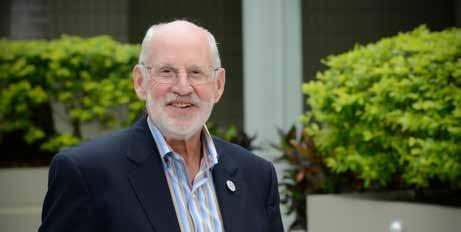
Bill Johnston’s Plymouth Harbor roots run deep. Even before moving into the community in 2018, Bill served as director on the community board from 2009 to 2015.
Rendering of the new song bird garden and water feature made possible due to Bill’s fundraising efforts.
encouraging them to become listed with the NYSE instead of its main rival, Nasdaq.
Johnston’s career was punctuated by two of the biggest events in Wall Street’s history. On Oct. 19, 1987, the Dow Jones Industrial Average dropped 22.6% as markets around the world turned sharply lower. After a fiveyear bull run, many on Wall Street believed stocks were highly overvalued. Meanwhile, the dollar was in decline, the U.S. trade deficit was growing, and interest rates were rising. It all came to a head on that “Black Monday.”

Johnston said he remembers calling his banker after the closing bell and asking to borrow three times more than Agora Securities had ever requested.
“I always say that if I wasn’t old and gray at the time, then that October certainly made me old and gray,” Johnston said with a laugh.
The second major event, of course, was Sept. 11, 2001, when terrorists hijacked planes and destroyed the World Trade Center. In addition to the tragic loss of life, the damage to infrastructure in downtown Manhattan forced the stock market to close
for four days, leading to the longest period without trading since the 1930s.
Johnston’s finance expertise has made him a valuable presence on the boards of many organizations and academic institutions, including Pace University, Emory University, Hollins University, the University of Richmond and his alma mater, Washington & Lee University.
Most recently, he served on the board of trustees for New College of Florida, the small liberal-arts school in Sarasota. New College is the honors college for the State University System of Florida. Johnston was the board’s chairman from 2012 to 2014 and vice chair from 2016 to 2020.
New College of Florida is known for its unusual “contract system,” in which students receive written evaluations instead of grades and agree to semester-long contracts stipulating how many classes they must pass. The highly individualized structure essentially allows students to create their own major with guidance from professors.
These days, Johnston works out each morning with a friend and fellow Plymouth Harbor resident, often walking 3.5 miles and crossing the John Ringling Causeway, a bridge that extends past the Sarasota Bay from Sarasota to St. Armands Key. They also take advantage of Plymouth Harbor’s state-of-the-art gym, using the machines, free weights and treadmill. Later in the day,
he might take another walk with his wife or even visit the gym a second time.
“Exercise has become a major part of my life in my older years,” Johnston said.
The Johnstons, who have a daughter and a son, each of whom has a daughter, spend each summer in the coastal resort town of Fenwick Island, Del., where they own a home two blocks from the beach, and their children own homes on either side of them.
Most of the year, however, the Johnstons are quite content residing at Plymouth Harbor, where it seems there’s always a social or educational event going on. On one morning in late April, Betsy Johnston was heading to a lecture on the war in Ukraine, while Bill planned to read a good book and keep tabs on the stock market.
Bill Johnston said Plymouth Harbor affords residents many opportunities for a rewarding retirement, and he likes knowing that he and his wife will never have to move, even if they require assisted-living or skillednursing care. Having watched five family members spend their final years there, Plymouth Harbor is where he wants to be.
“Plymouth Harbor offers everything, and I love that about this place,” he said. “We knew that this would be our last move, and it was the right move for us. The one mistake we made is we probably should have come here five years earlier and gotten to know even more people.”
10
New York Stock Exchange President and COO Bill Johnston (L) writes an order for Novartis Chief Executive Daniel Vasella (R) on the floor of the New York Stock Exchange.
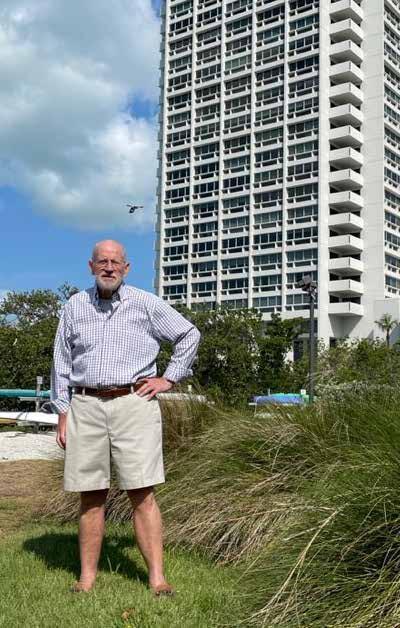
Bill stands at Plymouth Harbor’s peninsula, a place near and dear to his heart.



11 SENIOR LIVING • SUMMER 2023 HCPCS 1/2 page 7.5 x 4.875 no bleed 300dpiWould you like us to feature your community’s residents in an upcoming issue of Senior Living? If so, please contact Nick Van Der Linden at NVanDerLinden@ LeadingAgeFlorida.org or call (850) 702-0309.
Mission Amplification: Serving Seniors Across Two States
By LeadingAge Florida Staff
In May, LeadingAge Florida announced the completion of a merger with LeadingAge Alabama, bringing the two organizations together to serve senior living providers across two states.
The combination of the senior living associations in the southeast is designed to enable providers in Alabama to capitalize on the scope of LeadingAge Florida’s advocacy, education, communications, networking, group purchasing, and other services that have been the staples of LeadingAge Florida’s service to members in the Sunshine State.
“Over the last couple of years, the LeadingAge Florida Board of Trustees has considered a number of ways for our association to support the work of senior living providers, both inside and outside of Florida,” said Steve Bahmer, President and CEO of LeadingAge Florida. “That exploration included creative ways to recruit new members and to think more broadly about extending our geographic reach.”
For six decades, LeadingAge Florida has focused on serving high-quality senior living providers through effective advocacy, forward-looking education, communications across multiple platforms, group purchasing, networking, and much more. With that experience and the scale of nearly 250 members serving nearly 80,000 residents, the association had positioned itself to be helpful to providers beyond its state borders.
And for senior living providers in Alabama, the timing was right.
“We are longtime members of LeadingAge Alabama, and we are grateful for all our association has done for us and other members,” said Carol Holzman, CEO of St. Martin’s in the Pines in Birmingham, Ala., and Chair of the former LeadingAge Alabama Board of Trustees. “But we were also interested in additional leadership development opportunities, as well as enhanced opportunities to
network with our colleagues, and more robust communications and education.”
Informal conversations about the possibility of combining the associations had been underway for some time when Holzman traveled to Orlando in October 2022 to attend a LeadingAge Florida Board of Trustees meeting to help make those discussions somewhat more formal.

Holzman’s presentation outlined the history of LeadingAge Alabama, dating back to its formation in 1981, and noted that members of the Alabama association believed there was great potential for service expansion, leveraging economies of scale, and membership growth.
Following that presentation, and after months of discussion, the LeadingAge Florida Board voted unanimously to join the two associations into one organization headquartered in Tallahassee and served by the LeadingAge Florida staff.
12
“The merger of our two associations represents an important opportunity to amplify our mission of service to providers and the seniors they serve,” said Bruce Jones, CEO of LCPS Management, Inc., and Chair of the LeadingAge Florida Board of Trustees. “With the rapid and continuing change in our field, it’s never been more important for communities to have the support they need, resources they can rely on, and information and networks to help them best prepare for the future.”
The structure of the merged association was considered as carefully as the merger itself, recognizing that local identity and brand reputation are important in both states. It was critical that neither state relinquish any of that value as a result of the combination.
Consequently, although the association operates as a single entity, each state retained its local brand. That was important to members in both states and will also be important to legislators and regulators.
“We’ve both worked hard to elevate our brands and our reputations in our respective states,” Bahmer said, “and it was important that we both retained and continued to benefit from that. We also know that when it comes to advocacy, legislators, and regulators in Alabama aren’t likely to be too interested in the opinions of advocates from another state. So it was also important that LeadingAge Alabama held on to its local brand and influence.”
It was also critical that members in Alabama had a voice in the governance of the newly merged association. A seat on the LeadingAge Florida Board of Trustees was important for that reason alone, but also because the combined association will deal with issues and opportunities specific to Alabama, and insight at the Board level into the local nuances of those issues and opportunities will be essential.
Christopher Tomlin, President and CEO of Methodist Homes of Alabama and Northwest Florida, headquartered in Birmingham, Ala., has been nominated as the first Alabama member to serve on the LeadingAge Florida Board of Trustees.
Tomlin’s organization operates 13 communities, including full-service retirement communities, assisted living facilities, and income-friendly independent apartments. Three of those communities are in the Florida panhandle, in Pensacola and Panama City – making Tomlin an incredibly unique nominee, with experience and insights in both states.
“Christopher’s leadership has been essential throughout the merger process,” Bahmer said. “In fact, my first introduction to the LeadingAge Alabama Board was at a meeting at Christopher’s community in Birmingham. Additionally, because of his three Florida communities, he has been engaged with us for some time as a member of our Assisted Living and Home and Community Based Services Public Policy Committee.”
Following the completion of the merger, many more introductions were necessary. So the process of integrating the two associations began with a Zoom meeting that included Alabama members, the LeadingAge Florida staff, and members of the LeadingAge Florida Board.
“We wanted to create an opportunity to introduce ourselves to each other, to get to know our new members a bit better, and to introduce them to the incredible staff at LeadingAge Florida who will be serving them,” Bahmer said. “We also thought it was important to show the Board’s commitment to a successful merger by having them join us in that first discussion as well.”
In the near term, the plan for the merged associations is to scrub and integrate membership data to provide a clear picture of the communities, staff, and residents to be served in Alabama, and to provide a better understanding of the unique needs of each community.
That first step opened the door to the new members receiving the LeadingLink newsletter, as well as customized alerts, education and networking opportunities based on their preferences, and invitations to key
LeadingAge Florida events, including the Annual Convention & Exposition.
LeadingAge Florida will also be keeping an eye on the Alabama Legislature and regulatory environment, though full-scale advocacy will be added in the future.
“We got started right away delivering information and resources to our members in Alabama,” Bahmer said, “but we also needed to spend some time getting to know the members, the state, and the issues they face that are unique to their state. Advocacy is one of the primary ways we serve our members, and we’ll work on that in Alabama as we develop a stronger understanding of the state.”
As LeadingAge Florida Chair Bruce Jones pointed out, the senior living landscape is changing rapidly, but the landscape in Alabama itself is changing as well. Multiple news reports in recent months have focused on Alabama’s increasing profile as a retirement destination state. With its mild southern winters, Gulf Coast beaches, and relatively low cost of living, Alabama is emerging as a retirement alternative to Florida.
According to an April article in the Wall Street Journal, counties in southern Alabama are growing faster than counties in south Florida, largely driven by older adults who have been priced out of other markets.
“A growing population of older adults means a greater need for a robust portfolio of high-quality retirement options,” Bahmer said. “Supporting those options and ensuring seniors have the services and supports they need has been our legacy in Florida, and it will be our singular focus in Alabama as well.”

13 SENIOR LIVING • SUMMER 2023
With its low cost of living, beautiful nature, and beaches, Alabama is becoming one of the fastestgrowing retirement states in the country.
Life is Like a Game of
Baseball
14
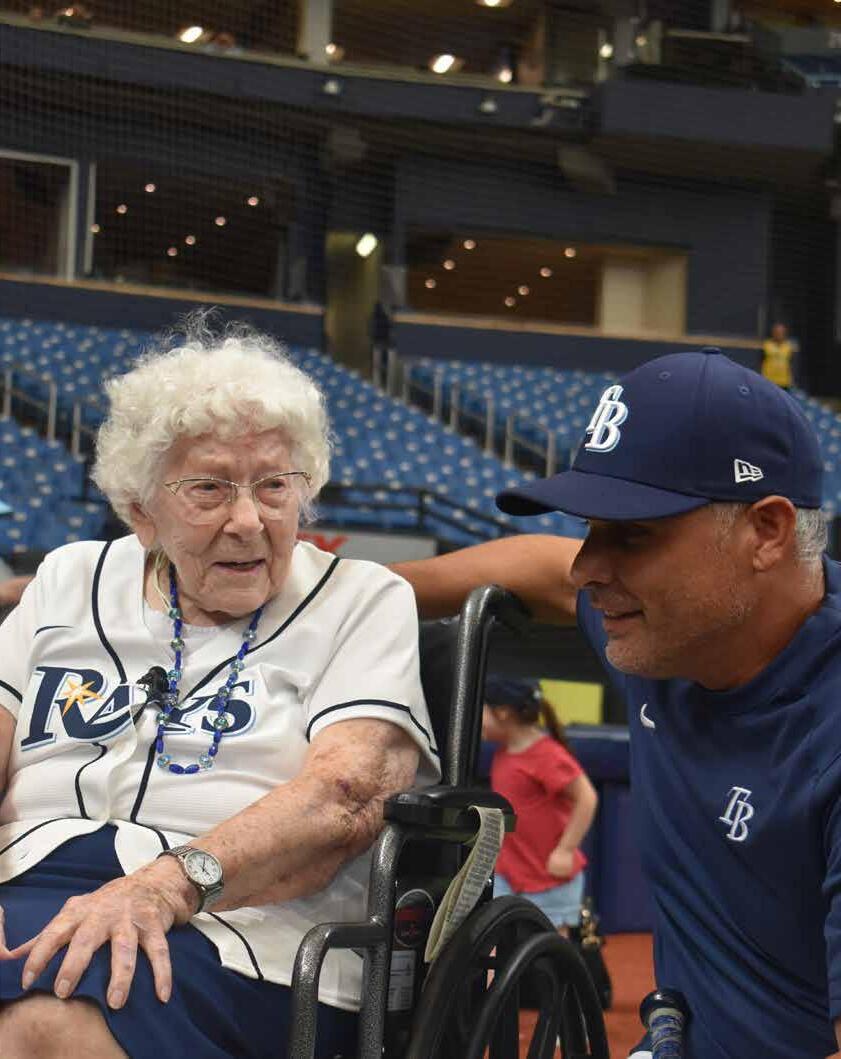
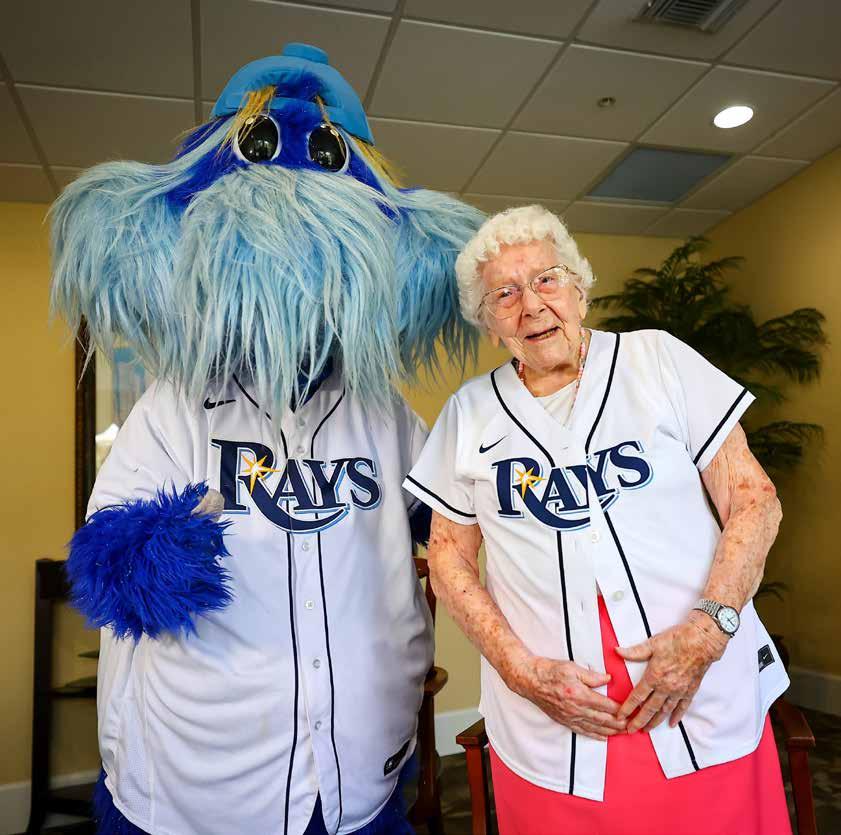
Westminster Palms resident Agnes Ingles.
Past and Present Come Together to Celebrate History in the Making
By Nick Van Der Linden, Director of Communications, LeadingAge Florida
Since the game’s creation, baseball and America have been synonymous. It is essential to our shared history, traditions, and culture.
Baseball, like life, is a beautiful thing filled with peaks and valleys. Its subtle layers reward the diligent explorer with a newfound appreciation. Traditions and magical moments are passed down for generations.
In no other sport is losing 60 games still considered a successful season, nor will someone from any other sport make the Hall of Fame after ‘failing’ seven out of ten times. Baseball is not just a series of lucky breaks. Much like life, it’s about managing the many variables that you face inning by inning, day by day.
This winning formula has also been the approach for 106-yearold Westminster Palms resident Agnes Ingles.
Born on December 8, 1916, in New York City, Agnes claims she has no earth-shattering secret to reaching her age. Instead, it’s about as routine as a ground ball to second base.
“Well, it creeps up on you,” she said, chuckling. “You know, it’s just like brushing your teeth. You do it every day, and you just progress as things happen. The biggest decision I guess I probably ever made in my life was moving to Florida. I’ve never been big on big decisions. I always say the biggest decision I make every day is turning off the shower because I like to stand in the shower forever. But it’s developing a routine.”
Detroit Tough
Agnes’ father was a mechanic from Detroit, and her mother was originally from New York City. Agnes recalls her mother was not a big fan of Detroit but eventually gave in and agreed that the family would settle in the Motor City, and life was good.

“When I was in grade school, I used to come home and sit in the kitchen and do my homework while listening to baseball games on the radio,” Agnes said. “Of course, all the games were on the radio in the afternoon since they didn’t play any night games. So,
15 SENIOR LIVING • SUMMER 2023
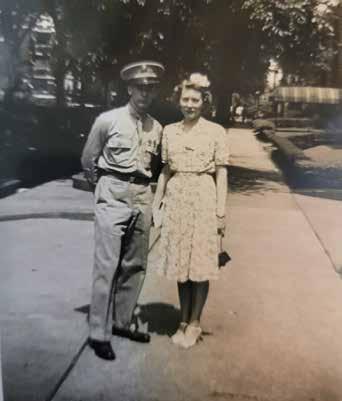
Agnes and her brother circa 1940.
Photo of Agnes as a child.
I listened to the Detroit Tigers ballgame and did my homework. I didn’t know any of them personally, of course, but I knew what everyone could do and what they were going to do when they got up to bat. I also played baseball as a kid. I could hit the ball and run. I tried tennis, but that was too much running for me. I also tried horseback riding but didn’t last long on the horse.”
The end of the 1920s marked the beginning of the Great Depression, and times would get tough. Agnes’ father passed away in 1932 as a result of an accident, leaving her mother scrambling to find a way to support herself and three children during a time when the Depression was hitting Detroit harder than the rest of the country.
“To support us, my mother decided to go to beauty school to become a beauty operator,” Agnes said. “We opened and operated a beauty shop for two or three years, but it was right in the middle of the Depression, and prices were awful. Can you imagine the price of a permanent was like 50 cents? Now you’re paying $55 for a permanent or more. Our shop also had competition about a block away, and that lady had ten dryers. Back in the day, you counted your blessings by how many dryers you had, and we had one.”
While in school, Agnes worked to master Gregg shorthand, a phonetic method of writing that records the sound of the speaker instead of the English spelling.
“My goal was 200 words per minute, which, at that time, was a tremendous speed, but the way people talk now, it’s not,” she said. “Times were tough, and I couldn’t find a job. It was so bad that the schools shut down a month early. We graduated in May instead of June because they had no more money to run the school that year.”
Agnes worked as a typist for various organizations before ending up at the U.S. Court of Appeals office in downtown Detroit.
“They needed help with a 2,000-page transcript that had a deadline to be filed with the U.S. Supreme Court,” Agnes said. “So (my colleague) would dictate at night and put it on a Dictaphone, and I would do the typing during the day with the earphones.”
Agnes would later work as the secretary for a U.S. Court of Appeals Judge for more than 20 years.
Sunshine and Baseball
After retirement, Agnes moved to St. Petersburg, Florida, in 1984 with the help of her nephew and moved into a house she obtained through her uncle.
Just two short years after her arrival, construction began on a new ballpark with the hope it would lure a Major League Baseball team to the facility. The stadium, built originally as the Florida Suncoast Dome (now Tropicana Field), was first used in an at-
16
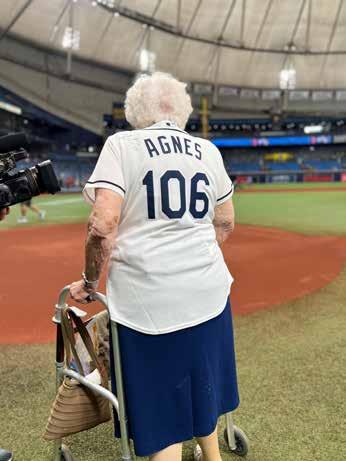
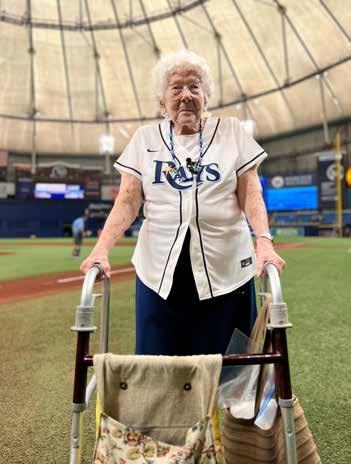
The Tampa Bay Rays presented Agnes with a custom jersey. Her number? 106.
On April 13, Agnes’ wish came true, and she got to watch the Tampa Bay Rays take on the Boston Red Sox.
tempt to entice the Chicago White Sox to relocate if a new ballpark was not built to replace the aging Comiskey Park.
Instead, an ownership group of a new expansion team was approved in 1995, and in 1998 the Tampa Bay Devil Rays played in their first Major League Baseball season.
Agnes fell in love with the team from the start. That start was precisely 25 years ago this season, and while she watches every game, she hadn’t been to Tropicana Field in person for a game –until now.
Staff at Westminster Palms posted her story on a community Facebook page and reached out to the Rays organization.
“When I made that post, I was not expecting the amount of attention it got,” said Jackie Sahhar, the head Services Administrator at Westminster Palms. “By that night, I received communication from the Rays that they wanted to make this day extra special for her.”
On April 13, Agnes’ wish came true, and she got to watch the Tampa Bay Rays take on the Boston Red Sox. Not only was it her first in-person game at Tropicana Field, but it was also the Rays’ chance to make history by tying the Major League Baseball post1900 record for 13 consecutive wins to start the season.
“It was great,” Agnes said. “I had no idea what the inside of the Trop looked like, and the first thing that impressed me is when I looked up and saw the dome. I just admired its beauty and size. It was just fantastic.”
Agnes also had the opportunity to catch up with the manager of the Rays, Kevin Cash.
“Oh my, poor Kevin,” she said. “No one gave me a heads up or introduced me. So, this man came and hunched down next to me and started talking. I said, ‘What’s your name?’ Kevin Cash,’ he said. I was embarrassed because he didn’t look anything like he looked on TV. He looked a lot younger. So, he stuck around for a little while, and then it was time for the game.”
As he left, Cash signed the custom-made Rays jersey that bore Agnes’ name and number – 106.
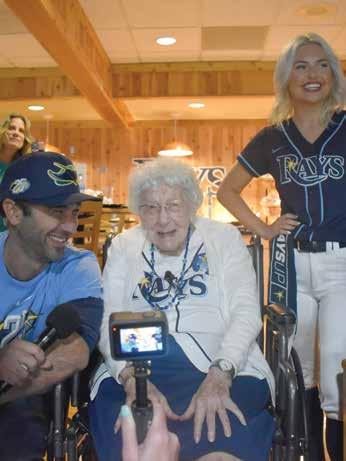
“Then they said they wanted to introduce my nieces and that they wanted me to say ‘Play Ball.’ I wasn’t planning on anything like that, but fortunately, they didn’t ask me to throw out the first pitch because that would’ve been a disaster.”
Staff from Westminster Palms, some residents, and Agnes’ friends joined her to cheer on the Rays from a suite on the first baseline and watch the Rays beat the Red Sox 9-3. With that win, Tampa Bay made history, starting the season 13-0, a feat matched only by the 1982 Atlanta Braves and 1987 Milwaukee Brewers.
In the days following the game, Agnes said she received many phone calls from people telling her they saw her on TV, including old friends from Houston whom she said she hadn’t seen in 18 years.
“It’s all been kind of a dream,” she said. “You know, you just go walking around, and people keep telling you they saw you on television.”
And while the flashy things in life are fun, for Agnes, much like in baseball, it’s the practical things that matter.
“I love home runs; they’re always fantastic,” she said. “But you know, that’s not the most important part of the game. If you’re not on base, you’re not going to get home, even if you get a home run. You’re not on the field and in the game long. One run is almost a wasted home run. I like four runs with my home run.”
Agnes will celebrate her 107th birthday on December 8.
17 SENIOR LIVING • SUMMER 2023
Agnes was the center of attention at Tropicana Field. Tampa Bay Rays staff interviewed Agnes during the game.
“I love home runs; they’re always fantastic. But you know, that’s not the most important part of the game. If you’re not on base, you’re not going to get home, even if you get a home run. You’re not on the field and in the game long. One run is almost a wasted home run. I like four runs with my home run.”
- Westminster Palms resident Agnes Ingles.
It Takes a (Victory) Village
By Nick Van Der Linden, Director of Communications, LeadingAge Florida
Located along the beautiful Emerald Coast of northwest Florida in Shalimar, near Eglin Air Force Base and Hurlburt Field, lies the Air Force Enlisted Village (AFEV), a retirement community with independent living apartments, assisted living, and memory care.
AFEV’s independent living community, Bob Hope Village, is shaped by six villages, a community center, swimming pools, activity space, and much more.

While at first glance AFEV may seem like one of many excellent retirement op-
tions in Florida’s senior living portfolio, there’s much more than meets the eye. In fact, AFEV’s primary mission is taking care of widows of retired Air Force Enlisted members.
In the late 1960s, a survey conducted by the Air Force Sergeants Association determined that more than 50,000 widows of retired Air Force Enlisted members were living in poverty. To address this issue, a group of active-duty and retired Air Force noncommissioned officers, with the assistance of former Air Force Chief of Staff
General John D. Ryan and his wife, created the Air Force Enlisted Widows Home Foundation, which would later become AFEV.
“The Air Force Enlisted Village is a unique, one-of-a-kind community,” said Brooke McLean, a retired chief master sergeant and President and CEO of Air Force Enlisted Village. “There’s not another community like this anywhere in the United States, and that includes the other military branches.”
While widows and spouses remain AFEV’s priority, the community also houses
18
couples and provides temporary housing for surviving spouses of enlisted members while they are on active duty and for active duty members when tragedy strikes.
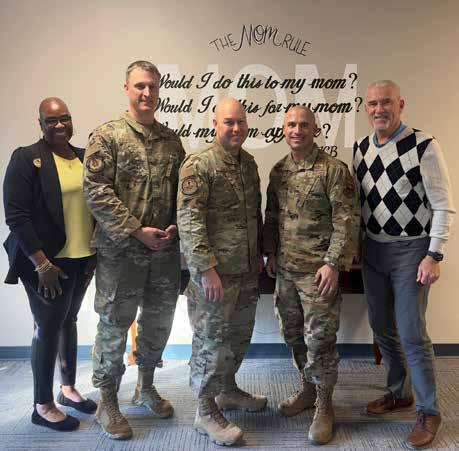
Because of its unique admission criteria, AFEV and its residents share a camaraderie that isn’t found anywhere else in the civilian world outside of law enforcement, firefighting, and emergency response. At one point or another, each resident has experienced long hours, stressful working conditions, danger to personal safety, separation, and more. It’s the mutual self-sacrifice, teamwork, and having the other’s back that further contributes to the community’s uniqueness.
“A lot of folks and senior living communities talk about how much they care about their residents and the folks that live there, which of course I know they do, but I challenge them to find a community like this
one where these people shared the same journey and the same life that you did from the time you were 18,” said Ryan Price, Air Force Enlisted Village’s Sales Director. “We have everything in common. The health, the issues, TRICARE, the doctors, the deployments, the living alone while they’re off serving, the tears, everything. There’s a guy here whose last squadron was my first squadron. We missed each other by three years. This is family. I mean, we have a connection that sometimes goes beyond blood. To have something, to be so invested in something that just fills your heart with joy to the point where even when (residents) are grumbling about grass clippings on their porch, that you just want to hug them.”
The location for AFEV was carefully considered. Not only did the site need a strong sense of military community, it needed to

be a strong Air Force community.
“We have a great relationship with both Air Force bases,” said Bobbi Jo Dominguez, Director of Bob Hope Village. “We have a lot of residents who use the bases to see their doctors or get their prescriptions. The residents can call in their medicine, and then our drivers go and pick it up. This service prevents them from sitting and waiting one or two hours somewhere else.”
Collaboration with the bases is important, but buy-in from the local community is also critical, which is something they have established with Fort Walton Beach, according to McLean.
“We had this resident with Alzheimer’s who loved Dr. Pepper; it was one of her passions,” he said. “So, she woke up one night around 3 a.m and decided she wanted a Dr. Pepper, but she was not thinking clearly. So, she reaches over, picks up the
19 SENIOR LIVING • SUMMER 2023
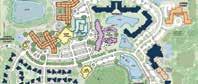
Aerial view of Victory Village rendering. The United States Air Force and Air Force Enlisted Village have a very close and longstanding relationship that is rooted in volunteering and helping one another.
phone, and dials 911 to order her Dr. Pepper, which is sort of funny. But what’s important is that about 30 minutes later, the sheriff showed up with a Dr. Pepper for her. And I love that because it really shows how much our community understands us. The fact that Fort Walton Beach in Okaloosa County, the police understand what it is that we do, and their help and support is just incredible.”
With the celebration of its 50th anniversary in 2018 came the realization that it was time to examine how the AFEV model could be copied and made available to the other military branches.

“We recognized that, for the longest time, we talked about what a great service it was to the airmen and their surviving spouses to be able to come to our community, but that there was nothing available for the other branches,” McLean said. “We have the existing campus with the infrastructure, and we know that if we could leverage the resources, we could create a community like this that served all the branches of the military. And so, our vision for Victory Village will be a community that will be open to all military retirees on the enlisted side, and then also surviving spouses.”
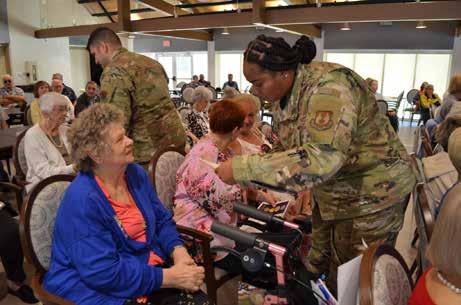
Victory Village will be created using the AFEV model and open to all military services with a special focus on aging support for wounded warriors. The new senior liv-

20
Because of its unique admission criteria, AFEV and its residents share a camaraderie that isn’t found anywhere else in the civilian world outside of law enforcement, firefighting, and emergency response.
Rendering of the Great Lawn at Victory Village.
ing community will honor these injured service members with an expert understanding of the unique care requirements that they will need to live their best lives.
“As we were working through this vision, we came on the subject of wounded warriors and what the aging process might be like for them and their caregiver,” McLean said. “It’s obvious it will be more challenging than a traditional retiree as they go into their 50s, 60s, and 70s. So, we started asking people what that care plan was like and who’s going to take care of these individuals. Nobody really had an answer to that question.”
A committee was formed that included county commissioners, AFEV finance officials and board members, and local community members to discuss how to make the plan a reality and where the community would be built.
AFEV approached Eglin Air Force Base about purchasing some of their unused land to build the community. Since the land was US government property, McLean said it literally took an act of Congress to get it approved.
“We ended up writing (at that time) Senator Bill Nelson and were able to get authorization to purchase 80 acres of land that is right across the streets from us,” he said. “We have the purchase and sales agreement with the Air Force to buy the land, and we’re in the process of raising funds to buy the land. When we do, we’ll have the clear and outright title.”
In addition to serving military retirees, surviving spouses, and wounded warriors, Victory Village will be home to guardians and caregivers.

“There are a lot of unique synergies that are going to take place when you blend those folks together,” McLean said. “Particularly for wounded warriors and their caregivers since they will not be age-restricted. They don’t need to be 55 or older. If they have special needs or special care requirements, they’ll be able to live in this community and be surrounded by others that have served the nation in the military. We worked with the Wounded Warrior Project, and according to their data, some of the biggest challenges that wounded warriors face include feeling isolated and like people don’t understand what they’re going through or their problems. So, this will be able to help bridge that gap.”
Victory Village has been established as a 501(c)(3) nonprofit senior living community. To learn more about how you can help support and ensure our aging heroes receive the specialized care they need, visit www.victoryvillage.us.
21 SENIOR LIVING • SUMMER 2023
Rendering of Victory Village’s proposed Town Center.
In addition to serving military retirees, surviving spouses, and wounded warriors, Victory Village will be home to guardians and caregivers.
Life in the Fast Lane
By Nick Van Der Linden, Director of Communications, LeadingAge Florida
Racing cars isn’t always the first thing that comes to mind when people think of the automotive industry. But the reality is that for many car manufacturers, modern car racing is not only a way to boast about wins, it’s also a way to drive sales.
That wasn’t always the case. But in the 1960s, one man contributed to that change—Bob Sharp.
Sharp, born in Mt. Vernon, New York, and now a resident at La Posada in Palm Beach Gardens, became enamored with vehicles as early as three years old, and he would later combine this with his love for sales to create a sports car racing dynasty.

After graduating from New Canaan High School in 1957, Sharp was auto-crossing a 1958 Volkswagen Beetle around Connecticut before buying a 1960 Austin Healy
Sprite as a go-to-college vehicle and his Sports Car Club of America (SCCA) driver’s school and racing vehicle.
“That ‘Bugeye’ Sprite was $121 worth of a car,” Sharp said. “And one of the few reasons that I sold it was to earn a profit. The first car was an H production, and the second Sprite was a G production. After that, I purchased a Lotus 7 for $2,150 in kit form. It comes in a sling, it’s all welded, but you
22
have to put it together yourself. A friend gave me a hand assembling the thing, and I had a used 1960 Corvette that I used to tow on a one-car trailer. When people in college saw it, they thought I was building a coffin. So off to driver school I went, and one day I got lucky and finished third or something in an impound race. When I left the impound area, there was a gentleman waiting on me,
and he said, ‘Do you smoke Camel cigarettes?’ I told him, ‘No, just Lucky Strikes.’”
The two men struck up a conversation, and as a result, Sharp was offered a bid to shoot a color TV commercial for Camel Cigarettes with the William Esty Ad Agency.

“I asked the gentleman how he planned to handle it financially because I couldn’t afford to wear my car out,” Sharp said. “He’d


23 SENIOR LIVING • SUMMER 2023
PHOTO CREDIT: ALLEN BARRY PHOTOGRAPHY
One of Bob’s iconic red, white, and blue Datsun racing cars with Bob’s lucky number 33.
Bob raced under several different competition numbers, but it wasn’t long before he could call number 33 his very own.
get his commercial, and I get to go home with a car that needs to be completely rebuilt. But he said not to worry about it and that I would get $10,000 for doing the commercial.”
The publicity Sharp received from the commercial led him to be chosen as one of two race drivers for a Rambler/Datsun deal-

24
While Paul Newman was known by many as an actor, his true passion was racing. Pictured here are Bob Sharp (kneeling) and Paul Newman (in car).
“I started working at a Gulf gas station on Route 33 in Connecticut, and I lived at 33 Mulberry Road,” Sharp said. “I thought 33 was a lucky number for me, so that is why the number 33 was on all my race cars.”
- La Posada resident Bob Sharp
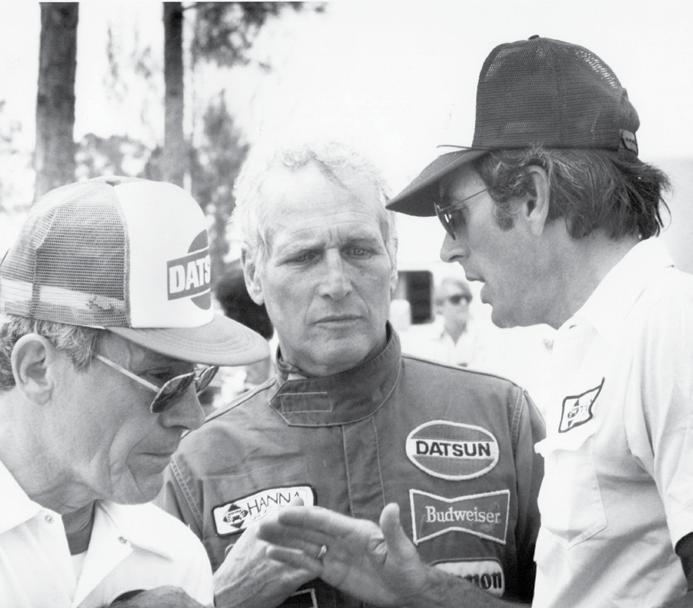
Bob Sharp (R) and his Crew Chief Gene Crowe (L) talk through track details with driver Paul Newman.
ership, P Bruck & Son, in Connecticut, which fielded a Datsun 1500 race car.
In his first season, after a first place finish at Thompson and a second-place finish at Bridgehampton, Sharp finished third in the SCCA’s North-East Divisional standings. Sharp also qualified his 1500 for the First American Road Race of Champions, held at Riverside, California, in November 1964, which proved to be an excellent start to his race career.
However, the Rambler/Datsun dealership soon went bankrupt, and Sharp decided to set up his own car sales and repair business in a Gulf gas station on Route 33 in Ridgefield, Connecticut.
During the early years, Bob raced under several different competition numbers, but it wasn’t long before he could call number 33 his very own.
“I started working at a Gulf gas station on Route 33 in Connecticut, and I lived at 33 Mulberry Road,” Sharp said. “I thought 33 was a lucky number for me, so that is why the number 33 was on all my race cars.”
During this time, the SCCA was also changing from being strictly amateur to allowing professional aspects into the sport, such as paid drivers and sponsorships. This opened the door for Sharp to pitch the idea to Mr. Soichi Kawazoe, one of the first two principals of Nissan USA, that building winning racecars would help increase sales. Kawazoe agreed to sponsor Sharp’s team for the up-
coming 1965 race season, and so the phrase “Win on Sunday, sell on Monday” was born.
As predicted, Sharp’s success on the track did drive car sales. His dealership went from a few hundred car sales a year to selling thousands of Datsuns. His Gulf gas station usedcar shop became a Datsun dealership and later a stand-alone racing facility with full factory support.
The result would be 35 years of red, white, and blue Datsuns competing on the race track and setting the example for future partnerships between race teams and manufacturers.
Between 1967 and 1975, Sharp won the Sports Car Club of America national championship six times and an IMSA GTU Championship title.
Bob stepped away from competition in 1976, but his team would be the springboard for several drivers to make their mark on motorsports. Notable drivers included Jim Fitzgerald, Bob’s son Scott Sharpe, and actor and future SCCA hall of famer Paul Newman, an accomplishment Sharp considers to be one of the most significant of his career.

“I’m not a movie guy, so I had no idea who Paul Newman was,” Sharp said. “I was asked after practice on a Tuesday to take him around for a few laps. So I took him and his son around, and he loved it. He said he’d love to (race) if he ever got the chance. The timing just worked out unbelievably well for me. So I said, ‘Paul, why don’t you come with us, and we’ll sponsor you in a car.’ His agent from Cal-
ifornia said, ‘You know, Bob, you ought to pay Paul something for doing this.’ And I wasn’t a very wealthy guy, but we were able to come up with some money, and he was able to come with us. The whole thing just worked out unbelievably well.”
Life in Pit Lane
No race car driver is successful without a good crew, something Sharp certainly had. But his crew included someone extra special, his wife Carol.
Carol’s parents lived in New Canaan but commuted back and forth to New York, where she attended Columbia University and majored in French and Spanish.
“My parents, like Bob and his family, lived in New Canaan, and I knew his sister,” Carol said. “She invited me to go to a party, which is where she introduced me to Bob. I was one grade behind him in high school, and he swears we had several classes together, which I don’t remember at all!”
The two got married in 1964, and Carol recalls that while supporting her husband from the pit lane was difficult at times, the memories were amazing.
“When we had our son, Scott, I remember changing diapers at the Lime Rock Park racetrack, which wasn’t ideal,” she said, smiling. “But I attended when I could and even did some timing for him. There’s a camaraderie between all the families involved in racing, so you form new friendships. There’s also a lot of hard work and, at times, a lot of frustration both on the part of the drivers and the mechanics.”
Bob’s successful career with Nissan also came with travel perks for the couple.
“We were privileged enough to have a wonderful babysitter and through Nissan, were able to receive magnificent trips all over the world,” Carol said. “We’ve been to Japan three times, we’ve done African safaris, and visited several European countries.”
Life these days is less about living in the fast lane and more about enjoying their picturesque senior living community, La Posada, with their Shih Tzu, Turbo.
“When we visited La Posada, we just felt right at home,” Carol said. “The people are magnificent, the staff is just incredible, and they are so helpful no matter what the issue is. They’re always willing to do whatever you need. There is always some kind of entertainment, and the performers they bring in are fantastic. All in all, we love it here and have made many wonderful friends.”
25 SENIOR LIVING • SUMMER 2023
Bob Sharp (R) and teammate John Morton (L) circa 1972.









26 Thank You, Advertisers BottomLine Solutions, LLC Inside Front Cover MarshMcLennan Agency Outside Back Cover Guardian Pharmacy 6 Health Care Professional Consulting Services, Inc. dba HCPCS, Inc. 11 Optum 3, 4 Plunkett Raysich Architects, LLP............................................ 26 RLPS Architects & Interiors 26 Schaefer Construction Co............................. Inside Back Cover architecture, master planning, interior design www.rlps.com now is the time to plan is your community future-ready? Untitled-2 1 2022-11-14 10:17 AM Compassion, Dedication, & Creativity Developing environments for community and quality of life. Contact us today to discuss your needs. Gregg Golden, AIA | 414.254.9668 www.prarch.com
LeadingAge Florida: Winner of the 2023 Association Trends TRENDY Award — Bronze


LeadingAge Florida magazine received the 2023 Bronze Association Trends TRENDY award, a designation honoring excellence in marketing and communication within the association and nonprofit community.
Congratulations goes to the LeadingAge Florida staff, the advertisers who make this print publication possible, and all of the wonderful aging services providers and their remarkable residents.
To share your residents’ stories with LeadingAge Florida, contact Nick Van Der Linden at NVanDerLinden@LeadingAgeFlorida.org or (850) 702-0309.
For advertising inquiries, please contact Katie White at kwhite@thewymancompany.com or (352) 388-7031.

Summer 2022 Volume 3, Issue 2
Vicar’s Landing Resident Reflects on Memorable Career with NASA A First-Hand Account of the D-Day Invasion from a 5th Ranger Company Commander Food Can Make or Break a Person’s Health Fueling Healthy Aging Moorings Park Residents Veora and John Little Remain Health Care Professionals at Heart
Senior Living