Three

Bais Ruchel of Satmar, Part II
By Brochy Ganeles








Three
Bais Ruchel of Satmar, Part II
By Brochy Ganeles




“The










by kosher skinny shot

“ Hey, how was your summer? Time to get back to business, huh? Ah, you didn’t chap who I was for a second because I look so di�erent? Can’t blame you for that. I barely recognize myself in the mirror…
Yep, you guessed it right. Kosher Skinny Shots. I have to say, I was really nervous about keeping up the weight loss even during vacation. All that delicious food, barbecues and stu�…
But the people at Kosher Skinny Shots were unbelievable. I switched over to the Kosher Skinny Cream to make it easier to manage, and look at me! I lost more weight than ever during the summer and I didn’t feel like I was missing out on a thing!”
Kosher Skinny Shots does it again! See you next week... - Kalmy Skinner




SEMI ATTACHED the




Classes every Tuesday: Boro Park 10:30 am | Williamsburg 1:00 pm Free for parents of children already enrolled in Simpatico. Geared for parents of children ages 2-12
Course starts in October | 90 minutes per class
CATEGORY:
Sophisticated
PERFECT FOR:
STATEMENT:



































Donate: rayofhopeus.org Raising $3M

Water your body can actually use.











































4X
MORE WASHES. FEWER SQUEEZES. GREATER VALUE.

SUPER CONCENTRATED DROPS










































THE W MALL
Comfy elevated looks for everyday.
(Re: Back to School – Senior Edition, Issue 017)
Reading about teachers who returned to the classroom was so heartening and encouraging. I taught elementary school for four years and loved every minute. The connection with students, the joy of watching their growth and the possibility that I had a hand in their transformation was truly rewarding.
A few years ago, I left teaching and accepted an office/secretarial position. The decision made sense at the time; the salary was more than double, and unlike teaching, I no longer had to take work home with me. Still, I deeply miss teaching. Nothing compares to the intellectual and emotional fulfillment it brings. I would love to return one day, and it was reassuring to read about teachers who have done just that.
At the same time, I would like to raise a point that has been bothering me since I left teaching. Why are teachers paid so little compared to those working in an office? Good, experienced teachers, whom you would want to be teaching your children, are being replaced by fresh out-of-school graduates just because of the salary. I am not in any way putting down first-year teachers who have the enthusiasm and spirit that only a first-year teacher can have, but at the same time, nothing compares to an experienced teacher.





I know that some principals are ready to make anything work to get some teachers to stay. But when it comes to salary, their hands are tied.
We are ready to do anything for our children’s chinuch Does it really make sense that the teachers’ wage is what is going to determine the experience that our children will have?
Name Withheld
(Re: Give or Take, Issue 017)
The serial Give or Take was amazing. It’s what made me pick up The Williamsburg View every week. I miss it already!
Thank you so much for a fantastic read. T.K.
(Re: POV, Issue 017)
Dear parents of more kids than seats in the car: Please be aware that double-buckling is a thing. A cop once said that double-buckled is legally considered buckled.
Some of our best family memories include taking trips in the car with the three back seats hosting five kids ranging from young children to almost adults. With the two youngest in car seats and the other three squashed between, the car door had to be closed from the outside as everyone held their breath. But we were all proudly buckled!
Have fun and stay safe!
(Re: POV, Issue 017)
Name Withheld
I was appalled when I read some of the POV responses last week. Please, parents, remember that your children’s lives are at stake here! Stay safe and buckle up. This isn’t only about the law; it’s about your own family’s safety.
May Hashem watch over all of us on the road.
Another Driver
(Re: Kashrus Concern, Your Say, Issue 017)
I was thinking of submitting this letter to raise awareness for a while, and this week’s letter about making sure your child isn’t eating bishul akum in their day care center prompted me to actually write it. The Williamsburg View is mezakeh es harabim in so many ways. Thank you.
Someone recently showed me pictures of two non-Jewish babysitters pushing strollers with lichtige Yiddishe neshamos inside. Sounds fine? But not when you hear where they were coming from: These babysitters had gone to pray and figured it was no big deal to take along their charges.
Yiddishe mamas, if you employ a babysitter and she takes your baby for a walk, be very firm and clear about which places are off-limits. (What she may be giving your baby to eat is also important to consider.)
The person who showed me the pictures stopped showing them to others because she realized that some people

8:327:06

might recognize the babies/strollers/ babysitters, and that their mothers would be embarrassed for everyone to know what happened. But it’s important for everyone to know what happened, and to take steps to prevent this terrible outcome from happening again.
Name Withheld
(Re: A Brilliant Solution, Inbox, Issue 015)
As someone in the jewelry field, I feel there are some things that are important to consider in the lab versus mined diamond debate.
As explained in the article, a lab grown diamond is grown one layer at a time. With the help of a 5-20x loupe, anyone can see the graining in the stone by looking into the table of the stone down to the pavilion (bottom corners). The graining is similar to the graining one can see in a piece of wood. You may think you’re seeing dirt on the surface of the stone, but this is in fact the graining, or the layers of growth. The inscription in the girdle of the stone says LG and the certificate number, which can be read with a 10x loupe.
Many certificates from IGI (International Gemological Institute) state that there may be post-growth treatment to change the color or imperfections to better quality. The GIA (Gemological Institute of America) has recently stopped grading lab grown diamonds for color and clarity for this reason.
You can buy 1.40 ct. FVSI or better lab grown on 47th Street for $140.00. Retailers charge five to ten times what they pay. That’s why they’re motivated to persuade the consumer to buy lab grown.
If you’re in the market to buy a lab grown diamond, find someone who works on 47th Street. He can take you to a wholesaler of lab growns (there are about a hundred of them), and you’ll pay 15% of what you’re being charged by a retailer.
Note that if you give a kallah a lab grown diamond without disclosing that it’s lab grown, and later the jewelry needs to be repaired, the repairman will not accept the piece before testing it to know if it is lab grown or mined, and the kallah will then find out the
truth. There are many different types of machines that can test the stone and determine its source, because the composition of mined and lab grown is not identical.
It’s also interesting to note that in some European countries, lab grown diamonds are called synthetic diamonds.
The best time to buy a real diamond is now, when prices have dropped by 40%. The wholesale price for a 1.05 GSI mined diamond is about $2,500. Prices have not been this low for decades. And when you give your kallah that diamond, you’ll know you gave something of real value!
(Re: A Brilliant Solution, Inbox, Issue 015)
I recently married off my son. Our choice was to buy the kallah a lab grown diamond. Since I enjoy and appreciate design a lot, I spent a lot of time on the ring and enjoyed every moment of shopping. The results were beautiful. Still, I don’t think for a moment that lab diamonds can even remotely compare to the mined diamonds I gave my previous two daughters-in-law. The depth, sparkle and color of lab diamonds in no way compare to those of mined diamonds created by Hashem in His infinite perfection. Natural diamonds simply pop. Yes, I made this choice because the price difference will make a difference to me now, but I’m not fooling myself by saying that this is the real thing. I’m left wondering about the true markup on lab diamonds, and if they’re really worth anything at all.
C.S.R.
(Re: A Displaced Memory, Issue 013)
I read the fiction story, “A Displaced Memory” by Esther Malky Neiman, on Tisha B’Av. What an appropriate read and important message! I would love to see more stories written by this author. Thank you for providing topquality reading for the entire family! Hatzlacha in all your work, S. Klein



I'm entering the stage of life that's vague, unexplored, and not spoken about.
I keep bumping into not-so-little bumps, and more often than not, I stumble over them.
Life, as I know it, is changing drastically, and I feel… Can I even say it at my age? I feel slightly afraid.
My skin is changing, my moods are unrecognizable and there are so many questions I'm grappling with.
Shmoozing with my friends and older sisters, once filled with adorable anecdotes of our little ones or roller coaster days, now resembles a moaning party, where we share confusing thoughts and feelings.

And as I look around at my friends, I can secretly tell everyone's in the same boat, yet nobody seems to have the oars.
And then there are the things we can’t even vent about.
Where is that magical midlife mentor that can hold my hand, shed some light and ease the despair?
If only an anonymous, detailed note would land at my doorway, guiding me to navigate this journey smoothly.
Not a note preaching impossible diets or demanding I swallow a handful of pills three times a day.
But one that unpacks the baffling new terminology I keep stumbling across.
One that gets me.
And helps me feel better, too.
It hit me one morning as I caught my reflection, barely recognizing the tired eyes staring back.
In a quiet conversation over coffee with my friend Dina, I shared my desperation for relief. “These days, I wake up feeling like a stranger to myself. Too much isn’t the same anymore.”
It’s not that I want to be 20 again. I’m proud of who I’ve become. I simply want to feel like myself. Steady, rested, healthy and comfortable in my skin.
Eleven Vitality, the leader in natural hormonal and vitamin creams, has created a unique kit, specifically designed for women at this age and stage. The nHRT
I thought this was my new uncomfortable way of living.” Says Teela, age 59. “After consistently using the nHRT kit and doing some kegels, my bladder wellness and recurring UTI infections have improved!
Sury shares, “I was going to travel to Israel, but I couldn't imagine sitting on the plane with such itchy dryness. Using the nHRT kit for just a few days gave me the relief I needed to have a great flight.”
kit includes all the components to balance your hormones, naturally. Within a week of consistent application, our clients see tremendous results.
In 2012, a large clinical trial followed over 200 postmenopausal women who experienced 7–8 hot flashes a day. Adjusting their hormones eliminated 90% of their hot flashes, most within the first two weeks. Sleep, mood, and daily energy all improved.

there was the landmark 1993 trial in the New England Journal of Medicine. A group of postmenopausal women with recurring UTIs used estriol. Their yearly infection rate plummeted from nearly six to less than one, while healthy bacteria returned and comfort improved.
And in 2010, research in Dermatologic Therapy revealed that up to 47% of postmenopausal women suffer from dryness, itching, or pain. Topical estriol restored moisture, reversed thinning tissues, and eased discomfort, directly enhancing quality of life.
Balanced hormones are about more than just looking better; they’re about living your best.
I hadn’t known yeast infections were hormone-related.” Libby shares. “But after consistently applying the nHRT kit, my yeast infection was surprisingly gone! So I researched and learnt that when the body’s PH levels are restored with hormone balance, the yeast bacteria have no place to thrive.”
Moods affect just about everything. Esther shares, “My moods were so despondent. I had lost all interest in everything that used to excite me. I’m now using the nHRT kit and feel young and energetic again!”

Did you know that your essential hormones decline steadily as you advance in age?
Doctors often recommend Hormone Replacement Therapy (HRT).
Now you can do so naturally!
The hormones that are quickly declining are Progesterone, Estrogen and DHEA.
Eleven Vitality’s nHRT Kit, a natural hormone replacement therapy cream kit, contains all that.
Not only will it keep you young at heart, but young looking and feeling fresh as a spring leaf.


MAINTAIN YOUTHFUL SKIN
ELIMINATE HOT FLASHES
CLEAR BRAIN FOG
PROMOTE BETTER SLEEP
STABILIZE MOOD
PROTECT AGAINST BREAST CANCER
MINIMIZE BLOOD CLOTTING & STROKES
REVERSE OSTEOPOROSIS
Allowing your child to run errands depends on their maturity. However, I’ve learned that you shouldn’t underestimate a child’s abilities. Start by practicing your phone number with the child, Next, send them to the grocery store for only one item, and so on. With time, they’ll really get efficient at shopping, which will both boost their confidence and be a help to you. Just be patient if they bring you squash instead of cucumbers the first, second, third (or fourth) times…
I do errands myself. Occasionally, I will let my kids aged ten and up buy two or three items in the grocery store.
Each child is different. When they feel comfortable and old enough to do errands, I let them. By age eight or nine, they can generally pick up basic groceries from the store around the corner.
My eight-yearold can go to the grocery store on our street and pick up something from a local store if it isn’t too complicated.

Growing up in Williamsburg, my mother allowed me to do errands from a very early age. That helped me become confident and independent. I have great memories of shopping at the grocery store by myself. I would allow my kids to do errands in stores if it doesn’t require crossing the street from age seven
I live on a quiet street in Airmont, so there’s no real opportunity for running errands for young children. From about age six, I teach them to cross the (quiet) streets safely, so from then on, they can go to some closer neighbors to borrow/return items.
From approximately age ten, I allow my children to go to the grocery store for me. Of course, this age varies from child to child, depending on their maturity and nature.
Starting at around eleven or twelve years old, I allow my children to do grocery store runs. Other errands, from around age thirteen I have a grocery store around the corner (no crossing required). I let my eight-year-old pick up groceries for me there, with a cellphone and/or friends. I’m still not very comfortable with it.


Legend has it that my husband was buying small essentials at the corner grocery store before he had peyos, so yes, my kids are very independent and want to run errands all day from a very young age. However, I’m super strict about crossing streets and wouldn’t allow my children under ten years old to cross on their own.
From the age of eight, I allow my children to go to the neighborhood grocery store for me. As they grow older, I give them more and more responsibilities, such as picking up things from the dry goods store, the cleaners and the hardware store.

Growing up, we had certain birthday privileges based on our age. For example, from the age of eight, we were permitted to cross our street. From age nine, we were allowed to cross all streets. At the age of ten, this extended to avenues, and at the age of eleven, we were able to cross New Utrecht. We were allowed to run errands based on how far we could go. (Other “birthday” privileges included pouring from a full bottle, plugging into outlets, striking a match and receiving a glass drinking cup at the Shabbos table.)






We read cozy stories, play super awesome games, and make art with crayons, markers, and paint!
(My Mommy tells me I’m gonna be a famous artist one day, so I’m practicing already!)
They don’t have transpa… transpit… transporastation, but they take me on adventures every day!
If you want really nice teachers and to have tons of fun with me, tell your Mommy enrollment is open. Also, they take vouchers! (Is that a nosh?)



Y. Levenstein
One of the topics discussed in this week’s parsha is the ben sorer u’moreh — the stubborn and rebellious son. The Gemara in Sanhedrin (71a) maintains that in reality, never in history has there been such a case. If so, it seems the Torah is teaching us a halacha that is not applicable. We know that there isn’t an extra letter in the Torah. Why, then, does the Torah write about the ben sorer u’moreh?
Another question: The pasuk ( Devarim 25:18) describes that the wayward son “einenu shomei’a b’kol aviv,” he does not obey his father. Why is the word “einenu” used? It would seem more fitting to say “eino.”
Reb Avraham Fuchs shares the following story, as heard from a friend:
MY AVRUMY WAS A GOOD BOY. He did very well in cheder, and when the time came, he was accepted to a top yeshivah. He began his first year with much cheshek, but at some point along the way, he encountered difficulties, and his learning began to slack off. When it became too hard for him to comply with the yeshivah’s high standard, he was sent packing.
We tried a different yeshivah, but there, too, he soon earned himself a poor reputation. Avrumy made sure to get on the wrong side of the mashgiach. He was there to have a good time, not to learn. And so it was that we found ourselves looking for yet another yeshivah for Avrumy.
I was very concerned, and poured my heart out in tefillah. Avrumy had such potential; I wanted him to use it! At the very least, if he wouldn’t grow to be the ben Torah we hoped he would be, I davened he should
grow up to be an ehrliche, Torah-true Yid.
After an extended period of zero improvement, I was at my wits’ end. I wanted to do more for Avrumy, and decided to take him to Rav Chaim Kanievsky. Perhaps a good shmuess from the Sar HaTorah would give him the chizuk he needed to apply himself to the Gemara and begin to enjoy the beis midrash. I hoped it would infuse him with revived she’ifos in Torah and yiras Shamayim.
It was soon after Rav Chaim’s stroke, which made it harder to get in for a bracha. I knew that Rav Chaim used to take a daily walk in a local park early in the morning, and thought perhaps that would be the opportune time to talk to him. I contacted the person who accompanied him and asked if I could meet Rav Chaim along with my son. Since I didn’t want to talk about my son in his presence, I asked him to prepare Rav Chaim in advance that I would be coming with my son who needed chizuk in the area of limud Torah
Avrumy was excited about the opportunity, and I was anticipative too. We awoke early and went to the park. From afar, we saw the gabbai bend over and whisper something to Rav Chaim — presumably my son’s history.
“What do you want?” Rav Chaim asked Avrumy, when we came near.
“A lot of money.”
I wanted the earth to swallow me. How embarrassing! People come to ask for brachos for yiras Shamayim, nachas from their children, hatzlacha in their learning… but money?!
But Rav Chaim responded just as my son requested. “You should have a lot of money.”
Avrumy wasn’t happy, and Rav Chaim picked up on that. “Nu, is that not a good bracha?”
“Yes,” Avrumy replied, “but I don’t just want a lot of money — I want a lot, a lot, a lot of money!”
I was at my wits’ end. I wanted to do more for Avrumy, and decided to take him to Rav Chaim Kanievsky

handsome + beautiful

“I will wish you that you should have a lot, a lot, a lot of money.” Rav Chaim said the last few words using my son’s own tone
Rav Chaim was quiet for several moments, brows furrowed in concentration. He leaned his forehead on his cane. I stood there, mortified. I expected Rav Chaim to respond with a short mussar talk on how Torah is worth more than money, or something along those lines.
But finally, Rav Chaim turned to my son. “I will give you the bracha you want — but on one condition: If you learn five minutes of Gemara every day — but it must be at exactly the same time, and every single day, even on Yom Kippur and Purim — then I will wish you that you should have a lot, a lot, a lot of money.”
Rav Chaim said the last few words using my son’s own tone.
And then our meeting was over. Rav Chaim continued his stroll, leaving Avrumy thrilled and myself a bit disappointed. I had so hoped this would be a turning point, that Rav Chaim would give my son the tools to grow.
Only after several years did I realize that one should never doubt our gedolim. That short conversation in the park had a major influence in Avrumy’s life — and it was indeed a turning point for him. Avrumy was super careful never to miss his five minutes of learning a day. Even when it was hard, he clung to his commitment, and sat down in all seriousness to spend his five minutes learning. Wonder of wonders! Those five minutes morphed into ten. Avrumy stopped looking at his watch. Ten became twenty minutes, and then it turned into a full hour a day.
Today, Avrumy is a kollel yungerman. He learns diligently, and he has been actualizing his potential by publishing several seforim of his own.
People ask me: What about the money? Did Avrumy strike gold?
And my answer is that Rav Chaim Kanievsky was once asked why he wasn’t wealthy. After all, it says that being sandek brings one riches, and Rav Chaim had acted as sandek myriads of times. Rav Chaim simply pointed at the seforim he had written and said, “That’s my wealth! I am definitely a rich man!”
So, yes, my Avrumy is wealthy too.
* * * * *
The Ohr Hachaim Hakadosh explains the usage of the word “einenu.” The ben sorer u’moreh is not speaking of a specific case. It’s something that is applicable to every individual, in their own personal fight with the yetzer hara. The Torah is speaking to every one of us, in every generation. Sometimes, a person may fall prey to the yetzer hara, and give in just a little bit. Soon, the yetzer hara takes hold of him and becomes his boss, doing everything in his power to prevent the person from improving his ways. The yetzer hara ensures that no knowledge or mussar enters his heart, since that would force the yetzer hara to bow out.
This may be explained with a mashal. A king places servants to guard the gates of his palace. These men turn out to be thieves. Anything that people bring to the king is robbed by the guards. Visitors would like to complain to the king so the men will be fired, but the guards shrewdly deny entrance to anyone whom they suspect will cause them to lose their positions.
The yetzer hara does the same. He stands at the door and makes sure that when it comes to any subject of kedusha, his victim does not hear — “einenu shomei’a,” or take heed.
In the case of the palace, the only way to get to the king would be to befriend the guards. As a buddy, the guards will let them in. Once inside, it will be possible to reveal the guards’ malice to the king.
When one feels he cannot bypass his yetzer hara, he must begin with small actions that the yetzer hara won’t stop. Learn for just a few minutes. Do a mitzvah that comes easily. Once the yetzer hara steps aside for these little deeds, the person will be able to banish the yetzer hara completely.
In Elul, as we seek to improve our ways, we know that the way to growth is not through huge kabbalos. We’ll never be able to sneak those past the yetzer hara unnoticed. Instead, we must choose something small and stick to it. These little steps will be the key to vanquishing our yetzer hara and growing forevermore.

THERE ’ S MORE TO UNWRAP















































םירמוש יד .גייצעג ערעייז טימ טרעקעגקירוצ קראי וינ יד טרימראלא דלאב ןבאה ןריטנולאוו ןענעז עכלעוו ןריציפא טנעמטראפעד ייצילאפ טנעקעג דלאב טאה’מ ןוא ,טיירג ןענאטשעג .רעריקאטא
ךרודא טשינ ןענעז ןטסערא יד גידנריקאטא ,טעוועדליוועג ןבאה ןעגנוי יד ראנ .ייצילאפ יד ךיוא ןוא רעדילגטימ םירמוש ענעצס רעד ףיוא דנזעוונא ןעוועג זיא הלצה יירד

2 Broadway, 16th Floor, New York, NY 10004














Power Driver Seat, Smart Key System, Push Button Start, Blind Spot Warning, Wireless Apple CarPlay, Wireless Android Auto, Wireless Phone Charger, Bi-LED Headlights, Toyota Safety Sense 3.0, and Much More!
lease, 7.5k miles/year






Leather Seating, Parking Sensors, Panoramic Moonroof, Roof Rails, 360° Camera, Wireless Apple CarPlay, Wireless Android Auto, Trailer Hitch, and Much More!
lease, 7.5k miles/year

















ךיוא ןלעוו סעמריפ עסיורג
רעביא ןלייצרעד ןוא ,טפעשעג ןיא זנוא וצ ,ןטנעטאפ ןוא ןטקודארפ עטסיינ יד
יד וצ וצ ךיז רימ ןרעה רקיעב רעבא
טגערפ רעמוטסאק א ןעוו .סרעמוטסאק ןיא ןיירא סע טייג ,סעפע ןבאה רימ ביוא סע ןטעברא ןלעוו רימ ןוא סיעבאטאד א קאטס רעזנוא ןעיוב רימ .ןעגנערבוצניירא .טגנאלראפ ןעמ סאוו טיול זיא ,ןקאטס ןופ קלח עגיטכיוו א ךאנ ערעזנוא ןענעק















Kidophilus Plus - a blend of probiotic strains to support gut health in a tas berry flavor chewable —helping kids stay healthy, happy, and ready to digest.

Purchase any 2 Zahler products in your local health food store during the back-to-school season and you could win cool educational gadgets

Cricut Machine, Telescope, Electric Globe, Microscope, Art Set, 3D Printer and more...



STORE HOURS: SUNDAY - THURSDAY 11:30 AM - 7 PM
FRIDAY (WINTER) 11:30 AM - 1:30 PM | (SUMMER) 11:30 AM - 2 PM
















































,רימ
.טעברַא רעד ייב ןפלעהוצסיורַא -סע ןַא יוו ןקוקסיוא ןכַאמ ךיד לעוו עמַאמ עכילקילגמוא ןייד .ריציפָא סע
טעוו יז ןעוו קָאש ןופ ן’שלח טעוו ןיא ןכָארבעגסיוא טָאה רע ”.ןעז ךיד .רעטכעלעג ןדליוו א
ןייז ןופ סיפָא












Money. It seemed that all of life’s difficulties would be resolved if only there was a little more of the coveted coin to go around. Jacob had shared that thought with Gideon, right before he was told to leave, but Gideon hadn’t laughed.
It’s funny, really, how Jacob never quite appreciated the fact that he had never worried for an occupation. At the age of ten he was apprenticed as a tailor to his eldest brother, and the matter was never thought of again. But yesterday Gideon spoke to him of war and money and economics, topics which had always bored Jacob entirely, and today the shop was bolted shut when Jacob arrived at 9 o’clock in the morning.
Now he has nothing to do but walk aimlessly through the streets of Charlestown, watching the swarms of dust in the street dance circles around the sun’s rays. It seems that everyone has a place to be, or a place to go, or a place they are needed, yet Jacob has nothing to accomplish but to walk until the spring heat reduces his eyes to slits and his head to a tuft of cotton.
“Jacob Solomon!”

BY BROCHY GANELES
A voice calls to him from across the street, and Jacob pries open an eye with great difficulty against the searing brightness of the day. There is a tall man standing at the entrance to the cobbler’s shop, a musket slung over his shoulder and a wide smile on his face.
“Jacob, do you not recognize your neighbor? It is I, Moses!”
Ah, indeed!
“Moses!” Jacob crosses the street quickly. “I hardly recognize you, in your uniform and all. The Continental Army has done well with you, I see.”
Moses stands a little taller and laughs. “And how have you been, old chap? How is everything at home?”
“Baruch Hashem, we are well. We have been blessed with a son a fortnight ago.” It feels strange still, the word son, and he clears his throat to rid it of the discomfort.
“Ah, glad tidings! Welcome to the wonderful world of
Yesterday Gideon spoke to him of war and money and economics, topics which had always bored Jacob entirely, and today the shop was bolted shut











“Did you know that all of the Jews of King’s Street have been placed in one company in the Army?”
fatherhood, my boy!” Moses offers a great thump to his back. “Mazal tov! You must be torn between the shop and home, then. Has Gideon eased up on you at all?”
Jacob coughs, suddenly wishing for this conversation to end, and for Moses Cohen and his gleaming musket to continue on their glorious way. But Moses catches his hesitation, looks across the way to where Gideon’s shop stands closed, and sighs.
“Gideon’s gone the way of the war, hasn’t he?”
Jacob nods, hating the smallness that Moses imposes on him. “He’s going to Philadelphia. Not enough money or patriotism to be found in Charlestown.” He chuckles forcefully, gesturing to Moses’ uniform. “Excluding our brave soldier from King’s Street, of course.”
“Oh, hush!” Moses swats his hand in Jacob’s direction. “It is not just me, Jacob. There are many of our congregation in my company. So many, in fact, that the others have taken to calling it ‘The Jews’ Company.’” Moses pauses, wrinkling a brow. “I daresay that you would do well to join us. We would love to have another Jew fighting alongside us. There is something uniquely gratifying about sacrificing life and limb for a cause greater than oneself.” He stops, hesitates. “And there is pay.”
The dough is too wet. She has added flour to it already, two fistfulls, yet still the dough refuses to comply. The heat of the day is a thick wall that she must push through; knead the dough and knead the dough, wipe her brow with the back of her hand, and


knead the dough again. But still the dough is too wet. She cannot start a new dough; tomorrow will be Shabbos, and it is almost time for the midday meal. She sighs and adds another fistful of flour, pinches her lips together, and kneads again.
Abraham calls for her from somewhere in the house. “Mother!”
Judith pauses, but does not raise her voice to answer him. He knows where to find her, for she is never anywhere but the kitchen or her rooms, and she has told him repeatedly that she does not approve of his raising his voice indoors.
Sure enough, a few moments later her son’s footfalls are heard on the tiled hall, and then his head pokes through the doorway. His hair is plastered against his forehead.
“Mother, the men from the Army have returned!” He pants as he speaks, surely breathless from his running to tell her the news, and waits for her response.
She must say something to him, but she is not sure what, so she merely smiles and hopes he continues speaking.
He does, sitting himself on the edge of the table and taking a great breath of air before continuing.
arrives, but she sees something flicker in Abraham’s eyes at her response, a disappointment of sorts, and she searches urgently for a response that will satisfy him.
“I… I think that whatever will come to be is the will of G-d, and I shall accept it.” She tries to soften her voice as she speaks, to imbue it with a warmth and caring that she has seen others do, but she cannot shake off the wooden casing of her throat, and the words hang stiffly in the air after they leave her mouth.
Abraham nods, his gaze lowered to the floor, and hops off his perch at the table. “I’m going to Uncle Jacob’s house. Rebecca asked me to come and help her mind the baby while Jacob is at the shop.”
He leaves the kitchen quickly, his shoes skipping on
Rebecca wonders how it was that in all of her twenty years of life, she had never realized how difficult it was to care for a baby
“I saw Mr. Cohen at the shul earlier, when Father was davening Mincha. He showed me and Phineas his musket and bayonet, and he told us all about their battles. They fought off two hundred British soldiers at Port Royal Island, and the battle lasted but 45 minutes!”
The words spill out of him faster than Judith can understand them, and she feels dizzy as she works the dough with her hands.
“He said that General Moultrie was a wonderful leader, and that he and the other Jewish soldiers fought bravely alongside the other companies. Did you know that all of the Jews of King’s Street have been placed in one company in the Army? Mr. Cohen said that there are enough Jewish men in his company to make two minyans! Although I am not sure why they would have need for two. Surely one is enough!”
Abraham laughs, awaiting her response, and again she offers a small smile, enough of a show of interest to keep him going. But his words are muted now, and she sees her son through a hazy screen, so that she is aware of his speaking before her, but his every word and smile are faded, slow and seem to slide off her skin before she can hear them. How is it that he has so much to say, this boy? She cannot recall a time that she has spoken this many words in one sitting, nor his father, yet the boy is so full of words and ideas that she feels dim in his presence.
“Mother?” Abraham looks at her, expecting an answer to a question she has not heard.
“Yes?”
“Do you fear the war will come to Charlestown again?” His eyes are wide, a solemnity and urgency flashing amongst the ember sparks, and his little jaw is clenched.
Judith sighs. “I — I do not know.”
She has not thought about it, has not thought about anything other than the tasks she must do until the next day
the tile of the hall, and Judith cannot help but feel that he is running from her, running away from the woman that cannot be a mother to him, cannot be a mother.
The dough lies limply in her hands. There is a dryness to it that she hadn’t noticed while Abraham was speaking, and she sprinkles some water over it to soften it. She cannot think of such things, of Abraham and words and softness; tomorrow will be Shabbos, and it is almost time for the midday meal.
The baby’s mouth is open wide in an ugly cry, a piercing wail that should arouse some sort of a motherly instinct within her, but all she wants to do is cry along with him. All day long she has held him, fed him, cleaned him and rocked him. His demands do not cease, and Rebecca wonders how it was that in all of her twenty years of life, she had never realized how difficult it was to care for a baby. She wishes to tell the baby that she is only one person, there is no nurse or handmaid to assist, and that he must be patient with her and allow her some time to be.
But the baby continues to wail.
He has her chin, a deep slice down its middle, and it quivers as he cries. She is told it was her father’s chin, although it’s been so long that her memories have weakened. The baby bears her father’s name, too. Gabriel. Strength. Papa was strong.
But now he is gone, and Mama too, and Rebecca has become a mother without anyone to hold her hand. The baby does not care, does not think of her. It is only him and his needs, and Rebecca has never felt so alone.
TO BE CONTINUED...






































A closer look at the establishment of
PART2 OF 3
Imagine being handed a stack of public school textbooks during your first week of school, along with a black crayon and very specific instructions: “Cross out this paragraph.” “Rip out that entire page.” “Black out these three lines.”
For nearly four decades, this was the reality for Bais Ruchel students every September. Here’s the twist that would seem impossible today: The students were doing the censoring themselves.
Rabbi Lipa Friedman, Bais Ruchel’s first principal, faced a challenge that seems almost quaint today, but was genuinely daunting back then. He needed to create a curriculum that would satisfy government requirements while staying true to chassidish values. The problem? In 1951, there were exactly zero textbook companies creating materials for Orthodox Jewish schools.
So Rabbi Friedman did what he had to do: He ordered the identical books used in public schools, and then figured out how to make them work for his students.
“Making them work” required some creative solutions. During the first or second week of every school year, teachers would set aside class time for “censoring.” Students would receive black crayons or markers, and guided by their teachers’ instructions, censor their textbooks page by page.
It was, by any measure, a deeply flawed system. Students could read the “forbidden” material as they were covering it up. Some students took their books home before the censoring sessions started and devoured the uncensored literature books from cover to cover.
To understand why girls were so hungry for those uncensored textbooks, you’d have to grasp the essentially barren literary landscape of the 1950s and 60s for Orthodox Jewish children.
The most popular Jewish books available were Marcus Lehman’s translated works. There was also a religious magazine, Olameinu, that some families subscribed to, but other than that, there was not much else religious available in English. In 1978, G. Silber’s Dovid Meyer, the Orphan From Jerusalem became a sensation precisely because it was one of the first Jewish novels that read like a modern book.


It wasn’t only the textbooks that came from the outside world. Because most of Bais Ruchel’s English teachers in those early decades came from non-Satmar backgrounds — some weren’t even Jewish — students were sometimes taught songs that were popular hits in the goyishe world. Certainly, none of the songs that were taught had anything particularly unkosher in them — think “This Land is Your Land” or “America the Beautiful” — but the idea of teaching a goyishe song would be unthinkable today. Today’s frum communities boast more than enough of their own talent.
Perhaps the most striking example of cultural intermingling involved the American flag. Every morning at school, from the 1950s through the mid1970s, most Bais Ruchel classes began their day with the Pledge of Allegiance. One student would go to the front of the room and hold up the flag while the others stood and recited the words. The practice continued for over two decades until someone brought this “goyishe custom” to the Satmar Rebbe’s attention, and it was discontinued.
As the school grew, finding qualified English teachers became increasingly challenging. The best Bais Yaakov graduates were naturally drawn to teach at their own alma mater, leaving Bais Ruchel scrambling for options.
The solution was characteristically practical: morning English classes. A teacher could work at Bais Ruchel in the morning and at Bais Yaakov in the afternoon, doubling her income. For Bais Ruchel, this meant the school day started


with secular subjects rather than limudei kodesh — definitely not part of the Satmar Rebbe’s original vision — but it worked.
As previously noted, they “could not let perfect be the enemy of the good,” or the dream of a girls’ school would never have materialized.
By the late 1980s, the entire system was transformed. By then, Bais Ruchel was stable and large enough to implement better solutions. Instead of having students censor their own books, the school hired a team of what they called “censoring women” — mature adults who worked through the summer fixing anything inappropriate by following detailed instructions and a sample textbook. When students arrived in September, their books were properly edited and ready to use.
It was a small change that represented something much larger: The school was finally financially secure and established enough to do things the “right” way instead of just making do.
The story of those black crayons and banned pages isn’t really about censorship; it’s about resourcefulness. For nearly four decades, Bais Ruchel found ways to provide their students with a complete education while staying true to their values, even when the available materials didn’t align with those values.
The students who sat in those classrooms, crossing out passages and tearing out pages, were witness to their community’s gradual transformation from refugees making do with whatever was available to an established community that could afford to be selective.
That black crayon in a first-grader’s hand? It was a tool of transition, marking the path from compromise to choice, from surviving to thriving.
The transformational years of the 1980s, when Bais Ruchel finally had enough of its own graduates to staff the school — and what that meant for the community’s vision.


S.K. shares:
What is your most vivid memory from your years at Bais Ruchel? Who was your favorite or most memorable teacher, and what made them special?
I remember my teachers very well. In first grade, I had Mrs. Fingerhut, who wasn’t a chassidishe woman, as a Yiddish teacher. She was a very good teacher. In the third grade, my teacher was Mrs. Neiman. Later, she worked in the Satmar camp for years, so everyone knew her. One of the most famous teachers was Mrs. Weinstock, who taught second grade. Mamele Lichter, a very special person and teacher, also taught for many, many years. And who doesn’t remember white-haired Mrs. Badesch, who taught stenography for years and years? She came by train from the Bronx to Patchen Avenue to the school.
At one point, I remember, we were thrown out of the Johnson Avenue school building, and we went from building to building for a while. We were once located in a commercial building and used a freight elevator to go up and down.
I also remember some interesting trips we took. One of the trips we took every year was to the Guggenheim Dental Clinic in Manhattan. We went by train or bus, I can’t remember. We each got a dental exam conducted by student dentists. Another trip I remember, which happened only a single time, was to protest the drafting of women to the military in Israel. That took place on the first night of Chanukah. I remember that we lit the Chanukah licht only after we came home, which meant the Rebbe felt this protest was very important.
I also have memories of camp. Girls went for three weeks at a time, and could stay for either three, six or nine weeks. There was a green bus that transported the campers back and forth and also brought packages and visitors each week.
When we first went to camp, they gave us clothes — hosiery included. All we had to buy were Shabbos clothing. Every day, after swimming, we got fresh, clean clothes to put on. This only lasted for a short time, however — maybe only a year or two. That’s because the Satmar Rebbetzin once came to visit, and she wasn’t happy with the clothes; she didn’t like them.
When I was in the ninth grade, I was “privileged” to be a dishwasher and therefore got camp for free. Which girl would agree to wash dishes nowadays?


























Hooper Cor. Williamsburg St. 12:30 – 2:45

Berry Cor. South 9. 3:00 – 5:15

Shalsheles Bais Yaakov
An individualized education, a warm environment, and a future full of hope
Every parent dreams of finding the perfect school for their child — one that not only challenges them academically but also nurtures them emotionally and spiritually. For many families in our community, that place is Shalsheles Bais Yaakov.
Located in the heart of Boro Park, Shalsheles is more than just a school. It’s a second home. A haven. A lifeline. And for many girls who didn’t “fit the mold” elsewhere, it has become the turning point that shaped their lives for the better.
Founded in 1991 to serve Jewish girls from Russian and Bukharian backgrounds, Shalsheles Bais Yaakov has evolved into a multicultural school community representing families from Yeshivish and Chassidish homes. Despite their different backgrounds, every student at Shalsheles shares something in common: the opportunity to be seen, supported, and successful.
Shalsheles offers a rigorous, dual curriculum that balances high-level secular studies with a deep and meaningful Torah education. Students are prepared for Regents exams and receive a strong foundation in language arts, math, science, and history. At the same time, they are immersed in limudei kodesh, including Chumash, Halacha, Navi, and Yahadus.
With an average class size of just 16 students, the school emphasizes individualized instruction and personal growth. Teachers take the time to understand each girl's strengths and challenges, and learning support is available for those who need extra help.
“We believe every student can succeed — in school and in life,” says Mrs. Esther Goodstein, the dedicated menaheles of the school. “No girl should ever be turned away from a Torah education because she doesn’t
fit a specific mold.”
In many ways, Shalsheles is a school for the students who were told “no” elsewhere. Whether due to academic challenges, social difficulties, or family circumstances, many girls who enroll in Shalsheles come from situations where they felt misunderstood, rejected, or left behind.
But here, they are given a fresh start — and a second chance.
Rabbi Chaim Kugelman Shlit”a, the school’s Dean, is known for welcoming each new student with optimism and belief. “We look at the girl and ask, how can we help her grow?”
This approach has led to countless success stories — students who entered struggling and unsure, and graduated as confident, educated, and spiritually grounded young women.
One of the most remarkable features of Shalsheles is its non-judgmental, supportive environment. Girls from frum homes sit beside peers who are still discovering Judaism for the first time — and they grow together, with respect, inspiration, and friendship.
There is no pressure to conform. Instead, the school encourages each student to explore her connection to Torah and mitzvos in her own time, with guidance and encouragement.
“When I came to Shalsheles, I didn’t know how to keep Shabbos,” says one alumnus. By the end of my first year, I was lighting candles, making Kiddush, and loving every minute of it. The love for Yiddishkeit here is contagious.”
Weekly zemiros, meaningful Shabbos programming, school-wide tefillos, and special events like challah bakes and yom tov workshops create a deep sense of connection and pride in being a Jewish girl.
A History of Transforming Lives
The school’s name — “Shalsheles,”
meaning “chain” — reflects its mission to continue the unbroken chain of Jewish heritage and tradition. Since its founding, Shalsheles has been a place of healing and transformation for hundreds of students.
In one particularly moving moment at a recent graduation, a young woman stood at the podium and shared, “I came to Shalsheles after being expelled from another school. I felt like a failure. But here, they believed in me. Today, I’m graduating with confidence, and I know I have a future.”
This story is not unique. It is the story of Shalsheles.
Shalsheles Bais Yaakov
More and more families are choosing Shalsheles because they’re looking for something real — a school that will educate their daughters, yes, but also love them, guide them, and help them grow into proud, capable Bnos Yisroel.
Whether your daughter is transferring from another yeshiva, or just starting out, Shalsheles offers a place where she will be welcomed, accepted, and inspired.
“There are schools that educate, and there are schools that save lives,” says Rabbi Zev Shain. “Shalsheles does both.”
Limited slots available for school year 2025–2026
Shalsheles Bais Yaakov is currently accepting applications for preschool, elementary, and high school divisions for the upcoming school year. With limited spots available, interested families are encouraged to schedule a tour and see the school in action.
To learn more or to apply, please contact:
718-436-1122 ext 2
SHALSHELESBAISYAAKOV.ORG
At Shalsheles, your daughter is not a number. She’s not a problem to be solved. She’s a neshama waiting to shine.
Give her the chance. Give her Shalsheles.



It’s hard to believe that we’re back to school again. Utilize the momentum to prepare some wholesome snacks for the family to enjoy.

An easy brownie with real ingredients; the ultimate wholesome sweet fix.
1 cup peanut butter
½ cup maple syrup (or honey)
½ cup unsweetened applesauce
1 tsp. vanilla extract
2 eggs
½ cup cocoa
¼ tsp. salt
1 cup chocolate chips


DIRECTIONS
1. Preheat the oven to 350°. Line a 9x13” pan with parchment paper.
2. In a bowl, mix the peanut butter, maple extract or honey, applesauce, vanilla extract and eggs.
3. Add the cocoa and salt, and stir to combine.
4. Add the chocolate chips and mix.
5. Spoon the brownie mixture into the prepared pan and bake for 30 minutes.

Addictive, healthy and just so munchable.
1 (15 oz.) can chickpeas
2 cups nuts and seeds cranberry mix
2 T. olive oil
1 tsp. sugar
1 tsp. salt
1 tsp. onion powder
1 tsp. garlic powder
½ tsp. paprika
½ tsp. cumin
½ tsp. chili powder
Dash of cayenne pepper
1. Preheat the oven to 325°.
2. Drain and rinse the chickpeas. Spread onto a lined cookie sheet, and dry with a paper towel. Bake for 30 minutes.
3. Remove the pan from the oven, and add the nuts and seeds mix, oil and spices. Mix to combine.
4. Return to the oven, and bake for an additional 20 to 30 minutes.


Feel like a supermom by putting out a healthy and heartwarming breadsticks board. Be sure to reserve some to accompany your soup or stew at suppertime.
1 cup warm water
4½ tsp. active dry yeast
1 cup apple juice
⅓ cup sugar
¼ cup oil
1 egg
2 tsp. salt

3½ cups all-purpose Wondermills flour
3 cups whole-wheat flour
1 tsp. garlic powder
1 tsp. oregano

1. In a large bowl, dissolve the yeast in the water.
2. Add the apple juice and sugar, and proof for ten minutes.
3. Add remaining ingredients, and knead until a smooth dough has formed. Cover and allow to rise for 30 minutes.
4. Preheat the oven to 350°.
5. Divide the dough into 4 parts, and form each quarter into 8 ropes to form breadsticks. Place on a lined baking sheet.
6. Brush the breadsticks with egg wash, and then add your favorite toppings such as chunky salt, onion powder, garlic powder, sesame seeds, poppy seeds, minced onion, everything spice, or whatever else your family likes.
7. Bake for 20 minutes.








We all know that “food sets the mood.”
That’s why school chefs have an important responsibility: providing wholesome, nutritious breakfasts and lunches that give students the energy they need to succeed in the classroom.
Here, Mr. Brody, a local school chef, shares how he pulls it off.



For Mr. Brody, a love for cooking has always been a part of him.
“I’ve always enjoyed working with food and experimenting with new recipes,” he says.
This interest eventually led him to work as a camp cook before a friend recommended him to Bites, a dairy restaurant in Monsey. Starting as a chef’s assistant, he quickly proved his talent, and in just a few weeks, he became the head chef.
His day starts at 7 a.m., when he dons the apron of kitchen manager and chef — a job that also requires him to be a math whiz
with massive equipment like 160-quart pots and a commercial mixer that can hold 70 pounds.”
“I prepped, I baked, I broiled and I actually enjoyed pleasing all those hungry customers,” he recalls.
Despite the pleasure, the restaurant’s menu — with over 30 different items and an unpredictable daily demand — made the job a challenge. So when the opportunity came up to become a chef and kitchen manager at Bais Rochel, he knew it was the right move. The stability of preparing a set amount of food each day was exactly what he was looking for. By now he’s been there for six years, as he continues to turn his passion for food into a goal of nourishing students.
Running a school kitchen might seem daunting, but for Mr. Brody, it’s a well-orchestrated operation. His day starts at 7 a.m., when he dons the apron of kitchen manager and chef — a job that also requires him to be a math whiz.
“I needed to brush up on my math once I started working here,” Mr. Brody says. “I’m constantly converting ounces to pints and gallons, especially when I’m working
With several kitchen assistants and a team in the lunchrooms, Mr. Brody ensures every detail is managed, from preparing the meals to arranging disposable cutlery and cleaning up between shifts. “I have to be organized and stick to a system,” he says.
Breakfast is a three-shift affair, staggered for preschool, elementary school and high school. Lunch is an even bigger challenge, starting at 11:45 a.m. and requiring five separate shifts across different locations, all delivered in insulated boxes to keep the food fresh and warm.
The kitchen itself is a study in contrasts; it is a small space, filled with massive equipment and stifling air. The exhaust system, while essential, pulls out any air, making the temperature a constant battle in the summer and the winter.
“The making of a menu isn’t easy,” admits Mr. Brody. He considers it his biggest challenge. He has to craft a single menu to please everyone from preschoolers to teens,









all while adhering to strict government regulations.
How does he figure out what students like to eat? The answer to that, says Mr. Brody, is on the table. “I inspect the tables after meals. If there are any leftovers, that’s my best evidence.” Of course, nothing is more telling than when the girls come to the kitchen for refills. He also occasionally seeks feedback from teachers and sends out questionnaires to students, offering them an opportunity to give their input on the menu. “Not everything they request is possible,” he says, “but I definitely try.”
For instance, while acaí bowls might be a trend, he won’t be making them. He did, however, create his own version of noodle soup that has become a certified
hit, with girls asking for doubles and triples.
“The girls prefer a cooked lunch made from scratch rather than pizza bagels and knishes that only need to be warmed up,” Mr. Brody notes. His famous penne alla vodka is a perfect example. When he first introduced the dish, he started by serving 80% regular pasta and just 20% mixed with the sauce. “Now,” says Mr. Brody, “it’s the reverse. I make 80% with the sauce and 20% without.” But even with a dish as popular as this one, he knows he can’t serve it often, or the girls will get bored.
Deli roll is served on the designated fleishig day each week. “It’s one of the hardest things to make,” he confesses. “Lots of prep, and lots of time.” But the students don’t like fleishigs unless it’s deli roll. While some meals are wildly successful, others are a definite no-go. His solution is simple: He takes one or two items off the menu for a year or two before reintroducing them.
It’s a process of trial and error. Mr. Brody remembers when he introduced cheese kugel, which surprisingly met the state’s food program requirements. He was confident it would be a huge hit since it had worked well in other schools. To his surprise, however, the girls simply didn’t go for it. He quickly pulled it from the menu, knowing that even with his expertise, the final verdict is always up to the students.
When Mr. Brody first started out as school chef, he noticed a problem: The high school girls were skipping breakfast. “Cereal, yogurt and milk just didn’t speak to them,” he explains. A new approach was clearly needed. “Since breakfast is a priority, I had to make it work.”
Drawing on his previous experience as a chef, he decided on a salad bar. As Mr. Brody puts it, “It’s healthy and it’s in.”
Every morning, the girls line up to build their own custom breakfast from a vibrant variety of fresh, roasted and sautéed vegetables, along with various toppings, dressings, melba toast and bagels.
“It’s a job, but it’s worth it,” he says. He now prepares a whopping 1,200 salad bowls a week, but for Mr. Brody, the real reward is seeing the girls fill their bowls and eat a healthy breakfast. This creative twist was so successful that other school chefs have come to see this meal in action and are now implementing similar ideas in their respective schools.
How does he figure out what students like to eat? The answer to that, says Mr. Brody, is on the table. “I inspect the tables after meals. If there are any leftovers, that’s my best evidence”












Being a school chef isn’t just about cooking; it’s about handling the unexpected and making things work. Mr. Brody remembers a day when he nearly didn’t have lunch for the girls. He places his orders on Thursdays for Friday delivery, but one week, the supplier was out of franks. The supplier promised to send them by Monday, but on Tuesday they still hadn’t arrived, and Mr. Brody needed them for that day’s lunch. In a moment of desperation, his regular supplier arranged for a pickup directly from the producer. Mr. Brody got the franks at 10:45 a.m., and since they were coming straight from the manufacturer, they weren’t even frozen.
“That was a good thing, because I couldn’t afford any defrosting

time. I quickly prepared the franks to be ready at 11:45 a.m., breathing deeply all the while!”
Another time, he was sauteeing a batch of onions that had been mistakenly seasoned with salt and oil. After sauteeing them for three hours, they were a beautiful, deep brown… and tasted like salt. His “chef mode” immediately kicked in. He added a blend of spices, transforming the overly salty onions into a delicious new sauce that has become a regular favorite since.
Does his cooking expertise extend to his home kitchen?
“No,” Mr. Brody says with a smile. “My wife is a fantastic cook. I try to be helpful when necessary, but she’s got it covered.” In fact, he credits his wife, mother and shvigger for providing him with many of his most successful recipes.
And those recipes are good. So
During COVID, Mr. Brody’s role was transformed from chef to factory manager.
“I became the COO of a food production line — managing, ordering, baking and packing boxes,” he says. The school itself transformed into a distribution center, and Mr. Brody was there dealing with spoiled milk and ensuring his staff remembered to put items like the deli roll and cappuccino into separate bags. “While many people were home with their families, the school was my home at that time.”
He added a blend of spices, transforming the overly salty onions into a delicious new sauce that has become a regular favorite since


good that Mr. Brody has gotten plenty of calls asking for them.
“I’d love to share them,” he says, “but it’s hard to give over a recipe when you’re used to cooking for a commercial crowd.”
Mr. Brody recalls a minor difficulty from his early days on the job. Having just replaced someone with eight years of experience, figuring out the precise amount of servings needed for every meal was still a challenge. On one occasion, he even came up short for lunch. In the end, it all worked out; everyone simply ate a little less.
These days, it’s a different story. “No one ever stays hungry,” he says with a laugh. Mr. Brody is incredibly organized, and if he ever sees he’s running low on a dish, he’ll quickly prepare something else for the next shift.
When it comes to leftovers, nothing goes to waste. “Things that I can put back in the fridge, like yogurt and milk, are used the next day,” he explains. “The rest gets picked up by an organization that distributes it to people who need it.”
Evidently, Mr. Brody goes far beyond cooking basic school meals, putting his heart into every dish and delivering it with the highest standards.
360
eggs in a batch of potato kugel. It takes Mr. Brody 15 to 20 minutes just to crack them all.
pounds of potatoes are used for one meal alone, which means roughly 6 to 8 cases.
in the kitchen — 4 milchig and 4 fleishig — accommodate 80 roaster pans in a single day.
600
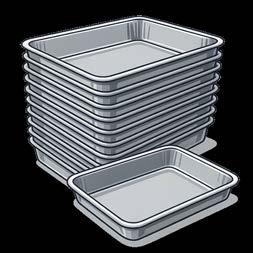
20,000+ 9-inch plates are used each month — just for lunch. aluminum pans are used each week.
40 CASES of yogurt are used each month.
600 GALLONS of oil are used each year.








•
























In the hustle and hassle of starting a new school year, it helps to remember the special moments.

MALKY GROSSMAN
I remember when that note came home from cheder. Thirteen dollars for a kriah sefer, two more to get it bound.
I handed over those $15 to my five-year-old son with the pride of a grandmother. This was his entrance into the big leagues, his ticket to reading.
Mendy was young. Younger, in fact, than the oldest boy in his class by thirteen months. But he was a smart boy, and so curious, and I was so excited about the great vistas that were about to open for him.
But Mendy was less excited. He was far more interested in the trucks and mentschies in his classroom than the letters in the kriah sefer in front of him. His mind — and his eyes — wandered the great perimeters that were his kitah alef classroom. Alef beis?
Nekudos? Klalim? Blank.
Anxiety crept in.
“Do you think he has a reading problem?” I asked my husband. It didn’t make sense. My husband and I are both serious readers, the kids before this son picked up reading the way they (didn’t) pick up toys. Why was he struggling?
“He isn’t focusing,” his rebbi reported. “I can’t get him to keep his attention on the page for more than two minutes.”
Anxiety escalated.
“Do you think he has an attention problem?” I

asked my husband with growing alarm. (Husbands, you should know, hold all the answers, even when they don’t.)
The problem was, my son was a boy. And here’s the thing with boys and kriah. Number one, they must master it. It’s the foundation for their entire future and a lot more crucial to success than it is for girls.
Also, while girls learn kriah over the span of two years, boys learn it in six weeks. One day they’re introduced to kamatz and pasach, and six weeks later they’re reading perakim of Tehillim. Don’t ask me how it works, but it does.
At least, it does for most boys. But it didn’t work for Mendy.
And the fact that his class was speeding through the course while he was stuck at the basics made me — what did I call it? Right, anxious.
Just when my imagination started going to all sorts of places, from in-school remedial classes to London for prism glasses to OT and PT and ABCDEFG, something happened: Mendy learned how to read.
How?
“My rebbi taught me,” he explained simply.
And it was true. His rebbi taught him. Not the way he’d taught the 23 other boys in Mendy’s class. This rebbi, who had spent over 40 years in the kitah alef classroom and maintained the enthusiasm of
a first-year rebbi while gaining 40 years of experience, had figured out a strategy to teach Mendy how to read.
“I sat him down next to me,” he told us on yet another follow-up phone call, “and I built him a box. Three walls, using piles of seforim. Mendy stuck his head inside, and I taught him all the klalim. There was nothing to distract him, no toys or kids to divert his attention.”
In this manner, they went from klal to klal, and Mendy grasped it. Thankfully, he’s bright, and he barely needed any practice. Once he knew it, he knew it. And after that, the world was open to him.
But not the world as he’d previously known it. Covid shut down schools and locked everyone in their houses.
“Imagine,” I said to my husband. “If this rebbi hadn’t gotten through to Mendy, he would’ve been doomed.”
To be out of class for months during kitah alef could have easily spelled disaster. Instead, when the pandemic broke out, Mendy was reading fluently, following along on his class hotline and easily reading his lines when

it was his turn.
Once or twice a week, the rebbi got on the phone with each kid individually, just to uphold his relationship with his talmidim and share some of the warmth that couldn’t come through over a static hotline with the noise of 24 confined families in the background.
“I love you so much, Mendy,” he told him warmly. “And I miss you! I can’t wait for us to be together in class again, so we can continue davening and learning the parsha like we used to.”
Mendy believed him. “Rebbi loves me,” he reported. “He misses me a lot.”
He believed him, because it was true. His rebbi loved him so much, he wouldn’t accept any shortcoming. He thought creatively and made it his mission to get through to our son.
“Do you think he has a reading problem?” I asked my husband. It didn’t make sense
Today, when Mendy makes independent siyumim (okay, and also when he’s caught reading under his covers way past bedtime), we know we owe it to his kitah alef rebbi.
A rebbi who loved our son, and with his love, built him a box — a foundation he could stand on for a lifetime of greatness.

R. SILBER
Pre-Chanukah yeshiva fundraisers are nobody’s favorite activity. It’s cold and dark outside, the kids don’t want to go collecting, and the adults don’t want to come running to answer the door.
When my son’s yeshiva launched their annual raffle, where the kids all get raffle booklets fea-

they added a Grand Raffle. For every $10 the boys raised, they would get an additional ticket to go into the Grand Raffle. The prize was a big remotecontrolled car, displayed in a case near the office of the menahel. It was very impressive, the stuff of little boys’ dreams.
I begged my son not to get his hopes up high. After all, there were 700 boys with a similar chance of winning
turing different prizes, they tried to motivate the children to get out and collect as much as possible. There was the usual “if you bring in $20 to $50, you can choose a (junk) prize from this collection, and if you bring in $120 to $150, you can choose a (different junk) prize from that collection.” Then
The boys were excited. They wanted the car. They compared numbers — my uncle gave me $10, my cousin’s neighbor gave his older brother $20! They were competitive — let’s see who can collect more in an hour; I knocked at 12 doors, I knocked at 16! And through it all, I could see the dream of a remotecontrolled car propelling my son into his coat and gloves — bag of cash, raffle book and pen in hand — and out into the frigid night.
The raffle date was set for Wednesday before Chanukah. On Wednesday, the boys were psyched. The menahel let the boys ogle the remotecontrolled car during lunch recess, and then he made the announcement: The winner would be picked at night, after yeshiva hours! The boys ex-
citedly piled out of the building; by morning, one of them would be the lucky owner of that car. I begged my son not to get his hopes up high. After all, there were 700 boys with a similar chance of winning.
As we were finishing supper, the doorbell rang. The s’gan menahel of the yeshiva was at the door, lugging a big box. My son had won!
The assistant principal had driven over to deliver the prize, spending precious time on the detour and schlepping the oversized box up the slippery steps to make his talmid happy.
“I couldn’t wait for tomorrow,” he explained when I tried to thank him, waving away my appreciation. “It’s too exciting! And there’s no way I could expect Simcha to sit in his seat and concentrate on his learning all day if he knew the car belonged to him, and that he could only open it after yeshiva. I want him to enjoy it tonight. And tomorrow, when everyone sees the winner’s name up on the wall, he should already be the true owner of the promised prize.”
He understood the feelings of a young boy so well, and took such pleasure in his joy. But he also understood that the win could make it hard for him to learn, and came up with an ingenious solution. Now that’s what I call a mechanech!



subscribe@einyyeshuah.org
My son Reuven is now a successful yungerman, but fifth grade was a tough year. His challenges had accumulated to form a mountain he had to climb in order to succeed — and it wasn’t at all certain that he would make it. His rebbi had a good rapport with him, so my son applied himself with great effort in the morning, and at night Reuven chazered with my husband. But what came in between was disaster. With all of his mental energy and self-discipline expended by the time the English teacher walked into his classroom in the afternoon, Reuven just wasn’t behaving properly, to put it mildly.
Warnings and penalties had no effect. I told the teacher that from my experience, what worked best for him were incentives. When that wasn’t successful either, we were stumped.
Then it occurred to me

Reuven probably felt like he couldn’t change without losing face in front of his friends
that Reuven probably felt like he couldn’t change without losing face in front of his friends. If he bowed to authority and buckled down, he’d lose his status in the class. I understood his childish point of view, but his behavior couldn’t continue. If we wanted him to improve, he would have to do it without sacrificing his social standing. But how could we make that happen?
One day, Reuven came home glowing. The teacher had assigned a test, which the boys were angrily grumbling about. Suddenly, the teacher had a change of heart. He announced that he was going to cancel the test — in honor of Reuven, whose birthday was that day. The teacher didn’t belabor the issue of why he felt Reuven deserved this honor, but Reuven knew it was for the small victories he had struggled to achieve.
I don’t remember how the teacher knew it was my
He announced that he was going to cancel the test — in honor of Reuven
son’s birthday, but I will never forget the turnaround that followed. Reuven felt like a million dollars, and he had his classmates’ approval. After all, it was because of him that the dreaded test was canceled. From then on, Reuven felt comfortable behaving in the way that made the teacher and me — and himself, he surely discovered — happy.
I have a large family, baruch Hashem, and I’ve been through many wonderful rebbeim and teachers. But other than this experience, I’ve only heard of teachers punishing an entire class for what a few children did. To reward an entire class in honor of one child is a fabulous tool that can go a long way.
I still have a copy of the note I sent the teacher, which reads, in part: When Reuven came home with a glowing face and told us about the canceled test in honor of his birthday, I was touched beyond words. This was done with such chochmah and hartz that it was 100% clear even to Reuven himself. A teacher with so much insight and love is the greatest gift a child can have.


















When the caller ID shows the number of the school my daughters attend, my stomach immediately drops. Who isn’t feeling well? Did something happen? Is everyone okay?
At least, that’s what it was like before I got another kind of dreaded call: “Mrs. Steinman? We just want to let you know that Faigy is being sent home with a note.
Well, my stomach certainly dropped then. Everyone was okay, but… nits!
I stammered some kind of response, took down the number of a Mrs. Bluming, who is skilled at cleaning nasty little critters and their equally nasty eggs from hair, and braced myself for my daughter’s homecoming. I was scared to stand close to her, let alone touch her.
Then came the shame. My kid had nits! Even though I run a clean home! Even though my kids don’t roll in the mud! Even though we wash linen and clothing and bathe kids and wash floors! And the proof was in the pudding: My other daughter’s hair was clean. Faigy must have gotten nits from somewhere outside of our home.
But still the shame was there, burning and red.
EVENTUALLY, I GATHERED THE COURAGE TO PICK UP THE PHONE.
I CALLED MRS. BLUMING AND SHAMEFACEDLY SHARED THE NEWS: MY KID HAD NITS. NOW WHAT?






Once I was at her home, and my daughter’s hair was being professionally cleaned, I was much calmer. It was obvious that Mrs. Bluming knew what she was doing, and she didn’t get frazzled in the face of my panic.
This was a science, there was a method, and my daughter would be lice-free in a snap.
Mrs. Bluming smiles when she talks about mothers hyperventilating in her house.
“Mothers come in, and they’re hysterical. Their first statement is always, ‘But I’m so clean!’”
Of course, Mrs. Bluming reassures them that, yes, she can tell they run an immaculate home, and besides, lice like clean heads.
“I really don’t get fazed,” she says. “I’m used to these overreactions. I just tell these mothers that while it really isn’t very funny right now, in a week from today, they’ll have mostly laughed it off.”
While I’m not sure there’s anyone who’s dealt with lice actually laughing out there, Mrs. Bluming is mostly right. Our own “lice story” is remembered as a blip, an incident that was certainly distasteful, but hardly worthy of long-term angst.
Cleaning heads isn’t a skill taught in school. How does a woman become a “lice czar,” whom lice must fear to death — quite literally?
In Mrs. Bluming’s case, it was a story of a few loose ends coming together.
“I used to teach little children,” she says, “and I loved it. I love working with kids of all ages. Eventually, when I had to give up teaching, I worked

Do you know the difference between lice and nits? For the luckily uninformed, lice are the bugs, and nits are their eggs.
with the elderly for a while, which needed the same kind of emotional investment.”
However, the work ended up taking a tremendous toll on Mrs. Bluming. “When you’re working with an Alzheimer’s patient, for instance, and putting your heart and soul into the work, it’s rewarding, but it’s also so devastating. There wasn’t anything I could do to help these patients, or their families, and that helplessness was very draining for me. I loved what I was doing, but it was taking over my life.”
At one point, as Mrs. Bluming says, “my third elderly client went to Gan Eden, and I decided to take a break and see what Hashem would send me.”
As it turned out, Hashem was quick in sending something her way. First a neighbor called and said that the school her daughters were attending were looking for a woman to check hair, and shortly thereafter, Mrs. Bluming’s sister was hired at a new school that was in need of a nit-checking lady.
“That was all well and good,” she says, “but we had no plan for what we would do when we would, in fact, find lice. So I read up
on the topic, and I learned a lot.”
In fact, she already had some experience in the field. Some thirty years earlier, the oldest local preschool had a lice outbreak, and Mrs. Bluming had volunteered to help clean girls’ heads.
“I was the mitzvah lady,” she says. “But now, when the opportunity arose, I was ready to do work that isn’t emotionally draining.”
Some time later, two more schools hired Mrs. Bluming to do nit-checking.
“But that’s it,” she adds. “Four schools is the maximum I can do, because I spend so much time cleaning heads, and not only for girls from these four schools. That’s because most nit-checkers don’t clean heads; they only check for nits.”
Mrs. Bluming says that the money invested in ensuring clean heads is money well spent.
“Finding lice early means one or two girls infested in a class, instead of fifteen. In terms of families, it means one child infested instead of the entire family. At the end of the day, it means less work for the mother, less money spent, and all around less agmas nefesh. Monthly nit checking is so, so important.”
Before school starts, it’s especially important to get checked. Over the summer, families spend time in the country, in camps or even overseas. While during the year it’s simple enough to keep entire classes clean, there’s no “herd immunity” in the summer, when kids are in close proximity with family and friends who might not come from homes and schools where an emphasis is placed on staying lice-free.
Yom Tov season is the same. People travel and spend time
What happens when a mother notices that her child is infested — and it’s Shabbos? What is permissible to do under the circumstances, and how can the child otherwise be helped?
Mrs. Bluming will often get distraught mothers showing up at her house, infested children in tow, on Shabbos or Yom Tov. What can she do, what can’t she do, and what can she suggest the mother does?
“Sometimes it’s a two- or three-day Yom Tov, and people are so lost. I direct such shailos to a dayan I work with, but I tell people they should ask their own shailos.”
As a practical tip, Mrs. Bluming advises parents who find lice over Shabbos or Yom Tov to put a bathing cap over the hair of their infested child.
“This way, you know the lice won’t spread to anyone else. Stay home, don’t go out for seudos or shalosh seudos, where twenty more kids can get lice, and keep the affected child’s head covered.”
Once it’s Motzei Shabbos or Yom Tov, Mrs. Bluming leaves her sinks of dishes and can usually accommodate an emergency cleaning.
“The dayan I use says that this work is akin to the work of Hatzolah. I take this responsibility seriously, and I know that even on days like Chol Hamoed, if there’s a person who needs my help, I’m there for them.”
away from home, and that’s when they’re vulnerable to lice exposure and infestation.
“Before school starts,” Mrs. Bluming says, “I often meet families who have moved to Rockland from other counties. The mothers are usually annoyed at this extra September headache and expense. ‘What’s the big deal?’ these mothers say. ‘I’ll get her clean eventually! So she has five lice!’
“But five lice is twenty, and fifty, and hundred, and before you know it, it’s all over the place. The more you keep it in check, the better it is for everyone. Eventually, the mothers who were originally upset at what local schools were demanding of them are so, so grateful. I’ve had mothers say, ‘You know, I was never able to get my daughter clean. Now she never has nits!’”
For Mrs. Bluming, this is the greatest sipuk. The work isn’t particularly tasteful, but she’s past the stage where she does things for prestige, and the appreciation she gets from relieved mothers gives her the impetus to keep at it.
“I really love what I do. I still get to interact with children, I get to work from home, and there’s no joy like seeing the relief on people’s faces. I have people come to me and then leave straight for a simcha, or go right into Yom Tov, and the satisfaction I feel after those cases is so tremendous.”
There was a family who came from London for a simcha, and when it was time to style the girls’ hair, the stylist took one look at their heads and said she refused to touch them until they were lice-free.
Cleaning a head of hair is a timeconsuming process. When a toddler is infested, how does Mrs. Bluming keep them calm and happy long enough to get the job done?
“I like to schedule appointments for toddlers after supper, when they’re relaxed, and I tell mothers to bring along a pacifier or whatever else may soothe the child. I also stock stickers, dolls and coloring activities to keep children calm and entertained.”
Older kids get books, Rubik’s cubes, squeezy toys — anything that can keep bored hands busy.
“Most children are fine,” says Mrs. Bluming. “But if mothers are a bit too anxious, sometimes the kids pick up on that.”
In those cases, she’ll send the mother home to get started on washing linens, towels, brushes and hair accessories, and the kids are just fine on their own.

“They left my house at six o’clock to get their hair done,” Mrs. Bluming says, “and from there went straight to the wedding. Can you imagine the relief of this family?”
This feeling of deep satisfaction is another reason she doesn’t mind the physical work, which is very exhausting. The work is hard on the back, on the arms and on the eyes.
“I have mothers ask, ‘How do you find the nits?! I don’t see what you see!’” But Mrs. Bluming’s got some secrets up her sleeve.
“I give tzedakah before every cleaning, ask Hashem for siyata d’Shmaya, and I make sure to always keep my eyes pure. I also use eye drops to help my vision. Additionally, Hashem has bentched with lots of patience, which is also important.”
But this work isn’t for everyone.
“In addition to the physical stress, this job isn’t for mothers of little kids. Since I work with children who are on a school schedule, most appointments are scheduled for after school, which a young mother wouldn’t be able to pull off. Emergency cases also come up at the busiest times, like Erev Shabbos or Yom Tov, which would be even more stressful for a young family.”
Say a child has nits or — gasp! — lice. What next?
“The first thing I do is drench the child’s head in conditioner,” Mrs. Bluming says. “I make sure that it goes all the way to the scalp, and doesn’t only coat the hair.”
ly! There’s no way tape could get a head of lice perfectly clean.
“Today, we don’t use chemicals, and we don’t use fat or sticky tape that pulls at hair. We should be so grateful.”
Mrs. Bluming adds that she once told her elderly aunt how she cleans heads, and her aunt said that in her days, you knew a kid had had lice when she showed up to school with a hat covering a newly shorn head.
“These girls were mortified. For months, until their heir grew in, they’d either miss school or come with hats, and everyone knew they’d had lice. We should be so grateful that today conditioner does the job.”

This smothers the lice, which means they’re all dead seconds after the kid lands in Mrs. Bluming’s house, and also makes it much easier for the nits to slip off the hair.
“Combing the hair isn’t enough,” she says. “Lice just run away from the comb.”
To do a proper job, Mrs. Bluming uses about a third to a half bottle of conditioner per head. That’s a lot of conditioner, but she always tells frustrated mothers and teens to appreciate that conditioner can do the job.
“Years ago, people used margarine or mayonnaise to do what conditioner does today. It took two to three weeks to get that gunk out of their hair! Other people used tape to pick up the lice or nits. Can you imagine how that hurt? And how sil-
According to Mrs. Bluming, all products out there touted to kill lice and nits, even those prescribed by a doctor, are worthless.
“Lice today dance right through such a treatment. They’re immune to everything out there. I often see kids after their mothers tried cleaning their heads with this product or that wash, and it’s like they did nothing at all. The only thing that works is a professional job done with conditioner.”
At this point, much of the technique Mrs. Bluming relies on is the result of years’ worth of experience and lots of siyata d’Shmaya. Over time, she learned what works well, and what works even better.
After seeing and cleaning so many heads of lice, Mrs. Bluming has acquired a broad field of knowledge about anything lice-related.
“In my experience,” she says, “Out of every twenty cases, eighteen come from immaculate homes, and about 80% turn out to be a first time, last time case. Lice is largely about exposure, and not about dirt or neglect.”
Lice only crawl; they don’t jump. So most cases get transferred from child to child when they lean over near each other, and their heads have direct contact.
“We also see lice passing in pools,” Mrs. Bluming adds, “even in chlorinated water. Lice can live just fine in water with bleach, too. The smartest thing to do is wear a bathing cap.”
Pools, along with the summer warmth and humidity that help lice multiply, means that summer sees many more cases of lice than winter.
According to Mrs. Bluming, each louse can lay about 30 to 50 eggs, and while she generally sees four distinct sizes in lice, she suspects the largest size no longer lay eggs.
“We don’t really know how long they live, because by the time you have lice for a few weeks, you’re so uncomfortable, you get treated. Besides, it doesn’t really matter, because lice are like chickens.” Mrs. Bluming gives a little laugh. “ Chickens lay eggs, eggs become chickens, chickens lay eggs. In two weeks, a child could be beyond infested.”
She also cautions parents: If your child isn’t scratching, that doesn’t mean they don’t have lice. If they’ve been exposed, keep checking their hair, and comb it.
“Some children are very sensory, and others are less sensitive. The worst cases I see are on kids who have high tolerance levels and don’t realize they’ve got lice until the lice are already falling off their head and all over the place. Also, nobody suspects lice until they’ve had it once!”
Lice are said to prefer one blood type over the other, which is the reason some kids are prone to lice while others aren’t. While Mrs. Bluming agrees that it’s clear that lice do have their preferences, she claims that most myths aren’t true.
“There is absolutely no rule,” she says. “I’ve seen everything. We do curly like we do straight, and we do thin like we do thick.”
Nevertheless, each individual louse does have preferences. A child will often show up with just two nits, which means a lice had landed on the child’s head, dropped two nits, and then went on its merry (not) way because the kid’s head wasn’t hospitable enough.
“You can have a family of six kids,” Mrs. Bluming says, “with four kids infested and the other two perfectly clean — even though they may even share a room with an infested sibling. Obviously, there’s something about those four kids’ hair that this group of lice like. In this kind of case, we’ll often see individual color preferences, or texture preferences. If the family has three black-haired kids and three blonde, 90% of the time, the three kids with similar hair will be the ones infested.”
Nonetheless, a different family of lice may be perfectly comfortable on heads of another hair color.
“The one type of hair lice will most likely not touch is hair that has been chemically treated,” Mrs. Bluming says. “If it’s been dyed, permed or straightened, the lice won’t come. Lice can’t be fooled, ever.
“Now, at the beginning of the school year,” Mrs. Bluming adds, “the main thing is that our children should have a year full of siyata d’Shmaya and hatzlacha, and may they remain lice-free!”
Mrs. Bluming can be contacted at 845-356-3892.
When you have a child who’s prone to getting lice, it’s worthwhile to invest a little time and effort into preventative measures.
“First,” Mrs. Bluming says, “spray some alcohol onto the child’s head every morning. The smell will be gone before five minutes, but it’ll still keep lice away. Second, comb her hair thoroughly with a lice comb every so often.”
What if a child is already infested, and the mother feels up to the job of cleaning her daughter’s hair, and the school doesn’t insist otherwise?
In terms of nit combs, Mrs. Bluming recommends the NitFree Terminator. For thick, curly hair, she also trusts the Nisska. But she cautions mothers who are considering to undertake this job themselves.
“If you feel comfortable undertaking this job, go for it. This service is expensive, and if it’s not necessary, good for you! However, if you think that you’ll call me crying after three hours of cleaning your daughter’s hair, please know that I won’t start the process halfway through; I’ll start from scratch so I know it’s well done. So if you don’t feel ready for this, or you don’t really know what you’re doing, then do yourself and your daughter a favor and don’t get started. You’ll just end up with so much agmas nefesh.”
After cleaning a child’s head, Mrs. Bluming sends the mother home with strict maintenance instructions, which include combing through the child’s hair every day with a nit comb. These instructions are vital for maintaining a clean head. Most mothers don’t want to find themselves back at square one, and they’re good at following instructions.
“The reason for the daily combing is twofold. Number one, I am human, and it’s possible that I missed a single nit, which can turn into an infestation in a matter of days. Second, unlike bird eggs, nits grow. Brand-new nits are so tiny, in fact, that they can slip right through a comb. A day or two later, however, a good comb-through should catch them.”
Then comes the follow-up visit after a few days, where Mrs. Bluming ensures that the child is indeed clean, b’ezras Hashem









1. Gather round the table to play a family game of Boggle, using this Boggle board.
2. Once you have a winner, fill out the form below in its entirety
3. Email the form to comments@ thewview.com or fax to 718-2478881 by Sunday at midnight.
4. Two winners will be drawn each week, each of whom will receive by mail a $10 gift card at Sprinkles!
Find words on the board containing four letters or more. Letters of a word must be connected in a chain (each letter should be adjacent to the next either vertically, horizontally or diagonally), and each letter can only be used once in a given word. The following are not allowed in Boggle: Adding “s” to a word • Proper nouns • Abbreviations • Contractions • Acronyms
4-letter words: 2 points | 5-letter words: 3 points | 6-letter words: 5 points | 7-letter words: 7 points | 8-letter words: 9 points | 9+ letters: 12 points
Each Boggle board hides a word of nine letters or more!
A L S E T C A F H B I O N A P U E I R O S D I I S

Family name: ___________________________________________________________________ Phone: ___________________________________________________________________________
Full mailing address: _________________________________________________________
Full name of winner: _________________________________________________________
Amount of points: ____________________________________________________________
Full names of competing players:
List some words only the winner found:

FAMILY



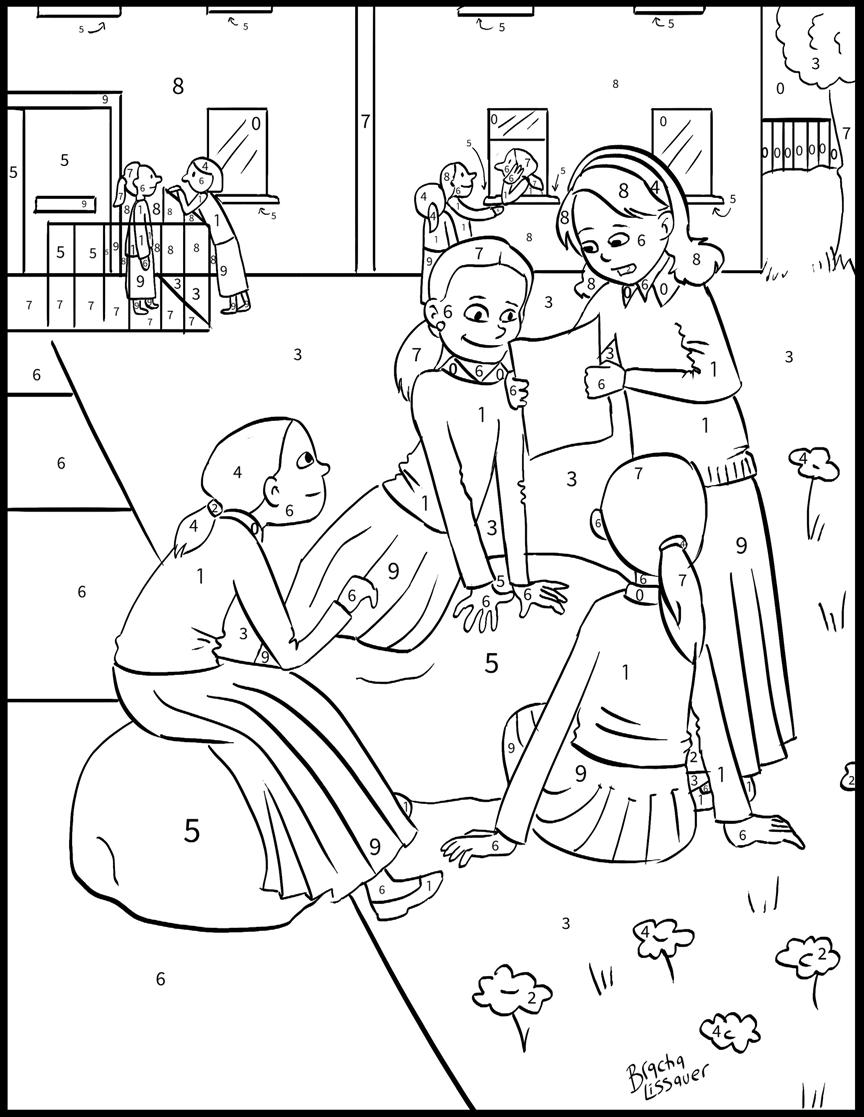
DOONA CAR SEAT BASE
Brand new, never used. Price $125. Please call: 929.214.7721
WEST PALM BEACH FLORIDA
APT. FOR SALE Century Village-Golf Edge. 1 ½ bedroom apt. 2 baths, Brand new appliances, Ready to move in now. Price $200K or best offer. Call: 845.325.0500
MIAMI BEACH FLORIDA
Collins Ave. Beautiful ocean view. 1 bedroom apt. Call: 347.760.0570
SUKKOS RENTAL
Gorgeous 3/5 bdrm, 2/3 bath villa with heated outdoor hot tub avail. in Mountaindale, near Shuls. Price/night $350. (Pics avail.) 845.327.7153
NORTH MIAMI FL RENTAL
2-bedroom, 2-baths with private heated pool and spa. Summer Price $300 per night. Call/Text: 917-3824810, email: 1752nmb@gmail. com www.themangotreat. com
HOTEL 15
Big villa in serene area outside Monroe. 8 couple bedrooms, Teen bedroom 8 beds plus 20 kids beds. For Pictures hotelfifteen.com Call to book 845-837-5662



FOR SALE MONSEY
Large 5 bedroom, 3 bath bi-level on 1/2 acre. Updates: roof, skylights, attic fan (2021). Driveway repaved (2023), New furnace, HVAC and deck. Sauna (lower level). Priced to sell at $1,280,000!! Deera Homes, Sarah Schwab, Broker 914-261-6432. Won’t Last!!
YERUSHALAYM CTR
Three-bedroom family apartment, with private garden with SUKKAH, in city-center with parking. Five-minute walk from the Old City, or Mamilla, close to Geula. Outstanding location. Available for rent. W.A. Sarah for info +972545874825 or hetsa@yahoo.com
VACATION RENTAL
Beautiful, modern 4 Bdrm 3 Bthrm house for rent. Private Heated pool with spa. Pergola and covered dining area in backyard. Quiet, private neighborhood. For more info, please call or text 646-926-1260
WEST PALM BEACH FLORIDA
Century Village, Willington M, 2 Bedroom apt. Ground floor FOR SALE. Call: 347.760.0639
WEST PALM BEACH FLORIDA
For the best Real Estate deals, contact Mrs. Debby Schwartz 203.667.2785



MIAMI BEACH FLORIDA
Carriage Club North, Beautiful 2 bedroom, 2 bath, Ground floor. Call: 347.499.0031
NORTH MIAMI
A beautiful 3 bedrooms, 3 bath villa in North Miami, with private inground heated pool & spa. Price/night $289. Pictures available. 845.327.7153
VACATION IN LINDEN WEEKENDS
Brand new 3 bedroom basement. Living area and kitchen. Private backyard with inground heated pool. Available for Rosh Hashana & Sukkos. Call/text 929-5920368
APARTMENTS FOR RENT IN ANTWERP– ירשת.
Two apartments available in the same house, 5-minute walk from Peshvorsk: *4-bedroom apartment -with large sukka, available for תוכוס &
*1-bedroom apartment – no sukka, available for the month of Tishrei and for short-term rentals throughout the year. Call: 01132488/267840
Excellent SEIT P3 opening in Williamsburg full time, excellent pay potential. Email: scaplan@yeled.org Or call: 917.968.2292




EXPERIENCED SALESPERSON
For Electrical & lighting supplies co. No car necessary, commission only. Top $$ paid, male or female, work from home, partnership opportunities available. Call: 212.662.1300
WORK FROM HOME
Let your extra time bring you some extra cash. You’ll absolutely enjoy it and feel fulfilled! For more about this wonderful business and how it works Call 929-318-7969 or text signup to 347-525-7071 to get you started! Hatzlucha!
WORK FROM HOME
Great opportunity to manage your own business from home. No experience needed, no computer necessary. Huge potential to grow big. Call: 438.529.1216
Please Call: 718.450.4700
We fix knitted & crochet Gartlech & make beautiful professional fringes. We also teach how to knit & crochet. Please call: 917-414-3281
FURNITURE REPAIRS
Cabinet & General Repairs, specializing in ChosonKallah Apt. Call: 718.633.6231
AYIN HORAH
The renowned Rebetzin Aidel Miller from Yerushalayim Is always available to remove Ayin Horah over the phone. Call: 718.689.1902 or 516.300.1490
GARTLECH
Beautiful HANDMADE
GARTLECH, Hand crochet, Hand knit, Silks & more with beautiful Gartel bag. Text or call: 718.283.4589 Wholesale orders available.
WOOD REPAIR
Professional transformation to ur kitchen cabinets thru design & color chg. Also revamp, repair estate furn, drm chairs, bdrms, libraries, & ext wood doors. Best price, svc & decorators consult txt or call 212-991-8548.
Bathrooms, kitchens, closets, decks, extensions, additions, Basements, all electrical, plumbing, Carpentry. Lowest prices, fastest service. Call:718.951.0090





















WHOLESALE SPOTLIGHTS
We sell Spotlights, twice as bright for half the price. We also sell Smoke & Carbon Monoxide detectors with 10 year battery suitable for Section 8. Free Delivery. Call: 718.951.0061
ELECTRICIAN
All Electrical work, outlets, switches, fixtures, new lines for washer/dryer or air conditions, shabbos clocks, circut breakers. Call:718.951.0090
HANDYMAN & PAINTING
Experienced & Reliable handyman. Small jobs our specialty! Plumbing, Electric, construction, Locksmith, painting, plastering. Shabbos clocks, outlets/switches, call: 347.275.5408
REMOVE EYIN HORA
A baby, a simcha, a new lease in town? Call Ayin BeAyin so things dont chalila go down! Call Today 718-400-AYIN (2946) www.ayinbeayin. com
KITCHEN
Kitchen cabinet hinges, tracks, drawer boxes, garbage pull outs replaced at reasonable prices. Call Mr. Likht 917-817-6981
NEW WEBSITE?
Get your new beautiful website done hassle free!
Affordable pricing! Satisfaction guaranteed! Email: sales@ stratadigitalgroup.com
PROFESSIONAL COACH
Heal your life. Heal your body. Heal your past. Experienced. Successful. Personable. Expertise in anxiety, panic and trauma. Mrs. Esty Frank 7188518636
Certified makeup artist for all your special occasions. Call: Yides Neuwirth 917.309.6000 718.858.0815
AYIN BEAYIN
So many watched your simcha clip… We make sure your joy doesn’t slip. Call Today 718-400AYIN (2946)
Refrigerated van for rent daily or weekly with or without a driver. Call or Text: Eli 516.270.6755
Professional photo editing, many years of experience. Special rates for photographers. Also specializing in Custom photo albums Chosson, wedding, etc. Photo Dreams 347.563.5153
Specializing in Custom Photo Albums, Chosson, Wedding, etc. Also professional Photo Editing, many years of experience. Special rate for photographers. Photo Dreams 347.563.5153
Buy by the case & save. Baby & Regular Salmon. Hashgucha Volove Rav. Free delivery to your home. Call Eli: 516.270.6755
Yossi`s Van Service, 15 Passenger van, Local & long distance, Airports & delivery. Call: 718.962.4664
Nice new ladies clothing to givaway to needy ladies only call 718-974-9428
Breastpump Gemach 718599-0721
Lights for your simchas. Minimal fee 718-854-2404
Twin carriage 718-522-3891
“the organizer” 917-232-8614
Introducing for the first time in Williamsburg! New designer gowns & brand name Simcha wear at great prices. We are also offering designer fashion & timeless pieces that redefine elegance, in our beautiful luxurios salon located conveniently on Kent Ave. Ready sis of bride & groom & Mechitaniste gown for fabulous prices. Please join us & elevate your style. For an appointment 347-7018061
gold link bracelet in August 917-789-3401
lady hanging earring July 13, most probably on Bedford ave 925-548-3020
bag with watch bands in the south side area 718-782-1836
Kids bike with name Jacobowitz 347-661-7654
frank olive hat by Marcy Vernon Aug 27. 347 512 9011 Pink swaddle across Pardes hall 646-542-7365
Envelope with money 929271-2620
Micro scooter Kent Ave 718298-4199 lv msg
Brochos cards for Moshiach’s arrival at moshiachbrochoscards@ gmail.com. Endorsed by Gedolei Yisroel
Silver cross wave with bassinet and 2 seats in used condition text 347-374-0755




$7,200,000































































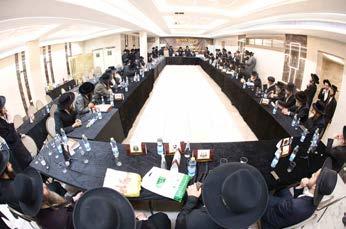








$1,549


























Our integrated team of expert physicians, midwives, physician assistants, and maternal-fetal medicine specialists at ODA Women's Health Center are dedicated to providing compassionate care to support your unique healthcare needs.

MATERNAL FETAL MEDICINE
MFM specialists review sonograms
• Andrei Rebarber, MD
• Nathan Fox, MD
• Steven Inglis, MD
OB/GYN PHYSICIANS
• Aren Gottlieb, MD
• Farzad Nabatian, MD
• Irina Meyer, MD
• Yulia Mogilyansky, MD
• Mariya Rozenfeld, MD
OFFICE-BASED CARE ONLY:
• Elizabeth Layliev, MD
• Scott Postell, MD
NEW TO OUR TEAM:
• Zachary Sandman, MD
GYNECOLOGICAL SURGEON
• Devendra Patel, MD
PHYSICIAN ASSISTANTS
• Esty Slavin, PA
• Aviva Levihaiem, PA
MIDWIVES
• Joyce Griffin, CNM
• Shayna Eliav, CNM
• Devora Manne, CNM